An amendment numbered 3 printed in House Report 111-192 to require commercialization programs established by agencies with space shuttle related activities to include efforts to help small businesses affected by the termination of the space shuttle program commercialize technologies through SBIR.
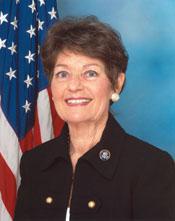 Rep. Suzanne M. Kosmas (D-FL)
Description
Amendment as modified requires commercialization programs established by agencies with space shuttle related activities to include efforts to help small businesses affected by the termination of the space shuttle program commercialize technologies through SBIR.
Legislative Activity
Stay on top of the latest movement without scrolling through every action
House amendment offered
July 8, 2009
View full timeline
House amendment offered
July 8, 2009
House amendment offered/reported by : Amendment (A003) offered by Ms. Kosmas.(consideration: CR H7774-7775, H7777-7778; text: CR H7774)
July 8, 2009 • 1:38 PM
Roll call votes on amendments in House
July 8, 2009 • 2:28 PM
House amendment agreed to: On agreeing to the Kosmas amendment (A003) as modified Agreed to by recorded vote: 427 - 4 (Roll no. 483).(text as modified: CR H7774)
July 8, 2009 • 2:28 PM
Amendment agreed to Committee of the Whole
July 8, 2009 • 2:28 PM
Amendment (A003) offered by Ms. Kosmas. (consideration: CR H7774-7775, H7777-7778; text: CR H7774)
July 8, 2009 • 1:38 PM
Kosmas amendment (A003) modified by unanimous consent. The modification makes clarifying and technical changes.
July 8, 2009 • 1:39 PM
On agreeing to the Kosmas amendment (A003) as modified Agreed to by recorded vote: 427 - 4 (Roll no. 483). (text as modified: CR H7774)
July 8, 2009 • 2:28 PM
Votes
1 roll call on this amendment
Text
Modified
ENHANCING SMALL BUSINESS RESEARCH AND INNOVATION ACT OF 2009
The SPEAKER pro tempore. Pursuant to House Resolution 610 and rule
XVIII, the Chair declares the House in the Committee of the Whole House
on the state of the Union for the consideration of the bill, H.R. 2965.
{time} 1228
In the Committee of the Whole
Accordingly, the House resolved itself into the Committee of the
Whole House on the state of the Union for the consideration of the bill
(H.R. 2965) to amend the Small Business Act with respect to the Small
Business Innovation Research Program and the Small Business Technology
Transfer Program, and for other purposes, with Mr. Ross in the chair.
The Clerk read the title of the bill.
The CHAIR. Pursuant to the rule, the bill is considered read the
first time.
General debate shall not exceed 1 hour, with 40 minutes equally
divided and controlled by the Chair and ranking minority member of the
Committee on Small Business and 20 minutes equally divided and
controlled by the Chair and ranking minority member of the Committee on
Science and Technology.
The gentlewoman from New York (Ms. Velazquez) and the gentleman from
Missouri (Mr. Graves) each will control 20 minutes, the gentleman from
Tennessee (Mr. Gordon) and the gentleman from Nebraska (Mr. Smith) each
will control 10 minutes.
The Chair recognizes the gentlewoman from New York.
{time} 1230
Ms. VELAZQUEZ. I rise in support of H.R. 2965, updating and enhancing
the Small Business Administration's Small Business Innovation Research
and Small Business Technology Transfer programs.
Mr. Chairman, I yield myself such time as I may consume. I rise in
support of H.R. 2965, which will reauthorize and improve the SBA's SBIR
and STTR programs. This bill has strong bipartisan support and would
work to invest in entrepreneurial innovation and job growth.
While our economy is recovering, it still has a ways to go. Even now,
we need to be focused on putting Americans back to work. We need growth
that is lasting and industries that are sustainable. We need jobs that
cannot be shipped overseas and will not evaporate in the next cycle of
boom and bust. But those jobs aren't going to appear out of thin air.
They need to be created. By expanding existing industries and unlocking
new ones, H.R. 2965 will generate the jobs we need.
The SBIR and STTR programs are vital to small business growth. Year
after year, they help jump-start 1,500 new companies. At the very
least, that is 1,500 new employers. Over time, that is millions and
millions of direct and indirect positions. But while these initiatives
are crucial, they're not living up to their full potential. Through
H.R. 2965, we can improve SBIR and STTR so they are running at maximum
capacity.
Job creation, Mr. Chairman, is the primary goal of R&D. But in order
to generate new positions, we have to first develop new industries.
Commercialization is critical to that process.
[[Page H7758]]
But, unfortunately, most research never makes it to the market.
To address that issue, we are creating commercialization benchmarks.
We're also encouraging conversations between SBIR officers and
purchasing agents. Ultimately, those dialogs will enhance the flow of
information between buyers and sellers, helping more ideas move from
the drawing board to the marketplace.
When all is said and done, commercialization means more than new
products--it means new jobs. Once a product hits the mainstream, it
opens up a world of opportunity in a wide range of industries, from
retail to manufacturing. By stimulating these sectors, we can help our
economy on its route to recovery.
Even as our economy rebounds, small firms struggle to find funding--
particularly equity investment. Just a year ago, venture capital firms
drove $5.7 billion into small companies. Today, we have seen almost a
50 percent decline. In terms of what that means for the economy, there
are now $3.7 billion fewer dollars to help our small businesses create
jobs. The programs' current regulations only compound those challenges.
By shutting venture capital out of SBIR and STTR, we are blocking
billions of dollars to create jobs and limiting our ability to
innovate. What are we supposed to say to a venture-backed firm that is
researching cures for pancreatic cancer? Are we supposed to shake our
heads and say, Sorry, you've done some promising research, but we just
can't help you find a cure?
Mr. Chairman, this program is better than that. That is why H.R. 2965
gives small firms--not Washington bureaucrats--the final say in how
their firms are financed.
This bill provides for the reasonable use of venture capital, while
maintaining important safeguards. Make no mistake, SBIR and STTR are--
and forever will be--small business programs. This provision doesn't
change that. What it does do is give small firms the funding they need
to develop new products.
Even with the necessary capital, small firms struggle to see R&D from
start to finish. That is because it is a complex process. Measures to
block funding delays and increase efficiency will streamline R&D,
helping more products make it out of the laboratory and into the
marketplace. Meanwhile, we're going to broaden the scope of American
innovation.
Silicon Valley doesn't hold a franchise on innovation, which is why
H.R. 2965 reaches out to underserved rural areas. Through cutting edge
technology and grassroots marketing, it also seeks to bring women,
minorities, and veterans into the SBIR and STTR programs.
Innovation is the first stop on the path to prosperity. By enhancing
and expanding SBIR and STTR, we can encourage small business growth in
all parts of the country. In doing so, we will help our small firms to
grow, innovate, and--most importantly--create homegrown jobs.
Mr. Chairman, I reserve the balance of my time.
Mr. GRAVES. Mr. Chairman, I yield myself such time as I may consume.
Mr. Chairman, I rise in support of H.R. 2965, the Enhancing Small
Business Research and Innovation Act of 2009. Innovation happens every
day. Whether it is a new development in the fight for cancer or a new
computer system designed to protect our soldiers, more and more good
ideas are coming from America's small businesses.
The Small Business Innovation Research, the SBIR, and the Small
Business Technology Transfer, the STTR, programs help to take ideas and
turn them into practical products. By all accounts, the SBIR and STTR
programs are highly successful Federal initiatives designed to
encourage economic growth and innovation within the small business
community.
Created in 1982, the SBIR program offers competition-based awards to
stimulate technological innovation among small private-sector
businesses while providing government agencies with new, cost-effective
solutions to meet their needs. This program is not only critical to the
unique needs of each of the participating Federal agencies, but also to
our national economy.
Small businesses invigorate the U.S. economy by introducing new
products and lower cost methods of doing business, sometimes with
substantial economic benefits. They play a key role in introducing new
technologies to the market, often responding quickly to new market
opportunities.
Our committee worked in a bipartisan manner to produce this
legislation. We held several hearings on this topic over the last few
months, inviting the Small Business Administration, SBIR and STTR
program managers from Federal agencies, various small businesses, and
academics to discuss the program successes and to consider amendments
that would improve them. I'm happy to say that many of the ideas that
were presented to the committee have found a way into this legislation.
For example, the topic that dominated much of the discussion at our
hearings was the appropriate level of venture capital involvement in
the SBIR program. Unfortunately, there have been several misconceptions
stated about this provision in the bill.
In 2003, the Small Business Administration reversed a 20-year-old
policy by ruling that small businesses that are majority-owned by
venture capital companies can no longer compete for grants under the
SBIR program, regardless of how few employees companies have. As a
result, this has jeopardized the development of innovative treatments,
therapies, and technologies.
The goal of our proposal is to ensure that America's small businesses
continue to be the world's leader in innovative research and
development and to provide the best small companies with the greatest
commercialization potential access to SBIR and STTR programs.
In addition, access to capital is a real concern for small businesses
across all industries, and our provision provides small businesses
another path to acquire the capital they need to be successful.
It is also important to keep in mind that these programs will remain
open for competition among all small businesses, and Federal agencies
will choose the best small business to win the award.
H.R. 2965 contains significant and dedicated safeguards to ensure
that the SBIR program remains a small business program. It forbids a
small business with one venture capital firm having over 50 percent
ownership from qualifying for that small business award. The bill also
has safeguards to prohibit large companies from taking control of the
small business and receiving small business grants.
The legislation also bans a business whose board's majority is from a
venture capital firm from participation in the program. Finally,
because venture capital investments are often done as a group to reduce
risk, the bill strictly limits the amount of participation of venture
capital firms that are themselves owned by a business of over 500
employees.
Our comprehensive bill also takes significant strides to bring the
programs into the 21st century by increasing the award sizes, enhancing
data collection and reporting requirements for better oversight, and
providing Federal agencies with the mechanism by which they can meet
and share best practices.
Mr. Chairman, I urge my colleagues to support this bipartisan
legislation.
I reserve the balance of my time.
Mr. WU. I yield myself such time as I may consume. In today's
economy, small business is where innovation happens. The Science and
Technology Committee intends to promote science and technology research
that drives an innovation economy. That is why I rise in support of
H.R. 2965, the Enhancing Small Business Research and Innovation Act.
At more than $2.3 billion per year, the Small Business Innovation and
Research and Small Business Technology Transfer programs comprise the
largest source of Federal support for technological innovation in the
private sector. Given the current economic climate, we need robust SBIR
and STTR programs to create the next generation of companies that will
provide high-paying jobs and grow our economy.
However, these programs originated more than 25 years ago. Given the
economic changes we have seen during the past two decades, we need to
update these programs to reflect the current economic realities of our
increasingly competitive innovation economy.
[[Page H7759]]
The Committee on Small Business and the Committee on Science and
Technology have held numerous hearings on SBIR and STTR over the past
several years. Witnesses shared many recommendations about how SBIR and
STTR can be strengthened.
Recently, both committees overwhelmingly supported H.R. 2965, with
each committee voting favorably to reauthorize SBIR and STTR through
2011 with some much needed modernization and changes.
The legislation has been endorsed by more than 100 organizations,
including the American Association of Universities, BIO, the National
Venture Capital Association, the Energy Sciences Coalition, and the
Cystic Fibrosis Foundation.
The bill increases the award sizes for phase 1 and phase II to
reflect the actual cost of doing high-tech research today. It also
increases the flexibility of the SBIR by allowing cross-agency awards
and allowing applicants to apply directly for phase II funding.
H.R. 2965 allows venture capital-backed small businesses to once
again apply for awards and specifically defines their eligibility
requirements. This temporary ban on venture capital majority ownership
was the result of a ruling in 2003 by an administrative law judge in
Boston.
For 20 years--from the inception of the program in 1983--to 2003,
venture capital-funded companies could freely participate in these
programs. There is no evidence, there is no evidence anywhere, that
during that time there was any crowd-out of other businesses by VC-
backed businesses.
There has been a lot of debate over the role of venture capital
participation, but the National Academies recently released a report
that states that venture-backed companies are important. They
contribute greatly to technologic development and they do not--
emphatically, do not--crowd out other small businesses.
The goal of SBIR is to encourage innovation. It is time that we fix
the administrative ruling of a single judge and support more innovative
small businesses and the best technology that we can help bring to
market.
Today, we recognize our leadership by reauthorizing SBIR and STTR. I
want to commend Chairwoman Velazquez in particular for her commitment
to small business innovation. I urge my colleagues to support this
bill.
I reserve the balance of my time.
Mr. SMITH of Nebraska. I yield myself as much time as I may consume.
I'm pleased to rise today in support of H.R. 2965, the Enhancing
Small Business Innovation Act of 2009. As the country continues to
suffer through this deep economic recession, we have regular debates in
this House and in Washington regarding what policies will best help to
alleviate the current downturn and accelerate recovery.
All too often in these debates it seems there is a tendency to
overlook an important fundamental fact: The government does not create
wealth and prosperity. It is created, rather, in the private sector, by
risk-taking, entrepreneurial Americans with ideas and capital, and
their own hard work. There is arguably no element of the private sector
better equipped to drive the economic turnaround than America's high-
tech small businesses.
{time} 1245
To this end, there are ways the government can help turn our economy
around, by minimizing its interference in the economy and fostering an
environment where private sector innovators can flourish and their
ideas can be developed into new goods and services which increase
productivity and our quality of life. By providing small amounts of
early-stage seed funding to entrepreneurs with cutting-edge ideas, the
Small Business Innovative Research program and Small Business
Technology Transfer program can help do that. With 12 participating
agencies and total funding in excess of $2.3 billion, the SBIR and STTR
programs reauthorized in this bill serve to facilitate increased
private sector commercialization of these promising ideas while helping
the government advance its R&D goals and meet its technology needs.
The legislation before us today makes important improvements to this
program, most notably by providing statutory clarity to what have been
changing interpretations of the eligibility of majority venture
capital-backed small businesses. Both the Science and Technology
Committee and the Small Business Committee have considered this issue
in detail in recent years, and I think the growing consensus in support
of this legislation's proposed changes is a strong indication that they
are on target, maximizing the eligibility of legitimate small
businesses while minimizing inappropriate eligibility of large
businesses.
I also want to note my strong support for title III of this bill,
which includes amendment language I included in a similar version of
this legislation last year. The language requires agencies to give
priority consideration to applicants from rural areas so as to increase
award recipients from these areas. This is important to reach areas
such as my home State of Nebraska, which tends to have low
participation in the programs but are, nonetheless, home to
entrepreneurial and innovative small business owners who would benefit
from consideration in the grant review and award process.
I want to commend Chairman Gordon, Ranking Member Hall and Chairman
Wu--as well as our colleagues on the Small Business Committee--for
their work on this legislation. I look forward to working with them to
ensure smooth and timely passage of this bill as it moves to the Senate
and into conference.
I reserve the balance of my time.
Ms. VELAZQUEZ. Mr. Chairman, I yield 3 minutes to the Chair of the
Subcommittee on Contracting and Technology who moved this legislation
through the subcommittee, the gentleman from Virginia (Mr. Nye).
Mr. NYE. I would like to thank Chairwoman Velazquez for her
leadership here and also Ranking Member Graves.
Mr. Chair, as chairman of the Small Business Subcommittee on
Contracting and Technology, together with Ranking Member Schock, I've
held several hearings to discuss how we can do more to help our small
businesses research and develop the technologies of tomorrow. From
those hearings two things became absolutely clear. Small businesses are
the single most innovative sector of our economy; and with the right
support, they have the power to lead us out of this recession. SBIR is
a vital program that limits the risk that small business innovators
face. The SBIR program is critical to innovative technology created by
small businesses. Each year the program helps 1,500 companies get off
the ground. Startups that receive SBIR grants are productive job
creators. In fact, the employment growth rate for these businesses is
nearly four times that of larger firms, employing 40 percent of all
high-tech workers.
These firms have triggered extraordinary achievements. Take, for
example, night vision goggles or technology for unmanned aviation. In
fact, the SBIR program is crucial to improving tools that support our
national security. At $1.23 billion, the DOD makes up more than half of
all SBIR funding. Were it not for SBIR, critical breakthroughs
accounting for improvements of technologies from our defense to health
care may have never made it to market. And yet countless other new
technologies don't make it past the laboratory doors. Innovation is a
risky, resource-intensive process. Without proper funding, even the
most brilliant invention may never make it.
Mr. Chair, SBIR and STTR are important tools for developing new
products but not just as a means for invention. By sparking innovation,
they mark the surest path to unlocking new markets, expanding new
industries and, most importantly, creating new jobs. This bill is an
important step towards lasting growth, and I look forward to its
passage.
Mr. GRAVES. Mr. Chairman, I yield 5 minutes to the ranking member of
the Contracting and Technology Subcommittee, the gentleman from
Illinois (Mr. Schock).
Mr. SCHOCK. Mr. Chair, I rise today in support of H.R. 2965, the
Enhancing Small Business Research and Innovation Act of 2009. This bill
incorporates the important language of legislation that I introduced in
H.R. 2772, the SBIR and STTR Enhancement Act. I would like to thank
first Chairwoman Velazquez, Ranking Member Graves
[[Page H7760]]
and Mr. Altmire for working to move this important piece of legislation
forward and doing so in such a bipartisan way. I also want to thank my
colleague Congressman Nye for his work with me on the subcommittee
level to ensure that the process of modernizing the Small Business
Innovation Research program was done in an effective, efficient and
bipartisan fashion with the input from those who are most important,
that is, the small business sector who utilizes this important program.
The Small Business Innovation Research, or SBIR program, as we refer
to it, was established over 20 years ago and is an important resource
in assisting small business owners wishing to bring their technological
advancements to the marketplace. While small business owners represent
some of the brightest innovators our country has, because of the high
cost of doing technological research for the government, small
businesses are, unfortunately, often underrepresented in receiving such
research-intensive government contracts. When the Federal Government
looks to the private sector for the development of new technologies and
ideas, they must look beyond simply large corporate conglomerates to
the small businesses that truly drive our economy and create American
jobs.
I am encouraged that this legislation and the language contained in
it will make a number of necessary and overdue changes to the SBIR
program, ensuring its continued use to help in the commercialization of
those innovations made by small businesses. Additionally, this language
will equip the SBIR program with important new tools to bring it more
in line with the needs of small business owners in the 21st century.
Included are important provisions to allow for increased oversight,
more transparency and greater flow of information between the recipient
and participating agencies. We will now have more timely solicitation
responses from these agencies, the creation of an online database to
properly study and measure the performance of businesses participating
in the program and new restrictions regarding potential program
abusers. These changes will help SBIR continue to be one of the few
government assistance programs which actually works.
Finally, by responsively increasing the grant limits, which have not
been altered in over 20 years since the program's inception while
simultaneously not increasing the total funding pool, we ensure that
this program is streamlined to become more effective and efficient, to
focus on granting funds to those potentially successful ideas that need
this type of support to transition from concept to reality. Rather than
throwing more taxpayer money at an unnecessarily large amount of
grants, the SBIR program will now focus on investing in those ideas
from small businesses which actually possess the potential to reach
full commercialization phase.
Today this House will make these important changes to the SBIR
program to ensure its continued use as a resource, which helps small
businesses bring their new and novel ideas to the market while also
providing a value to our economy, which we all know it so desperately
needs. Knowing that over 60 percent of American citizens get their
paycheck from a small business, it only seems right in these tough
economic times that we focus on beefing up those support efforts here
in the Federal Government to help the largest employers in our country,
small businesses. I urge a ``yes'' vote and passage of this bill.
Mr. WU. Mr. Chairman, I yield 2 minutes to the gentleman from New
York (Mr. Tonko), a leader in energy innovation.
Mr. TONKO. I thank the gentleman for yielding.
Mr. Chair, as you know, small businesses are the engine that will
repower America's economy. Research and innovation in the small
business venue have greatly contributed to advances in science and
technology across the board. In fact, the city of Schenectady in my
congressional district, the ninth largest city in New York State, was
nicknamed ``The Electric City'' after Thomas Edison moved his company
Edison Machine Works there in 1887, which was later followed by the
opening of GE headquarters in 1892.
Today we are considering H.R. 2965, the Enhancing Small Business
Research and Innovation Act of 2009. I rise in full support of H.R.
2965. This program has proven to be one of the most successful Federal
programs for technological innovation in United States history,
delivering more than 60,000 patents and hundreds of valuable
innovations in agriculture, in defense, in energy, in health sciences,
homeland security, space, transportation and other fields.
Through Phase I and Phase II SBIR, countless jobs have been created
in the capital region of New York State. It is through programs such as
SBIR that my district has developed the underpinnings of support for a
boom in high technology innovation and economic development. In fact,
just over a month ago a constituent of mine, Dr. James Woo of
Interscience, Inc. in Troy, New York, was at a national conference in
Virginia. This conference was to showcase Navy SBIR Phase II projects
to program managers and large defense contractors for transition. A
great majority in attendance supported protecting the small business
opportunities that have been part of this program. The reason is
because small, innovative companies should have a genuine place at the
Federal table. This place is for backyard inventors and local
contractors, for small and very small businesses where the research is
not likely a breakthrough in technology but a breakout of
implementation.
At a time when our national unemployment is at 9.5 percent, we should
do everything in our power to strengthen small businesses that generate
70 percent of new jobs in our country. It is important that we continue
to favor small, innovative businesses.
There's simply no more effective way to boost our economy than to
support the small business innovation that creates new jobs, new
technologies and new American industries.
If the tavern was the cradle of democracy, then the garage is the
cradle of enterprise.
Mr. SMITH of Nebraska. I reserve the balance of my time.
Ms. VELAZQUEZ. Mr. Chairman, I yield 4 minutes to the bill's sponsor,
the gentleman from Pennsylvania, Mr. Jason Altmire.
Mr. ALTMIRE. Mr. Chair, some of these innovative small businesses
that are involved in this bill used to qualify for venture capital
funding under the previous rulings that were in effect until the year
2003. I introduced the Enhancing Small Business Innovation and Research
Act to modernize the key programs for this country's greatest
innovators, America's small businesses.
Since its inception in 1983, the SBIR program has facilitated
American competitiveness, providing quality research and spurring
technological innovation. But technology has changed since the last
reauthorization more than a decade ago, and my legislation reauthorizes
the program to keep up with the needs of modern small businesses.
Additionally, this bill expands the talent pool from which the programs
can draw by broadening the types of businesses that can participate to
a more diverse set of firms and making SBIR research available to all
areas of the country, even those not traditionally considered to be
hotbeds of R&D.
Under this bill, Federal funding for technology innovation will be
focused on supporting the work most likely to develop new products by
targeting resources towards small businesses with the highest
likelihood of commercialization. Perhaps most important, this bill
helps firms participating in the SBIR programs to attract private
investment. As we respond to the recession, SBIR and the Small Business
Technology Transfer programs are two critical tools that provide
valuable seed money for entrepreneurs who are willing to explore
untested concepts and develop new products. Today it is difficult for
small businesses to access financing by any means, venture capital or
otherwise. We should be helping small firms raise capital, not
penalizing those that do.
In my home region of western Pennsylvania, venture capital
investments have spurred a resurgence of life science and biotech
startups. Some of these innovative small businesses have even partnered
with businesses in Cleveland, Ohio, to promote private investment and
growth. And now more than 80 venture capital funds have invested in
dozens of health care enterprises throughout this tech belt region.
[[Page H7761]]
Allowing these cutting-edge firms to compete for SBIR grants will
foster innovation and accelerate job growth.
Small businesses are our Nation's greatest innovators. I ask my
colleagues to support the small businesses in their districts by
supporting this bill.
{time} 1300
Mr. GRAVES. Mr. Chairman, at this time, I reserve the balance of my
time. I don't have any more speakers.
Mr. WU. Mr. Chairman, I would like to inquire how much time remains.
The CHAIR. The gentleman from Oregon has 4\1/2\ minutes remaining.
Mr. WU. Mr. Chairman, I recognize the Chair of the Investigations and
Oversight Subcommittee, Mr. Miller, the gentleman from North Carolina,
for 2 minutes.
Mr. MILLER of North Carolina. I also rise to support this
legislation. Others have spoken generally of the agility and the energy
that small business innovation gives our economy and how SBIR and STTR
contribute to that.
I want to talk about two companies in my district that have gotten
SBIR and STTR grants. The first is Geophex, which got an SBIR grant
from NASA in 2000 to develop a sensor to detect electromagnetic changes
beneath the surface within 30 feet. NASA wants that technology so they
can tell whether there is water beneath the surface of Mars, and that
is reason enough to develop the technology. Geophex has found many
commercial applications. They are using that technology now to
determine if there is water beneath the surface of Earth. The
Department of Defense is using that technology to detect landmines and
mines in water. Construction companies are using the technology to
detect buried cables, sewer lines and waterlines.
The second company is 3 Phoenix, which I visited recently. They are
also developing a sensor technology, almost all of which initially is
for military applications. They are, for instance, developing a sensor
that can detect a periscope peaking up above the surface of the water
from 30 miles away. The Navy really wants that technology, and 3
Phoenix has gotten a little more than $800,000 in several grants under
SBIR so far. They already have contracts that will add up to almost $9
million in billings. They have just begun to scratch the surface of the
commercial applications.
If you have got a sensor that can spot a periscope 30 miles away, it
is a snap to develop a sensor using the same technology to tell if
there is a car in a parking space. They are now working to develop the
technology that will tell drivers in a downtown where the closest empty
parking space is. The potential that holds for relieving traffic
congestion is enormous. It will save energy. It will save emissions. It
will save frustration. Support this bill.
Mr. GRAVES. I reserve the balance of my time.
Ms. VELAZQUEZ. Mr. Chairman, I yield 4 minutes to the gentlewoman
from Illinois, Mrs. Halvorson, who authored several of the provisions
of this bill.
Mrs. HALVORSON. Mr. Chair, I rise today in support of H.R. 2965, the
Enhancing Small Business Research and Innovation Act. I want to thank
Chairwoman Velazquez, Ranking Member Graves, and Mr. Altmire for their
leadership on this important piece of legislation.
I am proud to be an original cosponsor of this bill, which includes
language from legislation I introduced, H.R. 2747, the Rural Technology
Development and Outreach Act. For nearly three decades, the Small
Business Innovation Research program has sought to increase Federal
funding for innovative small businesses that seek to develop new
technology with commercial potential. Without funding assistance from
SBIR, many small businesses would never have the opportunity to develop
their research into products that can be brought to market.
Over the years, SBIR has helped build thousands of small startups
into successful companies. Unfortunately, SBIR awards are often
concentrated in a small number of States or regions. There are
promising small firms that don't apply for SBIR because they are
unaware of the programs and its benefits. Many of these firms are
located in rural communities and other underserved areas.
Today, families living in rural communities throughout the country
are struggling. Too many of these rural communities face a tremendous
shortage of economic opportunities. As a result, unemployment has
skyrocketed. In many communities in my district, the unemployment rate
has reached 13 percent. The lack of economic development forces many
talented individuals to leave their community to seek out opportunities
elsewhere.
Title III of H.R. 2965 includes language from my bill, the Rural
Technology Development Outreach Act, that will seek to increase SBIR
participation by small firms in rural areas, as well as by firms owned
by women, minorities and veterans. H.R. 2965 will provide grant funding
to organizations that conduct outreach regarding SBIR to these types of
small businesses.
While small business growth is important in any community, it is
especially critical in rural and underserved areas. The measure in this
bill will encourage entrepreneurship in places where it is currently
lagging. By promoting innovation within these communities, H.R. 2965
will set them on the path to economic recovery.
When most people hear the word ``innovation,'' they probably don't
think of rural regions, but the truth is that these are the areas with
the most room for growth. If we are going to rebuild our economy, then
we will have to unlock new markets everywhere, from Silicon Valley to
the Midwest heartland. H.R. 2965 will do just that.
I ask my colleagues to join me in supporting its passage.
Mr. GRAVES. Mr. Chairman, I reserve the balance of my time.
Mr. WU. Mr. Chairman, I reserve my time.
Mr. SMITH of Nebraska. I yield back the balance of my time.
Ms. VELAZQUEZ. Mr. Chairman, I would like to inquire of the Chair how
much time we have left.
The CHAIR. The gentlewoman from New York has 6\1/2\ minutes
remaining.
Ms. VELAZQUEZ. I yield to the gentlelady from New York (Ms. Clarke) 3
minutes.
(Ms. CLARKE asked and was given permission to revise and extend her
remarks.)
Ms. CLARKE. I rise today to take a strong stand for small business by
supporting H.R. 2965, the Enhancing Small Business Research and
Innovation Act of 2009, which reauthorizes the Small Business
Innovation Research and the Small Business Technology Transfer grant
programs. This very important piece of legislation will strengthen and
solidify the foundation for the growth and ultimate success of our
Nation's small businesses and determine the subsequent success of our
country's economy.
The SBIR program is one of the most successful Federal programs for
research and technology innovations. It has been central in the process
of maintaining the U.S. as a leader in technological innovation,
delivering over 60,000 patents and several hundred valuable innovations
in all commercial areas, including defense and homeland security.
This 111th Congress, I have the honor of sitting on the Committee on
Homeland Security and chairing the Subcommittee on Emerging Threats,
Cybersecurity, and Science and Technology. And as the Representative of
the 11th Congressional District located in central Brooklyn and a
native New Yorker, I have witnessed firsthand the need for advanced
technology to keep America and its citizens safe.
The events of 9/11 and subsequent war in Afghanistan and Iraq have
catalyzed the need to develop both antiterrorism technology and defense
systems that will defend our Nation and save precious American lives
from terrorist action.
Moreover, this funding is integral in providing funding for women and
minority-owned research firms that have historically been marginalized
and locked out of the system and have had more difficulty navigating
through the technology and innovation research arena.
There is no better time than now to encourage technological
innovation, to meet the Federal research and development needs of our
country, and to increase the quality and quantity of products in our
market. And there is no other group better equipped to handle such a
task than the small business community.
[[Page H7762]]
Currently, small businesses are responsible for creating roughly 70
percent of new jobs and employ half of the private sector workforce.
They are truly the backbone of our economy and the conduit through
which we will emerge from this recession. I have had a very
longstanding commitment to the support of the technological
entrepreneurship and the jobs it creates. In my district in Brooklyn,
our State University Medical Center is home to Brooklyn's first
biotechnology incubator where small emerging entrepreneurs are
developing the cures for our Nation's illnesses and diseases. This
legislation enables the vital support these entrepreneurs are
desperately seeking. This is why I strongly support H.R. 2965, the
Enhancing Small Business Research and Innovation Act of 2009.
I thank Chairwoman Velazquez, Ranking Member Graves, Subcommittee
Chairman Nye and Congressman Altmire for taking charge on this bill.
Mr. GRAVES. I reserve the balance of my time, Mr. Chairman.
Mr. WU. I reserve the balance of my time.
Ms. VELAZQUEZ. Mr. Chairman, I yield to the gentlewoman from
Pennsylvania (Ms. Schwartz) 2 minutes.
Ms. SCHWARTZ. I rise today in support of the Enhancing Small Business
Research and Innovation Act.
Ingenuity and innovation are key to the U.S. economy. In
Pennsylvania, the bioscience industry employs more than 77,000 people
in good-paying jobs. The industry develops lifesaving pharmaceuticals,
medical equipment and devices that are important here at home and
around the world.
In order to develop these important technologies, these companies
need access to early capital to move their products from the research
phase into commercial development. Small business programs,
particularly SBIR and STTR programs, are important tools for our
country's entrepreneurs to bring their ideas to market; however, under
rules established by the previous administration, companies with large
investments from venture capital were ineligible to participate in the
SBIR program. This ruling created an unfortunate situation where
companies had to choose between utilizing these Federal business
incubator resources or raising essential venture capital investment,
both important to growing their business.
The bill before us today overturns this prior policy and enables
Pennsylvania and the bioscience companies and companies around the
country to utilize these important Federal resources and seek private
investment capital.
Former Congressman from Pennsylvania, Jim Greenwood, and now
president of the Biotechnology Industry Organization, has said this
bill ``will help to ensure that small U.S. biotech companies have
increased access to capital for meritorious cutting-edge, early-stage
research.''
I urge my colleagues to support this legislation that will create
jobs and keep American technology competitive in this global economy.
Mr. GRAVES. Mr. Chairman, I simply want to urge my colleagues to
support the bill.
I don't have any more speakers, and I yield back my time.
Mr. WU. Mr. Chairman, I yield myself such time as I may consume.
Mr. Chairman, I want to recognize the staff who put many hard years
of work into this legislation. On the Science Committee staff, I always
say that you don't have to be a rocket scientist to serve on the
Science Committee, but you do have to be a rocket scientist to staff
the Science Committee. I would like to recognize the good work of Mike
Quear of my staff and Dennis Worden.
The bill that they have crafted is fundamentally about jobs. It is
about turning research into new products and new services, but most
importantly, good, high-wage jobs that tend not to go away. This is a
25-year-old-plus program that has worked, and we are here today making
improvements. We are making the program more flexible by permitting
cross-agency awards. We are permitting awardees to skip phase one and
go straight to a phase two award if they have done that development
work with private money. We are collecting data, because there is a
dearth of data currently, data that will help us target this program
even better in future reauthorizations.
For the first time in 5 years, we are going back to the prior rule,
the preexisting rule that was there for 20 years of permitting venture
capitalists to participate more broadly in the program but with
carefully crafted restrictions. This program remains the exclusive
domain of small businesses, those businesses with 500 or fewer
employees. It is the kind of bill that has brought together a
bipartisan consensus, because we need it now more than ever under our
economic circumstances. This is the kind of legislation that we should
be working on all the time that turns research into new products, new
services and new jobs.
I yield back the balance of my time.
Ms. VELAZQUEZ. Mr. Chairman, I yield myself the balance of my time.
Mr. Chairman, today we have an opportunity to invest in the two
greatest sources of economic growth: entrepreneurship and innovation.
We know that small firms create roughly 70 percent of all new jobs, and
we recognize that new markets are the surest path to prosperity, so it
only makes sense to strengthen small business innovation. H.R. 2965
does exactly that. This is a bipartisan bill, one that could not have
been drafted without contributions from my colleagues, Mr. Graves, Mr.
Schock, Mrs. Halvorson, Mr. Bright, Mr. Nye, and most importantly, the
bill sponsor, Mr. Altmire.
{time} 1315
I would also like to thank Science and Technology, both chairman and
ranking member, and the subcommittee chairman, Mr. David Wu, and the
ranking member.
Especially, I want to say thank you to the staff on both committees
who have worked so diligently in working in a bipartisan manner.
This legislation has the support of 60 different organizations,
including the U.S. Women's Chamber of Commerce, the Advanced Medical
Technology Association and the Biotechnology Industry Organization. The
SBIR and STTR programs are critical to small business resources. They
helped 1,500 firms get off the ground every year, and in the past we
have sparked breakthroughs in everything from antivirus software to
defense technology.
Clearly, these programs hold enormous value. Even so, they haven't
been modernized in over 8 years and are in sore need of enhancement. In
improving SBIR and STTR, we are going to increase efficiency, expand
the small business talent pool and boost commercialization.
Meanwhile, we are also going to give entrepreneurs more options for
forming their ventures. Taken together these measures will do more than
spark invention. They will help small firms market new products, open
new industries and put more Americans back to work.
I will urge my colleagues to support this bill.
Mrs. BIGGERT. Mr. Chair, I rise today in strong support of H.R. 2965,
a bill to reauthorize the Small Business Innovation Research (SBIR) and
Small Business Technology Transfer Programs (STTR).
Too often, I hear from small businesses in my district about what I
call the ``valley of death''--that period when a firm has developed a
new technology but faces difficulties commercializing it and moving it
to the market.
In an economy where credit is scarce, the timing to provide stable
resources for small-tech companies is now. There are hundreds of
healthcare and energy solutions past discovery and development. They
only need that one final push to advance to the marketplace.
H.R. 2965 will help them do just that. Reauthorizing the SBIR-STTR
programs through 2011--with an emphasis on commercialization in the
last phase--will deploy new technologies that improve the quality of
our lives, drive economic growth, and create high paying jobs.
As the largest of the small business research and development
programs, the SBIR-STTR awards are an important and successful element
of the Federal R&D portfolio.
In fact, Illinois is one of the top ten states benefitting from SBIR
research dollars.
Since 1983, over four hundred million dollars of grant awards went to
my home state. Illinois small businesses utilizing these resources over
the years have received over eight hundred patents for their innovative
work and hired nearly five thousand high-tech employees.
I urge my colleagues to support this bill and support small business
innovation. Doing so
[[Page H7763]]
maintains our commitment to science and technology advancements, drives
the American economy, creates jobs, and keeps American competitive.
Mr. JOHNSON of Georgia. Mr. Chair, I rise today in support of H.R.
2965, to amend the Small Business Act with respect to the Small
Business Innovation Research Program and the Small Business Technology
Transfer Program, and for other purposes. I would like to thank my
colleague Representative Jason Altmire from Pennsylvania for
introducing this important piece of legislation.
I support this legislation because it increases the support of small
businesses which are the lifeblood of the American economy. This
legislation extends the previous termination date for SBIR and STTR
programs to 2011, allowing more businesses to participate. It extends
the authority to all agencies to develop programs supporting the
commercialization of SBIR-funded research and increases the provision
of funds to assist small businesses in rural areas. Importantly, it
also provides for the special consideration of historically
underrepresented groups, including small businesses operated by women,
minorities, and service-disabled veterans.
Though I support this legislation, I have concerns over the provision
extending eligibility of the SBIR and STTR programs to Venture Capital
Operating Companies. The Small Business Administration defines small
VCOCs as firms with annual earnings below $6.5 million, effectively
identifying large businesses as small businsesses under the text of
this legislation. Furthermore, the bill does not include limits for the
level VCOC participation, failing to safeguard the overcrowding of
small businesses within the SBIR and STTR programs. Both the National
Academy of Sciences and the Government Accountability Office have
recommended such safeguards be included in this legislation, yet the
text remains unchanged. I have always been a supporter of small
businesses and I am the sponsor of the Fairness and Transparency in
Contracting Act, which would ensure that small businesses can take full
advantage of federal contracting opportunities. Although H.R. 2965
fails to include the safeguards necessary to protect small businesses,
I believe it is a step in the right direction.
Small businesses represent 99 percent of employer firms, employ half
of all private sector employees, and comprise 97 percent of identified
exporters. In the state of Georgia, the more than 860,000 small
businesses employ more than 3.6 million workers. I urge my colleagues
to vote in support of enhancing small business innovation, small
businesses research, employment, and the economy by supporting this
legislation.
Mr. HOLT. Mr. Chair, I rise today in support of our nation's small
businesses and for the passage of H.R. 2965, the Enhancing Small
Business Research and Innovation Act of 2009.
Much of the economic success that we enjoy as a nation is the result
of innovation and development by America's small business community.
Small businesses employ more than half of all workers in the private
sector and generate 60 to 80 percent of new jobs in this country. High-
tech small businesses form a growing part of our national economy,
particularly in New Jersey. According to the National Science
Foundation, New Jersey ranks in the top five among states in both the
number of high-tech businesses and the size of the workforce employed
by those businesses. Restoring our economic growth will require
focusing on this strength and improving it.
To continue our innovation advantage, we must ensure that these high-
tech small businesses have a steady stream of new ideas, which are
generated by translating basic scientific research into commercial
products. A recent analysis by the Information Technology and
Innovation Foundation found that 77 percent of the award-winning
innovative technologies in 2006 came about because of ideas generated
from federally funded scientific research. We must give our small
businesses the necessary tools to continue to translate this research
into innovative technologies and products.
The legislation before us today would help close this gap by
expanding and improving two of the SBA's most successful programs: the
Small Business Innovation Research (SBIR) program and the Small
Business Technology Transfer (STTR) program. The SBIR program has
proven to be a successful way to advance technological innovation,
delivering more than 55,000 patents and hundreds of valuable
innovations in agriculture, defense, energy, health sciences, homeland
security, space, transportation, and other fields. The program is a
unique collaboration, allowing government agencies to fund projects to
meet specific agency needs while expanding opportunities for small
businesses. SBIR has enhanced the role of innovative small businesses
and higher education research institutions in federally-funded research
and development, while fostering competition, productivity, and
economic growth. I support this program so that it will continue to
provide a vital source of funding to establish and grow innovative
small businesses.
Our nation's innovation infrastructure, and its underlying science
and technology assets, lead the world across a wide range of measures.
However, our successes have encouraged other countries to follow our
example and boost their innovation infrastructures. Therefore, we must
redouble our efforts to boost innovation through research and support
high tech companies that will provide the innovation and jobs of the
21st Century. The legislation before us today will give these high-tech
small businesses the tools that they need to succeed. I encourage my
colleagues to support this legislation.
Mr. MARKEY of Massachusetts. Mr. Chair, I rise in opposition to H.R.
2965, the Enhancing Small Business Innovation and Research Act.
I must oppose this bill because I have serious concerns about changes
made in the bill to the SBIR program that would allow SBIR awards to go
to an unlimited number of businesses owned or controlled by Venture
capital (VC) firms. The SBIR program, responsible for over 60,000
patents, has always focused on innovation from truly small businesses
for whom commercial capital market funding is typically not an option.
However, with the change made in this bill, the SBIR program would be
wide open to applicants that already are well-capitalized due to VC
participation, crowding out the small businesses that have been the
focus of the highly successful SBIR program.
When the Rules Committee met yesterday, I offered an amendment to
H.R. 2965 along with my colleagues Representative Tsongas,
Representative Welch, and Representative Hodes which would have
resolved two major problems with H.R 2965 that undermine the intent of
the SBIR program.
The amendment we offered would have:
1. Allowed the National Institutes of Health (NIH) to direct up to
15% of its SBIR budget to majority venture backed businesses and allow
every other federal agency to direct up to 5 percent of its SBIR budget
to majority venture backed businesses. In this way, our amendment
provided a sensible balance between the prohibition on VC
participation, which is the current law, and enabling, without
limitation, the participation in the SBIR program of businesses that
are owned or controlled by VC firms. The safeguards included in our
amendment were based on the recommendations from the National Academy
of Sciences and Government Accountability Office (GAO).
2. Increased SBIR Phase I and Phase II awards to $150,000 and
$1,000,000 respectively. This increase recognized the need to boost
award size due to inflation, but did not increase the award size to
such an extent that there will be fewer overall awards available.
While I support VC participation in the SBIR program--and our
amendment specifically provided for it--enabling an unlimited amount of
large VC majority-owned firms to qualify for SBIR funding calls into
question whether this program, intended for genuinely small businesses,
is, in fact, still focused on these firms.
Our amendment provided a needed compromise that recognized the
importance of venture capital and recognized the need to hold central
truly small business innovation.
Unfortunately, our amendment was not made in order by the Rules
Committee. Without the protections in our amendment, we run the risk of
taking the ``Small'' out of the Small Business Research Innovation
Program.
At a time when our national unemployment rate is at 9.5 percent, we
should do everything in our power to strengthen small businesses that
generate 70 percent of new jobs in our country. H.R 2965 does not do
enough to ensure that small businesses are the focus of the SBIR
program, and therefore I cannot support the bill.
Ms. VELAZQUEZ. I yield back the balance of my time.
The CHAIR. All time for general debate has expired.
In lieu of the amendment recommended by the Committee on Science and
Technology, the amendment in the nature of a substitute recommended by
the Committee on Small Business printed in the bill shall be considered
as the original bill for purpose of amendment under the 5-minute rule
and shall be considered as read.
The text of the committee amendment is as follows:
H.R. 2965
Be it enacted by the Senate and House of Representatives of
the United States of America in Congress assembled,
SECTION 1. SHORT TITLE; TABLE OF CONTENTS.
(a) Short Title.--This Act may be cited as the ``Enhancing
Small Business Research and Innovation Act of 2009''.
(b) Table of Contents.--The table of contents for this Act
is as follows:
Sec. 1. Short title; table of contents.
[[Page H7764]]
TITLE I--PROGRAM EXTENSION AND VENTURE CAPITAL OPERATING COMPANY
INVOLVEMENT
Sec. 101. Extension of termination dates.
Sec. 102. Ensuring that innovative small businesses with substantial
investment from venture capital operating companies are
able to participate in the SBIR and STTR programs.
TITLE II--COMMERCIALIZATION ACTIVITIES AND RESEARCH TOPICS DESERVING
SPECIAL CONSIDERATION
Sec. 201. Focus on commercialization.
Sec. 202. Inclusion of energy-related research topics and rare disease-
related research topics as deserving ``special
consideration'' as SBIR research topics.
Sec. 203. Nanotechnology-related research topics.
Sec. 204. Clarifying the definition of ``Phase Three''.
Sec. 205. Agency research goals.
Sec. 206. Commercialization programs.
TITLE III--RURAL DEVELOPMENT AND OUTREACH
Sec. 301. Outreach and support activities.
Sec. 302. Rural preference.
Sec. 303. Obtaining SBIR applicant's consent to release contact
information to economic development organizations.
Sec. 304. Increased partnerships between SBIR awardees and prime
contractors, venture capital investment companies, and
larger businesses.
TITLE IV--SBIR AND STTR ENHANCEMENT
Sec. 401. Increased number of research topic solicitations annually and
shortened period for final decisions on applications.
Sec. 402. Agencies should fund vital R&D projects with the potential
for commercialization.
Sec. 403. Federal agency engagement with SBIR awardees that have been
awarded multiple Phase One awards but have not been
awarded Phase Two awards.
Sec. 404. Funding for administrative, oversight, and contract
processing costs.
Sec. 405. Comptroller general audit of how Federal agencies calculate
extramural research budgets.
Sec. 406. Agency databases to support program evaluation.
Sec. 407. Agency databases to support technology utilization.
Sec. 408. Interagency Policy Committee.
Sec. 409. National Research Council SBIR Study.
Sec. 410. Express authority to ``fast-track'' Phase Two awards for
promising Phase One research.
Sec. 411. Increased SBIR and STTR award levels.
Sec. 412. Express authority for an agency to award sequential Phase Two
awards for SBIR-funded projects.
Sec. 413. First phase required.
Sec. 414. Involvement of Chief Counsel for Advocacy.
TITLE I--PROGRAM EXTENSION AND VENTURE CAPITAL OPERATING COMPANY
INVOLVEMENT
SEC. 101. EXTENSION OF TERMINATION DATES.
(a) SBIR.--Section 9(m) of the Small Business Act (15
U.S.C. 638(m)) is amended by striking ``2008'' and inserting
``2011''.
(b) STTR.--Section 9(n)(1)(A) of the Small Business Act (15
U.S.C. 638(n)(1)(A)) is amended by striking ``2009'' and
inserting ``2011''.
SEC. 102. ENSURING THAT INNOVATIVE SMALL BUSINESSES WITH
SUBSTANTIAL INVESTMENT FROM VENTURE CAPITAL
OPERATING COMPANIES ARE ABLE TO PARTICIPATE IN
THE SBIR AND STTR PROGRAMS.
Section 9 of the Small Business Act (15 U.S.C. 638) is
amended by adding at the end the following:
``(aa) Venture Capital Operating Companies.--Effective only
for the SBIR and STTR programs the following shall apply:
``(1) A business concern that has more than 500 employees
shall not qualify as a small business concern.
``(2) In determining whether a small business concern is
independently owned and operated under section 3(a)(1) or
meets the small business size standards instituted under
section 3(a)(2), the Administrator shall not consider a
business concern to be affiliated with a venture capital
operating company (or with any other business that the
venture capital operating company has financed) if--
``(A) the venture capital operating company does not own 50
percent or more of the business concern; and
``(B) employees of the venture capital operating company do
not constitute a majority of the board of directors of the
business concern.
``(3) A business concern shall be deemed to be
`independently owned and operated' if--
``(A) it is owned in majority part by one or more natural
persons or venture capital operating companies;
``(B) there is no single venture capital operating company
that owns 50 percent or more of the business concern; and
``(C) there is no single venture capital operating company
the employees of which constitute a majority of the board of
directors of the business concern.
``(4) If a venture capital operating company controlled by
a business with more than 500 employees (in this paragraph
referred to as a `VCOC under large business control') has an
ownership interest in a small business concern that is owned
in majority part by venture capital operating companies, the
small business concern is eligible to receive an award under
the SBIR or STTR program only if--
``(A) not more than two VCOCs under large business control
have an ownership interest in the small business concern; and
``(B) the VCOCs under large business control do not
collectively own more than 20 percent of the small business
concern.
``(5) The term `venture capital operating company' means a
business concern--
``(A) that--
``(i) is a Venture Capital Operating Company, as that term
is defined in regulations promulgated by the Secretary of
Labor; or
``(ii) is an entity that--
``(I) is registered under the Investment Company Act of
1940 (15 U.S.C. 80a-51 et seq.); or
``(II) is an investment company, as defined in section
3(c)(1) of such Act (15 U.S.C. 80a-3(c)(1)), which is not
registered under such Act because it is beneficially owned by
less than 100 persons; and
``(B) that is itself organized or incorporated and
domiciled in the United States, or is controlled by a
business concern that is incorporated and domiciled in the
United States.''.
TITLE II--COMMERCIALIZATION ACTIVITIES AND RESEARCH TOPICS DESERVING
SPECIAL CONSIDERATION
SEC. 201. FOCUS ON COMMERCIALIZATION.
Section 9(a) of the Small Business Act (15 U.S.C. 638(a))
is amended by adding at the end the following: ``It is
further the policy of Congress that the programs established
in this section should focus on promoting research and
development of projects governed by commercial business
plans, which have significant potential to produce products
or services for the marketplace or for acquisition by Federal
agencies.''.
SEC. 202. INCLUSION OF ENERGY-RELATED RESEARCH TOPICS AND
RARE DISEASE-RELATED RESEARCH TOPICS AS
DESERVING ``SPECIAL CONSIDERATION'' AS SBIR
RESEARCH TOPICS.
Section 9(g)(3) of the Small Business Act (15 U.S.C.
638(g)(3)) is amended--
(1) in the matter preceding subparagraph (A) by inserting
after ``critical technologies'' the following: ``or pressing
research priorities'';
(2) in subparagraph (A) by striking ``or'' at the end; and
(3) by adding at the end the following:
``(C) the National Academy of Sciences, in the final report
issued by the `America's Energy Future: Technology
Opportunities, Risks, and Tradeoffs' project, and in
subsequent reports issued by the National Academy of Sciences
on sustainability, energy, and alternative fuels;
``(D) the National Institutes of Health, in the annual
report on the rare diseases research activities of the
National Institutes of Health for fiscal year 2005, and in
subsequent reports issued by the National Institutes of
Health on rare diseases research activities; or
``(E) the National Academy of Sciences, in the final report
issued by the `Transit Research and Development: Federal Role
in the National Program' project and the `Transportation
Research, Development and Technology Strategic Plan (2006-
2010)' issued by the United States Department of
Transportation Research and Innovative Technology
Administration, and in subsequent reports issued by the
National Academy of Sciences and United States Department of
Transportation on transportation and infrastructure;''.
SEC. 203. NANOTECHNOLOGY-RELATED RESEARCH TOPICS.
(a) SBIR.--Section 9(g)(3) of the Small Business Act (15
U.S.C. 638(g)(3)), as amended, is further amended--
(1) in subparagraph (D) by striking ``or'' at the end;
(2) in subparagraph (E) by adding ``or'' at the end; and
(3) by adding at the end the following:
``(F) the national nanotechnology strategic plan required
under section 2(c)(4) of the 21st Century Nanotechnology
Research and Development Act (15 U.S.C. 7501(c)(4)) and in
subsequent reports issued by the National Science and
Technology Council Committee on Technology, focusing on areas
of nanotechnology identified in such plan;''.
(b) STTR.--Section 9(o)(3) of the Small Business Act (15
U.S.C. 638(o)(3)) is amended--
(1) in subparagraph (A) by striking ``or'' at the end;
(2) in subparagraph (B) by adding ``or'' at the end; and
(3) by adding at the end the following:
``(C) by the national nanotechnology strategic plan
required under section 2(c)(4) of the 21st Century
Nanotechnology Research and Development Act (15 U.S.C.
7501(c)(4)) and in subsequent reports issued by the National
Science and Technology Council Committee on Technology,
focusing on areas of nanotechnology identified in such
plan;''.
SEC. 204. CLARIFYING THE DEFINITION OF ``PHASE THREE''.
Section 9(e) of the Small Business Act (15 U.S.C. 638(e))
is amended--
(1) in paragraph (4)(C) in the matter preceding clause (i)
by inserting after ``a third phase'' the following: ``, which
shall consist of work that derives from, extends, or
logically concludes efforts performed under prior SBIR
funding agreements (which may be referred to as `Phase
III')'';
(2) in paragraph (8) by striking ``and'' at the end;
(3) in paragraph (9) by striking the period at the end and
inserting ``; and''; and
(4) by adding at the end the following:
``(10) the term `commercialization' means the process of
developing marketable products or
[[Page H7765]]
services and producing and delivering products or services
for sale (whether by the originating party or by others) to
government or commercial markets.''.
SEC. 205. AGENCY RESEARCH GOALS.
Section 9 of the Small Business Act (15 U.S.C. 638), as
amended, is further amended by striking subsection (h) and
inserting the following:
``(h) Agency Research Goals.--
``(1) In general.--In addition to the requirements of
subsection (f), each Federal agency that is required by this
section to have an SBIR program and that awards annually
$5,000,000,000 or more in procurement contracts shall,
effective for fiscal year 2010 and each fiscal year
thereafter, establish annual goals for commercialization of
projects funded by SBIR awards.
``(2) Specific goals.--The goals required by paragraph (1)
shall include specific goals for each of the following:
``(A) The percentage of SBIR projects that receive funding
for the third phase (as defined in subsection (e)(4)(C)).
``(B) The percentage of SBIR projects that are successfully
integrated into a program of record.
``(C) The amount of Federal dollars received by SBIR
projects through Federal contracts, not including dollars
received through the SBIR program.
``(3) Submission to committees.--For each fiscal year for
which goals are required by paragraph (1), the agency shall
submit to the Committee on Small Business and the Committee
on Science and Technology of the House of Representatives and
the Committee on Small Business and Entrepreneurship of the
Senate--
``(A) not later than 60 days after the beginning of the
fiscal year, the goals; and
``(B) not later than 90 days after the end of the fiscal
year, data on the extent to which the goals were met and a
description of the methodology used to collect such data.''.
SEC. 206. COMMERCIALIZATION PROGRAMS.
Section 9 of the Small Business Act (15 U.S.C. 638) as
amended, is further amended, by adding at the end the
following:
``(bb) Commercialization Programs.--
``(1) In general.--Each agency required by this section to
conduct an SBIR program shall establish a commercialization
program that supports the progress of SBIR awardees to the
third phase. The commercialization program may include
activities such as partnership databases, partnership
conferences, multiple second phases, mentoring between prime
contractors and SBIR awardees, multiple second phases with
matching private investment requirements, jumbo awards, SBIR
helpdesks, and transition assistance programs. The agency
shall include in its annual report an analysis of the various
activities considered for inclusion in the commercialization
program and a statement of the reasons why each activity
considered was included or not included, as the case may be.
``(2) Funding for commercialization programs.--
``(A) In general.--From amounts made available to carry out
this paragraph, the Administrator may, on petition by
agencies required by this section to conduct an SBIR program,
transfer funds to such agencies to support the
commercialization programs of such agencies.
``(B) Petitions.--The Administrator shall establish rules
for making transfers under subparagraph (A). The initial set
of rules shall be promulgated not later than 90 days after
the date of the enactment of this paragraph.
``(C) Authorization of appropriations.--There is authorized
to be appropriated to the Administrator to carry out this
paragraph $27,500,000 for fiscal year 2010 and each fiscal
year thereafter.
``(3) Funding limitation.--For payment of expenses incurred
to administer the commercialization programs described in
paragraphs (1) and (2), the head of an agency may use not
more than an amount equal to 1 percent of the funds set aside
for the agency's Small Business Innovation Research program.
Such funds--
``(A) shall not be subject to the limitations on the use of
funds in subsection (f)(2); and
``(B) shall not be used for the purpose of funding costs
associated with salaries and expenses of employees of the
Federal Government.''.
TITLE III--RURAL DEVELOPMENT AND OUTREACH
SEC. 301. OUTREACH AND SUPPORT ACTIVITIES.
Section 9 of the Small Business Act (15 U.S.C. 638), as
amended, is further amended by inserting after subsection (r)
the following:
``(s) Outreach and Support Activities.--
``(1) In general.--Subject to the other provisions of this
subsection, the Administrator shall make grants on a
competitive basis to organizations, to be used by the
organizations to do one or both of the following:
``(A) To conduct outreach efforts to increase participation
in the programs under this section.
``(B) To provide application support and entrepreneurial
and business skills support to prospective participants in
the programs under this section.
``(2) Authorization of appropriations.--There is authorized
to be appropriated to the Administrator $10,000,000 to carry
out paragraph (1) for each of fiscal years 2010 and 2011.
``(3) Amount of assistance.--For each of subparagraphs (A)
and (B) of paragraph (1), the amount of assistance provided
to an organization under that subparagraph in any fiscal
year--
``(A) shall be equal to the total amount of matching funds
from non-Federal sources provided by the organization; and
``(B) shall not exceed $250,000.
``(4) Direction.--An organization receiving funds under
paragraph (1) shall, in using those funds, direct its
activities at one or both of the following:
``(A) Small business concerns located in geographic areas
that are underrepresented in the programs under this section.
``(B) Small business concerns owned and controlled by
women, small business concerns owned and controlled by
service-disabled veterans, and small business concerns owned
and controlled by minorities.
``(5) Advisory board.--
``(A) Establishment.--Not later than 90 days after the date
of the enactment of this subsection, the Administrator shall
establish an advisory board for the activities carried out
under this subsection.
``(B) Non-applicability of faca.--The Federal Advisory
Committee Act (5 U.S.C. App.) shall not apply to the advisory
board.
``(C) Members.--The members of the advisory board shall
include the following:
``(i) The Administrator (or the Administrator's designee).
``(ii) For each Federal agency required by this section to
conduct an SBIR program, the head of the agency (or the
designee of the head of the agency).
``(iii) Representatives of small business concerns that are
current or former recipients of SBIR awards, or
representatives of organizations of such concerns.
``(iv) Representatives of service providers of SBIR
outreach and assistance, or representatives of organizations
of such service providers.
``(D) Duties.--The advisory board shall have the following
duties:
``(i) To develop guidelines for awards under paragraph (1),
including guidelines relating to award sizes, proposal
requirements, measures for monitoring awardee performance,
and measures for determining the overall value of the
activities carried out by the awardees.
``(ii) To identify opportunities for coordinated outreach,
technical assistance, and commercialization activities among
Federal agencies, the recipients of the awards under
paragraph (1), and applicants and recipients of SBIR awards,
including opportunities such as--
``(I) podcasting or webcasting for conferences, training
workshops, and other events;
``(II) shared online resources to match prospective
applicants with the network of paragraph (1) recipients; and
``(III) venture capital conferences tied to technologies
and sectors that cross agencies.
``(iii) To review and recommend revisions to activities
under paragraph (1).
``(iv) To submit to the Committee on Small Business and
Entrepreneurship of the Senate and the Committee on Small
Business and the Committee on Science and Technology of the
House of Representatives an annual report on the activities
carried out under paragraph (1) and the effectiveness and
impact of those activities.
``(6) Selection criteria.--In awarding grants under this
subsection, the Administrator shall use selection criteria
developed by the advisory board established under paragraph
(5). The criteria shall include--
``(A) criteria designed to give preference to applicants
who propose to carry out activities that will reach either an
underperforming geographic area or an underrepresented
population group (as measured by the number of SBIR
applicants);
``(B) criteria designed to give preference to applicants
who propose to carry out activities that complement, and are
integrated into, the existing public-private innovation
support system for the targeted region or population;
``(C) criteria designed to give preference to applicants
who propose to measure the effectiveness of the proposed
activities; and
``(D) criteria designed to give preference to applicants
who include a Small Business Development Center program that
is accredited for its technology services.
``(7) Peer review.--In awarding grants under this
subsection, the Administrator shall use a peer review
process. Reviewers shall include--
``(A) SBIR program managers for agencies required by this
section to conduct SBIR programs; and
``(B) private individuals and organizations that are
knowledgeable about SBIR, the innovation process, technology
commercialization, and State and regional technology-based
economic development programs.
``(8) Per-state limitations.--
``(A) In general.--To be eligible to receive a grant under
this subsection, the applicant must have the written
endorsement of the Governor of the State where the targeted
regions or populations are located (if the regions or
populations are located in more than one State, the applicant
must have the written endorsement of the Governor of each
such State). Such an endorsement must indicate that the
Governor will ensure that the activities to be carried out
under the grant will be integrated with the balance of the
State's portfolio of investments to help small business
concerns commercialize technology.
``(B) Limitation.--Each fiscal year, a Governor may have in
effect not more than one written endorsement for a grant
under paragraph (1)(A), and not more than one written
endorsement for a grant under paragraph (1)(B).
``(9) Specific requirements for awards.--In making awards
under paragraph (1) the Administrator shall ensure that each
award shall be for a period of 2 fiscal years. The
Administrator shall establish rules and performance goals for
the disbursement of funds for the second fiscal year, and
funds shall not be disbursed to a recipient for such a fiscal
year until after the advisory board established under this
subsection has determined that the recipient is in compliance
with the rules and performance goals.''.
SEC. 302. RURAL PREFERENCE.
Section 9 of the Small Business Act (15 U.S.C. 638), as
amended, is further amended by adding at the end the
following:
[[Page H7766]]
``(cc) Rural Preference.--In making awards under this
section, Federal agencies shall give priority to applications
so as to increase the number of SBIR and STTR award
recipients from rural areas.''.
SEC. 303. OBTAINING SBIR APPLICANT'S CONSENT TO RELEASE
CONTACT INFORMATION TO ECONOMIC DEVELOPMENT
ORGANIZATIONS.
Section 9 of the Small Business Act (15 U.S.C. 638), as
amended, is further amended by adding at the end the
following:
``(dd) Consent To Release Contact Information to
Organizations.--
``(1) Enabling concern to give consent.--Each Federal
agency required by this section to conduct an SBIR program
shall enable a small business concern that is an SBIR
applicant to indicate to the agency whether the agency has
its consent to--
``(A) identify the concern to appropriate local and State-
level economic development organizations as an SBIR
applicant; and
``(B) release the concern's contact information to such
organizations.
``(2) Rules.--The Administrator shall establish rules to
implement this subsection. The rules shall include a
requirement that the agency include in its SBIR application
forms a provision through which the applicant can indicate
consent for purposes of paragraph (1).''.
SEC. 304. INCREASED PARTNERSHIPS BETWEEN SBIR AWARDEES AND
PRIME CONTRACTORS, VENTURE CAPITAL INVESTMENT
COMPANIES, AND LARGER BUSINESSES.
Section 9 of the Small Business Act (15 U.S.C. 638), as
amended, is further amended by adding at the end the
following:
``(ee) Increased Partnerships.--
``(1) In general.--Each agency required by this section to
conduct an SBIR program shall establish initiatives by which
the agency encourages partnerships between SBIR awardees and
prime contractors, venture capital investment companies,
business incubators, and larger businesses, for the purpose
of facilitating the progress of the SBIR awardees to the
third phase.
``(2) Definition.--In this subsection, the term `business
incubator' means an entity that provides coordinated and
specialized services to entrepreneurial businesses which meet
selected criteria during the businesses' startup phases,
including providing services such as shared office space and
office services, access to equipment, access to
telecommunications and technology services, flexible leases,
specialized management assistance, access to financing,
mentoring and training services, or other coordinated
business or technical support services designed to provide
business development assistance to entrepreneurial businesses
during these businesses' startup phases.''.
TITLE IV--SBIR AND STTR ENHANCEMENT
SEC. 401. INCREASED NUMBER OF RESEARCH TOPIC SOLICITATIONS
ANNUALLY AND SHORTENED PERIOD FOR FINAL
DECISIONS ON APPLICATIONS.
(a) Increased Number of Research Topic Solicitations
Annually.--Section 9(g)(2) of the Small Business Act (15
U.S.C. 638(g)(2)) is amended by inserting before the
semicolon at the end the following: ``, but not less often
than twice per year''.
(b) Shortened Period for Final Decisions on Applications.--
Section 9(g)(4) of the Small Business Act (15 U.S.C.
638(g)(4)) is amended by inserting before the semicolon at
the end the following: ``, but a final decision on each
proposal shall be rendered not later than 90 days after the
date on which the solicitation closes unless the
Administrator determines, on a case by case basis, that a
decision may be extended from 90 days to 180 days''.
SEC. 402. AGENCIES SHOULD FUND VITAL R&D PROJECTS WITH THE
POTENTIAL FOR COMMERCIALIZATION.
Section 9 of the Small Business Act (15 U.S.C. 638), as
amended, is further amended by adding at the end the
following:
``(ff) Multiple First Phase SBIR Awards Report.--The
Administrator shall, on an annual basis, submit to the
Committee on Small Business and the Committee on Science and
Technology of the House of Representatives and the Committee
on Small Business and Entrepreneurship of the Senate a list
identifying each small business concern that, for the period
covered by the preceding 5 fiscal years, received 15 or more
first phase SBIR awards and no second phase SBIR awards.''.
SEC. 403. FEDERAL AGENCY ENGAGEMENT WITH SBIR AWARDEES THAT
HAVE BEEN AWARDED MULTIPLE PHASE ONE AWARDS BUT
HAVE NOT BEEN AWARDED PHASE TWO AWARDS.
Section 9 of the Small Business Act (15 U.S.C. 638), as
amended, is further amended by adding at the end the
following:
``(gg) Requirements Relating to Federal Agency Engagement
With Certain First Phase SBIR Awardees.--Each Federal agency
required by this section to conduct an SBIR program shall
engage with SBIR awardees that have been awarded multiple
first phase SBIR awards but have not been awarded any second
phase SBIR awards and shall develop performance measures with
respect to awardee progression in the SBIR program.''.
SEC. 404. FUNDING FOR ADMINISTRATIVE, OVERSIGHT, AND CONTRACT
PROCESSING COSTS.
Section 9 of the Small Business Act (15 U.S.C. 638), as
amended, is further amended by adding at the end the
following:
``(hh) Assistance for Administrative, Oversight, and
Contract Processing Costs.--
``(1) In general.--From amounts made available to carry out
this subsection, the Administrator may, on petition by
Federal agencies required by this section to conduct an SBIR
program, transfer funds to such agencies to assist with the
administrative, oversight, and contract processing costs
relating to such program.
``(2) Petitions.--The Administrator shall establish rules
for making transfers under paragraph (1). The initial set of
rules shall be promulgated not later than 180 days after the
date of the enactment of this subsection.
``(3) Limit on transfer.--A Federal agency may not receive
under this subsection in a fiscal year an amount greater than
3 percent of the SBIR budget of such agency for such fiscal
year.
``(4) Authorization of appropriations.--There is authorized
to be appropriated to the Administrator to carry out this
subsection $27,500,000 for each of fiscal years 2010 and
2011.''.
SEC. 405. COMPTROLLER GENERAL AUDIT OF HOW FEDERAL AGENCIES
CALCULATE EXTRAMURAL RESEARCH BUDGETS.
The Comptroller General of the United States shall carry
out a detailed audit of how Federal agencies calculate
extramural research budgets for purposes of calculating the
size of the agencies' Small Business Innovation Research
Program and Small Business Technology Transfer Program
budgets. Not later than 1 year after the date of the
enactment of this Act, the Comptroller General shall submit
to the Committee on Small Business and the Committee on
Science and Technology of the House of Representatives and
the Committee on Small Business and Entrepreneurship of the
Senate a report on the results of the audit.
SEC. 406. AGENCY DATABASES TO SUPPORT PROGRAM EVALUATION.
Section 9(k) of the Small Business Act (15 U.S.C. 638(k))
is amended--
(1) in paragraph (2)(A)--
(A) by striking ``and'' at the end of clause (ii);
(B) by inserting ``and'' at the end of clause (iii); and
(C) by adding at the end the following new clause:
``(iv) information on the ownership structure of award
recipients, both at the time of receipt of the award and upon
completion of the award period;'';
(2) by amending paragraph (3) to read as follows:
``(3) Updating information for database.--
``(A) In general.--A Federal agency shall not make a Phase
I or Phase II payment to a small business concern under this
section unless the small business concern has provided all
information required under this subsection and available at
the time with respect to the award under which the payment is
made, and with respect to any other award under this section
previously received by the small business concern or a
predecessor in interest to the small business concern.
``(B) Apportionment.--In complying with this paragraph, a
small business concern may apportion sales or additional
investment information relating to more than one second phase
award among those awards, if it notes the apportionment for
each award.
``(C) Annual updates upon termination.--A small business
concern receiving an award under this section shall--
``(i) in the case of a second phase award, update
information in the databases required under paragraphs (2)
and (6) concerning that award at the termination of the award
period;
``(ii) in the case of award recipients not described in
clause (iii), be requested to voluntarily update such
information annually thereafter for a period of 5 years; and
``(iii) in the case of a small business concern applying
for a subsequent first phase or second phase award, be
required to update such information annually thereafter for a
period of 5 years.''; and
(3) by adding at the end the following new paragraph:
``(6) Agency program evaluation databases.--Each Federal
agency required to establish an SBIR or STTR program under
this section shall develop and maintain, for the purpose of
evaluating such programs, a database containing information
required to be contained in the database under paragraph (2).
Each such database shall be designed to be accessible to
other agencies that are required to maintain a database under
this paragraph. Each such database shall be developed and
operated in a manner to ensure that each such database is
relevant to and contributes to the agency's oversight and
evaluation of the SBIR and STTR programs. Paragraphs (4) and
(5) apply to each database under this paragraph.''.
SEC. 407. AGENCY DATABASES TO SUPPORT TECHNOLOGY UTILIZATION.
Section 9(k) of the Small Business Act (15 U.S.C. 638(k)),
as amended, is further amended by adding at the end the
following new paragraph:
``(7) Agency databases to support technology utilization.--
Each Federal agency with an SBIR or STTR program shall create
and maintain a technology utilization database, which shall
be available to the public and shall contain data supplied by
the award recipients specifically to help them attract
customers for the products and services generated under the
SBIR or STTR project, and to attract additional investors and
business partners. Each database created under this paragraph
shall include information on the other databases created
under this paragraph by other Federal agencies. Participation
in a database under this paragraph shall be voluntary, except
that such participation is required of all award recipients
who received supplemental payments from SBIR and STTR program
funds above their initial Phase II award. Each database
created under this
[[Page H7767]]
paragraph shall be developed and operated in a manner to
ensure that each such database is relevant to and contributes
to the agency's oversight and evaluation of the SBIR and STTR
programs.''.
SEC. 408. INTERAGENCY POLICY COMMITTEE.
(a) Establishment.--The Director of the Office of Science
and Technology Policy shall establish an Interagency SBIR/
STTR Policy Committee comprised of one representative from
each Federal agency with an SBIR program and the Office of
Management and Budget.
(b) Cochairs.--The Director of the Office of Science and
Technology Policy and the Director of the National Institute
of Standards and Technology shall jointly chair the
Interagency SBIR/STTR Policy Committee.
(c) Duties.--The Interagency SBIR/STTR Policy Committee
shall review the following issues and make policy
recommendations on ways to improve program effectiveness and
efficiency:
(1) The public and government databases described in
section 9(k) (1) and (2) of the Small Business Act (15 U.S.C.
638(k) (1) and (2)).
(2) Federal agency flexibility in establishing Phase I and
II award sizes, and appropriate criteria to exercise such
flexibility.
(3) Commercialization assistance best practices in Federal
agencies with significant potential to be employed by other
agencies, and the appropriate steps to achieve that leverage,
as well as proposals for new initiatives to address funding
gaps business concerns face after Phase II but before
commercialization.
(4) Development and incorporation of a standard evaluation
framework to enable systematic assessment of SBIR and STTR,
including through improved tracking of awards and outcomes
and development of performance measures for individual agency
programs.
(d) Reports.--The Interagency SBIR/STTR Policy Committee
shall transmit to the Committee on Science and Technology and
the Committee on Small Business of the House of
Representatives, and to the Committee on Small Business and
Entrepreneurship of the Senate--
(1) a report on its review and recommendations under
subsections (c)(1) and (c)(4) not later than 1 year after the
date of enactment of this Act;
(2) a report on its review and recommendations under
subsection (c)(2) not later than 18 months after the date of
enactment of this Act; and
(3) a report on its review and recommendations under
subsection (c)(3) not later than 2 years after the date of
enactment of this Act.
SEC. 409. NATIONAL RESEARCH COUNCIL SBIR STUDY.
Section 108(d) of the Small Business Reauthorization Act of
2000 (15 U.S.C. 638 note), enacted into law by reference
under section 1(a)(9) of the Consolidated Appropriations Act,
2001 (Public Law 106-554), is amended--
(1) by striking ``of the Senate'' and all that follows
through ``not later than 3'' and inserting ``of the Senate,
not later than 3''; and
(2) by striking ``; and'' and all that follows through
``update of such report''.
SEC. 410. EXPRESS AUTHORITY TO ``FAST-TRACK'' PHASE TWO
AWARDS FOR PROMISING PHASE ONE RESEARCH.
Section 9 of the Small Business Act (15 U.S.C. 638), as
amended, is further amended by adding at the end the
following:
``(ii) Authority To `Fast-track' Phase Two Awards for
Promising Phase One Research.--To address the delay between
an award for the first phase of an SBIR program and the
application for and extension of an award for the second
phase of such program, each Federal agency with an SBIR
program may develop `fast-track' programs to eliminate such
delay by issuing second phase SBIR awards as soon as
practicable, including in appropriate cases simultaneously
with the issuance of the first phase SBIR award. The
Administrator shall encourage the development of such `fast-
track' programs.''.
SEC. 411. INCREASED SBIR AND STTR AWARD LEVELS.
(a) SBIR Award Level and Annual Adjustments.--Section 9(j)
of the Small Business Act (15 U.S.C. 638(j)) is amended by
adding at the end the following:
``(4) Further Additional Modifications.--Not later than 180
days after the date of enactment of this paragraph and
notwithstanding paragraph (2)(D), the Administrator shall
modify the policy directives issued pursuant to this
subsection to provide for an increase to $250,000 in the
amount of funds which an agency may award in the first phase
of an SBIR program, and to $2,000,000 in the second phase of
an SBIR program, and a mandatory annual adjustment of such
amounts to reflect economic adjustments and programmatic
considerations.''.
(b) STTR Award Level and Annual Adjustments.--Section
9(p)(2)(B)(ix) of the Small Business Act (15 U.S.C.
638(p)(2)(B)(ix)) is amended--
(1) by striking ``$100,000'' and ``$750,000'' and inserting
``$250,000'' and ``$2,000,000'', respectively; and
(2) by striking ``greater or lesser amounts'' and inserting
``with a mandatory annual adjustment of such amounts to
reflect economic adjustments and programmatic considerations,
and with lesser amounts''.
(c) Limitation on Certain Awards.--Section 9 of the Small
Business Act (15 U.S.C. 638), as amended, is further amended
by adding at the end the following:
``(jj) Limitation on Phase I and II Awards.--No Federal
agency shall issue an award under the SBIR program or the
STTR program if the size of the award exceeds the amounts
established under subsections (j)(4) and (p)(2)(B)(ix).''.
SEC. 412. EXPRESS AUTHORITY FOR AN AGENCY TO AWARD SEQUENTIAL
PHASE TWO AWARDS FOR SBIR-FUNDED PROJECTS.
Section 9 of the Small Business Act (15 U.S.C. 638), as
amended, is further amended by adding at the end the
following:
``(kk) Requirements Relating to Additional Second Phase
SBIR Awards.--
``(1) In general.--A small business concern that receives a
second phase SBIR award for a project remains eligible to
receive additional second phase SBIR awards for such project.
``(2) Technical or weapons systems.--Agencies are expressly
authorized to provide additional second phase SBIR awards for
testing and evaluation assistance for the insertion of SBIR
technologies into technical or weapons systems.''.
SEC. 413. FIRST PHASE REQUIRED.
Section 9 of the Small Business Act (15 U.S.C. 638), as
amended, is further amended by adding at the end the
following:
``(ll) First Phase Required.--Under this section, a Federal
agency shall provide to a small business concern an award for
the second phase of an SBIR program with respect to a project
only if such agency finds that the small business concern has
been provided an award for the first phase of an SBIR program
with respect to such project or has completed the
determinations described in subsection (e)(4)(A) with respect
to such project despite not having been provided an award for
the first phase.''.
SEC. 414. INVOLVEMENT OF CHIEF COUNSEL FOR ADVOCACY.
Section 9 of the Small Business Act (15 U.S.C. 638), as
amended, is further amended by adding at the end the
following:
``(mm) Involvement of Chief Counsel for Advocacy.--The
Chief Counsel for Advocacy, as described in section 201 of
Public Law 94-305 (15 U.S.C. 634a), and any individual
reporting to the Chief Counsel for Advocacy, without regard
to whether such individual was hired under section 204 of
Public Law 94-305 (15 U.S.C. 634d), may not provide to the
Administrator, to any individual who reports directly or
indirectly to the Administrator, or to any Federal agency any
advice, guidance, oversight, or review with respect to the
programs authorized under this section.''.
SECTION 1. SHORT TITLE; TABLE OF CONTENTS.
(a) Short Title.--This Act may be cited as the ``Enhancing
Small Business Research and Innovation Act of 2009''.
(b) Table of Contents.--The table of contents for this Act
is as follows:
Sec. 1. Short Title; Table of Contents.
TITLE I--PROGRAM EXTENSION AND VENTURE CAPITAL OPERATING COMPANY
INVOLVEMENT
Sec. 101. Extension of termination dates.
Sec. 102. Ensuring that innovative small businesses with substantial
investment from venture capital operating companies are
able to participate in the SBIR and STTR programs.
TITLE II--COMMERCIALIZATION ACTIVITIES AND RESEARCH TOPICS DESERVING
SPECIAL CONSIDERATION
Sec. 201. Focus on commercialization.
Sec. 202. Inclusion of energy-related research topics and rare disease-
related research topics as deserving ``special
consideration'' as SBIR research topics.
Sec. 203. Nanotechnology-related research topics.
Sec. 204. Clarifying the definition of ``Phase Three''.
Sec. 205. Agency research goals.
Sec. 206. Commercialization programs.
TITLE III--RURAL DEVELOPMENT AND OUTREACH
Sec. 301. Outreach and support activities.
Sec. 302. Rural preference.
Sec. 303. Obtaining SBIR applicant's consent to release contact
information to economic development organizations.
Sec. 304. Increased partnerships between SBIR awardees and prime
contractors, venture capital investment companies, and
larger businesses.
TITLE IV--SBIR AND STTR ENHANCEMENT
Sec. 401. Increased number of research topic solicitations annually and
shortened period for final decisions on applications.
Sec. 402. Agencies should fund vital R&D projects with the potential
for commercialization.
Sec. 403. Federal agency engagement with SBIR awardees that have been
awarded multiple Phase One awards but have not been
awarded Phase Two awards.
Sec. 404. Funding for administrative, oversight, and contract
processing costs.
Sec. 405. Comptroller general audit of how Federal agencies calculate
extramural research budgets.
Sec. 406. Agency databases to support program evaluation.
Sec. 407. Agency databases to support technology utilization.
Sec. 408. Interagency Policy Committee.
Sec. 409. National Research Council SBIR Study.
Sec. 410. Express authority to ``fast-track'' Phase Two awards for
promising Phase One research.
Sec. 411. Increased SBIR and STTR award levels.
[[Page H7768]]
Sec. 412. Express authority for an agency to award sequential Phase Two
awards for SBIR-funded projects.
Sec. 413. First phase required.
TITLE I--PROGRAM EXTENSION AND VENTURE CAPITAL OPERATING COMPANY
INVOLVEMENT
SEC. 101. EXTENSION OF TERMINATION DATES.
(a) SBIR.--Section 9(m) of the Small Business Act (15
U.S.C. 638(m)) is amended by striking ``2008'' and inserting
``2011''.
(b) STTR.--Section 9(n)(1)(A) of the Small Business Act (15
U.S.C. 638(n)(1)(A)) is amended by striking ``2009'' and
inserting ``2011''.
SEC. 102. ENSURING THAT INNOVATIVE SMALL BUSINESSES WITH
SUBSTANTIAL INVESTMENT FROM VENTURE CAPITAL
OPERATING COMPANIES ARE ABLE TO PARTICIPATE IN
THE SBIR AND STTR PROGRAMS.
Section 9 of the Small Business Act (15 U.S.C. 638) is
amended by adding at the end the following:
``(aa) Venture Capital Operating Companies.--Effective only
for the SBIR and STTR programs the following shall apply:
``(1) A business concern that has more than 500 employees
shall not qualify as a small business concern.
``(2) In determining whether a small business concern is
independently owned and operated under section 3(a)(1) or
meets the small business size standards instituted under
section 3(a)(2), the Administrator shall not consider a
business concern to be affiliated with a venture capital
operating company (or with any other business that the
venture capital operating company has financed) if--
``(A) the venture capital operating company does not own 50
percent or more of the business concern; and
``(B) employees of the venture capital operating company do
not constitute a majority of the board of directors of the
business concern.
``(3) A business concern shall be deemed to be
`independently owned and operated' if--
``(A) it is owned in majority part by one or more natural
persons or venture capital operating companies;
``(B) there is no single venture capital operating company
that owns 50 percent or more of the business concern; and
``(C) there is no single venture capital operating company
the employees of which constitute a majority of the board of
directors of the business concern.
``(4) If a venture capital operating company controlled by
a business with more than 500 employees (in this paragraph
referred to as a `VCOC under large business control') has an
ownership interest in a small business concern that is owned
in majority part by venture capital operating companies, the
small business concern is eligible to receive an award under
the SBIR or STTR program only if--
``(A) not more than two VCOCs under large business control
have an ownership interest in the small business concern; and
``(B) the VCOCs under large business control do not
collectively own more than 20 percent of the small business
concern.
``(5) The term `venture capital operating company' means a
business concern--
``(A) that--
``(i) is a Venture Capital Operating Company, as that term
is defined in regulations promulgated by the Secretary of
Labor; or
``(ii) is an entity that--
``(I) is registered under the Investment Company Act of
1940 (15 U.S.C. 80a-51 et seq.); or
``(II) is an investment company, as defined in section
3(c)(1) of such Act (15 U.S.C. 80a-3(c)(1)), which is not
registered under such Act because it is beneficially owned by
less than 100 persons; and
``(B) that is itself organized or incorporated and
domiciled in the United States, or is controlled by a
business concern that is incorporated and domiciled in the
United States.''.
TITLE II--COMMERCIALIZATION ACTIVITIES AND RESEARCH TOPICS DESERVING
SPECIAL CONSIDERATION
SEC. 201. FOCUS ON COMMERCIALIZATION.
Section 9(a) of the Small Business Act (15 U.S.C. 638(a))
is amended by adding at the end the following: ``It is
further the policy of Congress that the programs established
in this section should focus on promoting research and
development of projects governed by commercial business
plans, which have significant potential to produce products
or services for the marketplace or for acquisition by Federal
agencies.''.
SEC. 202. INCLUSION OF ENERGY-RELATED RESEARCH TOPICS AND
RARE DISEASE-RELATED RESEARCH TOPICS AS
DESERVING ``SPECIAL CONSIDERATION'' AS SBIR
RESEARCH TOPICS.
Section 9(g)(3) of the Small Business Act (15 U.S.C.
638(g)(3)) is amended--
(1) in the matter preceding subparagraph (A) by inserting
after ``critical technologies'' the following: ``or pressing
research priorities'';
(2) in subparagraph (A) by striking ``or'' at the end; and
(3) by adding at the end the following:
``(C) the National Academy of Sciences, in the final report
issued by the `America's Energy Future: Technology
Opportunities, Risks, and Tradeoffs' project, and in
subsequent reports issued by the National Academy of Sciences
on sustainability, energy, and alternative fuels;
``(D) the National Institutes of Health, in the annual
report on the rare diseases research activities of the
National Institutes of Health for fiscal year 2005, and in
subsequent reports issued by the National Institutes of
Health on rare diseases research activities; or
``(E) the National Academy of Sciences, in the final report
issued by the `Transit Research and Development: Federal Role
in the National Program' project and the `Transportation
Research, Development and Technology Strategic Plan (2006-
2010)' issued by the United States Department of
Transportation Research and Innovative Technology
Administration, and in subsequent reports issued by the
National Academy of Sciences and United States Department of
Transportation on transportation and infrastructure;''.
SEC. 203. NANOTECHNOLOGY-RELATED RESEARCH TOPICS.
(a) SBIR.--Section 9(g)(3) of the Small Business Act (15
U.S.C. 638(g)(3)), as amended, is further amended--
(1) in subparagraph (D) by striking ``or'' at the end;
(2) in subparagraph (E) by adding ``or'' at the end; and
(3) by adding at the end the following:
``(F) the national nanotechnology strategic plan required
under section 2(c)(4) of the 21st Century Nanotechnology
Research and Development Act (15 U.S.C. 7501(c)(4)) and in
subsequent reports issued by the National Science and
Technology Council Committee on Technology, focusing on areas
of nanotechnology identified in such plan;''.
(b) STTR.--Section 9(o)(3) of the Small Business Act (15
U.S.C. 638(o)(3)) is amended--
(1) in subparagraph (A) by striking ``or'' at the end;
(2) in subparagraph (B) by adding ``or'' at the end; and
(3) by adding at the end the following:
``(C) by the national nanotechnology strategic plan
required under section 2(c)(4) of the 21st Century
Nanotechnology Research and Development Act (15 U.S.C.
7501(c)(4)) and in subsequent reports issued by the National
Science and Technology Council Committee on Technology,
focusing on areas of nanotechnology identified in such
plan;''.
SEC. 204. CLARIFYING THE DEFINITION OF ``PHASE THREE''.
Section 9(e) of the Small Business Act (15 U.S.C. 638(e))
is amended--
(1) in paragraph (4)(C) in the matter preceding clause (i)
by inserting after ``a third phase'' the following: ``, which
shall consist of work that derives from, extends, or
logically concludes efforts performed under prior SBIR
funding agreements (which may be referred to as `Phase
III')'';
(2) in paragraph (8) by striking ``and'' at the end;
(3) in paragraph (9) by striking the period at the end and
inserting ``; and''; and
(4) by adding at the end the following:
``(10) the term `commercialization' means the process of
developing marketable products or services and producing and
delivering products or services for sale (whether by the
originating party or by others) to government or commercial
markets.''.
SEC. 205. AGENCY RESEARCH GOALS.
Section 9 of the Small Business Act (15 U.S.C. 638), as
amended, is further amended by striking subsection (h) and
inserting the following:
``(h) Agency Research Goals.--
``(1) In general.--In addition to the requirements of
subsection (f), each Federal agency that is required by this
section to have an SBIR program and that awards annually
$5,000,000,000 or more in procurement contracts shall,
effective for fiscal year 2010 and each fiscal year
thereafter, establish annual goals for commercialization of
projects funded by SBIR awards.
``(2) Specific goals.--The goals required by paragraph (1)
shall include specific goals for each of the following:
``(A) The percentage of SBIR projects that receive funding
for the third phase (as defined in subsection (e)(4)(C)).
``(B) The percentage of SBIR projects that are successfully
integrated into a program of record.
``(C) The amount of Federal dollars received by SBIR
projects through Federal contracts, not including dollars
received through the SBIR program.
``(3) Submission to committees.--For each fiscal year for
which goals are required by paragraph (1), the agency shall
submit to the Committee on Small Business and the Committee
on Science and Technology of the House of Representatives and
the Committee on Small Business and Entrepreneurship of the
Senate--
``(A) not later than 60 days after the beginning of the
fiscal year, the goals; and
``(B) not later than 90 days after the end of the fiscal
year, data on the extent to which the goals were met and a
description of the methodology used to collect such data.''.
SEC. 206. COMMERCIALIZATION PROGRAMS.
Section 9 of the Small Business Act (15 U.S.C. 638) as
amended, is further amended, by adding at the end the
following:
``(bb) Commercialization Programs.--
``(1) In general.--Each agency required by this section to
conduct an SBIR program shall establish a commercialization
program that supports the progress of SBIR awardees to the
third phase. The commercialization program may include
activities such as partnership databases, partnership
conferences, multiple second phases, mentoring between prime
contractors and SBIR awardees, multiple second phases with
matching private investment requirements, jumbo awards, SBIR
[[Page H7769]]
helpdesks, and transition assistance programs. The agency
shall include in its annual report an analysis of the various
activities considered for inclusion in the commercialization
program and a statement of the reasons why each activity
considered was included or not included, as the case may be.
``(2) Funding for commercialization programs.--
``(A) In general.--From amounts made available to carry out
this paragraph, the Administrator may, on petition by
agencies required by this section to conduct an SBIR program,
transfer funds to such agencies to support the
commercialization programs of such agencies.
``(B) Petitions.--The Administrator shall establish rules
for making transfers under subparagraph (A). The initial set
of rules shall be promulgated not later than 90 days after
the date of the enactment of this paragraph.
``(C) Authorization of appropriations.--There is authorized
to be appropriated to the Administrator to carry out this
paragraph $27,500,000 for fiscal year 2010 and each fiscal
year thereafter.
``(3) Funding limitation.--For payment of expenses incurred
to administer the commercialization programs described in
paragraphs (1) and (2), the head of an agency may use not
more than an amount equal to 1 percent of the funds set aside
for the agency's Small Business Innovation Research program.
Such funds--
``(A) shall not be subject to the limitations on the use of
funds in subsection (f)(2); and
``(B) shall not be used for the purpose of funding costs
associated with salaries and expenses of employees of the
Federal Government.''.
TITLE III--RURAL DEVELOPMENT AND OUTREACH
SEC. 301. OUTREACH AND SUPPORT ACTIVITIES.
Section 9 of the Small Business Act (15 U.S.C. 638), as
amended, is further amended by inserting after subsection (r)
the following:
``(s) Outreach and Support Activities.--
``(1) In general.--Subject to the other provisions of this
subsection, the Administrator shall make grants on a
competitive basis to organizations, to be used by the
organizations to do one or both of the following:
``(A) To conduct outreach efforts to increase participation
in the programs under this section.
``(B) To provide application support and entrepreneurial
and business skills support to prospective participants in
the programs under this section.
``(2) Authorization of appropriations.--There is authorized
to be appropriated to the Administrator $10,000,000 to carry
out paragraph (1) for each of fiscal years 2010 and 2011.
``(3) Amount of assistance.--For each of subparagraphs (A)
and (B) of paragraph (1), the amount of assistance provided
to an organization under that subparagraph in any fiscal
year--
``(A) shall be equal to the total amount of matching funds
from non-Federal sources provided by the organization; and
``(B) shall not exceed $250,000.
``(4) Direction.--An organization receiving funds under
paragraph (1) shall, in using those funds, direct its
activities at one or both of the following:
``(A) Small business concerns located in geographic areas
that are underrepresented in the programs under this section.
``(B) Small business concerns owned and controlled by
women, small business concerns owned and controlled by
service-disabled veterans, and small business concerns owned
and controlled by minorities.
``(5) Advisory board.--
``(A) Establishment.--Not later than 90 days after the date
of the enactment of this subsection, the Administrator shall
establish an advisory board for the activities carried out
under this subsection.
``(B) Non-applicability of faca.--The Federal Advisory
Committee Act (5 U.S.C. App.) shall not apply to the advisory
board.
``(C) Members.--The members of the advisory board shall
include the following:
``(i) The Administrator (or the Administrator's designee).
``(ii) For each Federal agency required by this section to
conduct an SBIR program, the head of the agency (or the
designee of the head of the agency).
``(iii) Representatives of small business concerns that are
current or former recipients of SBIR awards, or
representatives of organizations of such concerns.
``(iv) Representatives of service providers of SBIR
outreach and assistance, or representatives of organizations
of such service providers.
``(D) Duties.--The advisory board shall have the following
duties:
``(i) To develop guidelines for awards under paragraph (1),
including guidelines relating to award sizes, proposal
requirements, measures for monitoring awardee performance,
and measures for determining the overall value of the
activities carried out by the awardees.
``(ii) To identify opportunities for coordinated outreach,
technical assistance, and commercialization activities among
Federal agencies, the recipients of the awards under
paragraph (1), and applicants and recipients of SBIR awards,
including opportunities such as--
``(I) podcasting or webcasting for conferences, training
workshops, and other events;
``(II) shared online resources to match prospective
applicants with the network of paragraph (1) recipients; and
``(III) venture capital conferences tied to technologies
and sectors that cross agencies.
``(iii) To review and recommend revisions to activities
under paragraph (1).
``(iv) To submit to the Committee on Small Business and
Entrepreneurship of the Senate and the Committee on Small
Business and the Committee on Science and Technology of the
House of Representatives an annual report on the activities
carried out under paragraph (1) and the effectiveness and
impact of those activities.
``(6) Selection criteria.--In awarding grants under this
subsection, the Administrator shall use selection criteria
developed by the advisory board established under paragraph
(5). The criteria shall include--
``(A) criteria designed to give preference to applicants
who propose to carry out activities that will reach either an
underperforming geographic area or an underrepresented
population group (as measured by the number of SBIR
applicants);
``(B) criteria designed to give preference to applicants
who propose to carry out activities that complement, and are
integrated into, the existing public-private innovation
support system for the targeted region or population;
``(C) criteria designed to give preference to applicants
who propose to measure the effectiveness of the proposed
activities; and
``(D) criteria designed to give preference to applicants
who include a Small Business Development Center program that
is accredited for its technology services.
``(7) Peer review.--In awarding grants under this
subsection, the Administrator shall use a peer review
process. Reviewers shall include--
``(A) SBIR program managers for agencies required by this
section to conduct SBIR programs; and
``(B) private individuals and organizations that are
knowledgeable about SBIR, the innovation process, technology
commercialization, and State and regional technology-based
economic development programs.
``(8) Per-state limitations.--
``(A) In general.--To be eligible to receive a grant under
this subsection, the applicant must have the written
endorsement of the Governor of the State where the targeted
regions or populations are located (if the regions or
populations are located in more than one State, the applicant
must have the written endorsement of the Governor of each
such State). Such an endorsement must indicate that the
Governor will ensure that the activities to be carried out
under the grant will be integrated with the balance of the
State's portfolio of investments to help small business
concerns commercialize technology.
``(B) Limitation.--Each fiscal year, a Governor may have in
effect not more than one written endorsement for a grant
under paragraph (1)(A), and not more than one written
endorsement for a grant under paragraph (1)(B).
``(9) Specific requirements for awards.--In making awards
under paragraph (1) the Administrator shall ensure that each
award shall be for a period of 2 fiscal years. The
Administrator shall establish rules and performance goals for
the disbursement of funds for the second fiscal year, and
funds shall not be disbursed to a recipient for such a fiscal
year until after the advisory board established under this
subsection has determined that the recipient is in compliance
with the rules and performance goals.''.
SEC. 302. RURAL PREFERENCE.
Section 9 of the Small Business Act (15 U.S.C. 638), as
amended, is further amended by adding at the end the
following:
``(cc) Rural Preference.--In making awards under this
section, Federal agencies shall give priority to applications
so as to increase the number of SBIR and STTR award
recipients from rural areas.''.
SEC. 303. OBTAINING SBIR APPLICANT'S CONSENT TO RELEASE
CONTACT INFORMATION TO ECONOMIC DEVELOPMENT
ORGANIZATIONS.
Section 9 of the Small Business Act (15 U.S.C. 638), as
amended, is further amended by adding at the end the
following:
``(dd) Consent To Release Contact Information to
Organizations.--
``(1) Enabling concern to give consent.--Each Federal
agency required by this section to conduct an SBIR program
shall enable a small business concern that is an SBIR
applicant to indicate to the agency whether the agency has
its consent to--
``(A) identify the concern to appropriate local and State-
level economic development organizations as an SBIR
applicant; and
``(B) release the concern's contact information to such
organizations.
``(2) Rules.--The Administrator shall establish rules to
implement this subsection. The rules shall include a
requirement that the agency include in its SBIR application
forms a provision through which the applicant can indicate
consent for purposes of paragraph (1).''.
SEC. 304. INCREASED PARTNERSHIPS BETWEEN SBIR AWARDEES AND
PRIME CONTRACTORS, VENTURE CAPITAL INVESTMENT
COMPANIES, AND LARGER BUSINESSES.
Section 9 of the Small Business Act (15 U.S.C. 638), as
amended, is further amended by adding at the end the
following:
``(ee) Increased Partnerships.--
``(1) In general.--Each agency required by this section to
conduct an SBIR program
[[Page H7770]]
shall establish initiatives by which the agency encourages
partnerships between SBIR awardees and prime contractors,
venture capital investment companies, business incubators,
and larger businesses, for the purpose of facilitating the
progress of the SBIR awardees to the third phase.
``(2) Definition.--In this subsection, the term `business
incubator' means an entity that provides coordinated and
specialized services to entrepreneurial businesses which meet
selected criteria during the businesses' startup phases,
including providing services such as shared office space and
office services, access to equipment, access to
telecommunications and technology services, flexible leases,
specialized management assistance, access to financing,
mentoring and training services, or other coordinated
business or technical support services designed to provide
business development assistance to entrepreneurial businesses
during these businesses' startup phases.''.
TITLE IV--SBIR AND STTR ENHANCEMENT
SEC. 401. INCREASED NUMBER OF RESEARCH TOPIC SOLICITATIONS
ANNUALLY AND SHORTENED PERIOD FOR FINAL
DECISIONS ON APPLICATIONS.
(a) Increased Number of Research Topic Solicitations
Annually.--Section 9(g)(2) of the Small Business Act (15
U.S.C. 638(g)(2)) is amended by inserting before the
semicolon at the end the following: ``, but not less often
than twice per year''.
(b) Shortened Period for Final Decisions on Applications.--
Section 9(g)(4) of the Small Business Act (15 U.S.C.
638(g)(4)) is amended by inserting before the semicolon at
the end the following: ``, but a final decision on each
proposal shall be rendered not later than 90 days after the
date on which the solicitation closes unless the
Administrator determines, on a case by case basis, that a
decision may be extended from 90 days to 180 days''.
SEC. 402. AGENCIES SHOULD FUND VITAL R&D PROJECTS WITH THE
POTENTIAL FOR COMMERCIALIZATION.
Section 9 of the Small Business Act (15 U.S.C. 638), as
amended, is further amended by adding at the end the
following:
``(ff) Multiple First Phase SBIR Awards Report.--The
Administrator shall, on an annual basis, submit to the
Committee on Small Business and the Committee on Science and
Technology of the House of Representatives and the Committee
on Small Business and Entrepreneurship of the Senate a list
identifying each small business concern that, for the period
covered by the preceding 5 fiscal years, received 15 or more
first phase SBIR awards and no second phase SBIR awards.''.
SEC. 403. FEDERAL AGENCY ENGAGEMENT WITH SBIR AWARDEES THAT
HAVE BEEN AWARDED MULTIPLE PHASE ONE AWARDS BUT
HAVE NOT BEEN AWARDED PHASE TWO AWARDS.
Section 9 of the Small Business Act (15 U.S.C. 638), as
amended, is further amended by adding at the end the
following:
``(gg) Requirements Relating to Federal Agency Engagement
With Certain First Phase SBIR Awardees.--Each Federal agency
required by this section to conduct an SBIR program shall
engage with SBIR awardees that have been awarded multiple
first phase SBIR awards but have not been awarded any second
phase SBIR awards and shall develop performance measures with
respect to awardee progression in the SBIR program.''.
SEC. 404. FUNDING FOR ADMINISTRATIVE, OVERSIGHT, AND CONTRACT
PROCESSING COSTS.
Section 9 of the Small Business Act (15 U.S.C. 638), as
amended, is further amended by adding at the end the
following:
``(hh) Assistance for Administrative, Oversight, and
Contract Processing Costs.--
``(1) In general.--From amounts made available to carry out
this subsection, the Administrator may, on petition by
Federal agencies required by this section to conduct an SBIR
program, transfer funds to such agencies to assist with the
administrative, oversight, and contract processing costs
relating to such program.
``(2) Petitions.--The Administrator shall establish rules
for making transfers under paragraph (1). The initial set of
rules shall be promulgated not later than 180 days after the
date of the enactment of this subsection.
``(3) Limit on transfer.--A Federal agency may not receive
under this subsection in a fiscal year an amount greater than
3 percent of the SBIR budget of such agency for such fiscal
year.
``(4) Authorization of appropriations.--There is authorized
to be appropriated to the Administrator to carry out this
subsection $27,500,000 for each of fiscal years 2010 and
2011.''.
SEC. 405. COMPTROLLER GENERAL AUDIT OF HOW FEDERAL AGENCIES
CALCULATE EXTRAMURAL RESEARCH BUDGETS.
The Comptroller General of the United States shall carry
out a detailed audit of how Federal agencies calculate
extramural research budgets for purposes of calculating the
size of the agencies' Small Business Innovation Research
Program and Small Business Technology Transfer Program
budgets. Not later than 1 year after the date of the
enactment of this Act, the Comptroller General shall submit
to the Committee on Small Business and the Committee on
Science and Technology of the House of Representatives and
the Committee on Small Business and Entrepreneurship of the
Senate a report on the results of the audit.
SEC. 406. AGENCY DATABASES TO SUPPORT PROGRAM EVALUATION.
Section 9(k) of the Small Business Act (15 U.S.C. 638(k))
is amended--
(1) in paragraph (2)(A)--
(A) by striking ``and'' at the end of clause (ii);
(B) by inserting ``and'' at the end of clause (iii); and
(C) by adding at the end the following new clause:
``(iv) information on the ownership structure of award
recipients, both at the time of receipt of the award and upon
completion of the award period;'';
(2) by amending paragraph (3) to read as follows:
``(3) Updating information for database.--
``(A) In general.--A Federal agency shall not make a Phase
I or Phase II payment to a small business concern under this
section unless the small business concern has provided all
information required under this subsection and available at
the time with respect to the award under which the payment is
made, and with respect to any other award under this section
previously received by the small business concern or a
predecessor in interest to the small business concern.
``(B) Apportionment.--In complying with this paragraph, a
small business concern may apportion sales or additional
investment information relating to more than one second phase
award among those awards, if it notes the apportionment for
each award.
``(C) Annual updates upon termination.--A small business
concern receiving an award under this section shall--
``(i) in the case of a second phase award, update
information in the databases required under paragraphs (2)
and (6) concerning that award at the termination of the award
period;
``(ii) in the case of award recipients not described in
clause (iii), be requested to voluntarily update such
information annually thereafter for a period of 5 years; and
``(iii) in the case of a small business concern applying
for a subsequent first phase or second phase award, be
required to update such information annually thereafter for a
period of 5 years.''; and
(3) by adding at the end the following new paragraph:
``(6) Agency program evaluation databases.--Each Federal
agency required to establish an SBIR or STTR program under
this section shall develop and maintain, for the purpose of
evaluating such programs, a database containing information
required to be contained in the database under paragraph (2).
Each such database shall be designed to be accessible to
other agencies that are required to maintain a database under
this paragraph. Each such database shall be developed and
operated in a manner to ensure that each such database is
relevant to and contributes to the agency's oversight and
evaluation of the SBIR and STTR programs. Paragraphs (4) and
(5) apply to each database under this paragraph.''.
SEC. 407. AGENCY DATABASES TO SUPPORT TECHNOLOGY UTILIZATION.
Section 9(k) of the Small Business Act (15 U.S.C. 638(k)),
as amended, is further amended by adding at the end the
following new paragraph:
``(7) Agency databases to support technology utilization.--
Each Federal agency with an SBIR or STTR program shall create
and maintain a technology utilization database, which shall
be available to the public and shall contain data supplied by
the award recipients specifically to help them attract
customers for the products and services generated under the
SBIR or STTR project, and to attract additional investors and
business partners. Each database created under this paragraph
shall include information on the other databases created
under this paragraph by other Federal agencies. Participation
in a database under this paragraph shall be voluntary, except
that such participation is required of all award recipients
who received supplemental payments from SBIR and STTR program
funds above their initial Phase II award. Each database
created under this paragraph shall be developed and operated
in a manner to ensure that each such database is relevant to
and contributes to the agency's oversight and evaluation of
the SBIR and STTR programs.''.
SEC. 408. INTERAGENCY POLICY COMMITTEE.
(a) Establishment.--The Director of the Office of Science
and Technology Policy shall establish an Interagency SBIR/
STTR Policy Committee comprised of one representative from
each Federal agency with an SBIR program and the Office of
Management and Budget.
(b) Cochairs.--The Director of the Office of Science and
Technology Policy and the Director of the National Institute
of Standards and Technology shall jointly chair the
Interagency SBIR/STTR Policy Committee.
(c) Duties.--The Interagency SBIR/STTR Policy Committee
shall review the following issues and make policy
recommendations on ways to improve program effectiveness and
efficiency:
(1) The public and government databases described in
section 9(k) (1) and (2) of the Small Business Act (15 U.S.C.
638(k) (1) and (2)).
(2) Federal agency flexibility in establishing Phase I and
II award sizes, and appropriate criteria to exercise such
flexibility.
(3) Commercialization assistance best practices in Federal
agencies with significant potential to be employed by other
agencies, and the appropriate steps to achieve that leverage,
as well as proposals for new initiatives
[[Page H7771]]
to address funding gaps business concerns face after Phase II
but before commercialization.
(4) Development and incorporation of a standard evaluation
framework to enable systematic assessment of SBIR and STTR,
including through improved tracking of awards and outcomes
and development of performance measures for individual agency
programs.
(d) Reports.--The Interagency SBIR/STTR Policy Committee
shall transmit to the Committee on Science and Technology and
the Committee on Small Business of the House of
Representatives, and to the Committee on Small Business and
Entrepreneurship of the Senate--
(1) a report on its review and recommendations under
subsections (c)(1) and (c)(4) not later than 1 year after the
date of enactment of this Act;
(2) a report on its review and recommendations under
subsection (c)(2) not later than 18 months after the date of
enactment of this Act; and
(3) a report on its review and recommendations under
subsection (c)(3) not later than 2 years after the date of
enactment of this Act.
SEC. 409. NATIONAL RESEARCH COUNCIL SBIR STUDY.
Section 108(d) of the Small Business Reauthorization Act of
2000 (15 U.S.C. 638 note), enacted into law by reference
under section 1(a)(9) of the Consolidated Appropriations Act,
2001 (Public Law 106-554), is amended--
(1) by striking ``of the Senate'' and all that follows
through ``not later than 3'' and inserting ``of the Senate,
not later than 3''; and
(2) by striking ``; and'' and all that follows through
``update of such report''.
SEC. 410. EXPRESS AUTHORITY TO ``FAST-TRACK'' PHASE TWO
AWARDS FOR PROMISING PHASE ONE RESEARCH.
Section 9 of the Small Business Act (15 U.S.C. 638), as
amended, is further amended by adding at the end the
following:
``(ii) Authority To `Fast-track' Phase Two Awards for
Promising Phase One Research.--To address the delay between
an award for the first phase of an SBIR program and the
application for and extension of an award for the second
phase of such program, each Federal agency with an SBIR
program may develop `fast-track' programs to eliminate such
delay by issuing second phase SBIR awards as soon as
practicable, including in appropriate cases simultaneously
with the issuance of the first phase SBIR award. The
Administrator shall encourage the development of such `fast-
track' programs.''.
SEC. 411. INCREASED SBIR AND STTR AWARD LEVELS.
(a) SBIR Award Level and Annual Adjustments.--Section 9(j)
of the Small Business Act (15 U.S.C. 638(j)) is amended by
adding at the end the following:
``(4) Further Additional Modifications.--Not later than 180
days after the date of enactment of this paragraph and
notwithstanding paragraph (2)(D), the Administrator shall
modify the policy directives issued pursuant to this
subsection to provide for an increase to $250,000 in the
amount of funds which an agency may award in the first phase
of an SBIR program, and to $2,000,000 in the second phase of
an SBIR program, and a mandatory annual adjustment of such
amounts to reflect economic adjustments and programmatic
considerations.''.
(b) STTR Award Level and Annual Adjustments.--Section
9(p)(2)(B)(ix) of the Small Business Act (15 U.S.C.
638(p)(2)(B)(ix)) is amended--
(1) by striking ``$100,000'' and ``$750,000'' and inserting
``$250,000'' and ``$2,000,000'', respectively; and
(2) by striking ``greater or lesser amounts'' and inserting
``with a mandatory annual adjustment of such amounts to
reflect economic adjustments and programmatic considerations,
and with lesser amounts''.
(c) Limitation on Certain Awards.--Section 9 of the Small
Business Act (15 U.S.C. 638), as amended, is further amended
by adding at the end the following:
``(jj) Limitation on Phase I and II Awards.--No Federal
agency shall issue an award under the SBIR program or the
STTR program if the size of the award exceeds the amounts
established under subsections (j)(4) and (p)(2)(B)(ix).''.
SEC. 412. EXPRESS AUTHORITY FOR AN AGENCY TO AWARD SEQUENTIAL
PHASE TWO AWARDS FOR SBIR-FUNDED PROJECTS.
Section 9 of the Small Business Act (15 U.S.C. 638), as
amended, is further amended by adding at the end the
following:
``(kk) Requirements Relating to Additional Second Phase
SBIR Awards.--
``(1) In general.--A small business concern that receives a
second phase SBIR award for a project remains eligible to
receive additional second phase SBIR awards for such project.
``(2) Technical or weapons systems.--Agencies are expressly
authorized to provide additional second phase SBIR awards for
testing and evaluation assistance for the insertion of SBIR
technologies into technical or weapons systems.''.
SEC. 413. FIRST PHASE REQUIRED.
Section 9 of the Small Business Act (15 U.S.C. 638), as
amended, is further amended by adding at the end the
following:
``(ll) First Phase Required.--Under this section, a Federal
agency shall provide to a small business concern an award for
the second phase of an SBIR program with respect to a project
only if such agency finds that the small business concern has
been provided an award for the first phase of an SBIR program
with respect to such project or has completed the
determinations described in subsection (e)(4)(A) with respect
to such project despite not having been provided an award for
the first phase.''.
The CHAIR. No amendment to the committee amendment is in order except
those printed in House Report 111-192. Each amendment may be offered
only in the order printed in the report, by a Member designated in the
report, shall be considered read, shall be debatable for the time
specified in the report, equally divided and controlled by the
proponent and an opponent, shall not be subject to amendment, and shall
not be subject to a demand for division of the question. The proponent
of such amendment may modify its amendatory instructions before the
question is put thereon.
Amendment No. 1 Offered by Ms. Velazquez, as Modified
The CHAIR. It is now in order to consider amendment No. 1 printed in
House Report 111-192.
Ms. VELAZQUEZ. I have an amendment at the desk.
The CHAIR. The Clerk will designate the amendment.
The text of the amendment is as follows:
Amendment No. 1 offered by Ms. Velazquez:
Page 7, line 10, strike ``section 3(c)(1)'' and insert
``subsection (a)(1) of section 3''.
Page 7, line 11, strike ``80a-3(c)(1)'' and insert ``80a-
3''.
Page 7, beginning line 13, strike ``it is beneficially
owned by less than 100 persons'' and insert ``of an exemption
under subsection (c)(1) or subsection (c)(7) of such
section''.
Add at the end of the bill the following:
SEC. 415. MINORITY INSTITUTION PROGRAM.
Section 9 of the Small Business Act (15 U.S.C. 638), as
amended, is further amended by adding at the end the
following:
``(nn) Minority Institution Program.--
``(1) Establishment.--From amounts made available to carry
out this subsection, the Administrator shall establish and
carry out a program to make grants to minority institutions
that partner with nonprofit organizations that have
experience developing relationships between industry,
minority institutions, and other entities, for the purpose of
increasing the number of SBIR and STTR program applications
by minority-owned small businesses.
``(2) Application.--To be eligible to receive a grant under
paragraph (1), a minority institution shall submit an
application to the Administrator at such time, in such
manner, and containing such information and assurances as the
Administrator may require.
``(3) Matching requirement.--As a condition of a grant
under paragraph (1), the Administrator shall require that a
minority institution provide a matching amount from a source
other than the Federal Government that is equal to the amount
of the grant.
``(4) Minority institution defined.--In this subsection,
the term `minority institution' has the meaning given that
term in section 365(3) of the Higher Education Act of 1965
(20 U.S.C. 1067k(3)).
``(5) Authorization of appropriations.--There is authorized
to be appropriated to carry out this subsection $4,000,000
for each of fiscal years 2010 and 2011.''.
Add at the end of the bill the following:
SEC. 416. AREAS THAT HAVE LOST A MAJOR SOURCE OF EMPLOYMENT.
Section 9 of the Small Business Act (15 U.S.C. 638), as
amended, is further amended by adding at the end the
following:
``(oo) Areas That Have Lost a Major Source of Employment.--
In making awards under this section, Federal agencies shall
give priority to applications so as to increase the number of
SBIR and STTR award recipients from geographic areas
determined by the Administrator to have lost a major source
of employment.''.
Add at the end of the bill the following:
SEC. 417. ENHANCING VETERAN PARTICIPATION IN SBIR.
Section 9 of the Small Business Act (15 U.S.C. 638), as
amended, is further amended by adding at the end the
following:
``(pp) Enhancing Veteran Participation in SBIR.--
Notwithstanding any other provision of this section, a small
business concern owned and controlled by veterans may--
``(1) receive an award in the amount of $300,000 in the
first phase of an SBIR program and in the amount of
$2,250,000 in the second phase of an SBIR program, with such
amounts able to be exceeded if the Federal agency making the
award notifies the Administrator of such excess; and
``(2) receive an award for the second phase of an SBIR
program with respect to a project without having received a
first phase award with respect to such project.''.
Page 13, line 7, strike ``met and a'' and insert ``met,
a''.
Page 13, line 8, insert after ``such data'' the following:
``, and a description of the reasons why the goals were met
or not met''.
Page 8, line 7, insert ``renewable'' before ``energy-
related''.
Page 8, line 16, after ``priorities'' insert ``(including
renewable energy-related technologies)''.
Add at the end of the bill the following:
[[Page H7772]]
SEC. 418. VETERAN PREFERENCE.
Section 9 of the Small Business Act (15 U.S.C. 638), as
amended, is further amended by adding at the end the
following:
``(qq) Veteran Preference.--In making awards under this
section, Federal agencies shall give priority to applications
so as to increase the number of SBIR and STTR award
recipients that are small business concerns owned and
controlled by veterans.''.
Add at the end of the bill the following:
TITLE V--IMPROVING WATER USE AND TRANSMISSION TECHNOLOGY
SEC. 501. IMPROVING WATER USE AND TRANSMISSION TECHNOLOGY.
Not later than 1 year after the date of the enactment of
this Act, Federal agencies with an SBIR program, as
appropriate, shall jointly develop and issue a small business
innovation research solicitation that requests research
proposals with respect to improving the efficiency of water
delivery systems and usage patterns in the United States and
its territories through the use of technology.
Page 16, line 19, strike ``both'' and insert ``more''.
Page 17, after line 3, insert the following:
``(C) Small business concerns owned and controlled by
Native Americans.
Page 22, line 8, strike ``Rural preference'' and insert
``Preferences''.
Page 22, line 12, strike ``Rural preference'' and insert
``Preferences''.
Page 22, line 15, strike ``from rural areas.'' and insert
``that are from rural areas, or that are small business
concerns owned and controlled by Native Americans. The
Administrator shall submit an annual report to Congress
setting forth how many small business concerns owned and
controlled by Native Americans were recipients of assistance
under this section.''.
Page 17, after line 3, insert the following:
``(D) Small business concerns located in geographic areas
with an unemployment rate that exceeds the national
unemployment rate.
Page 19, line 24, insert after ``geographic area'' the
following: ``(including geographic areas with an unemployment
rate that exceeds the national unemployment rate)''.
Page 22, line 15, insert after ``recipients'' the
following: ``that are from areas with an unemployment rate
that exceeds the national unemployment rate,''.
The CHAIR. Pursuant to House Resolution 610, the gentlewoman from New
York (Ms. Velazquez) and a Member opposed each will control 15 minutes.
The Chair recognizes the gentlewoman from New York.
Ms. VELAZQUEZ. Pursuant to the rule, I send to the desk a
modification to amendment No. 1.
The CHAIR. The Clerk will report the modification.
The Clerk read as follows:
Modification to amendment No. 1 offered by Ms. Velazquez:
The fourth amendatory instruction on page 4 is amended by
striking ``line 16'' and inserting ``line 15''.
The second amendatory instruction on page 5 is amended by
striking ``line 19'' and inserting ``line 17''.
The third amendatory instruction on page 5 is amended by
striking ``line 3'' and inserting ``line 2''.
The fourth amendatory instruction on page 5 is amended by
striking ``line 8'' and inserting ``line 4''.
The fifth amendatory instruction on page 5 is amended by
striking ``line 12'' and inserting ``line 8''.
The first amendatory instruction on page 6 is amended by
striking ``line 15'' and inserting ``line 11''.
The second amendatory instruction on page 6 is amended by
striking ``line 3'' and inserting ``line 2''.
The third amendatory instruction on page 6 is amended by
striking ``line 24'' and inserting ``line 22'' and by
striking ``geographic area'' and inserting ``area''.
The fourth amendatory instruction on page 6 is amended by
striking ``line 15'' and inserting ``line 11''.
Ms. VELAZQUEZ (during the reading). Mr. Chairman, I ask unanimous
consent to suspend the reading.
The CHAIR. Is there objection to the request of the gentlewoman from
New York?
There was no objection.
The CHAIR. The amendment is modified.
Ms. VELAZQUEZ. Mr. Chairman, the manager's amendment makes technical
and conforming changes to the underlying legislation. It also
incorporates several important amendments offered by Members.
I would like to thank these Members for their contributions: Mr.
Barrow, Mr. Boren, Mr. Boswell, Ms. Sutton, Mr. Cardoza, Mr. Childers,
Mrs. Dahlkemper, Mrs. Kirkpatrick, Mr. Kratovil, Ms. Markey, Mr.
McNerney, Ms. McCollum and Mr. Perlmutter.
Because of their contributions, we have a stronger bill before us
today. The provisions that are included in the manager's amendment will
foster what we are doing to help veteran small businesses. As a new
generation of veterans returns home from the current conflicts in Iraq
and Afghanistan, many of them will be seeking opportunities through
entrepreneurship. Veterans are often well suited to be small business
owners.
The manager's amendment will also enhance our outreach to women- and
minority-owned businesses. Diversity has always been our Nation's
greatest strength. By expanding the diversity of the firms that compete
for SBIR grants, we will strengthen the overall SBIR program. The same
can be said about the provisions in the manager's amendment that will
encourage greater participation by rural businesses. Drawing these
companies into the program will mean more ideas and better ideas.
In addition to encouraging greater diversity among participating
firms, the manager's amendment targets SBIR and STTR groups toward a
number of pressing problems where innovation and research are badly
needed. For instance, language in the amendment clarifies that the
programs shall make renewable energy a priority. Small businesses are
already leading the way in constructing a green economy, and this
provision will build on that success.
Lastly, the manager's amendment improves oversight. The 111th
Congress has made oversight one of our top priorities to ensure that
taxpayers' dollars are spent wisely and well.
This amendment continues that effort. SBIR and STTR are two of our
Nation's most successful programs. It is our goal to ensure they
continue functioning smoothly and effectively.
Mr. Chairman, I strongly encourage my colleagues to support this
amendment.
I reserve the balance of my time.
Mr. GRAVES. Mr. Chairman, I rise to claim time in opposition to the
amendment, even though I do not oppose the amendment.
The CHAIR. Without objection, the gentleman from Missouri is
recognized for 15 minutes.
There was no objection.
Mr. GRAVES. The gentlelady's amendment makes some needed technical
changes to the bill. In addition, the amendment incorporates some
suggestions from other House Members that will enhance the operations
of the SBIR and STTR programs.
I thank the chairwoman for her thoughtful consideration in the
development of this amendment.
I yield back the balance of my time.
Ms. VELAZQUEZ. Mr. Chairman, I yield 3 minutes to the gentlelady from
Pennsylvania (Mrs. Dahlkemper).
Mrs. DAHLKEMPER. I would like to thank Chairwoman Velazquez and
Ranking Member Graves for their leadership in bringing this legislation
forward, and I rise today in strong sport of the manager's amendment to
H.R. 2965.
The manager's amendment makes a number of very good changes to the
base bill, including my amendment on water conservation technology. My
amendment would improve the efficiency of water delivery systems and
usage patterns in the United States by including this as a topic for
one of the small business innovation research solicitations.
Water scarcity is a growing concern throughout the United States.
Multiyear droughts continue to plague regions and States around the
country, including the Southeast, Texas, and California. For many
municipalities, intense competition for water and diminished supplies
will force local water agencies to make difficult decisions on water
allocations to protect essential ecosystem services. This includes
implementing tough restrictions that could harm our agriculture
industry while diminishing economic growth and job creation.
In order for our country to achieve a more sustainable future for our
children, we must act now to conserve one of our most precious
resources, our water supply. By improving the technology of our water
delivery systems, we can maximize our limited water resources and
reduce our energy use.
Again, I thank the chairwoman for including this in her amendment,
and I urge my colleagues to join me in support of this amendment's
adoption.
Ms. VELAZQUEZ. Mr. Chairman, I yield 2 minutes to the gentleman from
Iowa (Mr. Boswell).
(Mr. BOSWELL asked and was given permission to revise and extend his
remarks.)
[[Page H7773]]
Mr. BOSWELL. Thank you, Madam Chairman, for allowing me to share this
moment.
I rise in support of this legislation and the manager's amendment,
the manager's amendment because the Enhancing Small Business Research
and Innovation Act holds great promise for our Nation's most innovative
minds and creative entrepreneurs.
In particular, I would like to thank the chairwoman for including in
the manager's amendment language that will give priority for SBIR and
STTR grants to applicants in areas that have suffered the loss of a
major source of employment.
Having worked with Congresswoman Sutton to pass these provisions in
the 2008 reauthorization when it was considered by the full House, I
know that both of us are very pleased this language has made its way to
the floor again this year.
Almost 2 years ago, Maytag Corporation in Newton, Iowa, a town of
15,500 people, manufactured its last machine after being purchased by
its larger competitor, losing more than 2,000 good-paying family jobs.
Since then, this town has worked hard to rebuild itself, create jobs
for the people of Newton and its surrounding communities.
Unfortunately, though, similar stories still devastate towns in my
district, my State, and our country and yours as well. Local shops are
closing doors, factories are being put out, and too many hardworking
Americans have lost their jobs.
This bill will bring new jobs to towns whose hard leadership has been
forced to close doors on its consumers and its employees. It will
provide employment for those individuals who worked on the assembly
line 50 miles down the road welding the frames.
The ongoing effects of bankrupt companies and lost liquidity are
placing damaging effects on workers in all districts, on people who
found pride in their jobs and now just want to provide for their
families.
By enhancing and reauthorizing the SBIR and STTR program, we will put
moms and dads back to work so they can put food on the table and pay
the bills. College students graduating with debt will have increased
opportunities in their communities, and we will tap into some of the
most industrious and ambitious minds in America.
By passing this legislation today, we will empower other districts
and provide our constituents with the resources they need to rebuild
their communities.
I urge my colleagues to support this underlying bill and the
manager's amendment.
Ms. VELAZQUEZ. Mr. Chairman, I yield 2 minutes to the gentleman from
California (Mr. McNerney).
Mr. McNERNEY. Mr. Chairman, the Small Business Innovative Research
Program and the Small Business Technology Transfer Program have helped
countless small businesses find funding opportunities in the science
and technology sectors. That's why I am proud to rise in support of
H.R. 2965, the Enhancing Small Business Research and Innovation Act of
2009, and the manager's amendment offered by Chairwoman Velazquez. I am
also pleased that the chairwoman's amendments include improvements
include an amendment that I submitted to make sure that the SBIR
program is accessible to businesses located in the areas that have been
most hard hit by the economic downturn.
The State of California suffers from unemployment exceeding the
national rate, and the San Joaquin Valley, a portion of which I am
honored to represent, has been particularly hard hit.
The language I wrote ensures that organizations receiving funding to
help small businesses access SBIR opportunities are able to direct
their efforts towards companies located in the areas with the highest
unemployment.
I have worked closely on this issue with my colleagues, Mr. Cardoza
and Mr. Childers, and I would also like to thank them for their hard
work and support.
I am fortunate to travel home to California nearly every single
weekend. I have met with innovative small business owners whose product
promised to change our country for the better. The manager's amendment
will help small businesses in the San Joaquin Valley and elsewhere
enjoy the full benefits of the SBIR Program. I am proud to support its
passage.
Ms. VELAZQUEZ. I urge adoption of the manager's amendment, and I
yield back the balance of my time.
The CHAIR. The question is on the amendment offered by the
gentlewoman from New York (Ms. Velazquez), as modified.
The amendment, as modified, was agreed to.
{time} 1330
Amendment No. 2 Offered by Ms. Ginny Brown-Waite of Florida
The CHAIR. It is now in order to consider amendment No. 2 printed in
House Report 111-192.
Ms. GINNY BROWN-WAITE of Florida. I have an amendment at the desk.
The CHAIR. The Clerk will designate the amendment.
The text of the amendment is as follows:
Amendment No. 2 offered by Ms. Ginny Brown-Waite of
Florida:
Add at the end of the bill the following:
TITLE V--GAO STUDY WITH RESPECT TO VENTURE CAPITAL OPERATING COMPANY
INVOLVEMENT
SEC. 501. GAO STUDY WITH RESPECT TO VENTURE CAPITAL OPERATING
COMPANY INVOLVEMENT.
The Comptroller General of the United States shall carry
out a study of the impact of requirements relating to venture
capital operating company involvement under section 9(aa) of
the Small Business Act, as added by section 102 of this Act.
Not later than 1 year after the date of the enactment of this
Act, the Comptroller General shall submit to Congress a
report on the results of the study.
The CHAIR. Pursuant to House Resolution 610, the gentlewoman from
Florida (Ms. Ginny Brown-Waite) and a Member opposed each will control
5 minutes.
The Chair recognizes the gentlewoman from Florida.
Ms. GINNY BROWN-WAITE of Florida. Mr. Chairman, I rise today first to
applaud the House for working on legislation that is designed
specifically to help small businesses. It is the most important thing
that Congress can do for the economy, and I thank the chairwoman and
the ranking member for their hard work on this issue.
I also rise today to bring one provision in the bill that will surely
influence the effectiveness of the SBIR and STTR programs--either for
good or ill.
Section 102 mandates that no single venture capital firm may own more
than 49 percent of a small business for that small business to be
eligible to participate in these programs. Multiple venture capital
companies, however, in aggregate, may own a majority of the shares, but
no single firm may have a controlling interest.
In essence, section 102 attempts to strike a balance between the two
concerns. On the one hand, Congress does not want large venture capital
firms scavenging and acquiring a large number of small businesses
simply to take advantage of Federal tax dollars. On the other hand,
Congress has an interest in making sure that any otherwise eligible
small business is not unnecessarily excluded from participating simply
because it has received all or a majority of its funding from a single
angel, of sorts, investor.
Preventing large firms from ``gaming'' the system is the correct goal
in my view, and I appreciate the committee's work to address this
problem. Yet, Congress must do everything possible to ensure that we
are not letting our pursuit of the perfect affect our ability to
achieve the goals of this legislation.
Simply put, my amendment directs GAO to conduct a study on the effect
that this ownership restriction has on participation. This will help
Congress to determine if the right balance has been struck.
The bottom line, Mr. Chairman, is that in far too many cases
thoughtful and well-intended programs to assist small businesses have
been unnecessarily hampered by arbitrary rules and restrictions that
made sense at first glance.
The SBA's ARC loan program, for instance, which provides 100 percent
guarantees for small business loans had been hampered because despite
the guarantee, many banks are refusing, most banks are actually
refusing to participate. Banks are being forced to hoard capital to
satisfy stress test requirements, and while those requirements make
sense for regulators, they
[[Page H7774]]
inhibit the government's ability to administer its small business
programs.
As my colleagues know, small businesses accounted for 70 percent of
new job growth over the last 10 years. It is critical that Congress get
these small business programs right and that they are implemented
quickly. Over the long term, Congress must continue to do everything to
support entrepreneurs through thoughtful policy and resist the
temptation to replace them with bureaucrats.
This, Mr. Chairman, is a program that supports entrepreneurs, and I
think that we owe it to them to make sure that the program is as
effective as possible; and if it is not, to fix it until we get it
right.
I believe this legislation has a chance to do what Congress should
have done from the start in this economic crisis, and that is to help
small businesses. However, if in a month from now Congress turns around
and institutes employer mandates and taxes the health care benefits
provided by small business owners, the House will again have taken a
step back in supporting the recovery and growth of small businesses.
I urge the House's adoption of this amendment.
I reserve the balance of my time.
Ms. VELAZQUEZ. Mr. Chairman, while not opposed to the amendment, I
ask unanimous consent to claim the time in opposition.
The CHAIR. Without objection, the gentlewoman from New York is
recognized for 5 minutes.
There was no objection.
Ms. VELAZQUEZ. Mr. Chairman, in the 111th Congress, this body has
made oversight a top priority. Accountability is critical to the
legislative process, and it is the principle that the Small Business
Committee has consistently worked to promote. So I thank the gentlelady
from Florida for this amendment.
As I mentioned, my colleagues and I on the Small Business Committee
have conducted a great deal of oversight. We have collaborated with GAO
in the past, and I know they do good work. So I would be particularly
interested to see them do a study on the effects of venture capital
investment in the SBIR program.
In particular, I think it would be useful for all of Congress to
understand how both this legislation as well as the 2003 ruling
blocking venture capital participation has affected the SBIR program.
These questions are critical to our continued oversight of these
initiatives, and I thank the gentlelady for her efforts in this area.
I think a study will shed light on the role that venture capital
plays in the high-tech arena. For many small firms, access to capital
is critical, and it is often equity investment that allows a small
business to advance their research to the marketplace.
A recent study by the National Research Council, which this GAO
investigation would complement, found that restricting venture capital
investment adversely affected the most promising firms. GAO has the
broad capabilities to investigate the impact of this legislation and
the SBA's regulation in this area, across all SBIR agencies. This
comprehensive review will shed light on both the historical patterns of
venture capital financing throughout the program, and whether certain
agencies are embracing such investment.
Like Ms. Brown-Waite, I am committed to keeping SBIR and STTR small
business programs. I believe that this study will help ensure this.
With the economy facing so many challenges, expanding access to capital
for small businesses has never been more important.
I yield to the gentleman from Missouri (Mr. Graves) for any thoughts
he may have.
Mr. GRAVES. Thank you, Madam Chair.
Mr. Chairman, I rise today in support of the amendment offered by the
gentlewoman from Florida. I believe that an independent review of the
SBIR and STTR programs by a trusted arm of Congress, the GAO, will
prove beneficial when we reauthorize this program in a few years.
In conducting this study, I expect that the GAO will take its normal
unbiased view without any preconceived notions on the value of the
programs or the changes that we have made to them in H.R. 2965.
Mr. Chairman, I appreciate the gentlelady yielding.
Ms. VELAZQUEZ. Mr. Chairman, if the gentlelady is prepared to yield
back, we are prepared to accept the amendment.
Ms. GINNY BROWN-WAITE of Florida. Mr. Chairman, I appreciate the
gentlelady from New York working with me on this amendment as a former
New Yorker and as somebody who wants to make sure that this bill works.
I really appreciate it.
I yield back the balance of my time.
Ms. VELAZQUEZ. Mr. Chairman, I urge adoption of this amendment, and I
yield back the balance of my time.
The CHAIR. The question is on the amendment offered by the
gentlewoman from Florida (Ms. Ginny Brown-Waite).
The amendment was agreed to.
Amendment No. 3 Offered by Ms. Kosmas, as Modified
The CHAIR. It is now in order to consider amendment No. 3 printed in
House Report 111-192.
Ms. KOSMAS. Mr. Chairman, I have an amendment at the desk.
The CHAIR. The Clerk will designate the amendment.
The text of the amendment is as follows:
Amendment No. 3 offered by Ms. Kosmas:
Page 14, after line 4, insert the following:
``(2) Space shuttle program.--Each agency required to
establish a commercialization program under paragraph (1) and
that carries out construction, assembly, or research and
development activities with respect to the space shuttle
program (also known as the space transportation system) shall
include, as part of such commercialization program,
activities to assist small business concerns affected by the
termination of the space shuttle program to commercialize
technologies through SBIR. Activities to assist such small
business concerns may include activities described in
paragraph (1) and other activities to assist small business
concerns making the transition from work relating to the
space shuttle program to work in related or unrelated
industries.
Page 14, line 5, strike ``(2)'' and insert ``(3)''.
Page 14, line 24, strike ``(3)'' and insert ``(4)''.
Page 15, line 1, strike ``paragraphs (1) and (2)'' and
insert ``this subsection''.
The CHAIR. Pursuant to House Resolution 610, the gentlewoman from
Florida (Ms. Kosmas) and a Member opposed each will control 5 minutes.
The Chair recognizes the gentlewoman from Florida.
Ms. KOSMAS. Mr. Chairman, pursuant to the rule, I send to the desk a
modification of amendment No. 3.
The CHAIR. The Clerk will report the modification.
The Clerk read as follows:
Modification to amendment No. 3 offered by Ms. Kosmas:
The third amendatory instruction is amended by striking
``line 24'' and inserting ``line 23''.
The fourth amendatory instruction is amended by striking
``Page 15, line 1'' and inserting ``Page 14, line 25''.
The CHAIR. The amendment is modified.
Ms. KOSMAS. Mr. Chairman, I yield myself such time as I may consume.
I rise in support of my amendment to H.R. 2965, the Enhancing Small
Business Research and Innovation Act of 2009. I would like to thank the
chairwoman for her support of this important amendment, which will
assist small businesses in my District and across the Nation that
support NASA's space shuttle program.
With suppliers in nearly every State, the retirement of the space
shuttle program will have a significant economic impact. In my district
alone, over 300 businesses work with NASA and these small businesses
had over $200 million in contracts last year.
This amendment will provide that these businesses have the
opportunity to commercialize and that they get assistance in doing so
so that they can continue to thrive and contribute to our economy
following the expiration of the shuttle program. The contributions the
shuttle program has made to our economy and to the improvement of our
everyday lives are countless, and we must continue to utilize the
knowledge, innovation, and unique workforce that has supported NASA
throughout the years. Helping small businesses by increasing their
potential to produce products for the marketplace will ensure that this
exceptional workforce and this small business sector will not be
dispersed and lost, but will be able to continue developing vital
technologies and growing our economy.
[[Page H7775]]
NASA's innovative partnerships program has a strong history of
engaging small businesses in developing technology for NASA needs and
transferring that technology to the public benefit. In 2008, NASA's
SBIR awards went to 205 firms spanning 31 States. NASA also identified
1,110 newly developed technologies last year that could lead to
patenting and to transfer. Technologies developed by and for NASA lead
to new products deployed to the fields of health and medicine,
transportation, public safety, agriculture, industrial productivity,
and of course computer technology.
Helping small businesses affected by the retirement of the shuttle
program transition to work in related or unrelated industries will
encourage cutting-edge research and development and preserve the unique
workforce which has made us the world leader in innovation.
I reserve the balance of my time.
Ms. VELAZQUEZ. Mr. Chairman, while I am not opposed to the amendment,
I ask unanimous consent to claim the time in opposition.
The CHAIR. Without objection, the gentlewoman from New York is
recognized for 5 minutes.
There was no objection.
Ms. VELAZQUEZ. Space exploration has long been a symbol of American
innovation. Today, we are in the process of unwinding one of our most
high-profile efforts in that arena. In the next year, NASA's space
shuttle project will retire for good. As the program comes to an end,
so will an estimated 8,000 contracting jobs. While the project is
shutting down, its contractors and the innovation behind it shouldn't
have to.
In the past, these firms contributed a great deal to NASA's space
shuttle program. I believe they can do the same for other Federal
agencies, and for other space initiatives such as the Mars Lander
project. That is why Ms. Kosmas's amendment is so important.
By retooling their operations and seeking new markets, space shuttle
contractors can continue to offer high-wage jobs to countless
Americans, all while maintaining their commitment to science and
technology.
This amendment offers transitional assistance to displaced firms,
helping them identify and vie for other R&D projects. In doing so, it
will ensure that even with the loss of the program, we don't lose our
most innovative businesses.
I urge the adoption of this amendment.
I yield to the gentleman from Missouri (Mr. Graves) for any comments
he wishes to make.
Mr. GRAVES. Thank you, Madam Chair.
I rise today in support of the amendment from the gentlelady from
Florida. The space program has and continues to create new and exciting
technologies, often by small businesses. The amendment will ensure that
the creative ideas associated with the development of the space shuttle
will not be lost and will be transferred to other new technologies.
I thank the gentlelady for the amendment.
Ms. VELAZQUEZ. We are prepared to accept the amendment.
Ms. KOSMAS. Mr. Chairman, I urge adoption, and I yield back the
balance of my time.
Ms. VELAZQUEZ. I urge adoption of the amendment, and I yield back the
balance of my time.
The CHAIR. The question is on the amendment offered by the
gentlewoman from Florida (Ms. Kosmas), as modified.
The question was taken; and the Chair announced that the ayes
appeared to have it.
Ms. KOSMAS. Mr. Chairman, I demand a recorded vote.
The CHAIR. Pursuant to clause 6 of rule XVIII, further proceedings on
the amendment offered by the gentlewoman from Florida will be
postponed.
{time} 1345
Amendment No. 4 Offered by Mr. Reichert, as Modified
The CHAIR. It is now in order to consider amendment No. 4 printed in
House Report 111-192.
Mr. REICHERT. Mr. Chairman, I have an amendment at the desk.
The CHAIR. The Clerk will designate the amendment.
The text of the amendment is as follows:
Amendment No. 4 offered by Mr. Reichert:
Page 20, after line 2, insert the following new
subparagraph and redesignate subparagraphs (B) through (D) in
lines 3 through 14 as (C) through (E) respectively:
``(B) criteria designed to give preference (i) to
applicants serving underrepresented States and regions and
(ii) to applicants who are women-, service-disabled veterans-
, or minority-owned.''.
The CHAIR. Pursuant to House Resolution 610, the gentleman from
Washington (Mr. Reichert) and a Member opposed each will control 5
minutes.
The Chair recognizes the gentleman from Washington.
Mr. REICHERT. Mr. Chairman, pursuant to the rule, I send to the desk
a modification of amendment No. 4.
The CHAIR. The Clerk will report the modification.
The Clerk read as follows:
Modification to amendment No. 4 offered by Mr. Reichert:
The amendatory instruction is amended to read as follows:
``Page 20, line 1, insert the following new subparagraph and
redesignate subparagraphs (B) through (D) on lines 1 through
12 as (C) through (E) respectively:''.
The CHAIR. The amendment is modified.
Mr. REICHERT. Mr. Chairman, I am pleased to offer this commonsense,
bipartisan amendment with my colleague from Washington (Mr. Smith).
Our amendment directs the Small Business Administration to prioritize
giving grants used for outreach to disadvantaged small businesses to be
given to similar organizations that can empathize and understand them.
Outreach to underserved areas and disadvantaged small businesses is
essential. I have found, in my district and in my State, that many
small businesses are completely unaware of the resources available to
them and often incur unnecessary costs trying to navigate a complex
government system just to apply for assistance.
Outreach and assistance can mean so much more when someone who
overcame that same difficulty has an understanding of the needs of
these disadvantaged small businesses and reaches out to them with a
helping hand. For example, a wounded warrior may come home and start up
a new business and go through all the processes, and I've heard many a
frustrating story from those men and women who return home trying to
get their lives back on track as they come back from serving our
country. They really have a grasp as to what's been happening and how
they achieved their goals, and so the intent of this legislation is so
those people--wounded warriors, women, and those who represent
minority-owned businesses--can reach out to those people and help them
build their own business, create job opportunities for their families,
and also create job opportunities for families across this country.
We all know that small businesses really generate the jobs in this
country. Ninety-four percent of the jobs in Washington State are
provided by small businesses, so this piece of legislation, Mr.
Chairman, is absolutely essential.
I have a young wounded warrior working in my office who did two tours
in Iraq and one in Afghanistan who fully understands what it's like to
come back home and go through the process of receiving health care and
finding a job here when he returned to his home. Zach is there to help
those wounded warriors as they call in to the office, and he can help
them because he understands because he has been there, done that.
I would encourage my colleagues to support this commonsense,
bipartisan amendment to help those people that we all respect and
admire so greatly to find jobs and create businesses in their own
communities.
Mr. Chairman, I reserve the balance of my time.
Ms. VELAZQUEZ. Mr. Chairman, while not opposed to the amendment, I
ask unanimous consent to claim the time in opposition.
The CHAIR. Without objection, the gentlewoman from New York is
recognized for 5 minutes.
There was no objection.
Ms. VELAZQUEZ. Mr. Chairman, the legislation that we're debating
today is designed to expand the pool of businesses that participate in
the SBIR program. That is why this bill provides grants to economic
development organizations so that they can educate rural entrepreneurs
as well as businesses owned by women, minorities,
[[Page H7776]]
and veterans about SBIR. By expanding the set of businesses that
compete for grants and contribute creative ideas, we can further spur
innovation and encourage the development of new, better products.
The amendment offered by the gentleman from Washington strengthens
this part of the bill. By utilizing organizations that have experience
with the communities we are trying to reach, it will expand the reach
of the SBIR and STTR program, making this bill more effective.
It only makes sense to have the Small Business Administration
leverage the knowledge of groups that already work closely with these
populations. These organizations are already familiar with the small
businesses in their communities and know which entrepreneurs will make
strong SBIR candidates.
With this amendment, we will be able to broaden the pool of talent
that competes for SBIR grants. That means more ideas, better ideas, and
an improved return on investment for the taxpayer.
I, therefore, urge the adoption of this amendment and yield to the
cosponsor of the bill, the gentleman from Washington (Mr. Smith).
(Mr. SMITH of Washington asked and was given permission to revise and
extend his remarks.)
Mr. SMITH of Washington. Mr. Chairman, I rise in support of this
amendment, and I thank Congressman Reichert for offering it.
These are two critical programs. And I thank the committee, as well,
for their excellent work in reauthorizing these programs, the SBIR and
the STTR programs, which are designed to help small businesses with
innovative products get access to help from the Small Business
Administration to promote those products, and in particular, to
emphasize help for veteran-owned businesses, small businesses,
minorities, and underrepresented areas.
I applaud Mr. Reichert for offering this amendment as we reach out to
those people and try to make them aware of this program, which has been
a significant challenge, as Mr. Reichert outlined, of people being
aware of the opportunities that are there. It makes a great deal of
sense to those same veterans, minorities, and underrepresented areas to
do that outreach. I think this is a well thought-out amendment that
will help enormously in making sure those people get access to these
critical programs.
As Mr. Reichert mentioned, there are a large number of veterans
coming back from fighting in Iraq and Afghanistan who are looking for
these opportunities. This amendment will help make sure that our
veterans get that help that they need to find those opportunities that
are there.
And this will also be a huge boon to our economy. There are a lot of
great ideas amongst these groups. If we can take those ideas, turn them
into businesses and turn them into jobs, we all benefit from it, while
at the same time helping our veterans who so richly deserve our help.
This is an important amendment that will help facilitate access by
veteran-owned and other underrepresented businesses to the SBIR and
STTR programs that we are discussing today.
As was already explained by my colleague, this amendment ensures that
the outreach to underserved areas and underrepresented small businesses
called for in this legislation will be conducted by organizations that
include those which serve underrepresented States, regions, and
businesses owned by women, persons of minority status, or service-
disabled veterans.
As my district is home to many veterans who have gone on to start
small businesses, and with many who will soon return home from service
abroad and look to start businesses of their own, I am proud to offer
this amendment with my colleague, Mr. Reichert. This amendment will
help to ensure that there are avenues available to those veterans and
other underrepresented small business owners that would benefit from
the assistance offered by the SBA.
I ask that my colleagues support this amendment.
Ms. VELAZQUEZ. Mr. Chairman, I reserve the balance of my time.
Mr. REICHERT. Mr. Chairman, I yield as much time as he may consume to
the gentleman from Missouri (Mr. Graves).
Mr. GRAVES. Mr. Chairman, I rise today in support of the amendment
from the gentleman from Washington.
Representing a State that has a significant rural base, the outreach
program in H.R. 2965 should not overlook the creativity of any rural
Americans. The amendment from the gentleman from Washington will help
ensure that no rural Americans will be overlooked in the SBIR and the
STTR programs.
Mr. REICHERT. Mr. Chairman, I would just close by saying that I very
much appreciate the support on this amendment from the other side of
the aisle, my colleagues, especially the chairwoman and Mr. Smith for
their support, and also for the support of Mr. Graves.
Mr. Chairman, I yield back the balance of my time.
Ms. VELAZQUEZ. Mr. Chairman, we are prepared to accept the amendment.
I yield back the balance of my time.
The CHAIR. The question is on the amendment offered by the gentleman
from Washington (Mr. Reichert), as modified.
The amendment, as modified, was agreed to.
Amendment No. 5 Offered by Mr. Paulsen
The CHAIR. It is now in order to consider amendment No. 5 printed in
House Report 111-192.
Mr. PAULSEN. Mr. Chairman, I have an amendment at the desk.
The CHAIR. The Clerk will designate the amendment.
The text of the amendment is as follows:
Amendment No. 5 offered by Mr. Paulsen:
Add at the end of the bill the following:
SEC. 415. MEDICAL TECHNOLOGY.
Section 9(g)(3) of the Small Business Act (15 U.S.C.
638(g)(3)), as amended, is further amended in the matter
preceding subparagraph (A) by inserting after ``broad
research topics'' the following: ``and research topics
relating to medical technology''.
The CHAIR. Pursuant to House Resolution 610, the gentleman from
Minnesota (Mr. Paulsen) and a Member opposed each will control 5
minutes.
The Chair recognizes the gentleman from Minnesota.
Mr. PAULSEN. Mr. Chairman, I yield myself such time as I may consume.
Mr. Chairman, my amendment would add medical technology to the list
of commercialization and research topics that deserve special
consideration for SBIR funding.
According to a recent census study, 71 percent of medical device
companies have less than 10 employees, small businesses. Despite the
small size of these companies, they have a tremendous impact on our
economy. Each medical technology job has been shown to create an
additional two jobs by creating the need for secondary positions such
as technicians and repairmen and by purchasing other inputs of
production.
Each medical technology payroll dollar generates an additional $1.12
in payroll to account for the increased number of positions and skills
required to fill these jobs, and each dollar of medical technology
sales generates an additional 90 cents in sales in that State by
providing more citizens with disposable income.
While startup costs are high for many of these new technologies, they
do pay dividends down the road once the products get to market. We
should help these companies by getting the funds they need into their
hands so they can bring new lifesaving technologies to market.
The current challenge right now is that these are high-risk/high-
reward investments. This amendment will go a long way to providing
these firms with needed capital to continue innovating. In the last 10
years alone, there has been an 80 percent increase in patents for
breakthrough medical technologies, and we must help these products get
to market.
One such company recently testified before the Small Business
Committee on the SBIR program; it was MicroTransponder. In their
testimony at the committee, they outlined how they have used the SBIR
funds to develop treatments for chronic pain and other neurological
disorders, including traumatic brain injury, posttraumatic stress
disorder, motor disorders, autism, and others. Taken together, these
conditions affect over 50 million people in the U.S. and represent a
cost of over $100 billion annually.
Mr. Chairman, as Congress moves towards health reform legislation, we
should also consider ideas that are cost efficient and cost effective.
Not only
[[Page H7777]]
does medical technology create jobs and increase life expectancy, it
also shows to reduce costs in countless cases.
So as the medical technology industry continues to grow and expand,
we need to make sure that patients will see these benefits on an
increasingly efficient basis that is more affordable and that are
lifesaving technologies. That is why this amendment makes sense to
target these resources.
Mr. Chairman, I reserve the balance of my time.
Ms. VELAZQUEZ. Mr. Chairman, while I am not opposed to the amendment,
I ask unanimous consent to claim the time in opposition.
The CHAIR. Without objection, the gentlewoman from New York is
recognized for 5 minutes.
There was no objection.
Ms. VELAZQUEZ. Mr. Chairman, I thank the gentleman from Minnesota for
his good amendment.
We all know that one area where SBIR has been most successful is
medical research. From heart stents to pacemakers, advances in the
medical technology field bring important benefits to the lives of
ordinary Americans every day.
In addition to improving our quality of life, the medical technology
industry is an important driver in the American economy. In 2006, this
industry employed more than 350,000 people and paid $21.5 billion in
salaries. Clearly, this field, which is dominated by smaller firms,
plays a vital role in providing jobs and fostering economic growth.
Many of these firms got their start thanks to SBIR funding. The kind
of high-risk/high-reward research that medical technology companies
engage in makes them strong candidates for SBIR grants, so already
there is an important relationship between SBIR and advances in the
medical technology field. Mr. Paulsen's amendment would codify this
relationship by putting a direct reference to medical technology in the
act.
While a seemingly small change, this amendment will formalize SBIR's
support for medical technology research. In that way, the amendment
will support future research and may very well lead to the development
of the medicines of tomorrow.
I believe this is a good amendment, and I yield to the ranking
member, Mr. Graves, for any comments that he may have.
Mr. GRAVES. Mr. Chairman, I rise today in support of the amendment
from the gentleman from Minnesota.
Medical technology represents a key component of the economy and also
an important contributor to the quality of life in this country. The
amendment makes a sensible recognition that medical technology should
be a special focus of the SBIR and STTR programs.
Ms. VELAZQUEZ. Mr. Chairman, we are prepared to accept the amendment.
I yield back the balance of my time.
Mr. PAULSEN. Mr. Chairman, I thank the leadership, on a bipartisan
basis, for their support of this amendment.
I would like to yield 2 minutes to an avid guitar player and staunch
supporter of maintaining the United States' status as a world leader in
medical technology, the gentleman from Tennessee (Mr. Roe).
Mr. ROE of Tennessee. Mr. Chairman, I rise in support of the Paulsen
amendment to give special consideration to SBIR funding for medical
technology.
The underlying legislation prioritizes projects that are related to
energy and infectious diseases, and there is no question that these are
deserving areas. But I believe the Paulsen amendment adds an important
priority category that is left out, medical technology. The fact is,
because of our health care system, we lead the world in medical
technology advances. It's a huge competitive edge we hold and one I do
not want to lose.
As a physician, I was able to take advantage of this technology over
the course of my career, and I can give numerous examples of how care
was improved for my patients. Prioritizing SBIR funding for medical
technology projects is one step to help us maintain our edge.
While this amendment will take steps toward creating a fertile
environment for medical technology advances, it is important not to
take two steps back by creating a government-run health care system.
A major problem with care that is managed by Washington bureaucrats
instead of patients and doctors is that bureaucrats are focused on cost
rather than advancing care, and they inevitably require the use of
older, less expensive technology because of its comparative
effectiveness.
If the health care system refuses to use new technology until older
technology is proven ineffective, we eliminate much, if not all, of the
incentive for new medical technology developments and rob future
generations of the chance to find cures for cancer, Alzheimer's,
Parkinson's, and diabetes, just to name a few.
{time} 1400
I urge adoption of the Paulsen amendment, which to me is just common
sense, and hope this Congress does all it can to keep the health care
system that rewards medical research and development.
Mr. PAULSEN. Mr. Chairman, I yield back the balance of my time.
The CHAIR. The question is on the amendment offered by the gentleman
from Minnesota (Mr. Paulsen).
The amendment was agreed to.
Amendment No. 3 Offered by Ms. Kosmas
The CHAIR. The unfinished business is the demand for a recorded vote
on the amendment offered by the gentlewoman from Florida (Ms. Kosmas)
on which further proceedings were postponed and on which the ayes
prevailed by voice vote.
The Clerk will redesignate the amendment.
The Clerk redesignated the amendment.
Recorded Vote
The CHAIR. A recorded vote has been demanded.
A recorded vote was ordered.
The vote was taken by electronic device, and there were--ayes 427,
noes 4, not voting 7, as follows:
[Roll No. 483]
AYES--427
Abercrombie
Ackerman
Aderholt
Adler (NJ)
Akin
Alexander
Altmire
Andrews
Arcuri
Austria
Baca
Bachmann
Bachus
Baird
Baldwin
Barrett (SC)
Barrow
Bartlett
Barton (TX)
Bean
Becerra
Berkley
Berman
Berry
Biggert
Bilbray
Bilirakis
Bishop (GA)
Bishop (NY)
Bishop (UT)
Blackburn
Blumenauer
Blunt
Boccieri
Boehner
Bonner
Bono Mack
Boozman
Bordallo
Boren
Boswell
Boucher
Boustany
Boyd
Brady (PA)
Brady (TX)
Braley (IA)
Bright
Brown (SC)
Brown, Corrine
Brown-Waite, Ginny
Buchanan
Burgess
Burton (IN)
Butterfield
Buyer
Calvert
Camp
Campbell
Cantor
Cao
Capito
Capps
Capuano
Carnahan
Carney
Carson (IN)
Carter
Cassidy
Castle
Chaffetz
Chandler
Childers
Christensen
Clarke
Clay
Cleaver
Clyburn
Coble
Coffman (CO)
Cohen
Cole
Conaway
Connolly (VA)
Conyers
Cooper
Costa
Costello
Courtney
Crenshaw
Crowley
Cuellar
Culberson
Cummings
Dahlkemper
Davis (AL)
Davis (CA)
Davis (IL)
Davis (KY)
Davis (TN)
Deal (GA)
DeFazio
DeGette
Delahunt
DeLauro
Dent
Diaz-Balart, L.
Diaz-Balart, M.
Dicks
Dingell
Doggett
Donnelly (IN)
Doyle
Dreier
Driehaus
Duncan
Edwards (MD)
Edwards (TX)
Ehlers
Ellison
Emerson
Engel
Eshoo
Etheridge
Fallin
Farr
Fattah
Filner
Fleming
Forbes
Fortenberry
Foster
Frank (MA)
Franks (AZ)
Frelinghuysen
Fudge
Gallegly
Garrett (NJ)
Gerlach
Giffords
Gingrey (GA)
Gohmert
Gonzalez
Goodlatte
Gordon (TN)
Granger
Graves
Grayson
Green, Al
Green, Gene
Griffith
Grijalva
Guthrie
Gutierrez
Hall (NY)
Hall (TX)
Halvorson
Hare
Harman
Harper
Hastings (FL)
Hastings (WA)
Heinrich
Heller
Hensarling
Herger
Herseth Sandlin
Higgins
Hill
Himes
Hinchey
Hinojosa
Hirono
Hodes
Hoekstra
Holden
Holt
Honda
Hoyer
Hunter
Inglis
Inslee
Israel
Issa
Jackson (IL)
Jackson-Lee (TX)
Jenkins
Johnson (GA)
Johnson (IL)
Johnson, E. B.
Johnson, Sam
Jones
Jordan (OH)
Kagen
Kanjorski
Kaptur
Kennedy
Kildee
Kilpatrick (MI)
Kilroy
Kind
King (NY)
Kingston
Kirk
Kirkpatrick (AZ)
Kissell
Klein (FL)
Kline (MN)
Kosmas
Kratovil
Kucinich
Lamborn
Lance
Langevin
Larsen (WA)
Larson (CT)
Latham
LaTourette
Latta
Lee (CA)
Lee (NY)
Levin
Lewis (CA)
Lewis (GA)
Linder
Lipinski
LoBiondo
Loebsack
Lofgren, Zoe
Lowey
Lucas
Luetkemeyer
Lujan
Lummis
Lungren, Daniel E.
Lynch
Maffei
Maloney
Manzullo
Marchant
Markey (CO)
Markey (MA)
Marshall
Massa
Matheson
Matsui
McCarthy (CA)
McCarthy (NY)
McCaul
[[Page H7778]]
McClintock
McCollum
McCotter
McDermott
McGovern
McHenry
McHugh
McIntyre
McKeon
McMahon
McMorris Rodgers
McNerney
Meek (FL)
Meeks (NY)
Melancon
Mica
Michaud
Miller (FL)
Miller (MI)
Miller (NC)
Miller, Gary
Miller, George
Minnick
Mitchell
Mollohan
Moore (KS)
Moore (WI)
Moran (KS)
Moran (VA)
Murphy (CT)
Murphy (NY)
Murphy, Patrick
Murphy, Tim
Murtha
Myrick
Nadler (NY)
Napolitano
Neal (MA)
Neugebauer
Norton
Nunes
Nye
Oberstar
Obey
Olson
Olver
Ortiz
Pallone
Pascrell
Pastor (AZ)
Paul
Paulsen
Payne
Pence
Perlmutter
Perriello
Peters
Peterson
Petri
Pierluisi
Pingree (ME)
Pitts
Platts
Poe (TX)
Polis (CO)
Pomeroy
Posey
Price (NC)
Putnam
Quigley
Radanovich
Rahall
Rangel
Rehberg
Reichert
Reyes
Richardson
Rodriguez
Roe (TN)
Rogers (AL)
Rogers (KY)
Rogers (MI)
Rohrabacher
Rooney
Ros-Lehtinen
Roskam
Ross
Rothman (NJ)
Roybal-Allard
Royce
Ruppersberger
Rush
Ryan (OH)
Ryan (WI)
Sablan
Salazar
Sanchez, Linda T.
Sanchez, Loretta
Sarbanes
Scalise
Schakowsky
Schauer
Schiff
Schmidt
Schock
Schrader
Schwartz
Scott (GA)
Scott (VA)
Sensenbrenner
Serrano
Sessions
Shadegg
Shea-Porter
Sherman
Shimkus
Shuler
Shuster
Simpson
Sires
Skelton
Slaughter
Smith (NE)
Smith (NJ)
Smith (TX)
Smith (WA)
Snyder
Souder
Space
Speier
Spratt
Stark
Stearns
Stupak
Sullivan
Sutton
Tanner
Taylor
Teague
Terry
Thompson (CA)
Thompson (MS)
Thompson (PA)
Thornberry
Tiahrt
Tiberi
Tierney
Titus
Tonko
Towns
Tsongas
Turner
Upton
Van Hollen
Velazquez
Visclosky
Walden
Walz
Wamp
Wasserman Schultz
Waters
Watson
Watt
Waxman
Weiner
Welch
Westmoreland
Wexler
Whitfield
Wilson (OH)
Wilson (SC)
Wittman
Wolf
Woolsey
Wu
Yarmuth
Young (AK)
Young (FL)
NOES--4
Flake
Foxx
King (IA)
Price (GA)
NOT VOTING--7
Broun (GA)
Cardoza
Castor (FL)
Ellsworth
Faleomavaega
Mack
Sestak
Announcement by the Chair
The CHAIR (during the vote). There are 5 minutes remaining on this
vote.
{time} 1428
Messrs. FLAKE, KING of Iowa, and PRICE of Georgia changed their vote
from ``aye'' to ``no.''
So the amendment was agreed to.
The result of the vote was announced as above recorded.
Personal Explanation
Mr. CARDOZA. Mr. Chair, I was unable to be present for several votes
taken on the House floor earlier today as one of my children required
immediate medical attention. As a result, I missed rollcall votes 480,
481, 482, and 483.
Had I been present, on rollcall vote 480 I would have voted ``aye'';
on rollcall vote 481 I would have voted ``aye'', on rollcall vote 482 I
would have voted ``aye''; and on rollcall vote 483 I would have voted
``aye.''
The CHAIR. The question is on the committee amendment in the nature
of a substitute, as amended.
The committee amendment in the nature of a substitute, as amended,
was agreed to.
The CHAIR. Under the rule, the Committee rises.
Accordingly, the Committee rose; and the Speaker pro tempore (Mr.
Jackson of Illinois) having assumed the chair, Mr. Ross, Chair of the
Committee of the Whole House on the State of the Union, reported that
that Committee, having had under consideration the bill (H.R. H.R.
2965) to amend the Small Business Act with respect to the Small
Business Innovation Research Program and the Small Business Technology
Transfer Program, and for other purposes, pursuant to House Resolution
610, he reported the bill back to the House with an amendment adopted
by the Committee of the Whole.
The SPEAKER pro tempore. Under the rule, the previous question is
ordered.
The question is on the amendment.
The question was taken; and the Speaker pro tempore announced that
the ayes appeared to have it.
Recorded Vote
Mr. PRICE of Georgia. Mr. Speaker, I demand a recorded vote.
A recorded vote was ordered.
The vote was taken by electronic device, and there were--ayes 411,
noes 15, not voting 6, as follows:
[Roll No. 484]
AYES--411
Abercrombie
Ackerman
Aderholt
Adler (NJ)
Akin
Alexander
Altmire
Andrews
Arcuri
Austria
Baca
Bachmann
Bachus
Baird
Baldwin
Barrett (SC)
Barrow
Bartlett
Barton (TX)
Bean
Becerra
Berkley
Berman
Berry
Biggert
Bilbray
Bilirakis
Bishop (GA)
Bishop (NY)
Bishop (UT)
Blackburn
Blumenauer
Blunt
Boccieri
Boehner
Bonner
Bono Mack
Boozman
Boren
Boswell
Boucher
Boustany
Boyd
Brady (PA)
Brady (TX)
Braley (IA)
Bright
Brown (SC)
Brown, Corrine
Brown-Waite, Ginny
Buchanan
Burgess
Burton (IN)
Butterfield
Buyer
Calvert
Camp
Campbell
Cantor
Cao
Capito
Capps
Capuano
Cardoza
Carnahan
Carney
Carson (IN)
Carter
Cassidy
Castle
Chandler
Childers
Clarke
Clay
Cleaver
Clyburn
Coble
Coffman (CO)
Cohen
Cole
Conaway
Connolly (VA)
Conyers
Cooper
Costa
Costello
Courtney
Crenshaw
Crowley
Cuellar
Culberson
Cummings
Dahlkemper
Davis (AL)
Davis (CA)
Davis (IL)
Davis (KY)
Davis (TN)
Deal (GA)
DeFazio
DeGette
Delahunt
DeLauro
Dent
Diaz-Balart, L.
Diaz-Balart, M.
Dicks
Dingell
Doggett
Donnelly (IN)
Doyle
Dreier
Driehaus
Edwards (MD)
Edwards (TX)
Ehlers
Ellison
Emerson
Engel
Eshoo
Etheridge
Fallin
Farr
Fattah
Filner
Fleming
Forbes
Fortenberry
Foster
Frank (MA)
Frelinghuysen
Fudge
Gallegly
Garrett (NJ)
Gerlach
Giffords
Gingrey (GA)
Gohmert
Gonzalez
Goodlatte
Gordon (TN)
Granger
Graves
Grayson
Green, Al
Green, Gene
Griffith
Grijalva
Guthrie
Gutierrez
Hall (NY)
Hall (TX)
Halvorson
Hare
Harman
Harper
Hastings (FL)
Hastings (WA)
Heinrich
Heller
Hensarling
Herger
Herseth Sandlin
Higgins
Hill
Himes
Hinchey
Hinojosa
Hirono
Hodes
Hoekstra
Holden
Holt
Honda
Hoyer
Hunter
Inglis
Inslee
Israel
Issa
Jackson (IL)
Jackson-Lee (TX)
Jenkins
Johnson (GA)
Johnson (IL)
Johnson, E. B.
Johnson, Sam
Jones
Jordan (OH)
Kagen
Kanjorski
Kaptur
Kennedy
Kildee
Kilpatrick (MI)
Kilroy
Kind
King (IA)
King (NY)
Kingston
Kirk
Kirkpatrick (AZ)
Kissell
Klein (FL)
Kline (MN)
Kosmas
Kratovil
Kucinich
Lamborn
Lance
Langevin
Larsen (WA)
Larson (CT)
Latham
LaTourette
Latta
Lee (CA)
Lee (NY)
Levin
Lewis (CA)
Lewis (GA)
Linder
Lipinski
LoBiondo
Loebsack
Lofgren, Zoe
Lowey
Lucas
Luetkemeyer
Lujan
Lummis
Lungren, Daniel E.
Lynch
Mack
Maffei
Maloney
Markey (CO)
Markey (MA)
Marshall
Massa
Matheson
Matsui
McCarthy (CA)
McCarthy (NY)
McCaul
McCollum
McCotter
McDermott
McGovern
McHenry
McHugh
McIntyre
McKeon
McMahon
McMorris Rodgers
McNerney
Meek (FL)
Meeks (NY)
Melancon
Mica
Michaud
Miller (MI)
Miller (NC)
Miller, Gary
Miller, George
Minnick
Mitchell
Mollohan
Moore (KS)
Moore (WI)
Moran (KS)
Moran (VA)
Murphy (CT)
Murphy (NY)
Murphy, Patrick
Murphy, Tim
Myrick
Nadler (NY)
Napolitano
Neal (MA)
Neugebauer
Nunes
Nye
Oberstar
Obey
Olson
Olver
Ortiz
Pallone
Pascrell
Pastor (AZ)
Paulsen
Payne
Pence
Perlmutter
Perriello
Peters
Peterson
Pingree (ME)
Pitts
Platts
Polis (CO)
Pomeroy
Posey
Price (GA)
Price (NC)
Putnam
Quigley
Radanovich
Rahall
Rangel
Rehberg
Reichert
Reyes
Richardson
Rodriguez
Roe (TN)
Rogers (AL)
Rogers (KY)
Rogers (MI)
Rohrabacher
Rooney
Ros-Lehtinen
Roskam
Ross
Rothman (NJ)
Roybal-Allard
Royce
Ruppersberger
Rush
Ryan (OH)
Salazar
Sanchez, Linda T.
Sanchez, Loretta
Sarbanes
Scalise
Schakowsky
Schauer
Schiff
Schmidt
Schock
Schrader
Schwartz
Scott (GA)
Scott (VA)
Serrano
Sessions
Shea-Porter
Sherman
Shimkus
Shuler
Shuster
Simpson
Sires
Skelton
Slaughter
Smith (NE)
Smith (NJ)
Smith (TX)
Smith (WA)
Snyder
Souder
Space
Speier
Spratt
Stark
Stearns
Stupak
Sullivan
Sutton
Tanner
Taylor
Teague
Terry
Thompson (CA)
Thompson (MS)
Thompson (PA)
Thornberry
Tiahrt
Tiberi
Tierney
Titus
Tonko
Towns
Tsongas
Turner
Upton
Van Hollen
Velazquez
Visclosky
Walden
Walz
Wamp
Wasserman Schultz
Waters
Watson
Watt
Weiner
Welch
Westmoreland
Wexler
Whitfield
Wilson (OH)
Wilson (SC)
Wittman
Wolf
Woolsey
Wu
Yarmuth
Young (AK)
Young (FL)
NOES--15
Chaffetz
Duncan
Flake
Foxx
Franks (AZ)
Manzullo
[[Page H7779]]
Marchant
McClintock
Miller (FL)
Paul
Petri
Poe (TX)
Ryan (WI)
Sensenbrenner
Shadegg
NOT VOTING--6
Broun (GA)
Castor (FL)
Ellsworth
Murtha
Sestak
Waxman
Announcement by the Speaker Pro Tempore
The SPEAKER pro tempore (during the vote). There are 2 minutes
remaining on this vote.
{time} 1446
Mr. MOLLOHAN changed his vote from ``no'' to ``aye.''
So the amendment was agreed to.
The result of the vote was announced as above recorded.
The SPEAKER pro tempore. The question is on the engrossment and third
reading of the bill.
The bill was ordered to be engrossed and read a third time, and was
read the third time.
Motion to Recommit
Mr. SIMPSON. Mr. Speaker, I have a motion to recommit at the desk.
The SPEAKER pro tempore. Is the gentleman opposed to the bill?
Mr. SIMPSON. In its current form.
The SPEAKER pro tempore. The Clerk will report the motion to
recommit.
The Clerk read as follows:
Mr. Simpson moves to recommit the bill. H.R. 2965, to the
Committee on Small Business with instructions to report the
same back to the House forthwith with the following
instructions:
At the end of the bill, insert the following new section:
SEC. . SENSE OF CONGRESS ON REGULAR ORDER ON
APPROPRIATIONS BILLS.
Whereas it is the sense of the House that the statements
regarding the appropriations process stated October 6, 2000,
by the gentleman from Wisconsin, Mr. Obey, should be
followed, when he stated:
``We have gotten so far from the regular order that I fear
that if this continues, the House will not have the capacity
to return to the precedents and procedures of the House that
have given true meaning to the term `representative
democracy.' The reason that we have stuck to regular order as
long as we have in this institution is to protect the rights
of every Member to participate. And when we lose those
rights, we lose the right to be called the greatest
deliberative body left in the world.''
Ms. VELAZQUEZ. Mr. Speaker, I reserve a point of order.
The SPEAKER pro tempore. A point of order is reserved.
The gentleman from Idaho is recognized for 5 minutes.
Mr. SIMPSON. Mr. Speaker, we offer this motion to recommit because I
think everyone in this body realizes that we have gone far astray from
regular order, and we know the damage that does to this Institution. We
have done it in the name of expediency, as if we have to be done by
some specific date on some arbitrary schedule that has been scratched
out on some piece of paper.
We all know that we have work to do. We weren't here Monday. We could
have worked. We could have done appropriation bills. But instead, what
we have done is cut Members out not being able to offer amendments on
the floor, not only minority Members but majority Members too.
We all know that we have gotten far away from regular order and that
we need to return to regular order where Members have the right and the
ability to represent their constituents that elected them here. That
means offering amendments to appropriation bills. Our history has been
that appropriation bills come to the floor under an open rule so that
Members have the right to offer amendments.
Is it frustrating? Yes. Does it take a lot of time? Yes. Are there
some amendments that we wish wouldn't be offered? Sure. But that is our
job. Our job is to come here and debate issues, not expediency, trying
to get them done at a specific time. By doing that, what we do is cut
off Members' ability to offer amendments and represent their
constituencies.
I believe that Mr. Obey was absolutely correct on October 6, 2000,
when he said, We have gotten so far from regular order that I fear that
if this continues, the House will not have the capacity to return to
the precedents and procedures of the House that have given true meaning
to the term ``representative democracy.'' The reason we have stuck to
regular order as long as we have in this Institution is to protect the
rights of every Member to participate, minority Members and majority
Members. And when we lose those rights, we lose the right to call this
the greatest deliberative body left in the world.
He is absolutely right, and we need to adopt this as a sense of
Congress that we need to return to regular order so that Members can
represent their constituents and they can offer amendments. It will
take long, yes, but people will have the opportunity to represent their
constituents. And everyone here on both sides of the aisle knows in
their heart this is what we need to do if we are going to be called a
``representative democracy'' instead of trying to get it done because
we have an August recess coming up.
I am willing to stay and work. I am willing to stay on the weekends
and work if that is necessary to get our work done. And you should be,
too. That is what we are getting paid for, not to cut Members off.
So I would urge you to adopt this motion to recommit so that we can
return to regular order and so that Members have the right and the
ability to represent their constituents on this floor.
I fear, as I said the other day, I truly fear that you know not the
damage that you do to this Institution with the rules that are closing
off debate on the appropriations process. We need to return to regular
order and open debate and let Members offer their amendments and
represent their constituents in the manner for which they were elected.
Point of Order
Ms. VELAZQUEZ. Mr. Speaker, I insist on my point of order.
Putting aside the gentleman's comments, let me just say that we spent
almost 2 hours, 3 hours here debating the SBIR/STTR, and what we heard
is people talking about the economic downturn and how can we grow this
economy. This bill deals with title IX of the Small Business Act. As
such, Mr. Speaker, under clause 7 of the House rule, the amendment is
not in order and is not germane to the underlying bill.
The SPEAKER pro tempore. Does any other Member wish to be heard on
the point of order? If not, the Chair is prepared to rule.
The motion proposes an amendment expressing a sense of Congress on a
wholly unrelated topic. That amendment is not germane. The point of
order is sustained. The motion is not in order.
Mr. SIMPSON. Mr. Speaker, I appeal the ruling of the Chair.
The SPEAKER pro tempore. The question is, Shall the decision of the
Chair stand as the judgment of the House?
Motion to Table
Ms. VELAZQUEZ. Mr. Speaker, I move to table the appeal.
The SPEAKER pro tempore. The question is on the motion to table.
The question was taken; and the Speaker pro tempore announced that
the noes appeared to have it.
Recorded Vote
Ms. VELAZQUEZ. Mr. Speaker, I demand a recorded vote.
A recorded vote was ordered.
The SPEAKER pro tempore. Pursuant to clause 8 and clause 9 of rule
XX, this 15-minute vote on the motion to table, if not followed by
proceedings in recommital, will be followed by 5-minute votes on
passage; and approval of the Journal.
The vote was taken by electronic device, and there were--ayes 246,
noes 181, not voting 5, as follows:
[Roll No. 485]
AYES--246
Abercrombie
Ackerman
Adler (NJ)
Altmire
Andrews
Arcuri
Baca
Baird
Baldwin
Barrow
Bean
Becerra
Berkley
Berman
Berry
Bishop (GA)
Bishop (NY)
Blumenauer
Boccieri
Boren
Boswell
Boucher
Boyd
Brady (PA)
Braley (IA)
Brown, Corrine
Buchanan
Butterfield
Capps
Capuano
Cardoza
Carnahan
Carney
Carson (IN)
Castor (FL)
Chandler
Childers
Clarke
Clay
Cleaver
Clyburn
Cohen
Connolly (VA)
Conyers
Cooper
Costa
Costello
Courtney
Crowley
Cuellar
Cummings
Dahlkemper
Davis (AL)
Davis (CA)
Davis (IL)
Davis (TN)
DeFazio
DeGette
Delahunt
DeLauro
Dingell
Doggett
Donnelly (IN)
Doyle
Driehaus
Edwards (MD)
Edwards (TX)
Ellison
Ellsworth
Engel
Eshoo
Etheridge
Farr
Fattah
Filner
Foster
Frank (MA)
Fudge
Giffords
Gonzalez
Gordon (TN)
[[Page H7780]]
Grayson
Green, Al
Green, Gene
Grijalva
Gutierrez
Hall (NY)
Halvorson
Hare
Hastings (FL)
Heinrich
Herseth Sandlin
Higgins
Hill
Himes
Hinchey
Hinojosa
Hirono
Hodes
Holden
Holt
Honda
Hoyer
Inslee
Israel
Jackson (IL)
Jackson-Lee (TX)
Johnson (GA)
Johnson (IL)
Johnson, E. B.
Kagen
Kanjorski
Kaptur
Kennedy
Kildee
Kilpatrick (MI)
Kilroy
Kind
Kirkpatrick (AZ)
Kissell
Klein (FL)
Kucinich
Langevin
Larsen (WA)
Larson (CT)
Lee (CA)
Levin
Lewis (GA)
Lipinski
Loebsack
Lofgren, Zoe
Lowey
Lujan
Lynch
Maffei
Maloney
Markey (CO)
Markey (MA)
Marshall
Massa
Matheson
Matsui
McCarthy (NY)
McCollum
McDermott
McGovern
McIntyre
McMahon
McNerney
Meek (FL)
Meeks (NY)
Michaud
Miller (NC)
Miller, George
Mitchell
Mollohan
Moore (KS)
Moore (WI)
Moran (VA)
Murphy (CT)
Murphy (NY)
Murphy, Patrick
Murtha
Nadler (NY)
Napolitano
Neal (MA)
Oberstar
Obey
Olver
Ortiz
Pallone
Pascrell
Pastor (AZ)
Payne
Perlmutter
Perriello
Peters
Peterson
Pingree (ME)
Polis (CO)
Pomeroy
Price (NC)
Quigley
Rahall
Rangel
Reyes
Richardson
Rodriguez
Ross
Rothman (NJ)
Roybal-Allard
Ruppersberger
Rush
Ryan (OH)
Salazar
Sanchez, Linda T.
Sanchez, Loretta
Sarbanes
Schakowsky
Schauer
Schiff
Schrader
Schwartz
Scott (GA)
Scott (VA)
Serrano
Shea-Porter
Sherman
Shuler
Sires
Skelton
Slaughter
Smith (WA)
Snyder
Space
Speier
Spratt
Stark
Stupak
Sutton
Tanner
Taylor
Teague
Thompson (CA)
Thompson (MS)
Tierney
Titus
Tonko
Towns
Tsongas
Van Hollen
Velazquez
Visclosky
Walz
Wasserman Schultz
Waters
Watson
Watt
Waxman
Weiner
Welch
Wexler
Wilson (OH)
Woolsey
Wu
Yarmuth
NOES--181
Aderholt
Akin
Alexander
Austria
Bachmann
Bachus
Barrett (SC)
Bartlett
Barton (TX)
Biggert
Bilbray
Bilirakis
Bishop (UT)
Blackburn
Blunt
Boehner
Bonner
Bono Mack
Boozman
Boustany
Brady (TX)
Bright
Brown (SC)
Brown-Waite, Ginny
Burgess
Burton (IN)
Buyer
Calvert
Camp
Campbell
Cantor
Cao
Capito
Carter
Cassidy
Castle
Chaffetz
Coble
Coffman (CO)
Cole
Conaway
Crenshaw
Culberson
Davis (KY)
Deal (GA)
Dent
Diaz-Balart, L.
Diaz-Balart, M.
Dreier
Duncan
Ehlers
Emerson
Fallin
Flake
Fleming
Forbes
Fortenberry
Foxx
Franks (AZ)
Frelinghuysen
Gallegly
Garrett (NJ)
Gerlach
Gingrey (GA)
Gohmert
Goodlatte
Granger
Graves
Griffith
Guthrie
Hall (TX)
Harper
Hastings (WA)
Heller
Hensarling
Herger
Hoekstra
Hunter
Inglis
Issa
Jenkins
Johnson, Sam
Jones
Jordan (OH)
King (IA)
King (NY)
Kingston
Kirk
Kline (MN)
Kosmas
Kratovil
Lamborn
Lance
Latham
LaTourette
Latta
Lee (NY)
Lewis (CA)
Linder
LoBiondo
Lucas
Luetkemeyer
Lummis
Lungren, Daniel E.
Mack
Manzullo
Marchant
McCarthy (CA)
McCaul
McClintock
McCotter
McHenry
McHugh
McKeon
McMorris Rodgers
Mica
Miller (FL)
Miller (MI)
Miller, Gary
Minnick
Moran (KS)
Murphy, Tim
Myrick
Neugebauer
Nunes
Nye
Olson
Paul
Paulsen
Pence
Petri
Pitts
Platts
Poe (TX)
Posey
Price (GA)
Putnam
Radanovich
Rehberg
Reichert
Roe (TN)
Rogers (AL)
Rogers (KY)
Rogers (MI)
Rohrabacher
Rooney
Ros-Lehtinen
Roskam
Royce
Ryan (WI)
Scalise
Schmidt
Schock
Sensenbrenner
Sessions
Shadegg
Shimkus
Shuster
Simpson
Smith (NE)
Smith (NJ)
Smith (TX)
Souder
Stearns
Sullivan
Terry
Thompson (PA)
Thornberry
Tiahrt
Tiberi
Turner
Upton
Walden
Wamp
Westmoreland
Whitfield
Wilson (SC)
Wittman
Wolf
Young (AK)
Young (FL)
NOT VOTING--5
Broun (GA)
Dicks
Harman
Melancon
Sestak
Announcement by the Speaker Pro Tempore
The SPEAKER pro tempore (during the vote). Members have 2 minutes
remaining in this vote.
{time} 1512
Mr. GRIFFITH changed his vote from ``aye'' to ``no.''
So the motion to table was agreed to.
The result of the vote was announced as above recorded.
The SPEAKER pro tempore. The question is on the passage of the bill.
The question was taken; and the Speaker pro tempore announced that
the ayes appeared to have it.
Recorded Vote
Ms. VELAZQUEZ. Mr. Speaker, I demand a recorded vote.
A recorded vote was ordered.
The SPEAKER pro tempore. This will be a 5-minute vote.
The vote was taken by electronic device, and there were--ayes 386,
noes 41, not voting 5, as follows:
[Roll No. 486]
AYES--386
Abercrombie
Ackerman
Aderholt
Adler (NJ)
Akin
Alexander
Altmire
Andrews
Arcuri
Austria
Baca
Bachmann
Bachus
Baird
Baldwin
Barrett (SC)
Barrow
Bartlett
Barton (TX)
Bean
Becerra
Berkley
Berman
Berry
Biggert
Bilbray
Bilirakis
Bishop (GA)
Bishop (NY)
Bishop (UT)
Blumenauer
Blunt
Boccieri
Boehner
Bonner
Bono Mack
Boozman
Boren
Boswell
Boucher
Boustany
Boyd
Brady (PA)
Brady (TX)
Braley (IA)
Bright
Brown (SC)
Brown, Corrine
Brown-Waite, Ginny
Buchanan
Burgess
Burton (IN)
Butterfield
Buyer
Calvert
Camp
Cantor
Cao
Capito
Capps
Capuano
Cardoza
Carnahan
Carney
Carson (IN)
Carter
Cassidy
Castle
Castor (FL)
Chandler
Childers
Clarke
Clay
Cleaver
Clyburn
Coble
Coffman (CO)
Cohen
Cole
Conaway
Connolly (VA)
Cooper
Costa
Costello
Crenshaw
Crowley
Cuellar
Culberson
Cummings
Dahlkemper
Davis (AL)
Davis (CA)
Davis (IL)
Davis (KY)
Davis (TN)
Deal (GA)
DeFazio
DeGette
Delahunt
DeLauro
Dent
Diaz-Balart, L.
Diaz-Balart, M.
Dicks
Dingell
Doggett
Donnelly (IN)
Doyle
Dreier
Driehaus
Edwards (MD)
Edwards (TX)
Ehlers
Ellsworth
Emerson
Engel
Eshoo
Etheridge
Fallin
Farr
Fattah
Filner
Fleming
Forbes
Fortenberry
Foster
Frank (MA)
Frelinghuysen
Gallegly
Garrett (NJ)
Gerlach
Giffords
Gingrey (GA)
Gohmert
Gonzalez
Goodlatte
Gordon (TN)
Granger
Graves
Grayson
Green, Al
Green, Gene
Griffith
Grijalva
Guthrie
Gutierrez
Hall (NY)
Hall (TX)
Halvorson
Hare
Harper
Hastings (FL)
Hastings (WA)
Heinrich
Heller
Herger
Higgins
Hill
Himes
Hinchey
Hinojosa
Hirono
Holden
Holt
Honda
Hoyer
Hunter
Inglis
Inslee
Israel
Jackson (IL)
Jackson-Lee (TX)
Jenkins
Johnson (GA)
Johnson (IL)
Johnson, E. B.
Johnson, Sam
Jones
Kagen
Kanjorski
Kaptur
Kennedy
Kildee
Kilpatrick (MI)
Kilroy
Kind
King (IA)
King (NY)
Kirk
Kirkpatrick (AZ)
Kissell
Klein (FL)
Kline (MN)
Kosmas
Kratovil
Lamborn
Lance
Langevin
Larsen (WA)
Larson (CT)
Latham
LaTourette
Latta
Lee (CA)
Levin
Lewis (CA)
Lewis (GA)
Lipinski
LoBiondo
Loebsack
Lofgren, Zoe
Lowey
Lucas
Luetkemeyer
Lujan
Lummis
Lungren, Daniel E.
Lynch
Mack
Maffei
Maloney
Markey (CO)
Marshall
Massa
Matheson
Matsui
McCarthy (CA)
McCarthy (NY)
McCaul
McCollum
McCotter
McDermott
McGovern
McHenry
McHugh
McIntyre
McKeon
McMahon
McMorris Rodgers
McNerney
Meek (FL)
Meeks (NY)
Melancon
Mica
Michaud
Miller (FL)
Miller (MI)
Miller (NC)
Miller, George
Minnick
Mitchell
Mollohan
Moore (KS)
Moore (WI)
Moran (KS)
Moran (VA)
Murphy (NY)
Murphy, Patrick
Murphy, Tim
Murtha
Myrick
Nadler (NY)
Napolitano
Neal (MA)
Neugebauer
Nunes
Nye
Oberstar
Obey
Olson
Olver
Ortiz
Pallone
Pascrell
Pastor (AZ)
Paulsen
Payne
Pence
Perlmutter
Perriello
Peters
Peterson
Pingree (ME)
Pitts
Platts
Polis (CO)
Pomeroy
Price (GA)
Price (NC)
Putnam
Quigley
Radanovich
Rahall
Rangel
Rehberg
Reichert
Reyes
Richardson
Rodriguez
Roe (TN)
Rogers (AL)
Rogers (KY)
Rogers (MI)
Rooney
Ros-Lehtinen
Roskam
Ross
Rothman (NJ)
Roybal-Allard
Ruppersberger
Rush
Ryan (OH)
Ryan (WI)
Salazar
Sanchez, Linda T.
Sanchez, Loretta
Sarbanes
Scalise
Schakowsky
Schiff
Schmidt
Schock
Schrader
Schwartz
Scott (GA)
Scott (VA)
Serrano
Shea-Porter
Sherman
Shimkus
Shuler
Shuster
Simpson
Sires
Skelton
Slaughter
Smith (NE)
Smith (NJ)
Smith (TX)
Smith (WA)
Snyder
Souder
Space
Speier
Spratt
Stark
Stearns
Stupak
Sullivan
Sutton
Tanner
Terry
Thompson (CA)
Thompson (MS)
Thompson (PA)
Tiahrt
Tiberi
Tierney
Titus
Tonko
Towns
Turner
Upton
Van Hollen
Velazquez
Visclosky
Walden
Walz
Wamp
Wasserman Schultz
Waters
Watt
Waxman
Weiner
Westmoreland
Wexler
Whitfield
Wilson (OH)
Wilson (SC)
Wittman
Wolf
Woolsey
Wu
Yarmuth
Young (AK)
Young (FL)
NOES--41
Blackburn
Campbell
Chaffetz
Courtney
Duncan
Ellison
Flake
Foxx
Franks (AZ)
Fudge
Hensarling
Herseth Sandlin
[[Page H7781]]
Hodes
Hoekstra
Issa
Jordan (OH)
Kingston
Kucinich
Lee (NY)
Linder
Manzullo
Marchant
Markey (MA)
McClintock
Miller, Gary
Murphy (CT)
Paul
Petri
Poe (TX)
Posey
Rohrabacher
Royce
Schauer
Sensenbrenner
Sessions
Shadegg
Taylor
Teague
Thornberry
Tsongas
Welch
NOT VOTING--5
Broun (GA)
Conyers
Harman
Sestak
Watson
Announcement by the Speaker Pro Tempore
The SPEAKER pro tempore (during the vote). Two minutes remain in this
vote.
{time} 1522
Mr. MURPHY of Connecticut and Mrs. BLACKBURN changed their vote from
``aye'' to ``no.''
So the bill was passed.
The result of the vote was announced as above recorded.
A motion to reconsider was laid on the table.
____________________