An amendment numbered 4 printed in part B of House Report 111-191 to transfer $10,038,000 in the bill from the USDA Office of the Chief Information Officer (OCIO) to the Rural Utilities Service Rural Water and Waste Disposal Program (restoring the latter to FY09 appropriation levels).
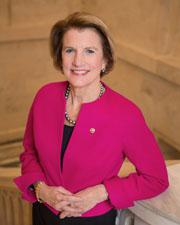 Rep. Shelley Moore Capito (R-WV)
Description
Amendment increases funding for the Rural Utilities Service Rural Water and Waste Disposal Program by $10,038,000 offset by a $10,038,000 reduction in funds from the USDA Office of the Chief Information Officer (OCIO).
Legislative Activity
Stay on top of the latest movement without scrolling through every action
Roll call votes on amendments in House
July 9, 2009 • 11:24 AM
View full timeline
Roll call votes on amendments in House
July 9, 2009 • 11:24 AM
Amendment agreed to Committee of the Whole
July 9, 2009 • 11:24 AM
House amendment agreed to: On agreeing to the Capito amendment (A003) Agreed to by recorded vote: 426 - 3 (Roll no. 500).(consideration: CR H7845-7846; text: CR H7845)
July 9, 2009 • 11:24 AM
On agreeing to the Capito amendment (A003) Agreed to by recorded vote: 426 - 3 (Roll no. 500). (consideration: CR H7845-7846; text: CR H7845)
July 9, 2009 • 11:24 AM
House amendment offered
July 8, 2009
House amendment offered/reported by : Amendment (A003) offered by Mrs. Capito.(consideration: CR H7807; text: CR H7807)
July 8, 2009 • 8:40 PM
Amendment (A003) offered by Mrs. Capito. (consideration: CR H7807; text: CR H7807)
July 8, 2009 • 8:40 PM
Votes
1 roll call on this amendment
Text
Offered
AGRICULTURE, RURAL DEVELOPMENT, FOOD AND DRUG ADMINISTRATION, AND
               RELATED AGENCIES APPROPRIATIONS ACT, 2010

  The SPEAKER pro tempore. Pursuant to House Resolution 609 and rule
XVIII, the Chair declares the House in the Committee of the Whole House
on the State of the Union for the consideration of the bill, H.R. 2997.

                              {time}  1937


                     In the Committee of the Whole

  Accordingly, the House resolved itself into the Committee of the
Whole House on the State of the Union for the consideration of the bill
(H.R. 2997) making appropriations for Agriculture, Rural Development,
Food and Drug Administration, and Related Agencies programs for the
fiscal year ending September 30, 2010, and for other purposes, with Mr.
Snyder in the chair.
  The Clerk read the title of the bill.
  The CHAIR. Pursuant to the rule, the bill is considered read the
first time.
  The gentlewoman from Connecticut (Ms. DeLauro) and the gentleman from
Georgia (Mr. Kingston) each will control 30 minutes.
  The Chair recognizes the gentlewoman from Connecticut.

[[Page H7800]]

  Ms. DeLAURO. Mr. Chairman, I yield myself such time as I may consume.
  I'm delighted to present the 2010 Agriculture-FDA appropriations
bill. I want to thank the ranking member, Congressman Kingston, for his
collaboration and his input over the last few months. I thank both the
minority and majority staff as well for their tireless work. Lastly,
and especially not least, a special thank you to Chairman Obey for his
counsel and for the resources he provided to make this bill possible
and for his leadership and vision to ensure that we can continue to get
things done and achieve our goals.
  We stand today at a turning point. Today, we're talking about
people's lives--struck hard by an economy in chaos, facing shrinking
services and struggling with rising prices and unemployment.
  I believe the administration's budget demonstrates that it is
interested, after years of underinvestment in the Federal Government's
capabilities, in protecting public health, supporting American
agriculture, strengthening rural communities, and conserving the
environment.
  This bill proposes new investments in these priorities and the
agencies that can help us meet them, while making specific and sensible
budget cuts where feasible.
  As in recent years, the bill focuses on several key areas, such as:
Protecting public health; bolstering food nutrition programs; investing
in rural communities; supporting agriculture research; strengthening
animal health and marketing programs; and conserving our natural
resources.
  The fiscal year 2010 Agriculture-FDA appropriations bill provides for
almost $23 billion in funding. It is an 11 percent increase over 2009
levels, the vast majority of which went toward three program areas: The
WIC program, the FDA, and International Food Aid. Additionally, in
order to make these important investments, to use the resources
available to it wisely, the bill proposes a number of cuts totaling
more than $735 million.
  To protect the public health, the bill provides a substantial
increase for the Food and Drug Administration to support a total
discretionary funding level of almost $3 billion, or a 15 percent
increase--almost $373 million. That is to hire additional inspectors,
conduct more inspections of domestic and foreign food and medical
products. And, as many of us know, the FDA has been underfunded for far
too long. This is not only a matter of public health and consumer
safety, it is a matter of national and economic security.
  Not all of the dangers that threaten the health and safety of
American families can be found in airports, border checkpoints, or
harbor containers. Sometimes they lurk in our refrigerators and on our
kitchen table. From E. coli in cookie dough to salmonella in peanut
butter, we have seen very real threats posed by food contamination in
recent years. And we just cannot afford to neglect our food safety
system any longer.
  The FDA's primary responsibility is to the American people to ensure
the safety of the food they eat, the drugs they take, and the medical
devices they rely on. With this increased funding, they will have the
resources and manpower they need to keep us safe.
  In addition, the bill fully funds the administration's request for
the Food Safety and Inspection Service at the USDA, the Department of
Agriculture. It puts in over $1 billion dollars for FSIS for the first
time in history.
  In terms of conservation, the committee makes a significant
investment in USDA's natural resource conservation programs. The bill
appropriates a total of $980 million for this purpose--a $73 million
increase over the administration's request.
  The bill rejects the administration's cuts to the Natural Resources
Conservation Service's farm bill conservation programs, which include
the Wetlands Reserve Program, the Farm and Ranch Lands Protection
Program, and the Wildlife Incentives Program.
  It restores funding for other valuable programs, including the
Resource Conservation and Development Program and the Watershed and
Flood Prevention Operations Program.
  In the area of nutrition, the bill works to improve nutrition and
help those hit the hardest by the current economic crisis. Food costs
and participation in WIC continue to increase at dramatic rates. And
the bill provides $7.5 billion for WIC to serve our Nation's vulnerable
populations--10 percent above last year--to support participation of
10.1 million people.
  WIC is a program that we simply cannot afford to underfund any
longer, particularly given the gravity of the current economic climate.
Our fundamental responsibility as legislators and as leaders, to say
nothing of basic morality and fairness, demand that we do everything we
can to help Americans suffering right now from poverty and
malnutrition.
  In the area of international food aid, the bill expands America's
traditional commitment to international food aid by providing an
increase of $464 million to the P.L. 480 Title II Grants Program. We
also provide an additional $99.5 million to the McGovern-Dole
International Food for Education and Child Nutrition Program.
  In the area of rural development, the bill creates new opportunities
for growth and development in the Nation's small town economies by
increasing funding for water and wastewater infrastructure grants by
$73 million; provides $8.7 billion for housing; $541 million for
community facilities; and $9.3 billion for the rural utility programs.
  In research, the bill makes significant investments in agricultural
research: $1.2 billion for the Agricultural Research Service; nearly
$1.2 billion for the Cooperative State Research, Education, and
Extension Service. That money is allocated to such programs as the
Hatch Act, Evans-Allen, the new competitive Agriculture and Food
Research Initiative, Smith Lever, the 1890 programs, and the Veterinary
of Medical Services Act.

                              {time}  1945

  With continuing volatility in the futures market, the bill provides
the administration's request for the Commodity Futures Trading
Commission, the CFTC, $160.6 million--$14.6 million and 10 percent
above 2009--in order to better secure the markets from improper
speculation. Just yesterday the CFTC moved to stem heavy speculative
trading in the oil, natural gas and energy markets. With this increased
funding, the Commission will be better poised to ensure market
integrity for all honest brokers.
  In closing, I look forward to working with all of you today as we
work to craft responsible agriculture legislation that alleviates
short-term suffering, encourages long-term growth, invests in our
future and reflects our priorities as a Nation.
  Let me take a moment to say thank you to our staff who have worked
diligently to help put this bill together. The subcommittee majority
staff: Martha Foley, our clerk; Leslie Barrack; Matthew Smith; and
Kerstin Millius have worked closely with David Gibbons on the minority
staff. In addition, Brian Ronholm and Letty Mederos on my staff and
Merritt Myers from Mr. Kingston's staff all have worked very, very hard
to bring this bill to the floor this evening. I hope the Congress will
seize this opportunity to help American farmers and families in these
tough times and get us moving again on the path to recovery. I urge you
to support this bill.
  I reserve the balance of my time.
  Mr. KINGSTON. I yield myself as much time as I may consume.
  I thank the gentlewoman, my counterpart, the chairwoman of the
committee, for her great introductory remarks. I certainly support many
parts of this bill. I want to start out by complimenting her on the
process that we have and the relationship that we have. We have an open
and honest relationship. We can agree to disagree and do it in an
agreeable fashion. We have a lot of fun on the committee. We've had a
lot of hearings. Many hearings where we are interrupted by votes and
then we had to go back over there, sometimes it's just the Chair and I
who go back; and we have our way with the witnesses, which is always
fun because here in Washington we'd rather be the ones with the
microphone than having somebody else have the microphone. We just have
a good time with this. I think the staff works well together, and I
want to recognize the staff for all their efforts at this time. On the
majority staff, Martha Foley, Leslie Barrack, Jason Weller, Matt Smith,

[[Page H7801]]

Kerstin Millius, Brian Ronholm and Letty Mederos. I thank everybody on
that side for working with our folks. Our folks are Dave Gibbons,
Merritt Myers, Meg Gilley, Bernie Tokarz and Jarr Rosenbaum who all
worked closely with us over the years; and we appreciate the work of
the staff.
  I think that if you look at one of the things that this bill has also
done in this atmosphere where earmarks are under a lot of scrutiny, in
2006 this bill had $865 million in earmarks. The bill we are looking at
tonight has $219 million. That is a substantial reduction. In 2008
there were about 400 earmarks in the bill, and now we're down to about
322. So we're making a lot of progress in reducing the number of
earmarks, and that is a good thing.
  What this bill does not have though is spending reductions; and
unfortunately, Mr. Chairman, we spend a lot of time talking about
increase in spending, but we don't talk about efficiency and
effectiveness. The purpose of Congress really shouldn't be just to
spend more money on an authorized program. We should make sure that the
programs are effective, they're efficient, and are doing their intended
purpose. Increasing WIC or increasing food stamps, is that a good
thing? I would challenge that premise that it's not necessarily a good
thing. It may be a necessary thing to do. But just because we've
increased food stamps or WIC spending, I don't think we can polish off
our halos and pat ourselves on the back. I think it underscores a
situation in society that we need to be addressing, some of it in this
committee, some of it in the authorizing committee; but certainly all
Members of Congress, what do you do to help encourage people to be more
independent so they do not have to depend on the U.S. Congress year
after year? Spending in this bill is up about 14 percent overall. It's
a $123.8 billion bill. The discretionary portion is up nearly 13
percent from about $20 billion to nearly $23 billion. The FDA is up 13
percent, from $2.6 billion to about $3 billion; and CFTC, the Commodity
Futures Trading Commission, has gone from $140 million to $160 million,
which is about a 14 percent increase.
  Now for these increases, what will we get for the taxpayer dollar?
What does it do for us? It just really, we know, grows the bureaucracy.
It doesn't always get something done better or faster. I think that
when we spend more money, we should have a measurement of the
expectation, particularly in an economy that is floundering, an economy
right now that has an $11 trillion national debt. I think my colleagues
here don't need me to remind them where money comes from. We print it;
we tax it from those who have earned it; or we borrow it from countries
such as China, to whom we owe about $622 billion right now. Truly the
national debt is a big problem. It's not the 500-pound gorilla in the
room. It's, rather, a whole lot of gorillas that are in the room.
  I think as a Republican, one reason why we are in the minority is
because we spent too much money. Republicans had a brand identity of
being fiscal conservatives, and unfortunately we threw that away. There
was a war. There was a hurricane. There were flooding problems. There
was terrorism. There were domestic attacks. But that's not an excuse.
However, now, particularly with this administration, spending seems to
be on supercharge; and as government increases in size, the private
sector seems to decrease in size.
  Take, for example, the recently passed stimulus program, $790 billion
in deficit spending at a time when unemployment was 8 percent; and the
President said we have to do something that will give us drastic and
immediate results. Now instead of that unemployment rate being
decreased, it's almost 10 percent; and 1.5 million new people are out
of work since the passage of the stimulus program. Yet here we are
again tonight, saying we can pass a bill with a 14 percent increase on
it, and that is synonymous with good. Mr. Lewis on the committee
actually offered a substitute amendment in what we call the 302(b)
allocation that would have actually held spending to a 2 percent
increase over last year's level. That was rejected on a party-line
vote. But I think Mr. Lewis was trying to say, we've got to rein in
control of the spending because it's clear more spending does not
create more jobs.

  There are other issues in this bill which we, in the minority, have
tried to address through amendments. Now unfortunately despite the fact
that we turned in to the Rules Committee 90 amendments--and I'll say I
had not seen those amendments. I was trying to focus our minority
efforts on about 8 to 10 to 12 particular amendments, amendments which
I thought were substantial, substantive, that were good government,
maybe philosophical disagreements here or there; and I had lots of
communication with our Members. So I'm not sure where the other 70 to
80 amendments came from. But I do know with the prefiling of amendments
that Members are more inclined to throw a lot of amendments out there
to the Rules Committee in order to protect themselves should they
decide to go forward on their amendments because if they don't prefile,
then they can't even have consideration. But because of the continuing
practice of closed rules, most of these amendments, of course, were
rejected. Tonight I believe we're going to be looking at two or three
substantive amendments, then some earmark amendments, and then a couple
of noncontroversial amendments. And I'm appreciative of that. But I do
think that we should open up this process a lot more.
  There are other things that we should be discussing that are not in
this bill, like a limitation on housing payments for illegal aliens. We
need to be discussing categorical eligibility for food stamps; and this
is a practice widespread right now in the States where if you qualify
for one entitlement program, then you're automatically going to be
enrolled in food stamps. What the unintended consequence of that is,
some people who have substantial net worth are going to be able to get
food stamps because they're unemployed. And we all know, tragically, a
lot of people are unemployed right now; but some of them have a lot of
assets in the bank. Yet under the State interpretations of categorical
eligibility, they're automatically enrolled in food stamps. I think
that's taking away food stamps from somebody who truly deserves it. We
are unable to have an amendment on that. Also payment limitations to
farmers who are ineligible for programs. From 2003 to 2006 the USDA
discovered about $50 million that was paid to farmers who were not
eligible to receive payments. I think that should be addressed in this
bill a little more closely than it is. We did offer an amendment on
that, but it was not supported. In 2006 the food stamp program made
$1.29 billion in overpayments. An amendment that would have prohibited
illegal recipients from getting the money I think would have been
something good for this bill, but that was not accepted. There was
another amendment offered on P.L. 480. It's interesting, P.L. 480, we
have increased that substantially. That's our foreign food assistance
program. It has popular, broad bipartisan support. But on the same
hand, I don't think we had enough oversight, enough discussion as to
why that spending needed to spike up to the tune of getting $700
billion in a supplemental bill and then another $464 million in this
bill. These things are of great concern to me, and we will discuss some
of these in more detail.
  I look forward to the debate. I look forward to the amendments.
Again, I want to close with where I started with my chairwoman. I enjoy
working on the committee, enjoy working with the staff; and we're going
to continue to be engaged in this process. It won't just end tonight.
We're going to make sure that we follow this bill all the way through;
and to the degree that the minority is able to participate, we will be
there. But thank you for letting us work with you.
  I reserve the balance of my time.
  Ms. DeLAURO. I yield 1 minute to the gentleman from California (Mr.
Baca).
  Mr. BACA. Mr. Chair, I rise today to voice my strong support for H.R.
2997, the Agriculture appropriations bill for fiscal year 2010.
  I thank my good friend Rosa DeLauro for her leadership on this vital
legislation which helps put food on the table for more needy families.
Americans are suffering through the worst economic crisis since the
Great Depression. More and more families are forced to seek assistance
in order to

[[Page H7802]]

feed themselves and their loved ones. As Chair of the Agriculture
Subcommittee on Nutrition, I am pleased that this legislation makes a
strong commitment to feeding the impoverished and ending hunger in
America. Today's legislation provides more than $7.5 million to ensure
that some of the most wonderful in our society, women and young
children, have access to nutritious foods during these tough times.
These funds will ensure another 700,000 women, infants and children
will have access to WIC benefits. In addition, H.R. 2997 provides $180
million to give nutritious foods to over half a million low-income
senior, disabled, and women and children through the Commodity
Supplemental Foods Program. I urge my colleagues to support this
legislation.

                              {time}  2000

  Mr. KINGSTON. Mr. Chairman, I yield 5 minutes to the gentleman from
Florida.
  Mr. MICA. I want to thank our ranking member, Mr. Kingston, for
yielding time.
  I would have liked to have actually spoken on the rule. As some of
you may know, I protested the rule. I didn't bring the House business
to a halt, but I did ask several reconsiderations and a motion to
adjourn, exercising my right in the minority, and as a House Member, to
proceed on business that I felt was only fair and equitable as far as
treatment of a Member when a Member has a problem in his district.
  I have the great honor and privilege of representing an urban area, a
suburban area, and also a rural area from basically north of Orlando to
just south of Jacksonville. The western part of the central and the
center part of the northern part of the State is agriculture and rural.
It is a great area. People work hard. They are some of the most
dedicated, hardworking Americans I know.
  Unfortunately, several months ago, we had a disastrous series of
rains. We had up to 30 inches of rain in some of the areas. I have
pictures of potato fields. My district is one of the largest potato
growth and farm areas in the Nation. These fields behind me here were
all covered with water and covered for multiple days with sun and rain.
What happened is basically the potatoes rotted and we had $50 million
worth of damage, which really isn't a huge amount of money when we deal
with billions here, but it means the difference between life and death,
between staying in business and keeping people employed in my district.
  I had asked the Rules Committee for a small change in a program that
is called Supplemental Review Assistance program, and those are Federal
programs that farmers in my district paid premiums for, participated
in, and were eligible for. In fact, 85 percent of the potato farmers
were eligible for participation in those programs, but the problem that
we had, in spite of their having this insurance, is that the timing of
the disaster was such and the rules by which they assess eligibility
and disaster payments under SURE would arrive after the crop losses,
because some of the data has to be computed for payment rates a year
after the harvest. Now, that doesn't help people who are trying to do
plantings, and we have different seasons from other parts of the United
States. It doesn't help people who are trying to keep folks employed in
the farm business, and it doesn't help farmers who are trying to keep
their door open.
  I asked for a small change, and if you look at the rule, they
actually put in some changes, and they were, I hate to say it,
legislating on appropriations to help folks. And we normally do that.
We help each other in the House of Representatives when our areas have
a disaster.
  Now, I wasn't asking for any more money. I wasn't asking for another
bigger program. There is plenty of money there. It is the timing of the
disaster and this particular requirement to get funds and make my
farmers eligible and farmers through this devastated area eligible.
  So I'm very disappointed. I must say that I have the highest respect
for Mr. Kingston, and I have the greatest respect for Ms. DeLauro. They
do a wonderful job. My argument, again, is not with you. My argument is
with the Rules Committee that did not extend the courtesy to a Member
to assist his district in a time of natural disaster. I intend to
pursue this no matter what it takes. However, I have to get the
attention of the House. We are going to find a way to bring aid to
people in my district who just want to stay in business, who want to
continue farming, and who want to create jobs in a very difficult
economy and not be shut down. They have paid their dues. They have paid
their fees.
  We are not asking for any more money. We are just asking for a slight
change in some of the language on the funds that are available, and
there are plenty of funds available.
  Mr. KINGSTON. I continue to reserve the balance of my time.
  Ms. DeLAURO. Mr. Chairman, I just would say to my colleague that I
sympathize with the difficulties and the disaster that has befallen
your district, and I would urge you to speak to the authorizing
committee and Mr. Peterson in the Agriculture Committee for this
effort.
  With that, let me just yield 2 minutes to the gentleman from
Connecticut (Mr. Courtney).
  Mr. COURTNEY. Mr. Chairman, I thank the chairwoman for yielding.
  I rise this evening to engage in a colloquy with the chairwoman of
the subcommittee about the desperate state of the Nation's dairy
industry which has experienced a disastrous collapse in prices over the
past year. During the July recess, I had the honor of accompanying
Chairwoman DeLauro on a visit to the Greenbacker Dairy Farm in Durham,
Connecticut. During that visit, we heard firsthand from dairy farmers
all across Connecticut about the difficulties that they are facing,
particularly regarding the cost of production and the rapid decline of
dairy prices over the past year.
  I ask the chairwoman if she could speak to this issue and what relief
might be available to these farmers.
  Ms. DeLAURO. I thank the gentleman for his efforts on behalf of the
dairy industry. Over the past year, dairy farmers across the country
have been challenged like never before. I support efforts to provide
increased relief to these farmers. I thank you, Mr. Courtney, Mr.
Welch, Chairman Peterson, and other Members for their efforts. I am
committed to helping struggling dairy farmers and their families in
Connecticut and across the country.
  Mr. COURTNEY. I thank the Chair for her response and her staunch
support of our State and national dairy farms.
  I now yield to my distinguished colleague from Vermont (Mr. Welch).
  Mr. WELCH. We appreciate the gentlewoman's hard work on the
Agriculture appropriations spending bill. As you know, dairy farmers
are currently being paid $11 per hundredweight on milk that costs them
$18 per hundredweight to produce. This upside-down pay scale is
absolutely unsustainable. It has already forced dozens of Vermont
farmers out of business.
  We unsuccessfully offered an amendment to the bill to raise the
payment rates on the Milk Income Loss Contract program from 45 percent
to 79 percent. While the MILC program isn't perfect, it is really a way
to put money back in the pocket of farmers.
  We appreciate your support, and we believe that you agree that
Congress must take action to help our struggling dairy farmers and we
cannot wait for more farms to go out of business.
  I thank the chairwoman and look forward to continuing to work with
her and my colleague from Connecticut.
  Ms. DeLAURO. I thank my friend from Vermont for his leadership and my
friend from Connecticut. I applaud his continued efforts to help the
dairy industry. I look forward to working with you.
  Mr. KINGSTON. I continue to reserve the balance of my time.
  Ms. DeLAURO. Mr. Chairman, I yield 1 minute to the gentleman from New
Jersey (Mr. Holt).
  Mr. HOLT. Mr. Chairman, I commend the gentlelady for her work on the
bill and thank her for supporting my amendment to protect the USDA's
organic standards and labels and to enter into a colloquy now.
  We must ensure that the Department of Agriculture's Inspector General
has the resources to complete a thorough investigation, already
underway, into

[[Page H7803]]

whether current inspectors are upholding the most rigorous standards
for organic certification and receiving adequate oversight. The
Inspector General also needs resources to investigate whether
nonorganic substances inappropriately remain in USDA-certified
products. The number of nonorganic substances has ballooned from 77 in
2002 to 245 today, and only one has been removed. If we want the
organic label to mean something, then there must be strong standards
for organic certification and we must uphold them.
  Ms. DeLAURO. I agree with the gentleman about the importance of
protecting and strengthening USDA's organic standards.
  The CHAIR. The time of the gentlewoman has expired.
  Ms. DeLAURO. I yield myself 5 additional seconds.
  I was pleased to incorporate it into today's chairman's amendment,
the amendment to increase funding to the Office of the Inspector
General.
  Mr. KINGSTON. I continue to reserve the balance of my time.
  Ms. DeLAURO. I am pleased, Mr. Chairman, to yield 1\1/2\ minutes to
the gentlewoman from California (Ms. Lee).
  Ms. LEE of California. Let me first thank the gentlelady from
Connecticut for her hard work and her dedication to moving our Nation
forward in the area of agriculture, nutrition, health safety, and all
of the other issues that she tackles each and every day. This bill is
going to help millions of Americans, and I am pleased to support it.
  I rise today to enter into a colloquy to raise the important issue
regarding the lifetime ban on food stamp eligibility for formerly
incarcerated persons who were convicted of drug offenses. This is
really a serious moral and ethical issue of concern to me and many
members of the Congressional Black Caucus.
  Our Constitution provides the appropriate groundwork for this issue
in article 1, section 10 in the Fifth Amendment by declaring that
individuals are not to be subject to double jeopardy or to be subject
to ex post facto laws. After offenders have served their time, Mr.
Chairman, the formerly incarcerated reenter society looking to improve
themselves and their lives. As a society, this is what we want to
support to reduce recidivism and reduce crime; however, the current
policy prevents them access to food stamps.
  Food stamps and cash support are essential to the health and
stability of families. Individuals with criminal convictions face
considerable barriers, often needing transitional services and support
to improve their ability to acquire gainful employment and transition
after incarceration. The Personal Responsibility and Work Opportunity
Reconciliation Act prohibits anyone convicted of a drug-related felony
from receiving both federally-funded cash assistance----
  The CHAIR. The time of the gentlewoman has expired.
  Ms. DeLAURO. I yield the gentlelady 30 additional seconds.
  Ms. LEE of California. The point I wanted to make is that the Welfare
Reform Act prevents anyone, and only those who were formerly convicted
of drug felonies, from ever receiving cash assistance and food stamps,
even after completing their sentence and overcoming an addiction.
  So I have worked with the authorizing committee and introduced H.R.
5802, and I wanted to talk to the gentlelady tonight about this very
important issue. I hope that sooner or later we can really repeal this
ban because it is a barrier for those who have reentered society. They
deserve to be able to be eligible for food stamps.
  Ms. DeLAURO. Mr. Chairman, I yield myself 15 seconds.
  I assure the gentlewoman that we will work together to correct the
inequity that has been in place since the 1996 welfare reform bill. I
agree with you. The time has come to address this issue in a meaningful
way. We are talking about individuals who have paid their debt to
society. They should be given a new opportunity to make a new life, to
provide food assistance for themselves and their families. It is the
right thing to do.
  Mr. KINGSTON. I continue to reserve the balance of my time.
  Ms. DeLAURO. Let me yield 1 minute to the gentleman from Ohio (Mr.
Kucinich).
  Mr. KUCINICH. I thank the gentlewoman. I rise to engage in a colloquy
with the chairwoman of the subcommittee.
  Reliable economic data is critical for any industry. Congress has
historically supported the Economic Research Service of the USDA which
has collected and analyzed segregated organic data. Organic farming is
one of the fastest growing segments of the U.S. agriculture. The need
and demand for this information will continue to increase.
  Though language has been included in past Agriculture appropriation
bills that dedicates funding for the Organic Production and Marketing
Data Initiative, it is not included this year. Only $500,000 of the
$82.5 million budget of the Economic Research Service would help meet
the needs of the initiative. Is it the gentlelady's opinion that the
funding for the initiative should remain strong?
  Ms. DeLAURO. The importance of the program is clear, Mr. Kucinich,
and you have raised a very valid point. I agree with you that the
Organic Production and Marketing Data Initiative should be funded in
order to compete with the rest of agricultural commodities.
  Mr. KUCINICH. I thank the gentlelady.
  Mr. KINGSTON. I continue to reserve the balance of my time.
  Ms. DeLAURO. I yield 1\1/2\ minutes to the gentlewoman from Wisconsin
(Ms. Moore).
  Ms. MOORE of Wisconsin. I thank the gentlewoman.
  Mr. Chairman, I rise today to engage in a colloquy with the
chairwoman of the subcommittee. I commend her efforts to expand the
Child and Adult Care Food Program in this bill by increasing the total
number of States authorized to serve supper through the At-Risk
Afterschool Care program.
  According to the Food Research Action Center, the average daily
participation of children in Wisconsin in the Child and Adult Care Food
Program is over 63,000 kids. There is a great deal of need in my State
and across the Nation to ensure that young people have the opportunity
to have three nutritious meals a day.
  I would love to work with the gentlewoman and my colleague, Senator
Kohl in the Senate, to authorize Wisconsin to serve suppers in
Wisconsin through the Child and Adult Care Food Program.
  Ms. DeLAURO. I thank the gentlelady for her support of the Child and
Adult Care Food Program, and I would like to work with her very much in
the future to expand access to meals in the At-Risk Afterschool Care
programs. Through CACFP, 3.1 million children and 108,000 adults
receive nutritious meals and snacks each day as part of their day care.
The bill before us today expands the afterschool meals program to
additional areas. I want to ensure you that we will work together to
expand this essential program.
  Ms. MOORE of Wisconsin. With the increasing price of food and overall
food insecurity among families and communities in today's economy, I
welcome the opportunity to work to improve and expand the program.

                              {time}  2015

  Ms. DeLAURO. I yield 2 minutes to the gentlelady from Texas (Ms.
Jackson-Lee).
  Ms. JACKSON-LEE of Texas. Let me thank the distinguished chairwoman
and the ranking member.
  I rise today to support the underlying bill and to particularly focus
on the question of hunger in America.
  Madam Chairwoman, this past weekend I joined one of the more well-
known constituents of mine, Beyonce, who is engaged in an online
opportunity to ensure that food banks of America are taken care of. We
realize that in this economic recession, although we are working very
hard with stimulus funds, that many people are in need. Families who
work are in need of extra assistance, and so I am particularly
interested and concerned that this legislation, the appropriations,
will be supportive of the works of the Nation's food banks and help the
various food banks through a number of provisions that may ensure that
food banks are a viable part of our economic food line.
  We know that there are about 900 million, 923 million people-plus,
that are hungry around the world or are

[[Page H7804]]

lacking in what we call food security, the inability to secure the
right kind of food. We know that developmental concerns occur in
children who are not, in essence, able to participate or to have the
kind of food security they need to have.
  So I am very pleased that again the McGovern-Dole legislation has
been supported as International Food Aid, providing some $1.69 billion
as requested and $464 million above 2009. I am also very glad that this
is able to meet emergency and nonemergency humanitarian food need in
countries stricken with natural disasters and political strife, $199.5
million food for the McGovern-Dole International Food for Education and
Child Nutrition Program, the same as requested, and $99.5 million above
2009 to support education, child development and food security to some
of the world's poorest children.
  The CHAIR. The time of the gentlewoman has expired.
  Ms. DeLAURO. I yield the gentlewoman an additional 30 seconds.
  Ms. JACKSON-LEE of Texas. Might I also say that I am also glad that
this legislation continues to support the Congressional Hunger Center,
which many of us have been supporting over the years in terms of its
funding. And, likewise, I would like to emphasize the importance, in
conclusion, that hunger has not been overcome.
  This bill deals with many issues, nutrition, Women, Infants and
Children, the WIC program that is so very important, the commodities,
the supplemental food program all again focusing on the large need from
hunger, not only internationally, but domestically.
  I want to thank the chairwoman again and would like to continue to
work with her as this bill makes its way through the Congress.
  The CHAIR. The time of the gentlewoman has again expired.
  Ms. DeLAURO. I yield the gentlewoman an additional 10 seconds.
  Ms. JACKSON-LEE of Texas. I think you are well aware of the work that
my former colleague, Mickey Leland, has done on hunger. And I want to
continue to work to ensure that these programs are there for the
continuously hungry and that we will be able to distinguish it.
  Ms. DeLAURO. I yield myself 10 seconds.
  I want to assure the gentlewoman from Texas that it is of a high
priority for me to make sure that we address the very serious issue of
hunger in this country and internationally, and we will spend a lot of
time in that effort.
  Mr. KINGSTON. I yield myself such time as I may consume, Mr.
Chairman.
  I want to make a statement on behalf of myself and Mr. Frank of
Massachusetts and Ms. Brown of Florida regarding the domestic catfish
industry, and if the Chair wants to respond, fine; but we have
discussed this.
  And it actually came a little bit late in the hearing process to do
anything about, but I wanted to give some background. In 2008 the farm
bill created a new USDA catfish inspection program that requires the
USDA to define what is considered a catfish.
  Now, the reason this is important is because the FDA traditionally
does the inspection on fish, not the USDA. But now we put in this farm
bill, the USDA, in the catfish business. This was pushed by the
domestic catfish industry, asserting that Chinese catfish processors
would not be able to meet the USDA equivalency requirements of
continuous inspection and thus could not export competing products to
the United States.
  And as somebody who comes from farm country, I know that dealing with
foreign competition is very tough because sometimes they subsidize
their producers, and maybe they have different regulatory requirements
or they have some unfair advantage over the domestic producers. And yet
at the same time, the ability to buy food internationally often brings
down the price, increases the quality sometimes and increases the
number of choices for our consumers. So it is a desirable thing for the
United States Government to want to have people import food.
  But the FDA uses a hazard analysis critical control point risk-based
system that has worked very, very well. But now, under this, we are
having the USDA get into the catfish inspection program, which probably
is not as--well, it's just not going to be as effective as the FDA
program.
  The problem is the Chinese begin to grow and export a catfish to the
United States called the ictaluridae. And, meanwhile, the Vietnamese
started growing something called the pangasius. And these species are
very different. Just like a human being is different from a baboon, so
are these two different types of fish.
  But what is happening now, the domestic catfish industry is pushing
the USDA to adopt a broad definition of catfish beyond the ictaluridae
and include the pangasius. And I know you got all of that, Mr.
Chairman, because I did too the first time.
  And the concern that I have is that the USDA really does not have the
expertise to broaden their mission to start making definitions on a
different type fish than what the farm bill asked them to look into. So
I am very concerned about that, as is Mr. Frank, as is Ms. Brown from
Florida. And I know other Members are as well, and we really do not
want to see the USDA go beyond the mission and include this pangasius
in their definition of catfish.
  And if the chairwoman wants to respond, I would be glad to yield.
  Ms. DeLAURO. Yes, if the gentleman would yield, I would be happy to
address the issue.
  Mr. KINGSTON. I would be happy to yield.
  Ms. DeLAURO. I would just say to the gentleman that there is a need
to improve inspections of seafood imports. As you know, less than 1
percent gets inspected each year. And there was a lot of discussion
about this provision during the farm bill last year.
  I, frankly, have some concerns that it would further complicate the
organizational structure of food safety, instead of simplifying matters
in moving that jurisdiction from the FDA to the USDA. Also, if USDA
diverted resources to inspecting catfish, would it take away resources
from meat and poultry inspection. And I would just say that we did
plus-up funding to the USDA to be able to accommodate this new
responsibility.
  Another concern I had about this provision is that moving seafood
inspection, or even catfish inspection, is more complicated than it
seems. There is a substantial difference between preventing outbreaks
in meat and poultry and preventing outbreaks in seafood. And the FSIS,
the Food Safety and Inspection Service, has no experience with
identifying seafood pathogens.
  So I look forward to discussing this issue further with the gentleman
in answering some of the questions that you have with regard to this.
  Mr. KINGSTON. Well, I thank the gentlewoman, and as we both know, we
have spent a lot of time talking also about the USDA and Chinese
chicken and that issue. And one of the concerns that--this underscores
the thing on catfish, that it is the USDA's domain, really. They have
the expertise and the track record on fish, whereas the USDA has a
track record on chicken, poultry and beef domestically; and I know that
you do have concerns in terms of their expertise to look at the
reimportation of poultry products from China. And I wasn't going to
really discuss that, but, certainly, if the gentlewoman would like to,
we have had----
  Ms. DeLAURO. Well, certainly, we have had a discussion about it over
time. And I think the gentleman knows my position on this issue, and my
position has not changed in a number of years.
  And it's my view that the decisions about the importation of food
products from China are a public health issue that must not be
entangled in trade discussions. And I understand that Chinese officials
are suggesting a quid pro quo, if you will, and they are trying to link
the exportation of poultry products with reopening U.S. beef exports to
the People's Republic of China.
  Those talks, in my view, should be separate and distinct. My position
in this area has to do with the public health of this Nation. It is
clear that the 2006 FSIS declaration that China's safety and inspection
system was, quote, equivalent to the U.S. system for processed poultry
products, was based on trade goals. From a public health and a safety
perspective, the equivalency determination was deeply flawed and cannot
be relied on to protect U.S. consumers' safety.

[[Page H7805]]

  Equivalency was granted in the face of overwhelming evidence of
contamination in Chinese processing plants and in Chinese
slaughterhouses.
  Therefore, in my view, the ban on poultry products from China must be
maintained. And while USDA does have a process, as you pointed out, in
place, that process, in making a determination of equivalency for
processing U.S. chicken in China, was flawed and was broken and has not
worked.
  The committee, by the way, and you understand this, intends to
undertake a thorough review of, convene hearings on the equivalency
process in general. And what we will examine are audits of inspection,
on-site reviews of processing facilities, laboratories, other control
operations, increased level of port entry reinspection and information-
sharing programs with other countries.
  So I look forward to continuing this discussion and working with you
as the committee moves forward with its examination. But in the
meantime, the limitation in carrying out this rule needs to be
maintained.
  Mr. KINGSTON. Well, I thank the gentlewoman for those remarks, and I
think that your uncertainty with the reliability of USDA on Chinese
chicken I share with the USDA on catfish.
  There is a lot to continue to discuss. And it's interesting, Mr.
Chairman, as we talk about our trade relations, and I think that the
gentlewoman does make a very good point that we have to be sure that
our desire to trade with countries doesn't blur the food safety mission
that we also have.
  I was reminded, though, on the 4th of July that of the $211 million
worth of fireworks that we exploded all around the Nation, most of it
came from China. And of the flags and buntings that we displayed on the
4th of July, $340 million worth, most of that came from China as well.
  So we do have a great deal--we have got a big challenge in front of
us as we look at our second largest trade partner in China to figure
out, you know, what are some of these lines and boundaries.
  Ms. DeLAURO. I would just say to the gentleman that we have a
responsibility that whatever the food product is coming, and that food
product from anywhere, that the country that is producing this product
or processing this product must have the same set of equivalent
standards that we have domestically to ensure the public health of
people in the United States. We have witnessed over and over again in
the last several months that we will put the public health at risk when
children die, when people are ill from either a product that's
domestically produced or internationally produced. We, as a Nation, and
those of us who serve in this body, I believe, have a moral
responsibility to do something about it.

                              {time}  2030

  Mr. KINGSTON. I thank the gentlewoman. I have no further speakers on
general debate, and I yield back the balance of my time.
  Mr. VAN HOLLEN. Mr. Chair, I rise in support of the FY 2010
Agriculture, Rural Development, Food and Drug Administration
Appropriations bill for the investments it makes in protecting the
public health, bolstering food nutrition and conserving our natural
resources.
  I am pleased that the Food and Drug Administration will receive
$2.338 billion in discretionary funding, an increase of $299 million
over last year. Serious gaps have been exposed in FDA's ability to
protect the American public due to recent outbreaks and recalls of
food-borne illnesses. We need to ensure that the FDA has the necessary
tools and resources to fulfill its vital mission in protecting the
American public from unsafe products. This substantial investment in
the FDA will significantly improve food and medical products safety. In
addition, the bill fully funds the President's request for the Food
Safety Inspection Service, providing over $1 billion for FSIS for the
first time in history for the inspection of meat, poultry and egg
products.
  To help those low-income and elderly Americans struggling with rising
food costs in this current economic crisis, this bill strengthens food
nutrition programs by providing $61.4 billion for the Supplemental
Nutrition Assistance Program, an increase of $7.4 billion over last
year's amount, and $7.5 billion for the Women, Infants, and Children
(WIC) program. The funding the legislation provides will help an
additional 700,000 women, infants, and children, which will increase
WIC participation to over ten million people.
  As Co-Chair of the bipartisan Congressional Chesapeake Bay Watershed
Task Force, I am particularly pleased that the bill provides almost $4
million through the Natural Resources Conservation Services for
Chesapeake Bay restoration activities. Providing adequate technical
assistance to farmers, landowners, watershed groups and communities is
critical to implementing the Farm Bill conservation programs that are
the single most vital tool to improving the health of the Chesapeake
Bay. This legislation provides $980.3 million for the Natural Resources
Conservation Program to help face the demands for cleaner water,
reduced soil erosion, and more wildlife habitat.
  Mr. Chair, I commend Chairwoman DeLauro,  Ranking Member Kingston and
the rest of the subcommittee for its work on this legislation and urge
my colleagues' support.
   Mrs. MILLER of Michigan. Mr. Chair, I rise today in strong support
of the underlying legislation, H.R. 2997 the Agriculture, Rural
Development, Food and Drug Administration and Related Agencies
Appropriations Act of 2010.
  My district is home to some of the most fertile farm land as well as
some of the hardest working families farmers in the nation.
  As you drive through my district, you see fields full of dry beans,
sugar beets, corn, wheat, soybeans, various vegetables, and other crops
needed to feed our nation and indeed the world.
  We have thriving cattle, pork, and dairy industries as well.
  While so many identify Michigan with manufacturing, we sometimes
forget that agriculture is Michigan's second leading industry--and the
bright spot in a struggling Michigan economy.
  This bill is important because it provides much needed funding for
the Farm Services Agency which administers disaster and loan programs,
farm commodities and conservation programs directed toward producers.
  The bill also goes a long way in providing money for continued
agriculture research which is so important in increasing yields and
furthering education for our producers. This measure also includes
essential programs to assist those living in rural communities and
extends programs that keep the quality of our food safe.
  Finally, this bill also provides an important benefit to the Great
Lakes, a national treasure which represent 20% of the world's
freshwater supply. This bill exceeds the President's Budget and the
FY2009 levels for funding for the Natural Resources Conservation
Service which help protect wetlands and wildlife habitat.
  While there are certainly challenges with this bill--namely an
increase in spending over last year--it is vital that we move this
important funding bill forward. It is my hope that in conference we can
find additional savings to bring total spending down, but this bill
does represent spending that will provide sufficient support for an
industry that is important to our national economy and necessary to
make certain that America remains the greatest food producer in the
world. I urge my colleagues to vote in favor of this bill.
  Ms. DeLAURO. Mr. Chairman, I yield back the balance of my time.
  The CHAIR. All time for general debate has expired.
  Pursuant to the rule, the bill shall be considered for amendment
under the 5-minute rule.
  No amendment shall be in order except the amendments printed in part
A and B of House Report 111-191, not to exceed one of the amendments
printed in part C of the report if offered by the gentleman from
California (Mr. Campbell) or his designee; not to exceed three of the
amendments printed in part D of the report if offered by the gentleman
from Arizona (Mr. Flake) or his designee; and not to exceed one of the
amendments printed in part E of the report if offered by the gentleman
from Texas (Mr. Hensarling) or his designee. Each amendment shall be
considered as read, shall be debatable for 10 minutes equally divided
and controlled by the proponent and an opponent, and shall not be
subject to a demand for division of the question. An amendment printed
in part B, C, D, or E of the report may be offered only at the
appropriate point in the reading.
  The Clerk will read.
  The Clerk read as follows:

                               H.R. 2997

       Be it enacted by the Senate and House of Representatives of
     the United States of America in Congress assembled, That the
     following sums are appropriated, out of any money in the
     Treasury not otherwise appropriated, for Agriculture, Rural
     Development, Food and Drug Administration, and Related
     Agencies programs for the fiscal year ending September 30,
     2010, and for other purposes, namely:


             Part A Amendment No. 1 Offered by Ms. De Lauro

  Ms. DeLAURO. Mr. Chairman, I have an amendment at the desk.
  The CHAIR. The Clerk will designate the amendment.

[[Page H7806]]

  The text of the amendment is as follows:

       Part A amendment No. 1 offered by Ms. DeLauro:
       Page 3, line 19, after the dollar amount, insert ``(reduced
     by $1,000,000)''.
       Page 5, line 4, after the dollar amount, insert ``(reduced
     by $500,000)''.
       Page 5, line 5, after the dollar amount, insert ``(reduced
     by $500,000)''.
       Page 6, line 9, after the dollar amount, insert ``(reduced
     by $4,000,000)''.
       Page 8, line 1, after the dollar amount, insert
     ``(increased by $500,000)''.
       Page 9, line 10, after the dollar amount, insert
     ``(increased by $2,000,000)''.
       Page 10, line 25, after the dollar amount, insert
     ``(increased by $3,519,000)''.
       Page 11, line 8, after the dollar amount, insert
     ``(increased by $3,000,000)''.
       Page 11, line 23, after the dollar amount, insert
     ``(increased by $519,000)''.
       Page 25, line 22, after each of the dollar amounts, insert
     ``(reduced by $519,000)''.
       Page 57, line 8, after the dollar amount, insert
     ``(increased by $235,000,000)''.
       Page 57, line 20, strike ``and''.
       Page 57, line 23, insert before the colon the following:
     ``; and $235,000,000 shall be derived from tobacco product
     user fees authorized by section 919 of the Federal Food,
     Drug, and Cosmetic Act, as added by section 101 of the Family
     Smoking Prevention and Tobacco Control Act (Public Law 111-
     31), and shall be credited to this account and remain
     available until expended''.
       Page 57, line 25, strike ``and animal generic drug'' and
     insert ``animal generic drug, and tobacco product''.
       Page 58, line 21, strike ``(7) not to exceed $115,882,000''
     and insert the following: ``(7) $216,523,000 shall be for the
     Center for Tobacco Products and for related field activities
     in the Office of Regulatory Affairs; (8) not to exceed
     $117,225,000''.
       Page 58, line 25, strike ``(8) not to exceed $168,728,000''
     and insert ``(9) not to exceed $171,526,000''.
       Page 59, line 2, strike ``(9) not to exceed $185,793,000''
     and insert ``(10) not to exceed $200,129,000''.
       At the end of the bill (before the short title), insert the
     following:
       Sec. __.  There is appropriated, for the grant program for
     the purpose of obtaining and adding to an anhydrous ammonia
     fertilizer nurse tank a substance to reduce the amount of
     methamphetamine that can be produced from any anhydrous
     ammonia removed from the nurse tank as authorized by section
     14203 of the Food, Conservation, and Energy Act of 2008 (21
     U.S.C. 864a), hereby derived from the amount provided in this
     Act for ``Rural Development Salaries and Expenses'',
     $2,000,000.
       Sec. __.  None of the funds appropriated or otherwise made
     available by this Act may be used for first-class travel by
     the employees of agencies funded by this Act in contravention
     of sections 301-10.122 through 301-10.124 of title 41, Code
     of Federal Regulations.

  The CHAIR. Pursuant to House Resolution 609, the gentlewoman from
Connecticut (Ms. DeLauro) and a Member opposed each will control 5
minutes.
  The Chair recognizes the gentlewoman from Connecticut.
  Ms. DeLAURO. Mr. Chairman, this is a good amendment, and it contains
several provisions.
  First, it appropriates the tobacco fees authorized in the recent
tobacco bill to start up the new Tobacco Control Program as authorized
under the Family Smoking Prevention and Tobacco Control Act.
  The amendment also provides increases of $2 million for the
Agriculture Research Service and $3 million for the National Institute
of Food and Agriculture. It increases funding for the Office of the
Inspector General. It raises the funding level for the Higher Education
Multicultural Scholars Program to $1.5 million; provides $2 million for
the Methamphetamine Inhibitor Grant Program authorized in the farm
bill; and prohibits first-class travel by employees funded in the bill
if it violates existing rules.
  The increases are fully offset by small reductions to administrative
programs. It is a noncontroversial amendment, and I urge my colleagues
to support this amendment.
  I reserve the balance of my time.
  Mr. KINGSTON. Mr. Chairman, I rise to claim the time in opposition to
the amendment.
  The CHAIR. The gentleman from Georgia is recognized for 5 minutes.
  Mr. KINGSTON. I yield myself such time as I may consume.
  Opposition of this amendment has nothing to do with the Agriculture
Committee as much as it does the Rules Committee because there were so
many amendments that the Rules Committee did not allow by the minority,
and the reason that the Rules Committee said they did not allow them
was because they were authorizing on an appropriation bill. This is
authorizing on an appropriation bill. While there is a good reason for
it, it is still something that I think is philosophically inconsistent
with what the Rules Committee has been telling us for the last 24
hours. I will ask for a recorded vote on this.
  I yield back the balance of my time.
  Ms. DeLAURO. Mr. Chairman, I would just indicate that the Rules
Committee did make the amendment in order. As I say, it is a
noncontroversial amendment.
  I yield back the balance of my time.
  The CHAIR. The question is on the amendment offered by the
gentlewoman from Connecticut (Ms. DeLauro).
  The question was taken; and the Chair announced that the ayes
appeared to have it.
  Mr. KINGSTON. Mr. Chairman, I demand a recorded vote.
  The CHAIR. Pursuant to clause 6 of rule XVIII, further proceedings on
the amendment offered by the gentlewoman from Connecticut will be
postponed.
  The Clerk will read.
  The Clerk read as follows:

                                TITLE I

                         AGRICULTURAL PROGRAMS

                  Production, Processing and Marketing

                        Office of the Secretary

       For necessary expenses of the Office of the Secretary of
     Agriculture, $5,285,000: Provided, That not to exceed $11,000
     of this amount shall be available for official reception and
     representation expenses, not otherwise provided for, as
     determined by the Secretary.

                       Office of Tribal Relations

       For necessary expenses of the Office of Tribal Relations,
     $1,000,000, to support communication and consultation
     activities with Federally Recognized Tribes, as well as other
     requirements established by law.

                          Executive Operations


                     office of the chief economist

       For necessary expenses of the Office of the Chief
     Economist, $13,032,000.


          Part B Amendment No. 2 Offered by Mr. Brady of Texas

  Mr. BRADY of Texas. Mr. Chairman, I call up my amendment made in
order under the rule.
  The CHAIR. The Clerk will designate the amendment.
  The text of the amendment is as follows:

       Part B amendment No. 2 offered by Mr. Brady of Texas:
       Page 3, line 4, after the dollar amount, insert ``(reduced
     by $50,000)''.
       Page 8, line 20, after the dollar amount, insert
     ``(increased by $50,000)''.

  The CHAIR. Pursuant to House Resolution 609, the gentleman from Texas
(Mr. Brady) and a Member opposed each will control 5 minutes.
  The Chair recognizes the gentleman from Texas.
  Mr. BRADY of Texas. Mr. Chairman, this amendment seeks to shift
$50,000 from the Office of the Chief Economist at the USDA to the
Economic Research Service.
  The goal of this amendment is to have the Office of the Chief
Economist work jointly with the Economic Research Service and the
Foreign Agriculture Service to conduct an independent, objective study
on the potential growth in U.S. agriculture exports that would result
from implementation of the pending trade promotion agreements with
Colombia, Panama, and South Korea within 90 days of this legislation
becoming law.
  Additionally, the Department of Agriculture would also report on the
potential impact of U.S. agriculture exports if these agreements are
not implemented.
  In each case, the USDA would analyze the impacts of changes in
exports on agriculture sector jobs, wages, farm income, and commodity
prices.
  As many of you know, each of these countries have signed or are
negotiating trade agreements with several countries that are major
competitors for America's farmers and ranchers. I know we are all
concerned about the potential loss of competitiveness that families and
workers in our agriculture sector would face if the pending trade
agreements are not implemented.
  While there has been some analysis of the impact of the pending trade
agreements on American farmers and ranchers, much of this analysis is
outdated. For example, the study by the U.S. International Trade
Commission on the U.S.-Colombia Trade Promotion Agreement was published
in December 2006 and relied on trade data from 2005. Obviously,
conditions have changed since then.

[[Page H7807]]

  In these difficult economic times, Congress, now more than ever, must
pursue policies to enhance the competitiveness of America's farmers and
ranchers. And since 95 percent of all consumers live outside the United
States, increasing exports, finding new customers for American farmers
and ranchers, are a vital component of that effort.
  The analysis conducted as a result of this amendment will help
Members of Congress understand fully the importance of leveling the
playing field for America's farmers and ranchers by considering and
implementing the pending trade agreements.
  I reserve the balance of my time.
  Ms. DeLAURO. Mr. Chairman, although I plan to support the amendment,
I ask unanimous consent to claim the time in opposition.
  The CHAIR. Without objection, the gentlewoman from Connecticut is
recognized for 5 minutes.
  There was no objection.
  Ms. DeLAURO. I want to first say to the gentleman from Texas, to be
clear and have real clarity about this amendment, this would transfer
$50,000 from the Office of the Chief Economist to the Economic Research
Service.
  The gentleman's amendment does not address trade or trade agreements.
It is a simple transfer of funds from the Office of the Chief Economist
to the ERS, without any designation of what the disposition of those
funds are. I want to be absolutely clear about that.
  I yield to the gentleman.
  Mr. BRADY of Texas. Yes, Madam Chairman, we were very respectful of
the House rules on those issues. Clearly an intent of this discussion
tonight is to have this study conducted, but we were very respectful of
the House rules.
  Ms. DeLAURO. As I said, I plan to support the amendment, but the
amendment as I say makes that transfer. I did not choose the offset
that is included, and we may need to revisit that in conference. But I
would be happy to accept the amendment.
  Mr. Chairman, I yield back the balance of my time.
  Mr. BRADY of Texas. Mr. Chairman, I yield back the balance of my
time.
  The CHAIR. The question is on the amendment offered by the gentleman
from Texas (Mr. Brady).
  The question was taken; and the Chair announced that the ayes
appeared to have it.
  Mr. BRADY of Texas. Mr. Chairman, I demand a recorded vote.
  The CHAIR. Pursuant to clause 6 of rule XVIII, further proceedings on
the amendment offered by the gentleman from Texas will be postponed.
  The Clerk will read.
  The Clerk read as follows:


                       national appeals division

       For necessary expenses of the National Appeals Division,
     $15,289,000.


                 office of budget and program analysis

       For necessary expenses of the Office of Budget and Program
     Analysis, $9,436,000.


                      office of homeland Security

       For necessary expenses of the Office of Homeland Security,
     $2,494,000.

                    Office of Advocacy and Outreach

       For necessary expenses of the Office of Advocacy and
     Outreach, $3,000,000.

                Office of the Chief Information Officer

       For necessary expenses of the Office of the Chief
     Information Officer, $61,579,000.


             Part B Amendment No. 4 Offered by Mrs. Capito

  Mrs. CAPITO. Mr. Chairman, I have an amendment at the desk.
  The CHAIR. The Clerk will designate the amendment.
  The text of the amendment is as follows:

       Part B amendment No. 4 offered by Mrs. Capito:
       Page 3, line 19, insert after the dollar amount the
     following: ``(reduced by $10,038,000)''.
       Page 46, line 18, insert after the dollar amount the
     following: ``(increased by $10,038,000)''.

  The CHAIR. Pursuant to House Resolution 609, the gentlewoman from
West Virginia (Mrs. Capito) and a Member opposed each will control 5
minutes.
  The Chair recognizes the gentlewoman from West Virginia.
  Mrs. CAPITO. Mr. Chairman, as we know, funding for rural water
projects is vital to the quality of life in our local communities.
Small communities have the greatest difficulty providing safe,
affordable public drinking water due to their limited resources, and
this amendment is designed to help address this challenge.
  Helping small communities better manage their water resources is
absolutely critical to rural America. Across this country, over 90
percent of the community water systems serve a population of less than
10,000 people, and are eligible to receive support from the USDA Water
and Waste Disposal programs.
  USDA water loans and grants allow communities to build or extend
water systems and repay the loans at reasonable rates and terms. These
important programs provide small communities that possess limited
technical and financial resources the tools they need to protect their
drinking water quality.
  Small and rural communities rely on technical assistance and training
from their State rural water associations to overcome their lack of
economies of scale, provide critical onsite technical expertise, and
comply with Federal rules and regulations. Without this assistance,
many could not construct new systems, expand existing ones, or comply
with mandates.
  My amendment would restore funding of the Rural Water and Wastewater
Disposal program to the fiscal year 2009 level, and ensure that
communities have access to the technical resources they need to supply
safe and affordable water.
  At the President's request, the committee reduced funding to the
Rural Water and Wastewater Disposal program by $10.038 million. But
just yesterday, the Senate Appropriations Committee recommended the
Rural Water and Waste Disposal program receive $22.5 million above the
President's request.
  We must continue to protect important rural water systems which are
critical to the economic viability of any small community by
maintaining funding for the Rural Water and Wastewater Disposal
program. I encourage my colleagues to support this amendment.
  I reserve the balance of my time.
  Ms. DeLAURO. Mr. Chairman, although I plan to support the amendment,
I ask unanimous consent to claim the time in opposition.
  The CHAIR. Without objection, the gentlewoman from Connecticut is
recognized for 5 minutes.
  There was no objection.
  Ms. DeLAURO. This amendment does transfer $10.038 million from the
Office of Chief Information Officer to the Rural Water and Waste
Disposal program. I support more funding for water and waste programs.
I did not again here in this instance choose the offset that is
included, and we may need to revisit that in the conference. I urge
adoption of the amendment. I ask for a ``yes'' vote on the amendment.
  I yield back the balance of my time.
  Mrs. CAPITO. I thank the chairwoman for her support for this
amendment. I would like to mention that I did circulate a letter in
support of this program, and we had great bipartisan support in that
letter and I appreciate the support across the aisle. I would like to
thank the ranking member as well.
  I yield back the balance of my time.
  The CHAIR. The question is on the amendment offered by the
gentlewoman from West Virginia (Mrs. Capito).
  The question was taken; and the Chair announced that the ayes
appeared to have it.
  Mrs. CAPITO. Mr. Chairman, I demand a recorded vote.
  The CHAIR. Pursuant to clause 6 of rule XVIII, further proceedings on
the amendment offered by the gentlewoman from West Virginia will be
postponed.
  The Clerk will read.
  The Clerk read as follows:

                 Office of the Chief Financial Officer

       For necessary expenses of the Office of the Chief Financial
     Officer, $6,466,000: Provided, That no funds made available
     by this appropriation may be obligated for FAIR Act or
     Circular A-76 activities until the Secretary has submitted to
     the Committees on Appropriations of both Houses of Congress
     and the Committee on Oversight and Government Reform of the
     House of Representatives a report on the Department's
     contracting out policies, including agency budgets for
     contracting out.


           Part B Amendment No. 5 Offered by Mr. Fortenberry

  Mr. FORTENBERRY. I have an amendment at the desk.
  The CHAIR. The Clerk will designate the amendment.
  The text of the amendment is as follows:


[[Page H7808]]


       Part B amendment No. 5 offered by Mr. Fortenberry:
       Page 3, line 19, insert after the dollar amount the
     following: ``(reduced by $2,000,000)''.
       Page 46, line 5, insert after the dollar amount the
     following: ``(increased by $2,000,000)''.

  The CHAIR. Pursuant to House Resolution 609, the gentleman from
Nebraska (Mr. Fortenberry) and a Member opposed each will control 5
minutes.
  The Chair recognizes the gentleman from Nebraska.
  Mr. FORTENBERRY. Mr. Chairman, I appreciate having an opportunity to
offer this amendment to promote renewable energy in rural America.
  America needs a bold new energy division, and I believe this
amendment can help. Our sustainable energy future must include the
integration of conservation, as well as new technologies, powered by
clean renewable sources such as wind, solar, biomass and biofuels.

                              {time}  2045

  Specifically, Mr. Chairman, my amendment would transfer $2 million
from the United States Department of Agriculture Office of the Chief
Information Officer to the Rural Energy for America Program.
  While I do recognize the importance of funding for the Office of the
Chief Information Officer and its role in providing enhanced technology
at the Department of Agriculture, this appropriations bill does provide
a $44 million increase for the office compared to last year. I believe
it is appropriate to transfer a small amount of that increase, $2
million, to our Nation's renewable energy efforts. Specifically, again,
my amendment shifts this funding to the Rural Energy for America
Program, known as REAP. The REAP program funds a wide range of
renewable energy projects that stimulate rural economies, help create
jobs, and address environmental concerns. This funding promotes energy
efficiency and renewable energy production and is directed to farming
communities and rural small businesses.
  I would also like to emphasize, Mr. Chairman, that in last year's
farm bill there is included a new program that has parallel goals to
REAP and is designed to create models of energy independence on a rural
community level. This new program, the Rural Energy Self-Sufficiency
Initiative, authorizes the Secretary of Agriculture to make grants to
up to five eligible rural communities annually. The pilot program
grants would be used to develop an integrated renewable energy system
in order to increase energy self-sufficiency through technologies as
well as other renewable sources, such as biofuels, biomass, biogas,
geothermal, and wind and solar, resulting in model systems and best
practices that could be replicated elsewhere in the Nation.
  Because of the importance of this new program, it is my hope that the
$2 million provided in this amendment, should it pass, would be
directed to the Rural Energy Self-Sufficiency Initiative as the
appropriations process moves forward.
  Mr. Chairman, I do believe that renewable energy is changing today's
agriculture and rural communities. It is clearly in our national
interest to help rural communities integrate a wide variety of
renewable energy sources and technologies as we move toward energy
independence and environmental security.
  New development and signs of interest in renewable energy production
are booming, Mr. Chairman, and I am proud that my own State, Nebraska,
is a leader in creating green jobs in the country.
  This amendment does strengthen Congress' resolve to creatively
appropriate monies for the best practices in regards to renewable
resources and develop new energy options throughout our country.
  I urge its adoption, and I reserve the balance of my time.
  Ms. DeLAURO. Mr. Chairman, though I plan to support the amendment, I
ask unanimous consent to claim the time in opposition.
  The CHAIR. Without objection, the gentlewoman from Connecticut is
recognized for 5 minutes.
  There was no objection.
  Ms. DeLAURO. This amendment, as has been stated, increases funding
for the Rural Energy for America Program by $2 million, taking that
funding from the Office of the Chief Information Officer.
  The 2008 farm bill provided significant amounts of mandatory funding
for this program, and this bill before us today increases that
investment towards energy independence. I did not choose the offset
that's included, and we may need to revisit that in conference, but I
am a strong supporter of these efforts.
  I urge the adoption of the amendment and would ask for a ``yes'' vote
on the amendment.
  Mr. Chairman, I yield back the balance of my time.
  Mr. FORTENBERRY. I would like to thank the chairwoman of the
committee for her support of this amendment. It's important. Clearly,
we have a similar vision on a bold, new, sustainable energy vision for
the country, and I think this is important and will help very much.
  Mr. Chairman, I yield back the balance of my time.
  The CHAIR. The question is on the amendment offered by the gentleman
from Nebraska (Mr. Fortenberry).
  The amendment was agreed to.
  The CHAIR. The Clerk will read.
  The Clerk read as follows:

           Office of the Assistant Secretary for Civil Rights

       For necessary expenses of the Office of the Assistant
     Secretary for Civil Rights, $888,000.

                         Office of Civil Rights

       For necessary expenses of the Office of Civil Rights,
     $23,922,000.

          Office of the Assistant Secretary for Administration

       For necessary expenses of the Office of the Assistant
     Secretary for Administration, $700,000.

        Agriculture Buildings and Facilities and Rental Payments


                     (including transfers of funds)

       For payment of space rental and related costs pursuant to
     Public Law 92-313, including authorities pursuant to the 1984
     delegation of authority from the Administrator of General
     Services to the Department of Agriculture under 40 U.S.C.
     486, for programs and activities of the Department which are
     included in this Act, and for alterations and other actions
     needed for the Department and its agencies to consolidate
     unneeded space into configurations suitable for release to
     the Administrator of General Services, and for the operation,
     maintenance, improvement, and repair of Agriculture buildings
     and facilities, and for related costs, $326,982,000, to
     remain available until expended, of which $224,401,000 shall
     be available for payments to the General Services
     Administration for rent; of which $13,500,000 for payment to
     the Department of Homeland Security for building security
     activities; and of which $89,081,000 for buildings operations
     and maintenance expenses: Provided, That the Secretary can
     use up to $69,000,000 of these funds to cover shortfalls
     incurred in prior year rental payments: Provided further,
     That the Secretary is authorized to transfer funds from a
     Departmental agency to this account to recover the full cost
     of the space and security expenses of that agency that are
     funded by this account when the actual costs exceed the
     agency estimate which will be available for the activities
     and payments described herein.

                     Hazardous Materials Management


                     (including transfers of funds)

       For necessary expenses of the Department of Agriculture, to
     comply with the Comprehensive Environmental Response,
     Compensation, and Liability Act (42 U.S.C. 9601 et seq.) and
     the Resource Conservation and Recovery Act (42 U.S.C. 6901 et
     seq.), $5,125,000, to remain available until expended:
     Provided, That appropriations and funds available herein to
     the Department for Hazardous Materials Management may be
     transferred to any agency of the Department for its use in
     meeting all requirements pursuant to the above Acts on
     Federal and non-Federal lands.

                      Departmental Administration


                     (including transfers of funds)

       For Departmental Administration, $41,319,000, to provide
     for necessary expenses for management support services to
     offices of the Department and for general administration,
     security, repairs and alterations, and other miscellaneous
     supplies and expenses not otherwise provided for and
     necessary for the practical and efficient work of the
     Department: Provided, That this appropriation shall be
     reimbursed from applicable appropriations in this Act for
     travel expenses incident to the holding of hearings as
     required by 5 U.S.C. 551-558: Provided further, That of the
     amount appropriated, $13,000,000 is for stabilization and
     reconstruction activities to be carried out under the
     authority provided by title XIV of the Food and Agriculture
     Act of 1977 (7 U.S.C. 3101 et seq.) and other applicable
     laws.

     Office of the Assistant Secretary for Congressional Relations


                     (including transfers of funds)

       For necessary expenses of the Office of the Assistant
     Secretary for Congressional Relations to carry out the
     programs funded by

[[Page H7809]]

     this Act, including programs involving intergovernmental
     affairs and liaison within the executive branch, $3,968,000:
     Provided, That these funds may be transferred to agencies of
     the Department of Agriculture funded by this Act to maintain
     personnel at the agency level: Provided further, That no
     funds made available by this appropriation may be obligated
     after 30 days from the date of enactment of this Act, unless
     the Secretary has notified the Committees on Appropriations
     of both Houses of Congress on the allocation of these funds
     by USDA agency: Provided further, That no other funds
     appropriated to the Department by this Act shall be available
     to the Department for support of activities of congressional
     relations.

                        Office of Communications

       For necessary expenses of the Office of Communications,
     $9,722,000.

                      Office of Inspector General

       For necessary expenses of the Office of Inspector General,
     including employment pursuant to the Inspector General Act of
     1978, $88,781,000, including such sums as may be necessary
     for contracting and other arrangements with public agencies
     and private persons pursuant to section 6(a)(9) of the
     Inspector General Act of 1978, and including not to exceed
     $125,000 for certain confidential operational expenses,
     including the payment of informants, to be expended under the
     direction of the Inspector General pursuant to Public Law 95-
     452 and section 1337 of Public Law 97-98.

                     Office of the General Counsel

       For necessary expenses of the Office of the General
     Counsel, $43,601,000.

  Office of the Under Secretary for Research, Education and Economics

       For necessary expenses of the Office of the Under Secretary
     for Research, Education and Economics, $620,000.

                       Economic Research Service

       For necessary expenses of the Economic Research Service,
     $82,478,000.

                National Agricultural Statistics Service

       For necessary expenses of the National Agricultural
     Statistics Service, $161,830,000, of which up to $37,908,000
     shall be available until expended for the Census of
     Agriculture.

                     Agricultural Research Service


                         salaries and expenses

       For necessary expenses of the Agricultural Research Service
     and for acquisition of lands by donation, exchange, or
     purchase at a nominal cost not to exceed $100, and for land
     exchanges where the lands exchanged shall be of equal value
     or shall be equalized by a payment of money to the grantor
     which shall not exceed 25 percent of the total value of the
     land or interests transferred out of Federal ownership,
     $1,155,568,000: Provided, That appropriations hereunder shall
     be available for the operation and maintenance of aircraft
     and the purchase of not to exceed one for replacement only:
     Provided further, That appropriations hereunder shall be
     available pursuant to 7 U.S.C. 2250 for the construction,
     alteration, and repair of buildings and improvements, but
     unless otherwise provided, the cost of constructing any one
     building shall not exceed $375,000, except for headhouses or
     greenhouses which shall each be limited to $1,200,000, and
     except for 10 buildings to be constructed or improved at a
     cost not to exceed $750,000 each, and the cost of altering
     any one building during the fiscal year shall not exceed 10
     percent of the current replacement value of the building or
     $375,000, whichever is greater: Provided further, That the
     limitations on alterations contained in this Act shall not
     apply to modernization or replacement of existing facilities
     at Beltsville, Maryland: Provided further, That
     appropriations hereunder shall be available for granting
     easements at the Beltsville Agricultural Research Center:
     Provided further, That the foregoing limitations shall not
     apply to replacement of buildings needed to carry out the Act
     of April 24, 1948 (21 U.S.C. 113a): Provided further, That
     funds may be received from any State, other political
     subdivision, organization, or individual for the purpose of
     establishing or operating any research facility or research
     project of the Agricultural Research Service, as authorized
     by law.


                        buildings and facilities

       For acquisition of land, construction, repair, improvement,
     extension, alteration, and purchase of fixed equipment or
     facilities as necessary to carry out the agricultural
     research programs of the Department of Agriculture, where not
     otherwise provided, $35,000,000, to remain available until
     expended.

               National Institute of Food and Agriculture


                   research and education activities

       For payments to agricultural experiment stations, for
     cooperative forestry and other research, for facilities, and
     for other expenses, $708,004,000, as follows: to carry out
     the provisions of the Hatch Act of 1887 (7 U.S.C. 361a-i),
     $215,000,000; for grants for cooperative forestry research
     (16 U.S.C. 582a through a-7), $28,000,000; for payments to
     eligible institutions (7 U.S.C. 3222), $48,000,000, provided
     that each institution receives no less than $1,000,000; for
     special grants (7 U.S.C. 450i(c)), $70,676,000; for
     competitive grants on improved pest control (7 U.S.C.
     450i(c)), $15,945,000; for competitive grants (7 U.S.C.
     450(i)(b)), $210,000,000, to remain available until expended;
     for the support of animal health and disease programs (7
     U.S.C. 3195), $2,950,000; for the 1994 research grants
     program for 1994 institutions pursuant to section 536 of
     Public Law 103-382 (7 U.S.C. 301 note), $1,610,000, to remain
     available until expended; for rangeland research grants (7
     U.S.C. 3333), $983,000; for higher education graduate
     fellowship grants (7 U.S.C. 3152(b)(6)), $3,859,000, to
     remain available until expended (7 U.S.C. 2209b); for a
     program pursuant to section 1415A of the National
     Agricultural Research, Extension, and Teaching Policy Act of
     1977 (7 U.S.C. 3151a), $4,000,000, to remain available until
     expended; for higher education challenge grants (7 U.S.C.
     3152(b)(1)), $5,654,000; for a higher education multicultural
     scholars program (7 U.S.C. 3152(b)(5)), $981,000, to remain
     available until expended (7 U.S.C. 2209b); for an education
     grants program for Hispanic-serving Institutions (under 7
     U.S.C. 3241), $10,000,000; for competitive grants for the
     purpose of carrying out all provisions of 7 U.S.C. 3156 to
     individual eligible institutions or consortia of eligible
     institutions in Alaska and in Hawaii, with funds awarded
     equally to each of the States of Alaska and Hawaii,
     $3,196,000; for a secondary agriculture education program and
     two-year post-secondary education (7 U.S.C. 3152(j)),
     $983,000; for aquaculture grants (7 U.S.C. 3322), $3,928,000;
     for sustainable agriculture research and education (7 U.S.C.
     5811), $14,399,000; for a program of capacity building grants
     (7 U.S.C. 3152(b)(4)) to institutions eligible to receive
     funds under 7 U.S.C. 3221 and 3222, $20,000,000, to remain
     available until expended (7 U.S.C. 2209b); for payments to
     the 1994 Institutions pursuant to section 534(a)(1) of Public
     Law 103-382, $3,342,000; for resident instruction grants for
     insular areas under section 1491 of the National Agricultural
     Research, Extension, and Teaching Policy Act of 1977 (7
     U.S.C. 3363), $1,000,000; for distance education grants for
     insular areas under section 1490 of the National Agricultural
     Research, Extension, and Teaching Policy Act of 1977 (7
     U.S.C. 3362), $1,000,000; for competitive grants for the
     purpose of carrying out section 7526 of the Food,
     Conservation, and Energy Act of 2008 to eligible
     institutions, $3,000,000; for a new era rural technology
     program pursuant to section 1473E of the National
     Agricultural Research, Extension, and Teaching Policy Act of
     1977 (7 U.S.C. 3319e), $1,000,000; and for necessary expenses
     of Research and Education Activities, $38,498,000, of which
     $2,704,000 for the Research, Education, and Economics
     Information System and $2,136,000 for the Electronic Grants
     Information System, are to remain available until expended.


              native american institutions endowment fund

       For the Native American Institutions Endowment Fund
     authorized by Public Law 103-382 (7 U.S.C. 301 note),
     $11,880,000, to remain available until expended.


                          extension activities

       For payments to States, the District of Columbia, Puerto
     Rico, Guam, the Virgin Islands, Micronesia, the Northern
     Marianas, and American Samoa, $485,466,000, as follows:
     payments for cooperative extension work under the Smith-Lever
     Act, to be distributed under sections 3(b) and 3(c) of said
     Act, and under section 208(c) of Public Law 93-471, for
     retirement and employees' compensation costs for extension
     agents, $295,000,000; payments for extension work at the 1994
     Institutions under the Smith-Lever Act (7 U.S.C. 343(b)(3)),
     $4,321,000; payments for the nutrition and family education
     program for low-income areas under section 3(d) of the Act,
     $68,000,000; payments for the pest management program under
     section 3(d) of the Act, $9,791,000; payments for the farm
     safety program under section 3(d) of the Act, $4,863,000;
     payments for New Technologies for Ag Extension under section
     3(d) of the Act, $1,500,000; payments to upgrade research,
     extension, and teaching facilities at institutions eligible
     to receive funds under 7 U.S.C. 3221 and 3222, $21,000,000,
     to remain available until expended; payments for youth-at-
     risk programs under section 3(d) of the Smith-Lever Act,
     $8,396,000; for youth farm safety education and certification
     extension grants, to be awarded competitively under section
     3(d) of the Act, $479,000; payments for carrying out the
     provisions of the Renewable Resources Extension Act of 1978
     (16 U.S.C. 1671 et seq.), $4,008,000; payments for the
     federally recognized Tribes Extension Program under section
     3(d) of the Smith-Lever Act, $3,000,000; payments for
     sustainable agriculture programs under section 3(d) of the
     Act, $4,568,000; payments for cooperative extension work by
     eligible institutions (7 U.S.C. 3221), $44,000,000, provided
     that each institution receives no less than $1,000,000; for
     grants to youth organizations pursuant to 7 U.S.C. 7630,
     $1,800,000; payments to carry out the food animal residue
     avoidance database program as authorized by 7 U.S.C. 7642,
     $806,000; and for necessary expenses of Extension Activities,
     $13,934,000.


                         integrated activities

       For the integrated research, education, and extension
     grants programs, including necessary administrative expenses,
     $60,022,000, as follows: for competitive grants programs
     authorized under section 406 of the Agricultural Research,
     Extension, and Education Reform Act of 1998 (7 U.S.C. 7626),
     $45,148,000, including $12,649,000 for the water quality
     program, $14,596,000 for the food safety program, $4,096,000
     for the regional pest management centers program, $4,388,000
     for the Food Quality Protection Act risk mitigation program
     for major food crop systems,

[[Page H7810]]

     $1,365,000 for the crops affected by Food Quality Protection
     Act implementation, $3,054,000 for the methyl bromide
     transition program, and $5,000,000 for the organic transition
     program; for a competitive international science and
     education grants program authorized under section 1459A of
     the National Agricultural Research, Extension, and Teaching
     Policy Act of 1977 (7 U.S.C. 3292b), to remain available
     until expended, $3,000,000; for grants programs authorized
     under section 2(c)(1)(B) of Public Law 89-106, as amended,
     $732,000, to remain available until September 30, 2011, for
     the critical issues program; $1,312,000 for the regional
     rural development centers program; and $9,830,000 for the
     Food and Agriculture Defense Initiative authorized under
     section 1484 of the National Agricultural Research,
     Extension, and Teaching Policy Act of 1977, to remain
     available until September 30, 2011.

  Office of the Under Secretary for Marketing and Regulatory Programs

       For necessary expenses of the Office of the Under Secretary
     for Marketing and Regulatory Programs, $753,000.

               Animal and Plant Health Inspection Service


                         salaries and expenses

                     (including transfers of funds)

       For necessary expenses of the Animal and Plant Health
     Inspection Service, including up to $30,000 for
     representation allowances and for expenses pursuant to the
     Foreign Service Act of 1980 (22 U.S.C. 4085), $881,019,000,
     of which $2,058,000 shall be available for the control of
     outbreaks of insects, plant diseases, animal diseases and for
     control of pest animals and birds to the extent necessary to
     meet emergency conditions; of which $23,390,000 shall be used
     for the cotton pests program for cost share purposes or for
     debt retirement for active eradication zones; of which
     $60,243,000 shall be used to prevent and control avian
     influenza and shall remain available until expended:
     Provided, That funds provided for the contingency fund to
     meet emergency conditions, information technology
     infrastructure, fruit fly program, emerging plant pests,
     cotton pests program, grasshopper and mormon cricket program,
     the plum pox program, the National Veterinary Stockpile, up
     to $1,500,000 in the scrapie program for indemnities, up to
     $1,000,000 for wildlife services methods development, up to
     $1,000,000 of the wildlife services operations program for
     aviation safety, and up to 25 percent of the screwworm
     program shall remain available until expended: Provided
     further, That no funds shall be used to formulate or
     administer a brucellosis eradication program for the current
     fiscal year that does not require minimum matching by the
     States of at least 40 percent: Provided further, That this
     appropriation shall be available for the operation and
     maintenance of aircraft and the purchase of not to exceed
     four, of which two shall be for replacement only: Provided
     further, That, in addition, in emergencies which threaten any
     segment of the agricultural production industry of this
     country, the Secretary may transfer from other appropriations
     or funds available to the agencies or corporations of the
     Department such sums as may be deemed necessary, to be
     available only in such emergencies for the arrest and
     eradication of contagious or infectious disease or pests of
     animals, poultry, or plants, and for expenses in accordance
     with sections 10411 and 10417 of the Animal Health Protection
     Act (7 U.S.C. 8310 and 8316) and sections 431 and 442 of the
     Plant Protection Act (7 U.S.C. 7751 and 7772), and any
     unexpended balances of funds transferred for such emergency
     purposes in the preceding fiscal year shall be merged with
     such transferred amounts: Provided further, That
     appropriations hereunder shall be available pursuant to law
     (7 U.S.C. 2250) for the repair and alteration of leased
     buildings and improvements, but unless otherwise provided the
     cost of altering any one building during the fiscal year
     shall not exceed 10 percent of the current replacement value
     of the building.
       In fiscal year 2010, the agency is authorized to collect
     fees to cover the total costs of providing technical
     assistance, goods, or services requested by States, other
     political subdivisions, domestic and international
     organizations, foreign governments, or individuals, provided
     that such fees are structured such that any entity's
     liability for such fees is reasonably based on the technical
     assistance, goods, or services provided to the entity by the
     agency, and such fees shall be credited to this account, to
     remain available until expended, without further
     appropriation, for providing such assistance, goods, or
     services.


                        buildings and facilities

       For plans, construction, repair, preventive maintenance,
     environmental support, improvement, extension, alteration,
     and purchase of fixed equipment or facilities, as authorized
     by 7 U.S.C. 2250, and acquisition of land as authorized by 7
     U.S.C. 428a, $4,712,000, to remain available until expended.

                     Agricultural Marketing Service


                           marketing services

       For necessary expenses of the Agricultural Marketing
     Service, $90,848,000: Provided, That this appropriation shall
     be available pursuant to law (7 U.S.C. 2250) for the
     alteration and repair of buildings and improvements, but the
     cost of altering any one building during the fiscal year
     shall not exceed 10 percent of the current replacement value
     of the building.
       Fees may be collected for the cost of standardization
     activities, as established by regulation pursuant to law (31
     U.S.C. 9701).


                 limitation on administrative expenses

       Not to exceed $64,583,000 (from fees collected) shall be
     obligated during the current fiscal year for administrative
     expenses: Provided, That if crop size is understated and/or
     other uncontrollable events occur, the agency may exceed this
     limitation by up to 10 percent with notification to the
     Committees on Appropriations of both Houses of Congress.


    funds for strengthening markets, income, and supply (section 32)

                     (including transfers of funds)

       Funds available under section 32 of the Act of August 24,
     1935 (7 U.S.C. 612c), shall be used only for commodity
     program expenses as authorized therein, and other related
     operating expenses, including not less than $20,000,000 for
     replacement of a system to support commodity purchases,
     except for: (1) transfers to the Department of Commerce as
     authorized by the Fish and Wildlife Act of August 8, 1956;
     (2) transfers otherwise provided in this Act; and (3) not
     more than $20,056,000 for formulation and administration of
     marketing agreements and orders pursuant to the Agricultural
     Marketing Agreement Act of 1937 and the Agricultural Act of
     1961.


                   payments to states and possessions

       For payments to departments of agriculture, bureaus and
     departments of markets, and similar agencies for marketing
     activities under section 204(b) of the Agricultural Marketing
     Act of 1946 (7 U.S.C. 1623(b)), $1,334,000.

        Grain Inspection, Packers and Stockyards Administration

                         salaries and expenses

       For necessary expenses of the Grain Inspection, Packers and
     Stockyards Administration, $41,964,000: Provided, That this
     appropriation shall be available pursuant to law (7 U.S.C.
     2250) for the alteration and repair of buildings and
     improvements, but the cost of altering any one building
     during the fiscal year shall not exceed 10 percent of the
     current replacement value of the building.


        limitation on inspection and weighing services expenses

       Not to exceed $42,463,000 (from fees collected) shall be
     obligated during the current fiscal year for inspection and
     weighing services: Provided, That if grain export activities
     require additional supervision and oversight, or other
     uncontrollable factors occur, this limitation may be exceeded
     by up to 10 percent with notification to the Committees on
     Appropriations of both Houses of Congress.

             Office of the Under Secretary for Food Safety

       For necessary expenses of the Office of the Under Secretary
     for Food Safety, $622,000.

                   Food Safety and Inspection Service

       For necessary expenses to carry out services authorized by
     the Federal Meat Inspection Act, the Poultry Products
     Inspection Act, and the Egg Products Inspection Act,
     including not to exceed $50,000 for representation allowances
     and for expenses pursuant to section 8 of the Act approved
     August 3, 1956 (7 U.S.C. 1766), $1,018,520,000; and in
     addition, $1,000,000 may be credited to this account from
     fees collected for the cost of laboratory accreditation as
     authorized by section 1327 of the Food, Agriculture,
     Conservation and Trade Act of 1990 (7 U.S.C. 138f): Provided,
     That no fewer than 120 full-time equivalent positions shall
     be employed during fiscal year 2010 for purposes dedicated
     solely to inspections and enforcement related to the Humane
     Methods of Slaughter Act: Provided further, That of the
     amount available under this heading, $3,000,000 shall be
     obligated to maintain the Humane Animal Tracking System as
     part of the Public Health Data Communication Infrastructure
     System: Provided further, That this appropriation shall be
     available pursuant to law (7 U.S.C. 2250) for the alteration
     and repair of buildings and improvements, but the cost of
     altering any one building during the fiscal year shall not
     exceed 10 percent of the current replacement value of the
     building.

  Ms. DeLAURO (during the reading). I ask unanimous consent that the
remainder of the bill through page 22, line 17, be considered as read.
  The CHAIR. Is there objection to the request of the gentlewoman from
Connecticut?
  There was no objection.
  The CHAIR. The Clerk will read.
  The Clerk read as follows:

    Office of the Under Secretary for Farm and Foreign Agricultural
                                Services

       For necessary expenses of the Office of the Under Secretary
     for Farm and Foreign Agricultural Services, $662,000.

                          Farm Service Agency


                         salaries and expenses

                     (including transfers of funds)

       For necessary expenses of the Farm Service Agency,
     $1,253,777,000: Provided, That the Secretary is authorized to
     use the services, facilities, and authorities (but not the
     funds) of the Commodity Credit Corporation to make program
     payments for all programs administered by the Agency:
     Provided further, That other funds made available to the
     Agency for authorized activities may be advanced to and
     merged with this account.

[[Page H7811]]


                          ____________________