An amendment numbered 9 printed in House Report 111-36 to require the OMB Director to submit to Congress a financial report containing an interagency crosscut budget for restoration activities that protect, conserve, or restore water quality in the Chesapeake Bay watershed. Also, the EPA Administrator would have to develop and update an adaptive management plan for Chesapeake Bay restoration activities.
What it does: Inserts new text at the end of the bill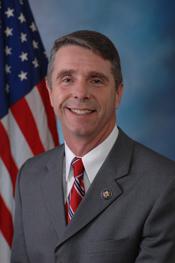 Rep. Robert J. Wittman (R-VA)
Description
Amendment requires the OMB Director to submit to Congress a financial report containing an interagency crosscut budget for restoration activities that protect, conserve, or restore water quality in the Chesapeake Bay watershed. In addition, the EPA Administrator would be required to develop and update an adaptive management plan for Chesapeake Bay restoration activities.
What it changes
1 change to H.R. 1262
We couldn't match these changes to the text of H.R. 1262, so they're shown as written.
We couldn't read part of this amendment. That part is shown as written below.
Inserts new text at the end of the bill
InsertsInserted: (D) all expenditures, to the extent that information is available, for State restoration activities during the equivalent time period described in subparagraph (C);
Inserted: (2) a detailed accounting of all funds received and obligated by all Federal agencies for restoration activities during the current and preceding fiscal years, including the identification of funds which were transferred to a Chesapeake Bay State for restoration activities;
Inserted: (3) to the extent that information is available, a detailed accounting from each State of all funds received and obligated from a Federal agency for restoration activities during the current and preceding fiscal years; and
Inserted: (4) a description of each of the proposed Federal and State restoration activities to be carried out in the succeeding fiscal year (corresponding to those activities listed in subparagraphs (A) and (B) of paragraph (1)), including the--
Inserted: (A) project description;
Inserted: (B) current status of the project;
Inserted: (C) Federal or State statutory or regulatory authority, programs, or responsible agencies;
Inserted: (D) authorization level for appropriations;
Inserted: (E) project timeline, including benchmarks;
Inserted: (F) references to project documents;
Inserted: (G) descriptions of risks and uncertainties of project implementation;
Inserted: (H) adaptive management actions or framework;
Show 39 more inserted paragraphsShow less
Inserted: (I) coordinating entities;
Inserted: (J) funding history;
Inserted: (K) cost-sharing; and
Inserted: (L) alignment with existing Chesapeake Bay Agreement and Chesapeake Executive Council goals and priorities.
Inserted: (b) Minimum Funding Levels.--The Director shall only describe restoration activities in the report required under subsection (a) that--
Inserted: (1) for Federal restoration activities, have funding amounts greater than or equal to $100,000; and
Inserted: (2) for State restoration activities, have funding amounts greater than or equal to $50,000.
Inserted: (c) Deadline.--The Director shall submit to Congress the report required by subsection (a) not later than 30 days after the submission by the President of the President's annual budget to Congress.
Inserted: (d) Report.--Copies of the financial report required by subsection (a) shall be submitted to the Committees on Appropriations, Natural Resources, Energy and Commerce, and Transportation and Infrastructure of the House of Representatives and the Committees on Appropriations, Environment and Public Works, and Commerce, Science, and Transportation of the Senate.
Inserted: (e) Effective Date.--This section shall apply beginning with the first fiscal year after the date of enactment of this Act for which the President submits a budget to Congress.
Inserted: SEC. 6002. ADAPTIVE MANAGEMENT PLAN.
Inserted: (a) In General.--Not later than 1 year after the date of enactment of this Act, the Administrator, in consultation with other Federal and State agencies, shall develop an adaptive management plan for restoration activities that includes--
Inserted: (1) definition of specific and measurable objectives to improve water quality;
Inserted: (2) a process for stakeholder participation;
Inserted: (3) monitoring, modeling, experimentation, and other research and evaluation practices;
Inserted: (4) a process for modification of restoration activities that have not attained or will not attain the specific and measurable objectives set forth under paragraph (1); and
Inserted: (5) a process for prioritizing restoration activities and programs to which adaptive management shall be applied.
Inserted: (b) Implementation.--The Administrator shall implement the adaptive management plan developed under subsection (a).
Inserted: (c) Updates.--The Administrator shall update the adaptive management plan developed under subsection (a) every 3 years.
Inserted: (d) Report to Congress.--
Inserted: (1) In general.--Not later than 60 days after the end of a fiscal year, the Administrator shall transmit to Congress an annual report on the implementation of the adaptive management plan required under this section for such fiscal year.
Inserted: (2) Contents.--The report required under paragraph (1) shall contain information about the application of adaptive management to restoration activities and programs, including programmatic and project level changes implemented through the process of adaptive management.
Inserted: (3) Effective date.--Paragraph (1) shall apply to the first fiscal year that begins after the date of enactment of this Act.
Inserted: SEC. 6003. DEFINITIONS.
Inserted: In this title, the following definitions apply:
Inserted: (1) Adaptive management.--The term "adaptive management" means a management technique in which project and program decisions are made as part of an ongoing science-based process. Adaptive management involves testing, monitoring, and evaluating applied strategies and incorporating new knowledge into programs and restoration activities that are based on scientific findings and the needs of society. Results are used to modify management policy, strategies, practices, programs, and restoration activities.
Inserted: (2) Administrator.--The term "Administrator" means the Administrator of the Environmental Protection Agency.
Inserted: (3) Chesapeake bay state.--The term "Chesapeake Bay State" or "State" means the States of Maryland, West Virginia, Delaware, and New York, the Commonwealths of Virginia and Pennsylvania, and the District of Columbia.
Inserted: (4) Chesapeake bay watershed.--The term "Chesapeake Bay watershed" means the Chesapeake Bay and the geographic area, as determined by the Secretary of the Interior, consisting of 36 tributary basins, within the Chesapeake Bay States, through which precipitation drains into the Chesapeake Bay.
Inserted: (5) Chief executive.--The term "chief executive" means, in the case of a State or Commonwealth, the Governor of each such State or Commonwealth and, in the case of the District of Columbia, the Mayor of the District of Columbia.
Inserted: (6) Director.--The term "Director" means the Director of the Office of Management and Budget.
Inserted: (7) Restoration activities.--The term "restoration activities" means any Federal or State programs or projects that directly or indirectly protect, conserve, or restore water quality in the Chesapeake Bay watershed, including programs or projects that promote responsible land use, stewardship, and community engagement in the Chesapeake Bay watershed. Restoration activities may be categorized as follows:
Inserted: (A) Physical restoration.
Inserted: (B) Planning.
Inserted: (C) Feasibility studies.
Inserted: (D) Scientific research.
Inserted: (E) Monitoring.
Inserted: (F) Education.
Inserted: (G) Infrastructure Development.
Original wording
At the end of the bill, add the following
Shown as written
(with the correct sequential provision designations [replacing the numbers currently shown for such designations]) and conform the table of contents accordingly: TITLE VI--CHESAPEAKE BAY ACCOUNTABILITY AND RECOVERY SEC. 6001. CHESAPEAKE BAY CROSSCUT BUDGET. (a) Crosscut Budget.--The Director, in consultation with the Chesapeake Executive Council, the chief executive of each Chesapeake Bay State, and the Chesapeake Bay Commission, shall submit to Congress a financial report containing--(1) an interagency crosscut budget that displays--(A) the proposed funding for any Federal restoration activity to be carried out in the succeeding fiscal year, including any planned interagency or intra-agency transfer, for each of the Federal agencies that carry out restoration activities; (B) to the extent that information is available, the estimated funding for any State restoration activity to be carried out in the succeeding fiscal year; (C) all expenditures for Federal restoration activities from the preceding 3 fiscal years, the current fiscal year, and the succeeding fiscal year; and
Read automatically from the Congressional Record. Check the original before relying on it.
As printed
At the end of the bill, add the following (with the correct sequential provision designations [replacing the numbers currently shown for such designations]) and conform the table of contents accordingly:
TITLE VI--CHESAPEAKE BAY ACCOUNTABILITY AND RECOVERY
SEC. 6001. CHESAPEAKE BAY CROSSCUT BUDGET.
(a) Crosscut Budget.--The Director, in consultation with the Chesapeake Executive Council, the chief executive of each Chesapeake Bay State, and the Chesapeake Bay Commission, shall submit to Congress a financial report containing--
(1) an interagency crosscut budget that displays--
(A) the proposed funding for any Federal restoration activity to be carried out in the succeeding fiscal year, including any planned interagency or intra-agency transfer, for each of the Federal agencies that carry out restoration activities;
(B) to the extent that information is available, the estimated funding for any State restoration activity to be carried out in the succeeding fiscal year;
(C) all expenditures for Federal restoration activities from the preceding 3 fiscal years, the current fiscal year, and the succeeding fiscal year; and
(D) all expenditures, to the extent that information is available, for State restoration activities during the equivalent time period described in subparagraph (C);
(2) a detailed accounting of all funds received and obligated by all Federal agencies for restoration activities during the current and preceding fiscal years, including the identification of funds which were transferred to a Chesapeake Bay State for restoration activities;
(3) to the extent that information is available, a detailed accounting from each State of all funds received and obligated from a Federal agency for restoration activities during the current and preceding fiscal years; and
(4) a description of each of the proposed Federal and State restoration activities to be carried out in the succeeding fiscal year (corresponding to those activities listed in subparagraphs (A) and (B) of paragraph (1)), including the--
(A) project description;
(B) current status of the project;
(C) Federal or State statutory or regulatory authority, programs, or responsible agencies;
(D) authorization level for appropriations;
(E) project timeline, including benchmarks;
(F) references to project documents;
(G) descriptions of risks and uncertainties of project implementation;
(H) adaptive management actions or framework;
(I) coordinating entities;
(J) funding history;
(K) cost-sharing; and
(L) alignment with existing Chesapeake Bay Agreement and Chesapeake Executive Council goals and priorities.
(b) Minimum Funding Levels.--The Director shall only describe restoration activities in the report required under subsection (a) that--
(1) for Federal restoration activities, have funding amounts greater than or equal to $100,000; and
(2) for State restoration activities, have funding amounts greater than or equal to $50,000.
(c) Deadline.--The Director shall submit to Congress the report required by subsection (a) not later than 30 days after the submission by the President of the President's annual budget to Congress.
(d) Report.--Copies of the financial report required by subsection (a) shall be submitted to the Committees on Appropriations, Natural Resources, Energy and Commerce, and Transportation and Infrastructure of the House of Representatives and the Committees on Appropriations, Environment and Public Works, and Commerce, Science, and Transportation of the Senate.
(e) Effective Date.--This section shall apply beginning with the first fiscal year after the date of enactment of this Act for which the President submits a budget to Congress.
SEC. 6002. ADAPTIVE MANAGEMENT PLAN.
(a) In General.--Not later than 1 year after the date of enactment of this Act, the Administrator, in consultation with other Federal and State agencies, shall develop an adaptive management plan for restoration activities that includes--
(1) definition of specific and measurable objectives to improve water quality;
(2) a process for stakeholder participation;
(3) monitoring, modeling, experimentation, and other research and evaluation practices;
(4) a process for modification of restoration activities that have not attained or will not attain the specific and measurable objectives set forth under paragraph (1); and
(5) a process for prioritizing restoration activities and programs to which adaptive management shall be applied.
(b) Implementation.--The Administrator shall implement the adaptive management plan developed under subsection (a).
(c) Updates.--The Administrator shall update the adaptive management plan developed under subsection (a) every 3 years.
(d) Report to Congress.--
(1) In general.--Not later than 60 days after the end of a fiscal year, the Administrator shall transmit to Congress an annual report on the implementation of the adaptive management plan required under this section for such fiscal year.
(2) Contents.--The report required under paragraph (1) shall contain information about the application of adaptive management to restoration activities and programs, including programmatic and project level changes implemented through the process of adaptive management.
(3) Effective date.--Paragraph (1) shall apply to the first fiscal year that begins after the date of enactment of this Act.
SEC. 6003. DEFINITIONS.
In this title, the following definitions apply:
(1) Adaptive management.--The term “adaptive management” means a management technique in which project and program decisions are made as part of an ongoing science-based process. Adaptive management involves testing, monitoring, and evaluating applied strategies and incorporating new knowledge into programs and restoration activities that are based on scientific findings and the needs of society. Results are used to modify management policy, strategies, practices, programs, and restoration activities.
(2) Administrator.--The term “Administrator” means the Administrator of the Environmental Protection Agency.
(3) Chesapeake bay state.--The term “Chesapeake Bay State” or “State” means the States of Maryland, West Virginia, Delaware, and New York, the Commonwealths of Virginia and Pennsylvania, and the District of Columbia.
(4) Chesapeake bay watershed.--The term “Chesapeake Bay watershed” means the Chesapeake Bay and the geographic area, as determined by the Secretary of the Interior, consisting of 36 tributary basins, within the Chesapeake Bay States, through which precipitation drains into the Chesapeake Bay.
(5) Chief executive.--The term “chief executive” means, in the case of a State or Commonwealth, the Governor of each such State or Commonwealth and, in the case of the District of Columbia, the Mayor of the District of Columbia.
(6) Director.--The term “Director” means the Director of the Office of Management and Budget.
(7) Restoration activities.--The term “restoration activities” means any Federal or State programs or projects that directly or indirectly protect, conserve, or restore water quality in the Chesapeake Bay watershed, including programs or projects that promote responsible land use, stewardship, and community engagement in the Chesapeake Bay watershed. Restoration activities may be categorized as follows:
(A) Physical restoration.
(B) Planning.
(C) Feasibility studies.
(D) Scientific research.
(E) Monitoring.
(F) Education.
(G) Infrastructure Development.
Legislative Activity
Stay on top of the latest movement without scrolling through every action
House amendment offered
March 12, 2009
View full timeline
House amendment offered
March 12, 2009
House amendment agreed to: On agreeing to the Wittman amendment (A009) Agreed to by voice vote.
March 12, 2009 • 1:10 PM
Amendment agreed to Committee of the Whole
March 12, 2009 • 1:10 PM
House amendment offered/reported by : Amendment (A009) offered by Mr. Wittman.(consideration: CR H3370-3372; text: CR H3370-3371)
March 12, 2009 • 1:00 PM
Amendment (A009) offered by Mr. Wittman. (consideration: CR H3370-3372; text: CR H3370-3371)
March 12, 2009 • 1:00 PM
On agreeing to the Wittman amendment (A009) Agreed to by voice vote.
March 12, 2009 • 1:10 PM