An amendment in the nature of a substitute printed in Part C of House Report 111-217 to establish caps on discretionary spending from FY2010 through FY2014 and a cap on total spending as a percentage of gross domestic product. It would also put in place maximum limits on deficits through 2019, again as a percentage of gross domestic product.
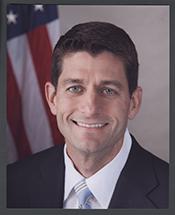 Rep. Paul D. Ryan (R-WI)
Description
Amendment in the nature of a substitute sought to establish caps on discretionary spending from FY2010 through FY2014 and a cap on total spending as a percentage of gross domestic product. It also sought to put in place maximum limits on deficits through 2019, also as a percentage of gross domestic product.
Legislative Activity
Stay on top of the latest movement without scrolling through every action
House amendment offered
July 22, 2009
View full timeline
House amendment offered
July 22, 2009
Roll call votes on amendments in House
July 22, 2009 • 3:48 PM
House amendment not agreed to: On agreeing to the Ryan (WI) amendment (A002) Failed by recorded vote: 169 - 259 (Roll no. 610).
July 22, 2009 • 3:48 PM
Amendment failed by House: On agreeing to the Ryan (WI) amendment (A002) Failed by recorded vote: 169 - 259 (Roll no. 610).
July 22, 2009 • 3:48 PM
House amendment offered/reported by : Amendment (A002) in the nature of a substitute offered by Mr. Ryan (WI).(consideration: CR H8527-8538; text: CR H8527-8528)
July 22, 2009 • 1:54 PM
Amendment (A002) in the nature of a substitute offered by Mr. Ryan (WI). (consideration: CR H8527-8538; text: CR H8527-8528)
July 22, 2009 • 1:54 PM
The previous question was ordered on the amendment (A002) without objection. (consideration: CR H8538)
July 22, 2009 • 3:23 PM
On agreeing to the Ryan (WI) amendment (A002) Failed by recorded vote: 169 - 259 (Roll no. 610).
July 22, 2009 • 3:48 PM
Votes
1 roll call on this amendment
Text
Offered
STATUTORY PAY-AS-YOU-GO ACT OF 2009
Mr. SPRATT. Mr. Speaker, pursuant to House Resolution 665, I call up
the bill (H.R. 2920) to reinstitute and update the Pay-As-You-Go
requirement of budget neutrality on new tax and mandatory spending
legislation, enforced by the threat of annual, automatic sequestration,
and ask for its immediate consideration.
The Clerk read the title of the bill.
{time} 1245
The SPEAKER pro tempore. Pursuant to House Resolution 665, the
amendment in the nature of a substitute printed in part A of House
Report 111-217, modified by the amendment printed in part B of the
report, is adopted and the bill, as amended, is considered read.
The text of the bill, as amended, is as follows:
H.R. 2920
SECTION 1. SHORT TITLE; TABLE OF CONTENTS.
(a) Short Title.--This Act may be cited as the ``Statutory
Pay-As-You-Go Act of 2009''.
(b) Table of Contents.--
Sec. 1. Short title; table of contents.
Sec. 2. Purpose.
Sec. 3. Definitions.
Sec. 4. PAYGO estimates and PAYGO scorecards.
Sec. 5. Annual report and sequestration order.
Sec. 6. Calculating a sequestration.
Sec. 7. Current policy adjustment to the CBO estimates.
Sec. 8. Application of BBEDCA.
Sec. 9. Technical corrections.
Sec. 10. Conforming amendments.
Sec. 11. Exempt programs and activities.
SEC. 2. PURPOSE.
The purpose of this Act is to reestablish a statutory
procedure to enforce a rule of budget neutrality on new
revenue and direct spending legislation.
SEC. 3. DEFINITIONS.
As used in this Act--
(1) The term ``BBEDCA'' means the Balanced Budget and
Emergency Deficit Control Act of 1985.
(2) The definitions set forth in section 3 of the
Congressional Budget and Impoundment Control Act of 1974 and
in section 250 of BBEDCA shall apply to this Act, except to
the extent that they are specifically modified as follows:
(A) The term ``outyear'' means a fiscal year that occurs
one or more years after the budget year.
(B) In section 250(c)(8)(C), the reference to the food
stamp program shall be deemed to be a reference to the
Supplemental Nutrition Assistance Program.
(3) The term ``AMT'' means the Alternative Minimum Tax for
individuals under sections 55-59 of the Internal Revenue Code
of 1986, the term ``EGTRRA'' means the Economic Growth and
Tax Relief Reconciliation Act of 2001 (Public Law 107-16),
and the term ``JGTRRA'' means the Jobs and Growth Tax Relief
and Reconciliation Act of 2003 (Public Law 108-27).
(4)(A) The term ``budgetary effects'' means the amounts by
which PAYGO legislation changes direct spending or revenues
relative to the baseline and shall be determined on the basis
of estimates included by reference in the PAYGO Act or
prepared under section 4(d)(3), as applicable. Budgetary
effects that increase direct spending or decrease revenues
are termed ``costs'' and budgetary effects that increase
revenues or decrease direct spending are termed ``savings''.
(B) For purposes of these definitions, off-budget effects
shall be counted as budgetary effects unless such changes
flow directly from amendments to title II of the Social
Security Act and related provisions of the Internal Revenue
Code of 1986 and debt service effects shall not be counted as
budgetary effects.
(C) Solely for purposes of recording entries on a PAYGO
scorecard, provisions in appropriations Acts are also
considered to be budgetary effects for purposes of this Act
if such provisions make outyear modifications to substantive
law, except that provisions for which the outlay effects net
to zero over a period consisting of the current year, the
budget year, and the 4 subsequent years shall not be
considered budgetary effects. For purposes of this paragraph,
the term, ``modifications to substantive law'' refers to
changes to or restrictions on entitlement law or other
mandatory spending contained in appropriations Acts,
notwithstanding section 250(c)(8) of BBEDCA. Provisions in
appropriations Acts that are neither outyear modifications to
substantive law nor changes in revenues have no budgetary
effects for purposes of this Act.
(D) If a provision is designated as an emergency
requirement under this Act and is also designated as an
emergency requirement under the applicable rules of the House
of Representatives, CBO shall not include the cost of such a
provision in its estimate of the PAYGO legislation's
budgetary effects.
(5) The term ``debit'' refers to the net total amount, when
positive, by which costs recorded on the PAYGO scorecards for
a fiscal year exceed savings recorded on those scorecards for
that year.
(6) The term ``entitlement law'' refers to a section of law
which provides entitlement authority.
(7) The term ``PAYGO legislation'' or a ``PAYGO Act''
refers to a bill or joint resolution that affects direct
spending or revenue relative to the baseline. The budgetary
effects of changes in revenues and outyear modifications to
substantive law included in appropriation Acts as defined in
paragraph (4) shall be treated as if they were contained in
PAYGO legislation.
(8) The term ``timing shift'' refers to a delay of the date
on which direct spending would otherwise occur from the ninth
outyear to the tenth outyear or an acceleration of the date
on which revenues would otherwise occur from the tenth
outyear to the ninth outyear.
SEC. 4. PAYGO ESTIMATES AND PAYGO SCORECARDS.
(a) Paygo Estimates.--(1) A PAYGO Act shall include by
reference an estimate of its budgetary effects as determined
under section 308(a)(3) of the Congressional Budget Act of
1974, if timely submitted ``for printing in the Congressional
Record by the chairs of the Committees on the Budget of the
House of Representatives and the Senate, as applicable,
before the vote on the PAYGO legislation''. ``The Clerk of
the House or the Secretary of the Senate, as applicable,
shall also incorporate by reference such estimate printed in
the relevant portion of the Congressional Record under
section 308(a)(3) of the Congressional Budget Act of 1974
into the enrollment of a PAYGO Act.''. Budgetary effects that
are not so included shall be determined under section
4(d)(3).
(2)(A) Section 308(a) of the Congressional Budget Act of
1974 is amended by adding at the end the following new
paragraph:
``(3) CBO paygo estimates.--Before a vote in either House
on a PAYGO Act that, if determined in the affirmative, would
clear such Act for enrollment, the chairs of the Committees
on the Budget of the House and Senate as applicable shall
request from the Director of the Congressional Budget Office
an estimate of the budgetary effects of such Act under the
Statutory Pay-As-You-Go Act of 2009. If such an estimate is
timely provided, the chairs of the Committees on the Budget
of the House of Representatives and the Senate shall post
such estimate on their respective committee websites and
cause it to be printed in the Congressional Record under the
heading `PAYGO ESTIMATE'. For purposes of this section, the
Director of the Congressional Budget Office shall not count
timing shifts in his estimates of the budgetary effects of
PAYGO legislation (as defined in section 3 of the Statutory
Pay-As-You-Go Act of 2009).''.
(B) The side heading of section 308(a) of the Congressional
Budget Act of 1974 is amended by striking ``Reports on''.
(b) Section 308 of the Congressional Budget Act of 1974 is
amended by adding at the end the following new subsection:
``(d) Scorekeeping Guidelines.--The Director of the
Congressional Budget Office shall provide estimates under
this section in accordance with the scorekeeping guidelines
determined under section 252(d)(5) of the Balanced Budget and
Emergency Deficit Control Act of 1985. Upon agreement, the
chairs of the Committees on the Budget of the House of
Representatives and the Senate shall submit updates to such
guidelines for printing in the Congressional Record.''.
(c) Current Policy Adjustments for Certain Legislation.--
For purposes of calculating budgetary effects under this Act,
CBO shall adjust its estimates as described below for any
provision of legislation designated as meeting the criteria
in subsection (b), (c), or (d) of section 7 and which the
chairman of the Committee on the Budget of the House of
Representatives or the Senate, as applicable, designates as
meeting those criteria. A single piece of legislation may
contain provisions designated as meeting criteria in more
than one of the subsections listed above. For appropriately
designated provisions, CBO shall exclude from its estimates
for purposes of this Act any costs of a provision to the
extent that those costs, when combined with all other
excluded costs of any other previously designated provisions
of enacted legislation under the same subsection of section
7, do not exceed the maximum applicable current policy
adjustment defined under the applicable subsection of section
7 for the applicable 10-year period, using the most recent
baseline estimates supplied by the Congressional Budget
Office consistent with section 257 of the Balanced Budget and
Emergency Deficit Control Act of 1985 used in considering a
concurrent resolution on the budget; or, after the beginning
of a new calendar year and before consideration of a
concurrent resolution on the budget, using the most recent
baseline estimates supplied by the Congressional Budget
Office consistent with section 257 of the Balanced Budget and
Emergency Deficit Control Act of 1985. CBO estimates of
legislation containing a current policy designation under
this subsection shall include a separate presentation of
costs excluded from the calculation of budgetary effects for
the legislation, as well as an updated total of all excluded
costs of provisions within the same subsection of section 7.
(d) OMB Paygo Scorecards.--
(1) In general.--OMB shall maintain and make publicly
available a continuously updated document containing two
PAYGO scorecards displaying the budgetary effects of PAYGO
legislation as determined under section 308 of the
Congressional Budget Act of 1974, applying the look-back
requirement
[[Page H8514]]
in subsection (e) and the averaging requirement in subsection
(f), and a separate addendum displaying the estimates of the
costs of provisions designated in statute as emergency
requirements.
(2) Estimates in legislation.--Except as provided in
paragraph (3), in making the calculations for the PAYGO
scorecards, OMB shall use the budgetary effects included by
reference in the applicable legislation.
(3) OMB estimates.--If legislation does not contain the
estimate of budgetary effects under paragraph (2), then OMB
shall score the budgetary effects of that legislation upon
its enactment, based on the approaches to scorekeeping set
forth in this Act.
(4) 5-year scorecard.--The first scorecard shall display
the budgetary effects of PAYGO legislation in each year over
the 5-year period beginning in the budget year.
(5) 10-year scorecard.--The second scorecard shall display
the budgetary effects of PAYGO legislation in each year over
the 10-year period beginning in the budget year.
(e) Look-Back To Capture Current-Year Effects.--For
purposes of this section, OMB shall treat the budgetary
effects of PAYGO legislation enacted during a session of
Congress that occur during the current year as though they
occurred in the budget year.
(f) Averaging Used To Measure Compliance Over 5-Year and
10-Year Periods.--OMB shall cumulate the budgetary effects of
a PAYGO Act over the budget year (which includes any look-
back effects under subsection (e)) and--
(1) for purposes of the 5-year scorecard referred to in
subsection (d)(4), the four subsequent outyears, divide that
cumulative total by five, and enter the quotient in the
budget-year column and in each subsequent column of the 5-
year PAYGO scorecard; and
(2) for purposes of the 10-year scorecard referred to in
subsection (d)(5), the nine subsequent outyears, divide that
cumulative total by ten, and enter the quotient in the
budget-year column and in each subsequent column of the 10-
year PAYGO scorecard.
SEC. 5. ANNUAL REPORT AND SEQUESTRATION ORDER.
(a) Annual Report.--Not later than 14 days (excluding
weekends and holidays) after Congress adjourns to end a
session, OMB shall make publicly available and cause to be
printed in the Federal Register an annual PAYGO report. The
report shall include an up-to-date document containing the
PAYGO scorecards, a description of any current policy
adjustments made under section 4(c), information about
emergency legislation (if any) designated under section
3(4)(D), information about any sequestration if required by
subsection (b), and other data and explanations that enhance
public understanding of this Act and actions taken under it.
(b) Sequestration Order.--If the annual report issued at
the end of a session of Congress under subsection (a) shows a
debit on either PAYGO scorecard for the budget year, OMB
shall prepare and the President shall issue and include in
that report a sequestration order that, upon issuance, shall
reduce budgetary resources of direct spending programs by
enough to offset that debit as prescribed in section 6. If
there is a debit on both scorecards, the order shall fully
offset the larger of the two debits. OMB shall include that
order in the annual report and transmit it to the House of
Representatives and the Senate. If the President issues a
sequestration order, the annual report shall contain, for
each budget account to be sequestered, estimates of the
baseline level of budgetary resources subject to
sequestration, the amount of budgetary resources to be
sequestered, and the outlay reductions that will occur in the
budget year and the subsequent fiscal year because of that
sequestration.
SEC. 6. CALCULATING A SEQUESTRATION.
(a) Reducing Nonexempt Budgetary Resources by a Uniform
Percentage.--OMB shall calculate the uniform percentage by
which the budgetary resources of nonexempt direct spending
programs are to be sequestered such that the outlay savings
resulting from that sequestration, as calculated under
subsection (b), shall offset the budget-year debit, if any on
the applicable PAYGO scorecard. If the uniform percentage
calculated under the prior sentence exceeds 4 percent, the
Medicare programs described in section 256(d) of BBEDCA shall
be reduced by 4 percent and the uniform percentage by which
the budgetary resources of all other nonexempt direct
spending programs are to be sequestered shall be increased,
as necessary, so that the sequestration of Medicare and of
all other nonexempt direct spending programs together produce
the required outlay savings.
(b) Outlay Savings.--In determining the amount by which a
sequestration offsets a budget-year debit, OMB shall count--
(1) the amount by which the sequestration in a crop year of
crop support payments, pursuant to section 256(j) of BBEDCA,
reduces outlays in the budget year and the subsequent fiscal
year;
(2) the amount by which the sequestration of Medicare
payments in the 12-month period following the sequestration
order, pursuant to section 256(d) of BBEDCA, reduces outlays
in the budget year and the subsequent fiscal year; and
(3) the amount by which the sequestration in the budget
year of the budgetary resources of other nonexempt mandatory
programs reduces outlays in the budget year and in the
subsequent fiscal year.
SEC. 7. CURRENT POLICY ADJUSTMENT TO THE CBO ESTIMATES.
(a) Purpose.--The purpose of this section is to provide for
adjustments of estimates of budgetary effects of PAYGO
legislation for legislation affecting four areas of the
budget--
(1) payments made under section 1848 of the Social Security
Act (titled Payment for Physicians' Services);
(2) the Estate and Gift Tax under subtitle B of the
Internal Revenue Code of 1986;
(3) the AMT; and
(4) provisions of EGTRRA or JGTRRA that amended the
Internal Revenue Code of 1986 (or provisions in later
statutes further amending the amendments made by EGTRRA or
JGTRRA), other than--
(A) the provisions of those two Acts that were made
permanent by the Pension Protection Act of 2006 (Public Law
109-280);
(B) amendments to the estate and gift tax referred to in
paragraph (2);
(C) the AMT referred to in paragraph (3);
(D) the 35 percent bracket and that portion of the 33
percent bracket that applies to taxable income greater than
$200,000 for an individual and $250,000 for a couple; and
(E) provisions in those two Acts relating to taxes rates on
capital gains and dividends.
(b) Medicare Payments to Physicians.--
(1) Criteria.--Legislation that includes provisions
amending or superseding the system of payments under section
1848 of the Social Security Act shall trigger the current
policy adjustment required by this Act.
(2) Adjustment.--The amount of the maximum current policy
adjustment shall be the difference between--
(A) estimated net outlays attributable to the payments made
to physicians under that section of the Social Security Act
(as scheduled on July 15, 2009, to be in effect); and
(B) what those net outlays would have been if the nominal
payment rates and related parameters in effect for 2009 had
been in effect thereafter without change.
(c) Estate and Gift Tax.--
(1) Criteria.--Legislation that includes provisions
amending the Estate and Gift Tax under subtitle B of the
Internal Revenue Code of 1986 shall trigger the current
policy adjustment required by this Act.
(2) Adjustment.--The amount of the maximum current policy
adjustment shall be the difference between--
(A) total revenues projected to be collected under the
Internal Revenue Code of 1986 (as scheduled on July 15, 2009,
to be in effect); and
(B) what those revenue collections would have been if, on
the date of enactment of the legislation meeting the criteria
in paragraph (1), estate and gift tax law had instead been
amended so that the tax rates, nominal exemption amounts, and
related parameters in effect for tax year 2009 had remained
in effect thereafter without change.
(d) Permanent Extension of Middle-Class Tax Cuts and AMT
Relief.--
(1) Criteria.--Legislation that includes provisions
extending middle-class tax cuts or AMT relief shall trigger
the current policy adjustment required by this Act if those
provisions extend one or more of the following provisions--
(A) AMT relief for calendar year 2010 and subsequent years
in such a manner that the number of AMT taxpayers is not
estimated to exceed the number of AMT taxpayers in tax year
2008 in any year through the tenth year after enactment;
(B) the 10 percent bracket as in effect for tax year 2010,
as provided for under section 101(a) of the Economic Growth
and Tax Relief Reconciliation Act of 2001 and any later
amendments through July 15, 2009;
(C) the child tax credit as in effect for tax year 2010, as
provided for under section 201 of the Economic Growth and Tax
Relief Reconciliation Act and any later amendments through
July 15, 2009;
(D) tax benefits for married couples as in effect for tax
year 2010, as provided for under title III of the Economic
Growth and Tax Relief Reconciliation Act and any later
amendments through July 15, 2009;
(E) the adoption credit as in effect in tax year 2010, as
provided for under section 202 of the Economic Growth and Tax
Relief Reconciliation Act of 2001 and any later amendments
through July 15, 2009;
(F) the dependent care credit as in effect in tax year
2010, as provided for under section 204 of the Economic
Growth and Tax Relief Reconciliation Act of 2001 and any
later amendments through July 15, 2009;
(G) the employer-provided child care credit as in effect in
tax year 2010, as provided for under section 205 of the
Economic Growth and Tax Relief Reconciliation Act of 2001 and
any later amendments through July 15, 2009;
(H) the education tax benefits as in effect in tax year
2010, as provided for under title IV of the Economic Growth
and Tax Relief Reconciliation Act of 2001 and any later
amendments through July 15, 2009;
(I) the 25 and 28 percent brackets as in effect for tax
year 2010, as provided for under section 101(a) of the
Economic Growth and Tax Relief Reconciliation Act of 2001 and
any later amendments through July 15, 2009; and
(J) the 33 percent brackets as in effect for tax year 2010,
as provided for under section 101(a) of the Economic Growth
and Tax Relief Reconciliation Act of 2001 and any later
amendment affecting taxpayers with taxable income of $200,000
or less for individuals and $250,000 or less for couples in
calendar year 2010 and increased in each subsequent year by
an amount equal to the cost of living adjustment determined
under section 1(f)(3) of the Internal Revenue Code of 1986
for the calendar year in which the taxable year begins,
determined by substituting ``calendar year
[[Page H8515]]
2008'' for ``calendar year 1992'' in subparagraph (B)
thereof.
(2) Adjustment.--The amount of the maximum current policy
adjustment shall be the difference between what total
revenues would have been under the Internal Revenue Code of
1986 (as scheduled on July 15, 2009, to be in effect) and
what revenues would be if legislation--
(A) permanently extending the AMT exemption and brackets in
effect in tax year 2009 but increased in tax year 2010 and
each subsequent tax year as indicated under subsection
(d)(2)(B), along with any additional amount necessary to
prevent the number of taxpayers who must pay AMT from
increasing; and
(B) permanently extending the provisions identified in
paragraph (1),
were enacted on the same day as the legislation referred to
in paragraph (1).
SEC. 8. APPLICATION OF BBEDCA.
For purposes of this Act--
(1) notwithstanding section 275 of BBEDCA, the provisions
of sections 255, 256, 257, and 274 of BBEDCA, as amended by
this Act, shall apply to the provisions of this Act;
(2) references in sections 255, 256, 257, and 274 to ``this
part'' or ``this title'' shall be interpreted as applying to
this Act;
(3) references in sections 255, 256, 257, and 274 of BBEDCA
to ``section 254'' shall be interpreted as referencing
section 5 of this Act;
(4) the reference in section 256(b) of BBEDCA to ``section
252 or 253'' shall be interpreted as referencing section 5 of
this Act;
(5) the reference in section 256(d)(1) of BBEDCA to
``section 252 or 253'' shall be interpreted as referencing
section 6 of this Act;
(6) the reference in section 256(d)(4) of BBEDCA to
``section 252 or 253'' shall be interpreted as referencing
section 5 of this Act;
(7) section 256(k) of BBEDCA shall apply to a
sequestration, if any, under this Act; and
(8) references in section 257(e) of BBEDCA to ``section
251, 252, or 253'' shall be interpreted as referencing
section 4 of this Act.
SEC. 9. TECHNICAL CORRECTIONS.
(a) Section 250(c)(18) of BBEDCA is amended by striking
``the expenses the Federal deposit insurance agencies'' and
inserting ``the expenses of the Federal deposit insurance
agencies''.
(b) Section 256(k)(1) of BBEDCA is amended by striking ``in
paragraph (5)'' and inserting ``in paragraph (6)''.
SEC. 10. CONFORMING AMENDMENTS.
(a) Section 256(a) of BBEDCA is repealed.
(b) Section 256(b) of BBEDCA is amended by striking
``origination fees under sections 438(c)(2) and 455(c) of
that Act shall each be increased by 0.50 percentage point.''
and inserting in lieu thereof ``origination fees under
sections 438(c)(2) and (6) and 455(c) and loan processing and
issuance fees under section 428(f)(1)(A)(ii) of that Act
shall each be increased by the uniform percentage specified
in that sequestration order, and, for student loans
originated during the period of the sequestration, special
allowance payments under section 438(b) of that Act accruing
during the period of the sequestration shall be reduced by
the uniform percentage specified in that sequestration
order.''.
(c) Section 256(c) of BBEDCA is repealed.
(d) Section 256(d) of BBEDCA is amended--
(1) by redesignating paragraphs (2), (3), and (4) as
paragraphs (3), (5), and (6);
(2) by amending paragraph (1) to read as follows:
``(1) Calculation of reduction in payment amounts.--To
achieve the total percentage reduction in those programs
required by section 252 or 253, subject to paragraph (2), and
notwithstanding section 710 of the Social Security Act, OMB
shall determine, and the applicable Presidential order under
section 254 shall implement, the percentage reduction that
shall apply, with respect to the health insurance programs
under title XVIII of the Social Security Act--
``(A) in the case of parts A and B of such title, to
individual payments for services furnished during the one-
year period beginning on the first day of the first month
beginning after the date the order is issued (or, if later,
the date specified in paragraph (4)); and
``(B) in the case of parts C and D, to monthly payments
under contracts under such parts for the same one-year
period;
such that the reduction made in payments under that order
shall achieve the required total percentage reduction in
those payments for that period.'';
(3) by inserting after paragraph (1) the following:
``(2) Uniform reduction rate; maximum permissible
reduction.--Reductions in payments for programs and
activities under such title XVIII pursuant to a sequestration
order under section 254 shall be at a uniform rate, which
shall not exceed 4 percent, across all such programs and
activities subject to such order.'';
(4) by inserting after paragraph (3), as redesignated, the
following:
``(4) Timing of subsequent sequestration order.--A
sequestration order required by section 252 or 253 with
respect to programs under such title XVIII shall not take
effect until the first month beginning after the end of the
effective period of any prior sequestration order with
respect to such programs, as determined in accordance with
paragraph (1).'';
(5) in paragraph (6), as redesignated, to read as follows:
``(6) Sequestration disregarded in computing payment
amounts.--The Secretary of Health and Human Services shall
not take into account any reductions in payment amounts which
have been or may be effected under this part, for purposes of
computing any adjustments to payment rates under such title
XVIII, specifically including--
``(A) the part C growth percentage under section
1853(c)(6);
``(B) the part D annual growth rate under section 1860D-
2(b)(6); and
``(C) application of risk corridors to part D payment rates
under section 1860D-15(e).''; and
(6) by adding after paragraph (6), as redesignated, the
following:
``(7) Exemptions from sequestration.--In addition to the
programs and activities specified in section 255, the
following shall be exempt from sequestration under this part:
``(A) Part d low-income subsidies.--Premium and cost-
sharing subsidies under section 1860D-14 of the Social
Security Act.
``(B) Part d catastrophic subsidy.--Payments under section
1860D-15(b) and (e)(2)(B) of the Social Security Act.
``(C) Qualified individual (qi) premiums.--Payments to
States for coverage of Medicare cost-sharing for certain low-
income Medicare beneficiaries under section 1933 of the
Social Security Act.''.
SEC. 11. EXEMPT PROGRAMS AND ACTIVITIES.
(a) Designations.--Section 255 of BBEDCA is amended by
redesignating subsection (i) as (j) and striking ``1998'' and
inserting in lieu thereof ``2010''.
(b) Social Security, Veterans Programs, Net Interest, and
Tax Credits.--Subsections (a) through (d) of section 255 of
BBEDCA are amended to read as follows
``(a) Social Security Benefits and Tier I Railroad
Retirement Benefits.--Benefits payable under the old-age,
survivors, and disability insurance program established under
title II of the Social Security Act (title 42, United States
Code, section 401 et seq.), and benefits payable under
section 231b(a), 231b(f)(2), 231c(a), and 231c(f) of title 45
United States Code, shall be exempt from reduction under any
order issued under this part.
``(b) Veterans Programs.--The following program shall be
exempt from reduction under any order issued under this
part--
``All programs administered by the Department of Veterans
Affairs.
``Special Benefits for Certain World War II Veterans (28-
0401-0-1-701).
``(c) Net Interest.--No reduction of payments for net
interest (all of major functional category 900) shall be made
under any order issued under this part.
``(d) Refundable Income Tax Credits.--Payments to
individuals made pursuant to provisions of the Internal
Revenue Code of 1986 establishing refundable tax credits
shall be exempt from reduction under any order issued under
this part.''.
(c) Other Programs and Activities, Low-Income Programs, and
Economic Recovery Programs.--Subsections (g) and (h) of
section 255 of BBEDCA are amended to read as follows:
``(g) Other Programs and Activities.--
``(1)(A) The following budget accounts and activities shall
be exempt from reduction under any order issued under this
part:
``Activities resulting from private donations, bequests, or
voluntary contributions to the Government.
``Activities financed by voluntary payments to the
Government for goods or services to be provided for such
payments.
``Administration of Territories, Northern Mariana Islands
Covenant grants (14-0412-0-1-808).
``Advances to the Unemployment Trust Fund and Other Funds
(16-0327-0-1-600).
``Black Lung Disability Trust Fund Refinancing (16-0329-0-
1-601).
``Bonneville Power Administration Fund and borrowing
authority established pursuant to section 13 of Public Law
93-454 (1974), as amended (89-4045-0-3-271).
``Claims, Judgments, and Relief Acts (20-1895-0-1-808).
``Compact of Free Association (14-0415-0-1-808).
``Compensation of the President (11-0209-01-1-802).
``Comptroller of the Currency, Assessment Funds (20-8413-0-
8-373).
``Continuing Fund, Southeastern Power Administration (89-
5653-0-2-271).
``Continuing Fund, Southwestern Power Administration (89-
5649-0-2-271).
``Dual Benefits Payments Account (60-0111-0-1-601).
``Emergency Fund, Western Area Power Administration (89-
5069-0-2-271).
``Exchange Stabilization Fund (20-4444-0-3-155).
``Federal Deposit Insurance Corporation, Deposit Insurance
Fund (51-4596-4-4-373).
``Federal Deposit Insurance Corporation, FSLIC Resolution
Fund (51-4065-0-3-373).
``Federal Deposit Insurance Corporation, Noninterest
Bearing Transaction Account Guarantee (51-4458-0-3-373).
``Federal Deposit Insurance Corporation, Senior Unsecured
Debt Guarantee (51-4457-0-3-373).
``Federal Housing Finance Agency, Administrative Expenses
(95-5532-0-2-371).
``Federal Payment to the District of Columbia Judicial
Retirement and Survivors Annuity Fund (20-1713-0-1-752).
``Federal Payment to the District of Columbia Pension Fund
(20-1714-0-1-601).
``Federal Payments to the Railroad Retirement Accounts (60-
0113-0-1-601).
``Federal Reserve Bank Reimbursement Fund (20-1884-0-1-
803).
``Financial Agent Services (20-1802-0-1-803).
[[Page H8516]]
``Foreign Military Sales Trust Fund (11-8242-0-7-155).
``Hazardous Waste Management, Conservation Reserve Program
(12-4336-0-3-999).
``Host Nation Support Fund for Relocation (97-8337-0-7-
051).
``Internal Revenue Collections for Puerto Rico (20-5737-0-
2-806).
``Intragovernmental funds, including those from which the
outlays are derived primarily from resources paid in from
other government accounts, except to the extent such funds
are augmented by direct appropriations for the fiscal year
during which an order is in effect.
``Medical Facilities Guarantee and Loan Fund (75-9931-0-3-
551).
``National Credit Union Administration, Central Liquidity
Facility (25-4470-0-3-373).
``National Credit Union Administration, Corporate Credit
Union Share Guarantee Program (25-4476-0-3-376).
``National Credit Union Administration, Credit Union
Homeowners Affordability Relief Program (25-4473-0-3-371).
``National Credit Union Administration, Credit Union Share
Insurance Fund (25-4468-0-3-373).
``National Credit Union Administration, Credit Union System
Investment Program (25-4474-0-3-376).
``National Credit Union Administration, Operating fund (25-
4056-0-3-373).
``National Credit Union Administration, Share Insurance
Fund Corporate Debt Guarantee Program (25-4469-0-3-376).
``National Credit Union Administration, U.S. Central
Federal Credit Union Capital Program (25-4475-0-3-376).
``Office of Thrift Supervision (20-4108-0-3-373).
``Panama Canal Commission Compensation Fund (16-5155-0-2-
602).
``Payment of Vietnam and USS Pueblo prisoner-of-war claims
within the Salaries and Expenses, Foreign Claims Settlement
account (15-0100-0-1-153).
``Payment to Civil Service Retirement and Disability Fund
(24-0200-0-1-805).
``Payment to Department of Defense Medicare-Eligible
Retiree Health Care Fund (97-0850-0-1-054).
``Payment to Judiciary Trust Funds (10-0941-0-1-752).
``Payment to Military Retirement Fund (97-0040-0-1-054).
``Payment to the Foreign Service Retirement and Disability
Fund (19-0540-0-1-153).
``Payments to Copyright Owners (03-5175-0-2-376).
``Payments to Health Care Trust Funds (75-0580-0-1-571).
``Payment to Radiation Exposure Compensation Trust Fund
(15-0333-0-1-054).
``Payments to Social Security Trust Funds (28-0404-0-1-
651).
``Payments to the United States Territories, Fiscal
Assistance (14-0418-0-1-806).
``Payments to trust funds from excise taxes or other
receipts properly creditable to such trust funds.
``Payments to widows and heirs of deceased Members of
Congress (00-0215-0-1-801).
``Postal Service Fund (18-4020-0-3-372).
``Radiation Exposure Compensation Trust Fund (15-8116-0-1-
054).
``Reimbursement to Federal Reserve Banks (20-0562-0-1-803).
``Salaries of Article III judges.
``Soldiers and Airmen's Home, payment of claims (84-8930-0-
7-705).
``Tennessee Valley Authority Fund, except nonpower programs
and activities (64-4110-0-3-999).
``Tribal and Indian trust accounts within the Department of
the Interior which fund prior legal obligations of the
Government or which are established pursuant to Acts of
Congress regarding Federal management of tribal real property
or other fiduciary responsibilities, including but not
limited to Tribal Special Fund (14-5265-0-2-452), Tribal
Trust Fund (14-8030-0-7-452), White Earth Settlement (14-
2204-0-1-452), and Indian Water Rights and Habitat
Acquisition (14-5505-0-2-303).
``United Mine Workers of America 1992 Benefit Plan (95-
8260-0-7-551).
``United Mine Workers of America 1993 Benefit Plan (95-
8535-0-7-551).
``United Mine Workers of America Combined Benefit Fund (95-
8295-0-7-551).
``United States Enrichment Corporation Fund (95-4054-0-3-
271).
``Universal Service Fund (27-5183-0-2-376).
``Vaccine Injury Compensation (75-0320-0-1-551).
``Vaccine Injury Compensation Program Trust Fund (20-8175-
0-7-551).
``(B) The following Federal retirement and disability
accounts and activities shall be exempt from reduction under
any order issued under this part:
``Black Lung Disability Trust Fund (20-8144-0-7-601).
``Central Intelligence Agency Retirement and Disability
System Fund (56-3400-0-1-054).
``Civil Service Retirement and Disability Fund (24-8135-0-
7-602).
``Comptrollers general retirement system (05-0107-0-1-801).
``Contributions to U.S. Park Police annuity benefits, Other
Permanent Appropriations (14-9924-0-2-303).
``Court of Appeals for Veterans Claims Retirement Fund (95-
8290-0-7-705).
``Department of Defense Medicare-Eligible Retiree Health
Care Fund (97-5472-0-2-551).
``District of Columbia Federal Pension Fund (20-5511-0-2-
601).
``District of Columbia Judicial Retirement and Survivors
Annuity Fund (20-8212-0-7-602).
``Energy Employees Occupational Illness Compensation Fund
(16-1523-0-1-053).
``Foreign National Employees Separation Pay (97-8165-0-7-
051).
``Foreign Service National Defined Contributions Retirement
Fund (19-5497-0-2-602).
``Foreign Service National Separation Liability Trust Fund
(19-8340-0-7-602).
``Foreign Service Retirement and Disability Fund(19-8186-0-
7-602).
``Government Payment for Annuitants, Employees Health
Benefits (24-0206-0-1-551).
``Government Payment for Annuitants, Employee Life
Insurance (24-0500-0-1-602).
``Judicial Officers' Retirement Fund (10-8122-0-7-602).
``Judicial Survivors' Annuities Fund (10-8110-0-7-602).
``Military Retirement Fund (97-8097-0-7-602).
``National Railroad Retirement Investment Trust (60-8118-0-
7-601).
``National Oceanic and Atmospheric Administration
retirement (13-1450-0-1-306).
``Pensions for former Presidents (47-0105-0-1-802).
``Postal Service Retiree Health Benefits Fund (24-5391-0-2-
551).
``Public Safety Officer Benefits (15-0403-0-1-754).
``Rail Industry Pension Fund (60-8011-0-7-601).
``Retired Pay, Coast Guard (70-0602-0-1-403).
``Retirement Pay and Medical Benefits for Commissioned
Officers, Public Health Service (75-0379-0-1-551).
``Special Benefits for Disabled Coal Miners (16-0169-0-1-
601).
``Special Benefits, Federal Employees' Compensation Act
(16-1521-0-1-600).
``Special Workers Compensation Expenses (16-9971-0-7-601.)
``Tax Court Judges Survivors Annuity Fund (23-8115-0-7-
602).
``United States Court of Federal Claims Judges' Retirement
Fund (10-8124-0-7-602).
``United States Secret Service, DC Annuity (70-0400-0-1-
751).
``Voluntary Separation Incentive Fund (97-8335-0-7-051).
``(2) Prior legal obligations of the Government in the
following budget accounts and activities shall be exempt from
any order issued under this part:
``Biomass Energy Development (20-0114-0-1-271).
``Check Forgery Insurance Fund (20-4109-0-3-803).
``Credit liquidating accounts.
``Credit reestimates.
``Employees Life Insurance Fund (24-8424-0-8-602).
``Federal Aviation Insurance Revolving Fund (69-4120-0-3-
402).
``Federal Crop Insurance Corporation Fund (12-4085-0-3-
351).
``Federal Emergency Management Agency, National Flood
Insurance Fund (58-4236-0-3-453).
``Federal Home Loan Mortgage Corporation (Freddie Mac).
``Federal National Mortgage Corporation (Fannie Mae).
``Geothermal resources development fund (89-0206-0-1-271).
``Low-Rent Public Housing--Loans and Other Expenses (86-
4098-0-3-604).
``Maritime Administration, War Risk Insurance Revolving
Fund (69-4302-0-3-403).
``Natural Resource Damage Assessment Fund (14-1618-0-1-
302).
``Overseas Private Investment Corporation, Noncredit
Account (71-4184-0-3-151).
``Pension Benefit Guaranty Corporation Fund (16-4204-0-3-
601).
``San Joaquin Restoration Fund (14-5537-0-2-301).
``Servicemembers' Group Life Insurance Fund (36-4009-0-3-
701).
``Terrorism Insurance Program (20-0123-0-1-376).
``(h) Low-Income Programs.--The following programs shall be
exempt from reduction under any order issued under this part:
``Academic Competitiveness/Smart Grant Program (91-0205-0-
1-502).
``Child Care Entitlement to States (75-1550-0-1-609).
``Child Enrollment Contingency Fund (75-5551-0-2-551).
``Child Nutrition Programs (with the exception of special
milk programs) (12-3539-0-1-605).
``Children's Health Insurance Fund (75-0515-0-1-551).
``Commodity Supplemental Food Program (12-3507-0-1-605).
``Contingency Fund (75-1522-0-1-609).
``Family Support Programs (75-1501-0-1-609).
``Federal Pell Grants under section 401 Title IV of the
Higher Education Act.
``Grants to States for Medicaid (75-0512-0-1-551).
``Payments for Foster Care and Permanency (75-1545-0-1-
609).
``Supplemental Nutrition Assistance Program (12-3505-0-1-
605).
``Supplemental Security Income Program (28-0406-0-1-609).
``Temporary Assistance for Needy Families (75-1552-0-1-
609).''.
(d) Economic Recovery Programs.--Section 255 of BBEDCA is
amended by adding the following after subsection (h):
``(i) Economic Recovery Programs.--The following programs
shall be exempt from reduction under any order issued under
this part:
[[Page H8517]]
``All programs enacted in, or increases in programs
provided by, the American Recovery and Reinvestment Act of
2009.
``Exchange Stabilization Fund-Money Market Mutual Fund
Guaranty Facility (20-4274-0-3-376).
``Financial Stabilization Reserve (20-0131-4-1-376).
``GSE Mortgage-Backed Securities Purchase Program Account
(20-0126-0-1-371).
``GSE Preferred Stock Purchase Agreements (20-0125-0-1-
371).
``Office of Financial Stability (20-0128-0-1-376).
``Special Inspector General for the Troubled Asset Relief
Program (20-0133-0-1-376).
``Troubled Asset Relief Program Account (20-0132-0-1-376).
``Troubled Asset Relief Program Equity Purchase Program
(20-0134-0-1-376).
``Troubled Asset Relief Program, Home Affordable
Modification Program (20-0136-0-1-604).''.
The SPEAKER pro tempore. After 1 hour of debate on the bill, as
amended, it shall be in order to consider the amendment in the nature
of a substitute printed in part C of the report, if offered by the
gentleman from Wisconsin (Mr. Ryan) or his designee, which shall be
considered read, and shall be debatable for 30 minutes, equally divided
and controlled by the proponent and an opponent.
The gentleman from South Carolina (Mr. Spratt) and the gentleman from
Wisconsin (Mr. Ryan) each will control 30 minutes.
The Chair recognizes the gentleman from South Carolina.
General Leave
Mr. SPRATT. Mr. Speaker, at this point I would also like to ask
unanimous consent that Members have 5 legislative days to revise and
extend and insert material relevant to the consideration of H.R. 2920
in the record.
The SPEAKER pro tempore. Is there objection to the request of the
gentleman from South Carolina?
There was no objection.
Mr. SPRATT. Mr. Speaker, I rise in strong support of the Statutory
Pay-As-You-Go Act of 2009. To understand this bill, it's important and
useful to understand its short history.
At the outset of the 1990s, Congress passed the Budget Enforcement
Act to ensure that the Budget Summit Agreement would be carried out.
Among these provisions was a rule called pay-as-you-go, PAYGO for
short. At the time, critics distained and belittled our resort to
budget process. They accused us of dodging the hard choices we had to
make if we were going to wipe out the end of the deficit. But by the
end of the 1990s, the budget was in surplus for the first time in 30
years, and it was clear that PAYGO had played an important part in our
success.
In 2002, the Budget Enforcement Act was allowed to expire, and the
President, President Bush, and the majority, the Republicans at that
time, chose not to reinstate PAYGO. Without the process rule in place,
the budget plunged from a surplus of $236 billion in the year 2000 to a
deficit of $413 billion in the year 2004.
In April of 2005, in his congressional testimony, Alan Greenspan
said, ``One of the real problems we had was allowing PAYGO to lapse in
September of 2002, and were we to still be under a PAYGO regime, which
I thought worked very well, I think we would have a lot fewer problems
now.''
When Democrats took back the House, the reinstatement of PAYGO was at
the top of our agenda. To expedite its passage, PAYGO was made a rule
of the House the day we convened. Without support of the Bush
administration, there was no prospect of getting statutory PAYGO
enacted in law, but now with the support of the Obama administration,
indeed, the underlying legislation we are pushing and advancing today
was originally sent to us for filing by request from the President, Mr.
Obama.
With the support of the Obama administration, we're in a position now
to take a longer stride towards budget discipline by enacting statutory
PAYGO into law. The Obama administration has inherited a colossal
deficit swollen to accommodate massive recovery measures. As these
measures pull us up out of the slump, we must focus attention on our
longer-term fiscal fate.
By themselves, budget process rules cannot convert deficits into
surpluses, but as in the 1990s, they can play a vital role. Statutory
PAYGO works by reining in both new entitlement spending and new tax
cuts. Both tend to be long lasting. They are easy to pass and hard to
repeal. And by insisting in deficit neutrality for these new policies,
PAYGO buffers the bottom line, holds it constant. Its terms are
complex, but at its core, it's a commonsense rule that everybody can
understand: When you are in deficit, don't make it worse. When you want
to spend a dollar, save a dollar. Everybody can understand the
commonsense logic of this bill.
I would add that PAYGO has not only been a commonsense idea that
found its way into the rules of the House and the statute books, but it
has traditionally received bipartisan report. Originally, it was
enacted in 1990 under a Republican President and Democratic Congress.
In 1997, it was extended under a Democratic President and a Republican
Congress.
This is not a panacea--I wouldn't hold it out as that--but it is a
significant step in the right direction. It was proven to work in the
1990s, and it needs to be reinstated for that purpose now.
I reserve the balance of my time.
Mr. RYAN of Wisconsin. Mr. Speaker, at this time I yield 4 minutes to
myself.
Mr. Speaker, I wish the Budget Committee had an opportunity to mark
up this bill; however, the decision was made to bypass the Budget
Committee and go straight to the floor.
This bill is not a simple extension of current law. It bypasses the
deliberate and transparent process, and we are rushing legislation to
the floor. It's an ongoing trend of a disturbing trend, which is write
legislation in the leadership offices, rush it to floor, ram it through
Congress without legislators legislating. We have one of the most
talented chairmen of the Budget Committee who knows more than anybody
else how these laws work, Mr. Spratt. It should have gone through his
committee. Unfortunately, written in leadership, rushed to the floor,
out it goes. That is a disturbing trend with how this Congress is
working.
But let me talk about the need for fiscal restraint and fiscal
discipline.
We concur, we agree that we have got to do some things to get our
fiscal house in order. We need to equip Congress with more and better
tools to get this budget under control. Unfortunately, this isn't the
tool. This tool does not work. Let's look at PAYGO's track record thus
far.
Since PAYGO was instituted as a rule here, the budget deficit under
the last Republican budget was $161 billion. The budget today, the
deficit is at $1.8 trillion, more than a tenfold increase.
Let me show you how much spending last year in increases were subject
to PAYGO for this year's spending. Two percent. Two percent of the
spending that has gone out the door this year was subject to PAYGO, 98
percent was not. That's $870 billion of new spending not subject to
PAYGO.
Since the majority gave us this PAYGO rule, look at what has happened
to deficits. $161 billion up to $1.8 trillion, deficits for as far as
the eye can see never going below $600 billion, and in 10 years, above
a trillion dollars. PAYGO does absolutely nothing to arrest that
development, to address that.
More to the point, Mr. Speaker, PAYGO exempts, already, 40 percent of
the budget, forty percent. All of the money the Federal Government
spends on government agencies, and all that discretionary spending
isn't even touched by PAYGO.
More to the point, Mr. Speaker, is that all of those unfunded
liabilities we have, according to the General Accountability Office,
$62 trillion of unfunded liabilities are already out there, due,
promises made to taxpayers that the government right now doesn't have
funded, to Medicare, to Medicaid, to Social Security. A mountain of
debt is before us. And what does PAYGO do to address it? Absolutely
nothing. PAYGO does nothing whatsoever to address the runaway
entitlement problems we have today. It simply says if we're going to
build new programs, new nondiscretionary, mandatory entitlement
programs, then, and only then, should we pay for it.
We know the track record of something like this. Without spending
caps, without reform to go after existing spending programs, this
simply results in raising taxes.
So we believe that this is more or less a machine to raise taxes to
pay for new and more costly government programs. It does nothing to
attack the
[[Page H8518]]
fact that we have trillions upon trillions of dollars of unfunded
liabilities right now. It does nothing to attack the fact that just
this year alone, discretionary spending is going up 8 percent, 11
percent for domestic discretionary spending. It ignores all of those
things. It's really kind of like buying a fire extinguisher after your
house has burned down. Congress is going to commit all of these fiscal
crimes only to put PAYGO in place after they've been committed.
So, Mr. Speaker, this bill, as well intended as it may be, is not the
solution. There are better ideas. And I only wished that we could have
gone through the Budget Committee and collaborated in making this bill
better.
With that, I will reserve the balance of my time.
Mr. SPRATT. Mr. Speaker, I yield 2 minutes to the gentleman from
Texas, a member of the committee, Mr. Doggett.
Mr. DOGGETT. As one economist concluded, it's easy to dodge your
responsibilities but we cannot dodge the consequences of dodging our
responsibilities.
For 8 long years, fiscal responsibility was abandoned by the Bush
administration and its congressional enablers. When a difficult
decision came along, they played a devastating game of dodgeball to the
tune of, ``Don't worry, be happy.'' Well, record surpluses turned into
record deficits and the economy began to collapse. This did not happen
by accident.
Republican ideologues urged the irresponsible approach of fiscal
deficit with more borrow-and-spend and tax cuts as the best tactic to
starve government and ensure that Democrats would never be able to
address the other deficits in our society: educational deficits, health
care deficits, and more.
This year, with only 7 months so far to correct 8 years of failure,
as we clean up the mess that we were given, we reaffirm our commitment
to pay-as-you-go. And we're already making it a reality in one of the
most significant challenges of our time, the health care deficit. We
correct it without adding to the fiscal deficit. We're paying for long
neglected health care reform by cutting costs in the system and taxing
the few at the top who benefited the most from the Bush era.
Fiscal responsibility, fiscal security is national security. Today's
vote signals that we are abandoning the Republicans' fiscal model,
which is straight out of the Magic Kingdom. Their rule, like the first
law of Disney, is that ``wishing will make it so.'' That may work well
in the law of fairy tales, but it has been a budgeting disaster and an
economic nightmare that we begin correcting today.
Mr. RYAN of Wisconsin. Mr. Speaker, I would like to yield 2 minutes
to the distinguished gentleman from Ohio, a member of the Budget
Committee, Mr. Jordan.
Mr. JORDAN of Ohio. I thank the gentleman for yielding and for his
continuing efforts to try to bring some fiscal sanity to this town and
this place.
Mr. Speaker, I rise in opposition to this so-called Pay-As-You-Go
bill. Most Americans, frankly, would label this tax-as-you-go.
Families and businesses across the country are tightening their
belts, but this Congress keeps spending like there is no tomorrow,
putting our country on a path towards bankruptcy. Now they're trying to
get the American people to look the other way with the smokescreen
called PAYGO.
Earlier this year, we offered a balanced budget. That's pay-as-you-
go. But this bill doesn't balance the budget. For 3 years, we've been
offering amendments both in committee and on this floor that would hold
the line on spending. That's really pay-as-you-go. But this bill
doesn't hold the line on any spending. In fact, this bill is just
another facade to allow spending and spending and spending.
Just remember, last week, for the first time in American history, we
hit a $1 trillion deficit, and it's slated to go higher as we have a
few months left in this fiscal year. Just to reiterate a couple points
that the ranking member made in his opening comments.
Last year, with the pay-as-you-go rule that the majority had put in
place, we exempted $420 billion worth of legislation from that very
rule, and the deficit increased by $1.7 trillion. That's over a
thousand percent increase over the current pay-as-you-go policy that
the majority has had in place.
We need real pay-as-you-go. Our substitute offered by our ranking
member, Mr. Ryan, is the right approach. It has spending caps. It has
deficit targets. It takes the right approach to balance our budget. In
fact, it's going to have a supermajority requirement, something we need
to override the spending limits and caps in the bill. We don't need
more of the smokescreens and empty promises that we always see from
Washington. What we need is real fiscal responsibility.
Let me just say this. Over the next decade, the debt is slated to
reach $23 trillion. Now think about what it takes to pay that off.
The SPEAKER pro tempore. The time of the gentleman has expired.
Mr. RYAN of Wisconsin. Mr. Speaker, I yield the gentleman an
additional minute.
Mr. JORDAN of Ohio. So $23 trillion. To pay that off, you first have
to balance the budget, then you have to run a trillion-dollar surplus
for 23 years, and that doesn't count the interest which is now
approaching a billion dollars a day.
We need to get serious and not have these smokescreens and facades.
We need real pay-as-you-go. We need real fiscal responsibility.
One of the things that makes this country great is the idea that
parents make sacrifices for their children so they can have a better
life than they did, and they in turn become adults and parents and do
the same thing for their kids. And it's been that cycle that has
allowed the United States to become the greatest Nation in history.
When you begin to reverse that process and live for the moment and
leave the debt to someone else, that is a real problem. Today we can do
the right thing.
Vote this pay-as-you-go legislation down and enact the substitute
version offered by Mr. Ryan. If we do that, we can start to move in the
right direction and do what's right for our children and grandchildren.
{time} 1300
Mr. SPRATT. Mr. Speaker, I yield 4 minutes to the gentleman from
California, who claims paternity of this bill, having first introduced
the legislation calling for the PAYGO rule, Mr. Miller.
(Mr. GEORGE MILLER of California asked and was given permission to
revise and extend his remarks.)
Mr. GEORGE MILLER of California. Mr. Speaker, I rise in very strong
support of this legislation to help restore fiscal responsibility, and
I salute President Obama and Majority Leader Hoyer for their leadership
on this important issue. Listening to this debate might leave the
American people confused about Republican values. Republicans regularly
declare their fidelity to controlling Federal spending, and they claim
also that they want to fix our broken health care system. And yet
Republicans oppose our commonsense pay-as-you-go legislation, and
Republicans oppose our historic health care reform bill.
My question to the Republicans is simple: when they controlled the
House, the Senate and the White House, all of our government, for 8
long years, why didn't they control Federal spending? Why didn't you
reform the health care system? But what you did when you got power for
the first time was you made your highest priority your tax cut to the
richest people in this country without paying for it. The rest of us
have been paying for it forever.
In 2001, you did it, and in 2002 you did it, turning the budget
surpluses into massive deficits. Why is it they added a record number
of earmarks to the appropriations bill, running the deficit up even
further? And why is it that in 8 years, they never ever made health
care reform a priority? Not ever. Not ever in those 8 years.
Meanwhile, Americans' health care bills keep rising, the insurance
companies continue denials of care, and the number of the uninsured
have continued to grow. Eight years of all-Republican government,
spending the taxpayers' money like a drunken sailor, and, as Ronald
Reagan said, with full apologies to the sailor, raising deficits to
historic levels and inaction on health care of any kind of reform. But
[[Page H8519]]
they have made rhetoric a priority. And they have made politics as
usual a priority.
Now that they are out of power, they speak about controlling deficits
and reforming health care, but they openly state that they hope our
President fails. Their hope for our Nation is that our President fails.
I have been a supporter for pay-as-you-go budgeting since 1982, when I
introduced the first pay-as-you-go bill. When liberals and
conservatives worked together with President Clinton to adopt the PAYGO
rules, the Democrats reined in and erased the historic budget deficits
that were left over from President Reagan and President Bush from the
1980s and the 1990s. And we recorded record budget surpluses. We ran
surpluses a number of years in a row. President Bush and the
Republican-controlled Congress, when they gained power, they erased it.
They repealed the law.
And now what we see is the interest payments on that debt crowding
out the national priorities. In 2007, Democrats made PAYGO part of our
rules again. Our legislation today strengthens those rules by making it
part of the law so the Senate and the House will have to abide by it.
Our bill says Congress could neither cut taxes nor increase entitlement
spending without first deciding how you can afford to pay for these new
costs. PAYGO requires difficult decisions about national priorities and
how to afford them. If we can't pay for new tax cuts or entitlement
spending, we can't have them. It's simple, it's common sense, and it
helps reduce the deficit.
PAYGO will strengthen the economy by helping to reduce interest
payments on our debt and by helping to address health care reform,
modernizing energy policy and college affordability. Our health care
bill, for example, will not increase the deficit one dime. It is paid
for. Our new college affordability bill is not only paid for, it
returns $10 billion in deficit reduction to the American people. The
Democrats are working hard to ensure that, going forward, we can
exercise fiscal discipline that hardworking Americans need and expect
from this Congress. I urge my colleagues to vote ``yes'' on PAYGO.
Mr. RYAN of Wisconsin. Mr. Speaker, I yield myself 30 seconds to
simply comment on the last speaker's points.
He is right in saying the last majority did spend too much money. A
number of us criticized that. A number of us, Mr. Hensarling and I in
particular, came to the floor with budget enforcement legislation. A
minority of the majority at the time voted against it, and all but a
few in the then-minority voted against it, supplied the votes to say
``no'' to any kind of budget enforcement. But more to the point,
spending did grow by too much in the prior 8 years. But look at it now,
Mr. Speaker. If you thought spending was fast then, holy cow, it is
really fast now.
With that, Mr. Speaker, I would like to yield 2\1/2\ minutes to a
member of the Budget Committee, Mr. McHenry.
Mr. McHENRY. Mr. Speaker, I thank the ranking member for yielding.
Today I rise in opposition to the Democrats' so-called PAYGO scheme. It
sounds good, but the reality is far different from the sound of it. It
does nothing to control out-of-control spending and reckless government
spending. The proposal does nothing to hold accountable discretionary
spending, which is 40 percent of the budget.
As American families face difficult decisions about every dollar they
spend, the majority of this Congress believes that 40 percent of their
budget should be exempt from fiscal discipline. Because Congress must
show the fortitude and resolve to rein in these spending issues and to
control reckless spending, I support the Republican alternative. The
Republican alternative sets discretionary spending caps for the next
decade. The caps would not impact defense, veterans funding or Social
Security. And to adequately fulfill our obligations, discretionary
spending would be allowed to grow at the rate of inflation.
Unlike the majority of this Congress, our proposal would reduce
budget deficits in the years to come. It's noteworthy that this PAYGO
scheme has been the rule of the House for the last 3 years. Well, what
has happened in the last 3 years? Federal spending went from $2.7
trillion to $3.6 trillion. That is a 25 percent increase, Mr. Speaker.
Why? Well, simple. The Democrat majority chooses to waive the rule when
it is inconvenient and simply spend like drunken sailors. It is
unfortunate. In order to have fiscal discipline and in order to rein in
reckless spending and the debt it fuels, we need to focus on these
issues and have real spending caps.
It is counterproductive for this Congress to spend so much because it
will hurt our economy, and yet the folks in charge of this Congress are
spending, spending, spending. I think that is going to have a negative
impact on our economy, small businesses and families alike. The
Nation's finances are on an unsustainable path. Everyone knows that.
The majority's reckless PAYGO scheme does nothing and misses a great
opportunity for us to rein in spending.
Mr. SPRATT. Mr. Speaker, I yield 2 minutes to the gentleman from
Texas (Mr. Edwards) who has been a prime mover behind this bill and is
the originator of the idea that it should not be a 5 or 10-year bill,
but a permanent law.
Mr. EDWARDS of Texas. Mr. Speaker, we have a moral obligation to not
drown our children in a sea of national debt, and that is why I'm
strongly supporting this pay-as-you-go legislation. I believe history
will show that one of the worst mistakes made by the Republican-led
Congress of the past decade was to not extend the Federal PAYGO rules
in 2002. The facts speak for themselves. We went from a projected 10-
year Federal surplus of $5.6 trillion to a deficit of $4.5 trillion, an
astounding $10 trillion fiscal u-turn. For the good of our children and
our country's future, it is time to correct that mistake and to see
that it never happens again.
The pay-as-you-go principle is one that American families and
businesses understand. It's common sense, and they get it.
Unfortunately, some of the Members of Congress who are the architects
of the largest deficits in American history, those who created the
deficits they now rail against on a daily basis, don't get it. In
speech after speech, they sing the siren song of fiscal responsibility,
yet today they will vote against the commonsense pay-as-you-go law. I'm
proud to have led the fight to make this new pay-as-you-go bill a
permanent law, not a temporary one.
The PAYGO principle makes sense for this Congress and for all future
Congresses. Had it been made permanent in the 1990s, our national debt
today would be trillions less and our children's future far brighter.
We cannot correct overnight the irresponsible fiscal decisions of the
past decade, but with this PAYGO bill as the permanent law of the land,
we will begin the important process of reducing deficits and balancing
the Federal budget. That, more than any speech, is what our children
and our country deserve.
Mr. RYAN of Wisconsin. Yielding myself 10 seconds, Mr. Speaker, I
will simply say that the majority just passed a budget resolution under
the current PAYGO regime that doubles the national debt in 5\1/2\ years
and triples it in 10\1/2\ years.
With that, Mr. Speaker, I would like to yield 2\1/2\ minutes to the
gentlewoman from Wyoming (Mrs. Lummis).
Mrs. LUMMIS. I thank the gentleman for yielding. Our deficit will
soar to $1.8 trillion this year. The President's budget will triple our
debt in 10 years and still under this bill be PAYGO-compliant. That is
how disingenuous this bill is. This bill is so disingenuous that they
didn't even allow it to go through the Budget Committee for fear,
perhaps, that the distinguished chairman of the Budget Committee might
come up with something more reasonable.
Instead, it is the ranking member that had to come up with something
more reasonable. Families in Wyoming and across the Nation don't have
the luxury of exempting 40 percent of their budget from balancing. But
this PAYGO bill does. Forty percent of the budget is off the table. It
doesn't have to play the PAYGO game. This is sleight of hand. I ask my
colleagues on both sides of the aisle to reject this bill, which falls
woefully short of its goals. Let's slow entitlement growth. Let's
control Congress' insatiable appetite for spending. Let's pass the Paul
Ryan alternative.
[[Page H8520]]
Mr. SPRATT. Mr. Speaker, I yield 2 minutes to the gentleman from
Maryland (Mr. Van Hollen).
Mr. VAN HOLLEN. Mr. Speaker, I rise in strong support of this
legislation. On the day he was sworn in as President, President Obama
inherited huge deficits and exploding debt in this country. The
previous administration wanted to put everything on our national credit
card and ask future generations to pay for it.
It's time to put an end to this, and this bill today is the beginning
of the end of irresponsible spending. It's the end of sweeping our
problems under the rug and saying we're going to put them off to
another day. And we have seen the impact this kind of budget mechanism
can have. We saw it in the 1990s, during which we had a PAYGO rule in
place and we saw our deficits and debts go from record deficits to
record surpluses. And when we abandon that, when we abandoned that
fiscal discipline rule in 2002, we saw our Federal debt explode.
As we dig ourselves out of this economic ditch we find ourselves in,
it is important that we put our economy on a long-term, sustainable
basis, and this legislation is part of doing that. It will require that
policies that result in revenue reduction or increased mandatory
spending be offset over the next 5 and 10 years. That will require us
to take a hard look at our national priorities. It will require us to
look at the tradeoffs that we have to make, just like every family in
America has to make those hard decisions. We say let's apply that rule
to the United States Congress.
Unfortunately, as we saw from the last administration, there was a
lot of talk but no action. Mr. Speaker, what this does is say this
isn't just going to be a House rule. This is going to be a matter of
the law of the land. And while it can never be a total substitute for
our ability to muster the political will to get things done, history
has been a clear guide that this helps us get the job done.
So I want to commend Leader Hoyer, Mr. Spratt and the others for
bringing this important legislation to the floor. Let's finally say to
our children and our grandchildren, We're going to take some
responsibility. The buck stops here. Let's stop passing on our problems
to the next generation.
Mr. RYAN of Wisconsin. Mr. Speaker, at this time, I would like to
yield 3 minutes to the gentleman from California (Mr. Daniel E.
Lungren).
Mr. DANIEL E. LUNGREN of California. Mr. Speaker, I thank the
gentleman for yielding. When I returned to this House Chamber in 2005,
it was obvious to me that we were spending too much money on the
Federal level. It was obvious to me that Uncle Sam needed a diet at
that time. But at this time, it is even worse. We need what I would
call a budgetary gastrointestinal bypass. And instead, what do you
bring to the floor? You bring us cosmetic surgery. You give us a fiscal
facelift. It looks good, but there is nothing behind the mask.
All you have to do is look at the figures. Since my friend from South
Carolina has been chairman, he has been allowed to be called
``chairman,'' since his colleagues on the Democratic side have been
allowed to be called ``chairmen,'' ``chairwomen,'' ``chairpersons,'' in
other words, since they have been in charge of this place, what has
happened with the spending in this place? It has gotten worse. You
complained about overspending, and then you came in and you saw the
patient and you put the patient on a diet of milkshakes.
We are in real trouble today, and everybody knows it. Now what did we
do last week? We decided the fiscal situation in this country was so
bad we needed to have a new program for wild horses at a cost of $700
million. Seven hundred million dollars. Millions of more acres were
closed up for that purpose, but $700 million dropped on the laps of the
American taxpayer. And this week you're trying to sell us a story that
somehow you're concerned about overspending. The American people really
are a little bit sharper than that. They understand that when you
complain about overspending, and yet in the first opportunity you have
to have your President in the White House to control both Houses, we
pass the magic trillion-dollar mark. Yes, we had in the very same week
for the first time in our dictionary ``earmarks'' listed as a word that
is now conventional language. In that same week, we set the record $1
trillion deficit in a single fiscal year.
So after a while, you can keep looking back, you can keep pointing to
the mirror, you can keep saying, Look at what those guys did. But at
some point in time, you have to use an old expression, ``You've got to
man up.'' You've got to actually say you're responsible for the actions
taking place right now, and those actions have given us the largest
deficit in the history of the world.
{time} 1315
We are going to double all of the debt that we have garnered from
George Washington to George W. Bush in 5 years, and we're going to
triple it in 10 years. I know that's not the intent of the gentleman
from South Carolina, for whom I have great respect. I know it's a heavy
burden he has to try and carry this Democratic proposal and the
administration's proposal. And I understand he would rather not be in
this position. But he finds himself in this position, Mr. Speaker, and
all I can say to my good friend on the other side of the aisle is, I'm
so sorry. I'm so sorry you have to do this.
Mr. SPRATT. Let me simply respond by saying, I'm glad to bring this
to the floor. I voted for it in the past, saw it work, and I think it's
going to work again. As I said, it's not a panacea, but it's a useful
device to have in our arsenal of weapons to deal with the recession
we're in.
By the way, the recession that we're in, which has caused us to
suffer a huge swelling in the deficit, started in December of 2007, on
the Bush watch. Wall Street fell apart in September of 2008. The TARP
program was initiated in response to that. That too happened during the
Bush watch. We're in the backwash of many fiscal policies and economic
policies which happened on their watch, and we're now suffering the
consequences of them.
I now yield 3 minutes to the gentleman from Vermont (Mr. Welch).
Mr. WELCH. I thank the gentleman from South Carolina, and I thank my
colleagues on the other side.
You know, Mr. Speaker, sometimes the American people don't pay
attention to an awful lot of what we say here. And frequently, when
they don't, they're right. If this debate is really about accusations
and counteraccusations about who's responsible, we're not going to get
anywhere.
The American people know we have to pay our bills. We have to, as a
government, just like they have to do individually. And we have some
honest debates about what should be our priorities.
I've been an admirer of the gentleman from Wisconsin (Mr. Ryan) in
his persistence in talking about fiscal responsibility. I disagree with
the gentleman from Wisconsin that the way to fiscal prosperity is by
radical reduction of taxes for very wealthy people. That's a fair and
honest debate.
On our side, there are some folks who think that the worthiness of
the goal of health care for all Americans is its own justification and
a way to pay for it. I disagree with that. If it is a worthy goal, we
have to turn aspiration into affordable reality by paying for it.
And on the health care bill, which is a major priority for President
Obama and for Members of Congress, we are going to bring to the floor a
health care bill that is paid for and does not add to the budget
deficit.
One of the major reasons that we should do this legislation is so
that there is discipline on those of us who are advocating, either for
tax cuts, because they believe that will be good for the economy, or
for reform in health care, so that before we spend an extra dollar of
our taxpayer money, we kick the tires of the system that we're
affecting, like health care.
And we have come to the conclusion, on our side, that to achieve one
of our greatest goals, and that is health care for every single
American, that we've got to kick the tires of the health care system
and kick them hard to squeeze out savings that we can.
This legislation, where we're accepting the burden of responsibility
to pay for those programs we think are absolutely essential to the
welfare of the American people, that we have the obligation of paying
for it. And before we even look at taxes, we want to look at how we're
wasting money. A dollar saved by cutting down waste is a dollar avoided
in taxes.
[[Page H8521]]
So this legislation, whatever it is characterized, as a machine for
spending, which, frankly, is absurd, is a machine for responsibility.
And whether or not our colleagues want to characterize this politically
or not, there is a reason, on our side, that we believe fiscal
responsibility is a burden we should accept, and we will, with this
legislation.
I thank the Budget Committee for its leadership on this.
Mr. RYAN of Wisconsin. Mr. Speaker, may I inquire as to how much time
remains between the two sides?
The SPEAKER pro tempore. The gentleman from Wisconsin has 16 minutes
remaining. The gentleman from South Carolina has 13\1/2\ minutes
remaining.
Mr. RYAN of Wisconsin. Mr. Speaker, at this time I would like to
yield 2 minutes to the senior member of the Budget Committee, Mr.
Garrett from New Jersey.
Mr. GARRETT of New Jersey. Mr. Speaker, I come to the floor today
thrilled that the majority has finally decided to focus on their own
recklessness, their out-of-control spending. So by bringing a statutory
PAYGO bill now to the floor, we can definitely now conclude that, if
they were left to their own devices, the Democrats would run this
country's finances into the ground. I think it's basically an admission
of guilt on their part that they simply cannot help themselves.
Frankly, I find it a little disingenuous that the majority is now
raising the banner of fiscal responsibility, after hearing on this
floor that the Republicans were the ones who were reckless when we were
voting against their $800 billion stimulus bill. It's a little hard to
listen to their calls now for spending restraint 4\1/2\ months after
the Democrats passed, and the President signed, a $410 billion omnibus
appropriation bill that contained over 9,000 earmarks.
So, lest we forget, earlier this year the House Democrats rammed a
budget through this Congress that would double the national debt in 5
years, triple it in 10 years. This is spending that is already on the
books, and PAYGO will do absolutely nothing to stop it.
Furthermore, their proposal now is seriously flawed. First of all, it
only applies to increases or reductions in tax rates and any new or
expanded entitlement programs. It basically does absolutely nothing,
nothing to address the tidal wave of entitlement spending that we all
know is coming in the very near future.
It also does absolutely nothing to address the waste, the fraud, the
abuse of the taxpayer dollars that we have seen through the
discretionary appropriation process.
So, basically, enacting their PAYGO at this point is really a little
bit like closing the barn door after the horses have all gotten out.
Still, in conclusion, I want to come to this floor and say that I
applaud the Democrats for their newfound interest in spending
restraint. And if we truly want to do this and work in a bipartisan
consensus on this issue, then I think we will achieve what we all seek.
Mr. SPRATT. Mr. Speaker, I yield 2 minutes to the gentleman from New
York (Mr. Bishop).
Mr. BISHOP of New York. Mr. Speaker, I rise to support this
legislation, and I thank Leader Hoyer and Chairman Spratt and Chairman
Miller for their leadership on budget enforcement.
The issue is very simple. Congress must pay for what it spends. Pay-
as-you-go budget enforcement rules in the nineties helped to balance
the budget, realize consecutive surpluses, and project a 10-year, $5.6
trillion surplus, all the while tough decisions were being made by the
Congress and the Clinton administration during a decade of increasing
defense, health care and infrastructure costs.
In 2007, our new majority immediately renewed PAYGO, a great step
towards fiscal responsibility, but not enough by itself. We need
statutory authority, as this legislation and the President proposes, to
guarantee PAYGO is enforced.
While the minority is quick to blame the administration and our
majority for the current state of the Federal budget, it is important
to remember that we didn't get here overnight or by accident. When
PAYGO was allowed to expire by the Republicans in 2002, so also did
budget discipline. The administration and Republican Congress made
conscious decisions to enact the 2001 and 2003 tax cuts for the
wealthy, while fighting two wars and expanding entitlements without
paying for them, except by increasing the deficit.
These fiscally irresponsible decisions, among others, turned the
surplus into the $1.3 trillion annual deficit President Obama inherited
on the day he took office.
Over the last several months we have been forced to invest to arrest
an economic collapse. But we must quickly return to sound fiscal
discipline with PAYGO as a firm pillar of rebuilding our economy. This
priority is already evident in commitments by the President and our
leadership to pay for the health care reform, the highway bill, and
other priorities that are currently working their way through the
Congress.
Mr. Speaker, I urge my colleagues to support this legislation.
Mr. RYAN of Wisconsin. Mr. Speaker, I yield myself 30 seconds.
Let me simply say I misspoke earlier when I had said that a few
Democrats voted for the Budget Control Act. I was wrong. No Democrats
voted for the Budget Control Act when we had it here on the floor. Not
a single Democrat voted in 2004 when we had the opportunity to pass
real budget reform.
Unfortunately, some members of my party at the time voted ``no'' as
well, and that's why it didn't pass.
Mr. Speaker, this is a fiscal facade. Nothing can change the fact
that what this bill does is it basically is a situation where we commit
all the fiscal crimes, then we outlaw them after they've been
committed.
The SPEAKER pro tempore. The time of the gentleman has expired.
Mr. RYAN of Wisconsin. I yield myself an additional 10 seconds to say
we simply sweep under the rug $410 billion in spending, a $1 trillion
stimulus, a new cap-and-tax system, pass this facade, and then a brand
new $1 trillion health care bill.
This is a bitter pill to swallow for the American taxpayer, and we
shouldn't swallow it.
Mr. Speaker, I yield 2 minutes to the gentleman from Kentucky (Mr.
Whitfield).
Mr. WHITFIELD. I thank the gentleman for yielding and for the great
work that he does on the Budget Committee.
Almost every economist today will tell you that they're very much
concerned about the future viability of America, primarily because of
the ever increasing debt that we face in this country. I am pleased
today that we are simply here discussing PAYGO though, because it is
such an important concept.
I would also point out that the reason that I am not supporting the
Democrats' PAYGO recommendation is primarily because it exempts 40
percent of the budget, all of the discretionary spending, from PAYGO
rules and requirements.
It's also important for us to realize that in the 110th Congress, the
PAYGO rule was waived 12 times, exempting $420 billion from non-offset
deficit increases. I look forward to the gentleman from Wisconsin's
substitute bill that will be debated later today.
But I would also like to point out that I introduced this afternoon a
resolution that would change the House rules and require a point of
order on any waiving of a PAYGO rule by the Rules Committee, so that if
a bill comes to the floor and it has waived PAYGO, any Member could
make a point of order, and it would require a vote on the House floor
before that waiver could take effect.
In conclusion, I would simply like to say, I can't think of a more
important subject to be debating today than PAYGO, because the major
challenge that America faces today is our long-term debt and ever
increasing debt that we face.
Mr. SPRATT. Mr. Speaker, I yield 3 minutes to the gentleman from
Florida (Mr. Boyd).
Mr. BOYD. Mr. Speaker, ladies and gentlemen, I rise today in favor of
the legislation before the House. This PAYGO bill is a piece of
legislation of which I've been an advocate for years. It brings me
great satisfaction to see this bill with such broad support here in the
House of Representatives.
I'm always intrigued, Mr. Speaker, by the language used here and the
words and the rhetoric. And I heard the
[[Page H8522]]
word used earlier by the gentlelady from Wyoming that some were
disingenuous.
Mr. Speaker, I don't believe that my friend, Mr. Ryan, is
disingenuous. I think he's a great American, and I think that he
opposes this legislation because he believes it would create an
automatic pay-for for tax cuts, and he just thinks that is wrong. I
don't understand how we can consider paying for the great military we
have, the Medicare programs, all of the issues that made this country a
great place. I assume that they believe that we can go overseas and
borrow that money from the Chinese, like we have for the last 6 or 8
years.
But, Mr. Speaker, sooner or later we will be buried under that
mountain of debt. And when our creditors figure out that we can't pay
it back, the house of cards will crumble.
My Blue Dog colleagues and I have, for years, introduced pay-as-you-
go legislation that requires the government to pay for new programs
that it creates. Throughout the Bush administration, however, it was
difficult to get an audience. Thankfully, the very first bill that the
Obama administration sent to this Congress was the PAYGO bill.
Furthermore, the leadership of this House, Speaker Pelosi and
Majority Leader Hoyer, have taken up this cause wholeheartedly. I also
want to thank my chairman, the Budget Chairman, John Spratt, for his
leadership, who worked with me during the creation of the fiscal 2010
budget that conditioned the enactment of some major policies this year
on action of PAYGO in the House.
{time} 1330
These leaders are responding to the deficit situation that we find
ourselves in after years of reckless spending policies after the
original bipartisan PAYGO was allowed to expire in 2002.
As you may have heard today, PAYGO was a tool used in the 1990s to
help bring this country to record surpluses, Mr. Speaker. Given our
current budgetary outlook, with the debt growing faster than our
economy, we know we must act.
The President and our Democratic colleagues understand that we cannot
continue business as usual the last 8 years in Washington on a number
of levels, including our budget.
The enactment of this legislation is necessary to ensure our national
security, our quality of life, and slow the drain on our economy. The
world is watching to see if we are serious about turning this country's
fiscal sinking ship around.
We did it in the 1990s, and we can do it again with this tool. The
enactment of PAYGO, Mr. Speaker, in the 1990s was a bipartisan act.
PAYGO should not be a partisan issue. Fiscal responsibility should not
be a partisan issue. We all have a vested interest in making sure that
our fiscal policies are sound.
The SPEAKER pro tempore. The time of the gentleman has expired.
Mr. SPRATT. I yield the gentleman 30 additional seconds.
Mr. BOYD. We know all too well that we cannot live on credit forever.
This bill is the first step we need to take to ensure to restore fiscal
sanity to Washington.
I believe that everyone here, Mr. Speaker, wants to leave a more
prosperous country with a better standard of living for our children
and grandchildren.
I urge my Republican colleagues, many of whom have stood up and
supported the PAYGO concept in the past, to support this responsible
legislation today. I, furthermore, challenge the Senate to share
equally in our goal to balance our budget and ensure that new programs
are paid for.
I urge a ``yes'' vote on this bill.
Mr. RYAN of Wisconsin. At this time, Mr. Speaker, I'd like to yield 2
minutes to the distinguished gentleman from California (Mr. Campbell),
a member of the Budget Committee.
Mr. CAMPBELL. I thank the gentleman from Wisconsin for yielding.
Mr. Speaker, PAYGO is a sham. Now, that's a very strong word, but the
facts that support it are equally strong. In the last Congress since
Democrats took control and PAYGO was enacted, $420 billion of new
spending was exempted from its provisions. Over the last few weeks,
this House has passed nine new spending bills. Every one of those new
spending bills increased spending over the last year by as much as 22
percent, and not a single dollar of those spending increases was paid
for. Every one will add to the deficit, add to the debt, and about 46
cents of every one of those dollars will be borrowed, primarily from
the Chinese, Indians, and other foreigners.
The deficit has gone from $160 billion to nearly $2 trillion since
PAYGO started. How does that make this a good thing? How is that an
example of how this has worked to control spending and be fiscally
responsible?
And in PAYGO, spending increases don't have to be paid for but tax
cuts do, and there is nothing in here whatsoever to deal with our
ballooning massive debt.
Mr. Speaker, PAYGO is nothing more than a public relations effort to
make the most profligate Congress ever appear to be less profligate.
The American people are not buying it.
Mr. SPRATT. Mr. Speaker, I yield 2 minutes to the gentleman from
Kansas (Mr. Moore).
Mr. MOORE of Kansas. I thank Mr. Spratt.
When I came to Congress in January 1999, our national debt stood at
$5.6 trillion. Our country faced a very different fiscal situation than
the one we have today. At that time fiscal restraint and the use of
budget enforcement tools had helped turn around a dire financial
situation and produce budget surpluses during the last 2 years of the
Clinton administration.
Unfortunately, the PAYGO requirements that had been so effective in
bringing about responsible budgeting through the 1990s were allowed to
expire in 2002 by the previous majority, and the results speak for
themselves. Our national debt increased and almost doubled in the past
8 years. The $5.6 trillion debt we had when I first came to office in
1999 now stands at $11.4 trillion.
Today, with H.R. 2920 we have a chance to help restore fiscal
discipline in Washington and put our country back on a sustainable
fiscal path. Our country should live as do most American families,
within a budget. I have nine grandchildren; and it's absolutely wrong,
it's immoral to mortgage their future and the future of other children
and grandchildren in our country.
We should vote and pass H.R. 2920 for future generations in our
country.
Mr. RYAN of Wisconsin. Mr. Speaker, at this time I yield myself 3
minutes.
Let me recap what's happening here, Mr. Speaker. This bill has good
intentions. The gentleman bringing the bill to the floor has the best
of intentions. He's a good man. This bill, however, Mr. Speaker, is a
fiscal facade. It doesn't work. It's not like the bill that occurred
back in the 1990s.
This bill has no spending caps, for example. This bill exempts 40
percent of all the spending we have in place today. How can you say
that this makes the Federal Government work just like the family budget
when you get to exempt 40 percent of the budget? Families don't get to
do that.
If a family is already living beyond its means, if a family is
spending on credit card money, if a family is spending more than it
takes in, that's an unsustainable budget. This does nothing to change
that.
The Federal Government is already living beyond its means. The
Federal Government already is on an unsustainable fiscal course. The
Federal Government already has a $1.8 trillion deficit this year. It's
passing an 11 percent increase in all domestic agency spending. The
Federal Government already has a $62 trillion debt unfunded liability.
What does this PAYGO do about it? Nothing. Not a single thing about all
of those fiscal problems.
This is not a bill to get Congress to live within its means. This is
a bill to give Congress men and women an ability to put a press release
out to make it look like they're being fiscally responsible in the most
fiscally irresponsible Congress of all time.
Next week, Congress is going to create a new entitlement, a new
unfunded entitlement that the Congressional Budget Office tells us will
grow a lot faster than any spending cuts or revenue increases. We're
going to create a new entitlement next week for health care on top of
the other ones we already have, which are about $58 trillion in debt.
We're going to do this bill after
[[Page H8523]]
we've already spent an 11 percent increase on domestic spending
programs, after we borrowed $1.1 trillion for a stimulus, after we
passed a $410 billion bloated omnibus appropriations bill.
This is PR politics. This is press release. This is not fiscal
conservatism, fiscal responsibility; and what's so unfortunate about
this, Mr. Speaker, is I'd like to think we could have had a bipartisan
agreement to fix this. If we had actually brought the Blue Dog bill to
the floor, which included spending caps like we're going to be
proposing, we could have had something that we could have all
supported. Unfortunately, the leadership bypassed the committee, as is
usual these days, ran this thing to the floor so they can get their
press releases out before they create a brand-new entitlement next
week.
It's sad, it's cynical, it's wrong, and the American people aren't
buying it, Mr. Speaker.
Mr. SPRATT. Mr. Speaker, I yield 2 minutes to the gentlewoman from
Pennsylvania (Ms. Schwartz), the vice chairman of our committee.
Ms. SCHWARTZ. Mr. Speaker, I rise today in support of the Statutory
PAYGO Act that we are hopefully going to pass today.
Pay-as-you-go, or PAYGO, rules as we talk about them are fairly
straightforward. Congress should pay for any new spending. There is a
strong bipartisan history of support for PAYGO. In fact in the 1990s,
as a result of statutory PAYGO, this country saw record deficits
transformed into record surpluses.
Sadly, when those statutory PAYGO provisions expired in 2002, the
former administration, with support from a Republican-controlled
Congress, ignored the common sense of paying for new spending and
turned our surpluses into mounting national debt, doubling the debt in
8 years.
But Democrats are serious about fiscal responsibility. In 2007, the
Democratically controlled House set PAYGO rules, making a commitment.
Again, any new spending would be budget neutral. And this year, we have
reaffirmed this commitment to our rules, and we are determined to meet
the President's goal of cutting the annual deficit in half in 4 years.
And now with the support of the current administration, we are
reinforcing our commitment to fiscal responsibility by giving PAYGO the
force of law.
As vice chairman of the House Budget Committee, I know how important
it is to make wise, targeted investments for our future in energy
independence, in health care, and economic growth; but we must do so in
a deficit neutral way. To do so, we must ensure that any new spending
is paid for.
And that is what we have done when we passed the energy bill. That is
what we're doing as we move forward on health care reform, and it is
what we're doing as we move forward, of course, on spending bills.
The statutory PAYGO is smart budgetary policy. It is common sense,
and most importantly, it will guarantee our Nation's fiscal security. I
urge support for fiscal responsibility for the future of our country
and for our debt reduction by voting ``yes'' on statutory PAYGO.
Mr. RYAN of Wisconsin. Mr. Speaker, may I inquire of the chairman as
to how many speakers he has remaining, as we have just one left.
Mr. SPRATT. We have one more speaker, and then I will close.
I yield 2 minutes to the gentleman from New Jersey (Mr. Andrews).
(Mr. ANDREWS asked and was given permission to revise and extend his
remarks.)
Mr. ANDREWS. Mr. Speaker, I thank my chairman and friend for
yielding.
The proposition before the House today I think is rather direct, and
here's what it is. If the House is going to vote for automatic spending
for a proposition that spends the taxpayers' money every year without a
separate vote, then it must offset that spending either by raising more
revenue or cutting other automatic spending. If the House is going to
reduce taxes on people, if the House is going to say that we're going
to ask less of the American people in a given tax, then we must either
raise some other source of revenue or reduce some other automatic
spending in order to pay for that.
Now, I don't know why this is controversial in the sense that it
seems logical if we're locking ourselves into higher spending or
locking ourselves into lower revenue, whatever the purpose of that may
be, that we should only borrow the money to do that under extraordinary
circumstances.
The Education Committee yesterday gave a good example of how this
ought to work. A lot of Members of the House want higher Pell Grant
college scholarships and less expensive student loans, and so we passed
a bill yesterday that does that, but we paid for the bill by reducing
spending that I believe is corporate welfare to the banking system.
So here's what we did: we reduced that corporate welfare, increased
Pell Grant scholarships, lowered the cost of student loans, and did
some other things in education and had $10 billion left over to reduce
the deficit. That's what pay-as-you-go yields. Rather than simply
spending the money and borrowing to cover it, rather than simply
reducing taxes and borrowing to cover it, it forces us to do what the
sensible and rational thing is to do, and that's pay for it as you go.
This is not a Republican or Democratic idea. It's a commonsense idea,
and I think the Members should all vote ``yes.''
Mr. RYAN of Wisconsin. Mr. Speaker, at this time I yield to the
gentleman from Texas (Mr. Hensarling), the vice ranking member of the
committee, the rest of our time.
The SPEAKER pro tempore. The gentleman from Texas is recognized for
6\3/4\ minutes.
Mr. HENSARLING. Mr. Speaker, I thank the gentleman for yielding.
Mr. Speaker, it is a sad, sad day yet again on the House floor. I do
want to add my voice, though, in agreement with so many of my other
colleagues talking about the bipartisan respect that we have for the
chairman of the Budget Committee. And I suppose it was because he has
bipartisan respect, as opposed to partisan respect, that the Speaker of
the House decided to bypass him and the Budget Committee in bringing
this legislation to the floor. Perhaps it was an opportunity to
actually enact commonsense legislation.
Unfortunately, we'll never know that. We'll never know that, Mr.
Speaker. And so what I've heard is speaker after speaker on the
Democratic side of the aisle tell us that PAYGO just means, When you
spend a dollar, you save a dollar. I believe I heard the distinguished
chairman say that. And the President of the United States, in adding
his support for this proposition, said, Congress can only spend a
dollar if it saves a dollar elsewhere.
Now, Mr. Speaker, the use of the term ``PAYGO'' suggests one thing.
The practice of PAYGO is something completely different.
Mr. Speaker, you can see from this chart exactly what PAYGO means in
practice. These are the spending increases that were subject to so-
called PAYGO in the 2009 fiscal year: 2 percent. Two percent, Mr.
Speaker, of all spending was subject to PAYGO, this commonsense
proposal. I'm not sure it's common sense to the American people to tell
them that you're going to be fiscally responsible and then exempt 98
percent of all spending.
{time} 1345
I don't believe that's common sense, Mr. Speaker. I don't believe
it's common sense at all and, once again, what it tells us is we don't
have a serious policy for fiscal responsibility or fiscal sanity here.
What we have is fiscal flimflam.
We have a bumper sticker slogan that substitutes for a policy that
needs to save our children and grandchildren from a sea of red ink, and
so all of this spending is either exempt or somehow PAYGO gets
magically waived.
Under this proposal, Mr. Speaker, nondefense discretionary spending
is going to increase 9 percent. PAYGO is not subject to it. Overall
discretionary spending increases 8 percent. PAYGO doesn't apply to it.
All our entitlement programs that are just exploding, exploding, Mr.
Speaker, guess what? They're exempt as well. So Social Security grows
almost 5 percent, Medicare grows almost 4.3 percent. So the slogan, the
slogan doesn't match the policy.
I have the greatest amount of respect for the distinguished chairman.
I have the greatest amount of respect for our President. But, Mr.
Speaker, if you were a private company selling a product called PAYGO
and you told the
[[Page H8524]]
American people that it means ``when you spend a dollar, you save a
dollar,'' you'd get sued for false advertising. You would be fined. You
would be fined for saying that. It is not a real policy.
Now, let's say if it was a real policy. We know it's not, but, Mr.
Speaker, what if it was a real policy? What if those who brought this
legislation really designed legislation that did what it said it was
going to do? Well, unfortunately, under this Democratic Congress, we
know that spending is out of control by any standard known in the
history of mankind.
Already, since the Democrats have come to control the White House and
Congress, we have seen an administration sign into law a $1.1 trillion
government stimulus plan, costing every American household $9,810,
including $10 million for urban canals and $100 million for a new
after-school snack program.
We've seen them pass a $410 billion omnibus bill, costing every
American family $3,534, including $150,000 for lobster research,
$143,000 to develop and expand a comprehensive online encyclopedia.
We see them continue the cycle of bailouts: $13 billion for Chrysler,
$47 billion for GM, another $30 billion for AIG, and the list goes on.
And what we have seen, Mr. Speaker, is now a budget that is going to
increase, increase the Federal debt by a factor of three. It's going to
triple, triple the Federal debt in the next 10 years. More Federal debt
in the next 10 years than in the previous 220.
And so we see all of the spending that is out of control and so we
say, Okay, if you really want to control this spending or if you really
want to have pay-as-you-go and you're unwilling to control the
spending, well, Mr. Speaker, that just leaves us with one other option.
That is a 60 percent increase of income taxes on the American people.
So either one. Which is it is? Is it false advertising or do you
really want to increase income taxes on the American people by 60
percent? Which is it?
Again, what's happened since we've had this vaunted PAYGO? What's
happened to deficits?
Well, I don't know how they manage to do it, Mr. Speaker, but in just
2 years under Democratic control we've seen the deficit go from $161
billion to now over $1 trillion. The first time, the first time in our
Nation's history over $1 trillion, on its way to $1.8 trillion. That's
already with having PAYGO in place, before we get the statutory
version. I can't imagine how much worse it's going to be once somehow
this gets enshrined.
So, again, what this is is an effort to put a bumper sticker on a
huge problem. It's the Democrats going to the American people and
saying, Please, stop us before we spend again. We just somehow can't
control ourselves. And so this is supposed to be a Band-Aid on a fiscal
life-threatening wound.
The American people deserve better, Mr. Speaker. They deserve the
Republican alternative that puts real caps on spending and will save
the American people.
Mr. SPRATT. Let me respond to some arguments that have been made and
not responded to during the course of this argument.
First of all, the sequestration base, the programs which are subject
to across-the-board cuts or abatement in the event that there is a
deficit on the scorecard, why is that a narrow selection of programs?
Because it's a cross section of programs purposely intended to reach a
number of different constituent groups so that we will not use
sequestration. Neither the President nor the Congress would want to use
a meat cleaver like that.
We've said, knowing that it could happen if we defaulted in doing
anything else, young people, old people, farmers, miners, a huge cross
section of our constituencies are represented in that sequestration
base to make it certain, clear that we would never resort to that
particular base for making across-the-board cuts to put PAYGO back in
balance.
Secondly, there's been repeated talk about, You passed PAYGO in the
last Congress and look what happened. The truth of the matter is our
Republican colleagues have never wanted to vote for PAYGO because it
was always double-edged the way we proposed it. Double-edged meant yes,
it would apply to mandatory spending increases, but it would also apply
to tax cuts, because both have an adverse impact on the deficit bottom
line.
They would never vote for the second edge, the double-edged sword,
and consequently they have to come up with another explanation as to
why they do not support it.
So they fall back on the economy itself. Look what happened to the
economy after the adoption of the PAYGO rule in the 110th Congress.
But, come on. This is a case where we have a coincidence, maybe, but
not a correlation. The PAYGO rule had nothing to do with what happened
to the economy. The Bush administration's economic and fiscal policies
had a lot to do with what happened to the economy.
The fact that the Bush administration inherited a projected surplus
of $565.6 trillion and turned it into a projected deficit of $3
trillion had an impact on the economy. The addition of $5 trillion to
$6 trillion to our national debt had an impact on our economy. And
don't forget the recession officially started during the Bush
administration, December 2007. That's when it started.
And when it really got bad, when Wall Street nearly went under in
September and October of 2008, that, too, was the Bush administration.
And we voted up the TARP, and that's one of the reasons--the Troubled
Asset Relief Program, a $700 billion program. When we voted that up,
the Bush administration was still in office.
So there's the answer to the charge that somehow or another the PAYGO
rule didn't do anything to affect the economic situation we find
ourselves in.
The reason we are seeing the largest deficits in the history is we're
in the longest recession since the Great Depression. It's had a
profound impact on us. The incubation of those conditions occurred
during the Bush administration.
So, Mr. Speaker, the facts stand. All during the 1990s, when we had
the budget process rules in place, they contributed mightily. We had a
good budget and the convergence of a good economy, and we put the
budget back in balance by the year 1998.
The facts speak for themselves, and facts are stubborn things. The
budget process rules worked before. They will work again, if we vote
for the statutory PAYGO.
Mr. GENE GREEN of Texas. Mr. Speaker, I rise in support of the
Statutory Pay-As-You-Go Act of 2009 to write into law the principles of
fiscal responsibility brought about by the Democratic Congress.
H.R. 2920 requires Congress to offset the costs of tax cuts or
increases in entitlement spending with savings elsewhere in the budget.
If the net effect of all legislation enacted during a session of
Congress increased the deficit because Congress has not succeeded in
paying for all the new costs that it has enacted, there would be an
across-the-board reduction in certain mandatory programs.
In the 1990s, the Clinton Administration turned the deficits
accumulated in the two previous presidencies into record surpluses. One
of the key tools in this transformation was the PAYGO rule, which
required Congress to find savings for the dollars it spent.
Unfortunately, after President Clinton left office, the next
Administration and Congress regularly waived PAYGO rules and ultimately
allow them to expire in 2002.
After waiving and allowing these rules to expire, we saw the surplus
built by the Clinton Administration vanish, and deficit spending
resume--spending that will have to be repaid by our children and
grandchildren.
Today, the United States has a $1.7 trillion deficit. A New York
Times analysis attributes 90% of that deficit to the economic downturn,
Bush Administration policies, and the extension of those policies.
According to that analysis, only 7% of the deficit is attributable to
the Economic Recovery Act passed earlier this year, which economists
largely agree was a necessary emergency response to this recession.
Mr. Speaker, this is just good policy. For eight years, under the
previous Administration, we saw deficit spending spiral out of control.
Now many of those responsible for that spending are criticizing the
majority and the current Administration for its spending policies,
complaining that it is piling up debt for the next generation.
Today those individuals have a chance to vote for legislation that
ensures any future programs are paid for, and reestablish the rules
that led to control in government spending and budget surpluses in the
1990s.
I am an original cosponsor of this legislation, and I urge all my
colleagues to join me in supporting H.R. 2920.
[[Page H8525]]
Mr. LEVIN. Mr. Speaker, I rise in support of the pay-as-you-go
legislation before the House.
Across the length and breadth of this country, Americans are making
some tough choices when it comes to their families' spending. They are
tightening their belts and deferring major purchases. When they do buy
something, consumers are increasingly choosing to pay for it with cash.
A similar choice is before the House today. Over the last eight
years, Congress has dug itself a deep budget hole. The choice before us
is whether to take a necessary step to stem the tide of red ink, or
continue to pay lip service to the problem and dig the hole deeper.
It is disingenuous to suggest that the deficit problem began recently
with the financial crisis and the recession. At the end of the 1990s,
the federal government was balanced. We were actually running large
budget surpluses and paying down the national debt. The pay-as-you-go
rules that were in effect throughout the 1990s deserve a lot of credit.
These rules simply said that Congress could only spend money for tax
cuts and entitlement spending programs if they were fully paid for with
savings elsewhere in the budget.
In 2002, the pay-as-you-go rules expired and the Republican-led
Congress and the Bush Administration refused to extend them. Instead,
the Administration and Congress went on a massive spending and tax cut
spree. We all know the result. The public debt nearly doubled under the
previous Administration, rising from $3.4 trillion in 2001 to $6.3
trillion on January 20, 2009.
We need to get back to commonsense budgeting. We know these rules
work. Others will try and change the subject and say that runaway tax
cuts are not the problem. The House needs to reject this argument and
restore budget discipline where it is needed most.
Ms. GINNY BROWN-WAITE of Florida. Mr. Speaker, federal government
spending is out of control. Adjusted for inflation, this Majority has
increased federal spending at a greater rate than during FDR's
implementation of the New Deal.
It's hard to imagine that the Majority could spend so much in such a
short period of time. Unfortunately, there is even more spending on the
way in the form of a trillion dollar government takeover of health
care. So much for controlling rising health care costs.
In fact, in recent testimony before the Senate Budget Committee, CBO
Director, Douglas Elmendorf, made it clear that the federal
government's budget is on an unsustainable path.
That is why I rise today, in support of increased transparency and
accountability in the budget process. Sadly, the federal budget process
has become a complex shell-game with dramatic and consequential long-
term costs.
I believe the PAYGO legislation before the House today is a step in
the right direction but it is only a step.
Unfortunately, this Majority has wavered in its commitment to PAYGO
in the past, setting aside the PAYGO rule more than a dozen times since
taking control of the House.
If the Majority continues to use budgeting gimmicks and adds more
programs to the exclusion list, this legislation will not accomplish
the goal of fiscal responsibility.
Mr. Speaker, Congress needs to make the tough choices that will put
this country on the path towards fiscal responsibility and
sustainability.
Mr. POSEY. Mr. Speaker, I rise in strong support of fiscal
accountability and pay-go requirements. Unfortunately, the bill before
us today misses the mark, will lead to higher taxes for all Americans,
and it will allow federal spending and deficits to continue to grow
unabated. Not only that, but this bill is totally unnecessary.
In 2007, House Democrats enacted a pay-go requirement in the House
Rules. Their pay-go rules have been in place for more than two and a
half years. Yet spending has grown out of control and taxes have been
raised.
How could this be? Well, it's quite simple; all the majority has to
do is include a provision that waives the House pay-go rules. It was
done 14 times in the last Congress in order to approve $410 billion in
increased spending. Not only that, but pay-go was used as the excuse
for raising taxes 34 times. Somehow, pay-go has been waived time and
again to increase spending, but when it comes to taxes it is the
convenient excuse to raise them. Over this same period of time the
federal deficit has increased from $162 billion to $1.7 trillion this
year.
If Congress is really serious about pay-go all they have to do is to
follow the House Rules. The House Rules already say that Congress must
pay for legislation that passes the House. If they really want to have
pay-go all they have to do is follow the rules they have in place and
stop waiving the rules. Passing another law will not add discipline. It
will simply be another law that can be waived with a one line sentence
in future legislation, or they can designate the spending as
``emergency'' spending. That is what has been done in the past and
there is no reason to believe it will be any different in the future.
Washington's problem is spending, yet H.R. 2920 exempts most
government spending from the restrictions in this bill. The bill
exempts from the pay-go requirements more than forty percent of the
federal budget that is subject to annual appropriations bills, allowing
discretionary spending to increase at levels exceeding the baseline
level needed to simply keep up with inflation. Additionally, the bill
exempts over 200 programs from the pay-go requirements including
hundreds of billions of dollars in entitlement programs. When you add
all these together there is very little to which pay-go applies.
So, what does this bill do? Not really much of anything. Already this
year the Congress has passed a nearly $800 billion stimulus bill that
even the Administration says is not working as expected, a $410 billion
omnibus appropriation bill, a $350 billion TARP bailout, a $3.5
trillion federal budget, and nine appropriations bills that far exceed
spending levels in last year's bills. And, somehow the American people
are supposed to believe that the same ones who brought us this
excessive spending are now getting serious about the budget deficit.
I am supportive of the substitute amendment that puts in place real
spending discipline. Only with spending discipline will we lower the
deficit. The alternative amendment sets a real cap on spending. Setting
a spending cap is the only way to get spending under control. If H.R.
2920 is really about controlling the deficit, why does it not include a
spending cap, at least curbing the rate of increase in spending? The
alternative that I am voting for takes a serious step toward curbing
spending by capping deficit spending at not more than 3 percent of
Gross Domestic Product (GDP)--far below the 11 percent for the current
year. Absent a real cap spending will continue to grow unabated.
Mr. THOMPSON of California. Mr. Speaker, today we are debating
legislation that will establish in law the principle that our country
should pay for what it buys.
I've been an advocate for Pay-as-you-go legislation, also known as
PAYGO, since I was elected to Congress. It just makes sense--we
shouldn't spend more money than we have.
PAYGO has a long history of success--in the 1990s it helped generate
record surpluses.
However, when the Clinton administration left office, PAYGO was
allowed to expire by the new administration. As a result, the record
surpluses were wiped out.
We need to restore common sense to the Federal Government. While
PAYGO is not a cure-all for deficits, it is a crucial first step toward
reducing them. It puts our Nation on the road back to fiscal
responsibility and restoring our Nation's fiscal health.
And, to make sure that future administration's can't change the PAYGO
policy midstream, today we are enacting PAYGO into law.
Mr. DONNELLY of Indiana. Mr. Speaker, today I rise in strong support
of H.R. 2920, the Statutory Pay-As-You-Go Act. As an original cosponsor
of the bill, I urge all of my colleagues in the House of
Representatives to vote for this legislation which I believe is
crucially important to restoring our nation's fiscal health and setting
us on a path to a stronger future.
Mr. Speaker, the American people are rightly troubled by Washington's
failure to adhere to fiscal discipline. Under the previous
administration, surpluses inherited from the Clinton administration
were turned into record deficits. These deficits--which are financed by
foreign investors like China--add to a growing national debt that will
need to be repaid by our children and grandchildren, by no fault of
their own.
As a member of the Blue Dogs, I believe that getting our fiscal house
in order must be one of our Nation's top priorities. The American
government must stop living beyond its means.
Mr. Speaker, the old adage holds true: when you find yourself in a
hole, the first thing you need to do is stop digging. If we are to
restore fiscal responsibility in Washington, we need to ``pay as we
go'' so that we stop adding to the national debt. Hoosier working
families do this day in and day out. They tighten their belts, make a
budget, and then stick to it by making tough choices.
Since I came to Congress in 2007, we have made some important
progress in restoring budget discipline, including the restoration of a
Pay-As-You-Go rule in the House that requires all legislation that
increases mandatory spending or creates new tax cuts to be offset by
equal reductions in spending or tax increases before that bill is
eligible for a vote.
The legislation under consideration today goes one important step
further than the current PAYGO rule--it would give PAYGO the
[[Page H8526]]
force of law. H.R. 2920 would instate ``statutory PAYGO'' requiring
that new spending increases or new tax cuts passed over a two-year
Congress be paid for. Statutory PAYGO alone will not solve all of our
fiscal problems, but it will be an important enforcement tool to help
keep spending in check.
Statutory PAYGO is not a new idea. It has been used before, and to
great success. In the 1990's, President Clinton worked successfully
with the Congress to use statutory Pay-As-You-Go to turn deficits into
surpluses. Unfortunately, in 2002, the law was allowed to expire.
Mr. Speaker, today we mark an important day, as the House considers
restoring PAYGO as the law of the land. I urge my colleagues to vote
for H.R. 2920, to support stronger controls on spending, and take one
more step to achieving fiscal responsibility and a stronger, more
secure future.
Ms. KILPATRICK of Michigan. Mr. Speaker, I rise in opposition to H.R.
2920, the Statutory Pay-As-You-Go Act of 2009, While this legislation
is well meaning, it would remove power from Congress for spending and
give even more authority to the Executive Branch; it would not reduce
spending or reduce the deficit; it removes the important role of the
House Budget Committee and House Appropriations Committee in
determining spending for the citizens and vital needs of the United
States. Finally, Congress now has strong provisions ensuring that the
budget is balanced. All we need to do is our job.
Why are we here? In 1990, Congress passed the bipartisan Budget
Enforcement Act of 1990 as part of the Omnibus Budget Reconciliation
Act of 1990. This law included a version of ``pay-as-you-go'' (PAYGO)
requirement for new laws affecting mandatory spending and revenues, as
well as annual limits on discretionary spending. This law expired in
2002. However, both the House and Senate have enforced PAYGO
requirements through our own respective rules. As a member of the
Appropriations Committee in both the U.S. House of Representatives and
in the State of Michigan, I am used to making difficult decisions. The
Appropriations Committee has to balance its budget and it has to pass
its legislation on time in order for the Nation to function. Since the
Democrats have been in the majority, earmarks--which account for 1
percent of the budget--have been reduced in both number and total.
Discretionary spending has gone down. The Democratic leadership has
mandated more disclosure, more openness and more transparency to the
appropriations process.
The bill removes power from Congress for spending and gives it to the
Executive Branch. The non-partisan Congressional Budget Office (CBO)
states that ``the legislation would shift some control over the budget
process from the Congress to the executive branch in ways that could
effectively require lawmakers to vote on legislation without a clear
indication of the potential impact of their decisions on the triggering
of a future sequestration.'' Congress alone has the Constitutional
authority to protect and spend the people's purse--not the Executive
branch.
The bill would not reduce spending nor reduce the deficit. If the
PAYGO system provided for by the bill was used in place of the current
congressional rules, CBO projects that the legislation's enactment
could lead to larger future deficits. Compared with current PAYGO
rules, CBO contends that the bill could lead to higher spending or
lower revenues in future years by incorporating certain increases in
spending and reductions in revenues into the baseline for budget
enforcement purposes. According to CBO, the legislation could increase
deficits through three different budgetary mechanisms--the proposed
temporary rule to score certain changes in spending and revenues
relative to ``current policy'' rather than current law; the bill's
modification of the baseline's treatment of some expiring mandatory
programs; and the bill's proposed new system for scoring legislation to
convert discretionary programs to mandatory ones.
The bill removes the important role of the House Budget Committee and
House Appropriations Committee in determining spending for our
constituents. By mandating across-the-board cuts, the bill removes the
role of both the Budget Committee and Appropriations Committee to make
precise, detailed revenue reductions or program changes. Mandatory
across-the-board spending cuts and sequestration sounds good, but in
mandating that all programs take a cut, inevitably hurts worthwhile,
meaningful programs. This is the role of the authorizing and
Appropriations Committees in Congress. This is the reason why members
of Congress are elected--to make difficult, tough decisions. As a
member of the House Appropriations Committee, this is what we do all of
the time.
The bill is not as strong as current PAYGO rules in Congress today.
According to the Congressional Budget Office (CBO), the bill could
``enhance overall budget enforcement,'' but only if combined with the
Congress' existing PAYGO rules. If the PAYGO system provided for by the
bill was used in place of the current congressional rules, CBO projects
that the legislation's enactment could lead to larger future deficits.
The bill's mandatory across-the-board spending cut mechanism that is
supposed to deter deficits is impractical. CBO believes that, under the
bill, the power of mandatory cuts as a deterrent would be weakened for
two reasons. First, the PAYGO scorecard would be based on the average
annual budgetary effects of legislation over a 10-year period rather
than ``year-by-year effects.'' Second, the sequestration mechanism
would expire after FY 2014. According to CBO, those two factors would
require less budgetary discipline than a requirement to fully offset
increases in spending on a year-by-year basis or to continue the
sequestration enforcement mechanism indefinitely.
Congress should not abdicate its role. We are all elected by the
people of our congressional districts to do a tough job. Those same
people can judge by our record how well we have served and represented
them. I welcome the challenge that comes with balancing the budget. I
refuse to balance the budget by further eliminating or reducing
programs like the Low Income Home Energy Assistance Program; like Food
Stamps; or like the hundreds of other domestic programs that help
women, children, senior citizens and families survive. Congress needs
to retain control of the people's purse and not give the executive
branch even more authority. We must make the difficult decisions on
both revenue and spending cuts and increases and follow Congress'
current, stronger PAYGO rules.
During a time when our country and my home state of Michigan is
witnessing record unemployment, business losses and home foreclosures,
it is time for elected leaders to do their job--lead. This legislation,
while well meaning, abdicates the role of Congress and does not protect
meaningful programs for children, women and families.
Mrs. BIGGERT. Mr. Speaker, I rise in opposition to H.R. 2920.
This year, the budget deficit is projected to grow nearly ten-fold
from last year, due to several costly spending measures enacted over
the past two years by this Congress.
Despite this spending spree, I do believe enacting statutory PAYGO
would be good policy. We need to set the tone for long-term fiscal
responsibility and prevent costly tax burdens for future generations.
Unfortunately, the bill before us is not a responsible and
comprehensive deficit reduction approach that will yield results.
Because H.R. 2920 includes broad exemptions for over one hundred and
sixty programs, there will be no way to reform entitlement spending
without enacting tax increases to make up the difference. And, there is
no excuse for higher taxes.
Perhaps the most glaring error with H.R. 2920 is that discretionary
spending would not be subject to PAYGO restrictions.
That's why I supported the substitute amendment offered by Mr. Ryan
of Wisconsin.
Mr. Ryan's amendment sets a cap on overall spending and appropriated
spending in an effort to prevent our deficit from growing faster and
larger than our economy.
Restoring caps on discretionary spending is paramount to fiscal
discipline. Discretionary spending represents forty percent of our
budget and excluding it from PAYGO requirements, as the underlying bill
does, would be fatally irresponsible.
I urge my colleagues to oppose this bill.
Ms. GINNY BROWN-WAITE of Florida. Madam Speaker, federal government
spending is out of control. Adjusted for inflation, this Majority has
increased federal spending at a greater rate than during FDR's
implementation of the New Deal.
It's hard to imagine that the Majority could spend so much in such a
short period of time. Unfortunately, there is even more spending on the
way in the form of a trillion dollar government takeover of health
care. So much for controlling rising health care costs.
In fact, in recent testimony before the Senate Budget Committee, CBO
Director, Douglas Elmendorf, made it clear that the federal
government's budget is on an unsustainable path.
That is why I rise today, in support of increased transparency and
accountability in the budget process. Sadly, the federal budget process
has become a complex shell-game with dramatic and consequential long-
term costs.
I believe the PAYGO legislation before the House today is a step in
the right direction but it is only a step.
Unfortunately, this Majority has wavered in its commitment to PAYGO
in the past, setting
[[Page H8527]]
aside the PAYGO rule more than a dozen times since taking control of
the House.
If the Majority continues to use budgeting gimmicks and adds more
programs to the exclusion list, this legislation will not accomplish
the goal of fiscal responsibility.
Mr. Speaker, Congress needs to make the tough choices that will put
this country on the path towards fiscal responsibility and
sustainability.
Amendment in the Nature of a Substitute Offered by Mr. Ryan of
Wisconsin
Mr. RYAN of Wisconsin. Mr. Speaker, I have an amendment in the nature
of a substitute.
The SPEAKER pro tempore. The Clerk will designate the amendment.
The text of the amendment is as follows:
Amendment in the nature of a substitute printed in part C
of House Report 111-217 offered by Mr. Ryan of Wisconsin:
Strike all after the enacting clause and insert the
following:
SECTION 1. SHORT TITLE; TABLE OF CONTENTS.
(a) Short Title.--This Act may be cited as the ``Budget
Control Act of 2009''.
(b) Table of Contents.--
Sec. 1. Short title; table of contents.
TITLE I--DISCRETIONARY SPENDING LIMITS
Sec. 101. Discretionary spending limits.
Sec. 102. Adjustments to discretionary spending limits.
Sec. 103. Conforming amendments.
TITLE II--TOTAL SPENDING LIMITS
Sec. 201. Total spending limits.
Sec. 202. Effective date.
TITLE III--DEFICIT LIMITS
Sec. 301. Deficit limits.
Sec. 302. Effective date.
TITLE IV--GENERAL PROVISIONS
Sec. 401. Spending reduction orders for total spending limits and
deficit limits.
Sec. 402. Enforcement procedures under the Congressional Budget Act.
Sec. 403. Definitions.
Sec. 404. Amendments to section 257 of the Balanced Budget and
Emergency Deficit Control Act of 1985.
TITLE I--DISCRETIONARY SPENDING LIMITS
SEC. 101. DISCRETIONARY SPENDING LIMITS.
Section 251(c) of the Balanced Budget and Emergency Deficit
Control Act of 1985 is amended by striking paragraphs (1)
through (13) and inserting the following new paragraphs:
``(1) For fiscal year 2010--
``(A) for the general purpose category, $1,048,000,000,000
in new budget authority and $1,302,000,000,000 in outlays;
``(B) for the overseas contingency operations category,
$130,000,000,000 in new budget authority and $67,000,000,000
in outlays;
``(2) For fiscal year 2011--
``(A) for the general purpose category, $1,058,000,000,000
in new budget authority and $1,233,000,000,000 in outlays;
``(B) for the overseas contingency operations category,
$50,000,000,000 in new budget authority and $70,000,000,000
in outlays;
``(3) For fiscal year 2012--
``(A) for the general purpose category, $1,069,000,000,000
in new budget authority and $1,171,000,000,000 in outlays;
``(B) for the overseas contingency operations category,
$50,000,000,000 in new budget authority and $54,000,000,000
in outlays;
``(4) For fiscal year 2013--
``(A) for the general purpose category, $1,079,000,000,000
in new budget authority and $1,161,000,000,000 in outlays;
``(B) for the overseas contingency operations category,
$50,000,000,000 in new budget authority and $50,000,000,000
in outlays;
``(5) For fiscal year 2014--
``(A) for the general purpose category, $1,094,000,000,000
in new budget authority and $1,161,000,000,000 in outlays;
``(B) for the overseas contingency operations category,
$50,000,000,000 in new budget authority and $50,000,000,000
in outlays;''.
SEC. 102. ADJUSTMENTS TO DISCRETIONARY SPENDING LIMITS.
Section 251(b) of the Balanced Budget and Emergency Deficit
Control Act of 1985 is amended to read as follows:
``(b) Adjustments to Discretionary Spending Limits.--
``(1) Concepts and definitions.--When the President submits
the budget under section 1105 of title 31, United States
Code, OMB shall calculate and the budget shall include
adjustments to discretionary spending limits (and those
limits as cumulatively adjusted) for the budget year and each
outyear to reflect changes in concepts and definitions. Such
changes shall equal the baseline levels of new budget
authority and outlays using up-to-date concepts and
definitions minus those levels using the concepts and
definitions in effect before such changes. Such changes may
only be made after consultation with the Committees on
Appropriations and the Budget of the House of Representatives
and the Senate and that consultation shall include written
communication to such committees that affords such committees
the opportunity to comment before official action is taken
for such changes.
``(2) Adjustments.--
``(A) Emergency designation.--If appropriations for
discretionary accounts are enacted that the President
designates as emergency requirements and that the Congress so
designates in statute, the adjustment shall be the total of
such appropriations in discretionary accounts designated as
emergency requirements and the outlays flowing in all fiscal
years from such appropriations.
``(B) Overseas contingency operations designation.--If
appropriations for discretionary accounts are enacted that
the President designates as overseas contingency operations
related to the global war on terrorism that the Congress so
designates in statute, the adjustment shall be the total of
such appropriations in discretionary accounts designated as
overseas contingency operations and the outlays flowing in
all fiscal years from such appropriations.
``(3) Special outlay allowance.--If, in any fiscal year,
outlays for a category exceed the discretionary spending
limit for that category but new budget authority does not
exceed its limit for that category (after application of the
first step of a spending reduction described in subsection
(a)(2), if necessary), the adjustment in outlays for a fiscal
year is the amount of the excess but not to exceed 0.5
percent of the sum of the adjusted discretionary spending
limits on outlays for that fiscal year.''.
SEC. 103. CONFORMING AMENDMENTS.
(1) Section 275(b) of the Balanced Budget and Emergency
Deficit Control Act of 1985 is amended by striking ``2002''
and inserting ``2019'' and by striking ``2006'' and inserting
``2019'';
(2) Sections 254(c)(2)(A) and (f) of the Balanced Budget
and Emergency Deficit Control Act of 1985 are amended by
striking ``2002'' and inserting ``2014''
TITLE II--TOTAL SPENDING LIMITS
SEC. 201. TOTAL SPENDING LIMITS.
Total Spending Limits.--After section 253 of the Balanced
Budget and Emergency Deficit Control Act of 1985, add the
following new section:
``SEC. 253A. ENFORCING TOTAL SPENDING LIMITS.
``(a) Projections.--
``(1) Long-term projections.--For each of at least 10
fiscal years within the guideline period:
``(A) OMB shall prepare a report of the projected spending
amount and the guideline spending amount (as defined in
section 250(c)) and include such report in the budget as
submitted by the President annually under section 1105(a) of
title 31, United States Code.
``(B) CBO shall prepare a report of the projected spending
amount and the guideline spending amount (as defined in
section 250(c)) and include such report in the CBO annual
baseline and reestimate of the President's budget.
``(2) Inclusion in spending reduction orders.--Reports
prepared pursuant to subsection (a) shall be included in the
spending reduction report set forth in subsection (b).
``(b) Spending Reduction Report.--Within 15 calendar days
after Congress adjourns to end a session and on the same day
as a spending reduction order (if any) under sections 251 and
253A, but after any spending reduction required by section
251, OMB shall issue a spending reduction report to reduce an
excess spending amount (if any).
``(c) Spending Reduction Order.--A spending reduction
ordered pursuant to subsection (b) shall be implemented using
the procedures set forth in section 256A.
``(d) Guideline Period.--The guideline period shall be as
follows:
``(1) Fiscal year 2010: 24.6 percent.
``(2) Fiscal year 2011: 23.2 percent.
``(3) Fiscal year 2012: 21.7 percent.
``(4) Fiscal year 2013: 21.7 percent.
``(5) Fiscal year 2014: 21.8percent.
``(6) Fiscal year 2015: 21.8 percent.
``(7) Fiscal year 2016: 21.7 percent.
``(8) Fiscal year 2017: 21.7 percent.
``(9) Fiscal year 2018: 21.7 percent.
``(10) Fiscal year 2019: 21.7 percent.
``(11) Fiscal year 2020 and each subsequent fiscal year:
21.7 percent.''.
SEC. 202. EFFECTIVE DATE.
This title shall apply to fiscal year 2010 and subsequent
fiscal years.
TITLE III--DEFICIT LIMITS
SEC. 301. DEFICIT LIMITS.
Amend section 253 of the Balanced Budget and Emergency
Deficit Control Act of 1985 to read as follows:
``SEC. 253. ENFORCING DEFICIT LIMITS.
``(a) Enforcing Deficit Limits.-- In this section, the term
`deficit limit' means an amount, as estimated by OMB, that
equals--
``(1) 8 percent of GDP for 2010;
``(2) 6 percent of GDP for 2011;
``(3) 4 percent of GDP for 2012;
``(4) 3 percent of GDP for 2013;
``(5) 3 percent of GDP for 2014;
``(6) 3 percent of GDP for 2015;
``(7) 3 percent of GDP for 2016;
``(8) 3 percent of GDP for 2017;
``(9) 3 percent of GDP for 2018; and
``(10) 3 percent of GDP for 2019.
``(b) Spending Reduction Report.--Within 15 calendar days
after Congress adjourns to end a session and on the same day
as a spending reduction order (if any) under sections 251 and
253A, but after any spending reduction required by section
251 and 253A, OMB shall issue a spending reduction report to
reduce an excess spending amount (if any).
``(c) Spending Reduction Order.--A spending reduction
ordered pursuant to subsection (b) shall be implemented using
the procedures set forth in section 256A.''
[[Page H8528]]
SEC. 302. EFFECTIVE DATE.
This title shall apply to fiscal year 2010 and subsequent
fiscal years through fiscal year 2019.
TITLE IV--GENERAL PROVISIONS
SEC. 401. SPENDING REDUCTION ORDERS FOR TOTAL SPENDING LIMITS
AND DEFICIT LIMITS.
The Balanced Budget and Emergency Deficit Control Act of
1985 is amended by adding after section 256 the following:
``SEC. 256A. SPENDING REDUCTION ORDERS FOR TOTAL SPENDING
LIMITS AND DEFICIT LIMITS.
``(a) Application.--A spending reduction order issued
pursuant to this part shall apply to eliminate breaches of
the limits set forth in sections 253 (deficit limits) and
253A (total spending limits) of the Balanced Budget and
Emergency Deficit Control Act of 1985.
``(b) Spending Reduction Orders.--
``(1) Eliminating a spending excess.--OMB shall include in
its spending reduction order a requirement that each spending
account shall be reduced by an amount of budget authority
calculated by multiplying the baseline level of budgetary
resources in that account at that time by the uniform
percentage necessary to reduce outlays sufficient to
eliminate an excess spending amount.
``(2) Exemptions.--The following shall be exempt from
reduction under any order issued under this part:
``(A) Net interest.--Payments for net interest (set forth
in function 900).
``(B) Social security.--Benefits payable under the old-age,
survivors, and disability insurance program established under
title II of the Social Security Act.
``(C) Veterans programs.--Benefits payable by the
Department of Veterans affairs and other programs providing
benefits to veterans.
``(D) Obligated balances.--Obligated balances of budget
authority carried over from prior fiscal years shall be
exempt from reduction under any order issued under this part.
``(E) Constitutional obligations.--Any obligations of the
Federal Government required to be paid under the U.S.
Constitution or contractual obligations as determined by OMB
shall be exempt from reduction under any order issued under
this part.
``(F) Unemployment insurance.--Benefits payable under
unemployment insurance payments.
``(G) Emergency legislation.--Provisions of spending
legislation the President designates as an emergency
requirement and the Congress so designates in statute.
``(H) Overseas contingency operations designation.--
Provisions of spending legislation the President designates
as overseas contingency operations related to the global war
on terrorism and the Congress so designates in statute.
``(I) Discretionary spending.--Discretionary spending if
the discretionary spending limits set forth in section 251(c)
are not exceeded.
``(3) Application to fast growing programs.--Any program
whose growth in the budget year is less than the rate of
inflation as determined by OMB shall be exempt from a
spending reduction issued under this title.
``(4) Limitation on spending reductions.--No program shall
be subject to a spending reduction of more than 1 percent of
its budgetary resources.
``(5) Uniform percentage.--The percentage required to
produce a spending reduction, as ordered by a spending
reduction order, shall be calculated by OMB by adding all
budgetary resources of the Government, and reducing that
amount by an amount sufficient to reduce the total amount of
outlays of the Government to equal, or lower, a level of
outlays than the amount set forth in the guideline period.
``(6) Effect of a spending reduction order.--Upon the issue
of a spending reduction order, a spending reduction shall be
ordered for all nonexempt spending accounts. The spending
reduction shall be effective as follows:
``(A) Budgetary resources subject to a spending reduction
to any discretionary account shall be permanently cancelled.
``(B) The same percentage spending reduction shall apply to
all programs, projects, and activities within a budget
account (with programs, projects, and activities as
delineated in the appropriation Act or accompanying report
for the relevant fiscal year covering that account, or for
accounts not included in appropriation Acts, as delineated in
the most recently submitted President's budget).
``(C) Administrative regulations implementing a spending
reduction shall be made within 120 days of the issue of a
spending reduction order.
``(D) Budgetary resources subject to a spending reduction
in revolving, trust, and special fund accounts and offsetting
collections subject to a spending reduction in appropriation
accounts shall not be available for obligation during the
fiscal year in which the spending reduction is issued, and
shall be available in subsequent years only to the extent as
provided by law.
``(7) Inapplicability of sections 255 and 256.--Sections
255 and 256 shall not apply to spending reduction orders
under this section.''.
SEC. 402. ENFORCEMENT PROCEDURES UNDER THE CONGRESSIONAL
BUDGET ACT.
(a) Enforcement.--Title III of the Congressional Budget Act
of 1974 is amended by adding after section 315 the following
new section:
``SEC. 316. ENFORCEMENT PROCEDURES.
``(a) Discretionary Spending Limits.--It shall not be in
order in the House of Representatives or the Senate to
consider any bill, joint resolution, amendment, or conference
report that includes any provision that would cause the
discretionary spending limits as set forth in section 251(c)
of the Balanced Budget and Emergency Deficit Control Act of
1985 to be exceeded.
``(b) Total Spending Limits.--It shall not be in order in
the House of Representatives or the Senate to consider any
bill, joint resolution, amendment, or conference report that
includes any provision that would cause the total spending
limits set forth in section 253A of the Balanced Budget and
Emergency Deficit Control Act of 1985 to be exceeded.
``(c) Deficit Limits.--It shall not be in order in the
House of Representatives or the Senate to consider any bill,
joint resolution, amendment, or conference report that
includes any provision that would cause the total deficit
limits set forth in section 253 of the Balanced Budget and
Emergency Deficit Control Act of 1985 to be exceeded.
``(d) Waiver or Suspension.--
``(1) In the senate.--The provisions of this section may be
waived or suspended in the Senate only by the affirmative
vote of two-thirds of the Members, duly chosen and sworn.
``(2) In the house.--The provisions of this section may be
waived or suspended in the House of Representatives only by a
rule or order proposing only to waive such provisions by an
affirmative vote of two-thirds of the Members, duly chosen
and sworn.
``(e) Point of Order Protection.--In the House, it shall
not be in order to consider a rule or order that waives the
application of paragraph (2) of subsection (c).
``(f) Motion to Suspend.--It shall not be in order for the
Speaker to entertain a motion to suspend the application of
this section under clause 1 of rule XV.''.
(b) Table of Contents.--The table of contents set forth in
section 1(b) of the Congressional Budget and Impoundment
Control Act of 1974 is amended by inserting after the item
relating to section 315 the following new item:
``Sec. 316. Enforcement procedures.''.
SEC. 403. DEFINITIONS.
Section 250(c)(4) of the Balanced Budget and Emergency
Deficit Control Act of 1985 is amended by striking paragraph
(4), redesignating the succeeding paragraphs accordingly, and
adding the following paragraphs:
``(19) The term `spending reduction' refers to the
cancellation of budgetary resources provided by discretionary
appropriations or mandatory spending.
``(20) The term `GDP', for any fiscal year, means the gross
domestic product during such fiscal year consistent with
Department of Commerce definitions.
``(21) The term `total spending' means the total aggregate
outlays of the Federal Government.
``(22) The term `guideline period' means the period of
fiscal years set forth in section 253A(d).
``(23) The term `projected spending amount' means the
amount of total outlays of the Federal Government for a
fiscal year within the guideline period.
``(24) The term `guideline spending amount' means the
amount of total outlays of the Federal Government for a
fiscal year as a percentage of GDP for such fiscal year
within the guideline period.
``(25) The term `excess spending amount' means the amount
by which a projected spending amount exceeds the guideline
spending amount for a fiscal year within the guideline
period.
``(26) The term `spending reduction order' means a spending
reduction order as defined in section 253A(c).
``(27) The term `advance appropriation' means
appropriations that first become available one fiscal year or
more beyond the fiscal year for which an appropriation Act
making such funds available is enacted.
``(28)(A) The term `emergency requirement' means any
provision that provides new budget authority and resulting
outlays for a situation that poses a threat to life,
property, or national security and is--
``(i) sudden, quickly coming into being, and not building
up over time;
``(ii) an urgent, pressing, and compelling need requiring
immediate action;
``(iii) unforeseen, unpredictable, and unanticipated; and
``(iv) not permanent, temporary in nature.
``(B) An emergency that is part of an aggregate level of
anticipated emergencies, particularly when normally estimated
in advance, is not unforeseen.''.
The SPEAKER pro tempore. Pursuant to House Resolution 665, the
gentleman from Wisconsin (Mr. Ryan) and a Member opposed each will
control 30 minutes.
The Chair recognizes the gentleman from Wisconsin.
Mr. RYAN of Wisconsin. Mr. Speaker, as we mentioned earlier in the
debate, we're offering better ideas. We think it's incumbent upon us on
the big issues of the day, if we don't think the majority is going in
the right direction, if we don't think they're offering the right
ideas, it's not just enough for us to criticize and say we're against
[[Page H8529]]
what they're doing. We owe it to our employers, the American people,
our constituents, to offer an alternative. That's what we're doing
right here today.
And I want to first say thank you to the majority leader and to the
chairman for making it such that we can offer this alternative.
Normally, in the minority one would naturally expect to offer a
substitute. Unfortunately, that is not the norm these days, and I
appreciate the fact that the majority leader and the chairman were true
to their word and made it so that the minority could offer a substitute
so that we, too, can say we think we have a better way forward.
Let me explain what our bill does, three basic components to our
substitute bill. Caps on spending. So what we think ought to happen
here is let's fix the problem. Let's focus on the problem. And what is
the problem, Mr. Speaker? Spending, deficits, and debt are out of
control.
First off, we propose caps on discretionary spending. Yes, caps on
discretionary spending. When this was combined with PAYGO in the 1990s,
it worked. It helped pave the way for surpluses. It's an idea that has
enjoyed bipartisan support, until now.
So if you take a look at who really controls the deficits, the
deficits under our substitute or the deficits under the majority's
plan, our deficits are far lower. Still higher than I would like, but
our deficits take this deficit down to no more than 3 percent of gross
domestic product, which is what all economists say is a minimum. If
your deficits are above 3 percent, then the debt spirals out of
control. Unfortunately, under the Democrats' plan, their PAYGO bill,
the deficits always stay above 3 percent, spiraling out of control,
according to any economists if you ask them.
Second, we think we ought to have caps on total spending. Let's keep
in mind just how big the Federal Government is relative to our
constituents and the economy's ability to pay it.
So we propose a cap to keep the size of the Federal Government
relative to where it has been in history, and no larger, meaning don't
let the government grow faster than the economy. Don't let the
government grow faster than our constituents have an ability to pay for
it. Don't let the Federal budget grow faster than the family budget.
And so what we also do is we have a cap on Federal spending as a
percentage of GDP, gross domestic product.
What we are showing here is, yes, spending not only goes down and
then stays in control, we keep spending historically where it has been,
slightly above 20 percent of gross domestic product.
What does the Democratic PAYGO bill do? Nothing. It allows spending
to grow far in excess of where it has been before, meaning what this
Democratic PAYGO plan does is it locks in place the growth of the
Federal Government so that it will grow faster and higher than it ever
has in the history of this Republic.
What does the future look like under their version of fiscal control
versus our version of fiscal control? Here's what the Federal
Government looks like. Under the Democratic PAYGO bill, the Federal
Government keeps growing forever and ever and ever.
Look at the moment in the middle of this chart. That's the moment
when my three children who are 4, 6, and 7 years old are my age. And
what the Democrat PAYGO bill says is the government will literally be
twice as big as it is today for them at that time. Under our bill, we
put the Federal Government on the pathway of sustainability.
It's really about this. The question is: Are we going to fulfill the
American legacy or not? Are we going to face up to the challenges
confronting this generation so that we can make the next generation
better off? That is, after all, the lessons we were taught as
Americans. We own up to the challenges confronting us so that our
children and our grandchildren can have a better tomorrow.
Unfortunately, under the Democratic PAYGO bill, that's not the case.
The Democratic PAYGO bill severs that tie. It breaks the American
legacy. Here's what I mean when I say that.
{time} 1400
Here's what I mean when I say that: For the last 40 years, the size
of our government has been relatively the same in that it's been
consistent. About 20 percent of GDP has gone to the government. About
20 cents out of every dollar made in America has been spent by the
Federal Government to run the Federal Government. Well, by the time my
kids are my age, according to the current plan that we are on, 40 cents
of every single dollar made must go to the Federal Government just to
keep this government going for my kids at that age.
I asked the Congressional Budget Office, what would the tax rates on
my three children, who are 4, 6 and 7 years old, have to be when they
are my age, in their late thirties, if they are going to have to pay
taxes to pay for all of this government we're consigning them to?
Here's what the Congressional Budget Office said. They said the lowest
tax bracket, the low-income Americans that pay 10 percent bracket, must
go up to 25 percent. They said the middle-income tax brackets that
middle-income Americans pay will have to go to 66 percent. And they
said the top income tax bracket in America, the one that all the small
businesses pay, the one that all the job creators pay, would go to 88
percent.
If we don't fix this problem these are the tax rates that will have
to occur for the next generation. These are the tax rates that will
occur on the next generation if you pass the Democratic PAYGO bill. If
you pass the Republican substitute, we are putting the kinds of tools,
the kinds of tools in place, the kind of enforcement and discipline in
place to make sure that doesn't happen, to make Congress face up and
fix these problems. We have three different spending caps enforced by
sequesterers to make sure it actually happens, belts and suspenders to
make sure Congress actually fixes this fiscal train wreck.
The question before us, Mr. Speaker, is: Will this generation, will
the people right now elected by Americans face up to this reality? And
this is the key question, Mr. Speaker. The sooner we do it, the better
off everybody in America is. The sooner we tackle the spending that's
out of control, the sooner we take ourselves off the reliance of debt
purchases by China, India, Japan and everybody else, the sooner
Americans can be in control of their own destiny and their own economy.
The sooner we reform government and the entitlement programs that are
presenting us with this $62 trillion unfunded liability, the more
likely we can prevent those people in and near these programs,
depending and counting on these programs, will not have severe
disruption in their lives.
The more likely the kinds of changes that must happen can be phased
in gradually. But every year we delay, every year we punt, every year
we pass bills like this Democratic PAYGO bill, the more likely people
will see severe disruption in their lives, the more likely you will
have crushing tax increases, massive borrowing, unsustainable deficits,
the more likely we will not be able to sell our bonds, the more likely
our interest rates will go up, the more likely our tax rates will go
up, the more likely we lose jobs and competitiveness.
Every year we delay fixing just the entitlement problem, we add about
$4 trillion of debt to our children and grandchildren. So we are
saying, let's fix what's broken; and what is broken is spending. What
is broken is that spending is out of control. Both parties contribute
to that. Let's face up to that. Both parties should come together to
fix it, and that's what we are proposing to do.
With that, Mr. Speaker, I reserve the balance of my time.
Mr. SPRATT. Mr. Speaker, I rise in opposition to the amendment and
yield myself 3 minutes.
Mr. Speaker, so that everyone will understand, what the gentleman is
proposing is that we rewrite the budget resolution, which we wrote and
passed in both the House and Senate months ago, to go back to square
one and basically begin all over again because we will have to change
302(a) and all the work we've done to get the appropriation bills
passed by the end of July. We would have to go back and take at least
$48 billion out of all those bills to comply with the numbers that Mr.
Ryan proposes in his alternative budget resolution today.
[[Page H8530]]
I will have to say that when I told Mr. Ryan we were not going to
have a hearing, that we were not going to have a markup, we were going
to bring this matter straight to the floor, I also told him out of a
sense of fairness that he could have a substitute, that I would support
a substitute. He deserves one. I had no idea that he would offer a
brand-new budget resolution as a substitute. I thought it would be a
substitute, maybe a cap on discretionary spending. So this came as a
surprise. There is a cap on discretionary spending here; but as I read
it, there is no cap, there is no PAYGO provision. He has left it out of
there completely. That's the way we read over here. I can't find
anything in there.
In addition, I thought ours was pretty dense; and then I read some of
your draftsmanship, if I can share with everyone. Try this on: The
percentage required to produce a spending reduction, as ordered by a
spending reduction order, shall be calculated by OMB by adding all
budgetary resources of the government, and reducing that amount by an
amount sufficient to reduce the total amount of outlays of the
government to equal, or lower, a level of outlays than the amount set
forth in the guideline period.
If we are dense, this is turgid, I am telling you. I'm not quite sure
what this says, except that it does propose a new budget resolution. It
would become a statutory budget resolution if we passed it as part of
this particular bill because this is----
Mr. RYAN of Wisconsin. Would the chairman yield just for a quick
clarification?
Mr. SPRATT. I will.
Mr. RYAN of Wisconsin. I will just be quick and brief. Three caps:
The discretionary cap is set at inflation; the percent of GDP cap
brings us back to trend historical growth and the size of our
government; and the deficit targets bring our deficits down to being no
higher than 3 percent of GDP, and that is the result of what you are
reading.
Mr. SPRATT. It is similar to the PAYGO rule here.
Mr. RYAN of Wisconsin. That's correct. We think this is better than
PAYGO. We think instead of having a PAYGO system in place, which puts
the bias in favor of raising taxes, we ought to have the bias in favor
of controlling and cutting spending. That is just the difference we
have between the two of us.
Mr. SPRATT. You set levels for all of those things and then also
provide--I believe if they turn out to be wrong, if we had a downturn
in the economy and wanted to change those numbers, you would have to
have a two-thirds vote in each House in order to do that.
Mr. RYAN of Wisconsin. That's correct.
Mr. SPRATT. That loads some cumbersome conditions on the House or the
Senate if we find ourselves faced with economic reversal.
Mr. RYAN of Wisconsin. If the gentleman will continue to yield, we
believe we need to have a tough enforcement regime so that a simple
majority cannot waive these kinds of spending caps.
The SPEAKER pro tempore. The time of the gentleman has expired.
Mr. RYAN of Wisconsin. May I inquire as to how much time remains?
The SPEAKER pro tempore. The gentleman from Wisconsin has 22 minutes
remaining. The gentleman from South Carolina has 27 minutes remaining.
Mr. RYAN of Wisconsin. Mr. Speaker, I will yield myself 1 minute just
to continue this dialogue.
The reason we have a super-majority vote in Congress to break these
caps is because we want to make it very difficult--you can never fully
tie the hands of a future Congress. We want to make it very difficult
for Congress to avoid this budget discipline. We want to make sure that
we put a system in place with binding caps that are tough to
circumvent, that are backed up with sequesters so that, you know what,
Congress actually makes the tough choices; Congress actually
prioritizes spending and that we live within our means and that we have
a process in place that forces us to focus on the problem.
The problem is, spending is out of control; deficits are out of
control; borrowing is out of control. We do not want a process, which
we believe your PAYGO system does, to simply always go to raising
taxes. The American people are taxed too much. The American people are
paying more taxes than they have in the history of this country. We
don't need to raise their taxes any more. We will sacrifice our
economic livelihood. We will make ourselves less competitive to foreign
countries if we keep raising taxes. Spending is a problem. That's why
our substitute focuses on spending.
With that, Mr. Speaker, I yield 3 minutes to the gentleman from
California (Mr. Campbell).
Mr. CAMPBELL. I thank the gentleman from Wisconsin. Americans know
they should save for their retirement, but it's tough because you've
got to put money away now for later, and there are things to spend it
on now. You know, there is a nice dinner to go to; there is a vacation
to take, maybe a TV or a car to buy or something like that. So what do
we do? I do it. Probably many people listening to this do it. Your
employer takes it out of your paycheck so that you kind of never see
it, and it goes straight to your retirement so you can save it so that
you know it will be there when you need it.
What that is is an external discipline, making us do the thing we
know is right for us to do but that, as human beings, we have a hard
time doing ourselves without that external discipline.
Mr. Speaker, this bill is that external discipline. Because Members
of Congress are no different than anybody else. When we have money, we
spend it. When Republicans were in charge, we spent too much money. We
overspent by hundreds of billions of dollars. Now the Democrats are in
charge. They're overspending by trillions of dollars. But whether it's
hundreds of billions or trillions, whichever majority has been in this
Congress, we have spent more than we have taken in. I can't remember
the exact figure; but I think that for 43 out of the last 45 years this
Congress has spent more money than revenue that has come in and has run
a deficit, regardless of who was in the White House or who was in
charge. We can't do that.
What this bill says is you can't increase spending faster than
people's incomes. It's that simple. Because if you do, if the Federal
Government spends more money, increases spending by more than people's
incomes have increased, there's only two ways to do it, borrow it or
increase taxes. And if we continue to do it, we continue to borrow and
we continue to increase taxes until we will have no economy and no
growth left. Mr. Speaker, that's where we are right now.
The SPEAKER pro tempore. The time of the gentleman from California
has expired.
Mr. RYAN of Wisconsin. I yield the gentleman an additional 30
seconds.
Mr. CAMPBELL. Mr. Speaker, that is where we are right now. We don't
have to wait 10 years, 15 years or 20 years. We are in that position
right now. The American people are taxed too much, and we are borrowing
way, way too much. This bill, this discipline, this Republican
substitute will bring that to an end; and I urge us all to support it.
Mr. SPRATT. Mr. Speaker, I yield 3 minutes to the gentleman from
Oregon (Mr. Schrader).
Mr. SCHRADER. Mr. Speaker, I am a proud original cosponsor of this
statutory PAYGO legislation. The passage of statutory PAYGO will show
our commitment to fiscal responsibility once again. I am a little
surprised that my Republican colleagues are not interested in renewing
this bipartisan work and to help stop the bleeding that's occurring in
our great Nation. Respectfully, I think we've lost our way a bit there.
In January 2001, the United States had a projected 10-year budget
surplus of $5.6 trillion. Eight years later the 111th Congress opened
to face a national debt in excess of $10 trillion and a single-year
budget deficit we inherited of $1.5 trillion. What has changed? Lack of
bipartisanship. During the 1990s a Democratic President and Republican-
controlled Congress worked together to balance the budget, to produce
record deficit-reducing surpluses by the end of the Clinton
administration. However, in 2002 the Bush administration chose to allow
PAYGO to lapse and moved away from that bipartisan fiscal discipline.
It's important for PAYGO to be enacted to make sure that we live up to
our fiscal responsibilities.
Unlike the mere rules that we currently have, the statutory PAYGO
bill
[[Page H8531]]
now before the House does not expire, cannot lapse, and is not easily
waived. I am very concerned about the alternative offered here by the
good gentleman from Wisconsin because it moves away from the pay-as-
you-go principles. Indeed, it gets rid of PAYGO all together, as the
Chair pointed out; and frankly, it's an abrogation of our legislative
responsibilities to make the tough decisions.
The alternative does establish the bipartisan PAYGO measures that
gave us great results not too many years ago. The arbitrary deficits
limits are a return to the failed policies of the past, the Gramm-
Rudman-Hollings bill that led to the PAYGO legislation in the first
place. And frankly, with the nonspecific and arbitrary spending limits,
it leads to probably the Republican budget's version of what we should
do to reduce spending; and that means cuts to education, health care
and public safety. Frankly, it virtually eliminates all opportunity to
do the health care reform, declare our energy independence and build on
a 21st century education system that we so greatly campaigned on and
fought here to do in the United States Congress.
Mr. Speaker, as a small business owner and father of five, I know how
important it is to live within your means. As Oregon's chief budget
rider, I worked hard to make sure my State spent only what it paid for.
The American people expect the same responsibility from their Federal
Government. While American families are tightening their belts, the
message sends a strong signal that Congress plans to do the same.
However, as the ranking member asserts, statutory PAYGO is not a
panacea by itself for our fiscal health. Our choices remain. As our
economy recovers, we must cut spending, return to budget surpluses and
pay down the national debt.
I support statutory PAYGO as a critical first step towards fiscal
responsibility, and I invite my colleagues, Democrats and Republicans
alike, to support statutory PAYGO.
Mr. RYAN of Wisconsin. I reserve the balance of my time.
Mr. SPRATT. Mr. Speaker, I yield 3 minutes to the gentleman from
Indiana, Mr. Baron Hill.
{time} 1415
Mr. HILL. I thank the gentleman from South Carolina for yielding me
this time on PAYGO.
Mr. Speaker, this is a proud day, especially for people like me, who
is a member of the Blue Dog Coalition and who has this issue of PAYGO
as a signature issue. After literally years of working towards
compromise, we finally have this day before us. We are actually going
to be voting on statutory PAYGO.
There are a lot of people to thank. One person I would particularly
like to thank is former Congressman Charlie Stenholm. I hope he is
listening today. Charlie was a member of the Blue Dog Coalition when he
was a Member of this body, and he worked tirelessly day in and day out
to make sure that this day would finally arrive.
Charlie, if you're listening out there, I'm sure that you have a big
smile on your face right now.
I want to thank the Speaker, the majority leader and the entire
leadership in the Democratic Party for embracing the concept of PAYGO
as well, and I would like to thank the President of the United States,
who has also embraced the concept of PAYGO.
Now, PAYGO, as has already been mentioned, is not a panacea. It is
not a complete solution, but it worked one time. What we're voting on
today was in place during the 1990s, and we will recall that it was
those PAYGO rules that were in place that finally got us to a point
where we actually had surpluses for the first time in over 40 years. So
it works. It has a history of working.
To the detractors who say that this is not the solution, it was a
solution back in the 1990s, and it has a history of working. If it
worked then, it can work now. When we had it back in the 1990s, we also
had discretionary spending caps, so PAYGO is just a start. We must
finish the job.
I have a granddaughter who is a little over 30 days old, and I don't
want to be passing on this debt that we've accumulated here recently
and in the last 10 years to her.
When this decade began, we had a sour economy, and we've had to do
some unusual things in order to try to revive this economy. It has
caused spending to go up, but I, along with the President and Members
of Congress, now feel like this is the first step toward getting us
back on track and making sure that we get this spending under control.
I have heard from the other side. They have a different idea of what
PAYGO should look like, but as I said before, this PAYGO that we have
now was in place in the 1990s, and it worked. It provided surpluses for
us, and it will work in this century as well.
So I applaud the authors of the bill. I applaud the people who have
introduced this today. It is a happy day. Let's pass PAYGO, and let's
get on with the task of making sure that we get spending under control.
Mr. RYAN of Wisconsin. May I inquire as to how much time remains
between the two sides.
The SPEAKER pro tempore. The gentleman from Wisconsin has 17\1/2\
minutes remaining. The gentleman from South Carolina has 21 minutes
remaining.
Mr. RYAN of Wisconsin. Mr. Speaker, I reserve the balance of my time.
Mr. SPRATT. Mr. Speaker, it is my honor to yield to the Speaker of
the House, the gentlewoman from California, Madam Speaker (Ms. Pelosi).
Ms. PELOSI. Mr. Speaker, I thank the gentleman for yielding, and I
thank him for his masterful leadership of the Budget Committee. He is,
indeed, a great American. He put forth earlier this year a budget which
is a statement of our national values, about what is important to the
American people as being manifested in our priorities in that budget.
It's a budget that is designed to reduce the deficit, to create jobs,
to give tax cuts to the middle class, and to have as three of its
pillars to turn the economy around: education, health care and energy.
And today, as part of that framework of fiscal responsibility under his
leadership, this legislation is coming to the floor.
I would also like to acknowledge our distinguished majority leader,
Mr. Hoyer, for being relentless in his pursuit of this legislation. He
has long supported it, and I don't think we would be here today without
his determination. We just heard from Mr. Baron Hill, an author of the
legislation, a leader of the Blue Dog Coalition in the House.
The Blue Dog Coalition came together with the organizing principle of
fiscal responsibility. We all owe them a debt of gratitude because it
has become the mantra of the Congress: we will not increase the
deficit.
Mr. Hill spoke as a policymaker and as a new grandfather, and that is
a very important perspective, a new grandfather. As a grandmother of
many grandchildren for a long period of time, I know that we have a
moral responsibility not to heap mountains of debt onto our
grandchildren; and, today, we will be able to put this into place as a
statute, not just as a rule of the House, which we did when we took
control of the House as Democrats, but now as a statute.
I want to pay, also, homage to Mr. George Miller, a Progressive
Democrat, a leader in the Congress for many years. Long before I came
to Congress, I was reading about Mr. Miller introducing PAYGO
legislation in the Congress. Now I'm talking about 30 years ago.
And I do remember going in 1982, not as a Member of Congress, to the
Democratic Convention in Philadelphia. This was a midterm conference in
between nominating conventions for President; and Mr. Miller at that
1982 convention introduced as a resolution a PAYGO resolution, which
succeeded at that convention. It became part of the Democratic
platform, and then again, as I say, he introduced that legislation into
the Congress. It wasn't until a number of years later that it was
implemented.
During the Clinton years, that PAYGO formula was what took us out of
the debts of the Reagan-Bush years and into a trajectory of surplus
into the future. The last four Clinton budgets were in surplus. Now
we're back in deficit from the excesses of the reckless economic
policies of the Bush years. We must dig our way out again; we must
sweep up behind, and this is a way. Statutory PAYGO legislation is a
way to get that done.
[[Page H8532]]
I reiterate: when the Democrats took control of the Congress, we made
it a rule of the House that we had to abide by pay-as-you-go. Now we
have a President of the United States committed to signing this
legislation, and we are able to pass it, not as a rule of the House but
as a statute, as a law of the land.
I thank Mr. Hill, Mr. Baron Hill; Mr. George Miller; Steny Hoyer; and
you, Mr. Chairman, for making all of this possible.
It's a very important day for our country because it is a day when
the Congress of the United States says to the American people: we will
be accountable. We have said it. We have done it, and now we will make
it a statute of the law of the land.
So, again, I urge our colleagues. I hope we have a good, strong vote
across the political spectrum, in the Democratic Party from right to
left and, hopefully, across the aisle, so that we can have all of those
who claim to support fiscal responsibility placing their vote behind
this important legislation.
If the idea is that you want to persuade the Nation that cutting
taxes is a way to grow our economy, those tax cuts must be paid for. If
we want to say that we want to increase entitlement spending, we must
pay for that, and if we do not, there are consequences. There are
consequences, and that is what is important about this legislation. We
either pay as we go or, as we say, go into sequestration, have across-
the-board cuts, a draconian measure that must be avoided, and here is
the way to do it.
So I urge all of my colleagues on the other side of the aisle to
support statutory PAYGO and as a tribute to those who fought the fight
for so many years and as an obligation to our children and our
grandchildren.
Mr. RYAN of Wisconsin. At this time, Mr. Speaker, I would like to
yield 2 minutes to the gentleman from Texas (Mr. Burgess).
Mr. BURGESS. I thank the gentleman for yielding.
Mr. Speaker, I rise this afternoon to speak in support of the Ryan
substitute and against the underlying bill, the Statutory Pay-As-You-Go
Act of 2009. The actual name of the underlying bill should be ``how to
give cover for spending like a teenager with an unlimited credit
card.''
Now, Congress receives a lot of criticism for not reading the bills
before we vote on them. This isn't a very heavy list. This bill is 23
pages. You can print it off and have a read through it. In fact, the
first two pages are just a list of cosponsors and the table of
contents. Then, in the underlying bill, you've got about eight pages of
actual regulation. Then the last half of the bill, over 10 pages, are
exceptions to this statutory law that the Speaker just described to
us--yes, a statutory law.
In the statutory law are statutory exceptions. The long list of
exceptions in the underlying bill gives the Democrats a talking point
of saying they're going to address the wild spending of Congress
without actually having to make any choices, not just the hard choices.
They don't have to make any choices at all.
Now, some of the exceptions are necessary. Some of them are
acceptable. We should be concerned about our veterans; we should be
concerned about our seniors; we should be concerned about our children.
There are exceptions to PAYGO to ensure that our veterans get the
health care they need, that the seniors get the long-term care they
have earned, that our children are healthy and educated and are not
going hungry should be protected and should not be subject to politics.
For those Members who grew tired of reading the bill, on the last
page of those exceptions, the second to the last third of the sentence
are exceptions to PAYGO for TARP. Now, we all remember TARP. It failed
last September, and it passed last October under a Democratic Congress,
I might add.
We're going to validate that vote for TARP today by now elevating
TARP to the same level of protection as Medicare, Medicaid, Social
Security, veterans, and child hunger.
The SPEAKER pro tempore. The time of the gentleman has expired.
Mr. RYAN of Wisconsin. I yield the gentleman an additional minute.
Mr. BURGESS. Yesterday, Neil Barofsky, the Special Inspector General
of TARP, testified before a committee that TARP could ultimately cost
the American taxpayer $23 trillion. Most of us can't even begin to
fathom that number. TARP was authorized by Congress for $700 million.
As of yesterday, the cost to the American taxpayer from TARP was $2
trillion, $2 trillion that we don't have and which we borrowed from
China and from foreign countries that don't have America's best
interests at heart. We gave it to banks that have recently recorded
record profits. Goldman Sachs is going to take out $2 billion in
bonuses this quarter after taking nearly $10 billion of the TARP money.
Mr. Speaker, they don't need to be protected in this PAYGO statute.
In the past few weeks, I've been involved in the greatest debate of
my elected career. I've been working on a commonsense approach to
health care to lower costs and to reform medical liability laws in this
country. We've spent exactly 1\1/2\ days marking that bill up in my
committee. The health care bill has been scored to cost $2.3 trillion,
and that's about what we've given TARP, $2 trillion.
Mr. SPRATT. Mr. Speaker, I yield 3 minutes to the gentleman from
Rhode Island (Mr. Langevin).
Mr. LANGEVIN. I thank the gentleman for yielding.
Mr. Speaker, I am proud to be here today to associate myself with the
comments of Speaker Pelosi, who spoke just a few moments ago in strong
support of this pay-as-you-go legislation.
I do rise in opposition to the Republican substitute that's offered
by my colleague, Mr. Ryan, which I see completely abolishes the pay-as-
you-go rules contained in the base bill, and it replaces them with
unrealistic and infeasible restrictions that do nothing to address the
long-term budgetary challenges that we face.
The Statutory Pay-As-You-Go Act, offered by Majority Leader Hoyer,
will restore fiscal discipline through the most basic principle of
responsible accounting. Every dollar spent must be offset by a dollar
earned or saved. This is the way that American families balance their
checkbooks, and it's the way that we should balance the Federal budget.
Statutory pay-as-you-go governed our budgetary policies in the 1990s.
As we saw, it helped turn deficits into record surpluses.
Unfortunately, when the Republican majority allowed the law to expire
in 2002, our fiscal accountability went with it.
Well, today, we have a chance to turn that around. We saw what
happened when we had these kinds of fiscal disciplines in place. The
country was on much more sound fiscal footing. This bill is not a
panacea, of course, for our budgetary challenges. The fiscal health of
our Nation will ultimately depend on a thriving economy. However, this
is an important step to restoring budgetary discipline, to forcing
tough choices on taxes, on spending, and on bringing down the deep
deficits that we face.
We have a moral obligation to pass this legislation, and instill the
kind of fiscal discipline that we need to see, not only for now but for
the future. We have an obligation to do this, not only for our children
today but for the children of tomorrow. Without reducing the deficit,
we cannot invest in vital priorities like health care, education and
clean energy, which are critical to our economic future. Mr. Speaker,
it's time to get our fiscal house in order.
I would like to thank Leader Hoyer, Chairman Spratt, and my
colleagues on the Budget Committee for their exceptionally hard work on
this legislation.
I urge my colleagues to reject the Ryan substitute and to support the
passage of the Statutory Pay-As-You-Go Act in its current form. It's
the right thing to do, and its time has come.
{time} 1430
Mr. RYAN of Wisconsin. Mr. Speaker, I reserve the balance of my time.
Mr. SPRATT. Mr. Speaker, I yield 3 minutes to the gentlelady from
Massachusetts (Ms. Tsongas).
Ms. TSONGAS. Thank you, Mr. Chairman, for yielding to me.
As a member of the Budget Committee, I know that PAYGO is critical to
putting us back on the path to fiscal responsibility.
[[Page H8533]]
I cosponsored the President's PAYGO bill in June and am happy to say
that the bill before us today is even stronger. Instead of sunsetting
in 5 years, our bill is permanent. It closes certain loopholes making
it harder to use budget gimmicks to hide true costs. It also
prioritizes tax relief for the middle class.
Unfortunately, instead of attempting to further strengthen the bill,
the Republican substitute would gut it.
While the underlying PAYGO bill addresses both sides of the equation,
spending and taxes, the Republican substitute takes a dangerously
lopsided approach focusing only on one part of the problem. While our
bill makes a permanent change for fiscal responsibility, the public
substitute makes a temporary show of responsibility without limiting
Congress' ability to pass reckless tax cuts in the future.
With the recent economic downturn, cities in my district have been
devastated by high unemployment. The communities of Lowell and Methuen
have unemployment in the double digits, while in Lawrence, the
unemployment is over 17 percent, almost twice the national average.
Yet in the middle of a deep and painful recession in which families
are struggling to make ends meet and many are dependent on the social
safety network to survive, the Republican substitute employs a freeze
guaranteed to stall the economic recovery in its tracks. But the
Republican substitute does more than undermine our economic security,
it threatens our national security as well.
As a member of the Armed Services Committee, I have strong concerns
that the Republican substitute, if enacted, would create large gaps in
our defense budget at a crucial time when we face numerous threats to
our security from around the world. Some critics have argued that PAYGO
doesn't go far enough, and they're right. It does not. PAYGO alone
won't balance the budget and restore responsible government, but it is
a critical first step towards fiscal responsibility.
Gutting PAYGO and replacing it with a short-term, one-sided approach
offered by the Republican substitute is a step backwards. During one of
the worst economic crises in our Nation's history, we must take the
needed steps to put our financial house in order.
I urge a ``no'' vote on the Ryan substitute.
Mr. RYAN of Wisconsin. At this time, Mr. Speaker, I would like to
yield 3 minutes to the House Republican Conference chairman, the
gentleman from Indiana (Mr. Pence).
(Mr. PENCE asked and was given permission to revise and extend his
remarks.)
Mr. PENCE. I'm sorry I missed Speaker Pelosi's remarks on this PAYGO
debate, but I do have a copy of what she said in January of 2007. She
said, ``After years of historic deficits, this new Congress will commit
itself to a higher standard: pay-as-you-go, no new deficit spending.
Our new America,'' da-da-da-da-da. I quote with great respect.
Under the Democrat majority, we have seen a Congress that has
presided over the most unprecedented spending spree in American
history. Since Democrats took over, the Nation's deficit has exploded
by a factor of 10: $162 billion in fiscal year 2007, we're at a
trillion now, and we're headed for $1.8 trillion in fiscal year 2009.
Public debt has doubled from $4.8 trillion in 2006. The national debt
is set to triple by 2019 under the Democrats' budget, including PAYGO,
I understand.
You know, I heard the President had to move his press conference from
9 o'clock to 8 o'clock tonight because the popular television show
America's Got Talent is on at 9, so the President is going to have his
press conference tonight at 8. So the TV lineup tonight should be
America's Got Talent at 9, and America's Going Broke at 8. And there is
nothing in this PAYGO rule that's going to do anything about it.
The truth is, under this PAYGO deal, discretionary spending, which
amounts for 40 percent of all of the spending, is being increased at 8
percent in this year. It's completely excluded from this. Emergency
legislation, mandatory spending is not subjected. Hundreds of mandatory
programs are not subjected.
We're hearing a lot about fiscal discipline, putting our fiscal house
in order. When Democrats say PAYGO, they mean you pay and they go on
spending. Well, as usual, Republicans have a better plan to restore
fiscal sanity to Washington, D.C., thanks to the great leadership of
Congressman Paul Ryan of Wisconsin.
The Republican substitute will focus on spending. The fundamental
problem of the government's fiscal policy is spending and deficit. It
targets problem areas by sequestering certain discretionary spending
that grows faster than inflation, protects retirees, troops and
veterans, no automatic tax increases. It actually reduces the deficit,
takes a very straightforward approach, and I commend my colleague for
bringing it forward.
I urge my colleagues to get real. No more slogans. No more
prepackaged bumper sticker talk about fiscal discipline and reform. The
American people want us to come together in real and meaningful and
bipartisan ways to get spending under control here in Washington, D.C.,
and the Ryan substitute is a powerful and important step in that
direction, and I urge its support.
Mr. SPRATT. Mr. Speaker, I yield 3 minutes to the gentleman from
Wisconsin (Mr. Kind).
Mr. KIND. Mr. Speaker, I thank my friend from South Carolina for
yielding me this time.
Mr. Speaker, as a former member of the Budget Committee, I rise in
proud support of the statutory pay-as-you-go rule. It is time to get
real, as my colleague before me just stated, and it's time to get real
with the realities we face today. We can argue all day long and point
accusatory fingers back and forth about who caused what, but the fact
remains that we face a huge American challenge that's going to require
a unique American solution to pull ourselves out of the fiscal hole
that we find ourselves in today.
This legislation that we have before us today has history on our
side. When we had pay-as-you-go budgeting rules in effect in the 1990s,
it helped instill fiscal discipline. And then with the help of the
American people by growing the economy, it led to 4 years of budget
surpluses. We were actually paying down the national debt. We were
having a conversation about a lockbox for Social Security trust funds.
And then for whatever reason, in 2001 it expired, and the discussion
then was whether to reinstitute it--and the fear at that time was that
we may end up paying down our national debt too fast, which would be
destabilizing. Oh, how I would love to see a return of those days. But
instead, it led to a fiscal course of action that doubled the national
debt in 8 short years.
Now, this legislation isn't going to be the cure-all. We have a lot
of serious work to do. We have an opportunity before us today to reform
the health care system, to deliver system reform that will rein in
rising costs, which, if it goes unchecked, will bankrupt everyone from
families to businesses to public budgets. The fastest growing area of
Federal spending today, rising health care costs. We have work to do to
make that change.
I also still believe in the merits of an outside independent
commission on entitlement reform that would report back with
recommended changes so we can address the rising costs of entitlement.
But today let's go back to what works to address the fiscal crisis
that we face. The 1990s shows us the way to do that, with 4 years of
surpluses where we were able to turn the corner and provide a more
stable financial system for our country. That was squandered over the
last 8 years, unfortunately.
So I would encourage my colleagues to reject the proposed amendment,
to support the underlying bill, and let's get to work making some tough
but necessary decisions for future generations so we don't end up
leaving a legacy of debt for my two little boys or to future
generations.
Mr. RYAN of Wisconsin. Mr. Speaker, I yield at this time 3 minutes to
the vice ranking member of the Budget Committee, Mr. Hensarling of
Texas.
Mr. HENSARLING. I thank the gentleman for yielding.
Mr. Speaker, we were certainly honored earlier when the Speaker of
the House came to speak on this legislation. I tried to listen to her
very carefully. I think I heard, ``We will not increase the deficit is
now the congressional mantra.''
[[Page H8534]]
That's interesting. I really haven't studied mantras in the past, but
what I do note is that since the Democratic majority has been the
majority in this institution, the Federal deficit has gone from $161
billion to over $1 trillion for the first time in our Nation's history,
on the way, according to the Congressional Budget Office, to a $1.8
trillion deficit, a tenfold increase in just 2 years. So I would say,
with all due respect to the Speaker of the House, apparently the mantra
is not working very well.
I also believe I heard the Speaker of the House say, ``We have a
moral responsibility not to heap deficits on our children.'' Well, I
take that very seriously. As a father of a 7-year-old girl and a 5-
year-old boy, I think every single day about the deficits that are
being heaped on our children and grandchildren.
So I guess I would ask the Speaker of the House, who is no longer
present on the floor, if we have a moral responsibility not to do it,
why did you do it? Why have you increased the deficit tenfold? Why is
it that you brought a budget to the floor and passed it with the
Democratic majority that will triple the national debt in the next 10
years and create more debt in the next 10 years than the previous 220?
I would say, Madam Speaker, why did you do it?
Now, I know she also spoke with great pride of reinstituting the
PAYGO rule when the Democrats became the majority. Well, it sounds
nice. Again, it makes for a very good bumper sticker slogan, but, Mr.
Speaker, facts are kind of pesky things. So when we look at when the
Democrats came into Congress and reinstituted the PAYGO rule, all we
see is a sea of red ink for as far as the eye can see. Deficit upon
deficit upon deficit. Trillions of dollars of deficits. It's not
exactly a plan, Mr. Speaker, I would take great pride in.
I must observe that the only thing that exceeds the Federal deficit
is the credibility deficit that Democrats have on the issue of fiscal
responsibility.
Mr. SPRATT. Mr. Speaker, I yield 2 minutes to the gentleman from
North Dakota (Mr. Pomeroy).
Mr. POMEROY. I follow a member of the Republican Party who just said
that the Democrats have a credibility problem on budget. I would remind
the gentleman that it was indeed under Republican control of this
Chamber and the Senate Chamber and the executive branch that pay-as-
you-go discipline on budget deficits was ended. Why did they end?
Because they had no intention of living within their means. Don't take
my word for it. Look at the record.
The national debt tripled. Percentage of the national debt we had to
borrow from other countries tripled. I earlier meant national debt
doubled. Percentage financed by other countries tripled. That's the
record of the minority party. In fact, I believe it's that record that
got them from the majority to the minority.
You might think that given the economic crisis that their very fiscal
policies brought about, we would have an opportunity today to work
together in a bipartisan fashion to put in place this foundation of
fiscal stability, pay-as-you-go. It has happened before.
In 1991, President George H.W. Bush convened a budget summit, he was
so alarmed at budget deficits, Deficits much smaller than what
President Obama inherited from his predecessor. They agreed that across
the party aisle to install pay-as-you-go.
In 1993, I was a Member of this body when we passed it on a party-
line vote. But in 1997, that pay-as-you-go budget discipline was
enshrined in a bipartisan budget agreement and continued for another 5
years.
It's time for us to work together. It's time for us to rein in these
out-of-control deficits.
{time} 1445
Mr. RYAN of Wisconsin. Mr. Speaker, I yield myself 4 minutes.
Mr. Speaker, our distinguished Speaker of the House came to the floor
1 minute ago and gave a nice speech and said with passage of this PAYGO
bill, the deficit won't go up any more. Wow. Let me just simply say
that is not true. Here is what the deficit path is by the Democratic
budget that passed earlier. It is up to $1.8 trillion now, and that
admittedly is for some unforeseen circumstances, the TARP and the
financial crisis and other things. It goes back down, and then just
like a rubber band, it springs right back up. And under the deficit
path that the majority passed with their own budget resolution, the
deficit goes right back up to over $1 trillion, a huge, huge increase
in the deficit, to the point where the deficit stays above 3 percent of
our economy the entire time, above $600 billion.
Unsustainable deficits, unsustainable borrowing. Here is the problem,
Mr. Speaker. One of these days, we are not going to be able to keep
borrowing all this money. One of these days, our bond financiers, 48
percent of whom, these days, are foreign governments, China, Japan and
India, one of these days they are not going to keep lending us all this
money because we are not getting our fiscal house in order. We already
have a $62 trillion unfunded liability. That means we are making
promises to spend $62 trillion for people in this country today that we
don't have.
And so when people lend us money--this year, we are borrowing half of
our budget. Borrowing. I went to the Bureau of Public Debt last week,
and I watched a bond auction. I watched the Treasury Department borrow
$40 billion in about 4 minutes. We had very talented people sitting
around a room of flat-screened TVs and laptop computers sipping coffee
as if it were just another day at the office. Forty billion dollars,
forty minutes.
We are doing something like this every day these days. Two trillion
dollars of our $4 trillion budget, effectively, is being borrowed just
this year. There is going to come a moment when they are not going to
keep lending us all this money. There is going to come a moment when we
may not be able to have an auction succeed. There is going to come a
moment when we are going to have to pay these people, these
governments, a lot more money to lend us their money. That moment is a
fiscal day of reckoning for America. That moment is a moment when our
interest rates go up. That moment will happen faster, sooner, rather
than later, if we don't fix these problems.
What is the problem? Spending is the problem. Spending in excess of
what we tax is what creates deficits. It is what is creating this
unprecedented level of debt. And so what does this PAYGO bill do? It
just says raise taxes, effectively, if we want to build more programs,
if we want to spend more money. What are we proposing? Let's cut
spending. Let's control spending. Let's cap spending. Let's make the
American Federal budget work like a family budget so that we actually
control and cap how much money we spend. I know around here that sounds
like a novel idea, but it isn't. Every American family inevitably must
do this.
If you live beyond your means, sooner or later you are going to have
to make up for that fact. The question is whether this Congress will do
that so that the next generation doesn't get hit with this tab, so that
the next generation doesn't have this inferior standard of living that
we know quantifiably, irrefutably and demonstrably we are consigning to
the next generation.
The SPEAKER pro tempore. The time of the gentleman has expired.
Mr. RYAN of Wisconsin. I yield myself 1 additional minute only to
say, Mr. Speaker, we have real solutions here that have real spending
control so we get to real deficit reduction, so we really get on to the
process of paying off our debt by reforming how much money we spend.
That is not what the Democrats are doing. They are passing a fiscal
facade so that they can do so with the right hand while in the left
hand they pass more spending out the door. A trillion-dollar cap-and-
trade bill a couple of weeks ago, a $410 billion omnibus appropriations
bill, a trillion-dollar stimulus package, next week a $1 trillion new
health care entitlement, which even the Congressional Budget Office is
telling us is going to grow at unsustainable rates, faster than even
Medicare and Medicaid.
Let's stop this fiscal insanity. Let's pass real spending control.
Let's pass the Republican substitute that actually controls and caps
spending.
With that, Mr. Speaker, I reserve the balance of my time.
Mr. SPRATT. Mr. Speaker, I yield 2 minutes to the gentleman from
Connecticut (Mr. Himes).
Mr. HIMES. Mr. Speaker, as I listened to this debate, two words echo
in
[[Page H8535]]
my mind, and those words are ``history'' and ``chutzpah.'' Let's talk
history for a moment in this historic Chamber. As I listened to the
minority talk about cutting spending and it being a novel idea, darn
right it's a novel idea--because they've never done it. In the last 10
years when they controlled the White House and they controlled this
Chamber, they did three big things. They put in place one of the
largest entitlement programs ever with the pharmaceutical benefit in
Medicare, they fought two wars at the cost of hundreds of billions of
dollars, and they cut taxes on the very wealthiest people in this
country.
Two massive increases in spending and a severe reduction in revenue.
Guess what? Structural deficits. Facts are stubborn things. The fact is
the minority took a $5.6 trillion surplus, and while they controlled
this Chamber, they turned it into a $1.3 trillion deficit. And now they
have the chutzpah to look to this side of the room and to criticize our
efforts to bring that under control.
The PAYGO legislation we're talking about today is a restoration. It
is a restoration of the discipline that prevailed when Bill Clinton was
in the White House, and we had real statutory PAYGO and we created
those surpluses. And we're trying again. Is it perfect? No, it's not
perfect. Does it have some exceptions I would rather not see as
exceptions? Yes, it does. But it is a very, very constructive step in
the right direction. And it will take us back to where we were in the
1990s when we actually got the budget deficit under control. It's a
step in the right direction.
The amendment that they are proposing that we support is not a
serious effort. It would impact severely our armed services and many of
the people who rely on this government for their education, for their
housing and for all the things that, as a decent society, we feel the
obligation to provide. I'm proud to be one of the cosponsors of this
bill and to say it is imperative that we pass this legislation today.
Mr. RYAN of Wisconsin. Mr. Speaker, may I inquire of the chairman how
many more speakers he has remaining?
Mr. SPRATT. I plan to use the time left, and Mr. Hoyer will speak as
well and share part of the time.
Mr. RYAN of Wisconsin. So the chairman and the majority leader are
remaining?
Mr. SPRATT. If I may inquire of the Chair, how much time is
remaining?
The SPEAKER pro tempore. The gentleman from South Carolina has 8\1/2\
minutes remaining. The gentleman from Wisconsin has 4 minutes remaining
Mr. RYAN of Wisconsin. I will reserve the balance of my time.
Mr. SPRATT. I yield myself 6 minutes. Mr. Speaker, let me make
everyone aware of what is at stake here. What the minority has proposed
is to take this resolution, this bill, and add to it a budget
resolution for 2010 and years thereafter, way outside of the
established procedure of the House to do at this point in time. We have
strived mightily to finish up all of the appropriations bills by the
time we adjourn for the August vacation. And it looks as though we are
going to be successful in our pursuit. And I think we all deserve
credit for having accomplished that.
Were we to adopt this resolution, we would have a completely
different set of numbers. At least $48 billion would have to be
reallocated within section 302(a), because there is a cut immediately
in discretionary spending. If you hold constant and inflate the amount
of money provided for overseas contingency operations, military
operations, the amount of money that would have to be extracted from
other programs that has basically already been distributed, already
been allocated, already been cut, would be around $70 billion.
That is a lot of work that would have to be done again. We would have
to basically go back to square one and start over again. So that is the
first problem we have with this bill. And that basically is enough
reason for anyone who is concerned with finishing timely business here
in the House for the summer before adjourning, that is enough to vote
against the substitute that the gentleman is offering.
But if that's not enough for you, read onward. Get a copy of this
resolution and read the language to see what is being proposed here,
because what the gentleman proposes to do is to fix spending, total
spending, discretionary spending and deficit as a percentage of gross
domestic product for a period of 5 years, after which it will be fixed
at the levels it reaches at the end of the 5-year period of time. This
would have profound consequences for the budget. We have never budgeted
like that, not over that period of time.
Furthermore, the gentleman says we are going to put these in place--
this is a resolution that he understandably, under the circumstances,
has cobbled together in a few days--he is going to impose something
that would be binding for 5 years. And if there were a reversal in the
economy for the worse, and we needed to engage in countercyclical
economic intervention, this would be a huge stumbling block, because
two-thirds of the House would have to agree to any deviation from the
spending limits that this resolution or this substitute would impose,
two-thirds of the House. A determined minority of one-third could block
any kind of salutary action we wanted to take.
That's not good policy. It's not good policymaking. We have never
done it before. It would be a mistake to do it now. So for those
reasons, I would say to all of my colleagues on both sides of the
aisle, read the resolution, read the substitute, and I think you will
see this is something we do not want to do at this particular point in
time. We don't want to go back to square one and do the appropriations
bills all over again. We don't want to cast a rigid cast around the
budget resolution so that if we do have a downturn in the economy the
budget resolution itself would actually be, the budget would actually
be procyclical. We try to have countercyclical economic policies built
into our budget. This budget resolution, this budget substitute would
actually be procyclical. It would worsen the downturn in the economy if
it were to take that turn at this point in time.
So for all of these reasons, I would urge Members on both sides of
the aisle, mine particularly, but the other side as well, to look
carefully before you cast this vote and vote ``no'' on the substitute
that has been offered by Mr. Ryan.
I reserve the balance of my time.
Mr. RYAN of Wisconsin. How much time do I have remaining, Mr.
Speaker?
The SPEAKER pro tempore. The gentleman from Wisconsin has 4 minutes
remaining.
Mr. RYAN of Wisconsin. I yield myself the remainder of our time. The
gentleman from South Carolina rightfully says that our substitute would
involve rewriting the budget resolution. Yes. We think we should
rewrite the budget resolution. What does the incumbent budget
resolution the majority passed do? It doubles the national debt held by
the public in 5\1/2\ years, triples it in 10\1/2\ years. It raises
taxes by $1.5 trillion. It chases ever-higher spending with ever-higher
taxes, and those tax increases never catch up with the spending
increases, thus an unprecedented level in debt increases.
So, yes, we think we should go do something else and go a different
path. What are we proposing? We're proposing instead of the system in
place that ignores discretionary spending, instead of putting a system
in place that ignores the current unsustainable trajectory of
entitlement spending, instead of putting a system in place that will
inevitably lead to higher taxes, we want spending discipline. We want
to cap spending.
And here is what our bill accomplishes that the majority bill does
not. Under our bill, the deficits go down. Under the majority's bill,
the deficits go up. Under our bill, for future generations, we keep the
size of our government in check so that we can give the next generation
a higher standard of living so that we don't send to them an
unsustainable burden of debt and taxes.
{time} 1500
Under the majority's bill they don't do that. They increase debt.
They increase taxes. They increase spending. They decrease the standard
of living for the next generation.
Now, I find it fairly ironic, and almost comical that the gentleman
from Massachusetts just came through here and filed an appropriations
bill. The appropriations bill, TTHUD, increases
[[Page H8536]]
this year, this year, by 25.1 percent. So during this debate on PAYGO,
during this debate on fiscal responsibility, this fiscal facade press
release debate we're having right now, they just filed a bill to
increase discretionary spending on one bill for just 1 year by 25
percent. You know what? PAYGO doesn't apply to that. PAYGO has nothing
to do with that. So we can bring a bill here to increase spending on
these few government agencies in this bill by 25 percent, and this
PAYGO has nothing to do with it. You know why, Mr. Speaker? Because 40
percent of the budget, including where this spending comes from, is
exempt from PAYGO. We just don't think that's the right way to go.
And I've heard all these talks about the 1990s and how successful
they were, and yes, there were absolutely periods of success. You know
why? Because we had spending caps. We had discretionary caps in place
that the Blue Dogs themselves have been advocating, time and again,
which we agree with, which we're going to be advocating later in this
debate that were part of the reason for that success. Success in 1997
was because Republicans and Democrats came together and put together a
budget agreement which led to those surpluses. Wouldn't it be nice to
get back to those kinds of days where we come together, not bypassing
committees, rushing bills to the floor, cramming things through
Congress and actually came together for real fiscal discipline?
Unfortunately, the PAYGO bill the majority is offering is a fig leaf.
It's not true. It's not real. It doesn't work. It doesn't even affect
discretionary spending. It doesn't even deal with the unsustainable
pathway of our current entitlement programs which, right now, give us a
$62 trillion unfunded liability. We say, let's tackle those problems.
You need to have, unfortunately, artificial budget enforcement on
Congress. I would love to see that Congress, under our own discipline,
would be able to control spending, but you know what? We can't. Both
parties can't. That's why you need artificial discipline. That's why
you need spending caps. That's why you should pass the Republican
substitute.
Mr. SPRATT. Mr. Speaker, one question to the distinguished ranking
member. Where were you when we had, first, Iraq and then Afghanistan,
and it came to paying for those endeavors which account for by far the
biggest growth in spending in the discretionary accounts. There were no
spending caps at that particular point in time.
I yield for a brief response.
Mr. RYAN of Wisconsin. Working in the Budget Committee to make sure
that the war was inside of the budget, not outside of the budget, as
the Bush OMB was proposing. We were proposing that that funding be done
within the budget, not outside the budget.
Mr. SPRATT. I now yield 1 minute to the distinguished majority
leader, the gentleman from Maryland (Mr. Hoyer).
Mr. HOYER. I thank the chairman for yielding. I also want to thank
the gentleman from Wisconsin (Mr. Ryan) for whom I have a great deal of
respect. I said the other night that he was my friend, but friends have
disagreements. And on this, on fiscal policy, we clearly have had a
very significant disagreement.
I've heard a lot of speakers on this floor talk about how this bill
doesn't get us to where we want to get. I've heard a lot of people talk
about how we have four exceptions in this bill. Most of the people that
have talked about the four exceptions in this bill have repeatedly
talked, over the last 4 or 5 years, as to how this was current baseline
spending, and certainly we didn't have to pay for current baseline
spending, i.e., continuing tax cuts that were in place. Your side of
the aisle has argued strenuously that that was current baseline funding
and we didn't need to pay for it. We have taken the position that we
needed to pay for it. In fact, we paid for the AMT through the House.
We paid for the tax extenders through the House. Unfortunately, our
brethren on the other side of the Capitol did not pay for them, sent
them back. I voted against the AMT extension. I voted against the AMT
extension, I was one of a small minority in the House, because it
wasn't paid for. If we're going to have discipline, we need extrinsic
discipline.
There's only one real discipline--having to pay for what you buy.
During the nineties, we paid for what we bought. During the eighties we
didn't. And during the 2000s we didn't. And there was an inevitable
result; deficits exploded for the 20 years that Republican Presidents
were in office, and we didn't pay for things. In fact, the gentleman
talks about spending, and he talks about caps in his substitute. The
gentleman knows full well that during the Clinton years, spending rose
at about 3\1/2\ percent per year, on average, discretionary spending.
The gentleman knows full well that for the 8 years of the Bush
administration, it rose at the average of about 7 percent, or twice as
high as it rose during the nineties. So, in terms of caps, spending,
which are in the budget, we ought to have budget caps. We ought to
stick with those budget caps. And, in fact, the Democrats, under the
rule that he said we adopted, stuck with that rule, even when it had
consequences that were tough for us. He remembers the District of
Columbia vote. By adding a Member, it cost a little over $1 million; we
had to pay for it, even though it caused us a problem, then opened it
up for an MTR that was a problem.
But, let me speak to the substance of this bill. The gentleman is
correct. Other Republicans are correct. We've incurred extraordinary
debt during the first 6 months. Why? Because the economic program and
the fiscal policies that were argued for by the Republicans and put in
place by the Republicans, with little, if any, Democratic support--but
they had the Presidency, they had the House, and they had the Senate--
led to the worst economy that this country has seen in 75 years. So,
according to Mr. Bernanke and others, we had an economic crisis
confronting our country; and if we did not act, we could possibly be in
a depression, not just a severe recession. So, we inherited the worst
recession in 75 years when we took office, having been urged by the
Republican administration to put $700 billion on the fiscal tab in the
last Congress, urged by the President, by Secretary Paulson and by Ben
Bernanke. The gentleman and I voted together on that bill. It was a
tough bill. Nobody wanted to vote for it. But we believed that there
was a crisis and it was necessary.
So we find ourselves having passed, because we were still, and
frankly, falling into a deeper recession in January and February of
this year, and responding to that with the Recovery and Reinvestment
Act, and we borrowed $787 billion to do that. I believe it's been
helpful. The stock market's up 1,000 points since the start of this
administration. Housing starts have now been higher for the last 3
months. The Dow is up. NASDAQ is up very substantially. In addition,
we've lost 200,000 less jobs per month, on average, over the last 3
months than we lost during the last 3 months of the Bush
administration. Is that what we want? No. Is it progress? I suggest to
you it is. It's 33 percent less loss of jobs than we had in the last 3
months of the Bush administration. Now, that's not where we want to be.
We want to be at zero and growing.
The economic policies that were pursued by my friend and on the
Republican side of the aisle created 4,240 jobs per month over a 96-
month administration of the policies pursued by my friends on the other
side of the aisle. The economic policies that were pursued in the
nineties, with the opposition, to a person, of the Republicans, created
an average of 216,000 jobs per month. That's a pretty stark difference.
As a matter of fact, 2 million jobs created during the last year of the
Clinton administration and 3 million jobs lost during the last year of
the Bush administration. That's a 5 million turn around. Is there any
wonder why there's so much stress among families and individuals?
Now, ladies and gentlemen, maybe you've heard the first rule of
holes. When you're in one, stop digging. That's what this bill does. It
says stop digging. The fact is that our Nation is in a deep hole. The
deficit for this fiscal year is $1.7 trillion. That ought to be of
great concern to every one of us. We differ on why we have that
deficit. We believe we have it because the economic program supported
by the Republicans was such a failure, demonstrably, factually, in
terms of every indication. Our debt has never been higher. Unless we do
something to remove ourselves from this hole, the future of
[[Page H8537]]
our children and grandchildren will be severely constrained, and
interest payments will crowd out nearly all of the investment Americans
know are vital to their future, from education to clean energy to
health care.
The energy bill. There's no tax in the energy bill. There is no tax
in the energy bill. But so many of you come and say there's a tax in
this bill. That's not honest. You ought to know that. There's one thing
to make a mistake. There's another thing to not tell the truth.
Mr. RYAN of Wisconsin. Would the gentleman like me to respond?
Mr. HOYER. No. But I will yield to you if you want. But I am not
particularly interested in your responding. If you, on your own time,
want to say at some point in time that there is a tax in the bill, you
can point it out to me. Are there consequential costs in actions we
take? There are. The worst-case scenario, a fiscal meltdown, has a
nightmare to offer both parties. For Republicans, the prospect that
taxes will be forced through the roof, I understand that concern. I
suggest to you there's a constraint on that: Voters throwing people out
of office who do that to them. Hopefully, voters will return to office,
however, people who have the honesty to say, you want us to buy
something, then we will pay for it. You didn't do that. You didn't do
it for the war. I understand that. I voted for that funding. For
Democrats, the prospect that the programs we value will be slashed and
that the weakest and least powerful will suffer most. But there is a
way out, reclaiming the principles of responsibility that have served
our country so well.
I fully believe that we are in this hole because the last
administration set responsibility by the wayside. They waived PAYGO. It
was inconvenient to pay for things, and you couldn't do your tax cut
and pay for them. That's why we waived PAYGO, because you wanted to do
something that you could not and would not and did not pay for. In
fact, a recent New York Times analysis tells us that 90 percent of our
deficit can be attributed to Bush administration policies, the
extensions of those policies, and the economic crisis that the
administration left behind.
But whatever we think brought us to this point, I'm confident that we
can agree on a tried and tested plan for a new beginning. It is a
simple one; the principle that from here on out, this country will pay
for what it buys. It's called pay-as-you-go or PAYGO for short. It was
a key part of turning deficits into surpluses once, and it can be a
part of that objective again. Essentially, this PAYGO bill requires
Congress to find savings, to balance out the dollars it spends so that
all new policies that reduce revenues or expand entitlement spending
are fully offset over five and 10 years, an improvement over the
President's bill.
In 1990, a similar PAYGO rule was enacted as part of a budget
agreement between a Republican President and a Democratic Congress. In
other words, in a bipartisan agreement, we reached a consensus on
paying as we go. What was the result? The result was an administration
that, for the first time and only time in the lifetime of anybody in
this Chamber, we had 4 years of surplus. Now, it wasn't the President
alone. It wasn't Democrats alone, because in 1997, we reached another
bipartisan agreement to extend this principle of PAYGO when Speaker
Gingrich and President Clinton, which I voted for, reached agreement.
And by forcing Congress to make difficult choices between taxes and
spending, to scrutinize wasteful subsidies and loopholes, and to fully
weigh the real cost of tax cuts, PAYGO was instrumental in creating a
projected 10-year surplus of $5.6 trillion.
{time} 1515
That was squandered. The economy that was supposed to grow so well
under your economic policies didn't do so. It created less than 2
million jobs, less than 10 percent of what was created during the
1990s. Its repeal in 2002 paved the way for the fiscal excesses of the
last administration.
On winning the congressional majority in 2006, as the ranking member
has pointed out, Democrats made it part of the House rules; and today
we have the chance to give PAYGO the force of law.
With this law in place, advocates of spending will have to find ways
to offset the new costs. That's the discipline. That's the extrinsic
constraint. Advocates of tax cuts will no longer be able to finance
them with debt. Instead, they will have to tell us which programs they
would cut. I make that statement knowing full well that if there's a
crisis, if there's an emergency, if there's a war, if there's a
Katrina, if there's an economic meltdown, yes, we will waive this, and
we will borrow money to try to stem the existing crisis. However,
generally speaking, we won't do that.
PAYGO won't make those debates go away and won't make those decisions
for us. It means hard choices for all of us and for the citizens whom
we represent, but continuing to shun hard choices is the road to fiscal
ruin.
Exempted from this bill's PAYGO requirements are extensions of
current policy on the alternative minimum tax, estate and middle class
income tax cuts passed in 2001 and 2002, and Medicare payments to
doctors. As a result, some have criticized this bill for not going far
enough; but supporters of PAYGO, including President Obama, see
exemption as a crucial concession to political reality and to the votes
on your side of the aisle, by the way, who on at least three of those
instances don't want to pay for them because they are current policy.
You've made that argument over and over and over again. I've disagreed
with it, but it is reality.
It is clear that there is bipartisan support in Congress for
extending those current policies without offsetting savings. I've told
my friend Senator Conrad that if he sends back from the Senate any one
of those four bills paid for, I will fight for them. I will advocate
for them being paid for. I hope he can do that.
That gives us two choices. On the one hand, we can pass an all-
encompassing bill that is waived again and again, one that turns into
what the nonpartisan Center on Budget Priorities calls ``a
transparently phony fiscal responsibility promise,'' because we've
waived them. I think that's unfortunate, but that's what we do. That's
what we have done. A promise, I would add, that would weaken the cause
of responsibility as a whole.
On the other hand, we can make a promise we are prepared to keep, and
we're prepared to keep that to the extent that the Speaker and I have
both indicated we will not put a bill on this floor coming out of
conference on health care or any other issue dealing with those four
unless statutory PAYGO is in the bill, statutory PAYGO has been passed,
or it is paid for. The Speaker and I have both indicated we will not
put a bill on this floor coming out of conference unless one of those
three criteria is met.
In other words, we have the choice between a satisfying, but weak,
statement of ideals or of action in the real world of politics. This
bill takes the latter path. It draws a line before future budget
busting plans, this far but no further.
Is that enough? No, Mr. Speaker, it is not nearly enough. Even if
this bill is passed and signed, we will still be in our hole. There
will still be years of hard work ahead of us. Hopefully, we can do that
on a bipartisan basis. Before our heads can be above ground, we need to
deal with entitlements further. We need to deal with spending further.
We need to make sure that we have vigorous efforts to rid ourselves of
waste, fraud and abuse in the Federal Government on spending and other
efforts that we can take to put us on the path, again, of fiscal
responsibility to once again get back to an era where we had Clinton
surpluses and Clinton 216,000 job-per-month creation.
That's where we want to go. Does this bill get us there? It does not.
Does this bill take a critical step towards that end? It does.
I urge my colleagues to reject the substitute, to pass this bill, and
to put us once again on the road to fiscal responsibility.
I congratulate Mr. Spratt for his leadership. I want to thank Mr.
Welch and Mr. Miller, who is one of the early leaders on PAYGO, and Mr.
Baron Hill of the Blue Dogs for cosponsoring this, along with literally
180 or more Democrats supporting this important step.
I will tell my friends, I would hope this was bipartisan, but the
economic program we adopted in 1993 was not bipartisan either, and it
led to the best economy I have seen in my lifetime in
[[Page H8538]]
this country. The principal reason for that economic well-being in
America was the chip, not government, the chip where the information
technology age exploded and provided extraordinary revenues for our
country.
It is the private sector that drives our economy. It is the private
sector that will give us wealth and that creates jobs, not the
government; but the government can create policies within which the
private sector and particularly venture capitalists can have the
confidence that we are managing our finances responsibly. That's what
this bill does.
Vote for this important piece of legislation.
The SPEAKER pro tempore. The gentleman from South Carolina (Mr.
Spratt) has 3 minutes remaining. The time of the gentleman from
Wisconsin (Mr. Ryan) has expired.
Mr. SPRATT. I would say once again, Mr. Speaker, using the balance of
my time, that every Member in voting on this substitute should
understand its consequences. Its consequences would be to undo
completely the bill that we're trying to move now that a lot of us
believe is a useful measure, useful tool in disciplining our budget. It
will be a shame to see us come this far only to falter on a resolution
like the substitute offered by the gentleman from Wisconsin. It will
not be consistent at all.
And it's interesting to note that while he makes elaborate provisions
for limiting spending and limiting deficits, there's no provision
whatsoever made for incorporation of the PAYGO rule, which has proved
itself in the past to be successful.
So I say vote for the resolution, but vote first against the
substitute that is being offered by the gentleman from Wisconsin
because, if it is adopted, it will not adapt to, will not fit into the
base bill before the House. Instead, it would undo its effectiveness
altogether.
I yield back the balance of my time.
Announcement by the Speaker Pro Tempore
The SPEAKER pro tempore. As a general matter, all Members are
reminded to direct their remarks to the Chair and not to others in the
second person.
Pursuant to House Resolution 665, the previous question is ordered on
the bill, as amended, and on the amendment in the nature of a
substitute printed in part C of House Report 111-217 offered by the
gentleman from Wisconsin (Mr. Ryan).
The question is on the amendment offered by the gentleman from
Wisconsin (Mr. Ryan).
The question was taken; and the Speaker pro tempore announced that
the ayes appeared to have it.
Recorded Vote
Mr. SPRATT. Mr. Speaker, I demand a recorded vote.
A recorded vote was ordered.
The vote was taken by electronic device, and there were--ayes 169,
noes 259, not voting 5, as follows:
[Roll No. 610]
AYES--169
Aderholt
Adler (NJ)
Akin
Austria
Bachmann
Bachus
Barrett (SC)
Bartlett
Barton (TX)
Biggert
Bilbray
Bilirakis
Bishop (UT)
Blackburn
Blunt
Boehner
Bonner
Bono Mack
Boozman
Boustany
Brady (TX)
Broun (GA)
Brown (SC)
Brown-Waite, Ginny
Buchanan
Burgess
Burton (IN)
Buyer
Calvert
Camp
Campbell
Cantor
Cao
Capito
Cassidy
Castle
Chaffetz
Clay
Coble
Coffman (CO)
Conaway
Culberson
Davis (KY)
Deal (GA)
Dent
Diaz-Balart, L.
Diaz-Balart, M.
Dreier
Duncan
Ehlers
Fallin
Flake
Fleming
Forbes
Fortenberry
Foxx
Franks (AZ)
Gallegly
Garrett (NJ)
Gerlach
Gingrey (GA)
Gohmert
Goodlatte
Graves
Guthrie
Hall (TX)
Harper
Hastings (WA)
Hensarling
Herger
Hoekstra
Hunter
Inglis
Issa
Jenkins
Johnson (IL)
Johnson, Sam
Jones
Jordan (OH)
King (IA)
King (NY)
Kirk
Kline (MN)
Lamborn
Lance
Latta
Lee (NY)
Linder
LoBiondo
Lucas
Luetkemeyer
Lummis
Lungren, Daniel E.
Mack
Manzullo
Marchant
McCarthy (CA)
McCaul
McClintock
McCotter
McHenry
McKeon
McMahon
McMorris Rodgers
Mica
Miller (FL)
Miller (MI)
Miller, Gary
Moran (KS)
Murphy, Tim
Myrick
Neugebauer
Nunes
Olson
Paul
Paulsen
Pence
Perriello
Petri
Pitts
Platts
Poe (TX)
Posey
Price (GA)
Putnam
Radanovich
Rehberg
Reichert
Roe (TN)
Rogers (AL)
Rogers (KY)
Rogers (MI)
Rohrabacher
Rooney
Ros-Lehtinen
Roskam
Royce
Ryan (WI)
Scalise
Schmidt
Schock
Sensenbrenner
Sessions
Shadegg
Shimkus
Shuster
Smith (NE)
Smith (NJ)
Smith (TX)
Souder
Stearns
Sullivan
Taylor
Terry
Thompson (PA)
Thornberry
Tiahrt
Tiberi
Turner
Upton
Walden
Wamp
Westmoreland
Whitfield
Wilson (SC)
Wittman
Wolf
Young (AK)
Young (FL)
NOES--259
Abercrombie
Ackerman
Alexander
Altmire
Andrews
Arcuri
Baca
Baird
Baldwin
Barrow
Bean
Becerra
Berkley
Berman
Berry
Bishop (GA)
Bishop (NY)
Blumenauer
Boccieri
Boren
Boswell
Boucher
Boyd
Brady (PA)
Braley (IA)
Bright
Brown, Corrine
Butterfield
Capps
Capuano
Cardoza
Carnahan
Carney
Carson (IN)
Carter
Castor (FL)
Chandler
Childers
Chu
Clarke
Cleaver
Clyburn
Cohen
Cole
Connolly (VA)
Cooper
Costa
Costello
Courtney
Crenshaw
Crowley
Cuellar
Cummings
Dahlkemper
Davis (AL)
Davis (CA)
Davis (IL)
Davis (TN)
DeFazio
DeGette
Delahunt
DeLauro
Dicks
Dingell
Doggett
Donnelly (IN)
Doyle
Driehaus
Edwards (MD)
Edwards (TX)
Ellison
Ellsworth
Emerson
Engel
Eshoo
Etheridge
Farr
Fattah
Filner
Foster
Frank (MA)
Frelinghuysen
Fudge
Giffords
Gonzalez
Gordon (TN)
Granger
Grayson
Green, Al
Green, Gene
Griffith
Grijalva
Gutierrez
Hall (NY)
Halvorson
Hare
Harman
Hastings (FL)
Heinrich
Heller
Herseth Sandlin
Higgins
Hill
Himes
Hinchey
Hinojosa
Hirono
Hodes
Holden
Holt
Honda
Hoyer
Inslee
Israel
Jackson (IL)
Jackson-Lee (TX)
Johnson (GA)
Johnson, E. B.
Kagen
Kanjorski
Kaptur
Kennedy
Kildee
Kilpatrick (MI)
Kilroy
Kind
Kirkpatrick (AZ)
Kissell
Klein (FL)
Kosmas
Kratovil
Kucinich
Langevin
Larsen (WA)
Larson (CT)
Latham
LaTourette
Lee (CA)
Levin
Lewis (CA)
Lewis (GA)
Lipinski
Loebsack
Lofgren, Zoe
Lowey
Lujan
Lynch
Maffei
Maloney
Markey (CO)
Markey (MA)
Marshall
Massa
Matheson
Matsui
McCollum
McDermott
McGovern
McIntyre
McNerney
Meek (FL)
Meeks (NY)
Melancon
Michaud
Miller (NC)
Miller, George
Minnick
Mitchell
Mollohan
Moore (KS)
Moore (WI)
Moran (VA)
Murphy (CT)
Murphy (NY)
Murphy, Patrick
Murtha
Nadler (NY)
Napolitano
Neal (MA)
Nye
Oberstar
Obey
Olver
Ortiz
Pallone
Pascrell
Pastor (AZ)
Payne
Perlmutter
Peters
Peterson
Pingree (ME)
Polis (CO)
Pomeroy
Price (NC)
Quigley
Rahall
Rangel
Reyes
Richardson
Rodriguez
Ross
Rothman (NJ)
Roybal-Allard
Ruppersberger
Rush
Ryan (OH)
Salazar
Sanchez, Linda T.
Sanchez, Loretta
Sarbanes
Schakowsky
Schauer
Schiff
Schrader
Schwartz
Scott (GA)
Scott (VA)
Serrano
Sestak
Shea-Porter
Sherman
Shuler
Simpson
Sires
Skelton
Slaughter
Smith (WA)
Snyder
Space
Speier
Spratt
Stark
Stupak
Sutton
Tanner
Teague
Thompson (CA)
Tierney
Titus
Tonko
Towns
Tsongas
Van Hollen
Velazquez
Visclosky
Walz
Wasserman Schultz
Waters
Watson
Watt
Waxman
Weiner
Welch
Wexler
Wilson (OH)
Woolsey
Wu
Yarmuth
NOT VOTING--5
Conyers
Kingston
McCarthy (NY)
McHugh
Thompson (MS)
{time} 1548
Messrs. LARSON of Connecticut, DRIEHAUS, RANGEL, CARTER, Ms. EDDIE
BERNICE JOHNSON of Texas, Ms. TITUS, Ms. WOOLSEY, Messrs. YARMUTH,
ALEXANDER, ISRAEL and Ms. CLARKE changed their vote from ``aye'' to
``no.''
Messrs. ROSKAM and ROHRABACHER changed their vote from ``no'' to
``aye.''
So the amendment was rejected.
The result of the vote was announced as above recorded.
A motion to reconsider was laid on the table.
The SPEAKER pro tempore. The question is on the engrossment and third
reading of the bill.
The bill was ordered to be engrossed and read a third time, and was
read the third time.
Motion to Recommit
Mr. RYAN of Wisconsin. Mr. Speaker, I offer a motion to recommit.
The SPEAKER pro tempore. Is the gentleman opposed to the bill?
Mr. RYAN of Wisconsin. I am.
The SPEAKER pro tempore. The Clerk will report the motion to
recommit.
The Clerk read as follows:
Mr. Ryan of Wisconsin moves to recommit the bill H.R. 2920
to the Committee on the
[[Page H8539]]
Budget with instructions to report the same back to the House
forthwith, with the following amendment:
At the end of the bill add the following new sections:
SEC. 12. EXTENSION OF THE DISCRETIONARY SPENDING CAPS.
(a) In General.--Paragraphs (1) through (13) of section
251(c) of the Balanced Budget and Emergency Deficit Control
Act of 1985 are amended to read as follows:
``(1) with respect to fiscal year 2011 for the
discretionary category: $1,126,000,000,000 in new budget
authority and $1,189,000,000,000 in outlays;
``(2) with respect to fiscal year 2012 for the
discretionary category: $1,150,000,000,000 in new budget
authority and $1,193,000,000,000 in outlays;
``(3) with respect to fiscal year 2013 for the
discretionary category: $1,177,000,000,000 in new budget
authority and $1,220,000,000,000 in outlays;''.
(b) Expiration.--(1) Section 275 of the Balanced Budget and
Emergency Deficit Control Act of 1985 (2 U.S.C. 900 note) is
amended by striking subsection (b).
(2) Sections 254(c)(2)(A) and (f) of the Balanced Budget
and Emergency Deficit Control Act of 1985 are amended by
striking ``2002'' and inserting ``2013''.
SEC. 13. DISCLOSURE OF INTEREST COSTS.
Section 308(a)(1) of the Congressional Budget Act of 1974
(2 U.S.C. 639(a)(1)) is amended--
(1) in subparagraph (B), by striking ``and'' after the
semicolon;
(2) in subparagraph (C), by striking the period and
inserting ``; and''; and
(3) by adding at the end the following new subparagraph:
``(D) containing a projection by the Congressional Budget
Office of the cost of the debt servicing that would be caused
by such measure for such fiscal year (or fiscal years) and
each of the four ensuing fiscal years.''.
SEC. 14. CBO SCORING OF CONFERENCE REPORTS.
(a) The first sentence of section 402 of the Congressional
Budget Act of 1974 is amended as follows:
(1) Insert ``or conference report thereon,'' before ``and
submit''.
(2) In paragraph (1), strike ``bill or resolution'' and
insert ``bill, joint resolution, or conference report''.
(3) At the end of paragraph (2) strike ``and'', at the end
of paragraph (3) strike the period and insert ``; and'', and
after such paragraph (3) add the following new paragraph:
``(4) A determination of whether such bill, joint
resolution, or conference report provides direct spending.''.
(4) At the end, add the following new sentence: ``The
Director shall also prepare such estimates for any bill or
resolution of a public character that has not been reported
by a committee before it may be considered in the House of
Representatives or Senate.''
(b) The second sentence of section 402 of the Congressional
Budget Act of 1974 is amended by inserting before the period
the following: ``, or in the case of a conference report,
shall be included in the joint explanatory statement of
managers accompanying such conference report if timely
submitted before such report is filed''.
Mr. RYAN of Wisconsin (during the reading). Mr. Speaker, I ask
unanimous consent that the reading be dispensed with.
The SPEAKER pro tempore. Is there objection to the request of the
gentleman from Wisconsin?
There was no objection.
The SPEAKER pro tempore. Pursuant to the rule, the gentleman from
Wisconsin (Mr. Ryan) is recognized for 5 minutes in support of his
motion.
Mr. RYAN of Wisconsin. Mr. Speaker, the Republican motion to recommit
adds three germane provisions from the Fiscal Honesty and
Accountability Act of 2009, which is the Blue Dog PAYGO bill introduced
by Mr. Hill and 53 Democratic cosponsors. It adds this to the
underlying bill. This motion to recommit does not strike or amend any
provision in the underlying bill. The three provisions taken verbatim
from the House Blue Dog bill and added to the underlying PAYGO bill
are: Number one, discretionary caps from FY 2011 through FY 2013 at the
very levels the Blue Dogs set out in their bill; number two, a
requirement that CBO report the interest costs of legislation; number
three, a requirement that CBO score conference reports.
Let me read from the minority views of the Spending Control Act of
2004 presented by then the minority ranking member Mr. Spratt on behalf
of House Democrats with respect to discretionary spending caps:
``Democrats believe that a set of discretionary spending caps arrived
through bipartisan negotiation is an important part of an effective
budget enforcement.''
``If discretionary spending caps are to work effectively, they must
be established as part of a bipartisan negotiation that also includes a
balanced PAYGO provision encompassing both mandatory spending levels
and revenues. This balanced approach worked in the 1990s, and it should
serve as a model for efforts to reform the budget process today.''
Well, we agree. We agree that this bill will be far more effective if
discretionary spending caps were added to it. So given that this bill
was bypassed from committee, we want to offer our colleagues yet one
more chance at bipartisan success here. We are saying to those who are
here who call themselves Blue Dogs, we want to work with you. You hold
the keys. You control the fate of not only this provision, but you will
also hold the keys of next week's provision, which will create a new
unfunded liability in health care. Messrs. Adler, Arcuri, Barrow,
Bishop, Boswell, Bright, Carney, Childers, Cooper, Cuellar, Donnelly,
Fattah, Gordon, Ms. Harman, Messrs. Holden, Marshall, McIntyre,
Michaud, Mitchell, Murphy, Peterson, Ross, Ms. Sanchez, Messrs. Scott,
Space, Taylor, Wilson, Altmire, Baca, Berry, Boren, Boyd, Cardoza,
Chandler, Connolly, Costa, Davis, Ellsworth, Ms. Giffords, Mr.
Griffith, Ms. Herseth-Sandlin, Messrs. Kratovil, Matheson, Melancon,
Minnick, Moore, Nye, Pomeroy, Salazar, Schiff, Shuler, Tanner and
Thompson.
All we're asking you to do is to vote for the bill you cosponsored.
That's all this does. Vote for what you've cosponsored. Put your votes
where your cosponsors are. We can make this bill better. We can make it
bipartisan. We will help you deliver the margin of victory. Let's do
this together. Let's have that vote.
I yield back the balance of my time.
Mr. SPRATT. Mr. Speaker, I rise in opposition to the motion to
recommit.
The SPEAKER pro tempore. The gentleman from South Carolina is
recognized for 5 minutes.
Mr. SPRATT. This resolution is too clever by half. Our colleagues
across the aisle have not had some sudden epiphany and decided this
bill, after all, was something they could embrace. This is an effort
not to push the bill across the finish line, but to kill it before it
finally gets passed here from the House. We have worked for months to
get statutory PAYGO to the point where we can now put it over the top
and put it in the statute books of the United States of America. If we
vote for the resolution, if we vote for the motion to recommit, we will
put that at jeopardy because this is a procedural device to defeat a
bill that they cannot defeat on the substance of the merits of the bill
itself. We won the argument on the substantive merits. They want to
take it back now by a procedural device. Their aim is to insert in this
bill numbers that were inserted and used in a Blue Dog publication that
was issued last January, 7 or 8 months ago. The numbers have changed.
They're dramatically different from what they are in the conference
report, the concurrent resolution we finally adopted.
As I said, we've been through an arduous budget process to determine
these details. If we now begin undoing those details, everything will
come unraveled, including the bill before us. So I would urge every
Member on this side to stick together. We're on the verge of passing
it.
I yield to the gentleman from Indiana (Mr. Hill), who is one of the
authors of the bill.
Mr. HILL. I want to award an ``A'' to the Republicans over here for
cleverness because this is a very clever thing to do, but it's not the
right thing to do based upon what Mr. Spratt has already talked about.
These are old January numbers. This bill is now outdated. The practical
thing to do is to do what we were just about to do with Mr. Spratt in
that bill. Now look, we finally are to a point where we can have PAYGO.
There has been a very delicate balance to get to where we are right
now, including some negotiations with people over in the Senate.
So I urge my colleagues to vote ``no'' on an outdated motion to
recommit and vote ``yes'' for Mr. Spratt.
Mr. SPRATT. Mr. Speaker, I yield the balance of my time to the
distinguished majority leader, the gentleman from Maryland (Mr. Hoyer).
Mr. HOYER. I thank the gentleman from South Carolina. I rise in
opposition to the motion to recommit. This motion is designed,
obviously, to kill the bill. Generally speaking, my
[[Page H8540]]
friends on that side of the aisle don't support the underlying bill. I
understand that. It constrains you in cutting taxes because it makes
you pay for that, just as it makes us pay for any increases. That's why
this is so good, because it affects both sides of the proposition--the
spending side and the revenue side. This constrains all of us. None of
us like constraints; but if we don't have constraints, our
grandchildren will look to us and say that we did not do a good job.
I want to say to Ed Lorenzen, who has worked with Charlie Stenholm on
this proposition for over a decade, thank you for the work that you
have done. I want to say to my Blue Dog friends, thank you for your
leadership. And I want to say to my progressive friends, who understand
the ramifications of spending deficits that adversely affect the most
vulnerable in our country, vote against this MTR. Vote for this
statutory PAYGO. Let us get back on the road of fiscal responsibility.
Mr. SPRATT. I yield back the balance of my time.
The SPEAKER pro tempore. Without objection, the previous question is
ordered on the motion to recommit.
There was no objection.
The SPEAKER pro tempore. The question is on the motion to recommit.
The question was taken; and the Speaker pro tempore announced that
the noes appeared to have it.
recorded vote
Mr. RYAN of Wisconsin. Mr. Speaker, I demand a recorded vote.
A recorded vote was ordered.
The SPEAKER pro tempore. Pursuant to clause 8 and clause 9 of rule
XX, this 15-minute vote on the motion to recommit will be followed by
5-minute votes on passage of the bill, if ordered; motions to suspend
the rules on H.R. 3119; H. Res. 534; and H.R. 2972.
The vote was taken by electronic device, and there were--ayes 196,
noes 234, not voting 3, as follows:
[Roll No. 611]
AYES--196
Aderholt
Adler (NJ)
Akin
Alexander
Austria
Bachmann
Bachus
Barrett (SC)
Bartlett
Barton (TX)
Biggert
Bilbray
Bilirakis
Bishop (UT)
Blackburn
Blunt
Boehner
Bonner
Bono Mack
Boozman
Boustany
Brady (TX)
Broun (GA)
Brown (SC)
Brown-Waite, Ginny
Buchanan
Burgess
Burton (IN)
Buyer
Calvert
Camp
Campbell
Cantor
Cao
Capito
Carter
Cassidy
Castle
Chaffetz
Childers
Clay
Coble
Coffman (CO)
Cole
Conaway
Crenshaw
Culberson
Davis (KY)
Deal (GA)
Dent
Diaz-Balart, L.
Diaz-Balart, M.
Dreier
Duncan
Ehlers
Emerson
Fallin
Flake
Fleming
Forbes
Fortenberry
Foster
Foxx
Franks (AZ)
Frelinghuysen
Gallegly
Garrett (NJ)
Gerlach
Gingrey (GA)
Gohmert
Goodlatte
Granger
Graves
Griffith
Guthrie
Hall (TX)
Harper
Hastings (WA)
Heller
Hensarling
Herger
Hodes
Hoekstra
Hunter
Inglis
Issa
Jenkins
Johnson (IL)
Johnson, Sam
Jones
Jordan (OH)
King (IA)
King (NY)
Kingston
Kirk
Kirkpatrick (AZ)
Kline (MN)
Kosmas
Lamborn
Lance
Latham
LaTourette
Latta
Lee (NY)
Lewis (CA)
Linder
LoBiondo
Lucas
Luetkemeyer
Lummis
Lungren, Daniel E.
Mack
Maffei
Manzullo
Marchant
Matheson
McCarthy (CA)
McCaul
McClintock
McCotter
McHenry
McKeon
McMahon
McMorris Rodgers
Mica
Michaud
Miller (FL)
Miller (MI)
Miller, Gary
Mitchell
Moran (KS)
Murphy (NY)
Murphy, Tim
Myrick
Neugebauer
Nunes
Nye
Olson
Paul
Paulsen
Pence
Perriello
Peters
Petri
Pitts
Platts
Poe (TX)
Posey
Price (GA)
Putnam
Radanovich
Rehberg
Reichert
Roe (TN)
Rogers (AL)
Rogers (KY)
Rogers (MI)
Rohrabacher
Rooney
Ros-Lehtinen
Roskam
Royce
Ryan (WI)
Scalise
Schmidt
Schock
Sensenbrenner
Sessions
Shadegg
Shimkus
Shuster
Simpson
Smith (NE)
Smith (NJ)
Smith (TX)
Souder
Stearns
Sullivan
Taylor
Teague
Terry
Thompson (PA)
Thornberry
Tiahrt
Tiberi
Turner
Upton
Walden
Wamp
Westmoreland
Whitfield
Wilson (SC)
Wittman
Wolf
Young (AK)
Young (FL)
NOES--234
Abercrombie
Ackerman
Altmire
Andrews
Arcuri
Baca
Baird
Baldwin
Barrow
Bean
Becerra
Berkley
Berman
Berry
Bishop (GA)
Bishop (NY)
Blumenauer
Boccieri
Boren
Boswell
Boucher
Boyd
Brady (PA)
Braley (IA)
Bright
Brown, Corrine
Butterfield
Capps
Capuano
Cardoza
Carnahan
Carney
Carson (IN)
Castor (FL)
Chandler
Chu
Clarke
Cleaver
Clyburn
Cohen
Connolly (VA)
Conyers
Cooper
Costa
Costello
Courtney
Crowley
Cuellar
Cummings
Dahlkemper
Davis (AL)
Davis (CA)
Davis (IL)
Davis (TN)
DeFazio
DeGette
Delahunt
DeLauro
Dicks
Dingell
Doggett
Donnelly (IN)
Doyle
Driehaus
Edwards (MD)
Edwards (TX)
Ellison
Ellsworth
Engel
Eshoo
Etheridge
Farr
Fattah
Filner
Frank (MA)
Fudge
Giffords
Gonzalez
Gordon (TN)
Grayson
Green, Al
Green, Gene
Grijalva
Gutierrez
Hall (NY)
Halvorson
Hare
Harman
Hastings (FL)
Heinrich
Herseth Sandlin
Higgins
Hill
Himes
Hinchey
Hinojosa
Hirono
Holden
Holt
Honda
Hoyer
Inslee
Israel
Jackson (IL)
Jackson-Lee (TX)
Johnson (GA)
Johnson, E. B.
Kagen
Kanjorski
Kaptur
Kennedy
Kildee
Kilpatrick (MI)
Kilroy
Kind
Kissell
Klein (FL)
Kratovil
Kucinich
Langevin
Larsen (WA)
Larson (CT)
Lee (CA)
Levin
Lewis (GA)
Lipinski
Loebsack
Lofgren, Zoe
Lowey
Lujan
Lynch
Maloney
Markey (CO)
Markey (MA)
Marshall
Massa
Matsui
McCollum
McDermott
McGovern
McIntyre
McNerney
Meek (FL)
Meeks (NY)
Melancon
Miller (NC)
Miller, George
Minnick
Mollohan
Moore (KS)
Moore (WI)
Moran (VA)
Murphy (CT)
Murphy, Patrick
Murtha
Nadler (NY)
Napolitano
Neal (MA)
Oberstar
Obey
Olver
Ortiz
Pallone
Pascrell
Pastor (AZ)
Payne
Perlmutter
Peterson
Pingree (ME)
Polis (CO)
Pomeroy
Price (NC)
Quigley
Rahall
Rangel
Reyes
Richardson
Rodriguez
Ross
Rothman (NJ)
Roybal-Allard
Ruppersberger
Rush
Ryan (OH)
Salazar
Sanchez, Linda T.
Sanchez, Loretta
Sarbanes
Schakowsky
Schauer
Schiff
Schrader
Schwartz
Scott (GA)
Scott (VA)
Serrano
Sestak
Shea-Porter
Sherman
Shuler
Sires
Skelton
Slaughter
Smith (WA)
Snyder
Space
Speier
Spratt
Stark
Stupak
Sutton
Tanner
Thompson (CA)
Tierney
Titus
Tonko
Towns
Tsongas
Van Hollen
Velazquez
Visclosky
Walz
Wasserman Schultz
Waters
Watson
Watt
Waxman
Weiner
Welch
Wexler
Wilson (OH)
Woolsey
Wu
Yarmuth
NOT VOTING--3
McCarthy (NY)
McHugh
Thompson (MS)
Announcement by the Speaker Pro Tempore
The SPEAKER pro tempore (during the vote). Two minutes remaining in
this vote.
{time} 1619
Mr. JOHNSON of Georgia changed his vote from ``aye'' to ``no.''
Mrs. KIRKPATRICK of Arizona, Messrs. MURPHY of New York and NYE
changed their vote from ``no'' to ``aye.''
So the motion to recommit was rejected.
The result of the vote was announced as above recorded.
The SPEAKER pro tempore. The question is on the passage of the bill.
The question was taken; and the Speaker pro tempore announced that
the ayes appeared to have it.
Recorded Vote
Mr. SPRATT. Mr. Speaker, I demand a recorded vote.
A recorded vote was ordered.
The SPEAKER pro tempore. This is a 5-minute vote.
The vote was taken by electronic device, and there were--ayes 265,
noes 166, not voting 3, as follows:
[Roll No. 612]
AYES--265
Abercrombie
Ackerman
Adler (NJ)
Altmire
Andrews
Arcuri
Baca
Baird
Baldwin
Barrow
Bean
Becerra
Berkley
Berman
Berry
Bishop (GA)
Bishop (NY)
Blumenauer
Boccieri
Boren
Boswell
Boucher
Boyd
Brady (PA)
Braley (IA)
Bright
Brown, Corrine
Brown-Waite, Ginny
Buchanan
Butterfield
Capps
Capuano
Cardoza
Carnahan
Carney
Carson (IN)
Castle
Castor (FL)
Chandler
Childers
Chu
Clarke
Cleaver
Clyburn
Cohen
Connolly (VA)
Conyers
Cooper
Costa
Costello
Courtney
Crowley
Cuellar
Cummings
Dahlkemper
Davis (AL)
Davis (CA)
Davis (IL)
Davis (TN)
DeFazio
DeGette
Delahunt
DeLauro
Dicks
Dingell
Doggett
Donnelly (IN)
Doyle
Driehaus
Edwards (MD)
Edwards (TX)
Ehlers
Ellison
Ellsworth
Emerson
Engel
Eshoo
Etheridge
Farr
Fattah
Foster
Frank (MA)
Fudge
Giffords
Gohmert
Gonzalez
Gordon (TN)
Grayson
Green, Al
Green, Gene
Griffith
Gutierrez
Hall (NY)
Hall (TX)
Halvorson
Hare
Harman
Hastings (FL)
[[Page H8541]]
Heinrich
Herseth Sandlin
Higgins
Hill
Himes
Hinojosa
Hirono
Hodes
Holden
Holt
Honda
Hoyer
Inslee
Israel
Jackson (IL)
Jackson-Lee (TX)
Jenkins
Johnson (GA)
Johnson, E. B.
Kagen
Kanjorski
Kaptur
Kennedy
Kildee
Kilroy
Kind
Kirkpatrick (AZ)
Kissell
Klein (FL)
Kosmas
Kratovil
Langevin
Larsen (WA)
Larson (CT)
Latham
LaTourette
Levin
Lewis (GA)
Lipinski
Loebsack
Lofgren, Zoe
Lowey
Lujan
Lynch
Maffei
Maloney
Markey (CO)
Markey (MA)
Marshall
Massa
Matheson
Matsui
McCollum
McCotter
McGovern
McIntyre
McMahon
McNerney
Meek (FL)
Meeks (NY)
Melancon
Michaud
Miller (MI)
Miller (NC)
Miller, George
Minnick
Mitchell
Mollohan
Moore (KS)
Moore (WI)
Moran (KS)
Moran (VA)
Murphy (CT)
Murphy (NY)
Murphy, Patrick
Murphy, Tim
Murtha
Nadler (NY)
Napolitano
Neal (MA)
Nye
Oberstar
Obey
Olver
Ortiz
Pallone
Pascrell
Payne
Pelosi
Perlmutter
Perriello
Peters
Peterson
Petri
Pingree (ME)
Polis (CO)
Pomeroy
Price (NC)
Quigley
Rahall
Rangel
Reyes
Richardson
Rodriguez
Rohrabacher
Ross
Rothman (NJ)
Roybal-Allard
Ruppersberger
Rush
Ryan (OH)
Salazar
Sanchez, Linda T.
Sanchez, Loretta
Sarbanes
Schakowsky
Schauer
Schiff
Schrader
Schwartz
Scott (GA)
Scott (VA)
Serrano
Sestak
Shea-Porter
Sherman
Shuler
Simpson
Sires
Skelton
Slaughter
Smith (WA)
Snyder
Space
Speier
Spratt
Sutton
Tanner
Taylor
Teague
Terry
Thompson (CA)
Tiberi
Tierney
Titus
Tonko
Towns
Tsongas
Turner
Upton
Van Hollen
Velazquez
Visclosky
Walz
Wasserman Schultz
Watson
Watt
Waxman
Welch
Wexler
Whitfield
Wilson (OH)
Wolf
Woolsey
Wu
Yarmuth
Young (FL)
NOES--166
Aderholt
Akin
Alexander
Austria
Bachmann
Bachus
Barrett (SC)
Bartlett
Barton (TX)
Biggert
Bilbray
Bilirakis
Bishop (UT)
Blackburn
Blunt
Boehner
Bonner
Bono Mack
Boozman
Boustany
Brady (TX)
Broun (GA)
Brown (SC)
Burgess
Burton (IN)
Buyer
Calvert
Camp
Campbell
Cantor
Cao
Capito
Carter
Cassidy
Chaffetz
Clay
Coble
Coffman (CO)
Cole
Conaway
Crenshaw
Culberson
Davis (KY)
Deal (GA)
Dent
Diaz-Balart, L.
Diaz-Balart, M.
Dreier
Duncan
Fallin
Filner
Flake
Fleming
Forbes
Fortenberry
Foxx
Franks (AZ)
Frelinghuysen
Gallegly
Garrett (NJ)
Gerlach
Gingrey (GA)
Goodlatte
Granger
Graves
Grijalva
Guthrie
Harper
Hastings (WA)
Heller
Hensarling
Herger
Hinchey
Hoekstra
Hunter
Inglis
Issa
Johnson (IL)
Johnson, Sam
Jones
Jordan (OH)
Kilpatrick (MI)
King (IA)
King (NY)
Kingston
Kirk
Kline (MN)
Kucinich
Lamborn
Lance
Latta
Lee (CA)
Lee (NY)
Lewis (CA)
Linder
LoBiondo
Lucas
Luetkemeyer
Lummis
Lungren, Daniel E.
Mack
Manzullo
Marchant
McCarthy (CA)
McCaul
McClintock
McDermott
McHenry
McKeon
McMorris Rodgers
Mica
Miller (FL)
Miller, Gary
Myrick
Neugebauer
Nunes
Olson
Pastor (AZ)
Paul
Paulsen
Pence
Pitts
Platts
Poe (TX)
Posey
Price (GA)
Putnam
Radanovich
Rehberg
Reichert
Roe (TN)
Rogers (AL)
Rogers (KY)
Rogers (MI)
Rooney
Ros-Lehtinen
Roskam
Royce
Ryan (WI)
Scalise
Schmidt
Schock
Sensenbrenner
Sessions
Shadegg
Shimkus
Shuster
Smith (NE)
Smith (NJ)
Smith (TX)
Souder
Stark
Stearns
Stupak
Sullivan
Thompson (PA)
Thornberry
Tiahrt
Walden
Wamp
Waters
Weiner
Westmoreland
Wilson (SC)
Wittman
Young (AK)
NOT VOTING--3
McCarthy (NY)
McHugh
Thompson (MS)
{time} 1627
So the bill was passed.
The result of the vote was announced as above recorded.
A motion to reconsider was laid on the table.
____________________