An amendment numbered 7 printed in House Report 111-256 to strike the entire American Graduation Initiative (but maintain the privacy provisions that apply to the whole Act) and put the savings toward deficit reduction. These privacy provisions ensure that student information is protected from individuals not authorized to view it and that students cannot be identified by any unique identifier.
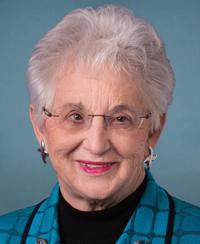 Rep. Virginia Foxx (R-NC)
Description
Amendment sought to strike the entire American Graduation Initiative (but maintain the privacy provisions that apply to the whole Act) and put the savings toward deficit reduction. The privacy provisions ensure that student information is protected from individuals not authorized to view it and that students cannot be identified by any unique identifier.
Legislative Activity
Stay on top of the latest movement without scrolling through every action
Amendment failed in Committee of the Whole
September 17, 2009 • 1:04 PM
View full timeline
Amendment failed in Committee of the Whole
September 17, 2009 • 1:04 PM
House amendment not agreed to: On agreeing to the Foxx amendment (A007) Failed by recorded vote: 126 - 301 (Roll no. 712).(consideration: CR H9694-9695; text: CR 9694-9695)
September 17, 2009 • 1:04 PM
Roll call votes on amendments in House
September 17, 2009 • 1:04 PM
On agreeing to the Foxx amendment (A007) Failed by recorded vote: 126 - 301 (Roll no. 712). (consideration: CR H9694-9695; text: CR 9694-9695)
September 17, 2009 • 1:04 PM
House amendment offered
September 16, 2009
House amendment offered/reported by : Amendment (A007) offered by Ms. Foxx.(consideration: CR H9636-9637; text: CR H9636)
September 16, 2009 • 6:45 PM
Amendment (A007) offered by Ms. Foxx. (consideration: CR H9636-9637; text: CR H9636)
September 16, 2009 • 6:45 PM
Votes
1 roll call on this amendment
Text
Offered
STUDENT AID AND FISCAL RESPONSIBILITY ACT OF 2009

The SPEAKER pro tempore. Pursuant to House Resolution 746 and rule
XVIII, the Chair declares the House in the Committee of the Whole House
on the State of the Union for the consideration of the bill, H.R. 3221.

{time}  1626

In the Committee of the Whole

Accordingly, the House resolved itself into the Committee of the
Whole House on the State of the Union for the consideration of the bill
(H.R. 3221) to amend the Higher Education Act of 1965, and for other
purposes, with Ms. Jackson-Lee of Texas in the chair.
The Clerk read the title of the bill.
The CHAIR. Pursuant to the rule, the bill is considered read the
first time.
The gentleman from California (Mr. George Miller) and the gentleman
from Minnesota (Mr. Kline) each will control 30 minutes.
The Chair recognizes the gentleman from California.
Mr. GEORGE MILLER of California. Madam Chair, I yield 4 minutes to
the gentleman from Texas (Mr. Hinojosa), the Chair of the Subcommittee
on Higher Education.
Mr. HINOJOSA. Madam Chair, as chairman of the Subcommittee on Higher
Education, Lifelong Learning and Competitiveness, I rise in support of
H.R. 3221, the Student Aid and Fiscal Responsibility Act.
I congratulate Chairman George Miller for his great leadership in
bringing this historic legislation to the House floor. I also want to
thank my colleagues from the Education and Labor Committee on both
sides of the aisle for supporting the largest investment ever in higher
education.
The bill embraces President Obama's educational priorities by helping
us to reach the goal of producing the most college graduates in the
world by 2020 and makes our workforce strong and competitive. This bill
will provide much-needed relief to families who are struggling to pay
tuition, as well as students and workers who seek to access high-
skilled and family-sustaining jobs.
The legislation will increase affordability, accessibility, and
college completion rates, particularly for first-generation college,
low-income, minority, and middle class students.
H.R. 3221 invests $40 billion to increase the maximum annual Pell
Grant scholarship to $5,550 in 2010, and by 2019 increase it to $6,900.
It also provides low-income and middle class families with reliable,
affordable, high-quality direct Federal student loans, and simplifies
the application process for financial aid.
H.R. 3221 strengthens our Nation's minority-serving institutions,
MSIs, particularly in the STEM areas so students can stay in school,
graduate and succeed in our global economy. It does this by investing
$2.55 billion in our Nation's minority-serving institutions over a 10-
year period. We estimate that this funding will reach at least 500
institutions of higher learning. These investments will expand
educational opportunities in the STEM fields and support students in
staying in school and graduating at our Nation's Historically Black
Colleges and Universities; Hispanic-serving institutions; tribally
controlled colleges and universities; predominantly black institutions;
and Asian American and Native Pacific Islander-serving institutions.
These investments will create a new generation of minority workers in
STEM fields, professionals that our country desperately needs to remain
competitive in our world.

{time}  1630

For decades, MSIs have provided educational opportunities for tens of
thousands of minority, low-income, and first-generation college
students due to their accessibility, affordability, and close proximity
to the communities they serve. If we hope to reach President Obama's
goals, we must make sure that more minority students are completing
advanced college degrees.
This bill invests $10 billion in our Nation's community colleges to
support President Obama's American Graduation Initiative and expands
educational opportunities to millions of students who attend our
Nation's community colleges.
These institutions serve young people who are just beginning their
careers but need flexible schedules to work to pay their tuition and
living expenses. They serve displaced workers who must upgrade their
skills to pursue a new career and enter high-growth sectors of our
economy.
They serve older students and adult learners who seek specialized
training and are attending their local community college for the very
first time. They serve veterans who are pursuing postsecondary
education after having served in the military.
This bill includes $8 billion in investments in early childhood
education to increase access to high-quality early education programs.
And we know that children who have an early start by the time they
enter kindergarten are more likely to go to college and succeed. There
is proof that early reading and writing, from cradle to 5 years of age,
equals success in school.
The CHAIR. The time of the gentleman has expired.
Mr. GEORGE MILLER of California. I yield the gentleman an additional
30 seconds.
Mr. HINOJOSA. This legislation is fiscally responsible and helps
reduce the deficit. It complies with pay-as-you-go and directs $8
billion in savings back to the U.S. Treasury to help pay down the
deficit.
Our competitiveness and innovation in the world depends on our
ability to invest in human capital and train a workforce for the 21st
century. I urge my colleagues to support this historic investment in
higher education.
Mr. KLINE of Minnesota. Madam Chair, I rise in opposition to H.R.
3221, and yield myself such time as I may consume.
Government takeover. We have seen and heard a lot of those two words
lately--in the credit markets, the banking sector, the automotive
industry, and even the building of schools. Then there's health care--
an industry that assumes one-sixth of America's gross domestic product.
We're not talking about health care today, but perhaps we should be.
The vote we will take on student lending is a culmination of a plan
set in motion more than a decade and a half ago--and one that bears an
eerily strong resemblance to the health care debate that rages on
today.
In 1993, Congress created a so-called government option for college
loans. The idea of this Direct Loan Program was to introduce
competition and hold down costs. Sound familiar? Just 16 years later,
we're about to vote on a plan that would completely and permanently
eliminate the private sector's role in originating and raising capital
for Federal student loans. In its place will be a one-size-fits-all
Federal loan model that requires the U.S. Treasury to directly lend
tens of billions of dollars each year--tens of billions of dollars we
don't have, and will be forced to borrow.
So why is Congress intervening to declare one program the winner? If
it's truly about competition, the best program ought to win in the
marketplace. In fact, one program has won--the public-private
partnership of the Federal Family Education Loan Program, which is the
choice of three-quarters of colleges and universities today.
By eliminating the FFEL program, we will lose the choice, the
competition, and innovation of the private sector. That includes
everything from technological innovations to loan discounts and
borrower services. We will also lose jobs--an estimated 30,000 or more
in congressional districts from coast to coast.
And what are we getting in return? My colleagues on the other side of
the aisle tout this legislation as being fiscally responsible.
Respectfully, I beg to differ.
The bill is awash with new entitlement programs, including a new
early childhood program to develop and fund programs at the State
level; a new program to build and renovate schools;

[[Page H9595]]

and a new program to bolster community colleges and involve the Federal
Government in developing online curriculum.
Add to these new programs the cost of expanding Pell Grants, funding
for Minority Serving Institutions and the Perkins Loan Program, and we
have on our hands a massive entitlement spending spree. This spending
is allegedly paid for by $87 billion in so-called savings from
elimination of the FFEL program. Unfortunately, the numbers just don't
add up.
CBO tells us the bill will require $13.5 billion in new discretionary
spending--real money that simply isn't counted in the mandatory score.
CBO also tells us that, using current figures, the Pell Grant expansion
will cost $11.4 billion more than scorekeepers originally predicted--
again, a cost not counted for in the ``official'' score. That means
this bill will cost closer to $15 billion over the next 10 years--and
when market risk is factored in, the cost spikes to nearly $50 billion
more.
Madam Chair, there's a better way. Later in the debate, I will join
the ranking member on the Higher Education Subcommittee, Mr. Guthrie,
in offering an amendment to stabilize student lending by extending
programs approved on a bipartisan basis last year.
With this plan, we can put $13 billion towards deficit reduction and,
most importantly, we can convene a nonpartisan commission to study
long-term structural changes to our student lending systems. In short,
it's a thoughtful, reasonable approach to determine what's best for
students, schools, and taxpayers alike.
I urge my colleagues to slow down, take a breath, and ask yourself
whether another government takeover is what we need right now. I think
the answer is a clear ``no.''
I reserve the balance of my time.
Mr. GEORGE MILLER of California. I yield myself 30 seconds. I
appreciate that the gentleman wants to make this comparison between a
public option and the private sector. Let's run down what happened over
the last 10 years.
The private sector took $100 billion in subsidies, and as they became
the most profitable sector of the American economy, they couldn't give
back any of those subsidies. While they were getting the $100 billion
in subsidies, they were engaged in price-fixing, anti-competitive
practices, briberies, conflicts of interest, improper disclosure. And,
at the end of that, they needed a bailout.
Sound familiar? Want to invest again?
The CHAIR. The time of the gentleman has expired.
Mr. GEORGE MILLER of California. I yield myself an additional 30
seconds. Or, you can look at the public option here. The public option
offered a product of equal value, very low cost, easy to administer,
attractive to the people who used it. Major universities have used it
for years with any problems, very complimentary about it, and it is in
fact saving the loan industry at this very time because the private
system has collapsed.
I yield 4 minutes to a member of the committee, the gentleman from
New York (Mr. Bishop).
Mr. BISHOP of New York. I thank the chairman for yielding, and I
thank him for his leadership in bringing this very important piece of
legislation to the floor. I want to amplify what the chairman just said
because I think it's important for all of us to understand how the FFEL
program works right now.
The way it works right now is that the Federal Government is
providing approximately 60 percent of the capital that the private
lenders provide to needy students. We do so because of the lack of
liquidity in private credit markets.
So what we are doing is, we are paying private lenders a subsidy so
that they will have the privilege of lending federally-originated money
to their borrowers. We guarantee repayment of that money to the tune of
97 percent of the amount outstanding and the private lenders reap
whatever interest payments are paid by the borrowers.
This is a really, really good deal for private lenders. It is a deal
that costs the American taxpayer approximately $8 billion to $9 billion
a year that we don't need to spend in that fashion. We can provide--we,
the Federal Government--can provide the loan capital that students
need. In fact, we now provide approximately 30 percent of the schools
in the country that participate in the Guaranteed Student Loan Program,
participate in the Direct Loan Program.
I used to work at a school that participated in the Direct Loan
Program. We made the transition from private lending to direct lending
early on, and it was an absolutely seamless transition. We did not have
to add a single staff person. Our students felt very advantaged by the
change that we made. And we are now asking that all schools make that
change, and we are doing so so that we can redirect that $8 billion or
$9 billion that right now goes to pad the profit margins of the private
lenders and direct that money primarily to needy students.
Let me put that in context. We right now rank sixth in the world in
terms of the college-going rate for our population. We used to be
first. Approximately only one out of every two students that enter
college ever graduates. Those are two pretty daunting statistics if we
are going to remain competitive in a very difficult global marketplace.
We need to have an educated workforce. We need to have a workforce
that can be competitive. And the pathway to that is access to college--
and not just access to college, but degree attainment.
This bill provides at least the financial mechanism for students to
be able to achieve that goal. We dramatically expand the availability
of the Pell Grant and increase the Pell Grant maximum in a way that it
keeps pace with inflation so that it maintains its buying power.
We guarantee access to capital in the Guaranteed Student Loan
Program, a subject I just talked about. We dramatically expand the
availability of Perkins loans. Right now, students borrow $1.5 billion
in Perkins loans. We would increase that amount to $6 billion a year,
dramatically expanding both the number of students that can benefit and
the number of schools that participate.
We also simplify the financial aid process. This is a process that
has proven very daunting to many, many students. I used to administer
that process. I recognize firsthand how difficult it can be. We
simplify the financial aid process, particularly the administration of
the so-called FAFSA form, and we remove that barrier, that roadblock
that has prevented many students from pursuing their dreams. And we do
all of this by not adding a dime to the bill that the taxpayers will be
asked to carry. We redirect money, as I say, from the banks. And we do
so in a fashion that helps needy students.
Mr. KLINE of Minnesota. At this time I'd like to yield 3 minutes to
the ranking member on the Higher Education Subcommittee, the gentleman
from Kentucky (Mr. Guthrie).
Mr. GUTHRIE. I rise in opposition to H.R. 3221 because I believe
there's a better way to protect students, colleges, and taxpayers. The
authors of this legislation will argue that the purpose of H.R. 3221 is
to simply stabilize student lending. They claim the Federal Family
Education Loan program, or the FFEL, is on ``life support'' and must be
replaced with the government-run Direct Loan Program.
The FFEL program has been a stable, reliable source of private
capital for student loans for more than 40 years. It provides a choice
of loan providers--from large, national lenders to small, local
nonprofits--and an array of benefits and services.
Colleges and universities overwhelmingly prefer the FFEL, with 70 to
80 percent of schools consistently opting for the public-private
option.
Dr. Gary Ransdell, president of Western Kentucky University, has told
me that the end of the FFEL program would, ``mean the loss of financial
literacy programs, college access programs, default aversion programs,
borrowing benefits, and other support services.''
Further, Dr. William Huston, president of St. Catharine College, a
small, independent private college in my district, has shared his
concerns about the impact the policy shift will have on schools of his
size. He said the shift, ``would mean investing staff time and money to
change systems and processes at a time where budgets have been cut to
the core.''

[[Page H9596]]

Clearly, the rush to the Direct Loan Program will have a major impact
on schools and students.
Now, it is true that the FFEL program was hit by the global market
collapse that rocked our economy last year--and when that happened,
student loan capital dried up, along with the capital across all
sectors. And when stability was needed, Congress stepped in.

{time}  1645

Last year, Congress passed the Ensuring Continued Access to Student
Loans Act, or ECASLA, which provided a temporary Federal backstop to
protect borrowers from loan disruption. This program has worked
exceedingly well, and to my knowledge, not a single borrower has been
left without a loan. The program is still in place today, and if our
goal is simply to stabilize student lending, there is a simple
solution: we should extend programs under ECASLA to retain the Federal
backstop until the economy rebounds.
These programs are working today, which means there would be no
confusion for schools and no uncertainty for borrowers if we were to
simply extend this program while the market remains turbulent. In fact,
Republicans had offered a plan that would exactly do that.
Later today I will join Ranking Member Kline to offer an alternative
to H.R. 3221. Our plan extends ECASLA through 2014, aligning it with
other programs under the Higher Education Act. In the meantime, we are
calling for a commission to study student loan programs and propose
alternatives that will protect borrowers and taxpayers alike. Simply
put, our plan is a way to slow down and take a more thoughtful,
reasonable approach to long-term student loan reform. Instead, we're
going to vote on a plan that will reshape the way students pay for
college in this country and radically expand the Federal Government in
the process. Proponents of this bill claim it saves $87 billion for
taxpayers.
The CHAIR. The time of the gentleman from Kentucky has expired.
Mr. KLINE of Minnesota. I yield the gentleman 1 additional minute.
Mr. GUTHRIE. In reality, that $87 billion is a combination of savings
and government earnings that come because the Federal Government
charges students a higher interest rate than it costs to borrow,
turning student loans into a profit-making venture for the government.
And what do we do with this $87 billion? We are taking student money
and spending much of it on an array of new government programs.
Students and schools will lose the value of choice, competition and
innovation. Meanwhile, taxpayers will be on the hook for massive new
entitlement spending and a huge expansion in government borrowing to
finance loans that now need to be made directly from the Federal
Treasury.
I urge my colleagues to join me in voting ``no.''
Mr. GEORGE MILLER of California. I yield 2 minutes to the gentlewoman
from Hawaii (Ms. Hirono) who has put an awful lot of work into the
early childhood education section of this legislation.
Ms. HIRONO. Madam Chair, as a member of the House Education and Labor
Committee and as an original cosponsor of this bill, I rise in strong
support of H.R. 3221, the Student Aid and Fiscal Responsibility Act. I
thank Chairman Miller for his leadership on this, as well as on so many
other important measures.
While this bill includes many significant provisions, the part of the
bill that I am especially excited about is the creation of the Early
Learning Challenge Fund. Like the PRE-K Act I introduced in 2007 and
again earlier this year, the Early Learning Challenge Fund would
establish a competitive grant program to support, not supplant, States'
efforts to improve the quality of their early education programs.
Evidence shows that quality early education is the best foundational
investment we can make in our children.
Last night I had the opportunity to meet with members of the
philanthropic community who came together in recognition and support of
quality early education. To quote these people, quality early education
is ``the most powerful investment America can make.'' They not only
understand the value of quality early learning, but they support
successful programs all across the country, including in Hawaii. And
they are not alone. Educators, economists, brain development
researchers, police chiefs, Chambers of Commerce, retired military
personnel all have emphasized the critical need for quality early
education to prepare our children for success at school and in life.
This bill is an important step in preparing our children for such
success. I urge my colleagues to support this measure, a bill that
makes important investments in education for all of our keiki--that's
Hawaiian for children--from birth through college.
Mr. KLINE of Minnesota. Madam Chair, at this time I am pleased to
yield 3 minutes to the distinguished gentleman from Indiana (Mr.
Souder).
Mr. SOUDER. I thank our ranking member.
The loud sound you hear is the big gulp of the public option
swallowing the private option. We hear all kinds of excuses why it's
not the same, but here are some of the key business points to remember
here: There has already been confusion in the quotes here on the floor
about this 7 percent that the private sector has between revenues,
which is the loan income that the banks receive, and their profits.
There's also confusion between the net profit and the gross profit. The
gross profit has all the expenses coming out, whereas the net profit is
the bottom line, which is a relatively small number.
The reason this is important is that government, if they take this
over and swallow the whole public sector into the public option, will
have basically the same costs. Only when you compare cost to cost, the
government can't deliver at the same price as the private sector. It
never has, it never will in any category in the history of the United
States.
Now in this expense question--and we've argued about this for years--
one of the things that's clear is that the Federal Government doesn't
depreciate. So fixed expenses, like buildings, aren't counted in their
expenses that come off of the net profit, because that's a different
budget. We do buildings in one appropriations bill, in one lump sum. It
is not something that you would amortize over time.
Mixed expenses--for example, the expenses at the Department of
Education, such as lighting in the building, even in many cases staff--
aren't assigned to the student loans. They're assigned to the
Department of Education. But even then when you ask the private sector
to compete, even paying in that profit, 80 percent of the colleges
chose the private sector because the service delivery was better. In
fact, hopefully, the government is going to be wise enough here that
they're going to contract out with the private sector at the end of the
day to deliver much of these services because there is no capability in
the Federal Government to deliver this.
Now the proposal, on the face of it, isn't even plausible that we're
hearing about all these new funding programs when the net profit out of
the private sector is minimalist compared to the new program. So where
does this money come from? The best I've been able to determine is it's
a different method of borrowing. Banks have to use the LIBOR rate, the
interbank lending rate, whereas we are apparently going straight to the
Fed and Treasury. That's merely a transfer of government funds that are
off budget onto budget but still reduces the liquidity in the banking
system, and it's being used to subsidize the new programs in the
student loans.
Now why does this become important? Why won't the same grounds apply
to SBA? Because if SBA goes directly into this same fund, there's no
reason to use a bank. On what grounds do we use banks for farmers'
loans? If they're going to borrow the money directly from the Treasury
and the Fed, they can borrow it cheaper than any bank, and that we
should eliminate any loans that are going through anywhere in the
private sector where there is a government alternative.
The CHAIR. The time of the gentleman from Indiana has expired.
Mr. KLINE of Minnesota. I yield the gentleman an additional 30
seconds.
Mr. SOUDER. Thank you.
The key question here is, the constitutional authority of the Federal
Government is to regulate interstate

[[Page H9597]]

commerce. Then we have the Federal Reserve System that was set up to
provide a balance and stability in the funding of the United States.
What we did not create is a national bank.
This bill is the beginning of the creation of a national bank, and
that there is no logical reason why every other lending category won't
become a national bank, too. That's the big gulp we are hearing here
and in many other areas, a massive government takeover in category
after category.
Mr. GEORGE MILLER of California. I yield 2 minutes to the gentlewoman
from Nevada (Ms. Titus).
Ms. TITUS. Thank you, Mr. Chairman.
I rise today in strong support of H.R. 3221. Nevada has been
particularly hard hit by the economic downturn. We're facing record
unemployment. The investments in this bill will help Nevada's students
and dislocated workers obtain the education and training they need to
compete in the workforce, and it will do so in a fiscally responsible
way.
Specifically, this bill invests more than $60 million in Pell Grants
for Nevada's Third Congressional District, making more than 13,000
students eligible for aid. It also provides $1 million a year for the
next 5 years to bolster colleges' access and completion support
programs for students in Nevada. It strengthens our community colleges
by ensuring that Nevada receives nearly $19 million to help finance
projects to renovate and construct state-of-the-art facilities; and
finally, it invests in 21st century green high-performing public
schools by providing Nevada's school districts with more than $25
million over the next 2 years for school modernization, renovation and
repairs to create healthier, safer and more energy-efficient teaching
and learning climates, the implementation of which will put Nevadans to
work.
I am also pleased that this bill includes an amendment that I offered
to establish an advisory council to the Secretary of Education on green
high-performing schools. Quality education is the key to prosperity for
individuals and for our country. I urge your support.
Mr. KLINE of Minnesota. Madam Chair, at this time I am very pleased
to yield 3 minutes to the gentlelady from Illinois (Mrs. Biggert).
Mrs. BIGGERT. I thank the gentleman for yielding.
I rise in opposition to this bill. Sixty years ago, the only student
loans available were private loans. Unfortunately, the system left out
many students with either limited financial resources or poor or
nonexistent credit. So in 1965, Congress created the Federal Family
Education Loan Program which has successfully administered and
regulated federally backed private student loans for the past 44 years.
But President Clinton decided that we could save money by creating a
new federally run program to provide student loans at public option. At
present, just under one-third of colleges have chosen the public
option, also known as the Direct Loan Program. However, Democrats have
decided that by leveraging the borrowing power of the Federal
Government, which Congress has more aptly demonstrated, they can save
money, as scored by CBO.
We all know that because of the Federal Government's size and ability
to raise taxes at any time to pay off its debts, it can borrow money at
a cheaper rate than private banks. By requiring all students that use
Federal loans to borrow directly from the government, this bill allows
the government to make a greater profit off students, count it as a
``cost savings,'' and then spend it on other educational priorities.
It is interesting that after the government's student loan ``public
option'' failed to gain widespread acceptance, the other side of the
aisle now proposes to eliminate all other choices so that students are
forced into the public option. Even more interesting is that the other
side of the aisle has proposed another ``public option'' that will
supposedly save money by using the government's size to underpay
doctors and hospitals, which forces private plan owners to make up the
difference. I fear that in a few years, the public plan may soon be the
only affordable option available to most Americans.
I don't want a single-payer health care system, and I don't want a
single-payer student loan program. Just as 83 percent of Americans are
satisfied with their current health care, over two-thirds of all
colleges have elected to go with the privately administered FFEL
program. We should let colleges continue to select the student loan
program that works best for their students, not the one chosen by
bureaucrats in Washington.
I urge all of my colleagues to join me in voting ``no'' on this bill
to make sure that the student loan ``public option'' is not the only
option.
Mr. GEORGE MILLER of California. I yield 2 minutes to the gentlewoman
from California (Ms. Chu), the newest member of our committee.
Ms. CHU. Thank you, Chairman Miller.
As a professor for over 20 years in the L.A. Community College
District, I know firsthand how important community colleges are to
helping hardworking Americans achieve their dreams. About one out of
every two college students attends a community college, and they are
some of the hardest workers I have ever met. My students came from all
walks of life. They were immigrants, single moms and laid-off workers,
and many of these students were the first in their families to go to
college.
Community colleges are the backbone of our Nation's workforce,
providing students with technical training to fill our Nation's most
critical fields. They excel at meeting the needs of students from all
backgrounds and circumstances. The investments in this bill truly
reflect the role community colleges play in our economy. Seven billion
dollars is provided to reinvigorate the community college experience,
to improve instruction, initiate job placement counseling, and create
nontraditional programs for students on the weekends, evenings or even
online.
There is $2.5 billion in grants provided to renovate community
college facilities. It will allow them to accommodate their growing
enrollment and provide students with modern equipment and facilities so
they are better prepared when they graduate.
In an increasingly competitive world economy, America's economic
strength depends upon the education and skill of its workers. This bill
will help us to meet that challenge.
Mr. KLINE of Minnesota. Madam Chair, could I inquire how much time is
remaining, please?
The CHAIR. The gentleman from Minnesota has 16\1/2\ minutes, and the
gentleman from California has 15\1/2\ minutes remaining.

{time}  1700

Mr. KLINE of Minnesota. Madam Chair, at this time, I yield 3 minutes
to the distinguished gentleman from California (Mr. McClintock).
Mr. McCLINTOCK. I thank the gentleman from Minnesota.
Madam Chairman, this really is a case study in how a public option
ultimately becomes a public monopoly in a span of just a few years.
The gentleman from Minnesota is absolutely right, this Direct Loan
Program was established in 1993 as a public option. It was designed to
increase consumer choice; that's what we were told at the time. It had
only one problem. The consumers never warmed to it.
At its peak, the government Direct Loan Program only attracted 34
percent of loan volume. Today, even with all of the financial
difficulties in the private sector, it has earned only 27 percent of
the market. The rest of that market is ably administered by 1,500
active lenders and servicers and guarantee agencies that employ more
than 30,000 private sector workers. This bill literally shuts down 40
years of successful private sector involvement with student loans and
hands the government monopoly control. As the bumper sticker warns, the
government hates competition.
We're told this is going to save money. Well, pardon my skepticism,
but I seriously doubt that the same government that runs FEMA is going
to bring efficiency to the student loan program. In fact, it's
precisely the fierce competition among loan providers that has produced
lower prices for students and universities and that produces
innovations in loan delivery and processing and servicing, not to
mention broader benefits such as college planning services, financial
literacy education, default aversion, and FAFSA assistance.

[[Page H9598]]

One of those providers is the California EdFund, near my district.
Last year alone, the EdFund helped nearly 420,000 borrowers to avoid
default. They saved taxpayers $4.2 billion in default claims; that's
one provider, $4.2 billion in savings for American taxpayers.
Before the government took over our automobile manufacturers, Will
and Ariel Durant asked this question: What makes Ford a good car?
Chevrolet. Competition. That creative and innovative force is snuffed
out by this bill for the student loan industry. And mark my words, if
this bill becomes law, we are going to be back here in a few years to
address growing cost overruns and inefficiencies in yet another failed
government monopoly program.
Mr. GEORGE MILLER of California. I just want 10 seconds to say that
I'm glad the gentleman mentioned the California EdFund. The EdFund
supports this legislation.
I yield 2 minutes to the gentleman from Iowa (Mr. Loebsack), who was
very involved in writing this legislation.
Mr. LOEBSACK. Madam Chair, I rise today in strong support of the
Student Aid and Fiscal Responsibility Act. In particular, I want to
thank Chairman Miller and all of my committee colleagues for their
great work on this legislation.
I am particularly pleased this bill contains legislation I worked on
with Chairman Miller, Congressman Kildee and Congressman Chandler to
help modernize, renovate, and repair our crumbling public schools with
energy efficient and renewable resources.
Schools across America in every State are deteriorating. In my State
alone, the GAO has found that 79 percent of all schools needed to
repair or upgrade their buildings and facilities. Providing schools
with funds to help leverage local dollars to modernize their schools in
need of repair will also create good-paying local jobs in every State
and will help improve the safety and the health of our students.
This legislation will provide much needed funds for school facility
modernization projects over the next two fiscal years to help ensure
our students have world-class, safe, healthy and energy-efficient
environments in which to learn.
Given the increasingly global nature of our economy and the
workplaces our students will be entering, it is more important than
ever that we dedicate the resources necessary to ensure children will
be able to compete. With the passage of this historic Student Aid and
Fiscal Responsibility Act, we will indeed be making a historic
commitment to the next generation through significantly improved
educational opportunities, and I urge my colleagues to vote for this
bill.
Mr. KLINE of Minnesota. Madam Chair, at this time, I yield 2 minutes
to the gentleman from Indiana (Mr. Burton).
(Mr. BURTON of Indiana asked and was given permission to revise and
extend his remarks.)
Mr. BURTON of Indiana. If a government program is so great, why is it
that the colleges and universities around the country--70 to 80 percent
of them--are going with the Federal Family Education Loan Program? It's
because it's better, it works better. They don't want to mess with the
government bureaucracy.
You know, in 1993, and I think it's been stated already, and I don't
want to be redundant, but the Clinton administration resurrected the
idea of the Direct Lending Program and they pushed it through Congress.
It didn't take long for the program's reputation to become synonymous
with slow, inefficient, government bureaucracy service. And the
Minority Views section of this bill, H.R. 3221, reminds us that in 1997
the program completely collapsed, as it probably will again, and was
unable to make consolidation loans to borrowers. And in 1998, the
Congress passed the Higher Education Amendments of 1998, which
specifically blocked the Clinton administration from phasing out the
FFEL Program because it did not make for sound public policy then, and
it doesn't now.
And I think it's extremely important. We have unemployment right now
that's at 9.7 percent. I'm sure it's going to go over 10 percent. More
than 30,000 private sector jobs are directly affected by what you're
going to do today. In the State of Indiana, it's 2,356 jobs. And right
in the Fifth District, it's 1,500 jobs. And our unemployment rate in
that State is 10.4 percent. I don't understand, at a time of economic
difficulty, you want to do something that's going to put more people
out of work, especially when you're talking about a program that didn't
work before, it was junked, and now you're going to resurrect it.
I know you'll come up with a million ideas of why we ought to do
this, but it's more government control, more government bureaucracy,
something that hasn't worked, and the American people simply don't want
it. We just passed the stimulus bill, and the stimulus bill obviously
hasn't done a great deal to solve the problem.
The CHAIR. The time of the gentleman has expired.
Mr. KLINE of Minnesota. I yield the gentleman an additional 30
seconds.
Mr. BURTON of Indiana. Let me just say to my colleagues that we don't
need more government right now; we need less government. We need
competition in the private sector. We don't need to take over education
like we did the automobile industry, the finance industry, and you're
trying to do with the health industry. It doesn't work. Socialism
doesn't work. Government control doesn't work.
So I urge my colleagues to reconsider and think. It didn't work
before. It won't work now.

Announcement by the Chair

The CHAIR. The Chair reminds Members that they must address their
remarks to the Chair.
Mr. GEORGE MILLER of California. Madam Chairman, I yield 2 minutes to
the gentleman from Massachusetts (Mr. Tierney), a member of the
committee.
Mr. TIERNEY. You know, to listen to this debate, Madam Chairwoman,
you would think that we were disallowing banks and private lenders from
lending. That's not the case at all. If they want to make private
student loans, they can. The fact of the matter is that without a
subsidy and without a guarantee, they probably won't find themselves
very competitive. Right now, the government is providing 60 percent of
all the capital that goes in because that market didn't have the
liquidity it required in order to keep up those loans.
What we are seeing is the option here for the taxpayers--the same
people who are trying to send their kids to school--transferring their
money over to private lenders, guaranteeing the loans, giving them
subsidies so they can make a profit that will be money that can't be
used for Pell Grant scholarships and for low-interest loans.
The people in my district, 100,000 residents in Massachusetts will
get more Pell Grant scholarships because we take that money and,
instead of giving it to the lenders, we give it to the families. One
hundred thousand people in Massachusetts will get lower interest rate
loans because we don't take that money and transfer their tax money to
private lenders; we, in fact, keep it in the system. So when all that
is said and done and we've improved education, as the President has
called on us to do, we will put $10 billion back in to pay down our
debt.
This is a sad tale when they think that the only way they can keep
private lenders in business is if we give them subsidies and then we
guarantee their loans. If they want to compete, let them compete. They
can make their loans. They can go out any time they want.
But I think the American families are saying they're hard-pressed.
Some of them are out of work. Some of them are making less. All of them
have more bills to pay for college for their students. They want to be
able to have access to those Pell Grant scholarships. They want to have
lower interest rate loans so that their children have the opportunity
to move forward. Better the opportunity for them than for the private
lenders to pad their Wall Street investors' pockets. And that's why we
have to move forward on this. That's what is going to improve this
country and make us competitive as we move forward.
Mr. KLINE of Minnesota. Madam Chair, at this time, I yield 2\1/2\
minutes to the gentleman from Wisconsin (Mr. Petri).

[[Page H9599]]

(Mr. PETRI asked and was given permission to revise and extend his
remarks.)
Mr. PETRI. I thank my colleague from Minnesota.
Madam Chair, I rise in support of the Student Aid and Fiscal
Responsibility Act, which eliminates the Federal Family Education Loan
Program and moves origination of all Federal student loans to the
Direct Loan Program.
For over two decades, I have championed direct loans as the most
cost-effective way to provide student loans, but the defenders of the
archaic FFEL guarantee loan program remain confused, so let me be
clear.
Currently, we have two Federal student loan programs which provide
the exact same loans to students. FFEL is a Federal program, not a
private loan program. Private lenders make the loans with two separate
subsidies from the Federal Government: a guaranteed interest rate
that's determined through the political process, not the markets, and a
guarantee against default losses. Thus, if a student defaults, the
taxpayers are on the hook, not the private lender. The profits are
private, but the losses are socialized. FFEL is not a free enterprise.
Over the years, FFEL has proven to be fraught with scandal and an
unreliable source of funds, and it costs billions of dollars more for
the taxpayers. A writer for a conservative columnist Bill Kristol's
Weekly Standard Magazine aptly described the FFEL Program as ``a
textbook example of crony capitalism.'' In contrast, the Direct Loan
Program eliminates the middleman, lending directly from the Treasury,
and all servicing and bill collection is handled by private companies
operating through performance-based contracts.
Over the years, there has been unanimous agreement by budget experts
under both the Clinton and Bush administrations on the excessive costs
of FFEL. Earlier this year, an estimate by the CBO once again
reiterated this conclusion when it reported that switching to 100
percent direct lending would result in nearly $87 billion in savings.
At this point, I would like to engage in a colloquy with Chairman
Miller.
Chairman Miller, I support the grant program included in this bill
that aims to strengthen community colleges. It's my understanding that
public 2-year liberal arts colleges that offer associate degrees and
certificate programs, such as the University of Wisconsin Colleges,
will be eligible to compete for these funds.
Do you agree with that interpretation?
Mr. GEORGE MILLER of California. If the gentleman would yield, yes, I
do agree with the intent of that language.
Mr. PETRI. I thank the gentleman for his assurance. And I thank my
colleague for the time.
Mr. GEORGE MILLER of California. Madam Chair, I yield 2 minutes to
the gentleman from Illinois (Mr. Hare), a vigorous member of the
committee.
Mr. HARE. Madam Chair, I rise in strong support of the Student Aid
and Fiscal Responsibility Act. I am particularly pleased with the
investment that this bill makes in the Pell Grant, early childhood
education, and our Nation's community colleges.
H.R. 3221 provides $76.1 million to increase the maximum Pell Grant
in my congressional district to $6,900 by the year 2019. Additionally,
over 16,700 Illinois students will now be eligible for Pell
scholarships.
The legislation also includes my amendments to remove barriers to
expanding access to early learning programs to disadvantaged children,
and to encourage States to implement positive behavioral supports in
their early childhood education system.
Finally, I added provisions to make west central Illinois's community
colleges more competitive for college completion grants and to direct
the Institute of Education Sciences to collect data on the location of
grant recipients, ensuring that the most remote American communities
are accessing funding opportunities.
Again, H.R. 3221 takes bold steps towards improving the accessibility
of higher education, invests in our children, and focuses on the
important role community colleges play in economic development.
I commend my chairman, Chairman Miller, and President Obama for this
visionary initiative, and I urge all my colleagues to support it.
Mr. KLINE of Minnesota. Madam Chair, at this time, I yield 4 minutes
to the distinguished ranking member on the Budget Committee, the
gentleman from Wisconsin (Mr. Ryan).

{time}  1715

Mr. RYAN of Wisconsin. I thank the chairman.
Madam Chairman, I rise in opposition to this bill. Let me be clear: I
support education. It's an indispensable component of America's
prosperity. I don't find fault with Pell Grants or student loans. What
I find fault with is the way that the math doesn't add up in this bill.
This bill includes a sleight of hand in so many ways that it either
raises the deficit by $5.7 billion or by as much as $39 billion. It
creates 10 new entitlement programs that will dramatically increase
spending over the next 10 years, and it adds to our already alarming
levels of borrowing. Let me try and explain what's going on with
respect to how the budget gimmicks are employed here.
First off, the bill claims to reduce mandatory spending by $7.8
billion and dedicates that savings to deficit reduction; but through
this budget gimmick, the bill shifts $13.5 billion in necessary program
administrative costs over to the discretionary category where it cannot
be counted by the Congressional Budget Office. With this gimmick
removed, the bill actually increases the deficit by $5.7 billion.
That's the smallest budget gimmick in this bill.
The second largest budget gimmick in this bill is the way that it is
scored, not using the kind of scoring that we use for such things like
when we scored Fannie and Freddie or the TARP, where we used risk-
adjustment scoring under the credit reform rules. If you actually score
it under the accurate rules that the CBO says it ought to be scored
under, this bill would raise the deficit by $32 billion.
Beyond that, these 10 new entitlement programs that are being created
have artificial sunset dates in the law. The most permanent thing in
Washington is a temporary government program; and if you repeal these
artificial sunset dates, that's $39 billion added to the deficit, which
is according to the Congressional Budget Office.
This bill does not save money. This bill raises the deficit. This
bill crowds out the private sector; it deprives students of choices; it
uses enormous budget gimmicks, and it exploits the budget
reconciliation system to try and say that it's saving money and
reducing the deficit when, in actuality, using honest budgeting and
honest accounting, it does nothing like that.
Mr. GEORGE MILLER of California. I yield 2 minutes to the gentleman
from North Dakota (Mr. Pomeroy).
Mr. POMEROY. Madam Chair, I rise to engage in a colloquy with Mr.
Miller, the distinguished chairman of the Education and Labor
Committee.
Chairman Miller, I rise to discuss an issue that is of critical
importance to my district.
We have a unique situation in North Dakota. As you know, the Bank of
North Dakota was created by statute in 1919 to meet the needs of North
Dakota citizens, and it is the only State-owned bank in the country.
By State statute, the Bank of North Dakota has administered both
lending and loan guarantee functions to assist families, schools, and
lenders in providing reliable student loans for over 42 years. It is
the only bank in the country to perform the guaranteed lending and
servicing functions for the Federal student loan program. Mr. Chairman,
this important institution has served more than 150,000 borrowers at 20
postsecondary institutions in my State.
The Bank of North Dakota has provided one-to-one counseling and
default prevention workshops for schools and lenders, providing
techniques to use when counseling borrowers on their student loan debt.
The result has been an extremely low default rate under the FFEL loans
administered by the Bank of North Dakota.
For all of these reasons, I've been a huge supporter of this Bank of
North Dakota student lending program. I commend the work that its 55
State employees have done to make college accessible for North Dakota
students. I have received concerns about altering

[[Page H9600]]

the Bank of North Dakota's role in student lending programs, and I
would like to address that issue.
Mr. GEORGE MILLER of California. Will the gentleman yield?
Mr. POMEROY. I yield to the gentleman.
Mr. GEORGE MILLER of California. I thank the gentleman for his
attention to this issue. I recognize that the Bank of North Dakota is
an important institution in North Dakota and is different from any
other lending institution in the country.
Mr. POMEROY. I acknowledge that this legislation ensures a role for
private lenders in the servicing of loans. Particularly, I thank the
chairman for his inclusion of a provision that ensures nonprofit
entities, such as the Bank of North Dakota, will be able to service
student loans in their States.
Will you work with me, Mr. Chairman, as this legislation moves to
conference, to ensure that the Bank of North Dakota can continue to
participate in the Federal lending program?
Mr. GEORGE MILLER of California. If the gentleman will yield, yes, I
will work with you, as this legislation moves to conference, to ensure
that State banks have a continued role in the Federal student lending
program.
Mr. POMEROY. I thank the Chair.
Mr. KLINE of Minnesota. Madam Chair, at this time, I am pleased to
yield 2 minutes to the distinguished gentleman from Georgia, Dr. Price,
a member of the committee.
Mr. PRICE of Georgia. Madam Chairman, here we are again--growing
government. The Student Aid and Fiscal Responsibility Act, an Orwellian
title to say the least, marks the culmination of a 44-year journey to
finally end the private student lending system, but is doing so in the
midst of the worst economic downturn in generations.
Now, perhaps my friends on the other side didn't notice this fact,
but they must be ignoring that there are more than 14 million Americans
unemployed on their watch. This legislation has real consequences for
the economy, specifically in regard to job losses.
Based on an employment survey of private lending loan participants,
conducted jointly by the Consumer Bankers Association, the Education
Finance Council and the National Council of Higher Education Loan
Programs, this plan targets and may eliminate up to 30,000 private-
sector jobs. So nearly every State could expect to see job losses when
the Democrats ``invest in education.''
Remember, this is in the midst of the worst economic downturn in
generations. It really has reached a point where the question has got
to be asked: Is there any sector of the economy that the Democrats
aren't planning to have the government control and dominate? Taking
over the entire student lending system is just the latest example after
health care, the national energy tax, financial institutions, and auto
bailouts. Madam Chair, you could go on and on and on.
The other side is clearly more committed to creating more bureaucracy
than in preserving jobs, and more bureaucracy is exactly what happens
when you have a public option in this or in any other arena.
The finances, as my friend from Wisconsin talked about, would be
laughable if they weren't so serious. Ten new entitlement programs
convert the Perkins Loan Program from a discretionary program to a
mandatory program. They create a new college access and completion fund
with four new programs, costing $3 billion.
The CHAIR. The time of the gentleman has expired.
Mr. KLINE of Minnesota. I yield the gentleman an additional 30
seconds.
Mr. PRICE of Georgia. It creates a new $4.9 billion mandatory fund
program to modernize, renovate, and repair public elementary and
secondary schools. That's right, Madam Chair. It's Federal money for
building local schools. They create the 70th--get that, Madam Chair--
the 70th program for early learning programs in this Nation at a cost
of $8 billion. You'd think we could have relied on the previous 69.
It's a bad idea, even after 44 years, whose time has not come.
Mr. GEORGE MILLER of California. I yield 2 minutes to the gentleman
from Oregon (Mr. Wu), a member of the committee.
Mr. WU. Thank you, Mr. Chairman.
Madam Chair, what is truly Orwellian is the distortion of argument
presented by the other side in this debate because--do you know what?--
any bank that wants to make a student loan can continue to make a
student loan. What will not happen anymore is making those student
loans with a taxpayer subsidy, a subsidy where not only is there a
guaranteed interest rate but where the deal is that the taxpayer keeps
the bad loans and the private sector, the bank, gets to keep the good
loans. That's not going to happen anymore. Who is going to benefit?
Students.
I want to rise in support of this bill, not only because of the
tremendous advances in student financial aid--in Pell Grants and in
working toward a better loan rate for students--but also because of the
assistance to local schools to build safer, more energy-efficient
schools, which would be better learning environments. Also, it will
return jobs, and it will be more energy efficient for local
communities.
So many of our communities are in urgent need of renovated schools,
and recent estimates show that America's schools need billions of
dollars in retrofitting and repair just to have safe and healthy
learning environments for our kids. The funds in this bill will also
help our schools return money to our communities by saving energy and
creating jobs.
I want to especially thank Chairman Miller for working with me to add
seismic retrofitting, better storm water runoff systems and additional
clean energy sources as permissible uses under this bill for our local
schools. In a place like Oregon, where better, sound science has found
that we have a much higher earthquake risk than we originally thought--
and that science has just come out in the last 10 or 15 years--we
urgently need the seismic retrofits and other safety measures. So I
want to commend the Chair for working with me on this.
I urge support for this legislation with all of its important
components to create healthy and safe schools and also to financially
assist college students through school.
Mr. KLINE of Minnesota. Madam Chair, may I inquire again as to the
time remaining.
The CHAIR. The gentleman from Minnesota has 4 minutes. The gentleman
from California has 6\1/2\ minutes.
Mr. KLINE of Minnesota. Madam Chair, at this time, I am pleased to
yield 3 minutes to the gentleman from East Tennessee, Dr. Roe.
Mr. ROE of Tennessee. I thank the gentleman for yielding.
Madam Chair, I rise in opposition to H.R. 3221. What we are doing
here today is using our country's financial crisis as an excuse to
eliminate an industry that has proven to be more popular and at least
as well run, if not more so, than its government counterpart. I might
add that my son just used this program for his own education.
A unified Democratic majority of the House, Senate and White House
created the Direct Loan Program in 1993. Back then, many Republicans
were skeptical that the Democrats' intention was to simply ``introduce
competition and keep private lenders honest.'' In what is literally
their first opportunity since then with a unified majority, they are
proving Republicans' suspicions correct. The comparisons to our health
care debate are obvious and too strong to ignore.
In the debate we are having on health care, our friends on the other
side of the aisle are making the case that we need the government and
private industry to compete to provide consumers the best choice. So
it's astonishing that we're considering a bill that eliminates the
Federal Family Education Loan program, which consumers are choosing by
a nearly 3-1 margin over its government-run Direct Loan Program
alternative. So much for competition.
What's worse is this legislation may increase the deficit even more.
If we use CBO's generous assumptions, this bill will save $13 billion
over the first 5 years, but only $7 billion over the next 10 years.
That means in the second 5 years of the bill's scope, the bill will
actually cost taxpayers $6 billion in new funding. This does not even
begin to address what happens in the second 10 years when the spending
doesn't have to be offset. It's just so disingenuous to pass more debt
on to future generations while calling our actions

[[Page H9601]]

``fiscally responsible.'' That's only if the assumptions are correct.
The CBO has estimated that, if the default rates run higher than their
estimates, this bill could cost taxpayers $33 billion more in 10 years.
The spending would be less troubling if it weren't mandatory
spending, which means it goes on autopilot and is never reviewed by
Congress for effectiveness, and it never has to comply with annual
budgets.
The most disappointing aspect of this whole debate is that there is
an obvious bipartisan alternative that achieved 388 votes in the last
Congress. The Ensuring Continued Access to Student Loan Act, which
ensures that private lenders can make it through a tough credit crisis,
should be what we're considering today instead of this partisan
approach.
Since passing in the last Congress, we should all be commending
Chairman Miller and members of the committee who were here last year
for a job well done. Instead, the Democrats are, once again, trying to
have the government take over private industry, which is providing a
service the American people like.
Here is the bottom line in this debate: if you like multibillion
dollar programs that have zero oversight from Congress and are on
autopilot, vote for this bill. If you like to increase unemployment,
you should vote for this bill. If you believe Washington bureaucrats
will improve their performance and will find ways to become more
efficient by eliminating their competition, you should definitely
support this bill.
If you feel like we should be seeking common, bipartisan ground on
the future of our children's education, please join me in voting ``no''
on this program and in voting ``yes'' on the Kline amendment.
Mr. GEORGE MILLER of California. I yield 2 minutes to the gentlewoman
from New Hampshire (Ms. Shea-Porter).
Ms. SHEA-PORTER. I thank Chairman Miller for yielding me time and for
his leadership on this bill.
Madam Chair, as a member of the Committee on Education and Labor, I
rise to express my support for the Student Aid and Fiscal
Responsibility Act.
With this legislation, we are investing in our students. We are
providing needed dollars to improve our early education programs and to
rebuild our schools. We simplify the student aid application, the
dreaded FAFSA. We invest $40 billion in Pell Grants. We do this, and we
produce a savings of $10 billion over the next 10 years. I am pleased
that we also recognize the important work done by the local nonprofits
in our communities by ensuring them a continued role in the servicing
of student loans.
In my home State of New Hampshire, we have one of these local
nonprofits, the New Hampshire Higher Education Assistance Foundation.
NHHEAF is a well-respected member of our community, and it provides
many jobs. I am proud that, through our working committee, we were able
to ensure that NHHEAF continues to provide services to our students and
to their families through both loan servicing and new grant programs
provided for in this legislation.
I am proud to be an original cosponsor, and I urge a ``yes'' vote so
we can help American students and their families.
Mr. KLINE of Minnesota. Madam Chair, I reserve the balance of my
time.
Mr. GEORGE MILLER of California. I yield 1 minute to the gentlewoman
from California (Ms. Pelosi), our Speaker.

{time}  1730

Ms. PELOSI. Thank you to the chairman for giving me this opportunity
to come to the floor in strong support of the Student Aid and Fiscal
Responsibility Act. I do so because education is the best investment
individuals can make in themselves, parents can make in their children,
and a Nation can make in its citizens and in its future.
Today is possible because of the leadership of the distinguished
chairman of the Education and Labor Committee, Congressman George
Miller. Students across America have no better advocate for affordable
and accessible higher education. Thank you, Mr. Miller.
I would also like to acknowledge the chairman of the Subcommittee on
Higher Education, Lifelong Learning and Competitiveness--I love that
trio of jurisdiction--and a national leader on college affordability,
Congressman Ruben Hinojosa. To them and all of the members of the
Education and Labor Committee, we are all in your debt.
We all know that for every additional year of higher education, an
individual's earnings increase about 10 percent. We know that education
is key to the prosperity of our Nation, the prosperity of the
individual, the prosperity of the Nation.
But for far too many, a quality higher education has been simply
unaffordable. I have heard of cases where parents have been hesitant to
encourage their children to strive for college because they can't
afford to send them. What sadder testimony could there be for prospects
for that person.
Expanding access to higher education is essential to building
America's way out of recession and keeping our Nation competitive.
Innovation begins in the classroom. It is essential that we prepare our
students for 21st century jobs by providing all Americans with the
skills they need to compete.
When Democrats came to the majority in 2007, we passed in a
bipartisan way the College Cost Reduction and Access Act. That was the
single largest investment in education since the GI Bill in 1944, until
today.
Today we will make the largest investment in making college more
affordable in the history of our Nation. On the 100th day of President
Obama's presidency, in the House and in the Senate, we passed the
budget. The President had three pillars for turning the economy around,
for creating jobs in that budget, to create jobs to give tax breaks to
the middle class and to reduce the deficit. The three pillars for
turning the economy around and creating jobs were investments in
education, in health care, and in a new energy policy for good, green
jobs for the future.
Today, we are passing legislation to support the education pillar of
that budget. Again, education is essential to the fulfillment of
individuals, the competitiveness of our Nation, and it is the
foundation of our democracy.
This bill is a great bill, and I want to again reiterate what others
have said. It invests $40 billion in Pell Grants and increases the
maximum grant that can be awarded. That makes a big difference to our
students. It invests more than $2.5 billion in Historically Black
Colleges and Universities and Minority-Serving Institutions, a big
issue for Mr. Hinojosa and for many of us here. It strengthens the
Perkins Loan Program that provides low-cost loans to students. It keeps
interest rates low for those who have Federal student loans. This is
very important.
This means that more students will enter college, that they will
graduate with less debt, and that the Federal loan initiatives that
they and their families depend upon are strengthened for decades to
come. On top of all of that, taxpayers will save money.
Under Mr. Miller's leadership, we are investing in our children
without heaping mountains of debt upon them. This legislation is
fiscally responsible, following the strict standards of the pay-as-you-
go spending and saving for the taxpayer.
You heard all the things I said about Pell Grants and college
investments and Perkins loans and low interest rates. With the $87
billion in taxpayer savings that this bill achieves, we are able to do
all of that by switching to a Direct Loan Program. So it invests $77
billion back into the education of our people while reducing the
Federal entitlement spending by $10 billion. That's billion with a
``B.''
This legislation seizes the opportunity to strengthen our Nation by
making an historic commitment to our students and a landmark investment
in our future. I urge my colleagues to join the distinguished chairman
and members of the committee in a bipartisan way and vote ``aye.''
Mr. KLINE of Minnesota. Madam Chair, I will continue to reserve.
Mr. GEORGE MILLER of California. I yield 3 minutes to the gentleman
from New Jersey (Mr. Andrews), a member of the committee.
(Mr. ANDREWS asked and was given permission to revise and extend his
remarks.)

[[Page H9602]]

Mr. ANDREWS. Madam Chair, I thank our chairman for yielding, and I
rise in strong support of this bill.
The issues before the House, tonight, Madam Chair, are these: Do you
agree or disagree that the time has come to make college more
affordable for men and women around this country, by making Pell Grant
scholarships more available, student loans less expensive, more
available. I think most people would say, Yes, we do agree with that.
The issue before the House tonight is, is it time for the country to
make an investment in the youngest Americans, 3- and 4- and 5-year-olds
who have yet to go to formal school so they get the highest level of
achievement early in their lives. I think most people would say yes,
the answer is yes.
The question before the House tonight is that at a time when many of
our schools are inefficient, falling apart, badly in need of repair or
replacement, is it time to put Americans back to work in repairing and
rebuilding some of those schools? I think, Madam Chair, most people
would say, yes, it is time to do that.
But they are worried about the fiscal crisis that this administration
and this Congress inherited. So maybe we shouldn't do those things.
But if there is a way to reduce the deficit and achieve the things I
just talked about, wouldn't it make sense to do that? And I think most
would say, yes, it most certainly would, and that is precisely what the
bill before us tonight does.
The Congressional Budget Office, a fair, nonpartisan arbiter of the
facts, said the following: The status quo student loan program that
takes taxpayer money and gives it to private lenders and then rewards
them to take a risk, not with their money, but with ours, doesn't make
any sense.
Let me say that again. The way the present program works is that
private lenders get money from the taxpayers, take a risk with the
taxpayers' money, and get paid a reward for taking that risk.
Now, it is fine to take a risk with your own money--and we should
encourage that in this country. But when you are taking a risk with the
taxpayers' money, you shouldn't be rewarded for it. This bill stops
that practice, and the Congressional Budget Office says that yields $87
billion in savings over the next few years.
Here's what we do. We invest $77 billion of that in the education of
the people in this country, the strongest engine of economic growth
known to this country, educating men and women to be scientists and
teachers and engineers and craftsmen and craftswomen, educate our young
children, repair our schools that are in need of repair.
But then, the bill also takes $10 billion and reduces the deficit
that we inherited. This is a chance to vote ``yes'' for college
scholarships and loans. It's a chance to vote ``yes'' for educating the
youngest Americans. It's a chance to vote ``yes'' to rebuild our
crumbling schools and vote ``yes'' for deficit reduction.
I urge a ``yes'' vote.
Mr. KLINE of Minnesota. Madam Chair, can I inquire of the Chair the
remaining time?
The CHAIR. The gentleman from California has 1 minute remaining and
the gentleman from Minnesota has 1 minute remaining.
Mr. KLINE of Minnesota. Madam Chair, I yield myself the remainder of
my time.
It is clear, Madam Chair, that there is some dispute over what this
does to the deficit. But I would argue that looking at the latest
information from, as my friend from New Jersey says, the fair,
nonpartisan arbiter of the facts, the Congressional Budget Office, this
legislation will add to the deficit somewhere between $15 billion and
$50 billion, subject to debate.
What is absolutely clear is that forcing the public option is a
government takeover. It does grow a government with more new programs,
and it does force job losses. I think that's indisputable.
Madam Chair, this is bad policy, it's a bad bill, and I urge a ``no''
vote.
Madam Chair, I yield back the balance of my time.
Mr. GEORGE MILLER of California. Madam Chair, I believe that many of
those facts just cited are in dispute but I just want to say this: We
got off to a rather fast start this afternoon, and I want to take a
moment just to thank all of the members of the committee who worked so
hard on this legislation, and I want to thank the Rules Committee for
making the rule in order.
I want to thank the minority. I know they don't agree with this
legislation, but I appreciate the work that they have done with us on
facilitating the markup of this legislation and bringing it to the
floor. I just wanted to acknowledge that. We kind of just got right
into the bill.
But I wanted to say that on behalf of all of the staffs that have
worked together. Again, they don't agree on the outcome or the bill in
this fashion, but we still have to work together to meet our
obligations as a committee to this House, and I wanted to take time to
thank everybody.
Mr. PLATTS. Madam Chair, today, we will be considering as part of the
Manager's Amendment, an opportunity to provide financial assistance for
higher education to the children of police officers, firefighters, and
other first responders who made the ultimate sacrifice in the line of
duty. Based on the Children of Fallen Heroes Scholarship Act that
Representative Patrick Murphy introduced--with myself as a lead
cosponsor--a child of one of these fallen service men and women would
become automatically eligible for the maximum Pell Grant amount. This
benefit already exists for the children of military servicemembers who
are killed in action.
This legislation is aimed at ensuring we do right by police
officers, firefighters and other first responders who put their own
lives at risk everyday to keep us safe. Making a college education more
accessible to the children of these fallen heroes is an important
expression of our Nation's gratitude. This legislation is a justified
price for our Nation to pay to ensure that those serving on the front
lines in our communities know that a higher education will be within
their children's reach should the unthinkable happen.
Mr. McKEON. Madam Chair, the Federal Family Education Loan Program
has been in place since the 1960's and has successfully allowed
millions of students to further their education. And yet the Majority,
today, seeks to eliminate this program that works so well. It is
innovative, creative, adaptive, and flexible, none of which the
federally-run Direct Loan program can match.
In contrast, the federally-run Direct Loan program began in 1992. It
was supposed to ``compete'' with the private option. Included in the
program was a subsidy to schools that participated in the new program;
an incentive. It didn't work. The highest percentage of the student
loan market that Direct Loans ever commanded was 34 percent.
Despite the limitations of the federally-run Direct Loans, the
Majority will vote today to shut the more successful FFEL program down
and consolidate the entire federal student loan program into the Direct
Loan program.
In the Federal Family Education Loan program, which features a
public-private partnership, there are more than 4,000 participating
institutions. Students attending these institutions have received
approximately $66 billion this year.
In comparison, in the federally-run Direct Loan program, where the
loans come directly from the government, there are roughly 1,700
institutions. Students attending these institutions have received
approximately $22 billion this year.
This is clearly a case of schools ``voting with their feet.''
The Administration has argued that the FFEL program is ``on life
support,'' and does not provide a stable source of capital. With all
due respect, this is like arguing that the federal government should
directly manufacture and sell cars because the Administration is now
assisting Chrysler and GM.
For some reason, Democrats believe that with all of the different
types of lenders out there--from mortgage lenders, to small business
lenders, to consumer lenders--it is student lenders that are ripe for a
federal monopoly.
So to those who claim the FFEL program does not work, I would only
ask you to look back on the last 40+ years before the credit crisis
that crippled our entire financial system. The private sector is and
has been a stable source of capital--it's one that has served millions
of students and families for decades. Instead of trying to keep private
capital and innovation out of student lending permanently, perhaps we
should be looking for ways to bring it back.
The Federal Government has its hands in the financial services
industry, the insurance industry, the auto industry, and now wants to
get its hands on the energy industry, medical industry, and the student
loan industry. Not to mention a plethora of new Czars with no
accountability to the American people. Saddling taxpayers with close to
$50 billion in additional risk and stripping them of their freedom to

[[Page H9603]]

choose how to best fund their education is completely irresponsible.
And I find it truly remarkable that at a time when the federal
government should be helping create a climate conducive to job growth
that they would choose to eliminate an entire private industry that
helps students, employs over 35,000 people, and is much more effective
than a government run program.
I urge a strong ``no'' vote on this bill.
Ms. JACKSON-LEE of Texas. Madam Chair, I stand here today to express
my support for H.R. 3221, The Student Aid and Fiscal Responsibility
Act. With an emphasis on improving access to financial support for
higher education, increasing educational opportunities and preparing
students for 21st century jobs by providing the resources they need to
compete, H.R. 3221 ensures that we will be able to effectively rise up
out of the ashes of what has been categorized as the longest and
deepest economic downturn since the Great Depression. The national
economic crisis has begun to infiltrate every corner of this country,
and my home state of Texas is no exception.
In the midst of this very difficult economic climate, there has never
been a more important and relevant time for the passage of H.R. 3221,
the Student Aid and Fiscal Responsibility Act, which provides access to
affordable quality education opportunities. In accordance with
President Obama's statement that the best investment in our economic
future is an investment in our children's education, this important
legislation helps to make college and post secondary education more
affordable, and subsequently takes the necessary steps to invest in our
country's economic future, all at no new cost to taxpayers.
By making college more affordable, H.R. 3221 will enable more
American students to not only matriculate on to higher education, but
it will enable them to have the financial capability to graduate. This
legislation provides all federal student loan borrowers with upgraded
and modernized customer service, by providing them access to a public-
private partnership that will serve as a resource for loan support.
H.R. 3221 prepares students and graduates for 21st century jobs by
providing Americans with the requisite skills and cutting edge
resources they need to compete in today's job market.

Early Education

This vital legislation ensures that the next generation of students
enters kindergarten with the skills they need to succeed in school, by
reforming state standards and practices for birth-to-five early
learning programs. This will have an immediate and direct impact on low
income children entering kindergarten with the school readiness skills
needed to succeed at this critical stage in learning development.
It is important to note that H.R. 3221 creates an Early Learning
Challenge Fund, which would award competitive grants to states that
implement overall standards-based reform, thereby incentivizing each
state to transform their early education standards and practices, to
build an effective early childhood workforce, and improve the school
readiness outcomes of young children from every demographic and every
socio-economic background.

Direct Loan Program

H.R. 3221 provides reliable, affordable high-quality Federal student
loans for all families. By strengthening the Pell Grant System, and by
converting all new federal student lending funds to the stable,
effective and cost-efficient Direct Loan program, the proper lending
infrastructure to ensure a solid lending program removed from the
fluctuations of the economy will be in place. Beginning in July 2010,
new federal student loans will be originated through the Direct Loan
program, rather than through lenders who are subsidized by taxpayers in
the federally-guaranteed student loan program. One of the major
benefits of the Direct Loan program is that unlike lender-based
programs, the Direct Loan program is insulated from market swings, will
enable students to have access to low-cost federal college loans
irrespective of the current state of the economy.

Fiscal Responsibility and Financial Literacy

My concern for the importance of instilling a sense of fiscal
responsibility in our youth runs deep. Recent studies have indicated
that young people do not even know basic financial topics such as the
impact of student loans on one's credit, how to balance a checkbook,
and the impact of automobile loans on one's credit. Because of my
concern that young people are not sufficiently informed about financial
literacy, this year I introduced H.R. 1325, to require financial
literacy counseling for borrowers, and for other purposes. H.R. 1325 is
relevant in the discussion of financial aid and fiscal responsibility,
because approximately two-thirds of students borrow to pay for college
according to the Center for Economic and Policy Research. Moreover, one
in ten of student borrowers have loans more than $35,000. This
legislation was designed to ensure that our nation's college students
will be more prepared when incurring student loan debt and help them to
avoid default as student loans severely impact one's credit score.
Currently there is about $60 billion in defaulted student loan debt.
Many students do not understand the reality of repaying student debt
while taking out these loans. While most Americans have debt of some
kind, student loan repayment is especially scary, as one cannot just
declare bankruptcy and have their loans discharged. Due to the lack of
financial literacy counseling for borrowers, student loan payments are
often higher than expected. Recent graduates are unable to afford the
monthly payments resulting in them living paycheck to paycheck,
acquiring credit card debt and in extreme cases, grads leaving the
country in order to avoid repayment and debt collectors.
Students and parents are not currently receiving the proper or any
information of the burden that their student loans will have once they
graduate. This is possibly a result of the relationship between student
loan companies and universities, as some lenders offer universities
incentives to steer borrowers their way.

College campuses are one place that young Americans are introduced to
credit and the possibility of living beyond their means. With proper
loan and credit counseling the burden of debt incurred in college could
be greatly reduced. Especially in this time of recession, financial
literacy is one of the most important tools that we can give to our
students in order to ensure their success in the future.
My resolution was crafted to provide financial literacy training to
students taking out Federal Student Loans and will require a minimum of
4 hours of counseling including entrance and exit counseling.
Counseling will include the fundamentals of basic checking and savings
accounts, budgeting, types of credit and their appropriate uses, the
different forms of student financial aid, repayment options, credit
scores and ratings, as well as investing.

increasing funding for education

Madam Chair, I also would like to address the relevance of this
measure to our nation's Historically Black Colleges and Universities
(HBCUs), and minority serving institutions, and to thank Chairman
Miller, other members of the Committee and the staff for taking bold
and necessary steps to ensure the long-term and robust engagement of
these institutions for many years to come. I have always been a
proponent of increasing educational opportunities for students of every
level, from every socioeconomic background throughout our nation will
yield the greatest return on our investment. Providing access to
educational opportunities is critical to the nation's long term
prosperity. Most recently I advocated on behalf of the Departments of
Labor, Health and Human Services, and Education and Related Agencies
Appropriations Act of 2010, H.R. 329, which sought to make the
necessary investments to provide children with a 21st century
education, will provide the resources to modernize our schools and
colleges, and will provide funding to make college more affordable.
Just as I supported past legislation like H.R. 3081, the American
Recovery and Reinvestment Act of 2009, which placed a premium on
providing funding for and lending institutional support to our
Historical Black Colleges and Universities (HBCUs) and Predominantly
Black Institutions (PBIs), the Student Aid and Fiscal Responsibility
Act invests $2.55 billion in HBCUs and Minority-Serving Institutions to
provide students with the support they need to stay in school and
graduate.
HBCUs and PBIs as defined in the Higher Education Act of 1965, as
amended (HEA) as the following: A historically Black college or
university is an institution of higher education established prior to
1964, whose principal mission was, and is, the education of Black
Americans, and that is accredited by a nationally recognized
accrediting agency or association determined by the Secretary to be a
reliable authority as to the quality of training offered or is,
according to such an agency or association, making reasonable progress
toward accreditation. Historically Black colleges or universities also
include any branch campus of a southern institution of higher education
that prior to September 30, 1986, received a grant as an institution
with special needs under HEA Section 321 and was formally recognized by
the National Center for Education Statistics as a Historically Black
College or University.

Predominantly Black Institutions are defined in HEA Section 318.
These institutions meet basic eligibility under Title III, Section
312(b) and serve at least 40 percent Black American students. Basic
eligibility under Title III, Section 312(b) of the HEA is met by
institutions that:
have low educational and general expenditures (E&G) or seek a waiver
by submitting evidence that is both persuasive and compelling to have
this requirement waived;
have a requisite enrollment of needy students;
are legally authorized within their respective state to award
bachelors degrees or are a community college; and
are accredited by a nationally or state recognized accrediting
agency.

[[Page H9604]]

An institution is considered to have met the enrollment of needy
students criterion if (1) at least 50 percent of its degree-seeking
students receive financial assistance under one or more of the
following programs: Federal Pell Grant Program, Federal Supplemental
Educational Opportunity Grant Program, Federal Work-Study Program and/
or the Federal Perkins Loan Program or (2) the percentage of its
undergraduate degree-seeking students who were enrolled at least half-
time and received a Federal Pell Grant met or exceeded the average for
similar institutions.
We must invest in our nation's Historically Black Colleges and
Universities (HBCUs) and other Minority Serving Institutions. A digital
disparity between HBCU campuses and their counterparts currently
exists. There is a significant need among HBCUs to update technological
equipment and to develop advanced and cutting edge educational and
technological opportunities for students. In the face of the adversity
that outdated technology poses, HBCUs continue to generate thousands of
African-American graduates who are prepared to compete in and
contribute to our global economy. HBCUs represent nine of the top ten
colleges that graduate the most African-Americans who go on to earn
Ph.D.s. HBCUs and PBIs continue to provide opportunity and advancement
to African-American students, and therefore are worthy of federal
support.
Accordingly, my past legislative efforts have supported efforts to
provide $653 million to strengthen the capacity of HBCUs and PBIs,
Hispanic-serving Institutions, Tribal Colleges and Universities and
Native American-serving Institutions, Asian Pacific Islander, and
Native American Institutions. In the state of Texas, we have Tribal,
Hispanic and African American populations that will benefit greatly
from provisions that provide mandatory funding for the next 10 years.
As the nation meets the demands associated with global competitiveness
and changing demographics, resources provided in this measure very much
are need to ensure our nation's long-term viability. The $85 million
designated annually for HBCUs is particularly noteworthy, and will
contribute greatly to helping these historic institutions in equipping
students with the skills and exposure needed to drive globally relevant
innovations and nationally relevant achievement.

Additionally, the measure provides unprecedented increases in student
aid--particularly for the Pell Grant and Perkins Loan programs. Most
notably, by ensuring that all new federal student loans will be
processed through the Direct Student Loan program, the bill is expected
to generate $87 billion in savings over the next ten years. These
savings will be reinvested in other worthy projects benefiting
community colleges and expanding the number of students who enroll and
graduate from college.
As a Representative from the 18th Congressional District of Texas, I
know firsthand that this will enable HBCUs like Texas Southern
University in my district and Prairie View A&M University just outside
of my district to thrive.
My past support of bills such as H.R. 3293 have advocated on behalf
of an investment of $15.9 billion for Title I Education for the
Disadvantaged Children Account, which will provide much needed support
to underprivileged children in Grades K through 12, and will give hope
to the low income families in my district in Houston, that their
children will receive quality education. There is no greater investment
in our country than an investment in our children's opportunity to
obtain a quality education. I urge my colleagues today to pass this
critical piece of legislation, as our nation's long-term prosperity
hangs in the balance. Madam Chair, I support this legislation. I urge
my colleagues to do the same.
Mr. GEORGE MILLER of California. Madam Chair, I yield back the
balance of my time.
The CHAIR. All time for general debate has expired.
Pursuant to the rule, the amendment in the nature of a substitute
printed in the bill shall be considered as an original bill for the
purpose of amendment under the 5-minute rule and shall be considered
read.
The text of the committee amendment is as follows:

H.R. 3221

Be it enacted by the Senate and House of Representatives of
the United States of America in Congress assembled,

SECTION 1. SHORT TITLE.

This Act may be cited as the ``Student Aid and Fiscal
Responsibility Act of 2009''.

SEC. 2. TABLE OF CONTENTS.

The table of contents is as follows:

Sec. 1. Short title.
Sec. 2. Table of contents.
Sec. 3. References.

TITLE I--INVESTING IN STUDENTS AND FAMILIES

Subtitle A--Increasing College Access and Completion

Sec. 101. Federal Pell Grants.
Sec. 102. College Access and Completion Innovation Fund.
Sec. 103. Investment in historically Black colleges and universities
and other minority-serving institutions.
Sec. 104. Investment in cooperative education.
Sec. 105. Loan forgiveness for servicemembers activated for duty.
Sec. 106. Veterans Educational Equity Supplemental Grant Program.

Subtitle B--Student Financial Aid Form Simplification

Sec. 121. General effective date.
Sec. 122. Treatment of assets in need analysis.
Sec. 123. Changes to total income; aid eligibility.

TITLE II--STUDENT LOAN REFORM

Subtitle A--Stafford Loan Reform

Sec. 201. Federal Family Education Loan appropriations.
Sec. 202. Scope and duration of Federal loan insurance program.
Sec. 203. Applicable interest rates.
Sec. 204. Federal payments to reduce student interest costs.
Sec. 205. Federal PLUS Loans.
Sec. 206. Federal Consolidation Loan.
Sec. 207. Unsubsidized Stafford loans for middle-income borrowers.
Sec. 208. Loan repayment for civil legal assistance attorneys.
Sec. 209. Special allowances.
Sec. 210. Revised special allowance calculation.
Sec. 211. Origination of Direct Loans at institutions located outside
the United States.
Sec. 212. Agreements with institutions.
Sec. 213. Terms and conditions of loans.
Sec. 214. Contracts.
Sec. 215. Interest rates.

Subtitle B--Perkins Loan Reform

Sec. 221. Federal Direct Perkins Loans terms and conditions.
Sec. 222. Authorization of appropriations.
Sec. 223. Allocation of funds.
Sec. 224. Federal Direct Perkins Loan allocation.
Sec. 225. Agreements with institutions of higher education.
Sec. 226. Student loan information by eligible institutions.
Sec. 227. Terms of loans.
Sec. 228. Distribution of assets from student loan funds.
Sec. 229. Implementation of non-title IV revenue requirement.
Sec. 230. Administrative expenses.

TITLE III--MODERNIZATION, RENOVATION, AND REPAIR

Subtitle A--Elementary and Secondary Education

Sec. 301. Definitions.

Chapter 1--Grants for Modernization, Renovation, or Repair of Public
School Facilities

Sec. 311. Purpose.
Sec. 312. Allocation of funds.
Sec. 313. Allowable uses of funds.
Sec. 314. Priority projects.

Chapter 2--Supplemental Grants for Louisiana, Mississippi, and Alabama

Sec. 321. Purpose.
Sec. 322. Allocation to local educational agencies.
Sec. 323. Allowable uses of funds.

Chapter 3--General Provisions

Sec. 331. Impermissible uses of funds.
Sec. 332. Supplement, not supplant.
Sec. 333. Prohibition regarding State aid.
Sec. 334. Maintenance of effort.
Sec. 335. Special rule on contracting.
Sec. 336. Use of American iron, steel, and manufactured goods.
Sec. 337. Labor standards.
Sec. 338. Charter schools.
Sec. 339. Green schools.
Sec. 340. Reporting.
Sec. 341. Special rules.
Sec. 342. Promotion of employment experiences.
Sec. 343. Advisory Council on Green, High-Performing Public School
Facilities.
Sec. 344. Education regarding projects.
Sec. 345. Availability of funds.

Subtitle B--Higher Education

Sec. 351. Federal assistance for community college modernization and
construction.

TITLE IV--EARLY LEARNING CHALLENGE FUND

Sec. 401. Purpose.
Sec. 402. Programs authorized.
Sec. 403. Quality pathways grants.
Sec. 404. Development grants.
Sec. 405. Research and evaluation.
Sec. 406. Reporting requirements.
Sec. 407. Construction.
Sec. 408. Definitions.
Sec. 409. Availability of funds.

TITLE V--AMERICAN GRADUATION INITIATIVE

Sec. 501. Authorization and appropriation.
Sec. 502. Definitions; grant priority.
Sec. 503. Grants to eligible entities for community college reform.
Sec. 504. Grants to eligible States for community college programs.
Sec. 505. National activities.

SEC. 3. REFERENCES.

Except as otherwise expressly provided, whenever in this
Act an amendment or repeal is expressed in terms of an
amendment to, or repeal of, a section or other provision, the
reference shall be considered to be made to a section or
other provision of the Higher Education Act of 1965 (20
U.S.C. 1001 et seq.).

[[Page H9605]]

TITLE I--INVESTING IN STUDENTS AND FAMILIES

Subtitle A--Increasing College Access and Completion

SEC. 101. FEDERAL PELL GRANTS.

(a) Amount of Grants.--Section 401(b) (20 U.S.C. 1070a(b))
is amended--
(1) by amending paragraph (2)(A) to read as follows:
``(A) The amount of the Federal Pell Grant for a student
eligible under this part shall be--
``(i) the maximum Federal Pell Grant, as specified in the
last enacted appropriation Act applicable to that award year,
plus
``(ii) the amount of the increase calculated under
paragraph (8)(B) for that year, less
``(iii) an amount equal to the amount determined to be the
expected family contribution with respect to that student for
that year.''; and
(2) by amending paragraph (8), as amended by the Higher
Education Opportunity Act (Public Law 110-315), to read as
follows:
``(8) Additional funds.--
``(A) In general.--There are authorized to be appropriated,
and there are appropriated, to carry out subparagraph (B) of
this paragraph (in addition to any other amounts appropriated
to carry out this section and out of any money in the
Treasury not otherwise appropriated) the following amounts--
``(i) $2,030,000,000 for fiscal year 2008;
``(ii) $2,733,000,000 for fiscal year 2009; and
``(iii) such sums as may be necessary for fiscal year 2010
and each subsequent fiscal year to provide the amount of
increase of the maximum Federal Pell Grant required by
clauses (ii) and (iii) of subparagraph (B).
``(B) Increase in federal pell grants.--The amounts made
available pursuant to subparagraph (A) shall be used to
increase the amount of the maximum Federal Pell Grant for
which a student shall be eligible during an award year, as
specified in the last enacted appropriation Act applicable to
that award year, by--
``(i) $490 for each of the award years 2008-2009 and 2009-
2010;
``(ii) $690 for the award year 2010-2011; and
``(iii) the amount determined under subparagraph (C) for
each succeeding award year.
``(C) Inflation-adjusted amounts.--
``(i) Award year 2011-2012.--For award year 2011-2012, the
amount determined under this subparagraph for purposes of
subparagraph (B)(iii) shall be equal to--

``(I) $5,550 or the total maximum Federal Pell Grant for
the preceding award year (as determined under clause
(iv)(II)), whichever is greater, increased by a percentage
equal to the annual adjustment percentage for award year
2011-2012; reduced by
``(II) $4,860 or the maximum Federal Pell Grant for which a
student was eligible for the preceding award year, as
specified in the last enacted appropriation Act applicable to
that year, whichever is greater; and
``(III) rounded to the nearest $5.

``(ii) Subsequent award years.--For award year 2012-2013
and each of the subsequent award years, the amount determined
under this subparagraph for purposes of subparagraph (B)(iii)
shall be equal to--

``(I) the total maximum Federal Pell Grant for the
preceding award year (as determined under clause (iv)(II)),
increased by a percentage equal to the annual adjustment
percentage for the award year for which the amount under this
subparagraph is being determined; reduced by
``(II) $4,860 or the maximum Federal Pell Grant for which a
student was eligible for the preceding award year, as
specified in the last enacted appropriation Act applicable to
that year, whichever is greater; and
``(III) rounded to the nearest $5.

``(iii) Limitation on decreases.--Notwithstanding clauses
(i) and (ii), if the amount determined under clause (i) or
(ii) for an award year is less than the amount determined
under this paragraph for the preceding award year, the amount
determined under such clause for such award year shall be the
amount determined under this paragraph for the preceding
award year.
``(iv) Definitions.--For purposes of this subparagraph--

``(I) the term `annual adjustment percentage' as it applies
to an award year is equal to the sum of--

``(aa) the estimated percentage change in the Consumer
Price Index (as determined by the Secretary, using the
definition in section 478(f)) for the most recent calendar
year ending prior to the beginning of that award year; and
``(bb) one percentage point; and

``(II) the term `total maximum Federal Pell Grant' as it
applies to a preceding award year is equal to the sum of--

``(aa) the maximum Federal Pell Grant for which a student
is eligible during an award year, as specified in the last
enacted appropriation Act applicable to that preceding award
year; and
``(bb) the amount of the increase in the maximum Federal
Pell Grant required by this paragraph for that preceding
award year.
``(D) Program requirements and operations otherwise
unaffected.--Except as provided in subparagraphs (B) and (C),
nothing in this paragraph shall be construed to alter the
requirements and operations of the Federal Pell Grant Program
as authorized under this section, or to authorize the
imposition of additional requirements or operations for the
determination and allocation of Federal Pell Grants under
this section.
``(E) Availability of funds.--The amounts made available by
subparagraph (A) for any fiscal year shall be available
beginning on October 1 of that fiscal year, and shall remain
available through September 30 of the succeeding fiscal
year.''.
(b) Conforming Amendments.--Title IV (20 U.S.C. 1070 et
seq.) is further amended--
(1) in section 401(b)(6), as amended by the Higher
Education Opportunity Act (Public Law 110-315), by striking
``the grant level specified in the appropriate Appropriation
Act for this subpart for such year'' and inserting ``the
Federal Pell Grant amount, determined under paragraph (2)(A),
for which a student is eligible during such award year'';
(2) in section 402D(d)(1), by striking ``exceed the maximum
appropriated Pell Grant'' and inserting ``exceed the Federal
Pell Grant amount, determined under section 401(b)(2)(A), for
which a student is eligible'';
(3) in section 435(a)(5)(A)(i)(I), by striking ``one-half
the maximum Federal Pell Grant award for which a student
would be eligible'' and inserting ``one-half the Federal Pell
Grant amount, determined under section 401(b)(2)(A), for
which a student would be eligible'';
(4) in section 483(e)(3)(ii), by striking ``based on the
maximum Federal Pell Grant award at the time of application''
and inserting ``based on the Federal Pell Grant amount,
determined under section 401(b)(2)(A), for which a student is
eligible at the time of application'';
(5) in section 485E(b)(1)(A), by striking ``of such
students' potential eligibility for a maximum Federal Pell
Grant under subpart 1 of part A'' and inserting ``of such
students' potential eligibility for the Federal Pell Grant
amount, determined under section 401(b)(2)(A), for which the
student would be eligible''; and
(6) in section 894(f)(2)(C)(ii)(I), by striking ``the
maximum Federal Pell Grant for each award year'' and
inserting ``the Federal Pell Grant amount, determined under
section 401(b)(2)(A), for which a student may be eligible for
each award year''.
(c) Effective Date.--The amendments made by subsections (a)
and (b) of this section shall take effect on July 1, 2010.

SEC. 102. COLLEGE ACCESS AND COMPLETION INNOVATION FUND.

(a) Header.--Part E of title VII (20 U.S.C. 1141 et seq.)
is amended by striking the header of such part and inserting
the following:

``PART E--COLLEGE ACCESS AND COMPLETION INNOVATION FUND''.

(b) Purpose.--Part E of title VII (20 U.S.C. 1141 et seq.)
is further amended by inserting before section 781 the
following:

``SEC. 780. PURPOSES.

``The purposes of this part are--
``(1) to promote innovation in postsecondary education
practices and policies by institutions of higher education,
States, and nonprofit organizations to improve student
success, completion, and post-completion employment,
particularly for students from groups that are
underrepresented in postsecondary education; and
``(2) to assist States in developing longitudinal data
systems, common metrics, and reporting systems to enhance the
quality and availability of information about student
success, completion, and post-completion employment.''.
(c) Authorization and Appropriation.--Section 781(a) (20
U.S.C. 1141(a)) is amended to read as follows:
``(a) Authorization and Appropriation.--
``(1) In general.--There are authorized to be appropriated,
and there are appropriated, to carry out this part (in
addition to any other amounts appropriated to carry out this
part and out of any money in the Treasury not otherwise
appropriated), $600,000,000 for each of the fiscal years 2010
through 2014.
``(2) Allocations.--Of the amount appropriated for any
fiscal year under paragraph (1)--
``(A) 25 percent shall be made available to carry out
section 781;
``(B) 50 percent shall be made available to carry out
section 782;
``(C) 23 percent shall be made available to carry out
section 783; and
``(D) 2 percent shall be made available to carry out
section 784.''.
(d) State Grants and Grants to Eligible Entities.--Part E
of title VII (20 U.S.C. 1141 et seq.) is further amended by
adding at the end the following:

``SEC. 782. STATE INNOVATION COMPLETION GRANTS.

``(a) Program Authorization.--From the amount appropriated
under section 781(a)(2)(B) to carry out this section, the
Secretary shall award grants to States on a competitive basis
to promote student persistence in, and completion of,
postsecondary education.
``(b) Federal Share; Non-Federal Share.--
``(1) Federal share.--The amount of the Federal share under
this section for a fiscal year shall be equal to \2/3\ of the
costs of the activities and services described in subsection
(d)(1) that are carried out under the grant.
``(2) Non-federal share.--The amount of the non-Federal
share under this section shall be equal to \1/3\ of the costs
of the activities and services described in subsection
(d)(1). The non-Federal share may be in cash or in kind, and
may be provided from State resources, contributions from
private organizations, or both.
``(3) Supplement, not supplant.--The Federal and non-
Federal shares required by this paragraph shall be used to
supplement, and not supplant, State and private resources
that would otherwise be expended to carry out activities and
services to promote student persistence in and completion of
postsecondary education.
``(c) Application and Selection.--
``(1) Application requirements.--For each fiscal year for
which a State desires to receive a grant under this section,
the State agency with jurisdiction over higher education, or
another agency designated by the Governor or chief executive
of the State to administer the grant program under this
section, shall submit an application to the Secretary at such
time, in such

[[Page H9606]]

manner, and containing such information as the Secretary may
require. Such application shall include--
``(A) a description of the State's capacity to administer
the grant under this section;
``(B) a description of the State's plans for using the
grant funds for activities described in subsection (d)(1),
including plans for how the State will make special efforts
to provide benefits to students in the State who are from
groups that are underrepresented in postsecondary education;
``(C) a description of how the State will provide for the
non-Federal share from State resources, private
contributions, or both;
``(D) a description of--
``(i) the administrative system that the State has in place
to administer the activities and services described in
subsection (d)(1); or
``(ii) the plan to develop such administrative system;
``(E) a description of the data system the State has or
will have in place to measure the performance and progress
toward the State's goals included in the Access and
Completion Plan submitted, or that will be submitted, under
paragraph (2)(A); and
``(F) the assurances under paragraph (2).
``(2) State assurances.--The assurances required in
paragraph (1)(F) shall include an assurance of each of the
following:
``(A) That the State will submit, not later than July 1,
2011, an Access and Completion Plan to increase the State's
rate of persistence in and completion of postsecondary
education. Such plan shall include--
``(i) the State's annual and long-term quantifiable goals
with respect to--

``(I) the rates of postsecondary enrollment, persistence,
and completion, disaggregated by income, race, ethnicity,
sex, disability, and age of students;
``(II) closing gaps in enrollment, persistence, and
completion rates for students from groups that are
underrepresented in postsecondary education;
``(III) targeting education and training programs to
address labor market needs in the State, as such needs are
determined by the State, or the State in coordination with
the State public employment service, the State workforce
investment board, or industry or sector partnerships in the
State; and
``(IV) improving coordination between two-year and four-
year institutions of higher education in the State, including
supporting comprehensive articulation agreements between such
institutions; and

``(ii) the State's plan to develop an interoperable
statewide longitudinal data system that--

``(I) can be linked to other data systems, as applicable,
including elementary and secondary education and workforce
data systems;
``(II) will collect, maintain, disaggregate (by
institution, income, race, ethnicity, sex, disability, and
age of students), and analyze postsecondary education and
workforce information, including--

``(aa) postsecondary education enrollment, persistence, and
completion information;
``(bb) post-completion employment outcomes of students who
enrolled in postsecondary programs and training programs
offered by eligible training providers under the Workforce
Investment Act of 1998 (29 U.S.C. 2801 et seq.);
``(cc) postsecondary education and employment outcomes of
students who move out of the State; and
``(dd) postsecondary instructional workforce information;
and

``(III) makes the information described in subclause (I)
available to the general public in a manner that is
transparent and user-friendly.

``(B) That the State has a comprehensive planning or policy
formulation process with respect to increasing postsecondary
enrollment, persistence, and completion that--
``(i) encourages coordination between the State
administration of grants under this section and similar State
programs;
``(ii) encourages State policies that are designed to
improve rates of enrollment and persistence in, and
completion of, postsecondary education for all categories of
institutions of higher education described in section 132(d)
in the State;
``(iii) considers the postsecondary education needs of
students from groups that are underrepresented in
postsecondary education;
``(iv) considers the resources of public and private
institutions of higher education, organizations, and agencies
within the State that are capable of providing access to
postsecondary education opportunities within the State; and
``(v) provides for direct, equitable, and active
participation in the comprehensive planning or policy
formulation process or processes, through membership on State
planning commissions, State advisory councils, or other State
entities established by the State and consistent with State
law, by representatives of--

``(I) institutions of higher education, including at least
one member from a junior or community college (as defined in
section 312(f));
``(II) students;
``(III) other providers of postsecondary education services
(including organizations providing access to such services);
``(IV) the general public in the State; and
``(V) postsecondary education faculty members, including at
least one faculty member whose primary responsibilities are
teaching and scholarship.

``(C) That the State will incorporate policies and
practices that, through the activities funded under this
section, are determined to be effective in improving rates of
postsecondary education enrollment, persistence, and
completion into the future postsecondary education policies
and practices of the State to ensure that the benefits
achieved through the activities funded under this section
continue beyond the period of the grant.
``(D) That the State will participate in the evaluation
required under section 784.
``(3) Subgrants to nonprofit organizations.--A State
receiving a payment under this section may elect to make a
subgrant to one or more nonprofit organizations in the State,
including agencies with agreements with the Secretary under
subsections (b) and (c) of section 428 on the date of the
enactment of the Student Aid and Fiscal Responsibility Act of
2009, or a partnership of such organizations, to carry out
activities and services described in subsection (d)(1), if
the nonprofit organization or partnership--
``(A) was in existence on the day before the date of the
enactment of the Student Aid and Fiscal Responsibility Act of
2009; and
``(B) as of such day, was participating in activities and
services related to promoting persistence in, and completion
of, postsecondary education, such as the activities and
services described in subsection (d)(1).
``(4) Priority.--In awarding grants under this section, the
Secretary shall give priority to States that enter into a
partnership with one of the following entities to carry out
the activities and services described in subsection (d)(1):
``(A) A philanthropic organization, as such term is defined
in section 781(i)(1).
``(B) An agency with an agreement with the Secretary under
subsections (b) and (c) of section 428 on the date of the
enactment of Student Aid and Fiscal Responsibility Act of
2009.
``(d) Uses of Funds.--
``(1) Authorized uses.--A State receiving a grant under
this section shall use the grant funds to--
``(A) provide programs in such State that increase
persistence in, and completion of, postsecondary education,
which may include--
``(i) assisting institutions of higher education in
providing financial literacy, education, and counseling to
enrolled students;
``(ii) assisting students enrolled in an institution of
higher education to reduce the amount of loan debt incurred
by such students;
``(iii) providing grants to students described in section
415A(a)(1), in accordance with the terms of that section; and
``(iv) carrying out the activities described in section
415E(a); and
``(B) support the development and implementation of a
statewide longitudinal data system, as described in
subsection (c)(2)(A)(ii).
``(2) Prohibited uses.--Funds made available under this
section shall not be used to promote any lender's loans.
``(3) Restrictions on use of funds.--A State--
``(A) shall use not less than \1/3\ of the sum of the
Federal and non-Federal share used for paragraph (1)(A) on
activities that benefit students enrolled in junior or
community colleges (as defined in section 312(f)), two-year
public institutions, or two-year programs of instruction at
four-year public institutions;
``(B) may use not more than 10 percent of the sum of the
Federal and non-Federal share under this section for
activities described in paragraph (1)(B); and
``(C) may use not more than 6 percent of the sum of the
Federal and non-Federal share under this section for
administrative purposes relating to the grant under this
section.
``(e) Annual Report.--Each State receiving a grant under
this section shall submit to the Secretary an annual report
on--
``(1) the activities and services described in subsection
(d)(1) that are carried out with such grant;
``(2) the effectiveness of such activities and services in
increasing postsecondary persistence and completion, as
determined by measurable progress in achieving the State's
goals for persistence and completion described in the Access
and Completion Plan submitted by the State under subsection
(c)(2)(A), if such plan has been submitted; and
``(3) any other information or assessments the Secretary
may require.
``(f) Definitions.--In this section:
``(1) Industry or sector partnership.--The term `industry
or sector partnership' means a workforce collaborative that
organizes key stakeholders in a targeted industry cluster
into a working group that focuses on the human capital needs
of a targeted industry cluster and that includes, at the
appropriate stage of development of the partnership--
``(A) representatives of multiple firms or employers
(including workers) in a targeted industry cluster, including
small- and medium-sized employers when practicable;
``(B) 1 or more representatives of State labor
organizations, central labor coalitions, or other labor
organizations;
``(C) 1 or more representatives of local workforce
investment boards;
``(D) 1 or more representatives of postsecondary
educational institutions or other training providers; and
``(E) 1 or more representatives of State workforce agencies
or other entities providing employment services.
``(2) State public employment service.--The term `State
public employment service' has the meaning given such term in
section 502(a)(9) of the Student Aid and Fiscal
Responsibility Act of 2009.
``(3) State workforce investment board; local workforce
investment board.--The terms `State workforce investment
board' and `local workforce investment board' have the
meanings given such terms in section 502(a)(10) of the
Student Aid and Fiscal Responsibility Act of 2009.

``SEC. 783. INNOVATION IN COLLEGE ACCESS AND COMPLETION
NATIONAL ACTIVITIES.

``(a) Programs Authorized.--From the amount appropriated
under section 781(a)(2)(C) to carry out this section, the
Secretary shall award grants, on a competitive basis, to
eligible

[[Page H9607]]

entities in accordance with this section to conduct
innovative programs that advance knowledge about, and
adoption of, policies and practices that increase the number
of individuals with postsecondary degrees or certificates.
``(b) Eligible Entities.--The Secretary is authorized to
award grants under subsection (a) to--
``(1) institutions of higher education;
``(2) States;
``(3) nonprofit organizations with demonstrated experience
in the operation of programs to increase postsecondary
completion;
``(4) philanthropic organizations (as such term is defined
in section 781(i)(1));
``(5) entities receiving a grant under chapter 1 of subpart
2 of part A of title IV; and
``(6) consortia of any of the entities described in
paragraphs (1) through (5).
``(c) Innovation Grants.--
``(1) Minimum award.--A grant awarded under subsection (a)
shall be not less than $1,000,000.
``(2) Grants uses.--The Secretary's authority to award
grants under subsection (a) includes--
``(A) the authority to award to an eligible entity a grant
in an amount equal to all or part of the amount of funds
received by such entity from philanthropic organizations (as
such term is defined in section 781(i)(1)) to conduct
innovative programs that advance knowledge about, and
adoption of, policies and practices that increase the number
of individuals with postsecondary degrees or certificates;
and
``(B) the authority to award an eligible entity a grant to
develop 2-year programs that provide supplemental grant or
loan benefits to students that--
``(i) are designed to improve student outcomes, including
degree completion, graduation without student loan debt, and
post-completion employment;
``(ii) are in addition to the student financial aid
available under title IV of this Act; and
``(iii) do not result in the reduction of the amount of
that aid or any other student financial aid for which a
student is otherwise eligible under Federal law.
``(3) Application.--To be eligible to receive a grant under
subsection (a), an eligible entity shall submit an
application at such time, in such manner, and containing such
information as the Secretary shall require.
``(4) Priorities.--In awarding grants under subsection (a),
the Secretary shall give priority to applications that--
``(A) are from an eligible entity with demonstrated
experience in serving students from groups that are
underrepresented in postsecondary education, including
institutions of higher education that are eligible for
assistance under title III or V, or are from a consortium
that includes an eligible entity with such experience;
``(B) are from an eligible entity that is a public
institution of higher education that does not predominantly
provide an educational program for which it awards a
bachelor's degree (or an equivalent degree), or from a
consortium that includes at least one such institution;
``(C) include activities to increase degree or certificate
completion in the fields of science, technology, engineering,
and mathematics, including preparation for, or entry into,
postbaccaluareate study, especially for women and other
groups of students who are underrepresented in such fields;
``(D) are from an eligible entity that is a philanthropic
organization with the primary purpose of providing
scholarships and support services to students from groups
that are underrepresented in postsecondary education, or are
from a consortium that includes such an organization; or
``(E) are from an eligible entity that encourages
partnerships between institutions of higher education with
high degree-completion rates and institutions of higher
education with low degree-completion rates from the same
category of institutions described in section 132(d) to
facilitate the sharing of information relating to, and the
implementation of, best practices for increasing
postsecondary completion.
``(5) Technical assistance.--The Secretary may reserve up
to $5,000,000 per year to award grants and contracts to
provide technical assistance to eligible entities receiving a
grant under subsection (a), including technical assistance on
the evaluation conducted in accordance with section 784 and
establishing networks of eligible entities receiving grants
under such subsection.
``(d) Reports.--
``(1) Annual reports by entities.--Each eligible entity
receiving a grant under subsection (a) shall submit to the
Secretary an annual report on--
``(A) the effectiveness of the program carried out with
such grant in increasing postsecondary completion, as
determined by measurable progress in achieving the goals of
the program, as described in the application for such grant;
and
``(B) any other information or assessments the Secretary
may require.
``(2) Annual report to congress.--The Secretary shall
submit to the authorizing committees an annual report on
grants awarded under subsection (a), including--
``(A) the amount awarded to each eligible entity receiving
a grant under such subsection; and
``(B) a description of the activities conducted by each
such eligible entity.

``SEC. 784. EVALUATION.

``From the amount appropriated under section 781(a)(2)(D),
the Director of the Institute of Education Sciences shall
evaluate the programs funded under this part. Not later than
January 30, 2016, the Director shall issue a final report on
such evaluation to the authorizing committees and the
Secretary, and shall make such report available to the
public.

``SEC. 785. VETERANS RESOURCE OFFICER GRANTS.

``(a) Program Authorized.--The Secretary shall award
grants, on a competitive basis, to eligible institutions of
higher education to hire a Veterans Resource Officer to
increase the college completion rates for veterans enrolled
at such institutions.
``(b) Definitions.--In this section:
``(1) Eligible institution of higher education.--The term
`eligible institution of higher education' means an
institution of higher education that has an enrollment of at
least 100 full-time equivalent students who are veterans.
``(2) Full-time equivalent students.--The term `full-time
equivalent students' has the meaning given such term in
section 312(e).
``(3) Veteran.--The term `veteran' has the meaning give
such term in section 480(c).
``(c) Application.--To be eligible to receive a grant under
this section, an eligible institution of higher education
shall submit an application at such time, in such manner, and
containing such information as the Secretary shall require.
``(d) Uses of Funds.--
``(1) In general.--An eligible institution of higher
education receiving a grant under this section shall use such
grant to hire 1 or 2 Veterans Resource Officers (in the case
of an institution that has an enrollment of at least 200
full-time equivalent students who are veterans) to serve in
the office of campus programs, or a similar office, at such
institution and carry out the activities described in
paragraph (2).
``(2) Activities.--A Veterans Resource Officer shall carry
out activities at an eligible institution of higher education
to help increase the completion rates for veterans enrolled
at such institution, which shall include the following
activities:
``(A) Serving as a link between student veterans and the
staff of the institution.
``(B) Serving as a link between student veterans and local
facilities of the Department of Veterans Affairs.
``(C) Organizing and advising student veterans
organization.
``(D) Organizing veterans oriented group functions and
events.
``(E) Maintaining newsletters and listserves to distribute
news and information to all student veterans.
``(F) Organizing new student veterans campus orientation.
``(G) Ensuring that the Department of Veterans Affairs
certifying official at such institution is properly trained.
``(3) Priority.--To the extent practicable, each
institution described in paragraph (1) shall give priority to
hiring a veteran to serve as a Veterans Resource Officer.
``(e) Authorization of Appropriations.--There are
authorized to be appropriated to carry out this section such
sums as may be necessary for fiscal year 2010 and each
succeeding fiscal year.''.

SEC. 103. INVESTMENT IN HISTORICALLY BLACK COLLEGES AND
UNIVERSITIES AND OTHER MINORITY-SERVING
INSTITUTIONS.

Section 371 (20 U.S.C. 1067q) is amended--
(1) in subsection (a)--
(A) in paragraph (2), by striking ``section 502'' and
inserting ``section 502(a)'';
(B) in paragraph (3), by striking ``section 316'' and
inserting ``section 316(b)'';
(C) in paragraph (5), by striking ``in subsection (c)'' and
inserting ``in section 318(b)'';
(D) in paragraph (6), by striking ``in subsection (c)'' and
inserting ``in section 320(b)''; and
(E) in paragraph (7), by striking ``in subsection (c)'' and
inserting ``in section 319(b)'';
(2) in subsection (b)--
(A) in paragraph (1)(A), by striking ``$255,000,000'' and
all that follows and inserting ``$255,000,000 for each of the
fiscal years 2008 through 2019.''; and
(B) by amending paragraph (2)(B) to read as follows:
``(B) Stem and articulation programs.--From the amount made
available for allocation under this subparagraph by
subparagraph (A)(i) for any fiscal year--
``(i) 90 percent shall be available for Hispanic-serving
institutions for activities described in sections 503 and
513, with a priority given to applications that propose--

``(I) to increase the number of Hispanic and other low-
income students attaining degrees in the fields of science,
technology, engineering, or mathematics; and
``(II) to develop model transfer and articulation
agreements between 2-year Hispanic-serving institutions and
4-year institutions in such fields; and

``(ii) 10 percent shall be available for grants under
section 355.'';
(C) in paragraph (2)(C)(ii), by striking ``and shall be
available for a competitive'' and all that follows and
inserting ``and shall be made available as grants under
section 318 and allotted among such institutions under
section 318(e), treating such amount, plus the amount
appropriated for such fiscal year in a regular or
supplemental appropriation Act to carry out section 318, as
the amount appropriated to carry out section 318 for purposes
of allotments under section 318(e)''; and
(D) in paragraph (2)(D)--
(i) in clause (iii), by striking ``for activities described
in section 311(c)'' and inserting ``and shall be made
available as grants under section 320, treating such
$5,000,000 as part of the amount appropriated for such fiscal
year in a regular or supplemental appropriation Act to carry
out such section and using such $5,000,000 for purposes
described in subsection (c) of such section''; and
(ii) in clause (iv), by striking ``described in subsection
(a)(7)--'' and all that follows and inserting ``and shall be
made available as grants under section 319, treating such
$5,000,000 as

[[Page H9608]]

part of the amount appropriated for such fiscal year in a
regular or supplemental appropriation Act to carry out such
section and using such $5,000,000 for purposes described in
subsection (c) of such section''; and
(3) by striking subsection (c).

SEC. 104. INVESTMENT IN COOPERATIVE EDUCATION.

There are authorized to be appropriated, and there are
appropriated, to carry out part N of title VIII of the Higher
Education Act of 1965 (20 U.S.C. 1161n) (in addition to any
other amounts appropriated to carry out such part and out of
any money in the Treasury not otherwise appropriated),
$10,000,000 for fiscal year 2010.

SEC. 105. LOAN FORGIVENESS FOR SERVICEMEMBERS ACTIVATED FOR
DUTY.

(a) In General.--Section 484B(b)(2) (20 U.S.C. 1091b(b)(2))
is amended by adding at the end the following:
``(F) Tuition relief for students called to military
service.--
``(i) Waiver of repayment by students called to military
service.--In addition to the waivers authorized by
subparagraphs (D) and (E), the Secretary shall waive the
amounts that students are required to return under this
section if the withdrawals on which the returns are based are
withdrawals necessitated by reason of service in the
uniformed services.
``(ii) Loan forgiveness authorized.--Whenever a student's
withdrawal from an institution of higher education is
necessitated by reason of service in the uniformed services,
the Secretary shall, with respect to the payment period or
period of enrollment for which such student did not receive
academic credit as a result of such withdrawal, carry out a
program--

``(I) through the holder of the loan, to assume the
obligation to repay--

``(aa) the outstanding principal and accrued interest on
any loan assistance awarded to the student under part B
(including to a parent on behalf of the student under section
428B) for such payment period or period of enrollment; minus
``(bb) any amount of such loan assistance returned by the
institution in accordance with paragraph (1) of this
subsection for such payment period or period of enrollment;
and

``(II) to cancel--

``(aa) the outstanding principal and accrued interest on
the loan assistance awarded to the student under part D or E
(including a Federal Direct PLUS loan awarded to a parent on
behalf of the student) for such payment period or period of
enrollment; minus
``(bb) any amount of such loan assistance returned by the
institution in accordance with paragraph (1) of this
subsection for such payment period or period of enrollment.
``(iii) Reimbursement for cancellation of perkins loans.--
The Secretary shall pay to each institution for each fiscal
year an amount equal to the aggregate of the amounts of
Federal Perkins loans in such institutions's student loan
fund which are cancelled pursuant to clause (iii)(II) for
such fiscal year, minus an amount equal to the aggregate of
the amounts of any such loans so canceled which were made
from Federal capital contributions to its student loan fund
provided by the Secretary under section 468. None of the
funds appropriated pursuant to section 461(b) shall be
available for payments pursuant to this paragraph. To the
extent feasible, the Secretary shall pay the amounts for
which any institution qualifies under this paragraph not
later than 3 months after the institution files an
institutional application for campus-based funds.
``(iv) Loan eligibility and limits for students.--Any
amounts that are returned by an institution in accordance
with paragraph (1), or forgiven or waived by the Secretary
under this subparagraph, with respect to a payment period or
period of enrollment for which a student did not receive
academic credit as a result of withdrawal necessitated by
reason of service in the uniformed services, shall not be
included in the calculation of the student's annual or
aggregate loan limits for assistance under this title, or
otherwise affect the student's eligibility for grants or
loans under this title.
``(v) Definition.--In this subparagraph, the term `service
in the uniformed services' has the meaning given such term in
section 484C(a).''.
(b) Effective Date.--
(1) In general.--The amendments made by this section shall
take effect for periods of service in the uniformed services
beginning after the date of the enactment of this Act.
(2) Definition.--In this paragraph, the term ``period of
service in the uniformed services'' means the period
beginning 30 days prior to the date a student is required to
report to service in the uniformed services (as defined in
section 484C(a) of the Higher Education Act of 1965 (20
U.S.C. 1091c(a)) and ending when such student returns from
such service.

SEC. 106. VETERANS EDUCATIONAL EQUITY SUPPLEMENTAL GRANT
PROGRAM.

(a) Veterans Educational Equity Supplemental Grant
Program.--Subpart 1 of part A of title IV (20 U.S.C. 1070a et
seq.) is amended by adding at the end the following:

``SEC. 401B. VETERANS EDUCATIONAL EQUITY SUPPLEMENTAL GRANT
PROGRAM.

``(a) Veterans Educational Equity Supplemental Grants
Authorized.--The Secretary shall award a grant to each
eligible student, in an amount determined in accordance with
subsection (c), to assist such student with paying the cost
of tuition incurred by the student for a program of education
at an institution of higher education.
``(b) Definitions.--In this section--
``(1) Eligible student.--The term `eligible student' means
a student who--
``(A) is a covered individual, as such term is defined in
section 3311(b) of title 38, United States Code;
``(B) is enrolled at an institution of higher education
that--
``(i) is not a public institution of higher education; and
``(ii) is located in a State with a zero, or very low,
maximum tuition charge per credit hour compared to the
maximum tuition charge per credit hour in all other States,
as determined by the Secretary of Veterans Affairs (based on
the determinations of maximum tuition charged per credit hour
in each State for the purposes of chapter 33 of title 38,
United States Code); and
``(C) is eligible for educational assistance for an
academic year, and will receive an amount of such assistance
for such year for fees charged the individual that is less
than the maximum amount of such assistance available for fees
charged for such year in such State.
``(2) Educational assistance.--The term `educational
assistance' means the amount of educational assistance from
the Secretary of Veterans Affairs an eligible student
receives or will receive under section 3313(c)(1)(A) of title
38, United States Code, or a similar amount of such
assistance under paragraphs (2) through (7) of such section
3313(c).
``(c) Grant Amount.--A grant to an eligible student under
this section be equal to an amount that is--
``(1) the maximum amount of educational assistance for fees
charged that the eligible student would receive, in
accordance with section 3313(c) of title 38, United States
Code, if such student attended the public institution of
higher education in the State in which the eligible student
is enrolled that has the highest fees charged to an
individual for a year in such State (as determined by the
Secretary of Veterans Affairs for the purposes of chapter 33
of such title 38), less
``(2) the educational assistance the eligible student will
receive, in accordance with such section, for fees charged to
the student for such year at the institution of higher
education at which the student is enrolled.
``(d) Uses of Funds.--An eligible student who receives a
grant under this section shall use such grant to pay tuition
incurred by the student for a program of education at an
institution of higher education.
``(e) Notification.--The Secretary, in coordination with
Secretary of Veterans Affairs, shall establish a system of
notification to ensure the timely delivery to each eligible
student of--
``(1) educational assistance received by the student; and
``(2) grants awarded to the student under this section.
``(f) Authorization and Appropriation.--There are
authorized to be appropriated, and there are appropriated,
such sums as may be necessary to carry out this section (in
addition to any other amounts appropriated to carry out this
section and out of any money in the Treasury not otherwise
appropriated).''.
(b) Conforming Amendment.--The header for subpart 1 of part
A of title IV (20 U.S.C. 1070a et seq.) is amended by
inserting ``; Veterans Educational Equity Supplemental
Grants'' after ``Pell Grants''.

Subtitle B--Student Financial Aid Form Simplification

SEC. 121. GENERAL EFFECTIVE DATE.

Except as otherwise provided in this subtitle, amendments
made by this subtitle shall be effective with respect to
determinations of need for assistance under title IV of the
Higher Education Act of 1965 (20 U.S.C. 1070 et seq.) for
award years beginning on or after July 1, 2011.

SEC. 122. TREATMENT OF ASSETS IN NEED ANALYSIS.

(a) Amount of Need.--Section 471 (20 U.S.C. 1087kk) is
amended--
(1) by striking ``Except'' and inserting the following:
``(a) In General.--Except'';
(2) by inserting ``and subject to subsection (b)'' after
``therein''; and
(3) by adding at the end the following:
``(b) Asset Cap for Need-based Aid.--Notwithstanding any
other provision of this title, a student shall not be
eligible to receive a Federal Pell Grant, a Federal Direct
Stafford Loan, or work assistance under this title if--
``(1) in the case of a dependent student, the combined net
assets of the student and the student's parents are equal to
an amount greater than $150,000 (or a successor amount
prescribed by the Secretary under section 478(c)); or
``(2) in the case of an independent student, the net assets
of the student (and the student's spouse, if applicable) are
equal to an amount greater than $150,000 (or a successor
amount prescribed by the Secretary under section 478(c)).''.
(b) Data Elements.--Section 474(b) (20 U.S.C. 1087nn(b)) is
amended--
(1) by striking paragraph (4); and
(2) by redesignating paragraphs (5), (6), and (7) as
paragraphs (4), (5), and (6), respectively.
(c) Dependent Students.--Section 475 (20 U.S.C. 1087oo) is
amended--
(1) in subsection (a)--
(A) in paragraph (1)--
(i) by striking ``adjusted''; and
(ii) by inserting ``and'' after the semicolon;
(B) in paragraph (2), by striking ``; and'' and inserting a
period; and
(C) by striking paragraph (3);
(2) in subsection (b)--
(A) in the header, by striking ``Adjusted'';
(B) in the matter preceding paragraph (1), by striking
``adjusted'';
(C) by striking paragraph (1);
(D) by redesignating paragraphs (2) and (3) as paragraphs
(1) and (2), respectively;
(E) in paragraph (1) (as redesignated by subparagraph (D)
of this paragraph), by striking ``adjusted''; and

[[Page H9609]]

(F) in paragraph (2) (as redesignated by subparagraph (D)
of this paragraph), by striking ``paragraph (2)'' and
inserting ``paragraph (1)'';
(3) by repealing subsection (d);
(4) in subsection (e)--
(A) by striking ``The adjusted available'' and inserting
``The available'';
(B) by striking ``to as `AAI')'' and inserting ``to as
`AI')'';
(C) by striking ``From Adjusted Available Income (AAI)''
and inserting ``From Available Income (AI)''; and
(D) in the table--
(i) by striking ``If AAI'' and inserting ``If AI''; and
(ii) by striking ``of AAI'' each place it appears and
inserting ``of AI'';
(5) in subsection (f)--
(A) by striking ``and assets'' each place it appears;
(B) in paragraph (2)(B), by striking ``or assets''; and
(C) in paragraph (3)--
(i) by striking ``are taken into'' and inserting ``is taken
into''; and
(ii) by striking ``adjusted'';
(6) in subsection (g)(6), by striking ``exceeds the sum
of'' and all that follows and inserting ``exceeds the
parents' total income (as defined in section 480)'';
(7) by repealing subsection (h); and
(8) in subsection (i), by striking ``adjusted'' each place
it appears.
(d) Family Contribution for Independent Students Without
Dependents Other Than a Spouse.--Section 476 (20 U.S.C.
1087pp) is amended--
(1) in subsection (a)--
(A) by striking paragraph (1);
(B) by redesignating paragraphs (2) and (3) as paragraphs
(1) and (2), respectively;
(C) in paragraph (1) (as redesignated by subparagraph (B)),
by striking ``the sum resulting under paragraph (1)'' and
inserting ``the family's contribution from available income
(determined in accordance with subsection (b))''; and
(D) in paragraph (2)(A) (as redesignated by subparagraph
(B)), by striking ``paragraph (2)'' and inserting ``paragraph
(1)'';
(2) by repealing subsection (c); and
(3) in subsection (d)--
(A) by striking ``and assets''; and
(B) by striking ``or assets''.
(e) Family Contribution for Independent Students With
Dependents Other Than a Spouse.--Section 477 (20 U.S.C.
1087qq) is amended--
(1) in subsection (a)--
(A) by striking paragraph (1);
(B) by redesignating paragraphs (2), (3), and (4) as
paragraphs (1), (2), and (3), respectively;
(C) in paragraph (1) (as redesignated by subparagraph (B)),
by striking ``such adjusted available income'' and inserting
``the family's available income (determined in accordance
with subsection (b))'';
(D) in paragraph (2) (as redesignated by subparagraph (B)),
by striking ``paragraph (2)'' and inserting ``paragraph
(1)''; and
(E) in paragraph (3)(A) (as redesignated by subparagraph
(B)), by striking ``paragraph (3)'' and inserting ``paragraph
(2)'';
(2) by repealing subsection (c); and
(3) in subsection (d)--
(A) by striking ``The adjusted available'' and inserting
``The available'';
(B) by striking ``to as `AAI')'' and inserting ``to as
`AI')'';
(C) by striking ``From Adjusted Available Income (AAI)''
and inserting ``From Available Income (AI)''; and
(D) in the table--
(i) by striking ``If AAI'' and inserting ``If AI''; and
(ii) by striking ``of AAI'' each place it appears and
inserting ``of AI''; and
(E) in subsection (e)--
(i) by striking ``and assets''; and
(ii) by striking ``or assets''.
(f) Regulations; Updated Tables.--Section 478 (20 U.S.C.
1087rr) is amended--
(1) in subsection (a), by inserting ``or amounts, as the
case may be,'' after ``tables'' each place the term appears;
(2) by amending subsection (c) to read as follows:
``(c) Asset Cap for Need-based Aid.--For each award year
after award year 2011-2012, the Secretary shall publish in
the Federal Register a revised net asset cap for the purposes
of section 471(b). Such revised cap shall be determined by
increasing the dollar amount in such section by a percentage
equal to the estimated percentage change in the Consumer
Price Index (as determined by the Secretary) between December
2010 and the December preceding the beginning of such award
year, and rounding the result to the nearest $5.'';
(3) by repealing subsection (d); and
(4) in subsection (e), by striking ``adjusted'' both places
it appears.

SEC. 123. CHANGES TO TOTAL INCOME; AID ELIGIBILITY.

(a) Definition of Untaxed Income and Benefits.--Section
480(b)(1) (20 U.S.C. 1087vv(b)(1)), as amended by the Higher
Education Opportunity Act (Public Law 110-315), is amended--
(1) by striking subparagraphs (A), (B), (C), (E), (F), and
(I);
(2) by redesignating subparagraphs (D), (G), and (H) as
subparagraphs (A), (B), and (C), respectively;
(3) in subparagraph (B) (as redesignated by paragraph (2)),
by inserting ``and'' after the semicolon; and
(4) in subparagraph (C) (as redesignated by paragraph (2)),
by striking ``; and'' and inserting a period.
(b) Definition of Assets.--Section 480(f)(2) (20 U.S.C.
1087vv(f)(2)) is amended--
(1) by striking ``or'' at the end of subparagraph (B);
(2) by striking the period at the end of subparagraph (C)
and inserting ``; or''; and
(3) by adding at the end the following:
``(D) an employee pension benefit plan (as defined in
section 3(2) of the Employee Retirement Income Security Act
of 1974 (29 U.S.C. 1002(2))).''.
(c) Financial Administrator Discretion.--Section 479A(b)
(20 U.S.C. 1087tt) is amended in the subsection heading, by
striking ``to Assets''.
(d) Suspension of Eligibility for Drug-related Offenses.--
Section 484(r)(1) (20 U.S.C. 1091(r)(1)) is amended to read
as follows:
``(1) In general.--A student who is convicted of any
offense under any Federal or State law involving the sale of
a controlled substance for conduct that occurred during a
period of enrollment for which the student was receiving any
grant, loan, or work assistance under this title shall not be
eligible to receive any grant, loan, or work assistance under
this title from the date of that conviction for the period of
time specified in the following subparagraphs:
``(A) For a first offense, the period of ineligibility
shall be 2 years.
``(B) For a second offense, the period of ineligibility
shall be indefinite.''.

TITLE II--STUDENT LOAN REFORM

Subtitle A--Stafford Loan Reform

SEC. 201. FEDERAL FAMILY EDUCATION LOAN APPROPRIATIONS.

Section 421 (20 U.S.C. 1071) is amended--
(1) in subsection (b), in the matter following paragraph
(6), by inserting ``, except that no sums may be expended
after June 30, 2010, with respect to loans under this part
for which the first disbursement would be made after such
date'' after ``expended''; and
(2) by adding at the end the following new subsection:
``(d) Termination of Authority To Make or Insure New
Loans.--Notwithstanding paragraphs (1) through (6) of
subsection (b) or any other provision of law--
``(1) no new loans (including consolidation loans) may be
made or insured under this part after June 30, 2010; and
``(2) no funds are authorized to be appropriated, or may be
expended, under this Act or any other Act to make or insure
loans under this part (including consolidation loans) for
which the first disbursement would be made after June 30,
2010,

except as expressly authorized by an Act of Congress enacted
after the date of enactment of Student Aid and Fiscal
Responsibility Act of 2009.''.

SEC. 202. SCOPE AND DURATION OF FEDERAL LOAN INSURANCE
PROGRAM.

Section 424(a) (20 U.S.C. 1074(a)) is amended by striking
``September 30, 1976,'' and all that follows and inserting
``September 30, 1976, for each of the succeeding fiscal years
ending prior to October 1, 2009, and for the period from
October 1, 2009, to June 30, 2010, for loans first disbursed
on or before June 30, 2010.''.

SEC. 203. APPLICABLE INTEREST RATES.

Section 427A(l) (20 U.S.C. 1077a(l)) is amended--
(1) in paragraph (1), by inserting ``and before July 1,
2010,'' after ``July 1, 2006,'';
(2) in paragraph (2), by inserting ``and before July 1,
2010,'' after ``July 1, 2006,'';
(3) in paragraph (3), by inserting ``and that was disbursed
before July 1, 2010,'' after ``July 1, 2006,''; and
(4) in paragraph (4)--
(A) in the matter preceding subparagraph (A), by striking
``July 1, 2012'' and inserting ``July 1, 2010''; and
(B) by repealing subparagraphs (D) and (E).

SEC. 204. FEDERAL PAYMENTS TO REDUCE STUDENT INTEREST COSTS.

(a) Higher Education Act of 1965.--Section 428 (20 U.S.C.
1078) is amended--
(1) in subsection (a)--
(A) in paragraph (1), in the matter preceding subparagraph
(A), by inserting ``for which the first disbursement is made
before July 1, 2010, and'' after ``eligible institution'';
and
(B) in paragraph (5), by striking ``September 30, 2014,''
and all that follows through the period and inserting ``June
30, 2010.'';
(2) in subsection (b)(1)--
(A) in subparagraph (G)(ii), by inserting ``and before July
1, 2010,'' after ``July 1, 2006,''; and
(B) in subparagraph (H)(ii), by inserting ``and that are
first disbursed before July 1, 2010,'' after ``July 1,
2006,'';
(3) in subsection (f)(1)(A)(ii)--
(A) by striking ``during fiscal years beginning''; and
(B) by inserting ``and first disbursed before July 1,
2010,'' after ``October 1, 2003,''; and
(4) in subsection (j)(1), by inserting ``, before July 1,
2010,'' after ``section 435(d)(1)(D) of this Act shall''.
(b) College Cost Reduction and Access Act.--Section 303 of
the College Cost Reduction and Access Act (Public Law 110-84)
is repealed.

SEC. 205. FEDERAL PLUS LOANS.

Section 428B(a)(1) (20 U.S.C. 1078-2(a)(1)) is amended by
striking ``A graduate'' and inserting ``Prior to July 1,
2010, a graduate''.

SEC. 206. FEDERAL CONSOLIDATION LOAN.

(a) Amendments.--Section 428C (20 U.S.C. 1078-3) is
amended--
(1) in subsection (a)--
(A) by amending paragraph (3)(B)(i)(V) to read as follows:
``(V) an individual who has a consolidation loan under this
section and does not have a consolidation loan under section
455(g) may obtain a subsequent consolidation loan under
section 455(g).''; and
(B) in paragraph (4)(A), by inserting ``, and first
disbursed before July 1, 2010'' after ``under this part'';
(2) in subsection (b)--

[[Page H9610]]

(A) in paragraph (1)(E), by inserting before the semicolon
``, and before July 1, 2010''; and
(B) in paragraph (5), by striking ``In the event that'' and
inserting ``If, before July 1, 2010,'';
(3) in subsection (c)(1)--
(A) in subparagraph (A)(ii), by inserting ``and that is
disbursed before July 1, 2010,'' after ``2006,''; and
(B) in subparagraph (C), by inserting ``and first disbursed
before July 1, 2010,'' after ``1994,''; and
(4) in subsection (e), by striking ``September 30, 2014.''
and inserting ``June 30, 2010. No loan may be made under this
section for which the first disbursement would be on or after
July 1, 2010.''.
(b) Effective Date.--The amendments made by subsection
(a)(1)(A) shall be effective at the close of June 30, 2010.

SEC. 207. UNSUBSIDIZED STAFFORD LOANS FOR MIDDLE-INCOME
BORROWERS.

Section 428H (20 U.S.C. 1078-8) is amended--
(1) in subsection (a), by inserting ``that are first
disbursed before July 1, 2010,'' after ``under this part'';
(2) in subsection (b)--
(A) by striking ``Any student'' and inserting ``Prior to
July 1, 2010, any student''; and
(B) by inserting ``for which the first disbursement is made
before such date'' after ``unsubsidized Federal Stafford
Loan''; and
(3) in subsection (h), by inserting ``and that are first
disbursed before July 1, 2010,'' after ``July 1, 2006,''.

SEC. 208. LOAN REPAYMENT FOR CIVIL LEGAL ASSISTANCE
ATTORNEYS.

Section 428L(b)(2)(A) (20 U.S.C. 1078-12(b)(2)(A)) is
amended--
(1) by amending clause (i) to read as follows:
``(i) subject to clause (ii)--

``(I) a loan made, insured, or guaranteed under this part,
and that is first disbursed before July 1, 2010; or
``(II) a loan made under part D or part E; and''; and

(2) in clause (ii)--
(A) by striking ``428C or 455(g)'' and inserting ``428C,
that is disbursed before July 1, 2010, or section 455(g)'';
and
(B) in subclause (II), by inserting ``for which the first
disbursement is made before July 1, 2010,'' after ``or
428H''.

SEC. 209. SPECIAL ALLOWANCES.

Section 438 (20 U.S.C. 1087-1) is amended--
(1) in subsection (b)(2)(I)--
(A) in the header, by inserting ``, and before july 1,
2010'' after ``2000'';
(B) in clause (i), by inserting ``and before July 1,
2010,'' after ``2000,'';
(C) in clause (ii)(II), by inserting ``and before July 1,
2010,'' after ``2006,'';
(D) in clause (iii), by inserting ``and before July 1,
2010,'' after ``2000,'';
(E) in clause (iv), by inserting ``and that is disbursed
before July 1, 2010,'' after ``2000,'';
(F) in clause (v)(I), by inserting ``and before July 1,
2010,'' after ``2006,''; and
(G) in clause (vi)--
(i) in the header, by inserting ``, and before july 1,
2010'' after ``2007''; and
(ii) in the matter preceding subclause (I), by inserting
``and before July 1, 2010,'' after ``2007,'';
(2) in subsection (c)--
(A) in paragraph (2)(B)--
(i) in clause (iii), by inserting ``and'' after the
semicolon;
(ii) in clause (iv), by striking ``; and'' and inserting a
period; and
(iii) by striking clause (v); and
(B) in paragraph (6), by inserting ``and first disbursed
before July 1, 2010,'' after ``1992,''; and
(3) in subsection (d)(2)(B), by inserting ``, and before
July 1, 2010'' after ``2007''.

SEC. 210. REVISED SPECIAL ALLOWANCE CALCULATION.

(a) Revised Calculation Rule.--Section 438(b)(2)(I) of the
Higher Education Act of 1965 (20 U.S.C. 1087-1(b)(2)(I)) is
amended by adding at the end the following new clause:
``(vii) Revised calculation rule to reflect financial
market conditions.--

``(I) Calculation based on libor.--For the calendar quarter
beginning on October 1, 2009, and each subsequent calendar
quarter, in computing the special allowance paid pursuant to
this subsection with respect to loans described in subclause
(II), clause (i)(I) of this subparagraph shall be applied by
substituting `of the 1-month London Inter Bank Offered Rate
(LIBOR) for United States dollars in effect for each of the
days in such quarter as compiled and released by the British
Bankers Association' for `of the quotes of the 3-month
commercial paper (financial) rates in effect for each of the
days in such quarter as reported by the Federal Reserve in
Publication H-15 (or its successor) for such 3-month period'.
``(II) Loans eligible for libor-based calculation.--The
special allowance paid pursuant to this subsection shall be
calculated as described in subclause (I) with respect to
special allowance payments for the 3-month period ending
December 31, 2009, and each succeeding 3-month period, on
loans for which the first disbursement is made--

``(aa) on or after the date of enactment of the Student Aid
and Fiscal Responsibility Act of 2009, and before July 1,
2010; and
``(bb) on or after January 1, 2000, and before the date of
enactment of the Student Aid and Fiscal Responsibility Act of
2009, if, not later than the last day of the second full
fiscal quarter after the date of enactment of such Act, the
holder of the loan affirmatively and permanently waives all
contractual, statutory or other legal rights to a special
allowance paid pursuant to this subsection that is calculated
using the formula in effect at the time the loans were first
disbursed.

``(III) Terms of waiver.--A waiver pursuant to subclause
(II)(bb) shall--

``(aa) be applicable to all loans described in such
subclause that are held under any lender identification
number associated with the holder (pursuant to section 487B);
and
``(bb) apply with respect to all future calculations of the
special allowance on loans described in such subclause that
are held on the date of such waiver or that are acquired by
the holder after such date.

``(IV) Participant's yield.--For the calendar quarter
beginning on October 1, 2009, and each subsequent calendar
quarter, the Secretary's participant yield in any loan for
which the first disbursement is made on or after January 1,
2000, and before October 1, 2009, and that is held by a
lender that has sold any participation interest in such loan
to the Secretary shall be determined by using the LIBOR-based
rate described in subclause (I) as the substitute rate (for
the commercial paper rate) referred to in the participation
agreement between the Secretary and such lender.'';

(b) Conforming Amendment.--Section 438(b)(2)(I) (20 U.S.C.
1087-1(b)(2)(I)) is further amended--
(1) in clause (i)(II), by striking ``such average bond
equivalent rate'' and inserting ``the rate determined under
subclause (I)''; and
(2) in clause (v)(III) by striking ``(iv), and (vi)'' and
inserting ``(iv), (vi), and (vii)''.

SEC. 211. ORIGINATION OF DIRECT LOANS AT INSTITUTIONS LOCATED
OUTSIDE THE UNITED STATES.

(a) Loans for Students Attending Institutions Located
Outside the United States.--Section 452 (20 U.S.C. 1087b) is
amended by adding at the end the following:
``(d) Institutions Located Outside the United States.--Loan
funds for students (and parents of students) attending
institutions located outside the United States shall be
disbursed through a financial institution located in the
United States and designated by the Secretary to serve as the
agent of such institutions with respect to the receipt of the
disbursements of such loan funds and the transfer of such
funds to such institutions. To be eligible to receive funds
under this part, an otherwise eligible institution located
outside the United States shall make arrangements, subject to
regulations by the Secretary, with the agent designated by
the Secretary under this subsection to receive funds under
this part.''.
(b) Conforming Amendments.--
(1) Amendments.--Section 102 (20 U.S.C. 1002), as amended
by section 102 of the Higher Education Opportunity Act
(Public Law 110-315) and section 101 of Public Law 111-39, is
amended--
(A) by striking ``part B'' each place it appears and
inserting ``part D'';
(B) in subsection (a)(1)(C), by inserting ``, consistent
with the requirements of section 452(d)'' before the period
at the end; and
(C) in subsection (a)(2)(A)--
(i) in the matter preceding clause (i), by striking ``made,
insured, or guaranteed'' and inserting ``made''; and
(ii) in clause (iii)--

(I) in subclause (III), by striking ``only Federal
Stafford'' and all that follows through ``section 428B'' and
inserting ``only Federal Direct Stafford Loans under section
455(a)(2)(A), Federal Direct Unsubsidized Stafford Loans
under section 455(a)(2)(D), or Federal Direct PLUS Loans
under section 455(a)(2)(B)''; and
(II) in subclause (V), by striking ``a Federal Stafford''
and all that follows through ``section 428B'' and inserting
``a Federal Direct Stafford Loan under section 455(a)(2)(A),
a Federal Direct Unsubsidized Stafford Loan under section
455(a)(2)(D), or a Federal Direct PLUS Loan under section
455(a)(2)(B)''.

(2) Effective date.--The amendments made by subparagraph
(C) of paragraph (1) shall be effective on July 1, 2010, as
if enacted as part of section 102(a)(1) of the Higher
Education Opportunity Act (Public Law 110-315).

SEC. 212. AGREEMENTS WITH INSTITUTIONS.

Section 454 (20 U.S.C. 1087d) is amended--
(1) in subsection (a), by striking paragraph (4) and
redesignating the succeeding paragraphs accordingly; and
(2) in subsection (b)(2), by striking ``(5), (6), and (7)''
and inserting ``(5), and (6)''.

SEC. 213. TERMS AND CONDITIONS OF LOANS.

(a) Amendments.--Section 455 (20 U.S.C. 1087e) is amended--
(1) in subsection (a)(1), by inserting ``, and first
disbursed on June 30, 2010,'' before ``under sections 428'';
and
(2) in subsection (g)--
(A) by inserting ``, including any loan made under part B
and first disbursed before July 1, 2010'' after ``section
428C(a)(4)''; and
(B) by striking the third sentence.
(b) Effective Date.--The amendment made by subsection
(a)(1) shall apply with respect to loans first disbursed
under part D of title IV of the Higher Education Act of 1965
(20 U.S.C. 1087a et seq.) on or after July 1, 2010.

SEC. 214. CONTRACTS.

Section 456 (20 U.S.C. 1087f) is amended--
(1) in subsection (a)--
(A) in paragraph (1)--
(i) in the header, by striking ``In general'' and inserting
``Awarding of contracts'';
(ii) by striking ``The Secretary'' and inserting the
following:
``(A) In general.--The Secretary''; and
(iii) by adding at the end the following:
``(B) Awarding contracts for servicing loans.--The
Secretary shall, if practicable, award multiple contracts,
through a competitive bidding process, to entities, including
eligible not-for-profit servicers, to service loans
originated under this part. The competitive bidding process
shall take into account price, servicing capacity, and
capability, and may take into account the capacity and
capability to provide default aversion activities and
outreach services.

[[Page H9611]]

``(C) Job retention incentive payment.--(i) In a contract
with an entity under subparagraph (B) for the servicing of
loans, the Secretary shall provide a job retention incentive
payment, in an amount and manner determined by the Secretary,
if such entity agrees to give priority for hiring for
positions created as a result of such a contract to those
geographical locations at which the entity performed student
loan origination or servicing activities under the Federal
Family Education Loan Program as of the date of enactment of
the Student Aid and Fiscal Responsibility Act of 2009.
``(ii) In determining the allocation of loans to be
serviced by an entity awarded such a contract, the Secretary
shall consider the retention of highly qualified employees of
such entity a positive factor in determining such
allocation.'';
(B) in paragraph (2)--
(i) in the first sentence, by inserting ``, including
eligible not-for-profit servicers,'' after ``The entities'';
(ii) by amending the third sentence to read as follows:
``The entities with which the Secretary may enter into such
contracts shall include, where practicable, agencies with
agreements with the Secretary under sections 428(b) and (c)
on the date of the enactment of the Student Aid and Fiscal
Responsibility Act of 2009, and eligible not-for-profit
servicers, if such agencies or servicers meet the
qualifications as determined by the Secretary under this
subsection and if those agencies or servicers have such
experience and demonstrated effectiveness.''; and
(iii) by striking the last sentence and inserting the
following: ``In awarding contracts to such State agencies,
and such eligible not-for-profit servicers, the Secretary
shall, to the extent practicable and consistent with the
purposes of this part, give special consideration to State
agencies and such servicers with a history of high quality
performance and demonstrated integrity in conducting
operations with institutions of higher education and the
Secretary.'';
(C) by redesignating paragraph (3) as paragraph (4), and by
inserting in such paragraph ``, or of any eligible not-for-
profit servicer to enter into an agreement for the purposes
of this section as a member of a consortium of such
entities'' before the period at the end; and
(D) by inserting after paragraph (2) the following new
paragraph:
``(3) Servicing by eligible not-for-profit servicers.--
``(A) In general.--Notwithstanding any other provision of
this section, in each State where one or more eligible not-
for-profit servicer has its principal place of business, the
Secretary shall contract with each such servicer to service
loans originated under this part on behalf of borrowers
attending institutions located within such State, provided
that the servicer demonstrates that it meets the standards
for servicing Federal assets and providing quality service
and agrees to service the loans at a competitive market rate,
as determined by the Secretary. In determining such a
competitive market rate, the Secretary may take into account
the volume of loans serviced by the servicer. Contracts
awarded under this paragraph shall be subject to the same
requirements for quality, performance, and accountability as
contracts awarded under paragraph (2) for similar activities.
``(B) Allocations.--(i) One servicer.--In the case of a
State with only one eligible not-for-profit servicer with a
contract described in subparagraph (A), the Secretary shall,
at a minimum, allocate to such servicer, on an annual basis
and subject to such contract, the servicing rights for the
lesser of--
``(I) the loans of 100,000 borrowers (including borrowers
who borrowed loans in a prior year that were serviced by the
servicer) attending institutions located within the State; or
``(II) the loans of all the borrowers attending
institutions located within the State.
``(ii) Multiple servicers.--In the case of a State with
more than one eligible not-for-profit servicer with a
contract described in subparagraph (A), the Secretary shall,
at a minimum, allocate to each such servicer, on an annual
basis and subject to such contract, the servicing rights for
the lesser of--
``(I) the loans of 100,000 borrowers (including borrowers
who borrowed loans in a prior year that were serviced by the
servicer) attending institutions located within the State; or
``(II) an equal share of the loans of all borrowers
attending institutions located within the State, except the
Secretary shall adjust such shares as necessary to ensure
that the loans of any single borrower remain with a single
servicer.
``(iii) Additional allocation.--The Secretary may allocate
additional servicing rights to an eligible not-for-profit
servicer based on the performance of such servicer, as
determined by the Secretary, including performance in the
areas of customer service and default aversion.
``(C) Multiple loans.--Notwithstanding the allocations
required by subparagraph (B), the Secretary may transfer
loans among servicers who are awarded contracts to service
loans pursuant to this section to ensure that the loans of
any single borrower remain with a single servicer.''; and
(2) by adding at the end the following:
``(c) Report to Congress.--Not later than 3 years after the
date of the enactment of the Student Aid and Fiscal
Responsibility Act of 2009, the Secretary shall prepare and
submit to the authorizing committees, a report evaluating the
performance of all eligible not-for-profit servicers awarded
a contract under this section to service loans originated
under this part. Such report shall give consideration to--
``(1) customer satisfaction of borrowers and institutions
with respect to the loan servicing provided by the servicers;
``(2) compliance with applicable regulations by the
servicers; and
``(3) the effectiveness of default aversion activities, and
outreach services (if any), provided by the servicers.
``(d) Definitions.--In this section:
``(1) Default aversion activities.--The term `default
aversion activities' means activities that are directly
related to providing collection assistance to the Secretary
on a delinquent loan, prior to the loan being legally in a
default status, including due diligence activities required
pursuant to regulations.
``(2) Eligible not-for-profit servicer.--
``(A) In general.--The term `eligible not-for-profit
servicer' means an entity that, on the date of enactment of
the Student Aid and Fiscal Responsibility Act of 2009--
``(i) meets the definition of an eligible not-for-profit
holder under section 435(p), except that such term does not
include eligible lenders described in paragraph (1)(D) of
such section;
``(ii) notwithstanding clause (i), is the sole beneficial
owner of a loan for which the special allowance rate is
calculated under section 438(b)(2)(I)(vi)(II) because the
loan is held by an eligible lender trustee that is an
eligible not-for-profit holder as defined under section
435(p)(1)(D); or
``(iii) is an affiliated entity of an eligible not-for-
profit servicer described in clause (i) or (ii) that--

``(I) directly employs, or will directly employ (on or
before the date the entity begins servicing loans under a
contract awarded by the Secretary pursuant to subsection
(a)(3)(A)), the majority of individuals who perform student
loan servicing functions; and
``(II) on such date of enactment, was performing, or had
entered into a contract with a third party servicer (as such
term is defined in section 481(c)) who was performing,
student loan servicing functions for loans made under part B
of this title.

``(B) Affiliated entity.--For the purposes of subparagraph
(A), the term `affiliated entity' means an entity contracted
to perform services for an eligible not-for-profit servicer
that--
``(i) is a nonprofit entity or is wholly owned by a
nonprofit entity; and
``(ii) is not owned or controlled, in whole or in part,
by--

``(I) a for-profit entity; or
``(II) an entity having its principal place of business in
another State.

``(3) Outreach services.--The term `outreach services'
means programs offered to students and families, including
programs delivered in coordination with institutions of
higher education that--
``(A) encourage--
``(i) students to attend and complete a degree or
certification program at an institution of higher education;
and
``(ii) students and families to obtain financial aid, but
minimize the borrowing of education loans; and
``(B) deliver financial literacy and counseling tools.''.

SEC. 215. INTEREST RATES.

Section 455(b)(7) (20 U.S.C. 1087e(b)(7)) is amended by
adding at the end the following new subparagraph:
``(E) Reduced rates for undergraduate fdsl on and after
july 1, 2012.--Notwithstanding the preceding paragraphs of
this subsection and subparagraph (A) of this paragraph, for
Federal Direct Stafford Loans made to undergraduate students
for which the first disbursement is made on or after July 1,
2012, the applicable rate of interest shall, during any 12-
month period beginning on July 1 and ending on June 30, be
determined on the preceding June 1 and be equal to--
``(i) the bond equivalent rate of 91-day Treasury bills
auctioned at the final auction held prior to such June 1;
plus
``(ii) 2.5 percent,

except that such rate shall not exceed 6.8 percent.''.

Subtitle B--Perkins Loan Reform

SEC. 221. FEDERAL DIRECT PERKINS LOANS TERMS AND CONDITIONS.

Part D of title IV (20 U.S.C. 1087a et seq.) is amended by
inserting after section 455 the following new section:

``SEC. 455A. FEDERAL DIRECT PERKINS LOANS.

``(a) Designation of Loans.--Loans made to borrowers under
this section shall be known as `Federal Direct Perkins
Loans'.
``(b) In General.--It is the purpose of this section to
authorize loans to be awarded by institutions of higher
education through agreements established under section
463(f). Unless otherwise specified in this section, all terms
and conditions and other requirements applicable to Federal
Direct Unsubsidized Stafford loans established under section
455(a)(2)(D) shall apply to loans made pursuant to this
section.
``(c) Eligible Borrowers.--Any student meeting the
requirements for student eligibility under section 464(b)
(including graduate and professional students as defined in
regulations promulgated by the Secretary) shall be eligible
to borrow a Federal Direct Perkins Loan, provided the student
attends an eligible institution with an agreement with the
Secretary under section 463(f), and the institution uses its
authority under that agreement to award the student a loan.
``(d) Loan Limits.--The annual and aggregate limits for
loans under this section shall be the same as those
established under section 464, and aggregate limits shall
include loans made by institutions under agreements under
section 463(a).
``(e) Applicable Rates of Interest.--Loans made pursuant to
this section shall bear interest, on the unpaid balance of
the loan, at the rate of 5 percent per year.''.

SEC. 222. AUTHORIZATION OF APPROPRIATIONS.

Section 461 (20 U.S.C. 1087aa) is amended--
(1) in subsection (a), by inserting ``, before July 1,
2010,'' after ``The Secretary shall'';

[[Page H9612]]

(2) in subsection (b)--
(A) in paragraph (1)--
(i) by striking ``(1) For the purpose'' and inserting ``For
the purpose''; and
(ii) by striking ``and for each of the five succeeding
fiscal years''; and
(B) by striking paragraph (2); and
(3) by striking subsection (c).

SEC. 223. ALLOCATION OF FUNDS.

Section 462 (20 U.S.C. 1087bb) is amended--
(1) in subsection (a)(1), by striking ``From'' and
inserting ``For any fiscal year before fiscal year 2010,
from''; and
(2) in subsection (i)(1), by striking ``for any fiscal
year,'' and inserting ``for any fiscal year before fiscal
year 2010,''.

SEC. 224. FEDERAL DIRECT PERKINS LOAN ALLOCATION.

Part E of title IV is further amended by inserting after
section 462 (20 U.S.C. 1087bb) the following:

``SEC. 462A. FEDERAL DIRECT PERKINS LOAN ALLOCATION.

``(a) Purposes.--The purposes of this section are--
``(1) to allocate, among eligible and participating
institutions (as such terms are defined in this section), the
authority to make Federal Direct Perkins Loans under section
455A with a portion of the annual loan authority described in
subsection (b); and
``(2) to make funds available, in accordance with section
452, to each participating institution from a portion of the
annual loan authority described in subsection (b), in an
amount not to exceed the sum of an institution's allocation
of funds under subparagraphs (A), (B), and (C) of subsection
(b)(1) to enable each such institution to make Federal Direct
Perkins Loans to eligible students at the institution.
``(b) Available Direct Perkins Annual Loan Authority.--
``(1) Availability and allocations.--There are hereby made
available, from funds made available for loans made under
part D, not to exceed $6,000,000,000 of annual loan authority
for award year 2010-2011 and each succeeding award year, to
be allocated as follows:
``(A) The Secretary shall allocate not more than \1/2\ of
such funds for each award year by allocating to each
participating institution an amount equal to the adjusted
self-help need amount of the institution, as determined in
accordance with subsection (c) for such award year.
``(B) The Secretary shall allocate not more than \1/4\ of
such funds for each award year by allocating to each
participating institution an amount equal to the low tuition
incentive amount of the institution, as determined in
accordance with subsection (d).
``(C) The Secretary shall allocate not more than \1/4\ of
such funds for each award year by allocating to each
participating institution an amount which bears the same
ratio to the funds allocated under this subparagraph as the
ratio determined in accordance with subsection (e) for the
calculation of the Federal Pell Grant and degree recipient
amount of the institution.
``(2) No funds to non-participating institutions.--The
Secretary shall not make funds available under this
subsection to any eligible institution that is not a
participating institution. The adjusted self-help need amount
(determined in accordance with subsection (c)) of an eligible
institution that is not a participating institution shall not
be made available to any other institution.
``(c) Adjusted Self-help Need Amount.--For the purposes of
subsection (b)(1)(A), the Secretary shall calculate the
adjusted self-help need amount of each eligible institution
for an award year as follows:
``(1) Use of base self-help need amounts.--
``(A) In general.--Except as provided in paragraphs (2),
(3), and (4), the adjusted self-help need amount of each
eligible institution shall be the institution's base self-
help need amount, which is the sum of--
``(i) the self-help need of the institution's eligible
undergraduate students for such award year; and
``(ii) the self-help need of the institution's eligible
graduate and professional students for such award year.
``(B) Undergraduate student self-help need.--To determine
the self-help need of an institution's eligible undergraduate
students, the Secretary shall determine the sum of each
eligible undergraduate student's average cost of attendance
for the second preceding award year less each such student's
expected family contribution (computed in accordance with
part F) for the second preceding award year, except that, for
each such eligible undergraduate student, the amount computed
by such subtraction shall not be less than zero or more than
the lesser of--
``(i) 25 percent of the average cost of attendance with
respect to such eligible student; or
``(ii) $5,500.
``(C) Graduate and professional student self-help need.--To
determine the self-help need of an institution's eligible
graduate and professional students, the Secretary shall
determine the sum of each eligible graduate and professional
student's average cost of attendance for the second preceding
award year less each such student's expected family
contribution (computed in accordance with part F) for such
second preceding award year, except that, for each such
eligible graduate and professional student, the amount
computed by such subtraction shall not be less than zero or
more than $8,000.
``(2) Ratable reduction adjustments.--If the sum of the
base self-help need amounts of all eligible institutions for
an award year as determined under paragraph (1) exceeds \1/2\
of the annual loan authority under subsection (b) for such
award year, the Secretary shall ratably reduce the base self-
help need amounts of all eligible institutions until the sum
of such amounts is equal to the amount that is \1/2\ of the
annual loan authority under subsection (b).
``(3) Required minimum amount.--Notwithstanding paragraph
(2), the adjusted self-help need amount of each eligible
institution shall not be less than the average of the
institution's total principal amount of loans made under this
part for each of the 5 most recent award years.
``(4) Additional adjustments.--If the Secretary determines
that a ratable reduction under paragraph (2) results in the
adjusted self-help need amount of any eligible institution
being reduced below the minimum amount required under
paragraph (3), the Secretary shall--
``(A) for each institution for which the minimum amount
under paragraph (3) is not satisfied, increase the adjusted
self-help need amount to the amount of the required minimum
under such subparagraph; and
``(B) ratably reduce the adjusted self-help need amounts of
all eligible institutions not described in subparagraph (A)
until the sum of the adjusted self-help need amounts of all
eligible institutions is equal to the amount that is \1/2\ of
the annual loan authority under subsection (b).
``(d) Low Tuition Incentive Amount.--
``(1) In general.--For purposes of subsection (b)(1)(B),
the Secretary shall determine the low tuition incentive
amount for each participating institution for each award
year, by calculating for each such institution the sum of--
``(A) the total amount, if any (but not less than zero), by
which--
``(i) the average tuition and required fees for the
institution's sector for the second preceding award year;
exceeds
``(ii) the tuition and required fees for the second
preceding award year for each undergraduate and graduate
student attending the institution who had financial need (as
determined under part F); plus
``(B) the total amount, if any (but not less than zero), by
which--
``(i) the total amount for the second preceding award year
of non-Federal grant aid provided to meet the financial need
of all undergraduate students attending the institution (as
determined without regard to financial aid not received under
this title); exceeds
``(ii) the total amount for the second preceding award
year, if any, by which--

``(I) the tuition and required fees of each such student
with such financial need; exceeds
``(II) the average tuition and required fees for the
institution's sector.

``(2) Ratable reduction.--If the sum of the low tuition
incentive amounts of all participating institutions for an
award year as determined under paragraph (1) exceeds \1/4\ of
the annual loan authority under subsection (b) for such award
year, the Secretary shall ratably reduce the low tuition
incentive amounts of all participating institutions until the
sum of such amounts is equal to the amount that is \1/4\ of
the annual loan authority under subsection (b).
``(e) Federal Pell Grant and Degree Recipient Amount.--For
purposes of subsection (b)(1)(C), the Secretary shall
determine the Federal Pell Grant and degree recipient amount
for each participating institution for each award year, by
calculating for each such institution the ratio of--
``(1) the number of students who, during the most recent
year for which data are available, obtained an associate's
degree or other postsecondary degree from such participating
institution and, prior to obtaining such degree, received a
Federal Pell Grant for attendance at any institution of
higher education; to
``(2) the sum of the number of students who, during the
most recent year for which data are available, obtained an
associate's degree or other postsecondary degree from each
participating institution and, prior to obtaining such
degree, received a Federal Pell Grant for attendance at any
institution of higher education.
``(f) Definitions.--As used in this section:
``(1) Annual loan authority.--The term `annual loan
authority' means the total original principal amount of loans
that may be allocated and made available for an award year to
make Federal Direct Perkins Loans under section 455A.
``(2) Average cost of attendance.--
``(A) In general.--The term `average cost of attendance'
means the average of the attendance costs for undergraduate
students and for graduate and professional students,
respectively, for the second preceding award year which shall
include--
``(i) tuition and required fees determined in accordance
with subparagraph (B);
``(ii) standard living expenses determined in accordance
with subparagraph (C); and
``(iii) books and supplies determined in accordance with
subparagraph (D).
``(B) Tuition and required fees.--The average undergraduate
and graduate and professional tuition and required fees
described in subparagraph (A)(i) shall be computed on the
basis of information reported by the institution to the
Secretary, which shall include--
``(i) total revenue received by the institution from
undergraduate and graduate and professional students,
respectively, for tuition and required fees for the second
preceding award year; and
``(ii) the institution's full-time equivalent enrollment of
undergraduate and graduate and professional students,
respectively, for such second preceding award year.
``(C) Standard living expenses.--The standard living
expense described in subparagraph (A)(ii) is equal to the
allowance, determined by an institution, for room and board
costs incurred by a student, as computed in accordance with
part F for the second preceding award year.
``(D) Books and supplies.--The allowance for books and
supplies described in subparagraph (A)(iii) is equal to the
allowance, determined by an institution, for books, supplies,

[[Page H9613]]

transportation, and miscellaneous personal expenses,
including a reasonable allowance for the documented rental or
purchase of a personal computer, as computed in accordance
with part F for the second preceding award year.
``(3) Average tuition and required fees for the
institution's sector.--The term `average tuition and required
fees for the institution's sector' shall be determined by the
Secretary for each of the categories described in section
132(d).
``(4) Eligible institution.--The term `eligible
institution' means an institution of higher education that
participates in the Federal Direct Stafford Loan Program.
``(5) Participating institution.--The term `participating
institution' means an institution of higher education that
has an agreement under section 463(f).
``(6) Sector.--The term `sector' means each of the
categories described in section 132(d).''.

SEC. 225. AGREEMENTS WITH INSTITUTIONS OF HIGHER EDUCATION.

(a) Amendments.--Section 463 (20 U.S.C. 1087cc) is
amended--
(1) in subsection (a)--
(A) in the heading, by inserting ``for Loans Made Before
July 1, 2010'' after ``Agreements'';
(B) in paragraph (3)(A), by inserting ``before July 1,
2010'' after ``students'';
(C) in paragraph (4), by striking ``thereon--'' and all
that follows and inserting ``thereon, if the institution has
failed to maintain an acceptable collection record with
respect to such loan, as determined by the Secretary in
accordance with criteria established by regulation, the
Secretary may require the institution to assign such note or
agreement to the Secretary, without recompense;''; and
(D) in paragraph (5), by striking ``and the Secretary shall
apportion'' and all that follows through ``in accordance with
section 462'' and inserting ``and the Secretary shall return
a portion of funds from loan repayments to the institution as
specified in section 466(b)'';
(2) by amending subsection (b) to read as follows:
``(b) Administrative Expenses.--An institution that has
entered into an agreement under subsection (a) shall be
entitled, for each fiscal year during which it services
student loans from a student loan fund established under such
agreement, to a payment in lieu of reimbursement for its
expenses in servicing student loans made before July 1, 2010.
Such payment shall be equal to 0.50 percent of the
outstanding principal and interest balance of such loans
being serviced by the institution as of September 30 of each
fiscal year.''; and
(3) by adding at the end the following:
``(f) Contents of Agreements for Loans Made on or After
July 1, 2010.--An agreement with any institution of higher
education that elects to participate in the Federal Direct
Perkins Loan program under section 455A shall provide--
``(1) for the establishment and maintenance of a Direct
Perkins Loan program at the institution under which the
institution shall use loan authority allocated under section
462A to make loans to eligible students attending the
institution;
``(2) that the institution, unless otherwise specified in
this subsection, shall operate the program consistent with
the requirements of agreements established under section 454;
``(3) that the institution will pay matching funds,
quarterly, in an amount agreed to by the institution and the
Secretary, to an escrow account approved by the Secretary,
for the purpose of providing loan benefits to borrowers;
``(4) that if the institution fails to meet the
requirements of paragraph (3), the Secretary shall suspend or
terminate the institution's eligibility to make Federal
Direct Perkins Loans under section 455A until such time as
the Secretary determines, in accordance with section 498,
that the institution has met the requirements of such
paragraph; and
``(5) that if the institution ceases to be an eligible
institution within the meaning of section 435(a) by reason of
having a cohort default rate that exceeds the threshold
percentage specified paragraph (2) of such section, the
Secretary shall suspend or terminate the institution's
eligibility to make Federal Direct Perkins Loans under
section 455A unless and until the institution would qualify
for a resumption of eligible institution status under such
section.''.
(b) Effective Date.--The amendments made by paragraph (2)
of subsection (a) shall take effect on October 1, 2010.

SEC. 226. STUDENT LOAN INFORMATION BY ELIGIBLE INSTITUTIONS.

Section 463A (20 U.S.C. 1087cc-1) is amended--
(1) in subsection (a), by striking ``Each institution'' and
inserting ``For loans made before July 1, 2010, each
institution''; and
(2) in subsection (b), by striking ``Each institution'' and
inserting ``For loans made before July 1, 2010, each
institution''.

SEC. 227. TERMS OF LOANS.

(a) Section 464 (20 U.S.C. 1087dd) is amended--
(1) in subsection (a)(1), by striking ``section 463'' and
inserting ``section 463(a)'';
(2) in subsection (b)(1), by inserting ``made before July
1, 2010,'' after ``A loan'';
(3) in subsection (c)--
(A) in paragraph (1), by inserting ``made before July 1,
2010,'' after ``a loan'';
(B) in paragraph (2)--
(i) in subparagraph (A), by inserting ``made before July 1,
2010,'' after ``any loan''; and
(ii) in subparagraph (B), by inserting ``made before July
1, 2010,'' after ``any loan'';
(C) in paragraph (3)(B), by inserting ``for a loan made
before July 1, 2010,'' after ``during the repayment period'';
(D) in paragraph (4), by inserting ``before July 1, 2010,''
after ``for a loan made'';
(E) in paragraph (5), by striking ``The institution'' and
inserting ``For loans made before July 1, 2010, the
institution''; and
(F) in paragraph (6), by inserting ``made before July 1,
2010,'' after ``of loans'';
(4) in subsection (d), by inserting ``made before July 1,
2010,'' before ``from the student loan fund'';
(5) in subsection (e), by inserting ``with respect to loans
made before July 1, 2010, and'' before ``as documented in
accordance with paragraph (2),'';
(6) by repealing subsection (f);
(7) in subsection (g)(1), by inserting ``and before July 1,
2010,'' after ``January 1, 1986,'';
(8) in subsection (h)--
(A) in paragraph (1)(A) by inserting ``before July 1,
2010,'' after ``made under this part''; and
(B) in paragraph (2), by inserting ``before July 1, 2010,''
after ``under this part''; and
(9) in subsection (j)(1), by inserting ``before July 1,
2010,'' after ``under this part''.

SEC. 228. DISTRIBUTION OF ASSETS FROM STUDENT LOAN FUNDS.

(a) Section 465 (20 U.S.C. 1087ee) is amended--
(1) in subsection (a), by inserting ``and before July 1,
2010,'' after ``June 30, 1972,''; and
(2) by amending subsection (b) to read as follows:
``(b) Reimbursement for Cancellations.--
``(1) Assigned loans.--In the case of loans made under this
part before July 1, 2010, and that are assigned to the
Secretary, the Secretary shall, from amounts repaid each
quarter on assigned Perkins Loans made before July 1, 2010,
pay to each institution for each quarter an amount equal to--
``(A) the aggregate of the amounts of loans from its
student loan fund that are canceled pursuant to this section
for such quarter, minus
``(B) an amount equal to the aggregate of the amounts of
any such loans so canceled that were made from Federal
capital contributions to its student loan fund.
``(2) Retained loans.--In the case of loans made under this
part before July 1, 2010, and that are retained by the
institution for servicing, the institution shall deduct from
loan repayments owed to the Secretary under section 466, an
amount equal to--
``(A) the aggregate of the amounts of loans from its
student loan fund that are canceled pursuant to this section
for such quarter, minus
``(B) an amount equal to the aggregate of the amounts of
any such loans so canceled that were made from Federal
capital contributions to its student loan fund.''.
(b) Section 466 (20 U.S.C. 1087ff) is amended to read as
follows:

``SEC. 466. DISTRIBUTION OF ASSETS FROM STUDENT LOAN FUNDS.

``(a) Capital Distribution.--Beginning July 1, 2010, there
shall be a capital distribution of the balance of the student
loan fund established under this part by each institution of
higher education as follows:
``(1) For the quarter beginning July 1, 2010, the Secretary
shall first be paid, no later than September 30, 2010, an
amount that bears the same ratio to the cash balance in such
fund at the close of June 30, 2010, as the total amount of
the Federal capital contributions to such fund by the
Secretary under this part bears to--
``(A) the sum of such Federal contributions and the
institution's capital contributions to such fund, less
``(B) an amount equal to--
``(i) the institution's outstanding administrative costs as
calculated under section 463(b),
``(ii) outstanding charges assessed under section
464(c)(1)(H), and
``(iii) outstanding loan cancellation costs incurred under
section 465.
``(2) At the end of each quarter subsequent to the quarter
ending September 30, 2010, the Secretary shall first be paid
an amount that bears the same ratio to the cash balance in
such fund at the close of the preceding quarter, as the total
amount of the Federal capital contributions to such fund by
the Secretary under this part bears to--
``(A) the sum of such Federal contributions and the
institution's capital contributions to such fund, less
``(B) an amount equal to--
``(i) the institution's administrative costs incurred for
that quarter as calculated under section 463(b),
``(ii) charges assessed for that quarter under section
464(c)(1)(H), and
``(iii) loan cancellation costs incurred for that quarter
under section 465.
``(3)(A) The Secretary shall calculate the amounts due to
the Secretary under paragraph (1) (adjusted in accordance
with subparagraph (B), as appropriate) and paragraph (2) and
shall promptly inform the institution of such calculated
amounts.
``(B) In the event that, prior to the date of enactment of
the Student Aid and Fiscal Responsibility Act of 2009, an
institution made a short-term, interest-free loan to the
institution's student loan fund established under this part
in anticipation of collections or receipt of Federal capital
contributions, and the institution demonstrates to the
Secretary, on or before June 30, 2010, that such loan will
still be outstanding after June 30, 2010, the Secretary shall
subtract the amount of such outstanding loan from the cash
balance of the institution's student loan fund that is used
to calculate the amount due to the Secretary under paragraph
(1). An adjustment of an amount due to the Secretary under
this subparagraph shall be made by the Secretary on a case-
by-case basis.
``(4) Any remaining balance at the end of a quarter after a
payment under paragraph (1) or (2) shall be retained by the
institution for use at its discretion. Any balance so
retained shall be withdrawn from the student loan fund and
shall not be counted in calculating amounts owed to the
Secretary for subsequent quarters.

[[Page H9614]]

``(5) Each institution shall make the quarterly payments to
the Secretary described in paragraph (2) until all
outstanding Federal Perkins Loans at that institution have
been assigned to the Secretary and there are no funds
remaining in the institution's student loan fund.
``(6) In the event that the institution's administrative
costs, charges, and cancellation costs described in paragraph
(2) for a quarter exceed the amount owed to the Secretary
under paragraphs (1) and (2) for that quarter, no payment
shall be due to the Secretary from the institution for that
quarter and the Secretary shall pay the institution, from
funds realized from the collection of assigned Federal
Perkins Loans made before July 1, 2010, an amount that, when
combined with the amount retained by the institution under
paragraphs (1) and (2), equals the full amount of such
administrative costs, charges, and cancellation costs.
``(b) Assignment of Outstanding Loans.--Beginning July 1,
2010, an institution of higher education may assign all
outstanding loans made under this part before July 1, 2010,
to the Secretary, consistent with the requirements of section
463(a)(5). In collecting loans so assigned, the Secretary
shall pay an institution an amount that constitutes the same
fraction of such collections as the fraction of the cash
balance that the institution retains under subsection (a)(2),
but determining such fraction without regard to subparagraph
(B)(i) of such subsection.''.

SEC. 229. IMPLEMENTATION OF NON-TITLE IV REVENUE REQUIREMENT.

(a) Amendments.--Section 487(d) (20 U.S.C. 1094(d)) is
amended--
(1) in paragraph (1)(E), by striking ``July 1, 2011'' and
inserting ``July 1, 2012'';
(2) in paragraph (1)(F)--
(A) by redesignating clauses (iii), (iv), and (v) as
clauses (iv), (v), and (vi), respectively; and
(B) by inserting after clause (ii) the following new
clause:
``(iii) for the period beginning July 1, 2010, and ending
July 1, 2012, the amount of funds the institution received
from loans disbursed under section 455A;'';.
(3) in paragraph (2)(A), by striking ``two consecutive''
and inserting ``three consecutive''; and
(4) in paragraph (2)(B)--
(A) by striking ``any institutional fiscal year'' and
inserting ``two consecutive institutional fiscal years'';
(B) by striking ``the two institutional fiscal years after
the institutional fiscal year'' and inserting ``the
institutional fiscal year after the second consecutive
institutional fiscal year''; and
(C) by striking ``two consecutive'' in clause (ii) of such
paragraph and inserting ``three consecutive''.
(b) Temporary Effect.--The amendments made by paragraphs
(3) and (4) of subsection (a)--
(1) shall take effect on the date of enactment of this Act;
and
(2) shall cease to be effective on July 1, 2012.

SEC. 230. ADMINISTRATIVE EXPENSES.

Section 489(a) (20 U.S.C. 1096(a)) is amended--
(1) in the second sentence, by striking ``or under part E
of this title''; and
(2) in the third sentence--
(A) by inserting ``and'' after ``subpart 3 of part A,'';
and
(B) by striking ``compensation of students,'' and all that
follows through the period and inserting ``compensation of
students.''.

TITLE III--MODERNIZATION, RENOVATION, AND REPAIR

Subtitle A--Elementary and Secondary Education

SEC. 301. DEFINITIONS.

In this subtitle:
(1) The term ``Bureau-funded school'' has the meaning given
such term in section 1141 of the Education Amendments of 1978
(25 U.S.C. 2021).
(2) The term ``charter school'' has the meaning given such
term in section 5210 of the Elementary and Secondary
Education Act of 1965 (20 U.S.C. 7221i).
(3) The term ``CHPS Criteria'' means the green building
rating program developed by the Collaborative for High
Performance Schools.
(4) The term ``Energy Star'' means the Energy Star program
of the United States Department of Energy and the United
States Environmental Protection Agency.
(5) The term ``Green Globes'' means the Green Building
Initiative environmental design and rating system referred to
as Green Globes.
(6) The term ``LEED Green Building Rating System'' means
the United States Green Building Council Leadership in Energy
and Environmental Design green building rating standard
referred to as LEED Green Building Rating System.
(7) The term ``local educational agency''--
(A) has the meaning given such term in section 9101 of the
Elementary and Secondary Education Act of 1965 (20 U.S.C.
7801);
(B) includes any public charter school that constitutes a
local educational agency under State law; and
(C) includes the Recovery School District of Louisiana.
(8) The term ``outlying area''--
(A) means the United States Virgin Islands, Guam, American
Samoa, and the Commonwealth of the Northern Mariana Islands;
and
(B) includes the Republic of Palau.
(9) The term ``public school facilities'' means existing
public elementary or secondary school facilities, including
public charter school facilities and other existing
facilities planned for adaptive reuse as public charter
school facilities.
(10) The term ``Secretary'' means the Secretary of
Education.
(11) The term ``State'' means each of the 50 States, the
District of Columbia, and the Commonwealth of Puerto Rico.

CHAPTER 1--GRANTS FOR MODERNIZATION, RENOVATION, OR REPAIR OF PUBLIC
SCHOOL FACILITIES

SEC. 311. PURPOSE.

Grants under this chapter shall be for the purpose of
modernizing, renovating, or repairing public school
facilities (including early learning facilities, as
appropriate), based on the need of the facilities for such
improvements, to ensure that public school facilities are
safe, healthy, high-performing, and technologically up-to-
date.

SEC. 312. ALLOCATION OF FUNDS.

(a) Reservation.--
(1) In general.--From the amount appropriated to carry out
this chapter for each fiscal year pursuant to section 345(a),
the Secretary shall reserve 2 percent of such amount,
consistent with the purpose described in section 311--
(A) to provide assistance to the outlying areas; and
(B) for payments to the Secretary of the Interior to
provide assistance to Bureau-funded schools.
(2) Use of reserved funds.--In each fiscal year, the amount
reserved under paragraph (1) shall be divided between the
uses described in subparagraphs (A) and (B) of such paragraph
in the same proportion as the amount reserved under section
1121(a) of the Elementary and Secondary Education Act of 1965
(20 U.S.C. 6331(a)) is divided between the uses described in
paragraphs (1) and (2) of such section 1121(a) in such fiscal
year.
(3) Distressed areas and natural disasters.--From the
amount appropriated to carry out this chapter for each fiscal
year pursuant to section 345(a), the Secretary shall reserve
5 percent of such amount for grants to--
(A) local educational agencies serving geographic areas
with significant economic distress, to be used consistent
with the purpose described in section 311 and the allowable
uses of funds described in section 313; and
(B) local educational agencies serving geographic areas
recovering from a natural disaster, to be used consistent
with the purpose described in section 321 and the allowable
uses of funds described in section 323.
(b) Allocation to States.--
(1) State-by-state allocation.--Of the amount appropriated
to carry out this chapter for each fiscal year pursuant to
section 345(a), and not reserved under subsection (a), each
State shall be allocated an amount in proportion to the
amount received by all local educational agencies in the
State under part A of title I of the Elementary and Secondary
Education Act of 1965 (20 U.S.C. 6311 et seq.) for the
previous fiscal year relative to the total amount received by
all local educational agencies in every State under such part
for such fiscal year.
(2) State administration.--A State may reserve up to 1
percent of its allocation under paragraph (1) to carry out
its responsibilities under this chapter, which include--
(A) providing technical assistance to local educational
agencies;
(B) developing an online, publicly searchable database that
includes an inventory of public school facilities in the
State, including for each such facility, its design,
condition, modernization, renovation and repair needs,
utilization, energy use, and carbon footprint; and
(C) creating voluntary guidelines for high-performing
school buildings, including guidelines concerning the
following:
(i) Site location, storm water management, outdoor
surfaces, outdoor lighting, and transportation, including
public transit and pedestrian and bicycle accessability.
(ii) Outdoor water systems, landscaping to minimize water
use, including elimination of irrigation systems for
landscaping, and indoor water use reduction.
(iii) Energy efficiency (including minimum and superior
standards, such as for heating, ventilation, and air
conditioning systems), use of alternative energy sources,
commissioning, and training.
(iv) Use of durable, sustainable materials and waste
reduction.
(v) Indoor environmental quality, such as day lighting in
classrooms, lighting quality, indoor air quality (including
with reference to reducing the incidence and effects of
asthma and other respiratory illnesses), acoustics, and
thermal comfort.
(vi) Operations and management, such as use of energy-
efficient equipment, indoor environmental management plan,
maintenance plan, and pest management.
(3) Grants to local educational agencies.--From the amount
allocated to a State under paragraph (1), each eligible local
educational agency in the State shall receive an amount in
proportion to the amount received by such local educational
agency under part A of title I of the Elementary and
Secondary Education Act of 1965 (20 U.S.C. 6311 et seq.) for
the previous fiscal year relative to the total amount
received by all local educational agencies in the State under
such part for such fiscal year, except that no local
educational agency that received funds under such part for
such fiscal year shall receive a grant of less than $5,000 in
any fiscal year under this chapter.
(4) Special rule.--Section 1122(c)(3) of the Elementary and
Secondary Education Act of 1965 (20 U.S.C. 6332(c)(3)) shall
not apply to paragraph (1) or (3).
(c) Special Rules.--
(1) Distributions by secretary.--The Secretary shall make
and distribute the reservations and allocations described in
subsections (a) and (b) not later than 120 days after an
appropriation of funds for this chapter is made.
(2) Distributions by states.--A State shall make and
distribute the allocations described in

[[Page H9615]]

subsection (b)(3) within 90 days of receiving such funds from
the Secretary.

SEC. 313. ALLOWABLE USES OF FUNDS.

A local educational agency receiving a grant under this
chapter shall use the grant for modernization, renovation, or
repair of public school facilities (including early learning
facilities, as appropriate), including--
(1) repair, replacement, or installation of roofs,
including extensive, intensive or semi-intensive green roofs,
electrical wiring, water supply and plumbing systems, sewage
systems, storm water runoff systems, lighting systems,
building envelope, windows, ceilings, flooring, or doors,
including security doors;
(2) repair, replacement, or installation of heating,
ventilation, or air conditioning systems, including
insulation, and conducting indoor air quality assessments;
(3) compliance with fire, health, seismic, and safety
codes, including professional installation of fire and life
safety alarms, and modernizations, renovations, and repairs
that ensure that schools are prepared for emergencies, such
as improving building infrastructure to accommodate security
measures and installing or upgrading technology to ensure
that schools are able to respond to emergencies such as acts
of terrorism, campus violence, and natural disasters;
(4) retrofitting necessary to increase the energy
efficiency and water efficiency of public school facilities;
(5) modifications necessary to make facilities accessible
in compliance with the Americans with Disabilities Act of
1990 (42 U.S.C. 12101 et seq.) and section 504 of the
Rehabilitation Act of 1973 (29 U.S.C. 794);
(6) abatement, removal, or interim controls of asbestos,
polychlorinated biphenyls, mold, mildew, lead-based hazards,
including lead-based paint hazards, or a proven carcinogen;
(7) measures designed to reduce or eliminate human exposure
to classroom noise and environmental noise pollution;
(8) modernization, renovation, or repair necessary to
reduce the consumption of coal, electricity, land, natural
gas, oil, or water;
(9) installation or upgrading of educational technology
infrastructure;
(10) modernization, renovation, or repair of science and
engineering laboratories, libraries, and career and technical
education facilities, and improvements to building
infrastructure to accommodate bicycle and pedestrian access;
(11) installation or upgrading of renewable energy
generation and heating systems, including solar,
photovoltaic, wind, biomass (including wood pellet and woody
biomass), waste-to-energy, and solar-thermal and geothermal
systems, and for energy audits;
(12) measures designed to reduce or eliminate human
exposure to airborne particles such as dust, sand, and
pollens;
(13) creating greenhouses, gardens (including trees), and
other facilities for environmental, scientific, or other
educational purposes, or to produce energy savings;
(14) modernizing, renovating, or repairing physical
education facilities for students, including upgrading or
installing recreational structures made from post-consumer
recovered materials in accordance with the comprehensive
procurement guidelines prepared by the Administrator of the
Environmental Protection Agency under section 6002(e) of the
Solid Waste Disposal Act (42 U.S.C. 6962(e));
(15) other modernization, renovation, or repair of public
school facilities to--
(A) improve teachers' ability to teach and students'
ability to learn;
(B) ensure the health and safety of students and staff;
(C) make them more energy efficient; or
(D) reduce class size; and
(16) required environmental remediation related to
modernization, renovation, or repair described in paragraphs
(1) through (15).

SEC. 314. PRIORITY PROJECTS.

In selecting a project under section 313, a local
educational agency may give priority to projects involving
the abatement, removal, or interim controls of asbestos,
polychlorinated biphenyls, mold, mildew, lead-based hazards,
including lead-based paint hazards, or a proven carcinogen.

CHAPTER 2--SUPPLEMENTAL GRANTS FOR LOUISIANA, MISSISSIPPI, AND ALABAMA

SEC. 321. PURPOSE.

Grants under this chapter shall be for the purpose of
modernizing, renovating, repairing, or constructing public
school facilities, including, where applicable, early
learning facilities, based on the need for such improvements
or construction, to ensure that public school facilities are
safe, healthy, high-performing, and technologically up-to-
date.

SEC. 322. ALLOCATION TO LOCAL EDUCATIONAL AGENCIES.

(a) In General.--Of the amount appropriated to carry out
this chapter for each fiscal year pursuant to section 345(b),
the Secretary shall allocate to local educational agencies in
Louisiana, Mississippi, and Alabama an amount equal to the
infrastructure damage inflicted on public school facilities
in each such district by Hurricane Katrina or Hurricane Rita
in 2005 relative to the total of such infrastructure damage
so inflicted in all such districts, combined.
(b) Distribution by Secretary.--The Secretary shall
determine and distribute the allocations described in
subsection (a) not later than 120 days after an appropriation
of funds for this chapter is made.

SEC. 323. ALLOWABLE USES OF FUNDS.

A local educational agency receiving a grant under this
chapter shall use the grant for one or more of the activities
described in section 313, except that an agency receiving a
grant under this chapter also may use the grant for the
construction of new public school facilities.

CHAPTER 3--GENERAL PROVISIONS

SEC. 331. IMPERMISSIBLE USES OF FUNDS.

No funds received under this subtitle may be used for--
(1) payment of maintenance costs, including routine repairs
classified as current expenditures under State or local law;
(2) stadiums or other facilities primarily used for
athletic contests or exhibitions or other events for which
admission is charged to the general public;
(3) improvement or construction of facilities the purpose
of which is not the education of children, including central
office administration or operations or logistical support
facilities; or
(4) purchasing carbon offsets.

SEC. 332. SUPPLEMENT, NOT SUPPLANT.

A local educational agency receiving a grant under this
subtitle shall use such Federal funds only to supplement and
not supplant the amount of funds that would, in the absence
of such Federal funds, be available for modernization,
renovation, repair, and construction of public school
facilities.

SEC. 333. PROHIBITION REGARDING STATE AID.

A State shall not take into consideration payments under
this subtitle in determining the eligibility of any local
educational agency in that State for State aid, or the amount
of State aid, with respect to free public education of
children.

SEC. 334. MAINTENANCE OF EFFORT.

(a) In General.--A local educational agency may receive a
grant under this subtitle for any fiscal year only if either
the combined fiscal effort per student or the aggregate
expenditures of the agency and the State involved with
respect to the provision of free public education by the
agency for the preceding fiscal year was not less than 90
percent of the combined fiscal effort or aggregate
expenditures for the second preceding fiscal year.
(b) Reduction in Case of Failure To Meet Maintenance of
Effort Requirement.--
(1) In general.--The State educational agency shall reduce
the amount of a local educational agency's grant in any
fiscal year in the exact proportion by which a local
educational agency fails to meet the requirement of
subsection (a) by falling below 90 percent of both the
combined fiscal effort per student and aggregate expenditures
(using the measure most favorable to the local agency).
(2) Special rule.--No such lesser amount shall be used for
computing the effort required under subsection (a) for
subsequent years.
(c) Waiver.--The Secretary shall waive the requirements of
this section if the Secretary determines that a waiver would
be equitable due to--
(1) exceptional or uncontrollable circumstances, such as a
natural disaster; or
(2) a precipitous decline in the financial resources of the
local educational agency.

SEC. 335. SPECIAL RULE ON CONTRACTING.

Each local educational agency receiving a grant under this
subtitle shall ensure that, if the agency carries out
modernization, renovation, repair, or construction through a
contract, the process for any such contract ensures the
maximum number of qualified bidders, including local, small,
minority, and women- and veteran-owned businesses, through
full and open competition.

SEC. 336. USE OF AMERICAN IRON, STEEL, AND MANUFACTURED
GOODS.

(a) In General.--None of the funds appropriated or
otherwise made available by this subtitle may be used for a
project for the modernization, renovation, repair, or
construction of a public school facility unless all of the
iron, steel, and manufactured goods used in the project are
produced in the United States.
(b) Exceptions.--Subsection (a) shall not apply in any case
or category of cases in which the Secretary finds that--
(1) applying subsection (a) would be inconsistent with the
public interest;
(2) iron, steel, and the relevant manufactured goods are
not produced in the United States in sufficient and
reasonably available quantities and of a satisfactory
quality; or
(3) inclusion of iron, steel, and manufactured goods
produced in the United States will increase the cost of the
overall project by more than 25 percent.
(c) Publication of Justification.--If the Secretary
determines that it is necessary to waive the application of
subsection (a) based on a finding under subsection (b), the
Secretary shall publish in the Federal Register a detailed
written justification of the determination.
(d) Construction.--This section shall be applied in a
manner consistent with United States obligations under
international agreements.

SEC. 337. LABOR STANDARDS.

The grant programs under this subtitle are applicable
programs (as that term is defined in section 400 of the
General Education Provisions Act (20 U.S.C. 1221)) subject to
section 439 of such Act (20 U.S.C. 1232b).

SEC. 338. CHARTER SCHOOLS.

(a) In General.--A local educational agency receiving an
allocation under this subtitle shall reserve an amount of
that allocation for charter schools within its jurisdiction
for modernization, renovation, repair, and construction of
charter school facilities.
(b) Determination of Reserved Amount.--The amount to be
reserved by a local educational agency under subsection (a)
shall be determined based on the combined percentage of
students counted under section 1113(a)(5) of the Elementary
and Secondary Education Act of 1965 (20 U.S.C. 6313(a)(5)) in
the schools of the agency who--
(1) are enrolled in charter schools; and
(2) the local educational agency, in consultation with the
authorized public chartering agency, expects to be enrolled,
during the year with

[[Page H9616]]

respect to which the reservation is made, in charter schools
that are scheduled to commence operation during such year.
(c) School Share.--Individual charter schools shall receive
a share of the amount reserved under subsection (a) based on
the need of each school for modernization, renovation,
repair, or construction, as determined by the local
educational agency in consultation with charter school
administrators.
(d) Excess Funds.--After the consultation described in
subsection (c), if the local educational agency determines
that the amount of funds reserved under subsection (a)
exceeds the modernization, renovation, repair, and
construction needs of charter schools within the local
educational agency's jurisdiction, the agency may use the
excess funds for other public school facility modernization,
renovation, repair, or construction consistent with this
subtitle and is not required to carry over such funds to the
following fiscal year for use for charter schools.

SEC. 339. GREEN SCHOOLS.

(a) In General.--Of the funds appropriated for a given
fiscal year and made available to a local educational agency
to carry out this subtitle, the local educational agency
shall use not less than the applicable percentage (described
in subsection (b)) of such funds for public school
modernization, renovation, repair, or construction that are
certified, verified, or consistent with any applicable
provisions of--
(1) the LEED Green Building Rating System;
(2) Energy Star;
(3) the CHPS Criteria;
(4) Green Globes; or
(5) an equivalent program adopted by the State, or another
jurisdiction with authority over the local educational
agency, that includes a verifiable method to demonstrate
compliance with such program.
(b) Applicable Percentages.--The applicable percentage
described in subsection (a) is--
(1) for funds appropriated in fiscal year 2010, 50 percent;
and
(2) for funds appropriated in fiscal year 2011, 75 percent.
(c) Rule of Construction.--Nothing in this section shall be
construed to prohibit a local educational agency from using
sustainable, domestic hardwood lumber as ascertained through
the forest inventory and analysis program of the Forest
Service of the Department of Agriculture under the Forest and
Rangeland Renewable Resources Research Act of 1978 (16 U.S.C.
1641 et seq.) for public school modernization, renovation,
repairs, or construction.
(d) Technical Assistance.--The Secretary, in consultation
with the Secretary of Energy and the Administrator of the
Environmental Protection Agency, shall provide outreach and
technical assistance to States and local educational agencies
concerning the best practices in school modernization,
renovation, repair, and construction, including those related
to student academic achievement, student and staff health,
energy efficiency, and environmental protection.

SEC. 340. REPORTING.

(a) Reports by Local Educational Agencies.--Local
educational agencies receiving a grant under this subtitle
shall annually compile a report describing the projects for
which such funds were used, including--
(1) the number and identity of public schools in the
agency, including the number of charter schools, and for each
school, the total number of students, and the number of
students counted under section 1113(a)(5) of the Elementary
and Secondary Education Act of 1965 (20 U.S.C. 6313(a)(5));
(2) the total amount of funds received by the local
educational agency under this subtitle, and for each public
school in the agency, including each charter school, the
amount of such funds expended, and the types of
modernization, renovation, repair, or construction projects
for which such funds were used;
(3) the number of students impacted by such projects,
including the number of students so impacted who are counted
under section 1113(a)(5) of the Elementary and Secondary
Education Act of 1965 (20 U.S.C. 6313(a)(5));
(4) the number of public schools in the agency with a
metro-centric locale code of 41, 42, or 43 as determined by
the National Center for Education Statistics and the
percentage of funds received by the agency under chapter 1 or
chapter 2 of this subtitle that were used for projects at
such schools;
(5) the number of public schools in the agency that are
eligible for schoolwide programs under section 1114 of the
Elementary and Secondary Education Act of 1965 (20 U.S.C.
6314) and the percentage of funds received by the agency
under chapter 1 or chapter 2 of this subtitle that were used
for projects at such schools;
(6) for each project--
(A) the cost;
(B) the standard described in section 339(a) with which the
use of the funds complied or, if the use of funds did not
comply with a standard described in section 339(a), the
reason such funds were not able to be used in compliance with
such standards and the agency's efforts to use such funds in
an environmentally sound manner; and
(C) any demonstrable or expected benefits as a result of
the project (such as energy savings, improved indoor
environmental quality, student and staff health, including
the reduction of the incidence and effects of asthma and
other respiratory illnesses, and improved climate for
teaching and learning); and
(7) the total number and amount of contracts awarded, and
the number and amount of contracts awarded to local, small,
minority, women, and veteran-owned businesses.
(b) Availability of Reports.--A local educational agency
shall--
(1) submit the report described in subsection (a) to the
State educational agency, which shall compile such
information and report it annually to the Secretary; and
(2) make the report described in subsection (a) publicly
available, including on the agency's website.
(c) Reports by Secretary.--Not later than March 31 of each
fiscal year, the Secretary shall submit to the Committee on
Education and Labor of the House of Representatives and the
Committee on Health, Education, Labor and Pensions of the
Senate, and make available on the Department of Education's
website, a report on grants made under this subtitle,
including the information from the reports described in
subsection (b)(1).

SEC. 341. SPECIAL RULES.

Notwithstanding any other provision of this subtitle, none
of the funds authorized by this subtitle may be--
(1) used to employ workers in violation of section 274A of
the Immigration and Nationality Act (8 U.S.C. 1324a); or
(2) distributed to a local educational agency that does not
have a policy that requires a criminal background check on
all employees of the agency.

SEC. 342. PROMOTION OF EMPLOYMENT EXPERIENCES.

The Secretary of Education, in consultation with the
Secretary of Labor, shall work with recipients of funds under
this subtitle to promote appropriate opportunities to gain
employment experience working on modernization, renovation,
repair, and construction projects funded under this subtitle
for--
(1) participants in a YouthBuild program (as defined in
section 173A of the Workforce Investment Act of 1998 (29
U.S.C. 2918a));
(2) individuals enrolled in the Job Corps program carried
out under subtitle C of title I of the Workforce Investment
Act of 1998 (29 U.S.C. 2881 et seq.);
(3) individuals enrolled in a junior or community college
(as defined in section 312(f) of the Higher Education Act of
1965 (20 U.S.C. 1088(f))) certificate or degree program
relating to projects described in section 339(a); and
(4) participants in preapprenticeship programs that have
direct linkages with apprenticeship programs that are
registered with the Department of Labor or a State
Apprenticeship Agency under the National Apprenticeship Act
of 1937 (29 U.S.C. 50 et seq.).

SEC. 343. ADVISORY COUNCIL ON GREEN, HIGH-PERFORMING PUBLIC
SCHOOL FACILITIES.

(a) Establishment of Advisory Council.--The Secretary shall
establish an advisory council to be known as the ``Advisory
Council on Green, High-Performing Public School Facilities''
(in this section referred to as the ``Advisory Council'')
which shall be composed of--
(1) appropriate officials from the Department of Education;
(2) representatives of the academic, architectural,
business, education, engineering, environmental, labor, and
scientific communities; and
(3) such other representatives as the Secretary deems
appropriate.
(b) Duties of Advisory Council.--
(1) Advisory duties.--The Advisory Council shall advise the
Secretary on the impact of green, high-performing schools,
on--
(A) teaching and learning;
(B) health;
(C) energy costs;
(D) environmental impact; and
(E) other areas that the Secretary and the Advisory Council
deem appropriate.
(2) Other duties.--The Advisory Council shall assist the
Secretary in--
(A) making recommendations on Federal policies to increase
the number of green, high-performing schools;
(B) identifying Federal policies that are barriers to
helping States and local educational agencies make green,
high-performing schools;
(C) providing technical assistance and outreach to States
and local educational agencies under section 339(d); and
(D) providing the Secretary such other assistance as the
Secretary deems appropriate.
(c) Consultation.--In carrying out its duties under
subsection (b), the Advisory Council shall consult with the
Chair of the Council on Environmental Quality and the heads
of appropriate Federal agencies, including the Secretary of
Commerce, the Secretary of Energy, the Secretary of Health
and Human Services, the Secretary of Labor, the Administrator
of the Environmental Protection Agency, and the Administrator
of the General Services Administration (through the Office of
Federal High-Performance Green Buildings).

SEC. 344. EDUCATION REGARDING PROJECTS.

A local educational agency receiving funds under this
subtitle may encourage schools at which projects are
undertaken with such funds to educate students about the
project, including, as appropriate, the functioning of the
project and its environmental, energy, sustainability, and
other benefits.

SEC. 345. AVAILABILITY OF FUNDS.

(a) Chapter 1.--There are authorized to be appropriated,
and there are appropriated, to carry out chapter 1 of this
subtitle (in addition to any other amounts appropriated to
carry out such chapter and out of any money in the Treasury
not otherwise appropriated), $2,020,000,000 for each of
fiscal years 2010 and 2011.
(b) Chapter 2.--There are authorized to be appropriated,
and there are appropriated, to carry out chapter 2 of this
subtitle (in addition to any other amounts appropriated to
carry out such chapter and out of any money in the Treasury
not otherwise appropriated), $30,000,000 for each of fiscal
years 2010 and 2011.
(c) Prohibition on Earmarks.--None of the funds
appropriated under this section may be used for a
Congressional earmark as defined in

[[Page H9617]]

clause 9(d) of rule XXI of the Rules of the House of
Representatives.

Subtitle B--Higher Education

SEC. 351. FEDERAL ASSISTANCE FOR COMMUNITY COLLEGE
MODERNIZATION AND CONSTRUCTION.

(a) In General.--
(1) Grant program.--From the amounts made available under
subsection (i), the Secretary shall award grants to States
for the purposes of constructing new community college
facilities and modernizing, renovating, and repairing
existing community college facilities. Grants awarded under
this section shall be used by a State for one or more of the
following:
(A) To reduce financing costs of loans for new
construction, modernization, renovation, or repair projects
at community colleges (such as paying interest or points on
such loans).
(B) To provide matching funds for a community college
capital campaign to attract private donations of funds for
new construction, modernization, renovation, or repair
projects at the community college.
(C) To capitalize a revolving loan fund to finance new
construction, modernization, renovation, and repair projects
at community colleges.
(2) Allocation.--
(A) Determination of available amount.--The Secretary shall
determine the amount available for allocation to each State
by determining the amount equal to the total number of
students in the State who are enrolled in community colleges
and who are pursuing a degree or certificate that is not a
bachelor's, master's, professional, or other advanced degree,
relative to the total number of such students in all States,
combined.
(B) Allocation.--The Secretary shall allocate to each State
selected by the Secretary to receive a grant under this
section an amount equal to the amount determined to be
available for allocation to such State under subparagraph
(A), less any portion of that amount that is subject to a
limitation under paragraph (3).
(C) Reallocation.--Amounts not allocated under this section
to a State because--
(i) the State did not submit an application under
subsection (b);
(ii) the State submitted an application that the Secretary
determined did not meet the requirements of such subsection;
or
(iii) the State is subject to a limitation under paragraph
(3) that prevents the State from using a portion of the
allocation,
shall be proportionately reallocated under this paragraph to
the States that are not described in clause (i), (ii), or
(iii) of this subparagraph.
(3) Grant amount limitations.--A grant awarded to a State
under this section--
(A) to reduce financing costs of loans for new
construction, modernization, renovation, or repair projects
at community colleges under paragraph (1)(A) shall be for an
amount that is not more than 25 percent of the total
principal amount of the loans for which financing costs are
being reduced; and
(B) to provide matching funds for a community college
capital campaign under paragraph (1)(B) shall be for an
amount that is not more than 25 percent of the total amount
of the private donations of funds raised through such
campaign over the duration of such campaign, as such duration
is determined by the State in the application submitted under
subsection (b).
(4) Supplement, not supplant.--Funds made available under
this section shall be used to supplement, and not supplant,
other Federal, State, and local funds that would otherwise be
expended to construct new community college facilities or
modernize, renovate, or repair existing community college
facilities.
(b) Application.--A State that desires to receive a grant
under this section shall submit an application to the
Secretary at such time, in such manner, and containing such
information and assurances as the Secretary may require. Such
application shall include a certification by the State that
the funds provided under this section for the construction of
new community college facilities and the modernization,
renovation, and repair of existing community college
facilities will improve instruction at such colleges and will
improve the ability of such colleges to educate and train
students to meet the workforce needs of employers in the
State.
(c) Use of Funds by Community Colleges.--
(1) Permissible uses of funds.--Funds made available to
community colleges through a loan described in subsection
(a)(1)(A), a capital campaign described in subsection
(a)(1)(B), or a loan from a revolving loan fund described in
subsection (a)(1)(C) shall be used only for the construction,
modernization, renovation, or repair of community college
facilities that are primarily used for instruction, research,
or student housing, which may include any of the following:
(A) Repair, replacement, or installation of roofs,
including extensive, intensive, or semi-intensive green
roofs, electrical wiring, water supply and plumbing systems,
sewage systems, storm water runoff systems, lighting systems,
building envelope, windows, ceilings, flooring, or doors,
including security doors.
(B) Repair, replacement, or installation of heating,
ventilation, or air conditioning systems, including
insulation, and conducting indoor air quality assessments.
(C) Compliance with fire, health, seismic, and safety
codes, including professional installation of fire and life
safety alarms, and modernizations, renovations, and repairs
that ensure that the community college's facilities are
prepared for emergencies, such as improving building
infrastructure to accommodate security measures and
installing or upgrading technology to ensure that the
community college is able to respond to emergencies such as
acts of terrorism, campus violence, and natural disasters.
(D) Retrofitting necessary to increase the energy
efficiency of the community college's facilities.
(E) Modifications necessary to make facilities accessible
in compliance with the Americans with Disabilities Act of
1990 (42 U.S.C. 12101 et seq.) and section 504 of the
Rehabilitation Act of 1973 (29 U.S.C. 794).
(F) Abatement, removal, or interim controls of asbestos,
polychlorinated biphenyls, mold, mildew, or lead-based
hazards, including lead-based paint hazards from the
community college's facilities.
(G) Modernization, renovation, or repair necessary to
reduce the consumption of coal, electricity, land, natural
gas, oil, or water.
(H) Modernization, renovation, and repair relating to
improving science and engineering laboratories, libraries, or
instructional facilities.
(I) Installation or upgrading of educational technology
infrastructure.
(J) Installation or upgrading of renewable energy
generation and heating systems, including solar,
photovoltaic, wind, biomass (including wood pellet and woody
biomass), waste-to-energy, solar-thermal and geothermal
systems, and energy audits.
(K) Other modernization, renovation, or repair projects
that are primarily for instruction, research, or student
housing.
(L) Required environmental remediation related to
modernization, renovation, or repair described in
subparagraphs (A) through (K).
(2) Green school requirement.--A community college
receiving assistance through a loan described in subsection
(a)(1)(A), a capital campaign described in subsection
(a)(1)(B), or a loan from a revolving loan fund described in
subsection (a)(1)(C) shall use not less than 50 percent of
such assistance to carry out projects for construction,
modernization, renovation, or repair that are certified,
verified, or consistent with the applicable provisions of--
(A) the LEED Green Building Rating System;
(B) Energy Star;
(C) the CHPS Criteria, as applicable;
(D) Green Globes; or
(E) an equivalent program adopted by the State or the State
higher education agency that includes a verifiable method to
demonstrate compliance with such program.
(3) Prohibited uses of funds.--
(A) In general.--No funds awarded under this section may be
used for--
(i) payment of maintenance costs;
(ii) construction, modernization, renovation, or repair of
stadiums or other facilities primarily used for athletic
contests or exhibitions or other events for which admission
is charged to the general public; or
(iii) construction, modernization, renovation, or repair of
facilities--

(I) used for sectarian instruction, religious worship, or a
school or department of divinity; or
(II) in which a substantial portion of the functions of the
facilities are subsumed in a religious mission.

(B) Four-year institutions.--No funds awarded to a four-
year public institution of higher education under this
section may be used for any facility, service, or program of
the institution that is not available to students who are
pursuing a degree or certificate that is not a bachelor's,
master's, professional, or other advanced degree.
(d) Application of GEPA.--The grant program authorized in
this section is an applicable program (as that term is
defined in section 400 of the General Education Provisions
Act (20 U.S.C. 1221)) subject to section 439 of such Act (20
U.S.C. 1232b). The Secretary shall, notwithstanding section
437 of such Act (20 U.S.C. 1232) and section 553 of title 5,
United States Code, establish such program rules as may be
necessary to implement such grant program by notice in the
Federal Register.
(e) Concurrent Funding.--Funds made available under this
section shall not be used to assist any community college
that receives funding for the construction, modernization,
renovation, and repair of facilities under any other program
under this Act, the Higher Education Act of 1965, or the
American Recovery and Reinvestment Act of 2009.
(f) Reports by the States.--Each State that receives a
grant under this section shall, not later than September 30,
2012, and annually thereafter for each fiscal year in which
the State expends funds received under this section, submit
to the Secretary a report that includes--
(1) a description the projects for which the grant funding
was, or will be, used;
(2) a list of the community colleges that have received, or
will receive, assistance from the grant through a loan
described in subsection (a)(1)(A), a capital campaign
described in subsection (a)(1)(B), or a loan from a revolving
loan fund described in subsection (a)(1)(C); and
(3) a description of the amount and nature of the
assistance provided to each such college.
(g) Report by the Secretary.--The Secretary shall submit to
the authorizing committees (as defined in section 103 of the
Higher Education Act of 1965) an annual report on the grants
made under this section, including the information described
in subsection (f).
(h) Definitions.--
(1) Community college.--As used in this section, the term
``community college'' means--
(A) a junior or community college, as such term is defined
in section 312(f) of the Higher Education Act of 1965 (20
U.S.C. 1085(f)); or
(B) a four-year public institution of higher education (as
defined in section 101 of the Higher Education Act of 1965)
that awards a significant number of degrees and certificates
that are not--
(i) bachelor's degrees (or an equivalent); or
(ii) master's, professional, or other advanced degrees.
(2) CHPS criteria.--The term ``CHPS Criteria'' means the
green building rating program

[[Page H9618]]

developed by the Collaborative for High Performance Schools.
(3) Energy star.--The term ``Energy Star'' means the Energy
Star program of the United States Department of Energy and
the United States Environmental Protection Agency.
(4) Green globes.--The term ``Green Globes'' means the
Green Building Initiative environmental design and rating
system referred to as Green Globes.
(5) Leed green building rating system.--The term ``LEED
Green Building Rating System'' means the United States Green
Building Council Leadership in Energy and Environmental
Design green building rating standard referred to as the LEED
Green Building Rating System.
(6) Secretary.--The term ``Secretary'' means the Secretary
of Education.
(7) State.--The term ``State'' has the meaning given such
term in section 103 of the Higher Education Act of 1965 (20
U.S.C. 1003).
(i) Availability of Funds.--There are authorized to be
appropriated, and there are appropriated, to carry out this
section (in addition to any other amounts appropriated to
carry out this section and out of any money in the Treasury
not otherwise appropriated), $2,500,000,000 for fiscal year
2011, which shall remain available until expended.

TITLE IV--EARLY LEARNING CHALLENGE FUND

SEC. 401. PURPOSE.

The purpose of this title is to provide grants on a
competitive basis to States for the following:
(1) To promote standards reform of State early learning
programs serving children from birth through age 5 in order
to support the healthy development and improve the school
readiness outcomes of young children.
(2) To establish a high standard of quality in early
learning programs that integrates appropriate early learning
and development standards across early learning settings.
(3) To fund and implement quality initiatives that improve
the skills and effectiveness of early learning providers, and
improve the quality of existing early learning programs, in
order to increase the number of disadvantaged children who
participate in comprehensive and high-quality early learning
programs.
(4) To ensure that a greater number of disadvantaged
children enter kindergarten with the cognitive, social,
emotional, and physical skills and abilities needed to be
successful in school.
(5) To increase parents' abilities to access comprehensive
and high quality early learning programs across settings for
their children.

SEC. 402. PROGRAMS AUTHORIZED.

(a) Quality Pathways Grants.--The Secretary shall use funds
made available to carry out this title for a fiscal year to
award grants on a competitive basis to States in accordance
with section 403.
(b) Development Grants.--The Secretary shall use funds made
available to carry out this title for a fiscal year to award
grants in accordance with section 404 on a competitive basis
to States that demonstrate a commitment to establishing a
system of early learning that will include the components
described in section 403(c)(3) but are not--
(1) eligible to be awarded a grant under subsection (a); or
(2) are not awarded such a grant after application.
(c) Reservations of Federal Funds.--
(1) Research, evaluation, and administration.--From the
amount made available to carry out this title for a fiscal
year, the Secretary--
(A) shall reserve up to 2 percent jointly to administer
this title with the Secretary of Health and Human Services;
and
(B) shall reserve up to 3 percent to carry out activities
under section 405.
(2) Tribal school readiness planning demonstration.--After
making the reservations under paragraph (1), the Secretary
shall reserve 0.25 percent for a competitive grant program
for Indian tribes to develop and implement school readiness
plans that--
(A) are coordinated with local educational agencies serving
children who are members of the tribe; and
(B) include American Indian and Alaska Native Head Start
and Early Head Start programs, tribal child care programs,
Indian Health Service programs, and other tribal programs
serving children.
(3) Quality pathways grants.--
(A) In general.--From the amount made available to carry
out this title for a fiscal year and not reserved under
paragraph (1) or (2), the Secretary shall reserve a percent
(which shall be not greater than 65 percent for fiscal years
2010 through 2012 and not greater than 85 percent for fiscal
year 2013 and each succeeding fiscal year) determined under
subparagraph (B) to carry out subsection (a).
(B) Determination of amount.--In determining the amount to
reserve under subparagraph (A), the Secretary, consistent
with section 403(e), shall take into account the following:
(i) The total number of States determined by the Secretary
to qualify for receipt of a grant under this title for the
year.
(ii) The number of children under age 5 from low-income
families in each State with an approved application under
section 403 for the year.
(C) Reallocation.--For fiscal year 2013 and subsequent
fiscal years, the Secretary may reallocate funds allocated
for development grants under subsection (b) for the purpose
of providing additional grants under subsection (a), if the
Secretary determines that there is an insufficient number of
applications that meet the requirements for a grant under
subsection (b).
(d) State Applications.--In applying for a grant under this
title, a State--
(1) shall designate a State-level entity for administration
of the grant;
(2) shall coordinate proposed activities with the State
Advisory Council on Early Childhood Education and Care
(established pursuant to section 642B(b)(1)(A) of the Head
Start Act (42 U.S.C. 9837b(b)(1)(A))) and shall incorporate
plans and recommendations from such Council in the
application, where applicable; and
(3) otherwise shall submit the application to the Secretary
at such time, in such manner, and containing such information
as the Secretary may reasonably require.
(e) Priority in Awarding Grants.--In awarding grants under
this title, the Secretary shall give priority to States--
(1) whose applications contain assurances that the State
will use, in part, funds reserved under section 658G of the
Child Care and Development Block Grant Act of 1990 (42 U.S.C.
9858e) for activities described in section 403(f);
(2) that will commit to dedicating a significant increase,
in comparison to recent fiscal years, in State expenditures
on early learning programs and services; and
(3) that demonstrate efforts to build public-private
partnerships designed to accomplish the purposes of this
title.
(f) Maintenance of Effort.--
(1) In general.--With respect to each period for which a
State is awarded a grant under this title, the aggregate
expenditures by the State and its political subdivisions on
early learning programs and services shall be not less than
the level of the expenditures for such programs and services
by the State and its political subdivisions for fiscal year
2006.
(2) State expenditures.--For purposes of paragraph (1),
expenditures by the State on early learning programs and
services shall include, at a minimum, the following:
(A) State matching and maintenance of effort funds for the
Child Care and Development Block Grant Act of 1990 (42 U.S.C.
9858 et seq.).
(B) State matching funds for the State Advisory Council on
Early Childhood Education and Care (established pursuant to
section 642B(b)(1)(A) of the Head Start Act (42 U.S.C.
9837b(b)(1)(A))).
(C) State expenditures on public pre-kindergarten, Head
Start (including Early Head Start), and other State early
learning programs and services dedicated to children
(including State expenditures under part C of the Individuals
with Disabilities Education Act (20 U.S.C. 1431 et seq.)).
(g) Prohibitions on Use of Funds.--Funds under this title
may not be used for any of the following:
(1) Assessments that provide rewards or sanctions for
individual children or teachers.
(2) A single assessment used as the primary or sole method
for assessing program effectiveness.
(3) Evaluating children other than for--
(A) improving instruction or classroom environment;
(B) targeting professional development;
(C) determining the need for health, mental health,
disability, or family support services;
(D) informing the quality improvement process at the State
level;
(E) program evaluation for the purposes of program
improvement and parent information; or
(F) research conducted as part of the national evaluation
required by section 405(2).
(h) Federal Administration.--
(1) In general.--With respect to this title, the Secretary
shall bear responsibility for obligating and disbursing funds
and ensuring compliance with applicable laws and
administrative requirements, subject to paragraph (2).
(2) Interagency agreement.--The Secretary of Education and
the Secretary of Health and Human Services shall jointly
administer this title on such terms as such secretaries shall
set forth in an interagency agreement.

SEC. 403. QUALITY PATHWAYS GRANTS.

(a) Grant Period.--Grants under section 402(a)--
(1) may be awarded for a period not to exceed 5 years; and
(2) may be renewed, subject to approval by the Secretary,
and based on the State's progress in--
(A) increasing the percentage of disadvantaged children in
each age group (infants, toddlers, and preschoolers) who
participate in high-quality early learning programs;
(B) increasing the number of high-quality early learning
programs in low-income communities;
(C) implementing an early learning system that includes the
components described in subsection (c)(3); and
(D) incorporating the findings and recommendations reported
by the commission established under section 405(1) into the
State system of early learning.
(b) Matching Requirement.--
(1) In general.--Subject to subsection (g), to be eligible
to receive a grant under section 402(a), a State shall
contribute to the activities assisted under the grant non-
Federal matching funds in an amount equal to not less than
the applicable percent of the amount of the grant.
(2) Applicable percent.--For purposes of paragraph (1), the
applicable percent means--
(A) 10 percent in the first fiscal year of the grant;
(B) 10 percent in the second fiscal year of the grant;
(C) 15 percent in the third fiscal year of the grant; and
(D) 20 percent in the fourth fiscal year of the grant and
subsequent fiscal years.
(3) Non-federal funds.--A State may use the following to
satisfy the requirement of paragraph (1):
(A) Cash.
(B) In-kind contributions for the acquisition,
construction, or improvement of early learning

[[Page H9619]]

program facilities serving disadvantaged children.
(C) Technical assistance related to subparagraph (B).
(4) Private contributions.--Private contributions made as
part of public-private partnerships to increase the number of
low-income children in high-quality early learning programs
in a State may be used by the State to satisfy the
requirement of paragraph (1).
(5) Financial hardship waiver.--The Secretary may waive or
reduce the non-Federal share of a State that has submitted an
application for a grant under section 402(a) if the State
demonstrates a need for such waiver or reduction due to
extreme financial hardship, as defined by the Secretary by
regulation.
(c) State Applications.--In order to be considered for a
grant under section 402(a), a State's application under
section 402(d) shall include the following:
(1) A description of how the State will use the grant to
implement quality initiatives to improve early learning
programs serving disadvantaged children from birth to age 5
to lead to a greater percentage of such children
participating in higher quality early learning programs.
(2) A description of the goals and benchmarks the State
will establish to lead to a greater percentage of
disadvantaged children participating in higher quality early
learning programs to improve school readiness outcomes,
including an established baseline of the number of
disadvantaged children in high-quality early learning
programs.
(3) A description of how the State will implement a
governance structure and a system of early learning programs
and services that includes the following components:
(A) Not later than 12 months after receiving notice of an
award of the grant, complete State early learning and
development standards that include social and emotional,
cognitive, and physical development domains, and approaches
to learning that are developmentally appropriate (including
culturally and linguistically appropriate) for all children.
(B) A process to ensure that State early learning and
development standards are integrated into the instructional
and programmatic practices of early learning programs and
services, including services provided to children under
section 619 and part C of the Individuals with Disabilities
Education Act (20 U.S.C. 1419, 1431 et seq.).
(C) A program rating system that builds on licensing
requirements, as appropriate, and other State regulatory
standards and that--
(i) is designed to improve quality and effectiveness across
different types of early learning settings;
(ii) integrates evidence-based program quality standards
that reflect standard levels of quality and has progressively
higher levels of program quality;
(iii) integrates the State's early learning and development
standards for the purpose of improving instructional and
programmatic practices;
(iv) addresses quality and effective inclusion of children
with disabilities or developmental delays across different
types of early learning settings;
(v) addresses staff qualifications and professional
development;
(vi) provides financial incentives and other supports to
help programs meet and sustain higher levels of quality;
(vii) includes mechanisms for evaluating how programs are
meeting those standards and progressively higher levels of
quality; and
(viii) includes a mechanism for public awareness and
understanding of the program rating system, including rating
levels of individual programs.
(D) A system of program review and monitoring that is
designed to rate providers using the system described in
subparagraph (C) and to assess and improve programmatic
practices, instructional practices, and classroom
environment.
(E) A process to support early learning programs
integrating instructional and programmatic practices that--
(i) include developmentally appropriate (including
culturally and linguistically appropriate), ongoing,
classroom-based instructional assessments for each domain of
child development and learning (including social and
emotional, cognitive, and physical development domains and
approaches to learning) to guide and improve instructional
practice, professional development of staff, and services;
and
(ii) are aligned with the curricula used in the early
learning program and with the State early learning and
development standards or the Head Start Child Outcomes
Framework (as described in the Head Start Act), as
applicable.
(F) Minimum preservice early childhood development and
education training requirements for providers in early
learning programs.
(G) A comprehensive plan for supporting the professional
preparation and the ongoing professional development of an
effective, well-compensated early learning workforce, which
plan includes training and education that is sustained,
intensive, and classroom-focused and leads toward a
credential or degree and is tied to improved compensation.
(H) An outreach strategy to promote understanding by
parents and families of--
(i) how to support their child's early development and
learning;
(ii) the State's program rating system, as described in
subparagraph (C); and
(iii) the rating of the program in which their child is
enrolled.
(I) A coordinated system to facilitate screening, referral,
and provision of services related to health, mental health,
disability, and family support for children participating in
early learning programs.
(J) A process for evaluating school readiness in children
that reflects all of the major domains of development, and
that is used to guide practice and improve early learning
programs.
(K) A coordinated data infrastructure that facilitates--
(i) uniform data collection about the quality of early
learning programs, essential information about the children
and families that participate in such programs, and the
qualifications and compensation of the early learning
workforce in such programs; and
(ii) alignment and interoperability between the data system
for early learning programs for children and data systems for
elementary and secondary education.
(4) A description of how the funds provided under the grant
will be targeted to prioritize increasing the number and
percentage of low-income children in high-quality early
learning programs, including children--
(A) in each age group (infants, toddlers, and
preschoolers);
(B) with developmental delays and disabilities;
(C) with limited English proficiency; and
(D) living in rural areas.
(5) An assurance that the grant will be used to improve the
quality of early learning programs across a range of types of
settings and providers of such programs.
(6) A description of the steps the State will take to make
progress toward including all center-based child care
programs, family child care programs, State-funded
prekindergarten, Head Start programs, and other early
learning programs, such as those funded under title I of the
Elementary and Secondary Education Act of 1965 (20 U.S.C.
6301 et seq.) or receiving funds under section 619 or part C
of the Individuals with Disabilities Education Act (20 U.S.C.
1419, 1431 et seq.) in the State program rating system
described in paragraph (3)(C).
(7) An assurance that the State, not later than 18 months
after receiving notice of an award of the grant, will conduct
an analysis of the alignment of the State's early learning
and development standards with--
(A) appropriate academic content standards for grades
kindergarten through 3; and
(B) elements of program quality standards for early
learning programs.
(8) An assurance that the grant will be used only to
supplement, and not to supplant, Federal, State, and local
funds otherwise available to support existing early learning
programs and services.
(9) A description of any disparity by age group (infants,
toddlers, and preschoolers) of available high-quality early
learning programs in low-income communities and the steps the
State will take to decrease such disparity, if applicable.
(10) A description of how the State early learning and
development standards will address the needs of children with
limited English proficiency, including by incorporating
benchmarks related to English language development.
(11) A description of how the State's professional
development plan will prepare the early learning workforce to
support the early learning needs of children with limited
English proficiency.
(12) A description of how the State will improve
interagency collaboration and coordinate the purposes of this
title with the activities funded under--
(A) section 658G of the Child Care and Development Block
Grant Act of 1990 (42 U.S.C. 9858e);
(B) section 619 and part C of the Individuals with
Disabilities Education Act (20 U.S.C. 1419, 1431 et seq.);
(C) title I of the Elementary and Secondary Education Act
of 1965 (20 U.S.C. 6301 et seq.);
(D) State-funded pre-kindergarten programs (where
applicable);
(E) Head Start programs; and
(F) other early childhood programs and services.
(13) A description of how the State's early learning
policies, including child care policies, facilitate access to
high-quality early learning programs for children from low-
income families.
(14) An assurance that the State will continue to
participate in part C of the Individuals with Disabilities
Education Act (20 U.S.C. 1431 et seq.) for the duration of
the grant.
(d) Criteria Used in Awarding Grants.--In awarding grants
under section 402(a), the Secretary shall evaluate the
applications, and award grants under such section on a
competitive basis, based on--
(1) the quality of the application submitted pursuant to
section 402(d);
(2) the priority factors described in section 402(e);
(3) evidence of significant progress in establishing a
system of early learning for children that includes the
components described in subsection (c)(3); and
(4) the State's capacity to fully complete implementation
of such a system.
(e) Criterion Used in Determining Amount of Award.--In
determining the amount to award a State under section 402(a),
the Secretary shall take into account--
(1) the proportion of children under age 5 from low-income
families in the State relative to such proportion in other
States; and
(2) the State plan and capacity to implement the criteria
described in paragraphs (3) and (4) of subsection (d).
(f) State Uses of Funds.--
(1) In general.--A State receiving a grant under section
402(a) shall use the grant as follows:
(A) Not less than 65 percent of the grant amount shall be
used for two or more of the following activities to improve
the quality of early learning programs serving disadvantaged
children:
(i) Initiatives that improve the credentials of early
learning providers and are tied to increased compensation.

[[Page H9620]]

(ii) Initiatives that help early learning programs meet and
sustain higher program quality standards, such as--

(I) improving the ratio of early learning provider to
children in early learning settings;
(II) reducing group size;
(III) improving the qualifications of early learning
providers; and
(IV) supporting effective education and training for early
learning providers.

(iii) Implementing classroom observation assessments and
data-driven decisions (which may include implementation of a
research-based prevention and intervention framework designed
to build social competence and prevent challenging behaviors)
tied to activities that improve instructional practices,
programmatic practices, or classroom environment and promote
school readiness.
(iv) Providing financial incentives to early learning
programs--

(I) for undertaking quality improvements that promote
healthy development and school readiness; and
(II) maintaining quality improvements that promote healthy
development and school readiness.

(v) Integrating State early learning and development
standards into instructional and programmatic practices in
early learning programs.
(vi) Providing high-quality, sustained, intensive, and
classroom-focused professional development that improves the
knowledge and skills of early learning providers, including
professional development related to meeting the needs of
diverse populations.
(vii) Building the capacity of early learning programs and
communities to promote the understanding of parents and
families of the State's early learning system and the rating
of the program in which their child is enrolled and to
encourage the active involvement and engagement of parents
and families in the learning and development of their
children.
(viii) Building the capacity of early learning programs and
communities to facilitate screening, referral, and provision
of services related to health, mental health, disability, and
family support for children participating in early learning
programs.
(ix) Other innovative activities, proposed by the State and
approved in advance by the Secretary that are--

(I) based on successful practices;
(II) designed to improve the quality of early learning
programs and services; and
(III) advance the system components described in subsection
(c)(3).

(B) The remainder of the grant amount may be used for one
or more of the following:
(i) Implementation or enhancement of the State's data
system described in subsection (c)(3)(K), including
interoperability across agencies serving children, and unique
child and program identifiers.
(ii) Enhancement of the State's oversight system for early
learning programs, including the implementation of a program
rating system.
(iii) The development and implementation of measures of
school readiness of children that reflect all of the major
domains of child development and that inform the quality
improvement process.
(2) Priority.--A State receiving a grant under section
402(a) shall use the grant so as to prioritize improving the
quality of early learning programs serving children from low-
income families.
(g) Special Rule.--
(1) In general.--Beginning with the second fiscal year of a
grant under section 402(a), a State with respect to which the
Secretary certifies that the State has made sufficient
progress in implementing the requirements of the grant may
apply to the Secretary to reserve up to 25 percent of the
amount of the grant to expand access for children from low-
income families to the highest quality early learning
programs that offer full-day services, except that the State
must agree to contribute for such purpose non-Federal
matching funds in an amount equal to not less than 20 percent
of the amount reserved under this subsection. One-half of
such non-Federal matching funds may be provided by a private
entity.
(2) Non-federal funds.--A State may use the following to
satisfy the matching requirement of paragraph (1):
(A) Cash.
(B) In-kind contributions for the acquisition,
construction, or improvement of early learning program
facilities serving disadvantaged children.
(C) Technical assistance related to subparagraph (B).
(3) Financial hardship waiver.--The Secretary may waive or
reduce the non-Federal share of a State under paragraph (1)
if the State demonstrates a need for such waiver or reduction
due to extreme financial hardship, as defined by the
Secretary by regulation.
(h) Improvement Plan.--If the Secretary determines that a
State receiving a grant under section 402(a) is encountering
barriers to reaching goals described in subsection (c)(2),
the State shall develop a plan for improvement in
consultation with, and subject to approval by, the Secretary.

SEC. 404. DEVELOPMENT GRANTS.

(a) Grant Period.--Grants under section 402(b) may be
awarded for a period not to exceed 3 years, and may not be
renewed.
(b) State Uses of Funds.--
(1) In general.--A State receiving a grant under section
402(b) shall use the grant to undertake activities to develop
the early learning system components described in section
403(c)(3) and that will allow a State to become eligible and
competitive for a grant described in section 402(a).
(2) Priority.--A State receiving a grant under section
402(b) shall use the grant so as to prioritize improving the
quality of early learning programs serving low-income
children.
(c) Matching Requirement.--
(1) In general.--To be eligible to receive a grant under
section 402(b), a State shall contribute to the activities
assisted under the grant non-Federal matching funds in an
amount equal to not less than the applicable percent of the
amount of the grant.
(2) Applicable percent.--For purposes of paragraph (1), the
applicable percent means--
(A) 20 percent in the first fiscal year of the grant;
(B) 25 percent in the second fiscal year of the grant; and
(C) 30 percent in the third fiscal year of the grant.
(3) Non-federal funds.--A State may use the following to
satisfy the requirement of paragraph (1):
(A) Cash.
(B) In-kind contributions for the acquisition,
construction, or improvement of early learning program
facilities serving disadvantaged children.
(C) Technical assistance related to subparagraph (B).
(4) Private contributions.--Private contributions made as
part of public-private partnerships to increase the number of
low-income children in high-quality early learning programs
in a State may be used by the State to satisfy the
requirement of paragraph (1).
(5) Financial hardship waiver.--The Secretary may waive or
reduce the non-Federal share of a State that has submitted an
application for a grant under section 402(b) if the State
demonstrates a need for such waiver or reduction due to
extreme financial hardship, as defined by the Secretary by
regulation.

SEC. 405. RESEARCH AND EVALUATION.

From funds reserved under section 402(c)(1), the Secretary
of Education and the Secretary of Health and Human Services,
acting jointly, shall carry out the following activities:
(1) Establishing a national commission whose duties shall
include--
(A) reviewing the status of State and Federal early
learning program quality standards and early learning and
development standards;
(B) recommending benchmarks for program quality standards
and early learning and development standards, including
taking into consideration the school readiness needs of
children with limited English proficiency; and
(C) reporting to the Secretaries of Education and Health
and Human Services not later than 2 years after the date of
the enactment of this Act on the commission's findings and
recommendations.
(2) Conducting a national evaluation of the grants made
under this title through the Institute of Education Science
in collaboration with the appropriate research divisions
within the Department of Health and Human Services.
(3) Supporting a research collaborative among the Institute
of Education Sciences, the National Institute of Child Health
and Human Development, the Office of Planning, Research, and
Evaluation within the Administration for Children and
Families in the Department of Health and Human Services, and,
as appropriate, other Federal entities to support research on
early learning that can inform improved State and other
standards and licensing requirements and improved child
outcomes, which collaborative shall--
(A) biennially prepare and publish for public comment a
detailed research plan;
(B) support early learning research activities that could
include determining--
(i) the characteristics of early learning programs that
produce positive developmental outcomes for children;
(ii) the effects of program quality standards on child
outcomes;
(iii) the relationships between specific interventions and
types of child and family outcomes;
(iv) the effectiveness of early learning provider training
in raising program quality and improving child outcomes;
(v) the effectiveness of professional development
strategies in raising program quality and improving child
outcomes; and
(vi) how to improve the school readiness outcomes of
children with limited English proficiency, special needs, and
homeless children, including evaluation of professional
development programs for working with such children; and
(C) disseminate relevant research findings and best
practices.
(4) Evaluating barriers to improving the quality of early
learning programs serving low-income children, including
evaluating barriers to successful interagency collaboration
and coordination, by conducting a review of the statewide
strategic reports developed by the State Advisory Councils on
Early Care and Education and other relevant reports,
reporting the findings of such review to Congress, and
disseminating relevant research findings and best practices.

SEC. 406. REPORTING REQUIREMENTS.

(a) Reports to Congress.--For each year in which funding is
provided under this title, the Secretary shall submit an
annual report to the Committee on Education and Labor of the
House of Representatives and the Committee on Health,
Education, Labor and Pensions of the Senate on the activities
carried out under this title, including, at a minimum,
information on the following:
(1) The activities undertaken by States to increase the
availability of high-quality early learning programs.
(2) The number of children in high-quality early learning
programs, and the change from the prior year, disaggregated
by State, age, and race.

[[Page H9621]]

(3) The number of early learning providers enrolled, with
assistance from funds under this title, in a program to
obtain a credential or degree in early childhood education
and the settings in which such providers work.
(4) A summary of State progress in implementing a system of
early learning with the components described in section
403(c)(3).
(5) A summary of the research activities being conducted
under section 405 and the findings of such research.
(b) Reports to Secretary.--Each State that receives a grant
under this title shall submit to the Secretary an annual
report that includes, at a minimum, information on the
activities carried out by the State under this title,
including the following:
(1) The progress on fully implementing and integrating into
a system of early learning each of the components described
in section 403(c)(3).
(2) The State's progress in meeting its goals for
increasing the number of disadvantaged children participating
in high-quality early learning programs, disaggregated by
child age.
(3) The number and percentage of disadvantaged children
participating in early learning programs at each level of
quality, disaggregated by race, family income, child age,
disability, and limited English proficiency status.
(4) The number of providers participating in the State
quality rating system, disaggregated by setting, rating, and
the number of high-quality providers available in low-income
communities.
(5) Information on how the funds provided under this title
were used to increase the availability of high-quality early
learning programs for each age group, disaggregated by race
and limited English proficient status, to the maximum extent
practicable.
(6) Information on professional development and training
expenditures, including--
(A) the number of early learning providers engaged in such
activities; and
(B) the number of early learning providers enrolled in
programs to obtain a credential or degree in early childhood
education, disaggregated by the type of credential and
degree.
(7) The change in the number and percentage of early
learning providers with appropriate credentials or degrees in
early childhood education, including the change in
compensation given to such providers, in comparison to the
prior fiscal year, disaggregated by early learning setting
and the type of credential or degree.
(8) In the case of a State receiving a grant under section
402(a), the percentage of children receiving assistance under
the Child Care and Development Block Grant Act of 1990 (42
U.S.C. 9858 et seq.) who participate in the highest quality
early learning programs, disaggregated by program setting and
child age.
(9) Barriers to expanding access to high-quality early
learning programs for disadvantaged children.

SEC. 407. CONSTRUCTION.

Nothing in this title--
(1) shall be construed to require a child to participate in
an early learning program; or
(2) shall be used to deny entry to kindergarten for any
individual if the individual is legally eligible, as defined
by State or local law.

SEC. 408. DEFINITIONS.

For purposes of this title:
(1) Child.--The term ``child'' refers to an individual from
birth through the day the individual enters kindergarten.
(2) Disadvantaged.--The term ``disadvantaged'', when used
with respect to a child, means a child whose family income is
described in section 658P(4)(B) of the Child Care and
Development Block Grant Act of 1990 (42 U.S.C. 9858n(4)(B)).
(3) Indian tribe.--The term ``Indian tribe'' has the
meaning given such term in section 637 of the Head Start Act
(42 U.S.C. 9832).
(4) Limited english proficient.--The term ``limited English
proficient'' has the meaning given such term in section 637
of the Head Start Act (42 U.S.C. 9832).
(5) Secretary.--The term ``Secretary'' means the Secretary
of Education.
(6) State.--The term ``State'' has the meaning given such
term in section 9101 of the Elementary and Secondary
Education Act of 1965 (20 U.S.C. 7801).

SEC. 409. AVAILABILITY OF FUNDS.

There are authorized to be appropriated, and there are
appropriated, to carry out this title (in addition to any
other amounts appropriated to carry out this title and out of
any money in the Treasury not otherwise appropriated)
$1,000,000,000 for each of fiscal years 2010 through 2017.

TITLE V--AMERICAN GRADUATION INITIATIVE

SEC. 501. AUTHORIZATION AND APPROPRIATION.

(a) Authorization and Appropriation.--There are authorized
to be appropriated, and there are appropriated, to carry out
this title (in addition to any other amounts appropriated to
carry out this title and out of any money in the Treasury not
otherwise appropriated), $730,000,000 for each of the fiscal
years 2010 through 2013, and $680,000,000 for each of the
fiscal years 2014 through 2019.
(b) Allocations.--Of the amount appropriated under
subsection (a)--
(1) $630,000,000 shall be made available for each of the
fiscal years 2010 through 2013 to carry out section 503;
(2) $630,000,000 shall be made available for each of the
fiscal years 2014 through 2019 to carry out section 504;
(3) $50,000,000 shall be made available for each of the
fiscal years 2010 through 2019 to carry out subsection (a) of
section 505; and
(4) $50,000,000 shall be made available for each of the
fiscal years 2010 through 2013 to carry out subsections (b)
and (c) of section 505.
(c) Responsibility.--
(1) In general.--With respect to sections 503 and 504, the
Secretary of Education shall bear the responsibility for
obligating and disbursing funds under such sections and
ensuring compliance with applicable law and administrative
requirements, subject to paragraph (2).
(2) Interagency agreement.--The Secretary of Education and
the Secretary of Labor shall jointly administer sections 503
and 504 on such terms as such Secretaries shall set forth in
an interagency agreement.

SEC. 502. DEFINITIONS; GRANT PRIORITY.

(a) Definitions.--In this title:
(1) Area career and technical education school.--The term
``area career and technical education school'' has the
meaning given such term in section 3 of the Carl D. Perkins
Career and Technical Education Act of 2006 (20 U.S.C. 2302).
(2) Community college.--The term ``community college''
means a public institution of higher education at which the
highest degree that is predominantly awarded to students is
an associate's degree.
(3) Eligible entity.--The term ``eligible entity'' means--
(A) a community college or community college district;
(B) an area career and technical education school;
(C) a public four-year institution of higher education
that--
(i) offers two-year degrees;
(ii) will use funds provided under this section for
activities at the certificate and associate degree levels;
and
(iii) is not reasonably close, as determined by the
Secretary, to a community college;
(D) a public four-year institution of higher education that
is in partnership with an eligible entity described in
subparagraph (A), (B), or (C);
(E) a State that--
(i) is in compliance with section 137 of the Higher
Education Act of 1965 (20 U.S.C. 1015f);
(ii) has an articulation agreement pursuant to section 486A
of such Act (20 U.S.C. 1093a); and
(iii) is in partnership with an eligible entity described
in subparagraph (A), (B), (C), or (D); or
(F) a consortium of at least 2 entities described in
subparagraphs (A) through (E).
(4) Industry or sector partnership.--The term ``industry or
sector partnership'' has the meaning given such term in
section 782(f) of the Higher Education Act of 1965.
(5) Institution of higher education.--The term
``institution of higher education'' has the meaning given
such term in section 101 of the Higher Education Act of 1965
(20 U.S.C. 1001).
(6) Philanthropic organization.--The term ``philanthropic
organization'' has the meaning given such term in section
781(i) of the Higher Education Act of 1965 (20 U.S.C.
1141(i)).
(7) Secretary.--The term ``Secretary'' means the Secretary
of Education.
(8) State.--The term ``State'' has the meaning given such
term in section 103 of the Higher Education Act of 1965 (20
U.S.C. 1003).
(9) State public employment service.--The term ``State
public employment service'' refers to a State public
employment service established under the Wagner-Peyser Act
(29 U.S.C. 49 et seq.).
(10) State workforce investment board; local workforce
investment board.--The terms ``State workforce investment
board'' and ``local workforce investment board'' refer to a
State workforce investment board established under section
111 of the Workforce Investment Act (29 U.S.C. 2821) and a
local workforce investment board established under section
117 of such Act (29 U.S.C. 2832), respectively.
(11) Supportive services.--The term ``supportive services''
has the meaning given such term in section 101(46) of the
Workforce Investment Act of 1998 (29 U.S.C. 2801(46)).
(b) Grant Priority.--In addition to any grant priorities
established under any other provision of this title, the
Secretary, in awarding grants under this title, shall give
priority to applications focused on serving low-income,
nontraditional students who do not have a bachelor's degree,
and who have one or more of the following characteristics:
(1) Are the first generation in their family to attend
college.
(2) Have delayed enrollment in college.
(3) Have dependents.
(4) Are independent students.
(5) Work at least 25 hours per week.
(6) Are out-of-school youth without a high school diploma.

SEC. 503. GRANTS TO ELIGIBLE ENTITIES FOR COMMUNITY COLLEGE
REFORM.

(a) Program Authorization.--
(1) Grants authorized.--
(A) In general.--Subject to paragraph (2), from the amount
appropriated to carry out this section, the Secretary, in
coordination with the Secretary of Labor, shall award grants
to eligible entities, on a competitive basis, to establish
and support programs described in subparagraph (B) at
eligible entities described in subparagraphs (A) through (D)
of section 502(a)(3).
(B) Programs.--The programs to be established and supported
with grants under subparagraph (A) (and carried out through
activities described in subsection (f)) shall be programs--
(i) that are--

(I) innovative programs; or
(II) programs of demonstrated effectiveness, based on the
evaluations of similar programs funded by the Department of
Education or the Department of Labor, or other research of
similar programs; and

(ii) that lead to the completion of a postsecondary degree,
certificate, or industry-recognized credential leading to a
skilled occupation in a high-demand industry.
(2) Limitation.--For each fiscal year for which funds are
appropriated to carry out this

[[Page H9622]]

section, the aggregate amount of the grants awarded to
eligible entities that are States, or consortia that include
a State, shall be not more than 50 percent of the total
amount appropriated under section 501(b)(1) for such fiscal
year.
(3) Prohibition.--The Secretary shall not award a grant to
an eligible entity for the same activities that are being
supported by other Federal funds.
(b) Grant Duration and Amount.--
(1) Duration.--A grant under this section shall be awarded
to an eligible entity for a 4-year period, except that if the
Secretary determines that the eligible entity has not made
demonstrable progress in achieving the benchmarks developed
pursuant to subsection (g) by the end of the third year of
such grant period, no further grant funds shall be made
available to the entity after the date of such determination.
(2) Amount.--The minimum amount of a total grant award
under this section over the 4-year period of the award shall
be $750,000.
(c) Priority.--In awarding grants under this section, the
Secretary shall give priority to eligible entities that--
(1) enter into partnerships with--
(A) philanthropic or research organizations with expertise
in meeting the goals of this section;
(B) businesses or industry or sector partnerships that--
(i) design and implement programs described in subsection
(a)(1)(B);
(ii) pay a portion of the costs of such programs; and
(iii) agree to collaborate with one or more eligible
entities to hire individuals who have completed a particular
postsecondary degree, certificate, or credential program; or
(C) labor organizations that provide technical expertise
for occupationally specific education necessary for an
industry-recognized credential leading to a skilled
occupation in a high-demand industry; or
(2) are institutions of higher education eligible for
assistance under title III or V of the Higher Education Act
of 1965, or consortia that include such an institution.
(d) Federal and Non-Federal Share; Supplement, Not
Supplant.--
(1) Federal share.--The amount of the Federal share under
this section for a fiscal year shall be not greater than \1/
2\ of the costs of the programs, services, and policies
described in subsection (f) that are carried out under the
grant.
(2) Non-federal share.--
(A) In general.--The amount of the non-Federal share under
this section for a fiscal year shall be not less than \1/2\
of the costs of the programs, services, and policies
described in subsection (f) that are carried out under the
grant. The non-Federal share may be in cash or in kind, and
may be provided from State resources, local resources,
contributions from private organizations, or a combination
thereof.
(B) Financial hardship waiver.--The Secretary may waive or
reduce the non-Federal share of an eligible entity that has
submitted an application under this section if the entity
demonstrates a need for such waiver or reduction due to
extreme financial hardship, as defined by the Secretary by
regulation.
(3) Supplement, not supplant.--The Federal and non-Federal
shares required by this section shall be used to supplement,
and not supplant, State and private resources that would
otherwise be expended to establish and support programs
described in subsection (a)(1)(B) at eligible entities.
(e) Application.--An eligible entity seeking to receive a
grant under this section shall submit to the Secretary an
application at such time, in such manner, and containing such
information as the Secretary may require. Such application
shall describe the programs under subsection (a)(1)(B) that
the eligible entity will carry out using the grant funds,
(including the programs, services, and policies under
subsection (f)), including--
(1) the goals of such programs, services, and policies;
(2) how the eligible entity will allocate grant funds for
such programs, services, and policies;
(3) how such programs, services, and policies, and the
resources of the eligible entity, will enable the eligible
entity to meet the benchmarks developed pursuant to
subsection (g), and how the eligible entity will track and
report the entity's progress in reaching such benchmarks;
(4) how the eligible entity will use such programs,
services, and policies to establish quantifiable targets for
improving graduation rates and employment-related outcomes;
(5) how the eligible entity will serve high-need
populations through such programs, services, and policies;
(6) how the eligible entity will partner with industry or
sector partnerships in the State, the State public employment
service, and State or local workforce investment boards in
carrying out such programs, services, and policies;
(7) an assurance that the eligible entity will share
information with the Learning and Earning Research Center
established under section 505(b), once such Center is
established;
(8) an assurance that the eligible entity will participate
in the evaluation of such programs, services, and policies
under subsection (i); and
(9) the potential for such programs, services, and policies
to be replicated at other institutions of higher education.
(f) Uses of Funds.--An eligible entity receiving a grant
under this section shall use the grant funds to carry out the
programs described in subsection (a)(1)(B), which shall
include at least 2 of the following activities:
(1) Developing and implementing policies and programs to
expand opportunities for students at eligible entities
described in subparagraphs (A) through (D) of section
502(a)(3) to earn bachelor's degrees by--
(A) facilitating the transfer of academic credits between
institutions of higher education, including the transfer of
academic credits for courses in the same field of study; and
(B) expanding articulation agreements and guaranteed
transfer agreements between such institutions, including
through common course numbering and general core curriculum.
(2) Expanding, enhancing, or creating academic programs or
training programs, which shall be carried out with industry
or sector partnerships or in partnership with employers and
may include other relevant partners, that provide relevant
job-skill training (including apprenticeships and worksite
learning and training opportunities) for skilled occupations
in high-demand industries.
(3) Providing student support services, including--
(A) intensive career and academic advising;
(B) labor market information and job counseling; and
(C) transitional job support, supportive services, or
assistance in connecting students with community resources.
(4) Creating workforce programs that provide a sequence of
education and occupational training that leads to industry-
recognized credentials, including programs that--
(A) blend basic skills and occupational training that lead
to industry-recognized credentials;
(B) integrate developmental education curricula and
instruction with for-credit coursework toward degree or
certificate pathways; or
(C) advance individuals on a career path toward high-wage
occupations in high-demand industries.
(5) Building or enhancing linkages, including the
development of dual enrollment programs and early college
high schools, between--
(A) secondary education or adult education programs
(including programs established under the Carl D. Perkins
Career and Technical Education Act of 2006 and title II of
the Workforce Investment Act of 1998 (29 U.S.C. 9201 et
seq.)); and
(B) eligible entities described in subparagraphs (A)
through (D) of section 502(a)(3).
(6) Implementing other innovative programs, services, and
policies designed to--
(A) increase postsecondary degree, certificate, and
industry-recognized credential completion rates, particularly
with respect to groups underrepresented in higher education,
at eligible entities described in subparagraphs (A) through
(D) of section 502(a)(3); and
(B) increase the provision of training for students to
enter skilled occupations in high-demand industries.
(7) Improving the timeliness of the process for creating
degree, certificate, and industry-recognized credential
programs at eligible entities described in subparagraphs (A)
through (D) of section 502(a)(3) that--
(A) reflect and respond to regional labor market
developments and trends;
(B) effectively address the workforce needs of employers in
the State; and
(C) are designed in consultation with such employers.
(g) Benchmarks.--
(1) In general.--Each eligible entity receiving a grant
under this section shall develop quantifiable benchmarks on
the following indicators (where applicable), to be approved
by the Secretary:
(A) Closing gaps in enrollment and completion rates for--
(i) groups underrepresented in higher education; and
(ii) groups of students enrolled at the eligible entity (or
at an institution of higher education under the jurisdiction
of the eligible entity, in the case of an entity that is not
an institution) who have the lowest enrollment and completion
rates.
(B) Addressing local and regional workforce needs.
(C) Establishing articulation agreements between two-year
and four-year public institutions of higher education within
a State.
(D) Improving comprehensive employment and educational
outcomes for postsecondary education and training programs,
including--
(i) student persistence from one academic year to the
following academic year;
(ii) the number of credits students earn toward a
certificate or an associate's degree;
(iii) the number of students in developmental education
courses who subsequently enroll in credit bearing coursework;
(iv) transfer of general education credits between
institutions of higher education, as applicable;
(v) completion of industry-recognized credentials or
associate's degrees to work in skilled occupations in high-
demand industries;
(vi) transfers to four-year institutions of higher
education; and
(vii) job placement related to skills training or
associate's degree completion.
(2) Report.--The eligible entity receiving such a grant
shall annually measure and report to the Secretary the
progress of the entity in achieving the benchmarks developed
pursuant to paragraph (1).
(h) Provision of Transfer of Credit Information in
Community College Course Schedules.--To the maximum extent
practicable, each community college receiving a grant under
this section shall include in each electronic and printed
publication of the college's course schedule, in a manner of
the college's choosing, for each course listed in the
college's course schedule, whether such course is
transferable for credit toward the completion of a 4-year
baccalaureate degree at a public institution of higher
education in the State in which the college is located.
(i) Evaluation.--The Secretary shall allocate not more than
two percent of the funds appropriated under section 501(b)(1)
to the Institute of

[[Page H9623]]

Education Sciences to conduct evaluations, ending not later
than January 30, 2014, that--
(1) assess the effectiveness of the grant programs carried
out by each eligible entity receiving such a grant in--
(A) improving postsecondary education completion rates
(disaggregated by age, race, ethnicity, sex, income, and
disability);
(B) improving employment-related outcomes for students
served by such programs;
(C) serving high-need populations; and
(D) building or enhancing working partnerships with the
State public employment service or State or local workforce
investment boards; and
(2) include any other information or assessments the
Secretary may require.
(j) Report.--The Secretary shall submit to the Committee on
Health, Education, Labor, and Pensions of the Senate and the
Committee on Education and Labor of the House of
Representatives an annual report on grants awarded under this
section, including--
(1) the amount awarded to each eligible entity under this
section;
(2) a description of the activities conducted by each
eligible entity receiving a grant under this section; and
(3) a summary of the results of the evaluations submitted
to the Secretary under subsection (i) and the progress each
eligible entity made toward achieving the benchmarks
developed under subsection (g).

SEC. 504. GRANTS TO ELIGIBLE STATES FOR COMMUNITY COLLEGE
PROGRAMS.

(a) Program Authorization.--From the amount appropriated to
carry out this section, the Secretary, in coordination with
the Secretary of Labor, shall award grants to eligible
States, on a competitive basis, to implement the systematic
reform of community colleges located in the State by carrying
out programs, services, and policies that demonstrated
effectiveness under the evaluation described in section
503(i).
(b) Eligible State.--In this section, the term ``eligible
State'' means a State that demonstrates to the Secretary in
the application submitted pursuant to subsection (e) that the
State--
(1) has a plan under section 782 of the Higher Education
Act of 1965 to increase the State's rate of persistence in
and completion of postsecondary education that takes into
consideration and involves community colleges located in such
State;
(2) has a statewide longitudinal data system that includes
data with respect to community colleges;
(3) has an articulation agreement pursuant to section 486A
of the Higher Education Act of 1965 (20 U.S.C. 1093a);
(4) is in compliance with section 137 of such Act (20
U.S.C. 1015f); and
(5) meets any other requirements the Secretary may require.
(c) Grant Duration; Renewal.--A grant awarded under this
section shall be awarded to an eligible State for a 6-year
period, except that if the Secretary determines that the
eligible State has not made demonstrable progress in
achieving the benchmarks developed pursuant to subsection (g)
by the end of the third year of the grant period, no further
grant funds shall be made available to the entity after the
date of such determination.
(d) Federal and Non-Federal Share; Supplement, Not
Supplant.--
(1) Federal share.--The amount of the Federal share under
this section for a fiscal year shall be not greater than \1/
2\ of the costs of the reform described in subsection (f)
that is carried out with the grant.
(2) Non-federal share.--
(A) In general.--The amount of the Non-Federal share under
this section for a fiscal year shall be not less than \1/2\
of the costs of the reform described in subsection (f) that
is carried out with the grant. The non-Federal share may be
in cash or in kind, and may be provided from State resources,
local resources, contributions from private organizations, or
a combination thereof.
(B) Financial hardship waiver.--The Secretary may waive or
reduce the non-Federal share of an eligible State that has
submitted an application under this section if the State
demonstrates a need for such waiver or reduction due to
extreme financial hardship, as defined by the Secretary by
regulation.
(3) Supplement, not supplant.--The Federal and non-Federal
share required by this section shall be used to supplement,
and not supplant, State and private resources that would
otherwise be expended to carry out the systematic reform of
community colleges in a State.
(e) Application.--An eligible State desiring to receive a
grant under this section shall submit to the Secretary an
application at such time, in such manner, and containing such
information as the Secretary may require. Such application
shall describe the programs, service, and policies to be used
by the State to achieve the systematic reform described in
subsection (f), including--
(1) the goals of such programs, services, and policies;
(2) how the State will allocate grant funds to carry out
such programs, services, and policies, including identifying
any State or private entity that will administer such
programs, services, and policies;
(3) how such programs, services, and policies will enable
the State to--
(A) meet the benchmarks developed pursuant to subsection
(g), and how the State will track and report the State's
progress in reaching such benchmarks; and
(B) benefit students attending all community colleges
within the State;
(4) how the State will use such programs, services, and
policies to establish quantifiable targets for improving
graduation rates and employment-related outcomes;
(5) how the State will serve high-need populations through
such programs, services, and policies;
(6) how the State will partner with the State public
employment service and State or local workforce investment
boards in carrying out such programs, services, and policies;
(7) how the State will evaluate such programs, services,
and policies, which may include participation in national
evaluations; and
(8) how the State will involve community colleges and
community college faculty in the planning, implementation,
and evaluation of such programs, services, and policies.
(f) Uses of Funds.--An eligible State receiving a grant
under this section shall use the grant funds to implement the
systematic reform of community colleges located in the State
by carrying out programs, services, and policies that the
Secretary has determined to have demonstrated effectiveness
based on the results of the evaluation described in section
503(i). States shall allocate not less than 90 percent of
such grant funds to community colleges within the State.
(g) Benchmarks.--
(1) In general.--Each eligible State receiving a grant
under this section shall, in consultation with the Secretary,
develop quantifiable benchmarks on the indicators identified
in section 503(f)(1).
(2) Progress.--An eligible State receiving such a grant
shall annually measure and report to the Secretary progress
in achieving the benchmarks developed pursuant to paragraph
(1).
(h) Report.--
(1) Reports to the secretary.--Each eligible State
receiving a grant under this section shall annually submit to
the Secretary and the Secretary of Labor a report on such
grant, including--
(A) a description of the systematic reform carried out by
the State using such grant; and
(B) the outcome of such reform, including the State's
progress in achieving the benchmarks developed under
subsection (g).
(2) Reports to congress.--Not later than 6 months after the
end of the grant period, the Secretary shall submit to the
Committee on Health, Education, Labor, and Pensions of the
Senate and the Committee on Education and Labor of the House
of Representatives a summary of the reports submitted under
paragraph (1) with respect to such grant period.
(i) Sense of Congress.--It is the sense of Congress that--
(1) community colleges play an important role in preparing
and training students seeking to enter the workforce;
(2) it is vital that all States have access to the
resources and assistance needed to compete for grants
authorized under this section; and
(3) in executing the grant program authorized under this
section, the Secretary will make available any and all
assistance, guidance, and support to States seeking to
compete for grants authorized under this section and will
work to ensure that such grants are distributed in a fair and
equitable manner.

SEC. 505. NATIONAL ACTIVITIES.

(a) Open Online Education.--From the amount appropriated to
carry out this section, the Secretary is authorized to make
competitive grants to, or enter into contracts with,
institutions of higher education, philanthropic
organizations, and other appropriate entities to develop,
evaluate, and disseminate freely-available high-quality
online training, high school courses, and postsecondary
education courses. Entities receiving funds under this
subsection shall ensure that electronic and information
technology activities meet the access standards established
under section 508 of the Rehabilitation Act of 1973 (29
U.S.C. 794d).
(b) Learning and Earning Research Center.--
(1) In general.--From the amount appropriated to carry out
this section, the Director of the Institute of Education
Sciences is authorized to award a grant to, or enter into a
contract with, an organization with demonstrated expertise in
the research and evaluation of community colleges to
establish and operate the Learning and Earning Research
Center (in this section referred to as the ``Center'').
(2) Grant term.--The grant or contract awarded under this
section shall be awarded for a period of not more than 4
years.
(3) Board.--The Center shall have an independent advisory
board of 9 individuals who--
(A) are appointed by the Secretary, based on
recommendations from the organization receiving the grant or
contract under this section; and
(B) who have demonstrated expertise in--
(i) data collection;
(ii) data analysis; and
(iii) econometrics, postsecondary education, and workforce
development research.
(4) Center activities.--The Center shall--
(A) develop--
(i) peer-reviewed metrics to help consumers make sound
education and training choices, and to help students,
workers, schools, businesses, researchers, and policymakers
assess the effectiveness of community colleges, and courses
of study at such colleges, in meeting education and
employment objectives and serving groups that are
underrepresented in postsecondary education;
(ii) common metrics and data elements to measure the
education and employment outcomes of students attending
community colleges;
(B) coordinate with the Institute of Education Sciences and
States receiving a grant under subsection (c) to develop--
(i) standardized data elements, definitions, and data-
sharing protocols to make it possible for data systems
related to postsecondary education to be linked and
interoperable, and for best practices to be shared among
States;
(ii) standards and processes for facilitating sharing of
data in a manner that safeguards student privacy; and

[[Page H9624]]

(C) develop and make widely available materials analyzing
best practices and research on successful postsecondary
education and training efforts;
(D) make the data and metrics developed pursuant to
subparagraph (A) available to the public in a transparent,
user-friendly format that is accessible to individuals with
disabilities; and
(E) consult with representatives from States with respect
to the activities of the Center.
(c) State Systems.--
(1) In general.--From the amount appropriated to carry out
this section, the Secretary is authorized to award grants to
States or consortia of States to establish cooperative
agreements to develop, implement, and expand interoperable
statewide longitudinal data systems that--
(A) collect, maintain, disaggregate (by institution,
income, race, ethnicity, sex, disability, and age), and
analyze student data from community colleges, including data
on the programs of study and education and employment
outcomes for particular students, tracked over time; and
(B) can be linked to other data systems, as applicable,
including elementary and secondary education and workforce
data systems.
(2) Supplement, not supplant.--Funds appropriated to carry
out this subsection shall be used to supplement, and not
supplant, other Federal and State resources that would
otherwise be expended to carry out statewide longitudinal
data systems, including funding appropriated for State
Longitudinal Data Systems in the American Recovery and
Reinvestment Act of 2009 (Public Law 111-5; 123 Stat. 115).
(3) Privacy and access to data.--
(A) In general.--Each State or consortia that receives a
grant under this subsection or any other provision of this
Act shall implement measures to--
(i) ensure that the statewide longitudinal data system
under this subsection and any other data system the State or
consortia is operating for the purposes of this Act meet the
requirements of section 444 of the General Education
Provisions Act (20 U.S.C. 1232g) (commonly known as the
``Family Educational Rights and Privacy Act of 1974'');
(ii) limit the use of information in any such data system
by governmental agencies in the State, including State
agencies, State educational authorities, local educational
agencies, community colleges, and institutions of higher
education, to education and workforce related activities
under this Act or education and workforce related activities
otherwise permitted by Federal or State law;
(iii) prohibit the disclosure of personally identifiable
information except as permitted under section 444 of the
General Education Provisions Act and any additional
limitations set forth in State law;
(iv) keep an accurate accounting of the date, nature, and
purpose of each disclosure of personally identifiable
information in any such data system, a description of the
information disclosed, and the name and address of the
person, agency, institution, or entity to whom the disclosure
is made, which accounting shall be made available on request
to parents of any student whose information has been
disclosed;
(v) notwithstanding section 444 of the General Education
Provisions Act, require any non-governmental party obtaining
personally identifiable information to sign a data use
agreement prior to disclosure that--

(I) prohibits the party from further disclosing the
information;
(II) prohibits the party from using the information for any
purpose other than the purpose specified in the agreement;
and
(III) requires the party to destroy the information when
the purpose for which the disclosure was made is
accomplished;

(vi) maintain adequate security measures to ensure the
confidentiality and integrity of any such data system, such
as protecting a student record from identification by a
unique identifier;
(vii) where rights are provided to parents under this
clause, provide those rights to the student instead of the
parent if the student has reached the age of 18 or is
enrolled in a postsecondary educational institution; and
(viii) ensure adequate enforcement of the requirements of
this paragraph.
(B) Use of unique identifiers.--It shall be unlawful for
any Federal, State, or local governmental agency to--
(i) use the unique identifiers employed in such data
systems for any purpose other than as authorized by Federal
or State law; or
(ii) deny any individual any right, benefit, or privilege
provided by law because of such individual's refusal to
disclose the individual's unique identifier.
(d) Report.--The Secretary shall submit to the Committee on
Health, Education, Labor, and Pensions of the Senate and the
Committee on Education and Labor of the House of
Representatives an annual report on the amounts awarded to
entities receiving grants or contracts under this section,
and the activities carried out by such entities under such
grants and contracts.

The CHAIR. No amendment to the committee amendment is in order except
those printed in House Report 111-256. Each amendment may be offered
only in the order printed in the report, by a Member designated in the
report, shall be considered read, shall be debatable for the time
specified in the report, equally divided and controlled by the
proponent and an opponent of the amendment, shall not be subject to
amendment, and shall not be subject to a demand for division of the
question.

Amendment No. 1 Offered by Mr. George Miller of California

The CHAIR. It is now in order to consider amendment No. 1 printed in
House Report 111-256.
Mr. GEORGE MILLER of California. I have a manager's amendment at the
desk.
The CHAIR. The Clerk will designate the amendment.
The text of the amendment is as follows:

Amendment No. 1 offered by Mr. George Miller of California:
Page 11, after line 21, insert the following new subsection
(and redesignate the succeeding subsection accordingly):
(b) Multiple Pell Grant Awards.--Section 401(b)(5) (20
U.S.C. 1070a(b)(5)) is amended--
(1) in subparagraph (A)--
(A) by inserting ``who is making satisfactory academic
progress according to the institution's standards'' after
``award a student''; and
(B) by striking ``to permit such student to accelerate the
student's progress toward a degree or certificate'' and
inserting ``to permit such student to accelerate the
student's graduation date, whether making full- or part-time
progress toward a degree or certificate,''; and
(2) by adding at the end the following new subparagraph:
``(C) A student may not receive a combination of first and
second scheduled award funds under this paragraph that
exceeds the amount the student would otherwise be eligible to
receive for the payment period.''.
Page 11, line 22, redesignate subsection (b) as subsection
(c).
Page 13, line 10, redesignate subsection (c) as subsection
(d).
Page 13, line 11, strike ``(a) and (b)'' and insert ``(a)
and (c)''.
Page 12, line 17, strike ``483(e)(3)(ii)'' and insert
``483(e)(3)(A)(ii)''.
Page 15, line 8, strike the quotation marks and the second
period.
Page 15, after line 8, insert the following:
``(3) Expiration of authority.--The authority to award
grants under this part shall expire at the end of fiscal year
2014.''.
Page 19, line 6, strike ``two-year and four-year'' and
insert ``public two-year and public four-year''.
Page 19, line 10, insert ``in consultation with faculty
from participating institutions'' after ``institutions''.
Page 21, line 4, strike ``polices'' and insert
``practices''.
Page 21, lines 7 through 9, strike ``for all categories''
and all that follows through ``in the State''.
Page 21, line 13, insert ``and'' after the semicolon.
Page 21, beginning on line 14, strike clause (iv).
Page 21, line 20, strike ``(v)'' and insert ``(iv)''.
Page 23, beginning on line 5, strike paragraph (3) and
insert the following:
``(3) Subgrants to nonprofit organizations.--
``(A) In general.--A State receiving a payment under this
section may elect to make a subgrant to one or more nonprofit
organizations in the State, or a partnership of such
organizations, to carry out activities and services described
in subsection (d)(1), if the nonprofit organization or
partnership--
``(i) was in existence on the day before the date of the
enactment of the Student Aid and Fiscal Responsibility Act of
2009; and
``(ii) as of such day, was participating in activities and
services related to promoting persistence in, and completion
of, postsecondary education, such as the activities and
services described in subsection (d)(1).
``(B) Nonprofit organizations.--For the purposes of this
section, nonprofit organizations in a State include--
``(i) agencies with agreements with the Secretary under
subsections (b) and (c) of section 428 on the date of the
enactment of the Student Aid and Fiscal Responsibility Act of
2009;
``(ii) nonprofit subsidiaries of agencies described in
clause (i), if such subsidiaries were established, pursuant
to the law of such State, on or before January 1, 1998; and
``(iii) eligible not-for-profit servicers, as defined in
section 456(d), with an agreement with the Secretary under
subsection (a)(3) of section 456, except that such a servicer
shall only be eligible for a subgrant from the State for
which the servicer is receiving an allocation under such
agreement.
Page 24, after line 9, insert the following:
``(C) A nonprofit subsidiary of agencies described in
subparagraph (B), if such subsidiary was established,
pursuant to the law of such State, on or before January 1,
1998.
Page 25, line 3, strike ``and''.
Page 25, after line 5, insert the following:
``(vi) assisting institutions of higher education institute
programs of persistence focused on students at risk of not
completing; and
Page 25, line 5, before the semicolon insert ``, in
accordance with such section''.
Page 27, beginning on line 1, strike ``, at the appropriate
stage of development of the partnership''.
Page 27, line 8, strike ``central labor coalitions'' and
insert ``trade unions or consortia of trade unions''.
Page 28, beginning on line 17, strike paragraph (3) and
insert the following:
``(3) nonprofit organizations with demonstrated experience
in the support, improvement, or operation of programs to
increase postsecondary completion, including--

[[Page H9625]]

``(A) agencies with agreements with the Secretary under
subsections (b) and (c) of section 428 on the date of the
enactment of the Student Aid and Fiscal Responsibility Act of
2009;
``(B) nonprofit subsidiaries of agencies described in
subparagraph (A), if such subsidiaries were established,
pursuant to State law, on or before January 1, 1998; and
``(C) eligible not-for-profit servicers, as defined in
section 456(d), with an agreement with the Secretary under
subsection (a)(3) of section 456, except that such a servicer
shall only be eligible for a subgrant from the State for
which the servicer is receiving an allocation under such
agreement;
Page 33, beginning on line 14, strike section 785 and
insert the following:

``SEC. 785. PARTICIPATION OF PRIVATE, NONPROFIT INSTITUTIONS
OF HIGHER EDUCATION.

``(a) Voluntary Participation.--A private, nonprofit
institution of higher education may voluntarily elect to
participate in a State's efforts under this part to increase
postsecondary enrollment, persistence, and completion. A
State--
``(1) shall not require any private, nonprofit institution
to participate in such efforts; and
``(2) may require such an institution that voluntarily
elects to participate in such efforts to provide appropriate
information to allow the State to assess the institution's
progress towards the goals described in subclauses (I) and
(II) of section 782(c)(2)(A)(i).
``(b) Rule of Construction.--Nothing in this part,
including voluntary participation described in subsection
(a), shall be construed to--
``(1) authorize the Secretary, a State, or an officer or
employee of the Department or of a State to exercise any
direction, supervision, or control other than that is
currently granted over a private, nonprofit institution of
higher education, including control over curriculum, program
of instruction, administration, governance, personnel,
articulation, the awarding of credit, graduation or degree
requirements, or admissions;
``(2) authorize the Secretary, a State, or an officer or
employee of the Department or of a State to require a
private, nonprofit institution of higher education to
participate in a longitudinal data system; or
``(3) limit the application of the General Education
Provisions Act.
``(c) Enforcement.--If any State fails or refuses to comply
with any provision of this section, the State shall no longer
be eligible for assistance under this part.''.
Page 36, line 21, strike ``2019.'' and insert ``2019. The
authority to award grants under this section shall expire at
the end of fiscal year 2019.''.
Page 38, line 4, insert a period after ``318(e)''.
Page 38, line 25, insert a period after ``such section''.
Page 39, line 8, after the period insert ``The authority to
award grants under part N of title VIII of such Act shall
expire at the end of fiscal year 2010.''.
Page 40, beginning on line 13, strike ``awarded to the
student under'' and insert ``first disbursed to the student
before July 1, 2010, under''.
Page 41, line 3, strike ``awarded'' and insert
``disbursed''.
Page 41, strike lines 4 through 9 and insert ``student
under part D (including a Federal Direct PLUS loan disbursed
to a parent on behalf of the student), or first disbursed to
the student under part E before July 1, 2010, for such
payment period or period of enrollment; minus''.
Page 43, line 16, strike ``when such student returns from
such service'' and insert ``upon termination of the
deployment of such student for such service''.
Page 43, beginning on line 17, amend section 106 to read as
follows:

SEC. 106. VETERANS RESOURCE OFFICER GRANTS.

Section 873 (20 U.S.C. 1161t) is amended--
(1) by amending the header to read as follows: ``MODEL
PROGRAMS FOR CENTERS OF EXCELLENCE FOR VETERAN STUDENT
SUCCESS; VETERANS RESOURCE OFFICERS'';
(2) in subsection (a), by inserting ``, or the hiring of
Veterans Resource Officers,'' after ``model programs'';
(3) by amending subsection (b) to read as follows:
``(b) Grant Authorized.--
``(1) In general.--Subject to the availability of
appropriations under subsection (f), the Secretary shall
award grants to institutions of higher education to--
``(A) develop model programs to support veteran student
success in postsecondary education; or
``(B) hire a Veterans Resource Officer to increase the
college completion rates for veteran students enrolled at
such institutions of higher education.
``(2) Grant period.--A grant awarded under this section
shall be awarded for a period of 3 years.''; and
(4) in subsection (c)--
(A) in paragraph (1)--
(i) by amending the header to read as follows: ``Model
program required activities''; and
(ii) in the matter preceding subparagraph (A), by striking
``under this section'' and inserting ``for the purpose
described in subsection (b)(1)(A)'';
(B) by redesignating paragraph (2) as paragraph (3); and
(C) by inserting after paragraph (1) the following:
``(2) Veterans resource officer required activities.--An
institution of higher education receiving a grant for the
purpose described in subsection (b)(1)(B) shall use such
grant to hire a Veterans Resource Officer whose duties shall
include--
``(A) serving as a liaison between--
``(i) veteran students;
``(ii) the faculty and staff of the institution; and
``(iii) local facilities of the Department of Veterans
Affairs;
``(B) organizing and advising veteran student organizations
and hosting veterans-oriented group functions on campus;
``(C) distributing news and information to all veteran
students, including through maintaining newsletters and
listserves; and
``(D) assisting in the training of Department of Veterans
Affairs certifying officials, when applicable.''.
Page 47, after line 6, insert the following new sections:

SEC. 107. OFFICER DANIEL FAULKNER CHILDREN OF FALLEN HEROES
SCHOLARSHIP.

(a) Short Title.--This section may be cited as the
``Officer Daniel Faulkner Children of Fallen Heroes
Scholarship Act of 2009''.
(b) Calculation of Eligibility.--Section 473(b) (20 U.S.C.
1087mm(b)(2)) is amended--
(1) in paragraph (2)--
(A) in the matter preceding subparagraph (A), by inserting
``(in the case of a student who meets the requirement of
subparagraph (B)(i)), or academic year 2010-2011 (in the case
of a student who meets the requirement of subparagraph
(B)(ii)),'' after ``academic year 2009-2010''; and
(B) by amending subparagraph (B) to read as follows:
``(B) whose parent or guardian was--
``(i) a member of the Armed Forces of the United States and
died as a result of performing military service in Iraq or
Afghanistan after September 11, 2001; or
``(ii) was actively serving as a public safety officer and
died in the line of duty while performing as a public safety
officer; and'';
(2) in paragraph (3)--
(A) by striking ``Notwithstanding'' and inserting the
following:
``(A) Armed forces.--Notwithstanding'';
(B) by striking ``paragraph (2)'' and inserting
``subparagraphs (A), (B)(i), and (C) of paragraph (2)''; and
(C) by adding at the end the following:
``(B) Public safety officers.--Notwithstanding any other
provision of law, unless the Secretary establishes an
alternate method to adjust the expected family contribution,
a financial aid administrator shall adjust the expected
family contribution in accordance with this subsection for
each student who meets the requirements of subparagraphs (A),
(B)(ii), and (C) of paragraph (2).''; and
(3) by adding at the end the following:
``(4) Treatment of pell amount.--Notwithstanding section
1212 of the Omnibus Crime Control and Safe Streets Act of
1968, in the case of a student who receives an increased
Federal Pell Grant amount under this section, the total
amount of such Federal Pell Grant, including the increase
under subparagraph (A), shall not be considered in
calculating that student's educational assistance benefits
under the Public Safety Officer's Benefits program.
``(5) Definitions.--For purposes of this subsection--
``(A) the term `public safety officer' means an individual
serving a public agency in an official capacity, with or
without compensation, as a law enforcement officer, as a
firefighter, or as a member of a rescue squad or ambulance
crew;
``(B) the term `law enforcement officer' means an
individual who--
``(i) is authorized by law to engage in or supervise the
prevention, detection, investigation, or prosecution of, or
the incarceration of any person for, any violation of law;
and
``(ii) has statutory powers of arrest or apprehension;
``(C) the term `firefighter' means an individual who is
trained in the suppression of fire or hazardous-materials
response and has the legal authority to engage in these
duties;
``(D) the term `member of a rescue squad or ambulance crew'
means an individual who is an officially recognized or
designated public employee member of a rescue squad or
ambulance crew; and
``(E) the term `public agency' means the United States, any
State of the United States, the District of Columbia, the
Commonwealth of Puerto Rico, the Virgin Islands of the United
States, Guam, American Samoa, the Trust Territory of the
Pacific Islands, the Commonwealth of the Northern Mariana
Islands, any territory or possession of the United States, or
any unit of local government, department, agency, or
instrumentality of any of the foregoing, and the Amtrak
Police and Federal Reserve Police departments.''.

SEC. 108. TEACHER EXCELLENCE.

(a) Establishment.--The Secretary of Education may make
grants to local educational agencies for the purpose of
improving teacher excellence in public elementary and
secondary schools.
(b) Use of Funds.--Grants under this section shall be used
for the establishment, expansion, or improvement of--
(1) professional development activities that are aligned to
the curriculum and student academic needs;
(2) mentoring and induction programs for new teachers and
principals; or

[[Page H9626]]

(3) career ladders that allow teachers to take on new
professional roles, such as career teachers, mentor teachers,
and master teachers.
(c) Application.--A local educational agency desiring a
grant under this section shall submit to the Secretary of
Education an application at such time, in such manner, and
accompanied by such information as the Secretary may
reasonably require.
(d) Authorization of Appropriations.--There are authorized
to be appropriated to carry out this section such sums as may
be necessary for fiscal year 2010 and each of the 5
succeeding fiscal years.
Page 48, lines 1 and 2, strike ``Grant, a Federal Direct
Stafford Loan, or work assistance under'' and insert ``Grant
or a Federal Direct Stafford Loan under''.
Page 50, line 20, insert a period after ``section 480)''.
Page 57, line 2, insert ``the'' after ``enactment of''.
Page 59, line 16, through page 60, line 3, strike paragraph
(1) and insert the following:
(1) in subsection (a)(4)(A), by inserting ``, and first
disbursed before July 1, 2010'' after ``under this part'';
Page 62, line 7, strike the comma after ``2010''.
Page 62, line 3, strike the comma after ``428C''.
Page 65, line 7, strike ``; and'' and insert ``; or''.
Page 65, line 15, after ``loan'' insert ``(or, if the
holder acts as eligible lender trustee for the beneficial
owner of the loan, the beneficial owner of the loan),''.
Page 65, line 23, through page 66, line 13, strike
subclause (III) and insert the following:

``(III) Terms of waiver.--

``(aa) In general.--A waiver pursuant to subclause (II)(bb)
shall be in a form (printed or electronic) prescribed by the
Secretary, and shall be applicable to--
``(AA) all loans described in such subclause that the
lender holds solely in its own right under any lender
identification number associated with the holder (pursuant to
section 487B);
``(BB) all loans described in such subclause for which the
beneficial owner has the authority to make an election of a
waiver under such subclause, regardless of the lender
identification number associated with the loan or the lender
that holds the loan as eligible lender trustee on behalf of
such beneficial owner; and
``(CC) all future calculations of the special allowance on
loans that, on the date of such waiver, are loans described
in subitem (AA) or (BB), or that, after such date, become
loans described in subitem (AA) or (BB).
``(bb) Exceptions.--Any waiver pursuant to subclause
(II)(bb) that is elected for loans described in subitem (AA)
or (BB) of item (aa) shall not apply to any loan described in
such subitem for which the lender or beneficial owner of the
loan demonstrates to the satisfaction of the Secretary that--
``(AA) in accordance with an agreement entered into before
the date of enactment of the Student Aid and Fiscal
Responsibility Act of 2009 by which such lender or owner is
governed and that applies to such loans, such lender or owner
is not legally permitted to make an election of such waiver
with respect to such loans without the approval of one or
more third parties with an interest in the loans, and that
the lender or owner followed all available options under such
agreement to obtain such approval, and was unable to do so;
or
``(BB) such lender or beneficial owner presented the
proposal of electing such a waiver applicable to such loans
associated with an obligation rated by a nationally
recognized statistical rating organization (as defined in
section 3(a)(62) of the Securities Exchange Act of 1934), and
such rating organization provided a written opinion that the
agency would downgrade the rating applicable to such
obligation if the lender or owner elected such a waiver.''.
Page 66, line 18, after ``any loan'' insert ``in which the
Secretary has purchased a participation interest and''.
Page 66, beginning on line 21, strike ``and that is held''
and all that follows through ``the Secretary'' on line 23.
Page 69, beginning on line 15, strike paragraph (2) and
insert the following:
(2) Effective date.--The amendments made by subparagraph
(C) of paragraph (1) shall be effective as if enacted as part
of section 102(a)(1) of the Higher Education Opportunity Act,
in accordance with section 102(e) of such Act, as amended by
section 101(a)(2) of Public Law 111-39.
Page 71, line 24, insert ``located in the United States''
before ``at which''.
Page 72, line 7, insert ``(employed in the United States)''
after ``employees''.
Page 72, line 20, after ``2009,'' insert ``nonprofit
subsidiaries of such an agency,''.
Page 72, line 21, after ``agencies'' insert ``,
subsidiaries,''.
Page 72, line 24, after ``agencies'' insert ``,
subsidiaries,''.
Page 73, line 5, strike ``State agencies, and'' and insert
``agencies, subsidiaries, and''.
Page 73, line 9, strike ``State agencies and'' and insert
``such agencies, subsidiaries, and''.
Page 73, line 10, strike ``such''.
Page 74, line 1, strike ``one or more'' and insert ``at
least one''.
Page 74, strike ``may take'' on line 12 through ``the
servicer.'' on line 13, and insert ``shall set such rate so
that (i) the rate is commercially reasonable in relation to
the volume of loans being serviced by the eligible not-for-
profit servicers, and (ii) in the Secretary's judgment, the
eligible not-for-profit servicers can reasonably provide any
additional services, such as default aversion or outreach,
provided for in the contracts awarded under this
paragraph.''.
Page 74, beginning on line 22, strike ``on an annual
basis'' and insert ``each year''.
Page 75, line 13, strike ``on an annual basis'' and insert
``each year''.
Page 76, beginning on line 9, strike subparagraph (C) and
insert the following:
``(C) Loan servicing retention.--
``(i) In general.--In addition to any new loans allocated
to a servicers under subparagraph (B)(ii), an eligible not-
for-profit servicer shall retain the servicing of loans
allocated to such servicer in previous years, except as
provided in clause (ii), or as otherwise provided for in
accordance with the terms of a contract under this paragraph.
``(ii) Transfers for multiple loans.--Notwithstanding
clause (i) and the allocations required by subparagraph (B),
the Secretary may transfer loans among servicers who are
awarded contracts to service loans pursuant to this section
to ensure that the loans of any single borrower remain with a
single servicer.
Page 76, line 17, strike ``3 years'' and insert ``5
years''.
Page 77, beginning on line 14, strike ``, including due
diligence activities required pursuant to regulations''.
Page 77, beginning on line 16, strike paragraph (2) and
insert the following:
``(2) Eligible not-for-profit servicer.--
``(A) In general.--The term `eligible not-for-profit
servicer' means an entity--
``(i) that is not owned or controlled in whole or in part
by--

``(I) a for profit entity; or
``(II) a nonprofit entity having its principal place of
business in another State; and

``(ii) that--

``(I) as of July 1, 2009--

``(aa) meets the definition of an eligible not-for-profit
holder under section 435(p), except that such term does not
include eligible lenders described in paragraph (1)(D) of
such section; and
``(bb) was performing, or had entered into a contract with
a third party servicer (as such term is defined in section
481(c)) who was performing, student loan servicing functions
for loans made under part B of this title;

``(II) notwithstanding subclause (I), as of July 1, 2009--

``(aa) is the sole beneficial owner of a loan for which the
special allowance rate is calculated under section
438(b)(2)(I)(vi)(II) because the loan is held by an eligible
lender trustee that is an eligible not-for-profit holder as
defined under section 435(p)(1)(D); and
``(bb) was performing, or had entered into a contract with
a third party servicer (as such term is defined in section
481(c)) who was performing, student loan servicing functions
for loans made under part B of this title; or

``(III) is an affiliated entity of an eligible not-for-
profit servicer described in subclause (I) or (II) that--

``(aa) directly employs, or will directly employ (on or
before the date the entity begins servicing loans under a
contract awarded by the Secretary pursuant to subsection
(a)(3)(A)), the majority of individuals who perform borrower-
specific student loan servicing functions; and
``(bb) as of July 1, 2009, was performing, or had entered
into a contract with a third party servicer (as such term is
defined in section 481(c)) who was performing, student loan
servicing functions for loans made under part B of this
title.
``(B) Affiliated entity.--For the purposes of subparagraph
(A), the term `affiliated entity'--
``(i) means an entity contracted to perform services for an
eligible not-for-profit servicer that--

``(I) is a nonprofit entity or is wholly owned by a
nonprofit entity; and
``(II) is not owned or controlled, in whole or in part,
by--

``(aa) a for-profit entity; or
``(bb) an entity having its principal place of business in
another State; and
``(ii) may include an affiliated entity that is established
by an eligible not-for-profit servicer after the date of
enactment of the Student Aid and Fiscal Responsibility Act of
2009, if such affiliated entity is otherwise described in
subparagraph (A)(ii)(III) and clause (i) of this
subparagraph.
Page 80, after line 22, insert the following new section:

SEC. 216. TECHNICAL ASSISTANCE TO INSTITUTIONS OF HIGHER
EDUCATION.

Section 458(a) (20 U.S.C. 1087h(a)) is amended--
(1) by redesignating paragraph (5) as paragraph (6); and
(2) by inserting after paragraph (4) the following new
paragraph:
``(5) Technical assistance to institutions of higher
education.--
``(A) Provision of assistance.--The Secretary shall provide
institutions of higher education participating, or seeking to
participate, in the loan programs under this part with
technical assistance in establishing and administering such
programs, including assistance for an institution of higher
education during such institution's transition into such
programs. Such assistance may include technical support,
training for personnel, customized assistance to individual
institutions of higher education, development of
informational materials, and

[[Page H9627]]

other services the Secretary determines to be appropriate.
``(B) Funds.--There are--
``(i) authorized to be appropriated, and there are
appropriated, to carry out this paragraph (in addition to any
other amounts appropriated to carry out this subparagraph and
out of any money in the Treasury not otherwise appropriated),
$50,000,000 for fiscal year 2010; and
``(ii) authorized to be appropriated such sums as may be
necessary to carry out this paragraph for fiscal years 2011
through 2014.''.
Page 84, line 8, insert ``(except as provided in paragraphs
(3) and (4))'' after ``as follows''.
Page 85, after line 12, insert the following new
paragraphs:
``(3) Required minimum amount.--Notwithstanding paragraph
(1), in no case shall the sum of a participating
institution's allocation of loan authority computed under
subsections (c), (d), and (e) be less than the average of the
institution's total principal amount of loans made under this
part for each of the academic years 2003-2004 through 2007-
2008.
``(4) Additional adjustments.--If the Secretary determines
that the sum of a participating institution's allocation of
loan authority under subsections (c), (d), and (e) is below
the minimum amount required under paragraph (3), the
Secretary shall--
``(A) for each institution for which the minimum amount
under paragraph (3) is not satisfied, increase the amount of
such sum to the amount of the required minimum under such
paragraph; and
``(B) ratably reduce the amount of the sum of such loan
authority of all participating institutions not described in
subparagraph (A).
Page 87, beginning on line 20, strike paragraph (3).
Page 88, beginning on line 1, strike paragraph (4).
Page 96, line 14, insert ``in'' after ``specified''.
Page 97, line 8, strike ``(a)''.
Page 105, line 2, strike the period after the second
semicolon and insert ``and''.
Page 105, strike lines 3 through 20, and insert the
following:
(3) in paragraph (2), by adding at the end the following
new subparagraph:
``(C) Exception.--Notwithstanding subparagraphs (A) and
(B), an institution that fails to meet the requirements of
subsection (a)(24) for two consecutive institutional fiscal
years, and the second such institutional fiscal year ends
after July 1, 2008, and before July 1, 2011, shall not be
determined ineligible in accordance with subparagraph (A)
unless the institution fails to meet the requirements of
subsection (a)(24) for a third consecutive institutional
fiscal year.''.
Page 111, line 22, insert ``, including life-cycle cost
effectiveness,'' before ``and waste''.
Page 117, beginning on line 7 strike ``including, where
applicable, early learning facilities, based'' and insert
``(including early learning facilities, as appropriate),
based''.
Page 122, line 11, insert ``(including early learning
facilities, as appropriate)'' after ``facilities''.
Page 131, after line 7, insert the following:
(d) Termination.--The authority to establish and maintain
the Advisory Council under this section shall expire at the
close of September 30, 2011.
Page 132, after line 6, insert the following:
(d) Sunset.--The authority to award grants under this
subtitle shall expire at the end of fiscal year 2011.
Page 138, after line 8, insert the following:
``(K) Expansion or building of computer lab facilities,
including facilities used to provide information technology
training to students and members of the public.''.
Page 138, line 9, redesignate subparagraph (K) as
subparagraph (L).
Page 138, line 12, redesignate subparagraph (L) as
subparagraph (M).
Page 141, line 1, strike ``(f)'' and insert ``(e)''.
Page 141, line 16, strike ``(g)'' and insert ``(f)''.
Page 141, line 21, strike ``(h)'' and insert ``(g)''.
Page 143, line 10, strike ``(i)'' and insert ``(h)''.
Page 143, strike line 15, and insert the following: ``year
2010, which shall remain available until expended. The
authority to award grants under this section shall expire at
the end of fiscal year 2010.''.
Page 144, line 7, strike ``, and improve'' and insert
``and''.
Page 146, line 8, after ``children'' insert ``, including
programs receiving funds under section 611(h)(4) and 643(b)
of the Individuals with Disabilities Education Act (20 U.S.C.
1411(h)(4); 1443(b))''.
Page 146, beginning on line 23, strike ``determined by the
Secretary to qualify for receipt of'' and insert ``with an
approved application for''.
Page 148, line 10, after the semicolon, insert ``and''.
Page 148, strike lines 11 through 14.
Page 148, line 15, strike ``(3)'' and insert ``(2)''.
Page 151, line 18, strike ``and'' at the end.
Page 151, line 22, strike the period at the end and insert
``; and''.
Page 151, after line 22, insert the following:
(E) committing State resources for supporting early
learning programs and services.
Page 154, line 24, strike ``, as appropriate,''.
Page 154, line 25, after ``standards'' insert ``, as
appropriate,''.
Page 156, line 3, after ``including'' insert ``the''.
Page 156, line 6, strike ``providers'' and insert ``early
learning programs''.
Page 157, line 22, before ``program'' insert ``early
learning''.
Page 158, line 1, before ``disability,'' insert ``dental,
developmental delay and''.
Page 161, after line 20, insert the following:
(14) A description of how the State will implement a
process for improving the quality of early learning services
to better meet the needs of children who have experienced
abuse or neglect, been exposed to violence, toxic stress,
parental substance abuse, mental illness, or homelessness, or
have had early behavioral and peer relationship problems,
including addressing appropriate professional development,
programmatic practices, classroom environment, and outreach
and support to meet the needs of such children.
Page 161, line 21, redesignate paragraph (14) as paragraph
(15).
Page 165, line 5, insert ``early learning'' before
``program''.
Page 165, line 13, before ``disability,'' insert ``dental,
developmental delay and''.
Page 167, line 5, strike ``services,'' and insert
``services (or, if the State can demonstrate that it is
already meeting the needs of such children in such manner,
the State may apply to expand access for disadvantaged
children in such manner and the State's application may not
be adversely treated due to such request),''.
Page 168, line 16, strike ``to'' and insert ``that''.
Page 168, line 18, strike ``allow a State to become
eligible and competitive'' and insert ``improve a State's
competitiveness''.
Page 171, line 24, strike ``could include determining'' and
insert ``may include''.
Page 172, line 1, after ``(i)'' insert ``examining''.
Page 172, line 4, after ``(ii)'' insert ``examining''.
Page 172, line 6, after ``(iii)'' insert ``examining''.
Page 172, line 9, after ``(iv)'' insert ``examining''.
Page 172, line 12, after ``(v)'' insert ``examining''.
Page 172, line 14, strike ``and'' at the end.
Page 172, line 15, after ``(vi)'' insert ``examining''.
Page 172, after line 20, insert the following:
(vii) Supporting the development of valid and reliable
assessments of young children and program quality, including
in domains including language, literacy, mathematics,
science, social and emotional development, and approaches to
learning, with particular attention to development of
assessments of domains for which there are few appropriate
assessments, that are--

(I) developmentally, linguistically, and culturally
appropriate for the population served, including children
with disabilities and children with limited English
proficiency;
(II) consistent with relevant, nationally recognized
professional and technical standards related to the
assessment of young children;
(III) consistent with the guidelines on assessment for
improved practice and for accountability in the National
Research Council Committee on Developmental Outcomes and
Assessments for Young Children; and

Beginning on page 172, strike line 23 through page 173,
line 6, and insert the following:
(4) Not later than 18 months after the date of the
enactment of this Act, conducting a review of the statewide
strategic reports developed by the State Advisory Councils on
Early Care and Education (established pursuant to section
642B(b)(1)(A) of the Head Start Act (42 U.S.C.
9837b(b)(1)(A))) and other relevant information (including
information reported by States under section 406(b)(9)) to
evaluate barriers to increasing access to high-quality early
learning programs for low-income children, reporting on the
findings of such review, and disseminating relevant findings
and best practices.
Page 174, line 12, before ``progress'' insert ``State's''.
Page 174, line 24, strike ``providers'' and insert ``early
learning programs''.
Page 175, line 1, strike ``providers'' and insert ``early
learning programs''.
Page 175, line 7, strike ``proficient'' and insert
``proficiency''.
Page 175, line 10, after ``providers'' insert ``and early
learning programs''.
Page 175, line 18, strike ``appropriate''.
Page 177, line 19, after ``2017.'' insert ``The authority
to award grants under this title shall expire at the end of
fiscal year 2017.''.
Page 178, line 4, after ``2019.'' insert ``The authority to
award grants under this title shall expire at the end of
fiscal year 2019.''.
Page 179, strike line 7, and insert ``In this title:''.
Page 179, line 20, insert ``that has at least one
articulation agreement with a 4-year institution of higher
education'' after ``district''.
Page 179, line 22, insert ``that has at least one
articulation agreement with an institution of higher
education'' after ``school''.
Page 180, after line 6, insert the following:
(D) a Tribal College or University;
Page 180, line 7, strike ``(D)'' and insert ``(E)''.
Page 180, lines 9 and 10, strike ``or (C)'' and insert
``(C), or (D)''.
Page 180, line 11, strike ``(E)'' and insert ``(F)''.
Page 180, beginning on line 15, strike clause (ii) and
insert the following:

[[Page H9628]]

(ii) has established and implemented a comprehensive
articulation agreement between or among public institutions
of higher education in the State that includes outlining the
acceptability of community college courses in transfer for
credit at public 4-year institutions in the State; and
Page 180, line 20, strike ``or (D); or'' and insert ``(D),
or (E);''.
Page 180, line 21, strike ``(F)'' and insert ``(G)''
Page 180, line 22, strike ``(E).'' and insert ``(F); or''.
Page 180, after line 22, insert the following:
(H) at the discretion of the Secretary, a private, not-for-
profit, 2-year institution of higher education in Puerto
Rico, the District of Columbia, Guam, the United States
Virgin Islands, American Samoa, the Commonwealth of the
Northern Mariana Islands, the Republic of the Marshall
Islands, the Federated States of Micronesia, or the Republic
of Palau.
Page 182, after line 6, insert the following:
(12) Tribal college or university.--The term ``Tribal
College or University'' has the meaning given such term in
section 316 of the Higher Education Act of 1965 (20 U.S.C.
1059c).
Page 182, beginning on line 7, strike subsection (b).
Page 183, line 8, strike ``(D)'' and insert ``(E)''.
Page 184, line 9, after ``same'' insert ``specific''.
Page 184, line 10, after ``Federal'' insert ``grant''.
Page 185, line 20, strike ``or''.
Page 185, line 24, strike the period and insert ``; or''.
Page 185, after line 24, insert the following:
(3) are focused on serving low-income, nontraditional
students (as defined in section 803(j) of the Higher
Education Act of 1965 (20 U.S.C. 1161c(j))), who do not have
a bachelor's degree.
Page 187, after line 6, insert the following:
(4) Exception.--This subsection shall not apply to Tribal
Colleges and Universities.
Page 188, line 19, strike ``and'' after the semicolon.
Page 188, line 22, strike the period and insert ``; and''.
Page 188, after line 22, insert the following:
(10) how the eligible entity will incorporate and support
faculty and staff of the institution in meeting the goals of
such programs, services, and policies.
Page 189, line 6, strike ``(D)'' and insert ``(E)''.
Page 190, line 3, strike ``and''.
Page 190, line 6, strike the period and insert ``; and''.
Page 190, after line 6, insert the following:
(D) library services, including information literacy
activities, to--
(i) help increase postsecondary degree, certificate, and
industry-recognized credential completion rates, particularly
with respect to groups underrepresented in higher education;
and
(ii) assist individuals with obtaining and retaining
employment.
Page 190, line 11, insert ``, information literacy,'' after
``skills''.
Page 191, line 5, strike ``(D)'' and insert ``(E)''.
Page 191, line 13, strike ``(D)'' and insert ``(E)''.
Page 191, beginning on line 17, strike ``Improving the
timeliness of the process for creating'' and insert
``Creating, in a timely and efficient manner,''.
Page 191, line 20, strike ``(D)'' and insert ``(E)''.
Page 192, after line 2, insert the following:
``(8) Providing information technology training for
students and members of the public seeking to improve their
computer literacy and information technology skills through
public accessibility to--
``(A) community college computer labs; and
``(B) information technology training provided on
weeknights and weekends by an employee of a community college
who is capable of basic computer instruction.''.
Page 192, lines 6 and 7, strike ``applicable)'' and insert
``applicable to the institution's use of funds provided under
this section)''.
Page 196, line 5, strike ``subsection (e)'' and insert
``subsection (f)''.
Page 196, beginning on line 25, strike ``subsection (g)''
and insert ``subsection (h)''.
Page 197, after line 3, insert the following:
(d) Priority.--In awarding grants under this section, the
Secretary shall give priority to applications focused on
serving low-income, nontraditional students (as defined in
section 803(j) of the Higher Education Act of 1965 (20 U.S.C.
1161c(j))), who do not have a bachelor's degree.
Page 197, line 4, redesignate subsection (d) as subsection
(e).
Page 197, line 9, strike ``subsection (f)'' and insert
``subsection (g)''.
Page 197, line 14, strike ``subsection (f)'' and insert
``subsection (g)''.
Page 198, line 7, redesignate subsection (e) as subsection
(f).
Page 198, line 13, strike ``subsection (f)'' and insert
``subsection (g)''.
Page 198, line 23, strike ``subsection (g)'' and insert
``subsection (h)''.
Page 199, line 20, redesignate subsection (f) as subsection
(g).
Page 200, line 4, redesignate subsection (g) as subsection
(h).
Page 200, line 8, strike ``section 503(f)(1)'' and insert
``section 503(g)(1)''.
Page 200, line 13, redesignate subsection (h) as subsection
(i).
Page 200, line 22, strike ``subsection (g)'' and insert
``subsection (h)''.
Page 201, line 6, redesignate subsection (i) as subsection
(k).
Page 201, line 15, strike ``will'' and insert ``should''.
Page 201, line 18, strike ``will'' and insert ``should''.
Page 202, beginning on line 2, strike ``training, high
school courses, and postsecondary education courses'' and
insert ``courses, including instructional materials, for
training and postsecondary education readiness and success''.
Page 203, line 9, insert ``faculty,'' after ``students,''.
Page 209, after line 2, insert the following:
(d) Evaluation.--From the amounts appropriated to carry out
this section, the Secretary shall, not later than 30 days
after the date of the enactment of this Act, allocate not
less than $1,000,000 for the contract with, and report by,
the National Research Council required under section
1107(c)(2) of the Higher Education Opportunity Act (Public
Law 110-315).
(e) Model to Determine Credit Transferability.--From the
amounts appropriated to carry out this section, the Secretary
may develop a model, which leverages existing technologies if
appropriate, of a service that enables students to determine
the transferability of credits between institutions of higher
education voluntarily participating in such service.
Page 209, line 3, redesignate subsection (d) as subsection
(f).
Conform the Table of Contents accordingly.

The CHAIR. Pursuant to House Resolution 746, the gentleman from
California (Mr. George Miller) and a Member opposed each will control
10 minutes.
The Chair recognizes the gentleman from California.
Mr. GEORGE MILLER of California. Madam Chair, I yield 2 minutes to
the gentleman from American Samoa (Mr. Faleomavaega).
(Mr. FALEOMAVAEGA asked and was given permission to revise and extend
his remarks.)
Mr. FALEOMAVAEGA. Madam Chair, I rise today in strong support of H.R.
3221, the Student Aid and Fiscal Responsibility Act of 2009. I
especially want to thank Chairman Miller; the ranking member, Mr.
Kline; and members of the House Education and Labor Committee for
producing this important bill to reform the student loan program,
provide modernization, renovation and repair of public school
facilities, enhance early learning and strengthen our Nation's
community colleges.
I also want to commend the chairman of the Higher Education
Subcommittee, the gentleman from Texas, Mr. Ruben Hinojosa, for his
leadership and efforts in bringing this legislation to the floor.
Madam Chair, this bill provides many benefits to our schools and
families across the United States. Especially in these dire economic
times, H.R. 3221 provides much-needed assistance, not only to make
education more affordable and accessible, but also assist us to
increase the number of degrees and certificate completion rates.
Madam Chair, I want to thank the authors and sponsors, especially for
recognizing the value of community colleges throughout our Nation. This
legislation gives authorization to the Secretary of Education to award
grants to States and territories for the construction of new community
college facilities and for the modernization, renovation and
improvement of existing facilities.
This is a fantastic bill, and I urge my colleagues to support this
legislation.
Mr. KLINE of Minnesota. Madam Chair, I rise in opposition to the
amendment.
The CHAIR. The gentleman from Minnesota is recognized for 10 minutes.
Mr. KLINE of Minnesota. Madam Chair, I have got to admit that this
manager's amendment does make some helpful changes, and I appreciate
that. However, it fails to address the fundamental flaws with the
underlying bill, and for that reason I must oppose it.
I do appreciate Chairman Miller's willingness to incorporate some
modest bipartisan changes. For example, Mr. Platts' amendment to assist
the children of fallen public safety officers.
And despite these improvements, the bill still imposes a heavy cost
on Americans today and in the future. It will cost students and schools
the benefits of choice, competition and innovation. It will cost our
workforce tens of thousands of jobs, including over 600 jobs in my home
State of Minnesota and over 1,000 jobs in Chairman Miller's home State
of California.

[[Page H9629]]

{time}  1745

It could cost taxpayers billions of dollars and increased deficit
spending.
So, despite the important improvements that the manager's amendment
makes, I am still unable to support this amendment.
Madam Chair, I reserve the balance of my time.
Mr. GEORGE MILLER of California. Madam Chair, I yield 2 minutes to
the gentleman from Connecticut (Mr. Larson), the distinguished Caucus
Chair.
Mr. LARSON of Connecticut. I thank Chairman Miller for yielding.
Madam Chair, expanding access to an affordable college education and
job training is one of the surest ways we can build a stronger and more
competitive American economy for years to come.
The Student Aid and Fiscal Responsibility Act of 2009 is the single
largest investment, the single largest investment, in aid to help
students and families to pay for college in the history of this
country.
I commend Chairman Miller, the ranking member, and the entire
committee, especially in these severe and dire economic times and when
there's so much stress on working families, to provide this opportunity
to have America resume the preeminent position that it occupies
economically, socially, culturally, and militarily in society. This
means for Connecticut, as Joe Courtney, a member of the committee,
reminds us, over 277 million additional dollars in funding for Pell
Grants to thousands of Connecticut students.
This bill also includes legislation that I've worked on, and I thank
the chairman and the members for including it, the notion of expanding
opportunity to our community colleges, to expand their mission, an
opportunity to reach out in these economic times for people who seek to
retrain themselves and utilize the opportunities that our community
colleges represent.
Community colleges reach every corner of this country with over 1,100
in urban, rural, and suburban settings. This is vitally important in
this economy and as we face additional global challenges that we are
able to retrain our workforce in a manner that allows them to
matriculate into the job networks that will be created from the
community college effort combining with the entrepreneurial and private
sector to create the jobs that we need.
I commend Chairman Miller for this effort and urge support of this
bill.
Mr. KLINE of Minnesota. Madam Chair, at this time, I yield such time
as he may consume to the ranking member on the Higher Education
Subcommittee, the gentleman from Kentucky (Mr. Guthrie).
Mr. GUTHRIE. Madam Chairman, this amendment may do a number of
positive things to improve the bill, but at its heart I still have
significant concerns.
Specifically, I have concerns about the impact of this bill on the
deficit and jobs all across the country. We have heard from the
Congressional Budget Office since the introduction of this bill, since
the bill was originally scored, that there are a number of hidden costs
included. No matter how we look at it, this bill will not save $10
billion over 10 years. In fact, we believe that the cost of this bill
is at least $15 billion, a $15 billion cost that will go towards the
deficit, not towards deficit reduction.
Finally, I am very concerned about the implication on the
unemployment rate in my State. We are federalizing one more private
sector program and eliminating all the good work being done throughout
the country by the private sector. This could mean as many as 30,000
jobs being lost nationwide, approximately 500 in my State, the
Commonwealth of Kentucky, all because we decided to kill this program
rather than figure out a viable solution.
The services being provided by guarantee agencies and lenders will
not be continued at nearly the same level when these entities are
required to enter into contracts with the Federal Government. We have
already seen the impact of these contracts. Earlier this year, the
Department of Education contracted out the servicing function of the
Direct Loan Program for four servicers. The low contract price ensured
that most of these servicers will only be able to provide bare-bones
compliance with the law, not the robust services that were previously
provided by the private sector.
In short, I am very concerned about the true impact of this bill.
Unfortunately, we will not recognize the impact until this bill has
been implemented, and then it may be too late.
I urge my colleagues to oppose the amendment.
Mr. GEORGE MILLER of California. Madam Chair, I yield 1 minute to the
gentleman from Rhode Island (Mr. Kennedy).
Mr. KENNEDY. Madam Chair, as we know from legislation that this
committee worked on many years ago called the Foundations for Learning
program as part of the Elementary and Secondary Education Act, social
and emotional development are as important as anything in the early
part of a child's life. Importantly, in this piece of legislation, we
recognize these same important facts, and in this legislation we
reflect these findings by acknowledging the importance of intervening
early in a child's life who has had domestic violence exposure, has had
homelessness exposure, has had their parents exposed to mental illness.
Intervention in these children's lives makes an enormous difference in
their social/emotional development and in their educational abilities
later on in life. For these reasons, I think this is an important piece
of legislation that needs to be adopted.
I appreciate the chairman for acknowledging these facts and
incorporating this legislation into the body of his bill.
Mr. KLINE of Minnesota. Madam Chair, I reserve the balance of my
time.
Mr. GEORGE MILLER of California. Madam Chair, I yield 1 minute to the
gentlewoman from California (Ms. Woolsey), a member of the committee.
Ms. WOOLSEY. Madam Chair, I rise in strong support of H.R. 3221, the
Student Aid and Fiscal Responsibility Act of 2009, because it invests
in the future of our Nation, making college a reality for more students
by investing in Pell Grants and programs that will ensure improved
graduation rates and the renewed investment of our Nation's future.
Creating the American Graduation Initiative was one of the most
important parts because it will help community colleges find innovative
ways to improve the developmental education and job skills training
that so many students and workers need.
In the end, we are investing in our future. Twenty-five percent of
our population are the young people of this Nation. One hundred percent
of our future is made up of those individuals. With H.R. 3221, we are
ensuring that we will have a better future because they will have a
better future.
I request that every Member of this Congress vote for our kids and
our future.
Mr. KLINE of Minnesota. I continue to reserve the balance of my time.
Mr. GEORGE MILLER of California. Madam Chair, I yield 1 minute to the
gentlewoman from Ohio (Ms. Sutton).
Ms. SUTTON. Madam Chair, I rise in strong support of the Student Aid
and Fiscal Responsibility Act, and I want to commend my friend, the
chairman, George Miller, for his great work and leadership on this and
so many issues.
Investing in education is one of the most important things we can do
to grow and strengthen our workforce and secure our well-being as a
Nation. This bill makes historic investments in our economic future by
improving early education opportunities and making college more
affordable and all at no taxpayer expense.
The economic downturn has made a growing college affordability crisis
worse for America's students and families, but this bill will help our
neediest students and their families by increasing the maximum annual
Pell Grant scholarship, and it targets $6.8 billion to community
colleges, like Lorain County Community College in my district. And this
bill transforms the way our student loan programs operate, guaranteeing
our students access to low-cost loans irrespective of market
fluctuations.
By cutting out the middleman, this legislation will save taxpayers
$87 billion over 10 years. It pays for itself with $77 billion and
returns $10 billion to deficit reduction.
Mr. KLINE of Minnesota. I continue to reserve the balance of my time.

[[Page H9630]]

Mr. GEORGE MILLER of California. Madam Chair, I yield myself the
balance of my time.
Madam Chair, just to quickly run through the manager's amendment, in
addition to the technical changes, my amendment would also refine
provisions regarding grants authorized under title I of the bill. It
ensures that services for veterans are coordinated with those existing
under current law, and it provides educational financial assistance for
children of public safety officers and other first responders killed in
the line of duty. It creates a program to promote teacher excellence,
and it requires the Secretary to consider a State's financial
commitment to early learning when evaluating certain grant renewals and
specifies that Tribal Colleges and Universities are eligible to receive
American Graduation Initiative grants.
I would urge all the Members to support the manager's amendment.
I would also like to draw attention to one part of this legislation,
and that is really the unprecedented $10 billion investment to make
community colleges part of our economy's recovery.
For years, business leaders have told us that there weren't enough
workers with the knowledge and the expertise for their specific
industries. Community colleges do and can play an even more significant
role in addressing this shortage. This bill will help us build a 21st
century workforce by strengthening partnerships among community
colleges, businesses, and job training programs that will align
community college curricula with the needs of high-wage, high-demand
industries.
It will help provide community colleges with the tools to replicate
programs that are successfully educating and training students and
workers for these skilled jobs. And it will fulfill an important
priority for the business community, which has continually understood
the value community colleges have in training highly skilled workers
and meeting local employment needs as economies change and move from
one kind of economy to another. That's why this historic initiative has
strong support from the business community, including the Business
Roundtable.
The Business Roundtable recently wrote to me and to the members of
the committee, ``On behalf of the Business Roundtable, I want to
commend you for inclusion of the Community College Initiative in H.R.
3221. This Community College Initiative and the President's American
Graduation Initiative reflect the fact that community colleges have
emerged as important institutions where acquiring skills for new jobs
and new careers will take place . . . That is why the Community College
Initiative is so important. For community colleges to reach their
potential and become more effective, they need to increase graduation
rates, adopt innovations to help them better serve their customers, and
develop partnerships and closer cooperation with the private sector.''
For that reason, they support that provision of the bill, and I'm
delighted we worked long and hard on both sides of this committee with
the business community to try to develop a program to strengthen our
community colleges.
Madam Chair, I yield back the balance of my time.
Mr. KLINE of Minnesota. Madam Chair, I want to thank Chairman Miller
for the improvements that his manager's amendment has made to the bill.
As I stated earlier, the fundamental flaws with this legislation
still remain, even though there are parts, which as he correctly
stated, that some members of the community certainly support, some
members of the business community. Many of us support, for example, Mr.
Platts' amendment to assist the children of fallen public safety
officers, and I'm glad those are included in the manager's amendment.
But it doesn't change the fact that the underlying bill is still flawed
public policy.
We have heard again and again from speakers tonight that this is
going to put money back into the Treasury and reduce the deficit, and
yet we have provided information from the Congressional Budget Office
that shows that's not the case. This is going to increase the deficit;
it's going to increase the debt.
I was staggered the other day, Madam Chair, to look and see that we
are now projecting, with the latest numbers from the White House, that
within the next 10 years, the national debt will have grown to $21
trillion. And this bill, the underlying bill, adds new programs,
programs that will be chronically underfunded, will nevertheless
compete for money, will grow that deficit spending. So while I
appreciate the improvements that the manager's amendment has made, I
still must oppose this.
Madam Chair, I yield back the balance of my time.

{time}  1800

The CHAIR. The question is on the amendment offered by the gentleman
from California (Mr. George Miller).
The amendment was agreed to.

Amendment No. 2 Offered by Mr. Hoekstra

The CHAIR. It is now in order to consider amendment No. 2 printed in
House Report 111-256.
Mr. HOEKSTRA. Madam Chair, I have an amendment at the desk.
The CHAIR. The Clerk will designate the amendment.
The text of the amendment is as follows:

Amendment No. 2 offered by Mr. Hoekstra:
Strike title III of the Bill, and redesignate titles IV and
V as titles III and IV, respectively.
Redesignate sections 401 through 409 as sections 301
through 309, respectively.
Redesignate sections 501 through 505 as sections 401
through 405, respectively.
Page 144, line 23, strike ``section 403'' and insert
``section 303''.
Page 145, line 1, strike ``section 404'' and insert
``section 304''.
Page 145, line 4, and page 174, lines 3 and 14, strike
``section 403(c)(3)'' and insert ``section 303(c)(3)''.
Page 145, line 17, and page 174, line 5, strike ``section
405'' and insert ``section 305''.
Page 147, line 4, strike ``404'' and insert ``304''.
Page 148, line 10, strike ``section 403(f)'' and insert
``section 303(f)''.
Page 150, line 15, strike ``section 405(2)'' and insert
``section 305(f)''.
Page 151, lines 4 and 25, page 153, lines 8 and 12, page
162, lines 2 and 17, page 163, line 1, page 166, lines 18 and
23, page 168, lines 4 and 19, and page 175, line 25, strike
``section 402(a)'' and insert ``section 302(a)''.
Page 151, line 21, strike ``section 405(1)'' and insert
``section 305(1)''.
Page 153, line 13, and page 162, line 6, strike ``section
402(d)'' and insert ``section 302(d)''.
Page 168, lines 10, 15, and 21, page 169, line 2, and page
170, line 7, strike ``section 402(b)'' and insert ``section
302(b)''.
Page 168, line 17, strike ``section 402(c)(3)'' and insert
``section 302(c)(3)''.
Page 170, line 11, strike ``section 402(c)(1)'' and insert
``section 302(c)(1)''.
Page 178, line 9, strike ``503'' and insert ``403''.
Page 178, line 12, strike ``504'' and insert ``404''.
Page 178, lines 15 and 18, strike ``section 505'' and
insert ``section 405''.
Page 178, beginning on line 20, strike ``sections 503 and
504'' and insert ``sections 403 and 404''.
Page 179, line 3, strike ``sections 503 and 504'' and
insert ``sections 403 and 404''.
Page 183, line 8, strike ``section 502(a)(3)'' and insert
``section 402(a)(3)''.
Page 184, line 6, and page 194, line 10, strike ``section
501(b)(1)'' and insert ``section 401(b)(1)''.
Page 188, line 15, strike ``section 505(b)'' and insert
``section 405(b)''.
Page 189, line 6, and page 191, lines 5, 13, and 20, strike
``section 502(a)(3)'' and insert ``section 402(a)(3)''.
Page 196, line 2, and page 200, line 1, strike ``503(i)''
and insert ``403(i)''.
Page 200, line 8, strike ``section 503(f)(1)'' and insert
``section 403(f)(1)''.
Conform the table of contents accordingly.

The CHAIR. Pursuant to House Resolution 746, the gentleman from
Michigan (Mr. Hoekstra) and a Member opposed each will control 5
minutes.
The Chair recognizes the gentleman from Michigan.
Mr. HOEKSTRA. Madam Chair, the Student Aid Fiscal Responsibility Act
that is in front us today will authorize $6.6 billion in new mandatory
taxpayer dollars to create three Federal school construction programs
for elementary and secondary schools.
What my amendment will do is strike these new government programs
that would nationalize the school construction industry and direct the
savings toward deficit reduction.
You know, in the years I have been in Congress, one of the things
that we continue to see over the years is the continued expansion of
the role of the Federal Government in K-12 education. We saw the most
massive expansion in 2001, the passage of No Child Left Behind. No
Child Left Behind has left a tremendous number of mandates, increased
costs, and little improvement in schools, in children's performance
around the country.

[[Page H9631]]

Now, rather than giving back and yielding control for our kids'
education back to parents, back to local schools and back to States,
again, we are having another massive expansion of the Federal
Government's involvement in K-12 education, this time in school
construction.
I am sure the arguments will be: but we need to help the schools. We
need to help the States. We need to build them and give them the money
to build new schools.
Excuse me, where does this money come from? Well, some of this money,
if not all of it, will be deficit spending which States can't do. But
in reality, if it is deficit spending, it is our kids and grandkids
that will be paying for it. And if it is money that we collect in
taxes, it is going to be money that comes from the States, comes from
individuals in our local communities, comes to Washington, and then we
will tell them how they can spend it. There are 27, at last count 27,
directives as to how States and local school districts will be able to
spend their own money.
School districts must ensure that a certain percentage of the school
construction materials meet green standards. School districts must
compile a report describing the projects funded under the bill and
seven other reporting requirements. School districts should educate
students about the school construction being constructed at their
school. I am assuming if they are going to have to be required to teach
their students, there is going to have to be some reporting requirement
saying I educated my kids at my school about what this project is
about, and they are going to fill it out and send it to the State and
send it to Washington.
Meaning that for every construction dollar that we spend, maybe 60-65
cents of it will actually be spent on construction. The other 35 to 40
cents of that dollar will be spent on reporting requirements, applying
for it, meeting Federal requirements, and those types of things
This is a bad idea. We will not end up building more schools. We will
not end up having more construction; we will have less construction
because Federal bureaucracy and Federal bureaucrats will end up
siphoning a lot of this money for their purposes to make sure that the
local school districts do what Washington bureaucrats want them to do
and not what needs to be done in their local school districts.
This is a bad idea. I encourage my colleagues to support this
amendment and reduce the deficit, take some of the burden off our kids
and grandkids in the future.
I reserve the balance of my time.
Mr. GEORGE MILLER of California. I rise in opposition to the
amendment.
The Acting CHAIR (Mr. Kissell). The gentleman from California is
recognized for 5 minutes.
Mr. GEORGE MILLER of California. I yield myself 2 minutes.
What this amendment would do, while the author has talked about a lot
of other things he doesn't like in the bill, this amendment would
strike the school construction money that is in this legislation for
elementary, secondary, and for the community colleges. I think this is
a very important part of this legislation. Many, many Members have
supported the efforts that we have had before to try to have the
Federal Government help local communities address school construction
needs.
When we see now that the community colleges are under tremendous
pressure because of the economic dislocation from the recession that
has taken place and continues to take place in so many communities and
so many families, as people are going back to the schools, we recognize
the shortage of facilities that are there and what we are saying is
this time we will lend a hand to those community colleges and to those
K-12, elementary and secondary school districts so that they can
modernize their school facilities and make the investments that will
save them money.
As we see reports of schools making investments in solar and
insulation and energy-efficient buildings, what we see is a dramatic
drop in the ongoing operating costs of those schools in terms of the
utility bills that are really quite dramatic. We ought to do what we
can to facilitate. We have the opportunity with this legislation to
help facilitate local school districts meeting that demand.
This also comes at an important time for these local school districts
because, as you know, they are under siege from the loss of revenues in
many local districts because of the economic downturn. In some cases
they have had to postpone these projects even though they are
desperately needed. They have had to postpone these modernizations that
are desperately needed. And we know the fact that when children have
the availability of a clean, well-lit place, modern facilities, they in
fact do better in school. It is a statement of values and also a
statement about their community and their children. I would hope we
would vote against this amendment.
I reserve the balance of my time.
Mr. HOEKSTRA. Mr. Chairman, I yield myself such time as I may
consume.
Mr. Chairman, Washington has helped enough. My local school districts
are saying: Stop, we don't need more of Washington's help. You gave us
No Child Left Behind with great fanfare, promises of all of this money,
and all we got were rules and regulations which are taking valuable
time and resources away from educating our kids and putting it into
bureaucracy and trying to follow ill-advised guidelines, mandates, and
directives from Washington, D.C.
They say: Stop, we don't need any more of this Washington help where
you come into our school districts, where you come into our
communities. And if you are going to pay for these bills, which most
likely will not be paid for, but if they were, you come into our
communities and you extract $6 billion out, and then you force us to
apply to get that money back knowing that the money will be
appropriated or allocated by who has power in Washington, D.C. and who
has the quote/unquote ``most influence'' and it will be distributed
unfairly.
They don't need that kind of help anymore where we take their money,
allocate it back to them after they have applied for it, tie all sorts
of mandates and restrictions to it so we shrink the purchasing power of
that dollar. And then we have the Federal Government come in, this
wonderful Department of Education come in, and they will audit us to
make sure that we spend the money exactly the way they told us to spend
it.
That kind of help is no longer helping our kids. It never did help
our kids. We are failing our kids with this legislation. We are
shrinking the purchasing power of education dollars, not enhancing it.
This kind of Washington help needs to stop.
Mr. GEORGE MILLER of California. Mr. Chairman, I yield myself 15
seconds.
We should not punish local school districts or schoolchildren because
a Republican President, George Bush, broke his promise to this country,
to families, and to students and teachers when he failed to deliver on
his promise of 77 billion additional dollars that school districts had
to make up while living under No Child Left Behind. Let's not punish
our kids today because a President could not keep his promise.
I yield the balance of my time to the gentleman from New York (Mr.
Bishop).
Mr. BISHOP of New York. I rise in opposition to the amendment. Let me
make a couple of points.
First, the section that the amendment seeks to strike is essentially
a bill passed by the House earlier this year with broad bipartisan
support, the 21st Century Green High-Performing Public Schools
Facilities Act. It passed with very good bipartisan support. We are
seeking simply to fund that bill in part.
It is estimated that the backlog of unmet needs for K-12 educational
facilities amounts to some $255 billion. This is a very modest effort
on the part of the Federal Government to help local school districts
deal with that need.
I was frankly surprised to hear the gentleman from Michigan say that
his school districts and his school superintendents are saying enough.
I have had the exact opposite experience. I would say that rarely does
a week go by that some school superintendent or some school board
members do not come to my office seeking Federal help with their
facility's needs. Their budgets are strained, particularly in these

[[Page H9632]]

tough economic times. They have real bricks-and-mortar needs. They are
unable to address them without hurting their academic programs, and
they are seeking the help of the Federal Government, quite the contrary
to the experience that the gentleman from Michigan has had.
So I urge we reject this amendment, and I would urge that we support
the facilities needs of K-12 education as well as our community
colleges.
The Acting CHAIR. The question is on the amendment offered by the
gentleman from Michigan (Mr. Hoekstra).
The question was taken; and the Acting Chair announced that the noes
appeared to have it.
Mr. HOEKSTRA. Mr. Chairman, I demand a recorded vote.
The Acting CHAIR. Pursuant to clause 6 of rule XVIII, further
proceedings on the amendment offered by the gentleman from Michigan
will be postponed.

Amendment No. 3 Offered by Mr. Cardoza

The Acting CHAIR. It is now in order to consider amendment No. 3
printed in House Report 111-256.
Mr. CARDOZA. Mr. Chairman, I have an amendment at the desk.
The Acting CHAIR. The Clerk will designate the amendment.
The text of the amendment is as follows:

Amendment No. 3 offered by Mr. Cardoza:
Page 185, line 20, strike ``or''; on line 24, strike the
period and insert ``; or''; and after line 24, insert the
following new paragraph:
(3) are community colleges located in areas with high
unemployment rates.

The Acting CHAIR. Pursuant to House Resolution 746, the gentleman
from California (Mr. Cardoza) and a Member opposed each will control 5
minutes.
The Chair recognizes the gentleman from California.
Mr. CARDOZA. Mr. Chairman, I yield myself such time as I may consume.
California community colleges recently announced that their
enrollment for the 2008-2009 academic year increased at the system's
110 colleges in California by more than 135,000 students. Extremely
high unemployment rates and restrictive admissions at the State's 4-
year college systems have led to record numbers of students seeking
degrees and certificates. This trend in increasing enrollments is being
mirrored across our Nation during these tough economic times. While
increased enrollments in higher education programs is to be applauded,
there is also some concern about our State's ability to manage the
impact of enrolling so many new students.
California's community colleges are dealing with nearly $1 billion in
cuts as a result of the State's budget crisis this year. The shortfall
in funding is placing stress on a system that is already stretched to
capacity. H.R. 3221 will provide critical funding opportunities for
those very community colleges to better serve their students, filling a
funding gap most States are currently unable to meet.
Providing access to affordable higher education, especially at the
community college level, is going to be essential to the recovery of
congressional districts like mine that have extremely high unemployment
rates. As I have said many times, this economic crisis has hit my
district particularly hard. In July, the Bureau of Labor Statistics
ranked the metropolitan area of Merced, California, with the fourth
highest unemployment rate in the Nation at 17.6 percent. Two other
metropolitan areas in my district, Modesto and Stockton, had
unemployment rates of 16.3 and 16.0 respectively. All three areas are
well over the national average unemployment rate of 9.7.
My amendment to H.R. 3221 simply provides community colleges serving
in areas with high unemployment rates, higher than the national average
like my district, have priority consideration when applying for this
grant money. Investing in our community college system, especially the
ones in high unemployment areas above the national average, is a
critical part of any economic recovery plan; and it will allow our
Nation to emerge from this downturn empowered with both the education
and workforce skills needed to succeed in the 21st century.
I ask my colleagues on both sides of the aisle to support this
commonsense amendment.

{time}  1815

I yield to the chairman.
Mr. GEORGE MILLER of California. I thank the gentleman for yielding.
I rise in support of his amendment. I think he makes a very important
point in terms of the priority that we have to give to those areas that
have really received very harsh treatment in this economic dislocation.
We know and we believe and the President has made it clear that
community colleges are one of the engines to change those outcomes and
to reinvigorate those local economies.
So I strongly support the gentleman's amendment and thank him for
offering it.
Mr. CARDOZA. Resuming, Mr. Chair, I would thank the chairman for his
work on this bill. It's a fine piece of legislation, and I thank him
for supporting my amendment.
Mr. Chairman, as Merced College, Modesto Junior College, and San
Joaquin Delta College work hard to retain our workforce and educate the
next generation of Americans, they're building a new foundation for
hope and prosperity across the country. Investing in these schools and
other institutions in these areas suffering from high unemployment
rates is critical to the future success of our country. Again, I urge
the adoption of my amendment.
I yield back the balance of my time.
Mr. KLINE of Minnesota. Mr. Chairman, I claim time in opposition to
the amendment, although I don't oppose the amendment.
The Acting CHAIR. Without objection, the gentleman from Minnesota is
recognized for 5 minutes.
There was no objection.
Mr. KLINE of Minnesota. Thank you, Mr. Chairman. I just wanted to
take a moment, reflecting on the debate that we just had with Mr.
Hoekstra's amendment, because it strikes to the underlying bill. And
that's the problem here: Not this amendment--the underlying bill.
The chairman of the committee, the distinguished chairman, pointed
out that there was a broken promise. And I'm sad to say it was entirely
predictable that President Bush would be blamed for breaking a promise.
But I would point out that we have had Presidents going back for years
and Congresses going back for years and this Congress today that is
failing to live up to a promise made many years ago, and that's to
provide its share, its full funding of special education under IDEA.
And so whether we're talking about green, high-performing schools as
a new program or many of the new programs introduced in this
legislation, it seems to me we ought to fulfill that promise first
rather than starting new programs which will be chronically underfunded
and will be competing for that essential funding under IDEA.
So, again, the problem here is not this amendment. I'm going to
support this amendment. It's the underlying bill.
I yield back the balance of my time.
The Acting CHAIR. The question is on the amendment offered by the
gentleman from California (Mr. Cardoza).
The amendment was agreed to.

Amendment No. 4 Offered by Mrs. McMorris Rodgers

The Acting CHAIR. It is now in order to consider amendment No. 4
printed in House Report 111-256.
Mrs. McMORRIS RODGERS. I have an amendment made in order under the
rule.
The Acting CHAIR. The Clerk will designate the amendment.
The text of the amendment is as follows:

Amendment No. 4 offered by Mrs. McMorris Rodgers:
Page 118, beginning on line 8, strike section 331 and
insert the following:

SEC. 331. IMPERMISSIBLE USES OF FUNDS AND CONCURRENT FUNDING.

(a) In General.--No funds received under this subtitle may
be used for--
(1) payment of maintenance costs, including routine repairs
classified as current expenditures under State or local law;
(2) stadiums or other facilities primarily used for
athletic contests or exhibitions or other events for which
admission is charged to the general public;
(3) improvement or construction of facilities the purpose
of which is not the education of children, including central
office administration or operations or logistical support
facilities; or
(4) purchasing carbon offsets.
(b) Funding Under Other Acts.--Funds made available under
this title shall not be used to assist any local educational
agency that receives funding for the construction,
modernization, renovation, and repair of facilities under the
American Recovery and Reinvestment Act of 2009.

[[Page H9633]]

Conform the table of contents accordingly.

The Acting CHAIR. Pursuant to House Resolution 746, the gentlewoman
from Washington (Mrs. McMorris Rodgers) and a Member opposed each will
each control 5 minutes.
The Chair recognizes the gentlewoman from Washington.
Mrs. McMORRIS RODGERS. I yield myself such time as I may consume. The
amendment that I'm offering today is all about good, responsible
government practices--it ensures that Federal resources, limited as
they are, are directed to those areas that have the greatest need for
construction funds.
This last February, we approved the stimulus package, $787 billion.
More than $53 billion went to the State Fiscal Stabilization Fund,
which funds States and localities to use the funds for any activity
under ESEA, IDEA, the Carl Perkins Career and Technical Education Act,
the Adult and Family Literacy Act, or for modernization, renovation, or
repair of public school facilities.
I was one of a number of Members concerned about the prospect of
creating a nationalized school construction fund, particularly in light
of reports indicating the lack of academic achievement made over the
last decade by our middle and high school students. For example, the
2006 Program for International Assessment puts United States 15-year-
olds in the bottom quarter of participating OCED nations in math
literacy and in the bottom third in science literacy.
This is unacceptable. These reports demonstrate that there's more to
be done to improve and strengthen the education that our students are
receiving, especially as it relates to the Nation's future
competitiveness in the global market.
I do not believe that a federalized school construction program, one
with limited transparency and accountability, is the solution to the
problem.
Let me be clear. There's no doubt that certain schools are in dire
need of renovation and repair. We can assist them in making the
necessary repairs in order to create safe and secure learning
environments. However, once secure funds have been directed to one area
for construction and repair, responsible governance tells us that any
remaining funds should go to those areas that have not yet received the
funding but have a demonstrated need.
My amendment accomplishes this by restricting areas that have already
received construction funds through the stimulus package from receiving
funds authorized by this bill for construction. H.R. 3221 already
provides a limitation on construction funding for community colleges
that have received the stimulus dollars. It should be no different for
elementary and secondary schools--sending a much needed message that
learning should be a priority, especially in the formative years of a
child's education.
I urge my colleagues to recognize the need for responsible governance
by supporting this amendment.
I reserve the balance of my time.
Mr. GEORGE MILLER of California. I rise in opposition to the
amendment.
The Acting CHAIR. The gentleman from California is recognized for 5
minutes.
Mr. GEORGE MILLER of California. I yield myself 1 minute.
This is really sort of a redo of where we were with the previous
amendment to strike the construction funds that would be available--in
this case, the K-12. The gentlewoman's amendment, as it's drafted,
would, if they receive those funds under the Recovery Act, of which one
of the allowable costs originally started out with the line item for
construction, it became an allowable cost--if they received any of
those funds, they would be ineligible to receive these construction
funds.
The fact of the matter is the record is starting to develop that very
few if any of the school districts were able to use those funds for
construction because of the fact of the cuts that took place in almost
every State across the country where those funds have been used to try
to mitigate the firing of teachers, to continue to try to develop a
reasonable class size, and all of the other costs that were going as
local school districts were really very hard hit in this economic
recovery from the downturn in local revenues, in State revenues. And
that's why this amendment is necessary.
The opposition to this amendment is important so that these school
districts can receive these funds to build clean, modern, and energy-
efficient facilities.
I yield 3 minutes to the gentlewoman from Texas (Ms. Jackson-Lee).
Ms. JACKSON-LEE of Texas. I thank the distinguished chairman and I
thank him for his stellar leadership and an overwhelming change in the
way we think about education.
I rise to oppose the present amendment, but support the underlying
bill. This is a response to the competitiveness of the world. Each and
every district that is represented here in this body, rural and urban,
large and small, clamors for more education, particularly secondary
education, higher education.
In my own district alone, as it relates to Pell Grants, 23,084
students will be impacted, with as much as $110 million in new Pell
dollars that will help not only the Nation's colleges but, in my
instance, the 18th Congressional District.
I happen to have a district that has any number of colleges, both
private and public, large and small, research and nonresearch, students
coming from all economic backgrounds, and I can assure you the
importance of Pell Grants is without comparison.
Then I also represent an area that was hit by Hurricane Ike 1 year to
the date last week, still suffering from the lack of infrastructure,
schools that have been destroyed. And the $359 million that will come
in construction dollars to Texas, K-12, is going to be a remarkable
change for the people of Galveston or the people on the gulf who are
impacted by this devastating hurricane.
In addition, I think it's important to note a full $87 billion in
savings. Competition in place. Anyone who wants to provide a student
loan--private bank, State bank--can provide it. But we are providing
for the hardworking, taxpaying families additional dollars and a fair,
even playing field. That's something to celebrate.
We're investing $3 billion to bolster college access and completion
support. Crucial issues. I happen to have a very large community
college system. I'm gratified that language is in here specifically to
enhance community college.
Our community college system is growing with 60,000 students-plus.
This is the first step. Go to a community college, be you someone who
is working, someone who is raising children, someone who is going back
to school, a military person who is retired or has just gotten out of
the service, working with the GI Bill--you now have an opportunity to
be able to go to a college that has reinforced dollars.
This is a bill that cuts at America's competitiveness. The world is
getting smaller. People know science and math. They are looking to be
inventive. And that means in order to create an economic engine for
this country, we have got to educate our population.
People are clamoring for education. As I indicated, all walks of
life, retirees, people who are changing jobs, people who have been laid
off and fired. This is a new step.
So let me just say I want to applaud what we are doing here today,
not because Members are doing it, but because we're changing lives. I
ask my colleagues to support this legislation.
Mrs. McMORRIS RODGERS. This amendment is about responsibility and
recognizing that we have limited dollars. We just passed $53 billion in
the stimulus package that includes funding made available for school
construction.
There are a lot of priorities within our education system. I, too, am
very concerned about competitiveness--about America's competitiveness,
about our future, what's happening in our schools. And in Congress we
need to make sure that we're getting the resources where they are
needed so that our kids can compete, so that our students can succeed.
That's not happening. Our students are not competing effectively in the
world, in the global environment right now, in the global economy, and
we're falling behind. I quoted the numbers for math and science.
What this is doing is just saying that the money that will be made
available will be made available to school districts that didn't
receive the school

[[Page H9634]]

construction money in the stimulus package. In my mind, it prevents
double dipping. It will allow more schools to possibly access the
school construction dollars, and it will protect other dollars to be
used for other priority projects within our education system.
I yield back the balance of my time.
Mr. GEORGE MILLER of California. I yield myself the balance of my
time.
It's a very clever amendment. What it says is, if you got money from
the stimulus package, you cannot get money for school construction.
Mind you, the money in the stimulus package did not provide for school
construction. It provided it as an allowable expense. But whether you
used it or didn't, under this legislation you wouldn't get it because
it was an allowable expense under that legislation.
The fact of the matter is that we have far too many children in this
country and every region of this country going to antiquated, outdated,
unsafe schools. And the backlog for school modernization, for energy
modernization, for trying to clean schools up and repair them and
renovate them is as long as the road from here to the West Coast.
And the fact of the matter is that this government has the ability to
help those schools to do that. So that those children that you're
worried about learning, we know that they learn better if they're in a
clean, well lit, warm place to learn, as opposed to a place where the
rain is coming through, the lavatories don't work, the windows are
broken. That sounds like that's extreme. No, that's the case in far too
many schools all across this country in all different settings.
We should reject this amendment. I would urge my colleagues to vote
``no.''

{time}  1830

The Acting CHAIR. The question is on the amendment offered by the
gentlewoman from Washington (Mrs. McMorris Rodgers).
The question was taken; and the Acting Chair announced that the noes
appeared to have it.
Mr. KLINE of Minnesota. Mr. Chairman, I demand a recorded vote.
The Acting CHAIR. Pursuant to clause 6 of rule XVIII, further
proceedings on the amendment offered by the gentlewoman from Washington
will be postponed.

Amendment No. 5 Offered by Ms. Pingree of Maine

The Acting CHAIR. It is now in order to consider amendment No. 5
printed in House Report 111-256.
Ms. PINGREE of Maine. Mr. Chair, I have an amendment at the desk.
The Acting CHAIR. The Clerk will designate the amendment.
The text of the amendment is as follows:

Amendment No. 5 offered by Ms. Pingree of Maine:
Page 109, line 24, strike ``and''.
Page 110, line 5, strike the period at the end and insert
``; and''.
Page 110, after line 5, insert the following:
``(C) local educational agencies serving geographic areas
that contain a military installation selected for closure
under the base closure and realignment process pursuant to
the Defense Base Closure and Realignment Act of 1990 (part A
of title XXIX of Public Law 101-510; 10 U.S.C. 2687 note).''.

The Acting CHAIR. Pursuant to House Resolution 746, the gentlewoman
from Maine (Ms. Pingree) and a Member opposed each will control 5
minutes.
The Chair recognizes the gentlewoman from Maine.
Ms. PINGREE of Maine. Thank you very much, Mr. Chair.
In addition to making landmark investments in higher education and
student financial aid, H.R. 3221 provides over $4 billion in funding
for K-12 public schools. This funding is critical to ensure that
students grow up and learn in healthy, safe environments that maximize
their chances to receive a quality education and graduate from high
school. This is particularly challenging for areas that are facing
extraordinary economic hardship. Public schools in these areas need
additional attention and support to make sure these students have every
opportunity to succeed.
H.R. 3221 currently sets aside $200 million in reserve funding for K-
12 schools that are located in areas suffering from a natural disaster
or severe economic distress. However, it does not recognize areas
affected by the closure of a military base due to Base Realignment and
Closure, the BRAC process, as eligible for this emergency educational
funding. A base closure, such as the closure of the Brunswick Naval Air
Station in my district, is a devastating event in a community. Schools
in these communities need special attention, because unlike areas hit
by economic recession, the closure of a base means the overnight
disruption of the local economy. With a dramatic loss of taxpayers and
Federal Impact Aid funding, which disappears 1 year after the students
leave, BRAC communities are left without a dependable source of funding
for critical school repairs.
In Brunswick, Maine, in my district, the closure of the once vibrant
Brunswick Naval Air Station will result in an estimated 7,000 total
jobs lost, a reduction in 10 percent of the public school population,
and millions of dollars in lost economic activity, including $1 million
in school funding that will be lost.
And my district is not alone. The closure of the Naval Air Station in
Corpus Christi, Texas, will result in over 7,000 military and civilian
jobs lost from that area. In fact, the 2005 BRAC resulted in the
closure of major Army, Navy and Air Force bases in States across the
country, including Maine, Georgia, New Jersey, New York, Virginia,
Pennsylvania and Texas. Mr. Chair, schools in communities affected by
these closures would all be eligible to benefit from much-needed
funding under this amendment. We need to help communities like
Brunswick recover from the loss of a military base, and we need to give
them the resources they need to maintain a high-quality school system.
These investments in education are critical to putting these
communities on a path to economic growth and redevelopment. The need
for emergency educational funding in areas affected by the base
closures is clear. My amendment helps public schools in BRAC
communities recover from the devastating impact of losing hundreds of
students and millions of dollars in taxpayer support.
I urge you to support the schools, teachers and students in BRAC
communities by voting ``yes'' on this amendment.
I reserve the balance of my time.
Mr. GUTHRIE. Mr. Chair, I rise to claim the time in opposition even
though I do not oppose the amendment.
The Acting CHAIR. Without objection, the gentleman from Kentucky is
recognized for 5 minutes.
There was no objection.
Mr. GUTHRIE. Mr. Chairman, supporting our men and women in uniform is
important, and so too is it important to support the communities where
the military has left an imprint. I think this is a reasonable way of
targeting funding, and I will not oppose the amendment.
As we try to do what's best for communities, including those impacted
by a base closure, we should consider job losses that would come as a
result of this underlying bill.
I reserve my time.
Ms. PINGREE of Maine. I yield such time as he may consume to the
gentleman from California (Mr. Miller).
Mr. GEORGE MILLER of California. I want to thank the gentlewoman for
offering this amendment. I know how hard she has worked on this problem
and the impact that a BRAC closure can bring to all of our communities.
Many of us have experienced that in the past and even again currently.
I want to thank her for this amendment, and I would hope that we would
accept it. We plan to accept the amendment on this side, and apparently
the Republicans will accept it on their side. Thank you so much for
offering this.
Ms. PINGREE of Maine. Thank you for your thoughts. I just want to,
once again, urge my colleagues to support this amendment, the schools
and the teachers in those communities that are affected by the BRAC.
I yield back the balance of my time.
Mr. GUTHRIE. Mr. Chairman, I do think it is a good way to target this
funding to assist communities that are affected by Federal decisions in
the Base Realignment and Closure, be they positive or negative for
those communities.
I yield back my time.
The Acting CHAIR. The question is on the amendment offered by the
gentlewoman from Maine (Ms. Pingree).

[[Page H9635]]

The amendment was agreed to.

Amendment No. 6 Offered by Ms. Pingree of Maine

The Acting CHAIR. It is now in order to consider amendment No. 6
printed in House Report 111-256.
Ms. PINGREE of Maine. Mr. Chairman, I have an amendment at the desk.
The Acting CHAIR. The Clerk will designate the amendment.
The text of the amendment is as follows:

Amendment No. 6 offered by Ms. Pingree of Maine:
Page 140, beginning on line 18, strike subsection (e) and
insert the following:
``(e) Concurrent Funding.--Funds made available under this
section shall not be used to assist any community college
that receives funding for the construction, modernization,
renovation, and repair of facilities under any other program
under this Act''.

The Acting CHAIR. Pursuant to House Resolution 746, the gentlewoman
from Maine (Ms. Pingree) and a Member opposed each will control 5
minutes.
The Chair recognizes the gentlewoman from Maine.
Ms. PINGREE of Maine. Thank you, Mr. Chair.
H.R. 3221 makes a remarkable investment in higher education at a time
when our country needs it the most. But during these tough economic
times, students need to be able to access an affordable education.
In my home State of Maine, we have one of the highest high school
graduation rates in the country but one of the lowest rates for entry
into college. Far too often, qualified, hardworking students in my
State don't go to college because their families just can't afford it.
President Obama set a goal that by 2020, America will once again have
the highest proportion of college graduates in the world. Investment in
our community colleges is essential to achieving this goal in Maine and
across the country. Community colleges are a critical resource for new
and returning students who want to further their education and enhance
their job skills. They provide a wide variety of innovative educational
programs at affordable rates, and American families recognize the value
of community colleges. In my State and many others, there are waiting
lists because the community colleges can't handle the demand. That is
why we must ensure that these schools have the funding they need to
construct new facilities as well as the ability to renovate and repair
existing facilities to create safe, energy-efficient, effective
learning environments.
The need is high. The American Association of Community Colleges
estimates that it would take roughly $100 billion to fully fund the
construction and renovation of community colleges across the country.
This far exceeds the $2.5 billion that we have set aside under this
bill. Unfortunately, when this bill was originally drafted, it included
a provision to prohibit any community college that received Recovery
Act funding from receiving grants for construction or repair. That's
why I'm offering this critically important amendment.
The intent of the recovery package was to provide a temporary
injection of money into our economy and to create jobs and support our
States, schools and local communities who were struggling during an
economic downturn. States were encouraged to use this money for
facility improvements and modernization. In Maine, every community
college except one accepted this funding. They had no way of knowing
that using these funds would interfere with their ability to access
additional support. These schools should not be penalized for accepting
this help.
It is also important to note that this amendment would also permit
Historically Black Colleges and Universities to receive assistance
under this bill, even if they also received assistance under the Higher
Education Act of 1965. These institutions play an important role in our
educational system and should not be excluded from the benefits
provided by this bill. As President Obama declared, It's time to reform
our community colleges so that they provide Americans of all ages a
chance to learn the skills and knowledge necessary to compete for the
jobs of the future. This amendment and the underlying bill will help do
just that.
I urge a ``yes'' vote on this amendment, and I reserve the balance of
my time.
Mrs. McMORRIS RODGERS. Mr. Chair, I rise to claim time in opposition.
The Acting CHAIR. The gentlewoman is recognized for 5 minutes.
Mrs. McMORRIS RODGERS. Mr. Chair, I rise in opposition to this
amendment. My opposition is an attempt to put this Congress on a path
to fiscal responsibility. I'm a big supporter of the community colleges
and the important opportunities that they offer students across this
country. But as I described just a few minutes ago, last February this
body approved $53 billion in spending for schools, including higher
education facilities, for activities including construction. I
expressed concern then, as I am now, that this federalized school
construction fund is not the answer to improving our Nation's education
system. In fact, the Higher Education Act already includes a program by
which community colleges can receive funding for construction and
repairs.
If this amendment passes, there will be three Federal construction
funding sources for community colleges to choose from--the stimulus
package, the Higher Education Act and H.R. 3221, the underlying bill.
When I talk to community colleges, and when I talk to schools in my
district, what they want is more flexibility, more local control, not
more programs with more strings attached to them, particularly at a
time when this Nation is running record deficits, we're losing
thousands of jobs, and families are struggling to make ends meet. It
seems to me that once funds have been obtained by a community college
for construction, any remaining funds should be directed toward job
training or teaching displaced workers new job skills.
To me, this amendment makes the statement that we are not concerned
about the Nation's fiscal status. Well, I am concerned, and I urge my
colleagues to be concerned as well by opposing this amendment.
I reserve the balance of my time.
Ms. PINGREE of Maine. Mr. Chair, I rise again to support the
amendment and to talk about the importance of community college
modernization, about the ability for our community colleges to rebuild
and restructure these important institutions. In this time of such dire
economic need, I find that so many of my constituents are contacting me
and saying, You know, at this moment in time, I plan to go back to
college and get an education; I want to do everything I can to make
sure that as the economy improves, I am ready and prepared with the
skills for this new century.
People want to have green jobs. They want to be prepared for the new
technology. They want an education. And as young people grow up in my
State--particularly my State, 38th in per capita income--many, many
families struggling in this economy, the one thing we hear over and
over again is that those young people in our State who graduate from
high school at such high rates want to go on to college, they want to
make sure they can get a college education. But over and over I hear
from young people, You know, we couldn't afford it; I had to take a
year off. And we hear from the community colleges, We can't expand fast
enough; we can't make sure that we have the space available for the
young people who want to attend college in our State.
In this time of dire economic need, when our State is turning to the
Federal Government and saying, Do what you can to help us with
education, I can't imagine any reason not to support our community
colleges, not to make sure that they are able to take advantage of
every possible opportunity for educational funding.
I come from a State that has really struggled to balance the budget,
like so many other States across the country. Our State has made cuts
everywhere they could to local education, places that we never wanted
to go in the State Government to make those cuts. And you know what I
hear all the time from my State legislators, from my former colleagues
in the State legislature? They say, Please make sure that the Federal
Government puts all the money it can into education, particularly
higher education.

[[Page H9636]]

That's what this amendment does. It makes sure that no community
college is penalized for taking advantage earlier. It makes sure that
every community college is available to be there for our young people.
I continue to support this amendment. I think it's so important in my
State and so many other States. I encourage my colleagues to vote
``yes'' on this amendment.
I yield back the balance of my time.
Mrs. McMORRIS RODGERS. Mr. Chair, it is really about fiscal
responsibility. And instead of starting a new program with the limited
dollars that we have, let's direct those dollars to our community
colleges, but let's direct it to the programs that will actually offer
job retraining, job skills and offer more programs that we need all
across this country rather than another school construction program to
complement two funding sources that already exist.
With that, I stand in opposition.
I yield back the balance of my time.
The Acting CHAIR. The question is on the amendment offered by the
gentlewoman from Maine (Ms. Pingree).
The amendment was agreed to.

{time}  1845

Amendment No. 7 Offered by Ms. Foxx

The Acting CHAIR. It is now in order to consider amendment No. 7
printed in House Report 111-256.
Ms. FOXX. I have an amendment at the desk, Mr. Chairman.
The Acting CHAIR. The Clerk will designate the amendment.
The text of the amendment is as follows:

Amendment No. 7 offered by Ms. Foxx:
Page 27, beginning on line 20, strike ``has the meaning
given'' and all that follows through ``2009'' and insert
``refers to a State public employment service established
under the Wagner-Peyser Act (29 U.S.C. 49 et seq.)''.
Page 27, line 25, strike ``have the meanings given'' and
all that follows through page 28, line 2, and insert ``refer
to a State workforce investment board established under
section 111 of the Workforce Investment Act (29 U.S.C. 2821)
and a local workforce investment board established under
section 117 of such Act (29 U.S.C. 2832), respectively.''
Amend title V of the Bill to read as follows:

TITLE V--PRIVACY AND ACCESS TO DATA

SEC. 501. PRIVACY AND ACCESS TO DATA.

(a) In General.--Each State or consortia that receives a
grant under any provision of this Act shall implement
measures to--
(1) ensure that the statewide longitudinal data system
under this subsection and any other data system the State or
consortia is operating for the purposes of this Act meet the
requirements of section 444 of the General Education
Provisions Act (20 U.S.C. 1232g) (commonly known as the
``Family Educational Rights and Privacy Act of 1974'');
(2) limit the use of information in any such data system by
governmental agencies in the State, including State agencies,
State educational authorities, local educational agencies,
community colleges, and institutions of higher education, to
education and workforce related activities under this Act or
education and workforce related activities otherwise
permitted by Federal or State law;
(3) prohibit the disclosure of personally identifiable
information except as permitted under section 444 of the
General Education Provisions Act and any additional
limitations set forth in State law;
(4) keep an accurate accounting of the date, nature, and
purpose of each disclosure of personally identifiable
information in any such data system, a description of the
information disclosed, and the name and address of the
person, agency, institution, or entity to whom the disclosure
is made, which accounting shall be made available on request
to parents of any student whose information has been
disclosed;
(5) notwithstanding section 444 of the General Education
Provisions Act, require any non-governmental party obtaining
personally identifiable information to sign a data use
agreement prior to disclosure that--
(A) prohibits the party from further disclosing the
information;
(B) prohibits the party from using the information for any
purpose other than the purpose specified in the agreement;
and
(C) requires the party to destroy the information when the
purpose for which the disclosure was made is accomplished;
(6) maintain adequate security measures to ensure the
confidentiality and integrity of any such data system, such
as protecting a student record from identification by a
unique identifier;
(7) where rights are provided to parents under this clause,
provide those rights to the student instead of the parent if
the student has reached the age of 18 or is enrolled in a
postsecondary educational institution; and
(8) ensure adequate enforcement of the requirements of this
paragraph.
(b) Use of Unique Identifiers.--It shall be unlawful for
any Federal, State, or local governmental agency to--
(1) use the unique identifiers employed in such data
systems for any purpose other than as authorized by Federal
or State law; or
(2) deny any individual any right, benefit, or privilege
provided by law because of such individual's refusal to
disclose the individual's unique identifier.
Conform the table of contents accordingly.

The Acting CHAIR. Pursuant to House Resolution 746, the gentlewoman
from North Carolina (Ms. Foxx) and a Member opposed each will control 5
minutes.
The Chair recognizes the gentlewoman from North Carolina.
Ms. FOXX. Mr. Chairman, I want to thank the Rules Committee for
making my amendment in order and am glad to be here to speak on this
bill.
First I want to say that my whole life was spent in education. I was
president of a community college. I spent 12 years on a school board. I
taught and was an assistant dean at Appalachian State University, so I
was an administrator there. I was the director of a TRIO program at
Appalachian. So I have been very much involved with education all my
life. I am the product of a public school system and give credit to the
success that I've had in life to the fact that I had great teachers and
administrators who cared a lot about me and gave me some direction,
although I came from extreme poverty and from a family where no one had
ever graduated from high school.
I'm a very strong supporter of community colleges because I believe
community colleges have been terrific in our country, particularly in
North Carolina. I think we have an excellent system of community
colleges, and so I am very proud of having been associated with them.
They were created to be able to serve the community in which they are
located, and they're able to pivot very quickly to offer the kinds of
programs that the community needs, particularly in the area of
workforce development.
So I want to say that while I'm here to strike a part of this bill
that would be spending money on new educational programs, it isn't
because I have any animus toward education programs at all--and I have
great experience in that area. But my amendment strikes the entire
American Graduation Initiative created by title V of the bill while
maintaining the privacy provisions that apply to the whole act. These
privacy provisions are very important because they ensure that student
information is protected from individuals not authorized to view it and
that students can't be identified by any unique identifier. This is
also an area that I have been very much concerned about.
Title V authorizes and appropriates a total of $730 million between
FY 2010 and FY 2030 and $680 million between FY 2014 and 2019. The
savings from my amendment would be put towards deficit reduction.
My objections to this section come from several different areas.
Number one, this is duplicative of programs already authorized under
the Higher Education Act and the Workforce Investment Act. The new open
online education provision gives authorization grants from the Federal
Government to develop curricula that will be used in online courses. In
my opinion, this is a step towards Federal curriculum for schools and
colleges. It also severely interferes with the authority of States and
localities to determine the curriculum that schools provide. This
provision also wastes taxpayer money to federally fund an online course
initiative that's already being provided by 1,000 colleges and
universities across the country.
I am also concerned about a provision in that section which says,
``The Secretary is authorized to make grants to other appropriate
entities.'' Is it possible that ACORN could receive funding through
this broad statement? Can the majority promise me on the record that $1
is not now nor will it go to ACORN after passage of this bill? Again,
the way this section reads, it can go to other appropriate entities.
And we have seen how the folks on the other side have found every
excuse in the world to fund that program.
We also aren't getting any sense of responsibility from the kind of
legislation that's being passed here that we're hearing so much about
from the President and my colleagues on the other side. We've heard so
much about how the States don't have the money to do what they need to
do. This is then a welfare program for the States and the community
colleges within the States.

[[Page H9637]]

The community colleges already have programs where they evaluate what
they're doing. They have to justify their programs, and the State
should be setting priorities and funding those things that are most
needed in the State. With unemployment as high as it is, I know that
all the community colleges in North Carolina are setting priorities to
work with people who need to get the education they need to get jobs,
but there is so much taxpayer money wasted here on administration and
bureaucracy and very little lack of accountability, despite what my
colleagues have said.
The Acting CHAIR. The time of the gentlewoman has expired.
Mr. GEORGE MILLER of California. Mr. Chairman, I rise in opposition
to the amendment.
The Acting CHAIR. The gentleman is recognized for 5 minutes.
Mr. GEORGE MILLER of California. I yield 2 minutes to the gentleman
from New Jersey (Mr. Andrews), a member of the committee.
(Mr. ANDREWS asked and was given permission to revise and extend his
remarks.)
Mr. ANDREWS. Mr. Chairman, I rise in opposition to this amendment.
This amendment does not pose a choice between those who support
bureaucracy and those who support education. It poses a choice between
those who wish to see economic growth by investing in the most
important aspect of economic growth, our workforce, and those who would
prevent such a thing.
I would not rely on this argument on, frankly, my colleagues here in
the House, although I commend them for putting this in the bill. I
would rely instead upon this statement from the Business Roundtable,
which is the association of chief executive officers of leading U.S.
companies with more than $5 trillion in annual revenues and 10 million
employees. So this is not the community colleges speaking. This is not
those of us on the majority side speaking. It is the CEOs of the
leading companies in America, and here is what they said:
``On behalf of the Business Roundtable, I want to commend you''--it's
addressed to Chairman Miller--``for inclusion of the Community College
Initiative in H.R. 3221. This Community College Initiative and the
President's American Graduation Initiative reflect the fact that
community colleges have emerged as important institutions where
acquiring skills for new jobs and new careers will take place.''
The United States cannot compete without the most highly skilled and
motivated workers in the world, and I dare say that our odds of
achieving that goal in the workforce are severely compromised if our
community college sector is not strengthened.
The community colleges that I represent are overwhelmed with new
applicants. They're overwhelmed attempting to find facilities and
resources to deal with the education of those new applicants. That's
why my colleges would agree with the CEOs of the biggest companies in
this country who say that the Community College Initiative is so
important for community colleges to reach their potential.
Let us not unduly constrict these fine institutions. Let us not
listen to Republicans or Democrats. Let's listen to the leaders of
corporate America who say, vote ``yes'' and oppose this amendment.
Mr. GEORGE MILLER of California. I yield 2 minutes to the gentleman
from North Carolina (Mr. Miller).
Mr. MILLER of North Carolina. Mr. Chairman, it's astonishing that
when unemployment in many parts of North Carolina is more than 13
percent that I have to defend an investment in community colleges.
Community colleges give students a chance to learn the skills that
they will need to support themselves and support their families, and
community college students move heaven and Earth to take advantage of
that chance. Community college students often work full time, go to
school full time, and for many, you can put on top of that, taking care
of their children.
In North Carolina, about one adult in six is enrolled in the
community college each year. All manner of workers depend on our
community colleges for the skills they need for their livelihood:
construction workers, law enforcement and other first responders,
biotech workers, all manner of health care workers, and on and on. Talk
to community college students and you will learn what industries are
laying off and what industries are hiring.
North Carolina, like much of the Nation, was already going through a
tough economic transition even before the recession, and millions of
families depend on a community college education to make it through.
And tough economic times have only made community colleges more
important. Enrollment in North Carolina's community colleges increased
by 8 percent just last year, and preliminary data shows that enrollment
is increasing even more this year.
I welcome the Obama administration's recognition of the importance of
community colleges to working families, to breadwinners willing to work
hard to learn new skills. It is long overdue. And North Carolina's
community college leaders welcome that, too, and strongly support this
program.
I have a letter dated just yesterday from the President of North
Carolina's Community Colleges strongly supporting this program. Help
parents who will make any sacrifice to support their families. Vote for
working families. Defeat this amendment.
Mr. GEORGE MILLER of California. Mr. Chairman and Members of the
House, this amendment should be overwhelmingly rejected. Not only does
it destroy the Obama administration's initiative on community colleges,
but it destroys what almost every Member knows, that as much as the
community colleges are doing today, as many students as they help,
they're being asked to do even more. And the fact of the matter is we
need them to do more, and we need them to do a better job.
We still have too many students who are starting community colleges
but are not successfully completing it, either with a certificate for a
career or an AA degree or transition to a 4-year school, whatever path
they take. We have got to strengthen those pathways that those students
take. We have got to strengthen the ability of the community colleges
to make sure that they can provide that kind of opportunity. They are
becoming the catalyst for economic innovation, economic change,
economic revitalization and flexibility in all of our communities.
And what the Obama administration is suggesting with this initiative
is that we should help them do that because we're vitally in need of
their success so that people can change the careers as we move from one
economy to another. As energy becomes modern and innovative and new, we
need a different type of energy worker.
We must defeat this Foxx amendment. We must stick by this initiative
and support the community colleges.
The Acting CHAIR. The question is on the amendment offered by the
gentlewoman from North Carolina (Ms. Foxx).
The question was taken; and the Acting Chair announced that the noes
appeared to have it.
Mr. GEORGE MILLER of California. Mr. Chairman, I demand a recorded
vote.
The Acting CHAIR. Pursuant to clause 6 of rule XVIII, further
proceedings on the amendment offered by the gentlewoman from North
Carolina will be postponed.
Mr. GEORGE MILLER of California. Mr. Chairman, I move that the
Committee do now rise.
The motion was agreed to.
Accordingly, the Committee rose; and the Speaker pro tempore (Mr.
Andrews) having assumed the chair, Mr. Kissell, Acting Chair of the
Committee of the Whole House on the State of the Union, reported that
that Committee, having had under consideration the bill (H.R. 3221) to
amend the Higher Education Act of 1965, and for other purposes, had
come to no resolution thereon.

____________________