An amendment numbered 15 printed in House Report 111-256 to make five minor language adjustments to strengthen the financial literacy provisions of the State Innovation Completion Grants, Innovation in College Access and Completion National Activities, and contracting requirements related to private student loan servicers.
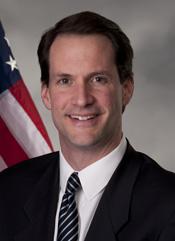 Rep. James A. Himes (D-CT)
Description
Amendment makes adjustments to strengthen the financial literacy provisions of the State Innovation Completion Grants, Innovation in College Access and Completion National Activities and contracting requirements related to private student loan servicers.
Legislative Activity
Stay on top of the latest movement without scrolling through every action
House amendment offered
September 17, 2009
View full timeline
House amendment offered
September 17, 2009
House amendment offered/reported by : Amendment (A015) offered by Mr. Himes.(consideration: CR H9682-9683, H9695-9696; text: CR H9682)
September 17, 2009 • 11:13 AM
Roll call votes on amendments in House
September 17, 2009 • 1:10 PM
House amendment agreed to: On agreeing to the Himes amendment (A015) Agreed to by recorded vote: 428 - 2 (Roll no. 713).
September 17, 2009 • 1:10 PM
Amendment agreed to Committee of the Whole
September 17, 2009 • 1:10 PM
Amendment (A015) offered by Mr. Himes. (consideration: CR H9682-9683, H9695-9696; text: CR H9682)
September 17, 2009 • 11:13 AM
On agreeing to the Himes amendment (A015) Agreed to by recorded vote: 428 - 2 (Roll no. 713).
September 17, 2009 • 1:10 PM
Votes
1 roll call on this amendment
Text
Offered
STUDENT AID AND FISCAL RESPONSIBILITY ACT OF 2009

The SPEAKER pro tempore. Pursuant to House Resolution 746 and rule
XVIII, the Chair declares the House in the Committee of the Whole House
on the State of the Union for the further consideration of the bill,
H.R. 3221.

{time}  1021

In the Committee of the Whole

Accordingly, the House resolved itself into the Committee of the
Whole House on the State of the Union for the further consideration of
the bill (H.R. 3221) to amend the Higher Education Act of 1965, and for
other purposes, with Ms. DeGette (Acting Chair) in the chair.
The Clerk read the title of the bill.
The Acting CHAIR. When the Committee of the Whole House rose on
Wednesday, September 16, 2009, a request for a recorded vote on
amendment No. 7, printed in House Report 111-256, offered by the
gentlewoman from North Carolina (Ms. Foxx), had been postponed.

Amendment No. 8 Offered by Mr. Reyes

The Acting CHAIR. It is now in order to consider amendment No. 8
printed in House Report 111-256.
Mr. REYES. Madam Chair, I have an amendment at the desk.
The Acting CHAIR. The Clerk will designate the amendment.
The text of the amendment is as follows:

Amendment No. 8 offered by Mr. Reyes:
Page 191, line 15, after ``students'' insert ``, including
students who are veterans or members of the National Guard or
Reserves,''.

The Acting CHAIR. Pursuant to House Resolution 746, the gentleman
from Texas (Mr. Reyes) and a Member opposed each will control 5
minutes.
The Chair recognizes the gentleman from Texas.
Mr. REYES. I yield myself such time as I may consume.
(Mr. REYES asked and was given permission to revise and extend his
remarks.)
Mr. REYES. Madam Chair, the men and women who have made enormous
sacrifices to serve our country deserve every opportunity to get a good
education, and my amendment will help them do just that.
My amendment will encourage community colleges to use the funding
provided through the new grant program to increase the level of
training for our veterans and for our members of the National Guard and
Reserves. This amendment will help community colleges do outreach to
our veterans and to our National Guardsmen and Reservists who may be
looking to obtain new skills and training in these difficult economic
times.
This funding is also now intended to help our veterans realize the
benefits of the post-9/11 GI Bill that Congress passed last year. The
post-9/11 GI Bill was created by landmark legislation that makes good
on America's promise to take care of those who have proudly served our
Nation. It offers unprecedented benefits that will make college
affordable to our Nation's veterans.
However, the legislation will not meet its full potential if eligible
veterans are not aware or if they do not take advantage of the
opportunities available in their communities. This amendment will help
to promote a more veteran-friendly environment at our Nation's
community colleges by encouraging this generation of American heroes to
use the benefits that they have so rightly earned.
Community colleges provide the first postsecondary experience for
many students, and are critical in providing them with the education
and training that is required for the high-demand jobs that are needed
to keep the United States competitive.
I am pleased that my colleague, Representative Adler, has a similar
amendment that will assist veterans who are seeking to attend 4-year
colleges or universities. Making sure that veterans want to pursue an
advanced degree and that they are able to do so is the right thing to
do for our local economies and for our competitive future. I urge my
colleagues to support this amendment.
I yield to my colleague, the gentleman from California (Mr. George
Miller).
Mr. GEORGE MILLER of California. I thank the gentleman for yielding.
I thank him for offering this amendment.

[[Page H9676]]

Madam Chair, we would strongly support this amendment. As he is well
aware of--and as, I think, most of the Nation is--the young men and
women who have joined the Armed Forces over the last 8 or 9 years left
this country to serve in Iraq and Afghanistan and elsewhere in the
trouble spots of the world. Many of them left as high school graduates,
some of them not high school graduates. They even left an economy that
is very different today than it was when they left their homes to serve
this Nation. Clearly, we want to make sure that they have the
opportunities to integrate back into the economy after leaving the
service on terms that are helpful to them, to their families and to
their local communities.
So thank you very much for offering this amendment.
Mr. REYES. I thank the chairman.
Madam Chair, I reserve the balance of my time.
Mr. KLINE of Minnesota. Madam Chair, I rise to claim time, although I
do not oppose this amendment.
The Acting CHAIR. Without objection, the gentleman from Minnesota is
recognized for 5 minutes.
There was no objection.
Mr. KLINE of Minnesota. In fact, I rise to say that we are going to
support this amendment.
I yield back the balance of my time.
Mr. REYES. Thank you, Madam Chair, and I thank my colleague.
I yield back the balance of my time.
The Acting CHAIR. The question is on the amendment offered by the
gentleman from Texas (Mr. Reyes).
The amendment was agreed to.

Amendment No. 9 Offered by Mr. Etheridge

The Acting CHAIR. It is now in order to consider amendment No. 9
printed in House Report 111-256.
Mr. ETHERIDGE. Madam Chair, I have an amendment at the desk.
The Acting CHAIR. The Clerk will designate the amendment.
The text of the amendment is as follows:

Amendment No. 9 offered by Mr. Etheridge:
Page 24, after line 24, insert the following:
``(iii) providing loan counseling, loan delinquency, and
default aversion assistance to student loan borrowers and
institutions of higher education;
Page 25, line 1, redesignate clause (iii) as clause (iv).
Page 25, line 4, redesignate clause (iv) as clause (v).
Page 76, line 15, strike ``and''.
Page 76, after line 15, insert the following:
(2) in subsection (b)--
(A) in the subsection header, by striking ``Origination,
Servicing, and Data Systems'' and inserting ``Origination,
Servicing, Delinquency Prevention and Default Aversion
Services, Default Collections, Outreach, and Data Systems'';
(B) in the matter preceding paragraph (1), by striking
``The Secretary may'' and inserting ``(1) in general.--The
Secretary may'';
(C) by redesignating paragraphs (1) through (4) as
subparagraphs (A) through (D), and moving such subparagraphs
two ems to the right;
(D) in subparagraph (C) (as redesignated by subparagraph
(C) of this paragraph), by striking ``and'' after the
semicolon;
(E) by redesignating subparagraph (D) (as redesignated by
subparagraph (C) of this paragraph) as subparagraph (E);
(F) by inserting after subparagraph (C) (as so
redesignated) the following new subparagraph:
``(D) delinquency prevention and default aversion services,
default collections, financial aid counseling, career and
education counseling, financial literacy, guidance counselor
and financial aid officer training services, and other
outreach services; and''; and
(G) by adding at the end the following:
``(2) Limitation.--The Secretary may enter into contracts
for the services described in paragraph (1)(D) with--
``(A) agencies with agreements with the Secretary under
subsections (b) and (c) of section 428 on the date of
enactment of the Student Aid and Fiscal Responsibility Act of
2009, that are providing such services on such date and that
meet the qualifications determined by the Secretary; or
``(B) nonprofit subsidiaries of agencies described in
subparagraph (A), if such subsidiaries were established,
pursuant to State law, on or before January 1, 1998, and meet
the qualifications determined by the Secretary.''; and
Page 76, line 16, redesignate paragraph (2) as paragraph
(3).

The Acting CHAIR. Pursuant to House Resolution 746, the gentleman
from North Carolina (Mr. Etheridge) and a Member opposed each will
control 5 minutes.
The Chair recognizes the gentleman from North Carolina.
Mr. ETHERIDGE. I yield myself 2 minutes.
I want to thank Chairman Miller for his support on this amendment and
for his work to expand educational opportunities for all of America's
students.
Madam Chair, as we work to make our student loan system work better
for taxpayers, we must also make sure that the system still works for
students and for families who seek to improve their futures through
education.
My amendment makes sure that the benefits that help students and that
expands access to college, including loan counseling, outreach and
education default prevention services, continue to be available. It
clarifies that these services, targeted to local needs by State
educational authorities and nonprofit agencies, are eligible for
funding under H.R. 3221.
Guarantee agencies, such as the North Carolina Education Assistance
Authority in my State, have developed customized services to help
students learn to manage their debt and to avoid default. As an
example, in 2007, they helped students with more than $52 billion in
debt recovery from delinquent loans, saving both students and taxpayers
their money.
Guarantors and affiliated nonprofits, like the College Foundation of
North Carolina, help families plan for college and help them navigate
these financial aid and loan options. Every day, nearly 10,000 students
and families turn to the CFNC to get help and information.
We need to make sure that these services continue to be available,
and my amendment ensures that they are. Higher education is still a key
to the American Dream, and this will help make it even more so.
Madam Chair, I reserve the balance of my time.
Mr. GEORGE MILLER of California. Will the gentleman yield?
Mr. ETHERIDGE. I would be happy to yield.
Mr. GEORGE MILLER of California. I thank the gentleman for offering
this amendment. It's a good amendment and it's important.
These agencies have a track record in helping students and in helping
the taxpayers with default diversion activities; but also, we look
forward to their having an expanded role in financial literacy and in
helping students as they contemplate going to college and, while
they're in college, helping them manage their debt and helping them
make decisions about whether they need all of that debt or not and also
as they leave, because this Congress, on a bipartisan basis, has passed
a number of loan forgiveness programs and the income determinant
repayment program.

{time}  1030

So the students really can start to see how they can manage the debt
and make career choices at the same time. Unfortunately, many students
don't realize it until they graduate; they really would have liked to
have done something else, but they didn't think they could have that
career and manage their debt. So these agencies are going to take on an
even more important role for young people as they start and progress
through college.
Mr. ETHERIDGE. I reserve the balance of my time.
Mr. KLINE of Minnesota. Madam Chair, I rise to claim time in
opposition to the amendment, although at this time I do not expect to
oppose it.
The Acting CHAIR. Without objection, the gentleman from Minnesota is
recognized for 5 minutes.
There was no objection.
Mr. KLINE of Minnesota. Madam Chair, this amendment kind of attempts
to cobble together a new system that will provide students, families
and colleges the types of delinquency prevention, default aversion and
financial literacy services available today under the FFEL Program.
I do not oppose these types of activities; I support them. But the
existence of this amendment, it seems to me, is proof that we are
eliminating these important benefits by eliminating the FFEL Program.
Rather than figuring out a better way to keep the FFEL Program, to
keep the private sector involved, the majority is attempting to wedge
some of its components into the direct loan program. I am concerned
that the net result will mean fewer students served with more red tape
for those who do wish to obtain these services.
As I said, Madam Chair, I am not going to oppose this amendment, but

[[Page H9677]]

Members should know there is a much easier way to preserve the value-
added elements of FFEL. Rather than destroying the program and working
to recreate it, we can work to preserve and improve the FFEL Program.
Madam Chair, I yield back.
Mr. ETHERIDGE. Madam Chair, I yield 1 minute to my colleague from
Vermont, a cosponsor of this amendment, Mr. Welch.
Mr. WELCH. Mr. Etheridge, I thank you for your work. Mr. Miller, I
thank you for your work.
I am in strong support of this amendment. The bill is terrific
because what it does is take taxpayer assistance and give it to kids
and parents rather than to big bailed-out banks.
Secondly, what this amendment does is allow those institutions like
the Vermont Student Assistance Corporation, a nonprofit dedicated to
getting kids to go to college, to help them navigate the process of
financing college and then to contend with the challenges of repaying
the loan. It has had an incredible success rate. So this benefit gives
the benefit to those local institutions that are nonprofit, student-
centered, parent-centered, family-centered, to be able to continue to
do that work at the local level.
Thank you for your leadership on this, Mr. Etheridge. It will make a
big difference for folks in Vermont.
Mr. ETHERIDGE. Madam Chair, I yield 1 minute to my colleague and
cosponsor, and someone who has been working on this issue for a long
time, the gentleman from North Carolina, Congressman Price.
Mr. PRICE of North Carolina. Madam Chair, I thank my colleague, and I
want to thank the chairman of the committee and the entire committee
for their work on this bill, making historic investments in America's
education and economic prosperity.
In particular, I want to thank the committee for including provisions
in the bill that would allow guaranty agencies, such as the North
Carolina State Education Assistance Authority, to provide value-added
outreach services via contracts with the Department of Education. These
services play a vital role at both ends of the student loan process by
informing borrowers about their education financing options before
college and helping them successfully repay their loans after
graduation.
Our proposed amendment simply clarifies that several of the key
borrower services guaranty agencies currently provide, such as
delinquency prevention, default aversion, and delinquency collections,
also would be eligible for contract arrangements with the Department.
The work of these agencies pays real dividends for students and
taxpayers alike. In North Carolina, default rates have been
consistently among the Nation's lowest and about half the national
average for the last few years. In 2007, these services helped prevent
an estimated $52 billion in loans from going into default, according to
the National Council of Higher Education Loan Programs.
So I thank my colleague from North Carolina and our other cosponsors
for their collaborative work in putting forth this amendment, and urge
Members to give it their support.
Mr. ETHERIDGE. Madam Chair, I yield 1 minute to my friend and
colleague from North Dakota (Mr. Pomeroy) who is a cosponsor also.
Mr. POMEROY. I thank the gentleman for yielding and his work on this
amendment. I rise in strong support of this amendment.
It will impact entities like the Bank of North Dakota, the only
State-owned bank in the country. This bank provides for the students of
our State the lending and servicing functions for the Federal student
loan program, and it is uniquely positioned in this regard in the
country.
It has provided students and families the tools and techniques to
deal with their student loan debt. It has worked to maintain low
default rates through one-on-one repayment default counseling, on-
campus presentations and other outreach efforts.
As a result, we have had very low default rates in North Dakota. I am
pleased with the service they have provided to their students.
I am delighted that this amendment, unlike the underlying bill, would
allow that to continue. I know the chairman has given his approval to
this amendment and urge its adoption.
Mr. ETHERIDGE. Madam Chair, I thank the chairman and ranking member
for their work on this bill to help members of the committee, and I
encourage my colleagues to vote for the amendment and the underlying
bill.
I yield back the balance of my time.
The Acting CHAIR. The question is on the amendment offered by the
gentleman from North Carolina (Mr. Etheridge).
The amendment was agreed to.

Amendment No. 10 Offered by Mr. Driehaus

The Acting CHAIR. It is now in order to consider amendment No. 10
printed in House Report 111-256.
Mr. DRIEHAUS. Madam Chair, I have an amendment at the desk.
The Acting CHAIR. The Clerk will designate the amendment.
The text of the amendment is as follows:

Amendment No. 10 offered by Mr. Driehaus:
Page 21, after line 9, insert the following:
(iii) encourages State policies that are designed to
improve rates of enrollment and re-enrollment of dislocated
workers in postsecondary education;
Page 21, line 10, redesignate clause (iii) as clause (iv).
Page 21, line 14, redesignate clause (iv) as clause (v).
Page 26, after line 19, insert the following:
(1) Dislocated worker.--The term ``dislocated worker'' has
the meaning given such term in section 101(9) of the
Workforce Investment Act of 1998 (29 U.S.C. 2801(9)).
Page 26, line 20, redesignate paragraph (1) as paragraph
(2).
Page 27, line 18, redesignate paragraph (2) as paragraph
(3).
Page 27, line 22, redesignate paragraph (3) as paragraph
(4).

The Acting CHAIR. Pursuant to House Resolution 746, the gentleman
from Ohio (Mr. Driehaus) and a Member opposed each will control 5
minutes.
The Chair recognizes the gentleman from Ohio.
Mr. DRIEHAUS. Madam Chair, I yield myself as much time as I may
consume.
Madam Chair, as we discuss H.R. 3221, I would like to draw attention
to a critical component of the bill, and that is the College Completion
and Innovation Fund.
This amendment, Madam Chair, impacts one portion of the College
Completion and Innovation Fund, and that specifically is the State
Innovation and Completion Grants. About 50 percent of the College
Completion and Innovation Fund goes to State Innovation and Completion
Grants. These are targeted at low-income and disadvantaged populations
in each of our States, and they are meant to incentivize States to
engage in creative efforts with low-income communities, working with
nonprofits, working with universities, to provide grants for these
populations.
With that, the State has to provide to the Department of Education a
plan describing how they will utilize the funds. This amendment is
quite simple in that it states that in that plan we must target and we
must include dislocated workers.
And I think you will agree, Madam Chair, and I think most of the
Members will agree, that in this economy, with the number of employees
that are currently unemployed, we need to be targeting and looking at
the skill sets of dislocated workers. Because when we talk about
innovation and education, when we talk about reeducating our workforce,
there is no more important population than those that are recently
unemployed. And as we move toward a new technology economy, it's
critical that although we have tremendous workers across the United
States, we appreciate the fact that they need more education, that they
need retooling in order to make them competitive for the jobs of the
21st century in order for us to compete in a global marketplace.
So this is a simple amendment, Madam Chair, and it simply says to the
States that we need to be focusing on those dislocated workers.
I yield to the distinguished chair of the committee, Mr. Miller.
Mr. GEORGE MILLER of California. I want to thank the gentleman for
yielding and thank the gentleman from Ohio. This is obviously a very
important component of this legislation.
His amendment substantially improves it, because the whole Nation is
aware of the needs of dislocated workers, and certainly in the Midwest,

[[Page H9678]]

where workers are leaving one generation of technology and seeking jobs
in communities or seeking the next generation of manufacturing and
technology. This is very important that they be included in these State
plans.
Mr. DRIEHAUS. Madam Chair, I reserve the balance of my time.
Mr. KLINE of Minnesota. Madam Chair, I rise to claim time in
opposition, although I do not plan to oppose it.
The Acting CHAIR. Without objection, the gentleman from Minnesota is
recognized.
There was no objection.
Mr. KLINE of Minnesota. The purpose of this amendment is indeed
laudable. It's to ensure that dislocated workers are considered in each
State's postsecondary education planning. It's a reasonable goal. I
support the goal. We should all support that goal.
But there is a rich irony here in that the underlying bill itself is
going to create thousands of these dislocated workers. We have seen
estimates of 30,000 or 35,000.
So if we are serious about helping dislocated workers, and I believe
we are, we should scrap this underlying job-killing bill and find a
better way to stabilize student lending for the long term.
I yield back the balance of my time.
Mr. DRIEHAUS. Madam Chair, I yield back the balance of my time.
The Acting CHAIR. The question is on the amendment offered by the
gentleman from Ohio (Mr. Driehaus).
The amendment was agreed to.

Amendment No. 11 Offered by Mr. Cuellar

The Acting CHAIR. It is now in order to consider amendment No. 11
printed in House Report 111-256.
Mr. CUELLAR. Madam Chair, I have an amendment at the desk.
The Acting CHAIR. The Clerk will designate the amendment.
The text of the amendment is as follows:

Amendment No. 11 offered by Mr. Cuellar:
Page 80, after line 22, insert the following new section
(and conform the table of contents accordingly):

SEC. 216. OUTREACH EFFORTS.

(a) Outreach Activities Required.--The Secretary of
Education shall conduct outreach activities in accordance
with this section to inform and educate students and their
families about the transition to Federal Direct lending under
the amendments made by this title to title IV of the Higher
Education Act of 1965.
(b) Required Components of Outreach.--The Secretary shall
provide for the broad dissemination of information on such
amendments and shall--
(1) operate and maintain an Internet website through which
individuals may obtain information on changes made to the
Federal Family Education Loan programs and the Federal Direct
Loan programs;
(2) develop and disseminate information to high school
seniors and their parents concerning student loans and
student aid;
(3) provide assistance to institutions of higher education
to educate students on the repayment of Federal Direct loans;
and
(4) ensure that all outreach efforts are developed using
plain language and are culturally- and language-appropriate.
(c) Use of Other Entities.--In carrying out this
subsection, the Secretary may work with other appropriate
entities to facilitate the dissemination of information under
this section and to provide assistance as described in this
section.

The Acting CHAIR. Pursuant to House Resolution 746, the gentleman
from Texas (Mr. Cuellar) and a Member opposed each will control 5
minutes.
The Chair recognizes the gentleman from Texas.
Mr. CUELLAR. Madam Chair, I yield myself such time as I might
consume.
Madam Chair, I rise today in support of my amendment to the Student
Aid and Fiscal Responsibility Act of 2009, which I believe is
acceptable to the chairman, Chairman Miller.
I surely want to thank Chairman Miller for the leadership that he has
provided, and the ranking member, Mr. Kline, for the work that he has
been doing in the committee.
Madam Chair, at a time when our Nation's students need it the most,
this legislation makes significant changes to student lending, one of
the biggest changes that we have seen in years and years. While this
bill makes tremendous investments in education, too many potential
college students may be unaware of it.
Unfortunately, today, there are many students, especially those who
may be first in their families to apply to college or who may come from
disadvantaged communities, who are ill-informed about Federal student
loans. Many students aren't aware of the opportunities available to
them or of the responsibilities that follow from taking out a loan.
This lack of information will range from students deciding that college
is too expensive to those who default on their loans after graduation.
When you look at some of the States that have been impacted, this
particular amendment will call on the Secretary to work with colleges
and universities to educate students about the repayment of Federal
direct loans, and this amendment will help cut excessive default rates
that threaten the eligibility of some of the schools from participating
in this student aid program.
My home State of Texas has one of the highest student loan default
rates in the country, and financial aid directors in my district have
cited a lack of information and outreach as a primary cause. As we make
college more accessible to all Americans, we need to make sure that
students and their families have the information so they can make
reasoned and informed decisions.
This simple but important amendment will lead to increased student
awareness, financial aid opportunities, help prevent student loan
defaults and increase our country's production of talented graduates. I
urge all my colleagues to support it.
I reserve the balance of my time.
Mr. KLINE of Minnesota. Madam Chair, I rise to claim time in
opposition, although I don't plan to vote against it.
The Acting CHAIR. Without objection, the gentleman from Minnesota is
recognized.
There was no objection.
Mr. KLINE of Minnesota. Madam Chair, this amendment, it seems to me,
is a little bit like putting a bandaid on what has proven to be a
gaping wound. I don't think it's going to make many things worse, and
it might even stop a little bit of the bleeding, but it certainly won't
heal the damage.
H.R. 3221 eliminates a program that over 70 percent of colleges and
universities have consistently chosen. This amendment is an
acknowledgment that the breakneck pace of this transition by next
summer will be a problem for students, families and schools.
While I share the concern about this radical change to our financial
aid system, I fear this amendment may not do as much good as the
gentleman from Texas hopes. The Department of Education already
maintains a Web site on Federal aid programs and regularly disseminates
information to high schools about the availability of Federal student
aid.
In spite of information about the direct loan program, most schools
still choose the FFEL Program. That tells me it's not a lack of
information but a genuine preference for the choice, innovation and
competition of the FFEL Program.
Informing students and families is important, but it's no substitute
for simply maintaining the program they already know and they already
like.
I reserve the balance of my time.
Mr. CUELLAR. I yield as much time as he may consume to Mr. Andrews of
New Jersey.

{time}  1045

Mr. ANDREWS. I thank the gentleman for yielding, and I rise to
express the committee's strong support for his amendment. It is
important to reflect on what Mr. Cuellar's amendment does, and what the
bill does not do.
Mr. Cuellar's amendment answers questions for students and families
and financial aid officers and universities and colleges about how best
to access student loans. Mr. Cuellar's amendment, I think, very wisely
recognizes there is a whole different kind of person who is achieving a
higher education in our country today.
It is not simply the person fresh out of high school. It is people
who are in the middle of a career change, either voluntarily or
involuntarily because of a layoff or a plant closing. It is a person
who is a bit further along in life who wants to build his or her career
by going to college. It is a nonconventional student. It might be a
person very new to America, or it might be a person who has been here
for a very long time. It is people facing language, cultural, or other
kinds of issues.
What Mr. Cuellar's amendment is doing is making sure that the
Department of Education is a constructive

[[Page H9679]]

and active partner in answering the questions that our constituents
have. We enthusiastically embrace and support his amendment.
His amendment improves on a bill that doesn't really do any of the
things that with all due respect the minority said. The minority
discusses this as some sort of radical shift. It is not radical at all.
Right now a student goes to a financial aid office and applies for a
Pell Grant. It is a common process done throughout college and
university campuses around the country. The only change between
applying for a Pell Grant and applying for a student loan is you sign a
document that is a note to pay the loan back. That is the only
additional step that takes place. As a matter of fact, it is far less
bureaucratic and far less complicated for a student accessing such a
loan.
This bill saves the taxpayers $10 billion over time off the deficit.
It stops the practice of rewarding people for taking risks with
taxpayers' money. It understands, as the Congressional Budget Office
has said, that the savings generated from this are $87 billion over
time. The bill promotes efficiency. It will generate economic
development.
With respect to the gentleman's point about lost jobs, Mr.
Etheridge's amendment very much speaks to that. It makes sure that loan
originators are now eligible to become loan processors and collectors,
and much of the work done by those who originate in the private sector
will now be done in the private sector by those who process and service
these loans.
So the underlying bill saves the taxpayers money, significantly
expands educational opportunity, and reduces the deficit by $20 billion
over time. Mr. Cuellar's amendment significantly adds to the value of
this bill. The committee strongly supports his amendment.
Mr. KLINE of Minnesota. Madam Chair, clearly there is continuing
disagreement over money that this bill saves or costs. The
Congressional Budget Office provided an original score of a so-called
savings of $87 billion. That same Congressional Budget Office has
provided additional information which would indicate that this bill is
going to put us further into deficit, further into debt by perhaps as
much as $50 billion.
This is not a money-saving bill. This is, indeed, a government
takeover of an industry. This will cost jobs despite the Etheridge
amendment. This is a bad piece of legislation. I am going to support
this amendment because it is at least a Band-Aid.
I yield back the balance of my time.
Mr. CUELLAR. I yield back.
The Acting CHAIR. The question is on the amendment offered by the
gentleman from Texas (Mr. Cuellar).
The amendment was agreed to.

Amendment No. 12 Offered by Mr. Murphy of Connecticut

The Acting CHAIR. It is now in order to consider amendment No. 12
printed in House Report 111-256.
Mr. MURPHY of Connecticut. Madam Chair, I have an amendment at the
desk made in order under the rule.
The Acting CHAIR. The Clerk will designate the amendment.
The text of the amendment is as follows:

Amendment No. 12 offered by Mr. Murphy of Connecticut:
Page 163, line 22, insert ``(which may include establishing
or supporting partnerships with institutions of higher
education (as such term is defined in section 101 of the
Higher Education Act of 1965 (20 U.S.C. 1001) to support such
education and training)'' after ``providers''.

The Acting CHAIR. Pursuant to House Resolution 746, the gentleman
from Connecticut (Mr. Murphy) and a Member opposed each will control 5
minutes.
The Chair recognizes the gentleman from Connecticut.
Mr. MURPHY of Connecticut. Madam Chair, I yield myself for such time
as I may consume.
I would like to first thank Chairman Miller, Representative Andrews,
Representative Hinojosa, the ranking member for their work on the
underlying legislation. We are debating right now landmark legislation
that is going to bring more access, affordable access, to hundreds of
thousands, if not millions, of college students across this country.
Therefore, it is only fitting that as a component to this
legislation, the Student Aid and Fiscal Responsibility Act also heavily
invests in birth-to-5 education. We know investing in early childhood
education creates a pathway to later success in our educational
spectrum.
Madam Chair, I have spent the last several months touring around my
district talking with the people who make our early childhood education
system work. I have hosted round table discussions in cities like
Torrington and Danbury and listened to parents and providers and
administrators; and there is one message I have heard loud and clear,
and that is the lack of early education degree programs in Connecticut
and across the country often makes it difficult to find highly
qualified early learning teachers in Connecticut and across the Nation.
My amendment simply seeks to clarify that the very important Early
Learning Challenge Fund included in this bill would allow for States to
use some of that grant money to partner with local colleges and
universities to create or to expand effective education and training
programs for early learning providers.
I was a very strong supporter of our Head Start and School Readiness
Act in 2007. That bill requires that Head Start teachers by 2011 have
associate's degrees; and by 2013, 50 percent of Head Start teachers be
required to have a bachelor's or master's degree. I think it is
important to make sure that our Nation's kids have teachers and
educators who have that academic background and education. But we need
to make sure that our educational system feeds our early learning
centers with those trained professionals.
I appreciate the chairman's help on this bill and appreciate
Representative Andrews' support, and I urge the Chamber's support.
I reserve the balance of my time.
Mr. KLINE of Minnesota. Madam Chair, once again I rise to claim time
in opposition, although once again I am not going to oppose the
amendment.
The Acting CHAIR. Without objection, the gentleman from Minnesota is
recognized for 5 minutes.
There was no objection.
Mr. KLINE of Minnesota. The purpose of this amendment is to allow
States to provide education and training for early learning providers
by entering into partnerships with higher education institutions. I
don't oppose these partnerships at all, but I am concerned with the
underlying language here.
What we are doing in the bill, we are diverting $8 billion to fund
and impose requirements on State early childhood systems. In 2005 the
GAO reported there were already 69 Federal early childhood programs
spread out over 10 Federal agencies with no coordinated or
comprehensive strategy.
It is not the partnerships to improve early learning provider
training that cause my concern. It is the entire notion that the
Federal Government is inserting itself yet again into pre-K education
and other areas, especially when we have not yet met our obligation to
very important programs like IDEA, creating new programs that once
again will be underfunded, once again will compete with special ed. We
ought not be adding new programs when we haven't met our basic
obligations.
I reserve the balance of my time.
Mr. MURPHY of Connecticut. I yield such time as he may consume to the
gentleman from New Jersey (Mr. Andrews).
Mr. ANDREWS. I thank my friend for yielding, and the committee
congratulates and thanks him for this very excellent work he has done
on this amendment.
Mr. Murphy's amendment recognizes that some of the most important
teaching in America is going on right now by people who have had some
of the least access to high-quality education for themselves. And it is
not because they are not competent; it is not because they don't want
it. It is because the resources have not been there.
The research is very clear that children in the early years of their
lives develop much of their learning patterns and their skills. The
country needs a significant investment in high-quality teacher
education for the men and women who are teaching preschools across the
country.
Mr. Murphy's amendment, I think, embraces that concept in a very wise

[[Page H9680]]

way by encouraging the States that will receive early learning funding
under this bill to consider using some of that funding in partnerships
with higher education institutions so that the quality of teaching may
improve.
This, I think, is an amendment that will pay dividends for years to
come because better education for our pre-K students will lead to
better achievement in the classroom which will yield better results
throughout the lives of these students when they become taxpayers and
workers and productive citizens of this country.
I think this is an effort that will bear fruit for many years to
come. The committee would urge a ``yes'' vote.
Mr. KLINE of Minnesota. Madam Chair, I yield back the balance of my
time.
Mr. MURPHY of Connecticut. Madam Chair, I thank the gentleman for his
support.
There are thousands of early childhood educators in my district, and
I am sure similar numbers across the country who want to go back to
school and get that advanced degree. Right now the problem is there
aren't slots for them to do this. This early learning challenge grant
provides the opportunity to expand on programs that exist today and
helps to create new ones. I would urge support for this amendment.
I yield back the balance of my time.
The Acting CHAIR. The question is on the amendment offered by the
gentleman from Connecticut (Mr. Murphy).
The amendment was agreed to.

Amendment No. 13 Offered by Mr. Childers

The Acting CHAIR. It is now in order to consider amendment No. 13
printed in House Report 111-256.
Mr. CHILDERS. Madam Chair, I have an amendment at the desk.
The Acting CHAIR. The Clerk will designate the amendment.
The text of the amendment is as follows:

Amendment No. 13 offered by Mr. Childers:
Page 43, beginning on line 17, amend section 106 (and
conform the Table of Contents accordingly) to read as
follows:

SEC. 106. VETERANS RESOURCE OFFICER GRANTS.

Section 873 (20 U.S.C. 1161t) is amended--
(1) by amending the header to read as follows: ``MODEL
PROGRAMS FOR CENTERS OF EXCELLENCE FOR VETERAN STUDENT
SUCCESS; VETERANS RESOURCE OFFICERS'';
(2) in subsection (a), by inserting ``, or Veterans
Resource Officers,'' after ``model programs'';
(3) by amending subsection (b) to read as follows:
``(b) Grant Authorized.--
``(1) In general.--Subject to the availability of
appropriations under subsection (f), the Secretary shall
award grants to institutions of higher education to--
``(A) develop model programs to support veteran student
success in postsecondary education; or
``(B) hire a Veterans Resource Officer to increase the
college completion rates for veteran students enrolled at
such institutions of higher education.
``(2) Grant period.--A grant awarded under this section
shall be awarded for a period of 3 years.''; and
(4) in subsection (c)--
(A) in paragraph (1)--
(i) by amending the header to read as follows: ``Model
program required activities''; and
(ii) in the matter preceding subparagraph (A), by striking
``under this section'' and inserting ``for the purpose
described in subsection (b)(1)(A)'';
(B) by redesignating paragraph (2) as paragraph (3); and
(C) by inserting after paragraph (1) the following:
``(2) Veterans resource officer required activities.--An
institution of higher education receiving a grant for the
purpose described in subsection (b)(1)(B) shall use such
grant to hire a Veterans Resource Officer whose duties shall
include--
``(A) serving as a liaison between--
``(i) veteran students;
``(ii) the faculty and staff of the institution;
``(iii) local facilities of the Department of Veterans
Affairs; and
``(iv) mental healthcare providers at the Department of
Veterans Affairs to ensure that veteran students are referred
to such providers if needed; and
``(B) organizing and advising veteran student organizations
and hosting veterans-oriented group functions on campus;
``(C) distributing news and information to all veteran
students, including through maintaining newsletters and
listserves; and
``(D) assisting in the training of Department of Veterans
Affairs certifying officials, when applicable.''.

The Acting CHAIR. Pursuant to House Resolution 746, the gentleman
from Mississippi (Mr. Childers) and a Member opposed each will control
5 minutes.
The Chair recognizes the gentleman from Mississippi.
Mr. CHILDERS. Madam Chair, I yield myself such time as I may consume.
Madam Chair, I rise today in support of H.R. 3221, and I ask my
colleagues for their support of my amendment to H.R. 3221 and our
Nation's veterans. I want to thank the chairman and the committee for
making my amendment in order today.
This amendment would require campus veterans resource officers to act
as a link between student veterans and mental health care providers at
the Department of Veterans Affairs. With the support of veterans
resource officers on university and college campuses, student veterans
will be better connected to vital services provided by the Department
of Veterans Affairs and will be better prepared to complete their
studies.
With the recent implementation of the post-9/11 GI Bill, veterans
have greater affordability and access to higher education and training.
My amendment would help ensure that student veterans are able to
complete their degree and graduate.
When the recently deployed National Guard Members from my district in
Mississippi return, I want to see these education benefits accessed by
veterans, and help those veterans to succeed in their college careers.
I would like to especially commend the unprecedented investments in
community colleges included in H.R. 3221. Community colleges in
Mississippi are some of the best in the Nation. They play an important
role in preparing students for tomorrow's workforce. A community
college education is one of the best investments a student can make.
I thank our veterans for their service to our Nation, and I encourage
them to access the training and education benefits they have earned. I
urge my colleagues to join me in supporting this important amendment.
I reserve my time.
Mr. KLINE of Minnesota. Madam Chair, I rise to claim the time in
opposition to the amendment, although again I do not intend to oppose
the amendment.
The Acting CHAIR. Without objection, the gentleman from Minnesota is
recognized for 5 minutes.
There was no objection.
Mr. KLINE of Minnesota. I yield myself such time as I may consume.
This is a very worthy goal, and I applaud the gentleman's efforts in
putting this amendment together. We should be doing things in all of
our legislation that will strengthen the support that we provide for
our men and women in uniform while they are in uniform, while they are
overseas, when they come back, and when they take the uniform off. I
applaud the gentleman and support the amendment.
I reserve the balance of my time.
Mr. CHILDERS. Madam Chair, I yield 2 minutes to the gentleman from
New Jersey (Mr. Andrews).
Mr. ANDREWS. I thank my friend for yielding, and I join my friend
from Minnesota in supporting this amendment. I know that my friend from
Minnesota speaks as a father and as a veteran when he speaks in favor
of this amendment. We salute his service.
This amendment is part of a series of amendments that carry forth a
bipartisan tradition of this House that says that we don't want to
simply welcome our troops home with welcoming ceremonies; we want to
really welcome them home with services and respect and resources that
they so richly deserve.

{time}  1100

This amendment carries forth that tradition by emphasizing that our
veterans who choose to pursue a higher education and who would benefit
from the full range of health services that are available to veterans
need to have those services.
The amendment requires an active liaison process between the veteran
service officer on a campus and the health care people at the Veterans
Administration so that veterans can have the full range of services
and, frankly, try to make as much one-stop shopping as we can. So a
veteran who is trying to balance his or her family obligations and work
obligations and school obligations, who has some health care

[[Page H9681]]

issues, is able to get services in one place, maybe, instead of two or
three.
It makes a lot of sense for people. I think the author has reflected
the views of his constituents not only in his district, but veterans
around our country.
The majority on the committee is strongly in favor of this proposal
because it recognizes not only the service that our veterans have given
us, but the needs they have. And we would urge a ``yes'' vote.
Mr. CHILDERS. I thank the gentleman for his remarks. I would also
like to thank the gentleman from across the aisle for his kind remarks
and support of our veterans as well.
Madam Chair, this is simple: This is good for veterans; it's good for
universities and community colleges, and this is one way that this body
can honor our commitment to our men and women who have worn the uniform
so proudly.
With that, I yield back the balance of my time.
The Acting CHAIR. The gentleman from Mississippi has the right to
close.

Parliamentary Inquiry

Mr. KLINE of Minnesota. It was the gentleman's amendment.
Parliamentary inquiry, Madam Chair. Doesn't the opposite side have the
right to close on these amendments as offered?
The Acting CHAIR. Only a manager in true opposition has the right to
close. When the gentleman claims the time in opposition by unanimous
consent, not actually opposing the amendment, then the proponent of the
amendment has the right to close.
Mr. KLINE of Minnesota. Thank you, Madam Chair.
I support this amendment. I support the comments of my colleagues
from New Jersey and Mississippi, the author of the bill.
I yield back the balance of my time.
Mr. CHILDERS. I yield back the balance of my time.
The Acting CHAIR. The question is on the amendment offered by the
gentleman from Mississippi (Mr. Childers).
The amendment was agreed to.

Amendment No. 14 Offered by Mr. Adler of New Jersey

The Acting CHAIR. It is now in order to consider amendment No. 14
printed in House Report 111-256.
Mr. ADLER of New Jersey. Madam Chairwoman, I have an amendment at the
desk.
The Acting CHAIR. The Clerk will designate the amendment.
The text of the amendment is as follows:

Amendment No. 14 offered by Mr. Adler of New Jersey:
Page 31, line 10, redesignate subparagraph (D) as
subparagraph (E).
Page 31, line 17, redesignate subparagraph (E) as
subparagraph (F).
Page 31, after line 9, insert the following:
(D) include activities to increase degree or certificate
completion for students who are veterans;

The Acting CHAIR. Pursuant to House resolution 746, the gentleman
from New Jersey (Mr. Adler) and a Member opposed each will control 5
minutes.
The Chair recognizes the gentleman from New Jersey.
Mr. ADLER of New Jersey. Thank you, Madam Chairwoman. I yield myself
such time as I may consume.
I'd like to start by thanking Chairman Miller, Chairman Andrews, and
Ranking Member Kline for their leadership on this important matter.
The legislation we're discussing today provides funding to schools,
nonprofits, and other educational-related organizations that assist
students in the completion of college and associate degrees.
My amendment, along with that earlier amendment offered by Mr. Reyes,
will take this bill to the next level and prioritize grants to schools
and organizations that have shown a dedication to ensure student
veterans have the support and resources they need to complete their
degrees.
Our veterans have served our country to keep our country safe and
free, and they deserve every opportunity to succeed as they return
home. We should make every effort to ensure that their transition from
service to civilian life is smooth and successful.
To that end, my amendment will prioritize schools and organizations
that support our student veterans and help them apply the skills
learned in military service to the classroom.
I thank the schools and organizations who already take steps to
increase education opportunities for our veterans and hope that my
amendment will support their efforts and provide an incentive for
others to join them.
Rutgers University, the State University of New Jersey, has been on
the forefront in my home State, providing much needed education
opportunities to our servicemembers. Most recently, Rutgers created
veterans' services offices, mentoring programs, special orientations,
and advisory boards to better assist our State's veterans obtain the
college degrees and certifications they deserve.
I hope that this bill pushes more colleges and universities across
the country to support our veterans in the future.
Judge Washington said it best: ``The willingness with which our young
people are likely to serve in any war, no matter how justified, shall
be directly proportional as to how they perceive the veterans of
earlier wars were treated and appreciated by their country.''
I reserve the balance of my time.
Mr. CASTLE. I rise not in opposition, but to claim the time in
opposition.
The Acting CHAIR. Without objection, the gentleman from Delaware is
recognized for 5 minutes.
There was no objection.
Mr. CASTLE. Let me first address Mr. Adler's amendment. I think this
is actually a very good purpose, and I'm supportive of it. We actually
have done something similar to this in the Higher Education Act, in
putting people in colleges to help with veterans. I think its purpose
is well intended.
I also have examined this legislation carefully. It's gone through
our committee, on which I served several times. I think there are some
very good aspects to the bill, if you just isolate that and you believe
all the numbers that are in there--increasing the Pell Grant limit,
simplifying the financial aid process, supporting minority-serving
institutions, supporting early childhood education programs, expanding
services for veterans, and supporting community colleges and putting
money towards deficit reduction. All that is well and good, but I have
a couple problems with this legislation.
One is I'm not a hundred percent sure that I believe all the numbers
which are being thrown around in terms of the savings. Secondly, I have
examined the way student loans are done now, and I have examined the
Federal Family Education Loan program, the FFEL program, which is the
federally backed student loan program, and I have found that that
program serves 4,421 colleges and universities nationally, and close to
$68 billion in student loans during the past year, according to the
Congressional Research Service; whereas, the Direct Loan Program, which
we're shifting to, only serves 1,500 colleges versus the 4,421, and $19
billion versus the $68 billion.
In other words, there's been a decision made by most colleges and
universities in this country to go with the existing program, the FFEL
program, over the Direct Loan Program, and I worry about what that
shift might encounter.
One of the things that's going to happen at a time in which
unemployment in this country is 10 percent is there's going to be a
loss of jobs in the private sector. The Consumer Bankers Association
indicates that this bill threatens approximately 30,000 people's jobs
nationwide, and that's all over the country, because various banks make
this kind of servicing dollars available and, therefore, have
employment in that area. So you're talking about potentially a huge job
loss in that area.
I had introduced an amendment before the Rules Committee with Tom
Price from Georgia which would have indicated that we should hold this
up until we can get a study of the job loss, but that, unfortunately,
is not before us today.
But the problem still remains. We're just not certain, Madam
Chairwoman, exactly what this will entail. If everything we hear about
the bill is absolutely correct and all that money can be saved and the
Federal Government is not going to hire a lot more people or mess it up
in some other way in terms of the cost savings, there may be a very
valid argument for the bill. I think it makes some very good points.
But if those things do not prove out--and many things that we talk
about here on the floor don't prove out in

[[Page H9682]]

practice--I think that would be problematic.
Part of the problem is that you're looking at 30,000 jobs, all of
which are at risk. And you can argue about whether its origination or
servicing and that kind of thing, but the bottom line is some
percentage of those jobs would be at risk.
So I'm supportive of the amendment, to get back to the heart of why
we're speaking right now, but I have some serious reservations about
where we're going with this legislation at this time for the reasons
which I stated.
I reserve the balance of my time.
Mr. ADLER of New Jersey. I thank the gentleman for his supporting the
amendment.
May I inquire as to how much time I have remaining?
The Acting CHAIR. The gentleman has 3 minutes remaining.
Mr. ADLER of New Jersey. I yield 2 minutes to my colleague, the
gentleman from New Jersey (Mr. Andrews).
Mr. ANDREWS. I thank my friend for yielding, and the committee
expresses its strong support and appreciation for your good work. We
support it and would urge a ``yes'' vote. Again, this follows in the
tradition of doing things for our veterans, not just talking about
them.
With respect to the underlying bill and addressing the two points
made by my friend from Delaware, first, with respect to job loss. The
concern that we all share about job loss is one of the reasons why.
This bill makes provisions for loan providers, private loan providers
who presently originate and service loans to continue to have a robust
role in the servicing and processing and collection of loans. We
believe that the record will show as the years go through on this that
the opportunities will, in fact, expand for those in that field.
Second, with respect to the issue of the cost of this bill, as the
Members know, under our rules, we have an agreement that the
Congressional Budget Office is the authoritative source, and the
Congressional Budget Office has given an authoritative analysis of this
bill. That authoritative analysis says that the change that's made,
which is the cessation of the process of rewarding private institutions
to take risk with taxpayers' money, a very logical change, that that
change generates gross savings of $87 billion over the years that are
subject to the analysis, and that in this bill $10 billion of that is
dedicated to deficit reduction.
So I think the issue is clear. The bill provides for a continuing
robust role for private sector firms and workers, and the Congressional
Budget Office has authoritatively stated the savings generated by this
bill are $87 billion.
The underlying bill is strong. The gentleman from New Jersey's
amendment strengthens the bill. We would urge a ``yes'' vote on his
amendment.
Mr. CASTLE. Madam Chairwoman, how much time do we have left on this
side?
The Acting CHAIR. The gentleman has 1\1/2\ minutes left.
Mr. CASTLE. I yield myself the remaining time.
I understand well the second speaker, the gentleman from New Jersey,
Mr. Andrews, and I think he's right. As I said at the beginning, there
are many good aspects to this bill if we can believe all those things
are going to come together. As a matter of fact, it's been a little
difficult for me to oppose it for that reason, because if these things
do happen, that's advantageous.
With all due respect to the authoritative analysis from CBO, I don't
always believe everything I hear from CBO. Not that they don't do a
good job, but they are anticipating behavior as far as the future is
concerned. So I'm not sure if we're going to have $87 billion of
savings to spread over all these other things. My hunch is there's
going to be a lot of hiring that's going to have to go on to do the
origination and servicing which is there.
I'm also very concerned if we take away the origination, which is
really what the bill does, as far as the private lenders are concerned,
you're going to get left with the servicing, and that's going to mean a
substantial reduction in jobs. I'm not suggesting 30,000 jobs. We're
going to lose a substantial number, I think, of private sector jobs.
I'm just reticent about that for that reason. I would have hoped that
we could have had some delay before we go full thrust in this and find
out 5 years from now it isn't quite as has been promised.
Again, I do support the amendment, but I have some underlying
concerns about the legislation. I respect all that's being stated and,
frankly, I hope it's correct, because it could be in the best interest
of the future of our government.
With that, I yield back the balance of my time.
Mr. ADLER of New Jersey. They fought for our freedom. They fought for
our safety. They fought for an ever greater America as a beacon of hope
for freedom for the world. We can do something for them today by
supporting this amendment. I urge my colleagues to vote ``yes'' on this
amendment.
I yield back the balance of my time.
The Acting CHAIR. The question is on the amendment offered by the
gentleman from New Jersey (Mr. Adler).
The amendment was agreed to.

Amendment No. 15 Offered by Mr. Himes

The Acting CHAIR. It is now in order to consider amendment No. 15
printed in House Report 111-256.
Mr. HIMES. Madam Chair, I have an amendment at the desk.
The Acting CHAIR. The Clerk will designate the amendment.
The text of the amendment is as follows:

Amendment No. 15 offered by Mr. Himes:
Page 21, after line 9, insert the following:
(iii) encourages the full use of State resources in support
of financial literacy programs;
Page 21, line 10, redesignate clause (iii) as clause (iv).
Page 21, line 14, redesignate clause (iv) as clause (v).
Page 21, line 20, redesignate clause (v) as clause (vi).
Page 25, line 3, strike ``and''.
Page 25, after line 5, insert the following:
``(v) programs to provide financial literacy education and
counseling to elementary, secondary, and postsecondary
students that include an examination of how financial
planning may impact a student's ability to pursue
postsecondary education; and''.
Page 31, after line 9, insert the following:
``(D) include activities that enhance the financial
literacy and awareness of students who are potentially
eligible for assistance under this Act, especially those
students from groups that are traditionally underrepresented
in postsecondary education;''.
Page 31, line 10, redesignate subparagraph (D) as
subparagraph (E).
Page 31, line 17, redesignate subparagraph (E) as
subparagraph (F).
Page 77, line 7, insert ``, including financial literacy
programs,'' before ``(if any)''.
Page 80, beginning on line 1, amend subparagraph (B) to
read as follows:
``(B) deliver a wide range of financial literacy and
counseling tools to equip students with the information
necessary to make prudent decisions concerning their
educational success and financial well-being.''.

The Acting CHAIR. Pursuant to House Resolution 746, the gentleman
from Connecticut (Mr. Himes) and a Member opposed each will control 5
minutes.
The Chair recognizes the gentleman from Connecticut.
Mr. HIMES. Thank you, Madam Chair. I yield myself such time as I may
consume.
I'd like to begin by thanking Chairman Miller and Ranking Member
Kline for their leadership on this very important bill.
Madam Chair, the next century belongs to the Nation which best
educates its citizens today. If America wants to compete in the world
economy, we need an educated workforce; yet, the single greatest
barrier to higher education can be summed up in one word: cost.
College tuition has gone up more than any other good or service in
the last 20 years. The Department of Education tells us that students
hold a staggering $714 billion in outstanding student loan debt. If we
want students to succeed in the classroom, we need to help them manage
the financial commitments that got them there.
And so as Congress acts today to bring higher education within reach
for millions more Americans, we must promote access to the financial
education that students need to make what is usually the most important
financial decision of their young lives.
The need to enhance our outreach here is enormous. Recent reports
estimate that between 30 and 40 percent of first- and second-year
students will be put into default at some point during the life of
their loans.

{time}  1115

At the same time, a financial literacy survey taken by Harris
International in 2009 said that 47 percent of

[[Page H9683]]

Americans between the ages of 18 and 34 give themselves C's, D's or F's
on their knowledge of personal finance.
The amendment I offer today with my colleagues, Congresswomen
McCarthy and Schwartz, makes several technical changes to the
underlying bill which, at no additional cost, will help to ensure that
States, nonprofits and private loan servicers who benefit from the new
investments in college attainment and completion made by this bill do
their utmost to include high-quality financial literacy training in
their efforts to help keep more of our kids in school and in the
postsecondary degree of their choice.
The Himes-McCarthy-Schwartz amendment enjoys the support of the
National Association of College Admissions Counseling, the National
Foundation for Credit Counseling, the Corporation for Enterprise and
Development, and the Institute for Financial Literacy. I encourage my
colleagues to vote in support of this amendment.
I reserve the balance of my time.
Mr. KLINE of Minnesota. Madam Chair, I rise to claim the time in
opposition to this amendment, although, in fact, I'm going to support
the amendment.
The Acting CHAIR. Without objection, the gentleman is recognized for
5 minutes.
There was no objection.
Mr. KLINE of Minnesota. Thank you, Madam Chair.
This is a good, laudable goal. I certainly hope it works. Financial
literacy is in dire straits at every stage of our development. I don't
know that this will do the job, but I certainly like the direction it's
going.
I yield back the balance of my time.
Mr. HIMES. Madam Chair, I first yield 1 minute to my colleague and
fellow sponsor, the distinguished gentlelady from New York (Mrs.
McCarthy).
Mrs. McCARTHY of New York. Thank you, Mr. Himes. I appreciate working
with you and Congresswoman Schwartz in working to bring this important
amendment to the floor. I want to also thank Chairman Miller, Ranking
Member Kline and the committee staff for their hard work on H.R. 3221
which will make landmark investments in education and will provide $10
billion in deficit reduction. I also want to thank the chairman for
working with me to include several positions in the bill related to
school safety, classroom noise, child care facilities and increasing
college access for low-income and minority students.
The amendment before us would make five technical changes to the bill
to strengthen the financial literacy components. It has become apparent
that the lack of education among students and consumers about financial
systems and products is one of the key elements of our Nation's current
economic crisis. In many cases, consumers were preyed on by financial
institutions and sold into debts that they were not capable of
fulfilling. This has been a defining factor of the current economic
crisis.
This amendment seeks to better educate students and arm them with the
knowledge that will help them navigate the rough waters of our economy.
It's more important than ever that Americans become informed consumers
in order to prevent our economy from weakening further. I believe it is
never too early or too late to learn about consumer, economic and
personal finance concepts. This amendment is a good step that will
hopefully put Americans on a track toward fiscal responsibility and
make a new generation of informed consumers.
I urge all of my colleagues to support the amendment and the
underlying bill.
Mr. HIMES. I next yield 1 minute to my colleague and fellow sponsor,
the distinguished gentlelady from Pennsylvania (Ms. Schwartz).
Ms. SCHWARTZ. Thank you.
I rise today in support of the Himes-McCarthy-Schwartz amendment
which strengthens the financial literacy provisions in the Student Aid
and Fiscal Responsibility Act.
As our country emerges from a recession that has starkly exposed the
need for good financial planning and fiscal responsibility for
individuals, for corporations and for the Nation, supporting financial
literacy education is more important than ever. That is why I'm proud
to work with my colleagues, Mr. Himes and Mrs. McCarthy, on this
amendment before us.
The amendment makes several commonsense additions that will encourage
financial literacy education for students; and importantly, it will
reach students early, well before they enter college so that early
financial planning and counseling can positively impact students' views
that college is possible, that it is financially accessible. And it
will enable students to develop sound financial habits that they will
carry with them through college and beyond.
The Student Aid and Fiscal Responsibility Act addresses important
issues of college affordability, including how students and their
families plan, save and borrow for college. This amendment will
strengthen the financial literacy provisions, and I am very pleased to
see its inclusion in this bill.
Mr. HIMES. Finally I yield 1 minute to my colleague and a great
leader in the area of financial literacy, the distinguished gentlelady
from Texas (Ms. Eddie Bernice Johnson).
Ms. EDDIE BERNICE JOHNSON of Texas. Thank you very much.
I rise in support of the Student Aid and Fiscal Responsibility Act
and the Himes-McCarthy-Schwartz amendment on financial literacy.
Statistics from my State show that there is a staggering 50 percent
drop between the number of persons that are high school graduates and
persons that have a bachelor's degree or higher. This is below the
national trend.
I represent a district with a large percent of underrepresented
groups in postsecondary education. Preparation for a postsecondary
education starts far in advance of a student's enrollment in college.
In fact, it is this preparation that got them accepted into college.
The same should be said for student financial literacy in preparation
for higher education.
Our people as well as our country are benefactors of broad-based
financial literacy initiatives. We are only as rich as our poorest
citizens. Enactment of this bill will go a long way toward ensuring
that our young people do not fall into the current adult financial
trends, including delinquency in paying bills, maintaining high credit
card debt, as well as not establishing budgeting priorities for the
most needs basic, including housing and food.
I encourage my colleagues to vote for this legislation and this
amendment.
The Acting CHAIR. All time having expired, the question is on the
amendment offered by the gentleman from Connecticut (Mr. Himes).
The question was taken; and the Acting Chair announced that the ayes
appeared to have it.
Mr. HIMES. Madam Chair, I demand a recorded vote.
The Acting CHAIR. Pursuant to clause 6 of rule XVIII, further
proceedings on the amendment offered by the gentleman from Connecticut
will be postponed.

Amendment No. 16 Offered by Ms. Kilroy

The Acting CHAIR. It is now in order to consider amendment No. 16
printed in House Report 111-256.
Ms. KILROY. Madam Chair, I have an amendment at the desk.
The Acting CHAIR. The Clerk will designate the amendment.
The text of the amendment is as follows:

Amendment No. 16 offered by Ms. Kilroy:
Page 185, beginning on line 21, strike paragraph (2) and
insert the following:
(2) are institutions of higher education eligible for
assistance under title III or V of the Higher Education Act
of 1965, or consortia that include such an institution; or
(3) are focused on serving low-income, non-traditional
students (as defined in section 803(j) of the Higher
Education Act of 1965 (20 U.S.C. 1161c(j))), or students who
are dislocated workers, who do not have a bachelor's degree.
Page 196, beginning on line 21, strike subsection (c) and
all that follows through page 197, line 5, and insert the
following:
(c) Grant Duration; Renewal.--A grant awarded under this
section shall be awarded to an eligible State for a 6-year
period, except that if the Secretary determines that the
eligible State has not made demonstrable progress in
achieving the benchmarks developed pursuant to subsection (h)
by the end of the third year of the grant period, non further
grant funds shall be made available to the entity after the
date of such determination.
(d) Priority.--In awarding grants under this section, the
Secretary shall give priority to applications focused on
serving low-income, nontraditional students (as defined in
section 803(j) of the Higher Education Act of 1965 (20 U.S.C.
1161c(j))), or students who are dislocated workers, who do
not have a bachelor's degree.

[[Page H9684]]

(e) Federal and Non-Federal Share; Supplement, Not
Supplant.--

Ms. KILROY. Madam Chair, I ask unanimous consent to bring up the
amendment as modified by the form placed at the desk.
The Acting CHAIR. The Clerk will report the modification.
The Clerk read as follows:

Modification to amendment No. 16 offered by Ms. Kilroy:
Page 185, beginning on line 21, strike paragraph (2) and
insert the following:
(2) are institutions of higher education eligible for
assistance under title III or V of the Higher Education Act
of 1965, or consortia that include such an institution; or
(3) are focused on serving low-income, non-traditional
students (as defined in section 803(j) of the Higher
Education Act of 1965 (20 U.S.C. 1161c(j))), students who are
dislocated workers, or students who are veterans, who do not
have a bachelor's degree.
Page 196, beginning on line 21, strike subsection (c) and
all that follows through page 197, line 5, and insert the
following:
(c) Grant Duration; Renewal.--A grant awarded under this
section shall be awarded to an eligible State for a 6-year
period, except that if the Secretary determines that the
eligible State has not made demonstrable progress in
achieving the benchmarks developed pursuant to subsection (h)
by the end of the third year of the grant period, non further
grant funds shall be made available to the entity after the
date of such determination.
(d) Priority.--In awarding grants under this section, the
Secretary shall give priority to applications focused on
serving low-income, nontraditional students (as defined in
section 803(j) of the Higher Education Act of 1965 (20 U.S.C.
1161c(j))), students who are dislocated workers, or students
who are veterans, who do not have a bachelor's degree.
(e) Federal and Non-Federal Share; Supplement, Not
Supplant.--

Ms. KILROY (during the reading). Madam Chair, I ask unanimous consent
to dispense with the reading.
The Acting CHAIR. Without objection, the reading is dispensed with.
There was no objection.
The Acting CHAIR. Without objection, the amendment is modified.
There was no objection.
The Acting CHAIR. Pursuant to House Resolution 746, the gentlewoman
from Ohio (Ms. Kilroy) and a Member opposed each will control 5
minutes.
The Chair recognizes the gentlewoman from Ohio.
Ms. KILROY. Thank you, Madam Chair. I yield myself as much time as I
may consume.
My amendment will help Americans looking for jobs. My amendment will
focus on getting the 55,000 unemployed central Ohioans in my district
back working and also help veterans get the training that they and
millions of unemployed Americans need to get that job, a job that will
support a family and increase their wages. My amendment is possible
because of the strong work of Chairman Miller and his committee, and I
thank him for that.
For many, finding a new job will mean enrolling in school at a time
when the costs of higher education have been steadily increasing.
Community colleges often represent the best and most affordable
opportunity for individuals who need to obtain new skills but do not
have the means to pay the tuition. Columbus State Community College in
my district has been a source of pride because of the outstanding job
they have done in these tough economic times to improve workforce
training. On their own, they have created a special scholarship program
that gives workers over the age of 25 without degrees up to $3,500 for
retraining.
My amendment would ensure that Columbus State can continue their
program and will encourage community colleges across the country to
focus on dislocated workers and veterans. My amendment would help all
of our out-of-work constituents, like the program at Columbus State has
already helped my constituent Ryan. Raising a family of five, he was
laid off from his job at a GM auto parts plant. But the scholarship
program allowed him to retrain and pursue a passion to become a chef,
get a full-time job and support his family. Not only did he receive a
full-time job at a local restaurant, but he was also encouraged to open
a catering business. His first job was a graduation party this summer
that led to 14 new catering opportunities.
Madam Chair, this bill will be historic because of the opportunities
it creates for education for our children. My amendment will ensure
that this historic bill will also assist out-of-work Americans and
veterans by getting them out of dead ends and into successful career
paths.
Madam Chair, I reserve the balance of my time
Mr. KLINE of Minnesota. Madam Chair, I rise to claim time in
opposition to the amendment, although, once again, I do not plan to
oppose the amendment.
The Acting CHAIR. Without objection, the gentleman is recognized for
5 minutes.
There was no objection.
Mr. KLINE of Minnesota. Thank you, Madam Chair.
Our higher education system should be focused on serving low-income
and nontraditional students along with dislocated workers and veterans.
In fact, some parts of the system are already working and working well.
Community colleges and proprietary institutions, for example, are
addressing this need. I do not oppose prioritizing these populations if
we're providing grants for education and job training. But again, this
amendment proves that H.R. 3221 was crafted hastily, failing to
adequately address the needs of students and job seekers. It creates a
new program that duplicates many of the purposes of the existing job
training system under the Workforce Investment Act which is long
overdue for reauthorization, I might add. Those populations are
receiving assistance today under WIA.
I would also point out the perverse consequences of this bill coupled
with this amendment. Under H.R. 3221, we will likely see significant
job losses, creating those dislocated workers. Rather than adding to
the number of dislocated workers, we should simply abandon this job-
killing bill.
I reserve the balance of my time.
Ms. KILROY. May I inquire, Madam Chair, how much time I have?
The Acting CHAIR. The gentlewoman from Ohio has 2\1/2\ minutes
remaining.
Ms. KILROY. I yield such time as he may consume to Representative
Andrews from New Jersey.
Mr. ANDREWS. I thank the gentlelady for yielding.
The committee expresses its strong support for the gentlelady's
amendment. The amendment is very much about a person who's not simply
seeking a new job, like the story the gentlelady told about Ryan, but
who is seeking a new career. And frankly, this is the difference
between the issues raised in the Workforce Investment Act, which we
should reauthorize, and this bill. The Workforce Investment Act really
focuses on switching from job to job and helping someone do that.
The gentlelady's amendment and this bill focus on building a whole
new life and a whole new career, which is necessary for many of our
people. They have to do it involuntarily, but it also makes that
available for the person who perhaps is doing it voluntarily.
The gentlelady's amendment properly focuses on the 55,000 people in
her district and the millions of people across this country who find
themselves involuntarily in a position where they must build a new
career and a new life. Her amendment rewards institutions that are most
innovative and creative in achieving that goal. For these reasons, we
enthusiastically support the gentlelady's amendment and would urge a
``yes'' vote.
Mr. KLINE of Minnesota. Madam Chair, we're going to support this
amendment. I yield back the balance of my time.
Ms. KILROY. Madam Chair, I appreciate the support from my colleagues
and my colleagues from across the aisle. It is time that we come
together to address this issue of the unemployed in our country. This
amendment is about them. It's about getting them the education, the
jobs and the training that will help them contribute to our economy and
support their families.
I thank you very much and ask for support from my colleagues for the
amendment and for this bill.
I yield back the balance of my time.
The Acting CHAIR. The question is on the amendment offered by the
gentlewoman from Ohio (Ms. Kilroy), as modified.
The amendment, as modified, was agreed to.

Amendment No. 17 Offered by Mr. Minnick

The Acting CHAIR. It is now in order to consider amendment No. 17
printed in House Report 111-256.
Mr. MINNICK. I have an amendment at the desk.

[[Page H9685]]

The Acting CHAIR. The Clerk will designate the amendment.
The text of the amendment is as follows:

Amendment No. 17 offered by Mr. Minnick:
Page 193, line 8, amend clause (iv) to read as follows:
(iv) transfer of general education credits, including
education credits earned while serving in the Armed Forces,
between institutions of higher education, as applicable;

The Acting CHAIR. Pursuant to House Resolution 746, the gentleman
from Idaho (Mr. Minnick) and a Member opposed each will control 5
minutes.
The Chair recognizes the gentleman from Idaho.
Mr. MINNICK. Madam Chair, no group better exemplifies the power of
what a college education can accomplish in building on practical life
experiences than that of our Nation's servicemen and -women. So many of
my State's and our Nation's leaders grew into adulthood through the
military and then, with the benefit of a quality college education,
went on to serve their communities and countries in positions of
significant leadership in all walks of life.

{time}  1130

It is critical that members of the Armed Forces who thirst for
further formal education and show the extra initiative to earn college
credit while in the service have the opportunity later to count those
credits toward an advanced degree.
I'm proud to say that my amendment to the Student Aid and Fiscal
Responsibility Act will enhance that opportunity by allowing servicemen
and women to transfer academic credits earned while serving in the
Armed Forces between institutions of higher education so as to benefit
not only themselves but their families and their country.
My amendment has been endorsed by the Iraq and Afghanistan Veterans
of America, the Idaho Division of Veteran Services, and the Idaho
American legion.
I would like to thank Chairman Miller and members of the Education
and Labor Committee for their hard work on this legislation.
I urge my colleagues to support the Minnick amendment.
Madam Chair, I reserve the balance of my time.
Mr. GUTHRIE. Madam Chair, I rise to claim time in opposition though I
do not oppose the amendment.
The Acting CHAIR. Without objection, the gentleman is recognized for
5 minutes.
There was no objection.
Mr. GUTHRIE. Madam Chair, this amendment is important, I think,
because I have some military experience and I have a lot friends with
military experience, and as we send our young men and women across the
world to defend us, they do take advantage of college opportunities
that so many people and so many institutions do offer our military. And
when they come home, we should expect that their efforts should count
towards their degrees.
I think this is a very good thing to do, and I appreciate the
gentleman from Idaho for bringing this forward.
Madam Chair, I reserve the balance of my time.
Mr. MINNICK. I thank the gentleman, and I yield to the gentleman from
New Jersey (Mr. Andrews).
Mr. ANDREWS. I thank the author of the amendment for yielding.
The committee strongly supports his amendment and commends him for
his excellent work.
No student should pay twice for the same course. If someone takes an
English course and excels in it and learns a certain set of skills, he
or she should then not have to pay again and consume his or her time
again a second time around at a different institution. This is even
more true for the men and women who volunteer to serve this country in
the Armed Forces. I think it's very important that the House
understands the benefits of Mr. Minnick's very wise amendment.
If a young American today who's serving in Afghanistan is able to
access college credits whether online or in person and then he or she
returns to his or her hometown and wants to transfer those credits so
he or she can then build on their education, what Mr. Minnick says is
that's one of the standards that we're going to hold these institutions
to to see how well they cooperate with that veteran who has returned
home. What it really does is make sure that the veteran has extra
leverage, that if the course meets reasonable academic requirements and
if the student really learns what he or she should, they're going to
get the credit; so the veteran is not going to pay twice, nor is he or
she going to have to spend as much time on their course. This is a very
important to a lot of our returning veterans.
The committee enthusiastically embraces and supports this amendment
by Mr. Minnick.
Mr. GUTHRIE. Again I just want to say I agree. When our military men
and women travel, they're temporary. When they travel, they're away
from their homes and they move around quite often. And the military has
done an outstanding job of encouraging people to advance their degrees,
advance in the ranks; noncommissioned officers as well as commissioned
officers now require education and degrees. And I think it's very
important that we do this, as they may be in Afghanistan for a year and
then back in Fort Campbell, Kentucky, for a year or two, and they're
picking up different courses. Then when they get home and want to get
on with their life and get back into the civilian sector, they ought to
put all that together into a clear path towards a degree.
Again I appreciate the gentleman bringing this forward.
Madam Chair, I yield back the balance of my time.
Mr. MINNICK. I thank the gentleman from Kentucky, and I appreciate
the bipartisan support for this amendment.
I yield back the balance of my time.
The Acting CHAIR. The question is on the amendment offered by the
gentleman from Idaho (Mr. Minnick).
The question was taken; and the Acting Chair announced that the ayes
appeared to have it.
Mr. MINNICK. Madam Chairman, I demand a recorded vote.
The Acting CHAIR. Pursuant to clause 6 of rule XVIII, further
proceedings on the amendment offered by the gentleman from Idaho will
be postponed.

Amendment No. 18 Offered by Mr. Perriello

The Acting CHAIR. It is now in order to consider amendment No. 18
printed in House Report 111-256.
Mr. PERRIELLO. Madam Chair, I have an amendment at the desk.
The Acting CHAIR. The Clerk will designate the amendment.
The text of the amendment is as follows:

Amendment No. 18 offered by Mr. Perriello:
Page 161, line 21, redesignate paragraph (14) as paragraph
(15).
Page 161, after line 20, insert the following:
(14) A description of any disparity by geographic area
(urban and rural) of available high quality early learning
programs for low-income children and the steps the State will
take to decrease such disparity, if applicable.

The Acting CHAIR. Pursuant to House Resolution 746, the gentleman
from Virginia (Mr. Perriello) and a Member opposed each will control 5
minutes.
The Chair recognizes the gentleman from Virginia.
Mr. PERRIELLO. Madam Chair, I yield myself such time as I may
consume.
Today I rise in support of my amendment to H.R. 3221, the Student
Financial Assistance and Fiscal Responsibility Act of 2009.
Simply stated, a well-educated citizenry is the bedrock of democracy.
H.R. 3221 will help to renew America's global leadership in education.
The bill will accomplish this important goal by making college more
accessible, reforming quality early education opportunities, and by
strengthening community colleges and training programs to help build a
highly skilled and innovative 21st century workforce that is ready for
the rigors of a global economy.
Study after study has validated the important role that early
childhood education plays in a student's future educational success.
U.S. Secretary of Health and Human Services, Kathleen Sebelius,
recently testified before Congress, noting that ``too many children are
entering school without the basic skills they need to succeed in
kindergarten and beyond.'' The Secretary went on to say what many of us
already know: ``Children who start off

[[Page H9686]]

school behind their peers are more likely to stay behind throughout
their school lives and into adulthood, meaning they never reach their
full potential.''
As a representative of a rural district, I know all too well the
myriad of challenges faced by our rural public schools, many of which
are faced with the evolving responsibility of providing our children
with a first-class education while operating on less than adequate
resources. In light of these disparities and the critical nexus between
quality early childhood education and future educational success, I
believe that affirmative steps must be taken to ensure that all public
schools, regardless of geographic location, receive equal treatment in
Federal education reform initiatives.
To that end the amendment I offer today would require that those
States participating in the U.S. Department of Education's Quality
Pathways Grant Program will evaluate and report to the Secretary of
Education a description of any disparity by geographic area, rural and
urban, that exists in ongoing high-quality, early learning programs for
low-income children. The amendment would also require that
participating States outline the steps the State will take to address
any such disparities. The Congressional Budget Office has determined
this amendment would have no direct effect on Federal direct spending
or revenues and thus would have no PAYGO impact.
The key here is to do two things: First, to focus on the vital issue
of early childhood development and education; and, second, not to
punish those rural areas where disparity exists but rather to reward
those areas that have identified that problem and laid out a plan for
moving forward. This is not about punishing but about rewarding
success, rewarding innovation, and moving forward, particularly in
those crucial rural areas where it's so important that our children,
our young people, get these same opportunities. As a Nation, we have a
responsibility to ensure that all of our children have access to a
high-quality education and the American Dream.
I urge my colleagues on both sides of the aisle to support this
amendment and the underlying legislation so that we may move forward
with our commitment to America's future.
Madam Chair, I reserve the balance of my time.
Mr. GUTHRIE. Madam Chair, I rise to claim time in opposition though
I'm not opposed to the amendment.
The Acting CHAIR. Without objection, the gentleman is recognized for
5 minutes.
There was no objection.
Mr. GUTHRIE. Madam Chair, as I understand it, the purpose of this
amendment is to ensure States applying for this new pre-K funding
understand any geographic disparity between early learning programs for
low-income children and consider steps to reduce the disparity. This
amendment's a positive step. It may even move us closer to ensuring
more low-income children are served by this program, something that's
really not clearly spelled out in the bill.
Madam Chair, I reserve the balance of my time.
Mr. PERRIELLO. I thank the gentleman for his remarks, and I yield to
the gentleman from New Jersey.
Mr. ANDREWS. I thank my friend for yielding and express the
committee's strong support for his well-thought-out amendment.
The amendment reflects embracing three principles. The first is
deficit reduction, because the underlying bill reduces the deficit by
$10 billion. The second is the value of high-quality pre-kindergarten
education for the children of this country. And the third is the
principle of fairness. The quality of a child's education should not
depend on his or her zip code. What Mr. Perriello's amendment does is
to say that States who receive these early learning grants will have to
pay attention to that fact, to discern any patterns of inequality that
exist and talk about what they're going to do to fix them. We think
that's a very important point, and we commend Mr. Perriello for
listening to people in his district. I know he represents a lot of very
small counties and local subdivisions, but I know that he doesn't treat
anyone's concerns as small. And by raising this amendment, he is
raising the concerns of those constituents.
The committee enthusiastically supports this amendment.
Mr. GUTHRIE. Madam Chair, I yield back the balance of my time.
Mr. PERRIELLO. Madam Chair, I ask that my colleagues support this
amendment, and I yield back the balance of my time.
The Acting CHAIR. The question is on the amendment offered by the
gentleman from Virginia (Mr. Perriello).
The amendment was agreed to.

Amendment No. 19 Offered by Mr. Schauer

The Acting CHAIR. It is now in order to consider amendment No. 19
printed in House Report 111-256.
Mr. SCHAUER. Madam Chair, I have an amendment at the desk.
The Acting CHAIR. The Clerk will designate the amendment.
The text of the amendment is as follows:

Amendment No. 19 offered by Mr. Schauer:
Page 31, line 10, redesignate subparagraph (D) as
subparagraph (E).
Page 31, line 17, redesignate subparagraph (E) as
subparagraph (F).
Page 31, after line 9, insert the following:
(D) include activities to encourage dislocated workers (as
such term is defined in section 101(9) of the Workforce
Investment Act of 1998 (29 U.S.C. 2801(9)) to complete
postsecondary education opportunities;

The Acting CHAIR. Pursuant to House Resolution 746, the gentleman
from Michigan (Mr. Schauer) and a Member opposed each will control 5
minutes.
The Chair recognizes the gentleman from Michigan.
Mr. SCHAUER. Madam Chair, my amendment gives priority in awarding
Federal grants to schools, States, and nonprofits to encourage
dislocated workers to complete their degrees.
In the last 2 years, 6.5 million Americans have lost their jobs, and
many of them remain dislocated workers. These individuals are in need
of retraining in a new field that will help them transition in the new
economy. And nowhere is this more true than in my home State of
Michigan.
I want to tell you about Ray Roddy in Hillsdale, Michigan. His home
county, by the way, has an unemployment rate of 20 percent. Mr. Roddy
was laid off from his job making engine components and realized he
would need further education to find another job. He enrolled at
Jackson Community College and is working hard to become a nurse. Many
like Ray need retraining to regain employment in a new field but are
unable to find it.
Now, within the Access and Completion Innovation Fund, my amendment
will give priority to degree completion, something that matters to
people like Ray Roddy. H.R. 3221 will make key investments in providing
Americans with affordable and accessible education. My amendment will
ensure that those who have been hurt the most in this tough economy,
like Ray, aren't lost and are provided with opportunities for
retraining to get back on their feet.
Madam Chair, I yield 1 minute to the gentleman from North Carolina
(Mr. Etheridge).
Mr. ETHERIDGE. I thank the gentleman for yielding.
Madam Chair, I rise to engage in a colloquy with the gentleman from
California, the distinguished chairman of the Education and Labor
Committee.
Yesterday we voted to accept an amendment to ensure that local
educational agencies that contain a military installation selected for
closure under the BRAC process would qualify for access to reserved
funds for distressed areas.
Mr. Chairman, not only do base closures under the BRAC process
significantly affect local communities but also do rapid expansions due
to realignment. The significant influx of military families, while
welcomed in our communities, results in immediate and significant
enrollment increases in our local schools and community colleges. These
rapid population shifts put a strain on local budgets already
distressed by the economic downturn.
Mr. Chairman, I am hopeful that as we move to conference, we can
contemplate how we might assist these communities as well.
The Acting CHAIR. The time of the gentleman has expired.
Mr. SCHAUER. I yield an additional 1 minute to the gentleman from
North Carolina.

=========================== NOTE ===========================

September 17, 2009 on Page H9686 the following appeared: Mr.
PERRIELLO. I yield an additional . . .

The online version should be corrected to read: Mr. SCHAUER. I
yield an additional . . .

========================= END NOTE =========================

Mr. GEORGE MILLER of California. Will the gentleman yield?
Mr. ETHERIDGE. I yield to the chairman.

[[Page H9687]]

Mr. GEORGE MILLER of California. I realize that the BRAC process has
a multitude of consequences for local communities, both those facing
base closures and those dealing with base expansions. As we move
forward, we can take a look at how we might assist these communities
under existing avenues as well as in conference on this legislation.

{time}  1145

Mr. ETHERIDGE. I thank the gentleman from California for his work on
this issue and for this legislation.
Mr. GUTHRIE. Madam Chairman, I rise to claim time in opposition,
although I do not oppose the amendment.
The Acting CHAIR. Without objection, the gentleman from Kentucky is
recognized for 5 minutes.
There was no objection.
Mr. GUTHRIE. The purpose of this amendment is to ensure dislocated
workers are encouraged to compete through the grant process, and we
think that's a worthwhile goal.
Also, since I have time, I want to complement what Chairman Miller
just said on BRAC. I actually represent Fort Knox, which is a big
winner in the BRAC. I know a lot of communities were distressed before,
but Fort Knox is going to be expanding and putting a lot of strain on
our local schools.
I look forward to seeing what comes out of conference and being an
opportunity to be supportive of that. I really appreciate that very
much.
I yield back the balance of my time.
Mr. SCHAUER. Madam Chairman, I yield to the gentleman from New Jersey
(Mr. Andrews).
Mr. ANDREWS. I thank the author for yielding, and the committee
strongly supports his amendment.
This is another example of making sure that the educational
opportunities in this bill are focused on American workers who most
need the help, those who find themselves with their lives disrupted,
their finances in tatters, and in a lot of trouble. The author just
told a very moving story about one of his constituents who fit that
description. What we want the House to do is move his legislation to
success today and move forward so we can help the kind of individuals
that the author of the amendment talked about. We thank him for
offering it and express our support.
Mr. SCHAUER. Madam Chair, I ask my colleagues to support this
amendment, and I yield back the balance of my time.
The Acting CHAIR. The question is on the amendment offered by the
gentleman from Michigan (Mr. Schauer).
The question was taken; and the Acting Chair announced that the ayes
appeared to have it,
Mr. SCHAUER. Madam Chairman, I demand a recorded vote.
The Acting CHAIR. Pursuant to clause 6 of rule XVIII, further
proceedings on the amendment offered by the gentleman from Michigan
will be postponed.

Amendment No. 20 Offered by Mr. Teague

The Acting CHAIR. It is now in order to consider amendment No. 20
printed in House Report 111-256.
Mr. TEAGUE. Madam Chairman, I have an amendment at the desk.
The Acting CHAIR. The Clerk will designate the amendment.
The text of the amendment is as follows:

Amendment No. 20 offered by Mr. Teague:
Page 182, after line 20, insert the following:
(7) Are students who are veterans.
Page 192, after line 2, insert the following:
(8) Expanding, enhancing, or creating academic programs or
training programs that focus on preparing students for
skilled occupations in energy-related fields, which may be
carried out in partnership with employers and may include
other relevant partners, that provide relevant job-skill
training (including apprenticeships and worksite learning and
training opportunities) for skilled occupations in high-
demand industries.
(9) Expanding, enhancing, or creating academic programs or
training programs that prepare students for occupations
critical to serving veterans, including occupations within
the Department of Veterans Affairs health care system.

The Acting CHAIR. Pursuant to House Resolution 746, the gentleman
from New Mexico (Mr. Teague) and a Member opposed each will control 5
minutes.
The Chair recognizes the gentleman from New Mexico.
Mr. TEAGUE. Madam Chairwoman, I rise today to offer the first of two
amendments I have to H.R. 3221, the Student Aid and Fiscal
Responsibility Act of 2009. I would like to thank Chairwoman Slaughter
and Chairman Miller for allowing the House to debate my proposals.
Madam Chairman, this amendment makes three commonsense changes to the
American Graduation Initiative and the Student Aid and Fiscal
Responsibility Act. The American Graduation Initiative makes a historic
investment in our community colleges.
In my home State of New Mexico, community colleges enroll over 51,000
students. These institutions of higher education provide critical
pathways for many nontraditional students to receive an education, and
they provide training for workers looking to get hired on in a local
industry.
My amendments will help the community colleges in my district access
resources to serve the many veterans across New Mexico and help my
constituents get training for energy jobs, which represent most of the
good-paying jobs available in southern New Mexico.
My first amendment makes sure that the programs geared toward helping
our veterans be successful in school are given priority in receiving
grants. I consider one of my most important responsibilities in
Congress to be looking out for the interests of our veterans. That's
why I work for and earned a seat on the Veterans' Affairs Committee,
and that's why I introduced this amendment and other legislation on
their behalf.
By adopting this amendment, we will make sure that our veterans are
at the front of the line in receiving the benefits of the bill. And
after the service they have so selflessly given to our country, they
deserve to be at the front of the line.
I encourage my colleagues to vote ``yes'' on this amendment and show
our veterans that they are a priority by giving them priority under the
American Graduation Initiative.
The next change makes sure that schools can use grant funds to
establish, enhance, or expand programs that are geared towards training
personnel who can serve our veterans. This change will allow schools to
use money from this bill to train workers to serve our veterans in VA
hospitals, clinics, and centers across America. And it could mean that
we will be training the mental health professionals we need to address
the growing problem of post-traumatic stress disorder.
The return of the soldiers from Afghanistan and Iraq is putting a
tremendous strain on our already understaffed Veterans' Administration.
We must start training workers to fill in these positions. This cannot
happen overnight, and we must start making investments in solving this
problem today.
The last part of my amendment will help schools in my district train
students for energy jobs. In the northeast part of my district, they
are looking for wind turbine technicians, and in the southeast we need
skilled hands in the oilfield. No matter which part of the energy
industry somebody wants to work in, they should be able to get the
training they need at the community college in their town.
So my amendment aims to make it easier for schools to use grant funds
to establish, enhance, or expand programs that train workers for
careers in energy-related fields. A trained energy workforce will help
us produce more energy in America, and producing more energy in America
is the only way we can end our dependence on foreign oil and make our
Nation secure.
I urge my colleagues to support this commonsense amendment.
I reserve the balance of my time.
Mr. GUTHRIE. Madam Chair, I rise to claim time in opposition,
although I am not opposed to the amendment.
The Acting CHAIR. Without objection, the gentleman from Kentucky is
recognized for 5 minutes.
There was no objection.
Mr. GUTHRIE. Madam Chairwoman, the purpose of this amendment is
twofold: it gives priority for applicants for the Community College
Grant Program serving students who are veterans, and it also will allow
to expand in energy-related fields.
We do not oppose the amendment, and I yield back my time.
Mr. TEAGUE. Madam Chairwoman, I am happy to yield 1 minute to the
gentleman from New Jersey (Mr. Andrews).

[[Page H9688]]

Mr. ANDREWS. I thank the gentleman from New Mexico, the author of the
amendment, for yielding.
The committee strongly supports his very well-thought-out amendment.
Madam Chair, one of the things that I think we need to highlight
about this amendment is its wisdom in understanding that perhaps the
people who are best suited to work in our VA system are those who
served the country themselves in the Armed Forces.
The gentleman talked about the fact that perhaps some of our
returning veterans will be trained to work in mental health services
for work in VA clinics and VA hospitals. And who would better
understand the challenges and issues that one of our returning vets is
facing than someone who has walked in his or her shoes?
So we think that among the many good ideas in this amendment, that
focus on training people for the VA system makes an awful lot of sense.
Obviously, as well, the energy component of the gentleman's amendment
makes a great deal of sense.
So the committee thanks the gentleman for offering this amendment and
would urge people in both parties to vote ``yes'' and support it.
Mr. TEAGUE. I thank the gentleman from New Jersey for his comments,
and I urge all of my colleagues to vote ``yes'' on this bill.
Madam Chairman, I yield back the balance of my time.
The Acting CHAIR. The question is on the amendment offered by the
gentleman from New Mexico (Mr. Teague).
The amendment was agreed to.

Amendment No. 21 offered by Mr. Teague

The Acting CHAIR. It is now in order to consider amendment No. 21
printed in House Report 111-256.
Mr. TEAGUE. Madam Chairwoman, I have an amendment at the desk.
The Acting CHAIR. The Clerk will designate the amendment.
The text of the amendment is as follows:

Amendment No. 21 offered by Mr. Teague:
Page 5, after line 7, insert the following new section (and
conform the table of contents accordingly):

SEC. 4. USE OF SAVINGS FOR DEBT REDUCTION.

All savings in Federal expenditures not otherwise expended
as a result of the enactment of this Act shall be made
available for the reduction of the Federal deficit.

The Acting CHAIR. Pursuant to House Resolution 746, the gentleman
from New Mexico (Mr. Teague) and a Member opposed each will control 5
minutes.
The Chair recognizes the gentleman from New Mexico.
Mr. TEAGUE. Madam Chairwoman, I rise today to offer and speak in
support of my deficit reduction amendment to H.R. 3221, the Student Aid
and Fiscal Responsibility Act of 2009.
First of all, I would like to thank Chairwoman Slaughter and Chairman
Miller for allowing the amendment to come to the floor today.
My amendment is simple; and like a lot of simple, commonsense
legislation, it's not long either. Here's what it says:
All savings and Federal expenditures not otherwise expended as a
result of enactment of this act shall be made available for the
reduction of the Federal deficit. In other words, where we don't spend
a dollar, we save a dollar.
Madam Chairwoman, America is drowning in debt. On the day that I was
sworn in, the national debt was about $10.6 billion. And this year
alone, the Congressional Budget Office expects that we will add another
$1.4 trillion in deficit. This is clearly an unsustainable course. Our
government must start practicing some fiscal responsibility.
Businessmen like me have to balance their books; government needs to
try and do the same.
This bill will put $10 billion toward reducing the deficit. But if
we're going to completely close our annual deficits, we need a
sustained solution. That is why I am also a strong supporter of
statutory pay-as-you-go legislation, which says that Congress can't
spend a dollar without saving a dollar.
Today, with the passage of this legislation, we save $10 billion of
taxpayer money. With the passage of my amendment, we take that $10
billion and we lock it away for the purpose of deficit reduction. We
lock it away to make sure our children and grandchildren don't have to
pay a dollar.
So let's save this $10 billion, but let's also find a sustainable
solution to reducing our deficit. That means tightening our belts when
we need to, and of course passing statutory PAYGO into law.
Madam Chairwoman, I reserve the balance of my time.
Mr. GUTHRIE. Madam Chairman, I rise to claim time in opposition,
although I am not opposed to the amendment.
The Acting CHAIR. Without objection, the gentleman from Kentucky is
recognized for 5 minutes.
There was no objection.
Mr. GUTHRIE. I yield myself as much time as I may consume.
When we're talking about the $10 billion savings to the deficit and
using CBO numbers, the number that we like to talk about, if you look
at the overall cost of the budget, CBO numbers in the discretionary
side, what this bill would do to the discretionary side, they're
transferring money out of the mandatory into the discretionary side for
administration.
And, also, as we expand Pell Grants, with this bill we will expand
Pell Grants, on the mandatory side, which this bill scores, it doesn't
score what will happen in the discretionary side. Part of Pell Grants
are discretionary, so if you expand Pell Grant applicants in the
mandatory side, it is also going to require additional appropriations.
And we believe that the admin in the discretionary side plus the
expansion of Pell Grants from CBO numbers is $13.5 billion cost to the
system, which is more than the $10 billion that we're putting in the
deficit reduction now. So we will have to increase more than we're
putting in the deficit reduction.
The other thing is, these numbers were scored by CBO in March, and
the most up-to-date numbers of people participating in the Pell Grants
as of August--now that we're here in September--the August numbers
believe that it will be $11.4 billion in added Pell Grant costs when
using the most up-to-date numbers. And so I think those are real
numbers that we can talk about. We are already up to--I guess it's $25
billion of costs that this will have when we're talking about $10
billion in savings.
The one thing that wasn't taken into account either--and these are
numbers that could come to pass or not, but those first two numbers I
think are real. The other is the $33 billion that CBO says hasn't been
identified that are market risk to the program. Now, that's market
risk: so you could have them, you could not have them, I'll cede that.
But I do believe that the discretionary side of Pell and the most up-
to-date numbers of Pell do show that it's about a $25 billion cost of
the bill.
Madam Chairwoman, I reserve the balance of my time.
Mr. TEAGUE. Madam Chairwoman, I am happy to yield 1 minute to the
gentleman from New Jersey (Mr. Andrews).
Mr. ANDREWS. Madam Chair, I thank the gentleman for yielding. We are
in strong support of his amendment.
Since his very first day in the House, the gentleman has worked
diligently on the issue of addressing our deficit and reducing our
debt. By supporting this amendment and by supporting this bill, he is
following that course in a couple of ways. First, he is understanding
that reducing entitlements is a key to reducing the deficit. And this
bill has a net reduction of $10 billion in mandatory spending, as
validated by the Congressional Budget Office. It is one of the single
most significant entitlement reductions in several years, and the
gentleman is to be commended for supporting it.
Second, the amendment shows understanding that economic growth is a
powerful way to reduce our deficit and, therefore, our debt. And by
supporting the investment in the education of the American people, we
are supporting more jobs and more economic growth.
Finally, I would commend the gentleman for making sure that every
dollar of that $10 billion in entitlement reduction will in fact be
dedicated to deficit reduction.
The gentleman has offered a very good amendment. The committee
strongly supports it and urges a ``yes'' vote.

{time}  1200

Mr. GUTHRIE. Mr. Chairman, if we disagree with the CBO numbers from
the March score, instead of using the

[[Page H9689]]

most up-to-date ones, if you take $10 billion and save it from a
mandatory program, I applaud that, and I applaud the amendment because
we should save toward deficit reduction. Yet, if the bill allows you to
take $10 billion and to save it for deficit reduction but on the
discretionary side of the counter a tax dollar is a tax dollar and it
requires you to spend $13.5 billion on transferring administrative
costs from the program to discretionary, then the additional Pell
Grants are going to have to be spent by the discretionary side through
the appropriations process. So when you save $10 billion here but you
spend $13.5 billion there, then you're raising the deficit $3.5
billion. I don't know any other way to look at it.
I reserve the balance of my time.
Mr. TEAGUE. Mr. Chairman, the CBO says that this bill will generate
savings, and my amendment says that these savings will go to paying off
the deficit.
I yield back the balance of my time.
Mr. GUTHRIE. I yield back the balance of my time.
The Acting CHAIR (Mr. Holden). The question is on the amendment
offered by the gentleman from New Mexico (Mr. Teague).
The question was taken; and the Acting Chair announced that the ayes
appeared to have it.
Mr. TEAGUE. Mr. Chairman, I demand a recorded vote.
The Acting CHAIR. Pursuant to clause 6 of rule XVIII, further
proceedings on the amendment offered by the gentleman from New Mexico
will be postponed.

Amendment No. 22 Offered by Mr. Souder

The Acting CHAIR. It is now in order to consider amendment No. 22
printed in House Report 111-256.
Mr. GEORGE MILLER of California. Mr. Chairman, I ask unanimous
consent to speak out of turn for 2 minutes.
The Acting CHAIR. Is there objection to the request of the gentleman
from California?
There was no objection.
Mr. GEORGE MILLER of California. Mr. Chairman, it is now time, as the
Chair has noted, to move to amendment No. 22 by Mr. Souder. My
understanding is that Mr. Souder will not be offering that amendment
and that he and the gentleman from Colorado (Mr. Perlmutter) have had
discussions around this amendment, and they have agreed that we should
work this out in the conference committee. I have agreed to their
discussions, and they are pursuing those at this time.
Mr. PERLMUTTER. Will the gentleman yield?
Mr. GEORGE MILLER of California. I would be happy to yield to the
gentleman from Colorado.
Mr. PERLMUTTER. Thank you, Mr. Miller.
Mr. Chairman, Mr. Souder and I have had a conversation. I think we're
going to reach a good compromise that will be good for the bill. I have
committed, as have you, to work with Mr. Souder in a conference
committee to get that done.
Mr. GEORGE MILLER of California. I thank the gentleman.
With that, I yield back the balance of my time.

Amendment No. 23 Offered by Mr. Flake

The Acting CHAIR. It is now in order to consider amendment No. 23
printed in House Report 111-256.
Mr. FLAKE. I have an amendment at the desk.
The Acting CHAIR. The Clerk will designate the amendment.
The text of the amendment is as follows:

Amendment No. 23 offered by Mr. Flake:
Page 5, after line 7, insert the following new section (and
conform the table of contents accordingly):

SEC. 4. PROHIBITION ON EARMARKS.

None of the funds appropriated pursuant to this Act may be
used for a Congressional earmark as defined in clause 9(d) of
rule XXI of the Rules of the House of Representatives.

The Acting CHAIR. Pursuant to House Resolution 746, the gentleman
from Arizona (Mr. Flake) and a Member opposed each will control 5
minutes.
The Chair recognizes the gentleman from Arizona.
Mr. FLAKE. Mr. Chair, this amendment, I believe, is noncontroversial.
It simply ensures that the funds within the new grant programs created
in this bill are not earmarked but, rather, that they are awarded on a
competitive or on a formula basis.
It is important that we add prohibitive language here. There is
prohibitive language in one of the sections of the bill, but it does
not apply to the entire bill, so we need to ensure that the entire bill
with these new grant programs isn't earmarked.
As we have seen in the past, unfortunately, even when Congress says
we have no intention of earmarking these accounts or this bill, we do.
The best example, perhaps, is the Homeland Security bill. When the
Homeland Security legislation came through first and we created the
department, we were told that we wouldn't be earmarking these funds.
Well, it just took us a few years, and now there are literally hundreds
of earmarks in the Homeland Security bill.
Many of the accounts that should be awarded on a competitive basis--
disaster mitigation and other things--are now earmarked, so when
communities and organizations apply for this funding, it's already
earmarked, and they can't even compete. We don't want this to happen in
other areas as well, so it's important that this amendment is accepted.
I believe that it will be.
It is consistent with legislation that I've offered before to the
BEACH Act a couple of years ago. That was voted on with a roll call
vote and was approved. Later, when the Paycheck Fairness Act passed
last year, this amendment was accepted by a voice vote. Most recently,
it was accepted by voice vote on H.R. 1262, the Water Quality
Investment Act, and on H.R. 2200, the TSA authorization bill.
I reserve the balance of my time.
Mr. ANDREWS. I rise to claim time in opposition, although I will not
oppose the amendment.
The Acting CHAIR. Without objection, the gentleman from New Jersey is
recognized for 5 minutes.
There was no objection.
Mr. ANDREWS. Mr. Chairman, the committee supports the amendment. The
clear intention of the underlying spending bill is that the funds be
awarded on the formula and competitive basis stated in the bill. There
is no intention that any be earmarked.
For the record, I would just say that our support of the amendment
should not be read to imply that we do not support congressionally
sponsored projects in other contexts, but on this one, I agree with the
gentleman's amendment and would urge its acceptance.
I reserve the balance of my time.
Mr. FLAKE. I thank the gentleman.
I wish the gentleman would make that statement, but I don't expect
that here, certainly, and I am pleased that this amendment will be
accepted.
I yield back the balance of my time.
Mr. ANDREWS. I yield back the balance of my time.
The Acting CHAIR. The question is on the amendment offered by the
gentleman from Arizona (Mr. Flake).
The amendment was agreed to.

Amendment No. 24 Offered by Mr. Guthrie

The Acting CHAIR. It is now in order to consider amendment No. 24
printed in House Report 111-256.
Mr. GUTHRIE. Mr. Chairman, I have an amendment at the desk.
The Acting CHAIR. The Clerk will designate the amendment.
The text of the amendment is as follows:

Amendment No. 24 offered by Mr. Guthrie:
Strike all after the enacting clause and insert the
following:

SEC. 1. SHORT TITLE.

This Act may be cited as the ``Ensuring Student Choice and
Competition Act of 2009''.

SEC. 2. EXTENSION OF ENSURING CONTINUED ACCESS AND STUDENT
LOANS ACT.

Section 459A of the Higher Education Act of 1965 (20 U.S.C.
1087i-1) is amended--
(1) in subsection (a)(1), by striking ``July 1, 2010'' and
inserting ``July 1, 2014'';
(2) in subsection (e)--
(A) in paragraph (1)(A), by striking ``September 30, 2010''
and inserting ``September 30, 2014'';
(B) in paragraph (2)--
(i) by striking ``February 15, 2011'' and inserting
``February 15, 2015''; and
(ii) by striking ``September 30, 2010'' and inserting
``September 30, 2014''; and
(C) in paragraph (3), by striking ``2010, and 2011'' and
inserting ``2010, 2011, 2012, 2013, 2014, and 2015'';
(3) in subsection (f), by striking ``July 1, 2010'' and
inserting ``July 1, 2014''; and
(4) by adding at the end the following new subsection:
``(g) Special Rule.--
``(1) In general.--Subject to paragraph (2), in carrying
out the program under this section, the Secretary shall
continue, until

[[Page H9690]]

June 30, 2014, to carry out the 3 programs described in the
Federal Register notices published pursuant to subsection
(a)(2) of this section, as such programs were in effect on
the day before the date of enactment of the Ensuring Student
Choice and Competition Act of 2009.
``(2) Loan participation purchase program.--Notwithstanding
any provision of law to the contrary or the terms and
conditions of the programs described in the Federal Register
notices published pursuant to subsection (a)(2), an eligible
lender participating in the loan participation purchase
program shall not, prior to July 1, 2014, be required to--
``(A) make a redemption payment with respect to each
eligible loan purchased by the Secretary; or
``(B) exercise the put option with respect to each such
loan.
``(3) Definitions.--The terms `redemption payment' and `put
option' refer to the redemption payment and put option
described in the summary of the terms and conditions of the
loan participation purchase program (73 Federal Register 127,
July 1, 2008).''.

SEC. 3. STUDY OF FFEL PROGRAM ALTERNATIVES.

(a) Study Required.--
(1) In general.--The Comptroller General of the United
States, the Secretary of Education, and the Secretary of the
Treasury, in consultation with the study group described in
paragraph (2), shall conduct a study to identify and make
recommendations for the development of a Federal student loan
program that incorporates a strong public-private partnership
between the Federal Government and the private sector.
(2) Study group.--The Comptroller General of the United
States, the Secretary of Education, and the Secretary of the
Treasury shall convene a study group which shall include--
(A) the Director of the Office of Management and Budget;
(B) the Director of the Congressional Budget Office;
(C) representatives of entities making loans under part B
of title IV of the Higher Education Act of 1965 (20 U.S.C.
1071 et seq.);
(D) representatives of other entities in the financial
services community;
(E) representatives of other participants in the student
loan programs; and
(F) such other individuals as the Comptroller General of
the United States, the Secretary of Education, and the
Secretary of the Treasury may designate.
(b) Design of the Study.--The study conducted under this
section shall identify recommendations for a new model for
maintaining a strong public-private partnership for student
lending. Such model shall be designed to achieve the
following objectives:
(1) Use private capital in loan origination.
(2) Produce sufficient market competition among loan
providers to ensure that students and families have choices
in Federal student loans.
(3) Avoid waste, fraud, and abuse.
(c) Factors.--The study group shall consider the following
factors in developing recommendations for a model that meets
the objectives described in subsection (b):
(1) The ability of lenders, guaranty agencies, and loan
servicers to provide top-quality customer service, default
aversion activities, and financial literacy activities.
(2) The use of in-school subsidies or flexible repayment
options to ensure that borrowers are able to successfully
repay their loans.
(3) The ability of the program to be streamlined for ease
of administration and understanding by institutions of higher
education, students, and families.
(4) The stability of the program during times of economic
disruption by uncontrollable market forces.
(5) The use of market mechanisms in determining lender
return on student loans, while continuing to meet the other
objectives of the programs under parts B and D of title IV of
the Higher Education Act of 1965 (20 U.S.C. 1071 et seq;
1087a et seq.), including the provision of loans to all
eligible students.
(6) The feasibility of requiring borrowers to repay loans
through income tax withholding.
(d) Preliminary Report and Publication of Study.--
(1) Preliminary report.--Not later than July 1, 2012, the
study group shall prepare a preliminary report on the
recommendations of the study conducted under this section,
including any additional or dissenting views with respect to
the findings, available to the public with a 60-day request
for public comment. The study group shall review the public
comments.
(2) Final report.--Not later than January 1, 2013, the
Comptroller General of the United States, the Secretary of
Education, and Secretary of the Treasury shall submit a final
report on the recommendations of the study, including any
additional or dissenting views, to the Committee on Education
and Labor of the House of Representatives and the Committee
on Health, Education, Labor, and Pensions of the Senate.

SEC. 4. REVISED SPECIAL ALLOWANCE CALCULATION.

(a) Revised Calculation Rule.--Section 438(b)(2)(I) of the
Higher Education Act of 1965 (20 U.S.C. 1087-1(b)(2)(I)) is
amended by adding at the end the following new clause:
``(vii) Revised calculation rule to reflect financial
market conditions.--

``(I) Calculation based on libor.--For the calendar quarter
beginning on October 1, 2009, and each subsequent calendar
quarter, in computing the special allowance paid pursuant to
this subsection with respect to loans described in subclause
(II), clause (i)(I) of this subparagraph shall be applied by
substituting `of the 1-month London Inter Bank Offered Rate
(LIBOR) for United States dollars in effect for each of the
days in such quarter as compiled and released by the British
Bankers Association' for `of the quotes of the 3-month
commercial paper (financial) rates in effect for each of the
days in such quarter as reported by the Federal Reserve in
Publication H-15 (or its successor) for such 3-month period'.
``(II) Loans eligible for libor-based calculation.--The
special allowance paid pursuant to this subsection shall be
calculated as described in subclause (I) with respect to
special allowance payments for the 3-month period ending
December 31, 2009, and each succeeding 3-month period, on
loans for which the first disbursement is made--

``(aa) on or after the date of enactment of the Student Aid
and Fiscal Responsibility Act of 2009, and before July 1,
2010; and
``(bb) on or after January 1, 2000, and before the date of
enactment of the Student Aid and Fiscal Responsibility Act of
2009, if, not later than the last day of the second full
fiscal quarter after the date of enactment of such Act, the
holder of the loan affirmatively and permanently waives all
contractual, statutory or other legal rights to a special
allowance paid pursuant to this subsection that is calculated
using the formula in effect at the time the loans were first
disbursed.

``(III) Terms of waiver.--A waiver pursuant to subclause
(II)(bb) shall--

``(aa) be applicable to all loans described in such
subclause that are held under any lender identification
number associated with the holder (pursuant to section 487B);
and
``(bb) apply with respect to all future calculations of the
special allowance on loans described in such subclause that
are held on the date of such waiver or that are acquired by
the holder after such date.

``(IV) Participant's yield.--For the calendar quarter
beginning on October 1, 2009, and each subsequent calendar
quarter, the Secretary's participant yield in any loan for
which the first disbursement is made on or after January 1,
2000, and before October 1, 2009, and that is held by a
lender that has sold any participation interest in such loan
to the Secretary shall be determined by using the LIBOR-based
rate described in subclause (I) as the substitute rate (for
the commercial paper rate) referred to in the participation
agreement between the Secretary and such lender.'';

(b) Conforming Amendment.--Section 438(b)(2)(I) of the
Higher Education Act of 1965 (20 U.S.C. 1087-1(b)(2)(I)) is
further amended--
(1) in clause (i)(II), by striking ``such average bond
equivalent rate'' and inserting ``the rate determined under
subclause (I)''; and
(2) in clause (v)(III) by striking ``(iv), and (vi)'' and
inserting ``(iv), (vi), and (vii)''.

SEC. 5. AUTHORIZATION AND APPROPRIATION OF FUNDS.

Section 401A(e)(1)(E) of the Higher Education Act of 1965
(U.S.C. 1070a-1(e)(1)(E)) is amended by striking
``$1,010,000,000'' and inserting ``$250,000,000''.

The Acting CHAIR. Pursuant to House Resolution 746, the gentleman
from Kentucky (Mr. Guthrie) and a Member opposed each will control 10
minutes.
The Chair recognizes the gentleman from Kentucky.
Mr. GUTHRIE. Mr. Chairman, I yield myself as much time as I may
consume.
I am pleased to join Ranking Member Kline in offering this amendment.
Our amendment accomplishes key goals for student loan stabilization and
reform without gutting a successful public-private partnership.
First, this amendment preserves the FFEL program--the Federal Family
Education Loan Program. It ensures stability and continuity for both
students and schools by extending the Ensuring Continued Access for
Student Loans Act, or ECASLA, through 2014, which aligns it with the
rest of the Higher Education Act, which Congress reauthorized last
year.
As long as we're facing a global credit shortage, ECASLA provides a
Federal backstop to ensure there is no interruption in funding for
students and families. As the market recovers, ECASLA offers the
flexibility for private capital to return. In fact, even in today's
weakened economy, a substantial portion of loans originated in the FFEL
program are made with private capital.
We know the ECASLA programs are working on campuses all around the
country. We have heard from a group of financial aid administrators who
have made it clear that ECASLA is working. You just don't have to talk
to financial administrators. I would submit that 4,400 colleges and
universities still participate in the FFEL program, and they voted with
their feet. If they felt

[[Page H9691]]

that ECASLA had not been working, they would have joined the Direct
Loan Program by now, but they haven't.
I've heard from colleges and universities across my district--from
large public, State universities to small, independent, private
colleges, and they've all shared with me how the FFEL program benefits
their students by offering the services of flexibility and choice with
additional services. Let's not forget about how this helps students.
Second, our amendment will drive down the deficit. ECASLA proves that
you can save taxpayer money while preserving an effective program. In
fact, we expect to generate $13 billion in savings over the next 5
years. Poll after poll shows that the American people are deeply
concerned about the deficit. We should invest in future generations by
putting the savings toward deficit reduction.
Third, we chart a path for the future by pursuing a comprehensive
renewal of student lending. By extending ECASLA through 2014,
consistent with other financial aid programs, we create a vital window
of opportunity to pursue real student loan reform. Our amendment would
create a commission to study the student lending system and would
propose a new framework for stable, cost-effective financing.
We will remove politics from the discussion and focus on what
matters: preserving choice and competition for borrowers; preventing
waste, fraud and abuse; maintaining value-added benefits like financial
literacy and counseling; ensuring stability even in a weak economy; and
retaining private capital, avoiding a massive infliction of debt on
future generations.
Finally, I would like to point out that our amendment does not create
the same long-term entitlement expansions that have been called for in
this bill. The issues addressed in the majority's bill are all
important. Republicans care about the condition of our schools, about
pre-K education, about community colleges, and about their role in
developing our workforce, but this is the wrong place and the wrong way
to address these challenges. We can invest in students without
crippling them with runaway entitlement spending. This is a
straightforward amendment based on extending a bipartisan solution. I
urge my colleagues to support this amendment.
I reserve the balance of my time.
Mr. ANDREWS. Mr. Chairman, I rise in opposition to the amendment. I
will oppose the amendment
The Acting CHAIR. The gentleman from New Jersey is recognized for 10
minutes.
Mr. ANDREWS. Mr. Chairman, this amendment recognizes the need for
substantial reform in the Federal student loan program. It recognizes
that the practice of using taxpayer money to reward private
institutions that take risks, not with their own money but with
taxpayer money, doesn't make any sense. So there is recognition of this
problem, and that recognition is shared by the underlying bill, but
here is where the underlying bill parts company from the amendment, and
it's why we oppose it.
There is a huge difference between these two approaches on what to
do. The approach that the minority favors saves about $17 billion less
than the approach that the underlying bill favors. It's a reform that
continues, unwisely in my judgment, the practice of using taxpayer
money to subsidize private institutions that take a risk with taxpayer
money. So, rather than continue those subsidies, the underlying bill
makes some very different choices, and here is the difference on what
the choices are in the $17 billion difference.
The underlying bill says let's spend that money so returning veterans
could get Pell Grants in addition to their GI benefits and continue
their educations. They would spend the $17 billion on bank subsidies.
Our bill recognizes the fact that community colleges are burgeoning
with new enrollees who need an education because of the tumultuous
circumstances in our economy. Our bill says let's spend the $17 billion
to strengthen those community colleges. The amendment says let's spend
it on bank subsidies.
There are students, as we speak, who are attending schools. They're
taking classes in broom closets, in former boiler rooms because their
schools don't have adequate places to teach children. There are schools
that are more than 100 years old where children are learning about the
Civil War in buildings that were built at the time of the Civil War.
Our bill says let's invest some of that $17 billion in upgrading the
quality of those schools and in putting Americans back to work. The
amendment says, no, let's spend it on bank subsidies.
Finally, there is a choice about early childhood. Our bill says that
we value and want to invest in the reading and math skills of a 4-year-
old or a 5-year-old so he or she can excel as a student, can climb the
ladder as a student and can succeed as a worker and as a taxpayer. So
it makes an historic investment in quality early childhood education
around this country. Their bill favors bank subsidies. We think our
approach is right.
At this time, I yield to the chairman of the full committee to
continue the argument, the gentleman from California (Mr. George
Miller).
Mr. GEORGE MILLER of California. I thank the gentleman.
Mr. Chairman, my colleague on the other side of the aisle said that
this legislation is the wrong way and the wrong place to make this
investment. He has got it exactly backwards. This is the exact way to
make this investment--to take the savings by cutting the subsidies to
the lenders and recycling those on behalf of families, students and our
community institutions so that we can expand the educational
opportunities in this country.
We cannot continue just to wring our hands about our competitive
place in the world, about the need for new engineers, new scientists,
new mathematicians, a skilled and technologically fit workforce in this
country. We must do something about it.
What the Obama administration has said under the leadership of the
President and the Secretary of Education is that we're going to do
something about it now, and we're going to provide additional money for
Pell Grants, that we're going to provide additional money for community
colleges, that we're going to provide additional money for early
childhood education, and that we're going to provide additional
opportunities for access and completion of that educational
opportunity. It's not enough that young people start college. It's
important that they finish college.
We've got to do better at that, and we're going to do it in a
fiscally sound manner. We're going to pay for it, because there is
enough money in those exorbitant subsidies that we pay decade after
decade that were first raised to the consciousness of this Congress by
President Bush's Office of Management and Budget. They kept showing us
the comparison. If you ran the Direct Loan Program, you would save a
huge amount of money for the taxpayers.
Finally, this Congress, under this administration, is taking the
leadership to take that money and to recycle it on behalf of our
families and students.

{time}  1215

I just want to say, this is the right time, the right place, and the
right way to do this. I thank him for his support in opposition to this
amendment.
Mr. ANDREWS. We reserve the balance of our time.
Mr. GUTHRIE. I yield 3 minutes to the gentleman from Minnesota (Mr.
Kline).
Mr. KLINE of Minnesota. I thank the gentleman for yielding.
We clearly have some differences of opinion on this legislation, as
often happens in this body. I want to underscore a couple of things
that the underlying bill, by mandating the public option, mandating a
government takeover of an industry, does to expand the government's
role. It creates new programs, it creates new expenses. It will cost
jobs in the private sector.
And when you remove the budget gimmicks, and you look at the latest
numbers from the Congressional Budget Office, it is clear that it will
add to the deficit. It will add to our debt.
And so we are looking at an underlying bill here that says it's
better if we turn over to the Department of Education and the Treasury
the responsibilities of lending $100 billion a year to students and
getting the interest back from those loans.
Of course, we don't have the $100 billion. We are running a deficit
this year

[[Page H9692]]

of $1.6 trillion, and we are looking at a debt in 10 years of $21
trillion. So in order for the government, now this huge bank, to have
the money to lend, the government is going to have to go somewhere,
China perhaps, and borrow that money so that it can lend the money.
This seems to be a strange time to be doing this.
I think the underlying bill is flawed. I think it is a rush to a
government takeover. It is going to add to our deficit.
So I rise in strong support of this amendment, which says let's take
advantage of the private sector. Let's see if there is a way that we
can strengthen it, encourage it. Let's take some time and continue with
the bipartisan agreement ECASLA and look at the program before we push
precipitously the entire industry into the hands of the government.
Mr. ANDREWS. I would inquire of the Chair how much time we have
remaining on our side?
The Acting CHAIR. Both sides have 5 minutes remaining.
Mr. ANDREWS. Before I yield to the gentleman from New York, it is
very important for the Members to understand the alternative proposal
substitute guts the early childhood investment, guts the increase in
Pell Grant, guts the aid to community college and guts the other
investments in education, the historically black colleges, the
Hispanic-serving institutions, it takes away that investment. We think
that is very unwise.
At this time I would yield 3 minutes to the gentleman from New York
(Mr. Bishop).
Mr. BISHOP of New York. I thank the gentleman for yielding.
I rise in opposition to the amendment, and I urge my colleagues to
vote ``no'' on this amendment.
Frankly, I am surprised. Over the last 2 days we have heard a great
deal from our friends on the other side of the aisle about the deficit,
about which we should all quite correctly be concerned. And, frankly, I
thought that their substitute amendment would address that issue in a
very forceful way.
This amendment does not. This amendment leaves in place a program
that is wasteful and expensive. It leaves in place a program that costs
approximately $8 billion to $9 billion more per year than that which we
are proposing to take its place, the Direct Loan Program.
What this amendment essentially says is that over the next 5 years,
the Federal Government gets to do the heavy lifting of this loan
program. The Federal Government gets to do the heavy lifting of
providing the capital, it gets to do the heavy lifting of guaranteeing
the amounts that are loaned, and the private lenders get to walk away
with the profits. I don't see how any reasonable person can think that
that is a situation that we can allow to stand.
What the amendment also says is, it says to needy students, Hope you
can get by, hope you can make it as you try to pay your bills. We would
love to help, but we have got these lenders that are counting on huge
profits, and we have got to make sure that we provide for them.
Our proposal, the underlying bill, says quite the opposite. Our
proposal says that we are going to pay, take Federal tax dollars and
put them to their highest possible use in this circumstance, and that
is helping needy students go to college.
Every one of us, virtually every one of us that has the privilege of
serving in this Chamber, is here because we had the opportunity to seek
a higher education. What our bill does, the underlying bill does, is it
says to everyone else that's out there, that has aspirations of their
own, that we are going to help you get your slice of the American
dream.
In doing so, we build a stronger Nation, because we build a Nation
that can compete on equal footing with the rest of the world.
Mr. GUTHRIE. Mr. Chairman, the 2014 numbers, when the Higher
Education Act is reauthorized--and we feel it would be appropriate to
do it--when we have ECASLA in place, when the markets are turning
around, when the markets do turn around, the heavy lifting--we were at
a unique time last year. I wasn't in the Congress last year when the
bipartisan group came together to do ECASLA to preserve, and worked,
both Republicans and Democrats together, and should be commended for
that.
All we are asking is that we continue that until the higher education
is authorized, during that time have the commission study and see
exactly with what program we should go. We did talk a lot about deficit
reduction because, quite frankly, I think that's the most important
thing in the country.
If we look at CBO numbers, when you say $10 billion in a mandatory
spending program, but spend $13.5 billion in a discretionary spending
program using CBO numbers, then you are not putting $10 billion to the
deficit if you are spending $13.5 billion in discretionary spending,
because as the Pell Grants expand on the mandatory side of the aisle,
they also expand on the discretionary side. So when a taxpayer sends
their dollar to Washington D.C., they don't mark it for discretionary
or mandatory, it comes here and it's spent.
So the underlying bill, using CBO numbers, I am not going to bring in
the market risk, because we can argue that. Some people have asked for
$33 billion, we could argue that. But just in real hard numbers,
spending, transferring administration in the Pell Grant, discretionary
side, says that the underlying bill is a $3.5 billion addition to the
deficit.
I yield back the balance of my time.
Mr. ANDREWS. We would respectfully ask that the House disapprove this
amendment, vote against it.
I did want to return to one of the fiscal arguments we heard from my
friend from Minnesota, that he is right, that the idea of borrowing
money from central banks around the world is not desirable to anyone
here. And he is right that we should embark on an effort to reduce our
deficit and eventually reduce that debt.
But I would respectfully say he is wrong with his further
characterization of this issue.
What the status quo does is to borrow that very same money, which
none of us wants to borrow, and then turn around and use it to reward
private lending institutions who are taking risks with taxpayer money.
The issue is not whether the taxpayers are at risk, the issue is how
they will be at risk.
The existing status quo, which I believe the minority, through this
amendment, shows that it understands needs change, puts the taxpayers'
money at risk and then rewards private institutions for putting the
taxpayers' money at risk. That simply makes no sense.
With respect to the fiscal argument about the $87 billion and the
cost in discretionary spending, there is one that is something that is
clearly known, and something that is subject to dispute. What's clearly
known is that the Congressional Budget Office has said there will be
$87 billion in gross savings under this bill. What happens each year
under the discretionary side is for this House to work its will and
decide.
So we would urge defeat of this amendment. If you believe in
investment in early childhood education, in Pell Grants, in community
colleges, in our Historically Black Colleges and Universities, and in
our Hispanic-serving institutions and other minority-serving
institutions, and if you believe in $10 billion of deficit reduction,
the right course is to vote against this substitute, vote for the
underlying bill.
We yield back the balance of our time.
The Acting CHAIR. The question is on the amendment offered by the
gentleman from Kentucky (Mr. Guthrie).
The question was taken; and the Acting Chair announced that the noes
appeared to have it.
Mr. GUTHRIE. Mr. Chairman, I demand a recorded vote.
The Acting CHAIR. Pursuant to clause 6 of rule XVIII, further
proceedings on the amendment offered by the gentleman from Kentucky
will be postponed.

Announcement by the Acting Chair

The Acting CHAIR. Pursuant to clause 6 of rule XVIII, proceedings
will now resume on those amendments printed in House Report 111-256 on
which further proceedings were postponed, in the following order:
Amendment No. 2 by Mr. Hoekstra of Michigan.
Amendment No. 4 by Mrs. McMorris Rodgers of Washington.
Amendment No. 7 by Ms. Foxx of North Carolina.

[[Page H9693]]

Amendment No. 15 by Mr. Himes of Connecticut.
Amendment No. 17 by Mr. Minnick of Idaho.
Amendment No. 19 by Mr. Schauer of Michigan.
Amendment No. 21 by Mr. Teague of New Mexico.
Amendment No. 24 by Mr. Guthrie of Kentucky.
The Chair will reduce to 5 minutes the time for any electronic vote
after the first vote in this series.

Amendment No. 2 Offered by Mr. Hoekstra

The Acting CHAIR. The unfinished business is the demand for a
recorded vote on the amendment offered by the gentleman from Michigan
(Mr. Hoekstra) on which further proceedings were postponed and on which
the noes prevailed by voice vote.
The Clerk will redesignate the amendment.
The text of the amendment is as follows:

Amendment No. 2 offered by Mr. Hoekstra:
Strike title III of the Bill, and redesignate titles IV and
V as titles III and IV, respectively.
Redesignate sections 401 through 409 as sections 301
through 309, respectively.
Redesignate sections 501 through 505 as sections 401
through 405, respectively.
Page 144, line 23, strike ``section 403'' and insert
``section 303''.
Page 145, line 1, strike ``section 404'' and insert
``section 304''.
Page 145, line 4, and page 174, lines 3 and 14, strike
``section 403(c)(3)'' and insert ``section 303(c)(3)''.
Page 145, line 17, and page 174, line 5, strike ``section
405'' and insert ``section 305''.
Page 147, line 4, strike ``404'' and insert ``304''.
Page 148, line 10, strike ``section 403(f)'' and insert
``section 303(f)''.
Page 150, line 15, strike ``section 405(2)'' and insert
``section 305(f)''.
Page 151, lines 4 and 25, page 153, lines 8 and 12, page
162, lines 2 and 17, page 163, line 1, page 166, lines 18 and
23, page 168, line 4 and 19, and page 175, line 25, strike
``section 402(a)'' and insert ``section 302(a)''.
Page 151, line 21, strike ``section 405(1)'' and insert
``section 305(1)''.
Page 153, line 13, and page 162, line 6, strike ``section
402(d)'' and insert ``section 302(d)''.
Page 168, line 10, 15, and 21, page 169, line 2, and page
170, line 7, strike ``section 402(b)'' and insert ``section
302(b)''.
Page 168, line 17, strike ``section 402(c)(3)'' and insert
``section 302(c)(3)''.
Page 170, line 11, strike ``section 402(c)(1)'' and insert
``section 302(c)(1)''.
Page 178, line 9, strike ``503'' and insert ``403''.
Page 178, line 12, strike ``504'' and insert ``404''.
Page 178, lines 15 and 18, strike ``section 505'' and
insert ``section 405''.
Page 178, beginning on line 20, strike ``sections 503 and
504'' and insert ``sections 403 and 404''.
Page 179, line 3, strike ``sections 503 and 504'' and
insert ``sections 403 and 404''.
Page 183, line 8, strike ``section 502(a)(3)'' and insert
``section 402(a)(3)''.
Page 184, line 6, and page 194, line 10, strike ``section
501(b)(1)'' and insert ``section 401(b)(1)''.
Page 188, line 15, strike ``section 505(b)'' and insert
``section 405(b)''.
Page 189, line 6, and page 191, lines 5, 13, and 20, strike
``section 502(a)(3)'' and insert ``section 402(a)(3)''.
Page 196, line 2, and page 200, line 1, strike ``503(i)''
and insert ``403(i)''.
Page 200, line 8, strike ``section 503(f)(1)'' and insert
``section 403(f)(1)''.
Conform the table of contents accordingly.

Recorded Vote

The Acting CHAIR. A recorded vote has been demanded.
A recorded vote was ordered.
The vote was taken by electronic device, and there were--ayes 161,
noes, 262, not voting 16, as follows:

[Roll No. 710]

AYES--161

Aderholt
Akin
Alexander
Austria
Bachmann
Bachus
Bartlett
Barton (TX)
Bean
Biggert
Bilbray
Bilirakis
Blackburn
Blunt
Boehner
Bonner
Bono Mack
Boozman
Boustany
Brady (TX)
Broun (GA)
Brown (SC)
Brown-Waite, Ginny
Buchanan
Burgess
Burton (IN)
Buyer
Calvert
Camp
Campbell
Cantor
Capito
Carter
Cassidy
Castle
Chaffetz
Coble
Coffman (CO)
Cole
Conaway
Crenshaw
Culberson
Davis (KY)
Deal (GA)
Delahunt
Dent
Doggett
Dreier
Duncan
Ehlers
Emerson
Fallin
Flake
Fleming
Forbes
Fortenberry
Foxx
Franks (AZ)
Frelinghuysen
Gallegly
Garrett (NJ)
Gingrey (GA)
Gohmert
Goodlatte
Granger
Graves
Guthrie
Hall (TX)
Harper
Hastings (WA)
Heller
Hensarling
Herger
Hoekstra
Hunter
Inglis
Issa
Jenkins
Johnson (IL)
Johnson, Sam
Jones
Jordan (OH)
King (IA)
Kingston
Kline (MN)
Lamborn
Lance
Latham
Latta
Lee (NY)
Lewis (CA)
Linder
Lucas
Luetkemeyer
Lungren, Daniel E.
Mack
Manzullo
McCarthy (CA)
McClintock
McCotter
McHenry
McKeon
McMorris Rodgers
Mica
Miller (FL)
Miller (MI)
Miller, Gary
Moran (KS)
Murphy (NY)
Murphy, Tim
Myrick
Neugebauer
Olson
Paulsen
Pence
Peters
Peterson
Petri
Pitts
Poe (TX)
Price (GA)
Putnam
Rehberg
Roe (TN)
Rogers (AL)
Rogers (KY)
Rogers (MI)
Rohrabacher
Rooney
Roskam
Royce
Ryan (WI)
Scalise
Schmidt
Schock
Sensenbrenner
Sessions
Shadegg
Shimkus
Shuster
Smith (NE)
Smith (TX)
Souder
Stearns
Sullivan
Terry
Thompson (PA)
Thornberry
Tiahrt
Tiberi
Turner
Upton
Walden
Wamp
Westmoreland
Whitfield
Wilson (SC)
Wittman
Wolf
Young (AK)
Young (FL)

NOES--262

Ackerman
Adler (NJ)
Altmire
Andrews
Arcuri
Baca
Baird
Baldwin
Barrow
Becerra
Berkley
Berman
Berry
Bishop (GA)
Bishop (NY)
Blumenauer
Boccieri
Bordallo
Boren
Boswell
Boucher
Boyd
Brady (PA)
Braley (IA)
Bright
Brown, Corrine
Butterfield
Cao
Capps
Capuano
Cardoza
Carnahan
Carney
Carson (IN)
Castor (FL)
Chandler
Childers
Christensen
Chu
Clarke
Clay
Cleaver
Clyburn
Cohen
Connolly (VA)
Conyers
Cooper
Costello
Courtney
Crowley
Cuellar
Cummings
Dahlkemper
Davis (AL)
Davis (CA)
Davis (IL)
Davis (TN)
DeFazio
DeGette
DeLauro
Diaz-Balart, L.
Diaz-Balart, M.
Dicks
Donnelly (IN)
Doyle
Driehaus
Edwards (MD)
Edwards (TX)
Ellison
Ellsworth
Engel
Eshoo
Etheridge
Farr
Fattah
Filner
Foster
Frank (MA)
Fudge
Gerlach
Giffords
Gonzalez
Gordon (TN)
Grayson
Green, Al
Green, Gene
Griffith
Grijalva
Gutierrez
Hall (NY)
Halvorson
Hare
Harman
Hastings (FL)
Heinrich
Herseth Sandlin
Higgins
Hill
Himes
Hinchey
Hinojosa
Hirono
Hodes
Holden
Holt
Honda
Hoyer
Inslee
Israel
Jackson (IL)
Jackson-Lee (TX)
Johnson, E. B.
Kagen
Kanjorski
Kaptur
Kennedy
Kildee
Kilpatrick (MI)
Kilroy
Kind
King (NY)
Kirk
Kirkpatrick (AZ)
Kissell
Klein (FL)
Kosmas
Kratovil
Kucinich
Langevin
Larsen (WA)
Larson (CT)
LaTourette
Lee (CA)
Levin
Lewis (GA)
Lipinski
LoBiondo
Loebsack
Lofgren, Zoe
Lowey
Lujan
Lynch
Maffei
Maloney
Markey (CO)
Markey (MA)
Marshall
Massa
Matheson
Matsui
McCarthy (NY)
McCaul
McCollum
McDermott
McGovern
McHugh
McIntyre
McMahon
McNerney
Meek (FL)
Meeks (NY)
Melancon
Michaud
Miller (NC)
Miller, George
Minnick
Mitchell
Mollohan
Moore (WI)
Moran (VA)
Murphy (CT)
Murphy, Patrick
Murtha
Nadler (NY)
Napolitano
Neal (MA)
Norton
Nye
Oberstar
Obey
Olver
Ortiz
Pallone
Pascrell
Pastor (AZ)
Payne
Perlmutter
Perriello
Pierluisi
Pingree (ME)
Platts
Polis (CO)
Pomeroy
Posey
Price (NC)
Quigley
Rangel
Reichert
Reyes
Richardson
Rodriguez
Ros-Lehtinen
Ross
Rothman (NJ)
Roybal-Allard
Ruppersberger
Rush
Ryan (OH)
Sablan
Salazar
Sanchez, Linda T.
Sanchez, Loretta
Sarbanes
Schakowsky
Schauer
Schiff
Schrader
Schwartz
Scott (GA)
Scott (VA)
Serrano
Sestak
Shea-Porter
Sherman
Shuler
Simpson
Sires
Skelton
Slaughter
Smith (NJ)
Smith (WA)
Snyder
Space
Speier
Spratt
Stark
Stupak
Taylor
Teague
Thompson (CA)
Thompson (MS)
Tierney
Titus
Tonko
Towns
Tsongas
Van Hollen
Velazquez
Visclosky
Walz
Wasserman Schultz
Waters
Watson
Watt
Waxman
Weiner
Welch
Wexler
Wilson (OH)
Woolsey
Wu
Yarmuth

NOT VOTING--16

Abercrombie
Barrett (SC)
Bishop (UT)
Costa
Dingell
Faleomavaega
Johnson (GA)
Lummis
Marchant
Moore (KS)
Nunes
Paul
Radanovich
Rahall
Sutton
Tanner

{time}  1250

Mrs. CAPPS, Messrs. ENGEL, POSEY, HOYER, ADLER of New Jersey,
HASTINGS of Florida, LARSON of Connecticut, WEINER, CAO, RUSH, CAPUANO,
and WEXLER changed their vote from ``aye'' to ``no.''
Mrs. MILLER of Michigan and Mrs. McMORRIS RODGERS changed their vote
from ``no'' to ``aye.''
So the amendment was rejected.
The result of the vote was announced as above recorded.

Amendment No. 4 Offered by Mrs. McMorris Rodgers

The Acting CHAIR. The unfinished business is the demand for a
recorded vote on the amendment offered by the gentlewoman from
Washington (Mrs. McMorris Rodgers) on which further

[[Page H9694]]

proceedings were postponed and on which the noes prevailed by voice
vote.
The Clerk will redesignate the amendment.
The text of the amendment is as follows:

Amendment No. 4 offered by Mrs. McMorris Rodgers:
Page 118, beginning on line 8, strike section 331 and
insert the following:

SEC. 331. IMPERMISSIBLE USES OF FUNDS AND CONCURRENT FUNDING.

(a) In General.--No funds received under this subtitle may
be used for--
(1) payment of maintenance costs, including routine repairs
classified as current expenditures under State or local law;
(2) stadiums or other facilities primarily used for
athletic contests or exhibitions or other events for which
admission is charged to the general public;
(3) improvement or construction of facilities the purpose
of which is not the education of children, including central
office administration or operations or logistical support
facilities; or
(4) purchasing carbon offsets.
(b) Funding Under Other Acts.--Funds made available under
this title shall not be used to assist any local educational
agency that receives funding for the construction,
modernization, renovation, and repair of facilities under the
American Recovery and Reinvestment Act of 2009.
Conform the table of contents accordingly.

Recorded Vote

The Acting CHAIR. A recorded vote has been demanded.
A recorded vote was ordered.
The Acting CHAIR. This will be a 5-minute vote.
The vote was taken by electronic device, and there were--ayes 167,
noes 251, not voting 21, as follows:

[Roll No. 711]

AYES--167

Aderholt
Akin
Alexander
Austria
Bachmann
Bachus
Bartlett
Barton (TX)
Biggert
Bilbray
Bilirakis
Bishop (UT)
Blackburn
Blunt
Boehner
Bonner
Bono Mack
Boozman
Boustany
Brady (TX)
Bright
Broun (GA)
Brown (SC)
Brown-Waite, Ginny
Buchanan
Burgess
Burton (IN)
Buyer
Calvert
Camp
Campbell
Cao
Capito
Carter
Cassidy
Castle
Chaffetz
Coble
Coffman (CO)
Cole
Conaway
Crenshaw
Davis (KY)
Deal (GA)
Dent
Doggett
Dreier
Duncan
Ehlers
Emerson
Fallin
Flake
Fleming
Forbes
Fortenberry
Foxx
Frelinghuysen
Gallegly
Garrett (NJ)
Gerlach
Gingrey (GA)
Gohmert
Goodlatte
Granger
Graves
Guthrie
Hall (TX)
Harper
Hastings (WA)
Heller
Hensarling
Herger
Himes
Hoekstra
Hunter
Inglis
Issa
Jenkins
Johnson (IL)
Johnson, Sam
Jones
Jordan (OH)
King (IA)
King (NY)
Kingston
Kline (MN)
Lamborn
Lance
Latham
LaTourette
Latta
Lee (NY)
Lewis (CA)
Linder
LoBiondo
Lucas
Luetkemeyer
Lummis
Lungren, Daniel E.
Mack
Manzullo
Marchant
McCarthy (CA)
McCaul
McClintock
McCotter
McHenry
McKeon
McMorris Rodgers
Mica
Miller (FL)
Miller (MI)
Miller, Gary
Moran (KS)
Murphy, Tim
Myrick
Neugebauer
Olson
Paulsen
Pence
Petri
Pitts
Platts
Poe (TX)
Posey
Price (GA)
Rehberg
Reichert
Roe (TN)
Rogers (AL)
Rogers (KY)
Rogers (MI)
Rohrabacher
Rooney
Roskam
Royce
Ryan (WI)
Scalise
Schmidt
Schock
Sensenbrenner
Sessions
Shadegg
Shimkus
Shuster
Smith (NE)
Smith (NJ)
Smith (TX)
Souder
Stearns
Sullivan
Terry
Thompson (PA)
Thornberry
Tiahrt
Tiberi
Turner
Upton
Walden
Wamp
Westmoreland
Whitfield
Wilson (SC)
Wittman
Wolf
Young (AK)
Young (FL)

NOES--251

Ackerman
Adler (NJ)
Altmire
Andrews
Arcuri
Baca
Baird
Baldwin
Barrow
Bean
Becerra
Berkley
Berman
Berry
Bishop (GA)
Bishop (NY)
Blumenauer
Boccieri
Bordallo
Boren
Boswell
Boucher
Boyd
Brady (PA)
Brown, Corrine
Butterfield
Capps
Capuano
Cardoza
Carnahan
Carney
Carson (IN)
Castor (FL)
Chandler
Childers
Christensen
Chu
Clarke
Clay
Cleaver
Clyburn
Cohen
Connolly (VA)
Conyers
Cooper
Costello
Courtney
Crowley
Cuellar
Cummings
Dahlkemper
Davis (AL)
Davis (CA)
Davis (IL)
Davis (TN)
DeFazio
DeGette
Delahunt
DeLauro
Diaz-Balart, L.
Diaz-Balart, M.
Dicks
Donnelly (IN)
Doyle
Driehaus
Edwards (MD)
Edwards (TX)
Ellison
Ellsworth
Engel
Eshoo
Etheridge
Faleomavaega
Farr
Fattah
Filner
Foster
Frank (MA)
Fudge
Giffords
Gonzalez
Gordon (TN)
Grayson
Green, Al
Green, Gene
Griffith
Grijalva
Gutierrez
Hall (NY)
Halvorson
Hare
Harman
Hastings (FL)
Heinrich
Herseth Sandlin
Higgins
Hill
Hinchey
Hinojosa
Hirono
Hodes
Holden
Holt
Honda
Hoyer
Jackson (IL)
Jackson-Lee (TX)
Johnson (GA)
Johnson, E. B.
Kagen
Kanjorski
Kaptur
Kildee
Kilpatrick (MI)
Kilroy
Kind
Kirk
Kirkpatrick (AZ)
Kissell
Klein (FL)
Kosmas
Kratovil
Kucinich
Langevin
Larsen (WA)
Larson (CT)
Lee (CA)
Levin
Lewis (GA)
Lipinski
Loebsack
Lofgren, Zoe
Lowey
Lujan
Lynch
Maffei
Maloney
Markey (CO)
Markey (MA)
Marshall
Massa
Matheson
Matsui
McCarthy (NY)
McCollum
McDermott
McGovern
McIntyre
McMahon
McNerney
Meek (FL)
Meeks (NY)
Melancon
Michaud
Miller (NC)
Miller, George
Minnick
Mitchell
Mollohan
Moore (KS)
Moore (WI)
Moran (VA)
Murphy (CT)
Murphy (NY)
Murphy, Patrick
Murtha
Nadler (NY)
Napolitano
Neal (MA)
Norton
Nye
Oberstar
Obey
Olver
Ortiz
Pallone
Pascrell
Pastor (AZ)
Payne
Perriello
Peters
Peterson
Pierluisi
Pingree (ME)
Polis (CO)
Pomeroy
Price (NC)
Putnam
Quigley
Rahall
Reyes
Richardson
Rodriguez
Ros-Lehtinen
Ross
Rothman (NJ)
Roybal-Allard
Ruppersberger
Rush
Sablan
Salazar
Sanchez, Linda T.
Sanchez, Loretta
Sarbanes
Schakowsky
Schauer
Schiff
Schrader
Schwartz
Scott (GA)
Scott (VA)
Serrano
Sestak
Shea-Porter
Sherman
Shuler
Simpson
Sires
Skelton
Slaughter
Smith (WA)
Snyder
Space
Speier
Spratt
Stark
Stupak
Sutton
Taylor
Teague
Thompson (CA)
Thompson (MS)
Tierney
Titus
Tonko
Towns
Tsongas
Van Hollen
Velazquez
Visclosky
Walz
Wasserman Schultz
Waters
Watson
Waxman
Weiner
Welch
Wilson (OH)
Woolsey
Wu
Yarmuth

NOT VOTING--21

Abercrombie
Barrett (SC)
Braley (IA)
Cantor
Costa
Culberson
Dingell
Franks (AZ)
Inslee
Israel
Kennedy
McHugh
Nunes
Paul
Perlmutter
Radanovich
Rangel
Ryan (OH)
Tanner
Watt
Wexler

Announcement by the Acting Chair

The Acting CHAIR (during the vote). There are 2 minutes remaining in
this vote.

{time}  1257

So the amendment was rejected.
The result of the vote was announced as above recorded.
Stated for:
Mr. FRANKS of Arizona. Mr. Chair, on rollcall No. 711 I inadvertently
missed the vote. Had I been present, I would have voted ``aye.''
Mr. CULBERSON. Mr. Chair, on rollcall 711 I was unable to record my
vote. I intended to vote ``aye'' on that question.
Mr. KENNEDY. Mr. Chair, on rollcall No. 711 I was detained. Had I
been present, I would have voted ``no.''

Amendment No. 7 Offered by Ms. Foxx

The Acting CHAIR. The unfinished business is the demand for a
recorded vote on the amendment offered by the gentlewoman from North
Carolina (Ms. Foxx) on which further proceedings were postponed and on
which the noes prevailed by voice vote.
The Clerk will redesignate the amendment.
The text of the amendment is as follows:

Amendment No. 7 offered by Ms. Foxx:
Page 27, beginning on line 20, strike ``has the meaning
given'' and all that follows through ``2009'' and insert
``refers to a State public employment service established
under the Wagner-Peyser Act (29 U.S.C. 49 et seq.)''.
Page 27, line 25, strike ``have the meanings given'' and
all that follows through page 28, line 2, and insert ``refer
to a State workforce investment board established under
section 111 of the Workforce Investment Act (29 U.S.C. 2821)
and a local workforce investment board established under
section 117 of such Act (29 U.S.C. 2832), respectively.''
Amend title V of the Bill to read as follows:

TITLE V--PRIVACY AND ACCESS TO DATA

SEC. 501. PRIVACY AND ACCESS TO DATA.

(a) In General.--Each State or consortia that receives a
grant under any provision of this Act shall implement
measures to--
(1) ensure that the statewide longitudinal data system
under this subsection and any other data system the State or
consortia is operating for the purposes of this Act meet the
requirements of section 444 of the General Education
Provisions Act (20 U.S.C. 1232g) (commonly known as the
``Family Educational Rights and Privacy Act of 1974'');
(2) limit the use of information in any such data system by
governmental agencies in the State, including State agencies,
State educational authorities, local educational agencies,
community colleges, and institutions of higher education, to
education and workforce related activities under this Act or
education and workforce related activities otherwise
permitted by Federal or State law;

[[Page H9695]]

(3) prohibit the disclosure of personally identifiable
information except as permitted under section 444 of the
General Education Provisions Act and any additional
limitations set forth in State law;
(4) keep an accurate accounting of the date, nature, and
purpose of each disclosure of personally identifiable
information in any such data system, a description of the
information disclosed, and the name and address of the
person, agency, institution, or entity to whom the disclosure
is made, which accounting shall be made available on request
to parents of any student whose information has been
disclosed;
(5) notwithstanding section 444 of the General Education
Provisions Act, require any non-governmental party obtaining
personally identifiable information to sign a data use
agreement prior to disclosure that--
(A) prohibits the party from further disclosing the
information;
(B) prohibits the party from using the information for any
purpose other than the purpose specified in the agreement;
and
(C) requires the party to destroy the information when the
purpose for which the disclosure was made is accomplished;
(6) maintain adequate security measures to ensure the
confidentiality and integrity of any such data system, such
as protecting a student record from identification by a
unique identifier;
(7) where rights are provided to parents under this clause,
provide those rights to the student instead of the parent if
the student has reached the age of 18 or is enrolled in a
postsecondary educational institution; and
(8) ensure adequate enforcement of the requirements of this
paragraph.
(b) Use of Unique Identifiers.--It shall be unlawful for
any Federal, State, or local governmental agency to--
(1) use the unique identifiers employed in such data
systems for any purpose other than as authorized by Federal
or State law; or
(2) deny any individual any right, benefit, or privilege
provided by law because of such individual's refusal to
disclose the individual's unique identifier.
Conform the table of contents accordingly.

Recorded Vote

The Acting CHAIR. A recorded vote has been demanded.
A recorded vote was ordered.
The Acting CHAIR. This will be a 5-minute vote.
The vote was taken by electronic device, and there were--ayes 126,
noes 301, not voting 12, as follows:

[Roll No. 712]

AYES--126

Aderholt
Akin
Alexander
Austria
Bachmann
Bachus
Bartlett
Barton (TX)
Bishop (UT)
Blackburn
Boehner
Bonner
Boustany
Brady (TX)
Broun (GA)
Brown (SC)
Brown-Waite, Ginny
Buchanan
Burton (IN)
Buyer
Calvert
Camp
Campbell
Cantor
Capito
Carter
Cassidy
Chaffetz
Coble
Coffman (CO)
Cole
Conaway
Crenshaw
Culberson
Deal (GA)
Diaz-Balart, L.
Diaz-Balart, M.
Duncan
Emerson
Flake
Fleming
Foxx
Franks (AZ)
Frelinghuysen
Gallegly
Garrett (NJ)
Gingrey (GA)
Gohmert
Goodlatte
Granger
Graves
Harper
Hastings (WA)
Hensarling
Herger
Hunter
Inglis
Issa
Jenkins
Johnson (IL)
Johnson, Sam
Jones
Jordan (OH)
King (IA)
Kingston
Kline (MN)
Lamborn
Lance
Latta
Lewis (CA)
Linder
Lucas
Luetkemeyer
Lummis
Lungren, Daniel E.
Mack
Manzullo
Marchant
McCaul
McClintock
McHenry
McKeon
McMorris Rodgers
Mica
Miller (FL)
Miller, Gary
Moran (KS)
Myrick
Neugebauer
Olson
Pence
Petri
Pitts
Poe (TX)
Posey
Price (GA)
Putnam
Rehberg
Roe (TN)
Rogers (AL)
Rohrabacher
Royce
Ryan (WI)
Scalise
Schmidt
Schock
Sensenbrenner
Sessions
Shadegg
Shimkus
Shuster
Simpson
Smith (NE)
Smith (TX)
Souder
Stearns
Sullivan
Thompson (PA)
Thornberry
Tiahrt
Tiberi
Walden
Wamp
Westmoreland
Wilson (SC)
Young (FL)

NOES--301

Ackerman
Adler (NJ)
Altmire
Andrews
Arcuri
Baca
Baird
Baldwin
Barrow
Bean
Becerra
Berkley
Berman
Berry
Biggert
Bilirakis
Bishop (GA)
Bishop (NY)
Blumenauer
Blunt
Boccieri
Bono Mack
Boozman
Bordallo
Boren
Boswell
Boucher
Boyd
Brady (PA)
Braley (IA)
Bright
Brown, Corrine
Burgess
Butterfield
Cao
Capps
Capuano
Cardoza
Carnahan
Carney
Carson (IN)
Castle
Castor (FL)
Chandler
Childers
Christensen
Chu
Clarke
Clay
Cleaver
Clyburn
Cohen
Connolly (VA)
Conyers
Cooper
Costello
Courtney
Crowley
Cuellar
Cummings
Dahlkemper
Davis (AL)
Davis (CA)
Davis (IL)
Davis (KY)
Davis (TN)
DeFazio
DeGette
Delahunt
DeLauro
Dent
Dicks
Doggett
Donnelly (IN)
Doyle
Dreier
Driehaus
Edwards (MD)
Edwards (TX)
Ehlers
Ellison
Ellsworth
Engel
Eshoo
Etheridge
Faleomavaega
Farr
Fattah
Filner
Forbes
Fortenberry
Foster
Frank (MA)
Fudge
Gerlach
Giffords
Gonzalez
Gordon (TN)
Grayson
Green, Al
Green, Gene
Griffith
Grijalva
Guthrie
Gutierrez
Hall (NY)
Hall (TX)
Halvorson
Hare
Harman
Hastings (FL)
Heinrich
Heller
Herseth Sandlin
Higgins
Hill
Himes
Hinchey
Hinojosa
Hirono
Hodes
Hoekstra
Holden
Holt
Honda
Hoyer
Inslee
Israel
Jackson (IL)
Jackson-Lee (TX)
Johnson (GA)
Johnson, E. B.
Kagen
Kanjorski
Kaptur
Kennedy
Kildee
Kilpatrick (MI)
Kilroy
Kind
King (NY)
Kirk
Kirkpatrick (AZ)
Kissell
Klein (FL)
Kosmas
Kratovil
Kucinich
Langevin
Larsen (WA)
Larson (CT)
Latham
LaTourette
Lee (CA)
Lee (NY)
Levin
Lewis (GA)
Lipinski
LoBiondo
Loebsack
Lofgren, Zoe
Lowey
Lujan
Lynch
Maffei
Maloney
Markey (CO)
Markey (MA)
Marshall
Massa
Matheson
Matsui
McCarthy (CA)
McCarthy (NY)
McCollum
McCotter
McDermott
McGovern
McIntyre
McMahon
McNerney
Meek (FL)
Meeks (NY)
Melancon
Michaud
Miller (MI)
Miller (NC)
Miller, George
Minnick
Mitchell
Mollohan
Moore (KS)
Moore (WI)
Moran (VA)
Murphy (CT)
Murphy (NY)
Murphy, Patrick
Murphy, Tim
Murtha
Nadler (NY)
Napolitano
Neal (MA)
Norton
Nye
Oberstar
Obey
Olver
Ortiz
Pallone
Pascrell
Pastor (AZ)
Paulsen
Payne
Perriello
Peters
Peterson
Pierluisi
Pingree (ME)
Platts
Polis (CO)
Pomeroy
Price (NC)
Quigley
Rahall
Rangel
Reichert
Reyes
Richardson
Rodriguez
Rogers (KY)
Rogers (MI)
Rooney
Ros-Lehtinen
Roskam
Ross
Rothman (NJ)
Roybal-Allard
Ruppersberger
Rush
Ryan (OH)
Sablan
Salazar
Sanchez, Linda T.
Sanchez, Loretta
Sarbanes
Schakowsky
Schauer
Schiff
Schrader
Schwartz
Scott (GA)
Scott (VA)
Serrano
Sestak
Shea-Porter
Sherman
Shuler
Sires
Skelton
Slaughter
Smith (NJ)
Smith (WA)
Snyder
Space
Speier
Spratt
Stark
Stupak
Sutton
Taylor
Teague
Terry
Thompson (CA)
Thompson (MS)
Tierney
Titus
Tonko
Towns
Tsongas
Turner
Upton
Van Hollen
Velazquez
Visclosky
Walz
Wasserman Schultz
Waters
Watson
Watt
Waxman
Weiner
Welch
Wexler
Whitfield
Wilson (OH)
Wittman
Wolf
Woolsey
Wu
Yarmuth
Young (AK)

NOT VOTING--12

Abercrombie
Barrett (SC)
Bilbray
Costa
Dingell
Fallin
McHugh
Nunes
Paul
Perlmutter
Radanovich
Tanner

Announcement by the Acting Chair

The Acting CHAIR (during the vote). There are 2 minutes remaining in
this vote.

{time}  1304

Mr. ADLER of New Jersey changed his vote from ``aye'' to ``no.''
So the amendment was rejected.
The result of the vote was announced as above recorded.

Amendment No. 15 Offered by Mr. Himes

The Acting CHAIR. The unfinished business is the demand for a
recorded vote on the amendment offered by the gentleman from
Connecticut (Mr. Himes) on which further proceedings were postponed and
on which the ayes prevailed by voice vote.
The Clerk will redesignate the amendment.
The Clerk redesignated the amendment.

Recorded Vote

The Acting CHAIR. A recorded vote has been demanded.
A recorded vote was ordered.
The Acting CHAIR. This will be a 5-minute vote.
The vote was taken by electronic device, and there were--ayes 428,
noes 2, not voting 9, as follows:

[Roll No. 713]

AYES--428

Ackerman
Aderholt
Adler (NJ)
Akin
Alexander
Altmire
Andrews
Arcuri
Austria
Baca
Bachmann
Bachus
Baird
Baldwin
Barrow
Bartlett
Barton (TX)
Bean
Becerra
Berkley
Berman
Berry
Biggert
Bilbray
Bilirakis
Bishop (GA)
Bishop (NY)
Bishop (UT)
Blackburn
Blumenauer
Blunt
Boccieri
Boehner
Bonner
Bono Mack
Boozman
Bordallo
Boren
Boswell
Boucher
Boustany
Boyd
Brady (PA)
Brady (TX)
Braley (IA)
Bright
Broun (GA)
Brown (SC)
Brown, Corrine
Brown-Waite, Ginny
Buchanan
Burgess
Burton (IN)
Butterfield
Buyer
Calvert
Camp
Campbell
Cantor
Cao
Capito
Capps
Capuano
Cardoza
Carnahan
Carney
Carson (IN)
Carter
Cassidy
Castle
Castor (FL)

[[Page H9696]]

Chaffetz
Chandler
Childers
Christensen
Chu
Clarke
Clay
Cleaver
Clyburn
Coble
Coffman (CO)
Cohen
Cole
Conaway
Connolly (VA)
Conyers
Cooper
Costello
Courtney
Crenshaw
Crowley
Cuellar
Culberson
Cummings
Dahlkemper
Davis (AL)
Davis (CA)
Davis (IL)
Davis (KY)
Davis (TN)
Deal (GA)
DeFazio
DeGette
Delahunt
DeLauro
Dent
Diaz-Balart, L.
Diaz-Balart, M.
Dicks
Dingell
Doggett
Donnelly (IN)
Doyle
Dreier
Driehaus
Duncan
Edwards (MD)
Edwards (TX)
Ehlers
Ellison
Ellsworth
Emerson
Engel
Eshoo
Etheridge
Faleomavaega
Fallin
Farr
Fattah
Filner
Flake
Fleming
Forbes
Fortenberry
Foster
Foxx
Frank (MA)
Franks (AZ)
Frelinghuysen
Fudge
Gallegly
Garrett (NJ)
Gerlach
Giffords
Gingrey (GA)
Gohmert
Gonzalez
Goodlatte
Gordon (TN)
Granger
Graves
Grayson
Green, Al
Green, Gene
Griffith
Grijalva
Guthrie
Gutierrez
Hall (NY)
Hall (TX)
Halvorson
Hare
Harman
Harper
Hastings (FL)
Hastings (WA)
Heinrich
Heller
Hensarling
Herger
Herseth Sandlin
Higgins
Hill
Himes
Hinchey
Hinojosa
Hirono
Hodes
Hoekstra
Holden
Holt
Honda
Hoyer
Hunter
Inglis
Inslee
Israel
Issa
Jackson (IL)
Jackson-Lee (TX)
Jenkins
Johnson (GA)
Johnson (IL)
Johnson, E. B.
Jones
Jordan (OH)
Kagen
Kanjorski
Kaptur
Kennedy
Kildee
Kilpatrick (MI)
Kilroy
Kind
King (IA)
King (NY)
Kingston
Kirk
Kirkpatrick (AZ)
Kissell
Klein (FL)
Kline (MN)
Kosmas
Kratovil
Kucinich
Lamborn
Lance
Langevin
Larsen (WA)
Larson (CT)
Latham
LaTourette
Latta
Lee (CA)
Lee (NY)
Levin
Lewis (CA)
Lewis (GA)
Linder
Lipinski
LoBiondo
Loebsack
Lofgren, Zoe
Lowey
Lucas
Luetkemeyer
Lujan
Lummis
Lungren, Daniel E.
Lynch
Mack
Maffei
Maloney
Manzullo
Marchant
Markey (CO)
Markey (MA)
Marshall
Massa
Matheson
Matsui
McCarthy (CA)
McCarthy (NY)
McCaul
McClintock
McCollum
McCotter
McDermott
McGovern
McHenry
McIntyre
McKeon
McMahon
McMorris Rodgers
McNerney
Meek (FL)
Meeks (NY)
Melancon
Mica
Michaud
Miller (FL)
Miller (MI)
Miller (NC)
Miller, Gary
Miller, George
Minnick
Mitchell
Mollohan
Moore (KS)
Moore (WI)
Moran (KS)
Moran (VA)
Murphy (CT)
Murphy (NY)
Murphy, Patrick
Murphy, Tim
Murtha
Myrick
Nadler (NY)
Napolitano
Neal (MA)
Neugebauer
Norton
Nye
Oberstar
Obey
Olson
Olver
Ortiz
Pallone
Pascrell
Pastor (AZ)
Paulsen
Payne
Pence
Perlmutter
Perriello
Peters
Peterson
Petri
Pierluisi
Pingree (ME)
Pitts
Platts
Poe (TX)
Polis (CO)
Pomeroy
Posey
Price (GA)
Price (NC)
Putnam
Quigley
Rahall
Rangel
Rehberg
Reichert
Reyes
Richardson
Rodriguez
Roe (TN)
Rogers (AL)
Rogers (KY)
Rogers (MI)
Rohrabacher
Rooney
Ros-Lehtinen
Roskam
Ross
Rothman (NJ)
Roybal-Allard
Royce
Ruppersberger
Rush
Ryan (OH)
Ryan (WI)
Sablan
Salazar
Sanchez, Linda T.
Sanchez, Loretta
Sarbanes
Scalise
Schakowsky
Schauer
Schiff
Schmidt
Schock
Schrader
Schwartz
Scott (GA)
Scott (VA)
Sensenbrenner
Serrano
Sessions
Sestak
Shadegg
Shea-Porter
Sherman
Shimkus
Shuler
Shuster
Simpson
Sires
Skelton
Slaughter
Smith (NE)
Smith (NJ)
Smith (TX)
Snyder
Souder
Space
Speier
Spratt
Stark
Stearns
Stupak
Sullivan
Sutton
Taylor
Teague
Terry
Thompson (CA)
Thompson (MS)
Thompson (PA)
Thornberry
Tiahrt
Tierney
Titus
Tonko
Towns
Tsongas
Turner
Upton
Van Hollen
Velazquez
Visclosky
Walden
Walz
Wamp
Wasserman Schultz
Waters
Watson
Watt
Waxman
Weiner
Welch
Westmoreland
Wexler
Whitfield
Wilson (OH)
Wilson (SC)
Wittman
Wolf
Woolsey
Wu
Yarmuth
Young (AK)
Young (FL)

NOES--2

Johnson, Sam
Smith (WA)

NOT VOTING--9

Abercrombie
Barrett (SC)
Costa
McHugh
Nunes
Paul
Radanovich
Tanner
Tiberi

Announcement by the Acting Chair

The Acting CHAIR (during the vote). There are 2 minutes remaining in
this vote.

{time}  1311

Mr. SHADEGG changed his vote from ``no'' to ``aye.''
So the amendment was agreed to.
The result of the vote was announced as above recorded.

Amendment No. 17 Offered by Mr. Minnick

The Acting CHAIR. The unfinished business is the demand for a
recorded vote on the amendment offered by the gentleman from Idaho (Mr.
Minnick) on which further proceedings were postponed and on which the
ayes prevailed by voice vote.
The Clerk will redesignate the amendment.
The Clerk redesignated the amendment.

Recorded Vote

The Acting CHAIR. A recorded vote has been demanded.
A recorded vote was ordered.
The Acting CHAIR. This will be a 5-minute vote.
The vote was taken by electronic device, and there were--ayes 428,
noes 0, not voting 11, as follows:

[Roll No. 714]

AYES--428

Ackerman
Aderholt
Adler (NJ)
Akin
Alexander
Altmire
Andrews
Arcuri
Austria
Baca
Bachmann
Bachus
Baird
Baldwin
Barrow
Bartlett
Barton (TX)
Bean
Becerra
Berkley
Berman
Berry
Biggert
Bilirakis
Bishop (GA)
Bishop (NY)
Bishop (UT)
Blackburn
Blumenauer
Blunt
Boccieri
Boehner
Bonner
Bono Mack
Boozman
Bordallo
Boren
Boswell
Boucher
Boustany
Boyd
Brady (PA)
Brady (TX)
Braley (IA)
Bright
Broun (GA)
Brown (SC)
Brown, Corrine
Brown-Waite, Ginny
Buchanan
Burgess
Burton (IN)
Butterfield
Buyer
Calvert
Camp
Campbell
Cantor
Cao
Capito
Capps
Capuano
Cardoza
Carney
Carson (IN)
Carter
Cassidy
Castle
Castor (FL)
Chaffetz
Chandler
Childers
Christensen
Chu
Clarke
Clay
Cleaver
Clyburn
Coble
Coffman (CO)
Cohen
Cole
Conaway
Connolly (VA)
Conyers
Cooper
Costello
Courtney
Crenshaw
Crowley
Cuellar
Culberson
Cummings
Dahlkemper
Davis (AL)
Davis (CA)
Davis (IL)
Davis (KY)
Davis (TN)
Deal (GA)
DeFazio
DeGette
Delahunt
DeLauro
Dent
Diaz-Balart, L.
Diaz-Balart, M.
Dicks
Dingell
Doggett
Donnelly (IN)
Doyle
Dreier
Driehaus
Duncan
Edwards (MD)
Edwards (TX)
Ehlers
Ellison
Ellsworth
Emerson
Engel
Eshoo
Etheridge
Faleomavaega
Fallin
Farr
Fattah
Filner
Flake
Fleming
Forbes
Fortenberry
Foster
Foxx
Frank (MA)
Franks (AZ)
Frelinghuysen
Fudge
Gallegly
Garrett (NJ)
Gerlach
Giffords
Gingrey (GA)
Gohmert
Gonzalez
Goodlatte
Gordon (TN)
Granger
Graves
Grayson
Green, Al
Green, Gene
Griffith
Grijalva
Guthrie
Gutierrez
Hall (NY)
Hall (TX)
Halvorson
Hare
Harman
Harper
Hastings (FL)
Hastings (WA)
Heinrich
Heller
Hensarling
Herger
Herseth Sandlin
Higgins
Hill
Himes
Hinchey
Hinojosa
Hirono
Hodes
Hoekstra
Holden
Holt
Honda
Hoyer
Hunter
Inglis
Inslee
Israel
Issa
Jackson (IL)
Jackson-Lee (TX)
Jenkins
Johnson (GA)
Johnson (IL)
Johnson, E. B.
Johnson, Sam
Jones
Jordan (OH)
Kagen
Kanjorski
Kaptur
Kennedy
Kildee
Kilpatrick (MI)
Kilroy
Kind
King (IA)
King (NY)
Kirk
Kirkpatrick (AZ)
Kissell
Klein (FL)
Kline (MN)
Kosmas
Kratovil
Kucinich
Lamborn
Lance
Langevin
Larsen (WA)
Larson (CT)
Latham
LaTourette
Latta
Lee (CA)
Lee (NY)
Levin
Lewis (CA)
Lewis (GA)
Linder
Lipinski
LoBiondo
Loebsack
Lofgren, Zoe
Lowey
Lucas
Luetkemeyer
Lujan
Lummis
Lungren, Daniel E.
Lynch
Mack
Maffei
Maloney
Manzullo
Marchant
Markey (CO)
Markey (MA)
Marshall
Massa
Matheson
Matsui
McCarthy (CA)
McCarthy (NY)
McCaul
McClintock
McCollum
McCotter
McDermott
McGovern
McHenry
McIntyre
McKeon
McMahon
McMorris Rodgers
McNerney
Meek (FL)
Meeks (NY)
Melancon
Mica
Michaud
Miller (FL)
Miller (MI)
Miller (NC)
Miller, Gary
Miller, George
Minnick
Mitchell
Mollohan
Moore (KS)
Moore (WI)
Moran (KS)
Moran (VA)
Murphy (CT)
Murphy (NY)
Murphy, Patrick
Murphy, Tim
Murtha
Myrick
Nadler (NY)
Napolitano
Neal (MA)
Neugebauer
Norton
Nye
Oberstar
Obey
Olson
Olver
Ortiz
Pallone
Pascrell
Pastor (AZ)
Paulsen
Payne
Pence
Perlmutter
Perriello
Peters
Peterson
Petri
Pierluisi
Pingree (ME)
Pitts
Platts
Poe (TX)
Polis (CO)
Pomeroy
Posey
Price (GA)
Price (NC)
Putnam
Quigley
Rahall
Rangel
Rehberg
Reichert
Reyes
Richardson
Rodriguez
Roe (TN)
Rogers (AL)
Rogers (KY)
Rogers (MI)
Rohrabacher
Rooney
Ros-Lehtinen
Roskam
Ross
Rothman (NJ)
Roybal-Allard
Royce
Ruppersberger
Rush
Ryan (OH)
Ryan (WI)
Sablan
Salazar
Sanchez, Linda T.
Sanchez, Loretta
Sarbanes
Scalise
Schakowsky
Schauer
Schiff
Schmidt
Schock
Schrader
Schwartz
Scott (GA)
Scott (VA)
Sensenbrenner
Serrano
Sessions
Sestak
Shadegg

[[Page H9697]]

Shea-Porter
Sherman
Shimkus
Shuler
Shuster
Simpson
Sires
Skelton
Slaughter
Smith (NE)
Smith (NJ)
Smith (TX)
Smith (WA)
Snyder
Souder
Space
Speier
Spratt
Stark
Stearns
Stupak
Sullivan
Sutton
Taylor
Teague
Terry
Thompson (CA)
Thompson (MS)
Thompson (PA)
Thornberry
Tiahrt
Tiberi
Tierney
Titus
Tonko
Towns
Tsongas
Turner
Upton
Van Hollen
Velazquez
Visclosky
Walden
Walz
Wamp
Wasserman Schultz
Waters
Watson
Watt
Waxman
Weiner
Welch
Westmoreland
Wexler
Whitfield
Wilson (OH)
Wilson (SC)
Wittman
Wolf
Woolsey
Wu
Yarmuth
Young (AK)
Young (FL)

NOT VOTING--11

Abercrombie
Barrett (SC)
Bilbray
Carnahan
Costa
Kingston
McHugh
Nunes
Paul
Radanovich
Tanner

Announcement by the Acting Chair

The Acting CHAIR (during the vote). There are 2 minutes remaining in
this vote.

{time}  1317

So the amendment was agreed to.
The result of the vote was announced as above recorded.

Amendment No. 19 Offered by Mr. Schauer

The Acting CHAIR. The unfinished business is the demand for a
recorded vote on the amendment offered by the gentleman from Michigan
(Mr. Schauer) on which further proceedings were postponed and on which
the ayes prevailed by voice vote.
The Clerk will redesignate the amendment.
The Clerk redesignated the amendment.

Recorded Vote

The Acting CHAIR. A recorded vote has been demanded.
A recorded vote was ordered.
The Acting CHAIR. This will be a 5-minute vote.
The vote was taken by electronic device, and there were--ayes 425,
noes 5, not voting 9, as follows:

[Roll No. 715]

AYES--425

Ackerman
Aderholt
Adler (NJ)
Akin
Alexander
Altmire
Andrews
Arcuri
Austria
Baca
Bachmann
Bachus
Baird
Baldwin
Barrow
Bartlett
Barton (TX)
Bean
Becerra
Berkley
Berman
Berry
Biggert
Bilbray
Bilirakis
Bishop (GA)
Bishop (NY)
Blackburn
Blumenauer
Blunt
Boccieri
Boehner
Bonner
Bono Mack
Boozman
Bordallo
Boren
Boswell
Boucher
Boustany
Boyd
Brady (PA)
Brady (TX)
Braley (IA)
Bright
Brown (SC)
Brown, Corrine
Brown-Waite, Ginny
Buchanan
Burgess
Burton (IN)
Butterfield
Buyer
Calvert
Camp
Campbell
Cantor
Cao
Capito
Capps
Capuano
Cardoza
Carney
Carson (IN)
Carter
Cassidy
Castle
Castor (FL)
Chaffetz
Chandler
Childers
Christensen
Chu
Clarke
Clay
Cleaver
Clyburn
Coble
Coffman (CO)
Cohen
Cole
Conaway
Connolly (VA)
Conyers
Cooper
Costello
Courtney
Crenshaw
Crowley
Cuellar
Culberson
Cummings
Dahlkemper
Davis (AL)
Davis (CA)
Davis (IL)
Davis (KY)
Davis (TN)
Deal (GA)
DeFazio
DeGette
Delahunt
DeLauro
Dent
Diaz-Balart, L.
Diaz-Balart, M.
Dicks
Dingell
Doggett
Donnelly (IN)
Doyle
Dreier
Driehaus
Duncan
Edwards (MD)
Edwards (TX)
Ehlers
Ellison
Ellsworth
Emerson
Engel
Eshoo
Etheridge
Faleomavaega
Fallin
Farr
Fattah
Filner
Fleming
Forbes
Fortenberry
Foster
Foxx
Frank (MA)
Franks (AZ)
Frelinghuysen
Fudge
Gallegly
Garrett (NJ)
Gerlach
Giffords
Gingrey (GA)
Gohmert
Gonzalez
Goodlatte
Gordon (TN)
Granger
Graves
Grayson
Green, Al
Green, Gene
Griffith
Grijalva
Guthrie
Gutierrez
Hall (NY)
Hall (TX)
Halvorson
Hare
Harman
Harper
Hastings (FL)
Hastings (WA)
Heinrich
Heller
Hensarling
Herger
Herseth Sandlin
Higgins
Hill
Himes
Hinchey
Hinojosa
Hirono
Hodes
Hoekstra
Holden
Holt
Honda
Hoyer
Hunter
Inglis
Inslee
Israel
Issa
Jackson (IL)
Jackson-Lee (TX)
Jenkins
Johnson (GA)
Johnson (IL)
Johnson, E. B.
Jones
Jordan (OH)
Kagen
Kanjorski
Kaptur
Kennedy
Kildee
Kilpatrick (MI)
Kilroy
Kind
King (IA)
King (NY)
Kingston
Kirk
Kirkpatrick (AZ)
Kissell
Klein (FL)
Kline (MN)
Kosmas
Kratovil
Kucinich
Lamborn
Lance
Langevin
Larsen (WA)
Larson (CT)
Latham
LaTourette
Latta
Lee (CA)
Lee (NY)
Levin
Lewis (CA)
Lewis (GA)
Linder
Lipinski
LoBiondo
Loebsack
Lofgren, Zoe
Lowey
Lucas
Luetkemeyer
Lujan
Lummis
Lungren, Daniel E.
Lynch
Mack
Maffei
Maloney
Manzullo
Marchant
Markey (CO)
Markey (MA)
Marshall
Massa
Matheson
Matsui
McCarthy (CA)
McCarthy (NY)
McCaul
McCollum
McCotter
McDermott
McGovern
McHenry
McIntyre
McKeon
McMahon
McMorris Rodgers
McNerney
Meek (FL)
Meeks (NY)
Melancon
Mica
Michaud
Miller (FL)
Miller (MI)
Miller (NC)
Miller, Gary
Miller, George
Minnick
Mitchell
Mollohan
Moore (KS)
Moore (WI)
Moran (KS)
Moran (VA)
Murphy (CT)
Murphy (NY)
Murphy, Patrick
Murphy, Tim
Murtha
Myrick
Nadler (NY)
Napolitano
Neal (MA)
Neugebauer
Norton
Nye
Oberstar
Obey
Olson
Olver
Ortiz
Pallone
Pascrell
Pastor (AZ)
Paulsen
Payne
Pence
Perlmutter
Perriello
Peters
Peterson
Petri
Pierluisi
Pingree (ME)
Pitts
Platts
Poe (TX)
Polis (CO)
Pomeroy
Posey
Price (GA)
Price (NC)
Putnam
Quigley
Rahall
Rangel
Rehberg
Reichert
Reyes
Richardson
Rodriguez
Roe (TN)
Rogers (AL)
Rogers (KY)
Rogers (MI)
Rohrabacher
Rooney
Ros-Lehtinen
Roskam
Ross
Rothman (NJ)
Roybal-Allard
Royce
Ruppersberger
Rush
Ryan (OH)
Ryan (WI)
Sablan
Salazar
Sanchez, Linda T.
Sanchez, Loretta
Sarbanes
Scalise
Schakowsky
Schauer
Schiff
Schmidt
Schock
Schrader
Schwartz
Scott (GA)
Scott (VA)
Sensenbrenner
Serrano
Sessions
Sestak
Shadegg
Shea-Porter
Sherman
Shimkus
Shuler
Shuster
Simpson
Sires
Skelton
Slaughter
Smith (NE)
Smith (NJ)
Smith (TX)
Smith (WA)
Snyder
Souder
Space
Speier
Spratt
Stark
Stearns
Stupak
Sullivan
Sutton
Taylor
Teague
Terry
Thompson (CA)
Thompson (MS)
Thompson (PA)
Thornberry
Tiahrt
Tiberi
Tierney
Titus
Tonko
Towns
Tsongas
Turner
Upton
Van Hollen
Velazquez
Visclosky
Walden
Walz
Wamp
Wasserman Schultz
Waters
Watson
Watt
Waxman
Weiner
Welch
Westmoreland
Wexler
Whitfield
Wilson (OH)
Wilson (SC)
Wittman
Wolf
Woolsey
Wu
Yarmuth
Young (AK)
Young (FL)

NOES--5

Bishop (UT)
Broun (GA)
Flake
Johnson, Sam
McClintock

NOT VOTING--9

Abercrombie
Barrett (SC)
Carnahan
Costa
McHugh
Nunes
Paul
Radanovich
Tanner

Announcement by the Acting Chair

The Acting CHAIR (during the vote). There are 2 minutes remaining in
this vote.

{time}  1323

So the amendment was agreed to.
The result of the vote was announced as above recorded.

Amendment No. 21 Offered by Mr. Teague

The Acting CHAIR. The unfinished business is the demand for a
recorded vote on the amendment offered by the gentleman from New Mexico
(Mr. Teague) on which further proceedings were postponed and on which
the ayes prevailed by voice vote.
The Clerk will redesignate the amendment.
The Clerk redesignated the amendment.

Recorded Vote

The Acting CHAIR. A recorded vote has been demanded.
A recorded vote was ordered.
The Acting CHAIR. This will be a 5-minute vote.
The vote was taken by electronic device, and there were--ayes 425,
noes 0, not voting 14, as follows:

[Roll No. 716]

AYES--425

Ackerman
Aderholt
Adler (NJ)
Akin
Alexander
Altmire
Andrews
Arcuri
Austria
Baca
Bachus
Baird
Baldwin
Barrow
Bartlett
Barton (TX)
Bean
Becerra
Berkley
Berry
Biggert
Bilbray
Bilirakis
Bishop (NY)
Bishop (UT)
Blackburn
Blumenauer
Blunt
Boccieri
Boehner
Bonner
Bono Mack
Boozman
Bordallo
Boren
Boswell
Boucher
Boustany
Boyd
Brady (PA)
Brady (TX)
Braley (IA)
Bright
Broun (GA)
Brown (SC)
Brown, Corrine
Brown-Waite, Ginny
Buchanan
Burgess
Burton (IN)
Butterfield
Buyer
Calvert
Camp
Campbell
Cantor
Cao
Capito
Capps
Capuano
Cardoza
Carnahan
Carney
Carson (IN)
Carter
Cassidy
Castle
Castor (FL)
Chaffetz
Chandler
Childers
Christensen
Chu
Clarke
Clay
Cleaver
Clyburn
Coble
Coffman (CO)
Cohen
Cole
Conaway
Connolly (VA)
Conyers
Cooper
Costello
Courtney
Crenshaw
Crowley

[[Page H9698]]

Cuellar
Culberson
Cummings
Dahlkemper
Davis (AL)
Davis (CA)
Davis (IL)
Davis (KY)
Davis (TN)
Deal (GA)
DeFazio
DeGette
Delahunt
DeLauro
Dent
Diaz-Balart, L.
Diaz-Balart, M.
Dicks
Dingell
Doggett
Donnelly (IN)
Doyle
Dreier
Driehaus
Duncan
Edwards (MD)
Edwards (TX)
Ehlers
Ellison
Ellsworth
Engel
Eshoo
Etheridge
Faleomavaega
Fallin
Farr
Fattah
Filner
Flake
Fleming
Forbes
Fortenberry
Foster
Foxx
Frank (MA)
Franks (AZ)
Frelinghuysen
Fudge
Gallegly
Garrett (NJ)
Gerlach
Giffords
Gingrey (GA)
Gohmert
Gonzalez
Goodlatte
Gordon (TN)
Granger
Graves
Grayson
Green, Al
Green, Gene
Griffith
Grijalva
Guthrie
Gutierrez
Hall (NY)
Hall (TX)
Halvorson
Hare
Harman
Harper
Hastings (FL)
Hastings (WA)
Heinrich
Heller
Hensarling
Herger
Herseth Sandlin
Higgins
Hill
Himes
Hinchey
Hinojosa
Hirono
Hodes
Hoekstra
Holden
Holt
Honda
Hoyer
Hunter
Inglis
Inslee
Israel
Issa
Jackson (IL)
Jackson-Lee (TX)
Jenkins
Johnson (GA)
Johnson (IL)
Johnson, E. B.
Johnson, Sam
Jones
Jordan (OH)
Kagen
Kanjorski
Kaptur
Kennedy
Kildee
Kilpatrick (MI)
Kilroy
Kind
King (IA)
King (NY)
Kingston
Kirk
Kirkpatrick (AZ)
Kissell
Klein (FL)
Kline (MN)
Kosmas
Kratovil
Kucinich
Lamborn
Lance
Langevin
Larsen (WA)
Larson (CT)
Latham
LaTourette
Latta
Lee (CA)
Lee (NY)
Levin
Lewis (CA)
Lewis (GA)
Linder
Lipinski
LoBiondo
Loebsack
Lofgren, Zoe
Lowey
Lucas
Luetkemeyer
Lujan
Lummis
Lungren, Daniel E.
Lynch
Mack
Maffei
Maloney
Manzullo
Marchant
Markey (CO)
Markey (MA)
Marshall
Massa
Matheson
Matsui
McCarthy (CA)
McCarthy (NY)
McCaul
McClintock
McCollum
McCotter
McDermott
McGovern
McHenry
McIntyre
McKeon
McMahon
McMorris Rodgers
McNerney
Meek (FL)
Meeks (NY)
Melancon
Mica
Michaud
Miller (FL)
Miller (MI)
Miller (NC)
Miller, Gary
Miller, George
Minnick
Mitchell
Mollohan
Moore (KS)
Moore (WI)
Moran (KS)
Moran (VA)
Murphy (CT)
Murphy (NY)
Murphy, Patrick
Murphy, Tim
Murtha
Myrick
Nadler (NY)
Napolitano
Neal (MA)
Neugebauer
Norton
Nye
Oberstar
Obey
Olson
Olver
Ortiz
Pallone
Pascrell
Pastor (AZ)
Paulsen
Payne
Pence
Perlmutter
Perriello
Peters
Peterson
Petri
Pierluisi
Pingree (ME)
Pitts
Platts
Poe (TX)
Polis (CO)
Pomeroy
Posey
Price (GA)
Price (NC)
Putnam
Quigley
Rahall
Rangel
Rehberg
Reichert
Reyes
Richardson
Rodriguez
Roe (TN)
Rogers (AL)
Rogers (KY)
Rogers (MI)
Rohrabacher
Rooney
Ros-Lehtinen
Roskam
Ross
Rothman (NJ)
Roybal-Allard
Royce
Ruppersberger
Rush
Ryan (OH)
Ryan (WI)
Sablan
Salazar
Sanchez, Linda T.
Sanchez, Loretta
Sarbanes
Scalise
Schakowsky
Schauer
Schiff
Schmidt
Schock
Schrader
Schwartz
Scott (GA)
Sensenbrenner
Serrano
Sessions
Sestak
Shadegg
Shea-Porter
Sherman
Shimkus
Shuler
Shuster
Simpson
Sires
Skelton
Slaughter
Smith (NE)
Smith (NJ)
Smith (TX)
Smith (WA)
Snyder
Souder
Space
Speier
Spratt
Stark
Stearns
Stupak
Sullivan
Sutton
Taylor
Teague
Terry
Thompson (CA)
Thompson (MS)
Thompson (PA)
Thornberry
Tiahrt
Tiberi
Tierney
Titus
Tonko
Towns
Tsongas
Turner
Upton
Van Hollen
Visclosky
Walden
Walz
Wamp
Wasserman Schultz
Waters
Watson
Watt
Waxman
Weiner
Welch
Westmoreland
Wexler
Whitfield
Wilson (OH)
Wilson (SC)
Wittman
Wolf
Woolsey
Wu
Yarmuth
Young (AK)
Young (FL)

NOT VOTING--14

Abercrombie
Bachmann
Barrett (SC)
Berman
Bishop (GA)
Costa
Emerson
McHugh
Nunes
Paul
Radanovich
Scott (VA)
Tanner
Velazquez

Announcement by the Acting Chair

The Acting CHAIR (during the vote). There are 2 minutes remaining in
this vote.

{time}  1329

So the amendment was agreed to.
The result of the vote was announced as above recorded.

Amendment No. 24 Offered by Mr. Guthrie

The Acting CHAIR. The unfinished business is the demand for a
recorded vote on the amendment offered by the gentleman from Kentucky
(Mr. Guthrie) on which further proceedings were postponed and on which
the noes prevailed by voice vote.
The Clerk will redesignate the amendment.
The Clerk redesignated the amendment.

Recorded Vote

The Acting CHAIR. A recorded vote has been demanded.
A recorded vote was ordered.
The Acting CHAIR. This will be a 5-minute vote.
The vote was taken by electronic device, and there were--ayes 165,
noes 265, not voting 9, as follows:

[Roll No. 717]

AYES--165

Aderholt
Akin
Alexander
Austria
Bachmann
Bachus
Bartlett
Barton (TX)
Biggert
Bilbray
Bilirakis
Bishop (UT)
Blackburn
Blunt
Boehner
Bonner
Bono Mack
Boozman
Boustany
Brady (TX)
Broun (GA)
Brown (SC)
Brown-Waite, Ginny
Buchanan
Burgess
Burton (IN)
Buyer
Calvert
Camp
Campbell
Cantor
Capito
Carter
Cassidy
Castle
Chaffetz
Coble
Coffman (CO)
Cole
Conaway
Crenshaw
Culberson
Davis (KY)
Deal (GA)
Dent
Diaz-Balart, L.
Diaz-Balart, M.
Dreier
Duncan
Ehlers
Emerson
Fallin
Flake
Fleming
Forbes
Fortenberry
Franks (AZ)
Frelinghuysen
Gallegly
Garrett (NJ)
Gerlach
Gingrey (GA)
Gohmert
Goodlatte
Granger
Graves
Guthrie
Hall (TX)
Harper
Hastings (WA)
Heller
Hensarling
Herger
Hoekstra
Hunter
Inglis
Issa
Jenkins
Johnson (IL)
Johnson, Sam
Jones
Jordan (OH)
King (IA)
King (NY)
Kingston
Kline (MN)
Lamborn
Lance
Latham
LaTourette
Latta
Lee (NY)
Lewis (CA)
LoBiondo
Lucas
Luetkemeyer
Lummis
Lungren, Daniel E.
Mack
Manzullo
Marchant
McCarthy (CA)
McCaul
McClintock
McCotter
McHenry
McKeon
McMorris Rodgers
Mica
Miller (FL)
Miller (MI)
Miller, Gary
Moran (KS)
Murphy, Tim
Myrick
Neugebauer
Olson
Paulsen
Pence
Pitts
Poe (TX)
Posey
Putnam
Rehberg
Reichert
Roe (TN)
Rogers (AL)
Rogers (KY)
Rogers (MI)
Rohrabacher
Rooney
Roskam
Royce
Ryan (WI)
Scalise
Schmidt
Schock
Sensenbrenner
Sessions
Shadegg
Shimkus
Shuster
Simpson
Smith (NE)
Smith (NJ)
Smith (TX)
Souder
Stearns
Sullivan
Terry
Thompson (PA)
Thornberry
Tiahrt
Tiberi
Turner
Upton
Walden
Wamp
Westmoreland
Whitfield
Wilson (SC)
Wittman
Wolf
Young (AK)
Young (FL)

NOES--265

Ackerman
Adler (NJ)
Altmire
Andrews
Arcuri
Baca
Baird
Baldwin
Barrow
Bean
Becerra
Berkley
Berman
Berry
Bishop (GA)
Bishop (NY)
Blumenauer
Boccieri
Bordallo
Boren
Boswell
Boucher
Boyd
Brady (PA)
Braley (IA)
Bright
Brown, Corrine
Butterfield
Cao
Capps
Capuano
Cardoza
Carnahan
Carney
Carson (IN)
Castor (FL)
Chandler
Childers
Christensen
Chu
Clarke
Clay
Cleaver
Clyburn
Cohen
Connolly (VA)
Conyers
Cooper
Costello
Courtney
Crowley
Cuellar
Cummings
Dahlkemper
Davis (AL)
Davis (CA)
Davis (IL)
Davis (TN)
DeFazio
DeGette
Delahunt
DeLauro
Dicks
Dingell
Doggett
Donnelly (IN)
Doyle
Driehaus
Edwards (MD)
Edwards (TX)
Ellison
Ellsworth
Engel
Eshoo
Etheridge
Faleomavaega
Farr
Fattah
Filner
Foster
Foxx
Frank (MA)
Fudge
Giffords
Gonzalez
Gordon (TN)
Grayson
Green, Al
Green, Gene
Griffith
Grijalva
Gutierrez
Hall (NY)
Halvorson
Hare
Harman
Hastings (FL)
Heinrich
Herseth Sandlin
Higgins
Hill
Himes
Hinchey
Hinojosa
Hirono
Hodes
Holden
Holt
Honda
Hoyer
Inslee
Israel
Jackson (IL)
Jackson-Lee (TX)
Johnson (GA)
Johnson, E. B.
Kagen
Kanjorski
Kaptur
Kennedy
Kildee
Kilpatrick (MI)
Kilroy
Kind
Kirk
Kirkpatrick (AZ)
Kissell
Klein (FL)
Kosmas
Kratovil
Kucinich
Langevin
Larsen (WA)
Larson (CT)
Lee (CA)
Levin
Lewis (GA)
Linder
Lipinski
Loebsack
Lofgren, Zoe
Lowey
Lujan
Lynch
Maffei
Maloney
Markey (CO)
Markey (MA)
Marshall
Massa
Matheson
Matsui
McCarthy (NY)
McCollum
McDermott
McGovern
McIntyre
McMahon
McNerney
Meek (FL)
Melancon
Michaud
Miller (NC)
Miller, George
Minnick
Mitchell
Mollohan
Moore (KS)
Moore (WI)
Moran (VA)
Murphy (CT)
Murphy (NY)
Murphy, Patrick
Murtha
Nadler (NY)
Napolitano
Neal (MA)
Norton
Nye
Oberstar
Obey
Olver
Ortiz
Pallone
Pascrell
Pastor (AZ)
Payne
Perlmutter
Perriello
Peters
Peterson
Petri
Pierluisi
Pingree (ME)
Platts
Polis (CO)
Pomeroy
Price (GA)
Price (NC)
Quigley
Rahall
Rangel
Reyes
Richardson
Rodriguez
Ros-Lehtinen
Ross
Rothman (NJ)
Roybal-Allard
Ruppersberger
Rush
Ryan (OH)
Sablan
Salazar
Sanchez, Linda T.
Sanchez, Loretta
Sarbanes
Schakowsky
Schauer
Schiff
Schrader
Schwartz
Scott (GA)

[[Page H9699]]

Scott (VA)
Serrano
Sestak
Shea-Porter
Sherman
Shuler
Sires
Skelton
Slaughter
Smith (WA)
Snyder
Space
Speier
Spratt
Stark
Stupak
Sutton
Taylor
Teague
Thompson (CA)
Thompson (MS)
Tierney
Titus
Tonko
Towns
Tsongas
Van Hollen
Velazquez
Visclosky
Walz
Wasserman Schultz
Waters
Watson
Watt
Waxman
Weiner
Welch
Wexler
Wilson (OH)
Woolsey
Wu
Yarmuth

NOT VOTING--9

Abercrombie
Barrett (SC)
Costa
McHugh
Meeks (NY)
Nunes
Paul
Radanovich
Tanner

Announcement by the Acting Chair

The Acting CHAIR (during the vote). There are 2 minutes remaining in
this vote.

{time}  1337

Mr. SCHRADER changed his vote from ``aye'' to ``no.''
So the amendment was rejected.
The result of the vote was announced as above recorded.
The Acting CHAIR. The question is on the committee amendment in the
nature of a substitute, as amended.
The committee amendment in the nature of a substitute, as amended,
was agreed to.
The Acting CHAIR. Accordingly, under the rule, the Committee rises.
Accordingly, the Committee rose; and the Speaker pro tempore (Mr.
Serrano) having assumed the chair, Mr. Holden, Acting Chair of the
Committee of the Whole House on the State of the Union, reported that
that Committee, having had under consideration the bill (H.R. 3221) to
amend the Higher Education Act of 1965, and for other purposes,
pursuant to House Resolution 746, he reported the bill back to the
House with an amendment adopted by the Committee of the Whole.
The SPEAKER pro tempore. Under the rule, the previous question is
ordered.
The question is on the amendment.
The amendment was agreed to.
The SPEAKER pro tempore. The question is on the engrossment and third
reading of the bill.
The bill was ordered to be engrossed and read a third time, and was
read the third time.

Motion to Recommit

Mr. ISSA. Mr. Speaker, I have a motion to recommit at the desk.
The SPEAKER pro tempore. Is the gentleman opposed to the bill?
Mr. ISSA. I am, in its current form.
The SPEAKER pro tempore. The Clerk will report the motion to
recommit.
The Clerk read as follows:

Mr. Issa moves to recommit the bill H.R. 3221 to the
Committee on Education and Labor with instructions to report
the same back to the House forthwith, with the following
amendment:
Add at the end the following new title (and conform the
table of contents accordingly):

TITLE VI--DEFUND ACORN ACT

SECTION 601. SHORT TITLE.

This title may be cited as the ``Defund ACORN Act''.

SEC. 602. PROHIBITIONS ON FEDERAL FUNDS AND OTHER ACTIVITIES
WITH RESPECT TO CERTAIN INDICTED ORGANIZATIONS.

(a) Prohibitions.--With respect to any covered
organization, the following prohibitions apply:
(1) No Federal contract, grant, cooperative agreement, or
any other form of agreement (including a memorandum of
understanding) may be awarded to or entered into with the
organization.
(2) No Federal funds in any other form may be provided to
the organization.
(3) No Federal employee or contractor may promote in any
way (including recommending to a person or referring to a
person for any purpose) the organization.
(b) Covered Organization.--In this section, the term
``covered organization'' means any of the following:
(1) Any organization that has been indicted for a violation
under any Federal or State law governing the financing of a
campaign for election for public office or any law governing
the administration of an election for public office,
including a law relating to voter registration.
(2) Any organization that had its State corporate charter
terminated due to its failure to comply with Federal or State
lobbying disclosure requirements.
(3) Any organization that has filed a fraudulent form with
any Federal or State regulatory agency.
(4) Any organization that--
(A) employs any applicable individual, in a permanent or
temporary capacity;
(B) has under contract or retains any applicable
individual; or
(C) has any applicable individual acting on the
organization's behalf or with the express or apparent
authority of the organization.
(c) Additional Definitions.--In this section:
(1) The term ``organization'' includes the Association of
Community Organizations for Reform Now (in this subsection
referred to as ``ACORN'') and any ACORN-related affiliate.
(2) The term ``ACORN-related affiliate'' means any of the
following:
(A) Any State chapter of ACORN registered with the
Secretary of State's office in that State.
(B) Any organization that shares directors, employees, or
independent contractors with ACORN.
(C) Any organization that has a financial stake in ACORN.
(D) Any organization whose finances, whether federally
funded, donor-funded, or raised through organizational goods
and services, are shared or controlled by ACORN.
(3) The term ``applicable individual'' means an individual
who has been indicted for a violation under Federal or State
law relating to an election for Federal or State office.
(d) Revision of Federal Acquisition Regulation.--The
Federal Acquisition Regulation shall be revised to carry out
the provisions of this title relating to contracts.

Mr. ISSA (during the reading). Mr. Speaker, I ask unanimous consent
for waiving the reading of the remainder of the bill.
The SPEAKER pro tempore. Is there objection to the request of the
gentleman from California?
There was no objection.
The SPEAKER pro tempore. The gentleman from California is recognized
for 5 minutes.
Mr. ISSA. Mr. Speaker, this motion to recommit is critical at this
time. As many people in this body realize, the scandals surrounding the
criminal activities of ACORN have called into question their role in
all aspects of government, including aspects covered in this bill. The
funding they've received under Health and Human Services, title IV,
which is covered in this bill, and other areas make it extremely
important that we consider it at this time.
ACORN, as our committee had previously reported, is an organization
with a long history of criminal indictments and activities, so much so
that in fact the Census Bureau has, on its own, removed its funding.
The Senate has voted 83-7 to remove funding; we must do the same thing.
This motion to recommit deliberately is here because in fact this is
a funding-related activity. This is one in which we understand that the
very fundamental of taxpayer dollars being properly used and supported
is at stake.
There is no question as to where ACORN stands, where the
administration and multiple Governors, including my own Governor,
Arnold Schwarzenegger, have called for this investigation; 130 Members
of this body have called on the President in fact to defund.
So the motion to recommit, narrow in scope, simply makes the
defunding of ACORN a portion of this bill, makes it clear that the
Members of this House do not support ACORN's activities, including
child trafficking, prostitution, and in fact a great many other
criminal activities, including voter fraud. This is timely, it is
targeted, and it is time that this House act.
I move the motion, and ask for it to be voted positively.
Mr. Speaker, this motion to recommit is simple. It's about protecting
students and taxpayers.
Earlier this week, more than 130 House Republicans wrote to President
Obama requesting that he take immediate action to cut off all federal
funding of the Association of Community Organizations for Reform Now,
or ACORN.
ACORN has been linked to multiple instances of voter registration
fraud and other illicit activity. In recent days, media accounts have
detailed ACORN employees' alleged complicity in illegal schemes too
unseemly to discuss in this chamber. To continue funding this
organization would not just be indefensible--it would be an outrage.
An analysis of federal data shows that ACORN has received more than
$53 million in direct funding from the Federal Government since 1994,
and has likely received substantially more indirectly through States
and localities that receive Federal block grants.
The Census Bureau recently decided to sever all ties with ACORN to
ensure the integrity of their operations. This was the right decision.
Unfortunately, ACORN's links to the Federal Government do not stop with
the Census Bureau. This organization has infiltrated a host of federal
programs, consuming taxpayer dollars even as it has repeatedly been
found to engage in criminal activity.
To fully protect taxpayers, we must enact a comprehensive ban on
Federal funding for this

[[Page H9700]]

corrupt and criminal organization. This motion to recommit will do
exactly that.
Republicans have introduced legislation--the Defund ACORN Act--to put
an immediate stop to Federal funding for this crooked bunch.
U.S. International Agreements: The iron and steel section states:
``This section shall be applied in a manner consistent with United
States obligations under international agreements.'' This applies
government-wide.
Any and all Federal agencies: Section 505(a) is open to other
entities the Secretary deems appropriate--an open-ended inclusion that
could apply to any Federal agency.
The tentacles of this legislation reach into the economy, our
education system, our workforce system, and a host of other areas. It
is truly a comprehensive bill--and a comprehensive ban on funding for
ACORN, such as that included in this motion, is what is needed.
Mr. Speaker, I yield back the balance of my time.
Mr. GEORGE MILLER of California. Mr. Speaker, I rise in opposition to
the motion, although I will not oppose the motion.
The SPEAKER pro tempore. Without objection, the gentleman is
recognized for 5 minutes.
There was no objection.
Mr. GEORGE MILLER of California. Mr. Speaker, Members of the House, I
want to begin by thanking so many Members of the House that have
supported this bill today on this floor. The bipartisan support we had
for so many of the amendments, the debate and the dialogue that we had,
thank you so very much.
When the President talked about the future of the American economy,
he made it very clear that if we were going to be competitive in the
rest of the world, if we were going to emerge in that top competitive
position in the next generation of the globalized economy, where so
many more countries are now able to educate young people, provide
world-class organizations, universities, research facilities, that we
had to change our education system, that we had to make a major
investment, that we no longer could just think about how much money we
put into education. We had to start thinking about the outcomes and
whether we were getting the results for young people all across this
country, were we getting the results for businesses across this
country, were we getting the results for families.
He made that very clear with the Race to the Top fund that is getting
such wide reception and acceptance from Governors all over the country,
from school districts, from unions, from families and organizations to
see that change. He has extended that to the colleges and universities.
It is not enough that a student enters a college, that he or she is
eligible to go to college. The question is, Will they graduate from
that college? And what he has put in this legislation is a discussion
and a requirement that we understand how many people who enter college
obtain that certificate for a career, that AA degree in a 2-year
college, their ability to go on to a 4-year college. That's the first
time we've ever asked that question.
But it's terribly important, when two-thirds of the people going to
college today are borrowing money, when they're borrowing money, we
need to know that the colleges are providing the right kind of
educational experience and the opportunity to succeed. That's what
you've been voting for all day long, and I want to thank you because it
will change the direction, it will change the direction in which we are
going in this Nation. And I think it will dramatically enhance our
possibilities of remaining the top competitive country in the world.
That's why the Business Roundtable spoke to the issue of the
community college provisions in this bill, how important they were so
that the community colleges could become a catalyst for economic
revitalization, for retooling, for dislocation, so that communities
that are welcoming a new industry or communities that are losing an old
one and thinking about where to go in the future, to make the community
colleges the center of that training and education that so many
American workers and families are seeking out today. That's what you
voted to do in this bill.

{time}  1345

I want to thank you very much.
Mr. NADLER of New York. Will the gentleman yield?
Mr. GEORGE MILLER of California. I will not yield. I want to thank
you very much.
As to this amendment, ACORN gets, I believe, no money under this
bill, but that's not the issue. The issue is that I will support the
gentleman's motion to instruct. We have a world-class bill here. We
have a bill of opportunity for families, for students, for employers,
for our country, and for our economy. I hope you will support it. Vote
for the motion to instruct. Vote for this bill on final passage.
The SPEAKER pro tempore. Without objection, the previous question is
ordered on the motion to recommit.
There was no objection.
The SPEAKER pro tempore. The question is on the motion to recommit.
The question was taken; and the Speaker pro tempore announced that
the noes appeared to have it.

Recorded Vote

Mr. ISSA. Mr. Speaker, I demand a recorded vote.
A recorded vote was ordered.
Pursuant to clause 9 of rule XX, the Chair will reduce to 5 minutes
the minimum time for any electronic vote on the question of passage.
The vote was taken by electronic device, and there were--ayes 345,
noes 75, answered ``present'' 2, not voting 11, as follows:

[Roll No. 718]

AYES--345

Ackerman
Aderholt
Adler (NJ)
Akin
Alexander
Altmire
Andrews
Arcuri
Austria
Baca
Bachmann
Bachus
Baird
Barrow
Bartlett
Barton (TX)
Bean
Berkley
Berman
Berry
Biggert
Bilbray
Bilirakis
Bishop (GA)
Bishop (NY)
Bishop (UT)
Blackburn
Blumenauer
Blunt
Boccieri
Boehner
Bonner
Bono Mack
Boozman
Boren
Boswell
Boucher
Boustany
Boyd
Brady (TX)
Braley (IA)
Bright
Broun (GA)
Brown (SC)
Brown-Waite, Ginny
Buchanan
Burgess
Burton (IN)
Buyer
Calvert
Camp
Campbell
Cantor
Cao
Capito
Capps
Cardoza
Carnahan
Carney
Carter
Cassidy
Castle
Chaffetz
Chandler
Childers
Chu
Clay
Coble
Coffman (CO)
Cohen
Cole
Conaway
Conyers
Cooper
Costello
Courtney
Crenshaw
Cuellar
Culberson
Dahlkemper
Davis (AL)
Davis (CA)
Davis (KY)
Davis (TN)
Deal (GA)
DeFazio
DeLauro
Dent
Diaz-Balart, L.
Diaz-Balart, M.
Dicks
Dingell
Doggett
Donnelly (IN)
Dreier
Driehaus
Duncan
Edwards (TX)
Ehlers
Ellsworth
Emerson
Eshoo
Etheridge
Fallin
Farr
Flake
Fleming
Forbes
Fortenberry
Foster
Foxx
Franks (AZ)
Frelinghuysen
Gallegly
Garrett (NJ)
Gerlach
Giffords
Gingrey (GA)
Gohmert
Gonzalez
Goodlatte
Gordon (TN)
Granger
Graves
Grayson
Green, Gene
Griffith
Guthrie
Gutierrez
Hall (NY)
Hall (TX)
Halvorson
Hare
Harman
Harper
Hastings (WA)
Heinrich
Heller
Hensarling
Herger
Herseth Sandlin
Higgins
Hill
Himes
Hinojosa
Hodes
Hoekstra
Holden
Hoyer
Hunter
Inglis
Inslee
Israel
Issa
Jenkins
Johnson (GA)
Johnson (IL)
Johnson, Sam
Jones
Jordan (OH)
Kagen
Kanjorski
Kaptur
Kennedy
Kildee
Kilroy
Kind
King (IA)
King (NY)
Kingston
Kirk
Kirkpatrick (AZ)
Kissell
Klein (FL)
Kline (MN)
Kosmas
Kratovil
Lamborn
Lance
Langevin
Larson (CT)
Latham
LaTourette
Latta
Lee (NY)
Levin
Lewis (CA)
Linder
Lipinski
LoBiondo
Loebsack
Lofgren, Zoe
Lowey
Lucas
Luetkemeyer
Lujan
Lummis
Lungren, Daniel E.
Mack
Maffei
Maloney
Manzullo
Marchant
Markey (CO)
Marshall
Massa
Matheson
Matsui
McCarthy (CA)
McCarthy (NY)
McCaul
McClintock
McCotter
McHenry
McIntyre
McKeon
McMahon
McMorris Rodgers
McNerney
Meek (FL)
Melancon
Mica
Michaud
Miller (FL)
Miller (MI)
Miller (NC)
Miller, Gary
Miller, George
Minnick
Mitchell
Moore (KS)
Moran (KS)
Murphy (CT)
Murphy (NY)
Murphy, Patrick
Murphy, Tim
Murtha
Myrick
Napolitano
Neugebauer
Nye
Oberstar
Obey
Olson
Ortiz
Pastor (AZ)
Paulsen
Pence
Perlmutter
Perriello
Peters
Peterson
Petri
Pingree (ME)
Pitts
Platts
Poe (TX)
Pomeroy
Posey
Price (GA)
Putnam
Quigley
Rehberg
Reichert
Reyes
Richardson
Rodriguez
Roe (TN)
Rogers (AL)
Rogers (KY)
Rogers (MI)
Rohrabacher
Rooney
Ros-Lehtinen
Roskam
Ross
Rothman (NJ)
Royce
Ruppersberger
Ryan (OH)
Ryan (WI)
Salazar
Sanchez, Loretta
Sarbanes
Scalise

[[Page H9701]]

Schauer
Schiff
Schmidt
Schock
Schrader
Schwartz
Sensenbrenner
Sessions
Sestak
Shadegg
Shea-Porter
Shimkus
Shuler
Shuster
Simpson
Skelton
Smith (NE)
Smith (NJ)
Smith (TX)
Smith (WA)
Snyder
Souder
Space
Speier
Spratt
Stearns
Stupak
Sullivan
Sutton
Taylor
Teague
Terry
Thompson (CA)
Thompson (PA)
Thornberry
Tiahrt
Tiberi
Tierney
Titus
Tonko
Turner
Upton
Van Hollen
Visclosky
Walden
Walz
Wamp
Wasserman Schultz
Weiner
Welch
Westmoreland
Whitfield
Wilson (OH)
Wilson (SC)
Wittman
Wolf
Wu
Yarmuth
Young (AK)
Young (FL)

NOES--75

Baldwin
Becerra
Brady (PA)
Brown, Corrine
Butterfield
Capuano
Carson (IN)
Castor (FL)
Cleaver
Clyburn
Crowley
Cummings
Davis (IL)
DeGette
Delahunt
Doyle
Edwards (MD)
Ellison
Engel
Fattah
Filner
Fudge
Green, Al
Grijalva
Hinchey
Hirono
Holt
Honda
Jackson (IL)
Jackson-Lee (TX)
Johnson, E.B.
Kilpatrick (MI)
Kucinich
Larsen (WA)
Lee (CA)
Lewis (GA)
Lynch
Markey (MA)
McCollum
McDermott
McGovern
Meeks (NY)
Mollohan
Moore (WI)
Moran (VA)
Nadler (NY)
Neal (MA)
Olver
Pallone
Pascrell
Payne
Polis (CO)
Price (NC)
Rahall
Rangel
Roybal-Allard
Rush
Sanchez, Linda T.
Schakowsky
Scott (GA)
Scott (VA)
Serrano
Sherman
Sires
Slaughter
Stark
Thompson (MS)
Towns
Tsongas
Velazquez
Waters
Watson
Waxman
Wexler
Woolsey

ANSWERED ``PRESENT''--2

Hastings (FL)
Watt

NOT VOTING--11

Abercrombie
Barrett (SC)
Clarke
Connolly (VA)
Costa
Frank (MA)
McHugh
Nunes
Paul
Radanovich
Tanner

Announcement by the Speaker Pro Tempore

The SPEAKER pro tempore (during the vote). There are 2 minutes
remaining on this vote.

{time}  1406

Messrs. RAHALL, MOLLOHAN and ENGEL changed their vote from ``aye'' to
``no.''
Ms. ESHOO, Messrs. WELCH, INSLEE, FARR, DOGGETT, MINNICK, Ms.
WASSERMAN SCHULTZ, Messrs. AKIN, EHLERS and JOHNSON of Georgia changed
their vote from ``no'' to ``aye.''
So the motion to recommit was agreed to.
The result of the vote was announced as above recorded.
Mr. GEORGE MILLER of California. Mr. Speaker, pursuant to the
instructions of the House in the motion to recommit, I report the bill,
H.R. 3221, back to the House with an amendment.
The SPEAKER pro tempore. The Clerk will report the amendment.
The Clerk read as follows:

Add at the end the following new title (and conform the
table of contents accordingly):

TITLE VI--DEFUND ACORN ACT

SECTION 601. SHORT TITLE.

This title may be cited as the ``Defund ACORN Act''.

SEC. 602. PROHIBITIONS ON FEDERAL FUNDS AND OTHER ACTIVITIES
WITH RESPECT TO CERTAIN INDICTED ORGANIZATIONS.

(a) Prohibitions.--With respect to any covered
organization, the following prohibitions apply:
(1) No Federal contract, grant, cooperative agreement, or
any other form of agreement (including a memorandum of
understanding) may be awarded to or entered into with the
organization.
(2) No Federal funds in any other form may be provided to
the organization.
(3) No Federal employee or contractor may promote in any
way (including recommending to a person or referring to a
person for any purpose) the organization.
(b) Covered Organization.--In this section, the term
``covered organization'' means any of the following:
(1) Any organization that has been indicted for a violation
under any Federal or State law governing the financing of a
campaign for election for public office or any law governing
the administration of an election for public office,
including a law relating to voter registration.
(2) Any organization that had its State corporate charter
terminated due to its failure to comply with Federal or State
lobbying disclosure requirements.
(3) Any organization that has filed a fraudulent form with
any Federal or State regulatory agency.
(4) Any organization that--
(A) employs any applicable individual, in a permanent or
temporary capacity;
(B) has under contract or retains any applicable
individual; or
(C) has any applicable individual acting on the
organization's behalf or with the express or apparent
authority of the organization.
(c) Additional Definitions.--In this section:
(1) The term ``organization'' includes the Association of
Community Organizations for Reform Now (in this subsection
referred to as ``ACORN'') and any ACORN-related affiliate.
(2) The term ``ACORN-related affiliate'' means any of the
following:
(A) Any State chapter of ACORN registered with the
Secretary of State's office in that State.
(B) Any organization that shares directors, employees, or
independent contractors with ACORN.
(C) Any organization that has a financial stake in ACORN.
(D) Any organization whose finances, whether federally
funded, donor-funded, or raised through organizational goods
and services, are shared or controlled by ACORN.
(3) The term ``applicable individual'' means an individual
who has been indicted for a violation under Federal or State
law relating to an election for Federal or State office.
(d) Revision of Federal Acquisition Regulation.--The
Federal Acquisition Regulation shall be revised to carry out
the provisions of this title relating to contracts.

Amendment offered by Mr. George Miller of California

Mr. GEORGE MILLER of California (during the reading). I ask unanimous
consent to suspend with the reading of the amendment.
The SPEAKER pro tempore. Is there objection to the request of the
gentleman from California?
There was no objection.
The SPEAKER pro tempore. The question is on the amendment.
The amendment was agreed to.
The SPEAKER pro tempore. The question is on the engrossment and third
reading of the bill.
The bill was ordered to be engrossed and read a third time, and was
read the third time.
The SPEAKER pro tempore. The question is on the passage of the bill.
The question was taken; and the Speaker pro tempore announced that
the ayes appeared to have it.

Recorded Vote

Mr. GEORGE MILLER of California. Mr. Speaker, I demand a recorded
vote.
A recorded vote was ordered.
The SPEAKER pro tempore. This will be a 5-minute vote.
The vote was taken by electronic device, and there were--ayes 253,
noes 171, not voting 10, as follows:

[Roll No. 719]

AYES--253

Ackerman
Adler (NJ)
Altmire
Andrews
Arcuri
Baca
Baird
Baldwin
Barrow
Bean
Becerra
Berkley
Berman
Berry
Bishop (GA)
Bishop (NY)
Blumenauer
Boccieri
Boren
Boswell
Boucher
Brady (PA)
Braley (IA)
Bright
Brown, Corrine
Buchanan
Butterfield
Cao
Capps
Capuano
Cardoza
Carnahan
Carney
Carson (IN)
Castor (FL)
Chandler
Childers
Chu
Clarke
Clay
Cleaver
Clyburn
Cohen
Connolly (VA)
Cooper
Costello
Courtney
Crowley
Cuellar
Cummings
Dahlkemper
Davis (AL)
Davis (CA)
Davis (IL)
Davis (TN)
DeFazio
DeGette
Delahunt
DeLauro
Dicks
Dingell
Doggett
Donnelly (IN)
Doyle
Driehaus
Edwards (MD)
Edwards (TX)
Ellison
Ellsworth
Engel
Eshoo
Etheridge
Farr
Fattah
Filner
Foster
Fudge
Giffords
Gonzalez
Gordon (TN)
Grayson
Green, Al
Green, Gene
Griffith
Grijalva
Gutierrez
Hall (NY)
Halvorson
Hare
Harman
Hastings (FL)
Heinrich
Higgins
Hill
Himes
Hinchey
Hinojosa
Hirono
Hodes
Holden
Holt
Honda
Hoyer
Inslee
Israel
Jackson (IL)
Jackson-Lee (TX)
Johnson (GA)
Johnson (IL)
Johnson, E. B.
Kagen
Kaptur
Kennedy
Kildee
Kilpatrick (MI)
Kilroy
Kind
Kirkpatrick (AZ)
Kissell
Klein (FL)
Kosmas
Kratovil
Kucinich
Langevin
Larsen (WA)
Larson (CT)
Lee (CA)
Levin
Lewis (GA)
Lipinski
Loebsack
Lofgren, Zoe
Lowey
Lujan
Lynch
Maffei
Maloney
Markey (CO)
Markey (MA)
Marshall
Massa
Matheson
Matsui
McCarthy (NY)
McCollum
McDermott
McGovern
McIntyre
McNerney
Meek (FL)
Meeks (NY)
Melancon
Michaud
Miller (NC)
Miller, George
Minnick
Mitchell
Mollohan
Moore (KS)
Moore (WI)
Moran (VA)
Murphy (CT)
Murphy (NY)
Murphy, Patrick
Murtha
Nadler (NY)
Napolitano
Neal (MA)
Nye
Oberstar
Obey
Olver
Ortiz
Pallone
Pascrell
Pastor (AZ)
Payne
Pelosi
Perlmutter
Perriello
Peters
Peterson
Petri
Pingree (ME)
Platts
Polis (CO)
Pomeroy
Price (NC)
Quigley
Rahall
Rangel
Reyes
Richardson
Rodriguez
Ros-Lehtinen
Ross
Rothman (NJ)

[[Page H9702]]

Roybal-Allard
Ruppersberger
Rush
Ryan (OH)
Salazar
Sanchez, Linda T.
Sanchez, Loretta
Sarbanes
Schakowsky
Schauer
Schiff
Schrader
Schwartz
Scott (GA)
Scott (VA)
Serrano
Sestak
Shea-Porter
Sherman
Shuler
Sires
Skelton
Slaughter
Smith (WA)
Snyder
Space
Speier
Spratt
Stark
Stupak
Sutton
Taylor
Teague
Thompson (CA)
Thompson (MS)
Tierney
Titus
Tonko
Towns
Tsongas
Van Hollen
Velazquez
Visclosky
Walz
Wasserman Schultz
Waters
Watson
Watt
Waxman
Weiner
Welch
Wexler
Wilson (OH)
Woolsey
Wu
Yarmuth

NOES--171

Aderholt
Akin
Alexander
Austria
Bachmann
Bachus
Bartlett
Barton (TX)
Biggert
Bilbray
Bilirakis
Bishop (UT)
Blackburn
Blunt
Boehner
Bonner
Bono Mack
Boozman
Boustany
Boyd
Brady (TX)
Broun (GA)
Brown (SC)
Brown-Waite, Ginny
Burgess
Burton (IN)
Buyer
Calvert
Camp
Campbell
Cantor
Capito
Carter
Cassidy
Castle
Chaffetz
Coble
Coffman (CO)
Cole
Conaway
Crenshaw
Culberson
Davis (KY)
Deal (GA)
Dent
Diaz-Balart, L.
Diaz-Balart, M.
Dreier
Duncan
Ehlers
Emerson
Fallin
Flake
Fleming
Forbes
Fortenberry
Foxx
Franks (AZ)
Frelinghuysen
Gallegly
Garrett (NJ)
Gerlach
Gingrey (GA)
Gohmert
Goodlatte
Granger
Graves
Guthrie
Hall (TX)
Harper
Hastings (WA)
Heller
Hensarling
Herger
Herseth Sandlin
Hoekstra
Hunter
Inglis
Issa
Jenkins
Johnson, Sam
Jones
Jordan (OH)
Kanjorski
King (IA)
King (NY)
Kingston
Kirk
Kline (MN)
Lamborn
Lance
Latham
LaTourette
Latta
Lee (NY)
Lewis (CA)
Linder
LoBiondo
Lucas
Luetkemeyer
Lummis
Lungren, Daniel E.
Mack
Manzullo
Marchant
McCarthy (CA)
McCaul
McClintock
McCotter
McHenry
McKeon
McMahon
McMorris Rodgers
Mica
Miller (FL)
Miller (MI)
Miller, Gary
Moran (KS)
Murphy, Tim
Myrick
Neugebauer
Olson
Paulsen
Pence
Pitts
Poe (TX)
Posey
Price (GA)
Putnam
Rehberg
Reichert
Roe (TN)
Rogers (AL)
Rogers (KY)
Rogers (MI)
Rohrabacher
Rooney
Roskam
Royce
Ryan (WI)
Scalise
Schmidt
Schock
Sensenbrenner
Sessions
Shadegg
Shimkus
Shuster
Simpson
Smith (NE)
Smith (NJ)
Smith (TX)
Souder
Stearns
Sullivan
Terry
Thompson (PA)
Thornberry
Tiahrt
Tiberi
Turner
Upton
Walden
Wamp
Westmoreland
Whitfield
Wilson (SC)
Wittman
Wolf
Young (AK)
Young (FL)

NOT VOTING--10

Abercrombie
Barrett (SC)
Conyers
Costa
Frank (MA)
McHugh
Nunes
Paul
Radanovich
Tanner

Announcement by the Speaker Pro Tempore

The SPEAKER pro tempore (during the vote). There are 2 minutes
remaining on this vote.

{time}  1416

Mr. KAGEN changed his vote from ``no'' to ``aye.''
So the bill was passed.
The result of the vote was announced as above recorded.
A motion to reconsider was laid on the table.

____________________