An amendment numbered 11 printed in House Report 111-82 to require the interagency committee to identify and recommend against duplication of Federal water-related research, development, and technological innovation activities by more than one agency or program. It also would require the President to ensure that Federal agencies do not request appropriations for activities duplicated by state, local, and tribal governments.
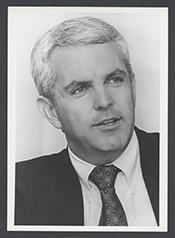 Rep. John B. Shadegg (R-AZ)
Description
Amendment sought to require the interagency committee to identify and recommend against duplication of Federal water-related research, development, and technological innovation activities by more than one agency or program. The amendment also sought to require the President to ensure that Federal agencies do not request appropriations for activities duplicated by state, local, and tribal governments.
Legislative Activity
Stay on top of the latest movement without scrolling through every action
House amendment offered
April 23, 2009
View full timeline
House amendment offered
April 23, 2009
House amendment offered/reported by : Amendment (A011) offered by Mr. Shadegg.(consideration: CR H4709-4711, H4714-4715; text: CR H4710)
April 23, 2009 • 12:16 PM
Amendment failed in Committee of the Whole
April 23, 2009 • 1:32 PM
Roll call votes on amendments in House
April 23, 2009 • 1:32 PM
House amendment not agreed to: On agreeing to the Shadegg amendment (A011) Failed by recorded vote: 160 - 271 (Roll no. 203).
April 23, 2009 • 1:32 PM
Amendment (A011) offered by Mr. Shadegg. (consideration: CR H4709-4711, H4714-4715; text: CR H4710)
April 23, 2009 • 12:16 PM
On agreeing to the Shadegg amendment (A011) Failed by recorded vote: 160 - 271 (Roll no. 203).
April 23, 2009 • 1:32 PM
Votes
1 roll call on this amendment
Text
Offered
NATIONAL WATER RESEARCH AND DEVELOPMENT INITIATIVE ACT OF 2009
The SPEAKER pro tempore. Pursuant to House Resolution 352 and rule
[[Page H4696]]
XVIII, the Chair declares the House in the Committee of the Whole House
on the state of the Union for the consideration of the bill, H.R. 1145.
{time} 1044
In the Committee of the Whole
Accordingly, the House resolved itself into the Committee of the
Whole House on the State of the Union for the consideration of the bill
(H.R. 1145) to implement a National Water Research and Development
Initiative, and for other purposes, with Ms. Speier in the chair.
The Clerk read the title of the bill.
The CHAIR. Pursuant to the rule, the bill is considered read the
first time.
The gentleman from Tennessee (Mr. Gordon) and the gentleman from
Texas (Mr. Hall) each will control 30 minutes.
The Chair recognizes the gentleman from Tennessee.
Mr. GORDON of Tennessee. Madam Chair, I yield myself such time as I
may consume.
(Mr. GORDON Tennessee asked and was given permission to revise and
extend his remarks.)
Mr. GORDON of Tennessee. Madam Chair, I rise in strong support of
H.R. 1145, the National Water Research and Development Initiative Act
of 2009.
Thirty-six States expect to experience significant water shortages by
the year 2013. Diminished supplies of water and intense competition for
limited resources are forcing local water agencies to make tough
decisions on water allocations and limiting access to needed water by
businesses and families.
When severe water shortages occur, the economic impact is
substantial. In 2007, the Tennessee Valley Authority was forced to shut
down a nuclear reactor due to a lack of acceptable cooling water in the
Tennessee River. According to a report from the National Oceanic and
Atmospheric Administration, each of the eight water shortages over the
past 20 years from drought and heat waves resulted in $1 billion or
more in monetary losses. The Association of California Water Agencies
reported in April of 2008 that California is now losing income and jobs
due to the State's water supply crisis.
Over 20 Federal agencies carry out research and development on some
aspect of water supply, water quality, or water management. Despite
spending millions of dollars on research at each of these agencies, an
increase in the number of water shortages and emerging conflicts over
water supply suggest that we are still inadequately prepared to address
the Nation's water management issue.
A new commitment is necessary to ensure that the United States can
meet the water challenges over the next 20 years and onward. As
chairman of the Science and Technology Committee, I have tasked the
committee with advancing this issue through hearings and with
legislation to address technological and strategic deficiencies at the
Federal level. Our committee held hearings in 2008 and 2009 to examine
the problems associated with dwindling water supplies across the Nation
and to receive testimony as to how the Federal Government can help meet
these challenges.
I am proud of the bipartisan support and collaboration that resulted
in H.R. 1145. Ranking Member Ralph Hall has been a champion of produced
water utilization legislation, and this bill incorporates research to
pursue the goals established in his bill, H.R. 469. We are happy to
accept constructive amendments from other Members of the minority, and
the bill was reported out of the committee in a strong bipartisan
manner.
H.R. 1145 will coordinate national research and development efforts
on water and provide a clear path forward to ensure adequate water
supplies for generations to come. This bill will ensure that we have an
effective national water strategy that uses Federal research and
development dollars efficiently and eliminates redundant programs.
H.R. 1145 has been endorsed by the National Beverage Association, by
the National Rural Electric Cooperative Association, Water Innovations
Alliance, the National Resource Defense Council, Water Environment
Research Foundation, the Council of Scientific Society Presidents, Food
and Water Watch, Water Research Foundation, Alliance Environmental, and
Clean Water Action.
In tough economic times, it is imperative that we use every dollar we
spend effectively. Coordination of Federal agencies, activities, and
strong partnerships with the State, local and tribal governments will
ensure that Federal programs are focused on areas of greatest concern
and that our efforts are complementary and effective.
I urge my colleagues to support this important legislation.
Mr. Chairman, I reserve the balance of my time.
Mr. HALL of Texas. I yield myself such time as I may consume.
The National Water Research and Development Initiative Act is the
Science and Technology Committee's response to a lot of recommendations
that were made by the country's top scientists on water research and
development.
Our water supply is of vital importance to the health and well-being
of our Nation, and this bill, as passed out of the committee and the
good work that was done in the committee, demonstrates an effort on
both sides to address concerns over water research.
No State is immune to water problems, whether there is too little of
it or an overabundance of it. Yet in the last quarter century, our
knowledge of water resources has been based on research that was
conducted in the middle of the last century. While I support the
concept behind the National Water Research and Development Initiative
Act, issues remain that need to be further addressed.
I am still convinced that several provisions of H.R. 1145 may
duplicate provisions found in H.R. 146, the Omnibus Public Lands Act of
2009, specifically the SECURE Water Act. We have to be mindful to
ensure that these two bills complement each other and do not create
additional bureaucratic burdens on water research efforts.
In addition to the concerns of repetitious Federal efforts, I am
cognizant that the complex responsibility for developing and managing
the Nation's water resources are shared between Federal, State, local,
even tribal and private interests. Several Federal water laws have
recognized States as having primacy over the allocation and use of
water. This notion has been further reinforced by Supreme Court
decisions. Therefore, we have to be very careful not to undermine the
historical responsibility of State and local governments on managing
their water resources. It is vitally important that the authorities
given in this bill do not supersede or replicate efforts of these at
the levels that I have just laid out.
Furthermore, I am concerned that the vague nature and description of
the ``National Water Census'' in this bill may be a step toward
federalizing groundwater, surface water, and other water resources
normally managed by State and local entities. To that end, we offered
and passed an amendment in committee to ensure State, local and tribal
participation in coordination efforts. Previous efforts to organize
water research and management have been generalized in what they call
``top-down'' agendas, with little or no participation from the States
or local levels. The intent of this amendment was to encourage a true
dialogue between the levels of government.
I am pleased that the chairman included language in the bill
expanding the Energy-Intensive Industries Program established in the
Energy Independence and Security Act of 2007 to include ``research to
develop water-efficient technologies that increase energy efficiency,
including utilization of impaired water sources in production.''
During the full committee markup, questions were posed about the
definition of ``impaired waters.'' These questions sought to clarify
that impaired waters included water extracted during oil and gas
exploration and production, also known as produced water. I applaud
this effort and note that as a potentially significant source of water,
the language of this bill should be interpreted to be inclusive of all
sources of nonpotable water.
As we move forward with today's debate on H.R. 1145, I would like to
commend the many Members who offered amendments in order to attempt to
make this a better bill. However, there are several amendments that
give me some concern. I am very hopeful that today's debate will
address any apprehension and allow us to move the bill forward.
[[Page H4697]]
Mr. Chairman, I reserve the balance of my time.
Mr. GORDON of Tennessee. Mr. Chairman, I yield myself such time as I
may consume.
Let me again thank Ranking Member Hall for his help in this bill. We
have had a number of hearings over the last 2 years. We have had open
forums, we have had witnesses that have presented their testimony. He
outlined a variety of legitimate concerns that came about at the
committee level, such as produced water and getting a better
definition. It was a better bill because of his help, and I thank him
for that.
Concerning the Public Lands Act, I will just point out, as I had
earlier, that the Public Lands Act, which was in the other body, is an
implementation legislation, where this is legislation for research.
With that, I now would like to yield to the gentlelady from Texas
(Ms. Eddie Bernice Johnson) such time as she may consume, again, an
important member of our committee.
Ms. EDDIE BERNICE JOHNSON of Texas. Mr. Chairman, today I rise in
support of H.R. 1145, the National Water Research and Development
Initiative Act. This bill is of great interest to me, as I serve as
Chair of the Subcommittee on Water Resources and Environment within the
Transportation Committee.
My city of Dallas is a beautiful area with the Trinity River running
through it. Protecting Dallas from flooding and ensuring the quality of
the Trinity and surrounding environments are important to me and to my
constituents.
Federally funded research on water is important to ensure an adequate
supply of clean drinking water for our Nation. H.R. 1145 will ensure
coordination among research programs at the different Federal agencies
that support water research.
Whether the issue is storm water and flood mitigation, clean water,
or watershed quality, investments in this area are critical. The type
of research involves scientists who work in interdisciplinary teams,
blending their individual talents in chemistry, microbial ecology,
invertebrate biology, watershed ecology, and ecosystem modeling.
I want to thank Chairman Gordon for his leadership and Ranking Member
Hall. I want to also thank him for incorporating amendments suggested
by members of the committee, one including me.
I strongly support this legislation, and I urge my colleagues to
support it.
Mr. POLIS. Mr. Chair, I rise in support of the National Water
Research and Development Initiative Act of 2009. I thank Chairman
Gordon and the Committee for working hard to reintroduce this important
legislation.
Demand for water resources has increased, while our management
technology and infrastructure has essentially remained unchanged since
the boom of water resource-related legislation in the 1970s and 1980s.
In tandem with the rise in population and shift to different regions,
the increase of water use by businesses, agriculture, and other
interests demonstrates the need for this important legislation. The
national population explosion has already begun to stress the water
resources across the country. In Colorado alone, the population has
grown by over 14 percent since 2000, a common theme across the Western
states and the Southeast. Our nation is experiencing water supply and
quality control challenges at all levels. This legislation ensures that
current demand is met, that future supply is available, and that
efforts requiring immediate attention are coordinated in an effective
manner.
I am grateful that Chairman Gordon and the Committee saw fit to
include the language of my amendment, which creates a pilot program
that will serve as a national model for conservation through energy
audits of water facilities. The Environmental Protection Agency will
use this model to demonstrative the effectiveness of energy audits and
implement similar programs throughout the country. I thank the Chairman
and the Committee staff for recognizing this important priority.
The Congressional Budget Office indicates that if enacted, this
legislation would cost $8 million over the next four years. That
equates to a mere 6 cents per American or 14 cents per average American
family. According to an EPA study in 2002, ``If capital investments
remain at current levels, the potential gap between 2000 and 2019 would
be approximately $122 billion for wastewater infrastructure and $102
billion for drinking water infrastructure.'' We are in a major economic
crisis in this country. With increases in population over that same
period expected to exponentially rise, inaction now could spell fiscal
disaster for many communities for decades to come.
Many federally-coordinated programs have been enacted in the past
with great success, including systems for forecasting floods and
droughts and the development of water treatment and wastewater
technologies, just to name a few. These have allowed our country to
better manage and enhance our water resources. The legislation before
us coordinates the activities of over 20 federal agencies currently
charged with separately devising water resource policy, leading to less
confusion over authority and implementation, which results in greater
efficiency and savings for taxpayers.
Access to clean, reliable sources of water is a non-partisan issue.
It affects every social, political, and economic class, affecting the
prosperity and security of our communities. All Americans are looking
to government to provide a forward-looking, scientifically based
solution to a burgeoning problem.
We need a proactive approach to solving water resource issues in this
country, one that addresses economic and environmental concerns. This
bill will help ensure proper funding, maintenance, expansion, and
enhancement of our conventional water and wastewater infrastructure,
creating a greener, more energy efficient system for the future.
On behalf of my constituents in Colorado, and all Americans who
elected us to protect their right to access to clean, reliable sources
of fresh water, I urge my colleagues to vote ``Yes'' for this bill.
Mr. MATHESON. Mr. Chair, I rise today in support of H.R. 1145, the
``National Water Research and Development Initiative Act.'' I am proud
to support Chairman Gordon's legislation as a cosponsor of the bill. I
thank the Chairman, along with Chairman Stupak and the Science
Committee staff for bringing this bill to the floor. My home state of
Utah is the second driest state in the nation. Over the past year, Utah
has overcome a twelve year drought that threatened major industries in
my district. This water shortage threatens recreation, tourism,
ranching, and agriculture. All of these industries rely heavily on
water usage.
This bill coordinates national research and development efforts on
water and provides a clear path forward to ensure adequate water
supplies for generations to come. It will help ensure that places like
Utah have access to an effective national water strategy.
That is why I offered an amendment to this legislation in Committee
which creates a data collection system to quantify and define the
nation's water supply or the systems that produce this resource. I am
pleased that my language is included in this bill.
This bill will help quantify water usage by allowing water users to
share best practices and data in order to improve water resource
management.
Utah's lack of water is a common story in the west and increasingly
in other parts of the nation. The lack of water in Utah cripples
economies and I am looking forward to working with my colleagues on
both sides of the aisle to ensure this legislation is passed.
Thank you and I urge my colleagues to support this piece of
legislation.
Mr. MINNICK. Mr. Chair, Idaho and the other Western states continue
to deal with difficult water issues brought on by years of drought.
We're tired of fighting over water, and we're ready for smart solutions
to keep our cities strong, our drinking water clean and our crops
healthy.
Today, the House will consider H.R. 1145, National Water Research and
Development Initiative Act. This bill, sponsored by my colleague Bart
Gordon, coordinates research efforts on water and provides a clear path
forward to ensure adequate water supplies for years to come.
My amendment will help our Nation better manage water by highlighting
the usefulness of our nation's water research facilities and the need
for these facilities to have what they need for groundbreaking research
to help states like mine, where water issues are of great concern to
every citizen.
Our nation depends on robust water research to help find better ways
to manage shortages and severe droughts so that Idaho farmers,
businesses and growing cities will have a dependable, clean water
supply and so our energy backbone, the West's many power-producing
dams, are able to function at optimum capacity. Research facilities
compile data, coordinate with agencies, and provide the public with
comprehensive information that will help us confront water issues as
they arise. I urge my colleagues to support the manager's amendment to
this bill that includes the Minnick of Idaho amendment.
Mr. LEVIN. Mr. Chair, I urge my colleagues to support the National
Water Research and Development Initiative Act.
There is a tendency to take the availability of clean drinking water
for granted. Even in a state like Michigan, which is surrounded by
water, we have become increasingly aware that the Great Lakes are a
finite resource. To that end, the eight Great Lakes states came
together last year and adopted a compact to
[[Page H4698]]
manage and protect the Lakes. With the approval of the Great Lakes
Compact by Congress, at long last we closed the door to bulk diversion
of Great Lakes water. The Compact also establishes a comprehensive
management framework to protect this shared resource and requires Great
Lake states to control their own large-scale water use.
In other parts of the Nation, it is clear that water supplies are
under increasing stress. Drought, population increases; and growing
demand has resulted in water shortages in many areas, and these
shortages are expected to become more pronounced over time. Currently,
more than 20 federal agencies carry out research on water, water
quality, and water management. The bill before the House will begin to
coordinate national research and development efforts on water to
provide the tools and information to manage water resources more
effectively.
I want to make clear that nothing in this legislation authorizes,
encourages or mentions water diversion from the Great Lakes. That is
off the table. What is under discussion today is better coordination of
programs that already exist to improve federal activities on water,
involving research, data collection, modeling, education and the
development of technology to enhance water quality and supply. As much
as any other region, the Great Lakes states stand to benefit from more
effective use of federal water research and development dollars.
Let me also express my support for the amendment offered by
Representatives Kirk and Quigley which requires the National Water
Research and Assessment Plan established in this legislation to include
long-term projections of water levels and ice cover of major water
bodies, especially the Great Lakes. The loss of winter ice on the Lakes
results in faster evaporation of the water. We need better data to
understand the decline of ice cover in the Great Lakes and the impact
this decline has on water levels in the Lakes.
I urge my colleagues to support the legislation.
Mr. HALL of Texas. Mr. Chairman, I yield back the balance of my time.
Mr. GORDON of Tennessee. Mr. Chairman, I yield back the balance of my
time.
The Acting CHAIR (Mr. Welch). All time for general debate has
expired.
Pursuant to the rule, the amendment in the nature of a substitute
printed in the bill shall be considered as an original bill for the
purpose of amendment under the 5-minute rule and shall be considered
read.
The text of the committee amendment is as follows:
H.R. 1145
Be it enacted by the Senate and House of Representatives of
the United States of America in Congress assembled,
SECTION 1. SHORT TITLE.
This Act may be cited as the ``National Water Research and
Development Initiative Act of 2009''.
SEC. 2. NATIONAL WATER RESEARCH AND DEVELOPMENT INITIATIVE.
(a) Initiative and Purpose.--The President shall implement
a National Water Research and Development Initiative (in this
Act referred to as the ``Initiative''). The purpose of the
Initiative is to improve the Federal Government's role in
designing and implementing Federal water research,
development, demonstration, data collection and
dissemination, education, and technology transfer activities
to address changes in water use, supply, and demand in the
United States, including providing additional support to
increase water supply through greater efficiency and
conservation.
(b) Interagency Committee.--
(1) In general.--Not later than 3 months after the date of
enactment of this Act, the President shall establish, or
designate, an interagency committee to implement the
Initiative under subsection (a). The Office of Science and
Technology Policy shall chair the interagency committee.
(2) Composition.--The interagency committee shall include a
representative from each agency that conducts research
related to water or has authority over resources that affect
water supply, as well as a representative from the Office of
Management and Budget.
(3) Functions of the interagency committee.--The
interagency committee shall--
(A) develop a National Water Research and Assessment Plan
(in this Act referred to as the ``plan'') in accordance with
subsection (c) and in coordination with State, local, and
tribal governments;
(B) coordinate all Federal research, development,
demonstration, data collection and dissemination, education,
and technology transfer activities pertaining to water;
(C) encourage cooperation among Federal agencies and State,
local, and tribal governments with respect to water-related
research, development, and technological innovation
activities to avoid duplication of effort and to ensure
optimal use of resources and expertise;
(D) facilitate technology transfer, communication, and
opportunities for information exchange with non-governmental
organizations, State and local governments, tribal
governments, industry, and other members of the stakeholder
community through the office established in paragraph (4);
(E) provide guidance on outreach to minority serving
institutions that are eligible institutions under section
371(a) of the Higher Education Act of 1965 (20 U.S.C.
1067q(a)) to encourage such institutions to apply for funding
opportunities specified in the plan;
(F) encourage cooperation between Federal agencies, State
and local governments, and tribal governments to develop
standard methods for collecting, managing, and disseminating
data on water; and
(G) not later than 1 year after the date of enactment of
this Act and every 3 years thereafter--
(i) identify from each agency described in paragraph (2)
the statutory or regulatory barriers preventing the use of
any technology, technique, data collection method, or model
that would contribute to greater availability of water
resources in the United States through enhanced efficiency
and conservation; and
(ii) submit a report of the findings from clause (i) to
Congress.
(4) National water initiative coordination office.--
(A) In general.--Not later than 3 months after the date of
enactment of this Act, the President shall establish a
National Water Initiative Coordination Office (in this Act
referred to as the ``Office''), with full-time staff, to--
(i) provide technical and administrative support to the
interagency committee;
(ii) serve as a point of contact on Federal water
activities for government agencies, organizations, academia,
industry, professional societies, and others to exchange
technical and programmatic information; and
(iii) communicate with the public on the findings and
recommendations of the interagency committee based on the
activities conducted pursuant to the Initiative.
(B) Funding.--The operation of the Office shall be
supported by funds contributed from each agency represented
on the interagency committee.
(c) National Water Research and Assessment Plan.--
(1) Plan development.--The plan required under subsection
(b)(3)(A) shall establish the priorities for Federal water
research, including federally funded research, and assessment
for the 4-year period beginning in the year in which the plan
is submitted to Congress. In the development of the plan, the
interagency committee shall consider and utilize
recommendations and information from State, local, and tribal
governments and contained in reports that have addressed
water research needs, including the 2007 report issued by the
Subcommittee on Water Availability and Quality (SWAQ) of the
National Science and Technology Council's Committee on
Environment and Natural Resources and recommendations of the
National Academy of Sciences.
(2) Specific requirements.--The plan shall--
(A) identify each current program and activity of each
Federal agency related to the Initiative;
(B) identify funding levels for the previous fiscal year
for each program and, if applicable, each activity identified
in subparagraph (A);
(C) set forth a strategy and a timeline to achieve the
outcomes described in subsection (d) and shall describe--
(i) each activity required of each agency responsible for
contributing to each such outcome;
(ii) the funding levels necessary to achieve each such
outcome; and
(iii) the distribution of funds between each agency based
on such agency's role in carrying out such activity;
(D) be subject to a 90-day public comment period and shall
address suggestions received and incorporate public input
received, as appropriate; and
(E) be submitted to Congress not later than 1 year after
the date of enactment of this Act.
(d) Water Research Outcomes and Assessments.--The plan
shall outline and direct agencies under the interagency
committee to work to achieve the following outcomes:
(1) Implementation of a National Water Census, which shall
include the collection of data on national water resources to
create a comprehensive database that includes information
about the quantity, availability, and quality of ground water
and surface water resources.
(2) Development of a new generation of water monitoring
techniques.
(3) Development of technologies for enhancing reliable
water supply, water reuse, and pollution prevention.
(4) Development of innovative technologies and tools to
enhance water quality, including advanced water treatment and
water purification technologies.
(5) Development of innovative technologies and tools to
enhance water-use efficiency and tools to encourage public
acceptance of such technologies and tools.
(6) Development of tools and processes to facilitate
resolution of conflicts over water resources.
(7) Development of information technology systems to
enhance water quality and supply.
(8) Improvement of understanding of water-related ecosystem
services and ecosystem needs for water.
(9) Improvement of hydrologic prediction models and their
applications.
(10) Analyses of the energy required to provide reliable
water supplies and the water required to provide reliable
energy supplies throughout the United States.
(11) Analyses of the social, behavioral, and economic
barriers to sustainable use of water resources in the United
States.
(12) Assessment of national water availability and use.
(13) Regional assessments of the status of water supplies
and evaluation of potential
[[Page H4699]]
changes in such status due to changes in land use, population
size and distribution, and economic activity.
(14) Assessment of water quality, availability, and use in
rural areas, including--
(A) maintaining water quality and enhancing energy
efficiency of water treatment and delivery through the use of
technologies or practices developed to address rural
communities; and
(B) developing data and information to support water
planning and conservation.
(e) Advisory Committee.--The President shall establish, or
designate, an advisory committee to advise the interagency
committee established under subsection (b).
SEC. 3. BUDGET COORDINATION.
(a) In General.--The President shall provide guidance to
each Federal agency participating in the Initiative with
respect to the preparation of requests for appropriations for
activities related to the plan.
(b) Consideration in the President's Budget.--The President
shall submit, at the time of the President's annual budget
request to Congress, a description of those items in each
agency's budget which are elements of the plan or help to
achieve the outcomes of the plan.
SEC. 4. COORDINATION.
The interagency committee shall coordinate the activities
of the Initiative with the United States Global Change
Research Program.
SEC. 5. ANNUAL REPORT.
Concurrent with the annual submission of the President's
budget to Congress, the President shall submit to Congress a
report that describes the activities and results of the
Initiative during the previous fiscal year and outlines the
objectives for the next fiscal year. The report shall include
detailed information on all programs and activities involved
in the Initiative, including an analysis of progress towards
achieving the outcomes listed in section 2(d).
SEC. 6. NATIONAL WATER PILOT TESTING FACILITY FEASIBILITY
STUDY AND REPORT.
(a) Study.--
(1) Requirement.--The Comptroller General of the United
States shall complete a study examining the feasibility and
practicality of creating a national water pilot testing
facility.
(2) Contents.--The study shall--
(A) examine Federal programs and facilities that currently
engage in some form of water technology testing;
(B) evaluate the practicality and identify the potential
costs of establishing a national water pilot testing
facility; and
(C) examine the efforts of Federal agencies to establish
testing facilities related to other technologies, including
wind and solar, and the lessons learned from implementing
these programs.
(b) Report.--Not later than 2 years after the date of
enactment of this Act, the Comptroller General shall transmit
to Congress a report on the key findings of the study
conducted under subsection (a).
SEC. 7. DOE WATER TECHNOLOGIES FOR INCREASED ENERGY
EFFICIENCY ACTIVITIES.
Section 452(c)(2) of the Energy Independence and Security
Act of 2007 (Public Law 110-140; 42 U.S.C. 17111) is
amended--
(1) in subparagraph (C), by striking ``and'' after the
semicolon;
(2) by redesignating subparagraphs (D) through (F) as
subparagraphs (E) through (G), respectively; and
(3) by inserting after subparagraph (C) the following:
``(D) research to develop water efficient technologies that
increase energy efficiency, including utilization of impaired
water sources in production;''.
SEC. 8. AUTHORIZATION OF APPROPRIATIONS.
There are authorized to be appropriated to the National
Oceanic and Atmospheric Administration for coordination and
outreach activities conducted under this Act through the
Office established in section 2(b)(4)--
(1) $2,000,000 for fiscal year 2010;
(2) $2,000,000 for fiscal year 2011; and
(3) $2,000,000 for fiscal year 2012.
The Acting CHAIR. No amendment to the committee amendment is in order
except those printed in House Report 111-82. Each amendment may be
offered only in the order printed in the report, by a Member designated
in the report, shall be considered read, shall be debatable for the
time specified in the report, equally divided and controlled by the
proponent and an opponent of the amendment, shall not be subject to
amendment, and shall not be subject to a demand for division of the
question.
Amendment No. 1 Offered by Mr. Gordon of Tennessee
The Acting CHAIR. It is now in order to consider amendment No. 1
printed in House Report 111-82.
Mr. GORDON of Tennessee. Mr. Chairman, I have an amendment at the
desk.
The Acting CHAIR. The Clerk will designate the amendment.
The text of the amendment is as follows:
Amendment No. 1 offered by Mr. Gordon of Tennessee:
Page 2, line 10, strike ``use,'' and insert ``use,
quality,''.
Page 2, beginning on line 12, strike ``efficiency and
conservation'' and insert ``efficiency, conservation, and
measures to abate water quality impairment''.
Page 2, line 24, strike ``supply,'' and insert ``supply and
water quality,''.
Page 3, line 20, strike ``with'' and insert ``with
institutions of higher education,''.
Page 3, line 22, strike ``and'' and insert ``water
resources managers, commercial end users, and''.
Page 4, after line 6, insert the following (and redesignate
subsequent provisions accordingly):
(F) provide guidance on outreach to institutions of higher
education (as defined in section 101(a) of the Higher
Education Act of 1965 (20 U.S.C. 1001(a)) that are located in
an area affected by drought and encourage such institutions
to apply for funding opportunities specified in the plan;
Page 5, line 13, strike ``and others'' and insert ``public-
private collaborations, commercial end users, and others''.
Page 5, line 16, strike ``public'' and insert ``public,
including through a publicly accessible website,''.
Page 7, line 10, strike ``period'' and insert ``period as
noticed on the Office's website''.
Page 7, line 14, strike the period at the end and insert
the following: ``and revised and resubmitted every 4 years
thereafter.''
Page 8, line 2, strike the period at the end and insert the
following: ``and technologies, including techniques and
technologies that provide publicly generated data useful to
water managers.''
Page 8, line 21, strike the period at the end and insert
the following: ``, including spatial and temporal variation
in natural supply, watershed hydrology, human and ecological
demand, and infrastructure.''
Page 9, after line 17, insert the following:
(15) Development of resources to investigate the effects of
invasive species on water supplies.
(16) Development of technologies and practices to treat
eutrophic water bodies, including rivers, estuaries, and
coastal waters.
(17) Development of tools to assist local water resource
managers in anticipating changing water availability and use
patterns in the preparation of a strategic plan for
sustainable future operations.
(18) Development of a program to offer technical and
planning assistance to States, localities, and regions that
use or are planning to use land conservation as a method to
protect water quality, as well as an analysis of the impact
of land conservation on watershed hydrology.
(19) Improvement of understanding of the impacts from
chemical impairments, including contaminants of emerging
concern, such as endocrine disrupting compounds,
pharmaceuticals, and personal care products, on water supply
and quality.
(20) Analyses of the Nation's water research facilities and
identification of whether a need exists for additional
facilities.
Page 10, after line 5, insert the following:
(c) Evaluation.--Not later than 30 days after the
submission of the President's annual budget request to
Congress, the Director of the Office of Science and
Technology Policy shall write a letter to Congress evaluating
the budget as it relates to Federal water research and the
success of the interagency committee in meeting the outcomes
listed in section 2(d).
Page 10, line 7, strike ``The'' and insert the following:
(a) In General.--The
Page 10, after line 9, insert the following:
(b) Sense of Congress.--It is the sense of Congress that
the interagency committee should collaborate with public
institutions of higher education whenever possible.
Page 10, line 18, strike the period at the end and insert
the following: ``and the indicators used to measure such
progress.''
Page 12, after line 6, insert the following (and
redesignate subsequent provisions accordingly):
SEC. 8. WATER RESOURCE RESEARCH INSTITUTES.
(a) Support; Coordinated Plan.--Section 104(b) of the Water
Resources Research Act of 1984 (42 U.S.C. 10303) is amended--
(1) in paragraph (1), by striking ``, and'' at the end and
inserting a semicolon;
(2) in paragraph (2), by striking the period at the end and
inserting a semicolon; and
(3) by inserting after paragraph (2) the following:
``(3) support the goals of the National Water Research and
Development Initiative; and
``(4) submit to the interagency committee under section
2(b) of the National Water Research and Development
Initiative Act of 2009 a single, coordinated, annual report
that identifies future water research needs.''.
(b) Types of Research and Development.--Section 108 of such
Act (42 U.S.C. 10307) is amended--
(1) in paragraph (9), by striking ``and'' after the
semicolon;
(2) in paragraph (10), by striking the period at the end
and inserting ``; and''; and
(3) by adding at the end the following:
``(11) Technical research on prevention and removal of
contaminants of emerging concern, including endocrine
disrupting compounds, pharmaceuticals, and personal care
products, in water resources.''.
SEC. 9. PILOT PROGRAM.
The Administrator of the Environmental Protection Agency
shall establish a national pilot program exploring the use of
energy audits of water related infrastructure to identify
energy and water saving opportunities. As part of the
program, each participating entity shall receive an Energy
Star Benchmarking energy performance score to provide an
initial screening of that entity, as
[[Page H4700]]
well as an ongoing tracking measure to compare their energy
performance against similar entities nationwide.
Page 12, line 13, strike ``and'' after the semicolon.
Page 12, line 14, strike the period at the end and insert a
semicolon.
Page 12, after line 14, insert the following:
(4) $2,000,000 for fiscal year 2013; and
(5) $2,000,000 for fiscal year 2014.
The Acting CHAIR. Pursuant to House Resolution 352, the gentleman
from Tennessee (Mr. Gordon) and a Member opposed each will control 20
minutes.
The Chair recognizes the gentleman from Tennessee.
Mr. GORDON of Tennessee. Mr. Chairman, I yield myself such time as I
may consume.
I am offering this amendment to make important changes to H.R. 1145.
A number of my colleagues joined me in drafting language for this
amendment, and I applaud them for their good ideas and collaborative
efforts. I want to thank Representatives Adler, Bean, Cardoza,
Connolly, Halvorson, Inslee, McCarthy, McCollum, Betsy Markey, Minnick,
Moore, Pingree, Polis, Scott and Titus.
H.R. 1145 establishes a planning process for the Federal research and
development efforts on water. This amendment clarifies that the plan
should be revised and revisited as progress is made on the goals
identified in this bill.
The bill, as reported from the committee, contained conflicting
information about the length of authorization. This manager's amendment
corrects this discrepancy and authorizes the initiative for 5 years.
In addition, this amendment identifies additional external groups
that the interagency committee and its coordination office should work
with, including consumer-related businesses, water managers, and
public-private collaborations.
The amendment also adds a number of new research outcomes for the
committee to investigate, including polluted coastal waters, changing
patterns of water availability, the impacts of invasive species, the
emerging contaminants of concern, such as a variety of other
disruptors.
This amendment also provides additional oversight procedures to the
initiative to ensure that taxpayer dollars are being spent in the most
effective manner.
{time} 1100
These are important additions to H.R. 1145, and I ask my colleagues'
support on this amendment.
Mr. Chairman, I reserve the balance of my time.
Mr. HALL of Texas. Mr. Chairman, I rise to claim time in opposition
to the gentleman's amendment.
The Acting CHAIR. The gentleman from Texas is recognized for 20
minutes.
Mr. HALL of Texas. Mr. Chairman, I do rise today to speak about this
amendment offered by the chairman of my committee, Mr. Gordon, and I
may want to ask the chairman a question or so about it.
There are a lot of provisions in the manager's amendment that I
support. I support the emphasis of ensuring a role for institutions of
higher education. I support the provision that calls for the National
Water Research and Assessment Plan to be updated every 4 years, to
guarantee that the plan evolves with the growing body of knowledge
garnered through our water research efforts, and I also support
including the list of regional outcomes, the development of tools to
assist local water resource managers.
There are several things that I had some problems about. One, as to
whether or not it was necessary to enhance the research outcome number
9, ``Improvement of hydrologic prediction models and their
applications'' with the following addition: ``including spatial and
temporal variation in natural supply, watershed hydrology, human and
ecological demand, and infrastructure.'' But I think we discussed those
pretty well in committee and with some interest on how these additions
make the research outcome better, but I'm convinced that they do.
I guess I would just ask the chairman, how can you ensure that this
pilot program that we have set up in here would not change into a
burdensome regulatory requirement that's pushed off on the States or
tribal units or some of those?
Mr. GORDON of Tennessee. Would the gentleman yield?
Mr. HALL of Texas. I yield to the gentleman from Tennessee.
Mr. GORDON of Tennessee. Thank you, Mr. Hall. That's a good question.
Let me first say that this is a large amendment and we try to deal in a
collaborative way in our committee. Unfortunately, everyone doesn't
have the privilege to serve on our Science Committee, and there was a
lot of interest in this bill. So there were lots of amendments, many of
which were incorporated here. As I say, I think we would be better off
in a more collaborative way having vetted these. But I think that we
have had the opportunity to do that more recently. And let me address
your very real legitimate question concerning scaling out this EPA
program.
First of all, as I think we all know, 20 or 30 percent of water is
lost through various utilities. I was reading a story the other day
where several utilities still have wooden pipes from decades back. So
this is a voluntary program that would allow the various utilities to
ask the EPA to come in and help them with an analysis on how they could
be more efficient and save money with their program. So, again, it's
voluntary.
I would also say this is just an authorization. If the EPA does not
feel they have the resources to do it, they don't have to without a
further appropriation, but I think it will help them, again, utilities
on a voluntary basis to use that precious water resource in a more
efficient way.
Mr. HALL of Texas. Mr. Chairman, reclaiming my time, history has
indicated to me in my long time working with the chairman, I know that
as this bill moves through the Senate, we'll be working together on
these things through conference and address the concerns that we have
raised.
We support the committee, and I thank the chairman for his
discussion.
Mr. Chair, I reserve the balance of my time.
Mr. GORDON of Tennessee. Mr. Chair, let me first again concur with
Mr. Hall. This is going to be a continuing process. We will go on to a
conference with the Senate at a later date, and all of these issues
will be reviewed. We want the best bill possible.
At this time, Mr. Chairman, I yield 2 minutes to the gentlewoman from
California (Ms. Loretta Sanchez).
Ms. LORETTA SANCHEZ of California. Mr. Chairman, I am pleased that
today the House of Representatives is considering H.R. 1145, the
National Water Research and Development Initiative Act of 2009.
As a supporter of this legislation, I would like to especially thank
the committee chairman, Mr. Gordon from Tennessee, for his leadership
in bringing this legislation to the floor.
This bill is an appropriate response to the concerning state of our
national water supply. As our Nation's population continues to
increase, so must our ability to conserve and to reuse our water
resources. We simply cannot afford to continue to take our scarce water
resources for granted. And we must also educate our constituents and,
quite frankly, ourselves on how to best protect a natural resource that
we depend on for our survival.
The National Water Research and Development Initiative Act of 2009
will establish an interagency committee to develop a research and
assessment plan to protect and to expand our water resources. H.R. 1145
will make the Federal Government a leader, a leader, in effectively
addressing our water resource challenges through intense research,
collection of essential data, and the development of new technology.
Mr. Chairman, in my district, I'm proud, as you know, that Orange
County Water District has successfully developed and implemented a
cutting-edge water reuse technology. The Groundwater Replenishment
System in Orange County, California, purifies 70 million gallons of
treated sewer water every day through an advanced purification process
involving microfiltration, reverse osmosis, and ultraviolet light and
hydrogen peroxide treatment. The result is that we get 100,000 Orange
County families more drinking water every day. The system is a premier
groundwater replenishment project, the premier one in the world, and so
many States and local governments
[[Page H4701]]
and foreign governments have come to Orange County to take a look at
the system.
I believe that H.R. 1145 will encourage communities throughout the
country to embrace this type of innovation, and I would encourage my
colleagues to join me in supporting this important initiative.
Once again, I thank the chairman for his leadership on this. It's so
important for us to make sure that in the future we have water for our
constituents.
Mr. HALL of Texas. Mr. Chairman, I reserve the balance of my time.
Mr. GORDON of Tennessee. Mr. Chairman, I yield 3 minutes to the
gentlewoman from Wisconsin (Ms. Moore).
Ms. MOORE of Wisconsin. I want to thank Chairman Gordon for yielding
time to me and for including my amendment in his manager's amendment,
and I thank his staff for working with me to make sure that all
interested stakeholders, including public-private collaborations such
as the Milwaukee Water Council in my district, will be able to interact
with and follow the interagency committee's work.
This Federal water research initiative will certainly impact a host
of affected stakeholders, not just Federal agencies, including those in
my district. The Milwaukee area, which I represent, is blessed to sit
on Lake Michigan, and, of course, Lake Michigan is one of the most
tremendous resources that makes up the Great Lakes and is one of the
largest freshwater sources on the planet.
The Milwaukee area also has a concentration of companies in the
business of water and academic prowess in the water research field. An
effort is underway, spearheaded by the Milwaukee Water Council, to
better align these companies and the academic research strength in the
area to create a hub for freshwater science, research, and water
technology development. This is why I offer an amendment today to
enhance the ability of these key stakeholders like the Milwaukee Water
Council to participate in the agenda-setting process created by the
bill.
Importantly, the amendment clarifies that public-private
collaborations formed around water research and technology development
at the State and local levels are important parts of the stakeholder
community. This is key. But just don't take my word for it, Mr.
Chairman. The 2004 National Academies of Science report made clear that
we must prioritize making the Federal agenda-setting process
transparent to the various stakeholders who have a stake in the
outcomes of this initiative. The report also noted that one of the
weaknesses of the coordination role played by the Subcommittee on Water
Availability and Quality, SWAQ, administered by the Office of Science
and Technology Policy is that the SWAQ lacks connections, formal or
informal, to States, stakeholders, and other users. The SWAQ is
invisible to the public at large as well as the research community
outside of the Federal agency leadership.
It's so important that in authorizing this office we address this
potential pitfall. My amendment that has been included in the manager's
package would supplement the great work already done by Chairman Gordon
and the Science Committee on this front. It will call for the creation
of a public Web site to display important information on the range of
reports and activities by this committee, including the posting of
notices about opportunities for stakeholders to comment on the Federal
water research plan. It's certainly my hope that these steps boost and
strengthen the link and interaction between non-Federal stakeholders
including the Milwaukee Water Council and the Federal water research
initiative.
Again, I thank the chairman and the staff for working with me to make
sure that the stakeholders will have one more tool available.
Mr. HALL of Texas. Mr. Chairman, I continue to reserve the balance of
my time.
Mr. GORDON of Tennessee. Mr. Chairman, I yield 2 minutes to the
gentleman from across the Potomac River, Mr. Connolly.
Mr. CONNOLLY of Virginia. I thank the chairman for yielding.
Mr. Chairman, I rise in support of H.R. 1145. This important
legislation will improve Federal coordination in the protection of
water quality across America. I had the privilege of proposing two
amendments to this legislation, both of which were graciously
incorporated by the chairman in the manager's amendment.
Congresswoman McCollum and I introduced an amendment to ensure that
the interagency task force established by this bill will provide
guidance on reducing endocrine disruptor pollution. These contaminants,
which come from pharmaceuticals and other sources, are having dramatic
negative impacts on rivers and lakes across the country. For example,
watersheds in the national capital region, including the Potomac and
James Rivers, have tributaries where 80 to 100 percent of bass have
intersex characteristics. We must expedite our efforts to identify
sources of this pollution and ways to filter it out of drinking water
to protect public health and safety.
I also introduced an amendment to direct the interagency working
group to develop a technical assistance program to help States and
localities use land conservation to protect water quality. This is an
important feature in regions like Northern Virginia, where sprawl
threatens the integrity of drinking water supplies. In fact, we saw
that demonstrated dramatically in a Public Broadcasting program just
this last week with Hedrick Smith that really highlighted this as a
major issue for our science moving forward.
I encourage my colleagues to support H.R. 1145, and I deeply thank
Chairman Gordon for his leadership on this very important legislation.
Mr. HALL of Texas. Mr. Chairman, I continue to reserve the balance of
my time.
Mr. GORDON of Tennessee. Mr. Chairman, I yield 2 minutes to the
gentlewoman from Illinois (Mrs. Halvorson).
Mrs. HALVORSON. Thank you, Chairman Gordon, for the opportunity to
speak in support of the manager's amendment. I applaud the Science and
Technology Committee for the hard work you've put into this important
legislation.
Water issues are something I hear about often when I'm back in my
district meeting with constituents. Many of my mayors have told me that
the biggest challenge facing their communities is our aging water
infrastructure problems. Residents in many small rural towns do not
have reliable access to safe drinking water. This is not only a public
safety issue but it is also an economic development issue. Communities
with inadequate water infrastructure or an unsafe drinking water supply
are unlikely to attract the types of commercial development that will
put people back to work.
There is little doubt that the business community has a tremendous
stake in the future of our Nation's water supply. That is why I am
pleased the manager's amendment includes language I put forward to
ensure that the interagency committee created by H.R. 1145 works
together with the business community. Small businesses especially need
help accessing the information and innovation technologies that will
allow them to become smarter and more efficient consumers of water.
{time} 1115
As a member of the Small Business Committee, I am proud to play a
role in making this process possible. This manager's amendment
recognizes that our Nation's water challenges will require not only
intergovernmental cooperation, but also public-private partnerships.
Working together, government and the private sector can pool
resources and implement the ambitious goals outlined by the National
Water Research and Development Initiative Act.
I thank Chairman Gordon again for the opportunity to speak in support
of the manager's amendment.
Mr. HALL of Texas. Mr. Chairman, I continue to reserve.
Mr. GORDON of Tennessee. I yield 3 minutes to the gentlewoman from
Minnesota (Ms. McCollum), and I want to thank her for her important
contribution to this amendment.
Ms. McCOLLUM. Thank you, Chairman Gordon.
Mr. Chair, I rise today to voice my strong support for the National
Water Research and Development Initiative Act and for the manager's
amendment.
My State of Minnesota claims over 10,000 lakes and is the headwaters
of
[[Page H4702]]
the Mississippi River and is part of the Great Lakes chain of lakes. We
have Lake Superior on our northern shore.
Improving the coordination of Federal research is important for my
State and for our country, and we need to do a better job of making use
of data to make good policy.
This amendment includes three important provisions, and I would like
to talk about them briefly.
The first part of my amendment, which is included in the manager's
amendment, clarifies the bill's focus to include both water quality and
quantity. Federal jurisdiction on water policy tends to create a
division between the two, but the science often overlaps. To achieve
the goal of coordination of research across all Federal agencies, it's
important to support a comprehensive research agenda, and this
legislation does that.
Second, in the area of water quality, this amendment adds research
objectives related to chemical impairments in our water supply,
specifically contaminants of emerging concern. These contaminants
include pharmaceuticals, personal care products and the endocrine
disrupting compounds. Researchers have found that exposure to these
contaminants can produce deformities and reproductive problems in
aquatic species and insects.
Today we know enough about these contaminants to be worried, but not
enough to provide good information to our State health officials and to
our constituents. Research on these contaminants must be a Federal
priority, and this legislation moves in that direction.
Finally, the amendment will link the existing work of the 54
federally funded research centers with the new Federal water research
plan called for in H.R. 1145. The National Institutes for Water
Resources are located in the institutions of higher education all
across this country. This research network is underutilized as a
resource.
This amendment would make it a priority for the National Institutes
for Water Research to support the goals of H.R. 1145, and it will
increase coordination among the centers so they are more effective
partners in Federal water quality efforts.
This amendment promotes a Federal approach to water research. It is
comprehensive, effective, and it is one that leverages all of our
Federal research partners to work together.
I encourage my colleagues to support this amendment and the bill.
And, again, I thank Chairman Gordon for his leadership on this issue
and his staff for all the work that they have done on this important
issue.
Mr. HALL of Texas. Mr. Chairman, I continue to reserve.
Mr. GORDON of Tennessee. Mr. Chairman, I yield 4 minutes to the
gentlelady from Nevada (Ms. Titus).
Ms. TITUS. I want to first thank Chairman Gordon for his hard work on
this important legislation and for including the text of my amendment
in his manager's amendment. This bill is critical to States like Nevada
where drought constantly threatens the availabilities of our already
limited water supply and, thus, our environment and our economy.
My language in this manager's amendment directs the interagency
committee established in the bill to work to improve water prediction
models and their applications, including analysis of variations and
natural supply, watershed hydrology, human and ecological demand, and
infrastructure.
As we celebrate Earth Day this week, it's important that we recognize
that water has become and will continue to be a significant limiting
resource for the Western United States.
So it is vital that we fully understand the current distribution of
this resource while also being able to accurately predict the impacts
of future conditions like growth and climate change on its
availability. Accurate prediction about the availability of water
resources will help our communities as they work to ensure that
businesses and families have access to clean, safe and adequate water
supply.
Our drinking and wastewater utilities are required to plan for a
number of long-term uncertainties. In order to successfully plan and
adapt to change, much more focused, applied research must be done.
The Desert Research Institute in Nevada is tackling this problem
head-on by establishing the Nevada Water Resources, Data Modeling and
Visualization Center. It will enable better understanding of the
present and future distribution of water within our State.
Accordingly, DRI, in collaboration with UNR and UNLV, has established
an experimental facility in Boulder City to collect data regarding
water interactions in desert soils. This will lead to improved
predictions of the potential impact of a changing climate on
groundwater recharge.
The work being done at educational institutions in Nevada illustrates
just how much potential there is to improve Federal coordination of
predictive water modeling. Whether communities are worried about
drought or flooding, snowmelt or urban runoff, the improvement of water
prediction models will help communities across the country adapt to
changes in the natural and the built-in environment.
So thank you again, Mr. Chairman, for your hard work and for
including me in this amendment.
Mr. HALL of Texas. I reserve the balance of my time.
Mr. GORDON of Tennessee. Mr. Chairman, I yield myself such time as I
may need to start our close here. We have no further speakers.
Again, I want to thank Ms. Titus, Ms. Johnson, all the others who
helped us put together this manager's amendment.
I certainly want to thank Mr. Hall and his staff as we have gone
through, really, the last 2 years with hearings in the committee, with
workshops, with a variety of different efforts to hear all and come
forth with a good bill on a very important issue.
As I mentioned earlier, there's going to be 40 States for the year
2013 that are going to have a water crisis. We need to address this.
Let me say one final thing about this manager's amendment. It's a
little larger than usual. There have been some new, but I think,
worthwhile items introduced there. I think they need to continue to be
vetted. I don't like to just bring things in off the street.
And I want Mr. Hall to know that as we go through the process that we
will continue this discussion if there are any concerns about
amendments that were incorporated into this manager's amendment.
I reserve the balance of my time.
Mr. ADLER of New Jersey. Mr. Chair, I rise in support of my amendment
to H.R. 145, the ``National Water Research and Development Initiative
Act of 2009.''
My amendment is critical to improving the health of many different
types of water bodies, especially a treasured resource in my own
district--Barnegat Bay. My amendment will task the interagency
committee, established in this bill, with implementing a plan to
develop technologies and practices that would treat eutrophic bodies of
water, including estuaries.
The Barnegat Bay estuary covers over 42 miles of shoreline from the
Point Pleasant Canal to Little Egg Harbor Inlet in southern New Jersey.
The flow of fresh water from rivers, creeks and groundwater into the
Barnegat Bay produces the special conditions that are important for the
survival of crabs, fish, birds, and other wildlife.
The eutrophication of Barnegat Bay is causing such environmentally
detrimental consequences as the decline in fish populations, the
decline of shellfish stocks, increased algae blooms, and loss of
seagrass habitat. These problems are causing the deterioration of water
quality, loss of biodiversity, and the disruption of ecosystem health
and function.
The eutrophication of the Barnegat Bay estuary is also negatively
impacting one of the most treasured pastimes of the residents of my
district--fishing. The continued decline of the health of the bay has
resulted in such a sharp decline in the bay's fish population that it
has detrimentally affected both recreational and commercial fishermen
in my district. Fishing is a treasured family tradition for many
residents of Ocean County, New Jersey, and for others, it is a source
of their livelihood. Something must be done to improve the health of
the bay while at the same time improving the economic and recreational
pursuits of the people of my district.
Eutrophication is the process by which a body of water becomes
eutrophic, typically as a result of mineral and organic runoff from the
surrounding land. The increased growth of plants and algae that
accompanies eutrophication depletes the dissolved oxygen content of the
water and often causes a die-off of other organisms.
Barnegat Bay is one of 28 congressionally-designated National Estuary
Programs in the country, and it is in serious need of help.
[[Page H4703]]
While the many estuaries in the country are diverse in their
characteristics and the issues that they face, the most critical factor
affecting many of them, and especially Barnegat Bay, is eutrophication.
I urge my colleagues to vote for my amendment and H.R. 1145.
Mr. INSLEE. Mr. Chair, I would like to thank the Chairman for
including my amendment into the manager's package. This important bill
addresses a critical component to how we adapt to a changing climate
and I am honored to have contributed to the creation of this vital
piece of legislation.
Washington State faces a decrease in spring snowpack of nearly thirty
percent by the 2020's, forty percent by the 2040's and sixty-five
percent by the 2080's. While this statewide information is significant
to understand the regional impacts of the changing climate on water
availability, the information only skims the surface of what our
communities need to know to ensure the availability of our water
resources.
Many water resource managers lack the specific information on how
changing climate conditions will impact the availability of, and demand
for, water in their communities. In order to correctly plan for future
operations, utility managers must have accurate information on how
climate change and other factors will impact specific water sources.
With the tools provided in this amendment, Evergreen Rural Water of
Washington, a non-profit organization serving the needs of small water
systems in Washington State, will be able to continue their important
work to provide local water systems with on-site technical assistance,
formal training, equipment lending and training information while
considering specific impacts of climate change to these local water
systems.
Some utilities, such as Seattle Public Utilities, have assessed the
vulnerability of their water supply to climate change and have begun to
develop adaptation strategies to prepare for the impacts of the change
in temperature while other utilities have not, either due to the lack
of resources or lack of awareness about the implications for the
specific system they manage. By developing tools used for the
anticipation of changing water availability and use patterns for the
preparation of a strategic plan for sustainable future operations, we
can downscale the information developed by federal water research to a
utilizable level so that all utility companies will be able to plan for
the future water resource for their customers.
I am honored that my amendment was included in the manager's package
as it will bridge the gap between the research implemented on the
federal level and what is needed on the ground by water resource
managers and utilities.
Mr. HALL of Texas. Mr. Chairman, I yield back the balance of my time.
Mr. GORDON of Tennessee. Mr. Chairman, I yield back the balance of my
time.
The Acting CHAIR (Mr. Salazar). The question is on the amendment
offered by the gentleman from Tennessee (Mr. Gordon).
The amendment was agreed to.
Amendment No. 2 Offered by Ms. Kosmas
The Acting CHAIR. It is now in order to consider amendment No. 2
printed in House Report 111-82.
Ms. KOSMAS. Mr. Chairman, I have an amendment at the desk.
The Acting CHAIR. The Clerk will designate the amendment.
The text of the amendment is as follows:
Amendment No. 2 offered by Ms. Kosmas:
At the end of section 2(d) of the bill, add the following
(with the correct sequential provision designations
[replacing numbers currently shown for such designations]):
(15) Assessment of the impacts of natural disasters,
including floods, hurricanes, and tornadoes, on water
resources.
The Acting CHAIR. Pursuant to House Resolution 352, the gentlewoman
from Florida (Ms. Kosmas) and a Member opposed each will control 5
minutes.
The Chair recognizes the gentlewoman from Florida.
Ms. KOSMAS. Mr. Chairman, I yield myself as much time as I may
consume.
I thank Chairman Gordon for bringing this important bill to the floor
to address our water research needs.
Access to clean and reliable water supplies is an issue that affects
every community across our country. In my district along the central
Florida coastline, local communities also must deal with the other
impacts of weather conditions such as hurricanes, which have the
potential to affect our water supplies. However, this is not just a
coastal issue, as recent floods in North Dakota and Florida, tornadoes
in Tennessee and Alabama, and other weather events across the country,
have exhibited to us and show us the need for this to be addressed at a
national level.
My amendment, which adds a provision to the Water Research Outcomes
and Assessments section, mandates an assessment of the impacts of major
weather events on our water supplies. Hurricanes, floods and tornadoes
can lead to salt water intrusion, infrastructure damage, sewer
overflows, storm water runoff and other conditions that can harm our
water supplies and the surrounding environment.
A better understanding of these impacts will aid local communities
and States in addressing water supply issues before, during and after
major storms.
Combined with the provisions in this bill, including the requirement
to develop innovative tools to enhance water treatment and water
purification technologies, this amendment will help address the impacts
of major weather events over the long run through the development and
implementation of policies to prevent and mitigate such vulnerabilities
to our water supplies.
A nationally coordinated assessment of major weather events will
ensure that our constituents have access to safe, reliable water
supplies without interruption and that providers will be able to meet
Federal standards and that we will use our resources in a more cost-
effective and efficient manner.
I would like to yield 2 minutes of my time to the Congressman from
Ohio (Mr. Driehaus).
Mr. DRIEHAUS. I want to congratulate my colleague from Florida on
this amendment. I think it's an important amendment, and I think this
bill comes at a very important time.
Just today our Ohio EPA director, Chris Korleski, announced funding
through the American Recovery and Reinvestment Act coming to the State
of Ohio and specifically to Ohio's water projects, over 69 drinking
water projects and 255 water pollution control projects. And what the
EPA director said in his statements, I think, is very telling. He said
this additional Federal funding will provide jobs while also improving
Ohio's worn water infrastructure.
Yes, we have a worn water infrastructure in the State of Ohio and in
many States across the Midwest, and it is particularly taxed at times
of natural disaster. So I think assessing the value of looking at
tornadoes, looking at floods and looking at the way in which our water
resources are impacted is critically important because we do have a
system, a system that is aging.
When we talk about combined sewers, as we have in Cincinnati, and we
have combined sewer systems across the Midwest and on the east coast,
we recognize that at times of flooding we have raw sewage coming out
into our waterways, into our streams, and they are especially taxed.
We need to make sure that the appropriate precautions are in place to
try to prevent these overflows, but also to help fix those systems in
the aging communities in order that when we have natural disasters, we
are able to ensure the population that we have clean drinking water
available to everyone.
I want to thank my colleague from Florida for her efforts.
Ms. KOSMAS. I appreciate your comments, Congressman Driehaus, and I
urge adoption of the amendment.
Mr. GORDON of Tennessee. Would the gentlewoman yield?
Ms. KOSMAS. I yield to the gentleman from Tennessee.
Mr. GORDON of Tennessee. Let me just thank the gentlewoman for her
amendment and her leadership on our committee in terms of space and
science. This amendment makes our bill a better bill.
Ms. KOSMAS. Thank you very much for your comments.
I reserve the rest of my time.
Mr. HALL of Texas. Mr. Chairman, I claim the time in opposition to
the amendment. Although I don't necessarily oppose the amendment, I do
have a statement.
The Acting CHAIR. Without objection, the gentleman from Texas is
recognized for 5 minutes.
There was no objection.
Mr. HALL of Texas. Mr. Chairman, I actually rise in support of the
amendment offered by Representative Kosmas of Florida.
The amendment simply directs the agencies under the interagency
committee to assess the impacts of natural disasters on water
resources.
[[Page H4704]]
We know that national disasters such as floods, droughts, hurricanes
and all of that can have a very significant effect on water levels and
cause major disruptions in local communities.
In my home State of Texas, we have recently seen the extremes of way
too much water in the form of hurricanes and too little, many times in
the form of droughts.
It's important that we achieve a better understanding of the impacts
of these natural disasters on water resources so that local managers
and State officials can plan and manage for future use and economic
growth. It simply makes sense that we coordinate efforts at the local,
State and national level to achieve these ends.
{time} 1130
I have long been a proponent of this type of coordination. During the
109th Congress, I sponsored a bill to create the National Integrated
Drought Information System, and I am proud to say the program is
currently up and running. NIDIS coordinates and integrates observations
so that local water managers can better plan and can better predict for
future uses.
While our Nation will always face natural disasters of one form or
another, we can do more to mitigate the effects through careful study
and careful planning. The gentlelady's amendment moves in that
direction, and I urge its passage.
Mr. Chairman, I yield back my time.
Ms. KOSMAS. Mr. Chairman, I yield back my time.
The Acting CHAIR. The question is on the amendment offered by the
gentlewoman from Florida (Ms. Kosmas).
The question was taken; and the Acting Chair announced that the ayes
appeared to have it.
Ms. KOSMAS. Mr. Chairman, I demand a recorded vote.
The Acting CHAIR. Pursuant to clause 6 of rule XVIII, further
proceedings on the amendment offered by the gentlewoman from Florida
will be postponed.
Amendment No. 3 Offered by Mr. Hastings of Washington
The Acting CHAIR. It is now in order to consider amendment No. 3
printed in House Report 111-82.
Mr. HASTINGS of Washington. Mr. Chairman, I have an amendment made in
order under the rule.
The Acting CHAIR. The Clerk will designate the amendment.
The text of the amendment is as follows:
Amendment No. 3 offered by Mr. Hastings of Washington:
In section 2(d), add at the end the following new
paragraph:
(15) Assessment of potential water storage projects that
would enhance water supply, water planning, and other
beneficial uses.
The Acting CHAIR. Pursuant to House Resolution 352, the gentleman
from Washington (Mr. Hastings) and a Member opposed each will control 5
minutes.
The Chair recognizes the gentleman from Washington.
Mr. HASTINGS of Washington. Mr. Chairman, I yield myself such time as
I may consume.
Mr. Chairman, my amendment ensures that potential water storage
reservoirs and their hydropower resources are kept on the table when it
comes to our Nation's future water and power supplies.
I have the privilege of representing a rural district in central
Washington. Constituents in my district and throughout the Pacific
Northwest have benefited tremendously from the emissions-free and
renewable hydropower generated from water reservoirs in the Columbia
River Basin. In fact, over 80 percent of Washington State's electricity
needs are met through hydropower.
Water reservoirs, such as Lake Roosevelt behind Grand Coulee Dam and
the reservoirs behind the Snake River Dam have not only provided much-
needed hydroelectricity, but also deliver water for irrigation, barge
transportation, drinking water, flood control and recreation purposes.
Many of our Nation's water storage reservoirs contribute to the
generation of hydropower, which is, Mr. Chairman, a renewable and clean
energy resource. Hydropower projects have provided emissions-free
electricity for generations.
Recent debate here in Washington, D.C. has been focused on global
climate policies and how wind and solar can be energy solutions for the
future. I agree that these technologies should be part of our energy
portfolio, but our country needs an all-of-the-above approach to meet
our needs. We need wind, solar, hydro, oil, natural gas and nuclear
power.
However, we must recognize that the wind doesn't blow all the time
and that it gets dark at night. In my region of the Pacific Northwest,
hydropower is the renewable backup resource for wind power. When the
wind subsides, hydropower generation is increased to offset the loss of
wind power. Without hydropower, wind generation would not be the
reality that it is today.
Yet some do not recognize that hydropower is a renewable resource and
fail to see the need for new water storage reservoirs that help develop
and foster these and other renewable energies, reservoirs that have
helped develop our Nation and will continue to provide multiple uses,
including hydropower. There is simply no reason why we should discount
potential new water storage and reservoirs in the future.
So to that end, Mr. Chairman, my amendment directs the relevant
agencies to assess potential water storage projects that would enhance
water supply, water planning and other beneficial uses.
While I pointed out the benefits of hydropower, this amendment does
not predetermine outcomes. It simply puts potential water storage as a
consideration when looking at our entire water supply outlook. Whether
it is for drinking water, irrigation or for power generation, it puts
that on the table.
So I urge my colleagues to support this commonsense amendment.
Mr. Chairman, I reserve the balance of my time.
Mr. GORDON of Tennessee. Mr. Chairman, I claim the time in opposition
to the amendment, even though I am not opposed to the amendment.
The Acting CHAIR. Without objection, the gentleman from Tennessee is
recognized for 5 minutes.
There was no objection.
Mr. GORDON of Tennessee. I yield myself such time as I may consume.
I will just quickly say thank you to Mr. Hastings for this amendment.
I think it is a constructive amendment. I think it may need some fine-
tuning so it can fit best into this bill and the constructs of the
bill, but it certainly is constructive and certainly something we
should do, and we will work with you.
I will be voting for the amendment, and as we go through the process
will be trying to work with you to again make it fit into the bill
better so we can go into conference.
I yield back the balance of my time.
Mr. HASTINGS of Washington. Mr. Chairman, I appreciate the chairman's
working with us on this and would be more than happy to work with him.
To that end, Mr. Chairman, I yield 1 minute to the distinguished
ranking member of the Science Committee, the gentleman from Texas (Mr.
Hall).
Mr. HALL of Texas. Mr. Chairman, I rise in support of the gentleman
from Washington's amendment. Potential reservoirs and new hydropower
should continue to play a major part in our water and energy supplies.
As areas of the country struggle with water shortages or increasing
demands on the water supply, we have to be willing to be creative in
the ways we address water use and water storage problems. This is a
thoughtful amendment and an improvement to the bill. I commend Mr.
Hastings for his leadership on this effort.
Mr. HASTINGS of Washington. Mr. Chairman, I appreciate again the
support of the distinguished chairman and the ranking member. With
that, I urge adoption of the amendment, and yield back the balance of
my time.
The Acting CHAIR. The question is on the amendment offered by the
gentleman from Washington (Mr. Hastings).
The amendment was agreed to.
Amendment No. 4 Offered by Mr. Cardoza
The Acting CHAIR. It is now in order to consider amendment No. 4
printed in House Report 111-82.
Mr. CARDOZA. Mr. Chairman, I have an amendment at the desk.
The Acting CHAIR. The Clerk will designate the amendment.
The text of the amendment is as follows:
Amendment No. 4 offered by Mr. Cardoza:
[[Page H4705]]
At the end of the bill, add the following new section:
SEC. 9. STUDY.
Not later than 90 days after the date of enactment of this
Act, the Secretary of the Interior shall enter into an
arrangement with the National Academy of Sciences for a study
on the impact of changes in snow pack, including snow pack
from the Sierra Nevada, on water resources and its relation
to water supply, including the Sacramento-San Joaquin Delta.
The Acting CHAIR. Pursuant to House Resolution 352, the gentleman
from California (Mr. Cardoza) and a Member opposed each will control 5
minutes.
The Chair recognizes the gentleman from California.
Mr. CARDOZA. Mr. Chairman, I yield myself such time as I may consume.
Mr. Chairman, my amendment addresses a grave concern in California
with the San Joaquin Valley water quality. Water is the basic necessity
of life. Without clean, available water, we can't produce, grow, play,
work and in fact even live. It is important to research and preserve
our resources, and my amendment focuses on the vital water resources of
California.
Every year, the snow pack in the Sierra Nevada slowly melts and flows
down the mountain, providing clean, reliable water year-round to our
farms, homes, businesses and municipalities. But now global warming
threatens this natural system and threatens the health of our families.
As the atmosphere warms, the snow pack melts too quickly to use and we
lose the vital components of life.
For 50 years, visionary leaders harnessed Mother Nature and brought
water from the mountains down into the valley to meet the needs of a
thriving and growing State. Our economies flourished under that water
system and it was efficient and it was the pride of the West. But
recently our State has more than doubled in population and we have done
little to keep pace with this growth. In fact, instead of keeping pace
with the growth, we have actually lost significant amounts of our water
supply.
It is therefore even more important today to support this amendment
as we desperately search for good water that can continue to nourish
our crops and feed our children. I ask my colleagues on both sides of
the aisle to support this commonsense amendment.
I reserve the balance of my time.
The Acting CHAIR. Without objection, the gentleman from Texas is
recognized for 5 minutes.
There was no objection.
Mr. HALL of Texas. I am not opposed to the amendment, I recommend its
passage, and I yield back my time.
Mr. CARDOZA. I thank my colleague and dear friend from Texas. I also
want to thank the staff of the committee and the chairman of the
committee for working with us to make this amendment possible on the
floor.
Mr. Chairman, I look forward to the passage of this amendment and to
greater availability of clean water in California.
I yield to the chairman, the gentleman from Tennessee.
Mr. GORDON of Tennessee. I want to thank you for this constructive
amendment. You have been a leader on water issues in California. I know
that is a very sensitive issue there, and thank you for helping make a
good bill better.
Mr. CARDOZA. Mr. Chairman, I thank the chairman and I appreciate his
input.
I yield back the balance of my time.
The Acting CHAIR. The question is on the amendment offered by the
gentleman from California (Mr. Cardoza).
The amendment was agreed to.
Amendment No. 5 Offered by Ms. Ginny Brown-Waite of Florida
The Acting CHAIR. It is now in order to consider amendment No. 5
printed in House Report 111-82.
Ms. GINNY BROWN-WAITE of Florida. Mr. Chairman, I have an amendment
at the desk.
The Acting CHAIR. The Clerk will designate the amendment.
The text of the amendment is as follows:
Amendment No. 5 offered by Ms. Ginny Brown-Waite of
Florida:
At the end of section 2(d) of the bill, add the following
(with the correct sequential provision designations
[replacing numbers currently shown for such designations]):
(15) Improvement of understanding of water-intensive
sectors of the economy and industrial needs for water.
The Acting CHAIR. Pursuant to House Resolution 352, the gentlewoman
from Florida (Ms. Ginny Brown-Waite) and a Member opposed each will
control 5 minutes.
The Chair recognizes the gentlewoman from Florida.
Ms. GINNY BROWN-WAITE of Florida. Mr. Chairman, I yield myself such
time as I may consume.
Mr. Chairman, I rise today in support of this amendment and the
overall bill, the National Water Research and Development Initiative
Act. As we all know, parts of the United States are currently in a
drought situation. Even Florida, which many people think of as being
water rich, is suffering from drought. Last year, for instance, the
City of Tampa imposed a total restriction on lawn watering and other
recreational uses for water. Our water resources are becoming scarce in
various parts of our great country.
In the short-term we will have to find temporary solutions to
navigate through these droughts. But in the long term we will need a
plan to prevent such a crisis from happening again. My amendment to
H.R. 1145 adds to the water research outcomes a study of water-
intensive sectors of the economy and industrial needs for water.
Passage of my amendment will ensure that the interagency committee
created under this bill will look at how water is used across the
country, from golf courses and fast food restaurants to manufacturing
plants and other industries. Understanding how such industries need and
use water will be critical to meeting our future needs while
stimulating economic growth. Without it, any water research plan would
be incomplete.
I certainly encourage my colleagues to support this amendment.
Mr. Chairman, I yield 1 minute to the gentleman from Texas (Mr.
Hall).
Mr. HALL of Texas. Mr. Chairman, I rise in support of this amendment.
I think this amendment is very important to ensure that we assess water
supply and water needs for communities and we keep in mind the
industries and businesses that employ the folks in these communities.
We don't believe the bill should be about pitting one water user
against another, but rather it should help to ensure enough water for
all users by focusing on new methods and technologies for conservation
and efficiency.
I urge my colleagues to support the amendment.
Ms. GINNY BROWN-WAITE of Florida. Mr. Chairman, I would like to
reserve my time.
Mr. GORDON of Tennessee. I claim the time in opposition to the
amendment, though I am not in opposition to the amendment.
The Acting CHAIR. Without objection, the gentleman from Tennessee is
recognized for 5 minutes.
There was no objection.
Mr. GORDON of Tennessee. Mr. Chairman, I yield myself such time as I
may consume.
Mr. Chairman, let me just thank the gentlelady from Florida for this
constructive amendment. I think again this helps to make a good bill
better, and I urge support of her amendment.
Mr. Chairman, I yield back the balance of my time.
Ms. GINNY BROWN-WAITE of Florida. Mr. Chairman, I certainly thank the
gentleman, who is very knowledgeable in this area for supporting this
amendment. Economic development does depend upon water resources in so
many sectors of our economy. I am very enthusiastically supporting his
bill, and I am delighted that he believes that this amendment helps to
make the bill, which is already a good bill, a little bit better.
I yield back the balance of my time.
The Acting CHAIR. The question is on the amendment offered by the
gentlewoman from Florida (Ms. Ginny Brown-Waite).
The amendment was agreed to.
Amendment No. 6 Offered by Mr. Arcuri
The Acting CHAIR. It is now in order to consider amendment No. 6
printed in House Report 111-82.
Mr. ARCURI. Mr. Chairman, I offer an amendment.
The Acting CHAIR. The Clerk will designate the amendment.
The text of the amendment is as follows:
Amendment No. 6 offered by Mr. Arcuri:
[[Page H4706]]
At the end of section 2(d) of the bill, add the following
(with the correct sequential provision designations
[replacing numbers currently shown for such designations]):
(15) Improvement of understanding of competing water supply
uses and how different uses interact with and impact each
other.
The Acting CHAIR. Pursuant to House Resolution 352, the gentleman
from New York (Mr. Arcuri) and a Member opposed each will control 5
minutes.
The Chair recognizes the gentleman from New York.
Mr. ARCURI. Mr. Chairman, I would first off like to thank Chairman
Gordon and Ranking Member Hall for their leadership on this very
important bill, a bill so important to America, not just America today
but to the future generations of America, to ensure that our greatest
natural resource, that is water, of course, continues, and that we
continue to have the abundance of it that we enjoy in this country.
My amendment asks for improvement of understanding of competing water
supply uses and how different uses interact with and impact each other.
{time} 1145
And I've heard from many of my colleagues throughout the country and
seen for myself firsthand in New York the problem that occurs when
different interests begin to compete over our precious water resources.
And when I say ``compete,'' obviously we have competition for use of
water through agriculture, through business, through energy production,
through transportation, through business use, and obviously, recreation
and consumption and transportation as well. So there are many uses for
water.
However, the unique thing about water is that not only is it
renewable, but the water resource can be used repeatedly to service
several different aspects of our economy and of people's needs. And I
think it's important, however, that we study that and see how different
interests can interact with each other and most efficiently use our
water resource to maximize it.
And I use this example. In my own home district we have a reservoir,
Hinckley Reservoir, that is used for drinking water for about 130,000
people. There is also a use of that reservoir for hydropower, and also
use of that to feed the barge canal for transportation and recreation
use. And there's often disagreements and infighting in terms of how to
best utilize that. And I think we need to study that and see what is
the most efficient way that we can do it.
I see it again in other places like the Finger Lakes, where again
there are disputes between whether we use the water in Seneca Lake for
drinking purposes, for recreation or for energy production. So I think
it's important that we work to make a determination how best to allow
competing interests to interact with each other to most efficiently and
effectively utilize our number 1 most precious resource, and that of
course is water.
So I would strongly urge the passage of this amendment, and I reserve
the balance of my time.
Mr. HALL of Texas. Mr. Chairman, I rise not in opposition, but to
make a statement about the amendment.
The Acting CHAIR. Without objection, the gentleman from Texas is
recognized for 5 minutes.
There was no objection.
Mr. HALL of Texas. I have some question about it, but I don't think I
have a question I want to propound to you because we have discussed it.
And your amendment would add to the growing list of research outcomes,
the improvement of understanding of competing water supply uses and how
different uses interact with each other and impact each other. And I
know you understand that, and we've discussed it.
I would ask whether or not it means using water for irrigation is
competing with industrial uses or the ecosystem management, like
releasing large volumes of water from dams competing with the use of
water for electricity generation or recreational activities. And we've
had some of that at Lake Texoma in my district.
But as we go through and this goes on to the Senate and we have
conference committees, and I know you've always been willing to explain
your position, and we'll work together on that.
So I'm satisfied with the bill, and I would hope that we pass the
bill.
Mr. Chairman, I reserve the balance of my time.
Mr. ARCURI. I thank the gentleman for his comments.
I yield back the balance of my time.
Mr. HALL of Texas. I yield back the balance of my time.
The Acting CHAIR. The question is on the amendment offered by the
gentleman from New York (Mr. Arcuri).
The amendment was agreed to.
Amendment No. 7 Offered by Mr. Kirk
The Acting CHAIR. It is now in order to consider amendment No. 7
printed in House Report 111-82.
Mr. KIRK. Mr. Chairman, I have an amendment at the desk.
The Acting CHAIR. The Clerk will designate the amendment.
The text of the amendment is as follows:
Amendment No. 7 offered by Mr. Kirk:
At the end of section 2(d) of the bill, add the following
(with the correct sequential provision designations
[replacing numbers currently shown for such designations]):
(15) Projection of long-term ice cover and water level
outlook for major water bodies in the United States,
including the Great Lakes, the potential impacts of the
results of such projections on infrastructure, and resource
management options based on such projections.
The Acting CHAIR. Pursuant to House Resolution 352, the gentleman
from Illinois (Mr. Kirk) and a Member opposed each will control 5
minutes.
The Chair recognizes the gentleman from Illinois.
Mr. KIRK. I am very honored to rise on behalf of the Kirk-Quigley
amendment on behalf of me and our newest Member of Congress,
Congressman Quigley, who replaced Rahm Emanuel in the House.
When we look at the Great Lakes, we look at one of the crown jewels
of our country's environment. But we have seen data over the last few
years showing a declining lake level. That lake level has been
estimated by the Army Corps of Engineers using projections that just
last over the next 6 months.
Under the Kirk-Quigley amendment, we would draw on the additional
resources of the National Oceanic and Atmospheric Administration, which
is able to project lake levels for quite a bit longer than the Army
Corps' 6-month standard.
The purpose of this amendment is to generate more science and data
about what's happening to the dropping levels of the Great Lakes. Next
to me is a chart showing an environmental disaster that did not happen
in the United States. Instead, it happened in the former Soviet Union,
now Kazakhstan, which shows the Aral Sea, a great inland sea, very much
like Lake Michigan, subjected to a very poorly designed Stalinist
irrigation plan that drank it dry. We should never allow an
environmental catastrophe like what happened in Kazakhstan to happen in
the United States.
From the data that we have, we have a number of causes which could
potentially be involved in the disappearance of the Great Lakes. One of
them could be the declining levels of ice cover over the Great Lakes.
Due to other forces, the normal coverage of ice over Lake Michigan, for
example, has been declining, therefore, possibly allowing evaporation
all year long. This declining level could be involved in the lowering
of the lake. We need more data to support that conclusion. Good data,
in my view, leads to good policy.
At this stage, we do not know why the levels of Lake Michigan are
dropping. But NOAA tells us from 1972 to 2008 Lake Michigan ice cover
has declined by approximately 30 percent, or a drop of 7,000 square
kilometers from 1972-1973 winter, to approximately 5,000 square
kilometers last year. This is a decline of 40 percent.
Now the Lake Carriers Association estimates that a 1-inch decline in
Great Lakes waters causes the ships to reduce their cargo from 50 to
270 tons. This translates to 8,000 tons of lost cargo in the lakes each
year, or equivalent of enough iron ore to make 6,000 automobiles in the
United States.
For economic reasons, for ecological reasons, for scientific reasons,
I think the Kirk-Quigley amendment should pass to give further
resources to look at this emerging trend in an ecosystem that directly
involves the future of 30 million Americans and many of our Canadian
allies.
[[Page H4707]]
I reserve the balance of my time.
Mr. GORDON of Tennessee. If the gentleman would yield, I would like
to thank him for this amendment and offer my support and request that
the committee do pass this amendment.
Mr. KIRK. I thank the gentleman.
I reserve the balance of my time.
The Acting CHAIR. Does any Member claim time in opposition?
Mr. KIRK. On this, then, I'd like to close by saying that this is a
bipartisan amendment endorsed by the National Wildlife Federation and
by the Lake Michigan Alliance. It represents the ability of the Federal
Government to look further into what is an evolving environmental trend
in a place that's home to 90 percent of America's freshwater. And with
that, I would urge adoption of the amendment and getting to work on
what is happening with the falling Great Lakes levels.
Mr. QUIGLEY. Mr. Chairman, I would like to thank the Chairman for his
good work on this legislation and look forward to working with him on
this issue.
I rise in strong support of the amendment from the gentleman from
Illinois.
The Great Lakes provide drinking water to over 40 million people and
90 percent of the U.S. water supply.
Urban sprawl, air and water pollution, and habitat fragmentation are
already stressing ecosystems of the Great Lakes region.
This amendment will ensure essential long-term forecasting of water
levels of major bodies of water, including the Great Lakes, in order to
develop adequate adaption and management plans.
I thank the gentleman and I urge my colleague to support the Kirk
amendment.
Mr. KIRK. I yield back the balance of my time.
The Acting CHAIR. The question is on the amendment offered by the
gentleman from Illinois (Mr. Kirk).
The amendment was agreed to.
Amendment No. 8 Offered by Mr. Teague
The Acting CHAIR. It is now in order to consider amendment No. 8
printed in House Report 111-82.
Mr. TEAGUE. Mr. Chairman, I have an amendment at the desk.
The Acting CHAIR. The Clerk will designate the amendment.
The text of the amendment is as follows:
Amendment No. 8 offered by Mr. Teague:
Page 8, line 25, strike the period at the end and insert
the following: ``, including analyses of the amount,
proximity, and type of water required for the production of
alternative and renewable energy resources.''
The Acting CHAIR. Pursuant to House Resolution 352, the gentleman
from New Mexico (Mr. Teague) and a Member opposed each will control 5
minutes.
The Chair recognizes the gentleman from New Mexico.
Mr. TEAGUE. Mr. Chairman, my amendment is about something simple,
laying yet another block in the foundation on which we can achieve
energy independence.
Personally, I am an oil man. I have always been an oil man and I
always will be. And one of the first things that I learned when I
started working on oil wells when I was 17 years old is that sometimes
when you drill a well you get a lot of water. You have to figure out
what to do with that. Can you put it into a stream? Do you need to
reinject it into the Earth? Or can we use it for something else?
It's a question as old as the oil and gas industry, just as the
relationship between water and energy is as old as water itself. And as
we look toward achieving energy independence through a focus on
renewable and alternative energy, creating jobs, bolstering our
national security and improving our environment along the way, we are
going to have to better understand that important and ancient
connection.
My amendment ensures that the relationship between renewable energy
development and water resources is established as a priority for
Federal water planning, research and development.
Mr. Chairman, we are proponents of wind, sun and biofuels, because
they are renewable resources. But water is not. If we draw down our
aquifers to the point that they can not recover and tax our rivers to
extinction, much of the American West will be unrecognizable. That is
not an option. And not harnessing the abundant renewable resources we
possess in places like New Mexico is not an option either.
Research, planning and the development of new technologies will free
us to develop energy in harmony with our environments and with needed
resources like freshwater.
When we site solar farms, we need to consider not only the sun's
intensity, but the proximity and sustainability of needed water
resources as well.
When choosing a path toward the production of biofuels on a massive
scale, we need to ask, what are the implications for freshwater of
developing corn-based ethanol in the Midwest versus algae-based
biofuels in the deserts of New Mexico?
When we consider wind, nuclear, and every other component of a
comprehensive plan to move our Nation toward energy independence, we
need to know what the implications are for our precious freshwater
resources.
There's even a biodiesel project in my district called Cetane Energy
that produces freshwater as part of its fuel production process. That
adds an interesting dynamic to the water intensity of Cetane's
production and is exactly the sort of thing that we need to better
understand as we expand our renewable energy portfolio and move toward
energy independence.
I reserve the balance of my time.
Mr. HALL of Texas. Mr. Chairman, I claim the time in opposition to
the amendment, though I do not oppose it.
The Acting CHAIR. Without objection, the gentleman from Texas is
recognized for 5 minutes.
There was no objection.
Mr. HALL of Texas. I have some reservations about it, but they're
reservations I think that we can work as it goes through and on through
the conference committee. I appreciate this amendment, and I do not
object to the amendment.
I reserve the balance of my time.
{time} 1200
Mr. TEAGUE. I yield back the balance of my time.
Mr. HALL of Texas. I yield back the balance of my time.
The Acting CHAIR. The question is on the amendment offered by the
gentleman from New Mexico (Mr. Teague).
The question was taken; and the Acting Chair announced that the ayes
appeared to have it.
Mr. TEAGUE. Mr. Chairman, I demand a recorded vote.
The Acting CHAIR. Pursuant to clause 6 of rule XVIII, further
proceedings on the amendment offered by the gentleman from New Mexico
will be postponed.
Amendment No. 9 Offered by Mr. Roskam
The Acting CHAIR. It is now in order to consider amendment No. 9
printed in House Report 111-82.
Mr. ROSKAM. Mr. Chairman, I have an amendment at the desk.
The Acting CHAIR. The Clerk will designate the amendment.
The text of the amendment is as follows:
Amendment No. 9 offered by Mr. Roskam:
At the end of the bill, add the following new section:
SEC. 9. GAO STUDY AND EFFECTIVE DATE.
(a) Study.--The Government Accountability Office shall
conduct a study, and prepare a report, on whether the
requirements of this Act are duplicative of existing programs
that provide for water research, development, demonstration,
data collection and dissemination, education, and technology
transfer activities regarding changes in water use, supply,
and demand in the United States, including an analysis of the
State Water Resources Research Institute Program (authorized
by section 104 of the Water Resources Research Act of 1984,
and organized as the National Institutes for Water
Resources), the United States Global Change Research Program,
and subtitle F of title IX of the Omnibus Public Land
Management Act of 2009 (Public Law 111-11).
(b) Presidential Determination.--
(1) In general.--The President shall determine whether the
contents of the report prepared under subsection (a)--
(A) support the implementation of sections 1 through 8 of
this Act; or
(B) support a conclusion that such sections should not take
effect.
(2) Justification.--If the President makes a determination
under paragraph (1) that differs from the recommendations of
the Government Accountability Office, the President shall
provide a justification for the difference.
(c) Effective Date.--Sections 1 through 8 of this Act shall
not take effect unless the President has made an affirmative
determination under subsection (b)(1)(A).
The Acting CHAIR. Pursuant to House Resolution 352, the gentleman
from Illinois (Mr. Roskam) and a Member opposed each will control 5
minutes.
[[Page H4708]]
The Chair recognizes the gentleman from Illinois.
Mr. ROSKAM. Mr. Chairman, in a nutshell, it's a fairly
straightforward amendment. To briefly put it into context, it's trying
to follow up on President Obama's inaugural address where he really
challenged Congress and the American people to go through the Federal
budget line by line, looking carefully at programs. I don't want to put
words into the President's mouth, but if I were to paraphrase, I would
say that part of the subtext of the challenge is to look where there is
possible duplication, and that's what this amendment seeks to do. It
respects the underlying legislation and says, well, if we're going to
be doing this program--in other words, if we're going to be
coordinating the Federal Government's approach to water problems--then
let's do it in the context of clarity.
So here is what it says: We're going to have an amendment, and we're
going to direct the GAO to do a study about the possible duplication of
programs. In the interim, notwithstanding the passage of the bill, it's
going to suspend the implementation date of the program to wait until
the GAO comes back with the study. If the President finds that there
are duplications, he can move forward and waive the underlying
findings, but he has got to do it in a declarative way. In other words,
he needs to affirmatively move forward and say, ``Look, I've evaluated
these duplications, and on balance, I think we should do this,'' or
maybe in the alternative he'll say, ``Let's not do it that particular
way.''
There are only two programs that are specifically cited as sort of a
heads-up to the GAO that they need to take a look at. One is the U.S.
Global Change Research Program, which is a current program that the GAO
says take a look at or that we tell the GAO to take a look at. The
other is the State Water Resources Research Institute Program, which
again is flagged, but notwithstanding that, it says to take a look at
the other programs that are out there. If there is a duplication,
bubble it up to the surface, and let's make a decision from there.
At this point, I reserve the balance of my time.
Mr. GORDON of Tennessee. Mr. Chairman, I claim time in opposition to
the amendment.
The Acting CHAIR. The gentleman from Tennessee is recognized for 5
minutes.
Mr. GORDON of Tennessee. Mr. Chairman, I certainly appreciate the
thrust of the gentleman from Illinois' amendment in terms of trying to
stop the duplication of programs to save money. We need to be doing
that every day. The irony is that this is what this bill does. This
bill looks at the 20 agencies that invest in water research, and it
coordinates that so we can get our best bang for the buck. It also
helps to do away with that type of duplication.
So, as well-intended as the gentleman is, his amendment, I'm afraid,
would be contrary to what he wants to accomplish. It would only slow
down the process of this coordination and slow down the process of
better utilizing our resources and saving that money. So it really is,
again, with the best of intentions, but this amendment, I think, would
counter that.
Not being a member of the committee, he did not have the benefit of
the hearings that we had, of the roundtable discussions that we had, of
all the input that we had, and I think that's the reason that he also
might not be aware of the wide endorsements of this bill. This bill is
endorsed by the National Beverage Association, the National Rural
Electric Cooperative Association, the Water Innovation Alliance, the
Natural Resources Defense Council, the Water Environmental Research
Foundation, the Council of Scientific Society Presidents, the Food and
Water Watch, the Water Research Foundation, and the Alliance for
Environmental and Clean Water Action.
Again, we tried to follow his advice and accomplish that, and I think
this bill does and has, really, wide and active support. His amendment
would only stop that implementation or it would slow it down, which
would certainly be counter to his intentions.
I reserve the balance of my time.
Mr. ROSKAM. Well, I thank the gentleman for his comments, Mr.
Chairman.
I would just go to the underlying purpose of the legislation, as it's
sort of the declared statement of the committee, which is to improve
the Federal Government's role in designing and in implementing Federal
water research, development, demonstration, data collection and
dissemination, education, and technology transfer activities to address
changes in the water use, supply and demand in the U.S., including
providing additional support to increase water supply through greater
efficiency and preservation.
There is one word that isn't in there, and that is the word
``duplication,'' and I think sometimes we all benefit from another
perspective coming in. I respect greatly the expertise of the
committee, but every once in a while, there's maybe another perspective
that could come along that will say: You know what? In the great scheme
of things, the pace at which Congress is moving and the pace at which
programs are being put in place, let's hit the pause button here, and
let's have the GAO go out and really span the spectrum because, in the
underlying legislation, it is absolutely silent as to duplicative
efforts.
So I accept the criticism at face value. It's a valid argument, but I
think that this is an improvement. It's not meant to be an impediment,
and clearly, it empowers the President of the United States to waive
the finding. I think it's a simple, straightforward type of thing
that's in spirit with the inaugural statement of the President.
I reserve the balance of my time.
Mr. GORDON of Tennessee. Mr. Chairman, let me point out that, in
section 3, paragraph 3, part of the bill says, ``The technical
innovation activities to avoid duplications of effort and to ensure
optimum use of resources and expertise.''
You said a ``criticism'' of your amendment. I hope you didn't take
that as a criticism. Again, I compliment the thrust of your amendment,
but we have incorporated that here.
Let me also say that there is a synergy oftentimes also with
research. NASA and NOAA may be working on a similar project, but
because they're working on something similar, you wouldn't necessarily
say that it was duplicative and not useful but, rather, that there was
a synergy of working together. In our bill, we specifically say
avoiding that duplication.
So, again, I think you have the best of intentions, and I think that
we have accomplished those. For that reason, I would have to oppose
your amendment because it would stop us from getting on to the work of
saving money and of having a program that is so important. There are 40
States in our Nation right now that are facing serious water shortages
or droughts or water problems between now and the year 2013.
I reserve the balance of my time.
Mr. ROSKAM. Mr. Chairman, I would like to yield 1 minute to the
gentleman from Texas (Mr. Hall).
Mr. HALL of Texas. Mr. Chairman, I rise in support of the amendment.
Actually, this amendment seeks, as the gentleman has expressed, to
return us to the original purpose of the bill by focusing on the
duplication that exists among Federal agencies involved in water
research efforts and attempting to streamline these efforts. I think we
always have to be good stewards of the taxpayers' dollars as we work
through legislation up here.
I support the amendment because I believe it's a good amendment, and
it's looking after the taxpayers, and I urge my colleagues to join me.
Mr. GORDON of Tennessee. I yield back the balance of my time.
Mr. ROSKAM. I yield back the balance of my time.
The Acting CHAIR. The question is on the amendment offered by the
gentleman from Illinois (Mr. Roskam).
The question was taken; and the Acting Chair announced that the noes
appeared to have it.
Mr. ROSKAM. Mr. Chairman, I demand a recorded vote.
The Acting CHAIR. Pursuant to clause 6 of rule XVIII, further
proceedings on the amendment offered by the gentleman from Illinois
will be postponed.
Amendment No. 10 Offered by Mr. Blumenauer
The Acting CHAIR. It is now in order to consider amendment No. 10
printed in House Report 111-82.
Mr. BLUMENAUER. Mr. Chairman, I have an amendment at the desk.
The Acting CHAIR. The Clerk will designate the amendment.
[[Page H4709]]
The text of the amendment is as follows:
Amendment No. 10 offered by Mr. Blumenauer:
Insert after section 7 the following (and redesignate
subsequent provisions accordingly):
SEC. 8. WASTEWATER AND STORMWATER REUSE TECHNOLOGY
DEMONSTRATION PROGRAM.
(a) In General.--In consultation with the interagency
committee, the Assistant Administrator for Research and
Development at the Environmental Protection Agency shall
establish a wastewater and stormwater reuse and recycling
technology demonstration program, consistent with section
2(d)(3).
(b) Activities.--Under the program established in
subsection (a), the Assistant Administrator shall develop and
fund projects to demonstrate, evaluate, and test the
techniques and technologies to reuse and recycle stormwater
and wastewater at the building, site, neighborhood, and
watershed scales for urban, industrial, agricultural,
environmental, and recreational uses as well as to augment
potable water supplies.
The Acting CHAIR. Pursuant to House Resolution 352, the gentleman
from Oregon (Mr. Blumenauer) and a Member opposed each will control 5
minutes.
The Chair recognizes the gentleman from Oregon.
Mr. BLUMENAUER. Mr. Chairman, I am pleased, along with my colleague,
Betsy Markey from Colorado, to offer this amendment to create a
wastewater and storm water reuse and recycling technology demonstration
program within the Environmental Protection Agency.
I would like to begin by expressing my appreciation to Chairman
Gordon and to his staff for working with us to refine the amendment.
This is important work that's being done. I appreciate the debate and
the energy, and we are pleased to offer this small element that, I
think, makes a big difference.
Water reuse involves taking wastewater or storm water, giving it the
appropriate level of treatment for its intended use and using the
resulting reclaimed or recycled water for a new, beneficial purpose.
These beneficial purposes can range from agriculture and landscape
irrigation, to industrial processes, to toilets, to replenishing
groundwater.
It's clear that this is not necessarily a new technology. According
to the Water Reuse Association, reclaimed water has been used for crop
irrigation for more than 100 years and for landscape irrigation for
more than 70 years. The Earth has recycled and reused water for
millions of years through the natural water cycle, but the amount of
water that we reuse and recycle is just, if I may use the phrase, ``a
drop in the bucket'' compared to what we could be doing, which is why I
think a new demonstration project is in order.
Across the globe, water consumption has tripled in the last 50 years.
According to the EPA, at least 36 States are anticipating local,
regional or Statewide water shortages by 2013 even under non-drought
conditions. As communities grow and water supplies decrease, they will
be forced to seek alternative sources of water. In an era of climate
change and water stress, water reuse and recycling has a great deal of
potential to help alleviate pressures on water managers and to help
communities become less dependent on ground and surface water sources.
A demonstration program will help reduce the costs of these
technologies, and it will also help communities overcome the technical
and social barriers to water reuse and recycling.
I reserve the balance of my time.
Mr. HALL of Texas. Mr. Chairman, I claim time in opposition. Though
I'm not totally opposed to it, I'd like to make a statement.
The Acting CHAIR. Without objection, the gentleman from Texas is
recognized for 5 minutes.
There was no objection.
Mr. HALL of Texas. Mr. Chairman, it's my understanding that the
purpose of the National Water Research and Development Initiative was
to streamline, organize and coordinate Federal water research and
development efforts. Although I support the underlying premise of the
gentleman's amendment, I think it's duplicative of legislation we've
already passed.
A little more than 2 months ago, this body passed H.R. 631, the Water
Use Efficiency and Conservation Act offered by Mr. Matheson of Utah
under a suspension of the rules by a voice vote. Because this Matheson
bill has not been passed by the Senate, I think we can work through
this bill, and I withhold any opposition to this amendment with the
understanding that I already know the gentleman, and have worked with
him for a lot of years. I know we can work through any problems that we
have with it.
So, with that, I reserve the balance of my time.
Mr. BLUMENAUER. I don't see my cosponsor here, so I'm the last
speaker. I'm prepared to close if you have no other speakers.
Mr. HALL of Texas. Mr. Chairman, I yield back the balance of my time.
Mr. BLUMENAUER. Mr. Chairman, I respect my good friend and colleague,
the ranking member, and I appreciate what he mentioned in terms of the
prior legislation, but I would say that was just research.
What we're attempting here is to be able to have demonstration
projects. The EPA has done a great deal of work in this area in helping
communities across the country undertake recycling and reuse projects.
What we're doing here is having a coordinated program in the agency
rather than just a few projects here or there that would allow the EPA
to do the monitoring, evaluation and documentation necessary to promote
the new technologies nationwide. Reclaimed or recycled water is highly
engineered for safety. Indeed, the quality can be more predictable than
some existing surface and groundwater sources. Right now, only about 5
to 6 percent of municipal wastewater effluent in the United States is
reclaimed and beneficially used for any purpose.
In addition to enhancing water supplies, these technologies can help
the environment by reducing the diversion of water from sensitive
ecosystems, reducing nutrient and pathogen loads from wastewater
discharges to waterways and reducing pollution from storm water runoff.
{time} 1215
So beyond research, we really need a coordinated program of
demonstration.
I urge my colleagues to support this simple amendment to create a
program to pursue technology demonstration projects at the building,
site, neighborhood, and watershed scales.
Ms. MARKEY of Colorado. Mr. Chair, I rise today in support of our
amendment, numbered 10, to the National Water Research and Development
Initiative Act.
In the West, and especially in the state of Colorado, water is a
resource more precious than gold. For the many farmers and ranchers in
my district in Eastern Colorado, finding ways to reuse and conserve
water in urban areas is a matter of survival. For them, the idea of
water recycling is not a new one.
In the Rocky Mountain region, we use recycled water for everything
from Public Park landscaping, commercial and industrial uses, to fire
protection. Reclaimed domestic wastewater serves as industrial water at
power plants, helps to restore wetlands and even assists with dust
control at construction sites--something that anyone who drives I-25
from Denver to Fort Collins on a windy day can appreciate.
As communities in the West, and especially in Colorado's fourth
congressional district, continue to grow, the issue of water
conservation and reuse becomes even more urgent. Most conservative
estimates tell us that Colorado's Front Range will face soaring water
prices to pay for new water systems by the year 2058. Cities will
become super dense to shrink lawns and shorten water pipelines.
As the Front Range grows along with Denver and Colorado Springs,
Colorado's Eastern Plains will face increasing competition for their
already scarce water sources. Large swaths of farmland will go dry if
we don't work to actively protect the water for our agricultural
communities. A whole way of life that has existed since families first
started homesteading on land in the West will disappear if we don't
find ways to reuse and recycle water.
For the people I represent, investing more resources in creating a
wastewater and stormwater reuse and recycling technology demonstration
program within the Environmental Protection Agency is a matter of our
future survival.
I urge all members to support my amendment to H.R. 1145.
Mr. BLUMENAUER. I yield back the balance of my time.
The Acting CHAIR. The question is on the amendment offered by the
gentleman from Oregon (Mr. Blumenauer).
The amendment was agreed to.
Amendment No. 11 Offered by Mr. Shadegg
The Acting CHAIR. It is now in order to consider amendment No. 11
printed in House Report 111-82.
[[Page H4710]]
Mr. SHADEGG. Mr. Chairman, I have an amendment at the desk.
The Acting CHAIR. The Clerk will designate the amendment.
The text of the amendment is as follows:
Amendment No. 11 offered by Mr. Shadegg:
Page 3, after line 17, insert the following (and correct
sequential provision designations accordingly):
(D) identify Federal water-related research, development,
and technological innovation activities that are duplicated
by more than one Federal agency or program and make
recommendations to the President on how to avoid such
duplication;
Page 6, line 22, insert the following (and correct
sequential provision designations accordingly):
(C) identify Federal water-related research, development,
and technological innovation activities that are duplicative
of such activities occurring at the State, local, and tribal
government level;
Page 10, after line 5, insert the following:
(c) Elimination of Duplicative Efforts.--The President, in
carrying out the activities under subsections (a) and (b),
shall ensure that each Federal agency participating in the
Initiative shall not request appropriations for activities
identified under section 2(c)(2)(C).
The Acting CHAIR. Pursuant to House Resolution 352, the gentleman
from Arizona (Mr. Shadegg) and a Member opposed each will control 5
minutes.
The Chair recognizes the gentleman from Arizona.
Mr. SHADEGG. Mr. Chairman, the committee report for H.R. 1145 states
that the purpose of the bill is to coordinate the Federal Government's
water programs to ensure they are conducted in an ``efficient and cost-
efficient manner.'' There are currently over 20 Federal agencies
carrying out research and development on water programs, not counting
the State agencies that engage in the same kind of work or those at the
county or local level.
While the interagency committee is directed in the bill to avoid
duplication of efforts, the bill fails to take the necessary step to
implement that directive. It does not in fact provide the committee
with explicit authorization to recommend against the funding programs
that are duplicated amongst different Federal agencies or initiatives
that are duplicated at the State level as well as at the Federal level.
My amendment is simple and straightforward. It has simply two
provisions. The first says that they should identify Federal water-
related research and development technological innovative activities
that are duplicated by more than one Federal agency or program and make
recommendations to the President how to avoid such duplication. Simple,
straightforward. Simply says where there is duplication, make a
recommendation to the President of the United States on how I might
avoid that duplication.
The second says to identify Federal water-related research
development and technological activities that are duplicative of those
conducted at the State and local or at the tribal government level.
Again, simple and straightforward.
That is the essence of my entire amendment. It is intended to look at
the issue of efforts at the Federal level which duplicate each other
and to at least make a recommendation that they be consolidated for
reasons of efficiency, and to do the same with regard to State, local
or tribal efforts.
It seems to me, Mr. Chairman, that everyone in America is currently
tightening their belt. The least this Federal Government can do is to
look--and that's all my legislation does is require the government to
look if those things are duplicated and eliminate that duplication
where it can be done efficiently.
I reserve the balance of my time.
Mr. GORDON of Tennessee. Mr. Chairman, I claim time in opposition to
the amendment.
The Acting CHAIR. The gentleman from Tennessee is recognized for 5
minutes.
Mr. GORDON of Tennessee. I yield myself such time as I may consume.
Once again, let me say to my friend from Arizona, you come at this
with the right attitude, and that's what we're trying to do. The
purpose of this bill is to not only do away with duplication but also
to have these 20 different agencies working in a more effective way.
But let me explain, again unintentionally, but the impact of your
amendment.
Your amendment would require the administration to determine what
research, development and technology innovation programs exist in all
States, local and tribal governments. In addition to the 50 States,
there are over 500 federally recognized tribes, over 87,000 local
government entities, and so compiling this information would be an
enormous and expensive undertaking. And the gentleman's amendment is
silent as to who would pay for this. In fact, the gentleman's amendment
is silent as to whether the State, local or tribal governments would be
forced to bear some of the costs of implementing this census.
And let me give you a couple of practical problems here. Let's say
there was a tribe somewhere that was spending $1,000 working on a
desalinization project. Well, that would preempt a Federal effort that
could be much more significant and worthwhile.
Another example would be, for instance, if there was a groundwater
extraction issue in central Florida, might be dramatically different
from a groundwater issue in central Arizona. But if Florida has a
program examining groundwater extraction, the Federal Government would
be precluded from doing research which might be relevant and helpful to
the people of central Arizona.
So again, I think both of us have the same objective, which is what
we try to accomplish in this bill.
Mr. SHADEGG. Would the gentleman yield?
Mr. GORDON of Tennessee. I would be happy to yield.
Mr. SHADEGG. My concern about the comments of the gentleman, I would
share those comments. I am concerned about the cost of such an effort,
but nowhere in the legislation that I have offered is there, in fact, a
requirement that all duplicative programs be researched or that a
certain amount be expended to do that.
But more importantly, in the gentleman's remarks he's at least twice
said that the duplicative programs would be eliminated, and I would
simply suggest that in the wording of the amendment we offered, we make
no such requirement. There is no requirement, for example, if there
were a program being conducted by a tribe and also by the Federal
Government that it must be eliminated or one that was being conducted
by the State of Arizona versus the Federal Government, that it must be
eliminated. Indeed, the language of the amendment as written simply
says they are to make recommendations to the President on how to avoid
simple recommendations on how to avoid that. And in addition, it leaves
the issue open with regard to conflicts with State and local
implementation to simply say there is, in fact, a duplication without
requiring any elimination that, for the very reasons the gentleman has
noted, indeed, to have Arizona researching water recharge and Florida
doing it with very different situations makes all the sense in the
world.
Mr. GORDON of Tennessee. As I read your amendment, it says the
President in carrying out the activities under subsection A and B shall
ensure that each Federal agency participating the initiative shall not
request appropriations for activities that are identified under the
section. So I think it is a mandate.
But even if it wasn't, let's take that off the table. Even if it
wasn't, it still requires all 50 States, 500 Federal recognized tribes,
and 87,000 local government entities to have a census or an inventory.
This could be an enormous expense.
Again, I think we're in sync, but let me again remind the gentleman
that this bill has been well vetted and it has been endorsed by a
number of groups, including the National Beverage Association, the
National Rural Electric Cooperative Association, the Water Innovation
Alliance, the Natural Resources Defense Council, the Water and
Environmental Research Foundation, the Council of Scientific Society
Presidents, Food and Water Research Foundation, the Alliance
Environmental, and Clean Water Action.
So I think this has been vetted. And, again, I think we're on the
same wavelength, but I am afraid that the gentleman's amendment would
have unintended consequences in causing a great deal of expense to
local governments, State governments and entities all across the
country.
[[Page H4711]]
I reserve the balance of my time.
Mr. SHADEGG. Could I ask how much time I have remaining?
The Acting CHAIR. The gentleman from Arizona has 3 minutes, and the
gentleman from Tennessee has 30 seconds.
Mr. SHADEGG. I am happy to yield 2 minutes to the gentleman from
Texas (Mr. Hall).
Mr. HALL of Texas. Mr. Chairman, I rise in support of the amendment
offered by Representative Shadegg of Arizona. The amendment requires
the interagency committee to identify areas of duplication, and I don't
like that word ``duplication'' at all. And it recommends to the
President ways to avoid such duplication. The amendment also calls on
the President to ensure the Federal agencies do not pursue activities
already being conducted by States, localities, and tribal units.
And duplication spawns red tape, and the best example of red tape I
can think of is Wilbur and Orville Wright's first airplane was a page-
and-a-half handwritten contract, and the Osprey, the tilt wing that is
one of the most modern airplanes today, just the paperwork on that
weighs around 20,000 pounds. That's how bad red tape can actually get.
I think it's a commonsense amendment here that carries out the
underlying goal of the bill. One of the main purposes behind creating
the interagency program was to reduce duplication across agencies
thereby streamlining efforts and saving taxpayers dollars. It makes no
sense in these economic times for fellow agencies to duplicate effort
in Washington and makes even less sense for them to duplicate
activities already taking place in our States and local communities.
I commend the gentleman in offering the amendment, and I urge its
passage.
Mr. SHADEGG. I yield myself the balance of my time.
Mr. Chairman, I simply want to respond to the point about the
language of the bill or the amendment as offered because I think there
is a clear misunderstanding here. The language that was referred to,
``the President shall not request'' or the ``President shall instruct
the agencies participating shall not request appropriations for those
activities'' is not applicable to the actual duplicative conduct. It is
to the research to determine what is duplicative.
There is nothing mandatory in this amendment. We intentionally wrote
it to say it would be a simple recommendation of the President to
eliminate duplication. The prohibition is on requesting further funds
to do these activities because in the course of doing the activities,
we believe that can be done as part of the other work under the
legislation.
But just to be very clear, the ``shall'' language does not refer to
duplicative efforts. The amendment does not offer binding language to
say, if it's duplicative, you cannot engage in it. And that's simply a
misreading of the language of the bill.
I would urge my colleagues to support this. I believe it's a
straightforward provision that would save the taxpayers money. It is
simply advisory. It asks these agencies to take a look at areas that
are duplicative. I think it's the least we can do under the
circumstances.
I yield back.
Mr. GORDON of Tennessee. In closing, Mr. Chairman, let me just say I
think two friends can see the same accident and report it differently,
both trying to do their best in doing that.
In response to Mr. Shadegg, first of all, in the ``shall,'' the
``shall'' was the President shall not spend any money on this project.
So that means nothing could be done there. But, again, the bigger
picture is we share the same objective, and that is to try to
coordinate this important research to try to do it as economically as
possible.
Again, I share that view with him. We tried to accomplish that in
this bill, and I am afraid that it would only create additional expense
to put so many--87,000 different local governments and agencies through
this process of having to inventory whether they are doing anything.
For that reason, I oppose this amendment.
The Acting CHAIR. The question is on the amendment offered by the
gentleman from Arizona (Mr. Shadegg).
The question was taken; and the Acting Chair announced that the noes
appeared to have it.
Mr. SHADEGG. Mr. Chairman, I demand a recorded vote.
The Acting CHAIR. Pursuant to clause 6 of rule XVIII, further
proceedings on the amendment offered by the gentleman from Arizona will
be postponed.
Amendment No. 12 Offered by Ms. Moore of Wisconsin
The Acting CHAIR. It is now in order to consider amendment No. 12
printed in House Report 111-82.
Ms. MOORE of Wisconsin. Mr. Chairman, I have an amendment at the
desk.
The Acting CHAIR. The Clerk will designate the amendment.
The text of the amendment is as follows:
Amendment No. 12 offered by Ms. Moore of Wisconsin:
Page 4, line 11, strike ``and''.
Page 4, line 24, strike the period at the end and insert
``; and''.
Page 4, after line 24, insert the following:
(H) assess the role of Federal water research funding in
helping to develop the next generation of scientists and
engineers at institutions of higher education.
The Acting CHAIR. Pursuant to House Resolution 352, the gentlewoman
from Wisconsin (Ms. Moore) and a Member opposed each will control 5
minutes.
The Chair recognizes the gentlewoman from Wisconsin.
Ms. MOORE of Wisconsin. Mr. Chairman, I would like to yield myself 3
minutes.
Mr. Chairman, my amendment is very simple. It would urge the Federal
Water Research Interagency Committee established under the bill to
examine and assess the impact of Federal water research funding on
helping to develop the next generation of water scientist engineers.
Quite simply, I call this amendment the Talent Amendment. If we want
to develop the best technology, and I believe we will, we need a cadre
of prepared scientists and engineers at our Federal agencies and in the
commercial-user community.
{time} 1230
Without the trained scientists and engineers to do the work, it is
really difficult to envision how this important work will get done.
My district is located on Lake Michigan, the only Great Lake
contained entirely within the United States of America. And my district
is also home to the largest academic freshwater research facility on
the Great Lakes, the Great Lakes Wisconsin Aquatic Technology and
Environmental Research (WATER) Institute. There is no doubt in my mind
that the decisions made under this Federal Water Research Initiative,
including funding decisions, will play a role, whether directly or
indirectly, in developing water researchers, scientists, and engineers
not only in the Milwaukee area, but across the Nation.
I think it is only common sense that we, as a Nation, take a look at
how those funds are being used, not only to develop the new technology
and tools, but how it is helping or can work to better help train and
develop the next generation of water scientists and engineers. That is
what this amendment does.
Mr. Chairman, I reserve the balance of my time.
Mr. HALL of Texas. Mr. Chairman, I claim time in opposition though I
am not opposed to the amendment.
The Acting CHAIR. Without objection, the gentleman from Texas is
recognized for 5 minutes.
There was no objection.
Mr. HALL of Texas. Mr. Chairman, I rise in support of the amendment
offered by Representative Moore of Wisconsin. This amendment requires
the interagency committee to assess the role of Federal water research
funding in helping to develop scientists and engineers at colleges and
universities.
One of the goals of the Water Research Initiative is to facilitate
technology transfer, communication, and opportunities for exchange with
nongovernmental organizations, such as institutions of higher
education. Developing collaborative opportunities with colleges and
universities will hopefully increase the quality of the research and
development of water solutions, but also spur students to pursue
science, technology, engineering, and math careers, and we are very
much in favor of that.
[[Page H4712]]
It is vital for the future success and competitiveness of our Nation
that we encourage more and more students to pursue these exciting
fields. We know that more and more nations are graduating large numbers
of scientists and engineers. If we are to remain the leader in
innovation and entrepreneurial development, then we need to invest in
the young men and women who will design and build tomorrow's solutions.
Representative Moore's amendment simply requires that we examine how
water research funding is helping to meet our science and engineering
education needs. I support the gentlelady's intent and her amendment.
Mr. Chairman, I reserve the balance of my time.
Ms. MOORE of Wisconsin. Mr. Chairman, I would now yield 15 seconds to
the gentleman from Tennessee (Mr. Gordon).
Mr. GORDON of Tennessee. Thank you, Ms. Moore.
I want to concur with Mr. Hall's eloquent support of this amendment.
It is an excellent amendment; it is constructive, and it helps to make
this bill better. I want to thank you for bringing it to our attention.
Ms. MOORE of Wisconsin. Mr. Chairman, I would now yield 1 minute to
the gentlelady from Colorado (Ms. Markey).
Ms. MARKEY of Colorado. Mr. Chairman, I rise today in support of our
amendment to the National Resource Development Initiative Act.
In the West, and especially in the State of Colorado, water is a
resource more precious than gold. For many farmers and ranchers in my
district in eastern Colorado, finding ways to reuse and conserve water
in the urban area is a matter of survival. For them, the idea of water
recycling is not a new one.
In the Rocky Mountain region, we use recycled water for everything
from public park landscaping, commercial and industrial uses, to fire
protection. Reclaimed domestic wastewater serves as industrial water at
power plants, helps restore wetlands, and even assists with dust
control at construction sites--something that anyone who drives I-25
from Denver to Fort Collins on a windy day can appreciate.
As communities in the West, and especially in Colorado's Fourth
Congressional District, continue to grow, the issue of water
conservation and reuse becomes even more urgent. Most conservative
estimates tell us that Colorado's Front Range will face soaring water
prices to pay for new water systems by the year 2058. Cities will
become super-dense to shrink lawns and shorten water pipelines.
As the Front Range grows, along with Denver and Colorado Springs,
Colorado's Eastern Plains will face increasing competition for their
already scarce water sources. Large swaths of farmland will go dry if
we don't work to actively protect the water for our agricultural
communities. A whole way of life that has existed since families first
started homesteading on land in the West will disappear if we don't
find ways to reuse and recycle water.
For the people that I represent, investing more resources in creating
a wastewater and storm water reuse and recycling technology
demonstration program within the Environmental Protection Agency is a
matter of our future survival.
I thank Chairman Gordon for his leadership on the committee.
Mr. HALL of Texas. Mr. Chairman, I yield back the balance of my time.
Ms. MOORE of Wisconsin. I have spent the last couple of Earth Days
with high school students touring the Water Research Institute in my
district, and just spending time with these young people, hoping that
they will become our next generation of water scientists and engineers.
I want to just end by thanking Chairman Gordon and Ranking Member
Hall for working with me on this amendment.
Mr. Chairman, I yield back the balance of my time.
The Acting CHAIR. The question is on the amendment offered by the
gentlewoman from Wisconsin (Ms. Moore).
The amendment was agreed to.
Announcement by the Acting Chair
The Acting CHAIR. Pursuant to clause 6 of rule XVIII, proceedings
will now resume on those amendments printed in House Report 111-82 on
which further proceedings were postponed, in the following order:
Amendment No. 2 by Ms. Kosmas of Florida.
Amendment No. 8 by Mr. Teague of New Mexico.
Amendment No. 9 by Mr. Roskam of Illinois.
Amendment No. 11 by Mr. Shadegg of Arizona.
The Chair will reduce to 5 minutes the time for any electronic vote
after the first vote in this series.
Amendment No. 2 Offered by Ms. Kosmas
The Acting CHAIR. The unfinished business is the demand for a
recorded vote on the amendment offered by the gentlewoman from Florida
(Ms. Kosmas) on which further proceedings were postponed and on which
the ayes prevailed by voice vote.
The Clerk will redesignate the amendment.
The Clerk redesignated the amendment.
Recorded Vote
The Acting CHAIR. A recorded vote has been demanded.
A recorded vote was ordered.
The vote was taken by electronic device, and there were--ayes 424,
noes 0, not voting 14, as follows:
[Roll No. 200]
AYES--424
Abercrombie
Ackerman
Aderholt
Adler (NJ)
Akin
Alexander
Altmire
Andrews
Arcuri
Austria
Baca
Bachmann
Bachus
Baird
Baldwin
Barrett (SC)
Barrow
Bartlett
Barton (TX)
Bean
Becerra
Berkley
Berman
Berry
Biggert
Bilbray
Bilirakis
Bishop (GA)
Bishop (NY)
Bishop (UT)
Blackburn
Blumenauer
Blunt
Boccieri
Boehner
Bonner
Bono Mack
Boozman
Bordallo
Boren
Boswell
Boucher
Boustany
Boyd
Brady (PA)
Brady (TX)
Braley (IA)
Bright
Broun (GA)
Brown (SC)
Brown, Corrine
Brown-Waite, Ginny
Buchanan
Burgess
Burton (IN)
Butterfield
Buyer
Calvert
Camp
Campbell
Cantor
Cao
Capito
Capps
Capuano
Cardoza
Carnahan
Carney
Carson (IN)
Carter
Cassidy
Castle
Castor (FL)
Chaffetz
Chandler
Childers
Christensen
Clarke
Clay
Cleaver
Clyburn
Coble
Coffman (CO)
Cohen
Cole
Conaway
Connolly (VA)
Conyers
Cooper
Costello
Courtney
Crenshaw
Crowley
Cuellar
Culberson
Cummings
Dahlkemper
Davis (AL)
Davis (CA)
Davis (IL)
Davis (KY)
Davis (TN)
Deal (GA)
DeFazio
DeGette
Delahunt
DeLauro
Dent
Diaz-Balart, L.
Diaz-Balart, M.
Dicks
Dingell
Doggett
Donnelly (IN)
Doyle
Dreier
Driehaus
Duncan
Edwards (MD)
Edwards (TX)
Ehlers
Ellison
Ellsworth
Emerson
Engel
Eshoo
Etheridge
Faleomavaega
Fallin
Farr
Fattah
Filner
Flake
Fleming
Forbes
Fortenberry
Foster
Foxx
Frank (MA)
Franks (AZ)
Frelinghuysen
Fudge
Gallegly
Garrett (NJ)
Gerlach
Giffords
Gingrey (GA)
Gohmert
Gonzalez
Goodlatte
Gordon (TN)
Granger
Graves
Grayson
Green, Al
Green, Gene
Griffith
Grijalva
Guthrie
Gutierrez
Hall (NY)
Hall (TX)
Halvorson
Hare
Harman
Harper
Hastings (FL)
Hastings (WA)
Heinrich
Heller
Hensarling
Herger
Herseth Sandlin
Higgins
Hill
Himes
Hinchey
Hinojosa
Hirono
Hodes
Hoekstra
Holden
Holt
Honda
Hoyer
Hunter
Inglis
Inslee
Issa
Jackson-Lee (TX)
Jenkins
Johnson (GA)
Johnson (IL)
Johnson, E. B.
Johnson, Sam
Jones
Jordan (OH)
Kagen
Kanjorski
Kaptur
Kennedy
Kildee
Kilpatrick (MI)
Kilroy
Kind
King (IA)
King (NY)
Kingston
Kirk
Kirkpatrick (AZ)
Kissell
Kline (MN)
Kosmas
Kratovil
Kucinich
Lamborn
Lance
Langevin
Larsen (WA)
Larson (CT)
Latham
LaTourette
Latta
Lee (CA)
Lee (NY)
Levin
Lewis (CA)
Lewis (GA)
Linder
Lipinski
LoBiondo
Loebsack
Lofgren, Zoe
Lowey
Lucas
Luetkemeyer
Lujan
Lummis
Lungren, Daniel E.
Lynch
Mack
Maffei
Maloney
Manzullo
Marchant
Markey (CO)
Markey (MA)
Marshall
Massa
Matheson
Matsui
McCarthy (CA)
McCarthy (NY)
McCaul
McClintock
McCollum
McCotter
McDermott
McGovern
McHenry
McHugh
McIntyre
McKeon
McMahon
McMorris Rodgers
McNerney
Meek (FL)
Melancon
Mica
Michaud
Miller (FL)
Miller (MI)
Miller (NC)
Miller, Gary
Miller, George
Minnick
Mitchell
Mollohan
Moore (KS)
Moore (WI)
Moran (VA)
Murphy (CT)
Murphy, Patrick
Murphy, Tim
Murtha
Myrick
Nadler (NY)
Napolitano
Neal (MA)
Neugebauer
Nunes
Nye
Oberstar
Obey
Olson
Olver
Ortiz
Pallone
Pascrell
Pastor (AZ)
Paul
Paulsen
Payne
Pence
Perlmutter
Perriello
Peters
Peterson
[[Page H4713]]
Petri
Pierluisi
Pingree (ME)
Pitts
Platts
Poe (TX)
Polis (CO)
Pomeroy
Posey
Price (GA)
Price (NC)
Quigley
Radanovich
Rahall
Rangel
Rehberg
Reichert
Richardson
Rodriguez
Roe (TN)
Rogers (AL)
Rogers (KY)
Rogers (MI)
Rohrabacher
Rooney
Ros-Lehtinen
Roskam
Ross
Rothman (NJ)
Roybal-Allard
Royce
Ruppersberger
Ryan (OH)
Ryan (WI)
Sablan
Salazar
Sanchez, Linda T.
Sanchez, Loretta
Sarbanes
Scalise
Schakowsky
Schauer
Schiff
Schmidt
Schock
Schrader
Schwartz
Scott (GA)
Scott (VA)
Sensenbrenner
Serrano
Sessions
Sestak
Shadegg
Shea-Porter
Sherman
Shimkus
Shuler
Shuster
Simpson
Sires
Skelton
Slaughter
Smith (NE)
Smith (NJ)
Smith (WA)
Snyder
Souder
Space
Speier
Spratt
Stark
Stupak
Sullivan
Sutton
Tanner
Tauscher
Taylor
Teague
Terry
Thompson (CA)
Thompson (MS)
Thompson (PA)
Thornberry
Tiahrt
Tiberi
Tierney
Titus
Tonko
Tsongas
Turner
Upton
Van Hollen
Velazquez
Visclosky
Walden
Walz
Wamp
Waters
Watson
Watt
Waxman
Weiner
Welch
Westmoreland
Wexler
Whitfield
Wilson (OH)
Wilson (SC)
Wittman
Wolf
Woolsey
Wu
Yarmuth
Young (AK)
Young (FL)
NOT VOTING--14
Costa
Israel
Jackson (IL)
Klein (FL)
Meeks (NY)
Moran (KS)
Norton
Putnam
Reyes
Rush
Smith (TX)
Stearns
Towns
Wasserman Schultz
{time} 1302
Mr. PENCE changed his vote from ``no'' to ``aye.''
So the amendment was agreed to.
The result of the vote was announced as above recorded.
Amendment No. 8 Offered by Mr. Teague
The Acting CHAIR. The unfinished business is the demand for a
recorded vote on the amendment offered by the gentleman from New Mexico
(Mr. Teague) on which further proceedings were postponed and on which
the ayes prevailed by voice vote.
The Clerk will redesignate the amendment.
The Clerk redesignated the amendment.
Recorded Vote
The Acting CHAIR. A recorded vote has been demanded.
A recorded vote was ordered.
The Acting CHAIR. This is a 5-minute vote.
The vote was taken by electronic device, and there were--ayes 423,
noes 1, not voting 14, as follows:
[Roll No. 201]
AYES--423
Abercrombie
Ackerman
Aderholt
Adler (NJ)
Akin
Alexander
Altmire
Andrews
Arcuri
Austria
Baca
Bachmann
Bachus
Baird
Baldwin
Barrett (SC)
Barrow
Bartlett
Barton (TX)
Bean
Becerra
Berkley
Berry
Biggert
Bilbray
Bilirakis
Bishop (GA)
Bishop (NY)
Blackburn
Blumenauer
Blunt
Boccieri
Boehner
Bonner
Bono Mack
Boozman
Bordallo
Boren
Boswell
Boucher
Boustany
Boyd
Brady (PA)
Brady (TX)
Braley (IA)
Bright
Broun (GA)
Brown (SC)
Brown, Corrine
Brown-Waite, Ginny
Buchanan
Burgess
Burton (IN)
Butterfield
Buyer
Calvert
Camp
Campbell
Cantor
Cao
Capito
Capps
Capuano
Cardoza
Carnahan
Carney
Carson (IN)
Carter
Cassidy
Castle
Castor (FL)
Chaffetz
Chandler
Childers
Christensen
Clarke
Clay
Cleaver
Clyburn
Coble
Coffman (CO)
Cohen
Cole
Conaway
Connolly (VA)
Conyers
Cooper
Costa
Costello
Courtney
Crenshaw
Crowley
Cuellar
Culberson
Cummings
Dahlkemper
Davis (AL)
Davis (CA)
Davis (IL)
Davis (KY)
Davis (TN)
Deal (GA)
DeFazio
DeGette
Delahunt
DeLauro
Dent
Diaz-Balart, L.
Diaz-Balart, M.
Dicks
Dingell
Doggett
Donnelly (IN)
Doyle
Dreier
Driehaus
Duncan
Edwards (MD)
Edwards (TX)
Ehlers
Ellison
Ellsworth
Emerson
Engel
Eshoo
Etheridge
Faleomavaega
Fallin
Farr
Fattah
Filner
Flake
Fleming
Forbes
Foster
Foxx
Frank (MA)
Franks (AZ)
Frelinghuysen
Fudge
Gallegly
Garrett (NJ)
Gerlach
Giffords
Gingrey (GA)
Gohmert
Gonzalez
Goodlatte
Gordon (TN)
Granger
Graves
Grayson
Green, Al
Green, Gene
Griffith
Grijalva
Guthrie
Gutierrez
Hall (NY)
Hall (TX)
Halvorson
Hare
Harman
Harper
Hastings (FL)
Hastings (WA)
Heinrich
Heller
Hensarling
Herger
Herseth Sandlin
Higgins
Hill
Himes
Hinchey
Hinojosa
Hirono
Hodes
Hoekstra
Holden
Holt
Honda
Hoyer
Hunter
Inglis
Inslee
Israel
Issa
Jackson-Lee (TX)
Jenkins
Johnson (GA)
Johnson (IL)
Johnson, E. B.
Johnson, Sam
Jones
Jordan (OH)
Kagen
Kanjorski
Kaptur
Kennedy
Kildee
Kilpatrick (MI)
Kilroy
Kind
King (IA)
King (NY)
Kingston
Kirk
Kirkpatrick (AZ)
Kissell
Klein (FL)
Kline (MN)
Kosmas
Kratovil
Kucinich
Lamborn
Lance
Langevin
Larsen (WA)
Larson (CT)
Latham
LaTourette
Latta
Lee (CA)
Lee (NY)
Levin
Lewis (CA)
Lewis (GA)
Linder
Lipinski
LoBiondo
Loebsack
Lofgren, Zoe
Lowey
Lucas
Luetkemeyer
Lujan
Lummis
Lungren, Daniel E.
Lynch
Mack
Maffei
Maloney
Manzullo
Marchant
Markey (CO)
Markey (MA)
Marshall
Massa
Matheson
Matsui
McCarthy (CA)
McCarthy (NY)
McCaul
McCollum
McCotter
McDermott
McGovern
McHenry
McHugh
McIntyre
McKeon
McMahon
McMorris Rodgers
McNerney
Meek (FL)
Melancon
Mica
Michaud
Miller (FL)
Miller (MI)
Miller (NC)
Miller, Gary
Miller, George
Minnick
Mitchell
Mollohan
Moore (KS)
Moore (WI)
Moran (VA)
Murphy (CT)
Murphy, Patrick
Murphy, Tim
Murtha
Myrick
Nadler (NY)
Napolitano
Neal (MA)
Neugebauer
Nunes
Nye
Oberstar
Obey
Olson
Olver
Ortiz
Pallone
Pascrell
Pastor (AZ)
Paul
Paulsen
Payne
Pence
Perlmutter
Perriello
Peters
Peterson
Petri
Pierluisi
Pingree (ME)
Pitts
Platts
Poe (TX)
Polis (CO)
Pomeroy
Posey
Price (GA)
Price (NC)
Quigley
Radanovich
Rahall
Rangel
Rehberg
Reichert
Richardson
Rodriguez
Roe (TN)
Rogers (AL)
Rogers (KY)
Rogers (MI)
Rohrabacher
Rooney
Ros-Lehtinen
Roskam
Ross
Rothman (NJ)
Roybal-Allard
Royce
Ruppersberger
Rush
Ryan (OH)
Ryan (WI)
Sablan
Salazar
Sanchez, Linda T.
Sanchez, Loretta
Sarbanes
Scalise
Schakowsky
Schauer
Schiff
Schmidt
Schock
Schrader
Schwartz
Scott (GA)
Scott (VA)
Sensenbrenner
Serrano
Sessions
Sestak
Shadegg
Shea-Porter
Sherman
Shimkus
Shuler
Shuster
Simpson
Sires
Skelton
Slaughter
Smith (NE)
Smith (NJ)
Smith (WA)
Snyder
Souder
Space
Speier
Spratt
Stark
Stupak
Sutton
Tanner
Tauscher
Taylor
Teague
Terry
Thompson (CA)
Thompson (MS)
Thompson (PA)
Thornberry
Tiahrt
Tiberi
Tierney
Titus
Tonko
Tsongas
Turner
Upton
Van Hollen
Velazquez
Visclosky
Walden
Walz
Wamp
Waters
Watson
Watt
Waxman
Weiner
Welch
Westmoreland
Wexler
Whitfield
Wilson (OH)
Wilson (SC)
Wittman
Wolf
Woolsey
Wu
Yarmuth
Young (AK)
Young (FL)
NOES--1
McClintock
NOT VOTING--14
Berman
Bishop (UT)
Fortenberry
Jackson (IL)
Meeks (NY)
Moran (KS)
Norton
Putnam
Reyes
Smith (TX)
Stearns
Sullivan
Towns
Wasserman Schultz
Announcement by the Acting Chair
The Acting CHAIR (during the vote). There are 2 minutes remaining in
this vote.
{time} 1312
So the amendment was agreed to.
The result of the vote was announced as above recorded.
personal explanation
Mr. STEARNS. Mr. Chairman, on rollcall Nos. 200 and 201, I was
unavoidably detained. Had I been present, I would have voted ``aye'' on
both.
Amendment No. 9 Offered by Mr. Roskam
The Acting CHAIR. The unfinished business is the demand for a
recorded vote on the amendment offered by the gentleman from Illinois
(Mr. Roskam) on which further proceedings were postponed and on which
the noes prevailed by voice vote.
The Clerk will redesignate the amendment.
The Clerk redesignated the amendment.
Recorded Vote
The Acting CHAIR. A recorded vote has been demanded.
A recorded vote was ordered.
The Acting CHAIR. This is a 5-minute vote.
The vote was taken by electronic device, and there were--ayes 194,
noes 236, not voting 8, as follows:
[Roll No. 202]
AYES--194
Aderholt
Akin
Alexander
Altmire
Arcuri
Austria
Bachmann
Bachus
Barrett (SC)
Bartlett
Barton (TX)
Biggert
Bilbray
Bilirakis
Bishop (UT)
Blackburn
Blunt
Boccieri
Boehner
Bonner
Bono Mack
Boozman
Boustany
Brady (TX)
[[Page H4714]]
Broun (GA)
Brown (SC)
Brown-Waite, Ginny
Buchanan
Burgess
Burton (IN)
Buyer
Calvert
Camp
Campbell
Cantor
Cao
Capito
Carter
Cassidy
Castle
Chaffetz
Childers
Coble
Coffman (CO)
Cole
Conaway
Crenshaw
Cuellar
Culberson
Dahlkemper
Davis (KY)
Deal (GA)
Dent
Diaz-Balart, L.
Diaz-Balart, M.
Dreier
Driehaus
Duncan
Ehlers
Emerson
Fallin
Flake
Fleming
Forbes
Foxx
Franks (AZ)
Frelinghuysen
Gallegly
Garrett (NJ)
Gerlach
Gingrey (GA)
Gohmert
Goodlatte
Granger
Graves
Guthrie
Hall (TX)
Harper
Hastings (WA)
Heinrich
Heller
Hensarling
Herger
Hoekstra
Hunter
Inglis
Inslee
Issa
Jenkins
Johnson (IL)
Johnson, Sam
Jones
Jordan (OH)
King (IA)
King (NY)
Kingston
Kirk
Kline (MN)
Lamborn
Lance
Latham
LaTourette
Latta
Lee (NY)
Lewis (CA)
Linder
LoBiondo
Lucas
Luetkemeyer
Lummis
Lungren, Daniel E.
Lynch
Mack
Maffei
Manzullo
Marchant
Markey (CO)
McCarthy (CA)
McCaul
McClintock
McCotter
McHenry
McHugh
McKeon
McMorris Rodgers
Mica
Miller (FL)
Miller (MI)
Miller, Gary
Minnick
Murphy, Patrick
Murphy, Tim
Myrick
Neugebauer
Nunes
Olson
Paul
Paulsen
Pence
Petri
Pitts
Platts
Poe (TX)
Posey
Price (GA)
Putnam
Radanovich
Rehberg
Reichert
Roe (TN)
Rogers (AL)
Rogers (KY)
Rogers (MI)
Rohrabacher
Rooney
Ros-Lehtinen
Roskam
Royce
Ryan (WI)
Scalise
Schmidt
Schock
Schrader
Sensenbrenner
Sessions
Shadegg
Shimkus
Shuler
Shuster
Simpson
Smith (NE)
Smith (NJ)
Souder
Stearns
Sullivan
Taylor
Terry
Thompson (PA)
Thornberry
Tiahrt
Tiberi
Turner
Upton
Walden
Wamp
Waters
Westmoreland
Whitfield
Wilson (SC)
Wittman
Wolf
Yarmuth
Young (AK)
Young (FL)
NOES--236
Abercrombie
Ackerman
Adler (NJ)
Andrews
Baca
Baird
Baldwin
Barrow
Bean
Becerra
Berkley
Berman
Berry
Bishop (GA)
Bishop (NY)
Blumenauer
Bordallo
Boren
Boswell
Boucher
Boyd
Brady (PA)
Braley (IA)
Bright
Brown, Corrine
Butterfield
Capps
Capuano
Cardoza
Carnahan
Carney
Carson (IN)
Castor (FL)
Chandler
Christensen
Clarke
Clay
Cleaver
Clyburn
Cohen
Connolly (VA)
Conyers
Cooper
Costa
Costello
Courtney
Crowley
Cummings
Davis (AL)
Davis (CA)
Davis (IL)
Davis (TN)
DeFazio
DeGette
Delahunt
DeLauro
Dicks
Dingell
Doggett
Donnelly (IN)
Doyle
Edwards (MD)
Edwards (TX)
Ellison
Ellsworth
Engel
Eshoo
Etheridge
Faleomavaega
Farr
Fattah
Filner
Foster
Frank (MA)
Fudge
Giffords
Gonzalez
Gordon (TN)
Grayson
Green, Al
Green, Gene
Griffith
Grijalva
Gutierrez
Hall (NY)
Halvorson
Hare
Harman
Hastings (FL)
Herseth Sandlin
Higgins
Hill
Himes
Hinchey
Hinojosa
Hirono
Hodes
Holden
Holt
Honda
Hoyer
Israel
Jackson-Lee (TX)
Johnson (GA)
Johnson, E. B.
Kagen
Kanjorski
Kaptur
Kennedy
Kildee
Kilpatrick (MI)
Kilroy
Kind
Kirkpatrick (AZ)
Kissell
Klein (FL)
Kosmas
Kratovil
Kucinich
Langevin
Larsen (WA)
Larson (CT)
Lee (CA)
Levin
Lewis (GA)
Lipinski
Loebsack
Lofgren, Zoe
Lowey
Lujan
Maloney
Markey (MA)
Marshall
Massa
Matheson
Matsui
McCarthy (NY)
McCollum
McDermott
McGovern
McIntyre
McMahon
McNerney
Meek (FL)
Melancon
Michaud
Miller (NC)
Miller, George
Mitchell
Mollohan
Moore (KS)
Moore (WI)
Moran (VA)
Murphy (CT)
Murtha
Nadler (NY)
Napolitano
Neal (MA)
Nye
Oberstar
Obey
Olver
Ortiz
Pallone
Pascrell
Pastor (AZ)
Payne
Perlmutter
Perriello
Peters
Peterson
Pingree (ME)
Polis (CO)
Pomeroy
Price (NC)
Quigley
Rahall
Rangel
Richardson
Rodriguez
Ross
Rothman (NJ)
Roybal-Allard
Ruppersberger
Rush
Ryan (OH)
Sablan
Salazar
Sanchez, Linda T.
Sanchez, Loretta
Sarbanes
Schakowsky
Schauer
Schiff
Schwartz
Scott (GA)
Scott (VA)
Serrano
Sestak
Shea-Porter
Sherman
Sires
Skelton
Slaughter
Smith (WA)
Snyder
Space
Speier
Spratt
Stark
Stupak
Sutton
Tanner
Tauscher
Teague
Thompson (CA)
Thompson (MS)
Tierney
Titus
Tonko
Towns
Tsongas
Van Hollen
Velazquez
Visclosky
Walz
Wasserman Schultz
Watson
Watt
Waxman
Weiner
Welch
Wexler
Wilson (OH)
Woolsey
Wu
NOT VOTING--8
Fortenberry
Jackson (IL)
Meeks (NY)
Moran (KS)
Norton
Pierluisi
Reyes
Smith (TX)
Announcement by the Acting Chair
The Acting CHAIR (during the vote). Two minutes remain in this vote.
{time} 1319
Messrs. CONYERS, RUSH and Ms. RICHARDSON changed their vote from
``aye'' to ``no.''
So the amendment was rejected.
The result of the vote was announced as above recorded.
personal explanation
Ms. NORTON. Mr. Chairman, I would have voted ``aye'' on rollcall 200;
``aye'' on rollcall 201; and ``no'' on rollcall 202.
Amendment No. 11 Offered by Mr. Shadegg
The Acting CHAIR. The unfinished business is the demand for a
recorded vote on the amendment offered by the gentleman from Arizona
(Mr. Shadegg) on which further proceedings were postponed and on which
the noes prevailed by voice vote.
The Clerk will redesignate the amendment.
The Clerk redesignated the amendment.
Recorded Vote
The Acting CHAIR. A recorded vote has been demanded.
A recorded vote was ordered.
The Acting CHAIR. This will be a 5-minute vote.
The vote was taken by electronic device, and there were--ayes 160,
noes 271, not voting 7, as follows:
[Roll No. 203]
AYES--160
Aderholt
Akin
Alexander
Austria
Bachmann
Bachus
Barrett (SC)
Bartlett
Barton (TX)
Biggert
Bilirakis
Bishop (UT)
Blackburn
Blunt
Boehner
Bonner
Boozman
Boustany
Brady (TX)
Broun (GA)
Brown (SC)
Brown-Waite, Ginny
Buchanan
Burgess
Burton (IN)
Buyer
Camp
Cantor
Capito
Carter
Cassidy
Castle
Chaffetz
Childers
Coble
Coffman (CO)
Cole
Conaway
Crenshaw
Cuellar
Culberson
Davis (KY)
Deal (GA)
Dent
Diaz-Balart, L.
Diaz-Balart, M.
Dreier
Duncan
Emerson
Fallin
Flake
Fleming
Forbes
Fortenberry
Foxx
Franks (AZ)
Frelinghuysen
Garrett (NJ)
Gerlach
Gingrey (GA)
Gohmert
Goodlatte
Granger
Graves
Guthrie
Hall (TX)
Hastings (WA)
Heller
Hensarling
Herger
Hoekstra
Hunter
Inglis
Issa
Jenkins
Johnson (IL)
Johnson, Sam
Jones
Jordan (OH)
King (IA)
Kingston
Kirk
Kirkpatrick (AZ)
Kline (MN)
Lamborn
Lance
Latham
Latta
Lee (NY)
Linder
LoBiondo
Lucas
Luetkemeyer
Lummis
Mack
Manzullo
Marchant
McCaul
McCotter
McHenry
McMorris Rodgers
Mica
Miller (FL)
Miller (MI)
Minnick
Mitchell
Murphy, Tim
Myrick
Neugebauer
Olson
Paul
Paulsen
Pence
Petri
Pitts
Platts
Poe (TX)
Posey
Price (GA)
Putnam
Radanovich
Rehberg
Reichert
Roe (TN)
Rogers (AL)
Rogers (KY)
Rogers (MI)
Rooney
Ros-Lehtinen
Roskam
Ryan (WI)
Scalise
Schmidt
Schock
Sensenbrenner
Sessions
Shadegg
Shimkus
Shuler
Shuster
Simpson
Smith (NE)
Souder
Stearns
Sullivan
Terry
Thompson (PA)
Thornberry
Tiahrt
Turner
Upton
Walden
Wamp
Westmoreland
Whitfield
Wilson (SC)
Wittman
Wolf
Young (AK)
Young (FL)
NOES--271
Abercrombie
Ackerman
Adler (NJ)
Altmire
Andrews
Arcuri
Baca
Baird
Baldwin
Barrow
Bean
Becerra
Berkley
Berman
Berry
Bilbray
Bishop (GA)
Bishop (NY)
Blumenauer
Boccieri
Bono Mack
Bordallo
Boren
Boswell
Boucher
Boyd
Brady (PA)
Braley (IA)
Bright
Brown, Corrine
Butterfield
Calvert
Campbell
Cao
Capps
Capuano
Cardoza
Carnahan
Carney
Carson (IN)
Castor (FL)
Chandler
Christensen
Clarke
Clay
Cleaver
Clyburn
Cohen
Connolly (VA)
Conyers
Cooper
Costa
Costello
Courtney
Crowley
Cummings
Dahlkemper
Davis (AL)
Davis (CA)
Davis (IL)
Davis (TN)
DeFazio
DeGette
Delahunt
DeLauro
Dicks
Dingell
Doggett
Donnelly (IN)
Doyle
Driehaus
Edwards (MD)
Edwards (TX)
Ehlers
Ellison
Ellsworth
Engel
Eshoo
Etheridge
Faleomavaega
Farr
Fattah
Filner
Foster
Frank (MA)
Fudge
Gallegly
Giffords
Gonzalez
Gordon (TN)
Grayson
Green, Al
Green, Gene
Griffith
Grijalva
Gutierrez
Hall (NY)
Halvorson
Hare
Harman
Hastings (FL)
Heinrich
Herseth Sandlin
Higgins
Hill
Himes
Hinchey
Hinojosa
Hirono
Hodes
Holden
Holt
Honda
Hoyer
Inslee
Israel
Jackson-Lee (TX)
Johnson (GA)
Johnson, E. B.
Kagen
Kanjorski
Kaptur
Kennedy
Kildee
Kilpatrick (MI)
Kilroy
Kind
King (NY)
Kissell
Klein (FL)
Kosmas
Kratovil
Kucinich
Langevin
[[Page H4715]]
Larsen (WA)
Larson (CT)
Lee (CA)
Levin
Lewis (CA)
Lewis (GA)
Lipinski
Loebsack
Lofgren, Zoe
Lowey
Lujan
Lungren, Daniel E.
Lynch
Maffei
Maloney
Markey (CO)
Markey (MA)
Marshall
Massa
Matheson
Matsui
McCarthy (CA)
McCarthy (NY)
McClintock
McCollum
McDermott
McGovern
McHugh
McIntyre
McKeon
McMahon
McNerney
Meek (FL)
Meeks (NY)
Melancon
Michaud
Miller (NC)
Miller, Gary
Miller, George
Mollohan
Moore (KS)
Moore (WI)
Moran (VA)
Murphy (CT)
Murphy, Patrick
Murtha
Nadler (NY)
Napolitano
Neal (MA)
Norton
Nunes
Nye
Oberstar
Obey
Olver
Ortiz
Pallone
Pascrell
Pastor (AZ)
Payne
Perlmutter
Perriello
Peters
Peterson
Pierluisi
Pingree (ME)
Polis (CO)
Pomeroy
Price (NC)
Quigley
Rahall
Rangel
Richardson
Rodriguez
Rohrabacher
Ross
Rothman (NJ)
Roybal-Allard
Royce
Ruppersberger
Rush
Ryan (OH)
Sablan
Salazar
Sanchez, Linda T.
Sanchez, Loretta
Sarbanes
Schakowsky
Schauer
Schiff
Schrader
Schwartz
Scott (GA)
Scott (VA)
Serrano
Sestak
Shea-Porter
Sherman
Sires
Skelton
Slaughter
Smith (NJ)
Smith (WA)
Snyder
Space
Speier
Spratt
Stark
Stupak
Sutton
Tanner
Tauscher
Taylor
Teague
Thompson (CA)
Thompson (MS)
Tierney
Titus
Tonko
Towns
Tsongas
Van Hollen
Velazquez
Visclosky
Walz
Wasserman Schultz
Waters
Watson
Watt
Waxman
Weiner
Welch
Wexler
Wilson (OH)
Woolsey
Wu
Yarmuth
NOT VOTING--7
Harper
Jackson (IL)
LaTourette
Moran (KS)
Reyes
Smith (TX)
Tiberi
Announcement by the Acting Chair
The Acting CHAIR (during the vote). Two minutes remain in this vote.
{time} 1332
Mr. GUTIERREZ changed his vote from ``aye'' to ``no.''
So the amendment was rejected.
The result of the vote was announced as above recorded.
The Acting CHAIR. The question is on the committee amendment in the
nature of a substitute, as amended.
The committee amendment in the nature of a substitute, as amended,
was agreed to.
The Acting CHAIR. Under the rule, the Committee rises.
Accordingly, the Committee rose; and the Speaker pro tempore (Mr.
Serrano) having assumed the chair, Mr. Salazar, Acting Chair of the
Committee of the Whole House on the State of the Union, reported that
that Committee, having had under consideration the bill (H.R. 1145) to
implement a National Water Research and Development Initiative, and for
other purposes, pursuant to House Resolution 352, he reported the bill
back to the House with an amendment adopted by the Committee of the
Whole.
The SPEAKER pro tempore. Under the rule, the previous question is
ordered.
Is a separate vote demanded on any amendment to the amendment
reported from the Committee of the Whole? If not, the question is on
the amendment.
The amendment was agreed to.
The SPEAKER pro tempore. The question is on the engrossment and third
reading of the bill.
The bill was ordered to be engrossed and read a third time, and was
read the third time.
Motion to Recommit
Mr. NUNES. Mr. Speaker, I have a motion to recommit.
The SPEAKER pro tempore. Is the gentleman opposed to the bill?
Mr. NUNES. I am in its current form.
The SPEAKER pro tempore. The Clerk will report the motion to
recommit.
The Clerk read as follows:
Mr. Nunes moves to recommit the bill H.R. 1145 to the
Committee on Science and Technology with instructions to
report the same back to the House forthwith with the
following amendment:
At the end of the bill, add the following new section:
SEC. ___. REPORTS TO CONGRESS.
(a) Report on Barriers.--Not later than 90 days after the
date of enactment of this Act, the President shall submit to
Congress a report that--
(1) identifies from each agency on the interagency
committee established under section 2(b) the statutory or
regulatory barriers--
(A) that prevent the use of technology, technique, data
collection method, or model considered under this Act; and
(B) that, due to such barrier to using such technology,
technique, method, or model, contribute to the loss of jobs
in rural or agricultural economies dependent on the greater
availability of water resources in the United States;
(2) identifies the long-term consequences on job losses of
such barriers that continue to be in effect; and
(3) recommends steps to remove such barriers.
(b) Report on Impacts.--Not later than 90 days after the
date of enactment of this Act, the President shall submit to
Congress a report that--
(1) identifies the economic impacts of water diversions for
water supply, conservation for fish species (including the
Delta smelt), and water quality impairment in the San Joaquin
Valley of California; and
(2) recommends steps to mitigate such economic impacts to
preserve the water-dependent rural economy.
Mr. NUNES (during the reading). Mr. Speaker, I would like to ask
unanimous consent that we suspend the reading.
The SPEAKER pro tempore. Is there objection to the request of the
gentleman from California?
There was no objection.
The SPEAKER pro tempore. The gentleman from California is recognized
for 5 minutes.
Mr. NUNES. Mr. Speaker, to put it bluntly, the people of the San
Joaquin Valley are experiencing an economic disaster, the scope of
which is unprecedented. In fact, it has surpassed the worst levels of
the Great Depression. Indeed, over the past 2 years, I have pleaded
with this body and State officials and my colleagues here in Congress
to avoid this man-made disaster.
In January of 2008, I testified before the Water and Power
Subcommittee and asked that the Democrats that controlled Congress
overturn a court-imposed, man-made drought in California.
In February, and again in June of 2008, I asked the Governor and
Interior Secretary to declare states of emergency and focus State and
Federal resources to develop new water supplies to avoid this economic
disaster.
In July of 2008, I again returned to the Water and Power Subcommittee
to testify about the unfolding disaster and pleaded that the committee
take action to increase the water supply. Despite my pleas, this
Congress and our President have done nothing.
Unemployment in the San Joaquin Valley now averages close to 20
percent, with some communities nearing 50 percent. An economic disaster
is not looming for the people of the San Joaquin Valley, it is here,
and it is here as a direct result of government action, namely, the use
of precious water resources in an attempt to value fish over families.
There is a solution to the poverty and economic havoc confronting the
San Joaquin Valley, but it doesn't come from a new study of an old
problem. Relief won't come from a long-winded stump speech, a chant at
a water rally, or an impassioned speech on this floor. It has to come
through legislative action by this body.
I have introduced a ``no cost'' bill that would provide immediate
relief to suffering Californians. And just last week, Secretary of the
Interior Salazar announced $260 million of stimulus money to address
the crisis in California. But not $1 came to mitigate the effects of
the southern San Joaquin Valley.
My colleagues on the other side of the aisle should be outraged. They
expressed outrage for the last administration's alleged failure to deal
with the consequences of Hurricane Katrina, but they have said nothing
about the current administration's failure to undertake a single act to
address this ongoing disaster.
The folks in the San Joaquin Valley have had to resort to finding
assistance from food banks. I'd like to draw your attention to this
picture here. Kristian Reyes, age 3, and his brother, Kelvin Reyes, age
5, were turned away from a local food bank just recently. Additionally,
there was an additional 50 families that were turned away that day.
Let me make it clear. We're not asking for a $1 billion bailout.
We're not even asking for $1. All we need is this Congress to move
emergency legislation that would allow the delta pumps to return to
historic export levels.
Unfortunately, the underlying bill does nothing to resolve this
crisis. Therefore, the Republicans have had to resort to offering a
motion to recommit that directs the President to account for the
economic impacts of cutting off water to families and dedicating this
precious resource to a 3-
[[Page H4716]]
inch minnow called the Delta Smelt that I want to draw your attention
to. This is absolutely ridiculous. This is a national disgrace when the
breadbasket of the world cannot even feed the people that live and work
there.
When a government is unable to provide citizens access to a reliable
water supply, the government has failed. We need to be part of the
solution, not the problem.
It's time to stop valuing fish over families. Pass this motion to
recommit, and send a message to the people of the San Joaquin Valley
that, at a minimum, you are willing to own up to the problem that this
Congress has created.
With that, Mr. Speaker, I yield back the balance of my time.
Mr. GORDON of Tennessee. Mr. Speaker, I rise in opposition to this
motion; although I do not oppose the motion.
The SPEAKER pro tempore. Without objection, the gentleman from
Tennessee is recognized for 5 minutes.
There was no objection.
Mr. GORDON of Tennessee. First of all, let me thank the gentleman
from California (Mr. Nunes) for his interest in this bill. And let me
also point out, I don't know whether he saw this morning in one of the
major newspapers, the headline was ``Drought Conditions Hit California
Earlier Than Usual.'' Certainly California has a problem. But not only
California, but 40 States by the Year 2013 are going to be experiencing
droughts and other problems with water. That's why this bill is so very
important.
Now, the gentleman from California, not being a member of our
committee, understandably, probably doesn't realize how we work in a
collaborative, bipartisan fashion, and how that, during the hearing of
this bill, Mr. Rohrabacher, also from California, presented an
amendment almost identical to this, and it was accepted unanimously by
our committee. Additionally, there are other ongoing studies.
But I do clearly agree that this is an issue of concern. And I think
putting an exclamation point is perfectly fine. And for that reason, we
will accept this amendment or, rather, this motion to recommit to
reinforce the amendment that Mr. Rohrabacher already has put in and is
part of the text of this amendment.
I yield to the gentleman from California.
Mr. GEORGE MILLER of California. I thank the gentleman for yielding,
and I agree with his decision to accept this amendment.
I just want to say that it's not as easy as my colleague from
California has suggested. This is a long, statewide water system that
serves many different interests. You can turn on the pumps as he says.
The pumps are on. You can send more water to the central valley and
move the unemployment to the farmers in the delta region, to the
farmworkers in the delta region. We've already unemployed thousands of
fishermen, thousands of shoreside businesses. We've spent hundreds of
millions of dollars in disaster relief because this system does not
have enough water in it. In fact, what has happened over the last
several years is more water was taken illegally from the northern
areas.
He says that the Secretary announced nothing to help the people in
the central valley. Finally, after years of discussion, we were able to
fund the in-delta barriers that we think will release additional water,
protect the fish, and allow us to use the delta more efficiently.
Finally, after years of discussion, we put the money into the removal
of the dam in Mr. Herger's district that will benefit downstream users.
Finally, after many, many years of asking for water recycling, water
reuse, $126 million was put in for the cities in Southern California so
they can start the process of recycling, reusing water and taking the
pressure off the central valley farmers, taking the pressure off of the
delta areas.
That's the kind of coordinated activity that has finally begun under
the Obama administration. It simply didn't happen under the previous
administration. There were no new water recycling projects of any
significance. There was a fooling around with the science. We've lost
months during this drought of going back and trying to redo the
science.
We saw what happened when Klamath decided he knew more about the
science than the people on the Klamath River and the fish and wildlife
agencies. We had the largest salmon kill in the history of the West
Coast, and you ended up spending hundreds of millions of dollars to
help out farmers, to help out fishermen, to help out small businesses
all over Northern California, Oregon and Washington.
We will accept this amendment, but we won't accept the recitation of
history.
Mr. GORDON of Tennessee. Mr. Speaker, I reclaim my time.
Mr. Speaker, I yield to the gentleman from California (Mr. Costa).
Mr. COSTA. Mr. Speaker and Members, welcome to the world of water in
California. This is a very serious issue. Sadly, it has been a
confrontational issue for more decades than I would care to describe to
you, but I am pleased that the gentleman from California offered the
amendment. And I want to thank Chairman Gordon for accepting the
amendment because it does underline the serious nature of drought
conditions, not just in California. We had them in Georgia just
recently in the last 2 years. The fact is that water in our country and
water around the world is one of the most precious resources that we
have, and that's why this bill is important.
{time} 1345
That's why we need to use all the water management tools in our water
toolbox. We can recite our version of past history. I have differences
with my colleague Congressman Miller on a number of those issues. I
have differences with a number of my colleagues from California who
have tried to bring consensus together and who are under difficult
circumstances to balance the needs for farmers, the needs for urban
water use and to restore the environment.
I want to thank the chairman for adopting this amendment, and I want
to thank my colleague for offering it.
The SPEAKER pro tempore. Without objection, the previous question is
ordered on the motion to recommit.
There was no objection.
The SPEAKER pro tempore. The question is on the motion to recommit.
The question was taken; and the Speaker pro tempore announced that
the ayes appeared to have it.
Recorded Vote
Mr. NUNES. Mr. Speaker, I demand a recorded vote.
A recorded vote was ordered.
Pursuant to clause 8 and clause 9 of rule XX, this 15-minute vote on
the motion to recommit H.R. 1145 will be followed by 5-minute votes on
passage of H.R. 1145, if ordered, and suspension of the rules with
regard to H.R. 1139.
The vote was taken by electronic device, and there were--ayes 392,
noes 28, not voting 12, as follows:
[Roll No. 204]
AYES--392
Abercrombie
Ackerman
Aderholt
Adler (NJ)
Akin
Alexander
Andrews
Arcuri
Austria
Baca
Bachmann
Bachus
Baird
Barrett (SC)
Barrow
Bartlett
Barton (TX)
Bean
Becerra
Berkley
Berman
Berry
Biggert
Bilbray
Bilirakis
Bishop (GA)
Bishop (NY)
Bishop (UT)
Blackburn
Blumenauer
Blunt
Boccieri
Boehner
Bono Mack
Boozman
Boren
Boswell
Boucher
Boustany
Boyd
Brady (PA)
Brady (TX)
Bright
Broun (GA)
Brown (SC)
Brown, Corrine
Brown-Waite, Ginny
Buchanan
Burgess
Burton (IN)
Butterfield
Buyer
Calvert
Camp
Campbell
Cantor
Cao
Capito
Capps
Capuano
Cardoza
Carnahan
Carney
Carter
Cassidy
Castle
Castor (FL)
Chaffetz
Chandler
Childers
Cleaver
Clyburn
Coble
Coffman (CO)
Cohen
Cole
Conaway
Connolly (VA)
Cooper
Costa
Costello
Courtney
Crenshaw
Crowley
Cuellar
Culberson
Cummings
Dahlkemper
Davis (AL)
Davis (CA)
Davis (IL)
Davis (KY)
Davis (TN)
Deal (GA)
DeFazio
DeGette
Delahunt
DeLauro
Dent
Diaz-Balart, L.
Diaz-Balart, M.
Dicks
Doggett
Donnelly (IN)
Doyle
Dreier
Driehaus
Duncan
Edwards (TX)
Ehlers
Ellison
Ellsworth
Emerson
Eshoo
Etheridge
Fallin
Farr
Filner
Flake
Fleming
Forbes
Fortenberry
Foster
Foxx
Frank (MA)
Franks (AZ)
Frelinghuysen
Fudge
Gallegly
Garrett (NJ)
Gerlach
Giffords
Gingrey (GA)
Gohmert
Gonzalez
Goodlatte
Gordon (TN)
Granger
Graves
Grayson
Green, Al
Griffith
Grijalva
Guthrie
Gutierrez
Hall (NY)
[[Page H4717]]
Hall (TX)
Halvorson
Hare
Harman
Hastings (FL)
Heinrich
Heller
Hensarling
Herger
Herseth Sandlin
Higgins
Hill
Himes
Hinojosa
Hodes
Hoekstra
Holden
Hoyer
Hunter
Inglis
Inslee
Israel
Issa
Jackson-Lee (TX)
Jenkins
Johnson (GA)
Johnson (IL)
Johnson, E. B.
Johnson, Sam
Jones
Jordan (OH)
Kagen
Kanjorski
Kaptur
Kennedy
Kildee
Kilroy
Kind
King (IA)
King (NY)
Kingston
Kirk
Kirkpatrick (AZ)
Kissell
Klein (FL)
Kline (MN)
Kosmas
Kratovil
Lamborn
Lance
Langevin
Larsen (WA)
Larson (CT)
Latham
LaTourette
Latta
Lee (NY)
Levin
Lewis (CA)
Lewis (GA)
Linder
Lipinski
LoBiondo
Loebsack
Lofgren, Zoe
Lowey
Lucas
Luetkemeyer
Lujan
Lummis
Lungren, Daniel E.
Lynch
Mack
Maffei
Maloney
Manzullo
Marchant
Markey (CO)
Markey (MA)
Marshall
Massa
Matheson
Matsui
McCarthy (CA)
McCarthy (NY)
McCaul
McClintock
McCollum
McCotter
McDermott
McGovern
McHenry
McHugh
McIntyre
McKeon
McMahon
McMorris Rodgers
McNerney
Meek (FL)
Meeks (NY)
Melancon
Mica
Michaud
Miller (FL)
Miller (NC)
Miller, Gary
Miller, George
Minnick
Mitchell
Mollohan
Moore (KS)
Moore (WI)
Moran (VA)
Murphy (CT)
Murphy, Patrick
Murphy, Tim
Murtha
Myrick
Napolitano
Neal (MA)
Neugebauer
Nunes
Nye
Oberstar
Obey
Olson
Olver
Ortiz
Pallone
Pascrell
Pastor (AZ)
Paul
Paulsen
Payne
Pence
Perlmutter
Perriello
Peters
Peterson
Petri
Pingree (ME)
Pitts
Platts
Poe (TX)
Polis (CO)
Pomeroy
Posey
Price (GA)
Price (NC)
Putnam
Quigley
Radanovich
Rahall
Rangel
Rehberg
Reichert
Richardson
Rodriguez
Roe (TN)
Rogers (AL)
Rogers (KY)
Rogers (MI)
Rohrabacher
Rooney
Ros-Lehtinen
Roskam
Ross
Rothman (NJ)
Roybal-Allard
Royce
Ruppersberger
Rush
Ryan (OH)
Ryan (WI)
Salazar
Sanchez, Linda T.
Sanchez, Loretta
Sarbanes
Scalise
Schauer
Schiff
Schmidt
Schock
Schrader
Schwartz
Scott (GA)
Sensenbrenner
Serrano
Sessions
Sestak
Shadegg
Shea-Porter
Sherman
Shimkus
Shuler
Shuster
Simpson
Sires
Skelton
Smith (NE)
Smith (NJ)
Smith (WA)
Snyder
Souder
Space
Speier
Spratt
Stearns
Stupak
Sullivan
Sutton
Tanner
Tauscher
Taylor
Teague
Terry
Thompson (CA)
Thompson (MS)
Thompson (PA)
Thornberry
Tiahrt
Tiberi
Tierney
Titus
Tonko
Towns
Turner
Upton
Van Hollen
Visclosky
Walden
Walz
Wamp
Watt
Weiner
Welch
Westmoreland
Wexler
Whitfield
Wilson (OH)
Wilson (SC)
Wittman
Wolf
Yarmuth
Young (AK)
Young (FL)
NOES--28
Altmire
Baldwin
Braley (IA)
Carson (IN)
Clarke
Clay
Conyers
Dingell
Edwards (MD)
Fattah
Hinchey
Hirono
Holt
Honda
Kilpatrick (MI)
Kucinich
Lee (CA)
Miller (MI)
Nadler (NY)
Schakowsky
Stark
Tsongas
Velazquez
Waters
Watson
Waxman
Woolsey
Wu
NOT VOTING--12
Bonner
Engel
Green, Gene
Harper
Hastings (WA)
Jackson (IL)
Moran (KS)
Reyes
Scott (VA)
Slaughter
Smith (TX)
Wasserman Schultz
{time} 1404
Ms. VELAZQUEZ and Ms. KILPATRICK of Michigan changed their vote from
``aye'' to ``no.''
Mr. WELCH and Ms. McCOLLUM changed their vote from ``no'' to ``aye.''
So the motion to recommit was agreed to.
The result of the vote was announced as above recorded.
Stated for:
Ms. SLAUGHTER. Mr. Speaker, on rollcall No. 204, had I been present,
I would have voted ``aye.''
Mr. SCOTT of Virginia. Mr. Speaker, on rollcall No. 204, I was
unavoidably detained. Had I been present, I would have voted ``aye.''
Mr. GENE GREEN of Texas. Mr. Speaker, on rollcall No. 204, had I been
present, I would have voted ``aye.''
Mr. BONNER. Mr. Speaker, on rollcall No. 204, I was unavoidably
detained due to committee meeting. Had I been present, I would have
voted ``aye.''
Mr. HASTINGS of Washington. Mr. Speaker, on rollcall No. 204, I was
unavoidably detained. Had I been present, I would have voted ``aye.''
Mr. GORDON of Tennessee. Mr. Speaker, pursuant to the instructions of
the House on the motion to recommit, I report the bill, H.R. 1145, back
to the House with an amendment.
The SPEAKER pro tempore. The Clerk will report the amendment.
The Clerk read as follows:
Amendment offered by Mr. Gordon of Tennessee:
At the end of the bill, add the following new section:
SEC. ___. REPORTS TO CONGRESS.
(a) Report on Barriers.--Not later than 90 days after the
date of enactment of this Act, the President shall submit to
Congress a report that--
(1) identifies from each agency on the interagency
committee established under section 2(b) the statutory or
regulatory barriers--
(A) that prevent the use of technology, technique, data
collection method, or model considered under this Act; and
(B) that, due to such barrier to using such technology,
technique, method, or model, contribute to the loss of jobs
in rural or agricultural economies dependent on the greater
availability of water resources in the United States;
(2) identifies the long-term consequences on job losses of
such barriers that continue to be in effect; and
(3) recommends steps to remove such barriers.
(b) Report on Impacts.--Not later than 90 days after the
date of enactment of this Act, the President shall submit to
Congress a report that--
(1) identifies the economic impacts of water diversions for
water supply, conservation for fish species (including the
Delta smelt), and water quality impairment in the San Joaquin
Valley of California; and
(2) recommends steps to mitigate such economic impacts to
preserve the water-dependent rural economy.
Mr. GORDON from Tennessee (during the reading). Mr. Speaker, I ask
unanimous consent to waive the reading of the amendment.
The SPEAKER pro tempore. Is there objection to the request of the
gentleman from Tennessee?
There was no objection.
The SPEAKER pro tempore. The question is on the amendment.
The amendment was agreed to.
The SPEAKER pro tempore. The question is on the engrossment and third
reading of the bill.
The bill was ordered to be engrossed and read a third time, and was
read the third time.
The SPEAKER pro tempore. The question is on the passage of the bill.
The question was taken; and the Speaker pro tempore announced that
the ayes appeared to have it.
Mr. GORDON of Tennessee. Mr. Speaker, on that I demand the yeas and
nays.
The yeas and nays were ordered.
The SPEAKER pro tempore. This will be a 5-minute vote.
The vote was taken by electronic device, and there were--yeas 413,
nays 10, not voting 9, as follows:
[Roll No. 205]
YEAS--413
Abercrombie
Ackerman
Aderholt
Adler (NJ)
Akin
Alexander
Altmire
Andrews
Arcuri
Austria
Baca
Bachmann
Bachus
Baldwin
Barrett (SC)
Barrow
Bartlett
Barton (TX)
Bean
Becerra
Berkley
Berman
Berry
Biggert
Bilbray
Bilirakis
Bishop (GA)
Bishop (NY)
Bishop (UT)
Blackburn
Blumenauer
Blunt
Boccieri
Bonner
Bono Mack
Boozman
Boren
Boswell
Boucher
Boustany
Boyd
Brady (PA)
Brady (TX)
Braley (IA)
Bright
Brown (SC)
Brown, Corrine
Brown-Waite, Ginny
Buchanan
Burgess
Burton (IN)
Butterfield
Buyer
Calvert
Camp
Campbell
Cantor
Cao
Capito
Capps
Capuano
Cardoza
Carnahan
Carney
Carson (IN)
Carter
Cassidy
Castle
Castor (FL)
Chaffetz
Chandler
Childers
Clarke
Clay
Cleaver
Clyburn
Coble
Coffman (CO)
Cohen
Cole
Conaway
Connolly (VA)
Conyers
Cooper
Costa
Costello
Courtney
Crenshaw
Crowley
Cuellar
Cummings
Dahlkemper
Davis (AL)
Davis (CA)
Davis (IL)
Davis (KY)
Davis (TN)
Deal (GA)
DeFazio
DeGette
Delahunt
DeLauro
Dent
Diaz-Balart, L.
Diaz-Balart, M.
Dicks
Dingell
Doggett
Donnelly (IN)
Doyle
Dreier
Driehaus
Duncan
Edwards (MD)
Edwards (TX)
Ehlers
Ellison
Ellsworth
Emerson
Engel
Eshoo
Etheridge
Fallin
Farr
Fattah
Filner
Fleming
Forbes
Fortenberry
Foster
Frank (MA)
Frelinghuysen
Fudge
Gallegly
Gerlach
Giffords
Gingrey (GA)
Gohmert
Gonzalez
Goodlatte
Gordon (TN)
Granger
Graves
Grayson
Green, Al
Green, Gene
Griffith
Grijalva
Guthrie
Gutierrez
Hall (NY)
Hall (TX)
Halvorson
Hare
Harman
Hastings (FL)
Hastings (WA)
Heinrich
Heller
Herger
Herseth Sandlin
Higgins
Hill
Himes
Hinchey
Hinojosa
Hirono
Hodes
Hoekstra
Holden
Holt
Honda
Hoyer
Hunter
Inglis
Inslee
[[Page H4718]]
Israel
Issa
Jackson-Lee (TX)
Jenkins
Johnson (GA)
Johnson (IL)
Johnson, E. B.
Johnson, Sam
Jones
Jordan (OH)
Kagen
Kanjorski
Kaptur
Kennedy
Kildee
Kilpatrick (MI)
Kilroy
Kind
King (IA)
King (NY)
Kingston
Kirk
Kirkpatrick (AZ)
Kissell
Klein (FL)
Kline (MN)
Kosmas
Kratovil
Kucinich
Lamborn
Lance
Langevin
Larsen (WA)
Larson (CT)
Latham
LaTourette
Latta
Lee (CA)
Lee (NY)
Levin
Lewis (CA)
Lewis (GA)
Lipinski
LoBiondo
Loebsack
Lofgren, Zoe
Lowey
Lucas
Luetkemeyer
Lujan
Lummis
Lungren, Daniel E.
Lynch
Mack
Maffei
Maloney
Manzullo
Marchant
Markey (CO)
Markey (MA)
Marshall
Massa
Matheson
Matsui
McCarthy (CA)
McCarthy (NY)
McCaul
McClintock
McCollum
McCotter
McDermott
McGovern
McHenry
McHugh
McIntyre
McKeon
McMahon
McMorris Rodgers
McNerney
Meek (FL)
Meeks (NY)
Melancon
Mica
Michaud
Miller (FL)
Miller (NC)
Miller, Gary
Miller, George
Minnick
Mitchell
Mollohan
Moore (KS)
Moore (WI)
Moran (VA)
Murphy (CT)
Murphy, Patrick
Murphy, Tim
Murtha
Myrick
Nadler (NY)
Napolitano
Neal (MA)
Neugebauer
Nunes
Nye
Oberstar
Obey
Olson
Olver
Ortiz
Pallone
Pascrell
Pastor (AZ)
Paulsen
Payne
Pence
Perlmutter
Perriello
Peters
Peterson
Petri
Pingree (ME)
Pitts
Platts
Polis (CO)
Pomeroy
Posey
Price (GA)
Price (NC)
Putnam
Quigley
Radanovich
Rahall
Rangel
Rehberg
Reichert
Richardson
Rodriguez
Roe (TN)
Rogers (AL)
Rogers (KY)
Rogers (MI)
Rohrabacher
Rooney
Ros-Lehtinen
Roskam
Ross
Rothman (NJ)
Roybal-Allard
Royce
Ruppersberger
Rush
Ryan (OH)
Ryan (WI)
Salazar
Sanchez, Linda T.
Sanchez, Loretta
Sarbanes
Scalise
Schakowsky
Schauer
Schiff
Schmidt
Schock
Schrader
Schwartz
Scott (GA)
Scott (VA)
Sensenbrenner
Serrano
Sessions
Sestak
Shea-Porter
Sherman
Shimkus
Shuler
Shuster
Simpson
Sires
Skelton
Slaughter
Smith (NE)
Smith (NJ)
Smith (WA)
Snyder
Souder
Space
Speier
Spratt
Stark
Stearns
Stupak
Sullivan
Sutton
Tanner
Tauscher
Taylor
Teague
Terry
Thompson (CA)
Thompson (MS)
Thompson (PA)
Thornberry
Tiahrt
Tiberi
Tierney
Titus
Tonko
Towns
Tsongas
Turner
Upton
Van Hollen
Velazquez
Visclosky
Walden
Walz
Wamp
Wasserman Schultz
Waters
Watson
Watt
Waxman
Weiner
Welch
Westmoreland
Wexler
Whitfield
Wilson (OH)
Wilson (SC)
Wittman
Wolf
Woolsey
Wu
Yarmuth
Young (AK)
Young (FL)
NAYS--10
Broun (GA)
Culberson
Flake
Foxx
Franks (AZ)
Garrett (NJ)
Hensarling
Miller (MI)
Poe (TX)
Shadegg
NOT VOTING--9
Baird
Boehner
Harper
Jackson (IL)
Linder
Moran (KS)
Paul
Reyes
Smith (TX)
{time} 1413
So the bill was passed.
The result of the vote was announced as above recorded.
A motion to reconsider was laid on the table.
____________________