An amendment to add a new section providing that the Chair may postpone further consideration of the conference report to accompany S.Con.Res. 13 to such time as may be designated by the Speaker.
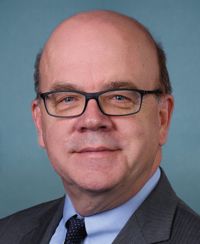 Rep. James P. McGovern (D-MA)
Description
Amendment to add a new section providing that the Chair may postpone further consideration of the conference report to accompany S.Con.Res. 13 to such time as may be designated by the Speaker.
Legislative Activity
Stay on top of the latest movement without scrolling through every action
Roll call votes on amendments in House
April 28, 2009 • 6:19 PM
View full timeline
Roll call votes on amendments in House
April 28, 2009 • 6:19 PM
House amendment agreed to: On agreeing to the McGovern amendment (A001) Agreed to by the Yeas and Nays: 240 - 179 (Roll no. 213).
April 28, 2009 • 6:19 PM
Amendment agreed to by House: On agreeing to the McGovern amendment (A001) Agreed to by the Yeas and Nays: 240 - 179 (Roll no. 213).
April 28, 2009 • 6:19 PM
House amendment offered
April 28, 2009
House amendment offered/reported by : Amendment (A001) offered by Mr. McGovern.(consideration: CR H4889-4890; text: CR H4889)
April 28, 2009 • 5:52 PM
Amendment (A001) offered by Mr. McGovern. (consideration: CR H4889-4890; text: CR H4889)
April 28, 2009 • 5:52 PM
On agreeing to the McGovern amendment (A001) Agreed to by the Yeas and Nays: 240 - 179 (Roll no. 213).
April 28, 2009 • 6:19 PM
Votes
1 roll call on this amendment
Text
Offered
PROVIDING FOR CONSIDERATION OF CONFERENCE REPORT ON S. CON. RES. 13,
CONCURRENT RESOLUTION ON THE BUDGET FOR FISCAL YEAR 2010
Mr. McGOVERN. Madam Speaker, by direction of the Committee on Rules,
I call up House Resolution 371 and ask for its immediate consideration.
The Clerk read the resolution, as follows:
H. Res. 371
Resolved, That upon adoption of this resolution it shall be
in order to consider the conference report to accompany the
concurrent resolution (S. Con. Res. 13) setting forth the
congressional budget for the United States Government for
fiscal year 2010, revising the appropriate budgetary levels
for fiscal year 2009, and setting forth the appropriate
budgetary levels for fiscal years 2011 through 2014. All
points of order against the conference report and against its
consideration are waived. The conference report shall be
considered as read. The conference report shall be debatable
for one hour equally divided and controlled by the chair and
ranking minority member of the Committee on the Budget.
The SPEAKER pro tempore. The gentleman from Massachusetts is
recognized for 1 hour.
Mr. McGOVERN. Madam Speaker, for the purpose of debate only, I yield
the customary 30 minutes to the gentleman from California (Mr. Dreier).
All time yielded during consideration of the rule is for debate only.
General Leave
Mr. McGOVERN. I ask unanimous consent that all Members have 5
legislative days within which to revise and extend their remarks and to
insert extraneous materials into the Record.
The SPEAKER pro tempore. Is there objection to the request of the
gentleman from Massachusetts?
There was no objection.
Mr. McGOVERN. Madam Speaker, I yield myself such time as I may
consume.
Madam Speaker, I am honored to stand here today in support of the
fiscal year 2010 budget resolution conference report.
I want to thank my friend, the Budget Committee Chairman, John
Spratt, for his incredible work on this budget. He is smart, he is
fair, and no one cares more about these issues.
I also want to thank Ranking Member Paul Ryan. I believe he is a
thoughtful and bright Member of this House, even though we usually
disagree on most of the issues of the Budget Committee.
I also want to thank the staff of the Budget Committee, Democratic
and Republican, for their tireless effort and their commitment to
public service.
Madam Speaker, the budget conference report that we are considering
today represents so much more than a clean break from the past. It is a
blueprint for the future. It is a roadmap for economic recovery and for
investing in national priorities that will provide the American people
with shared prosperity in the years and decades to come.
The conference report lays the groundwork for health care reform,
clean energy and quality education. It will create jobs, support
working families, strengthen our national defense and renew America's
global leadership.
By cutting taxes for the middle class, $1.5 trillion in tax cuts for
over 95 percent of the American people, Madam Speaker, and investing in
affordable health care, education and clean energy in a fiscally
responsible way, we are taking the first critical steps to lifting our
economy out of recession and creating good jobs for America's workers.
For the last 8 years, President Bush flat out mismanaged the Federal
budget. How? By enacting huge tax cuts for the wealthiest Americans
that led to skyrocketing deficits, by spending hundreds of billions of
dollars on the wars in Iraq and Afghanistan without paying for them,
and by refusing to invest in the American people.
This budget cuts the deficit by more than half by 2013. And in order
to get us back on a fiscally sustainable path, the budget provides a
realistic assessment of our fiscal outlook. Unlike the Bush
administration, we actually budget for the wars in Iraq and Afghanistan
instead of hiding them under the emergency spending categories. We
budget for natural disasters that inevitably will occur.
This conference report cuts taxes for 95 percent of Americans. Let me
repeat that, because we will hear a lot of rhetoric from the other side
about taxes.
This budget cuts taxes for 95 percent of Americans. It provides
immediate relief from the alternative minimum tax, it eliminates the
estate tax on nearly all estates, and works to close corporate tax
loopholes.
You see, all of us believe in altering the Tax Code. We believe that
we should reduce the tax burden on the middle class and those trying to
get into the middle. We believe that corporations shouldn't be allowed
to shirk their responsibility by hiding their profits in offshore tax
havens.
The other side believes we should reduce taxes for the very
wealthiest. It's a simple difference in philosophy. Most importantly,
this budget, the Democratic budget, actually invests in the American
people. What a welcome change from the past 8 years.
We invest in health care reform, not just to improve health care
quality and improve coverage, but to reduce the crushing burden of
health care costs on American businesses. Everybody likes to talk about
health care reform. This budget actually lays the groundwork to get it
done.
We invest in clean energy in order to create jobs, improve the
environment and reduce our dependence on foreign oil. We invest in
renewable energy and energy efficiency. Everybody likes to talk about
energy independence, but this budget actually lays the groundwork to
get it done.
And we invest in education to reclaim our place as the best-educated
workforce in the world. We work to expand early childhood education and
to make college more affordable. Everybody likes to talk about
improving education. This budget actually provides the basis to get it
done.
And this is a budget that will allow Congress, if and when the time
comes, to vote up or down on health care reform and education reform
and avoid
[[Page H4883]]
the infamous obstructionism so characteristic of the other body and the
other side of the aisle. It certainly doesn't guarantee passage of such
reforms, but it will allow for and require a straight up-or-down vote
in each Chamber.
Now I know that change is hard. I know some of my colleagues want to
cling desperately to the failed policies of the past. But the good news
is that despite all the nasty press releases and television ads and
talk radio attacks on the President, the American people still support
President Obama's vision for America.
That's why this budget is so very important. This is a budget with a
conscience. It is a budget that believes in the American spirit, and
it's a budget that fulfills the promises that the President made to the
American people.
Madam Speaker, we are at a crucial moment. Our country can meet its
potential, our children can have a better future, our economy can once
again create good-paying jobs. But in order to make that happen, we
need change. We need to move in a bold, innovative new direction. We
need to pass this budget.
I urge my colleagues to join me in support of this rule and the
underlying bill.
I reserve the balance of my time.
Point of Order
Mr. DREIER. Madam Speaker, while my colleagues didn't need to listen
to the remarks of my distinguished colleague, I know that they will
very much want to hear my remarks. And so I would like to make a point
of order that the House is not in order.
The SPEAKER pro tempore. The gentleman makes a point of order that
the House is not in order.
The gentleman will suspend. The House will come to order. Members and
staff standing and engaging in conversations will take their seats.
Does the gentleman withdraw his point of order?
Mr. DREIER. I just made it. I mean, you determine whether or not the
House is in order, Madam Speaker. It didn't seem to me that it was.
The SPEAKER pro tempore. The gentleman will answer the question.
Do you withdraw your point of order?
Mr. DREIER. Sure.
The SPEAKER pro tempore. The gentleman will proceed.
Mr. DREIER. Madam Speaker, I yield myself such time as I might
consume.
(Mr. DREIER asked and was given permission to revise and extend his
remarks.)
Mr. DREIER. I thank my friend from Worcester for yielding me the
customary 30 minutes.
It sort of feels like Groundhog Day. We just completed debate on this
same-day rule and now here we are proceeding with the rule on the
budget conference report itself.
When we ended the debate just a little while ago, my friend was
saying that those of us on this side of the aisle have no interest or
desire to work with President Obama, that all we say is ``no'' time and
time again. I have got to say that repeatedly we have come forward with
alternatives, and we very much want to work in a bipartisan way. And so
this notion of trying to claim that we as Republicans are saying ``no''
is preposterous. Everyone is aware of the fact in this House and in the
executive branch that we have come forward with proposals, which is
exactly what we did. We had two alternatives that were considered here
on the House floor when we considered the budget, itself, and now we
have this conference report.
I have got to say that the underlying budget conference report,
itself, Madam Speaker, that is before us, to quote my friend from
Worcester, is really the same old, same old, a term that he loves to
use, as, really, it's the same package that we looked at just 4 weeks
ago. Democratic leadership, I know, has tweaked a few things on the
margins, but the exact same failed policies are still fully intact on
this budget.
My friend correctly points to the fact that the American people are
hurting. We know very well that we have a shared goal, but it's how we
do it. Unfortunately, this budget recklessly spends money that we don't
have, and it sets the stage for tax increases that we can't afford. It
makes the fundamental mistake that led to our economic crisis in the
first place--profligate, unaccountable and irresponsible behavior. And
it allows the Democratic majority to ram through massive, complex
legislation down the road without any pretense of consensus building.
My friend said again that we just say ``no'' to the President. We
want to have what the President talked about in his campaign, what the
Speaker has repeatedly talked about. We want to work to build a
consensus here, but, unfortunately, the budget itself lays the
groundwork to completely obliterate any notion of bipartisanship.
Apparently they are not content with merely shutting out Republicans
from the legislative process. They are finding moderates within their
own party, those who are interested in reaching across the aisle and
finding commonsense solutions, and those people who want to do that
apparently are being ignored in this process as well. They want to be
able to steamroll any effort whatsoever to reach a responsible,
bipartisan compromise on some of the most important challenges like
health care and energy.
This conference report will let them do just that, to ignore the
prospect of bipartisanship. The Federal budget may be a very
complicated thing. We all know that. But the principles that should
govern that budget are not. They are not complicated at all.
The budget should responsibly spend the taxpayers' money. Every
program, Madam Speaker, should be held accountable to cut out waste,
fraud and abuse. The budget should assume responsibility for today's
challenges rather than pushing the hard choices and mountains of debt
off into the future to our children and grandchildren. The budget fails
on all these counts.
The longer that the American public has time to examine the level of
wasteful spending in this budget, the more deeply concerned they are.
They wonder how we can afford this right now, how much debt will be
left to our children and grandchildren, and will our taxes be raised to
pay for this?
Just a few weeks ago The Hill, the newspaper here, ran a story on the
emerging consensus among economists of all stripes that the numbers
just don't add up and taxes are going to have to be raised dramatically
to pay for all of this government spending. According to these
independent analysts, as reported by The Hill, this will mean taxes on
the middle class. On middle-income wage earners, these analysts are
saying that taxes will be imposed.
Martin Sullivan, a contributing editor at Tax Analyst publications,
is quoted as saying, ``You just simply can't tax the rich enough to
make this all up.''
{time} 1700
Another economist, Leonard Burman, director of the Tax Policy Center,
said that, under the current tax structure, ``there's no way we're
going to be able to pay for government.''
Now, Madam Speaker, these are not Republican operatives. These are
independent economists, many of whom openly supported the President
during the campaign, who were looking at the numbers and who are saying
that this budget will make tax increases on middle-income working
Americans, who are trying to make ends meet, inevitable.
This course of action is especially dangerous given our current
economic crisis and its causes. Anyone with a little common sense can
understand that reckless borrowing and lending led to our economic
downturn. A little common sense is also all it takes to understand that
raising taxes, including on middle-income wage earners, would be a
disaster during tough economic times. Even Keynesian economists and
economists of all stripes recognize that, Madam Speaker. Yet this
budget continues that very reckless behavior and puts us on the path
toward those middle class tax increases.
The most dangerous impact of this budget will come further down the
road. This bill employs an arcane legislative trick that will allow the
Democratic leadership to cram through massive health care legislation
with little scrutiny and, as I said earlier, with zero bipartisanship.
This provision we all know called ``reconciliation'' may be a very
technical Beltway issue, but we can all understand its implications by
simply considering that iconic
[[Page H4884]]
American image, Jimmy Stewart, as he played the role of Jefferson
Smith, defiant on the floor of the other body on the other side of the
Capitol in that movie ``Mr. Smith Goes to Washington.''
For many Americans, this is the classic image of public service at
its principled best. However, had the Democratic leadership's budgetary
gimmicks been in place, Mr. Smith would never have been able to make
the stand that he did in that famous movie.
Instead, this budget ensures, Madam Speaker, that critical
legislation can be rushed through without the hassle of principled
debate. We've already seen what happens when 1,000-page legislation on
very complicated issues gets crammed through the Congress. Look no
further than to the hundreds of billions of dollars of bailout money
that this majority has doled out, to the billions wasted, to the
billions unaccounted for and with nothing to show for it.
The Democratic leadership's hasty and partisan approach has a very
poor track record. Now they want to ensure that they will be able to
approach health care reform in the exact same way, health care accounts
for nearly one-fifth of our entire economy, and is one of the single,
most important factors in an individual's and in a family's quality of
life.
Will Americans be able to continue to choose what doctors they go to?
Will they be able to consult their doctors on which treatments are best
for them? Can we make health care more accessible and affordable
without compromising quality and personal choice? These, Madam Speaker,
are the incredibly critical questions that should be addressed in the
health care reform debate.
You know, if the Democratic leadership has its way, there won't even
be a debate. They want to be able to handle it like they've handled
nearly every other important bill: written behind closed doors and
crammed through without an open debate. Madam Speaker, this budget puts
the rules in place that will allow them to do that. It will also allow
them to attach dramatic new energy taxes on every household in America
in order to pay for their health care proposals.
The Democratic leadership, when confronted with a question of a new
cap-and-tax program, insisted that it is not contained in this budget.
What they are hoping the American people will not find out until it's
too late is that this budget will allow new energy taxes to be attached
to the Democrats' health care legislation. Their energy tax proposal
would mean hundreds and even thousands of new taxes each year on each
and every single household in this country, and it's all made possible
by this budget conference report that we're going to be voting on
tomorrow.
The Democratic leadership likes to defend their procedural tricks by
saying that Republicans used the same tactics to enact welfare reform
and tax rate reduction. I'm very proud of the fact that we were able to
reduce the size and scope and reach of government; that we were able to
make welfare programs more accountable; that we were able to let the
taxpayers keep more of their own, hard-earned money; and that we were
able to implement growth policies that gave us 55 months of job
creation and sustained economic expansion. That was the right thing to
do. The Democrats, on the other hand, would like to use this procedure
to dramatically expand government bureaucracy and tax the American
people during an economic recession. This is an absolutely disastrous
budget under any circumstances, but it is equally and especially
dangerous during challenging economic times.
Madam Speaker, I urge my colleagues to reject reckless, wasteful
spending; to reject tax increases for the middle class; to reject a
hasty and partisan process for crafting health care and energy
legislation. I urge my colleagues to oppose this rule and the
underlying conference report.
With that, I reserve the balance of my time.
Mr. McGOVERN. Madam Speaker, I yield myself such time as I may
consume.
I just want to point out, Madam Speaker, that, notwithstanding the
constant attacks on President Obama that have come from the other side
of the aisle on this floor since he was elected, since he was sworn in
as President of the United States, notwithstanding the constant attacks
by the patron saint of the Republican Party, Rush Limbaugh, and
notwithstanding the attacks by former Speaker Gingrich on every TV show
that will allow him on, a poll done by CBS recently showed that, by a
56-32 percent margin, the American people believe that President
Obama's budget sets the right priorities.
I believe in the American people. I believe in their instincts. I
think they know what they want better than my friends on the other side
of the aisle.
I will also point out--and my friend admitted to this because, when
it comes to reconciliation, they like to cherry-pick--that their
budgets in 2001 and in 2003, which allowed for these massive Bush tax
cuts and which nearly bankrupted us--the tax cuts that went to the
wealthiest Americans--had reconciliation instructions. In 2005, with
reconciliation instructions that allowed them to make deep cuts in
Medicare, they increased the deficit by an aggregate of $1.8 trillion.
That's what they did to the economy. That's what they did to the
American people. So we don't want the same old, same old.
Madam Speaker, at this time, I would like to yield 2 minutes to the
gentleman from New York (Mr. Bishop), a member of the Budget Committee.
Mr. BISHOP of New York. Madam Speaker, I thank Mr. McGovern for
yielding. I want to start by thanking Chairman Spratt and his
colleagues on the Budget Committee and the conferees for so quickly
coming to an agreement on the conference report.
I rise to support the rule and the underlying conference report.
This budget resolution begins the long and painful process of digging
out of the very deep hole that we have inherited. It makes good on
President Obama's promise to cut in half the deficits he inherited in 5
years. In fact, it cuts the deficits by two-thirds, and it does so even
while we are cutting taxes for 95 percent of Americans to the tune of
$1.7 trillion worth of tax cuts. We also invest in priorities that are
absolutely vital to our future.
I'd like to be specific about one of those priorities, and that is
the investment made in higher education and in education in general
that is accommodated by the conference report. There are significant
investments in higher ed and an increase in the Pell Grant maximum,
which will make it easier for hard-pressed students and their families
to achieve their slice of the American dream. The moving from the
Federal Family Education Loan program, the so-called ``FFEL program,''
to direct lending will save $97 billion over 10 years, and it will put
money in the hands of needy students as opposed to having that money
added to the bottom line of banks and of other loan providers. It will
restructure the Perkins Loan Program to make it more readily available
to students. It will create a college access and completion fund that
will enable colleges to emulate best practices across the country so
that students really do succeed, and it will make permanent the
American Opportunity Tax Credit. All of these are the kinds of
investments we need to make if we are going to have the prosperous
future that we all want.
With specific reference to education, Mr. Dreier made reference to
the various alternatives that Republicans have offered to our budget
resolution. The alternative that the Republicans offered made
absolutely no mention of education.
The SPEAKER pro tempore. The time of the gentleman has expired.
Mr. McGOVERN. I yield the gentleman an additional 30 seconds.
Mr. BISHOP of New York. There is no mention of education. There is no
plan to invest in higher education. There is no plan to invest in job
training. There is no plan to invest in any of the vital services that
our children need to put them on a path to success.
Instead, that budget resolution made a series of very deep,
unallocated cuts that could easily fall on education. We cannot have
the bright future we need to have if we don't invest in our children's
education. Our budget resolution does that.
Mr. DREIER. Madam Speaker, I yield myself such time as I might
consume.
I would like to simply say to my colleague who brought up this issue
of
[[Page H4885]]
reconciliation that we were very proud of the fact that we were able to
get people from welfare rolls to the working side of the economy in the
mid-1990s, and we did use this procedure. I can time and time again
remember instances of people who were saying they were so proud to be
able to have a job. In the mid-1990s, the Republican Congress did bring
about a bold reform of our welfare system, and it was a great, great
accomplishment as it was in the early part of this decade when it was
used to allow people to keep more of their own, hard-earned money in
2001 and in 2003.
At the same time, we were doing everything that we could to ensure
that we had pro-growth economic policies because we were dealing with
an economic recession then, of course with the aftermath of September
11 of 2001, with corporate scandals, and as I said, with an economic
recession. We did put into place pro-growth policies, and yes, we used
that procedure.
The really difficult thing for us to fathom is the fact that we're
now seeing this process utilized to dramatically expand government to
the point where this budget has, itself, got a deficit that is larger
than what the entire Federal budget was just 10 years ago.
I would very much like to yield to my friend. I told the gentleman
from Springfield I would.
Mr. McGOVERN. Would the gentleman yield?
Mr. DREIER. Okay. I would be happy to yield to my friend.
Mr. McGOVERN. I just want the gentleman to know there are 40 million
Americans without health insurance, and if we can get a health care
reform package that covers them, I would be proud to cast a vote for
that.
Mr. DREIER. If I could reclaim my time, I totally agree on the issue
of health care reform. That is a very high priority for us, and my
friend knows that we have a solutions working group that is focusing on
this issue, and it is a priority that does need to be addressed.
With that, I am happy to yield 4 minutes to my friend from
Springfield, Missouri (Mr. Blunt).
Mr. BLUNT. Madam Speaker, I thank the gentleman for yielding.
Here we are. We just had a same-day rule on a bill that was available
3 minutes till midnight last night. We're now on the rule on the
budget, the supposed blueprint for the future, and we're going to hear
in this debate and in the other debate that this is a budget that
spends too much, that borrows too much and that taxes too much because
it spends too much, it borrows too much, and it taxes too much.
I want to talk principally about health care for a few minutes. That
has been a topic here of the discussion already. ``Reconciliation,'' by
definition, defines a partisan victory. I would just advance to my
friends that health care is the worst possible place to achieve that
victory if you can achieve something differently than that.
There is broad agreement on what we ought to do in health care. We're
all working hard to make that agreement become a reality. We've talked
about tax policy. We've talked about welfare policy. Frankly, we did
use reconciliation, but it was always to restructure something that
government was doing. I don't think there is an example of where we
used reconciliation to restructure the overall private economy. Both
health care and energy would restructure an economy that will never
come back to where they were, and that is not something you should be
doing without lots of thought and without lots of support in a
bipartisan way.
I would advance to my friends that that is a huge mistake. Certainly,
if you restructure energy for 5 or 10 years or you restructure health
care for 5 or 10 years, we're never coming back to the competitive
marketplace that needs to be improved but not tossed aside, and I'm
fearful that that's what happened.
Here we are. We're at the end of April. If there is a Secretary of
HHS, that's only because she will be confirmed this week. I don't think
there is a Secretary there. Even if there is, the others in that
Department who support the Secretary are not there. No Secretary. No
bill. No plan to get this done within the calendar. The calendar makes
it virtually impossible to get this done before that reconciliation
instruction has to be used.
Frankly, for those who want to go to a single-payer, government-run
system, having reconciliation out there is every reason in the world
not to have a bipartisan compromise. This is an area where we need to
have two-thirds of the Members of the House and two-thirds of the
Members of the Senate going from that vote, saying we believe the
country is headed in the right direction.
{time} 1715
If we have a 51-49 sort of victory and we have a 5-year debate on
whether we have health care rationing or government-run health care,
that is a bad thing for America, Madam Speaker. We need a health care
system that's affordable, that's accessible, that has better quality. I
think we can all reach agreement on those issues. But not, I would
advance, if we have this option out there of one party doing it one
way.
This is a blueprint that doesn't work the way it should work. The
budget doesn't. The taxes, the inflation, the interest rates that are
absolutely in the country's future in the way of recovering the economy
are part of the problem of the future. They will stand in the way of
that recovery.
I urge that we vote against this rule and against this budget.
Mr. McGOVERN. Madam Speaker, I yield myself such time as I may
consume.
First of all, when people talk about partisanship, I recall my
friends on the other side of the aisle giving us the prescription drug
bill, which was probably one of the most partisan health care votes I
can recall ever having here. Our hope is not to have a partisan health
care bill. President Obama has already had a summit at the White House
where he invited not just Democratic leaders but Republican leaders to
come and to provide their input to try to figure out how we can do this
together.
But the deal is we are going to get health care reform this year. My
friends on the other side of the aisle, they have had 8 years. If it's
such a priority, why haven't they done it in 8 years? The number of
people that have fallen into the ranks of the uninsured has increased
dramatically while they were in control of the Congress and the White
House. So no one's talking about trying to create a partisan vote.
What we're trying to do is get what the American people want
accomplished. And, quite frankly, I think the onus is on the other side
of the aisle to demonstrate that they are, in fact, sincere about
working in a bipartisan way. I think this President has done everything
humanly possible to reach out the hand of friendship and bipartisanship
to try to work with the other side of the aisle.
I would like to yield 1 minute to the gentlelady from Pennsylvania
(Ms. Schwartz).
Ms. SCHWARTZ. I just wanted to follow up on the previous speaker.
It is absolutely clear, and hopefully we will pass this budget this
week, but the budget sets out a process by which we can work and should
work in a bipartisan way. It is simply not good enough for the other
side of the aisle to say, ``We would love to work with you on health
care reform. We just can't guarantee that we can do it before October
15 and therefore we aren't sure we're going to do it at all.'' That is
not what the American people are asking us to do. What they're asking
us to do is get to work.
The fact is that we did more on health care in the first 8 weeks of
this administration than we did for 8 years before. That's what the
American people are asking us to do. That's what this budget does. It
says we're going to get to work on health care. We're going to look to
do it in a bipartisan way. It's going to be public-private partnership.
That's what the President wants. That's what we're going to do. It is
not going to be a wholly public system. They can keep saying so on the
other side of the aisle, but that's not what's going to happen.
Let's get to work. This is a moment when the American people are
saying one of the major challenges before us in this country is for
economic competitive reasons and because every family is demanding it,
is to do health care reform. Let's get it done. This budget puts us on
a path to do it.
Mr. DREIER. Madam Speaker, I will reserve the balance of my time.
[[Page H4886]]
Mr. McGOVERN. Madam Speaker, I yield 2 minutes to the gentleman from
New York (Mr. Engel).
Mr. ENGEL. I thank the gentleman from Massachusetts for yielding to
me.
I rise, Madam Speaker, today in support of this rule and fully
support the fiscal year 2010 budget as well.
President Obama has laid out an extremely ambitious budget this year
that will resonate for decades to come. From health care to climate
change to education, this budget will improve our Nation in significant
ways, and I am proud to support it.
For health, this lays the groundwork for health care reform. Forty-
seven million people living without any health insurance is a national
disgrace. For energy, this goes towards the way of reducing our
dependence on foreign oil. This budget would increase funding for
renewables by nearly 20 percent over the '09 budget. And for education,
Mr. Bishop spoke about all the things. I agree with him. It builds upon
the funding we provided for education in the recent stimulus package.
Now, as any large bill, it's not perfect, and it can be improved. And
I just want to highlight a few areas that I hope we can improve on in
the future.
One is foreign aid. I am disappointed at the level of the funding for
international relations and foreign aid. As the chairman of the Western
Hemisphere Subcommittee, I've seen firsthand the benefits of foreign
aid. This budget is a lot better. The conference report is a lot better
than the initial budget. The Senate budget included the entire $53.4
billion of the President's request. This compromise is $51 billion,
better than the original House $48.5 billion, but I hope we can up it
in the future.
I want to talk about the $250,000 income threshold. The budget
resolution uses this $250,000 threshold as a way to raise revenue. I
think it's too low and needs to be raised. If you come from a high-
cost-of-living State as I do, this $250,000 threshold is inappropriate.
Raising taxes on these people, I believe, is not good at this time. But
I think overall the budget is good.
Finally, I want to talk about the AMT, because in New York, you
cannot deduct anything if you're caught in the AMT. I am happy this
budget includes a 1-year AMT patch. Without this patch, 2.8 million
middle-class families in New York alone would be swept into it. But
every year, we're going to run into difficulty. We need a permanent AMT
fix, and I hope we can do that.
But I do support the budget. It's a good budget. It calls for the
change that President Obama spoke about, and I hope we vote for it.
Mr. DREIER. Madam Speaker, I continue to reserve my time.
Mr. McGOVERN. Madam Speaker, I would like to yield 5 minutes to the
gentlewoman from Connecticut (Ms. DeLauro).
Ms. DeLAURO. Madam Speaker, I rise in support of this rule and the
underlying budget conference report that we are considering today.
As a member of the Budget Committee and a budget conferee, I was
proud to have worked with Chairman Spratt and the other members of the
committee on a 2010 budget resolution that reinvests in America and
reinvests in hardworking middle-class families that make up the
backbone of this country.
As we all know, the voters spoke this fall overwhelmingly, voting for
change and a reorientation of our priorities so that, in fact, we are
strengthening the middle class and making the critical investments
needed to build a better tomorrow.
We began to bring that desired change with the economic recovery
program, and we continue on that path by providing a blueprint in this
budget that will bring tax relief to hardworking families across this
Nation and make investments in health care, education, energy, and
elsewhere that are needed to move this economy from recovery to long-
term growth.
Our friends on the other side of the aisle will decry this budget
claiming that it will burden future generations with crippling debt.
But let's be clear. It was under their leadership that a $5.6 trillion
surplus turned into the historic budget deficit that President Obama
and this Congress inherited, a deficit of well over $1 trillion in
2009. If you listen to my colleagues on the other side of the aisle,
they were missing in action over this last 8 years. It is hard to
believe that they were in charge. It is a little bit like ``see no
evil, hear no evil, and speak no evil.'' They were gone from the
playing field over these last 8 years.
We will also hear the other side rail against the instructions that
are included in this resolution--to bring about what? Education and
long-awaited health care reform, despite the fact that they used this
same procedure to pass massive tax cuts for the wealthiest people in
this Nation.
When it comes to health care reform, the American people have watched
as Congress has failed since 1993 to make a serious attempt to fix our
broken system. Health care reform, making health care coverage
affordable, available to all, improving safety and quality, and
providing Americans with a choice of health plans and physicians,
including the choice of keeping their current health plan, is long,
long overdue.
We will work to craft bipartisan legislation, but the American people
are not interested in process. They are interested in results. We will
not let a party of ``no'' stand in the way of a reformed health care
system that the majority of Americans so desperately want.
Along with health care, this budget also invests in education by
expanding access and increasing funds for early childhood education,
creating a new tax credit to help cover college costs, and raising the
Pell Grant award.
It invests in energy, builds a framework for developing and producing
new energy and jobs, modernizing the electricity grid to make it more
efficient, secure and reliable, increasing the efficiency of Federal
buildings, and helping to make State and local governments more energy
efficient.
This conference agreement invests in rebuilding America, including
the establishment of a national infrastructure bank which would allow
the government to objectively consider a wide range of infrastructure
projects and leverage the private sector to fund those with the most
significant economic, social and environmental benefits.
Finally, this budget plan reflects on the economic recovery program
that we passed, including its provisions to provide tax relief to
middle-income families. This includes room to expand the refundable
child tax credit. By lowering the eligibility threshold to $3,000 in
the Recovery Act, we provided relief to the hardworking families of
nearly 16 million children, including 5.5 million newly eligible
children.
This budget builds on our efforts to create jobs and rebuild the
economy through the economic recovery plan by providing a forward-
looking economic blueprint that makes the strategic investments
necessary to move from recovery to long-term economic growth while
putting us back on a path to fiscal sustainability.
I urge my colleagues to support this rule, to support the underlying
resolution and do not let our colleagues on the other side of the
aisle, who had 8 years--and what did they do in those 8 years? They
brought this Nation to its economic knees. It's time to look to the
future. Support this resolution.
Mr. DREIER. Madam Speaker, I yield myself such time as I may consume.
I say to my very good friend from Connecticut that it's fascinating
that our colleagues on the other side of the aisle continue to talk
about nothing but the last 8 years. And I find it interesting because
no one seems to be willing to talk about what it is that's before us: a
budget that is dealing with the next 5 years. It's a $17.8 trillion
budget over the next 5 years. That's what we need to focus on. That's
what this debate is all about.
With that, I am very happy to yield 3 minutes to our hardworking and
very thoughtful chair of the Republican Conference, the gentleman from
Columbus, Indiana (Mr. Pence).
(Mr. PENCE asked and was given permission to revise and extend his
remarks.)
Mr. PENCE. I thank the gentleman for yielding.
Madam Speaker, I come to the floor today in the midst of a debate and
rise in opposition to the conference report on the Democratic budget.
I do so following after the quite typically forceful remarks of the
gentlelady from Connecticut, whom I respect as a colleague. She, as the
gentleman from California just said, focused a
[[Page H4887]]
great deal on the last 8 years. As someone who in this body through the
course of the last 8 years was, as my colleagues know, a harsh and
public and consistent critic of runaway Federal spending under
Republican control, allow me to stipulate that the gentlelady makes a
point.
The truth is in the 8 years of the Bush administration's tenure,
under Republican control 6 of those years, we did manage to double the
national debt. And that was a disappointment to millions of Americans,
me included. And I believe it was part and parcel why the American
people in 2006 showed us the door because they know we can't borrow and
spend our way to a healthy America. So I will stipulate to that point,
Madam Speaker.
But it doesn't follow or stand to reason that coming to the floor as
the gentlelady from Connecticut did and as others have today and
complaining about overspending under Republican control of Congress,
that the answer would be this budget which would--on top of what has
already happened--double the national debt in 5 years and triple the
national debt in 10.
{time} 1730
It just simply doesn't make sense.
I would expect, Madam Speaker, that anyone that is looking in, that
in the midst of these difficult times--a time when the American people
are hurting, when every family and small business and family farmer
across this country are sitting down around kitchen tables and metal
desks and offices and figuring out how to make ends meet, they are
making sacrifices, they are putting off until tomorrow what they don't
have to spend today--here they see Democrat majorities in the House and
the Senate bringing to the floor the most fiscally irresponsible budget
in American history. And I say again, according to the numbers--and we
can get lost in the numbers--outlays of $3.5 trillion for fiscal year
2010, $1.2 trillion in deficits in 2010. The deficits over this period
never fall below $500 billion. A number that was roundly criticized
when the Bush administration and Republicans hit that number is now
accepted to be the norm.
As I mentioned, public debt by the year 2014 will rise to more than
two-thirds as a share of the economy. It is astonishing to point out
that the European Union requires countries to keep their debt below 60
percent of their economy.
The SPEAKER pro tempore. The gentleman's time has expired.
Mr. DREIER. I yield my friend an additional 2 minutes.
Mr. PENCE. If this administration and the Democrat majority have
their way, the United States of America, by 2014, wouldn't even qualify
under the criteria of the European Union--not that I would ever want to
join. It just gives a perspective here, Madam Speaker, that what we
have before us today is a budget that is out of step with the American
people. It is a budget that does not embrace the sacrifice and the
resilience and the demonstrated virtue that millions of American
families and millions of small businesses are practicing today.
The truth is, we can do better. The truth is, the American people
know that this Congress has the capacity, even during these difficult
times, to do the right thing, to take our jackets off, to roll our
sleeves up, to do the hard work.
I look across the aisle and I see a gentleman with whom I serve that
I personally and deeply respect. And I have to believe there are many
colleagues on the other side of the aisle that also know this we ought
not to do. After a so-called stimulus bill that spent $1 trillion, an
omnibus bill that increased spending by 8 percent for last year's
business, and now the most fiscally irresponsible budget in American
history, enough is enough.
The American people want this Congress to begin to practice fiscal
discipline and reform. We ought to do so by rejecting this conference
report, and I urge my colleagues to do so.
Mr. McGOVERN. Madam Speaker, I yield myself such time as I may
consume.
Let me say to the gentleman from Indiana, whom I respect, I agree
with half of what he said. I agree that his party did mess up and leave
us with a terrible economy at this particular juncture. But I think
here's where we may disagree philosophically. The question is, how do
you dig yourself out of this ditch? Is it more cuts? Is it throwing
more people off the health care rolls? Is it creating more joblessness?
Is it cutting back on educational programs? Is it cutting back on
infrastructure programs? I mean, is that how we get out of this? Or, as
I think we are suggesting, is it that maybe in the short term there
needs to be some investment upfront to try to stimulate and resuscitate
this economy, to create more jobs, to create more revenue, to try to
get this economy back on the right track?
We are in deep trouble. We have inherited the worst economy since the
Great Depression. Now, the gentleman and others have spoken as if we
are not concerned about the deficit or the debt. First of all, we have
joined with the gentleman from Indiana over the last 8 years
complaining about the size of the debt. And we were told repeatedly by
some of my friends on the other side of the aisle that the deficits
don't matter, the debt doesn't matter; well, now all of a sudden it
does.
The fact of the matter is, in the budget that we are proposing, we
cut the deficit by nearly two-thirds in 4 years. That is our promise.
That is our pledge in this budget.
I will briefly yield to the gentleman from California.
Mr. DREIER. I thank the gentleman for yielding.
Madam Speaker, Mr. McGovern went through this litany of options and
the challenges that we have faced and things that should be done. He
never mentioned that the solution that is being put before us is to
dramatically increase the size and scope and reach of government, to
impose taxes that will--as these independent economists about whom I
referred earlier have said--will impose this tax burden on middle-
income wage earners.
Mr. McGOVERN. I reclaim my time. First of all, there is not a single
tax increase in the budget. The budget that we propose cuts taxes for
middle-income families by more than $1.7 trillion over 10 years. And
again, our budget cuts the deficit by nearly two-thirds in 4 years.
I am proud to defend our budget. I have talked about how it is going
to create jobs. I have talked about how it is going to cut taxes. I
have talked about how it is cutting nondefense discretionary spending.
I have talked about how it is going to invest in affordable health care
and college affordability and clean energy. I am out here very proudly
defending this budget that we have.
So all I am simply saying is that what the other side has proposed,
quite frankly, in our opinion, is unacceptable. It will hurt more
middle-income families. It will cause more people to fall into the
ranks of poverty, more people without health care. It will cut back on
education, on investments in our infrastructure. Those were the
proposals that were presented. I think that is the wrong way to go.
Madam Speaker, I yield 1\1/2\ minutes to the gentleman from Ohio (Mr.
Boccieri).
Mr. BOCCIERI. ``Johnny, what have you done?'' I remember my mom
asking me that as a young boy, ``What have you done?'' Well, she asked
me this weekend, ``Johnny, what have you done to help middle class
families? What are you doing in Congress to put the middle class first
for a change?'' And I said, Mom, some great things are happening in
Washington, D.C. Can you imagine this? The Democratic Party is about to
enact the largest tax reduction in our country's history for middle
class families. Imagine that. Can you imagine that Democrats are going
to cut the budget in half, by two-thirds by 2013? And can you believe
that we are finally going to have an honest accounting for all the mess
that we have inherited over the last decade, the mess that includes
bailing out banks, bailing out Freddie and Fannie, and also dishonest
war funding, money that should be included in the budget but yet we
were not strong enough to put that in the President's budget? Can you
believe that the Bush tax reduction was for the wealthiest Americans,
and that our tax reduction is going to be for middle class families?
Madam Speaker, this House is in order. And we are investing in
America. We are investing in our country and in our jobs. Do you
remember in 2004, when President Bush's Secretary
[[Page H4888]]
of Health and Human Services, Tommy Thompson, flew to Iraq with one of
many billion dollar checks in hand to make sure that every man, woman,
and child in Iraq had universal health care coverage? And all we hear
now from our opponents on the other side is that Americans don't
deserve health care.
The SPEAKER pro tempore. The gentleman's time has expired.
Mr. McGOVERN. I yield the gentleman 1 additional minute.
Mr. BOCCIERI. But all we hear from those detractors is that Americans
are not worthy of having health care that works for every family and
for every child.
I say enough is enough. We need to invest in our country, in our
people, in our future. And that is exactly what this budget does; it
invests in education, in green energy jobs, and cuts the budget
deficit.
Are we going to be leaders or are we going to be blockers? Are we
going to say ``yes,'' or are we going to say ``no?'' Are we going to
invest in American families or Iraqis?
Mr. DREIER. Madam Speaker, at this juncture I am happy to yield 3
minutes to our hardworking friend from Savannah, Georgia (Mr.
Kingston).
Mr. KINGSTON. I thank the gentleman for yielding. And I must say that
if I had just arrived here from out of town, I would think I was in a
college literature class listening to Orwellian doublespeak at its best
and examples thereof.
When they talk about investments, this new big government order, that
really means tax increases and increases in spending. When they talk
about bold, swift action, that means more ``big government'' power
grabs. When they talk about probusiness regulation and modernization of
energy, that is just more government dictating to the private sector.
When they talk about rebuilding America and new modern job creation,
those jobs are coming from the government. Those are government jobs.
They talk about health care reform. That is just plain old socialized
medicine.
And then they talk about cutting the deficit, but they don't tell you
it is their own deficit. If the gentleman from Massachusetts can tell
me what the deficit is today, as I sit here and listen, then all I have
to do is divide that by half. But that is not true at all. What you are
doing is increasing spending and then, based on some phony ``we're
going to grow the government next year by 4 percent, then we're going
to cut the deficit,'' come on, guys, that doesn't sell and you know it.
And we hear over and over again this is George Bush, Dick Cheney,
Halliburton, Blackwater, and everybody else's fault but the Democrat
Party. But who has been in charge for 2 years? It was you guys, that
under your watch, $29 billion spent on AIG; $200 billion last year on
Fannie Mae and Freddie Mac; $168 billion for a stimulus bill last year,
a year ago; $85 billion going up to $140 billion for AIG in September;
$700 billion in October for Wall Street; and then, just in January,
$790 billion for a stimulus bill followed by a $410 billion omnibus
bill which had over 9,000 earmarks--which the new President was going
to cut every earmark out and not accept any.
At what point are Democrats going to go ahead and admit, you own the
House, you own the Senate and the White House? This stuff all happened
under your watch. Get over George Bush. You are now in charge.
And I want to say this, as an Appropriations Committee member during
the period of time when George Bush was President and we were in the
majority----
The SPEAKER pro tempore. The gentleman's time has expired.
Mr. DREIER. Madam Speaker, I yield my friend 1 additional minute.
Mr. KINGSTON. We never had one appropriation bill that spent enough
money for you guys. And you know it. And the records show it in the
appropriations debate over and over again; it didn't spend enough
money.
So now we are hearing that your fiscal discipline--I just think it is
laughable to think about this--your budget spends too much, taxes too
much, and borrows too much. We will be borrowing more money from the
Chinese. Indeed, the new Secretary of State's first trip was over to
China to say, please continue to lend us money. The deficits that go on
will never fall below $500 billion. But I understand you are going to
jack up spending so you can say you have cut it in half, and that's the
way you want to do business.
Tax increases; $1.5 trillion in tax increases. And a lot of it will
fall on the backs of farmers and small businesses, the very people you
have the nerve to say that you are trying to help. And the total
spending outlay of $3.5 trillion in the year 2010.
This budget should be rejected. It spends too much, borrows too much,
and taxes too much.
Announcement by the Speaker Pro Tempore
The SPEAKER pro tempore. Members are reminded to address their
remarks to the Chair.
Mr. McGOVERN. Madam Speaker, I yield myself such time as I may
consume.
I would say to my friends on the other side of the aisle, you have
had your chance. We did it your way for 8 years, and we have the worst
economy since the Great Depression. We have more people in poverty, we
have the worst job creation since the Great Depression, we have more
people who are hungry in America, we have more people without health
insurance. I mean, give me a break.
The bottom line is we have tried it your way for 8 years, and you
have failed. And the American people sent my friends a message loud and
clear on Election Day that enough is enough.
Mr. KINGSTON. Will the gentleman yield?
Mr. McGOVERN. I will yield to the gentleman.
Mr. KINGSTON. Who took over the Congress in 2006?
Mr. McGOVERN. Reclaiming my time. Yes, the Democrats did, but
unfortunately with a President who vetoed every decent piece of
legislation that we tried to pass, vetoing children's health care, and
a whole bunch of other things that would have helped the economy.
Right now we have a Democratic Congress and a Democratic President,
and we are going to pass a budget that reflects what the American
people want, the values of the American people. We are going to get
this economy back on the right track. Enough. Eight years of failed
policies is enough. The same old, same old doesn't work anymore.
Madam Speaker, I reserve the balance of my time.
Mr. DREIER. Madam Speaker, I am happy to yield 1 minute to my friend
from Savannah.
Mr. KINGSTON. I thank the gentleman from California.
I was going to ask my friend from Massachusetts, is it not true that
the President vetoed Democrat spending, and did come to compromise on
things like children's health care, but the first go-round you guys
spent too much money, and that is why he was vetoing it? I mean, I can
see, blame it on the President and Republicans for 6 years, fair and
square. But you guys have been in charge for 2 years now, and the only
vetoing that he did was when you were spending too much money.
I just think it is time to go ahead and say, you know, we are in
charge, we are going to take responsibility. And, if anything, we need
to start talking checks and balances in this town because I don't think
we have any with all this runaway spending.
Again, I think this budget spends too much, taxes too much, and
borrows too much. And I thank the gentleman from California.
Mr. McGOVERN. Madam Speaker, may I inquire as to how much time is
remaining?
The SPEAKER pro tempore. The gentleman from Massachusetts has 4\1/2\
minutes. The gentleman from California has 3\1/2\ minutes.
Mr. McGOVERN. Madam Speaker, I yield 30 seconds to the gentleman from
Florida.
Mr. HASTINGS of Florida. That is all I need to respond, just very
briefly, to my good friend from Savannah/Brunswick when he asked and
says that too much money was what the previous President vetoed.
{time} 1745
I wonder how much, Madam Speaker, is too much money to care for sick
children in America or to ensure that children do not get sick in
America?
Mr. DREIER. Madam Speaker, at this time I am happy to yield 1 minute
[[Page H4889]]
to our colleague from Mesa, Arizona (Mr. Flake).
Mr. FLAKE. I thank the gentleman for yielding.
Madam Speaker, a lot has been said about the last 8 years. And just
to make it known, there were a lot of us who weren't happy with the
level of spending that went on during that time. We were headed for a
fiscal cliff. We knew that. A lot of us knew that, and a lot of us
weren't shy in saying it. A lot of us voted against a lot of
appropriations bills because they spent too much money.
But when you're headed toward a fiscal cliff, you don't step on the
accelerator. And that's what this budget does. We all know or we should
know, or we'll claim we knew it when it happens, that the next crisis
will be when we try to auction off some Treasury bills that nobody
buys. What do we do then? What do we do when nobody wants to lend us
money? And we're going to get there, we know we are, because this
budget puts us on the track to get there a lot sooner than we would
have been otherwise.
That's why this budget needs to be rejected. It's simply too big. I
think people know that. And as we go through the appropriations
process, I think that will become even clearer.
Mr. DREIER. Madam Speaker, I yield myself the balance of my time.
Madam Speaker, this is an interesting debate that has preceded, and I
have to say that I believe that there is great bipartisan concern about
where this country is headed. Democrats and Republicans alike both want
to get our economy back on track.
As I look at small businesses in Southern California, it's not a
Democratic or Republican issue. Small businesses are closing down and
people are suffering. As I look at homeowners who are losing their
homes, it's not a Democratic or Republican issue. They very much want
to be able to enjoy the American dream of owning their home. As I look
at people who have lost their jobs, it's not a Democratic or Republican
issue. So I believe that Democrats and Republicans alike want us to
make sure we get this economy growing again. The question is how do we
do it?
It's fascinating as I listen to my friends on the other side of the
aisle decry deficit spending under President Bush and then argue that
we should dramatically increase the size and scope and reach of
government. And very sincerely that is what they've done. As I listened
to my friend from Ft. Lauderdale, that is what he has just advocated. I
congratulate him for being consistent in making that argument. But
there are others who say that the policies of the past 8 years have
created the problem that we have right now.
I also want to clarify the record on issues that were raised. I have
argued that we could have done better during the time that we were in
the majority. But, Madam Speaker, I think it's important to note that
with the exception of the Department of Defense, the Department of
Homeland Security, and veterans, there were real dollar spending cuts
that took place in appropriations bills over the last few years when we
were in the majority. I think that the record needs to show that. We
did work to try to reduce spending. We could have done better than we
did. I will acknowledge that.
But, again, here we are looking at a proposal which dramatically
increases the size and scope and reach of the Federal Government.
And I know that President Obama is popular. I like President Obama.
I've been enjoying working with him on things in the past. But I'm very
troubled in seeing the implementation of what he calls the
``transformation,'' the ``transformation of government.'' I don't
believe that it's what the American people want. What they want to do
is they want to see us implement policies that will create jobs, that
will allow them to keep their homes, that will keep small businesses
thriving. That's what they want to see happen. The best way to do that
is to use the model that was put forth by John F. Kennedy when, in
1961, he said, you can't encourage economic growth by increasing public
expenditures; you can only do it by increasing private investment.
Reject this rule and reject the underlying conference report.
The SPEAKER pro tempore. The time of the gentleman has expired.
Mr. McGOVERN. Madam Speaker, President Kennedy also said if a free
society cannot help the many who are poor, it cannot save the few who
are rich. And that's been the problem over the last 8 years is that the
emphasis has been on the rich. The tax cuts, the extravagant tax cuts,
for the wealthiest individuals that have contributed to our deficit;
spending on the war that they wouldn't even pay for that was covered up
under emergency spending procedures so it would mask the size of our
growing debt. Yes, they made cuts in programs that helped kids and
veterans and our elderly and investments in job creation and things
that would help stimulate this economy. I don't think that's a record
to be proud of.
So we're turning the page. We're actually going to a new chapter
here. We have a budget before us that I am proud to defend. This is a
budget that creates jobs with targeted investments in affordable health
care, clean energy, education. It cuts taxes for middle-income families
by more than $1.7 trillion over 10 years. It cuts the deficit by nearly
two-thirds in 4 years, and it paves the way for an affordable health
care plan.
Forty million of our fellow citizens are without health care. That's
a national scandal. And you know what? That reality is one of the
reasons why health care costs are soaring. We need to get that under
control. We need to deal with the issue of college affordability so we
have the best trained, best educated workforce in the entire world. We
need to invest in clean energy so we can actually make this transition
to clean, renewable sources of energy so we're not dependent on foreign
oil, we're not dependent on the same old, same old kind of energy that
we have here, that we have relied on for so many years in this country.
So we can either do what my friends on the other side of the aisle
have done for 8 years or we can go in a very different direction. And I
urge my colleagues that it's time to move in a different direction.
Madam Speaker, I will be offering an amendment to the rule. The
amendment provides for timeout authority in this rule which will allow
the debate on this conference report to take place over 2 days, giving
Members adequate time to read this important report before voting. I
hope Members will vote ``yes'' on the amendment and on the previous
question and on the rule.
Amendment Offered by Mr. McGovern
Mr. McGOVERN. Madam Speaker, I have an amendment to the rule at the
desk.
The SPEAKER pro tempore. The Clerk will report the amendment.
The Clerk read the amendment, as follows:
Insert at the end the following new section:
``Sec. 2. The Chair may postpone further consideration of
the conference report to such time as may be designated by
the Speaker.''
Mr. McGOVERN. Madam Speaker, I yield back the balance of my time, and
I move the previous question on the amendment and on the resolution.
The previous question was ordered.
The SPEAKER pro tempore. The question is on the amendment.
The question was taken; and the Speaker pro tempore announced that
the ayes appeared to have it.
Mr. DREIER. Madam Speaker, on that I demand the yeas and nays.
The yeas and nays were ordered.
The SPEAKER pro tempore. Pursuant to clause 8 and clause 9 of rule
XX, this 15-minute vote on adoption of the amendment will be followed
by 5-minute votes on adoption of House Resolution 371, if ordered; and
motion to suspend the rules on H.R. 1595, if ordered.
The vote was taken by electronic device, and there were--yeas 240,
nays 179, not voting 13, as follows:
[Roll No. 213]
YEAS--240
Abercrombie
Ackerman
Adler (NJ)
Altmire
Andrews
Arcuri
Baca
Baird
Baldwin
Barrow
Bean
Becerra
Berkley
Berman
Berry
Bishop (GA)
Bishop (NY)
Blumenauer
Boccieri
Boren
Boswell
Boucher
Boyd
Brady (PA)
Braley (IA)
Bright
Butterfield
Capps
Capuano
Cardoza
Carnahan
Carney
Carson (IN)
Castor (FL)
Chandler
Childers
[[Page H4890]]
Clarke
Cleaver
Clyburn
Cohen
Connolly (VA)
Conyers
Cooper
Costa
Costello
Courtney
Crowley
Cuellar
Cummings
Dahlkemper
Davis (AL)
Davis (CA)
Davis (IL)
Davis (TN)
DeFazio
DeGette
Delahunt
DeLauro
Dicks
Dingell
Doggett
Donnelly (IN)
Doyle
Driehaus
Edwards (MD)
Ellison
Ellsworth
Engel
Eshoo
Etheridge
Farr
Fattah
Filner
Foster
Frank (MA)
Fudge
Giffords
Gonzalez
Gordon (TN)
Grayson
Green, Al
Green, Gene
Griffith
Grijalva
Gutierrez
Hall (NY)
Halvorson
Hare
Harman
Hastings (FL)
Heinrich
Herseth Sandlin
Higgins
Hill
Himes
Hinchey
Hinojosa
Hirono
Hodes
Holden
Holt
Honda
Hoyer
Inslee
Israel
Jackson-Lee (TX)
Johnson (GA)
Johnson, E. B.
Kagen
Kanjorski
Kaptur
Kennedy
Kildee
Kilpatrick (MI)
Kilroy
Kind
Kirkpatrick (AZ)
Kissell
Klein (FL)
Kosmas
Kucinich
Langevin
Larsen (WA)
Larson (CT)
Lee (CA)
Levin
Lewis (GA)
Lipinski
Loebsack
Lofgren, Zoe
Lowey
Lujan
Lynch
Maffei
Maloney
Markey (CO)
Markey (MA)
Matheson
Matsui
McCarthy (NY)
McCollum
McDermott
McGovern
McIntyre
McMahon
McNerney
Meek (FL)
Melancon
Miller (NC)
Miller, George
Mitchell
Mollohan
Moore (KS)
Moore (WI)
Moran (VA)
Murphy (CT)
Murphy, Patrick
Murtha
Nadler (NY)
Napolitano
Neal (MA)
Oberstar
Obey
Olver
Ortiz
Pallone
Pascrell
Pastor (AZ)
Payne
Perlmutter
Perriello
Peters
Peterson
Pingree (ME)
Polis (CO)
Pomeroy
Price (NC)
Quigley
Rahall
Rangel
Reyes
Richardson
Rodriguez
Ross
Rothman (NJ)
Roybal-Allard
Ruppersberger
Rush
Ryan (OH)
Salazar
Sanchez, Linda T.
Sanchez, Loretta
Sarbanes
Schakowsky
Schauer
Schiff
Schrader
Schwartz
Scott (GA)
Scott (VA)
Serrano
Sestak
Shea-Porter
Sherman
Shuler
Sires
Skelton
Slaughter
Smith (WA)
Snyder
Space
Speier
Spratt
Stupak
Sutton
Tanner
Tauscher
Teague
Thompson (CA)
Thompson (MS)
Tierney
Titus
Tonko
Towns
Tsongas
Van Hollen
Velazquez
Visclosky
Walz
Wasserman Schultz
Waters
Watson
Watt
Waxman
Weiner
Welch
Wexler
Wilson (OH)
Woolsey
Yarmuth
NAYS--179
Aderholt
Akin
Alexander
Austria
Bachmann
Bachus
Barrett (SC)
Bartlett
Barton (TX)
Biggert
Bilbray
Bilirakis
Bishop (UT)
Blackburn
Blunt
Boehner
Bonner
Bono Mack
Boozman
Boustany
Brady (TX)
Broun (GA)
Brown (SC)
Brown-Waite, Ginny
Buchanan
Burton (IN)
Buyer
Calvert
Camp
Campbell
Cantor
Cao
Capito
Carter
Cassidy
Castle
Chaffetz
Coble
Coffman (CO)
Cole
Conaway
Crenshaw
Culberson
Davis (KY)
Deal (GA)
Dent
Diaz-Balart, L.
Diaz-Balart, M.
Dreier
Duncan
Ehlers
Emerson
Flake
Fleming
Forbes
Fortenberry
Foxx
Franks (AZ)
Frelinghuysen
Gallegly
Garrett (NJ)
Gerlach
Gingrey (GA)
Gohmert
Goodlatte
Graves
Guthrie
Hall (TX)
Harper
Hastings (WA)
Heller
Hensarling
Herger
Hoekstra
Hunter
Inglis
Issa
Jenkins
Johnson (IL)
Jones
Jordan (OH)
King (IA)
King (NY)
Kingston
Kirk
Kline (MN)
Kratovil
Lamborn
Lance
Latham
LaTourette
Latta
Lee (NY)
Lewis (CA)
Linder
LoBiondo
Lucas
Luetkemeyer
Lummis
Lungren, Daniel E.
Mack
Manzullo
Marchant
Marshall
McCarthy (CA)
McCaul
McClintock
McCotter
McHenry
McHugh
McMorris Rodgers
Mica
Michaud
Miller (FL)
Miller (MI)
Miller, Gary
Minnick
Moran (KS)
Murphy, Tim
Myrick
Neugebauer
Nunes
Nye
Olson
Paul
Paulsen
Pence
Petri
Pitts
Platts
Poe (TX)
Posey
Price (GA)
Putnam
Radanovich
Rehberg
Reichert
Roe (TN)
Rogers (AL)
Rogers (KY)
Rogers (MI)
Rohrabacher
Rooney
Ros-Lehtinen
Roskam
Royce
Ryan (WI)
Scalise
Schmidt
Schock
Sensenbrenner
Sessions
Shadegg
Shimkus
Shuster
Simpson
Smith (NE)
Smith (NJ)
Smith (TX)
Souder
Stearns
Sullivan
Taylor
Terry
Thompson (PA)
Thornberry
Tiahrt
Tiberi
Turner
Upton
Walden
Wamp
Westmoreland
Whitfield
Wilson (SC)
Wittman
Wolf
Young (AK)
Young (FL)
NOT VOTING--13
Brown, Corrine
Burgess
Clay
Edwards (TX)
Fallin
Granger
Jackson (IL)
Johnson, Sam
Massa
McKeon
Meeks (NY)
Stark
Wu
{time} 1819
Messrs. EHLERS and SOUDER changed their vote from ``yea'' to ``nay.''
So the amendment was agreed to.
The result of the vote was announced as above recorded.
Stated against:
Ms. FALLIN. Madam Speaker, on rollcall No. 213 I was unavoidably
detained. Had I been present, I would have voted ``nay.''
The SPEAKER pro tempore. The question is on the resolution, as
amended.
The question was taken; and the Speaker pro tempore announced that
the ayes appeared to have it.
Mr. DREIER. Madam Speaker, on that I demand the yeas and nays.
The yeas and nays were ordered.
The SPEAKER pro tempore. This will be a 5-minute vote.
The vote was taken by electronic device, and there were--yeas 234,
nays 185, not voting 13, as follows:
[Roll No. 214]
YEAS--234
Abercrombie
Ackerman
Adler (NJ)
Altmire
Andrews
Arcuri
Baca
Baird
Baldwin
Bean
Becerra
Berkley
Berman
Berry
Bishop (GA)
Bishop (NY)
Blumenauer
Boccieri
Boren
Boswell
Boucher
Boyd
Brady (PA)
Braley (IA)
Bright
Butterfield
Capps
Capuano
Cardoza
Carnahan
Carney
Carson (IN)
Castor (FL)
Chandler
Clarke
Cleaver
Clyburn
Cohen
Connolly (VA)
Conyers
Cooper
Costa
Costello
Courtney
Crowley
Cuellar
Cummings
Dahlkemper
Davis (AL)
Davis (CA)
Davis (IL)
Davis (TN)
DeFazio
DeGette
Delahunt
DeLauro
Dicks
Dingell
Doggett
Donnelly (IN)
Doyle
Driehaus
Edwards (MD)
Ellison
Ellsworth
Engel
Eshoo
Etheridge
Farr
Fattah
Filner
Foster
Frank (MA)
Fudge
Giffords
Gonzalez
Gordon (TN)
Grayson
Green, Al
Green, Gene
Griffith
Grijalva
Gutierrez
Hall (NY)
Halvorson
Hare
Harman
Hastings (FL)
Heinrich
Herseth Sandlin
Higgins
Hill
Himes
Hinchey
Hinojosa
Hirono
Hodes
Holden
Holt
Honda
Hoyer
Inslee
Israel
Jackson-Lee (TX)
Johnson (GA)
Johnson, E. B.
Kagen
Kanjorski
Kaptur
Kennedy
Kildee
Kilpatrick (MI)
Kilroy
Kind
Kirkpatrick (AZ)
Kissell
Klein (FL)
Kosmas
Langevin
Larsen (WA)
Larson (CT)
Lee (CA)
Levin
Lewis (GA)
Lipinski
Loebsack
Lofgren, Zoe
Lowey
Lujan
Lynch
Maffei
Maloney
Markey (CO)
Markey (MA)
Matsui
McCarthy (NY)
McCollum
McDermott
McGovern
McIntyre
McMahon
McNerney
Meek (FL)
Meeks (NY)
Miller (NC)
Miller, George
Mitchell
Mollohan
Moore (KS)
Moore (WI)
Moran (VA)
Murphy (CT)
Murphy, Patrick
Murtha
Nadler (NY)
Napolitano
Neal (MA)
Oberstar
Obey
Olver
Ortiz
Pallone
Pascrell
Pastor (AZ)
Payne
Perlmutter
Perriello
Peters
Peterson
Pingree (ME)
Polis (CO)
Pomeroy
Price (NC)
Quigley
Rahall
Rangel
Reyes
Richardson
Rodriguez
Ross
Rothman (NJ)
Roybal-Allard
Ruppersberger
Rush
Ryan (OH)
Salazar
Sanchez, Linda T.
Sanchez, Loretta
Sarbanes
Schakowsky
Schauer
Schiff
Schrader
Schwartz
Scott (GA)
Scott (VA)
Serrano
Sestak
Shea-Porter
Sherman
Sires
Skelton
Slaughter
Smith (WA)
Snyder
Space
Speier
Spratt
Stupak
Sutton
Tanner
Tauscher
Teague
Thompson (CA)
Thompson (MS)
Tierney
Titus
Tonko
Towns
Tsongas
Van Hollen
Velazquez
Visclosky
Walz
Wasserman Schultz
Waters
Watson
Waxman
Weiner
Welch
Wexler
Wilson (OH)
Woolsey
Yarmuth
NAYS--185
Aderholt
Akin
Alexander
Austria
Bachmann
Bachus
Barrett (SC)
Barrow
Bartlett
Barton (TX)
Biggert
Bilbray
Bilirakis
Bishop (UT)
Blackburn
Blunt
Boehner
Bonner
Bono Mack
Boozman
Boustany
Brady (TX)
Broun (GA)
Brown (SC)
Brown-Waite, Ginny
Buchanan
Burton (IN)
Buyer
Calvert
Camp
Campbell
Cantor
Cao
Capito
Carter
Cassidy
Castle
Chaffetz
Childers
Coble
Coffman (CO)
Cole
Conaway
Crenshaw
Culberson
Davis (KY)
Deal (GA)
Dent
Diaz-Balart, L.
Diaz-Balart, M.
Dreier
Duncan
Ehlers
Emerson
Fallin
Flake
Fleming
Forbes
Fortenberry
Foxx
Franks (AZ)
Frelinghuysen
Gallegly
Garrett (NJ)
Gerlach
Gingrey (GA)
Gohmert
Goodlatte
Graves
Guthrie
Hall (TX)
Harper
Hastings (WA)
Heller
Hensarling
Herger
Hoekstra
Hunter
Inglis
Issa
Jenkins
Johnson (IL)
Jones
Jordan (OH)
King (IA)
King (NY)
Kingston
Kirk
Kline (MN)
Kratovil
Kucinich
Lamborn
Lance
Latham
LaTourette
Latta
Lee (NY)
Lewis (CA)
Linder
LoBiondo
Lucas
Luetkemeyer
Lummis
Lungren, Daniel E.
Mack
Manzullo
Marchant
Marshall
Matheson
McCarthy (CA)
McCaul
McClintock
McCotter
McHenry
McHugh
McMorris Rodgers
Mica
Michaud
Miller (FL)
Miller (MI)
[[Page H4891]]
Miller, Gary
Minnick
Moran (KS)
Murphy, Tim
Myrick
Neugebauer
Nunes
Nye
Olson
Paul
Paulsen
Pence
Petri
Pitts
Platts
Poe (TX)
Posey
Price (GA)
Putnam
Radanovich
Rehberg
Reichert
Roe (TN)
Rogers (AL)
Rogers (KY)
Rogers (MI)
Rohrabacher
Rooney
Ros-Lehtinen
Roskam
Royce
Ryan (WI)
Scalise
Schmidt
Schock
Sensenbrenner
Sessions
Shadegg
Shimkus
Shuler
Shuster
Simpson
Smith (NE)
Smith (NJ)
Smith (TX)
Souder
Stearns
Sullivan
Taylor
Terry
Thompson (PA)
Thornberry
Tiahrt
Tiberi
Turner
Upton
Walden
Wamp
Westmoreland
Whitfield
Wilson (SC)
Wittman
Wolf
Young (AK)
Young (FL)
NOT VOTING--13
Brown, Corrine
Burgess
Clay
Edwards (TX)
Granger
Jackson (IL)
Johnson, Sam
Massa
McKeon
Melancon
Stark
Watt
Wu
Announcement by the Speaker Pro Tempore
The SPEAKER pro tempore (during the vote). There are 2 minutes
remaining on this vote.
{time} 1828
So the resolution, as amended, was agreed to.
The result of the vote was announced as above recorded.
A motion to reconsider was laid on the table.
____________________