To authorize and remove impediments to the repayment of funds received under the Troubled Asset Relief Program.
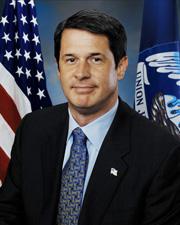 Sen. David Vitter (R-LA)
Legislative Activity
Stay on top of the latest movement without scrolling through every action
Roll call votes on amendments in Senate: Amendment SA 1016 not agreed to in Senate by Yea-Nay Vote. 39 - 53. Record Vote Number: 176.
May 4, 2009
View full timeline
Roll call votes on amendments in Senate: Amendment SA 1016 not agreed to in Senate by Yea-Nay Vote. 39 - 53. Record Vote Number: 176.
May 4, 2009
Senate amendment not agreed to: Amendment SA 1016 not agreed to in Senate by Yea-Nay Vote. 39 - 53. Record Vote Number: 176.
May 4, 2009
Considered by Senate. (consideration: CR S5052, S5057-5059)
May 4, 2009
Amendment SA 1016 not agreed to in Senate by Yea-Nay Vote. 39 - 53. Record Vote Number: 176.
May 4, 2009
Considered by Senate. (consideration: CR S4999)
May 1, 2009
Senate amendment submitted
April 30, 2009
Senate amendment proposed (on the floor): Amendment SA 1016 proposed by Senator Vitter to Amendment SA 1018.(consideration: CR S4946-4947; text: CR S4946)
April 30, 2009
Amendment SA 1016 proposed by Senator Vitter to Amendment SA 1018. (consideration: CR S4946-4947; text: CR S4946) To authorize and remove impediments to the repayment of funds received under the Troubled Asset Relief Program.
April 30, 2009
Votes
1 roll call on this amendment
Text
Proposed
HELPING FAMILIES SAVE THEIR HOMES ACT OF 2009--Continued

The PRESIDING OFFICER. The Senator from Connecticut.
Mr. DODD. Madam President, I will yield to my colleague from Missouri
for comments, and I ask unanimous consent to be recognized after she
speaks to make opening remarks.
The PRESIDING OFFICER. Without objection, it is so ordered.
The Senator from Missouri.
Mrs. McCASKILL. I ask unanimous consent to speak for 5 minutes in
morning business.
The PRESIDING OFFICER. Without objection, it is so ordered.

immigration enforcement

Mrs. McCASKILL. Madam President, sometimes change comes quietly.
Sometimes it comes with a big bang. Today change came quietly. I want
to make sure everyone realizes the change that occurred.
For 3 years I have been talking about the problem of illegal
immigration and what has caused this problem to flourish. I have been
talking about the problem of the magnet of jobs that has drawn people
over the border without documentation because they are trying to feed
their families and the fact that no one was doing anything about
employer enforcement.
When I got to Washington and I asked the head of immigration
enforcement how many employers have been held accountable for knowingly
hiring illegal immigrants, how many have been arrested, she could not
even tell me. They didn't even keep the statistics. Think about that
for a minute. They didn't keep the statistics of how many employers
were held accountable for knowingly hiring illegal immigrants. I began
pounding on immigration and customs enforcement about this, talking to
them about basic investigative techniques.
In Missouri right now there are hundreds of employers that are
breaking the rules knowingly. They are hiring people, paying them under
the table, cash on Fridays. They are bringing pickup trucks from Mexico
full of people, stuffing them all in an apartment. The vast majority of
the business people are doing it right. They are trying to play by the
rules, doing the very best job they can. But there is a chunk of
employers out there that knew they were not going to get caught, knew
nobody cared if they did, and they knowingly violated the law.
I asked the new head of immigration enforcement if that was going to
change. I asked the new Secretary of Homeland Security if that was
going to change. Today they announced a new policy. Finally, they have
a set of guidelines going to everyone in the country about how we are
going to prioritize going after those employers that knowingly hire
illegal immigrants. We finally are going to get to the magnet. This is
a crime we can deter.
If you think somebody is going to put you in jail for saying: Hey, I
didn't care if you have papers or not, I can pay you cheaper; work you
harder. I don't care if you are illegal or not; I don't want to know.
In fact, bring your friends--if you don't think those people being held
accountable is going to make a difference, then you don't understand
law enforcement.
Today I am proud to say change came. The new guidelines require that,
in fact, instead of working off tips, they are now going to embrace
basic investigation. They will use undercover. They will use
informants. They will use all kinds of documentation they can look at
in terms of paper documentation. They will enlist the support and
cooperation, ahead of workplace enforcement, of local law enforcement
agencies, including the Justice Department. They have decided it is a
new day in immigration enforcement and that we will get at the root of
the problem.
I support E-Verify and I support giving employers all the tools we
can to do the best job they can in hiring legal workers. But for those
employers that don't care, that are doing it on purpose and knowingly
doing it, we need to come down on them and come down hard.
This administration has figured it out. I congratulate the Secretary
of

[[Page S4944]]

Homeland Security for these new policies. I stand in full support, and
I know most of my colleagues do also. We finally will do something
about illegal immigration when we shut down the magnet.
I yield the floor.
The PRESIDING OFFICER. The Senator from Connecticut.
Mr. DODD. Let me inquire, Madam President, if I may, of my colleague:
Do you want to offer the amendment at this juncture or do you want to
make some comments on it?
Mr. CORKER. Madam President, I do not want to make any comments. I
just want to call it up.
Mr. DODD. Why not go ahead and do that.
Mr. CORKER. OK. I thank my friend from Connecticut.
The PRESIDING OFFICER. The Senator from Tennessee.

Amendment No. 1019 To Amendment No. 1018

Mr. CORKER. Madam President, I ask unanimous consent to call up
amendment No. 1019.
The PRESIDING OFFICER. Without objection, it is so ordered. The clerk
will report.
The assistant legislative clerk read as follows:

The Senator from Tennessee [Mr. Corker] proposes an
amendment numbered 1019 to amendment No. 1018.

Mr. DODD. Madam President, I ask unanimous consent that reading of
the amendment be dispensed with.
The PRESIDING OFFICER. Without objection, it is so ordered.
The amendment is as follows:

(Purpose: To address safe harbor for certain servicers)

On page 17, strike line 1 and all that follows through page
18, line 4 and insert the following:
``(1) to the extent that the servicer owes a duty to
investors or other parties to maximize the net present value
of such mortgages, the duty shall be construed to apply to
all such investors or group of investors; and
``(2) the servicer shall be deemed to have satisfied the
duty set forth in paragraph (1) if, before December 31, 2012,
the servicer implements a qualified loss mitigation plan that
meets the following criteria:
``(A) Default on the payment of such mortgage has occurred,
is imminent, or is reasonably foreseeable, as such terms are
defined by guidelines issued by the Secretary of the Treasury
or his designee under the Emergency Economic Stabilization
Act of 2008.
``(B) The mortgagor occupies the property securing the
mortgage as his or her principal residence.
``(C) The servicer reasonably determined, in good faith,
consistent with the guidelines issued by the Secretary of the
Treasury or his designee, that the application of such
qualified loss mitigation plan to a mortgage or class of
mortgages will likely provide an anticipated recovery on the
outstanding principal mortgage debt that will exceed the
anticipated recovery through foreclosures or other
resolution.

Mr. DODD. Madam President, I thank my colleague from Tennessee. Let
me--since we are across the room from each other--invite you and your
staff to meet with our staff and talk about the amendment since we are
not sure what it is. But let's see if we can reach some accommodation.
Mr. CORKER. Madam President, I have a sense the merits of this
amendment are so great that it will be accepted universally.
Mr. DODD. Madam President, I would expect nothing less from the
Senator from Tennessee.
Mr. CORKER. I thank the Senator very much.
Mr. DODD. Madam President, let me first of all thank our colleague
from Illinois. I know he did not prevail in his amendment dealing with
the bankruptcy provisions, but I commend him for his efforts over the
last number of weeks, I know in serious negotiations with others, to
try to achieve an accommodation. That did not happen. I regret that was
the case because I think that was one meaningful way to try to avoid
some of the foreclosure problems we see in the country. So I am sorry
that did not prevail.
Madam President, I wish to spend a few minutes, if I may, briefly
describing the substitute amendment I have offered on behalf of myself
and Senator Shelby that is before us and will be now open for
amendment--as the Senator from Tennessee has his amendment, and I know
my colleague from Louisiana also has at least one--maybe two
amendments--to offer on this bill as well.
Let me say to others, we would urge, if you have amendments, to let
us know what they are. I also say to my colleagues this is a bill that,
while it is going to be helpful to consumers and helpful to homeowners
in trying to deal with the underlying problems, it is being sought
after primarily by the financial institutions, the banks across the
country, dealing with the FDIC, the insurance limits, among other
matters. So it is very important to them, and Senator Shelby and I
recently worked this out to move forward.
But I want to say to my colleagues, there were other matters that are
important as well. If this gets bogged down for days on end, the leader
has indicated to me he will pull this bill down and we will maybe deal
with it next fall. So to those out there who have an interest in what
we have worked on here, I urge them to communicate with people that it
is important we try to get this done fairly quickly.
We spent a lot of time on it. I think it is a good bill. It is a
balanced bill. Senator Shelby and I worked hard on these matters with
our committee members. So this substitute is bipartisan, and we hope
our colleagues will respect that and let this not become a vehicle for
an awful lot of other issues for which I do not question the
motivations or the sincerity of those who might offer amendments, but
this is not going to become a vehicle for all these other ideas that do
not relate to the underlying purpose of this bill.
As we all know, and I have mentioned before, we have a staggering
number of foreclosures in the country. Some 9,000 to 10,000 homeowners,
before this evening is out, will receive a default or action notice. If
current trends continue, two-thirds of those people will lose their
home. So of the 10,000 today who will receive that default or action
notice, two-thirds of them will probably lose their home unless some
action is taken. In all, some 3.4 million homes are expected to go into
foreclosure this year alone--between 8 and 12 million homeowners over
the next several years. Those are breathtaking numbers when you
consider the damage to families, to neighborhoods, and to communities
across our Nation.
According to industry figures, by the end of last year, 20 percent of
all mortgage loans were already under water--1 in 5--that is, the cost
of the mortgage exceeded the value of the home. Those are stunning
numbers: One out of every five homeowners owed more on their mortgage
than the home was worth.
In my home State of Connecticut, the problem is very serious and
spreading. The Center for Responsible Lending projects that some 17,000
homes in my State of Connecticut will go into foreclosure in 2009--
nearly 60,000 over the next 4 years.
I recently invited HUD Secretary Shaun Donovan to my State. We
visited Bridgeport, CT, which alone has some 5,200 subprime mortgages--
many already in foreclosure. Joan Carty, the CEO of the Housing
Development Fund, a housing nonprofit group in Bridgeport, CT, showed
the Secretary and me a series of maps of the city of Bridgeport. She
had in those maps the locations of each subprime loan and each
foreclosure. It literally looked like a cancer spreading across the
body politic of that city.
We visited New Haven, CT, where we saw how property values for homes
located within an eighth of a mile of a foreclosed home dropped by an
average of $5,000 the day of that action or default. And as we saw
across Hartford, CT, where home prices have sunk almost 8 percent in
the last year alone, it does not take long before the epidemic affects
whole cities.
In fact, this crisis could even result in a net loss in home
ownership rates for African Americans, wiping out a generation of hard
work and gains in wealth.
The people I have met who are losing their homes are not statistics.
They are grandmothers on fixed incomes who trusted a mortgage broker
who put them in adjustable rate mortgages with exploding payments.
Their incomes were not going to ever adjust to a level where they could
afford the fully indexed price of that mortgage. But their mortgages
adjusted, and the brokers knew these borrowers were headed for trouble.
I have met working parents who lost a job or are facing a health care
crisis. Fifty percent of the foreclosures are related to a health care
crisis in that family--not acquiring an automobile

[[Page S4945]]

you cannot afford or a big-screen television, as some have been
suggesting. Fifty percent are related to a health care crisis. One
victim of predatory lending I met in Hartford, CT, tests children for
lead poisoning for a living.
These are good people, decent Americans, many of whom were taken
advantage of, often by deceptive practices. In fact, the Wall Street
Journal reported that 61 percent of those in subprime mortgages could
have qualified for prime mortgages but were urged or pushed into
riskier mortgages by lenders and brokers who knew better. Why did they
do so? Because those brokers and lenders made more money by putting
these unsuspecting borrowers into riskier, higher priced mortgages.
So we have an obligation, I think as a body, to do everything we can
to get this right. That is not to excuse irresponsible behavior. I am
not suggesting such. But in matter after matter, this was not a matter
of irresponsibility; it was either deceptive practices or conditions
which forced a family--through a job loss or a health care crisis or
others--to be put at risk of losing their home. This effort is to get
this right not only for the families but even, in a larger sense, for
the economy as a whole, which hinges on our ability to put a stop to
these foreclosures.
Protecting families and our economy was what motivated me 2 years
ago--this month, in fact--when I convened a Homeowners Preservation
Summit, at which leaders and servicers agreed to a set of principles.
This was in the spring of 2007, 2 years ago. We met, and they committed
themselves to a series of principles to making their best efforts to
reduce foreclosures through loan modifications.
To say there was a total failure by the industry to follow through on
that agreement would be a vast understatement.
Thankfully, even if lenders, servicers, and the previous
administration failed to understand the magnitude or the severity of
the crisis and the obligation to act, there has been no such problem
with the current administration, I am pleased to report. In putting
forward a $275 billion plan, the Obama administration clearly
understands that we cannot get our economy back on track until we stop
the tidal wave of foreclosures sweeping across our country.
The underlying legislation Senator Shelby and I have offered gives
them the tools to do that as effectively as possible by expanding the
ability of FHA, the Federal Housing Administration, and Rural Housing--
and I have mentioned cities. But I want to point out, rural housing is
also suffering from foreclosures; this is not just an urban problem.
This affects rural States. I know the Presiding Officer and my friend
from Louisiana will testify to this: In their rural communities,
foreclosures are not limited to the larger cities in their States but
it also affects rural people as well. That point needs to be made.

The underlying legislation gives them the tools to do that as
effectively as possible by expanding the ability of FHA and Rural
Housing to do loan modifications, by creating more enforcement tools
for FHA, the Federal Housing Administration, to drop lenders who break
FHA rules, by expanding access to the HOPE for Homeowners Program, and
by providing safe harbor for servicers who modify a loan consistent
with the Obama plan or refinance a borrower into a HOPE for Homeowners
loan.
It is disheartening that even as more and more homeowners have fallen
behind on their loans, the response of loan servicers has been so
inadequate. We have heard over and over that the reason servicers are
hesitant to use the tools we have given them is that they fear they
will be sued for violating pooling and servicing agreements.
You would think that from an investor's point of view, reduced
interest payments from modified loans would be better than no interest
payments from defaulted loans. Unfortunately, you would be wrong in
that. The mortgage-backed securities market in which so many of these
loans are tied up is--not to put too fine a point on it--a mess. These
mortgages have been sliced and diced into thousands of pieces, with
securities sold off to different investors all over the globe. These
investors have different interests in the loan pools--some rated
triple-A, others have more risky segments. Untangling this complex mess
of competing interests has been nearly impossible. One direct solution
to this problem would have been the bankruptcy amendment offered by
Senator Durbin. That failed.
Another, which we provide for in this amendment, is to make
modifications more likely by ensuring that servicers who provide
modifications consistent with the administration's plan get the benefit
of safe harbor from needless lawsuits.
Our colleague from Florida, Mel Martinez, is the author of this
provision. This, again, is a bipartisan proposal. Senator Martinez, I
think, will come to the floor and address the issue in greater detail.
Senator Martinez is a former Secretary of HUD under the Bush
administration and brings a wealth of knowledge to these debates and
discussions. It was his contribution on the safe harbor provision which
caused it to be included in this legislation.
Another provision, which we provide for in this amendment Senator
Shelby and I have offered, is to make modifications more likely by
ensuring that servicers who provide modifications, consistent with the
administration's plan, get the benefit of safe harbor from needless
lawsuits. I mentioned that. To ensure more servicers take advantage of
the HOPE for Homeowners legislation we created last summer, those
refinances are covered as well. Indeed, the legislation also
streamlines the HOPE for Homeowners program. My colleagues will recall
we adopted that last summer. We all hoped it would be a great source of
modification for these mortgages. And, candidly, it ended up being a
lot less than we hoped for. As the author of those provisions, it was a
complicated proposal. There were a lot of fingerprints on it to try to
get it out of the Congress. Unfortunately, I think we made it far more
complicated than we needed to.
Our bill today is designed to streamline that program and to make it
more workable for families across the country. The truth is, despite
the efforts of Senator Shelby, myself, and others, the HOPE program has
not worked to date--in large part because of servicers' steadfast
refusal to accept reasonable settlements for second mortgages, which
belong to about half of all at-risk mortgage holders.
This is a problem the administration recognizes, with its recently
announced Second Lien Program, which will make it easier for borrowers
to modify or refinance their loans under the HOPE for Homeowners
program.
With this legislation, we make the program far more user-friendly for
borrowers and servicers alike by lowering fees and streamlining
borrower certification requirements. In addition, we allow for
incentive payments to servicers and originators to participate in the
program, while giving the HUD Secretary limited discretion to determine
who reaps the benefits of any future appreciation on that home.
For all these reasons, it is time for the banks, I believe, to step
to the plate.
Consider for a moment all that we are doing to prevent foreclosures
and restart lending in this legislation alone, this substitute.
As I said, we are offering banks a safe harbor to do modifications
and refinancing.
To free up credit, we increase permanent borrowing authority for the
Federal Deposit Insurance Corporation and the National Credit Union
Administration to $100 billion and $6 billion respectively. On a
temporary basis, we increase that authority to five times those
amounts. Chairman Sheila Bair has said those levels will allow the FDIC
to reduce the special assessments on banks by as much as 50 percent,
making credit more available in our communities. According to the
Independent Community Bankers Association, which strongly supports this
legislation--and I thank them for it--this will increase lending by
some $75 billion.
In addition, Senator Shelby and I extend for 4 years--to December 31,
2013--the increase in deposit insurance limits from $100,000 to
$250,000. We initially did this in the Emergency Economic Stabilization
Act. However, in that legislation we increased the limit only through
this year.
For 75 years, deposit insurance has been a stabilizing force during
some of

[[Page S4946]]

our Nation's most troubling economic times. This increase will prove
especially helpful for smaller financial institutions today,
particularly our community banks across the country, which derive 85 to
90 percent of their funding from deposits.
The increase from $100,000 to $250,000 goes a long way toward
eliminating uncertainty in the system. If you are planning for your
retirement and buy a 3-year certificate of deposit at a bank for
$150,000, you want to know your investment will be safe after 2009
comes to a close. This is to say nothing of the many other programs and
capital injections already in place to protect and sustain them in our
credit markets.
I would be remiss if I did not take a moment to commend our majority
leader, Senator Harry Reid, for a very important contribution he has
made to this legislation. Section 103 of this bill authorizes an
additional $127.5 million, on top of other amounts that may be
authorized, for foreclosure counseling and outreach efforts targeted to
the areas that are the hardest hit by foreclosures. In addition, the
provision provides for funding to increase public awareness such as
through advertising, including Spanish language advertising, to try to
steer people away from foreclosure and other financial scams that
proliferate in hard times such as these.
Ultimately, this legislation by itself, of course, will not turn this
Nation's economy around, but it will be a contribution, and a positive
one, both to a healthier banking system and, more importantly, to more
stable home ownership. There is no silver bullet--I know my colleagues
know that--when it comes to solving our financial crisis, but each step
such as this that we take brings us closer to seeing this come to an
end, these most troubling economic times for our country. So by
providing additional stability and certainty within the banking system,
by providing assurances and help in rural housing as well as urban
housing, by providing additional support for these efforts with the
HOPE for Homeowners Act, this legislation goes a long way to
contributing to that stability and that certainty.
Again, I am very pleased to have as my partner in this, as we have on
many occasions, my colleague from Alabama, the former chairman of the
committee, Senator Richard Shelby, along with the members of my
committee who have worked very hard on these matters as well. As I said
at the outset, I regret the Durbin amendment is not part of this, but
my colleagues have expressed their views on it and that is why it is no
longer on this bill.
I know my colleagues have other ideas they wish to offer to this
bill. I will include them if I can. If there is some reason I can't, I
will explain why. If we can reach some compromise, I will try to do
that as well. This is the background of this substitute proposal that
Senator Shelby and I are offering. Again, I wish to move quickly if we
can on this. I think it would be an important message to send to the
financial sector of our communities that we are stepping to the plate.
These are matters that have been before us for some weeks now. They
have been waiting patiently for us to move on these matters. We have a
chance to do that. That is not to say that other people have ideas that
don't have merit, but we have to make decisions about whether to move
forward, and my hope is that we will, either by this evening or
tomorrow. What better way to conclude this week than to conclude this
bill and send a message to the citizens of this country that the Senate
of the United States has moved to rise to the challenge of this crisis.
Madam President, I yield the floor.
The PRESIDING OFFICER. The Senator from Louisiana.

Amendment No. 1016 to Amendment No. 1018

Mr. VITTER. Madam President, I ask unanimous consent to set aside the
pending amendment and to call up Vitter amendment No. 1016 to the
underlying bill.
The PRESIDING OFFICER. Is there objection?
Without objection, it is so ordered.
The clerk will report.
The assistant legislative clerk read as follows:

The Senator from Louisiana [Mr. Vitter] proposes an
amendment numbered 1016.

Mr. VITTER. Madam President, I ask unanimous consent that the reading
of the amendment be dispensed with.
The PRESIDING OFFICER. Without objection, it is so ordered.
The amendment is as follows:

(Purpose: To authorize and remove impediments to the repayment of funds
received under the Troubled Asset Relief Program, and for other
purposes)

At the appropriate place, insert the following:

SEC. __. REPAYMENT OF TARP FUNDS.

Section 111(g) of the Emergency Economic Stabilization Act
of 2008 (12 U.S.C. 5221(g)) is amended--
(1) by striking ``Subject to'' and inserting the following:
``(1) Repayment permitted.--Subject to'';
(2) by inserting ``if, subsequent to such repayment, the
TARP recipient is well capitalized (as determined by the
appropriate Federal banking agency having supervisory
authority over the TARP recipient)'' after ``waiting
period,'';
(3) by striking ``, and when such assistance is repaid, the
Secretary shall liquidate warrants associated with such
assistance at the current market price''; and
(4) by adding at the end the following:
``(2) No repayment precondition for warrants.--A TARP
recipient that exercises the repayment authority under
paragraph (1) shall not be required to repurchase warrants
from the Federal Government as a condition of repayment of
assistance provided under the TARP. The Secretary shall, at
the request of the relevant TARP recipient, repay the
proceeds of warrants repurchased before the date of enactment
of this paragraph.''.

Mr. VITTER. Madam President, this amendment is very simple. In fact,
it is identical to an amendment I offered to a different bill last week
which unfortunately we did not get to vote on because cloture was
passed.
This amendment says that under the TARP, if a bank wants to repay its
TARP money that it has taken from the taxpayer, with all of the
penalties and interests that are relevant, it can do that immediately
whenever it wants, as long as it remains perfectly sound and meets all
of the liquidity, safety, and soundness requirements that the normal
regulators impose on those sorts of institutions. I think that is very
commonsensical and straightforward. If a bank wants to repay with
interest, why shouldn't it be able to leave the program? That is the
guarantee and the promise that was made to banks when TARP was
originally instituted. Yet several banks are trying to do that now and
are getting a different story: No, no, no, no. This isn't your decision
alone. This is our decision, the Government's decision, even if it
doesn't impact the safety and soundness of your institution.
Several folks in this institution mirror the concerns of citizens
around the country. We are very concerned about the Federal Government
getting ever more involved in the business of private business and
institutions, in particular, of banks and financial institutions. This
is a steady trend that began last September, and it is a very steady
trend that the Government is becoming first a junior partner and
seemingly a senior partner in more and more significant institutions in
our private market. Now we see that it is expanding beyond banks and
financial institutions into auto companies, insurance companies, and
who knows what next.
Certainly, with all of these legitimate concerns we have about that
trend, it should be an established principle of the TARP that if a bank
wants to repay the money fully with interest and if that repayment does
not impact its safety and soundness, if they meet all of the liquidity
requirements put on them by the Federal regulators, they should be able
to do that. Yet they are not. They have not been able to do that. Some
have. I am very proud to say that IberiaBank, headquartered in
Lafayette, LA, was the first bank to apply for repayment and to
actually give all of its TARP money back. I am very happy to say that
was successfully done. They were followed by six other smaller or
regional banks: the Bank of Maine, Bancorp, Old National Bancorp,
Signature Bank, Sun Bancorp, Shore Bancshares, and Centra Financial
Holding, Inc. All of those banks followed Iberia's lead and gave that
money back.
But more recently, unfortunately, the Federal Government has been
singing a different tune and has said, Wait, wait. You can't decide
this on your own. We are your new partner and we get to decide this,
and we are going to decide it on our criteria, even if it is a
perfectly reasonable and safe thing to do with regard to your liquidity
and

[[Page S4947]]

your safety and soundness. That exemplifies what so many of us are
concerned about, about expanding government authority.
Let me quote directly from Secretary Geithner. The Wall Street
Journal reported an interview recently where he:

indicated that the health of individual banks won't be the
sole criteria for whether financial firms will be allowed to
repay bailout funds.

He also testified before Congress in the last few weeks and the
bottom line of his testimony was: Stay tuned. We will give you
guidelines on how to repay TARP funds in the future. We are not there
yet, and we are not--we are certainly not willing to allow banks to
make that decision. We are going to make that decision.
I have to say it sort of reminds me of the analogy of businesses that
are infiltrated by the mob and they have as their new senior partner
the mafia, and all of a sudden, if they want to get out, it is no
longer their choice. Their new big brother partner is going to make the
calls and is going to decide: No, no, no. We have our claws into you.
That is not changing anytime soon.
Is that the new rule we want to establish for private market
capitalism? Is that the amount of power and authority we want to give
to the Federal Government over private institutions in the private
sector? Even when they can repay the money and remain perfectly liquid,
perfectly solvent, meeting all of the relevant safety and soundness
criteria, do we want to say no, no, no, big brother government says no.
We know best.
I am very disturbed by this policy that my amendment is counterpoised
to. It does suggest that big government knows best and that big
government is going to make the call, apart from the interests of that
particular private firm. If that firm meets liquidity requirements,
meets all the safety and soundness regulations in sight, then they
should be able to do whatever the heck they want to determine their own
future, and that includes repaying their TARP money to the government.
I urge all of my colleagues to support this commonsense, reasonable,
pro-free market amendment.

Amendment No. 1017 to Amendment No. 1018

Madam President, at this point I ask unanimous consent to set aside
that amendment and call up the Vitter amendment No. 1017 to the
underlying bill.
The PRESIDING OFFICER. Is there objection?
Mr. DODD. Madam President, reserving the right to object, let me say
I am going to have to object at some point because we have too long a
stack here. This is not aimed at my colleague from Louisiana, but I
want to be careful and check with leadership as to how many amendments
we can lay aside in terms of what their plans are for this evening and
for tomorrow. I won't object to this particular one, but I want to use
a moment here to express to my colleague that at some point we will
have to put some limitation on this so we can start to grapple with the
amendments before us.
I thank the Senator.
The PRESIDING OFFICER. Without objection, the clerk will report.
The bill clerk read as follows:

The Senator from the Louisiana [Mr. Vitter] proposes an
amendment numbered 1017.

Mr. VITTER. Madam President, I ask unanimous consent that the reading
of the amendment be dispensed with.
The PRESIDING OFFICER. Without objection, it is so ordered.
The amendment is as follows:

(Purpose: To provide that the primary and foundational responsibility
of the Federal Housing Administration shall be to safeguard and
preserve the solvency of the Administration)

At the appropriate place, insert the following:

SEC. __. DUTIES OF THE FHA.

(a) Duty to Maintain Solvency.--Notwithstanding any other
provision of law or of this Act, the primary and foundational
responsibility of the Federal Housing Administration shall be
to safeguard and preserve the solvency of the Administration.
(b) Suspension of Activities.--If in the determination of
the Commissioner of the Federal Housing Administration, any
existing Federal requirement, program, or law, or any
amendment to such requirement, program, or law made by this
Act, threatens the solvency of the Administration or makes
the Administration reasonably likely to need a credit subsidy
from Congress, the Commissioner shall--
(1) temporary suspend any such requirement, program, or
law; and
(2) recommend legislation to the appropriate congressional
committees to address such solvency issues.

Mr. VITTER. Madam President, I thank the distinguished chairman for
his comments and for his forbearance. I will be very brief on this
amendment, which goes directly to the bill and is very germane.
This amendment, again, is very simple and very straightforward but I
also think very important. It would require that the Federal Housing
Administration recognize as its first duty to maintain its own
solvency. If the provisions of the underlying bill or any other
existing requirement cause the FHA to be reasonably likely to need a
credit subsidy from Congress, then it shall require the Commissioner,
No. 1, to temporarily suspend any program that is threatening the
solvency of the FHA; and No. 2, to recommend legislation to Congress to
address those solvency issues.
I commend the motives of the distinguished chairman and others with
regard to this bill. Clearly, they are trying to help homeowners in
dire need, and there sure as heck are many of them around the country,
including my State. But as we walk down this path, I think we all want
to be careful that we don't create a new crisis, a new solvency crisis
at the FHA. I believe we need to be very aware of that so we don't
create another crisis there as congressional and other action has in
the past at Fannie Mae, Freddie Mac, and elsewhere.
Recently, on April 23 at a nomination hearing for Mr. David Stevens,
who is the designate for housing and Federal Housing commissioner, the
person whom President Obama has chosen to run the FHA, I asked how he
viewed the health of the FHA mortgage insurance fund and if he
anticipated having to ask Congress for a credit subsidy. His answer on
April 23 was:

At the present time, the FHA fund is solvent and meets
actuarial requirements. Maintaining that solvency would be a
top priority for me.

I am glad to hear that it is solvent as of now but, quite frankly, I
don't want that solvency to be a top priority for him; I think it
should be the top priority for him. I think we should be very cautious
about expanding programs under the FHA if it could lead to a crisis of
solvency there which could be a further rattling of the financial
markets, just as similar crises have been in the past.
Unfortunately, there are significant signs that the FHA is a ticking
timebomb now. According to the Mortgage Bankers Association National
Delinquency Survey, for the fourth quarter of 2009 seasonally adjusted
delinquency rate, 13.73 percent of FHA loans would present an increase
of 81 basis points from the third quarter of 2008.
Similarly, in a report from J.P. Morgan Securities issued in January
of this year, it says 70 percent of Ginnie Mae borrowers, those who are
FHA borrowers and VA borrowers, would be underwater if home prices drop
another 10 percent.
On March 8 of this year, a Washington Post investigation led many
observers to view the FHA as a ticking timebomb. The article reports:

There has been a spike in quick defaults that seem to
follow the pattern that preceded the collapse of the subprime
market as some of the same flawed lending practices that
contributed to the mortgage crisis are now eroding one of the
main Federal agencies charged with addressing it.

Of course they were talking about the FHA.
According to the same article:

More than 9,200 of the loans insured by the FHA in the past
2 years have gone into default after no or only one payment.

So already we see very troubling signs.
On top of that, this bill, in some ways, erodes the stability of the
FHA. It does things such as say that an individual receiving assistance
under this program must verify their income, providing income tax
return information but reducing the upfront fee for the program from 3
percent to 2 percent. It reduces the annual fee from 1.5 percent to 1
percent, and it adds incentives with $1,000 for each loan for folks to
enter and service the program.
So I am concerned, No. 1, that the FHA right now shows real signs of
a possible future crisis, and No. 2, that

[[Page S4948]]

this bill could unintentionally be making that worse and making that
day come quicker.
I am not proposing we scrap the provisions of the bill, but my
amendment would simply say that the first duty of the FHA is to
maintain solvency, and secondly, if the provisions of this bill or any
other requirement causes the FHA to be reasonably likely to need a
credit subsidy from Congress, the Commissioner has the power to, No. 1,
temporarily suspend that program, and No. 2, recommend legislation to
Congress to address the solvency problem.
Let's not let the FHA be the next chapter in terms of this financial
crisis. Let's not repeat the kinds of mistakes we have seen in other
Federal Government or related entities. Let's be careful to avoid that,
which would be an enormous rattling of the financial system and which
would cause an enormous drop in confidence.
With that, Madam President, I thank the Chair and the chairman for
his forbearance, I yield the floor, and I suggest the absence of a
quorum.
The PRESIDING OFFICER. The clerk will call the roll.
The bill clerk proceeded to call the roll.
Mr. CHAMBLISS. Madam President, I ask unanimous consent that the
order for the quorum call be rescinded.
The PRESIDING OFFICER. Without objection, it is so ordered.
Mr. CHAMBLISS. Madam President, I ask unanimous consent to speak as
in morning business for up to 15 minutes.
The PRESIDING OFFICER. Without objection, it is so ordered.

Release of DOJ Memos

Mr. CHAMBLISS. Madam President, I rise today to express my
disappointment with the Obama administration's decision to publicize
the memorandums from the Office of Legal Counsel at the Department of
Justice. The four memos released by the administration examine whether
the CIA's enhanced interrogation techniques would violate U.S. statutes
or international agreements prohibiting torture.
It is important to note that all four memos determined that the
techniques did not violate U.S. constitutional or international law or
U.S. criminal law. It is disappointing that the White House released to
the public these highly sensitive memos. There is simply no productive
or meaningful purpose in their release.
The memos describe in detail the CIA's interrogation program, the
specific techniques that were used, psychological evaluations of
detainees, and even detailed descriptions of some of the detainees
themselves. All of this information raises questions about how
seriously the President believes in protecting our national security as
well as the confidentiality of legal counsel and the privacy of
individuals. I believe the only reason the Obama administration chose
to release these memos was for perceived political gain, and I also
believe, based upon what I have heard in my home State, that the
political gain has backlashed.
I think if Americans read these memos for themselves, they will agree
that after the 9/11 attacks, the CIA program was necessary to detect
and prevent additional American deaths. The program was designed to
exploit information held by only the most senior, hardened, and
dangerous al-Qaida figures who had perishable information about the
attack's planning.
Since its inception in early 2002, fewer than 100 individuals were
held in this program, which had significant safeguards, including
detailed assessments to determine that the detainees were senior
members of al-Qaida--not mere foot soldiers--who likely had actionable
intelligence on terrorist threats and who posed a significant threat to
U.S. interests before the CIA could detain them.
Out of the 100 or so detainees the CIA has held, only 3 were
subjected to the most serious, yet legal, interrogation techniques.
Those three were Khalid Shaikh Mohammed, the mastermind of the
September 11 attacks, whose deadly plan resulted in the murder of some
3,000 innocent Americans; secondly, Abu Zubaydah, a senior member of
al-Qaida, whom the CIA assessed to be the third or fourth ranking
member of the terrorist group and who had been involved in aspects of
every al-Qaida attack against America; and thirdly, Abd al-Rahim al-
Nashiri, a key al-Qaida operational planner. Information obtained from
these three detainees saved American lives by disrupting al-Qaida
attacks and led to the capture or arrest of even more terrorists. These
detainees, who have been in the inner circle of al-Qaida and who have
occupied some of the most important positions in that group's
hierarchy, held information that simply could not have been obtained
from any other source.
In fact, the memos reveal some of the invaluable information we have
gained from the CIA program. This includes prevention of numerous
terrorist attacks, such as the west coast airliner plot, which sought
to replicate the hijacking of airplanes and crash them into buildings
on the west coast of the United States.
One memo describes the discovery of this plot by stating:

The interrogation of KSM--

Which is Khalid Shaikh Mohammed--

--once enhanced techniques were employed, led to the
discovery of a KSM plot, the ``Second Wave,'' to use East
Asian operatives to crash a hijacked airliner into a building
in Los Angeles.

The same memo describes how interrogations provided information on
two operatives who planned to build and detonate a dirty bomb in the
Washington, DC, area. There is no doubt that the disruption of these
attacks has saved American lives.
CIA detainees have also confirmed that al-Qaida continues to operate
against the United States and its allies. Just recently, a statement
from none other than the Director of National Intelligence, Dennis
Blair, acknowledged that the high-value information came from this same
CIA interrogation program and that al-Qaida continues to plan attacks
against America.
As a member of the Senate Intelligence Committee, I have seen CIA
assessments on the value of information the United States has gained
from interrogations as well as intelligence on the continuing resolve
of al-Qaida to attack the United States and to attack its citizens.
However, much of this information remains classified, so only half of
the story is being told. It is important that Americans have an
opportunity to see what they were protected from as a result of the CIA
interrogations--interrogations that were not only effective but were
deemed by the Justice Department not to be torture under U.S. and
international law.
The CIA's High Value Terrorist Detainee Program was a crucial pillar
of U.S. counterterrorism efforts and was the largest source of insight
into al-Qaida for the United States and its allies. Now, as a result of
the release of these memos, the program is the largest source of
information on U.S. operations to al-Qaida and our other enemies.
The administration claims it released these memos in an effort to be
transparent, but the only transparency it has provided is to al-Qaida.
The group now knows the outer boundaries of what the United States is
capable of doing and that we are no longer using these methods or any
others for interrogation.
Our enemies--traditional enemies and terrorists--now know that some
interrogation methods were 100 percent effective on our own soldiers
when used in what is called SERE training. I can only imagine how
delighted our enemies are to learn how to gain secrets from our
soldiers. However, I am sure our enemies will not have the same
safeguards, medical and otherwise, in place when they conduct
interrogations on our men and women in uniform who might be captured.
While giving transparency to al-Qaida and our other enemies, the
release of these memos will deprive this administration and all future
Presidents from receiving candid advice from Justice Department
lawyers.
The Office of Legal Counsel is supposed to provide the President and
the executive branch with thorough and frank legal analysis on a
variety of topics. If these talented attorneys have to worry that their
confidential and often classified legal advice is going to be released
to the public and could result in their prosecution, I guarantee you
they will not be able to offer the most straightforward opinions and
alternative legal analysis necessary to guide policy. Instead, policy
will now guide these lawyers' advice.

[[Page S4949]]

Finally, it is disingenuous for Members of Congress to say they were
unaware of the CIA program. From its inception, CIA lawyers repeatedly
obtained legal guidance regarding the program from the Department of
Justice, as one can see from the four classified memos released and
from other unclassified memos previously released. The CIA briefed
congressional leaders early on about the details of the program and the
specific interrogation techniques that could be used.
As a member of the Senate Intelligence Committee, I was aware that
the CIA was holding high-valued detainees and was gaining extraordinary
insight into al-Qaida's structure and operations. Also, information
about the program was leaked to the public and press. Reports about it
started to circulate as early as 2005. Yet Congress continued to fund
the program for several years afterward.
In fact, as the vice chairman of the Senate Intelligence Committee
noted, the fiscal year 2007 intelligence authorization bill included
language which specifically acknowledged that the CIA's program had
been important in collecting valuable intelligence on al-Qaida
operatives and associates and on planned terrorist attacks against the
United States and our allies.
This bill was voted out of the Senate Intelligence Committee
unanimously by a 15-to-0 rollcall vote. I hope that in the future this
administration places more emphasis on protecting our national security
rather than on placating critics of the rules the United States used to
prevent another attack on our domestic soil.
Madam President, I yield the floor and suggest the absence of a
quorum. I am sorry, I did not see the Senator from South Carolina. I do
not suggest a quorum call.
The PRESIDING OFFICER. The Senator from South Carolina.

Amendment No. 1026

Mr. DeMINT. Madam President, in a moment I would like to bring up an
amendment, but in deference to Senator Dodd, I wish to wait for him to
be back on the floor. In the meantime, I would like to explain
amendment No. 1026 and talk about it briefly until the Senator returns.
We are all well aware of the bailout bill that was passed last
October. It had one purpose, at least as that purpose was described to
us, and that was to purchase what they called toxic assets that were
clogging up the credit system. That $700 billion was then used in other
ways, and I believe unconstitutionally, to loan money to banks,
insurers, auto companies, and to actually turn those loans into
preferred stock, in some cases.
It now appears the administration is going to take this a little bit
further. We have seen the hiring and firing of executives. We have seen
the Government, in effect, break contracts that were established in the
private sector. We see the Government continuing to use this TARP money
to gain more and more control over private sector industries,
particularly the financial industries.
The administration appears now to have a plan that would swap this
loan money in the form of preferred stock for common stock, which means
we not only own but we have voting rights and, in some cases,
controlling interests in General Motors. My amendment addresses
specifically financial institutions, but we are talking about
financial, auto companies, and other aspects of our economy using this
TARP money in ways that were totally different than we ever imagined.
My amendment addresses specifically banks. It would prohibit the
Federal Government from converting preferred stock to common stock and
basically taking ownership and control of banks across the Nation.
Many banks that participated in the TARP funds suggest they were
pressured to take it when they did not need it. Many banks now say they
would like to give it back, and they are not allowed to give it back.
We need to back the Federal Government out of our private sector
financial system and set up a good system of laws and regulations so it
can work in a way that is transparent, honest, and good for the
American people. But we don't need the Federal Government to own our
banks and to try to run the day-to-day business in our banks, just like
we do not need the Federal Government to own General Motors and to run
General Motors.
My amendment would address, specifically, the financial institutions
in our country and prohibit the use of TARP funds to be translated into
common stock ownership and voting rights.
Madam President, I yield the floor and suggest the absence of a
quorum.
The PRESIDING OFFICER. The clerk will call the roll.
The bill clerk proceeded to call the roll.
Mr. DeMINT. Madam President, I ask unanimous consent that the order
for the quorum call be rescinded.
The PRESIDING OFFICER. Without objection, it is so ordered.
Mr. DeMINT. Madam President, I would like to bring up amendment No.
1026.
Mr. DODD. Madam President, it will take unanimous consent to
temporarily lay aside the pending amendment; is that correct?
The PRESIDING OFFICER. That is correct.
Mr. DODD. Madam President, reserving the right to object, I say
respectfully to my colleague and friend from South Carolina, a member
of the Banking Committee, reluctantly I will object to that request at
this point. We have amendments pending, and I will explain, as I did to
him, the detail. At this very moment, I respectfully and reluctantly
object to temporarily laying aside the pending amendment.
The PRESIDING OFFICER. Objection is heard.
Mr. DeMINT. I thank the Senator and yield the floor.
Mr. DODD. Madam President, as I said a moment ago, we already have a
lot of amendments filed on this bill. I can tell my colleagues and
those who are following this debate, this bill is critically important
to our financial institutions. They have been waiting weeks for this
bill that Senator Shelby and I put together. I am not, in any way,
suggesting the amendments being offered are not motivated by the best
of intentions, but the net effect of it is to virtually bring down this
bill. I say to my colleagues, I know they are hearing from others
across the country who have been waiting for this bill to come up, to
be considered, and moved along. There is no way we can spend the amount
of days now that may be confronting us with the list of amendments to
go forward.
The leadership--and I agree with them on this--needs some clarity. If
I am going to be faced with a stack of amendments being offered, then I
am going to have to, as the leadership said, take this bill down and
maybe in the fall at some future date get back to it, if at all.
That is a tragedy and unfortunate because it is an important matter.
It is widely supported across the country. It is essential in many ways
we get it done. I wish for my colleagues to know it is not aimed at any
particular amendment. It is not suggested their amendments are not well
motivated. But when you load up a bill such as this with that many
amendments, it makes it impossible to get the job done.
I objected to laying aside the pending amendment because we have
several amendments now pending. We will try, over the coming day or so,
to see if we can resolve some of those amendments, maybe accept some. I
have to speak with, of course, my colleague from Alabama, Senator
Shelby, to see if there is agreement on some of the matters or some
modification to make them acceptable.
I suggest to my colleagues, any additional people coming over to
temporarily lay aside the pending amendments, that I will object to
doing that until we get clarity and try to clear out the underbrush to
determine whether we bring down the bill, which I will do, or to get a
reasonable number of these amendments which we can handle to go
forward. One or the other.
For those who are following this debate, the possibility of this bill
being taken down is very real. I hope those who are interested in this
bill will notify their respective Members who wish to offer amendments
and suggest there may be a better time for those amendments to be
offered.
I yield the floor and suggest the absence of a quorum.
The PRESIDING OFFICER. The clerk will call the roll.

[[Page S4950]]

The bill clerk proceeded to call the roll.
Mr. MERKLEY. I ask unanimous consent that the order for the quorum
call be rescinded.
The PRESIDING OFFICER (Mr. Begich). Without objection, it is so
ordered.
Mr. MERKLEY. Mr. President, tonight I rise to speak on the Dodd-
Shelby legislation and specifically on my amendment, No. 1015, which is
at the desk.
First, I commend my chairman, the distinguished Senator from
Connecticut, for his work on this legislation. This legislation will
take important steps in addressing the very heart of our economic
crisis, the housing market. But we can do more.
Tonight I rise to offer an amendment that will put an end to the
deceptive and unfair mortgage practices that played a pivotal role in
steering American families into accepting risky and unsustainable
mortgages. As I have discussed before, two key factors drew families
into unsustainable mortgages and paved the way for this recession.
First, steering payments were paid to brokers who enticed unsuspecting
borrowers into deceptive and expensive mortgages. These secret bonus
payments, called yield spread premiums, turned home mortgages into a
scam.
A family would go to a mortgage broker for advice in getting the best
possible loan. The family would trust the broker to give good advice
because, quite frankly, they were paying the broker for that advice.
But what the borrower did not realize was that the broker would earn
thousands of bonus dollars from the lender if the broker could convince
the homeowner to take out a high-priced mortgage such as one with an
exploding interest rate rather than a plain vanilla 30-year fixed-rate
mortgage.
Prepayment penalties added insult to injury. After the homeowner
realized he or she had been steered into an unsustainable mortgage, the
homeowner soon discovered that a large prepayment penalty made it too
costly for them to refinance into a lower cost loan. The homeowner was
locked into a destructive mortgage. This scam had tremendous impact.
A study for the Wall Street Journal found that 61 percent of the
subprime loans originated in 2006 went to families who qualified for
prime loans, meaning that millions of American families were placed at
risk. This is simply wrong--a publicly regulated process designed to
create a relationship of trust between families and brokers but that
leaves borrowers unaware of payments that place them in expensive and
destructive mortgages.
I call my colleagues' attention to a New York Times editorial
published on April 10 entitled ``Predatory Brokers,'' which highlighted
this problem. The editorial pointed out a study by the Center for
Responsible Lending that found that subprime borrowers who used a
broker actually fared worse than those who went directly to lenders.
Those borrowers paid $17,000 to $43,000 more for every $100,000 they
borrowed. That is outrageous.
The Times concluded:

The first step must be to outlaw the kickbacks that lenders
pay brokers for steering clients into costlier loans.

The editorial went on:

The most clearly unethical form of payment is the so-called
yield-spread premium.

It is difficult to overestimate the damage that has been done by
these expensive loans and secret steering payments. An estimated 20,000
Oregon families will lose their homes to foreclosure in 2009.
Nationwide, an estimated 2 million families will lose their homes this
year, and the total of foreclosed families is predicted to reach 9
million by 2012.
These practices didn't only hurt families on Main Street, they were
also the prime enablers for the propagation of destructive subprime
collateralized debt obligations, or CDOs, that have now brought Wall
Street to its knees. Had these procedures been banned--steering
payments, prepayment penalties--Wall Street would not have been able to
engineer the tremendous bubble on the backs of unsuspecting homeowners
and, accordingly, would not have had the billions in write-downs that
caused this credit crisis and sent our economy into a terrible
recession.
The problem is simple and the solution is simple. The costs of doing
nothing are tremendous both for homeowners and for the financial
system. By banning steering payments and prepayment penalties, this
amendment will restore transparency to the mortgage lending process and
help make home ownership a stable investment for families once again.
The time has come for us to make sure that secret steering payments
and paralyzing prepayment penalties never again haunt American
families.
I yield the floor.
The PRESIDING OFFICER. The Senator from Connecticut.
Mr. DODD. Mr. President, I want to begin by commending our colleague
from Oregon for this proposal. We have had a chance to talk about it,
and he is exactly right. He described it more adequately as to what
happened, what goes on, what went on, that contributed so much to the
overall economic mess we are in today. This is where it all began. This
was not a natural disaster that occurred like Katrina, an act of God.
These were intentional decisions made by people to abuse purchasers,
borrowers, luring them into financial situations where they were fully
aware that borrower could never meet the fully indexed cost of that
mortgage as it matured.
In fact, I recall one of the early hearings we held in 2007, the Web
site of the brokers. The first piece of advice to a broker was:
Convince the borrower that you are their financial adviser.
Not that you were their financial adviser, but to convince them that
you are so that you can then engage them in such a way as to convince
them to enter arrangements that they could hardly afford. As we now
know from a number of different studies, somewhere between 60 and 65
percent of the people who ended up with subprime mortgages actually
qualified for conventional mortgages.
For those who may not understand the differentiation, the cost of a
conventional mortgage is substantially less than a subprime mortgage.
The Presiding Officer, the Senator from Alaska, spent a good part of
his career in this business, so he knows firsthand how all of this
works and appreciates the proposal by our colleague from Oregon. Yield
spread premiums were one of the key causes of the current crisis
because these premiums create incentives for brokers to upsell
borrowers; in other words, to convince them and to draw them into
arrangements that would be more costly because that is how they got
paid. It was nothing more complicated than that. You got a better fee
if you could convince someone, talk them into a situation that cost the
borrower more. The borrower could never meet those obligations,
particularly people on fixed incomes.
One of the first witnesses I ever called before the committee as
chairman in 2007 was a woman from Chicago whose husband had passed
away. She worked for 30 or 40 years, had retired, was living in a home
that she and her husband had bought years before, had $3,000 of
consumer debt. A broker convinced her that she needed to refinance that
home to meet that obligation. Of course, the fully indexed cost of that
mortgage blew through her fixed income as a retiree. She came very
close to losing the home. We stepped in. The bank stepped up, was
embarrassed by what it had done. She ended up keeping the home but only
because, candidly, she was a witness before a Senate committee. Had she
been out there in Chicago without any other recognition or notoriety, I
am not sure she would have fared as well as she did when she achieved
some notoriety in appearing before the committee.
The bank in question was sitting at the table next to her, so they
decided to work it out in her case. But literally hundreds of thousands
of people across the country were not so fortunate. Again, they were
lured into these arrangements our colleague has talked about.
I thank him for his amendment. We have had a lot of discussions about
this matter. In the last Congress we put together a whole bill on
predatory lending, and yield spread premiums was one of the key
provisions.
What I would like to suggest, if he would be amenable, this is a
matter that needs to be revived. We had a hearing almost 2 years ago
now so it has gotten a little dated in terms of

[[Page S4951]]

the information. As chair of the committee, I would like to ask him, as
a new member, whether he would be willing to chair a hearing on the
subject matter of predatory lending, including yield spread premiums,
and arrange that in the coming weeks. My intention would be that as we
move forward to deal with the modernization of financial regulations,
that this is an area we will want to include as part of our
consideration of that larger bill.
I, for one, would look forward to some specific ideas that we could
use to address this kind of problem. I thank him for bringing the
matter to our attention this evening. I look forward to working with
him on this matter as well.
Mr. MERKLEY. Mr. President, I deeply respect and appreciate the fact
that the chairman has done so much to bring public attention to these
important issues over the past several years. I would be delighted and
honored to have the opportunity to assist with hearings as described on
predatory lending and to refresh this conversation about how we, as a
Congress, can reach out and assist working Americans to make sure that
in the future they will not find that the dream of home ownership is
turned into a nightmare, as it has been through steering payments,
through prepayment penalties for so many in the near past. I would be
deeply honored.
Mr. DODD. I thank our colleague. He is, obviously, very knowledgable
about this area, as is the Presiding Officer. It is tremendously
important in this body. My two colleagues are relatively new Members,
but believe me, they could not be here at a more opportune time with
their backgrounds and experiences for this debate and discussion.
As a senior Member, I welcome their presence in the Senate. I look
forward to working with our colleague from Oregon and to include his
idea as part of a larger bill on predatory lending.
Mr. MERKLEY. I thank the Senator from Connecticut.
Mr. DODD. I suggest the absence of a quorum.
The PRESIDING OFFICER. The clerk will call the roll.
The assistant legislative clerk proceeded to call the roll.
Mr. THUNE. Mr. President, I ask unanimous consent that the order for
the quorum call be rescinded.
The PRESIDING OFFICER. Without objection, it is so ordered.
Mr. THUNE. Mr. President, I ask unanimous consent to call up
amendment No. 1025 to the pending bill, and I ask that amendment be
made pending.
The PRESIDING OFFICER. Is there objection?
The Senator from Connecticut.
Mr. DODD. Mr. President, reserving the right to object--and I said to
my friend, this is not a personal matter--we are trying to get a finite
list of the amendments and get time agreements on all of them. I have
had to object to other amendments being offered--laying aside
temporarily the pending amendments--both on the minority side as well
as the majority side. It is with reluctance, I say to my friend, that I
will have to object.
My hope would be that he would let us have the amendment and the
arguments, and so forth, so we could take a look at it--Senator Shelby
and I. If we could agree in some way or work on something together so
we could possibly accommodate him or give him a clear indication of
some time so we can debate it and discuss it and go forward, that is my
intention.
With that, Mr. President, I object.
The PRESIDING OFFICER. Objection is heard.
Mr. THUNE. Mr. President, if I might speak to the amendment for a few
moments.
I offered a similar amendment last week to the fraud recovery bill
and was told at the time--and, of course, cloture ultimately was
invoked on that bill, and I was told it was not germane. So it fell
postcloture.
In order to make it germane to this underlying bill--in fact, I was
told at the time last week, when I brought it up, it would be germane
to the housing bill, which would be considered next. So I decided I
would offer this amendment again. But running into the same sort of
question about whether this amendment would be germane postcloture, I
have adapted the amendment so it is germane to the underlying bill.
I will tell you, I would have preferred keeping it in its original
form because, essentially, it would have taken TARP moneys repaid to
the Federal Treasury by lending institutions and applied them to debt
reduction. That was the amendment in the form it was in last week when
I offered it to the fraud recovery bill. I still think that is a good,
sound idea: As TARP funds are paid back into the Federal Treasury,
rather than being recycled or used on some other Government program, we
apply it to debt reduction.
Lord knows we are spending and borrowing enormous amounts of money.
The least we could do when these moneys are paid back is put them
toward paying down the Federal debt so we are not handing this
enormous--enormous--bill to our children and grandchildren.
But, as I said before, in order to get this amendment in a form that
it would be germane postcloture, I have revised it. I will describe it
in a minute. But I wish to start by saying, on October 7, 2008, we all
know Congress passed the Troubled Asset Relief Program, or TARP, as
part of the Emergency Economic Stabilization Act. It authorized $700
billion for the purchase of toxic assets from banks, with a goal of
restoring liquidity to the financial sector and restarting the flow of
credit in our markets.
The Department of Treasury, however, without consultation with
Congress, changed the purpose of TARP and began injecting capital into
financial institutions through a program called the Capital Purchase
Program, or CPP, rather than purchasing toxic assets.
Financial lending was not increased with the implementation of the
CPP and the expenditure of $218 billion of TARP funds, despite the goal
of the program.
Those receiving funds through CPP are now faced with additional
restrictions related to accepting those funds. A number of community
banks and large financial institutions have expressed their desire to
return those CPP funds to the Department of Treasury. Treasury has, in
fact, begun the process of accepting receipt of these funds. However,
because of the financial stress test Treasury is currently conducting,
it is possible Treasury will restrict some banks from returning funds
they received from the CPP.
I mentioned last week when I offered the amendment to the fraud
recovery bill that there were banks I was aware of that were not able
at the time to return funds to the Treasury. They were told they
couldn't. They had money from the TARP, they were banks that were in
good financial standing, and they wanted to pay back that TARP money
and couldn't do it. I believe now, at least, the Treasury is working
with a number of banks to try and receive some of these monies that the
banks want to pay back, but it is entirely possible, because of these
stress tests, that some banks will be restricted from returning funds
they received from the CPP.
In his testimony before the TARP congressional oversight panel on
April 21, 2009, Secretary Geithner stated that Treasury estimates
$134.6 billion of TARP funds are still available. What is interesting
about that number is that in that figure, he includes $25 billion they
expect to receive back from banks under CPP. Geithner also stated he
believes that $25 billion is a conservative number and that private
analysts, of course, are predicting that more--much more--is going to
be returned. But the important point is that of the $134.6 billion that
Treasury Secretary Geithner referred to in terms of TARP funds that
will be available, $25 billion of that is in the form of payments they
expect to receive back from banks under the CPP.
So my point is there is money coming in, and rather than using that
to pay down the debt, which I think many of us assumed was going to be
the use of those funds if they came back in, that they are sort of
planning on, it looks like, recycling back into TARP or, perhaps--I
hope not but perhaps--using them for some other purpose.
Section 120 of the Emergency Economic Stabilization Act terminates
the authority for TARP funds on December 31, 2009, and the Secretary
can request an extension to that deadline not later than 2 years after
enactment, which would be October of 2010. But keep in

[[Page S4952]]

mind, that restriction only applies to Treasury's issuance of new loans
and does not cover the reuse of previously issued assistance that was
returned to the Treasury. So there is no prohibition on the Treasury
using these recycled TARP funds.
The TARP Reduction Priority Act, which is the subject of my
amendment, reduces TARP authority by any amount returned by a financial
institution to Treasury. So instead of having TARP monies that are
returned from the banks back into the Treasury applied to debt
reduction, what I do now with this amendment--in order to have it fit
within the confines of this bill and to remain germane should, in fact,
cloture be invoked--is reduce the TARP authority by whatever amount is
returned by a financial institution to the Treasury. In other words,
the TARP amount--the amount that would be available for lending under
TARP--as it is paid back, monies come back from the banks, the TARP
lending amount is reduced commensurate with the amount that is
returned, so that those monies cannot be recycled. Once they have been
out there and returned by the banks, they can't be recycled and reused
or put to some other purpose.
Let me also say that until the December 31, 2009 expiration date, and
possibly longer--again, if the Secretary is granted an extension--that
without this legislation, Treasury can continue to use TARP funds,
including those repaid in any manner they see fit. It is certainly not
what Members of Congress envisioned when this legislation passed last
year. These are taxpayer dollars. They should not become a
discretionary slush fund for the administration. Under the
Constitution, Congress controls the power of the purse, and I, as do
many Members of Congress and others around the country, have major
concerns regarding the Treasury's handling of TARP funding. If the new
administration, the Obama administration, or the Treasury Department
believes it needs additional funding to address problems in the
financial sector, they should come to Congress for that authority.
Inspector General Neil Barofsky stated in his quarterly report to
Congress that there are 12 separate programs being funded under TARP
involving up to $3 trillion of government and public funds. Amazingly,
that is the equivalent amount of the size of the entire Federal budget.
It certainly wasn't what Congress was told the funding would be used
for.
Mr. Barofsky also mentioned in his April 4, 2009 CBO report--he
estimated that TARP would cost the Federal Government $356 billion,
meaning that the Treasury will only be able to recover $344 billion or
approximately 49 percent of the $700 billion that was originally
allocated by the Congress.
When this program was initially pitched to Congress--and my
colleagues in the Senate should remember--Secretary Paulson at the time
argued that the Government would end up making money once those toxic
assets were sold after the economy recovered. Clearly, this is no
longer the case. Barofsky's report spans 247 pages. It says the very
character of the bailout program makes it:

Inherently vulnerable to fraud, waste, and abuse, including
significant issues related to conflicts of interfacing fund
managers, inclusion between participants, and vulnerabilities
to money laundering.

So again, the point of the amendment is very simple; it is very
straightforward. All I am trying to do is to make sure the TARP funds,
as they come back in, when they are repaid by banks, are not recycled,
they are not reused, they are not put into some program which the
inspector general says in his report is inherently vulnerable to fraud,
waste, and abuse; that it actually be used to reduce the amount of the
TARP authority. It is the best solution we could come up with short of
applying those repaid funds to deficit or to debt reduction which, as I
said, was the original form of this amendment, but under the rules of
the Senate, to make sure it is germane, this is the approach we have
selected. I think it accomplishes the same purpose. It makes certain
that the monies that come back in, that are paid back by banks that
have received TARP funds are not reused, reallocated, put into some
other purpose or some other fund, but it actually is reducing the
amount of TARP authority that is available to be used and, therefore,
protecting taxpayer interests and taxpayer dollars that were extended
under this program in the first place.
So I hope my colleagues, when they are making final determinations
about which amendments are going to be on the so-called list--and it
seems to me, at least, that on a bill such as this, a housing bill, it
ought to be wide open to amendments and we ought to be able to get
votes on some of these amendments but evidently the leaders on the
other side have concluded they are going to limit those amendments and
try to come up with some finite list--I hope they will include this
amendment on that list. I think it makes sense. It is perfectly fitting
with the purpose of the underlying bill, which is a housing bill.
TARP funds, of course, were supposed to deal with the credit crisis,
the housing crisis, and I would hope this amendment would be one that
the other side, as they make those decisions about which amendments are
going to be allowed to be debated and voted on with respect to the base
bill, that this amendment will be on that list. I think it makes a lot
of sense.
I hope some of the other amendments my colleagues have offered also
will be allowed to be voted on. I think that is the way the Senate is
intended to work and to function. All Members of the Senate are
supposed to be able to come to the floor and offer amendments and have
those amendments debated and voted upon. It seems to me that sort of
arbitrarily putting in place a construct that limits amendments and
picks and chooses ones that get voted on does not represent the
heritage and the tradition of this body. I hope my colleagues who are
managing the bill on the floor will decide what I think is in the best
interests of this institution, and that is that these amendments all be
offered, be debated, and be voted on, and I hope this certainly is the
case with the amendment I put before the Senate right now.
With that, I yield back the balance of my time and I hope this
amendment can be made pending and get voted on whenever we get back on
the underlying bill.
Mr. GRASSLEY. Mr. President, it is no secret that I have worked for
decades to bring greater transparency and accountability to all facets
of government operations. If there is one thing that I have learned
over those years it is that you cannot achieve the goal of greater
transparency and accountability without access to information.
During this financial crisis, we hear daily about the need for many
more billions in Federal funds to save this bank or that financial
firm. In response to the crisis the Treasury Department is buying
stakes in banks and other companies. That program is known as the
Troubled Asset Relief Program or TARP. It is costing the American
taxpayer nearly three quarters of a trillion dollars. Transparency and
accountability has never been more important than with a program that
big.
In an effort to provide some accountability to the American people
for TARP funds, the Government Accountability Office, GAO, the
investigative arm of Congress, was required by legislation to conduct
oversight of the TARP program.
The GAO's mission is to look at the overall performance of the
initiative and its impact on the financial system. The GAO is also
required to prepare regular reports for Congress.
However, GAO cannot do its job effectively without access to
information about how the funds are used. This should be obvious.
Unfortunately, however, the bill that created the TARP and told GAO to
oversee it, did not give them the authority to access books and records
of the private firms that receive TARP money.
In January, Senator Baucus and I introduced a bill, S. 340, to
provide the GAO the ability to access the books and records of firms
who received money from the TARP. Senator Snowe is also a cosponsor of
the bill, known as the TARP Enhancement Act. Unfortunately, my
colleagues on the Banking Committee have not yet taken any action on
the bill.
Amendment No. 1020 is simply the text of S. 340. It would ensure that
companies that receive assistance from the American taxpayer are
required to

[[Page S4953]]

cooperate with requests for information from the Government
Accountability Office about how they used taxpayer money.
The GAO is supposed to be the ``eyes and ears'' of Congress. Well it
can't do that job wearing blinders and ear plugs. So I urge my
colleagues to support amendment No. 1020, to ensure that GAO has access
to TARP recipients' books and records.
Mr. President, in March the Finance Committee held a hearing on the
progress and oversight of the Troubled Assets Relief Program, TARP. At
that hearing, we heard testimony from acting Comptroller General, the
head of the Government Accountability Office, GAO. He testified that in
addition to the problem that S. 340 is intended to fix, there is
another major gap in GAO's access to information about the TARP. It is
not just firms that take taxpayer money who can say ``no'' to GAO's
requests for information. The Federal Reserve can too.
The GAO is prohibited by law from auditing the the Federal Reserve.
Perhaps that restriction was defensible back when the Federal Reserve
focused on monetary policy. However, today it is routinely exercising
extraordinary emergency powers to subsidize financial firms far above
the levels Congress is willing to authorize through legislation. The
Federal Reserve is taking on more and more risk in complicated and
unprecedented ways. That risk is ultimately borne by the American
taxpayer, but the elected representatives of the taxpayers have not had
a say in the Federal Reserve's activities or even a reasonable level of
transparency to make sure we understand how much risk taxpayers are on
the hook for.
The GAO testified at our hearing that the Federal Reserve is heavily
involved in two new TARP programs announced since March of this year.
It is also responsible for managing huge portfolios of troubled assets
it took on in the bailouts of Bear Stearns and AIG. According to GAO
testimony, as of March 27, 2009, Treasury has announced initiatives
that are projected to use $590.4 billion of the $700 billion in TARP
funds authorized by Congress. However, the projected assistance in
these initiatives by the Federal Reserve could be up to $2.9 trillion
by GAO estimates. In addition, the Federal Reserve has a variety of
other facilities it has established to address the financial crisis
adding up to another $1.5 trillion.
Despite these enormous numbers, there is a statutory limitation
prohibiting GAO from examining the Federal Reserve. That provision is
now in direct conflict with the mission that Congress gave GAO to
monitor and report on the TARP.
Amendment No. 1021 would fix this conflict by allowing the GAO to
provide Congress a complete and independent view of all the TARP
programs, including those with Federal Reserve involvement, such as the
Term Asset Loan Facility, TALF, and the Public Private Investment
Partnership, PPIP. It would also allow the GAO to examine other
extraordinary Federal Reserve actions, such as its acceptance of risky
assets from Bear Stearns and AIG.
I urge my colleagues to support amendment No. 1021. Let's not give
GAO an important mission to do with a blindfold on. Let's take off the
blindfold and let the professionals at GAO take a good hard look on
behalf of the American people at what the Federal Reserve is doing.

____________________