To specify acceptable forms of identification for the opening of credit card accounts.
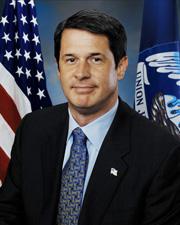 Sen. David Vitter (R-LA)
Legislative Activity
Stay on top of the latest movement without scrolling through every action
Roll call votes on amendments in Senate: Amendment SA 1066 not agreed to in Senate by Yea-Nay Vote. 28 - 65. Record Vote Number: 190.
May 13, 2009
View full timeline
Roll call votes on amendments in Senate: Amendment SA 1066 not agreed to in Senate by Yea-Nay Vote. 28 - 65. Record Vote Number: 190.
May 13, 2009
Senate amendment not agreed to: Amendment SA 1066 not agreed to in Senate by Yea-Nay Vote. 28 - 65. Record Vote Number: 190.
May 13, 2009
Considered by Senate. (consideration: CR S5409, S5421-5423)
May 13, 2009
Amendment SA 1066 not agreed to in Senate by Yea-Nay Vote. 28 - 65. Record Vote Number: 190.
May 13, 2009
Senate amendment submitted
May 12, 2009
Senate amendment proposed (on the floor): Amendment SA 1066 proposed by Senator Vitter to Amendment SA 1058.(consideration: CR S5361-5362; text: CR S5361)
May 12, 2009
Amendment SA 1066 proposed by Senator Vitter to Amendment SA 1058. (consideration: CR S5361-5362; text: CR S5361) To specify acceptable forms of identification for the opening of credit card accounts.
May 12, 2009
Votes
1 roll call on this amendment
Text
Proposed
CREDIT CARDHOLDERS' BILL OF RIGHTS ACT OF 2009--Continued

The ACTING PRESIDENT pro tempore. In my capacity as a Senator from
the State of Illinois, I suggest the absence of a quorum. The clerk
will call the roll.
The legislative clerk proceeded to call the roll.
Mr. GREGG. Mr. President, I ask unanimous consent that the order for
the quorum call be rescinded.
The PRESIDING OFFICER (Mr. Udall of Colorado). Without objection, it
is so ordered.
Mr. GREGG. Mr. President, I ask unanimous consent to speak for 5
minutes on an amendment I intend to offer but I will not offer at this
time.
The PRESIDING OFFICER. Without objection, it is so ordered.
Mr. GREGG. Mr. President, I have an amendment which I intend to offer
at the proper time. I understand there is a bit of a parliamentary
issue right now relative to amendments.
I intend to offer an amendment dealing with the issue of debt.
Obviously, this is a credit card bill, and debt is the topic of the
day. But I am talking about the debt of the United States. One may say:
How does this affect the credit card bill? The interest on credit cards
is driven in large part by what it costs to get money, and what it
costs

[[Page S5352]]

to get money is driven in large part by how much debt the United States
has to finance every year.
We are, unfortunately, in a situation where we are financing a
massive amount of debt. Regrettably, a lot of that debt is the result
of the fact that the Government has had to move in and basically be the
force for liquidity in our economy, and thus the deficit has been
driven up dramatically.
The President estimated the deficit this year to be $1.8 trillion.
This is a massive number, almost incomprehensible for most people to
understand. It represents four times more than the highest deficit I
have ever seen. More importantly, it reflects the fact that for every
dollar we are spending in the Government today, 50 cents of it is
borrowed, essentially. So we are borrowing half the money we are
spending. That is a lot of debt. That adds to what is known as the
national debt. Right now, the national debt is about 40 percent of the
gross national product. That is a survivable event, but after this
deficit this year, it is going to move up significantly.
Unfortunately, under the budget the President brought forward, it is
projected that there will be $1 trillion of new deficit every year for
the next 10 years. The practical implication of that is the national
debt grows astronomically. In fact, it doubles in 5 years, triples in
10 years, and at the end of 10 years, we will have a national debt
which is 80 percent of the gross national product.
To try to put that in context, because those are all just numbers, if
we as a nation wanted to get into the European Union, they have certain
standards where they say you have to be a responsible country in your
spending, how much you are spending and how much you are borrowing. Two
of the standards are that you cannot run a deficit that is more than 3
percent of your gross national product, and the second is, you cannot
have a national debt that exceeds 60 percent of your gross national
product. This year, we will run a deficit that is 12.5 percent of our
gross national product and we will have a national debt that is 40
percent and going up. It will become 80 percent in a brief period of
time. So under the rules of engagement for joining the European Union,
we would not be allowed in. Can you imagine, the United States could
not get into the European Union, but Latvia or Lithuania could?
Obviously, we do not want to be in the European Union, but when the
industrialized part of the world sets a standard for responsibly
governing and we don't meet it, then something is fundamentally wrong.
What is wrong is we are passing on to our children a deficit and a
debt which is unsustainable, which means essentially they will not have
the type of prosperity we have had. It means they will have to pay so
much in the way of maintaining the cost of the debt that they will be
unable to afford buying a home, sending their kids to college, or
living the quality of lifestyle our generation has had. It is not fair
for one generation to do that to another generation, and it is
especially not fair to do it in the dark of the night where the
American people do not know what is happening, where they do not have
the information needed to make intelligent, thoughtful decisions on how
fast they want this debt on their children to go up.
This amendment is an attempt to basically have full and fair
disclosure of what is happening with our national debt, how big it is
getting, how much it is going to cost, and who is going to have to pay
it--the American people. It has three basic elements.
The first one is that there is a point of order created in this bill
against any spending, any revenues or any appropriations legislation
which doesn't have as part of its statement what effect that has on the
national debt--in other words, how much it is going to add to the
national debt--and what effect it has on every American in
responsibility for that debt. For example, the budget that was passed--
the President's budget, which I didn't vote for but which was passed
anyway, the President's budget will increase the debt on every American
household by $133,000--$133,000--and it will increase the interest
which each American has to pay on that debt by $6,000.
People should know that, in my opinion. That should be fully
disclosed. If we are going to have full and fair disclosure, and we
should, of what a person's credit card obligations are and what a bank
requires in the area of interest payments and what a bank requires in
the area of payment standards and how they can change interest
payments, we should have full and fair disclosure to the American
people of how much their debt is because they are American citizens and
how much interest they have to pay on that debt because they are
American citizens. Because in many instances, $6,000 of annual interest
cost to pay off the Federal debt will exceed a lot of people's payments
on their credit cards, and $130,000 of debt per household exceeds, in
many instances, the mortgage on a lot of people's homes. People should
know the type of debt and deficit that is being loaded onto them by
this Government, which is massively expanding the spending of the
Federal Government.
The first item says there will be a point of order, and unless a bill
comes to this floor and is open and transparent on the issue of how
much debt it creates per household and how much gross debt it creates
on the American people, it will take 60 votes to pass that bill. It
will be subject to a point of order.
The second amendment will be to formally disclose this information by
using the IRS, by putting in place a system where in the IRS
instructions for your 1040 form you will be informed of how much debt
is owed and what the debt is per person in this country. You will be
kept posted as a citizenry to suggest what is happening to you and your
country relative to debt and deficits for which you have to pay.
The third item, in order to keep people informed and have
transparency, will require that every home page of every Federal agency
must have what is known as the debt clock, which shows how much the
debt is going up on a daily basis. So that if you are trying to find
some program at HUD or trying to find some program at the SBA or trying
to find some program at transportation, when you go on that site, you
will be informed immediately as to what the debt of the United States
is and how much it is going up. This is fair and transparent and it is
appropriate.
Remember what is driving all this debt, and I think that is important
for people to understand. This debt is being driven primarily by a
massive expansion in spending. The President said--and I admire him for
his forthrightness--that he believes you can create prosperity by
dramatically growing the size of the Federal Government, by increasing
the spending of the Federal Government. In his proposal, under his
budget, it will take the spending of the Federal Government from 20
percent of gross national product up to 23, 24, 25 percent of gross
national product. Those are huge numbers in the way of increase. We
have never had that type of spending level in this country, except
during World War II. Historically, the spending of the Federal
Government has been about 20 percent of GDP, not 21, not 22, not 23,
and not 24.
But that is the proposal of this administration because they
generally believe in and they have stated it and they put out a budget
which has called for this massive expansion in spending. I don't happen
to agree that is the way you create prosperity. I believe the way you
create prosperity is having a government you can afford, having a
government which you pass on to our children which is affordable to
them, and giving individuals the opportunity to take risk and go out
and create jobs.
It is very hard, for example, for a small businessperson to invest in
their small business--whether it be a restaurant or a small software
company or a repair shop--if their taxes are going to have to go up at
such a rate in order to pay this debt that the money they would have
used to invest for the purpose of creating jobs is skimmed off by the
Government for the purposes of funding this massive expansion. That is
not the best way to create prosperity. It makes much more sense to have
a manageable government.
We are not talking about cutting the size of Government. Nobody is
suggesting that. It doesn't happen around here. We are talking about
having it be a reasonable size, something that is affordable, something
our children can

[[Page S5353]]

pay for, not something that creates a debt and a deficit that is so
high it is unaffordable.
Here is another number that is important or interesting. At the end
of President Obama's budget cycle here, the interest on the debt will
be over $800 billion a year. That is interest. Interest on the Federal
debt will almost be $1 trillion a year. That will be more than we spend
on national defense. It will be, by a factor of five or six times, more
than we spend on education, more than we spend on roads. That is not
right. We shouldn't be spending all this money on interest. We should
be spending it on real programs that do real things to benefit real
people. But you can't do that if you run up the debt so much.
It seems reasonable that we should have full and fair disclosure to
the American people not only about their credit cards and how they are
being treated by their banks or the issuer of the credit cards, but we
should also have full and fair disclosure to the American people about
what the Government is doing to them, about what this Congress is doing
to them, about the amount of deficit and debt that is being put on
their back on a daily basis as we spend money around here as if there
is no tomorrow.
That is all this amendment does. It shouldn't be all that
controversial because these are fairly reasonable things. We should
inform people, when we have a bill as to how much that bill is going to
cost in the way of added debt, not only to the national debt but to
each citizen who is going to have to pay for that bill. We should send
out with your IRS forms a summary of how much debt is owed and how it
will affect you as an individual. When you go on a Federal site, you
should be able to find out fairly easily--and it should be set right
out there so it is transparent and clear--what the national debt is and
how quickly it is going up.
Believe me, credit cards are an important issue in people's lives.
The way they are handled is important. But equally important,
especially for our children, is going to be how much deficit and how
much debt we run up as a government.
I appreciate the courtesy of the majority side in allowing me to
speak at this time.
I yield the floor, and I suggest the absence of a quorum.
The PRESIDING OFFICER (Mr. Kaufman). The clerk will call the roll.
The bill clerk proceeded to call the roll.
Mr. REID. Mr. President, I ask unanimous consent that the order for
the quorum call be rescinded.
The PRESIDING OFFICER. Without objection, it is so ordered.
Mr. REID. Mr. President, I ask unanimous consent that the time until
5:45 p.m. be for debate with respect to Coburn amendment No. 1067, with
the time equally divided and controlled between the leaders or their
designees; that no amendment be in order to the amendment prior to a
vote; that adoption of the amendment require an affirmative 60-vote
threshold; further, that if the amendment achieves that threshold, then
the amendment be agreed to and the motion to reconsider be laid upon
the table; that if the amendment does not achieve that threshold, then
it be withdrawn; provided that amendment No. 1068 be withdrawn upon
disposition of amendment No. 1067; that no further amendments on the
subject of these amendments be in order to H.R. 627; and that at 5:45
p.m. today the Senate proceed to vote in relation to amendment No.
1067, and that of the time of the Republicans, Senator Coburn be given
20 minutes, and of the Democratic time, Senator Feinstein be given 15
minutes.
The PRESIDING OFFICER. Without objection, it is so ordered.
The Senator from Oklahoma is recognized.
Mr. COBURN. Mr. President, would you advise me when I have 10 minutes
remaining?
The PRESIDING OFFICER. I will.
Mr. COBURN. Let me say to the majority leader before he leaves, I
want to thank him for his good-faith effort in working with us on this
amendment. I appreciate the manner in which he has done that.
I want everybody to know what my motivation is. This is not about a
political vote. I know it seems that way, but that is further from the
truth than anything that I know. This is about the U.S. Constitution.
We have two agencies within the Federal Government that, through
bureaucratic means, not a vote of Congress, have limited severely the
second amendment rights of individuals in this country, both on
National Park and Fish and Wildlife Service land. That is 190 million
acres--190 million acres.
So the motivation is for the Congress to decide when we are going to
take away rights guaranteed under the Constitution. We have had a
recent Supreme Court ruling that has upheld the second amendment in a
strong fashion for what it really is, and this is reserved to citizens
of this country.
This is not about hunting. This is not about having a gun to go
hunting. A lot of people are going to make statements about, this is
going to increase poaching. It does not have anything to do with that.
It will not affect that at all.
In fact, on U.S. Forest Service land, the second amendment reigns as
a right guaranteed under the Constitution. Under Bureau of Land
Management land, the second amendment reigns. They do not have any
significant increase in poaching versus the areas where we do not have
guns. So the point is that people who are going to break the law are
going to break the law. So we see no difference.
The second point I would make is that this is about States rights.
Senator Feinstein is going to come down and talk about this. But if
California decides they do not want guns in their State parks, they do
not have to have them. If they decide that, then this amendment would
say they do not have to have them in the Federal parks.
What it says is that we are going to allow the States the right to
determine, under their gun laws, who can have a gun and where, as long
as it passes the muster of the U.S. Constitution.
So this amendment has two key points. One is to protect the second
amendment; and if we are to choose to eliminate somebody's second
amendment rights, the Congress ought to be onboard as affirmatively
limiting those rights rather than bureaucrats.
The second point is to say that States should reign supreme in terms
of their parks and the national parks in their jurisdiction so that
they have coverage over what their State gun laws would have in terms
of application.
Let me reveal data, talking about national parks, that I don't
believe many people are aware of. The latest year for which we have
statistics is 2006. There were 16 homicides, 41 rapes, and multiple
attempted rapes, 92 robberies, 16 kidnappings, 333 aggravated assaults,
and 5,094 other felony violations. We have 1 park ranger for every
100,000 visitors, and we have 1 park ranger for every 180,000 acres.
What we know is that if in your State you have the right to carry on to
public lands or if you have conceal carry laws, that ought to have
application to your State, not to the Federal Government's predominance
over your State.
The numbers I cited only reflect what the Park Service has
investigated. They do not reflect all the other offenses of the Drug
Enforcement Agency, which are thousands. It doesn't reflect the Federal
Bureau of Investigations or local law enforcement investigations in
these areas. So even though parks are relatively safe, the fact is that
oftentimes the best deterrent is for the criminal to know that if they
have a gun, somebody else might also have a gun.
As a physician, I hate what guns do. I don't want guns to be used.
But the fact is, the second amendment to the Constitution is real. What
we have is a situation before us where bureaucrats have said: We will
take your rights away. It may be that the Congress says we should do
that. But if we do it, it ought to be us doing it, not unelected
bureaucrats through redtape fiat to truly limit your ability and your
rights guaranteed under the Constitution.
What does this amendment do? This amendment restores the second
amendment rights as outlined in each individual State back to the
national parks and Fish and Wildlife Service. It says if States want to
change their laws with regard to those, they can. But it leaves it to
the government at the closest level to the people rather than the one
farthest away from the people.

[[Page S5354]]

We will have a lot of claims that this will have an impact on
poaching. It won't have any impact. But even if it does, tell me how
poaching, the unauthorized killing of animals, is a higher value order
than a right guaranteed under the Constitution. You can't find it. If
we are that upside down in our country about guaranteed rights and the
Bill of Rights and the underlying Constitution, then we are in a lot
more severe trouble than most of us would recognize.
What we also know is that on Forest Service lands, we see a certain
amount of poaching, but we have a certain amount of poaching now on
parklands. So we are not going to see a corresponding increase. And if
we do, it is still illegal.
This amendment doesn't apply to national monuments. It preserves
States rights. That means no national monument does this amendment
apply to. It preserves a State's right to do what it should do. In
fact, it makes Congress responsible for the limiting of our rights
under the Constitution rather than bureaucrats.
The consequences of the rules that we have today are bizarre. Not
long ago on the Blue Ridge Parkway, a gentleman was convicted who had a
Virginia right to carry. But because he drove through the national park
with his gun not broken down and not in his trunk, he was convicted of
a violation of national park policy. He was traveling from one place in
Virginia to another and went through a park, as he did that on the
roadway. So he was found liable under a Federal law which was never
intended by us and never intended under the Constitution. Yet he was
compliant with his own State's gun laws.
The whole purpose of this amendment is not a gotcha amendment. It is
to say: Does the second amendment mean something? If we are going to
limit it, it ought to be us who do it. Do States rights mean anything
and should we have bureaucrats limiting individual rights versus the
Congress? If it is going to happen, the Congress has to be the body
that does it.
For decades, regulations enacted by unelected bureaucrats at the
National Park Service, NPS, and the U.S. Fish and Wildlife Service,
FWS, have prohibited law-abiding citizens from possessing firearms on
some Federal lands. The enactment of these rules pre-empted State laws,
bypassed the authority of Congress, and trampled on the constitutional
rights of law-abiding Americans guaranteed by the second amendment of
the U.S. Constitution.
This legislation enables Congress to belatedly weigh in on this
important matter.
The Protecting Americans from Violent Crime Act of 2009 would ensure
State gun laws and citizens' constitutional rights are honored on
Federal lands by prohibiting the Department of Interior from creating
or enforcing any regulations prohibiting an individual, not otherwise
prohibited by law, from possessing a firearm in national parks and
wildlife refuges in compliance with and as permitted by State law.
This legislation would prohibit Federal bureaucrats, activist judges,
and special interest groups from infringing on the right for law-
abiding Americans to defend themselves and their families in national
parks and refuges. This legislation does not affect current hunting and
poaching rules in national parks and refuges.
This legislation is still needed.
While the Department of the Interior, DOI, finalized regulations
permitting the possession of firearms in national parks and refuges in
accordance with State law over a 2-year time period, several anti-gun
groups have successfully sued the Department of the Interior to prevent
this rule from being implemented for the time being.
An activist judge blocked the final gun-in-parks rule because the
Bush administration did not conduct an environmental impact analysis of
the rule change. Such an analysis was not conducted because the rule
change neither authorized the discharging of conceal carry weapons, nor
the poaching of animals.
DOI decided not to appeal this ruling, and is, instead, conducting a
lengthy environmental review before it makes a final determination on
the rule change.
Even if this rule, allowing visitors to carry concealed firearms in
accordance with State law, is reinstated, future administrations or
activist judges could repeal these regulations without congressional
approval. Unelected bureaucrats and judges should not continue to have
the ability to revoke a constitutional right of law-abiding Americans.
Passing this legislation will help ensure that such a comprehensive gun
ban may never again be enacted by unelected officials.
Congressional leadership inappropriately blocked consideration of
this measure repeatedly.
Members of Congress have repeatedly attempted to bring up this
measure for a clean, fair vote. Unfortunately, congressional leadership
has gone to extreme lengths to avoid having a straight up-and-down vote
on this measure.
On December 19, 2007, Majority Leader Reid entered into the record
the following unanimous consent agreement:

Mr. REID. `Mr. President, I ask unanimous consent the
Senate proceed to Calendar No. 546, S. 2483, the energy lands
bills, at a time to be determined by the majority leader,
following consultation with the Republican leader, and that
when considered, it be considered under the following
limitations: that the only amendments in order be five
related amendments to be offered by Senator Coburn; that upon
disposition of all amendments, the bill be read a third time,
and the Senate proceed to vote on passage of the bill.
The ACTING PRESIDENT pro tempore. Without objection, it is
so ordered.

This agreement permitted five related amendments to an omnibus bill
that included dozens of bills that modified National Park Service
lands. The Parliamentarian ruled legislation allowing for firearm
possession in national parks in accordance with State and Federal law
was related and in compliance with Senator Reid's requirement. Instead
of honoring this agreement, however, they majority leader pulled the
entire bill from the floor and reintroduced a nearly identical measure
to technically ``honor'' the unanimous consent agreement without
allowing for a vote on related firearm legislation.
Repeated attempts to bring this bill to the new bill were thwarted.
Consequently, a version of this bill was included at a Senate Energy
and Natural Resources Committee markup along with a package of lands
bill. This amendment was adopted as a stand-alone measure by an 18-5
vote with the understanding that this bill would be included with the
package of lands bill approved during the same markup. Despite a letter
signed by five Senators on the committee asking the chairman of the
committee, ``to honor this agreement and the bipartisan will of the
Committee by including S. 3499 in the Omnibus Public Land Management
Act of 2008,'' this measure was excluded yet again.
When Members of the House of Representatives were close to forcing
consideration of the Protecting Americans from Violent Crime Act as an
amendment to this year's Omnibus Public Land Management Act of 2009,
almost identical to the 2008 bill, Democratic leadership in the House
and Senate coordinated to pull the bill from the floor in the House and
add the entire bill in the Senate as a replacement to a previously
passed House bill on designating a battlefield as a historic site.
While Democratic leadership in the Senate had already managed to block
a vote on the Protecting Americans from Violent Crime Act, by enacting
this maneuver, the House leadership was also able to block any
amendments from being considered in the House.
Last attempts to add firearm legislation to the Omnibus Public Land
Management Act of 2009 proved unsuccessful.
Gun bans on Federal property were enacted by unelected bureaucrats
without the authority of Congress.
In 1936 the National Park Service established regulations banning
firearms in national parks. These regulations were updated in 1983 to
allow for guns to be transported through national parks if they were
unloaded and stored in the trunk of cars.
In 1976 the U.S. Fish and Wildlife Service established similar
regulations for Federal refuges. These regulations were last updated in
1981.
Congress has never endorsed or debated these gun bans.
Unfortunately, however, State laws permitting concealed carry of
firearms were not recognized on Federal land managed by NPS and FWS.
Americans

[[Page S5355]]

on these lands could not possess a loaded firearm in or on a motor
vehicle, a boat or vessel except in specific circumstances. Firearms
could only be transported in or on a motor vehicle, boat or horse if
they were rendered temporarily inoperable, or packed, stored or cased
in a manner that prevented their ready use. The penalties for violating
the gun prohibition included a fine of $5,000 and 6 months in prison.
In addition to criminalizing law-abiding citizens for exercising
their constitutional rights, these regulations exposed the great threat
of bureaucrats overstepping their authority--a threat that still
exists.
These regulations and the corresponding penalties were established
without any congressional mandate or legislative approval.
It is troubling that Government bureaucrats, single-interest groups,
and activist judges could take away the rights of law-abiding citizens
guaranteed by the Federal Constitution on Federal property and without
the consideration of the Federal representatives of the people. The
Supreme Court recently ruled that a complete ban on firearms is
unconstitutional, yet Federal bureaucrats have managed to completely
ban firearms for over 70 years on all 83.6 million acres of national
park lands and for over 30 years on all 90.79 million acres of FWS
lands, except for hunting purposes.
Recently, a judge also repealed the new regulations governing firearm
possession in national parks and refuges on the grounds that no
environmental review was completed prior to the promulgation of the
rule.
It is unclear how allowing conceal carry has a significant impact on
the environment, or how the National Environmental Protection Act
supersedes the second amendment rights of law-abiding Americans on more
than 170 million acres of Federal lands.
While the activist judge ruled administration officials ``abdicated
their congressionally mandated obligation'' to evaluate environmental
impacts and ``ignored, without sufficient explanation, substantial
information in the administrative record concerning environmental
impacts'' of the rule, she failed to consider the constitutional
obligation to protect the right to bear arms.
A handful of unelected and unaccountable bureaucrats and judges
should not possess the ability to overstep the authority of the U.S.
Congress, the Supreme Court, or the U.S. Constitution. ``There was no
legislative process--[NPS and FWS] bureaucrats arbitrarily terminated
this Constitutional right.''
Given the fact that a recent investigator general report of the FWS
Office of Law Enforcement found that this agency has been unable to
even account for firearms under their own management, it also seems
inappropriate for these agencies to concern themselves with regulating
the second amendment rights of law-abiding citizens.
It is clear that Congress should address this issue, and many in
Congress have already expressed their opposition to these regulations,
including 18 of the 23 members of the Senate Committee on Energy and
Natural Resources in the 110th Congress who voted for this amendment--
including the current Secretary of the Interior. Fifty Senators,
including 9 Democrats and 41 Republicans, also signed two letters to
former Secretary of the Interior Dirk Kempthorne asking him to remove
these regulations. Several additional Senators have indicated their
support for allowing State laws to govern firearm possession on public
lands and 25 Senators sponsored similar legislation last Congress.
Even the Department of the Interior--the agency that oversaw the
creation of these regulations--commented in 2008 that ``It's
appropriate to look at updating these regulations, to bring them into
conformity with state laws [on guns use]. Following the release of the
final regulations, a spokesman for the Department of the Interior
pointed out, ``This is the same basic approach adopted by the Bureau of
Land Management and the United States Forest Service, both of which
allow visitors to carry weapons consistent with applicable federal and
state laws. . . . Federal agencies have a responsibility to recognize
the expertise of the states in this area, and Federal regulations
should be developed and implemented in a manner that respects state
prerogatives and authority.''

No other federal land agency has enacted anti-gun rules similar to
the National Park Service and Fish and Wildlife Service.
As a spokesman for the Department of the Interior pointed out in a
press release, both the Bureau of Land and Management and the U.S.
Forest Service allow for the law of the State in which the Federal
property is located to govern firearm possession.
FS and the BLM have not experienced any difficulties as a result of
allowing firearm possession.
According to the BLM, ``Laws and reg[ulation]s pertaining to
concealing and carrying firearms are within [states'] jurisdiction and
we only enforce them on public land if we have state authority by way
of a local agreement. The BLM has some regulations on the use of
firearms that pertain to specific areas, such as recreation sites and
other areas that may be closed to shooting (but that does not make it
illegal to possess a firearm in those areas).''
If other land preservation agencies never had to enact regulations
infringing on the second amendment--including one agency within the
Department of the Interior--why did NPS and FWS, which are both within
the Department of the Interior?
This legislation will protect law-abiding citizens without
threatening natural resources or wildlife.
These anti-gun regulations were intended to ``ensure public safety
and maximum protection of natural resources,'' according to Scot
McElveen, the president of the Association of National Park Rangers.
According to NPS and FWS, prohibiting citizens to carry legally owned
and registered firearms was necessary to prevent the poaching of
animals living on NPS and FWS lands. Anti-gun groups sued the
Department of the Interior to repeal the implementation of the
finalized rule change, claiming in part that overturning the gun ban
will compromise the safety of humans and animals.
The Department of Justice argued against the lawsuit, pointing out
that the new rule ``does not alter the environmental status quo, and
will not have any significant impacts on public health and safety.''
This legislation will likewise not enable or permit illegal hunting
of animals on these lands. Other NPS and FWS regulations specifically
governing illegal hunting will remain in place, ensuring that poaching
will still be illegal.
It will also not authorize the discharging of firearms or target
practice in these natural reserves.
Proponents of these extreme gun restrictions have also claimed that
the unconstitutional regulations are a necessary law enforcement tool
against poaching and other crimes. They reason that if guns are
outlawed in parks and refuges, law enforcement can use the possession
of a firearm to prosecute would-be poachers.
In addition to the fact that the second amendment was not recognized
by our founders to give law enforcement officers in national parks and
refuges an additional tool to eliminate poaching, the fact that both
BLM and FS have not ``required'' these additional regulations further
proves these anti-gun regulations are unnecessary.
As the former Department of the Interior Secretary Dirk Kempthorne
points out, ``Since the [proposed federal regulations similarly]
maintain existing prohibitions on poaching and target shooting, and
carrying weapons in federal buildings, [it] would not cause a
detrimental impact on visitor safety and resources.''
Crime rates on Federal lands are rising.
National parks, while still generally safe for visitors, have seen an
increase in crime.
According to the National Park Service and the Fish and Wildlife
Service, in 2006 there were 16 homicides, including one manslaughter
charge, 41 rape cases, including two attempted rapes, 92 robberies, 16
kidnappings, and 333 aggravated assaults out of 5094 part I offenses.
In national parks there were a total of 116,588 offenses. These
offenses only include homicides and other

[[Page S5356]]

crimes handled by national park and refuge law enforcement, but don't
account for the homicides and crimes other law enforcement agencies
processed--e.g. the Federal Bureau of Investigations, Drug Enforcement
Agency, local law enforcement.
Overriding State laws that give its residents the ability to defend
themselves may increasingly place NPS and FWS visitors in unnecessary
danger.
NPS and FWS anti-gun regulations disarm individuals and leave them
and their families vulnerable to crime on public lands.
In a Seattle Times article titled ``Crime Slowly Creeps Into Parks,
Forests,'' Captain John Klaasen of the U.S. Forest Service states, ``If
you see [a crime] happening in the city, it happens in the forest.''
Whether it is meth labs hidden amid lush forests or car prowls at
trailheads, park rangers and forest officers are seeing an increasing
amount of criminal behavior.
Following the grisly murders of four women at Yosemite National Park
in 1999, Elaine Sevy with the National Park Service stated, ``You're
not escaping society when you come to the parks. Understand that parks
are a microcosm of society.''
For many criminals, parks and forests offer a safe haven.
Consequently, visitors enjoying some of our Nation's natural treasures
are increasingly vulnerable to harm and personal injury.
According to a San Francisco Chronicle article, ``National Parks' Pot
Farms Blamed on Cartels; Mexican Drug Lords Find it Easier to Grow in
State Than Import;''

Hikers in national parks such as Yosemite and Sequoia-Kings
Canyon are encountering a danger more hazardous than bears:
illegal marijuana farms run by Mexican drug cartels and
protected by booby traps and guards carrying AK-47s. . . .
Park service officials said the drug cartels took extreme
measures to protect their plants, which can be worth $4,000
each. Growers have been known to set up booby traps with
shotguns. Guards armed with knives and military-style weapons
have chased away hikers at gunpoint. In 2002, a visitor to
Sequoia was briefly detained by a drug grower, who threatened
to harm him if he told authorities the pot farm's secret
location.''

A more recent news story also highlighted this dilemma. Special agent
eradication teams heavily armed are needed to clear thousands of pot
plants in State and national parks and other public lands. Many of the
marijuana fields are located next to popular trails. However, ``The
folks who are growing the marijuana are not your peace hippies from the
60s . . . These are armed members of the Mexican drug trafficking
organizations, who utilize assault style weapons, assault rifles to
protect their cash crops.''
A February 2005 report, ``Marijuana and Methamphetamine Trafficking
on Federal Lands Threat Assessment,'' concluded that already high
levels of cultivation of cannabis and methamphetamine production by
Mexican drug-trafficking organizations are likely to increase.
``Cannabis cultivators and methamphetamine producers on federal lands
often are armed, and cannabis grow sites and methamphetamine
laboratories frequently are booby-trapped. Law enforcement officers
have seized shotguns, handguns, automatic weapons, pipe bombs,
grenades, and night vision equipment from drug producers and smugglers
on federal lands.''
With one law enforcement officer for about every 110,000 visitors and
118,000 acres of national park land, park police may not always be
close by and individuals may be left to defend themselves. While park
rangers now use bullet-proof vests and automatic weapons to enforce the
law, regular Americans in States where carry laws exist, are denied the
opportunity for self-defense because of these NPS and FWS regulations.
Drug and human smuggling across the U.S. Mexico border has made it
impossible and dangerous for scientists to continue their research and
for visitors to frequent ``well-marked but unofficial trails'' in a
national park.
``Organ Pipe Cactus National Monument stopped granting most new
research permits because of increasing smuggling activity. Scientists
must sign a statement acknowledging that the National Park Service
cannot guarantee their safety from ``potentially dangerous persons
entering the park from Mexico.''
Lands managed by the Department of the Interior lands make up more
than 39 percent of our border with Mexico. Mexican drug trafficking
organizations smuggling operations rely on back routes and private
roads through these lands to transport marijuana and methamphetamine.
These drugs are primarily smuggled through NPS and FWS lands.
A report by the National Parks Conservation Association in 2007
titled ``Perilous Parkland: Homeland Security and the National Parks''
detailed how over the past 2 years at Organ Pipe Cactus National
Monument, ``park rangers have arrested and indicted 385 felony
smugglers, seized 40,000 lbs. of marijuana, and intercepted 3,800
illegal aliens. The Border Patrol estimated that 500 people per day
(180,000 per year) and 700,000 pounds of drugs entered the U.S.
illegally through the monument in the year 2000.'' It is no wonder the
law enforcement staff of 11 park rangers is encountering difficulties
in managing a 330,000-acre park with numerous activities initiated by
Mexican drug cartels.
This park was ranked by the Fraternal Order of Police as the most
dangerous national park in 2003. While two other parks on the Mexico-
U.S. border were listed in top 10 most dangerous national parks in
2003, other parks included on this list were in States such as New
Jersey, Florida, Virginia and Wyoming--Yellowstone National Park.
The Government Accountability Office, in a report entitled a
``Actions Needed to Better Protect National Icons and Federal Office
Buildings from Terrorism,'' additionally expressed concern with the
ability of the Interior Department to maintain adequate security in the
post-9/11 world of heightened alerts due to potential terrorist
attacks. According to a survey by the National Park Service, safety
concerns have played a significant role in the decreasing number of
National Park visitors.
Another result of this surge is that, ``National Park Service
officers are 12 times more likely to be killed or injured as a result
of an assault than FBI agents.''
According to the group Public Employees for Environmental
Responsibility, ``National Park Service commissioned law-enforcement
officers were victims of assaults 111 times in 2004, nearly a third of
which resulted in injury. This figure tops the 2003 total of 106
assaults and the 2002 total of 98.''
Because of this threat, rangers in higher crime areas often carry
automatic weapons and wear bullet-proof vests.
In a CBS News article titled ``Crime Rates Up in National Parks--More
Rangers Find Themselves Battling Lawlessness,'' former executive
director of the U.S. Park Rangers Lodge of the Fraternal Order of
Police and 30-year park ranger, Randall Kendrick noted that ``The
National Park Service has an astoundingly poor safety record for its
officers . . . If anything, these assaults against park rangers are
undercounted. If there is not a death or injury, pressures within
a national park can cause the incident to be reported as being much
more minor than it is in reality, and it is not unheard of for an
assault to go unreported altogether.

FWS refuges have also experienced significant crime and law
enforcement concerns. The Cooperative Alliance for Refugee Enhancement
released a report this past May that pointed out that refuges are also
becoming increasingly dangerous to visitors. According to the report
``Restoring America's Wildlife Refuges,'' there is one law enforcement
officer for every 555,000 acres of refuges.
President of the National Wildlife Refuge Association and chairman of
C.A.R.E., Evan Hirsche, said the following:

A decrease in law enforcement has left the refuges
vulnerable to criminal activity, including prostitution,
torched cars and illegal immigrant camps along the Potomac
River in suburban Washington, methamphetamine labs in Nevada
and pot growing operations in Washington state. . . In some
cases, we find that drug operations have set up shop in
refuges.

The C.A.R.E. report finds that, ``On many wildlife refuges, drugs are
a serious problem. These aren't small-time marijuana gardens; drug
operators on refuges frequently defend their plots with armed guards .
. . A 2005 report by the International Association of Chiefs of Police
(IACP) detailed the urgent need for additional law enforcement to

[[Page S5357]]

respond to commercial-scale drug production and trafficking, wildlife
poaching, vandalism, assaults, and a host of other crimes.
For example, according to C.A.R.E., because of staffing cuts,
Tishomingo National Wildlife Refuge located in Oklahoma, will now share
one law enforcement officer with a refuge in Texas--one law enforcement
officer for 200,000 annual visitors.
While better prioritization of Federal funds may be needed to
increase law enforcement efforts in our public parks, refuges, and
forests, allowing visitors to national parks and refuges to possess
guns provides responsible gun owners the ability to defend themselves
in the event that other protection is not available.
Gun regulations were confusing, burdensome and ineffective.
The contradictory patchwork of Federal regulations within different
agencies created the scenario where a law-abiding gun owner traveling
from public land managed by BLM to an adjacent NPS or FWS unit was
subject to a $5,000 fine and a 6 month prison sentence for violating
Federal regulations.
In many States, people have to pass through designated Federal lands
every day. They should be able to do so without having to worry about
which laws apply on what type of public land, if they are authorized to
carry firearms under State law.
A man driving along the Blue Ridge parkway in Virginia was stopped
for failing to obey a stop sign by a national park ranger. Upon further
inspection, the ranger found two loaded firearms in the car. The
defendant was licensed to conceal carry under Virginia State law and
did not know he was in violation of National Park Service regulations
and had not observed any signs prohibiting the possession or
transportation of loaded and operational firearms. The road he was on
also serves as highway between routes 460 and 220 in the Roanoke area.
The defendant was found guilty, even though he was in his car and
permitted under State law to possess firearms because of an
administrative rule.
The bureaucrats seemingly well intended goal of ``protecting'' the
public and natural resources holds the same flaws of other anti-gun
efforts: It ensures that only criminals possess firearms and makes law
abiding citizens subject to criminal penalties for exercising their
constitutional rights.
An editorial in the Colorado Spring Gazette pointed out that ``Armed
law-abiding citizens aren't the source of violence, criminals are.''
Likewise, John Stossel commented that:

[L]aws that make it difficult or impossible to carry a
concealed handgun do deter one group of people: law-abiding
citizens who might have used a gun to stop crime. Gun laws
are laws against self-defense.
Criminals have the initiative. They choose the time, place
and manner of their crimes, and they tend to make choices
that maximize their own, not their victims', success. So
criminals don't attack people they know are armed, and anyone
thinking of committing mass murder is likely to be attracted
to a gun-free zone, such as schools and malls [or national
parks].
If you are the target of a crime, only one other person
besides the criminal is sure to be on the scene: you. There
is no good substitute for self-responsibility.

Individuals who are already willing to break the law to illegally
hunt on public lands, after all, are no more likely to obey Federal
regulations that disallow the use firearms on public lands.
Federal law enforcement in parks and refuges is ineffective and
incompetent.
According to the inspector general of the Department of the Interior,
NPS law enforcement agents and rangers are ineffectively managed by
``non-law enforcement managers.''
In a statement before the Senate Committee on Finance, inspector
general Earl E. Devaney remarked that various superintendents of a
number of dangerous parks opposed increasing law enforcement staff to
combat rising crime levels for a variety of reasons.
Some superintendents ordered rangers not to carry firearms because
they thought it would ``offend park visitors.''
Other superintendents assigned law enforcement staff non-law
enforcement work to prevent them from becoming ``too much like cops''
or because ``the public does not want park rangers with the same edge
as FBI agents but instead what the public wants is the park ranger to
be cut from the same cloth as a boy scout.'' One assistant Park Police
chief sought to address safety concerns with the statement that
terrorists ``are not incredibly sophisticated.''
According to the Washington Post, a February 2008 assessment of the
U.S. Park Police by Mr. Devaney concluded that:

The U.S. Park Police have failed to adequately protect [ ]
national landmarks [ ] and are plagued by low morale, poor
leadership and bad organization . . . The force is
understaffed, insufficiently trained and woefully equipped .
. .

The International Association of Chiefs of Police also described law
enforcement staffing at the Park Service as ``patently illogical and
erratic.''
This legislation will enable law-abiding citizens to defend
themselves in national parks and refuges.
This legislation would not void State and local laws that prohibit
the possession of fire arms and do not provide State residents with
conceal and carry permits. National monuments would still be governed
by U.S. law that prohibits the possession of firearms at Federal
facilities, and visitors to national parks in States with no conceal
and carry laws would be required to follow State law.
This legislation, similarly to the recently implemented rule change,
does, however, require the National Park Service and any other agency
under the Department of the Interior to promulgate regulations
regarding firearm possession that do not conflict with state and local
laws--including conceal and carry laws.
An aggressive black bear was shot and killed in the Denali National
Park in Alaska. Luckily one of the three park employees threatened by
this bear was authorized to carry a gun. ``An attempt to divert the
bear with pepper spray was ineffective,'' and the bear was shot and
killed. Typical Americans would not have been permitted to defend
themselves with anything besides ``ineffective'' bear spray.
A boy celebrating his tenth birthday in Tonto National Forest in
Arizona was attacked by a rabid mountain lion. The lion made two
attempts to attack the boy, but was shot both times by the boy's uncle
with a pistol. The second shot killed the mountain lion. If this event
had occurred in a national park or refuge, the uncle would not have
been allowed to even have brought an unloaded pistol along with him.
Additionally, a 38-year-old man hiking in British Colombia was
attacked and mauled by a grizzly bear in June and would have been
killed had he not managed to shoot the bear twice. Even though he was
able to shoot the bear, he still needed 40 stitches and suffered a
broken hand and multiple puncture wounds. In national parks and
refuges, this story would have most likely ended tragically.
The Washington Post also featured a two-part story recounting a
double murder in 1981 and an attempted double murder earlier this year
on the Appalachian Trail. Many of the 2,175 miles that make up this
trail are under the jurisdiction of NPS. Adopting this amendment would
ensure all law-abiding citizens would be able to protect themselves
from rare, but dangerous, four- and two-legged predators on this trail
and other NPS and FWS lands.
By passing this bill, the Senate will be voting to increase the
safety of families and discourage criminals from taking advantage of
vulnerable families on Federal lands managed by the Department of the
Interior. Congress will also finally ensure that elected
representatives, instead of federal bureaucrats, determine second
amendment policies in this instance.
It is claimed that gun restrictions enacted by the National Park
Service, NPS, and the U.S. Fish and Wildlife Service, FWS, are
different than those of Bureau of Land Management, BLM, and U.S. Forest
Service lands, FS, because the roles of the agencies are different.
The fact is all four agencies have generally similar responsibilities
to manage and protect Federal properties and national resources.
The NPS mandate is to ``[preserve] unimpaired the natural and
cultural resources and values of the national park system for the
enjoyment, education, and inspiration of this and future generations.''

[[Page S5358]]

The FWS mandate is to ``[work] with others to conserve, protect, and
enhance fish, wildlife, and plants and their habitats for the
continuing benefit of the American people.''
BLM's mission is to ``[sustain] the health, diversity, and
productivity of the public lands for the use and enjoyment of present
and future generations.'' According to the FS Web site, ``the mission
of the USDA Forest Service is to sustain the health, diversity, and
productivity of the Nation's forests and grasslands to meet the needs
of present and future generations.''
Besides the fact that the missions of all four agencies are similar,
because additional regulations prohibit the inappropriate use of
firearms in nondesignated areas, allowing for State conceal and carry
laws will not compromise these agency missions. Instead, by allowing
for State firearm laws to be recognized, visitors will feel safer and
more protected in areas where there is limited or no law enforcement.
It is claimed that animals will be poached and not adequately
protected if visitors are permitted to carry guns in Federal parks.
The fact is that separate regulations already outlaw such behavior.
This legislation will not void those regulations.
This legislation is necessary to enable law-abiding Americans to
defend themselves and their families--not to permit more hunting.
Additionally, officials from FS also have poaching regulations and,
just like FWS, also have the option of enforcing Federal Wildlife
crimes under a criminal code called the Lacey Act.
It is claimed that it would be impractical to enforce State-by-State
conceal and carry laws on NPS lands.
The fact is that both the BLM and the Forest Service have not
expressed any difficulties or frustration in recognizing State laws.
As it currently stands, the NPS does not enforce NPS regulations that
void State concealed carry laws, except if violations are found
inadvertently according to NPS congressional liaison. Even then,
rangers will normally only give a warning to visitors that NPS
regulations do not recognize State conceal and carry permits.
This bill would actually simplify rules for national park and refuge
visitors by requiring them to abide by State and local laws regardless
of what type of Federal land they are visiting. Currently, visitors in
some States may carry operational firearms in State parks, BLM and FS
lands but not in national parks and refuges.
It is claimed that recognizing concealed carry State permits would
compromise the effectiveness of NPS law enforcement.
The fact is that concealed carry permits exist for the protection of
individuals--not law enforcement by regular citizens.
Current police forces are spread far too thin as it is and are not
sufficient. According to GAO, for every one law enforcement officer
there are about 10,000 visitors and 118,000 acres of land. According to
a report, FWS only employs one law enforcement officer for every
550,000 acres of national refuge land.
Both FS and BLM do not believe their effectiveness has been
compromised because State laws governing firearms are followed on their
lands. Additionally, thousands of Americans with concealed carry
permits in 48 States have not compromised the effectiveness of our law
enforcement in States. Why should allowing concealed carry in national
parks produce a different outcome?
It is claimed that poaching has decreased as a result of these
regulations.
The fact is that according to CRS, there is no way of determining
such a conclusion because poaching data is not maintained on a national
basis throughout national parks and refuges for a variety of reasons.
Attempts by both NPS and FWS to keep poaching statistics have not
succeeded for a variety of reasons. Additionally, NPS, up until
recently, did not even differentiate between different types of
poaching when reporting any instances of poaching--including poaching
archaeological relics, trees and plants, and animals.
According to DOI's limited recordkeeping of poaching incidents, there
has actually been a 10 percent increase in these incidents between 2003
and 2006--a jump from 365 incidents in 2003 to 405 in 2006. In contrast
there were 16 homicides; including one manslaughter charge, 41 rape
cases, including two attempted rapes, 92 robberies, 16 kidnappings, and
33 aggravated assaults out of 5094 part I offenses.
It is claimed that hunting is already allowed in a number of
specially designated areas.
The fact is that this bill is not about hunting but concerns the
right for Americans to protect themselves and their families from
criminals and rabid and dangerous animals. This legislation will not
overturn hunting regulations.
It is claimed that 7 former NPS directors have spoken out against
changing the current regulations along with organizations such as the
Association of National Park Rangers, the Coalition of National Park
Service Retirees, and the U.S. Park Rangers Lodge. This legislation
directly contradicts the opinions of those most knowledgeable of law
enforcement in national parks and refuges and thus should not be
endorsed.
The fact is that many of the concerns listed by these organizations
have to do with poaching, not self-defense. The current situation in
our national parks and refuges does not afford many visitors the
benefits of adequate law enforcement protection--a fact that is
emphasized by the increasing level of crime and violence experienced by
law enforcement officers of these public lands.
The Association of National Park Rangers has requested that Congress
weigh in on these Federal regulations concerning the possession of
firearms in these public lands. This amendment gives Congress,
representing all Americans, instead of unelected bureaucrats the
opportunity to do so.
It is claimed that the regulatory process improperly did not include
a full environmental impact study.
The fact is that both the current and previous administrations agreed
that this rule change does not significantly impact the ``environmental
status quo, and . . . public health and safety.'' This bill does not
authorize poaching or illegal gun use.
With that, I reserve the remainder of my time, suggest the absence of
a quorum, and ask unanimous consent that the time be divided equally.
The PRESIDING OFFICER. Without objection, it is so ordered.
Mr. COBURN. I ask unanimous consent to reserve for me 10 minutes.
The PRESIDING OFFICER. Without objection, it is so ordered.
The clerk will call the roll.
The assistant legislative clerk proceeded to call the roll.
Mr. WEBB. Mr. President, I ask unanimous consent that the order for
the quorum call be rescinded.
The PRESIDING OFFICER. Without objection, it is so ordered.
Mr. WEBB. Mr. President, I wish to speak in support of the Coburn
amendment.
The PRESIDING OFFICER. Does the Senator from Oklahoma yield time?
Mr. COBURN. I am happy to yield 5 minutes to the Senator from
Virginia.
Mr. WEBB. I thank the Senator.
Mr. President, there is, rightfully so, a great deal of varied
opinions among our body about the issue of gun control, gun rights, the
second amendment, who, where, what. We have seen it debated many times
in the now 2\1/2\ years since I have been here in the Senate. I think
it reflects the diversity of our country. I think it affects the
different challenges that different regions, different urban and
nonurban environments have when it comes to the use of weapons, and I
respect that.
I respect the fact that many on our side of the aisle have a great
deal of concern about amendments such as this amendment. It just
depends on what you are reading into it, in many cases.
The other part of that is that I believe this particular amendment
addresses those differences, and it does so in a way that attempts to
bring some fairness to people who live in States that have a different
view of the right to bear arms than in other areas. So I think we need
to calm down a little bit in terms of what the intent of this amendment
is and what its application would actually bring about.
This amendment is very clear. It basically says that if you are
authorized to possess a firearm in your State and if the possession of
that firearm is in

[[Page S5359]]

compliance with the laws of your State and if there is a national park
or a national wildlife refuge system in that State, then you would be
authorized to possess a firearm in your State in those areas.
If you look at Virginia, there are a lot of national parks and
wildlife areas that intermingle, even along our roadways. So we have a
State that permits individuals to not only possess firearms but also to
carry them, and potentially they could be at legal risk if they are
driving down the same highway and they get pulled over because they
have crossed into areas that are now national park areas. If you go
along the mountain areas in the western part of our State, that is
true. It is actually true right across the river. If you are driving
down the George Washington Memorial Parkway from Arlington to
Alexandria, you can suddenly enter an area that is a national park
area. So that places a burden on a lot of people who are obeying the
law and who are carrying out the standards that have been placed on
people in Virginia, and this amendment helps to clarify that. That is
all it does.
If you live in a State where you can legally possess a firearm and if
you meet the standards to legally possess a firearm, then in a national
park inside that State, or a national wildlife refuge, you can continue
to possess a firearm. It doesn't mean you can go hunting. It does not
mean a 12-year-old can have a weapon inside a national park. It simply
means that there is a consistency inside that State. If you live in a
different State that doesn't want to allow people to possess firearms
to the extent that the second amendment would allow that sort of State
legislation, then you can't bring a weapon or a firearm inside one of
those jurisdictions.
So, to me, as someone who believes in all of the amendments in our
Bill of Rights, as one who believes very passionately in the first
amendment and the fourth amendment and the fifth amendment as well as,
in this case, the second amendment, I believe this amendment is proper,
and I intend to support it.
With that, I yield the floor.
The PRESIDING OFFICER. The Senator from Oklahoma.
Mr. COBURN. Mr. President, following up on what the Senator from
Virginia said, there actually was an event in his State on the Blue
Ridge Parkway where a gentleman who was licensed to carry failed to
stop completely at a stop sign and was stopped. Under his law, the laws
of the State of Virginia, he was licensed to legally carry, but the
park ranger found that he had guns in his car--all within the laws of
the State of Virginia. Yet he was convicted because he drove through an
edge of a national park, carrying a gun in a national park.
Senator Webb has described it well. This is about establishing
clarity. You still can't go out and target shoot. You can't hunt. But
what you can do is be within the law. So by protecting the second
amendment and by protecting States rights, we will have common sense.
I would make the other point--the Senator from Connecticut is here--
if your State says: We don't want to do these things, you can under
this amendment. So if you have a national park and you don't allow guns
in the State park, you can say you don't allow guns in the national
park. So it follows completely. When the Senator from Connecticut asked
me about this today, I went back to my staff, and, in fact, that is the
case, that State law will reign supreme as long as there is consistency
within the State and the park that is part of that State.
So I also agree with what Senator Webb said, which is the natural
reaction is, this is nuts. It is not nuts. It is about commonsense
application of the second amendment. It is about States rights, and it
is about not putting people in jeopardy who are in jeopardy today
because they are lawfully carrying out the laws of their own State.
With that, I reserve the remainder of my time.
The PRESIDING OFFICER. The Senator from Connecticut.
Mr. DODD. Mr. President, I did not intend to comment on all of this,
but as the manager of the underlying bill dealing with the credit card
legislation, let me first of all thank my colleague from Oklahoma for
that clarification I raised because it is an important point, and it is
one raised by others as well about whether a State statute that would
have prohibited someone from carrying a licensed weapon in a State park
would apply as well to the national park located in that State, and I
appreciate very much his answer to that question. And the point raised
by Senator Webb is worthy as well.
I come from a State that I believe is still the largest manufacturer
of weapons in the United States, Connecticut. Not many people are aware
of that fact. But we have lost a lot of that employment over the last
number of years. A lot of it has gone offshore, regrettably, but for a
number of years Connecticut led the Nation in the production of rifles,
shotguns, and handguns. So I have more than a familiarity with the
issue.
My concern here is about the amendment, on one hand, but I respect
what my friend from Oklahoma said. My concern is about the underlying
bill and what happens to it, having watched the fate of other
legislation where it has been the case that it moves to the other body
and what happens to the underlying bill. I suspect, based on what I
have heard, that it may carry, and if that is the case, my hope is that
we will be able to still move forward with the other body, resolve
these matters favorably one way or the other, and still deal with the
underlying issue of credit cards. I hate to see us lose this
opportunity to make a difference with credit card reform. I am not
anticipating that to be the case, but there is always that risk we run,
and I would be remiss if I didn't raise that concern I have as the
manager of the bill.
Senator Shelby and I have worked very hard to put together a credit
card reform bill that we hope enjoys broad bipartisan support. It is a
balanced bill that will allow an industry to continue to profit, to
move forward, but not at the expense of consumers with unnecessary rate
increases or exorbitant fees and the like that we have watched too many
Americans face over the last number of years. We make major changes in
how credit cards are handled under this bill. I know millions of
Americans will benefit from this if we are able to pass it into law.
I believe the interest of my friend and colleague from Oklahoma is
not in undermining that effort, but he has a strong interest in the
amendment he has raised, and I believe he has raised it on any number
of bills over the past weeks or months.
I see my colleague standing, and I yield.
The PRESIDING OFFICER. The Senator's time has expired.
The Senator from Oklahoma.
Mr. COBURN. Mr. President, as I told the Senator from Connecticut,
the underlying bill has many things I am in favor of. I don't want to
see it fail on this, but nor should we want to see the second amendment
trampled, nor should we want common sense to go out the window as we
apply laws in this country.
The fact is, we have had very many good commonsense amendments come
out of the Senate that don't come out of conference committee. I am not
sure I would expect a different result on this one.
The fact still remains that we have an incoherent policy that takes
away a right that has been done by bureaucrats. If we decide we don't
want to do that, then that is the Congress speaking that we are not
going to do that, and that is fine. But to have bureaucrats eliminate
some of these second amendment rights and do so in a way that causes
people confusion and puts people at risk is wrong.
So I thank the Senator for his comments. I hope he can support the
amendment because it is a commonsense amendment. He has supported many
other of my amendments. What you do in conference will determine
whether it comes back out with that on it.
I yield back the remainder of my time.
Mr. DODD. Mr. President, I yield back all time at this point and ask
for the yeas and nays on the Coburn amendment.
The PRESIDING OFFICER. Is there a sufficient second?
There is a sufficient second.
The question is on agreeing to the amendment.

[[Page S5360]]

The yeas and nays are ordered.
The clerk will call the roll.
The assistant legislative clerk proceeded to call the roll.
Mr. DURBIN. I announce that the Senator from Massachusetts (Mr.
Kennedy), the Senator from Maryland (Ms. Mikulski), and the Senator
from West Virginia (Mr. Rockefeller) are necessarily absent.
The PRESIDING OFFICER (Mrs. Shaheen). Are there any other Senators in
the Chamber desiring to vote?
The result was announced--yeas 67, nays 29, as follows:

[Rollcall Vote No. 188 Leg.]

YEAS--67

Barrasso
Baucus
Bayh
Begich
Bennet
Bennett
Bond
Brownback
Bunning
Burr
Byrd
Casey
Chambliss
Coburn
Cochran
Collins
Conrad
Corker
Cornyn
Crapo
DeMint
Dorgan
Ensign
Enzi
Feingold
Graham
Grassley
Gregg
Hagan
Hatch
Hutchison
Inhofe
Isakson
Johanns
Klobuchar
Kohl
Kyl
Landrieu
Leahy
Lincoln
Lugar
Martinez
McCain
McConnell
Merkley
Murkowski
Nelson (NE)
Nelson (FL)
Pryor
Reid
Risch
Roberts
Sanders
Sessions
Shaheen
Shelby
Snowe
Specter
Tester
Thune
Udall (CO)
Vitter
Voinovich
Warner
Webb
Wicker
Wyden

NAYS--29

Akaka
Alexander
Bingaman
Boxer
Brown
Burris
Cantwell
Cardin
Carper
Dodd
Durbin
Feinstein
Gillibrand
Harkin
Inouye
Johnson
Kaufman
Kerry
Lautenberg
Levin
Lieberman
McCaskill
Menendez
Murray
Reed
Schumer
Stabenow
Udall (NM)
Whitehouse

NOT VOTING--3

Kennedy
Mikulski
Rockefeller
The PRESIDING OFFICER. On this vote, the yeas are 67, the nays are
29. Under the previous order requiring 60 votes for the adoption of
this amendment, the amendment is agreed to.

Amendment No. 1068 Withdrawn

The PRESIDING OFFICER. Under the previous order, amendment No. 1068
is withdrawn.
The majority leader.
Mr. REID. Madam President, for Members of the Senate, we have spent
all day on the Coburn amendment. We tried to work something out. We
could not. We took the vote. The Senate has spoken.
I hope that Senators who have amendments to offer would do so. We
have to complete this legislation. It is no one's fault they have not
been able to offer amendments because the floor was blocked and they
could not do that. But I hope tonight we can have some amendments laid
down. I hope people will do that. We are not going to have a lot of
amendments pending, but if somebody wants to lay down some amendments,
a reasonable number of amendments, that is fine. There is going to come
a time when we are going to have to move on. This is a bill literally
supported by 90 percent of the American public. This bill received
almost 380 votes in the House. We are going to have to move on.
I am not going to file cloture tonight. It is only Tuesday. But we
will see what happens tomorrow. We have a lot of other business we need
to complete before we leave here. This has been a long work period. We
have accomplished a lot of things. We have a lot more to do. We would
like to be able to complete our work by next Thursday. I don't know
that we can do that, but we certainly need to try. We have things we
are going to have to do before the work period ends. Monday is a
nonvote day.

I am not criticizing anyone, but I repeat, let's not be tied up in
the mornings and say: I can't offer my amendment in the morning; I am
too busy; I have appointments. The most important thing a Senator can
do is to legislate. We need to start legislating. This bill is very
important. The managers have worked very hard. Senators Dodd and Shelby
worked the weekend to come up with the agreement they got to get a
bipartisan bill we can work on. I applaud each of them for their work
together. This sends a good message to the American public that we can
do something very important.
I repeat, there will be no more votes tonight, but we need to have
some amendments laid down so we can start voting tomorrow.
The PRESIDING OFFICER. The Senator from Connecticut.
Mr. DODD. Madam President, I thank the majority leader for those
words, and let me just say, on behalf of Senator Shelby and myself, if
Members have amendments, please bring them over. In many cases, we
might be able to accept them; others to modify. In some cases we may
have to reject them, but we can't make those decisions unless we know
what they are. We can move this along pretty quickly if Members will
let us know what they want to offer, and we will see if we can work
those out.
So I appreciate the majority leader making that point. We will stay
as late as possible to have Members come by with their amendments, to
meet with staff and others to see if we can't move forward with the
bill. We have an opportunity this week to do something for millions and
millions of our fellow constituents and citizens around this country.
There is nothing that plagues our constituents more than these
outrageous fees and rates that are being increased on their accounts,
and we can make a difference this week in that matter. But we need to
know the amendments.
Senator Shelby and I put together a good bill, but we always know our
colleagues can offer ideas as well to improve it. So we would like that
opportunity, and I appreciate the majority leader making that point.
Mr. REID. I say to my friend, the manager of this bill, we both want
amendments to be offered, if in fact people want to offer amendments.
But we hope they would be related to the bill. If we have a few more
nongermane amendments, it is going to wind up that the banks win again
because we will not be able to proceed on this legislation if we have
more amendments dealing with unrelated matters, such as guns or
whatever else somebody else dreams up.
In the morning, we have a cloture vote on one of Secretary Salazar's
assistants. It is very important we have that vote. We will have it an
hour after we come in, unless we work out another time with our
colleagues. We have to complete that. I hope that we can get that done.
Based on what we have been through in years passed, I can't imagine
that we would have to invoke cloture on a Cabinet nomination, someone
who is going to work for one of our Cabinet officers. That is what I
thought we debated with the nuclear option. But it appears there are a
lot of people not willing to even allow a vote on David Hayes.
It seems a little unusual for me that people who were wanting to
invoke the nuclear option are now saying: Well, we are not sure we were
right about that, and we are not even going to allow you to have a vote
on someone whom Secretary Salazar has worked very hard on, getting him
to help him work on the many issues he has to work on in the Department
of the Interior. So I hope we can get that over with in the morning and
that we would not have to have a cloture vote. But it appears we might
have to do that. I wish I didn't have to file cloture on any nominees,
but we have had to do it many times already this Congress.
Mr. DODD. I thank the majority leader, and I would say that we are
open for business, Senator Shelby and I are. So if there are
amendments, let us hear them. Bring them over and we will try to move
things along.
The PRESIDING OFFICER. The Republican leader is recognized.

Amendment No. 1085 to Amendment No. 1058

Mr. McCONNELL. Madam President, on behalf of Senator Gregg, I call up
amendment No. 1085 and ask for its immediate consideration.
The PRESIDING OFFICER. The clerk will report.
The legislative clerk read as follows:

The Senator from Kentucky [Mr. McConnell], on behalf of
Senator Gregg, proposes an amendment numbered 1085.

Mr. McCONNELL. Madam President, I ask unanimous consent that the
reading of the amendment be dispensed with.
The PRESIDING OFFICER. Without objection, it is so ordered.
The amendment is as follows:

(Purpose: To enhance public knowledge regarding the national debt by
requiring the publication of the facts about the national debt on IRS
instructions, Federal websites, and in new legislation)

At the appropriate place, insert the following:

[[Page S5361]]

SEC. ___. ENHANCED TAXPAYER DISCLOSURE.

(a) In General.--It shall not be in order to consider any
appropriations, direct spending, or revenue bill or joint
resolution reported by any committee unless the measure
contains a debt disclosure section setting forth debt
disclosures in the following form:

``SEC. ___. DEBT DISCLOSURE.

``(a) Current Debt.--The level of the current gross Federal
debt of the Nation is $_____.
``(b) Per Person.--The level of the current gross Federal
debt of the Nation per citizen is $_____.
``(c) Debt Increase With Passage of This Act.--Enactment of
this Act would cause the gross Federal debt of the Nation to
rise or fall to $_____. The new level of gross Federal debt
per citizen would equal $_____.
``(d) Definitions.--In this section, the term `gross
Federal debt' means the nominal levels of gross Federal debt
(debt subject to limit as set forth in the Budget Resolution)
as determined by the Bureau of Public Debt and published in
latest Monthly Treasury Statement, not debt as a percentage
of gross domestic product, and not levels relative to
baseline projections.''.
(b) Supermajority Waiver and Appeal in the Senate.--
(1) Waiver.--This section may be waived or suspended only
by the affirmative vote of three-fifths of the Members, duly
chosen and sworn.
(2) Appeal.--An affirmative vote of three-fifths of the
Members, duly chosen and sworn, shall be required to sustain
an appeal of the ruling of the Chair on a point of order
raised under this section.

SEC. __. ANNUAL NOTIFICATION OF PER TAXPAYER SHARE OF FEDERAL
PUBLIC DEBT.

(a) In General.--Chapter 77 of the Internal Revenue Code of
1986 is amended by adding at the end the following new
section:

``SEC. 7529. ANNUAL NOTIFICATION OF PER TAXPAYER SHARE OF
FEDERAL PUBLIC DEBT.

``In the case of any booklet of instructions for Form 1040,
1040A, or 1040EZ prepared by the Secretary for filing
individual income tax returns for taxable years beginning in
any calendar year, the Secretary shall include in a prominent
place the per individual taxpayer share of the Federal public
debt determined on the last day of the preceding fiscal year
and using the most recent census data. The information
regarding such share of the Federal public debt shall also be
placed prominently on the Internal Revenue Service Internet
website.''.
(b) Conforming Amendment.--The table of sections for such
chapter 77 is amended by adding at the end the following new
item:

``Sec. 7529. Annual notification of per taxpayer share of Federal
public debt.''.

SEC. ___. NATIONAL DEBT CLOCK DISPLAYED ON GOVERNMENT
WEBSITES.

(a) Definition.--In this section:
(1) Agency.--The term ``agency'' has the meaning given
under section 551(1) of title 5, United States Code.
(2) Congressional website.--The term ``congressional
website'' means--
(A) the website relating to the Senate maintained by the
Secretary of the Senate; and
(B) the website relating to the House of Representatives
maintained by the Clerk of the House of Representatives.
(b) National Debt Clock.--The website of each agency and
each congressional website shall include a national debt
clock that displays the national debt and the rate of the
increase in the national debt on a continuous basis.

The PRESIDING OFFICER. The Senator from Louisiana.

Amendment No. 1066 to Amendment No. 1058

Mr. VITTER. Madam President, I ask unanimous consent to set aside the
pending amendment and call up the Vitter amendment, No. 1066.
The PRESIDING OFFICER. Is there objection?
Hearing no objection, it is so ordered.
The clerk will report.
The assistant legislative clerk read as follows:

The Senator from Louisiana [Mr. Vitter] proposes an
amendment numbered 1066 to amendment No. 1058.

Mr. VITTER. I ask unanimous consent to waive the reading of the
whole.
The PRESIDING OFFICER. Without objection, it is so ordered.
The amendment is as follows:

(Purpose: To specify acceptable forms of identification for the opening
of credit card accounts)

At the end of the bill, add the following:

SEC. __. FORMS OF ACCEPTABLE IDENTIFICATION FOR CREDIT CARD
ISSUERS.

(a) In General.--Chapter 2 of the Truth in Lending Act (15
U.S.C. 1601 et seq.) is amended by inserting after section
127A the following new section:

``SEC. 127B. IDENTIFICATION AND VERIFICATION OF
ACCOUNTHOLDERS.

``(a) In General.--Subject to the requirements of this
section, the Board shall prescribe regulations setting forth
the minimum standards for card issuers under open end credit
plans and cardholders regarding the identity of the consumer,
that shall apply in connection with the opening of such a
credit card account.
``(b) Minimum Requirements.--The regulations required under
subsection (a) shall, at a minimum, require card issuers to
implement, and cardholders (after being given adequate
notice) to comply with, reasonable procedures for--
``(1) verifying the identity of any person seeking to open
a credit card account, to the extent reasonable and
practicable;
``(2) maintaining records of the information used to verify
a person's identity, including name, address, and other
identifying information; and
``(3) consulting lists of known or suspected terrorists or
terrorist organizations provided to the card issuer by any
government agency, to determine whether a person seeking to
open a credit card account appears on any such list.
``(c) Forms of Acceptable Identification.--A card issuer
may not accept, for the purpose of verifying the identity of
an individual seeking to open an account in accordance with
this subsection, any form of identification of the
individual, other than--
``(1) a social security card, accompanied by a photo
identification card issued by the Federal Government or a
State government;
``(2) a driver's license or identification card issued by a
State, in the case of a State that is in compliance with
title II of the REAL ID Act of 2005 (49 U.S.C. 30301 note);
``(3) a passport issued by the United States or a foreign
government; or
``(4) a photo identification card issued by the Secretary
of Homeland Security (acting through the Director of the
United States Citizenship and Immigration Service).''.
(b) Effective Date.--Section 127B of the Truth in Lending
Act, as added by this section, shall become effective 6
months after the date of enactment of this Act.

Mr. VITTER. Madam President, this is a very straightforward but
important amendment. It would grant rulemaking authority to the Federal
Reserve to set forth minimum standards for credit card issuers to
establish a consumer's identity in order to prevent illegal
immigrants--folks in the country illegally, breaking Federal law,
including terrorists, in some cases, and including many others here
illegally--from obtaining credit cards.
Madam President, we have all read numerous accounts of how this is
actually a growth industry for some very large financial institutions.
Not so long ago, in February 2007, the Wall Street Journal reported:

In the latest sign of the U.S. banking industry's
aggressive pursuit of the Hispanic market, Bank of America
Corp. has quietly begun offering credit cards to customers
without Social Security numbers--typically illegal
immigrants.

The same Wall Street Journal article detailed how Bank of America
abused loopholes in customer identification rules to provide illegal
immigrants with credit cards.

The new Bank of America program is open to people who lack
both a Social Security number and a credit history, as long
as they have held a checking account with the bank for 3
months without an overdraft. Most adults in the U.S. who
don't have a Social Security number are undocumented
immigrants.

Now, as we have a major credit crisis in this country, and
particularly when we are throwing billions upon billions of taxpayer
dollars at these same large financial institutions, I don't think it is
too much to ask that they help us enforce our law, not to be a willing
coconspirator with lawbreakers, and to actually go after the illegal
alien market as a new niche market or a new profit center. I think that
is offensive because we do have a serious illegal immigration problem
that we are trying to get our hands around in this country.
So again, my amendment is very simple. It doesn't say exactly what
all of the detailed rules have to be. It simply gives the experts in
the Federal system--in this case the Federal Reserve--rulemaking
authority to set forth minimum standards for credit card issuers to
establish a consumer's identity, and specifically to prevent illegal
immigrants and terrorists from obtaining credit cards. It shouldn't be
too much to ask, curtailing a little bit of the big banks and big
credit card companies' business to do that, to at least be that
careful. It isn't asking very much, and I believe this would be an
important step forward in the proper enforcement of our immigration
laws.
I thank my colleagues for their attention. I urge all of my
colleagues, Democrats and Republicans, to support this commonsense,
simple, but important amendment, and I look forward to a vote tomorrow.
I yield the floor, and I suggest the absence of a quorum.
The PRESIDING OFFICER. The clerk will call the roll.
The legislative clerk proceeded to call the roll.

[[Page S5362]]

Mr. UDALL of Colorado. Madam President, I ask unanimous consent that
the order for the quorum call be rescinded.
The PRESIDING OFFICER. Without objection, it is so ordered.
Mr. UDALL of Colorado. Madam President, I rise on behalf of consumers
in Colorado and across this country who work hard every day, pay their
bills on time, and struggle to stay ahead in the midst of an economic
recession. In the face of these challenges, the last thing Colorado
families need is credit card companies that arbitrarily change terms
and charge fees, offering only legalese and print so small you need a
magnifying glass to read it.
Some credit card companies have been taking advantage of consumers
for years. This bipartisan bill would give cardholders some much needed
relief, and I am very glad we are taking it up this week. Why, Madam
President? Because after the near financial collapse last year,
Congress has worked to meet the needs of banks and financial
institutions. I think it is time working families also had someone in
their corner. This bill is about them. It is about making sure that
families who pay their bills on time and stay within their means can't
get charged excessive fees or see their interest rates jacked up
without clear notice.
I have come to the floor, as many of my colleagues have today, to
urge our other colleagues to support this important legislation.
We know how important short-term credit is to families, and we have
all heard stories of people who have been victimized by the kind of
unfair dealing that I am talking about tonight. As a longtime supporter
of credit card reform, I have met with countless victims of the abusive
practices of credit card companies. One of them was a wonderful woman
by the name of Susan Wones, and I want to take a minute to share her
experience with you tonight.
I met Susan in person last year when she flew from Denver to
Washington to testify before Congress about the unfair treatment she
received from a credit card company. She has a classic story. She has
always maintained a high FICO score, never exceeded her card's limit,
and always paid the amount required on time. In short, she is a good
customer who plays by the rules and lives within her means. But despite
Susan's good standing, one of her credit card issuers doubled her
interest rate to 25 percent without notice.
When she later asked why, she was told the rate had been increased,
not because she had missed a payment but because this particular credit
card company decided her balance on another card was too high. This
practice, known as universal default, will no longer be allowed if this
legislation passes and is signed into law.
Unfortunately for Susan, this kind of treatment did not stop there.
Just before she was prepared to testify in the House of
Representatives, the powerful lobbying interests of the banks and
credit card issuers insisted she sign a waiver relinquishing her
privacy rights to her personal financial information. Then, a month
later, after deals were worked out to have Susan return to Washington
and finally tell her story without fearing her personal information
would be released to the press, that information was released anyway.
While Susan had nothing to hide, the treatment she received is
indicative of the abusive treatment American consumers have been
subject to at the hands of credit card companies. This kind of
treatment has to stop, and that is why we need this bill.
The bill will put in place some commonsense rules that will protect
honest, hard-working Americans from unfair and downright abusive
practices by credit card issuers. I first introduced similar
legislation to protect individual consumers from this kind of unfair
treatment by credit card companies back in 2006, as a Member of the
House of Representatives. I reintroduced this bill in the House in
2007, and last year I worked with Representative Carolyn Maloney, from
New York, to incorporate the principles of my bill in the Credit
Cardholders' Bill of Rights.
I thank and acknowledge Congresswoman Maloney for her hard work and
dedication in working on that legislation, which passed the House last
year and then again just a few weeks ago.
This year, one of my first steps as a freshman Senator was to join
with Senator Schumer in introducing the Credit Cardholders' Bill of
Rights in the Senate. The legislation we are considering today overlaps
in every critical category with a bill Senator Schumer and I
introduced. I did wish to acknowledge Chairman Dodd for his leadership
on this important issue.
Here is what the bill does, in short. It protects against arbitrary
interest rate increases, No. 1. No. 2, it prevents cardholders who pay
on time from being unfairly penalized. No. 3, it bars excessive fees
and will require more fairness in the way payments are handled.
Finally, it will prohibit the use of universal default clauses, as I
mentioned earlier in my remarks.
With all due respect, we know how important the credit card industry
is to modern America. For many Americans, consumer credit is more than
a convenience, it is a necessity. You have the parent who uses short-
term credit to buy groceries, the small business owner who uses credit
to cover expenses. In that regard, a well-functioning credit card
industry is absolutely essential to our economy. But this influence
should not give the credit card industry the right to abuse customers
with an ``anything goes in the name of profit'' approach.
For far too long, the Federal Government has placed the blame of
individual's overbearing debts solely at the feet of the American
consumer. Most notably, in 2005, the laws governing bankruptcy were
fundamentally changed to prevent abuse. But while we passed laws to
hold the consumer accountable, too much emphasis was placed on
borrowers alone. Just as Congress has cracked down on the predatory
lending that spurred the subprime mortgage crisis, Congress must also
do more to promote responsibility by the credit card companies that
provide this important consumer credit.
In the last several months, the Federal Government has taken
extraordinary steps to respond to a financial crisis that has paralyzed
the credit markets. This crisis was brought on, as we know all too
well, by excessive leverage and risk-taking on the part of the very
banks that have treated credit card customers such as Susan Wones so
unfairly.
I supported many of those steps to rescue the financial industry, as
many in the Senate have done as well--despite my distaste for doing
so--because I believed they were necessary to stabilize our economy and
get credit flowing again. It is now time we start working to level the
playing field for American families who are being asked to pick up the
tab.
As I close, I wish to underline that this is a commonsense bill whose
time has come. It is time to stand for working families again. This
legislation is a big step in that direction, and I urge my colleagues
to support it.
I yield the floor.
The PRESIDING OFFICER. The Senator from Vermont is recognized.

Amendment No. 1062 to Amendment No. 1058

Mr. SANDERS. Madam President, I move to set aside the pending
amendment so I can call up amendment No. 1062, and I ask for its
immediate consideration.
The PRESIDING OFFICER. Is there objection? Without objection, it is
so ordered.
The clerk will report.
The legislative clerk read as follows.

The Senator from Vermont [Mr. Sanders], for himself, Mr.
Harkin, Mr. Leahy, and Mr. Whitehouse, proposes an amendment
No. 1062 to an amendment numbered 1058.

The amendment is as follows:

(Purpose: To establish a national consumer credit usury rate)

At the appropriate place, insert the following:

SEC. __. NATIONAL CONSUMER CREDIT USURY RATE.

(a) In General.--Section 107 of the Truth in Lending Act
(15 U.S.C. 1606) is amended by adding at the end the
following new subsection:
``(f) National Consumer Credit Usury Rate.--
``(1) Limitation established.--Notwithstanding subsection
(a) or any other provision of law, but except as provided in
paragraph (2), the annual percentage rate applicable to an
extension of credit obtained by use of a credit card may not
exceed 15 percent on unpaid balances, inclusive of all
finance charges. Any fees that are not considered finance
charges under section 106(a) may not be used to evade the
limitations of this paragraph, and the total sum of such

[[Page S5363]]

fees may not exceed the total amount of finance charges
assessed.
``(2) Exceptions.--
``(A) Board authority.--The Board may establish, after
consultation with the appropriate committees of Congress, the
Secretary of the Treasury, and any other interested Federal
financial institution regulatory agency, an annual percentage
rate of interest ceiling exceeding the 15 percent annual rate
under paragraph (1) for periods of not to exceed 18 months,
upon a determination that--
``(i) money market interest rates have risen over the
preceding 6-month period; or
``(ii) prevailing interest rate levels threaten the safety
and soundness of individual lenders, as evidenced by adverse
trends in liquidity, capital, earnings, and growth.
``(B) Treatment of credit unions.--The limitation in
paragraph (1) does not apply with respect to any extension of
credit by an insured credit union, as that term is defined in
section 101 of the Federal Credit Union Act (12 U.S.C. 1752).
``(3) Penalties for charging higher rates.--
``(A) Violation.--The taking, receiving, reserving, or
charging of an annual percentage rate or fee greater than
that permitted by paragraph (1), when knowingly done, shall
be deemed a violation of this title, and a forfeiture of the
entire interest which the note, bill, or other evidence of
the obligation carries with it, or which has been agreed to
be paid thereon.
``(B) Refund of interest amounts.--If an annual percentage
rate or fee greater than that permitted under paragraph (1)
has been paid, the person by whom it has been paid, or the
legal representative thereof, may, by bringing an action not
later than 2 years after the date on which the usurious
collection was last made, recover back from the lender in an
action in the nature of an action of debt, the entire amount
of interest, finance charges, or fees paid.
``(4) Civil liability.--Any creditor who violates this
subsection shall be subject to the provisions of section
130.''.
(b) Civil Liability Conforming Amendment.--Section 130(a)
of the Truth in Lending Act (15 U.S.C. 1640(a)) is amended by
inserting ``section 107(f)'' before ``this chapter''.

Mr. SANDERS. Madam, this amendment, No. 1062, is being cosponsored by
Senator Harkin, Senator Durbin, Senator Levin, Senator Leahy, and
Senator Whitehouse. Before I speak on this amendment, let me begin by
commending the chairman of the Banking Committee, Senator Dodd, and
Ranking Member Shelby, for introducing the underlying bill we are
debating today that, for the first time, would seriously begun to crack
down on big banks and credit card issuers that are ripping off millions
of American consumers by charging outrageously high interest rates and
sky-high fees. The American people are saying loudly and clearly:
Enough is enough. This legislation begins--begins--to move us in the
right direction.
I also commend President Obama for his leadership on this issue.
Without his tenacious support for this bill, it is doubtful we would
have the necessary votes to pass this important piece of legislation--
and we will have the necessary votes to do that.
Under the Dodd-Shelby bill, credit card companies will no longer be
payable to raise interest rates at any time for any reason. Credit card
companies will be banned from retroactively raising interest rates on
consumers who are less than 60 days late in paying their credit card
bills.
This bill also prohibits credit card issuers from increasing interest
rates on consumers during the first year after a credit card account is
opened, and it requires teaser rates to last at least 6 months, among
many other things.
When I was the ranking member of the Financial Institutions and
Consumer Credit Subcommittee in the House, I fought to end the ``bait
and switch'' practices of the credit card companies for years. It is
something we worked on for a long time in the House. I applaud Chairman
Dodd for putting a stop to some of the most egregious practices being
perpetrated by the credit card companies today.
But while Chairman Dodd and Ranking Member Shelby deserve strong
credit for standing up to the big banks and credit card issuers that
oppose this legislation, in my view, this bill, as good as it is, does
not go far enough. That is why I am introducing this amendment today.
At a time when banks are receiving the largest taxpayer bailout in the
history of the world, at a time when the Federal Reserve is providing
banks with zero interest loans, those same banks are now charging
consumers outrageous fees and sky-high interest rates on credit cards
and other loans.
In other words, after taking $700 billion from the taxpayers, after
getting zero interest loans from the Fed, what these banks are now
saying is: Thank you very much, chump, we are going to take your money,
and then we are going to charge you 25 or 30 percent interest rates.
All over this country, people are saying: Sorry, that cannot be
allowed to continue.
That is why we are here tonight. Today one-third of all credit
cardholders in this country are paying interest rates above 20 percent
and as high as 41 percent--more than double what they paid in interest
in 1990. Nineteen years later, people are now paying double what they
paid in 1990. According to a recent Business Week article:

Bank of America sent letters notifying some responsible
cardholders that it would more than double their rates to as
high as 28 percent, without giving an explanation for the
increase. What's striking is how arbitrary the Bank of
America rate increases appear.

In other words, they are doing it, and I know many people in Vermont
call and they say: I paid my bills every month on time. Why are you
doubling my interest rates? Essentially, what the bank is saying is: We
are doing it because we can do it.
That is not acceptable.
Citigroup, Bank of America, Wells Fargo, and other banks should not
be permitted to charge consumers 25 to 30 percent interest on their
credit cards while they are getting bailed out by the middle-class
taxpayers of this country. The amendment I am proposing with Senators
Harkin, Durbin, Levin, Leahy, and Whitehouse would cap credit card
interest rates at 15 percent, the same interest rate cap that Congress
imposed on credit unions almost 30 years ago. Under our amendment, the
Federal Reserve would have the authority to allow credit card lenders
to charge higher rates if the Fed determines this cap would threaten
the safety and soundness of financial institutions.
In other words, the time is now--not tomorrow, not next year, but
now--to have a national usury rate. As a nation, what we must say is
banks cannot charge people 25 percent or 30 percent. As I mentioned,
this is not a new idea I pulled out of my ear. This, in fact, is what
credit unions have been living under for the last 30 years. Do you know
what. Credit unions are doing fine. I don't see them crawling in here
asking for hundreds of billions of dollars of bailout money. They are
doing fine with that regulation, and we should impose that same
regulation on the private banks as well.
Establishing a national usury law is not a radical concept. Up until
1978, about half the States in our country had usury laws on the books
capping credit card interest rates. While the State usury laws remain
on the books in several States, they were effectively eradicated by a
1978 Supreme Court decision Marquette National Bank v. First of Omaha
Service Corporation, which concluded that national banks could charge
whatever interest rate they wanted if they moved to a State without a
usury law, which is, of course, what they did. South Dakota, Delaware,
other States do not have usury laws, and that is where these companies
moved.
Our amendment simply applies the same statutory interest rate cap on
credit cards that Congress imposed on credit unions in 1980, capping
interest rates at 15 percent.
The National Credit Union Administration has the authority to raise
interest rates if it determines the 15-percent cap threatens the safety
and soundness of credit unions.
It is also important to know that the concept I am bringing forth
tonight is one that former Senator Al D'Amato, Republican of New York--
who was then chairman of the Banking Committee, by the way--advocated
for in 1991, when he offered an amendment to cap credit card interest
rates. The D'Amato amendment would have capped all credit card interest
rates at 14 percent. Do you know what. That amendment won on the floor
of the Senate by an overwhelming vote of 74 to 19. That was back in
1991. If that amendment received 74 votes in 1991, the truth is our
amendment should receive even more because the situation

[[Page S5364]]

today is more egregious than it was in 1991.
Here is what the Republican Senator, then chairman of the Banking
Committee, Al D'Amato said in 1991:

Fourteen percent is certainly a reasonable rate of interest
for banks to charge customers for credit card debt. It allows
a comfortable profit margin but keeps banks in line so that
interest rates rise and fall with the health of the economy.

He was right then. We are right now.
The Bible has a term for what we are seeing today. I see a lot of my
friends coming to the floor and quoting the Bible. I don't often do it,
but let me do it at this moment.
In the Bible quite often we see the term ``usury.'' Usury. It appears
very often in the Bible. Because not only in Christianity, but in
Judaism, in the Muslim world, there is a reprehension against people
who lend money out at outrageously high rates. There is a strong sense
that that type of activity is not moral.
In Dante's ``Divine Comedy'' there was a special place reserved in
the seventh circle of hell for sinners who charged people usurious
interest rates. So that is a warning for our friends in the credit card
companies. Beware.
Today we do not need the hellfire and pitchforks, we do not need the
rivers of boiling blood, but we do need a national usury law capping
credit card interest rates. That is why I am proposing this amendment
today.
I am not under any illusion that this amendment will easily pass.
After all, the financial services industry has spent over $5 billion on
campaign contributions and lobbying activities over the past 10 years
in support of deregulation, and they are spending even more money today
trying to prevent Congress from seriously regulating their industry.
They are a very powerful force here in Washington. In many ways all of
that money has got us to where we are today with the collapse of major
banking institutions.
Let me conclude by saying this: On April 24, a few weeks ago, I sent
an e-mail to my Senate mailing list, and I simply said: Tell me how
credit card companies are treating you. We did not know what kind of
response we would get. But 3 days later, I had almost 1,000 responses,
many from obviously the State of Vermont, but from people all over this
country.
I took some of these responses and I put them into a booklet. Let me
conclude by reading a few of those e-mails that I received.
Donna from Neptune, NJ, writes:

I want to know why consumers are not protected in any way
from these predatory lenders who were bailed out with my
taxpayer dollars and then turn around and raise my interest
rates from 7 percent to 27 percent because of ``difficult
economic times'' for the credit industry. This is outrageous.
I have not missed a payment and my credit rating is in the
high 800s. How can they keep getting away with this?

And Steven from St. Johnsbury, VT, wrote:

A couple of weeks ago, Bank of America sent us a letter
saying they were going to raise our interest rate from 7.3
percent to 24 percent. The letter stated we could get our
credit report to find out why. We received our credit report
and I still have no reason why they wanted to raise our rate.
We did opt out, kept the 7.3 percent and we destroyed our
card, but we do know what was wrong with our credit report.

On and on it goes, arbitrary acts on the part of credit card
companies, raising rates to outrageous levels. There is a lot of
frustration on the part of the American people as to what has gone on
in Wall Street, and the fact of what has gone on here in Congress.
The American people want to know that we are fulfilling our
constitutional responsibilities and representing the needs of ordinary
people and not just major financial institutions that may make lots of
campaign contributions and have their lobbyists out lining the Halls of
Congress.
The time is now to say there must be a limit on credit card rates.
The time is now to pass a national usury law. I hope very much we will
have the support of our colleagues in going forward on this
legislation.
I yield the floor.
The PRESIDING OFFICER. The Senator from New York.

Amendment No. 1084 to Amendment No. 1058

Mrs. GILLIBRAND. Madam President, I ask unanimous consent that the
pending amendment be set aside so I may call up amendment No. 1084.
The PRESIDING OFFICER. Without objection, it is so ordered.
The clerk will report.
The legislative clerk read as follows:

The Senator from New York [Mrs. Gillibrand] proposes an
amendment numbered 1084 to amendment No. 1058.

The amendment is as follows:

(Purpose: To amend the Fair Credit Reporting Act to require reporting
agencies to provide free credit reports in the native language of
certain non-English speaking consumers)

At the end of title V, add the following:

SEC. 503. CREDIT REPORTS IN CONSUMER'S NATIVE LANGUAGE.

Section 612(a)(1) of the Fair Credit Reporting Act (15
U.S.C. 1681j(a)(1)) is amended by adding at the end the
following:
``(D) Native language requirement for non-english
speakers.--The disclosures required under this paragraph
shall be provided, upon request, to the extent possible, in
the native language of any consumer having limited ability to
read, write, speak, and understand English, subject to such
limitations and in accordance with such guidelines as shall
be established by the Commission, in consultation with the
Federal Interagency Working Group on Limited English
Proficiency.''.

Mrs. GILLIBRAND. Madam President, my amendment is very simple. It
basically says that the Fair Credit Reporting Act will require rating
agencies to make available credit reports in languages other than
English. This is very important, because we have 22 million Americans
who have limited English proficiency, and so this basic requirement
will make sure that these translations are made available so folks have
the opportunity to understand what their credit report is.
When we have a serious economic downturn, as we have today, where we
have 3.5 million jobs lost, more than half in the last few months
alone, we need to do everything we can to get our families back in the
fight to make sure that we have good jobs to make sure they can provide
for their families.
Being able to understand your credit rating is very much part of that
process. So this very simple amendment will make sure those 22 million
Americans have access to their credit report in a form they can fully
understand.
I yield the floor.
The PRESIDING OFFICER (Mr. Udall of Colorado.) The Senator from
Oregon.
Mr. WYDEN. Mr. President, in the last Congress there was a Wyden-
Obama amendment to better protect the rights of those who have credit
cards in our country. My original cosponsor has obviously moved on and
is doing important work for our country at 1600 Pennsylvania where he
continues to advocate for the rights of consumers.
But I am very hopeful, and discussions are now taking place with
Chairman Dodd and Ranking Minority Member Shelby, that it will be
possible to get a bipartisan agreement here in the next day or so to
advance the legislation that I and then Senator Obama originally
proposed the last Congress.
I am very pleased that my original cosponsor this session is my new
colleague from Oregon, Senator Jeff Merkley, who has a long record of
advocating for the rights of consumers as well.
What Senator Obama and I originally proposed in the last Congress
would direct the Federal Reserve to establish a safety rating system
for credit cards. What then-Senator Obama and I sought to do was to
make sure that cards with terms that are consumer friendly would be
rated up, and cards with the tricky terms, the terms that are larded
with qualifiers and exceptions and waivers, the legal mumbo jumbo that
is so deceptive in the marketplace, those cards would be rated down.
Under our legislation, credit cards with five stars would be deemed the
safest; those with one star would be considered the least safe.
For example, credit card agreements that state that terms can be
changed at any time for any reason would automatically get a one-star
rating, because clearly that is the kind of consumer practice that has
caused great difficulty for American consumers and is plain wrong.
I see our proposal operating much like the five-star crash rating
system works for new cars. That system has worked. Americans have
become better educated about how their car will protect them in a
crash, and the rating system has helped incentivize the car industry as
far as basic safety measures. When that rating system first

[[Page S5365]]

came out, a lot of the cars only received one or two stars. But then
the basic principles of competition and free enterprise kicked in, and
now you have got many of those cars receiving four or five stars.
I am very confident that what then-Senator Obama and I sought to do 2
years ago will accomplish exactly the same thing with credit cards.
Similarly, the safety star rating will increase competition between
credit card companies over the fairness of the terms in their
contracts, which will create an incentive for them to use fairer terms
for more credit cards.
Credit card companies would have to display the rating on all of
their marketing materials, billing statements, agreement materials, and
on the back of the card itself. Consumers would be able to see the
ratings for their card and how their card got that rating on a stand-
alone Web site that was created and operated by the Federal Reserve.
The Federal Reserve would be responsible for updating the star system
and making sure that if new terms or practices come to market, those
terms or practices would be assigned an appropriate rating.
Card issuers currently compete on their ability to advertise, mostly
advertising their interest rates and annual fees, but not on the
fairness of their credit card contract. Card issuers advertise their
great interest rates and their great rewards, and then try to tell the
consumers that their cards will cost less to use. But too often the
important information is buried, the information about early deadlines
and arbitrary rules, and what happens is that these cards end up
costing millions of consumers more.
I believe--and Senator Merkley and I continue to advocate this cause,
a cause that began in the last Congress--we believe that consumers
deserve to have the tools that are needed to make informed choices
about what they buy. That, of course, is what the marketplace is all
about, getting information to consumers so they can make the choices
that make sense for them. We believe our legislation empowers consumers
to better make the marketplace work in this critical area of our
economy.
I want to close by saying I have always felt that in a free society,
Americans have a right to make decisions that, by perhaps someone
else's assessment, would be wasteful or ill advised. In effect, we have
in our country a constitutional right to be pretty foolish with our
money. The problem with credit cards is that too often the marketplace
fails the millions and millions of Americans who want to manage their
money responsibly. Too often the major provisions of these credit card
agreements require that you have an advanced legal degree--not just a
basic law degree but an advanced legal degree--in order to sort out the
terms. I do not think it is right to say that you ought to, in effect,
be someone who spends their free time reading the Uniform Commercial
Code in order to make sense out of these credit card agreements.
I am very hopeful that now with millions of our people walking on an
economic tightrope, it will be possible to use classic free market
principles to encourage better behavior. This is not heavy-handed
regulation. This is not run-from-Washington micromanagement that is
going to jack up somebody's credit card rates. This is about
disclosure. This is about making sure that people in the marketplace
understand what is in front of them, and that they are in a better
position with objective information, in this case supplied by the
Federal Reserve, overseen in a system operated by the Federal Reserve.
Consumers would be able to make better choices while forcing the
credit card companies to compete not on who can best craft these
technical legalistic terms of legal mumbo jumbo, but instead who best
informs the public about their credit card choices and who addresses
the rights of consumers with responsible practices.
I will continue to talk with Chairman Dodd and the ranking minority
member Senator Shelby. They are familiar with what Senator Obama and I
sought to do in the last Congress. I am glad this bill is on the floor.
It is high time the rights of credit card consumers were addressed,
that credit card consumers got a fair shake.
I think I have got the best possible partner, somebody who has been a
long-standing advocate of consumers' rights, in Senator Merkley. We are
hopeful in the next day or so that we will be able to forge an
agreement with the chairman and the ranking minority member.
I yield the floor, and I suggest the absence of a quorum.
The PRESIDING OFFICER. The clerk will call the roll.
The legislative clerk proceeded to call the roll.
Mr. REID. Mr. President, I ask unanimous consent that the order for
the quorum call be rescinded.
The PRESIDING OFFICER. Without objection, it is so ordered.

____________________