S.Amdt. 1072Senate111th Congress (2009-2011)2nd degree
S.Amdt. 1072
Sponsored by 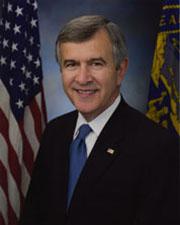 Sen. Mike Johanns (R-NE)
Submitted May 12, 2009
Legislative Activity
Stay on top of the latest movement without scrolling through every action
Floor
Latest Action
Senate amendment submitted
May 12, 2009
Text
Submitted
TEXT OF AMENDMENTS

SA 1061. Mr. COBURN submitted an amendment intended to be proposed by
him to the bill H.R. 627, to amend the Truth in Lending Act to
establish fair and transparent practices relating to the extension of
credit under an open end consumer credit plan, and for other purposes;
which was ordered to lie on the table; as follows:

At the end of the bill, add the following:

SEC. __. PUBLIC ACCESS TO GOVERNMENT PURCHASE CARD
INFORMATION.

(a) In General.--Each executive agency that issues and uses
credit cards or purchase cards shall post on its public
website, in a searchable format, an itemized list of all
charges made to credit cards or purchase cards not less
frequently than every 6 months, except that charges directly
related to national security, defense, and homeland security
may be redacted.
(b) Definition of Executive Agency.--In this section, the
term ``executive agency'' has the same meaning as in section
4(1) of the Office of Federal Procurement Policy Act (41
U.S.C. 403(1)).
______

SA 1062. Mr. SANDERS (for himself, Mr. Harkin, Mr. Leahy, Mr.
Whitehouse, Mr. Durbin, and Mr. Levin) submitted an amendment intended
to be proposed to amendment SA 1058 proposed by Mr. Dodd (for himself
and Mr. Shelby) to the bill H.R. 627, to amend the Truth in Lending Act
to establish fair and transparent practices relating to the extension
of credit under an open end consumer credit plan, and for other
purposes; as follows:

At the appropriate place, insert the following:

SEC. __. NATIONAL CONSUMER CREDIT USURY RATE.

(a) In General.--Section 107 of the Truth in Lending Act
(15 U.S.C. 1606) is amended by adding at the end the
following new subsection:
``(f) National Consumer Credit Usury Rate.--
``(1) Limitation established.--Notwithstanding subsection
(a) or any other provision of law, but except as provided in
paragraph (2), the annual percentage rate applicable to an
extension of credit obtained by use of a credit card may not
exceed 15 percent on unpaid balances, inclusive of all
finance charges. Any fees that are not considered finance
charges under section 106(a) may not be used to evade the
limitations of this paragraph, and the total sum of such fees
may not exceed the total amount of finance charges assessed.

[[Page S5380]]

``(2) Exceptions.--
``(A) Board authority.--The Board may establish, after
consultation with the appropriate committees of Congress, the
Secretary of the Treasury, and any other interested Federal
financial institution regulatory agency, an annual percentage
rate of interest ceiling exceeding the 15 percent annual rate
under paragraph (1) for periods of not to exceed 18 months,
upon a determination that--
``(i) money market interest rates have risen over the
preceding 6-month period; or
``(ii) prevailing interest rate levels threaten the safety
and soundness of individual lenders, as evidenced by adverse
trends in liquidity, capital, earnings, and growth.
``(B) Treatment of credit unions.--The limitation in
paragraph (1) does not apply with respect to any extension of
credit by an insured credit union, as that term is defined in
section 101 of the Federal Credit Union Act (12 U.S.C. 1752).
``(3) Penalties for charging higher rates.--
``(A) Violation.--The taking, receiving, reserving, or
charging of an annual percentage rate or fee greater than
that permitted by paragraph (1), when knowingly done, shall
be deemed a violation of this title, and a forfeiture of the
entire interest which the note, bill, or other evidence of
the obligation carries with it, or which has been agreed to
be paid thereon.
``(B) Refund of interest amounts.--If an annual percentage
rate or fee greater than that permitted under paragraph (1)
has been paid, the person by whom it has been paid, or the
legal representative thereof, may, by bringing an action not
later than 2 years after the date on which the usurious
collection was last made, recover back from the lender in an
action in the nature of an action of debt, the entire amount
of interest, finance charges, or fees paid.
``(4) Civil liability.--Any creditor who violates this
subsection shall be subject to the provisions of section
130.''.
(b) Civil Liability Conforming Amendment.--Section 130(a)
of the Truth in Lending Act (15 U.S.C. 1640(a)) is amended by
inserting ``section 107(f)'' before ``this chapter''.
______

SA 1063. Mr. WYDEN (for himself and Mr. Merkley) submitted an
amendment intended to be proposed by him to the bill H.R. 627, to amend
the Truth in Lending Act to establish fair and transparent practices
relating to the extension of credit under an open end consumer credit
plan, and for other purposes; which was ordered to lie on the table; as
follows:

At the end of the bill, add the following:

TITLE VI--CREDIT CARD SAFETY STAR PROGRAM

SEC. 601. SHORT TITLE.

This title may be cited as the ``Credit Card Safety Star
Act of 2009''.

SEC. 602. FINDINGS.

Congress finds that--
(1) competition in the credit card market is severely
hindered by a lack of transparency, which results in
inefficient consumer choices;
(2) such lack of transparency is largely due to confusing
terms and overwhelming information for consumers;
(3) the marketplace has not increased competition based on
the merits of credit cards;
(4) a Government rating system that would use market forces
by encouraging better transparency would increase such
competition and assist consumers in making better credit card
choices; and
(5) such a rating system would not preclude additional
regulation or legislation that may eliminate certain
practices considered unfair or abusive.

SEC. 603. TRUTH IN LENDING ACT AMENDMENTS.

The Truth in Lending Act (15 U.S.C. 1601 et seq.) is
amended by inserting after section 127A the following new
section:

``SEC. 127B. CREDIT CARD SAFETY STAR RATING SYSTEM.

``(a) Definitions.--In this section--
``(1) the term `agreement' means the terms and conditions
applicable to an open end credit plan offered by an issuer of
credit;
``(2) references to a reading grade level shall be as
determined by the Board, using available measurements for
assessing such reading levels, including those used by the
Department of Education;
``(3) the term `Safety Star System' means the credit card
safety star rating system established under this section; and
``(4) the term `junk mail' means a form of disclosure that
does not inform the consumer in a meaningful and significant
way about changes in the contract, including small type,
using separate pieces of paper for separate disclosures, and
mixing disclosure materials with product advertisements.
``(b) Rulemaking.--
``(1) In general.--Not later than 12 months after the date
of enactment of this section, the Board shall issue final
rules to implement the Safety Star System established under
this section, to allow consumers to quickly and easily
compare the levels of safety associated with various open end
credit plan agreements.
``(2) Consultation.--The Board shall consult with the
Comptroller of the Currency, the Office of Thrift
Supervision, and the Federal Deposit Insurance Corporation in
issuing rules to implement the Safety Star System.
``(c) Elements of Safety Star System.--The Safety Star
System shall consist of a 5-star system for rating the terms
and conditions of each open end credit plan agreement between
a card issuer and a cardholder, in accordance with this
section.
``(d) Safety Star Ratings.--
``(1) One-star rating.--The lowest level of safety for an
open end credit plan shall be indicated by a 1-star rating.
``(2) Five-star rating.--The highest level of safety in an
open end credit plan shall be indicated by a 5-star rating.
``(e) Point Structure for Safety Star System.--
``(1) Values.--Each variation of a term in an agreement
shall be worth 1 point or -1 point, as applicable.
``(2) Star system.--For purposes of the Safety Star
System--
``(A) 5-star credit cards are those with points totaling 7
points or greater;
``(B) 4-star credit cards are those with between 3 points
and 6 points;
``(C) 3-star credit cards are those with between -1 point
and 2 points;
``(D) 2-star credit cards are those with between -6 points
and -2 points; and
``(E) 1-star credit cards are those with -7 points or
fewer.
``(f) Point Awards.--One point shall be awarded for each of
the terms in an agreement under which--
``(1) no binding or nonbinding arbitration clause applies;
``(2) at least 90 days notice is provided to the cardholder
if the card issuer wants to change the terms of the
agreement, with the option for the consumer to opt out of the
changes, while paying off their previous balance according to
the original terms;
``(3) changes are disclosed in a manner that highlights the
differences between the current terms and the proposed terms;
``(4) the original card agreement and all original
supplementary materials are in 1 document at 1 time, and,
when the card issuer discloses changes to the card
agreement--
``(A) those materials are not in junk mail form; and
``(B) the changes are disclosed conspicuously, together
with the next billing cycle statement, before the changes
becomes effective;
``(5) no over-the-limit fees are imposed for the
transactions approved at the time of transaction by the card
issuer;
``(6) no fees are imposed to pay credit card bills using
any method, including over the phone;
``(7) payments are applied to the highest interest rate
principal first, regardless of whether the consumer only
makes the minimum payment;
``(8) interest is not accrued on new purchases between the
end of the billing cycle and the due date when a balance is
outstanding;
``(9) security deposits and fees for credit availability
(such as account opening fees or membership fees)--
``(A) are limited to 10 percent of the initial credit limit
during the first 12 months; and
``(B) at account opening, are limited to 5 percent of the
initial credit limit, and requires any additional amounts (up
to 10 percent) to be spread evenly over at least the next 5
billing cycles;
``(10) the terms of the agreement are disclosed in a form
that requires at or below an 8th grade reading level;
``(11) any secondary disclosure materials meant to
supplement the terms of the agreement are disclosed in a form
that requires at or below an 8th grade reading level;
``(12) no late fee may be imposed when a payment is
received, whether processed by the issuer or not, within 2
days of the payment due date;
``(13) a copy of the agreement and all supplementary
materials are easily available to the cardholder online; or
``(14) a substantial positive financial benefit would be
provided to the consumer, as determined by the Board in
accordance with subsection (h).
``(g) Negative Points.--One point shall be subtracted for
each of the terms in an agreement under which--
``(1) binding or nonbinding arbitration is required to
resolve disputes;
``(2) fewer than 30 days notice before the billing
statement for which changes in terms take effect are provided
to the cardholder when the card issuer wants to change the
terms of the card agreement (which shall be assumed if notice
of such changes is undisclosed in the agreement materials);
``(3) junk mailer disclosures are used to inform
cardholders of changes in their agreements;
``(4) over-the-limit fees are imposed more than once based
on the same transaction;
``(5) interest is accrued on new purchases between the end
of the billing cycle and the due date when a balance is
outstanding;
``(6) the terms of the agreement are disclosed in a form
that requires a reading level that is above a 12th grade
reading level;
``(7) any secondary disclosure materials meant to
supplement the terms of the agreement are written in a form
that requires a reading level above the 12th grade reading
level;
``(8) a late fee may be imposed within 2 days of the
payment due date;
``(9) the issuer may unilaterally change the terms in the
agreement without written consent from the consumer, or the
issuer may unilaterally make adverse changes to the

[[Page S5381]]

terms in the agreement without written consent from the
consumer and written notice to the consumer of the precise
behavior that provoked the adverse change;
``(10) the issuer charges interest on transaction fees,
including late fees; or
``(11) there would be a negative financial impact on the
interests of the consumer, as determined by the Board in
accordance with subsection (h).
``(h) Board Considerations.--For purposes of subsections
(f)(14) and (g)(11), the Board may consider--
``(1) the level of difficulty in understanding terms of the
subject agreement by an average consumer;
``(2) how such terms will affect consumers who are close to
the edge of their credit limits;
``(3) how such terms will affect consumers who do not have
a good credit score, history, or rating, using commonly
employed credit measurement methods (if it creates greater
access to credit by reducing safety, or by other means);
``(4) whether such terms create what would appear to a
reasonable consumer to be an arbitrary deadline or limit that
may frustrate consumers and result in excess fees or worse
financial outcomes for the consumer;
``(5) whether such terms, or the severity of such terms, is
not based on the credit risks created by a particular
consumer behavior, but rather is designed to solely increase
revenue through lack of transparency;
``(6) whether any State has sought to limit such terms or
terms that are similar thereto;
``(7) whether provisions of State law relating to unfair
and deceptive practices would prohibit any such terms, but
for the national bank exclusion from non-home State banking
laws;
``(8) whether such terms have an anticompetitive or
procompetitive effect on the marketplace; and
``(9) such additional terms or concepts that are not
specified in paragraphs (1) through (8) that the Board deems
difficult for an average consumer to manage, such as terms
that are confusing to the typical consumer or that create a
greater risk of negative financial outcomes for the typical
consumer, and terms that promote transparency or competition.
``(i) Limitations.--For purposes of subsection (h), the
Board may not consider, with respect to the terms of an open
end credit plan agreement, the profitability or impact on the
success of any particular business model of such terms.
``(j) Automatic Rating.--Notwithstanding any other
provision of this section, or any other provision of State or
Federal law, any open end credit plan that allows the card
issuer or a designee thereof to modify the terms of the
agreement at any time or periodically for unspecified or
unstated reasons, shall automatically give rise to a 1-star
rating for such open end credit plan.
``(k) No Points if Terms Are Required by Law.--If a
particular term in an agreement becomes required by law or
regulation, no points may be awarded under the Safety Star
System for that term.
``(l) Procedures for Ratings.--
``(1) Certification to the board.--Each issuer of credit
under an open end credit plan shall certify in writing to the
Board, the number of stars to be awarded, separately for each
of the card issuer's agreements. Each such certification
shall specify which terms in each agreement are subject to
the Safety Star System, and how the issuer arrived at the
star rating for each agreement based on the Safety Star
System in accordance with paragraph (2).
``(2) Submissions to the board.--Each agreement that is
subject to a Safety Star System rating shall be submitted
electronically to the Board, together with a written
explanation of whether the agreement has or does not have
each of the terms specified in subsections (f) and (g),
before issuing or marketing a credit card under that
agreement.
``(3) Board verification.--
``(A) In general.--The Board shall verify that the terms in
the submitted agreement and supporting materials (such as
examples of future disclosures or examples of websites with
cardholder agreements) comply with the certification
submitted to the Board by the issuer under this subsection,
not later than 30 days after the date of submission.
``(B) Avoiding duplicative verifications.--A card issuer
may certify to the Board, in writing, that all agreements
that it markets include a particular term, or that the issuer
will use certain practices (with supporting documents,
including showing how future disclosures will be made) so
that the Board is required to determine only once, with
respect to that term or practice, how that term or practice
affects the star ratings of the credit card agreements of the
issuer.
``(4) Misrepresentations as violations.--Any certification
to the Board under this section that the issuer knew, or
should have known, was false or misrepresented to the Board
or to a consumer the terms or conditions of a card agreement
or of a Safety Star System rating under this section shall be
treated as a violation of this title, and shall be subject to
enforcement in accordance with section 108.
``(5) Modifications by card issuers.--
``(A) In general.--After the first annual review by the
Board, mentioned in subsection (o), before implementing any
new term or concept, or new way of approaching a term or
concept, with respect to an open end credit plan, the card
issuer shall submit the new term or concept and any
supporting materials to the Board, other than with respect to
an adjustment to the applicable rate of interest in an
existing agreement that clearly specifies that such rate
would be adjustable and under what conditions such
adjustments could occur.
``(B) Determination of the board.--Not later than 30 days
after the date of a submission under subparagraph (A), the
Board shall complete a review of the effects on safety of the
subject new concept or term, and shall issue a decision on
whether it affects the Safety Star System rating for the open
end credit plan that will include the term or concept.
``(m) Display of and Access to Ratings.--
``(1) Display of rating required.--The Safety Star System
rating for each credit card shall be clearly displayed on all
marketing material, applications, billing statements, and
agreements associated with that credit card, as well as on
the back of each such credit card, including a brief
explanation of the system displayed below each rating (other
than on the back of the credit card).
``(2) New cards required for lower ratings.--In any case in
which the Safety Star System rating for a credit card is
lowered for any reason, the card issuer shall provide new
cards to account holders displaying the new rating in
accordance with paragraph (1).
``(3) Graphic display.--The Safety Star System rating for a
credit card shall be represented by a graphic that
demonstrates not only the number of stars that the credit
card has received, but also the number of stars that the card
did not receive.
``(4) Development of graphic by the board.--The Board shall
determine the graphic and description of the Safety Star
System for display on materials and the back of cards for
purposes of this section.
``(n) Consumer Access to Ratings.--
``(1) In general.--The Board shall engage in an extensive
campaign to educate consumers about the Safety Star System
ratings for credit cards, using commonly used and accessible
communications media.
``(2) Website.--Not later than 12 months after the date of
enactment of this section, the Board shall establish and
shall maintain a stand-alone website--
``(A) to provide easily understandable, in-depth
information on the criteria used to assign the ratings, as
provided in subsections (f) and (g); and
``(B) to include a listing of the Safety Star System
ratings for each open end consumer credit plan, information
on how the issuer arrived at that rating, and the number of
consumers that have that plan with the issuer.
``(o) Annual Review by the Board.--
``(1) In general.--The Board shall conduct a thorough
annual review (of not longer than 6 months in duration) of
the Safety Star System, to determine whether the point system
is effectively aiding consumers, and shall promptly implement
any regulatory changes as are necessary to ensure that the
System protects consumers and encourages transparent
competition and fairness to consumers, including implementing
a system in which terms are weighted to distinguish between
different levels of safety, in accordance with the purposes
of this section.
``(2) Availability of results.--Results of the review
conducted under this subsection shall be submitted to
Congress, and shall be made available to the public.
``(p) Periodic Review of Standards.--Once every 2 years,
the Board shall determine whether the requirements to satisfy
2-star standards and above should be raised on the grounds
that card issuers have abandoned the most unfair practices.
In making such determination, the Board may not consider the
profitability of business models, but may consider whether
competition in the credit industry will improve consumer
protection, and how the change in standards will affect such
competition.''.

SEC. 604. SAFETY STAR ADVISORY COMMISSION.

(a) Establishment.--There is established the Credit Card
Safety Star Advisory Commission (in this section referred to
as the ``Commission'').
(b) Duties.--
(1) Review of the credit card safety star system and annual
reports.--The Commission shall--
(A) review the effectiveness of the credit card Safety Star
System under this section, including the topics described in
paragraph (2);
(B) make recommendations to Congress concerning such
system;
(C) study whether it would better protect consumers to ban
some practices by creditors rather than use a rating system
for those practices, including universal default, unilateral
changes without consumer consent, allowing interest charges
on fees, or allowing interest rate increases to apply to past
debt; and
(D) by not later than March 1 of each calendar year
following the date of enactment of this Act, submit a report
to Congress containing the results of such reviews and its
recommendations concerning such system.
(2) Specific topics to be reviewed.--The Commission shall
review--
(A) with respect to all credit card users--
(i) the methodology for awarding stars to credit cards
under the Safety Star System, and whether there may be a
better way to award stars that takes into account unfair or
unsafe practices that remain uncaptured in the Safety Star
System;

[[Page S5382]]

(ii) the consumer awareness of the Safety Star System and
what may make the system more useful to consumers; and
(iii) other major issues in implementation and further
development of the Safety Star System;
(B) with respect to credit card users who are at or close
to their credit limits, whether such consumers are being
specifically targeted in credit card agreements, and whether
the Safety Star System should incorporate more terms or be
revised to encourage more fair terms for such consumers; and
(C) the effects of the Safety Star System on the
availability and affordability of credit and the implications
of changes in credit availability and affordability in the
United States and in the general market for credit services
due to the Safety Star System.
(3) Comments on certain board reports.--
(A) Transmittal to commission.--If the Board submits to
Congress (or a committee of Congress) a report that is
required by law and that relates to the Safety Star System,
the Board shall transmit a copy of the report to the
Commission.
(B) Independent review.--The Commission shall review any
report received under subparagraph (A) and, not later than 6
months after the date of submission of the report to
Congress, shall submit to the appropriate committees of
Congress written comments on such report. Such comments may
include such recommendations as the Commission determines
appropriate.
(4) Agenda and additional reviews.--The Commission shall
consult periodically with the chairperson and ranking
minority members of the appropriate committees of Congress
regarding the agenda of the Commission and progress towards
achieving the agenda. The Commission may conduct additional
reviews, and submit additional reports to the appropriate
committees of Congress, from time to time on such topics
relating to the Safety Star System as may be requested by
such chairpersons and members, and as the Commission
determines appropriate.
(5) Availability of reports.--The Commission shall transmit
to the Board a copy of each report submitted under this
subsection, and shall make such reports available to the
public in an easily accessible format, including operating a
website containing the reports.
(6) Appropriate committees of congress.--For purposes of
this subsection, the term ``appropriate committees of
Congress'' means the Committee on Banking, Housing, and Urban
Affairs of the Senate and the Committee on Financial Services
of the House of Representatives.
(7) Voting and reporting requirements.--With respect to
each recommendation contained in a report submitted under
paragraph (1), each member of the Commission shall vote on
the recommendation, and the Commission shall include, by
member, the results of that vote in the report containing the
recommendation. The Commission may file a minority report.
(8) Examination of budget consequences.--Before making any
recommendation that is likely to have a Federal budgetary
impact, the Commission shall examine the budget consequences
of such recommendation, directly or through consultation with
appropriate expert entities.
(c) Membership.--
(1) Number and appointment.--The Commission shall be
composed of 15 members appointed by the Congress, in
accordance with this section.
(2) Qualifications.--
(A) In general.--The membership of the Commission shall
include individuals--
(i) who have achieved national recognition for their
expertise in credit cards, debt management, economics, credit
availability, consumer protection, and other credit card-
related issues and fields; or
(ii) who provide a mix of different professions, a broad
geographic representation, and a balance between urban and
rural representatives.
(B) Makeup of commission.--The Commission shall be made up
of 15 members, of whom--
(i) 4 shall be representatives from consumer groups;
(ii) 4 shall be representatives from credit card issuers or
banks;
(iii) 7 shall be representatives from nonprofit research
entities or nonpartisan experts in banking and credit cards;
and
(iv) no fewer than 1 of the members described in clauses
(i) through (iii) shall represent each of--

(I) the elderly;
(II) economically disadvantaged consumers;
(III) racial or ethnic minorities; and
(IV) students and minors.

(C) Ethics disclosures.--The Commission shall establish a
system for public disclosure by members of the Commission of
financial and other potential conflicts of interest relating
to such members. Members of the Commission shall be treated
as employees of Congress whose pay is disbursed by the
Secretary of the Senate for purposes of title I of the Ethics
in Government Act of 1978 (Public Law 95-521).
(3) Terms.--
(A) In general.--The terms of members of the Commission
shall be for 5 years except that the Congress shall designate
staggered terms for the members first appointed.
(B) Vacancies.--Any member appointed to fill a vacancy
occurring before the expiration of the term for which the
member's predecessor was appointed shall be appointed only
for the remainder of that term. A member may serve after the
expiration of that member's term until a successor has taken
office. A vacancy in the Commission shall be filled in the
manner in which the original appointment was made.
(4) Compensation.--
(A) Members.--While serving on the business of the
Commission (including travel time), a member of the
Commission shall be entitled to compensation at the per diem
equivalent of the rate provided for level IV of the Executive
Schedule under section 5315 of title 5, United States Code,
and while so serving away from home and the regular place of
business of the member, the member may be allowed travel
expenses, as authorized by the Chairperson.
(B) Other employees.--For purposes of pay (other than pay
of members of the Commission) and employment benefits,
rights, and privileges, all employees of the Commission shall
be treated as if they were employees of the United States
Senate.
(5) Chairperson; vice chairperson.--The Congress shall, at
the time of appointment of the member as Chairperson and a
member as Vice Chairperson for that term of appointment,
except that in the case of vacancy in the position of
Chairperson or Vice Chairperson of the Commission, the
Congress may designate another member for the remainder of
that member's term.
(6) Meetings.--The Commission shall meet at the call of the
Chairperson.
(d) Director and Staff; Experts and Consultants.--The
Commission may, as necessary to assure the efficient
administration of the Commission--
(1) employ and fix the compensation of an Executive
Director and such other personnel as may be necessary to
carry out its duties (without regard to the provisions of
title 5, United States Code, governing appointments in the
competitive service);
(2) seek such assistance and support as may be required in
the performance of its duties from appropriate Federal
departments and agencies;
(3) enter into contracts or make other arrangements, as may
be necessary for the conduct of the work of the Commission
(without regard to section 3709 of the Revised Statutes of
the United States (41 U.S.C. 5));
(4) make advance, progress, and other payments which relate
to the work of the Commission;
(5) provide transportation and subsistence for persons
serving without compensation; and
(6) prescribe such rules and regulations as it determines
necessary with respect to the internal organization and
operation of the Commission.
(e) Powers.--
(1) Obtaining official data.--The Commission may secure
directly from any department or agency of the United States
information necessary to enable it to carry out this section.
Upon request of the Chairperson, the head of that department
or agency shall furnish that information to the Commission on
an agreed upon schedule.
(2) Data collection.--In order to carry out its functions,
the Commission shall--
(A) utilize existing information, both published and
unpublished, where possible, collected and assessed either by
its own staff or under other arrangements made in accordance
with this section;
(B) carry out, or award grants or contracts for, original
research and experimentation, where existing information is
inadequate; and
(C) adopt procedures allowing any interested party to
submit information for the Commission's use in making reports
and recommendations.
(3) Access of gao to information.--The Comptroller General
of the United States shall have unrestricted access to all
deliberations, records, and nonproprietary data of the
Commission, immediately upon request for the purposes of
periodic audits by the Comptroller General.
(f) Authorization of Appropriations.--There are authorized
to be appropriated to the Commission, not more than
$10,000,000 for each fiscal year to carry out this section.
______

SA 1064. Mr. UDALL of Colorado submitted an amendment intended to be
proposed to the bill H.R. 627, to amend the Truth in Lending Act to
establish fair and transparent practices relating to the extension of
credit under an open end consumer credit plan, and for other purposes;
which was ordered to lie on the table; as follows:

At the end of title V, add the following:

SEC. 503. DISCLOSURE OF CREDIT SCORES.

Section 612(a)(1) of the Fair Credit Reporting Act (15
U.S.C. 1681j(a)(1)) is amended by adding at the end the
following:
``(D) Inclusion of credit scores.--Each consumer reporting
agency described in subparagraph (A) that develops or uses a
credit score with respect to any consumer shall include the
information described in section 609(f) with the disclosures
required by subparagraph (A) of this paragraph, free of
charge.''.
______

SA 1065. Mr. CASEY submitted an amendment intended to be proposed by
him to the bill H.R. 627, to amend the Truth in Lending Act to
establish fair and transparent practices relating to

[[Page S5383]]

the extension of credit under an open end consumer credit plan, and for
other purposes; which was ordered to lie on the table; as follows:

At the end of title III, add the following:

SEC. 304. COLLEGE CREDIT CARD AGREEMENTS.

(a) In General.--Section 127 of the Truth in Lending Act
(15 U.S.C. 1637), as otherwise amended by this Act, is
amended by adding at the end the following:
``(q) College Card Agreements.--
``(1) Definitions.--For purposes of this subsection, the
following definitions shall apply:
``(A) College affinity card.--The term `college affinity
card' means a credit card issued by a credit card issuer
under an open end consumer credit plan in conjunction with an
agreement between the issuer and an institution of higher
education, or an alumni organization or foundation affiliated
with or related to such institution, under which such cards
are issued to college students who have an affinity with such
institution, organization and--
``(i) the creditor has agreed to donate a portion of the
proceeds of the credit card to the institution, organization,
or foundation (including a lump sum or 1-time payment of
money for access);
``(ii) the creditor has agreed to offer discounted terms to
the consumer; or
``(iii) the credit card bears the name, emblem, mascot, or
logo of such institution, organization, or foundation, or
other words, pictures, or symbols readily identified with
such institution, organization, or foundation.
``(B) College student credit card account.--The term
`college student credit card account' means a credit card
account under an open end consumer credit plan established or
maintained for or on behalf of any college student.
``(C) College student.--The term `college student' means an
individual who is a full-time or a part-time student
attending an institution of higher education.
``(D) Institution of higher education.--The term
`institution of higher education' has the same meaning as in
section 101 and 102 of the Higher Education Act of 1965 (20
U.S.C. 1002).
``(2) Reports by creditors.--
``(A) In general.--Each creditor shall submit an annual
report to the Board containing the terms and conditions of
all business, marketing, and promotional agreements and
college affinity card agreements with an institution of
higher education, or an alumni organization or foundation
affiliated with or related to such institution, with respect
to any college student credit card issued to a college
student at such institution.
``(B) Details of report.--The information required to be
reported under subparagraph (A) includes--
``(i) any memorandum of understanding between or among a
creditor, an institution of higher education, an alumni
association, or foundation that directly or indirectly
relates to any aspect of any agreement referred to in such
subparagraph or controls or directs any obligations or
distribution of benefits between or among any such entities;
``(ii) the amount payments from the creditor to the
institution, organization, or foundation during the period
covered by the report, and the precise terms of any agreement
under which such amounts are determined; and
``(iii) the number of credit card accounts covered by any
such agreement that were opened during the period covered by
the report and the total number of credit card accounts
covered by the agreement that were outstanding at the end of
such period.
``(C) Aggregation by institution.--The information reported
under subparagraph (A) shall be aggregated with respect to
each institution of higher education or alumni organization
or foundation affiliated with or related to such institution.
``(3) Reports by board.--The Board shall submit to the
Congress, and make available to the public, an annual report
that lists the information concerning credit card agreements
submitted to the Board under paragraph (2) by each
institution of higher education, alumni organization, or
foundation.''.
(b) Study and Report by the Comptroller General.--
(1) Study.--The Comptroller General of the United States
shall from time to time review the reports submitted by
creditors and the marketing practices of creditors to
determine the impact that college affinity card agreements
and college student card agreements have on credit card debt.
(2) Report.--Upon completion of any study under paragraph
(1), the Comptroller General shall periodically submit a
report to the Congress on the findings and conclusions of the
study, together with such recommendations for administrative
or legislative action as the Comptroller General determines
to be appropriate.
(c) Effective Date for Initial Creditor Reports.--The
initial reports required under paragraph (2)(A) of the
amendment made by subsection (a) shall be submitted to the
Board before the end of the 90-day period beginning on the
date of enactment of this Act.
______

SA 1066. Mr. VITTER submitted an amendment intended to be proposed to
amendment SA 1058 proposed by Mr. Dodd (for himself and Mr. Shelby) to
the bill H.R. 627, to amend the Truth in Lending Act to establish fair
and transparent practices relating to the extension of credit under an
open end consumer credit plan, and for other purposes; as follows:

At the end of the bill, add the following:

SEC. __. FORMS OF ACCEPTABLE IDENTIFICATION FOR CREDIT CARD
ISSUERS.

(a) In General.--Chapter 2 of the Truth in Lending Act (15
U.S.C. 1601 et seq.) is amended by inserting after section
127A the following new section:

``SEC. 127B. IDENTIFICATION AND VERIFICATION OF
ACCOUNTHOLDERS.

``(a) In General.--Subject to the requirements of this
section, the Board shall prescribe regulations setting forth
the minimum standards for card issuers under open end credit
plans and cardholders regarding the identity of the consumer,
that shall apply in connection with the opening of such a
credit card account.
``(b) Minimum Requirements.--The regulations required under
subsection (a) shall, at a minimum, require card issuers to
implement, and cardholders (after being given adequate
notice) to comply with, reasonable procedures for--
``(1) verifying the identity of any person seeking to open
a credit card account, to the extent reasonable and
practicable;
``(2) maintaining records of the information used to verify
a person's identity, including name, address, and other
identifying information; and
``(3) consulting lists of known or suspected terrorists or
terrorist organizations provided to the card issuer by any
government agency, to determine whether a person seeking to
open a credit card account appears on any such list.
``(c) Forms of Acceptable Identification.--A card issuer
may not accept, for the purpose of verifying the identity of
an individual seeking to open an account in accordance with
this subsection, any form of identification of the
individual, other than--
``(1) a social security card, accompanied by a photo
identification card issued by the Federal Government or a
State government;
``(2) a driver's license or identification card issued by a
State, in the case of a State that is in compliance with
title II of the REAL ID Act of 2005 (49 U.S.C. 30301 note);
``(3) a passport issued by the United States or a foreign
government; or
``(4) a photo identification card issued by the Secretary
of Homeland Security (acting through the Director of the
United States Citizenship and Immigration Service).''.
(b) Effective Date.--Section 127B of the Truth in Lending
Act, as added by this section, shall become effective 6
months after the date of enactment of this Act.
______

SA 1067. Mr. COBURN proposed an amendment to amendment SA 1058
proposed by Mr. Dodd (for himself and Mr. Shelby) to the bill H.R. 627,
to amend the Truth in Lending Act to establish fair and transparent
practices relating to the extension of credit under an open end
consumer credit plan, and for other purposes; as follows:

At the appropriate place, insert the following:

SEC. __. PROTECTING AMERICANS FROM VIOLENT CRIME.

(a) Congressional Findings.--Congress finds the following:
(1) The Second Amendment to the Constitution provides that
``the right of the people to keep and bear Arms, shall not be
infringed''.
(2) Section 2.4(a)(1) of title 36, Code of Federal
Regulations, provides that ``except as otherwise provided in
this section and parts 7 (special regulations) and 13 (Alaska
regulations), the following are prohibited: (i) Possessing a
weapon, trap or net (ii) Carrying a weapon, trap or net (iii)
Using a weapon, trap or net''.
(3) Section 27.42 of title 50, Code of Federal Regulations,
provides that, except in special circumstances, citizens of
the United States may not ``possess, use, or transport
firearms on national wildlife refuges'' of the United States
Fish and Wildlife Service.
(4) The regulations described in paragraphs (2) and (3)
prevent individuals complying with Federal and State laws
from exercising the second amendment rights of the
individuals while at units of--
(A) the National Park System; and
(B) the National Wildlife Refuge System.
(5) The existence of different laws relating to the
transportation and possession of firearms at different units
of the National Park System and the National Wildlife Refuge
System entrapped law-abiding gun owners while at units of the
National Park System and the National Wildlife Refuge System.
(6) Although the Bush administration issued new regulations
relating to the Second Amendment rights of law-abiding
citizens in units of the National Park System and National
Wildlife Refuge System that went into effect on January 9,
2009--
(A) on March 19, 2009, the United States District Court for
the District of Columbia granted a preliminary injunction
with respect to the implementation and enforcement of the new
regulations; and
(B) the new regulations--
(i) are under review by the administration; and
(ii) may be altered.
(7) Congress needs to weigh in on the new regulations to
ensure that unelected bureaucrats and judges cannot again
override the

[[Page S5384]]

Second Amendment rights of law-abiding citizens on 83,600,000
acres of National Park System land and 90,790,000 acres of
land under the jurisdiction of the United States Fish and
Wildlife Service.
(8) The Federal laws should make it clear that the second
amendment rights of an individual at a unit of the National
Park System or the National Wildlife Refuge System should not
be infringed.
(b) Protecting the Right of Individuals to Bear arms in
Units of the National Park System and the National Wildlife
Refuge System.--The Secretary of the Interior shall not
promulgate or enforce any regulation that prohibits an
individual from possessing a firearm including an assembled
or functional firearm in any unit of the National Park System
or the National Wildlife Refuge System if--
(1) the individual is not otherwise prohibited by law from
possessing the firearm; and
(2) the possession of the firearm is in compliance with the
law of the State in which the unit of the National Park
System or the National Wildlife Refuge System is located.
______

SA 1068. Mr. COBURN proposed an amendment to the bill H.R. 627, to
amend the Truth in Lending Act to establish fair and transparent
practices relating to the extension of credit under an open end
consumer credit plan, and for other purposes; as follows:

At the appropriate place in the bill, insert the following:

SEC. __. PROTECTING AMERICANS FROM VIOLENT CRIME.

(a) Congressional Findings.--Congress finds the following:
(1) The Second Amendment to the Constitution provides that
``the right of the people to keep and bear Arms, shall not be
infringed''.
(2) Section 2.4(a)(1) of title 36, Code of Federal
Regulations, provides that ``except as otherwise provided in
this section and parts 7 (special regulations) and 13 (Alaska
regulations), the following are prohibited: (i) Possessing a
weapon, trap or net (ii) Carrying a weapon, trap or net (iii)
Using a weapon, trap or net''.
(3) Section 27.42 of title 50, Code of Federal Regulations,
provides that, except in special circumstances, citizens of
the United States may not ``possess, use, or transport
firearms on national wildlife refuges'' of the United States
Fish and Wildlife Service.
(4) The regulations described in paragraphs (2) and (3)
prevent individuals complying with Federal and State laws
from exercising the second amendment rights of the
individuals while at units of--
(A) the National Park System; and
(B) the National Wildlife Refuge System.
(5) The existence of different laws relating to the
transportation and possession of firearms at different units
of the National Park System and the National Wildlife Refuge
System entrapped law-abiding gun owners while at units of the
National Park System and the National Wildlife Refuge System.
(6) Although the Bush administration issued new regulations
relating to the Second Amendment rights of law-abiding
citizens in units of the National Park System and National
Wildlife Refuge System that went into effect on January 9,
2009--
(A) on March 19, 2009, the United States District Court for
the District of Columbia granted a preliminary injunction
with respect to the implementation and enforcement of the new
regulations; and
(B) the new regulations--
(i) are under review by the administration; and
(ii) may be altered.
(7) Congress needs to weigh in on the new regulations to
ensure that unelected bureaucrats and judges cannot again
override the Second Amendment rights of law-abiding citizens
on 83,600,000 acres of National Park System land and
90,790,000 acres of land under the jurisdiction of the United
States Fish and Wildlife Service.
(8) The Federal laws should make it clear that the second
amendment rights of an individual at a unit of the National
Park System or the National Wildlife Refuge System should not
be infringed.
(b) Protecting the Right of Individuals To Bear Arms in
Units of the National Park System and the National Wildlife
Refuge System.--The Secretary of the Interior shall not
promulgate or enforce any regulation that prohibits an
individual from possessing a firearm including an assembled
or functional firearm in any unit of the National Park System
or the National Wildlife Refuge System if--
(1) the individual is not otherwise prohibited by law from
possessing the firearm; and
(2) the possession of the firearm is in compliance with the
law of the State in which the unit of the National Park
System or the National Wildlife Refuge System is located.
______

SA 1069. Mr. KERRY submitted an amendment intended to be proposed by
him to the bill H.R. 627, to amend the Truth in Lending Act to
establish fair and transparent practices relating to the extension of
credit under an open end consumer credit plan, and for other purposes;
which was ordered to lie on the table; as follows:

At the appropriate place, insert the following:

SEC. __. FREEZE ON CONSUMER CREDIT CARD RATES.

(a) In General.--Notwithstanding any other provision of
this Act or the amendments made by this Act, during the
period beginning on the date of enactment of this Act and
ending on December 31, 2010, no creditor which extends credit
to any consumer through a credit card account under an open
end consumer credit plan may increase the annual percentage
rate applicable to any outstanding balance as of such date of
enactment on any such account for any reason, except as
provided in any agreement between the consumer and a creditor
in effect on the date of enactment of this Act.
(b) Definitions.--For purposes of this subsection--
(1) the terms ``consumer'', ``credit'', ``creditor'',
``credit card'', and ``open end credit plan'' have the same
meanings as in section 103 of the Truth in Lending Act (15
U.S.C. 1602); and
(2) the term ``annual percentage rate'' means the annual
percentage rate, as determined in accordance with section 107
of the Truth in Lending Act (15 U.S.C. 1606).
______

SA 1070. Mrs. FEINSTEIN submitted an amendment intended to be
proposed to amendment SA 1058 proposed by Mr. Dodd (for himself and Mr.
Shelby) to the bill H.R. 627, to amend the Truth in Lending Act to
establish fair and transparent practices relating to the extension of
credit under an open end consumer credit plan, and for other purposes;
which was ordered to lie on the table; as follows:

At the end of title II, add the following:

SEC. 205. LIMITATION ON CONSIDERATIONS FOR RATE INCREASES.

Section 127 of the Truth in Lending Act (12 U.S.C. 1637),
as otherwise amended by this Act, is amended by adding at the
end the following:
``(q) Considerations for Rate Increases.--Notwithstanding
any other provision of this title, no card issuer may reduce
a credit limit or raise the interest rate applicable to a
credit card account under an open end consumer credit plan
based on--
``(1) whether the geographic location of the consumer is in
an area experiencing a high rate of home foreclosures or
significant declines in property values;
``(2) the identity of the holder of the home mortgage of
the consumer; or
``(3) employment or involvement by the consumer in a
business or industry that is economically distressed.''.
______

SA 1071. Mrs. FEINSTEIN (for herself and Mr. Corker) submitted an
amendment intended to be proposed to amendment SA 1058 proposed by Mr.
Dodd (for himself and Mr. Shelby) to the bill H.R. 627, to amend the
Truth in Lending Act to establish fair and transparent practices
relating to the extension of credit under an open end consumer credit
plan, and for other purposes; which was ordered to lie on the table; as
follows:

At the end of title III, add the following:

SEC. 305. PRIVACY PROTECTIONS FOR COLLEGE STUDENTS.

Section 140 of the Truth in Lending Act (15 U.S.C. 1650) is
amended by adding at the end the following:
``(f) Credit Card Protections for College Students.--
``(1) Disclosure required.--A covered educational
institution shall publicly disclose any contract or other
agreement made with a card issuer or creditor for the purpose
of marketing a credit card.
``(2) Gifts prohibited.--No card issuer or creditor may
offer any gift or other item to a student of a covered
educational institution to induce such student to apply for
or participate in an open end credit plan offered by such
card issuer or creditor.
``(3) Sense of the congress.--It is the sense of the
Congress that each covered educational institution should
consider adopting the following policies relating to credit
cards:
``(A) That any card issuer that markets a credit card on
the campus of such institution notify the administration of
such institution of the location at which such marketing will
take place.
``(B) That the number of locations on the campus of such
institution at which the marketing of credit cards takes
place be limited.
``(C) That credit card and debt education and counseling
sessions be offered as a regular part of any orientation
program for new students of such institution.''.
______

SA 1072. Mr. JOHANNS submitted an amendment intended to be proposed
to amendment SA 1058 proposed by Mr. Dodd (for himself and Mr. Shelby)
to the bill H.R. 627, to amend the Truth in Lending Act to establish
fair and transparent practices relating to the extension of credit
under an open end consumer credit plan, and for other purposes; which
was ordered to lie on the table; as follows:

On page 47, line 7, insert ``and small business owners''
after ``borrowers''.
______

SA 1073. Mr. MENENDEZ submitted an amendment intended to be proposed
to amendment SA 1058 proposed by Mr.

[[Page S5385]]

Dodd (for himself and Mr. Shelby) to the bill H.R. 627, to amend the
Truth in Lending Act to establish fair and transparent practices
relating to the extension of credit under an open end consumer credit
plan, and for other purposes; which was ordered to lie on the table; as
follows:

At the end of title I, add the following:

SEC. 109. LIMIT ON PENALTY INTEREST RATE.

Section 127 of the Truth in Lending Act (15 U.S.C. 1637) is
amended by adding at the end the following:
``(p) Limit on Penalty Increases.--A creditor may not
apply, as a penalty with respect to a credit card account
under an open end consumer credit plan, an increase in the
annual percentage rate in excess of 7 percentage points above
the interest rate that was in effect with respect to the
credit card account of the consumer on the date immediately
preceding the first such penalty increase for such
account.''.
On page 36, line 21, strike ``(p)'' and insert ``(q)''.
______

SA 1074. Mr. MENENDEZ submitted an amendment intended to be proposed
to amendment SA 1058 proposed by Mr. Dodd (for himself and Mr. Shelby)
to the bill H.R. 627, to amend the Truth in Lending Act to establish
fair and transparent practices relating to the extension of credit
under an open end consumer credit plan, and for other purposes; which
was ordered to lie on the table; as follows:

At the end of title III, add the following:

SEC. 304. PRIVACY PROTECTIONS FOR COLLEGE STUDENTS.

Section 140 of the Truth in Lending Act (15 U.S.C. 1650) is
amended by adding at the end the following:
``(f) Gifts to Students Prohibited.--No card issuer or
other creditor may offer any gift or other item to a student
of a covered educational institution to induce such student
to apply for or participate in an open end consumer credit
plan offered by such card issuer or creditor.''.
______

SA 1075. Mr. MENENDEZ submitted an amendment intended to be proposed
to amendment SA 1058 proposed by Mr. Dodd (for himself and Mr. Shelby)
to the bill H.R. 627, to amend the Truth in Lending Act to establish
fair and transparent practices relating to the extension of credit
under an open end consumer credit plan, and for other purposes; which
was ordered to lie on the table; as follows:

At the end of title III, add the following:

SEC. 304. COLLEGE CREDIT CARD AGREEMENTS.

(a) In General.--Section 127 of the Truth in Lending Act
(15 U.S.C. 1637) is amended by adding at the end the
following:
``(q) College Affinity Card Agreements.--
``(1) Definitions.--For purposes of this subsection, the
following definitions shall apply:
``(A) College affinity card.--The term `college affinity
card' means a credit card issued by a card issuer under an
open end consumer credit plan in conjunction with an
agreement between the issuer and an institution of higher
education, under which such cards are issued to college
students who have an affinity with such institution,
organization, or foundation and--
``(i) the creditor has agreed to donate a portion of the
proceeds of the credit card (including a lump sum or 1-time
payment of money for access) to the institution;
``(ii) the creditor has agreed to offer discounted terms to
the consumer; or
``(iii) the credit card bears the name, emblem, mascot, or
logo of such institution, organization, or foundation, or
other words, pictures, or symbols that are identified with
such institution.
``(B) College student credit card account.--The term
`college student credit card account' means a credit card
account under an open end consumer credit plan established or
maintained for or on behalf of any college student.
``(C) College student.--The term `college student' means an
individual who is a full-time or a part-time student
attending an institution of higher education.
``(D) Institution of higher education.--The term
`institution of higher education'--
``(i) has the same meaning as in section 101 and 102 of the
Higher Education Act of 1965 (20 U.S.C. 1001 and 1002); and
``(ii) includes an alumni organization or foundation
affiliated with or related to such institution.
``(2) Reports by creditors.--
``(A) In general.--Each creditor shall submit an annual
report to the Board that contains--
``(i) the terms and conditions of any business, marketing,
promotional, or college affinity card agreement with an
institution of higher education, with respect to any college
student credit card issued to a college student at such
institution;
``(ii) any memorandum of understanding between a creditor
and an institution of higher education that directly or
indirectly relates to any aspect of an agreement described in
clause (i) or controls or directs any obligations or
distribution of benefits between such entities;
``(iii) the amount of any payments from the creditor to an
institution of higher education during the period covered by
the report, and the precise terms of any agreement under
which such amounts are determined; and
``(iv) the number of credit card accounts covered by any
such agreement that were opened during the period covered by
the report and the total number of credit card accounts
covered by the agreement that were outstanding at the end of
such period.
``(B) Aggregation by institution.--The information required
to be reported under subparagraph (A) shall be aggregated
with respect to each institution of higher education.
``(C) First report.--Each creditor shall make the first
report required under this paragraph not later than 90 days
after the date of enactment of the Credit CARD Act of 2009.
``(3) Reports by board.--The Board shall submit to the
Congress, and make available to the public, an annual report
that lists the information concerning credit card agreements
required to be submitted to the Board under paragraph (2) for
each institution of higher education.''.
(b) Study and Report by the Comptroller General.--
(1) Study.--The Comptroller General of the United States
shall, from time to time, review the reports submitted by
creditors under section 127(q) of the Truth in Lending Act
(15 U.S.C. 1637), as added by this Act, and the marketing
practices of creditors, to determine the impact that college
affinity card agreements and college student card agreements
(as those terms are defined in that section 127(q)) have on
credit card debt.
(2) Report.--Upon completion of a study under paragraph
(1), the Comptroller General shall submit a report to the
Congress on the findings and conclusions of the study,
together with such recommendations for administrative or
legislative action as the Comptroller General determines are
appropriate.
______

SA 1076. Mr. MENENDEZ submitted an amendment intended to be proposed
to amendment SA 1058 proposed by Mr. Dodd (for himself and Mr. Shelby)
to the bill H.R. 627, to amend the Truth in Lending Act to establish
fair and transparent practices relating to the extension of credit
under an open end consumer credit plan, and for other purposes; which
was ordered to lie on the table; as follows:

At the end of title III, add the following:

SEC. 304. PRIVACY PROTECTIONS FOR COLLEGE STUDENTS.

Section 140 of the Truth in Lending Act (15 U.S.C. 1650) is
amended by adding at the end the following:
``(f) Privacy Protections for College Students.--A covered
educational institution may not sell or otherwise provide to
a card issuer or consumer reporting agency, as that term is
defined in section 603, any information about a student or
prospective student of such institution.''.
______

SA 1077. Mr. MENENDEZ submitted an amendment intended to be proposed
to amendment SA 1058 proposed by Mr. Dodd (for himself and Mr. Shelby)
to the bill H.R. 627, to amend the Truth in Lending Act to establish
fair and transparent practices relating to the extension of credit
under an open end consumer credit plan, and for other purposes; which
was ordered to lie on the table; as follows:

At the end of title I, add the following:

SEC. 109. FIRM OFFER OF CREDIT OR INSURANCE.

Section 603(l) of the Fair Credit Reporting Act (15 U.S.C.
1681a(l)) is amended to read as follows:
``(l) Firm Offer of Credit or Insurance.--
``(1) Definition.--The term `firm offer of credit or
insurance' means any offer of credit or insurance to a
consumer that specifies all material terms, and will be
honored if the consumer is determined to meet the specific
criteria used to select the consumer for the offer, based on
information in a consumer report on the consumer.
``(2) Required disclosures in offers of credit.--In the
case of a firm offer of credit, the offer shall set forth the
specific annual percentage rate, fees, and amount of credit
or credit limit applicable to the offer.
``(3) Acceptable conditions.--A firm offer of credit or
insurance to a consumer may be further conditioned on--
``(A) verification that the consumer continues to meet the
specific criteria used to select the consumer for the offer,
by using information in a consumer report on the consumer,
information in the application of the consumer for the credit
or insurance, or other information bearing on the credit
worthiness or insurability of the consumer;
``(B) the consumer furnishing any collateral that is a
requirement for the extension of the credit or insurance that
was--
``(i) established before selection of the consumer for the
offer of credit or insurance; and
``(ii) disclosed to the consumer in the offer of credit or
insurance; or
``(C) any combination of the criteria in subparagraphs (A)
and (B).''.
______

SA 1078. Mr. MENENDEZ submitted an amendment intended to be proposed
to amendment SA 1058 proposed by Mr.

[[Page S5386]]

Dodd (for himself and Mr. Shelby) to the bill H.R. 627, to amend the
Truth in Lending Act to establish fair and transparent practices
relating to the extension of credit under an open end consumer credit
plan, and for other purposes; which was ordered to lie on the table; as
follows:

At the end of title I, add the following:

SEC. 109. VERIFICATION OF ABILITY TO PAY.

Section 127 of the Truth in Lending Act (15 U.S.C. 1637) is
amended by adding at the end the following:
``(p) Verification of Ability to Pay.--
``(1) In general.--A card issuer may not open any credit
card account for any consumer under an open end consumer
credit plan, or increase any credit limit applicable to such
an account, unless the card issuer has determined, at the
time at which the account is opened or the credit limit
increased, as applicable, that the consumer will be able to
make the scheduled payments under the terms of the
transaction, based on a consideration of the current and
expected income, current obligations, and employment status
of the consumer.
``(2) Regulations.--The Board shall prescribe, by
regulation, the appropriate formula for determining the
ability of a consumer to pay, and the criteria to be
considered in making any such determination, for purposes of
this subsection.''.
On page 36, line 21, strike ``(p)'' and insert ``(q)''.
______

SA 1079. Ms. LANDRIEU (for herself, Ms. Snowe, Mr. Cardin, Mrs.
Shaheen, and Mr. Brown) submitted an amendment intended to be proposed
to amendment SA 1058 proposed by Mr. Dodd (for himself and Mr. Shelby)
to the bill H.R. 627, to amend the Truth in Lending Act to establish
fair and transparent practices relating to the extension of credit
under an open end consumer credit plan, and for other purposes; which
was ordered to lie on the table; as follows:

At the end of title V, add the following:

SEC. 503. EXTENDING TILA CREDIT CARD PROTECTIONS TO SMALL
BUSINESSES.

(a) Definition of Consumer.--Section 103(h) of the Truth in
Lending Act (15 U.S.C. 1602(h)) is amended--
(1) by inserting ``(1)'' after ``(h)''; and
(2) by adding at the end the following:
``(2) For purposes of any provision of this title relating
to a credit card account under an open end credit plan, the
term `consumer' includes any business concern having 50 or
fewer employees, whether or not the credit account is in the
name of the business entity or an individual, or whether or
not a subject credit transaction is for business or personal
purposes.''.
(b) Amendment to Exemptions.--
(1) In general.--Section 104 of the Truth in Lending Act
(15 U.S.C. 1603) is amended--
(A) in paragraph (1), by inserting after ``agricultural
purposes'' the following: ``(other than a credit transaction
under an open end credit plan in which the consumer is a
small business having 50 or fewer employees)''; and
(B) in paragraph (4), by striking ``$25,000'' and inserting
``$50,000''.
(2) Business credit card provision.--Section 135 of the
Truth in Lending Act (15 U.S.C. 1645) is amended by inserting
after ``does not apply'' the following: ``with respect to any
provision of this title relating to a credit card account
under an open end credit plan in which the consumer is a
small business having 50 or fewer employees or''.
______

SA 1080. Mrs. FEINSTEIN (for herself and Mr. Gregg) submitted an
amendment intended to be proposed to amendment SA 1058 proposed by Mr.
Dodd (for himself and Mr. Shelby) to the bill H.R. 627, to amend the
Truth in Lending Act to establish fair and transparent practices
relating to the extension of credit under an open end consumer credit
plan, and for other purposes; which was ordered to lie on the table; as
follows:

At the end of the amendment, add the following:

SEC. 503. STUDY AND REPORT ON EMERGENCY PIN TECHNOLOGY.

(a) In General.--The Federal Trade Commission, in
consultation with the Attorney General of the United States
and the United States Secret Service, shall conduct a study
on the cost-effectiveness of making available at automated
teller machines technology that enables a consumer that is
under duress to electronically alert a local law enforcement
agency that an incident is taking place at such automated
teller machine, including--
(1) an emergency personal identification number that would
summon a local law enforcement officer to an automated teller
machine when entered into such automated teller machine; and
(2) a mechanism on the exterior of an automated teller
machine that, when pressed, would summon a local law
enforcement to such automated teller machine.
(b) Contents of Study.--The study required under subsection
(a) shall include--
(1) an analysis of any technology described in subsection
(a) that is currently available or under development;
(2) an estimate of the number and severity of any crimes
that could be prevented by the availability of such
technology;
(3) the estimated costs of implementing such technology;
and
(4) a comparison of the costs and benefits of not fewer
than 3 types of such technology.
(c) Report.--Not later than 9 months after the date of
enactment of this Act, the Federal Trade Commission shall
submit to Congress a report on the findings of the study
required under this section that includes such
recommendations for legislative action as the Commission
determines appropriate.
______

SA 1081. Mr. KOHL submitted an amendment intended to be proposed to
amendment SA 1058 proposed by Mr. Dodd (for himself and Mr. Shelby) to
the bill H.R. 627, to amend the Truth in Lending Act to establish fair
and transparent practices relating to the extension of credit under an
open end consumer credit plan, and for other purposes; which was
ordered to lie on the table; as follows:

At the end of title III, add the following:

SEC. 304. FINANCIAL EDUCATION COURSES AT COLLEGES AND
UNIVERSITIES.

Section 140 of the Truth in Lending Act is amended by
adding at the end the following:
``(f) Financial Education Courses at Covered Educational
Institutions.--
``(1) Courses required.--Any financial institution that
markets a credit card on the campus of a covered educational
institution, or at an event sponsored by a covered
educational institution, shall provide not fewer than 2
financial education courses each academic year that are open
to any student of such institution.
``(2) Guidelines for courses.--The Deputy Assistant
Secretary for Financial Education shall issue guidelines for
financial institutions regarding the content of the financial
education courses required under paragraph (1).
``(3) Agreements to provide courses.--The Deputy Assistant
Secretary for Financial Education may approve any agreement
between a financial institution and a nonprofit organization
for the purpose of providing the financial education courses
required under paragraph (1), as the Deputy Assistant
Secretary determines appropriate.
``(4) Report required.--Each financial institution required
to provide financial education courses under paragraph (1)
shall submit an annual report to the Deputy Assistant
Secretary for Financial Education that contains the date,
location, and time at which each such course was provided.''.
______

SA 1082. Mr. KOHL submitted an amendment intended to be proposed to
amendment SA 1058 proposed by Mr. Dodd (for himself and Mr. Shelby) to
the bill H.R. 627, to amend the Truth in Lending Act to establish fair
and transparent practices relating to the extension of credit under an
open end consumer credit plan, and for other purposes; which was
ordered to lie on the table; as follows:

At the end of title V, add the following:

SEC. 503. STUDY AND REPORT ON THE MARKETING OF PRODUCTS WITH
CREDIT OFFERS.

(a) Study.--The Comptroller General of the United States
shall conduct a study on the terms, conditions, marketing,
and value to consumers of products marketed in conjunction
with credit card offers, including--
(1) debt suspension agreements;
(2) debt cancellation agreements; and
(3) credit insurance products.
(b) Areas of Concern.--The study conducted under this
section shall evaluate--
(1) the suitability of the offer of products described in
subsection (a) for target customers;
(2) the predatory nature of such offers; and
(3) specifically for debt cancellation or suspension
agreements and credit insurance products, loss rates compared
to more traditional insurance products.
(c) Report to Congress.--The Comptroller shall submit a
report to Congress on the results of the study required by
this section not later than December 31, 2010.
______

SA 1083. Ms. SNOWE (for herself and Ms. Landrieu) submitted an
amendment intended to be proposed by her to the bill H.R. 627, to amend
the Truth in Lending Act to establish fair and transparent practices
relating to the extension of credit under an open end consumer credit
plan, and for other purposes; which was ordered to lie on the table; as
follows:

At the appropriate place, insert the following:

SEC. ___. SMALL BUSINESS INFORMATION SECURITY TASK FORCE.

(a) Definitions.--In this section--
(1) the terms ``Administration'' and ``Administrator'' mean
the Small Business Administration and the Administrator
thereof, respectively;
(2) the term ``small business concern'' has the same
meaning as in section 3 of the Small Business Act (15 U.S.C.
632); and
(3) the term ``task force'' means the task force
established under subsection (b).
(b) Establishment.--The Administrator shall establish a
task force, to be known as the Small Business Information
Security

[[Page S5387]]

Task Force, to address the information technology security
needs of small business concerns and to help small business
concerns prevent the loss of credit card data.
(c) Duties.--The task force shall--
(1) identify--
(A) the information technology security needs of small
business concerns; and
(B) the programs and services provided by the Federal
Government, State Governments, and nongovernment
organizations that serve those needs;
(2) assess the extent to which the programs and services
identified under paragraph (1)(B) serve the needs identified
under paragraph (1)(A);
(3) make recommendations to the Administrator on how to
more effectively serve the needs identified under paragraph
(1)(A) through--
(A) programs and services identified under paragraph
(1)(B); and
(B) new programs and services promoted by the task force;
(4) make recommendations on how the Administrator may
promote--
(A) new programs and services that the task force
recommends under paragraph (3)(B); and
(B) programs and services identified under paragraph
(1)(B);
(5) make recommendations on how the Administrator may
inform and educate with respect to--
(A) the needs identified under paragraph (1)(A);
(B) new programs and services that the task force
recommends under paragraph (3)(B); and
(C) programs and services identified under paragraph
(1)(B);
(6) make recommendations on how the Administrator may more
effectively work with public and private interests to address
the information technology security needs of small business
concerns; and
(7) make recommendations on the creation of a permanent
advisory board that would make recommendations to the
Administrator on how to address the information technology
security needs of small business concerns.
(d) Internet Website Recommendations.--The task force shall
make recommendations to the Administrator relating to the
establishment of an Internet website to be used by the
Administration to receive and dispense information and
resources with respect to the needs identified under
subsection (c)(1)(A) and the programs and services identified
under subsection (c)(1)(B). As part of the recommendations,
the task force shall identify the Internet sites of
appropriate programs, services, and organizations, both
public and private, to which the Internet website should
link.
(e) Education Programs.--The task force shall make
recommendations to the Administrator relating to developing
additional education materials and programs with respect to
the needs identified under subsection (c)(1)(A).
(f) Existing Materials.--The task force shall organize and
distribute existing materials that inform and educate with
respect to the needs identified under subsection (c)(1)(A)
and the programs and services identified under subsection
(c)(1)(B).
(g) Coordination With Public and Private Sector.--In
carrying out its responsibilities under this section, the
task force shall coordinate with, and may accept materials
and assistance as it determines appropriate from, public and
private entities, including--
(1) any subordinate officer of the Administrator;
(2) any organization authorized by the Small Business Act
to provide assistance and advice to small business concerns;
(3) other Federal agencies, their officers, or employees;
and
(4) any other organization, entity, or person not described
in paragraph (1), (2), or (3).
(h) Appointment of Members.--
(1) Chairperson and vice-chairperson.--The task force shall
have--
(A) a Chairperson, appointed by the Administrator; and
(B) a Vice-Chairperson, appointed by the Administrator, in
consultation with appropriate nongovernmental organizations,
entities, or persons.
(2) Members.--
(A) Chairperson and vice-chairperson.--The Chairperson and
the Vice-Chairperson shall serve as members of the task
force.
(B) Additional members.--
(i) In general.--The task force shall have additional
members, each of whom shall be appointed by the Chairperson,
with the approval of the Administrator.
(ii) Number of members.--The number of additional members
shall be determined by the Chairperson, in consultation with
the Administrator, except that--

(I) the additional members shall include, for each of the
groups specified in paragraph (3), at least 1 member
appointed from within that group; and
(II) the number of additional members shall not exceed 13.

(3) Groups represented.--The groups specified in this
paragraph are--
(A) subject matter experts;
(B) users of information technologies within small business
concerns;
(C) vendors of information technologies to small business
concerns;
(D) academics with expertise in the use of information
technologies to support business;
(E) small business trade associations;
(F) Federal, State, or local agencies engaged in securing
cyberspace; and
(G) information technology training providers with
expertise in the use of information technologies to support
business.
(4) Political affiliation.--The appointments under this
subsection shall be made without regard to political
affiliation.
(i) Meetings.--
(1) Frequency.--The task force shall meet at least 2 times
per year, and more frequently if necessary to perform its
duties.
(2) Quorum.--A majority of the members of the task force
shall constitute a quorum.
(3) Location.--The Administrator shall designate, and make
available to the task force, a location at a facility under
the control of the Administrator for use by the task force
for its meetings.
(4) Minutes.--
(A) In general.--Not later than 30 days after the date of
each meeting, the task force shall publish the minutes of the
meeting in the Federal Register and shall submit to
Administrator any findings or recommendations approved at the
meeting.
(B) Submission to congress.--Not later than 60 days after
the date that the Administrator receives minutes under
subparagraph (A), the Administrator shall submit to the
Committee on Small Business and Entrepreneurship of the
Senate and the Committee on Small Business of the House of
Representatives such minutes, together with any comments the
Administrator considers appropriate.
(5) Findings.--
(A) In general.--Not later than the date on which the task
force terminates under subsection (m), the task force shall
submit to the Administrator a final report on any findings
and recommendations of the task force approved at a meeting
of the task force.
(B) Submission to congress.--Not later than 90 days after
the date on which the Administrator receives the report under
subparagraph (A), the Administrator shall submit to the
Committee on Small Business and Entrepreneurship of the
Senate and the Committee on Small Business of the House of
Representatives the full text of the report submitted under
subparagraph (A), together with any comments the
Administrator considers appropriate.
(j) Personnel Matters.--
(1) Compensation of members.--Each member of the task force
shall serve without pay for their service on the task force.
(2) Travel expenses.--Each member of the task force shall
receive travel expenses, including per diem in lieu of
subsistence, in accordance with applicable provisions under
subchapter I of chapter 57 of title 5, United States Code.
(3) Detail of sba employees.--The Administrator may detail,
without reimbursement, any of the personnel of the
Administration to the task force to assist it in carrying out
the duties of the task force. Such a detail shall be without
interruption or loss of civil status or privilege.
(4) SBA support of the task force.--Upon the request of the
task force, the Administrator shall provide to the task force
the administrative support services that the Administrator
and the Chairperson jointly determine to be necessary for the
task force to carry out its duties.
(k) Not Subject to Federal Advisory Committee Act.--The
Federal Advisory Committee Act (5 U.S.C. App.) shall not
apply to the task force.
(l) Startup Deadlines.--The initial appointment of the
members of the task force shall be completed not later than
90 days after the date of enactment of this Act, and the
first meeting of the task force shall be not later than 180
days after the date of enactment of this Act.
(m) Termination.--
(1) In general.--Except as provided in paragraph (2), the
task force shall terminate at the end of fiscal year 2013.
(2) Exception.--If, as of the termination date under
paragraph (1), the task force has not complied with
subsection (i)(4) with respect to 1 or more meetings, then
the task force shall continue after the termination date for
the sole purpose of achieving compliance with subsection
(i)(4) with respect to those meetings.
(n) Authorization of Appropriations.--There is authorized
to be appropriated to carry out this section $300,000 for
each of fiscal years 2010 through 2013.
______

SA 1084. Mrs. GILLIBRAND submitted an amendment intended to be
proposed to amendment SA 1058 proposed by Mr. Dodd (for himself and Mr.
Shelby) to the bill H.R. 627, to amend the Truth in Lending Act to
establish fair and transparent practices relating to the extension of
credit under an open end consumer credit plan, and for other purposes;
which was ordered to lie on the table; as follows:

At the end of title V, add the following:

SEC. 503. CREDIT REPORTS IN CONSUMER'S NATIVE LANGUAGE.

Section 612(a)(1) of the Fair Credit Reporting Act (15
U.S.C. 1681j(a)(1)) is amended by adding at the end the
following:
``(D) Native language requirement for non-english
speakers.--The disclosures required under this paragraph
shall be provided, upon request, to the extent possible, in
the native language of any consumer having limited ability to
read, write, speak, and

[[Page S5388]]

understand English, subject to such limitations and in
accordance with such guidelines as shall be established by
the Commission, in consultation with the Federal Interagency
Working Group on Limited English Proficiency.''.
______

SA 1085. Mr. GREGG submitted an amendment intended to be proposed to
amendment SA 1058 proposed by Mr. Dodd (for himself and Mr. Shelby) to
the bill H.R. 627, to amend the Truth in Lending Act to establish fair
and transparent practices relating to the extension of credit under an
open end consumer credit plan, and for other purposes; as follows:

At the appropriate place, insert the following:

SEC. ___. ENHANCED TAXPAYER DISCLOSURE.

(a) In General.--It shall not be in order to consider any
appropriations, direct spending, or revenue bill or joint
resolution reported by any committee unless the measure
contains a debt disclosure section setting forth debt
disclosures in the following form:

``SEC. ___. DEBT DISCLOSURE.

``(a) Current Debt.--The level of the current gross Federal
debt of the Nation is $_____.
``(b) Per Person.--The level of the current gross Federal
debt of the Nation per citizen is $_____.
``(c) Debt Increase With Passage of This Act.--Enactment of
this Act would cause the gross Federal debt of the Nation to
rise or fall to $_____. The new level of gross Federal debt
per citizen would equal $_____.
``(d) Definitions.--In this section, the term `gross
Federal debt' means the nominal levels of gross Federal debt
(debt subject to limit as set forth in the Budget Resolution)
as determined by the Bureau of Public Debt and published in
latest Monthly Treasury Statement, not debt as a percentage
of gross domestic product, and not levels relative to
baseline projections.''.
(b) Supermajority Waiver and Appeal in the Senate.--
(1) Waiver.--This section may be waived or suspended only
by the affirmative vote of three-fifths of the Members, duly
chosen and sworn.
(2) Appeal.--An affirmative vote of three-fifths of the
Members, duly chosen and sworn, shall be required to sustain
an appeal of the ruling of the Chair on a point of order
raised under this section.

SEC. __. ANNUAL NOTIFICATION OF PER TAXPAYER SHARE OF FEDERAL
PUBLIC DEBT.

(a) In General.--Chapter 77 of the Internal Revenue Code of
1986 is amended by adding at the end the following new
section:

``SEC. 7529. ANNUAL NOTIFICATION OF PER TAXPAYER SHARE OF
FEDERAL PUBLIC DEBT.

``In the case of any booklet of instructions for Form 1040,
1040A, or 1040EZ prepared by the Secretary for filing
individual income tax returns for taxable years beginning in
any calendar year, the Secretary shall include in a prominent
place the per individual taxpayer share of the Federal public
debt determined on the last day of the preceding fiscal year
and using the most recent census data. The information
regarding such share of the Federal public debt shall also be
placed prominently on the Internal Revenue Service Internet
website.''.
(b) Conforming Amendment.--The table of sections for such
chapter 77 is amended by adding at the end the following new
item:

``Sec. 7529. Annual notification of per taxpayer share of Federal
public debt.''.

SEC. ___. NATIONAL DEBT CLOCK DISPLAYED ON GOVERNMENT
WEBSITES.

(a) Definition.--In this section:
(1) Agency.--The term ``agency'' has the meaning given
under section 551(1) of title 5, United States Code.
(2) Congressional website.--The term ``congressional
website'' means--
(A) the website relating to the Senate maintained by the
Secretary of the Senate; and
(B) the website relating to the House of Representatives
maintained by the Clerk of the House of Representatives.
(b) National Debt Clock.--The website of each agency and
each congressional website shall include a national debt
clock that displays the national debt and the rate of the
increase in the national debt on a continuous basis.
______

SA 1086. Mr. BUNNING submitted an amendment intended to be proposed
to amendment SA 1058 proposed by Mr. Dodd (for himself and Mr. Shelby)
to the bill H.R. 627, to amend the Truth in Lending Act to establish
fair and transparent practices relating to the extension of credit
under an open end consumer credit plan, and for other purposes; which
was ordered to lie on the table; as follows:

At the end of title I, add the following:

SEC. 109. EFFECTIVE DATE.

Except as provided in sections 101(a)(2) and 106(b)(2), and
notwithstanding section 3 or any other provision of this Act
or the amendments made by this Act, this title and the
amendments made by this title shall become effective 9 months
after the date on which the Board provides written
certification to the Committee on Banking, Housing, and Urban
Affairs of the Senate and the Committee on Financial Services
of the House of Representatives that the provisions of this
title and the amendments made by this title will not reduce
the availability or increase the price of credit for
consumers or small businesses.
______

SA 1087. Mr. MENENDEZ submitted an amendment intended to be proposed
to amendment SA 1058 proposed by Mr. Dodd (for himself and Mr. Shelby)
to the bill H.R. 627, to amend the Truth in Lending Act to establish
fair and transparent practices relating to the extension of credit
under an open end consumer credit plan, and for other purposes; which
was ordered to lie on the table; as follows:

On page 14, strike lines 13 through 21 and insert the
following:
``(l) Limit on Fees Related to Method of Payment.--
``(1) In general.--With respect to a credit card account
under an open end consumer credit plan, the creditor may not
impose a separate fee to allow the obligor to repay an
extension of credit or finance charge if such repayment is
made by mail, electronic transfer, or other means, unless
such payment involves an expedited service by a service
representative of the creditor.
``(2) Special rule for telephone service.--
``(A) In general.--With respect to a credit card account
under an open end consumer credit plan, the creditor may not
impose a separate fee to allow the obligor to repay an
extension of credit or finance charge if such repayment is
made by telephone authorization, unless such payment involves
an expedited service by a service representative of the
creditor.
``(B) Alternative to expedited service.--Any creditor that
imposes a fee for repayment of an extension of credit by
telephone authorization involving expedited service by a
service representative of the creditor shall provide an
alternative method that allows repayment by telephone
authorization by the obligor without a separate fee.''.
______

SA 1088. Mr. MENENDEZ submitted an amendment intended to be proposed
to amendment SA 1058 proposed by Mr. Dodd (for himself and Mr. Shelby)
to the bill H.R. 627, to amend the Truth in Lending Act to establish
fair and transparent practices relating to the extension of credit
under an open end consumer credit plan, and for other purposes; which
was ordered to lie on the table; as follows:

On page 21, line 15, strike ``unless a statement'' and all
that follows through line 20 and insert ``unless--
``(1) a statement which includes the amount upon which the
finance charge for the period is based was mailed or
delivered to the consumer not later than 21 days before the
date specified in the statement by which payment must be made
in order to avoid imposition of that finance charge; and
``(2) a payment by the obligor was not--
``(A) postmarked at least 3 business days before the date
specified in the statement by which payment must be made in
order to avoid imposition of that finance charge; or
``(B) made by means of an electronic fund transfer
initiated on or before the date specified in the statement by
which payment must be made in order to avoid imposition of
that finance charge.''.
______

SA 1089. Mr. DURBIN (for himself and Mrs. Boxer) submitted an
amendment intended to be proposed by him to the bill H.R. 627, to amend
the Truth in Lending Act to establish fair and transparent practices
relating to the extension of credit under an open end consumer credit
plan, and for other purposes; which was ordered to lie on the table; as
follows:

At the end of the bill, add the following:

SEC. 503. USURIOUS CREDIT RATES.

(a) Findings.--Congress finds that--
(1) attempts have been made to prohibit usurious interest
rates in America since colonial times;
(2) at the State level, 15 States and the District of
Columbia have enacted broadly applicable usury laws that
protect borrowers from payday loans and many other forms of
high-cost credit, while 34 States and the District of
Columbia have limited annual interest rates to 36 percent or
less for 1 or more types of consumer credit;
(3) at the Federal level, in 2006, Congress enacted a
Federal 36 percent annualized usury cap for service members
and their families for covered credit products, as defined by
the Department of Defense, which curbed payday, car title,
and tax refund lending around military bases;
(4) notwithstanding such attempts to curb predatory
lending, high-cost lending persists in all 50 States due to
loopholes in State laws, safe harbor laws for specific forms
of credit, and the exportation of unregulated interest rates
permitted by preemption;
(5) due to the lack of a comprehensive Federal usury cap,
consumers annually pay approximately $17,500,000,000 for
high-cost overdraft loans, as much as $8,600,000,000 for
storefront and online payday loans, and nearly $900,000,000
for tax refund anticipation loans;

[[Page S5389]]

(6) cash-strapped consumers pay on average 400 percent
annual interest for payday loans, 300 percent annual interest
for car title loans, up to 3,500 percent for bank overdraft
loans, 50 to 500 percent annual interest for loans secured by
expected tax refunds, and higher than 50 percent annual
percentage interest for credit cards that charge junk fees;
(7) a national maximum interest rate that includes all
forms of fees and closes all loopholes is necessary to
eliminate such predatory lending; and
(8) alternatives to predatory lending that encourage small
dollar loans with minimal or no fees, installment payment
schedules, and affordable repayment periods should be
encouraged.
(b) National Maximum Interest Rate.--Chapter 2 of the Truth
in Lending Act (15 U.S.C. 1631 et seq.) is amended by adding
at the end the following:

``SEC. 140A. MAXIMUM RATES OF INTEREST.

``(a) In General.--Notwithstanding any other provision of
law, no creditor may make an extension of credit to a
consumer with respect to which the fee and interest rate, as
defined in subsection (b), exceeds 36 percent.
``(b) Fee and Interest Rate Defined.--
``(1) In general.--For purposes of this section, the fee
and interest rate includes all charges payable, directly or
indirectly, incident to, ancillary to, or as a condition of
the extension of credit, including--
``(A) any payment compensating a creditor or prospective
creditor for--
``(i) an extension of credit or making available a line of
credit, including fees connected with credit extension or
availability such as numerical periodic rates, annual fees,
cash advance fees, and membership fees; or
``(ii) any fees for default or breach by a borrower of a
condition upon which credit was extended, such as late fees,
creditor-imposed not sufficient funds fees charged when a
borrower tenders payment on a debt with a check drawn on
insufficient funds, overdraft fees, and over limit fees;
``(B) all fees which constitute a finance charge, as
defined by rules of the Board in accordance with this title;
``(C) credit insurance premiums, whether optional or
required; and
``(D) all charges and costs for ancillary products sold in
connection with or incidental to the credit transaction.
``(2) Tolerances.--
``(A) In general.--With respect to a credit obligation that
is payable in at least 3 fully amortizing installments over
at least 90 days, the term `fee and interest rate' does not
include--
``(i) application or participation fees that in total do
not exceed the greater of $30 or, if there is a limit to the
credit line, 5 percent of the credit limit, up to $120, if--

``(I) such fees are excludable from the finance charge
pursuant to section 106 and regulations issued thereunder;
``(II) such fees cover all credit extended or renewed by
the creditor for 12 months; and
``(III) the minimum amount of credit extended or available
on a credit line is equal to $300 or more;

``(ii) a late fee charged as authorized by State law and by
the agreement that does not exceed either $20 per late
payment or $20 per month; or
``(iii) a creditor-imposed not sufficient funds fee charged
when a borrower tenders payment on a debt with a check drawn
on insufficient funds that does not exceed $15.
``(B) Adjustments for inflation.--The Board may adjust the
amounts of the tolerances established under this paragraph
for inflation over time, consistent with the primary goals of
protecting consumers and ensuring that the 36 percent fee and
interest rate limitation is not circumvented.
``(c) Calculations.--
``(1) Open end credit plans.--For an open end credit plan--
``(A) the fee and interest rate shall be calculated each
month, based upon the sum of all fees and finance charges
described in subsection (b) charged by the creditor during
the preceding 1-year period, divided by the average daily
balance; and
``(B) if the credit account has been open less than 1 year,
the fee and interest rate shall be calculated based upon the
total of all fees and finance charges described in subsection
(b)(1) charged by the creditor since the plan was opened,
divided by the average daily balance, and multiplied by the
quotient of 12 divided by the number of full months that the
credit plan has been in existence.
``(2) Other credit plans.--For purposes of this section, in
calculating the fee and interest rate, the Board shall
require the method of calculation of annual percentage rate
specified in section 107(a)(1), except that the amount
referred to in that section 107(a)(1) as the `finance charge'
shall include all fees, charges, and payments described in
subsection (b)(1).
``(3) Adjustments authorized.--The Board may make
adjustments to the calculations in paragraphs (1) and (2),
but the primary goals of such adjustment shall be to protect
consumers and to ensure that the 36 percent fee and interest
rate limitation is not circumvented.
``(d) Definition of Creditor.--As used in this section, the
term `creditor' has the same meaning as in section 702(e) of
the Equal Credit Opportunity Act (15 U.S.C. 1691a(e)).
``(e) No Exemptions Permitted.--The exemption authority of
the Board under section 105 shall not apply to the rates
established under this section or the disclosure requirements
under section 127(b)(6).
``(f) Disclosure of Fee and Interest Rate for Credit Other
Than Open End Credit Plans.--In addition to the disclosure
requirements under section 127(b)(6), the Board may prescribe
regulations requiring disclosure of the fee and interest rate
established under this section in addition to or instead of
annual percentage rate disclosures otherwise required under
this title.
``(g) Relation to State Law.--Nothing in this section may
be construed to preempt any provision of State law that
provides greater protection to consumers than is provided in
this section.
``(h) Civil Liability and Enforcement.--In addition to
remedies available to the consumer under section 130(a), any
payment compensating a creditor or prospective creditor, to
the extent that such payment is a transaction made in
violation of this section, shall be null and void, and not
enforceable by any party in any court or alternative dispute
resolution forum, and the creditor or any subsequent holder
of the obligation shall promptly return to the consumer any
principal, interest, charges, and fees, and any security
interest associated with such transaction. Notwithstanding
any statute of limitations or repose, a violation of this
section may be raised as a matter of defense by recoupment or
setoff to an action to collect such debt or repossess related
security at any time.
``(i) Violations.--Any person that violates this section,
or seeks to enforce an agreement made in violation of this
section, shall be subject to, for each such violation, up to
1 year in prison and a fine of not more than the greater of--
``(1) 3 times the amount of the total accrued debt
associated with the subject transaction; or
``(2) $50,000.
``(j) State Attorneys General.--An action to enforce this
section may be brought by the appropriate State attorney
general in any United States district court or any other
court of competent jurisdiction within 3 years from the date
of the violation, and such attorney general may obtain
injunctive relief.''.
(c) Disclosure of Fee and Interest Rate for Open End Credit
Plans.--Section 127(b)(6) of the Truth in Lending Act (15
U.S.C. 1637(b)(6)) is amended by striking ``the total finance
charge expressed'' and all that follows through the end of
the paragraph and inserting ``the fee and interest rate,
displayed as `FAIR', established under section 140A.''.
______

SA 1090. Mr. DURBIN (for himself, Mr. Kennedy, Mr. Schumer, and Mr.
Sanders) submitted an amendment intended to be proposed by him to the
bill H.R. 627, to amend the Truth in Lending Act to establish fair and
transparent practices relating to the extension of credit under an open
end consumer credit plan, and for other purposes; which was ordered to
lie on the table; as follows:

At the end of the bill, add the following:

SEC. 503. ESTABLISHMENT OF FINANCIAL PRODUCT SAFETY
COMMISSION.

(a) Findings.--Congress finds that--
(1) the Nation's multiagency financial services regulatory
structure has created a dispersion of regulatory
responsibility, which in turn has led to an inadequate focus
on protecting consumers from inappropriate consumer financial
products and practices;
(2) the absence of appropriate oversight has allowed
excessively costly or predatory consumer financial products
and practices to flourish; and
(3) the creation of a regulator whose sole focus is the
safety of consumer financial products would help address this
lack of consumer protection.
(b) Definitions.--For purposes of this section--
(1) the terms ``Commission'', ``Chairperson'', and
``Commissioner'' mean the Financial Product Safety Commission
established under this section and the Chairperson and any
Commissioner thereof, respectively;
(2) the term ``consumer financial product'' includes--
(A) any extension of credit, deposit account, payment
mechanism, or other product or service within the scope of--
(i) the Truth in Savings Act (12 U.S.C. 4301 et seq.);
(ii) the Consumer Credit Protection Act (15 U.S.C. 1601 et
seq.); or
(iii) article 3 (relating to negotiable instruments) or
article 4 (relating to bank deposits) of the Uniform
Commercial Code, as in effect in any State;
(B) any other extension of credit, deposit account, or
payment mechanism; and
(C) any ancillary product, practice, or transaction;
(3) the term ``appropriate committees of Congress'' means
the Committee on Banking, Housing, and Urban Affairs and the
Subcommittee on Financial Services and General Government of
the Committee on Appropriations of the Senate, and the
Committee on Financial Services and the Subcommittee on
Financial Services and General Government of the Committee on
Appropriations of the House of Representatives, and any
successor committees, as may be constituted;
(4) the term ``consumer'' means any natural person and any
small business concern,

[[Page S5390]]

as defined in section 3 of the Small Business Act (15 U.S.C.
632); and
(5) the term ``credit'' has the same meaning as in section
103 of the Truth in Lending Act (15 U.S.C. 1602).
(c) Establishment of Commission.--
(1) Establishment; chairperson.--
(A) Establishment.--There is established the ``Financial
Product Safety Commission'' which shall be an independent
establishment, as defined in section 104(1) of title 5,
United States Code.
(B) Membership.--
(i) In general.--The Commission shall be comprised of 5
commissioners, appointed by the President, by and with the
advice and consent of the Senate.
(ii) Considerations.--In making appointments to the
Commission, the President shall consider individuals who, by
reason of their background and expertise in areas related to
consumer financial product safety, are qualified to serve as
members of the Commission.
(C) Chairperson.--The Chairperson of the Commission shall
be appointed by the President, by and with the advice and
consent of the Senate, from among the members of the
Commission.
(D) Removal.--Any Commissioner may be removed by the
President for neglect of duty or malfeasance in office, but
for no other cause.
(2) Term; vacancies.--
(A) In general.--Except as provided in subparagraph (B)--
(i) the Commissioners first appointed under this section
shall be appointed for terms ending 3, 4, 5, 6, and 7 years,
respectively, after the date of enactment of this Act, the
term of each to be designated by the President at the time of
nomination; and
(ii) each of their successors shall be appointed for a term
of 5 years from the date of the expiration of the term for
which the predecessor was appointed.
(B) Limitations.--Any Commissioner appointed to fill a
vacancy occurring prior to the expiration of the term for
which the predecessor thereof was appointed shall be
appointed only for the remainder of such term. A Commissioner
may continue to serve after the expiration of such term until
a successor has taken office, except that such Commissioner
may not continue to serve more than 1 year after the date on
which the term of that Commissioner would otherwise expire
under this subsection.
(3) Restrictions on outside activities.--
(A) Political affiliation.--Not more than 3 Commissioners
may be affiliated with the same political party.
(B) Conflicts of interest.--No individual may serve as a
Commissioner if that individual--
(i) is in the employ of, holding any official relation to,
or married to any person engaged in selling or devising
consumer financial products;
(ii) owns stock or bonds of substantial value in a person
so engaged;
(iii) is in any other manner pecuniarily interested in a
person so engaged; or
(iv) engages in any other business, vocation, or
employment.
(4) Vacancies; quorum; seal; vice chairperson.--
(A) Vacancies.--No vacancy on the Commission shall impair
the right of the remaining Commissioners to exercise all of
the powers of the Commission.
(B) Quorum.--Three members of the Commission shall
constitute a quorum for the transaction of business, except
that--
(i) if there are only 3 members serving on the Commission
because of vacancies on the Commission, 2 members of the
Commission shall constitute a quorum for the transaction of
business; and
(ii) if there are only 2 members serving on the Commission
because of vacancies on the Commission, 2 members shall
constitute a quorum for the 6-month period (or the 1-year
period, if the 2 members are not affiliated with the same
political party) beginning on the date of the vacancy which
caused the number of Commissioners to decline to 2.
(C) Seal.--The Commission shall have an official seal, of
which judicial notice shall be taken.
(D) Vice chairperson.--The Commission shall annually elect
a Vice Chairperson to act in the absence or disability of the
Chairperson or in case of a vacancy in the office of the
Chairperson.
(5) Offices.--The Commission shall maintain a principal
office and such field offices as it determines necessary, and
may meet and exercise any of its powers at any other place.
(6) Functions of chairperson; request for appropriations.--
(A) Duties.--The Chairperson shall be the principal
executive officer of the Commission, and shall exercise all
of the executive and administrative functions of the
Commission, including functions of the Commission with
respect to--
(i) the appointment and supervision of personnel employed
by the Commission (and the Commission shall fix their
compensation at a level comparable to that for employees of
the Securities and Exchange Commission);
(ii) the distribution of business among personnel appointed
and supervised by the Chairperson and among administrative
units of the Commission; and
(iii) the use and expenditure of funds.
(B) Governance.--In carrying out any of the functions of
the Chairperson under this subsection, the Chairperson shall
be governed by general policies of the Commission and by such
regulatory decisions, findings, and determinations as the
Commission may, by law, be authorized to make.
(C) Requests for appropriations.--Requests or estimates for
regular, supplemental, or deficiency appropriations on behalf
of the Commission may not be submitted by the Chairperson
without the prior approval of a majority vote of the serving
members of the Commission.
(7) Agenda and priorities; establishment and comments.--Not
later than 30 days before the beginning of each fiscal year,
the Commission shall establish an agenda for Commission
action under its jurisdiction and, to the extent feasible,
shall establish priorities for such actions. Before
establishing such agenda and priorities, the Commission shall
conduct a public hearing on the agenda and priorities, and
shall provide reasonable opportunity for the submission of
comments.
(d) Objectives and Responsibilities.--
(1) Objectives.--The objectives of the Commission are--
(A) to minimize unreasonable consumer risk associated with
buying and using consumer financial products;
(B) to prevent and eliminate practices that lead consumers
to incur unreasonable, inappropriate, or excessive debt, or
make it difficult for consumers to repay existing debt,
including practices or product features that are abusive,
fraudulent, unfair, deceptive, predatory, anticompetitive, or
otherwise inconsistent with consumer protection;
(C) to promote practices that assist and encourage
consumers to use credit and consumer financial products
responsibly, avoid excessive debt, and avoid unnecessary or
excessive charges derived from or associated with consumer
financial products;
(D) to ensure that providers of consumer financial products
provide credit based on the ability of the consumer to repay
the debt incurred;
(E) to ensure that consumer credit history is maintained,
reported, and used fairly and accurately;
(F) to maintain strong privacy protections for consumer
transactions, credit history, and other personal information
associated with the use of consumer financial products;
(G) to collect, investigate, resolve, and inform the public
about consumer complaints regarding consumer financial
products;
(H) to ensure a fair resolution of consumer disputes
regarding consumer financial products; and
(I) to take such other steps as are reasonable to protect
users of consumer financial products.
(2) Responsibilities.--The Commission shall--
(A) promulgate consumer financial product safety rules
that--
(i) ban abusive, fraudulent, unfair, deceptive, predatory,
anticompetitive, or otherwise anticonsumer practices,
products, or product features;
(ii) place reasonable restrictions on consumer financial
products, practices, or product features to reduce the
likelihood that they may be provided in a manner that is
inconsistent with the objectives specified in paragraph (1);
and
(iii) establish requirements for such clear and adequate
warnings or other information, and the form and manner of
delivery of such warnings or other information, as may be
appropriate to advance the objectives specified in paragraph
(1);
(B) establish and maintain a best practices guide for all
providers of consumer financial products;
(C) conduct such continuing studies and investigations of
consumer financial products and industry practices as it
determines necessary;
(D) award grants or enter into contracts for the conduct of
such studies and investigations with any person (including a
governmental entity), as necessary to advance the objectives
specified in paragraph (1);
(E) following publication of a rule, assist public and
private organizations or groups of consumer financial product
providers, administratively and technically, in the
development of safety standards or guidelines that would
assist such providers in complying with such rule;
(F) comment on selected rulemakings of departments and
agencies designated in subsection (e)(4) affecting consumer
financial products; and
(G) establish and operate a consumer financial product
customer hotline which consumers can call to register
complaints and receive information on how to combat
anticonsumer products or practices.
(e) Coordination of Enforcement.--
(1) In general.--Notwithstanding any concurrent or similar
authority of any other agency, the Commission shall enforce
the requirements of this section.
(2) Rule of construction.--The authority granted to the
Commission to make and enforce rules under this section shall
not be construed to impair the authority of any other Federal
department or agency to make and enforce rules under any
other provision of law, provided that any portion of any rule
promulgated by any other such department or agency that
conflicts with a rule promulgated by the Commission and that
is less protective of consumers than the rule promulgated by
the Commission shall be superseded by the rule promulgated by
the Commission, to the extent of the conflict. Any portion of
any rule promulgated by any

[[Page S5391]]

other such department or agency that is not superseded by a
rule promulgated by the Commission shall remain in force
without regard to this section.
(3) Agency authority.--Any department or agency designated
in paragraph (4) may exercise, for the purpose of enforcing
compliance with any requirement imposed under this section,
any authority conferred on such department or agency by any
other Act.
(4) Designated departments and agencies.--The departments
and agencies designated in this subsection are--
(A) the Board of Governors of the Federal Reserve System;
(B) the Federal Deposit Insurance Corporation;
(C) the Office of the Comptroller of the Currency;
(D) the Office of Thrift Supervision;
(E) the National Credit Union Administration;
(F) the Federal Housing Finance Authority;
(G) the Federal Housing Administration;
(H) the Department of Housing and Urban Development;
(I) the Federal Home Loan Bank Board;
(J) the Federal Trade Commission; and
(K) any successor to any department or agency referred to
in subparagraphs (A) through (J) as may be constituted.
(5) Coordination of rulemaking.--Any department or agency
designated in paragraph (4) that engages in a rulemaking
affecting consumer financial products shall consult with the
Commission in the promulgation of such rules.
(f) Authorities.--
(1) Authority to conduct hearings or other inquiries.--
(A) In general.--The Commission may, by one or more of its
members, or by such agents or agency as it may designate,
conduct any hearing or other inquiry necessary or appropriate
to its functions anywhere in the United States.
(B) Member participation.--A Commissioner who participates
in a hearing or other inquiry described in subparagraph (A)
shall not be disqualified solely by reason of such
participation from subsequently participating in a decision
of the Commission in the same matter.
(C) Notice required.--The Commission shall publish notice
of any proposed hearing in the Federal Register, and shall
afford a reasonable opportunity for interested persons to
present relevant testimony and data.
(2) Commission powers; orders.--The Commission shall have
the power--
(A) to require, by special or general orders, any person to
submit in writing such reports and answers to questions as
the Commission may prescribe to carry out a specific
regulatory or enforcement function of the Commission, and
such submission shall be made within such reasonable period
and under oath or otherwise as the Commission may determine,
and such order shall contain a complete statement of the
reasons that the Commission requires the report or answers
specified in the order to carry out a specific regulatory or
enforcement function of the Commission;
(B) to administer oaths;
(C) to require by subpoena the attendance and testimony of
witnesses and the production of all documentary evidence
relating to the execution of its duties;
(D) in any proceeding or investigation to order testimony
to be taken by deposition before any person who is designated
by the Commission and has the power to administer oaths and,
in such instances, to compel testimony and the production of
evidence in the same manner as authorized under subparagraph
(C);
(E) to pay witnesses the same fees and mileage costs as are
paid in like circumstances in the courts of the United
States;
(F) to accept voluntary and uncompensated services relevant
to the performance of the duties of the Commission,
notwithstanding the provisions of section 1342 of title 31,
United States Code, and to accept voluntary and uncompensated
services (but not gifts) relevant to the performance of the
duties of the Commission, provided that any such services
shall not be from parties that have or are likely to have
business before the Commission;
(G) to--
(i) issue an order requiring compliance with applicable
legal requirements;
(ii) issue a civil penalty order in accordance with
subsection (i)(2);
(iii) initiate, prosecute, defend, intervene in, or appeal
(other than to the Supreme Court of the United States),
through its own legal representative and in the name of the
Commission, any civil action, if the Commission makes a
written request to the Attorney General of the United States
for representation in such civil action and the Attorney
General does not, within the 45-day period beginning on the
date on which such request was made, notify the Commission in
writing that the Attorney General will represent the
Commission in such civil action; and
(iv) whenever the Commission obtains evidence that any
person has engaged in conduct that may constitute a violation
of Federal criminal law, including a violation of subsection
(h), transmit such evidence to the Attorney General of the
United States; and
(H) to delegate any of its functions or powers, other than
the power to issue subpoenas under subparagraph (C), to any
officer or employee of the Commission.
(3) Noncompliance with subpoena or commission order.--If a
person refuses to obey a subpoena or order of the Commission
issued under paragraph (2), the Commission (subject to
paragraph (2)(G)) or the Attorney General of the United
States may bring an action in the United States district
court for the district and division in which the inquiry is
carried out or any other appropriate United States district
court seeking an order requiring compliance with the subpoena
or order.
(4) Disclosure of information.--No person shall be subject
to civil liability to any person (other than the Commission
or the United States) for disclosing information to the
Commission.
(5) Customer and revenue data.--The Commission may, by
rule, require any provider of consumer financial products to
provide to the Commission such customer and revenue data as
may be required to carry out this section.
(6) Purchase of consumer financial products by
commission.--For purposes of carrying out this section, the
Commission may purchase any consumer financial product and it
may require any provider of consumer financial products to
sell the product to the Commission at cost.
(7) Contract authority.--The Commission is authorized to
enter into contracts with governmental entities, private
organizations, or individuals for the conduct of activities
authorized by this section.
(8) Budget estimates and requests; legislative
recommendations; testimony; comments on legislation.--
(A) Budget copies to congress.--Whenever the Commission
submits any budget estimate or request to the President or
the Office of Management and Budget, it shall concurrently
transmit a copy of that estimate or request to the
appropriate committees of Congress.
(B) Legislative recommendation.--Whenever the Commission
submits any legislative recommendations, testimony, or
comments on legislation to the President or the Office of
Management and Budget, it shall concurrently transmit a copy
thereof to the appropriate committees of Congress. No officer
or agency of the United States shall have any authority to
require the Commission to submit its legislative
recommendations, testimony, or comments on legislation, to
any officer or agency of the United States for approval,
comments, or review, prior to the submission of such
recommendations, testimony, or comments to the appropriate
committees of Congress.
(g) Collaboration With Federal and State Entities.--
(1) Preemption.--Nothing in this section or any rule
promulgated under this section may be construed to annul,
alter, affect, or exempt any person from complying with the
laws of any State, except to the extent that those laws are
inconsistent with a consumer financial product safety rule
promulgated by the Commission, and then only to the extent of
the inconsistency. For purposes of this section, a State law
is not inconsistent with this section or a consumer financial
product safety rule, or the purposes of this section or such
rule, if the protection afforded by such State law to any
consumer is greater than the protection provided by this
section or such consumer financial product safety rule.
Nothing in this section or any rule promulgated under this
section precludes any remedy under State law to or on behalf
of a consumer.
(2) Programs to promote federal-state cooperation.--
(A) In general.--The Commission shall establish a program
to promote cooperation between the Federal Government and
State governments for purposes of carrying out this section.
(B) Authorities.--In implementing the program under
subparagraph (A), the Commission may--
(i) accept from any State or local authority engaged in
activities relating to consumer protection assistance in such
functions as data collection, investigation, and educational
programs, as well as other assistance in the administration
and enforcement of this section which such States or local
governments may be able and willing to provide and, if so
agreed, may pay in advance or otherwise for the reasonable
cost of such assistance; and
(ii) commission any qualified officer or employee of any
State or local government agency as an officer of the
Commission for the purpose of conducting investigations.
(3) Cooperation of federal departments and agencies.--The
Commission may obtain from any Federal department or agency
such statistics, data, program reports, and other materials
as it may determine necessary to carry out its functions
under this section. Each such department or agency shall
cooperate with the Commission and, to the extent permitted by
law, furnish such materials to the Commission. The Commission
and the heads of other departments and agencies engaged in
administering programs relating to consumer financial product
safety shall, to the maximum extent practicable, cooperate
and consult in order to ensure fully coordinated efforts.
(h) Prohibited Acts.--It shall be unlawful for any person--
(1) to advertise, offer, or attempt to enforce any
agreement, term, change in term, fee, or charge in connection
with any consumer financial product, or engage in any
practice, that is not in conformity with this section or an
applicable consumer financial product safety rule under this
section; or

[[Page S5392]]

(2) to fail or refuse to permit access to or copying of
records, or fail or refuse to establish or maintain records,
or fail or refuse to make reports or provide information to
the Commission, as required under this section or any rule
under this section.
(i) Enforcement.--
(1) Criminal penalties.--
(A) Knowing and willful violations.--Any person who
knowingly and willfully violates subsection (h) shall be
fined not more than $500,000, imprisoned not more than 1
year, or both for each such violation.
(B) Executives and agents.--Any individual director,
officer, or agent of a business entity who knowingly and
willfully authorizes, orders, or performs any of the acts or
practices constituting in whole or in part a violation of
subsection (h) shall be subject to penalties under this
section, without regard to any penalties to which that person
may otherwise be subject.
(2) Civil penalties.--
(A) In general.--Any person who violates subsection (h)
shall be subject to a civil penalty in an amount established
under subparagraph (B). A violation of subsection (h) shall
constitute a separate civil offense with respect to each
consumer financial product transaction involved.
(B) Publication of schedule of penalties.--Not later than
December 1, 2009, and December 1 of each fifth year
thereafter, the Commission shall prescribe and publish in the
Federal Register a schedule of the maximum authorized civil
penalty that shall apply for any violation of subsection (h)
that occurs on or after January 1 of the year immediately
following the date of such publication.
(C) Relevant factors in determining amount of penalty.--In
determining the amount of any civil penalty in an action for
a violation of subsection (h), the Commission--
(i) shall consider--

(I) the nature of the consumer financial product;
(II) the severity of the unreasonable risk to the consumer;
(III) the number of products or services sold or
distributed;
(IV) the occurrence or absence of consumer injury; and
(V) the appropriateness of such penalty in relation to the
size of the business of the person charged; and

(ii) shall ensure that penalties in each case are
sufficient to induce compliance by all regulated entities.
(D) Compromise of penalty; deductions from penalty.--
(i) In general.--Any civil penalty under this section may
be compromised by the Commission.
(ii) Considerations.--In determining the amount of such
penalty or whether it should be remitted or mitigated and in
what amount, the Commission--

(I) shall consider--

(aa) the nature of the consumer financial product;
(bb) the severity of the unreasonable risk to the consumer;
(cc) the number of offending products or services sold;
(dd) the occurrence or absence of consumer injury; and
(ee) the appropriateness of such penalty to the size of the
business of the person charged; and

(II) shall ensure that compromise penalties remain
sufficient to induce compliance by all regulated entities.

(iii) Amount.--The amount of a penalty compromised under
this paragraph, when finally determined, or the amount agreed
on compromise, may be deducted from any sums owing by the
United States to the person charged.
(3) Collection and use of penalties.--
(A) Establishment of fund.--There is established within the
Treasury of the United States a fund, into which shall be
deposited all criminal and civil penalties collected under
this section.
(B) Use of fund.--The fund established under this
subsection shall be used to defray the costs of the
operations of the Commission or, where appropriate, provide
restitution to harmed consumers.
(4) Private enforcement.--
(A) In general.--A person may bring a civil action for a
violation of subsection (h) for equitable relief and other
charges and costs in an amount equal to the sum of--
(i) any actual damages sustained by such person as a result
of such violation, if actual damages resulted;
(ii) twice the amount of any finance charge in connection
with the transaction, except that such liability shall not be
less than $1,000, such minimum to be adjusted on an annual
basis by the Commission based upon the consumer price index;
and
(iii) reasonable attorney fees and costs.
(B) Statute of limitations.--Any action under this
paragraph may be brought in any appropriate United States
district court, or in any other court of competent
jurisdiction, not later than 2 years after the date of the
discovery of the violation.
(5) Rules of construction.--Nothing in this subsection bars
a person from asserting a violation of this section in an
action to collect a debt, or if foreclosure has been
initiated, as a matter of defense by recoupment or set-off.
An action under this subsection shall not be the basis for
removal of an action to a United States district court.
Neither this subsection nor any other provision of this
section preempts or otherwise displaces claims and remedies
available under State law, except as otherwise specifically
provided in this section.
(6) State actions for violations.--
(A) Authority of states.--In addition to such other
remedies as are provided under State law, if the chief law
enforcement officer of a State, or an official or agency
designated by a State, has reason to believe that any person
has violated or is violating subsection (h), the State--
(i) may bring an action to enjoin such violation in any
appropriate United States district court or in any other
court of competent jurisdiction;
(ii) may bring an action on behalf of the residents of the
State to recover--

(I) damages for which the person is liable to such
residents under paragraph (4) as a result of the violation;
and
(II) civil penalties, as established under paragraph (2);
and

(iii) in the case of any successful action under clause (i)
or (ii), shall be awarded the costs of the action and
reasonable attorney fees, as determined by the court.
(B) Rights of federal regulators.--
(i) Notice of state action.--A State shall serve prior
written notice of any action under subparagraph (A) upon the
Commission and provide the Commission with a copy of its
complaint, except in any case in which such prior notice is
not feasible, in which case the State shall serve such notice
immediately upon instituting such action.
(ii) Commission authorization.--Upon notice of an action
under clause (i), the Commission shall have the right--

(I) to intervene in the action;
(II) upon so intervening, to be heard on all matters
arising therein;
(III) to remove the action to the appropriate United States
district court; and
(IV) to file petitions for appeal.

(C) Investigatory powers.--For purposes of bringing any
action under this subsection, nothing in this subsection or
in any other provision of Federal law shall prevent the chief
law enforcement officer of a State, or an official or agency
designated by a State, from exercising the powers conferred
on the chief law enforcement officer or such official by the
laws of such State to conduct investigations or to administer
oaths or affirmations or to compel the attendance of
witnesses or the production of documentary and other
evidence.
(D) Limitation on state action while federal action
pending.--If the Commission has instituted a civil action or
an administrative action for a violation of subsection (h), a
State may not, during the pendency of such action, bring an
action under this section against any defendant named in the
complaint of the Commission for any violation of subsection
(h) that is alleged in that complaint.
(j) Reports.--
(1) Reports to the public.--The Commission shall determine
what reports should be produced and distributed to the public
on a recurring and ad hoc basis, and shall prepare and
publish such reports on a website that provides free access
to the general public.
(2) Report to the president and congress.--
(A) In general.--The Commission shall prepare and submit to
the President and the appropriate committees of Congress, at
the beginning of each regular session of Congress, a
comprehensive report on the administration of this section
for the preceding fiscal year.
(B) Report content.--The reports required by this
subsection shall include--
(i) a thorough appraisal, including statistical analyses,
estimates, and long-term projections, of the incidence and
effects of practices associated with the provision of
consumer financial products that are inconsistent with the
objectives specified in subsection (d)(1), with a breakdown,
insofar as practicable, among the various sources of injury,
as the Commission finds appropriate;
(ii) a list of consumer financial product safety rules
prescribed or in effect during such year;
(iii) an evaluation of the degree of observance of consumer
financial product safety rules, including a list of
enforcement actions, court decisions, and compromises of
civil penalties, by location and company name;
(iv) a summary of outstanding problems confronting the
administration of this section, in order of priority;
(v) an analysis and evaluation of public and private
consumer financial product safety research activities;
(vi) a list, with a brief statement of the issues, of
completed or pending judicial actions under this section;
(vii) the extent to which technical information was
disseminated to the research and consumer communities and
consumer information was made available to the public;
(viii) the extent of cooperation between Commission
officials, representatives of the consumer financial products
industry, and other interested parties in the implementation
of this section, including a log or summary of meetings held
between Commission officials and representatives of industry
and other interested parties;
(ix) an appraisal of significant actions of State and local
governments relating to the responsibilities of the
Commission;
(x) such recommendations for additional legislation as the
Commission deems necessary to carry out this section; and
(xi) the extent of cooperation with, and the joint efforts
undertaken by, the Commission

[[Page S5393]]

in conjunction with other regulators with whom the Commission
shares responsibilities for consumer financial product
safety.
(k) Authorization of Appropriations.--There are authorized
to be appropriated to the Commission for purposes of carrying
out this section such sums as may be necessary.
______

SA 1091. Mr. CARDIN submitted an amendment intended to be proposed by
him to the bill H.R. 627, to amend the Truth in Lending Act to
establish fair and transparent practices relating to the extension of
credit under an open end consumer credit plan, and for other purposes;
which was ordered to lie on the table; as follows:

At the end, add the following:

SEC. ___. BOARD REVIEW OF SMALL BUSINESS CREDIT PLANS AND
REGULATIONS.

(a) Required Review.--Not later than 6 months after the
effective date of this Act, the Board shall to conduct a
review of the use of credit cards by businesses with not more
than 500 employees (in this section referred to as ``small
businesses'') and the credit card market for small
businesses, including--
(1) the terms of credit card agreements for small
businesses and the practices of credit card issuers relating
to small businesses;
(2) the adequacy of disclosures of terms, fees, and other
expenses of credit card plans for small businesses;
(3) the adequacy of protections against unfair or deceptive
acts or practices relating to credit card plans for small
businesses;
(4) the cost and availability of credit for small
businesses, particularly with respect to non-prime borrowers;
(5) the use of risk-based pricing for small businesses; and
(6) credit card product innovation relating to small
businesses.
(b) Solicitation of Public Comment.--In conducting the
review required by subsection (a), the Board shall solicit
comment from owners of small businesses, credit card issuers,
and other interested parties, such as through hearings or
written comments.
(c) Regulations.--Following the review required by
subsection (a), the Board shall publish notice in the Federal
Register--
(1) that summarizes the review, the comments received from
the public solicitation, and other evidence gathered by the
Board, such as through consumer testing or other research;
and
(2) that--
(A) proposes new or revised regulations or interpretations
to update or revise disclosures and protections for credit
cards for small businesses, as appropriate; or
(B) states the reasons for any determination of the Board
that new or revised regulations are not proposed under
subparagraph (A).

____________________