S.Amdt. 1269
What it does: Inserts new text at the end of the bill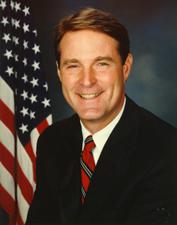 Sen. Evan Bayh (D-IN)
What it changes
1 change to H.R. 1256 · shown in the bill's text
Inserts new text at the end of the bill
InsertsIn H.R. 1256 · Placed on Calendar Senate
Passed the House of Representatives April 2, 2009.
Inserted: DIVISION_--NURSE FACULTY LOAN REPAYMENT PROGRAM
Inserted: SEC. 1. SHORT TITLE.
Inserted: This division may be cited as the "Nurses' Higher Education and Loan Repayment Act of 2009".
Inserted: SEC. 2. FINDINGS.
Inserted: The Congress finds the following:
Inserted: (1) The Health Resources and Services Administration estimates there is currently a shortage of more than 200,000 registered nurses nationwide and projects the shortage will grow to more than 1,000,000 nurses by 2020, 36 percent less than needed to meet demand for nursing care.
Inserted: (2) The shortage of qualified nursing faculty is the primary factor driving the inability of nursing schools to graduate more registered nurses to meet the Nation's growing workforce demand.
Inserted: (3) There continues to be strong interest on the part of young Americans to enter the nursing field. The National League for Nursing estimates that 88,000 qualified applications, or 1 out of every 3 submitted to basic registered nurse programs in 2006, were rejected due to lack of capacity.
Inserted: (4) The American Association of Colleges of Nursing (in this section referred to as the "AACN") estimates that 49,948 applicants were turned away specifically from baccalaureate and graduate schools of nursing in 2008 and over 70 percent of the schools responding to the AACN survey reported a lack of nurse faculty as the number 1 reason for turning away qualified applicants. Likewise, nearly 70 percent of the associate's degree registered nurse programs responding to the most recent American Association of Community Colleges Nursing Survey reported a lack of faculty to teach as the number 1 reason for turning away qualified applicants.
Inserted: (5) Large numbers of faculty members at schools of nursing in the United States are nearing retirement. According to the AACN, the average age of a nurse faculty member is 55 years old and the average age at retirement is 62.
Inserted: (6) The current nationwide nurse faculty vacancy rate is estimated to be as high as 7.6 percent, including 814 vacant positions at schools of nursing offering baccalaureate and advanced degrees and, in 2006, as many as 880 in associate's degree programs.
Inserted: (7) Market forces have created disincentives for individuals qualified to become nurse educators from pursing this career. The average annual salary for an associate professor of nursing with a master's degree is nearly 20 percent less than the average salary for a nurse practitioner with a master's degree, according to the 2007 salary survey by the journal ADVANCE for Nurse Practitioners.
Show 29 more inserted paragraphsShow less
Inserted: (8) The most recent Health Resources and Services Administration survey data indicates that from a total of more than 2,000,000 registered nurses, only 143,113 registered nurses with a bachelor's degree and only 51,318 registered nurses with an associate's degree have continued their education to earn a master's degree in the science of nursing, the minimum credential necessary to teach in all types of registered nurse programs. The majority of these graduates do not become nurse educators.
Inserted: (9) Current Federal incentive programs to encourage nurses to become educators are inadequate and inaccessible for many interested nurses.
Inserted: (10) A broad incentive program must be available to willing and qualified nurses that will provide financial support and encourage them to pursue and maintain a career in nursing education.
Inserted: SEC. 3. NURSE FACULTY LOAN REPAYMENT PROGRAM.
Inserted: Part E of title VIII of the Public Health Service Act (42 U.S.C. 297a et seq.) is amended by inserting after section 846A the following new section:
Inserted: "SEC. 846B. NURSE FACULTY LOAN REPAYMENT PROGRAM.
Inserted: "(a) Establishment.--The Secretary, acting through the Administrator of the Health Resources and Services Administration, may enter into an agreement with eligible individuals for the repayment of education loans, in accordance with this section, to increase the number of qualified nursing faculty.
Inserted: "(b) Agreements.--Each agreement entered into under subsection (a) shall require that the eligible individual shall serve as a full-time member of the faculty of an accredited school of nursing for a total period, in the aggregate, of at least 4 years during the 6-year period beginning on the later of--
Inserted: "(1) the date on which the individual receives a master's or doctorate nursing degree from an accredited school of nursing; or
Inserted: "(2) the date on which the individual enters into an agreement under subsection (a).
Inserted: "(c) Agreement Provisions.--Agreements entered into pursuant to subsection (a) shall be entered into on such terms and conditions as the Secretary may determine, except that--
Inserted: "(1) not more than 300 days after the date on which the 6-year period described under subsection (b) begins, but in no case before the individual starts as a full-time member of the faculty of an accredited school of nursing, the Secretary shall begin making payments, for and on behalf of that individual, on the outstanding principal of, and interest on, any loan the individual obtained to pay for such degree;
Inserted: "(2) for an individual who has completed a master's degree in nursing--
Inserted: "(A) payments may not exceed $10,000 per calendar year; and
Inserted: "(B) total payments may not exceed $40,000; and
Inserted: "(3) for an individual who has completed a doctorate degree in nursing--
Inserted: "(A) payments may not exceed $20,000 per calendar year; and
Inserted: "(B) total payments may not exceed $80,000.
Inserted: "(d) Breach of Agreement.--
Inserted: "(1) In general.--In the case of any agreement made under subsection (a), the individual is liable to the Federal Government for the total amount paid by the Secretary under such agreement, and for interest on such amount at the maximum legal prevailing rate, if the individual fails to meet the agreement terms required under subsection (b).
Inserted: "(2) Waiver or suspension of liability.--In the case of an individual making an agreement for purposes of paragraph (1), the Secretary shall provide for the waiver or suspension of liability under such paragraph if compliance by the individual with the agreement involved is impossible or would involve extreme hardship to the individual or if enforcement of the agreement with respect to the individual would be unconscionable.
Inserted: "(3) Date certain for recovery.--Subject to paragraph (2), any amount that the Federal Government is entitled to recover under paragraph (1) shall be paid to the United States not later than the expiration of the 3-year period beginning on the date the United States becomes so entitled.
Inserted: "(4) Availability.--Amounts recovered under paragraph (1) shall be available to the Secretary for making loan repayments under this section and shall remain available for such purpose until expended.
Inserted: "(e) Eligible Individual Defined.--For purposes of this section, the term 'eligible individual' means an individual who--
Inserted: "(1) is a United States citizen, national, or lawful permanent resident;
Inserted: "(2) holds an unencumbered license as a registered nurse; and
Inserted: "(3) has either already completed a master's or doctorate nursing program at an accredited school of nursing or is currently enrolled on a full-time or part-time basis in such a program.
Inserted: "(f) Authorization of Appropriations.--There are authorized to be appropriated to the Secretary such sums as may be necessary for each of fiscal years 2010 through 2014 to carry out this Act. Such sums shall remain available until expended.
Inserted: "(g) Sunset.--The provisions of this section shall terminate on December 31, 2020.".
Original wording
At the end of the bill, add the following:
Read automatically from the Congressional Record. Check the original before relying on it.
As printed
SA 1269. Mr. BAYH (for himself, Ms. Murkowski, Mr. Burris, Mr. Lieberman, Mr. Warner, Mr. Webb, Mr. Nelson of Nebraska, and Mr. Begich) submitted an amendment intended to be proposed by him to the bill H.R. 1256, to protect the public health by providing the Food and Drug Administration with certain authority to regulate tobacco products, to amend title 5, United States Code, to make certain modifications in the Thrift Savings Plan, the Civil Service Retirement System, and the Federal Employees' Retirement System, and for other purposes; which was ordered to lie on the table; as follows:
At the end of the bill, add the following:
DIVISION_--NURSE FACULTY LOAN REPAYMENT PROGRAM
SEC. 1. SHORT TITLE.
This division may be cited as the “Nurses' Higher Education and Loan Repayment Act of 2009”.
SEC. 2. FINDINGS.
The Congress finds the following:
(1) The Health Resources and Services Administration estimates there is currently a shortage of more than 200,000 registered nurses nationwide and projects the shortage will grow to more than 1,000,000 nurses by 2020, 36 percent less than needed to meet demand for nursing care.
(2) The shortage of qualified nursing faculty is the primary factor driving the inability of nursing schools to graduate more registered nurses to meet the Nation's growing workforce demand.
(3) There continues to be strong interest on the part of young Americans to enter the nursing field. The National League for Nursing estimates that 88,000 qualified applications, or 1 out of every 3 submitted to basic registered nurse programs in 2006, were rejected due to lack of capacity.
(4) The American Association of Colleges of Nursing (in this section referred to as the “AACN”) estimates that 49,948 applicants were turned away specifically from baccalaureate and graduate schools of nursing in 2008 and over 70 percent of the schools responding to the AACN survey reported a lack of nurse faculty as the number 1 reason for turning away qualified applicants. Likewise, nearly 70 percent of the associate's degree registered nurse programs responding to the most recent American Association of Community Colleges Nursing Survey reported a lack of faculty to teach as the number 1 reason for turning away qualified applicants.
(5) Large numbers of faculty members at schools of nursing in the United States are nearing retirement. According to the AACN, the average age of a nurse faculty member is 55 years old and the average age at retirement is 62.
(6) The current nationwide nurse faculty vacancy rate is estimated to be as high as 7.6 percent, including 814 vacant positions at schools of nursing offering baccalaureate and advanced degrees and, in 2006, as many as 880 in associate's degree programs.
(7) Market forces have created disincentives for individuals qualified to become nurse educators from pursing this career. The average annual salary for an associate professor of nursing with a master's degree is nearly 20 percent less than the average salary for a nurse practitioner with a master's degree, according to the 2007 salary survey by the journal ADVANCE for Nurse Practitioners.
(8) The most recent Health Resources and Services Administration survey data indicates that from a total of more than 2,000,000 registered nurses, only 143,113 registered nurses with a bachelor's degree and only 51,318 registered nurses with an associate's degree have continued their education to earn a master's degree in the science of nursing, the minimum credential necessary to teach in all types of registered nurse programs. The majority of these graduates do not become nurse educators.
(9) Current Federal incentive programs to encourage nurses to become educators are inadequate and inaccessible for many interested nurses.
(10) A broad incentive program must be available to willing and qualified nurses that will provide financial support and encourage them to pursue and maintain a career in nursing education.
SEC. 3. NURSE FACULTY LOAN REPAYMENT PROGRAM.
Part E of title VIII of the Public Health Service Act (42 U.S.C. 297a et seq.) is amended by inserting after section 846A the following new section:
“SEC. 846B. NURSE FACULTY LOAN REPAYMENT PROGRAM.
“(a) Establishment.--The Secretary, acting through the Administrator of the Health Resources and Services Administration, may enter into an agreement with eligible individuals for the repayment of education loans, in accordance with this section, to increase the number of qualified nursing faculty.
“(b) Agreements.--Each agreement entered into under subsection (a) shall require that the eligible individual shall serve as a full-time member of the faculty of an accredited school of nursing for a total period, in the aggregate, of at least 4 years during the 6-year period beginning on the later of--
“(1) the date on which the individual receives a master's or doctorate nursing degree from an accredited school of nursing; or
“(2) the date on which the individual enters into an agreement under subsection (a).
“(c) Agreement Provisions.--Agreements entered into pursuant to subsection (a) shall be entered into on such terms and conditions as the Secretary may determine, except that--
“(1) not more than 300 days after the date on which the 6-year period described under subsection (b) begins, but in no case before the individual starts as a full-time member of the faculty of an accredited school of nursing, the Secretary shall begin making payments, for and on behalf of that individual, on the outstanding principal of, and interest on, any loan the individual obtained to pay for such degree;
“(2) for an individual who has completed a master's degree in nursing--
“(A) payments may not exceed $10,000 per calendar year; and
“(B) total payments may not exceed $40,000; and
“(3) for an individual who has completed a doctorate degree in nursing--
“(A) payments may not exceed $20,000 per calendar year; and
“(B) total payments may not exceed $80,000.
“(d) Breach of Agreement.--
“(1) In general.--In the case of any agreement made under subsection (a), the individual is liable to the Federal Government for the total amount paid by the Secretary under such agreement, and for interest on such amount at the maximum legal prevailing rate, if the individual fails to meet the agreement terms required under subsection (b).
“(2) Waiver or suspension of liability.--In the case of an individual making an agreement for purposes of paragraph (1), the Secretary shall provide for the waiver or suspension of liability under such paragraph if compliance by the individual with the agreement involved is impossible or would involve extreme hardship to the individual or if enforcement of the agreement with respect to the individual would be unconscionable.
“(3) Date certain for recovery.--Subject to paragraph (2), any amount that the Federal Government is entitled to recover under paragraph (1) shall be paid to the United States not later than the expiration of the 3-year period beginning on the date the United States becomes so entitled.
“(4) Availability.--Amounts recovered under paragraph (1) shall be available to the Secretary for making loan repayments under this section and shall remain available for such purpose until expended.
“(e) Eligible Individual Defined.--For purposes of this section, the term ‘eligible individual' means an individual who--
“(1) is a United States citizen, national, or lawful permanent resident;
“(2) holds an unencumbered license as a registered nurse; and
“(3) has either already completed a master's or doctorate nursing program at an accredited school of nursing or is currently enrolled on a full-time or part-time basis in such a program.
“(f) Authorization of Appropriations.--There are authorized to be appropriated to the Secretary such sums as may be necessary for each of fiscal years 2010 through 2014 to carry out this Act. Such sums shall remain available until expended.
“(g) Sunset.--The provisions of this section shall terminate on December 31, 2020.”.
Legislative Activity
Stay on top of the latest movement without scrolling through every action
Senate amendment submitted
June 4, 2009