S.Amdt. 143Senate111th Congress (2009-2011)2nd degree
S.Amdt. 143
Sponsored by 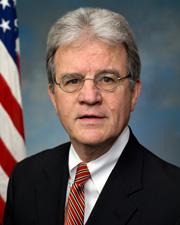 Sen. Tom Coburn (R-OK)
Submitted February 3, 2009
Legislative Activity
Stay on top of the latest movement without scrolling through every action
Floor
Latest Action
Senate amendment submitted
February 3, 2009
Text
Submitted
SA 143. Mr. COBURN submitted an amendment intended to be proposed to
amendment SA 98 proposed by Mr. Inouye (for himself and Mr. Baucus) to
the bill H.R. 1, making supplemental appropriations for job
preservation and creation, infrastructure investment, energy efficiency
and science, assistance to the unemployed, and State and local fiscal
stabilization, for fiscal year ending September 30, 2009, and for other
purposes; which was ordered to lie on the table; as follows:

On page 431, between lines 8 and 9, insert the following:

SEC. 1607. BIPARTISAN SUPPORT FOR THE PLAN BY THE PRESIDENT
TO CHANGE THE WASTEFUL SPENDING HABITS OF THE
FEDERAL GOVERNMENT.

(a) Findings.--Congress finds the following:
(1) The national debt now exceeds $10,600,000,000,000.
(2) The share of each United States citizen of the national
debt is more than $34,800.
(3) Each cent that the United States Government borrows and
adds to such debt is money stolen from future generations of
United States citizens and from senior citizens who depend on
Social Security.
(4) Congress has repeatedly demonstrated its inability to
prioritize spending.
(5) In the first month of 2009, the Senate authorized
nearly $50,000,000,000 in new Government spending.

[[Page S1452]]

(6) 59 percent of people in the United States worry that
Congress and President Barack Obama will increase spending
too much, according to a poll conducted by Rasmussen Reports
on January 21 and 22, 2009.
(7) As a candidate, President Obama pledged to restore
fiscal discipline to Washington.
(8) As part of the ``Plan for Restoring Fiscal Discipline''
by President Obama, the President pledged to ``require new
spending commitments or tax changes to be paid for by cuts to
other programs or new revenue''.
(9) This Act contains tax changes that would reduce Federal
revenue by $252,500,000,000 and increase spending by
$632,000,000,000, without any corresponding new revenue or
spending cuts.
(10) The ``Plan for Restoring Fiscal Discipline'' by
President Obama vowed an ``end to wasteful government
spending''.
(11) This Act spends billions of dollars on programs that
are riddled with significant amounts of waste, fraud, abuse,
and mismanagement.
(12) The ``Plan for Restoring Fiscal Discipline'' by
President Obama promised to ``cut pork barrel spending''.
(13) This Act contains a number of congressional earmarks,
including the most expensive ``pork'' project in history,
$2,000,000,000 for a near-zero emissions power plant for
FutureGen Industrial Alliance.
(14) To limit the abuse of no-bid Federal contracts, the
``Plan for Restoring Fiscal Discipline'' by President Obama
pledged ``that federal contracts over $25,000'' will be
awarded by competitive bidding.
(15) This Act steers billions of dollars to pre-selected
entities that will not have to compete for such Federal
contracts.
(b) Sense of Congress.--It is the sense of Congress that--
(1) because the power of the purse belongs to Congress, it
is irresponsible for Congress to increase spending without
first reducing lower-priority spending elsewhere within the
Federal budget; and
(2) in the spirit of bipartisanship and common sense,
Congress should adopt those aspects of the ``Plan for
Restoring Fiscal Discipline'' by President Barack Obama that
require that all new spending be paid for with reductions in
lower-priority spending elsewhere within the Government.
______