To prohibit funds appropriated for the Strategic Petroleum Reserve from being made available to any person that has engaged in certain activities with respect to the Islamic Republic of Iran.
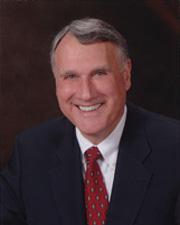 Sen. Jon Kyl (R-AZ)
Legislative Activity
Stay on top of the latest movement without scrolling through every action
Senate amendment submitted
July 29, 2009
View full timeline
Senate amendment submitted
July 29, 2009
Senate amendment proposed (on the floor): Amendment SA 1892 proposed by Senator Dorgan for Senator Kyl to Amendment SA 1813.(consideration: CR S8253-8254; text: CR S8253-8254)
July 29, 2009
Senate amendment agreed to: Amendment SA 1892 agreed to in Senate by Unanimous Consent.
July 29, 2009
Amendment SA 1892 proposed by Senator Dorgan for Senator Kyl to Amendment SA 1813. (consideration: CR S8253-8254; text: CR S8253-8254) To prohibit funds appropriated for the Strategic Petroleum Reserve from being made available to any person that has engaged in certain activities with respect to the Islamic Republic of Iran.
July 29, 2009
Amendment SA 1892 agreed to in Senate by Unanimous Consent.
July 29, 2009
Text
Proposed
ENERGY AND WATER DEVELOPMENT AND RELATED AGENCIES APPROPRIATIONS ACT,
2010

The ACTING PRESIDENT pro tempore. Under the previous order, the
Senate will resume consideration of H.R. 3183, which the clerk will
report.
The assistant legislative clerk read as follows:

A bill (H.R. 3183) making appropriations for energy and
water development and related agencies for the fiscal year
ending September 30, 2010, and for other purposes.

Pending:

Dorgan amendment No. 1813, in the nature of a substitute.
Reid amendment No. 1846 (to amendment No. 1813), to modify
provisions relating to the Department of the Interior.
Alexander amendment No. 1862 (to amendment No. 1813), to
limit disbursement of additional funds under the Troubled
Asset Relief Program to certain automobile manufacturers, to
impose fiduciary duties on the Secretary of the Treasury with
respect to shareholders of such automobile manufacturers, to
require the issuance of shares of common stock to eligible
taxpayers which represent the common stock holdings of the
United States Government in such automobile manufacturers.

The ACTING PRESIDENT pro tempore. The Senator from North Dakota.

Health Care

Mr. DORGAN. Mr. President, we are waiting to proceed on the
legislation that has come from the Appropriations Subcommittee on
Energy and Water, which I chair. We are on the bill, but we are waiting
for amendments and discussion.
But I want to make a point. We have had people coming to the floor of
the Senate yesterday, now this morning, incessantly over a long period
of time, talking about health care. Health care is, obviously, very
important; no question about that. The relentless increase in the cost
of health care hurts families. It hurts business. It hurts government
programs that provide for health care. So we need to do something about
that.
But it is interesting. What I hear on the floor of the Senate from
the critics of these issues is: What is wrong? What is wrong? Well, it
does not take a lot of energy or a lot of time to determine what is
wrong and be a critic. I understand that.
I have often told the story of Mark Twain, who was asked to debate
once, and he said: Of course I will be engaged in that debate, as long
as I can take the negative side.
They said: Well, we have not even told you the subject of the debate.
He said: Oh, it doesn't matter. The negative side will take no
preparation.
So it is with these discussions on the floor that I have just heard a
moment ago and heard all day yesterday as I sat here on the floor,
talking about what is wrong. Well, do you know what, we know what is
wrong. What is wrong is that we have this relentless rise of health
care costs. We spend more on health care than anybody else in the
world, by far, and we rank somewhere around 41st in life expectancy. We
spend twice as much per person than almost everybody else in the world
spends on health care.
I notice that all those critics who come out here talking about what
is wrong with this plan or that plan never talk about prescription
drugs because most of those who have been out here criticizing the
various plans are people who vote against legislation to put downward
pressure on prescription drugs. Yet one of the fastest rising areas of
health care costs is prescription drugs.
Let me, if I might, ask unanimous consent to show on the floor of the
Senate two bottles that would contain prescription drugs.
The ACTING PRESIDENT pro tempore. Without objection, it is so
ordered.
Mr. DORGAN. These two bottles I hold in my hand, which I have shown
many times, contain Lipitor. It is medicine produced in Ireland and
then shipped all around the world. This Lipitor, as you can see, comes
from identical bottles. The same tablet, the same medicine, produced in
the same plant by the same company, FDA-approved by our Food and Drug
administration in our country, is put in two different bottles. One is
shipped to the United States, this one, and the other is shipped to
Canada. What is the difference? Well, there is no difference in the
medicine. It came from the same place, produced by the same company.
The difference is price. The Canadians get to pay half the price the
Americans pay.
It is not just Lipitor, the most popular cholesterol-lowering drug
that exists out there. It is not just Lipitor. It is prescription drug
after prescription drug. The American people get to pay the highest
prices in the world. You want to talk about how you cut health care
costs? How about taking a whack at this and saying it is not fair that
the American people should pay the highest prices in the world for
prescription drugs. Why are they required to pay the highest price in
the world? Because there is kind of a sweetheart deal in law that says
the only entity that can reimport prescription drugs is the drug
manufacturer itself.
Much of the ingredients in these drugs come from all around the
world--China, just as an example. The manufacturers can produce these
drugs in Ireland, using ingredients from all around the world, and then
bring them in to sell to the American consumer. But the American
consumer cannot access the same FDA-approved drug sold in virtually
every other industrial country at a fraction of the price the American
consumer is charged.

[[Page S8217]]

Why, when we hear these critics come to the floor on health care
issues, do we not hear them suggest: Here is an area where we could
substantially cut costs and give the American consumer the opportunity
everybody else has; that is, to shop for these FDA-approved drugs in
areas where you see much lower prices?
The pharmaceutical industry will say: Well, if you allow the American
people to do that and if we can't charge the highest prices to the
American people for prescription drugs, we will not have the money to
do our research to find new drugs. Well, that is not true. The fact is,
the pharmaceutical industry spends more money on research in Europe
than they do in the United States and in virtually every European
country, the European consumers get to pay less money for the same
drugs that American consumers are now charged.
A bipartisan group of us has offered legislation to give the American
consumer the right to access these lower cost prescription drugs from
areas where you can pay a fraction of the price for the identical drug
the American consumer pays the highest price in the world for. But we
have a staunch bunch of folks in this Chamber who support the
pharmaceutical industry and who decide that the American people
shouldn't have this right. I would say to those who are the critics of
virtually anything anybody talks about in health care: Maybe you ought
to decide to support those of us who have introduced bipartisan
legislation to deal with the issue of the prescription drug prices in
which the American people are charged the highest prices in the world.
It is not fair; it has gone on too long; and it needs to be changed.
With respect to health care, generally, this issue is one of those
issues that is very important. We are in the middle of a very deep
recession. I think job one in this country, by far, is to put the
country back on track so people can get back on payrolls, get back to
work, and have jobs. That makes almost everything else possible. This
is the deepest recession since the Great Depression, and we have a lot
of work to do. This President inherited a mess, no question about that.
He inherited a $1.3 trillion deficit this year. It is now going to be
$1.9 trillion because the President advanced and the Congress passed an
economic recovery program to try to stimulate the economy. But we need
to get this economy back on track and then we need to begin trimming
back these budget deficits. We cannot, for any length of time, continue
to provide a level of government the American people are either unable
or unwilling to pay for. That is not a path that is sustainable. It is
not a path that works. But the President, when he took office, said
there are a number of other things we need to do--one of which is to
try to get some control over these escalating health care costs.
I don't know exactly how this is going to end up. I don't know what
plan might or might not exist at the end of the day, but I think
Congress is going to find a way through this. I think it is useful and
important and productive for us to be working and working hard to see:
What are the solutions? How do we put downward pressure on prices? How
do we try to provide broader coverage for those who don't now have
health care coverage? I think we can do this. It might well be it has
to be done in a couple phases, the first of which is to put downward
pressure on the pricing and the second of which is to extend coverage.
However we do it, we need to decide that health care costs are rising
far more rapidly than is sustainable. They blow a hole in the federal
budget deficit because the Federal Government, through Medicare and
through Medicaid, is the largest consumer of health care, so we don't
have much choice but to find a way to do this.
I understand there is a lot in this health care system that wants to
protect what is, one of which is prescription drugs. I mentioned this
prescription drug called Lipitor. Most people would know the name of
this. Why? Because when they leaf through Newsweek or Time magazine,
they will see a full-page ad for Lipitor. When they shave in the
morning or brush their teeth in the morning, if they have a television
near their bathroom, they will understand about Lipitor. They will
understand about the purple pill. They will understand about
prescription drugs because relentless advertising is driven toward the
consumer to say: Go ask your doctor if you shouldn't be taking this
drug. Go check with your doctor. Isn't the purple pill right for you?
There is relentless consumer advertising for something you can't buy
unless a doctor believes you need it and a doctor prescribes it for
you. Is that something we ought to take care of maybe? I think so.
There are a whole range of areas that I think are very important in
health care that we need to try to do something about. I think we can.
It is horribly complicated, very difficult, a very heavy lift, and we
need to do it in a way that first and foremost puts downward pressure
on health care pricing. The fact is we cannot and should not be
spending twice as much as anybody else in the world per capita on
health care only to find out that we rank 41st in life expectancy. That
means we are spending much more than anybody else and not getting the
outcome or the results.
So I would say to the people--including this morning, the first thing
out of the box is the critics of health care, once again, relentlessly
on the floor telling us what is wrong. As I have said, Mark Twain knew
the negative side requires no preparation. So I am not sure these are
well-prepared arguments, but they are certainly relentless. It is nice
to hear what is wrong. Maybe as 100 Senators who dress up in suits in
the morning, we could come and spend the entire day talking about what
is right. This is a great country, one of which we have the privilege
to live in freedom, we have the privilege to be engaged in public
debate. Maybe let's spend a little more time trying to figure out what
is right about this country and find out what kinds of solutions can
unite us rather than divide us and find out how we get the best of each
rather than the worst of both when we talk about the political parties.
If we can do that, maybe we will advance this country's interests.
The fact is we all stand in the same hole. It is a very deep economic
hole, the deepest since the Great Depression, and we will all be well
advised, it seems to me, to find ways to begin working together to
address these issues.
I yield the floor and suggest the absence of a quorum.
The ACTING PRESIDENT pro tempore. The clerk will call the roll.
The assistant legislative clerk proceeded to call the roll.
Mr. CORKER. Mr. President, I ask unanimous consent that the order for
the quorum call be rescinded.
The ACTING PRESIDENT pro tempore. Without objection, it is so
ordered.
Mr. CORKER. Mr. President, I ask unanimous consent to set aside the
pending amendment, in no way to disrupt the order--to come back to
that.
The ACTING PRESIDENT pro tempore. Is there objection?
Mr. DORGAN. Mr. President, reserving the right to object, and I will
not object, let me further ask unanimous consent that following the
presentation of this amendment, we have a unanimous consent agreement
to set aside this amendment for a Democratic amendment that is about to
be offered.
The ACTING PRESIDENT pro tempore. Is there objection?
Without objection, it is so ordered.
The Senator from Tennessee is recognized.

Amendment No. 1865 to Amendment No. 1813

Mr. CORKER. Mr. President, I thank the Senator from North Dakota for
his agreeing to let me do this.
I wish to call up amendment No. 1865.
The ACTING PRESIDENT pro tempore. The clerk will report.
The assistant legislative clerk read as follows:

The Senator from Tennessee [Mr. Corker] proposes an
amendment numbered 1865 to Amendment No. 1813.

Mr. CORKER. Mr. President, I ask unanimous consent that the reading
of the amendment be dispensed with.
The ACTING PRESIDENT pro tempore. Without objection, it is so
ordered.
The amendment is as follows:

[[Page S8218]]

(Purpose: To authorize the Secretary of the Treasury to delegate
management authority over troubled assets purchased under the Troubled
Asset Relief Program, to require the establishment of a trust to manage
assets of certain designated automobile manufacturers, and for other
purposes)

At the appropriate place, insert the following:

SEC.__. AUTHORITY OF THE SECRETARY OF THE TREASURY TO
DELEGATE TARP ASSET MANAGEMENT; CREATION OF
MANAGEMENT AUTHORITY FOR AUTOMOBILE
MANUFACTURERS ASSISTED UNDER TARP.

(a) Authority to Designate Management.--Section 106(b) of
the Emergency Economic Stabilization Act of 2008 (12 U.S.C.
5216(b)) is amended by inserting before the period at the end
the following: ``, and the Secretary may delegate such
management authority to a private entity, as the Secretary
determines appropriate, with respect to any entity assisted
under this Act''.
(b) Federal Assistance Limited.--Notwithstanding any
provision of the Emergency Economic Stabilization Act of
2008, or any other provision of law, no funds may be expended
under the Emergency Economic Stabilization Act of 2008
(Public Law 110-343) or to carry out the Advanced Technology
Vehicles Manufacturing Incentive Program established under
section 136 of the Energy Independence and Security Act of
2007 (42 U.S.C. 17013) on or after the date of enactment of
this Act, until the Secretary of the Treasury transfers all
voting, nonvoting, and common equity in any designated
automobile manufacturer to a limited liability company
established by the Secretary for such purpose, to be held and
managed in trust on behalf of the United States taxpayers.
(c) Appointment of Trustees.--
(1) In general.--The President shall appoint 3 independent
trustees to manage the equity held in the trust, separate and
apart from the United States Government.
(2) Criteria.--Trustees appointed under this subsection--
(A) may not be elected or appointed Government officials;
(B) shall serve at the pleasure of the President, and may
be removed for just cause in violation of their fiduciary
responsibilities only; and
(C) shall serve without compensation for their services
under this section.
(d) Duties of Trust.--Pursuant to protecting the interests
and investment of the United States taxpayer, the trust
established under this section shall, with the purpose of
maximizing the profitability of the designated automobile
manufacturers--
(1) exercise the voting rights of the shares of the
taxpayer on all core governance issues;
(2) select the representation on the boards of directors of
any designated automobile manufacturer; and
(3) have a fiduciary duty to the American taxpayer for the
maximization of the return on the investment of the taxpayer
made under the Emergency Economic Stabilization Act of 2008,
in the same manner and to the same extent that any director
of an issuer of securities has with respect to its
shareholders under the securities laws and all applications
of State law.
(e) Liquidation.--The trustees shall liquidate the trust
established under this section, including the assets held by
such trust, not later than December 24, 2011.
(f) Definitions.--As used in this section--
(1) the term ``designated automobile manufacturer'' means
an entity organized under the laws of a State, the primary
business of which is the manufacture of automobiles, and any
affiliate thereof, if such automobile manufacturer--
(A) has received funds under the Emergency Economic
Stabilization Act of 2008 (Public Law 110-343), or funds were
obligated under that Act, before the date of enactment of
this Act; and
(B) has filed for bankruptcy protection under chapter 11 of
title 11, United States Code, during the 90-day period
preceding the date of enactment of this Act;
(2) the term ``Secretary'' means the Secretary of the
Treasury or the designee of the Secretary; and
(3) the terms ``director'', ``issuer'', ``securities'', and
``securities laws'' have the same meanings as in section 3 of
the Securities Exchange Act of 1934 (15 U.S.C. 78e).

Mr. CORKER. Mr. President, this is an amendment to deal with the
ownership that I think many Americans have concerns about in private
companies. What this amendment would do is for any company that the
U.S. Government owns more than 20 percent of, it would place--such as,
by the way, General Motors--what it would do is place those companies
into a trust and that trust would be managed by three very professional
individuals known to be leaders; people such as, I would hope, Jack
Welch and others who have shown--Warren Buffett--people who have shown
the ability to actually look at assets of this nature and they would
manage this particular stock ownership through December 24 of 2011.
They would dispense these assets in a way that benefits the U.S.
taxpayers. In the event that at that time they were able to come to
Congress and let us know it was not in the taxpayers' interests for
this to be done, then we could certainly grant an extension.
The point is to make sure the taxpayers benefit from what has
happened but at the same time keep all of us--as the Senator from North
Carolina alluded to the other day, 100 people in suits--from actually
being involved and keeping the administration from being involved, in
any way, from managing these companies. I think all of us are very
concerned about governmental ownership. This amendment, again, would
allow the taxpayers who were sold TARP on the basis that they would get
a return on their investment--and, in essence, this company--for
instance, General Motors has over $50 billion in taxpayer money in it
today. What this amendment would do is it would separate the line
between government and these companies but at the same time allow the
taxpayers of this country and our U.S. Government to recoup those
moneys to pay down this ever-building debt that our country has.
Other companies would come into this category once we got to the 20-
percent level: Citigroup, AIG, obviously, would fall into this
category. This amendment solves the issue for the long haul because as
companies such as General Motors and others come into ownership by U.S.
taxpayers--again, we are uncomfortable with that--it separates that
ownership and puts it into a trust. It would be something the
administration and this Congress can have nothing to do with. Yet the
taxpayers' assets, these companies that we put lots of money in, are
managed to the best interest of the U.S. taxpayer.
With that, I thank my colleague for letting me call up this
amendment. I realize this will be set aside, and we will be moving to
other business. I hope, at some point during this debate, we will have
a vote on this amendment.
I thank you very much for the time and I yield the floor.
Mr. DORGAN. Mr. President, I make a point of order that a quorum is
not present.
The ACTING PRESIDENT pro tempore. The clerk will call the roll.
The assistant legislative clerk proceeded to call the roll.
Mr. CORKER. Mr. President, I ask unanimous consent that the order for
the quorum call be rescinded.
The ACTING PRESIDENT pro tempore. Without objection, it is so
ordered.

Amendment No. 1865, As Modified

Mr. CORKER. Mr. President, I ask that amendment No. 1865, which I
called up earlier, be modified as presented at the desk.
The PRESIDING OFFICER. The amendment is so modified.
The amendment (No. 1865), as modified, is as follows:

At the appropriate place, insert the following:

SECTION I. SHORT TITLE.

This Act may be cited as the ``TARP Recipient Ownership
Trust Act of 2009''.

SEC. 2. AUTHORITY OF THE SECRETARY OF THE TREASURY TO
DELEGATE TARP ASSET MANAGEMENT.

Section 106(b) of the Emergency Economic Stabilization Act
of 2008 (12 U.S.C. 5216(b)) is amended by inserting before
the period at the end the following: ``, and the Secretary
may delegate such management authority to a private entity,
as the Secretary determines appropriate, with respect to any
entity assisted under this Act''.

SEC. 3. CREATION OF MANAGEMENT AUTHORITY FOR DESIGNATED TARP
RECIPIENTS.

(a) Federal Assistance Limited.--Notwithstanding any
provision of the Emergency Economic Stabilization Act of
2008, or any other provision of law, no funds may be expended
under the Troubled Asset Relief Program, or any other
provision of that Act, on or after the date of enactment of
this Act, until the Secretary of the Treasury transfers all
voting, nonvoting, and common equity in any designated TARP
recipient to a limited liability company established by the
Secretary for such purpose, to be held and managed in trust
on behalf of the United States taxpayers.
(b) Appointment of Trustees.--
(1) In general.--The President shall appoint 3 independent
trustees to manage the equity held in the trust, separate and
apart from the United States Government.
(2) Criteria.--Trustees appointed under this subsection--
(A) may not be elected or appointed Government officials;
(B) shall serve at the pleasure of the President, and may
be removed for just cause in violation of their fiduciary
responsibilities only; and

[[Page S8219]]

(C) shall serve without compensation for their services
under this section.
(c) Duties of Trust.--Pursuant to protecting the interests
and investment of the United States taxpayer, the trust
established under this section shall, with the purpose of
maximizing the profitability of the designated TARP
recipient--
(1) exercise the voting rights of the shares of the
taxpayer on all core governance issues;
(2) select the representation on the boards of directors of
any designated TARP recipient; and
(3) have a fiduciary duty to the American taxpayer for the
maximization of the return on the investment of the taxpayer
made under the Emergency Economic Stabilization Act of 2008,
in the same manner and to the same extent that any director
of an issuer of securities has with respect to its
shareholders under the securities laws and all applications
of State law.
(d) Liquidation.--The trustees shall liquidate the trust
established under this section, including the assets held by
such trust, not later than December 24, 2011, unless the
trustees submit a report to Congress that liquidation would
not maximize the profitability of the company and the return
on investment to the taxpayer.

SEC. 4. DEFINITIONS.

As used in this Act--
(1) the term ``designated TARP recipient'' means any entity
that has received financial assistance under the Troubled
Asset Relief Program or any other provision of the Emergency
Economic Stabilization Act of 2008 (Public Law 110-343), such
that the Federal Government holds or controls not less than a
20 percent ownership stake in the company as a result of such
assistance;
(2) the term ``Secretary'' means the Secretary of the
Treasury or the designee of the Secretary; and
(3) the terms ``director'', ``issuer'', ``securities'', and
``securities laws'' have the same meanings as in section 3 of
the Securities Exchange Act of 1934 (15 U.S.C. 78c).

Mr. CORKER. I thank the Chair.
If there is no objection from the managers, I might expand on the
amendment one more time, since there is no activity on the floor.
Mr. DORGAN. If the Senator will yield, let me say that I happen to be
a cosponsor of the amendment. It is being offered to the Energy and
Water appropriations bill. There may well be a rule XVI against it. It
appears to be legislating on an appropriations bill.
Before the Senator expands on his remarks, I think he and Senator
Warner have offered a constructive idea, one that I support and have
cosponsored prior to it being on the floor. I think it is useful for
Senators to hear a complete description of the proposal. If it is not
resolved on this bill--and it probably will not be--my hope is it will
be resolved on another piece of legislation.
The ACTING PRESIDENT pro tempore. The Senator from Tennessee is
recognized.
Mr. CORKER. Mr. President, I thank the Senator for his comments. What
I have tried to do in this amendment with Senator Warner--both of us
serving on the Banking Committee--is to create a solution that solves
the issue of us having U.S. Government ownership in companies, which I
think makes most everybody in this body very uncomfortable.
At the same time, we can deal with the issue of this massive Federal
deficit. I mentioned earlier that the taxpayers of this country were
sold the TARP package, and we voted it into activity last fall on the
fact that this $700 billion that was being invested in financial
institutions at the time--as we know, it evolved to General Motors and
other companies--that money was going to be invested in these
companies, and 100 percent of the repayment was going to be used to pay
down the Federal deficit. That is what we all thought we were doing at
that time. That bill passed out of this body with 74 or 75 votes, with
all of us present in the Chamber.
Again, the American people and all of us in this body have become
concerned about what types of political activities can take place when
the U.S. Government owns a bank or automobile company. I have seen it
up close and personal, and I understand that political decisions can be
made that are not in the best interests of the company and certainly
not in the best interests of the taxpayers.
How do you solve that, create a scenario where these companies are
separate from us, where Representatives and Senators are not calling up
trying to help the companies decide what transactions they are going to
be involved in but at the same time make sure the proceeds of sales
from these companies or the securities we own in them actually end up
reducing the deficit?
This is a balanced approach. Senator Warner has joined me in this, a
bipartisan effort to, again, move away from this body, move away from
the administration and the House of Representatives any ability to
affect these companies politically but at the same time to ensure that
any proceeds coming from the sale of these securities ends up going to
pay down the Federal deficit, which I think all of us are concerned
about.
We are all aware that under the 10-year budget that is proposed, our
deficit doubles from what it has been the entire history of our
country--doubles over 5 years and triples over 10 years. I think people
around this country, rightly so, are worried. I got a townhall phone
call last night, and people are concerned about the deficit. We are all
concerned. This bill will help solve that, not make it worse, and at
the same time remove us from any kind of politicization of these
companies.
With that, I yield the floor and suggest the absence of a quorum.
The ACTING PRESIDENT pro tempore. The clerk will call the roll.
The legislative clerk proceeded to call the roll.
Mr. WYDEN. Mr. President, I ask unanimous consent that the order for
the quorum call be rescinded.
The ACTING PRESIDENT pro tempore. Without objection, it is so
ordered.

Health Care Reform

Mr. WYDEN. Mr. President, I wish to spend a few minutes this morning
talking about some of the positive developments that are taking place
right now on this issue of health care reform. For example, this
morning, the President is out talking to workers who already have
insurance about how health care reform will work for them. He is
spending his political capital. He is using the bully pulpit that is
the White House. It is clear that this is a priority for the President
of the United States.
A second positive development is in the Senate Finance Committee. We
have a bipartisan group of six Senators. They are putting in killer
hours at this point. I have been kidding them that I suspect they are
being fed intravenously, but they are trying to put together a
bipartisan health reform effort, and I appreciate what they are doing.
Third, I note my good friend from Utah on the floor of the Senate
this morning. He and I have made it clear that the sponsors of the
Healthy Americans Act, a bipartisan group of 15 of senators, are very
open to working with Chairman Baucus, Chairman Dodd, and the President
of the United States in a bipartisan fashion to fix health care.
So the question that is front and center in all of these discussions
with the President, with the bipartisan group in the Finance Committee,
with the bipartisan group of Healthy Americans Act sponsors that
Senator Bennett and I are part of, is how we control costs in health
care. What are we going to do to make health care more affordable?
It is our judgment that the key to making health care more affordable
is to make sure people have bargaining power and people have choice--
the same choice that Members of Congress have. The distinguished
Senator from New Mexico, the Senator from Utah, and myself actually
belong to something that is pretty much an exchange, which is like a
farmers market for health insurance. But essentially what we in the
Senate have is the opportunity to choose from a menu of private health
policies. We get rewarded for making an economical selection to save on
our premiums, and we get rewarded when we choose a program that puts
more emphasis on prevention and health. So when Senators shop wisely,
they end up being wealthier and healthier as a result of being able to
participate in a big exchange.
What Senator Bennett and I wish to do today is extend that kind of
bargaining power to everybody in our country. After a period of time, a
phase-in over a few years, everybody in our country ought to have a
chance to have the kind of bargaining power and the kind of clout that
Members of Congress have. Everybody in our country ought to be in a
position to choose a policy that works for them. And when they make a
good choice, when they

[[Page S8220]]

shop wisely, the extra money should go into their own pockets. That is
the kind of approach Senator Bennett and I have advocated. It is a way
to focus on these exchanges, these farmers markets which, in my view,
are the key to getting health reform right.
What these exchanges do, if we set it up right, is they give all the
middle-class people who are insured today in New Mexico, Utah, and
Oregon a chance to come out winners under health reform at the get-go.
And if you are already insured, the President has said he is going to
let you keep the coverage you have. Now that makes a lot of sense. We
senators hear that at every meeting back in our states.
But if, for example, in Utah, Oregon, or New Mexico, you don't like
the coverage you have and you can get a better deal at the exchange,
something that puts more money in your pocket, something that helps you
and your family, let's let people do that under Free Choice.
Under the Free Choice proposal Senator Bennett and I have advocated,
that we have presented to Chairman Baucus, Chairman Dodd, and the
President of the United States, this is something we can do for the
insured that helps them save money right at the get-go.
Regrettably, a number of the bills that have been considered in the
Congress do not give people those kinds of choices. And when we look at
how these bills are set up, there are what are called ``firewalls''
that restrict people from getting these choices. A lot of the people
who are advocating for a public option are not even going to get the
choice to enroll in one.
The key to helping people who already have insurance, the 160 million
who get coverage through their employer today, is to get these
exchanges right and to make sure that everybody has bargaining power
within these exchanges as part of a big group.
I have a private policy as a Member of Congress. The people in
Oregon, in effect, are my employer. They pay a portion of it. We have a
million people in our group. That is the way to spread a lot of cost
and risk through a group so you can get real value. Let's set these
exchanges up at least so they contain big groups through a regional
approach. Senator Bennett and I said we are open to a variety of ways
of doing this. But let's make sure that everybody has some clout in the
marketplace. If you are a small business in New Mexico today, you get
strangled by the administrative costs of health care. You don't have
much clout in the marketplace. As a small employer, you may be paying
30 percent of your health care dollar for administration. It should not
be that way. We should be giving those small businesses relief.
What Senator Bennett and I have said with our free choice proposal is
if you are an employer in New Mexico or elsewhere in this country, you
may want to take your workers to the exchange. This is employer-
sponsored insurance. This is an employer taking their workers to the
exchange. As an employer, you can go to the exchange in New Mexico and
say you want a discount because you are taking your group of workers to
the exchange. That is playing hard ball with the private insurance
business. That is saying to the insurers in New Mexico you are not
doing good enough; you are not giving me a good enough deal, so I am
going to have a chance to go to the insurance exchange and get a better
one. We call it Free Choice: more options for employers and more
options for workers. Options that look like what Members of Congress
have.
I fear if we do not set up a system that gets this exchange right so
that people have bargaining power--employers and employees--we are not
going to be able to get the kind of cost containment the President of
the United States has identified correctly as the heart of health care
reform. It is about holding down costs. It is about making coverage
more affordable.
I urge colleagues to look at the article that was written in this
morning's Washington Post by Ezra Klein talking about the importance of
the exchange and what it can mean for the bargaining power of middle-
class people and businesses if it is set up right.
We know how to set it up right because it resembles the system that
all of us enjoy in the Senate. At the beginning of the year, senators
have a choice, a menu of options. If you make a good one, the money
goes right into your pocket.
One last point with respect to Free Choice. Sometimes the best
choices are not the most expensive choices. Senator Bennett knows a lot
about this because in Utah they have a system, intermountain, that has
illustrated that the best choices are not always the expensive choices.
Let's make it easier for people to choose an Intermountain program or a
Mayo program or any of the other integrated systems that are regarded
as the gold standard in terms of quality.
One of the concerns I have about all of these firewalls in the
legislation that is being considered is that Americans around this
country, after a big push in the Congress to choose quality, are not
even going to have the opportunity to choose a program like Mayo or
Intermountain that gets more value for the health care dollar.
There are some positive developments in the health care debate going
on today. To highlight some of these developments, the President is out
talking to workers; negotiations are going on in the Senate Finance
Committee; and there is the very gracious approach that Senator Bennett
and a number of Republicans are taking in terms of saying: Look, we
want this to be bipartisan, we want to meet the President halfway.
Each of those developments, it seems to me, is very positive. Fixing
health care is absolutely key to fixing the economy.
As Ezra Klein pointed out this morning in the Washington Post, the
reason people's take-home pay isn't going up is because medical costs
are gobbling up everything in sight. So the key to fixing health care
is promoting free choice; getting these exchanges right so employers
and employees have more opportunities to hold costs down.
I think, in view of these positive developments I have highlighted,
there is reason for Senators to stay at it and keep working in a
bipartisan way, and real progress is going to be made before this body
leaves for the August break.
I yield the floor.
The ACTING PRESIDENT pro tempore. The Senator from Utah.
Mr. BENNETT. Mr. President, I have listened with interest to my
friend from Oregon outline his relentless determination to get a
solution to this problem, and I pay tribute to him for his willingness
to do that. I am happy to follow his leadership, as we do our best to
support what has been known colloquially around the country as the
Wyden-Bennett bill, although in Utah we refer to it as the Bennett-
Wyden bill.
We have heard a lot of debate during the time when we should have
been dealing with energy and water. Senator after Senator comes down
and asks for permission to speak as in morning business, and they
always speak about health care. Since we haven't anybody else to speak
about the bill on the floor, Chairman Dorgan has indulged them in that
bit of morning business.
The one thread that has run through much of the statements about
health care has been that we must get rid of the present system, as if
that were a debatable issue. Everybody recognizes we must get rid of
the present system. The proposal Senator Wyden and I have been behind
gets rid of the present system. And coming to the floor and giving
example after example of how the present system has failed Americans is
not the same as putting forward a legitimate proposal as to how to deal
with the present system. We discussed that a little yesterday, so I
will not go into it again.
I wish to make one slight addition to the comments Senator Wyden made
with respect to choice. When I first got here, and the First Lady of
the United States, Hillary Clinton, was proposing a health care
program, one of the mantras we heard on the street from people who
would demonstrate was: We want what Members of Congress have. We want
the plan you have.
And I said--half facetiously but half seriously--I want the plan I
had before I came here. Because the plan I had was better than the one
we got as Members of Congress.
I point out the reason I wanted that plan is that I got to pick what
that plan would be. How did I get to pick what that plan would be? I
got to pick because I was the CEO of the company

[[Page S8221]]

that made the choice. I was the only person in that company who got to
pick, because once I made the decision that this is what we will have
in the company, everybody else in the company was dependent upon my
wisdom.
Senator Wyden has pointed out we do have a wide range of choices in
the plan that are available to us as Federal employees. I underscore,
when I discuss this with people in Utah, that because I am a Senator, I
have the same plan people at Hill Air Force Base have. This is the plan
of all Federal employees. Yes, there are a number of choices and, yes,
I am satisfied with it and I like it. But it is still true it is my
employer--in this case the Federal Government--who designed the plan.
I am glad it is a good plan. I don't think I would want to change it.
I think I would take advantage of the promises that have been made in
this debate; that if you like what you have, you can keep it. But the
point is that someone who is an employer, who has not made that
available, is frozen out of the opportunity for choice by virtue of the
decision that the CEO of his company made. The one sure-fire question I
can ask and know the answer I will get at every town meeting I hold on
this is to say: How many of you--in the group gathered--either know
somebody or are somebody trapped in a job he or she hates because they
are afraid to lose their health care benefits? Every time I ask that
question, hands go up all over the room.
That is the kind of thing Senator Wyden and I are trying to change.
These people are locked in a job they hate because they are afraid they
will lose their health care. They are not allowed the choice of
deciding what their health care dollars will be spent for. It is
determined for them by their employer. If we go the direction in which
Senator Wyden and I want to go, employers that continue to offer plans
the employees like will find that their employees will exercise their
right of choice to stay with that plan. But employers that say: No, we
are going to cut corners a little and cut back on things, just because
we think it would be better for our bottom line if we do this, will
discover that if our legislation passes, their employees will be
empowered to say we are taking our health care dollars and going
someplace else and making another choice.
That is the fundamental reason why we have been scored as having the
bill that will turn the cost curve down rather than up. We change the
present system in a way that will allow market forces to get into the
mix and allow people to exercise their free choice and start to save
money as a consequence; whereas, all the other plans that are being
scored as turning the cost curve up do so because they eliminate any
power of individuals in the marketplace to exercise their choice.
I wish we were discussing energy and water. We seem to have turned
this into a discussion of health care because the other folks will not
come down. I won't intrude upon that any further. But having heard my
colleague, I felt it appropriate for me to make these additional
comments.
With that I yield the floor.
The ACTING PRESIDENT pro tempore. The Senator from North Dakota.
Mr. DORGAN. Mr. President, let me make a point because we have heard
a lot of discussion about health care. My colleague from Oregon and my
colleague from Utah talked about this yesterday and today and I think
it is important to point out.
When people talk about the choices Members of Congress have, I think
it is giving the impression that somehow Members of Congress have some
gold-plated health care system that other Federal employees do not
have. In fact, I believe the choices available to Members of Congress
are the choices available in the Federal Employees Health Benefit
system for millions of other Federal employees.
The reason I make that point is we have had a lot of people talk
about the choices Members of Congress have with their health plan. This
Federal Employees Health Benefit Plan is available to all Federal
employees. All Federal employees have the same choices, by and large,
and those are the choices Members of Congress have.
Last weekend, I had several people talk to me about the extraordinary
health insurance Members of Congress have, and I think part of that
comes from this discussion about Members of Congress have all these
choices. It is very important for people to understand that we have the
same health care plan other Federal employees have--millions of them--
and the same choices they have. I just wanted to make sure the Record
shows that because I think it is important.
The ACTING PRESIDENT pro tempore. The Senator from Oregon.
Mr. WYDEN. Mr. President, let me pick up on the point made by the
Senator from North Dakota because he is very accurate in his
assessment.
One of the reasons they like so much this idea of trying to set up a
model as we have in the Congress, with our exchanges, is because, for
example, somebody who is working for the Forest Service in the State of
Oregon has essentially the same kinds of choices I have for the Wyden
family.
I think Senator Dorgan's point about trying to make clear to the
American people that these choices Members of Congress have, somebody,
for example, who works for the Forest Service in Oregon, has
essentially the same choices, which involve basic health care--what we
think of as preventive care, primary care, being able to go see a
doctor, being able to get hospital coverage, and a reasonable
catastrophic benefit. That is what Members of Congress can essentially
choose from, and that is what somebody has an opportunity to get if
they work at the Forest Service.
I think Senator Dorgan's point is very valid. The reason I have come
back to this is because, under our free choice proposal, people in this
country would, in effect, be able to go to one of these exchanges,
which is similar to a farmer's market, and choose from a menu of
private policies, not unlike what a Member of Congress has and somebody
who works for the Forest Service. So I think the Senator from North
Dakota has made a good point.
We, of course, have a lot of bargaining power because we go into
these big groups, and that bargaining power can hold down
administrative costs and get a better deal for somebody who has
insurance. I would like to see, as we go forward with this legislation,
that these exchanges are set up around a lot of the same principles
Members of Congress have. Because if you do that, that is going to hold
costs down for people who have insurance, and it is going to make their
coverage more affordable. For example, the workers the President is
going to see today would have additional choices in the future and save
money when they are purchasing quality health care.
With that, I thank the Senator from North Dakota for making an
important point.
The PRESIDING OFFICER (Mr. Bennet). The Senator from North Dakota.

Amendment No. 1846 to Amendment No. 1813

Mr. DORGAN. Mr. President, we are ready to clear several cleared
amendments, so I ask unanimous consent to immediately consider
amendment No. 1846, which is already pending.
The PRESIDING OFFICER. Is there further debate on the amendment?
Mr. DORGAN. My understanding is the amendment is cleared on both
sides. I believe there is no further debate, and I ask for its
immediate consideration.
The PRESIDING OFFICER. If there is no further debate, the question is
on agreeing to the amendment.
The amendment (No. 1846) was agreed to.

Amendments Nos. 1844 and 1845, En Bloc

Mr. DORGAN. Mr. President, I ask unanimous consent to call up
amendments Nos. 1844 and 1845, en bloc; further, I ask unanimous
consent to dispense with the reading of the amendments.
I believe there is no further debate. These are technical amendments
that have been cleared by both sides, and I ask for their immediate
consideration.
The PRESIDING OFFICER. Is there objection? Without objection, it is
so ordered.
The amendments (Nos. 1844 and 1845) were agreed to, as follows:

amendment no. 1844

(Purpose: Provides a technical correction to a Corps of Engineers
project)

Provided further, That the Chief of Engineers is directed
to use $1,500,000 of funds available for the Greenbrier
Basin, Marlinton, West Virginia, Local Protection Project to
continue engineering and design efforts, execute a project
partnership agreement, and initiate construction of the

[[Page S8222]]

project substantially in accordance with Alternative 1 as
described in the Corps of Engineers Final Detailed Project
Report and Environmental Impact Statement for Marlinton, West
Virginia Local Protection Project dated September 2008:

amendment no. 1845

(Purpose: Provides transfer authority for the Corps of Engineers and
the Bureau of Reclamation)

Sec. __. Title IV of division A of the American Recovery
and Reinvestment Act of 2009 (Public Law 111-5) is amended by
adding at the end of the Title, the following new section
411:
`Section 411.-- Up to 0.5 percent of each amount
appropriated to the Department of the Army and the Bureau of
Reclamation in this title may be used for the expenses of
management and oversight of the programs, grants, and
activities funded by such appropriation, and may be
transferred by the Head of the Federal Agency involved to any
other appropriate account within the department for that
purpose: Provided, That the Secretary will provide a report
to the Committees on Appropriations of the House of
Representatives and the Senate 30 days prior to the transfer:
Provided further, That funds set aside under this section
shall remain available for obligation until September 30,
2012.'

Mr. DORGAN. Mr. President, I believe we will have an amendment by the
Senator from Nebraska in a few minutes. But let me say, with the
Senator from Utah, we need to have Senators come over and offer
amendments. If you have amendments you want to add to this bill, offer,
and debate, we expect you to be here. Ultimately, those who have
amendments and don't come to offer them are probably going to be
precluded at some point because we will move to complete this bill.
We have sat here the day before yesterday, yesterday, and now today.
This is a very important piece of legislation that deals with the
energy and water projects across the country, and we want to complete
this bill, preferably this evening, if we can. In order to do that, we
need to at least have some semblance of cooperation, which has been
little evident, at least in the past couple days.
The PRESIDING OFFICER. The Senator from Utah.
Mr. BENNETT. Mr. President, I would ask the chairman, since cloture
has been filed, doesn't there arise a time at which there is a cutoff
by which amendments can be offered?
Mr. DORGAN. I would say to the Senator from Utah there is a 1 p.m.
filing deadline today. But the fact is we already have amendments filed
but aren't offered. So I expect we will get additional amendments
filed. The key is to get people down here to offer their amendments,
but there is a 1 p.m. filing deadline.
The cloture motion was filed last evening, and I understand why the
Senator from Nevada, the majority leader, filed it. I don't think he
had much choice. We bring an appropriations bill to the floor that has
very widespread support and then it largely comes to a standstill. It
would not make much sense for us to be here in this position all week.

I think Senator Reid had very little choice but to file a cloture
motion. My hope is we would not need it. If people will come and offer
their amendments, we will work with them. Senator Bennett and I will
work to accept the amendments we can and get the votes and perhaps this
evening get this bill completed.
The PRESIDING OFFICER. The Senator from Nebraska is recognized.
Mr. NELSON of Nebraska. Mr. President, I ask to set aside the pending
amendment.
The PRESIDING OFFICER. Without objection, it is so ordered.

Amendment No. 1874 to Amendment No. 1813

Mr. NELSON of Nebraska. Mr. President, I call up my amendment.
The PRESIDING OFFICER. The clerk will report.
The legislative clerk read as follows:

The Senator from Nebraska [Mr. Nelson] proposes an
amendment numbered 1874 to amendment No. 1813.

The amendment is as follows:

(Purpose: To express the sense of the Senate that the investment by the
Federal Government in the automotive industry of the United States is
temporary)

In the appropriate place, insert the following:
Sec. __. (a) The Senate finds that--
(1) the United States is facing a deep economic crisis that
has caused millions of workers in the United States to lose
their jobs;
(2) the collapse of the automotive industry in the United
States would have dealt a devastating blow to an already
perilous economy;
(3) on December 19, 2008, President George W. Bush stated:
``The actions I'm announcing today represent a step that we
wish were not necessary. But given the situation, it is the
most effective and responsible way to address this challenge
facing our nation. By giving the auto companies a chance to
restructure, we will shield the American people from a harsh
economic blow at a vulnerable time and we will give American
workers an opportunity to show the world, once again, they
can meet challenges with ingenuity and determination and
bounce back from tough times and emerge stronger than
before.'';
(4) on March 30, 2009, President Barack Obama stated: ``We
cannot, and must not, and we will not let our auto industry
simply vanish. This industry is like no other--it's an emblem
of the American spirit; a once and future symbol of America's
success. It's what helped build the middle class and
sustained it throughout the 20th century. It's a source of
deep pride for the generations of American workers whose hard
work and imagination led to some of the finest cars the world
has ever known. It's a pillar of our economy that has held up
the dreams of millions of our people. . . . These companies--
and this industry--must ultimately stand on their own, not as
wards of the state.'';
(5) the Federal Government is a reluctant shareholder in
General Motors Corporation and Chrysler Motors LLC in order
to provide economic stability to the United States;
(6) the Federal Government should work to protect the
investment of the taxpayers of the United States;
(7) the Federal Government should not intervene in the day-
to-day management of General Motors or Chrysler; and
(8) the Federal Government should closely monitor General
Motors and Chrysler to ensure that they are being responsible
stewards of taxpayer dollars and are taking all practicable
steps to expeditiously return to viability.
(b) It is the sense of the Senate that--
(1) the Federal government is only a temporary stakeholder
in the automotive industry of the United States and should
take all practicable steps to protect the taxpayer dollars of
the United States and to divest the ownership interests of
the Federal Government in automotive companies as
expeditiously as practicable; and
(2) the Comptroller General of the United States, the
Congressional Oversight Panel, and the Special Inspector
General for the Troubled Assets Relief Program should
continue to oversee and report to Congress on automotive
companies receiving financial assistance so that the Federal
Government may complete divestiture without delay.

Mr. NELSON of Nebraska. Mr. President, the amendment I propose serves
to address the government's significant ownership and puts the Senate
on record and makes absolutely clear that the Federal Government is a
temporary shareholder in General Motors and Chrysler and should divest
its shareholder position as expeditiously as possible.
It is pretty clear no one ever wanted the government to be in the car
business, but the alternative was worse and the turmoil in the auto
industry extends far beyond Detroit, as most Americans know.
Dealerships across my State of Nebraska, and I am assuming across
your State as well, are feeling the impacts of decisions made by
automakers following their bankruptcies. Chrysler has terminated
franchise agreements with 9 dealerships in Nebraska, and GM is
terminating franchise agreements with 21 dealerships in Nebraska. These
decisions are affecting dealerships, their employees, and communities
across my State.
However, now that investment has been made, we owe it to the American
taxpayer to be clear about what will happen with their money. My
amendment states that the Federal Government is only a temporary
stakeholder in the American automotive industry and should take all
possible steps to protect American taxpayer dollars and divest its
ownership interests in such companies as expeditiously as possible.
The government should not be involved in day-to-day operations, and
as soon as the auto companies have regained their financial footing,
the government must divest.
Further, this resolution calls on the Government Accountability
Office and inspector general for the Troubled Assets Relief Program, or
TARP, to continue to provide oversight and report to Congress on the
automakers' progress so the Federal Government may complete divestiture
without delay.
This is not a partisan issue. We have had Presidents of both
political parties recognize the need to address the current downfall of
the auto industry and recognize the need to remove government
involvement as quickly as possible.

[[Page S8223]]

Our sense-of-the-Senate resolution affirms what the President has
already made clear. Taxpayers should be protected and the government
should get out of the auto business as soon as possible. Through this
amendment, the Senate leaves no question about the government's future
role in the U.S. auto industry. In the event there has been an
uncertainty about that ownership, this resolution will clear that up.
I yield the floor.
Mr. BENNETT. Mr. President, I suggest the absence of a quorum.
The PRESIDING OFFICER. The clerk will call the roll.
The legislative clerk proceeded to call the roll.
Mr. DORGAN. Mr. President, I ask unanimous consent the order for the
quorum call be rescinded.
The PRESIDING OFFICER. Without objection, it is so ordered.
Mr. DORGAN. Mr. President, we are awaiting some word from Senator
Alexander. He was here earlier this morning to offer an amendment. We
indicated we would very much like to have a vote at 11:30 this morning.
We are trying to contact Senator Alexander and his staff. There will be
a budget point of order against the amendment offered by Senator
Alexander, so the vote would be on the point of order that will be made
with respect to the budget.
Senator Bennett and I hope we can get this vote so we can get people
to the floor and determine which amendments are going to be offered and
when. The majority leader has been extraordinarily patient. He is
trying to schedule bills to the floor of the Senate. We bring an Energy
and Water appropriations bill to the floor of the Senate, people say
they have amendments but they do not come to the floor to offer them,
so the majority leader filed cloture last evening, a cloture motion
that will ripen tomorrow.
He did not have much choice but to do that, and I think what is
happening today demonstrates the requirement that the majority leader
had to file a cloture motion. It would be far better for everybody if
we can dispose of the amendments.
I think we have three amendments dealing with TARP funds. I think we
can dispose of the three of them. If we can have Senator Alexander come
and reach an agreement on time and have a vote at 11:30, at least we
would at that point get Senators to the floor, dispose of that
amendment on a budget point of order. There will be points of order
against the other two TARP amendments as well--different points of
order, I might add.
Mr. BENNETT. Mr. President, I have just spoken with Senator
Alexander. He is on his way over and is amenable to having a rapid
vote. So he would come over and discuss with us the unanimous consent
agreement with respect to time.
Mr. DORGAN. Mr. President, we appreciate the cooperation of Senator
Alexander. I know he cares a lot about his amendment. As I indicated,
there will be a budget point of order that lies against the amendment.
I will make that point of order, but then we will have a recorded vote
on that point of order. My hope would be that we can do that at 11:30
this morning, for the information of other Senators and their staffs,
and we will determine that when Senator Alexander arrives on the floor
momentarily.
I suggest the absence of a quorum.
The PRESIDING OFFICER. The clerk will call the roll.
The legislative clerk proceeded to call the roll.
Mr. DORGAN. Mr. President, I ask unanimous consent that the order for
the quorum call be rescinded.
The PRESIDING OFFICER. Without objection, it is so ordered.

Amendment No. 1862

Mr. DORGAN. Mr. President, I ask unanimous consent that the Senate
now resume consideration of the Alexander amendment No. 1862 and that
Senator Dorgan be recognized to raise a Budget Act 302(f) point of
order against the amendment; that once Senator Alexander has moved to
waive the relevant point of order, debate on the waiver extend to 11:25
a.m., with the time equally divided and controlled between Senators
Dorgan and Alexander or their designees; that at 11:25 a.m., the Senate
proceed to vote on the motion to waive, with no amendments in order to
the amendment during its pendency.
The PRESIDING OFFICER. Without objection, it is so ordered.
Mr. DORGAN. Mr. President, I make a point of order that the pending
amendment violates section 302(f) of the Congressional Budget Act of
1974.
Mr. ALEXANDER. Mr. President, I move to waive the applicable section
of the Budget Act with respect to my amendment and ask for the yeas and
nays.
The PRESIDING OFFICER. Is there a sufficient second?
There appears to be. The yeas and nays are ordered.
The Senator from Tennessee is recognized.
Mr. ALEXANDER. Mr. President, we have the time equally divided
between now and 11:25; is that correct?
The PRESIDING OFFICER. The Senator is correct.
Mr. ALEXANDER. I would like to reserve the last minute of my time, if
I may, for use before the vote. But I will go ahead now.
I thank the managers of the bill for creating the opportunity for
this vote. The American people want the government, the Federal
Government, out of the auto business. I believe Democrats and
Republicans in the Senate would like to have the government out of the
auto business. President Obama has said he would like to have the
government out of the auto business. Yet we are in the auto business in
a big way for the foreseeable future unless we take some action.
The taxpayers have paid almost $70 billion for 60 percent of the
stock in General Motors and about 8 percent of the stock in Chrysler.
My amendment is identical to legislation which is cosponsored by the
distinguished Senator from Utah, Mr. Bennett, and Senator McConnell,
Senator Kyl, and others. What this amendment would do, most
importantly, is have the Treasury, within a year, to declare a stock
dividend, which means to give the stock the government owns in General
Motors and Chrysler to the 120 million Americans who pay taxes on April
15.
They paid for it. They should own it. Why is that a good idea? Polls
show that 95 percent of Americans disagreed ``that the government is a
good overseer of corporations such as General Motors and Chrysler.'' We
know that. We have seen the incestuous relationship that develops. We
own the company, so we call up the managers and say: Change your dealer
contracts. Don't close a warehouse in my district. Put your plant in my
State. Why are you buying a battery from South Korea when you could be
buying one from my congressional district?
We can, and are, summoning the executives of General Motors and
Chrysler to the more than 60 committees and subcommittees in Congress
that have some say-so over these companies we own, one of which we own
a big majority of. So the executives have to drive in their
congressionally approved methods of transportation to Washington, DC,
and spend time talking to us, who know nothing about building cars, but
that doesn't stop us from giving them a lot of advice. Then these
executives go back. During that day they have talked to us, they
haven't designed or built or sold a car.
We need to get the stock out of the hands of the government and into
the hands of the taxpayers. Several Senators have suggested a way to do
that. The simplest way is the corporate spinoff or spinout. A spinoff
is a new organization or entity formed by a split from a larger one. It
typically happens when we have a corporation that has a subsidiary
which increasingly doesn't have any relevance to the major
corporation's business, so we simply give the ownership to the owners
of the major corporation. That is what Procter & Gamble did with Clorox
in 1969. Procter & Gamble decided Clorox didn't have anything to do
with Procter & Gamble anymore, so they gave all the stock in Clorox to
the owners of Procter & Gamble. In March 2009, Time Warner gave all the
stock in Time Warner Cable to the people who paid for the stock in Time
Warner. In 1997, PepsiCo gave all the stock in KFC and Pizza Hut and
Taco Bell to the people who own stock in PepsiCo. Why should we not do
that with General Motors and Chrysler? The taxpayers paid for it. They
own it. We should give the stock back to all the taxpayers who paid for
it on April 15. We should stop this incestuous political meddling with

[[Page S8224]]

major American corporations. The only alternative, other than this, is
to slowly sell down the stock over a period of years. Over that time,
we will meddle so much, General Motors will never survive.
This is the best thing for General Motors. It is the best thing for
the country. If we want to reverse this trend of Washington takeovers
of banks, insurance companies, and car companies, this is the simplest
thing to do.
I urge colleagues to vote yes on the motion to waive the budget point
of order.
I yield the floor.
The PRESIDING OFFICER (Mr. Kaufman). The Senator from Illinois.
Mr. DURBIN. Mr. President, I commend my colleague from Tennessee for
his ingenuity, creativity, but not necessarily for his wisdom. I don't
agree with this amendment, and I am going to oppose it and urge my
colleagues to do the same.
The U.S. Government never wanted to get in the automobile business.
President Obama has said that. He said he will not run these companies.
That is not why he ran for President. What he tried to do is to save
some major companies in America and, more importantly, save jobs as
well. What he tried to do was create incentives for the companies to
make some decisions they needed to make: Chrysler to ally with Fiat for
the future; General Motors to basically gear down the number of cars
they are going to make and the number of brands, try to be a leaner
company that is going to be more responsive to American consumers. That
is why we are in the automobile business. The President, nor any member
of his Cabinet, is not sitting down on a day-to-day basis making
decisions when it comes to the future of the automobile companies.
The Senator from Tennessee wants to take the taxpayers' investment in
General Motors and other companies and basically turn it into a couple
shares of stock, maybe 10, 20--I am not sure--for every American. That
may be an approach, but I don't think it is one that is well thought
out. What happens then at the next General Motors shareholders meeting,
after Senator Alexander's wish comes true? Who stands up to the
management of the company? Does each of us give up a day of work and go
to the meeting to sit down and help make these decisions? Not likely.
What is more likely to occur is that the ownership of General Motors
will feel no obligation. This stock ownership being distributed across
America is going to dilute the impact of shareholder rights and the
impact of shareholder power. I would rather have at least the prospect
and the possibility that if the administration and management of
General Motors goes too far in one direction, they know that TARP, the
money being spent there, is going to be a factor they have to take into
consideration.
What could they possibly do that would enrage the taxpayers of
America who have saved their company? They could do what some of the
banks did: They could declare multimillion-dollar bonuses for the
people who work for them. What is holding them back? Their largest
lender, the U.S. Government, which doesn't exactly like that idea, as
most Americans do not. This is going to end up liberating General
Motors in many respects--maybe some positive but also some negative,
terrible decisions which they could make with impunity after the
amendment passes.
There is a reason this was defeated in the Appropriations Committee.
There is a reason it should be defeated on the floor of the Senate.
Before we embark on this idea of providing a couple shares of stock to
every citizen, we ought to step back and ask ourselves: Is this the
best outcome to make sure this company and its workers' and retirees'
rights survive or is this kind of an ingenuous, creative idea that
ought to be thought through? This needs to be kept in the pot, boiling
on the stove a little bit longer, before we decide we are going to
embark on what is a first of its kind in America. Every example Senator
Alexander gave involved shareholders receiving shares in companies.
They weren't given to the public at large, which is what he is
proposing here. That is a dramatic difference. We are diluting the
impact on the shareholders with the Alexander amendment. I hope my
colleagues will join me in opposing it.
The PRESIDING OFFICER. The Senator from Tennessee.
Mr. ALEXANDER. The Senator from Illinois made an eloquent argument
about why he believes it is better for the government to run the auto
companies. I believe it is better to put it in the hands of the
stockholders. Those are the people who pay taxes on April 15.
The PRESIDING OFFICER. The time of the Senator has expired.
Mr. DORGAN. How much time remains?
The PRESIDING OFFICER. A minute and a half remains under the control
of the Senator from North Dakota.
Mr. DORGAN. I understand what Senator Alexander wants to do. I have
some of the same instincts. The President does as well. I don't want
the Federal Government running America's corporations. We want to
divest as quickly as we can. We want the companies to recover. But
whatever we do here, we need to do it in a way that protects the
interests of the taxpayers. Theirs are the interests that are at risk.
To set a date within 1 year does not protect the interests of the
taxpayers.
I happen to support a Corker amendment. I was a cosponsor of the
Corker amendment that talks about the establishment of trustees, three
trustees to actually be engaged in running these companies so the
government is not running them. It talks about liquidating that trust
by December 2011. But they would submit a report to Congress. That
liquidation would not happen unless it maximizes the profitability of
the company and the return to the shareholder. That is one thing
missing in the Alexander amendment, the question of what maximizes the
return to the American taxpayer. They are the ones who are at risk.
What do we do to maximize the return, or are we going to leave tens of
billions of dollars on the table because somebody simply wants to pass
a piece of legislation with an artificial end date?
I don't disagree with the intent of wanting to get out from under
this issue of the Federal Government being engaged in these
corporations. That is why I cosponsored the Corker amendment.
Mr. LEVIN. Mr. President, I strongly oppose Senator Alexander's
amendment, No. 1862. This amendment would undermine the hard work and
painful sacrifices that have been made over the last several months by
GM, Chrysler, hundreds of auto parts suppliers, thousands of
dealerships, and millions of families. It would destroy the viability
of the domestic automotive manufacturers, and would cost America
thousands of jobs at precisely a time when unemployment is sky-high,
and likely to go higher.
This amendment would force the government to divest its interests
within an arbitrary timeframe, even if doing so would be detrimental to
the taxpayers, the automobile companies, and the country as a whole. If
the government has not divested its interest within that timeframe, it
would be faced with a choice: it could divest the government's
ownership quickly--before the reorganization efforts are complete and
benefits realized--or be forced to direct the companies to issue
millions of fractional ownership interests to taxpayers.
Approximately 138 million Americans file tax returns, and under this
amendment, they would all become shareholders. The automakers will be
faced with enormous administrative difficulties and unknown tax
consequences. For example, how much would it cost to distribute proxy
materials to 140 million ``owners''? How about keeping track of
ownership interests and tax filings? Berkshire Hathaway famously hosts
its annual meetings in a massive sports and entertainment complex.
There is not a venue on the planet that could host a shareholder
meeting with nearly 140 million owners.
Further, an extremely diffuse ownership base could lead to
significant corporate governance concerns, with a management structure
that may be less accountable to shareholders, not more. Because there
would be so many shareholders, each would have extremely limited
ability to affect change. That is exactly the wrong direction. The
taxpayers deserve to have a strong voice in return for their
significant investments. These penalties would be disastrous for the
taxpayers and could be fatal to the companies.

[[Page S8225]]

This amendment would impose fiduciary duties onto administration
officials, with their goals to be ``maximization of the return.'' The
amendment would then also subject these officials to potential civil
suits. This obvious attempt to co-opt traditional corporate law
fiduciary duties is simply inappropriate here. The Secretary and his
designees have duties to uphold the Constitution and the laws of the
United States; they are not simply members of boards of directors. They
are officials of the government. And they cannot be forced to take
actions that may be contrary to their governmental duties.
Of course, imposing this liability would also come with some great
costs. The legal costs on the companies would likely be enormous, as
would the time demands upon the administration officials, which would
keep them from their critical governmental duties.
The amendment would also prohibit the Secretary of the Treasury from
spending or obligating any more funds under the Emergency Economic
Stabilization Act of 2008 to any automobile manufacturer. Restructuring
an entire industry takes patience, sacrifices, and capital. And while
we all hope that the capital requirements are behind us, the
administration's ability to ensure the success of the restructurings
should not be unnecessarily and arbitrarily restricted.
This amendment is a recipe for disaster that could undo the efforts
that have gone into preserving the domestic auto industry these past
several months, and I urge my colleagues to join me in voting against
it.
Mrs. STABENOW. I wonder if I might ask unanimous consent for 1 minute
before we go to a vote?
The PRESIDING OFFICER. Is there objection?
Mr. ALEXANDER. If I may have an additional minute?
The PRESIDING OFFICER. Is there objection to the unanimous consent
request, as modified?
Without objection, it is so ordered.
The Senator from Michigan.
Ms. STABENOW. Mr. President, I know there is a point of order against
this amendment, but despite the intent, which I appreciate and agree
with, of protecting taxpayer dollars, unfortunately, the way this is
designed, it would actually put taxpayer dollars at risk by creating an
end deadline so that we would have all of the taxpayers' interests
coming up at the same time. It would lower the value. It would put the
companies at risk of a takeover, which I don't believe my colleague or
anyone in this body would want.
It is incredibly important that we not try to intervene with end
dates that are, in a way, going to backfire in terms of putting
taxpayer investment in these companies at risk.
The PRESIDING OFFICER. The Senator from Tennessee has 1 minute.
Mr. ALEXANDER. Mr. President, I am surprised by this. I thought we
all wanted to get the stock out of the government and into the hands of
the taxpayers. The argument I am hearing is that the government is
wiser than the marketplace, that it is dangerous to give the stock to
the 120 million taxpayers who paid for it. It is their taxpayer money.
They should own it. General Motors had 610 million shares before it
went bankrupt and 51 percent of American families own stock. This is a
classic difference of opinion. Do we want the government to run
companies? Do we trust the government or do we trust the shareholders?
I trust the shareholders.
I urge colleagues to vote aye.
The PRESIDING OFFICER. The question is on agreeing to the motion to
waive the Budget Act in relation to the Alexander amendment No. 1862.
The yeas and nays have been ordered. The clerk will call the roll.
The assistant legislative clerk called the roll.
Mr. DURBIN. I announce that the Senator from West Virginia (Mr.
Byrd), the Senator from Massachusetts (Mr. Kennedy), and the Senator
from Maryland (Ms. Mikulski) are necessarily absent.
The PRESIDING OFFICER. Are there any other Senators in the Chamber
desiring to vote?
The yeas and nays resulted--yeas 38, nays, 59, as follows:

[Rollcall Vote No. 244 Leg.]

YEAS--38

Alexander
Barrasso
Bennett
Bond
Brownback
Bunning
Burr
Chambliss
Coburn
Cochran
Collins
Cornyn
Crapo
DeMint
Ensign
Enzi
Graham
Grassley
Gregg
Hatch
Hutchison
Inhofe
Isakson
Johanns
Klobuchar
Kyl
Martinez
McCain
McConnell
Murkowski
Risch
Roberts
Sessions
Shelby
Snowe
Thune
Vitter
Wicker

NAYS--59

Akaka
Baucus
Bayh
Begich
Bennet
Bingaman
Boxer
Brown
Burris
Cantwell
Cardin
Carper
Casey
Conrad
Corker
Dodd
Dorgan
Durbin
Feingold
Feinstein
Franken
Gillibrand
Hagan
Harkin
Inouye
Johnson
Kaufman
Kerry
Kohl
Landrieu
Lautenberg
Leahy
Levin
Lieberman
Lincoln
Lugar
McCaskill
Menendez
Merkley
Murray
Nelson (NE)
Nelson (FL)
Pryor
Reed
Reid
Rockefeller
Sanders
Schumer
Shaheen
Specter
Stabenow
Tester
Udall (CO)
Udall (NM)
Voinovich
Warner
Webb
Whitehouse
Wyden

NOT VOTING--3

Byrd
Kennedy
Mikulski
The PRESIDING OFFICER. On this vote, the yeas are 38, the nays are
59. Three-fifths of the Senators duly chosen and sworn not having voted
in the affirmative, the motion is rejected. The point of order is
sustained, and the amendment fails.
Mr. DORGAN. Mr. President, I move to reconsider the vote.
Mr. BENNETT. I move to lay that motion on the table.
The motion to lay on the table was agreed to.
Mr. DORGAN. Mr. President, I note the absence of a quorum.
The PRESIDING OFFICER. The clerk will call the roll.
The assistant legislative clerk proceeded to call the roll.
Mr. VITTER. Mr. President, I ask unanimous consent that the order for
the quorum call be rescinded.
The PRESIDING OFFICER. Without objection, it is so ordered.

Unanimous Consent Request--S. 1344

Mr. VITTER. Mr. President, I rise to talk about something I have
brought up several times on the floor of the Senate, which is the fact
that the highway trust fund, essential to continuing to build out our
highway infrastructure, and particularly essential in the midst of a
recession, is about to run out of money. We need to do something about
that and we need to act responsibly; not merely increase debt, increase
deficits, borrow more money but act responsibly to replenish this trust
fund in a way that doesn't drive up yet more the public debt and the
Federal Government debt. I have a proposal to do that, but it is
essential we consider this issue now, this week, and not wait until
next week when the House of Representatives will not even be in session
so we can correctly address this issue and act in a responsible way.
Again, it is very clear the highway trust fund is running out of
money. I think it is a near universal consensus that we need to act, we
need to do something about it so the highway program doesn't end and
essential construction in all our States around the country doesn't
come to a screeching halt. But how do we do that? That is the issue.
There is absolutely no reason we need to do this by driving up the
debt yet more, borrowing yet more money from our lenders, whoever they
may be, including the Chinese Government. We can do this with already
appropriated dollars. How do we do it? Well, let's move some of the
stimulus dollars--a very small percentage of the stimulus bill which is
already passed, dollars which have already been appropriated--to the
highway trust fund. This solves the problem and does it in a
responsible way, without increasing our debt level, without borrowing
yet more money from all sorts of sources, including foreign sources.
I summarized this proposal in a letter to Senator Reid, cosigned by
about 35 of my colleagues, and we sent the distinguished majority
leader this letter on July 21. We urged him to get behind in support of
this proposal, but we also urged him to take up this matter of the
highway trust fund now--sooner, not later--so we can have a full and
fair debate on the issue and come to a proper resolution.
Why does it matter when we take this up? Well, for a very simple
reason:

[[Page S8226]]

This week we could address the issue; we could have a full, fair
debate; we could amend House action and send it back to the House and
include the proposal that funds be shifted from the stimulus to meet
this essential need. Next week, we can do the same thing, but I can
tell my colleagues the first thing that will come out of the mouth of
the majority leader and others will be: Well, the House is gone. The
House has left town. It is take it or leave it. It is accede to
everything they want. We can't amend it one comma, one period.
That is bogus. We can amend it. We can, in particular, amend it if we
act this week. That is what we should do, as soon as we conclude
consideration of the Energy and Water appropriations bill, which is on
the floor now.
I urge all my colleagues to come together in a reasonable,
responsible debate to consider this commonsense solution of
replenishing the highway trust fund but doing it out of stimulus
dollars, so we don't increase the debt yet more. After all, highway
construction is exactly the sort of stimulus we can all agree on. It is
precisely the sort of stimulus spending that has very broad, near
universal, bipartisan support. So it is fully consistent with the broad
goals of the stimulus.
With all that in mind, I would repeat a unanimous consent request
that I proffered several days ago. Several days ago, I asked for
unanimous consent that the Senate call up and pass S. 1344, my bill to
use stimulus funds to protect the solvency of the highway trust fund.
This request was objected to on the Democratic side.
I would now renew that request and specifically ask unanimous consent
that the Senate enter a unanimous consent agreement that would provide
for a time certain, immediately following the conclusion and
consideration of the Energy and Water appropriations bill, to consider
this bill and allow for relevant amendments.
The PRESIDING OFFICER. Is there objection?
Mrs. BOXER. Mr. President, reserving the right to object, I wish to
spend about a minute to explain why I will object.
The PRESIDING OFFICER. The Senator from California.
Mrs. BOXER. Mr. President, I know Senator Vitter serves on the
Environment and Public Works Committee with me. We have worked closely
on many issues. I know he is aware that our committee has already voted
out an 18-month extension of our highway program, our transportation
programs, and he also knows other committees have acted on that same
extension--the Banking Committee as well as the Finance Committee.
The Finance Committee has already made sure they can find about $27
billion and they have acted on that. So the first thing I wish to say
is nobody should worry about this. This Senate is acting and we have
acted responsibly to extend the fund for 18 months while we write a
transformational bill.
I think the Senator knows there is a lot of what he says that has
merit.
I certainly say that at the end of the 18-month period, after which
the stimulus program was supposed to act, if there are funds left over,
I think it makes eminent sense to put them into the trust fund. But to
take them out at this time, while we are in this deep recession--and my
friend says what better way than to put it in the highway trust fund.
We have billions going to highways that have yet to be spent. There
could be money taken out of that.
I am going to object to this. The Senate is doing its work. We voted
for the 18-month extension. The Finance Committee has come up with $27
billion of the trust fund assigned. We always have the opportunity to
look back when the stimulus program is set to complete and see if there
are leftover dollars. Why would we want to take money out of this
economy right now, when we still have the job loss rate going up, when
we found the money--Senator Baucus did--as an intergovernmental
transfer of funds.
Therefore, I object to this.
The PRESIDING OFFICER. Objection is heard.
Mr. VITTER. Will the Senator yield before she gets off the floor?
Mrs. BOXER. Sure.
Mr. VITTER. I ask the Senator, through the Chair, to consider the
fact that if we don't take up this matter--however you want to fund it
or consider it--take it up now, this week, then the argument will be
made next week that we have to accede to whatever the House has done,
and we cannot do anything differently. That includes a much shorter
extension.
I support the idea of an extension for 18 months, as does the
distinguished chair of the authorizing committee. But the House is
going to pass and is passing now a much shorter extension.
Would the Senator not agree it is a good idea to take up the general
matter now, immediately following the Energy and Water bill, and not
have the terms of our action dictated to us next week simply because
the House has gone out of session?
Mrs. BOXER. Mr. President, I respond to the Senator this way: I agree
we should take up the highway bill now with the fix as proposed by
Senator Baucus. I think it is totally responsible. We have hotlined
this reauthorization. If we can get some cooperation on both sides of
the aisle not to load that measure with extraneous amendments and we
can reach a time agreement, Senator Reid has told me to come to him. So
we have, in fact, sent out a hotline on both sides.
I would be happy to work with Senator Vitter to see if we can clear
the way for a time agreement because, as he knows, these appropriations
bills are very important. The first people to object that we are not
doing our appropriations bills are some of my friends on the other
side. So if we are going to take time out and do the highway bill
reauthorization--and I hope it would be 18 months--believe me, I want
to do it as much as anybody here, if not more, given that I am chairman
of the committee responsible for ensuring that the fund is viable. I
hope the Senator can help me.
I ask him, through the Chair, if he would be willing to work with me
to get a clean bill forward and a time agreement that we can get moving
on this. I agree it is a great idea to do it.
Mr. VITTER. I very much agree with that plan forward. In that
cooperative spirit, I would amend my unanimous consent request and ask
unanimous consent that immediately following consideration of the
Energy and Water appropriations bill, the Democratic proposal the
Senator is referring to, which has been hotlined, be made the order on
the floor and a time certain to consider that bill and allow relevant
amendments, including the Vitter amendment.
The PRESIDING OFFICER. Is there objection?
Mrs. BOXER. Reserving the right to object, first, I asked if we could
get something done without amendment, and now my friend says we have to
have the Vitter amendment. What about the Boxer amendment, the Landrieu
amendment, and the rest of the amendments?
Maybe my friend misunderstood me. I said I want to go to a clean 18-
month extension, the way it passed out of all the committees, get this
done, and have a time agreement on both sides. What my friend is
proposing is that we allow amendments, and we don't have the agreement.
I will object to this in the hopes that we can work it out between us
and the leaders--a time agreement, hopefully, with no amendments; and
that if we have to have one or two, we have agreements on those, with
side by sides. Then I think Senator Reid would be very open to it.
Obviously, if we are going to bring this up and have 30 Senators
filibustering here, that will not help the highway trust fund. I think
what we need to do is work together to get a bipartisan agreement,
where we can get a time agreement, a couple narrow amendments, if we
have to, and then have a vote.
So I will object. I will not object if we can come back with a time
agreement, but I object at this time.
Mr. VITTER. Mr. President, I renew the plea that we work on that sort
of agreement to consider the matter this week immediately following the
Energy and Water appropriations bill.
Yes, I absolutely want a Vitter amendment considered because that is
the whole issue I have been pushing--to fund this out of the stimulus,
not to run up debt. I believe we can have an agreement for a very
limited number of

[[Page S8227]]

germane amendments. But it is essential for that discussion to be
meaningful and that it happen this week.
I renew my encouragement of the chairman to help put together an
agreement for consideration of the bill this week, a limited number of
amendments, including the concept of funding it out of the stimulus. I
believe that is the way we can act responsibly and not be held hostage
and be married to whatever the House says is the right answer, simply
because they are leaving town at the end of this week.
I look forward to working with the chair of the authorizing committee
toward that end. With that, I yield the floor.
Mrs. BOXER. Mr. President, to tie this up, let me make it clear that
I have been working with the majority leader. He is very anxious to get
this done. If we can get cooperation on both sides of the aisle on a
time agreement, we can move this very quickly.
I think Senator Vitter makes the point that is urgent and important.
I agree. That is why we hotlined this, and any Senators listening,
please don't object to letting us go to this 18-month extension. We
have it figured out and paid for. Let's move forward on it.
Mr. DORGAN. Mr. President, what is the pending business?
The PRESIDING OFFICER. Amendment No. 1874.
Mr. DORGAN. Mr. President, pursuant to the Lott precedent, I make a
point of order that the amendment is not germane.
The PRESIDING OFFICER. Pursuant to the precedent of May 17, 2000, the
amendment violates rule XVI. The point of order is sustained and the
amendment falls.
Mr. DORGAN. Mr. President, what is the pending business?
The PRESIDING OFFICER. Amendment No. 1865, as modified, offered by
Senator Corker.
Mr. DORGAN. I make a point of order that the amendment is legislation
on appropriations.
The PRESIDING OFFICER. The amendment violates rule XVI. The point of
order is sustained and the amendment falls.
Mr. DORGAN. Mr. President, I suggest the absence of a quorum.
The PRESIDING OFFICER. The clerk will call the roll.
The assistant legislative clerk proceeded to call the roll.

Mrs. SHAHEEN. Mr. President, I ask unanimous consent that the order
for the quorum call be rescinded.
The PRESIDING OFFICER. Without objection, it is so ordered.
Mrs. SHAHEEN. Mr. President, I ask unanimous consent to speak for up
to 10 minutes as in morning business.
The PRESIDING OFFICER. Without objection, it is so ordered.

Health Care Reform

Mrs. SHAHEEN. Mr. President, time and time again, we have heard that
our health care system is not working. Costs are too high, outcomes are
too poor, and access is too limited. I agree with so many of my
colleagues who have spoken out over the last several weeks that the
status quo is not sustainable. We must take action. We must all work
together to ensure that every American has access to quality and
affordable health care.
Everyone deserves stable health care coverage that they can count on,
regardless of the job they hold or the curveballs that life may throw.
All Americans should be able to count on insurance premiums and
deductibles that will not continue to rise and eat away more and more
of their paychecks. All Americans deserve stable health care that lets
them keep their doctor and their health care plan, especially if they
trust their doctor and their plan and they have built a relationship
with both.
Let me be clear. Health care costs are too high. Every day, in New
Hampshire and across our country, families are struggling. The crushing
costs of health care threaten their financial stability, threaten
leaving them exposed to higher premiums and deductibles, and put them
at risk for possible loss of health insurance coverage and, too often,
even bankruptcy. Studies have shown that medical problems contribute to
over 40 percent of the personal bankruptcies in the United States
today.
Unfortunately, too many of us are just one heart attack away from a
potential personal financial disaster due to the cost of health care
and inadequate coverage.
In 2007, our Nation spent $2.2 trillion, or 16.2 percent of the gross
domestic product, on health care. This is twice the average of other
developed nations. As a country, the quality of care we receive is no
better. We still lag behind other countries when it comes to
efficiency, access, patient safety, and adoption of information
technology.
I have one proposal that I think will help with our current health
care situation and, along with Senator Susan Collins, we have
introduced a bipartisan piece of legislation that we are calling the
Medicare Transitional Care Act of 2009. It would help address our
health care crisis.
The Medicare Transitional Care Act would improve quality of care
while saving money. This bill aims to reduce costly hospital
readmission and improves the care patients receive while cutting
Medicare costs. The legislation will help keep seniors who are
discharged from the hospital from having to go back. Simply put, it
provides transition planning for seniors on Medicare who are leaving
the hospital and, in doing so, it will improve the health care we offer
our seniors, while saving money; savings that experts estimate to be
$5,000 per Medicare beneficiary.
According to a report from the New England Journal of Medicine,
almost one third of Medicare beneficiaries discharged from the hospital
were rehospitalized within 90 days. One-half of the individuals
rehospitalized had not visited a physician since their discharge,
indicating a real lack of followup care.
The study also estimated that, in 2004, Medicare spent $17.4 billion
on these unplanned rehospitalizations. This problem is costly for our
government and troublesome for our seniors. The good news is, it is
avoidable.
Research shows the transition from the hospital to the patient's next
place of care--whether that is home, a nursing facility or a
rehabilitation center--can be complicated and risky. This is especially
true for older individuals with multiple chronic illnesses. These
patients talk about difficulty in remembering instructions for
medications, confusion over the correct use of medications, and general
uncertainty about their own condition. Seniors need support and
assistance to manage their health during the vulnerable time after
discharge from a hospital to ensure they are not rehospitalized. This
legislation provides that support. This is the type of commonsense
legislation that needs to be included in our health reform. It saves
money and it improves quality.

I am proud that in New Hampshire we have two exciting health reform
initiatives underway to address health care costs and improve quality.
We have a medical home pilot project with close to 40,000 patients
across the State. The medical home pilot is changing the way health
care is delivered and the way we think about health care, making it
much more patient centered. It is encouraging doctors to collaborate
with other providers to create health care plans for each patient. They
also utilize electronic medical records to reduce errors, improve
quality, and contain costs. It is a new way of practicing medicine, and
it is one that will deliver better care for less money.
New Hampshire is also the home for the Dartmouth Institute for Health
Policy, which is the leader in comparative effectiveness research. It
helps empower patients to make vital health care decisions.
The research provided by the Dartmouth Atlas Project has provided
critical analysis about the difference in the amounts of money we spend
on health care in different regions of the country. The research also
shows that these differences in spending have no impact on health
outcomes. I want to repeat that because I think this goes to the crux
of one of the problems we are having with our health care system. What
the research at the Dartmouth Atlas Project and other places around the
country has shown is that differences in spending have no impact on
health outcomes.
It is amazing to me that regions that spend more money on health care
do not necessarily produce better health

[[Page S8228]]

care results. We must address this inadequacy as we turn to health care
reform, and we must empower patients to make them equal partners in
their health care decisions. Research supports this point. In fact, it
shows that up to 40 percent of the time, patients who participate in
decisions related to their care will choose procedures that are less
invasive and less costly. These choices produce better outcomes with
higher rates of satisfaction. We must remember to keep patients at the
center of this debate on health care reform.
Finally, people are struggling because of the high cost of health
insurance. It is a burden to families in New Hampshire and across the
country. In my State, there are nearly 150,000 people who have no
health insurance, even more who are underinsured with policies that do
not provide the coverage they need. For those who do have insurance,
the costs are very high.
Over the past 9 years, premiums for employer-sponsored health
insurance have more than doubled--a growth rate that is four times
faster than cumulative wage increases. This has created a huge burden
on middle-class families.
In my State of New Hampshire, from 2002 to 2006, there was a 41.6-
percent increase in the premiums businesses paid for an individual plan
for their workers. For our smallest businesses, those with fewer than
10 employees, the increase was almost double that, a 70.6-percent
increase. That is staggering, and that disturbing increase in premiums
caused what one would expect: Many small businesses dropped their
coverages. That is unacceptable. Health care costs and insurance costs
must be contained.
Chuck Engborg from Ashland, NH, talked about the high cost of
insurance and the instability of the insurance market at a recent
health care roundtable I attended in New Hampshire.
Almost 30 years ago, Chuck was diagnosed with type 2 diabetes. He
suffered a mild stroke, a heart attack, and he has had five bypass
surgeries. He also developed a complication from his diabetes that
required him to walk on crutches for 3 years. Despite all of that,
Chuck has lived to tell his tale, but the turning point for him came 2
years ago when his wife Kathy was laid off from her job. They had to
purchase COBRA health insurance and found that the cost of COBRA, plus
high copays, amounted to 50 percent of their annual income. In the
meantime, Kathy also suffered a heart attack that resulted in her own
bypass surgery. They are two of the lucky ones because Kathy has found
new employment and they have health insurance through her job. But that
health insurance comes with a very high annual deductible.
I heard a similar situation from a woman named Laura Mick from
Manchester who also struggles with high insurance costs. While she has
not had surgery in 16 years, the insurance companies are able to target
her and charge her outrageous rates under a preexisting condition
loophole.
Laura was born with a cyst on her brain. Fortunately, it was
recognized by doctors a few weeks after she was born, and at 1 month
old she underwent surgery. A shunt was inserted into her brain to drain
fluid and another surgery at 16 years old to relieve the pressure. She
is currently an active young woman in her late twenties, and she works
hard to maintain a healthy lifestyle. But she is not being rewarded for
it. She has been denied from every insurance company in New Hampshire
unless she accepts the high-premium, high-deductible plans.
We need to enact health care reform to help people like Chuck and
Laura. We need to ensure that every American has access to affordable,
quality health care they can count on when they need it. This is a
basic principle on which many business groups, labor organizations, and
medical professionals now agree. We must take steps as a nation to
reduce the costs of health care while improving the quality of care
Americans receive.
Health care reform is economic reform, and I believe that for our
economy to truly recover and prosper, we must help middle-class
families, businesses, and Federal, State, and local governments cope
with the skyrocketing health care costs. The status quo is not working,
and it is clearly not sustainable.
We need to act, and we need to act soon. I look forward to working
with my colleagues on both sides of the aisle to enact health reform
that addresses the health care cost crisis and ensures quality,
affordable health care for everyone in New Hampshire and across this
country.
I suggest the absence of a quorum.
The PRESIDING OFFICER. The clerk will call the roll.
The legislative clerk proceeded to call the roll.
Mr. CASEY. Madam President, I ask unanimous consent that the order
for the quorum call be rescinded.
The PRESIDING OFFICER (Mrs. Hagan). Without objection, it is so
ordered.
Mr. CASEY. Mr. President, I rise today to join my colleagues in
addressing one of the biggest issues facing our economy and our
country; that is, the threat posed by global warming. This challenge
presents us with an opportunity as well. It is the opportunity to
revitalize our economy while simultaneously changing our national
energy policy to reduce our dependence on foreign oil and to increase
our energy efficiency and conservation, which will save money for the
people of Pennsylvania, as well as people across the United States.
We have a long debate ahead and a lot of issues to discuss, but I
believe it is critically important, in these weeks in the summer
leading up to the break Congress will take, to begin the debate, which
I know will continue into the fall and maybe beyond that.
I do agree with a majority of accredited climatologists and
scientists that human-caused global warming is a threat. Specifically,
global warming is a threat to our economic and national security. It
threatens our economic security because the problems we face become
more expensive the longer we do not act.
If the past is any indicator of our future, we should be concerned
that over the past 28 years--1980 to 2008--the cost of the 90 largest
weather events that happened in that time period was $700 billion--$700
billion attributable to those weather events. If we do nothing and the
worst-case scenarios become a reality, mitigating the change in our
climate will be expensive and difficult.

Global warming threatens our national security by setting off a chain
of events that could lead to decreased food production, relocation of
large numbers of people, an increase in extreme weather events, and a
rise in sea levels.
Like many Americans, I came to understand this challenge in a way
that was very poignant. I remember reading a Time magazine story a few
years back, and it talked about the percentage of the Earth that has
been the subject of drought. That percentage of the Earth's surface
that has been the subject of drought doubled in about 30 years. That is
all we need to know. We know what drought means: it means disease and
hunger and darkness and death. That is the threat posed by global
warming.
The threat is real enough that we are now currently assessing the
readiness of our military to protect us and keep the peace should
global warming continue unchecked. One area of the world we are
examining in that analysis to determine the impacts is the region that
encompasses Pakistan, India, Afghanistan, and the Indus River that is
fed by the Himalayan glacier which all three countries share. The
changing global climate is causing that glacier to retreat; that is, to
melt and disappear. Once the glacier is gone, the Indus River is
expected to lose 30 to 40 percent of its waterflow. India, Pakistan,
and Afghanistan are already water-stressed countries that rely heavily
on that river. I don't think I have to explain to this Chamber or
anybody else the national security implications of that threat,
especially with regard to Afghanistan and Pakistan.
What a permanent drought would mean for countries is those countries
not having enough drinking water and not able to grow food in those
countries as a result of that threat.
I understand this may seem a long way off to the people in
Pennsylvania or in other States around the country who at this time,
and at a time of economic stress, are leading lives of struggle and
sacrifice and real hardship. They are struggling to keep their jobs,

[[Page S8229]]

pay their mortgages, put their kids through college, or pay for this
week's groceries. What we do on climate change does affect their lives
directly--not indirectly, directly.
I wish to talk this morning about the economy and jobs as it relates
to this issue. We all know things are tough for so many people right
now in our country. We are suffering through the worst recession since
the Great Depression. But I think it is time--instead of talking about
how we got here on a day like today--to focus on the future.
One of the solutions is transforming the way we produce and use
energy, which saves bill payers money and creates new jobs along the
way. The good news is that these jobs are not the same hazy concept as
relates to the future. We are creating clean energy jobs right now in
Pennsylvania. To give one example among many I could cite, Aztec Solar
Power in Philadelphia employs a team of solar experts, certified
electricians, installers, and energy consultants to build systems for
residential and commercial buildings. Not only is Aztec employing
Pennsylvanians in clean energy jobs now, they plan to expand their
business. The company is constructing a $10 million manufacturing
facility in York, PA, and will create over 100 new jobs.
I believe we in this country on this issue are right at a crossroads.
One direction we could take--and some people in Washington want to take
this direction--is business as usual, keep losing jobs, keep losing our
competitive edge to countries such as China, which is outinvesting us
and outinnovating us when it comes to new energy technologies and the
jobs that come from that.
I believe we can take a different direction. We should move down a
different path, a path where America will reclaim its competitive edge,
bring manufacturing jobs back home to Pennsylvania and States across
the country, give us the opportunity to manufacture new technologies
for exporting those technologies to other countries, and create a new
economic engine that will put people back to work.
This is a strategy for economic renewal. Creating a new energy policy
with a focus on building clean energy jobs and innovative energy
technologies will take time. Indeed, it will take time, but it will
also take leadership. It will take the dedication, the know-how, the
ingenuity, and the innovative skills of the American worker. A lot of
those workers are in Pennsylvania.
So the choice before us is clear: We can stay on the road we have
been on, which we know leads to not just more drought and darkness and
death but also leads to job loss in the end because our economy won't
have the dynamism to compete with places such as China, or we can take
a different path--the path of change, the path of reform, the path of
not doing business as usual. I think it is time we create policies that
will rebuild our economy and create permanent new energy technology
jobs in Pennsylvania and in States across the country. We know how to
do this. We have done it before, throughout our entire history in our
State as well as States across the country. We have to do it again.
Madam President, I yield the floor, and I suggest the absence of a
quorum.
The PRESIDING OFFICER. The clerk will call the roll.
The legislative clerk proceeded to call the roll.
Mr. KAUFMAN. Madam President, I ask unanimous consent that the order
for the quorum call be rescinded.
The PRESIDING OFFICER. Without objection, it is so ordered.
Mr. KAUFMAN. Madam President, I ask unanimous consent to speak as in
morning business for up to 10 minutes.
The PRESIDING OFFICER. Without objection, it is so ordered.

In Praise of Dave DiBetta

Mr. KAUFMAN. Madam President, I rise once more to recognize our great
Federal employees. Many Americans can recall from memory the acronyms
of several Federal law enforcement agencies--FBI, DEA, ATF, and TSA, to
name a few. These are more than just acronyms. These agencies are
composed of thousands of hard-working men and women who risk their
lives to ensure our safety. Today I will share the story of one such
law enforcement agent from my home State of Delaware.
When speaking about someone from Delaware who has spent a career
risking his life in service to others, I cannot help but think of the
generation of Delawareans who fought for independence. They, in
particular, are part of the tradition of public service and courageous
sacrifice that has always characterized the people of the First State.
I am reminded of Caesar Rodney who, on the 1st of July, 1776, rode
his horse 80 miles through a thunderstorm from Dover to Philadelphia to
cast a decisive vote in favor of independence. I can only imagine the
look on the faces of the other delegates when Rodney burst into
Independence Hall, soaking wet in his riding boots, eager to do his
part for liberty.
Rodney had already risked his life for the cause of American
independence. A month before his famous night ride to Philadelphia, he
joined with fellow patriot Thomas McKean at the old courthouse in New
Castle. There, before the Delaware Colonial Assembly, the two made the
case for separation from Great Britain.
The unanimous resolution by the Delaware Assembly in favor of
separation was the first of its kind. By this brave act, its members
became traitors to the Crown, punishable by death. This went a long way
in encouraging the delegates to the Continental Congress to vote for
independence.
Delaware has a long legacy as a pioneer among States. We are
recognized as the First State because, as many Americans know, Delaware
was the first to ratify the Constitution. Just as we took the first
step toward independence, we led the way in accepting the ideas about
government that were radical in 1787 but which are recognized today as
fundamental to preserving our liberty.
So many Delawareans continue in this tradition of service today. One
of them is Dave DiBetta of Wilmington, who has been a special agent for
the Bureau of Alcohol, Tobacco, Firearms, and Explosives for over 20
years.
Prior to his service with the ATF, Dave served as a military
policeman in the U.S. Army, stationed at Fort Miles in Lewes, DE. He
also worked as a customs inspector at JFK in New York. In 1988, Dave
joined the ATF as a special agent in New York. Two years later, he was
transferred to the Houston Division's Special Response Team, which
focuses on high-risk missions.
While serving as an agent in New York and Texas, Dave participated in
over 350 high-risk operations, and he was decorated with the ATF's
Distinguished Service Medal in 1993. In 1996, Dave began work at ATF
headquarters, helping to lead large-scale investigations and managing
the bureau's photography program with a $57 million budget. He also
taught undercover investigation techniques at the Federal Law
Enforcement Training Center.
Dave returned to Delaware in 1999, where he continues his work in the
Delaware office, overseeing tobacco and firearm investigations. Dave
has assisted in providing security for the 1996 Republican Convention,
the 2000 Democratic Convention, as well as the 1996 and 2004 Olympic
Games. In the days following the September 11 attacks, Dave was
assigned to special duty as air marshal for 6 months, helping to
restore public confidence in air travel and serving on the front line
against terror.
As part of his duties in Wilmington, Dave represents the ATF at the
Dover Downs raceway. He has trained staff how to identify and prevent
improvised explosive devices, ensuring the safety of spectators.
Over the course of his two-decade career, Dave has been awarded eight
special service awards, the ATF Director's Award, and several letters
of commendation. He currently represents the ATF in the leadership of
the Federal Law Enforcement Officer Association, and he helped restart
the association's Delaware chapter.
When asked about why he decided to work in public service, Dave
pointed to the value of voluntarism he learned as an Eagle Scout. He
also said he wanted a life characterized by a sense of adventure. Dave
said:

I have never had 2 days in my career that were the same. I
have traveled to just about every State, been overseas to
four countries, I have seen the good and the bad, but one
thing I can never say is that it was boring.

Dave and his wife are active in the Wilmington community,
volunteering

[[Page S8230]]

their time for community service projects with St. Anthony's Church and
a number of charitable organizations. I had the privilege of meeting
Dave last month at the St. Anthony's Italian Festival in Wilmington,
and I am so glad he and his family could be here today at the Capitol.
Dave DiBetta's story is one of so many in Delaware and across the
country. His willingness to risk his own safety and serve the common
good recalls the heroism of our revolutionary forebears, such as Caesar
Rodney, Thomas McKean, and those other Delawareans who were the first
to vote for separation and who fought for freedom.
I hope my colleagues will join me in honoring the contribution made
by Dave and other Federal law enforcement agents who daily risk their
lives to keep our citizens safe. They all deserve our gratitude.
Madam President, I yield the floor.
The PRESIDING OFFICER. The Senator from Connecticut.
Mr. DODD. Madam President, before he departs from the floor, I
commend our colleague from Delaware, our new colleague from Delaware,
Senator Kaufman.
Senator Kaufman was appointed to fill the seat of my great friend and
colleague and seatmate for many years, Joe Biden. And while he has only
been here about 6 months as a new Member of the Senate, what a
wonderful contribution he has made. I have watched him over the last
number of weeks, with his focus and attention on people who work for
our country every single day but who probably will never get much
credit for showing up every day and doing a wonderful job on behalf of
the American people. Whether they be civil servants, police officers or
others--the military--the fact he has taken as much time--almost on a
daily basis, I say to my colleagues and others who may be watching
these proceedings--Senator Ted Kaufman of Delaware has made it his
business to express our collective gratitude to these people who serve
our country every single day to keep us safe and secure and to keep us
functioning as a society.
It may not seem like much to some, but I will guarantee there are
thousands of people today who are at work who appreciate it. And there
are millions more, I suspect, whose family members, whose neighbors,
whose coworkers, and others appreciate the recognition he has given
them, as well as some ideas he has brought to the table legislatively
to make a difference for people.
So I commend my fellow colleague. For a relative newcomer and a short
timer, he has made a substantial contribution to our country, and I
thank him for it.
The PRESIDING OFFICER. The Senator from Delaware.
Mr. KAUFMAN. Madam President, I wish to say that this has been a
labor of love for me, talking about great Federal employees. And I must
admit that one of the truly great Federal employees, who embodies
everything I talk about when I talk about the other Federal employees--
in terms of dedication, in terms of sacrifice, in terms of commitment,
in terms of intellect, in terms of participation--is the Senator from
Connecticut. I have admired him for many years, and watched how he has
done us all proud, and makes every Federal employee proud of the fact
that they are a Federal employee, and demonstrates how important our
Federal employees are.
I thank the Senator from Connecticut for his kind remarks and for his
long and honorable service.
Mr. DODD. I thank the Senator. I did not intend to turn this into a
recipient compliment, but I thank him tremendously, and if he wants to
talk a little longer, that is fine.
Mr. DODD. Madam President, I ask unanimous consent to speak as in
morning business.
The PRESIDING OFFICER. Without objection, it is so ordered.

Health Care Reform

Mr. DODD. Madam President, I have been on the floor every day and
speaking about health care, for a few minutes anyway, although I know
there are other matters of business before this body.
I am privileged to work with the Presiding Officer on the Health,
Education, Labor, and Pensions Committee--a new member who has made a
tremendous contribution as well to our efforts--and as she knows, back
a few weeks ago, we went through that marathon session to try to at
least fulfill our obligation on the health care debate and to deal with
the matters over which we have jurisdiction--things such as prevention
and the quality of health care, the workforce issues, the fraud and
abuse questions, as well as other matters. Obviously, the Finance
Committee has to grapple with these as well. So I thought it would be
worthwhile, over these last number of days, to talk about things we
have done in our bill. It will be a part, I hope, of a combination of
efforts when we meet hopefully in the next few weeks, depending upon
the outcome of the efforts in the Finance Committee, which we are all
waiting for with anticipation, and confidence, I might add, as well.
I have a lot of confidence in Kent Conrad, and Max Baucus, Chuck
Grassley, and Jeff Bingaman, and others involved in these negotiations
to try to reach some understanding that will allow us to move forward.
But I thought in the meantime it would be helpful to talk about various
constituencies in the country and what this means to them. Because I
think we all want to know how does this affect me and my family--what
we are doing here. People are saying: I know you are talking about
access, and you are talking about quality of health care, talking about
the cost of health care, but I wish to get some idea of what are you
doing and how it affects me and my family, and where is this all
heading.
So while we are only in the first stages of developing what we hope
will be a comprehensive proposal on health care reform, it is important
that we at least communicate with people where we are coming from and
how we look at these issues.
We have all heard the numbers, that 47 million Americans have lost or
do not have health care today--a statistic I bring up every day,
because I think it is important to point out. We completed our work
about 2 weeks ago on the Affordable Health Choices Act. Since we
completed our work 2 weeks ago, 196,000 fellow citizens have lost their
health insurance. About 14,000 a day lose their health care coverage.
About 100 people in Connecticut lose their health coverage, for one
reason or another--they lose their jobs or their employers decide to
drop their coverage; all sorts of reasons that can cause someone to
lose their health care. Overall, it is about 14,000 a day.
These are people who have health insurance but are losing it. These
are not people who have no insurance. They are just added to the rolls.
And some people get health insurance as well and come off the rolls. So
it is important to point out that happens as well.
But it is worthwhile to note that every single day we go forward in
this process--and it is an important and deliberative process. I am not
in favor of rushing something through. We need to get this thing right.
It is a terribly complex matter. We have all noted that almost every
single Congress over the last 70 years, along with almost every
administration over the last 70 years, has tried to solve this issue.
Some have succeeded in part. But there is a reason this has not
happened up to now. It is because it is not easy. I commend our
colleagues for trying as well as commend the Obama administration for
insisting this issue be such a high priority.
Why is that the case? It is not just because it would be nice to get
it done. It is because if we do not get something done, the status quo
is debilitating, to put it mildly--first, in macroeconomic terms of
what it does to our country, in terms of consuming such a large part of
our gross domestic product, that easily could jump to 35 percent. What
does that mean to the average family? That gross domestic product
number, which may not mean much to many people--what does that mean? It
means the average family could, in 8 to 10 years, if we did nothing and
let the status quo continue, that about 50 percent of your gross income
would be consumed in paying for health care premiums if you wish to
have your family covered. Obviously, that is unacceptable and
unsustainable. If we were to end up consuming that much of our gross
domestic product and our incomes each year, families could not survive.

[[Page S8231]]

Today I would like to speak for a few minutes about a group of
Americans who are being cheated by the current system. Those are the
very people who are affected by this number, people who have health
coverage but lose it every day because of various economic
circumstances or other problems they face and for whom I would also say
the status quo is unacceptable. These are Americans who have insurance
but are underinsured. Their numbers are roughly 25 to 30 million of our
fellow citizens. Obviously, it changes every day as many lose their
coverage. These are about 25 to 30 million people who cannot get the
care they need. These people paid good money for health insurance, and
they think in exchange they are going to receive at least some
guarantee that if things go wrong--if someone in their family gets a
cancer diagnosis or is hit by an automobile or some other injury
occurs--at least they will not have to be concerned about whether they
can afford to pay for the care they need.
They worry, obviously, about getting better, getting back on their
feet. But there is that sense of stability and certainty that I have a
health care plan. I am not going to get wiped out. I am not going to
get ruined economically. I have insurance. It may not be great, but I
am in pretty good shape. I feel pretty confident, if something tragic
happens, I will be OK. That is what insurance literally is supposed to
mean.
Life is uncertain. Unfortunately, things happen to all of us. People
get ill, injured, people get hurt. While you expect to get better, you
want to be sure you are not going to get wiped out. But in our Nation,
the wealthiest in the world, of course, nobody should lose their home
or their economic security because of an illness or injury, in my view.
We write checks to insurance companies every month or see premiums
deducted from our paycheck and what do we expect in return? We expect
that if something happens, we at least will not have to worry about
anything but getting better, getting back on our feet again.
Unfortunately, for tens of millions of our fellow citizens, that is
not how it works at all. These are people who have insurance, but they
cannot be sure about anything. There is the uncertainty of what will
happen. Some find out the hard way that their insurance does not cover
what they thought it covered. That fine print you kind of glazed over
when you signed onto that contract, I know we all wish we had read it
better, understood it better, but the reality is, when you finally are
in some situation and you go to this company and say I think I am
covered, they say: I am sorry, but if you had read this more carefully
you would have understood that fact situation is not covered, that your
preexisting condition that you didn't properly let us know about
excludes you from the kind of coverage in these situations. You may
have high deductibles and copays. You may have an injury that can be
taken care of for $5,000 or $10,000, but your insurance doesn't kick in
until after that.
Five or ten thousand dollars may not seem like much for some, but for
a working family, that can also be a major economic crisis.
Some who suffer from serious illnesses, such as cancer, hit an annual
or lifetime benefit cap; thus, the sickest Americans find themselves
cut off entirely.
Our legislation, by the way, that we adopted, the Presiding Officer,
myself, and 21 other Members of the Senate, we eliminate preexisting
conditions so you never again have to be excluded from coverage because
of that preexisting condition. We will not exclude you because of
portability. Today if you moved you could lose your coverage. And we
will not allow these caps either. Today you could find out that while
you have a serious illness, your coverage will take care of you for a
week or two, or three or four or five visits, but that is it. Our
legislation eliminates those kinds of concerns that people have worried
about for a long time.
Many of our fellow citizens, of course, have children. Children have
different health care needs than adults. For millions of children who
fall under insurance provided by their parents' employer, those needs
are not covered. Some have that coverage taken way by a profit-hungry
bureaucrat at the moment when they need it the most, and many of our
fellow citizens watch as skyrocketing premiums slowly consume more and
more of their family budget until they have to choose between having
their kids uninsured or having them receive the kind of benefits they
ought to be receiving as children.
When we talk about health care reform, we are not talking about a
free gift for the American people. We are talking about keeping a
promise to our fellow citizens. We are talking about guaranteeing that
insurance actually insures against economic ruin for working families.
As it stands today, millions of our fellow citizens with health
insurance are spending their life savings on care; 50.7 million insured
Americans spent more than a dime out of every $1 they earned on health
care last year. That is, more than 10 percent of their income today is
spent on health care; last year, more than 50 million of our fellow
citizens. For almost 14 million of our fellow insured Americans it was
more than 25 cents out of every $1 of their income that was spent on
health care. As it stands, millions of our fellow citizens, not just
the uninsured, are unable to get the care they need when they need it.
Let me share some numbers, if I can. I am always reluctant to do this
because numbers can glaze over the eyes of people, but people can find
themselves in these situations. These numbers affect people with
insurance primarily. Some here are without insurance but primarily with
insurance. Today I wish to focus on the underinsured--not the people,
the 47 million without insurance, I am talking about the 30 million now
underinsured or those who have insurance but have high deductibles and
expect out-of-pocket expenses.
Thirty-seven percent of people insured in our country took home
remedies or over-the-counter drugs instead of seeing a doctor. They
decide to go that route rather than getting the kind of care that would
reduce their health care problems; or 31 percent postponed getting
health care they need because of cost; or they skipped a recommended
test or treatment, 27 percent; or they did not get a prescription
filled, around 25 percent; and close to 20 percent cut pills in half or
skipped doses altogether in order to try to meet their health care
obligations. Obviously, in doing so they put themselves at greater risk
for even more problems medically, thus raising the cost for care when
they end up going back in to treat a problem that could have been
contained if, in fact, they were taking the medication as prescribed.
This gives you some idea of the kind of choices people make who are
insured. These are not the uninsured now, these are insured. This is in
terms of what they need in order to provide for themselves.
When we talk about health care reform, I think it is very important
we talk about the many people in this country who believe they are in
good shape and are not worried they are going to lack coverage if, in
fact, a health care crisis confronts them. The reality is, this
constituency of our fellow citizens with insurance has much to worry
about with the status quo; thus, the necessity for reforming a system
in areas where it is broken and leaving alone those areas where it
works pretty well.

This is not just people, again, who do not have insurance. These
numbers include people, obviously, who have insurance. Americans with
health insurance are forced into bankruptcy, as we know, as well. The
numbers are not ones I make up; 62 percent of the bankruptcies in our
country over the last several years occur because of a health care
crisis in that family. That statistic is alarming. The next statistic
is even more alarming to me--75 percent of that 62 percent are people
with insurance. Here are people with insurance who ended up in
bankruptcy because of a health care crisis. That is the last thing you
would assume to have happen to you. If you have health insurance and
you run into a major health care problem, you are assuming because you
paid those premiums you are not going to be put into bankruptcy or
financial ruin. Three out of four people in that 62-percent number had
health insurance and still ended up being bankrupt or put into a
bankruptcy situation.

[[Page S8232]]

Fifty percent of foreclosures--there are 10,000 foreclosure notices
every day in the country, roughly. Those have been rather static for a
long time. But 50 percent of those notices went out to families who are
losing their homes because of a health care crisis.
I don't know the number of how many of that 50 percent had insurance
or not. I don't have the same statistic as I did for the numbers of
bankruptcies. We ought to try to get that number if we can, to find out
what percentage of the 50 percent actually had insurance at the time
they got the foreclosure notice.
Americans with health insurance give up the financial foundation they
have worked a lifetime to build because we have not taken the action to
fix the system that too often is designed to deprive them of the
coverage they thought they bought at the very critical moment they need
it. What I discovered over the years is there are sort of two groups of
people within the insured category. Everyone in that category has
insurance. As long as you have never had to deal with it, then you feel
pretty secure about it--and you should--because you think you are
covered. If all of a sudden you find yourself dealing with it and you
thought you had the coverage, that is when it drives you to
frustration, to put it mildly, when you discover that condition was a
preexisting condition; there were caps on how much you could get for
that; that, in fact, the very illness you have was never covered under
the insurance policy.
That is where an awful lot of people discover, despite that sense of
security they had, that the present system is more designed to deprive
them of the coverage they need rather than to help out during those
crises. That is why this issue is so important.
Again, this is a complicated one. There are no simple answers to it.
We are not going to resolve all those problems even with one bill. It
will be a perpetual struggle for us to get this right in the years
ahead, but we need to from an economic standpoint, as well as serving
the needs of individual people.
This debate is not just about the uninsured. I think we make a huge
mistake if we leave that impression with our fellow citizens. This is
not just about the 47 million without insurance. We would all like to
do something to see to it that people who are uninsured get coverage,
but it is about the millions of people who have insurance, the 30
million underinsured, and the many more who have insurance but could
find themselves without the kind of coverage they anticipate having.
Each one of us, of course, insured or not, is hurt by inaction.
Premiums are rising faster than wages. One insurance company in my
State of Connecticut the other day announced they were raising their
rates by 32 percent. Imagine that, a 32-percent increase in premium
cost for health insurance coverage.
The average family writes a check for $1,100 in our country, $1,100
to cover the uninsured because we in this country take care of people.
If you are uninsured in Connecticut or North Carolina and something
terrible happens to you and you show up in a hospital in Charlotte or
Hartford, we take care of people. That is because of who we are. If you
walk into the emergency room, we do not throw you out, we take care of
you. I am proud I live in a country that does that. But Americans need
to know it is not free when people show up without insurance, with no
ability to pay for the care they get in North Carolina, Connecticut or
anywhere else. That bill gets passed on.
To whom does it get passed on? To the insured who get added costs in
premiums to get covered. That is a tax you are paying each year, about
$1,100 to pay because of uncompensated care. We try to address that
because we ought to.
That is one way to bring down the costs for the insured in our
country. There are other ideas as well that our committee worked on:
prevention; the quality of care; reducing some of the problems with the
five chronic illnesses that consume 75 cents of every $1 in our Nation
for health care. These are measures we take to try to move that curve,
if you will, downward when it comes to affordability and cost, as well
as, of course, improving the quality of health for all our fellow
citizens.
Of course, in this body, we all have health insurance--I made that
point over and over again, every Member of Congress, every Member of
this body. I never had to go to bed at night with one eye open,
wondering whether, if something happened to my 4-year-old or 7-year-old
daughters, I would be able to pay for it in the morning with the
policies we have. I am glad we do have good health insurance. I just
think it is important, as we are here, to remember a lot of the people
we represent are not in that situation, to remember the uncertainty and
lack of stability they live with. When a crisis happens--and it happens
every single day to people--when that happens, they ought not to have a
sense of free-fall: I will get wiped out; I can't possibly take care of
this; I can't even provide the care my child needs.
I will never forget Senator Kennedy--who is the chairman of the
committee I have been asked to help, to temporarily step in and write
this legislation because of his own illness. Senator Kennedy has told
the story over the years of when his 11- or 12-year-old son, Teddy
Kennedy, Jr., developed cancer, and it was a serious form of cancer,
one that was very dangerous and could take his life. He had to have his
leg amputated. But there were some protocols to determine whether they
could treat that cancer. They let Senator Kennedy's son be part of that
protocol because during that kind of test they welcome you into it. It
doesn't cost anything.
Halfway through that test, that protocol, it was determined that
treatment actually worked. It could save Senator Kennedy's son's life,
as it could the lives of the other children who were utilizing that
drug. The difference was, of course, once the protocol was determined
to be successful, it no longer was free, and it was very expensive--
thousands and thousands of dollars.
Senator Kennedy, obviously, as he tells the story, comes from a
family who had the resources to be able to write that check to continue
to make sure his son would get the treatment that allowed Teddy, Jr. to
recover, to lead a very healthy life. Today he lives in my State of
Connecticut with his wife Kiki and their children, and he got that kind
of medicine.

But he tells the story of other families at that time, years ago now,
who did not have the money and begged the hospitals and doctors: Could
they get a quarter of the treatment, could they get a half of it, to
see that their child may have the same chance to succeed and recover as
Senator Kennedy's son did.
It was that moment that Senator Kennedy, some 40 years ago, 35 years
ago, decided this would be the cause of his life, when his child,
because they had the resources to get the treatment, could get back on
his feet but some other child, through economic circumstances, could
not.
In the United States of America, no child ought to be deprived the
opportunity--or that family--to get back on his or her feet again. I
think that is what joins us here together. I think this is hard. We
realize that. It is difficult. But I believe it demands our attention
and time.
So for those who are insured today, and while they are feeling pretty
secure--and I hope you do--understand that these moments can happen. If
you are uninsured, obviously it is a frightening feeling of what can
happen in your family. I know these are difficult questions and there
are not going to be easy answers. There is going to be some shared
responsibility in all of this. But I believe we have an obligation, as
U.S. Senators, at this moment in our history, to rise to that challenge
and not to fail, as others have in years past because it is too hard.
There was a great line Edward R. Murrow once used when talking about
another subject matter. He said: The one excuse history will never
forgive you for is that the problem was too difficult.
I do not think history will forgive us if the answer we give is: It
was just too hard. We just could not figure out how to come together. I
think history will judge us harshly if that is the excuse we use for
not rising to the moment and dealing with this issue in a comprehensive
and thoughtful manner. It can never be too difficult. It is hard. We
ought to have the ability to resolve this issue. That is my plea today.

[[Page S8233]]

I yield the floor, and I suggest the absence of a quorum.
The PRESIDING OFFICER. The clerk will call the roll.
The legislative clerk proceeded to call the roll.
Mr. SCHUMER. Madam President, I ask unanimous consent that the order
for the quorum call be rescinded.
The PRESIDING OFFICER. Without objection, it is so ordered.
Mr. SCHUMER. First, let me compliment my colleague from Connecticut
for his great leadership on the issue of health care. As the acting
head of the HELP Committee, he has done a great job on a bill that has
garnered wide support and praise from the one end of the country to the
other. So I salute him for his work and his diligence.
I rise today to speak in support of the critical resources provided
in the Energy and Water bill, the bill we are debating, for Federal
hydrogen and fuel cell research technology which will give America's
automotive industry a much needed shot in the arm that it needs to
revitalize and compete in the global market for fuel-efficient
vehicles.
In June, I joined a bipartisan coalition of 17 Senators, and we wrote
to protect the funding for this critical technology after hearing that
the administration had significantly cut the budget for hydrogen
research.
I generally agree with the administration on energy policy, but in
this area, they are wrong. Hydrogen research is one of our futures. As
a result, I thank Chairman Dorgan for helping. The fiscal year 2010
Energy and Water appropriations bill contains $190 million in much
needed investment in hydrogen technology and fuel research and
development. The $190 million that is included in the bill for hydrogen
technology and fuel cell research is $37 million more than the House
appropriations bill.
It is my hope that some of this money, particularly given the fact
that we have added extra money, will go to the General Motors Honeoye
Falls, NY, fuel cell facility. It has the potential to create 400 clean
energy jobs. The facility is ideally situated to play a leadership role
in transforming this technology into reliable and affordable options
for all American drivers.
The bottom line is, the facility at Honeoye Falls is the only GM
hydrogen fuel cell research facility in North America. There will not
be another facility with its potential or progress. It is one of only
four facilities in the world that can go from research to application
in fuel cell development, and the only one in America. There is one in
Germany and there are two in Japan.
If we are going to abandon this vital area of research, several years
from now it will create real problems for our automobile companies
which we hope can get back on their feet.
This is the only facility in the United States that can go directly
from science to vehicle, as it did for General Motors in Project
Driveway, where at Honeoye Falls the researchers there developed,
designed, and engineered GM's Equinox fuel cell fleet. As I said, these
are good-paying jobs in the Rochester area. Honeoye Falls is a suburb
of Rochester where we desperately need jobs and have a great educated
workforce. It will keep us globally competitive with Japan and Germany,
which are ahead of us in fuel cell development and infrastructure--
something we cannot afford. At Honeoye Falls, zero tailpipe emissions
and research, development, and engineering are all under one roof and
are an American treasure.
Let me now talk a little more generally, not simply about Honeoye
Falls but about hydrogen fuel research and the need for us to move
forward.
As the United States forges a global relationship role in the
development of new energy ideas and initiatives, it is critical that we
protect the areas where we are already leading the competition. That
includes hydrogen and fuel cell technologies. Any compromise in our
Nation's investment in this cutting-edge area of research will diminish
our accomplishments to date, hamper our ability to compete with other
nations, and hamper the ability of companies such as General Motors and
Chrysler to come back and be at the competitive edge. We have come too
far to close the door on this important research, only to hand over the
gains we have made to other nations such as Japan and Germany. By
cutting this kind of research, by not funding Honeoye Falls, we would
do just that.
In confronting the daunting challenge of climate change and
dependance on foreign oil from dangerous areas of the world, we need to
have all of the tools in our arsenal to achieve our long-term goals. No
one should question the fact that hydrogen technology has a clear and
important role to play.
As we all know, hydrogen is the most plentiful element in the
universe. We are never going to run out of it. Fuel cell vehicles are
gasoline free, representing a dramatic opportunity to break from our
current addiction to foreign oil. And fuel cell vehicles are emission
free.
The National Research Council found that fuel cell vehicle technology
should be a necessary part of our energy portfolio for achieving the
target of 80 percent global greenhouse reduction in 2050. In fact, it
is hard to see, if we do not do this, how we will meet that goal. That
is an important goal.
In short, cars running on hydrogen have the potential to
revolutionize on-road transportation, change our everyday travel
experience, and clean up our environment by eliminating tailpipe
emissions. Our Nation's automotive companies have made significant
strides in meeting or exceeding the administration's interim goals for
fuel cell cost, but they still have much work to do.
Meanwhile, while the United States--and I have just seen the chairman
of the Energy and Water Subcommittee come on the floor, and I salute
him for understanding the need for hydrogen fuel cells. As I said, this
is one area where the administration has a hard-to-explain blindspot.
While we are twiddling our thumbs in this area, debating whether we
should fund it, other countries understand the importance of this
technology and are aggressively moving ahead to develop hydrogen
vehicles. By protecting our Nation's investment in this program, we can
protect our current leadership position and develop hydrogen and fuel
cells on a faster timeline than competing nations. The alternative--to
abandon a promising technology and allow our work to be the foundation
of our competitors' success--is not acceptable.
In conclusion, I hope this legislation, with its increase in hydrogen
fuel cell funding, passes. I hope that in its wisdom the Energy
Department will understand the necessity of continuing the research at
Honeoye Falls and fund it accordingly.
I yield the floor.
The PRESIDING OFFICER. The Senator from Ohio.

HEALTH CARE REFORM

Mr. BROWN. Madam President, in 1945, President Truman delivered a
speech to a joint session of Congress in which he declared:

Millions of our citizens do not have a full measure of
opportunity to achieve and enjoy good health. Millions do not
now have protection or security against the economic effects
of sickness. The time has arrived for action to help them
attain that opportunity and that protection.

Unfortunately, little happened after President Truman's speech. It is
my hope that 64 years later, we will finally be able to achieve the
health reform President Truman envisioned and our country deserves. We
cannot settle for marginal improvements. We must fight for substantial
reforms that significantly improve our health insurance system.
Every day, Ohioans are frustrated with health insurance that is
nearly impossible to afford. Every day, Ohioans are stuck with health
insurance that fails to protect them from catastrophic health costs.
Every day, Ohioans deal with health insurance that too often
discriminates based on age and gender and location and medical history.
Millions of Americans are one illness away from financial ruin. Some
14,000 Americans lose their coverage every day, and 45 million
Americans are uninsured and tens of millions more are underinsured.
We can find a way for Americans who have coverage to keep it and for
those Americans who lack coverage to buy it. We can find the will to
boost our health care system so that it is far less costly, is
inclusive, and it is far more patient centered. We can make historic
improvements in our health care system which harken back to the day, 44

[[Page S8234]]

years ago tomorrow, July 30, 1965, when President Johnson signed
Medicare into law.
What lessons can we learn from Medicare and from its passage? The
Medicare experience taught us that progress in this country does not
come easily, especially in the face of false claims, inflammatory
rhetoric, and twisted facts. It also taught us that progress is not
always a function of bipartisanship, as much as we would like it to be.
Most Republicans today will not support fundamental reform regardless
of what form it takes. We learned that lesson from Medicare. If you go
back to key congressional votes on Medicare in 1965, an overwhelming
number of Republicans voted no and an overwhelming number of the
Democratic majority vote yes. Gerald Ford voted no, Strom Thurmond
voted no, Donald Rumsfeld voted no, and Bob Dole voted no. In fact, Bob
Dole said in the 1965 debate, speaking for the great majority of
Republicans in the House and Senate--he bragged:

Fighting . . . voting against Medicare . . . because we
knew it wouldn't work.

It is no surprise that the only time Republicans had a chance to make
meaningful reform to Medicare, when the stars aligned, when they had a
conservative Republican President and large Republican majorities in
both Houses for the first time since Medicare was formed--in 2003, they
partially privatized Medicare. They did it--I was there in the House of
Representatives--literally in the middle of the night, literally by one
vote, when most Americans were asleep. I do not blame them in those
days for hiding that bill from the American people. It was a Medicare
bill written for the insurance companies and by the insurance
companies, and it, purely and simply, started Medicare down the road to
privatization 6 years ago when it happened.
We are seeing the same tactics today. Many Republicans want to defeat
health care reform in order to break President Obama, making it, in the
words of one of my conservative colleagues, his Waterloo--a fine
example of partisanship trumping the national interest. Special
interests groups, the health insurance industry, and the drug industry
are spending millions of dollars--millions of dollars--to influence
health reform legislation. They are deriding anything that does not
inflate their profits. Special interests are pulling out all of the
stops to subvert sound public policy.
It is the same page out of a tired playbook that informed then-
private citizen Ronald Reagan in the early 1960s when he warned
Americans that if Medicare were enacted, ``one of these days, you and I
are going to spend our sunset years telling our children and our
children's children what it was like to live in America when men were
free.'' That is what he thought of Medicare.

The American people didn't share Ronald Reagan's opposition to
Medicare but influential special interests did. They played every card
in an attempt to derail health care coverage for seniors. Before
Medicare was signed into law, 50 percent of senior citizens were
uninsured; 44 years ago today, 50 percent of senior citizens were
uninsured. Today only 3 percent are.
In 1995, Speaker of the House Newt Gingrich said he wished Medicare
would ``wither on the vine.'' That was the beginning of privatization
efforts.
Progress has never come easily in our history. Passage of the Civil
Rights Act in 1964 was not easy. Passage of the Voting Rights Act in
1965 was not easy. Enactment of Medicare and Medicaid in 1965 was not
easy. Every major step forward in our Nation's history, every
progressive move forward is never easy.
As Senator Harkin said, passage of legislation to prohibit
discrimination against women, the elderly, and people with disabilities
was not easy. That doesn't mean we stand down. It doesn't mean a
popular President or Democratic majorities in Congress should give in
on every major principle as we enact health care reform. Medicare
changed our Nation. It helped pull millions of seniors out of poverty,
fostered independence, helped fuel our economy, and helped retirees
live long and healthy lives. The United States does not rank
particularly high in life expectancy compared to other rich industrial
democracies, but if you reach 65 in America, we rank near the top for
life expectancy. So if you get to be 65 in the United States, you are
likely to live a longer, healthier life than the great majority of
people around the world, even in rich industrial countries.
Health care reform will change our Nation. It will end uncertainty
about health care coverage because public and private insurance will
always be available. That is why we have the public option that is
supported by so many of us, including the Presiding Officer. It will
confront the needless redtape, medical errors and the fraud and abuse
that inflate health care costs and compromise quality. It will harness
the power of market competition to drive premiums down and customer
satisfaction up. We want competition. We want a public option competing
with private plans. Both will get better as a result. It will finally
allow our Nation to move on from the human tragedy, from health care-
related bankruptcies, from the endless march of double-digit premium
increases, from the competitive disadvantages American businesses face
as health care expenses explode.
The HELP Committee made the first strong step toward health insurance
reform that keeps what works and fixes what is broken. Our work will
not be done until crucial national priorities are no longer crowded out
by health care spending. Our work will not be done until exploding
health care costs no longer cut into family budgets, no longer weigh
down businesses, and no longer drain tax dollars from local and State
coffers and from the Federal budget. We must keep working and keep
fighting for the change people demand.
We will keep fighting for the Ohioans I met in Cleveland last week at
MedWorks, where hundreds of people were provided free medical care from
volunteer doctors, nurses, and hospitals, when Zac Ponsky, a young
banker in Cleveland, decided to put this MedWorks program together.
None of this will be easy. When President Johnson signed Medicare 44
years ago tomorrow in Independence, with Harry Truman alongside him, he
demonstrated that the hardest fought battles yield the greatest
victories. When our 44th President signs health care reform into law
later this year, we will finally realize Harry Truman's vision six
decades and 10 Presidents later.
I yield the floor.

Amendment No. 1855 to Amendment No. 1813

The PRESIDING OFFICER. The Senator from North Dakota.
Mr. DORGAN. Madam President, I ask unanimous consent to set aside the
pending business and call up amendment No. 1855.
The PRESIDING OFFICER. Without objection, it is so ordered.
The clerk will report.
The assistant legislative clerk read as follows:

The Senator from North Dakota [Mr. Dorgan] proposes an
amendment numbered 1855 to amendment No. 1813.

Mr. DORGAN. I ask unanimous consent that reading of the amendment be
dispensed with.
The PRESIDING OFFICER. Without objection, it is so ordered.
The amendment is as follows:

(Purpose: To require all agencies to include a separate category for
administrative expenses when submitting their appropriation requests to
the Office of Management and Budget for fiscal year 2011 and each
fiscal year thereafter, and for other purposes)

At the appropriate place, insert the following:

SEC. ___. AGENCY ADMINISTRATIVE EXPENSES.

(a) Definitions.--In this section:
(1) Administrative expenses.--The term ``administrative
expenses'' has the meaning as determined by the Director
under subsection (b)(2).
(2) Agency.--The term ``agency''--
(A) means an agency as defined under section 1101 of title
31, United States Code, that is established in the executive
branch; and
(B) shall not include the District of Columbia government.
(3) Director.--The term ``Director'' means the Director of
the Office of Management and Budget.
(b) Administrative Expenses.--
(1) In general.--All agencies shall include a separate
category for administrative expenses when submitting their
appropriation requests to the Office of Management and Budget
for fiscal year 2011 and each fiscal year thereafter.
(2) Administrative expenses determined.--In consultation
with the agencies, the Director shall establish and revise as
necessary a definition of administration expenses for the
purposes of this section. All questions regarding the
definition of administrative expenses shall be resolved by
the Director.

[[Page S8235]]

(c) Budget Submission.--Each budget of the United States
Government submitted under section 1105 of title 31, United
States Code, for fiscal year 2011 and each fiscal year
thereafter shall include the amount requested for each agency
for administrative expenses.

Mr. DORGAN. Madam President, this amendment has been cleared on both
sides. I believe there is no further debate. I ask for its immediate
consideration.
The PRESIDING OFFICER. The question is on agreeing to amendment No.
1855.
The amendment (No. 1855) was agreed to.
Mr. DORGAN. I suggest the absence of a quorum.
The PRESIDING OFFICER. The clerk will call the roll.
The assistant legislative clerk proceeded to call the roll.
Mr. DORGAN. I ask unanimous consent that the order for the quorum
call be rescinded.
The PRESIDING OFFICER. Without objection, it is so ordered.
Mr. DORGAN. While Senator Bennett and I await our colleagues to offer
amendments on the underlying appropriations bill, I ask unanimous
consent to speak in morning business for 10 minutes.
The PRESIDING OFFICER. Without objection, it is so ordered.

The Economy

Mr. DORGAN. Madam President, our country is in a very deep economic
hole, the most significant economic decline since the Great Depression.
Much of it is attributable to the fact that we have created an economy
in recent years, especially the last two decades, in which we have
responsible business men and women engaged in casino-like gambling.
They do it under the rubric of business.
In 1994, I wrote a cover story for the Washington Monthly magazine
titled ``Very Risky Business.'' The subtitle of that article was about
the banks trading very risky derivatives, which I said I believed could
lead to taxpayers being on the hook for a bailout. That was 15 years
ago. At that point, there was $16 trillion of notional value in
derivatives. And banks, even then, which prompted me to write the
article, were trading very risky derivatives on their own proprietary
accounts, which I believed was unbelievably ignorant of the risk
involved.
The $16 trillion in notional value of derivatives exploded way beyond
anyone's expectation. Then at the same time that the trading of
derivatives was exploding, new instruments were being developed, credit
default swaps and CDOs and all kinds of exotic instruments to be traded
back and forth, creating a dramatic amount of additional risk.
Even as that was occurring, we saw the development of a subprime loan
scandal in which we were watching brokers and mortgage banks provide
entreaties to those who had homes or those who wished to buy homes:
Come and get a mortgage from us. You have bad credit, slow pay, no pay,
you have been bankrupt, come to us. We would like to give you a loan.
Subprime home loans--some called liars loans--you don't even have to
tell the person giving you the loan what your income is. By the way,
you don't have to pay any principle. We will wrap that around the
backside, just pay interest. Can't pay interest, then name your own
payment. Don't want to do that, then don't pay any principle and don't
pay all your interest. We will wrap it around the backside, and you
don't even have to describe what your income is. By the way, when you
get a mortgage from us, we will not tell you it is going to reset in 2-
3 years because we are giving you a 2-percent teaser rate right now,
which means your home loan payment will be way down here, and it is
going to look good. But the reset that will happen in 24 or 36 months,
you will never be able to make the payments.
Everybody was fat and happy, making a lot of money putting out bad
loans and then slicing them up into mortgage-backed securities and then
trading them up to the hedge funds and investment banks, and everybody
was making a lot of money, not asking any questions. Then the whole
thing collapsed. And it is derivatives, it is swaps, it is mortgage-
backed securities. It all collapsed in a sea of greed with unbelievable
risk, and it brought down with it some of America's largest financial
institutions.

I describe all of that gambling and all of that risk because
something else happened last year that has the American people
concerned and worried--and they should be wondering: What was the cause
of it?
Here is what happened last year. I have this chart in the Chamber
that shows the price of crude oil. It actually went from $60 a barrel,
in October of 2006, up to $147 a barrel in July of 2008. It went up
like a Roman candle, and then came right back down. By the way, the
same folks who made the money on the upside made the money going back
the other way, starting last July. It was unbelievable speculation in a
market called the oil futures market.
This is not an abstract graph. This means right up here someplace, as
shown on the chart, every American who went to the gas pump to fill up
their vehicle with gasoline was paying through the nose--$4, $4.50 a
gallon.
So the question for them, and the question for other users--airlines,
for example, were hemorrhaging in red ink, unable to pay the cost of
this kind of oil price--the question was: What has caused all of this?
What has resulted in this unbelievable spike in oil prices?
The answer? An orgy of speculation in the oil futures market by
interests that were never before--at that point--manipulating that
marketplace. Investment banks, for the first time, were actually buying
oil storage and holding it off the marketplace until the price rose, as
an example.
The oil futures market, it is estimated, was populated in terms of
the trades by somewhere between two-thirds to three-fourths of the
trades coming from speculators--not people who were moving the physical
commodity back and forth, at least people who would want to sell the
physical commodity to somebody who wanted to buy the physical commodity
because they want oil. Instead, it was speculators who were simply
betting on this. They could have gone to Las Vegas. They did not need
to. They were able to go to the oil futures market and make a lot of
money going up and a lot of money going down; and, meanwhile, the
victims were the American drivers who had to fill their gas tanks with
gasoline.
I am describing this because yesterday there was a hearing in this
town by the Commodity Futures Trading Commission, a commission that has
largely been dead from the neck up for some while, uninterested in
regulating--despite the fact that is their charge--sitting on their
hands, doing nothing. And all of last year while this was going on,
while the price of oil was going up, up, up, the CFTC largely explained
it away as saying: Well, this is supply and demand. That is what is
going on.
There is another agency other than the Commodity Futures Trading
Commission that did not do its job. This is an agency we are actually
funding. Senator Bennett and I are actually funding it in this bill. It
is called EIA, the Energy Information Administration. It has several
hundred people working there. It is a very important agency. It
provides substantial amounts of information to our country, to
policymakers, about what is happening with energy.
I want to show you what has happened with the EIA. We spend about
$110 million a year on this agency with several hundred people. They
are good people, smart people, the best in the business, we assume.
Here is what happened. In May of 2007, they had to make an estimate.
That is what they do. They make an estimate: What is the price of oil
going to be? Well, they started here, as shown on the graph, and they
said: Here is where we think the price of oil is going, right that way.
So in May of 2007--I do not know what they had to eat back then, but
something was affecting the brain. Here is what happened to the price
of oil. Here is where they estimated the price of oil would be.
These are smart people. These are the best. We are spending a lot of
money getting their advice. So let's pick January of 2008. They made a
new estimate: Here is where we think the price of oil is going to go.
Well, the price of oil did not do this. The price of oil went like
this--almost straight up. So what did they get wrong? In April of 2008:
Here is what we think the price of oil will be. Here is what it was.

[[Page S8236]]

My point is, this agency, along with the Commodity Futures Trading
Commission, would come to our committee at a hearing, and I would say:
What is it that you get it so unbelievably wrong? They said: Well, it
is supply and demand.
That is total rubbish. The fact is, even while this was happening,
the supply was going up and demand was going down, which meant that the
price of oil would not be going up like a Roman candle. In fact, the
price would be moderating. Instead, speculators captured that market.
That is why EIA got it so wrong. They did not have the foggiest idea
what they were doing. Supply and demand--total nonsense. But we know
what happened to these prices.
The reason I want to discuss this for a moment is because yesterday
the Wall Street Journal had a story. The Commodity Futures Trading
Commission--this is the commission that last year spent all of their
time telling us this was just supply and demand. We knew better. But
either they knew better as well and would not admit it or they did not
know better. That agency was insisting it was supply and demand. Well,
the very same agency now, with a new head, is going to issue a report
next month, according to the Wall Street Journal, ``suggesting
speculators played a significant role in driving wild swings in oil
prices.''
Three people in my hometown cafe--I come from a small town of 300
people--3 people, over a strong cup of coffee, knew that last year.
Wild swings in oil prices as a result of speculators.
Last year, the same U.S. futures market agency pinned oil price
swings primarily on supply and demand. But the new report will say that
analysis was based on ``deeply flawed data.''
So the question is, What does all this mean? It means if we are going
to have some impact on an economy where we put it back on some solid
foundation, we have to have markets that work, and we have to have
regulators who are not blind.
I happen to think the free market system is the best system of
allocating goods and services that I know of. I taught economics ever
so briefly in college, and I always say I was able to overcome that,
nonetheless, and lead a productive life. But the field of economics is
something that is so important in terms of understanding how markets
work. I believe the free market system is an incredibly good system--
not perfect. The free market system needs effective oversight and
regulation from time to time. That means we have regulators who are
supposed to be wearing the striped shirts, blowing the whistle, and
calling the fouls because, yes, there are fouls in the free market
system.
Go back and ask Teddy Roosevelt, when he was a big trust buster. What
was he doing? He was busting those interests that were trying to
subvert the free market system. The same thing happens today. We have
interests--and I described it earlier--that want to subvert the system
by getting engaged in substantial risk and establishing mechanisms by
which they can control a market at the expense of the rest of the
American people.
That is what I believe has happened in the oil futures market. The
oil futures market is very important, and we need to make it work the
right way. It ought to work responding to the urges of supply and
demand. But, regrettably, that has not been the case. My hope is now
the Commodity Futures Trading Commission will be able to take the kind
of action necessary to straighten this market out.
Every market needs liquidity. That means some speculators will play a
role in the market. But when speculators capture the market, and begin
to play the kind of games that were played last year, that has a
profound impact on this country's economy. We should expect the
agencies that are hired to do the regulatory oversight do their jobs,
and do it properly. That has not been the case for some while.
So my hope will be--with the new report coming out that will finally
assign the responsibility of excess speculation in this perversion of
the marketplace--my hope will be we will have effective regulators who
will take action. What should that action be? My own view is the
Commodity Futures Trading Commission should designate a distinction
between the traders in this marketplace: those who are truly trading a
physical commodity because they are engaged in the marketplace because
that is the business they are in and those who are just speculators.
The Commodity Futures Trading Commission could at that point
determine what kind of margin requirements, what kind of speculative
limits should exist so that activity does not subvert the marketplace.

Let me be quick to say there are people who will listen to me, and
who hear what I say, and they will say: Do you know what. You don't
have the foggiest idea what you are talking about. All of this system
works. None of that which you describe existed. All of that risk by the
smartest people in the room, the top investment banks that took on this
massive amount of risk, the investment banks that were buying oil
storage, to buy oil and take it off the market until it goes up in
price--all of that is just business.
It is not just business. Just business is running a business the
right way. Does anybody believe it was just business to have the
biggest financial enterprises in the country run into the ditch because
of bad behavior by those who were running the companies--by the way,
some of whom are still running the same companies?
By the way, with respect to solutions, does anybody think it is just
business to decide we had institutions in this country that were too
big to fail--that loaded up with risk and then failed--and the taxpayer
is told they cannot be allowed to fail, they are too big, and you have
to bail them out? And now we say to those same businesses: We are not
going to get rid of ``too big to fail.'' In fact, we are going to allow
you to merge with other firms, which makes you much too big to fail--
too much bigger to fail.
We have a lot of work to do this year to address these issues and
address some of the causes that caused the economic collapse last year.
I want us to put this economy back on track. First and foremost, it
starts with jobs and restoring confidence. Confidence is everything
about this economy. When people have confidence, they will do the
things that are expansive to this economy: buy clothes, buy a car, take
a trip, buy a house. That expands the economy. When they are not
confident, they do exactly the opposite.
I want the American people to have confidence. I want them to have
confidence in believing that Federal agencies that hire regulators are
going to look over the shoulder and provide the oversight to make sure
this is not going to happen again, to make sure someone is not going tp
subvert a marketplace that makes the rest of the American people
victims.
All of this, in my judgment, with good government, can be done. But
it will not be done if we have regulators who boast about being
willfully blind. It will be done if we understand our responsibility to
make sure the free market system is indeed free.
Madam President, I yield the floor.
I suggest the absence of a quorum.
The PRESIDING OFFICER. The clerk will call the roll.
The assistant legislative clerk proceeded to call the roll.
Mr. DORGAN. Madam President, I ask unanimous consent that the order
for the quorum call be rescinded.
The PRESIDING OFFICER. Without objection, it is so ordered.
Mr. DORGAN. Madam President, it is nearly 2 o'clock on Wednesday. We
have been on this bill since Monday. Senator Bennett and I have spent a
lot of time on the floor waiting for amendments to be offered. We have
had several and we appreciate that, but we have many filed but not
offered.
I know the majority leader has filed a cloture motion which would
ripen tomorrow, so we would have a cloture vote tomorrow. Our hope has
been we would not get to that point.
Inasmuch as we have waited and waited very patiently for Senators who
do have amendments that they wish to offer but have not come to offer
them, Senator Bennett and I have talked about perhaps going to third
reading this afternoon at 5 o'clock. So I ask, if there are those
Senators and/or staff who have amendments they wish to have considered
on this legislation they would keep that in mind.
We have a couple of hours here. Senator Bennett and I have talked
about going to third reading by 5 o'clock. I would ask people to come
and offer

[[Page S8237]]

amendments, let's have debates on the amendments and have votes and see
if we can resolve this legislation this afternoon.
I make a point of order that a quorum is not present.
The PRESIDING OFFICER. The clerk will call the roll.
The bill clerk proceeded to call the roll.
Mr. CARDIN. Mr. President, I ask unanimous consent that the order for
the quorum call be rescinded.
The ACTING PRESIDENT pro tempore. Without objection, it is so
ordered.
Mr. CARDIN. Mr. President, I ask unanimous consent to speak as in
morning business.
The ACTING PRESIDENT pro tempore. Without objection, it is so
ordered.

Health Care Reform

Mr. CARDIN. Mr. President, I have taken the floor before to talk
about the need for health insurance reform, health care reform. I
talked about the high cost of health care and how we need to get a
handle on the amount of resources we spend as a nation on health care.
I have talked about the need to improve prevention and wellness
programs. I have talked about the public insurance option and why I
think it is so important to have a public insurance option.
But today I want to talk about a different issue. I want to talk
about what happens if we do nothing because I think the people of this
Nation need to understand that our current health care system is
causing huge challenges for the people of our Nation. Whether you have
health insurance or do not have health insurance, you are impacted by
the fact that your options are limited.
Let me give an example. Maryland citizens will continue to lose
health care coverage every day if we do not reform our health care
system. There are currently 760,000 Marylanders who have no health
insurance. That number has been growing during this economic crisis.
And now 230 Marylanders are losing their coverage every single day.
There are people in our community who currently have adequate health
insurance--at least they think they do--but they are liable to wake up
tomorrow and find out that because their company is going out of
business or because their employer can no longer afford to provide
health coverage for their employees, they no longer have health
insurance to count on.
Marylanders have seen an 11-percent increase in the number of
uninsured since 2007. What does this mean? As the number of uninsured
increases, there is more and more cost shift. That means those of us
who have health insurance are paying higher premiums than we otherwise
would have to pay because we are paying for those who do not have
health insurance. It means those of us who pay our doctor bills or our
hospital bills are paying more than we should because we are paying for
those who cannot pay their bills, who have no health insurance, who are
part of uncompensated care. It is a never-ending struggle because as we
cost shift more to those who have insurance, insurance becomes more
expensive, and therefore fewer people can afford insurance and we have
a higher number of uninsured. And that is happening today.
Marylanders with health insurance are paying more. If we do not fix
the system, those in my community and in your community who have health
insurance are going to end up paying more.
The average family premium in Maryland costs $1,100 more each year
because our health care system fails to cover everybody, because we
have the cost shifting, because we have not gotten health care costs
under control. The fact is, health insurance premiums for Maryland
families have been increasing rapidly over the last 8 years, going up
by 64 percent from 2000 to 2007. Whether you pay that premium directly
or your employer helps contribute to it, it is part of your family
cost. It reflects in the compensation you would otherwise receive in
salaries as an employee. It has been a 64-percent increase for
Marylanders since 2000.
For family health care coverage, the average annual premium rose from
$7,200 to almost $12,000 during that period of time from 2000 to 2007.
For individual health coverage, the average premium rose from $2,600 to
$4,100.
If we fail to enact health care reform and if we do nothing to
control the escalating cost of health care, if we do nothing to deal
with those who are uninsured and an increasing number of those who do
not have health insurance, if we do not deal with wellness and
prevention, if we do not deal with medical technology and with a more
cost-effective system, then these trends are going to continue and we
are going to see these types of double-digit increases in health care
costs, which means more Marylanders, more people in this country will
not be able to afford their current insurance coverage.
Let me mention one other fact which is something we all talk about.
We want to maintain choice. One of the prime objectives of health care
reform is to maintain choice--choice so you can choose your doctor;
choice so you and your doctor make decisions concerning your medical
needs; and choice, I would hope, in terms of what type of health
coverage is out there to meet your needs.
Right now, two insurance companies in Maryland hold 71 percent of the
Maryland market. For most Marylanders who have health insurance through
work, they do not have a choice today. We want to offer more choice so
we can keep costs down. You can tailor a health care plan to meet your
family needs.
We can do better. The current status quo should be unacceptable to
everyone in my State, whether they currently have good health care
insurance or they are uninsured, whether they are a small business
owner or work for a large company.
Let me give a couple examples of stories from Maryland. Let me give
you this one. A constituent named Catherine from Baltimore wrote me a
letter:

Mr. Cardin: I just received my health insurance bill from
[an insurance company]. The premium for next year went from
$666 to $968. This is a quarterly bill. . . . We have high
medical expenses and I cannot afford this increase. I cannot
go to another insurance company because I am high risk and I
have been turned down from other medical insurance
[companies]. I cannot receive medical assistance because they
say we make too much. . . . I am 51 years old. When I called
my insurance carrier and asked about the increase, I was
laughed at and told either accept it or go somewhere else.
When I asked if I could pay monthly, I was told, ``Indeed
not.'' What am I to do? I need medical help, but no one wants
to help. Please, could you please look into this matter and
see what you can do for me?

This is a person who has health insurance, and if we don't do
anything, that person is going to lose her health insurance and, quite
frankly, access to quality care will also be jeopardized.
I will give another story about a small business owner, Alexis from
Baltimore, who owns a small software production company that oversees
IT for the city of Baltimore. He competes against much larger companies
for business. He wants to do the right thing, so he has health
insurance for his employees. He has 20 employees. He paid half of the
cost of the employees' coverage. Some of his employees came in and
said: Hey, look, can't you help us with family coverage? He would like
to provide family coverage for his employees; he just cannot afford to
do it and be able to compete against larger companies. He goes on to
tell me that his premiums are increasing much faster than what is
happening with the larger companies against which he has to compete. He
doesn't have the options the larger companies have. The status quo
discriminates against small companies in their health care plans.

What we need to do in health reform is to deal with these issues.
That is why I come to the floor. I know there are different views as to
what we need to do with health care reform, but I hope the one option
that would not be on the table is the status quo. We cannot say to the
Catherines of our community: We are not going to do anything to help
you. We have to listen to the Catherines who are telling us: Look, get
a handle on what is happening with health costs, whether we have health
insurance or we do not have health insurance. Get a handle on helping
those who don't have insurance so we don't have the cost shifting that
goes on, that we can provide quality health care for all, that we can
bring down the cost of health care in our community. Listen to Alexis,
who says: Help the small business owner do the

[[Page S8238]]

right thing for their employees. Help bring down the cost of health
care.
I urge my colleagues, we can have a robust debate as to what should
be included in health care reform, but I hope at the end of the day we
will listen to our constituents and provide the type of reform that
will allow for people in our communities to have access to affordable,
quality health care, make health care costs manageable, bring down the
cost of health care, and provide prevention and wellness programs to
keep people healthy. If we do that, then we are really listening to our
constituents and will help our economy and help our Nation.
Mr. President, I yield the floor.
The ACTING PRESIDENT pro tempore. The Senator from Oregon.
Mr. MERKLEY. Mr. President, I ask unanimous consent to speak as in
morning business.
The ACTING PRESIDENT pro tempore. Without objection, it is so
ordered.
Mr. MERKLEY. Mr. President, I rise today to address one of the
defining challenges of our time--the restructuring of our Nation's
energy supply. Reforming our energy policy is critical for multiple
reasons: to improve our national security, to create jobs and rebuild
our economy, and to protect our children and our communities from the
damaging effects of carbon pollution. Today I want to focus on just the
first of these--improving our national security.
It has been said before and it will be said again, but it deserves
repeating until we in Congress act to change it: Our Nation is addicted
to foreign oil. This dependence makes us vulnerable to the whims of
nations that do not have our best interests at heart.
This afternoon, I will examine this problem in some detail and
consider the implications for a national energy policy that will
strengthen our national security and end our addiction to imported oil.
I emphasize that there is a cure. If we as a nation focus on smarter,
wiser use of energy and aggressive development of homegrown renewable
energy sources, we can indeed greatly reduce or eliminate dependence on
imported oil, improve our national security, and strengthen our
national economy, all at the same time.
Well, let's talk about dependence on foreign oil. Our dependence on
foreign oil comes from two intertwined factors: First, our economy
depends upon oil for transportation. Cars, trucks, trains, planes,
boats that we use to move ourselves and our goods around the country
are entirely dependent on oil. Indeed, 95 percent of the energy used in
our transportation sector comes from oil. Second, our oil addiction
relies on foreign imports: 58 percent of the oil we consume is
imported. Thus, access to foreign oil is essential to the vitality of
our economy. The result is that maintaining access to this oil becomes
a very high priority for our national security.
Exactly whom do we depend on? The good news is, nearly 30 percent of
our imported oil comes from our democratic neighbors to the north and
south in North America. But that is where the good news ends. Take a
look at this chart. Seventy percent of our imported oil comes from
outside North America, and this chart shows the top four nations
outside North America from which we import oil.
All four of these countries represent security challenges for the
United States. Saudi Arabia is No. 1 on the list. It is the source of
one in nine barrels of imported oil. Before addressing the fact that it
presents national security challenges, it should be noted Saudi Arabia
has often been a significant ally to the United States in our
interests, in a relationship going back decades. Nevertheless, the
dependency on their oil creates two national security issues:
First, the oil infrastructure and delivery systems of Saudi Arabia
are vulnerable to terrorist attack or to manipulation by governments in
the region. Consider the Strait of Hormuz. The Strait of Hormuz is a
vulnerability for all Persian Gulf oil, 90 percent of which moves
through the Strait. The Strait is 21 miles wide, with a narrow shipping
channel. So, geographically, it is vulnerable to disruption, and Iran
has explicitly threatened to put pressure on traffic going through the
Strait or attempt to control it outright.
Second, the wealth we send to Saudi Arabia in exchange for petroleum
has not always served us well. Former CIA Director James Woolsey
testified in the Senate a few years ago that over the last three
decades the Saudis have spent between $70 billion and $100 billion to
support conservative institutions that often promulgate viewpoints and
actions hostile to the United States. The wealth dispensed in this
manner has, in some cases, migrated into terrorist organizations such
as al-Qaida to recruit and build institutional capacity. This has led
former CIA Director Woolsey to say of our current military conflicts:
This is the first time since the Civil War that we have financed both
sides of a conflict.
Venezuela is No. 2 on the list. It is, of course, led by President
Hugo Chavez, a vocal critic of our country who has expressly threatened
to cut off U.S. oil supplies. He told an Argentine newspaper that
Venezuela has:

A strong oil card to play on the geopolitical stage . . . a
card that we are going to play with toughness against the
toughest country in the world, the United States.

The third nation on this list is Nigeria. Nigeria has had a series of
disruptions just this year due to civil unrest. In February, oil
companies reported to Reuters that 17 percent of the country's oil
capacity was cut off from export because of attacks and sabotage by
militants. According to testimony given to our Senate Foreign Relations
Committee by the National Defense Council Foundation in 2006, Nigeria
loses 135,000 barrels per day to theft.
Iraq, No. 4 on our list, has gone through enormous upheavals. Saddam
Hussein's forces destroyed much of the nation's oil infrastructure when
President Bush launched the Iraq war in 2003. That infrastructure has
been subject to ongoing sabotage over the last 6 years. A significant
share of Iraqi oil, similar to its neighbors, moves through the Strait
of Hormuz, an additional point of vulnerability. Moreover, Iraq has not
succeeded yet in passing a national law to share oil wealth among the
ethnic groups in the nation, and the friction that comes from this
continues to allow the possibility of factional conflict and
disruptions in supply.
Iran isn't on this list. We have an embargo against Iran. We don't
import oil from there, but it is still worth mentioning. Many of our
allies get oil from Iran and their oil supplies are large enough to
affect the world markets and thereby the stability and cost of our own
supply. Again, turning to former CIA Director Woolsey testifying in the
Senate, he noted that Iran derives 40 percent of its government budget
from oil exports. According to the RAND Corporation, higher oil
revenues have not just emboldened the Iranian Government to defy the
United Nations regarding their nuclear program but also helped Iran to
finance the activities of Hezbollah and Hamas.
Our dependence on foreign oil makes us vulnerable to a disrupted
energy supply, and the risk is heightened because most of the world's
proven reserves are controlled by just a few governments. State control
means countries can and do manipulate energy supply. We had a case this
last year when Russia manipulated gas markets to dominate new
democracies in Eastern Europe.
The Energy Modeling Forum at Stanford University brought together a
group of leading experts to assess the chances of a major oil supply
disruption. They identified major areas of the globe where oil
disruptions are most likely due to geopolitical, military or terrorist
threats. Those areas include Saudi Arabia, the rest of the Persian
Gulf, Russia, the Caspian states, and a group of nations in Africa and
South America--which account for 60 percent of world oil production.
So the threat of disrupted supply is a serious one for our economy,
as we found out during the oil shocks of the 1970s, which cost our
economy about $2.5 trillion. If repeated today, such a crisis would
cost our American economy about $8 trillion. We were reminded of the
threat of supply disruption again when Hurricanes Katrina and Rita
disrupted supplies and caused price spikes here in our Nation.
These don't supply the United States, but they do supply our allies,
and in a global oil market these supplies are interdependent. A
disruption of European oil supplies would have effects on our economy.

[[Page S8239]]

We also expend extraordinary resources to maintain our access to
foreign oil because it is so important. It is important to the success
of our economy. While estimates vary, according to a study produced by
the National Defense Council Foundation, the indirect security and
military costs relating to securing our access to oil amount to about
$825 billion. That equates to more than $5 a gallon, on top of the
price we pay at the pump. So we cannot allow our Nation's security and
the health of the American economy to rely on the whims of unstable,
unreliable, even hostile governments.
If we refuse to address our single greatest point of vulnerability,
we fail in our most fundamental duty to protect this Nation. It is
clear we need to end this addiction. We need to be energy self-
sufficient. But how are we going to get there? One answer, which we
heard chanted in rallies across America last year, was: Drill, baby,
drill.
It is true we could increase production from American reserves in the
short term with an aggressive drilling strategy. In fact, I support
changing leases on hundreds of thousands of acres already approved for
petroleum drilling and converting those into ``use it or lose it''
leases because major oil companies have secured those leases, and they
are sitting on them without doing a thing.
Nevertheless, drilling is not, and cannot be, a long-term strategy
for the security of our Nation for one simple reason: America uses a
lot of oil but has, globally speaking, limited reserves. In fact, the
United States has just 2 percent of the world's oil reserves, as this
chart shows right here. Here we are, down here at the small end, with
Mexico and Europe. Then, we see Eurasia, with 7 percent; Africa, with 9
percent; Central and South America, with a little bit more; then
Canada; and then the whopper, the Middle East, which makes my point
about security for our supplies.
The ACTING PRESIDENT pro tempore. The Senator's time has expired.
Mr. MERKLEY. I thank the Chair.
The ACTING PRESIDENT pro tempore. The Senator from Rhode Island is
recognized.
Mr. WHITEHOUSE. Mr. President, if the distinguished Senator from
Oregon would care to complete his remarks, I would have no objection. I
don't suspect anyone else would.
Mr. MERKLEY. I thank the Senator for that offer. I think that would
be a period of about 5 or 6 more minutes, if that would be acceptable.
Mr. WHITEHOUSE. Absolutely.
The ACTING PRESIDENT pro tempore. The Senator from North Dakota.
Mr. DORGAN. Mr. President, I would have no objection. We are limiting
morning statement business up to 10 minutes. We are on the business of
the energy and water appropriations bill, waiting for amendments to be
filed. So we have a general order on this bill that morning business
speeches will be 10 minutes.
I have no objection if the Senator wishes to take a few minutes
extra, but I did want both Senators to understand that we are on the
energy and water appropriations bill, and morning business is done
under the consideration of that legislation. So I have no objection.
The ACTING PRESIDENT pro tempore. The Senator from Oregon is
recognized.
Mr. MERKLEY. I would certainly defer to the Senator from North
Dakota, if he feels there is other business he wishes to conduct. But I
will proceed if he feels that is acceptable.
I thank my colleague.
Mr. President, we have looked at the reserves side of this, but now
let's look at the consumption side. As this chart shows, America, which
has only 2 percent of the reserves, consumes 24 percent of the world's
oil. So we only have one-fifth of the supply but we consume one-fourth
of the output. That is a formula for trouble. A nation would be in a
strong position if it had very high reserves and very low consumption,
but it is vulnerable if it has very low reserves and high consumption.
Unfortunately, that is right where America is.
To make things worse, the price of petroleum is going to continue to
rise as the thirst from China and India increases. Because of the
position we are in, our addiction to imported oil will only grow if we
don't significantly change our energy strategy.
So what about other fossil fuels? In my home State, energy
speculators are looking to build terminals to import LNG or liquefied
natural gas. There are vulnerabilities there as well. Where does LNG
come from? Top producers include Qatar, Indonesia, Malaysia, United
Arab Emirates, and Oman.
Other folks argue we can extract more oil from Canadian tar sands or
turn our abundant oil into transportation fuel. But it is worth
observing that these strategies require extraordinary energy to produce
fuel and emit extraordinary amounts of pollution in the process. So we
have to look elsewhere to find a solution, and the place to look is
energy efficiency and renewable energy.
Energy efficiency is the fastest and cheapest way out of our
dependence, and we know it works. In response to the 1970s oil crisis,
the Nation doubled the required gas mileage performance of our cars and
trucks and saw per capita oil consumption plummet, even as our economy
grew. Our progress in this area has not been steady, however. It has
stagnated over the last two decades.
Progress resumed this year, when President Obama made the
announcement that we would increase gas mileage standards to more than
35 miles per gallon 5 years ahead of the date scheduled. But we can do
better. China will beat us to 35 miles per gallon, and 35 miles per
gallon is not sufficient. We could aggressively develop and employ
plug-in hybrid technology--cars with highly regenerative braking that
can go at least 30 miles on a charge, enough to cover the daily
commute, with no petroleum at all.
We need to deploy efficient strategies for the trucks that carry out
our commerce--similar strategies with efficient body design. We need to
move goods by rail and barge. A barge can move a ton of cargo 576 miles
on a gallon of fuel, and a train can move a ton of cargo 413 miles on a
gallon of fuel.
We should give our families and workers better transportation
options, better access to rail and bus lines. We know from experience
that with the right policy choices, we can use far less energy to power
our economic activity.
We use a fraction of the energy today for gross domestic product that
we did 30 years ago. If we give American scientists, engineers, and
businesses the right incentives, tomorrow's economy will be orders of
magnitude more efficient.
The other half of the equation is renewable energy, produced right
here in America. It is the second major weapon in the war against oil
addiction. Renewable electric energy can replace oil by providing power
for plug-in electric vehicles.
I have heard Senator Reid describe Nevada as the Saudi Arabia of
solar power renewable electric energy, and I have heard the good
Senator from North Dakota describe North Dakota as the Saudi Arabia of
wind power renewable electric energy. We need to seize this Nation's
potential for renewable electric in wind, solar, wave, and geothermal.
We can also transition to homegrown renewable liquid fuels in the
form of biofuels. In my State of Oregon, as one example, we have lots
of fiber that can be converted, forced biomass that can be converted
into fuel. We can produce biobutanol, biodiesel, and bioethanol.
Producing biofuels from agricultural and forestry waste and waste from
cellulosic nonfood crops raised on marginal lands, we can produce
significant quantities of energy and create jobs and wealth for
America's farmers and timber workers.
If an American car can go 30 miles with renewable electricity and
then, if needed, switch over to a 50-mile-per-gallon engine burning
cellulosic biofuels derived from forest biomass, that car is not using
a single drop of imported foreign oil. It is running on 100 percent
red, white, and blue energy.
In energy efficiency and renewable energy, we have twin elements that
can break our addiction to foreign oil, but to achieve that self-
sufficiency we need a comprehensive energy policy, a comprehensive
strategy for saving energy and producing our energy here at home. That
is what President Obama called for and what the Senate Committee on
Environment and Public

[[Page S8240]]

Works is developing--drafting a comprehensive system of incentives and
investment that, in combination with energy policies crafted by the
Senate Committee on Energy and Natural Resources, will reduce our
fossil fuel dependence and put us on the track to energy self-
sufficiency.
Some say that energy conservation and renewable energy are too
expensive. They could not be more wrong. Every economist will tell you
that the cheapest energy is the energy you never use. Even today,
renewable solar, wind, and geothermal are cheaper than imported oil
when you factor in the huge price we pay to maintain our access to that
oil.
Let me add, when we stop spending $2 billion a day on imported oil
and spend that money on renewable fuels here in the United States, we
are going to create a lot of good-paying jobs for America's families.
Depending on a few foreign nations for imported oil is a colossal
mistake. We need to change course, improve our national security, and
spend our energy dollars here in America to create jobs. That is why I
hope every Member of the Senate will join me in supporting our 2009
clean energy and jobs bill when it comes to the Senate floor this fall.
I yield the floor.
The PRESIDING OFFICER. The Senator from North Dakota is recognized.
Mr. DORGAN. Mr. President, the 1 o'clock time has passed for the
filing of amendments as a result of the cloture motion being filed last
evening. I believe we now have about 90 amendments filed to this bill.
Not all of them will be offered, certainly, but 90 amendments represent
the determination of people who wish to alter this bill, who wish,
presumably, to come and offer amendments, have a debate on amendments,
and perhaps have a vote on their amendments. Yet no one arrives.
I indicated earlier that Senator Bennett and I have talked about a
third reading on this legislation to move it through the Senate. The
fact is, the majority leader will not have the patience to allow us to
sit here with nothing to do and people saying they want to offer
amendments but not being willing to show up to offer amendments. We
have been here since Monday afternoon, and very little has been done.
I again say to the staff that may be watching or Senators who are
watching, I think we ought to conclude this bill. If people are not
interested in offering amendments--filing amendments is not offering
them. If they do not have the interest in coming to the floor of the
Senate to offer them, I am going to push very hard with the majority
leader to go to third reading and finish this legislation this
afternoon.
The ACTING PRESIDENT pro tempore. The Senator from Rhode Island is
recognized.
Mr. WHITEHOUSE. Mr. President, while we await the arrival of Senators
who may be interested in offering their amendments, I ask unanimous
consent to speak for up to 12 minutes in morning business.
The ACTING PRESIDENT pro tempore. Without objection, it is so
ordered.
Mr. WHITEHOUSE. Mr. President, I rise today to join my colleague from
Oregon in discussing the challenges and opportunities America faces as
we look to ensure our economic leadership and prosperity for the 21st
century and beyond.
America has always been a land of innovation and entrepreneurship. We
led the way during the industrial revolution, which began at Slater
Mill in Pawtucket in my home State of Rhode Island. We led the way in
the information technology revolution that began in Silicon Valley. It
is in American DNA to think boldly and through hard work to translate
bold thinking into practical solutions, solutions that improve people's
lives all over the world and bring prosperity to our shores.
It is time for us to lead again. A clean energy economy beckons, and
we must not, we cannot ignore the call. Congress must act to pass clean
energy legislation that will promote, here at home, cleaner, cheaper
renewable energy sources such as wind, solar, and biofuels. I stand
here today in strong support of such legislation.
Our transition to a clean energy economy is past due. This country
has run on the same fuels at basically the same efficiency levels since
the start of the industrial revolution over a century and a half ago.
This was acceptable in 1900, perhaps even in 1950, but where does it
leave us today, in 2009?
First, it leaves us dependent on foreign oil. Approximately 40
percent of our energy needs are met through oil, and more than 70
percent of this oil, at a cost of $630 billion out of the American
taxpayers' pocket every year, comes from foreign sources including
Saudi Arabia, Venezuela, and other regimes that do not wish us well. It
is the largest transfer of wealth in history, and we are on the losing
end of it, and international big oil is only too happy to profit off
America's decline.
Second, while we enrich hostile foreign governments and international
big oil, other countries have embraced the development, manufacture,
and export of renewable clean energy technology, such as wind turbines
and solar panels, so that now half of America's existing wind turbines
are manufactured overseas. The United States invented the first solar
cell, but we now rank fifth among countries that manufacture solar
components. The United States is home to only one of the world's top 10
companies manufacturing solar energy components and to only one of the
world's top 10 companies manufacturing wind turbines.
Recently, two wind turbines went up in Portsmouth, RI. One was
manufactured by Vestas, a Danish company, and the other by an Austrian
company with a Canadian distributor that delivered the components to
Rhode Island. These turbines are very welcome. It was like a barn
raising when they went up. People came out to watch. As a result, Rhode
Island and America got the benefit of cleaner, cheaper energy, but we
missed out on the manufacturing jobs these projects should have created
for American workers.
Other countries that have embraced the demand for clean energy
technology, such as China, Germany, Japan, and Brazil, are all
investing more per capita in clean energy than the United States.
I ask unanimous consent to have printed in the Record a Washington
Post article dated July 16, 2009, ``Asian Nations Could Outpace U.S. in
Developing Clean Energy.''
There being no objection, the material was ordered to be printed in
the Record, as follows:

[From the Washington Post, July 16, 2009]

Asian Nations Could Outpace U.S. in Developing Clean Energy

(By Steven Mufson)

President Obama has often described his push to fund
``clean'' energy technology as key to America's drive for
international competitiveness as well as a way to combat
climate change.
``There's no longer a question about whether the jobs and
the industries of the 21st century will be centered around
clean, renewable energy,'' he said on June 25. ``The only
question is: Which country will create these jobs and these
industries? And I want that answer to be the United States of
America.''
But the leaders of India, South Korea, China and Japan may
have different answers. Those Asian nations are pouring money
into renewable energy industries, funding research and
development and setting ambitious targets for renewable
energy use. These plans could outpace the programs in Obama's
economic stimulus package or in the House climate bill
sponsored by Reps. Henry A. Waxman (D-Calif.) and Edward J.
Markey (D-Mass.).
``If the Waxman-Markey climate bill is the United States'
entry into the clean energy race, we'll be left in the dust
by Asia's clean-tech tigers,'' said Jesse Jenkins, director
of energy and climate policy at the Breakthrough Institute,
an Oakland, Calif.-based think tank that favors massive
government spending to address global warming.
Energy Secretary Steven Chu and Commerce Secretary Gary
Locke are visiting China this week to discuss cooperation on
energy efficiency, renewable energy and climate change. But
even though developing nations refused to agree to an
international ceiling for greenhouse gases last week, China
and other Asian nations are already devoting more attention
to cutting their use of traditional fossil fuels such as oil,
natural gas and coal.
South Korea recently said it plans to invest about 2
percent of its GDP annually in environment-related and
renewable energy industries over the next five years, for a
total of $84.5 billion. The government said it would try to
boost South Korea's international market share of ``green
technology'' products to 8 percent by expanding research and
development spending and strengthening industries such as
those that produce light-emitting diodes, solar batteries and
hybrid cars.
China and India are kick-starting their solar industries.
India aims to install 20

[[Page S8241]]

gigawatts of solar power by 2020, more than three times as
much as the photovoltaic solar power installed by the entire
world last year, the industry's best year ever. And China's
new stimulus plan raises the nation's 2020 target for solar
power from 1.8 gigawatts to 20 gigawatts. (A gigawatt is
about what a new nuclear power plant might generate.)
``China is trying to catch up in a global race to find
alternatives to fossil fuels,'' the official China Daily said
in an article last week.
``A lot of people underestimate how focused China is on
becoming a global leader in clean technology,'' said Brian
Fan, senior director of research at the Cleantech Group, a
market research firm. China now provides a $3-a-watt subsidy
upfront for solar projects, he said, enough to cover about
half the capital cost. Fan said it is ``the most generous
subsidy in the world'' for solar power.
China is also expected to boost its long-term wind
requirement to 150 gigawatts, up from the current 100
gigawatt target, by 2020, industry sources said. Jenkins said
China could provide $44 billion to $66 billion for wind,
solar, plug-in hybrid vehicles and other projects. Fan said
China also plans to make sure that many of the orders go to
its own firms, Gold Wind and Sinovel.
The big Asian research and investment initiatives come as
U.S. policy makers boast about their own plans, giving
ammunition to those who say this country needs to do more.
``That R&D represents America's chance to become the
world's leader in the most important emerging economic
sector: energy technology,'' said House Majority Leader Steny
H. Hoyer (D-Md.) in a May 13 speech to the U.S. Chamber of
Commerce. ``In the years to come, I hope that America will be
selling clean technology to China and India and not the other
way around.''
Confident that the United States will develop top-notch
technology, the House voted overwhelmingly on June 10 to
oppose any global climate change treaty that weakens the
intellectual property rights of American green technology.
``We can cede the race for the 21st century, or we can
embrace the reality that our competitors already have: The
nation that leads the world in creating a new clean energy
economy will be the nation that leads the 21st century global
economy,'' Obama said on June 29.
But countries in Asia are not standing still waiting for
U.S. advances.
That both excites and worries U.S. manufacturers torn
between opportunity and fear of a boost for Asian competitors
at a time when the world's biggest market, the United States,
has slowed down sharply. ``This is heavy manufacturing
business. The U.S. has had a great position over the last
several years,'' said Vic Abate, vice president of renewables
at General Electric, the world's number two wind turbine
company. ``If it slows down and if investment doubles down in
China, it will be a lot harder to catch up.''
``We have already been left behind in some areas,'' said
Mark Levine, director of the environmental energy
technologies division at Lawrence Berkeley National
Laboratory. ``But . . . there remain many opportunities,'' he
said, adding that ``the U.S. can carve out key areas in clean
energy technology.''
Although GE is the only U.S. company among the world's top
10 wind turbine makers (China has two, Germany has three),
Levine said ``there are areas in wind energy where we are
likely to develop crucial technologies that we will both
exploit and likely license to others.'' He cited advanced
materials that would permit stronger rotors and techniques
for taking advantage of higher wind speeds at greater
heights.
Levine said the United States is unlikely to ``become the
or even a leading photovoltaic manufacturer. But our
scientific talent . . . has a good chance of developing the
next-generation PV systems which we could either manufacture
in China or another country . . . or license to foreign
companies. . . . Even if the manufacturing is done abroad,
this will lead to very real and large benefits to the U.S.
from licensing fees, not to say sales in the U.S. and
elsewhere.''

Mr. WHITEHOUSE. We have some catching up to do, and while we do that
catching up, millions of Americans are out of work.
My home State of Rhode Island has one of the highest unemployment
rates in our country. Across my State and across our country, couples
are sitting at the kitchen table at night after the kids are in bed,
with the bills on the table in front of them, and they are trying to
figure out how to make ends meet and it is not adding up. That is the
reality many Americans face when we cling to the failed policy of the
past, when we care more about keeping big oil happy than about finding
new, inventive ways for the average American worker to find lasting,
secure employment in the tradition of American entrepreneurship.
Remarkably, there are those in Congress who would have us do nothing,
who would remain wedded to tired, centuries-old technologies and left
in the dust as other nations race for leadership in the new clean
energy world. I submit this do-nothing caucus is selling America short.
Don't they trust that when it comes to inventing new technologies and
manufacturing valuable products, we are the best in the world?
If Congress passes strong clean energy legislation that creates the
necessary incentives for the research, development, manufacture, and
sale of clean energy technologies, that spirit of innovation and
entrepreneurialism will again lead the world, as it has so often over
the centuries. We can have confidence in that.
We have already seen some progress. It is clear, at least, that
people outside the beltway get it. In the last 10 years, jobs in the
technology sector have grown nearly 2\1/2\ times faster than overall.
In 2006 alone, the American Solar Energy Society estimates that
Federal, State, and local governments spent $8.6 billion on energy
efficiency, creating 64,000 direct jobs and 83,000 indirect jobs. Their
investment of an additional $3.2 billion in expanding new energy
production created more than 7,000 direct jobs and nearly 9,000
indirect jobs.
Every day in America, real people and real companies are moving into
the clean energy economy. In Rhode Island, Newport Biodiesel is
producing a cheaper form of home heating oil for Rhode Island families
by recycling restaurant grease. Alteris Renewables is creating jobs in
Rhode Island installing solar energy systems on residential homes. I
recently visited a home in Charleston, RI, where a family has a new
Alteris solar energy system on their roof and heard from them about the
significant energy savings they will achieve.
But this is only a fraction of the scale needed to revolutionize our
economy. The American people, our researchers, entrepreneurs, and
workers from the largest, most sophisticated research institutions and
corporations to our smallest local businesses, can create clean energy
jobs everywhere in the United States--in urban areas as well as rural,
in the Rust Belt as well as the Wheat Belt, in our deserts and on our
coasts. All they need is for us in Congress to set the economic
parameters correctly, to level the playing field with foreign
competition, to meet the market for investment in these products.
America is waiting for Congress to act.
As I close, let me address a couple of the points we often hear from
the do-nothing caucus and their see-nothing supporters in the
boardrooms of the big polluters.
First, we simply cannot drill our way toward a secure energy future.
It would take 10 years before we would see any tangible results from
drilling, and the result would be negligible when it came. The United
States has only 3 percent of known oil reserves. Yet we use 25 percent
of the world's oil production. We cannot drill our way out of that
math. The United States could supply 20 percent of our energy needs
through wind power alone, not even factoring other forms of renewable
energy.
The choice is a clear one for the future: Do we continue to enrich
ExxonMobil and continue our dependence on foreign oil from places such
as Saudi Arabia and Venezuela or do we decide to lead the world and tap
into America's most abundant resource, the innovation and
entrepreneurship of the American people?
We should also be skeptical of the champions of the status quo when
they exaggerate the cost associated with transitioning to a clean
energy economy. Our CBO has projected that clean energy jobs
legislation would cost most American households on average less than a
postage stamp per day, and it actually puts money back into the pockets
of the poorest families, and that didn't even consider the savings to
individuals and companies from energy efficiency practices and
technologies. If prices go up a little but efficiency reduces demand
and reduces use, families save. They always leave that part out of
their see-nothing scenarios. We can easily increase our energy
efficiency to cover 15 percent of our energy needs by 2020 and save
American families and businesses nearly $170 billion in electricity
costs.
Of course, the do-nothing caucus overlooks the cost of doing nothing.
Unchecked greenhouse gas pollution has already begun to melt our
glaciers and warm our oceans, leading to stronger, more frequent storms
and rising sea levels. America's insurers are

[[Page S8242]]

worried about our coasts, home to over 53 percent of the U.S.
population, where we generate over 83 percent of our gross domestic
product. We put a lot at risk if we follow the lead of the do-nothing
caucus.
We have heard the ``Do Nothing Caucus'' argue that strong
environmental legislation would hurt the economy and cost us jobs. It
is the same old polluters' argument. It is as wrong now as it has
always been before.
In the 1990 debate on the acid rain program, manufacturers warned
that the health benefits of the program were unclear and that their
adoption could deal a ``crushing blow to U.S. business.'' But when the
acid rain program was enacted, the program began delivering $70 billion
annually in human health benefits, at a benefit-to-cost ratio of more
than 40 to 1. Industry and environmentalists alike now agree the
program was a success. Oops to that argument.
In 1995, DuPont warned the costs of phasing out ozone-depleting
chemicals would exceed $135 billion and that ``entire industries would
fold.'' But when the phaseout became law, compliance costs turned out
to be less than 1 percent of the doomsday projection. DuPont made
millions selling substitutes for the phased-out chemicals, and we
managed to shrink the hole in the ozone layer of our Earth's
atmosphere. Oops again.
We are at a crossroads. We can step toward the clean energy economy
that beckons and show the world our capacity for leadership in the
world economy, as we have done time and time again, or we can cling to
the status quo, heads firmly wedged in the sand, and trade in our
future for the well being of big oil and the Saudi Arabia royal family.
The right choice is clear, and I am confident we will make it.
I yield the floor.
The PRESIDING OFFICER (Mr. Merkley.) The Senator from Texas is
recognized.

Tort Reform

Mr. CORNYN. I know a number of our colleagues have come to the floor
and talked about health care reform. I think this is not only an
important debate, I think the American people deserve our best work and
certainly our closest attention to something that will impact not just
some of us but literally all 300 million of us living here in the
United States.
I want to focus my remarks on the next few minutes on what is
missing, what is missing from the bills moving in the Senate and the
House of Representatives. Millions of Americans are paying attention to
what is in these bills. That is a good thing. Everybody wants to see
what Congress is up to and everybody wants to understand what is in
these bills and how it will impact their health care.
As I talk to my constituents in Texas, they tell me that Congress may
well make the problem worse, and for good reason. Families are worried
that Congress will increase the cost of their health care or force them
into a government plan, a pathway to a single-payer system.
Small business owners are concerned that higher taxes and new
mandates will make it harder for them to weather the current recession.
Physicians and other health care providers are worried that we will not
fix the problem with Medicare and Medicaid, and will make their hassles
even worse by creating new government programs on top of flawed and
unsustainable current government programs.
Patients--that would be all of us--are worried about the quality of
care and whether the government will ultimately deny treatment or delay
treatment as in Canada and the United Kingdom and other places where
the government has taken over health care. And everybody is, frankly,
worried about spending more taxpayer dollars, especially after the
spending spree we saw earlier this year with the flawed stimulus
package which spent more than $1 trillion, including interest, of
borrowed money, and which has failed so far to meet its intended goal
of keeping unemployment down to 8 percent or less.
I believe the people of this country will have greater confidence in
Congress if we focus on reforms that will actually lower the cost of
health care and not reduce access or quality, and that will actually
increase access and quality.
One proven way of doing that is not even on the table. I think the
American people would be justified in asking: Why? Why is that not on
the table? Why are we not talking about eliminating junk lawsuits that
create the practice of defensive medicine and which do nothing but
exacerbate and worsen high health care costs in this country?
Medical liability laws exist for a very good reason, to compensate
victims of negligence and other medical errors. Every victim of medical
malpractice deserves access to the courts and for their case to be
heard. But over the years our laws have somehow encouraged a wave of
frivolous litigation which has done little but enrich trial lawyers and
encourage the practice of defensive medicine and increase the cost of
health care for all of us. It is estimated that defensive medicine
costs the American taxpayer more than $100 billion every year, $100
billion of additional cost. That is according to economists Daniel P.
Kessler and Mark B. McClellan.
Yet despite this potential savings of $100 billion, trial lawyers
have not been asked to make the same sacrifices as others have to lower
health care costs.
We know there is a lot of arm twisting going on here in Washington
these days. Hospitals, drug makers, insurers, and others have all been
asked to pitch in, make a commitment to help. But so far there is one
contingent that has not been asked for one dime. That is the trial
lawyers. They have not been asked to step up and take one for the team.
Medical liability reform can lower costs while expanding access to
care. I would respectfully suggest to my colleagues that they look to
the experiment we have recently conducted in the State of Texas. It is
a successful experiment to increase access and lower costs. Texas
illustrates both the problem and the solution. In the early part of the
decade, Texas was a trial lawyer's dream and a doctor's nightmare. Our
State had become a haven for medical malpractice lawsuits. As a result,
physicians' medical malpractice premiums had doubled and many insurers
simply gave up and left the State and would no longer write medical
malpractice insurance coverage at all. In fact, the number of physician
liability insurers writing policies in Texas fell from about 17 to 4.
Many doctors left the State or restricted the procedures they were
willing to perform or simply retired early. This reduced access to
health care as well as quality for millions of people across the State
of Texas.
Our legislature and our Governor at the time saw the problem, and in
a series of legislative reforms culminating in 2003, they took action.
They placed a $750,000 cap on noneconomic damages in medical
malpractice cases. They required the punitive damages; that is, damages
that are awarded for punishment, not as compensation, be approved by
juries unanimously. They imposed a firmer statute of limitations saying
you needed to bring your claim within a specified time rather than sit
on your rights and allow this claim to be stale and witnesses' memories
dim. They set a higher standard for expert witnesses, the so-called
out-of-town folks with a briefcase who are willing to testify for or
against a particular claim depending on their compensation.
These and other reforms were designed to create an honest and
predictable civil justice system, in which victims would receive just
and timely compensation; bad actors would be held to account; and the
good doctors could afford to practice in our State.
As I indicated, the results of this experiment have been dramatic.
Average premiums for medical malpractice fell by 27 percent on average,
27 percent lower premiums, and in some cases by more than 50 percent.
Patients saw lower premiums for health care because doctors no longer
had to pay skyrocketing premiums for their medical liability insurance.
That translated into lower premiums for patients for their health care.
More than 400,000 Texans are now covered by health insurance because
premiums have become more affordable. That is 400,000 more since these
reforms took place.
Another amazing phenomenon here is that physicians literally flocked
to our

[[Page S8243]]

State. They literally returned to the Lone Star State in large numbers.
We saw the overall growth rate of 31 percent in the number of new
physicians moving to our State, including underserved areas such as El
Paso, TX, where a 76-percent increase in that underserved area was seen
as a result of this reform.

We also saw a number of key medical specialists who had simply fled
critical parts of our State--such as obstetricians, neurosurgeons,
orthopedic surgeons--return to practice and provide access to good
quality health care.
Some Texans who had never had access to prenatal care or emergency
care available in their county now have greater access, which means
shorter drive times and wait times and healthier babies and happier
families.
The results in Texas, I would submit, have simply been remarkable.
But what a great laboratory for us to learn from in enacting
commonsense medical liability reform as part of our overall health care
debate. But, of course, Texas is not unique in this experience. Other
States have reformed their laws as well to similar effect, including
California, Colorado, Florida, Indiana, Montana, and Virginia. They
have seen lower costs and greater access to health care. What works in
the State can also work here in Washington, DC and around the whole
country generally if we were simply to have the courage to embrace it.
We must include medical liability reform in eliminating junk lawsuits
and frivolous litigation as part of any comprehensive health care
reform bill.
Specifically, we should enact standards that cap noneconomic damages,
establish firmer statutes of limitations so that claims will be brought
on a timely basis and not after memories fail and evidence is lost. We
should implement several other reforms that have proved to be so
successful both in Texas and around our States. These reforms will
lower the cost of health care for all Americans.
But do not take my word for it. Ask the Congressional Budget Office.
The nonpartisan Congressional Budget Office has been under tremendous
political pressure these days, including an unprecedented invitation by
the President of the United States for the current Director to come
over to the White House and explain why they have come back with such
eye-popping, sticker-shock numbers as they have with some of the
proposals that have been made.
But the Congressional Budget Office took a look at the potential cost
savings if Washington adopted national reform along the lines of what
we have done in Texas. They estimated that the Federal Government alone
would directly save $5.6 billion from these types of reforms and that
total health care spending could be reduced further if these reforms
reduced the practice of defensive medicine.
CBO also concluded that such reforms would likely increase access to
health care as we have seen in Texas, where doctors, instead of
retiring, decide to continue to practice where they will feel less like
hunted prey and more like the health care provider they always have
wanted to be, and provide healing and comfort and care to people
without access to care right now.
Medical liability reform cannot solve all of the problems in our
health care system, but no health care reform bill will ever be
comprehensive without it. I would ask my colleagues why it is that
every other idea under the Sun seems to have made its way into the
health care reform bills we have been debating except for one of the
most obvious, which is medical liability reform.
Even President Obama acknowledged that huge liability judgments lead
doctors to practice defensive medicine, which drives up the cost of
health care for all of us.
Now is the time for Congress to reach the same conclusion and to take
steps that have proven so successful in a number of States. If we
reform medical liability laws nationwide, eliminating junk lawsuits and
frivolous litigation, we will lower the cost of health care, we will
expand access to health care, and we will show the American people that
we are listening to them and focusing on solutions that will work.
I yield the floor.

Amendment No. 1903 to Amendment No. 1813

The PRESIDING OFFICER. The Senator from Vermont.
Mr. SANDERS. Mr. President, I call up amendment No. 1903.
The PRESIDING OFFICER. The clerk will report.
The assistant legislative clerk read as follows:

The Senator from Vermont [Mr. Sanders] proposes an
amendment numbered 1903 to amendment No. 1813.

Mr. SANDERS. I ask unanimous consent that reading of the amendment be
dispensed with.
The PRESIDING OFFICER. Without objection, it is so ordered.
The amendment is as follows:

(Purpose: To provide additional amounts for technical assistance
grants)

On page 34, line 7, before the period, insert the
following: ``: Provided further, That within existing funds
for industrial technologies $15,000,000 shall be used to make
technical assistance grants under subsection (b) of section
399A of the Energy Policy and Conservation Act (42 U.S.C.
6371h-1(b)):

Mr. SANDERS. Mr. President, this amendment addresses the issue of
district heating which has incredible potential as a force for
sustainable energy. Specifically, what this amendment would do is
provide $15 million in technical assistance grants to institutional
entities such as municipal utilities, institutions of higher learning,
public school districts, local government or a designee of any of these
entities through section 399A of the Energy Policy and Conservation Act
as incorporated by the Energy Independence and Security Act of 2007. It
would do this by directing $15 million within the $100 million for the
DOE industrial technologies program to be directed toward district
energy and combined heat and power.
This Nation has a huge opportunity to reduce greenhouse gas
emissions, create jobs, and provide reliable energy for heating and
cooling and electricity by moving toward district energy and combined
heat and power. District energy systems provide heating and cooling to
two or more buildings or facilities through underground pipes. These
systems can efficiently meet the heating and cooling needs of towns and
cities. Much of Copenhagen, for example, is now heated through district
heating. It can provide electricity and heating for college campuses,
for hospitals, public buildings, and other facilities.
Combined heat and power refers to the production of both electricity
and thermal energy. You are creating electricity and heat from the same
powerplant. Combined heat and powerplants can provide thermal energy
for district energy systems.
In my city of Burlington, VT, where I had the honor of being mayor
for 8 years, we built the largest wood chip burning plant in the State
of Vermont. This plant has a 50-megawatt capacity that runs on wood
chips and wood waste. Roughly 60 percent of the energy produced by this
plant is lost as wasted heat. Burlington, similar to other cities
around the country, could capture that waste heat and use it to provide
heating and cooling to multiple buildings downtown.
According to a 2008 Department of Energy report, combined heat and
power systems, particularly in coordination with district energy
systems, could make a huge impact in meeting our energy needs while
lowering greenhouse gas emissions. Approximately 40 percent of our
energy consumption is for heating and cooling of our buildings as well
as industrial process heat. Combined heat and power represents roughly
9 percent of our electric power capacity today. If we can move to 20
percent combined heat and power by 2020, we could, according to the
DOE, create more than 1 million new jobs and avoid more than 800
million metric tons of carbon dioxide emissions. This would avoid more
than 60 percent of the projected growth in carbon dioxide emissions
between now and 2030. In other words, this is a big deal. We are
talking about real technology that is deployable today, not 50 years in
the future. It is here today, ready to be utilized.
In Copenhagen, district energy provides clean heating to 97 percent
of the city. This has saved energy, reduced fossil fuel consumption,
and avoided greenhouse gas emissions. In our own country, in St. Paul,
MN, district energy and combined heat and power provide 65 megawatts of
thermal energy and 25 megawatts of electricity from renewable urban
wood waste. That is an extraordinary development. This

[[Page S8244]]

heats more than 185 buildings, 300 homes, and cools an additional 95
buildings. This has reduced emissions and provided exceedingly reliable
energy for St. Paul. Same story, smaller scale, Jamestown, NY.
I offer amendment No. 1903, which will provide $15 million for
technical assistance grants under a program authorized in the 2007
Energy Independence and Security Act. These grants will help with
engineering studies and feasibility studies. The grants do require a
match of between 25 and 60 percent so we are leveraging Federal dollars
wisely. These grants were authorized but have never received funding.
In fact, we have long neglected district energy and combined heat and
power systems. We should be providing Federal support for these
efficient technologies.
Interestingly, according to the Biomass Resource Center and the
International District Energy Association, there are hundreds of
shovel-ready projects that need capital for infrastructure to go
forward right now. We are on the verge of putting people to work,
cutting greenhouse gas emissions, making these systems more energy
efficient. We also have many programs around the country that are in
need of money for feasibility studies. By providing for technical
assistance grants, we are taking an important step to move these
projects forward.
I ask the chairman of the committee, I have offered this amendment.
How does he suggest we proceed?
Mr. DORGAN. Mr. President, I am prepared to accept the amendment. My
colleague, Senator Bennett, is as well. The amendment has been cleared.
We have reviewed it. We think it has merit, and we have approved it on
both sides. I suggest we ask for consideration and have a vote on the
amendment at this point.
Mr. SANDERS. I thank the chairman.
The PRESIDING OFFICER. Is there further debate on the amendment?
If not, without objection, the amendment is agreed to.
The amendment (No. 1903) was agreed to.
Mr. DORGAN. I thank the Senator from Vermont. I know he cares
passionately about this issue. The description he has given
demonstrates the merit of this proposal. Frankly, I am happy to be
supportive.
Mr. SANDERS. I thank the Senator.

Amendment No. 1895 to Amendment No. 1813

The PRESIDING OFFICER. The Senator from Oklahoma.
Mr. COBURN. I ask unanimous consent that the pending amendment be set
aside and Coburn amendment No. 1879 be called up.
Mr. DORGAN. Might I ask the Senator to yield for a question?
Mr. COBURN. I am happy to yield.
Mr. DORGAN. Senator Coburn and I and Senator Bennett talked about the
order of his amendments. I believe he has three amendments. We intend
to accept one. I had indicated to him on the contracting amendment he
intends to offer, I will offer an amendment as well, and we will have
side-by-side votes. I wonder if I might offer my amendment to have it
pending. The Senator would then offer his amendment and discuss it and
I would offer my amendment on behalf of myself and Senator Bennett. If
that is acceptable to the Senator from Oklahoma, I believe my amendment
is filed. I ask unanimous consent that that amendment be called up. It
is amendment No. 1895. I ask that on behalf of myself and Senator
Bennett.
The PRESIDING OFFICER. Without objection, the clerk will report the
Dorgan amendment.
The assistant legislative clerk read as follows:

The Senator from North Dakota [Mr. Dorgan], for himself and
Mr. Bennett, proposes an amendment numbered 1895 to amendment
No. 1813.

Mr. DORGAN. I ask unanimous consent that reading of the amendment be
dispensed with.
The PRESIDING OFFICER. Without objection, it is so ordered.
The amendment is as follows:

(Purpose: To provide requirements regarding the authority of the
Department of Energy to enter into certain contracts)

On page 63, after line 23, add the following:
Sec. 312.  None of the funds appropriated or otherwise made
available by this Act may be used by the Department of Energy
to enter into any federal contract unless such contract is
entered into in accordance with the requirements of the
Federal Property and Administrative Services Act of 1949 (41
U.S.C. 253) or Chapter 137 of title 10, United States Code,
and the Federal Acquisition Regulation, unless such contract
is otherwise authorized by statute to be entered into without
regard to the above referenced statutes.''

Amendment No. 1879 to Amendment No. 1813

The PRESIDING OFFICER. The clerk will report the Coburn amendment.
The assistant legislative clerk read as follows:

The Senator from Oklahoma [Mr. Coburn] proposes an
amendment numbered 1879 to amendment No. 1813.

The amendment is as follows:

(Purpose: To reduce the appropriation for Departmental Administration
of the Department of Energy so that the Department can set an example
for all Americans by reducing unnecessary energy usage)

On page 44, line 4, strike ``$293,684,000'' and insert
``$279,884,000''.

The PRESIDING OFFICER. The Senator from Oklahoma.
Mr. COBURN. Let me first discuss the amendment No. 1895. The American
people need to know what this is.
This is a way to say we are following the law on everything in terms
of contracting except if it is an earmark. That is what this amendment
does. It says we will follow all the laws on contracting except if we
have an earmark that we want some company to get that might be a
political friend or political donor or might be something we think is
better than somebody else might think. Dorgan 1895 essentially guts
transparency for this country in terms of when we buy, what we buy, and
how we buy.
My amendment says anything we buy is going to be competitively bid.
Senator Dorgan may have something he believes in strongly and believes
should be done. There is nothing wrong with that, especially if it is
authorized. But there is plenty wrong with saying who is going to get
the benefit from that being done, which company, which firm, which
special interest group. Most often earmarks are for the well heeled,
the well connected in this body. When I bring an amendment to the floor
that says we will have transparency, the American people will get
value. Even if we do an earmark, at least we know we will buy that
earmark at a competitive price compared to what we could have bought it
for otherwise.
What the Dorgan amendment does is guts that. It says we will follow
the law all the time, the Federal contracting statutes, except when we
have earmarked something. So what it does, it allows them to vote to
say they are following the law with the exclusion of all earmarks.
Whereas my amendment says if you are going to earmark something, at
least in these times of trillions of dollars of deficit, maybe the
American taxpayer ought to get the benefit of having it competitively
bid so that we get real value for it. It is not any more complicated
than that.
What we say in my amendment is if it is out there, get good value for
the American people, competitively bid it. Make sure it is online. Make
sure we follow all the rules and regs. Today it is much more important
than ever because government purchasing is more important to those
people whose businesses are down-sliding. So we are having many more
people interested in competing for the dollars on government work. Yet
we have an amendment that is going to be voted on side by side for
political cover only that sounds good. It sounds good. It says:

None of the funds appropriated or otherwise made available
by this Act may be used by the Department of Energy to enter
into any Federal contract unless such contract is entered
into in accordance with the requirements of the Federal
Property and Administrative Services Act . . . or Chapter 137
of title 10, United States Code, and the Federal Acquisition
Regulation, unless such contract is otherwise authorized by
statute . . .

That is code word for earmark, ``unless such contract is otherwise
authorized by statute.''
If you vote for the Dorgan amendment, you want to continue to connect
the well heeled, the well connected and you don't want transparency and
you don't want competitive bid prices on what we as Americans pay
through our tax dollars for what the government buys. It is as simple
as that. What my amendment says is, each time, every time, unless it is
in the interest of national security, we will, in fact, competitively
bid. We may not all agree

[[Page S8245]]

where Senator Dorgan or I may want something done, but at least when we
are doing it, we will buy it in a more efficient, more effective way
and save money for the American taxpayer.
I ask for the yeas and nays on my amendment.
The PRESIDING OFFICER. Is there a sufficient second?
There appears to be.
The yeas and nays were ordered.
Mr. COBURN. Is the order that we will pool votes for a later time?
Mr. DORGAN. Mr. President, I will respond, of course, to the comments
of the Senator from Oklahoma. If he would wish, it might be sensible
for him to proceed to offer his other amendments, calling them up,
setting aside this amendment, and we will have them all in front of us.
Then we can discuss them and develop an order by which we might vote.

Amendment No. 1878 as Modified to Amendment No. 1813

Mr. COBURN. I ask that the pending amendment be set aside and I call
up amendment 1878; further, that it be in order to modify the amendment
with the change I send to the desk. I understand Senator Dorgan has
approved this change.
The PRESIDING OFFICER. Without objection, it is so ordered.
The clerk will report.
The assistant legislative clerk read as follows:

The Senator from Oklahoma [Mr. Coburn] proposes an
amendment numbered 1878, as modified to amendment No. 1813.

Mr. COBURN. Mr. President, I ask unanimous consent that reading of
the amendment be dispensed with.
The PRESIDING OFFICER. Without objection, it is so ordered.
The amendment, as modified, is as follows:

(Purpose: To require public disclosure of reports required in
appropriations bills)

At the appropriate place, insert the following:
Sec. ___. (a) Notwithstanding any other provision of this
Act and except as provided in subsection (b), any report
required to be submitted by a Federal agency or department to
the Committee on Appropriations of either the Senate or the
House of Representatives in an appropriations Act shall be
posted on the public Website of that Agency upon receipt by
the committee.
(b) Subsection (a) shall not apply to a report if--
(1) the public posting of the report compromises national
security; or
(2) the report contains proprietary information.

Mr. COBURN. Mr. President, throughout this appropriations bill, we
have a lot of reports we are asking agencies to come up with. This is
another amendment about transparency. I appreciate the fact that the
chairman and ranking member will accept this amendment.
What this says is, if we get a report, the agency has to report it to
the American people. In other words, they have to publish it. We get to
see what the results of that report are. There are exceptions for
national intelligence and the military, but in those areas where there
is not a reason for the American people not to see it in terms of
national defense or our own security, what this amendment says is the
agencies have to release the reports and put them online and make them
available to the American people. You paid for the report; you ought to
be able to see the results. Far to often around here, we get reports
but only certain people get the reports. Some of us never get reports.
So what this says is, the reports that come out of here that are not
related to national security or defense and otherwise are appropriate
will be made available by the agency to the American public.
With that, I yield to the chairman.
The PRESIDING OFFICER. The Senator from North Dakota.
Mr. DORGAN. Mr. President, Senator Bennett and I have reviewed this
amendment and think it has merit and support it and hope we could vote
on this by voice vote and that we might do so immediately. So, Mr.
President, if the Senator from Oklahoma is ready, I will suggest that
we dispose of this amendment by consent.
Mr. COBURN. Mr. President, it is fine for us to accept it.
Mr. DORGAN. It has been cleared by both the Republican side and
Democratic side.
The PRESIDING OFFICER. Is there further debate on the amendment?
If not, without objection, the amendment, as modified, is agreed to.
The amendment (No. 1878), as modified, was agreed to.
Mr. COBURN. So I understand, Mr. President, we have accepted
amendment No. 1878. I also understand that amendment No. 1884, which
requires contracts, has a side-by-side with Dorgan amendment No. 1895.

Amendment No. 1879

Mr. President, is amendment No. 1879 pending?
The PRESIDING OFFICER. Yes, it is.
Mr. COBURN. At the Department of Energy, one of its tasks in this
country is to help us with energy efficiency, to help us with a lot of
what we would expect to be within the Department of Energy. It is
peculiar, however, when the Department of Energy has looked at
themselves, they are highly inefficient, according to their own
inspector general, with the utilization of energy.
They have 9,000 buildings. The inspector general said last year they
wasted at least $13.8 million in energy costs--$13.8 million. There is
$13.8 million they could have saved had they done some small, simple,
straightforward things like they request every other agency in the
Federal Government to do. Isn't it ironic that the very agency that is
telling all the rest of the agencies to save money by becoming
efficient with their computers, by becoming efficient with their
heating and cooling systems, by becoming efficient with their
utilization of lighting, does not even follow their rules they ask the
rest of the agencies to follow.
This is a very simple amendment. We know at least $13.8 million was
wasted last year. That is probably just the tip of the iceberg. This
amendment says we are going to reduce their funds by $13.8 million. And
I can tell them the steps tomorrow as to how they can save $13.8
million so it will have no net effect on the agency. So with what we
do, the American taxpayers get $13.8 million, as a minimum, of energy
savings out of the Department of Energy. That is as straightforward as
I can say it.
Here is another one of those reports that nobody reads except our
staff, and you see the IG is doing their actual work, and now we are
bringing an amendment to the floor. It has not been agreed to. It has
not been accepted. But it is absolute common sense. I do not understand
why it is not accepted, when the IG has plainly listed out where you
can save the money and how you can do it. Why would we not reduce their
funding to force them to do that?
So it is a no-net-revenue-loss for them because they are going to
save the $13.8 million as they reconfigure computers, as they follow
their own regulations within the Department of Energy. I will not go on
in detail. But this is the kind of commonsense amendment we need to be
doing in the Senate to hold the agencies accountable to follow their
own rules, as they force everybody else to follow the same set of
rules. This is not ``do as I do.'' This is ``do what you see us
doing.'' That is the model, and that is the example.

Amendment No. 1884 to Amendment No. 1813

Mr. President, it is my understanding that amendment No. 1884 still
needs to be called up. So at this time, I ask unanimous consent to set
aside the pending amendment, call up amendment No. 1884, and then
following its calling up, to set it aside and resume the present
amendment.
The PRESIDING OFFICER. Without objection, it is so ordered.
The clerk will report.
The assistant legislative clerk read as follows:

The Senator from Oklahoma [Mr. Coburn] proposes an
amendment numbered 1884 to amendment No. 1813.

Mr. COBURN. Mr. President, I ask unanimous consent that reading of
the amendment be dispensed with.
The PRESIDING OFFICER. Without objection, it is so ordered.
The amendment is as follows:

(Purpose: To prohibit no bid contracts by requiring the use of
competitive procedures to award contracts and grants funded under this
Act)

At the appropriate place, insert the following:
Sec. __. (a) Notwithstanding any other provision of this
Act, none of the funds appropriated or otherwise made
available by this Act may be used to make any payment in
connection with a contract unless the contract is awarded
using competitive procedures in accordance with the
requirements of section 303 of the Federal Property and
Administrative Services Act of 1949 (41 U.S.C.

[[Page S8246]]

253), section 2304 of title 10, United States Code, and the
Federal Acquisition Regulation.
(b) Notwithstanding any other provision of this Act, none
of the funds appropriated or otherwise made available by this
Act may be awarded by grant unless the process used to award
the grant uses competitive procedures to select the grantee
or award recipient.

Amendment No. 1879

Mr. COBURN. Mr. President, it is my understanding we are back on the
previous amendment.
The PRESIDING OFFICER. The Senator is correct.
Mr. COBURN. One last point I would like to make is that the
Department of Energy is responsible for numerous private sector energy-
efficient programs and for the enforcement of those programs. It makes
sense that if they are going to be the enforcer and be responsible,
they ought to follow those same energy efficiencies to regain the
confidence of the very people they are saying they want change from. It
is pretty hard to expect people to swallow making changes for energy
efficiency in all the rest of the government agencies when the very
agency that is telling you to do it does not follow its own rules. So
this is straightforward.
I know the appropriators do not like somebody coming and cutting
money, but this is a no-net-cost to the agency. All they have to do is
about 15 small steps--very inconsequential in terms of cost--and they
can save almost $14 million next year. Probably they will save $20
million or $25 million, and that is just based on the two IG reports we
have from the fall of last year and the spring of this year. So this is
not old data. This is brandnew data. These are brandnew reports from
the IG.
I hope my colleagues would reconsider and accept this amendment
because it is one of the ways we can save $13.8 million. It is an easy
deal.
With that, I yield the floor.
The PRESIDING OFFICER. The Senator from North Dakota.
Mr. DORGAN. Mr. President, as always, the Senator from Oklahoma is
thoughtful and courteous, and we appreciate--Senator Bennett and I
appreciate--him coming to the floor and offering his amendments.
Let me say to the Senator from Oklahoma, we cut the administration
budget in the Department of Energy by $8 million as we brought it to
the floor. But even more important than that, we have cut $643 million
from the Department of Energy from the President's budget. So as CBO
recalculates the President's request to the Congress, we have cut $643
million. And we have cut $8 million in the administration budget in the
Department of Energy.
So I sympathize with his notion. I certainly strongly support what he
is suggesting to the Department of Energy they should do. I just say to
him, we have already made those cuts and far, far more in terms of what
the President wanted for the Department of Energy. We are $643 million
below the President's request and $8 million below in the
administration accounts in the Department of Energy.
Mr. President, I will be happy to yield to the Senator.
Mr. COBURN. Mr. President, the Senator would admit, would he not,
that the President's request is what he requested, it is not what was
actually spent last year? That is No. 1. What you have done is cut $8
million from actual expenditures in administration last year.
Mr. DORGAN. That is correct.
Mr. COBURN. So therefore would the Senator agree to accept my
amendment to just adding $5.5 million to the $8 million you have
already cut, because you are going to get it back in energy savings?
Mr. DORGAN. Mr. President, again, I agree that what we ought to be
doing is encouraging the Department of Energy--all Departments--to be
engaged in energy savings and efficiencies and so on. I will be glad to
visit the Senator about cuts. But, as I said, we already made
substantial cuts. I think the Senator from Oklahoma knows that the
President's request, in the context of the broad range of budget
requests for a broad group of Federal agencies, was what he felt he
wanted and needed in order to have some sort of transformational energy
future.
We are working on a wide range of new and innovative energy
approaches: decarbonizing coal, additional production in wind and solar
and biomass, additional production offshore in the gulf. We are working
on a lot of issues, and some of that requires substantial research and
development. So the President had a pretty good appetite for what he
felt was needed. We cut that by $643 million.
The reason I am emphasizing that to the Senator is Senator Bennett
and I did not just saddle up and say: Well, whatever you want, here it
is. We cut it, and we cut it because we felt those cuts were deserved.
I certainly appreciate the Senator from Oklahoma coming to the floor
wanting additional cuts. But $643 million is a pretty substantial walk
away from what the President had originally requested for that agency.
My hope is that we can include--we will include--certainly I will be
the chairman of the conference--we will include very strong and
assertive language of the type the Senator is requiring of the
Department of Energy. I would insist, as well, that the Department of
Energy--all agencies--demonstrate efficiencies and conservation and the
kinds of things that can and should be done to address the overusage of
energy.
The PRESIDING OFFICER. The Senator from Utah.
Mr. BENNETT. Mr. President, I would associate myself with the
chairman's remarks and simply add a few more figures. In the energy
efficiency and renewable account, we reduced funding for program
direction by $85 million, and program support funding was reduced by
$48 million. In the Office of Science, we have cut funding for field
offices by $13 million and cut headquarters funding by $6 million. And
the President's request for the personnel and program direction account
we cut by $160 million.
So these are a little more granular than the overall figure the
chairman mentioned. But I mention them to point out that we have indeed
looked at each one of these individual items very carefully and
produced the result the chairman described.
The PRESIDING OFFICER. The Senator from North Dakota.
Mr. DORGAN. Mr. President, let me just make a comment.
I know the Senator feels strongly about contract reform, and on the
two amendments in front of us, the Senator from Oklahoma talked a lot
about earmarks. But, of course, he is well aware that his amendment
deals with far more than just earmarks. The issue of formula awards to
State and local governments which are carried in this legislation, the
issue of competitive grants, the contract competition model that the
Senator seems to suggest the Senator believes is appropriate for the
competition and research and development, many of which are very exotic
and interesting and cutting-edge, world-class research projects in the
Department of Energy--I do not know that--I guess the people who do
know suggest that the contract competition model for some of those
kinds of things does not work very well because you are looking at
things that go well beyond just who is going to bid the lowest on the
kind of research and very high-tech, exotic research we are doing in a
wide range of energy fields.
I generally have always supported contract competition. There is
nobody who has been tougher on the Department of Defense, for example,
on some of these contracts, particularly no-bid contracts to those who
are contracting in Iraq. Next Monday will be my 20th hearing on issues
like that. I strongly support competition in contracting.
I think this amendment that has been offered is not an amendment that
very well fits this bill and addresses, in a very broad-stroke way,
some things that should not be addressed that way. So that is the
reason I have offered an alternative to it. My hope is that the Senate
will agree with the alternative.
I might say, I believe this exact debate was held 2 weeks ago on the
Homeland Security bill and has already been resolved by the Senate.
The PRESIDING OFFICER. The Senator from Oklahoma.
Mr. COBURN. Mr. President, I enjoy my debates with the appropriators.
I love you guys. I think it is great.
The one thing that was not mentioned is that in the stimulus bill the
Department of Energy got an additional billion dollars. So there has
been no net cut. There has actually been a massive increase in the
Department of Energy when you count the stimulus bill.

[[Page S8247]]

No. 2 is, you have ramped up the FEMP the Federal Energy Management
Program, by 50 percent, going from $22 million to $33 million, the very
program that they are enforcing on everybody else. Yet they won't
comply with it.

I also would say the Senate is going to get to decide this every time
we have an appropriations bill as far as transparency in contracting. I
may get smarter at the way I write it, but the American people deserve
to have great value.
If you want to change the contracting law to say there are certain
times we shouldn't do that in terms of highly specific scientific
things, that is fine with me; but the fact is billions and billions and
billions of dollars are well placed directly to businesses in this
country at higher rates than they would have been otherwise had we had
competitive bidding and open contracting. Nobody can deny that fact.
Nobody can deny that fact. I am talking about all across the
government.
So we are going to get a vote on competitive bidding on every
appropriations bill that comes before the Senate. The American people
get it. It is a great defense you are offering, but it isn't going to
pass the smell test with the American people. They deserve the best
value they can get on every penny we spend of their money, not our
money.
I understand we think we have decided it. We are going to keep voting
it; we are going to keep voting against it, and we are going to keep
telling the American people we are still going to connect up with our
buddies, we are still going to make sure these people who are well
heeled and well connected are going to get the contracts.
I will grant to the chairman there are certain things that should be
outside of this that are highly scientific, that are limited to very
few potential bidders, and maybe even only one. But, remember, we have
FutureGen going in Chicago now, a $2 billion earmark that is going to
be a $4 billion earmark that is going to be a $6 billion earmark that
we said only one person can do, and MIT says nobody can do it because
the technology isn't finished. We have that going. That is a Department
of Energy earmark. So it is not just hundreds of thousands of dollars;
it is billions and billions and billions of dollars.
America should hear that what we are going to see is we have all the
reasons in the world why we are not going to be competitively bid. We
are going to give you all the reasons why we are not going to be
efficient with your dollars, why now is not the time, why we shouldn't
do this now. But the fact is that while we shouldn't be doing it, we
are cutting the legs off of our children and grandchildren.
The PRESIDING OFFICER. The Senator from North Dakota.
Mr. DORGAN. Mr. President, the Senator from Oklahoma is not going to
win a debate we are not having.
I agree with most of what the Senator from Oklahoma said. I support
contract--but the Senator from Oklahoma himself suggested maybe we
should have a different model for the highly exotic research contracts.
By the way, they are not just a few. You go to the labs and take a look
at the contracts that are going on around the country in very exotic,
high-tech research; cutting-edge, world-class research. If, in fact,
there should be perhaps a different model for that, it is not in this
amendment. That is my point.
I would be happy to sit down with the Senator from Oklahoma to bring
an amendment to the floor that does address things in the right way,
but to bring an amendment to the floor that has a very broad brush that
covers everything when the Senator himself acknowledges that probably
something other than that should be done with respect to these kinds of
exotic research programs--he didn't respond to the issue of State
formula grants and so on--but again, we are not having a debate about
the merits of what you aspire to achieve.
I want us to have contracting rules that give the American people the
best value for their dollar, that advance this country in the most
significant, capable way. We want the same things. But my point is,
when one offers an amendment such as this that says, All right, do it
all this way, and even--I would say to the Senator from Oklahoma, even
the Senator acknowledges there are areas that perhaps shouldn't be
handled that way. So let's do it in a way that resolves it in the right
way.
I know he is frustrated that we likely won't pass this amendment, but
if he is going to bring it up time and time again, the next time or the
time after, let's do it in a way that gets closer to that which we
believe will address all of these issues the right way for the American
taxpayer, and I will be on his side.
The PRESIDING OFFICER. The Senator from Utah.
Mr. BENNETT. Mr. President, I say to both the chairman and the
Senator from Oklahoma, if there is going to be a meeting to try to
write this in the proper way, I want to be a part of it, because I
agree absolutely with the effort the Senator is making.
But the Senator from Oklahoma made one reference to efficiency. He
said we want a bidding process that is efficient. I want to step out
for a moment from the scientific debate into another circumstance that
has to do with this bill, that has to do with my own State that I can
give an exact example for.
We have a cleanup program in southern Utah dealing with the cleanup
of an old uranium plant. The tailings from that plant are right next to
the Colorado River, and the fear is that the leaching from the tailings
of that plant is going into the Colorado River, not only threatening
the fish but the population downstream, downstream States, and the
country of Mexico, and significant problems. All right. A contractor
was necessary to clean up the tailings pile and there was competitive
bidding that went on and the contractor was chosen and is now involved
in a very significant, multimillion-dollar cleanup program.
As I understand the language of the amendment of the Senator from
Oklahoma, because we are appropriating more money for that cleanup
program in this bill, we need another competitive bidding proceeding to
see if that is the right contractor. This is a contractor who is
looking at 10 years, 12 years for the contract, and every time a new
appropriation is necessary in each bill. It would seem to me it makes
sense that once we have picked the contractor through competitive
bidding, there does not have to be a competitive bid every year to see
whether another contractor can now move in, take over, and make this
work. It is possible we could. It is possible that this first
contractor might be running up costs in fashions he shouldn't be doing
and there should be a review. But I agree with the Senator from North
Dakota that this is too much of a broad brush in that kind of area.
I was involved as a freshman Senator with respect to concessions at
national parks, and I angered the ranking member of that committee when
I sided with some other Senators in the majority--the Democrats at the
time--to change the rules with respect to concessions in national parks
because I said this is a rigged bidding situation where the incumbent
contractor is always going to be taken care of. We finally got that
done.
I am completely in sympathy with what is trying to be done here, but
I discovered in going through that process--the same general idea,
different set of facts--that it is more difficult than it looks on the
surface. That is why I am supporting the chairman in the amendment he
is offering. But if there is going to be a discussion of how this gets
more efficient in the pattern in which it is written, I want to be a
part of that, because I am completely sympathetic to the effort of
trying to see to it that we have open contracting wherever it makes
sense.
The PRESIDING OFFICER. The Senator from Oklahoma.
Mr. COBURN. The Senator from Utah mischaracterizes both the intent
and the function of the amendment. If something is already contracted
that has already been appropriated for, it won't be affected. It is new
contracts and new bids. That is the intent.
The reason I come with this is because nothing ever changes here. If,
in fact, we pass my amendment, you know what. We will have to change
the contracting. How do we change contracting with everything that is
coming across the floor? How do we get it through committee? We will
never move it until we are forced to move it.

[[Page S8248]]

That is why this amendment is written this way, because all of us know
the great deal of difficulty to get anything done in this body.
So if, in fact--we are going to do three bills in the next 2 weeks:
one on the transportation trust fund, one on unemployment insurance,
and one on HUD that has to be done. They will get done. So the reason
it is written this way is because it will have to get done and we will
do it. We will never get it done the other way, and both of my
colleagues recognize that there is truth in that statement.
I am going to insist we have a vote on the amendment. I thank the
chairman and ranking member for their debate. I remind the American
people that there is always an excuse in Washington not to have
transparency, not to be efficient, and not to be effective. We will
always find a way not to get good value for your money.
With that, I yield the floor.
The PRESIDING OFFICER. The Senator from North Dakota.
Mr. DORGAN. Mr. President, without prolonging this debate, let me say
to the Senator from Oklahoma there are other ways to get things done as
well. I mean, look, some of the most significant contracts that have
gone out of this town recently in the last 10 years or so--the LOGCAP
contract which provides services by contractors in Iraq--sole-source
contract, billions and billions and billions of dollars--most of it
went to Halliburton and KBR, by the way; not all of it but the fact is
massive amounts of money.
I have held 20 hearings as of Monday on these issues. You know what.
Finally, they are bidding all of those contracts. Finally, they are
bidding them. When you hold up some of the abuses, you can actually
require change, in my judgment. Yesterday the inspector general said
those who were providing electrical services to the military bases in
Iraq were responsible for the electrocution of soldiers because they
were hiring third-country nationals who didn't know how to ground
electrical wires, didn't know how to speak English. You know what.
Those contracts are now going in other directions. There was a contract
to provide water to military bases and the nonpotable water was more
contaminated than raw water from the Euphrates River, paid for by our
taxpayers to contractors who didn't have the foggiest idea what they
were doing and got billions of dollars of contracts they didn't have to
bid on.
The fact is this sort of thing is despicable and needs to change. I
take no backseat to any Member of the Senate about trying to change
these things. I have held 20 hearings on these contract issues in
recent years. The Senator from Oklahoma comes and raises important
questions, always. I understand that. My point to him was simple: This
amendment, in my judgment, doesn't respond to all of the issues the
Senator needs to respond to if the Senator is going to do an amendment
that does reform contracting. I am very interested in working with him.
He is on the right subject, in my judgment, just the wrong amendment.
I wanted to say, there are a lot of ways to change things. Yes, with
an amendment here on the floor of the Senate; in committees; and I am
sure the Senator from Oklahoma does that as well; pressing Federal
agencies. You can get change by putting all of the spotlights on the
same spot in a Federal agency to say, How do you justify this? We
demand you change.
So there is a lot of good work that goes on by people who care about
forcing change, and many of us have done it.
I wanted to say there are a lot of ways to do this and I encourage
the Senator from Oklahoma to continue. I want to be a part of
constructive change on contracting. I have been in the past and will be
in the future.
Mr. COBURN. Mr. President, I ask for the yeas and nays.
Mr. DORGAN. Mr. President, let me ask if the Senator would agree, if
he would withhold--I believe the Senator from Missouri wishes to make a
very brief statement and she may be offering an amendment--I don't know
that she is going to require a vote on it--and then we could line up--I
believe we will have three recorded votes.
Mr. COBURN. That will be fine with me.
Mr. DORGAN. If we could turn to the Senator from Missouri at this
point and then we could line up three successive votes on the Coburn
amendments, two by Senator Coburn and one by myself and Senator
Bennett.
The PRESIDING OFFICER. The Senator from Missouri.
Mrs. McCASKILL. Mr. President, I thank the Senator from North Dakota.
I wish to agree with my friend, the Senator from Oklahoma, on his
amendment on contracting competition. Maybe it is fitting that in the
Energy bill, I am probably doing a Don Quixote here, tilting at a
windmill.
I have learned during my time in the Senate that there are certain
things that are very protected, and one of them is the earmarking
process. I think most people would acknowledge that we have billions in
noncompete contracts through earmarks, and they are not all for exotic
research. Yes, we have noncompete contracts a lot of places and we
should try to get rid of all of them, every last one of them. If it is
exotic to research, then there are probably not going to be very many
people who have bid on it.
So I don't agree with my friend from North Dakota on this issue of
carving out earmarks as an area of noncompete. I think----
Mr. DORGAN. Mr. President, will the Senator yield?
Mrs. McCASKILL. Yes.
Mr. DORGAN. The Senator is not describing my position. I did not
suggest carving out earmarks. The Senator has not heard that this
afternoon.
Mrs. McCASKILL. I just listened to the debate.
Mr. DORGAN. You didn't hear that during the debate.
Mrs. McCASKILL. Let me restate what I heard. I heard the Senator from
Oklahoma wants to pass an amendment that would require competition for
all of the earmarks in the bill. I think that is a good idea. I think
competing for all earmarks is a good idea. I think it is not correct
that the noncompetitive earmarks are all exotic research or any other
kind of earmark that could lend itself to competition. I think there
are many that could easily lend themselves to competition. I believe
that once we get to competition, it is going to provide transparency
the American people are aching for in this area of earmarking.
(Mr. BURRIS assumed the Chair.)
Mr. DORGAN. Will the Senator yield again?
Mrs. McCASKILL. Yes.
Mr. DORGAN. The discussion wasn't just about earmarks. Perhaps it
included them, but if the Senator is describing an amendment that only
requires competition, or competitive bidding on earmarks, that is not
the amendment.
Mrs. McCASKILL. My discussion is about the noncompetitive earmarks. I
think whatever amendment gets us to more competition, I am for it. I
think there are way too many. I could not be a bigger fan of the
Senator from North Dakota and what he has done on contracting relating
to the war in Iraq. I followed those hearings before I came to the
Senate, and I continue to follow them. He has been a groundbreaker in
the area of wanting competition.
If you look at the billions of dollars that were wasted in the Iraq
war over noncompete contracts, and if you look at the atrocities
committed in the name of noncompetition which the Senator from North
Dakota has exposed, he has been terrific on that. Some of us just
disagree about whether earmarks should be competed. Although I try to
agree on every bill that removes all earmarks, I generally don't go
into and pick out an earmark to complain about. I generally don't vote
for amendments that do, because in many ways I think the process of
picking on one amendment here or there, or one earmark here and one
earmark there can be as arbitrary as the process of earmarking
sometimes appears to be. So I generally don't do that.
But in this instance, there is an earmark in the bill that I know a
lot about. The Senator from North Dakota has done this because he
believes very much in having another study on the Missouri River. We
have been fighting over water in this country for as long as this
country has been around. Water is very important in Missouri.
Navigation of the Missouri River is incredibly important to our farmers
and to our utility companies.
There was, in fact, a large study undertaken on the Missouri River
that

[[Page S8249]]

was completed in 2004. It cost the taxpayers $35 million. It took 15
years to complete, and there were all kinds of lawsuits over it between
the various States up and down the river. There were a couple of things
that came out of the study. One of them was there was an agreement that
began the Missouri Recovery and Implementation Committee. It is a
committee that includes stakeholders from all along the river who meet
several times a year to help develop a long-term management plan for
the river. This process has recently begun. It hasn't even had time to
work.
I feel strongly that repeating another study is unnecessary, when
there is nothing that has dramatically changed since we spent the $35
million on the study done in 2004. And now we are going to begin
another $25 million study by the same group, looking at the same
issues. That, to me, is wasteful.
I think considering the fact that the Senator from North Dakota did
participate aggressively in the long-term management proposal on the
MRIC, Missouri Recovery and Implementation Committee, I hope we can
give it time to work before we embark on another policy. I know there
was a GAO study that talked about navigation, and I know that study
showed there are less goods being shipped on the Missouri River. But
that GAO study didn't take into account a couple of things. One was
that the navigation season has been severely limited by the Corps. That
drives away the shippers. The GAO study also didn't include the value
of the goods shipped, the jobs associated with the shipments, or the
impact on utilities.
We have, in fact, four powerplants located along the river that need
the water in the Missouri River to cool their plants. I think this
study is not going to end the fight over the river. I cannot fathom
what a $35 million study failed to accomplish that a new $25 million
study is now going to accomplish. This is a great example of studies to
try to impact policy, so that you keep having continuous studies.
The amendment I have offered would remove the money for this study,
because I think it is wasteful duplication, and I believe very strongly
that, in fact, we should not be embarking on another one of these
studies. It is wasteful and it is duplicative, and I want to continue
to work with the Senator from North Dakota. Obviously, we don't see eye
to eye on who should get all the water on the Missouri River. I look
forward to working with him and, hopefully, as we move forward with the
MRIC, we can have all the stakeholders at the table and continue to
negotiate in a cost-effective way for the taxpayers that doesn't harm
the State of North Dakota or any of the other States along the Missouri
River.
I thank the Chair and I yield the floor.
The PRESIDING OFFICER. The Senator from North Dakota is recognized.
Mr. DORGAN. Mr. President, the Senator from Missouri is an active,
avid, and aggressive fighter for the interests of her State. I
understand and recognize that. I would not expect anything else. But I
will tell you a story about water and about the Missouri River. The
Missouri River was a big old wild tangled river for a long time. It
used to flood; it flooded a lot. In the spring, when the floods came
from the river, it would devastate parts of my State, and South Dakota,
and other States down South, and it would ruin the parks and flood them
in St. Louis, MO, and so on. So some people came to North Dakota from
the Federal Government and said: We would like to harness that Missouri
River. They cannot play softball in the parks in St. Louis because of
the flooding, and we would like to get the benefits of flood control.
Our deal is this: If you will allow us, in the middle of North Dakota,
to put in a flood that will come and stay forever--a big old flood,
half a million acres of permanent flood, if you allow us to do that, we
will allow you to have some benefits. We understand we are asking to
flood your State in order to protect the downstream States. But if you
allow us to do that, and if Montana and South Dakota will allow us to
do that, we can put in these big old floods in the upstream States; and
we understand there is a cost to you to have this flood, so we will let
you move water around to benefit your State, and it will be good and
you will appreciate it. The folks in my State, believing this was on
the level, signed contracts and said that would be OK. They moved the
Indians off the bottomland from reservations of the three affiliated
tribes, and built the big old dam, and President Dwight Eisenhower came
out to dedicate the dam. They backed up the water, and we have the half
million acre flood. The Elbow Woods Indian Hospital is now under water,
and has been for 50 years. So we have the flood that comes and stays.
The problem with the way the river is managed, after they built six
mainstream dams, in order to harness the Missouri River, the way they
manage it today is the way they planned to do it 60 years ago. They
said we have a vision. We will be able to navigate the river down South
with barges, and we will haul material on barges. What a great thing.
Think of the value of having barge navigation on the downstream reaches
of the Missouri River. Do you know what. There are days when--and I can
get you reports--there is only one miserable boat floating in the
downstream reaches of the Missouri. Yet we are furiously releasing
water from the upstream dams to support one little old barge. By the
way, that barge is hauling mostly sand and gravel, which is something
of relatively low value. So we have this big fight about how the river
should be managed.
In the old days, they predicted a lot of commercial value of barge
traffic. But, in fact, that is not the case. The upstream value of
recreation, tourism, and fishing is now almost 10 times the value of
the downstream value of barge traffic. Yet the river is still managed
for the minnow and not the whale, which is typical of the Corps of
Engineers: Never change. Resist change. Never change, no matter what.
So they did an evaluation of the river, and all of the States, except
Missouri--which was an outlier, and they wouldn't agree to anything--
they did an evaluation, and finally a study was developed. That study
had a lot more to do with the Endangered Species Act and managing those
issues than for determining whether we are making the best use of the
river system in our current management scheme.

The answer is that the current management scheme makes no sense at
all. We are releasing the water in the middle of a drought, which we
did, by the way. It is a river system that has a capacity of around a
55 million to 58 million acre-feet of water. It was down to, I think,
35 million acre-feet of water, and we were releasing water to float one
boat. That is unbelievable to me.
Last year, I included funding for a study that will study the
management of this river, what is appropriate and should be done, with
some semblance of common sense here. I know people objected to doing
that because the answer may well be an answer that moves away from what
I have called a ``one State hog rule,'' meaning give us all you have
when we need it, and keep it all when we don't want it. It is an
interesting way to manage the river, but that is the way some States on
the Missouri have suggested it be managed.
It is not fair to us. We are waiting, 60 years later, for all of the
benefits promised us if we would allow a permanent flood to stay
forever in the middle of our State. Our ancestors did that. They said
we will sign up for that, but we got all of the costs and have not yet
received the benefits.
With respect to the management of the Missouri River system, it is
long past time that the river be managed with the recognition of its
current use. When we are still releasing water for one little barge, on
1 day, on the lower reaches of the Missouri, somebody ought to have
their head examined. We cannot examine their head, but we can examine
the master manual. That is what we are going to do with this study.
I have so much more to say, but let me resist and defer.
I suggest the absence of a quorum.
The PRESIDING OFFICER. The clerk will call the roll.
The bill clerk proceeded to call the roll.
Mr. DORGAN. Mr. President, I ask unanimous consent that the order for
the quorum call be rescinded.
The PRESIDING OFFICER. Without objection, it is so ordered.
Mr. DORGAN. Mr. President, I ask unanimous consent that at 5:15 p.m.

[[Page S8250]]

today, the Senate proceed to vote in relation to the following
amendments in the following order, with no amendments in order to any
of the amendments covered in this agreement, with the time until then
equally divided and controlled in the usual form; that after the first
vote, the succeeding votes in the sequence be limited to 10 minutes
each: Coburn amendment No. 1879, Dorgan amendment No. 1895--that is
Dorgan-Bennett--and Coburn amendment No. 1884. Those three amendments
are again No. 1879, No. 1895, and No. 1884.
The PRESIDING OFFICER. Without objection, it is so ordered.
Mr. DORGAN. Mr. President, Senator Bennett and I have discussed--and
I have also visited with the majority leader within the last hour--my
hope that we will be able to go to third reading, with the consent of
Senator Bennett and the majority leader, following these votes and
following a period in which we would gather together whatever remains.
There are a few amendments that remain that we can clear. We have
waited all day, and we waited all day yesterday. Senators have had
plenty of opportunity, plenty of time, and their staffs have had plenty
of notice, to come and offer amendments.
For the next hour, we will be here. We will have the vote at 5:15
p.m., and following that vote, it is my intention that we finish this
bill very shortly following that vote by going to third reading. We
don't want to preclude opportunities for people to offer amendments,
but no one can hardly come to the Senate floor with a straight face and
suggest they have been precluded from anything, given the fact that
Senator Bennett and I have been sitting here patiently for well over
the past 2 days.
Again, with the cooperation of our colleagues and with the hard work
of our staff and our colleagues, I think we can finish this bill this
evening.
Mr. President, I suggest the absence of a quorum.
The PRESIDING OFFICER. The clerk will call the roll.
The bill clerk proceeded to call the roll.
Mr. DORGAN. Mr. President, I ask unanimous consent that the order for
the quorum call be rescinded.
The PRESIDING OFFICER. Without objection, it is so ordered.
Mr. DORGAN. Mr. President, I ask that the time during which we are in
the quorum call be equally divided between both sides.
Mr. BENNETT. Mr. President, I have no objection to that request.
The PRESIDING OFFICER. Without objection, it is so ordered.
Mr. DORGAN. Mr. President, I suggest the absence of a quorum.
The PRESIDING OFFICER. The clerk will call the roll.
The legislative clerk proceeded to call the roll.
Mr. KAUFMAN. Mr. President, I ask unanimous consent the order for the
quorum call be rescinded.
The PRESIDING OFFICER. Without objection, it is so ordered.

Amendment No. 1891

Mr. KAUFMAN. Mr. President, I rise today to speak about an amendment
Senator Carper and I filed earlier today, amendment No. 1891. This is a
simple amendment, and one I hope the Senate will support.
Our amendment addresses the Delaware River Deepening Project. This is
a project to deepen the river's shipping channel from a depth of 40
feet to one of 45 feet in an effort to bring more commerce.
Twenty-nine miles of the shipping channel run through the State of
Delaware on its way to the ports in Philadelphia and New Jersey.
Those of us with ties to the three States that are involved know the
long history of this project. The project has had a lot of starts and
stops over the years--that I won't go into now--and it was put on hold
in 2002 before being restarted in 2007.
What our amendment does is prohibit the use of any funds from this
bill on the portion of the deepening project that is within Delaware,
until the State government issues the applicable permit.
This action is necessary for several reasons.
Earlier this month, the Delaware Department of Natural Resources and
Environmental Control denied a permit for this project that had been
pending for 8 years, since 2001.
During that time, the scope of the project had changed substantially,
and the State was lacking current scientific data. The rejection of the
old permit application, however, was made without prejudice, permitting
the Corps to apply for a new permit.
Furthermore, the Army Corps has not yet provided the State with an
updated and detailed Environmental Assessment of the deepening, nor has
the State been given any detailed information regarding the placement
of the dredged soils that will result from the project.
Finally, the Government Accountability Office is undertaking a
reanalysis of the costs versus benefits of the deepening project. This
analysis is due out at the end of this year.
These are important questions that the people of Delaware deserve to
have answered and that is why we offered this amendment.
This amendment merely prohibits funding in the bill from being used
to carry out this project within Delaware, until the State government
has given its approval.
This will give DNREC the opportunity to do its job--and protect the
river's environment. And it will give the State the ability to obtain
information vital to the citizens of Delaware prior to any deepening
being done in our own State.
I would hope all of my colleagues can understand and identify with
this.
If it were their State, I suspect they would feel the same way.
Again, I hope the Senate will support the adoption of the amendment,
which I will introduce later.
I yield the floor and note the absence of a quorum.
The PRESIDING OFFICER. The clerk will call the roll.
The assistant bill clerk proceeded to call the roll.
Mr. DORGAN. I ask unanimous consent that the order for the quorum
call be rescinded.
The PRESIDING OFFICER. Without objection, it is so ordered.

Amendment No. 1879

The PRESIDING OFFICER. Under the previous order, the question is on
agreeing to amendment No. 1879.
The yeas and nays have been ordered.
The clerk will call the roll.
The assistant legislative clerk called the roll.
Mr. DURBIN. I announce that the Senator from West Virginia (Mr.
Byrd), the Senator from Massachusetts (Mr. Kennedy), and the Senator
from Maryland (Ms. Mikulski) are necessarily absent.
The PRESIDING OFFICER. Are there any other Senators in the Chamber
desiring to vote?
The result was announced--yeas 35, nays 62, as follows:

[Rollcall Vote No. 245 Leg.]

YEAS--35

Barrasso
Bayh
Bunning
Burr
Chambliss
Coburn
Corker
Cornyn
Crapo
DeMint
Ensign
Enzi
Feingold
Graham
Grassley
Gregg
Hatch
Hutchison
Inhofe
Isakson
Johanns
Kyl
Lincoln
Lugar
Martinez
McCain
McCaskill
McConnell
Nelson (NE)
Risch
Sessions
Snowe
Thune
Vitter
Wicker

NAYS--62

Akaka
Alexander
Baucus
Begich
Bennet
Bennett
Bingaman
Bond
Boxer
Brown
Brownback
Burris
Cantwell
Cardin
Carper
Casey
Cochran
Collins
Conrad
Dodd
Dorgan
Durbin
Feinstein
Franken
Gillibrand
Hagan
Harkin
Inouye
Johnson
Kaufman
Kerry
Klobuchar
Kohl
Landrieu
Lautenberg
Leahy
Levin
Lieberman
Menendez
Merkley
Murkowski
Murray
Nelson (FL)
Pryor
Reed
Reid
Roberts
Rockefeller
Sanders
Schumer
Shaheen
Shelby
Specter
Stabenow
Tester
Udall (CO)
Udall (NM)
Voinovich
Warner
Webb
Whitehouse
Wyden

NOT VOTING--3

Byrd
Kennedy
Mikulski
The amendment (No. 1879) was rejected.
Mr. MENENDEZ. Mr. President, I move to reconsider the vote.
Mr. DORGAN. I move to lay that motion on the table.
The motion to lay on the table was agreed to.
The PRESIDING OFFICER. The Senator from North Dakota.

Vote On Amendment No. 1895

Mr. DORGAN. Mr. President, my understanding is, under the unanimous

[[Page S8251]]

consent agreement, the next vote is on amendment No. 1895.
I ask for the yeas and nays.
The PRESIDING OFFICER. Is there a sufficient second?
There is a sufficient second.
The question is on agreeing to the amendment.
The clerk will call the roll.
The bill clerk called the roll.
Mr. DURBIN. I announce that the Senator from West Virginia (Mr.
Byrd), the Senator from Massachusetts (Mr. Kennedy) and the Senator
from Maryland (Ms. Mikulski) are necessarily absent.
The PRESIDING OFFICER. Are there any other Senators in the Chamber
desiring to vote?
The result was announced--yeas 79, nays 18, as follows:

[Rollcall Vote No. 246 Leg.]

YEAS--79

Akaka
Alexander
Baucus
Bayh
Begich
Bennet
Bennett
Bingaman
Bond
Boxer
Brown
Brownback
Burris
Cantwell
Cardin
Carper
Casey
Cochran
Collins
Conrad
Corker
Crapo
Dodd
Dorgan
Durbin
Feingold
Feinstein
Franken
Gillibrand
Graham
Gregg
Hagan
Harkin
Hatch
Hutchison
Inouye
Johnson
Kaufman
Kerry
Klobuchar
Kohl
Landrieu
Lautenberg
Leahy
Levin
Lieberman
Lincoln
Lugar
Martinez
McConnell
Menendez
Merkley
Murkowski
Murray
Nelson (NE)
Nelson (FL)
Pryor
Reed
Reid
Risch
Roberts
Rockefeller
Sanders
Schumer
Shaheen
Shelby
Snowe
Specter
Stabenow
Tester
Thune
Udall (CO)
Udall (NM)
Voinovich
Warner
Webb
Whitehouse
Wicker
Wyden

NAYS--18

Barrasso
Bunning
Burr
Chambliss
Coburn
Cornyn
DeMint
Ensign
Enzi
Grassley
Inhofe
Isakson
Johanns
Kyl
McCain
McCaskill
Sessions
Vitter

NOT VOTING--3

Byrd
Kennedy
Mikulski
The amendment (No. 1895) was agreed to.

Vote on Amendment No. 1884

Mr. DORGAN. Mr. President, under the previous unanimous consent
agreement, amendment No. 1884 is next to be voted on.
I ask for the yeas and nays.
The PRESIDING OFFICER.
Is there a sufficient second?
There is a sufficient second.
The question is on agreeing to the amendment.
The clerk will call the roll.
The assistant legislative clerk called the roll.
Mr. DURBIN. I announce that the Senator from West Virginia (Mr.
Byrd), the Senator from Massachusetts (Mr. Kennedy), and the Senator
from Maryland (Mrs. Mikulski) are necessarily absent.
The PRESIDING OFFICER. (Mr. Bennet). Are there any other Senators in
the Chamber desiring to vote?
The result was announced--yeas 26, nays 71, as follows:

[Rollcall Vote No. 247 Leg.]

YEAS--26

Barrasso
Bunning
Burr
Carper
Chambliss
Coburn
Corker
Cornyn
Crapo
DeMint
Ensign
Enzi
Feingold
Graham
Grassley
Inhofe
Isakson
Johanns
Kyl
Martinez
McCain
McCaskill
Risch
Sessions
Thune
Vitter

NAYS--71

Akaka
Alexander
Baucus
Bayh
Begich
Bennet
Bennett
Bingaman
Bond
Boxer
Brown
Brownback
Burris
Cantwell
Cardin
Casey
Cochran
Collins
Conrad
Dodd
Dorgan
Durbin
Feinstein
Franken
Gillibrand
Gregg
Hagan
Harkin
Hatch
Hutchison
Inouye
Johnson
Kaufman
Kerry
Klobuchar
Kohl
Landrieu
Lautenberg
Leahy
Levin
Lieberman
Lincoln
Lugar
McConnell
Menendez
Merkley
Murkowski
Murray
Nelson (NE)
Nelson (FL)
Pryor
Reed
Reid
Roberts
Rockefeller
Sanders
Schumer
Shaheen
Shelby
Snowe
Specter
Stabenow
Tester
Udall (CO)
Udall (NM)
Voinovich
Warner
Webb
Whitehouse
Wicker
Wyden

NOT VOTING--3

Byrd
Kennedy
Mikulski
The amendment (No. 1884) was rejected.
Mr. NELSON of Nebraska. Mr. President, I move to reconsider the vote
and to lay that motion on the table.
The motion to lay on the table was agreed to.
The PRESIDING OFFICER. The Senator from North Dakota.
Mr. DORGAN. Mr. President, I suggest the absence of a quorum.
The PRESIDING OFFICER. The clerk will call the roll.
The assistant legislative clerk proceeded to call the roll.
Mr. DORGAN. Mr. President, I ask unanimous consent that the order for
the quorum call be rescinded.
The PRESIDING OFFICER. Without objection, it is so ordered.

Amendment No. 1864, as Modified

Mr. DORGAN. Mr. President, if I might have the attention of the
Senate, I wish to make a unanimous consent request.
I ask unanimous consent that we proceed with one part of my unanimous
consent request and that is Senator Hutchison's amendment she wishes to
offer, which I believe will now be a voice vote. So I ask unanimous
consent that she now be recognized to offer her amendment, No. 1864, as
modified.
The PRESIDING OFFICER. The Senator from Texas.
Mrs. HUTCHISON. Mr. President, I ask unanimous consent that amendment
No. 1864 be called up and changed with the modifications at the desk.
The PRESIDING OFFICER. Without objection, it is so ordered. The clerk
will report.
The bill clerk read as follows:

The Senator from Texas [Mrs. Hutchison] proposes an
amendment numbered 1864, as modified.

Mrs. HUTCHISON. Mr. President, I ask unanimous consent that the
reading of the amendment be dispensed with.
The PRESIDING OFFICER. Without objection, it is so ordered.
The amendment, as modified, is as follows:

At the apropriate place, insert the following:
Of the $85,000,000 provided under the wind energy
subaccount under Energy Efficiency & Renewable Energy, up to
$8,000,000 shall be competitively awarded to universities for
turbine and equipment purchases for the purposes of studying
turbine to turbine wake interaction, wind farm interaction,
and wind energy efficiencies, provided that such equipment
shall not be used for merchant power protection.

Mrs. HUTCHISON. Mr. President, this is an amendment that basically is
to fill a needed gap in wind energy research.
I ask unanimous consent to have printed in the Record letters of
support from the National Renewable Energy Laboratory in Colorado; from
Professor Daniel Kammen at the University of California, Berkeley; and
from the American Wind Energy Association.
There being no objection, the material was ordered to be printed in
the Record, as follows:

National Renewable

Energy Laboratory,

Golden, CO, February 25, 2009.
Re: National Research Wind Farm At Pantex, Research
Initiation Partnership on 20% Wind by 2030: Overcoming the
Challenges DOE/EERE FOA DE-PS36-09G099009.

Dear Proposal Reviewers: The recent DOE WHPT 20% workshop
identified the operating environment within multiple array
windfarms as the most probable source of premature turbine
component failures and power underperformance. The need to
evolve a more comprehensive physical understanding of the
causal relationships between atmospheric inflow phenomena and
windfarm interaction was identified as the key remaining
science issue before new technology and microcimatology
concerns could be addressed.
We have been briefed in detail on the plans of Texas Tech
University and Pantex/NNSA for the funding, installation and
operation of a research windfarm near Amarillo, Texas to help
address this technology challenge. This facility will not
only meet the requirements of the President's Executive Order
13423 for the DOE it will also serve as a publicly-accessible
large-scale, windfarm research vehicle addressing the
principal concerns of industry in advancing operation,
performance and technology. This facility is a unique
opportunity to address immediate science and technology gaps
while helping achieve the nation's goal of attaining 20% of
its electrical energy supply from renewables by 2030.
To initiate the research planning and utilization of this
facility, Texas Tech has applied for a FOA award to plan for
its utilization to meet the research needs of the US wind
industry and allied stakeholders, Based on preliminary
discussions, we are happy to provide support during these
initial planning phases and estimate our level of effort at
$50K per year for the first two years. Of course, a more
detailed cost estimate will be

[[Page S8252]]

prepared with a successful award and with concurrence of our
DOE sponsors.
We strongly support the establishment of this new research
facility and are looking forward to our continued and long
standing RD&D relationship with Texas Tech along with other
national laboratories, industry and academic partners
involved with this program.
If we can answer questions about the project or how it can
meet the needs of the US wind industry, please do not
hesitate to contact us.
Sincerely,

Michael C. Robinson,

Acting Center Director,
NREL's National Wind Technology Center.
____

University of California, Berkeley,

Berkeley, CA, July 2, 2009.
Re National Wind Resource Center, managed by Texas Tech
University and Wind Farm.

Dr. Steven Chu,
Secretary of Energy,
Washington, DC.
Dear Secretary Chu: The Renewable and Appropriate Energy
Laboratory (RAEL) at the University of California, Berkeley,
is a unique energy research, development, project
implementation, and community outreach facility. RAEL focuses
on designing, testing, and disseminating renewable and
appropriate energy systems. The laboratory's mission is to
help these technologies realize their full potential to
contribute to environmentally sustainable development in both
industrialized and developing nations while also addressing
the cultural context and range of potential social impacts of
any new technology or resource management system.
I am writing to support and recommend that the Department
of Energy create a world-class research wind farm and
National Wind Resource Center. We believe this project will
help ensure significant access to the wind farm for public
research, led by Texas Tech University and supported by their
research partners and alliances. The National Wind Resource
will include partnerships with industry, public research
institutions and members of academia and will provide an
effective vehicle to help reach our renewable energy
objectives as a nation. RAEL's work on integrating low-carbon
energy systems fits well with the mission of Texas Tech
University's project and will make the efforts of both
institutions stronger in their service of national clean
energy independence.
The Wind Science and Engineering Center at Texas Tech
brings their 38 years of expertise as a leader in wind energy
research to the partnership to create a national wind
research and resources center on their 5,800 acres parcel
adjacent to the Pantex site. This national center will
provide multi-disciplinary research along with workforce
training and development programs to address the critical
issues facing the wind power industry. An important aspect of
this project is the broad partnerships with other national
laboratories, and academic and industry partners will be
invited by Texas Tech University to collaborate and have a
presence in the center.
Once again, I want to express my strong support for this
innovative renewable energy project. This initiative
represents an innovative approach in demonstrating the United
States leadership in wind energy, and will establish a multi-
faceted use of the wind farm and facility for research and
workforce development. Please do not hesitate to contact me
to discuss this matter further.
Sincerely,
Daniel M. Kammen.
____

American Wind Energy Association,

Washington, DC, July 16, 2009.
Re National Wind Resource Center, Managed by Texas Tech
University.

Dr. Steven Chu,
Secretary of Energy,
Washington, DC.
Dear Secretary Chu: AWEA is a national trade association
representing wind power project developers, equipment
suppliers, services providers, parts manufacturers,
utilities, researchers, and others involved in the wind
industry--one of the world's fastest growing energy
industries. In addition, AWEA represents hundreds of wind
energy advocates from around the world. With over 2,000
members & advocates, the American Wind Energy Association
(AWEA) is the hub of the wind energy industry. AWEA promotes
wind energy as a clean source of electricity for consumers
around the world.
I am writing to encourage the efforts of Texas Tech
University to develop a world class research wind farm and
national wind resource center. We believe this project will
help ensure significant access to the wind farm for public
research, led by Texas Tech University and supported by their
research partners and alliances. Though the National Wind
Resource Center will focus on a variety of issues, I
understand the Center is specifically focusing on the
resolution of key technological and research issues outlined
by DOE. This proposed project is designed to include
partnerships with industry, public research institutions and
members of academia and will provide an effective vehicle to
help reach our renewable energy objectives as a nation.
The Wind Science and Engineering Center at Texas Tech
brings their 38 years of expertise as a leader in wind energy
research to the partnership to create a national wind
research and resources center on their 5,800 acres parcel.
This national center will provide multi-disciplinary research
along with workforce training and development programs to
address the critical issues facing the wind power industry.
In addition to the partnerships noted above, I understand
other national laboratories, along with academic and industry
partners will be invited by Texas Tech University to
collaborate and have a presence in the center.
Once again, I support this innovative renewable energy
project. This initiative represents an innovative approach in
demonstrating the United States leadership in wind energy,
and will establish a multi-faceted use of the wind farm and
facility for research and workforce development. Please do
not hesitate to contact me to discuss this matter further.
Sincerely,
Denise Bode,
Chief Executive Office.

Mrs. HUTCHISON. Mr. President, I ask that we pass this amendment,
which would require $8 million of the $85 million already in the bill
for energy efficiency and renewable energy to be competitively awarded
to universities for turbine equipment purchases to study turbine
performance, because there is a lack of understanding about why wind
farms are experiencing premature turbine component failures and power
underperformance, and this is an area we need to address.
I ask my colleagues to support the acceptance of my amendment.
The PRESIDING OFFICER. The Senator from North Dakota.
Mr. DORGAN. Mr. President, I support the amendment. I would defer to
Senator Bennett, but I believe it is agreed to by myself and Senator
Bennett.
Mr. BENNETT. Mr. President, I support the amendment and hope we will
now vote.
The PRESIDING OFFICER. Is there further debate on the amendment?
If not, the question is on agreeing to the amendment.
The amendment (No. 1864), as modified, was agreed to.
Mr. DORGAN. Mr. President, I suggest the absence of a quorum.
The PRESIDING OFFICER. The clerk will call the roll.
The assistant legislative clerk proceeded to call the roll.
Mr. DORGAN. Mr. President, I ask unanimous consent that the order for
the quorum call be rescinded.
The PRESIDING OFFICER. Without objection, it is so ordered.

Amendments Nos. 1859, as Modified, 1867, as Modified, 1842, 1888, as
Modified, 1891, and 1892, En Bloc

Mr. DORGAN. Mr. President, I think we are very close to final
passage. We need to clear that, but Senator Bennett and I wish to
proceed to the amendments that have been cleared on both sides as part
of the managers' package. They have been considered by both sides and
agreed to.
I ask unanimous consent to bring up, en bloc, the following
amendments: 1859, as modified, and I send the modifications to the
desk; 1867, as modified, and I send those modifications to the desk;
1842; 1888, as modified, and I send the modifications to the desk;
1891; and 1892.
The PRESIDING OFFICER. Is there objection? Without objection, it is
so ordered.
Mr. DORGAN. Mr. President, I ask unanimous consent to dispense with
the reading of the amendments that I sent to the desk.
The PRESIDING OFFICER. Without objection, it is so ordered.
Mr. DORGAN. Mr. President, to clarify, I said 1892 as the last
amendment.
Again, those amendments have been cleared on both sides, and I
believe there is no further debate. I would yield to my colleague,
Senator Bennett, for his comments, and I would hope then for immediate
consideration of the amendments.
Mr. BENNETT. Mr. President, I will confirm that the amendments have
been cleared, and I appreciate the cooperative way in which the two
staffs have been diligently doing this. We are glad, after the long
period of wait, that we finally are hurrying up. The old army line
``hurry up and wait,'' we have turned it around: Wait, and now we have
hurried up. So I am delighted we are moving.
Mr. DORGAN. Mr. President, I ask unanimous consent for the immediate
consideration of the amendments I sent to the desk, en bloc.
The PRESIDING OFFICER. The amendments are pending, en bloc.
Mr. DORGAN. Mr. President, I ask unanimous consent that they be
agreed to, en bloc.

[[Page S8253]]

The PRESIDING OFFICER. Is there objection? Without objection, it is
so ordered.
The amendments were agreed to en bloc, as follows:

amendment no. 1859, as modified

(Purpose: To permit certain water transfers)

On page 33, between lines 13 and 14, insert the following:
Sec. __. (a) Section 3405(a)(1)(M) of Public Law 102-575
(106 Stat. 4709) is amended.
``(b) A transfer of water between a Friant Division
contractor and a south-of-Delta CVP agricultural water
service contractor approved during a two-year period
beginning on the date of enactment of this Act shall be
deemed to meet the conditions set forth in subparagraphs (A)
and (I) of section 3405(a)(1) of Public Law 102-575 (106
Stat. 4709), if the transfer under this clause (1) does not
interfere with the San Joaquin River Restoration Settlement
Act (part I of subtitle A of title X of Public Law 111-11;
123 Stat. 1349) (including the priorities described in
section 10004(a)(4)(B) of that Act relating to implementation
of paragraph 16 of the Settlement), and the Settlement (as
defined in section 10003 of that Act).''; and (2) is
completed by September 30, 2012.
(c) As soon as practicable after the date of enactment of
this Act, the Secretary of the Interior, acting through the
Director of the United States Fish and Wildlife Service,
shall revise, finalize, and implement the applicable draft
recovery plan for the Giant Garter Snake (Thamnophis gigas).

amendment no. 1867, as modified

(Purpose: To clarify that the Secretary of Energy is required to
consider low-risk finance programs that substantially reduce or
eliminate upfront costs for building owners to renovate or retrofit
existing buildings to install energy efficiency or renewable energy
technologies as eligible for certain loan guarantees)

On page 43, line 16, before the period, insert the
following: ``: Provided further, That, in administering
amounts made available by prior Acts for projects covered by
title XVII of the Energy Policy Act of 2005 (42 U.S.C. 16511
et seq.), the Secretary of Energy is required by that title
to consider low-risk finance programs that substantially
reduce or eliminate upfront costs for building owners to
renovate or retrofit existing buildings to install energy
efficiency or renewable energy technologies as eligible for
loan guarantees authorized under sections 1703 and 1705 of
that Act (42 U.S.C. 16513, 16516)''.

amendment no. 1842

(Purpose: To extend the period for offering certain leases for cabin
sites at Fort Peck Lake, Montana)

On page 33, between lines 13 and 14, insert the following:
Sec. __.  Section 805(a)(2) of Public Law 106-541 (114
Stat. 2704) is amended by striking ``2010'' each place it
appears and inserting ``2013''.

amendment no. 1888, as modified

(Purpose: To require the Secretary of the Army to conduct a study of
the residual risks associated with the options relating to the project
for permanent pumps and closure structures, Lake Pontchartrain,
Louisiana)

On page 17, between lines 16 and 17, insert the following:

SEC. 1__. PROJECT FOR PERMANENT PUMPS AND CLOSURE STRUCTURES,
LAKE PONTCHARTRAIN, LOUISIANA.

(a) Definitions.--In this section:
(1) Project.--The term ``project'' means the project for
permanent pumps and closure structures at or near the
lakefront at Lake Pontchartrain and modifications to the 17th
Street, Orleans Avenue, and London Avenue canals in and near
the city of New Orleans that is--
(A) authorized by the matter under the heading ``General
Projects'' in section 204 of the Flood Control Act of 1965
(Public Law 89-298; 79 Stat. 1077); and
(B) modified by--
(i) the matter under the heading ``FLOOD CONTROL AND
COASTAL EMERGENCIES (INCLUDING RESCISSION OF FUNDS)'' under
the heading ``Corps of Engineers--Civil'' under the heading
``DEPARTMENT OF THE ARMY'' under the heading ``DEPARTMENT OF
DEFENSE--CIVIL'' of chapter 3 of title II of the Emergency
Supplemental Appropriations Act for Defense, the Global War
on Terror, and Hurricane Recovery, 2006 (Public Law 109-234;
120 Stat. 454);
(ii) section 7012(a)(2) of the Water Resources Development
Act of 2007 (Public Law 110-114; 121 Stat. 1279); and
(iii) the matter under the heading ``FLOOD CONTROL AND
COASTAL EMERGENCIES'' under the heading ``Corps of
Engineers--Civil'' under the heading ``DEPARTMENT OF THE
ARMY'' under the heading ``DEPARTMENT OF DEFENSE--CIVIL'' of
chapter 3 of title III of the Supplemental Appropriations
Act, 2008 (Public Law 110-252; 122 Stat. 2349).
(2) Pumping station report.--The term ``pumping station
report'' means the report--
(A) prepared by the Secretary that contains the results of
the investigation required under section 4303 of the U.S.
Troop Readiness, Veterans' Care, Katrina Recovery, and Iraq
Accountability Appropriations Act, 2007 (Public Law 110-28;
121 Stat. 154); and
(B) dated August 30, 2007.
(3) Secretary.--The term ``Secretary'' means the Secretary
of the Army, acting through the Chief of Engineers.
(b) Study.--
(1) In general.--In implementing the project, not later
than 1 year after the date of enactment of this Act, the
Secretary shall complete a study of the residual risks
associated with the options identified as ``Option 1'',
``Option 2'', and ``Option 2a'', as described in the pumping
station report.
(2) Requirements.--In carrying out the study under
paragraph (1), the Secretary shall identify which option
described in that paragraph--
(A) is most technically advantageous;
(B) is most effective from an operational perspective in
providing the greatest long-term reliability in reducing the
risk of flooding to the New Orleans area;
(C) is most advantageous considering the engineering
challenges and construction complexities of each option; and
(D) is most cost-effective.
(3) Independent external peer review.--
(A) Duty of secretary.--In accordance with Section 2034 of
the Water Resource Development Act of 2007, the Chief shall
carry out an independent external peer review of--
(i) the results of the study under paragraph (1); and
(ii) each cost estimate completed for each option described
in paragraph (1).
(B) Report.--
(i) In general.--Not later than 90 days after the date of
completion of the independent external peer review under
subparagraph (A), in accordance with clause (ii), the
Secretary shall submit a report to--
(I) the Committee on Environment and Public Works of the
Senate;
(II) the Committee on Appropriations of the Senate;
(III) the Committee on Transportation and Infrastructure of
the House of Representatives; and
(IV) the Committee on Appropriations of the House of
Representatives.
(ii) Contents.--The report described in clause (i) shall
contain--
(I) the results of the study described in paragraph (1);
and
(II) a description of the findings of the independent
external peer review carried out under subparagraph (A).
(III) a written response for any recommendations adopted or
not adopted from the peer review.
(4) Suspension of certain activities.--The Secretary shall
suspend each activity of the Secretary that would result in
the design and construction of any pumping station covered by
the pumping station report unless the activity is consistent
with each option described in paragraph (1).
(5) Feasibility report.--Within 18 months of enactment of
this Act, the Secretary shall submit to the Committee on
Environment and Public Works of the Senate and the Committee
on Transportation and Infrastructure of the House of
Representatives a report that contains a feasibility level of
analysis (including a cost estimate) for the project, as
modified under this subsection.
(6) Funding.--In carrying out this subsection, the
Secretary shall use amounts made available to modify the 17th
Street, Orleans Avenue, and London Avenue drainage canals and
install pumps and closure structures at or near the lakefront
in the first proviso in the matter under the heading ``FLOOD
CONTROL AND COASTAL EMERGENCIES (INCLUDING RESCISSION OF
FUNDS)'' under the heading ``Corps of Engineers--Civil''
under the heading ``DEPARTMENT OF THE ARMY'' under the
heading ``DEPARTMENT OF DEFENSE--CIVIL'' of chapter 3 of
title II of the Emergency Supplemental Appropriations Act for
Defense, the Global War on Terror, and Hurricane Recovery,
2006 (Public Law 109-234; 120 Stat. 454).

amendment no. 1891

(Purpose: To prevent Federal preemption of the planning processes of
the State of Delaware regarding the Delaware River Main Channel
Deepening Project)

On page 5, line 8, strike ``Project.'' and insert the
following:

Project: Provided further, That none of the funds made
available by this Act may be used to carry out any portion of
the Delaware River Main Channel Deepening Project identified
in the committee report accompanying this Act that is located
in the State of Delaware until the date on which the
government of the State of Delaware issues an applicable
project permit for the Delaware River Main Channel Deepening
Project.

amendment no. 1892

(Purpose: To prohibit funds appropriated for the Strategic Petroleum
Reserve from being made available to any person that has engaged in
certain activities with respect to the Islamic Republic of Iran)

On page 63, after line 23, insert the following:
Sec. 312. (a) Except as provided in subsection (b), none of
the funds appropriated or otherwise made available by this
title for the Strategic Petroleum Reserve may be made
available to any person that as of the enactment of this
Act--
(1) is selling refined petroleum products valued at
$1,000,000 or more to the Islamic Republic of Iran;
(2) is engaged in an activity valued at $1,000,000 or more
that could contribute to enhancing the ability of the Islamic
Republic of Iran to import refined petroleum products,
including--
(A) providing ships or shipping services to deliver refined
petroleum products to the Islamic Republic of Iran;

[[Page S8254]]

(B) underwriting or otherwise providing insurance or
reinsurance for such an activity; or
(C) financing or brokering such an activity; or
(3) is selling, leasing, or otherwise providing to the
Islamic Republic of Iran any goods, services, or technology
valued at $1,000,000 or more that could contribute to the
maintenance or expansion of the capacity of the Islamic
Republic of Iran to produce refined petroleum products.
(b) The prohibition on the use of funds under subsection
(a) shall not apply with respect to any contract entered into
by the United States Government before the date of the
enactment of this Act.
(c) If the Secretary determines a person made ineligible by
this section has ceased the activities enumerated in (a)(1)-
(3), that person shall no longer be ineligible under this
section.

amendment no. 1859

Mrs. BOXER. Mr. President, I rise to discuss amendment No. 1859.
This amendment, cosponsored by Senator Feinstein, would allow for
critical water transfers to agricultural users in California's San
Joaquin Valley.
Three years of below-average precipitation have restricted water
supplies for much of California. Drought conditions have particularly
affected agricultural communities in the San Joaquin Valley.
In Fresno County alone, the drought has impacted more than 450,000
acres of cropland, contributed to the loss of 3,265 jobs, and may
jeopardize an additional 2,200 more jobs in the near future.
Some cities on the west side of the San Joaquin Valley are facing
nearly 40 percent unemployment, and people wait in line for hours at
food banks to secure basic staples to feed their families.
Working with many Members of California's House delegation, Senator
Feinstein and I have worked to identify solutions to the drought.
Senator Dorgan's subcommittee included funds in the underlying bill
to expedite the timely evaluation of projects to improve operational
flexibility of water management, such as the intertie between the
Delta-Mendota Canal and the California Aqueduct, and ``Two Gates,'' the
construction of two temporary gates in Old River and Connection Slough
in the Sacramento-San Joaquin River Delta.
And Senator Feinstein and I worked with the California delegation in
the House to include language in their Energy and Water bill that would
permanently allow voluntary water transfers among Central Valley
Project contractors, providing operational flexibility to help get
water to agricultural communities when they need it most.
The House provision would allow these transfers permanently--this is
the outcome we want, and it is the outcome we will fight for in
conference.
However, at this time we understand that allowing permanent water
transfers is not an approach acceptable to the chairman of the Senate
Energy Committee without first holding hearings on the subject.
I thank Senator Bingaman for working with us on an amendment that
would allow Central Valley Project water transfers to occur for a 2-
year period. This amendment ensures that the Senate is not silent, and
instead is taking one step forward on this critical issue.
It is critical that we continue to work on solutions for farmers in
California who have lost up to 90 percent of their expected water
allocations this year.
These measures alone will not solve California's water crisis, but
they are a good first step toward helping these communities as we
develop long-term solutions to improve water management in California.
Mr. DORGAN. Mr. President, I believe we are again within minutes of
being able to get to final passage. I make a point of order a quorum is
not present.
The PRESIDING OFFICER. Does the Senator from North Dakota withhold
his request?
Mr. DORGAN. I withhold my request.
Mrs. BOXER. Thank you so much. Mr. President, I wanted to take a
minute, on behalf of myself and Senator Feinstein, to thank the two
managers. We had such an important amendment dealing with water
transfers at a time of such severe drought, and both these managers
have worked so hard with us to make sure we could get this done
tonight.
Senator Feinstein and I are very grateful. We had support in the
community for this, across party lines, and it wound up that we had
support across party lines here. So I wish to say to both managers,
from the bottom of my heart, you are making a difference tonight. In
some of these towns, we have a 40-percent unemployment rate because of
the drought. So you are making a difference. We hope to get this into
conference and to make this final.
So, again, my deepest thanks.
Mr. SPECTER. Mr. President, I seek recognition to briefly comment on
two amendments that I filed to the fiscal year 2010 Energy and Water
appropriations bill.
The first amendment deals with the Bloomsburg Flood Control Project.
This project was authorized by Congress in the Water Resources
Development Act of 2007 to protect the town of Bloomsburg from chronic
flooding that has plagued it throughout its history. Bloomsburg has
suffered 33 floods since 1990. The proposed floodwall will protect more
than 400 homes, 7 businesses, and 1,200 people affected by flooding.
The project was authorized at a total cost of $44.5 million. However, I
am advised that the U.S. Army Corps of Engineers Interagency
Performance Evaluation Task Force issued revised criteria for
floodwalls which increase the project's cost. The amendment would raise
the authorization amount to $65 million to account for this change and
proceed with this important project to project the citizens of
Bloomsburg.
The second amendment deals with the Scranton Flood Control Project.
This project was initially authorized in 1992 and modified in 1996, and
this amendment would further modify it so that the city of Scranton can
proceed with downstream mitigation activities and construction of a
recreational trail. The amendment also provides that the city shall
receive credit against its nonFederal share for mitigation activities
it already completed.
I urge my colleagues to adopt these amendments to improve flood
protection in Pennsylvania.
Ms. SNOWE. Mr. President, I rise to speak regarding the Energy and
Water Appropriations Act for fiscal year 2010 and voice my strong
support for the inclusion of resources for the National Deepwater
Offshore Research Center at the University of Maine, which Senator
Collins and I jointly requested. In a time of economic distress, I
believe it is even more important for Congress to focus on short-term
relief as well as on a long-term comprehensive energy strategy that
reduces America's dependence on foreign oil, creates jobs, embraces
renewable and alternative sources of energy, and, most importantly,
makes energy prices affordable for consumers.
Developing deep water offshore wind technology can transform the way
we generate energy to power the planet, and Maine is uniquely poised to
be a leader in this effort. In fact, within 50 miles of the coast of
Maine lie wind resources that can generate the energy equivalent to
approximately 40 nuclear powerplants. This is exactly the type of
investment that our country must make, and I am pleased that this
Appropriations bill includes $5 million for this critical research.
Without question, as President Obama stated in his speech to Congress
in February, the United States must not simply follow in the wake of
other nations as they develop the new clean energy technologies of the
21st century and monopolize the jobs and financial rewards that will
inevitably follow. But already countries such as China, Germany, South
Korea, Norway, and Denmark are boldly adopting plans to develop these
technologies: energy efficiency, solar, hybrid engines, and offshore
wind. In fact, a Norwegian company is now moving forward with
deployment of the first deepwater offshore floating turbine, which will
be located in more than 328 feet of water. Clearly, our competitors are
rapidly moving forward to position themselves at the forefront as we
exit this economic morass. We must expand our research into offshore
wind, and Maine is uniquely positioned to be successful in the U.S.
development of offshore wind energy.
The oceanographic conditions in Maine's own State waters, within 3
miles of shore, provide excellent wind resources and water deep enough
to deploy floating turbines. These are ideal

[[Page S8255]]

conditions for the installation, testing, and maintenance of deepwater
offshore wind turbines. In fact, Maine is the only State on the east
coast with the appropriate oceanographic and meteorological conditions
for such testing inside State waters. Additionally, there has been
strong support by both the Governor and the Maine Legislature in their
commitment to developing and deploying this technology in Maine by
passing legislation earlier this summer that will allow this research
off our shores.
Considering that the majority of the U.S. population lives in coastal
States, offshore wind energy could be a significant part of our
Nation's energy future. The U.S. has nearly 2,500 gigawatts, GW, of
offshore wind potential within 50 nautical miles, but more than half of
this resource, about 1,500 GW, is in waters deeper than 200 feet.
Unlocking this vast energy potential requires the development of next
generation fixed foundation offshore wind turbine technologies, as well
as testing of floating platform prototypes.
With 80 percent of homes using heating oil, Maine is extremely
vulnerable to rising crude oil prices. By 2018, the cost of energy, the
sum of gasoline plus heating oil plus electricity, could consume as
much as 40 percent of the average Maine household's income. Maine has,
however, abundant natural resources to generate clean renewable energy,
particularly wind energy. In fact, the wind is so powerful off the
coast of Maine, on average, a wind turbine in the gulf of Maine can
generate twice the energy that the same turbine will generate in the
Kansas-Texas wind corridor.
I would like my colleagues to be aware that the Department of Energy
recently released a report, ``20 percent Wind Energy by 2030,'' which
recommended seven key long-term offshore development research
priorities, including the need to develop low-cost foundations,
anchors, and moorings and increase the economic viability of large-
scale, deepwater offshore wind turbines. The University of Maine is in
a unique position to provide this critical research assistance. During
the past several years, the University of Maine's Advanced Engineered
Wood Composites, AEWC, Center has been solving challenges driven by the
energy crisis, focusing on the vast potential of Maine's offshore wind
resource and the need for expertise and innovation in advanced
structures and noncorrosive composite materials to harness the wind
resource in the gulf of Maine. In fact, this facility has also
developed blades for wind turbines using composite materials that are
stronger, lighter, and more durable than today's commercially available
technology. The University of Maine is well poised, with the research
and technology capabilities already in place, to ensure that offshore
wind development becomes a success along the east coast.
The goal of the National Deepwater Offshore Wind Research Center
would be to enable the design and testing of a large-scale, floating,
offshore wind platform that could serve as the basis of a large-scale
offshore wind industry. This would be an opportunity for Mainers to use
their skills and experience, specifically in deep water relatively
close to shore, to lead the Nation in developing a new source of clean
and renewable energy.
Mr. ALEXANDER. Mr. President, I want to express my disappointment
that the Energy-Water appropriations bill before us today does not
fully fund the administration's request for its energy innovation hubs.
As my colleagues know, I have a long history of support of federal
investments in science and research, and in energy research in
particular. I have called for a series of ``mini-Manhattan projects''
on seven clean energy grand challenges: improving batteries for plug-in
vehicles, making solar power cost competitive, making carbon capture a
reality, safely recycling used nuclear fuel, perfecting advanced
biofuels, designing green buildings, and providing energy from nuclear
fusion.
It should come as no surprise, therefore, that I am a strong
supporter of the administration's proposed energy innovation hubs.
In testimony earlier this year, Energy Secretary Chu has indicated
that these hubs are one of his top priorities and will focus on
overcoming the most significant barriers to achieving national energy
and climate goals.
The challenges the Secretary has asked these hubs to address are very
similar to the grand challenges I outlined last year. I believe
Congress and the Federal Government should tackle these seven grand
scientific challenges during the next 5 years in order to put the
United States firmly on the path toward clean energy independence
within a generation. If we are to end our energy dependence and make
renewable energy cost-competitive then we must double our investment in
energy research and development.
I believe the administration's hubs are a firm commitment to put us
on this path to energy independence.
I know the energy research community is eager to compete for this
funding and to meet the challenges before our Nation. The passion and
commitment of our researchers is palatable both at home in Tennessee
and across the country. In fact, my home State boasts some of the
finest energy researchers in the country at Oak Ridge National
Laboratory as well as research institutions such as Vanderbilt and the
University of Tennessee. At these institutions and similar institutions
across the country, researchers are eager to make progress on these
pressing issues to improve the lives of their fellow citizens and solve
some of our greatest energy challenges. It is our obligation to ensure
that they have the full backing and support of the U.S. Government,
which means funding these energy innovation hubs.
These multidisciplinary research hubs will harness the best and
brightest researchers at our universities and national labs as well as
in industry. Each one could very well become a world-class research
facility in its given program of focus. They are conceived as highly
collaborative, integrated centers of innovative thinking that will
focus teams of researchers from multiple institutions on developing
novel ideas to overcome major scientific and technological barriers.
Their efforts will complement--not duplicate--other DOE programs such
as the Energy Frontier Research Centers, EFRCs and the Advanced
Projects Agency for Energy, ARPA-E, differing from these programs in
their larger scale, their duration, and their breadth spanning basic
and applied science as well as limited technological development
efforts. Moreover, the hubs are designed so as to permit flexibility
and to allow for the quick reallocation of funding within each topic
area to pursue new research opportunities or alternatives quickly, as
they emerge--without the delays that may impede other government
programs.
I recognize that the Department may not have had all the details
fleshed out when they initially presented the hubs to the Congress.
Despite its best efforts, the Department is not yet operating with a
full staff--although I hope this situation is improving daily. But my
colleagues are right to ask for a fuller explanation of this concept
and its role in the greater Federal research enterprise. The funding
level requested is not insignificant and deserves careful scrutiny. So
I am pleased to report that additional details have now been submitted
which address many of the very valid questions and concerns my
colleagues have raised. I hope that this additional information will
permit us to move forward with full funding for all eight hubs.
Mr. NELSON of Florida. Mr. President, first, I would like to
recognize the efforts of the Appropriations Committee and Chairman
Inouye and Ranking Member Cochran and the chair and ranking member of
the Energy and Water Subcommittee, Chairman Dorgan and Ranking Member
Bennett. These leaders have a hard job to balance the many interests
involved in their vital legislation.
I would like to focus on the decision of the Senate Appropriations
Committee to ban new Army Corps of Engineer projects from being
receiving funding in this bill.
I want to make a point that, when it comes to the Comprehensive
Everglades Restoration Plan, CERP, a strong case can be made that the
two authorized projects that this legislation does not fund are not new
starts.
I am speaking of the Indian River Lagoon project and the Site One
Impoundment project, both of which have been duly authorized by
Congress. They are elements of the CERP that was authorized by the
Water Resources

[[Page S8256]]

Development Act of 2000. At the time of its authorization, CERP was a
plan that envisioned over 60 separate modifications to the old Central
and Southern Florida Flood Control Project, C&SF Project. It is clear
to me that CERP is an extension of the old Central and Southern Florida
Flood Control Project, C&SF Project.
The disastrous flood of 1947, which followed a severe drought in
1945, and the serious intrusion of saltwater gave rise to a demand for
a new and effective water management system. In response to public
demand, the Army Corps of Engineers Jacksonville District conducted
public hearings throughout South Florida to collect information on how
best to revamp the water management system. A comprehensive report was
prepared by the Corps and submitted to Corps headquarters in December
of 1947.
The report cited the problems of flood protection, drainage, and
water control and determined that the St. Johns, Kissimmee, Lake
Okeechobee, Caloosahatchee, and Everglades drainage areas composed a
single system and economic unit. The report included a plan to deal
with the problems of water management. This plan became the Central and
Southern Florida Flood Control Project, C&SF Project.
The C&SF project was approved by Congress as a part of the Flood
Control Act of 1948. The stated goal of the plan was to ``restore the
natural balance between soil and water in this area insofar as possible
by establishing protective works, controls, and procedures for
conservation and use of water and land.'' But this project worked too
well and caused far-reaching and devastating environmental impacts.
In response, Congress directed a Restudy to modify the C&SF Project
and to restore the Everglades and Florida Bay ecosystems while
providing for the other water-related needs of the region. The Restudy
developed the Comprehensive Everglades Restoration Plan, CERP, that was
submitted to Congress and authorized in the Water Resources Development
Act of 2000.
This chain of events shows that indeed CERP and its individual units
are part of the C&SF Project that has received hundreds of millions of
dollars in Federal funding over the years. The Corps fiscal year 2009
budget request document states: ``The C&SF Project includes the
Comprehensive Everglades Restoration Plan (CERP).''
The language of WRDA 2007 includes the term ``Central and Southern
Florida'' when describing the Indian River Lagoon, Picayune Strand, and
Site One Impoundment projects. These projects are a modification of an
existing project that remains under construction.
In its fact sheet for the fiscal year 2009 budget, the Corps states
the following: ``The C&SF Project includes the Comprehensive Everglades
Restoration Plan (CERP)''
I also would note that in the Secretary of the Army's Annual Report
for fiscal year 2007 on Civil Works Activities the following appears in
paragraph 76: ``CENTRAL AND SOUTHERN FLORIDA, INCLUDING COMPREHENSIVE
EVERGLADES RESTORATION PLAN''
I think it is clear that we do not have a situation of separate
projects involved in CERP. CERP is a unified and comprehensive
continuation of the old Central and Southern Project.
Senator Martinez and I have filed amendments to put the projects back
in the bill. The Florida Congressional delegation made sure the
projects were fully funded and included in the House-passed bill.
Therefore, when the legislation goes to conference, I urge the
leaders of the full committee and the subcommittee to consider this
unique situation involving these two components of the CERP--the Indian
River Lagoon and the Site One Impoundment projects. I respectfully ask
them to keep an open mind on this issue in conference and would further
add the House version of the legislation would fund those projects.
Now may I say a few words about these projects.
Mr. President, I grew up on the Indian River Lagoon. It is a
wonderfully diverse area. The St. Lucie River and the Indian River
Lagoon are periodically devastated by discharges from Lake Okeechobee
and the areas surrounding the estuaries. The local citizens of Martin
County have assessed themselves to raise money to buy land to be
restored and used for reservoirs for the project. So far they have
spent some $50 million. They have done their part.
The Site One Impoundment project will save water from being
discharged to sea and use it to benefit the Loxahatchee National
Wildlife Refuge and provide benefits, including improved water quality,
to downstream estuaries. It will also improve water flow into the
Everglades, protect local water supplies, and provide environmental
benefits to Water Conservation Areas.
These projects are vital to restoring America's Everglades. I again
urge the leaders of the Committee to consider these facts in
conference.
Mr. DURBIN. Mr. President, the fiscal year 2010 Energy and Water
Development appropriations bill provides important funding for the
Department of Energy, the U.S. Army Corps of Engineers, and other
agencies.
This bill starts to make good on our efforts to develop new sources
of energy--clean energy, that creates jobs and cuts back on greenhouse
gas emissions.
The bill would provide $2.23 billion for the Department of Energy's
energy efficiency and renewable energy programs.
For many families in Illinois and across the Nation, energy costs are
a big part of the budget.
Adding insulation, sealing leaks, or upgrading the furnace can help
families cut their energy bills by 30 percent--sometimes more.
The weatherization program at the Department of Energy has helped
more than 6 million low-income households seal up their homes.
But many more families are eligible for this help. The President has
set a goal of weatherizing 1 million American homes annually.
This bill includes $200 million to help meet that target.
This bill also puts $200 million into R&D to produce buildings that
produce as much energy as they consume.
And another $50 million is included for the State Energy Program to
help States adopt new energy efficiency and renewable energy
technologies.
The bill increases funding for research and development on clean
energy technologies to power our cars, homes, and businesses.
One of the most promising areas is the $235 million dedicated to
developing electricity and high-performance fuels from agricultural and
forestry residues, municipal solid waste, industrial waste, crops, and
algae.
These homegrown energy sources could help us reduce carbon emissions,
and the research on these fuels is creating economic opportunities in
Illinois and across the country.
And to bring alternative energies mainstream, the bill provides $255
million for R&D on solar energy, $85 million for wind; $50 million for
geothermal; and $60 million for water power energy.
To make use of all this new power, we need to overhaul the Nation's
electric grid.
We need new transmission lines to transport energy from wind farms to
population centers. We need more research on energy storage so that
electricity will be available when it is needed, not just when the Sun
shines or the wind blows.
The American Recovery and Reinvestment Act took a giant step toward
modernizing the electric grid and integrating renewable energy sources.
This appropriations bill builds on that effort, with $180 million to
make the grid more modern, reliable and secure.
America gets more than half its electricity from coal. We have over
600 coal-based power plants--along with many thousands of power and
industrial facilities--that all contribute to greenhouse gas emissions.
Most of these facilities will remain in service for 10 to 30 years to
meet our energy demands, and new facilities will be constructed.
That is a reality. So we have to pursue research and development into
how we can use fossil energy in a cleaner way.
Funding programs within the Department of Energy's Office of Fossil
Energy will allow us to accelerate fossil energy research.
The investments made in this bill will help us shift to a clean
energy

[[Page S8257]]

economy, strengthen our national security against the threats that
energy dependence creates, and protect the environment.
The Department of Energy is the largest source of Federal funding for
basic physical science research in the United States.
The bill increases funding for the Department's Office of Science to
$4.899 billion. This funding will support the good work undertaken at
Argonne and Fermi National Laboratories in Illinois, as well as
research at laboratories and universities across the Nation.
This bill provides $5.125 billion for the Army Corps of Engineers.
The Corps provides quality, responsive engineering services to the
country. The Corps provides planning, designing, building and operating
water resources. It also designs and manages the construction of
military facilities for the Army and Air Force.
Every year, the Corps carries out a variety of projects through its
Civil Works Program, from environmental protection and restoration to
controlling flood damage.
Traveling through my State of Illinois, the work of the Corps is
evident. The best place to start is the shores of beautiful Lake
Michigan.
For the past decade, the Corps has worked with the Chicago Park
District to rebuild the deteriorating shoreline and protect millions of
dollars of property, and water supplies.
The Corps has also been working in Chicago's western suburbs to
address regular flooding in Des Plaines and surrounding communities.
These flood control efforts will provide safety and peace of mind for
thousands of property owners in affected areas.
On the western edge of the State is the mighty Mississippi River. The
Rock Island and St Louis Corps districts ensure a majority of the
Illinois portion of the river is navigable. Barges travel the length of
the Mississippi, which provide an important transportation option for
our agricultural producers.
It is difficult to overstate the importance of the Corps when
considering the disaster preparedness and response efforts during the
historic floods of 2008. I joined sandbagging efforts in communities
that were fighting rising floodwaters, and civilian and military Corps
employees were providing supplies and guidance on how to prepare for
the rising waters.
The Corps' mission didn't end with the flood they have worked with
the State of Illinois and FEMA to help communities recover.
The Mississippi flows south to St. Louis and my birthplace, East St.
Louis. These communities are protected by several levees built and
maintained by the Corps of Engineers.
In central and southern Illinois, Lake Shelbyville and Carlyle and
Rend Lakes are beautiful recreational areas maintained by the Corps.
In addition to providing flood control, these areas allow for
boating, camping and other activities for Illinoisans and others
visiting my State. The communities around these lakes benefit as well
the recreation areas boost the local economies.
In recent years, the Corps has taken a more active approach to
environmental protection and restoration.
These efforts should be encouraged. The Federal Government needs to
continue its investment in these areas.
Restoring wetlands can help reduce the incidence of flooding, and we
need to understand that the development of acreage upstream can have
significant negative impacts downstream.
The Corps' work in this area can be seen at Emiquon Refuge in Central
Illinois. Since its establishment in 1993, the major habitat management
efforts on Emiquon Refuge have been the restoration of the historic
Illinois River floodplain and associated wildlife communities.
Through restoration of altered habitats and protection of existing
areas, Emiquon Refuge will be managed to provide the diversity of
native plant and animal communities found in this area prior to
drainage and conversion to cropland.
I would like to thank Senator Dorgan and Senator Bennett for their
hard work on this bill. They had many competing interests to consider,
but the bill we are considering today is balanced. I hope the Senate
can complete work on the fiscal year 2010 Energy and Water
appropriations bill in a timely manner.
Mr. AKAKA. Mr. President, I support the Energy and Water Development
Appropriations Act for fiscal year 2010. This bill provides critical
investments that will support the development of clean and alternative
energy and utilization of domestic energy resources. Further, this
legislation provides much needed resources to improve our Nation's
water infrastructure.
This bill fosters American innovation in clean energy and energy
efficiency. It supports worthy programs that further hydrogen, wind,
hydropower, and solar technologies, as well as weatherization
assistance for families and programs for building and industrial
technologies. These programs better our Nation's security and economy
by putting people to work advancing energy independence and
sustainability.
I am very pleased that working with the senior Senator from Hawaii,
we were able to include $6 million in this legislation for the Hawaii
Energy Sustainability Program at the University of Hawaii's Hawaii
Natural Energy Institute. This funding will allow for the continuation
of the program's important work supporting increased use of clean, safe
sources of energy. We must continue to invest in the development and
implementation of systems to allow for a transition away from foreign
oil. As Hawaii relies on imported oil for about 90 percent of its
energy needs, work to facilitate this transition is critical to the
State's energy security. Moreover, the Hawaii Energy Sustainability
Program will provide economic development benefits and will further
research valuable in applications both in Hawaii and nationwide.
This bill will also help address water infrastructure needs around
the country. Provisions contained within the bill permit the U.S. Army
Corps of Engineers to conduct essential navigation, flood control, and
environmental restoration projects. Such projects are particularly
important for Hawaii, given our remote geography and our interconnected
and diverse ecosystems. I appreciate the inclusion of nearly $14
million for Hawaii water development and infrastructure projects.
As Hawaii is susceptible to threats from severe weather and flooding,
I was proud the bill contained specific provisions addressing this
need. Working with Senator Inouye, $1 million was included to assist
the State of Hawaii and Pacific Territories with updating and preparing
comprehensive flood plans. Also, much needed funding for the Ala Wai
Canal and Waiakea-Palai Stream flood damage reduction projects is
included in the legislaiton. On Oahu, accumulation of silt and debris
from the Manoa, Palolo, and Makiki streams has significantly reduced
the carrying capacity of the Ala Wai Canal. Funding of $233,000 has
been provided to complete necessary studies that will mitigate and
reduce flooding threats to property and roads in the Waikiki and
neighboring areas, while ensuring public safety and enhancing human and
environmental health. Given the damage to roads, residences, bridges,
drainage systems, and personal property over the years due to the
flooding of Waiakea and Palai Streams, $300,000 has been included to
initiate the Precontruction Engineering and Design phase needed to
minimize flooding in the affected communities.
We know from experience that investment in wise stewardship and
management at a watershed level will have a significant positive impact
on numerous natural resources. For the island of Maui, I was involved
in securing $100,000 for the West Maui Watershed to initiate a study
that may ultimately result in additional watershed improvements. A
completed reconnaissance study for the area has already identified
flood damage reduction, aquatic and marine ecosystem restoration, and
shoreline protection projects that could be undertaken by the Corps of
Engineers along with county and State agency partners.
Further, recognizing that shoreline erosion threatens upland
development and coastal habitats along much of Hawaii's shoreline, I
worked to include $500,000 for a regional sediment management
demonstration program to better understand the dynamics of complex
coastal processes and promote the development of long-term strategies
for sediment management. These

[[Page S8258]]

resources will assist in protecting communities from severe weather and
further conservation efforts in coastal communities.
I am encouraged by the inclusion of provisions that will invest in
our science and technology sectors and enhance U.S. competitiveness. It
is vital that we support the research and development of sustainable
and clean energy technologies. Such efforts empower us as a country to
reduce our reliability on foreign oil and strengthen our ability to
meet our energy needs domestically.
In conclusion, I thank the senior Senator from Hawaii, chairman of
the Appropriations Committee, as well as the chairman and ranking
member of the Senate Appropriations Energy and Water Development
Subcommittee for their efforts in developing and managing this bill
through the legislative process.
Mrs. BOXER. Mr. President, the fiscal year 2010 Energy and Water
Development appropriations bill would provide $629,000 for Yazoo
Basin--Yazoo Backwater, MS. I want to clarify that nothing in the
language is intended to: (1) override or otherwise affect the final
determination that was effective August 31, 2008, and published in the
Federal Register on September 19, 2008, of the U.S. Environmental
Protection Agency under section 404(c) of the Clean Water Act that
prohibits the use of wetlands and other waters of the United States in
Issaquena County, MS, as a disposal site for the discharge of dredged
or fill material for the construction of the proposed Yazoo Backwater
Area Pumps Project, (2) create or imply any exception with respect to
the project to the requirements of the Clean Water Act, including any
exceptions from the prohibitions and regulatory requirements of the
Clean Water Act under section 404(r); or (3) affect the application of
any other environmental laws with respect to the project.
As chairman of the committee with jurisdiction over the Clean Water
Act and authorizations for the civil works program of the Corps of
Engineers, I believe it is critical that our environmental laws be
adhered to in the planning, construction, and operation and maintenance
of all Corps of Engineers projects.
Mr. REID. Mr. President, I am pleased that the Senate has included my
amendment to allocate $75.7 million in Desert Terminal Lakes funding as
part of the Energy and Water Development Appropriations Act, 2010. The
legislation builds on the many projects and research to benefit all of
Nevada's desert terminal lakes--Walker, Pyramid, and Summit. I
appreciate Senator Ensign's cosponsorship of the amendment.
Briefly, the legislation allocated $8.5 million for continued work in
the Truckee River Basin. The bill provides $1.5 million to help the
city of Fernley and the Pyramid Lake Paiutes continue their efforts
towards accomplishing their mutually beneficial goals of securing a
municipal water source and protecting a renowned resource, Pyramid
Lake. The bill also helps the States of Nevada and California, the
Truckee Meadows Water Authority, the Pyramid Lake Paiute Tribe, and the
Federal watermaster implement the Truckee Settlement Act and the
Truckee River Operating Agreement. I am committed to seeing the full
implementation of the Operating Agreement, and my legislation supports
this effort.
But I rise today primarily to discuss this legislation's $67.2
million allocation for work in the Walker River Basin.
Over the years, money that I have secured for work in the Walker
River Basin has created jobs and other opportunities for Nevadans.
For example, this funding has resulted in world-class research
completed by some of Nevada's best faculty and researchers at the
University of Nevada, Reno, and the Desert Research Institute. A
resulting publication and international conference on desert terminal
lakes will feature their work.
The Walker River Paiute Tribe has accessed funds to implement a 5-
year water leasing program for its farmers, develop efforts to
strengthen a fishery at Walker Lake, and work on efforts to combat
invasive species along the stretch of the Walker River that runs
through their reservation and to Walker Lake. Working with the tribe
and others, the U.S. Fish and Wildlife Service and other Federal
agencies have been able to develop long-term plans to strengthen the
presence of Lahontan cutthroat trout at Walker Lake, one of Nevada's
most interesting and threatened treasures, and improving the Walker
River riparian habitat. Funding is also being used to increase the
instream flow of the Walker Rivers that end in Walker Lake.
But today's legislation is different. I believe it marks a new
chapter of collaborative efforts in the Walker River Basin.
The legislation brings new partners to develop solutions to address
competing water uses in the Walker River Basin.
Working with local partners, the National Fish and Wildlife
Foundation will coordinate the Walker Basin Restoration Program, a
program that includes a water rights acquisitions program, a
demonstration water leasing program, various conservation and
stewardship activities, and an alternative agriculture project.
Of particular importance to their efforts, the foundation brings the
necessary expertise to complete complex water transactions in a way
that preserves and protects the Walker River watershed. Working in the
Columbia River Basin, the foundation has the experience of working with
Federal and State agencies, tribes, municipalities, irrigation
districts, and individual farmers and ranchers to bring about creative,
business-wise, and responsible solutions to balance the many demands on
water uses--for agriculture, for municipal use, and for fishing and
recreation. I am pleased with their commitment to work with Federal and
State agencies in Nevada, Mineral and Lyon Counties, the Walker River
Irrigation District, the Walker River Paiute Tribe, and many
individuals in Smith and Mason Valley and to develop a local entity to
guide their efforts in the basin.
In addition, the Walker River Irrigation District has accepted a
leadership role in finding a cost-effective way to increase in-stream
flows in the Walker River while preserving agriculture interests. The
district has agreed to administer and manage a $25 million, 3-year
demonstration leasing program that will help get water to Walker Lake
while providing farmers an additional opportunity to strengthen their
operations. I appreciate the years of negotiations and conversations
that has led to the district taking on this important program, and I
hope that it is successful in achieving its purpose.
I support the agricultural communities in northern Nevada, and I have
pushed for this demonstration leasing program and $200,000 for
alternative crops and agriculture cooperatives. Providing farmers and
ranchers with more resources to manage their businesses and
opportunities to explore new markets will stimulate the agriculture
economy in Lyon County, NV, and maintain the agricultural setting and
livelihood enjoyed by generations of Nevadans.
Throughout the years, I have stated that I would work to assure the
viability of agriculture in Smith and Mason Valleys. This legislation
does this--by providing Nevada's hard-working farmers with more tools
to make good business decisions.
While helping farmers and dedicating water rights for the benefit of
Walker Lake is part of a solution to restore and maintain Walker Lake;
the other part requires coordinated conservation and stewardship
activities. This bill supports the National Fish and Wildlife
Foundation's efforts to coordinate watershed planning, water
management, and habitat restoration efforts, among other activities. It
supports efforts by the U.S. Geological Survey to work with other
agencies and interested entities to develop a water monitoring plan in
the Walker River Basin. Of course, with this data and through other
efforts, the University and Desert Research Institute will be able to
assess whether these activities are successful in improving instream
flows and getting water to Walker Lake.
The health of the Walker River Basin and Walker Lake depends on
people working together--the Federal, State and local governments and
agencies; the tribe; the Irrigation District; the National Fish and
Wildlife Foundation, and others. This legislation reflects the

[[Page S8259]]

many ways farmers, ranchers, sports men and women, and agencies can
participate in this effort. The millions that will be spent in the
Walker Basin--through the water leasing demonstration program,
additional alternative agriculture programs, additional water
acquisition funds, and broader conservation opportunities--means that
willing and interested people can choose ways to participate in a
solution for the basin that best serves their business, personal and
community's interests.
After my years of working on efforts in the Walker River Basin, I am
hopeful that this legislation will help communities work together to
protect what is important to all Nevadans--preserve our unique natural
resources enjoyed by sportsmen and the right of individuals and
communities to choose the what will make our businesses successful, our
local economies more diverse, and our resources more attractive to the
public.
This is an opportunity to make significant progress in the Walker
River Basin, and I am committed to seeing these Desert Terminal Lakes
funding priorities signed into law by the President.
Mr. DORGAN. Mr. President, I wanted in these moments to say a special
thank you to Senator Bennett and the staff on the minority side and
majority side who put this bill together and worked with us. This is a
bill that funds the energy programs and water in this country. It is a
bill that is very important. It has taken us a while on the floor to
get it done.
I believe we have two amendments also remaining that we are trying to
clear. We hope to clear those by voice vote momentarily. Then we will
go to final passage. Hopefully we will get clearance to do that so we
could be done in 10 or 15 minutes. It has been a long saga on the floor
of the Senate here on this bill for the last several days, but I think
the work is valuable and important and useful for the country. It is a
good investment in our future.
As I said when we started this process, Senator Bennett is a great
Senator to work with, a great Senator to partner with on some very
important issues. He and his staff have done a great job, as has the
staff on the majority side, putting this bill together. I am going to
include all their names in the Record. I included most of their names
at the start of this discussion a couple of days ago, but I want
recognition paid to the people who spent time to put this bill
together.
I want to alert colleagues I hope within a matter of 5 or 10 minutes
to be able to do the two amendments remaining by voice and then go to
final passage.
The PRESIDING OFFICER. The Senator from Utah is recognized.
Mr. BENNETT. Mr. President, I thank the chairman for his kind words
and echo his comments about the staff and the hard work they have done.
We are grateful to Doug Clapp and Barry Gaffney, Roger Cockrell, and
Franz Wuerfmannsdobler, Brad Fuller, as well as Tyler Owens, Ben
Hammond, the floor staff, and of course Scott O'Malia of the committee
staff who has worked so hard with me.
This has been a challenge for Scott and others because this is my
first experience as the ranking member of this subcommittee. I was far
more comfortable working on agricultural matters. But to have moved
from the Agriculture Subcommittee to the Energy and Water Subcommittee
has been a significant challenge and I am grateful to the chairman and
the others for their willingness to work with me as I have come through
this maiden experience.
I agree with the chairman that this is a very important bill
addressing one of the most significant challenges we face in this
country, which is getting our energy policy right and getting the
energy initiatives properly funded. I am grateful it has finally come
to the point where we are in fact within moments of final passage.
I suggest the absence of a quorum.
The PRESIDING OFFICER. The clerk will call the roll.
The legislative clerk proceeded to call the roll.
Mr. DORGAN. Mr. President, I ask unanimous consent that the order for
the quorum call be rescinded.
The PRESIDING OFFICER. Without objection, it is so ordered.
Mr. DORGAN. Mr. President, I think the Senator from Florida is going
to seek recognition in a moment. I wish to mention for the Record the
names of those staff who have contributed to the construction of this
appropriations bill on the Energy and Water Subcommittee: Doug Clapp,
Scott O'Malia, Roger Cockrell, Barry Gaffney, Franz Wuerfmannsdobler,
Molly Barackman, Ben Hammond, Tyler Owens.
We have had a lot of staff people who have put in a great deal of
time. I wished to mention them by name as my colleague has done as
well. We are very grateful for the amount of time people put in to make
these things happen. This bill was a very important bill. I think it
was constructed very well.
We had a markup in the subcommittee, the full committee, and now good
discussion on the floor of the Senate. We are very close to final
passage. We are waiting because a couple Senators are asking for
commitments on amendments on a bill that does not relate to this before
they will agree to final passage. I think we are very close to having
their appetite for that satisfied and we can go to final passage.
I believe the Senator from Florida is going to talk about two
amendments that have been cleared on both sides that could then be
cleared.
The PRESIDING OFFICER. The Senator from Florida is recognized.

Amendments Nos. 1852 and 1893, as Modified

Mr. NELSON of Florida. I call up en bloc amendment Nos. 1852 and
1893, as modified.
The PRESIDING OFFICER. Without objection, it is so ordered.
Mr. NELSON of FLORIDA. Mr. President, I ask unanimous consent that
Senator Martinez be added as a cosponsor to amendment No. 1852 and that
I, Senator Nelson of Florida, be added as a cosponsor to amendment No.
1893.
The PRESIDING OFFICER. Without objection, it is so ordered.
Mr. NELSON of Florida. Mr. President, it is my understanding that
this has been agreed to by both sides. I would ask for a voice vote.
The PRESIDING OFFICER. The Senator from North Dakota.
Mr. DORGAN. Both the minority and majority have cleared both these
amendments. I would ask for a voice vote on the amendments.
The PRESIDING OFFICER. If there is no further debate, the question is
on agreeing to the amendments.
The amendments were agreed to, as follows:

amendment no. 1852

(Purpose: To provide for the Federal share of the cost of the Ten Mile
Creek Water Preserve Area)

On page 17, between lines 16 and 17, insert the following:

SEC. 1__. TEN MILE CREEK WATER PRESERVE AREA.

Section 528(b)(3)(C)(ii) of the Water Resources Development
Act of 1996 (110 Stat. 3769; 121 Stat. 1270) is amended--
(1) in subclause (I), by striking ``subclause (II)'' and
inserting ``subclauses (II) and (III)''; and
(2) by adding at the end the following:

``(III) Ten mile creek water preserve area.--The Federal
share of the cost of the Ten Mile Creek Water Preserve Area
may exceed $25,000,000 by an amount equal to not more than
$3,500,000, which shall be used to pay the Federal share of
the cost of--

``(aa) the completion of a post authorization change
report; and
``(bb) the maintenance of the Ten Mile Creek Water Preserve
Area in caretaker status through fiscal year 2013.''.

Amendment No. 1893, as modified

(Purpose: To ensure that previously appropriated funding for the Tampa
Harbor Big Bend Channel project is used for the original intended
purpose of the funding and not reprogrammed)

On page 17, between lines 16 and 17, insert the following:
Sec 1_. As soon as practicable after the date of enactment
of this Act, from funds made available before the date of
enactment of this Act for the Tampa Harbor Big Bend Channel
project, the Secretary of the Army may reimburse the non-
Federal sponsor of the Tampa Harbor Big Bend Channel project
for the Federal share of the dredging work carried out for
the project.
Mr. DORGAN. Mr. President, I suggest the absence of a quorum.
The PRESIDING OFFICER. The clerk will call the roll.
The legislative clerk proceeded to call the roll.
Mr. REED. Mr. President, I ask unanimous consent that the order for
the quorum call be rescinded.

[[Page S8260]]

The PRESIDING OFFICER. Without objection, it is so ordered.
Mr. REED. Mr. President, I wish to make a few comments on the bill.
First, let me commend Chairman Dorgan and Senator Bennett for their
excellent work, not only on this legislation but also on the Recovery
Act that was passed a few months ago.
Both bills apply significant money to deal with issues and
infrastructure that are so important, that would promote green jobs,
alternative energy and energy efficiency. They have done an
extraordinary job, and I wish to thank them personally.
There is one issue I do want to address, though, and that is the
issue of weatherization. In the Recovery Act, there was $5 billion for
weatherization. That is now flowing out to the States, localities. We
are going to see, particularly in the next few weeks or months, an
increase in activity which is going to put people to work and also to,
in the long run, curb our use of energy.
This was a major accomplishment. I know Senator Dorgan and Senator
Bennett were key to getting it included in the Recovery Act. The bill
we have before us now includes a very small amount, in my view--I am a
proponent of weatherization--for weatherization.
Essentially, the President asked for $220 million, the bill has $130
million and two $35 million pilot projects. But one of the aspects of
the decrease from $200 million to $130 million is that every State will
get a haircut, if you will. Rhode Island, for example, would have, if
it was $200 million, $350,000 more to spend on weatherization.
Going forward with the weatherization money from the Recovery Act,
this might be something we can bridge this year. But if we do not
return to a base of at least $200 million, we are going to see severe
disruptions going forward.
The $350,000 seems like a small sum. But my State has a 12-percent
unemployment rate. Any money that can be used, particularly since we
have geared up this program for the Recovery Act, would put people to
work and would be deeply appreciated. This issue is the same for many
other States. New York, they would lose $6 million; Michigan, $4
million; Maine, $1 million; Nevada, $300,000; all across the States.
I would hope we could have met the President's objective of $220
million. But one of the other issues is that $70 million for this
funding was carved out for a pilot program. I would hope that, again,
if we are doing pilot programs, we could not go after the basic
weatherization fund but find them elsewhere to initiate these pilots.
One of the pilots is basically to demonstrate energy savings through
the use of insulating and sealing homes built before 1980. There are
many individuals and organizations that question whether this is a
pilot program that is worthy of $35 million or so.
One of the things it does is undercut the notion that the whole house
should be weatherized, that there is no magic of just insulating, there
are windows, there are door jams, there are energy-efficient
appliances. All these things should be considered. So a single, one-
dimensional approach raises question with many of the organizations
that are actively engaged in weatherization.
For these reasons and more--in fact, I will mention one more that is
critical, which is that, under the law, these homes that are insulated
would be ineligible for additional weatherization, for weatherization
treatment. That is sort of one bite at the apple.
As a result, they would not be able to perhaps be more efficiently
weatherized in the future. So I think that is something that has to be
considered. As a result, the National Association for State Community
Services Programs, the National Community Action Foundation, both of
them have written with concerns about this proposal.
I ask unanimous consent to have printed in the Record a letter from
these two groups.
The PRESIDING OFFICER. Without objection, it is so ordered.
(See exhibit 1.)
Mr. REED. We originally, Senator Snowe and I, filed an amendment to
see if we could restore the funding. But I think at this moment, what
we want to see is this bill move forward to conference. I would love to
work with the chairman and the ranking member on this issue. Also, I
would expect that if these pilot projects for this year are fully
evaluated, that next year, we take another hard and close look, if we
cannot resolve it in conference, on the use of these funds for pilot
programs.
Finally, again, we are fortunate because of the work of Senators
Dorgan and Senator Bennett that we have a significant amount of
weatherization money through the Recovery Act. But, again, I think we
should have to insist that we maintain a good base fund, and I would
hope we could do that going forward.
I yield the floor.

Exhibit 1

Hon. Daniel Inouye,
Chairman, U.S. Senate Committee on Appropriations, Hart
Senate Office Building, Washington, DC.
Hon. Byron Dorgan,
Chairman, Subcommittee on Energy and Water Development, U.S.
Senate Committee on Appropriations, Hart Senate Office
Building, Washington, DC.
Dear Chairman Inouye and Chairman Dorgan: The National
Association for State Community Services Programs (NASCSP)
represents the state administrators of the Weatherization
Assistance Program and the National Community Action
Foundation (NCAF) represents the local Community Action
Agencies that deliver the program's services. We are very
concerned about the language in the FY 2010 Committee Report,
which allocates $70 million for alternative and vaguely
specified uses to be determined by the Department of Energy.
Those funds could be used to weatherize nearly 11,000 low-
income homes. The disappointing appropriations level of $200
million itself is only 80% of President Obama's Request.
After the funding earmarked for alternative uses is taken
away from state allocations, just $130 million would remain
for the core program. This is the lowest program allocation
since 1998.
This diversion of funds from the core program suggests the
Committee lacks confidence in the burgeoning expansion of
Weatherization service delivery. We believe such fears are
not supported by the facts as laid out in the multi-year
plans recently approved for state Program growth under the
American Recovery and Reinvestment Act of 2009 (ARRA). Many
states even plan to complete ARRA-funded work before the end
of PY 2010 and are counting on the `regular', appropriated
funds to prevent the collapse of the program and moderate the
loss of its workforce.
Further, we question the value of both of the alternative,
federally-run projects to be funded. One tests insulation in
older homes. Older homes already make up the vast majority of
housing stock weatherized today. Additionally, insulation is
just one component of a comprehensive weatherization project.
The intent of the program may be to test new insulation
materials developed by a manufacturer; in that case, a
dedicated program is unnecessary because the core program
provides a path for incorporating new technologies and
materials. Appendix A to Title 10, Part 440, Direct Final
Rule--Federal Register, June 22, 2006, specifies how test
results on materials are submitted to DOE technical review
and then placed on the approved list. However, if the project
is intended to test batt insulation manufacturers' suggestion
of an insulation-only program rather than a systematic
approach to the house as a system of space conditioning
systems and baseload usage, there are better ways. One would
be the long-delayed program evaluation of a sample of
thousands of homes where some will have received only
insulation. Another is to use the evaluations performed on
similar experiments conducted by utility DSM programs and to
incorporate the results into WAP practices.
The second pilot program, funds ``partnerships between the
Department and traditional and/or nontraditional
weatherization providers'' to increase private leveraged
funding. In other words the program is intended to act
without the states or local agencies that would, in the end,
need to test and adopt innovations. It is apparently to be a
new, direct federal Weatherization program with new delivery
agencies which would circumvent the statutory requirement to
use the experienced local network providers. It is not
necessary to earmark funding for leveraging activities, as
the statute allows substantial investment in activities to
leverage private funding; the millions won by Weatherizers in
utility rate-payer programs attest to the efficacy and
frequency of states' investments in innovative private
partnerships.
The Committee Report also suggests there should be a new
private funding match requirement for federal funds which is
not reflected in the re-authorization bill recently reported
by the Energy Committee. We question the practicality of this
requirement and believe hearings on the proposal's impact
would be appropriate.
Thank you for considering our concerns regarding this
matter.
Sincerely,
Timothy R. Warfield,
Executive Director, National Association for State
Community Service Programs.
David Bradley,

[[Page S8261]]

Executive Director, National Community Action Foundation.

The PRESIDING OFFICER. The Senator from Alabama.
Mr. SESSIONS. Mr. President, I support the expansion of nuclear
power, and so do the American people. Seventy percent, according to the
Nuclear Energy Institute, believe we should either build new or expand
existing nuclear powerplants. It is the key to our energy future in
several different ways.
I believe we ought to have a robust goal toward expanding nuclear
power, and that we should work to build 100 nuclear plants as quickly
as possible. We built them quickly in wave of construction, and
hopefully, we will be able to have a cookie-cutter design for plants
that can be used on a regular basis with good engineering, and be a
step above the plants we have today.
Nuclear energy is a clean source of domestic energy. It is American-
made energy. It is the kind of energy the American people support. It
has a role to play in reducing our dependence on foreign oil and
bringing down the price of gasoline. If we could convert more cars to
utilizing electricity through plug-in hybrids, then 24-hour-a-day base
load nuclear power can charge automobile batteries at night when the
grid is not at full demand and a person can drive 40 miles or so the
next day without using a drop of gasoline.
Nuclear powerplants will provide long-term economic benefits. It
makes great strides in reducing the amount of imported oil from foreign
countries and it keeps our wealth at home. It certainly creates high-
paying, clean American jobs. It is a serious solution to our energy
future. New nuclear plant construction will supply as much as 50,000
megawatts of additional clean and affordable electricity to meet the
demands of a growing economy.
Nuclear power is the most cost-effective way to generate electricity.
While wind and solar certainly have roles, they simply will not take us
far enough. The average nuclear production costs have declined more
than 30 percent in the last 10 years to an average of 1.7 cents per
kilowatt hour. This includes the cost of operating and maintaining the
plant, purchasing the nuclear fuel, and paying for the management of
used fuel. The low and stable cost of nuclear power helps to reduce the
price of electricity paid by consumers. We cannot just say that we need
to use energy sources that are clean; we must also produce electricity
at an affordable price, and nuclear power meets both of these criteria.
One thing I am disappointed about in the bill we are working on
today, is how this measure deals with the storage of nuclear waste.
Yucca Mountain was chosen as the government's location for a deep
geologic repository for the safe storage of used nuclear fuel. All
aspects of the geological, hydrological, geochemical, and environmental
impacts have been studied, including a detailed evaluation of how
conditions might evolve over hundreds of thousands of years at Yucca
Mountain. To date, we have spent more than 25 years and $10 billion on
these studies, and the Department of Energy has summarized these
studies in several scientific reports which served as the basis for the
2002 decision to approve Yucca Mountain as a site repository. These
reports, which included input from extensive public review and comment,
formed the foundation of DOE's June 2008 application to the Nuclear
Regulatory Commission for a license to construct the repository.
Ending Yucca Mountain could not only hinder new nuclear construction,
it could also pose a serious budget question. The repository is
currently financed through the Nuclear Waste Fund. Presently,
ratepayers pay a one-tenth of 1 cent fee for every kilowatt hour of
nuclear power they consume. This is collected through the monthly
utility bill paid by ratepayers.
Under the Nuclear Waste Policy Act, DOE must review the adequacy of
the Nuclear Waste Fund fee every year. DOE last performed a fee
assessment in August of 2008, when it found the fee was adequate. As a
result, the total amount of money paid into the fund is approximately
$750 million per year and about $1 billion in interest per year. The
Congressional Budget Office cost estimate unit told the House Budget
Committee that CBO could not estimate what the fee should be:

In light of the [Obama] Administration's policy to
terminate the Yucca Mountain project and pursue an
alternative means of waste disposal, there is no current
basis to judge the adequacy of the fee to cover future costs
because the method of disposal and its lifecycle costs are
unknown.

That is certainly true. Therefore, utilities and regulators are now
asking the Department of Energy to suspend the fee on nuclear power.
Why should they pay a fee that is supposed to ensure their wasted
nuclear fuel will be taken to a repository when this administration has
sought to stop this repository and seems to be making progress in that
direction?
Suspending payments of the Nuclear Waste Fund could also complicate
general budget matters as the Nuclear Waste Fund is included as a part
of the General Treasury Fund, not a trust fund, and can be appropriated
on an annual basis. The result is that these funds are often used for
purposes other than the disposal of nuclear waste, with only IOUs being
held to carry out the fund's purpose. For example, according to CBO,
the fund provided $8 billion through 2006 in government spending that
did not contribute to the deficit. In other words, they took this money
from the fund. So we can see the issue. If the IOUs are ever paid, the
money must come from somewhere, and that payment will be scored as an
expenditure of the government. In fact, if lawsuits filed by utilities
paying this fee to the government are successful, we are going to have
to spend the money, according to the law, it seems to me, for nuclear
waste disposal. If so, where will the money come from? We will have to
find it in some other fashion. If we do like we do everything else
around here, we will just add it to the deficit, another $8 billion to
the current debt.
Additionally, we cannot forget that the Nation's $11 trillion deficit
must also be factored into the debate. Regardless of what the
President's Blue Ribbon Commission decides concerning Yucca Mountain,
the DOE will have to pay for the disposal of nuclear waste. That is the
legal requirement.
There are numerous lawsuits stemming from the delay. The courts have
already found DOE partially in breach of contract for not taking the
used fuel from the nuclear powerplants as required in exchange for the
nuclear waste fee they have been paying. This has resulted in the
Federal Government paying approximately $300 million to utilities in
compensation costs, which is paid out of a judgment fund and not out of
the Nuclear Waste Fund. They are not paying back the money with the
funds already contributed by the utilities. They are taking it from the
General Treasury, a judgment fund, and paying it out of that. And there
may be more judgments coming along.
Also, DOE has appealed judgments totaling approximately $400 million
in additional cases they may well lose. That will be another $400
million that will have to be found and there are close to 40 lawsuits
that have not yet gone to trial.
According to CBO, because judicial claims for damages are made
retrospectively, many more cases can be expected in the coming decades
as utilities seek to recover their own costs for storing nuclear waste
on site long after they expected it would be removed to a permanent
disposal site.
The repository is also slated to hold high-level waste left over from
the Cold War, and the government may be liable for compensation costs
from States currently hosting defense waste as well. The Treasury
Department has estimated it will cost DOE about $300 billion to clean
up and monitor several government sites that are contaminated with
hazardous and radioactive materials.
I ask my colleagues to listen to that number. As a result of
activities in early nuclear development, there are waste sites in the
country. The Department of Treasury has estimated it will cost about
$300 billion to monitor and clean up several of those sites. I think
that number is so breathtaking that I am amazed that more discussion
has not occurred about it. I have raised the issue with the Department
of Energy and the Department of Defense, as I serve on both Committees,
and I believe it can be done for less than that. It has to be done for
less than that. We do not have the $300 billion. We have to look for a
better and more responsible

[[Page S8262]]

way to deal with these cleanups. The waste needs to be stored
somewhere. The President has indicated that Yucca Mountain is not one
of the options for disposal of nuclear waste.

I was disappointed to hear that. However, we must remember that Yucca
Mountain remains the law of the land and that the administration does
not have the ability to unilaterally terminate the project. In order to
eliminate Yucca Mountain, Congress would have to amend the Nuclear
Waste Policy Act, which set a deadline for the Federal Government to
begin disposing of used fuel. However, more than a decade later, we
still have not settled on a policy for how to accomplish this, and we
have sunk nearly $10 billion into Yucca Mountain. That is a huge sum of
money, even for the amounts we talk about today. Not to mention that it
is the most studied geology on the planet.
I do not think we should abandon this project simply because of
political pressure. Regardless of what this administration says, we
will continue to face the problem of nuclear waste management. We must
have a successful plan to dispose of nuclear waste, whether it is
through direct disposal or recycling. I believe we need to go forward
with recycling and I have offered legislation to do just that. Either
way, we are going to need a site, but if we recycle this waste, it
would be less toxic. It would be radioactive for far fewer years than
would be the case if it were not recycled and perhaps would then be
more palatable to those who object to the site.
Perhaps an answer, which to me makes sense, is to move the Nuclear
Waste Fund off budget to a dedicated account so that the money will be
used for what it was intended. Currently, it is being spent in other
places and being replaced with an IOU. Why should utilities pay money
into a fund when they are not getting any benefits that they were
promised? It just lead us into liability and lawsuits, some of which
are already being lost.
I believe nuclear power has proven to be exceedingly safe in America.
Not one American has lost their life operating a nuclear powerplant.
The Three Mile Island situation, which caused so much fear and
concern in America, did not result in even one person in the studies
afterwards to have been sick. But the plants today, and the new ones we
will build, will be even safer. They will be set up in such a way that
even without power they would automatically shut themselves down
through gravity flow into the reactor core. It is a new and safer
design. They can be built in mass production quantities, resulting in
lower costs per plant, and perfecting the technology and construction
techniques that should result in reducing costs. It would allow the
components to be produced in larger numbers, reducing costs, and help
the Nuclear Regulatory Commission, because of the uniform nature of
these plants, to regulate them even more effectively.
Mr. President, I thank the Presiding Officer and would say again,
nuclear power produces about 20 percent of our electricity today. It
emits no CO<inf>2</inf> or other global warming gases into the
atmosphere. It is cost effective, it is all American, and it does not
require us to expend large amounts of American wealth to foreign
countries in order to maintain our energy supply. Nuclear power is the
right thing to do, and I hope we will continue to work on it because I
believe the country is ready to move in that direction.
I thank the Chair and yield the floor.
I suggest the absence of a quorum.
The PRESIDING OFFICER (Mr. Begich). The clerk will call the roll.
The assistant legislative clerk proceeded to call the roll.
Mr. DORGAN. Mr. President, I ask unanimous consent that the order for
the quorum call be rescinded.
The PRESIDING OFFICER. Without objection, it is so ordered.
Mr. DORGAN. Mr. President, I ask unanimous consent that no further
amendments be in order; that the substitute amendment, as amended, be
agreed to and the motion to reconsider be considered made and laid upon
the table; that the bill, as amended, be read a third time and the
Senate then proceed to vote on passage of the bill; that upon passage,
the Senate insist on its amendment, request a conference with the House
on the disagreeing votes of the two Houses, and that the Chair be
authorized to appoint conferees on the part of the Senate; provided
further that if a budget point of order is raised against the
substitute amendment and the point of order is not waived, then it be
in order for another substitute amendment to be offered, minus the
offending provisions but including any amendments which had been agreed
to previously, and that then no further amendments be in order; that
the new substitute amendment, as amended, be agreed to with the
remaining provisions beyond the adoption of the substitute amendment
remaining in effect; further, that the subcommittee plus Senator Inouye
be appointed as conferees.
The PRESIDING OFFICER. Is there objection? Without objection, it is
so ordered.
The majority leader.

Unanimous Consent Request--S. 1498

Mr. REID. Mr. President, I ask unanimous consent to proceed to the
immediate consideration of Calendar No. 126, S. 1498, the Surface
Transportation Extension Act of 2009; that a Boxer substitute
amendment, which is at the desk, be agreed to; the bill, as amended, be
read a third time and passed; and the motions to reconsider be laid
upon the table with no intervening action or debate.
The PRESIDING OFFICER. Is there objection?
Mr. McCONNELL. I object.
The PRESIDING OFFICER. Objection is heard.
Mr. REID. Mr. President, I understand my friend has objected. I would
not belabor the point, but the Environment and Public Works Committee
worked very hard. This is an 18-month extension of the highway bill. It
is all paid for. But we understand and we will continue working on this
and we will see what we can come up with at a later time.

Order of Procedure

Mr. REID. Mr. President, I ask unanimous consent that tomorrow,
Thursday, July 30, at a time to be determined by the majority leader,
following consultation with the Republican leader, the Senate proceed
to H.R. 3357; and that when the bill is considered, it be considered
under the following limitations: That there be general debate of 20
minutes equally divided and controlled in the usual form, with the time
under the control of the leaders or their designees; that the only
amendments in order be the following and that debate time on each
amendment be limited to 60 minutes equally divided and controlled in
the usual form; that no other amendments be in order; that upon
disposition of the listed amendments, the bill, as amended, if amended,
be read a third time, and the Senate then proceed to vote on passage of
the bill: Ensign amendment regarding unemployment benefits, Bond
amendment regarding SAFETEA-LU, the Vitter amendment regarding the
highway trust fund, the DeMint amendment with the offset on the housing
substitute.
Further, that upon disposition of H.R. 3357, the Senate proceed to
the consideration of Calendar No. 105, H.R. 2997, the Agricultural,
Rural Development, Food and Drug Administration and Related Agencies
programs; that once the bill is reported, Senator Kohl be recognized to
offer a substitute amendment, which is the text of the Senate
committee-reported bill, S. 1406; further, that once this agreement is
entered, the aforementioned amendments be filed and printed in the
Record.
The PRESIDING OFFICER. Is there objection?
Mr. McCONNELL. Reserving the right to object, could the majority
leader give me an indication of when we might turn to this matter
tomorrow?
Mr. REID. I indicated to our floor staffs that we will do our very
best to get it here as early as we can tomorrow afternoon.
Mr. McCONNELL. Early tomorrow afternoon?
Mr. REID. As early as we can get it over here. If we are fortunate,
we may get it here in the morning, but we will get it here as early as
we can. I would say to my friend, the bill is passed, so it is just
clerical stuff. It shouldn't be difficult at all to get it over here.
The PRESIDING OFFICER. Without objection, it is so ordered.
Under the previous order, the substitute amendment, No. 1813, as
amended, is agreed to, and the motion to reconsider is laid upon the
table.

[[Page S8263]]

The question is on the engrossment of the amendment and third reading
of the bill.
The amendment was ordered to be engrossed and the bill to be read a
third time.
The bill was read the third time.
The PRESIDING OFFICER. The bill having been read the third time, the
question is on passage of the bill, as amended.
The majority leader.
Mr. REID. Mr. President, this will be the last vote of the night, and
we will then work on these issues as soon as we can. The sooner we get
the stuff from the House, the sooner we can wrap up, and Senator Kohl
will be here to begin work on the agricultural bill. So we should have
a full load tomorrow.
Mr. DORGAN. Mr. President, I ask for the yeas and nays.
The PRESIDING OFFICER. Is there a sufficient second? There appears to
be.
The clerk will call the roll.
The legislative clerk called the roll.
Mr. DURBIN. I announce that the Senator from West Virginia (Mr.
Byrd), the Senator from Massachusetts (Mr. Kennedy), the Senator from
Connecticut (Mr. Lieberman), the Senator from New Jersey (Mr.
Menendez), and the Senator from Maryland (Ms. Mikulski) are necessarily
absent.
Mr. KYL. The following Senator is necessarily absent: the Senator
from Florida (Mr. Martinez).
The PRESIDING OFFICER. Are there any other Senators in the Chamber
desiring to vote?
The result was announced--yeas 85, nays 9, as follows:

[Rollcall Vote No. 248 Leg.]

YEAS--85

Akaka
Alexander
Barrasso
Baucus
Bayh
Begich
Bennet
Bennett
Bingaman
Bond
Boxer
Brown
Brownback
Bunning
Burr
Burris
Cantwell
Cardin
Carper
Casey
Cochran
Collins
Conrad
Corker
Cornyn
Crapo
Dodd
Dorgan
Durbin
Enzi
Feingold
Feinstein
Franken
Gillibrand
Graham
Grassley
Gregg
Hagan
Harkin
Hatch
Hutchison
Inouye
Johanns
Johnson
Kaufman
Kerry
Klobuchar
Kohl
Landrieu
Lautenberg
Leahy
Levin
Lincoln
Lugar
McConnell
Merkley
Murkowski
Murray
Nelson (NE)
Nelson (FL)
Pryor
Reed
Reid
Risch
Roberts
Rockefeller
Sanders
Schumer
Sessions
Shaheen
Shelby
Snowe
Specter
Stabenow
Tester
Thune
Udall (CO)
Udall (NM)
Vitter
Voinovich
Warner
Webb
Whitehouse
Wicker
Wyden

NAYS--9

Chambliss
Coburn
DeMint
Ensign
Inhofe
Isakson
Kyl
McCain
McCaskill

NOT VOTING--6

Byrd
Kennedy
Lieberman
Martinez
Menendez
Mikulski
The bill (H.R. 3183), as amended, was passed, as follows:
(The bill will be printed in a future edition of the Record.)
The PRESIDING OFFICER. Under the previous order, the Senate insists
on its amendment and requests a conference with the House, and the
Chair is authorized to appoint the following conferees.
The Presiding Officer appointed Mr. Dorgan, Mr. Byrd, Mrs. Murray,
Mrs. Feinstein, Mr. Johnson, Ms. Landrieu, Mr. Reed, Mr. Lautenberg,
Mr. Harkin, Mr. Tester, Mr. Inouye, Mr. Bennett of Utah, Mr. Cochran,
Mr. McConnell, Mr. Bond, Mrs. Hutchison, Mr. Shelby, Mr. Alexander, and
Mr. Voinovich conferees on the part of the Senate.
<bullet> Mr. LIEBERMAN. Mr. President, I was unable to participate in
the rollcall vote on final passage of H.R. 3183, as amended, the Energy
and Water Development and Related Agencies Appropriations Act. Had I
been present, I would have voted yea in support of the bill.
I would like to commend the chairman of the subcommittee, Senator
Dorgan, and the ranking member, Senator Bennett, for their bipartisan
work on this important bill that will fund energy and conservation
programs that are critical for my State of Connecticut and the rest of
the country.<bullet>
The PRESIDING OFFICER. The Senator from Ohio is recognized.

Health Care Reform

Mr. BROWN. Mr. President, I rise this evening before we adjourn to
share some letters I have received from constituents of mine in Ohio. I
represent the Buckeye State in this body.
I have received probably hundreds of letters similar to the ones I am
going to read, and thousands of calls and e-mails and faxes and visits
from people asking that we move forward on health insurance
legislation, that we do not let special interest groups slow us down,
that we do not let people who want to see this fail get in the way of
its passage.
I wanted to share some of these letters, because in this body, we
talk about exclusivity periods, we talk about the public option, we
talk about the exchange, the gateway, employer mandates, all of those
things that matter to us. They are public policy; they are important.
But we do not talk enough about individuals about people in Juneau or
Fairbanks, in the Presiding Officer's State, about what people in
Galion, in Mansfield and Bucyrus and Crestline, and Findlay and
Zanesville in my State think.
I want to share a handful of these letters I received in the last few
days from people in my State.
I will start with Brenton from Franklin County. That is the Columbus
area in Central Ohio:

My health care story is similar to that of many young
people across the country. I am 26, healthy, college-
educated. I have a full-time job. But even with these
advantages I'm unable to afford health care coverage without
significant help from my parents.
After graduating college 3 years ago, I took a part time
job and went without health coverage for about a year.
Unfortunately, I came down with a case of strep throat and
put off going to a doctor for several weeks until it became
severe.

Obviously, he did not have insurance. It was expensive.

When I finally sought medical attention, my case of strep
proved to be drug resistant and I had to pay for several
hundred dollars in different medications. I lost my job due
to medical absence before I returned to good health.
After this scare, I found a full-time job with health
coverage, but I still need help from my parents to cover the
high premiums. I realize I am fortunate to be healthy and
insured when compared to many Americans.
But it's a shame that in a country as great as ours that
there could be any question as to whether a young able-bodied
man, such as myself, should feel secure in his future if
presented with even a minor illness.

Think about that. This is a young man who, because he did not have
insurance, even though he worked full time, was playing by the rules,
could not get insurance. He gets sick. He puts off going to the doctor.
It ends up costing him out of pocket in the health care system a whole
lot more money. He lost his job because he missed work.
If we had our health care bill in place, the legislation that passed
out of the HELP Committee, if we had that bill in place, a bill that
protects what works in the system and fixes what is wrong, then Brenton
would still hold his job and would be in a much better position.
Richard from Youngstown in northeast Ohio is near the Pennsylvania
border. Youngstown, I might add, was voted in Entrepreneur Magazine
recently as one of the 10 best places in America to start a business.
Richard writes:

I ascribe my good health to regular preventive care efforts
to stay healthy: no smoking, regular exercise, weight
control. But five years ago, I had surgery for early stage
prostate cancer.
Fortunately, I am still cancer free. The surgery itself was
a miracle of modern medicine . . . and I've enjoyed similar
high standards of care from my doctors' vigilance.
Three years ago, at the age of 61, I hiked through the
Appalachian Trail as well as the Pacific Crest Trail. More
recently I passed my recent physical with flying colors.
Imagine my consternation when my insurance company told me
the reason my premium had been raised 30 percent was because
I was ``in such poor health''!
The insurance company wrote that my premiums increased
because I had moved up into a different age bracket and
because of my cancer history. They said for me to wait until
the 5 year anniversary of my cancer to shop around for a
different plan.
In the past, I wouldn't hesitate to visit my doctor or a
specialist to manage my care.
Now, I'm among the under-insured. As a retiree whose
retirement savings has been devastated, I have to face living
on a reduced income.
Now, I might put off that doctor visit.
That's why I'm so strongly in favor of a public alternative
to the existing for-profit insurance companies in the health
care reform legislation currently making its way through
Congress.

Under our legislation, there would be no longer the discrimination of
preexisting condition, of cutting off people

[[Page S8264]]

when they got their insurance. There would be no copays for preventive
care, all the kinds of things that Richard talks about that were
lacking in his health care plan when he had insurance are dealt with
and will simply not happen in the health insurance bill passed out of
our committee.
Next is Marcia from Cuyahoga County, which is Cleveland. Cleveland
has become a center for alternative energy in our State. In the next
couple years, there will likely be a field of wind turbines in Lake
Erie, the first time that has been done anywhere in the world in
freshwater. There are a lot of things going on in Cleveland that work
for our State and country.
Marcia writes:
I am a 56 year old continuously insured professional
female, but currently unemployed.
Since my last job, each year my health insurance has
skyrocketed.
With each of these premium increases, the coverage
decreases, while co-pays and more deductibles go higher and
higher.
It is a slippery slope.
Last year my health insurance had a triple increase in
three months, which is equal to almost 1 week of my extended
unemployment.
I was on a COBRA for 18 months. Then I had to find my own
private health insurance.

That allows one to buy insurance after they lose their job. But they
have to pay their own premiums and they have to pay their employer
premium which very few people can afford once they have lost their
jobs.
Marcia continues:

I applied to 5 companies and was rejected by 4 of them.
One rejection occurred before I even filled out the
application.
The application forms are so complex and time consuming to
recount one's entire life's medical care.
The one company that accepted me charged a 50 percent
markup due to my prior conditions. Note, I had no major
diseases but a few treated conditions.
I now realize that anyone with an illness is uninsurable.

One of the most important things to realize about this health
insurance legislation is not just that it provides insurance for those
who are uninsured or that it will assist those who are underinsured get
better insurance. It also helps those who now have insurance. It allows
them to keep the insurance they have, if they are satisfied. It also
says we will have consumer protections built in so insurance companies
no longer are allowed to deny you care because of preexisting
conditions or allowed to game the community rating system, no longer
allowed to deny care for a whole host of reasons that insurance
companies do now. These consumer protections will help people who are
newly insured and people who are now underinsured, as we provide more
insurance, and it will help those people--these consumer protections
will be built into existing insurance policies that people have today--
who are generally satisfied with their insurance. They are satisfied
now until they have a major claim where the insurance companies might
discontinue their care and might cut them off. Under our plan, the
insurance companies would not be able to do that.
My last letter is from Justin from Cincinnati. That is in southwest
Ohio along the Ohio River.
Justin writes:

I am a 25-year-old software tester with a wife and two
daughters that rely on my income.
I've seen my health insurance costs more than double over
the last year.
This is more than my mortgage, and it is absolutely
crippling.
I've been living on advances trying to make ends meet.
Please fight for me; all I can do is plead and hope that
you listen.

If that doesn't remind us how important this work on providing health
insurance reform is to the people of this Nation.
Justin continues:

It drives me crazy that I pay so much a month to a company
that takes my money and then uses it to try to defeat
legislation that will help ease my financial burden.

He has read in the paper or seen on the Internet or heard on the
radio or watched on channel 9 or channel 12, he has heard about
lobbyists spending $1 million a day to lobby the House and the Senate,
pharmaceutical company lobbyists, health insurance lobbyists, to weaken
this bill. He resents that he is paying these companies for his
insurance and prescription drugs to pay the lobbyists to lobby Congress
to weaken what we ought to be doing right for Justin and so many
others.
Justin concludes:

Please take a stand for me and Americans that say we need a
public option. This is literally a matter of life and death
for many people.
It can't fail this time, we can't afford for it to.

Justin referred to the public option. There have been a lot of things
said about the public option, most of them not true. The public option
is a program that will be a government option, a government insurance
policy, a choice provided by the Federal Government giving people the
option. You can choose Aetna, a mutual company such as Medical Mutual
in Ohio or Blue Cross or you can choose to go on the public option. The
public option will have lower administrative costs. The public option
will keep the insurance companies honest because we know what insurance
companies do when they discontinue care, when they discriminate against
people because of preexisting conditions. The public option also will
save money because of competition. The public option simply makes
sense.
I support strongly a public option. Senator Whitehouse and I wrote
the public option in the HELP Committee bill that passed. We wrote that
public option because we believe in good old-fashioned American
competition. I want the insurance companies to compete. I want the
public option to compete. We are going to get a better public option
because of private competition, and we will get better private
insurance because of public option competition. It is as simple as
that. It is not a big government program. It simply says: Let's inject
competition into the system so we get better health insurance.
There are a lot of accusations and untruths thrown around by
opponents, the same people who tried to stop the creation of Medicare
years ago and the same people who tried to privatize Medicare a few
years ago. We know this bill protects what works and will fix what is
wrong. We will all be better off as a result.
I yield the floor and suggest the absence of a quorum.
The PRESIDING OFFICER. The clerk will call the roll.
The assistant legislative clerk proceeded to call the roll.
Mr. BROWN. Mr. President, I ask unanimous consent that the order for
the quorum call be rescinded.
The PRESIDING OFFICER. Without objection, it is so ordered.

____________________