To require the Center for Food Safety and Applied Nutrition to use certain funds to conduct a study on obesity.
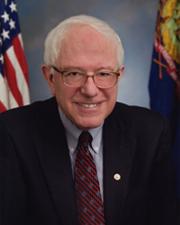 Sen. Bernard Sanders (I-VT)
Legislative Activity
Stay on top of the latest movement without scrolling through every action
Senate amendment agreed to: Amendment SA 2266 as modified agreed to in Senate by Unanimous Consent.(text as modified: CR S8723)
August 4, 2009
View full timeline
Senate amendment agreed to: Amendment SA 2266 as modified agreed to in Senate by Unanimous Consent.(text as modified: CR S8723)
August 4, 2009
Senate amendment proposed (on the floor): Amendment SA 2266 proposed by Senator Kohl for Senator Sanders to Amendment SA 1908.(consideration: CR S8722-8723)
August 4, 2009
Amendment SA 2266 proposed by Senator Kohl for Senator Sanders to Amendment SA 1908. (consideration: CR S8722-8723) To require the Center for Food Safety and Applied Nutrition to use certain funds to conduct a study on obesity.
August 4, 2009
Amendment SA 2266 as modified agreed to in Senate by Unanimous Consent. (text as modified: CR S8723)
August 4, 2009
Senate amendment submitted
August 3, 2009
Text
Modified
AGRUCULTURE, RURAL DEVELOPMENT, FOOD AND DRUG ADMINISTRATION, AND
RELATED AGENCIES APPROPRIATIONS ACT, 2010--Continued

Amendment No. 2244

The ACTING PRESIDENT pro tempore. Under the previous order, the
Senate will resume consideration of amendment No. 2244 offered by the
Senator from Oklahoma, Mr. Coburn.
Mr. COBURN. I suggest the absence of a quorum.
The ACTING PRESIDENT pro tempore. The clerk will call the roll.
The assistant legislative clerk proceeded to call the roll.
Mr. HARKIN. I ask unanimous consent that the order for the quorum
call be rescinded.
The ACTING PRESIDENT pro tempore. Without objection, it is so
ordered.
Mr. HARKIN. Mr. President, the Senate Agriculture appropriations bill
contains $4.9 million to help public television stations meet the
Federal mandate to provide over-the-air digital signals to rural areas,
similar to last year's funding level. Rural public television stations
throughout the country are at extreme disadvantage when faced with the
task of converting their stations and vast network of translators from
analog to digital transmission. Why? Because they are spread over a
larger geographic area--private and some of the network stations--and
they have a much smaller population base to draw upon when funding
system improvements than their urban counterparts. Urban stations have
a bigger population base.
To date, most rural stations have focused their resources on
converting transmitters to meet the Federal mandate. The funding
provided in this Agriculture appropriations bill will be critical to
helping stations transmit their signals far enough to reach people in
rural areas far from the transmitters. Generally, stations have these
transmitters send a signal out over the airwaves, but in a large number
of cases they need translators. They take the transmitter signal at a
certain point and then they boost the power so they can send it further
out. That was also true under the old analog system. Obviously, the
analog translators would not work for digital, so we need digital
translators. In most cases, for technical reasons, the digital
translators cover less of an area, particularly in places that are
hilly or mountainous, so additional translators are needed.
At present, we have millions of people living in rural America who
simply cannot get the over-the-air digital signal. These funds are
allocated on a peer-review process within the Rural Utilities Service
of the Department of Agriculture. For example, in my State of Iowa, a
large number of people in the Dubuque area are not receiving the Iowa
public TV digital over-the-air signal now because of the lack of a
digital translator which gets its signal from a Cedar Rapids-Waterloo
transmitter. I understand also that the Oklahoma public television
system received considerable funding through this program a few years
ago. But many other State systems have very real needs that have not
been met. Few public TV stations are able to acquire the needed funds
to do this. In the current 2009 round, public TV stations requested
about three times the available needed funding we have in the USDA
program. While it is true that both the Department of Commerce and the
Corporation for Public Television do provide equipment for public TV
stations, it is also true that these funds are both inadequate to fully
meet all the needs they are intended for, and they have not been
providing significant funds for translators.
The Corporation for Public Broadcasting provides about $36 million
for public TV and radio stations for equipment. They have provided
digital equipment, shifting analog libraries to digital, and power
equipment. But they have not focused on digital translators. It is not
their mission to focus on the special needs of rural areas such as the
Rural Utilities Service must do. Even if they do in the future provide
some funding for translators, the total we now need is going to be far
more than the funds that will be available in the coming fiscal year.
Even if they did have the funds, they asked for three times the amount
of funding that we have in this bill to build these translators. The
Department of Commerce also has a program which provides equipment,
again not focused on translators. They provide equipment such as
network operations equipment that allows stations to take signals from
a national broadcast and send them out over their transmitters. They
provide emergency funding when there is a local equipment failure but,
again, they have a very limited amount of money for translators.
Again, there is a considerable need for additional funds for digital
TV to reach rural America. The lack of a single translator can mean
that 100,000 households are not able to get over-the-air digital
signals. These funds are badly needed. I thank my friend from Oklahoma
for letting me go first because I have to chair a hearing at 2:30. I
wished to make these comments because I have real-time experience with
these translators in my State in Dubuque. But there are other places in
rural Iowa that are on the fringes of where the transmitters are, and
they have to have these translators to get the signal out.
Again, one could say: Well, they charge the people. But there are not
that many people. They deserve to have public television also. That is
what this money was for, the $4.9 million, to help them get these
translators. It is not only Iowa, any State that has a lot of rural
area, especially if it is hilly or mountainous, needs translators. I am
not an expert in this area whatsoever, but I know they cost money. I do
know the need is there. All I can say is, they had asked for three
times more than what we have in this bill. So if there are some other
funds in Commerce or in the Corporation for Public Broadcasting, I
rather doubt they will be able to anywhere meet the need that is out
there, and they will be

[[Page S8717]]

back again next year asking for more money to get these translators
built, as we switch from the analog to digital.
I, respectfully, request that the Senate oppose the Coburn amendment.
I yield the floor.
The ACTING PRESIDENT pro tempore. The Senator from Oklahoma.
Mr. COBURN. Mr. President, I am constantly amazed. We have three
separate programs, of which this administration says we don't need one
penny from the Department of Agriculture for this. That is what they
say. They say we have plenty of money in CPB to do everything that is
needed with the translator stations this year. We are 92 percent
complete on everything that has been translated. This is similar to
every government program. They never die. Not only do we have the
Department of Commerce that is going to have additional funding this
year for that very same thing, we have the Corporation for Public
Broadcasting. The fact is, they want it to go through the Agriculture
Department because there is more control. We can direct it. We can have
more control.
We are in a crisis. We will have close to a $2 trillion deficit this
year. Here we have $4.9 million that the administration says isn't
needed. They want to get rid of it. They are right. What do we do?
Every time we come to approach a program, we decide we can't eliminate
it. Every family in America today is eliminating a lot of programs for
themselves.
This appropriations bill is an atrocity. I will go through it so
everybody can see what it is. In fiscal 2009, the grand total for this
was $128 billion. It is now $123 billion. Do you know why it is there?
They got $20 billion from mandatory in the stimulus and another $6
billion in the stimulus. So this isn't a decrease. It is outrageous the
amount of money we are spending. We will go through it line by line.
Agriculture programs in 2009, discretionary were $6.85 billion. They
are $7.22 billion. That is a 6-percent increase. The mandatory spending
was $18 billion. It is now $22 billion. That is a 21-percent increase.
Plus they got $1 billion in the stimulus. So if you add that to the $30
billion, we actually have $31 billion compared to $24 billion this
year. Think about what kind of increase that is. Title II conservation
programs was $969 million in 2009. We gave $340 million, which hasn't
been spent yet; it will be spent this year. Yet we increase it another
4.5 percent to $1.015 billion.
Rural development, they got $3 billion this year. In this bill they
get 2.7. That is an 11-percent increase. That doesn't count the $4.36
billion that was given in the stimulus. Domestic food programs went
from $76 million to $86 million. We need that now, no complaint there.
We have a lot of people requiring our help right now, but they also got
$20 billion which hasn't been spent yet in the stimulus. So we have
gone from $76 million to $106 million, a 45-percent increase. Foreign
assistance, we spent $1.5 billion on foreign assistance in agricultural
programs in 2009. This is at $2 billion, a 33-percent increase. Plus
they got $700 million in the stimulus that has not been spent. So add
that together and you have $2.1 billion versus 1.5.
It is ridiculous the amount of money that is in this appropriations
bill. All these ought to be trimmed back based on what the stimulus was
doing rather than growing them at four times the rate of inflation. We
are growing government in this bill four times the rate of inflation.
We are going to have a $2 trillion deficit and we are proud of this
bill? This bill is a stinker.
FDA Commodities Futures Trading, $2.1 billion to $2.527 billion, a
20-percent increase in one year. Let's talk about some of the separate
programs. Agricultural research got increased $200 million. By the time
you add in what we did in the stimulus, it goes from $1.18 to $1.23
billion. That is where most of the earmarks are stolen from,
agricultural research, and most of that money isn't applied to
research. It gets directed through an earmark. National Institute of
Food and Agriculture Research went from 1.22 billion to 1.3, an $80
million increase, a 6.76-percent increase; Economic research, up $3
million, just a 4-percent increase; Statistical service, up 7 percent;
Animal health inspection, up 4 percent; Agricultural marketing
services, up 5 percent; Grain inspection packers, up about 4 percent;
Food safety, where we should be increasing funding because of the
problems we have had, is up only 2 percent. Where we have the problems,
we are not increasing the appropriations. We are actually barely
keeping even with inflation. But on food safety, we don't increase it.
Farm service salaries, they increase $90 million, a 6.5-percent
increase, plus we gave $50 million in the stimulus; Farm service agency
loans, if you add in the stimulus, which has not been spent, we get to
$195 million from $147 million. That is a 33.3-percent increase.
Federal crop insurance: Up $1 billion, from $6.5 billion to $7.5
billion. That is a 12-percent increase.
Conservation programs. Mr. President, $340 million NRCS was given in
the stimulus. It has not been spent yet. And $962 million is what we
had last year. Mr. President, $1.015 billion, plus the $340 million,
and what you get is a 33-percent increase.
Conservation operations: No money in the stimulus. We go from $853
million to $949 million. That is an 8-percent increase.
Watershed and flood prevention is flat. It is flat. We have all these
water conservation dams that are falling apart. Kind of like in our
highway bill, we fix the earmarks, but we do not take care of the
bridges. That is what we are doing on the watershed.
RC&D, the President terminated it. Finally we got one that is going
under.
Rural development: Salaries up 8 percent.
Rural housing: Counting the $330 million we did in the stimulus that
has not been spent, you have a $430 million increase--$130 million
increase over it, about a 7-percent increase.
You can keep going. I will not continue to bore my colleagues. But
the fact is, overall in this bill, we have a tremendous increase in
spending when you consider what we did in the stimulus--not a
decrease--taking into account for that.
Now back to this amendment. All this amendment does is cut $4.9
million--$4.9 million--out of a $124 billion bill. The reason this
amendment is offered is because the administration is doing the right
thing. They are eliminating a program that is not needed now. We can
say anything we want, but we have three agencies doing the same thing,
and what the administration recognized, to their credit, is we do not
need three agencies doing the same thing. What we need is one agency
accountable. We are 92 percent complete, and let them be responsible
for finishing it and save the American taxpayer some money.
That is what the Obama administration wanted to do with this
elimination. But, no, it comes right back. Each of the three programs
that presently do this work--the USDA, the Commerce Department's PTFP,
and the Corporation for Public Broadcasting--is a part of their
respective agency's budget. Unless we eliminate it, we are going to
spend that money, and it will not be well spent, it will not be wisely
spent, it will not be efficiently spent. It will just be spent, and
they will ask for more next year. Even when we are at 97 percent or 98
percent complete, we will see the same request to come. The logic was
because they asked for three times as much; therefore, $4.9 million
ought to be OK. Well, $4.9 million is not OK when we need zero out of
the Department of Agriculture to begin with.
One of the things the Obama administration wants to do is to
streamline this process, not have three agencies going through this.
They want to consolidate the current three-pronged effort into one
efficient program that is already in existence. And nobody denies that
CPB has done a pretty good job with the public television stations and
the translator stations through their money.
The USDA received $14 million in 2004, $10 million in 2005, $5
million in each of the years 2006 through 2008. PTFP--which is the
Department of Commerce--has gone all the way from 1998, when they got
$12.5 million--and every year, all the way up--to 2002, when they got
$36 million; and then they went back down to $15 million in 2007. They
did not get any money in 2008 because they did not need it.
The Corporation for Public Broadcasting, however, has gotten, on
average, over $35 million a year, and they

[[Page S8718]]

got $29 million last year. Plus we spent $650 million in the stimulus
on this program. It has not all been spent. So we are lining up. We
have plenty of money in the stimulus package, and then we are going to
ask for another $4.9 million.
This is exactly the reason the American people are disgusted with
Congress. This is a bill that is out of its bounds in terms of its
spending. It has not recognized what is in the stimulus that has not
been spent. So what we are doing is we are actually going to increase
the debt through this bill that is going to be spent.
To put that in personal terms, what does that mean? A $2 trillion
deficit is $6,000 for every man, woman, and child in this country. That
is what we are going to do this year: We are going to spend $6,000 per
man, woman, and child more than we take in for every man, woman, and
child in this country. And do you know what. We are on course to do
exactly the same thing next year with this kind of appropriations bill.
There is no check with reality in the Senate as far as when it comes to
spending money, and I refuse to apologize for looking out for the next
two generations when we do not have the courage to say no to anybody.
What we say is: Yes, I will get this bill for you so you can look good
at home.
Well, who is looking out for the 2- and 3- and 4- and 5-year-olds in
this country who, when they were born, took on almost $500,000 worth of
unfunded liabilities? Our debt is going to double in the next 5 years.
It is going to triple in the next 10 years. There is no effort in this
bill to make that less burdensome on those children.
With that, I yield the floor on this amendment.
I suggest the absence of a quorum.
The ACTING PRESIDENT pro tempore. The clerk will call the roll.
The assistant legislative clerk proceeded to call the roll.
Mr. COBURN. Mr. President, I ask unanimous consent that the order for
the quorum call be rescinded.
The ACTING PRESIDENT pro tempore. Without objection, it is so
ordered.

Amendment No. 2248

Mr. COBURN. Mr. President, I want to talk about an amendment I
offered that has been ruled nongermane by the Parliamentarian. I flatly
disagree with that ruling, and I want the American people to understand
what we have ruled nongermane.
We offered an amendment that said grants and contracts under this
bill should be competitively bid. Think about that. When we go out to
spend money--with the six or seven exemptions in the contracting
clause, and the fact that maybe for some things only one person can
apply to it, which have been accepted in that--we said for American
taxpayers to get value, we ought to ask and mandate that competitive
bidding take place on grants and contracts in this bill.
Not one of these has ever passed the Senate, and I want to tell you
why. It is because we do not want things to be competitively bid. We do
not want your dollars to be spent wisely, efficiently, and effectively
because when we do that we take away our political power to say
somebody is going to get a contract or somebody is going to get a
grant.
So this amendment, which was offered, specifically excluded earmarks
because the complaint last week, when I offered the same amendment on
the previous bill, was that if they are authorized--and remember, an
earmark goes to a specific person, a specific company, those well
connected in Washington--I specifically eliminated earmarks from this
amendment so we would not have the excuse to say we do not want things
competitively bid. But what we were going to find, had this amendment
gone to a vote, is that it would have been voted down, too, because the
problem is not in America, the problem is right here.
We view political power and incumbency more precious than we view the
economic realities and sustenance of this country and the true freedom
of the people in this country. We diminish that because we think our
positions ought to be enhanced, and we ought to secure our next
election by making sure we are the dolers of everything good, and that
we can actually connect those who give big campaign contributions to
great rewards from the Congress when it comes to appropriations
bills. What this amendment would do is require that the contract be
competitively bid according to the law. We actually have a law that
says contracts have to be competitively bid, except Congress routinely
excuses that on appropriations bills.

Just so the American people get this, we don't competitively bid
contracts on these appropriations bills. We don't competitively bid the
grants. We don't mandate that they are competitively bid, although some
grants are competition-based but not based on dollars, based on
performance. So Congress wins and the American people lose. Every time
one of these bills goes through here without competitive bidding, our
children are the real losers.
The President of the United States has said it is his policy that
anything over $25,000 the government buys in this country ought to be
competitively bid. Yet routinely it is his supporters who vote against
that. President Obama means it, but we can't get it through here. We
have $350 billion a year of documented waste, fraud, and duplication in
the discretionary budget, plus Medicare fraud every year. There has
been no attempt to accept amendments to eliminate that, to lessen that.
The fact is, we are on idle pilot to grow this government 8 percent
this year in spite of the $787 billion stimulus. If you are sitting at
home thinking about that, not very many people have 8 percent more
income this year. So one of two things is going to happen in the next
18 months in this country. Here is what is going to happen. Either we
are going to default on our debt because people are going to quit
loaning us money or the average middle-income taxpayer is going to see
a tax hike because, if we take all the income of the top 5 percent of
people in this country, we cut our deficit only in half. If we take all
the income--I am talking about a 100-percent tax rate of the top 5
percent earners in this country--we will cut our deficit in half.
So if you are a middle-class American, no matter whether you think
some people should pay more than they do--5 percent pays 80 percent of
the taxes in this country--you can bet that in the next 18 months, you
are going to see a middle-class tax increase go through this body. The
reason it is going to go through is because we will not apply any
common sense to the appropriations bills.
Most American families are cutting back on their spending; some
because they have lost their jobs, others because they are worried and
they are fearful. What is the Federal Government doing? I am not
talking about the stimulus bill. We are actually increasing spending.
We are not making the hard choices about what is a priority and what is
not; what is a necessity and what is not. We are not eliminating
anything. We are building up everything, just like the last amendment
we talked about. There is absolutely zero need for that program in the
Department of Agriculture, but next year we will have the same debate
again.
I have an amendment on cheeses. I am not going to do it because there
is no reason to waste the Senate's time. But we created a demonstration
project back in the early 1990s with Wisconsin and Vermont and we have
been funding it ever since. They have this outstanding large specialty
cheese production in Wisconsin and Vermont. They don't need any money,
but we are going to send them more money this year because we did last
year. The fact is, the specialty cheeses they make cost two and three
times what regular cheese costs and they are luxury items, but we are
going to fund that not because they need it, not because they are not
competitive, not because they haven't grown their industry, but because
we have funded it before.
Now ask yourself, if you read the Constitution, where is it in the
Constitution that we are supposed to give two States millions and
millions of dollars for an agricultural program that should be funded
by the State if they want to do it or funded by the individuals who
actually produce the cheese and are making good money. But we are going
to continue to do it.
So I am not going to offer that amendment. I am not going to waste
the time of the Senate on it. But there is a real question of why we
are in the

[[Page S8719]]

trouble we are in as a nation today. It is because we ignore what the
Constitution tells us to do. We ignore what our oath tells us to do,
what we swear to do, which is uphold the Constitution. And within that
is the enumerated powers, as well as the 10th amendment. The 10th
amendment says whatever is not specifically spelled out--specific--and
if you read what Jefferson and Madison had to say about what that
meant, you will find that all of those responsibilities are left to the
States and to the people. That is what they said.
We have this ``cash for clunkers'' going on right now, and the Senate
is going to vote for an increase in that program. But the reason we are
having to do that is because we can't manage it. We have proven--the
Department of Transportation--they don't even know how many
applications they have from people. They don't even know if they have
over the number. What they know is they have approved $760 million of
the money so far, but that doesn't count all of the applications that
have come in from the dealers. Here we are incentivizing the purchase
of cars, taking money from our grandkids, and Americans are smart
enough to know if they can get 4,500 bucks back from the Federal
Government, they will take advantage of that. So we have created this
wonderful increase in demand for automobiles. But why not an increase
in demand for boats or how about RVs or how about refrigerators? They
are more efficient. Why not give somebody a $500 credit on their
refrigerator? Why are we limiting this to the automobile industry that
we now as taxpayers have the responsibility of bailing out of debt?
The fact is, we are clueless. We are not plugged in to what the
average American family is going through in terms of a budget. We will
not apply that same standard to their money up here, and their kids,
our kids, and our grandkids are the ones who are going to suffer.
So ask yourself a question: Why would the Senate not allow an
amendment on competitively bidding the contracts and grants in this
bill? Hundreds of millions of dollars that we are going to pay much too
much for, an area where we could save a tremendous amount of money, and
if it is grant programs that truly do a great job, we could get more of
that great job done if we got it done more efficiently. It is pretty
disturbing that we are so far off course with what we are doing and,
more importantly, how we are doing it.
With that, I yield the floor and note the absence of a quorum.
The ACTING PRESIDENT pro tempore. The clerk will call the roll.
The assistant legislative clerk proceeded to call the roll.
Mr. COBURN. Mr. President, I ask unanimous consent that the order for
the quorum call be rescinded.
The ACTING PRESIDENT pro tempore. Without objection, it is so
ordered.

Amendment No. 2246

Mr. COBURN. Mr. President, I wish to speak on the pending amendment
No. 2246, which caps the amount of money the U.S. Department of
Agriculture spends on conferences and requires transparency on the
purpose and cost of the conference sponsored or attended by the U.S.
Department of Agriculture.
This is a report I issued a year ago on the $90 million in conference
costs the U.S. Department of Agriculture has spent. It is a pretty
detailed report. You can go to my Web site and get it. But it tells
about the lack of attention to any sort of fiscal discipline.
By the way, the Department of Agriculture is the worst practitioner
of all of the agencies of the Federal Government on conferences, in
terms of wasteful conferences, in terms of the number of people going
to conferences--by far the worst. In 2001, USDA spent $6 million on
conferences. Within 5 years, that went to $19 million. They tripled.
All this amendment says is, in 2010--9 years later--they can't spend
more than double what they spent in 2001. That allows conferences to
grow 11 percent a year. Twelve million dollars for conferences is a lot
of money. That is less than the amount they spent this last year. It is
less than any amount they have spent since 2001, but it is still double
what they have spent in 2001.
This amendment also requires an itemized list of expenses and
expenditures by the Department on the conference, who the primary
sponsor of the conference is, the location of the conference, a
justification of the location, including the cost efficiency of the
location, the total number of individuals whose travel to the
conference was paid for by the Department, and an explanation of how
the agency advanced the mission by attending the conference.
It is about transparency. I have seen it quoted before, and I believe
it is true: The greatest pleasure in the world is to spend somebody
else's money. What our agencies are doing in many instances is not
being frugal with the tax dollars we give them. The Department of
Agriculture is a great example of that, when they are running close to
$20 million a year--not this last year but still above $12 million--on
conferences, and when we have the technology now to eliminate half the
conferences.
I don't have any problem with travel. I don't have any problem with
them going to conferences that are legitimate. But I do have a problem
with a 3\1/2\-times increase in the amount of conferences they attend,
especially given our economic situation today.
So this is fairly straightforward. We should put a cap on it. We
should limit it. It is my hope my colleagues will do that.
With that, I yield the floor and note an absence of a quorum.
The ACTING PRESIDENT pro tempore. The clerk will call the roll.
The assistant legislative clerk proceeded to call the roll.
Ms. STABENOW. Mr. President, I ask unanimous consent that the order
for the quorum call be rescinded.
The PRESIDING OFFICER (Mr. Udall of Colorado). Without objection, it
is so ordered.
Ms. STABENOW. Mr. President, I understand we are in the process of
putting together a series of votes, but while we have a moment, I ask
unanimous consent to speak as in morning business.
The PRESIDING OFFICER. Is there objection?
Without objection, it is so ordered.

The CARS Program

Ms. STABENOW. First, I thank our leaders on this important
Agriculture bill--the chairman, whom I appreciate so much for all of
his hard work; he has a great bill in front of us, along with the
ranking member from Kansas.
I wish to speak about legislation the ranking member, Senator
Brownback, and I have been working on now for some time. The first
piece of it has proven to be extremely effective, despite the
naysayers. It has come back even more successful than we thought it
would. I thank Senator Brownback for working with me. Making sure this
is fully paid for within the recovery package is important to Senator
Brownback, and this achieves that. I thank him for partnering with me
and understanding the significance of what we have been working to do.
The CARS Program has truly been an incredible success. In only a
week, it has proven to be an excellent way to stimulate the economy.
Dealers haven't seen this level of customer excitement in years. I can
tell you, as someone who grew up on a car lot--my dad and grandfather
had an Oldsmobile dealership when I was growing up. This is important
to small towns as well as big cities across the country.
We are not only helping to save the over 160,000 dealership jobs
across the country, but it is making our air cleaner and reducing oil
consumption. So far, we have seen a 61-percent increase in vehicle fuel
economy, which I think is surprising, as we hoped for an increase and
we hoped people would turn in vehicles with lower mileage and get a
higher mileage vehicle. In fact, we have seen even greater results than
we thought we would. They are trading in vehicles averaging 15.8 miles
per gallon, and the new vehicles average 25.4 miles per gallon. So this
is extremely significant.
What is even more important is that is $700 to $1,000 a year in lower
gas prices for the average family. At this time, when money is so
tight, when people are concerned about saving every penny, this is a
good deal for consumers, a good deal for the environment, for the
economy, small businesses, as well as, certainly, everyone involved in
the auto industry.

[[Page S8720]]

It is also significant that 83 percent of the trade-ins are trucks
and 60 percent of the new vehicles are small cars. So we are seeing
people move away from their clunker truck into a more energy-efficient
car. That is good news for the environment and for fuel economy for the
average family as well.
This has been a great program, with over 250,000 cars sold. Dealers
are packed and sales are booming. At a GM dealership in Ferndale, MI,
foot traffic was up 60 percent just last week, according to the general
manager.
It is not just dealerships being helped, as I indicated. Steel and
aluminum producers have announced that they expect a benefit from the
program, as more cars are made to meet demand generated by the program.
Scrap recyclers, which supply the steel industry, which have also been
hurting lately, are also seeing a pickup in business. The boost to
these industries isn't just immediate either. Analysts predict that the
benefits will have a lasting impact. So we are talking broadly about
manufacturing materials, as well as the small businesses in the
communities involved.
Getting people into showrooms and excited again is having a
psychological impact on consumers and businesses as well. This is
happening all over the country.
The Houston Chronicle reports that more than 70 percent of the
clunkers being traded in are SUVs, and 84 percent of the new vehicles
are small, fuel-efficient cars.
The Brownsville Herald in Texas quotes Don Johnson, the owner of The
Real Don Johnson Chrysler-Jeep-Hyundai, who said:

This is a good deal for the people. It's a good deal for us
because we will sell more cars, but it's a good deal for
people.

The Daily Record in Dunn, NC, reports strong interest and increased
traffic in dealerships. Dan Lowe, from John Hiester Chrysler Jeep Dodge
in Lillington, NC, said his dealership is getting 25 to 30 calls a day
about the CARS Program. He told the newspaper:

We are excited about anything that gets cars off the lot.

This is certainly doing that.
A Pennsylvania car dealer, Bill Rosado, told the Wall Street Journal:

I can't believe I'm saying this: I need more Chrysler
inventory.

Then he said:

My goodness, I've got to rehearse that line a couple times.

This program has been extremely successful in a very short amount of
time.
The House, because of its success, as we all know, has acted to add
additional dollars by moving from one program in the recovery package
into this program. I thank them very much for doing that and for the
leadership of my partner in the House, Betty Sutton, and the delegation
from Michigan, who worked so hard, and also those from Ohio, Indiana,
and others as well.
In the Senate, we have had great bipartisan support. Again, I thank
my bipartisan cosponsor, Senator Brownback, and I thank Senator
Voinovich as well. We have been partnering on something that makes
sense. This is taking some stimulus dollars and putting them directly
into a stimulus that is visible; it is working, it is putting money
into the economy, and it is saving people money on gas. It is something
I believe is important to continue.
I will close by also thanking our leader, Senator Reid, who has once
again been extremely supportive of bringing this forward so we have an
opportunity to vote. I am hopeful we will see a strong, bipartisan vote
on this important stimulus.
I thank the Chair.
The PRESIDING OFFICER. The Senator from Oklahoma.

Amendment No. 2243 Withdrawn

Mr. COBURN. Mr. President, I ask unanimous consent to withdraw
amendment No. 2243.
The PRESIDING OFFICER. Without objection, it is so ordered. The
amendment is withdrawn.
Mr. COBURN. Mr. President, I note that the Senator from Michigan
noted everyone who won. Let me tell you who did not win and that is our
kids and grandkids. Americans are not stupid. If you give them 4,500
bucks, they are going to find any old car they have that is running and
they have held for a long time. All our farmers are going to the barns.
That is why you are getting pickups. They haven't been driving the
pickups for years. But they are cranking them up to make them run and
trading them in so they can get 4,500 bucks.
The people who lose are our kids. It is $3 billion we are talking
about to go to help people buy cars. But where are we going to get the
$3 billion? We are going to steal it from our children. What other part
of the economy should we not be incentivizing? How about the appliance
makers? How about the television makers?
I also ask unanimous consent--actually, I have discussed this with
the chairman. Rather than ask for a recorded vote, we will have a voice
vote on amendment No. 2245.
The PRESIDING OFFICER. Without objection, it is so ordered.

Amendment No. 2244

Mr. COBURN. I also note that we will have a vote on the amendment in
terms of eliminating $4.9 million for a duplicative program in the
Department of Agriculture.
I ask for the yeas and nays.
The PRESIDING OFFICER. Is there a sufficient second? At this moment,
there is not a sufficient second.
Mr. KOHL. Mr. President, I suggest the absence of a quorum.
The PRESIDING OFFICER. The clerk will call the roll.
The legislative clerk proceeded to call the roll.
Mr. BROWNBACK. Mr. President, I ask unanimous consent that the order
for the quorum call be rescinded.
The PRESIDING OFFICER. Without objection, it is so ordered.
Mr. BROWNBACK. Mr. President, I inform my colleagues, we are trying
to get to a final conclusion on this bill. It is an important bill, but
also a number of Members want to speak on the Sotomayor nomination to
the Supreme Court. The attempt is to get this bill moving forward. I
think we are close to a final UC to get to passage of this bill.
I wish to comment before we move into that sequence about the
importance of the agriculture industry. It is a key issue in my State,
and it is a key issue in Wisconsin, the State of the leader of this
subcommittee. It is an industry that has done better than a number of
others have been doing during this recessionary time period. It is one
that is a good performer for us on exports. We have one of the best
exporting models, as far as business in agriculture, in this country.
Because it is very competitive, it has a lot of capital intensity to
it, a lot of intellectual brain power put behind it, both at the public
and private level.
It is one of those models in which we compete and do well globally.
We are also aggressive in our trade policy to push for free trade, but
if other countries are going to subsidize, we will back up our guys and
say: If you subsidize your agricultural industry, then we are going to
do it to fight you back on it. We don't take any guff around the world.
We want a free-trade world, but if you are going to attack us, we are
going to respond. If you have missiles, we have missiles, and we are
going to do it. That model has worked well to create a very
competitive, very growth-oriented, very export-oriented business that
is globally competitive, high technology, and one I think that is
moving well into the future.
We have a lot of things going on in agriculture, and a number of them
are funded in this bill. We want to see the industry expand in the
energy business. A lot of us are very supportive of ethanol. Some are
saying: I am for it, but I want the next generation of ethanol. We are
funding that, as far as getting into cellulosic ethanol.
We are looking at other types of fuels. One that is interesting for
some people is on algae production into a diesel type of fuel. We are
doing something on wind because wind is what generally blows across the
Plains in your State, Mr. President, my State and a number of others
and harvesting that in such a way that we can get it to other markets--
the electric markets--and add a cost-competitive rate so it is not one
that drives it up.
All of this does take a lot of effort. I want to acknowledge that
some colleagues on my side are saying: I am not satisfied with this
bill; I don't like some of the items in this bill. I say to them: I
agree. There are provisions in this bill I don't like. But it is part
of us getting a process to move an Agriculture appropriations bill
through, something we have not been able to get

[[Page S8721]]

through on the floor for over 3 years in a stand-alone type of bill, on
a very important industry that is globally competitive, that has been a
good one for us in this recessionary time period we are in.
I note we have a lot of problems with this bill, but I also say I
think we have a lot we are doing right with it and looking forward into
the future of what we can do to be very supportive.
I note a couple of things that are going on that are important for us
as a country in agriculture on which we can get some crosscurrents.
Norman Borlaug, an agronomist from Texas A&M, is known as the father
of the green revolution that brought a lot of the new technology to
feed the world. This has been over a career. He won the Nobel Peace
Prize in 1970 for his contributions to the green revolution.
I mention him because he is a key person in looking to the future of
how the world is fed and fed at a good level. He notes it is important
for us to do things in an environmentally sensitive and environmentally
sound way but that we also need to fund high-yield, disease-resistant
wheat varieties. We need to be able to use plant genetics that are in
some places around the world. Some are saying: We don't like your
alterations on plant genetics. We need to be able to do this. To feed a
hungry world, we are going to have to use agricultural pesticides,
insecticides, and fertilizer, and that gets into crosscurrents. They
say: I want all the agricultural production, but I don't want these
inputs brought into it. We don't have a model for that to work yet.
It is important we support organic food markets and organic food
production, but we cannot go that way fully. It is the sort of thing we
cannot feed a hungry world on on a cost-competitive basis, a globally
competitive industry, if you say we are going to pull out all these
tools that have made the green revolution work.
I think it is also important that we fund into the next generation of
genetics and technology in this area. I was interested in one of my
travels across Kansas. Last year, we had a time where some of my corn
farmers could not plant for a couple days, and it was not because it
was wet. It was because the satellite went down. Their global
positioning system on their corn planter would not work, so they could
not plant their corn because the satellite was down. I am going: Well,
that is an interesting excuse. I haven't heard that one before. But it
wasn't an excuse. It was a fact of life. To plant these crops and do
the best job--and they apply just the right amount of fertilizer to
that soil and that crop in that specific location will take--it takes a
global positioning satellite that has had the data read into it and fed
back. That is how high tech the industry is.
I don't want us to move away from that level of technology and input;
otherwise, I think we are going to lose our edge.
We also have some developments in the environmental field that I
think are interesting. We have people in Kansas and other places around
the country who are working on things such as green concrete. You ask:
What would that be? It is concrete that has soy oil brought into it to
help it be an environmentally sound, renewable type of process. They
already are making the foam matting in the seat in your car out of
soybeans. So when you sit in a new Mustang--in particular, I know that
car for sure--the foam rubber is made out of soybeans. I guess if you
get caught in a Colorado blizzard and don't have anything to eat for
a week or two, you can eat the seat.

I don't think it is edible.
But my point is, that, again, is an investment in the technology we
are putting in this Agriculture appropriations bill to make new things
that will work.
This bill is an increase in funding. I don't like that because I
think we should not be doing those sorts of funding increases. A major
portion of that is the WIC Program. When we get into a recession, we
get more and more people needing food. They are not able to pay for it
themselves, and the government steps up. That is the problem when we
have a recession--government costs go up, government receipts go down,
and you get caught in this trap.
One of the reasons why I think a program such as Cash for Clunkers is
interesting is because it stimulates the economy, not the government.
It gets that economy rolling, which is 80 percent of us balancing the
budget. It is getting the economy moving. We have to restrain our
spending and do a better job of that.
I think we also need to be a lot more targeting of our programs.
Programs such as the WIC Program and this Agriculture appropriations
bill are a consequence of a bad economy. I don't like it, but I think
the key for us is to be an economic stimulus and not a government
stimulus.
On the whole, while I think we have problems with this bill, I like
the overall trend of what we are doing in the agricultural industry. I
like what the chairman has focused on in this bill.
On top of these items, I note for my colleagues, we put a special
effort on the food aid program and getting the food aid program
updated. To me, the needs of those who are in very difficult
circumstances in refugee camps and different places around the world--
we spend too much on transportation and administration on food aid.
Nearly 60 percent goes into those two. That number has to come down.
But we need to get more food on the target because, in many cases, we
are what stands between that person and starvation and death. It is the
food aid, the generous food aid of the American people, that flows
through this appropriations bill that does that.
The Food and Drug Administration is also in this bill, and that is
part of the increase. The development and the increasing need for
different types of drugs are addressed in this bill as well.
We have to get more innovative on FDA. I would like to see us in the
neglected disease categories find more truncated procedures that
approve drugs that have narrower, smaller marketplaces. That is in this
bill.
While I believe there are a number of things negative about this
bill, I think the chairman has put together an overall good bill. I am
glad we are getting to the point where we can move this one on through,
conference it, and bring it back separately, as well so we can
recognize this very important industry. It is important in my State and
it is important in the States of all the Members, and we should do this
separately instead of rolling it together in some sort of omnibus bill
like we too often have done.
I believe we are getting close to getting to a final UC. That would
be my hope so we can move this bill forward.
I suggest the absence of a quorum.
The PRESIDING OFFICER. The clerk will call the roll.
The legislative clerk proceeded to call the roll.
Mr. SANDERS. Mr. President, I ask unanimous consent that the order
for the quorum call be rescinded.
The PRESIDING OFFICER. Without objection, it is so ordered.
Mr. SANDERS. Mr. President, I will take a few minutes while we are
waiting until procedures get lined up to say a few words about an
amendment I am offering which is going to come up for a vote fairly
soon. This is an amendment which addresses the crisis in dairy all over
this country. It is an amendment that is supported by Senator Snowe,
Senator Udall of New Mexico, Senator Schumer, Senator Bennet of
Colorado, Senator Specter, Senator McCaskill, Senator Gillibrand,
Senator Klobuchar, Senator Shaheen, and Senator Casey. As you will
note, these are people from all over the country. What we are not
talking about here is a regional issue, we are talking about a national
issue.
I want to pick up on a point for a moment that Senator McCaskill made
earlier this morning. I think it is important. All of us know that
today our country is in a major economic crisis, the deepest recession
since the Great Depression. But sometimes what media does, and maybe
what we do here in Congress, is focus on that crisis in the areas where
there is, if you like, concentrated misery, such as Detroit, which has
undergone terrible problems, thousands of people on a given day have
lost their jobs, and sometimes, in the midst of the economic crisis
facing our country, we forget what is happening in rural areas, in
small towns all over this country. Sometimes when farms go out of
business, farms that have been owned by a family for generations, when
rural communities go into, literally, an economic depression, we don't
pay quite as much attention

[[Page S8722]]

to that. It is not on the front pages of the New York Times. The fact
is, right now rural America is in the midst of a very serious economic
crisis. Unemployment is extremely high.
One of the particular areas where we are seeing not just a deep
recession but, in fact, a depression is within the dairy industry. In
the last year, if you can believe it, the price dairy farmers--many of
them small, family-based dairy farmers--have received for their milk
has plummeted by 41 percent. In the last year, it has gone down by 41
percent. The reality of what that means is that farmers today, for
every gallon of milk they are producing, are losing money. It is not
that they are making a little bit, they are losing money. What we are
seeing, not just in the Northeast, not just in the Midwest, not just in
the Southeast, not just in the West, but all over this country, are
family farmers going out of business, plunging their rural economies
and their communities into depression-type economics.
Let me quote, if I might, from people from different parts of the
country.
A Minnesota dairy farmer writes:

This situation is unlike any experienced in the past and
the width and depth cannot continue to be ignored. It has not
discriminated based on herd size or geographic location.
Dairy farmers of all sizes and across all regions of the
country are enduring an unprecedented disaster.

That is from Minnesota.
The President of the California Farmers Union--when we talk about
dairy, sometimes California is in another world from the rest of the
country because their herds are much larger.
By the way, I should say the National Farmers Union is supporting
this amendment, and 11 agricultural commissioners and secretaries from
States are supporting this amendment as well, as is the DFA, the Dairy
Farmers of America, which is the largest dairy farm cooperative in
America.
This is what the fellow who is the head of the California Farmer's
Union says. His name is Joaquin Contente. He testified:

[I]n my lifetime history as a dairy farmer, I have never
seen our prices remain this far below our costs this long and
I have never seen so many dairy producers so desperate for
relief. In my county alone 25 dairies have either filed or
are in the process of filing for bankruptcy and many more are
closer to bankruptcy each day.

From Texas, the executive director of the Texas Association of
Dairymen said:

This is the worst situation I have seen since 1970. Some
say it is the worst since the Depression.

From Wisconsin, a dairy farmer states:

In my area farmers are burning up the equity accumulated
over their lifetimes. One farmer in my area had to cash out
his wife's IRA just to get his crops planted this spring. My
parish priest in my small town has had to counsel one or more
dairy farmers a week to prevent their suicides.

Those are just a few examples from Wisconsin, California, and Texas.
Trust me, I could tell you many similar stories from the State of
Vermont.
Once again, as we attempt to revitalize our economy, let's not forget
about rural America. Let's not forget about dairy farmers. Let's
support this legislation which will provide $350 million to increase
dairy support prices. I look forward to the support of my colleagues.
I yield the floor and suggest the absence of a quorum.
The PRESIDING OFFICER. The clerk will call the roll.
The bill clerk proceeded to call the roll.
Mr. KOHL. Mr. President, I ask unanimous consent that the order for
the quorum call be rescinded.
The PRESIDING OFFICER. Without objection, it is so ordered.

Amendment No. 2284 to Amendment No. 1908

Mr. KOHL. I ask unanimous consent that the pending amendment be set
aside and the Senate now consider amendment No. 2284.
The PRESIDING OFFICER. Without objection, it is so ordered. The clerk
will report.
The legislative clerk read as follows:

The Senator from Wisconsin [Mr. Kohl], for Mr. Dodd,
proposes an amendment numbered 2284 to amendment No. 1908.

The amendment is as follows:

(Purpose: To require the Secretary of Agriculture to fund certain
projects in communities and municipal districts in Connecticut,
Massachusetts, and Rhode Island)

On page 85, between lines 16 and 17, insert the following:
Sec. 7__.  Notwithstanding any other provision of law and
until the receipt of the decennial census in the year 2010,
the Secretary of Agriculture may fund community facility and
water and waste disposal projects of communities and
municipal districts and areas in Connecticut, Massachusetts,
and Rhode Island that filed applications for the projects
with the appropriate rural development field office of the
Department of Agriculture prior to August 1, 2009, and were
determined by the field office to be eligible for funding.

The PRESIDING OFFICER. Is there further debate? If not, the question
is on agreeing to the amendment.
The amendment (No. 2284) was agreed to.
Mr. KOHL. Mr. President, I move to reconsider the vote and move to
lay that motion on the table.
The PRESIDING OFFICER. Without objection, it is so ordered.

Amendments Nos. 2241; 2280; 2271, as Modified; 2282, as Modified; 2249,
as Modified; and 2266, as Modified

Mr. KOHL. Mr. President, I now ask unanimous consent that the Senate
consider the following amendments en bloc: Nos. 2241 and 2280; that
amendments Nos. 2271, 2282, 2249, and 2266 be modified with the changes
at the desk; that the aforementioned amendments, as modified, if
modified, be agreed to en bloc; and that the motions to reconsider be
laid upon the table en bloc.
The PRESIDING OFFICER. Without objection, it is so ordered.
The amendment (No. 2241) was agreed to.
The amendments were agreed to, as follows:

Amendment No. 2280

At the appropriate place insert the following:
Whereas sudden loss in late 2008 of export-market based
demand equivalent to about three percent of domestic milk
production has thrown the U.S. dairy industry into a critical
supply-demand imbalance; and
Whereas an abrupt decline in U.S. exports was fueled by the
onset of the global economic crisis combined with resurgence
of milk supplies in Oceania; and
Whereas the U.S. average all-milk price reported by the
National Agriculture Statistics Service from January through
May of 2009, has averaged $4.80 per hundredweight below the
cost of production; and
Whereas approximately $3.9 billion in dairy producer equity
has been lost since January; and
Whereas anecdotal evidence suggests that U.S. dairy
producers are losing upwards of $100 per cow per month; and
Whereas the Food, Conservation, and Energy Act of 2008
extended the counter-cyclical Milk Income Loss Contract
(MILC) support program and instituted a `feed cost adjuster'
to augment that support; and
Whereas the Secretary of Agriculture in March transferred
approximately 200 million pounds of nonfat dry milk to USDA's
food and Nutrition Service in a move designed to remove
inventory from the market and support low-income families;
and
Whereas the Secretary on March 22nd reactivated USDA's
Dairy Export Incentive Program (DEIP) to help U.S. producers
meet prevailing world prices and develop international
markets; and
Whereas the Secretary announced on July 31, 2009 a
temporary increase in the amount paid for dairy products
through the Dairy Product Price Support Program (DPPSP), an
adjustment that is projected to increase dairy farmers'
revenue by $243 million; and
Whereas U.S. dairy producers face unprecedented challenges
that threaten the stability of the industry, the nation's
milk production infrastructure, and thousands of rural
communities;
Now therefore be it resolved, That it is the sense of the
Senate that the Secretary of Agriculture and the President's
Office of Management and Budget should continue to closely
monitor the U.S. dairy sector and use all available
discretionary authority to ensure its long-term health and
sustainability.

amendment No. 2271, as modified

(Purpose: To provide funds for the school community garden pilot
program, with an offset)

On page 52, lines 22 and (23), strike ``$16,799,584,000, to
remain available through September 30, 2011,'' and insert
``$16,801,584,000, to remain available through September 30,
2011, of which $2,000,000 may be used to carry out the school
community garden pilot program established under section
18(g)(3) of the Richard B. Russell National School Lunch Act
(42 U.S.C. 1769(g)(3)) and shall be derived by transfer of
the amount made available under the heading `Animal and Plant
Health Inspection Service' of title I for `salaries and
expenses' ''.

amendment No. 2282, as modified

(Purpose: To seek recommendations from the Commissioner of Food and
Drug regarding the need to establish labeling standards for personal
care products for which organic content claims are made)

On page 85, between lines 16 and 17, insert the following:

[[Page S8723]]

Sec. 7__. (a) The Commissioner of Food and Drugs, in
consultation with the Secretary of Agriculture, may conduct a
study on the labeling of personal care products regulated by
the Food and Drug Administration for which organic content
claims are made. Any such study shall include--
(1) a survey of personal care products for which the word
``organic'' appears on the label; and
(2) a determination, based on statistical sampling of the
products identified under paragraph (1), of the accuracy of
such claims.
(b) If the Commissioner of Food and Drugs conducts a study
described in subsection (a), such Commissioner shall--
(1) not later than 270 days after the date of enactment of
this Act, submit to the Committees on Agriculture, Nutrition,
and Forestry, Appropriations, and Health, Education, Labor,
and Pensions in the Senate and the Committees on Agriculture,
Appropriations, and Energy and Commerce in the House of
Representatives a report on the findings of the study under
subsection (a); and
(2) provide such Committees with any recommendations on the
need to establish labeling standards for personal care
products for which organic content claims are made, including
whether the Food and Drug Administration should have pre-
market approval authority for personal care product labeling.

amendment No. 2249, as modified

(Purpose: To express the sense of the Senate relating to the provision
of disaster assistance)

On page 85, between lines 16 and 17, insert the following:
Sec. 7__. (a) The Senate finds that--
(1) agriculture is a national security concern;
(2) the United States suffers from periodic disasters which
affects the food and fiber supply of the United States;
(3) the Food, Conservation, and Energy Act of 2008 (7
U.S.C. 8701 et seq.) established 5 permanent disaster
programs to deliver timely and immediate assistance to
agricultural producers recovering from losses;
(4) as of the date of enactment of this Act, of those 5
disaster programs--
(A) none are available, finalized, and implemented to
deliver urgently needed assistance for 2009 producer losses;
and
(B) only 1 is being implemented for 2008 losses;
(5) According to the Drought Monitor the State of Texas is
suffering from extreme and exceptional drought conditions,
the highest level of severity.
(6) the Secretary of Agriculture has previously authorized
various forms of disaster assistance by providing funding
under section 32 of the Act of August 24, 1935 (7 U.S.C.
612c), and through the Commodity Credit Corporation.
(b) It is the sense of the Senate that the Secretary of
Agriculture should use all of the discretionary authority
available to the Secretary to make available immediate relief
and assistance for agricultural producers suffering losses as
a result of the 2009 droughts.

AMENDMENT NO. 2266, As Modified

On page 61, line 23, after the colon, insert the following:
``Provided further, That the Commissioner, through the
Center for Food Safety and Applied Nutrition, may conduct a
study and, not later than one year after the date of
enactment of this Act, submit a report to Congress on the
psychological, physiological, and neurological similarities
between addiction to certain types of food and addiction to
classic drugs of abuse;''

amendment no. 2249

Mrs. HUTCHISON. Mr. President, I rise today to talk about a sense-of-
the-Senate resolution that I am offering. This sense-of-the-Senate
resolution seeks to address drought aid that producers in my home State
of Texas desperately need.
Texas is in the throes of one of the worst droughts in 50 years. We
are seeing the hottest, driest summer on record over a large portion of
the State, but especially in central and south Texas. Lack of rainfall
and sustained record triple-digit temperatures for weeks have scorched
crops and rangeland throughout parts of Texas causing drought losses to
reach $3.6 billion. The Texas AgriLife Extension Service predicts this
total could rise above $4.1 billion in producer losses if sufficient
rainfall isn't received to revive crops and forage.
In the Food, Conservation, and Energy Act of 2008, also known as the
farm bill, which I supported, Congress established five permanent
disaster programs to deliver timely and immediate assistance to
producers recovering from losses. The logic behind establishing the
permanent disaster program was to ensure producers who have eligible
losses receive timely assistance. I agreed with the inclusion of this
provision and I supported it. For too many years, producers had to wait
months and even years to receive assistance from USDA. The problem
today is USDA has not finalized any of the five disaster programs
included in the farm bill. While the Department is working to finalize
these programs, farmers and ranchers in Texas are seeing their crops,
and livestock heards, diminish due to the excessive heat and drought.
My sense of the Senate simply urges the Secretary of USDA to use any
of his discretionary authority to provide immediate assistance for
producers who are sustaining losses as a result of this extraordinary
drought. The Secretary has authority to provide quick assistance and he
has used these authorities in past extraordinary circumstances. Our
farmers and ranchers need immediate assistance; they cannot continue to
wait for bureaucratic reg. writing. Please join me in encouraging the
Secretary to use the tools at his disposal to provide any available
assistance as quickly as possible.

Amendment No. 2240

Mr. KOHL. I will make a point of order that amendment No. 2240 is not
germane postcloture.
The PRESIDING OFFICER. The point of order is well taken. The
amendment falls.
Mr. KOHL. I suggest the absence of a quorum.
The PRESIDING OFFICER. The clerk will call the roll.
The bill clerk proceeded to call the roll.
Mr. REID. Mr. President, I ask unanimous consent that the order for
the quorum call be rescinded.
The PRESIDING OFFICER (Mr. Kaufman). Without objection, it is so
ordered.
Mr. REID. Mr. President, I now ask unanimous consent that after
Senator Coburn moves to commit the bill with instructions, that there
be 10 minutes of debate equally divided and controlled between Senators
Kohl and Coburn or their designees; that upon the use of that time, the
motion be set aside and the Senate then resume consideration of the
Sanders amendment, No. 2276; that then Senator Brownback or his
designee be recognized to raise a budget point of order against the
amendment; that after the point of order is raised, then the motion to
waive the relevant point of order be considered made; that the Senate
then proceed to vote in relation to the Coburn motion to commit; that
upon disposition of that motion, the Senate then proceed to vote on the
motion to waive the relevant Budget Act point of order; that if the
motion to waive is successful, then the amendment be agreed to and the
motion to reconsider be laid upon the table; that no further amendments
or motions be in order; that upon disposition of all pending
amendments, the substitute amendment, as amended, if amended, be agreed
to, the bill then be read a third time, and the Senate proceed to vote
on passage of the bill; that upon passage, the Senate insist on its
amendment, request a conference with the House on the disagreeing votes
of the two Houses, and that the Chair be authorized to appoint
conferees on the part of the Senate, with the subcommittee plus Senator
Inouye appointed as conferees; further, that if a budget point of order
is raised against the substitute amendment, then it be in order for
another substitute amendment to be offered minus the offending
provisions but including any amendments which have been agreed to, and
that no further amendments be in order; that the substitute amendment,
as amended, if amended, be agreed to, and the remaining provisions
beyond adoption of the original substitute amendment remaining in
effect.
The PRESIDING OFFICER. Is there objection? Without objection, it is
so ordered.
Mr. REID. I further ask unanimous consent that in the sequence of
votes as described above, there be 2 minutes of debate prior to each
vote equally divided and controlled in the usual form, and that after
the first vote in the sequence, the remaining votes be limited to 10
minutes each.
The PRESIDING OFFICER. Without objection, it is so ordered.
Mr. REID. I ask unanimous consent that the vote sequence be as
follows: Coburn, No. 2244; Coburn, No. 2245; Coburn motion to commit;
Sanders motion to waive the Budget Act point of order.
The PRESIDING OFFICER. Without objection, it is so ordered.

[[Page S8724]]

Mr. REID. With the Republican leader here on the floor now, I ask
unanimous consent that upon disposition of H.R. 2997, the Senate
proceed to executive session to consider Calendar No. 309, the
nomination of Sonia Sotomayor to be Associate Justice of the Supreme
Court, and that the first hour of debate be under the control of the
chair and ranking member of the committee, Senators Leahy and Sessions,
to be followed by 2 hours of debate, with the time equally divided and
controlled between the majority and the Republicans.
Mr. President, before I ask whether my friend will accept this, I
just want to lay out to the body, I am glad we are going to this.
Everyone should understand we have other things to do before we leave
here. We are going to do them before we have a final vote on this
Supreme Court nominee. We have to work something out on travel
promotion, and we have to work something out on the so-called cash for
clunkers. The other matters we are going to put over until a subsequent
time, but we will at least have some preconceived idea of what we are
going to do when we get back.
I want everyone to be alerted that this is not the end of the work
session before us.
The PRESIDING OFFICER. Is there objection?
Mr. McCONNELL. Mr. President, reserving the right to object, and I
will not be objecting, I just want to make a point for all of our
colleagues. The very important debate on the Supreme Court nominee will
commence in a while. It is important for people not to wait until the
end. We need to get people on over to make their speeches. I know there
are a number of Members on the Republican side of the aisle who do
intend to speak to the nomination. I encourage them to begin that
sometime soon.
The PRESIDING OFFICER. The majority leader.
Mr. REID. Mr. President, I appreciate the statement of my friend.
Everything relating to this nomination has been very civil, fair.
Senator Leahy, the chairman of the committee, and the ranking member,
Senator Sessions, have done an outstanding job of setting an example of
how the debate should be handled here on the floor.
There are strong feelings regarding this nomination. That is the way
it should be. I was told last night that there are as many as 28
Republicans who wish to speak on this matter. Of course, a lot of
Democrats will also want to speak.
I want to lay out, as my friend, the Republican leader, did, we are
going to be working into the evenings. People should not wait around
here until tomorrow saying, I will put it off until tomorrow, or maybe
I will wait until Thursday. There may not be a Thursday. We need to get
these speeches done. They are all important. They are important for the
record this body makes.
I would hope people would work with the floor staff to set up a way
to proceed. What we are going to do is if at all possible, have a
Democrat speak, a Republican speak, go back and forth. If there is not
one of the other party here, we are not going to wait around until a
Republican or Democrat shows up. If there is someone here ready to
speak, that person will be recognized and the person who was supposed
to be here can wait until some subsequent time.
The PRESIDING OFFICER. Without objection, it is so ordered.
The time will now be equally divided on the Coburn amendment No.
2244.
Who yields time?

Motion to Commit

Mr. COBURN. I have a motion to commit at the desk.
The PRESIDING OFFICER. The clerk will report the motion.
The bill clerk read as follows:

The Senator from Oklahoma [Mr. Coburn] moves to commit the
bill H.R. 2997 to the Committee on Appropriations of the
Senate with instructions to report the same back to the
Senate making the following changes:
(1) Amend the amounts appropriated in the bill so as to
report back a bill with an aggregate discretionary level of
appropriations for fiscal year 2010 at an amount that is 2
percent greater than the $20,662,300,000 enacted for fiscal
year 2009, excluding funds made available for any
discretionary or mandatory direct food assistance program, as
is appropriate given--
(A) the minimal growth of the budgets of families of the
United States due to the fiscal challenges of the United
States; and
(B) the $2,000,000,000,000 deficit and $11,500,000,000,000
debt of the United States.

Mr. COBURN. Mr. President, the reason for this motion to commit is
what we see on the discretionary side of this budget--not the food
stamps, not the food support, not the areas in this budget that
actually help people get through the tough times--a 15-percent increase
in discretionary spending.
We are going to have near a $2 trillion deficit this year. We spent
$20 billion last year. But then we spent another $6 billion in the
stimulus which still has not been spent. So if you were to add the
stimulus to it, you would see a 50-percent increase in the Agriculture
discretionary budget. That is entirely too much money.
All this motion to commit says is, bring it back to us with a
realistic expectation of what families are having to do. Again, I would
caution my colleagues, this has nothing to do with food. We do not
eliminate or lessen those mandatory requirements.
But in the operation of the USDA and the Department of Agriculture,
let's have the government live within the same parameters that the rest
of us are living within now which is--actually we are going to have a
negative rate of inflation this year and incomes that are not going to
grow significantly.
What we are asking for is still a rate higher than inflation but some
fiscal responsibility that says we should live within our means. So
when we spent $20 billion last year, through the end of this month,
then we gave another $6 billion with the stimulus, and now we come
forward with a budget that says we are going to spend $23 billion, a
full 15-percent, 14-some-percent increase in the discretionary programs
at the Department of Agriculture.
I find it obscene. I find it irresponsible. I find it almost elite
that we will not relate to what the rest of the American people are
going through, and we have bill after bill after bill, and in a time
when our country is on its back and our budget deficits have never been
so high, we are going to increase discretionary spending at a rate we
have not seen in 10 years in this country. There is no call for it.
There is no excuse for it. There is no defending it.
I would note that, in fact, on every amendment I have stood up on,
other than the one Senator Harkin defended, we have not had anyone
defend this bill. Let's hear a defense of the 15-percent increase for
this bill in discretionary spending. The idea is, let's not defend it,
let's just not answer the charge.
But the fact is, we are growing the discretionary portion of the
Federal Department of Agriculture by 15 percent this year. It ought not
to be.
I suggest the absence of a quorum.
The PRESIDING OFFICER. The clerk will call the roll.
The bill clerk proceeded to call the roll.
Mr. KOHL. I ask unanimous consent that the order for the quorum call
be rescinded.
The PRESIDING OFFICER. Without objection, it is so ordered.
Mr. KOHL. Mr. President, as I stated at the outset of this bill, it
does reflect an increase in spending over the previous year. But let's
be clear, 90 percent of the discretionary increase is for WIC, food and
drug safety, humanitarian food assistance, and rural rental housing.
These four items are among the most important things that government
does.
To put it a little more in context, the largest overall increases in
this bill are not in discretionary programs at all. The largest single
increase in the bill is for nutrition programs such as the Supplemental
Nutrition Assistance Program. That program, and programs combined with
other programs, are together funded at $9.1 billion higher than last
year. These are mandatory programs that reflect the state of our
economy and serve as a very basic human safety net.
Other mandatory increases involve farm support and crop insurance
programs and funding $3.4 billion higher than last year. These programs
operate as they are authorized, and this spending is what is required
to pay farmers and ranchers the benefits they are entitled to receive
under the law.
The Senator is correct that the spending in this bill is higher than
last year. But much of that increase is attributable to mandatory
programs that

[[Page S8725]]

do not change through an appropriations bill. With regard to overall
spending, Congress has spoken on that question through the budget
resolution and the allocations that are made to each subcommittee for
discretionary spending. This bill is about how we apportion that
discretionary spending to best serve the American people and the people
throughout the world. This bill has a proper priority.
I suggest the absence of a quorum.
The PRESIDING OFFICER. The clerk will call the roll.
The bill clerk proceeded to call the roll.
Mr. COBURN. I ask unanimous consent that the order for the quorum
call be rescinded.
The PRESIDING OFFICER. Without objection, it is so ordered.
Mr. COBURN. The honorable chairman noted that most of the increase in
spending is in mandatory. This motion to commit does not say anything
about mandatory. This is about discretionary. This is about the things
we get to decide on. This is about the discretionary side of this bill,
not the mandatory side. So we are not confused. This is not about those
substantive items that are mandated through the farm bill. This is
about what we have discretion to control, and we have indiscretion with
this bill because we are going to allow it to grow by 15 percent.
I yield the floor and yield back the remainder of my time.
The PRESIDING OFFICER. The Senator from Oklahoma.
Mr. COBURN. I ask unanimous consent that both sides yield back their
time and I ask for the yeas and nays.
Mr. KOHL. No objection.
The PRESIDING OFFICER. Is there a sufficient second?
There appears to be a sufficient second.
The Senator from Pennsylvania.
Mr. SPECTER. I ask unanimous consent to speak for up to 5 minutes in
support of the Sanders amendment.
The PRESIDING OFFICER. Without objection, it is so ordered.

Amendment No. 2276

Mr. SPECTER. Mr. President, the dairy farmers in Pennsylvania and the
Nation are receiving record low prices for their products, prices that
we have not seen since the late 1970s.
From January through June of this year, the price received by farmers
was 37 percent below that of a year earlier. Feed costs, by comparison,
have fallen by 11 percent. In this year, the U.S. Department of
Agriculture expects the all-milk price to average between $11.85 per
hundredweight and $12.15 per hundredweight, down from $18.29 last year,
and 18 to 20 percent below the 10-year average.
Exports, which have driven much of the recent growth in the dairy
industry, have fallen from 11 percent of production last year.
According to the Pennsylvania Department of Agriculture, these losses
are translated into losses as high as $1,000 per cow per year, so that
a farmer milking 100 cows will lose as much as $100,000 this year.
This amendment provides the U.S. Department of Agriculture with $350
million in additional funds to enable it to increase the level at which
the government buys surplus dairy products off the market.
This funding would allow the Secretary to raise the support price on
three different types of dairy products. That is a brief statistical
summary of the problems which the dairy farmers are facing, not only in
the my State, Pennsylvania, but across the country.
I recently convened a session in my office to hear in some detail the
plight of the dairy farmers. I have traveled the State. Before August
is finished, I will have visited all of Pennsylvania's 67 counties,
which is a practice I make, covering virtually every county every year.
I have seen firsthand the desperate plight of the farmers of our
State. We had been considering a number of amendments to this bill, but
they have been ruled not germane. For those who may be watching this
program--this session; it is really a program, but it is a session of
the Senate--that means technically we could not offer other
legislation.
But I compliment the distinguished Senator from Vermont who has
structured this amendment in a way which will enable the Department of
Agriculture to meet this pressing problem.
Recently about a dozen Senators met with the Secretary of
Agriculture, and the conclusion was that the Department of Agriculture,
the Obama administration, wanted to help farmers by raising price
supports, but they lacked the money to do so. So this amendment, if
adopted--and I urge my colleagues to adopt it--and there is pretty
widespread concern about milk prices covering virtually every section
of the United States. I urge my colleagues to adopt this amendment to
give some very much needed relief to the dairy farmers.
I yield the floor.

Amendment No. 2285

Mr. KOHL. Mr. President, notwithstanding the previous order, I ask
unanimous consent that amendment No. 2285 be considered and agreed to
and the motion to reconsider be laid upon the table.
The PRESIDING OFFICER. Without objection, it is so ordered.
The amendment (No. 2285) was agreed to, as follows:

(Purpose: To express the sense of the Senate regarding the livestock
indemnity program)

At the appropriate place, insert the following:
Sec. 7__. (a) The Senate finds that--
(1) with livestock producers facing losses from harsh
weather in 2008 and continuing to face disasters in 2009,
Congress wanted to assist livestock producers in recovering
losses more quickly and efficiently than previous ad hoc
disaster assistance programs;
(2) on June 18, 2008, Congress established the livestock
indemnity program under section 531(c) of the Federal Crop
Insurance Act (7 U.S.C. 1531(c)) and section 901(c) of the
Trade Act of 1974 (19 U.S.C. 2497(c)) as a permanent disaster
assistance program to provide livestock producers with
payments of 75 percent of the fair market value for livestock
losses as a result of adverse weather such as floods,
blizzards, and extreme heat;
(3) on July 13, 2009, the Secretary of Agriculture
promulgated rules for the livestock indemnity program that
separated non adult beef animals into weight ranges of ``less
than 400 pounds'' and ``400 pounds and more''; and
(4) the ``400 pounds and more'' range would fall well short
of covering 75 percent market value payment for livestock in
these higher ranges that are close to market weight.
(b) It is the sense of the Senate that the Secretary of
Agriculture--
(1) should strive to establish a methodology to calculate
more specific payments to offset the cost of loss for each
animal as was intended by Congress for calendar years 2008
through 2011; and
(2) should work with groups representing affected livestock
producers to come up with this more precise methodology.

Amendment No. 2280, as Modified

Mr. KOHL. I ask unanimous consent that the previously agreed-to
amendment No. 2280 be modified with the changes at the desk.
The PRESIDING OFFICER. Without objection, it is so ordered.
The amendment, as modified, was agreed to, as follows:

At the appropriate place, insert the following:
Findings:
Sudden loss in late 2008 of export-market based demand
equivalent to about three percent of domestic milk production
has thrown the U.S. dairy industry into a critical supply-
demand imbalance; and
An abrupt decline in U.S. exports was fueled by the onset
of the global economic crisis combined with resurgence of
milk supplies in Oceania; and
The U.S. average all-milk price reported by the National
Agriculture Statistics Service from January through May of
2009, has averaged $4.80 per hundredweight below the cost of
production; and
Approximately $3.9 billion in dairy producer equity has
been lost since January; and
Anecdotal evidence suggests that U.S. dairy producers are
losing upwards of $100 per cow per month; and
The Food, Conservation, and Energy Act of 2008 extended the
counter-cyclical Milk Income Loss Contract (MILC) support
program and instituted a `feed cost adjuster' to augment that
support; and
The Secretary of Agriculture in March transferred
approximately 200 million pounds of nonfat dry milk to USDA's
food and Nutrition Service in a move designed to remove
inventory from the market and support low-income families;
and
The Secretary on March 22nd reactivated USDA's Dairy Export
Incentive Program (DEIP) to help U.S. producers meet
prevailing world prices and develop international markets;
and
The Secretary announced on July 31, 2009 a temporary
increase in the amount paid for dairy products through the
Dairy Product Price Support Program (DPPSP), an adjustment
that is projected to increase dairy farmers' revenue by $243
million; and
U.S. dairy producers face unprecedented challenges that
threaten the stability of the industry, the nation's milk
production infrastructure, and thousands of rural
communities;
The Senate states that the Secretary of Agriculture and the
President's Office of Management and Budget should continue
to

[[Page S8726]]

closely monitor the U.S. dairy sector and use all available
discretionary authority to ensure its long-term health and
sustainability.

Vote on Amendment No. 2244

The PRESIDING OFFICER. The question is on agreeing to the Coburn
amendment No. 2244.
The yeas and nays have been ordered. The clerk will call the roll.
The bill clerk proceeded to call the roll.
Mr. DURBIN. I announce that the Senator from West Virginia (Mr.
Byrd), the Senator from Massachusetts (Mr. Kennedy), and the Senator
from Maryland (Ms. Mikulski) are necessarily absent.
The PRESIDING OFFICER. Are there any other Senators in the Chamber
desiring to vote?
The result was announced--yeas 37, nays 60, as follows:

[Rollcall Vote No. 258 Leg.]

YEAS--37

Alexander
Barrasso
Bayh
Bennett
Bunning
Burr
Carper
Chambliss
Coburn
Corker
Cornyn
Crapo
DeMint
Ensign
Enzi
Feingold
Graham
Grassley
Gregg
Hatch
Hutchison
Inhofe
Isakson
Johanns
Kyl
Lieberman
Lugar
Martinez
McCain
McCaskill
McConnell
Risch
Sessions
Thune
Udall (CO)
Vitter
Wicker

NAYS--60

Akaka
Baucus
Begich
Bennet
Bingaman
Bond
Boxer
Brown
Brownback
Burris
Cantwell
Cardin
Casey
Cochran
Collins
Conrad
Dodd
Dorgan
Durbin
Feinstein
Franken
Gillibrand
Hagan
Harkin
Inouye
Johnson
Kaufman
Kerry
Klobuchar
Kohl
Landrieu
Lautenberg
Leahy
Levin
Lincoln
Menendez
Merkley
Murkowski
Murray
Nelson (NE)
Nelson (FL)
Pryor
Reed
Reid
Roberts
Rockefeller
Sanders
Schumer
Shaheen
Shelby
Snowe
Specter
Stabenow
Tester
Udall (NM)
Voinovich
Warner
Webb
Whitehouse
Wyden

NOT VOTING--3

Byrd
Kennedy
Mikulski
The amendment (No. 2244) was rejected.

Vote on Amendment No. 2245

The PRESIDING OFFICER. The question occurs on Coburn amendment No.
2245.
Mr. LEAHY. Mr. President, I yield back the time.
The PRESIDING OFFICER. All time is yielded back.
The question is on agreeing to the amendment.
The amendment (No. 2245) was rejected.
Mr. REID. Mr. President, I move to reconsider the vote.
Mr. BEGICH. I move to lay that motion on the table.
The motion to lay on the table was agreed to.

Motion To Commit

The PRESIDING OFFICER. There is 2 minutes, equally divided, on the
motion by the Senator from Oklahoma.
The Senator from Oklahoma.
Mr. COBURN. Mr. President, this is a motion to commit.
The discretionary portion of this appropriations bill grows 15 times
faster than the rate of inflation. This is a motion that says it ought
to come back to us growing two times the rate of inflation.
There is no excuse for us to pass this kind of spending in this type
of climate. I would ask for the support of this motion.
The PRESIDING OFFICER. Who yields time in opposition?
Mr. KOHL. Mr. President, I oppose the motion to commit.
The PRESIDING OFFICER. Is all time yielded back? All time is yielded
back.
Mr. COBURN. Mr. President, I ask for the yeas and nays.
The PRESIDING OFFICER. Is there a sufficient second? There appears to
be.
The question is on agreeing to the motion.
The clerk will call the roll.
The assistant legislative clerk called the roll.
Mr. DURBIN. I announce that the Senator from West Virginia (Mr.
Byrd), the Senator from Massachusetts (Mr. Kennedy), and the Senator
from Maryland (Ms. Mikulski) are necessarily absent.
The PRESIDING OFFICER. Are there any other Senators in the Chamber
desiring to vote?
The result was announced--yeas 32, nays 65, as follows:

[Rollcall Vote No. 259 Leg.]

YEAS--32

Barrasso
Bayh
Bunning
Burr
Chambliss
Coburn
Corker
Cornyn
Crapo
DeMint
Ensign
Enzi
Graham
Grassley
Gregg
Hatch
Hutchison
Inhofe
Isakson
Johanns
Kyl
Lugar
Martinez
McCain
McCaskill
McConnell
Risch
Sessions
Snowe
Thune
Vitter
Wicker

NAYS--65

Akaka
Alexander
Baucus
Begich
Bennet
Bennett
Bingaman
Bond
Boxer
Brown
Brownback
Burris
Cantwell
Cardin
Carper
Casey
Cochran
Collins
Conrad
Dodd
Dorgan
Durbin
Feingold
Feinstein
Franken
Gillibrand
Hagan
Harkin
Inouye
Johnson
Kaufman
Kerry
Klobuchar
Kohl
Landrieu
Lautenberg
Leahy
Levin
Lieberman
Lincoln
Menendez
Merkley
Murkowski
Murray
Nelson (NE)
Nelson (FL)
Pryor
Reed
Reid
Roberts
Rockefeller
Sanders
Schumer
Shaheen
Shelby
Specter
Stabenow
Tester
Udall (CO)
Udall (NM)
Voinovich
Warner
Webb
Whitehouse
Wyden

NOT VOTING--3

Byrd
Kennedy
Mikulski
The motion was rejected.
Mr. FEINGOLD. Mr. President, I move to reconsider the vote.
Mrs. McCASKILL. I move to lay that motion on the table.
The motion to lay on the table was agreed to.
The PRESIDING OFFICER. The Senator from Kansas is recognized.

Amendment No. 2276

Mr. BROWNBACK. Mr. President, parliamentary inquiry: What is the next
item of business?
The PRESIDING OFFICER. Amendment No. 2276.
Mr. BROWNBACK. Mr. President, with the Sanders amendment being the
issue now, I will raise to my colleagues a point of order.
I understand the difficulty the dairy industry is in. We have dairy
industry in Kansas, and it is an important business. Certainly, prices
are difficult and they are having trouble.
However, the Sanders amendment would provide the Farm Service Agency
with an additional $350 million. Unfortunately, even if we could agree
that additional funding was necessary, the amendment was put in such a
way that it cannot work; it is not drafted appropriately. There is no
mechanism to move the funding from the FSA salaries and expenses
account to the Dairy Product Price Support Program.
For these reasons, regrettably, I cannot support the amendment. The
pending amendment, No. 2276, offered by the Senator from Vermont,
increases spending by $350 million. This additional spending would
cause the underlying bill to exceed the subcommittee's section 302(b)
allocation.
Therefore, I raise a point of order against the amendment pursuant to
section 302(f) of the Congressional Budget Act.
The PRESIDING OFFICER. The Senator from Vermont is recognized.
Mr. SANDERS. Mr. President, pursuant to section 904 of the
Congressional Budget Act of 1974, I move to waive the applicable
sections of this act for purposes of the pending amendment.
This amendment is supported by a number of Senators, not just from
the east coast or Midwest or Southwest or the West but from all over
the country--among others, Senators Snowe, Udall of New Mexico,
Schumer, Bennett, Collins, Franken, Casey, Udall of Colorado, Specter,
McCaskill, Gillibrand, Klobuchar, and Shaheen.
We are united from every section of the country to make the point
that when we talk about the deep recession we are facing, this is a
recession that is impacting rural America very severely, and we cannot
forget about rural America.
Right now, at this moment, dairy farmers across the country are
suffering from the lowest milk prices in four decades. In the last
year, the price farmers received for milk has plummeted 41 percent. I
ask for support on the amendment.
Mr. BROWNBACK. Mr. President, I ask for the yeas and nays.
The PRESIDING OFFICER. Is there a sufficient second? There is a
sufficient second.
The question is on agreeing to the motion. The clerk will call the
roll.

[[Page S8727]]

The legislative clerk called the roll.
Mr. DURBIN. I announce that the Senator from West Virginia (Mr.
Byrd), the Senator from Massachusetts (Mr. Kennedy), and the Senator
from Maryland (Ms. Mikulski) are necessarily absent.
The PRESIDING OFFICER. Are there any other Senators in the Chamber
desiring to vote?
The yeas and nays resulted--yeas 60, nays 37, as follows:

[Rollcall Vote No. 260 Leg.]

YEAS--60

Akaka
Baucus
Bayh
Begich
Bennet
Bingaman
Bond
Boxer
Brown
Burris
Cantwell
Cardin
Casey
Collins
Conrad
Dodd
Dorgan
Durbin
Feingold
Feinstein
Franken
Gillibrand
Grassley
Hagan
Harkin
Inouye
Johnson
Kaufman
Kerry
Klobuchar
Kohl
Landrieu
Lautenberg
Leahy
Levin
Lieberman
Lincoln
McCaskill
Menendez
Merkley
Murray
Nelson (NE)
Nelson (FL)
Pryor
Reed
Reid
Rockefeller
Sanders
Schumer
Shaheen
Snowe
Specter
Stabenow
Tester
Udall (CO)
Udall (NM)
Warner
Webb
Whitehouse
Wyden

NAYS--37

Alexander
Barrasso
Bennett
Brownback
Bunning
Burr
Carper
Chambliss
Coburn
Cochran
Corker
Cornyn
Crapo
DeMint
Ensign
Enzi
Graham
Gregg
Hatch
Hutchison
Inhofe
Isakson
Johanns
Kyl
Lugar
Martinez
McCain
McConnell
Murkowski
Risch
Roberts
Sessions
Shelby
Thune
Vitter
Voinovich
Wicker

NOT VOTING--3

Byrd
Kennedy
Mikulski
The PRESIDING OFFICER. On this vote, the yeas are 60, the nays are
37. Three-fifths of the Senators duly chosen and sworn having voted in
the affirmative, the motion is agreed to. The point of order is
rendered moot.
The question is on agreeing to the amendment.
Without objection, the amendment is agreed to.
The amendment (No. 2276) was agreed to.

National Animal Disease Center Funding

Mr. HARKIN. Mr. President, I thank the chairman and ranking member of
the Agriculture, Rural Development, Food and Drug Administration and
Related Agencies Appropriations Subcommittee, along with the chairman
and ranking member of the Appropriations Committee, for agreeing to
work with me to secure in this bill an additional $3.4 million per year
in conference, above the baseline funding level, for research
addressing emerging animal disease threats at the National Animal
Disease Center, NADC, in Ames, IA. NADC is a world class research
facility that provides vital research to identify emerging animal
diseases and develop effective methods to prevent and treat emerging
threats to animal agriculture, our food supply and human health.
Over the past few years we have seen the emergence of a number of
threats to the livestock industry in the United States such as the
avian influenza and H1N1 virus. Not only do these diseases pose a
threat to animal health, but they also represent a threat to human
health. Work at NADC is vitally important to protecting animal and
human health and improving the lives of millions of people worldwide.
Additional resources provided in this bill for ongoing research at
NADC on emerging animal disease are vital to the livestock industry. In
the early days of the H1N1 outbreak misinformation cost pork producers
in the United States an estimated $7.2 million a day, even though H1N1
was never found in pigs in the United States. Developing additional
capacity for vaccine discovery and rapid detection of emerging animal
disease is important in protecting human health and animal agriculture.
I thank you again for working to provide this needed, continuing,
research funding for emerging animal disease at NADC.
Mr. KOHL. Mr. President, I thank my friend from Iowa for his
comments. The impacts of emerging animal diseases are felt in many far-
ranging sectors of the economy and human health. The impact of threats
to the health of livestock can have a devastating impact on producers.
Misleading information about an emerging disease can also spread across
the country rapidly. This underscores the importance of rapid detection
and diagnosis of emerging animal diseases.
I am pleased to work with you to include in the final version of the
fiscal year 2010 agriculture spending bill $3.4 million in additional
resources, above the baseline, to continue NADC's role as one of the
preeminent research institutions on emerging animal diseases. This is
intended to be additional funding that will be part of the base funding
for NADC in future years.
Mr. BROWNBACK. Mr. President, I would like to also thank the Senator
from Iowa for his comments. I agree with Chairman Kohl and Senator
Harkin on this need and will work hard towards accomplishing this goal
in conference. The recent H1N1 scare also illustrates the dangers of
zoonotic diseases to the human and animal populations. If we know how
to stop these diseases soon after they are diagnosed, we can help stop
the spread of the disease in animals, and possibly the transmission to
humans. The reverse is also true; the H1N1 scare also taught us that
humans can also pass diseases to the animals. The more knowledge that
can be discovered about emerging animal diseases, the more likely it is
that we can address them before they become a significant problem.
Ongoing funding provided for the NADC will be vitally important in
protecting human and animal health.
Emerging animal diseases, like the H1N1 virus, can have a devastating
impact on animal agriculture in the form of reduced exports and
slaughter of infected herds and flocks. Additional ongoing resources
provided in this bill will make sure the livestock industry is in a
safe and secure place.
Mr. INOUYE. Mr. President, I would like to echo my colleagues'
comments. A recent Agriculture Research Service report indicated,
``Because swine are also susceptible to infection with avian and human
influenza viruses, genetic re-assortment between these viruses and/or
swine influenza viruses can occur.'' The potential for swine to develop
novel viruses that can impact human health highlights the importance of
the additional ongoing resources in this bill for the NADC. It is my
intention to support the subcommittee's efforts as enunciated to
provide the specific resources noted above in fiscal year 2010 and over
the long term.
Mr. COCHRAN. Mr. President, I agree with my colleagues regarding the
additional funding provided for NADC. Providing additional resources in
this bill for ongoing research at NADC on emerging animal diseases will
help protect animal and human health.

Commodity Supplemental Food Program

Ms. STABENOW. Mr. President, I would like to engage Senator Kohl in a
colloquy concerning funding for the Commodity Supplemental Food
Program.
It is my understanding that this bill provides the budget request and
will meet current demand according to USDA. I know that the House-
passed measure includes additional funding to add caseload and bring
new States into this critically important program. I strongly support
the level of funding provided in the House-passed measure and expanding
the program into the six States USDA has approved: Arkansas, Oklahoma,
Delaware, Utah, New Jersey, and Georgia.
I hope that as this bill goes to conference we can work together to
reconcile those differences.
Mr. KOHL. I can assure Senator Stabenow that we will do all that we
can to continue to improve this important program.
Ms. STABENOW. I appreciate Chairman Kohl's assurance. This program is
critically important to thousands of seniors in Michigan and nationwide
who cannot afford to buy the foods they need to meet their special
dietary needs.

Emerald Ash Borer

Mr. KOHL. I would like to enter into a colloquy with my colleague
from New York.
Mrs. GILLIBRAND. I thank the Chairman for entering into a colloquy
with me and for his hard work on this bill. I wanted to quickly discuss
the need to add New York to the list of States threatened by the
emerald ash borer--an invasive insect that has destroyed over 50
million ash trees in the U.S. to date.
Originally found in Michigan, the emerald ash borer has been steadily

[[Page S8728]]

making its way eastward and is now threatening to decimate the 900
million ash trees across New York State. This invasive species
threatens a billion dollar timber industry that supplies furniture
makers, hardware stores, and the wood for Louisville Slugger baseball
bats.
The emerald ash borer larvae burrow through trees, preventing them
from receiving essential nutrients and water, eventually causing the
tree to die. Thousands of traps have been set in Cattaraugus and
Chautauqua Counties, but more funding will be needed to stop the spread
and ensure that New York's forests are not forever altered.
The current committee report lists 12 States which are affected by
this invasive pest. I would ask that New York be added to that list
during conference.
Mr. KOHL. I would like to thank my colleague for bringing this to my
attention and I will certainly address this issue during conference.
Mrs. GILLIBRAND. I thank the Chairman for his help and leadership.

Food and Agriculture Policy Institute

Mr. BROWNBACK. Mr. President, I would like to raise an issue that has
been brought to my attention by the Senator from Georgia, Mr. Isakson.
The Senator was mistakenly credited with having requested funding for
the Food and Agriculture Policy Research Institute in Senate Report
111-39. I want to assure him that this will be corrected during the
conference negotiations on the Agriculture appropriations bill.
Mr. KOHL. I thank Senator Brownback for raising this issue. I, too,
want Senator Isakson to know that this will be corrected during
conference.

Southern Plains Range Research Station

Mr. INHOFE. Mr. President, as a neighboring agriculture State, it is
a pleasure to work with the Senator from Kansas, in fact both Senators
from Kansas, on numerous issues that provide for important research,
relief, and aid to our States. I ask that language be included in the
conference report indicating the urgent need for additional scientific
personnel at the Southern Plains Range Research Station in Woodward,
OK, near our joint borders, through the Agricultural Research Service
in order to establish a Center for Warm-Season Grasses Research at the
station in fiscal year 2010.
The Southern Plains Range Research Station is a research unit of the
USDA's Agricultural Research Service. It has a mission to conduct
research that addresses the challenges and opportunities associated
with managing America's rangelands through innovative production
practices and improved plant germplasm. The current research program at
the station includes a team of three scientists: a ruminant
nutritionist for range-livestock production research, a research
agronomist for germplasm evaluation, and a geneticist for breeding
improved plants. The goal of establishing and developing a Center for
Warm Season Grasses Research would be improved plant materials
management alternatives for rangelands and pastures in the southern
plains. This center would provide a focused effort in native and
introduced warm-season grass research to address issues with biofuels
and feedstock production which is a critical issue to farmers and
ranchers throughout the country. Additional personnel are needed to
accomplish this mission. The addition of these two essential scientists
will assist the Southern Plains Range Research Station in working
towards its goal of establishing itself as the Center for Warm-Season
Grasses Research in the south central United States.
Mr. BROWNBACK. I appreciate working with the Senator from Oklahoma on
various agriculture issues, and can address this issue in the
conference report.

Office of Advocacy and Outreach

Mr. FEINGOLD. I rise to discuss a new and relatively small office
within USDA that will help ensure the Department adequately addresses
the needs of all farmers and ranchers. For too long, USDA has not had
adequate focus on policy, programs, and outreach for small farms,
beginning farmers and ranchers, and minority farmers and ranchers. A
provision in the Food, Conservation and Energy Act of 2008, the farm
bill, which was partially based on a proposal I made with Senator
Harkin is intended to reverse that situation by creating the Office of
Advocacy and Outreach. The farm bill provision places the new office
within executive operations at the Department to ensure that it has
overarching coordination functions across all of the mission areas of
USDA and that the director of the office is not within any of the under
or assistant secretariats so he or she can have a higher profile and be
better able to analyze and improve access to the functions and
activities of USDA across the entire Department. The office will have
two divisions--the socially disadvantaged farmers and ranchers group
and the small and beginning farmers and ranchers group.
The socially disadvantaged farmers group includes a new Advisory
Committee on Minority Farmers established under section 14009 of the
farm bill, and a new farmworker coordinator established in section
14013 of the farm bill. The existing functions of the current Office of
Outreach and Diversity that serve socially disadvantaged producers and
minority serving institutions are also transferred to the Office of
Advocacy and Outreach.
The small and beginning farmers and ranchers group is given
responsibility for continuing and building upon the functions for the
existing Office of Small Farms Coordination, the existing Small Farms
and Beginning Farmer and Rancher Council, and the existing Advisory
Committee for Beginning Farmers and Ranchers, plus a consultative role
on the administration of the Beginning Farmer and Ranchers Development
Program administered by CSREES.
The new office builds upon the recommendations made to Congress by
the Government Accountability Office. The new office will establish
departmental goals and objectives, measure outcomes, and provide input
into programmatic and policy directions and decisions. The office will
also improve outreach and assistance to these farm communities in order
to help make the goals and objectives a reality.
It is very important this new office receive an appropriation so it
can begin its important and historic mission. It is my understanding
the administration's request for $3 million is provided for in the
House bill. I would ask Chairman Kohl if it is his intent to try to
find a way to secure funding for the new office during conference.
Mr. KOHL. I thank my colleague from Wisconsin. He has been a leader
in this effort and I always appreciate his input and counsel. The
Department has under consideration a number of reorganization options
that affect a range of departmental functions. My hope is that between
now and the time conference negotiations are complete we can have a
little more clarity on all these proposals and find a way to make
progress in the areas my colleague outlines. Our very able Secretary of
Agriculture is trying to make the pieces fit together and I will do
likewise during conference negotiations.
Mr. FEINGOLD. I am also concerned with information coming from the
Department of a possible plan to move the Office out of Executive
Operations and to place it elsewhere. This is very troubling. Congress
was very clear about where the office was to be situated and I believe
it is the responsibility of USDA to follow the law in this regard. I
would like to ask the Senator from Iowa, the chairman of the Committee
on Agriculture, Nutrition and Forestry, if he agrees with my
assessment.
Mr. HARKIN. I thank my friend from Wisconsin for his hard work to
ensure beginning farmers and minority farmers have adequate
representation within USDA programs. The Senator is correct. The 2008
farm bill contains statutory language that establishes the Office of
Advocacy and Outreach within the executive operations of the Department
of Agriculture's organizational structure.
I would also like to stress the vital importance of USDA moving
forward to establish this office as quickly as possible. It has now
been more than a year since the farm bill was enacted into law and it
is time for USDA to move forward in establishing the office so that it
can begin to carry out its mission of ensuring that the needs of small
and beginning farmers, as well as socially disadvantaged farmers, are
effectively addressed by the Department of Agriculture throughout its
various programs and activities.

[[Page S8729]]

Mr. FEINGOLD. I thank the Senator for that assurance.
Let me make one final point. As I mentioned, the law creates two
divisions within the OA&O. Both areas are extremely important. It is my
firm belief that any funding provided for this office should be equally
divided between the two divisions, after accounting for the funds to
establish the overall Director of the office.
Mr. DURBIN. Mr. President, this important program, administered by
the Natural Resource Conservation Service within USDA, provides for
cooperation between the Federal Government, State government agencies,
and local organizations to prevent erosion, floodwater, and sediment
damages. The program also promotes the conservation and proper
utilization of land in authorized watersheds. WFPO helps communities
prepare detailed watershed work plans for flood prevention projects in
cooperation with soil conservation districts and other local sponsoring
organizations.
As a result of this program, over 11,000 flood protection and water
conservation structures have been built across the United States. Each
year, these structures provide over $292 million of flood damage
prevention to agricultural land and over $399 million of flood damage
is prevented to roads, bridges, homes and other structures.
There are other benefits as well--these projects protect and restore
natural resources. Annually, 90 million tons of soil are saved from
erosion. Forty-seven thousand miles of streams and stream corridors are
enhanced and protected. More than 1.8 million acre-feet of water are
conserved. Nearly 280 thousand acres of wetlands are created, enhanced
or restored. Over 9 million acres of upland wildlife habitat is
created, enhanced or restored.
In Illinois, DuPage County has been working to rebuild the watershed
around various branches of the DuPage River. The county wishes to
reduce the incidence of flooding and damage to homes, businesses, and
wildlife habitat. This program will allow for enhanced flood protection
of the Meacham Grove reservoir and provide vital flood control for
homes and businesses downstream.
This effort is supported by a number of communities in DuPage County
including the Roselle, Bloomingdale, Itasca, Wood Dale and Addison.
Operation of the reservoir will be optimized by allowing storm water to
enter the reservoir at a lower elevation. This will provide storm water
storage for smaller, more frequent rainfall events. It will also
improve the water quality of surrounding communities by allowing
pollutants and sediment to settle out in the reservoir instead of being
transported downstream.
This program has been very successful in Illinois, and I know many of
my colleagues have similar stories from their States. I do not believe
we should wait for a flood before we identify a problem. Federal
investment in these types of projects can help reduce the Federal
investment necessary in the event of a flood disaster. Watershed
projects prevent flooding and the damage floods cause to public
facilities, roads, bridges, homes, and businesses. They conserve water,
improve water quality, reduce soil erosion, and create wildlife
habitats. We should reduce the vulnerability of our population to flood
damage and improve our stewardship of the natural and beneficial
functions of our floodprone areas. I oppose the amendment by my
colleague from Arizona, and ask that others do the same.
The PRESIDING OFFICER. The majority leader.
Mr. REID. Mr. President, first, I compliment the managers of this
bill, Senator Kohl and Senator Brownback. They have done a remarkably
good job. We completed this major appropriations bill in a couple of
days. One day was pretty short. They have done very good work.
We are going to vote on final passage, and then we are going to go to
the debate on the Supreme Court nominee. Senator McConnell and I said
earlier today we have a lot of Senators who wish to speak on this
nomination. We don't want anyone to feel they do not have time to
speak. But we are going to go in this order: We will have a Democrat
and Republican. The cloakrooms have to be notified that you want to
come and speak. If people wait until Wednesday night or Thursday to
speak, there may not be an opportunity to speak on this nomination.
We know we have at least 28 Republicans who wish to speak and there
is probably a like number of Democrats who wish to speak on this
nomination who have not already spoken. We hope Senators will indicate
to staff how much time they need, and then when they tell Senators they
need to be available at a certain time, I hope all Senators will try to
do that.
If there is not a Democrat available when it is the Democrats' turn,
then we will move to another Republican, and vice versa.
The debate in the committee has been outstanding. I think Senator
Leahy and Senator Sessions have done a very good job on an issue that
people feel very strongly about on both sides. There is no reason the
debate that is going to be on the Senate floor should not be as
dignified as it was in the Judiciary Committee.
We are going to move to the nomination as soon as we finish final
passage. This will be the last vote of the night. We will try to work
out a program so we can finish this week. We have a little bit of work
to do. I think there has been an agreement between Senator McConnell
and me on what needs to get done. We have a few problems explaining
what our desire is to some of the Senators. We will do that as quickly
as we can.
Mr. LEAHY. Will the Senator yield?
The PRESIDING OFFICER. The Senator from Vermont.
Mr. LEAHY. Mr. President, I see my friend, the distinguished Senator
from Alabama, on the floor. We have also discussed this. Senator
Sessions and I will open the debate, as the leader has said. I suggest
everybody on this side check with the staff to set up a list.
Again, I urge people to come at the time they said. I agree with the
leader, if they do not, we go to the next person and finish it up. I
hope it will not be the case we will be in long quorum calls and then
everybody says let's talk. I think the leaders have set a fair
schedule, and we should go forward.
The PRESIDING OFFICER. The substitute amendment, as amended, is
agreed to.
The amendment (No. 1908), as amended, was agreed to.
The PRESIDING OFFICER. The question is on the engrossment of the
amendment and third reading of the bill.
The amendment was ordered to be engrossed and the bill to be read a
third time.
The bill was read the third time.
Mr. KOHL. I ask for the yeas and nays.
The PRESIDING OFFICER. Is there a sufficient second?
There is a sufficient second.
The bill having been read the third time, the question is, Shall the
bill, as amended, pass?
The clerk will call the roll.
The assistant legislative clerk called the roll.
Mr. DURBIN. I announce that the Senator from West Virginia (Mr.
Byrd), the Senator from Massachusetts (Mr. Kennedy), and the Senator
from Maryland (Ms. Mikulski) are necessarily absent.
The PRESIDING OFFICER. Are there any other Senators in the Chamber
desiring to vote?
The result was announced--yeas 80, nays 17, as follows:

[Rollcall Vote No. 261 Leg.]

YEAS--80

Akaka
Alexander
Baucus
Begich
Bennet
Bennett
Bingaman
Bond
Boxer
Brown
Brownback
Burris
Cantwell
Cardin
Carper
Casey
Cochran
Collins
Conrad
Cornyn
Crapo
Dodd
Dorgan
Durbin
Feingold
Feinstein
Franken
Gillibrand
Grassley
Hagan
Harkin
Hatch
Hutchison
Inouye
Johanns
Johnson
Kaufman
Kerry
Klobuchar
Kohl
Landrieu
Lautenberg
Leahy
Levin
Lieberman
Lincoln
Lugar
Martinez
McCaskill
McConnell
Menendez
Merkley
Murkowski
Murray
Nelson (NE)
Nelson (FL)
Pryor
Reed
Reid
Risch
Roberts
Rockefeller
Sanders
Schumer
Shaheen
Shelby
Snowe
Specter
Stabenow
Tester
Thune
Udall (CO)
Udall (NM)
Vitter
Voinovich
Warner
Webb
Whitehouse
Wicker
Wyden

NAYS--17

Barrasso
Bayh
Bunning
Burr
Chambliss
Coburn
Corker
DeMint
Ensign

[[Page S8730]]

Enzi
Graham
Gregg
Inhofe
Isakson
Kyl
McCain
Sessions

NOT VOTING--3

Byrd
Kennedy
Mikulski
The bill (H.R. 2997), as amended, was passed, as follows:
(The bill will be printed in a future edition of the Record.)
Mr. BROWNBACK. Mr. President, I move to reconsider the vote and to
lay that motion on the table.
The motion to lay on the table was agreed to.
The PRESIDING OFFICER. The Senator from Wisconsin.
Mr. KOHL. Mr. President, I want to take a minute to thank Senator
Brownback, with whom I have worked extremely well on this bill. He has
made great contributions to the bill, and he has a wonderful staff--
Fitz Elder, Stacy McBride, and Katie Toskey--who also made great
contributions. On my side, Galen Fountain, Jessica Frederick, Dianne
Nellor, and Bob Ross made great contributions.
We are all very proud of the product, we are pleased with the vote,
and we are happy it is over.
Mr. BROWNBACK. Mr. President, I, too, want to take a moment to thank
my colleague Senator Kohl who has worked on this for some period of
time. I thought this was one of the smoothest appropriations bill we
have had flow through the floor. I congratulate our colleague and
particularly his work and that of the staff to make this happen: Galen
Fountain, Jessica Frederick on his staff, Bob Ross, Dianne Nellor; on
mine, Fitz Elder, Stacy McBride, Katie Toskey, and then Riley Scott and
Melanie Benning were also key on it.
There is an item about which I have some consternation at the end
where we broke the 302(b) allocation. My hope is in conference we can
get that worked back down because clearly we have a huge budget crisis
on our hands and we have to hit these numbers. I know it was an
important issue to the chairman on dairy funding and that is an
important issue; particularly if you are from Wisconsin, that is an
important issue. It is my hope we can work that down.
I do think it shows a lot of support and strength when you have a
major bipartisan vote on this bill at the end. My hope is that is the
way we will operate in the body, in a bipartisan way so we can move
things through for the good of the country.
We are in the minority, obviously, but there is no reason we cannot
work these issues together as much as we possibly can. Senator Kohl was
excellent to work with. I appreciate that chance to do it.
I look forward to us getting this through on a stand-alone basis, not
rolled together in an omnibus package if at all possible. I think it is
an important package, one we should be able to do that with. I think we
have the ability to get that done.
I yield the floor.
Mr. KOHL. Mr. President, I thank Senator Brownback for his kind
words. I would also like to not end the proceedings without mentioning
an individual on my staff, Phil Karting, who did a tremendous job and
was an important part of the product that was finally put forth.
The PRESIDING OFFICER. Under the previous order, the Senate insists
on its amendment and requests a conference with the House, and the
Chair appoints the follow conferees.
The PRESIDING OFFICER appointed Mr. Kohl, Mr. Harkin, Mr. Dorgan,
Mrs. Feinstein, Mr. Durbin, Mr. Johnson, Mr. Nelson of Nebraska, Mr.
Reed, Mr. Pryor, Mr. Specter, Mr. Inouye, Mr. Brownback, Mr. Bennett of
Utah, Mr. Cochran, Mr. Bond, Mr. McConnell, and Ms. Collins conferees
on the part of the Senate.
Mr. LEAHY. I suggest the absence of a quorum.
The PRESIDING OFFICER. The clerk will call the roll.
The legislative clerk proceeded to call the roll.
Mr. LEAHY. Mr. President, I ask unanimous consent the order for the
quorum call be rescinded.
The PRESIDING OFFICER. Without objection, it is so ordered.

____________________