To prohibit the use of stimulus funds for self-congratulatory signage that allows lawmakers to promote their spending of taxpayer dollars on stimulus projects.
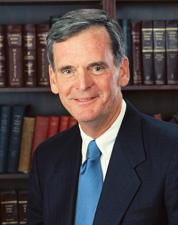 Sen. Judd Gregg (R-NH)
Legislative Activity
Stay on top of the latest movement without scrolling through every action
Senate amendment not agreed to: Amendment SA 2361 not agreed to in Senate by Yea-Nay Vote. 45 - 52. Record Vote Number: 281.
September 16, 2009
View full timeline
Senate amendment not agreed to: Amendment SA 2361 not agreed to in Senate by Yea-Nay Vote. 45 - 52. Record Vote Number: 281.
September 16, 2009
Roll call votes on amendments in Senate: Amendment SA 2361 not agreed to in Senate by Yea-Nay Vote. 45 - 52. Record Vote Number: 281.
September 16, 2009
Senate amendment proposed (on the floor): Amendment SA 2361 proposed by Senator Gregg.(consideration: CR S9403-9405, S9408-9409; text: CR S9403)
September 16, 2009
Amendment SA 2361 proposed by Senator Gregg. (consideration: CR S9403-9405, S9408-9409; text: CR S9403) To prohibit the use of stimulus funds for self-congratulatory signage that allows lawmakers to promote their spending of taxpayer dollars on stimulus projects.
September 16, 2009
Amendment SA 2361 not agreed to in Senate by Yea-Nay Vote. 45 - 52. Record Vote Number: 281.
September 16, 2009
Senate amendment submitted
September 11, 2009
Votes
1 roll call on this amendment
Text
Proposed
TRANSPORTATION, HOUSING AND URBAN DEVELOPMENT, AND RELATED AGENCIES
APPROPRIATIONS ACT, 2010

The PRESIDING OFFICER. Under the previous order, the Senate will
resume consideration of H.R. 3288, which the clerk will report.
The legislative clerk read as follows:

A bill (H.R. 3288) making appropriations for the
Departments of Transportation, and Housing and Urban
Development, and related agencies for the fiscal year ending
September 30, 2010, and for other purposes.

Pending:

Coburn/McCain amendment No. 2371, to remove an unnecessary
and burdensome mandate on the States, by allowing them to opt
out of a provision that requires States to spend 10 percent
of their surface transportation funds on enhancement projects
such as roadkill reduction and highway beautification.
Coburn/McCain amendment No. 2370, to fully provide for the
critical surface transportation needs of the United States by
prohibiting funds from being used on lower-priority projects,
such as roadkill reduction programs, transportation museums,
scenic beautification projects, or bicycle paths, if the
Highway Trust Fund does not contain amounts sufficient to
cover unfunded highway authorizations.
Coburn/Mccain amendment No. 2372, to fully provide for the
critical surface transportation needs of the United States by
prohibiting funds from being used on lower-priority projects,
such as transportation museums.
Coburn amendment No. 2374, to determine the total cost to
taxpayers of Government ownership of residential homes.
Coburn Amendment No. 2377, to require public disclosure of
certain reports.
Wicker modified amendment No. 2366, to permit Amtrak
passengers to safely transport firearms and ammunition in
their checked baggage.
Vitter amendment No. 2376, to affirm the continuing
existence of the community service requirements under section
12(c) of the United States Housing Act of 1937.

The PRESIDING OFFICER. The Senator from Washington.
Mrs. MURRAY. Mr. President, for the information of all Senators, we
are now here on our fifth day of considering the transportation and
housing appropriations bill. We do have a number of amendments that
have been offered. The Senator from Oklahoma is here. He has the first
30 minutes under the previous order. I have the following 10 minutes. I
would like all Senators to know that if all time is not used, we intend
to yield back and we expect that these votes may occur as early as
11:30.
The PRESIDING OFFICER. The Senator from Missouri.
Mr. BOND. Mr. President, I join with my colleague, the Senator from
Washington, in saying please let's get on with it. This will fill out a
full week now. This will be Thursday through Wednesday we have been on
the floor. We want to bring these amendments forward. I understand we
may not need 40 minutes, and we certainly would like to get these votes
started so we can wrap them up before we break for the scheduled
lunches.
Again, if the Senators could be ready for a vote, we hope as early as
11:30, no later than 11:40, and we will have a series of votes. We look
forward to dealing with these amendments and moving on to others.
I thank our colleagues for their attention and let's get on with it.
I yield the floor.
The PRESIDING OFFICER. The Senator from Oklahoma.

Amendment No. 2370, as Modified

Mr. COBURN. Mr. President, I believe the desk has a modification to
amendment No. 2370, and I ask unanimous consent for that modification.
The PRESIDING OFFICER. Is there objection to modifying the amendment?
Without objection, the amendment is so modified.
The amendment (No. 2370), as modified, is as follows:

At the appropriate place, insert the following:
Sec. __. (a) None of the funds made available by this Act
may be used for any purpose described in subsection (b) until
the date on which the Secretary of Transportation certifies,
based on the estimates made under section 9503(d)(1) of the
Internal Revenue Code of 1986 of unfunded highway
authorizations in relation to net highway receipts (as those
terms are defined in that section) for the period of fiscal
years 2010 through 2013, that the Highway Trust Fund contains
or will contain amounts sufficient to cover all such unfunded
highway authorizations for those fiscal years.
(b) The purposes referred to in subsection (a) are----
(1) transportation museums;
(2) scenic beautification projects; and
(3) pedestrian or bicycle facility projects.

Amendment No. 2371

Mr. COBURN. Mr. President, I wish to talk about all three of the
amendments I plan on getting votes on. I will give a little summary on
amendment No. 2371.
The way the highway trust fund spending is set up now is that if we
send your State $100 million, $10 million of that $100 million has to
be spent on enhancement projects, regardless of the condition of your
roads, regardless of the condition of your highways, regardless of the
condition of the bridges in your State. All this does is allow States
to not have to follow that in this, No. 1, tough economic time; No. 2,
when we know highway deaths related to roads and bridges alone account
for 13,000 deaths a year. So we will intend to ask for a vote on that.
It does not prohibit the States from doing these enhancements, much as
was claimed in debate yesterday but, rather, gives an opportunity for
the States to make good value judgments about what is in the best
interests of their State in terms of highways, roads, and bridges.

Amendment No. 2372

Amendment No. 2372 is an amendment which requires us to prioritize.
Unbeknownst to most Americans, money that is collected from the
purchase of your gasoline has been used--$28 million of it, as a matter
of fact--to fund transportation museums. That may be a great use in a
time when we are not in the economic situation and circumstances we
find ourselves in today. What this amendment does is say, until we get
out of the trouble we are in and until the trust fund gets back to
where it needs to be, we shouldn't be prioritizing and we shouldn't be
earmarking money for transportation museums. It goes back to common
sense. The money we are collecting in gas taxes ought to be used to
repair and build highways and bridges and roads, not fund museums.
As a matter of fact, several of the museums that have been funded in
the last 5 years are already closed. They came through earmarks. We
spent millions of dollars. Nobody had any interest in them;
consequently, they were closed. In this one bill we have one that has
been earmarked. It may be the right thing to do, but now is not the
right time to do it.
So what this amendment simply does is say that for this year--this
year only--we are not going to allow lower priority items such as a
transportation museum to displace money that could be used to enhance
somebody's safety or protect their life. I don't know what the outcome
on this will be, but I think it will be a telling statement for the
Congress that if we decide museums

[[Page S9398]]

are more important than somebody's life--more important--the priority
is there--it will show a disconnect in this Congress as to whether we
are willing to make good priorities with Americans' taxpayer dollars or
do we continue to ignore common sense and spend the money the way some
or one or many individuals would like to do it, without regard to what
the original intended purpose for the money was and without regard to
the very serious situation we find with our roads, highways, and
bridges.
Senator McCain and I asked the Government Accountability Office to
look at where the money was spent over the last 4 years prior to this
year, and $3.7 billion of highway money went for transportation
enhancements, of which museums are one. Granted, it wasn't a lot of
money, but when you take $38 million and apply it to defective bridges
in Oklahoma, what you can do is fix 75 of our defective bridges--
bridges that are putting people's lives at risk and money that
Oklahomans paid out that ought to come back and take care of the
problems we have. The same for Colorado. The same for Missouri. The
same for all these States. We are behind.
We have 137,000 or so bridges that are suspect in this country. We
recently had an individual in Tulsa, OK, who was seriously injured when
a chunk of concrete fell from a bridge through his windshield. So it
wasn't the people driving over the bridge; it is the people going under
the bridge who are put at risk, simply because we have focused money on
things other than highways, bridges, and roads. So it is by law right
now that we have to spend 10 percent of that money, and some of it goes
to museums.
All this amendment says is, right now, let's not spend money on
museums and let's fix roads and highways and bridges. We authorized
$4.1 billion over the last 5 years for transportation enhancement set-
asides. All of that comes out of the 10 percent mandatory--and I have
the other amendment I talked about before.
Let me go through what the GAO report said: $850 million had to be
spent on scenic beautification and landscaping projects. Well, $850
million could have built a lot of highways in this country. It could
have repaired a lot of those 137,000 bridges. Yet we mandated that the
money got spent on something other than roads, highways, and bridges.
We allocated $488 million for behavioral research. There is no question
that some of that is absolutely necessary in terms of us making
decisions. We allocated $224 million for 366 projects to rehabilitate
or operate historic transportation buildings--$224 million. That is
half of what Oklahoma spends a year on what they get from the trust
fund, and we did it to preserve historic buildings and transportation
novelties rather than spend it on highways, roads, and bridges. We
allocated $84 million for road-kill prevention, wildlife habitat
connectivity; $28 million, as I said, to establish 55 transportation
museums; $19 million to control outdoor advertising.
What this GAO report says is we refuse to make the hard choices about
priorities. All this museum amendment says is not now. For 1 year,
let's spend the money we were going to spend on museums and put it into
real infrastructure, real highways, real bridges.

Amendment No. 2370

I have one other amendment I wish to discuss--and then I will reserve
the remainder of my time and give the chairman her time--and that is
amendment No. 2370. We know, because of the increased price of
gasoline, and we know because of the economic recession we find
ourselves in, that dollars going into the highway trust fund have been
added. As a matter of fact, twice in the last 2 years, we have borrowed
money from our children and grandchildren to keep the trust fund viable
because the taxes coming in off the trust fund have not kept up with
the pace of spending we have authorized and subsequently obligated to
be spent. We know the highway trust fund is on the brink of insolvency.
Within a year, if we don't get the 18-month extension which I think is
being planned, we will go back and steal another $7 billion or $8
billion from our kids to keep this system viable.
What this amendment says is, if we are going to do that or until it
becomes viable on its own, we should preclude the transportation
enhancement program. We know we don't have enough money to take care of
the very serious problems we have on our roads, on our highways, and
with our bridges. Yet we continue to force the States to spend 10
percent of their money not on highways, roads or bridges. That doesn't
make any sense. So this is a much stronger amendment than my earlier
amendment that says, until the highway trust fund becomes solvent,
until we quit stealing money from our kids and our grandkids and
actually pay as we go, pay for what we are wanting to do, at least that
10 percent of the money is going to get spent on real roads, real
bridges, and real highways, not on enhancements.
I know many do not agree, and I am readily perceptive of their
disagreement. The fact is, if you go out and poll the American people
and you ask them: Should we fix the highways that allow 13,000 people a
year to die because of the quality of the highway or should we build a
walking trail or a sound barrier, they will all say: Fix the highways
first.
Come back and do these other things later. Should we build a museum
when we have roads in disrepair? No. They will all say that--unless
they are the ones benefiting directly from the money going to an
earmarked project for a museum.
So it is not a question of common sense, and it is not a question of
priority; it is a question of whether we will break the chain of how
things are done here and, in fact, say: American taxpayers, you are
paying this money every time you pump a gallon of gas, and we are going
to make sure that goes for roads, bridges, and highways first; and when
we get extra money, we will then enhance the areas around or
surrounding the highways.
I reserve the remainder of my time.
The PRESIDING OFFICER. The Senator from Washington is recognized.
Mrs. MURRAY. Mr. President, the Senator from California will be here
shortly to respond to a number of these amendments, since they fall
into the jurisdiction of her full committee.
The Senator from Oklahoma has offered three amendments to this bill
that are related to transportation. Each of those amendments would
limit the ability of States and local governments to spend their
highway grants on activities that are eligible for funding under the
Federal aid highway program.
Those limitations would not only apply to funds that have been
earmarked in this bill. I think Senators should understand they would
also apply to the formula grants that go to our States and local
governments, which plan their own transportation investments.
The Senator's amendments would take away funding from transportation
enhancement, especially streetscaping, bike and pedestrian paths, and
the mitigation of highway runoff pollution.
Today, all of these activities are eligible for funding under the
current highway authorization law, the SAFETEA-LU Act. Under that act,
communities are required to prepare and provide comprehensive
transportation plans in order to receive their Federal highway and
transit grants. Those plans have to include the communities' plans for
bike and pedestrian pathways, because those transportation plans are
meant to be comprehensive, and our national policy, which has been
debated on the floor of the Senate and the House, has been to recognize
bike and pedestrian paths as one component of a complete transportation
system. They cannot constitute the largest part of the system but a
plan that ignores that element is incomplete.
When we provide bike paths and walkways, we help keep our families
and our neighbors safe. Without these paths, many more bicyclists,
pedestrians, people who commute to work that way would compete with
vehicle traffic. Everybody on a bike or footpath is vulnerable when
they are mixed in with heavy traffic. But school-age children are the
most vulnerable.
When we debated this policy under SAFETEA-LU, we determined that
bikeways and walkways are an important part and are components of our
transportation system for people who cannot afford a car and have to
walk to work. People who walk to school are impacted by the Senator's
amendment.

[[Page S9399]]

I don't believe that this bill--the current transportation
appropriations bill--is an appropriate time that we should be debating
and changing our highway policy, which is so important to all of our
communities across the country.
The chairman of the appropriate committee is on the floor. I know she
wants to respond. I yield the floor to her at this time.
The PRESIDING OFFICER. The Senator from California is recognized.
Mrs. BOXER. Mr. President, what is the order right now? How much time
remains before we vote?
The PRESIDING OFFICER. Six-and-a-half minutes remain.
Mrs. BOXER. Mr. President, I thank the chairman of the subcommittee
for setting aside some time for me because, as the chairman of the
Environment and Public Works Committee, I am concerned about the Coburn
amendment. I want to discuss why.
The particular program that the Senator is going after is the
transportation enhancements program, created in 1991, in a very
bipartisan way in the transportation bill. The purpose of the program
is to encourage investment in some very important priorities for the
Nation. I want to talk about that.
I particularly want to say that, on average, this program provided
$650 million for these important activities each year. I want to point
out that if you relate that $650 million to jobs, we are talking about
many jobs, because $11.5 billion was made available since 1992, and
that translates to 400,000 jobs--good-paying jobs, jobs that do
important things, jobs that can't be shipped overseas. And of all the
times to come to the floor and go after a program that is a job creator
and, in addition, does many important things that actually save lives,
I don't think this is the time. Frankly, I don't think there is any
time for that.
For example, one of the uses of these funds is that we try to stop
highway runoff--runoff that has very harmful chemicals and pollution in
it, and it goes right into waterways. That is something we should not
stop. That is something we owe to our children, to protect them from
pollution.
We also use the funds to reduce vehicle-caused wildlife mortality.
Anybody who has seen the result of a collision with a deer or other
large animal, as I have in the county where I have lived for 40 years,
knows you are dealing with danger for all the parties involved. Why on
Earth would we come down here and strike the funding for a program that
protects our kids from pollution and saves lives by making sure that
our local people do the right thing and make sure these animals don't
have ready access or easy access to our freeways?
Let me put this into exact numbers. I know my friend is an exacting
debater, and he is a great debater. A study under the National
Cooperative Highway Research Program estimated that each year wildlife
collisions are responsible for 200 human deaths, 29,000 injuries, and
more than $1 billion in property damage. So even with the funding that
we have, this is an issue, and we don't want to make matters worse.
I am going to be specific. In Washington State, $75,000 in TE funds,
which my friend wants to strike, provided in 1999 for radio collars for
elk and an alert system for motorists to reduce elk-vehicle collisions
on Highway 101 in the Sequim Valley. As a result of the project, elk-
vehicle collisions have dropped from an average of 2.5 every year to
only 1 in the past 7 years. Why on Earth do we want to pull money from
a fund that saves lives?
In Colorado, $108,000 in TE funds were provided in 2007 to remove
broken one-way deer gates and replace them with escape ramps and extend
the fencing, which was first set up in 1980, to guide wildlife off of
U.S. 550. So those funds certainly are improving safety and saving
lives.
Bicycle paths, pedestrian facilities are provided, and the chairman
spoke about that. In Georgia, TE funds helped transform the 5th Street
bridge span over Atlanta's I-75/I-85 into a pedestrian/bicycle-friendly
park, hovering 17 feet above the highway that safely connects buildings
of Georgia Tech's campus. The bridge was widened to incorporate bicycle
paths, landscaping, lamp posts, trellises, and benches.
I guess there is a different view of what is essential. I think
saving lives is essential. These funds are used to save lives. Also, if
I could say it, because I know my friend doesn't think it should be a
priority to beautify our highways, freeways and roads, I point out that
the taxpayers of this country care about their communities, care about
how their highways and freeways and their roads look. It is a big
difference when you have a highway and a freeway that is taken care of,
just as we take care of our homes. That is our job.
In Illinois, a tunnel was constructed beneath the busy Center Grove
Road that will provide safer passage for students walking between their
school and a nearby sports complex. The tunnel was constructed with the
help of TE funds--the very funds my friend wants to cut.
In Plymouth, IN, they can now enjoy 2.2 miles of paved trails that
meander throughout the community, connecting schools, parks, rivers,
and neighborhoods. And a TE award of $1.2 million helped fund the
trail. It was matched by local dollars.
In Minneapolis, TE funds helped construct the Midtown Greenway
project that provides a safe bicycle commuter freeway for up to 4,500
cyclists a day.
In Oklahoma, new and existing businesses and shops are thriving after
a streetscaping project in downtown Norman. TE funds helped to renovate
the downtown area, which included improvements in historical lighting.
I hope we will vote against the series of Coburn amendments. I think
they hurt, they will stop creation of jobs, and they will make us less
safe.
The PRESIDING OFFICER. The Senator from Oklahoma is recognized.
Mr. COBURN. I think, first, the Senator doesn't understand amendment
2371. It doesn't eliminate any money. It allows the States to opt out
of the enhancement if, in fact, it is better.
The Senator talks about life. With 13,000 people killed on bad roads
last year, that didn't have anything to do with driving skills or the
cars or anything else, other than we didn't put good roads into place.
It is a question about priorities.
There will be no job loss at all. There will be no decrease in
spending under amendment No. 2371. What it simply says is that you
don't have to take 10 percent of your funds anymore and spend it on
enhancements, if you know you have people who are going to die because
you don't fix a road.
She talks about 200 deaths versus 13,000 deaths. There are 137,000
deficient bridges. Should we fix the roads or build a sound barrier?
Which one is important? Should we fix the roads or build another
museum? Should we fix the roads or enhance walkways? It is not as if we
don't have walkways and trails. The question is, where is the greatest
need? And will we make prudent judgments about giving freedom back to
the States and say if, in fact, they don't want to enhance in this
tough economic time, they don't have to? It doesn't preclude California
or Washington State from doing enhancements. They still can. It just
says that in those States that have significant critical infrastructure
needs and roads that are at high risk, under amendment No. 2371, they
get a chance to opt out and do what is best for their citizens and
their State, and to fix some of the bridges, instead of building a
walkway or a bicycle trail. They will be able to fix a bridge or fix a
road and take a curve out where people are dying, instead of building a
museum. It is not onerous. The arguments are specious.
The fact is, we are giving back to the States and saying they can
prioritize this. If you think enhancements are not as important as the
risks you have on your highways, you can opt out--this year only--and
put it into roads, bridges, and highways.
Mrs. BOXER. Will the Senator yield?
Mr. COBURN. I want to finish my point. The Department of
Transportation in every State is not run by idiots. Their No. 1 goal is
for the protection and enhancement of their citizens. We are now saying
to Oklahoma or Colorado or Delaware, you don't get to make the decision
about what the priority is because 10 percent of the money you get has
to be spent this way.
All this is saying is for this year alone--for this year alone--you
can opt out of certain provisions. Some you

[[Page S9400]]

may want to do, some you may not want to do. But if you choose to put
$7 million in to take a curve out of a road that is killing people
versus building a bike trail or a sound barrier, you can do it. You are
actually going to save more lives. It will make no difference in the
number of jobs created or saved. It has no effect on that whatsoever.
The exact same amount of money is going to be spent, and it is all
going to be spent on construction of what the highway trust fund was--I
am not saying these are not good ideas. I am saying it is the priority
of placing them ahead of safety and improving roads, improving bridges.
How do we explain to the family of the person who was injured in Tulsa,
OK, that we are going to build a sound barrier rather than the bridge
where a piece of concrete fell through his windshield and critically
injured him? That noise is more important than that individual's life?
I say give the freedom back to the States for this one year to not
require a mandatory 10-percent allocation to enhancements. Most of the
States probably will not take that. But I can tell you, in my State,
where we have the second or third largest number of deficient bridges,
we are going to build bridges, we are going to fix the broken bridges,
we are going to save people's lives, and we are going to save more
people's lives.
By the way, our taxpayers put the money into the highway trust fund
for this with every gallon of gas. Oklahoma has never gotten more than
94 percent back and over the last 20 years has averaged less than 80
percent of what we send here. So it is highly insulting in this year of
tough, difficult times for us to get less than what we send up, one,
and then say: 10 percent of it you cannot spend on the greatest need in
your State; that we know better, Washington knows better. Washington
does not know better.
We do not preclude any of the enhancements anywhere else. If the
State departments of transportation want to do every enhancement and go
to the 10 percent, they can go to it. What we are saying is, if your
State has a need that is critical to saving people's lives, maybe you
don't build a sound barrier right now but, in fact, you fix the road or
you repair the bridge. It is common sense.
The question will be, Do we do what is best for the American people
or do we stand with the dogma that says we know better? Can we trust
Governors and State departments of transportation to make good
decisions for the safety of their individual citizens in their States?
I think we can.
I am not excited about what will be the outcome of this vote, but I
tell you that this kind of common sense--it does not eliminate it. It
just says we should do that.
To save the Chamber time, I will ask unanimous consent to withdraw--
Mr. President, I want Chairman Murray to hear this, if she will. I
would ask unanimous consent to withdraw amendment No. 2370 which puts a
limit until the trust fund is stable. I will stop that. I will withdraw
it, if I can have unanimous consent to do that.
The PRESIDING OFFICER (Mr. Kaufman). Is there objection?
Mrs. BOXER. Yes. I object.
The PRESIDING OFFICER. Objection is heard.
Mr. COBURN. We will spend the time voting on something I don't think
will be adopted anyway.
On amendment No. 2371, none of the claims the Senator from California
made are accurate. They are not accurate. There will be no decrease in
jobs. There will actually be the opposite of what she said--enhancement
and saving lives. There will be a real ability for the States to make
the best decisions for their citizens.
With that, I yield back the remainder of my time.
The PRESIDING OFFICER. Under the previous order, there will now be 2
minutes of debate equally divided on amendment No. 2374, offered by the
Senator from Oklahoma.
Mr. COBURN. I suggest the absence of a quorum.
The PRESIDING OFFICER. The clerk will call the roll.
The assistant legislative clerk proceeded to call the roll.
Mrs. MURRAY. Mr. President, I ask unanimous consent that the order
for the quorum call be rescinded.
The PRESIDING OFFICER. Without objection, it is so ordered.

Amendments Nos. 2374 and 2377

Mrs. MURRAY. Mr. President, I have talked with the Senator from
Oklahoma, and two of the amendments he has offered, No. 2374 and No.
2377, are amendments the committee agrees to. I ask unanimous consent
that both of these amendments be adopted.
The PRESIDING OFFICER. Without objection, it is so ordered.
The amendments (Nos. 2374 and 2377) were agreed to.

Amendment No. 2371

Mrs. MURRAY. Mr. President, what is the pending amendment?
The PRESIDING OFFICER. The pending amendment is No. 2371, and there
will be 2 minutes of debate equally divided.
The Senator from Oklahoma.
Mr. COBURN. Mr. President, we just had the debate. All it does is
allow States to opt out, if they find critical infrastructure needs,
from the mandatory 10-percent enhancement rule.
I reserve the remainder of my time.
The PRESIDING OFFICER. The Senator from California.
Mrs. BOXER. Mr. President, the Senator does not describe his
amendment properly. I ask colleagues to read it. The amendment says:

None of the funds made available by this Act may be used to
implement section 133(d)(2) of title 23, United States Code.

That means none of the funds could be used for this very important
part of our transportation program which has created 400,000 jobs since
1992. This is not the time to cut these good jobs. This is not the time
to say to the States: In your purpose, you can do whatever you want,
but then in the real amendment they cannot get any Federal funds
anymore to keep wildlife off the freeways, they cannot get funds
anymore to do highway beautification, they cannot get funds anymore to
stop runoff from highways that will pollute our waterways.
I say the purpose may be what the Senator says, but because he is
forced into doing this on an appropriations bill, he says none of the
funds can be used for these TE programs, and that will cause injuries
and death.
The PRESIDING OFFICER. The Senator's time has expired.
The Senator from Oklahoma.
Mr. COBURN. Mr. President, the amendment is very carefully written so
it will not allow the enforcement of administration of funds. If you
will carefully read public law--that is how we got it germane--it does
not allow the enforcement. It doesn't mean they can't do it. The money
can still go out. If you still want to do the enhancements, you can. It
simply says you may not have to if you don't want to.
I ask for the yeas and nays.
The PRESIDING OFFICER. Is there a sufficient second?
There appears to be a sufficient second.
The question is on agreeing to amendment No. 2371. The clerk will
call the roll.
The assistant legislative clerk called the roll.
Mr. DURBIN. I announce that the Senator from West Virginia (Mr. Byrd)
is necessarily absent.
The PRESIDING OFFICER. Are there any other Senators in the Chamber
desiring to vote?
The result was announced--yeas 39, nays 59, as follows:

[Rollcall Vote No. 277 Leg.]

YEAS--39

Alexander
Barrasso
Bayh
Bennett
Brownback
Bunning
Burr
Chambliss
Coburn
Corker
Cornyn
Crapo
DeMint
Ensign
Enzi
Feingold
Graham
Grassley
Gregg
Hatch
Hutchison
Inhofe
Isakson
Johanns
Klobuchar
Kyl
LeMieux
Lieberman
Lugar
McCain
McCaskill
McConnell
Risch
Roberts
Sessions
Thune
Vitter
Webb
Wicker

NAYS--59

Akaka
Baucus
Begich
Bennet
Bingaman
Bond
Boxer
Brown
Burris
Cantwell
Cardin
Carper
Casey
Cochran
Collins
Conrad
Dodd
Dorgan
Durbin
Feinstein
Franken
Gillibrand
Hagan
Harkin
Inouye
Johnson
Kaufman
Kerry
Kohl
Landrieu
Lautenberg
Leahy
Levin
Lincoln
Menendez
Merkley
Mikulski
Murkowski
Murray
Nelson (NE)
Nelson (FL)
Pryor
Reed
Reid
Rockefeller

[[Page S9401]]

Sanders
Schumer
Shaheen
Shelby
Snowe
Specter
Stabenow
Tester
Udall (CO)
Udall (NM)
Voinovich
Warner
Whitehouse
Wyden

NOT VOTING--1

Byrd

The amendment (No. 2371) was rejected.
Mrs. MURRAY. Mr. President, I move to reconsider the vote.
Mr. BOND. I move to lay that motion on the table.
The motion to lay on the table was agreed to.

Amendment No. 2370 Withdrawn

The PRESIDING OFFICER. Under the previous order, there will now be 2
minutes of debate equally divided on amendment No. 2370, offered by the
Senator from Oklahoma.
Mr. COBURN. Mr. President, I ask unanimous consent to withdraw the
amendment; amendment No. 2370.
The PRESIDING OFFICER. Is there objection? Without objection, it is
so ordered.

Amendment No. 2372

The PRESIDING OFFICER. Under the previous order, there will now be 2
minutes of debate equally divided on amendment No. 2372, offered by the
Senator from Oklahoma.
The Senator from Oklahoma is recognized.
Mr. COBURN. Mr. President, 13,000 people died on American roads last
year because of the quality of the roads and bridges. We have spent $48
million in the last 4 years on museums, some of which are already
closed. The money we collect from taxpayers should be prioritized to
build roads, bridges, and highways. This amendment is a simple
amendment. It says we should be spending right now, this next year
only, no money for museums until we get the roads back.
I reserve the remainder of my time.
The PRESIDING OFFICER. The Senator from Washington is recognized.
Mrs. MURRAY. I yield my 1 minute to the Senator from Delaware.
Mr. CARPER. Mr. President, when you take the train up the Northeast
corridor and the train stops in Wilmington, DE, you are in the middle
of what was, 60 years ago, a vibrant shipbuilding area. We built ships
to help win World War II. When the war was over, what had been a
vibrant shipbuilding industry turned into an industrial wasteland.
Fifteen years ago we began transforming it, and today it is river
walks, it is places for people to live, work, recreate, we have parks--
it is a beautiful place, an urban wildlife refuge. We are going to
build a children's science museum there as well. It costs $11 million.
We raised the money from our local sources.
In this bill is the HUD funding, $190,000, to help us complete the
package. It is a small amount of money for a great payoff for a lot of
kids, tens of thousands of kids who will visit that science museum, who
will be excited about science and, hopefully, will go on to have
careers as scientists, inventors, and engineers. I ask you to help me
defeat this amendment.
Mr. COBURN. Mr. President, I ask for the yeas and nays.
The PRESIDING OFFICER. Is there a sufficient second? There is a
sufficient second.
The question is on agreeing on the amendment. The clerk will call the
roll.
The bill clerk called the roll.
Mr. DURBIN. I announce that the Senator from West Virginia (Mr. Byrd)
is necessarily absent.
The PRESIDING OFFICER. Are there any other Senators in the Chamber
desiring to vote?
The result was announced--yeas 41, nays 57, as follows:

[Rollcall Vote No. 278 Leg.]

YEAS--41

Barrasso
Bayh
Brownback
Bunning
Burr
Chambliss
Coburn
Collins
Conrad
Corker
Cornyn
Crapo
DeMint
Ensign
Enzi
Feingold
Graham
Grassley
Gregg
Hatch
Hutchison
Inhofe
Isakson
Johanns
Klobuchar
Kohl
Kyl
LeMieux
Lugar
McCain
McCaskill
McConnell
Murkowski
Risch
Roberts
Sessions
Snowe
Thune
Udall (CO)
Vitter
Voinovich

NAYS--57

Akaka
Alexander
Baucus
Begich
Bennet
Bennett
Bingaman
Bond
Boxer
Brown
Burris
Cantwell
Cardin
Carper
Casey
Cochran
Dodd
Dorgan
Durbin
Feinstein
Franken
Gillibrand
Hagan
Harkin
Inouye
Johnson
Kaufman
Kerry
Landrieu
Lautenberg
Leahy
Levin
Lieberman
Lincoln
Menendez
Merkley
Mikulski
Murray
Nelson (NE)
Nelson (FL)
Pryor
Reed
Reid
Rockefeller
Sanders
Schumer
Shaheen
Shelby
Specter
Stabenow
Tester
Udall (NM)
Warner
Webb
Whitehouse
Wicker
Wyden

NOT VOTING--1

Byrd

The amendment (No. 2372) was rejected.
Mrs. MURRAY. Mr. President, I move to reconsider the vote.
Mrs. BOXER. I move to lay that motion upon the table.
The motion to lay upon the table was agreed to.

Amendment No. 2366, as Modified

The PRESIDING OFFICER. Under the previous order, there will now be 2
minutes of debate, equally divided, on amendment No. 2366 offered by
the Senator from Mississippi, Mr. Wicker.
The Senator from Washington is recognized.
Mrs. MURRAY. Mr. President, I would let all fellow Senators know, we
have two more votes remaining. If the Senators would allow the speakers
to speak, we will be able to move through these expeditiously.
I ask unanimous consent that the remaining amendment votes be 10
minutes in length.
The PRESIDING OFFICER. Without objection, it is so ordered.
Mr. BOND. Mr. President, I would urge all Members to stay around and
vote and we can get on with the business and anybody who wants to have
lunch can have lunch.
The PRESIDING OFFICER. The Senator from Mississippi.
Mr. WICKER. Mr. President, very simply, this amendment would allow
law-abiding Amtrak passengers to securely transport firearms in their
checked baggage. Under current practices, all the American domestic
airlines permit firearms in their checked luggage. Other American
passenger railroads also allow checked firearms.
Only the federally subsidized Amtrak prohibits law-abiding American
citizens from exercising their second amendment right in checked
baggage. On April 2 of this year, the Senate passed a similar amendment
to the budget with 63 votes in favor of the Wicker Amendment and only
35 against.
During the time since then, Amtrak has made no efforts to respond to
this overwhelming bipartisan vote. It is my hope that we get a similar
overwhelming bipartisan vote today which results in Amtrak ending this
unfair practice. I urge a vote in favor of the amendment.
The PRESIDING OFFICER. The Senator from Washington.
Mrs. MURRAY. I would ask all our Senators to pay attention to what we
are being asked to vote on. We did vote on a similar amendment during
the budget debate. But these amendments are very different. The
amendment to the budget resolution never put Amtrak's funding at risk.
That amendment would have only prohibited an extra reserve fund from
going to Amtrak if it did not allow firearms.
The amendment we are now considering does something much more
drastic, it will put at risk Amtrak's appropriations. In order to
receive any Federal funding under this amendment, Amtrak would have 6
months to build a process for checking and tracking firearms, it would
have to find the manpower necessary to screen and guard firearms, and
would have to purchase the equipment necessary.
There is nothing in the underlying appropriations to pay for any of
that. So this amendment is going to put a severe burden on them, and if
they do not comply, Amtrak will shut down.
I think it is very important that we be careful what we are voting
on. I ask my colleagues to oppose the Wicker amendment.
The PRESIDING OFFICER. The question is on agreeing to the Wicker
amendment.
Mr. WICKER. Mr. President, I ask for the yeas and nays.
The PRESIDING OFFICER. Is there a sufficient second? There appears to
be.
The clerk will call the roll.
The legislative clerk called the roll.
Mr. DURBIN. I announce that the Senator from West Virginia (Mr. Byrd)
is necessarily absent.

[[Page S9402]]

The PRESIDING OFFICER (Mrs. Hagan). Are there any other Senators in
the Chamber desiring to vote?
The result was announced--yeas 68, nays 30, as follows:

[Rollcall Vote No. 279 Leg.]

YEAS--68

Alexander
Barrasso
Baucus
Bayh
Begich
Bennet
Bennett
Bingaman
Bond
Brownback
Bunning
Burr
Casey
Chambliss
Coburn
Cochran
Collins
Conrad
Corker
Cornyn
Crapo
DeMint
Dorgan
Ensign
Enzi
Feingold
Graham
Grassley
Gregg
Hagan
Hatch
Hutchison
Inhofe
Isakson
Johanns
Johnson
Klobuchar
Kohl
Kyl
Landrieu
Leahy
LeMieux
Lincoln
Lugar
McCain
McCaskill
McConnell
Merkley
Murkowski
Nelson (NE)
Nelson (FL)
Reid
Risch
Roberts
Sanders
Sessions
Shaheen
Shelby
Snowe
Tester
Thune
Udall (CO)
Udall (NM)
Vitter
Voinovich
Warner
Webb
Wicker

NAYS--30

Akaka
Boxer
Brown
Burris
Cantwell
Cardin
Carper
Dodd
Durbin
Feinstein
Franken
Gillibrand
Harkin
Inouye
Kaufman
Kerry
Lautenberg
Levin
Lieberman
Menendez
Mikulski
Murray
Pryor
Reed
Rockefeller
Schumer
Specter
Stabenow
Whitehouse
Wyden

NOT VOTING--1

Byrd

The amendment (No. 2366), as modified, was agreed to.
Mr. BOND. I move to reconsider the vote.
Mrs. MURRAY. I move to lay that motion on the table.
The motion to lay on the table was agreed to.

Amendment No. 2376

The PRESIDING OFFICER. Under the previous order, there will now be 2
minutes of debate equally divided on amendment No. 2376, offered by the
Senator from Louisiana, Mr. Vitter.
The Senator from Louisiana.
Mr. VITTER. Madam President, this should be a noncontroversial
amendment. It simply retains in present law the current community
service requirement which Congress passed into law for public housing
tenants who are able-bodied over a decade ago. The House has tried to
take out this requirement. It is a very modest 8 hours per month of
community service for able-bodied tenants. Automatically exempted are
folks over 62, folks who have a disability, caretakers, folks who meet
the TANF work requirements, et cetera. It is a modest, reasonable work
requirement which has been in the law for years. I urge all Members to
retain it through this vote.
The PRESIDING OFFICER. The Senator from Washington.
Mrs. MURRAY. The Senator from Louisiana is offering an amendment that
would require continued enforcement of public service for people who
live in public housing. I oppose this amendment for two reasons. First,
it is current law. Secondly, I am concerned, in this economic downturn,
when we have a lot of families struggling, the most struggling
families, we are putting this requirement on them. Therefore, I am
going to oppose this amendment and will be voting no.
I yield the floor.
The PRESIDING OFFICER. The Senator from Louisiana has 6 seconds
remaining.
Mr. VITTER. This excludes folks who have a work requirement under
TANF.
The PRESIDING OFFICER. The time of the Senator from Louisiana has
expired.
The question is on agreeing to amendment No. 2376.
Mr. BOND. I ask for the yeas and nays.
The PRESIDING OFFICER. Is there a sufficient second?
There appears to be.
The clerk will call the roll.
The bill clerk proceeded to call the roll.
Mr. DURBIN. I announce that the Senator from West Virginia (Mr. Byrd)
is necessarily absent.
The PRESIDING OFFICER. Are there any other Senators in the Chamber
desiring to vote?
The result was announced--yeas 73, nays 25, as follows:

[Rollcall Vote No. 280 Leg.]

YEAS--73

Alexander
Barrasso
Baucus
Bayh
Begich
Bennet
Bennett
Bingaman
Bond
Boxer
Brownback
Bunning
Burr
Chambliss
Coburn
Cochran
Collins
Conrad
Corker
Cornyn
Crapo
DeMint
Dodd
Dorgan
Durbin
Ensign
Enzi
Feingold
Feinstein
Gillibrand
Graham
Grassley
Gregg
Hagan
Hatch
Hutchison
Inhofe
Isakson
Johanns
Kaufman
Klobuchar
Kohl
Kyl
Leahy
LeMieux
Lieberman
Lincoln
Lugar
McCain
McCaskill
McConnell
Merkley
Murkowski
Nelson (NE)
Nelson (FL)
Risch
Roberts
Rockefeller
Schumer
Sessions
Shelby
Snowe
Specter
Tester
Thune
Udall (CO)
Udall (NM)
Vitter
Voinovich
Warner
Webb
Wicker
Wyden

NAYS--25

Akaka
Brown
Burris
Cantwell
Cardin
Carper
Casey
Franken
Harkin
Inouye
Johnson
Kerry
Landrieu
Lautenberg
Levin
Menendez
Mikulski
Murray
Pryor
Reed
Reid
Sanders
Shaheen
Stabenow
Whitehouse

NOT VOTING--1

Byrd

The amendment (No. 2376) was agreed to.
Mrs. MURRAY. I move to reconsider the vote and I move to lay that
motion on the table.
The motion to lay on the table was agreed to.
The PRESIDING OFFICER. The Senator from Washington.
Mrs. MURRAY. Madam President, we have made great progress on the
transportation and housing appropriations bill, and I thank all
Senators for working with us. We have several amendments left to do.
I now ask unanimous consent that Senator Landrieu be given 5 minutes
to speak on amendment No. 2365, followed by Senator Gregg with 20
minutes equally divided on amendment No. 2361.
The PRESIDING OFFICER. Without objection, it is so ordered.
Mrs. MURRAY. Madam President, at this time, then, we will move to
those two amendments. We have several other Senators who have notified
us they wish to offer amendments.
For the information of all Members, we hope to have votes on at least
the two amendments I have just spoken of, the Landrieu and Gregg
amendments, at 2:30. If there are other amendments we are able to move
at that time, we will then vote on those as well. But, again, we are
making great progress. We have a few amendments left, and I urge any
Senator who has an amendment, you have a few hours left to get it to us
so we can work it out.
Madam President, I yield the floor.
The PRESIDING OFFICER. The Senator from Louisiana.

Amendment No. 2365

Ms. LANDRIEU. Madam President, I appreciate the chairman allowing me
the opportunity to offer this amendment, and also working with Senator
Bond, who I understand supports this amendment as well.
I offer this amendment on behalf not only of myself but Senator
Harkin, Senator Hutchison, Senator Grassley, and Senator Cornyn. So we
have a strong bipartisan group of Senators who are coming to the floor
to ask our colleagues to approve an amendment that has to do with a
change and modification in the Community Development Block Grant
Program that has been put in place to help communities prepare for and
recover from disasters. This amendment is going to affect all
communities in a positive way across the country that received
community development block grant funding and in a very significant
way. If this amendment is passed by this body today and continues in
this bill, the communities that have received special allocations of
community development block grant money will be able to use those funds
to match other Federal funds available.

This is the way the normal Community Development Block Grant Program
has operated, I understand, since its inception. As my colleagues can
see from this chart, in every single situation, except for two, in the
last 17 years, that has been the case. So my amendment is basically
allowing the floods and natural disasters of 2008 to be included in
this effort; in other words, to say, if you received community
development block grant funding, you can use those funds as a local and
State match for other Federal funding.
This is important for two reasons. One, it has been done in that way
the

[[Page S9403]]

last 17 years for good reason. For good reason because these
communities, you could argue, have even greater challenges than normal,
considering that in any time it is tough to provide housing or to build
roads or to help their small businesses get back on their feet, but
after a catastrophic disaster it is sometimes 5, if not 10, times
harder. So why restrict their money at a time when they need the
greatest flexibility? That is all this amendment does.
Again, this is the way it has been done in general community
development block grants since the beginning of the program. It is the
way it was done with disaster community development in every case. Our
amendment would simply make that uniform policy for the States affected
by the 2008 disasters.
This will be a great help to Texas that is still recovering from the
storms of Ike. I will be visiting and having a field hearing through my
Committee on Small Business as well as Disaster. Senator Hutchison will
be attending that field hearing to visit Galveston just on Friday. So
approval of this amendment would bring a lot of hope and encouragement
to the people on the Gulf Coast, not just in Louisiana but, as I said,
in Texas as well. California will be benefited as well as Iowa and some
of the States that were affected by the floods.
So, again, this is amendment No. 2365. I think my explanation is
sufficient about what this amendment does and what a great help it will
be to mayors and parish officials and county officials struggling to
rebuild and what a smart way to use and to leverage moneys to get these
communities rebuilt quickly in these very difficult economic times.
I ask unanimous consent that the CDBG allocation chart to which I
referred to be printed in the Record at this time.
There being no objection, the material was ordered to be printed in
the Record, as follows:

CDBG Allocations

(Prepared by Ben Billings)

FUNDING SUMMARY
----------------------------------------------------------------------------------------------------------------
Total CDBG     First        Second
Rank                                 State                received    allocation   allocation
----------------------------------------------------------------------------------------------------------------
1.........................................  Texas........................     $3.058 b     $1.315 b     $1.743 b
2.........................................  Louisiana....................      1.059 b        438 m        620 m
3.........................................  Iowa.........................        798 m        281 m        516 m
4.........................................  Indiana......................        415 m        162 m        253 m
5.........................................  Illinois.....................        187 m         59 m        127 m
6.........................................  Wisconsin....................        124 m         49 m         75 m
7.........................................  Missouri.....................        104 m         25 m         79 m
8.........................................  Arkansas.....................         95 m         25 m         70 m
9.........................................  Tennessee....................         92 m         21 m         72 m
10........................................  Florida......................         81 m         17 m         64 m
11........................................  California...................         39 m            0         40 m
----------------------------------------------------------------------------------------------------------------

Ms. LANDRIEU. Madam President, I see my good friend, Senator Gregg. I
yield the floor.
The PRESIDING OFFICER. Has the Senator offered the amendment?
Ms. LANDRIEU. Yes, I believe I have, but if I have not, let me submit
it at this time. It is amendment No. 2365.
The PRESIDING OFFICER. The clerk will report the amendment.
The legislative clerk read as follows:

The Senator from Louisiana, [Ms. Landrieu], for herself,
Mr. Harkin, Mrs. Hutchison, Mr. Grassley, and Mr. Cornyn,
proposes an amendment numbered 2365.

Ms. LANDRIEU. Madam President, I ask unanimous consent that the
reading of the amendment be dispensed with. I suggest we don't have to
read the whole amendment and we will leave it lying until we can vote
on it later today.
The PRESIDING OFFICER. Without objection, it is so ordered.
The amendment is as follows:

(Purpose: To amend the Disaster Relief and Recovery Supplemental
Appropriations Act, 2008)

On page 318, between lines 11 and 12, insert the following:
Sec. 234.  The matter under the heading ``community
development fund'', under the heading ``Community Planning
and Development'', under the heading ``DEPARTMENT OF HOUSING
AND URBAN DEVELOPMENT'' in chapter 10 of title I of division
B of the Consolidated Security, Disaster Assistance, and
Continuing Appropriations Act, 2009 (Public Law 110-329; 122
Stat. 3601) is amended by striking ``: Provided further, That
none of the funds provided under this heading may be used by
a State or locality as a matching requirement, share, or
contribution for any other Federal program''.

The PRESIDING OFFICER. The Senator from New Hampshire.

Amendment No. 2361

Mr. GREGG. Madam President, I ask unanimous consent to set aside the
pending amendment and call up amendment No. 2361.
The PRESIDING OFFICER. Without objection, it is so ordered.
The clerk will report the amendment.
The assistant legislative clerk read as follows:

The Senator from New Hampshire [Mr. Gregg], for himself,
Mr. Coburn, and Mr. Bennett, proposes an amendment numbered
2361.

Mr. GREGG. Madam President, I ask unanimous consent that the reading
of the amendment be dispensed with.
The PRESIDING OFFICER. Without objection, it is so ordered.
The amendment is as follows:

(Purpose: To prohibit the use of stimulus funds for self-congratulatory
signage that allows lawmakers to promote their spending of taxpayer
dollars on stimulus projects)

On page 194, after line 23, add the following:
Sec. 1___. (a) This section may be cited as the ``Axe the
Stimulus Plaques Act''.
(b) Notwithstanding any other provision of law, none of the
funds made available under the American Recovery and
Reinvestment Act of 2009 (Public Law 111-5) may be used for
physical signage to indicate that a project is being funded
by that Act.

Mr. GREGG. Madam President, this is an amendment that shouldn't have
to be offered, to be very honest with you. Today there are a lot of
projects being pursued under the stimulus package, and every one of
those projects that is a road project, unfortunately, finds itself
having to put up a sign that says this is a good project being paid for
with tax dollars. These are self-congratulatory signs. They are
political signs. They are there so lawmakers can pat themselves on the
back and say: Wow, look at this project we are doing.
But these signs cost money. Actually, when you add them all up, they
cost a lot of money. They are a total waste of money. There is no
reason to have these signs by every project that occurs in America. It
is projected there will be somewhere around 20,000 to 22,000 projects.
The signs cost about $400 in New Hampshire, and they cost as much as--I
think it was around $3,000 in New Jersey for each sign. New Hampshire
is a little more efficient. I suspect in North Carolina they probably
don't cost much more than $400, but if you add that up, we are talking
about a cost of somewhere between $6 million and $15 million being
spent on signs. That is an inexcusable waste of money. That money could
be used for something valuable, for example, rather than a sign.
The practical effect of this is, the signs should say ``Wasting
taxpayers' dollars; project funded by the future generations of
Americans,'' if they are going to be honest signs. But I am not asking
for any signs. There shouldn't be any signs.
Instead, the highway departments across this country are being
basically required to put up these signs as the projects are built. In
fact, there was one example in New Hampshire--there were lots of
examples in New Hampshire, but there was one community in New Hampshire
where the leadership of that community said: We don't want to put the
signs up because we think they are a waste of money, and they were
told, if they didn't put up the signs, they wouldn't get the money.
That is happening all across the country.
So this amendment should be unnecessary. It should be obvious--
obvious--that we don't have to put these signs up; that we shouldn't be
spending money in this way. If we are going to spend $6 million to $18
million to $20 million on something, let's spend it on what actually
produces some value rather than creates a self-congratulatory event for
the local political leaders and for the Congress. We do enough self-
congratulating around here. We shouldn't have to make the taxpayers pay
for it. Instead, we should be a little more responsible with the
taxpayers' money.
It is a very simple amendment. That is why I am not going to spend a
lot of time on it, because I think it is so obvious it should be
accepted and passed, that it should occur. It is one of those
amendments where you sort of scratch

[[Page S9404]]

your head and say: Why did we even have to offer this? Why should we
have to offer this amendment saying you don't put up signs spending
taxpayers' dollars to congratulate yourself for a project the taxpayers
paid for. But we do, of course, in this instance because the Department
has insisted on these signs across America.
That is what the amendment does. I reserve the remainder of my time,
and I ask for the yeas and nays.
The PRESIDING OFFICER. Is there a sufficient second?
There appears to be.
The yeas and nays are ordered.
The Senator from California.
Mrs. BOXER. Madam President, I rise in opposition to Senator Gregg's
amendment and I wish to say why I think there are many reasons not to
support it. I started off my political career as a county supervisor.
It is through that agency that when we are undertaking a major road
project, we put up a sign first of all to let people know work is
underway and what it is about because a lot of times people don't know
if it is going to be a month-long project or a day-long project. We
would put up a sign to let people know who is funding the program, to
let people know whether it is a State project, a local project. No big
deal. We did this--and we do this--under Republican leadership, under
Democratic leadership. It is information.
I think the true source of this amendment is a frustration. This is
my own opinion. I am sure my friend absolutely would not agree with me,
but it is my sense that there is a frustration by the people who voted
no on the Economic Recovery Act, the stimulus bill; there is a
frustration that it is working. They predicted gloom and doom.
Let me tell you what is happening in this great Nation of ours. We
have a long way to go to get jobs up and running, there is no question
about it, but the stimulus bill has already saved or created a million
jobs. Let me tell you what else. We are looking at growth for the first
time in this economy. When we were faced with the worst recession since
the Great Depression--and I know it because the Presiding Officer had
the same issue as she looked at what to do--we had to decide whether it
made sense to do some job creation here, and we didn't get many
Republican votes, but thank goodness we got three. Thanks to those good
people for joining us because I can tell you this: In my home State, we
are starting to see it happen. We are going to get tens of billions of
dollars.
So now I think the issue is a frustration with the fact that we won
that vote and we got that done and those jobs are being created as we
speak. Slowly but surely we are being lifted out of this darkness.
Here we have a small amendment, I agree. You know what. If it passes,
no harm. But I have to say, why on Earth would you want to hide from
the American people the fact that the recovery package we passed is
putting people to work? People want to know. Not everybody has a
computer. Not everybody is going to follow up on the transparency this
administration has put in place. They are showing that every day it is
working, where it is happening, and so on and so forth--not by name but
how many jobs are created and the like.
It seems to me, if you are improving our highways, our transit
systems, our water infrastructure, our government buildings, and the
source of funding is the stimulus program, the Economic Recovery Act,
let people know. Why would we prohibit funds under this act from being
used for these signs that simply inform taxpayers that a project is
being made possible by taxpayer dollars from the stimulus program? I
think it is a question of making our people more informed, giving them
information.
My friend says it costs money to do a sign. I couldn't agree more.
Everything costs money. It costs money to do a sign. Guess what. People
work in those places where those signs are made. People proudly work on
those jobs and get paid a good amount and can support their families.
So this is a jobs program. Part of it is to tell the people, yes, the
funding for this project is paid for by the stimulus program, the
economic recovery program, and, yes, people were paid to work in places
that make these signs. I don't think it is logical to keep this
information from the people. What purpose is served? It is going to
save a little bit of money, but the fact is, the purpose of the
stimulus bill was to create jobs, and you are going to take away jobs
from people who are making those signs. I think this is an antijobs
amendment we have before us.
Look, the Recovery Act is working. I think it is frustrating those
who predicted it would never work, and they will predict it will never
work until they have their last breath because that is the nature of
politics; you have to spin it one way or another. But we know the
economy is turning around. We also know we need to create many more
jobs, and this amendment will not create one more job. I don't believe
it will. The fact that we are doing some good things with this funding,
including making buildings more energy efficient, upgrading flood
protection, let the American people know that their funds are being
spent well. I think that is money spent well.
Some people may see a program, by the way, I say to my good friend,
and they don't like it. They say: Why on Earth are they using my money
to do this particular project? Let them know. Let them know. So if they
like what they see, they understand where it came from. If they don't
like what they see, they understand where it came from.
I urge my colleagues to oppose the Gregg amendment. I agree with my
friend, it is not a major amendment, but I think it speaks to the point
that the American people should have an easy way of knowing where these
funds are going and the projects they are building. We certainly had a
big enough battle on the floor of the Senate--oh, boy, did we have a
battle--trying to find those three votes. So it passed. It was
controversial. Some in America don't support it; others in America do.
I think they should have a right to know if a project is being brought
to them by way of this important bill that I think is helping turn our
economy around.
I thank the Chair, and I yield the floor.
The PRESIDING OFFICER. The Senator from New Hampshire is recognized.
Mr. GREGG. Madam President, the issue isn't the stimulus package,
although I have reservations about that. I would be happy to debate
that with the Senator from California at some length because I think
adding almost three-quarters of a trillion dollars of new debt to our
children's backs on a package that will spend out through 2019 is
hardly stimulus, especially when we see only 20 percent of that package
will spend out by the end of this year, and maybe 50 percent next year.
We had Chairman Bernanke saying, essentially, that we are out of the
recession. That all comes from borrowing that our children will have to
pay. In my opinion, it is not fair to pass that debt on to our
children, that $787 billion. That is not the debate. This debate is
about whether we should be congratulating ourselves with tax dollars.
It is self-aggrandizement at the expense of the taxpayer. This is going
out and buying advertising to promote ourselves and having the taxpayer
pay for it.
We can clearly spend these dollars more efficiently doing something
else. Sure, it is not a lot of dollars, but when we add it all up, $18
million is a lot of money. We can do something more constructive
besides putting up a sign that says we are wonderful because we are
spending their money. If we want to say we are doing great things for
them, we can say here is a sign telling them that. But rather than
having the people pay for that sign and telling them they are going to
have to pay for it, let's have the Democratic Senatorial Committee or
the Republican Senatorial Committee pay for that sign. Let's do that if
we think it is that important as a piece of political promotion. But it
is not. I don't think the Democratic Senatorial Committee would pay for
that sign because they would see it as a waste of money. I don't speak
for them, but I don't think the Republican Senatorial Committee would
pay for this either. I would recommend that they not do it.
These signs are a waste of money. Do they create jobs? Well, actually
the signs in New Hampshire are made in prisons. They cost money because
the materials cost money. I guess that is why we get them for $300. In
New York,

[[Page S9405]]

it is $3,000 a sign. As a practical matter, I don't think we can argue
that making these signs is somehow stimulating the economy. All it is
doing is saying: Hey, we are wonderful; we are going to take your money
and use it to tell you what a wonderful job we are doing with your
money. It is not fair or appropriate.
I hope people will support the amendment. As has been mentioned by
the Senator from California, this is not a major amendment, but it is
one that states an attitude toward how we spend money. I think it is
important in that context.
I yield the floor and suggest the absence of a quorum.
The PRESIDING OFFICER. The clerk will call the roll.
The assistant legislative clerk proceeded to call the roll.
Mr. ENSIGN. Madam President, I ask unanimous consent that the order
for the quorum call be rescinded.
The PRESIDING OFFICER. Without objection, it is so ordered.

Motion to Recommit

Mr. ENSIGN. Madam President, I will have a motion momentarily. I will
wait for the manager of the bill to come on the floor.
I will be offering a motion to recommit the bill back to the
Appropriations Committee at last year's spending level. On the front of
this bill, it says that last year's spending level was at a level which
included last year's spending, plus the stimulus money. So when they
say this year's spending level, it looks as if there is a huge cut,
when in fact, there is actually a 23-percent increase in this year's
spending bill over last year's.
So the motion I am about to make is asking to report the bill back to
the committee, where the committee can make whatever specific
recommendations within that level but to do that at last year's
spending level.
I have heard the rhetoric from politicians in the House, Senate, and
the President talking about how serious a problem we have with the
deficit and how serious a problem we have with the debt in our country.
That is one of the reasons you saw hundreds of thousands of people on
the Mall here this last weekend. People are really concerned about the
direction of our country. We have heard economic experts talking about
America actually approaching its borrowing capacity. If our country
ever reaches its borrowing capacity, it will be an economic disaster.
It would be like a business having many expenses and no cash in the
bank. The bank and all its lenders saying: Sorry, we are not giving you
any more money.
Well, we owe people from all over the world. We owe sovereign wealth
funds. We owe China, Japan, European countries and other sovereign
wealth funds all over the world. They hold a lot of our debt. The more
we continue to borrow, the more we become beholden to these other
countries. And when the next trillion dollars needs to be borrowed,
what if these other countries say to us: No, we are not going to do it.
The other thing they could also say is: Yes, we will give you that next
trillion dollars. We will loan the money to you, but it is going to be
at a higher interest than you want to pay. And by the way, the other
debt we also hold that you owe us, we are going to raise the interest
on that.
You see, we are not going to be in a position to say: No, that is not
exactly what we want to do. The more debt we run up, the less of a
position we will be in as a country to be able to bargain. We literally
cannot sustain the level of debt we are developing here in the United
States.
I see the pages down in front of us here--this younger generation.
The younger generations across our country are being saddled with the
debt this Congress, this President, the past President, and past
Congresses have run up. Unfortunately, instead of slowing that
borrowing down, we are increasing it at a faster and faster rate.
So this is a very simple motion. This just says: Let's start taking
these appropriations bills and let's at least start freezing spending.
That is basically what this motion suggests. It just says: Freeze
spending.
By the way, a lot of the programs that are in this bill were already
dramatically increased in the stimulus bill. So not only did we
increase last year over the previous year with the regular
appropriations process, we then added money to the stimulus bill on top
of that.
So what did they do this year? Instead of being fiscally responsible
and saying: Let's at least freeze spending--which I will bet the
American people would even suggest since we are in tough economic
times, that maybe we should do a little haircut and cut spending a
little bit--no, no, the majority has said we are actually going to
increase the level of spending in this bill by 23 percent, way above
inflation, and this is at a time in our country when we cannot afford
it. So I think this is a place to start showing some fiscal
responsibility, and there will be other opportunities where we can as
well.
We all know entitlement spending is out of control in this country.
We all know that needs to be addressed. Medicare and Medicaid alone can
bankrupt the country. The President talked about that the other night.
That is one of the reasons we need to actually get entitlements under
control in our health care bill--which, by the way, none of the health
care bills do.
We need to get entitlement spending under control, but we also need
to get what is called discretionary spending, or these annual
appropriations bills, under control as well. We are not talking about
small amounts of money anymore. Even though the entitlements are the
biggest part of the budget, the discretionary or the annual spending
bills are a very significant amount of money these days.
As I mentioned before, this year's bill is a 23-percent increase over
last year's. The committee report says it isn't, that it is actually a
cut from last year. But let me explain exactly how they do that. They
took last year's bill and added on the money we spent in the stimulus
bill to last year's bill. They say that is what we spent last year, so
that this year we are going to spend less than we did in the
combination of those two bills. They call that a cut in spending. Well,
that is phony Washington math. That is how we end up with the kinds of
deficits and the debt we have in this country. People claim a cut in
spending when it is actually, if you compare apples with apples, a 23-
percent increase over last year.
So I think it is time. It really is time. Republicans and Democrats
should join together in thinking about not even the next generation,
but let's think about today. Let's think about what we are doing to
this country today. Let's start showing some fiscal responsibility
around here. Let's start joining together as Americans in not running
up this massive amount of government debt. Let's start saying no to
some of the special interests that come into our office. Let's start by
saying that.
So, Madam President, I have a motion at the desk, and I ask for its
immediate consideration.
The PRESIDING OFFICER. The clerk will report the motion.
The assistant legislative clerk read as follows:

The Senator from Nevada [Mr. Ensign] moves to recommit the
bill (H.R. 3288) to the Committee on Appropriations with
instructions to report the same back to the Senate with
changes that reduce the aggregate level of appropriations
in the Act for fiscal year 2010 by $12,713,000,000 from
the level currently in the Act.

Mr. ENSIGN. So just to summarize, this is a motion to recommit the
bill back to the Appropriations Committee. It does not take away the
power of the Appropriations Committee. It does not say that it cuts any
one individual program. The Appropriations Committee would have the
authority to be able to put its priorities within the bill. But it does
say we are not going to spend more money than we spent last year. That
is, very simply, what it says. We are going to freeze the level of
spending to last year instead of having a 23-percent increase over last
year.
To reiterate, in the stimulus bill last year, tens of billions of
dollars were added to these very same programs that are in this
spending bill. So I believe the responsible thing to do is for us to
vote on this motion and to show we are really serious about controlling
the debt and the deficit in the United States of America.
Madam President, I yield the floor.
Mrs. MURRAY. Madam President, I suggest the absence of a quorum.
The PRESIDING OFFICER. The clerk will call the roll.

[[Page S9406]]

The bill clerk proceeded to call the roll.
Mr. McCAIN. Mr. President, I ask unanimous consent that the order for
the quorum call be rescinded.
The ACTING PRESIDENT pro tempore. Without objection, it is so
ordered.

Amendment No. 2403

Mr. McCAIN. Mr. President, I ask unanimous consent that the pending
business before the Senate be set aside in order to consider amendment
No. 2403.
The ACTING PRESIDENT pro tempore. Is there objection?
Without objection, it is so ordered.
The clerk will report the amendment.
The bill clerk read as follows:

The Senator from Arizona [Mr. McCain] proposes an amendment
numbered 2403.

Mr. McCAIN. Mr. President, I ask unanimous consent that
further reading of the amendment be dispensed with.
The ACTING PRESIDENT pro tempore. Without objection, it is so
ordered.
The amendment is as follows:

(Purpose: To prohibit the use of funds to carry out the Brownfields
Economic Development Initiative program administered by the Department
of Housing and Urban Development)

On page 318, between lines 11 and 12, insert the following:
Sec. 2___.  None of the funds made available by this Act
may be used to carry out the Brownfields Economic Development
Initiative program administered by the Department of Housing
and Urban Development.

Mr. McCAIN. Mr. President, the amendment is very simple. It
prohibits, as recommended by the President, the use of funds under this
act to carry out the Brownfields Economic Development Initiative grant
program that is administered by the Department of Housing and Urban
Development.
In May of this year, President Obama released a list of 121 programs
that he recommended be terminated or reduced. One of the programs the
President recommended for termination is the Brownfields Economic
Development Initiative.
The administration stated specifically that this grant program is
extremely small relative to other programs that address this need. They
added that local governments have access to other public and private
funds that can address this same purpose.
In justification for the termination, the administration wrote--and I
quote from the document ``Terminations, Reductions and Savings, Budget
of the U.S. Government, Fiscal Year 2010,'' that is issued by the
Office of Management and Budget. In other words, it is a number of
terminations and reductions that the administration wants carried out,
with justification for doing so.
So far I have had amendments on several of these and they have all
been overridden. Our amendments have not carried and I imagine I will
lose this also. The moral is why didn't OMB stop this? Because clearly
it is being totally disregarded by the appropriators. The American
people pay attention to the President's recommendations. But now I have
had a number of amendments that have been in keeping with the
President's request--the same President who said we will go line by
line in the appropriations bills and eliminate those that are
unnecessary.
Again, the Office of Management and Budget has said:

The Brownfields Economic Development Initiative (BEDI) is a
competitive grant program whose purposes are served through
much larger and more flexible Federal programs. BEDI is
designed to assist cities with the redevelopment of
abandoned, idled, and under-used industrial and commercial
facilities where expansion and redevelopment is burdened by
real or potential environmental contamination. These funds
are targeted for redevelopment of brownfield sites for the
purposes of economic development and job creation. While
these are very important objectives, the program is very
small, and local governments have access to other public and
private funds, including the much larger Community
Development Block Grant (CDBG). The 2010 Budget funds CDBG as
$4.5 billion, or 14 percent above the 2009 enacted level.

We are talking about trying to reduce spending and the CDBG program
is now 14 percent, $4.5 billion, above 2009-enacted levels.

A 1999 Government Accountability Office (GAO) report (RCED-
99-86) found that about $469 million was planned and $413
million in Federal funds were obligated for brownfields
activities in 1997 and 1998. Of the planned total, BEDI
appropriations ($25 million) contributed just five percent of
the planned expenditure.
By terminating this program, the Department of Housing and
Urban Development is also able to reduce the administrative
workload associated with managing a small and duplicative
program. Focusing staff on higher impact and higher return
activities is a priority for the agency.

I am sure that the opponents of my amendment will argue that the
Senate did not include funding for this program in the underlying bill.
The committee report states that ``The Committee does not recommend an
appropriation for the Brownfield Redevelopment program, consistent with
the budget request. The Committee notes that other Federal
appropriations are available for the same purpose through the
Environmental Protection Agency. Communities may also use CDBG funds to
redevelop Brownfield's sites''
If that is the case, and the committee agrees with the President that
Brownfield Redevelopment under HUD is duplicative, then why does the
committee report also contain three specific earmarks totaling $1.3
million for the redevelopment of Brownfields properties as Economic
Development Initiatives? It makes no sense. In here, despite the
committee saying they are eliminating the program, we have $600,000 for
the redevelopment of Brownfields property into a business park in
Cincinnati, OH; $500,000 for the redevelopment of Brownfields
properties in Waterbury, CT; $200,000 for Brownfield redevelopment in
Pittsburgh, PA.
Americans are hurting. The Nation's unemployment rate is nearly 10
percent, the deficit for this year is estimated to be $1.6 trillion,
the projected 10-year deficit jumped from $7.1 trillion to $9.1
trillion, our public debt is expected to reach $12.1 trillion by mid-
October. When is it going to stop?
Again, I urge my colleagues to listen to the American people. The
American people are rising up everywhere. Although it is a bit derided
and underestimated, at the TEA parties and demonstrations and the
marches last weekend, at conservative estimates 70,000 people came from
all over the country to march. In Yuma, AZ 1,000 to 2,000 people
decided to demonstrate and it is still pretty warm in Yuma, AZ this
time of the year and all over my State.
So what did we do? We say we are going to terminate a program in the
committee report and then of course we cannot resist earmarks and
porkbarrel spending which has led to corruption.
There is a trial going on right now of a lobbyist who some years ago
engaged in paying off legislators for earmarks. That person, if
convicted, will be the 23rd person convicted or who pled guilty in the
Abramoff scandal. I would like to tell the American people that things
have improved, that things have improved since the Abramoff scandal
broke and people pled guilty and went to prison, but I can't. I can't
tell them there has been any improvement. I can't tell them that
corruption doesn't go on here in Washington. I can't tell them that
there are no more Duke Cunninghams out there who are residing in
Federal prison.
You know what, they are sick and tired of it. This is only $1.3
million. That is less than chickenfeed around this place. But we have
to start somewhere and we might start with implementing the
recommendations of the President of the United States and the Office of
Management and Budget and get rid of a program that is obviously
unneeded.
I don't want to take too much more time of the body, except to again
say there is a peaceful revolution going on out there. It is not just
over health care reform. It is over the out-of-control spending and the
trillions and trillions of dollars of debt we are laying on future
generations. Our children and our grandchildren are inheriting an
unsustainable situation while we do business as usual here in the
Senate.
I could go back to Coast Guard vessels that the Coast Guard and the
Navy never needed. I could go back to museums that were funded that are
now closed all over America, and a lot of other abuses that have taken
place. But I hope my colleagues will vote in favor of this amendment.
Those who do not, I hope people at home will pay attention, will pay
attention to the out-of-control spending that continues here and the
mortgaging of our children's futures and what we are doing in the
commission of generational theft.

[[Page S9407]]

I ask for the yeas and nays.
The ACTING PRESIDENT pro tempore. Is there a sufficient second? There
is a sufficient second.
The yeas and nays were ordered.
Mrs. MURRAY. I suggest the absence of a quorum.
The ACTING PRESIDENT pro tempore. The clerk will call the roll.
The bill clerk proceeded to call the roll.
Mr. McCAIN. Mr. President, I ask unanimous consent the order for the
quorum call be rescinded.
The ACTING PRESIDENT pro tempore. Without objection, it is so
ordered.
Mr. McCAIN. Mr. President, there seems to be some possibility of
ambiguity in the amendment. I appreciate the Senator from Washington
bringing that to my attention. I ask unanimous consent, if necessary,
to be able to modify the amendment before the vote with the intent of
the elimination of these three earmarks as I have argued on the
amendment.
The ACTING PRESIDENT pro tempore. The Senator from Washington is
recognized.
Mrs. MURRAY. Mr. President, I say to the Senator, he doesn't need to
ask unanimous consent. We are happy to work with his staff so as to
modify it with the intent of what he was trying to do. I will not
object.
The ACTING PRESIDENT pro tempore. Without objection, it is so
ordered.
Mr. McCAIN. I suggest the absence of a quorum.
The ACTING PRESIDENT pro tempore. The clerk will call the roll.
The bill clerk proceeded to call the roll.
Mr. DeMINT. Mr. President, I ask unanimous consent that the order for
the quorum call be rescinded.
The ACTING PRESIDENT pro tempore. Without objection, it is so
ordered.

Amendment No. 2410

Mr. DeMINT. Mr. President, I ask unanimous consent to set aside the
pending amendment and call up DeMint amendment No. 2410.
The ACTING PRESIDENT pro tempore. Without objection, it is so
ordered.
The clerk will report.
The bill clerk read as follows:

The Senator from South Carolina [Mr. DeMint] proposes an
amendment numbered 2410.

Mr. DeMINT. I ask unanimous consent that the reading of the amendment
be dispensed with.
The ACTING PRESIDENT pro tempore. Without objection, it is so
ordered.
The amendment is as follows:

amendment no. 2410

(Purpose: To limit the use of funds for the John Murtha Johnstown-
Cambria County Airport)

On page 179, between lines 4 and 5, insert the following:

SEC. 118. LIMITATION ON USE OF FUNDS FOR JOHN MURTHA
JOHNSTOWN-CAMBRIA COUNTY AIRPORT.

None of the funds appropriated or otherwise made available
by this title (including funds derived from the Airport and
Airway Trust Fund) may be obligated or expended by the
Secretary of Transportation, the Administrator of the Federal
Aviation Administration, or any other officer or employee of
the Department of Transportation for use at, or in connection
with operations (other than air traffic control operations)
at, the John Murtha Johnstown-Cambria County Airport,
including to provide subsidized air service to or from that
Airport.

Mr. DeMINT. Mr. President, I will take a few minutes to talk about
this amendment to the transportation-HUD bill we are on this week. I
think if there is one expenditure by the Federal Government over the
last 10 years that has drawn the attention of the American people more
than the ``bridge to nowhere,'' it is probably the $200 million that
has gone to the John Murtha Airport in Johnstown, PA.
Americans are greatly concerned about the level of spending and debt,
particularly the spending they consider wasteful or maybe even corrupt.
There have been a number of media documentaries on the John Murtha
Airport.
I would like to talk about it a little bit today because my amendment
would disallow the use of any funds in this bill to be used to
administer any additional subsidies or grants to this particular
airport.
We disagree a lot on Federal spending; here and there are different
things, different priorities we can debate about. But if there is any
such thing as waste, it is this airport. I will tell you why. Over the
last 10 years, or actually 20 years, this little airport in Johnstown,
PA, has received about $200 million in Federal funds, $150 million of
that was steered directly by Congressman Murtha himself, who uses the
airport to come back and forth to Washington and for campaign stops.
It only has three commercial flights a day to one destination and
that is to Washington, DC. Only an average of about 20 passengers a day
use this airport. The American taxpayers are on the hook for about $1.5
million a year in Federal subsidies. Every ticket to Washington and
back is subsidized for about $100, which means the American taxpayers
pay almost as much for the ticket as the passenger does, not just for
one trip or two but continually year after year.
In spite of the fact that major media outlets for a number of months
have used this as an example of the fleecing of America, this continues
to go on. In effect, when the stimulus bill was passed with all the
promises of transparency and priority use, $800,000 of funds went to
this airport to repave an alternate runway which is seldom, if ever,
used.
A lot of us in the Congress and the Senate have worked for years on
small rural airports to try to get some money to extend a runway so
corporate aircraft could come in, so maybe businesses could locate in
areas where there was not commercial air traffic. Getting $100,000 for
an airport is a major accomplishment sometimes, but $200 million for an
airport that averages 20 passengers a day, that many times there are
more people handling security at this airport than there are people
going through the lines, is something we need to stop.
If we cannot stop it, we cannot stop anything. Last Saturday in front
of the Capitol, hundreds of thousands of people gathered. It was not a
Republican gathering, I can tell you that because I was there. It was
average Americans, moms and dads with their children, grandmas,
grandpas, people who had never been involved in politics before who
were very concerned about the level of spending, not just this
administration.
This is not a criticism of this administration. We are talking about
the last 15 or 20 years. People are concerned about the level of
spending and borrowing and debt, taxes and government takeovers in all
areas of our economy.
Health care is certainly something that brought it to a head, but
these people are here concerned by the fact that they believe our
country is on the edge of the cliff. They would like to see us in the
Congress begin to move back away from the cliff and take some of the
things that are not necessary here in Washington and begin to trim them
back.
But I think we can say here, if we cannot cut the funding for this
little airport in Pennsylvania named after the Congressman who has
helped to get $200 million, if we cannot stop funding it, stop
subsidizing tickets, if we cannot look at the facts in this particular
case and decide as a Congress to stop this, then there is nothing we
can cut. Then there is no such thing as waste, and there is no such
thing as fraud and corruption throughout this Federal Government. If we
cannot agree, as Members of the Senate, to stop this--we are not taking
away the $200 million they have already gotten, the $800,000 for the
alternative runway which they have there, which did not need repaving
in the first place, we are not closing down the airport or stopping any
air travel there. We are just saying: Enough is enough.
We have bought equipment there, radar equipment, spent millions of
dollars that is not even being used. It is not being staffed. It is
time we at least focus on one thing and say that we can begin the
process of moving this country away from a cliff of economic and
financial disaster.
I hope on this bill, with this amendment, that we can, in a
bipartisan way, agree this is one thing we do not have to have at the
Federal level, that we can begin to shift priorities to those things we
are supposed to do at the Federal level. It is certainly not to fund a
pet project of one Congressman to the tune of $200 million.
I encourage all my Senate colleagues, Republican and Democratic, to

[[Page S9408]]

support an amendment that would simply disallow the use of any funds in
this bill to be used to continue the administration of subsidies or
grants to this airport.
I yield the floor and I suggest the absence of a quorum.
The ACTING PRESIDENT pro tempore. The clerk will call the roll.
The legislative clerk proceeded to call the roll.
Mrs. MURRAY. Mr. President, I ask unanimous consent that the order
for the quorum call be rescinded.
The ACTING PRESIDENT pro tempore. Without objection, it is so
ordered.
Mrs. MURRAY. Mr. President, for the information of all Senators, we
are about to set up a series of votes to occur shortly. We will make
that unanimous consent agreement in the next few minutes.
In the pending time, I will speak against one of the amendments that
will be considered; that is, the one that was offered by the Senator
from Nevada. It is a motion to recommit and reduce spending for our
transportation and housing bill.
I would like to point out to all our colleagues, the funding levels
that are contained in this bill are consistent with the budget
resolution this entire Senate agreed to in the spring and are $1.2
billion below the level of funding that was requested by the President
in his request.
The majority of the funding increases that are contained in our bill
support our Nation's vulnerable citizens and the needs of the
communities. Those increases include funding to support rental
assistance for low-income families, elderly and disabled tenants who
use Section 8 vouchers, living in project-based housing or those who
live in public housing.
The funding provided ensures that families receiving assistance will
maintain that. This is critical because, without assistance, these
individuals and families would be at the risk of homelessness, at a
time that all of us know that many of our citizens are struggling
today.
We have increased funding for homeless programs, which will help
prevent more families from becoming homeless. Last year we should all
note there was an increase of 9 percent in family homelessness in this
Nation.
We have increased funding to support our States and our local
communities to address their housing needs and support economic
activities ties through the Community Development Block Grant Program.
We increased funding in our Nation's infrastructure that will both
improve the safety of our Nation's roads and bridges and create and
sustain critical jobs.
We have increased funding for safety inspectors at the Federal
Aviation Administration, as well as funding for a new program to invest
in railroad safety technologies such as positive train control.
In comparison, there are drastic consequences, we should note, to
freezing funding for this bill at last year's level. Funding frozen at
the fiscal year 2009 level could result in tens of thousands of people
who currently hold vouchers to lose their housing. During this economic
crisis, we should not be putting our low-income families at risk and
out on the street.
In addition, a funding level frozen at the 2009 level would put at
risk our critical funding for air traffic controllers. My colleague
from Missouri has talked about the importance of increasing the air
traffic controllers, and we know the Federal Aviation Administration is
facing a shortage of experienced air traffic controllers. We cannot
afford to ignore the safety needs of the aviation system.
This subcommittee carefully weighed the merits of all programs before
us. We cut programs below the President's request and achieved
additional savings. Further reductions now requested by this amendment
would seriously undermine critical transportation safety activities. I
ask colleagues to reject the amendment when we vote.
We should have a unanimous consent agreement shortly to have votes
begin in the next several minutes.
I suggest the absence of a quorum.
The ACTING PRESIDENT pro tempore. The clerk will call the roll.
The assistant bill clerk proceeded to call the roll.
Mrs. MURRAY. I ask unanimous consent that the order for the quorum
call be rescinded.
The ACTING PRESIDENT pro tempore. Without objection, it is so
ordered.
Mrs. MURRAY. Mr. President, I ask unanimous consent that the Senate
proceed to vote in relation to the following amendments and motion in
the order listed; that no amendments be in order to the amendment or
the motion prior to a vote; that prior to the stacked votes in this
sequence there be 2 minutes of debate equally divided and controlled in
the usual form; that after the first vote, the succeeding votes be
limited to 10 minutes each: the Gregg amendment, No. 2361, and the
Ensign motion to recommit.
The ACTING PRESIDENT pro tempore. Without objection, it is so
ordered.
Mrs. MURRAY. I suggest the absence of a quorum.
The ACTING PRESIDENT pro tempore. The clerk will call the roll.
The assistant bill clerk proceeded to call the roll.
Mr. GREGG. I ask unanimous consent that the order for the quorum call
be rescinded.
The ACTING PRESIDENT pro tempore. Without objection, it is so
ordered.

Amendment No. 2361

Under the previous order, there will be 2 minutes of debate equally
divided prior to a vote on the Gregg amendment.
The Senator from New Hampshire.
Mr. GREGG. Mr. President, this amendment does a very simple thing. It
says taxpayers don't have to pay for signs which tell them their money
is being spent well. It makes no sense that taxpayers should be
spending millions of dollars to put up signs to tell them their money
is being spent well. It has to be extraordinarily frustrating to
taxpayers to see that happening. It certainly is not a good use of
their money. The money can be used on a lot of other things--building a
road, repairing bridges, improving buildings that need to be improved,
improving parks. Let's not put up signs on every one of these sites
across America saying we congratulate ourselves for doing the project.
It is self-congratulatory, it is political, and it is inappropriate.
These truly are signs to nowhere. A total waste of money. They should
not be required. We should reject them as being required. That is what
the amendment does.
The ACTING PRESIDENT pro tempore. The time of the Senator has
expired. Who yields time in opposition?
The Senator from California.
Mrs. BOXER. Mr. President, this is a most political amendment. I got
to thinking, after Senator Gregg said we can't show a sign where
economic recovery funds are being put to use on a road or a bridge or
highway. We should keep it from the people because he says it is self-
congratulatory.
It is not self-congratulatory. Some people may not like the project;
some people may. It is about transparency and openness.
I have to say to you, this makes no sense. Where were Senator Gregg
and his friends on the Republican side when George Bush and the
Republican Congress spent $33 million to send out a letter telling
everyone their Economic Recovery Act was working by way of refunds? I
never heard one word out of the Senators from the other side of the
aisle. That cost $33 million.
Mr. President, I ask unanimous consent that a copy of the tax rebate
letter that went to every American be printed in the Record.
There being no objection, the material was ordered to be printed in
the Record, as follows:

Text of IRS Tax Rebate Letter

Notice of Status and Amount of Immediate Tax Relief

We are pleased to inform you that the United States
Congress passed and President George W. Bush signed into law
the Economic Growth and Tax Relief Reconciliation Act of
2001, which provides long-term tax relief for all Americans
who pay income taxes.
The new tax law provides immediate tax relief in 2001 and
long-term tax relief for the years to come.
As part of the immediate tax relief, you will be receiving
a check in the amount of $XXX during the week of XX/XX/01.
Your amount is based on information you submitted on your
2000 federal tax return and is just the first installment of
the long-term tax relief provided by the new law. The amount
of the check could be reduced by any outstanding federal debt
you owe, such as

[[Page S9409]]

past due child support or federal or state income taxes. You
need to take no additional steps. Your check will be mailed
to you. You will not be required to report the amount as
taxable income on your federal tax return.
On the reverse side of this letter is information on how
your check amount was calculated. If you need additional
information, please visit the IRS web site at
www.irs.gov
or
call 1-800-829-4477. Please keep a copy of this notice with
your tax records.

Mrs. BOXER. I would say to you, this is politics. This is going to
save--Senator Gregg's amendment--$4 million. This cost $33 million.
The ACTING PRESIDENT pro tempore. The Senator's time has expired.
Mrs. BOXER. I yield the floor. I hope we vote ``no.''
Mr. GREGG. Mr. President, I ask for one point of personal
clarification.
I did not vote for President Bush's stimulus package either.
Mrs. BOXER. Mr. President, I ask for a rebuttal.
This is not about whether you voted for the stimulus. It is about
whether you objected to spending money to tell people what the stimulus
does. It seems to me, under Republican leaders we did not hear
anything. Now we hear it.
I yield the floor.
Mr. GREGG. Mr. President, do two wrongs make a right?
The ACTING PRESIDENT pro tempore. All time has expired.
Mrs. MURRAY. Mr. President, regular order.
The ACTING PRESIDENT pro tempore. The question is on agreeing to the
Gregg amendment.
The yeas and nays have been ordered.
The clerk will call the roll.
The legislative clerk called the roll.
Mr. DURBIN. I announce that the Senator from West Virginia (Mr. Byrd)
and the Senator from West Virginia (Mr. Rockefeller) are necessarily
absent.
The PRESIDING OFFICER (Mr. Sanders). Are there any other Senators in
the Chamber desiring to vote?
The result was announced--yeas 45, nays 52, as follows:

[Rollcall Vote No. 281 Leg.]

YEAS--45

Alexander
Barrasso
Bennett
Bond
Brownback
Bunning
Burr
Chambliss
Coburn
Cochran
Collins
Corker
Cornyn
Crapo
DeMint
Ensign
Enzi
Gillibrand
Graham
Grassley
Gregg
Hatch
Hutchison
Inhofe
Isakson
Johanns
Klobuchar
Kyl
LeMieux
Lincoln
Lugar
McCain
McConnell
Murkowski
Risch
Roberts
Schumer
Sessions
Shaheen
Shelby
Snowe
Thune
Vitter
Voinovich
Wicker

NAYS--52

Akaka
Baucus
Bayh
Begich
Bennet
Bingaman
Boxer
Brown
Burris
Cantwell
Cardin
Carper
Casey
Conrad
Dodd
Dorgan
Durbin
Feingold
Feinstein
Franken
Hagan
Harkin
Inouye
Johnson
Kaufman
Kerry
Kohl
Landrieu
Lautenberg
Leahy
Levin
Lieberman
McCaskill
Menendez
Merkley
Mikulski
Murray
Nelson (NE)
Nelson (FL)
Pryor
Reed
Reid
Sanders
Specter
Stabenow
Tester
Udall (CO)
Udall (NM)
Warner
Webb
Whitehouse
Wyden

NOT VOTING--2

Byrd

Rockefeller
The amendment (No. 2361) was rejected.
Mrs. MURRAY. Mr. President, I move to reconsider the vote.
Mrs. BOXER. I move to lay that motion on the table.
The motion to lay on the table was agreed to.
The PRESIDING OFFICER. The Senator from Washington.
Mrs. MURRAY. Mr. President, for the information of all Senators, we
have one more vote right now. We expect to be debating several
amendments over the next hour or so. I believe there are about four or
five amendments left. We want to finish this bill this afternoon. If
you have any issues, please bring them to the committee during this
vote or when this vote is over so that later this evening or early this
evening, I hope, we can move to the final votes on this bill.
With that, I believe the motion to recommit by the Senator from
Nevada is in order.

Motion to Recommit

The PRESIDING OFFICER. Who yields time on the Ensign motion to
recommit?
Mr. ENSIGN. Mr. President, this is a committee report here. It says,
``2009 appropriations, $117 billion.'' This is the kind of fuzzy math
we deal with here in Washington, DC. Last year's appropriations bill
was $55 billion, it wasn't $117 billion. It is only $117 billion if you
count in the money from the stimulus bill. That looks as if it is being
counted here so that they can claim they are actually cutting last
year's bill. This bill has a 23-percent increase over last year. What
this motion to recommit says is, let's show some fiscal restraint
around here and let's freeze spending to last year's level.
So we want to recommit the bill back to the Appropriations Committee.
The Appropriations Committee can determine where it wants the spending
to go, but it needs to be at last year's level.
Every State in our country right now is--they are not freezing their
budgets, they are cutting their budgets. Yet here in Washington we have
an appropriations bill in front of us that increases spending by 23
percent. This is outrageous. We need to show some fiscal discipline in
this case, so I urge my colleagues to vote for this amendment.
The PRESIDING OFFICER. The Senator from Washington is recognized.
Mrs. MURRAY. Mr. President, for the information of my colleagues, the
funding levels contained in the bill are consistent with the budget
resolution the Senate passed and agreed to this Spring. We are $1.2
billion below the level of funding requested by the President.
We worked very hard to balance the important safety, transportation
and accounting needs of this Nation. We urge you to defeat this
amendment.
Mr. BOND. Mr. President, I join with my colleague in urging a defeat
of the amendment.
Mr. ENSIGN. Mr. President, I ask for the yeas and nays.
The PRESIDING OFFICER. Is there a sufficient second? There is a
sufficient second.
The question is on agreeing to the motion.
The clerk will call the roll.
The legislative clerk called the roll.
Mr. DURBIN. I announce that the Senator from West Virginia (Mr. Byrd)
and the Senator from West Virginia (Mr. Rockefeller) are necessarily
absent.
The PRESIDING OFFICER. Are there any other Senators in the Chamber
desiring to vote?
The result was announced--yeas 33, nays 64, as follows:

[Rollcall Vote No. 282 Leg.]

YEAS--33

Barrasso
Bayh
Bunning
Burr
Chambliss
Coburn
Corker
Cornyn
Crapo
DeMint
Ensign
Enzi
Graham
Grassley
Gregg
Hatch
Hutchison
Inhofe
Isakson
Johanns
Kyl
LeMieux
Lugar
McCain
McCaskill
McConnell
Risch
Roberts
Sessions
Snowe
Thune
Vitter
Wicker

NAYS--64

Akaka
Alexander
Baucus
Begich
Bennet
Bennett
Bingaman
Bond
Boxer
Brown
Brownback
Burris
Cantwell
Cardin
Carper
Casey
Cochran
Collins
Conrad
Dodd
Dorgan
Durbin
Feingold
Feinstein
Franken
Gillibrand
Hagan
Harkin
Inouye
Johnson
Kaufman
Kerry
Klobuchar
Kohl
Landrieu
Lautenberg
Leahy
Levin
Lieberman
Lincoln
Menendez
Merkley
Mikulski
Murkowski
Murray
Nelson (NE)
Nelson (FL)
Pryor
Reed
Reid
Sanders
Schumer
Shaheen
Shelby
Specter
Stabenow
Tester
Udall (CO)
Udall (NM)
Voinovich
Warner
Webb
Whitehouse
Wyden

NOT VOTING--2

Byrd
Rockefeller

The motion was rejected.
Ms. CANTWELL. Mr. President, I move to reconsider the vote, and I
move to lay that motion on the table.
The motion to lay on the table was agreed to.
Ms. CANTWELL. I suggest the absence of a quorum.
The PRESIDING OFFICER. Without objection, the clerk will call the
roll.
The assistant legislative clerk proceeded to call the roll.
Mr. SESSIONS. Mr. President, I ask unanimous consent that the order
for the quorum call be rescinded.
The PRESIDING OFFICER. Without objection, it is so ordered.

[[Page S9410]]

Mr. SESSIONS. Mr. President, I am concerned that we in this Congress
are not properly attached to reality. I spent time in my State over the
recess, and people talked to me repeatedly about their concerns about
excessive government spending. It is a real national issue.
We know our national debt, the total debt is on track to double in 5
years and triple in 10. That is the public debt this country owes, and
we have to pay interest on it to countries such as China and
individuals all over the world. We pay a lot of interest every year.
The interest is going to surge over the next 10 years under this
proposal.
I feel as if we are not connected, we are not hearing it. We think it
is business as usual, and it is not business as usual. States
throughout our country, cities throughout our country are cutting
spending, trimming budgets, finding more ways to be efficient, looking
for ways to save money and be within their budgets. Most States have a
balanced budget amendment, and they have to stay within their budget.
We do not. We came within one vote several years ago passing out of the
Senate a balanced budget amendment, but it failed. Now we are
proceeding on a stunningly reckless course of spending.
I have always tried to support agriculture. It is a big thing in my
State. But I could not vote for the last agriculture bill we had. There
was a 14-percent increase in agriculture spending. We know the rule of
7--most people do. If you increase something at the rate of 7 percent a
year, it will double in 10 years; at 14 percent, it will double in 5
years. So the entire agriculture bill of the United States is on track
to double in 5 years at that rate, and that does not include the extra
money that came out of the stimulus bill, which is significant. If you
include that, it would amount to a 67-percent increase in agricultural
funding. I just bring that up. This is a bill I care about.
The transportation and HUD bill that is before us today is worse. It
has a 23-percent increase in spending which is on top of a 13-percent
increase in spending in the bill last year. That does not include the
stimulus package spending. At a 23-percent rate, spending on Housing
and Urban Development, and Transportation would double in 3 to 4 years.
If you include the stimulus package money which we passed in February
it is a 165-percent increase in spending from fiscal year 2008 to
fiscal year 2010. That is a stunning increase, at a time when we do not
have the money, and the American people know it.
That is one of the complaints about health care. It is all part and
parcel of a concern by the American people. What I understand them to
say to me is: Have you guys lost your minds up there? Do you no longer
feel a sense of responsibility? You are going to triple the national
debt in 10 years? How can you justify that? We have vote after vote and
they fail. We need to be containing spending.
We had an amendment that was offered to deal with a shortfall in
transportation money. We have a problem. We have a real problem. People
are using less gasoline, and the taxes for our highways primarily come
from people paying a tax per gallon. If they use less gallons, we have
less money coming into the basic highway fund.
I would like to see that number lifted. How can we do it? Senator
Vitter proposed a very commonsense amendment. He said: Let's put up, I
think it was $18 billion, out of the stimulus bill--most of which was
promised for roads anyway, but they have not been fixed--he said take
that money and fix the shortfall in the transportation bill. I voted
for that. It failed because they preferred to fix the shortfall in
transportation by borrowing more on top of the stimulus bill; every
penny of it is borrowed. We don't have the money. We have to borrow it.
We pay interest on it. Somebody has to pay that for the indefinite
future because the 10-year budget the President has submitted to us has
no hint it will contain spending. In fact, the deficits grow in the out
years, which is why we have such a terrible problem.
Earlier today we had an amendment by Senator Ensign that said: Let's
freeze spending. Let's show some restraint such as our States are
doing, such as our families are doing. No. Just flat spending. You see,
transportation and these other programs that are in this bill, they are
getting stimulus money out of the $800 billion on top of that. So why
do they need a baseline increase of 23 percent? Next year, we will be
hearing: We are only going to do a 15-percent increase on the baseline
and be proud of that.
I don't like the way we are doing this. I don't think we are
listening to the American people. It is not the right thing to do.
I have a few charts I would like to share that bear repeating because
I am not making up these numbers. These are numbers by the
Congressional Budget Office. They are basically a nonpartisan group of
fine folks who try to give us honest data on which we can make
decisions. The chairman of it is selected by the Congress. Of course,
the Congress is a Democratic majority, and they were able to select a
Director. This is what they scored President Obama's budget. This is
the public debt of the United States of America, much of it held by
China and other countries around the world, individuals around the
world. They buy our T-bills, and we pay them interest.
This chart is in trillions. In the entire history of our country up
through 2008, we had accumulated a public debt of $5.8 trillion. A lot
of people think that is too high. I think that is too high. We are
carrying a big debt, and we do not need it to continue. Under the
budget that is before us today, that we passed, it looks like we are
spending at least on that level, if not more, based on the bills we see
coming forward. Our spending will double the entire national debt in 5
years to $11.8 trillion, and in 10 years, according to the
Congressional Budget Office, it will be $17.3 trillion.
That is a stunning figure. It should put chills through the backbones
of everybody in this Congress. How can we justify this? States are
trimming their budgets, and we had a 14-percent increase in
agriculture, which we not long ago voted on, and now we have a 23-
percent increase in HUD. This is not responsible.
We came into this year with a deficit. The President said we had to
rush through a stimulus bill, and they passed it by just a couple of
votes--$800 billion, every bit of it borrowed because we did not have
the money. We were already in debt. If you spend more money when you
are in debt, how do you get it? You borrow it. You have to get people
to buy your Treasury bills. The interest rate on 10-year Treasury bills
was over 2 percent in January. In July, they reached 3.6 percent or so
because people are getting worried. They think we might have an
inflationary spiral. They think interest rates may go up. So they are
not so willing to loan money at a low interest rate for 10 years like
they were at the beginning of the year. This causes a problem.
Let me show this chart, which I think brings the numbers home in a
way we can comprehend them because it is difficult to comprehend
numbers this big. People assume, when I throw these billion-dollar
figures around, surely people up there know what they are doing, and,
Sessions, you are just exaggerating. You don't like to spend money, and
you are exaggerating.
It is not an exaggeration. I am talking about the entire debt of
America tripling in 10 years.
Look at the interest. We spend approximately $100 billion now on
highways. I said $40 billion, but I think with the stimulus and the
spending from gas taxes, we spend about $100 billion on our highways.
We spend about $100 billion on education. On September 30, 2009, the
estimate is that we will pay $170 billion in interest. We get nothing
for it. It is just like paying interest on your credit card. The bank
gets it. You don't get it. They loaned you money. You owe them money--
interest--to keep the money they loaned you.
As the debt increases and we have a modest adjustment in the interest
rate--not a big adjustment but one the Congressional Budget Office
projects will occur, a raising from the relatively low interest rates
we have today--as those go up, the interest we will pay each year, the
burden we pay first before we can buy anything with the taxpayers'
money is increasing.
We see the numbers here. In 2019, 10 years from today, the
Congressional Budget Office estimates the U.S. Government will be
paying out $799 billion

[[Page S9411]]

a year in interest. We don't get anything for that. It goes out to
people all over the world who bought our Treasury notes, and we send
out this interest. We send it to some Americans who buy it. They get
this interest. It is money we do not have to do things we want to do
for our constituents. And, in essence, as a moral matter, we are
reaching into the future and we are taking money from the future and
spending it today to meet our desires today, without doing what our
States and cities and counties are doing--figuring out how to get by
with less in tough times and looking forward to the day they will be
able to see growth again and be able to not have to be on such a spare
budget. But that is life. We are not able to pass a law to reverse life
and the challenges and difficulties and uncertainties we face every
year in our personal lives and in our national lives and in our
economic lives.

So that is the lower number. That is assuming things are going pretty
well. Look at the interest rates that the blue chip forecast of
economists, who are a good group of people--and they make forecasts
that are pretty accurate. They have been more accurate than the
government over the years. The Blue Chip Forecast says the interest
rate is going to be more than CBO scores. They say the interest rate in
the tenth year would be $865 billion. And interest rates could surge to
the level of the 1980s, which would be 10 percent interest rates. If
you had that kind of interest rate, we would spend $1.29 trillion on
interest before we could do anything to purchase things for our
constituents.
Remember, the highway money is about $100 billion; education is about
$100 billion. We will be spending $800 billion on interest--$600
billion plus more than we spent this year, just on interest, because of
irresponsible spending. So I would say, count me as somebody who is
getting the message, both from my own study of what is occurring here,
being on the Budget Committee, and from what I am hearing from my
constituents. They say: It is time for you guys to get responsible. We
are upset. And why shouldn't they be upset? Somebody comes to a town
meeting and they are a little hot with their Congressman or their
Senator. Are we supposed to think this is a threat to democracy, when
we have this kind of behavior going on in the Congress? They ought to
be hot. There is every reason to be hot. We do not need to be doing
this.
You may say: Well, we are having a hard time economically, Senator.
We have to spend a little money now to get this thing going. The
outyear budget projection, according to the Congressional Budget
Office, assumes robust growth. In 2012 and 2013 they are projecting
over 4 percent growth. We may not have 4 percent growth. If we don't
have 4 percent growth, we are going to have larger deficits than they
are projecting. And in the outer years they are projecting a solid 2-
or 3-percent growth out there. No recession in this. So this is not a
projection based on the assumption of a recession putting us in this
kind of debt.
How much do we spend each year? Well, it is about $3.5 trillion. That
is how much a trillion dollars is. We have $1.8 trillion in debt this
year. We will be short this year $1.8 trillion. We will spend $1.8
trillion more than we take in. That is $1,800 billion. And those are
things that should cause us to think about what we are doing. We have
done nothing like this before, I don't think, except maybe a life-and-
death struggle in World War II, when people all over the country were
drafted. I would note that 43 cents out of every dollar we are spending
this year is borrowed. That is not acceptable.
We have heard from administration officials, from Alan Greenspan and
other experts, that this whole budget picture is unsustainable. That is
what they say. TV commentators, editorial writers say it is
unsustainable, the debt cycle we are in. Let me ask this: What does
unsustainable mean? It means just that. It cannot be allowed to
continue.
I had somebody ask me recently in the airport: Well, when are you
going to start paying it down? When are you going to start paying the
debt down? The same way I have to do in my house with my credit cards,
my mortgage. The answer is: There is no prospect of paying it down.
Last year was the highest deficit we have had--$450 billion in 1 year.
This year it will be $1,800 billion. In the next 10 years, according to
CBO, the least deficit we will have--and they are projecting 2 or 3
years from now--is $600-plus billion. That is the lowest. Then it
starts back up again, and in the tenth year it is over $1 trillion.
There is no prospect of a balanced budget anywhere out there, and we
act as though it is business as usual. We can spend and spend--so 23
percent on this bill, 14 percent on that bill on top of the stimulus
money we put in. What we should do is have at least level funding with
the stimulus money piling into the economy--the $800 billion there.
In closing, I would say we are not getting it. We are not listening
to the American people. We are not even reading our own budget numbers,
and we are hurting our country. This $800 billion in interest every
year? This will devastate our ability to fund the government. Not only
that, it will require either more and more and more borrowing or more
and more and more taxes, neither one of which is good for this economy.
It is not good for America.
We do not have to do this. I don't mean to be partisan about it.
Republicans' hands are not clean on this either. But the leadership in
this Senate needs to understand these fundamental principles and needs
to send some signals that they understand it and are prepared to do
something about it. And that includes the President of the United
States of America. He needs to understand what is happening to this
country as a result of his budget and take some steps that will show in
reality we are going to bring this ship back on course again.
You say: Well, you have this health care bill and that is what is
driving it. The health care bill is not in there. This budget analysis
was done before health care even came up. It will cost more, of course,
and make these numbers look even bigger. So we have to grow up and be
responsible. Our Republic is depending on us to lead and tell the
truth, and the truth is we are on an unsustainable course. The truth is
this administration and the leadership in this Senate and the House of
Representatives has no plan to get us off this unsustainable course.
The American people are the only ones, it looks like, who have sense
enough to know what is occurring, and I hope they will continue to make
their voices heard.
I thank the Chair, and I yield the floor.
Mrs. MURRAY. Mr. President, I suggest the absence of a quorum.
The PRESIDING OFFICER. The clerk will call the roll.
The bill clerk proceeded to call the roll.
Mr. VITTER. Mr. President, I ask unanimous consent that the order for
the quorum call be rescinded.
The PRESIDING OFFICER (Mr. Tester). Without objection, it is so
ordered.

Amendment No. 2359, as Modified

Mr. VITTER. Mr. President, I ask that any pending amendment be set
aside and that amendment No. 2359 be called up.
The PRESIDING OFFICER. Without objection, it is so ordered.
Mr. VITTER. Mr. President, I ask that the modified version of the
amendment be made pending.
The PRESIDING OFFICER. The clerk will report.
The bill clerk read as follows:

The Senator from Louisiana [Mr. Vitter] proposes an
amendment (No. 2359) as modified.

The amendment is as follows:

(Purpose: To prohibit the use of funds for households that include
convicted drug dealing or domestic violence offenders or members of
violent gangs that occupy rebuilt public housing in New Orleans)

At the appropriate place, insert the following:

SEC. __. PROHIBITION ON USING FUNDS FOR CERTAIN HOUSEHOLDS.

(a) In General.--No funds made available under this Act may
be used for or provided to a household that--
(1) includes a covered offender; and
(2) resides in federally-subsidized housing in New Orleans,
Louisiana.
(b) Definitions.--In this section--
(1) the term ``covered offender'' means an individual
that--
(A) has been convicted of an offense under Federal, State,
or tribal law involved in manufacturing, distributing, or
possessing

[[Page S9412]]

with intent to manufacture or distribute, a controlled
substance (as defined in section 102 of the Controlled
Substances Act (21 U.S.C. 802)); or
(B) is a member of a criminal street gang, as defined in
section 521 of title 18, United States Code;
(2) the term ``federally-subsidized housing'' means any
housing for which housing assistance is being provided; and
(3) the term ``housing assistance'' means any assistance,
loan, loan guarantee, housing, or other housing assistance
provided under a housing-related program administered, in
whole or in part, by the Secretary of Housing and Urban
Development.

Mr. VITTER. This amendment is very straightforward, and it is very
narrowly drawn. First of all, it only affects public housing assistance
in New Orleans, LA, nowhere else, and it prohibits funds in this bill
from going to any housing assistance to benefit drug dealers or members
of violent gangs, folks who have actually been convicted of these
offenses--drug dealing, not simple possession, drug dealing, a
conviction of that--or convicted of crimes that involve a member of a
violent gang.
After Hurricane Katrina, there was an enormous rebuilding effort in
New Orleans that continues. Part of that effort involves public housing
in New Orleans. Quite frankly, that system has been plagued for many
years with tremendous problems, the biggest of which is crime in those
projects. There has been an ongoing effort to rid those projects of
violent crime. That effort continues and certainly that battle has not
yet been won because, unfortunately, New Orleans continues to be a
capital in the country for violent crime, with very high violent crime
levels.
As we are rebuilding these projects using a fundamentally different
model--a mixed-income model, less density--certainly one of the changes
we need to make is to ensure that drug dealers and members of violent
gangs do not set up shop once again in those public housing projects
and do not get other taxpayer assistance.
In this bill is $7.25 billion for public housing assistance. Some of
that will go to New Orleans. Certainly it is reasonable and productive
and positive that we simply say we are not going to send this
assistance to folks who have been convicted of being a violent gang
member, have been convicted of drug dealing, not simple possession but
drug dealing.
This is very important policy, very important for the continued
recovery of New Orleans coming out of Hurricane Katrina. I urge my
colleagues to accept this amendment and support this amendment and pass
it into law.
I suggest the absence of a quorum.
The PRESIDING OFFICER. The clerk will call the roll.
The bill clerk proceeded to call the roll.
Mrs. MURRAY. I ask unanimous consent that the order for the quorum
call be rescinded.
The PRESIDING OFFICER. Without objection, it is so ordered.
Mrs. MURRAY. I ask unanimous consent to speak as in morning business
for 10 minutes.
The PRESIDING OFFICER. Without objection, it is so ordered.

WTO Ruling

Mrs. MURRAY. Mr. President, 2 weeks ago, the World Trade Organization
handed down a ruling in one of our Nation's most important trade cases
to date. The ruling was in a case that the U.S. Government, through our
Trade Representative, brought against the European Union for providing
market-distorting subsidies for the European aerospace company, Airbus.
It was a case brought against the EU not because of minor trade
infractions or insignificant manipulation of the international market.
It was brought because of decades of playing outside the rules,
billions in government subsidies, and repeated warnings by the United
States to end the unfair practice of providing a damaging subsidy
called launch aid. What the WTO ruled by all accounts is very clear.
Launch aid is illegal. It creates an uneven playing field. It has
harmed American workers and companies. It needs to end.
For me, this is an important decision that is long overdue. That is
because in my home State, the State of much of our country's aerospace
industry, the consequences of competing with the treasuries of large
European governments has been very real for a very long time. It has
been felt in communities, in local economies, and in lost jobs. That is
why, as my colleagues know, I have been speaking out against Europe's
market-distorting actions in commercial aerospace for many years. I
have raised my concerns with other Senators, with foreign leaders, and
administrations of both parties.
In 2005, I helped pass a unanimous resolution in the Senate on the
need to level the playing field for fair global aerospace competition.
In that same year, after the European Union mocked our efforts to
negotiate in good faith by continuing to provide launch aid, I urged
the Bush administration to move forward with this WTO case. Make no
mistake about it, I understand the value of healthy competition in the
international marketplace. But I also believe that competitors must
abide by the same set of rules.
One reason I have fought so hard to end illegal subsidies is because
I know there is a fundamental difference in how our country and Europe
view the aerospace industry and fair competition. For us in America,
commercial aerospace is seen as a private business. Some companies will
win; some companies will lose. But we allow the marketplace to decide.
American aerospace companies, such as Boeing, take tremendous financial
risks when they develop and market a new aircraft. Their workers and
developers and researchers put their jobs and billions of dollars on
the line each time. They literally bet the company with each new plane
they develop. But in Europe, aerospace is a jobs program. To fund that
program, they use billions of dollars in what is called launch aid. So
they are not quite as concerned when Airbus loses money. In fact, they
don't even require Airbus to repay that launch aid, if the aircraft
they develop is unsuccessful. It is no risk, all reward.
But as the WTO has now ruled, it is also a violation of international
trade rules and fair competition. The plain truth is that these illegal
subsidies have cost American jobs. The commercial aerospace industry
employs well over half a million Americans with family-wage salaries.
But in the past 20 years, as Airbus has continued to grow, thanks to
billions in subsidies, we have lost hundreds of thousands of American
aerospace jobs. These are scientific and technical jobs. They are jobs
that keep the economies of communities large and small stable in States
all throughout the country. They are jobs that support families to pay
mortgages and create other jobs. They are jobs that are increasingly
precious at a time when we are facing double-digit unemployment.
American innovation led to the birth of the aerospace industry over
100 years ago. Since that time, we have made air travel safer and
brought growth and innovation to our economy. Although we led in the
first century of flight, unless we recognize the damages these
subsidies pose and fight for our workers, we might not have a major
role in the next century in aerospace. That is why the WTO ruling is so
important. This ruling is much more than a confirmation that Airbus has
been breaking the rules. It is a victory for American workers who
produce the world's best planes and who have been forced to fight an
uphill battle. It is a warning to other countries considering entering
the aerospace marketplace that launch aid is the wrong example to
follow. It reaffirms the spirit of free and fair trade in the
international marketplace and reminds us that we have to be vigilant
because this is certainly not the end of this fight.
In fact, there are already signs that the EU and Airbus will flaunt
the will of the WTO. Already, very publicly, the Governments of France,
Germany, and the United Kingdom have said they will move forward with
plans to provide Airbus with nearly $5 billion in launch aid for the
development of Airbus's latest generation of airplane, the A350,
despite any ruling by the WTO. In other words, in the face of a clear
condemnation of their practices, they said they will do as they please.
That is why, on Monday, I wrote to President Obama urging him and his
administration to take the strongest possible actions to prevent
European governments from providing Airbus with an additional illegal
trade-distorting subsidy. But it will be all of our responsibilities to
ensure that the rules are followed, American jobs are not further
endangered, and the future of the aerospace industry is protected.

[[Page S9413]]

Unless we wake up to the threat that continued illegal subsidies
pose, we will lose an industry we created that is critical to our
economic recovery and will help sustain our Nation's continued growth.
I yield the floor and suggest the absence of a quorum.
The PRESIDING OFFICER. The clerk will call the roll.
The assistant bill clerk proceeded to call the roll.
Mr. BOND. Mr. President, I ask unanimous consent that the order for
the quorum call be rescinded.
The PRESIDING OFFICER. Without objection, it is so ordered.
Mr. BOND. Mr. President, while we have an opportunity, there are some
important comments I want to make about this bill.
We have heard from some people who are concerned about the deficit
and the national debt. They are tremendous concerns. Any discussion of
our overall economy must take into consideration the debt we are
running up that will be on the backs of our children and our
grandchildren. I have opposed many spending packages that have come
through and many of the things that have gone on.
But when we are looking at priorities--which are funding ongoing
programs which are within the budget of our committees--then we need to
focus on spending that will prove beneficial for the American people
and the economy.
The bill before us, the Transportation and Housing and Urban
Development appropriations bill, funds infrastructure development for
everything from roads, to bridges, to airports, which is critical to
attracting businesses, creating jobs and economic growth in our
communities.
The bill also provides funding to help the Nation's most vulnerable
populations: the homeless, low-income families and seniors, housing for
the disabled, and housing for our returning veterans who have served
overseas.
This bill provides increased investment in the Federal Aviation
Administration. The FAA gets money for 200 additional safety
inspectors. I have spoken on this floor about the need for safety
inspectors because we have airlines flying with very subpar
qualifications, and too often they get away with sending out people who
are not qualified, should not be pilots, have not been properly
trained. For all of us who fly and all of our constituents, that is a
major concern. But we need to accelerate programs as well related to
reducing congestion and increasing safety. That means getting us to the
next generation air traffic system.
Nobody will claim this is a perfect bill, but it is one that provides
needed funds for programs that not only make a difference in the lives
of everyday Americans but also enables job creation, economic growth,
and the kind of treatment we wish to provide for those in need,
especially in the housing area.
I have asked my colleagues, and will continue to ask them, to support
this bill. There have also been attacks--and there will be some more
before we get out of here--on earmarks. Every year we have a debate
about whether Congress should have a role in setting priorities or
simply pass the buck to those in the executive branch of government.
Within my State are State and local experts I turn to, as well as
people whose lives are inextricably linked to housing, transportation,
and economic development. Most of these people know a great deal about
these issues. They know a lot more about these issues and how they
affect the people of Missouri than most folks sitting in a bureaucracy
in Washington, DC, who may never have been there, do not know what the
challenges are, do not know where the local people are putting their
priorities, do not know what their plans are, do not know how they see
their communities grow, their State grow. I think a lot of these people
know more about housing, transportation, and economic development than
people at OMB and those who ultimately produce budget submissions from
their distant Washington offices.
We have heard a lot of talk about bad earmarks. I am opposed to bad
earmarks, and people who abuse the system, who do so criminally, should
be punished and put in jail, as they have been. There is no debate
there. The debate is not what is written about, but it is who should
earmark because every dollar that is spent by the government is
directed by somebody. Who is making the decisions?
Some argue it should be a mix where Congress earmarks roughly 2
percent of discretionary funds, with the balance, roughly 98 percent,
being earmarked by agency employees of the executive branch. I think
you could make a good argument that it should be even higher.
However, under this scenario, with full disclosure, elected officials
have a role in listening to and speaking for the people of their State,
the leaders of their communities, the leaders of the institutions. We
can make those recommendations, and the full Congress can look at them
and the President can ratify them. This is reflected in the bills
before us this session.
Others argue Congress should have no role; executive branch
officials, elected by no one, should have 100 percent monopoly power
over spending. Their position is people unaccountable to the voters
should have this monopoly power. Congress can, however, and does set
criteria, but the more criteria we set, the more it becomes a
congressional earmark. The less criteria we set, the more it remains an
executive branch earmark.
In executive agencies, people have their own agendas and political
leanings. Their own political bosses--in either the Bush administration
or the Obama administration--have their own agenda. I do not like
monopoly power of the Obama administration on spending and I did not
support it during the Clinton or either Bush administration as well.
I have to admit I find it puzzling to hear some of my self-professed
conservative friends suggesting that the way to reform spending is to
turn it all over to the Obama administration to earmark. I am not
arguing they should have no role. I am arguing today that Congress
should have a role.
The Constitution, in article I, section 9, says very clearly that it
gives the Congress the power of the purse. It states:

No money shall be drawn from the Treasury but in
consequence of Appropriations made by law.

Guess what. That is what we are supposed to do, as stated in article
I, section 9. I think it would be extreme, probably excessive, to
suggest that Congress should earmark all money, just as I believe it
would be extreme and wrongheaded to suggest that the Obama
administration should earmark all money.
A bad earmark is a bad earmark, no matter who does it. Frankly, when
I left the governorship of my State, one of the reasons I believed it
was important to run for the Senate was to be able to exercise the
voice and the views of Missourians in the spending process because I
had seen too many instances where bureaucrats in Washington made very
bad decisions.
They made bad decisions that absolutely turned the priorities around.
They told us we had to spend all of our money for cleaning up
wastewater, putting tertiary treatment on major metropolitan sewer
systems, which would then have to put cleaner water into the Missouri
and Mississippi Rivers than was already there.
The State's priority was to clean up many of the pristine streams in
our State which had, in too many instances, raw sewage flowing into
them--streams which were vital parts of our scenic rivers, our scenic
waterways, places for hunters and fishermen, where people would like to
swim and boat but could not.
But we have seen even more instances of bad earmarks. I thought it
was a horrible Pentagon earmark to award an Air Force tanker project
worth billions of dollars to a European company--a process which, under
pressure, has since been subjected to review and will cost thousands of
Missouri jobs if undertaken.
Fundamentally, I see this as a role of Congress and one that should
be transparent, self-limiting, and subject to scrutiny. We get that
scrutiny. I accept it. I am happy to argue with anybody who disagrees
with my views, but at least we do so out in the open. When earmarks are
made in the executive branch, nobody knows who did them. If you don't
like a decision, you don't even know whom to yell at because it is
somebody who is not appointed, not accountable, not obvious to the
people we are supposed to serve.

[[Page S9414]]

A lot of people criticize me for putting out statements, news
releases, when I get some funds for the State, which is another way of
saying I was too transparent. I use this process to help empower local
people who have local ideas on how best to improve their local
communities after having set their own local priorities.
If a Senator doesn't want to request an earmark, that is fine. Some
people request earmarks and then vote to strip them out. I think that
is a little bit self-contradictory, but I will leave that to the
Senators who choose to request them and then move to strike them. If a
Senator thinks it is inappropriate or does not trust himself or his
local leaders to establish priorities and petition Congress for
funding, that is his or her business. But I do trust local officials
who answer to their voters and neighbors, as I do, who invest their
money and the tax money at the local level, and who understand their
own conditions better than anyone else, over the geniuses at OMB who
may or may not have had the privilege of traveling to Missouri, to
Washington State, to Pennsylvania, to Minnesota, to wherever the
Senator comes from.
In short, someone earmarks discretionary money, and I am glad that a
small fraction of that earmarking is reserved for those who can be
questioned and disparaged and voted out of office if people disagree. I
disagree that earmarking and making all spending decisions should be a
responsibility exclusive to the typically anonymous executive branch
people.
I ask my colleagues to ensure that bureaucrats and politicians in the
executive branch are not the sole source of power when it comes to
setting spending priorities. In this case, local citizens outside of
Washington who live with the project purposes and who are not agency
officials should have a stronger voice in setting local priorities, not
a weaker voice.
I urge my colleagues to support this bill and to oppose efforts to
take away from Congress not only our constitutional power and authority
over the purse but what I view as a high responsibility of someone who
holds an office and carries out the duties of a U.S. Senator.
Mr. President, I thank the Chair, and I yield the floor.
The PRESIDING OFFICER (Mr. Franken). The Chair recognizes the Senator
from Pennsylvania.

Amendment No. 2410

Mr. CASEY. Mr. President, I rise today in opposition to an amendment
proposed by my colleague from South Carolina. The amendment is No.
2410. I believe this amendment sets a dangerous precedent for a number
of reasons.
First of all, it singles out one airport, which happens to be an
airport in southwestern Pennsylvania, in Cambria County on the
southwestern corner of our State.
It is important to note about this particular debate on this
amendment that none of the funds in the underlying bill we are talking
about here provide for direct funding to this airport. In my view, the
decision as to whether this particular airport should receive funding
should be left to the Federal Aviation Administration.
The Senator from South Carolina noted that the airport received
funding under the America Recovery and Reinvestment Act, known as the
stimulus bill. Let me read something from the spokesperson from the
U.S. Department of Transportation. This spokesperson said: ``The bottom
line is it,'' meaning this airport, ``deserved the money based on the
merits.'' ``It,'' meaning the funding under the recovery bill, ``is not
an earmark.''
The Essential Air Service Program, which as many here know was
created by Congress in 1978 to help small airports--we have a lot of
them in Pennsylvania, and we need them--to survive after airline
deregulation. That is the primary source of Federal funding for the
airport in this case, not an earmark, not a congressional earmark.
According to Congressional Quarterly, more than 150 airports across
the country qualify for this assistance and many of the 150 airports
have a higher per-passenger subsidy with lower passenger loads than the
airport we are talking about here, the Johnstown Airport.
Let me say in conclusion, the city of Johnstown, as well as the wider
Cambria County region but especially this county--and so many places
have been hit hard in this recession, but historically this particular
community has been hit very hard. In the 14 labor regions of our State
where they measure unemployment, very often the Johnstown labor market
has the highest in the State. If it is not the highest unemployment, it
is often in the top three. This is a community that has suffered
tremendously over many decades with job loss.
When we consider what happens when people go to an airport, sometimes
it is not just civilians. A lot of military personnel leave from an
airport such as this. Johnstown, PA, including Cambria County, PA, has
transported on a per capita basis as many or more soldiers in Iraq, for
example, than almost anyplace in the country.
So this is a community that has contributed mightily to the success
of this country under adverse economic circumstances. The least we
should do is not target this community and target this airport in the
midst of a debate on such a significant Transportation appropriations
bill.
So we are grateful for this opportunity.
I yield the floor.
Mrs. MURRAY. I suggest the absence of a quorum.
The PRESIDING OFFICER. The clerk will call the roll.
The legislative clerk proceeded to call the roll.
Mr. SPECTER. Mr. President, I ask unanimous consent that the order
for the quorum call be rescinded.
The PRESIDING OFFICER. Without objection, it is so ordered.
Mr. SPECTER. Mr. President, I have sought recognition to speak on the
pending amendment relating to the Mount Washington Community
Development Corporation. There has been an effort to delete an
appropriation of $200,000 to help the Mount Washington Community
Development Corporation clean up and remove hazardous waste and prepare
the site for future development.
In phase I, there will be a cleanup of asbestos and hazardous waste,
with a total cost of $1.2 million. On phase II, there will be
construction for a total cost of $90 million to $100 million.
The project is a brownfield redevelopment site preparation for the
future construction of One Grandview Avenue in the city of Pittsburgh.
The site currently includes a blighted structure in a state of total
disrepair. The dilapidated building has been vacant since 1979 and was
recently condemned by the city of Pittsburgh.
Historically, this property has been the hub of illegal activities
and has been a public safety hazard for the city. Since 1989, there
have been over 30 documented incidents of assault, vandalism, and theft
at the location.
The residents of the area have signed a petition in favor of the
Grandview apartment development, which cites the chaotic history of
this particular locale. Three hundred people have signed on urging that
the development take place, and the petition reads in part:

Since the summer of 2008, the developer and his
representatives have attended countless meetings with the
MWCDC [the development project].

It goes on to recite the details of what is needed there. What the
$200,000 will be designed for is, arguably, a responsibility of the
Federal Government for failure to take steps to avoid that kind of
contamination or, once the contamination occurs, to make remedial
action to improve it. The total cost is going to be in the neighborhood
of $1.2 million. The Federal contribution, which we are asking for on
this earmark, is, I submit, a very modest matter and a good reason for
the Federal Government to undertake greater responsibility than
$200,000.
In addition to the citizens, the request has been made by the mayor
of the city of Pittsburgh. I ask unanimous consent that the petition
from his chief of staff be printed in the Record.
There being no objection, the material was ordered to be printed in
the Record, as follows:

Petition in Support of the One Grandview Avenue Development

We the undersigned hereby support the development at One
Grandview Avenue (the location of the former Edge restaurant)
proposed by Mr. Steve Beemsterboer.
Since the summer of 2008, the developer and his
representatives have attended countless meetings with the
MWCDC and individual residents concerned about implications
of this development. Mr. Beemsterboer

[[Page S9415]]

has had many private meetings with residents who have had the
most concerns about this project, and countless times, the
developer has responded to concerns of size and scale, storm
water runoff, height, traffic flow and property values. The
developer has gone out of his way to listen to concerns and
make changes to his plans to accomodate a few residents. As
an example, the size and scope of the proposed development
has changed three (3) times due to the concerns of a few
residents.
The former Edge restaurant has been vacant for three (3)
decades. It has sat condemned by the city of Pittsburgh for
over one (1) year. Historically, the property has been a hub
for illegal activity and has been a public safety hazard for
the City of Pittsburgh for 30 years. Since 1989, there have
been over 30 documented incidents of assault, vadalism and
theft at the location, not to mention countless accounts of
suspicious and illegal activities like drug deals and
prostitition.
There have been many development plans for the former Edge
restaurant over the years, but resident resistance has been
strong. In fact, so strong, the community put an end to plans
for a Ritz Carlton. That was several years ago, and things
are different today.
There will be hundreds of City residents upset and outraged
if the developer meets all of the city's code and legal
requirements and somehow cannot get this project moving
forward. Our City leaders have an obligation to support the
neighborhoods that are asking for assistance and who are
collectively behind a development such as this one. The
community asks for your support and assurance that this
project will not be derailed due to a few people with
personal agendas.
Again, we the undersigned wholeheartedly support the
development proposed at One Grandview Avenue and expect to
see progress at the location.

Mr. SPECTER. Mr. President, this has also been supported by Senator
Casey, Congressman Mike Doyle, in whose district it is, and by
Allegheny County Executive Dan Onorato, the county council, the Mount
Washington community, and by two representatives of the Pennsylvania
General Assembly, Senator Wayne Fontana and Representative Chelsa
Wagner.
It is hard to envisage a more appropriate use of $200,000 than is
present here. It is a clear-cut matter of looking to the Federal
Government to fulfill its responsibility to an area that has become
blighted, a waste site that should have been cleaned up a long time ago
under Federal law.

Amendment No. 2410

Mr. President, in addition to the considerations on the Mount
Washington Community Development Corporation, I am opposed to the
amendment No. 2410, which would prohibit the use of funds for the John
Murtha Johnstown-Cambria County Airport.
A similar amendment was defeated in the House of Representatives by a
decisive vote of 263 to 154. This airport supports 45,000 takeoffs and
landings per year.
The Cambria County Airport receives Federal funding from the
Essential Air Service, a program run by the Department of
Transportation on a formula basis to rural regions. The recently passed
stimulus also provides funding but on a purely competitive basis.
The Johnstown Airport is one of many airports across the United
States that receive Essential Air Service annual funding. The current
subsidy is $1.4 million or just over $100 per passenger. There are 152
similar regional airports around the country, including a number in my
State, in Altoona, Bradford, Dubois, Lancaster, and Oil City. Johnstown
Airport ranks only 40th in the per-passenger subsidies.
The majority of the $150 million that critics cite was funded for
military purposes.
There are over 1,000 Guard and Reserve troops stationed at the
airport, and they use these facilities daily. These troops have been
involved in over 19 overseas deployments in the last 5 years alone to
Iraq, Afghanistan, and other areas around the world. The upgrades
funded in previous years were essential to keep these troops in a
proper state of readiness to sustain such a high rate of deployment.
National Guard LTC Christopher Cleaver had this to say:

The airport is a vital part of the Guard's strategic
deployment plans. In today's climate of warfare, it's
extremely prudent to be able to move fast.
We have a commitment to mobilize in 96 hours. It's a great
advantage to have a runway at your doorstep to quickly move
to anywhere in the world.

On this basis, I think the appropriation is entirely warranted.

amendment no. 2366

Mr. President, I have sought recognition to discuss my vote against
an amendment offered to the fiscal year 2010 Transportation and Housing
and Urban Development Appropriations bill. the amendment, offered by
Senator Roger Wicker, would cut off funding for Amtrak unless it amends
its current policy and allows passengers to transport firearms by March
31, 2010. It is my understanding that Amtrak implemented the firearm
ban in 2004 after it conducted a review and evaluation of security
measures following the attacks on passenger trains in Madrid on April
11, 2004.
Though Amtrak ought to have authority to set policy that is in its
best interest, I am reluctant to support a policy that prohibits law
abiding citizens from carrying permitted firearms. This policy was the
subject of a similar amendment that Senator Wicker introduced on April
2, 2009, to the fiscal year 2010 budget resolution. The budget
resolution established a reserve fund for multimodal transportation
projects and Senator Wicker's amendment to the budget disqualified
Amtrak from accessing this proposed reserve fund if it did not allow
passengers to transport firearms. I supported that amendment and it
passed 63-35. However, the passage of that amendment did not jeopardize
Amtrak's regular annual appropriation.
On the other hand, Senator Wicker's amendment on September 16, 2009,
to the Appropriations bill may ultimately result in a complete cutoff
of Federal funding for Amtrak. The legislation we are considering
includes $1.574 billion for Amtrak and this funding is critical to
maintaining our national passenger rail system. Amtrak provides a vital
service for the entire Nation and I have consistently advocated for
robust Federal funding to support its operations. Cutting off Federal
funding would cause passenger rail operations to cease and deprive
millions of Americans from an important mode of transportation. I am
not willing to risk stranding Amtrak users in order to compel Amtrak to
amend its firearm policy.
We ought to consider Amtrak's firearm policy independently from the
appropriations process. Should Congress decide to mandate a revision to
this policy, Amtrak ought to be given sufficient time to ensure it has
proper personnel and infrastructure in place without the threat of
funding cuts for not meeting an unrealistic implementation deadline.
Mr. President, I also wish to describe an amendment I have introduced
to the fiscal year 2010 Transportation, Housing and Urban Development,
and Related Agencies Appropriations bill. This amendment preserves
funding which has already been secured for a critical project in
Pennsylvania.
The corridor along U.S. route 422 in southeastern Pennsylvania has
experienced rapid population growth over the past decade including many
daily commuters to Philadelphia. This population expansion has led to
significant congestion along route 422 in Montgomery and Berks
Counties. Transportation officials and community leaders in the area
have for years worked diligently developing proposals to mitigate the
congestion and expand mobility options for residents living along the
corridor.
The community has made considerable progress in this effort over the
past 2 years, including completion in 2008 of a study to consider the
feasibility of extending an existing rail line and commencement in 2009
of a study to explore long-term financing options for a commuter rail
system and maintenance of route 422. Additionally, on August 24, 2009,
Transportation Secretary Ray LaHood joined me for a roundtable meeting
with local public officials and transportation leaders to discuss the
problem and these recent developments.
The amendment I have introduced would simply preserve funding that
was included in appropriation bills from previous years to support the
local effort in this important undertaking.
I urge my colleagues to support this amendment.
Mrs. MURRAY. Mr. President, I ask unanimous consent to set aside the
pending amendment.
The PRESIDING OFFICER. Without objection, it is so ordered.

[[Page S9416]]

Amendment Nos. 2402, as Modified, No. 2405, as Modified, and No. 2415

Mrs. MURRAY. Mr. President, we have managers' amendments at the
desk--amendment No. 2402, as modified; 2405, as modified; and 2415. I
ask unanimous consent that the amendments be considered and agreed to
en bloc, and the motions to reconsider be considered laid upon the
table.
The PRESIDING OFFICER. Without objection, it is so ordered.
The amendments were agreed to, as follows:

AMENDMENT NO. 2402, as modified

(Purpose: To provide that amounts in the bill provided for the
Transportation Planning, Research and Development program shall be used
for the development, coordination, and analysis of data collection
procedures and national performance measures)

At the appropriate place, insert the following:
Sec. ___.  Such amounts as are required from amounts
provided in this Act to the Office of the Secretary of
Transportation for the Transportation Planning, Research and
Development program may be used for the development,
coordination, and analysis of data collection procedures and
national performance measures.

amendment no. 2405, as modified

(Purpose: To provide the Secretary of Housing and Urban Development the
authority to use previously appropriated funds to prevent the
termination of housing assistance to eligible families)

At the appropriate place, insert the following:
Sec. __. The first numbered paragraph under the heading
``Tenant-Based Rental Assistance'' in the Department of
Housing and Urban Development Appropriations Act, 2009
(Public Law 111-8) is amended by adding the following before
the period at the end:
``: Provided further, That up to $200,000,000 from the
$4,000,000,000 which are available on October 1, 2009 may be
available to adjust allocations for public housing agencies
to prevent termination of assistance to families''.

AMENDMENT NO. 2415

(Purpose: To provide technical and financial assistance to Illinois
transportation officials to conduct a feasibility study for
consolidated freight and passenger rail through Springfield, Illinois)

On page 215, between lines 2 and 3, insert the following:
Sec. 156.  The Administrator of the Federal Railroad
Administration, in cooperation with the Illinois Department
of Transportation (IDOT), may provide technical and financial
assistance to IDOT and local and county officials to study
the feasibility of 10th Street, or other alternatives, in
Springfield, Illinois, as a route for consolidated freight
and passenger rail operations within the city of Springfield.

The PRESIDING OFFICER. The Senator from Arizona.

Motion to Recommit with Amendment No. 2421

Mr. KYL. Mr. President, I ask unanimous consent to lay aside the
pending amendment for the purpose of sending a motion to recommit with
instructions to the desk.
The PRESIDING OFFICER. The clerk will report the motion.
The assistant legislative clerk read as follows:

The Senator from Arizona [Mr. Kyl] moves to recommit the
act H.R. 3288 to the Committee on Appropriations with
instructions to report the same back to the Senate forthwith
with the following amendment No. 2421.

The amendment is as follows:

(1) Any amounts that are unobligated amounts for fiscal
year 2010 for the American Recovery and Reinvestment Act that
are available in a non-highway account receiving funds in
this Act for fiscal year 2010 are rescinded.

Mr. KYL. Mr. President, I will take just a moment to explain what
this motion is. It is very simple. Incidentally, I wish to say at the
outset that because of the way it reads, as the clerk read,
``forthwith,'' there is no intention in this motion to delay the bill
whatsoever. It requires the committee to report back forthwith.
Although I believe the discretionary spending increase in this bill,
which is 23 percent above last year's level, excluding the stimulus
bill, is far too high, my motion does not touch spending in this
appropriations bill.
Let me repeat that. This amendment does not change in any way the
spending in this appropriations bill. My motion simply instructs that
the bill be sent back to the Appropriations Committee so it can be
amended and sent back here forthwith to provide for rescissions of any
amounts that are unobligated for the fiscal year 2010 in the stimulus
bill that are available in nonhighway spending accounts. In other
words, whatever has not been obligated under the stimulus and relates
to the spending in this appropriations bill that is duplicative of that
spending and does not relate to highway spending would be rescinded.
Why is it necessary? The stimulus, I do not believe, has provided
what was promised--namely, jobs. A report at the end of August issued
by the President's Chief Economist, Christina Romer, found that only
$151.4 billion of the original $787 billion had been spent. The real
total cost of the stimulus is over $1.1 trillion when you include
interest.
That is a mere 19.2 percent--less than a quarter of the total
package. In other words, the majority of this funding will be spent
over the next several years, by which time the recession, hopefully,
will be long over.
The administration claimed this spending would halt the unemployment
level at 8 percent. Seven months after we passed the stimulus,
unemployment levels are now at 9.7 percent and growing. We have lost
over 2 million jobs.
I know the administration likes to say the stimulus has saved or
created 1 million jobs, but most people recognize there is no way to
measure saved jobs. In fact, Christina Romer stated recently:

You know, it's very hard to say exactly what the jobs
effect is because you don't know what the baseline is.

My point is this: This discussion of the wasteful and nonjob-
producing stimulus is important to this bill because our Nation is
about to hit its debt ceiling of $12.1 trillion in October. This
Congress will have to, again, raise the debt limit after having done so
through the so-called stimulus. The public debt level is currently at
$11.8 trillion.
This motion will lead to more than $11.6 billion in savings, which is
less than 1 percent of our Nation's debt level. But we need to start
somewhere, sometime.
I urge my colleagues to support this amendment which, to reiterate,
does not take one dime out of this appropriations bill. It simply says
the committee should go back and rescind from the stimulus bill any
funding in the stimulus bill that is duplicated in this transportation
and housing bill as long as the money has not yet been obligated and
does not relate to highway spending. We would save about $11 billion.
That is a good thing to do.
I urge my colleagues to support this motion when we are able to call
it up and vote on it.
Mr. BURRIS. Mr. President, today, this Senate will act on a sweeping
Transportation appropriations bill. My colleagues have spoken about
this measure as an important part of the Federal budget for 2010. And
they are right. This is sound fiscal policy that represents an
investment in transportation and infrastructure. But we are also
talking about much more than Federal spending over the next year. With
this legislation, we are plotting a course for America's future. We are
investing in public transportation projects and laying the groundwork
for high-speed rail. We are developing renewable energy sources such as
biodiesel and ethanol, which will allow us to keep efficient cars and
trucks on America's roads. All of these efforts will help us achieve
energy independence and protect the environment. So this bill has
implications far beyond the next fiscal year. It is the beginning of a
major step toward our new renewable energy paradigm. Let's talk about
what that means for America.
As a Chicagoan, I am fortunate to live in a city with a world-class
public transportation system. Millions of people ride the CTA trains
and buses every year. This reduces traffic on the streets, cuts
greenhouse gas emissions, and saves money. Unfortunately, it also
places a strain on the existing infrastructure. That is why we need to
increase our support for the CTA and other public transportation
systems across the country. We need to help the CTA and similar
agencies expand service, refurbish aging infrastructure, and continue
to operate safely. This will make our cities more accessible for
everyone. It will help usher all urban centers into a new era of
prosperity.
But we should not stop there. It is time to renew our focus on
transportation between cities and towns. As just about anyone can tell
you, America's highways are heavily congested. Additional roads would
be expensive to build, and they wouldn't make it any easier to get
around. We need a solution that is both affordable and energy

[[Page S9417]]

efficient. For me, this means only one thing: high-speed rail.
I am proud to be a member of the Midwest High Speed Rail Association.
And I believe it is time to weave this country together, from coast to
coast, with a new network of clean, safe high-speed trains. This will
create thousands of jobs, serving as a boon to the national economy. It
will also save money. Laying track is four times cheaper than building
highways, and railroads can transport up to five times as many people.
There is no question that high-speed rail will increase the ease and
affordability of travel between States. This will bring fresh
opportunity to every community, large or small, that touches the new
rail lines.
Mr. President, 140 years ago, the great American railway first
connected the east coast to the west coast. Rail travel helped give
definition to this country. It is an integral part of America's past.
And it will be just as important to America's future.
This Transportation bill funds important projects and initiatives
like these, all across the country. But it is about more than public
transportation. It also helps to lay the groundwork for a renewable
energy paradigm. It is a blueprint to create jobs, protect the
environment, and save money.
If we pass this legislation, it will be a significant step in the
right direction. And if we build upon this progress in the years to
come, we can secure a brighter future for ourselves and for our
children, because it's not just a matter of dollars and cents, and it's
not just about jobs or the environment. It is about all of that, and it
is about national security. It is about reducing our dependence on
foreign oil. It is about renewable energy, safer modes of
transportation, and an electric grid that is more secure and more
efficient. This Transportation bill is a piece of that puzzle. It is a
great start. So I urge my colleagues to join with me in supporting this
measure. Let's invest in America's future once again.
Mr. President, I suggest the absence of a quorum.
The PRESIDING OFFICER. The clerk will call the roll.
The bill clerk proceeded to call the roll.
Mrs. MURRAY. Mr. President, I ask unanimous consent that the order
for the quorum call be rescinded.
The PRESIDING OFFICER. Without objection, it is so ordered.
Mrs. MURRAY. Mr. President, I ask unanimous consent that except for
the amendments provided for in this agreement, no further amendments be
in order to H.R. 3288; that the following be the only first-degree
amendments and motion to recommit remaining in order to H.R. 3288; that
second-degree amendments which are relevant to the first-degree to
which offered be in order but not prior to a vote in relation to the
first-degree amendment; that the listed Kyl motion to recommit be the
only motion to recommit in order, except motions to reconsider votes or
motions to waive applicable budget points of order; that a managers'
amendment that has been cleared by the managers and the leaders also be
in order, and that if the amendment is offered, then it be considered
and agreed to and the motion to reconsider be considered made and laid
upon the table; Landrieu amendment No. 2365, which is pending; Vitter
amendment No. 2359, pending and as modified; DeMint amendment No. 2410,
pending; McCain amendment No. 2403, pending, as modified; Kyl motion to
recommit with instructions, pending; that upon disposition of the
amendments and the motion to recommit, the substitute amendment, as
amended, if amended, be agreed to and the motion to reconsider be
considered made and laid upon the table; that the bill, as amended, be
read a third time and the Senate then proceed to vote on passage of the
bill; that upon passage, the Senate insist on its amendment, request a
conference with the House on the disagreeing votes of the two Houses,
and that the subcommittee and Senators Inouye and Cochran be appointed
as conferees; further, that if a point of order is raised against the
substitute amendment, it be in order for another substitute amendment
to be offered, minus the offending provisions but including any
amendments which had been agreed to prior to the point of order; that
no further amendments be in order; that the new substitute amendment,
as amended, if amended, be agreed to and the motion to reconsider be
considered made and laid upon the table; that the remaining provisions
beyond adoption of the substitute amendment remain in effect; that on
Thursday, September 17, following a period of morning business, the
Senate then resume consideration of H.R. 3288 and proceed to vote in
relation to the amendments and motion as specified above, with 2
minutes of debate equally divided and controlled prior to each vote,
and that after the first vote in a sequence, the remaining votes be
limited to 10 minutes each; further, that the cloture motion be
withdrawn.
The PRESIDING OFFICER. Is there objection? Without objection, it is
so ordered.
Mrs. MURRAY. Mr. President, with that, I would like all Members to
know that what we have just agreed to is the final amendments of this
bill. If any Senator would like to speak on any of them, they are
welcome to come to the floor to do so this evening. But with this
agreement, all those amendments will be voted on tomorrow morning, as
will be announced at the end of the session today.
Mr. President, just to let all Senators know, with this agreement,
there will be no further rollcall votes tonight.

____________________