To fully provide for the critical surface transportation needs of the United States by prohibiting funds from being used on lower-priority projects, such as roadkill reduction programs, transportation museums, scenic beautification projects, or bicycle paths, if the Highway Trust Fund does not contain amounts sufficient to cover unfunded highway authorizations.
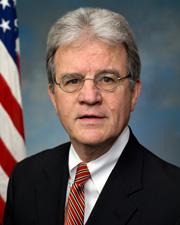 Sen. Tom Coburn (R-OK)
This amendment's own text couldn't be picked out of its Congressional Record passage, so the passage is shown in full.
STATEMENTS ON INTRODUCED BILLS AND JOINT RESOLUTIONS

      By Mr. KERRY:
  S. 1669. A bill to provide all Medicare beneficiaries with the right
to guaranteed issue of a Medicare supplemental policy; to the Committee
on Finance.
  Mr. KERRY. Mr. President, a key component of the health reform debate
is ensuring that all people--regardless of their health status--have
access to comprehensive and affordable coverage options. Unfortunately,
under current law Medicare beneficiaries are subject to discriminatory
medical practices that deny coverage options based on their age,
condition, or disability.
  Medigap plans provide vital assistance to Medicare beneficiaries in
paying Medicare cost-sharing. Without supplemental coverage, the
absence of an out-of-pocket limit in Medicare leaves beneficiaries
vulnerable to catastrophic medical expenses.
  Unfortunately, Medicare beneficiaries with disabilities or who have
end-stage renal disease, ESRD, do not have the same guaranteed issue
rights as Medicare beneficiaries age 65 and older. In the absence of
equal opportunity and access to Medigap policies at the Federal level,
29 States have chosen to grant the same rights to disabled and ESRD
beneficiaries that seniors currently enjoy.
  ESRD beneficiaries are also the only group of Medicare beneficiaries
currently denied the same Medicare choices as other Medicare
beneficiaries. They are statutorily prohibited from enrolling in
Medicare Advantage plans.
  Today I am introducing the Equal Access to Medicare Options Act, a
bill that improves coverage options to Medicare beneficiaries. First,
the legislation would extend guaranteed issue of Medigap policies to
all Medicare beneficiaries rather than limiting guaranteed issue to
those beneficiaries who are over 65 years of age. This change will
significantly improve coverage options and affordability for
beneficiaries with disabilities or end-stage renal disease.
  Second, the legislation recognizes that Medicare beneficiaries need
flexibility to adjust their coverage as changes to their plans are
made. More specifically, the legislation would give guaranteed issue
rights to Medicare Advantage enrollees if they decide to switch to
traditional Medicare during an enrollment period. Today, if a Medicare
Advantage enrollee learns of premium increases or benefit reduction in
their plan, they have the option of returning to traditional Medicare
but they have no assurance they can buy Medigap coverage if they do so.
  Third, the legislation would provide guaranteed issue to dual
eligibles who lose their Medicaid coverage and find themselves in
traditional Medicare without the cost protections of Medicaid and
without supplemental coverage options.
  Finally, this legislation would for the first time give beneficiaries
with end-stage renal disease the option of enrolling in Medicare
Advantage plans.
  I would like to thank a number of organizations who have been
integral to the development of the Equal Access to Medicare Options Act
and who have endorsed it today, including the AARP, California Health
Advocates, Center for Medicare Advocacy, Consortium for Citizens with
Disabilities, Consumers Union, Dialysis Patient Citizens, Fresenius
Medical Care, Medicare Rights Center, and the National Kidney
Foundation.
  These reforms would ensure that all Medicare beneficiaries regardless
of their disability or age have equal opportunity and access to
affordable Medicare options to reduce out-of-pocket costs. I look
forward to working with my colleagues in the Senate to achieve these
goals in the context of health care reform.
                                 ______

      By Mr. LEAHY (for himself, Mr. Sessions, Mr. Kohl, Mr. Hatch, and
        Mr. Kyl):
  S. 1670. A bill to reform and modernize the limitations on exclusive
rights relating to secondary transmissions of certain signals; to the
Committee on the Judiciary.

[[Page S9374]]

  Mr. LEAHY. Mr. President, during the past decade we have witnessed
tremendous development in the way video content is made available to
consumers. Today, as a result of digital technology, we can watch
movies, television programs, and other video not only on our television
sets, but also on our computers, phones, and other mobile devices. In
order to maximize the potential of digital content, Congress must
ensure that our copyright and communications laws are modernized and
updated to accommodate the digital revolution. Today, I join with
Senators Sessions, Kohl, Hatch, and Kyl in introducing the Satellite
Television Modernization Act of 2009. Our legislation will reauthorize,
modernize, and simplify important portions of the statutory license
used by satellite providers that will otherwise expire at the end of
this year.
  The transition to digital television requires Congress to modernize
the statutory copyright licenses that allow cable and satellite
providers to retransmit the content of local broadcast stations. In
February, many stations across the country, including those in Vermont,
made the digital transition and can now offer multiple programming
channels over a single, crystal-clear digital signal. In June, the
remaining broadcast stations across the country completed the digital
transition. The current statutory licenses, however, are based on the
now outdated analog standard. In our reauthorization, we seek to ensure
that the licenses work properly in the digital world.
  In June 2008, the U.S. Copyright Office issued a report on the
statutory licenses, and offered recommendations on how to improve the
current system. The Copyright Office's principal recommendation was to
move toward abolishing the compulsory licenses, in particular the
distant signal licenses. Short of that, the Copyright Office offered
suggestions on how to harmonize and streamline the licenses.
  The legislation we introduce today draws on the recommendations of
the Copyright Office and takes important steps toward limiting future
reliance on the section 119 distant signal license used by satellite
providers. This legislation will move locally oriented elements out of
the distant signal license--such as the special exception that allows
Vermonters in the State's southern-most counties to receive Vermont
broadcast stations by satellite--and place them into the section 122
license, which facilitates the retransmission of local content with the
consent of the broadcaster. The bill will also fix an anomaly in the
distant signal license, which will make it easier for satellite
providers to serve local markets that are missing a network affiliate.
  Making these changes will improve the ability of satellite providers
to deliver a full complement of network stations to consumers, as well
as make it easier for them to offer local stations. In Vermont, these
changes will have the additional benefit of fostering competition
between DISH Network and DirecTV, by allowing DISH to offer Vermont
broadcast stations in southern Vermont, a service DirecTV provides
today. The legislation also adds a new provision to the local license
that will allow satellite providers such as DISH to import a missing
network station from an adjacent market when the local market is not
served by all four principle networks, after the provider first obtains
the station's consent. This new provision will make it more likely and
reasonable for DISH to launch local service in these markets, which is
good for local broadcasters, good for satellite providers, and good for
consumers.
  These changes will not only improve the satellite licenses, but will
begin the process of phasing out the distant signal license as
satellite providers offer local service in more markets. As the distant
signal license fades, Congress should follow the Copyright Office's
suggestion and move ultimately toward a market-based system, in which
statutory licenses are unnecessary.
  One further step we can take toward a marketplace model this year is
to allow broadcast stations to opt-out of the statutory licenses. All
non-broadcast channels carried by cable and satellite providers, such
as ESPN and the USA Network, are able to aggregate a complex series of
content rights, and negotiate for carriage in the free market. Local
broadcasters should be permitted to do the same if they, too, are able
to aggregate the necessary rights to license directly to cable and
satellite providers. This is a proposal I expect the Judiciary
Committee to examine as the bill moves through the mark up process. I
encourage all industry participants to work with the Committee so that
we can address any concerns about this market-based approach.
  Short of repealing the compulsory licenses, the Copyright Office
recommended harmonizing the cable and satellite licenses in order to
create regulatory parity between the two industries. The section 111
license used by cable, for instance, is based on FCC rules that have
long since been repealed, and the license itself has not been
significantly updated since it was established more than 30 years ago.
The arcane nature of the cable license can at times produce unintended
results, such as cable companies paying copyright holders for content
that consumers do not actually receive. This is referred to as the
phantom signal problem. In contrast, satellite companies pay a flat,
per subscriber rate based on consumers actually receiving a broadcast
station. Comprehensive reforms to section 111 that aim to modernize the
statute and create regulatory parity between cable and satellite
providers would address these disparities. We take a more modest
approach in the bill we introduce today. The legislation contains an
amendment that will resolve the phantom signal issue. I appreciate that
members of the content community and the cable system came together to
find a solution on which they can all agree.
  The Satellite Television Modernization Act is one component of the
reauthorization. Portions of the expiring law are within the
jurisdiction of the Senate Committee on Commerce, and I look forward to
working with the leadership of that Committee, and our counterparts in
the House of Representatives, to enact legislation that once again
improves the law by fostering competition, protecting broadcasters, and
improving service to consumers.
  Mr. President, I ask unanimous consent that the text of the bill be
printed in the Record.
  There being no objection, the text of the bill was ordered to be
printed in the Record, as follows:

                                S. 1670

       Be it enacted by the Senate and House of Representatives of
     the United States of America in Congress assembled,

     SECTION 1. SHORT TITLE.

       This Act may be cited as the ``Satellite Television
     Modernization Act of 2009''.

     SEC. 2. LIMITATIONS ON EXCLUSIVE RIGHTS: SECONDARY
                   TRANSMISSIONS OF SUPERSTATIONS AND NETWORK
                   STATIONS FOR PRIVATE HOME VIEWING.

       Section 119 of title 17, United States Code, is amended--
       (1) in subsection (a)--
       (A) in paragraph (2)--
       (i) in subparagraph (A)--

       (I) by striking ``subparagraphs (B) and (C)'' and inserting
     ``subparagraph (B)''; and
       (II) by striking ``(5), (6), (7), and (8)'' and inserting
     ``(4), (5), (6), and (7)'';

       (ii) in subparagraph (B)--

       (I) in clause (i), by striking the second sentence; and
       (II) in clause (ii)--

       (aa) in subclause (I)--
       (AA) by striking ``the Individual Location'' and all that
     follows through ``No. 98-201,'' and inserting ``the
     predictive digital model established by the Federal
     Communications Commission,''; and
       (BB) by striking ``under section 339(c)(3) of the
     Communications Act of 1934 (47 U.S.C. 339(c)(3))''; and
       (bb) in subclause (II), by striking ``section 339(c)(4) of
     the Communications Act of 1934 (47 U.S.C. 339(c)(4))'' and
     inserting ``rules established by the Federal Communications
     Commission'';
       (iii) by striking subparagraph (C);
       (iv) by redesignating subparagraph (D) as subparagraph (C);
     and
       (v) in subparagraph (C) (as so redesignated)--

       (I) in clause (i), by striking ``network station--'' and
     all that follows through the period at the end and inserting
     ``network station a list, aggregated by designated market
     area (as that term is defined in section 122(j)), identifying
     (by name and address, including street or rural route number,
     city, State, and zip code) all subscribers to which the
     satellite carrier makes secondary transmissions of that
     primary transmission to subscribers in unserved
     households.'';
       (II) in clause (ii), by striking ``the network--'' and all
     that follows through the period at the end and inserting
     ``the network a

[[Page S9375]]

     list, aggregated by designated market area (as that term is
     defined in section 122(j)), identifying (by name and address,
     including street or rural route number, city, State, and zip
     code) any persons who have been added or dropped as
     subscribers under clause (i)(I) since the last submission
     under clause (i).''; and
       (III) in clause (iv), at the end of the second sentence, by
     striking the ending quotation mark and semicolon;

       (B) by striking paragraph (3);
       (C) by redesignating paragraphs (4) through (14) as
     paragraphs (3) through (13), respectively;
       (D) by amending paragraph (3) (as so redesignated) to read
     as follows:
       ``(3) Statutory license where retransmissions into local
     market available.--
       ``(A) Future applicability.--The statutory license under
     paragraph (2) shall not apply to the secondary transmission
     by a satellite carrier of a primary transmission of a network
     station to a person who--
       ``(i) is not a subscriber lawfully receiving such secondary
     transmission as of December 31, 2009; and
       ``(ii) at the time such person seeks to subscribe to
     receive such secondary transmission, resides in a local
     market where the satellite carrier makes available to that
     person the secondary transmission of the primary transmission
     of a local network station affiliated with the same
     television network pursuant to the statutory license under
     section 122, and such secondary transmission of such primary
     transmission can reach such person.
       ``(B) Other provisions not affected.--This paragraph shall
     not affect the applicability of the statutory license to
     secondary transmissions to unserved households included under
     paragraph (11).
       ``(C) Waiver.--A subscriber who is denied the secondary
     transmission of a network station under this paragraph may
     request a waiver from such denial by submitting a request,
     through the subscriber`s satellite carrier, to the network
     station in the local market affiliated with the same network
     where the subscriber is located. The network station shall
     accept or reject the subscriber's request for a waiver within
     30 days after receipt of the request. If the network station
     fails to accept or reject the subscriber's request for a
     waiver within that 30-day period, that network station shall
     be deemed to agree to the waiver request. Unless specifically
     stated by the network station, a waiver that was granted
     before the date of the enactment of the Satellite Home Viewer
     Extension and Reauthorization Act of 2004 under section
     339(c)(2) of the Communications Act of 1934 (47 U.S.C.
     339(c)(2)) shall not constitute a waiver for purposes of this
     subparagraph.
       ``(D) Available defined.--For purposes of this paragraph, a
     satellite carrier makes available a secondary transmission of
     the primary transmission of a local station to a subscriber
     or person if the satellite carrier offers that secondary
     transmission to other subscribers who reside in the same zip
     code as that subscriber or person.'';
       (E) in paragraph (4) (as so redesignated), by striking
     ``section 509'';
       (F) in paragraph (6) (as so redesignated)--
       (i) in subparagraph (A)(ii), by striking ``$5'' and
     inserting ``$250''; and
       (ii) in subparagraph (B)--

       (I) in clause (i), by striking ``$250,000'' and inserting
     ``$2,500,000''; and
       (II) in clause (ii), by striking ``$250,000'' and inserting
     ``$2,500,000''; and

       (G) by striking paragraph (15); and
       (H) by redesignating paragraph (16) as paragraph (14);
       (2) in subsection (b)--
       (A) by striking the subsection heading and inserting ``(b)
     Deposits and Distribution of Royalty Fees.--''; and
       (B) in paragraph (1), by striking the matter following
     subparagraph (B);
       (3) by amending subsection (c) to read as follows:
       ``(c) Adjustment of Royalty Fees.--
       ``(1) Applicability and determination of royalty fees.--
       ``(A) Initial fee.--The appropriate fee for purposes of
     determining the royalty fee under subsection (b)(1)(B) for
     the secondary transmission of the primary transmissions of
     network stations and superstations shall be the appropriate
     fee set forth in subchapter E of chapter III of title 37,
     Code of Federal Regulations, as in effect on July 1, 2009, as
     modified under this paragraph.
       ``(B) Fee set by voluntary negotiation.--On or before
     January 4, 2010, Copyright Royalty Judges shall cause to be
     published in the Federal Register of the initiation of
     voluntary negotiation proceedings for the purpose of
     determining the royalty fee to be paid by satellite carriers
     for the secondary transmission of the primary transmission of
     network stations and superstations under subsection
     (b)(1)(B).
       ``(C) Negotiations.--Satellite carriers, distributors, and
     copyright owners entitled to royalty fees under this section
     shall negotiate in good faith in an effort to reach a
     voluntary agreement or agreements for the payment of royalty
     fees. Any such satellite carriers, distributors, and
     copyright owners may at any time negotiate and agree to the
     royalty fee, and may designate common agents to negotiate,
     agree to, or pay such fees. If the parties fail to identify
     common agents, Copyright Royalty Judges shall do so, after
     requesting recommendations from the parties to the
     negotiation proceeding. The parties to each negotiation
     proceeding shall bear the cost thereof.
       ``(D)(i) Agreements binding on parties; filing of
     agreements; public notice.--Voluntary agreements negotiated
     at any time in accordance with this paragraph shall be
     binding upon all satellite carriers, distributors, and
     copyright owners that are parties thereto. Copies of such
     agreements shall be filed with the Copyright Office within 30
     days after execution in accordance with regulations that the
     Register of Copyrights shall prescribe.
       ``(ii)(I) Within 10 days after publication in the Federal
     Register of a notice of the initiation of voluntary
     negotiation proceedings, parties who have reached a voluntary
     agreement may request that the royalty fees in that agreement
     be applied to all satellite carriers, distributors, and
     copyright owners without convening a proceeding pursuant to
     subparagraph (F).
       ``(II) Upon receiving a request under subclause (I), the
     Copyright Royalty Judges shall immediately provide public
     notice of the royalty fees from the voluntary agreement and
     afford parties an opportunity to state that they object to
     those fees.
       ``(III) The Copyright Royalty Judges shall adopt the
     royalty fees from the voluntary agreement for all satellite
     carriers, distributors, and copyright owners without
     convening a proceeding unless a party with an intent to
     participate in the proceeding and a significant interest in
     the outcome of that proceeding objects under subclause (II).
       ``(E) Period agreement is in effect.--The obligation to pay
     the royalty fees established under a voluntary agreement
     which has been filed with the Copyright Office in accordance
     with this paragraph shall become effective on the date
     specified in the agreement, and shall remain in effect until
     December 31, 2014, or in accordance with the terms of the
     agreement, whichever is later.
       ``(F) Proceeding to establish royalty fees.--
       ``(i) Notice of initiation of proceedings; voluntary
     agreements.--On or before May 3, 2010, the Copyright Royalty
     Judges shall cause notice to be published in the Federal
     Register of the initiation of proceedings for the purpose of
     determining the royalty fee to be paid for the secondary
     transmission of primary transmission of network stations and
     superstations under subsection (b)(1)(B) by satellite
     carriers and distributors--

       ``(I) in the absence of a voluntary agreement filed in
     accordance with subparagraph (D) that establishes royalty
     fees to be paid by all satellite carriers and distributors;
     or
       ``(II) if an objection to the fees from a voluntary
     agreement submitted for adoption by the Copyright Royalty
     Judges to apply to all satellite carriers, distributors, and
     copyright owners is received under subparagraph (D) from a
     party with an intent to participate in the proceeding and a
     significant interest in the outcome of that proceeding.

     Such proceeding shall be conducted as provided under chapter
     8 of this title.
       ``(ii) Establishment of royalty fees.--In determining
     royalty fees under this paragraph, the Copyright Royalty
     Judges shall establish fees for the secondary transmissions
     of the primary transmission of network stations and
     superstations that most clearly represent the fair market
     value of secondary transmissions, except that the Copyright
     Royalty Judges shall adjust those fees to account for the
     obligations of the parties under any applicable voluntary
     agreement filed with the Copyright Office pursuant to
     subparagraph (D). In determining the fair market value, the
     Copyright Royalty Judges shall base their decision on
     economic, competitive, and programming information presented
     by the parties, including--

       ``(I) the competitive environment in which such programming
     is distributed, the cost of similar signals in similar
     private and compulsory license marketplaces, and any special
     features and conditions of the retransmission marketplace;
       ``(II) the economic impact of such fees on copyright owners
     and satellite carriers; and
       ``(III) the impact on the continued availability of
     secondary transmissions to the public.

       ``(iii) Period during which decision of copyright royalty
     judges effective.--The obligation to pay the royalty fee
     established under a determination which is made by the
     Copyright Royalty Judges under this paragraph shall be
     effective as of January 1, 2010.
       ``(iv) Persons subject to royalty fee.--The royalty fee
     referred to clause (iii) shall be binding on all satellite
     carriers, distributors, and copyright owners, who are not
     party to a voluntary agreement filed with the Copyright
     Office under subparagraph (D).
       ``(2) Royalty fee annual adjustment.--The royalty fee
     payable under subsection (b)(1)(B) for the secondary
     transmission of the primary transmission of network stations
     and superstations shall be adjusted annually by the Copyright
     Royalty Judges to reflect any changes occurring during the
     preceding 12 months in the cost of living as determined by
     the most recent Consumer Price Index (for all consumers and
     items) published by the Secretary of Labor prior to December
     1. Notification of the adjusted rates shall be published in
     the Federal Register prior to December 1 of that year.'';
       (4) in subsection (d)--
       (A) in paragraph (10)--
       (i) by amending subparagraph (A) to read as follows:
       ``(A)(i) is located in a local market in which there is no
     primary network station affiliated with such network licensed
     to a community within such local market; or

[[Page S9376]]

       ``(ii) cannot receive, through the use of a conventional,
     stationary, outdoor rooftop receiving antenna, an over-the-
     air signal of a primary network station affiliated with that
     network that does not exceed the signal intensity standard in
     section 73.622(e)(1) of title 47 of the Code of Federal
     Regulations as in effect on January 1, 2010;'';
       (ii) in subparagraph (B), by striking ``(a)(14)'' and
     inserting ``(a)(13)''; and
       (iii) in subparagraph (D), by striking ``(a)(12)'' and
     inserting ``(a)(101'';
       (B) in paragraph (11), by striking ``, except that'' and
     all that follows through ``located'';
       (C) by striking paragraph (12); and
       (D) by redesignating paragraph (13) as paragraph (12); and
       (5) by striking subsection (f).

     SEC. 3. LIMITATIONS ON EXCLUSIVE RIGHTS: SECONDARY
                   TRANSMISSIONS BY SATELLITE CARRIERS WITHIN
                   LOCAL MARKETS.

       Section 122 of title 17, United States Code, is amended--
       (1) by amending subsections (a), (b), and (c) to read as
     follows:
       ``(a) Secondary Transmissions of Television Broadcast
     Stations by Satellite Carriers.--
       ``(1) Secondary transmissions of television broadcast
     stations within a local market.--A secondary transmission of
     a performance or display of a work embodied in a primary
     transmission of a television broadcast station into the
     station's local market shall be subject to statutory
     licensing under this section if--
       ``(A) the secondary transmission is made by a satellite
     carrier to the public;
       ``(B) with regard to secondary transmissions, the satellite
     carrier is in compliance with the rules, regulations, or
     authorizations of the Federal Communications Commission
     governing the carriage of television broadcast station
     signals; and
       ``(C) the satellite carrier makes a direct or indirect
     charge for the secondary transmission to--
       ``(i) each subscriber receiving the secondary transmission;
     or
       ``(ii) a distributor that has contracted with the satellite
     carrier for direct or indirect delivery of the secondary
     transmission to the public.
       ``(2) Significantly viewed and low power stations.--A
     secondary transmission of a performance or a display of a
     work embodied in a primary transmission of a television
     broadcast station or low power television station to
     subscribers who receive secondary transmissions of primary
     transmissions under paragraph (1) shall, if the secondary
     transmission is made by a satellite carrier that complies
     with the requirements of paragraph (1), be subject to
     statutory licensing under this paragraph as follows:
       ``(A) Secondary transmissions of significantly viewed
     signals.--The statutory license shall apply to the secondary
     transmission of the primary transmission of a network station
     or a superstation to a subscriber who resides outside the
     station's local market but within a community in which the
     signal has been determined by the Federal Communications
     Commission, to be significantly viewed in such community,
     pursuant to the rules, regulations, and authorizations of the
     Federal Communications Commission in effect on April 15,
     1976, applicable to determining with respect to a cable
     system whether signals are significantly viewed in a
     community.
       ``(B) Carriage of low power television stations.----
       ``(i) In general.--The statutory license shall apply to the
     secondary transmission of the primary transmission of a
     network station or a superstation that is licensed as a low
     power television station, to a subscriber who resides within
     the same local market.
       ``(ii) No applicability to repeaters and translators.--
     Secondary transmissions provided for in subparagraph (A)
     shall not apply to any low power television station that
     retransmits the programs and signals of another television
     station for more than 2 hours each day.
       ``(3) Special exceptions.--A secondary transmission of a
     performance or a display of a work embodied in a primary
     transmission of a television broadcast station to subscribers
     who receive secondary transmissions of primary transmissions
     under paragraph (1) shall, if the secondary transmission is
     made by a satellite carrier that complies with the
     requirements of paragraph (1), be subject to statutory
     licensing under this paragraph as follows:
       ``(A) States with single full-power network station.--In a
     State in which there is licensed by the Federal
     Communications Commission a single full-power station that
     was a network station on January 1, 1995, the statutory
     license provided for in this paragraph shall apply to the
     secondary transmission by a satellite carrier of the primary
     transmission of that station to any subscriber in a community
     that is located within that State and that is not within the
     first 50 television markets as listed in the regulations of
     the Commission as in effect on such date (47 C.F.R. 76.51).
       ``(B) States with all network stations and superstations in
     same local market.--In a State in which all network stations
     and superstations licensed by the Federal Communications
     Commission within that State as of January 1, 1995, are
     assigned to the same local market and that local market does
     not encompass all counties of that State, the statutory
     license provided under this paragraph shall apply to the
     secondary transmission by a satellite carrier of the primary
     transmissions of such station to all subscribers in the State
     who reside in a local market that is within the first 50
     major television markets as listed in the regulations of the
     Commission as in effect on such date (section 76.51 of title
     47 of the Code of Federal Regulations).
       ``(C) Additional stations.--In the case of that State in
     which are located 4 counties that--
       ``(i) on January 1, 2004, were in local markets principally
     comprised of counties in another State; and
       ``(ii) had a combined total of 41,340 television
     households, according to the U.S. Television Household
     Estimates by Nielsen Media Research for 2004,

     the statutory license provided under this paragraph shall
     apply to secondary transmissions by a satellite carrier to
     subscribers in any such county of the primary transmissions
     of any network station located in that State, if the
     satellite carrier was making such secondary transmissions to
     any subscribers in that county on January 1, 2004.
       ``(D) Certain additional stations.--If 2 adjacent counties
     in a single State are in a local market comprised principally
     of counties located in another State, the statutory license
     provided for in this paragraph shall apply to the secondary
     transmission by a satellite carrier to subscribers in those 2
     counties of the primary transmissions of any network station
     located in the capital of the State in which such 2 counties
     are located, if--
       ``(i) the 2 counties are located in a local market that is
     in the top 100 markets for the year 2003 according to Nielsen
     Media Research; and
       ``(ii) the total number of television households in the 2
     counties combined did not exceed 10,000 for the year 2003
     according to Nielsen Media Research.
       ``(E) Networks of noncommercial educational broadcast
     stations.--In the case of a system of 3 or more noncommercial
     educational broadcast stations licensed by a single State,
     political, educational, or special purpose subdivision of a
     State, or a public agency, the statutory license provided for
     in this paragraph shall apply to the secondary transmission
     of that system to any subscriber in any county or county
     equivalent within that State that is located in a designated
     market that is not otherwise eligible to receive secondary
     transmissions of a noncommercial television broadcast station
     located within that State pursuant to paragraph (1). If a
     satellite carrier makes secondary transmissions to an
     adjacent underserved county, local noncommercial educational
     broadcast stations shall not be repositioned in the channel
     lineup as a consequence of these retransmissions.
       ``(4) Short markets.--A secondary transmission of a
     performance of a display of a work embodied in a primary
     transmission of a television broadcast station to subscribers
     who receive secondary transmissions of primary transmissions
     under paragraph (1) shall be subject to statutory licensing
     under this paragraph if the secondary transmission is of a
     primary transmission of a network station from a market
     adjacent to such local market and no station affiliated with
     such network is licensed to a community within the local
     market.
       ``(5) Applicability of royalty rates.--The royalty rates
     under section 119(b)(1)(B) shall apply to the secondary
     transmissions to which the statutory license under paragraphs
     (3) and (4) apply.
       ``(b) Reporting Requirements.--
       ``(1) Initial lists.--A satellite carrier that makes
     secondary transmissions of a primary transmission made by a
     network station under subsection (a) shall, within 90 days
     after commencing such secondary transmissions, submit to the
     network that owns or is affiliated with the network station--
       ``(A) a list, aggregated by designated market area (as that
     term is defined in subsection (j)), identifying (by name in
     alphabetical order and street address, including county and
     zip code) all subscribers to which the satellite carrier
     makes secondary transmissions of that primary transmission
     under subsection (a); and
       ``(B) a list, to be prepared and submitted separately from
     the list required under subparagraph (A), aggregated by
     designated market area (by name and address, including street
     or rural route number, city, State, and zip code), which
     shall indicate those subscribers being served pursuant to
     paragraphs (2), (3), or (4) of subsection (a).
       ``(2) Subsequent lists.--After the list is submitted under
     paragraph (1), the satellite carrier shall, on the 15th of
     each month, submit to the network--
       ``(A) a list, aggregated by designated market area (as that
     term is defined in subsection (j)), identifying (by name in
     alphabetical order and street address, including county and
     zip code) any subscribers who have been added or dropped as
     subscribers since the last submission under this subsection;
     and
       ``(B) a list, to be prepared and submitted separately from
     the list required under subparagraph (A), aggregated by
     designated market area (by name and street address, including
     street or rural route number, city, State, and zip code),
     identifying those subscribers whose service pursuant to
     paragraphs (2), (3), or (4) of subsection (a) has been added
     or dropped.
       ``(3) Use of subscriber information.--Subscriber
     information submitted by a satellite

[[Page S9377]]

     carrier under this subsection may be used only for the
     purposes of monitoring compliance by the satellite carrier
     with this section.
       ``(4) Requirements of networks.--The submission
     requirements of this subsection shall apply to a satellite
     carrier only if the network to which the submissions are to
     be made places on file with the Register of Copyrights a
     document identifying the name and address of the person to
     whom such submissions are to be made. The Register of
     Copyrights shall maintain for public inspection a file of all
     such documents.
       ``(c) No Royalty Fee Required for Certain Secondary
     Transmissions.--A satellite carrier whose secondary
     transmissions are subject to statutory licensing under
     paragraphs (1) and (2) of subsection (a) shall have no
     royalty obligation for such secondary transmissions.'';
       (2) in subsection (f)--
       (A) in paragraph (1)(B), by striking ``$5'' and inserting
     ``$250''; and
       (B) in paragraph (2)--
       (i) in subparagraph (A)(ii), by striking ``$250,000'' and
     inserting ``$2,500,000''; and
       (ii) in subparagraph (B)(ii), by striking ``$250,000'' and
     inserting ``$2,500,000'';
       (3) in subsection (j)--
       (A) by redesignating paragraphs (3), (4), and (5) as
     paragraphs (4), (5), and (6), respectively; and
       (B) by inserting after paragraph (2) the following new
     paragraph:
       ``(3) Low power television station.--The term `low power
     television station' means a low power television as defined
     under section 74.701(f) of title 47, Code of Federal
     Regulations, as in effect on June 1, 2004. For purposes of
     this paragraph, the term `low power television station'
     includes a low power television station that has been
     accorded primary status as a Class A television licensee
     under section 73.6001(a) of title 47, Code of Federal
     Regulations.''.

     SEC. 4. TECHNICAL AND CONFORMING AMENDMENTS.

       Section 338(a) of the Communications Act of 1934 (47 U.S.C.
     338(a)) is amended--
       (1) by amending the first paragraph (3) to read as follows:
       ``(3) Carriage of low power, significantly viewed, and
     special exception stations optional.--No station whose signal
     is provided under paragraph (2) or (3) of section 122(a) of
     title 17, United States Code, shall be entitled to insist on
     carriage under this section, regardless of whether the
     satellite carrier provides secondary transmissions of the
     primary transmissions of other stations in the same local
     market pursuant to such section 122, nor shall any such
     carriage be considered in connection with the requirements of
     subsection (c) of this section.''; and
       (2) by redesignating the second paragraph (3) (relating to
     effective date) and paragraph (4) as paragraphs (4) and (5),
     respectively.

     SEC. 5. EXTENSION OF AUTHORITY.

       Section 4(a) of the Satellite Home Viewer Act of 1994 (17
     U.S.C. 119 note; Public Law 103-369) is amended by striking
     ``December 31, 2009'' and inserting ``December 31, 2014''.

     SEC. 6. MODIFICATIONS TO THE CABLE STATUTORY LICENSE.

       (a) Update and Clarification of Royalty Calculation
     Methodology.--Section 111(d)(1) of title 17, United States
     Code, is amended by striking subparagraphs (B), (C), and (D)
     and inserting the following:
       ``(B) except in the case of a cable system whose royalty
     fee is specified in subparagraph (C) or (D), a total royalty
     fee for the period covered by the statement, computed on the
     basis of specified percentages of the gross receipts from
     subscribers to the cable service during said period for the
     basic service of providing secondary transmissions of primary
     broadcast transmitters, as follows:
       ``(i) 1.064 per centum for the privilege of further
     transmitting any nonnetwork programming of a primary
     transmitter in whole or in part beyond the local service area
     of such primary transmitter, such amount to be applied
     against the fee, if any, payable pursuant to clauses (ii)
     through (iv).
       ``(ii) 1.064 per centum of such gross receipts for the
     first distant signal equivalent.
       ``(iii) 0.701 of 1 per centum of such gross receipts for
     each of the second, third, and fourth distant signal
     equivalents.
       ``(iv) 0.330 of 1 per centum of such gross receipts for the
     fifth distant signal equivalent and each distant signal
     equivalent thereafter;
       ``(C) in computing the amounts payable under clauses (ii)
     through (iv), any fraction of a distant signal equivalent
     shall be computed at its fractional value or in the case of
     any cable system located partly within and partly without the
     local service area of a primary transmitter, gross receipts
     shall be limited to those gross receipts derived from
     subscribers located without the local service area of such
     primary transmitter;
       ``(D) in computing the amounts payable under clauses (ii)
     through (iv), if a cable system provides a secondary
     transmission of a primary transmitter to some but not all
     communities served by that cable system, the gross receipts
     and the distant signal equivalent values for each secondary
     transmission shall be derived solely on the basis of the
     subscribers in those communities where the cable system
     provides each such secondary transmission, provided, however,
     that the total royalty fee for the period paid by such system
     shall in no event be less than the royalty fee calculated in
     accordance with clause (i) multiplied by the gross receipts
     from all subscribers to the system; and provided further,
     that a cable system that on a statement submitted prior to
     the date of enactment of the Satellite Television
     Modernization Act of 2009, computed its royalty fee
     consistent with the methodology in this subparagraph or that
     amends a statement filed prior to the date of enactment of
     such Act to compute the royalty fee due using this
     methodology shall not be subject to an action for
     infringement, or eligible for any royalty refund, arising out
     of its use of such methodology on such statement;
       ``(E) if the actual gross receipts paid by subscribers to a
     cable system for the period covered by the statement for the
     basic service of providing secondary transmissions of primary
     broadcast transmitters total $263,800 or less, gross receipts
     of the cable system for the purpose of this subparagraph
     shall be computed by subtracting from such actual gross
     receipts the amount by which $263,800 exceeds such actual
     gross receipts, except that in no case shall a cable system's
     gross receipts be reduced to less than $10,400. The royalty
     fee payable under this subparagraph shall be 0.5 of 1 per
     centum, regardless of the number of distant signal
     equivalents, if any; and
       ``(F) if the actual gross receipts paid by subscribers to a
     cable system for the period covered by the statement for the
     basic service of providing secondary transmissions of primary
     broadcast transmitters are more than $263,800 but less than
     $527,600, the royalty fee payable under this subparagraph
     shall be--
       ``(i) 0.5 of 1 per centum of any gross receipts up to
     $263,800; and
       ``(ii) 1 per centum of any gross receipts in excess of
     $263,800 but less than $527,600 regardless of the number of
     distant signal equivalents, if any.''.
       (b) No Quinquennial Adjustments Until 2015.--Section 804(b)
     of title 17, United States Code, is amended by striking
     ``2005'' each place that term appears and inserting ``2015''.
       (c) Acceptance of Additional Deposits.--Any royalty fee
     payments received by the Copyright Office from cable systems
     for the secondary transmission of primary broadcast
     transmitters (as such terms are defined in subsection (f) of
     section 111 of title 17, United States Code) that are in
     addition to the payments calculated and deposited in
     accordance with subsection (d) of such section 111 shall be
     deemed to have been deposited for the particular accounting
     period during which they are received and shall be
     distributed as specified in subsection (d) of such section
     111.
       (d) Effective Date of New Royalty Fee Rates.--The royalty
     fee rates established in section 111(d)(1)(B) of title 17,
     United States Code, as amended by subsection (a), shall take
     effect beginning with the statement of account covering the
     first accounting period in 2010.

  Mr. HATCH. Mr. President, I rise today to introduce with my colleague
from Vermont, Senator Leahy, the Satellite Television Modernization
Act. I also note the efforts of Senators Sessions, Kohl, and Kyl in
crafting this bipartisan bill.
  It is hard to believe that 5 years have transpired since we passed
the Satellite Home Viewer Extension Act, SHVERA, of 2004. Much has
occurred since that time, including the transition from analog to
digital signals, which occurred in June. That is why the proposed
legislation will not only reauthorize the statutory license used by
satellite television providers, but will bring all of the statutory
licenses into the digital age so that consumers can receive a good
quality digital signal. Additionally, S. 1670 expands access to low
power stations by broadening the license for low power stations to
cover the entire local market; permits satellite providers to carry a
noncommercial educational broadcast station if a station is part of a
state-wide network; improves the ability of both DirecTV and DISH
Network to provide local signals to local markets; and addresses the
``phantom signal'' issue, where currently cable providers may be
required to pay royalty fees under section 111 based on subscribers who
do not receive the content for which the royalty is being paid.
  I hasten to point out, however, that much more needs to be done to
move away from government regulation and toward a marketplace where
satellite providers and cable providers can compete based on market
forces. This is not a new issue for this body. In fact, during the 2004
reauthorization of SHVERA, Congress required that the U.S. Copyright
Office prepare a report to make recommendations on the operations of,
and revisions to, sections 111, 119, and 122 of the Copyright Act. The
Copyright Office provided this report to Congress on June 30, 2008.
  While I will not provide a line by line summary of the Report, I will
underscore some key findings that the Copyright Office, under the
leadership of Register of Copyrights Marybeth Peters, suggests that
Congress consider

[[Page S9378]]

when legislating in this area of the law. Specifically, the Copyright
Office found that ``below-market rates may have been justifiable when
cable and satellite were nascent industries and needed a mechanism to
allow them to serve their subscriber base with valuable distant
signals.'' The Report continues by stating that ``the current
multichannel video distribution marketplace is robust and has, for a
long time, overshadowed the broadcast industry.'' Moreover, the
Copyright Office further argues that ``it is now time to phase out
section 111 and section 119 so that copyright owners can negotiate
market rates for the carriage of programming.''
  I agree with the Copyright Office that something needs to be done to
``phase out'' these compulsory licenses. There is no longer any reason
that the cable and satellite industries need a government-sponsored
subsidy--paid for by program providers--for the right to retransmit
broadcast signals. I believe we can devise a way that would phase out
these compulsory licenses without disrupting the market. In fact, it is
already being done today, as cable and satellite services license
programming for more than 550 non-broadcast networks directly in the
marketplace without a need for a compulsory license.
  Some have suggested a market trigger mechanism that would create an
opportunity for, but not require, copyright owners to license their
copyrighted programming on broadcast television in the same manner as
they do currently for cable channels like TBS, ESPN, Nickelodeon,
Disney Channel, FX, and Bravo. Copyright owners would have a choice
between continuing to operate under the compulsory license, or if they
prefer, licensing cable and satellite retransmission of their works
directly through the free market as is done every day for the hundreds
of non-broadcast cable channels.
  I hope that industry stakeholders will participate in creating a
practical and reasonable approach to rectifying this important issue.
At a minimum, it is time to let program creators and distributors have
the option to determine the terms and conditions for their intellectual
property rights. I am pleased that Senate Judiciary Committee Chairman
Pat Leahy is committed to exploring viable options for a marketplace
model, and I look forward to working with him and our colleagues on
this and other issues before final passage of this bill.
                                 ______

      By Mr. REED (for himself, Ms. Snowe, and Mrs. Shaheen):
  S. 1672. A bill to reauthorize the National Oilheat Research Alliance
Act of 2000; to the Committee on Energy and Natural Resources.
  Mr. REED. Mr. President, today I introduce, along with Senator Snowe
and Senator Shaheen, the National Oilheat Research Alliance
Reauthorization Act of 2009. Since its establishment in 2001, the
National Oilheat Research Alliance, NORA, has been a helpful entity for
consumers of home heating fuel.
  As part of the Energy Act of 2000, Congress authorized the heating
oil industry to conduct a referendum to create NORA and to permit a
small fraction of the wholesale price of heating oil--2/10 of a cent
per gallon--to be paid by oilheat wholesale distributors to fund
industry-led research and development, energy conservation, safety,
training, and consumer education initiatives.
  Since that time, R&D funded in part by NORA has been responsible for
gains in efficiency as well as improvement in equipment that run on
biofuels. In my home state, the next generation of oilheat technicians
is being taught using classes developed by NORA.
  NORA's current authorization expires in February 2010. The bipartisan
bill we are introducing today extends the authorization for another
year to allow NORA to continue operating. This extension will give
Congress time to complete a longer-term reauthorization that will make
important reforms to NORA. It is essential that this extension be
signed into law before the end of this year. Otherwise, NORA will be
forced to start shutdown procedures in advance of the authorization
lapsing.
  Currently, the oilheat industry in 23 states and the District of
Columbia--representing more than 8.5 million homes and businesses--
participates in NORA. It is important that Congress act quickly on this
bill to ensure that the benefits NORA creates for these families and
businesses continue uninterrupted.
  Mr. President, I ask unanimous consent to have the text of the bill
printed in the Record.
  There being no objection, the text of the bill was ordered to be
printed in the Record, as follows:

                                S. 1672

       Be it enacted by the Senate and House of Representatives of
     the United States of America in Congress assembled,

     SECTION 1. SHORT TITLE.

       This Act may be cited as the ``National Oilheat Research
     Alliance Reauthorization Act of 2009''.

     SEC. 2. REAUTHORIZATION.

       Section 713 of the National Oilheat Research Alliance Act
     of 2000 (42 U.S.C. 6201 note; Public Law 106-469) is amended
     by striking ``the date that is 9 years after the date on
     which the Alliance is established'' and inserting ``February
     6, 2011''.
                                 ______

      By Mr. BEGICH (for himself and Ms. Murkowski):
  S. 1673. A bill to amend the Internal Revenue Code of 1986 to
encourage charitable contributions of real property for conservation
purposes by Native Corporations; to the Committee on Finance.
  Mr. BEGICH. Mr. President, I am pleased today to join my colleague,
Senator Murkowski, in introducing legislation that would give Alaska
Native Corporation, ANC, parity for an important tax incentive
encouraging the permanent protection of land through the charitable
donation of a conservation easement. I would also like to commend our
colleague Congressman Don Young, who today introduces a companion bill
in the House of Representatives.
  America's wildlife, waters, and land are an invaluable part of our
Nation's heritage. It is imperative to preserve these natural treasures
for future generations. Congress long ago concluded that it was good
public policy to encourage the charitable contribution of conservation
easements to organizations dedicated to maintaining natural habitats or
open spaces help protect the nation's heritage. A conservation easement
creates a legally enforceable land preservation agreement between a
willing landowner and another organization. The purpose of a
conservation easement is to protect permanently land from certain forms
of development or use. The property that is the subject to the easement
remains the private property of the landowner. The organization holding
the easement must monitor future uses of the land to ensure compliance
with the terms of the easement and to enforce the terms if a violation
occurs.
  In 2006, Congress enhanced the charitable tax deduction for
conservation easements in order to encourage such gifts. With the 2006
legislation, Congress temporarily increased the maximum deduction limit
for individuals donating qualified conservation easements from 30
percent to 50 percent of the taxpayer's adjusted gross income. Congress
also created an exception for qualified farmers or ranchers, which are
non-publicly traded corporations or individuals whose gross income from
the trade or business of farming is greater than 50 percent of the
taxpayer's gross income. In the case of a qualified farmer or rancher,
the limitation increased from 30 percent to 100 percent. The 2008 Farm
Bill extended the temporary rules for two additional years to
charitable contributions made before December 31, 2009.
  Unfortunately, the way the law was crafted has disadvantaged a number
of important landowners in my home state. Alaska Native Corporations,
ANCs, own nearly 90 percent of the private land in Alaska, including
some of the most scenic and resource rich. However, although they are
very similar to the small communal family farms that are eligible,
subsistence-based Alaskan Native communities are ineligible for these
important new tax incentives. For thousands of years, Alaska has been
home to Native communities, whose rich heritages, languages, and
traditions have thrived in the region's unique landscape. Members of
Alaska Native communities continue to have a deeply symbiotic
relationship with the land even today. Much like their ancestors, many
Native Alaskan communities engage in

[[Page S9379]]

traditional subsistence activities, with nearly 70 percent of their
food coming from the land or adjacent waters. For many communities,
subsistence is an economic necessity considering both the lack of
economic development and the cost and difficulty involved in purchasing
food. For example, in Kotzebue, a community in Northwestern Alaska,
milk costs nearly $10 per gallon. In Buckland, a village home to
approximately 400 people, a pound of hamburger, when it is actually
available, costs $14.00.
  In Alaska, the Native Corporations have an important role to be
stewards of the land. Their shareholders see themselves as the
caretakers of the land and water as their ancestors have for thousands
of years. Nonetheless, in Alaska today this means they have to balance
the need for resource development and the need to cultivate the land
for subsistence activities. The traditional lifestyles of Native
Alaskans are under increasing stress from outside influences.
Population growth and the pressure to pursue cash-generating activities
have increased the desire for substantial development, significantly
adding to the ecological stress on already fragile ecosystems. Without
permanent protection, their lands could be developed in a manner that
would destroy its ability to support the traditional ways and
subsistence lifestyles crucial to Alaskan Native communities. Making
use of tax incentives available to other Americans will make it easier
for Native communities to make the right decisions for their
shareholders.
  Today, Alaska Native communities are not eligible for the 50 percent
deduction available to individuals because they are federally chartered
as C corporations under the Alaska Native Claims Settlement Act of
1971, ANCSA. This leaves Alaska Natives without the ability to convert
to an eligible entity as other landowners can. In addition, most Alaska
Native Corporations do not have sufficient gross income from the trade
or business of what is considered traditional farming to be eligible
for the 100 percent deduction available to qualified farmers or
ranchers. This is in spite of the fact that as a group the Alaska
Native shareholders of Alaska Native Corporations receive far more in
subsistence benefits than they receive in income from the Alaska Native
Corporation. As a result, Alaska Native Corporations do not have the
same ability to offset the cost to permanently protect their
properties, which contain important wildlife, fish, and other habitats,
through donations of qualified conservation easements.
  The bill I am introducing with Senator Murkowski will allow Alaska
Native Corporations to protect these important wildlife habitats, many
used for subsistence, by providing an enhanced deduction for qualified
conservation easements. The legislation modifies Section 170(b)(2) of
the Internal Revenue Code by creating a new subsection that provides
Alaska Native Corporations with a deduction for donations of certain
qualified conservation easements. In order to be eligible, a qualified
charitable conservation contribution must: (1) otherwise qualify under
Section 170(h)(1); (2) be made by a Native Corporation; and (3) be land
that was conveyed by ANCSA. Under Section 170(b)(2)(iii)(I), ``Native
Corporation'' is defined by ANCSA, section 3(m). Under Section
170(b)(2)(i), the maximum deduction limit would be set at 100 percent
of the taxpayer's adjusted gross income. If the taxpayer has deductions
in excess of the applicable percentage-of-income limitation, Section
170(b)(2)(ii) would allow the taxpayer to carry-forward the deduction
for up to 15 years.
  Congress must act to assist Alaska Native communities in permanently
protecting their culturally, historically, and ecologically significant
land, preserving the communities and their rich traditions in the
process. I urge my colleagues to support this important legislation.
                                 ______

      By Mr. WYDEN (for himself, Mr. Dodd, Mr. Shelby, and Mr. Inhofe):
  S. 1674. A bill to provide for an exclusion under the Supplemental
Security Income program and the Medicaid program for compensation
provided to individuals who participate in clinical trials for rare
diseases or conditions; to the Committee on Finance.
  Mr. WYDEN. Mr. President, I come here today to introduce the
bipartisan Improving Access to Clinical Trials Act. I would like to
begin by thanking my friend Congressman Edward Markey for introducing
this legislation in the House. I also want to thank Senator Dodd,
Senator Shelby and Senator Inhofe for cosponsoring this legislation. I
would also like to thank the Cystic Fibrosis Foundation for bringing
this issue to my attention.
  The legislation I am introducing today is important because it would
give people who are eligible for Social Security Income and Medicaid
the same access to clinical trials as those who are more financially
fortunate. Currently, those with rare diseases, such as Cystic Fibrosis
and Tuberous Sclerosis rely on clinical trials as their only hope.
Little is known about these diseases and a clinical trial may often be
the only way individuals can seek treatment for these rare diseases and
contribute to helping find a cure.
  Currently, SSI and Medicaid eligible individuals who want to
participate in a clinical trial have to worry about whether or not they
will see a loss or a reduction in their benefits for their
participation in a clinical trial if the trial offers any sort of
research compensation to participants as part of its approved Internal
Review Board study design. This legislation would make it so benefits
that these individuals receive from clinical trials are not counted
against those who are seeking SSI or Medicaid benefits or those who are
already eligible for these benefits.
  A good example of why this legislation is needed is Sean from
Maryland. Sean is a Medicaid beneficiary who voluntarily enrolled in a
clinical trial. He was paid for his participation in the study and
subsequently lost his health benefits. Shortly after the study he
contracted pneumonia and was treated for the illness. After
hospitalization he found out that the money he received would
disqualify him for Medicaid. Because he lost his health benefits he now
owes $80,000 for the two weeks of treatment he received for pneumonia.
  While I believe this bill fixes a fundamental problem that has
precluded hope for too many people who have a rare disease and receive
SSI or Medicaid, I have heard some legitimate concerns that research
compensation may create the wrong kind of incentives for low-income
people. These are important concerns and when it comes to this issue I
believe there do need to be important safeguards in place. That is why
this bill includes a GAO study to make sure that the program is working
and that it is fair to those on SSI and Medicaid who are participating
in clinical trials for rare diseases. The bill sunsets in 5 years so
that Congress can reexamine the issue after getting the GAO report on
the program.
  I urge my colleagues to support this legislation so that adults on
SSI and Medicaid can have the same access to clinical trials as those
more financially fortunate. I look forward to working with Chairman
Baucus and Ranking Member Grassley on passing this bill this year.
  Mr. INHOFE. Mr. President, I am pleased to introduce legislation
today with my colleague, Senator Ron Wyden, to introduce the Improving
Access to Clinical Trials Act, I-ACT, a bill to allow patients with
rare diseases to participate in clinical drug studies without losing
their eligibility for public assistance like Supplemental Security
Income, SSI, and Medicaid. This bill provides potentially lifesaving
treatments through clinical trials for those suffering with rare
diseases, like cystic fibrosis, CF, a life-threatening genetic disease
that affects about 30,000 people nationwide. This hits especially close
to home for me because I have a staff member, Sage Streck, with CF, and
she has participated in some of these trials that further drug research
as they seek better treatments for rare diseases. About half of these
patients are on Medicare or Medicaid and are eligible for SSI benefits.
  Cystic fibrosis used to be primarily a childhood disease because
people simply didn't live long enough to reach adulthood. But now,
thanks to the many treatments discovered through clinical trials, the
average life expectancy is 37 years old. Additionally, these advances
in science allow CF patients to live more normal lives and not spend
all their lives in hospitals or

[[Page S9380]]

using respiratory machines. The more CF patients can participate in
clinical trials, the faster scientists can discover new treatments and
eventually a cure.
  Sage has personally seen in her lifetime five drugs that started in
clinical trials and are now available to CF patients. Each medication
has increased her quality of life and decreased the amount of time she
has spent in the hospital or on IV antibiotics. There are more than 30
promising drugs in the research pipeline right now that the CF
Foundation is calling miracle drugs so it is imperative that patients
have access to clinical trials so these drugs can get on the market.
  Under current law, the small compensation provided to trial
participants, which averages around $500, is included as additional
income that could cause a person to lose their public assistance
benefits, like Supplemental Security Income, SSI, and Medicaid. These
benefits are crucial for patients living with rare diseases. For
instance, nearly 50 percent of the CF population uses SSI or Medicaid.
As a result, patients choose not to enroll in clinical trials that
could dramatically improve their lives out of the fear that they may
lose the benefits on which they rely.
  This bill allows patients with a rare disease to disregard up to
$2,000 of compensation received for participation in a clinical trial
in their SSI and Medicaid income calculations. Though it will have a
negligible impact on the Federal budget, it will make a dramatic
difference in the lives of those who will gain access to potentially
life-saving treatments by enrolling in clinical trials as well as all
those in the future whose lives will be improved by the medical
advances that arise from this research.
  Please join me in supporting this legislation that will provide
patients with rare disease access to potentially lifesaving clinical
trials without losing their public assistance health benefits.

____________________Legislative Activity
Stay on top of the latest movement without scrolling through every action
Considered by Senate. (consideration: CR S9397, S9397, S9398-9400, S9401; text as modified: CR S9379)
September 16, 2009
View full timeline
Considered by Senate. (consideration: CR S9397, S9397, S9398-9400, S9401; text as modified: CR S9379)
September 16, 2009
Proposed amendment SA 2370 withdrawn in Senate. (consideration: CR S9401)
September 16, 2009
Senate amendment submitted
September 15, 2009
Senate amendment proposed (on the floor): Amendment SA 2370 proposed by Senator Coburn.(consideration: CR S9345, S9349; text: CR S9345)
September 15, 2009
Amendment SA 2370 proposed by Senator Coburn. (consideration: CR S9345, S9349; text: CR S9345) To fully provide for the critical surface transportation needs of the United States by prohibiting funds from being used on lower-priority projects, such as roadkill reduction programs, transportation museums, scenic beautification projects, or bicycle paths, if the Highway Trust Fund does not contain amounts sufficient to cover unfunded highway authorizations.
September 15, 2009