To fully provide for the critical surface transportation needs of the United States by prohibiting funds from being used on lower-priority projects, such as transportation museums.
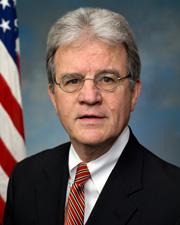 Sen. Tom Coburn (R-OK)
Legislative Activity
Stay on top of the latest movement without scrolling through every action
Senate amendment not agreed to: Amendment SA 2372 not agreed to in Senate by Yea-Nay Vote. 41 - 57. Record Vote Number: 278.
September 16, 2009
View full timeline
Senate amendment not agreed to: Amendment SA 2372 not agreed to in Senate by Yea-Nay Vote. 41 - 57. Record Vote Number: 278.
September 16, 2009
Roll call votes on amendments in Senate: Amendment SA 2372 not agreed to in Senate by Yea-Nay Vote. 41 - 57. Record Vote Number: 278.
September 16, 2009
Considered by Senate. (consideration: CR S9397, S9397-9398, S9401)
September 16, 2009
Amendment SA 2372 not agreed to in Senate by Yea-Nay Vote. 41 - 57. Record Vote Number: 278.
September 16, 2009
Senate amendment submitted
September 15, 2009
Senate amendment proposed (on the floor): Amendment SA 2372 proposed by Senator Coburn.(consideration: CR S9345, S9349; text: CR S9345)
September 15, 2009
Amendment SA 2372 proposed by Senator Coburn. (consideration: CR S9345, S9349; text: CR S9345) To fully provide for the critical surface transportation needs of the United States by prohibiting funds from being used on lower-priority projects, such as transportation museums.
September 15, 2009
Votes
1 roll call on this amendment
Text
Proposed
TRANSPORTATION, HOUSING AND URBAN DEVELOPMENT, AND RELATED AGENCIES
APPROPRIATIONS ACT, 2010

The PRESIDING OFFICER. Under the previous order, the Senate will
resume consideration of H.R. 3288, which the clerk will report.
The assistant legislative clerk read as follows:

A bill (H.R. 3288) making appropriations for the
Departments of Transportation, and Housing and Urban
Development, and related agencies for the fiscal year ending
September 30, 2010, and for other purposes.

The PRESIDING OFFICER. The Senator from Washington.
Mrs. MURRAY. Madam President, again, we are on the floor of the
Senate today considering the transportation-housing appropriations
bill. This is a major appropriations bill with funding for States
across the country. I have been talking with a number of Senators who
have amendments they would like to offer. Again, this is now the fourth
day we have been on the Senate floor. We started on Thursday, we were
here Friday, and we were here yesterday. We are here again today. The
majority leader would like us to finish this bill tomorrow. We have
other appropriations bills that need to be done and conferences to be
concluded in order to meet important deadlines for this fiscal year.
Again, I want all Members to know we need them to offer their
amendments, if they intend to, so we can wrap up this bill by tomorrow.
I expect a few Senators will be here shortly to offer amendments. If
other Senators are going to offer amendments, if they could please let
us know so we could get them up in order and get votes scheduled so we
could move to conclusion on this important bill.
I yield the floor and suggest the absence of a quorum.
The PRESIDING OFFICER. The clerk will call the roll.
The assistant legislative clerk proceeded to call the roll.
Mr. McCAIN. I ask unanimous consent that the order for the quorum
call be rescinded.
The PRESIDING OFFICER. Without objection, it is so ordered.

Amendment No. 2375

Mr. McCAIN. Madam President, I call up amendment No. 2375 and ask
that it be made pending.
The PRESIDING OFFICER. The clerk will report.
The assistant legislative clerk read as follows:

The Senator from Arizona [Mr. McCain] proposes an amendment
numbered 2375.

Mr. McCAIN. I ask unanimous consent that reading of the amendment be
dispensed with.
The PRESIDING OFFICER. Without objection, it is so ordered.
The amendment is as follows:

(Purpose: To provide that all amounts in the bill provided for
congressional earmarks shall be made available for NextGen and NextGen
programs)

At the appropriate place, insert the following:
Sec. ___. (a)  Notwithstanding any other provision of this
Act, amounts provided in this Act for a congressionally
directed spending item shall be made available to the
Department of Transportation for NextGen and NextGen
programs.
(b) In this section, the term ``congressionally directed
spending item'' shall have the same meaning given such term
in rule XLIV of the Standing Rules of the Senate.

Mr. McCAIN. Madam President, this amendment would take $1.7 billion
in earmarks and porkbarrel projects in this bill, 589 congressionally
directed spending projects known by most Americans as earmarks, and
instead redirect that money toward air traffic control modernization.
Modernizing our outdated air traffic control system will positively
impact all Americans, not just a favored few. It would decrease airport
delays, improve the flow of commerce, and advance our Nation's air
quality by reducing aircraft carbon emissions, unlike earmarks that
only affect a small segment of our Nation's population and generally
those Americans who happen to live in a State represented by a Senator
who is a member of the Appropriations Committee.
For example, the distinguished manager of the bill had secured more
earmarks than any other Member--50 earmarks--including $2 million for a
bike trail in Spokane--a bike trail. Right now, with the American
people hurting all over America, we are going to spend an additional $2
million of their money for a bike trail, and $750,000 for a Freight
Transportation Policy Institute. Madam President, $750,000 of my
taxpayers' dollars is going to be spent in the State of Washington for
a Freight Transportation Policy Institute.

[[Page S9342]]

Other earmarks in this bill include $500,000 for construction of a
beach park promenade in Pascagoula, MS. According to Citizens Against
Government Waste--an organization that has done incredible work on
behalf of the taxpayers of America for many years--

The population of Pascagoula in 2008 was 23,609; if each
resident of the town paid $21.18 toward the beach park
promenade, federal taxpayers, most of whom are unlikely ever
to visit, would be off the hook.

That is the point. Most Americans will never benefit from these
earmark projects, except for those who happen to ride bikes in Spokane,
WA, or walk the beach of Pascagoula, MS.
Alternatively, all Americans are impacted daily by our Nation's air
traffic control system. Every day Americans sit on a runway and miss
meetings, children's soccer games, family dinners, and other important
events due to air traffic control delays that could have been avoided
if our Nation had a modernized air traffic control system.
Thousands of goods are delayed for delivery each day due to air
traffic delays, which results in more than $40 billion of costs each
year that are passed on to consumers, according to the Joint Economic
Committee. The Government Accountability Office estimates that one in
every four flights is delayed. In 2007, the aviation industry recorded
the second worst year for delays, with 27 percent of all flights that
year being delayed. When you look at places such as the Eastern
corridor, it is far worse. Although air traffic overall was down in
2008, due in part to economic factors that led airlines to reduce
service, there was no significant reduction in traffic at the most
congested airports, such as those in the New York and New Jersey area.
Congestion and delays at key airports cascade across the entire system.
Moreover, according to the FAA, even if traffic is reduced, congestion
at these key airports will not be significantly reduced without
implementing a modernized air traffic control system.
The airlines have called our air traffic control system ``an outdated
World War II radar'' system. The FAA's Next Generation Air
Transportation System, NextGen, will transform the current ground-based
radar air traffic control system to one that uses precision satellites;
digital, networked communications; and an integrated weather system.
Moving from a ground-based to a satellite-based system will enable more
flights to occupy the same airspace, meaning the ontime performance
improvements would be a reality with triple the aircraft capacity,
according to the airlines.
However, the administration and Congress have not provided adequate
funding toward air traffic control modernization and instead continue
to fund billions of dollars of earmarks. The FAA estimates it will cost
up to $42 billion to implement a modern air traffic control system.
Congress only appropriated $188 million for air traffic control
modernization in 2008 and $638 million in 2009. The bill before the
Senate today only dedicates $358 million toward air traffic control
modernization, but it dedicates $1.7 billion toward earmarks. Get that:
$358 million toward air traffic control modernization, which will
benefit all Americans; $1.7 billion in earmarks.
Instead of providing Americans with something they want, which is
ontime airline departures and arrivals, Congress spent close to $1
trillion of taxpayers' hard-earned money on a stimulus bill that
provided $500,000 to build a skate park in Rhode Island, $14 million
for construction of an airport in an Alaskan town with only 167
residents that is 10 miles away from an airport, and millions to New
York welfare recipients for the purchase of cell phones. Congress also
spent close to $3 billion of Americans' hard-earned tax dollars on a
Cash for Clunkers Program.
At some point, at some point--and it is beginning out there, my
friends. I tell my colleagues, it is beginning. It is beginning with
the tea parties; it is beginning with marches on Washington; it is
beginning with the demonstrations and rallies all over America. It is
out there. They are sick and tired of the corruption that exists in our
Nation's Capital.
I noticed the other day there was another individual who was caught
up in the Abramoff scandal going on trial. That is now 22 people who
have either pled guilty or been found guilty over the Abramoff scandal
on which I am happy to say the Senator from North Dakota, Mr. Dorgan,
and I worked. And guess what the scandal was all about. It was about
earmarks. It was about porkbarrel projects. That is what that Abramoff
scandal was about. That is why Duke Cunningham resides in Federal
prison. That is why there are people under investigation, and there
will be more indictments.
The American people are sick and tired of it. They are sick and tired
of it. So we have to stop it and at least spend money on worthy
projects that will impact all Americans.
Earlier this year, the President stated:

[E]armarks have been used as a vehicle for waste, and
fraud, and abuse. Projects have been inserted at the 11th
hour, without review, and sometimes without merit, in order
to satisfy the political or personal agendas of a given
legislator, rather than the public interest. There are times
where earmarks may be good on their own, but in the context
of a tight budget might not be our highest priority.

That is what the President of the United States says. Well, if the
President of the United States is serious, he will veto this bill. He
will veto the $1.7 billion in earmarks and porkbarrel projects that are
in it. And he is right; earmarks have been used as a vehicle for waste.
In 2001, the Senate passed the fiscal year 2002 Transportation
appropriations bill conference report that included an earmark for the
Odyssey Maritime Discovery Center. That Discovery Center happened to be
in Seattle, WA. I have a picture of it in the Chamber. The Discovery
Center opened in 1998 but has seen decreased attendance year after year
despite continued Federal earmarks.
As the Seattle Post-Intelligencer wrote in 2003:

Container ships and fishing nets don't scream ``sex
appeal''. . . .

The Discovery Center procured $250,000 from an earmark sponsored by
the Senator from Washington in the fiscal year 1998 Commerce-Justice-
State appropriations bill, $3 million in the fiscal year 2002
Transportation appropriations bill, and $475,000 in the fiscal year
2006 Commerce-Justice-State appropriations bill.
As a result of that earmark, the museum put out a press release.
Madam President, I ask unanimous consent that press release be printed
in the Record.
There being no objection, the material was ordered to be printed in
the Record, as follows:

[Business Wire, Dec. 4, 2001]

Odyssey Expresses Appreciation to Senator Murray for Securing $3
Million for New Transportation Educational Initiatives and Programming

Funding will address the development of new educational
initiatives, programs and interactive exhibits.
Michael Bittner, Ph.D., Executive Director of the Odyssey
Maritime Discovery Center, today expressed appreciation to
U.S. Senator Patty Murray (D-Wash.), for securing $3 million
for new transportation educational initiatives, programs and
exhibits for Odyssey.
``The Puget Sound region handles the second largest amount
of shipping container traffic in North America, demonstrating
that transportation is not only about laying asphalt. Senator
Murray's unwavering commitment to educating the public about
the need and value of sea transportation is integral to the
Washington State economy maintaining its competitive edge in
today's global marketplace. That is what Odyssey is about,''
said Bittner.
``Washington State is the most transportation and trade
dependant state in the nation. Odyssey is in a unique
position to educate our public and our children about the
need to enhance our transportation infrastructure so this
region can maintain and expand its status as the nation's
leading gateway to the Pacific Rim,'' said Stanley H. Barer,
Odyssey chairman and local transportation executive.
``Odyssey's exhibits and teaching materials on how inter-
modal transportation works domestically and internationally
go to the heart of these issues. Our annual job fair, which
is attended by high school students throughout the State
exposes our children to important and well-paying jobs in our
transportation sector. Senator Murray has exceedingly well-
served transportation and particularly this region through
this appropriation. I congratulate her and thank her,'' said
Barer.
Bittner said the federal funding will address the
development of new educational initiatives, programs and
interactive exhibits that educate all ages, particularly P-12
school aged children in King and neighboring counties and
throughout Washington State, about the role of maritime in
all daily life as well as in the regional and global
economies.

[[Page S9343]]

About Odyssey, The Maritime Discovery Center (
www.ody.org
)

Odyssey is the nation's first discovery center to celebrate
the contemporary links to the Puget Sound and the North
Pacific--including shipping, trade, transportation,
commercial fishing, recreation, and marine protection.
Odyssey's vision is to be recognized worldwide as the Portal
to the Pacific Experience--a one-stop, must see passageway to
our waterfront; a high tech, high touch source of discovery
that educates and enriches understanding of the maritime
experience. Trade, transportation, fisheries, recreation, and
the marine environment are central to the economic and social
well being of our Pacific Northwest and global communities.
Through Odyssey's innovative educational initiatives,
programs and exhibits, people of all ages can discover the
influence of trade, transportation and related maritime
activities on our daily lives and on the regional and global
economies. Located on Seattle's majestic waterfront at the
Bell Street Pier 66, Odyssey features 20,000 square feet of
interactive exhibits and meeting space.

Mr. McCAIN. The press release states:

Michael Bittner, Executive Director of the Odyssey Maritime
Discovery Center, today expressed appreciation to U.S.
Senator Patty Murray for securing $3 million for new
transportation educational initiatives, programs and exhibits
for Odyssey. ``Washington State is the most transportation
and trade dependent state in the nation. Odyssey is in a
unique position to educate our public and our children about
the need to enhance our transportation infrastructure so this
region can maintain and expand its status as the nation's
leading gateway to the Pacific Rim. . . . Senator Murray has
exceedingly well-served transportation and particularly this
region through this appropriation. I congratulate her and
thank her.''

In 1997, while seeking an earmark of $250,000 for the center, Senator
Murray said:

The Center will establish an educational link between the
everyday maritime, fishing, trade, and environmental
activities that occur in the waters of Puget Sound and
Alaska, and the lessons students learn in the classroom.
Through high-tech and interactive exhibits, over 300,000
children and adults per year will discover that what happens
in our waters, on our coast lines, at our ports affects our
State's and Nation's economic livelihood.

Madam President, 300,000 people--children and adults--do not show up
every year; 100,000 people do not show up every year; 50,000 people do
not show up every year. Madam President, 30,000 people showed up in
most years.
In January 2008, the Seattle Times reported:

The Port of Seattle wants to stop subsidizing the money-
losing Odyssey Maritime Discovery Center Museum, which owes
the Port $1.5 million in back rent and has received millions
more in taxpayer assistance.

The article also stated:

Odyssey, which bills itself as the nation's only
contemporary interactive maritime museum, has never hit its
attendance targets. At its inception, the facility on
Seattle's Pier 66 hoped to attract 300,000 visitors a year to
pay its rent and operating costs. Instead, it has attracted
fewer than 30,000 visitors most years. According to Odyssey's
most recent available tax form, the museum received revenues
of $262,000 in 2005 and had expenses of $1.6 million.

In fact, according to a February 2002 article in the Seattle Times,
``the Port authority agreed to help Odyssey by taking 30,000 free
tickets a year in lieu of $21,000 in monthly payments'' for rent.
However, the article continued:

Fewer than 10,000 of the visitors used the free tickets
from the port.

The Discovery Center was not even able to attract visitors when the
tickets were free. When the Port Commission terminated the museum's
lease, a port spokeswoman stated:

It is finally acknowledging this museum isn't ever going to
succeed as currently structured.

So what did Americans' hard-earned dollars get for the $3 million
earmark for ``educational initiatives, programs, and exhibits''?
According to a 2003 article in the Seattle Post-Intelligencer:

Spinner's Riddle, an informational scavenger hunt . . . At
each station [participants] had to answer exhibit-based
questions such as, ``In the Quiet Bay, what kind of worm is
listed?'' The answers helped solve the riddle: ``What time do
sharks like to go to the dentist?''

Also available due to taxpayer dollars:

A rack of orange survival suits kids can try on, a
simulator that lets you ``steer'' an 850-foot-long virtual
container ship. . . .

Et cetera, et cetera, et cetera.
So despite $3 million of taxpayer money spent on these interactive
exhibits, attendance continued to fall, and this past year the museum
closed its doors except to host private parties such as in December
when it hosted a fashion show. The invitation read:

This December, treat yourself to the Best of the Best . . .
the Mother of all Fashion Events. . . .

It went on to say that the museum was ``re-transformed with a massive
stage and runway lighting and concert-quality sound you will feel the
Glitz and Glamour of a Los Angeles Red Carpet Event.''
However, that was not the only earmark in the fiscal year 2002
appropriations bill that failed to perform.
Let me point out, at the time--at the time--I took to the floor and
objected strenuously to this $3 million earmark. I objected strenuously
to it on the grounds--I did not know it would fail--I am not surprised
it would fail, but I was not surprised. Why in the world, why in the
world--should my constituents in Arizona give $3 million to a museum
that is going to fail?
It is supposed to be for much needed transportation projects. Drive
around America and see whether we need to spend transportation money on
a failed museum, or do we want to spend it on the things we need?
So that was not the only earmark in the fiscal year 2002
appropriations bill that failed to perform. Also tucked in--and I
objected to it at the time--was ``$4.5 million for a boat that nobody
wanted,'' according to the headline of an October 14, 2007, article in
the Seattle Times. The article continued:

The Navy paid $4.5 million to build the boat. But months
before the hull ever touched the water, the Navy gave the
boat to the University of Washington.

If we want to give money directly to the University of Washington, my
friends, let's give it to the University of Washington. But this was
supposed to be for the U.S. Navy. And why did the Navy do that? Because
the Navy strongly stated they did not want the boat to start with. Yet
the Senator from Washington, in her wisdom, decided that the Navy
needed that boat. It did not need the boat.

But months before the hull ever touched the water, the Navy
gave the boat to the University of Washington. The school
never found a use for it either. Why would the Navy waste
taxpayer dollars on a boat nobody wanted?

Earmarks were inserted into different bills to force the Navy and the
Coast Guard to buy boats they didn't ask for--$17.65 million in all,
$17.65 million in all for two boats that neither the Navy nor the Coast
Guard wanted, and now one belongs to the University of Washington and
the other belongs to a sheriff.
In fact, some of the boats were never even used, period. One boat was
given to the University of Washington, which sold it to the Federal
Government's National Oceanic and Atmospheric Association's National
Marine Sanctuaries Program for a regional sanctuaries research program
doing research all along the west coast. However, NOAA e-mailed my
staff today and stated that this boat has been out of service since
January, since there is no funding available to support a project on
this boat.
According to a story that aired on PBS's ``Frontline,'' one of the
Coast Guard boats was sold to the Alameda County Sheriff's Department
and, according to a sheriff's deputy, ``We paid $1 for this boat, and I
don't think we actually paid a dollar, but it was turned over to us.''
This is a $4.5 million boat that the Navy and Coast Guard did not want.
These boats were constructed--$4.5 million for each--and neither one
was ever used by the Coast Guard or the U.S. Navy.
These are just two examples of wasted taxpayer money spent on
earmarks that were not necessary and not beneficial. Instead, Congress
and the administration should refocus their efforts and priorities
toward improving all Americans' lives by modernizing our air traffic
control system.
I ask my colleagues to support the amendment to take the $1.7 billion
in earmarked funding toward the implementation of air traffic control
modernization that will improve the lives of all Americans.
There are a lot more stories out there of these earmarks and
porkbarrel projects that were inserted, such as the museum and these
boats the Navy and Coast Guard never wanted, and we wasted $17.5
million.
The American people are rising. They did it over the weekend here in
our Nation's Capital when tens of thousands

[[Page S9344]]

of them said: No more mortgaging our children's futures and no more of
this earmarking, porkbarrel spending, which has spread corruption.
I ask my colleagues to support the amendment.
I yield the floor.
The PRESIDING OFFICER. The Senator from Missouri is recognized.
Mr. BOND. Madam President, I thank my colleague from Arizona for
bringing this amendment to the floor. I was hoping to have the chance
to discuss some points with him. But first, let me share some
clarifications with my colleagues.
If I remember correctly, cash for clunkers was an executive branch
decision, using money they had at their discretion. When you talk about
money at discretion, huge amounts of money are going to bureaucrats in
the administration, and when you look at some of the spending, I think
many of us have wondered why it is being spent in that way.
Regrettably, I think Congress has given the previous administration and
this administration far too much money without any congressional
guidelines. If one should look at article I, sections 8 and 9 of the
Constitution, you would see that we in the Congress have a
responsibility to make sure taxpayer money is spent in ways that are
most productive. It is our responsibility. When we make a mistake, we
can be held responsible. But who has ever held a bureaucrat responsible
for wasting billions and billions of dollars? If my colleague from
Arizona doesn't like cash for clunkers, maybe he ought to go after the
people in the administration who made that decision.
He mentions a couple of instances of abuse of the earmark process. As
he pointed out, those were punished criminally with criminal sanctions
against the people who committed criminal activities. That is the way
it should be.
We need to be able to have open and free discussions on the floor
about how money is spent. That is why I welcome this opportunity to
discuss the points raised by my colleague from Arizona.
He has rightfully pointed out the importance of NextGen, the new
aviation traffic safety scheme and administration for the FAA. Well, we
have been supporting that--the chair, Senator Murray, and I--for years.
We put as much money into that program as can reasonably be spent this
year. That is why it is such a shock to see that he would propose to
throw a billion-plus dollars more into that program when it cannot be
properly spent. It will then be subject to use as the administration,
in its unfettered discretion, wants to use it.
We believe we must continue to monitor the NextGen progress, and when
we have major programs like this, they require not only oversight by
the administration but by the Congress. That is our job. We are proud
to do it, and we will continue to do it. We will ask the tough
questions that, apparently, too infrequently are asked by people in the
executive branch. I assure you, we have been, we are, and we will
continue to be supportive of all reasonable progress and all the work
that can be done on NextGen.
Let's just take one small example of what the Senator's language
would eliminate. The chair and I added money for flight safety
officers--people who examine airlines to make sure that those who are
flying are flying safely.
Everybody heard about it and everybody still remembers, if you think
about it, last winter's tragic air crash in northern New York State.
There were so many things wrong. It was unbelievable: the black marks
on the pilot's record, the failure to have a properly trained and
disciplined copilot. The list of mistakes was unbelievable.
I had the pleasure, as I stated earlier, of going to a civic club
luncheon in my home State in Mexico, MO, and a regional official for
the FAA was talking about those problems. My colleagues in the civic
club were astounded, and they said: Aren't you supposed to be
regulating that? Isn't the FAA supposed to be regulating that?
He said: Yes, we are, but the problem is that there are not enough
FDSOs--safety officers--to inspect the airplanes.
So we added money for that because all of us who fly want to see
NextGen work. We know we need it. But in the meantime, while they are
doing everything they can to get NextGen working, we need to have
flight safety officers now because almost everyone in this Chamber and
a huge number of the people we serve back in our States depend upon the
FAA to ensure flight safety.
Why do we want to have oversight of NextGen? Unfortunately, the FAA
has a horrendous record of program management. In fact, the FAA's air
traffic modernization effort has been on the GAO's high-risk list since
1995--high risk. Our Government Accountability Office says it is high
risk. Fortunately, though, through strict budgetary controls and
increased congressional oversight, this program graduated from the list
in 2009.
This is not the time to give the FAA hundreds of millions, or
billions, of dollars with no oversight or strings attached. NextGen is
a complex effort to modernize the air traffic system. Like many big
issues and challenges facing the government, simply providing bundles
of funding--more than they can use--is not the answer. The FAA has
literally wasted billions of taxpayer dollars on similar efforts in the
past. I would like to hear my colleagues who object to congressional
oversight explain what they are doing to ensure that those in the
administration who handle these dollars do the job better.
Some billions of dollars have been wasted and some efforts, such as
LORAN-C, did not even produce a usable product after millions and
millions of taxpayer dollars were spent. Currently, 6 of the 18 major
FAA modernization programs have experienced unacceptable cost growth
and schedule delays. To reduce delays, increase safety, and reduce
congestion, the FAA needs further oversight, not resources.
I ask my colleagues to join us in exercising, in those committees
where there is jurisdiction, proper oversight of the FAA.
Madam President, I will have much more to say about the importance of
congressional responsibility for the dollars we spend in this body. Far
too much money now is being spent without congressional oversight.
Later on, I will cite an example. When I asked a high-ranking
administration official when we would have a chance to oversee a
program spending billions and billions of dollars in the stimulus
program, I was told: You gave us this money; it is none of your
business; we are going to make those decisions. That is a recipe for
disaster. We have to exercise our responsibility thoughtfully and take
responsibility for what we do.
With that, I yield to the chairman.
The PRESIDING OFFICER. The Senator from Washington is recognized.
Mrs. MURRAY. Madam President, I thank the Senator from Missouri for
explaining very clearly why this amendment should be defeated by this
body.
Senator McCain has come out and offered an amendment that would take
away funding from every earmark in the bill and put it into the Federal
Aviation Administration's NextGen program. That is our effort to
modernize the air traffic control system--a very important effort. I
will speak to that in a minute.
Let me speak to the earmarks. This is not a new debate. I have stood
on this floor many times, as well as other Senators, to defend the
right of every Senator here to identify priorities for their home
States and to advocate for them. This bill includes earmarks because
the Members of the Senate have gone home and identified needs in their
communities and brought them to our committee, which we have put into
consideration.
It is important to note that there was abuse in the earmark system.
We have now reduced earmark spending in this bill to 50 percent of what
we had in 2006. In fact, the earmark spending in the bill is less than
1 percent of the total funding. But that funding is as a result of
Senators who have gone home, worked with their constituents, identified
projects, brought them to the committee, and we scrutinized them. Very
few made it into the final bill because of the high caps we have. But
they were brought to us by Senators with legitimate needs in their home
States.
My concern over this amendment isn't just limited to the investments
Senators have asked us to make in their States. I am greatly concerned,

[[Page S9345]]

as the Senator from Missouri pointed out, about what this amendment
would actually do to the FAA's NextGen program, and I am a strong
supporter of that. There is a need to modernize our air traffic control
system. For that very reason, this bill now before us provides $865
million for programs that are essential to the NextGen effort. But in
order for NextGen to succeed, the FAA has to do more than just put
money into it. It needs, as my colleague from Missouri said, strong
oversight. If we hand that agency a blank check now for well over a
billion dollars, which this amendment asks for, that is not the right
way for this body to do oversight or ensure the responsible use of the
Federal dollars over which we have oversight.
The FAA has had a long history of budget overruns and schedule
increases in its capital programs. Our subcommittee has held numerous
hearings on the FAA's need to manage its capital programs more
responsibly.
We have heard testimony from the Inspector General of the Department
of Transportation on this very issue, and until only recently, the
Government Accountability Office has identified this NextGen program as
a high-risk management area.
I encourage our colleagues to oppose this amendment. It is not the
responsible way to fund the FAA or the Department of Transportation.
Madam President, I yield the floor.
The PRESIDING OFFICER. The Senator from Oklahoma.

Amendment No. 2371

Mr. COBURN. Madam President, I ask unanimous consent that the pending
amendment be set aside and amendment No. 2371 be called up.
The PRESIDING OFFICER. Without objection, it is so ordered.
The clerk will report.
The assistant legislative clerk read as follows:

The Senator from Oklahoma [Mr. Coburn], for himself and Mr.
McCain, proposes an amendment numbered 2371.

Mr. COBURN. Madam President, I ask unanimous consent that the reading
of the amendment be dispensed with.
The PRESIDING OFFICER. Without objection, it is so ordered.
The amendment is as follows:

(Purpose: To remove an unnecessary and burdensome mandate on the
States, by allowing them to opt out of a provision that requires States
to spend 10 percent of their surface transportation funds on
enhancement projects such as road-kill reduction and highway
beautification)

At the appropriate place, insert the following:
Sec. 1___.  None of the funds made available by this Act
may be used to implement section 133(d)(2) of title 23,
United States Code.

Amendment No. 2370

Mr. COBURN. Madam President, I ask unanimous consent that the pending
amendment be set aside and amendment No. 2370 be called up.
The PRESIDING OFFICER. Without objection, it is so ordered.
The clerk will report.
The assistant legislative clerk read as follows:

The Senator from Oklahoma [Mr. Coburn], for himself and Mr.
McCain, proposes an amendment numbered 2370.

Mr. COBURN. Madam President, I ask unanimous consent that the reading
of the amendment be dispensed with.
The PRESIDING OFFICER. Without objection, it is so ordered.
The amendment is as follows:

(Purpose: To fully provide for the critical surface transportation
needs of the United States by prohibiting funds from being used on
lower-priority projects, such as roadkill reduction programs,
transportation museums, scenic beautification projects, or bicycle
paths, if the Highway Trust Fund does not contain amounts sufficient to
cover unfunded highway authorizations)

At the appropriate place, insert the following:
Sec. ___. (a) None of the funds made available by this Act
may be used for any purpose described in subsection (b) until
the date on which the Secretary of Transportation certifies,
based on the estimates made under section 9503(d)(1) of the
Internal Revenue Code of 1986 of unfunded highway
authorizations in relation to net highway receipts (as those
terms are defined in that section) for the period of fiscal
years 2010 through 2013, that the Highway Trust Fund contains
or will contain amounts sufficient to cover all such unfunded
highway authorizations for those fiscal years.
(b) The purposes referred to in subsection (a) are--
(1) the reduction of vehicle-caused wildlife mortality or
the maintenance of habitat connectivity;
(2) transportation museums;
(3) scenic beautification projects; and
(4) pedestrian or bicycle facility projects.

Amendment No. 2372

Mr. COBURN. Madam President, I ask unanimous consent that the pending
amendment be set aside and amendment No. 2372 be called up.
The PRESIDING OFFICER. Without objection, it is so ordered.
The clerk will report.
The assistant legislative clerk read as follows:

The Senator from Oklahoma [Mr. Coburn], for himself and Mr.
McCain, proposes an amendment numbered 2372.

Mr. COBURN. Madam President, I ask unanimous consent that the reading
of the amendment be dispensed with.
The PRESIDING OFFICER. Without objection, it is so ordered.
The amendment is as follows:

(Purpose: To fully provide for the critical surface transportation
needs of the United States by prohibiting funds from being used on
lower-priority projects, such as transportation museums)

At the appropriate place, insert the following:
Sec. ___.  None of the funds made available by this Act may
be used for a museum.

Amendment No. 2374

Mr. COBURN. Madam President, I ask unanimous consent that the pending
amendment be set aside and that amendment No. 2374 be called up.
The PRESIDING OFFICER. Without objection, it is so ordered.
The clerk will report.
The assistant legislative clerk read as follows:

The Senator from Oklahoma [Mr. Coburn] proposes an
amendment numbered 2374.

Mr. COBURN. Madam President, I ask unanimous consent that the reading
of the amendment be dispensed with.
The PRESIDING OFFICER. Without objection, it is so ordered.
The amendment is as follows:

(Purpose: To determine the total cost to taxpayers of Government
ownership of residential homes)

At the appropriate place, insert the following:

SEC. __. REPORT ON COST OF GOVERNMENT-OWNED RESIDENTIAL
HOMES.

(a) In General.--The Secretary of Housing and Urban
Development shall prepare a report, and post such report on
the public website of the Department of Housing and Urban
Development (in this section referred to as the
``Department''), regarding the number of homes owned by the
Department and the budget impact of acquiring, maintaining,
and selling such homes.
(b) Content.--The report required by this section shall
include--
(1) the number of residential homes that the Department
owned during the years 2004 and 2009;
(2) an itemized breakdown of the total annual financial
impact, including losses and gains from selling homes and
maintenance and acquisition of homes, of home ownership by
the Department since 2004;
(3) a detailed explanation of the reasons for the ownership
by the Department of the homes;
(4) a list of the 10 urban areas in which the Department
owns the most homes and the rate of homelessness in each of
those areas; and
(5) a list of the 10 States in which the Department owns
the most homes and the rate of homelessness in each of those
States.

Amendment No. 2377

Mr. COBURN. Madam President, I ask unanimous consent, as well, to
call up amendment No. 2377.
The PRESIDING OFFICER. Without objection, it is so ordered.
The clerk will report.
The assistant legislative clerk read as follows:

The Senator from Oklahoma [Mr. Coburn] proposes an
amendment numbered 2377.

Mr. COBURN. Madam President, I ask unanimous consent that the reading
of the amendment be dispensed with.
The PRESIDING OFFICER. Without objection, it is so ordered.
The amendment is as follows:

(Purpose: To require public disclosure of certain reports)

At the appropriate place, insert the following:
Sec. ___. (a) Notwithstanding any other provision of this
Act and except as provided in subsection (b), any report
required to be submitted by a Federal agency or department to
the Committee on Appropriations of either the Senate or the
House of Representatives in this Act shall be posted on the
public website of that agency upon receipt by the committee.

[[Page S9346]]

(b) Subsection (a) shall not apply to a report if--
(1) the public posting of the report compromises national
security; or
(2) the report contains proprietary information.

Mr. COBURN. Madam President, I wish to spend a little bit of time
talking about the problems before us in terms of transportation, and
then I will go back to these amendments based on whatever the chairman
wishes and however she wishes to handle the debate on these amendments.
What I think about is that right now our transportation trust fund is
not growing at the rate at which our needs are growing. I do not think
anybody--neither the chairman of the Appropriations Committee nor the
committee that is responsible for the transportation authorization
program--would disagree with that. I do not think anybody else would
disagree that in a year when we are going to have a true, not an Enron
accounting, but a true budget deficit of $1.8 trillion by the time you
count the money we are going to steal from Social Security and other
trust funds, that we are going to have $1.8 trillion we are going to
borrow from our grandchildren, and at a time when we have, at a
minimum, 130,000 bridges in disrepair in this country. And that is the
Department of Transportation's own numbers. Out of 600,000-plus,
130,000 either have to have lesser loads or fewer number of vehicles
going across them or do not meet the designs needed for the loads they
are carrying or are crumbling and are not expected to collapse but are
falling apart, that at this time we ought not to be spending our money
on anything except roads and bridges.
The debate Senator McCain put out here is just one way of getting at
the problem. Inside the Transportation bill is a requirement that if a
State gets money and they want to fix a bridge, 10 percent of the money
to fix that bridge has to go to make things look nice around it. That
is great if we are running a great surplus or we are not borrowing the
money from our kids. But right now the fact that we mandated that
obligated moneys to State highway and transportation departments, that
they have to spend 10 percent of the money that is obligated on
aesthetics makes no common sense. It does if we have an excess of
funds. It is something to which we would all agree. But when we have
the problems where we have 13,000 people a year dying because of the
quality of the roads in this country--not quality of vehicles, not
driver error, but the quality of roads--and we have this large number
of bridges that are truly in the long run not safe, why would we be
spending money on anything other than roads and bridges in a
transportation project, as far as surface transportation?
I am not talking about trains and inner-city buses. I know we have to
do that as well. But for the proportion that goes out, why would we not
spend that money on the real needs that are out there?
Madam President, 13,000 lives is a lot of lives. Actually, it is one
of those benchmarks on which you can measure Congress. We would rather
have $5 billion worth of earmarks that make us look good at home than
make sure that $5 billion goes toward saving somebody's life by
repairing a road that needs to be fixed right now--right now--not next
year, not 2 years from now, right now.
Why are we going to have these things that make us look good and may
be a need but may not necessarily be a priority? How many of them are a
priority over the fallen-down bridges in this country?
The families who lose members because of road quality in this country
do not think those are priorities. They think fixing the roads and
bridges are priorities. But you see, we have a disease in the Senate
and in the Congress: We think we know better. We do not want to make
the tough priorities that might not sell well in a particular area in
our home State that would, in fact, solve some of the major problems
with transportation in this country because we will not look as good.
And yet we can spend money on taxiways for airports that have six
flights a day and have very few people through it and subsidize every
passenger to the tune of $130 when if they could drive an hour and find
an airport, we would not have to spend any of that money on it.
Most of us drive an hour to get to the airport. But yet we do
earmarks. We decide, the wisdom of us--it is pretty interesting. I
heard the ranking member talk about oversight. There is not any
significant oversight going on in this Congress. I almost laughed out
loud. For every hearing we have, we ought to have 10 oversight
hearings. We talk about we are going to say where the money goes, and
then we don't follow where the money goes. We don't do our job of
oversight.
The NextGen, I understand that is an important priority. I am not
questioning that. But the point of Senator McCain's amendment is not
NextGen, it is earmarks. It is the fact that at least here is something
we know is going to buy safety in aviation, whereas the rest of the
earmarks are not. We have an earmarked museum in the bill. Tell me, at
a time when we have 9.7 percent unemployment, we have a trust fund for
transportation that is belly up, that we are stealing the money from
our kids every 6 months to keep it viable rather than from the taxes of
consumption of gasoline and diesel, tell me that is a priority right
now when we have run a $1.8 trillion deficit.
The fact is we refuse--we refuse--to make the hard choices in
Washington. We make choices for our political purposes. We make choices
for the well endowed. We make choices for the well connected, for the
well heeled, whether it is beach nourishment and the hundreds of
millions of dollars that are made off that or it is a museum or a bike
path or the restoration of a train station. Tell me where those are in
terms of priorities of the 9.7 percent of Americans who do not have a
job and are looking for one and the other 6 percent who are so
discouraged they are not even looking anymore. Tell me why that is a
priority. Senator McCain's point is dead on.
There is a commonsense test, which is, would the average guy with the
same amount of money fix the bridges and fix the highways or would he
do the superfluous stuff, the enhancement stuff, the feel-good stuff if
it were about his kids and his family? The average guy would not. But
you see, we are not the average guy. We do not have to play by the
rules because we know that the court of public opinion only comes after
us once every 6 years, and if we can, in fact, enhance our ability to
raise our campaign funds, if we can, in fact, look good to the well
connected, then we are going to be able to find a way to say a message
something different than what we actually did.
That is pretty cynical, but when we have 13,000 people dying on roads
every year because of the quality of the roads--and those are not my
numbers, those are NHTSA's numbers--wouldn't you think every dollar we
have ought to fix the roads and fix the bridges and wait on the
aesthetics until later? Wouldn't you think the common man with common
sense would say, Let's do the most important thing first, that buys us
the most safety and the best transportation effect, rather than make
the politicians and their well-heeled buddies look good?
I understand why people are upset with the Congress. It is because we
make decisions that do not have much connection with reality. And then
after we do it and we don't do the oversight that is required, we blame
it on an administration.
I thought the debate about whether we could trust the FAA--we can
trust the FAA if we do the following things: make sure they will be
before us every 2 or 3 weeks talking about the progress of what they
are doing; making sure we are having the oversight hearings; making
sure we are doing our job to make sure the bureaucracy with which we
give the responsibility to carry out policy is, in fact, being held
accountable and, if not, withdraw the funds through a special
rescission package to make sure that since you are not acting
responsibly, we are going to withdraw your money. The last time there
was a true rescission in the Congress was 1995.
We talk a big game about what a good job we do in oversight and good
judgment. What happens is staff members make the decision of what gets
included and what does not get earmarked. Sometimes it is based on
economic priorities and sometimes it is based on the economic priority
of who is running for reelection.

[[Page S9347]]

The other problem we have is things are not very transparent here, in
spite of our President's desire that they be that way. I have a couple
of amendments that are going to make sure the public reports that are
required in this bill are made available to the American people, not
just to the committee staff; to make sure that HUD reports to Congress
on homes they own and the cost to the taxpayers, not just to a
committee of Congress.

Amendment No. 2371

I now call up amendment No. 2371 and ask that it be the pending
amendment.
The PRESIDING OFFICER. Without objection, it is so ordered.
Mr. COBURN. Madam President, I wish to talk about what this amendment
does. This amendment forbids the mandatory spending of that 10 percent
of money on things that are not going to make a difference when it
comes to highway safety and bridge repair. And it says that Gary
Ridley, the director of the department of transportation in Oklahoma,
can take all of the money and make new bridges and new roads and repair
bridges and does not have to worry about taking 10 percent of the money
and spending it on aesthetics.
At another time, another place, maybe we would want to do that. But
with our infrastructure crumbling, and with the trust fund not with
enough money because of the economic shape in which we find ourselves,
to continue to mandate that every transportation department in the
country has to spend a full 10 percent of their money, not on what is
important, but on something somebody may like, not on something that is
about safety, but on what somebody may like and what may look good, to
me does not connect with common sense.
I am probably a minority in that opinion in this building, but I am
not in the minority in that opinion in this country. When times are
good, we can afford to make such discretionary spending mandates on the
States. When times are tough, when infrastructure is in poor shape,
when the quality of our roads is taking people's lives every day, and
when our bridges are falling down and chunks are falling off of them
and injuring people severely, as happened in Tulsa 6 weeks ago on an
interstate bridge, and falls through the windshield of a car and
critically injures an individual who is driving down the interstate, it
is time for us to use common sense on how we spend this money.
I would make one other point; that is, that this bill, compared to
last year, in terms of real numbers--not in terms of the numbers that
have been spun out there--is a 22-percent increase. If you go through
all the appropriations bills we are bringing to the floor and what we
have already passed, it is like there is no recession going on. There
is absolutely no inflation. Yet we are growing government at 12 times
the rate of inflation, and we are doing it on bill after bill after
bill.
There is no apology anywhere from the Appropriations Committee that
we are sorry we have to spend this increased amount of money, in spite
of the fact we absolutely don't have it and that we can't winnow down
and make our priorities sharper and better. No, what we do is we just
bump the number.
In case you are interested, if you include contract authority, there
is $75.8 billion. Even if you don't include contract authority, you
have a 12-percent increase. In the HUD portion of the bill, we have a
10-percent increase. So it is not just transportation. We are
increasing housing and urban development 10 percent. So there is no
inflation; tax revenues are down. There is no question we have greater
needs, but there is no force to say: How do we more efficiently put out
the money? How do we hold those spending the money more accountable?
How do we get greater value for the money we are spending? No. You know
what we do? We take the credit card out of our pocket, and we put it in
an ATM that says: Charge to our grandchildren and charge to our
children. That is what we do. Then we come up here and we say: This is
absolutely necessary.
The vast majority of families in this country today are making tough
decisions--very tough decisions. They are either saying: I have a job
or I am lucky to have a job or, boy, am I thankful. I don't want to end
up without a job, so I think I will start prioritizing where I have to
spend money. The people where one of the two workers in the family have
lost a job are making those tough decisions every day: What is an
absolute necessity and what isn't?
Actually, it is more than the average American. Almost every American
is making those kinds of decisions today. But isn't it curious the
Congress isn't? Isn't it curious we don't prioritize? Isn't it curious
that it has been years--whether under Republican control or Democratic
control--since we have had an appropriations bill that comes out and
spends less money? Are all these agencies efficient? Could it be done
in a better way to get better value with less money? Could we force
savings in these branches of government?
Those questions aren't even being asked. There are no priority
questions being asked. What we do is we say: Here is our 302(b) number;
how are we going to spend the money, rather than seeing what is the
need, how efficient is the bureaucracy utilizing that money under the
policy proscriptions we give them, and what are we going to do about
it? So we come out spending hundreds and hundreds and hundreds and
hundreds of billions of dollars with millions of earmarks.
I heard mention about the earmarks. What the American people need to
know about earmarks is this: It is not the earmark that is bad, it is
the extortion that comes with the earmark. Because everybody here knows
that if you have an earmark in an appropriations bill and you don't
vote for the appropriations bill, the next time you want an earmark,
guess what happens. They happen to remind you that: Oh, you had an
earmark in the last one, but you didn't vote for the bill. So since you
are not supporting our bill, we are probably not going to be as likely
to include your earmark. What does that do? The problem with earmarks
is it takes the focus off what we are doing collectively in the best
interest of the country and makes the focus about the individual and
the State.
There is nothing in this document--which is the U.S. Constitution--
that gives us the right to think about our States. When you are sworn
in here, they do not say: Mr. Coburn, Oklahoma, you will uphold the
Constitution as long as it protects Oklahoma. It says: You will uphold
the Constitution. Our Founders knew that any State couldn't be healthy
unless we as a nation were healthy. Yet earmarks undermine that every
time and force us back to parochialism--not Federalism but
parochialism. So we take the money from individuals in the various
States, and then, through our wisdom of all knowledge in Washington, we
send it back so we look good, rather than leaving the money there in
the first place and letting you decide how best to spend your own
money. So we don't lessen spending. We always increase it.
We claim oversight--which we never do to the level that is required
with a government as big as this--and then we complain that somebody
wants to eliminate earmarks, and not because the individual earmark may
not be a good thing--I can't think of many earmarks that probably
aren't good things--but because the earmarks aren't necessarily a
priority for the Nation as a whole. That is the difference in being and
enhancing statesmanship versus politics. It is OK for Oklahoma to lose
for a period of time if our country gets better. I have explained that
to my State.
I have refused to do earmarks for my State. The reason is we are in a
big pot of trouble right now as a nation--a large pot of trouble. If
you watch the dollar index in the markets, what you see happening in
the last 2 weeks is the value of your savings going down because the
value of the dollar is declining rapidly. Everybody knows that the
money we are borrowing today will only be able to be paid back through
highly inflated dollars. So what you have worked for your entire life,
what you have dreamed for your kids, we are undermining here a little
bit in this very bill. It is just a little bit, but a whole bunch of
little bits becomes a lot.
So here we go. We don't make the priorities, we don't make the hard
choices, and we increase the spending a ridiculous amount for the time
we find ourselves in, knowing a good portion of the spending is going
to be borrowed

[[Page S9348]]

from our kids. We watch the dollar flounder, knowing that the amount
you have put aside for your children in the future isn't going to be
worth anything. It is a pretty sick, neurotic system we are operating
under because it doesn't have enough sunshine on it, and that was the
purpose for Senator McCain's amendment. That is the purpose for this
amendment, to have some transparency. Let's have some common sense.
Let's not force State transportation departments that need critical
dollars for bridge repair and road repair to spend it on a bicycle path
nobody is going to ride or a sound barrier that truly doesn't cut the
sound. Let's spend it on roads and bridges. Let's not force them to
make choices that are stupid. Let's trust people to do what is right.
There is another observation I would make, and then I will close. I
was born in 1948, and I have seen a shift in our country in that 60-
plus years. Our nature and our history used to be that we trusted
American citizens. I am talking of the Federal Government. We assumed
you would do the right thing. Unfortunately, today, so much of the
assumption of the Federal Government--especially as it relates to the
States--is on the basis that we know you are going to do the wrong
thing, and we are here to catch you; that we know better, and we are
going to tell you how to do it, when to do it, and where to do it.
That has come about as we have had Supreme Court rulings taking away
the constraints our Founders said were necessary. It is called the
enumerated powers of the Constitution. It is article I, section 8, if
you want to look it up. If you read what Madison and Jefferson had to
say about that, we have been totally violating the intent of what they
said, what they meant, and what they knew we would say about what they
meant for the last 30 years in this country. So we find ourselves in a
position where we dominate with the power of dollars and taxation to
the detriment of our freedom, to the detriment of common sense, and to
the detriment of good will.
I am not sure how the chairman and ranking member will respond to
this amendment, but for this time and this situation we find ourselves
in, we ought to eliminate this mandatory 10 percent and let Oklahoma
and Kansas and Texas and Kentucky and New York build bridges and
highways, not build aesthetics with the money which we took from them
and are now sending it back but sending it with all these restrictions
on it.
With that, I yield the floor.
The PRESIDING OFFICER. The Senator from Washington.
Mrs. MURRAY. Madam President, I wish to thank Senator Coburn for
doing what we have been asking him and other Senators to do and that is
to come to the floor and get their amendments offered.
I will be talking with the Senator from Oklahoma, over the next short
while, to figure out the order in moving to his amendments for votes,
as he has requested. We do have another amendment that had been offered
by Senator McCain, amendment No. 2375, which we would like to get a
vote on before the caucus luncheons.

Amendment No. 2375

So I ask unanimous consent that amendment No. 2375 be made the
pending business.
The PRESIDING OFFICER. Is there objection? Hearing no objection, it
is so ordered.
Mrs. MURRAY. Madam President, we are currently working out with both
sides to move to a vote fairly quickly, so I would advise Senators'
offices to be ready for a vote shortly, and we will wait for that to
occur here as soon as we can make that happen.
Mr. BOND. Madam President, I join with my colleague in thanking the
Senator from Oklahoma for offering these amendments. We are looking at
these amendments. I think they are good amendments, and I hope they can
be accepted. We have some of our staff looking at the details of some
of the amendments to see what impact they have. We have to determine
whether there would be any untoward consequences from one of the
amendments, which I think probably comes within the jurisdiction of the
Environment and Public Works Committee, so I would invite them to come
down and look at it.
But I thank the Senator from Oklahoma for offering his amendments and
for bringing them up for discussion, and I join with my colleague from
Washington, the chair of the subcommittee, in urging that we move
forward with a vote. We have lots of work to do. We were on this on
Thursday and Friday and Monday. Now it is Tuesday, and we have a short
day, and then there is Wednesday and there is Thursday. This bill needs
to be passed, so moving the amendments forward, getting votes on them,
having the discussions is very important.
I thank the Chair, and I yield the floor.
Mrs. MURRAY. I suggest the absence of a quorum.
The PRESIDING OFFICER. The clerk will call the roll.
The bill clerk proceeded to call the roll.
Mrs. MURRAY. Madam President, I ask unanimous consent the order for
the quorum call be rescinded.
The PRESIDING OFFICER. Without objection, it is so ordered.
Mrs. MURRAY. Madam President, I ask unanimous consent at 12:24 today
the Senate proceed to vote in relation to the McCain amendment No.
2375, with 2 minutes prior to the vote divided and controlled in the
usual form, and that no amendments be in order prior to the vote.
The PRESIDING OFFICER. Without objection, it is so ordered.
The Senator from Arizona is recognized.
Mr. McCAIN. Madam President, how much time do I have?
The PRESIDING OFFICER. One minute.
Mr. McCAIN. Madam President, the amendment would take $1.7 billion in
this bill for the 589 congressionally directed spending projects, known
by most Americans as earmarks, and redirect that money toward air
traffic control modernization. Every day, Americans sit on a runway,
miss meetings, children's soccer games, family dinners, and other
important events due to air traffic delays that could have been avoided
if our Nation had modernized the air traffic control system. The
Government Accountability Office estimates that one in every four
flights is delayed.
A major issue, though, here as important as modernization of the air
traffic control system is this bill has 589 earmarked projects on it
worth $1.7 billion when we are facing the highest deficits in the
history of this country. Americans all over this country are rising and
saying stop, stop this porkbarrel earmarking which breeds corruption in
the Nation's Capitol.
I urge my colleagues to vote for the amendment.
The PRESIDING OFFICER. The Senator from Washington is recognized.
Mrs. MURRAY. Madam President, the bill before us contains 50 percent
fewer earmarks than in 2006. Importantly, these are priorities of
Senators who have brought them to us. They are less than 1 percent of
the bill. Even more important, what the amendment before us does, and I
am a strong supporter of NextGen, is it puts money to the FAA that they
cannot spend.
This is a program that does need strong oversight. We have been told
that in our committee time and time again by the IG and others before
us. We want to move forward on the NextGen and we want to do it in a
responsible way. This amendment will give them money that they will not
be able to spend.
I urge our colleagues to vote against this amendment.
I yield all of our time, move to table the amendment and ask for the
yeas and nays.
The PRESIDING OFFICER. Is there a sufficient second?
There is a sufficient second.
The question is on agreeing to the motion.
The clerk will call the roll.
The assistant legislative clerk called the roll.
Mr. DURBIN. I announce that the Senator from Ohio Mr. (Brown), the
Senator from West Virginia (Mr. Byrd), the Senator from Washington (Ms.
Cantwell), and the Senator from Pennsylvania (Mr. Specter) are
necessarily absent.
Mr. KYL. The following Senator is necessarily absent: the Senator
from Texas (Mrs. Hutchison).
The PRESIDING OFFICER. Are there any other Senators in the Chamber
desiring to vote?

[[Page S9349]]

The result was announced--yeas 68, nays 26, as follows:

[Rollcall Vote No. 276 Leg.]

YEAS--68

Akaka
Alexander
Baucus
Begich
Bennet
Bennett
Bingaman
Bond
Boxer
Brownback
Burris
Cardin
Carper
Casey
Cochran
Collins
Conrad
Dodd
Dorgan
Durbin
Feinstein
Franken
Gillibrand
Gregg
Hagan
Harkin
Inhofe
Inouye
Johnson
Kaufman
Kerry
Klobuchar
Kohl
Landrieu
Lautenberg
Leahy
Levin
Lieberman
Lincoln
Lugar
McConnell
Menendez
Merkley
Mikulski
Murkowski
Murray
Nelson (NE)
Nelson (FL)
Pryor
Reed
Reid
Roberts
Rockefeller
Sanders
Schumer
Sessions
Shaheen
Shelby
Stabenow
Tester
Udall (CO)
Udall (NM)
Voinovich
Warner
Webb
Whitehouse
Wicker
Wyden

NAYS--26

Barrasso
Bayh
Bunning
Burr
Chambliss
Coburn
Corker
Cornyn
Crapo
DeMint
Ensign
Enzi
Feingold
Graham
Grassley
Hatch
Isakson
Johanns
Kyl
LeMieux
McCain
McCaskill
Risch
Snowe
Thune
Vitter

NOT VOTING--5

Brown
Byrd
Cantwell
Hutchison
Specter
The motion was agreed to.
Mrs. MURRAY. Madam President, I move to reconsider the vote and to
lay that motion upon the table.
The motion to lay upon the table was agreed to.

____________________