S.Amdt. 2399
What it does: Adds Sec. 415. (a) Congress makes the following findings: on page 332, line 25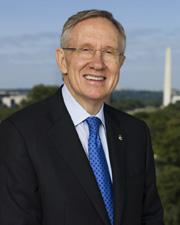 Sen. Harry Reid (D-NV)
What it changes
1 change to H.R. 3288
Adds Sec. 415. (a) Congress makes the following findings: on page 332, line 25
Adds a sectionPrinted pageInserted: Sec. 415. (a) Congress makes the following findings:
Inserted: (1) Tourism, including conventions and meetings, is an important part of the United States economy that generates billions of dollars in tax revenues for many localities.
Inserted: (2) Analysts estimate that approximately 90 percent of employers in the travel industry are small businesses and more than 12 percent of United States employees are employed by the travel industry.
Inserted: (3) Many local economies around the country have developed into destinations for vacationers and conventioneers alike, and those local economies depend on the travel industry to support local employment, create new jobs, and generate tax revenues for critical public services.
Inserted: (4) These same destinations are home to large and small businesses that have unique skills, amenities, and resources for planning and facilitating meetings and conventions for all purposes and, consequently, may deliver value and convenience for individuals and organizations in need of a location for an official event.
Inserted: (5) Locating an official event in such a city frequently may save taxpayer dollars, as compared to other locations.
Inserted: (6) Agencies and departments of the United States have a responsibility to find ways to maximize taxpayer dollars in conducting official business, including planning and conducting official meetings attended by Federal employees.
Inserted: (7) In deciding where to locate an official government meeting by applying this principle of maximizing taxpayer dollars, government officials often will conclude that many locations known as resort destinations also will provide the best value and convenience for official meetings and business.
Inserted: (8) Resort and vacation destination cities tend to be affected disproportionally during economic downturns and, therefore, are especially vulnerable to discrimination by meeting and convention planners, which could exacerbate unemployment and related demands on United States taxpayers.
Inserted: (b) None of the funds appropriated or otherwise made available under this Act may be used by an agency or department of the United States to establish or implement an internal policy regarding travel, event, meeting, or conference locations that discourages or prohibits the selection of such a location because the location is perceived to be a resort or vacation destination.
Original wording
On page 332, after line 25, add the following:
Read automatically from the Congressional Record. Check the original before relying on it.
As printed
SA 2399. Mr. REID (for himself and Mr. Nelson of Florida) submitted an amendment intended to be proposed by him to the bill H.R. 3288, making appropriations for the Departments of Transportation, and Housing and Urban Development, and related agencies for the fiscal year ending September 30, 2010, and for other purposes; which was ordered to lie on the table; as follows:
On page 332, after line 25, add the following:
Sec. 415. (a) Congress makes the following findings:
(1) Tourism, including conventions and meetings, is an important part of the United States economy that generates billions of dollars in tax revenues for many localities.
(2) Analysts estimate that approximately 90 percent of employers in the travel industry are small businesses and more than 12 percent of United States employees are employed by the travel industry.
(3) Many local economies around the country have developed into destinations for vacationers and conventioneers alike, and those local economies depend on the travel industry to support local employment, create new jobs, and generate tax revenues for critical public services.
(4) These same destinations are home to large and small businesses that have unique skills, amenities, and resources for planning and facilitating meetings and conventions for all purposes and, consequently, may deliver value and convenience for individuals and organizations in need of a location for an official event.
(5) Locating an official event in such a city frequently may save taxpayer dollars, as compared to other locations.
(6) Agencies and departments of the United States have a responsibility to find ways to maximize taxpayer dollars in conducting official business, including planning and conducting official meetings attended by Federal employees.
(7) In deciding where to locate an official government meeting by applying this principle of maximizing taxpayer dollars, government officials often will conclude that many locations known as resort destinations also will provide the best value and convenience for official meetings and business.
(8) Resort and vacation destination cities tend to be affected disproportionally during economic downturns and, therefore, are especially vulnerable to discrimination by meeting and convention planners, which could exacerbate unemployment and related demands on United States taxpayers.
(b) None of the funds appropriated or otherwise made available under this Act may be used by an agency or department of the United States to establish or implement an internal policy regarding travel, event, meeting, or conference locations that discourages or prohibits the selection of such a location because the location is perceived to be a resort or vacation destination.
Legislative Activity
Stay on top of the latest movement without scrolling through every action
Senate amendment submitted
September 15, 2009