To prohibit funds from being used in contravention of section 642(a) of the Illegal Immigration Reform and Immigrant Responsibility Act of 1996.
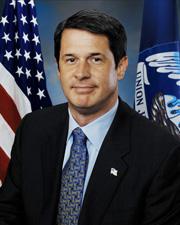 Sen. David Vitter (R-LA)
Legislative Activity
Stay on top of the latest movement without scrolling through every action
Senate amendment submitted
October 7, 2009
View full timeline
Senate amendment submitted
October 7, 2009
Senate amendment proposed (on the floor): Amendment SA 2630 proposed by Senator Vitter.(consideration: CR S10207-10208, S10209-10210; text: CR S10207)
October 7, 2009
Roll call votes on amendments in Senate: Motion to table amendment SA 2630 agreed to in Senate by Yea-Nay Vote. 61 - 38. Record Vote Number: 316.
October 7, 2009
Amendment SA 2630 proposed by Senator Vitter. (consideration: CR S10207-10208, S10209-10210; text: CR S10207) To prohibit funds from being used in contravention of section 642(a) of the Illegal Immigration Reform and Immigrant Responsibility Act of 1996.
October 7, 2009
Motion to table amendment SA 2630 agreed to in Senate by Yea-Nay Vote. 61 - 38. Record Vote Number: 316.
October 7, 2009
Votes
1 roll call on this amendment
Text
Proposed
COMMERCE, JUSTICE, SCIENCE, AND RELATED AGENCIES APPROPRIATIONS ACT,
2010

The PRESIDING OFFICER. Under the previous order, the Senate will
resume consideration of H.R. 2847, which the clerk will report.
The assistant bill clerk read as follows:

A bill (H.R. 2847) making appropriations for the
Departments of Commerce and Justice, and Science, and Related
Agencies for the fiscal year ending September 30, 2010, and
for other purposes.

Ms. MIKULSKI. Mr. President, I am very pleased to be joined today by
my distinguished colleague from Alabama, Senator Richard Shelby. We
wish to present the Commerce-Justice appropriations bill to the Senate.
What I wish to say to my colleagues is that as we do this, everyone
should know this bill is a product of bipartisan cooperation. At times,
when one views the Senate through the lens of the media, one would
think that everything we do here is very prickly and very partisan. But
that is not true, certainly of the Commerce-Justice-Science
appropriations.
Senator Shelby and I worked together on this bill. Yes, I do chair
it, but it has been with maximum consultation with others on the other
side of the aisle. It was the same way when Senator Shelby chaired this
committee.
We are pleased to present to the Senate the fiscal year 2010 bill to
fund the Departments of Commerce and Justice and air science agencies.
I thank Majority Leader Reid and Minority Leader McConnell for allowing
to us to bring the CJS bill to the floor.
The CJS bill is a product of cooperation between Senator Shelby and
me and our excellent staff. We have worked hand in hand. I thank
Senators Inouye and Ranking Member Cochran for their allocation.
We were able to write a very good bill, but the stringent budget
environment required the subcommittee to make difficult decisions. The
CJS bill totals $64.9 billion in discretionary spending, consistent
with the subcommittee's 302(b) allocation. So any amendments to the
bill will need to be offset.
The purpose of the CJS bill is to fund the Department of Commerce and
its bureaus and administration. Many people do not know what the
Department of Commerce truly does. It is an array of complex agencies
that is important to our economy: The Bureau of Industry and Security
gives licenses for exports; the Economic Development Administration
creates economic growth in our communities, particularly midsized to
small towns; the Census Bureau, preparing now, somewhat unevenly, for
the 2010 census; the Patent and Trade Office which protects our
intellectual property; along with the International Trade
Administration which enforces our trade laws.
We are particularly proud of the Commerce Department, of the National
Institutes for Standards and Technology. It sets the standards for
technology which allows our country and our companies to be able to
compete in the global marketplace.
This subcommittee also funds the Department of Justice which keeps us
safe from violent crime and terrorism. It prosecutes criminals of all
kind--white collar, blue collar or no collar. It also has a vigorous
approach to the despicable practice of being a sexual predator.
This subcommittee through the Department of Justice funds our State
and local police departments which are so important as well from not
only the enforcement end but the prosecution end through the U.S.
Attorney's Office.
NASA is also funded through this subcommittee. It explores our
planets and our universe and inspires our Nation and next generation to
be scientists and engineers.
We also fund the National Oceanic and Atmospheric Administration,
protecting our marine resources and the jobs that depend on them.
It also protects our weather to save lives. Many people don't realize
that the wonderful weather reports they get in their communities comes
because of the NOAA weather administration. They think it comes from
the Weather Channel. We all love the Weather Channel, but the Weather
Channel depends on NOAA.
The National Science Foundation is also funded, providing basic
research at our universities to advance science and support teacher
training and development.
We also fund several independent commissions and agencies, including
the Commission on Civil Rights, the EEOC, the Legal Services
Commission, the International Trade Commission, and the U.S. Trade
Representative.
Senator Shelby's and my No. 1 priority is making sure that 300
million Americans who work hard and play by the rules are safe from
terrorism and violent crime. We also want to protect jobs in our
country. So we are the basic investors in innovation through education
and through promoting an innovation-friendly government, making
strategic investments in research and education in science and
technology, keeping America No. 1 in science and also No. 1 in the
space exploration program.
We want to create jobs in America that will stay in America. However,
we, too, are fiscal stewards of the public purse and, therefore,
accountability has been a hallmark of our bipartisan relationship. We
do stand sentry against waste, fraud, and abuse with strong fiscal
accountability and stewardship of hard-earned taxpayers' dollars.
I wish to take a few minutes to talk about keeping America safe. The
CJS bill provides $27.4 billion for the Justice Department. We actually
went above the President's request by $300 million because we wanted to
make an extra effort to protect our homeland and protect our hometowns.
This bill is one of the most important sources of Federal funds for
State and local law enforcement, for our frontline men and women of our
State and local police forces. It is the cops on the beat who protect
our families and at the same time they are asked to do more.
We are providing $3.2 billion to support that thin blue line to make
sure the police are safe with equipment they need, such as bulletproof
vests and also new technologies.
``CSI'' is not only a great TV show, but we think CSI should be
funded in the Federal budget to use the best of science to catch the
worst of the criminals.
We also fund Byrne formula grants, and this bill will provide $510
million for State and local police operations to do their job.
We are funding important programs in juvenile justice, which are very
key programs of intervention and mentoring, but also very strong
programs for antigang efforts--$407 million.
We also want to prevent, protect, and prosecute when it comes to
violence against women, whether it is domestic violence, sexual
assault, rape, or stalking--over $435 million--the highest level of
funding ever.
We also have very important Federal law enforcement. All of us know
and love the FBI. This bill will provide $7.9 billion to keep us safe
from violent crime and also white collar crime, investigating financial
and mortgage fraud.
I want to acknowledge the role of Senator Shelby, who is an
authorizer on the Banking Committee and a member of this Appropriations
Committee. He has taken on the issue of mortgage fraud and wanted it to
be thoroughly investigated. We have done that through the FBI.
Many people don't realize, though, that after 9/11, when everyone was
clamoring for something like the MI-5, such as the British have, we
said: Three cheers for the British way, but we want a USA way, so we
created an agency within an agency where the FBI is part of our most
significant fight against terrorism.

[[Page S10182]]

We also fund the Drug Enforcement Agency to fight international
narcoterrorists and drug kingpins. This bill provides $2 billion to do
it.
I am very proud of the FBI because in the last few weeks their work
has led to the arrest of two terrorism suspects who planned to blow up
buildings in Texas and in Illinois. While they were working hard, the
efforts of the DEA led to the arrest of drug kingpins who were shipping
95 kilograms into New York City.
We also have the Bureau of Alcohol, Tobacco, and Firearms and the
Marshals Service, each of which has been funded at $1 billion-plus.
Our U.S. attorneys, who are the prosecutors of Federal crimes, have
been provided $1.9 billion, a significant increase.
Once we catch and prosecute these criminals, there has to be Federal
prisons, and we want to make sure our communities are secure and our
prison guards are safe. This is one of the tattered areas of neglect,
and we are very concerned about the safety of our prison guards. This
bill provides $6.1 billion to upgrade, where necessary, the protective
devices to ensure criminals are held securely--acknowledging their
rights, but also the rights of those who guard them need to be kept
too. Their first right is the right to security, guaranteed by their
own government.
We look to protecting our children and our communities, and when it
comes to protecting our children, crimes have gotten more sophisticated
in terms of the Internet and other things that are used to lure
children into terrible criminal situations. We have provided over $265
billion to deal with the issue of sexual predators, and we will
continue that fight.
While we are busy fighting crime and protecting our children, we also
need to protect America's jobs, and this is where science and
innovation come in with an amazing race to keep America competitive.
This bill provides $880 million for the National Institute of
Standards and Technology and, particularly, $70 million for the new
Technology Innovation Program and $125 million for the Manufacturing
Extension Partnership, so that we can keep manufacturing in our
country. We also want to do the basic research that is needed for the
new ideas that will come up with the new products for the new jobs.
This bill provides $6.9 billion for the National Science Foundation,
and for NOAA we provide $4.7 billion, including $980 million for our
weather service and $870 million for our fisheries.
This bill also funds our space program: $18.7 billion for NASA. In
the space program, we don't agree with the House strategy; we agree
with the White House strategy. The House strategy includes $500 million
for the NASA exploration program. We believe we need to meet our
obligations to fully fund the space shuttle and the space station. For
the space shuttle, we need to make sure we keep our astronauts safe and
our space station is able to continue the work we have begun. We also
need to invest in the next generation of space vehicles at $3.6
billion.
It is very important we meet our obligations, our international
obligations, as well as our obligations to our astronauts and to our
Earth-bound scientists. However, if you meet those scientists, they are
not bound by Earth very much. They are continually breaking barriers.
We know the House withheld money while waiting for the Augustine
report. Well, we have the Augustine report. We know where the President
wants to go. We know what the key advisers in the astronaut community
have recommended to us--the gallant leaders from the past, such as Buzz
Aldrin and John Glenn, to the most contemporary right now. I might add
we have a space Senator in Senator Bill Nelson, one of our authorizers.
So we have worked hand-in-hand with our authorizers.
We are also working very hard in terms of protecting our intellectual
property. We have been concerned through the Bush administration--well,
the Clinton administration, the Bush administration, and now we want to
deal with this during the Barack Obama administration--that we have too
many backlogs at our Patent and Trademark Office. We want to reduce
those. American ingenuity should not have to stand in long lines to get
their patents to protect their intellectual property and to come up
with the products that will go into the global marketplace and at the
same time create jobs here.
We are also very proud of what we do to protect our planet, and what
we have done through NASA Earth science--$1.4 billion--and also what we
are doing in weather satellites--$1.2 billion--which are very important
global warming tools. If we can better protect and warn, we can save
lives and save money.
The CJS bill ensures our constitutional obligation to do the 2010
census. We provide $7 billion to the Census. We are working hand-in-
glove with Secretary Locke to make sure the Census Bureau is well
organized to be able to do this very important job.
There are many more things we can talk about, but I know my
colleague, Senator Shelby, wants to discuss the bill, and our good
friend from Arizona has an amendment. So, Mr. President, I will amplify
these other parts of the bill as we move forward.
I know Senator Shelby will return in a moment or two, so with
deference and the usual courtesy and comity, if the Senator from
Arizona wishes to offer his amendment, and then when Senator Shelby
returns he can make his statement, we will just keep the business of
the Senate moving as promptly and as well as we can.
Mr. President, I yield the floor.
The PRESIDING OFFICER. The Senator from Arizona.

Amendment No. 2629

Mr. McCAIN. Mr. President, I have an amendment at the desk and ask
for its immediate consideration--amendment No. 2629.
The PRESIDING OFFICER. The clerk will report.
The assistant legislative clerk read as follows:

The Senator from Arizona [Mr. McCain] proposes an amendment
numbered 2629.

Mr. McCAIN. Mr. President, I ask unanimous consent that the reading
of the amendment be dispensed with.
The PRESIDING OFFICER. Without objection, it is so ordered.
The amendment is as follows:

(Purpose: To prohibit the use of funds appropriated under this Act for
the purpose of preventing individuals, wholesalers, or pharmacists from
importing certain prescription drugs)

On page 202, between lines 15 and 16, insert the following:
Sec. 530A.  None of the funds made available in this Act
for the Department of Justice may be used to investigate or
enforce Federal laws related to the importation of
prescription drugs by individuals for personal use, by
pharmacists, or by wholesalers or to bring an action against
such individuals, pharmacists, or wholesalers related to such
importation: Provided, That the Department of Justice or its
subagencies do not have a reasonable belief that the
prescription drug at issue violates the Federal Food, Drug,
and Cosmetic Act (21 U.S.C. 301 et seq.): Provided further,
That the prescription drug at issue is not a controlled
substance, as defined in section 102 of the Controlled
Substances Act (21 U.S.C. 802), or a biological product, as
defined in section 351 of the Public Health Service Act (42
U.S.C. 262).

Mr. McCAIN. Mr. President, I say to the distinguished manager, the
Senator from Maryland, that I will be glad to interrupt my amendment
upon the return of the Senator from Alabama, if he wishes to speak, and
then I will continue after that. I thank the Senator from Maryland for
her hard work and excellent explanation of the legislation before the
Senate.
This amendment would lower health care costs for Americans
immediately. It would provide access to safe, less expensive imported
prescription drugs. For far too long, powerful lobbyists from the
pharmaceutical industry have stood in the way of Americans' access to
affordable imported drugs. Their enormous political campaign
contributions made in return for political support of their agenda and
their secret unsavory deal with the White House in exchange for their
support of the health care reform have further contributed to the
American people being prevented from accessing cheaper prescription
drugs.
Instead, Americans continue to pay 60 percent or higher for the same
prescription drugs that are sold in Canada. This amendment is necessary
because Americans need access to lower cost drugs now. They need it now
due to these difficult economic times. We all know about unemployment.
Americans' salaries are being cut, household budgets are slim, and
millions of Americans are struggling to make their

[[Page S10183]]

monthly mortgage payments. For these reasons, and so many more,
Americans should not be forced to wait another day to purchase safe and
affordable prescription drugs from outside the United States. While
Americans all over the country are having to choose between their next
meal and their necessary prescriptions, the large pharmaceutical
companies continue to pressure Congress to delay consideration of any
legislation to allow the importation of safe and lower priced
prescription drugs.
I would like to also point out this is legislation on an
appropriations bill, something I have long opposed, and still oppose.
But there has been an unusual process taking place, and that process is
one which has forced me to come to this situation. On two separate
occasions the majority leader of the Senate assured me that legislation
would be taken up before the Senate, and both times he has changed his
mind. The majority leader resisted consideration of an amendment to
allow for the importation of prescription drugs during debate on the
Family Smoking Prevention and Tobacco Control Act.
At the time, the majority leader said on the Senate floor:

This is something that should have been done, I am sorry to
say, years ago, not weeks ago.

This issue is important legislation. If it should have been done
years ago, then why wasn't it brought up for consideration immediately
after the tobacco bill in June? While the stand-alone bill to allow
importation--S. 1232--was placed on the Senate's calendar on June 11,
2009, there has been no further effort by the majority leader to call
it up for consideration. Instead, he sent me a letter stating:

I committed to take up legislation that would permit the
safe importation of lower-cost prescription drugs as soon as
practicable.

The practicable time was back in June. There is no practical reason
to prevent the majority leader from calling up this bill for a vote at
any time.
I was told verbally by the majority leader as short a time as 3 weeks
ago that upon the completion of consideration of the Defense
appropriations bill that this legislation would be brought to the floor
of the Senate. Then a week later I was told, no; that is not going to
be the case. So I have been waiting for ``as soon as practicable,'' and
so have millions of Americans who are looking for cheaper alternatives
to the high-priced prescription drugs.
The majority leader also stated in his letter:

If this issue is not addressed during the full Senate's
consideration of comprehensive health reform, I guarantee
that I will move to proceed to S. 1232 before the end of the
year.

The majority leader of the Senate assured me it would be taken up
after completion of the Department of Defense appropriations bill,
which we have completed. Given the fact that it is possible that the
health care reform bill will be brought up under a truncated pressure
timeline, I have little faith that real, in-depth consideration of
prescription drug import legislation will come about; therefore, I have
no choice but to bring this issue up today as an amendment to this
appropriations bill.
In the 2008 election cycle, pharmaceutical companies gave almost $30
million in campaign contributions to Members of Congress. Just this
year, according to an article published in The Hill, the prescription
drug industry has given more than $1 million to Republicans and
Democrats, and the companies whip up their protector in Congress each
time we bring forward legislation to help Americans get the imported
prescription drugs they need.
Earlier this year, I read an e-mail sent by the top lobbyist for
Pharmaceutical Research and Manufacturers of America, known as PhRMA--
this was back in June--which stated:

The Senate is on the bill today. Unless we get some
significant movement, the full blown Dorgan or Vitter bill
will pass. We are trying to get Senator Dorgan to back down,
calling the White House, and Senator Reid. Our understanding
is that Senator McCain has said he will offer regardless.
Please make sure your staff is fully engaged in this process.
This is real.

That was an e-mail from a lobbyist of PhRMA, which has given millions
and millions in campaign contributions.
Guess what. In the immortal words of Jack Nicholson: I'm back. I am
back on the Senate floor, trying to help millions of Americans who have
lost their jobs, struggling to put food on the table, by giving them
the opportunity to save on their prescription drugs immediately.
Recently, the White House struck a deal with a pharmaceutical company
to further protect its profits. The deal was bragged about by the head
of the company's trade association, who cashed in for millions of
dollars once he wrote the Medicare prescription drug benefit
legislation as a Congressman. He was quoted in an article in the New
York Times, published August 6, 2009, stating that the White House
``wanted a big player to come in and set the bar for everybody else.''
The same article stated:

Mr. Tauzin said the White House had tracked the
negotiations throughout, assenting to decisions to move away
from ideas like the government negotiation of prices or the
importation of cheaper drugs from Canada. The $80 billion in
savings would be over a 10-year period.

Analyze that comment by the head lobbyist of one of the most powerful
lobbies in Washington. He is saying the White House agreed to move away
from--in other words, not support--ideas such as government negotiation
of prices. Government negotiation of prices is absolutely necessary. We
did it in the prescription drug bill, and it has reduced costs. In
other words, the pharmaceutical companies would have to compete for
Medicare contracts. One would think that is an obvious solution to
bringing down costs.
The second, of course, is the importation of cheaper drugs from
Canada. Here everybody is talking about reducing health care costs. We
know that importation of less expensive drugs would save health care
costs for the American consumer. But the White House apparently,
according to Mr. Tauzin, agreed they would not support importation of
less expensive drugs from Canada--a remarkable comment. You know,
people wonder why the tea parties are going on, why the approval rating
of Congress is so low--amazing. The Fraser Institute found in 2008 that
Canadians paid on average 53 percent less than Americans for identical
brand-name drugs. Specifically, the institute found that the most
commonly prescribed brand-name drug, Lipitor, is 40 percent less in
Canada, Crestor is 57 percent less in Canada, and the popular arthritis
drug Celebrex is 62 percent less expense in Canada. Americans would
love a 60-percent-off coupon for prescription drugs and deserve such a
discount now more than ever.
I have been working on this issue for many years, and I will continue
to do so. Americans should not have to wait a day longer for relief
from higher prices for drugs. Inexplicably, the majority leader keeps
delaying consideration of this needed legislation, which has now forced
me to offer an amendment on the current appropriations bill. However, I
believe it is necessary to protect all Americans' interests in
obtaining affordable prescription drugs. The amendment states that no
funds can be used to prosecute those who seek to import prescription
drugs that have been approved by the FDA. If the big drug companies are
getting an $80 billion savings, shouldn't we give a savings to American
consumers? Why not now?
Again, I want to say there is going to be a point of order raised on
this bill, and with righteous indignation people will say it doesn't
belong on an appropriations bill. We just finished a Defense
appropriations bill loaded--and I will have a list of them--with
unauthorized appropriations on that bill. Every appropriations bill we
take up has unauthorized appropriations, ranging from $300,000 for a
museum in Nebraska to the addition of C-17s for $2.5 billion. The
argument that somehow we should not be taking up this legislation on
this bill flies in the face of what has been common practice around
here, even though I do not agree with it.
Let me say this, too. If I had full and complete confidence that this
amendment would get a full and complete airing as an amendment on the
health care bill, I would be glad to withdraw this amendment. I will be
glad to withdraw this amendment if we have assurance this amendment
will be taken up on the health care bill. There are all kinds of things
that are going to be

[[Page S10184]]

done in passage of the health care reform legislation--so-called--on
the floor of the Senate.
I see my friend from North Dakota here. I have appreciated his
efforts for a long time. He and I have been working on this for a long
time. It is a fact that I received the word of the majority leader that
this bill would be taken up and that has not happened. That has
happened twice. I must say it has never happened to me before in the
years I have been a Member of the Senate.
I ask unanimous consent to have printed in the Record the New York
Times article of August 6, 2009, ``White House Affirms Deal on Drug
Costs.''
I also ask unanimous consent to have printed in the Record the letter
from Senator Reid to Senator Snowe, Senator Dorgan, and to me.
There being no objection, the material was ordered to be printed in
the Record, as follows:

[From the New York Times, Aug. 6, 2009]

White House Affirms Deal on Drug Cost

(By David Kirkpatrick)

Washington.--Pressed by industry lobbyists, White House
officials on Wednesday assured drug makers that the
administration stood by a behind-the-scenes deal to block any
Congressional effort to extract cost savings from them beyond
an agreed-upon $8o billion.
Drug industry lobbyists reacted with alarm this week to a
House health care overhaul measure that would allow the
government to negotiate drug prices and demand additional
rebates from drug manufacturers.
In response, the industry successfully demanded that the
White House explicitly acknowledge for the first time that it
had committed to protect drug makers from bearing further
costs in the overhaul. The Obama administration had never
spelled out the details of the agreement.
``We were assured: `We need somebody to come in first. If
you come in first, you will have a rock-solid deal,' '' Billy
Tauzin, the former Republican House member from Louisiana who
now leads the pharmaceutical trade group, said Wednesday.
``Who is ever going to go into a deal with the White House
again if they don't keep their word? You are just going to
duke it out instead.''
A deputy White House chief of staff, Jim Messina, confirmed
Mr. Tauzin's account of the deal in an e-mail message on
Wednesday night.
``The president encouraged this approach,'' Mr. Messina
wrote. ``He wanted to bring all the parties to the table to
discuss health insurance reform.''
The new attention to the agreement could prove embarrassing
to the White House, which has sought to keep lobbyists at a
distance, including by refusing to hire them to work in the
administration.
The White House commitment to the deal with the drug
industry may also irk some of the administration's
Congressional allies who have an eye on drug companies'
profits as they search for ways to pay for the $i trillion
cost of the health legislation.
But failing to publicly confirm Mr. Tauzin's descriptions
of the deal risked alienating a powerful industry ally
currently helping to bankroll millions in television
commercials in favor of Mr. Obama's reforms.
The pressure from Mr. Tauzin to affirm the deal offers a
window on the secretive and potentially risky game the Obama
administration has played as it tries to line up support from
industry groups typically hostile to government health care
initiatives, even as their lobbyists pushed to influence the
health measure for their benefit.
In an interview on Wednesday, Representative Raul M.
Grijalva, the Arizona Democrat who is co-chairman of the
House progressive caucus, called Mr. Tauzin's comments
``disturbing.''
``We have all been focused on the debate in Congress, but
perhaps the deal has already been cut,'' Mr. Grijalva said.
``That would put us in the untenable position of trying to
scuttle it.''
He added: ``It is a pivotal issue not just about health
care. Are industry groups going to be the ones at the table
who get the first big piece of the pie and we just fight over
the crust?''
The Obama administration has hailed its agreements with
health care groups as evidence of broad support for the
overhaul among industry ``stakeholders,'' including doctors,
hospitals and insurers as well as drug companies.
But as the debate has heated up over the last two weeks,
Mr. Obama and Congressional Democrats have signaled that they
value some of its industry enemies-turned-friends more than
others. Drug makers have been elevated to a seat of honor at
the negotiating table, while insurers have been pushed away.
``To their credit, the pharmaceutical companies have
already agreed to put up $80 billion'' in pledged cost
reductions, Mr. Obama reminded his listeners at a recent
town-hall-style meeting in Bristol, Va. But the health
insurance companies ``need to be held accountable,'' he said.
``We have a system that works well for the insurance
industry, but it doesn't always work for its customers,'' he
added, repeating a new refrain.
Administration officials and Democratic lawmakers say the
growing divergence in tone toward the two groups reflects a
combination of policy priorities and political calculus.
With polls showing that public doubts about the overhaul
are mounting, Democrats are pointedly reminding voters what
they may not like about their existing health coverage to
help convince skeptics that they have something to gain.
``You don't need a poll to tell you that people are paying
more and more out of pocket and, if they have some serious
illness, more than they can afford,'' said David Axelrod, Mr.
Obama's senior adviser.
The insurers, however, have also stopped short of the drug
makers in their willingness to cut a firm deal. The health
insurers shook hands with Mr. Obama at the White House in
March over their own package of concessions, including ending
the exclusion of coverage for pre-existing ailments.
But unlike the drug companies, the insurers have not
pledged specific cost cuts. And insurers have also
steadfastly vowed to block Mr. Obama's proposed government-
sponsored insurance plan--the biggest sticking point in the
Congressional negotiations.
The drug industry trade group, the Pharmaceutical Research
and Manufacturers of America, also opposes a public insurance
plan. But its lobbyists acknowledge privately that they have
no intention of fighting it, in part because their agreement
with the White House provides them other safeguards.
Mr. Tauzin said the administration had approached him to
negotiate. ``They wanted a big player to come in and set the
bar for everybody else,'' he said. He said the White House
had directed him to negotiate with Senator Max Baucus, the
business-friendly Montana Democrat who leads the Senate
Finance Committee.
Mr. Tauzin said the White House had tracked the
negotiations throughout, assenting to decisions to move away
from ideas like the government negotiation of prices or the
importation of cheaper drugs from Canada. The $80 billion in
savings would be over a 10-year period. ``80 billion is the
max, no more or less,'' he said. ``Adding other stuff changes
the deal.''
After reaching an agreement with Mr. Baucus, Mr. Tauzin
said, he met twice at the White House with Rahm Emanuel, the
White House chief of staff; Mr. Messina, his deputy; and
Nancy-Ann DeParle, the aide overseeing the health care
overhaul, to confirm the administration's support for the
terms.
``They blessed the deal,'' Mr. Tauzin said. Speaker Nancy
Pelosi said the House was not bound by any industry deals
with the Senate or the White House.
But, Mr. Tauzin said, ``as far as we are concerned, that is
a done deal.'' He said, ``It's up to the White House and
Senator Baucus to follow through.''
As for the administration's recent break with the insurance
industry, Mr. Tauzin said, ``The insurers never made any
deal.''
____

U.S. Senate,

Washington, DC, September 22, 2009.
Senator Olympia J. Snowe,
Russell Senate Office Building,
Washington, DC.
Senator Byron L. Dorgan,
Hart Senate Office Building,
Washington, DC.
Senator John McCain,
Russell Senate Office Building,
Washington, DC.
Dear Senators: During consideration of H.R. 1256, the
Family Smoking Prevention and Tobacco Control Act, I
committed to take up legislation that would permit the safe
importation of lower-cost prescription drugs as soon as
practicable. Shortly after making that commitment, Senator
Dorgan and I began the Rule XIV process on S. 1232, the
Pharmaceutical Market Access and Drug Safety Act of 2009.
Unfortunately since taking that step, the Senate has
experienced an extremely full legislative agenda that has not
permitted me to turn to this important legislation as quickly
as I would have liked. In light of the approaching new fiscal
year, we have dedicated considerable time to appropriations
matters. (On March 24, I received a letter signed by all
Senate Republicans telling me it was critical that the Senate
dedicate an ``appropriate amount of time'' to pass the twelve
appropriations bills.) We have also completed action on the
FY2010 National Defense Authorization Act, a bill to extend
the solvency of the Highway Trust Fund and the unemployment
insurance program, as well as a number of executive
nominations.
Passing S. 1232 in the Senate will not be easy. Senate
action on many legislative items has taken significantly
longer than one would expect, even for measures that
ultimately pass by a broad bipartisan vote. Numerous
objections by Senate Republicans have forced the Senate to
jump through procedural hoops that accomplish little more
than delaying Senate action. Actions that have been taken by
consent with little or no debate now take many days. Further
complicating passage of this legislation is the fact that
during its markup of comprehensive health reform the HELP
Committee considered and defeated an effort to attach
importation language to the underlying bill.
Notwithstanding these obstacles, I stand by my earlier
commitment to make sure the Senate considers S. 1232 as soon
as practicable. If this issue is not addressed during the
full Senate's consideration of comprehensive health reform, I
guarantee that I

[[Page S10185]]

will move to proceed to S. 1232 before the end of the year.
Sincerely,
Harry Reid,
Majority Leader.

Mr. McCAIN. Mr. President, I wish to say again that we have been told
time after time that this legislation would come before the Senate. It
has not. I do not know what process the majority leader will use--
reconciliation, fill up the tree, vote on cloture, make this amendment
nongermane. I have no confidence. If I had the confidence that this
amendment would be taken up in a regular order fashion and that the
full Senate would vote on it on the health reform bill, I would have
some confidence we could get it done. In the absence of that, I will
seek a vote on this amendment.
If there is a budget point of order on this amendment, let no one be
fooled: It is not because they do not want to violate the budget rules
of the Senate, because they violated them in every possible way in
previous appropriations bills, to the tune of billions of dollars.
I yield the floor.
Mr. DORGAN. Mr. President, I suggest the absence of a quorum.
The PRESIDING OFFICER. The clerk will call the roll.
The assistant legislative clerk proceeded to call the roll.
Mr. DORGAN. Mr. President, I ask unanimous consent that the order for
the quorum call be rescinded.
The PRESIDING OFFICER. Without objection, it is so ordered.
Mr. DORGAN. Mr. President, let me spend a few moments talking about
this issue of reimportation of prescription drugs and the history of it
and the work many of us have done together, a large group of Members of
the Senate, including Senator McCain, working on this issue.
Senator McCain has offered an amendment, No. 2629, which he has just
finished discussing. As I understand the amendment, it would prohibit
the use of funds appropriated under the act for preventing individuals,
wholesalers, or pharmacists from importing certain prescription drugs.
That is in the title. It does have, as I think Senator McCain
suggested, perhaps a point of order against it. I do not know whether
it is because it would be legislating on an appropriations bill. In any
event, whatever the circumstances with this amendment, I was a bit
surprised to see this amendment on this bill, but everybody has a right
to offer amendments.
Let me say that Senator McCain is a part of a group of us who have
worked together. We have worked on a piece of legislation called the
Dorgan-Snowe legislation. Senator Snowe, as the major cosponsor, and
many others, including Senator McCain as a cosponsor, have worked on
this issue for a long time. The fact is, the appropriate place to
address this, in my judgment, is in the health care bill that is going
to come to the floor in the next couple of weeks. I have said
previously that I fully intend to offer this bipartisan bill as an
amendment. We have over 30 cosponsors in the Senate, Republicans and
Democrats. It ranges from the late Senator Ted Kennedy, to John McCain
and a wide range of Senators on both sides of the political aisle. That
has been the support for legislation that I think addresses a very
important issue.
Let me describe the issue, if I might. I have in my desk in the
Senate two bottles that contain medicine. Actually, these are empty
bottles. This is Lipitor. The medicine that would be contained in these
bottles is made in Ireland by a company that produces Lipitor. It is
the most popular cholesterol-lowering drug in America by far. It is
made in Ireland, in a plant that is inspected by the FDA, and the
medicine is then sent all around the world. These two bottles, as you
can see, are identical. These two bottles contained identical tablets,
20 milligrams of Lipitor made in the same place, so it is the same
manufacturing, the same pill, put in the same bottle, made by the same
company. The difference? One is shipped to Canada, one is shipped to
the United States. Difference? Price. Here is the one that was shipped
to Canada; this is $1.83 per tablet. This was sent to the United
States, $4.48 per tablet. The only difference is price. Why is that the
case? Because the American people are charged the highest prices for
brand-name prescription drugs in the world, the highest prices in the
world for brand-name drugs. In this case, we paid $4.48 per tablet;
someone else paid $1.83. It doesn't matter whether it is Canada. It
could be England, Italy, France, Germany, Spain--we pay the highest
prices in the world, and it is unfair.
The question is not, Is there a problem? Of course there is a
problem. We have a whole lot of folks in this country who cannot figure
out how they are going to afford to pay for their groceries and their
medicine, so they go get their medicine first at the pharmacy in the
grocery store and figure out how much they can eat later. Of course
this is a problem.
I have described the guy who sat on a straw bale once at a farm a
while back, 80 years old, who told me in a little meeting we had in a
farmyard: My wife has fought breast cancer for 3 years. She is in her
seventies. And we have spent all of those 3 years driving to Canada to
try to buy Tamoxifen where it is sold for 80 percent less--an 80
percent lower price in Canada for the identical prescription drug. So
my wife and I are trying to drive up and get Tamoxifen in Canada.

The reason they can do that is, apparently at the border, a small
amount of personal use, up to 30 days or 60 or 90 days personal use of
prescription drugs will be allowed to be brought over without a hassle.
But the question is what about the rest of the American people who
cannot drive to the border or go to another country and access the same
prescription drugs, same pill put in the same bottle by the same
company who decided to charge the American people the highest prices in
the world? What about those people?
My point is this: We are going to have a big health care bill on the
floor of the Senate sometime in the next few weeks. Oh, it has been
through this committee and that committee. It has been on a long,
tortured trail. Lord knows every single day in the press we read the
next little news item about who said what about this.
One way or another we are going to have some kind of health care
reform on the floor of the Senate. Will it pass? Will it be omnibus?
Will it be comprehensive? I do not know any of those things. I do know
this: that the Gang of 6 and the gang in the Finance Committee or the
gang in the HELP Committee are going to become a Gang of 100 or 100
gangs of 1 when it gets to the floor of the Senate. Everybody is going
to have their amendments because most Members of the Senate have not
had an opportunity to weigh in on health care at this point with their
own views and their own amendments. They are not on the committee, not
part of a small gang. Let me say, on behalf of myself and I think
Senator Snowe, it is the Snowe-Dorgan legislation with respect to
prescription drug reimportation, which includes Senator McCain as a
cosponsor, that when health care comes to the floor of this Senate, you
can count on it, that there is going to be an amendment and there is
going to be a vote on the issue of the prices of prescription drugs.
Perhaps there are some people who do not want it. I understand they
do not want to have a vote on it. But in my judgment, there cannot be
credible efforts to address health care if you do not address the issue
of health care costs, the relentless rising cost of health care.
Part of that, not an insignificant part, relates to the question of
the relentless runup of prescription drug costs every single year. Take
a look at the increased prices for prescription drugs every year and
then think about the people out there who are trying to figure out: How
do I pay for this?
I understand senior citizens have the opportunity, under Part D of
Medicare, to have some drug coverage. I understand there is a problem
with that, there is what is called a doughnut hole in the Washington
lexicon. I also understand that someone made a deal with the
pharmaceutical industry for $80 billion over 10 years, which is a
relatively small part of their gross revenues, in order to fill part of
the doughnut hole with 50 percent off on brand-name drugs.
I understand all that. I was not a part of it, nor was anybody I know
of in this Chamber. The question is, What about all the rest of the
American people and the fact that they are now charged the highest
prices in the world for brand-name prescription drugs? Is it fair? I
say no.

[[Page S10186]]

We will offer an amendment. My colleague says he was promised and he
was concerned about that. I understand all that. All I am saying is, we
are going to have this debate, this amendment, and this vote. It is
going to be on health care. That is where it ought to be. It ought to
be on the health care bill.
I know that when we have this discussion, we are going to have people
say: If you do not allow the prescription drug folks, the
pharmaceutical industry, to charge these prices in our country, they
will do less research into finding cures for these deadly diseases.
You know what, the fact is they spend more money on promotion,
marketing, and advertising than they do on research. That is a fact. I
mean you get up in the morning and turn the television set on, perhaps
while you are brushing your teeth or something, and then listen to the
ads. The ads push at you every single day: Go ask your doctor today. It
is Wednesday. Ask your doctor, is the purple pill right for you?
I do not know what the purple pill is, but it makes you feel like you
should go ask somebody if I should be taking the purple pill.
Go ask your doctor whether you might need Flomax. Go ask your doctor
what you ought to be getting, what you ought to be taking that you now
do not know about or are not taking.
All these things are pushed at consumers in circumstances where the
only person who can prescribe that prescription drug is a doctor who
has decided you need it for your health. Yet every single day,
relentlessly across this country on television, in the journals and
newspapers and publications it says: Go check with your doctor. Ask
your doctor if you should be taking this medicine.
What about cutting back on some of that and reducing the price of
prescription drugs? What about that? Let me make one other point, if I
might. My colleague indicated he has offered this, which is a funding
limitation on prescription drugs. The fact is, this has been a long and
difficult trail to pass legislation.
I understand. Were I working for the pharmaceutical industry, I would
understand why you want to retain this little piece in Federal law that
says: The only entity that can reimport or import drugs into this
country is the company that manufacturers them. I understand why they
want that to be the case. Because it allows them to price, in this
country, however they want to price.
But we are told constantly this is a new economy, a global economy.
If it is a global economy, then what about allowing the American people
the freedom to access that global economy to find the identical FDA-
approved prescription drug where it is sold for half the price?
They say: Yes, but you know what, if we do that, we are going to open
it up to counterfeit drugs and so on. Guess what. Europe has been doing
this for 20 years. It is something called parallel trading. In Europe,
if you are in Germany and want to buy a prescription drug from France,
if you are in Spain and want to buy a prescription drug from England,
that is not a problem. They have a plan that is called parallel
trading. It has been going on for 20 years, and there are no
counterfeit issues of any significance at all.
Europe can do it and we cannot? We cannot keep track of this? The
legislation that I and Senator Snowe and many others, including Senator
McCain, have put together carefully has all kinds of safety measures
that will dramatically improve the safety of the prescription drugs
that are now sold.
It requires pedigrees be established on batch lots so you can track
everything back. Everything. The only proposal we are suggesting the
American people be given the freedom to do is to access that FDA-
approved drug--yes, only FDA-approved drugs--only from countries in
which the chain of custody is identical to ours and as safe as ours is.
That is all we are talking about.
But that does it the right way. That says: Here is a plan. It funds
the FDA to make certain that the drug supplies are safe and so on. This
is the right way to do this. That is why we have taken a long time to
put this together. It is a piece of legislation that has all the
elements you would want to have that gives the American people the
freedom to get lower priced drugs, FDA-approved drugs where they are
sold and, at the same time, because they would have that freedom, would
put downward pressure on drug prices in this country because the
pharmaceutical industry would be required to reprice their drugs in the
United States.
Let me say, as I always have to say, I do not have a grief against
the pharmaceutical industry. I think it is a great industry. I think it
produces wonderful, miracle prescription drugs that if taken can keep
you out of an acute care hospital bed, which would be far more
expensive. Prescription drugs, if taken, in many cases, can manage a
disease that otherwise would have you in a debilitated condition.

I appreciate the research they do. I appreciate the new drugs they
develop. Let me say this, that a substantial amount of work, with
respect to the development of new drugs, is done with public funding,
taxpayer dollars, through the National Institutes of Health, the
knowledge from which then goes to the pharmaceutical industry to be
able to use to create these drugs. That is a part of it.
Another part of it is the research they do themselves. Good for you,
I say. My grief is not against an industry. I do not want to tarnish
this industry. All I want to say is: We deserve fair prices. This
country and the consumers in this country deserve fair prices.
We have been trying for 10 years to get this done. If we bring health
care reform to the floor of the Senate and say: We are going to do
something about health care costs and prices and fail to do something
about prescription drug costs, in which the American people are
required to pay the highest prices for brand-name drugs, then, in my
judgment, we will have failed miserably.
It is my full intention that when we have health care on the floor,
which I expect to be within a week or 2 weeks or whenever it comes, but
it is coming for sure, I will be here, and I will fully expect and
demand the opportunity to offer this amendment because there are 30
Members of the Senate, Republicans and Democrats alike, who have done
the work to put together the bill that has all the safeguards and,
finally, at long last, will give the American people what they deserve;
that is, fair pricing on prescription drugs.
Mr. McCAIN. Will the Senator yield for a question?
Mr. DORGAN. Of course, I will yield.
Mr. McCAIN. I am very grateful for the leadership Senator Dorgan has
shown on this issue for many years and it has been a pleasure and an
honor to work with him on that and many other issues.
I ask my colleague, does the letter that was sent by the majority
leader to you and to me and to the Senator from Maine, Ms. Snowe--I
know you have read it--does it concern you that the last paragraph of
the letter says:

Not withstanding these obstacles, I stand by my earlier
commitment to make sure the Senate considers S. 1232 as soon
as practicable.

And then this is the question I have for the Senator from North
Dakota.

If this issue is not addressed during the full Senate's
consideration of comprehensive health reform, I guarantee
that I will move to proceed to S. 1232 before the end of the
year.

My question to the Senator from North Dakota is: Why would there be
any question in the majority leader's mind that you or I and Senator
Snowe would let a health reform bill go to the floor and be voted on
without it being passed? It seems to me, and may I say, because I have
been told twice by the majority leader we would take it up--and those
commitments have been reversed--would it not concern you a little bit
when it says: `` . . . if this issue is not addressed during the full
Senate's consideration of comprehensive health reform . . .''
That is my question. That is what I am concerned about, that
parliamentary procedures would be used. You and I have seen it before.
The tree filled up. Cloture invoked, et cetera, where there have not
been amendments that were clearly important to that legislation, not
allowed to be considered.

[[Page S10187]]

That is my question to my friend from North Dakota.
Mr. DORGAN. Let me say to Senator McCain that I expect the job of
majority leader is a pretty tough job. I have watched from Bob Dole on,
Tom Daschle, and so many majority leaders and minority leaders try to
run this place. It is pretty hard to run. Trying to figure out a
schedule is pretty difficult. So I respect the difficulties of juggling
all these things.
With respect to the specific letter Senator McCain referred to,
Senator McCain, I, and Senator Snowe all talked to the majority leader
about this issue when the tobacco bill was on the floor of the Senate
because we were fully intending to offer our prescription drug
reimportation bill.
The majority leader did say to us, and then put it in writing, did
say to us: I will guarantee you that you will get that up on the floor
of the Senate. So that was a commitment by the majority leader. And he
understands that commitment.
When I saw the letter he wrote, I went to him immediately, and he and
I talked about that. Because I indicated to the majority leader: You
have indicated that as soon as practicable, or perhaps at the end of
the year.
I said to the majority leader: You should understand that if it is
not up before health care, it has to be offered on health care. Because
that is exactly where it fits. Nobody can come to the floor and say: We
have to do health care. We have to try and control costs and put some
downward pressure on prices. But, by the way, you cannot offer a piece
of legislation that would put downward pressure on prescription drug
prices. I said: That cannot be the case.
He understood and said: I understand that. That is going to be at the
front end of this debate on health care. Based on that representation,
I feel confident, I would say to Senator McCain, I understand the
confusion in the reading of the letter, the writing of the letter, but
I feel confident, having talked to Senator Reid, that we are going to
have ample opportunity, right at the front end of this debate about
health care, to have a full debate, to have a vote up or down, which is
what we need to do, obviously. I think everyone in this Chamber, every
Republican, every Democrat, needs to be on record: How do they feel
about their consumers paying the highest prices for prescription drugs
in the world? How do they feel about a bill we put together that has
pedigrees and batch lots, all the safety so our consumers can have the
freedom to access these lower priced drugs?
I think we can do that.
Mr. McCAIN. Would you not feel better if the letter said--I know I
would feel better if the letter said: I expect this issue to be brought
up in the health reform bill.
Instead, there is a loophole, with all due respect, that if it isn't
addressed during the full Senate's consideration, ``I guarantee I will
move to it before the end of the year.'' Each day going by, seniors
and, in fact, all citizens are paying a higher price for prescription
drugs. Frankly, we should never have made that agreement when the
tobacco bill was taken up because we could have passed it. Today
seniors could be paying as much as 60 percent less for their
prescription drugs. But we know what happened. The pharmaceutical
companies weighed in with all of their clout. I urge the Senator from
North Dakota to go back and get this language changed. The majority
leader looked me in the eye and said: We will take this up after we
finish the Department of Defense appropriations bill. And then decided
not to do it. Maybe the Senator from North Dakota understands why I am
skeptical about the interpretation of a letter that could be
interpreted so that we don't take it up in the health care reform bill.
Mr. DORGAN. Mr. President, I understand the anxious state of all of
us to do what we have worked on for so long. I understand. I also
understand that the letter probably could have been more artfully
drawn. I understand from my conversations with Senator Reid, the
majority leader, that he fully understands and expects us to be planted
on the floor when health care comes here and to offer our amendment and
have a full debate and vote. If there is an attempt when we debate
health care to decide that 30 of us Republicans and Democrats somehow
don't have the opportunity we have been promised on the issue of
prescription drug prices, in my judgment they are going to have an
awful time getting any health care bill through this place. Because you
can't say to me or to anybody else: We will do the bill we want to do
and, by the way, prescription drug prices that are going up by double
digits, we are not going to give you a shot at that.
Let me make one final representation. I said when I started, it is
hard to schedule this place. I understand that. The Senator from
Arizona knows we have had noncontroversial bills where we couldn't even
get past a motion to proceed without having a filibuster to something
that is noncontroversial. If I am majority leader, I am thinking this
is not easy to do. I am sympathetic to the job he has to try to do all
these things. I am convinced Senator Reid will keep the commitment he
made to us. I am convinced that commitment will be kept when we get
health care on the floor. I don't want it to be in the middle or toward
the end. I want to be here front and center at the front end because
the bill we have put together is a strong bill dealing with a very
important issue.
Mr. McCAIN. If the Senator will yield further for one final question.
Mr. DORGAN. I am happy to yield.
Mr. McCAIN. I have great sympathy for attempting to schedule
legislation in this body. I think our friend Trent Lott maybe didn't
invent it, but he used to say that it is like herding cats, conducting
business in the Senate. I agree with that.
I know the Senator from North Dakota is aware that no matter what the
problems are, if the majority leader says: I will take up this bill,
then you have to take his word. My question to the Senator from North
Dakota is, can we get a commitment from the majority leader that
parliamentary procedures will not be used to block consideration of the
issue of importation of pharmaceutical drugs?
Mr. DORGAN. Mr. President, I believe that commitment has already been
made by the majority leader.
Mr. McCAIN. The letter is ambivalent.
Mr. DORGAN. I understand that. That is why I said I think the letter
perhaps is not artfully drafted with respect to that last paragraph. I
believe that commitment has been made to me because I went to the
majority leader following the release of that letter. I have found over
a long period that when the majority leader gives me a commitment, I
believe he will keep the commitment.
Mr. McCAIN. I have not had that experience.
Mr. DORGAN. I understand, but I believe the Senator will have that
experience when health care comes to the floor and he and I are on the
floor with our colleague Senator Snowe and others pushing for a solid
piece of legislation that has broad bipartisan support. The Senator
then will understand the commitment was made and the commitment was
kept. I believe that will be the case.
Mr. McCAIN. All I can say to my friend is, if we can get a commitment
that parliamentary procedures will not be used to block consideration
of an amendment concerning importation of prescription drugs, I will
withdraw this amendment from this bill.
Mr. DORGAN. I believe that commitment has been made to me. In any
event, we are here on the floor on a Wednesday talking about something
I believe is very important, and we have worked on this for a long
time. We have spent a lot of time working on it. I don't intend to
decide: OK, somebody is going to put up some barriers and that is OK
with me. That is all right. And I don't think Senator Reid is going to
do that. He has made a commitment to me that will not be the case. I am
convinced that Senator McCain and I and others who have put this
legislation together will have our day, and everybody else will have to
stand up and say yes or no. I hope when the roll is called, we have
sufficient numbers, finally, at long last, to pass legislation that
should have been passed 8 years ago. Again, I appreciate the comments
Senator McCain has made this morning. I will have further visits with
him.
I know Senator Mikulski has a bill on the floor she wishes to manage,
and we don't want to be in the way of that.

[[Page S10188]]

My view is that we are going to have our bill on this floor with a full
debate and an up-or-down vote, and that will come as a result of
Senator Reid keeping his commitment. I am convinced of that.
I yield the floor.
The PRESIDING OFFICER (Mr. Kaufman). The Senator from Arizona.
Mr. McCAIN. Very briefly, I say to Senator Dorgan, I appreciate his
efforts, his leadership. I appreciate everything he has done. We have
had the privilege of working together on many issues over the years. I
wish to be sure that when the health reform bill comes up, there will
not be parliamentary obstacles from that happening. I have seen the
will of the majority thwarted on the floor of the Senate by certain
parliamentary maneuvers--filling up the tree, for example. The Senator
from North Dakota is as familiar as I am with some parliamentary
procedures which can be employed by the majority and have been employed
when both parties have been in the majority to thwart the ability of
Senators to have their issues considered. That is what I want to see,
is to make sure that when the health reform bill is before us, we will
take it up.
But the sentence reads:

If this issue is not addressed during the full Senate's
consideration of comprehensive reform . . .

My question is, why wouldn't it? Why is that sentence necessary? All
I can say is that I hope we can get that assurance. If we do, I will
withdraw the amendment and allow this appropriations bill to receive
full consideration and be passed by the Senate.
Mr. DORGAN. Mr. President, I intend to offer several amendments to
the health care bill. I have not had a chance. I am not part of a gang
of anything. I wasn't part of the Gang of 6. I am not part of the
Finance or HELP Committees. This is my first opportunity. I have some
things I think can improve it. If a bill comes to the floor with
procedures--and it will not happen--that lock this up and we can't
offer amendments, I wouldn't stand for that. I am not going to be a
part of that process. My expectation and the representation made to me
with respect to this amendment is when that bill comes to the floor, we
will have an opportunity to offer amendments. I don't know how you
would get health care through the Senate if the proposition would be
that somebody says: The Gang of 6, they had their 6 months or 3 months,
whatever they did. And the two committees had their opportunity. But
the rest of you, sorry, can't do that. In that circumstance, health
care would not be passed through the Senate. Perhaps we have tortured
this subject to death.
Mr. McCAIN. We have probably tortured it to death. Considering the
fact that reconciliation continues to be held out there as an option by
the majority is also a factor about which I have been concerned. All we
need is a clarification to make sure there will be no parliamentary
obstacles to consideration of the amendment of the Senator from North
Dakota, an effort joined by me and Senator Snowe and others, to allow
prescription drugs to be imported into the United States.
I yield the floor.
Mr. DORGAN. I suggest the absence of a quorum.
The PRESIDING OFFICER. The clerk will call the roll.
The assistant legislative clerk proceeded to call the roll.
Mr. BURRIS. Mr. President, I ask unanimous consent that the order for
the quorum call be rescinded.
The PRESIDING OFFICER. Without objection, it is so ordered.
Mr. BURRIS. Mr. President, I ask unanimous consent to speak as in
morning business.
The PRESIDING OFFICER. Without objection, it is so ordered.

Health Care Reform

Mr. BURRIS. Mr. President, my brief remarks this morning are going to
be on the cost of our broken health care system.
There have been times throughout our Nation's history when the
American people have called upon our elected leaders to make very
difficult decisions. This is one of those moments.
The debate over health reform has taken hold of this country and this
Congress. We need a public option as part of any reform legislation,
and we need it now. But the debate goes on. In House and Senate
committee hearings, in townhall meetings, and at dining room tables
across America, people are talking about the cost of health care
reform. But they are not just talking about dollars and cents.
Sometimes Washington forgets that. We worry about taxes, the deficit,
and the need to keep Federal spending in check. We are right to debate
these issues. But in the swirl of numbers and the cold analysis of
insurance profits, we must not forget the extraordinary human cost of
our broken health care system.
Nearly 45,000 Americans die every year because they do not have
insurance coverage and cannot get quality care. That is one death every
12 minutes. This simply cannot stand in the United States of America.
As Members of the Senate, as Americans, and as human beings, we cannot
allow this to continue. It is time to take bold action. We must not
delay any longer. The American people are waiting--people such as
Deborah, a mother from Illinois, who works for a social service agency.
Her employer had to cancel health care benefits and cut salaries more
than a year ago because the expenses were too high. Deborah had a heart
attack in April. Her resulting hospital bills total almost $16,000. She
cannot afford the medicine her doctors have prescribed for her. And now
she is having trouble paying bills. Her gas and electricity have
already been cut off in her home. Next it is going to be the water.
Thankfully, Deborah's children and foster children have health
insurance provided under an Illinois program called All Kids. But what
if she suffers further complications or another heart attack? What if
she loses her home or her job? What will happen to Deborah and her
family?
If this Congress does not pass meaningful health care reform, their
future is uncertain at best. But if we do act, we can bring Deborah and
her family back from the brink of ruin. If we pass health care reform
with a public option, Deborah and millions like her will be able to get
the quality care they need at a price they can afford.
Under a public plan, health care costs will come down. Perhaps
Deborah's employer will be able to restore her insurance coverage. But
if not, she will be able to get individual coverage by choosing between
an affordable private or public plan. Competition will drive premiums
down across the board, making insurance more affordable for every
single American. This means even with a preexisting condition, Deborah
will not have to worry about finding good coverage at a fair price. She
will be able to pay her bills again. In case she needs further
treatment down the road, she will not be forced to choose between
keeping food on the table or seeking the quality care she deserves.
That is what health care reform is with a public option, and that is
what could help Deborah.
These reforms would also help working folks such as Scott and Cindy,
a self-employed couple from Oak Park, IL. Scott is a carpenter, and
Cindy is a freelance writer and editor. They have a combined income
that ranges from $50,000 to $120,000 per year, depending on the
economy. But Scott has a preexisting condition.
Unlike many people in similar situations, they were fortunate enough
to find an insurance company that would cover them. But the costs are
extremely high. Premiums run more than $500 a month. Scott is covered
by one plan, and Cindy and the kids are on a separate plan, and each
one has a deductible of about $5,200 a year. That is the deductible.
That is why Scott and Cindy were so worried when their son broke his
arm last summer. It was a bad break, but it is the kind of injury that
is common to an active 15-year-old kid. It was not catastrophic, it was
not unusual, and no one's life was at stake. But the medical bills
totaled about $4,000. Even though Scott and Cindy have insurance, they
had to pay every cent of this out of their pockets.
They are underinsured, and they know it. That is why they ration
their own health care. I will repeat that: That is why they ration
their own health care. Whenever they can skip a doctor's visit, or a
checkup, or a minor procedure, they will do so in the interest of
saving money. Of course, when their kids need treatment, they make it a
priority.
But Scott and Cindy know they will not be able to afford it if either
of them gets sick. What will happen to this family if they experience a
catastrophic illness? What will happen if their coverage gets dropped,
or if the costs continue to go up?
With health care reform, private insurers could no longer
discriminate

[[Page S10189]]

against Scott's family because of his condition. If they are unhappy
with the private insurance, they will have the choice to purchase high-
quality public insurance for the whole family. Regardless, their
deductible and monthly premiums will be much lower. For the first time,
they will not have to worry about Scott's preexisting condition, and
they can stop rationing their health care. They will be able to take
advantage of preventive care so they can catch potential problems
earlier and minimize their chances of getting really sick.
This is what reform with a public option would mean for Scott and
Cindy, and for millions of Americans just like them in Illinois and
across the country. That is why I will not compromise on the public
option. I will repeat that: I will not compromise on the public option
because Deborah, Scott, and Cindy need our help. That is why I will not
settle for anything less than the real reform the American people
deserve. The human cost is too high.
As we move forward, it is important to consider all sides of this
contentious debate. But this debate has been going on for nearly a
century. Since the days of Teddy Roosevelt, we have been trying to come
together and solve this problem. The time for debate is drawing to a
close. The time for bold action is upon us now, and our path is clear.
The only way to achieve meaningful health care reform and bring costs
down is through a public option that creates real competition in the
system.
Let me be clear on this--I will be very clear--I will not vote for
any health care bill that does not include a public option. I urge my
colleagues to join with me, to stand on the side of the American
people, and to fight for ordinary folks such as Deborah, Scott, and
Cindy, and their families.
We must not delay. We must not let them down.
Mr. President, I yield the floor and I suggest the absence of a
quorum.
The PRESIDING OFFICER. The clerk will call the roll.
The bill clerk proceeded to call the roll.
Mr. KAUFMAN. Mr. President, I ask unanimous consent that the order
for the quorum call be rescinded.
The PRESIDING OFFICER (Mr. Burris). Without objection, it is so
ordered.
Mr. KAUFMAN. I ask unanimous consent to speak as in morning business.
The PRESIDING OFFICER. Without objection, it is so ordered.

Afghanistan Policy

Mr. KAUFMAN. Mr. President, I rise today to support the comprehensive
review of our Afghanistan policy being conducted by the Obama
administration. This is the right time for such a review because
conditions have changed since the President's strategy was announced on
March 27. I have traveled to the region twice since then--first in
April and again last month--and can confirm the recent observations of
General McChrystal that the Taliban has made inroads in Afghanistan and
the situation is deteriorating and serious. At the same time, political
dynamics have changed in the region. There have been flawed elections
in Afghanistan, and an emboldened Pakistani military has taken actions
against elements in the Taliban in Pakistan. In light of these
developments, we must give the President the time he needs to review
the strategy and reevaluate the mission.
Today marks 8 years since the U.S. military entered Afghanistan, but
if there is one message I hope to convey to the American people today,
it is that we have not been there in earnest since 2003. After
launching a successful NATO campaign against al-Qaida and the Taliban-
led government that sheltered it, resources were diverted to Iraq in
2003 before the job was finished. We essentially left Afghanistan to
invade Iraq, and the result in Afghanistan was a resurgent Taliban and
failure to capture Osama bin Laden.
This was not the first time we left Afghanistan. After resourcing the
Afghans throughout the 1980s in their efforts to beat the Soviets, we
abruptly ended our support in 1989 after Soviet troops withdrew. We
were then absent for 12 years until 9/11.
Historically, and especially since 2003, our commitment to
Afghanistan has been wavering and halfhearted. This has created a
deficit of trust in the minds of the Afghans, especially among those
who have allied with us and faced the prospect of life or death in our
absence. I wish to repeat that. This has created a deficit of trust in
the minds of Afghans, especially among those who have allied with us
and faced the prospect of life or death in our absence.
As we enter the ninth year of the war, it is critical to reassess our
strategy so we can get it right. This is why the President's review
must be complete and must be comprehensive. It is not just about combat
troops or the McChrystal report. Troops are just one part of the puzzle
and the report submitted by General McChrystal is just one input. The
President must consider multiple perspectives on the political and
regional situation from U.S. Ambassador to Afghanistan Karl Eikenberry,
U.S. Ambassador to Pakistan Anne Patterson, and the Special
Representative for Afghanistan and Pakistan, Richard Holbrooke. He must
also weigh broader concerns from the Department of Defense, including
overall force structure and other global military requirements. The
review will take time. There are many complex issues to deal with in
Afghanistan which closely relate to our policy in Pakistan.
The President will present his plan to the American people when he
has made his decision. At that time, Congress will be an important part
of the process and will hold hearings on the President's plan, as it
did with the President's plans in Iraq. Then each Member of Congress
will cast the most important vote for any Member of this body: whether
to send additional troops abroad and how to protect them. That debate
should not be about politics.
I believe we must look at this challenge as a sum of the parts, and I
wish to raise two primary questions. The first is about our mission and
our objectives, which have been complicated by changes on the ground
since March. The second is about waging an effective counterinsurgency
strategy and what it would take to meet those requirements in
Afghanistan. After we review our mission strategy in Afghanistan, we
must also review how it correlates to our strategy in Pakistan. I will
take each one of these questions in turn, both to give an indication of
the complexity of the decisionmaking process and to share my
observations on each subsidiary question.
First, the President must ask: What are our missions and objectives?
In March, he presented his mission statement:

To dismantle, disrupt, and defeat al-Qaida and its safe
havens in Pakistan, and to prevent the return to Pakistan or
Afghanistan.

He also laid out key objectives: promoting a more capable,
accountable, and effective government in Afghanistan, developing
increasingly self-reliant Afghan security forces that can take the lead
in counterinsurgency and counterterrorism, and assisting efforts to
enhance civilian control and stable government in Pakistan.
As I have said, since March there have been at least three specific
changes to the situation.
First, there were flawed Presidential elections in August which have
further eroded confidence between the Afghan people and the government.
When I was in Afghanistan in April, there was hope--real hope--that
these elections would lead to real change and progress. Unfortunately,
the outcome has been a worst-case scenario, validating the fears of
those who view the Afghan Government as plagued by corruption. As each
day passes, the steady stream of election fraud revealed in the media
further undermines trust in the Karzai government. This is especially
harmful to our overall counterinsurgency strategy because the goal is
to build support among the Afghan people for their government.
Remember, this is not--not--between us and the Taliban, it is between
the Afghans and the Taliban, and the perception of government
corruption only strengthens the Taliban.
Second, we must review the challenges of training the Afghan national
security forces.
While the Afghan National Army has demonstrated an ability to fight,
there are serious questions about its size and effectiveness, and
problems are even

[[Page S10190]]

worse among the Afghan National Police. Recruitment has been slow,
attrition has been high, there are no noncommissioned officers, and
many among the ranks are illiterate.
To build the ANA and ANP, we need to overcome limiting factors in the
dearth of leadership development, qualified recruits, infrastructure,
trainers, and equipment. During my trip to Helmand Province last month,
I was struck by the side-by-side image of the Afghan Army troops in
Toyota pickup trucks and U.S. troops in Mine Resistant Ambush Protected
Vehicles, or MRAPS.
There is widespread recognition that there is a long way to go before
the Afghan security forces can be self-sufficient and that the training
plan requires adjustments.
We are now embedding American trainers with Afghan battalions to
enhance leadership development, but we continue to do this better,
which is why I strongly support Senator Levin's plan to prioritize and
focus on training the Afghan Army and police. Specifically, I agree
that we must expedite the training, equipping, and support for the army
and police so they can double in size to 240,000 for the army and
160,000 for the police, not by 2013 but by 2012, and hopefully by the
end of 2011. Based on my September trip to Afghanistan with Senators
Levin and Reed, I believe this training can be expedited with the
necessary focus and resources. This must--I say, must--be a top
priority because our overall goal is not nation building in
Afghanistan; it is self-sufficiency for the Afghans so they can provide
for their own security, much like what has happened in Iraq.
The third changed condition we must consider is recent developments
in Pakistan. When I traveled there in April, the situation was grave.
The tension between the Pakistani Government and the Taliban was
mounting. The deal that was cut with the Taliban to relinquish control
over Swat Valley was unraveling, the Frontier Corps did not have the
capacity to ``clear and hold'' in the tribal areas and border region,
and I walked away very concerned about the overall political situation.
Immediately after the trip, the Pakistani military took decisive
action against the Taliban in Swat Valley and has since regained
control of the area. With our help, the Frontier Corps is building its
capacity, and we just passed the Kerry-Lugar legislation, which would
triple economic aid to Pakistan.

On my most recent trip in September, it was clear the political
security environment had improved, but I still remain concerned about
al-Qaida and its allies continuing to use Pakistan as a safe haven.
As we review our mission--taking into account these three
developments and changing conditions--we must also consider the
strategy used to meet our objectives. In March, the President announced
``an integrated civilian-military counterinsurgency strategy'' for
Afghanistan. Partnering with the population and training local security
forces has proven to be the best way to defeat insurgencies over time.
Let me repeat: Partnering with the population and training local
security forces has proven to be the best way to defeat insurgencies
over time. Therefore, the second principal question we must ask is, Do
we have the requirements necessary for waging an effective
counterinsurgency strategy in Afghanistan?
Before I address these questions, let me say that I am struck--truly
struck--by how quickly the military has adapted to counterinsurgency
and how, from the bottom up, it has been adopted. Since General
Petraeus wrote the U.S. Army/Marine Corps Counterinsurgency Manual in
2006, counterinsurgency has become fundamental to our military
doctrine.
As long as we maintain the strength of our conventional forces, it is
increasingly unlikely anyone will take on the U.S. military through
conventional means. Let me repeat that. As long as we maintain the
strength of our conventional forces, it is increasingly unlikely anyone
will take on the U.S. military through conventional means. We must,
therefore, prepare to fight future wars against insurgencies, nonstate
actors, and asymmetrical forces. As such, the military, under the
leadership of Secretary Gates, is rebalancing its budget and making
other fundamental changes.
This is remarkable to me because any large organization, especially
one as large as the U.S. military, is like a supertanker: it just does
not turn easily. Through an incredible organizational effort, however,
this supertanker has changed course, and I am truly impressed by the
extent to which DOD and the U.S. military have accomplished this and
have embraced counterinsurgency, from the privates to the four-star
generals.
Counterinsurgency is a four-step process: First, shape a strategy;
second, clear the area of insurgents; third, hold the area; and fourth,
build through governance, essential services, and economic ability. It
is important to note that troops are just one part of a
counterinsurgency strategy. Equally important is training the
indigenous security forces, providing essential services, promoting
economic development, and strengthening systems of governance.
General McChrystal has recommended a full counterinsurgency approach
in Afghanistan. As he mentions in his report, we should not resource
the mission without reconsidering the strategy, and focusing on troop
levels or resources alone ``misses the point entirely.'' Therefore, I
ask again, do we have the requirements for an effective
counterinsurgency strategy in Afghanistan? In order to explore this
question, we must look at three key areas--governance, training, and
the civilian role--and ask the following questions: First, can the
Afghan Government offer a winning alternative to the Taliban? Second,
can we train enough Afghan troops and police to meet the required
number of counterinsurgents? Third, do we have enough civilians?
Finally, we must also consider how to develop an effective strategy for
reintegrating low-level insurgents.
Counterinsurgency is about trust building between the local
population, the security forces, and the government. Without trust, we
cannot expect sustainable progress, and that is why I am particularly
concerned about allegations of fraud in the Afghan elections.
If this were a political campaign, there would be no need to run
negative ads against the Taliban. According to the polls, the Taliban
has only 6 percent support among the Afghan population. This is the
good news. The bad news is that in the absence of jobs, credible
governance, and essential services, this does not translate into
support for the Afghan Government by the Afghan people. This is why we
cannot just target the Taliban or insurgents. We must help the
government develop a capacity to provide for its people so it can be
viewed as credible and effective.
This is why the outcome of the recent election must be resolved in a
clear manner so that whatever trust remains between the Afghan people
and the government is not further diminished. We must ask--can we
succeed in a counterinsurgency with a Karzai government tainted by
allegations of fraud and corruption? How do we recalibrate our strategy
in light of the recent flawed elections?
The second question I would like to raise is about the amount of
counterinsurgents we need to succeed. Counterinsurgency doctrine tells
us that troop size is not determined by the size of the enemy, but
rather, by the size of the population. As such, we need a ratio of one
counterinsurgent for every 50 citizens. The latest CIA World Factbook
estimates the population of Afghanistan at 28 million, which means that
we need roughly 560,000 ``boots on the ground'' which includes Afghans,
NATO troops, and Americans.
During our visit, we learned that there have been 94,000 Afghan
National Army and 82,000 Afghan National Police trained as of August.
This brings the total number of trained Afghans to slightly less than
200,000. Combine this with 68,000 U.S. troops by the end of the year,
and 38,000 NATO forces, and we have reached nearly 300,000. This is
slightly more than half of the requisite number of troops, and is
overly-generous in assuming that all trained Afghan security forces are
combat ready and effective. Just by comparison, in Iraq, a country of
two-thirds the size, there are already more than 600,000 trained
security forces.
No one is suggesting we fill this enormous vacuum with American
troops,

[[Page S10191]]

which is why we must focus on expediting training for the Afghans. And
this is what Senators Levin, Reed, and I heard was wanted and needed by
the Afghans themselves during our recent visit.
In the Garmsir District of Helmand Province, we met with more than
one hundred local Afghans and tribal elders who insisted they want to
independently secure their own population. They realize the need for
U.S. troops to help to train and equip the Afghan National Security
Forces, and recognized that American assistance is needed to accomplish
this mission. But once the Afghans are able to provide security for
themselves, they will be ready for us to end our military presence. In
the words of the elders--once the Afghan security forces are trained,
we will be welcome simply as ``guests.'' In the meantime, we have to
find a way to prioritize training, so Afghans can eventually fill the
security vacuums with minimal American assistance.
The third question regarding an effective counterinsurgency strategy
is: do we have enough civilians to implement counterinsurgency in
Afghanistan, and how can we expedite the deployment and training of
civilians?
According to counterinsurgency strategy, once the troops have cleared
and held an area with the support of Afghan Security Forces, civilians
must partner with Afghans to build. And we need hundreds of additional
civilians on the ground to fulfill a wide range of non-military
requirements including improvements in agriculture, economic
development, essential services, and governance.
We have heard lots of talk in Washington about the need for a
``civilian surge'' to complement the additional troops President Obama
has pledged for Afghanistan this year. Many of those civilians have
been hired, and the State Department expects to have nearly 1,000
civilians on the ground in Afghanistan by the end of this year. I
support these efforts, but still believe that more must be done to
build a stronger civilian capacity in Afghanistan.
During a visit to Camp Atterbury in Indiana last week, I met with 38
civilians deploying to Afghanistan. At Atterbury, civilians train with
the military to cultivate an integrated approach and greater unity of
mission. Like our soldiers, these civilians volunteer to leave their
families behind and put themselves in harm's way to better the future
of Afghanistan. We owe them and their families a debt of gratitude for
their service, and we must ensure they have the tools, support, and
training they need to succeed.
Civilians serving in Afghanistan from across the interagency are
sharing trir expertise in everything from agriculture to governance,
counternarcotics, accounting, energy, development, and education. The
role of the military and civilians are complementary--one cannot
succeed without the other. This is why military officials including
Secretary Gates and General McChrystal are some of the strongest
advocates for a deepened civilian commitment to Afghanistan. To succeed
in counterinsurgency, we must do everything we can to expedite and
increase the recruitment and deployment of qualified civilians.
Finally, when formulating an effective counterinsurgency strategy, we
must ask if we have developed a plan for reintegrating low- and mid-
level Taliban. I am not suggesting we speak with Mullah Omar or other
members of the Taliban leadership, but we must recognize there are many
Afghans working with the Taliban for purely economic reasons. One of
the striking observations on my two trips was the fact that a primary
concern of Afghans is jobs, just like Americans. And if we can offer
economic incentives and alternative sources of livelihood--especially
with regard to the drug trade--I am hopeful that we can reintegrate
some insurgents ready to disavow violence. This will not be quick or
easy, but the good news is that reintegration is possible, based
largely on the model we successfully used for the Sons of Iraq.
You can see the complexities of determining our mission and
objectives are great, and multiple questions remain in developing an
effective counterinsurgency strategy for Afghanistan. But these
considerations are only half the story.
Once we have reviewed the strategy and mission, we must also consider
how our policy in Afghanistan impacts Pakistan. As the President
announced on March 27, ``the ability of extremists in Pakistan to
undermine Afghanistan is proven, while insurgency in Afghanistan feeds
instability in Pakistan.'' The relationship is clear and U.S. interests
are inextricably linked, which is why the President adopted the
regional approach coined ``Af-Pak.''
In my view, there are four primary challenges in Pakistan that we
must consider when formulating our strategy in Afghanistan.
First, Pakistan is a vital security interest because it has become a
safe haven for al-Qaida, which has continued to train there and plan
for future attacks on Americans. We know this based on the arrest less
than three weeks ago of Najibullah Zazi, an Afghan planning a large-
scale attack in New York, who is believed to have trained with al-Qaida
in Pakistan.
Second, Pakistan has nuclear weapons and the delivery vehicles to use
them. Therefore, political instability in Pakistan is not only a
regional threat, but a larger global security interest. If Pakistan was
destabilized or if control over its nuclear arsenal was compromised, it
would pose severe security repercussions. It would be a nightmare
scenario to have Pakistan ruled by fundamentalist religious fanatics
with ``loose nukes'' in the hands of al-Qaida or other extremists.
Third, Pakistan's ongoing tension with India has limited its ability
to respond fully to internal threats, such as the Taliban. The
Pakistani military continues to see India as its number one threat, and
has therefore hesitated to shift its focus from its eastern border to
the west. This has improved in recent months since the Pakistani
military went into Swat, but any U.S. policy must take into account
Pakistani concerns about India.
Fourth, elements of the Pakistani intelligence service, or ISI, have
at times allied with the Afghan Taliban. On the one hand, they want to
hedge against a total U.S. total withdrawal from Afghanistan, as we did
in 1989, or a limited withdrawal as we did in 2003. On the other hand,
many in Pakistan worry that an increase of U.S. forces in Afghanistan
may push extremists further into Pakistan.
This view was expressed today by the Pakistani Foreign Minister in
the Washington Post. Quoted in an editorial, Foreign Minister Qureshi
stated, ``If the likes of Mullah Omar take over in Afghanistan, it will
have serious repercussions for Pakistan . . .'' He went on to say that
the Taliban's actions in Afghanistan ``. . . will have implications on
Pakistan and it will have implications on the region.''
All of these considerations indicate the need for a sustained U.S.
commitment to Pakistan, which is why Congress just passed the Kerry-
Lugar bill and economic assistance package. This is a $7.5 billion vote
of confidence in the Pakistani people, meant to demonstrate that our
commitment to Pakistan is strong and enduring. It is also meant to
demonstrate that our interests are not just limited to the border with
Afghanistan.
In conclusion, as one can see in the detail and number of questions
that I have raised, this reassessment of our Af-Pak strategy is about
much more than sending additional U.S. combat troops into Afghanistan.
As Senator Levin has pointed out, talking about troop levels in
Afghanistan is similar to talking about the public option in health
care reform. Just as the public option is only one element of the
health care debate, U.S. troop levels are just one element of a much
broader set of issues in Afghanistan.
The White House is now engaged in the necessary process of evaluating
realities on the ground and questioning underlying assumptions. I fully
support this process. The questions I raise today are intended to
contribute to this ongoing review, so that we may find the right
solution.
The stakes are too high for us to carry on business as usual or to
ignore the changing dynamics in Afghanistan and Pakistan. This is why
the President should weigh all perspectives about conditions on the
ground and the region, our counterinsurgency strategy, and the way
forward in our mission. I fully support the President's comprehensive
approach, and I agree it

[[Page S10192]]

is needed because we have to get this right. We owe it to ourselves, we
owe it to the American people, and we owe it to the brave men and women
who continue to serve with great courage, honor and sacrifice in
Afghanistan.
I yield the floor and suggest the absence of a quorum.
The PRESIDING OFFICER (Mrs. Hagan). The clerk will call the roll.
The bill clerk proceeded to call the roll.
Mr. McCAIN. Mr. President, I ask unanimous consent that the order for
the quorum call be rescinded.
The PRESIDING OFFICER (Mr. Cardin). Without objection, it is so
ordered.

Amendment No. 2629 Withdrawn

Mr. McCAIN. Mr. President, I have received assurances that there will
be no blocks or impediments to consideration of the prescription drug
importation issue, which I and a number of us have been seeking a vote
on for a number of years. I have been given assurances that there will
be no impediments to bringing that issue up when health reform is
before the Senate. Therefore, I withdraw the amendment.
The PRESIDING OFFICER. The amendment is withdrawn.
Mr. McCAIN. I yield the floor and suggest the absence of a quorum.
The PRESIDING OFFICER. The clerk will call the roll.
The assistant legislative clerk proceeded to call the roll.
Mr. VITTER. Mr. President, I ask unanimous consent that the order for
the quorum call be rescinded.
The PRESIDING OFFICER. Without objection, it is so ordered.

Amendment No. 2644

Mr. VITTER. Mr. President, I ask unanimous consent to set aside the
pending amendment and to call up Vitter amendment No. 2644.
The PRESIDING OFFICER. There is no amendment currently pending, so
the clerk will report.
The assistant legislative clerk read as follows:

The Senator from Louisiana [Mr. Vitter], for himself and
Mr. Bennett, proposes an amendment numbered 2644.

Mr. VITTER. Mr. President, I ask unanimous consent that the reading
of the amendment be dispensed with.
The PRESIDING OFFICER. Without objection, it is so ordered.
The amendment is as follows:

(Purpose: To provide that none of the funds made available in this Act
may be used for collection of census data that does not include a
question regarding status of United States citizenship)

On page 110, line 7, strike ``activities.'' and insert
``activities: Provided further, That none of the funds
provided in this Act or any other act for any fiscal year may
be used for collection of census data that does not include
questions regarding United States citizenship and immigration
status.''

Mr. VITTER. Mr. President, I present this amendment on behalf of
myself and my distinguished colleague from Utah, Mr. Bennett, who will
speak after me. It is a very simple but, I believe, a very important
amendment. It says we are not going to do a census that doesn't ask
some basic questions about citizenship and immigration status.
Specifically, the amendment reads:

None of the funds provided in this act or any other act for
any fiscal year may be used for collection of census data
that does not include questions regarding United States
citizenship and immigration status.

I believe this is a vital amendment for two reasons. If we don't
adopt this amendment or other legislation, the census will move forward
and will not distinguish in any way between citizens and folks in this
country legally and noncitizens. That, in my opinion, is absolutely
crazy, again, for two reasons.
No. 1, the census is done every 10 years to give Congress an
important tool in terms of many things that Congress and other bodies
of government do: funding, public policy, different programs. Clearly,
we need accurate, specific information about the illegal alien question
in this country. I assume we will all agree, however we come down on
the issue, that illegal immigration is a big issue and a big problem.
We debate that issue, we try to solve that issue in different ways all
the time in this body. Yet we would do a census, we would spend tens of
billions of dollars on a census, and we wouldn't ask the question: Are
you a citizen and, if not, are you in this country legally or
illegally? That is absolutely crazy. The census does ask those
questions in the long form. They are able to get the long form
completed. They are able to compile information, but that is not the
full census; that is a tiny percentage of the full population.
So if we are going to spend tens of billions of dollars every 10
years to do a major census, it seems absolutely a no-brainer that we
would get full and accurate information about the number of illegals in
this country.
Secondly, and perhaps even more importantly, the single most
important thing we use the decennial census for is to reapportion the
House of Representatives, to decide how many House Members each State
gets. Under the Federal plan, the way the census is designed, the House
would be reapportioned counting illegal aliens. States that have large
populations of illegals would be rewarded for that. Other States,
including my home State of Louisiana, would be penalized.
I believe it is very clear that when the Founders set up our
representative democracy, they didn't think of the basic fundamental
institutions of our government as representing folks who come into the
country breaking the law, staying here illegally. I think it is
shocking to most Americans when they hear we would even consider
reapportioning the House of Representatives counting illegals, but that
is exactly the plan now. Of course, we would have no opportunity to
debate that or to adopt a new plan unless the census distinguishes
between citizens and legals and illegals, which my amendment would
demand we do.
This isn't some theoretical issue. This is a very concrete issue, a
very meaningful issue about how much representation each State has in
the House of Representatives. There are many States that will lose
representation from what they would otherwise have if illegal aliens
are counted in congressional reapportionment. Specifically, the States
of Indiana, Iowa, Louisiana, Michigan, Mississippi, North Carolina,
Oregon, Pennsylvania, and South Carolina would lose out. So I wish to
specifically speak to my colleagues in this body--Republicans and
Democrats alike--from those States: Please support the Vitter and
Bennett amendment No. 2644. It has a direct impact on whether you are
going to have less representation in the House of Representatives or
more. Let me be even more blunt. If you vote against this amendment,
you are voting against the interests of your State. If you vote against
this amendment, you are voting for your State having less
representation in the House of Representatives than they would if
illegals are not counted in reapportionment. Again, with that in mind,
I wish to repeat the list: Indiana, Iowa, Louisiana, Michigan,
Mississippi, North Carolina, Oregon, Pennsylvania, and South Carolina.
For Senators from those States, it is a vote directly about their
State's own interests and their State's representation in the House of
Representatives.
More broadly speaking, I think the huge majority of Americans would
certainly take the view I am suggesting, which is we should not
apportion Members of the House based, in part, on illegals. We should
not reward States for having large illegal populations and penalize
States that do not. I think that is on a different planet from where
our Founding Fathers were in setting up the basic Democratic
institutions of our country, and there is no more basic and no more
Democratic institution than the House of Representatives.
With that, I urge all my colleagues, Democrats and Republicans, to
support this amendment.
I yield time to my distinguished colleague from Utah, Mr. Bennett.
The PRESIDING OFFICER. The Senator from Utah is recognized.
Mr. BENNETT. Mr. President, I thank Senator Vitter for proposing this
amendment. It follows the idea of the bill I introduced a few weeks ago
that is now S. 1688, the Fairness in Representation Act.
My bill, obviously, will not pass before we get so far down the road
to deal with this issue. So it is appropriate for the amendment to be
offered, and we can accomplish the same thing with the amendment that
would happen if my bill were to pass.
Since my bill was introduced, I have had three primary objections to
it. I

[[Page S10193]]

wish to deal with each of those, because they would probably be raised
with respect to this amendment as well.
No. 1, you cannot ask somebody who is an illegal alien to identify
himself or admit that he is here illegally when you are doing the
census calculation. Well, it may surprise some people to know that the
Census Bureau already asks for this information. It collects it on the
ongoing American community survey. That is not as comprehensive as the
entire census. If it were, we wouldn't need to do it here. But the
Census Bureau already has a track record of asking this question
without running into that particular difficulty. The information
collected by the census is 100 percent confidential under penalty of
law, and the census takers can make that clear to any individual who
might be concerned about that. So that is not a major problem.
No. 2, people say, well, since the census data is used to determine
funding levels for a variety of programs, and since the illegal aliens
get involved in the funding, if you do this, you will be cutting
funding for State programs that service the illegal aliens, and that is
not fair. The reality is that this amendment, and my bill, do not cut
funding. There is nothing in the bill that would say that funding
formulas would change. This is an attempt to find out how many illegal
aliens we have in this country and where they live--the statistical
information, which we do not fully have now, as a result of the
American community survey. We have a hint at it in the American
community survey, but we are extrapolating for that and making a guess.
Since the census is a once-every-10-year attempt to discover what
America is like, who the Americans are, and where they live, it seems
to me very logical that the census should add this particular piece of
information to it.
Well, after these two arguments have been made and dismissed, the
third argument--and we get this most strongly from the people at the
Census Bureau--is that it is too late, too bad; you should have brought
it up earlier, Senator Bennett, but we started to print our surveys
already and we cannot reprint them; it is too late.
I wonder if they have ever thought of printing an extra sheet or
extra card. You don't have to reprint the whole survey if you have one
additional question you want answered. I have seen books where there
have been errors in the book that have come out after the book is
published with an errata sheet--that on page so-and-so this particular
entry is not correct. It is not that big a deal for the Census Bureau
to do some kind of addendum that could be printed and made available so
we could solve this particular problem.
All right. Aside from knowing, what do we intend to do with this data
if we get it? Senator Vitter made reference to this in his discussion
of the amendment. I want to use it today to deal with the question of
the apportionment of the voting powers in the House of Representatives.
If we go back in history, we find there was no more controversial issue
in the writing of the Constitution than the question of representation
in Congress. Small States wanted it by State. Large States wanted it by
population. The great compromise came along that created this body and
said that membership in the Senate would come by State, and membership
in the House of Representatives would come by population. But it was
left up to the State legislatures to determine how that population
would be apportioned. Each State was given a number of representatives
based on the population. But the State legislatures could determine
where the lines were drawn and how the districts would be created. We
had a situation develop over time where States would draw a line and
simply leave it. People would move from one congressional district to
the other, but the line would not be changed. There was a situation
where there were many congressional districts whose representation,
numerically, was substantially less than that of some other
congressional districts in the same State.
This brought about a lawsuit that went before the U.S. Supreme Court.
In the decision in the case of Reynolds v. Symms, issued in 1964, the
Supreme Court gave us the one man, one vote rule, which said that the
districts should be close enough in population that, in effect, every
voter had the same weight of representation in the House of
Representatives.
If we have this tremendous number of illegal aliens concentrated in a
few States, we have an impact of changing the one man, one vote dictum
of the Supreme Court; that is, a State with a large number of illegal
immigrants will see to it that its voters have greater representation
than voters where the illegal immigrants are not.
All we ask in this amendment and in the bill I proposed is that the
Census Bureau be instructed to ignore the presence of illegal aliens
when allocating the number of representatives in a State. As I say, it
has nothing to do with the funding of programs, because the programs
have to be funded where the people are, and we understand that. I
believe it is entirely constitutional that the allocation of the
congressional seats can be done on the basis of those who are here in a
legal circumstance.
As the Senator from Louisiana has pointed out, this is not a trivial
matter. There will be eight States that will lose representation to
four States if this is not done. Four States' voters will be
overrepresented in the House of Representatives because of the large
population of illegal immigrants in those four States, and nine States
will be underrepresented because of the fact that their voters do not
happen to live in a State where there is a large population of illegal
aliens.
I am happy to join my colleague from Louisiana in cosponsoring this
amendment. I hope our colleagues in the Senate will see fit to support
it.
With that, I suggest the absence of a quorum.
The PRESIDING OFFICER. The clerk will call the roll.
The legislative clerk proceeded to call the roll.
Ms. MIKULSKI. Mr. President, I ask unanimous consent that the order
for the quorum call be rescinded.
The PRESIDING OFFICER. Without objection, it is so ordered.
Ms. MIKULSKI. Mr. President, this is a new amendment for us. We had
not anticipated that this amendment--that a debate on immigration and
the value of one person over another was going to become a subject of
discussion in an appropriations bill. We would hope this type of
conversation would be taken up on comprehensive immigration. I know my
colleague from Utah, who is on the Appropriations Committee--and both
are important to me, that he is from Utah and that he is on the
Appropriations Committee--has thought this through greatly. He raises
some very important points. I have discussed this amendment with my
leadership. I know they want to take a more careful look at this and
also consult on its full ramifications.
We are now talking about questions being asked through the census and
the objective to be accomplished for that, which the census was
originally for counting people for tax purposes, ironically. This is an
apportionment question. So what we would like to do is go into a quorum
while we look at how we may proceed on this amendment.
Having said that, I want to reiterate the importance of the census
being taken every 10 years. The census must be taken for the reasons
that our colleague from Utah outlined. No. 1, it determines the use of
Federal funds, and that is why we count persons, because regardless of
your status, you are a user of services--in some instances, maybe even
more than a user of services. The second thing is with apportionment. I
think that is a delicate matter that the Senator from Utah is raising.
This gets us into constitutional questions. I am apprehensive about it.
Again, we are going to consult with the leadership.
Also, as we move forward on the issue of the census, we have to make
sure we do have a head count. The Census Department itself, right now,
is under very serious duress. They were late getting started on some of
their issues. There has been an enormous technological boondoggle with
the hand-held technology, the enumerator, with which I believe the
Senator from Utah is familiar. We have been working with the previous
administration, this administration, and the Secretary of Commerce to
get the census straightened out. My colleague said: Why don't they just
print one more piece of paper? One more piece of paper sounds

[[Page S10194]]

simple. But everything we do that affects the census at this point
presents a logistical and financial challenge that borders on a
challenge to a nightmare. Again, we have calls in to the census that
say, what will it take to do it?
I have reservations about adding this question, because I believe it
will add to the logistics and costs. And No. 2, it could be a deterrent
to people answering those questions because of who else is in their
household. The other thing is that we have many people in our country
who are green card people, who are here absolutely legally and
justifiably. Some are in our own community at some of our community
hospitals and are working as nurses. And asking this question and that
question--I don't want to raise the issue of a deterrence and the
ability to cooperate.
I want to take a closer look at this amendment. While we do that, I
suggest the absence of a quorum.
The PRESIDING OFFICER. The clerk will call the roll.
The legislative clerk proceeded to call the roll.
Ms. MIKULSKI. Mr. President, I ask unanimous consent that the order
for the quorum call be rescinded.
The PRESIDING OFFICER. Without objection, it is so ordered.
The Senator from Maryland is recognized.
Ms. MIKULSKI. Mr. President, I know we are debating here the nature
of the questions that should be asked on the census. Our colleague,
Senator Carper of Delaware, in a matter of minutes is holding a hearing
on the census. At that hearing, he is going to seek some clarification
on this and report back to us.
As we continue the debate on that amendment, I also want to bring to
the attention of the Senate some of the very important things that are
in this bill. We want to move this bill forward. I want to move this
bill forward. We will dispose of, in an orderly, civil, rational way,
the pending amendment of Senators Vitter and Bennett on the census. But
we also want to move this bill forward. We want to do everything we can
so that this bill passes by the end of this week so we can go to
conference and be ready to move very important funding forward,
particularly in the area of law enforcement.
This is absolutely a very compelling need. When we think about law
enforcement, yes, we can think about law enforcement with illegal
aliens. Yes, we can also think about law enforcement with violent
criminals. We do deal with that in our bill. But we are also very much
focused on white-collar crime. One of the areas on which we have worked
on a bipartisan basis on this bill is the issue of mortgage and
financial fraud. So, as we are debating amendments that are
controversial, I want the people of America to know we are on their
side and we can do it on a bipartisan basis.
One of the great pleasures of being on the committee is my ranking
member--or the vice chairman, some people might call him--Senator
Shelby is the ranking member on the Banking Committee. We put our heads
together on how we can fight mortgage and financial fraud. He brought
great expertise from his work on the Banking Committee. We now are
looking at what we can do, by putting the money in the Federal
checkbook, to go after those engaged in predatory practices, deceptive
marketing and lending schemes.
Mr. President, you know from your background as a legislator and
community leader that where there is need, there is often greed and
often scams and scum doing it. We see it in the mortgage business.
There are so many unsuspecting people who want just a piece of the
American dream who were lured into some of the most deceptive practices
that we have not seen in our country for several decades. They do have
names. They are antiseptic names, but they mean a lot: predatory
practices, deceptive marketing, lending schemes, flipping. The
consequences have been enormous. During the past year, financial
institutions have written off $500 billion in losses because of fraud
in the subprime mortgage industry--$500 billion in losses. That is a
lot when you think about what we have had to do to try to stabilize
housing, to try to stabilize our mortgage industry. Numerous publicly
traded financial institutions have declared bankruptcy or have been
taken over by the Federal Government. I don't mean to imply that being
taken over by the Feds was all due to the fact that they had been
involved in fraudulent schemes, but it is time to say: No more.
What we want to be able to do is to go after the scammers who caused
Americans to lose their homes, their life savings, and their dignity.
Yes, I worry about the financial institutions, but I worry about people
who put their money in the bank or took these loans that caused them,
through balloon payments, excessive interest rates, two, three, four,
five mortgages, all of which were unable to be sustained, to lose their
homes. We on this committee say and we want our Senate colleagues to
say: No more scamming and scheming. No more preying on hard-working
American families.
What did the Commerce, Justice, Science Subcommittee do? Senator
Mikulski, you don't have to use a lot of rhetoric, but will it take a
lot of money? We are going to do it. We are going to put $437 million
in the Justice Department to combat financial fraud and be able to do
what we need to do. This is a $63 million increase over fiscal year
2009. We are going to hire new agents, new attorneys, and new special
support staff--people who will be skilled in an exciting new field
called forensic accounting.
Our FBI is going to play a major role in this. I talked personally
with Director Miller about it, as has Senator Shelby. We have gotten
the FBI's commitment to really beef this up. In our own hometown of
Baltimore, the U.S. attorney has put together a special task force to
be able to deal with this.
What does it mean? First of all, in the Federal checkbook, we put in
$75 million. This is going to increase the number of these mortgage
fraud task forces around the country. We have a very excellent one
under Rod Rosenstein, working in Baltimore, in our State, right this
minute. But we also wanted to be able to go into States with large
rural populations and others that right now do not have them.
Specifically, the funding will be used for the FBI to hire, as I
said, new agents and forensic accountants. This is highly specialized,
but there are people with backgrounds in accounting with special
training in forensics. It is like the CSI not only says ``hi'' to a
test tube but says ``hi'' to the kind of accounting that will go after
these crooks. It is amazing how they can look at the books and know how
people have been cheating.
We want the agents to be able to detect and investigate and capture
these white-collar criminals, but we also want our U.S. attorneys to
prosecute complex financial fraud. We want to be able to increase
prosecutions by adding U.S. attorneys. We are adding several U.S.
attorneys and support staff around the country to be able to establish
the task force and work in the task force. We are very proud of our
U.S. attorneys, and I believe our Attorney General, Eric Holder, is
helping to restore the integrity of our U.S. attorneys around the
country.
We believe in Maryland we have a very high-value functioning U.S.
Attorney's Office, but they are swamped. They are going after
everything from drug dealers to other violent criminals, and we also
want them to have the resources to go after the white-collar crime.
This is a crime. It is not as if just because it is white collar we
often don't equate it as a crime, but for the Criminal Division at
Justice, we are also encouraging them to step up their activity. Again,
we are adding attorneys and support staff and putting the money behind
it to be able to do it.
We are also doing increased work in the Civil Division to fund
initiatives and to also litigate these cases and make sure we not only
detect them, we not only prosecute them, but we have the lawyers and
the support staff to do it. Support staff are paralegals, clerical
people. But again, it is a unique kind of crime. You have to come with
multiple skills. You have to come being a great lawyer or a great
person who is part of the legal team. You have to have strong
litigating skills, but you also have to be well versed in financial
services and accounting practices. So we want to be able to bring them
on and be able to keep them as we go through many of these other cases.
These are the kinds of skills we need to not only go after white-
collar crime but also violent crime. Remember, we got Al Capone, not in
the act of robbing a bank but cheating on his taxes.

[[Page S10195]]

It was that brilliant FBI generation where you had to be either a
lawyer or accountant to work for the FBI. Now, again, lawyers and
accountants are welcome at the FBI. But they caught Al Capone cheating
on his income tax. It was one of the ways we could nail him.
I am not saying we are going to be nailing people for cheating on
their income tax, but we are going to nail people who cheated and
schemed and gouged against innocent people who wanted to buy a home--
through acting like loan sharks, having phony ads, having fine print so
that you bought a home in the large print and you lost it in the fine
print. We want to make sure those people know how to read the fine
print and know what it means.
While we are debating this bill and we are looking at those things
that are going to focus on topics outside the scope of this bill, we
want people to know we are on their side. For everybody who is
stretched very thin financially, trying to keep their head above water,
and trying to buy their home, we want them, at least when they go to
get a loan or to refinance it, to be dealing with honest, reputable
dealers. Let's foreclose on the bad guys and stop the foreclosure on
homes.
I yield the floor.
The PRESIDING OFFICER. The Senator from Ohio is recognized.

Health Insurance

Mr. BROWN. I appreciate the comments of the senior Senator from
Maryland--the junior Senator from Maryland is presiding--and especially
their work jointly on housing issues and how important that is.
I come to the floor pretty regularly to share letters from people in
my State, in Ohio, letters about health care. These are typically
people who had health insurance with which they were satisfied and who
thought they had good health insurance policies, were maybe concerned
about job loss--certainly because that is too common in our country
now--but were generally satisfied with their health insurance until
someone in their family got very sick and they lost their insurance or
it got so expensive that they declared bankruptcy or all kinds of
problems that happen too often in our health care system. I would like
to read four or five letters, if a could for a moment.
I ask unanimous consent to address the Chamber as in morning
business.
The PRESIDING OFFICER (Mr. Merkley). Without objection, it is so
ordered.
Mr. BROWN. David from Cuyhoga County, Cleveland, northeast Ohio:

My family's health care costs have tripled in five years. I
have a generous employer-provided plan and my employer has
done what it can to use its purchasing power to buy
competitive coverage. But the co-pays and deductibles go up
astronomically each year while covering fewer services. We
need to cover everyone and find ways to reduce costs across
the system to promote a sustainable health care system in
America.

One of the things this legislation will do is bring more competition
into the system. One of the choices, according to the Health,
Education, Labor, and Pensions Committee bill and three bills that have
passed the House of Representatives, until we come forward in final
passage, and passed the committee in the House of Representatives,
includes--the menu of choices people have for insurance will include a
public option. So people will be able to choose Aetna or CIGNA or, if
they are in Ohio, Medical Mutual, a not-for-profit medical mutual
insurance company, or they will be able to choose the public option.
Having the public option there will, No. 1, keep the insurance
industry honest and make sure some of the gaming of the system and
throwing people off insurance and disqualification because of
preexisting condition or discrimination based on age or gender--those
things won't happen because the public option will be an option and
will give people more choice in competing with the insurance industry
to keep costs down.
Mike from Richland County, where I grew up, the Mansfield area:

My mother-in-law has worked hard all her life. But today,
she can't afford her medication, which she takes only when
she can afford them. She cuts them in half and takes them
every other day. I have coworkers and friends with their own
stories. They have worked hard all their lives and paid their
taxes, but are worried what happens when they get sick or if
they'll have enough savings to retire.

As we have discussed, the whole point of the public option is to keep
prices down. The whole point of the public option is to compete so that
insurance companies no longer game the system.
We know that the insurance system without the public option doesn't
have the kind of competitiveness it needs to keep the insurance
companies honest, to give people full choice, and to keep prices in
check and keep quality of the insurance coverage better.
I hear people all over--not just from Mansfield, but I hear people
all over our State--complaining and asking for the public option
because it gives people that ability to compete. It makes the insurance
companies better, it keeps prices in check, and it will mean more
competition in those parts of Ohio. In Cincinnati, only 2 companies
have 85 percent of the market. I know those same kinds of things happen
in the State of the Presiding Officer, in Oregon, where the public
option will mean more competition, better choice, keeping prices down.
That will matter for all of us whether we choose the public option or
whether we choose to go into a private insurance plan.
Betsy from Lake County writes:

I never thought in a million years that health care reform
was necessary for me. Our family was covered and thought that
was enough. But recently my 5-year-old daughter got sick with
cancer. Over two years, she was hospitalized 37 times and
treated with chemotherapy and countless medications.
At the time, my husband worked at a small, struggling
business. He was essentially tied to a job that didn't pay
our bills, but we needed [his] insurance.
After each hospital visit, the insurance company would send
us a letter denying a portion of the stay unless a doctor
could justify the hospitalization.
In addition, at the end of every quarter, the insurance
company raised the premium for each worker in my husband's
business.
Finally, my husband took what little savings we had and
started his own business--only to be told my daughter was
uninsurable because of her preexisting conditions. She
finally got insurance through the State.

I am guessing it was the SCHIP plan we passed 2 years ago that
President Bush vetoed; then we passed it again this year, and it was
signed into law by President Obama.
She finally got insurance through the State. But Betsy from Lake
County is asking: How is it possible in America that a now 8-year-old
girl is branded as uninsurable. This speaks to all the problems that
have happened in your health care system. Some 3 or 4 years ago, Betsy
thought she had no problems with health insurance. Her husband was
employed in a decent job that sounded like he had health care
insurance. They were covered. They had a small child.
But when their child got sick, they found out their insurance was not
nearly as good as they thought it was. It is an old story and a way too
common story in our great country that the fine print of an insurance
policy so often ends up denying people care. So often they have to take
huge expenses out of pocket. Betsy did. So often they raised the
premium every quarter for everyone else in the small business.
If you are in a small business and you have 20 employees and one of
those employees gets sick, as Betsy's daughter did, then everybody's
premium goes up to the point that the company can no longer afford
insurance or sometimes the insurance is actually canceled for all the
employees.
Then last, this little girl, this 8-year-old, was uninsurable when
Betsy's husband changed jobs and became self-employed. She could not
get insurance. The family could not get insurance because of the
daughter's preexisting condition. That is what this health care bill is
all about. That is what the public option is all about.
The health care bill will simply allow small businesses to go into
the health insurance exchange so they can spread out in a much larger
insurance pool, so one person, very sick and getting a very costly
illness, will not blow a hole in the insurance coverage.
Our legislation will eliminate the denial of care for preexisting
conditions. No more raising premiums indiscriminately the way they do.
Having the public option will exert that discipline on the private
insurance companies that they are going to have to compete. They cannot
indiscriminately raise premiums on worker after worker, on employer
after employer, on small business after small business after small
business.

[[Page S10196]]

In Betsy's case, as sad as it is, as tragic as it is, although she is
now getting insurance through the State health insurance program, it
sounds like, as much anxiety as she must have faced in the last 3 years
as her daughter got so sick as a 5-year-old, and at the same time,
while combatting her daughter's illnesses and going into the hospital
37 times, as she points out, she had the anxiety, this family always
had the anxiety in back of their minds that they were going to lose
their insurance and what were they going to do to take care of their
daughter.
That is why the public option is so important to people; that
security and that understanding that they are, in fact, protected, that
their insurance cannot be taken away from them, that their insurance
company cannot deny this little girl the care and coverage because she
has this ``preexisting condition,'' a term I hope will not be in the
American vocabulary, in the English vocabulary, come this time next
year.
Marti, from Franklin County, central Ohio, Columbus area, writes:

I am writing to urge you to support health care reform that
would reduce costs, would offer choice, including a public
option, and would provide quality care. My wife and I have
coverage, but our daughter is one of the millions of
uninsured. After college she could not find a job with health
benefits. She incurred considerable debt paying for out-of-
pocket doctors visits and prescriptions. We need health
reform that will benefit American families.

Marti, from Franklin County, asks for choice, including a public
option. She understands, as the majority of Ohioans do and a majority
of people in this body understand, that the public option gives people
one more choice: Do they want to go with CIGNA? Do they want to go with
Aetna? Do they want to go with Blue Cross? Do they want to go with
Medical Mutual Ohio? Do they want to go with the public option? Give
them that additional choice.
That is what Marti is asking for herself, for her daughter, and for
her neighbors. But Marti also pointed out that her college graduate
daughter lost her insurance. One of the things our legislation does is
it says to an insurance company: You cannot drop a college student
after college. They can stay in the plan until they are 26.
So we understood, as we wrote this bill, that the junior Senator from
Oregon helped write in the HELP Committee, that there are an awful lot
of young people, the pages sitting in front of us may face this--they
are not going to face it because we are going to fix it. But they would
have faced that, their older brothers and sisters might, when they join
the Army, leave home or finish college. At 22 or 23 or 24 years old, so
many people lose their insurance, sons and daughters of people who have
insurance.
Under our bill, the company must keep you on the policy, if you so
choose and if your parents so choose, until your 26th birthday. As I
said, Marti understands the importance of a public option there. So
when their daughter does, under our bill, when their daughter does turn
26, she will then be faced with, if she does not have employer
insurance, she will then be faced with does she want to go into a
private plan or does she want to look at the public option. She will
have the choice.
The choices will be much better because we have changed the rules. No
more preexisting condition denial of care, no more annual caps on
benefits. So if you get sick, and it is expensive, you will lose your
insurance. No more of that. No more discrimination based on disability
or age or gender or geography. The public option will make sure the
insurance companies do not game the system.
The last letter comes from Jason from Cuyahoga County. Jason says:

I sand and refinish hardwood floors for a living. I work
for a small business with only four employees. Unfortunately,
my boss cannot get a group discount for health insurance
because there is not enough of us to qualify for one. I am
24. I make $1,500 a month depending on how much work we have.
I live on my own. I cannot afford health insurance on my
income. I am in good health, but that can change in the blink
of an eye with the work I do. If or when I get hurt while at
work, I will not be able to make any more money and will have
to drain my savings to get well enough to work again. Please
vote yes on health care reform with a public option.

Jason, in the Cleveland area, sums it up here. A young man who is
working hard, four of them starting a business. They have jobs. They
are creating jobs. They are the kind of people we want to help. People
working hard, playing by the rules, saving some money. Even at his
relatively low income, he is saving some money. But he is praying every
day he does not get hurt in a job that workplace injuries are not all
that unusual.
Are we going to turn our back on someone such as Jason in Cuyahoga
County or are we going to say: Well, tough luck. We hope you do not get
hurt. If you do, then we hope you get well soon.
But a guy such as Jason, he loses his job, he gets sick or he gets
injured on the job, he is out of work. He may be able to get disability
for a little bit. He might be able to get unemployment benefits for a
little bit, maybe. But probably not if it is an injury on the job or if
he is sick.
But what do we have for him to help him get through the day? He
cannot afford insurance because there are only four of them. They pay
exorbitantly high rates. What our legislation would do is give Jason
several choices.
It would mean Jason could, with his small business of four people, go
into a public option or get private insurance but go into a larger pool
of workers so the costs would be shared and the price would be much
less. We know insurance for one person or five people is much more
expensive per person than insurance at a big corporation, where they
can spread the cost around among dozens or hundreds or thousands or
tens of thousands of people.
Second, our bill will provide a tax credit for small businesses to
insure their employees, so they will get some help that way.
Third, where Jason can decide instead to go directly into the
insurance exchange we set up in the HELP Committee in our legislation.
The insurance exchange will give him the opportunity, give him a
choice, a full choice: Do you want a private plan? Do you want Aetna?
CIGNA? Medical Mutual? Or do you want the public option? We know that
choice will be less expensive. We know that choice, because of the
public option, will stop the insurance companies from denying Jason or
one of his coworkers coverage because of a preexisting condition. We
know the public option will stop the insurance companies from
discriminating against people based on gender, disability or geography
or age.
We know the public option will enforce all these rules on the
insurance companies and help to keep prices down because of the
competition. The whole idea of the public option is about choice. It is
about keeping prices down. It is about making this insurance bill cost
significantly less because people will have that choice and that
competition we inject into the system.
Last, as I have said, the public option will help to make sure that
even though we have passed these new rules to keep the insurance
companies from gaming the system, the public option will help us
enforce those rules so the company cannot game the system the way they
have too many times in the past.
As we move forward in the next few weeks, we know that four
committees in the Congress, three in the House of Representatives, the
Education and Labor Committee, the Ways and Means Committee, and the
Energy and Commerce Committee, plus the HELP Committee in the Senate on
which the Presiding Officer sits, that those four committee have all
passed a good health care bill, very important assistance to small
business, wellness and prevention programs, and a strong public option.
Only one of the five committees has not passed the public option. We
know that. We know, second, the public option will help us keep costs
in check. That is what is so important about it. We also know an
overwhelming majority of the public, something like 2 to 1, support the
public option and would like to see the public option as part of this
legislation.
We know in a recent doctors' survey, a Robert Wood Johnson survey,
that more than 70 percent of this Nation's doctors support the public
option. Why? Because they have been used to dealing with insurance
companies that deny care, that pay them late, that hassle them on bill
after bill after bill. The doctors in this country, the real

[[Page S10197]]

frontline doctors and nurses and physical therapists and speech and
hearing therapists, they understand that in overwhelming numbers a
public option will be good for them and more importantly good for their
patients and good for this country.
It is pretty clear an overwhelming number of people in this country,
an overwhelming number of people in both Houses support the public
option. I am confident it will be part of the bill. It is important
that it is, because it will make this health care legislation, already
a pretty good bill, significantly better.
I yield the floor.
Ms. MIKULSKI. Sorry I cannot stand. As the Senator from Ohio knows,
of course, from the chair I am sitting in I have become an expert on
health care from the wheelchair up. I broke my ankle coming out of
church a couple weeks ago.
But I would like to ask the Senator from Ohio to yield for a few
questions. I was taken by the three vignettes he just told. They are
fairly representative of what I get from Maryland. I would like to talk
about the young girl who had graduated and was deluged now with the
debt of medical bills and the public option.
Is the Senator familiar with the fact that there are 47 million
uninsured in our country? Does the Senator from Ohio know how many of
those are between the ages of 18 and 30?
Mr. BROWN. I do not know the precise number. But I know it is
millions of them are that age who lose their insurance and do not get
insurance and hope they do not get sick.
Ms. MIKULSKI. Well, again, for background in continuing the
discussion. That is 35 percent of the uninsured. So is the Senator
aware that if we followed through with the HELP Committee bill and the
public option and also private sector competing with the public option
offer, a reasonably no frills, reasonable cost health insurance bill
for young people, especially young people's benefit, that we would
cover 35 percent of the uninsured?
Mr. BROWN. I think that is right. As the Senator knows as a senior
member of the HELP Committee who wrote some major part of this bill, we
are not only going help those 25-, 28-year-olds buy insurance through
the public option or through private insurance, as the Senator
suggests, we also, if they are low or moderate income, give them
assistance to be able to afford these plans.
We are not going to say: Go out and buy insurance. We are going to
keep the cost down through competition but also help them with some
kind of subsidies to help them buy that insurance.
Ms. MIKULSKI. Can I go to the man who sands floors for a living, the
small businessperson whom we worry about who is a self-employed person.
Under the Senator's concept of a public option, is it true then that
whether it is he or a florist, maybe a real estate agent, that one of
the reasons they could afford it is they could go into the health
exchange or the public option--would the public option not only offer
insurance but offer bargaining power for better prices on insurance?
They could bargain for better prices from hospitals, doctors, and
pharmaceuticals?
Mr. BROWN. That is exactly right.
Ms. MIKULSKI. In other words, why would a little guy or gal not only
want to be able to buy in, not only would the price be exorbitant, or
is it that it would be an Uncle Sam's club that is buying things at
bulk rate that enables them to afford the services?
Mr. BROWN. The Senator makes a terrific point. The man she talked
about, Jason from Cleveland, who sands and refinishes hardwood floors,
he was only in a group of four. You can't get good prices in a group of
four. He would be joining a group of millions, whether he chooses a
private company or especially the public option. The Senator knows,
from her work with the number of Federal employees she has in the
Washington, DC, area and the suburbs of Maryland that the Veterans'
Administration is able to negotiate for prescription drugs. The VA pays
probably no more than half as much for prescription drugs as any of us
going to the drugstore would pay. The public option will work the same
way. They will use the size. The larger pool of employees will be able
to get much less expensive hospital, doctor, and prescription drug
costs.
Ms. MIKULSKI. I thank the Senator.
Mr. BROWN. I thank the Chair and suggest the absence of a quorum.
The PRESIDING OFFICER. The clerk will call the roll.
The legislative clerk proceeded to call the roll.
Mr. HATCH. Mr. President, I ask unanimous consent that the order for
the quorum call be rescinded.
The PRESIDING OFFICER (Mr. Begich). Without objection, it is so
ordered.

USA PATRIOT Act Sunset Extension Act

Mr. HATCH. Mr. President, today I rise to express my concerns about
the PATRIOT Act Sunset Extension Act. This bill, which is currently
before the Senate Judiciary Committee, could have dire consequences on
intelligence collection and investigations. While I have several
concerns about the provisions in this bill and how they will adversely
affect the intelligence community, particular attention should be given
to what our intelligence professionals have said about this bill.
Stakeholders in the intelligence community and the FBI have expressed
concern that this bill will have serious consequences on the tools
those agencies rely on to carry out intelligence investigations,
identify operatives, and prevent future attacks. These tools are
critical for detecting and disrupting terrorist plots in the United
States before they become imminent threats to our safety.
As we have seen in the past few weeks, investigations in Texas,
Illinois, Colorado, and New York confirm what we already know: there
are people in this country who want to and intend to harm us. The only
way to stop these terrorist operatives is to give our counterterrorism
specialists the tools they depend on to detect these plots, thwart
attacks, and, if possible, arrest the persons planning these
operations.
I am troubled by the fact that we are rushing this bill through
committee without taking the time to consider the concerns of those
charged with detecting terrorist plots. I urge my colleagues who are
ready to stand up and say this bill will not adversely affect current
and future investigations to stop for a moment and listen to the
professionals who use and need these tools on a daily basis. Do not
just hear their concerns, really listen to them. Many of these
professionals were around before September 11, and they remember how
difficult it was to act quickly to collect basic information about
terrorists.
Three provisions of the PATRIOT Act are set to expire on December 31,
2009. These are roving wiretaps; business records access, also referred
to as section 215 business records; and the lone wolf provision. At
this time, the lone wolf provision has yet to be used. It was created
in response to the Moussaoui case. The provision amended FISA's
definition of an ``agent of a foreign power'' to include any person,
other than a U.S. person, who ``engages in international terrorism or
activities in preparation therefore.''
The expanded definition allows the government to obtain a FISA,
Foreign Intelligence Surveillance Act, court order to surveil a non-
U.S. person who has no known ties to a group or entity. Congress passed
this lone wolf provision because it was concerned that previous FISA
definitions did not cover unaffiliated individuals--or those for whom
no affiliation can be established--who, nonetheless, engage or are
preparing to engage in international terrorism.
FBI Director Mueller has asked specifically that this authority be
extended so if the FBI comes across another ``Moussaoui,'' there will
be no doubt that the FBI can intercept that target's communications.
This seems reasonable to me. We would not tell a police officer he had
to give up his gun simply because he has not used it yet, would we?
The other two provisions set to expire are roving wiretaps and
business records searches. These tools are extremely important in the
FBI's investigative work, and the FBI has a solid track record of using
them too. From 2004 through 2008, the FBI has obtained 236 orders from
the FISA court to produce business records. The business records
authority has been exceptionally useful in many types of national
security investigations. It routinely gives the intelligence community
important information that can be used

[[Page S10198]]

to build the case for FISA searches or surveillances of terror
suspects.
Roving wiretap authority has similarly increased the FBI's efficiency
in critical investigations. The FBI has obtained roving wiretap
authority an average of 22 times per year. During the Senate Judiciary
Committee's oversight hearing of the FBI, I asked Director Mueller if
he supported the reauthorization of these tools. He told me these tools
are extremely important to investigations, and he hoped the tools would
be extended. Director Mueller has repeatedly expressed his support of
these tools to other Senators and committees.
In September, Director Mueller appeared before the Senate Homeland
Security and Governmental Affairs Committee. Chairman Lieberman asked
the Director if there was one thing that the Bureau needed that would
assist in its counterterrorism mission. Director Mueller responded by
saying:

I'll leap into the fray and say yes, the PATRIOT Act is
going to be debated. I know these provisions are essential to
us, particularly the first two which relate to business
records and secondly the roving wiretaps. And third, while it
has not been used, the lone wolf will be and is important if
we get a similar situation that we had with Moussaoui in
2001. So I would urge the reenactment of those provisions.

In his response to Chairman Lieberman, Director Mueller also endorsed
National Security Letters as a vital tool in gathering information. He
further stated that NSLs contribute to the success of investigations
through ``information we can gather, not of substantive conversations
but of tag data or the telephone toll data that we can obtain by reason
of National Security Letters. So it is retaining these capabilities
that is important.
National Security Letters have come under fire from some on the left,
and the substitute takes aim at them as well. Currently, NSLs cannot be
used to wiretap citizens, scan e-mails, or conduct any kind of
intrusive surveillance. NSLs simply allow the government to retrieve
the sort of transactional records that are extremely useful in
uncovering terrorist activities.
NSLs are the most effective method of obtaining this routine data
that is critical to detecting, monitoring, and undermining terrorist
activities. They are also regularly used to rule out individuals as
terror suspects. Intelligence investigations are a mosaic. Each bit of
information is laid out and compared to other data. When these records
are compared to other facts or information, they become the tiles that
compose the picture and provide investigators with the identities of
confederates and operatives.
The Supreme Court has clearly stated the fourth amendment is not
implicated when these types of records, held by third parties, are
shared with the government. The High Court has reasoned that citizens
hold no expectation of privacy when such records are created through
business transactions or otherwise.
The same records and data are just as easily obtained by
investigators in criminal cases when they seek this information through
an administrative or grand jury subpoena. This information is routinely
obtained with little oversight in criminal investigations. NSLs are
narrow in scope and already have multiple layers of oversight and built
in protections for privacy.
Some on the left have maligned NSLs as a sinister and baleful device
from George Orwell's ``1984.'' The source of this accusation is clear:
these critics have misread the findings outlined in the DOJ inspector
general reviews of the FBI's use of National Security Letters.
In March 2007, the inspector general released its first report in
which it criticized aspects of the FBI's use and record keeping of
NSLs. I have reviewed the full report and it is clear to me that the
errors identified by the IG with respect to NSLs are largely
administrative in nature. Some critics have been quick to point to the
IG's criticism of the FBI's use of what are called ``exigent letters''
as a reason to clamp down on the use of NSLs. But this is simply not
supported by the evidence. Exigent letters are not--I repeat not--
national security letters and the IG's findings should have no impact
on whether current NSL authorities remain intact.

In March 2008, the IG issued a second report that reviewed the
corrective measures as a result of the first report. The IG found that
the FBI and DOJ were committed to correcting and improving the earlier
identified administrative problems with NSLs. The report also stated
that the FBI has made significant progress in addressing compliance
issues and implementing recommendations.
Under the leadership of Director Mueller, the FBI has made great
strides in correcting previous errors associated with NSLs. For
example, they have revised and clarified policies and increased
training on the proper issuance and handling of NSLs. They created the
Office of Integrity and Compliance to ensure that the FBI continues to
comply with applicable statutes, guidelines, and policies.
Most significantly, the FBI mandated the use of a Web-based,
automated NSL creation system that prompts the drafter to enter all
information necessary to create an NSL. This system supplies the
appropriate statutory language and ensures that the NSL and the
supporting memorandum are internally consistent. An NSL can be issued
from this system only after all the required officials have approved it
within the system. This system will go a long way toward curing the
administrative errors identified by the IG.
Although both reports show that the FBI has sometimes struggled to
measure up to its own internal standards in using NSLs, they also
reveal that incidents of misuse were infrequent and unintentional. In
short, there were no abuses of NSLs as we have so often been led to
believe. It is my opinion--and many in the FBI and Congress share this
opinion--that the administrative errors identified by the IG could be
solved easily if the FBI had a national security administrative
subpoena--one type of subpoena for all national security records--just
as the FBI, DEA, postal inspector, and a host of other agencies have in
other types of criminal and administrative matters.
Those on the left who would prefer that the FBI not have NSL
authority ignore the many investigative successes attributed to this
basic tool outlined in the IG reports. For example, NSLs have provided
information identifying terrorist financiers, revealed key information
regarding pre-attack behavior, and detected an attempted espionage plot
by a government contractor. The reports are unequivocal: NSLs are
indispensable tools to national security investigations. Unfortunately,
certain provisions in the S. 1692 substitute will undoubtedly have a
negative effect on their operational efficaciousness.
But NSLs aren't the only tool that will suffer under this substitute.
New and, frankly, unprecedented minimization requirements would wreak
havoc on ordinary pen registers; unreasonable and confusing standards
of proof will delay, and even prevent, usage of basic tools; new
reporting requirements could compromise sources and methods; and sneak-
and-peek search warrants have been rendered useless. My greatest fear
is that this bill will reduce our terrorist detention capability to the
standard we possessed in the days preceding the horrific attacks of
September 11, 2001.
I have a profound respect for the fine men and women who serve our
country in our law enforcement and intelligence communities. Their
focus, vigilance, and attention to detail are critical in intelligence
collection, analysis, and detection of terrorist plots. Only
occasionally, as in the past few weeks, does the American public hear
about the successes that their tireless efforts and these basic tools
bring about. But here in Congress, we know the truth and we should do
all in our power to help these professionals do their jobs. I am
reminded of the quote attributed to British Prime Minister Winston
Churchill, who said:

We sleep sound in our beds because rough men stand ready in
the night to visit violence on those who would do us harm.

We should never lose sight of the fact that we are at war. One of our
greatest assets in this war is the ability to detect, investigate, and
disrupt terrorist plots, the purpose of which is to harm our citizens
on our own soil.
Neither this substitute nor its original bill is an improvement to
the PATRIOT Act. I believe firmly that this bill could reduce our
intelligence collection capability to the level that existed before the
attacks of 9/11. I urge

[[Page S10199]]

my colleagues to take careful notice of the operational disadvantages
in this substitute. The best path forward is clear. Congress should
simply vote to extend the sunsets on the three expiring PATRIOT Act
provisions and reject any measure that would tie the hands of those
charged with safekeeping and safeguarding our great Nation.
Mr. President, I yield the floor.
The PRESIDING OFFICER. The Senator from Delaware.
Mr. KAUFMAN. Mr. President, I thank Chairman Mikulski and Ranking
Member Shelby for their work on this bill. I rise today to speak about
the importance of strengthening the Federal Government's ability to
investigate and prosecute the kinds of financial crimes that have
contributed to our financial crisis. I am pleased this appropriations
bill adds significant resources for fraud enforcement, thanks to
Chairwoman Mikulski and her committee and their attention to this
critical issue.
In May, Congress passed the Fraud Enforcement and Recovery Act or
FERA. In the aftermath of September 11, Federal law enforcement
resources were shifted dramatically, and understandably, to
counterterrorism.
One of the central features of FERA was to authorize the
appropriation of substantial resources to rebuild our capacity to
attack mortgage fraud and other white-collar crime. FERA was passed
with overwhelming bipartisan support. The vote was 92 to 4 in the
Senate, demonstrating our shared commitment to this effort.
Today's economic crisis has many causes, from serious regulatory
failures to recklessness and greed. While we still have much to learn
about what happened, one thing is absolutely certain: We need law
enforcement investigators and prosecutors with ample resources and
training to drill down now. Only a targeted and thorough investigation
can find out the extent to which financial fraud contributed to the
crisis and identify the individuals involved who should be held
responsible.
We need to look at the mortgage brokers who engaged in systemic
fraud. But we must also examine the financial institutions that pooled
subprime mortgages and sold them with knowledge that they were toxic,
the credit rating agencies that failed due to conflicts of interest to
grade the assets properly, and the investment banks that failed to
disclose the fair value of the toxic assets on their books.
In order to restore the public's faith in our financial markets and
in the rule of law, we must identify, prosecute, and send to prison
those individuals who broke the law. If we do less than that, we will
fail to serve the American public and we will risk history repeating
itself. But these cases are extremely complex. In this area, the bad
guys have substantial resources at their disposal to fend off
investigations. We need to remain vigilant in ensuring that our
investigators and prosecutors are not overmatched.
That is why I am pleased to see the substantial resources devoted to
fraud enforcement in this bill. The bill appropriates over $500 million
for fraud enforcement, a 10-percent increase over last year. At the
FBI, it adds funding for 50 new agents, 61 new forensic accountants,
and 32 professional support staff, all devoted to investigating
financial fraud. As a result of this increase and other resource
allocation decisions by the FBI, we now will have investigative
resources approaching those devoted to the savings and loan crisis. The
bill also adds funding for 155 new lawyers and 49 support staff in the
Department of Justice and U.S. Attorneys offices, all dedicated to
financial fraud enforcement.
I was proud to join with Chairman Leahy and Senator Grassley in
sponsoring the Fraud Enforcement and Recovery Act. I look forward to
working with them and our colleagues on the Judiciary Committee to make
sure these significant new resources are used wisely and effectively.
In closing, I thank Chairman Inouye as well as, again, Chairwoman
Mikulski and Ranking Member Shelby for making funding for financial
fraud enforcement a high priority of this bill. I look forward to
working together going forward to make sure that as the economy
recovers, we do not lose sight of the importance of fully funding
enforcement efforts, not only to uncover and prosecute financial crimes
that have already been committed but also to defer future crimes.
Prosecuting bad people won't put an end to bad behavior, but it will
have an impact on those people in the mortgage industry, on the trading
desks, and in the boardrooms who might be tempted to put greed ahead of
the law.
Thank you, Mr. President. I yield the floor and note the absence of a
quorum.
The PRESIDING OFFICER. The clerk will call the roll.
The bill clerk proceeded to call the roll.
The PRESIDING OFFICER. The Senator from Georgia.
Mr. CHAMBLISS. Mr. President, I ask unanimous consent that the order
for the quorum call be rescinded.
The PRESIDING OFFICER. Without objection, it is so ordered.
Mr. CHAMBLISS. I ask unanimous consent to speak as in morning
business.
The PRESIDING OFFICER. Without objection, it is so ordered.

Recognizing Earl and Wanda Barrs

Mr. CHAMBLISS. Mr. President, I rise today to recognize two of my
constituents, Earl and Wanda Barrs from Cochran, GA. Last Wednesday,
the American Tree Farm System named Earl and Wanda as its 2009 National
Outstanding Tree Farmers of the Year. This award is presented by the
American Forest Foundation through its ATFS program and recognizes
outstanding sustainable forest management on family-owned woodlands.
I have known Earl and Wanda since my early days in the House and have
always valued their advice and friendship. They have been involved in
forestry for over 30 years and have owned and operated Gully Branch
Farm since 1987 when they purchased the initial acreage.
This land is very special to the Barrs and they have a long family
history connected to it. Earl's great-grandfather and grandfather
sharecropped the land for years and, as a teenager, he spent countless
hours hunting and fishing there.
Wanda has used her background in education to create an outdoor
environmental classroom at the farm. Students, teachers, and forestry
professionals from all over Georgia visit their farm to learn about the
benefits and science of sustainable forestry. They are then able to
take that knowledge back to their respective communities and teach
others about the importance of forest stewardship. Every April, the
Bleckley County Schools bring thousands of students to Gulley Branch
farm to have fun and participate in educational activities. Students
enjoy wagon rides and learn about the different aspects of sustainable
forest management.
This is not the first time Earl and Wanda have been recognized for
their achievements in forestry. They were named the 2008 Georgia Tree
Farmers of the Year and the 2009 Southern Regional Tree Farmers of the
Year. In 2006, they received the Outstanding Achievements in
Sustainable Forestry Award, and Wanda has been named the Georgia
Project Learning Tree Educator of the Year in both 1990 and 1995, as
well as the National Outstanding Educator of the Year in 1996.
I am proud to see the National Tree Farm of the Year award brought to
Georgia and look forward to continuing to work with Earl and Wanda to
develop policies that will promote sustainable forestry management for
generations to come.
I yield the floor and suggest the absence of a quorum.
The PRESIDING OFFICER (Ms. Stabenow). The clerk will call the roll.
The bill clerk proceeded to call the roll.
Mr. INHOFE. Madam President, I ask unanimous consent that the order
for the quorum call be rescinded.
The PRESIDING OFFICER. Without objection, it is so ordered.
Mr. INHOFE. Madam President, I ask unanimous consent to be recognized
as in morning business.
The PRESIDING OFFICER. Without objection, it is so ordered.

Tribute to Senator Edward M. Kennedy

Mr. INHOFE. Madam President, it was called to my attention a few
minutes ago that our deadline for comments about Ted Kennedy is coming
up tomorrow. I wanted to beat the deadline. I always wait until the
last minute, it seems. One of the reasons I did is because there are so
many things

[[Page S10200]]

people are not aware of, so I took the time to send to places such as
Western Sahara and elsewhere to get documents that better explained a
little bit more about who Ted Kennedy was than has already been stated
on the floor of the Senate.
I have a good friend whose name is Mouloud Said. He is the Ambassador
at Large of Western Sahara. He and I worked together for many years
trying to bring some sanity into what has happened over the last 35
years in Western Sahara.
For the record, since people are not aware of this conflict that took
place, back in 1975, the Moroccans invaded what was then called Spanish
Sahara, later called Western Sahara. There were a lot of people chased
out at that time. They fled. War ensued between 1975 and 1991. It
continued during that time. When Morocco invaded that area that was
later called Western Sahara, the refugees, the people who were living
there who rightfully should be in that area, who should be living there
today, were chased into Algeria. Tindouf is an area I have been to a
couple times. The refugee camps there are so large. There are actually
175,000 refugees who were chased out of Western Sahara and have been
wanting to be repatriated ever since then.
One of the former Secretaries of State, James Baker, was a hero in
this area. He did the best he could to see that repatriation would take
place. It seemed like every time they got close to working out
something with Morocco, they would get right up to the altar and then
they would cut it off. They would agree something should be done, but
as they would come to agreement and get together, Morocco would back
down. That took place for a long period of time.
You cannot be empathetic with the people who are there until you have
walked through the little alleys and the stucco houses in Tindouf and
see how these people are living, hearing their chants, their cries for
freedom. Three generations now have been trying to escape, to be
repatriated, and it hasn't worked.
I have a letter--I will read part of it--that ties Senator Kennedy
and me to this issue. This is from Mouloud Said, who is Ambassador at
Large of Western Sahara:

Indeed, this was precisely the case when Senator James
Inhofe and the late Senator Edward Kennedy reached across the
political aisle to jointly promote the cause of justice and
freedom in the Western Sahara, and respect for human rights
of the Sahrawi people. As recognized by the United Nations
Charter, the African Union, and the American Constitution,
all people have the inalienable right to freedom and self-
determination, and the Sahrawi people will be forever
indebted to these great Senators for their principled and
bipartisan stand on behalf of the Sahrawi's fundamental
rights.

That is what it is all about. We would see these people out there,
and they had no one to take care of them. The Moroccans, they have
friends. I have to say this: I testified probably 2 or 3 years ago at a
House committee hearing. At that time, we made a list of all the
lobbyists Morocco had hired. They had everybody. The money was all on
one side, and only the Lord and a few people who were sympathetic to
them were on the side of those people who have been living on the
Algerian border for the last 35 years. That is what they are going
through at this time. It is very sad.
I want to mention, talking about Ted Kennedy, how persistent he was.
This goes all the way back to his involvement, back to the time when
the war was still taking place. I have statements I am going to enter
into the Record. They are not long. One goes back to October 1, 1992, a
``Statement by Senator Edward M. Kennedy at Senate Foreign Relations
Africa Subcommittee Hearing on the Western Sahara.'' He goes through
and tells the story of what he has attempted to do, and he had not been
able to successfully get it done. The same as with James Baker and
myself.
January of 1994, ``Statement by Edward M. Kennedy in Support of
Amendment Promoting Implementation of Peace Plan in Western Sahara.''
January of 1994, we thought at that time we had it done. Again, an
arrangement was made. It was agreed to by all parties until they got
together.
June 23, 1999, ``Senator Kennedy Calls for Greater Progress in the
Western Sahara Referendum.'' A referendum is all they want. They want
self-determination. They want to be able to vote as to whether they
want to be repatriated, which is something we in America would assume
everybody has that right. But that is not the situation.
Senator Kennedy, again, went to battle to help them in June 23, 1999,
and was not able to get it done.
Then, again, in 2000, he actually offered amendments for holding
referendums in Western Sahara.
Later in that same year, he appealed to King Mohammed VI of Morocco
to give these people a chance, at least, of self-determination. He was
unable to get that done.
I ask unanimous consent to have printed in the Record these
documents.
There being no objection, the material was ordered to be printed in
the Record, as follows:

Statement by Senator Edward M. Kennedy at Senate Foreign Relations
Africa Subcommittee Hearing on the Western Sahara

I want to thank Senator Simon, the Subcommittee Chairman,
for holding this important hearing today.
The ongoing crisis in the Western Sahara raises serious
questions regarding the Government of Morocco's willingness
to honor its international commitment to a free and fair
referendum in that territory. It also brings into question
the credibility of the United Nations in administering the
Western Saharan peace plan, and our own government's
commitment to the principles of sovereignty and self-
determination.
Barring immediate and dramatic progress, the peace plan for
the Western Sahara is destined to fail. If the peace plan is
to succeed, the United States must do more to make clear--
through deed as well as word--its commitment to a free and
fair referendum for the indigenous Saharawi people.
The Western Sahara is the last vestige of colonialism in
Africa. The U.N. Decolonization Committee called for
decolonization in 1966, while it was still under Spanish
rule. In 1973, the General Assembly called for a referendum
on self-determination by the Saharawi, Spain agreed to hold a
referendum and took a census to provide a voting list.
Shortly thereafter, Morocco and Mauritania, seeking access
to the territory's valuable natural resources, laid claim to
the Western Sahara. In an effort to strengthen its claim to
the territory, Morocco requested an advisory opinion from the
International Court of Justice on its legal status. The Court
found that neither Morocco nor Mauritania had ties to the
Western Sahara sufficient for claims of territorial
sovereignty. Like the United Nations, The Court supported
``self-determination and genuine expression of the will of
the peoples'' to determine the territory's legal status.
Rather than accept that decision, King Hassan II sent
Moroccan troops into the Western Sahara. Clashes ensued
between Moroccan forces and the Polisario, the armed
resistance of the Saharawi. Invading troops ``disappeared''
thousands of Saharawi civilians, most of whom were killed.
Hundreds of others were detained without charge--and remain
imprisoned today.
The Moroccan invasion touched off an exodus of refugees
from the Western Sahara into Algeria. Seventeen years later,
tens of thousands of these refugees continue to subsist in
emergency relief tents with minimal food and water under
extremely oppressive desert conditions including violent
sandstorms and blistering heat exceeding 160 degrees.
In what became known as the ``Green March,'' King Hassan
then sent 350,000 Moroccan civilians into the territory to
strengthen his claim. Within months of the Moroccan influx
Spain withdrew, granting Morocco and Mauritania ``temporary
authority'' to administer the territory until a referendum
could be held.
Neither Morocco nor Mauritania granted the Saharawi the
right to self-determination, and their war against the
Polisario steadily escalated. The Polisario's use of land
rovers and quick strike tactics, however, achieved
surprising successes against Moroccan and Mauritanian
forces, and in 1979 Mauritania renounced its claims to the
territory.
Finally, after over a decade of war, the Government of
Morocco agreed to a U.N.-sponsored peace plan leading to a
referendum, under which the Saharawi would vote for
independence or integration with Morocco. In 1990, the
Security Council adopted resolutions approving the plan and
establishing the United Nations Mission for the Referendum in
Western Sahara (MINURSO).
Under the plan, a cease-fire was to go into effect on
September 6, 1991, and the referendum was to be held in early
1992. The parties agreed to use the 1974 Spanish census,
which recorded approximately 74,000 Saharawis, to establish a
voting list for the referendum.
Yet, only days before the cease-fire was to go into effect,
Morocco bombed a compound that the Saharawi had constructed
to house MINURSO personnel.
Inexplicably, the United States was the sole country on the
U.N. Security Council which failed to condemn this outrageous
action.

[[Page S10201]]

After the cease-fire went into effect, King Hassan changed
his position on the voting list. After vmg agreed to base the
list upon the 1974 census, he presented the U.N. with a list
of 120,000 additional voters from Morocco whom he claimed
were Saharawi and should also be permitted to vote. These
individuals were transported into the Western Sahara in
violation of the peace plan, which forbids the unilateral
transfer of populations into the territory without
identification at the border by U.N. personnel.
Under the peace plan, MINURSO observers are to implement
and monitor the cease-fire, oversee the release of POWs,
identify and register voters, and organize the referendum.
Fully employed, MINURSO was to consist of 1,695 military and
civilian personnel.
Yet as of today, nine months after the referendum was to
have been held, fewer than 400 MINURSO personnel are in the
Western Sahara. With severely limited equipment and
personnel, these observers have been forced to restrict their
focus to monitoring the cease-fire. Due to serious violations
of the peace plan by the Government of Morocco, the observers
have been prevented from fostering an atmosphere of
confidence and stability conducive to holding a free and fair
referendum.
These violations include preventing critical supplies for
U.N. personnel from reaching the field; denying U.N.
observers access to military areas; threatening to shoot U.N.
personnel; intercepting and blocking U.N. patrols and
sideswiping U.N. vehicles; refusing to identify land mines to
U.N. observers, resulting in the loss of three U.N. vehicles
and serious injury to U.N. personnel; banning access to the
territory by international observers, reporters, and human
rights organizations; refusing to withdraw any of its 130,000
troops; and declining to provide figures on the strength and
deployment of its armed forces, despite written instructions
to do so from the U.N. Secretary General.
Last month, in the most serious violation of the peace
process, King Hassan announced his intention to hold his own
elections in the territory, independently of the United
Nations--thereby wholly undermining the U.N. effort.
Ironically, U.N. observers have also been severely hampered
by lack of material and political support from the U.N. in
New York, which has routinely ignored Moroccan violations of
the peace plan. The Secretary General has failed to respond
politically to MINURSO's reports of cease-fire violations--
including 178 confirmed violations of the cease-fire, the
transfer of thousands of Moroccan citizens to the territory
prior to their identification by the U.N., and continuous
misbehavior with respect to MINURSO.
Accordingly, MINURSO personnel in the field today are
attempting to carry out their duties without the cooperation
of the Government of Morocco and without the political
backing of the U.N.
Despite Morocco's flagrant violations of the peace plan,
the Bush Administration has failed to press King Hassan in
any significant manner with respect to the Western Sahara. To
the contrary, the Administration has requested that $40
million in military aid and $12 million in Economic Support
Funds be earmarked for Morocco for FY '93. This is
particularly perplexing, inasmuch as no funds were earmarked
for Morocco during FY '92.
I hope that the witnesses for the Administration will make
clear today why the U.S. is not condemning Morocco for its
violations of the peace plan. The Administration should also
explain why it is unwilling to urge the United Nations to do
more to defend this important peace initiative.
Failure of the U.N. peace plan will have serious
consequences for the stability of North Africa. Unless the
Administration makes clear to the Government of Morocco its
commitment to a free and fair referendum for the Saharawi,
fighting in the Western Sahara may soon be renewed. That is a
result none of us wants, and now is the time to prevent it
from happening.
____

Statement by Senator Edward M. Kennedy in Support of Amendment
Promoting Implementation of Peace Plan in the Western Sahara

I am introducing today, on behalf of myself and Senators
Pell, Kassebaum, and Simon an amendment to support the
indigenous people of the Western Sahara in their long and
arduous struggle for self-determination.
As U.S. citizens, we are fortunate to live in a country
founded on human rights principles and the right to a
government of our own choosing. Our democratic ideals have
inspired peoples in all hemispheres around the world.
Elections during the past twelve months in Russia, Burundi,
Cambodia, Paraguay, and Yemen are examples of the world-wide
trend away from authoritarianism and toward representative
government.
Sadly, this trend has not yet reached all regions of the
world. The indigenous Saharawi people in the Western Sahara
have waited more than 18 years to regain their right to self-
determination. Hopefully, that right will soon be restored to
them.
Since Morocco's invasion of the Western Sahara in 1975,
King Hassan II has staged a long and costly war against the
Saharawi people to obtain permanent access to that
territory's valuable natural resources.
For years, Morocco ignored proposals by the U.N. General
Assembly calling for a referendum on self-determination by
the Saharawi. When Morocco took its claim over the territory
before the International Court of Justice, the Court found
that Morocco did not have ties sufficient for claims of
territorial sovereignty. Like the United Nations, the Court
supported ``self-determination and genuine expression of the
will of the peoples'' to determine the territory's legal
status.
Rather than accept that decision, King Hassan sent Moroccan
troops into the territory who killed and ``disappeared''
thousands of Saharawi who were unwilling to recognize
Moroccan sovereignty. Then, in what became known as the
``Green March,'' King Hassan sent 350,000 Moroccan citizens
into the Western Sahara to strengthen his claim to it.
Finally, after over a decade of war, the Government of
Morocco agreed to a U.N.-sponsored peace plan leading up to a
referendum under which the Saharawi would vote for
independence or integration with Morocco. Under this plan, a
ceasefire was to go into effect on September 6, 1991, and the
referendum was to be held in early 1992. The parties agreed
to use a 1974 census, which recorded approximately 74,000
Saharawis, to establish a voting list for the referendum.
Yet, only days before the cease-fire was to go into effect,
Morocco bombed a compound the Saharawi had constructed to
house U.N. personnel. In addition, King Hassan changed his
position on the voter list.
After having previously agreed to base the list upon the
1974 census, he presented the U.N. with a list of 170,000
Moroccans whom he claimed should also be permitted to vote.
These individuals were moved into the Western Sahara in
violation of the peace plan, which forbids the unilateral
transfer of population into the territory without prior
identification by U.N. personnel.
U.N. observers have also expressed concern regarding other
violations of the peace plan by the Government of Morocco.
These violations have prevented the observers from fostering
an atmosphere of confidence and stability conducive to
holding a free and fair referendum.
The violations include preventing critical supplies for
U.N. personnel from reaching the field; denying U.N.
observers access to military areas; threatening to shoot U.N.
personnel; intercepting and blocking U.N. patrols and
sideswiping U.N. vehicles; refusing to identify land mines to
U.N. observers, resulting in the loss of three U.N.
vehicles and serious injury to U.N. personnel; banning
access to the territory by international observers,
reporters, and human rights organizations; refusing to
withdraw its troops; and declining to provide figures on
the strength and deployment of its armed forces, despite
written instructions to do so from the U.N. Secretary
General.
In one of the most serious violations of the peace process,
King Hassan held his own elections in the territory in June--
thereby directly undermining the U.N. effort.
U.N. officials nonetheless remain hopeful of holding the
referendum this year. For the referendum to be free and fair,
the U.N. must disqualify Moroccan settlers from eligibility
to vote in the referendum.
Failure of the U.N. peace plan is likely to have serious
consequences for the stability of North Africa. If the
Government of Morocco continues to obstruct the peace
process, fighting in the Western Sahara may well be renewed.
At this critical stage in the peace process the United
States must do more to make clear--through deed as well as
word--our commitment to a free and fair referendum for the
Saharawi people.
The amendment we are introducing today:
(1) Commends the President for his commitment within the
United Nations and in bilateral relations to a free and fair
referendum on self-determination in the Western Sahara;
(2) Supports the United Nations' commitment to holding a
free and fair referendum, and commends the Secretary General
for intensifying his efforts towards that end;
(3) Commends the Administration for undertaking new policy
initiatives with regard to the Western Sahara, including the
opening of contacts with the Polisario Front at the Saharawi
refugee camp in Tindouf, Algeria;
(4) Calls upon Morocco and the Polisario Front to comply
strictly with the terms of the peace plan as accepted by the
parties and approved by the United Nations Security Council;
(5) Calls upon Morocco to put an end to the transfer of
population not properly identified by the United Nations as
eligible voters in the referendum from Morocco into the
Western Sahara, and to return to Morocco all such individuals
currently in the Western Sahara;
(6) Calls upon Morocco and the Polisario Front to continue
the direct dialogue they begun under the auspices of the
United Nations in July 1993 with the goal of furthering the
peace process;
(7) Calls upon Morocco and the Polisario Front to allow
international human rights organizations to enter Morocco,
the Western Sahara, and refugee camps under their control to
assess the human rights situation; and
(8) Calls upon the President to:
Strongly advocate within the United Nations and in
bilateral relations the implementation of the peace plan as
accepted by the Polisario Front and Morocco and approved by
the U.N. Security Council;
Urge all parties concerned to take all steps necessary to
begin voter registration, starting with the updated lists of
the 1974 Spanish census, and to overcome their differences
regarding the interpretation and application of the criteria
for voter eligibility;

[[Page S10202]]

Institute regular contact at all levels in Washington with
representatives of the Polisario Front, in order to
strengthen the United States' evenhanded position with
respect to the Western Sahara; and
Encourage the parties to allow independent international
observers, including human rights organizations, to monitor
the situation in the territory and observe the referendum
process.
The ongoing crisis in the Western Sahara raises serious
questions regarding the Government of Morocco's willingness
to honor its international commitment to a free and fair
referendum in the Western Sahara. This amendment would make
clear our government's support for the U.N. peace process and
America's commitment to the principles of sovereignty and
self-determination.
I urge my colleagues to join us in enacting this timely and
important measure.
____

Senator Kennedy Calls for Greater Progress on Western Sahara Referendum

Senator Edward M. Kennedy today praised the Senate for
calling for greater progress on a long-stalled referendum on
self-determination for the people of the Western Sahara.
Since 1988, the United Nations has sought to organize a
free, fair, and open referendum in the Western Sahara, the
former Spanish colony that Morocco has illegally occupied
since 1975.
Kennedy said, ``A solution to the conflict over the Western
Sahara will enhance security and stability in Northern
Africa. After more than ten years of delay, the people of the
Western Sahara should be permitted to determine for
themselves who will govern them.''
Kennedy, Republican Senator Gordon Smith, and Democratic
Senator Patrick Leahy sponsored an amendment accepted by the
Senate on the State Department Reauthorization Bill to
require the State Department to report on progress on the
referendum. The bill, including the Western Sahara amendment,
was passed by the Senate yesterday.
The International Court of Justice, the Organization of
African Unity, the United States, and many other nations
throughout the world have not recognized Morocco's claim to
the Western Sahara, but Morocco's occupation continues. Tens
of thousands of the Sahrawi people languish in refugee camps
in southern Algeria and have been denied the opportunity to
determine their own future.
A UN referendum was originally scheduled for 1992. It has
since been delayed many times, primarily due to the
resistance of the Government of Morocco. The referendum is
now scheduled for July 2000.
In the 1997 Houston Accords, achieved under the leadership
of former Secretary of State James Baker, and in a UN plan
last December, the international community called for the
conclusion of the voter registration process and a
referendum. Morocco subsequently agreed to allow the
referendum to occur by July 2000.
Senator Kennedy praised the Administration's efforts to
resolve this longstanding dispute. He urged the State
Department to make it clear to both parties to this dispute
that the United States expects the people of the Western
Sahara to be allowed to exercise their right to self-
determination in a free, fair, and open referendum by July
2,000.
``Morocco has been a faithful ally of the United States for
more than 200 years,'' said Kennedy, ``but its refusal to
allow the people of the Western Sahara to determine their own
political future undercuts America's efforts to promote
democracy worldwide.''
The Kennedy-Smith-Leahy amendment requires the State
Department to report on January 1, 2000 and again on June 1--
2000 on specific steps being taken by the Government of
Morocco and by the Popular Front for the Liberation of Saguia
el-Hamra and Rio de Oro (POLISARIO) to ensure a free, fair,
and open referendum by July 2000 for the people of the
Western Sahara to choose between independence and integration
with Morocco.
The State Department reports will include a description of
preparations for the referendum and the extent to which free
access to the territory will be guaranteed for independent
and international organizations, including election observers
and international media. Human rights organizations and other
international organizations must also be permitted to observe
the referendum.
In addition, the reports will include a description of
current efforts by the Department of State to ensure that the
referendum will be held, and an assessment of the likelihood
that the July 2000 date will be met.
The reports will also include a description of obstacles,
if any, to the voter registration process and other
preparations for the referendum and efforts being made: by
the parties and the United States Government to overcome
those obstacles. Finally, the reports will include an
assessment of progress being made in the repatriation
process.
____

(Purpose: To require reports with respect to the holding of a
referendum on Western Sahara)

On page 115; after line 18, add the following new section:

SEC. _. REPORTS WITH RESPECT TO A REFERENDUM ON WESTERN
SAHARA.

(a) Reports Required.--
(1) In general.--Not later than each of the dates specified
in paragraph (2)1 the Secretary of State shall submit a
report to the appropriate Congressional committees describing
specific steps being taken by the Government of Morocco and
by the Popular Front for the Liberation of Saguia el-Hamra
and Rio de Oro (POLIS--RIO) to ensure that a referendum in
which the people of the Western Sahara will choose between
independence and integration with Morocco will be held by
March 2000.
(2) Deadlines for submission of reports.--The dates
referred to in paragraph (1) are November 1, 1999, and
February 1, 2000.
(b) Report Elements.--The report shall include--
(1) a description of preparations for the referendum,
(2) a description of current efforts by the Department of
State to ensure that a referendum will be held by March 2000;
(3) an assessment of the likelihood that the March 2000
date will be met,
(4) a description of obstacles, if any, to the voter-
registration process and other preparations for the
referendum, and efforts being made by the parties and the
United States Government to overcome those obstacles;
(5) an assessment of progress being made in the
repatriation process; and
____

Statement of Senator Edward M. Kennedy on IDS Meeting With King
Mohammed VI of Morocco

I welcome this opportunity to meet with the King. I have
great respect for his leadership, and I wished him well in
his important responsibilities, and in maintaining close ties
between our nations.
A particular issue I discussed with the King was the United
Nations referendum on the Western Sahara.
Morocco gained the respect of the international community
when it agreed in 1991 and again in 1997 to allow a
referendum on the future of the Western Sahara. These actions
demonstrated an impressive commitment to the right of self-
determination for the people of the Western Sahara.
The referendum is an important part of the peace process,
and I hope that it will take place as soon as possible.

Mr. INHOFE. Madam President, let me conclude by saying that other
things were happening too. When you think about countries, I often said
Africa is the forgotten continent. I can remember so well back when
they were talking about taking our troops into Bosnia and then later
Kosovo, the excuse they were using--this is back in the Clinton
administration--they were saying it was ethnic cleansing taking place
there. I said on the Senate floor standing at this podium--this is way
back in the late nineties--I said for every person who has been
ethnically cleansed in Bosnia, there are hundreds on any given day in
any Western Africa country. But people did not care about it. Senator
Kennedy did.
I know this is a little bit sensitive subject, but even to this day,
right now, every other week, there is a group of people, staff people,
who get together. They have nothing in common except a heart for
Africa. There are liberal Democrats and conservative Republicans. They
meet every other week, in Senator Kennedy's office and then in my
office, and they pray for Africa. This is something about Senator
Kennedy people did not know. That is something that takes place even to
this date.
I have a letter written recently by Lindsey Gilchrist of Senator
Kennedy's office:

I know Senator Kennedy and Senator Inhofe had always been
thought of as the bipartisan leaders on this issue. The
Africa prayer group was not something Senator Kennedy was
directly involved in [or Senator Inhofe]--

But they have stimulated and motivated us to do this very thing. That
was one of the things that occupied 20 years of Senator Kennedy's time.
I feel committed to continuing to work with the people of Western
Sahara to try to make that a reality. When that happens, we are going
to be able to say--he will be watching down: All right, we finally did
it.
Let me share a couple personal experiences I had with Senator
Kennedy. One is a little bit humorous. In 2005, the Republicans were in
the majority. I was chairman of the Environment and Public Works
Committee. We did the 2005 transportation reauthorization bill. It was
a huge thing. I am a conservative, but this is something we need to be
doing in this country, something about infrastructure.
As is always the custom of the Senate, as the Chair is well aware,
when we pass a big bill, we stand on the floor and thank all the staff
people and talk about the significance of it and how important it is.
We had just passed the bill when I was getting ready to make my
speech about what a great job we did when the

[[Page S10203]]

bells went off. They said: Bomb threat, bomb threat; evacuate,
evacuate. Everybody started running. I had not made my speech yet, so I
stood up. It is kind of eerie when you are the only person in the
Capitol and giving a speech. Of course, there was nobody here, and the
cameras were still going.
I remember, after finishing my speech, I looked down at the bottom of
the stairs and saw a very large man walking out. I went down and I
said: Ted, we better get out; this place might blow up.
He said: Well, Jim, these old legs don't work like they used to.
I said: Let me help you. It happened, by the way, this was right
after the American Conservative Union came out with the ratings where I
was the No. 1 most conservative Member of the Senate and he was the
second from the most liberal Member of the Senate. I said: Let me help
you. I put my arm around his waist and he put his arm around my arm.
Someone took a picture. It ended up on the front page of a magazine.
The caption was: ``Who Says Conservatives are Not Compassionate?'' That
is the kind of relationship we had. I will always remember this.
He did things that people are not expected to do. There was a show--
they don't have it on television anymore--called ``Crossfire.'' Some
might remember that. It was an aggressive program, where you get two
people debating each other on an issue. The issue that particular day--
this was back in 2000--was Vieques. Vieques is an island off Puerto
Rico. They were trying to shut it down. They were successful. I don't
blame it on the Democrats or Republicans. President Bush went along
with Al Gore and closed down the live range at Vieques, which was the
only place the Navy and marines could do integrated training.
I was actually debating Bobby Kennedy--he was his nephew--on the
``Crossfire'' show. It was one of these things where I really knew the
issue. I knew I had him on this debate. It came down to the end, and I
could have put the knife in at that time. I didn't have the heart to do
it.
I was sitting, Madam President, where you are sitting the next day,
presiding over the Senate, and Ted Kennedy came up. He said: Well, Jim,
I came up to say thank you.
Thank you for what?
He said: I was watching this debate you had last night, and I knew
what you were thinking and I knew that you had won this thing and right
at the last you could have inflicted great harm to Bobby. You elected
not to do it. I want to tell you I appreciate it very much.
That was Senator Kennedy.
There are things still going on today to which he committed his life.
We are going to win some of those, and we are going to rejoice when
that happens. He will be right here with us.
I yield the floor and suggest the absence of a quorum.
The PRESIDING OFFICER. The clerk will call the roll.
The legislative clerk proceeded to call the roll.
Mr. BAUCUS. Madam President, I ask unanimous consent that the order
for the quorum call be rescinded.
The PRESIDING OFFICER. Without objection, it is so ordered.

CBO Scores

Mr. BAUCUS. Madam President, the Congressional Budget Office has
issued its report on the Finance Committee legislation. That bill was
sent over to the Congressional Budget Office a couple days ago. The
report is quite promising. The report is good news.
Our balanced approach in the Finance Committee to health reform has
paid off once again. Today, the Congressional Budget Office confirmed
that America's Healthy Future Act--that is the legislation in the
Finance Committee--remains fully paid for and reduces the Federal
deficit. In fact, it reduces the deficit by $81 billion in the first 10
years.
CBO also says in its report that the legislation continues to reduce
the deficit in the second 10 years; that is, it bends the cost curve in
the second 10 years as well.
More important, it improves and expands health care coverage for tens
of millions of American families. That is done by raising the coverage
rate of 83 percent to 94 percent. In fact, that might be a slight
increase from what we earlier anticipated in the committee bill.
This legislation, I believe, is a smart investment on the Federal
balance sheet. It is an even smarter investment for American families,
businesses, and our economy. Health reform will modernize the health
care system for America for the 21st century. It is about time we got
to that point.
The bill also reduces inefficiencies and focuses on quality and
ensures we are getting the best bang for our health care buck.
Health care reform should be fiscally responsible as it expands and
improves coverage. CBO confirms the legislation does that.
I am very pleased with that report. It will help us move toward the
next steps in merging the bill with the HELP Committee bill.
Madam President, I yield the floor.
Mr. REID. I suggest the absence of a quorum.
The PRESIDING OFFICER. The clerk will call the roll.
The legislative clerk proceeded to call the roll.
Mr. COBURN. Madam President, I ask unanimous consent that the order
for the quorum call be rescinded.
The PRESIDING OFFICER. Without objection, it is so ordered.
Mr. COBURN. Madam President, may I ask the Chair what is the pending
amendment?
The PRESIDING OFFICER. The pending amendment is the amendment offered
by Senator Vitter, No. 2644.
Mr. COBURN. I thank the Chair.
Madam President, I just walked out of a hearing on the census, and
the Vitter amendment applies to that. It is interesting. We send a
million forms out a year called the American Community Survey, and in
that survey we ask people whether they are citizens of the United
States. And you know what, they answer it. They give an answer to that.
And that is a million of those we send out every year.
We are about to conduct a census that ignores the Constitution and
will, in fact, disrupt the true allocation of apportionment in this
country because the census we are getting ready to ask will ignore
whether you are a true citizen of this country. Legal or otherwise, it
will ignore that. It will ignore whether you have voting rights,
whether you are here properly, whether you have broken our laws and are
here improperly, and we will see a maldistribution to the tune of 10
seats in States that shouldn't have them and States that should have 10
more seats won't have them. And that is based on the Census data this
year.
So what Senator Vitter is offering is a response to following the
Constitution and also recognizing that we are getting ready to do a
census next year that is going to get it wrong. My hope is that my
colleagues will consider very carefully that they took an oath to
defend the Constitution, and that Constitution speaks very clearly--in
this little book--about what the enumeration is supposed to be. It is
about citizens of the United States, not residents of the United
States. If, in fact, we do this the way it looks like we are going to,
what we will be doing is changing our Constitution. What we are
actually going to do is we are just going to throw our Constitution
down and step on it.
So he is not asking anything from a racial standpoint or anything
other than for a fair enumeration by which the Census agrees that if
they were to do it properly, they would need to ask that question. They
have printed 100 million forms already, and the question is, Do we want
to waste that money and throw those forms out? Well, there is an answer
to that. All you have to do is put in an insert, and here is question
No. 11. That will cost very little money and then we will actually have
a true census based on what the Constitution says, not on what we think
might politically benefit one State over another.
Madam President, I know the chairman of the Finance Committee is here
and would like to make a unanimous consent request, and I will yield to
him at this time.
The PRESIDING OFFICER. The Senator from Montana.

Unanimous Consent Request--H.R. 3631

Mr. BAUCUS. Madam President, unless the Senate acts soon, millions of
seniors and disabled individuals will face sharply higher Medicare
premiums next year. In this great recession, we

[[Page S10204]]

must act quickly to ensure we do not allow a formulated quirk to punish
our seniors on fixed incomes in our financially strapped States.
Many seniors have their Medicare Part B premiums deducted from their
monthly Social Security checks. Normally, the Social Security cost-of-
living adjustment is greater than the increase in the Part B premium
for that year. As a result, the beneficiaries' monthly checks in the
new year are greater than their monthly checks were in the last year.
But next year there is not likely to be an upward cost-of-living
adjustment in Social Security checks. When that happens, most Medicare
beneficiaries are held harmless against reductions in their Social
Security checks. The Part B premium is reduced so that their monthly
Social Security checks in the new year are not less than they were in
the prior year.
However, 27 percent of Medicare enrollees do not benefit from hold
harmless. The absence of a cost-of-living adjustment will expose these
seniors to big premium increases next year. Under current law, these
enrollees not only have to pay their own premiums, but they must make
up the premiums by the 73 percent of beneficiaries we hold harmless.
These 27 percent of Medicare recipients will be forced to shoulder the
full load of next year's premium increases. This will mean an increase
in premiums up from $96 to $120 a month next year. Who are these
recipients? They include low-income beneficiaries who participate in
both Medicare and Medicaid. They include new enrollees in Medicare Part
B. They also include Medicare Part B enrollees who don't receive Social
Security, such as some Federal retirees. They include higher income
enrollees who already pay higher premiums.
This burden will hit Medicare beneficiaries hard, but financially
strapped States will also feel the effect because State Medicaid
Programs pick up the cost of Part B premiums for Medicare beneficiaries
who are also eligible for Medicaid. The premium hike would also hit
State budgets because of that reason. States all across the Nation are
facing huge deficits and difficult choices, and we should not allow
this quirk in the law to add to their burden.
The Medicare Premium Fairness Act would correct this. It would ensure
that these 27 percent of Medicare beneficiaries would not have to
shoulder any additional burden. No Medicare Part B enrollee would face
a higher premium next year over this year. The bill would provide
security to seniors on fixed incomes. To prevent Federal cost shift to
States, the bill would pay for and would tap into the Medicare
Improvement Fund, which was created to solve problems such as this.
Inaction on this bill is not an option for seniors and States, and I
hope the bill will have broad bipartisan support.
Madam President, I ask unanimous consent that the Finance Committee
be discharged from further consideration of H.R. 3631, the Medicare
Premium Fairness Act, and the Senate proceed to its immediate
consideration; further, that the bill be read a third time and passed,
and the motion to reconsider be laid upon the table, with no
intervening action or debate.
The PRESIDING OFFICER. Is there objection?
Mr. COBURN. Reserving the right to object, I ask unanimous consent to
be recognized for 3 or 4 minutes as I respond to this, if the Senator
from Montana does not have any objection.
The PRESIDING OFFICER. Is there objection?
Mr. BAUCUS. None.
The PRESIDING OFFICER. Without objection, it is so ordered.
Mr. COBURN. Madam President, America has to ask itself a question
right now. This bill costs $2.8 billion, and 95 percent of the people
will not feel anything if we don't do this. But 5 percent will, and I
readily admit that. We are going to take $2.8 billion from our kids or
from future Medicare payments--one way or the other, we are going to
steal it from our kids--to fix a problem for 5 percent of the people
who are on Medicare or will be on Medicare.
This is exactly the kind of problem that the Congress ducks. We are
ducking it. We are kicking the can down the road because we are afraid
to do the right best thing for America.
Let me give a breakdown. First, I will just say I appreciate the
leadership of the Senator from Montana on the Finance Committee.
The Social Security Act holds three-quarters of the beneficiaries
harmless for increases in the Medicare Part B premium during the years
in which there is no COLA, as the chairman just stated. But for the
other one-fourth of the beneficiaries not held harmless, little impact
will be felt. According to the Congressional Research Service, the
majority of this group is comprised of Medicaid, as the chairman just
stated, the vast majority of them, which covers their premiums anyway.
So if there is a cost transfer, it will be cost-transferred back to the
Federal Government anyway because we pay 67 percent of all the Medicaid
costs anyway. Finally, the remainder of those not held harmless--high-
income individuals making over $85,000 a year as an individual or
$170,000 as a couple and new beneficiaries during their first year, for
which they will receive Medicare, Social Security, or Medicare Part B
benefits--the vast majority of all these people have a supplemental
policy, so they won't feel anything.
So what are we doing? We are taking $2.8 billion--and we may be
taking it from the Medicare Improvement Fund, which ultimately takes it
out of Medicare, or we are going to take it from our grandkids, and we
are not going to say that we can't do this. There was no inflation
except in health care. And when you look at it, there is actually a
negative number, negative inflation. There was actually deflation.
Things roughly cost six-tenths of 1 percent less this year than last,
and those are the basic necessities of life. And because we don't have
the courage to face the situations in front of us, we are just going to
kick it down the road. That is what is wrong. That is why we find
ourselves with $12 trillion worth of debt, almost now $100 trillion in
unfunded liabilities. That is why we find that a child born today has
$400,000 in unfunded liabilities, and by the time they are 20 years of
age they will be responsible for $800,000 worth of debt on them that
they incurred for us.
So I will make two final points. The heritage of this country is for
one generation to sacrifice for the next. This generation in this body
has turned that upside down, and we are saying to the next two
generations: You sacrifice for us because we don't have the courage to
make the hard choices. And the hard choices have to be made. We are on
an absolutely unsustainable course in this country financially. Read
the papers. The dollar is under assault. We are dependent on foreign
countries to finance our debt. Our debt will double in the next 5 years
and triple in the next 10. And now we are playing the political game of
not having a small percentage of seniors having an increase in cost,
and mainly those who can afford it.
So the question is, take $2.8 billion from our grandkids, one way or
the other, and protect that 5 percent of the seniors, including Bill
Gates and every other very rich person in this country, or do as the
Honorable Steny Hoyer said, the majority leader for the Democrats in
the House:

I don't know how many of you can go to sleep at night
worried about whether Ross Perot can pay his premium, but
this will freeze Ross Perot's basic premium from going up. I
think that as well meaning as this legislation is, it's not
about poor seniors, it's about politics.

I recognize this can come back and we will do it, but at this time,
for the good of our country, to restore the heritage of our country,
Madam President, I have to object.
The PRESIDING OFFICER. Objection is heard.
Mr. BAUCUS. Madam President, I regret that the Senator from Oklahoma
feels constrained to object. I will continue to work to see that
Medicare beneficiaries are not unfairly harmed. I must also say that
this is not for the Ross Perots of the world. There are due eligibles--
there are many people who are very poor who will be harmed unless this
legislation is passed. I might also say that this bill is paid for,
despite the implications to the contrary. It is paid for with funds
already set aside at an earlier date in the Medicare Improvement Fund--
a fund that was set up for just such purposes. So despite the
implications about the future children and grandchildren, the fact is,
this is already paid for in funds previously set aside.

[[Page S10205]]

Madam President, I ask unanimous consent to speak as in morning
business.
The PRESIDING OFFICER. Without objection, it is so ordered.
Mr. BAUCUS. Madam President, Hippocrates once said: ``A wise man
should consider that health is the greatest of human blessings.''
Every day we see the real-world consequences for Americans who have
been deprived of that blessing. A Harvard study found that every year
in America, lack of health coverage leads to 45,000 deaths. People
without health insurance have a 40 percent higher risk of death than
those with private health insurance. No one should die because they
cannot afford health care.
Every 30 seconds another American files for bankruptcy after a
serious health problem--every 30 seconds. Every year, about 1.5 million
families lose their homes to foreclosure. Why? Because of unaffordable
medical costs. No one should go bankrupt because they get sick. A
Kaiser Family Foundation survey found that health care coverage for the
average family now costs more than $13,000 a year. If current trends
continue, by the year 2019, 10 years from now, the average family plan
will cost more than $30,000 a year.
No one should have to live in fear of financial ruin from crushing
insurance premiums. Americans are looking for commonsense solutions to
these problems. Americans want a balanced plan that takes the best
ideas from both sides. Americans want their leaders to work together to
craft a health care package that will get 60 votes it needs to pass.
The Congressional Budget Office has just given us their analysis of
legislation we put together in the Finance Committee and it shows that
our bill reduces the deficit by $81 billion over 10 years. That is a
reduction in the Federal deficit of $81 billion. CBO also says the
legislation out of the Finance Committee continues to reduce the
deficit in the outyears; that is, the years after 10 years, the second
10 years, and the legislation increases coverage from 83 percent to 94
percent, so 94 percent of Americans will have health insurance.
For 2 years now, that is exactly what we have been doing in the
Finance Committee--working to get that result. Over the last 2 years,
the Finance Committee has held 20 hearings on health care reform. Last
June we held a health care summit at the Library of Congress. The
committee held three roundtable discussions with experts on each side
of the area, especially on the three major areas of reform. We held
roundtables on how health care is delivered, on coverage--that is
insurance coverage--and on how to pay for health care. In connection
with each roundtable--we had experts around the table, asked lots of
questions, the experts just balanced--experts were not chosen for a
certain point of view but just to get the facts. The committee put out
a detailed option paper after those roundtables and we then held three
walk-throughs to hash out those options--walk-throughs to see what
might make sense after those walk-throughs.
Six members of the Finance Committee--three Republicans and three
Democrats--then had meetings. They held 31 meetings to try to come to a
consensus. We held exhaustive meetings and met for more than 61 hours.
We went the extra mile.
I might say if a fly on the wall were to watch those six meet, three
Republicans and three Democrats, I think Americans would be very proud.
This was hard work. It was not ideologically driven. It was based on
the facts. We asked questions of experts, actuaries were objective--of
the Congressional Budget Office, the Joint Committee on Tax--a very
solid effort to try to find out how the various parts would be put
together in a balanced and fair way.
I can say the Finance Committee has held the most open and exhaustive
consideration of this health care proposal. I put out the starting
point and posted it on the Web on September 16. That was nearly a week
before we started our markups, a full week notice before we started our
markup.
In a first for the committee, we posted every amendment, all 564 of
them, on the Web. We had never done that before, all posted, all
available to the world. The committee has held a thorough markup, and I
know the present occupant of the chair can attest to that. When the
committee reconvenes to report the bill, the committee will have met
for 8 days. Many of those were long days, often running past 10 o'clock
at night. In fact, last Thursday we worked until 2 o'clock in the
morning. It has been more than 22 years since the Finance Committee met
for 8 days on a single bill. In the committee's consideration, Senators
offered and the committee considered about 135 amendments. The
committee conducted 79 rollcall votes and the committee adopted 41
amendments.
The result is a balanced, commonsense plan that takes the best ideas
from both sides. It is a plan that essentially implements President
Obama's vision to improve America's health care and it is a plan
designed to get the 60 votes it needs to pass. We have just received
from the Congressional Budget Office the numbers that we need to have
to proceed to the next step. The CBO says we reduce the deficit by $81
billion in the first 10 years and the legislation that will be reported
out of the committee soon will reduce the deficit further in the next
10 years, and it increases coverage to 94 percent.
I am confident that after Senators have had a opportunity to review
the CBO numbers the Finance Committee will report the bill. Then we on
the Finance Committee expect to work together with the HELP Committee
to meld our two bills together. Our colleagues on the HELP Committee
have done some wonderful things, especially in the area of prevention,
workforce, and quality. We look forward to bringing together the best
of both bills.
Then the majority leader will offer the combined bill as an amendment
on the floor and I expect we will have a full and vigorous debate here
in the Senate. I am proud of our work.
All Americans should have access to affordable, quality health care
coverage. Our bill would raise the share of Americans with insurance
coverage from about 83 percent currently to 94 percent, and our bill
would deliver coverage to millions through new insurance exchanges and
to millions more through Medicaid--that is the Finance Committee bill I
am discussing.
Our bill would dramatically increase prevention and wellness, will
begin shifting health care delivery to the quality of care provided--
not the quantity of services rendered but the quality of care provided.
It is so important. This is transformative. This is game changing. When
we look back several years from now we are going to see this is
probably one of the more important items in this legislation because it
will begin American health care to focus on where it should be, on
quality and teamwork and the patient, more than today, where it is
focused on quantity under the fee-for-service system. This is clearly
the major, most important part, I think, when we look back at this bill
5, 6, 8, 10 years from now.

The bill also will lower prescription drug costs dramatically for
seniors--no small point.
Our bill would reform the insurance market. It would protect those
with preexisting conditions. It would prevent insurance companies from
discriminating and capping coverage. And it would require insurance
companies to renew policies as long as policyholders pay their
premiums. No longer would insurance companies be able to drop coverage
when people get sick. These reforms would give Americans real savings.
Under the Finance Committee bill, everyone making less than 133
percent of poverty would receive health coverage through Medicaid. Our
plan will provide tax credits to help low-and middle-income families
buy private insurance coverage. These tax credits would mean that our
bill would deliver tax cuts for those whom it affects. Overall taxes
would go down for people affected by this bill. These tax credits would
help make insurance more affordable.
Some have made some pretty outrageous claims about our bill. Some
folks frankly have said some whoppers. Let me take a few minutes to
bust some of those myths.
Myth No. 1. Some say our bill cuts benefits for seniors. That is
false. Nobody cares more about maintaining Medicare than I do. Medicare
benefits will not be reduced under our bill. Seniors will get the same
level of benefits they receive today. In fact, seniors have a lot to
gain from health care reform by lower prescription drug costs

[[Page S10206]]

and more free preventive care such as mammograms and colonoscopies.
Plus our bill takes the long view to help preserve the life of the
Medicare Program. Our bill puts the Medicare Program on sounder
financial footing. Our bill will remove from a system that pays for
volume to one that pays for value. It would improve Medicare solvency
by reforming the way Medicare delivers health care.
Don't just take my word for it. Don't just take President Obama's
word for it. Go to the AARP Web site and see what they say. AARP is
probably one of the greatest advocates for seniors. This is what AARP
says:

Myth: Health care reform will hurt Medicare.
Fact: None of the health care reform proposals being
considered by Congress would cut Medicare benefits or
increase your out-of-pocket costs for Medicare services.

That is the conclusion of AARP in their letter to seniors.
Myth No. 2. Some say our bill will lead to rationing because we
encourage comparative research. That, too, is false. The Institute of
Medicine--MedPAC, that is the bipartisan group, nonpartisan group that
advises Congress on Medicare payments--and former CMS administrators
have all recommended that Congress invest in research to compare what
works and what doesn't work in medicine. Groups such as the American
Medical Association and the American Health Association support this
idea.
Our bill would set up a nonprofit institute to provide for this
``comparative effectiveness research.'' The goal is better evidence,
unbiased information that doctors and patients can use to make better
health care decisions. Comparative effectiveness research is about
giving doctors and patients the best information available on what
works so they can decide, the doctors can decide in consultation with
their patients, as to what procedure, what drug, makes most sense and
what doesn't.
If one treatment works far better than another, then doctors and
patients have a right to know. That is what our bill tries to do, it
tries to foster the kind of commonsense research that can get better
information in the hands of doctors and patients.
Nothing in our bill would ration care--nothing. The new institute
could not make coverage decisions or issue medical guidelines. And our
bill would prevent the HHS Secretary from using the research to ration
care in any way. The Secretary could never use the evidence to
discriminate against individuals based on age, disability, terminal
illness, or their preferences between length of life and quality of
life.
Calling this rationing only supports a delivery system that is pro-
waste and antipatient education. That is what opponents will end up
doing. That is the effect of it. That is not the type of care people
deserve. They deserve the information that comparative effectiveness
research produces to help them make informed health care decisions.
Myth No. 3. Some say our bill will cause premiums to go up. That,
too, is false. There are a lot of things in our bill that would cause
premiums to go down. Our bill would cut out fraud, waste, and abuse in
our health care system. That is going to help. Our bill would spread
insurance risk through a much broader population, including younger,
healthier people. That would clearly help. And our bill would help to
eliminate the cost of uncompensated care, which results in more than
$1,000 in additional premium costs each year for American families. The
effects of open competition in our new insurance exchange should bring
premiums down as well.
CBO has said there are a lot of factors in whether premiums go up or
down and, frankly, they punted on a lot of those factors. But in the
one part of premium costs about which they did make a projection, CBO
said that premiums would go down. In a September 22 letter CBO said:

CBO currently estimates that about 23 percent of premiums
for policies that are purchased in nongroup market under
current law go toward administrative costs and overhead.

About 23 percent of premiums for policies goes toward administrative
costs and overhead. CBO goes on to say:

Under the proposal, that share would be reduced to 4 or 5
percentage points.

So if 23 percent of costs are administrative overhead under the
legislation the committee reported out, that should be reduced by 4 or
5 percentage points. That is lower costs, administrative costs, which
should result in lower premiums.
Myth No. 4. Some say you will not be able to keep your insurance.
That, too, is false. Nothing in our bill would take people's insurance
away from them. No one would be forced into a particular plan. This is
the central feature of the way we have gone about health care reform.
We have not tried to change the employer-based system, a system
Americans know and understand. We improve upon it, make it work a lot
better. We have not tried to fix something that is not broken. We have
an employer-based system and it is very important we improve upon it,
not eliminate it.
Some who do not share our best interests assert that cuts to Medicare
Advantage will cause some plans no longer to be offered. We do bring
the government's subsidies to Medicare Advantage more in line with the
government's own commitment to Medicare, but our bill would not cut
benefits under Medicare Advantage. Rather, it would cut out waste in
the system to ensure that Medicare is sustainable for years to come.
Even after the cost of marketing and delivering benefits and after
making a profit, insurance companies are paid about 14 percent more, on
average, under Medicare Advantage than under traditional Medicare.
Insurance companies pad their pocket with those subsidies. Our bill
would end those subsidies for insurance companies.
If insurance plans want to pass cuts along to seniors instead of
reducing their huge profits, that is up to them. In a competitive
market, it will be hard for plans that do that to keep their customers.
Yes, under our bill Medicare Advantage plans will have to compete in
the free market. But that has been true of insurance companies
generally for as long as there has been insurance. It is true that we
in our bill do not guarantee that the government will keep each and
every insurance company in business. We should not and we do not, in
our bill, guarantee that each and every insurance plan will continue to
be offered. Those are business decisions. Those are decisions for the
private sector. And that is where we leave it.
It is absurd to say that people will not be able to keep their
insurance because the government is going to trim back wasteful
subsidies. That is a pretty absurd statement.
Myth No. 5. Some stated our bill will raise taxes. That is false. In
fact, our bill is a tax cut. Our bill will cut taxes for millions of
Americans. When fully phased in, our bill will cut taxes by tens of
billions of dollars every year. Let me restate that. When fully phased
in, our bill will cut taxes by tens of billions of dollars every year.
And millions of Americans will be able to use those tax cuts to buy
health insurance coverage.
Myth No. 6. Some say that a high-cost premium excise tax will raise
taxes on working families. That too is false. The bill levies the high-
cost premium excise tax on the insurance companies. It will put
downward pressure on insurance company profits. And it will put
pressure on insurance companies to offer more efficient insurance
plans.
In fact, the Joint Committee on Taxation tells us that much of the
revenue that the high-cost premium excise tax brings in is because
employers will give workers raises. People will avoid insurance plans
with high-cost premiums, and as a result employers will raise workers'
salaries with the money they save. That is what the Joint Committee on
Taxation predicts will happen. That is what they say over and over
again in publicly given testimony.
Finally, the biggest myth of all, myth No. 7. Some say our bill is a
government takeover of health care. That is so false. We have built our
plan on the exchange marketplace that allows choice among private
health insurance company products, choice among private health
insurance products.
People will be able to choose their own plan. They can choose their
own plans among private options. Our bill does not include a public
option. We did not include an employer mandate.

[[Page S10207]]

And we pay for every cent. This is a uniquely American solution. We are
not Canada. We are not Britain. We are America. This is a balance. We
have a tradition of balance between public and private. This
legislation accomplished that.
We do not buy into government-only solutions in America, but we do
believe in rules of the road. Our bill provides a balanced solution.
And CBO says we do so in a balanced way.
Soon it will come down to the Senate. My colleagues, this will be our
opportunity to make history. Think of it. Our actions here will
determine whether we will extend the blessings of better health care to
more Americans.
Ours is a balanced plan that can pass the Senate. Our bill should win
the support of Republicans and Democrats alike. Now the choice is up to
Senators.
Hippocrates said that ``health is the greatest of human blessings.''
But too many Americans are being deprived of that blessing. Let us
enact this balanced, commonsense plan to improve health care. Let us
reform the health care system to control costs and premiums. And let us
extend the blessings of health care coverage to all Americans.
I yield the floor and I suggest the absence of a quorum.
The PRESIDING OFFICER (Mr. Nelson of Florida.) The clerk will call
the roll.
The assistant legislative clerk proceeded to call the roll.
Mr. JOHANNS. I ask unanimous consent that the order for the quorum
call be rescinded.
The PRESIDING OFFICER. Without objection, it is so ordered.

Amendment No. 2393

Mr. JOHANNS. Mr. President, I ask unanimous consent that the pending
amendment be set aside and that we call up amendment No. 2393.
The PRESIDING OFFICER. Without objection, it is so ordered.
The clerk will report.
The assistant legislative clerk read as follows:

The Senator from Nebraska [Mr. Johanns] proposes an
amendment numbered 2393.

Mr. JOHANNS. I ask unanimous consent that reading of the amendment be
dispensed with.
The PRESIDING OFFICER. Without objection, it is so ordered.
The amendment is as follows:

(Purpose: Prohibiting use of funds to fund the Association of Community
Organizations for Reform Now (ACORN))

On page 203, between lines 23 and 24, insert the following:
Sec. 5__.  None of the funds made available under this Act
may be distributed to the Association of Community
Organizations for Reform Now (ACORN) or its subsidiaries.

Mr. JOHANNS. I rise to talk about an amendment that should come as no
surprise to my colleagues. The amendment is simple and straightforward.
It is an amendment I have offered on a number of occasions that has
been approved by this body. It prohibits any Federal funds from going
to ACORN or any of its subsidiaries.
This amendment I have offered today was offered on three prior
appropriations bills. Each time my amendment has gained significant
bipartisan support: 83 votes the first time, 85 votes the second time,
and by voice vote a third time. It is important we continue to take
this action to prohibit funding in each of the remaining appropriations
bills because ACORN is still eligible to receive Federal dollars from
many other sources.
For any of my colleagues who might put forward the argument that
ACORN typically does not get funding from the CJS appropriations bill,
we can't be so sure. The fact is, ACORN has the opportunity to get
money from various Federal pots that we could never have envisioned.
For example, a public notice was sent out by the Department of Homeland
Security on October 2 of this year announcing that ACORN was the
recipient of an almost $1 million grant for funds typically reserved
for fire departments. Remarkable. Who knew that ACORN specialized in
firefighting? I never would have thought ACORN could win a grant
designed for fire safety and prevention. But, lo and behold, that is
what happened only a few days ago. This happened after the Senate took
several stands against providing Federal funds to this group and after
House action.
Until a full government investigation is launched and completed into
ACORN, no taxpayer money should be used to fund their activities. I
urge all colleagues to once again support my amendment. The identical
amendment has passed twice on strong bipartisan votes with over 80
Senators voting in favor, and the third time it passed by a voice vote.
Where Senators stand on this issue is now well known.
For the record, I respectfully suggest that we can agree upon this
amendment by voice vote at the appropriate time.
I yield the floor and suggest the absence of a quorum.
The PRESIDING OFFICER. The clerk will call the roll.
The assistant legislative clerk proceeded to call the roll.
Mr. VITTER. I ask unanimous consent that the order for the quorum
call be rescinded.
The PRESIDING OFFICER. Without objection, it is so ordered.

Amendment No. 2630

Mr. VITTER. I ask unanimous consent to set aside the pending
amendment and call up Vitter amendment No. 2630.
The PRESIDING OFFICER. Without objection, it is so ordered.
The clerk will report.
The assistant legislative clerk read as follows:

The Senator from Louisiana [Mr. Vitter] proposes an
amendment numbered 2630.

Mr. VITTER. I ask unanimous consent that reading of the amendment be
dispensed with.
The PRESIDING OFFICER. Without objection, it is so ordered.
The amendment is as follows:

(Purpose: To prohibit funds from being used in contravention of section
642(a) of the Illegal Immigration Reform and Immigrant Responsibility
Act of 1996)

At the appropriate place, insert the following:
Sec. __.  None of the amounts made available in this title
under the heading ``Community Oriented Policing Services''
may be used in contravention of section 642(a) of the Illegal
Immigration Reform and Immigrant Responsibility Act of 1996
(8 U.S.C. 1373(a)).

Mr. VITTER. Mr. President, I will read the amendment to explain what
it is about:

None of the amounts made available in this title under the
heading ``COMMUNITY ORIENTED POLICING SERVICES'' may be used
in contravention of section 6429(a) of the Illegal
Immigration Reform and Immigrant Responsibility Act of 1996.

That is the entire amendment. What does that mean? That Illegal
Immigration Reform Act is about the mandate that local government has
to fully cooperate with Federal immigration officials with regard to
immigration enforcement. It doesn't mean that local governments become
immigration agents, that they have the affirmative responsibility to do
all of that work for the proper Federal authorities. It does mean that
when they come across illegal immigrants and arrest them, for instance,
for local law violations, they are dutybound under Federal law to
properly inform Federal authorities.
The problem is, in several select jurisdictions, so-called sanctuary
cities, they have made the affirmative public statement and decision
that they are not going to do that. They will not comply with Federal
law. They are going to ignore Federal immigration law, and they are not
going to cooperate in any way with Federal immigration enforcement
authorities.
We can debate whether that is good policy or bad, but we don't really
need to get to that level of debate because it is present Federal law
that cooperation must be extended by local police agencies and local
governments. These sanctuary cities--it is beyond debate--are violating
current Federal law. They are taking Federal law and saying: Too bad.
We are not going to have anything to do with it. We will violate
Federal law. We will not cooperate in any way with Federal immigration
enforcement.
My amendment says if you violate Federal law, you will have to live
by some consequences. Specifically, you will lose COPS funding for your
specific jurisdiction. If you want to do that, if you want to flaunt
the law, there is going to be a meaningful consequence. You will lose
community policing grants.
I believe this is reasonable and necessary because there are a number
of sanctuary cities that have made the affirmative decision that they
are going

[[Page S10208]]

to flaunt and ignore and violate Federal law, have nothing to do with
proper enforcement of Federal immigration law and the necessary
cooperation between those Federal agencies and local law enforcement.
Nobody wants to make local law enforcement immigration enforcement.
Nobody wants to place on them some affirmative duty to do the work of
Federal immigration offices, which is significant. We are not trying to
place that additional burden or some unfunded mandate on them. But
existing Federal law does say they need to cooperate with Federal
immigration enforcement. They can't have an affirmative policy that
when they arrest, for a local charge, somebody who is in the country
illegally, they forget about that, turn their eye to it, and never
notify Federal authorities.
Tragically, this bad sanctuary city policy has had tragic results. I
will mention one such instance. This involved an illegal alien, Edwin
Ramos, who is currently being charged with three counts of murder in
San Francisco. That is because he shot and killed Tony Bologna, 48, and
his two sons--Michael, 20, and Matthew, 16--after they were driving
home from a family picnic last June. Apparently, this dispute started
after Tony Bologna blocked the gunman's car from completing a left
turn. That was enough to merit getting out of the car and unloading a
semiautomatic weapon on Bologna's vehicle, killing him and both of his
sons.
Ramos is a native of El Salvador. He was in the country illegally. He
is a reputed member of the gang MS-13, and had previously been found
guilty of two felonies as a juvenile; not exactly misdemeanors either,
a gang-related assault and the attempted robbery of a pregnant woman.
Ramos had been arrested at least three times before this triple murder.
He was living illegally in the United States. There was no
documentation of legal status, no temporary visa status.
So why wasn't he deported when he was arrested, particularly on
violent charges? Because San Francisco is a sanctuary city. They have
made the affirmative determination that established a policy of
breaking Federal law and not having anything to do with immigration
enforcement. That led directly to a triple murder of three innocent
American citizens. This is one tragic story. There are others.
The bottom line is, we have a Federal law that should prevent that.
We need that law enforced and lived by, by all local jurisdictions. The
Vitter amendment will put some reasonable teeth behind enforcement and
some meaningful consequence when local authorities choose to completely
ignore and violate Federal law.
I urge my colleagues to support this commonsense, reasonable
amendment.
I yield the floor and suggest the absence of a quorum.
The PRESIDING OFFICER. The clerk will call the roll.
The assistant legislative clerk proceeded to call the roll.
Mr. BUNNING. Mr. President, I ask unanimous consent that the order
for the quorum call be rescinded.
The PRESIDING OFFICER. Without objection, it is so ordered.

Amendment No. 2653

Mr. BUNNING. Mr. President, I ask unanimous consent to set aside the
pending amendment and call up my amendment No. 2653.
The PRESIDING OFFICER. Without objection, the clerk will report.
The assistant legislative clerk read as follows:

The Senator from Kentucky [Mr. Bunning], for himself, Mr.
Johanns, Mr. Cornyn, Mr. DeMint, Mr. Roberts, Mr. Wicker, Mr.
Ensign, and Mr. Barrasso, proposes an amendment numbered
2653.

Mr. BUNNING. Mr. President, I ask unanimous consent that reading of
the amendment be dispensed with.
The PRESIDING OFFICER. Without objection, it is so ordered.
The amendment is as follows:

(Purpose: To require that all legislative matters be available and
fully scored by CBO 72 hours before consideration by any subcommittee
or committee of the Senate or on the floor of the Senate)

At the appropriate place, insert the following:
Sec. ___. (a) Committees.--Rule XXVI of the Standing Rules
of the Senate is amended by inserting at the end thereof the
following:
``14. (a) It shall not be in order in a subcommittee or
committee to proceed to any legislative matter unless the
legislative matter and a final budget scoring by the
Congressional Budget Office for the legislative matter has
been publically available on the Internet as provided in
subparagraph (b) in searchable form 72 hours (excluding
Saturdays, Sundays and holidays except when the Senate is in
session on such a day) prior to proceeding.
``(b) With respect to the requirements of subparagraph
(a)--
``(1) the legislative matter shall be available on the
official website of the committee; and
``(2) the final score shall be available on the official
website of the Congressional Budget Office.
``(c) This paragraph may be waived or suspended in the
subcommittee or committee only by an affirmative vote of \2/
3\ of the Members of the subcommittee or committee. An
affirmative vote of \2/3\ of the Members of the subcommittee
or committee shall be required to sustain an appeal of the
ruling of the Chair on a point of order raised under this
paragraph.
``(d)(1) It shall not be in order in the Senate to proceed
to a legislative matter if the legislative matter was
proceeded to in a subcommittee or committee in violation of
this paragraph.
``(2) This subparagraph may be waived or suspended in the
Senate only by an affirmative vote of \2/3\ of the Members,
duly chosen and sworn. An affirmative vote of \2/3\ of the
Members of the Senate, duly chosen and sworn, shall be
required in the Senate to sustain an appeal of the ruling of
the Chair on a point of order raised under this subparagraph.
``(e) In this paragraph, the term `legislative matter'
means any bill, joint resolution, concurrent resolution,
conference report, or substitute amendment but does not
include perfecting amendments.''.
(b) Senate.--Rule XVII of the Standing Rules of the Senate
is amended by inserting at the end thereof the following:
``6. (a) It shall not be in order in the Senate to proceed
to any legislative matter unless the legislative matter and a
final budget scoring by the Congressional Budget Office for
the legislative matter has been publically available on the
Internet as provided in subparagraph (b) in searchable form
72 hours (excluding Saturdays, Sundays and holidays except
when the Senate is in session on such a day) prior to
proceeding.
``(b) With respect to the requirements of subparagraph
(a)--
``(1) the legislative matter shall be available on the
official website of the committee with jurisdiction over the
subject matter of the legislative matter; and
``(2) the final score shall be available on the official
website of the Congressional Budget Office.
``(c) This paragraph may be waived or suspended in the
Senate only by an affirmative vote of \2/3\ of the Members,
duly chosen and sworn. An affirmative vote of \2/3\ of the
Members of the Senate, duly chosen and sworn, shall be
required in the Senate to sustain an appeal of the ruling of
the Chair on a point of order raised under this paragraph.
``(d) In this paragraph, the term `legislative matter'
means any bill, joint resolution, concurrent resolution,
conference report, or substitute amendment but does not
include perfecting amendments.''.
(c) Protection of Classified Information.--Nothing in this
section or any amendment made by it shall be interpreted to
require or permit the declassification or posting on the
Internet of classified information in the custody of the
Senate. Such classified information shall be made available
to Members in a timely manner as appropriate under existing
laws and rules.

Mr. BUNNING. Mr. President, I will speak more on this amendment at a
later time.
I suggest the absence of a quorum.
The PRESIDING OFFICER. The clerk will call the roll.
The assistant legislative clerk proceeded to call the roll.
Mr. BENNETT. Mr. President, I ask unanimous consent that the order
for the quorum call be rescinded.
The PRESIDING OFFICER. Without objection, it is so ordered.
Mr. BENNETT. Mr. President, NASA is at a very difficult crossroads
right now in determining the future of human space flight, and I would
like to talk about that.
NASA is in the process of deciding where to put its full support and
funds--whether it should be behind the current Constellation Program or
whether it should change course and go in another direction.
The Augustine Commission has announced some recommendations and
described them both but leaves it up to NASA to make the decision as to
where it will go. I am very concerned NASA will agree with those
recommendations that will relate to access to the International Space
Station and will affect low-Earth orbit in these difficult budgetary
times.
We have just finished the space station. So the time comes now to
decide how to use it to its greatest advantage. The space station was
built with the shuttle program, and it has always

[[Page S10209]]

been understood that the space shuttle will be retired next year. After
that happens, we will be relying upon Russia to get our astronauts into
space.
The original plan was that once the shuttle was retired, the next
vehicle to get us into space would be the Ares I. That is the pivotal
point where the decision has to be made: Shall we go ahead with Ares I?
I am very concerned that NASA may want to divert precious resources
from the Ares I program in the hope that the commercial space industry
can fill the void. Well, it is disconcerting to me because we have a
successful track record of the Ares program but a less than desirable
record of the commercial space industry. We have invested over 4 years
and $6 billion in the Ares I and Orion programs, and it is on track.
Just last month, we had a successful ground test of the new Ares I
rocket in Utah. Later this month, NASA will conduct the first flight
test--on track to deliver a safe, reliable rocket.
Changes in NASA's plan should only be made if alternatives are
available to provide significant advantages in cost, schedule,
performance, and safety. The program that is working should not be
dropped unless those advantages are very clear, and as of now there are
no credible alternatives. To me, it makes sense to stay committed to a
program we have already invested billions of dollars in and which has
met its significant benchmarks.
Right now, the Ares I is the only credible solution we have for
getting crew and cargo services into space once the shuttle is retired.
The Ares I system came out of the Gehman report that followed the
Columbia accident, recommending that the shuttle be replaced with a
launch system that would maximize crew safety. Aries will achieve those
standards.
The system builds on an existing manufacturing infrastructure that
builds on our strengths. We already have the industrial base to go
ahead with Ares. We do not have to invent anything new. We paid for the
research. Why would we forego years of successful research and billions
of dollars in the promise of an untested method of getting into space?
Why would we take the gamble? If it turns out the hope that the
commercial people could fill the void is wrong, we will have lost the
industrial base that preserves our existing alternative to the
commercial system.
What will NASA do then, if that which they might place their hopes in
turns out to fail, and they have dismantled the program we now know
works? How much money would we save if we were confronted with that
situation a few years down the road? We risk losing the industrial base
that is paramount to American competitiveness.
I know I will be accused of being parochial because a good portion of
that industrial base is in my home State of Utah, but that does not
lessen its significance or its competence.
The Ares program takes advantage of facilities and an already-trained
workforce that has made the most reliable rockets in the world, having
flown and tested over 200 of these solid rocket motors. We are already
seeing reductions in our manufacturing base in this circumstance in
Utah. Just this last week, 550 more people who would be critical to
NASA in maintaining that base have lost their jobs, and if we abandon
the Ares program, we could lose thousands more. Yes, I am interested
because it is important to my State, but I am equally, if not more,
interested because I think it is important to the Nation not to take
this kind of gamble.

I seriously urge the administration to take a look at the bird they
have in their hand, the bird that has flown over 200 times
successfully, and not be too excited about the bird that may lie
waiting for them somewhere in the bush.
I yield the floor.
The PRESIDING OFFICER. The Senator from Maryland.
Ms. MIKULSKI. Mr. President, I wish to thank the Senator from Utah
for his remarks. We have essentially three space Senators on the
floor--the distinguished Senator from Florida, our Presiding Officer,
who has actually been an astronaut, and you can ask him if he wants to
go into space with the lowest bidder. I think there are certain things
that one can't pick who the lowest bidder will be.
I think there is much to be debated. We have the Augustine report, on
which there has been a hearing, and our bill, the CJS bill, we fully
fund the reliable transportation system that would be developed by our
government. If the President were to change that, that would be a new
direction and a new appropriation on which there would be tremendous
debate and discussion.
So I wish to assure the Senator from Utah and the Presiding Officer,
who often speaks for the brave men and women who go into space, that
what the CJS bill does is fully fund, No. 1, what we need now to make
sure our space shuttle is safe and fit for duty as it comes to the end
in this decade of its usable service. Our No. 1 priority will always be
the safety of the astronauts, not the bottom line.
The second thing is that in our appropriations we disagreed with the
House. We actually put money in the Federal checkbook to develop the
new programs, the new technologies for the next generation of reliable
space transportation vehicles, and it follows very much the framework
that the Senator from Utah has outlined.
So we look forward, once again, to working on our space program in a
bipartisan way. One of the joys of chairing this committee is that when
it comes to our National Space and Aeronautics Agency, we work on a
bipartisan basis.
The Senator from Utah might be interested to know, when I first came
to the Senate and went on the then VA-HUD Committee that funded NASA,
the ranking member was Jake Garn, your colleague. As we all recall with
fondness, Senator Garn was himself also a Senator astronaut. I must say
it was Senator Garn who--I was a Goddard gal; Goddard is in Maryland.
But space is about space, not about an individual State. Through his
excellent workmanship, his patience, his guidance, I came to know the
space program. Within 2 years, I happened to, with the retirement of
Senator Proxmire, take over the committee. I could not have been an
effective Senator had it not been for the wise guidance I received from
Jake Garn. We did it because we worked together.
So this Senator has a real fondness for the Senator from Utah
speaking about the space program. But I only want to reiterate how,
when we work together, it is bipartisan, it is in the interests of our
country, it is about the stars and the galaxies and the planets, but it
is also about developing that new technology that creates the new jobs.
I am here sitting in a wheelchair wearing a space boot. I look like I
am Sally Ride's advance woman. But it is a special device. Many
materials were developed through our space program. It is an innovative
technology, where you go beyond the outdated casts that neither
expanded nor contracted during the day that this one can do. So this
technology externally protects me from, quite frankly, anybody treading
on me, if you can believe it, but it protects me. Internally, it has
the genius devices that can deal with either the contraction or the
expansion of your leg in the course of a day. All of that came out of
our space program. So it is not only about Senator Barbara Mikulski and
her space boot but all over we have been able to develop new medical
devices because of our space program: digital mammography, saving the
lives of women; a space boot that makes sure that after you have had
the services of a talented and gifted surgeon, your leg is also
protected. So you better believe I am going to protect the space
program as much as the space program helped protect my leg today. So I
wanted to let the Senator know that.
We are going to be voting in about 5 minutes on a Vitter amendment. I
know there is another one that the Senator from Utah has cosponsored,
which is going to be tomorrow. Right now, we are going to vote in a few
minutes on sanctuary cities. I am going to yield the floor to the
Senator from New Jersey, who is very knowledgeable on this topic.
I yield to Senator Menendez.
The PRESIDING OFFICER. The Senator from New Jersey is recognized.
Mr. MENENDEZ. Mr. President, I thank the distinguished Senator from
Maryland for yielding.

Amendment No. 2630

Mr. President, I ask unanimous consent that the time until 5:55 p.m.
be for

[[Page S10210]]

debate prior to a vote in relation to the Vitter amendment No. 2630,
with the time equally divided and controlled in the usual form, and
that at 5:55 p.m. the Senate proceed to vote in relation to the Vitter
amendment No. 2630, with no amendment in order to the amendment prior
to the vote.
The PRESIDING OFFICER. Without objection, it is so ordered.
The Senator from New Jersey is recognized.
Mr. MENENDEZ. Mr. President, I rise to speak against the Vitter
amendment. This amendment is downright dangerous. It is dangerous to
threaten policing funds to cities such as New York, San Francisco, Los
Angeles, Chicago, Washington, DC, and smaller towns across America that
have chosen to encourage their community members to report crime.
The Senate tabled this same amendment last year. The reason this body
was wise enough to defeat it last year was because we understood that
some of the toughest law enforcement officials in our country, from
sheriffs to prosecutors, and a whole host of law enforcement officials
in between, understand the cooperation of the communities essential in
fighting crime. Senator Vitter's amendment would deny moneys to at
least 50 cities in a whole host of States represented by Members on
both sides of the aisle.
I want to solve the crime. I want to get the perpetrator. I want to
convict the person and put them in jail. I don't want the opportunity
to go to waste because of some political statement having nothing to do
with the core issue of security in our communities. Do we want
witnesses to be able to come forward and provide essential, crucial eye
witness testimony about the crime or do we want them to hide in the
darkness and not talk to police because they are afraid of their
immigration status? I want to make sure a witness comes forth and
testifies against a perpetrator and has no fear to do so. That is why
local police oppose this amendment.
The unwillingness of that person to come forward because of a fear
may lead to other crimes being committed by that same individual in the
same community; perhaps to a child who might be molested, to a person
who might be assaulted, to a family who might get robbed.
So instead of catching the perpetrator, we prefer to deny moneys to
communities that have a view that community policing is in their best
interests and that means bringing the community in as part of that
effort. These cities have made decisions across the landscape of this
country--urban, suburban, and rural--to say we care more about
prosecuting the crime and finding the criminal and having the witness
come forward to tell us all about that crime so we can stop that person
from continuing to perpetrate crimes against other people in our
communities than we care about the person's status. These cities have
decided they do not want a chilling effect to prevent people from
reporting crime.
That is what tough law enforcement will tell you. Sheriffs will tell
you, prosecutors will tell you, police chiefs will tell you, and they
will tell you they want the community to participate in fighting crime.
That is why we should vote to table the Vitter amendment.
The PRESIDING OFFICER. The Senator's time has expired.
Under the previous order, the question is on agreeing to amendment
No. 2630.
Mr. MENENDEZ. Mr. President, I move to table, and I ask for the yeas
and nays.
The PRESIDING OFFICER. Is there a sufficient second? There appears to
be.
The question is on agreeing to the motion.
The clerk will call the roll.
The bill clerk called the roll.
The PRESIDING OFFICER (Mr. Bennet). Are there any other Senators in
the Chamber desiring to vote?
Mr. DURBIN. I announce that the Senator from West Virginia (Mr. Byrd)
is necessarily absent.
The result was announced--yeas 61, nays 38, as follows:

[Rollcall Vote No. 316 Leg.]

YEAS--61

Akaka
Baucus
Bayh
Begich
Bennet
Bingaman
Boxer
Brown
Burris
Cantwell
Cardin
Carper
Casey
Conrad
Dodd
Dorgan
Durbin
Feingold
Feinstein
Franken
Gillibrand
Hagan
Harkin
Inouye
Johnson
Kaufman
Kerry
Kirk
Klobuchar
Kohl
Lautenberg
Leahy
Levin
Lieberman
Lincoln
McCaskill
Menendez
Merkley
Mikulski
Murkowski
Murray
Nelson (NE)
Nelson (FL)
Pryor
Reed
Reid
Rockefeller
Sanders
Schumer
Shaheen
Snowe
Specter
Stabenow
Tester
Udall (CO)
Udall (NM)
Voinovich
Warner
Webb
Whitehouse
Wyden

NAYS--38

Alexander
Barrasso
Bennett
Bond
Brownback
Bunning
Burr
Chambliss
Coburn
Cochran
Collins
Corker
Cornyn
Crapo
DeMint
Ensign
Enzi
Graham
Grassley
Gregg
Hatch
Hutchison
Inhofe
Isakson
Johanns
Kyl
Landrieu
LeMieux
Lugar
McCain
McConnell
Risch
Roberts
Sessions
Shelby
Thune
Vitter
Wicker

NOT VOTING--1

Byrd

The motion was agreed to.
Mr. MENENDEZ. Mr. President, I move to reconsider the vote, and I
move to lay that motion on the table.
The motion to lay on the table was agreed to.
The PRESIDING OFFICER. The Senator from Michigan.

Amendment No. 2627

Mr. LEVIN. Mr. President, I ask unanimous consent that the pending
amendment be laid aside so that I may call up, on behalf of myself and
Senator Coburn, amendment No. 2627.
The PRESIDING OFFICER. Without objection, it is so ordered. The clerk
will report.
The legislative clerk read as follows:

The Senator from Michigan [Mr. Levin], for himself and Mr.
Coburn, proposes an amendment numbered 2627.

Mr. LEVIN. Mr. President, I ask unanimous consent that the reading of
the amendment be dispensed with.
The PRESIDING OFFICER. Without objection, it is so ordered.
The amendment is as follows:

(Purpose: To ensure adequate resources for resolving thousands of
offshore tax cases involving hidden accounts at offshore financial
institutions)

At the appropriate place, insert the following:
Sec. ___. (a) In General.--The Attorney General shall
direct sufficient funds to the Tax Division, including for
hiring additional personnel, to ensure that the thousands of
civil and criminal cases pending or referred during the 2010
fiscal year to the Tax Division or to an Office of a United
States Attorney related to a United States person who owes
taxes, interest, or penalties in connection with a foreign
financial account at an offshore financial institution or who
assisted in the establishment or administration of such an
account are--
(1) acted on in a prompt fashion by a Federal prosecutor or
attorney;
(2) resolved within a reasonable time period; and
(3) not allowed to accumulate into a backlog of inactive
cases due to insufficient resources.
(b) Reprogramming.--If necessary to carry out this section,
the Attorney General shall submit a request during the fiscal
year 2010 to reprogram funds necessary for the processing of
such civil and criminal cases.

Mr. LEVIN. Mr. President, I yield the floor. I suggest the absence of
a quorum.
The PRESIDING OFFICER. The clerk will call the roll.
The bill clerk proceeded to call the roll.
Mr. DURBIN. Mr. President, I ask unanimous consent that the order for
the quorum call be rescinded.
The PRESIDING OFFICER. Without objection, it is so ordered.

Amendment No. 2647, as Modified

Mr. DURBIN. Mr. President, I ask unanimous consent that the pending
amendment be set aside and I be allowed to offer an amendment to the
pending legislation.
The PRESIDING OFFICER. Is there objection?
Without objection, it is so ordered.
Mr. DURBIN. Mr. President, I send an amendment to the desk and ask
the clerk report the amendment.
The PRESIDING OFFICER. The clerk will report.
The legislative clerk read as follows:

The Senator from Illinois [Mr. Durbin] proposes an
amendment numbered 2647, as modified.

Mr. DURBIN. Mr. President, I ask unanimous consent that the reading
of the amendment be dispensed with.

[[Page S10211]]

The PRESIDING OFFICER. Without objection, it is so ordered.
The amendment, as modified, is as follows:

(Purpose: To require the Comptroller General to review and audit
Federal funds received by ACORN)

On page 203, between lines 23 and 24, insert the following:

SEC. 533. REVIEW AND AUDIT OF ACORN FEDERAL FUNDING.

(a) Review and Audit.--The Comptroller General of the
United States shall conduct a review and audit of Federal
funds received by the Association of Community Organizations
for Reform Now (referred to in this section as ``ACORN'') or
any subsidiary or affiliate of ACORN to determine--
(1) whether any Federal funds were misused and, if so, the
total amount of Federal funds involved and how such funds
were misused;
(2) what steps, if any, have been taken to recover any
Federal funds that were misused;
(3) what steps should be taken to prevent the misuse of any
Federal funds; and
(4) whether all necessary steps have been taken to prevent
the misuse of any Federal funds.
(b) Report.--Not later than 180 days after the date of
enactment of this Act, the Comptroller General shall submit
to Congress a report on the results of the audit required
under subsection (a), along with recommendations for Federal
agency reforms.

Mr. DURBIN. Mr. President, this amendment relates to an organization
that is controversial--an organization known as ACORN. We have seen
videos in which the employees of ACORN were alleged to have said
despicable things, and in fact, on those tapes, did say despicable
things. The employees in question have been fired by their
organization, and ACORN is being investigated by several State and
Federal agencies because of their misconduct and potential misuse of
government funds.
I am also troubled by the discoveries of voter registration fraud,
and I am glad that ACORN reported those incidents to authorities. The
employees involved have also been fired by ACORN. The actions by those
employees were not tolerated, and should not be tolerated. They were
inexcusable. Anyone who has broken the law should be held accountable
and, if necessary, prosecuted.
ACORN deserves much of the criticism it has received for allowing
this type of behavior to happen. However, although ACORN was clearly
wrong, we are seeing in Congress an effort to punish ACORN that goes
beyond any experience I can recall in the time I have been on Capitol
Hill. We have put ourselves--with some of the pending amendments--in
the position of prosecutor, judge, and jury.
Mr. President, I went to one of these old-fashioned law schools. We
believed that first you have the trial, then you have the hanging. But,
unfortunately, when it comes to this organization, there has been a
summary execution order issued before the trial. I think that is wrong.
In America, you have a trial before a hanging, no matter how guilty the
party may appear. And you don't necessarily penalize an entire
organization because of the sins or crimes of a limited number of
employees. First, we should find out the facts.
I know ACORN is unpopular right now, and much of that scorn they
deserve, but ACORN has a number of affiliated organizations.
Incidentally, they are not in Illinois. They do not operate in my
State. It is my understanding they have been gone for several years.
But they have a number of affiliated organizations that would be
affected by the approach which has been suggested, by an amendment
which is pending on this legislation.
To my knowledge, we have not yet seen any review or analysis of
whether the misconduct was the work of a few employees or whether the
entire organization and all of its affiliates should be held
responsible. There may well be entities affiliated with ACORN that are
not at fault and that provide essential services to low-income
communities.
Let's get to the bottom line. Why has this organization been treated
differently than others? Why has it been the focus of attention? This
organization focuses on poor people in America. They have registered
over 1 million voters, and I am sure most people believe those voters
are going to vote in a certain political way. Folks on the other side
of the political equation don't care for that--1 million voters voting
against them. So they have been inspiring this effort against ACORN.
Also, over the years, ACORN has been involved in many different
States to improve minimum wages for poor employees--poor people who are
trying to get enough money to keep their families together. That
doesn't sit well with a number of businesses, and I am sure they have
increased the anger of a lot of people over their conduct. They have
also been involved in counseling people who are about to lose their
homes to foreclosures, how to avoid predatory lenders--banks that are
unscrupulous. I am sure those banks don't care for ACORN either.
So they have made their share of enemies working with and standing up
for poor people across America. They have certainly made their share of
mistakes. We saw that in videotapes, and we have seen it in other
disclosures. But Congress should not, without careful consideration,
permanently deny assistance to the thousands of people and families who
have been receiving ACORN's legitimate legal help to avoid predatory
lending and foreclosure because of the misconduct of a handful of
employees who have been terminated by ACORN.
That is why I am proposing that we get to the bottom of this by
having a thorough investigation; that Congress direct the Government
Accountability Office to review and report back to us within 180 days
on whether any Federal funds have been misused by ACORN or its
affiliates; and, if so, in what amounts and in what ways.
This doesn't stop this administration from deciding not to use the
services of this organization when it comes to taking the census. The
Obama administration announced they were not going to use this
organization. That is within their right to do. I am not questioning
that decision. But the efforts by Members on the Senate floor have gone
far beyond any agency's single decision. They have tried to blackball
this organization and say it shouldn't do any work of any kind in any
capacity before we have thoroughly investigated the charges that have
been raised against it.
The report I have called for should also identify the steps necessary
to correct any deficiencies, along with an assessment of whether all
necessary steps have been taken to prevent any future misuse of Federal
funds. The GAO will be able to conduct a government-wide review--not
just one agency--looking at any funds ACORN or its affiliates have
received from any Federal agency. It will be a complete and
comprehensive review and investigation.
I am not excusing ACORN or its employees for any misconduct. To the
contrary, I think they should be held accountable, particularly for the
misuse of any Federal funds, if it occurred. But if we get into the
business of passing bills and resolutions against unpopular people or
organizations, this is a road we ought to carefully travel. There are a
lot of companies and organizations out there that have received
government funding and that have had employees commit fraud or other
despicable acts.
I found it curious, the level of anger and the level of interest when
it comes to ACORN. Yet when it turned out that Kellogg Brown & Root--a
subsidiary of Halliburton, which was a sole-source contractor during
our war in Iraq--was found to have been involved in conduct that led to
shoddy workmanship and which cost the life of an American soldier by
electrocution and endangered many others; when this same organization
was involved in supplying water supplies and sources to our troops that
were dangerous; when in fact there was evidence of sexual harassment, I
didn't see the same level of anger coming from the media or from my
colleagues on the floor of the Senate. No. But when it comes to ACORN,
registering poor people to vote, then we have to take action.
We need an approach that can stand the test of time and the test of
justice. My approach is based on some pretty fundamental American
principles, calling for this GAO study and investigation. First,
individuals should be held accountable for their actions. Second,
organizations--and I might add corporations too--should be held
accountable for the policies they set. Third, organizations and
corporations should not be permanently cut off based on the actions of
individual employees who violated the organizational policy and were
fired.
There should be a process for addressing wrongs and moving forward
with

[[Page S10212]]

policies that will prevent future misdeeds. That isn't a new idea, it
is a very old idea. It is the American system of justice. So let's let
the Government Accountability Office get to the bottom of this. Let's
make sure we have done our due diligence; have a thorough, complete,
honest and accurate, fair investigation before we pass laws that turn
us into judges and juries.
The report I am calling for will provide us with the guidance we
need. Let's follow the facts. Let's not follow our passions. It is a
clear call for accountability from the Government Accountability Office
when it comes to this organization of ACORN. I urge my colleagues to
support it.
Mr. President, I yield the floor.
Mr. INOUYE. Mr. President, I submit pursuant to Senate rules a
report, and I ask unanimous consent that it be printed in the Record.
There being no objection, the material was ordered to be printed in
the Record, as follows:

Disclosure of Congressionally Directed Spending Items

I certify that the information required by rule XLIV of the
Standing Rules of the Senate related to congressionally
directed spending items has been identified in the committee
report which accompanies H.R. 2847 and that the required
information has been available on a publicly accessible
congressional website at least 48 hours before a vote on the
pending bill.

Mr. BEGICH. Mr. President, I wish to speak on an amendment I have
filed with my colleague from Alaska, Senator Murkowski.
This amendment will repeal a provision contained in the Commerce,
Justice, and Science Appropriations bill each year since 2004, which
has prevented tribes in certain areas of Alaska--and only in Alaska--
from receiving any Federal funds to support their programs. This rider
was added several years ago as part of a dispute over tribal
sovereignty, but I join with Senator Murkowski to say to our colleagues
that whatever the merits of the past dispute, this provision is having
real and adverse impacts on the administration of justice in Alaska.
Perhaps no place is seeing the negative impacts of this policy quite
as acutely as Sitka, AK. This provision is currently harming the
efforts of the Sitka Tribe of Alaska to work with the judicial system
of the State of Alaska, and everyone in that part of the State--Alaska
Native or not--is paying the price.
The Sitka Tribe has been working with the State of Alaska's court
system to create a collaborative effort to battle substance abuse in
their community. Tribal leaders and local court officials created the
Tribal Youth Diversion Effort, TYDE, which currently takes on the
nonviolent drug possession cases of both native and non-native minors,
rather than forcing local youth to go through the State court system.
This program has reduced the caseload of the both the State courts and
city attorney. Perhaps even more importantly, the TYDE program provides
the youth with a comprehensive program to deal with substance abuse. It
is a successful program, and both tribal leaders and local criminal
justice officials would like the opportunity for the Sitka Tribe to
receive Federal funds to support and expand their important work.
Currently, because of this 2004 rider, the Sitka Tribe cannot receive
any Department of Justice funding for their programs. I believe we
should do more to support local programs such as the TYDE in their
efforts to prevent alcohol and drug abuse. This is a problem for
American youth wherever they live, but it is an especially devastating
circumstance for Alaska Natives. Tribal governments in the lower 48 do
not face similar restrictions, and along with my colleague Senator
Murkowski, I respectfully request that my colleagues support this
important amendment.

____________________