To clarify provisions relating to first dollar coverage for preventive services for women.
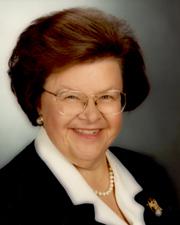 Sen. Barbara A. Mikulski (D-MD)
Legislative Activity
Stay on top of the latest movement without scrolling through every action
Roll call votes on amendments in Senate: Amendment SA 2791 under the order of 12/2/2009, having achieved 60 votes in the affirmative, the amendment was agreed to in Senate by Yea-Nay Vote. 61 - 39. Record Vote Number: 355.
December 3, 2009
View full timeline
Roll call votes on amendments in Senate: Amendment SA 2791 under the order of 12/2/2009, having achieved 60 votes in the affirmative, the amendment was agreed to in Senate by Yea-Nay Vote. 61 - 39. Record Vote Number: 355.
December 3, 2009
Senate amendment agreed to: Amendment SA 2791 under the order of 12/2/2009, having achieved 60 votes in the affirmative, the amendment was agreed to in Senate by Yea-Nay Vote. 61 - 39. Record Vote Number: 355.
December 3, 2009
Considered by Senate. (consideration: CR S12265)
December 3, 2009
Amendment SA 2791 under the order of 12/2/2009, having achieved 60 votes in the affirmative, the amendment was agreed to in Senate by Yea-Nay Vote. 61 - 39. Record Vote Number: 355.
December 3, 2009
Considered by Senate. (consideration: CR S12094, S12113-12152)
December 2, 2009
Considered by Senate. (consideration: CR S12021, S12025-12030, S12058-12060)
December 1, 2009
Senate amendment submitted
November 30, 2009
Senate amendment proposed (on the floor): Amendment SA 2791 proposed by Senator Mikulski to Amendment SA 2786.(consideration: CR S11986-11998; text: CR S11987)
November 30, 2009
Amendment SA 2791 proposed by Senator Mikulski to Amendment SA 2786. (consideration: CR S11986-11998; text: CR S11987) To clarify provisions relating to first dollar coverage for preventive services for women.
November 30, 2009
Votes
1 roll call on this amendment
Amendments
1 amendmentOffered to this amendment
Amendments
1 amendmentOffered to this amendment
Text
Proposed
SERVICE MEMBERS HOME OWNERSHIP TAX ACT OF 2009

The ACTING PRESIDENT pro tempore. Under the previous order, the
Senate will resume consideration of H.R. 3590, which the clerk will
report.
The legislative clerk read as follows:

A bill, (H.R. 3590), to amend the Internal Revenue Code of
1986 to modify the first-time home buyers credit in the case
of members of the Armed Forces and certain other Federal
employees, and for other purposes.

Pending:

Reid amendment No. 2786, in the nature of a substitute.

The ACTING PRESIDENT pro tempore. The majority leader.
Mr. REID. Mr. President, today is the beginning of one of the most
important debates in the history of our country. Today is the beginning
of one of the most historic times in the Senate. Our two chairmen,
Senators Baucus and Dodd, have spent months of their lives working on
the legislation that allows us to be where we are today. We now have
before us a bill that saves money, saves lives, and saves Medicare. It
is a bill, if you add in Medicare recipients, that will insure 98
percent of the people in America.
Mr. President, I note the absence of a quorum.
The ACTING PRESIDENT pro tempore. The clerk will call the roll.
The legislative clerk proceeded to call the roll.
Mr. REID. Mr. President, I ask unanimous consent that the order for
the quorum call be rescinded.
The ACTING PRESIDENT pro tempore. Without objection, it is so
ordered.
Mr. REID. Mr. President, one of the major goals of the Patient
Protection and Affordable Care Act is to lower Federal health care
costs and reduce the deficit. Our bill does that. According to the
nonpartisan Congressional Budget Office, this legislation would not add
a penny to the Federal deficit. In fact, it will reduce the deficit
over both the short term and the long term, over the long term by as
much as $650 billion.
In developing this bill with the Finance and HELP Committees, we were
determined to ensure that the legislation not only would reduce our
deficit and our debt but that it would do so without relying on
additional surpluses in the Social Security trust fund. This
legislation would increase revenues in the trust fund as workers' wages
rise. But those revenues are supposed to be for Social Security, so we
didn't touch a penny of them--they are all used for Social Security and
nothing else.
Likewise, about $70 billion in revenues over the first 10 years of
this bill flows from premiums paid into the new long-term care
insurance program known as the CLASS Act. Several Members came to me
and argued that none of these funds should be used for other purposes.
I agreed. After all, these premiums would be used to build up a fund
that later would be used to pay benefits. So, as with Social Security,
we didn't use any of the CLASS surpluses for other programs.
I think it is important that as the Senate considers changing the
legislation, we maintain our commitment to protecting Social Security
and CLASS surpluses. In both cases, all additional revenues are
dedicated to pay benefits. Diverting them to other purposes would not
be fiscally responsible, and it wouldn't be fair to Social Security or
to people who paid their CLASS premiums in good faith.
To help ensure we remain true to this commitment, I now ask unanimous
consent that all amendments to the pending bill be considered out of
order unless they are consistent with the following two principles: The
additional surplus in the Social Security trust fund generated by this
act should be reserved for Social Security and not spent in this act in
any other fashion; and No. 2, the net savings generated by the CLASS
program should be reserved for the CLASS program and not spent in any
other manner in this act.
The ACTING PRESIDENT pro tempore. Is there objection?
Mr. ENZI. Reserving the right to object, neither of these requests
are the requests I was just talked to about a minute and a half ago, so
I object.
The ACTING PRESIDENT pro tempore. Objection is heard.
Mr. REID. Mr. President, I think what he saw a minute and a half ago
is essentially the same thing, but I will recite this again.
I ask unanimous consent that no amendment be in order to the Reid
substitute amendment 2786 or a subsequent substitute amendment and H.R.

[[Page S11986]]

3590 if the additional surplus in the Social Security trust fund
generated by this act would be expended on other provisions of this act
and not reserved solely for Social Security, and the net savings
generated by the CLASS program in the underlying substitute amendment
and any subsequent substitute amendment are reserved solely for the
CLASS program provisions of this act.
The ACTING PRESIDENT pro tempore. Is there objection?
Mr. ENZI. Mr. President, in the weeks this has been sequestered
without us being able to review it and now having something that is not
understandable in the short period of time we have to do it here, I
have to object.
The ACTING PRESIDENT pro tempore. Objection is heard.
Mr. REID. Mr. President, I am sorry my friend objected. It is not too
difficult to comprehend that any Social Security surpluses should be
reserved for Social Security. It is not too difficult to comprehend
that all monies related to the CLASS Act would be reserved for paying
benefits for that. So I am disappointed that my friends on the other
side of the aisle are not interested in making sure Social Security
monies are not used and/or CLASS Act monies are not used for anything
other than those two programs.
Mr. President, I have another unanimous consent request.
The process for developing this legislation has been very
transparent. In fact, the hearings held in the Finance Committee were
done very publicly, and that is an understatement. For weeks and weeks,
members of that committee couldn't walk out of the room without being
questioned by the press. The press was present at most of their
meetings. So both the HELP and Finance Committees marked up their
legislation in public markups. Republican and Democratic members of
both committees offered numerous amendments, all of which were
available to the public. Republican and Democratic members voted for or
against those amendments in a public and transparent way, and each
committee member can be held fully accountable to their constituents
for all of those votes.
The merged bill before us is entirely consistent with the provisions
produced in those public markups. The bill has been fully available on
the Internet for about 2 weeks. So each and every American has had the
opportunity, if they wanted, to read the text of the legislation and to
communicate their views with their Senators.
One of the main reasons we have gone the extra mile in ensuring a
fully transparent process is because of the leadership of Senator
Blanche Lincoln of Arkansas. From the very start of this debate, she
has made clear to me that a transparent process and debate on this
critical issue is a top priority of hers. To that end, Senator Lincoln
said she would not allow a vote on the motion to proceed to this bill
unless it had been available to the public for a reasonable period of
time. She was joined by virtually everyone on this side of the aisle to
that effect. They were right. The people did deserve a chance to see
the bill before that vote, so we were sure to give them that chance.
The Senator deserves credit for that, and I appreciate her standing up
on that issue.
She believes--and I agree--that we can do more on the transparency
front as this bill moves forward to the next stage of this process;
therefore, Senator Lincoln has asked me to propound on her behalf a
unanimous consent request.
I ask unanimous consent that no amendment be in order to the Reid
substitute amendment No. 2786, a subsequent substitute amendment, or
H.R. 3590 unless the text or Internet link to the text of the amendment
is posted on the home page of the official Senate Web site of the
Member of the Senate who is sponsoring the amendment prior to the
amendment being called up for consideration by the Senate and the
amendment is filed at the desk. Further, that this unanimous consent
agreement shall be in effect for the duration of the consideration of
H.R. 3590.

The ACTING PRESIDENT pro tempore. Is there objection?
Mr. ENZI. Mr. President, in light of some of the trust problems and
transparency problems we have, and while it appears to lead to greater
transparency, we can also see ways that this can limit the ability for
the minority to offer amendments. Therefore, I object.
The ACTING PRESIDENT pro tempore. Objection is heard.
Mr. REID. Mr. President, this is not a good way to start this debate.
No. 1, there is an objection to the moneys in Social Security being
protected and, No. 2, to the moneys in the CLASS Act being protected.
That was also objected to.
Finally, Senator Lincoln's request, which I support 100 percent,
indicating that amendments should be filed on a Member's Web site--that
doesn't sound too outlandish--and filed at the desk before they are
offered, sounds pretty fair and square to me. I am disappointed this is
the way the debate started.
Mr. President, there is an order before the body that there will be
two amendments in order today. One will be offered by the Democrats and
one will be offered by the Republicans. The one to be offered by the
Democrats will be offered by the distinguished Senator from Maryland,
Barbara Mikulski, who I had the good fortune of serving with in the
House of Representatives. She and I came here together in 1986 when we
were elected to the Senate. She is a Senator I have such great respect
and fondness for. We have been literally together and, because of our
seniority, I am always one step behind her. Frankly, most people are a
step behind the Senator from Maryland. The amendment she is going to
offer is very sound and good. She will explain it in detail. It expands
women's health services. We had a consternation about mammograms a
couple weeks ago, and this will put that all to rest.
I express my deep appreciation for the leadership of the Senator from
Maryland on this issue and on so many other issues she is involved in.
As I have indicated, the managers of the bill on our side will be
Senators Baucus and Dodd. We look forward to a rigorous debate. With
the consent of my friend from Wyoming, I ask that the Senator from
Maryland be recognized.
Mr. ENZI. Mr. President, I was hoping I would have a chance to
comment on the things I had to object to so I can give a more full
explanation. I am happy to wait.
Mr. REID. Mr. President, there is no need to cut the Senator off. I
have indicated to my staff earlier today that there is no one easier to
get along with in the Senate than the Senator from Wyoming. I would
never, ever cut him off intentionally. If there is anything he wishes
to say, he should say it. If the Senator from Maryland will withhold
for a moment, the Senator from Wyoming wishes to speak for a brief
period of time.
The ACTING PRESIDENT pro tempore. The Senator from Wyoming is
recognized.
Mr. ENZI. Mr. President, I cannot be brief on what just happened
here. I will let the Senator go ahead. Frankly, I am a little upset
about what has happened--combining a couple of unanimous consent
agreements so that part of it would be acceptable and part would not
be, leaving out the most important one, which is that we wouldn't take
Medicare money from Medicare, and then not having much time to
consider, or to rewrite, or to do anything with those. I have a lot of
comments I wish to make on that, plus a general statement on the bill,
which fits in with what just happened. I will defer to the Senator from
Maryland.
The ACTING PRESIDENT pro tempore. The Senator from Maryland is
recognized.

Amendment No. 2791 to Amendment No. 2786

Ms. MIKULSKI. Mr. President, I have an amendment at the desk.
The ACTING PRESIDENT pro tempore. The clerk will report.
The assistant legislative clerk read as follows:

The Senator from Maryland (Ms. Mikulski), for herself, Mr.
Harkin, Mrs. Boxer, and Mr. Franken, proposes an amendment
numbered 2791 to amendment No. 2786.

Ms. MIKULSKI. Mr. President, I ask unanimous consent that reading of
the amendment be dispensed with.
The ACTING PRESIDENT pro tempore. Without objection, it is so
ordered.
The amendment is as follows:

[[Page S11987]]

(Purpose: To clarify provisions relating to first dollar coverage for
preventive services for women)

On page 17, strike lines 9 through 24, and insert the
following: ``ance coverage shall, at a minimum provide
coverage for and shall not impose any cost sharing
requirements for--
``(1) evidence-based items or services that have in effect
a rating of `A' or `B' in the current recommendations of the
United States Preventive Services Task Force;
``(2) immunizations that have in effect a recommendation
from the Advisory Committee on Immunization Practices of the
Centers for Disease Control and Prevention with respect to
the individual involved; and
``(3) with respect to infants, children, and adolescents,
evidence-informed preventive care and screenings provided for
in the comprehensive guidelines supported by the Health
Resources and Services Administration.
``(4) with respect to women, such additional preventive
care and screenings not described in paragraph (1) as
provided for in comprehensive guidelines supported by the
Health Resources and Services Administration for purposes of
this paragraph.''.

``Nothing in this subsection shall be construed to prohibit a
plan or issuer from providing coverage for services in
addition to those recommended by United States Preventive
Services Task Force or to deny coverage for services that are
not recommended by such Task Force.''.

Ms. MIKULSKI. Mr. President, before I go into the contents of my
amendment, I thank the Senator from Wyoming for his unfailing courtesy
to allow me to proceed to offer my amendment. I have worked with the
Senator from Wyoming on the Health, Education, Labor and Pensions
Committee, and have often valued his sound counsel and steady hand as
we have moved complex legislation. His considerable experience as an
accountant and his commitment to the stewardship of Federal funds have
often added to the consideration of legislation. As we move forward on
both debating and refining the health care reform bill before us, I
look forward to working with him. Again, I thank him for his courtesy.
I also want to acknowledge the Democratic leader and wish to support
him for bringing something called the ``merged'' bill to the floor,
which took the best elements of both the Finance Committee and the HELP
Committee and brought them forth.
I believe the overriding bill before us is an excellent bill. No. 1,
it expands universal access to health care that will now cover over 90
percent more Americans. It will end the punitive practices of insurance
companies, particularly in the area of gender, age discrimination, and
preexisting conditions. It also stabilizes and makes Medicare secure
and, at the same time, it begins to bend the cost curve by following
innovative practices related to quality control and prevention.
I think the overriding bill is an excellent one. I congratulate the
manager of the bill on the floor, the Senator from Montana, Mr. Baucus,
chairman of the Finance Committee, for the excellent work his committee
did, for bringing in a great bill that establishes new ideas, such as
medical homes, emphasizing primary care and prevention, and at the same
time accomplishing the objectives I have mentioned.
However, as I reviewed the bill, I felt we could do more to be able
to enhance and improve women's health care. That is what my amendment
does. The essential aspect of my amendment is that it guarantees women
access to lifesaving preventive services and screenings.
This amendment eliminates one of the major barriers to accessing care
in the area of cost and preventive services. It does it by getting rid
of, or minimizing, high copays and high deductibles that are often
overwhelming hurdles for women to access screening programs. We know
that screening is important and early detection is important because it
saves lives. But it also saves money. It does it by reducing the top
diseases that are killing women today, or certainly impairing their
lives.
Today, according to the CDC, the top killers of women are cancer--
breast cancer, cervical cancer, colorectal cancer, ovarian cancer. Also
upfront and high on the list is lung cancer which, if identified early,
can be treated with less invasive procedures and with lower costs.
Another top killer of women is heart and vascular disease. And then
there are the silent killers that often go undetected, such as
diabetes, which can result in terrible consequences, such as the loss
of an eye, the loss of a limb, or the loss of a kidney.
We now have screenings that are proven to detect these diseases
early. Guaranteed access to these screenings, as I said, will save
money and lives.
If we look at where women are today, we find women often forgo those
critical preventive screenings because they simply cannot afford it, or
their insurance company won't pay for it unless it is mandated by State
law. Many women right now don't have insurance at all--seventeen
million women in the United States of America are uninsured--or when
they are insured, they have to pay large out-of-pocket expenses.
Three in five women have significant problems paying their medical
bills. Women are more likely than men to neglect care or treatment
because of cost. Fourteen percent of women report they delay or go
without needed health care. Women of childbearing age incur 68 percent
more out-of-pocket health care costs than men, simply because of the
maternity aspect.
Women are often faced with the punitive practices of insurance
companies. No. 1 is gender discrimination. Women often pay more and get
less. For many insurance companies, simply being a woman is a
preexisting condition. Let me repeat that. For many insurance
companies, simply being a woman is a preexisting condition. We pay more
because of our gender, anywhere from 2 percent to over 100 percent. A
25-year-old woman is charged up to 45 percent more than a 25-year-old
male in the same identified health status. A 40-year-old woman is
charged anywhere from 2 percent to 140 percent more than a 40-year-old
man with the same health status for the same insurance policy.
What does my amendment do? It guarantees access to those critical
preventive services for women to combat their No. 1 killers. We will
provide these services at minimal cost.
The overall cost of my amendment has been scored by CBO. It says the
cost is $1 billion. The majority leader, the Democratic leader, has
provided opportunities to meet this cost. This amendment eliminates
this big barrier of copayments and deductibles.
Let's talk about the benefit package. This benefit package is based
on HRSA recommendations. It is based also on the recommendations of
CDC. If this amendment passes, women will have access to the same
preventive health services as the women in Congress have. If this
passes, again, the women of America will have access to the same
preventive services that we women in Congress have.
What does that mean? It means a mammogram, if your doctor says you
need it; screening for cervical cancer, if your doctor says you need
it; that check on diabetes, if your doctor is worried about you; and
along with the symptoms related to menopause, there are other things,
such as a loss of weight; and they may want to know at this juncture if
you have diabetes. If you know that at 40, you are less likely to need
kidney dialysis when you are 60.
The pending bill doesn't cover key preventive services, such as
annual screenings for women of all ages to focus on our unique health
needs. We know that for many people--for example, there are 15 million
people in America with diabetes, and half are women. Often pregnant
women with diabetes don't get the proper prenatal care. Heart disease
is one of the top two leading causes of death in women--cancer and
heart disease. Every year, over 267,000 women die from heart attacks.
Women are generally unaware of their heart risks.
My amendment would, again, ensure heart disease screening for women.
Remember that famous study that said ``take an aspirin a day to keep a
heart attack away.'' It was done on 10,000 male medical residents, and
not one woman was included. Thanks to a bipartisan effort, Bernadine
Healy, NIH, and the women of the Senate, supported by the good guys of
the Senate, were able to get that screening for women, get that
evaluation. We know we manifest things differently than guys do. Now we
are on our way to detection--if you can afford to have a doctor and if
you can afford to have the screening.
My amendment also guarantees screenings for breast cancer--yes, for

[[Page S11988]]

mammograms. We don't mandate that you have a mammogram at age 40. What
we say is discuss this with your doctor. But if your doctor says you
need one, you are going to get one.
Studies have found mammogram screening decreases breast cancer among
women by over 40 percent. Regular Pap smears reduce cervical cancer by
40 percent. This year, over 4,000 women will die of cervical cancer.
My amendment does focus on women's health needs. Keeping a woman
healthy not only impacts her own life but that of her family. It
impacts her ability to care for her child or an aging parent.
Early detection saves money by treating diseases early. Screening
tests for breast and cervical cancer cost about $150, but the treating
of advanced breast cancer is over $10,000 and can even go much higher.
The treating of early stages of cervical cancer is $13,000 and can go
much higher.
My amendment also leaves the decision of which preventive services a
patient will use between the doctor and the patient. The health reform
debate is focused on what you should have when. We agree. Decisions
should be made in doctors' offices, not in the office of a Member of
Congress or the office of an insurance executive. The decision about
what is medically appropriate and medically necessary is between a
woman and her doctor.
The authors of the bill have done a very good job in protecting women
in many areas. This actually refines and improves this particular
issue. That is why I support the overall health reform bill providing
universal access to health care for over 90 percent of the American
people, ending those punitive practices of the insurance companies,
stabilizing and strengthening Medicare, and improving quality in public
health by using innovation and preventive services and quality. We can
pass a health reform bill.
I conclude by saying that we will end the confusion about what is
needed in the area of preventive health services for women when our
coverage is often skimpy and spartan. We want to make sure what we do
enables us to have access to these comprehensive services.
I hope this amendment is adopted unanimously. I believe good people
on both sides of the aisle will believe in its underlying premise: that
early detection and screening save lives and save money.
Often those things unique to women have not been included in health
care reform. Today we guarantee it and we assure it and we make it
affordable by dealing with copayments and deductibles in a way CBO
believes is fiscally achievable. In the long run, I think by doing this
it will mean a lot to families, and it will mean a lot to the Federal
budget.
Mr. President, I yield the floor.
The ACTING PRESIDENT pro tempore. The Senator from Montana.
Mr. BAUCUS. Mr. President, before I give a statement on the bill, I
wish to compliment the Senator from Maryland for standing up for and
essentially helping the health care of women. As she has pointed out,
women are discriminated against today in America in various ways. Her
amendment addresses some of that discrimination. I very much appreciate
that. I know all women in the country do. I do, too. I have a mom. I
have sisters. I have women in my family, and I very much care.
I don't know if she made this point, but about 80 percent of health
care decisions made for families are made by women. It is all the more
important women are not discriminated against, partly because they make
so many decisions that affect health care for Americans, but second,
women themselves are often discriminated against. Some States have
gender ratings which discriminate against women. In other States a
preexisting condition is a factor that discriminates against women.
I thank the Senator from Maryland. She has hit the nail on the head.
It is another reason this health care reform is going to mean so much
for so many Americans. I personally very much thank the Senator from
Maryland.
In the Presidential campaign of 1912, Theodore Roosevelt's platform
said:

We pledge ourselves to work unceasingly in State and Nation
for . . . the protection of home life against the hazards of
sickness . . . through the adoption of a system of social
insurance adapted to American use.

Today, nearly a century later, we are closer than ever to enacting
meaningful health care reform.
As in Teddy Roosevelt's time, we seek protection against the hazards
of sickness. Of necessity we seek a system uniquely adapted to American
use. And recognizing the daunting task still ahead of us, we pledge
ourselves to work unceasingly to get the job done.
In the years since Teddy Roosevelt, some of our Nation's greatest
leaders signed up for this job. But at the same time, we have never
faced a greater need to get the job done than we do today.
Why is that? Basically because health care costs are skyrocketing out
of control. Every day American businesses are forced to cut benefits
for their workers. Why? To remain competitive in the global
marketplace. Every 30 seconds another American files for medical
bankruptcy. Just think of that. Every 30 seconds another American files
for medical bankruptcy. Every year, about 1.5 million families lose
their homes because of health care costs. Our system is in crisis.
We have a historic need and we have a historic opportunity. We have
an opportunity to enact groundbreaking reform that will finally rein in
the growth of health care costs and help bring financial stability back
to American families and businesses.
Unfortunately, there are some who stand in the way. Unfortunately,
there are some who are spreading misinformation about how health care
reform will work. On this very floor I have heard arguments that health
care reform is about the government trying to take over health care.
That is false.
The truth is, health care reform is about allowing patients and
doctors to take back control of health care. We need to allow patients
and their doctors together to take back control from the big insurance
companies.
Our plan would not increase the government's commitment to health
care. But don't just take my word for it. The nonpartisan Congressional
Budget Office says:

[D]uring the decade following the 10-year budget window,
the increases and decreases in the federal budgetary
commitment to health care stemming from this legislation
would roughly balance out, so that there would be no
significant change in that commitment.

That is right, health care reform will not increase the Federal
Government's budgetary commitment to health care.
I have also heard it argued that health care reform will increase the
budget deficit. That, too, is false--plainly, patently false.
The bipartisan Congressional Budget Office says our plan would reduce
the Federal deficit by $130 billion within the first 10 years--reduce
the deficit in the first 10 years. That trend would continue, the CBO
says, over the next decade. During the next decade, CBO says our bill
would reduce the deficit roughly $450 billion. That is nearly one-half
trillion dollars in deficit reduction, according to the Congressional
Budget Office, in the second 10 years.
I have also heard it argued that health care reform will raise taxes.
That, too, is false. In fact, health care reform will provide billions
of dollars in tax relief to help American families and small businesses
afford quality health insurance--tax cuts.
The Joint Tax Committee--again bipartisan and which serves both the
House and the Senate--tells us, for example, that our bill would
provide $40 billion in the tax cuts in the year 2017 alone--$40 billion
in tax cuts in the year 2017. The average affected taxpayer will get a
tax cut of nearly $450. The average affected taxpayer with an income
under $75,000 in 2017 will get a tax cut of more than $1,300.

Let me repeat that. The average affected taxpayer with income under
$75,000 in 2017 will get a tax cut of more than $1,300. They will also
get a tax cut in earlier years, but it ramps up to that amount in 2017.
In the same vein, I have heard claims that health care reform will
result in an increase in higher costs for Americans. That, too, is
false.
Health care reform will not result in higher costs for Americans.
Health care reform is fundamentally about lowering health care costs
and making quality health care affordable for all Americans. Lowering
costs is what health care reform is designed to do, lowering costs; and
it will achieve this objective. How? In many ways.

[[Page S11989]]

First, health care reform will end abusive practices by insurance
companies. Reform will stop insurance companies from denying coverage
or hiking up rates for those with a preexisting condition. We stop that
in this legislation. That will lower costs. Reform will stop insurance
companies from dropping coverage or reducing benefits for those who get
sick.
Those reforms protect consumers, and they will protect Americans and
reduce premium costs for Americans who are sick. These reforms will
also help lower costs for small businesses and their employees. Right
now, if one employee in a small business gets sick--just one--insurance
companies can double the premiums they charge the whole business. I
know that is true. I have heard that time and time again from small
business owners in Montana. That is just because one employee gets
sick, the insurance companies jack up premiums, double the premiums
they otherwise would charge the whole business. That is just wrong. We
stop that in this legislation.
How else do we lower costs in this bill? Health care reform will
provide billions of dollars in tax credits and reform will limit out-
of-pocket costs such as copayments that insurance companies are able to
charge. We limit them. This will also help to ensure Americans can
afford their total health care costs and not just their premiums.
That is very important. Premiums and out-of-pocket costs are both
addressed by this bill. It limits growth in premiums and also limits
growth in out-of-pocket costs. So total cost--premiums plus out-of-
pocket costs--for Americans will be lower under this legislation than
otherwise would be.
Third, health care reform will work to repeal the hidden tax of more
than $1,000 in increased premiums that American families pay each year
in order to cover the cost of caring for the uninsured.
Today, millions of Americans without health insurance are too often
forced to turn to emergency rooms to get the care they need, and then
health care providers shift the cost of that care to other Americans
with health insurance. People with insurance, therefore, pay higher
premiums. By providing quality, affordable health insurance to millions
more Americans, health care reform will reduce this hidden tax and
reduce premiums for all Americans--$1,000 per year per family due to
uncompensated care. That is that hidden tax. This bill will virtually
stop that hidden tax, stop that additional $1,000 that goes to average
family premiums.
How else do we reduce health care costs? By providing affordable
health care to more Americans which will increase the number of
Americans in the insurance market. Why? What is so good about that?
One reason is more people will have health insurance. But also it
will spread the risk of paying for an accident or disease more broadly.
Spreading the risk more broadly should lower premium rates for
everybody. It is a basic tenet of insurance.
Fifth, health care reform will reduce costs by cutting administrative
redtape. That is no small item. Today, insurance companies spend a lot
of time and money finding ways to discriminate against people. They
spend time and money to find ways to drop coverage, and insurance
companies pass those administrative costs on to all Americans in the
form of higher premiums. The figure I heard is about 18 percent of
American health care dollars is administrative costs. This legislation
would dramatically reduce that percentage to a much lower number. We
don't know to exactly what level yet but a much lower level. About 18
percent of total health care dollars go to pay administrative costs.
That is not the case in other countries. They pay 4 to 5 percent in
other countries. We have to get that down in America, and health care
reform will significantly achieve that result.
Health care reform will outlaw this discrimination, and also reform
will eliminate those administrative costs that go along with it.
Furthermore, health care costs will work to streamline administrative
procedures across the board by requiring standard enrollment forms and
marketing material through insurance exchanges. That, too, will help
streamline procedures. That, too, will help reduce administrative costs
for providing for standard enrollment forms and also standard marketing
materials through insurance exchanges. That is going to lower
administrative costs and make it much easier for a person to shop and
know which policy is best for him or her. With the other reforms we are
making competition is more on the basis of price not just underwriting,
a fancy term for denying because of a preexisting condition and putting
in all those extra escape clauses insurance companies often provide in
small print. In a letter released today, the Congressional Budget
Office said:

Compared with plans that would be available in the nongroup
market--

And they are referring there to the individual market--

under current law, nongroup policies under the proposal would
have lower administrative costs.

Let me say that again. Compared with plans that would be available in
individual markets--individuals seeking insurance--under current law,
individual policies under the proposal would have lower administrative
costs.
Lower, not higher. Lower.
Six--another way to reduce costs. Health care reform creates
insurance exchanges where consumers can easily shop and compare plans
to find the right coverage. Exchanges will make it easier for Americans
to choose the most efficient plans, and that will reduce their costs
and put pressure on insurance companies to offer lower cost, higher
quality plans.
Seven--still another way this bill reduces costs. Small business
insurance exchanges will allow small companies to pool together to
spread their risk and increase their buying power. More pooling
available for small business insurance exchanges--this will allow small
businesses to negotiate lower rates and provide more quality insurance
plans with lower premiums to their employees.
Eight. Health care reform will strengthen oversight and enforcement
measures to cut down on fraud, waste, and abuse in the health care
system. Fraud, waste, and abuse are estimated to cost our health care
system more than $60 billion every year. This bill will help reform our
system to reduce fraud, waste, and abuse, which eats up way too many
health care dollars.
Nine. Health care reform will move the focus of our system toward
efficiency and value with payment incentives that reward quality care--
not quantity and volume but reward quality care, reward outcomes. Over
the long run, paying doctors and other health care providers for
quality instead of quantity will reduce health care costs.
Ten. Health care reform will lower costs by working to change the
focus of our health care system from treating sickness to promoting
wellness. The big problem we have today is that we treat sickness. We
don't spend enough time promoting wellness. Reform will make critical
investments in policies that promote healthy living and help prevent
costly chronic conditions that drive up costs throughout the system.
These are just 10 examples of how health care reform will reduce
health care costs and lower premiums for American consumers. There are
many more, but these are those 10, as I said. On the other hand,
without reform; that is, without passing this legislation, costs are
guaranteed to continue to skyrocket out of control.
Since Congress failed to enact health care reform in the 1990s,
health care premiums have risen eight times faster than wages. Consider
that. Since the last time we attempted to pass health care reform--and
failed--in the 1990s, health care premiums have risen eight times
faster than wages. And if we don't reform our health care system now,
premiums will increase 84 percent in the next 7 years. And that is just
premiums. What about out-of-pocket costs? Those, too, will increase at
a rate much faster than wage increases.
Today, health care coverage costs the average American family more
than $13,000 a year, according to the Kaiser Family Foundation. If
current trends continue without reform, the average family plan will
cost more than $30,000 a year in the next 10 years. That is up from
$13,000 today to $30,000 10 years from now. And businesses could see
their health care costs double in that same time. Without reform, our
Nation's long-term fiscal picture is almost certainly unsustainable.

[[Page S11990]]

As Peter Orszag said when he was Director of the Congressional Budget
Office:

Rising health care costs represent the single most
important factor influencing the Federal Government's long-
term fiscal balance.

He was right. Without reform, instead of working to reduce our
national deficit and stabilize the Federal budget, we will see total
health care spending nearly double to encompass one-fifth of our gross
domestic product in less than 10 years. And the Congressional Budget
Office projects entitlement spending will double by the year 2050.
Without reform, millions of uninsured Americans will continue to
suffer. A Harvard study found that every year in America, lack of
health care coverage leads to about 45,000 deaths. People without
health insurance have a 40-percent higher risk of death than those with
private health insurance. You have a 40-percent higher chance of death
if you don't have health insurance compared with those who do. That is
46 million Americans at risk today because they do not have health
insurance. A recent Johns Hopkins study found that children without
insurance have a 60-percent higher risk of death than those with
private health insurance--a 60-percent higher risk of death than those
with private health insurance.
Another recent Harvard study found that the risk of dying from car
accidents and other traumatic injuries is 80 percent higher for those
without insurance--80 percent higher. The risk of dying from car
accidents and other traumatic injuries is 80 percent higher if you
don't have health insurance. In the greatest country on Earth, no
American should die simply because they do not have health insurance.
So, Mr. President, we are at a crossroads in history. We have a
historic opportunity to enact meaningful health care reform that will
work to stabilize our economy and provide quality, affordable health
care coverage for millions of Americans. We are not the first to be
here, but we have come further than ever before.
We laid the groundwork in the Finance Committee and the HELP
Committee. We held many hearings and countless hours of meetings on
health care reform. Each committee crafted meaningful legislation and
held exhaustive markups where we incorporated amendments from both
sides of the aisle. We produced balanced, meaningful legislation, and I
am proud--I am very proud--of the work both committees accomplished.
Now we have one health care plan before us in the Senate, two basic
bills merged together. We have an opportunity to debate that plan and
offer amendments to make it even better. Then we will be called upon to
vote.
The health care of our Nation is depending on us. The health care of
our economy is depending on us. History itself is depending on us to
answer the call. I am confident we will. I am confident we will at long
last answer the call of history. I am confident we will soon enact
meaningful health care reform that will lower costs and bring quality,
affordable coverage to millions of Americans.
The ACTING PRESIDENT pro tempore. The Senator from Wyoming.
Mr. ENZI. Mr. President, as I mentioned earlier following the
unanimous consent requests the leader made--who then introduced Senator
Mikulski so that she could do her amendment, which kept me from
commenting on the unanimous consent requests he made--I have to say I
think those unanimous consent requests would have to be put in the
category of a stunt. Unanimous consent usually means the two leaders
have gotten together and negotiated some kind of agreement that we
would abide by during this time. There was no agreement on this. Yet
they went ahead and did the unanimous consent request solely so they
could get the objection.
Nobody here, I am sure, wants to use Social Security money for
anything except Social Security. So the real key to the stunt was the
second one, which is the net savings generated by the CLASS program.
That is a long-term care program that wound up in the Health,
Education, Labor, and Pensions Committee bill.
The flaw with that particular amendment was that it collected money
for 10 years without spending any and then it wound up with a huge
liability. So we put in a little provision that it had to be
actuarially sound because, quite frankly, it is not very good
accounting to collect $70 billion in exchange for a $2 billion--excuse
me, $2 trillion--I get the b's and the t's mixed up here, because we
are talking about real money here--a $2 trillion bill. That is how much
we are going to have to pay out over the next 10 years to cover the $70
billion we accept in payments for this new kind of insurance that would
be provided. That kind of insurance is provided--it is provided in the
private sector--but for considerably more than what they were providing
for in the CLASS Act.
So that was to bring a little more attention to it, and I want to
bring a little more attention to it because I want people to take a
closer look at the way that winds up. It is a good idea that is not
paid for, and it is not paid for in such a way that it winds up, once
again, adding to the deficit but in some cagey ways.
As for having the amendments posted on the Web site before they are
given, I hope the initial version is posted on the Web site by
everybody before they do it. But one of the things that happens on this
floor is that occasionally a good idea can be built on by somebody from
the other side or even somebody from your own party, and when that
happens you can modify the amendment. I am not sure that agreement
wouldn't have prohibited any modifications to amendments, which is kind
of what we ran into in the Finance Committee when we were trying to do
amendments.
So good ideas--they need a lot more work. And to just throw those out
at the beginning and to have about 1\1/2\ minutes' notice that they are
going to be thrown out--I just don't think that is the right way to go
about this whole process.
I have been working on the Nation's broken health care system ever
since I entered the Senate more than 12 years ago, and I had high hopes
this would be the year the Democrats and the Republicans of the Senate
would work together to provide health insurance to every American. I
urged my colleagues to start with a blank piece of paper and develop a
bipartisan bill that up to 80 Members of the Senate could support.
Unfortunately, the majority leadership had other ambitions, because
the bill being debated today is a testament to a partisan ideological
vision. It appears that the drafters of this bill took to heart the
sentiments expressed by the Speaker of the House, who earlier this year
said, ``We won the election, we write the bills.'' And for a number of
weeks, the majority leader closed his door and wrote this bill on his
own terms without any input from many of his colleagues or anybody on
this side of the aisle.
This is a deeply flawed bill that fails to address the real needs of
the American people. Americans overwhelmingly want reforms that will
help lower their health care costs. Instead, this bill will spend $2.4
trillion when it is fully implemented and contains numerous provisions
that will actually drive up the costs millions of Americans pay for
their health care.
It is important to understand how we got here. At the beginning of
this process, the majority staff of the HELP Committee decided they
were going to draft a partisan bill based on the reforms that had
recently been adopted in Massachusetts. Republicans were shut out of
the process during the drafting of the HELP Committee bill. Rather than
working to resolve the difficult issues, the drafters of the bill
included over 200 separate instances where the bill gave the Secretary
of Health and Human Services the authority to make important decisions
about the types of health care plans millions of Americans can receive.
Rather than confronting and debating these important policies--getting
to the details, and the devil is always in the details--the majority
empowered unelected government bureaucrats to make decisions that will
affect the health care of every single American.
As a result of this partisan process, we were forced to file hundreds
of amendments. The chairman and other Democratic members of the
committee have repeatedly commented on the numerous amendments accepted
by the majority during the markup. At the

[[Page S11991]]

same time, they ignored the reality that most of these amendments were
merely technical corrections which were necessary because the
underlying bill was hastily written and filled with numerous drafting
errors. Unfortunately, nearly all of the accepted Republican amendments
merely tinkered around the edges. Almost all of the substantive
alternative-idea amendments suffered the failing fate of the party-line
vote. In 12 days of markup at HELP, we had 45 rollcall votes on
Republican-sponsored amendments and only 2 prevailed.
After the markup, the majority refused to release a final copy of the
bill for over 2 months, denying the American people the chance to see
what they had done. Once we finally got a copy of the bill, we learned
that majority staff had unilaterally made numerous changes to the bill,
in some cases undoing agreements that had been worked out by Members on
issues such as prevention and wellness.
While this was happening, there were also ongoing bipartisan
negotiations, led by Senator Max Baucus. And I have to congratulate him
for the process he started and got people involved in and for his
persistence and the amount of time he put into it. This dwindled down
to a Gang of 6. The Gang of 6 discussions were not an honest attempt to
try to develop a bipartisan health care bill that would offer real
solutions to the problems that face our health care system.
Ultimately, these negotiations failed to produce a bipartisan bill. I
do not believe the failure was due to a lack of effort on the part of
the participants but, rather, we were unsuccessful because the
Democratic leadership chose to impose arbitrary and unrealistic time
deadlines on the process that we commented on. The deadline slipped a
few times, moved up a week, and then became finalized. The decision was
made that it was more important to move fast than it was to get it
right, and the decision ultimately doomed our efforts.
This, in turn, led to another partisan markup where the Finance
Committee rejected most GOP health reform ideas. Proposals such as
medical liability reform were rejected on jurisdictional grounds, while
the chairman unilaterally included Democratic provisions that were
clearly within the jurisdiction of other committees. Republican
amendments were voted on and then unilaterally changed at the eleventh
hour--actually, 1:30 in the morning--by amendments offered by the
chairman.
The two bills were then merged, merged in secret, with no input from
the many Republicans who want to enact a bipartisan health bill. We now
have a 2,074-page bill that reflects many of the worst provisions from
both the HELP and the Finance Committee bills.
We did not need to end up here today with Republicans opposing a
partisan health care reform bill. The Senate should develop legislation
that will impact one-sixth of our Nation's economy and affect the
health of every American.
The former chairman of the Senate Finance Committee, Daniel Patrick
Moynihan, a Democrat from New York, once provided the following
perspective on how the Senate should consider major policy changes. He
said:

Never pass major legislation that affects most Americans
without real bipartisan support. It opens the doors to all
kinds of political trouble.

Chairman Moynihan noted that absent such bipartisan support, the
party that didn't vote for it would feel free to take shots at the
resulting program whenever things go wrong and a large segment of the
public would never accept it unless it was an overwhelming success.
Chairman Moynihan understood a partisan legislative process guarantees
that any glitches that occur in implementing the bill would provide
ammunition for future attacks; thereby, further undermining public
support of the new policies. There will, unfortunately, be plenty of
glitches if this bill is ever enacted.
The Reid bill will impose $493 billion in new taxes, and many of them
go into effect immediately. At same time, most Americans will not see
any insurance reforms or other potential benefits from this bill until
at least 2014. That leads to some interesting accounting.
The Reid bill will kill jobs and cut wages. The Congressional Budget
Office has told us the employer mandates in this bill will likely
result in lower wages and higher unemployment. These job and wage cuts
would hit low-income workers, women, and minorities the hardest. It is
hard to believe that with unemployment at a generational high,
Democrats would even consider putting more jobs on the chopping block.
The Reid bill mandates that Washington bureaucrats ration care. The
bill lays the groundwork for a government takeover of health care,
giving Washington bureaucrats the power to prevent patients from seeing
the doctor they choose and obtaining new and innovative medical
therapies.
I think that is attested to by the first amendment we have, the
amendment by the Senator from Maryland, because her amendment preempts
the provision in the bill that allows the U.S. Preventive Services Task
Force to determine what preventive services should be covered. This
amendment recognizes the problems associated with government
bureaucrats determining what benefits should be covered. The majority
realized it had a political problem when the U.S. Preventive Services
Task Force said that women aged less than 50 years old should not have
annual breast screening exams. This amendment doesn't do anything to
protect patients who might be denied access to preventive tests in the
future, such as prostate exams, colonoscopies, Pap smears, and so on,
if bureaucrats decide to deny access.
This bill also shows how this will never be a truly science-based
process. Bureaucrats will always have to respond to political pressure
for powerful constituencies.
I guess we are part of the powerful constituencies. If we decide
something should or should not be in there, that eliminates the
science-based part of it.
I understand what they are trying to do. In the HELP Committee, when
we were doing the markup, we did numerous amendments around this
clinical effectiveness research, to see what it was supposed to
eliminate from the health care for the person, separating them from
their doctor by making these science-based decisions.
We did a series of amendments and found there, evidently, are a lot
of things they are hoping will be precluded from people being able to
get. I invite people to take a look at those amendments. We may have to
try those again to see exactly where this process is going. I
appreciate the Senator from Maryland making an attempt to solve a part
of the problem, but I am having a little trouble with the reading of
the amendment itself. At any rate, enough of that.
The Reid bill spends millions--billions. There is that word again.
The Reid bill spends billions of taxpayer dollars on new pork-barrel
spending. The bill would build new sidewalks, jungle gyms, and farmers'
markets and creates a $15 billion slush fund for additional pork-barrel
projects, a real deviation from what the Appropriations Committee has
ever allowed.
This bill also fails to achieve the commonsense goals Republicans and
Democrats share. This bill even breaks many of the promises President
Obama has made about health care reform. President Obama repeatedly
called for a health care bill that will reduce costs. This bill will
actually drive up health care costs for millions of Americans as a
result of new mandates and taxes. President Obama has also said that if
Americans like the insurance they have, they can keep it. Under the
bill, millions of Americans will lose their employer-provided health
insurance.
President Obama promised not to raise taxes on individuals earning
less than $250,000 per year. The bill would impose several new taxes on
people who make considerably less than $250,000 a year.
President Obama said the health care reform would not increase the
deficit. This bill will not increase the deficit only if you believe
certain things. This bill will not increase the deficit if you believe
Medicare payments to physicians will be cut by 40 percent over the next
decade. I don't think anybody believes that.
The bill would reduce the deficit only if you believe Medicare
payments to other providers will be slashed to levels that endanger
patients' ability to get the care they need. No one believes that.

[[Page S11992]]

The bill will also reduce the deficit if you believe Congress will
allow a massive new tax to be imposed on middle-class tax payers. I
hope no one believes that.
If you don't believe Congress will allow all these things to happen,
then you can't believe this bill will reduce the deficit. President
Obama, in his remarks to the American Medical Association this summer,
acknowledged the need to address our out-of-control medical liability.
Rather than addressing this issue, this partisan bill preserves the
costly, dangerous, duplicative medical malpractice system.
President Obama finally said no Federal dollars will go to pay for
abortion. According to the National Right to Life and the Conference of
Catholic Bishops, the Reid bill fails this requirement as well.
Despite all these failures, it is still not the worst health care
bill in Congress. The Wall Street Journal got it right when they
described the House-passed bill as the worst bill in America. Even if
the Senate passed the bill before us today, it would still have to go
to conference with the House bill and any final bill would have to move
toward several provisions in the House bill and poll after poll
suggests that the American people are opposed to this bill, let alone
the wild one from the House.
If we cannot defeat this partisan bill and get back to work for the
American people and write a bill that garners the support of both
parties, doing it step by step so we can assure, for instance, the
seniors that Medicare money will only be spent on Medicare--that is one
of the pieces that ought to have been in that unanimous consent I
started talking about. That is not going to happen, though. They are
going to take a bunch of money out of there.
I think this legislation fails to meaningfully address these goals
and will stick the American people with a bill we cannot afford. I
believe we can do better, and we owe it to the American people to do
so.
I yield the floor.
The PRESIDING OFFICER (Mrs. Hagan). The Senator from Connecticut is
recognized.
Mr. DODD. Madam President, let me begin, if I may, by congratulating
the majority leader and my colleague and dear friend from Montana,
Senator Baucus, and members of the Finance Committee as well as the
members of the HELP Committee. As I said before, I am sort of an
accidental participant in all this, in the sense that the person who
should be standing at this desk and at this podium as the chairman of
the HELP Committee is, of course, our deceased colleague from
Massachusetts. I was filling in for him during the months of his
illness and managing the markup of the bill that produced part, half--
whatever the percentage is--of the combined legislation. All our
colleagues know, whether you agreed or disagreed with him, he
considered this issue to be what he called the passion of his public
life, to make a difference for all Americans when it comes to their
health care. So I know it is with a sense of sadness that, on the day
on which we begin this historic debate and discussion, he is not here
to participate--at least physically. We sense his presence, of course,
those of us who had the privilege of serving with him for so many
years, as Senator Baucus and I did, and worked with him on these many
issues. Of course, our colleague from Wyoming, Senator Enzi, and
Senator Grassley did as well over the years. I thank all members of the
committee.
It was a laborious undertaking. The Presiding Officer was very much a
part of that as well, during those many hours we gathered in the Senate
caucus room--the Russell caucus room now named the Kennedy caucus
room--in some 23 sessions, over many hours. But that was only the
culmination of an effort that began a long time ago.
Actually, the business of writing this bill began months and months
earlier. My colleague from Montana can appreciate the hours I know I
spent in meetings in his office, late into the evening, long before a
markup began. Long before any formal conversations and discussions,
there was a significant reaching out to our colleagues, to try to bring
us together and develop what we all hoped to be the case and still can
be the case; that is, a consensus bill, a bipartisan bill on health
care.
I know as a matter of fact here, beginning last fall, Senator
Kennedy, when he did have his strength, met on countless occasions with
members of the minority to try and navigate the minefield of health
care ideas, to see if it couldn't be possible to put together that kind
of a consensus bill.
I know our committee began a long process, beginning last winter, to
try to begin, long before the markup of this summer, to draft such a
proposal, having what they call a walk-through of legislation, going
through the various ideas and listening.
It was with some regret that I say this idea that the bill somehow
being jammed down people's throats, with little or no thought given to
other people's ideas and thoughts, is not borne out by the facts. I
have been here for many years. I have been through many markups over
three decades in this body on various committees. This effort was and
still remains an effort to try to bring us together about this issue,
which has such a massive impact on not only the individuals of our
Nation who go through the fear every day of wondering whether the
coverage they have will be adequate; and if they don't have that
coverage, whether an illness or tragedy could befall them that could
wipe out everything they have--not only today but for the rest of their
lives.
This journey begins. My hope is, before we have finished the task, we
will find that common ground that we each bear responsibility to try
and achieve.
Before we left for the Thanksgiving holiday, the Senate held a
landmark vote on whether we should even debate health care. I must say
a lot of attention was given to that. There must be a lot of confusion
in the minds of many Americans, wondering why we had to debate whether
we could debate. The one issue this body is known for is endless
debate. We are not limited, under our rules of the Senate, at least not
formally limited, by how much time we can consume when we want to talk.
The filibuster is a unique practice which only the Senate has. So we
had to vote as to whether we could actually have a vote. We had a
debate on whether we could have a debate on the subject matter that is
obviously of great concern, whether you agree or disagree.
I think all Americans agree the present system needs a lot of work.
The vote we took simply stated that after decades of inaction, despite
the efforts of others over the years, this time the Senate would not
fail to deliver the change the people we represent across America want
and need.
We now begin that long, overdue conversation over exactly what change
should look like in the area of health care. There are, as has been
made clear over the past months, many different opinions on the subject
matter, almost as many as there are Members of this body. I hope my
fellow Senators are ready to share their thoughts, listen to the ideas
of their colleagues and, most importantly, join together to act. The
legislation we present for debate is designed to fix the things that
are wrong with our system, while protecting and strengthening the
things that are great about health care in America. As I have heard my
colleague from Montana say on so many occasions, we are not out here to
design or copy what goes on in Canada or Europe or Australia or New
Zealand or any other country around the world. We are here to design an
American health care plan, an American plan, one we are forging after
listening to health care providers, our constituents, and others who
have great interest in the debate and discussion and who bring very
valuable facts to the table, as all of us, individually, even those not
on the committee, have listened over many weeks and months--in fact,
over many years that we have been debating this subject matter.
Our long history of innovation and discovery--cures, vaccines, and
treatments, discovered and produced right here in our own country, that
have saved countless lives here and around the world--is something for
which every American ought to be proud. Our legislation, this combined
bill, encourages that innovation so more groundbreaking medical
discoveries can be made in America.
In fact, one of the debates that occurred in the HELP Committee, as
my colleague and the Presiding Officer may recall, was on an amendment
offered by Senator Hatch--no technical

[[Page S11993]]

amendment--dealing with how to create a pathway for the Food and Drug
Administration to approve follow-on biologics and how many years of
exclusivity innovators should receive for their original product. We
had a heated debate in the committee. It went on for a day or so. In a
divided vote, the Hatch amendment was approved with bipartisan support
for this very critical and important issue. No technical change, I
might add, a significant part of this bill.
Our legislation recognizes that we do best by our citizens when the
public and private sectors work together. It has been our history in so
many areas, not just in this area.
Medicare, the ironclad commitment to take care of our seniors, dating
back to 1965, when Members who preceded us in this Chamber, in a heated
debate that went on for days, heated debate over whether we would have
a health care program for seniors, decided not on a partisan vote but
nearly as much, that there ought to be something called Medicare. It
took the poorest sector of our population, the elderly, and lifted them
out of poverty. Because we said: After their works on behalf of all of
us, their defense of our Nation in two world wars, and their
contribution coming out of a depression, we ought to be able to do
better by them when it comes to their health care needs, Medicare was
established. And despite what some critics have said, this legislation
protects and strengthens Medicare. I hope even our friends who have
taken to labeling government-run programs such as Medicare as socialist
takeovers will join us in keeping this important promise to our
seniors.
Of course, Americans are justifiably proud of and happy with our
workforce of dedicated health professionals, the doctors, specialists,
primary care physicians, compassionate nurses, dedicated medical
technicians, and family doctors all across the Nation who make a
difference every single day in serving the people of our Nation. This
legislation is designed to guarantee that you can get the care you need
when you need it from the doctor you like. Meanwhile, it will help that
physician spend less time filling out redundant paperwork and more time
taking care of you and your family. It will help you spend less time
fighting with your insurance company and more time getting better and
getting back on your feet again.
There are many things to like about our health care system in the
United States. This legislation doesn't change them. There are many
things that are wonderful about our health care system. I think it is
important at the outset to acknowledge that and to understand, again,
the quality of innovation that occurs, the compassionate work done by
health care providers in every community. In my State, there are 31
hospitals, all nonprofit hospitals, in the State of Connecticut. I have
visited all of them over the years, but I have gone back recently and
almost completed a round of going to see them all about this bill,
sitting down with rural hospitals in northeastern Connecticut to major
urban hospitals in Bridgeport and Hartford. I wish I could take
everyone with me to see what everyone does. I know this is the case in
other States where people do a remarkable job every day. If you show up
in a hospital, they treat you. No one gets turned away. It is a
wonderful thing about our health care system, the people who work in
them every single day, reaching out to try and make a difference in the
lives of these individuals, and how frustrating it is for these health
care providers.
I met with a group of ophthamologists in Hartford. One doctor was
telling me how a family came to him the other night with a child that
clearly needed a medical device and technology and knowing what a
difference it could make for her. Yet that insurance company said: No,
you can't do it; we don't provide that kind of coverage. The
frustration that doctor expressed because he couldn't provide what that
family needed. They didn't have the resources financially to pay for
it, and they were being turned down. That child could not get that
help. Under our bill that won't happen, if we can get this legislation
done. Examples like that child happen every day across this great
country of ours.
The high cost of health care has bankrupted millions of families. The
system, in many ways, despite its strengths, is broken in too many
places as well. Without reform, health care will continue to eat up
larger and larger shares of budgets--the Federal budget, State budgets,
business budgets and, of course, family budgets. Budgets, particularly
family and business budgets, are at breaking points. The high cost of
health care has bankrupted millions of families, shuttered the doors of
businesses, forced States to make impossible choices, and put
unimaginable strain on the Federal bottom line. If we don't address the
skyrocketing cost of health care, more and more families, more and more
businesses could lose everything and our deficit will explode. As bad
as it is today, it gets worse if we do nothing.
That is the bigger picture. But the reality of our broken system can
be captured by the tragedies that play out in American homes every
single day. As we have discussed, tens of millions of our fellow
citizens who don't have health insurance at all go to bed every single
night knowing that if they wake up sick or their children wake up ill
or in need of medical care, they might not be able to see a doctor to
get the medical care they need. Many of these Americans don't have
insurance because they can't get insurance, they have a preexisting
condition, and no insurance company wants them on their rolls.
There are even more Americans who do have insurance but can't be sure
of anything these days when it comes to their health care. They are
paying more and more in premiums, twice what they paid even a decade
ago. Yet they are getting less and less and less coverage for their
money. They lie awake at night wondering, what if I lose my job, as
many have over these last number of weeks and months, what if I get
sick and find out my policy doesn't cover the care I need or, even
worse, my insurance company cancels my policy altogether. What if I run
out of benefits and have to pay out of my pocket. These are not
irrational fears. They are anything but irrational fears. Millions of
our fellow citizens have them every single day, and these nightmares
come true for far too many of our citizens. People lose their homes
because they get sick. People die because they can't afford care.
This does not happen to the 8 million of us who are Federal
employees, all of us who serve in this body and the 435 who serve in
the other body. Like all Federal employees, we have a special
marketplace. Every year each one of us gets to choose from a long menu
of insurance options. We sit down. We pick a plan that makes sense for
us and our families, and we know the coverage we have chosen will be
there when we need it. Every American should have the same opportunity
as the people who represent them in the Halls of Congress. That is what
our bill tries to do.
For too long health insurance has been a seller's market. Depending
upon where you live, you may or may not have more than one option or
two options to choose from. Sometimes there aren't any good options at
all. You pay whatever the insurance companies want to charge you, and
you get whatever coverage they feel like giving you. You are covered
only until they decide they don't want to cover you any longer. By the
way, if you lose your job, or if you want to change your job, if you
want to start a business, if you want to move, you could lose your
coverage entirely.
Our bill is designed to help you get a better deal and empowers every
American family to pick the plan that works for them, creating a real
marketplace, like the one Federal employees have, that members of
congress have, with multiple insurance companies competing for your
business and a real choice for you and your family. If you like what
you have now, great, keep it. If you don't, you will have more and
better options to consider. If you are one of the millions of uninsured
Americans who has been denied coverage because of a preexisting
condition, you will immediately have access to affordable coverage so
that you will have insurance while this marketplace is being
established. In that marketplace, you will finally have a chance to
find affordable insurance that works for you and your family. No matter
who you are or which plan you choose, you will have less expensive
options. Insurance will be available regardless of your age or your
health. And once you

[[Page S11994]]

have it, the insurance company won't be allowed to take it away. You
stay covered even if you lose your job, even if you move, even if you
get sick.

On the day this bill is enacted, health insurance becomes a buyer's
market, not a seller's market. That is as American as apple pie, having
choices, good old competition out there. So little of it exists today.
Our bill is designed to promote and create more of it. When businesses
have to compete for your business, we all do better. Businesses do well
and, obviously, the consumer has better choices. As other pieces of the
legislation begin to take effect, our health care system will become
less expensive and more responsive to the needs of the American people.
Because American families and businesses literally can't afford more of
the status quo, our bill makes health care more affordable.
According to the Congressional Budget Office, if you are buying
health insurance in the individual market under the senate bill,
premiums may be up to 20 percent lower than equivalent coverage today.
According to CBO, if you are buying health insurance in the individual
market, you could see premium costs be as much as 20 percent lower than
what they are today. If you are working for a small business, according
to CBO, your premiums may be up to 11 percent lower than what they are
today. And according to the Congressional Budget Office, if you work
for a large employer, which five out of six Americans do, your premiums
could be lowered by as much as 3 percent. In every single category--
individuals, small businesses, as well as large employers--premium
costs come down under our bill, according to the Congressional Budget
Office.
Compare that to the status quo of doing nothing or defeating this
bill. I can't speak for every State, but I suspect these numbers are
probably pretty much true across the country. In Connecticut, in the
year 2000, a family of four paid on average around $6 to $7,000 a year
in health care premiums. Today that same family in my State, 9 years
later, is paying over $12,000 for that same coverage. And if we do
nothing in the coming days, those numbers will jump to around $24 to
$25,000 in 7 years and as much as $35,000 in 10 years.
Compare that with what we offer here in this bill. The CBO says we
can actually lower premium costs in the individual market, the small
group market, and the large group market. That is what is in this bill.
That is why it is deserving of our support.
Because investing in keeping people well is more cost effective than
waiting to treat them when they get sick, this legislation puts a focus
on prevention. Let me pay a particular tribute to Senator Tom Harkin,
now chairman of the HELP Committee, who spent a long time on the
prevention piece of this bill, as I know the Finance Committee did as
well, combining efforts to encourage more effort in reducing the
tremendous problems that are associated with four or five illnesses
that consume about 70 or 75 percent of the health care dollar. You
can't wipe them out altogether, but by working on prevention, dealing
with obesity, smoking, cardiovascular problems, you can make a
difference in those areas alone.
I know my fellow members of the HELP Committee, we passed
legislation--and my good friend Mike Enzi was a part of this and a
strong supporter on the floor of this body--when for the first time in
America history, the Food and Drug Administration can now regulate
tobacco products. They can regulate mascara, cat food, dog food, men's
cologne, all of those things get regulated, but tobacco did not. We
changed that. We finally have regulation of the sale, marketing, and
the production of tobacco products by the Food and Drug Administration.
That is $180 billion a year in health-care related costs. Four hundred
thousand people die every year from smoking-related products; 3,500
young people today will start smoking in the United States; 1,000 will
become addicted for life, 3,500 a day just in that one area. If we can
reduce people's dependency on those products, if we can get people to
quit, if we can stop children from starting in the first place, what a
difference that can make for people all across the country. From
diabetes screenings to quit smoking programs to mammograms, you will be
able to get preventive care at no cost to you under this bill. That we
do right off the bat so you can stay well even if your family is not
wealthy.
Because our seniors should be able to afford the prescriptions they
need to stay healthy, this bill will shrink the Medicare Part D
doughnut hole, giving seniors a 50-percent discount on medications.
That is a huge savings to our people. Because 200 million American
adults don't have insurance protection in place to handle the cost of
long-term services and supports, our bill creates a new program that
will give American families peace of mind, help working people who are
also taking care of a loved one, and save Medicaid dollars in State and
Federal budgets.
Because we need our small businesses to do what they do best--create
jobs--our bill alleviates their burden by providing a tax credit to
help them cover the cost of providing health care to their employees,
as so many of them want to do. And because a buyers' market depends on
educated buyers, our bill will empower consumers by eliminating the
fine print in insurance policies. You will be able to make an apples-
to-apples comparison when shopping for health insurance.
Again, according to the Congressional Budget Office, families and
businesses will save money because this new marketplace will bring down
administrative costs, ensuring you get the most out of your premium
payments and increased competition for your business--competition that
is increased even further with a strong public option as well.
The analysis confirms that if you like the plan the way it is, the
bill explicitly provides that you will be able to keep it. In fact,
just so we are clear, let me quote from the CBO, the Congressional
Budget Office, analysis released today. I quote them:

[I]f they wanted to, current policyholders in the nongroup
market would be allowed to keep their policy with no changes,
and the premiums for those policies would probably not differ
substantially from current-law levels.

The CBO estimates that as the marketplace gets up and running, the
deficit will go down by $130 billion in the first 10 years after this
bill passes and by $650 billion more in the second decade.
This bill lets you keep your insurance if you like it, this bill
protects seniors, this bill gives families more choice, and this bill
saves money.
While I hope we can keep our facts straight, let me say at the outset
that I expect this to be a full, open, and at times passionate debate
in this Chamber, as it should be. This is an issue that represents a
full one-sixth, as you have heard already, Madam President, of our
economy, and it affects every single one of our citizens. Still, I
understand that no matter how patiently and thoroughly we discuss this
issue, some will, of course, insist we are attempting to rush through a
piece of partisan legislation. Again, let's get our facts straight.
Thus far, between the two committees responsible for drafting this
bill, we have held more than 100 bipartisan meetings, devoted more than
20 days toward the amendment process, considered more than 400
amendments, and, despite what I have heard, we accepted 170 amendments
offered by the minority, including some very substantive ones. Clearly,
there were technical ones. I am not suggesting otherwise. But to
suggest that all of these were such is not to portray an accurate
picture of what occurred. The legislation we will now debate was made
available online 72 hours before even a procedural vote was cast.
Well, Madam President, I am committed to ensuring every Senator has
the opportunity to offer his or her suggestions. That is what we did in
our committee. It took a long time. But while people may not have been
happy with the final outcome, I believe people ought to have an
opportunity to be heard and their ideas to be vetted here and to
engage, I hope, in a civil debate, a passionate but civil debate, not
to engage in the ad hominem personal attacks that too often have
contaminated debate but, rather, you ought to stand or fail based on
the soundness of your ideas.
My dear friend Ted Kennedy spent a lifetime, as I said at the outset
of these remarks, fighting for every American's right for decent health
care. It is a cause I know we all support. This is our chance to get it
right.

[[Page S11995]]

This moment calls for commonsense problem-solving that cuts the cost
of health care, protects patient choice, and ensures every American
gets the care they need when they need it, from the doctors and
providers of their choice.
This moment calls for compassion. We must finally hear the cry of the
child whose ear infection goes untreated because his or her parents
cannot find jobs and cannot afford a doctor; the voice of the small
business owner who must choose between laying off workers and cutting
off health benefits for them; the call of future generations who will
see the rising tide of health care costs become a tsunami if we do not
act in these days.
Perhaps most of all, this moment calls for courage. This bill does
not necessarily guarantee a tickertape parade or a lot of applause
lines. There are some very tough choices in this bill.
With the possible exception of the public option and a few other
items, I suspect that if the roles were reversed here and we were
sitting in the minority and our friends on the other side were in the
majority, frankly, the bill we would be considering today might not be
substantially different because, frankly, the options are not unlimited
as to how to deal with costs and increased access and prevention. Yes,
there are differences. I accept that and understand that. But the kinds
of choices Senator Baucus and his committee made, and the ones we
considered in our committee, were ones I believe most of my colleagues
believe generally have to be dealt with: the quality of care,
strengthening our workforce, dealing with the delivery system,
increasing prevention and wellness in this country. What steps do we
take? We can differ over this item or that, but I believe we generally
believe these are items that must be part of a significant health care
proposal. So I suspect these bills, were the roles reversed, might not
be substantially different. It might not be that different.
Perhaps most of all, it is important we find the means to come
together. The road we are on, the status quo, leads to ruin, in my
view, for our economy and for our fellow citizens. The road to reform
is a long and difficult one, but we have taken so many unprecedented
steps just to come to this place. It is time now to finish the job.
So I am prepared--as I know our leader is and as I know my friend
from Montana, the chairman of the Finance Committee, is, as are the
members of that committee, as I believe most of our colleagues here--we
would like a legacy to be left long after we have departed this Chamber
that will say that in the first decade of the 21st century, when faced
with the daunting challenge of doing something positive to increase the
availability, increase the quality, and decrease the cost of health
care in America, this Congress rose to the challenge and met its
obligations. I feel optimistic we can achieve that.
Madam President, I yield the floor.
The PRESIDING OFFICER. The Senator from Montana.
Mr. BAUCUS. Madam President, I have a few small matters here before I
yield to my friend from Iowa.
First, I cannot thank my colleague from Connecticut enough. He has
worked so hard as the former chairman of the HELP Committee and now as
a very active participant in the HELP Committee, along with Chairman
Harkin. I cannot thank him enough. The Senator from Connecticut has
worked on health care in such a constructive way. I deeply appreciate
his efforts.
Before I give up the floor, I wish to pay my strongest compliments to
my colleague from Iowa, Senator Grassley. Senator Grassley is one heck
of a guy. He represents his State, in my judgment, very, very well. As
I am sure the Presiding Officer knows--certainly my colleague from
Connecticut knows--we have worked very closely together, Senator
Grassley and I, on a nonpartisan basis as much as we possibly can
because we both think--and I know most people think--good legislation
is legislation where you work together, not where you are fighting each
other.
Senator Grassley and I started out trying to get this bill put
together on a bipartisan basis working together. As it turned out, we
did not quite get there. But I know in the end he would very much like
to find a way to vote for health care reform, as most Members of the
Senate would.
I am an optimist. I think most of us in this body are optimists. I
have not given up yet. Who knows how this is going to evolve? Who knows
what the amendments are going to be? Who knows what the votes are going
to be in the next several weeks or so? But I am looking for an
opportunity where Senator Grassley and other very constructive Senators
will join us, all together, in a way, with a little give and take here,
perhaps, to find a solution.
So I just want to end by saying how much I appreciate the Senator. He
does a super job.
The PRESIDING OFFICER. The Senator from Iowa.
Mr. GRASSLEY. Madam President, I thank the Senator from Montana for
his kind remarks. He does describe the situation very well,
particularly one where there was a very close working relationship
during the summer and up until the middle of September, when people in
this body felt we were not moving fast enough to get a product before
the body, and so some of us were shoved to the side, not by Senator
Baucus but by other people in this body.
I also compliment Senator Dodd from this standpoint--that as I look
at this 2,074-page bill we call health care reform, that as he
described parts of this bill, I think you get a broad consensus that
the things he talked about should be done. But that does not describe
everything in this bill and it does not describe the opposition that
comes to a certain part of this bill now, not only by Members of the
body, but if you follow polls and town meetings around the country, you
find a lot of the people are having second thoughts about the words
``health care reform.''
I would suggest to you, if you were in a coffee shop in any small
town of the United States and they were talking about health care
reform, and I came into that coffee meeting and I said: The bill before
the U.S. Senate is going to raise premiums, it is going to raise taxes,
it is going to take hundreds of billions of dollars out of Medicare,
and it is not going to do anything about the inflation of health care,
I will bet you that people at the end of that would say: Well, that
doesn't sound like health care reform to me.
Even though Senator Dodd describes a lot of things that are neither
Democratic nor Republican nor even bipartisan, there is kind of a
consensus that these things ought to be done. He describes it
accurately. But, still, a lot of goals that were sought by those of us
who were negotiating these things over a period of several months--that
we ought to have it be revenue neutral--and on the 10-year budget
window, it is revenue neutral. But, remember, that is 10 years of
increased taxes and 6 years of program to make that happen. So you
raise the question, if it was 10 years of expenditures and 10 years of
income, would it be revenue neutral? Well, obviously not. And it does
not do anything about health care inflation. Those are two goals that
were sought over a long period of time. This 2,074-page bill does not
do that.
I believe the people of the United States think our country has the
best doctors and nurses in the world. But as Senator Dodd pointed out,
there is widespread agreement that the health care system in America
does have problems. Costs are rising three times the rate of inflation.
Americans are uninsured. Millions more fear losing their insurance in a
weak economy and because of preexisting conditions. Doctors are ready
to close their doors over high malpractice costs and low government
reimbursement. So everybody says we need health care reform. Everybody
agrees on that very much.
But, today, the Senate begins debate on a bill--2,074 pages--that
would make a bad situation worse. It is unfortunate that early efforts
to reach bipartisan solutions in Congress deteriorated into leadership-
driven, partisan exercises.
The bills in Congress slide rapidly down the slippery slope to more
and more government control of health care. They contain the biggest
expansion of Medicaid since it was created 43 years ago. They impose an
unprecedented Federal mandate for coverage, backed by enforcement
authority of the Internal Revenue Service. They increase the size of
government by $2.5 trillion when fully implemented. They give the
Secretary of Health and

[[Page S11996]]

Human Services extraordinary powers to actually define benefits for
every private health plan in America and to redefine those benefits
annually. They create dozens of new Federal bureaucracies and programs
to increase the scope of the Federal Government's role in health care.
That is a lot of power over people's lives, and it is concentrated here
in Washington, DC, in the Federal Government.
The excesses of the bill appear willfully ignorant of what is going
on in the rest of the economy outside of health care. These excesses
make the bill far worse than doing nothing.
At this point in our Nation's history, we are a nation facing very
challenging economic times--some people would say the great recession,
not quite the Great Depression; other people would say the worst
recession we have had since 1982. What have we seen? We have seen the
auto industry go into bankruptcy. We have seen banks shutter their
doors.

I have a chart that is up. We call it the wall of debt chart. The
Federal debt has increased by $1.4 trillion just since inauguration.
This chart shows the growing amount of debt the Federal Government is
taking on. The amount of increased debt added just since the
inauguration is $11,500 per household. It now exceeds $12 trillion for
the first time in history.
Within 5 years, the Obama administration's policies will more than
double the amount of debt held by the public, and by 2019 it will more
than triple the debt. That is not according to this Senator but
according to the Congressional Budget Office and the White House Office
of Management and Budget. Already, foreign holdings of U.S. Treasurys
stands at nearly $3.5 trillion or 46 percent of the Federal debt held
by the public. In other words, people outside of this country are
holding 46 percent of our Federal debt.
At the beginning of this debate, one of the key promises of health
care reform was--and I said this previously, but I will repeat it now--
that it would bring down Federal health costs. This needs to be done
before health spending sinks the Federal budget and saddles the
taxpayer.
I have another chart, a health spending chart or, more accurately, a
Federal health spending chart. As this chart illustrates, this bill
bends the Federal spending curve further upward by $160 billion over
the next decade. The red area of this chart, emphasizing the red area
of the chart, shows net additional Federal health spending--again, not
according to this Senator but according to the Congressional Budget
Office.
Americans have rightly lost faith when, in the face of the current
economic crisis--the ``great recession''--Congress thinks this $2.5
trillion restructuring of our health care system is a good idea.
The Reid bill also includes a government-run plan. A government-run
plan would drive private insurers out of business and lead to a
government takeover of the health care system. From rationing health
care to infringing on doctor-patient relationships, a government-run
system would guarantee U.S. taxpayers a staggering tax burden for
generations to come.
The government cannot be a regulator, a funder, and a competitor at
the same time without doing a great deal of damage to what the private
sector has been doing for 60-some years. A government-run plan is not
necessary for health care reform unless perchance the goal is to put in
place the power of the Federal Government to drive down costs by--how?
Not just driving them down but the consequences of that: rationing care
and slashing payments to providers. These problems are bad enough, but
much worse is that this bill--this bill--fails to solve the fundamental
problems in health care. None of them take serious steps to reduce
costs in health care.
The bills will cause health care premiums for scores of people to go
up, not down. An analysis just released this very day by the
Congressional Budget Office confirms our worst fears about the impact
this bill will have on people's health insurance premiums. According to
the Congressional Budget Office, the new benefit mandates and
regulatory changes will actually increase costs of nongroup health
insurance for individuals and families by 10 to 13 percent. That means
millions of people who are expecting lower costs as a result of health
care reform will end up paying more in the form of higher premiums. For
large and small employers that have been struggling for years with
skyrocketing health insurance premiums, the Congressional Budget Office
concludes this bill will do little, if anything, to provide relief.
In fact, they cover their increased premiums they cause by spending
even more on subsidies because of the increased premiums. So what
happens? They do this by handing over close to $500 billion in hard-
earned taxpayer dollars directly to health insurance companies. That
sure doesn't sound as though this bill is actually reforming the
market. The nonpartisan Congressional Budget Office analysis makes
clear the Reid bill is not fixing the problem.
The Reid bill also imposes new fees and taxes that will be pushed
directly to the consumer. These new fees and taxes will total about
one-half trillion dollars over the next few years. On the front end,
these fees and taxes will cause premium increases beginning next year
when they go into effect, and those new fees increase premiums--for 4
years; they are there for 4 years--before most of the reforms take
effect in 2014.
Then after forcing health premiums to go up, the legislation makes it
mandatory to buy health insurance. Let's think about mandatory health
insurance. The Federal Government is a government of limited powers
under the 10th amendment. To my knowledge--and I think I know a lot
about U.S. history--never in 225 years has the Federal Government said
you had to buy anything. You don't have to buy--you buy what you want
to buy in America, but not when this 2,054-page bill goes into effect.
Then you will buy health insurance.
Somebody is going to throw at us: Well, the States make you buy car
insurance, and probably most States do. My State of Iowa does. But
under the 10th amendment, the State governments have a lot of power the
Federal Government doesn't have.
The Reid bill also makes problematic changes to Medicare. It imposes
higher premiums for prescription drug coverage on seniors and the
disabled. The Reid bill creates a new independent Medicare board with
broad authority to make further cuts in Medicare, and this bill makes
that commission permanent. The damage this group of unelected people
could do to Medicare is, in fact, unknown.
What is more alarming is that so many providers got exempted--they
have political power, so they got exempted from the cuts this board
would make--that it forces the cuts. Then what happens? They fall
directly and disproportionately on seniors and the disabled.
Sooner or later, it has to be acknowledged that by making this board
permanent, those savings are coming more and more--are going to bring
more and more cuts to Medicare. That is a good example of the
philosophical differences between the two sides in this body, and as
the country divides itself more against this 2,054-page bill than for
it, but still a large number of people in America support going in this
direction. So those are philosophical differences between the two
sides.
There are alternatives. Some of us want to reduce the overall cost of
the legislation. We want to try to reduce the pervasive role of
government, make it harder for undocumented workers to get benefits,
allow alternatives to the individual mandate and harsh penalties, and
add medical malpractice reforms. I bring a little bit of emphasis to
medical malpractice reform because at my town meetings throughout this
past year and particularly during the month of August people would say:
Why don't you first try to save money in health care costs by taking on
the lawyers and doing medical malpractice reform? But, instead, the
prevailing view is to move millions of people from private coverage
into public coverage and create new government programs that cover
families making close to $90,000. Yet, even with all of these changes,
after raising one-half trillion dollars in new taxes, cutting one-half
trillion dollars in Medicare, imposing stiff new penalties for people
who don't buy insurance, and increasing costs for those who do--after
all of these changes, the Congressional

[[Page S11997]]

Budget Office says there are still 24 million people who will not have
health insurance under the Reid bill.
I don't think this is what the American people had in mind when the
President and the Congress promised to fix the health care system.
It is not too late for bipartisan legislation, so I have the hope
that Senator Baucus just expressed before I spoke that builds on common
ground to improve coverage, affordability, increased quality, and
decreased costs. So here are some more alternatives. I have worked for
years on bipartisan legislation that would transform Medicare from
paying for volume of services provided to the quality of care
delivered. There is also widespread support for stronger rules on
insurance companies to make coverage more affordable and accessible,
especially for small businesses and for people who aren't offered
coverage by their employers, and for reforms to stop denials of
coverage due to preexisting conditions. Tort reform would reduce
abusive lawsuits that drive up costs and surely limit access to
doctors. The nonpartisan Congressional Budget Office estimates that
comprehensive medical liability reform would reduce Federal budget
deficits by roughly $54 billion over the next 10 years. It would save
even more when nonfederal health spending is taken into account. That
would mean lower premiums for individuals and families.

So far the Democratic leaders in Congress have little interest in
creating an environment where doctors don't have to engage in defensive
medicine just to keep their practices open because somebody might sue
them. The medical community should continue to make the case for
reasonable reforms that will cut down on unnecessary medical tests that
serve no purpose except to reduce malpractice premiums and to protect
against frivolous lawsuits.
On several occasions, Republicans tried to take the legislative
substance in a whole different direction. We tried to ensure the
President's pledge not to tax middle-income families, seniors, and
veterans was carried out. However, we were rebuffed at every step of
the way. Republicans' efforts to provide consumers with a lower cost
benefit option were consistently defeated. That means despite the
promise, a lot of people are not actually going to be able to keep what
they have as they were promised in the last Presidential campaign.
The Democratic leaders in Congress are advancing their extremist
health care reform bills with a bare minimum of votes to do the job. I
disagree with that approach. Health care is one-sixth of the economy.
That is as large as the entire British economy. The legislation
Congress is considering will affect every American at every level of
health and at every stage of employment. When the debate began last
year--in fact, it was just this month of November that I remember 8 or
10 of us from different committees met with a solemn pledge. We were
going to work together in a bipartisan way to get this job done. We met
again for the next 6 months several times, but it just didn't work out.
But when that debate began last year, interested legislators of both
parties set benchmarks that were no-brainers:
Health care reform should lower the cost of premiums. It should
reduce the deficit. It should bend the growth curve in health care the
right way--downward. The Reid bill doesn't do any of these things.
It is not too late to start over. I guess Senator Baucus has put
forth that invitation. I hope it materializes. If both sides can set
aside some philosophical differences, and if the Democratic leaders are
willing to refocus on the principles that brought us to the table
months ago, I believe we can produce health care reform that improves
the quality of life for Americans who are suffering under the current
health care system and doesn't degrade the quality of life for everyone
else.
But it is not the entirety of this 2,074-page bill. These issues can
be addressed without upending the entire health care system, with the
result of higher taxes, higher insurance premiums, and deficits and
debt that will get in the way of opportunities that result from the
ingenuity and productivity and industry of the American people.
I get back to that coffee shop meeting, where people are discussing
health care reform. As I walk into that coffee meeting and I tell them
that this 2,074-page bill increases taxes, increases premiums, takes
400 or more billion dollars out of Medicare, and it doesn't do anything
about controlling costs, according to the Congressional Budget Office,
that group again will say: That doesn't sound like health care reform
to me.
As we start this debate this week, I urge my colleagues to listen to
the American people. The Reid bill is in the wrong direction.
I yield the floor.
The PRESIDING OFFICER. The Senator from Arizona is recognized.

Motion to Commit

Mr. McCAIN. Madam President, I ask unanimous consent to send to the
desk at this time a motion to commit with instructions.
The PRESIDING OFFICER. Without objection, it is so ordered.
The clerk will report the motion.
The legislative clerk read as follows:

The Senator from Arizona [Mr. McCain] moves to commit the
bill H.R. 3590 to the Committee on Finance with instructions
to report the same back to the Senate with changes that do
not include the following:

(1) Medicare Advantage cuts totaling -$118.1 billion.
(2) Medicare Advantage payment changes totaling -$1.9
billion.
(3) Provider cuts totaling -$150.0 billion.
(4) The establishment of the Independent Medicare Advisory
Board totaling -$23.4 billion.
(5) Reporting requirements for long-term care hospitals,
inpatient rehabilitation hospitals, and hospice programs
totaling -0.2 billion.
(6) Penalties to hospitals totaling -1.5 billion.
(7) The expansion of CMS spending totaling -1.3 billion
(8) A Medicare shared savings program totaling -4.9
billion.
(9) Hospital penalties totaling -7.1 billion.
(10) A revision to the Medicare Improvement Fund totaling
-22.3 billion.
(11) Home health care cuts totaling -42.1 billion.
(12) Hospice payment changes totaling -0.1 billion.
(13) Medicare disproportionate share hospital payments
changes totaling -20.6 billion.
(14) Cuts to advanced imaging services totaling -3.0
billion.
(15) A revision of the payment for power-driven wheelchairs
totaling -0.8 billion.
(16) Cuts for certain medigap plans totaling -0.1 billion.
(17) A reduction in the part D premium subsidy for high-
income beneficiaries totaling -10.7 billion.
(18) Outpatient prescription drug cuts in long-term care
facilities totaling -5.7 billion.
(19) Changes to preventive services in Medicare totaling
-0.7 billion.
(20) A limitation on the Medicare exception to the
prohibition on certain physician referrals for hospitals
totaling -0.7 billion.
(21) Comparative effectiveness research totaling -0.3
billion.
(22) The elimination of indexing for part B premiums
totaling -25.0 billion.
And reflects the Sense of the Senate that any savings to
the Federal Hospital Insurance Trust Fund under section 1817
of the Social Security Act (42 U.S.C. 1395i) and the Federal
Supplementary Medical Insurance Trust Fund under section 1841
of such Act (42 U.S.C. 1395t) by reason of the provisions of,
and amendments made by, sections 6401, 6405, 6407, and 6410
should be used to strengthen the Medicare program under title
XVIII of such Act.

Mr. McCAIN. Madam President, simply put, this motion to commit would
be a requirement that we eliminate the one-half trillion dollars in
Medicare cuts that are envisioned by this bill--one-half trillion
dollars in cuts that are unspecified as to how, and one-half trillion
dollars in cuts that would directly impact the health care of citizens
in this country--Medicare Advantage cuts totaling $118 billion; an
independent Medicare advisory board that would cost $23 billion; an
expansion of Medicare hospital penalties totaling $7.1 billion; home
health care cuts totaling $42.1 billion; and hospice--of all the
things--payment changes. The list goes on and on.
All of these are cuts in the obligations we have assumed and that are
the rightful benefits people have earned--particularly our senior
citizens--across this Nation. This eliminates one-half trillion dollars
in cuts to Medicare that are cuts that are unspecified.
I eagerly look forward to hearing from the authors of this
legislation as to how they can possibly achieve one-half trillion
dollars in cuts without impacting existing Medicare programs negatively
and eventually lead to rationing of health care in this country.

[[Page S11998]]

That is what this motion is all about. This motion is to eliminate
those unwarranted cuts. All of us know there are enormous savings in
fraud, abuse, and waste that can be identified. No expert I know of
believes that would come up to one-half trillion dollars. Hospitals are
cut by $105 billion. Nursing homes are cut by $14.6 billion. Hospices
are cut by $7.6 billion.
These are not attainable cuts, without eventually rationing health
care in America and rationing health care for our senior citizens, who
have earned these benefits, and we have guaranteed them these benefits.
For the life of me, how the AARP can support this 2,000-page
legislation is beyond my imagination. Seniors all over America,
including Arizona, including the 330,000 senior citizens in my State
who are under the Medicare Advantage Program, which will be drastically
cut by some $120 billion, are outraged. The more they find out about
it, the more angry they are becoming.
Here we are, as my colleague from the great State of Iowa, a leader
on health care, articulated, with a totally partisan measure before the
Senate, in which no Member on this side of the aisle has been consulted
in any way. I point out that, historically, there has never been a
major reform implemented by the Congress of the United States unless it
is bipartisan in nature, and I don't believe the American people want
this 2,000-some-page monstrosity, which is full of all kinds of
provisions that they are either unaware of, or even in the study of
this legislation, many of us have also become unaware of. But
fundamentally, the Bernie Madoff/Enron accounting that has been going
on with this bill is dependent upon envisioning one-half trillion
dollars in cuts that are not attainable. If they are attainable, it
would mean a direct curtailment and reduction of the benefits we have
promised the senior citizens of this country. That is not acceptable.
What this motion to commit does is send it back to the Finance
Committee: Come back with another bill. Only this time, don't put the
cost of it on the backs of senior citizens of this country. Don't do
it. It was back last summer, 3 months before he was elected President,
on a campaign stop not far from Washington, DC, now-President Obama
vowed not only to reform health care but to do it in a new way. He
said:

I am going to have all the negotiations around a big table,
televised on C-SPAN, so that people can see who is making
arguments on behalf of their constituents and who are making
arguments on behalf of the drug companies or the insurance
companies.

Americans wanted to believe this would be true. Republicans offered
to work with the majority on our ideas. But that was rejected. So what
has happened? Business as usual. Let me read from a report of this past
weekend about business as usual:

The Associated Press has moved a story saying that health
care lobbyists and other interests have made 575 visits to
the White House between January and August. The report is
based on records released by the White House on Wednesday.
The timing of the release smells of a classic Washington
tactic--dumping bad news on the getaway day before a long
weekend. Clearly, the White House, which prides itself as
being the most transparent administration in the history of
the world, hopes this nugget gets lost over the four-day
Thanksgiving weekend.

AP's Sharon Theimer:

Top aides to President Barack Obama have met early and
often with lobbyists, Democratic political strategists and
other interests with a stake in the administration's national
health care overhaul, White House visitors records obtained
Wednesday by the Associated Press show.

All of my fellow citizens watching, I urge you to call the White
House and say you want to have an appointment to meet with the
President or members of the administration in the White House. Five-
hundred-seventy-five special interests were able to get in. Why can't
you? Give them a call. Tell them you want to meet with the members of
the administration. That is what 575 lobbyists have been able to do.
Give them a call.
Continuing to quote:

The records show a broad cross-section of the people most
heavily involved in the health care debate [except for
average citizens] weighted heavily with those who want to
overhaul the system.

It talks about who were among them.

The list also includes George Halvorson, chairman and CEO
of Kaiser Health Plans; Scott Serota, president and CEO of
Blue Cross and Blue Shield Association; Kenneth Kies, a
Washington lobbyist who represents Blue Cross/Blue Shield,
among other clients; Billy Tauzin, head of PHARMA, the drug
industry lobby; and Richard Umbdenstock, chief of the
American Hospital Associations.
Several lobbyists for powerful health care interests,
including insurers, drug companies, and large employers also
visited the White House complex, the records show.

Again, citizens, why don't you call the White House and ask for an
appointment? The lobbyists and special interests--big donors--get it.
They are not ambassadors. They are lobbying the White House on this
issue.
Health care reform should have been about both sides sitting down
together and fixing what is broken, reducing health care costs, while
preserving the highest quality health care in the world.
Somewhere in the course of this debate, in the process of this
legislation, we have lost sight of the fundamental problem with health
care in America, and that is the cost of health care in America, not
the quality. This legislation will destroy the quality and the
availability, if the cuts envisioned in this legislation--this Enron
accounting measure, where the first 4 years after this legislation--
suppose this legislation were signed on the 1st of January by the
President of the United States. Immediately benefits will begin being
cut. Immediately taxes will go up. Guess what. None of the benefits
will be given to any American citizen for 4 years. That is how you get
deficit neutrality. That is how you get deficit neutrality.
If you started giving the benefits at the same time you raise the
taxes, you have got about $1.3 trillion in deficit in a $2.5 trillion
bill--a $2.5 trillion piece of legislation. Here we are with the
highest deficits in history, with deficits and debt as far as the eye
can see, with a stimulus package that has done so well that we now have
10.2 percent unemployment, and many predict it will go even higher.
Wall Street is doing fine, and lobbyists are doing fine. Mr. Tauzin,
the PhRMA lobbyist, is doing fine. I understand his salary is a couple
million dollars a year, not to mention all the other perks. But the
average citizen, including the 330,000 citizens of my State, who have
the Medicare Advantage Program, are going to see it cut and cut over
and over again--about $120 billion worth.
So what happened? The White House engaged in the tradition of handing
out favors to special interests, including PhRMA, AARP, and AMA. Shame
on AARP and shame on the AMA. We know there are many commonsense
reforms that Americans want.
By the way, in this monstrosity, find me any significant, real
medical malpractice reform. The threat of medical malpractice causes
physicians to practice defensive medicine. The CBO estimates it would
be roughly a savings of $54 billion over 10 years. That does not take
into consideration the cost of defensive medicine that doctors have to
practice because of fear of being sued.
I ask the distinguished chairman of the committee: Where is any
meaningful medical malpractice reform in this 2,000-page bill? Where is
it?
I had a townhall meeting the other day in Arizona, as I do quite
frequently. There were a lot of doctors, nurses, and caregivers who
came. I asked them: What do you do about medical malpractice reform?
Every one of them said: We practice defensive medicine. We prescribe
additional tests and procedures. We have to do it because we will find
ourselves in court by the trial lawyers.
Do not underestimate, I say to my friends, the many special interests
and their influence in this legislation, but do not underestimate the
stunning success of the American Trial Lawyers Association that has
made sure there is no provision in this bill that has to do with
medical malpractice reform.
By the way, if there is an example, it is called the State of Texas.
The State of Texas enacted meaningful and yet not draconian medical
malpractice reform. Premiums have gone down. Cases have gone down.
Doctors are flooding back into the State of Texas. It has worked.
We are going to hear from the other side that there may be
demonstration projects, there may be this, there may be that. The
demonstration project is the State of Texas. That is all we have to do.
It has already been proven.

[[Page S11999]]

Instead of a reform which could save tens if not a couple hundred
billion dollars, what are we going to do? We are going to cut hospitals
by $505 billion, nursing homes by $14.6 billion, hospices by $7.6
billion, and the list goes on and on, up to one-half trillion dollars.
My motion will send it back to the Finance Committee and tell them to
remove these unnecessary, unneeded, unwanted, harmful cuts in the
Medicare system, which will not allow us to fulfill our obligation to
the senior citizens of this country.
Buried in this partisan legislation, as I mentioned, are 10 years of
tax increases and Medicare cuts, a total over $1 trillion. Using CBO
numbers, this stack of partisan legislation costs $2.5 trillion over
its 10-year implementation.
Let me put this in different terms for you. Suppose you want to buy a
house. You go and buy the house, but the terms of the contract of
purchasing the house say you have to make payments on the house for the
first 4 years and then after 4 years you can move in. That is why this
is Bernie Madoff accounting. It is a sham. It is a sham. It is a sham
to make people pay taxes and have their benefits cut for 4 years and
then only after 4 years do the benefits kick in. That is the way, with
this kind of accounting, they get to deficit neutral. It is crazy. It
is crazy.
The increased taxes and Medicare cuts begin impacting Americans and
our economy in 32 days, if this is passed. Let me repeat this. Starting
in January 2010, just 1 month from now, the majority begins tax
increases and Medicare cuts, starting in January, and incredibly delays
implementation of this bill for 4 years. That is 1,460 days and 208
weeks of new taxes and Medicare cuts before implementation. That is
playing games with the American people.
If they were not playing games by delaying implementation of the bill
4 years after the tax increases and Medicare cuts, we would not even be
discussing this pile of legislation because it would be scored as
adding over $1 trillion to our deficit.
If the other side wanted to be honest and reject the Madoff-Enron
accounting, they would be talking about the first 10 years of real
costs and the first 10 years of their tax increases and Medicare cuts.
The respected dean of the Washington press corps, David Broder,
pointed this out just last week in his column in the Washington Post
entitled ``A Budget-Buster in the Making.'' By the way, the majority
leader then felt compelled to come down and trash one of the most
respected columnists in America whom I don't need to take the time to
defend; he can defend himself and so will many others who have great
respect for David Broder.
David Broder's column said:

It's simply not true that America is ambivalent about
everything when it comes to the Obama health plan.
The day after the Congressional Budget Office gave its
qualified blessing to the version of health reform produced
by Senate Majority Leader Harry Reid, a Quinnipiac University
poll of a national cross section of voters reported its
latest results.
. . . by a 16-point margin, the majority in this poll said
they oppose the legislation moving through Congress.

Broder went on to say:

I have been writing for months that the acid test for this
effort lies less in the publicized fight over the public
option or the issue of abortion coverage than the
plausibility of its claim to be fiscally responsible.
This is obviously turning out to be the case. While the CBO
said that both the House-passed bill and the one Reid has
drafted meet Obama's test by being budget-neutral, every
expert I have talked to says that the public has it right.
These bills, as they stand, are budget-busters.
Here, for example, is what Robert Bixby, the executive
director of the Concord Coalition, a bipartisan group of
budget watchdogs, told me: ``The Senate bill is better than
the House version, but there's not much reform in this bill.
As of now, it's basically a big entitlement expansion, plus
tax increases.''
These are nonpartisan sources, but Republican budget
experts such as former CBO director Douglas Holtz-Eakin
amplify the point with specific examples and biting language.
Holtz-Eakin cites a long list of Democratic-sponsored
``budget gimmicks'' that made it possible for the CBO to
estimate that Reid's bill would reduce federal deficits by
$130 billion by 2019.
Perhaps the biggest of these maneuvers was Reid's decision
to postpone the start of subsidies to help the uninsured buy
policies from mid-2013 to January 2014--long after taxes and
fees levied by the bill would have begun.
Even with that change, there is plenty in the CBO report to
suggest that the promised budget savings may not materialize.
If you read deep enough, you will find that under the Senate
bill, ``federal outlays for health care would increase during
the 2010-2019 period''--not decline. The gross increase would
be almost $1 trillion--$848 billion, to be exact, mainly to
subsidize the uninsured. The net increase would be $160
billion.
But this depends on two big gambles. Will future Congresses
actually impose the assumed $420 billion in cuts to Medicare,
Medicaid and other federal programs? They never have.

Why don't we tell the truth to the American people and take these
supposed cuts out of this bill? Tell them the truth about what it costs
and tell them the truth that this is a dramatic expansion of
entitlements, but at the same time those presently eligible, those
senior citizens, such as the 330,000 who are under the Medicare
Advantage Program in my home State of Arizona, will not see that
program maintained. You cannot reach these kinds of savings, these
kinds of reductions, these kinds of cuts without impacting existing
programs. I know of no expert who says it will who is an objective
observer. I believe Dr. Coburn, Dr. Barrasso, and others in the medical
profession will say the same thing. Every time Congress has enacted so-
called cuts in Medicare or contemplated it, they have never taken
place.
That doctor fix? We took care of that problem. We just took it out of
the bill. But you know what we are going to do about the doctor fix.
Every year we are going to delay it, delay it and delay it and it will
never happen. That has been the history of the so-called doctor fix
since its beginning.

And will this Congress enact the excise tax on high-premium
insurance policies (the so-called Cadillac plans) in Reid's
bill? Obama has never endorsed them, and House Democrats--
reacting to union pressure--turned them down in favor of a
surtax on millionaires' income.
The challenge to Congress--and to Obama--remains the same:
Make the promised savings real, and don't pass along unfunded
programs to our children and our grandchildren.

That means taking this legislation back, taking out these cuts in
Medicare and programs that are vital to the citizens of this country
and come back with a realistic--a realistic--piece of legislation that
has malpractice reform, the ability to go across State lines to get the
health insurance policy of your choice, rewards for wellness and
fitness, expansion of health savings accounts, and medical malpractice
reform.
There are many cost-saving measures we can enact to bring the cost of
health care in America under control and preserve quality. Instead, we
are doing the opposite.
If you are going to make these kinds of cuts--the $420 billion in
cuts to Medicare and Medicaid and other Federal health programs--then
you are going to impact the provision of health care in America.
Americans have been clear overspending has to stop, nor do the
American people believe empowering Washington bureaucrats in a new
Federal health care entitlement is health care reform. The other side
disregards the message from the American people all across the country,
and the bill does the opposite.
I wish to talk just for a minute about a provision in this bill that
is very important; that is, the transfer of power, the massive transfer
of power in this bill to the Secretary of Health and Human Services.
This is a huge transfer. ``HHS would become federal giant under Senate
plan'' by Susan Ferrechio:

A quick search of the Senate health bill will bring up
``secretary'' 2,500 times.
That's because Health and Human Services Secretary Kathleen
Sebelius would be awarded unprecedented new powers under the
proposal, including the authority to decide what medical care
should be covered by insurers as well as the terms and
conditions of coverage and who should receive it.

I wish to repeat that. In this bill, the Secretary has the
``authority to decide what medical care should be covered by insurers
as well as the terms and conditions of coverage and who should receive
it.''
We saw a little precursor of that the other day with, for example,
recommendations concerning mammograms. A board recommended that women
under 50 should not get routine

[[Page S12000]]

mammograms. Of course, the response was incredible and justified. Women
all over America are now alive today because they had mammograms prior
to the age of 50. The Secretary of Health and Human Services said that
would not be carried out, et cetera. We are creating a situation where
the Secretary of Health and Human Services and a board would decide
that.

``The legislation lists 1,697 times where the Secretary of
Health and Human Services is given the authority to create,
determine or define things in the bill,'' said Devon Herrick,
a health care expert at the National Center for Policy
Analysis.
For instance, on Page 122 of this 2,079-page bill, the
secretary is given the power to establish ``the basic per
enrollee, per month cost, determined on average actuarial
basis, for including coverage under a qualified health care
plan.''
The HHS secretary would also have the power to decide where
abortion is allowed under a government-run plan, which has
drawn opposition from Republicans and some moderate
Democrats.
And the bill even empowers the department to establish a
Center for Medicare and Medicaid Innovation that would have
the authority to make cost-saving cuts without having to get
the approval of Congress first.
``It's a huge amount of power being shifted to HHS, and
much of it is highly discretionary,'' said Edmund Haislmaier,
an expert in health care policy and insurance markets at the
Heritage Foundation, a conservative think tank.
Haislmaier said one of the greatest powers HHS would gain
from the bill is the authority to regulate insurance. States
currently hold this power, and under the Senate bill, the
federal government would usurp it from them. This could lead
to the federal government putting restrictions and changes in
place that destabilize the private insurance market by
forcing companies to lower premiums and other charges, he
said.
``Health and Human Services doesn't have any experience
with this,'' Haislmaier said. ``I'm looking at the potential
for this whole thing to just blow up on people because they
have no idea what they are doing. Who in the Federal
Government regulates insurance today? Nobody.''
``The health care reform legislation would rely on the U.S.
Preventive Services Task Force for recommendations as to what
kind of screening and preventive care should be covered. Last
week, the group, which operates under HHS, drew sharp
criticism for advising that mammograms should begin at age
50, a decade later than the current standard.''
``Critics of the bill said this was an example of how the
new bill could empower HHS to alter health care delivery, but
Democrats argue they would rather have the government making
these decisions.''

That is the key to it. They would rather have the government making
these decisions. If you like the way the post office is run, you will
love the way HHS runs health care in America.
I understand the amendment of the other side may address some of
this, but under the Reid bill the Senate moved to consider, beginning
in 32 days, the language from the bill on page 1,189 authorizes the
Secretary to modify benefits under Medicare pursuant to task force
recommendations. As I mentioned, how many women would have died if the
coverage provisions guiding the new Federal plan under mammograms had
been implemented? Then, on the following page, 1,190, the Secretary is
authorized to deny payment for prevention services that the task force
recommends against. So if this unelected panel changes the preventive
recommendation for some other type of cancer, the Federal Government
plan would not cover it. I don't think the American people want their
health coverage decisions coming from a panel in Washington.
The Reid bill drives up costs and premiums. Just today the CBO
released its assessment of what will happen to health insurance
premiums under the new entitlement compared with premiums today. The
CBO dealt a blow to claims the health care bill introduced by Senator
Reid will lower premiums when they released an analysis showing that
premiums will go up significantly in the individual market. Premiums
for individuals without employer-sponsored coverage would increase 10
to 13 percent or $2,100 per family in 2016. The Democrats' bill
therefore requires individuals to purchase insurance that is more
expensive than would be available under current law. For small
businesses and employers, the bill largely preserves the status quo and
does little if anything to lower the cost. In fact, CBO estimates that
under the Reid bill the average family with employer-sponsored coverage
will soon pay more than $20,000 per year for health insurance.
President Obama said the following during the campaign:

I have made a solemn pledge that I will sign a universal
health care bill into law by the end of my first term as
President that will cover every American and cut the cost of
a typical family's premium by up to $2,500 a year.

Well, CBO's analysis shows that the President is breaking that pledge
by both failing to achieve universal coverage and raising premiums,
just as it contradicts an analysis by MIT economist John Gruber
released by the White House this weekend claiming that individual
premiums would go down. In fact, even with the generous assumptions
made by CBO in a number of areas, premiums will either go up or remain
unchanged.
From the CBO report just today, CBO says premiums in the individual
market would be 10 percent to 13 percent higher in 2016 than under the
current law. Average premiums would increase by $300 for an individual
policy and by $2,100 for a family policy. The new benefit and coverage
mandates actually drive up premiums by 27 to 30 percent, and this
increase is offset by other factors, such as new administrative
efficiencies.
CBO says that little more than half of enrollees in the individual
market would receive a government subsidy. However, the bill before us
would still require nearly 14 million Americans to purchase
unsubsidized insurance that is more expensive than they have today.
President Obama has promised that seniors will not see a reduction in
benefits. In fact, he said recently:

People currently signed up for Medicare Advantage are going
to have Medicare and the same level of benefits.

How did he get there? How do you get there when you are cutting
Medicare Advantage by $120 billion? There is no math--old or new--that
gets you to no change in the benefits that they have under Medicare
Advantage and yet cutting $120 billion. Traditional Medicare doesn't
offer coordinated benefits that can improve the quality of care.
Traditional Medicare doesn't have many of the aids or benefits for our
seniors.
President Obama has also promised several times, ``If you like what
you have, you can keep it.'' The American people took those words as a
promise that if they had a health benefit they were happy with, they
could keep it. I want to make sure we are helping the President keep
his promise. I want to help him keep his promise by sending this bill
back, taking out the cuts that are in it on Medicare, on the $105
billion cuts to hospitals, nursing homes by $14.6 billion, hospices cut
by $7.6 billion, Medicare Advantage by $120 billion. I want to send it
back to the Finance Committee and come back with a bill that the
American people can believe in that will preserve the solemn
obligations we have made to our senior citizens.
Medicare Advantage provides the only choice in the Medicare Program
allowing an option for seniors who want additional benefits or a better
option. Medicare Advantage is working for nearly 11 million seniors to
give them a choice about their health care and better benefits. As I
mentioned, 330,000 beneficiaries in my State of Arizona are in Medicare
Advantage, and they will see benefit reductions or their plan
disappear. Eighty-nine percent of seniors need and have some form of
supplemental coverage on top of Medicare to provide protections against
out-of-pocket costs or additional benefits. Many low-income Americans
and minorities rely on Medicare Advantage as their supplemental
coverage.
Some have claimed that cutting the ``extra payments'' to Medicare
Advantage plans reduces insurance company profits. Under Federal law,
that is simply not the case. The fact is, 75 percent of those ``extra
payments'' go directly to better benefits for seniors under current
law. The other 25 percent goes back to the Federal Government.
Unfortunately, those extra benefits will be taken from seniors who are
enrolled in Medicare Advantage.
This bill contains $120 billion in direct cuts to private Medicare
plans. Common sense says you can't do that without affecting benefits.
The Congressional Budget Office thinks so as well. CBO assumes the Reid
bill will cut benefits by more than half, from an average of $98 in
additional benefits to $41 a month.

[[Page S12001]]

I see one of my colleagues is waiting to speak, but I hope the
American people will understand what we are trying to do. All we are
trying to do is send this back to be reworked, to be fixed on a
bipartisan basis, and not to force $400-some billion in cuts and
benefits that we have promised the American people. We want to send it
back and come out with a bipartisan approach. Sit down, for the first
time, Republicans and Democrats, have the C-SPAN cameras rolling--the
way the President promised he would a year ago last October.
Let's sit down together and figure out how we can fix this.
The best way to fix it is to preserve the quality of health care in
America and bring down the cost, not to pass a 2,074-page monstrosity
that is full of the measures that would impair the ability,
particularly of our senior citizens, to keep the benefits they have
earned and we have promised them.
Madam President, I yield the floor.
The PRESIDING OFFICER. The Senator from Pennsylvania.
Mr. CASEY. Madam President, I rise to speak about health care, as we
begin the debate in the Senate. I am grateful we are finally at this
point where the Senate at long last will be debating our health care
bill. It has been a long time in coming. Some of us have waited years,
some have waited for decades to be at this point in our history.
On the Senate floor now is the Patient Protection and Affordable Care
Act, and we are going to be discussing various aspects of that over the
next couple of weeks.
I am reminded, as I rise today, of something Hubert Humphrey said a
long time ago. He said the test of the government is how it treats
those in the dawn of life--our children--those in the shadows of life--
those who have challenges in their life, as we try to help them--and
those in the twilight of life--older citizens across America. In large
measure, we will be talking about each of those Americans in one way or
another and a lot of other Americans as well. I rise to speak of our
children but also to spend a couple of moments talking about older
citizens, especially in light of some of the arguments made most
recently on the Senate floor.
I will start with our older citizens. I come from the State of
Pennsylvania where in our little State, with more than 12 million
Pennsylvanians, we have almost 1 million Pennsylvanians over the age of
65. We have a very high number of Pennsylvanians on Medicare and also a
lot of families who rely upon that kind of health care coverage, as we
have for many generations. So when we speak of those in the twilight of
life, we speak of many Americans who are covered by Medicare.
I want to make a couple of points about the bill that is on the floor
now. First of all, with regard to older citizens, a couple of basic
points on which I will provide a little more background. First of all,
this bill, as it relates to Medicare, will protect Medicare's already
guaranteed benefits. The bill also reduces premiums and copays for
older citizens. It will ensure that older citizens can keep their own
doctor or doctors with whom they have developed a relationship, on whom
they have come to rely, and in whom they have confidence. So we want to
make sure they can keep their own doctors.
The bill keeps Medicare from going bankrupt in 8 years by stopping
waste, fraud, and abuse and by other provisions as well. The bill
provides new preventive and wellness benefits--something we have talked
about for every age group, but we are finally going to do something
about it to give people better health care options.
The bill also, as it relates to older citizens, lowers prescription
drug costs. We will talk more about that. We have had a lot of
discussion over the last couple of years about the so-called doughnut
hole. That is a very nice-sounding way of describing falling into a
period of coverage, if you are an older citizen getting prescription
drug coverage, where you have to pay the whole freight, so to speak.
This bill provides relief for those who are in that so-called doughnut
hole with regard to Medicare prescription drug coverage.
Finally, this bill keeps older citizens in their homes and limits
those who would be compelled, if they didn't get additional help, to go
into nursing homes. Some do. Some choose to do that. But we want to
provide more opportunity for people to stay in their homes, if they
can.
In terms of preserving Medicare without the changes made in this
bill, Medicare is going broke in 8 years--not 18, not 80, but 8 years--
if we do nothing. Older citizens will have trouble accessing their
doctors if we don't take action. Older citizens will have trouble
affording prescription drugs if we don't take action. Finally, without
reform, cost sharing for older citizens will increase to completely
unaffordable levels.

Next, we have to make sure older citizens across America have the
opportunity to continue to receive guaranteed protection for hospital
stays, access to doctors, home health care, nursing home, and
prescription drug coverage. We have to make sure we extend the life of
the Medicare trust fund beyond 2022. Without reform, we cannot extend
the Medicare trust fund beyond 2022. Without reform, we do not have the
opportunity to ensure that trust fund will be there for older citizens
across America. Finally, health reform will not interfere with any
medical decisions made by patients and their doctors.
Let me step back a moment and reflect upon what we are talking about
with regard to Medicare: Protecting our seniors, protecting their
benefits. It is interesting to note this whole debate started January
of 2009, in a fully engaged way, when staffs of all relevant committees
were working on this, month after month. Then it went into the summer,
working on health care reform in the Health, Education, Labor, and
Pensions Committee and the Finance Committee, improving bills, changing
the bills. Now we have one bill that is the result of all that work. So
this has been going on for months and months.
I keep hearing criticisms from my Republican colleagues on various
aspects of the bill. There is nothing unusual about that. It is natural
to have a decision and a debate. We are starting that today, at least
on the floor. But we have been having a debate over many months. My
point is that on the one hand you have the legislation that resulted
from work by the two committees into one bill, so you have the Patients
Protection and Affordable Care Act on the floor and you have had
basically the ideas contained in that being discussed for many months.
But what we have not seen, what I have been waiting for and have not
seen, is a bill by the other side.
In other words, when we were working in June and July in the HELP
Committee or when the Finance Committee was working all summer and into
the fall, you would think that one of the results from that would be
that Democrats had a point of view and they produced a bill;
Republicans had a point of view. But they did not produce a bill. So
you basically have a choice before the American people: the bill before
us, which will change and which will be amended. I have some things I
would want to change. But the answer cannot be let's go back to square
one, where we were a year ago or 5 years ago or 10 years ago and just
cancel this and try to start over. This is the result of many years of
work, especially many months of work by people at the staff level and
Senators across the board.
Unfortunately, the other side does not have a plan, so I can only
conclude they want to stay with the status quo. They think where we are
in health care is OK; that we should stay where we are, maybe tinker
with it a little bit but not change much. I think that is unacceptable.
Too many people I run into, in Pennsylvania especially, have said to
us: Please provide some protections for me. We are talking about
individuals who have health care. Provide some consumer protections.
Make sure the Medicare trust fund will always be there. Help me with
this doughnut hole problem. This is the problem too many seniors run
into when they cannot pay for prescription drugs at a certain point in
the delivery of that benefit.
I do not think the response of doing nothing or staying where we are
is acceptable. That is one of the reasons why we have to make sure we
focus on changes or debates about this bill, not going back to where we
were in January or where we were 5 years ago and basically doing
nothing year after year about health care and saying it is OK to stay
where we are.

[[Page S12002]]

We have a long way to go. But I think it is also important to point
out this is not just a debate between Republicans and Democrats. We
have had groups, across the board, that are neutral arbiters that weigh
in on public policy but are not representing a Democratic point of view
or a Republican point of view. The AARP said on November 20 of this
year:

Opponents of health reform won't rest. They are using myths
and misinformation to distort the truth and wrongly suggest
that Medicare will be harmed. After a lifetime of hard work,
don't seniors deserve better?

So says the AARP, just a couple of weeks ago--not even a couple of
weeks ago, 10 days ago. The AARP also said on November 18, 2 days
earlier:

The new Senate bill makes improvements to the Medicare
program by creating a new annual wellness benefit, providing
preventive benefits, and most notably for AARP members,
reducing drug costs for seniors who fall into the dreaded
Medicare donut hole [that I spoke about earlier] a costly gap
in prescription drug coverage.

That is the AARP weighing in on not a concept, not a theory but the
bill in front of us.
The American Medical Association, on that same day, November 20,
2009:

We are working to put the scare tactics to bed once and for
all, and inform patients about the benefit of health care
reform.

I could go on from there, but we have ample evidence that there is
strong support for the ways this bill will strengthen Medicare.
I wish to move to the second topic I was going to cover today and
that is the other end of Hubert Humphrey's test of government, what we
do and what the test is of our Government as it relates to those in the
dawn of life. I spoke of older citizens a moment ago. At the dawn of
our life are children.
It has been a topic and a focus of mine since the very beginning of
this debate, which for me began last spring when I was working in the
Health, Education, Labor, and Pensions Committee before our work this
summer on the bill. The Patient Protection and Affordable Care Act,
which is the bill before us today, deals with many aspects of our
health care system. One of them is how we take care of our children. I
have come back to this issue over and over. I have had just a basic
test for this legislation. It is very simple. It is four words: No
child worse off, especially and importantly, children who are low
income and are particularly vulnerable, therefore, and children with
special needs. So ``no child worse off'' should be the foundation of
what we do in this bill for our children.
That is particularly true for those who are vulnerable, as I said
before; they are vulnerable or children with special needs. That is the
foundation of what we should be doing, the foundation for a guiding
philosophy. The way I look at this, every child in America, no matter
who they are, no matter what circumstance, every child in America is
born with a light inside them. For some, that light is boundless
because of their circumstance, because of their ability, because of
advantages they have. Their potential is unlimited and that light burns
very brightly without any help from anyone else. That is some children.
Then there are other children who have a light inside them and are
deserving of our care and protection and advocacy. We have a lot of
people around here who get besieged by lobbyists for different points
of view, but very rarely do we have the same kind of lobbying power,
the same kind of power in our system to stand for children. So we have
to do that if an interest group will not. There are plenty who have
advocated strongly for our children, but they don't get enough
attention in my judgment.
There are some children who are born with a light inside them that
does not burn very brightly because of their own circumstances or
limitations or because of particular vulnerabilities that they have.
They are the ones for whom we have to fight the hardest. They are the
ones we have to stand up to the special interests for because they
cannot do it for themselves. They don't have a voice sometimes in this
debate unless the Senate stands up for them.
I believe no matter what the light is inside a child, no matter what
the limit or whether it is unlimited potential, we have to make sure
that potential is reached, the full potential--not most of it, not some
of it, the full potential of every child, the full burning of that
light inside them.
There are two programs that work well to do that. They are Medicaid
and the Children's Health Insurance Program. Thank goodness both these
programs came along: Medicaid, some 40 years ago, and Children's Health
Insurance Program less than the last 15 years.
We have the opportunity to listen to people who come up to us on the
street or who send us an e-mail or who send us a letter. It just so
happens one of my constituents in Pennsylvania sent us a note the other
day, literally 2 days ago, November 28. I will not give away her
identity, but I will give you a general sense of what her challenge is.

She wrote to us talking about her two children who are covered by the
Children's Health Insurance Program in Pennsylvania. By the way,
Pennsylvania is one of the first States that put into place this
program, almost 20 years ago, back in 1992-1993.
She wrote and said she was concerned that the House, in their bill,
had made some changes that would adversely impact her situation. She
said:

We qualify for free Children's Health Insurance Program
benefits in Pennsylvania but my husband's income is greater
than the 150 percent of the Federal poverty level which means
our children wouldn't qualify for the coverage under the
House's proposed plan.

Then she says:

This has us terrified.

She goes on to talk about what she and her husband are trying to do
to make ends meet. She says:

Our water bills will increase and we are nervously awaiting
the annual increase in heating.

I will not go through the whole letter, but suffice it to say we have
a program in place now, the Children's Health Insurance Program, that
works for families right now. Now we are engaged in a great debate on
health care on the floor of the Senate and we deal with programs such
as the Children's Health Insurance Program. What we have to make sure
about is that we do nothing in this process to injure or harm or set
limits on what we can do with a program that we know works.
This is a program which is good for a child, to make sure he or she
reaches the full potential of that light inside them. This is good for
his or her family. Imagine the peace of mind that a mother or father
has in the course of the day, whether they are going off to work or
whether they are home, to know their child has health care. Yet we have
some families, some parents, terrified even with the coverage they
have, worried that coverage will not remain in effect for their
children. So we have to make sure that rule is followed: No child worse
off in America. We want to fix what is broken and build upon what
works.
I wish to make sure, as we go through this, we have a sense of what
the difference is between these benefits and what can happen down the
road. One of the things that will have an adverse impact on our health
care system, generally, but in particular on a program such as the
Children's Health Insurance Program, will be the skyrocketing cost of
coverage. The share of household incomes spent on premiums is climbing.
The New America Foundation reports that in 2008, household income
spent--on the side, ``percent of median household income spent on
health care''--is 26.3 percent. That is far too high as of 2008.
With no action, if we stay where we are, go down the same road we are
on, the status quo, don't change anything, let's start over and keep
scratching our head about this, here is what is going to happen by
2016, 7 years away. That median household income dedicated to health
care will skyrocket to 45 percent nationally.
Unfortunately, in Pennsylvania, it goes up over 51 percent instead of
45 percent, so that is the ``do nothing'' path right now. Do nothing,
and we can guarantee that those costs are going to keep going up and
up.
I said before we know the Children's Health Insurance Program works.
By the way, when that bill passed and when it was reauthorized, we had
help from both sides of the aisle--sometimes not enough help but we
have had help supporting that program. We know this program works
because we can see it from the results achieved by our children because
of this program.
Let's compare this to some other challenges in the economy. The
national poverty rate. In 2007, a little

[[Page S12003]]

more than 37 million Americans were in poverty, 12.5 percent of the
population. In 2008, it was up to 13 percent. So the poverty rate went
up from 2007 to 2008. The child poverty rate went from 18 percent to 19
percent, almost 1 million more kids in 1 year falling into poverty
because of changes in the economy. People without health insurance,
2007 versus 2008, that has gone up. It may only be 15.3 to 15.4, but
look at the overall number, from 45.7 to 46.3. Everything is going up.
We would expect that, as tragic as that is, when times are bad. The
national poverty rate is up, the child poverty rate up, and the
uninsured rate is up.
What has not gone up between 2007 and 2008 is the number of uninsured
children: 8.1 million in 2007 were covered; 7.3 million kids covered in
2008. That is good news, that the number of uninsured children is
actually going down from roughly 8 to 7 million. That is good news. Why
is that happening? It is not magic. If we didn't have a Children's
Health Insurance Program, that number would be going up just as the
other numbers. Why is the uninsured number for children going down? One
basic reason--and we could point to maybe a few others--is because we
have a program called the Children's Health Insurance Program which
works and which, fortunately, we reauthorized a couple of months ago.
Thank goodness we did that, or more and more children would fall into
poverty. We are on a path now to go from the number of children who are
insured, to get that number that is now in the double figure millions,
to get that to 14 million children, to have that uninsured number keep
going down and cover more and more children. In a couple of years, we
will have the opportunity to say that in America, we have 14 million
kids covered. What we have to do is make sure we have a successful
program that works for the child, for their family, and for our
society. Because guess what. We are going to have a better economy
because of the Children's Health Insurance Program. If we invest in a
child early, they get health care, and they will learn better. When
they learn better, they will be doing better in school and have a
better job and have a higher skill level. This whole debate about
children's health insurance isn't just a nice thing to do; it is how we
compete around the world in a tough economy. It is how we build a
skilled workforce in a tough economy. It is how we build strong
families.
This isn't just some nice program. This has real results for our
economy, for gross national product growth, economic growth, for a
skilled workforce. Fill in the blank. You could add 10 themes to that
in terms of the impact of the legislation. But you have to be careful.
In the midst of this health care reform debate, we have to make sure we
don't do what some have urged which is to take the Children's Health
Insurance Program, this program that we know works, and drop that into
the health insurance exchange that will be created as a result of this
bill. The exchange is a good idea to cover a lot of people. It just
happens to be a bad idea when it comes to merging or putting the
Children's Health Insurance Program in there. It needs to remain a
stand-alone program.
One of the reasons why we can say we are at that point where it is a
stand-alone program still is because during the debate in the Finance
Committee, Senator Rockefeller of West Virginia ensured that we kept
the Children's Health Insurance Program out of the exchange and that
the program would continue until 2019. Unfortunately, the House doesn't
have the same provisions, and we want to make sure we do that by the
end of the debate.
I filed an amendment today to make sure that children are protected
by health care reform, so we can truly say that no child is worse off
as a result of our health care reform bill. In a nutshell, this
amendment will strengthen and safeguard health care for children in
CHIP from now until 2019 and beyond with whatever changes the future of
health care reform brings.
I will provide a couple of highlights. It continues funding through
2019. It ensures that children have access to the essential care they
need. It streamlines and simplifies enrollment. The amendment also
provides financial incentives for States to increase enrollment of
eligible but uninsured children and calls for a study of children under
the Children's Health Insurance Program compared to coverage of
children under the so-called insurance exchange.
These are just some highlights of my amendment. I will be talking
more about it.
I conclude with this thought. I know Senator Baucus was here a moment
ago, chairman of the Finance Committee, who has worked very hard on
this bill, this program, the Children's Health Insurance Program, and
on the health care reform bill overall to protect our kids. I return to
this letter I got 2 days ago from a mother, in essence commending the
benefits of this program, that this program gives her peace of mind.
What we have to do is make sure we keep the Children's Health Insurance
Program intact and, if anything, strengthened over time so this mother
doesn't have to worry again, so she doesn't have to be ``terrified'' of
changes that will adversely impact her two children, especially in the
midst of a bad economy but even if it were not.
I thank the Chair and yield the floor.
The PRESIDING OFFICER (Mrs. Shaheen). The Senator from Wyoming.
Mr. ENZI. Madam President, I thank the Senator from Pennsylvania for
his comments. I certainly hope no one who is listening thinks that
anybody wants to make any child worse off. That is a basic premise, and
I appreciate his pointing out the way the House makes some children
potentially worse off.
I want to constrain my comments to the Medicare amendment because I
think that is one of the key parts of this whole bill. The Senator from
Pennsylvania mentioned that there wasn't a Republican bill. Actually,
there are four Republican bills, and there is one bipartisan bill out
there that meets all of the goals the President put out. When we were
going through the HELP Committee amendment process, we put one of those
out, and it was voted down with one vote. We said: That didn't work
very well. There were a lot of good ideas in there. They ought to have
to consider every one of those.
We have been putting our ideas out one at a time so that hopefully
the other side will glean something out of the amendment that will be
worthwhile to be a part of the bill. All the good ideas couldn't be on
one side of the aisle.
We began the day with kind of a stunt which, of course, was to have
the leader propose a unanimous consent. He proposed that the Social
Security money ought to stay with Social Security. I don't think there
was any problem with that. But then he proposed that CLASS Act money
ought to stay with the CLASS Act. That is a fund that isn't even
actuarially sound to begin with. It is just a piece of the bill that is
already in existence around here. He left out what he should have put
in that unanimous consent request. He should have said Medicare money
should be reserved for Medicare. That would have relaxed a lot of
seniors. But it would have been untrue and impossible to pass this bill
if that were the UC, because Medicare money is going to expansion of
new programs outside of Medicare. That is what is upsetting seniors.
And it ought to.

Medicare, as everybody has said, is going broke. That is a government
option that is going broke. Well, never mind. But Medicare is going
broke. We all agree on that. So why would we take $464 billion out of
Medicare to use on other programs and then recognize that Medicare is
going broke and throw in a special commission that will come to us once
a year and suggest cuts to Medicare? That is not a bad idea, but some
side deals have been made in this whole thing that keep that from being
a very realistic option either. The hospitals can't be cut any more.
The doctors, we are going to have to fix that, and that is where some
of the phony accounting comes in.
The pharmaceuticals, the little deal they made for the doughnut hole,
that will provide extra help to seniors through the doughnut hole, but
it has to be on brand name products. We know that generics are a lot
less expensive and a lot of seniors switch to generics, especially when
they get to the doughnut hole and have to make decisions on their own
and they want to save a few dollars. But that will not be a possibility
under this bill because of the deal that was made with the

[[Page S12004]]

pharmaceuticals. They are going to pay their percentage on brand name
products only. Why would they do that? If they can get you to use brand
name products through the doughnut hole, when the government starts
paying again, you will still use the brand name.
One of the ideas with health care is to get a little skin in the game
with everybody so people are making good choices on health care. How
much of a good choice are you going to make if you don't have to make a
choice and you can keep on doing what you have been doing, whether it
is the best choice for you, whether it is even what the doctor agrees
with, and whether it is a whole lot more expensive for the government
to keep Medicare going?
I rise to support the McCain motion to commit this bill and eliminate
its Medicare cuts. Senator Reid's bill cuts $464 billion from the
Medicare Program. These cuts will eliminate benefits for Medicare
patients. They will make it harder for them to see doctors and other
providers and will threaten the survival of hospitals, nursing homes,
and home health agencies. Don't take my word for it. The
administration's own chief actuary recently reviewed the House bill
with its similar levels of Medicare payment cuts and reached the same
conclusion I just said.
Richard Foster, chief actuary at the Centers for Medicare and
Medicaid Services, CMS, wrote that if these cuts were to take effect,
many providers ``could find it difficult to remain profitable and might
end their participation in the program.'' He also noted that this could
jeopardize Medicare beneficiaries' access to care. I have heard similar
messages from doctors, home health aides, and nursing home owners back
in Wyoming. They are all concerned about the one-half trillion dollars
in Medicare cuts and what it will do to their ability to treat Medicare
patients.
I have heard from folks at the Baggs Senior Center, the Star Valley
Senior Citizens, the Southwest Sublette County Pioneers Senior Citizen
Center, and from other Wyoming nursing homes about how the $15 billion
in Medicare cuts to nursing home payments will devastate their ability
to provide care for seniors in Wyoming. Many of these nursing homes are
small businesses. They struggle to make payroll every month and deal
with an ever increasing burden of government regulations. We have never
cut those back. They tell me how their Medicare payment rates have
already been reduced and how the additional cuts in the bill could
force them to close their doors.
Connie Jenkins, executive director of the Star Valley Senior Center,
recently wrote to me about the important role nursing homes play in
rural towns in Wyoming. She noted that ``in a rural state such as ours,
closure of nursing homes would mean families travelling farther to
visit [their] loved ones and in some cases loss of access altogether.''
In rural States--and we are about as rural as you can get; we have
the least population in the Nation, and we have a lot of land mass--
there is a lot of distance between towns. If the nursing home in your
town closes down, it is a long way to the next nursing home. The Reid
bill would also cut $135 billion in Medicare payments to hospitals. In
a State such as Wyoming, with an older population, between 40 to 50
percent of our hospital revenue comes from Medicare. Medicare already
pays a fraction of what private insurers pay, and the cuts in this bill
will undermine those hospitals' ability to continue to operate. I have
heard from several Wyoming hospital executives that because of the
payment cuts in this bill, they are going to need to ask their people
to work fewer hours and take pay cuts.
They also said they may need to lay some folks off and to find ways
to scale back the services they offer to their patients. They do not
want to compromise the care they provide, but the payment cuts in this
bill will not leave them a choice.
The Reid bill also cuts nearly $8 billion in payments to hospice
care. Hospice care helps to relieve the suffering of people who are
dying from diseases such as cancer. These are terminal patients,
terminal patients who, of course, are not going to be cured. But the
hospice is intended to help manage the pain and other symptoms of the
patients with the terminal illness, and working with the families, much
on a volunteer basis.
According to National Hospice and Palliative Care Organization, the
cuts in the Reid bill, combined with prior regulatory cuts, would
reduce Medicare payments to hospice providers by 14.3 percent through
2019. According to a June 2008 report from the Medicare Payment
Advisory Commission, hospices already operate with narrow profit
margins that average just 3.4 percent.
Smaller nonprofits and hospices in rural areas such as Wyoming
already operate with negative profit margins. Many depend on charitable
fundraising to keep their doors open and to enable them to keep
treating patients. Yet the Reid bill would further cut their Medicare
payments by $8 billion. This will force many hospices to close, which
will threaten dying seniors' access to that type of care.
The Reid bill also cuts more than $40 billion in Medicare payments to
home health agencies. According to the analysis done by one industry
association, this level of cuts could put nearly 70 percent of all home
health agencies at risk of having to close their doors. I want to say
that again. The $40 billion in Medicare cuts to home health agencies,
according to an analysis done by one industry association, could put
nearly 70 percent of all home health agencies at risk of having to
close their doors.
There are a lot of people who are out of nursing homes because they
are getting home health care. If we eliminate home health care, we
drive up the cost of care. If the Senate passes this bill, it will mean
that Medicare patients may not be able to get the skilled nursing care,
the physical and speech therapy, and the assistance that home health
aides provide with many daily activities, such as dressing, bathing,
helping patients live more fully with a disability.
The Medicare cuts in the Reid bill are not limited to slashing
payments to hospitals and other providers. The bill also cuts $120
billion from the 11 million seniors on Medicare Advantage. These cuts
make a mockery out of President Obama's promise that if you like what
you have, you can keep it. As a result of these cuts, millions of
Medicare beneficiaries will lose the benefits currently provided by
Medicare Advantage plans.
Supporters of Senator Reid's bill have tried to gloss over the impact
these Medicare Advantage cuts will make, arguing they will only result
in a loss of ``extra benefits.'' For the seniors who have come to rely
on Medicare Advantage plans to provide things such as flu shots,
eyeglasses, hearing aids, and protections against catastrophic costs,
these are not extra benefits but items and services they depend on.
We all agree Medicare needs to be strengthened and reformed. Its
financing is unsustainable. The Hospital Insurance Trust Fund, which
pays for hospital services, will be insolvent in 2017. The physician
payment formula, which calls for Medicare payments to doctors to be cut
by more than 40 percent over the next 10 years, is fundamentally
broken. We know that. We even had a vote on that in this Chamber. We
said it had to be paid for.
Let's see, $464 billion coming out of Medicare. Medicare is what is
being affected by the doctors' payments. Why wouldn't we use some of
that? But it is a lot of money. It is a lot of money, but it is not as
much money as we are taking out of Medicare.
Unfortunately, the Reid bill does nothing to fix these problems.
Instead, it cuts one-half trillion dollars from Medicare to create a
brandnew entitlement program for the uninsured. This approach fails to
address the real problem facing Medicare; and that is the physician
formula. Instead, it uses the same gimmick that Congress has repeatedly
used to fix this problem and provides a temporary fix in 2010, which
will actually lead to steeper cuts in subsequent years.
Physicians have grown increasingly frustrated by Congress's repeated
failure to replace the current payment formula. We kind of like to keep
them hanging on a year at a time. I think it is a little bit of a
hostage situation, but that is the way Washington works. It should not
be that way. We should redo the formula. If we do not address this
problem soon, many more physicians are going to decide it is not

[[Page S12005]]

worth it to continue to treat Medicare patients.
The Congressional Budget Office has estimated that truly fixing the
physician payment formula could cost upwards of $250 billion, yet the
Reid bill does not address this problem.
Spiraling costs associated with medical liability lawsuits directly
increase Medicare costs. These costs are calculated directly into
payment formulas for providers such as physicians. In addition,
physicians and hospitals order billions of dollars in extra tests and
procedures to protect themselves from the threat of potential lawsuits.
We know that enacting commonsense medical liability reforms directly
reduces the liability insurance premiums doctors pay. We have seen the
results in States such as Texas, where physicians liability insurance
premiums have decreased every year since the State-enacted reforms,
with average liability rates dropping a total of 27 percent.
The Reid bill does nothing to address the problems of medical
liability. Instead of including reforms that would help reduce Medicare
costs and extend the solvency of the program, the only thing the Reid
bill does is include a meaningless sense-of-the-Senate resolution on
liability reform. That will not pay the bills.
We owe it to the 43 million people who depend on Medicare to reject
the arbitrary cuts in the Reid bill. We need to come up with better
solutions that will not endanger their ability to see a doctor or to
get care at a hospital or a nursing home. Yes, if we do not pay the
doctors, the doctors will not take them because in Medicaid they
already will not take 40 percent of the patients; and in Medicare it is
20 percent already. A lot of people are being asked, when they call a
doctor, if they are a Medicare patient. It is my contention if you
cannot see a doctor, you do not have any kind of insurance at all. We
do not take care of that problem, so we do need to come up with a
better solution that will not endanger their ability to see a doctor or
to get care at a hospital or a nursing home or to have home health
care.
I believe we can do better. If the Senate passes this motion to
commit, we can develop bipartisan reforms that will eliminate the
unsustainable payment cuts and address the underlying problems facing
the Medicare Program.
I yield the floor.
The PRESIDING OFFICER. The Senator from Iowa.
Mr. GRASSLEY. Madam President, I am not in favor of doing nothing.
The previous Democratic speaker, Senator Casey, said if we do nothing,
costs will go up. I think the fact is, if you look at CBO's analysis,
it says costs will go up even more if this bill, this 2,074-page bill,
passes. So I want to spend some time because there has been some
obfuscation on what this Congressional Budget Office letter to Senator
Bayh means.
This morning, the nonpartisan Congressional Budget Office sent a
letter to Senator Bayh providing a very detailed analysis of what
health insurance premiums will look like as a result of this 2,074-page
bill. I have the letter from the Congressional Budget Office right
here, if anybody wants to read it in detail.
Like many of us, Senator Bayh wants to know if the Reid bill is
addressing our constituents' No. 1 priority: costs. I think if you were
to have a Saturday morning coffee club meeting in almost any of the
small towns of America, and they were discussing health care reform--
and emphasis upon the word ``reform''--and I walked into that meeting,
and if I told them under this 2,074-page Reid bill that costs were not
going to be brought under control, taxes were going to go up, premiums
were going to go up, and we were taking $400 billion out of Medicare to
set up a new health care program, they would probably unanimously
respond: Well, that does not sound like health care reform to me.
A lot of Senators are concerned about costs because that is what we
are hearing from the grassroots of America. Everyone, from the dean of
Harvard's Medical School to even the New York Times, has said this bill
does not sufficiently address the rising cost of health care. But
before today, we were still all anxiously waiting to hear what the
Congressional Budget Office has now said about that issue of rising
costs. Well, today, CBO has spoken loudly and clearly. The Reid bill
not only fails to bring down costs, it will actually raise costs for
millions of Americans. I think that bears repeating. The Reid bill will
make health insurance more expensive. Families will end up paying 10 to
13 percent more as a result of this 2,074-page bill.
Some proponents of the bill are trying to spin this, what they
consider unfortunate news, and tell the American people that taxpayer-
funded subsidies will actually offset these cost increases. In fact,
tonight some Members have already been saying that this CBO analysis
shows costs will come down.
But I want to make it very clear CBO says that is not the case. Well,
this may be true; if you take $500 billion of taxpayers' hard-earned
money and give it out in subsidies directly to insurance companies,
sure, some people may end up paying less for health insurance. But this
argument fails to recognize two big underlying problems.
First, most Americans will not qualify for any subsidies. They will
end up paying higher premiums. In fact, 160 million Americans who stay
in employer-based plans will not see any help. In fact, despite all the
rhetoric about how employers cannot afford the status quo, CBO says
this bill does little, if anything, to lower costs for employers. Maybe
that is why the National Federation of Independent Businesses, the U.S.
Chamber of Commerce, and a host of other business groups, oppose this
2,074-page bill.
The nonpartisan Congressional Budget Office goes on to say that 14
million people who cannot get coverage through an employer will not get
any help either, but they will see a 10- to 13-percent increase in
premiums. And, of course, an intrusive new insurance mandate will be
enforced by the IRS if you do not do what has never been done in the
225-year history of America. Never has the Federal Government said any
American had to buy anything. Now you have to buy insurance. If you do
not buy it, pay the IRS more money. Some people are going to say: Well,
you have to buy car insurance. But under the tenth amendment, the State
governments have any powers that are not prohibited by the Federal
Constitution to them.
So families who would have paid $13,100 under current law will
actually pay more than $15,000 as a direct result of this 2,074-page
bill. And people in employer-based coverage will be paying more than
$20,000 a year for health insurance in 2016.
The second big problem is this: Health insurance premiums are still
more expensive in the Reid bill than they would be under current law.
The government is cutting Medicare and raising taxes to offset the
increases. So instead of addressing the underlying issue of cost, as
was promised, this bill enacts policies that drive up costs by close to
30 percent, and then hands over close to $500 billion in hard-earned
taxpayer dollars directly to health insurance companies to offset the
increases.
Well, you might not believe the spin. In fact, you better not believe
the spin because the nonpartisan Congressional Budget Office has
confirmed it. This bill fails to drive down the cost of health
insurance premiums. It simply drives up prices with a bunch of
arbitrary regulatory reforms, very cutely shifting the cost on to the
American people in the form of higher taxes and massive Medicare cuts.
So, once again, don't take my word for it. Read what the nonpartisan
Congressional Budget Office says. They have confirmed what we have been
hearing for months: The Democratic leadership bill means higher costs
for millions of Americans.

I yield the floor.
Mr. ENZI. Madam President, I suggest the absence of a quorum.
The PRESIDING OFFICER. The clerk will call the roll.
The legislative clerk proceeded to call the roll.
Mr. DURBIN. Madam President, I ask unanimous consent that the order
for the quorum call be rescinded.
The PRESIDING OFFICER. Without objection, it is so ordered.

____________________