S.Amdt. 2792Senate111th Congress (2009-2011)2nd degree
S.Amdt. 2792
Sponsored by 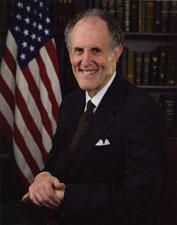 Sen. Edward E. Kaufman (D-DE)
Sen. Edward E. Kaufman (D-DE)Submitted December 1, 2009
Legislative Activity
Stay on top of the latest movement without scrolling through every action
Floor
Latest Action
Senate amendment submitted
December 1, 2009
Text
Submitted
SA 2792. Mr. KAUFMAN (for himself, Mr. Leahy, Mr. Specter, Mr. Kohl,
Mr. Schumer, and Ms. Klobuchar) submitted an amendment intended to be
proposed to amendment SA 2786 proposed by Mr. Reid (for himself, Mr.
Baucus, Mr. Dodd, and Mr. Harkin) to the bill H.R. 3590, to amend the
Internal Revenue Code of 1986 to modify the first-time homebuyers
credit in the case of members of the Armed Forces and certain other
Federal employees, and for other purposes; which was ordered to lie on
the table; as follows:

On page 1738, between lines 3 and 4, insert the following:
(3) Other enhancements relating to health care fraud.--
(A) Fraud sentencing guidelines.--
(i) Definition.--In this subparagraph, the term ``Federal
health care offense'' has the meaning given that term in
section 24 of title 18, United States Code, as amended by
this Act.
(ii) Review and amendments.--Pursuant to the authority
under section 994 of title 28, United States Code, and in
accordance with this subparagraph, the United States
Sentencing Commission shall--

(I) review the Federal Sentencing Guidelines and policy
statements applicable to persons convicted of Federal health
care offenses;
(II) amend the Federal Sentencing Guidelines and policy
statements applicable to persons convicted of Federal health
care offenses involving Government health care programs to
provide that the aggregate dollar amount of fraudulent bills
submitted to the Government health care program shall
constitute prima facie evidence of the amount of the intended
loss by the defendant; and
(III) amend the Federal Sentencing Guidelines to provide--

(aa) a 2-level increase in the offense level for any
defendant convicted of a Federal health care offense relating
to a Government health care program which involves a loss of
not less than $1,000,000 and less than $7,000,000;

[[Page S12073]]

(bb) a 3-level increase in the offense level for any
defendant convicted of a Federal health care offense relating
to a Government health care program which involves a loss of
not less than $7,000,000 and less than $20,000,000;
(cc) a 4-level increase in the offense level for any
defendant convicted of a Federal health care offense relating
to a Government health care program which involves a loss of
not less than $20,000,000; and
(dd) if appropriate, otherwise amend the Federal Sentencing
Guidelines and policy statements applicable to persons
convicted of Federal health care offenses involving
Government health care programs.
(iii) Requirements.--In carrying this subparagraph, the
United States Sentencing Commission shall--

(I) ensure that the Federal Sentencing Guidelines and
policy statements--

(aa) reflect the serious harms associated with health care
fraud and the need for aggressive and appropriate law
enforcement action to prevent such fraud; and
(bb) provide increased penalties for persons convicted of
health care fraud offenses in appropriate circumstances;

(II) consult with individuals or groups representing health
care fraud victims, law enforcement officials, the health
care industry, and the Federal judiciary as part of the
review described in clause (ii);
(III) ensure reasonable consistency with other relevant
directives and with other guidelines under the Federal
Sentencing Guidelines;
(IV) account for any aggravating or mitigating
circumstances that might justify exceptions, including
circumstances for which the Federal Sentencing Guidelines, as
in effect on the date of enactment of this Act, provide
sentencing enhancements;
(V) make any necessary conforming changes to the Federal
Sentencing Guidelines; and
(VI) ensure that the Federal Sentencing Guidelines
adequately meet the purposes of sentencing.

(B) Intent requirement for health care fraud.--Section 1347
of title 18, United States Code, is amended--
(i) by inserting ``(a)'' before ``Whoever knowingly''; and
(ii) by adding at the end the following:
``(b) With respect to violations of this section, a person
need not have actual knowledge of this section or specific
intent to commit a violation of this section.''.
(C) Health care fraud offense.--Section 24(a) of title 18,
United States Code, is amended--
(i) in paragraph (1), by striking the semicolon and
inserting ``or section 1128B of the Social Security Act (42
U.S.C. 1320a-7b); or''; and
(ii) in paragraph (2)--

(I) by inserting ``1349,'' after ``1343,''; and
(II) by inserting ``section 301 of the Federal Food, Drug,
and Cosmetic Act (21 U.S.C. 331), or section 501 of the
Employee Retirement Income Security Act of 1974 (29 U.S.C.
1131),'' after ``title,''.

(D) Subpoena authority relating to health care.--
(i) Subpoenas under the health insurance portability and
accountability act of 1996.--Section 1510(b) of title 18,
United States Code, is amended--

(I) in paragraph (1), by striking ``to the grand jury'';
and
(II) in paragraph (2)--

(aa) in subparagraph (A), by striking ``grand jury
subpoena'' and inserting ``subpoena for records''; and
(bb) in the matter following subparagraph (B), by striking
``to the grand jury''.
(ii) Subpoenas under the civil rights of institutionalized
persons act.--The Civil Rights of Institutionalized Persons
Act (42 U.S.C. 1997 et seq.) is amended by inserting after
section 3 the following:

``SEC. 3A. SUBPOENA AUTHORITY.

``(a) Authority.--The Attorney General, or at the direction
of the Attorney General, any officer or employee of the
Department of Justice may require by subpoena access to any
institution that is the subject of an investigation under
this Act and to any document, record, material, file, report,
memorandum, policy, procedure, investigation, video or audio
recording, or quality assurance report relating to any
institution that is the subject of an investigation under
this Act to determine whether there are conditions which
deprive persons residing in or confined to the institution of
any rights, privileges, or immunities secured or protected by
the Constitution or laws of the United States.
``(b) Issuance and Enforcement of Subpoenas.--
``(1) Issuance.--Subpoenas issued under this section--
``(A) shall bear the signature of the Attorney General or
any officer or employee of the Department of Justice as
designated by the Attorney General; and
``(B) shall be served by any person or class of persons
designated by the Attorney General or a designated officer or
employee for that purpose.
``(2) Enforcement.--In the case of contumacy or failure to
obey a subpoena issued under this section, the United States
district court for the judicial district in which the
institution is located may issue an order requiring
compliance. Any failure to obey the order of the court may be
punished by the court as a contempt that court.
``(c) Protection of Subpoenaed Records and Information.--
Any document, record, material, file, report, memorandum,
policy, procedure, investigation, video or audio recording,
or quality assurance report or other information obtained
under a subpoena issued under this section--
``(1) may not be used for any purpose other than to protect
the rights, privileges, or immunities secured or protected by
the Constitution or laws of the United States of persons who
reside, have resided, or will reside in an institution;
``(2) may not be transmitted by or within the Department of
Justice for any purpose other than to protect the rights,
privileges, or immunities secured or protected by the
Constitution or laws of the United States of persons who
reside, have resided, or will reside in an institution; and
``(3) shall be redacted, obscured, or otherwise altered if
used in any publicly available manner so as to prevent the
disclosure of any personally identifiable information.''.
______