S.Amdt. 2835Senate111th Congress (2009-2011)2nd degree
S.Amdt. 2835
Sponsored by 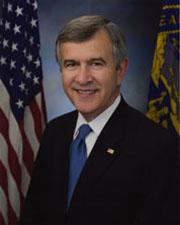 Sen. Mike Johanns (R-NE)
Sen. Mike Johanns (R-NE)Submitted December 2, 2009
Legislative Activity
Stay on top of the latest movement without scrolling through every action
Floor
Latest Action
Senate amendment submitted
December 2, 2009
Text
Submitted
TEXT OF AMENDMENTS

SA 2798. Mr. INOUYE submitted an amendment intended to be proposed to
amendment SA 2786 proposed by Mr. Reid (for himself, Mr. Baucus, Mr.
Dodd, and Mr. Harkin) to the bill H.R. 3590, to amend the Internal
Revenue Code of 1986 to modify the first-time homebuyers credit in the
case of members of the Armed Forces and certain other Federal
employees, and for other purposes; which was ordered to lie on the
table; as follows:

At the end of subtitle D of title V, add the following:

SEC. 5316. DEMONSTRATION GRANTS FOR FAMILY NURSE PRACTITIONER
TRAINING PROGRAMS.

(a) Establishment of Program.--The Secretary of Health and
Human Services (referred to in this section as the
``Secretary'') shall establish a training demonstration
program for family nurse practitioners (referred to in this
section as the ``program'') to employ and provide intensive,
one-year training for nurse practitioners who have graduated
from a nurse practitioner program not more than 18 months
prior to commencing such training, for careers as primary
care providers in Federally qualified health centers
(referred to in this section as ``FQHCs'') and nurse-managed
health clinics, in order to increase access to primary care
in impoverished, urban, and rural underserved communities.
(b) Purpose.--The purpose of the program is to enable each
grant recipient to--
(1) provide new nurse practitioners with a depth, breadth,
volume, and intensity of clinical training necessary to serve
as primary care providers in the complex settings of FQHCs
and nurse-managed health clinics;
(2) train new nurse practitioners to work under a model of
primary care, including the use of electronic health records,
planned care and chronic care models, and interdisciplinary
team-based care, that is consistent with--
(A) the principles of health care set forth by the
Institute of Medicine; and
(B) the needs of vulnerable populations;
(3) create a model of FQHC- and nurse-managed health
clinic-based training for nurse practitioners that may be
replicated nationwide; and
(4) provide additional intensive learning experiences with
high-volume, high-risk, or high-burden problems commonly
encountered in FQHCs and nurse-managed health clinics, such
as HIV/AIDS, prenatal care, orthopedics, geriatrics,
diabetes, asthma, and obesity prevention.
(c) Grants.--The Secretary shall award grants to eligible
entities that meet the eligibility requirements established
by the Secretary, for the purpose of operating the nurse
practitioner primary care programs described in subsection
(a) in such entities.
(d) Eligible Entities.--To be eligible to receive a grant
under this section, an entity shall--
(1)(A) be a FQHC as defined in section 1861(aa) of the
Social Security Act (42 U.S.C. 1395x(aa)); or
(B) be a nurse-managed health clinic, as defined in section
330A-1 of the Public Health Service Act (as added by section
5208 of this Act); and
(2) submit to the Secretary an application at such time, in
such manner, and containing such information as the Secretary
may require.
(e) Priority in Awarding Grants.--In awarding grants under
this section, the Secretary shall give priority to eligible
entities that--
(1) demonstrate sufficient infrastructure in size, scope,
and capacity to undertake the requisite training of a minimum
of 3 nurse practitioners per year and the half-time
employment of a qualified program coordinator;
(2) will provide that each such program will entail 12-full
months of full-time, paid employment for each awardee, and
will offer each awardee benefits consistent with the benefits
offered to other full-time employees of such entity;
(3) will assign not less than 1 staff nurse practitioner or
physician to each of 4 precepted clinics, in which the
awardee is the primary provider for the patient, per week,
and during such clinics, ensure that the assigned staff nurse
practitioner or physician shall be available exclusively to
the awardees and have no other assigned clinical or
administrative duties;
(4) will provide to each awardee specialty rotations
consisting of 3 sessions per week, either within or outside
of the FQHC or nurse-managed health clinic, based upon the
capability of the FQHC or nurse-managed health clinic to
provide specialty training in prenatal care and women's
health, adult and child psychiatry, orthopedics, geriatrics,
and at least 3 other high-volume, high-burden specialty
areas, such as HIV/AIDS, dermatology, cardiology, diabetes,
asthma, urgent care (minor trauma), and pain management;
(5) enable awardees to practice alongside other primary
care providers so that the awardees may consult with such
primary care providers as necessary;
(6) provide educational and didactic sessions on high-
volume, high-risk health problems;
(7) have implemented (or will complete, not later than the
beginning of the program, implementation of) health
information technology, and will make use of an electronic
training evaluation system;
(8) provide continuous training to a FQHC standard of a
high performance health system that includes access to health
care, continuity, planned care, team-based, prevention-
focused care that includes the use of electronic health
records and other health information technology;
(9) have a record of recruiting, training, caring for, and
otherwise demonstrating competency in advancing the primary
care of individuals who are from underrepresented minority
groups or from a poor urban or rural, or otherwise
disadvantaged background;
(10) have a record of training health care professionals in
the care of vulnerable populations such as children, older
adults, homeless individuals, victims of abuse or trauma,
individuals with mental health or substance-related
disorders, individuals with HIV/AIDS, and individuals with
disabilities; and
(11) have a record of collaboration with other safety net
providers, schools, colleges, and universities that provide
health professions training, establish formal relationships,
and submit joint applications with rural health clinics, area
health education centers, and community health centers
located in underserved areas, or that serve underserved
populations.
(f) Eligibility of Awardees.--
(1) In general.--To be eligible for acceptance to a nurse
practitioner training program funded through a grant awarded
under this section, an individual shall--
(A) be licensed or eligible for licensure in the State in
which the program is located as an advanced practice
registered nurse or advanced practice nurse and be eligible
or board-certified as a family nurse practitioner; and
(B) demonstrate commitment to a career as a primary care
provider in a FQHC or in a nurse-managed health clinic.
(2) Preference.--In selecting awardees under the program,
each recipient of a grant under this section shall give
preference to bilingual candidates that meet the requirements
described in paragraph (1).
(3) Deferral of certain service.--The starting date of
required service of individuals in the National Health
Service Corps Service program under title II of the Public
Health Service Act (42 U.S.C. 202 et seq.) who receive
training under this section shall be deferred until the date
that is 90 days after the completion of the program.
(4) Awardee defined.--In this section, the term ``awardee''
means an individual who has been accepted into a nurse
practitioner training program funded through a grant awarded
under this section.
(g) Duration of Awards.--Each grant awarded under this
section shall be for a period of 3 years. A grant recipient
may carry over funds from one fiscal year to another without
obtaining approval from the Secretary.
(h) Grant Amount.--Each grant awarded under this section
shall be in an amount not to exceed $600,000 per year, as
determined by the Secretary, taking into account--
(1) the financial need of the FQHC or nurse-managed health
clinic, considering, Federal, State, local, and other
operational

[[Page S12165]]

funding provided to the FQHC or nurse-managed health clinic;
and
(2) other factors, as the Secretary determines appropriate.
(i) Technical Assistance Grants.--The Secretary may award
technical assistance grants to FQHCs and nurse-managed health
clinics that plan to establish, or that have established, a
nurse practitioner residency training program. The Secretary
shall award a technical assistance grant to 1 FQHC that has
expertise in establishing a nurse practitioner residency
program, for the purpose of providing technical assistance to
other recipients of grants under this section.
(j) Authorization of Appropriations.--To carry out this
section, there is authorized to be appropriated such sums as
may be necessary for each of fiscal years 2011 through 2014.
______

SA 2799. Mr. CORNYN submitted an amendment intended to be proposed to
amendment SA 2786 proposed by Mr. Reid (for himself, Mr. Baucus, Mr.
Dodd, and Mr. Harkin) to the bill H.R. 3590, to amend the Internal
Revenue Code of 1986 to modify the first-time homebuyers credit in the
case of members of the Armed Forces and certain other Federal
employees, and for other purposes; which was ordered to lie on the
table; as follows:

At the appropriate place in title I, insert the following:

SEC. __. ENTITLEMENT REFORM.

Notwithstanding any other provision of this Act (or an
amendment made by this Act), this Act (and amendments), other
than this section, shall not take effect until such time as
the Office of the Actuary for the Centers for Medicare &
Medicaid Services certifies to Congress that the
implementation of this Act (and amendments) would reduce the
Federal budgetary commitment to health care by January 1,
2019, as compared to Federal budgetary commitment to health
care by January 1, 2019 that would have resulted if such Act
(and amendments) is not implemented.
______

SA 2800. Mr. CORNYN submitted an amendment intended to be proposed to
amendment SA 2786 proposed by Mr. Reid (for himself, Mr. Baucus, Mr.
Dodd, and Mr. Harkin) to the bill H.R. 3590, to amend the Internal
Revenue Code of 1986 to modify the first-time homebuyers credit in the
case of members of the Armed Forces and certain other Federal
employees, and for other purposes; which was ordered to lie on the
table; as follows:

At the appropriate place in title I, insert the following:

SEC. __. LOWERING COSTS FOR FAMILIES.

Notwithstanding any other provision of this Act (or an
amendment made by this Act), this Act (and amendments), other
than this section, shall not take effect until such time as
the Office of the Actuary for the Centers for Medicare &
Medicaid Services certifies to Congress that the
implementation of this Act (and amendments) would reduce
annual health insurance premiums by $2,500 for the average
American family.
______

SA 2801. Mr. CORNYN submitted an amendment intended to be proposed to
amendment SA 2786 proposed by Mr. Reid (for himself, Mr. Baucus, Mr.
Dodd, and Mr. Harkin) to the bill H.R. 3590, to amend the Internal
Revenue Code of 1986 to modify the first-time homebuyers credit in the
case of members of the Armed Forces and certain other Federal
employees, and for other purposes; which was ordered to lie on the
table; as follows:

On page 354, after line 2, insert the following:
``(D) State election.--
``(i) In general.--At the election of a State, with respect
to any calendar year, if such State determines that such an
election will promote job creation or increase wages in such
State, subparagraphs (A) and (B) may be applied to months in
such calendar year by substituting `499' for `50' each place
it appears.
``(ii) Timing and manner of election.--Such election with
respect to any calendar year shall apply to all months in
such calendar year and shall be made at such time and in such
manner as the Secretary may provide.
______

SA 2802. Mr. CORNYN submitted an amendment intended to be proposed to
amendment SA 2786 proposed by Mr. Reid (for himself, Mr. Baucus, Mr.
Dodd, and Mr. Harkin) to the bill H.R. 3590, to amend the Internal
Revenue Code of 1986 to modify the first-time homebuyers credit in the
case of members of the Armed Forces and certain other Federal
employees, and for other purposes; which was ordered to lie on the
table; as follows:

On page 97, line 19, insert ``or after'' after ``enrolled
on''.
______

SA 2803. Mr. CORNYN submitted an amendment intended to be proposed to
amendment SA 2786 proposed by Mr. Reid (for himself, Mr. Baucus, Mr.
Dodd, and Mr. Harkin) to the bill H.R. 3590, to amend the Internal
Revenue Code of 1986 to modify the first-time homebuyers credit in the
case of members of the Armed Forces and certain other Federal
employees, and for other purposes; which was ordered to lie on the
table; as follows:

At the appropriate place, insert the following:

SEC. __. MEMBERS OF CONGRESS REQUIRED TO HAVE COVERAGE UNDER
MEDICAID INSTEAD OF THROUGH FEHBP.

(a) In General.--Notwithstanding chapter 89 of title 5,
United States Code, title XIX of the Social Security Act, or
any provision of this Act, effective January 1, 2010--
(1) each Member of Congress shall be eligible for medical
assistance under the Medicaid plan of the State in which the
Member resides; and
(2) any employer contribution under chapter 89 of title 5
of such Code on behalf of the Member may be paid only to the
State agency responsible for administering the Medicaid plan
in which the Member enrolls and not to the offeror of a plan
offered through the Federal employees health benefit program
under such chapter.
(b) Payments by Federal Government.--The Secretary of
Health and Human Services, in consultation with the Director
of the Office of Personnel Management, shall establish
procedures under which the employer contributions that would
otherwise be made on behalf of a Member of Congress if the
Member were enrolled in a plan offered through the Federal
employees health benefit program may be made directly to the
State agencies described in subsection (a).
(c) Ineligible for FEHBP.--Effective January 1, 2010, no
Member of Congress shall be eligible to obtain health
insurance coverage under the program chapter 89 of title 5,
United States Code.
(d) Definition.--In this section, the term ``Member of
Congress'' means any member of the House of Representatives
or the Senate.
______

SA 2804. Mr. CORNYN submitted an amendment intended to be proposed to
amendment SA 2786 proposed by Mr. Reid (for himself, Mr. Baucus, Mr.
Dodd, and Mr. Harkin) to the bill H.R. 3590, to amend the Internal
Revenue Code of 1986 to modify the first-time homebuyers credit in the
case of members of the Armed Forces and certain other Federal
employees, and for other purposes; which was ordered to lie on the
table; as follows:

On page 436, between lines 14 and 15, insert the following:

SEC. 2008. NONAPPLICATION OF MEDICAID ELIGIBILITY EXPANSIONS
UNTIL REDUCTION IN MEDICAID FRAUD RATE.

Notwithstanding any other provision of this Act, any
provision of this Act or an amendment made by this Act that
imposes federally-mandated expansions of eligibility for
Medicaid shall not apply to any State before the date on
which the Secretary of Health and Human Services certifies
that the average payment error rate measurement (commonly
referred to as ``PERM'') for all State Medicaid programs does
not exceed 3.9 percent.
______

SA 2805. Mr. CORNYN submitted an amendment intended to be proposed to
amendment SA 2786 proposed by Mr. Reid (for himself, Mr. Baucus, Mr.
Dodd, and Mr. Harkin) to the bill H.R. 3590, to amend the Internal
Revenue Code of 1986 to modify the first-time homebuyers credit in the
case of members of the Armed Forces and certain other Federal
employees, and for other purposes; which was ordered to lie on the
table; as follows:

At the appropriate place in title I, insert the following:

SEC. 1__. REQUIREMENT OF ELIMINATION OF THE FEDERAL DEFICIT.

Notwithstanding any other provision of this Act (or an
amendment made by this Act), no Federal outlays authorized
under this Act (or such an amendment) may take effect until
the Office of Management and Budget certifies that the
Federal budget deficit has been eliminated.
______

SA 2806. Mr. CORNYN submitted an amendment intended to be proposed to
amendment SA 2786 proposed by Mr. Reid (for himself, Mr. Baucus, Mr.
Dodd, and Mr. Harkin) to the bill H.R. 3590, to amend the Internal
Revenue Code of 1986 to modify the first-time homebuyers credit in the
case of members of the Armed Forces and certain other Federal
employees, and for other purposes; which was ordered to lie on the
table; as follows:

At the appropriate place in title I, insert the following:

SEC. __. ENSURING LOWER HEALTH CARE COSTS.

Notwithstanding any other provision of this Act (or an
amendment made by this Act), this Act (and amendments), other
than this section, shall not take effect until such

[[Page S12166]]

time as the Office of the Actuary for the Centers for
Medicare & Medicaid Services certifies to Congress that the
implementation of this Act (and amendments) would reduce
projected National Health Expenditures by January 1, 2019, as
compared to the projected National Health Expenditures by
January 1, 2019 that would have resulted if such Act (and
amendments) is not implemented.
______

SA 2807. Mr. CORNYN submitted an amendment intended to be proposed to
amendment SA 2786 proposed by Mr. Reid (for himself, Mr. Baucus, Mr.
Dodd, and Mr. Harkin) to the bill H.R. 3590, to amend the Internal
Revenue Code of 1986 to modify the first-time homebuyers credit in the
case of members of the Armed Forces and certain other Federal
employees, and for other purposes; which was ordered to lie on the
table; as follows:

Beginning on page 1000, strike line 19 and all that follows
through line 2 on page 1053.
______

SA 2808. Mr. VITTER submitted an amendment intended to be proposed to
amendment SA 2791 proposed by Ms. Mikulski (for herself, Mr. Harkin,
Mrs. Boxer, and Mr. Franken) to the amendment SA 2786 proposed by Mr.
Reid (for himself, Mr. Baucus, Mr. Dodd, and Mr. Harkin) to the bill
H.R. 3590, to amend the Internal Revenue Code of 1986 to modify the
first-time homebuyers credit in the case of members of the Armed Forces
and certain other Federal employees, and for other purposes; which was
ordered to lie on the table; as follows:

On page 2 of the amendment, after line 15 insert the
following:
``(5) for the purposes of this Act, and for the purposes of
any other provisions of law, the current recommendations of
the United States Preventive Service Task Force regarding
breast cancer screening, mammography, and prevention shall be
considered the most current other than those issued in or
around November 2009.''
______

SA 2809. Mr. CRAPO submitted an amendment intended to be proposed to
amendment SA 2786 proposed by Mr. Reid (for himself, Mr. Baucus, Mr.
Dodd, and Mr. Harkin) to the bill H.R. 3590, to amend the Internal
Revenue Code of 1986 to modify the first-time homebuyers credit in the
case of members of the Armed Forces and certain other Federal
employees, and for other purposes; which was ordered to lie on the
table; as follows:

On page 1006, between lines 8 and 9, insert the following:
``(vii) The proposal shall not include any recommendation
that would reduce payment rates for items and services
furnished by providers of services or suppliers which would
have the effect of restricting access to treatment for
individuals with epilepsy.
______

SA 2810. Mr. CRAPO submitted an amendment intended to be proposed to
amendment SA 2786 proposed by Mr. Reid (for himself, Mr. Baucus, Mr.
Dodd, and Mr. Harkin) to the bill H.R. 3590, to amend the Internal
Revenue Code of 1986 to modify the first-time homebuyers credit in the
case of members of the Armed Forces and certain other Federal
employees, and for other purposes; which was ordered to lie on the
table; as follows:

Beginning on page 723, strike line 3 and all that follows
through page 739, line 17.

SA 2811. Mr. CRAPO submitted an amendment intended to be proposed to
amendment SA 2786 proposed by Mr. Reid (for himself, Mr. Baucus, Mr.
Dodd, and Mr. Harkin) to the bill H.R. 3590, to amend the Internal
Revenue Code of 1986 to modify the first-time homebuyers credit in the
case of members of the Armed Forces and certain other Federal
employees, and for other purposes; which was ordered to lie on the
table; as follows:

On page 1006, between lines 8 and 9, insert the following:
``(vii) The proposal shall not include any recommendation
that would reduce payment rates for items and services
furnished by providers of services or suppliers which would
have the effect of restricting access to treatment for
individuals with childhood cancer.
______

SA 2812. Mr. CRAPO submitted an amendment intended to be proposed to
amendment SA 2786 proposed by Mr. Reid (for himself, Mr. Baucus, Mr.
Dodd, and Mr. Harkin) to the bill H.R. 3590, to amend the Internal
Revenue Code of 1986 to modify the first-time homebuyers credit in the
case of members of the Armed Forces and certain other Federal
employees, and for other purposes; which was ordered to lie on the
table; as follows:

Beginning on page 842, strike line 3 and all that follows
through page 846, line 10.
______

SA 2813. Mr. CRAPO submitted an amendment intended to be proposed to
amendment SA 2786 proposed by Mr. Reid (for himself, Mr. Baucus, Mr.
Dodd, and Mr. Harkin) to the bill H.R. 3590, to amend the Internal
Revenue Code of 1986 to modify the first-time homebuyers credit in the
case of members of the Armed Forces and certain other Federal
employees, and for other purposes; which was ordered to lie on the
table; as follows:

On page 923, between lines 7 and 8, insert the following:

SEC. 3211. PROTECTING CHOICE AND COMPETITION FOR MEDICARE
BENEFICIARIES.

No provisions of, or amendments made by, this Act that
change the Medicare Advantage program under part C of title
XVIII of the Social Security Act in a manner that would
result in decreased choice and competition for Medicare
beneficiaries shall take effect and are repealed.
______

SA 2814. Mr. CRAPO submitted an amendment intended to be proposed to
amendment SA 2786 proposed by Mr. Reid (for himself, Mr. Baucus, Mr.
Dodd, and Mr. Harkin) to the bill H.R. 3590, to amend the Internal
Revenue Code of 1986 to modify the first-time homebuyers credit in the
case of members of the Armed Forces and certain other Federal
employees, and for other purposes; which was ordered to lie on the
table; as follows:

On page 1006, between lines 8 and 9, insert the following:
``(vii) The proposal shall not include any recommendation
that would reduce payment rates for items and services
furnished by providers of services or suppliers which would
have the effect of restricting access to treatment for
individuals with juvenile diabetes.
______

SA 2815. Mr. CRAPO submitted an amendment intended to be proposed to
amendment SA 2786 proposed by Mr. Reid (for himself, Mr. Baucus, Mr.
Dodd, and Mr. Harkin) to the bill H.R. 3590, to amend the Internal
Revenue Code of 1986 to modify the first-time homebuyers credit in the
case of members of the Armed Forces and certain other Federal
employees, and for other purposes; which was ordered to lie on the
table; as follows:

On page 1006, between lines 8 and 9, insert the following:
``(vii) The proposal shall not include any recommendation
that would reduce payment rates for items and services
furnished by providers of services or suppliers which would
have the effect of restricting access to treatment for
individuals with autism.
______

SA 2816. Mr. CRAPO submitted an amendment intended to be proposed to
amendment SA 2786 proposed by Mr. Reid (for himself, Mr. Baucus, Mr.
Dodd, and Mr. Harkin) to the bill H.R. 3590, to amend the Internal
Revenue Code of 1986 to modify the first-time homebuyers credit in the
case of members of the Armed Forces and certain other Federal
employees, and for other purposes; which was ordered to lie on the
table; as follows:

On page 1006, between lines 8 and 9, insert the following:
``(vii) The proposal shall not include any recommendation
that would reduce payment rates for items and services
furnished by providers of services or suppliers which would
have the effect of restricting access to treatment for
individuals with cancer.
______

SA 2817. Mr. CRAPO submitted an amendment intended to be proposed to
amendment SA 2786 proposed by Mr. Reid (for himself, Mr. Baucus, Mr.
Dodd, and Mr. Harkin) to the bill H.R. 3590, to amend the Internal
Revenue Code of 1986 to modify the first-time homebuyers credit in the
case of members of the Armed Forces and certain other Federal
employees, and for other purposes; which was ordered to lie on the
table; as follows:

Beginning on page 828, strike line 5 and all that follows
through page 836, line 22.
______

SA 2818. Mr. CRAPO submitted an amendment intended to be proposed to
amendment SA 2786 proposed by Mr. Reid (for himself, Mr. Baucus, Mr.
Dodd, and Mr. Harkin) to the bill H.R. 3590, to amend the Internal
Revenue Code of 1986 to modify the first-time homebuyers credit in the
case of members of the Armed Forces and certain other Federal
employees, and for other purposes; which was ordered to lie on the
table; as follows:

On page 1006, between lines 8 and 9, insert the following:
``(vii) The proposal shall not include any recommendation
that would reduce payment rates for items and services
furnished by providers of services or suppliers which would
have the effect of restricting access to treatment for
individuals with chronic obstructive pulmonary disease
(COPD).

[[Page S12167]]

______

SA 2819. Mr. CRAPO submitted an amendment intended to be proposed to
amendment SA 2786 proposed by Mr. Reid (for himself, Mr. Baucus, Mr.
Dodd, and Mr. Harkin) to the bill H.R. 3590, to amend the Internal
Revenue Code of 1986 to modify the first-time homebuyers credit in the
case of members of the Armed Forces and certain other Federal
employees, and for other purposes; which was ordered to lie on the
table; as follows:

Beginning on page 974, strike line 12 and all that follows
through page 999, line 16.
______

SA 2820. Mr. CRAPO submitted an amendment intended to be proposed to
amendment SA 2786 proposed by Mr. Reid (for himself, Mr. Baucus, Mr.
Dodd, and Mr. Harkin) to the bill H.R. 3590, to amend the Internal
Revenue Code of 1986 to modify the first-time homebuyers credit in the
case of members of the Armed Forces and certain other Federal
employees, and for other purposes; which was ordered to lie on the
table; as follows:

On page 1006, between lines 8 and 9, insert the following:
``(vii) The proposal shall not include any recommendation
that would reduce payment rates for items and services
furnished by providers of services or suppliers located in
rural areas.
______

SA 2821. Mr. CRAPO submitted an amendment intended to be proposed to
amendment SA 2786 proposed by Mr. Reid (for himself, Mr. Baucus, Mr.
Dodd, and Mr. Harkin) to the bill H.R. 3590, to amend the Internal
Revenue Code of 1986 to modify the first-time homebuyers credit in the
case of members of the Armed Forces and certain other Federal
employees, and for other purposes; which was ordered to lie on the
table; as follows:

Beginning on page 869, strike line 17 and all that follows
through page 903, line 15.
______

SA 2822. Mr. CRAPO submitted an amendment intended to be proposed to
amendment SA 2786 proposed by Mr. Reid (for himself, Mr. Baucus, Mr.
Dodd, and Mr. Harkin) to the bill H.R. 3590, to amend the Internal
Revenue Code of 1986 to modify the first-time homebuyers credit in the
case of members of the Armed Forces and certain other Federal
employees, and for other purposes; which was ordered to lie on the
table; as follows:

Beginning on page 1000, strike line 19 and all that follows
through page 1053, line 2.
______

SA 2823. Mr. COBURN submitted an amendment intended to be proposed to
amendment SA 2786 proposed by Mr. Reid (for himself, Mr. Baucus, Mr.
Dodd, and Mr. Harkin) to the bill H.R. 3590, to amend the Internal
Revenue Code of 1986 to modify the first-time homebuyers credit in the
case of members of the Armed Forces and certain other Federal
employees, and for other purposes; which was ordered to lie on the
table; as follows:

Strike section 2006.
______

SA 2824. Mr. COBURN submitted an amendment intended to be proposed to
amendment SA 2786 proposed by Mr. Reid (for himself, Mr. Baucus, Mr.
Dodd, and Mr. Harkin) to the bill H.R. 3590, to amend the Internal
Revenue Code of 1986 to modify the first-time homebuyers credit in the
case of members of the Armed Forces and certain other Federal
employees, and for other purposes; which was ordered to lie on the
table; as follows:

Strike section 2953.
______

SA 2825. Mr. COBURN submitted an amendment intended to be proposed by
him to the bill H.R. 3590, to amend the Internal Revenue Code of 1986
to modify the first-time homebuyers credit in the case of members of
the Armed Forces and certain other Federal employees, and for other
purposes; which was ordered to lie on the table; as follows:

At the appropriate place, insert the following:

SEC. _. BUREAUCRAT LIMITATION.

For each new bureaucrat added to any department or agency
of the Federal Government for the purpose of implementing the
provisions of this Act (or any amendment made by this Act),
the head of such department or agency shall ensure that the
addition of such new bureaucrat is offset by a reduction of 1
existing bureaucrat at such department or agency.
______

SA 2826. Mr. BENNET (for himself, Mr. Harkin, Mr. Dodd, Mr. Brown,
Mr. Durbin, Mrs. Lincoln, Mr. Wyden, Mr. Begich, Mr. Bayh, and Mrs.
Shaheen) submitted an amendment intended to be proposed to amendment SA
2786 proposed by Mr. Reid (for himself, Mr. Baucus, Mr. Dodd, and Mr.
Harkin) to the bill H.R. 3590, to amend the Internal Revenue Code of
1986 to modify the first-time homebuyers credit in the case of members
of the Armed Forces and certain other Federal employees, and for other
purposes; which was ordered to lie on the table; as follows:

On page 1134, between lines 3 and 4, insert the following:

Subtitle G--Protecting and Improving Guaranteed Medicare Benefits

SEC. 3601. PROTECTING AND IMPROVING GUARANTEED MEDICARE
BENEFITS.

(a) Protecting Guaranteed Medicare Benefits.--Nothing in
the provisions of, or amendments made by, this Act shall
result in a reduction of guaranteed benefits under title
XVIII of the Social Security Act.
(b) Ensuring That Medicare Savings Benefit the Medicare
Program and Medicare Beneficiaries.--Savings generated for
the Medicare program under title XVIII of the Social Security
Act under the provisions of, and amendments made by, this Act
shall extend the solvency of the Medicare trust funds, reduce
Medicare premiums and other cost-sharing for beneficiaries,
and improve or expand guaranteed Medicare benefits and
protect access to Medicare providers.
______

SA 2827. Mr. TESTER submitted an amendment intended to be proposed to
amendment SA 2786 proposed by Mr. Reid (for himself, Mr. Baucus, Mr.
Dodd, and Mr. Harkin) to the bill H.R. 3590, to amend the Internal
Revenue Code of 1986 to modify the first-time homebuyers credit in the
case of members of the Armed Forces and certain other Federal
employees, and for other purposes; which was ordered to lie on the
table; as follows:

Beginning on page 1203, strike line 19 and all that follows
through page 1209, line 20 and insert the following:

SEC. 4201. COMMUNITY TRANSFORMATION GRANTS.

(a) In General.--The Secretary of Health and Human Services
(referred to in this section as the ``Secretary''), acting
through the Director of the Centers for Disease Control and
Prevention (referred to in this section as the ``Director''),
shall award competitive grants to State and local
governmental agencies and community-based organizations for
the implementation, evaluation, and dissemination of
evidence-based community preventive health activities in
order to reduce chronic disease rates, prevent the
development of secondary conditions, address health
disparities, and develop a stronger evidence-base of
effective prevention programming, with not less than 20
percent of such grants being made to State or local
government agencies and community-based organizations located
in or serving, or both, rural areas.
(b) Eligibility.--To be eligible to receive a grant under
subsection (a), an entity shall--
(1) be--
(A) a State governmental agency;
(B) a local governmental agency;
(C) a national network of community-based organizations;
(D) a State or local non-profit organization; or
(E) an Indian tribe; and
(2) submit to the Director an application at such time, in
such a manner, and containing such information as the
Director may require, including a description of the program
to be carried out under the grant; and
(3) demonstrate a history or capacity, if funded, to
develop relationships necessary to engage key stakeholders
from multiple sectors within and beyond health care and
across a community, such as healthy futures corps and health
care providers.
(c) Use of Funds.--
(1) In general.--An eligible entity shall use amounts
received under a grant under this section to carry out
programs described in this subsection.
(2) Community transformation plan.--
(A) In general.--An eligible entity that receives a grant
under this section shall submit to the Director (for
approval) a detailed plan that includes the policy,
environmental, programmatic, and as appropriate
infrastructure changes needed to promote healthy living and
reduce disparities.
(B) Activities.--Activities within the plan may focus on
(but not be limited to)--
(i) creating healthier school environments, including
increasing healthy food options, physical activity
opportunities, promotion of healthy lifestyle, emotional
wellness, and prevention curricula, and activities to prevent
chronic diseases;
(ii) creating the infrastructure to support active living
and access to nutritious foods in a safe environment;
(iii) developing and promoting programs targeting a variety
of age levels to increase access to nutrition, physical
activity and smoking cessation, improve social and emotional
wellness, enhance safety in a community, or address any other
chronic disease priority area identified by the grantee;
(iv) assessing and implementing worksite wellness
programming and incentives;
(v) working to highlight healthy options at restaurants and
other food venues;

[[Page S12168]]

(vi) prioritizing strategies to reduce racial and ethnic
disparities, including social, economic, and geographic
determinants of health; and
(vii) addressing special populations needs, including all
age groups and individuals with disabilities, and individuals
in both urban, rural, and frontier areas.
(3) Community-based prevention health activities.--
(A) In general.--An eligible entity shall use amounts
received under a grant under this section to implement a
variety of programs, policies, and infrastructure
improvements to promote healthier lifestyles.
(B) Activities.--An eligible entity shall implement
activities detailed in the community transformation plan
under paragraph (2).
(C) In-kind support.--An eligible entity may provide in-
kind resources such as staff, equipment, or office space in
carrying out activities under this section.
(4) Evaluation.--
(A) In general.--An eligible entity shall use amounts
provided under a grant under this section to conduct
activities to measure changes in the prevalence of chronic
disease risk factors among community members participating in
preventive health activities
(B) Types of measures.--In carrying out subparagraph (A),
the eligible entity shall, with respect to residents in the
community, measure--
(i) changes in weight;
(ii) changes in proper nutrition;
(iii) changes in physical activity;
(iv) changes in tobacco use prevalence;
(v) changes in emotional well-being and overall mental
health;
(vi) other factors using community-specific data from the
Behavioral Risk Factor Surveillance Survey; and
(vii) other factors as determined by the Secretary,
including differential susceptibility, mortality, or
morbidity due to chronic diseases such as cancer, diabetes,
and cardiovascular disease.
(C) Reporting.--An eligible entity shall annually submit to
the Director a report containing an evaluation of activities
carried out under the grant.
(5) Dissemination.--A grantee under this section shall--
(A) meet at least annually in regional or national meetings
to discuss challenges, best practices, and lessons learned
with respect to activities carried out under the grant; and
(B) develop models for the replication of successful
programs and activities and the mentoring of other eligible
entities.
(d) Training.--
(1) In general.--The Director shall develop a program to
provide training for eligible entities on effective
strategies for the prevention and control of chronic disease
and the link between physical, emotional, and social well-
being.
(2) Community transformation plan.--The Director shall
provide appropriate feedback and technical assistance to
grantees to establish community transformation plans
(3) Evaluation.--The Director shall provide a literature
review and framework for the evaluation of programs conducted
as part of the grant program under this section, in addition
to working with academic institutions or other entities with
expertise in outcome evaluation.
(e) Prohibition.--A grantee shall not use funds provided
under a grant under this section to create video games or to
carry out any other activities that may lead to higher rates
of obesity or inactivity.
(f) Authorization of Appropriations.--There are authorized
to be appropriated to carry out this section, such sums as
may be necessary for each fiscal years 2010 through 2014.

SEC. 4201A. REDUCTION OF HEALTH DISPARITIES IN RURAL AREAS.

(a) Authorization of Initiative.--
(1) In general.--The Secretary of Health and Human
Services, in collaboration or conjunction with the Director
of the National Center for Health Disparities and Deputy
Assistant Secretary for Minority Health, shall establish an
initiative--
(A) that is specifically directed toward addressing the
issue of health disparities attributable to chronic diseases
in rural and frontier areas by creating and promoting
educational, screening, and outreach programs that reduce the
prevalence, morbidity, and mortality of chronic diseases or
susceptibility to such diseases; and
(B) whose goal is to significantly improve access to, and
utilization of, beneficial chronic disease interventions in
rural communities experiencing health disparities in order to
reduce such disparities.
(2) Health disparity population.--
(A) In general.--For purposes of carrying out the
initiative described in paragraph (1), a population shall be
considered a health disparity population if there is a
significant disparity in the overall rate of chronic disease
incidence, prevalence, morbidity, mortality, or survival
rates in the population as compared to the health status of
the general population.
(B) Chronic diseases.--In this paragraph, the term
``chronic disease'' includes hypertension, diabetes, cancer,
and heart disease.
(b) Common Administrative Structure.--The initiative
described in subsection (a) shall--
(1) utilize a common administrative structure to ensure
coordinated implementation, oversight, and accountability;
(2) be amenable to regional organization in order to meet
the specific needs of rural communities throughout the United
States; and
(3) involve elements located in rural communities and
areas.
(c) Design.--The initiative described in subsection (a)
shall be designed to reach rural communities and populations
that experience a disproportionate share of chronic disease
burden, including African Americans, American Indians or
Alaska Natives, Hawaiian Natives and other Pacific Islanders,
Asians, Hispanics or Latinos, and other underserved rural
populations.
(d) Establishment of Initiative and Grants.--In carrying
out the initiative described in subsection (a), the Secretary
of Health and Human Services shall, from funds appropriated
to carry out this section--
(1) use 50 percent for the establishment of such
initiative; and
(2) use 50 percent to award competitive grants or contracts
to organizations, universities, or similar entities to carry
out the initiative, with preference given to entities having
a demonstrable track record of service to rural communities,
including tribally-affiliated colleges or universities.
______

SA 2828. Mr. WHITEHOUSE (for himself, Mr. Kerry, Mr. Feingold, and
Mr. Franken) submitted an amendment intended to be proposed by him to
the bill H.R. 3590, to amend the Internal Revenue code of 1986 to
modify the first-time homebuyers credit in the case of members of the
Armed Forces and certain other Federal employees, and for other
purposes; which was ordered to lie on the table; as follows:

At the appropriate place, insert the following:

TITLE __--MEDICAL BANKRUPTCIES

SECTION __1. SHORT TITLE.

This title may be cited as the ``Medical Bankruptcy
Fairness Act of 2009''.

SEC. __2. DEFINITIONS.

Section 101 of title 11, the United States Code, is amended
by inserting after paragraph (39A) the following:
``(39B) The term `medical debt' means any debt incurred
directly or indirectly as a result of the diagnosis, cure,
mitigation, treatment, or prevention of injury, deformity, or
disease, or for the purpose of affecting any structure or
function of the body.
``(39C) The term `medically distressed debtor' means a
debtor who, during any 12-month period during the 3 years
before the date of the filing of the petition--
``(A) incurred or paid medical debts for the debtor or a
dependent of the debtor, or a nondependent member of the
immediate family of the debtor (including any parent,
grandparent, sibling, child, grandchild, or spouse of the
debtor), that were not paid by any third party payor and were
in excess of 25 percent of the debtor's annual adjusted gross
income (as such term is defined under section 62 of the
Internal Revenue Code of 1986), set forth in the most recent
Federal income tax return filed by the debtor, or by the
debtor and the debtor's spouse, prior to the commencement of
the case;
``(B) was a member of a household in which 1 or more
members (including the debtor) lost all or substantially all
of the member's domestic support obligation income, taking
into consideration any disability insurance payments, for 4
or more weeks, due to a medical problem of a person obligated
to pay such domestic support; or
``(C) experienced a downgrade in employment status that
correlates to a reduction in wages or work hours or results
in unemployment, to care for an ill, injured, or disabled
dependent of the debtor, or an ill, injured, or disabled
nondependent member of the immediate family of the debtor
(including any parent, grandparent, sibling, child,
grandchild, or spouse of the debtor), for not less than 30
days.''.

SEC. __3. EXEMPTIONS.

(a) Exempt Property.--Section 522 of title 11, the United
States Code, is amended by adding at the end the following:
``(r) For a debtor who is a medically distressed debtor, if
the debtor elects to exempt property--
``(1) listed in subsection (b)(2), then in lieu of the
exemption provided under subsection (d)(1), the debtor may
elect to exempt the debtor's aggregate interest, not to
exceed $250,000 in value, in real property or personal
property that the debtor or a dependent of the debtor uses as
a residence, in a cooperative that owns property that the
debtor or a dependent of the debtor uses as a residence, or
in a burial plot for the debtor or a dependent of the debtor;
or
``(2) listed in subsection (b)(3), then if the exemption
provided under applicable law specifically for property of
the kind described in paragraph (1) is for less than $250,000
in value, the debtor may elect in lieu of such exemption to
exempt the debtor's aggregate interest, not to exceed
$250,000 in value, in any such real or personal property,
cooperative, or burial plot.''.
(b) Conforming Amendments.--Sections 104(b)(1) and
104(b)(2) of title 11, the United States Code, are each
amended by inserting ``522(r),'' after ``522(q),''.

SEC. __4. DISMISSAL OF A CASE OR CONVERSION TO A CASE UNDER
CHAPTER 11 OR 13.

Section 707(b) of title 11, the United States Code, is
amended by adding at the end the following:

[[Page S12169]]

``(8) No judge, United States trustee (or bankruptcy
administrator, if any), trustee, or other party in interest
may file a motion under paragraph (2) if the debtor is a
medically distressed debtor.''.

SEC. __5. CREDIT COUNSELING.

Section 109(h)(4) of title 11 United States Code, is
amended by inserting ``a medically distressed debtor or''
after ``with respect to''.

SEC. __6. NONDISCHARGEABILITY OF CERTAIN ATTORNEYS FEES.

Section 523(a) of title 11, United States Code, is
amended--
(1) in paragraph (18), by striking ``or'' at the end;
(2) in paragraph (19), by striking the period at the end
and inserting ``; or''; and
(3) by inserting after paragraph (19) the following:
``(20) in a case arising under chapter 7 of this title,
owed to an attorney as reasonable compensation for
representing the debtor in connection with the case.''.

SEC. __7. EFFECTIVE DATE; APPLICATION OF AMENDMENTS.

(a) Effective Date.--Except as provided in subsection (b),
this title and the amendments made by this title shall take
effect on the date of enactment of this Act.
(b) Application of Amendments.--The amendments made by this
title shall apply only with respect to cases commenced under
title 11, United States Code, on or after the date of
enactment of this Act.

SEC. __8. ATTESTATION BY DEBTOR.

Any debtor who seeks relief as a medically distressed
debtor in accordance with the amendments made by this title
shall attest in writing and under penalty of perjury that the
medical expenses of the debtor were genuine, and were not
specifically incurred to bring the debtor within the coverage
of the medical bankruptcy provisions, as provided in this
title and the amendments made by this title.
______

SA 2829. Mr. GRAHAM (for himself and Mr. Chambliss) submitted an
amendment intended to be proposed to amendment SA 2786 proposed by Mr.
Reid (for himself, Mr. Baucus, Mr. Dodd, and Mr. Harkin) to the bill
H.R. 3590, to amend the Internal Revenue Code of 1986 to modify the
first-time homebuyers credit in the case of members of the Armed Forces
and certain other Federal employees, and for other purposes; which was
ordered to lie on the table; as follows:

At the appropriate place, insert the following:

TITLE __--MEDICAL LIABILITY REFORM

SEC. _01. SHORT TITLE.

This title may be cited as the ``Fair Resolution of Medical
Liability Disputes Act of 2009''.

SEC. _02. FINDINGS.

Congress finds that--
(1) the health care and insurance industries are industries
affecting interstate commerce, and the health care
malpractice litigation systems throughout the United States
affect interstate commerce by contributing to the high cost
of health care and premiums for malpractice insurance
purchased by health care providers; and
(2) the Federal Government, as a direct provider of health
care and as a source of payment for health care, has a major
interest in health care and a demonstrated interest in
assessing the quality of care, access to care, and the costs
of care through the evaluative activities of several Federal
agencies.

SEC. _03. DEFINITIONS.

In this title:
(1) Alternative dispute resolution system; adr.--The term
``alternative dispute resolution system'' or ``ADR'' means a
system established under this title that provides for the
resolution of covered health care malpractice claims in a
manner other than through a civil action in Federal or State
court.
(2) Covered health care malpractice action.--The term
``covered health care malpractice action'' means a civil
action in which a covered health care malpractice claim is
made against a health care provider or health care
professional.
(3) Covered health care malpractice claim.--The term
``covered health care malpractice claim'' means a malpractice
claim (excluding product liability claims) relating to the
provision of, or the failure to provide, health care services
involving a defendant covered health care professional or
provider.
(4) Covered health care professional.--The term ``covered
health care professional'' means an individual, including a
physician, nurse, chiropractor, nurse midwife, physical
therapist, social worker, or physician assistant--
(A) who provides health care services in a State;
(B) for whom individuals entitled to, or enrolled for,
benefits under part A of title XVIII of the Social Security
Act (42 U.S.C. 1395c et seq.), or enrolled for benefits under
part B of such Act (42 U.S.C. 1395j et seq.) comprise not
less than 25 percent of the total patients of such
professional, as determined by the Secretary; and
(C) who is required by State law or regulation to be
licensed or certified by a State a condition for providing
such services in the State.
(5) Covered health care provider.--The term ``covered
health care provider'' means an organization or institution--
(A) that is engaged in the delivery of health care services
in a State;
(B) for which individuals entitled to, or enrolled for,
benefits under part A of title XVIII of the Social Security
Act (42 U.S.C. 1395c et seq.), or enrolled for benefits under
part B of such Act (42 U.S.C. 1395j et seq.) comprise not
less than 25 percent of the total patients of such
organization or institution, as determined by the Secretary;
and
(C) that is required by State law or regulation to be
licensed or certified by the State as a condition for
engaging in the delivery of such services in the State.
(6) Secretary.--The term ``Secretary'' means the Secretary
of Health and Human Services.
(7) State.--The term ``State'' means each of the several
States, the District of Columbia, Puerto Rico, the Virgin
Islands, Guam, American Samoa, and the Northern Mariana
Islands.

SEC. _04. REQUIREMENT FOR INITIAL RESOLUTION OF ACTION
THROUGH ALTERNATIVE DISPUTE RESOLUTION.

(a) In General.--
(1) State cases.--A covered health care malpractice action
may not be brought in any State court during a calendar year
unless the covered health care malpractice claim that is the
subject of the action has been initially resolved under an
alternative dispute resolution system certified for the year
by the Attorney General under section _06(a), or, in the case
of a State in which such a system is not in effect for the
year, under the alternative Federal system established under
section _06(b).
(2) Federal diversity actions.--A covered health care
malpractice action may not be brought in a Federal court
under section 1332 of title 28, United States Code, during a
calendar year unless the covered health care malpractice
claim that is the subject of the action has been initially
resolved under the alternative dispute resolution system
described in paragraph (1) that applied in the State whose
law applies in such action.
(b) Initial Resolution of Claims Under ADR.--For purposes
of subsection (a), an action is ``initially resolved'' under
an alternative dispute resolution system if--
(1) the ADR reaches a decision on whether the defendant is
liable to the plaintiff for damages; and
(2) if the ADR determines that the defendant is liable, the
ADR reaches a decision regarding the amount of damages
assessed against the defendant.
(c) Procedures for Filing Actions.--
(1) Notice of intent to contest decision.--
(A) In general.--Not later than 60 days after a decision is
issued with respect to a covered health care malpractice
claim under an alternative dispute resolution system, each
party affected by the decision shall submit a sealed
statement to a court of competent jurisdiction, selected by
the arbitrator, indicating whether the party intends to
contest the decision.
(B) Sealed statements.--Each sealed statement submitted to
a court under subparagraph (A) shall remain sealed until the
earlier of--
(i) the date on which all affected parties have submitted
such statement; or
(ii) the submission deadline described in subparagraph (A).
(2) Requirements for filing action.--A covered health care
malpractice action may not be brought by a party unless--
(A) such party files the action in a court of competent
jurisdiction not later than 90 days after the decision
resolving the covered health care malpractice claim that is
the subject of the action is issued under the applicable
alternative dispute resolution system; and
(B) any party has filed the notice of intent required by
paragraph (1).
(3) Court of competent jurisdiction.--For purposes of this
subsection, the term ``court of competent jurisdiction''
means--
(A) with respect to actions filed in a State court, the
appropriate State trial court; and
(B) with respect to actions filed in a Federal court, the
appropriate United States district court.
(d) Legal Effect of Uncontested ADR Decision.--A decision
reached under an alternative dispute resolution system that
is not contested under subsection (c) shall, for purposes of
enforcement by a court of competent jurisdiction, have the
same status in the court as the verdict of a covered health
care malpractice action adjudicated in a State or Federal
trial court.
(e) Standard of Judicial Review.--The standard of judicial
review of a claim filed under subsection (c) shall be de
novo.
(f) Award of Costs and Attorneys' Fees After Initial ADR
Resolution.--
(1) In general.--In the case of a covered health care
malpractice action brought in any State or Federal court
after ADR, if the final judgment or order issued (exclusive
of costs, expenses, and attorneys' fees incurred after
judgment or trial) in the action is not more favorable to a
party contesting the ADR decision than the ADR decision, the
opposing party may file with the court, not later than 10
days after the final judgment or order is issued, a petition
for payment of costs and expenses, including attorneys' fees,
incurred with respect to the claim or claims after the date
of the ADR decision.
(2) Award of costs and expenses.--If the court finds, under
a petition filed under paragraph (1), with respect to a claim
or claims, that the judgment or order finally obtained is not
more favorable to the party

[[Page S12170]]

contesting the ADR decision with respect to the claim or
claims than the ADR decision, the court shall order the
contesting party to pay the costs and expenses of the
opposing party, including attorneys' fees, incurred with
respect to the claim or claims after the date of the ADR
decision, unless the court finds that requiring the payment
of such costs and expenses would be manifestly unjust.
(3) Limitation.--Attorneys' fees awarded under this
subsection shall be in an amount reasonably attributable to
the claim or claims involved, calculated on the basis of an
hourly rate of the attorney, which may not exceed that which
the court considers acceptable in the community in which the
attorney practices law, taking into account the attorney's
qualifications and experience and the complexity of the case.
Attorneys' fees under this subsection may not exceed--
(A) the actual cost incurred by the party for attorneys'
fees payable to an attorney for services in connection with
the claim or claims; or
(B) if no such cost was incurred by the party due to a
contingency fee agreement, a reasonable cost that would have
been incurred by the party for noncontingent attorneys' fees
payable to an attorney for services in connection with the
claim or claims.
(g) Applicability.--The requirements of this section shall
apply only to each covered health care malpractice claim
arising out of an event (or events) occurring on or after the
date that is 270 days after the date of enactment of this
Act.

SEC. _05. BASIC REQUIREMENTS FOR STATE ALTERNATIVE DISPUTE
RESOLUTION SYSTEMS.

The alternative dispute resolution system of a State meets
the requirements of this section if the system--
(1) applies to all covered health care malpractice claims
under the jurisdiction of the courts of such State;
(2) requires that a written opinion resolving the dispute
be issued not later than 180 days after the date on which
each party against whom the claim is filed has received
notice of the claim (other than in exceptional cases for
which a longer period is required for the issuance of such an
opinion), and that the opinion contain--
(A) findings of fact relating to the dispute; and
(B) a description of the costs incurred in resolving the
dispute under the system (including any fees paid to the
individuals hearing and resolving the claim), together with
an appropriate assessment of the costs against any of the
parties;
(3) requires individuals who hear and resolve claims under
the system to meet such qualifications as the State may
require (in accordance with regulations of the Attorney
General);
(4) is approved by the State or by local governments in the
State;
(5) with respect to a State system that consists of
multiple dispute resolution procedures--
(A) permits the parties to a dispute to select the
procedure to be used for the resolution of the dispute under
the system; and
(B) if the parties do not agree on the procedure to be used
for the resolution of the dispute, assigns a particular
procedure to the parties;
(6) provides for the transmittal to the State agency
responsible for monitoring or disciplining health care
professionals and health care providers of any findings made
under the system that such a professional or provider
committed malpractice, unless, during the 90-day period
beginning on the date the system resolves the claim against
the professional or provider, the professional or provider
brings an action contesting the decision made under the
system; and
(7) provides for the regular transmittal to the
Administrator of the Agency for Healthcare Research and
Quality of information on disputes resolved under the system,
in a manner that assures that the identity of the parties to
a dispute shall not be revealed.

SEC. _06. CERTIFICATION OF STATE SYSTEMS; APPLICABILITY OF
ALTERNATIVE FEDERAL SYSTEM.

(a) Certification.--
(1) In general.--Not later than 270 days after the date of
enactment of this Act and periodically thereafter, the
Attorney General, in consultation with the Secretary, shall
determine whether the alternative dispute resolution systems
of each State meet the requirements of this title.
(2) Basis for certification.--The Attorney General shall
certify the alternative dispute resolution system of a State
under this subsection for a calendar year if the Attorney
General determines under paragraph (1) that such system meets
the requirements of section _05.
(b) Applicability of Alternative Federal System.--
(1) Establishment and applicability.--Not later than 270
days after the date of enactment of this Act, the Attorney
General, in consultation with the Secretary, shall establish
by rulemaking an alternative Federal ADR system for the
resolution of covered health care malpractice claims during a
calendar year, to be used for a calendar year in States that
do not have an alternative dispute resolution system that is
certified under subsection (a) for such year.
(2) Requirements for system.--Under the alternative Federal
ADR system established under paragraph (1)--
(A) paragraphs (1), (2), (6), and (7) of section _05 shall
apply to claims brought under such system;
(B) the claims brought under such system shall be heard and
resolved by medical and legal experts appointed as
arbitrators by the Attorney General, in consultation with the
Secretary; and
(C) with respect to a State in which such system is in
effect, the Attorney General may (at the request of such
State) modify the system to take into account the existence
of dispute resolution procedures in the State that affect the
resolution of health care malpractice claims.
(3) Treatment of states with alternative system in
effect.--If the alternative Federal ADR system established
under this subsection is applied with respect to a State for
a calendar year such State shall reimburse the United States,
at such time and in such manner as the Secretary may require,
for the costs incurred by the United States during such year
as a result of the application of the system with respect to
the State.

SEC. _07. GAO STUDY OF PRIVATE LITIGATION INSURANCE.

The Comptroller General of the United States shall--
(1) undertake a study of the effectiveness of private
litigation insurance markets, such as those in the United
Kingdom and Germany, in providing affordable access to
courts, evaluating the merit of prospective claims, and
ensuring that prevailing parties in ``loser pays'' systems
are reimbursed for attorneys' fees; and
(2) not later than 270 days after the date of enactment of
this Act, submit to Congress a report describing the results
of such study.
SA 2830. Mr. BROWNBACK (for himself and Mr. Lautenberg) submitted an
amendment intended to be proposed to amendment SA 2786 proposed by Mr.
Reid (for himself, Mr. Baucus, Mr. Dodd, and Mr. Harkin) to the bill
H.R. 3590, to amend the Internal Revenue Code of 1986 to modify the
first-time homebuyers credit in the case of members of the Armed Forces
and certain other Federal employees, and for other purposes; which was
ordered to lie on the table; as follows:

On page 143 of the amendment, after line 7, add the
following:

SEC. 10011. CERTIFICATION.

(a) In General.--This title (other than this section), and
the amendments made by this title, shall become effective
only if the Secretary of Health and Human Services certifies
to Congress that the implementation of this title, and the
amendments made by this title, will--
(1) pose no additional risk to the public's health and
safety; and
(2) result in a significant reduction in the cost of
covered products to the American consumer.
(b) Effective Date.--Notwithstanding any other provision of
this title, or of any amendment made by this title--
(1) any reference in this title, or in such amendments, to
the date of enactment of this title shall be deemed to be a
reference to the date of the certification under subsection
(a); and
(2) each reference to ``January 1, 2012'' in section
10006(c) shall be substituted with ``90 days after the
effective date of this title''.

SA 2831. Mr. JOHANNS submitted an amendment intended to be proposed
to amendment SA 2786 proposed by Mr. Reid (for himself, Mr. Baucus, Mr.
Dodd, and Mr. Harkin) to the bill H.R. 3590, to amend the Internal
Revenue Code of 1986 to modify the first-time homebuyers credit in the
case of members of the Armed Forces and certain other Federal
employees, and for other purposes; which was ordered to lie on the
table; as follows:

On page 436, between lines 14 and 15, insert the following:

SEC. 2008. NONAPPLICATION OF ANY MEDICAID ELIGIBILITY
EXPANSION UNTIL REDUCTION IN MEDICAID FRAUD
RATE.

Notwithstanding any other provision of this Act, with
respect to a State, any provision of this Act or an amendment
made by this Act that imposes a federally-mandated expansion
of eligibility for Medicaid shall not apply to the State
before the date on which the State Medicaid Director
certifies to the Secretary of Health and Human Services that
the Medicaid payment error rate measurement (commonly
referred to as ``PERM'') for the State does not exceed 5
percent.

SA 2832. Mr. JOHANNS submitted an amendment intended to be proposed
to amendment SA 2786 proposed by Mr. Reid (for himself, Mr. Baucus, Mr.
Dodd, and Mr. Harkin) to the bill H.R. 3590, to amend the Internal
Revenue Code of 1986 to modify the first-time homebuyers credit in the
case of members of the Armed Forces and certain other Federal
employees, and for other purposes; which was ordered to lie on the
table; as follows:

On page 2074, after line 25, add the following:

[[Page S12171]]

SEC. ___. DISTRIBUTION OF REMAINING BALANCES IN FLEXIBLE
SPENDING ARRANGEMENTS UPON TERMINATION FROM
EMPLOYMENT.

(a) In General.--Section 125 of the Internal Revenue Code
of 1986 is amended by redesignating subsections (i) and (j)
as subsections (j) and (k), respectively, and by inserting
after subsection (h) the following new subsection:
``(i) Distribution of Remaining Balances in Flexible
Spending Arrangements Upon Termination From Employment.--
``(1) In general.--For purposes of this title, a plan or
other arrangement shall not fail to be treated as a health
flexible spending arrangement or a dependent care flexible
spending arrangement solely because under the plan or
arrangement a participant is permitted access to any unused
balance in the participant's accounts under such plan or
arrangement in the manner provided under paragraph (2).
``(2) Distribution upon termination.--
``(A) In general.--A plan or arrangement shall permit a
participant (or any designated heir of the participant) to
receive a cash payment equal to the aggregate unused account
balances in the plan or arrangement as of the date the
individual is separated (including by death or disability)
from employment with the employer maintaining the plan or
arrangement.
``(B) Inclusion in income.--Any payment under subparagraph
(A) shall be includible in gross income for the taxable year
in which such payment is distributed to the employee.
``(3) Terms relating to flexible spending arrangements.--
For purposes of this section--
``(A) Flexible spending arrangements.--A flexible spending
arrangement is a benefit program which provides employees
with coverage under which specified incurred expenses may be
reimbursed (subject to reimbursement maximums and other
reasonable conditions).
``(B) Health and dependent care arrangements.--The terms
`health flexible spending arrangement' and `dependent care
flexible spending arrangement' means any flexible spending
arrangement (or portion thereof) which provides payments for
expenses incurred for medical care (as defined in section
213(d)) or dependent care (within the meaning of section
129), respectively.''.
(b) Conforming Amendments.--
(1) The heading for section 125 of the Internal Revenue
Code of 1986 is amended by inserting ``AND FLEXIBLE SPENDING
ARRANGEMENTS'' after ``PLANS''.
(2) The item relating to section 125 in the table of
sections for part III of subchapter B of chapter 1 of such
Code is amended by inserting ``and flexible spending
arrangements'' after ``plans''.
(c) Effective Date.--The amendments made by this section
shall take effect on the date of the enactment of this Act.
SA 2833. Mr. JOHANNS submitted an amendment intended to be proposed
to amendment SA 2786 proposed by Mr. Reid (for himself, Mr. Baucus, Mr.
Dodd, and Mr. Harkin) to the bill H.R. 3590, to amend the Internal
Revenue Code of 1986 to modify the first-time homebuyers credit in the
case of members of the Armed Forces and certain other Federal
employees, and for other purposes; which was ordered to lie on the
table; as follows:

On page 436, between lines 14 and 15, insert the following:

SEC. 2008. NONAPPLICATION OF ANY MEDICAID ELIGIBILITY
EXPANSION UNTIL ENROLLMENT OF AT LEAST 90
PERCENT OF CURRENTLY ELIGIBLE INDIVIDUALS.

Notwithstanding any other provision of this Act, with
respect to a State, any provision of this Act or an amendment
made by this Act that imposes a federally-mandated expansion
of eligibility for Medicaid shall not apply to the State
before the date on which the State Medicaid Director
certifies to the Secretary of Health and Human Services that
at least 90 percent of the individuals eligible for medical
assistance under the State's Medicaid plan, including under
any waiver of such plan, are enrolled in the plan or waiver.
SA 2834. Mr. JOHANNS submitted an amendment intended to be proposed
to amendment SA 2786 proposed by Mr. Reid (for himself, Mr. Baucus, Mr.
Dodd, and Mr. Harkin) to the bill H.R. 3590, to amend the Internal
Revenue Code of 1986 to modify the first-time homebuyers credit in the
case of members of the Armed Forces and certain other Federal
employees, and for other purposes; which was ordered to lie on the
table; as follows:

On page 340, between lines 21 and 22, insert the following:
(e) Expedited Judicial Review.--If any action is brought to
challenge the constitutionality of section 5000A of the
Internal Revenue Code of 1986, as added by subsection (b),
the following rules shall apply:
(1) The action shall be filed in the United States District
Court for the District of Columbia and shall be heard by a 3-
judge court convened pursuant to section 2284 of title 28,
United States Code.
(2) A copy of the complaint shall be delivered promptly to
the Clerk of the House of Representatives and the Secretary
of the Senate.
(3) A final decision in the action shall be reviewable only
by appeal directly to the Supreme Court of the United States.
Such appeal shall be taken by the filing of a notice of
appeal within 10 days, and the filing of a jurisdictional
statement within 30 days, of the entry of the final decision.
(4) It shall be the duty of the United States District
Court for the District of Columbia and the Supreme Court of
the United States to advance on the docket and to expedite to
the greatest possible extent the disposition of the action
and appeal.
SA 2835. Mr. JOHANNS submitted an amendment intended to be proposed
to amendment SA 2786 proposed by Mr. Reid (for himself, Mr. Baucus, Mr.
Dodd, and Mr. Harkin) to the bill H.R. 3590, to amend the Internal
Revenue Code of 1986 to modify the first-time homebuyers credit in the
case of members of the Armed Forces and certain other Federal
employees, and for other purposes; which was ordered to lie on the
table; as follows:

On page 1006, between lines 8 and 9, insert the following:
``(vii) The proposal shall not include any recommendation
that would reduce payment rates for items and services
furnished by a critical access hospital (as defined in
section 1861(mm)(1)).
______

SA 2836. Ms. MURKOWSKI (for herself, Mrs. Hutchison, and Mr. Johanns)
submitted an amendment intended to be proposed to amendment SA 2786
proposed by Mr. Reid (for himself, Mr. Baucus, Mr. Dodd, and Mr.
Harkin) to the bill H.R. 3590, to amend the Internal Revenue Code of
1986 to modify the first-time homebuyers credit in the case of members
of the Armed Forces and certain other Federal employees, and for other
purposes; which was ordered to lie on the table; as follows:

On page 17, strike lines 11 through 14.
On page 17, line 15, strike ``(2)'' and insert ``(1).''
On page 17, line 20, strike ``(3)'' and insert ``(2)''.
On page 17, between lines 24 and 25, insert the following:

``Notwithstanding any other provision of law, the Secretary
shall not use any recommendation made by the United States
Preventive Services Task Force to deny coverage of an item or
service by a group health plan or health insurance issuer
offering group or individual health insurance coverage or
under a Federal health care program (as defined in section
1128B(f) of the Social Security Act (42 U.S.C.1320a-7b(f)))
or private insurance.
``(b) Determinations of Benefits Coverage.--A group health
plan and a health insurance issuer offering group or
individual health insurance coverage shall, in determining
which preventive items and services to provide coverage for
under the plan or coverage, consult the medical guidelines
and recommendations of relevant professional medical
organizations of relevant medical practice areas (such as the
American Society of Clinical Oncology, the American College
of Surgeons, the American College of Radiation Oncology, the
American College of Obstetricians and Gynecologists, and
other similar organizations), including guidelines and
recommendations relating to the coverage of women's
preventive services (such as mammograms and cervical cancer
screenings). The plan or issuer shall disclose such
guidelines and recommendations to enrollees as part of the
summary of benefits and coverage explanation provided under
section 2715.''.
On page 17, line 25, strike ``(b)'' and insert ``(c)''.
On page 18, lines 3 and 4, strike ``or (a)(2)''.
On page 18, line 4, strike ``(a)(3)'' and insert ``(a)(2)''
On page 18, line 11, strike ``(c)'' and insert ``(d)''.
On page 124, between lines 22 and 23, insert the following:
(d) Rule of Construction With Respect to Preventive
Services.--Nothing in this Act (or an amendment made by this
Act) shall be construed to authorize the Secretary, or any
other governmental or quasi-governmental entity, to define or
classify abortion or abortion services as ``preventive care''
or as a ``preventive service''.
On page 1680, strike lines 10 through 12, and insert the
following:
``(A) to permit the Secretary to use data obtained from the
conduct of comparative effectiveness research, including such
research that is conducted or supported using funds
appropriated under the American Recovery and Reinvestment Act
of 2009 (Public Law 111-5), to deny coverage of an item or
service under a Federal health care program (as defined in
section 1128B(f)) or private insurance; or''.
______

SA 2837. Mr. SANDERS (for himself, Mr. Burris, and Mr. Brown)
submitted an amendment intended to be proposed to amendment SA 2786
proposed by Mr. Reid (for himself, Mr. Baucus, Mr. Dodd, and Mr.
Harkin) to the bill H.R. 3590, to amend the Internal Revenue

[[Page S12172]]

Code of 1986 to modify the first-time homebuyers credit in the case of
members of the Armed Forces and certain other Federal employees, and
for other purposes; which was ordered to lie on the table; as follows:

Beginning on page 1, strike line 6 and all the follows to
the end and insert the following:
(b) Table of Contents.--The table of contents of this Act
is as follows:

TITLE I--AMERICAN HEALTH SECURITY

Sec. 1000. Short title.

Subtitle A--Establishment of a State-Based American Health Security
Program; Universal Entitlement; Enrollment

Sec. 1001. Establishment of a State-based American Health Security
Program.
Sec. 1002. Universal entitlement.
Sec. 1003. Enrollment.
Sec. 1004. Portability of benefits.
Sec. 1005. Effective date of benefits.
Sec. 1006. Relationship to existing Federal health programs.

Subtitle B--Comprehensive Benefits, Including Preventive Benefits and
Benefits for Long-Term Care

Sec. 1101. Comprehensive benefits.
Sec. 1102. Definitions relating to services.
Sec. 1103. Special rules for home and community-based long-term care
services.
Sec. 1104. Exclusions and limitations.
Sec. 1105. Certification; quality review; plans of care.

Subtitle C--Provider Participation

Sec. 1201. Provider participation and standards.
Sec. 1202. Qualifications for providers.
Sec. 1203. Qualifications for comprehensive health service
organizations.
Sec. 1204. Limitation on certain physician referrals.

Subtitle D--Administration

PART I--General Administrative Provisions

Sec. 1301. American Health Security Standards Board.
Sec. 1302. American Health Security Advisory Council.
Sec. 1303. Consultation with private entities.
Sec. 1304. State health security programs.
Sec. 1305. Complementary conduct of related health programs.

PART II--Control Over Fraud and Abuse

Sec. 1310. Application of Federal sanctions to all fraud and abuse
under American Health Security Program.
Sec. 1311. Requirements for operation of State health care fraud and
abuse control units.

Subtitle E--Quality Assessment

Sec. 1401. American Health Security Quality Council.
Sec. 1402. Development of certain methodologies, guidelines, and
standards.
Sec. 1403. State quality review programs.
Sec. 1404. Elimination of utilization review programs; transition.

Subtitle F--Health Security Budget; Payments; Cost Containment Measures

PART I--Budgeting and Payments to States

Sec. 1501. National health security budget.
Sec. 1502. Computation of individual and State capitation amounts.
Sec. 1503. State health security budgets.
Sec. 1504. Federal payments to States.
Sec. 1505. Account for health professional education expenditures.

PART II--Payments by States to Providers

Sec. 1510. Payments to hospitals and other facility-based services for
operating expenses on the basis of approved global
budgets.
Sec. 1511. Payments to health care practitioners based on prospective
fee schedule.
Sec. 1512. Payments to comprehensive health service organizations.
Sec. 1513. Payments for community-based primary health services.
Sec. 1514. Payments for prescription drugs.
Sec. 1515. Payments for approved devices and equipment.
Sec. 1516. Payments for other items and services.
Sec. 1517. Payment incentives for medically underserved areas.
Sec. 1518. Authority for alternative payment methodologies.

PART III--Mandatory Assignment and Administrative Provisions

Sec. 1520. Mandatory assignment.
Sec. 1521. Procedures for reimbursement; appeals.

Subtitle G--Financing Provisions; American Health Security Trust Fund

Sec. 1530. Amendment of 1986 code; Section 15 not to apply.

PART I--American Health Security Trust Fund

Sec. 1531. American Health Security Trust Fund.

PART II--Taxes Based on Income and Wages

Sec. 1535. Payroll tax on employers.
Sec. 1536. Health care income tax.

Subtitle H--Conforming Amendments to the Employee Retirement Income
Security Act of 1974

Sec. 1601. ERISA inapplicable to health coverage arrangements under
State health security programs.
Sec. 1602. Exemption of State health security programs from ERISA
preemption.
Sec. 1603. Prohibition of employee benefits duplicative of benefits
under State health security programs; coordination in
case of workers' compensation.
Sec. 1604. Repeal of continuation coverage requirements under ERISA and
certain other requirements relating to group health
plans.
Sec. 1605. Effective date of subtitle.

Subtitle I--Additional Conforming Amendments

Sec. 1701. Repeal of certain provisions in Internal Revenue Code of
1986.
Sec. 1702. Repeal of certain provisions in the Employee Retirement
Income Security Act of 1974.
Sec. 1703. Repeal of certain provisions in the Public Health Service
Act and related provisions.
Sec. 1704. Effective date of subtitle.

TITLE II--HEALTH CARE QUALITY IMPROVEMENTS

Sec. 2001. Health care delivery system research; Quality improvement
technical assistance.
Sec. 2002. Establishing community health teams to support the patient-
centered medical home.
Sec. 2003. Medication management services in treatment of chronic
disease.
Sec. 2004. Design and implementation of regionalized systems for
emergency care.
Sec. 2005. Program to facilitate shared decisionmaking.
Sec. 2006. Presentation of prescription drug benefit and risk
information.
Sec. 2007. Demonstration program to integrate quality improvement and
patient safety training into clinical education of health
professionals.
Sec. 2008. Improving women's health.
Sec. 2009. Patient navigator program.
Sec. 2010. Authorization of appropriations.

TITLE III--PREVENTION OF CHRONIC DISEASE AND IMPROVING PUBLIC HEALTH

Subtitle A--Modernizing Disease Prevention and Public Health Systems

Sec. 3001. National Prevention, Health Promotion and Public Health
Council.
Sec. 3002. Prevention and Public Health Fund.
Sec. 3003. Clinical and community Preventive Services.
Sec. 3004. Education and outreach campaign regarding preventive
benefits.

Subtitle B--Increasing Access to Clinical Preventive Services

Sec. 3101. School-based health centers.
Sec. 3102. Oral healthcare prevention activities.

Subtitle C--Creating Healthier Communities

Sec. 3201. Community transformation grants.
Sec. 3202. Healthy aging, living well; evaluation of community-based
prevention and wellness programs.
Sec. 3203. Removing barriers and improving access to wellness for
individuals with disabilities.
Sec. 3204. Immunizations.
Sec. 3205. Nutrition labeling of standard menu items at Chain
Restaurants.
Sec. 3206. Demonstration project concerning individualized wellness
plan.
Sec. 3207. Reasonable break time for nursing mothers.

Subtitle D--Support for Prevention and Public Health Innovation

Sec. 3301. Research on optimizing the delivery of public health
services.
Sec. 3302. Understanding health disparities: data collection and
analysis.
Sec. 3303. CDC and employer-based wellness programs.
Sec. 3304. Epidemiology-Laboratory Capacity Grants.
Sec. 3305. Advancing research and treatment for pain care management.
Sec. 3306. Funding for Childhood Obesity Demonstration Project.

Subtitle E--Miscellaneous Provisions

Sec. 3401. Sense of the Senate concerning CBO scoring.
Sec. 3402. Effectiveness of Federal health and wellness initiatives.

TITLE IV--HEALTH CARE WORKFORCE

Subtitle A--Purpose and Definitions

Sec. 4001. Purpose.
Sec. 4002. Definitions.

Subtitle B--Innovations in the Health Care Workforce

Sec. 4101. National health care workforce commission.
Sec. 4102. State health care workforce development grants.
Sec. 4103. Health care workforce assessment.

Subtitle C--Increasing the Supply of the Health Care Workforce

Sec. 4201. Federally supported student loan funds.
Sec. 4202. Nursing student loan program.
Sec. 4203. Health care workforce loan repayment programs.

[[Page S12173]]

Sec. 4204. Public health workforce recruitment and retention programs.
Sec. 4205. Allied health workforce recruitment and retention programs.
Sec. 4206. Grants for State and local programs.
Sec. 4207. Funding for National Health Service Corps.
Sec. 4208. Nurse-managed health clinics.
Sec. 4209. Elimination of cap on commissioned corps.
Sec. 4210. Establishing a Ready Reserve Corps.

Subtitle D--Enhancing Health Care Workforce Education and Training

Sec. 4301. Training in family medicine, general internal medicine,
general pediatrics, and physician assistantship.
Sec. 4302. Training opportunities for direct care workers.
Sec. 4303. Training in general, pediatric, and public health dentistry.
Sec. 4304. Alternative dental health care providers demonstration
project.
Sec. 4305. Geriatric education and training; career awards;
comprehensive geriatric education.
Sec. 4306. Mental and behavioral health education and training grants.
Sec. 4307. Cultural competency, prevention, and public health and
individuals with disabilities training.
Sec. 4308. Advanced nursing education grants.
Sec. 4309. Nurse education, practice, and retention grants.
Sec. 4310. Loan repayment and scholarship program.
Sec. 4311. Nurse faculty loan program.
Sec. 4312. Authorization of appropriations for parts B through D of
title VIII.
Sec. 4313. Grants to promote the community health workforce.
Sec. 4314. Fellowship training in public health.
Sec. 4315. United States Public Health Sciences Track.

Subtitle E--Supporting the Existing Health Care Workforce

Sec. 4401. Centers of excellence.
Sec. 4402. Health care professionals training for diversity.
Sec. 4403. Interdisciplinary, community-based linkages.
Sec. 4404. Workforce diversity grants.
Sec. 4405. Primary care extension program.

Subtitle F--Strengthening Primary Care and Other Workforce Improvements

Sec. 4501. Demonstration projects To address health professions
workforce needs; extension of family-to-family health
information centers.
Sec. 4502. Increasing teaching capacity.
Sec. 4503. Graduate nurse education demonstration.

Subtitle G--Improving Access to Health Care Services

Sec. 4601. Spending for Federally Qualified Health Centers (FQHCs).
Sec. 4602. Negotiated rulemaking for development of methodology and
criteria for designating medically underserved
populations and health professions shortage areas.
Sec. 4603. Reauthorization of the Wakefield Emergency Medical Services
for Children Program.
Sec. 4604. Co-locating primary and specialty care in community-based
mental health settings.
Sec. 4605. Key National indicators.

Subtitle H--General Provisions

Sec. 4701. Reports.

TITLE V--TRANSPARENCY AND PROGRAM INTEGRITY

Subtitle A--Physician Ownership and Other Transparency

Sec. 5001. Transparency reports and reporting of physician ownership or
investment interests.
Sec. 5002. Prescription drug sample transparency.

Subtitle B--Nursing Home Transparency and Improvement

PART I--Improving Transparency of Information

Sec. 5101. Required disclosure of ownership and additional disclosable
parties information.
Sec. 5102. Accountability requirements for skilled nursing facilities
and nursing facilities.
Sec. 5104. Standardized complaint form.
Sec. 5105. Ensuring staffing accountability.

PART II--Targeting Enforcement

Sec. 5111. Civil money penalties.
Sec. 5112. National independent monitor demonstration project.
Sec. 5113. Notification of facility closure.
Sec. 5114. National demonstration projects on culture change and use of
information technology in nursing homes.

PART III--Improving Staff Training

Sec. 5121. Dementia and abuse prevention training.

Subtitle C--Nationwide Program for National and State Background Checks
on Direct Patient Access Employees of Long-Term Care Facilities and
Providers

Sec. 5201. Nationwide program for National and State background checks
on direct patient access employees of long-term care
facilities and providers.

Subtitle D--Patient-Centered Outcomes Research

Sec. 5301. Patient-Centered Outcomes Research.

Subtitle F--Elder Justice Act

Sec. 5401. Short title of subtitle.
Sec. 5402. Definitions.
Sec. 5403. Elder Justice.

Subtitle G--Sense of the Senate Regarding Medical Malpractice

Sec. 5501. Sense of the Senate regarding medical malpractice.

TITLE VI--IMPROVING ACCESS TO INNOVATIVE MEDICAL THERAPIES

Subtitle A--Biologics Price Competition and Innovation

Sec. 6001. Short title.
Sec. 6002. Approval pathway for biosimilar biological products.
Sec. 6003. Savings.

Subtitle B--More Affordable Medicines for Children and Underserved
Communities

Sec. 6101. Expanded participation in 340B program.
Sec. 6102. Improvements to 340B program integrity.
Sec. 6103. GAO study to make recommendations on improving the 340B
program.

TITLE I--AMERICAN HEALTH SECURITY

SEC. 1000. SHORT TITLE.

This title may be cited as the ``American Health Security
Act of 2009''

Subtitle A--Establishment of a State-Based American Health Security
Program; Universal Entitlement; Enrollment

SEC. 1001. ESTABLISHMENT OF A STATE-BASED AMERICAN HEALTH
SECURITY PROGRAM.

(a) In General.--There is hereby established in the United
States a State-Based American Health Security Program to be
administered by the individual States in accordance with
Federal standards specified in, or established under, this
title.
(b) State Health Security Programs.--In order for a State
to be eligible to receive payment under section 1504, a State
must establish a State health security program in accordance
with this title.
(c) State Defined.--
(1) In general.--In this title, subject to paragraph (2),
the term ``State'' means each of the 50 States and the
District of Columbia.
(2) Election.--If the Governor of Puerto Rico, the Virgin
Islands, Guam, American Samoa, or the Northern Mariana
Islands certifies to the President that the legislature of
the Commonwealth or territory has enacted legislation
desiring that the Commonwealth or territory be included as a
State under the provisions of this title, such Commonwealth
or territory shall be included as a ``State'' under this
title beginning January 1 of the first year beginning 90 days
after the President receives the notification.

SEC. 1002. UNIVERSAL ENTITLEMENT.

(a) In General.--Every individual who is a resident of the
United States and is a citizen or national of the United
States or lawful resident alien (as defined in subsection
(d)) is entitled to benefits for health care services under
this title under the appropriate State health security
program. In this section, the term ``appropriate State health
security program'' means, with respect to an individual, the
State health security program for the State in which the
individual maintains a primary residence.
(b) Treatment of Certain Nonimmigrants.--
(1) In general.--The American Health Security Standards
Board (in this title referred to as the ``Board'') may make
eligible for benefits for health care services under the
appropriate State health security program under this title
such classes of aliens admitted to the United States as
nonimmigrants as the Board may provide.
(2) Consideration.--In providing for eligibility under
paragraph (1), the Board shall consider reciprocity in health
care services offered to United States citizens who are
nonimmigrants in other foreign states, and such other factors
as the Board determines to be appropriate.
(c) Treatment of Other Individuals.--
(1) By board.--The Board also may make eligible for
benefits for health care services under the appropriate State
health security program under this title other individuals
not described in subsection (a) or (b), and regulate the
nature of the eligibility of such individuals, in order--
(A) to preserve the public health of communities;
(B) to compensate States for the additional health care
financing burdens created by such individuals; and
(C) to prevent adverse financial and medical consequences
of uncompensated care,
while inhibiting travel and immigration to the United States
for the sole purpose of obtaining health care services.
(2) By states.--Any State health security program may make
individuals described in paragraph (1) eligible for benefits
at the expense of the State.
(d) Lawful Resident Alien Defined.--For purposes of this
section, the term ``lawful

[[Page S12174]]

resident alien'' means an alien lawfully admitted for
permanent residence and any other alien lawfully residing
permanently in the United States under color of law,
including an alien with lawful temporary resident status
under section 210, 210A, or 234A of the Immigration and
Nationality Act (8 U.S.C. 1160, 1161, or 1255a).

SEC. 1003. ENROLLMENT.

(a) In General.--Each State health security program shall
provide a mechanism for the enrollment of individuals
entitled or eligible for benefits under this title. The
mechanism shall--
(1) include a process for the automatic enrollment of
individuals at the time of birth in the United States and at
the time of immigration into the United States or other
acquisition of lawful resident status in the United States;
(2) provide for the enrollment, as of January 1, 2011, of
all individuals who are eligible to be enrolled as of such
date; and
(3) include a process for the enrollment of individuals
made eligible for health care services under subsections (b)
and (c) of section 1002.
(b) Availability of Applications.--Each State health
security program shall make applications for enrollment under
the program available--
(1) at employment and payroll offices of employers located
in the State;
(2) at local offices of the Social Security Administration;
(3) at social services locations;
(4) at out-reach sites (such as provider and practitioner
locations); and
(5) at other locations (including post offices and schools)
accessible to a broad cross-section of individuals eligible
to enroll.
(c) Issuance of Health Security Cards.--In conjunction with
an individual's enrollment for benefits under this title, the
State health security program shall provide for the issuance
of a health security card that shall be used for purposes of
identification and processing of claims for benefits under
the program. The State health security program may provide
for issuance of such cards by employers for purposes of
carrying out enrollment pursuant to subsection (a)(2).

SEC. 1004. PORTABILITY OF BENEFITS.

(a) In General.--To ensure continuous access to benefits
for health care services covered under this title, each State
health security program--
(1) shall not impose any minimum period of residence in the
State, or waiting period, in excess of 3 months before
residents of the State are entitled to, or eligible for, such
benefits under the program;
(2) shall provide continuation of payment for covered
health care services to individuals who have terminated their
residence in the State and established their residence in
another State, for the duration of any waiting period imposed
in the State of new residency for establishing entitlement
to, or eligibility for, such services; and
(3) shall provide for the payment for health care services
covered under this title provided to individuals while
temporarily absent from the State based on the following
principles:
(A) Payment for such health care services is at the rate
that is approved by the State health security program in the
State in which the services are provided, unless the States
concerned agree to apportion the cost between them in a
different manner.
(B) Payment for such health care services provided outside
the United States is made on the basis of the amount that
would have been paid by the State health security program for
similar services rendered in the State, with due regard, in
the case of hospital services, to the size of the hospital,
standards of service, and other relevant factors.
(b) Cross-Border Arrangements.--A State health security
program for a State may negotiate with such a program in an
adjacent State a reciprocal arrangement for the coverage
under such other program of health care services to enrollees
residing in the border region.

SEC. 1005. EFFECTIVE DATE OF BENEFITS.

Benefits shall first be available under this title for
items and services furnished on or after January 1, 2011.

SEC. 1006. RELATIONSHIP TO EXISTING FEDERAL HEALTH PROGRAMS.

(a) Medicare, Medicaid and State Children's Health
Insurance Program (SCHIP).--
(1) In general.--Notwithstanding any other provision of
law, subject to paragraph (2)--
(A) no benefits shall be available under title XVIII of the
Social Security Act for any item or service furnished after
December 31, 2010;
(B) no individual is entitled to medical assistance under a
State plan approved under title XIX of such Act for any item
or service furnished after such date;
(C) no individual is entitled to medical assistance under
an SCHIP plan under title XXI of such Act for any item or
service furnished after such date; and
(D) no payment shall be made to a State under section
1903(a) or 2105(a) of such Act with respect to medical
assistance or child health assistance for any item or service
furnished after such date.
(2) Transition.--In the case of inpatient hospital services
and extended care services during a continuous period of stay
which began before January 1, 2011, and which had not ended
as of such date, for which benefits are provided under title
XVIII, under a State plan under title XIX, or a State child
health plan under title XXI, of the Social Security Act, the
Secretary of Health and Human Services and each State plan,
respectively, shall provide for continuation of benefits
under such title or plan until the end of the period of stay.
(b) Federal Employees Health Benefits Program.--No benefits
shall be made available under chapter 89 of title 5, United
States Code, for any part of a coverage period occurring
after December 31, 2010.
(c) CHAMPUS.--No benefits shall be made available under
sections 1079 and 1086 of title 10, United States Code, for
items or services furnished after December 31, 2010.
(d) Treatment of Benefits for Veterans and Native
Americans.--Nothing in this title shall affect the
eligibility of veterans for the medical benefits and services
provided under title 38, United States Code, or of Indians
for the medical benefits and services provided by or through
the Indian Health Service.

Subtitle B--Comprehensive Benefits, Including Preventive Benefits and
Benefits for Long-Term Care

SEC. 1101. COMPREHENSIVE BENEFITS.

(a) In General.--Subject to the succeeding provisions of
this title, individuals enrolled for benefits under this
title are entitled to have payment made under a State health
security program for the following items and services if
medically necessary or appropriate for the maintenance of
health or for the diagnosis, treatment, or rehabilitation of
a health condition:
(1) Hospital services.--Inpatient and outpatient hospital
care, including 24-hour-a-day emergency services.
(2) Professional services.--Professional services of health
care practitioners authorized to provide health care services
under State law, including patient education and training in
self-management techniques.
(3) Community-based primary health services.--Community-
based primary health services (as defined in section
1102(a)).
(4) Preventive services.--Preventive services (as defined
in section 1102(b)).
(5) Long-term, acute, and chronic care services.--
(A) Nursing facility services.
(B) Home health services.
(C) Home and community-based long-term care services (as
defined in section 1102(c)) for individuals described in
section 1103(a).
(D) Hospice care.
(E) Services in intermediate care facilities for
individuals with mental retardation.
(6) Prescription drugs, biologicals, insulin, medical
foods.--
(A) Outpatient prescription drugs and biologics, as
specified by the Board consistent with section 1515.
(B) Insulin.
(C) Medical foods (as defined in section 1102(e)).
(7) Dental services.--Dental services (as defined in
section 1102(h)).
(8) Mental health and substance abuse treatment services.--
Mental health and substance abuse treatment services (as
defined in section 1102(f)).
(9) Diagnostic tests.--Diagnostic tests.
(10) Other items and services.--
(A) Outpatient therapy.--Outpatient physical therapy
services, outpatient speech pathology services, and
outpatient occupational therapy services in all settings.
(B) Durable medical equipment.--Durable medical equipment.
(C) Home dialysis.--Home dialysis supplies and equipment.
(D) Ambulance.--Emergency ambulance service.
(E) Prosthetic devices.--Prosthetic devices, including
replacements of such devices.
(F) Additional items and services.--Such other medical or
health care items or services as the Board may specify.
(b) Prohibition of Balance Billing.--No person may impose a
charge for covered services for which benefits are provided
under this title.
(c) No Duplicate Health Insurance.--Each State health
security program shall prohibit the sale of health insurance
in the State if payment under the insurance duplicates
payment for any items or services for which payment may be
made under such a program.
(d) State Program May Provide Additional Benefits.--Nothing
in this title shall be construed as limiting the benefits
that may be made available under a State health security
program to residents of the State at the expense of the
State.
(e) Employers May Provide Additional Benefits.--Nothing in
this title shall be construed as limiting the additional
benefits that an employer may provide to employees or their
dependents, or to former employees or their dependents.

SEC. 1102. DEFINITIONS RELATING TO SERVICES.

(a) Community-Based Primary Health Services.--In this
title, the term ``community-based primary health services''
means ambulatory health services furnished--
(1) by a rural health clinic;
(2) by a federally qualified health center (as defined in
section 1905(l)(2)(B) of the Social Security Act), and which,
for purposes of this title, include services furnished by
State and local health agencies;
(3) in a school-based setting;
(4) by public educational agencies and other providers of
services to children entitled to assistance under the
Individuals with

[[Page S12175]]

Disabilities Education Act for services furnished pursuant to
a written Individualized Family Services Plan or Individual
Education Plan under such Act; and
(5) public and private nonprofit entities receiving Federal
assistance under the Public Health Service Act.
(b) Preventive Services.--
(1) In general.--In this title, the term ``preventive
services'' means items and services--
(A) which--
(i) are specified in paragraph (2); or
(ii) the Board determines to be effective in the
maintenance and promotion of health or minimizing the effect
of illness, disease, or medical condition; and
(B) which are provided consistent with the periodicity
schedule established under paragraph (3).
(2) Specified preventive services.--The services specified
in this paragraph are as follows:
(A) Basic immunizations.
(B) Prenatal and well-baby care (for infants under 1 year
of age).
(C) Well-child care (including periodic physical
examinations, hearing and vision screening, and developmental
screening and examinations) for individuals under 18 years of
age.
(D) Periodic screening mammography, Pap smears, and
colorectal examinations and examinations for prostate cancer.
(E) Physical examinations.
(F) Family planning services.
(G) Routine eye examinations, eyeglasses, and contact
lenses.
(H) Hearing aids, but only upon a determination of a
certified audiologist or physician that a hearing problem
exists and is caused by a condition that can be corrected by
use of a hearing aid.
(3) Schedule.--The Board shall establish, in consultation
with experts in preventive medicine and public health and
taking into consideration those preventive services
recommended by the Preventive Services Task Force and
published as the Guide to Clinical Preventive Services, a
periodicity schedule for the coverage of preventive services
under paragraph (1). Such schedule shall take into
consideration the cost-effectiveness of appropriate
preventive care and shall be revised not less frequently than
once every 5 years, in consultation with experts in
preventive medicine and public health.
(c) Home and Community-Based Long-Term Care Services.--In
this title, the term ``home and community-based long-term
care services'' means the following services provided to an
individual to enable the individual to remain in such
individual's place of residence within the community:
(1) Home health aide services.
(2) Adult day health care, social day care or psychiatric
day care.
(3) Medical social work services.
(4) Care coordination services, as defined in subsection
(g)(1).
(5) Respite care, including training for informal
caregivers.
(6) Personal assistance services, and homemaker services
(including meals) incidental to the provision of personal
assistance services.
(d) Home Health Services.--
(1) In general.--The term ``home health services'' means
items and services described in section 1861(m) of the Social
Security Act and includes home infusion services.
(2) Home infusion services.--The term ``home infusion
services'' includes the nursing, pharmacy, and related
services that are necessary to conduct the home infusion of a
drug regimen safely and effectively under a plan established
and periodically reviewed by a physician and that are
provided in compliance with quality assurance requirements
established by the Secretary.
(e) Medical Foods.--In this title, the term ``medical
foods'' means foods which are formulated to be consumed or
administered enterally under the supervision of a physician
and which are intended for the specific dietary management of
a disease or condition for which distinctive nutritional
requirements, based on recognized scientific principles, are
established by medical evaluation.
(f) Mental Health and Substance Abuse Treatment Services.--
(1) Services described.--In this title, the term ``mental
health and substance abuse treatment services'' means the
following services related to the prevention, diagnosis,
treatment, and rehabilitation of mental illness and promotion
of mental health:
(A) Inpatient hospital services.--Inpatient hospital
services furnished primarily for the diagnosis or treatment
of mental illness or substance abuse for up to 60 days during
a year, reduced by a number of days determined by the
Secretary so that the actuarial value of providing such
number of days of services under this paragraph to the
individual is equal to the actuarial value of the days of
inpatient residential services furnished to the individual
under subparagraph (B) during the year after such services
have been furnished to the individual for 120 days during the
year (rounded to the nearest day), but only if (with respect
to services furnished to an individual described in section
1104(b)(1)) such services are furnished in conformity with
the plan of an organized system of care for mental health and
substance abuse services in accordance with section
1104(b)(2).
(B) Intensive residential services.--Intensive residential
services (as defined in paragraph (2)) furnished to an
individual for up to 120 days during any calendar year,
except that--
(i) such services may be furnished to the individual for
additional days during the year if necessary for the
individual to complete a course of treatment to the extent
that the number of days of inpatient hospital services
described in subparagraph (A) that may be furnished to the
individual during the year (as reduced under such
subparagraph) is not less than 15; and
(ii) reduced by a number of days determined by the
Secretary so that the actuarial value of providing such
number of days of services under this paragraph to the
individual is equal to the actuarial value of the days of
intensive community-based services furnished to the
individual under subparagraph (D) during the year after such
services have been furnished to the individual for 90 days
(or, in the case of services described in subparagraph
(D)(ii), for 180 days) during the year (rounded to the
nearest day).
(C) Outpatient services.--Outpatient treatment services of
mental illness or substance abuse (other than intensive
community-based services under subparagraph (D)) for an
unlimited number of days during any calendar year furnished
in accordance with standards established by the Secretary for
the management of such services, and, in the case of services
furnished to an individual described in section 1104(b)(1)
who is not an inpatient of a hospital, in conformity with the
plan of an organized system of care for mental health and
substance abuse services in accordance with section
1104(b)(2).
(D) Intensive community-based services.--Intensive
community-based services (as described in paragraph (3))--
(i) for an unlimited number of days during any calendar
year, in the case of services described in section
1861(ff)(2)(E) that are furnished to an individual who is a
seriously mentally ill adult, a seriously emotionally
disturbed child, or an adult or child with serious substance
abuse disorder (as determined in accordance with criteria
established by the Secretary);
(ii) in the case of services described in section
1861(ff)(2)(C), for up to 180 days during any calendar year,
except that such services may be furnished to the individual
for a number of additional days during the year equal to the
difference between the total number of days of intensive
residential services which the individual may receive during
the year under part A (as determined under subparagraph (B))
and the number of days of such services which the individual
has received during the year; or
(iii) in the case of any other such services, for up to 90
days during any calendar year, except that such services may
be furnished to the individual for the number of additional
days during the year described in clause (ii).
(2) Intensive residential services defined.--
(A) In general.--Subject to subparagraphs (B) and (C), the
term ``intensive residential services'' means inpatient
services provided in any of the following facilities:
(i) Residential detoxification centers.
(ii) Crisis residential programs or mental illness
residential treatment programs.
(iii) Therapeutic family or group treatment homes.
(iv) Residential centers for substance abuse treatment.
(B) Requirements for facilities.--No service may be treated
as an intensive residential service under subparagraph (A)
unless the facility at which the service is provided--
(i) is legally authorized to provide such service under the
law of the State (or under a State regulatory mechanism
provided by State law) in which the facility is located or is
certified to provide such service by an appropriate
accreditation entity approved by the State in consultation
with the Secretary; and
(ii) meets such other requirements as the Secretary may
impose to assure the quality of the intensive residential
services provided.
(C) Services furnished to at-risk children.--In the case of
services furnished to an individual described in section
1104(b)(1), no service may be treated as an intensive
residential service under this subsection unless the service
is furnished in conformity with the plan of an organized
system of care for mental health and substance abuse services
in accordance with section 1104(b)(2).
(D) Management standards.--No service may be treated as an
intensive residential service under subparagraph (A) unless
the service is furnished in accordance with standards
established by the Secretary for the management of such
services.
(3) Intensive community-based services defined.--
(A) In general.--The term ``intensive community-based
services'' means the items and services described in
subparagraph (B) prescribed by a physician (or, in the case
of services furnished to an individual described in section
1104(b)(1), by an organized system of care for mental health
and substance abuse services in accordance with such section)
and provided under a program described in subparagraph (D)
under the supervision of a physician (or, to the extent
permitted under the law of the State in which the services
are furnished, a non-physician mental health professional)
pursuant to an individualized, written plan of treatment
established and periodically reviewed by a physician (in
consultation with appropriate staff participating in such
program) which sets

[[Page S12176]]

forth the physician's diagnosis, the type, amount, frequency,
and duration of the items and services provided under the
plan, and the goals for treatment under the plan, but does
not include any item or service that is not furnished in
accordance with standards established by the Secretary for
the management of such services.
(B) Items and services described.--The items and services
described in this subparagraph are--
(i) partial hospitalization services consisting of the
items and services described in subparagraph (C);
(ii) psychiatric rehabilitation services;
(iii) day treatment services for individuals under 19 years
of age;
(iv) in-home services;
(v) case management services, including collateral services
designated as such case management services by the Secretary;
(vi) ambulatory detoxification services; and
(vii) such other items and services as the Secretary may
provide (but in no event to include meals and
transportation),
that are reasonable and necessary for the diagnosis or active
treatment of the individual's condition, reasonably expected
to improve or maintain the individual's condition and
functional level and to prevent relapse or hospitalization,
and furnished pursuant to such guidelines relating to
frequency and duration of services as the Secretary shall by
regulation establish (taking into account accepted norms of
medical practice and the reasonable expectation of patient
improvement).
(C) Items and services included as partial hospitalization
services.--For purposes of subparagraph (B)(i), partial
hospitalization services consist of the following:
(i) Individual and group therapy with physicians or
psychologists (or other mental health professionals to the
extent authorized under State law).
(ii) Occupational therapy requiring the skills of a
qualified occupational therapist.
(iii) Services of social workers, trained psychiatric
nurses, behavioral aides, and other staff trained to work
with psychiatric patients (to the extent authorized under
State law).
(iv) Drugs and biologicals furnished for therapeutic
purposes (which cannot, as determined in accordance with
regulations, be self-administered).
(v) Individualized activity therapies that are not
primarily recreational or diversionary.
(vi) Family counseling (the primary purpose of which is
treatment of the individual's condition).
(vii) Patient training and education (to the extent that
training and educational activities are closely and clearly
related to the individual's care and treatment).
(viii) Diagnostic services.
(D) Programs described.--A program described in this
subparagraph is a program (whether facility-based or
freestanding) which is furnished by an entity--
(i) legally authorized to furnish such a program under
State law (or the State regulatory mechanism provided by
State law) or certified to furnish such a program by an
appropriate accreditation entity approved by the State in
consultation with the Secretary; and
(ii) meeting such other requirements as the Secretary may
impose to assure the quality of the intensive community-based
services provided.
(g) Care Coordination Services.--
(1) In general.--In this title, the term ``care
coordination services'' means services provided by care
coordinators (as defined in paragraph (2)) to individuals
described in paragraph (3) for the coordination and
monitoring of home and community-based long term care
services to ensure appropriate, cost-effective utilization of
such services in a comprehensive and continuous manner, and
includes--
(A) transition management between inpatient facilities and
community-based services, including assisting patients in
identifying and gaining access to appropriate ancillary
services; and
(B) evaluating and recommending appropriate treatment
services, in cooperation with patients and other providers
and in conjunction with any quality review program or plan of
care under section 1105.
(2) Care coordinator.--
(A) In general.--In this title, the term ``care
coordinator'' means an individual or nonprofit or public
agency or organization which the State health security
program determines--
(i) is capable of performing directly, efficiently, and
effectively the duties of a care coordinator described in
paragraph (1); and
(ii) demonstrates capability in establishing and
periodically reviewing and revising plans of care, and in
arranging for and monitoring the provision and quality of
services under any plan.
(B) Independence.--State health security programs shall
establish safeguards to assure that care coordinators have no
financial interest in treatment decisions or placements. Care
coordination may not be provided through any structure or
mechanism through which quality review is performed.
(3) Eligible individuals.--An individual described in this
paragraph is an individual described in section 1103
(relating to individuals qualifying for long term and chronic
care services).
(h) Dental Services.--
(1) In general.--In this title, subject to subsection (b),
the term ``dental services'' means the following:
(A) Emergency dental treatment, including extractions, for
bleeding, pain, acute infections, and injuries to the
maxillofacial region.
(B) Prevention and diagnosis of dental disease, including
examinations of the hard and soft tissues of the oral cavity
and related structures, radiographs, dental sealants,
fluorides, and dental prophylaxis.
(C) Treatment of dental disease, including non-cast
fillings, periodontal maintenance services, and endodontic
services.
(D) Space maintenance procedures to prevent orthodontic
complications.
(E) Orthodontic treatment to prevent severe malocclusions.
(F) Full dentures.
(G) Medically necessary oral health care.
(H) Any items and services for special needs patients that
are not described in subparagraphs (A) through (G) and that--
(i) are required to provide such patients the items and
services described in subparagraphs (A) through (G);
(ii) are required to establish oral function (including
general anesthesia for individuals with physical or emotional
limitations that prevent the provision of dental care without
such anesthesia);
(iii) consist of orthodontic care for severe dentofacial
abnormalities; or
(iv) consist of prosthetic dental devices for genetic or
birth defects or fitting for such devices.
(I) Any dental care for individuals with a seizure disorder
that is not described in subparagraphs (A) through (H) and
that is required because of an illness, injury, disorder, or
other health condition that results from such seizure
disorder.
(2) Limitations.--Dental services are subject to the
following limitations:
(A) Prevention and diagnosis.--
(i) Examinations and prophylaxis.--The examinations and
prophylaxis described in paragraph (1)(B) are covered only
consistent with a periodicity schedule established by the
Board, which schedule may provide for special treatment of
individuals less than 18 years of age and of special needs
patients.
(ii) Dental sealants.--The dental sealants described in
such paragraph are not covered for individuals 18 years of
age or older. Such sealants are covered for individuals less
than 10 years of age for protection of the 1st permanent
molars. Such sealants are covered for individuals 10 years of
age or older for protection of the 2d permanent molars.
(B) Treatment of dental disease.--Prior to January 1, 2016,
the items and services described in paragraph (1)(C) are
covered only for individuals less than 18 years of age and
special needs patients. On or after such date, such items and
services are covered for all individuals enrolled for
benefits under this title, except that endodontic services
are not covered for individuals 18 years of age or older.
(C) Space maintenance.--The items and services described in
paragraph (1)(D) are covered only for individuals at least 3
years of age, but less than 13 years of age and--
(i) are limited to posterior teeth;
(ii) involve maintenance of a space or spaces for permanent
posterior teeth that would otherwise be prevented from normal
eruption if the space were not maintained; and
(iii) do not include a space maintainer that is placed
within 6 months of the expected eruption of the permanent
posterior tooth concerned.
(3) Definitions.--For purposes of this title:
(A) Medically necessary oral health care.--The term
``medically necessary oral health care'' means oral health
care that is required as a direct result of, or would have a
direct impact on, an underlying medical condition. Such term
includes oral health care directed toward control or
elimination of pain, infection, or reestablishment of oral
function.
(B) Special needs patient.--The term ``special needs
patient'' includes an individual with a genetic or birth
defect, a developmental disability, or an acquired medical
disability.
(i) Nursing Facility; Nursing Facility Services.--Except as
may be provided by the Board, the terms ``nursing facility''
and ``nursing facility services'' have the meanings given
such terms in sections 1919(a) and 1905(f), respectively, of
the Social Security Act.
(j) Services in Intermediate Care Facilities for
Individuals With Mental Retardation.--Except as may be
provided by the Board--
(1) the term ``intermediate care facility for individuals
with mental retardation'' has the meaning specified in
section 1905(d) of the Social Security Act (as in effect
before the enactment of this title); and
(2) the term ``services in intermediate care facilities for
individuals with mental retardation'' means services
described in section 1905(a)(15) of such Act (as so in
effect) in an intermediate care facility for individuals with
mental retardation to an individual determined to require
such services in accordance with standards specified by the
Board and comparable to the standards described in section
1902(a)(31)(A) of such Act (as so in effect).
(k) Other Terms.--Except as may be provided by the Board,
the definitions contained in section 1861 of the Social
Security Act shall apply.

[[Page S12177]]

SEC. 1103. SPECIAL RULES FOR HOME AND COMMUNITY-BASED LONG-
TERM CARE SERVICES.

(a) Qualifying Individuals.--For purposes of section
1101(a)(5)(C), individuals described in this subsection are
the following individuals:
(1) Adults.--Individuals 18 years of age or older
determined (in a manner specified by the Board)--
(A) to be unable to perform, without the assistance of an
individual, at least 2 of the following 5 activities of daily
living (or who has a similar level of disability due to
cognitive impairment)--
(i) bathing;
(ii) eating;
(iii) dressing;
(iv) toileting; and
(v) transferring in and out of a bed or in and out of a
chair;
(B) due to cognitive or mental impairments, to require
supervision because the individual behaves in a manner that
poses health or safety hazards to himself or herself or
others; or
(C) due to cognitive or mental impairments, to require
queuing to perform activities of daily living.
(2) Children.--Individuals under 18 years of age determined
(in a manner specified by the Board) to meet such alternative
standard of disability for children as the Board develops.
Such alternative standard shall be comparable to the standard
for adults and appropriate for children.
(b) Limit on Services.--
(1) In general.--The aggregate expenditures by a State
health security program with respect to home and community-
based long-term care services in a period (specified by the
Board) may not exceed 65 percent (or such alternative ratio
as the Board establishes under paragraph (2)) of the average
of the amount of payment that would have been made under the
program during the period if all the home-based long-term
care beneficiaries had been residents of nursing facilities
in the same area in which the services were provided.
(2) Alternative ratio.--The Board may establish for
purposes of paragraph (1) an alternative ratio (of payments
for home and community-based long term care services to
payments for nursing facility services) as the Board
determines to be more consistent with the goal of providing
cost-effective long-term care in the most appropriate and
least restrictive setting.

SEC. 1104. EXCLUSIONS AND LIMITATIONS.

(a) In General.--Subject to section 1101(e), benefits for
service are not available under this title unless the
services meet the standards specified in section 1101(a).
(b) Special Delivery Requirements for Mental Health and
Substance Abuse Treatment Services Provided to At-Risk
Children.--
(1) Requiring services to be provided through organized
systems of care.--A State health security program shall
ensure that mental health services and substance abuse
treatment services are furnished through an organized system
of care, as described in paragraph (2), if--
(A) the services are provided to an individual less than 22
years of age;
(B) the individual has a serious emotional disturbance or a
substance abuse disorder; and
(C) the individual is, or is at imminent risk of being,
subject to the authority of, or in need of the services of,
at least 1 public agency that serves the needs of children,
including an agency involved with child welfare, special
education, juvenile justice, or criminal justice.
(2) Requirements for system of care.--In this subsection,
an ``organized system of care'' is a community-based service
delivery network, which may consist of public and private
providers, that meets the following requirements:
(A) The system has established linkages with existing
mental health services and substance abuse treatment service
delivery programs in the plan service area (or is in the
process of developing or operating a system with appropriate
public agencies in the area to coordinate the delivery of
such services to individuals in the area).
(B) The system provides for the participation and
coordination of multiple agencies and providers that serve
the needs of children in the area, including agencies and
providers involved with child welfare, education, juvenile
justice, criminal justice, health care, mental health, and
substance abuse prevention and treatment.
(C) The system provides for the involvement of the families
of children to whom mental health services and substance
abuse treatment services are provided in the planning of
treatment and the delivery of services.
(D) The system provides for the development and
implementation of individualized treatment plans by
multidisciplinary and multiagency teams, which are recognized
and followed by the applicable agencies and providers in the
area.
(E) The system ensures the delivery and coordination of the
range of mental health services and substance abuse treatment
services required by individuals under 22 years of age who
have a serious emotional disturbance or a substance abuse
disorder.
(F) The system provides for the management of the
individualized treatment plans described in subparagraph (D)
and for a flexible response to changes in treatment needs
over time.
(c) Treatment of Experimental Services.--In applying
subsection (a), the Board shall make national coverage
determinations with respect to those services that are
experimental in nature. Such determinations shall be made
consistent with a process that provides for input from
representatives of health care professionals and patients and
public comment.
(d) Application of Practice Guidelines.--In the case of
services for which the American Health Security Quality
Council (established under section 1401) has recognized a
national practice guideline, the services are considered to
meet the standards specified in section 1101(a) if they have
been provided in accordance with such guideline or in
accordance with such guidelines as are provided by the State
health security program consistent with subtitle E. For
purposes of this subsection, a service shall be considered to
have been provided in accordance with a practice guideline if
the health care provider providing the service exercised
appropriate professional discretion to deviate from the
guideline in a manner authorized or anticipated by the
guideline.
(e) Specific Limitations.--
(1) Limitations on eyeglasses, contact lenses, hearing
aids, and durable medical equipment.--Subject to section
1101(e), the Board may impose such limits relating to the
costs and frequency of replacement of eyeglasses, contact
lenses, hearing aids, and durable medical equipment to which
individuals enrolled for benefits under this title are
entitled to have payment made under a State health security
program as the Board deems appropriate.
(2) Overlap with preventive services.--The coverage of
services described in section 1101(a) (other than paragraph
(3)) which also are preventive services are required to be
covered only to the extent that they are required to be
covered as preventive services.
(3) Miscellaneous exclusions from covered services.--
Covered services under this title do not include the
following:
(A) Surgery and other procedures (such as orthodontia)
performed solely for cosmetic purposes (as defined in
regulations) and hospital or other services incident thereto,
unless--
(i) required to correct a congenital anomaly;
(ii) required to restore or correct a part of the body
which has been altered as a result of accidental injury,
disease, or surgery; or
(iii) otherwise determined to be medically necessary and
appropriate under section 1101(a).
(B) Personal comfort items or private rooms in inpatient
facilities, unless determined to be medically necessary and
appropriate under section 1101(a).
(C) The services of a professional practitioner if they are
furnished in a hospital or other facility which is not a
participating provider.
(f) Nursing Facility Services and Home Health Services.--
Nursing facility services and home health services (other
than post-hospital services, as defined by the Board)
furnished to an individual who is not described in section
1103(a) are not covered services unless the services are
determined to meet the standards specified in section 1101(a)
and, with respect to nursing facility services, to be
provided in the least restrictive and most appropriate
setting.

SEC. 1105. CERTIFICATION; QUALITY REVIEW; PLANS OF CARE.

(a) Certifications.--State health security programs may
require, as a condition of payment for institutional health
care services and other services of the type described in
such sections 1814(a) and 1835(a) of the Social Security Act,
periodic professional certifications of the kind described in
such sections.
(b) Quality Review.--For requirement that each State health
security program establish a quality review program that
meets the requirements for such a program under subtitle E,
see section 1304(b)(1)(H).
(c) Plan of Care Requirements.--A State health security
program may require, consistent with standards established by
the Board, that payment for services exceeding specified
levels or duration be provided only as consistent with a plan
of care or treatment formulated by one or more providers of
the services or other qualified professionals. Such a plan
may include, consistent with subsection (b), case management
at specified intervals as a further condition of payment for
services.

Subtitle C--Provider Participation

SEC. 1201. PROVIDER PARTICIPATION AND STANDARDS.

(a) In General.--An individual or other entity furnishing
any covered service under a State health security program
under this title is not a qualified provider unless the
individual or entity--
(1) is a qualified provider of the services under section
1202;
(2) has filed with the State health security program a
participation agreement described in subsection (b); and
(3) meets such other qualifications and conditions as are
established by the Board or the State health security program
under this title.
(b) Requirements in Participation Agreement.--
(1) In general.--A participation agreement described in
this subsection between a State health security program and a
provider shall provide at least for the following:

[[Page S12178]]

(A) Services to eligible persons will be furnished by the
provider without discrimination on the ground of race,
national origin, income, religion, age, sex or sexual
orientation, disability, handicapping condition, or (subject
to the professional qualifications of the provider) illness.
Nothing in this subparagraph shall be construed as requiring
the provision of a type or class of services which services
are outside the scope of the provider's normal practice.
(B) No charge will be made for any covered services other
than for payment authorized by this title.
(C) The provider agrees to furnish such information as may
be reasonably required by the Board or a State health
security program, in accordance with uniform reporting
standards established under section 1301(g)(1), for--
(i) quality review by designated entities;
(ii) the making of payments under this title (including the
examination of records as may be necessary for the
verification of information on which payments are based);
(iii) statistical or other studies required for the
implementation of this title; and
(iv) such other purposes as the Board or State may specify.
(D) The provider agrees not to bill the program for any
services for which benefits are not available because of
section 1104(d).
(E) In the case of a provider that is not an individual,
the provider agrees not to employ or use for the provision of
health services any individual or other provider who or which
has had a participation agreement under this subsection
terminated for cause.
(F) In the case of a provider paid under a fee-for-service
basis under section 1511, the provider agrees to submit bills
and any required supporting documentation relating to the
provision of covered services within 30 days (or such shorter
period as a State health security program may require) after
the date of providing such services.
(2) Termination of participation agreements.--
(A) In general.--Participation agreements may be
terminated, with appropriate notice--
(i) by the Board or a State health security program for
failure to meet the requirements of this title; or
(ii) by a provider.
(B) Termination process.--Providers shall be provided
notice and a reasonable opportunity to correct deficiencies
before the Board or a State health security program
terminates an agreement unless a more immediate termination
is required for public safety or similar reasons.

SEC. 1202. QUALIFICATIONS FOR PROVIDERS.

(a) In General.--A health care provider is considered to be
qualified to provide covered services if the provider is
licensed or certified and meets--
(1) all the requirements of State law to provide such
services;
(2) applicable requirements of Federal law to provide such
services; and
(3) any applicable standards established under subsection
(b).
(b) Minimum Provider Standards.--
(1) In general.--The Board shall establish, evaluate, and
update national minimum standards to assure the quality of
services provided under this title and to monitor efforts by
State health security programs to assure the quality of such
services. A State health security program may also establish
additional minimum standards which providers must meet.
(2) National minimum standards.--The national minimum
standards under paragraph (1) shall be established for
institutional providers of services, individual health care
practitioners, and comprehensive health service
organizations. Except as the Board may specify in order to
carry out this title, a hospital, nursing facility, or other
institutional provider of services shall meet standards for
such a facility under the medicare program under title XVIII
of the Social Security Act. Such standards also may include,
where appropriate, elements relating to--
(A) adequacy and quality of facilities;
(B) training and competence of personnel (including
continuing education requirements);
(C) comprehensiveness of service;
(D) continuity of service;
(E) patient satisfaction (including waiting time and access
to services); and
(F) performance standards (including organization,
facilities, structure of services, efficiency of operation,
and outcome in palliation, improvement of health,
stabilization, cure, or rehabilitation).
(3) Transition in application.--If the Board provides for
additional requirements for providers under this subsection,
any such additional requirement shall be implemented in a
manner that provides for a reasonable period during which a
previously qualified provider is permitted to meet such an
additional requirement.
(4) Exchange of information.--The Board shall provide for
an exchange, at least annually, among State health security
programs of information with respect to quality assurance and
cost containment.

SEC. 1203. QUALIFICATIONS FOR COMPREHENSIVE HEALTH SERVICE
ORGANIZATIONS.

(a) In General.--For purposes of this title, a
comprehensive health service organization (in this section
referred to as a ``CHSO'') is a public or private
organization which, in return for a capitated payment amount,
undertakes to furnish, arrange for the provision of, or
provide payment with respect to--
(1) a full range of health services (as identified by the
Board), including at least hospital services and physicians
services; and
(2) out-of-area coverage in the case of urgently needed
services;

to an identified population which is living in or near a
specified service area and which enrolls voluntarily in the
organization.
(b) Enrollment.--
(1) In general.--All eligible persons living in or near the
specified service area of a CHSO are eligible to enroll in
the organization; except that the number of enrollees may be
limited to avoid overtaxing the resources of the
organization.
(2) Minimum enrollment period.--Subject to paragraph (3),
the minimum period of enrollment with a CHSO shall be twelve
months, unless the enrolled individual becomes ineligible to
enroll with the organization.
(3) Withdrawal for cause.--Each CHSO shall permit an
enrolled individual to disenroll from the organization for
cause at any time.
(c) Requirements for CHSOs.--
(1) Accessible services.--Each CHSO, to the maximum extent
feasible, shall make all services readily and promptly
accessible to enrollees who live in the specified service
area.
(2) Continuity of care.--Each CHSO shall furnish services
in such manner as to provide continuity of care and (when
services are furnished by different providers) shall provide
ready referral of patients to such services and at such times
as may be medically appropriate.
(3) Board of directors.--In the case of a CHSO that is a
private organization--
(A) Consumer representation.--At least one-third of the
members of the CHSO's board of directors must be consumer
members with no direct or indirect, personal or family
financial relationship to the organization.
(B) Provider representation.--The CHSO's board of directors
must include at least one member who represents health care
providers.
(4) Patient grievance program.--Each CHSO must have in
effect a patient grievance program and must conduct regularly
surveys of the satisfaction of members with services provided
by or through the organization.
(5) Medical standards.--Each CHSO must provide that a
committee or committees of health care practitioners
associated with the organization will promulgate medical
standards, oversee the professional aspects of the delivery
of care, perform the functions of a pharmacy and drug
therapeutics committee, and monitor and review the quality of
all health services (including drugs, education, and
preventive services).
(6) Premiums.--Premiums or other charges by a CHSO for any
services not paid for under this title must be reasonable.
(7) Utilization and bonus information.--Each CHSO must--
(A) comply with the requirements of section 1876(i)(8) of
the Social Security Act (relating to prohibiting physician
incentive plans that provide specific inducements to reduce
or limit medically necessary services); and
(B) make available to its membership utilization
information and data regarding financial performance,
including bonus or incentive payment arrangements to
practitioners.
(8) Provision of services to enrollees at institutions
operating under global budgets.--The organization shall
arrange to reimburse for hospital services and other
facility-based services (as identified by the Board) for
services provided to members of the organization in
accordance with the global operating budget of the hospital
or facility approved under section 1510.
(9) Broad marketing.--Each CHSO must provide for the
marketing of its services (including dissemination of
marketing materials) to potential enrollees in a manner that
is designed to enroll individuals representative of the
different population groups and geographic areas included
within its service area and meets such requirements as the
Board or a State health security program may specify.
(10) Additional requirements.--Each CHSO must meet--
(A) such requirements relating to minimum enrollment;
(B) such requirements relating to financial solvency;
(C) such requirements relating to quality and availability
of care; and
(D) such other requirements,

as the Board or a State health security program may specify.
(d) Provision of Emergency Services to Nonenrollees.--A
CHSO may furnish emergency services to persons who are not
enrolled in the organization. Payment for such services, if
they are covered services to eligible persons, shall be made
to the organization unless the organization requests that it
be made to the individual provider who furnished the
services.

SEC. 1204. LIMITATION ON CERTAIN PHYSICIAN REFERRALS.

(a) Application to American Health Security Program.--
Section 1877 of the Social Security Act, as amended by
subsections (b) and (c), shall apply under this title in the
same manner as it applies under title XVIII of the Social
Security Act; except that in applying such section under this
title any references in such section to the Secretary or

[[Page S12179]]

title XVIII of the Social Security Act are deemed references
to the Board and the American Health Security Program under
this title, respectively.
(b) Expansion of Prohibition to Certain Additional
Designated Services.--Section 1877(h)(6) of the Social
Security Act (42 U.S.C. 1395nn(h)(6)) is amended by adding at
the end the following:
``(M) Ambulance services.
``(N) Home infusion therapy services.''.
(c) Conforming Amendments.--Section 1877 of such Act is
further amended--
(1) in subsection (a)(1)(A), by striking ``for which
payment otherwise may be made under this title'' and
inserting ``for which a charge is imposed'';
(2) in subsection (a)(1)(B), by striking ``under this
title'';
(3) by amending paragraph (1) of subsection (g) to read as
follows:
``(1) Denial of payment.--No payment may be made under a
State health security program for a designated health service
for which a claim is presented in violation of subsection
(a)(1)(B). No individual, third party payor, or other entity
is liable for payment for designated health services for
which a claim is presented in violation of such
subsection.''; and
(4) in subsection (g)(3), by striking ``for which payment
may not be made under paragraph (1)'' and inserting ``for
which such a claim may not be presented under subsection
(a)(1)''.

Subtitle D--Administration

PART I--GENERAL ADMINISTRATIVE PROVISIONS

SEC. 1301. AMERICAN HEALTH SECURITY STANDARDS BOARD.

(a) Establishment.--There is hereby established an American
Health Security Standards Board.
(b) Appointment and Terms of Members.--
(1) In general.--The Board shall be composed of--
(A) the Secretary of Health and Human Services; and
(B) 6 other individuals (described in paragraph (2))
appointed by the President with the advice and consent of the
Senate.

The President shall first nominate individuals under
subparagraph (B) on a timely basis so as to provide for the
operation of the Board by not later than January 1, 2010.
(2) Selection of appointed members.--With respect to the
individuals appointed under paragraph (1)(B):
(A) They shall be chosen on the basis of backgrounds in
health policy, health economics, the healing professions, and
the administration of health care institutions.
(B) They shall provide a balanced point of view with
respect to the various health care interests and at least 2
of them shall represent the interests of individual
consumers.
(C) Not more than 3 of them shall be from the same
political party.
(D) To the greatest extent feasible, they shall represent
the various geographic regions of the United States and shall
reflect the racial, ethnic, and gender composition of the
population of the United States.
(3) Terms of appointed members.--Individuals appointed
under paragraph (1)(B) shall serve for a term of 6 years,
except that the terms of 5 of the individuals initially
appointed shall be, as designated by the President at the
time of their appointment, for 1, 2, 3, 4, and 5 years.
During a term of membership on the Board, no member shall
engage in any other business, vocation or employment.
(c) Vacancies.--
(1) In general.--The President shall fill any vacancy in
the membership of the Board in the same manner as the
original appointment. The vacancy shall not affect the power
of the remaining members to execute the duties of the Board.
(2) Vacancy appointments.--Any member appointed to fill a
vacancy shall serve for the remainder of the term for which
the predecessor of the member was appointed.
(3) Reappointment.--The President may reappoint an
appointed member of the Board for a second term in the same
manner as the original appointment. A member who has served
for 2 consecutive 6-year terms shall not be eligible for
reappointment until 2 years after the member has ceased to
serve.
(4) Removal for cause.--Upon confirmation, members of the
Board may not be removed except by the President for cause.
(d) Chair.--The President shall designate 1 of the members
of the Board, other than the Secretary, to serve at the will
of the President as Chair of the Board.
(e) Compensation.--Members of the Board (other than the
Secretary) shall be entitled to compensation at a level
equivalent to level II of the Executive Schedule, in
accordance with section 5313 of title 5, United States Code.
(f) General Duties of the Board.--
(1) In general.--The Board shall develop policies,
procedures, guidelines, and requirements to carry out this
title, including those related to--
(A) eligibility;
(B) enrollment;
(C) benefits;
(D) provider participation standards and qualifications, as
defined in subtitle C;
(E) national and State funding levels;
(F) methods for determining amounts of payments to
providers of covered services, consistent with part II of
subtitle D;
(G) the determination of medical necessity and
appropriateness with respect to coverage of certain services;
(H) assisting State health security programs with planning
for capital expenditures and service delivery;
(I) planning for health professional education funding (as
specified in subtitle E); and
(J) encouraging States to develop regional planning
mechanisms (described in section 1304(a)(3)).
(2) Regulations.--Regulations authorized by this title
shall be issued by the Board in accordance with the
provisions of section 553 of title 5, United States Code.
(g) Uniform Reporting Standards; Annual Report; Studies.--
(1) Uniform reporting standards.--
(A) In general.--The Board shall establish uniform
reporting requirements and standards to ensure an adequate
national data base regarding health services practitioners,
services and finances of State health security programs,
approved plans, providers, and the costs of facilities and
practitioners providing services. Such standards shall
include, to the maximum extent feasible, health outcome
measures.
(B) Reports.--The Board shall analyze regularly information
reported to it, and to State health security programs
pursuant to such requirements and standards.
(2) Annual report.--Beginning January 1, of the second year
beginning after the date of the enactment of this title, the
Board shall annually report to Congress on the following:
(A) The status of implementation of the Act.
(B) Enrollment under this title.
(C) Benefits under this title.
(D) Expenditures and financing under this title.
(E) Cost-containment measures and achievements under this
title.
(F) Quality assurance.
(G) Health care utilization patterns, including any changes
attributable to the program.
(H) Long-range plans and goals for the delivery of health
services.
(I) Differences in the health status of the populations of
the different States, including income and racial
characteristics.
(J) Necessary changes in the education of health personnel.
(K) Plans for improving service to medically underserved
populations.
(L) Transition problems as a result of implementation of
this title.
(M) Opportunities for improvements under this title.
(3) Statistical analyses and other studies.--The Board may,
either directly or by contract--
(A) make statistical and other studies, on a nationwide,
regional, state, or local basis, of any aspect of the
operation of this title, including studies of the effect of
the Act upon the health of the people of the United States
and the effect of comprehensive health services upon the
health of persons receiving such services;
(B) develop and test methods of providing through payment
for services or otherwise, additional incentives for
adherence by providers to standards of adequacy, access, and
quality; methods of consumer and peer review and peer control
of the utilization of drugs, of laboratory services, and of
other services; and methods of consumer and peer review of
the quality of services;
(C) develop and test, for use by the Board, records and
information retrieval systems and budget systems for health
services administration, and develop and test model systems
for use by providers of services;
(D) develop and test, for use by providers of services,
records and information retrieval systems useful in the
furnishing of preventive or diagnostic services;
(E) develop, in collaboration with the pharmaceutical
profession, and test, improved administrative practices or
improved methods for the reimbursement of independent
pharmacies for the cost of furnishing drugs as a covered
service; and
(F) make such other studies as it may consider necessary or
promising for the evaluation, or for the improvement, of the
operation of this title.
(4) Report on use of existing federal health care
facilities.--Not later than 1 year after the date of the
enactment of this title, the Board shall recommend to the
Congress one or more proposals for the treatment of health
care facilities of the Federal Government.
(h) Executive Director.--
(1) Appointment.--There is hereby established the position
of Executive Director of the Board. The Director shall be
appointed by the Board and shall serve as secretary to the
Board and perform such duties in the administration of this
subtitle as the Board may assign.
(2) Delegation.--The Board is authorized to delegate to the
Director or to any other officer or employee of the Board or,
with the approval of the Secretary of Health and Human
Services (and subject to reimbursement of identifiable
costs), to any other officer or employee of the Department of
Health and Human Services, any of its functions or duties
under this title other than--
(A) the issuance of regulations; or
(B) the determination of the availability of funds and
their allocation to implement this title.
(3) Compensation.--The Executive Director of the Board
shall be entitled to compensation at a level equivalent to
level III of the

[[Page S12180]]

Executive Schedule, in accordance with section 5314 of title
5, United States Code.
(i) Inspector General.--The Inspector General Act of 1978
(5 U.S.C. App.) is amended--
(1) in section 12(1), by inserting after ``Corporation;''
the first place it appears the following: ``the Chair of the
American Health Security Standards Board;'';
(2) in section 12(2), by inserting after ``Resolution Trust
Corporation,'' the following: ``the American Health Security
Standards Board,''; and
(3) by inserting before section 9 the following:

``special provisions concerning american health security standards
board

``Sec. 8M.  The Inspector General of the American Health
Security Standards Board, in addition to the other
authorities vested by this Act, shall have the same
authority, with respect to the Board and the American Health
Security Program under this Act, as the Inspector General for
the Department of Health and Human Services has with respect
to the Secretary of Health and Human Services and the
medicare and medicaid programs, respectively.''.
(j) Staff.--The Board shall employ such staff as the Board
may deem necessary.
(k) Access to Information.--The Secretary of Health and
Human Services shall make available to the Board all
information available from sources within the Department or
from other sources, pertaining to the duties of the Board.

SEC. 1302. AMERICAN HEALTH SECURITY ADVISORY COUNCIL.

(a) In General.--The Board shall provide for an American
Health Security Advisory Council (in this section referred to
as the ``Council'') to advise the Board on its activities.
(b) Membership.--The Council shall be composed of--
(1) the Chair of the Board, who shall serve as Chair of the
Council; and
(2) twenty members, not otherwise in the employ of the
United States, appointed by the Board without regard to the
provisions of title 5, United States Code, governing
appointments in the competitive service.

The appointed members shall include, in accordance with
subsection (e), individuals who are representative of State
health security programs, public health professionals,
providers of health services, and of individuals (who shall
constitute a majority of the Council) who are representative
of consumers of such services, including a balanced
representation of employers, unions, consumer organizations,
and population groups with special health care needs. To the
greatest extent feasible, the membership of the Council shall
represent the various geographic regions of the United States
and shall reflect the racial, ethnic, and gender composition
of the population of the United States.
(c) Terms of Members.--Each appointed member shall hold
office for a term of 4 years, except that--
(1) any member appointed to fill a vacancy occurring during
the term for which the member's predecessor was appointed
shall be appointed for the remainder of that term; and
(2) the terms of the members first taking office shall
expire, as designated by the Board at the time of
appointment, 5 at the end of the first year, 5 at the end of
the second year, 5 at the end of the third year, and 5 at the
end of the fourth year after the date of enactment of this
Act.
(d) Vacancies.--
(1) In general.--The Board shall fill any vacancy in the
membership of the Council in the same manner as the original
appointment. The vacancy shall not affect the power of the
remaining members to execute the duties of the Council.
(2) Vacancy appointments.--Any member appointed to fill a
vacancy shall serve for the remainder of the term for which
the predecessor of the member was appointed.
(3) Reappointment.--The Board may reappoint an appointed
member of the Council for a second term in the same manner as
the original appointment.
(e) Qualifications.--
(1) Public health representatives.--Members of the Council
who are representative of State health security programs and
public health professionals shall be individuals who have
extensive experience in the financing and delivery of care
under public health programs.
(2) Providers.--Members of the Council who are
representative of providers of health care shall be
individuals who are outstanding in fields related to medical,
hospital, or other health activities, or who are
representative of organizations or associations of
professional health practitioners.
(3) Consumers.--Members who are representative of consumers
of such care shall be individuals, not engaged in and having
no financial interest in the furnishing of health services,
who are familiar with the needs of various segments of the
population for personal health services and are experienced
in dealing with problems associated with the consumption of
such services.
(f) Duties.--
(1) In general.--It shall be the duty of the Council--
(A) to advise the Board on matters of general policy in the
administration of this title, in the formulation of
regulations, and in the performance of the Board's duties
under section 1301; and
(B) to study the operation of this title and the
utilization of health services under it, with a view to
recommending any changes in the administration of the Act or
in its provisions which may appear desirable.
(2) Report.--The Council shall make an annual report to the
Board on the performance of its functions, including any
recommendations it may have with respect thereto, and the
Board shall promptly transmit the report to the Congress,
together with a report by the Board on any recommendations of
the Council that have not been followed.
(g) Staff.--The Council, its members, and any committees of
the Council shall be provided with such secretarial,
clerical, or other assistance as may be authorized by the
Board for carrying out their respective functions.
(h) Meetings.--The Council shall meet as frequently as the
Board deems necessary, but not less than 4 times each year.
Upon request by 7 or more members it shall be the duty of the
Chair to call a meeting of the Council.
(i) Compensation.--Members of the Council shall be
reimbursed by the Board for travel and per diem in lieu of
subsistence expenses during the performance of duties of the
Board in accordance with subchapter I of chapter 57 of title
5, United States Code.
(j) FACA Not Applicable.--The provisions of the Federal
Advisory Committee Act shall not apply to the Council.

SEC. 1303. CONSULTATION WITH PRIVATE ENTITIES.

The Secretary and the Board shall consult with private
entities, such as professional societies, national
associations, nationally recognized associations of experts,
medical schools and academic health centers, consumer groups,
and labor and business organizations in the formulation of
guidelines, regulations, policy initiatives, and information
gathering to assure the broadest and most informed input in
the administration of this title. Nothing in this title shall
prevent the Secretary from adopting guidelines developed by
such a private entity if, in the Secretary's and Board's
judgment, such guidelines are generally accepted as
reasonable and prudent and consistent with this title.

SEC. 1304. STATE HEALTH SECURITY PROGRAMS.

(a) Submission of Plans.--
(1) In general.--Each State shall submit to the Board a
plan for a State health security program for providing for
health care services to the residents of the State in
accordance with this title.
(2) Regional programs.--A State may join with 1 or more
neighboring States to submit to the Board a plan for a
regional health security program instead of separate State
health security programs.
(3) Regional planning mechanisms.--The Board shall provide
incentives for States to develop regional planning mechanisms
to promote the rational distribution of, adequate access to,
and efficient use of, tertiary care facilities, equipment,
and services.
(b) Review and Approval of Plans.--
(1) In general.--The Board shall review plans submitted
under subsection (a) and determine whether such plans meet
the requirements for approval. The Board shall not approve
such a plan unless it finds that the plan (or State law)
provides, consistent with the provisions of this title, for
the following:
(A) Payment for required health services for eligible
individuals in the State in accordance with this title.
(B) Adequate administration, including the designation of a
single State agency responsible for the administration (or
supervision of the administration) of the program.
(C) The establishment of a State health security budget.
(D) Establishment of payment methodologies (consistent with
part II of subtitle E).
(E) Assurances that individuals have the freedom to choose
practitioners and other health care providers for services
covered under this title.
(F) A procedure for carrying out long-term regional
management and planning functions with respect to the
delivery and distribution of health care services that--
(i) ensures participation of consumers of health services
and providers of health services; and
(ii) gives priority to the most acute shortages and
maldistributions of health personnel and facilities and the
most serious deficiencies in the delivery of covered services
and to the means for the speedy alleviation of these
shortcomings.
(G) The licensure and regulation of all health providers
and facilities to ensure compliance with Federal and State
laws and to promote quality of care.
(H) Establishment of an independent ombudsman for consumers
to register complaints about the organization and
administration of the State health security program and to
help resolve complaints and disputes between consumers and
providers.
(I) Publication of an annual report on the operation of the
State health security program, which report shall include
information on cost, progress towards achieving full
enrollment, public access to health services, quality review,
health outcomes, health professional training, and the needs
of medically underserved populations.
(J) Provision of a fraud and abuse prevention and control
unit that the Inspector General determines meets the
requirements of section 1309(a).
(K) Prohibit payment in cases of prohibited physician
referrals under section 1204.
(2) Consequences of failure to comply.--If the Board finds
that a State plan submitted under paragraph (1) does not meet
the

[[Page S12181]]

requirements for approval under this section or that a State
health security program or specific portion of such program,
the plan for which was previously approved, no longer meets
such requirements, the Board shall provide notice to the
State of such failure and that unless corrective action is
taken within a period specified by the Board, the Board shall
place the State health security program (or specific portions
of such program) in receivership under the jurisdiction of
the Board.
(c) State Health Security Advisory Councils.--
(1) In general.--For each State, the Governor shall provide
for appointment of a State Health Security Advisory Council
to advise and make recommendations to the Governor and State
with respect to the implementation of the State health
security program in the State.
(2) Membership.--Each State Health Security Advisory
Council shall be composed of at least 11 individuals. The
appointed members shall include individuals who are
representative of the State health security program, public
health professionals, providers of health services, and of
individuals (who shall constitute a majority) who are
representative of consumers of such services, including a
balanced representation of employers, unions and consumer
organizations. To the greatest extent feasible, the
membership of each State Health Security Advisory Council
shall represent the various geographic regions of the State
and shall reflect the racial, ethnic, and gender composition
of the population of the State.
(3) Duties.--
(A) In general.--Each State Health Security Advisory
Council shall review, and submit comments to the Governor
concerning the implementation of the State health security
program in the State.
(B) Assistance.--Each State Health Security Advisory
Council shall provide assistance and technical support to
community organizations and public and private non-profit
agencies submitting applications for funding under
appropriate State and Federal public health programs, with
particular emphasis placed on assisting those applicants with
broad consumer representation.
(d) State Use of Fiscal Agents.--
(1) In general.--Each State health security program, using
competitive bidding procedures, may enter into such contracts
with qualified entities, such as voluntary associations, as
the State determines to be appropriate to process claims and
to perform other related functions of fiscal agents under the
State health security program.
(2) Restriction.--Except as the Board may provide for good
cause shown, in no case may more than 1 contract described in
paragraph (1) be entered into under a State health security
program.

SEC. 1305. COMPLEMENTARY CONDUCT OF RELATED HEALTH PROGRAMS.

In performing functions with respect to health personnel
education and training, health research, environmental
health, disability insurance, vocational rehabilitation, the
regulation of food and drugs, and all other matters
pertaining to health, the Secretary of Health and Human
Services shall direct all activities of the Department of
Health and Human Services toward contributions to the health
of the people complementary to this title.

PART II--CONTROL OVER FRAUD AND ABUSE

SEC. 1310. APPLICATION OF FEDERAL SANCTIONS TO ALL FRAUD AND
ABUSE UNDER AMERICAN HEALTH SECURITY PROGRAM.

The following sections of the Social Security Act shall
apply to State health security programs in the same manner as
they apply to State medical assistance plans under title XIX
of such Act (except that in applying such provisions any
reference to the Secretary is deemed a reference to the
Board):
(1) Section 1128 (relating to exclusion of individuals and
entities).
(2) Section 1128A (civil monetary penalties).
(3) Section 1128B (criminal penalties).
(4) Section 1124 (relating to disclosure of ownership and
related information).
(5) Section 1126 (relating to disclosure of certain
owners).

SEC. 1311. REQUIREMENTS FOR OPERATION OF STATE HEALTH CARE
FRAUD AND ABUSE CONTROL UNITS.

(a) Requirement.--In order to meet the requirement of
section 1304(b)(1)(J), each State health security program
must establish and maintain a health care fraud and abuse
control unit (in this section referred to as a ``fraud
unit'') that meets requirements of this section and other
requirements of the Board. Such a unit may be a State
medicaid fraud control unit (described in section 1903(q) of
the Social Security Act).
(b) Structure of Unit.--The fraud unit must--
(1) be a single identifiable entity of the State
government;
(2) be separate and distinct from the State agency with
principal responsibility for the administration of the State
health security program; and
(3) meet 1 of the following requirements:
(A) It must be a unit of the office of the State Attorney
General or of another department of State government which
possesses statewide authority to prosecute individuals for
criminal violations.
(B) If it is in a State the constitution of which does not
provide for the criminal prosecution of individuals by a
statewide authority and has formal procedures, approved by
the Board, that--
(i) assure its referral of suspected criminal violations
relating to the State health insurance plan to the
appropriate authority or authorities in the States for
prosecution; and
(ii) assure its assistance of, and coordination with, such
authority or authorities in such prosecutions.
(C) It must have a formal working relationship with the
office of the State Attorney General and have formal
procedures (including procedures for its referral of
suspected criminal violations to such office) which are
approved by the Board and which provide effective
coordination of activities between the fraud unit and such
office with respect to the detection, investigation, and
prosecution of suspected criminal violations relating to the
State health insurance plan.
(c) Functions.--The fraud unit must--
(1) have the function of conducting a statewide program for
the investigation and prosecution of violations of all
applicable State laws regarding any and all aspects of fraud
in connection with any aspect of the provision of health care
services and activities of providers of such services under
the State health security program;
(2) have procedures for reviewing complaints of the abuse
and neglect of patients of providers and facilities that
receive payments under the State health security program,
and, where appropriate, for acting upon such complaints under
the criminal laws of the State or for referring them to other
State agencies for action; and
(3) provide for the collection, or referral for collection
to a single State agency, of overpayments that are made under
the State health security program to providers and that are
discovered by the fraud unit in carrying out its activities.
(d) Resources.--The fraud unit must--
(1) employ such auditors, attorneys, investigators, and
other necessary personnel;
(2) be organized in such a manner; and
(3) provide sufficient resources (as specified by the
Board),

as is necessary to promote the effective and efficient
conduct of the unit's activities.
(e) Cooperative Agreements.--The fraud unit must have
cooperative agreements (as specified by the Board) with--
(1) similar fraud units in other States;
(2) the Inspector General; and
(3) the Attorney General of the United States.
(f) Reports.--The fraud unit must submit to the Inspector
General an application and annual reports containing such
information as the Inspector General determines to be
necessary to determine whether the unit meets the previous
requirements of this section.

Subtitle E--Quality Assessment

SEC. 1401. AMERICAN HEALTH SECURITY QUALITY COUNCIL.

(a) Establishment.--There is hereby established an American
Health Security Quality Council (in this subtitle referred to
as the ``Council'').
(b) Duties of the Council.--The Council shall perform the
following duties:
(1) Practice guidelines.--The Council shall review and
evaluate each practice guideline developed under part B of
title IX of the Public Health Service Act. The Council shall
determine whether the guideline should be recognized as a
national practice guideline to be used under section 1104(d)
for purposes of determining payments under a State health
security program.
(2) Standards of quality, performance measures, and medical
review criteria.--The Council shall review and evaluate each
standard of quality, performance measure, and medical review
criterion developed under part B of title IX of the Public
Health Service Act. The Council shall determine whether the
standard, measure, or criterion is appropriate for use in
assessing or reviewing the quality of services provided by
State health security programs, health care institutions, or
health care professionals.
(3) Criteria for entities conducting quality reviews.--The
Council shall develop minimum criteria for competence for
entities that can qualify to conduct ongoing and continuous
external quality review for State quality review programs
under section 1403. Such criteria shall require such an
entity to be administratively independent of the individual
or board that administers the State health security program
and shall ensure that such entities do not provide financial
incentives to reviewers to favor one pattern of practice over
another. The Council shall ensure coordination and reporting
by such entities to assure national consistency in quality
standards.
(4) Reporting.--The Council shall report to the Board
annually on the conduct of activities under such title and
shall report to the Board annually specifically on findings
from outcomes research and development of practice guidelines
that may affect the Board's determination of coverage of
services under section 401(f)(1)(G).
(5) Other functions.--The Council shall perform the
functions of the Council described in section 1402.
(c) Appointment and Terms of Members.--
(1) In general.--The Council shall be composed of 10
members appointed by the President. The President shall first
appoint individuals on a timely basis so as to provide for
the operation of the Council by not later than January 1,
2010.
(2) Selection of members.--Each member of the Council shall
be a member of a health

[[Page S12182]]

profession. Five members of the Council shall be physicians.
Individuals shall be appointed to the Council on the basis of
national reputations for clinical and academic excellence. To
the greatest extent feasible, the membership of the Council
shall represent the various geographic regions of the United
States and shall reflect the racial, ethnic, and gender
composition of the population of the United States.
(3) Terms of members.--Individuals appointed to the Council
shall serve for a term of 5 years, except that the terms of 4
of the individuals initially appointed shall be, as
designated by the President at the time of their appointment,
for 1, 2, 3, and 4 years.
(d) Vacancies.--
(1) In general.--The President shall fill any vacancy in
the membership of the Council in the same manner as the
original appointment. The vacancy shall not affect the power
of the remaining members to execute the duties of the
Council.
(2) Vacancy appointments.--Any member appointed to fill a
vacancy shall serve for the remainder of the term for which
the predecessor of the member was appointed.
(3) Reappointment.--The President may reappoint a member of
the Council for a second term in the same manner as the
original appointment. A member who has served for 2
consecutive 5-year terms shall not be eligible for
reappointment until 2 years after the member has ceased to
serve.
(e) Chair.--The President shall designate 1 of the members
of the Council to serve at the will of the President as Chair
of the Council.
(f) Compensation.--Members of the Council who are not
employees of the Federal Government shall be entitled to
compensation at a level equivalent to level II of the
Executive Schedule, in accordance with section 5313 of title
5, United States Code.

SEC. 1402. DEVELOPMENT OF CERTAIN METHODOLOGIES, GUIDELINES,
AND STANDARDS.

(a) Profiling of Patterns of Practice; Identification of
Outliers.--The Council shall adopt methodologies for
profiling the patterns of practice of health care
professionals and for identifying outliers (as defined in
subsection (e)).
(b) Centers of Excellence.--The Council shall develop
guidelines for certain medical procedures designated by the
Board to be performed only at tertiary care centers which can
meet standards for frequency of procedure performance and
intensity of support mechanisms that are consistent with the
high probability of desired patient outcome. Reimbursement
under this Act for such a designated procedure may only be
provided if the procedure was performed at a center that
meets such standards.
(c) Remedial Actions.--The Council shall develop standards
for education and sanctions with respect to outliers so as to
assure the quality of health care services provided under
this Act. The Council shall develop criteria for referral of
providers to the State licensing board if education proves
ineffective in correcting provider practice behavior.
(d) Dissemination.--The Council shall disseminate to the
State--
(1) the methodologies adopted under subsection (a);
(2) the guidelines developed under subsection (b); and
(3) the standards developed under subsection (c);

for use by the States under section 1403.
(e) Outlier Defined.--In this title, the term ``outlier''
means a health care provider whose pattern of practice,
relative to applicable practice guidelines, suggests
deficiencies in the quality of health care services being
provided.

SEC. 1403. STATE QUALITY REVIEW PROGRAMS.

(a) Requirement.--In order to meet the requirement of
section 404(b)(1)(H), each State health security program
shall establish 1 or more qualified entities to conduct
quality reviews of persons providing covered services under
the program, in accordance with standards established under
subsection (b)(1) (except as provided in subsection (b)(2))
and subsection (d).
(b) Federal Standards.--
(1) In general.--The Council shall establish standards with
respect to--
(A) the adoption of practice guidelines (whether developed
by the Federal Government or other entities);
(B) the identification of outliers (consistent with
methodologies adopted under section 1402(a));
(C) the development of remedial programs and monitoring for
outliers; and
(D) the application of sanctions (consistent with the
standards developed under section 1402(c)).
(2) State discretion.--A State may apply under subsection
(a) standards other than those established under paragraph
(1) so long as the State demonstrates to the satisfaction of
the Council on an annual basis that the standards applied
have been as efficacious in promoting and achieving improved
quality of care as the application of the standards
established under paragraph (1). Positive improvements in
quality shall be documented by reductions in the variations
of clinical care process and improvement in patient outcomes.
(c) Qualifications.--An entity is not qualified to conduct
quality reviews under subsection (a) unless the entity
satisfies the criteria for competence for such entities
developed by the Council under section 1401(b)(3).
(d) Internal Quality Review.--Nothing in this section shall
preclude an institutional provider from establishing its own
internal quality review and enhancement programs.

SEC. 1404. ELIMINATION OF UTILIZATION REVIEW PROGRAMS;
TRANSITION.

(a) Intent.--It is the intention of this title to replace
by January 1, 2013, random utilization controls with a
systematic review of patterns of practice that compromise the
quality of care.
(b) Superseding Case Reviews.--
(1) In general.--Subject to the succeeding provisions of
this subsection, the program of quality review provided under
the previous sections of this title supersede all existing
Federal requirements for utilization review programs,
including requirements for random case-by-case reviews and
programs requiring pre-certification of medical procedures on
a case-by-case basis.
(2) Transition.--Before January 1, 2013, the Board and the
States may employ existing utilization review standards and
mechanisms as may be necessary to effect the transition to
pattern of practice-based reviews.
(3) Construction.--Nothing in this subsection shall be
construed--
(A) as precluding the case-by-case review of the provision
of care--
(i) in individual incidents where the quality of care has
significantly deviated from acceptable standards of practice;
and
(ii) with respect to a provider who has been determined to
be an outlier; or
(B) as precluding the case management of catastrophic,
mental health, or substance abuse cases or long-term care
where such management is necessary to achieve appropriate,
cost-effective, and beneficial comprehensive medical care, as
provided for in section 1104.

Subtitle F--Health Security Budget; Payments; Cost Containment Measures

PART I--BUDGETING AND PAYMENTS TO STATES

SEC. 1501. NATIONAL HEALTH SECURITY BUDGET.

(a) National Health Security Budget.--
(1) In general.--By not later than September 1 before the
beginning of each year (beginning with 2010), the Board shall
establish a national health security budget, which--
(A) specifies the total expenditures (including
expenditures for administrative costs) to be made by the
Federal Government and the States for covered health care
services under this title; and
(B) allocates those expenditures among the States
consistent with section 1504.

Pursuant to subsection (b), such budget for a year shall not
exceed the budget for the preceding year increased by the
percentage increase in gross domestic product.
(2) Division of budget into components.--The national
health security budget shall consist of at least 4
components:
(A) A component for quality assessment activities
(described in subtitle E).
(B) A component for health professional education
expenditures.
(C) A component for administrative costs.
(D) A component (in this subtitle referred to as the
``operating component'') for operating and other expenditures
not described in subparagraphs (A) through (C), consisting of
amounts not included in the other components. A State may
provide for the allocation of this component between capital
expenditures and other expenditures.
(3) Allocation among components.--Taking into account the
State health security budgets established and submitted under
section 1503, the Board shall allocate the national health
security budget among the components in a manner that--
(A) assures a fair allocation for quality assessment
activities (consistent with the national health security
spending growth limit); and
(B) assures that the health professional education
expenditure component is sufficient to provide for the amount
of health professional education expenditures sufficient to
meet the need for covered health care services (consistent
with the national health security spending growth limit under
subsection (b)(2)).
(b) Basis for Total Expenditures.--
(1) In general.--The total expenditures specified in such
budget shall be the sum of the capitation amounts computed
under section 1502(a) and the amount of Federal
administrative expenditures needed to carry out this title.
(2) National health security spending growth limit.--For
purposes of this part, the national health security spending
growth limit described in this paragraph for a year is (A)
zero, or, if greater, (B) the average annual percentage
increase in the gross domestic product (in current dollars)
during the 3-year period beginning with the first quarter of
the fourth previous year to the first quarter of the previous
year minus the percentage increase (if any) in the number of
eligible individuals residing in any State the United States
from the first quarter of the second previous year to the
first quarter of the previous year.
(c) Definitions.--In this title:
(1) Capital expenditures.--The term ``capital
expenditures'' means expenses for the purchase, lease,
construction, or renovation of capital facilities and for
equipment and includes return on equity capital.
(2) Health professional education expenditures.--The term
``health professional

[[Page S12183]]

education expenditures'' means expenditures in hospitals and
other health care facilities to cover costs associated with
teaching and related research activities.

SEC. 1502. COMPUTATION OF INDIVIDUAL AND STATE CAPITATION
AMOUNTS.

(a) Capitation Amounts.--
(1) Individual capitation amounts.--In establishing the
national health security budget under section 1501(a) and in
computing the national average per capita cost under
subsection (b) for each year, the Board shall establish a
method for computing the capitation amount for each eligible
individual residing in each State. The capitation amount for
an eligible individual in a State classified within a risk
group (established under subsection (d)(2)) is the product
of--
(A) a national average per capita cost for all covered
health care services (computed under subsection (b));
(B) the State adjustment factor (established under
subsection (c)) for the State; and
(C) the risk adjustment factor (established under
subsection (d)) for the risk group.
(2) State capitation amount.--
(A) In general.--For purposes of this title, the term
``State capitation amount'' means, for a State for a year,
the sum of the capitation amounts computed under paragraph
(1) for all the residents of the State in the year, as
estimated by the Board before the beginning of the year
involved.
(B) Use of statistical model.--The Board may provide for
the computation of State capitation amounts based on
statistical models that fairly reflect the elements that
comprise the State capitation amount described in
subparagraph (A).
(C) Population information.--The Bureau of the Census shall
assist the Board in determining the number, place of
residence, and risk group classification of eligible
individuals.
(b) Computation of National Average Per Capita Cost.--
(1) For 2010.--For 2010, the national average per capita
cost under this paragraph is equal to--
(A) the average per capita health care expenditures in the
United States in 2008 (as estimated by the Board);
(B) increased to 2009 by the Board's estimate of the actual
amount of such per capita expenditures during 2009; and
(C) updated to 2010 by the national health security
spending growth limit specified in section 1501(b)(2) for
2010.
(2) For succeeding years.--For each succeeding year, the
national average per capita cost under this subsection is
equal to the national average per capita cost computed under
this subsection for the previous year increased by the
national health security spending growth limit (specified in
section 1501(b)(2)) for the year involved.
(c) State Adjustment Factors.--
(1) In general.--Subject to the succeeding paragraphs of
this subsection, the Board shall develop for each State a
factor to adjust the national average per capita costs to
reflect differences between the State and the United States
in--
(A) average labor and nonlabor costs that are necessary to
provide covered health services;
(B) any social, environmental, or geographic condition
affecting health status or the need for health care services,
to the extent such a condition is not taken into account in
the establishment of risk groups under subsection (d);
(C) the geographic distribution of the State's population,
particularly the proportion of the population residing in
medically underserved areas, to the extent such a condition
is not taken into account in the establishment of risk groups
under subsection (d); and
(D) any other factor relating to operating costs required
to assure equitable distribution of funds among the States.
(2) Modification of health professional education
component.--With respect to the portion of the national
health security budget allocated to expenditures for health
professional education, the Board shall modify the State
adjustment factors so as to take into account--
(A) differences among States in health professional
education programs in operation as of the date of the
enactment of this title; and
(B) differences among States in their relative need for
expenditures for health professional education, taking into
account the health professional education expenditures
proposed in State health security budgets under section
1503(a).
(3) Budget neutrality.--The State adjustment factors, as
modified under paragraph (2), shall be applied under this
subsection in a manner that results in neither an increase
nor a decrease in the total amount of the Federal
contributions to all State health security programs under
subsection (b) as a result of the application of such
factors.
(4) Phase-in.--In applying State adjustment factors under
this subsection during the 5-year period beginning with 2010,
the Board shall phase-in, over such period, the use of
factors described in paragraph (1) in a manner so that the
adjustment factor for a State is based on a blend of such
factors and a factor that reflects the relative actual
average per capita costs of health services of the different
States as of the time of enactment of this title.
(5) Periodic adjustment.--In establishing the national
health security budget before the beginning of each year, the
Board shall provide for appropriate adjustments in the State
adjustment factors under this subsection.
(d) Adjustments for Risk Group Classification.--
(1) In general.--The Board shall develop an adjustment
factor to the national average per capita costs computed
under subsection (b) for individuals classified in each risk
group (as designated under paragraph (2)) to reflect the
difference between the average national average per capita
costs and the national average per capita cost for
individuals classified in the risk group.
(2) Risk groups.--The Board shall designate a series of
risk groups, determined by age, health indicators, and other
factors that represent distinct patterns of health care
services utilization and costs.
(3) Periodic adjustment.--In establishing the national
health security budget before the beginning of each year, the
Board shall provide for appropriate adjustments in the risk
adjustment factors under this subsection.

SEC. 1503. STATE HEALTH SECURITY BUDGETS.

(a) Establishment and Submission of Budgets.--
(1) In general.--Each State health security program shall
establish and submit to the Board for each year a proposed
and a final State health security budget, which specifies the
following:
(A) The total expenditures (including expenditures for
administrative costs) to be made under the program in the
State for covered health care services under this title,
consistent with subsection (b), broken down as follows:
(i) By the 4 components (described in section 1501(a)(2)),
consistent with subsection (b).
(ii) Within the operating component--

(I) expenditures for operating costs of hospitals and other
facility-based services in the State;
(II) expenditures for payment to comprehensive health
service organizations;
(III) expenditures for payment of services provided by
health care practitioners; and
(IV) expenditures for other covered items and services.

Amounts included in the operating component include amounts
that may be used by providers for capital expenditures.
(B) The total revenues required to meet the State health
security expenditures.
(2) Proposed budget deadline.--The proposed budget for a
year shall be submitted under paragraph (1) not later than
June 1 before the year.
(3) Final budget.--The final budget for a year shall--
(A) be established and submitted under paragraph (1) not
later than October 1 before the year, and
(B) take into account the amounts established under the
national health security budget under section 1501 for the
year.
(4) Adjustment in allocations permitted.--
(A) In general.--Subject to subparagraphs (B) and (C), in
the case of a final budget, a State may change the allocation
of amounts among components.
(B) Notice.--No such change may be made unless the State
has provided prior notice of the change to the Board.
(C) Denial.--Such a change may not be made if the Board,
within such time period as the Board specifies, disapproves
such change.
(b) Expenditure Limits.--
(1) In general.--The total expenditures specified in each
State health security budget under subsection (a)(1) shall
take into account Federal contributions made under section
1504.
(2) Limit on claims processing and billing expenditures.--
Each State health security budget shall provide that State
administrative expenditures, including expenditures for
claims processing and billing, shall not exceed 3 percent of
the total expenditures under the State health security
program, unless the Board determines, on a case-by-case
basis, that additional administrative expenditures would
improve health care quality and cost effectiveness.
(3) Worker assistance.--A State health security program may
provide that, for budgets for years before 2013, up to 1
percent of the budget may be used for purposes of programs
providing assistance to workers who are currently performing
functions in the administration of the health insurance
system and who may experience economic dislocation as a
result of the implementation of the program.
(c) Approval Process for Capital Expenditures Permitted.--
Nothing in this subtitle shall be construed as preventing a
State health security program from providing for a process
for the approval of capital expenditures based on information
derived from regional planning agencies.

SEC. 1504. FEDERAL PAYMENTS TO STATES.

(a) In General.--Each State with an approved State health
security program is entitled to receive, from amounts in the
American Health Security Trust Fund, on a monthly basis each
year, of an amount equal to one-twelfth of the product of--
(1) the State capitation amount (computed under section
1502(a)(2)) for the State for the year; and
(2) the Federal contribution percentage (established under
subsection (b)).
(b) Federal Contribution Percentage.--The Board shall
establish a formula for the

[[Page S12184]]

establishment of a Federal contribution percentage for each
State. Such formula shall take into consideration a State's
per capita income and revenue capacity and such other
relevant economic indicators as the Board determines to be
appropriate. In addition, during the 5-year period beginning
with 2010, the Board may provide for a transition adjustment
to the formula in order to take into account current
expenditures by the State (and local governments thereof) for
health services covered under the State health security
program. The weighted-average Federal contribution percentage
for all States shall equal 86 percent and in no event shall
such percentage be less than 81 percent nor more than 91
percent.
(c) Use of Payments.--All payments made under this section
may only be used to carry out the State health security
program.
(d) Effect of Spending Excess or Surplus.--
(1) Spending excess.--If a State exceeds it's budget in a
given year, the State shall continue to fund covered health
services from its own revenues.
(2) Surplus.--If a State provides all covered health
services for less than the budgeted amount for a year, it may
retain its Federal payment for that year for uses consistent
with this title.

SEC. 1505. ACCOUNT FOR HEALTH PROFESSIONAL EDUCATION
EXPENDITURES.

(a) Separate Account.--Each State health security program
shall--
(1) include a separate account for health professional
education expenditures; and
(2) specify the general manner, consistent with subsection
(b), in which such expenditures are to be distributed among
different types of institutions and the different areas of
the State.
(b) Distribution Rules.--The distribution of funds from the
account must take into account the potentially higher costs
of placing health professional students in clinical education
programs in health professional shortage areas.

PART II--PAYMENTS BY STATES TO PROVIDERS

SEC. 1510. PAYMENTS TO HOSPITALS AND OTHER FACILITY-BASED
SERVICES FOR OPERATING EXPENSES ON THE BASIS OF
APPROVED GLOBAL BUDGETS.

(a) Direct Payment Under Global Budget.--Payment for
operating expenses for institutional and facility-based care,
including hospital services and nursing facility services,
under State health security programs shall be made directly
to each institution or facility by each State health security
program under an annual prospective global budget approved
under the program. Such a budget shall include payment for
outpatient care and non-facility-based care that is furnished
by or through the facility. In the case of a hospital that is
wholly owned (or controlled) by a comprehensive health
service organization that is paid under section 1513 on the
basis of a global budget, the global budget of the
organization shall include the budget for the hospital.
(b) Annual Negotiations; Budget Approval.--
(1) In general.--The prospective global budget for an
institution or facility shall--
(A) be developed through annual negotiations between--
(i) a panel of individuals who are appointed by the
Governor of the State and who represent consumers, labor,
business, and the State government; and
(ii) the institution or facility; and
(B) be based on a nationally uniform system of cost
accounting established under standards of the Board.
(2) Considerations.--In developing a budget through
negotiations, there shall be taken into account at least the
following:
(A) With respect to inpatient hospital services, the
number, and classification by diagnosis-related group, of
discharges.
(B) An institution's or facility's past expenditures.
(C) The extent to which debt service for capital
expenditures has been included in the proposed operating
budget.
(D) The extent to which capital expenditures are financed
directly or indirectly through reductions in direct care to
patients, including (but not limited to) reductions in
registered nursing staffing patterns or changes in emergency
room or primary care services or availability.
(E) Change in the consumer price index and other price
indices.
(F) The cost of reasonable compensation to health care
practitioners.
(G) The compensation level of the institution's or
facility's work force.
(H) The extent to which the institution or facility is
providing health care services to meet the needs of residents
in the area served by the institution or facility, including
the institution's or facility's occupancy level.
(I) The institution's or facility's previous financial and
clinical performance, based on utilization and outcomes data
provided under this title.
(J) The type of institution or facility, including whether
the institution or facility is part of a clinical education
program or serves a health professional education, research
or other training purpose.
(K) Technological advances or changes.
(L) Costs of the institution or facility associated with
meeting Federal and State regulations.
(M) The costs associated with necessary public outreach
activities.
(N) In the case of a for-profit facility, a reasonable rate
of return on equity capital, independent of those operating
expenses necessary to fulfill the objectives of this title.
(O) Incentives to facilities that maintain costs below
previous reasonable budgeted levels without reducing the care
provided.
(P) With respect to facilities that provide mental health
services and substance abuse treatment services, any
additional costs involved in the treatment of dually
diagnosed individuals.

The portion of such a budget that relates to expenditures for
health professional education shall be consistent with the
State health security budget for such expenditures.
(3) Provision of required information; diagnosis-related
group.--No budget for an institution or facility for a year
may be approved unless the institution or facility has
submitted on a timely basis to the State health security
program such information as the program or the Board shall
specify, including in the case of hospitals information on
discharges classified by diagnosis-related group.
(c) Adjustments in Approved Budgets.--
(1) Adjustments to global budgets that contract with
comprehensive health service organizations.--Each State
health security program shall develop an administrative
mechanism for reducing operating funds to institutions or
facilities in proportion to payments made to such
institutions or facilities for services contracted for by a
comprehensive health service organization.
(2) Amendments.--In accordance with standards established
by the Board, an operating and capital budget approved under
this section for a year may be amended before, during, or
after the year if there is a substantial change in any of the
factors relevant to budget approval.
(d) Donations Permissible.--The States health security
programs may permit institutions and facilities to raise
funds from private sources to pay for newly constructed
facilities, major renovations, and equipment. The expenditure
of such funds, whether for operating or capital expenditures,
does not obligate the State health security program to
provide for continued support for such expenditures unless
included in an approved global budget.

SEC. 1511. PAYMENTS TO HEALTH CARE PRACTITIONERS BASED ON
PROSPECTIVE FEE SCHEDULE.

(a) Fee for Service.--
(1) In general.--Every independent health care practitioner
is entitled to be paid, for the provision of covered health
services under the State health security program, a fee for
each billable covered service.
(2) Global fee payment methodologies.--The Board shall
establish models and encourage State health security programs
to implement alternative payment methodologies that
incorporate global fees for related services (such as all
outpatient procedures for treatment of a condition) or for a
basic group of services (such as primary care services)
furnished to an individual over a period of time, in order to
encourage continuity and efficiency in the provision of
services. Such methodologies shall be designed to ensure a
high quality of care.
(3) Billing deadlines; electronic billing.--A State health
security program may deny payment for any service of an
independent health care practitioner for which it did not
receive a bill and appropriate supporting documentation
(which had been previously specified) within 30 days after
the date the service was provided. Such a program may require
that bills for services for which payment may be made under
this section, or for any class of such services, be submitted
electronically.
(b) Payment Rates Based on Negotiated Prospective Fee
Schedules.--With respect to any payment method for a class of
services of practitioners, the State health security program
shall establish, on a prospective basis, a payment schedule.
The State health security program may establish such a
schedule after negotiations with organizations representing
the practitioners involved. Such fee schedules shall be
designed to provide incentives for practitioners to choose
primary care medicine, including general internal medicine
and pediatrics, over medical specialization. Nothing in this
section shall be construed as preventing a State from
adjusting the payment schedule amounts on a quarterly or
other periodic basis depending on whether expenditures under
the schedule will exceed the budgeted amount with respect to
such expenditures.
(c) Billable Covered Service Defined.--In this section, the
term ``billable covered service'' means a service covered
under section 1101 for which a practitioner is entitled to
compensation by payment of a fee determined under this
section.

SEC. 1512. PAYMENTS TO COMPREHENSIVE HEALTH SERVICE
ORGANIZATIONS.

(a) In General.--Payment under a State health security
program to a comprehensive health service organization to its
enrollees shall be determined by the State--
(1) based on a global budget described in section 1510; or
(2) based on the basic capitation amount described in
subsection (b) for each of its enrollees.
(b) Basic Capitation Amount.--
(1) In general.--The basic capitation amount described in
this subsection for an enrollee shall be determined by the
State health security program on the basis of the average
amount of expenditures that is estimated would be made under
the State health security program for covered health care
services for an enrollee, based on actuarial

[[Page S12185]]

characteristics (as defined by the State health security
program).
(2) Adjustment for special health needs.--The State health
security program shall adjust such average amounts to take
into account the special health needs, including a
disproportionate number of medically underserved individuals,
of populations served by the organization.
(3) Adjustment for services not provided.--The State health
security program shall adjust such average amounts to take
into account the cost of covered health care services that
are not provided by the comprehensive health service
organization under section 1203(a).

SEC. 1513. PAYMENTS FOR COMMUNITY-BASED PRIMARY HEALTH
SERVICES.

(a) In General.--In the case of community-based primary
health services, subject to subsection (b), payments under a
State health security program shall--
(1) be based on a global budget described in section 1510;
(2) be based on the basic primary care capitation amount
described in subsection (c) for each individual enrolled with
the provider of such services; or
(3) be made on a fee-for-service basis under section 1511.
(b) Payment Adjustment.--Payments under subsection (a) may
include, consistent with the budgets developed under this
title--
(1) an additional amount, as set by the State health
security program, to cover the costs incurred by a provider
which serves persons not covered by this title whose health
care is essential to overall community health and the control
of communicable disease, and for whom the cost of such care
is otherwise uncompensated;
(2) an additional amount, as set by the State health
security program, to cover the reasonable costs incurred by a
provider that furnishes case management services (as defined
in section 1915(g)(2) of the Social Security Act),
transportation services, and translation services; and
(3) an additional amount, as set by the State health
security program, to cover the costs incurred by a provider
in conducting health professional education programs in
connection with the provision of such services.
(c) Basic Primary Care Capitation Amount.--
(1) In general.--The basic primary care capitation amount
described in this subsection for an enrollee with a provider
of community-based primary health services shall be
determined by the State health security program on the basis
of the average amount of expenditures that is estimated would
be made under the State health security program for such an
enrollee, based on actuarial characteristics (as defined by
the State health security program).
(2) Adjustment for special health needs.--The State health
security program shall adjust such average amounts to take
into account the special health needs, including a
disproportionate number of medically underserved individuals,
of populations served by the provider.
(3) Adjustment for services not provided.--The State health
security program shall adjust such average amounts to take
into account the cost of community-based primary health
services that are not provided by the provider.
(d) Community-Based Primary Health Services Defined.--In
this section, the term ``community-based primary health
services'' has the meaning given such term in section
1102(a).

SEC. 1514. PAYMENTS FOR PRESCRIPTION DRUGS.

(a) Establishment of List.--
(1) In general.--The Board shall establish a list of
approved prescription drugs and biologicals that the Board
determines are necessary for the maintenance or restoration
of health or of employability or self-management and eligible
for coverage under this title.
(2) Exclusions.--The Board may exclude reimbursement under
this title for ineffective, unsafe, or over-priced products
where better alternatives are determined to be available.
(b) Prices.--For each such listed prescription drug or
biological covered under this title, for insulin, and for
medical foods, the Board shall from time to time determine a
product price or prices which shall constitute the maximum to
be recognized under this title as the cost of a drug to a
provider thereof. The Board may conduct negotiations, on
behalf of State health security programs, with product
manufacturers and distributors in determining the applicable
product price or prices.
(c) Charges by Independent Pharmacies.--Each State health
security program shall provide for payment for a prescription
drug or biological or insulin furnished by an independent
pharmacy based on the drug's cost to the pharmacy (not in
excess of the applicable product price established under
subsection (b)) plus a dispensing fee. In accordance with
standards established by the Board, each State health
security program, after consultation with representatives of
the pharmaceutical profession, shall establish schedules of
dispensing fees, designed to afford reasonable compensation
to independent pharmacies after taking into account
variations in their cost of operation resulting from regional
differences, differences in the volume of prescription drugs
dispensed, differences in services provided, the need to
maintain expenditures within the budgets established under
this title, and other relevant factors.

SEC. 1515. PAYMENTS FOR APPROVED DEVICES AND EQUIPMENT.

(a) Establishment of List.--The Board shall establish a
list of approved durable medical equipment and therapeutic
devices and equipment (including eyeglasses, hearing aids,
and prosthetic appliances), that the Board determines are
necessary for the maintenance or restoration of health or of
employability or self-management and eligible for coverage
under this title.
(b) Considerations and Conditions.--In establishing the
list under subsection (a), the Board shall take into
consideration the efficacy, safety, and cost of each item
contained on such list, and shall attach to any item such
conditions as the Board determines appropriate with respect
to the circumstances under which, or the frequency with
which, the item may be prescribed.
(c) Prices.--For each such listed item covered under this
title, the Board shall from time to time determine a product
price or prices which shall constitute the maximum to be
recognized under this title as the cost of the item to a
provider thereof. The Board may conduct negotiations, on
behalf of State health security programs, with equipment and
device manufacturers and distributors in determining the
applicable product price or prices.
(d) Exclusions.--The Board may exclude from coverage under
this title ineffective, unsafe, or overpriced products where
better alternatives are determined to be available.

SEC. 1516. PAYMENTS FOR OTHER ITEMS AND SERVICES.

In the case of payment for other covered health services,
the amount of payment under a State health security program
shall be established by the program--
(1) in accordance with payment methodologies which are
specified by the Board, after consultation with the American
Health Security Advisory Council, or methodologies
established by the State under section 1519; and
(2) consistent with the State health security budget.

SEC. 1517. PAYMENT INCENTIVES FOR MEDICALLY UNDERSERVED
AREAS.

(a) Model Payment Methodologies.--In addition to the
payment amounts otherwise provided in this title, the Board
shall establish model payment methodologies and other
incentives that promote the provision of covered health care
services in medically underserved areas, particularly in
rural and inner-city underserved areas.
(b) Construction.--Nothing in this subtitle shall be
construed as limiting the authority of State health security
programs to increase payment amounts or otherwise provide
additional incentives, consistent with the State health
security budget, to encourage the provision of medically
necessary and appropriate services in underserved areas.

SEC. 1518. AUTHORITY FOR ALTERNATIVE PAYMENT METHODOLOGIES.

A State health security program, as part of its plan under
section 1304(a), may use a payment methodology other than a
methodology required under this part so long as--
(1) such payment methodology does not affect the
entitlement of individuals to coverage, the weighting of fee
schedules to encourage an increase in the number of primary
care providers, the ability of individuals to choose among
qualified providers, the benefits covered under the program,
or the compliance of the program with the State health
security budget under part I; and
(2) the program submits periodic reports to the Board
showing the operation and effectiveness of the alternative
methodology, in order for the Board to evaluate the
appropriateness of applying the alternative methodology to
other States.

PART III--MANDATORY ASSIGNMENT AND ADMINISTRATIVE PROVISIONS

SEC. 1520. MANDATORY ASSIGNMENT.

(a) No Balance Billing.--Payments for benefits under this
title shall constitute payment in full for such benefits and
the entity furnishing an item or service for which payment is
made under this title shall accept such payment as payment in
full for the item or service and may not accept any payment
or impose any charge for any such item or service other than
accepting payment from the State health security program in
accordance with this title.
(b) Enforcement.--If an entity knowingly and willfully
bills for an item or service or accepts payment in violation
of subsection (a), the Board may apply sanctions against the
entity in the same manner as sanctions could have been
imposed under section 1842(j)(2) of the Social Security Act
for a violation of section 1842(j)(1) of such Act. Such
sanctions are in addition to any sanctions that a State may
impose under its State health security program.

SEC. 1521. PROCEDURES FOR REIMBURSEMENT; APPEALS.

(a) Procedures for Reimbursement.--In accordance with
standards issued by the Board, a State health security
program shall establish a timely and administratively simple
procedure to assure payment within 60 days of the date of
submission of clean claims by providers under this title.
(b) Appeals Process.--Each State health security program
shall establish an appeals process to handle all grievances
pertaining to payment to providers under this title.

[[Page S12186]]

Subtitle G--Financing Provisions; American Health Security Trust Fund

SEC. 1530. AMENDMENT OF 1986 CODE; SECTION 15 NOT TO APPLY.

(a) Amendment of 1986 Code.--Except as otherwise expressly
provided, whenever in this subtitle an amendment or repeal is
expressed in terms of an amendment to, or repeal of, a
section or other provision, the reference shall be considered
to be made to a section or other provision of the Internal
Revenue Code of 1986.
(b) Section 15 Not To Apply.--The amendments made by part
II shall not be treated as a change in a rate of tax for
purposes of section 15 of the Internal Revenue Code of 1986.

PART I--AMERICAN HEALTH SECURITY TRUST FUND

SEC. 1531. AMERICAN HEALTH SECURITY TRUST FUND.

(a) In General.--There is hereby created on the books of
the Treasury of the United States a trust fund to be known as
the American Health Security Trust Fund (in this section
referred to as the ``Trust Fund''). The Trust Fund shall
consist of such gifts and bequests as may be made and such
amounts as may be deposited in, or appropriated to, such
Trust Fund as provided in this title.
(b) Appropriations Into Trust Fund.--
(1) Taxes.--There are hereby appropriated to the Trust Fund
for each fiscal year (beginning with fiscal year 2011), out
of any moneys in the Treasury not otherwise appropriated,
amounts equivalent to 100 percent of the aggregate increase
in tax liabilities under the Internal Revenue Code of 1986
which is attributable to the application of the amendments
made by this subtitle. The amounts appropriated by the
preceding sentence shall be transferred from time to time
(but not less frequently than monthly) from the general fund
in the Treasury to the Trust Fund, such amounts to be
determined on the basis of estimates by the Secretary of the
Treasury of the taxes paid to or deposited into the Treasury;
and proper adjustments shall be made in amounts subsequently
transferred to the extent prior estimates were in excess of
or were less than the amounts that should have been so
transferred.
(2) Current program receipts.--Notwithstanding any other
provision of law, there are hereby appropriated to the Trust
Fund for each fiscal year (beginning with fiscal year 2011)
the amounts that would otherwise have been appropriated to
carry out the following programs:
(A) The medicare program, under parts A, B, and D of title
XVIII of the Social Security Act (other than amounts
attributable to any premiums under such parts).
(B) The medicaid program, under State plans approved under
title XIX of such Act.
(C) The Federal employees health benefit program, under
chapter 89 of title 5, United States Code.
(D) The TRICARE program (formerly known as the CHAMPUS
program), under chapter 55 of title 10, United States Code.
(E) The maternal and child health program (under title V of
the Social Security Act), vocational rehabilitation programs,
programs for drug abuse and mental health services under the
Public Health Service Act, programs providing general
hospital or medical assistance, and any other Federal program
identified by the Board, in consultation with the Secretary
of the Treasury, to the extent the programs provide for
payment for health services the payment of which may be made
under this title.
(c) Incorporation of Provisions.--The provisions of
subsections (b) through (i) of section 1817 of the Social
Security Act shall apply to the Trust Fund under this title
in the same manner as they applied to the Federal Hospital
Insurance Trust Fund under part A of title XVIII of such Act,
except that the American Health Security Standards Board
shall constitute the Board of Trustees of the Trust Fund.
(d) Transfer of Funds.--Any amounts remaining in the
Federal Hospital Insurance Trust Fund or the Federal
Supplementary Medical Insurance Trust Fund after the
settlement of claims for payments under title XVIII have been
completed, shall be transferred into the American Health
Security Trust Fund.

PART II--TAXES BASED ON INCOME AND WAGES

SEC. 1535. PAYROLL TAX ON EMPLOYERS.

(a) In General.--Section 3111 (relating to tax on
employers) is amended by redesignating subsection (c) as
subsection (d) and inserting after subsection (b) the
following new subsection:
``(c) Health Care.--In addition to other taxes, there is
hereby imposed on every employer an excise tax, with respect
to having individuals in his employ, equal to 8.7 percent of
the wages (as defined in section 3121(a)) paid by him with
respect to employment (as defined in section 3121(b)).''.
(b) Self-Employment Income.--section 1401 (relating to rate
of tax on self-employment income) is amended by redesignating
subsection (c) as subsection (d) and inserting after
subsection (b) the following new subsection:
``(c) Health Care.--In addition to other taxes, there shall
be imposed for each taxable year, on the self-employment
income of every individual, a tax equal to 8.7 percent of the
amount of the self-employment income for such taxable
year.''.
(c) Comparable Taxes for Railroad Services.--
(1) Tax on employers.--Section 3221 is amended by
redesignating subsection (c) as subsections (d) and inserting
after subsection (b) the following new subsection:
``(c) Health Care.--In addition to other taxes, there is
hereby imposed on every employer an excise tax, with respect
to having individuals in his employ, equal to 8.7 percent of
the compensation paid by such employer for services rendered
to such employer.''.
(2) Tax on employee representatives.--Section 3211
(relating to tax on employee representatives) is amended by
redesignating subsection (c) as subsection (d) and inserting
after subsection (b) the following new paragraph:
``(c) Health Care.--In addition to other taxes, there is
hereby imposed on the income of each employee representative
a tax equal to 8.7 percent of the compensation received
during the calendar year by such employee representative for
services rendered by such employee representative.''.
(3) No applicable base.--Subparagraph (A) of section
3231(e)(2) is amended by adding at the end thereof the
following new clause:
``(iv) Health care taxes.--Clause (i) shall not apply to
the taxes imposed by sections 3221(c) and 3211(c).''.
(4) Technical amendment.--
(A) Subsection (d) of section 3211, as redesignated by
paragraph (2), is amended by striking ``and (b)'' and
inserting ``, (b), and (c)''.
(B) Subsection (d) of section 3221, as redesignated by
paragraph (1), is amended by striking ``and (b)'' and
inserting ``, (b), and (c)''.
(d) Effective Date.--The amendments made by this section
shall apply to remuneration paid after December 31, 2010.

SEC. 1536. HEALTH CARE INCOME TAX.

(a) General Rule.--Subchapter A of chapter 1 (relating to
determination of tax liability) is amended by adding at the
end thereof the following new part:

``PART VIII--HEALTH CARE INCOME TAX ON INDIVIDUALS

``Sec. 59B. Health care income tax.

``SEC. 59B. HEALTH CARE INCOME TAX.

``(a) Imposition of Tax.--In the case of an individual,
there is hereby imposed a tax (in addition to any other tax
imposed by this subtitle) equal to 2.2 percent of the taxable
income of the taxpayer for the taxable year.
``(b) No Credits Against Tax; No Effect on Minimum Tax.--
The tax imposed by this section shall not be treated as a tax
imposed by this chapter for purposes of determining--
``(1) the amount of any credit allowable under this
chapter, or
``(2) the amount of the minimum tax imposed by section 55.
``(c) Special Rules.--
``(1) Tax to be withheld, etc.--For purposes of this title,
the tax imposed by this section shall be treated as imposed
by section 1.
``(2) Reimbursement of tax by employer not includible in
gross income.--The gross income of an employee shall not
include any payment by his employer to reimburse the employee
for the tax paid by the employee under this section.
``(3) Other rules.--The rules of section 59A(d) shall apply
to the tax imposed by this section.''.
(b) Clerical Amendment.--The table of parts for subchapter
A of chapter 1 is amended by adding at the end the following
new item:

``Part VIII--Health Care Income Tax on Individuals''.

(c) Effective Date.--The amendments made by this section
shall apply to taxable years beginning after December 31,
2010.

Subtitle H--Conforming Amendments to the Employee Retirement Income
Security Act of 1974

SEC. 1601. ERISA INAPPLICABLE TO HEALTH COVERAGE ARRANGEMENTS
UNDER STATE HEALTH SECURITY PROGRAMS.

Section 4 of the Employee Retirement Income Security Act of
1974 (29 U.S.C. 1003) is amended--
(1) in subsection (a), by striking ``(b) or (c)'' and
inserting ``(b), (c), or (d)''; and
(2) by adding at the end the following new subsection:
``(d) The provisions of this title shall not apply to any
arrangement forming a part of a State health security program
established pursuant to section 1001(b) of the American
Health Security Act of 2009.''.

SEC. 1602. EXEMPTION OF STATE HEALTH SECURITY PROGRAMS FROM
ERISA PREEMPTION.

Section 514(b) of the Employee Retirement Income Security
Act of 1974 (29 U.S.C. 1144(b)) (as amended by sections
174(b)(3)(B) and 182(b) of this title) is amended by adding
at the end the following new paragraph:
``(8) Subsection (a) of this section shall not apply to
State health security programs established pursuant to
section 1001(b) of the American Health Security Act of
2009.''.

SEC. 1603. PROHIBITION OF EMPLOYEE BENEFITS DUPLICATIVE OF
BENEFITS UNDER STATE HEALTH SECURITY PROGRAMS;
COORDINATION IN CASE OF WORKERS' COMPENSATION.

(a) In General.--Part 5 of subtitle B of title I of the
Employee Retirement Income Security Act of 1974 is amended by
adding at the end the following new section:

``prohibition of employee benefits duplicative of state health security
program benefits; coordination in case of workers' compensation

``Sec. 519.  (a) Subject to subsection (b), no employee
benefit plan may provide benefits

[[Page S12187]]

which duplicate payment for any items or services for which
payment may be made under a State health security program
established pursuant to section 1001(b) of the American
Health Security Act of 2009.
``(b)(1) Each workers compensation carrier that is liable
for payment for workers compensation services furnished in a
State shall reimburse the State health security plan for the
State in which the services are furnished for the cost of
such services.
``(2) In this subsection:
``(A) The term `workers compensation carrier' means an
insurance company that underwrites workers compensation
medical benefits with respect to 1 or more employers and
includes an employer or fund that is financially at risk for
the provision of workers compensation medical benefits.
``(B) The term `workers compensation medical benefits'
means, with respect to an enrollee who is an employee subject
to the workers compensation laws of a State, the
comprehensive medical benefits for work-related injuries and
illnesses provided for under such laws with respect to such
an employee.
``(C) The term `workers compensation services' means items
and services included in workers compensation medical
benefits and includes items and services (including
rehabilitation services and long-term-care services) commonly
used for treatment of work-related injuries and illnesses.''.
(b) Conforming Amendment.--Section 4(b) of such Act (29
U.S.C. 1003(b)) is amended by adding at the end the
following: ``Paragraph (3) shall apply subject to section
519(b) (relating to reimbursement of State health security
plans by workers compensation carriers).''.
(c) Clerical Amendment.--The table of contents in section 1
of such Act is amended by inserting after the item relating
to section 518 the following new items:

``Sec. 519. Prohibition of employee benefits duplicative of state
health security program benefits; coordination in case of
workers' compensation.''.

SEC. 1604. REPEAL OF CONTINUATION COVERAGE REQUIREMENTS UNDER
ERISA AND CERTAIN OTHER REQUIREMENTS RELATING
TO GROUP HEALTH PLANS.

(a) In General.--Part 6 of subtitle B of title I of the
Employee Retirement Income Security Act of 1974 (29 U.S.C.
1161 et seq.) is repealed.
(b) Conforming Amendments.--
(1) Section 502(a) of such Act (29 U.S.C. 1132(a)) is
amended--
(A) by striking paragraph (7); and
(B) by redesignating paragraphs (8), (9), and (10) as
paragraphs (7), (8), and (9), respectively.
(2) Section 502(c)(1) of such Act (29 U.S.C. 1132(c)(1)) is
amended by striking ``paragraph (1) or (4) of section 606,''.
(3) Section 514(b) of such Act (29 U.S.C. 1144(b)) is
amended--
(A) in paragraph (7), by striking ``section
206(d)(3)(B)(i)),'' and all that follows and inserting
``section 206(d)(3)(B)(i)).''; and
(B) by striking paragraph (8).
(4) The table of contents in section 1 of the Employee
Retirement Income Security Act of 1974 is amended by striking
the items relating to part 6 of subtitle B of title I of such
Act.

SEC. 1605. EFFECTIVE DATE OF SUBTITLE.

The amendments made by this subtitle shall take effect
January 1, 2012.

Subtitle I--Additional Conforming Amendments

SEC. 1701. REPEAL OF CERTAIN PROVISIONS IN INTERNAL REVENUE
CODE OF 1986.

The provisions of titles III and IV of the Health Insurance
Portability and Accountability Act of 1996, other than
subtitles D and H of title III and section 342, are repealed
and the provisions of law that were amended or repealed by
such provisions are hereby restored as if such provisions had
not been enacted.

SEC. 1702. REPEAL OF CERTAIN PROVISIONS IN THE EMPLOYEE
RETIREMENT INCOME SECURITY ACT OF 1974.

(a) In General.--Part 7 of subtitle B of title I of the
Employee Retirement Income Security Act of 1974 is repealed
and the items relating to such part in the table of contents
in section 1 of such Act are repealed.
(b) Conforming Amendment.--Section 514(b) of such Act (29
U.S.C. 1144(b)) is amended by striking paragraph (9).

SEC. 1703. REPEAL OF CERTAIN PROVISIONS IN THE PUBLIC HEALTH
SERVICE ACT AND RELATED PROVISIONS.

(a) In General.--Titles XXII and XXVII of the Public Health
Service Act are repealed.
(b) Additional Amendments.--
(1) Section 1301(b) of such Act (42 U.S.C. 300e(b)) is
amended by striking paragraph (6).
(2) Sections 104 and 191 of the Health Insurance
Portability and Accountability Act of 1996 are repealed.

SEC. 1704. EFFECTIVE DATE OF SUBTITLE.

The amendments made by this title shall take effect January
1, 2013.

TITLE II--HEALTH CARE QUALITY IMPROVEMENTS

SEC. 2001. HEALTH CARE DELIVERY SYSTEM RESEARCH; QUALITY
IMPROVEMENT TECHNICAL ASSISTANCE.

Title IX of the 5 Public Health Service Act (42 U.S.C. 299
et seq.) is amended--
(1) by redesignating part D as part E;
(2) by redesignating sections 931 through 938 as sections
941 through 948, respectively;
(3) in section 948(1), as so redesignated, by striking ``
`931' '' and inserting `` `941' ''; and
(4) by inserting after section 926 the following:

``PART D--HEALTH CARE QUALITY IMPROVEMENT PROGRAMS

``SEC. 931. HEALTH CARE DELIVERY SYSTEM RESEARCH.

``(a) Purpose.--The purposes of this section are to--
``(1) enable the Director to identify, develop, evaluate,
disseminate, and provide training in innovative methodologies
and strategies for quality improvement practices in the
delivery of health care services that represent best
practices (referred to as `best practices') in health care
quality, safety, and value; and
``(2) ensure that the Director is accountable for
implementing a model to pursue such research in a
collaborative manner with other related Federal agencies.
``(b) General Functions of the Center.--The Center for
Quality Improvement and Patient Safety of the Agency for
Healthcare Research and Quality (referred to in this section
as the `Center'), or any other relevant agency or department
designated by the Director, shall--
``(1) carry out its functions using research from a variety
of disciplines, which may include epidemiology, health
services, sociology, psychology, human factors engineering,
biostatistics, health economics, clinical research, and
health informatics;
``(2) conduct or support activities consistent with the
purposes described in subsection (a), and for--
``(A) best practices for quality improvement practices in
the delivery of health care services; and
``(B) that include changes in processes of care and the
redesign of systems used by providers that will reliably
result in intended health outcomes, improve patient safety,
and reduce medical errors (such as skill development for
health care providers in team-based health care delivery and
rapid cycle process improvement) and facilitate adoption of
improved workflow;
``(3) identify health care providers, including health care
systems, single institutions, and individual providers,
that--
``(A) deliver consistently high-quality, efficient health
care services (as determined by the Secretary); and
``(B) employ best practices that are adaptable and scalable
to diverse health care settings or effective in improving
care across diverse settings;
``(4) assess research, evidence, and knowledge about what
strategies and methodologies are most effective in improving
health care delivery;
``(5) find ways to translate such information rapidly and
effectively into practice, and document the sustainability of
those improvements;
``(6) create strategies for quality improvement through the
development of tools, methodologies, and interventions that
can successfully reduce variations in the delivery of health
care;
``(7) identify, measure, and improve organizational, human,
or other causative factors, including those related to the
culture and system design of a health care organization, that
contribute to the success and sustainability of specific
quality improvement and patient safety strategies;
``(8) provide for the development of best practices in the
delivery of health care services that--
``(A) have a high likelihood of success, based on
structured review of empirical evidence;
``(B) are specified with sufficient detail of the
individual processes, steps, training, skills, and knowledge
required for implementation and incorporation into workflow
of health care practitioners in a variety of settings;
``(C) are designed to be readily adapted by health care
providers in a variety of settings; and
``(D) where applicable, assist health care providers in
working with other health care providers across the continuum
of care and in engaging patients and their families in
improving the care and patient health outcomes;
``(9) provide for the funding of the activities of
organizations with recognized expertise and excellence in
improving the delivery of health care services, including
children's health care, by involving multiple disciplines,
managers of health care entities, broad development and
training, patients, caregivers and families, and frontline
health care workers, including activities for the examination
of strategies to share best quality improvement practices and
to promote excellence in the delivery of health care
services; and
``(10) build capacity at the State and community level to
lead quality and safety efforts through education, training,
and mentoring programs to carry out the activities under
paragraphs (1) through (9).
``(c) Research Functions of Center.--
``(1) In general.--The Center shall support, such as
through a contract or other mechanism, research on health
care delivery system improvement and the development of tools
to facilitate adoption of best practices

[[Page S12188]]

that improve the quality, safety, and efficiency of health
care delivery services. Such support may include establishing
a Quality Improvement Network Research Program for the
purpose of testing, scaling, and disseminating of
interventions to improve quality and efficiency in health
care. Recipients of funding under the Program may include
national, State, multi-State, or multi-site quality
improvement networks.
``(2) Research requirements.--The research conducted
pursuant to paragraph (1) shall--
``(A) address concerns identified by health care
institutions and providers and communicated through the
Center pursuant to subsection (d);
``(B) reduce preventable morbidity, mortality, and
associated costs of morbidity and mortality by building
capacity for patient safety research;
``(C) support the discovery of processes for the reliable,
safe, efficient, and responsive delivery of health care,
taking into account discoveries from clinical research and
comparative effectiveness research;
``(D) allow communication of research findings and
translate evidence into practice recommendations that are
adaptable to a variety of settings, and which, as soon as
practicable after the establishment of the Center, shall
include--
``(i) the implementation of a national application of
Intensive Care Unit improvement projects relating to the
adult (including geriatric), pediatric, and neonatal patient
populations;
``(ii) practical methods for addressing health care
associated infections, including Methicillin-Resistant
Staphylococcus Aureus and Vancomycin-Resistant Entercoccus
infections and other emerging infections; and
``(iii) practical methods for reducing preventable hospital
admissions and readmissions;
``(E) expand demonstration projects for improving the
quality of children's health care and the use of health
information technology, such as through Pediatric Quality
Improvement Collaboratives and Learning Networks, consistent
with provisions of section 1139A of the Social Security Act
for assessing and improving quality, where applicable;
``(F) identify and mitigate hazards by--
``(i) analyzing events reported to patient safety reporting
systems and patient safety organizations; and
``(ii) using the results of such analyses to develop
scientific methods of response to such events;
``(G) include the conduct of systematic reviews of existing
practices that improve the quality, safety, and efficiency of
health care delivery, as well as new research on improving
such practices; and
``(H) include the examination of how to measure and
evaluate the progress of quality and patient safety
activities.
``(d) Dissemination of Research Findings.--
``(1) Public availability.--The Director shall make the
research findings of the Center available to the public
through multiple media and appropriate formats to reflect the
varying needs of health care providers and consumers and
diverse levels of health literacy.
``(2) Linkage to health information technology.--The
Secretary shall ensure that research findings and results
generated by the Center are shared with the Office of the
National Coordinator of Health Information Technology and
used to inform the activities of the health information
technology extension program under section 3012, as well as
any relevant standards, certification criteria, or
implementation specifications.
``(e) Prioritization.--The Director shall identify and
regularly update a list of processes or systems on which to
focus research and dissemination activities of the Center,
taking into account--
``(1) the cost to Federal health programs;
``(2) consumer assessment of health care experience;
``(3) provider assessment of such processes or systems and
opportunities to minimize distress and injury to the health
care workforce;
``(4) the potential impact of such processes or systems on
health status and function of patients, including vulnerable
populations including children;
``(5) the areas of insufficient evidence identified under
subsection (c)(2)(B); and
``(6) the evolution of meaningful use of health information
technology, as defined in section 3000.
``(f) Funding.--There is authorized to be appropriated to
carry out this section $20,000,000 for fiscal years 2010
through 2014.

``SEC. 932. QUALITY IMPROVEMENT TECHNICAL ASSISTANCE AND
IMPLEMENTATION.

``(a) In General.--The Director, through the Center for
Quality Improvement and Patient Safety of the Agency for
Healthcare Research and Quality (referred to in this section
as the `Center'), shall award--
``(1) technical assistance grants or contracts to eligible
entities to provide technical support to institutions that
deliver health care and health care providers (including
rural and urban providers of services and suppliers with
limited infrastructure and financial resources to implement
and support quality improvement activities, providers of
services and suppliers with poor performance scores, and
providers of services and suppliers for which there are
disparities in care among subgroups of patients) so that such
institutions and providers understand, adapt, and implement
the models and practices identified in the research conducted
by the Center, including the Quality Improvement Networks
Research Program; and
``(2) implementation grants or contracts to eligible
entities to implement the models and practices described
under paragraph (1).
``(b) Eligible Entities.--
``(1) Technical assistance award.--To be eligible to
receive a technical assistance grant or contract under
subsection (a)(1), an entity--
``(A) may be a health care provider, health care provider
association, professional society, health care worker
organization, Indian health organization, quality improvement
organization, patient safety organization, local quality
improvement collaborative, the Joint Commission, academic
health center, university, physician-based research network,
primary care extension program established under section
399W, a Federal Indian Health Service program or a health
program operated by an Indian tribe (as defined in section 4
of the Indian Health Care Improvement Act), or any other
entity identified by the Secretary; and
``(B) shall have demonstrated expertise in providing
information and technical support and assistance to health
care providers regarding quality improvement.
``(2) Implementation award.--To be eligible to receive an
implementation grant or contract under subsection (a)(2), an
entity--
``(A) may be a hospital or other health care provider or
consortium or providers, as determined by the Secretary; and
``(B) shall have demonstrated expertise in providing
information and technical support and assistance to health
care providers regarding quality improvement.
``(c) Application.--
``(1) Technical assistance award.--To receive a technical
assistance grant or contract under subsection (a)(1), an
eligible entity shall submit an application to the Secretary
at such time, in such manner, and containing--
``(A) a plan for a sustainable business model that may
include a system of--
``(i) charging fees to institutions and providers that
receive technical support from the entity; and
``(ii) reducing or eliminating such fees for such
institutions and providers that serve low-income populations;
and
``(B) such other information as the Director may require.
``(2) Implementation award.--To receive a grant or contract
under subsection (a)(2), an eligible entity shall submit an
application to the Secretary at such time, in such manner,
and containing--
``(A) a plan for implementation of a model or practice
identified in the research conducted by the Center
including--
``(i) financial cost, staffing requirements, and timeline
for implementation; and
``(ii) pre- and projected post-implementation quality
measure performance data in targeted improvement areas
identified by the Secretary; and
``(B) such other information as the Director may require.
``(d) Matching Funds.--The Director may not award a grant
or contract under this section to an entity unless the entity
agrees that it will make available (directly or through
contributions from other public or private entities) non-
Federal contributions toward the activities to be carried out
under the grant or contract in an amount equal to $1 for each
$5 of Federal funds provided under the grant or contract.
Such non-Federal matching funds may be provided directly or
through donations from public or private entities and may be
in cash or in-kind, fairly evaluated, including plant,
equipment, or services.
``(e) Evaluation.--
``(1) In general.--The Director shall evaluate the
performance of each entity that receives a grant or contract
under this section. The evaluation of an entity shall include
a study of--
``(A) the success of such entity in achieving the
implementation, by the health care institutions and providers
assisted by such entity, of the models and practices
identified in the research conducted by the Center under
section 931;
``(B) the perception of the health care institutions and
providers assisted by such entity regarding the value of the
entity; and
``(C) where practicable, better patient health outcomes and
lower cost resulting from the assistance provided by such
entity.
``(2) Effect of evaluation.--Based on the outcome of the
evaluation of the entity under paragraph (1), the Director
shall determine whether to renew a grant or contract with
such entity under this section.
``(f) Coordination.--The entities that receive a grant or
contract under this section shall coordinate with health
information technology regional extension centers under
section 3012(c) and the primary care extension program
established under section 399W regarding the dissemination of
quality improvement, system delivery reform, and best
practices information.''.

SEC. 2002. ESTABLISHING COMMUNITY HEALTH TEAMS TO SUPPORT THE
PATIENT-CENTERED MEDICAL HOME.

(a) In General.--The Secretary of Health and Human Services
(referred to in this section as the ``Secretary'') shall
establish a program to provide grants to or enter into
contracts with eligible entities to establish

[[Page S12189]]

community-based interdisciplinary, interprofessional teams
(referred to in this section as ``health teams'') to support
primary care practices, including obstetrics and gynecology
practices, within the hospital service areas served by the
eligible entities. Grants or contracts shall be used to--
(1) establish health teams to provide support services to
primary care providers; and
(2) provide capitated payments to primary care providers as
determined by the Secretary.
(b) Eligible Entities.--To be eligible to receive a grant
or contract under subsection (a), an entity shall--
(1)(A) be a State or State-designated entity; or
(B) be an Indian tribe or tribal organization, as defined
in section 4 of the Indian Health Care Improvement Act;
(2) submit a plan for achieving long-term financial
sustainability within 3 years;
(3) submit a plan for incorporating prevention initiatives
and patient education and care management resources into the
delivery of health care that is integrated with community-
based prevention and treatment resources, where available;
(4) ensure that the health team established by the entity
includes an interdisciplinary, interprofessional team of
health care providers, as determined by the Secretary; such
team may include medical specialists, nurses, pharmacists,
nutritionists, dieticians, social workers, behavioral and
mental health providers (including substance use disorder
prevention and treatment providers), doctors of chiropractic,
licensed complementary and alternative medicine
practitioners, and physicians' assistants;
(5) agree to provide services to eligible individuals with
chronic conditions in accordance with the payment methodology
established under subsection (c) of such section; and
(6) submit to the Secretary an application at such time, in
such manner, and containing such information as the Secretary
may require.
(c) Requirements for Health Teams.--A health team
established pursuant to a grant or contract under subsection
(a) shall--
(1) establish contractual agreements with primary care
providers to provide support services;
(2) support patient-centered medical homes, defined as a
mode of care that includes--
(A) personal physicians;
(B) whole person orientation;
(C) coordinated and integrated care;
(D) safe and high-quality care through evidence-informed
medicine, appropriate use of health information technology,
and continuous quality improvements;
(E) expanded access to care; and
(F) payment that recognizes added value from additional
components of patient-centered care;
(3) collaborate with local primary care providers and
existing State and community based resources to coordinate
disease prevention, chronic disease management, transitioning
between health care providers and settings and case
management for patients, including children, with priority
given to those amenable to prevention and with chronic
diseases or conditions identified by the Secretary;
(4) in collaboration with local health care providers,
develop and implement interdisciplinary, interprofessional
care plans that integrate clinical and community preventive
and health promotion services for patients, including
children, with a priority given to those amenable to
prevention and with chronic diseases or conditions identified
by the Secretary;
(5) incorporate health care providers, patients,
caregivers, and authorized representatives in program design
and oversight;
(6) provide support necessary for local primary care
providers to--
(A) coordinate and provide access to high-quality health
care services;
(B) coordinate and provide access to preventive and health
promotion services;
(C) provide access to appropriate specialty care and
inpatient services;
(D) provide quality-driven, cost-effective, culturally
appropriate, and patient- and family-centered health care;
(E) provide access to pharmacist-delivered medication
management services, including medication reconciliation;
(F) provide coordination of the appropriate use of
complementary and alternative (CAM) services to those who
request such services;
(G) promote effective strategies for treatment planning,
monitoring health outcomes and resource use, sharing
information, treatment decision support, and organizing care
to avoid duplication of service and other medical management
approaches intended to improve quality and value of health
care services;
(H) provide local access to the continuum of health care
services in the most appropriate setting, including access to
individuals that implement the care plans of patients and
coordinate care, such as integrative health care
practitioners;
(I) collect and report data that permits evaluation of the
success of the collaborative effort on patient outcomes,
including collection of data on patient experience of care,
and identification of areas for improvement; and
(J) establish a coordinated system of early identification
and referral for children at risk for developmental or
behavioral problems such as through the use of infolines,
health information technology, or other means as determined
by the Secretary;
(7) provide 24-hour care management and support during
transitions in care settings including--
(A) a transitional care program that provides onsite visits
from the care coordinator, assists with the development of
discharge plans and medication reconciliation upon admission
to and discharge from the hospitals, nursing home, or other
institution setting;
(B) discharge planning and counseling support to providers,
patients, caregivers, and authorized representatives;
(C) assuring that post-discharge care plans include
medication management, as appropriate;
(D) referrals for mental and behavioral health services,
which may include the use of infolines; and
(E) transitional health care needs from adolescence to
adulthood;
(8) serve as a liaison to community prevention and
treatment programs; and
(9) demonstrate a capacity to implement and maintain health
information technology that meets the requirements of
certified EHR technology (as defined in section 3000 of the
Public Health Service Act (42 U.S.C. 300jj)) to facilitate
coordination among members of the applicable care team and
affiliated primary care practices.
(d) Requirement for Primary Care Providers.--A provider who
contracts with a care team shall--
(1) provide a care plan to the care team for each patient
participant;
(2) provide access to participant health records; and
(3) meet regularly with the care team to ensure integration
of care.
(e) Reporting to Secretary.--An entity that receives a
grant or contract under subsection (a) shall submit to the
Secretary a report that describes and evaluates, as requested
by the Secretary, the activities carried out by the entity
under subsection (c).
(f) Definition of Primary Care.--In this section, the term
``primary care'' means the provision of integrated,
accessible health care services by clinicians who are
accountable for addressing a large majority of personal
health care needs, developing a sustained partnership with
patients, and practicing in the context of family and
community.

SEC. 2003. MEDICATION MANAGEMENT SERVICES IN TREATMENT OF
CHRONIC DISEASE.

Title IX of the Public Health Service Act (42 U.S.C. 299 et
seq.), as amended by section 2001, is further amended by
inserting after section 932 the following:

``SEC. 933. GRANTS OR CONTRACTS TO IMPLEMENT MEDICATION
MANAGEMENT SERVICES IN TREATMENT OF CHRONIC
DISEASES.

``(a) In General.--The Secretary, acting through the
Patient Safety Research Center established in section 931
(referred to in this section as the `Center'), shall
establish a program to provide grants or contracts to
eligible entities to implement medication management
(referred to in this section as `MTM') services provided by
licensed pharmacists, as a collaborative, multidisciplinary,
inter-professional approach to the treatment of chronic
diseases for targeted individuals, to improve the quality of
care and reduce overall cost in the treatment of such
diseases. The Secretary shall commence the program under this
section not later than May 1, 2010.
``(b) Eligible Entities.--To be eligible to receive a grant
or contract under subsection (a), an entity shall--
``(1) provide a setting appropriate for MTM services, as
recommended by the experts described in subsection (e);
``(2) submit to the Secretary a plan for achieving long-
term financial sustainability;
``(3) where applicable, submit a plan for coordinating MTM
services through local community health teams established in
section 3502 of the Patient Protection and Affordable Care
Act or in collaboration with primary care extension programs
established in section 399W;
``(4) submit a plan for meeting the requirements under
subsection (c); and
``(5) submit to the Secretary such other information as the
Secretary may require.
``(c) MTM Services to Targeted Individuals.--The MTM
services provided with the assistance of a grant or contract
awarded under subsection (a) shall, as allowed by State law
including applicable collaborative pharmacy practice
agreements, include--
``(1) performing or obtaining necessary assessments of the
health and functional status of each patient receiving such
MTM services;
``(2) formulating a medication treatment plan according to
therapeutic goals agreed upon by the prescriber and the
patient or caregiver or authorized representative of the
patient;
``(3) selecting, initiating, modifying, recommending
changes to, or administering medication therapy;
``(4) monitoring, which may include access to, ordering, or
performing laboratory assessments, and evaluating the
response of the patient to therapy, including safety and
effectiveness;
``(5) performing an initial comprehensive medication review
to identify, resolve, and prevent medication-related
problems, including adverse drug events, quarterly targeted
medication reviews for ongoing monitoring, and additional
followup interventions on a schedule developed
collaboratively with the prescriber;

[[Page S12190]]

``(6) documenting the care delivered and communicating
essential information about such care, including a summary of
the medication review, and the recommendations of the
pharmacist to other appropriate health care providers of the
patient in a timely fashion;
``(7) providing education and training designed to enhance
the understanding and appropriate use of the medications by
the patient, caregiver, and other authorized representative;
``(8) providing information, support services, and
resources and strategies designed to enhance patient
adherence with therapeutic regimens;
``(9) coordinating and integrating MTM services within the
broader health care management services provided to the
patient; and
``(10) such other patient care services allowed under
pharmacist scopes of practice in use in other Federal
programs that have implemented MTM services.
``(d) Targeted Individuals.--MTM services provided by
licensed pharmacists under a grant or contract awarded under
subsection (a) shall be offered to targeted individuals who--
``(1) take 4 or more prescribed medications (including
over-the-counter medications and dietary supplements);
``(2) take any `high risk' medications;
``(3) have 2 or more chronic diseases, as identified by the
Secretary; or
``(4) have undergone a transition of care, or other
factors, as determined by the Secretary, that are likely to
create a high risk of medication-related problems.
``(e) Consultation With Experts.--In designing and
implementing MTM services provided under grants or contracts
awarded under subsection (a), the Secretary shall consult
with Federal, State, private, public-private, and academic
entities, pharmacy and pharmacist organizations, health care
organizations, consumer advocates, chronic disease groups,
and other stakeholders involved with the research,
dissemination, and implementation of pharmacist-delivered MTM
services, as the Secretary determines appropriate. The
Secretary, in collaboration with this group, shall determine
whether it is possible to incorporate rapid cycle process
improvement concepts in use in other Federal programs that
have implemented MTM services.
``(f) Reporting to the Secretary.--An entity that receives
a grant or contract under subsection (a) shall submit to the
Secretary a report that describes and evaluates, as requested
by the Secretary, the activities carried out under subsection
(c), including quality measures endorsed by the entity with a
contract under section 1890 of the Social Security Act, as
determined by the Secretary.
``(g) Evaluation and Report.--The Secretary shall submit to
the relevant committees of Congress a report which shall--
``(1) assess the clinical effectiveness of pharmacist-
provided services under the MTM services program, as compared
to usual care, including an evaluation of whether enrollees
maintained better health with fewer hospitalizations and
emergency room visits than similar patients not enrolled in
the program;
``(2) assess changes in overall health care resource use by
targeted individuals;
``(3) assess patient and prescriber satisfaction with MTM
services;
``(4) assess the impact of patient-cost sharing
requirements on medication adherence and recommendations for
modifications;
``(5) identify and evaluate other factors that may impact
clinical and economic outcomes, including demographic
characteristics, clinical characteristics, and health
services use of the patient, as well as characteristics of
the regimen, pharmacy benefit, and MTM services provided; and
``(6) evaluate the extent to which participating
pharmacists who maintain a dispensing role have a conflict of
interest in the provision of MTM services, and if such
conflict is found, provide recommendations on how such a
conflict might be appropriately addressed.
``(h) Grants or Contracts to Fund Development of
Performance Measures.--The Secretary may award grants or
contracts to eligible entities for the purpose of funding the
development of performance measures that assess the use and
effectiveness of medication therapy management services.''.

SEC. 2004. DESIGN AND IMPLEMENTATION OF REGIONALIZED SYSTEMS
FOR EMERGENCY CARE.

(a) In General.--Title XII of the Public Health Service Act
(42 U.S.C. 300d et seq.) is amended--
(1) in section 1203--
(A) in the section heading, by inserting ``FOR TRAUMA
SYSTEMS'' after ``GRANTS''; and
(B) in subsection (a), by striking ``Administrator of the
Health Resources and Services Administration'' and inserting
``Assistant Secretary for Preparedness and Response'';
(2) by inserting after section 1203 the following:

``SEC. 1204. COMPETITIVE GRANTS FOR REGIONALIZED SYSTEMS FOR
EMERGENCY CARE RESPONSE.

``(a) In General.--The Secretary, acting through the
Assistant Secretary for Preparedness and Response, shall
award not fewer than 4 multiyear contracts or competitive
grants to eligible entities to support pilot projects that
design, implement, and evaluate innovative models of
regionalized, comprehensive, and accountable emergency care
and trauma systems.
``(b) Eligible Entity; Region.--In this section:
``(1) Eligible entity.--The term `eligible entity' means--
``(A) a State or a partnership of 1 or more States and 1 or
more local governments; or
``(B) an Indian tribe (as defined in section 4 of the
Indian Health Care Improvement Act) or a partnership of 1 or
more Indian tribes.
``(2) Region.--The term `region' means an area within a
State, an area that lies within multiple States, or a similar
area (such as a multicounty area), as determined by the
Secretary.
``(3) Emergency services.--The term `emergency services'
includes acute, prehospital, and trauma care.
``(c) Pilot Projects.--The Secretary shall award a contract
or grant under subsection (a) to an eligible entity that
proposes a pilot project to design, implement, and evaluate
an emergency medical and trauma system that--
``(1) coordinates with public health and safety services,
emergency medical services, medical facilities, trauma
centers, and other entities in a region to develop an
approach to emergency medical and trauma system access
throughout the region, including 9-1-1 Public Safety
Answering Points and emergency medical dispatch;
``(2) includes a mechanism, such as a regional medical
direction or transport communications system, that operates
throughout the region to ensure that the patient is taken to
the medically appropriate facility (whether an initial
facility or a higher-level facility) in a timely fashion;
``(3) allows for the tracking of prehospital and hospital
resources, including inpatient bed capacity, emergency
department capacity, trauma center capacity, on-call
specialist coverage, ambulance diversion status, and the
coordination of such tracking with regional communications
and hospital destination decisions; and
``(4) includes a consistent region-wide prehospital,
hospital, and interfacility data management system that--
``(A) submits data to the National EMS Information System,
the National Trauma Data Bank, and others;
``(B) reports data to appropriate Federal and State
databanks and registries; and
``(C) contains information sufficient to evaluate key
elements of prehospital care, hospital destination decisions,
including initial hospital and interfacility decisions, and
relevant health outcomes of hospital care.
``(d) Application.--
``(1) In general.--An eligible entity that seeks a contract
or grant described in subsection (a) shall submit to the
Secretary an application at such time and in such manner as
the Secretary may require.
``(2) Application information.--Each application shall
include--
``(A) an assurance from the eligible entity that the
proposed system--
``(i) has been coordinated with the applicable State Office
of Emergency Medical Services (or equivalent State office);
``(ii) includes consistent indirect and direct medical
oversight of prehospital, hospital, and interfacility
transport throughout the region;
``(iii) coordinates prehospital treatment and triage,
hospital destination, and interfacility transport throughout
the region;
``(iv) includes a categorization or designation system for
special medical facilities throughout the region that is
integrated with transport and destination protocols;
``(v) includes a regional medical direction, patient
tracking, and resource allocation system that supports day-
to-day emergency care and surge capacity and is integrated
with other components of the national and State emergency
preparedness system; and
``(vi) addresses pediatric concerns related to integration,
planning, preparedness, and coordination of emergency medical
services for infants, children and adolescents; and
``(B) such other information as the Secretary may require.
``(e) Requirement of Matching Funds.--
``(1) In general.--The Secretary may not make a grant under
this section unless the State (or consortia of States)
involved agrees, with respect to the costs to be incurred by
the State (or consortia) in carrying out the purpose for
which such grant was made, to make available non-Federal
contributions (in cash or in kind under paragraph (2)) toward
such costs in an amount equal to not less than $1 for each $3
of Federal funds provided in the grant. Such contributions
may be made directly or through donations from public or
private entities.
``(2) Non-federal contributions.--Non-Federal contributions
required in paragraph (1) may be in cash or in kind, fairly
evaluated, including equipment or services (and excluding
indirect or overhead costs). Amounts provided by the Federal
Government, or services assisted or subsidized to any
significant extent by the Federal Government, may not be
included in determining the amount of such non-Federal
contributions.
``(f) Priority.--The Secretary shall give priority for the
award of the contracts or grants described in subsection (a)
to any eligible entity that serves a population in a
medically underserved area (as defined in section 330(b)(3)).
``(g) Report.--Not later than 90 days after the completion
of a pilot project under subsection (a), the recipient of
such contract or

[[Page S12191]]

grant described in shall submit to the Secretary a report
containing the results of an evaluation of the program,
including an identification of--
``(1) the impact of the regional, accountable emergency
care and trauma system on patient health outcomes for various
critical care categories, such as trauma, stroke, cardiac
emergencies, neurological emergencies, and pediatric
emergencies;
``(2) the system characteristics that contribute to the
effectiveness and efficiency of the program (or lack
thereof);
``(3) methods of assuring the long-term financial
sustainability of the emergency care and trauma system;
``(4) the State and local legislation necessary to
implement and to maintain the system;
``(5) the barriers to developing regionalized, accountable
emergency care and trauma systems, as well as the methods to
overcome such barriers; and
``(6) recommendations on the utilization of available
funding for future regionalization efforts.
``(h) Dissemination of Findings.--The Secretary shall, as
appropriate, disseminate to the public and to the appropriate
Committees of the Congress, the information contained in a
report made under subsection (g).''; and
(3) in section 1232--
(A) in subsection (a), by striking ``appropriated'' and all
that follows through the period at the end and inserting
``appropriated $24,000,000 for each of fiscal years 2010
through 2014.''; and
(B) by inserting after subsection (c) the following:
``(d) Authority.--For the purpose of carrying out parts A
through C, beginning on the date of enactment of the Patient
Protection and Affordable Care Act, the Secretary shall
transfer authority in administering grants and related
authorities under such parts from the Administrator of the
Health Resources and Services Administration to the Assistant
Secretary for Preparedness and Response.''.
(b) Support for Emergency Medicine Research.--Part H of
title IV of the Public Health Service Act (42 U.S.C. 289 et
seq.) is amended by inserting after the section 498C the
following:

``SEC. 498D. SUPPORT FOR EMERGENCY MEDICINE RESEARCH.

``(a) Emergency Medical Research.--The Secretary shall
support Federal programs administered by the National
Institutes of Health, the Agency for Healthcare Research and
Quality, the Health Resources and Services Administration,
the Centers for Disease Control and Prevention, and other
agencies involved in improving the emergency care system to
expand and accelerate research in emergency medical care
systems and emergency medicine, including--
``(1) the basic science of emergency medicine;
``(2) the model of service delivery and the components of
such models that contribute to enhanced patient health
outcomes;
``(3) the translation of basic scientific research into
improved practice; and
``(4) the development of timely and efficient delivery of
health services.
``(b) Pediatric Emergency Medical Research.--The Secretary
shall support Federal programs administered by the National
Institutes of Health, the Agency for Healthcare Research and
Quality, the Health Resources and Services Administration,
the Centers for Disease Control and Prevention, and other
agencies to coordinate and expand research in pediatric
emergency medical care systems and pediatric emergency
medicine, including--
``(1) an examination of the gaps and opportunities in
pediatric emergency care research and a strategy for the
optimal organization and funding of such research;
``(2) the role of pediatric emergency services as an
integrated component of the overall health system;
``(3) system-wide pediatric emergency care planning,
preparedness, coordination, and funding;
``(4) pediatric training in professional education; and
``(5) research in pediatric emergency care, specifically on
the efficacy, safety, and health outcomes of medications used
for infants, children, and adolescents in emergency care
settings in order to improve patient safety.
``(c) Impact Research.--The Secretary shall support
research to determine the estimated economic impact of, and
savings that result from, the implementation of coordinated
emergency care systems.
``(d) Authorization of Appropriations.--There are
authorized to be appropriated to carry out this section such
sums as may be necessary for each of fiscal years 2010
through 2014.''.

SEC. 2005. PROGRAM TO FACILITATE SHARED DECISIONMAKING.

Part D of title IX of the Public Health Service Act, as
amended by section 2003, is further amended by adding at the
end the following:

``SEC. 934. PROGRAM TO FACILITATE SHARED DECISIONMAKING.

``(a) Purpose.--The purpose of this section is to
facilitate collaborative processes between patients,
caregivers or authorized representatives, and clinicians that
engages the patient, caregiver or authorized representative
in decisionmaking, provides patients, caregivers or
authorized representatives with information about trade-offs
among treatment options, and facilitates the incorporation of
patient preferences and values into the medical plan.
``(b) Definitions.--In this section:
``(1) Patient decision aid.--The term `patient decision
aid' means an educational tool that helps patients,
caregivers or authorized representatives understand and
communicate their beliefs and preferences related to their
treatment options, and to decide with their health care
provider what treatments are best for them based on their
treatment options, scientific evidence, circumstances,
beliefs, and preferences.
``(2) Preference sensitive care.--The term `preference
sensitive care' means medical care for which the clinical
evidence does not clearly support one treatment option such
that the appropriate course of treatment depends on the
values of the patient or the preferences of the patient,
caregivers or authorized representatives regarding the
benefits, harms and scientific evidence for each treatment
option, the use of such care should depend on the informed
patient choice among clinically appropriate treatment
options.
``(c) Establishment of Independent Standards for Patient
Decision Aids for Preference Sensitive Care.--
``(1) Contract with entity to establish standards and
certify patient decision aids.--
``(A) In general.--For purposes of supporting consensus-
based standards for patient decision aids for preference
sensitive care and a certification process for patient
decision aids for use in the Federal health programs and by
other interested parties, the Secretary shall have in effect
a contract with the entity with a contract under section 1890
of the Social Security Act. Such contract shall provide that
the entity perform the duties described in paragraph (2).
``(B) Timing for first contract.--As soon as practicable
after the date of the enactment of this section, the
Secretary shall enter into the first contract under
subparagraph (A).
``(C) Period of contract.--A contract under subparagraph
(A) shall be for a period of 18 months (except such contract
may be renewed after a subsequent bidding process).
``(2) Duties.--The following duties are described in this
paragraph:
``(A) Develop and identify standards for patient decision
aids.--The entity shall synthesize evidence and convene a
broad range of experts and key stakeholders to develop and
identify consensus-based standards to evaluate patient
decision aids for preference sensitive care.
``(B) Endorse patient decision aids.--The entity shall
review patient decision aids and develop a certification
process whether patient decision aids meet the standards
developed and identified under subparagraph (A). The entity
shall give priority to the review and certification of
patient decision aids for preference sensitive care.
``(d) Program to Develop, Update and Patient Decision Aids
to Assist Health Care Providers and Patients.--
``(1) In general.--The Secretary, acting through the
Director, and in coordination with heads of other relevant
agencies, such as the Director of the Centers for Disease
Control and Prevention and the Director of the National
Institutes of Health, shall establish a program to award
grants or contracts--
``(A) to develop, update, and produce patient decision aids
for preference sensitive care to assist health care providers
in educating patients, caregivers, and authorized
representatives concerning the relative safety, relative
effectiveness (including possible health outcomes and impact
on functional status), and relative cost of treatment or,
where appropriate, palliative care options;
``(B) to test such materials to ensure such materials are
balanced and evidence based in aiding health care providers
and patients, caregivers, and authorized representatives to
make informed decisions about patient care and can be easily
incorporated into a broad array of practice settings; and
``(C) to educate providers on the use of such materials,
including through academic curricula.
``(2) Requirements for patient decision aids.--Patient
decision aids developed and produced pursuant to a grant or
contract under paragraph (1)--
``(A) shall be designed to engage patients, caregivers, and
authorized representatives in informed decisionmaking with
health care providers;
``(B) shall present up-to-date clinical evidence about the
risks and benefits of treatment options in a form and manner
that is age-appropriate and can be adapted for patients,
caregivers, and authorized representatives from a variety of
cultural and educational backgrounds to reflect the varying
needs of consumers and diverse levels of health literacy;
``(C) shall, where appropriate, explain why there is a lack
of evidence to support one treatment option over another; and
``(D) shall address health care decisions across the age
span, including those affecting vulnerable populations
including children.
``(3) Distribution.--The Director shall ensure that patient
decision aids produced with grants or contracts under this
section are available to the public.
``(4) Nonduplication of efforts.--The Director shall ensure
that the activities under

[[Page S12192]]

this section of the Agency and other agencies, including the
Centers for Disease Control and Prevention and the National
Institutes of Health, are free of unnecessary duplication of
effort.
``(e) Grants to Support Shared Decisionmaking
Implementation.--
``(1) In general.--The Secretary shall establish a program
to provide for the phased-in development, implementation, and
evaluation of shared decisionmaking using patient decision
aids to meet the objective of improving the understanding of
patients of their medical treatment options.
``(2) Shared decisionmaking resource centers.--
``(A) In general.--The Secretary shall provide grants for
the establishment and support of Shared Decisionmaking
Resource Centers (referred to in this subsection as
`Centers') to provide technical assistance to providers and
to develop and disseminate best practices and other
information to support and accelerate adoption,
implementation, and effective use of patient decision aids
and shared decisionmaking by providers.
``(B) Objectives.--The objective of a Center is to enhance
and promote the adoption of patient decision aids and shared
decisionmaking through--
``(i) providing assistance to eligible providers with the
implementation and effective use of, and training on, patient
decision aids; and
``(ii) the dissemination of best practices and research on
the implementation and effective use of patient decision
aids.
``(3) Shared decisionmaking participation grants.--
``(A) In general.--The Secretary shall provide grants to
health care providers for the development and implementation
of shared decisionmaking techniques and to assess the use of
such techniques.
``(B) Preference.--In order to facilitate the use of best
practices, the Secretary shall provide a preference in making
grants under this subsection to health care providers who
participate in training by Shared Decisionmaking Resource
Centers or comparable training.
``(C) Limitation.--Funds under this paragraph shall not be
used to purchase or implement use of patient decision aids
other than those certified under the process identified in
subsection (c).
``(4) Guidance.--The Secretary may issue guidance to
eligible grantees under this subsection on the use of patient
decision aids.
``(f) Funding.--For purposes of carrying out this section
there are authorized to be appropriated such sums as may be
necessary for fiscal year 2010 and each subsequent fiscal
year.''.

SEC. 2006. PRESENTATION OF PRESCRIPTION DRUG BENEFIT AND RISK
INFORMATION.

(a) In General.--The Secretary of Health and Human Services
(referred to in this section as the ``Secretary''), acting
through the Commissioner of Food and Drugs, shall determine
whether the addition of quantitative summaries of the
benefits and risks of prescription drugs in a standardized
format (such as a table or drug facts box) to the promotional
labeling or print advertising of such drugs would improve
health care decisionmaking by clinicians and patients and
consumers.
(b) Review and Consultation.--In making the determination
under subsection (a), the Secretary shall review all
available scientific evidence and research on decisionmaking
and social and cognitive psychology and consult with drug
manufacturers, clinicians, patients and consumers, experts in
health literacy, representatives of racial and ethnic
minorities, and experts in women's and pediatric health.
(c) Report.--Not later than 1 year after the date of
enactment of this Act, the Secretary shall submit to Congress
a report that provides--
(1) the determination by the Secretary under subsection
(a); and
(2) the reasoning and analysis underlying that
determination.
(d) Authority.--If the Secretary determines under
subsection (a) that the addition of quantitative summaries of
the benefits and risks of prescription drugs in a
standardized format (such as a table or drug facts box) to
the promotional labeling or print advertising of such drugs
would improve health care decisionmaking by clinicians and
patients and consumers, then the Secretary, not later than 3
years after the date of submission of the report under
subsection (c), shall promulgate proposed regulations as
necessary to implement such format.
(e) Clarification.--Nothing in this section shall be
construed to restrict the existing authorities of the
Secretary with respect to benefit and risk information.

SEC. 2007. DEMONSTRATION PROGRAM TO INTEGRATE QUALITY
IMPROVEMENT AND PATIENT SAFETY TRAINING INTO
CLINICAL EDUCATION OF HEALTH PROFESSIONALS.

(a) In General.--The Secretary may award grants to eligible
entities or consortia under this section to carry out
demonstration projects to develop and implement academic
curricula that integrates quality improvement and patient
safety in the clinical education of health professionals.
Such awards shall be made on a competitive basis and pursuant
to peer review.
(b) Eligibility.--To be eligible to receive a grant under
subsection (a), an entity or consortium shall--
(1) submit to the Secretary an application at such time, in
such manner, and containing such information as the Secretary
may require;
(2) be or include--
(A) a health professions school;
(B) a school of public health;
(C) a school of social work;
(D) a school of nursing;
(E) a school of pharmacy;
(F) an institution with a graduate medical education
program; or
(G) a school of health care administration;
(3) collaborate in the development of curricula described
in subsection (a) with an organization that accredits such
school or institution;
(4) provide for the collection of data regarding the
effectiveness of the demonstration project; and
(5) provide matching funds in accordance with subsection
(c).
(c) Matching Funds.--
(1) In general.--The Secretary may award a grant to an
entity or consortium under this section only if the entity or
consortium agrees to make available non-Federal contributions
toward the costs of the program to be funded under the grant
in an amount that is not less than $1 for each $5 of Federal
funds provided under the grant.
(2) Determination of amount contributed.--Non-Federal
contributions under paragraph (1) may be in cash or in-kind,
fairly evaluated, including equipment or services. Amounts
provided by the Federal Government, or services assisted or
subsidized to any significant extent by the Federal
Government, may not be included in determining the amount of
such contributions.
(d) Evaluation.--The Secretary shall take such action as
may be necessary to evaluate the projects funded under this
section and publish, make publicly available, and disseminate
the results of such evaluations on as wide a basis as is
practicable.
(e) Reports.--Not later than 2 years after the date of
enactment of this section, and annually thereafter, the
Secretary shall submit to the Committee on Health, Education,
Labor, and Pensions and the Committee on Finance of the
Senate and the Committee on Energy and Commerce and the
Committee on Ways and Means of the House of Representatives a
report that--
(1) describes the specific projects supported under this
section; and
(2) contains recommendations for Congress based on the
evaluation conducted under subsection (d).

SEC. 2008. IMPROVING WOMEN'S HEALTH.

(a) Health and Human Services Office on Women's Health.--
(1) Establishment.--Part A of title II of the Public Health
Service Act (42 U.S.C. 202 et seq.) is amended by adding at
the end the following:

``SEC. 229. HEALTH AND HUMAN SERVICES OFFICE ON WOMEN'S
HEALTH.

``(a) Establishment of Office.--There is established within
the Office of the Secretary, an Office on Women's Health
(referred to in this section as the `Office'). The Office
shall be headed by a Deputy Assistant Secretary for Women's
Health who may report to the Secretary.
``(b) Duties.--The Secretary, acting through the Office,
with respect to the health concerns of women, shall--
``(1) establish short-range and long-range goals and
objectives within the Department of Health and Human Services
and, as relevant and appropriate, coordinate with other
appropriate offices on activities within the Department that
relate to disease prevention, health promotion, service
delivery, research, and public and health care professional
education, for issues of particular concern to women
throughout their lifespan;
``(2) provide expert advice and consultation to the
Secretary concerning scientific, legal, ethical, and policy
issues relating to women's health;
``(3) monitor the Department of Health and Human Services'
offices, agencies, and regional activities regarding women's
health and identify needs regarding the coordination of
activities, including intramural and extramural
multidisciplinary activities;
``(4) establish a Department of Health and Human Services
Coordinating Committee on Women's Health, which shall be
chaired by the Deputy Assistant Secretary for Women's Health
and composed of senior level representatives from each of the
agencies and offices of the Department of Health and Human
Services;
``(5) establish a National Women's Health Information
Center to--
``(A) facilitate the exchange of information regarding
matters relating to health information, health promotion,
preventive health services, research advances, and education
in the appropriate use of health care;
``(B) facilitate access to such information;
``(C) assist in the analysis of issues and problems
relating to the matters described in this paragraph; and
``(D) provide technical assistance with respect to the
exchange of information (including facilitating the
development of materials for such technical assistance);
``(6) coordinate efforts to promote women's health programs
and policies with the private sector; and
``(7) through publications and any other means appropriate,
provide for the exchange of information between the Office
and recipients of grants, contracts, and agreements under
subsection (c), and between the Office and health
professionals and the general public.
``(c) Grants and Contracts Regarding Duties.--

[[Page S12193]]

``(1) Authority.--In carrying out subsection (b), the
Secretary may make grants to, and enter into cooperative
agreements, contracts, and interagency agreements with,
public and private entities, agencies, and organizations.
``(2) Evaluation and dissemination.--The Secretary shall
directly or through contracts with public and private
entities, agencies, and organizations, provide for
evaluations of projects carried out with financial assistance
provided under paragraph (1) and for the dissemination of
information developed as a result of such projects.
``(d) Reports.--Not later than 1 year after the date of
enactment of this section, and every second year thereafter,
the Secretary shall prepare and submit to the appropriate
committees of Congress a report describing the activities
carried out under this section during the period for which
the report is being prepared.
``(e) Authorization of Appropriations.--For the purpose of
carrying out this section, there are authorized to be
appropriated such sums as may be necessary for each of the
fiscal years 2010 through 2014.''.
(2) Transfer of functions.--There are transferred to the
Office on Women's Health (established under section 229 of
the Public Health Service Act, as added by this section), all
functions exercised by the Office on Women's Health of the
Public Health Service prior to the date of enactment of this
section, including all personnel and compensation authority,
all delegation and assignment authority, and all remaining
appropriations. All orders, determinations, rules,
regulations, permits, agreements, grants, contracts,
certificates, licenses, registrations, privileges, and other
administrative actions that--
(A) have been issued, made, granted, or allowed to become
effective by the President, any Federal agency or official
thereof, or by a court of competent jurisdiction, in the
performance of functions transferred under this paragraph;
and
(B) are in effect at the time this section takes effect, or
were final before the date of enactment of this section and
are to become effective on or after such date,

shall continue in effect according to their terms until
modified, terminated, superseded, set aside, or revoked in
accordance with law by the President, the Secretary, or other
authorized official, a court of competent jurisdiction, or by
operation of law.
(b) Centers for Disease Control and Prevention Office of
Women's Health.--Part A of title III of the Public Health
Service Act (42 U.S.C. 241 et seq.) is amended by adding at
the end the following:

``SEC. 310A. CENTERS FOR DISEASE CONTROL AND PREVENTION
OFFICE OF WOMEN'S HEALTH.

``(a) Establishment.--There is established within the
Office of the Director of the Centers for Disease Control and
Prevention, an office to be known as the Office of Women's
Health (referred to in this section as the `Office'). The
Office shall be headed by a director who shall be appointed
by the Director of such Centers.
``(b) Purpose.--The Director of the Office shall--
``(1) report to the Director of the Centers for Disease
Control and Prevention on the current level of the Centers'
activity regarding women's health conditions across, where
appropriate, age, biological, and sociocultural contexts, in
all aspects of the Centers' work, including prevention
programs, public and professional education, services, and
treatment;
``(2) establish short-range and long-range goals and
objectives within the Centers for women's health and, as
relevant and appropriate, coordinate with other appropriate
offices on activities within the Centers that relate to
prevention, research, education and training, service
delivery, and policy development, for issues of particular
concern to women;
``(3) identify projects in women's health that should be
conducted or supported by the Centers;
``(4) consult with health professionals, nongovernmental
organizations, consumer organizations, women's health
professionals, and other individuals and groups, as
appropriate, on the policy of the Centers with regard to
women; and
``(5) serve as a member of the Department of Health and
Human Services Coordinating Committee on Women's Health
(established under section 229(b)(4)).
``(c) Definition.--As used in this section, the term
`women's health conditions', with respect to women of all
age, ethnic, and racial groups, means diseases, disorders,
and conditions--
``(1) unique to, significantly more serious for, or
significantly more prevalent in women; and
``(2) for which the factors of medical risk or type of
medical intervention are different for women, or for which
there is reasonable evidence that indicates that such factors
or types may be different for women.
``(d) Authorization of Appropriations.--For the purpose of
carrying out this section, there are authorized to be
appropriated such sums as may be necessary for each of the
fiscal years 2010 through 2014.''.
(c) Office of Women's Health Research.--Section 486(a) of
the Public Health Service Act (42 U.S.C. 287d(a)) is amended
by inserting ``and who shall report directly to the
Director'' before the period at the end thereof.
(d) Substance Abuse and Mental Health Services
Administration.--Section 501(f) of the Public Health Service
Act (42 U.S.C. 290aa(f)) is amended--
(1) in paragraph (1), by inserting ``who shall report
directly to the Administrator'' before the period;
(2) by redesignating paragraph (4) as paragraph (5); and
(3) by inserting after paragraph (3), the following:
``(4) Office.--Nothing in this subsection shall be
construed to preclude the Secretary from establishing within
the Substance Abuse and Mental Health Administration an
Office of Women's Health.''.
(e) Agency for Healthcare Research and Quality Activities
Regarding Women's Health.--Part C of title IX of the Public
Health Service Act (42 U.S.C. 299c et seq.) is amended--
(1) by redesignating sections 925 and 926 as sections 926
and 927, respectively; and
(2) by inserting after section 924 the following:

``SEC. 925. ACTIVITIES REGARDING WOMEN'S HEALTH.

``(a) Establishment.--There is established within the
Office of the Director, an Office of Women's Health and
Gender-Based Research (referred to in this section as the
`Office'). The Office shall be headed by a director who shall
be appointed by the Director of Healthcare and Research
Quality.
``(b) Purpose.--The official designated under subsection
(a) shall--
``(1) report to the Director on the current Agency level of
activity regarding women's health, across, where appropriate,
age, biological, and sociocultural contexts, in all aspects
of Agency work, including the development of evidence reports
and clinical practice protocols and the conduct of research
into patient outcomes, delivery of health care services,
quality of care, and access to health care;
``(2) establish short-range and long-range goals and
objectives within the Agency for research important to
women's health and, as relevant and appropriate, coordinate
with other appropriate offices on activities within the
Agency that relate to health services and medical
effectiveness research, for issues of particular concern to
women;
``(3) identify projects in women's health that should be
conducted or supported by the Agency;
``(4) consult with health professionals, nongovernmental
organizations, consumer organizations, women's health
professionals, and other individuals and groups, as
appropriate, on Agency policy with regard to women; and
``(5) serve as a member of the Department of Health and
Human Services Coordinating Committee on Women's Health
(established under section 229(b)(4)).''.
``(c) Authorization of Appropriations.--For the purpose of
carrying out this section, there are authorized to be
appropriated such sums as may be necessary for each of the
fiscal years 2010 through 2014.''.
(f) Health Resources and Services Administration Office of
Women's Health.--Title VII of the Social Security Act (42
U.S.C. 901 et seq.) is amended by adding at the end the
following:

``SEC. 713. OFFICE OF WOMEN'S HEALTH.

``(a) Establishment.--The Secretary shall establish within
the Office of the Administrator of the Health Resources and
Services Administration, an office to be known as the Office
of Women's Health. The Office shall be headed by a director
who shall be appointed by the Administrator.
``(b) Purpose.--The Director of the Office shall--
``(1) report to the Administrator on the current
Administration level of activity regarding women's health
across, where appropriate, age, biological, and sociocultural
contexts;
``(2) establish short-range and long-range goals and
objectives within the Health Resources and Services
Administration for women's health and, as relevant and
appropriate, coordinate with other appropriate offices on
activities within the Administration that relate to health
care provider training, health service delivery, research,
and demonstration projects, for issues of particular concern
to women;
``(3) identify projects in women's health that should be
conducted or supported by the bureaus of the Administration;
``(4) consult with health professionals, nongovernmental
organizations, consumer organizations, women's health
professionals, and other individuals and groups, as
appropriate, on Administration policy with regard to women;
and
``(5) serve as a member of the Department of Health and
Human Services Coordinating Committee on Women's Health
(established under section 229(b)(4) of the Public Health
Service Act).
``(c) Continued Administration of Existing Programs.--The
Director of the Office shall assume the authority for the
development, implementation, administration, and evaluation
of any projects carried out through the Health Resources and
Services Administration relating to women's health on the
date of enactment of this section.
``(d) Definitions.--For purposes of this section:
``(1) Administration.--The term `Administration' means the
Health Resources and Services Administration.
``(2) Administrator.--The term `Administrator' means the
Administrator of the Health Resources and Services
Administration.
``(3) Office.--The term `Office' means the Office of
Women's Health established under this section in the
Administration.

[[Page S12194]]

``(e) Authorization of Appropriations.--For the purpose of
carrying out this section, there are authorized to be
appropriated such sums as may be necessary for each of the
fiscal years 2010 through 2014.''.
(g) Food and Drug Administration Office of Women's
Health.--Chapter X of the Federal Food, Drug, and Cosmetic
Act (21 U.S.C. 391 et seq.) is amended by adding at the end
the following:

``SEC. 1011. OFFICE OF WOMEN'S HEALTH.

``(a) Establishment.--There is established within the
Office of the Commissioner, an office to be known as the
Office of Women's Health (referred to in this section as the
`Office'). The Office shall be headed by a director who shall
be appointed by the Commissioner of Food and Drugs.
``(b) Purpose.--The Director of the Office shall--
``(1) report to the Commissioner of Food and Drugs on
current Food and Drug Administration (referred to in this
section as the `Administration') levels of activity regarding
women's participation in clinical trials and the analysis of
data by sex in the testing of drugs, medical devices, and
biological products across, where appropriate, age,
biological, and sociocultural contexts;
``(2) establish short-range and long-range goals and
objectives within the Administration for issues of particular
concern to women's health within the jurisdiction of the
Administration, including, where relevant and appropriate,
adequate inclusion of women and analysis of data by sex in
Administration protocols and policies;
``(3) provide information to women and health care
providers on those areas in which differences between men and
women exist;
``(4) consult with pharmaceutical, biologics, and device
manufacturers, health professionals with expertise in women's
issues, consumer organizations, and women's health
professionals on Administration policy with regard to women;
``(5) make annual estimates of funds needed to monitor
clinical trials and analysis of data by sex in accordance
with needs that are identified; and
``(6) serve as a member of the Department of Health and
Human Services Coordinating Committee on Women's Health
(established under section 229(b)(4) of the Public Health
Service Act).
``(c) Authorization of Appropriations.--For the purpose of
carrying out this section, there are authorized to be
appropriated such sums as may be necessary for each of the
fiscal years 2010 through 2014.''.
(h) No New Regulatory Authority.--Nothing in this section
and the amendments made by this section may be construed as
establishing regulatory authority or modifying any existing
regulatory authority.
(i) Limitation on Termination.--Notwithstanding any other
provision of law, a Federal office of women's health
(including the Office of Research on Women's Health of the
National Institutes of Health) or Federal appointive position
with primary responsibility over women's health issues
(including the Associate Administrator for Women's Services
under the Substance Abuse and Mental Health Services
Administration) that is in existence on the date of enactment
of this section shall not be terminated, reorganized, or have
any of it's powers or duties transferred unless such
termination, reorganization, or transfer is approved by
Congress through the adoption of a concurrent resolution of
approval.
(j) Rule of Construction.--Nothing in this section (or the
amendments made by this section) shall be construed to limit
the authority of the Secretary of Health and Human Services
with respect to women's health, or with respect to activities
carried out through the Department of Health and Human
Services on the date of enactment of this section.

SEC. 2009. PATIENT NAVIGATOR PROGRAM.

Section 340A of the Public Health Service Act (42 U.S.C.
256a) is amended--
(1) by striking subsection (d)(3) and inserting the
following:
``(3) Limitations on grant period.--In carrying out this
section, the Secretary shall ensure that the total period of
a grant does not exceed 4 years.'';
(2) in subsection (e), by adding at the end the following:
``(3) Minimum core proficiencies.--The Secretary shall not
award a grant to an entity under this section unless such
entity provides assurances that patient navigators recruited,
assigned, trained, or employed using grant funds meet minimum
core proficiencies, as defined by the entity that submits the
application, that are tailored for the main focus or
intervention of the navigator involved.''; and
(3) in subsection (m)--
(A) in paragraph (1), by striking ``and $3,500,000 for
fiscal year 2010.'' and inserting ``$3,500,000 for fiscal
year 2010, and such sums as may be necessary for each of
fiscal years 2011 through 2015.''; and
(B) in paragraph (2), by striking ``2010'' and inserting
``2015''.

SEC. 2010. AUTHORIZATION OF APPROPRIATIONS.

Except where otherwise provided in this title (or an
amendment made by this title), there is authorized to be
appropriated such sums as may be necessary to carry out this
title (and such amendments made by this title).

TITLE III--PREVENTION OF CHRONIC DISEASE AND IMPROVING PUBLIC HEALTH

Subtitle A--Modernizing Disease Prevention and Public Health Systems

SEC. 3001. NATIONAL PREVENTION, HEALTH PROMOTION AND PUBLIC
HEALTH COUNCIL.

(a) Establishment.--The President shall establish, within
the Department of Health and Human Services, a council to be
known as the ``National Prevention, Health Promotion and
Public Health Council'' (referred to in this section as the
``Council'').
(b) Chairperson.--The President shall appoint the Surgeon
General to serve as the chairperson of the Council.
(c) Composition.--The Council shall be composed of--
(1) the Secretary of Health and Human Services;
(2) the Secretary of Agriculture;
(3) the Secretary of Education;
(4) the Chairman of the Federal Trade Commission;
(5) the Secretary of Transportation;
(6) the Secretary of Labor;
(7) the Secretary of Homeland Security;
(8) the Administrator of the Environmental Protection
Agency;
(9) the Director of the Office of National Drug Control
Policy;
(10) the Director of the Domestic Policy Council;
(11) the Assistant Secretary for Indian Affairs;
(12) the Chairman of the Corporation for National and
Community Service; and
(13) the head of any other Federal agency that the
chairperson determines is appropriate.
(d) Purposes and Duties.--The Council shall--
(1) provide coordination and leadership at the Federal
level, and among all Federal departments and agencies, with
respect to prevention, wellness and health promotion
practices, the public health system, and integrative health
care in the United States;
(2) after obtaining input from relevant stakeholders,
develop a national prevention, health promotion, public
health, and integrative health care strategy that
incorporates the most effective and achievable means of
improving the health status of Americans and reducing the
incidence of preventable illness and disability in the United
States;
(3) provide recommendations to the President and Congress
concerning the most pressing health issues confronting the
United States and changes in Federal policy to achieve
national wellness, health promotion, and public health goals,
including the reduction of tobacco use, sedentary behavior,
and poor nutrition;
(4) consider and propose evidence-based models, policies,
and innovative approaches for the promotion of transformative
models of prevention, integrative health, and public health
on individual and community levels across the United States;
(5) establish processes for continual public input,
including input from State, regional, and local leadership
communities and other relevant stakeholders, including Indian
tribes and tribal organizations;
(6) submit the reports required under subsection (g); and
(7) carry out other activities determined appropriate by
the President.
(e) Meetings.--The Council shall meet at the call of the
Chairperson.
(f) Advisory Group.--
(1) In general.--The President shall establish an Advisory
Group to the Council to be known as the ``Advisory Group on
Prevention, Health Promotion, and Integrative and Public
Health'' (hereafter referred to in this section as the
``Advisory Group''). The Advisory Group shall be within the
Department of Health and Human Services and report to the
Surgeon General.
(2) Composition.--
(A) In general.--The Advisory Group shall be composed of
not more than 25 non-Federal members to be appointed by the
President.
(B) Representation.--In appointing members under
subparagraph (A), the President shall ensure that the
Advisory Group includes a diverse group of licensed health
professionals, including integrative health practitioners who
have expertise in--
(i) worksite health promotion;
(ii) community services, including community health
centers;
(iii) preventive medicine;
(iv) health coaching;
(v) public health education;
(vi) geriatrics; and
(vii) rehabilitation medicine.
(3) Purposes and duties.--The Advisory Group shall develop
policy and program recommendations and advise the Council on
lifestyle-based chronic disease prevention and management,
integrative health care practices, and health promotion.
(g) National Prevention and Health Promotion Strategy.--Not
later than 1 year after the date of enactment of this Act,
the Chairperson, in consultation with the Council, shall
develop and make public a national prevention, health
promotion and public health strategy, and shall review and
revise such strategy periodically. Such strategy shall--
(1) set specific goals and objectives for improving the
health of the United States through federally-supported
prevention, health promotion, and public health programs,
consistent with ongoing goal setting efforts conducted by
specific agencies;
(2) establish specific and measurable actions and timelines
to carry out the strategy, and determine accountability for
meeting those timelines, within and across Federal
departments and agencies; and

[[Page S12195]]

(3) make recommendations to improve Federal efforts
relating to prevention, health promotion, public health, and
integrative health care practices to ensure Federal efforts
are consistent with available standards and evidence.
(h) Report.--Not later than July 1, 2010, and annually
thereafter through January 1, 2015, the Council shall submit
to the President and the relevant committees of Congress, a
report that--
(1) describes the activities and efforts on prevention,
health promotion, and public health and activities to develop
a national strategy conducted by the Council during the
period for which the report is prepared;
(2) describes the national progress in meeting specific
prevention, health promotion, and public health goals defined
in the strategy and further describes corrective actions
recommended by the Council and taken by relevant agencies and
organizations to meet these goals;
(3) contains a list of national priorities on health
promotion and disease prevention to address lifestyle
behavior modification (smoking cessation, proper nutrition,
appropriate exercise, mental health, behavioral health,
substance use disorder, and domestic violence screenings) and
the prevention measures for the 5 leading disease killers in
the United States;
(4) contains specific science-based initiatives to achieve
the measurable goals of Healthy People 2010 regarding
nutrition, exercise, and smoking cessation, and targeting the
5 leading disease killers in the United States;
(5) contains specific plans for consolidating Federal
health programs and Centers that exist to promote healthy
behavior and reduce disease risk (including eliminating
programs and offices determined to be ineffective in meeting
the priority goals of Healthy People 2010);
(6) contains specific plans to ensure that all Federal
health care programs are fully coordinated with science-based
prevention recommendations by the Director of the Centers for
Disease Control and Prevention; and
(7) contains specific plans to ensure that all non-
Department of Health and Human Services prevention programs
are based on the science-based guidelines developed by the
Centers for Disease Control and Prevention under paragraph
(4).
(i) Periodic Reviews.--The Secretary and the Comptroller
General of the United States shall jointly conduct periodic
reviews, not less than every 5 years, and evaluations of
every Federal disease prevention and health promotion
initiative, program, and agency. Such reviews shall be
evaluated based on effectiveness in meeting metrics-based
goals with an analysis posted on such agencies' public
Internet websites.

SEC. 3002. PREVENTION AND PUBLIC HEALTH FUND.

(a) Purpose.--It is the purpose of this section to
establish a Prevention and Public Health Fund (referred to in
this section as the ``Fund''), to be administered through the
Department of Health and Human Services, Office of the
Secretary, to provide for expanded and sustained national
investment in prevention and public health programs to
improve health and help restrain the rate of growth in
private and public sector health care costs.
(b) Funding.--There are hereby authorized to be
appropriated, and appropriated, to the Fund, out of any
monies in the Treasury not otherwise appropriated--
(1) for fiscal year 2010, $500,000,000;
(2) for fiscal year 2011, $750,000,000;
(3) for fiscal year 2012, $1,000,000,000;
(4) for fiscal year 2013, $1,250,000,000;
(5) for fiscal year 2014, $1,500,000,000; and
(6) for fiscal year 2015, and each fiscal year thereafter,
$2,000,000,000.
(c) Use of Fund.--The Secretary shall transfer amounts in
the Fund to accounts within the Department of Health and
Human Services to increase funding, over the fiscal year 2008
level, for programs authorized by the Public Health Service
Act, for prevention, wellness, and public health activities
including prevention research and health screenings, such as
the Community Transformation grant program, the Education and
Outreach Campaign for Preventive Benefits, and immunization
programs.
(d) Transfer Authority .--The Committee on Appropriations
of the Senate and the Committee on Appropriations of the
House of Representatives may provide for the transfer of
funds in the Fund to eligible activities under this section,
subject to subsection (c).

SEC. 3003. CLINICAL AND COMMUNITY PREVENTIVE SERVICES.

(a) Preventive Services Task Force.--Section 915 of the
Public Health Service Act (42 U.S.C. 299b-4) is amended by
striking subsection (a) and inserting the following:
``(a) Preventive Services Task Force.--
``(1) Establishment and purpose.--The Director shall
convene an independent Preventive Services Task Force
(referred to in this subsection as the `Task Force') to be
composed of individuals with appropriate expertise. Such Task
Force shall review the scientific evidence related to the
effectiveness, appropriateness, and cost-effectiveness of
clinical preventive services for the purpose of developing
recommendations for the health care community, and updating
previous clinical preventive recommendations, to be published
in the Guide to Clinical Preventive Services (referred to in
this section as the `Guide'), for individuals and
organizations delivering clinical services, including primary
care professionals, health care systems, professional
societies, employers, community organizations, non-profit
organizations, Congress and other policy-makers, governmental
public health agencies, health care quality organizations,
and organizations developing national health objectives. Such
recommendations shall consider clinical preventive best
practice recommendations from the Agency for Healthcare
Research and Quality, the National Institutes of Health, the
Centers for Disease Control and Prevention, the Institute of
Medicine, specialty medical associations, patient groups, and
scientific societies.
``(2) Duties.--The duties of the Task Force shall include--
``(A) the development of additional topic areas for new
recommendations and interventions related to those topic
areas, including those related to specific sub-populations
and age groups;
``(B) at least once during every 5-year period, review
interventions and update recommendations related to existing
topic areas, including new or improved techniques to assess
the health effects of interventions;
``(C) improved integration with Federal Government health
objectives and related target setting for health improvement;
``(D) the enhanced dissemination of recommendations;
``(E) the provision of technical assistance to those health
care professionals, agencies and organizations that request
help in implementing the Guide recommendations; and
``(F) the submission of yearly reports to Congress and
related agencies identifying gaps in research, such as
preventive services that receive an insufficient evidence
statement, and recommending priority areas that deserve
further examination, including areas related to populations
and age groups not adequately addressed by current
recommendations.
``(3) Role of agency.--The Agency shall provide ongoing
administrative, research, and technical support for the
operations of the Task Force, including coordinating and
supporting the dissemination of the recommendations of the
Task Force, ensuring adequate staff resources, and assistance
to those organizations requesting it for implementation of
the Guide's recommendations.
``(4) Coordination with community preventive services task
force.--The Task Force shall take appropriate steps to
coordinate its work with the Community Preventive Services
Task Force and the Advisory Committee on Immunization
Practices, including the examination of how each task force's
recommendations interact at the nexus of clinic and
community.
``(5) Operation.--Operation. In carrying out the duties
under paragraph (2), the Task Force is not subject to the
provisions of Appendix 2 of title 5, United States Code.
``(6) Independence.--All members of the Task Force convened
under this subsection, and any recommendations made by such
members, shall be independent and, to the extent practicable,
not subject to political pressure.
``(7) Authorization of appropriations.--There are
authorized to be appropriated such sums as may be necessary
for each fiscal year to carry out the activities of the Task
Force.''.
(b) Community Preventive Services Task Force.--
(1) In general.--Part P of title III of the Public Health
Service Act, as amended by paragraph (2), is amended by
adding at the end the following:

``SEC. 399U. COMMUNITY PREVENTIVE SERVICES TASK FORCE.

``(a) Establishment and Purpose.--The Director of the
Centers for Disease Control and Prevention shall convene an
independent Community Preventive Services Task Force
(referred to in this subsection as the `Task Force') to be
composed of individuals with appropriate expertise. Such Task
Force shall review the scientific evidence related to the
effectiveness, appropriateness, and cost-effectiveness of
community preventive interventions for the purpose of
developing recommendations, to be published in the Guide to
Community Preventive Services (referred to in this section as
the `Guide'), for individuals and organizations delivering
population-based services, including primary care
professionals, health care systems, professional societies,
employers, community organizations, non-profit organizations,
schools, governmental public health agencies, Indian tribes,
tribal organizations and urban Indian organizations, medical
groups, Congress and other policy-makers. Community
preventive services include any policies, programs, processes
or activities designed to affect or otherwise affecting
health at the population level.
``(b) Duties.--The duties of the Task Force shall include--
``(1) the development of additional topic areas for new
recommendations and interventions related to those topic
areas, including those related to specific populations and
age groups, as well as the social, economic and physical
environments that can have broad effects on the health and
disease of populations and health disparities among sub-
populations and age groups;
``(2) at least once during every 5-year period, review
interventions and update recommendations related to existing
topic areas, including new or improved techniques to assess
the health effects of interventions, including health impact
assessment and population health modeling;

[[Page S12196]]

``(3) improved integration with Federal Government health
objectives and related target setting for health improvement;
``(4) the enhanced dissemination of recommendations;
``(5) the provision of technical assistance to those health
care professionals, agencies, and organizations that request
help in implementing the Guide recommendations; and
``(6) providing yearly reports to Congress and related
agencies identifying gaps in research and recommending
priority areas that deserve further examination, including
areas related to populations and age groups not adequately
addressed by current recommendations.
``(c) Role of Agency.--The Director shall provide ongoing
administrative, research, and technical support for the
operations of the Task Force, including coordinating and
supporting the dissemination of the recommendations of the
Task Force, ensuring adequate staff resources, and assistance
to those organizations requesting it for implementation of
Guide recommendations.
``(d) Coordination With Preventive Services Task Force.--
The Task Force shall take appropriate steps to coordinate its
work with the U.S. Preventive Services Task Force and the
Advisory Committee on Immunization Practices, including the
examination of how each task force's recommendations interact
at the nexus of clinic and community.
``(e) Operation.--In carrying out the duties under
subsection (b), the Task Force shall not be subject to the
provisions of Appendix 2 of title 5, United States Code.
``(f) Authorization of Appropriations.--There are
authorized to be appropriated such sums as may be necessary
for each fiscal year to carry out the activities of the Task
Force.''.
(2) Technical amendments.--
(A) Section 399R of the Public Health Service Act (as added
by section 2 of the ALS Registry Act (Public Law 110-373; 122
Stat. 4047)) is redesignated as section 399S.
(B) Section 399R of such Act (as added by section 3 of the
Prenatally and Postnatally Diagnosed Conditions Awareness Act
(Public Law 110-374; 122 Stat. 4051)) is redesignated as
section 399T.

SEC. 3004. EDUCATION AND OUTREACH CAMPAIGN REGARDING
PREVENTIVE BENEFITS.

(a) In General.--The Secretary of Health and Human Services
(referred to in this section as the ``Secretary'') shall
provide for the planning and implementation of a national
public-private partnership for a prevention and health
promotion outreach and education campaign to raise public
awareness of health improvement across the life span. Such
campaign shall include the dissemination of information
that--
(1) describes the importance of utilizing preventive
services to promote wellness, reduce health disparities, and
mitigate chronic disease;
(2) promotes the use of preventive services recommended by
the United States Preventive Services Task Force and the
Community Preventive Services Task Force;
(3) encourages healthy behaviors linked to the prevention
of chronic diseases;
(4) explains the preventive services covered under health
plans offered through the American Health Security Program;
(5) describes additional preventive care supported by the
Centers for Disease Control and Prevention, the Health
Resources and Services Administration, the Substance Abuse
and Mental Health Services Administration, the Advisory
Committee on Immunization Practices, and other appropriate
agencies; and
(6) includes general health promotion information.
(b) Consultation.--In coordinating the campaign under
subsection (a), the Secretary shall consult with the
Institute of Medicine to provide ongoing advice on evidence-
based scientific information for policy, program development,
and evaluation.
(c) Media Campaign.--
(1) In general.--Not later than 1 year after the date of
enactment of this Act, the Secretary, acting through the
Director of the Centers for Disease Control and Prevention,
shall establish and implement a national science-based media
campaign on health promotion and disease prevention.
(2) Requirement of campaign.--The campaign implemented
under paragraph (1)--
(A) shall be designed to address proper nutrition, regular
exercise, smoking cessation, obesity reduction, the 5 leading
disease killers in the United States, and secondary
prevention through disease screening promotion;
(B) shall be carried out through competitively bid
contracts awarded to entities providing for the professional
production and design of such campaign;
(C) may include the use of television, radio, Internet, and
other commercial marketing venues and may be targeted to
specific age groups based on peer-reviewed social research;
(D) shall not be duplicative of any other Federal efforts
relating to health promotion and disease prevention; and
(E) may include the use of humor and nationally recognized
positive role models.
(3) Evaluation.--The Secretary shall ensure that the
campaign implemented under paragraph (1) is subject to an
independent evaluation every 2 years and shall report every 2
years to Congress on the effectiveness of such campaigns
towards meeting science-based metrics.
(d) Website.--The Secretary, in consultation with private-
sector experts, shall maintain or enter into a contract to
maintain an Internet website to provide science-based
information on guidelines for nutrition, regular exercise,
obesity reduction, smoking cessation, and specific chronic
disease prevention. Such website shall be designed to provide
information to health care providers and consumers.
(e) Dissemination of Information Through Providers.--The
Secretary, acting through the Centers for Disease Control and
Prevention, shall develop and implement a plan for the
dissemination of health promotion and disease prevention
information consistent with national priorities, to health
care providers who participate in Federal programs, including
programs administered by the Indian Health Service, the
Department of Veterans Affairs, the Department of Defense,
and the Health Resources and Services Administration.
(f) Personalized Prevention Plans.--
(1) Contract.--The Secretary, acting through the Director
of the Centers for Disease Control and Prevention, shall
enter into a contract with a qualified entity for the
development and operation of a Federal Internet website
personalized prevention plan tool.
(2) Use.--The website developed under paragraph (1) shall
be designed to be used as a source of the most up-to-date
scientific evidence relating to disease prevention for use by
individuals. Such website shall contain a component that
enables an individual to determine their disease risk (based
on personal health and family history, BMI, and other
relevant information) relating to the 5 leading diseases in
the United States, and obtain personalized suggestions for
preventing such diseases.
(g) Internet Portal.--The Secretary shall establish an
Internet portal for accessing risk-assessment tools developed
and maintained by private and academic entities.
(h) Priority Funding.--Funding for the activities
authorized under this section shall take priority over
funding provided through the Centers for Disease Control and
Prevention for grants to States and other entities for
similar purposes and goals as provided for in this section.
Not to exceed $500,000,000 shall be expended on the campaigns
and activities required under this section.
(i) Public Awareness of Preventive and Obesity-Related
Services.--
(1) Information to states.--The Secretary of Health and
Human Services shall provide guidance and relevant
information to States and health care providers regarding
preventive and obesity-related services that are available
through the American Health Security Program.
(2) Information to enrollees.--Each State shall design a
public awareness campaign regarding availability and coverage
of such services, with the goal of reducing incidences of
obesity.
(3) Report.--Not later than January 1, 2011, and every 3
years thereafter through January 1, 2017, the Secretary of
Health and Human Services shall report to Congress on the
status and effectiveness of efforts under paragraphs (1) and
(2), including summaries of the States' efforts to increase
awareness of coverage of obesity-related services.
(j) Authorization of Appropriations.--There are authorized
to be appropriated such sums as may be necessary to carry out
this section.

Subtitle B--Increasing Access to Clinical Preventive Services

SEC. 3101. SCHOOL-BASED HEALTH CENTERS.

(a) Grants for the Establishment of School-Based Health
Centers.--
(1) Program.--The Secretary of Health and Human Services
(in this subsection referred to as the ``Secretary'') shall
establish a program to award grants to eligible entities to
support the operation of school-based health centers.
(2) Eligibility.--To be eligible for a grant under this
subsection, an entity shall--
(A) be a school-based health center or a sponsoring
facility of a school-based health center; and
(B) submit an application at such time, in such manner, and
containing such information as the Secretary may require,
including at a minimum an assurance that funds awarded under
the grant shall not be used to provide any service that is
not authorized or allowed by Federal, State, or local law.
(3) Limitation on use of funds.--An eligible entity shall
use funds provided under a grant awarded under this
subsection only for expenditures for facilities (including
the acquisition or improvement of land, or the acquisition,
construction, expansion, replacement, or other improvement of
any building or other facility), equipment, or similar
expenditures, as specified by the Secretary. No funds
provided under a grant awarded under this section shall be
used for expenditures for personnel or to provide health
services.
(4) Appropriations.--Out of any funds in the Treasury not
otherwise appropriated, there is appropriated for each of
fiscal years 2010 through 2013, $50,000,000 for the purpose
of carrying out this subsection. Funds appropriated under
this paragraph shall remain available until expended.
(5) Definitions.--In this subsection, the terms ``school-
based health center'' and ``sponsoring facility'' have the
meanings given those terms in section 2110(c)(9) of the
Social Security Act (42 U.S.C. 1397jj(c)(9)).
(b) Grants for the Operation of School-Based Health
Centers.--Part Q of title III of the Public Health Service
Act (42 U.S.C.

[[Page S12197]]

280h et seq.) is amended by adding at the end the following:

``SEC. 399Z-1. SCHOOL-BASED HEALTH CENTERS.

``(a) Definitions; Establishment of Criteria.--In this
section:
``(1) Comprehensive primary health services.--The term
`comprehensive primary health services' means the core
services offered by school-based health centers, which shall
include the following:
``(A) Physical.--Comprehensive health assessments,
diagnosis, and treatment of minor, acute, and chronic medical
conditions, and referrals to, and follow-up for, specialty
care and oral health services.
``(B) Mental health.--Mental health and substance use
disorder assessments, crisis intervention, counseling,
treatment, and referral to a continuum of services including
emergency psychiatric care, community support programs,
inpatient care, and outpatient programs.
``(2) Medically underserved children and adolescents.--
``(A) In general.--The term `medically underserved children
and adolescents' means a population of children and
adolescents who are residents of an area designated as a
medically underserved area or a health professional shortage
area by the Secretary.
``(B) Criteria.--The Secretary shall prescribe criteria for
determining the specific shortages of personal health
services for medically underserved children and adolescents
under subparagraph (A) that shall--
``(i) take into account any comments received by the
Secretary from the chief executive officer of a State and
local officials in a State; and
``(ii) include factors indicative of the health status of
such children and adolescents of an area, the accessibility
of health services, the availability of health professionals
to such children and adolescents, and other factors as
determined appropriate by the Secretary.
``(3) School-based health center.--The term `school-based
health center' means a health clinic that--
``(A) meets the definition of a school-based health center
under section 2110(c)(9)(A) of the Social Security Act and is
administered by a sponsoring facility (as defined in section
2110(c)(9)(B) of the Social Security Act);
``(B) provides, at a minimum, comprehensive primary health
services during school hours to children and adolescents by
health professionals in accordance with established
standards, community practice, reporting laws, and other
State laws, including parental consent and notification laws
that are not inconsistent with Federal law; and
``(C) does not perform abortion services.
``(b) Authority to Award Grants.--The Secretary shall award
grants for the costs of the operation of school-based health
centers (referred to in this section as `SBHCs') that meet
the requirements of this section.
``(c) Applications.--To be eligible to receive a grant
under this section, an entity shall--
``(1) be an SBHC (as defined in subsection (a)(3)); and
``(2) submit to the Secretary an application at such time,
in such manner, and containing--
``(A) evidence that the applicant meets all criteria
necessary to be designated an SBHC;
``(B) evidence of local need for the services to be
provided by the SBHC;
``(C) an assurance that--
``(i) SBHC services will be provided to those children and
adolescents for whom parental or guardian consent has been
obtained in cooperation with Federal, State, and local laws
governing health care service provision to children and
adolescents;
``(ii) the SBHC has made and will continue to make every
reasonable effort to establish and maintain collaborative
relationships with other health care providers in the
catchment area of the SBHC;
``(iii) the SBHC will provide on-site access during the
academic day when school is in session and 24-hour coverage
through an on-call system and through its backup health
providers to ensure access to services on a year-round basis
when the school or the SBHC is closed;
``(iv) the SBHC will be integrated into the school
environment and will coordinate health services with school
personnel, such as administrators, teachers, nurses,
counselors, and support personnel, as well as with other
community providers co-located at the school;
``(v) the SBHC sponsoring facility assumes all
responsibility for the SBHC administration, operations, and
oversight; and
``(vi) the SBHC will comply with Federal, State, and local
laws concerning patient privacy and student records,
including regulations promulgated under the Health Insurance
Portability and Accountability Act of 1996 and section 444 of
the General Education Provisions Act; and
``(D) such other information as the Secretary may require.
``(d) Preferences and Consideration.--In reviewing
applications:
``(1) The Secretary may give preference to applicants who
demonstrate an ability to serve the following:
``(A) Communities that have evidenced barriers to primary
health care and mental health and substance use disorder
prevention services for children and adolescents.
``(B) Populations of children and adolescents that have
historically demonstrated difficulty in accessing health and
mental health and substance use disorder prevention services.
``(2) The Secretary may give consideration to whether an
applicant has received a grant under subsection (a) of
section 3101 of the Patient Protection and Affordable Care
Act.
``(e) Waiver of Requirements.--The Secretary may--
``(1) under appropriate circumstances, waive the
application of all or part of the requirements of this
subsection with respect to an SBHC for not to exceed 2 years;
and
``(2) upon a showing of good cause, waive the requirement
that the SBHC provide all required comprehensive primary
health services for a designated period of time to be
determined by the Secretary.
``(f) Use of Funds.--
``(1) Funds.--Funds awarded under a grant under this
section--
``(A) may be used for--
``(i) acquiring and leasing equipment (including the costs
of amortizing the principle of, and paying interest on, loans
for such equipment);
``(ii) providing training related to the provision of
required comprehensive primary health services and additional
health services;
``(iii) the management and operation of health center
programs;
``(iv) the payment of salaries for physicians, nurses, and
other personnel of the SBHC; and
``(B) may not be used to provide abortions.
``(2) Construction.--The Secretary may award grants which
may be used to pay the costs associated with expanding and
modernizing existing buildings for use as an SBHC, including
the purchase of trailers or manufactured buildings to install
on the school property.
``(3) Limitations.--
``(A) In general.--Any provider of services that is
determined by a State to be in violation of a State law
described in subsection (a)(3)(B) with respect to activities
carried out at a SBHC shall not be eligible to receive
additional funding under this section.
``(B) No overlapping grant period.--No entity that has
received funding under section 330 for a grant period shall
be eligible for a grant under this section for with respect
to the same grant period.
``(g) Matching Requirement.--
``(1) In general.--Each eligible entity that receives a
grant under this section shall provide, from non-Federal
sources, an amount equal to 20 percent of the amount of the
grant (which may be provided in cash or in-kind) to carry out
the activities supported by the grant.
``(2) Waiver.--The Secretary may waive all or part of the
matching requirement described in paragraph (1) for any
fiscal year for the SBHC if the Secretary determines that
applying the matching requirement to the SBHC would result in
serious hardship or an inability to carry out the purposes of
this section.
``(h) Supplement, Not Supplant.--Grant funds provided under
this section shall be used to supplement, not supplant, other
Federal or State funds.
``(i) Evaluation.--The Secretary shall develop and
implement a plan for evaluating SBHCs and monitoring quality
performance under the awards made under this section.
``(j) Age Appropriate Services.--An eligible entity
receiving funds under this section shall only provide age
appropriate services through a SBHC funded under this section
to an individual.
``(k) Parental Consent.--An eligible entity receiving funds
under this section shall not provide services through a SBHC
funded under this section to an individual without the
consent of the parent or guardian of such individual if such
individual is considered a minor under applicable State law.
``(l) Authorization of Appropriations.--For purposes of
carrying out this section, there are authorized to be
appropriated such sums as may be necessary for each of the
fiscal years 2010 through 2014.''.

SEC. 3102. ORAL HEALTHCARE PREVENTION ACTIVITIES.

(a) In General.--Title III of the Public Health Service Act
(42 U.S.C. 241 et seq.) is amended by adding at the end the
following:

``PART T--ORAL HEALTHCARE PREVENTION ACTIVITIES

``SEC. 399LL. ORAL HEALTHCARE PREVENTION EDUCATION CAMPAIGN.

``(a) Establishment.--The Secretary, acting through the
Director of the Centers for Disease Control and Prevention
and in consultation with professional oral health
organizations, shall, subject to the availability of
appropriations, establish a 5-year national, public education
campaign (referred to in this section as the `campaign') that
is focused on oral healthcare prevention and education,
including prevention of oral disease such as early childhood
and other caries, periodontal disease, and oral cancer.
``(b) Requirements.--In establishing the campaign, the
Secretary shall--
``(1) ensure that activities are targeted towards specific
populations such as children, pregnant women, parents, the
elderly, individuals with disabilities, and ethnic and racial
minority populations, including Indians, Alaska Natives and
Native Hawaiians (as defined in section 4(c) of the Indian
Health Care Improvement Act) in a culturally and
linguistically appropriate manner; and
``(2) utilize science-based strategies to convey oral
health prevention messages that include, but are not limited
to, community water fluoridation and dental sealants.
``(c) Planning and Implementation.--Not later than 2 years
after the date of enactment of this section, the Secretary
shall

[[Page S12198]]

begin implementing the 5-year campaign. During the 2-year
period referred to in the previous sentence, the Secretary
shall conduct planning activities with respect to the
campaign.

``SEC. 399LL-1. RESEARCH-BASED DENTAL CARIES DISEASE
MANAGEMENT.

``(a) In General.--The Secretary, acting through the
Director of the Centers for Disease Control and Prevention,
shall award demonstration grants to eligible entities to
demonstrate the effectiveness of research-based dental caries
disease management activities.
``(b) Eligibility.--To be eligible for a grant under this
section, an entity shall--
``(1) be a community-based provider of dental services (as
defined by the Secretary), including a Federally-qualified
health center, a clinic of a hospital owned or operated by a
State (or by an instrumentality or a unit of government
within a State), a State or local department of health, a
dental program of the Indian Health Service, an Indian tribe
or tribal organization, or an urban Indian organization (as
such terms are defined in section 4 of the Indian Health Care
Improvement Act), a health system provider, a private
provider of dental services, medical, dental, public health,
nursing, nutrition educational institutions, or national
organizations involved in improving children's oral health;
and
``(2) submit to the Secretary an application at such time,
in such manner, and containing such information as the
Secretary may require.
``(c) Use of Funds.--A grantee shall use amounts received
under a grant under this section to demonstrate the
effectiveness of research-based dental caries disease
management activities.
``(d) Use of Information.--The Secretary shall utilize
information generated from grantees under this section in
planning and implementing the public education campaign under
section 399LL.

``SEC. 399LL-2. AUTHORIZATION OF APPROPRIATIONS.

``There is authorized to be appropriated to carry out this
part, such sums as may be necessary.''.
(b) School-Based Sealant Programs.--Section 317M(c)(1) of
the Public Health Service Act (42 U.S.C. 247b-14(c)(1)) is
amended by striking ``may award grants to States and Indian
tribes'' and inserting ``shall award a grant to each of the
50 States and territories and to Indians, Indian tribes,
tribal organizations and urban Indian organizations (as such
terms are defined in section 4 of the Indian Health Care
Improvement Act)''.
(c) Oral Health Infrastructure.--Section 317M of the Public
Health Service Act (42 U.S.C. 247b-14) is amended--
(1) by redesignating subsections (d) and (e) as subsections
(e) and (f), respectively; and
(2) by inserting after subsection (c), the following:
``(d) Oral Health Infrastructure.--
``(1) Cooperative agreements.--The Secretary, acting
through the Director of the Centers for Disease Control and
Prevention, shall enter into cooperative agreements with
State, territorial, and Indian tribes or tribal organizations
(as those terms are defined in section 4 of the Indian Health
Care Improvement Act) to establish oral health leadership and
program guidance, oral health data collection and
interpretation, (including determinants of poor oral health
among vulnerable populations), a multi-dimensional delivery
system for oral health, and to implement science-based
programs (including dental sealants and community water
fluoridation) to improve oral health.
``(2) Authorization of appropriations.--There is authorized
to be appropriated such sums as necessary to carry out this
subsection for fiscal years 2010 through 2014.''.
(d) Updating National Oral Healthcare Surveillance
Activities.--
(1) PRAMS.--
(A) In general.--The Secretary of Health and Human Services
(referred to in this subsection as the ``Secretary'') shall
carry out activities to update and improve the Pregnancy Risk
Assessment Monitoring System (referred to in this section as
``PRAMS'') as it relates to oral healthcare.
(B) State reports and mandatory measurements.--
(i) In general.--Not later than 5 years after the date of
enactment of this Act, and every 5 years thereafter, a State
shall submit to the Secretary a report concerning activities
conducted within the State under PRAMS.
(ii) Measurements.--The oral healthcare measurements
developed by the Secretary for use under PRAMS shall be
mandatory with respect to States for purposes of the State
reports under clause (i).
(C) Funding.--There is authorized to be appropriated to
carry out this paragraph, such sums as may be necessary.
(2) National health and nutrition examination survey.--The
Secretary shall develop oral healthcare components that shall
include tooth-level surveillance for inclusion in the
National Health and Nutrition Examination Survey. Such
components shall be updated by the Secretary at least every 6
years. For purposes of this paragraph, the term ``tooth-level
surveillance'' means a clinical examination where an examiner
looks at each dental surface, on each tooth in the mouth and
as expanded by the Division of Oral Health of the Centers for
Disease Control and Prevention.
(3) Medical expenditures panel survey.--The Secretary shall
ensure that the Medical Expenditures Panel Survey by the
Agency for Healthcare Research and Quality includes the
verification of dental utilization, expenditure, and coverage
findings through conduct of a look-back analysis.
(4) National oral health surveillance system.--
(A) Appropriations.--There is authorized to be
appropriated, such sums as may be necessary for each of
fiscal years 2010 through 2014 to increase the participation
of States in the National Oral Health Surveillance System
from 16 States to all 50 States, territories, and District of
Columbia.
(B) Requirements.--The Secretary shall ensure that the
National Oral Health Surveillance System include the
measurement of early childhood caries.

Subtitle C--Creating Healthier Communities

SEC. 3201. COMMUNITY TRANSFORMATION GRANTS.

(a) In General.--The Secretary of Health and Human Services
(referred to in this section as the ``Secretary''), acting
through the Director of the Centers for Disease Control and
Prevention (referred to in this section as the ``Director''),
shall award competitive grants to State and local
governmental agencies and community-based organizations for
the implementation, evaluation, and dissemination of
evidence-based community preventive health activities in
order to reduce chronic disease rates, prevent the
development of secondary conditions, address health
disparities, and develop a stronger evidence-base of
effective prevention programming.
(b) Eligibility.--To be eligible to receive a grant under
subsection (a), an entity shall--
(1) be--
(A) a State governmental agency;
(B) a local governmental agency;
(C) a national network of community-based organizations;
(D) a State or local non-profit organization; or
(E) an Indian tribe; and
(2) submit to the Director an application at such time, in
such a manner, and containing such information as the
Director may require, including a description of the program
to be carried out under the grant; and
(3) demonstrate a history or capacity, if funded, to
develop relationships necessary to engage key stakeholders
from multiple sectors within and beyond health care and
across a community, such as healthy futures corps and health
care providers.
(c) Use of Funds.--
(1) In general.--An eligible entity shall use amounts
received under a grant under this section to carry out
programs described in this subsection.
(2) Community transformation plan.--
(A) In general.--An eligible entity that receives a grant
under this section shall submit to the Director (for
approval) a detailed plan that includes the policy,
environmental, programmatic, and as appropriate
infrastructure changes needed to promote healthy living and
reduce disparities.
(B) Activities.--Activities within the plan may focus on
(but not be limited to)--
(i) creating healthier school environments, including
increasing healthy food options, physical activity
opportunities, promotion of healthy lifestyle, emotional
wellness, and prevention curricula, and activities to prevent
chronic diseases;
(ii) creating the infrastructure to support active living
and access to nutritious foods in a safe environment;
(iii) developing and promoting programs targeting a variety
of age levels to increase access to nutrition, physical
activity and smoking cessation, improve social and emotional
wellness, enhance safety in a community, or address any other
chronic disease priority area identified by the grantee;
(iv) assessing and implementing worksite wellness
programming and incentives;
(v) working to highlight healthy options at restaurants and
other food venues;
(vi) prioritizing strategies to reduce racial and ethnic
disparities, including social, economic, and geographic
determinants of health; and
(vii) addressing special populations needs, including all
age groups and individuals with disabilities, and individuals
in both urban and rural areas.
(3) Community-based prevention health activities.--
(A) In general.--An eligible entity shall use amounts
received under a grant under this section to implement a
variety of programs, policies, and infrastructure
improvements to promote healthier lifestyles.
(B) Activities.--An eligible entity shall implement
activities detailed in the community transformation plan
under paragraph (2).
(C) In-kind support.--An eligible entity may provide in-
kind resources such as staff, equipment, or office space in
carrying out activities under this section.
(4) Evaluation.--
(A) In general.--An eligible entity shall use amounts
provided under a grant under this section to conduct
activities to measure changes in the prevalence of chronic
disease risk factors among community members participating in
preventive health activities
(B) Types of measures.--In carrying out subparagraph (A),
the eligible entity shall, with respect to residents in the
community, measure--
(i) changes in weight;
(ii) changes in proper nutrition;
(iii) changes in physical activity;
(iv) changes in tobacco use prevalence;

[[Page S12199]]

(v) changes in emotional well-being and overall mental
health;
(vi) other factors using community-specific data from the
Behavioral Risk Factor Surveillance Survey; and
(vii) other factors as determined by the Secretary.
(C) Reporting.--An eligible entity shall annually submit to
the Director a report containing an evaluation of activities
carried out under the grant.
(5) Dissemination.--A grantee under this section shall--
(A) meet at least annually in regional or national meetings
to discuss challenges, best practices, and lessons learned
with respect to activities carried out under the grant; and
(B) develop models for the replication of successful
programs and activities and the mentoring of other eligible
entities.
(d) Training.--
(1) In general.--The Director shall develop a program to
provide training for eligible entities on effective
strategies for the prevention and control of chronic disease
and the link between physical, emotional, and social well-
being.
(2) Community transformation plan.--The Director shall
provide appropriate feedback and technical assistance to
grantees to establish community transformation plans
(3) Evaluation.--The Director shall provide a literature
review and framework for the evaluation of programs conducted
as part of the grant program under this section, in addition
to working with academic institutions or other entities with
expertise in outcome evaluation.
(e) Prohibition.--A grantee shall not use funds provided
under a grant under this section to create video games or to
carry out any other activities that may lead to higher rates
of obesity or inactivity.
(f) Authorization of Appropriations.--There are authorized
to be appropriated to carry out this section, such sums as
may be necessary for each fiscal years 2010 through 2014.

SEC. 3202. HEALTHY AGING, LIVING WELL; EVALUATION OF
COMMUNITY-BASED PREVENTION AND WELLNESS
PROGRAMS.

(a) Healthy Aging, Living Well.--
(1) In general.--The Secretary of Health and Human Services
(referred to in this section as the ``Secretary''), acting
through the Director of the Centers for Disease Control and
Prevention, shall award grants to State or local health
departments and Indian tribes to carry out 5-year pilot
programs to provide public health community interventions,
screenings, and where necessary, clinical referrals for
individuals who are between 55 and 64 years of age.
(2) Eligibility.--To be eligible to receive a grant under
paragraph (1), an entity shall--
(A) be--
(i) a State health department;
(ii) a local health department; or
(iii) an Indian tribe;
(B) submit to the Secretary an application at such time, in
such manner, and containing such information as the Secretary
may require including a description of the program to be
carried out under the grant;
(C) design a strategy for improving the health of the 55-
to-64 year-old population through community-based public
health interventions; and
(D) demonstrate the capacity, if funded, to develop the
relationships necessary with relevant health agencies, health
care providers, community-based organizations, and insurers
to carry out the activities described in paragraph (3), such
relationships to include the identification of a community-
based clinical partner, such as a community health center or
rural health clinic.
(3) Use of funds.--
(A) In general.--A State or local health department shall
use amounts received under a grant under this subsection to
carry out a program to provide the services described in this
paragraph to individuals who are between 55 and 64 years of
age.
(B) Public health interventions.--
(i) In general.--In developing and implementing such
activities, a grantee shall collaborate with the Centers for
Disease Control and Prevention and the Administration on
Aging, and relevant local agencies and organizations.
(ii) Types of intervention activities.--Intervention
activities conducted under this subparagraph may include
efforts to improve nutrition, increase physical activity,
reduce tobacco use and substance abuse, improve mental
health, and promote healthy lifestyles among the target
population.
(C) Community preventive screenings.--
(i) In general.--In addition to community-wide public
health interventions, a State or local health department
shall use amounts received under a grant under this
subsection to conduct ongoing health screening to identify
risk factors for cardiovascular disease, cancer, stroke, and
diabetes among individuals in both urban and rural areas who
are between 55 and 64 years of age.
(ii) Types of screening activities.--Screening activities
conducted under this subparagraph may include--

(I) mental health/behavioral health and substance use
disorders;
(II) physical activity, smoking, and nutrition; and
(III) any other measures deemed appropriate by the
Secretary.

(iii) Monitoring.--Grantees under this section shall
maintain records of screening results under this subparagraph
to establish the baseline data for monitoring the targeted
population
(D) Clinical referral/treatment for chronic diseases.--
(i) In general.--A State or local health department shall
use amounts received under a grant under this subsection to
ensure that individuals between 55 and 64 years of age who
are found to have chronic disease risk factors through the
screening activities described in subparagraph (C)(ii),
receive clinical referral/treatment for follow-up services to
reduce such risk.
(ii) Public health intervention program.--A State or local
health department shall use amounts received under a grant
under this subsection to enter into contracts with community
health centers or rural health clinics and mental health and
substance use disorder service providers to assist in the
referral/treatment of at risk patients to community resources
for clinical follow-up and help determine eligibility for
other public programs.
(E) Grantee evaluation.--An eligible entity shall use
amounts provided under a grant under this subsection to
conduct activities to measure changes in the prevalence of
chronic disease risk factors among participants.
(4) Pilot program evaluation.--The Secretary shall conduct
an annual evaluation of the effectiveness of the pilot
program under this subsection. In determining such
effectiveness, the Secretary shall consider changes in the
prevalence of uncontrolled chronic disease risk factors among
individuals who are 63 years of age and older who reside in
States or localities receiving grants under this section as
compared with national and historical data for those States
and localities for the same population.
(5) Authorization of appropriations.--There are authorized
to be appropriated to carry out this subsection, such sums as
may be necessary for each of fiscal years 2010 through 2014.
(b) Evaluation and Plan for Community-Based Prevention and
Wellness Programs.--
(1) In general.--The Secretary shall conduct an evaluation
of community-based prevention and wellness programs and
develop a plan for promoting healthy lifestyles and chronic
disease self-management for individuals who are 65 years of
age and older.
(2) Evaluation of prevention and wellness programs.--
(A) In general.--The Secretary shall evaluate community
prevention and wellness programs including those that are
sponsored by the Administration on Aging, are evidence-based,
and have demonstrated potential to help individuals who are
65 years of age and oldervreduce their risk of disease,
disability, and injury by making healthy lifestyle choices,
including exercise, diet, and self-management of chronic
diseases.
(B) Evaluation.--The evaluation under subparagraph (A)
shall consist of the following:
(i) Evidence review.--The Secretary shall review available
evidence, literature, best practices, and resources that are
relevant to programs that promote healthy lifestyles and
reduce risk factors for individuals who are 65 years of age
and older. The Secretary may determine the scope of the
evidence review and such issues to be considered, which shall
include, at a minimum--

(I) physical activity, nutrition, and obesity;
(II) falls;
(III) chronic disease self-management; and
(IV) mental health.

(ii) Independent evaluation of evidence-based community
prevention and wellness programs.--The Assistant Secretary
for Aging, shall, to the extent feasible and practicable,
conduct an evaluation of existing community prevention and
wellness programs that are sponsored by the Administration on
Aging to assess the extent to which individuals who are 65
years of age and older participate in such programs--

(I) reduce their health risks, improve their health
outcomes, and adopt and maintain healthy behaviors; and
(II) improve their ability to manage their chronic
conditions.

(3) Report.--Not later than September 30, 2013, the
Secretary shall submit to Congress a report that includes--
(A) recommendations for such legislation and administrative
action as the Secretary determines appropriate to promote
healthy lifestyles and chronic disease self-management for
individuals aged 65 and older;
(B) any relevant findings relating to the evidence review
under paragraph (2)(B)(i); and
(C) the results of the evaluation under paragraph
(2)(B)(ii).
(4) Funding.--For purposes of carrying out this subsection,
the Secretary shall provide for the transfer, from the
Federal Hospital Insurance Trust Fund under section 1817 of
the Social Security Act (42 U.S.C. 1395i) and the Federal
Supplemental Medical Insurance Trust Fund under section 1841
of such Act (42 U.S.C. 1395t), in such proportion as the
Secretary determines appropriate, of $50,000,000 to the
Centers for Medicare & Medicaid Services Program Management
Account. Amounts transferred under the preceding sentence
shall remain available until expended.
(5) Administration.--Chapter 35 of title 44, United States
Code shall not apply to the this subsection.

[[Page S12200]]

SEC. 3203. REMOVING BARRIERS AND IMPROVING ACCESS TO WELLNESS
FOR INDIVIDUALS WITH DISABILITIES.

Title V of the Rehabilitation Act of 1973 (29 U.S.C. 791 et
seq.) is amended by adding at the end of the following:

``SEC. 510. ESTABLISHMENT OF STANDARDS FOR ACCESSIBLE MEDICAL
DIAGNOSTIC EQUIPMENT.

``(a) Standards.--Not later than 24 months after the date
of enactment of the Patient Protection and Affordable Care
Act, the Architectural and Transportation Barriers Compliance
Board shall, in consultation with the Commissioner of the
Food and Drug Administration, promulgate regulatory standards
in accordance with the Administrative Procedure Act (2 U.S.C.
551 et seq.) setting forth the minimum technical criteria for
medical diagnostic equipment used in (or in conjunction with)
physician's offices, clinics, emergency rooms, hospitals, and
other medical settings. The standards shall ensure that such
equipment is accessible to, and usable by, individuals with
accessibility needs, and shall allow independent entry to,
use of, and exit from the equipment by such individuals to
the maximum extent possible.
``(b) Medical Diagnostic Equipment Covered.--The standards
issued under subsection (a) for medical diagnostic equipment
shall apply to equipment that includes examination tables,
examination chairs (including chairs used for eye
examinations or procedures, and dental examinations or
procedures), weight scales, mammography equipment, x-ray
machines, and other radiological equipment commonly used for
diagnostic purposes by health professionals.
``(c) Review and Amendment.--The Architectural and
Transportation Barriers Compliance Board, in consultation
with the Commissioner of the Food and Drug Administration,
shall periodically review and, as appropriate, amend the
standards in accordance with the Administrative Procedure Act
(2 U.S.C. 551 et seq.).''.

SEC. 3204. IMMUNIZATIONS.

(a) State Authority to Purchase Recommended Vaccines for
Adults.--Section 317 of the Public Health Service Act (42
U.S.C. 247b) is amended by adding at the end the following:
``(l) Authority to Purchase Recommended Vaccines for
Adults.--
``(1) In general.--The Secretary may negotiate and enter
into contracts with manufacturers of vaccines for the
purchase and delivery of vaccines for adults as provided for
under subsection (e).
``(2) State purchase.--A State may obtain additional
quantities of such adult vaccines (subject to amounts
specified to the Secretary by the State in advance of
negotiations) through the purchase of vaccines from
manufacturers at the applicable price negotiated by the
Secretary under this subsection.''.
(b) Demonstration Program to Improve Immunization
Coverage.--Section 317 of the Public Health Service Act (42
U.S.C. 247b), as amended by subsection (a), is further
amended by adding at the end the following:
``(m) Demonstration Program to Improve Immunization
Coverage.--
``(1) In general.--The Secretary, acting through the
Director of the Centers for Disease Control and Prevention,
shall establish a demonstration program to award grants to
States to improve the provision of recommended immunizations
for children, adolescents, and adults through the use of
evidence-based, population-based interventions for high-risk
populations.
``(2) State plan.--To be eligible for a grant under
paragraph (1), a State shall submit to the Secretary an
application at such time, in such manner, and containing such
information as the Secretary may require, including a State
plan that describes the interventions to be implemented under
the grant and how such interventions match with local needs
and capabilities, as determined through consultation with
local authorities.
``(3) Use of funds.--Funds received under a grant under
this subsection shall be used to implement interventions that
are recommended by the Task Force on Community Preventive
Services (as established by the Secretary, acting through the
Director of the Centers for Disease Control and Prevention)
or other evidence-based interventions, including--
``(A) providing immunization reminders or recalls for
target populations of clients, patients, and consumers;
``(B) educating targeted populations and health care
providers concerning immunizations in combination with one or
more other interventions;
``(C) reducing out-of-pocket costs for families for
vaccines and their administration;
``(D) carrying out immunization-promoting strategies for
participants or clients of public programs, including
assessments of immunization status, referrals to health care
providers, education, provision of on-site immunizations, or
incentives for immunization;
``(E) providing for home visits that promote immunization
through education, assessments of need, referrals, provision
of immunizations, or other services;
``(F) providing reminders or recalls for immunization
providers;
``(G) conducting assessments of, and providing feedback to,
immunization providers;
``(H) any combination of one or more interventions
described in this paragraph; or
``(I) immunization information systems to allow all States
to have electronic databases for immunization records.
``(4) Consideration.--In awarding grants under this
subsection, the Secretary shall consider any reviews or
recommendations of the Task Force on Community Preventive
Services.
``(5) Evaluation.--Not later than 3 years after the date on
which a State receives a grant under this subsection, the
State shall submit to the Secretary an evaluation of progress
made toward improving immunization coverage rates among high-
risk populations within the State.
``(6) Report to congress.--Not later than 4 years after the
date of enactment of the Patient Protection and Affordable
Care Act, the Secretary shall submit to Congress a report
concerning the effectiveness of the demonstration program
established under this subsection together with
recommendations on whether to continue and expand such
program.
``(7) Authorization of appropriations.--There is authorized
to be appropriated to carry out this subsection, such sums as
may be necessary for each of fiscal years 2010 through
2014.''.
(c) Reauthorization of Immunization Program.--Section
317(j) of the Public Health Service Act (42 U.S.C. 247b(j))
is amended--
(1) in paragraph (1), by striking ``for each of the fiscal
years 1998 through 2005''; and
(2) in paragraph (2), by striking ``after October 1,
1997,''.
(d) Rule of Construction Regarding Access to
Immunizations.--Nothing in this section (including the
amendments made by this section), or any other provision of
this Act (including any amendments made by this Act) shall be
construed to decrease children's access to immunizations.

SEC. 3205. NUTRITION LABELING OF STANDARD MENU ITEMS AT CHAIN
RESTAURANTS.

(a) Technical Amendments.--Section 403(q)(5)(A) of the
Federal Food, Drug, and Cosmetic Act (21 U.S.C. 343(q)(5)(A))
is amended--
(1) in subitem (i), by inserting at the beginning ``except
as provided in clause (H)(ii)(III),''; and
(2) in subitem (ii), by inserting at the beginning ``except
as provided in clause (H)(ii)(III),''.
(b) Labeling Requirements.--Section 403(q)(5) of the
Federal Food, Drug, and Cosmetic Act (21 U.S.C. 343(q)(5)) is
amended by adding at the end the following:
``(H) Restaurants, Retail Food Establishments, and Vending
Machines.--
``(i) General requirements for restaurants and similar
retail food establishments.--Except for food described in
subclause (vii), in the case of food that is a standard menu
item that is offered for sale in a restaurant or similar
retail food establishment that is part of a chain with 20 or
more locations doing business under the same name (regardless
of the type of ownership of the locations) and offering for
sale substantially the same menu items, the restaurant or
similar retail food establishment shall disclose the
information described in subclauses (ii) and (iii).
``(ii) Information required to be disclosed by restaurants
and retail food establishments.--Except as provided in
subclause (vii), the restaurant or similar retail food
establishment shall disclose in a clear and conspicuous
manner--
``(I)(aa) in a nutrient content disclosure statement
adjacent to the name of the standard menu item, so as to be
clearly associated with the standard menu item, on the menu
listing the item for sale, the number of calories contained
in the standard menu item, as usually prepared and offered
for sale; and
``(bb) a succinct statement concerning suggested daily
caloric intake, as specified by the Secretary by regulation
and posted prominently on the menu and designed to enable the
public to understand, in the context of a total daily diet,
the significance of the caloric information that is provided
on the menu;
``(II)(aa) in a nutrient content disclosure statement
adjacent to the name of the standard menu item, so as to be
clearly associated with the standard menu item, on the menu
board, including a drive-through menu board, the number of
calories contained in the standard menu item, as usually
prepared and offered for sale; and
``(bb) a succinct statement concerning suggested daily
caloric intake, as specified by the Secretary by regulation
and posted prominently on the menu board, designed to enable
the public to understand, in the context of a total daily
diet, the significance of the nutrition information that is
provided on the menu board;
``(III) in a written form, available on the premises of the
restaurant or similar retail establishment and to the
consumer upon request, the nutrition information required
under clauses (C) and (D) of subparagraph (1); and
``(IV) on the menu or menu board, a prominent, clear, and
conspicuous statement regarding the availability of the
information described in item (III).
``(iii) Self-service food and food on display.--Except as
provided in subclause (vii), in the case of food sold at a
salad bar, buffet line, cafeteria line, or similar self-
service facility, and for self-service beverages or food that
is on display and that is visible to customers, a restaurant
or similar retail food establishment shall place adjacent to
each

[[Page S12201]]

food offered a sign that lists calories per displayed food
item or per serving.
``(iv) Reasonable basis.--For the purposes of this clause,
a restaurant or similar retail food establishment shall have
a reasonable basis for its nutrient content disclosures,
including nutrient databases, cookbooks, laboratory analyses,
and other reasonable means, as described in section 101.10 of
title 21, Code of Federal Regulations (or any successor
regulation) or in a related guidance of the Food and Drug
Administration.
``(v) Menu variability and combination meals.--The
Secretary shall establish by regulation standards for
determining and disclosing the nutrient content for standard
menu items that come in different flavors, varieties, or
combinations, but which are listed as a single menu item,
such as soft drinks, ice cream, pizza, doughnuts, or
children's combination meals, through means determined by the
Secretary, including ranges, averages, or other methods.
``(vi) Additional information.--If the Secretary determines
that a nutrient, other than a nutrient required under
subclause (ii)(III), should be disclosed for the purpose of
providing information to assist consumers in maintaining
healthy dietary practices, the Secretary may require, by
regulation, disclosure of such nutrient in the written form
required under subclause (ii)(III).
``(vii) Nonapplicability to certain food.--
``(I) In general.--Subclauses (i) through (vi) do not apply
to--
``(aa) items that are not listed on a menu or menu board
(such as condiments and other items placed on the table or
counter for general use);
``(bb) daily specials, temporary menu items appearing on
the menu for less than 60 days per calendar year, or custom
orders; or
``(cc) such other food that is part of a customary market
test appearing on the menu for less than 90 days, under terms
and conditions established by the Secretary.
``(II) Written forms.--Subparagraph (5)(C) shall apply to
any regulations promulgated under subclauses (ii)(III) and
(vi).
``(viii) Vending machines.--
``(I) In general.--In the case of an article of food sold
from a vending machine that--
``(aa) does not permit a prospective purchaser to examine
the Nutrition Facts Panel before purchasing the article or
does not otherwise provide visible nutrition information at
the point of purchase; and
``(bb) is operated by a person who is engaged in the
business of owning or operating 20 or more vending machines,

the vending machine operator shall provide a sign in close
proximity to each article of food or the selection button
that includes a clear and conspicuous statement disclosing
the number of calories contained in the article.
``(ix) Voluntary provision of nutrition information.--
``(I) In general.--An authorized official of any restaurant
or similar retail food establishment or vending machine
operator not subject to the requirements of this clause may
elect to be subject to the requirements of such clause, by
registering biannually the name and address of such
restaurant or similar retail food establishment or vending
machine operator with the Secretary, as specified by the
Secretary by regulation.
``(II) Registration.--Within 120 days of enactment of this
clause, the Secretary shall publish a notice in the Federal
Register specifying the terms and conditions for
implementation of item (I), pending promulgation of
regulations.
``(III) Rule of construction.--Nothing in this subclause
shall be construed to authorize the Secretary to require an
application, review, or licensing process for any entity to
register with the Secretary, as described in such item.
``(x) Regulations.--
``(I) Proposed regulation.--Not later than 1 year after the
date of enactment of this clause, the Secretary shall
promulgate proposed regulations to carry out this clause.
``(II) Contents.--In promulgating regulations, the
Secretary shall--
``(aa) consider standardization of recipes and methods of
preparation, reasonable variation in serving size and
formulation of menu items, space on menus and menu boards,
inadvertent human error, training of food service workers,
variations in ingredients, and other factors, as the
Secretary determines; and
``(bb) specify the format and manner of the nutrient
content disclosure requirements under this subclause.
``(III) Reporting.--The Secretary shall submit to the
Committee on Health, Education, Labor, and Pensions of the
Senate and the Committee on Energy and Commerce of the House
of Representatives a quarterly report that describes the
Secretary's progress toward promulgating final regulations
under this subparagraph.
``(xi) Definition.--In this clause, the term `menu' or
`menu board' means the primary writing of the restaurant or
other similar retail food establishment from which a consumer
makes an order selection.''
(c) National Uniformity.--Section 403A(a)(4) of the Federal
Food, Drug, and Cosmetic Act (21 U.S.C. 343-1(a)(4)) is
amended by striking ``except a requirement for nutrition
labeling of food which is exempt under subclause (i) or (ii)
of section 403(q)(5)(A)'' and inserting ``except that this
paragraph does not apply to food that is offered for sale in
a restaurant or similar retail food establishment that is not
part of a chain with 20 or more locations doing business
under the same name (regardless of the type of ownership of
the locations) and offering for sale substantially the same
menu items unless such restaurant or similar retail food
establishment complies with the voluntary provision of
nutrition information requirements under section
403(q)(5)(H)(ix)''.
(d) Rule of Construction.--Nothing in the amendments made
by this section shall be construed--
(1) to preempt any provision of State or local law, unless
such provision establishes or continues into effect nutrient
content disclosures of the type required under section
403(q)(5)(H) of the Federal Food, Drug, and Cosmetic Act (as
added by subsection (b)) and is expressly preempted under
subsection (a)(4) of such section;
(2) to apply to any State or local requirement respecting a
statement in the labeling of food that provides for a warning
concerning the safety of the food or component of the food;
or
(3) except as provided in section 403(q)(5)(H)(ix) of the
Federal Food, Drug, and Cosmetic Act (as added by subsection
(b)), to apply to any restaurant or similar retail food
establishment other than a restaurant or similar retail food
establishment described in section 403(q)(5)(H)(i) of such
Act.

SEC. 3206. DEMONSTRATION PROJECT CONCERNING INDIVIDUALIZED
WELLNESS PLAN.

Section 330 of the Public Health Service Act (42 U.S.C.
245b) is amended by adding at the end the following:
``(s) Demonstration Program for Individualized Wellness
Plans.--
``(1) In general.--The Secretary shall establish a pilot
program to test the impact of providing at-risk populations
who utilize community health centers funded under this
section an individualized well
ness plan that is designed to reduce risk factors for
preventable conditions as identified by a comprehensive risk-
factor assessment.
``(2) Agreements.--The Secretary shall enter into
agreements with not more than 10 community health centers
funded under this section to conduct activities under the
pilot program under paragraph (1).
``(3) Wellness plans.--
``(A) In general.--An individualized wellness plan prepared
under the pilot program under this subsection may include one
or more of the following as appropriate to the individual's
identified risk factors:
``(i) Nutritional counseling.
``(ii) A physical activity plan.
``(iii) Alcohol and smoking cessation counseling and
services.
``(iv) Stress management.
``(v) Dietary supplements that have health claims approved
by the Secretary.
``(vi) Compliance assistance provided by a community health
center employee.
``(B) Risk factors.--Wellness plan risk factors shall
include--
``(i) weight;
``(ii) tobacco and alcohol use;
``(iii) exercise rates;
``(iv) nutritional status; and
``(v) blood pressure.
``(C) Comparisons.--Individualized wellness plans shall
make comparisons between the individual involved and a
control group of individuals with respect to the risk factors
described in subparagraph (B).
``(4) Authorization of appropriations.--There is authorized
to be appropriated to carry out this subsection, such sums as
may be necessary.''.

SEC. 3207. REASONABLE BREAK TIME FOR NURSING MOTHERS.

Section 7 of the Fair Labor Standards Act of 1938 (29
U.S.C. 207) is amended by adding at the end the following:
``(r)(1) An employer shall provide--
``(A) a reasonable break time for an employee to express
breast milk for her nursing child for 1 year after the
child's birth each time such employee has need to express the
milk; and
``(B) a place, other than a bathroom, that is shielded from
view and free from intrusion from coworkers and the public,
which may be used by an employee to express breast milk.
``(2) An employer shall not be required to compensate an
employee receiving reasonable break time under paragraph (1)
for any work time spent for such purpose.
``(3) An employer that employs less than 50 employees shall
not be subject to the requirements of this subsection, if
such requirements would impose an undue hardship by causing
the employer significant difficulty or expense when
considered in relation to the size, financial resources,
nature, or structure of the employer's business.
``(4) Nothing in this subsection shall preempt a State law
that provides greater protections to employees than the
protections provided for under this subsection.''.

Subtitle D--Support for Prevention and Public Health Innovation

SEC. 3301. RESEARCH ON OPTIMIZING THE DELIVERY OF PUBLIC
HEALTH SERVICES.

(a) In General.--The Secretary of Health and Human Services
(referred to in this section as the ``Secretary''), acting
through the Director of the Centers for Disease Control and
Prevention, shall provide funding for research in the area of
public health services and systems.
(b) Requirements of Research.--Research supported under
this section shall include--

[[Page S12202]]

(1) examining evidence-based practices relating to
prevention, with a particular focus on high priority areas as
identified by the Secretary in the National Prevention
Strategy or Healthy People 2020, and including comparing
community-based public health interventions in terms of
effectiveness and cost;
(2) analyzing the translation of interventions from
academic settings to real world settings; and
(3) identifying effective strategies for organizing,
financing, or delivering public health services in real world
community settings, including comparing State and local
health department structures and systems in terms of
effectiveness and cost.
(c) Existing Partnerships.--Research supported under this
section shall be coordinated with the Community Preventive
Services Task Force and carried out by building on existing
partnerships within the Federal Government while also
considering initiatives at the State and local levels and in
the private sector.
(d) Annual Report.--The Secretary shall, on an annual
basis, submit to Congress a report concerning the activities
and findings with respect to research supported under this
section.

SEC. 3302. UNDERSTANDING HEALTH DISPARITIES: DATA COLLECTION
AND ANALYSIS.

(a) Uniform Categories and Collection Requirements.--The
Public Health Service Act (42 U.S.C. 201 et seq.) is amended
by adding at the end the following:

``TITLE XXXI--DATA COLLECTION, ANALYSIS, AND QUALITY

``SEC. 3101. DATA COLLECTION, ANALYSIS, AND QUALITY.

``(a) Data Collection.--
``(1) In general.--The Secretary shall ensure that, by not
later than 2 years after the date of enactment of this title,
any federally conducted or supported health care or public
health program, activity or survey (including Current
Population Surveys and American Community Surveys conducted
by the Bureau of Labor Statistics and the Bureau of the
Census) collects and reports, to the extent practicable--
``(A) data on race, ethnicity, sex, primary language, and
disability status for applicants, recipients, or
participants;
``(B) data at the smallest geographic level such as State,
local, or institutional levels if such data can be
aggregated;
``(C) sufficient data to generate statistically reliable
estimates by racial, ethnic, sex, primary language, and
disability status subgroups for applicants, recipients or
participants using, if needed, statistical oversamples of
these subpopulations; and
``(D) any other demographic data as deemed appropriate by
the Secretary regarding health disparities.
``(2) Collection standards.--In collecting data described
in paragraph (1), the Secretary or designee shall--
``(A) use Office of Management and Budget standards, at a
minimum, for race and ethnicity measures;
``(B) develop standards for the measurement of sex, primary
language, and disability status;
``(C) develop standards for the collection of data
described in paragraph (1) that, at a minimum--
``(i) collects self-reported data by the applicant,
recipient, or participant; and
``(ii) collects data from a parent or legal guardian if the
applicant, recipient, or participant is a minor or legally
incapacitated;
``(D) survey health care providers and establish other
procedures in order to assess access to care and treatment
for individuals with disabilities and to identify--
``(i) locations where individuals with disabilities access
primary, acute (including intensive), and long-term care;
``(ii) the number of providers with accessible facilities
and equipment to meet the needs of the individuals with
disabilities, including medical diagnostic equipment that
meets the minimum technical criteria set forth in section 510
of the Rehabilitation Act of 1973; and
``(iii) the number of employees of health care providers
trained in disability awareness and patient care of
individuals with disabilities; and
``(E) require that any reporting requirement imposed for
purposes of measuring quality under any ongoing or federally
conducted or supported health care or public health program,
activity, or survey includes requirements for the collection
of data on individuals receiving health care items or
services under such programs activities by race, ethnicity,
sex, primary language, and disability status.
``(3) Data management.--In collecting data described in
paragraph (1), the Secretary, acting through the National
Coordinator for Health Information Technology shall--
``(A) develop national standards for the management of data
collected; and
``(B) develop interoperability and security systems for
data management.
``(b) Data Analysis.--
``(1) In general.--For each federally conducted or
supported health care or public health program or activity,
the Secretary shall analyze data collected under paragraph
(a) to detect and monitor trends in health disparities (as
defined for purposes of section 485E) at the Federal and
State levels.
``(c) Data Reporting and Dissemination.--
``(1) In general.--The Secretary shall make the analyses
described in (b) available to--
``(A) the Office of Minority Health;
``(B) the National Center on Minority Health and Health
Disparities;
``(C) the Agency for Healthcare Research and Quality;
``(D) the Centers for Disease Control and Prevention;
``(E) the Indian Health Service and epidemiology centers
funded under the Indian Health Care Improvement Act;
``(F) the Office of Rural health;
``(G) other agencies within the Department of Health and
Human Services; and
``(H) other entities as determined appropriate by the
Secretary.
``(2) Reporting of data.--The Secretary shall report data
and analyses described in (a) and (b) through--
``(A) public postings on the Internet websites of the
Department of Health and Human Services; and
``(B) any other reporting or dissemination mechanisms
determined appropriate by the Secretary.
``(3) Availability of data.--The Secretary may make data
described in (a) and (b) available for additional research,
analyses, and dissemination to other Federal agencies, non-
governmental entities, and the public, in accordance with any
Federal agency's data user agreements.
``(d) Limitations on Use of Data.--Nothing in this section
shall be construed to permit the use of information collected
under this section in a manner that would adversely affect
any individual.
``(e) Protection and Sharing of Data.--
``(1) Privacy and other safeguards.--The Secretary shall
ensure (through the promulgation of regulations or otherwise)
that--
``(A) all data collected pursuant to subsection (a) is
protected--
``(i) under privacy protections that are at least as broad
as those that the Secretary applies to other health data
under the regulations promulgated under section 264(c) of the
Health Insurance Portability and Accountability Act of 1996
(Public Law 104-191; 110 Stat. 2033); and
``(ii) from all inappropriate internal use by any entity
that collects, stores, or receives the data, including use of
such data in determinations of eligibility (or continued
eligibility) in health plans, and from other inappropriate
uses, as defined by the Secretary; and
``(B) all appropriate information security safeguards are
used in the collection, analysis, and sharing of data
collected pursuant to subsection (a).
``(2) Data sharing.--The Secretary shall establish
procedures for sharing data collected pursuant to subsection
(a), measures relating to such data, and analyses of such
data, with other relevant Federal and State agencies
including the agencies, centers, and entities within the
Department of Health and Human Services specified in
subsection (c)(1).
``(f) Data on Rural Underserved Populations.--The Secretary
shall ensure that any data collected in accordance with this
section regarding racial and ethnic minority groups are also
collected regarding underserved rural and frontier
populations.
``(g) Authorization of Appropriations.--For the purpose of
carrying out this section, there are authorized to be
appropriated such sums as may be necessary for each of fiscal
years 2010 through 2014.
``(h) Requirement for Implementation.--Notwithstanding any
other provision of this section, data may not be collected
under this section unless funds are directly appropriated for
such purpose in an appropriations Act.
``(i) Consultation.--The Secretary shall consult with the
Director of the Office of Personnel Management, the Secretary
of Defense, the Secretary of Veterans Affairs, the Director
of the Bureau of the Census, the Commissioner of Social
Security, and the head of other appropriate Federal agencies
in carrying out this section.''.

SEC. 3303. CDC AND EMPLOYER-BASED WELLNESS PROGRAMS.

Title III of the Public Health Service Act (42 U.S.C. 241
et seq.), by section 3102, is further amended by adding at
the end the following:

``PART U--EMPLOYER-BASED WELLNESS PROGRAM

``SEC. 399MM. TECHNICAL ASSISTANCE FOR EMPLOYER-BASED
WELLNESS PROGRAMS.

``In order to expand the utilization of evidence-based
prevention and health promotion approaches in the workplace,
the Director shall--
``(1) provide employers (including small, medium, and large
employers, as determined by the Director) with technical
assistance, consultation, tools, and other resources in
evaluating such employers' employer-based wellness programs,
including--
``(A) measuring the participation and methods to increase
participation of employees in such programs;
``(B) developing standardized measures that assess policy,
environmental and systems changes necessary to have a
positive health impact on employees' health behaviors, health
outcomes, and health care expenditures; and
``(C) evaluating such programs as they relate to changes in
the health status of employees, the absenteeism of employees,
the productivity of employees, the rate of workplace injury,
and the medical costs incurred by employees; and
``(2) build evaluation capacity among workplace staff by
training employers on

[[Page S12203]]

how to evaluate employer-based wellness programs by ensuring
evaluation resources, technical assistance, and consultation
are available to workplace staff as needed through such
mechanisms as web portals, call centers, or other means.

``SEC. 399MM-1. NATIONAL WORKSITE HEALTH POLICIES AND
PROGRAMS STUDY.

``(a) In General.--In order to assess, analyze, and monitor
over time data about workplace policies and programs, and to
develop instruments to assess and evaluate comprehensive
workplace chronic disease prevention and health promotion
programs, policies and practices, not later than 2 years
after the date of enactment of this part, and at regular
intervals (to be determined by the Director) thereafter, the
Director shall conduct a national worksite health policies
and programs survey to assess employer-based health policies
and programs.
``(b) Report.--Upon the completion of each study under
subsection (a), the Director shall submit to Congress a
report that includes the recommendations of the Director for
the implementation of effective employer-based health
policies and programs.

``SEC. 399MM-2. PRIORITIZATION OF EVALUATION BY SECRETARY.

``The Secretary shall evaluate, in accordance with this
part, all programs funded through the Centers for Disease
Control and Prevention before conducting such an evaluation
of privately funded programs unless an entity with a
privately funded wellness program requests such an
evaluation.

``SEC. 399MM-3. PROHIBITION OF FEDERAL WORKPLACE WELLNESS
REQUIREMENTS.

``Notwithstanding any other provision of this part, any
recommendations, data, or assessments carried out under this
part shall not be used to mandate requirements for workplace
wellness programs.''.

SEC. 3304. EPIDEMIOLOGY-LABORATORY CAPACITY GRANTS.

Title XXVIII of the Public Health Service Act (42 U.S.C.
300hh et seq.) is amended by adding at the end the following:

``Subtitle C--Strengthening Public Health Surveillance Systems

``SEC. 2821. EPIDEMIOLOGY-LABORATORY CAPACITY GRANTS.

``(a) In General.--Subject to the availability of
appropriations, the Secretary, acting through the Director of
the Centers for Disease Control and Prevention, shall
establish an Epidemiology and Laboratory Capacity Grant
Program to award grants to State health departments as well
as local health departments and tribal jurisdictions that
meet such criteria as the Director determines appropriate.
Academic centers that assist State and eligible local and
tribal health departments may also be eligible for funding
under this section as the Director determines appropriate.
Grants shall be awarded under this section to assist public
health agencies in improving surveillance for, and response
to, infectious diseases and other conditions of public health
importance by--
``(1) strengthening epidemiologic capacity to identify and
monitor the occurrence of infectious diseases and other
conditions of public health importance;
``(2) enhancing laboratory practice as well as systems to
report test orders and results electronically;
``(3) improving information systems including developing
and maintaining an information exchange using national
guidelines and complying with capacities and functions
determined by an advisory council established and appointed
by the Director; and
``(4) developing and implementing prevention and control
strategies.
``(b) Authorization of Appropriations.--There are
authorized to be appropriated to carry out this section
$190,000,000 for each of fiscal years 2010 through 2013, of
which--
``(1) not less than $95,000,000 shall be made available
each such fiscal year for activities under paragraphs (1) and
(4) of subsection (a);
``(2) not less than $60,000,000 shall be made available
each such fiscal year for activities under subsection (a)(3);
and
``(3) not less than $32,000,000 shall be made available
each such fiscal year for activities under subsection
(a)(2).''.

SEC. 3305. ADVANCING RESEARCH AND TREATMENT FOR PAIN CARE
MANAGEMENT.

(a) Institute of Medicine Conference on Pain.--
(1) Convening.--Not later than 1 year after funds are
appropriated to carry out this subsection, the Secretary of
Health and Human Services shall seek to enter into an
agreement with the Institute of Medicine of the National
Academies to convene a Conference on Pain (in this subsection
referred to as ``the Conference'').
(2) Purposes.--The purposes of the Conference shall be to--
(A) increase the recognition of pain as a significant
public health problem in the United States;
(B) evaluate the adequacy of assessment, diagnosis,
treatment, and management of acute and chronic pain in the
general population, and in identified racial, ethnic, gender,
age, and other demographic groups that may be
disproportionately affected by inadequacies in the
assessment, diagnosis, treatment, and management of pain;
(C) identify barriers to appropriate pain care;
(D) establish an agenda for action in both the public and
private sectors that will reduce such barriers and
significantly improve the state of pain care research,
education, and clinical care in the United States.
(3) Other appropriate entity.--If the Institute of Medicine
declines to enter into an agreement under paragraph (1), the
Secretary of Health and Human Services may enter into such
agreement with another appropriate entity.
(4) Report.--A report summarizing the Conference's findings
and recommendations shall be submitted to the Congress not
later than June 30, 2011.
(5) Authorization of appropriations.--For the purpose of
carrying out this subsection, there is authorized to be
appropriated such sums as may be necessary for each of fiscal
years 2010 and 2011.
(b) Pain Research at National Institutes of Health.--Part B
of title IV of the Public Health Service Act (42 U.S.C. 284
et seq.) is amended by adding at the end the following:

``SEC. 409J. PAIN RESEARCH.

``(a) Research Initiatives.--
``(1) In general.--The Director of NIH is encouraged to
continue and expand, through the Pain Consortium, an
aggressive program of basic and clinical research on the
causes of and potential treatments for pain.
``(2) Annual recommendations.--Not less than annually, the
Pain Consortium, in consultation with the Division of Program
Coordination, Planning, and Strategic Initiatives, shall
develop and submit to the Director of NIH recommendations on
appropriate pain research initiatives that could be
undertaken with funds reserved under section 402A(c)(1) for
the Common Fund or otherwise available for such initiatives.
``(3) Definition.--In this subsection, the term `Pain
Consortium' means the Pain Consortium of the National
Institutes of Health or a similar trans-National Institutes
of Health coordinating entity designated by the Secretary for
purposes of this subsection.
``(b) Interagency Pain Research Coordinating Committee.--
``(1) Establishment.--The Secretary shall establish not
later than 1 year after the date of the enactment of this
section and as necessary maintain a committee, to be known as
the Interagency Pain Research Coordinating Committee (in this
section referred to as the `Committee'), to coordinate all
efforts within the Department of Health and Human Services
and other Federal agencies that relate to pain research.
``(2) Membership.--
``(A) In general.--The Committee shall be composed of the
following voting members:
``(i) Not more than 7 voting Federal representatives
appoint by the Secretary from agencies that conduct pain care
research and treatment.
``(ii) 12 additional voting members appointed under
subparagraph (B).
``(B) Additional members.--The Committee shall include
additional voting members appointed by the Secretary as
follows:
``(i) 6 non-Federal members shall be appointed from among
scientists, physicians, and other health professionals.
``(ii) 6 members shall be appointed from members of the
general public, who are representatives of leading research,
advocacy, and service organizations for individuals with
pain-related conditions.
``(C) Nonvoting members.--The Committee shall include such
nonvoting members as the Secretary determines to be
appropriate.
``(3) Chairperson.--The voting members of the Committee
shall select a chairperson from among such members. The
selection of a chairperson shall be subject to the approval
of the Director of NIH.
``(4) Meetings.--The Committee shall meet at the call of
the chairperson of the Committee or upon the request of the
Director of NIH, but in no case less often than once each
year.
``(5) Duties.--The Committee shall--
``(A) develop a summary of advances in pain care research
supported or conducted by the Federal agencies relevant to
the diagnosis, prevention, and treatment of pain and diseases
and disorders associated with pain;
``(B) identify critical gaps in basic and clinical research
on the symptoms and causes of pain;
``(C) make recommendations to ensure that the activities of
the National Institutes of Health and other Federal agencies
are free of unnecessary duplication of effort;
``(D) make recommendations on how best to disseminate
information on pain care; and
``(E) make recommendations on how to expand partnerships
between public entities and private entities to expand
collaborative, cross-cutting research.
``(6) Review.--The Secretary shall review the necessity of
the Committee at least once every 2 years.''.
(c) Pain Care Education and Training.--Part D of title VII
of the Public Health Service Act (42 U.S.C. 294 et seq.) is
amended by adding at the end the following new section:

``SEC. 759. PROGRAM FOR EDUCATION AND TRAINING IN PAIN CARE.

``(a) In General.--The Secretary may make awards of grants,
cooperative agreements, and contracts to health professions
schools, hospices, and other public and private entities for
the development and implementation of programs to provide
education and training to health care professionals in pain
care.
``(b) Certain Topics.--An award may be made under
subsection (a) only if the applicant for the award agrees
that the program carried out with the award will include
information and education on--

[[Page S12204]]

``(1) recognized means for assessing, diagnosing, treating,
and managing pain and related signs and symptoms, including
the medically appropriate use of controlled substances;
``(2) applicable laws, regulations, rules, and policies on
controlled substances, including the degree to which
misconceptions and concerns regarding such laws, regulations,
rules, and policies, or the enforcement thereof, may create
barriers to patient access to appropriate and effective pain
care;
``(3) interdisciplinary approaches to the delivery of pain
care, including delivery through specialized centers
providing comprehensive pain care treatment expertise;
``(4) cultural, linguistic, literacy, geographic, and other
barriers to care in underserved populations; and
``(5) recent findings, developments, and improvements in
the provision of pain care.
``(c) Evaluation of Programs.--The Secretary shall
(directly or through grants or contracts) provide for the
evaluation of programs implemented under subsection (a) in
order to determine the effect of such programs on knowledge
and practice of pain care.
``(d) Pain Care Defined.--For purposes of this section the
term `pain care' means the assessment, diagnosis, treatment,
or management of acute or chronic pain regardless of
causation or body location.
``(e) Authorization of Appropriations.--There is authorized
to be appropriated to carry out this section, such sums as
may be necessary for each of the fiscal years 2010 through
2012. Amounts appropriated under this subsection shall remain
available until expended.''.

SEC. 3306. FUNDING FOR CHILDHOOD OBESITY DEMONSTRATION
PROJECT.

Section 1139A(e)(8) of the Social Security Act (42 U.S.C.
1320b-9a(e)(8)) is amended to read as follows:
``(8) Appropriation.--Out of any funds in the Treasury not
otherwise appropriated, there is appropriated to carry out
this subsection, $25,000,000 for the period of fiscal years
2010 through 2014.''.

Subtitle E--Miscellaneous Provisions

SEC. 3401. SENSE OF THE SENATE CONCERNING CBO SCORING.

(a) Finding.--The Senate finds that the costs of prevention
programs are difficult to estimate due in part because
prevention initiatives are hard to measure and results may
occur outside the 5 and 10 year budget windows.
(b) Sense of Congress.--It is the sense of the Senate that
Congress should work with the Congressional Budget Office to
develop better methodologies for scoring progress to be made
in prevention and wellness programs.

SEC. 3402. EFFECTIVENESS OF FEDERAL HEALTH AND WELLNESS
INITIATIVES.

To determine whether existing Federal health and wellness
initiatives are effective in achieving their stated goals,
the Secretary of Health and Human Services shall--
(1) conduct an evaluation of such programs as they relate
to changes in health status of the American public and
specifically on the health status of the Federal workforce,
including absenteeism of employees, the productivity of
employees, the rate of workplace injury, and the medical
costs incurred by employees, and health conditions, including
workplace fitness, healthy food and beverages, and incentives
in the Federal Employee Health Benefits Program; and
(2) submit to Congress a report concerning such evaluation,
which shall include conclusions concerning the reasons that
such existing programs have proven successful or not
successful and what factors contributed to such conclusions.

TITLE IV--HEALTH CARE WORKFORCE

Subtitle A--Purpose and Definitions

SEC. 4001. PURPOSE.

The purpose of this title is to improve access to and the
delivery of health care services for all individuals,
particularly low income, underserved, minority, health
disparity, and rural populations by--
(1) gathering and assessing comprehensive data in order for
the health care workforce to meet the health care needs of
individuals, including research on the supply, demand,
distribution, diversity, and skills needs of the health care
workforce;
(2) increasing the supply of a qualified health care
workforce to improve access to and the delivery of health
care services for all individuals;
(3) enhancing health care workforce education and training
to improve access to and the delivery of health care services
for all individuals; and
(4) providing support to the existing health care workforce
to improve access to and the delivery of health care services
for all individuals.

SEC. 4002. DEFINITIONS.

(a) This Title.--In this title:
(1) Allied health professional.--The term ``allied health
professional'' means an allied health professional as defined
in section 799B(5) of the Public Heath Service Act (42 U.S.C.
295p(5)) who--
(A) has graduated and received an allied health professions
degree or certificate from an institution of higher
education; and
(B) is employed with a Federal, State, local or tribal
public health agency, or in a setting where patients might
require health care services, including acute care
facilities, ambulatory care facilities, personal residences,
and other settings located in health professional shortage
areas, medically underserved areas, or medically underserved
populations, as recognized by the Secretary of Health and
Human Services.
(2) Health care career pathway.--The term ``healthcare
career pathway'' means a rigorous, engaging, and high quality
set of courses and services that--
(A) includes an articulated sequence of academic and career
courses, including 21st century skills;
(B) is aligned with the needs of healthcare industries in a
region or State;
(C) prepares students for entry into the full range of
postsecondary education options, including registered
apprenticeships, and careers;
(D) provides academic and career counseling in student-to-
counselor ratios that allow students to make informed
decisions about academic and career options;
(E) meets State academic standards, State requirements for
secondary school graduation and is aligned with requirements
for entry into postsecondary education, and applicable
industry standards; and
(F) leads to 2 or more credentials, including--
(i) a secondary school diploma; and
(ii) a postsecondary degree, an apprenticeship or other
occupational certification, a certificate, or a license.
(3) Institution of higher education.--The term
``institution of higher education'' has the meaning given the
term in sections 101 and 102 of the Higher Education Act of
1965 (20 U.S.C. 1001 and 1002).
(4) Low income individual, state workforce investment
board, and local workforce investment board.--
(A) Low-income individual.--The term ``low-income
individual'' has the meaning given that term in section 101
of the Workforce investment Act of 1998 (29 U.S.C. 2801).
(B) State workforce investment board; local workforce
investment board.--The terms ``State workforce investment
board'' and ``local workforce investment board'', refer to a
State workforce investment board established under section
111 of the Workforce Investment Act of 1998 (29 U.S.C. 2821)
and a local workforce investment board established under
section 117 of such Act (29 U.S.C. 2832), respectively.
(5) Postsecondary education.--The term ``postsecondary
education'' means--
(A) a 4-year program of instruction, or not less than a 1-
year program of instruction that is acceptable for credit
toward an associate or a baccalaureate degree, offered by an
institution of higher education; or
(B) a certificate or registered apprenticeship program at
the postsecondary level offered by an institution of higher
education or a non-profit educational institution.
(6) Registered apprenticeship program.--The term
``registered apprenticeship program'' means an industry
skills training program at the postsecondary level that
combines technical and theoretical training through structure
on the job learning with related instruction (in a classroom
or through distance learning) while an individual is
employed, working under the direction of qualified personnel
or a mentor, and earning incremental wage increases aligned
to enhance job proficiency, resulting in the acquisition of a
nationally recognized and portable certificate, under a plan
approved by the Office of Apprenticeship or a State agency
recognized by the Department of Labor.
(b) Title VII of the Public Health Service Act.--Section
799B of the Public Health Service Act (42 U.S.C. 295p) is
amended--
(1) by striking paragraph (3) and inserting the following:
``(3) Physician assistant education program.--The term
`physician assistant education program' means an educational
program in a public or private institution in a State that--
``(A) has as its objective the education of individuals
who, upon completion of their studies in the program, be
qualified to provide primary care medical services with the
supervision of a physician; and
``(B) is accredited by the Accreditation Review Commission
on Education for the Physician Assistant.''; and
(2) by adding at the end the following:
``(12) Area health education center.--The term `area health
education center' means a public or nonprofit private
organization that has a cooperative agreement or contract in
effect with an entity that has received an award under
subsection (a)(1) or (a)(2) of section 751, satisfies the
requirements in section 751(d)(1), and has as one of its
principal functions the operation of an area health education
center. Appropriate organizations may include hospitals,
health organizations with accredited primary care training
programs, accredited physician assistant educational programs
associated with a college or university, and universities or
colleges not operating a school of medicine or osteopathic
medicine.
``(13) Area health education center program.--The term
`area health education center program' means cooperative
program consisting of an entity that has received an award
under subsection (a)(1) or (a)(2) of section 751 for the
purpose of planning, developing, operating, and evaluating an
area health education center program and one or more area
health education centers, which carries out the required
activities described in section 751(c), satisfies the program
requirements in such section, has as one of its

[[Page S12205]]

principal functions identifying and implementing strategies
and activities that address health care workforce needs in
its service area, in coordination with the local workforce
investment boards.
``(14) Clinical social worker.--The term `clinical social
worker' has the meaning given the term in section 1861(hh)(1)
of the Social Security Act (42 U.S.C. 1395x(hh)(1)).
``(15) Cultural competency.--The term `cultural competency'
shall be defined by the Secretary in a manner consistent with
section 1707(d)(3).
``(16) Direct care worker.--The term `direct care worker'
has the meaning given that term in the 2010 Standard
Occupational Classifications of the Department of Labor for
Home Health Aides [31-1011], Psychiatric Aides [31-1013],
Nursing Assistants [31-1014], and Personal Care Aides [39-
9021].
``(17) Federally qualified health center.--The term
`Federally qualified health center' has the meaning given
that term in section 1861(aa) of the Social Security Act (42
U.S.C. 1395x(aa)).
``(18) Frontier health professional shortage area.--The
term `frontier health professional shortage area' means an
area--
``(A) with a population density less than 6 persons per
square mile within the service area; and
``(B) with respect to which the distance or time for the
population to access care is excessive.
``(19) Graduate psychology.--The term `graduate psychology'
means an accredited program in professional psychology.
``(20) Health disparity population.--The term `health
disparity population' has the meaning given such term in
section 903(d)(1).
``(21) Health literacy.--The term `health literacy' means
the degree to which an individual has the capacity to obtain,
communicate, process, and understand health information and
services in order to make appropriate health decisions.
``(22) Mental health service professional.--The term
`mental health service professional' means an individual with
a graduate or postgraduate degree from an accredited
institution of higher education in psychiatry, psychology,
school psychology, behavioral pediatrics, psychiatric
nursing, social work, school social work, substance abuse
disorder prevention and treatment, marriage and family
counseling, school counseling, or professional counseling.
``(23) One-stop delivery system center.--The term `one-stop
delivery system' means a one-stop delivery system described
in section 134(c) of the Workforce Investment Act of 1998 (29
U.S.C. 2864(c)).
``(24) Paraprofessional child and adolescent mental health
worker.--The term `paraprofessional child and adolescent
mental health worker' means an individual who is not a mental
or behavioral health service professional, but who works at
the first stage of contact with children and families who are
seeking mental or behavioral health services, including
substance abuse prevention and treatment services.
``(25) Racial and ethnic minority group; racial and ethnic
minority population.--The terms `racial and ethnic minority
group' and `racial and ethnic minority population' have the
meaning given the term `racial and ethnic minority group' in
section 1707.
``(26) Rural health clinic.--The term `rural health clinic'
has the meaning given that term in section 1861(aa) of the
Social Security Act (42 U.S.C. 1395x(aa)).''.
(c) Title VIII of the Public Health Service Act.--Section
801 of the Public Health Service Act (42 U.S.C. 296) is
amended--
(1) in paragraph (2)--
(A) by striking ``means a'' and inserting ``means an
accredited (as defined in paragraph 6)''; and
(B) by striking the period as inserting the following:
``where graduates are--
``(A) authorized to sit for the National Council Licensure
EXamination-Registered Nurse (NCLEX-RN); or
``(B) licensed registered nurses who will receive a
graduate or equivalent degree or training to become an
advanced education nurse as defined by section 811(b).''; and
(2) by adding at the end the following:
``(16) Accelerated nursing degree program.--The term
`accelerated nursing degree program' means a program of
education in professional nursing offered by an accredited
school of nursing in which an individual holding a bachelors
degree in another discipline receives a BSN or MSN degree in
an accelerated time frame as determined by the accredited
school of nursing.
``(17) Bridge or degree completion program.--The term
`bridge or degree completion program' means a program of
education in professional nursing offered by an accredited
school of nursing, as defined in paragraph (2), that leads to
a baccalaureate degree in nursing. Such programs may include,
Registered Nurse (RN) to Bachelor's of Science of Nursing
(BSN) programs, RN to MSN (Master of Science of Nursing)
programs, or BSN to Doctoral programs.''.

Subtitle B--Innovations in the Health Care Workforce

SEC. 4101. NATIONAL HEALTH CARE WORKFORCE COMMISSION.

(a) Purpose.--It is the purpose of this section to
establish a National Health Care Workforce Commission that--
(1) serves as a national resource for Congress, the
President, States, and localities;
(2) communicates and coordinates with the Departments of
Health and Human Services, Labor, Veterans Affairs, Homeland
Security, and Education on related activities administered by
one or more of such Departments;
(3) develops and commissions evaluations of education and
training activities to determine whether the demand for
health care workers is being met;
(4) identifies barriers to improved coordination at the
Federal, State, and local levels and recommend ways to
address such barriers; and
(5) encourages innovations to address population needs,
constant changes in technology, and other environmental
factors.
(b) Establishment.--There is hereby established the
National Health Care Workforce Commission (in this section
referred to as the ``Commission'').
(c) Membership.--
(1) Number and appointment.--The Commission shall be
composed of 15 members to be appointed by the Comptroller
General, without regard to section 5 of the Federal Advisory
Committee Act (5 U.S.C. App.).
(2) Qualifications.--
(A) In general.--The membership of the Commission shall
include individuals--
(i) with national recognition for their expertise in health
care labor market analysis, including health care workforce
analysis; health care finance and economics; health care
facility management; health care plans and integrated
delivery systems; health care workforce education and
training; health care philanthropy; providers of health care
services; and other related fields; and
(ii) who will provide a combination of professional
perspectives, broad geographic representation, and a balance
between urban, suburban, rural, and frontier representatives.
(B) Inclusion.--
(i) In general.--The membership of the Commission shall
include no less than one representative of--

(I) the health care workforce and health professionals;
(II) employers;
(III) third-party payers;
(IV) individuals skilled in the conduct and interpretation
of health care services and health economics research;
(V) representatives of consumers;
(VI) labor unions;
(VII) State or local workforce investment boards; and
(VIII) educational institutions (which may include
elementary and secondary institutions, institutions of higher
education, including 2 and 4 year institutions, or registered
apprenticeship programs).

(ii) Additional members.--The remaining membership may
include additional representatives from clause (i) and other
individuals as determined appropriate by the Comptroller
General of the United States.
(C) Majority non-providers.--Individuals who are directly
involved in health professions education or practice shall
not constitute a majority of the membership of the
Commission.
(D) Ethical disclosure.--The Comptroller General shall
establish a system for public disclosure by members of the
Commission of financial and other potential conflicts of
interest relating to such members. Members of the Commission
shall be treated as employees of Congress for purposes of
applying title I of the Ethics in Government Act of 1978.
Members of the Commission shall not be treated as special
government employees under title 18, United States Code.
(3) Terms.--
(A) In general.--The terms of members of the Commission
shall be for 3 years except that the Comptroller General
shall designate staggered terms for the members first
appointed.
(B) Vacancies.--Any member appointed to fill a vacancy
occurring before the expiration of the term for which the
member's predecessor was appointed shall be appointed only
for the remainder of that term. A member may serve after the
expiration of that member's term until a successor has taken
office. A vacancy in the Commission shall be filled in the
manner in which the original appointment was made.
(C) Initial appointments.--The Comptroller General shall
make initial appointments of members to the Commission not
later than September 30, 2010.
(4) Compensation.--While serving on the business of the
Commission (including travel time), a member of the
Commission shall be entitled to compensation at the per diem
equivalent of the rate provided for level IV of the Executive
Schedule under section 5315 of tile 5, United States Code,
and while so serving away from home and the member's regular
place of business, a member may be allowed travel expenses,
as authorized by the Chairman of the Commission. Physicians
serving as personnel of the Commission may be provided a
physician comparability allowance by the Commission in the
same manner as Government physicians may be provided such an
allowance by an agency under section 5948 of title 5, United
States Code, and for such purpose subsection (i) of such
section shall apply to the Commission in the same manner as
it applies to the Tennessee Valley Authority. For purposes of
pay (other than pay of members of the Commission) and
employment benefits, rights, and privileges, all personnel of
the Commission shall be treated as if they were employees of
the United States Senate. Personnel of the Commission shall
not be treated as employees of

[[Page S12206]]

the Government Accountability Office for any purpose.
(5) Chairman, vice chairman.--The Comptroller General shall
designate a member of the Commission, at the time of
appointment of the member, as Chairman and a member as Vice
Chairman for that term of appointment, except that in the
case of vacancy of the chairmanship or vice chairmanship, the
Comptroller General may designate another member for the
remainder of that member's term.
(6) Meetings.--The Commission shall meet at the call of the
chairman, but no less frequently than on a quarterly basis.
(d) Duties.--
(1) Recognition, dissemination, and communication.--The
Commission shall--
(A) recognize efforts of Federal, State, and local
partnerships to develop and offer health care career pathways
of proven effectiveness;
(B) disseminate information on promising retention
practices for health care professionals; and
(C) communicate information on important policies and
practices that affect the recruitment, education and
training, and retention of the health care workforce.
(2) Review of health care workforce and annual reports.--In
order to develop a fiscally sustainable integrated workforce
that supports a high-quality, readily accessible health care
delivery system that meets the needs of patients and
populations, the Commission, in consultation with relevant
Federal, State, and local agencies, shall--
(A) review current and projected health care workforce
supply and demand, including the topics described in
paragraph (3);
(B) make recommendations to Congress and the Administration
concerning national health care workforce priorities, goals,
and policies;
(C) by not later than October 1 of each year (beginning
with 2011), submit a report to Congress and the
Administration containing the results of such reviews and
recommendations concerning related policies; and
(D) by not later than April 1 of each year (beginning with
2011), submit a report to Congress and the Administration
containing a review of, and recommendations on, at a minimum
one high priority area as described in paragraph (4).
(3) Specific topics to be reviewed.--The topics described
in this paragraph include--
(A) current health care workforce supply and distribution,
including demographics, skill sets, and demands, with
projected demands during the subsequent 10 and 25 year
periods;
(B) health care workforce education and training capacity,
including the number of students who have completed education
and training, including registered apprenticeships; the
number of qualified faculty; the education and training
infrastructure; and the education and training demands, with
projected demands during the subsequent 10 and 25 year
periods;
(C) the education loan and grant programs in titles VII and
VIII of the Public Health Service Act (42 U.S.C. 292 et seq.
and 296 et seq.), with recommendations on whether such
programs should become part of the Higher Education Act of
1965 (20 U.S.C. 1001 et seq);
(D) the implications of new and existing Federal policies
which affect the health care workforce, including titles VII
and VIII of the Public Health Service Act (42 U.S.C. 292 et
seq. and 296 et seq.), the National Health Service Corps
(with recommendations for aligning such programs with
national health workforce priorities and goals), and other
health care workforce programs, including those supported
through the Workforce Investment Act of 1998 (29 U.S.C. 2801
et seq.), the Carl D. Perkins Career and Technical Education
Act of 2006 (20 U.S.C. 2301 et seq.), the Higher Education
Act of 1965 (20 U.S.C. 1001 et seq.), and any other Federal
health care workforce programs;
(E) the health care workforce needs of special populations,
such as minorities, rural populations, medically underserved
populations, gender specific needs, individuals with
disabilities, and geriatric and pediatric populations with
recommendations for new and existing Federal policies to meet
the needs of these special populations; and
(F) recommendations creating or revising national loan
repayment programs and scholarship programs to require low-
income, minority medical students to serve in their home
communities, if designated as medical underserved community.
(4) High priority areas.--
(A) In general.--The initial high priority topics described
in this paragraph include each of the following:
(i) Integrated health care workforce planning that
identifies health care professional skills needed and
maximizes the skill sets of health care professionals across
disciplines.
(ii) An analysis of the nature, scopes of practice, and
demands for health care workers in the enhanced information
technology and management workplace.
(iii) The education and training capacity, projected
demands, and integration with the health care delivery system
of each of the following:

(I) Nursing workforce capacity at all levels.
(II) Oral health care workforce capacity at all levels.
(III) Mental and behavioral health care workforce capacity
at all levels.
(IV) Allied health and public health care workforce
capacity at all levels.
(V) Emergency medical service workforce capacity, including
the retention and recruitment of the volunteer workforce, at
all levels.
(VI) The geographic distribution of health care providers
as compared to the identified health care workforce needs of
States and regions.

(B) Future determinations.--The Commission may require that
additional topics be included under subparagraph (A). The
appropriate committees of Congress may recommend to the
Commission the inclusion of other topics for health care
workforce development areas that require special attention.
(5) Grant program.--The Commission shall--
(A) review implementation progress reports on, and report
to Congress about, the State Health Care Workforce
Development Grant program established in section 4102;
(B) in collaboration with the Department of Labor and in
coordination with the Department of Education and other
relevant Federal agencies, make recommendations to the fiscal
and administrative agent under section 4102(b) for grant
recipients under section 4102;
(C) assess the implementation of the grants under such
section; and
(D) collect performance and report information, including
identified models and best practices, on grants from the
fiscal and administrative agent under such section and
distribute this information to Congress, relevant Federal
agencies, and to the public.
(6) Study.--The Commission shall study effective mechanisms
for financing education and training for careers in health
care, including public health and allied health.
(7) Recommendations.--The Commission shall submit
recommendations to Congress, the Department of Labor, and the
Department of Health and Human Services about improving
safety, health, and worker protections in the workplace for
the health care workforce.
(8) Assessment.--The Commission shall assess and receive
reports from the National Center for Health Care Workforce
Analysis established under section 761(b) of the Public
Service Health Act (as amended by section 4103).
(e) Consultation With Federal, State, and Local Agencies,
Congress, and Other Organizations.--
(1) In general.--The Commission shall consult with Federal
agencies (including the Departments of Health and Human
Services, Labor, Education, Commerce, Agriculture, Defense,
and Veterans Affairs and the Environmental Protection
Agency), Congress, and, to the extent practicable, with State
and local agencies, Indian tribes, voluntary health care
organizations, professional societies, and other relevant
public-private health care partnerships.
(2) Obtaining official data.--The Commission, consistent
with established privacy rules, may secure directly from any
department or agency of the Executive Branch information
necessary to enable the Commission to carry out this section.
(3) Detail of federal government employees.--An employee of
the Federal Government may be detailed to the Commission
without reimbursement. The detail of such an employee shall
be without interruption or loss of civil service status.
(f) Director and Staff; Experts and Consultants.--Subject
to such review as the Comptroller General of the United
States determines to be necessary to ensure the efficient
administration of the Commission, the Commission may--
(1) employ and fix the compensation of an executive
director that shall not exceed the rate of basic pay payable
for level V of the Executive Schedule and such other
personnel as may be necessary to carry out its duties
(without regard to the provisions of title 5, United States
Code, governing appointments in the competitive service);
(2) seek such assistance and support as may be required in
the performance of its duties from appropriate Federal
departments and agencies;
(3) enter into contracts or make other arrangements, as may
be necessary for the conduct of the work of the Commission
(without regard to section 3709 of the Revised Statutes (41
U.S.C. 5));
(4) make advance, progress, and other payments which relate
to the work of the Commission;
(5) provide transportation and subsistence for persons
serving without compensation; and
(6) prescribe such rules and regulations as the Commission
determines to be necessary with respect to the internal
organization and operation of the Commission.
(g) Powers.--
(1) Data collection.--In order to carry out its functions
under this section, the Commission shall--
(A) utilize existing information, both published and
unpublished, where possible, collected and assessed either by
its own staff or under other arrangements made in accordance
with this section, including coordination with the Bureau of
Labor Statistics;
(B) carry out, or award grants or contracts for the
carrying out of, original research and development, where
existing information is inadequate, and
(C) adopt procedures allowing interested parties to submit
information for the Commission's use in making reports and
recommendations.

[[Page S12207]]

(2) Access of the government accountability office to
information.--The Comptroller General of the United States
shall have unrestricted access to all deliberations, records,
and data of the Commission, immediately upon request.
(3) Periodic audit.--The Commission shall be subject to
periodic audit by an independent public accountant under
contract to the Commission.
(h) Authorization of Appropriations.--
(1) Request for appropriations.--The Commission shall
submit requests for appropriations in the same manner as the
Comptroller General of the United States submits requests for
appropriations. Amounts so appropriated for the Commission
shall be separate from amounts appropriated for the
Comptroller General.
(2) Authorization.--There are authorized to be appropriated
such sums as may be necessary to carry out this section.
(3) Gifts and services.--The Commission may not accept
gifts, bequeaths, or donations of property, but may accept
and use donations of services for purposes of carrying out
this section.
(i) Definitions.--In this section:
(1) Health care workforce.--The term ``health care
workforce'' includes all health care providers with direct
patient care and support responsibilities, such as
physicians, nurses, nurse practitioners, primary care
providers, preventive medicine physicians, optometrists,
ophthalmologists, physician assistants, pharmacists,
dentists, dental hygienists, and other oral healthcare
professionals, allied health professionals, doctors of
chiropractic, community health workers, health care
paraprofessionals, direct care workers, psychologists and
other behavioral and mental health professionals (including
substance abuse prevention and treatment providers), social
workers, physical and occupational therapists, certified
nurse midwives, podiatrists, the EMS workforce (including
professional and volunteer ambulance personnel and
firefighters who perform emergency medical services),
licensed complementary and alternative medicine providers,
integrative health practitioners, public health
professionals, and any other health professional that the
Comptroller General of the United States determines
appropriate.
(2) Health professionals.--The term ``health
professionals'' includes--
(A) dentists, dental hygienists, primary care providers,
specialty physicians, nurses, nurse practitioners, physician
assistants, psychologists and other behavioral and mental
health professionals (including substance abuse prevention
and treatment providers), social workers, physical and
occupational therapists, public health professionals,
clinical pharmacists, allied health professionals, doctors of
chiropractic, community health workers, school nurses,
certified nurse midwives, podiatrists, licensed complementary
and alternative medicine providers, the EMS workforce
(including professional and volunteer ambulance personnel and
firefighters who perform emergency medical services), and
integrative health practitioners;
(B) national representatives of health professionals;
(C) representatives of schools of medicine, osteopathy,
nursing, dentistry, optometry, pharmacy, chiropractic, allied
health, educational programs for public health professionals,
behavioral and mental health professionals (as so defined),
social workers, pharmacists, physical and occupational
therapists, oral health care industry dentistry and dental
hygiene, and physician assistants;
(D) representatives of public and private teaching
hospitals, and ambulatory health facilities, including
Federal medical facilities; and
(E) any other health professional the Comptroller General
of the United States determines appropriate.

SEC. 4102. STATE HEALTH CARE WORKFORCE DEVELOPMENT GRANTS.

(a) Establishment.--There is established a competitive
health care workforce development grant program (referred to
in this section as the ``program'') for the purpose of
enabling State partnerships to complete comprehensive
planning and to carry out activities leading to coherent and
comprehensive health care workforce development strategies at
the State and local levels.
(b) Fiscal and Administrative Agent.--The Health Resources
and Services Administration of the Department of Health and
Human Services (referred to in this section as the
``Administration'') shall be the fiscal and administrative
agent for the grants awarded under this section. The
Administration is authorized to carry out the program, in
consultation with the National Health Care Workforce
Commission (referred to in this section as the
``Commission''), which shall review reports on the
development, implementation, and evaluation activities of the
grant program, including--
(1) administering the grants;
(2) providing technical assistance to grantees; and
(3) reporting performance information to the Commission.
(c) Planning Grants.--
(1) Amount and duration.--A planning grant shall be awarded
under this subsection for a period of not more than one year
and the maximum award may not be more than $150,000.
(2) Eligibility.--To be eligible to receive a planning
grant, an entity shall be an eligible partnership. An
eligible partnership shall be a State workforce investment
board, if it includes or modifies the members to include at
least one representative from each of the following: health
care employer, labor organization, a public 2-year
institution of higher education, a public 4-year institution
of higher education, the recognized State federation of
labor, the State public secondary education agency, the State
P-16 or P-20 Council if such a council exists, and a
philanthropic organization that is actively engaged in
providing learning, mentoring, and work opportunities to
recruit, educate, and train individuals for, and retain
individuals in, careers in health care and related
industries.
(3) Fiscal and administrative agent.--The Governor of the
State receiving a planning grant has the authority to appoint
a fiscal and an administrative agency for the partnership.
(4) Application.--Each State partnership desiring a
planning grant shall submit an application to the
Administrator of the Administration at such time and in such
manner, and accompanied by such information as the
Administrator may reasonable require. Each application
submitted for a planning grant shall describe the members of
the State partnership, the activities for which assistance is
sought, the proposed performance benchmarks to be used to
measure progress under the planning grant, a budget for use
of the funds to complete the required activities described in
paragraph (5), and such additional assurance and information
as the Administrator determines to be essential to ensure
compliance with the grant program requirements.
(5) Required activities.--A State partnership receiving a
planning grant shall carry out the following:
(A) Analyze State labor market information in order to
create health care career pathways for students and adults,
including dislocated workers.
(B) Identify current and projected high demand State or
regional health care sectors for purposes of planning career
pathways.
(C) Identify existing Federal, State, and private resources
to recruit, educate or train, and retain a skilled health
care workforce and strengthen partnerships.
(D) Describe the academic and health care industry skill
standards for high school graduation, for entry into
postsecondary education, and for various credentials and
licensure.
(E) Describe State secondary and postsecondary education
and training policies, models, or practices for the health
care sector, including career information and guidance
counseling.
(F) Identify Federal or State policies or rules to
developing a coherent and comprehensive health care workforce
development strategy and barriers and a plan to resolve these
barriers.
(G) Participate in the Administration's evaluation and
reporting activities.
(6) Performance and evaluation.--Before the State
partnership receives a planning grant, such partnership and
the Administrator of the Administration shall jointly
determine the performance benchmarks that will be established
for the purposes of the planning grant.
(7) Match.--Each State partnership receiving a planning
grant shall provide an amount, in cash or in kind, that is
not less that 15 percent of the amount of the grant, to carry
out the activities supported by the grant. The matching
requirement may be provided from funds available under other
Federal, State, local or private sources to carry out the
activities.
(8) Report.--
(A) Report to administration.--Not later than 1 year after
a State partnership receives a planning grant, the
partnership shall submit a report to the Administration on
the State's performance of the activities under the grant,
including the use of funds, including matching funds, to
carry out required activities, and a description of the
progress of the State workforce investment board in meeting
the performance benchmarks.
(B) Report to congress.--The Administration shall submit a
report to Congress analyzing the planning activities,
performance, and fund utilization of each State grant
recipient, including an identification of promising practices
and a profile of the activities of each State grant
recipient.
(d) Implementation Grants.--
(1) In general.--The Administration shall--
(A) competitively award implementation grants to State
partnerships to enable such partnerships to implement
activities that will result in a coherent and comprehensive
plan for health workforce development that will address
current and projected workforce demands within the State; and
(B) inform the Commission and Congress about the awards
made.
(2) Duration.--An implementation grant shall be awarded for
a period of no more than 2 years, except in those cases where
the Administration determines that the grantee is high
performing and the activities supported by the grant warrant
up to 1 additional year of funding.
(3) Eligibility.--To be eligible for an implementation
grant, a State partnership shall have--
(A) received a planning grant under subsection (c) and
completed all requirements of such grant; or
(B) completed a satisfactory application, including a plan
to coordinate with required

[[Page S12208]]

partners and complete the required activities during the 2
year period of the implementation grant.
(4) Fiscal and administrative agent.--A State partnership
receiving an implementation grant shall appoint a fiscal and
an administration agent for the implementation of such grant.
(5) Application.--Each eligible State partnership desiring
an implementation grant shall submit an application to the
Administration at such time, in such manner, and accompanied
by such information as the Administration may reasonably
require. Each application submitted shall include--
(A) a description of the members of the State partnership;
(B) a description of how the State partnership completed
the required activities under the planning grant, if
applicable;
(C) a description of the activities for which
implementation grant funds are sought, including grants to
regions by the State partnership to advance coherent and
comprehensive regional health care workforce planning
activities;
(D) a description of how the State partnership will
coordinate with required partners and complete the required
partnership activities during the duration of an
implementation grant;
(E) a budget proposal of the cost of the activities
supported by the implementation grant and a timeline for the
provision of matching funds required;
(F) proposed performance benchmarks to be used to assess
and evaluate the progress of the partnership activities;
(G) a description of how the State partnership will collect
data to report progress in grant activities; and
(H) such additional assurances as the Administration
determines to be essential to ensure compliance with grant
requirements.
(6) Required activities.--
(A) In general.--A State partnership that receives an
implementation grant may reserve not less than 60 percent of
the grant funds to make grants to be competitively awarded by
the State partnership, consistent with State procurement
rules, to encourage regional partnerships to address health
care workforce development needs and to promote innovative
health care workforce career pathway activities, including
career counseling, learning, and employment.
(B) Eligible partnership duties.--An eligible State
partnership receiving an implementation grant shall--
(i) identify and convene regional leadership to discuss
opportunities to engage in statewide health care workforce
development planning, including the potential use of
competitive grants to improve the development, distribution,
and diversity of the regional health care workforce; the
alignment of curricula for health care careers; and the
access to quality career information and guidance and
education and training opportunities;
(ii) in consultation with key stakeholders and regional
leaders, take appropriate steps to reduce Federal, State, or
local barriers to a comprehensive and coherent strategy,
including changes in State or local policies to foster
coherent and comprehensive health care workforce development
activities, including health care career pathways at the
regional and State levels, career planning information,
retraining for dislocated workers, and as appropriate,
requests for Federal program or administrative waivers;
(iii) develop, disseminate, and review with key
stakeholders a preliminary statewide strategy that addresses
short- and long-term health care workforce development supply
versus demand;
(iv) convene State partnership members on a regular basis,
and at least on a semiannual basis;
(v) assist leaders at the regional level to form
partnerships, including technical assistance and capacity
building activities;
(vi) collect and assess data on and report on the
performance benchmarks selected by the State partnership and
the Administration for implementation activities carried out
by regional and State partnerships; and
(vii) participate in the Administration's evaluation and
reporting activities.
(7) Performance and evaluation.--Before the State
partnership receives an implementation grant, it and the
Administrator shall jointly determine the performance
benchmarks that shall be established for the purposes of the
implementation grant.
(8) Match.--Each State partnership receiving an
implementation grant shall provide an amount, in cash or in
kind that is not less than 25 percent of the amount of the
grant, to carry out the activities supported by the grant.
The matching funds may be provided from funds available from
other Federal, State, local, or private sources to carry out
such activities.
(9) Reports.--
(A) Report to administration.--For each year of the
implementation grant, the State partnership receiving the
implementation grant shall submit a report to the
Administration on the performance of the State of the grant
activities, including a description of the use of the funds,
including matched funds, to complete activities, and a
description of the performance of the State partnership in
meeting the performance benchmarks.
(B) Report to congress.--The Administration shall submit a
report to Congress analyzing implementation activities,
performance, and fund utilization of the State grantees,
including an identification of promising practices and a
profile of the activities of each State grantee.
(e) Authorization for Appropriations.--
(1) Planning grants.--There are authorized to be
appropriated to award planning grants under subsection (c)
$8,000,000 for fiscal year 2010, and such sums as may be
necessary for each subsequent fiscal year.
(2) Implementation grants.--There are authorized to be
appropriated to award implementation grants under subsection
(d), $150,000,000 for fiscal year 2010, and such sums as may
be necessary for each subsequent fiscal year.

SEC. 4103. HEALTH CARE WORKFORCE ASSESSMENT.

(a) In General.--Section 761 of the Public Health Service
Act (42 U.S.C. 294m) is amended--
(1) by redesignating subsection (c) as subsection (e);
(2) by striking subsection (b) and inserting the following:
``(b) National Center for Health Care Workforce Analysis.--
``(1) Establishment.--The Secretary shall establish the
National Center for Health Workforce Analysis (referred to in
this section as the `National Center').
``(2) Purposes.--The National Center, in coordination to
the extent practicable with the National Health Care
Workforce Commission (established in section 4101 of the
Patient Protection and Affordable Care Act), and relevant
regional and State centers and agencies, shall--
``(A) provide for the development of information describing
and analyzing the health care workforce and workforce related
issues;
``(B) carry out the activities under section 792(a);
``(C) annually evaluate programs under this title;
``(D) develop and publish performance measures and
benchmarks for programs under this title; and
``(E) establish, maintain, and publicize a national
Internet registry of each grant awarded under this title and
a database to collect data from longitudinal evaluations (as
described in subsection (d)(2)) on performance measures (as
developed under sections 749(d)(3), 757(d)(3), and
762(a)(3)).
``(3) Collaboration and data sharing.--
``(A) In general.--The National Center shall collaborate
with Federal agencies and relevant professional and
educational organizations or societies for the purpose of
linking data regarding grants awarded under this title.
``(B) Contracts for health workforce analysis.--For the
purpose of carrying out the activities described in
subparagraph (A), the National Center may enter into
contracts with relevant professional and educational
organizations or societies.
``(c) State and Regional Centers for Health Workforce
Analysis.--
``(1) In general.--The Secretary shall award grants to, or
enter into contracts with, eligible entities for purposes
of--
``(A) collecting, analyzing, and reporting data regarding
programs under this title to the National Center and to the
public; and
``(B) providing technical assistance to local and regional
entities on the collection, analysis, and reporting of data.
``(2) Eligible entities.--To be eligible for a grant or
contract under this subsection, an entity shall--
``(A) be a State, a State workforce investment board, a
public health or health professions school, an academic
health center, or an appropriate public or private nonprofit
entity; and
``(B) submit to the Secretary an application at such time,
in such manner, and containing such information as the
Secretary may require.
``(d) Increase in Grants for Longitudinal Evaluations.--
``(1) In general.--The Secretary shall increase the amount
awarded to an eligible entity under this title for a
longitudinal evaluation of individuals who have received
education, training, or financial assistance from programs
under this title.
``(2) Capability.--A longitudinal evaluation shall be
capable of--
``(A) studying practice patterns; and
``(B) collecting and reporting data on performance measures
developed under sections 749(d)(3), 757(d)(3), and 762(a)(3).
``(3) Guidelines.--A longitudinal evaluation shall comply
with guidelines issued under sections 749(d)(4), 757(d)(4),
and 762(a)(4).
``(4) Eligible entities.--To be eligible to obtain an
increase under this section, an entity shall be a recipient
of a grant or contract under this title.''; and
(3) in subsection (e), as so redesignated--
(A) by striking paragraph (1) and inserting the following:
``(1) In general.--
``(A) National center.--To carry out subsection (b), there
are authorized to be appropriated $7,500,000 for each of
fiscal years 2010 through 2014.
``(B) State and regional centers.--To carry out subsection
(c), there are authorized to be appropriated $4,500,000 for
each of fiscal years 2010 through 2014.
``(C) Grants for longitudinal evaluations.--To carry out
subsection (d), there are authorized to be appropriated such
sums as may be necessary for fiscal years 2010 through
2014.''; and
(4) in paragraph (2), by striking ``subsection (a)'' and
inserting ``paragraph (1)''.

[[Page S12209]]

(b) Transfers.--Not later than 180 days after the date of
enactment of this Act, the responsibilities and resources of
the National Center for Health Workforce Analysis, as in
effect on the date before the date of enactment of this Act,
shall be transferred to the National Center for Health Care
Workforce Analysis established under section 761 of the
Public Health Service Act, as amended by subsection (a).
(c) Use of Longitudinal Evaluations.--Section 791(a)(1) of
the Public Health Service Act (42 U.S.C. 295j(a)(1)) is
amended--
(1) in subparagraph (A), by striking ``or'' at the end;
(2) in subparagraph (B), by striking the period and
inserting ``; or''; and
(3) by adding at the end the following:
``(C) utilizes a longitudinal evaluation (as described in
section 761(d)(2)) and reports data from such system to the
national workforce database (as established under section
761(b)(2)(E)).''.
(d) Performance Measures; Guidelines for Longitudinal
Evaluations.--
(1) Advisory committee on training in primary care medicine
and dentistry.--Section 748(d) of the Public Health Service
Act is amended--
(A) in paragraph (1), by striking ``and'' at the end;
(B) in paragraph (2), by striking the period and inserting
a semicolon; and
(C) by adding at the end the following:
``(3) develop, publish, and implement performance measures
for programs under this part;
``(4) develop and publish guidelines for longitudinal
evaluations (as described in section 761(d)(2)) for programs
under this part; and
``(5) recommend appropriation levels for programs under
this part.''.
(2) Advisory committee on interdisciplinary, community-
based linkages.--Section 756(d) of the Public Health Service
Act is amended--
(A) in paragraph (1), by striking ``and'' at the end;
(B) in paragraph (2), by striking the period and inserting
a semicolon; and
(C) by adding at the end the following:
``(3) develop, publish, and implement performance measures
for programs under this part;
``(4) develop and publish guidelines for longitudinal
evaluations (as described in section 761(d)(2)) for programs
under this part; and
``(5) recommend appropriation levels for programs under
this part.''.
(3) Advisory council on graduate medical education.--
Section 762(a) of the Public Health Service Act (42 U.S.C.
294o(a)) is amended--
(A) in paragraph (1), by striking ``and'' at the end;
(B) in paragraph (2), by striking the period and inserting
a semicolon; and
(C) by adding at the end the following:
``(3) develop, publish, and implement performance measures
for programs under this title, except for programs under part
C or D;
``(4) develop and publish guidelines for longitudinal
evaluations (as described in section 761(d)(2)) for programs
under this title, except for programs under part C or D; and
``(5) recommend appropriation levels for programs under
this title, except for programs under part C or D.''.

Subtitle C--Increasing the Supply of the Health Care Workforce

SEC. 4201. FEDERALLY SUPPORTED STUDENT LOAN FUNDS.

(a) Medical Schools and Primary Health Care.--Section 723
of the Public Health Service Act (42 U.S.C. 292s) is
amended--
(1) in subsection (a)--
(A) in paragraph (1), by striking subparagraph (B) and
inserting the following:
``(B) to practice in such care for 10 years (including
residency training in primary health care) or through the
date on which the loan is repaid in full, whichever occurs
first.''; and
(B) by striking paragraph (3) and inserting the following:
``(3) Noncompliance by student.--Each agreement entered
into with a student pursuant to paragraph (1) shall provide
that, if the student fails to comply with such agreement, the
loan involved will begin to accrue interest at a rate of 2
percent per year greater than the rate at which the student
would pay if compliant in such year.''; and
(2) by adding at the end the following:
``(d) Sense of Congress.--It is the sense of Congress that
funds repaid under the loan program under this section should
not be transferred to the Treasury of the United States or
otherwise used for any other purpose other than to carry out
this section.''.
(b) Student Loan Guidelines.--The Secretary of Health and
Human Services shall not require parental financial
information for an independent student to determine financial
need under section 723 of the Public Health Service Act (42
U.S.C. 292s) and the determination of need for such
information shall be at the discretion of applicable school
loan officer. The Secretary shall amend guidelines issued by
the Health Resources and Services Administration in
accordance with the preceding sentence.

SEC. 4202. NURSING STUDENT LOAN PROGRAM.

(a) Loan Agreements.--Section 836(a) of the Public Health
Service Act (42 U.S.C. 297b(a)) is amended--
(1) by striking ``$2,500'' and inserting ``$3,300'';
(2) by striking ``$4,000'' and inserting ``$5,200''; and
(3) by striking ``$13,000'' and all that follows through
the period and inserting ``$17,000 in the case of any student
during fiscal years 2010 and 2011. After fiscal year 2011,
such amounts shall be adjusted to provide for a cost-of-
attendance increase for the yearly loan rate and the
aggregate of the loans.''.
(b) Loan Provisions.--Section 836(b) of the Public Health
Service Act (42 U.S.C. 297b(b)) is amended--
(1) in paragraph (1)(C), by striking ``1986'' and inserting
``2000''; and
(2) in paragraph (3), by striking ``the date of enactment
of the Nurse Training Amendments of 1979'' and inserting
``September 29, 1995''.

SEC. 4203. HEALTH CARE WORKFORCE LOAN REPAYMENT PROGRAMS.

Part E of title VII of the Public Health Service Act (42
U.S.C. 294n et seq.) is amended by adding at the end the
following:

``Subpart C--Recruitment and Retention Programs

``SEC. 775. INVESTMENT IN TOMORROW'S PEDIATRIC HEALTH CARE
WORKFORCE.

``(a) Establishment.--The Secretary shall establish and
carry out a pediatric specialty loan repayment program under
which the eligible individual agrees to be employed full-time
for a specified period (which shall not be less than 2 years)
in providing pediatric medical subspecialty, pediatric
surgical specialty, or child and adolescent mental and
behavioral health care, including substance abuse prevention
and treatment services.
``(b) Program Administration.--Through the program
established under this section, the Secretary shall enter
into contracts with qualified health professionals under
which--
``(1) such qualified health professionals will agree to
provide pediatric medical subspecialty, pediatric surgical
specialty, or child and adolescent mental and behavioral
health care in an area with a shortage of the specified
pediatric subspecialty that has a sufficient pediatric
population to support such pediatric subspecialty, as
determined by the Secretary; and
``(2) the Secretary agrees to make payments on the
principal and interest of undergraduate, graduate, or
graduate medical education loans of professionals described
in paragraph (1) of not more than $35,000 a year for each
year of agreed upon service under such paragraph for a period
of not more than 3 years during the qualified health
professional's--
``(A) participation in an accredited pediatric medical
subspecialty, pediatric surgical specialty, or child and
adolescent mental health subspecialty residency or
fellowship; or
``(B) employment as a pediatric medical subspecialist,
pediatric surgical specialist, or child and adolescent mental
health professional serving an area or population described
in such paragraph.
``(c) In General.--
``(1) Eligible individuals.--
``(A) Pediatric medical specialists and pediatric surgical
specialists.--For purposes of contracts with respect to
pediatric medical specialists and pediatric surgical
specialists, the term `qualified health professional' means a
licensed physician who--
``(i) is entering or receiving training in an accredited
pediatric medical subspecialty or pediatric surgical
specialty residency or fellowship; or
``(ii) has completed (but not prior to the end of the
calendar year in which this section is enacted) the training
described in subparagraph (B).
``(B) Child and adolescent mental and behavioral health.--
For purposes of contracts with respect to child and
adolescent mental and behavioral health care, the term
`qualified health professional' means a health care
professional who--
``(i) has received specialized training or clinical
experience in child and adolescent mental health in
psychiatry, psychology, school psychology, behavioral
pediatrics, psychiatric nursing, social work, school social
work, substance abuse disorder prevention and treatment,
marriage and family therapy, school counseling, or
professional counseling;
``(ii) has a license or certification in a State to
practice allopathic medicine, osteopathic medicine,
psychology, school psychology, psychiatric nursing, social
work, school social work, marriage and family therapy, school
counseling, or professional counseling; or
``(iii) is a mental health service professional who
completed (but not before the end of the calendar year in
which this section is enacted) specialized training or
clinical experience in child and adolescent mental health
described in clause (i).
``(2) Additional eligibility requirements.--The Secretary
may not enter into a contract under this subsection with an
eligible individual unless--
``(A) the individual agrees to work in, or for a provider
serving, a health professional shortage area or medically
underserved area, or to serve a medically underserved
population;
``(B) the individual is a United States citizen or a
permanent legal United States resident; and
``(C) if the individual is enrolled in a graduate program,
the program is accredited, and the individual has an
acceptable level of academic standing (as determined by the
Secretary).
``(d) Priority.--In entering into contracts under this
subsection, the Secretary shall give priority to applicants
who--

[[Page S12210]]

``(1) are or will be working in a school or other pre-
kindergarten, elementary, or secondary education setting;
``(2) have familiarity with evidence-based methods and
cultural and linguistic competence health care services; and
``(3) demonstrate financial need.
``(e) Authorization of Appropriations.--There is authorized
to be appropriated $30,000,000 for each of fiscal years 2010
through 2014 to carry out subsection (c)(1)(A) and
$20,000,000 for each of fiscal years 2010 through 2013 to
carry out subsection (c)(1)(B).''.

SEC. 4204. PUBLIC HEALTH WORKFORCE RECRUITMENT AND RETENTION
PROGRAMS.

Part E of title VII of the Public Health Service Act (42
U.S.C. 294n et seq.), as amended by section 4203, is further
amended by adding at the end the following:

``SEC. 776. PUBLIC HEALTH WORKFORCE LOAN REPAYMENT PROGRAM.

``(a) Establishment.--The Secretary shall establish the
Public Health Workforce Loan Repayment Program (referred to
in this section as the `Program') to assure an adequate
supply of public health professionals to eliminate critical
public health workforce shortages in Federal, State, local,
and tribal public health agencies.
``(b) Eligibility.--To be eligible to participate in the
Program, an individual shall--
``(1)(A) be accepted for enrollment, or be enrolled, as a
student in an accredited academic educational institution in
a State or territory in the final year of a course of study
or program leading to a public health or health professions
degree or certificate; and have accepted employment with a
Federal, State, local, or tribal public health agency, or a
related training fellowship, as recognized by the Secretary,
to commence upon graduation;
``(B)(i) have graduated, during the preceding 10-year
period, from an accredited educational institution in a State
or territory and received a public health or health
professions degree or certificate; and
``(ii) be employed by, or have accepted employment with, a
Federal, State, local, or tribal public health agency or a
related training fellowship, as recognized by the Secretary;
``(2) be a United States citizen; and
``(3)(A) submit an application to the Secretary to
participate in the Program;
``(B) execute a written contract as required in subsection
(c); and
``(4) not have received, for the same service, a reduction
of loan obligations under section 455(m), 428J, 428K, 428L,
or 460 of the Higher Education Act of 1965.
``(c) Contract.--The written contract (referred to in this
section as the `written contract') between the Secretary and
an individual shall contain--
``(1) an agreement on the part of the Secretary that the
Secretary will repay on behalf of the individual loans
incurred by the individual in the pursuit of the relevant
degree or certificate in accordance with the terms of the
contract;
``(2) an agreement on the part of the individual that the
individual will serve in the full-time employment of a
Federal, State, local, or tribal public health agency or a
related fellowship program in a position related to the
course of study or program for which the contract was awarded
for a period of time (referred to in this section as the
`period of obligated service') equal to the greater of--
``(A) 3 years; or
``(B) such longer period of time as determined appropriate
by the Secretary and the individual;
``(3) an agreement, as appropriate, on the part of the
individual to relocate to a priority service area (as
determined by the Secretary) in exchange for an additional
loan repayment incentive amount to be determined by the
Secretary;
``(4) a provision that any financial obligation of the
United States arising out of a contract entered into under
this section and any obligation of the individual that is
conditioned thereon, is contingent on funds being
appropriated for loan repayments under this section;
``(5) a statement of the damages to which the United States
is entitled, under this section for the individual's breach
of the contract; and
``(6) such other statements of the rights and liabilities
of the Secretary and of the individual, not inconsistent with
this section.
``(d) Payments.--
``(1) In general.--A loan repayment provided for an
individual under a written contract under the Program shall
consist of payment, in accordance with paragraph (2), on
behalf of the individual of the principal, interest, and
related expenses on government and commercial loans received
by the individual regarding the undergraduate or graduate
education of the individual (or both), which loans were made
for tuition expenses incurred by the individual.
``(2) Payments for years served.--For each year of
obligated service that an individual contracts to serve under
subsection (c) the Secretary may pay up to $35,000 on behalf
of the individual for loans described in paragraph (1). With
respect to participants under the Program whose total
eligible loans are less than $105,000, the Secretary shall
pay an amount that does not exceed \1/3\ of the eligible loan
balance for each year of obligated service of the individual.
``(3) Tax liability.--For the purpose of providing
reimbursements for tax liability resulting from payments
under paragraph (2) on behalf of an individual, the Secretary
shall, in addition to such payments, make payments to the
individual in an amount not to exceed 39 percent of the total
amount of loan repayments made for the taxable year involved.
``(e) Postponing Obligated Service.--With respect to an
individual receiving a degree or certificate from a health
professions or other related school, the date of the
initiation of the period of obligated service may be
postponed as approved by the Secretary.
``(f) Breach of Contract.--An individual who fails to
comply with the contract entered into under subsection (c)
shall be subject to the same financial penalties as provided
for under section 338E for breaches of loan repayment
contracts under section 338B.
``(g) Authorization of Appropriations.--There is authorized
to be appropriated to carry out this section $195,000,000 for
fiscal year 2010, and such sums as may be necessary for each
of fiscal years 2011 through 2015.''.

SEC. 4205. ALLIED HEALTH WORKFORCE RECRUITMENT AND RETENTION
PROGRAMS.

(a) Purpose.--The purpose of this section is to assure an
adequate supply of allied health professionals to eliminate
critical allied health workforce shortages in Federal, State,
local, and tribal public health agencies or in settings where
patients might require health care services, including acute
care facilities, ambulatory care facilities, personal
residences and other settings, as recognized by the Secretary
of Health and Human Services by authorizing an Allied Health
Loan Forgiveness Program.
(b) Allied Health Workforce Recruitment and Retention
Program.--Section 428K of the Higher Education Act of 1965
(20 U.S.C. 1078-11) is amended--
(1) in subsection (b), by adding at the end the following:
``(18) Allied health professionals.--The individual is
employed full-time as an allied health professional--
``(A) in a Federal, State, local, or tribal public health
agency; or
``(B) in a setting where patients might require health care
services, including acute care facilities, ambulatory care
facilities, personal residences and other settings located in
health professional shortage areas, medically underserved
areas, or medically underserved populations, as recognized by
the Secretary of Health and Human Services.''; and
(2) in subsection (g)--
(A) by redesignating paragraphs (1) through (9) as
paragraphs (2) through (10), respectively; and
(B) by inserting before paragraph (2) (as redesignated by
subparagraph (A)) the following:
``(1) Allied health professional.--The term `allied health
professional' means an allied health professional as defined
in section 799B(5) of the Public Heath Service Act (42 U.S.C.
295p(5)) who--
``(A) has graduated and received an allied health
professions degree or certificate from an institution of
higher education; and
``(B) is employed with a Federal, State, local or tribal
public health agency, or in a setting where patients might
require health care services, including acute care
facilities, ambulatory care facilities, personal residences
and other settings located in health professional shortage
areas, medically underserved areas, or medically underserved
populations, as recognized by the Secretary of Health and
Human Services.''.

SEC. 4206. GRANTS FOR STATE AND LOCAL PROGRAMS.

(a) In General.--Section 765(d) of the Public Health
Service Act (42 U.S.C. 295(d)) is amended--
(1) in paragraph (7), by striking ``; or'' and inserting a
semicolon;
(2) by redesignating paragraph (8) as paragraph (9); and
(3) by inserting after paragraph (7) the following:
``(8) public health workforce loan repayment programs;
or''.
(b) Training for Mid-Career Public Health Professionals.--
Part E of title VII of the Public Health Service Act (42
U.S.C. 294n et seq.), as amended by section 4204, is further
amended by adding at the end the following:

``SEC. 777. TRAINING FOR MID-CAREER PUBLIC AND ALLIED HEALTH
PROFESSIONALS.

``(a) In General.--The Secretary may make grants to, or
enter into contracts with, any eligible entity to award
scholarships to eligible individuals to enroll in degree or
professional training programs for the purpose of enabling
mid-career professionals in the public health and allied
health workforce to receive additional training in the field
of public health and allied health.
``(b) Eligibility.--
``(1) Eligible entity.--The term `eligible entity'
indicates an accredited educational institution that offers a
course of study, certificate program, or professional
training program in public or allied health or a related
discipline, as determined by the Secretary
``(2) Eligible individuals.--The term `eligible
individuals' includes those individuals employed in public
and allied health positions at the Federal, State, tribal, or
local level who are interested in retaining or upgrading
their education.
``(c) Authorization of Appropriations.--There is authorized
to be appropriated to carry out this section, $60,000,000 for
fiscal year 2010 and such sums as may be necessary

[[Page S12211]]

for each of fiscal years 2011 through 2015. Fifty percent of
appropriated funds shall be allotted to public health mid-
career professionals and 50 percent shall be allotted to
allied health mid-career professionals.''.

SEC. 4207. FUNDING FOR NATIONAL HEALTH SERVICE CORPS.

Section 338H(a) of the Public Health Service Act (42 U.S.C.
254q(a)) is amended to read as follows:
``(a) Authorization of Appropriations.--For the purpose of
carrying out this section, there is authorized to be
appropriated, out of any funds in the Treasury not otherwise
appropriated, the following:
``(1) For fiscal year 2010, $320,461,632.
``(2) For fiscal year 2011, $414,095,394.
``(3) For fiscal year 2012, $535,087,442.
``(4) For fiscal year 2013, $691,431,432.
``(5) For fiscal year 2014, $893,456,433.
``(6) For fiscal year 2015, $1,154,510,336.
``(7) For fiscal year 2016, and each subsequent fiscal
year, the amount appropriated for the preceding fiscal year
adjusted by the product of--
``(A) one plus the average percentage increase in the costs
of health professions education during the prior fiscal year;
and
``(B) one plus the average percentage change in the number
of individuals residing in health professions shortage areas
designated under section 333 during the prior fiscal year,
relative to the number of individuals residing in such areas
during the previous fiscal year.''.

SEC. 4208. NURSE-MANAGED HEALTH CLINICS.

(a) Purpose.--The purpose of this section is to fund the
development and operation of nurse-managed health clinics.
(b) Grants.--Subpart 1 of part D of title III of the Public
Health Service Act (42 U.S.C. 254b et seq.) is amended by
inserting after section 330A the following:

``SEC. 330A-1. GRANTS TO NURSE-MANAGED HEALTH CLINICS.

``(a) Definitions.--
``(1) Comprehensive primary health care services.--In this
section, the term `comprehensive primary health care
services' means the primary health services described in
section 330(b)(1).
``(2) Nurse-managed health clinic.--The term `nurse-managed
health clinic' means a nurse-practice arrangement, managed by
advanced practice nurses, that provides primary care or
wellness services to underserved or vulnerable populations
and that is associated with a school, college, university or
department of nursing, federally qualified health center, or
independent nonprofit health or social services agency.
``(b) Authority to Award Grants.--The Secretary shall award
grants for the cost of the operation of nurse-managed health
clinics that meet the requirements of this section.
``(c) Applications.--To be eligible to receive a grant
under this section, an entity shall--
``(1) be an NMHC; and
``(2) submit to the Secretary an application at such time,
in such manner, and containing--
``(A) assurances that nurses are the major providers of
services at the NMHC and that at least 1 advanced practice
nurse holds an executive management position within the
organizational structure of the NMHC;
``(B) an assurance that the NMHC will continue providing
comprehensive primary health care services or wellness
services without regard to income or insurance status of the
patient for the duration of the grant period; and
``(C) an assurance that, not later than 90 days of
receiving a grant under this section, the NMHC will establish
a community advisory committee, for which a majority of the
members shall be individuals who are served by the NMHC.
``(d) Grant Amount.--The amount of any grant made under
this section for any fiscal year shall be determined by the
Secretary, taking into account--
``(1) the financial need of the NMHC, considering State,
local, and other operational funding provided to the NMHC;
and
``(2) other factors, as the Secretary determines
appropriate.
``(e) Authorization of Appropriations.--For the purposes of
carrying out this section, there are authorized to be
appropriated $50,000,000 for the fiscal year 2010 and such
sums as may be necessary for each of the fiscal years 2011
through 2014.''.

SEC. 4209. ELIMINATION OF CAP ON COMMISSIONED CORPS.

Section 202 of the Department of Health and Human Services
Appropriations Act, 1993 (Public Law 102-394) is amended by
striking ``not to exceed 2,800''.

SEC. 4210. ESTABLISHING A READY RESERVE CORPS.

Section 203 of the Public Health Service Act (42 U.S.C.
204) is amended to read as follows:

``SEC. 203. COMMISSIONED CORPS AND READY RESERVE CORPS.

``(a) Establishment.--
``(1) In general.--There shall be in the Service a
commissioned Regular Corps and a Ready Reserve Corps for
service in time of national emergency.
``(2) Requirement.--All commissioned officers shall be
citizens of the United States and shall be appointed without
regard to the civil-service laws and compensated without
regard to the Classification Act of 1923, as amended.
``(3) Appointment.--Commissioned officers of the Ready
Reserve Corps shall be appointed by the President and
commissioned officers of the Regular Corps shall be appointed
by the President with the advice and consent of the Senate.
``(4) Active duty.--Commissioned officers of the Ready
Reserve Corps shall at all times be subject to call to active
duty by the Surgeon General, including active duty for the
purpose of training.
``(5) Warrant officers.--Warrant officers may be appointed
to the Service for the purpose of providing support to the
health and delivery systems maintained by the Service and any
warrant officer appointed to the Service shall be considered
for purposes of this Act and title 37, United States Code, to
be a commissioned officer within the Commissioned Corps of
the Service.
``(b) Assimilating Reserve Corp Officers Into the Regular
Corps.--Effective on the date of enactment of the Patient
Protection and Affordable Care Act, all individuals
classified as officers in the Reserve Corps under this
section (as such section existed on the day before the date
of enactment of such Act) and serving on active duty shall be
deemed to be commissioned officers of the Regular Corps.
``(c) Purpose and Use of Ready Research.--
``(1) Purpose.--The purpose of the Ready Reserve Corps is
to fulfill the need to have additional Commissioned Corps
personnel available on short notice (similar to the uniformed
service's reserve program) to assist regular Commissioned
Corps personnel to meet both routine public health and
emergency response missions.
``(2) Uses.--The Ready Reserve Corps shall--
``(A) participate in routine training to meet the general
and specific needs of the Commissioned Corps;
``(B) be available and ready for involuntary calls to
active duty during national emergencies and public health
crises, similar to the uniformed service reserve personnel;
``(C) be available for backfilling critical positions left
vacant during deployment of active duty Commissioned Corps
members, as well as for deployment to respond to public
health emergencies, both foreign and domestic; and
``(D) be available for service assignment in isolated,
hardship, and medically underserved communities (as defined
in section 799B) to improve access to health services.
``(d) Funding.--For the purpose of carrying out the duties
and responsibilities of the Commissioned Corps under this
section, there are authorized to be appropriated $5,000,000
for each of fiscal years 2010 through 2014 for recruitment
and training and $12,500,000 for each of fiscal years 2010
through 2014 for the Ready Reserve Corps.''.

Subtitle D--Enhancing Health Care Workforce Education and Training

SEC. 4301. TRAINING IN FAMILY MEDICINE, GENERAL INTERNAL
MEDICINE, GENERAL PEDIATRICS, AND PHYSICIAN
ASSISTANTSHIP.

Part C of title VII (42 U.S.C. 293k et seq.) is amended by
striking section 747 and inserting the following:

``SEC. 747. PRIMARY CARE TRAINING AND ENHANCEMENT.

``(a) Support and Development of Primary Care Training
Programs.--
``(1) In general.--The Secretary may make grants to, or
enter into contracts with, an accredited public or nonprofit
private hospital, school of medicine or osteopathic medicine,
academically affiliated physician assistant training program,
or a public or private nonprofit entity which the Secretary
has determined is capable of carrying out such grant or
contract--
``(A) to plan, develop, operate, or participate in an
accredited professional training program, including an
accredited residency or internship program in the field of
family medicine, general internal medicine, or general
pediatrics for medical students, interns, residents, or
practicing physicians as defined by the Secretary;
``(B) to provide need-based financial assistance in the
form of traineeships and fellowships to medical students,
interns, residents, practicing physicians, or other medical
personnel, who are participants in any such program, and who
plan to specialize or work in the practice of the fields
defined in subparagraph (A);
``(C) to plan, develop, and operate a program for the
training of physicians who plan to teach in family medicine,
general internal medicine, or general pediatrics training
programs;
``(D) to plan, develop, and operate a program for the
training of physicians teaching in community-based settings;
``(E) to provide financial assistance in the form of
traineeships and fellowships to physicians who are
participants in any such programs and who plan to teach or
conduct research in a family medicine, general internal
medicine, or general pediatrics training program;
``(F) to plan, develop, and operate a physician assistant
education program, and for the training of individuals who
will teach in programs to provide such training;
``(G) to plan, develop, and operate a demonstration program
that provides training in new competencies, as recommended by
the Advisory Committee on Training in Primary Care Medicine
and Dentistry and the National Health Care Workforce
Commission established in section 4101 of the Patient
Protection and Affordable Care Act, which may include--

[[Page S12212]]

``(i) providing training to primary care physicians
relevant to providing care through patient-centered medical
homes (as defined by the Secretary for purposes of this
section);
``(ii) developing tools and curricula relevant to patient-
centered medical homes; and
``(iii) providing continuing education to primary care
physicians relevant to patient-centered medical homes; and
``(H) to plan, develop, and operate joint degree programs
to provide interdisciplinary and interprofessional graduate
training in public health and other health professions to
provide training in environmental health, infectious disease
control, disease prevention and health promotion,
epidemiological studies and injury control.
``(2) Duration of awards.--The period during which payments
are made to an entity from an award of a grant or contract
under this subsection shall be 5 years.
``(b) Capacity Building in Primary Care.--
``(1) In general.--The Secretary may make grants to or
enter into contracts with accredited schools of medicine or
osteopathic medicine to establish, maintain, or improve--
``(A) academic units or programs that improve clinical
teaching and research in fields defined in subsection
(a)(1)(A); or
``(B) programs that integrate academic administrative units
in fields defined in subsection (a)(1)(A) to enhance
interdisciplinary recruitment, training, and faculty
development.
``(2) Preference in making awards under this subsection.--
In making awards of grants and contracts under paragraph (1),
the Secretary shall give preference to any qualified
applicant for such an award that agrees to expend the award
for the purpose of--
``(A) establishing academic units or programs in fields
defined in subsection (a)(1)(A); or
``(B) substantially expanding such units or programs.
``(3) Priorities in making awards.--In awarding grants or
contracts under paragraph (1), the Secretary shall give
priority to qualified applicants that--
``(A) proposes a collaborative project between academic
administrative units of primary care;
``(B) proposes innovative approaches to clinical teaching
using models of primary care, such as the patient centered
medical home, team management of chronic disease, and
interprofessional integrated models of health care that
incorporate transitions in health care settings and
integration physical and mental health provision;
``(C) have a record of training the greatest percentage of
providers, or that have demonstrated significant improvements
in the percentage of providers trained, who enter and remain
in primary care practice;
``(D) have a record of training individuals who are from
underrepresented minority groups or from a rural or
disadvantaged background;
``(E) provide training in the care of vulnerable
populations such as children, older adults, homeless
individuals, victims of abuse or trauma, individuals with
mental health or substance-related disorders, individuals
with HIV/AIDS, and individuals with disabilities;
``(F) establish formal relationships and submit joint
applications with federally qualified health centers, rural
health clinics, area health education centers, or clinics
located in underserved areas or that serve underserved
populations;
``(G) teach trainees the skills to provide
interprofessional, integrated care through collaboration
among health professionals;
``(H) provide training in enhanced communication with
patients, evidence-based practice, chronic disease
management, preventive care, health information technology,
or other competencies as recommended by the Advisory
Committee on Training in Primary Care Medicine and Dentistry
and the National Health Care Workforce Commission established
in section 4101 of the Patient Protection and Affordable Care
Act; or
``(I) provide training in cultural competency and health
literacy.
``(4) Duration of awards.--The period during which payments
are made to an entity from an award of a grant or contract
under this subsection shall be 5 years.
``(c) Authorization of Appropriations.--
``(1) In general.--For purposes of carrying out this
section (other than subsection (b)(1)(B)), there are
authorized to be appropriated $125,000,000 for fiscal year
2010, and such sums as may be necessary for each of fiscal
years 2011 through 2014.
``(2) Training programs.--Fifteen percent of the amount
appropriated pursuant to paragraph (1) in each such fiscal
year shall be allocated to the physician assistant training
programs described in subsection (a)(1)(F), which prepare
students for practice in primary care.
``(3) Integrating academic administrative units.--For
purposes of carrying out subsection (b)(1)(B), there are
authorized to be appropriated $750,000 for each of fiscal
years 2010 through 2014.''.

SEC. 4302. TRAINING OPPORTUNITIES FOR DIRECT CARE WORKERS.

Part C of title VII of the Public Health Service Act (42
U.S.C. 293k et seq.) is amended by inserting after section
747, as amended by section 4301, the following:

``SEC. 747A. TRAINING OPPORTUNITIES FOR DIRECT CARE WORKERS.

``(a) In General.--The Secretary shall award grants to
eligible entities to enable such entities to provide new
training opportunities for direct care workers who are
employed in long-term care settings such as nursing homes (as
defined in section 1908(e)(1) of the Social Security Act (42
U.S.C. 1396g(e)(1)), assisted living facilities and skilled
nursing facilities, intermediate care facilities for
individuals with mental retardation, home and community based
settings, and any other setting the Secretary determines to
be appropriate.
``(b) Eligibility.--To be eligible to receive a grant under
this section, an entity shall--
``(1) be an institution of higher education (as defined in
section 102 of the Higher Education Act of 1965 (20 U.S.C.
1002)) that--
``(A) is accredited by a nationally recognized accrediting
agency or association listed under section 101(c) of the
Higher Education Act of 1965 (20 U.S.C. 1001(c)); and
``(B) has established a public-private educational
partnership with a nursing home or skilled nursing facility,
agency or entity providing home and community based services
to individuals with disabilities, or other long-term care
provider; and
``(2) submit to the Secretary an application at such time,
in such manner, and containing such information as the
Secretary may require.
``(c) Use of Funds.--An eligible entity shall use amounts
awarded under a grant under this section to provide
assistance to eligible individuals to offset the cost of
tuition and required fees for enrollment in academic programs
provided by such entity.
``(d) Eligible Individual.--
``(1) Eligibility.--To be eligible for assistance under
this section, an individual shall be enrolled in courses
provided by a grantee under this subsection and maintain
satisfactory academic progress in such courses.
``(2) Condition of assistance.--As a condition of receiving
assistance under this section, an individual shall agree
that, following completion of the assistance period, the
individual will work in the field of geriatrics, disability
services, long term services and supports, or chronic care
management for a minimum of 2 years under guidelines set by
the Secretary.
``(e) Authorization of Appropriations.--There is authorized
to be appropriated to carry out this section, $10,000,000 for
the period of fiscal years 2011 through 2013.''.

SEC. 4303. TRAINING IN GENERAL, PEDIATRIC, AND PUBLIC HEALTH
DENTISTRY.

Part C of Title VII of the Public Health Service Act (42
U.S.C. 293k et seq.) is amended by--
(1) redesignating section 748, as amended by section 4103
of this Act, as section 749; and
(2) inserting after section 747A, as added by section 4302,
the following:

``SEC. 748. TRAINING IN GENERAL, PEDIATRIC, AND PUBLIC HEALTH
DENTISTRY.

``(a) Support and Development of Dental Training
Programs.--
``(1) In general.--The Secretary may make grants to, or
enter into contracts with, a school of dentistry, public or
nonprofit private hospital, or a public or private nonprofit
entity which the Secretary has determined is capable of
carrying out such grant or contract--
``(A) to plan, develop, and operate, or participate in, an
approved professional training program in the field of
general dentistry, pediatric dentistry, or public health
dentistry for dental students, residents, practicing
dentists, dental hygienists, or other approved primary care
dental trainees, that emphasizes training for general,
pediatric, or public health dentistry;
``(B) to provide financial assistance to dental students,
residents, practicing dentists, and dental hygiene students
who are in need thereof, who are participants in any such
program, and who plan to work in the practice of general,
pediatric, public heath dentistry, or dental hygiene;
``(C) to plan, develop, and operate a program for the
training of oral health care providers who plan to teach in
general, pediatric, public health dentistry, or dental
hygiene;
``(D) to provide financial assistance in the form of
traineeships and fellowships to dentists who plan to teach or
are teaching in general, pediatric, or public health
dentistry;
``(E) to meet the costs of projects to establish, maintain,
or improve dental faculty development programs in primary
care (which may be departments, divisions or other units);
``(F) to meet the costs of projects to establish, maintain,
or improve predoctoral and postdoctoral training in primary
care programs;
``(G) to create a loan repayment program for faculty in
dental programs; and
``(H) to provide technical assistance to pediatric training
programs in developing and implementing instruction regarding
the oral health status, dental care needs, and risk-based
clinical disease management of all pediatric populations with
an emphasis on underserved children.
``(2) Faculty loan repayment.--
``(A) In general.--A grant or contract under subsection
(a)(1)(G) may be awarded to a program of general, pediatric,
or public health dentistry described in such subsection to
plan, develop, and operate a loan repayment program under
which--
``(i) individuals agree to serve full-time as faculty
members; and

[[Page S12213]]

``(ii) the program of general, pediatric or public health
dentistry agrees to pay the principal and interest on the
outstanding student loans of the individuals.
``(B) Manner of payments.--With respect to the payments
described in subparagraph (A)(ii), upon completion by an
individual of each of the first, second, third, fourth, and
fifth years of service, the program shall pay an amount equal
to 10, 15, 20, 25, and 30 percent, respectively, of the
individual's student loan balance as calculated based on
principal and interest owed at the initiation of the
agreement.
``(b) Eligible Entity.--For purposes of this subsection,
entities eligible for such grants or contracts in general,
pediatric, or public health dentistry shall include entities
that have programs in dental or dental hygiene schools, or
approved residency or advanced education programs in the
practice of general, pediatric, or public health dentistry.
Eligible entities may partner with schools of public health
to permit the education of dental students, residents, and
dental hygiene students for a master's year in public health
at a school of public health.
``(c) Priorities in Making Awards.--With respect to
training provided for under this section, the Secretary shall
give priority in awarding grants or contracts to the
following:
``(1) Qualified applicants that propose collaborative
projects between departments of primary care medicine and
departments of general, pediatric, or public health
dentistry.
``(2) Qualified applicants that have a record of training
the greatest percentage of providers, or that have
demonstrated significant improvements in the percentage of
providers, who enter and remain in general, pediatric, or
public health dentistry.
``(3) Qualified applicants that have a record of training
individuals who are from a rural or disadvantaged background,
or from underrepresented minorities.
``(4) Qualified applicants that establish formal
relationships with Federally qualified health centers, rural
health centers, or accredited teaching facilities and that
conduct training of students, residents, fellows, or faculty
at the center or facility.
``(5) Qualified applicants that conduct teaching programs
targeting vulnerable populations such as older adults,
homeless individuals, victims of abuse or trauma, individuals
with mental health or substance-related disorders,
individuals with disabilities, and individuals with HIV/AIDS,
and in the risk-based clinical disease management of all
populations.
``(6) Qualified applicants that include educational
activities in cultural competency and health literacy.
``(7) Qualified applicants that have a high rate for
placing graduates in practice settings that serve underserved
areas or health disparity populations, or who achieve a
significant increase in the rate of placing graduates in such
settings.
``(8) Qualified applicants that intend to establish a
special populations oral health care education center or
training program for the didactic and clinical education of
dentists, dental health professionals, and dental hygienists
who plan to teach oral health care for people with
developmental disabilities, cognitive impairment, complex
medical problems, significant physical limitations, and
vulnerable elderly.
``(d) Application.--An eligible entity desiring a grant
under this section shall submit to the Secretary an
application at such time, in such manner, and containing such
information as the Secretary may require.
``(e) Duration of Award.--The period during which payments
are made to an entity from an award of a grant or contract
under subsection (a) shall be 5 years. The provision of such
payments shall be subject to annual approval by the Secretary
and subject to the availability of appropriations for the
fiscal year involved to make the payments.
``(f) Authorizations of Appropriations.--For the purpose of
carrying out subsections (a) and (b), there is authorized to
be appropriated $30,000,000 for fiscal year 2010 and such
sums as may be necessary for each of fiscal years 2011
through 2015.
``(g) Carryover Funds.--An entity that receives an award
under this section may carry over funds from 1 fiscal year to
another without obtaining approval from the Secretary. In no
case may any funds be carried over pursuant to the preceding
sentence for more than 3 years.''.

SEC. 4304. ALTERNATIVE DENTAL HEALTH CARE PROVIDERS
DEMONSTRATION PROJECT.

Subpart X of part D of title III of the Public Health
Service Act (42 U.S.C. 256f et seq.) is amended by adding at
the end the following:

``SEC. 340G-1. DEMONSTRATION PROGRAM.

``(a) In General.--
``(1) Authorization.--The Secretary is authorized to award
grants to 15 eligible entities to enable such entities to
establish a demonstration program to establish training
programs to train, or to employ, alternative dental health
care providers in order to increase access to dental health
care services in rural and other underserved communities.
``(2) Definition.--The term `alternative dental health care
providers' includes community dental health coordinators,
advance practice dental hygienists, independent dental
hygienists, supervised dental hygienists, primary care
physicians, dental therapists, dental health aides, and any
other health professional that the Secretary determines
appropriate.
``(b) Timeframe.--The demonstration projects funded under
this section shall begin not later than 2 years after the
date of enactment of this section, and shall conclude not
later than 7 years after such date of enactment.
``(c) Eligible Entities.--To be eligible to receive a grant
under subsection (a), an entity shall--
``(1) be--
``(A) an institution of higher education, including a
community college;
``(B) a public-private partnership;
``(C) a federally qualified health center;
``(D) an Indian Health Service facility or a tribe or
tribal organization (as such terms are defined in section 4
of the Indian Self-Determination and Education Assistance
Act);
``(E) a State or county public health clinic, a health
facility operated by an Indian tribe or tribal organization,
or urban Indian organization providing dental services; or
``(F) a public hospital or health system;
``(2) be within a program accredited by the Commission on
Dental Accreditation or within a dental education program in
an accredited institution; and
``(3) shall submit an application to the Secretary at such
time, in such manner, and containing such information as the
Secretary may require.
``(d) Administrative Provisions.--
``(1) Amount of grant.--Each grant under this section shall
be in an amount that is not less than $4,000,000 for the 5-
year period during which the demonstration project being
conducted.
``(2) Disbursement of funds.--
``(A) Preliminary disbursements.--Beginning 1 year after
the enactment of this section, the Secretary may disperse to
any entity receiving a grant under this section not more than
20 percent of the total funding awarded to such entity under
such grant, for the purpose of enabling the entity to plan
the demonstration project to be conducted under such grant.
``(B) Subsequent disbursements.--The remaining amount of
grant funds not dispersed under subparagraph (A) shall be
dispersed such that not less than 15 percent of such
remaining amount is dispersed each subsequent year.
``(e) Compliance With State Requirements.--Each entity
receiving a grant under this section shall certify that it is
in compliance with all applicable State licensing
requirements.
``(f) Evaluation.--The Secretary shall contract with the
Director of the Institute of Medicine to conduct a study of
the demonstration programs conducted under this section that
shall provide analysis, based upon quantitative and
qualitative data, regarding access to dental health care in
the United States.
``(g) Clarification Regarding Dental Health Aide Program.--
Nothing in this section shall prohibit a dental health aide
training program approved by the Indian Health Service from
being eligible for a grant under this section.
``(h) Authorization of Appropriations.--There is authorized
to be appropriated such sums as may be necessary to carry out
this section.''.

SEC. 4305. GERIATRIC EDUCATION AND TRAINING; CAREER AWARDS;
COMPREHENSIVE GERIATRIC EDUCATION.

(a) Workforce Development; Career Awards.--Section 753 of
the Public Health Service Act (42 U.S.C. 294c) is amended by
adding at the end the following:
``(d) Geriatric Workforce Development.--
``(1) In general.--The Secretary shall award grants or
contracts under this subsection to entities that operate a
geriatric education center pursuant to subsection (a)(1).
``(2) Application.--To be eligible for an award under
paragraph (1), an entity described in such paragraph shall
submit to the Secretary an application at such time, in such
manner, and containing such information as the Secretary may
require.
``(3) Use of funds.--Amounts awarded under a grant or
contract under paragraph (1) shall be used to--
``(A) carry out the fellowship program described in
paragraph (4); and
``(B) carry out 1 of the 2 activities described in
paragraph (5).
``(4) Fellowship program.--
``(A) In general.--Pursuant to paragraph (3), a geriatric
education center that receives an award under this subsection
shall use such funds to offer short-term intensive courses
(referred to in this subsection as a `fellowship') that focus
on geriatrics, chronic care management, and long-term care
that provide supplemental training for faculty members in
medical schools and other health professions schools with
programs in psychology, pharmacy, nursing, social work,
dentistry, public health, allied health, or other health
disciplines, as approved by the Secretary. Such a fellowship
shall be open to current faculty, and appropriately
credentialed volunteer faculty and practitioners, who do not
have formal training in geriatrics, to upgrade their
knowledge and clinical skills for the care of older adults
and adults with functional limitations and to enhance their
interdisciplinary teaching skills.
``(B) Location.--A fellowship shall be offered either at
the geriatric education center that is sponsoring the course,
in collaboration with other geriatric education centers, or
at medical schools, schools of dentistry, schools of nursing,
schools of pharmacy,

[[Page S12214]]

schools of social work, graduate programs in psychology, or
allied health and other health professions schools approved
by the Secretary with which the geriatric education centers
are affiliated.
``(C) CME credit.--Participation in a fellowship under this
paragraph shall be accepted with respect to complying with
continuing health profession education requirements. As a
condition of such acceptance, the recipient shall agree to
subsequently provide a minimum of 18 hours of voluntary
instructional support through a geriatric education center
that is providing clinical training to students or trainees
in long-term care settings.
``(5) Additional required activities described.--Pursuant
to paragraph (3), a geriatric education center that receives
an award under this subsection shall use such funds to carry
out 1 of the following 2 activities.
``(A) Family caregiver and direct care provider training.--
A geriatric education center that receives an award under
this subsection shall offer at least 2 courses each year, at
no charge or nominal cost, to family caregivers and direct
care providers that are designed to provide practical
training for supporting frail elders and individuals with
disabilities. The Secretary shall require such Centers to
work with appropriate community partners to develop training
program content and to publicize the availability of training
courses in their service areas. All family caregiver and
direct care provider training programs shall include
instruction on the management of psychological and behavioral
aspects of dementia, communication techniques for working
with individuals who have dementia, and the appropriate,
safe, and effective use of medications for older adults.
``(B) Incorporation of best practices.--A geriatric
education center that receives an award under this subsection
shall develop and include material on depression and other
mental disorders common among older adults, medication safety
issues for older adults, and management of the psychological
and behavioral aspects of dementia and communication
techniques with individuals who have dementia in all training
courses, where appropriate.
``(6) Targets.--A geriatric education center that receives
an award under this subsection shall meet targets approved by
the Secretary for providing geriatric training to a certain
number of faculty or practitioners during the term of the
award, as well as other parameters established by the
Secretary.
``(7) Amount of award.--An award under this subsection
shall be in an amount of $150,000. Not more than 24 geriatric
education centers may receive an award under this subsection.
``(8) Maintenance of effort.--A geriatric education center
that receives an award under this subsection shall provide
assurances to the Secretary that funds provided to the
geriatric education center under this subsection will be used
only to supplement, not to supplant, the amount of Federal,
State, and local funds otherwise expended by the geriatric
education center.
``(9) Authorization of appropriations.--In addition to any
other funding available to carry out this section, there is
authorized to be appropriated to carry out this subsection,
$10,800,000 for the period of fiscal year 2011 through 2014.
``(e) Geriatric Career Incentive Awards.--
``(1) In general.--The Secretary shall award grants or
contracts under this section to individuals described in
paragraph (2) to foster greater interest among a variety of
health professionals in entering the field of geriatrics,
long-term care, and chronic care management.
``(2) Eligible individuals.--To be eligible to received an
award under paragraph (1), an individual shall--
``(A) be an advanced practice nurse, a clinical social
worker, a pharmacist, or student of psychology who is
pursuing a doctorate or other advanced degree in geriatrics
or related fields in an accredited health professions school;
and
``(B) submit to the Secretary an application at such time,
in such manner, and containing such information as the
Secretary may require.
``(3) Condition of award.--As a condition of receiving an
award under this subsection, an individual shall agree that,
following completion of the award period, the individual will
teach or practice in the field of geriatrics, long-term care,
or chronic care management for a minimum of 5 years under
guidelines set by the Secretary.
``(4) Authorization of appropriations.--There is authorized
to be appropriated to carry out this subsection, $10,000,000
for the period of fiscal years 2011 through 2013.''.
(b) Expansion of Eligibility for Geriatric Academic Career
Awards; Payment to Institution.--Section 753(c) of the Public
Health Service Act 294(c)) is amended--
(1) by redesignating paragraphs (4) and (5) as paragraphs
(5) and (6), respectively;
(2) by striking paragraph (2) through paragraph (3) and
inserting the following:
``(2) Eligible individuals.--To be eligible to receive an
Award under paragraph (1), an individual shall--
``(A) be board certified or board eligible in internal
medicine, family practice, psychiatry, or licensed dentistry,
or have completed any required training in a discipline and
employed in an accredited health professions school that is
approved by the Secretary;
``(B) have completed an approved fellowship program in
geriatrics or have completed specialty training in geriatrics
as required by the discipline and any addition geriatrics
training as required by the Secretary; and
``(C) have a junior (non-tenured) faculty appointment at an
accredited (as determined by the Secretary) school of
medicine, osteopathic medicine, nursing, social work,
psychology, dentistry, pharmacy, or other allied health
disciplines in an accredited health professions school that
is approved by the Secretary.
``(3) Limitations.--No Award under paragraph (1) may be
made to an eligible individual unless the individual--
``(A) has submitted to the Secretary an application, at
such time, in such manner, and containing such information as
the Secretary may require, and the Secretary has approved
such application;
``(B) provides, in such form and manner as the Secretary
may require, assurances that the individual will meet the
service requirement described in paragraph (6); and
``(C) provides, in such form and manner as the Secretary
may require, assurances that the individual has a full-time
faculty appointment in a health professions institution and
documented commitment from such institution to spend 75
percent of the total time of such individual on teaching and
developing skills in interdisciplinary education in
geriatrics.
``(4) Maintenance of effort.--An eligible individual that
receives an Award under paragraph (1) shall provide
assurances to the Secretary that funds provided to the
eligible individual under this subsection will be used only
to supplement, not to supplant, the amount of Federal, State,
and local funds otherwise expended by the eligible
individual.''; and
(3) in paragraph (5), as so designated--
(A) in subparagraph (A)--
(i) by inserting ``for individuals who are physicians''
after ``this section''; and
(ii) by inserting after the period at the end the
following: ``The Secretary shall determine the amount of an
Award under this section for individuals who are not
physicians.''; and
(B) by adding at the end the following:
``(C) Payment to institution.--The Secretary shall make
payments to institutions which include schools of medicine,
osteopathic medicine, nursing, social work, psychology,
dentistry, and pharmacy, or other allied health discipline in
an accredited health professions school that is approved by
the Secretary.''.
(c) Comprehensive Geriatric Education.--Section 855 of the
Public Health Service Act (42 U.S.C. 298) is amended--
(1) in subsection (b)--
(A) in paragraph (3), by striking ``or'' at the end;
(B) in paragraph (4), by striking the period and inserting
``; or''; and
(C) by adding at the end the following:
``(5) establish traineeships for individuals who are
preparing for advanced education nursing degrees in geriatric
nursing, long-term care, gero-psychiatric nursing or other
nursing areas that specialize in the care of the elderly
population.''; and
(2) in subsection (e), by striking ``2003 through 2007''
and inserting ``2010 through 2014''.

SEC. 4306. MENTAL AND BEHAVIORAL HEALTH EDUCATION AND
TRAINING GRANTS.

(a) In General.--Part D of title VII (42 U.S.C. 294 et
seq.) is amended by--
(1) striking section 757;
(2) redesignating section 756 (as amended by section 4103)
as section 757; and
(3) inserting after section 755 the following:

``SEC. 756. MENTAL AND BEHAVIORAL HEALTH EDUCATION AND
TRAINING GRANTS.

``(a) Grants Authorized.--The Secretary may award grants to
eligible institutions of higher education to support the
recruitment of students for, and education and clinical
experience of the students in--
``(1) baccalaureate, master's, and doctoral degree programs
of social work, as well as the development of faculty in
social work;
``(2) accredited master's, doctoral, internship, and post-
doctoral residency programs of psychology for the development
and implementation of interdisciplinary training of
psychology graduate students for providing behavioral and
mental health services, including substance abuse prevention
and treatment services;
``(3) accredited institutions of higher education or
accredited professional training programs that are
establishing or expanding internships or other field
placement programs in child and adolescent mental health in
psychiatry, psychology, school psychology, behavioral
pediatrics, psychiatric nursing, social work, school social
work, substance abuse prevention and treatment, marriage and
family therapy, school counseling, or professional
counseling; and
``(4) State-licensed mental health nonprofit and for-profit
organizations to enable such organizations to pay for
programs for preservice or in-service training of
paraprofessional child and adolescent mental health workers.
``(b) Eligibility Requirements.--To be eligible for a grant
under this section, an institution shall demonstrate--
``(1) participation in the institutions' programs of
individuals and groups from different racial, ethnic,
cultural, geographic,

[[Page S12215]]

religious, linguistic, and class backgrounds, and different
genders and sexual orientations;
``(2) knowledge and understanding of the concerns of the
individuals and groups described in subsection (a);
``(3) any internship or other field placement program
assisted under the grant will prioritize cultural and
linguistic competency;
``(4) the institution will provide to the Secretary such
data, assurances, and information as the Secretary may
require; and
``(5) with respect to any violation of the agreement
between the Secretary and the institution, the institution
will pay such liquidated damages as prescribed by the
Secretary by regulation.
``(c) Institutional Requirement.--For grants authorized
under subsection (a)(1), at least 4 of the grant recipients
shall be historically black colleges or universities or other
minority-serving institutions.
``(d) Priority.--
``(1) In selecting the grant recipients in social work
under subsection (a)(1), the Secretary shall give priority to
applicants that--
``(A) are accredited by the Council on Social Work
Education;
``(B) have a graduation rate of not less than 80 percent
for social work students; and
``(C) exhibit an ability to recruit social workers from and
place social workers in areas with a high need and high
demand population.
``(2) In selecting the grant recipients in graduate
psychology under subsection (a)(2), the Secretary shall give
priority to institutions in which training focuses on the
needs of vulnerable groups such as older adults and children,
individuals with mental health or substance-related
disorders, victims of abuse or trauma and of combat stress
disorders such as posttraumatic stress disorder and traumatic
brain injuries, homeless individuals, chronically ill
persons, and their families.
``(3) In selecting the grant recipients in training
programs in child and adolescent mental health under
subsections (a)(3) and (a)(4), the Secretary shall give
priority to applicants that--
``(A) have demonstrated the ability to collect data on the
number of students trained in child and adolescent mental
health and the populations served by such students after
graduation or completion of preservice or in-service
training;
``(B) have demonstrated familiarity with evidence-based
methods in child and adolescent mental health services,
including substance abuse prevention and treatment services;
``(C) have programs designed to increase the number of
professionals and paraprofessionals serving high-priority
populations and to applicants who come from high-priority
communities and plan to serve medically underserved
populations, in health professional shortage areas, or in
medically underserved areas;
``(D) offer curriculum taught collaboratively with a family
on the consumer and family lived experience or the importance
of family-professional or family-paraprofessional
partnerships; and
``(E) provide services through a community mental health
program described in section 1913(b)(1).
``(e) Authorization of Appropriation.--For the fiscal years
2010 through 2013, there is authorized to be appropriated to
carry out this section--
``(1) $8,000,000 for training in social work in subsection
(a)(1);
``(2) $12,000,000 for training in graduate psychology in
subsection (a)(2), of which not less than $10,000,000 shall
be allocated for doctoral, postdoctoral, and internship level
training;
``(3) $10,000,000 for training in professional child and
adolescent mental health in subsection (a)(3); and
``(4) $5,000,000 for training in paraprofessional child and
adolescent work in subsection (a)(4).''.
(b) Conforming Amendments.--Section 757(b)(2) of the Public
Health Service Act, as redesignated by subsection (a), is
amended by striking ``sections 751(a)(1)(A), 751(a)(1)(B),
753(b), 754(3)(A), and 755(b)'' and inserting ``sections
751(b)(1)(A), 753(b), and 755(b)''.

SEC. 4307. CULTURAL COMPETENCY, PREVENTION, AND PUBLIC HEALTH
AND INDIVIDUALS WITH DISABILITIES TRAINING.

(a) Title VII.--Section 741 of the Public Health Service
Act (42 U.S.C. 293e) is amended--
(1) in subsection (a)--
(A) by striking the subsection heading and inserting
``Cultural Competency, Prevention, and Public Health and
Individuals With Disability Grants''; and
(B) in paragraph (1), by striking ``for the purpose of''
and all that follows through the period at the end and
inserting ``for the development, evaluation, and
dissemination of research, demonstration projects, and model
curricula for cultural competency, prevention, public health
proficiency, reducing health disparities, and aptitude for
working with individuals with disabilities training for use
in health professions schools and continuing education
programs, and for other purposes determined as appropriate by
the Secretary.''; and
(2) by striking subsection (b) and inserting the following:
``(b) Collaboration.--In carrying out subsection (a), the
Secretary shall collaborate with health professional
societies, licensing and accreditation entities, health
professions schools, and experts in minority health and
cultural competency, prevention, and public health and
disability groups, community-based organizations, and other
organizations as determined appropriate by the Secretary. The
Secretary shall coordinate with curricula and research and
demonstration projects developed under section 807.
``(c) Dissemination.--
``(1) In general.--Model curricula developed under this
section shall be disseminated through the Internet
Clearinghouse under section 270 and such other means as
determined appropriate by the Secretary.
``(2) Evaluation.--The Secretary shall evaluate the
adoption and the implementation of cultural competency,
prevention, and public health, and working with individuals
with a disability training curricula, and the facilitate
inclusion of these competency measures in quality measurement
systems as appropriate.
``(d) Authorization of Appropriations.--There is authorized
to be appropriated to carry out this section such sums as may
be necessary for each of fiscal years 2010 through 2015.''.
(b) Title VIII.--Section 807 of the Public Health Service
Act (42 U.S.C. 296e-1) is amended--
(1) in subsection (a)--
(A) by striking the subsection heading and inserting
``Cultural Competency, Prevention, and Public Health and
Individuals With Disability Grants''; and
(B) by striking ``for the purpose of'' and all that follows
through ``health care.'' and inserting ``for the development,
evaluation, and dissemination of research, demonstration
projects, and model curricula for cultural competency,
prevention, public health proficiency, reducing health
disparities, and aptitude for working with individuals with
disabilities training for use in health professions schools
and continuing education programs, and for other purposes
determined as appropriate by the Secretary.''; and
(2) by redesignating subsection (b) as subsection (d);
(3) by inserting after subsection (a) the following:
``(b) Collaboration.--In carrying out subsection (a), the
Secretary shall collaborate with the entities described in
section 741(b). The Secretary shall coordinate with curricula
and research and demonstration projects developed under such
section 741.
``(c) Dissemination.--Model curricula developed under this
section shall be disseminated and evaluated in the same
manner as model curricula developed under section 741, as
described in subsection (c) of such section.''; and
(4) in subsection (d), as so redesignated--
(A) by striking ``subsection (a)'' and inserting ``this
section''; and
(B) by striking ``2001 through 2004'' and inserting ``2010
through 2015''.

SEC. 4308. ADVANCED NURSING EDUCATION GRANTS.

Section 811 of the Public Health Service Act (42 U.S.C.
296j) is amended--
(1) in subsection (c)--
(A) in the subsection heading, by striking ``and Nurse
Midwifery Programs''; and
(B) by striking ``and nurse midwifery'';
(2) in subsection (f)--
(A) by striking paragraph (2); and
(B) by redesignating paragraph (3) as paragraph (2); and
(3) by redesignating subsections (d), (e), and (f) as
subsections (e), (f), and (g), respectively; and
(4) by inserting after subsection (c), the following:
``(d) Authorized Nurse-Midwifery Programs.--Midwifery
programs that are eligible for support under this section are
educational programs that--
``(1) have as their objective the education of midwives;
and
``(2) are accredited by the American College of Nurse-
Midwives Accreditation Commission for Midwifery Education.''.

SEC. 4309. NURSE EDUCATION, PRACTICE, AND RETENTION GRANTS.

(a) In General.--Section 831 of the Public Health Service
Act (42 U.S.C. 296p) is amended--
(1) in the section heading, by striking ``RETENTION'' and
inserting ``QUALITY'';
(2) in subsection (a)--
(A) in paragraph (1), by adding ``or'' after the semicolon;
(B) by striking paragraph (2); and
(C) by redesignating paragraph (3) as paragraph (2);
(3) in subsection (b)(3), by striking ``managed care,
quality improvement'' and inserting ``coordinated care'';
(4) in subsection (g), by inserting ``, as defined in
section 801(2),'' after ``school of nursing''; and
(5) in subsection (h), by striking ``2003 through 2007''
and inserting ``2010 through 2014''.
(b) Nurse Retention Grants.--Title VIII of the Public
Health Service Act is amended by inserting after section 831
(42 U.S.C. 296b) the following:

``SEC. 831A. NURSE RETENTION GRANTS.

``(a) Retention Priority Areas.--The Secretary may award
grants to, and enter into contracts with, eligible entities
to enhance the nursing workforce by initiating and
maintaining nurse retention programs pursuant to subsection
(b) or (c).
``(b) Grants for Career Ladder Program.--The Secretary may
award grants to,

[[Page S12216]]

and enter into contracts with, eligible entities for
programs--
``(1) to promote career advancement for individuals
including licensed practical nurses, licensed vocational
nurses, certified nurse assistants, home health aides,
diploma degree or associate degree nurses, to become
baccalaureate prepared registered nurses or advanced
education nurses in order to meet the needs of the registered
nurse workforce;
``(2) developing and implementing internships and residency
programs in collaboration with an accredited school of
nursing, as defined by section 801(2), to encourage mentoring
and the development of specialties; or
``(3) to assist individuals in obtaining education and
training required to enter the nursing profession and advance
within such profession.
``(c) Enhancing Patient Care Delivery Systems.--
``(1) Grants.--The Secretary may award grants to eligible
entities to improve the retention of nurses and enhance
patient care that is directly related to nursing activities
by enhancing collaboration and communication among nurses and
other health care professionals, and by promoting nurse
involvement in the organizational and clinical decision-
making processes of a health care facility.
``(2) Priority.--In making awards of grants under this
subsection, the Secretary shall give preference to applicants
that have not previously received an award under this
subsection (or section 831(c) as such section existed on the
day before the date of enactment of this section).
``(3) Continuation of an award.--The Secretary shall make
continuation of any award under this subsection beyond the
second year of such award contingent on the recipient of such
award having demonstrated to the Secretary measurable and
substantive improvement in nurse retention or patient care.
``(d) Other Priority Areas.--The Secretary may award grants
to, or enter into contracts with, eligible entities to
address other areas that are of high priority to nurse
retention, as determined by the Secretary.
``(e) Report.--The Secretary shall submit to the Congress
before the end of each fiscal year a report on the grants
awarded and the contracts entered into under this section.
Each such report shall identify the overall number of such
grants and contracts and provide an explanation of why each
such grant or contract will meet the priority need of the
nursing workforce.
``(f) Eligible Entity.--For purposes of this section, the
term `eligible entity' includes an accredited school of
nursing, as defined by section 801(2), a health care
facility, or a partnership of such a school and facility.
``(g) Authorization of Appropriations.--There are
authorized to be appropriated to carry out this section such
sums as may be necessary for each of fiscal years 2010
through 2012.''.

SEC. 4310. LOAN REPAYMENT AND SCHOLARSHIP PROGRAM.

(a) Loan Repayments and Scholarships.--Section 846(a)(3) of
the Public Health Service Act (42 U.S.C. 297n(a)(3)) is
amended by inserting before the semicolon the following: ``,
or in a accredited school of nursing, as defined by section
801(2), as nurse faculty''.
(b) Technical and Conforming Amendments.--Title VIII (42
U.S.C. 296 et seq.) is amended--
(1) by redesignating section 810 (relating to prohibition
against discrimination by schools on the basis of sex) as
section 809 and moving such section so that it follows
section 808;
(2) in sections 835, 836, 838, 840, and 842, by striking
the term ``this subpart'' each place it appears and inserting
``this part'';
(3) in section 836(h), by striking the last sentence;
(4) in section 836, by redesignating subsection (l) as
subsection (k);
(5) in section 839, by striking ``839'' and all that
follows through ``(a)'' and inserting ``839. (a)'';
(6) in section 835(b), by striking ``841'' each place it
appears and inserting ``871'';
(7) by redesignating section 841 as section 871, moving
part F to the end of the title, and redesignating such part
as part I;
(8) in part G--
(A) by redesignating section 845 as section 851; and
(B) by redesignating part G as part F;
(9) in part H--
(A) by redesignating sections 851 and 852 as sections 861
and 862, respectively; and
(B) by redesignating part H as part G; and
(10) in part I--
(A) by redesignating section 855, as amended by section
4305, as section 865; and
(B) by redesignating part I as part H.

SEC. 4311. NURSE FACULTY LOAN PROGRAM.

(a) In General.--Section 846A of the Public Health Service
Act (42 U.S.C. 297n-1) is amended--
(1) in subsection (a)--
(A) in the subsection heading, by striking
``Establishment'' and inserting ``School of Nursing Student
Loan Fund''; and
(B) by inserting ``accredited'' after ``agreement with
any'';
(2) in subsection (c)--
(A) in paragraph (2), by striking ``$30,000'' and all that
follows through the semicolon and inserting ``$35,500, during
fiscal years 2010 and 2011 fiscal years (after fiscal year
2011, such amounts shall be adjusted to provide for a cost-
of-attendance increase for the yearly loan rate and the
aggregate loan;''; and
(B) in paragraph (3)(A), by inserting ``an accredited''
after ``faculty member in'';
(3) in subsection (e), by striking ``a school'' and
inserting ``an accredited school''; and
(4) in subsection (f), by striking ``2003 through 2007''
and inserting ``2010 through 2014''.
(b) Eligible Individual Student Loan Repayment.--Title VIII
of the Public Health Service Act is amended by inserting
after section 846A (42 U.S.C. 297n-1) the following:

``SEC. 847. ELIGIBLE INDIVIDUAL STUDENT LOAN REPAYMENT.

``(a) In General.--The Secretary, acting through the
Administrator of the Health Resources and Services
Administration, may enter into an agreement with eligible
individuals for the repayment of education loans, in
accordance with this section, to increase the number of
qualified nursing faculty.
``(b) Agreements.--Each agreement entered into under this
subsection shall require that the eligible individual shall
serve as a full-time member of the faculty of an accredited
school of nursing, for a total period, in the aggregate, of
at least 4 years during the 6-year period beginning on the
later of--
``(1) the date on which the individual receives a master's
or doctorate nursing degree from an accredited school of
nursing; or
``(2) the date on which the individual enters into an
agreement under this subsection.
``(c) Agreement Provisions.--Agreements entered into
pursuant to subsection (b) shall be entered into on such
terms and conditions as the Secretary may determine, except
that--
``(1) not more than 10 months after the date on which the
6-year period described under subsection (b) begins, but in
no case before the individual starts as a full-time member of
the faculty of an accredited school of nursing the Secretary
shall begin making payments, for and on behalf of that
individual, on the outstanding principal of, and interest on,
any loan of that individual obtained to pay for such degree;
``(2) for an individual who has completed a master's in
nursing or equivalent degree in nursing--
``(A) payments may not exceed $10,000 per calendar year;
and
``(B) total payments may not exceed $40,000 during the 2010
and 2011 fiscal years (after fiscal year 2011, such amounts
shall be adjusted to provide for a cost-of-attendance
increase for the yearly loan rate and the aggregate loan);
and
``(3) for an individual who has completed a doctorate or
equivalent degree in nursing--
``(A) payments may not exceed $20,000 per calendar year;
and
``(B) total payments may not exceed $80,000 during the 2010
and 2011 fiscal years (adjusted for subsequent fiscal years
as provided for in the same manner as in paragraph (2)(B)).
``(d) Breach of Agreement.--
``(1) In general.--In the case of any agreement made under
subsection (b), the individual is liable to the Federal
Government for the total amount paid by the Secretary under
such agreement, and for interest on such amount at the
maximum legal prevailing rate, if the individual fails to
meet the agreement terms required under such subsection.
``(2) Waiver or suspension of liability.--In the case of an
individual making an agreement for purposes of paragraph (1),
the Secretary shall provide for the waiver or suspension of
liability under such paragraph if compliance by the
individual with the agreement involved is impossible or would
involve extreme hardship to the individual or if enforcement
of the agreement with respect to the individual would be
unconscionable.
``(3) Date certain for recovery.--Subject to paragraph (2),
any amount that the Federal Government is entitled to recover
under paragraph (1) shall be paid to the United States not
later than the expiration of the 3-year period beginning on
the date the United States becomes so entitled.
``(4) Availability.--Amounts recovered under paragraph (1)
shall be available to the Secretary for making loan
repayments under this section and shall remain available for
such purpose until expended.
``(e) Eligible Individual Defined.--For purposes of this
section, the term `eligible individual' means an individual
who--
``(1) is a United States citizen, national, or lawful
permanent resident;
``(2) holds an unencumbered license as a registered nurse;
and
``(3) has either already completed a master's or doctorate
nursing program at an accredited school of nursing or is
currently enrolled on a full-time or part-time basis in such
a program.
``(f) Priority.--For the purposes of this section and
section 846A, funding priority will be awarded to School of
Nursing Student Loans that support doctoral nursing students
or Individual Student Loan Repayment that support doctoral
nursing students.
``(g) Authorization of Appropriations.--There are
authorized to be appropriated to carry out this section such
sums as may be necessary for each of fiscal years 2010
through 2014.''.

SEC. 4312. AUTHORIZATION OF APPROPRIATIONS FOR PARTS B
THROUGH D OF TITLE VIII.

Section 871 of the Public Health Service Act, as
redesignated and moved by section 4310, is amended to read as
follows:

``SEC. 871. AUTHORIZATION OF APPROPRIATIONS.

``For the purpose of carrying out parts B, C, and D
(subject to section 851(g)), there are

[[Page S12217]]

authorized to be appropriated $338,000,000 for fiscal year
2010, and such sums as may be necessary for each of the
fiscal years 2011 through 2016.''.

SEC. 4313. GRANTS TO PROMOTE THE COMMUNITY HEALTH WORKFORCE.

(a) In General.--Part P of title III of the Public Health
Service Act (42 U.S.C. 280g et seq.) is amended by adding at
the end the following:

``SEC. 399V. GRANTS TO PROMOTE POSITIVE HEALTH BEHAVIORS AND
OUTCOMES.

``(a) Grants Authorized.--The Director of the Centers for
Disease Control and Prevention, in collaboration with the
Secretary, shall award grants to eligible entities to promote
positive health behaviors and outcomes for populations in
medically underserved communities through the use of
community health workers.
``(b) Use of Funds.--Grants awarded under subsection (a)
shall be used to support community health workers--
``(1) to educate, guide, and provide outreach in a
community setting regarding health problems prevalent in
medically underserved communities, particularly racial and
ethnic minority populations;
``(2) to educate and provide guidance regarding effective
strategies to promote positive health behaviors and
discourage risky health behaviors;
``(3) to identify, educate, refer, and enroll underserved
populations to appropriate healthcare agencies and community-
based programs and organizations in order to increase access
to quality healthcare services and to eliminate duplicative
care; or
``(4) to educate, guide, and provide home visitation
services regarding maternal health and prenatal care.
``(c) Application.--Each eligible entity that desires to
receive a grant under subsection (a) shall submit an
application to the Secretary, at such time, in such manner,
and accompanied by such information as the Secretary may
require.
``(d) Priority.--In awarding grants under subsection (a),
the Secretary shall give priority to applicants that--
``(1) propose to target geographic areas--
``(A) with a high percentage of residents who suffer from
chronic diseases; or
``(B) with a high infant mortality rate;
``(2) have experience in providing health or health-related
social services to individuals who are underserved with
respect to such services; and
``(3) have documented community activity and experience
with community health workers.
``(e) Collaboration With Academic Institutions and the One-
Stop Delivery System.--The Secretary shall encourage
community health worker programs receiving funds under this
section to collaborate with academic institutions and one-
stop delivery systems under section 134(c) of the Workforce
Investment Act of 1998. Nothing in this section shall be
construed to require such collaboration.
``(f) Evidence-Based Interventions.--The Secretary shall
encourage community health worker programs receiving funding
under this section to implement a process or an outcome-based
payment system that rewards community health workers for
connecting underserved populations with the most appropriate
services at the most appropriate time. Nothing in this
section shall be construed to require such a payment.
``(g) Quality Assurance and Cost Effectiveness.--The
Secretary shall establish guidelines for assuring the quality
of the training and supervision of community health workers
under the programs funded under this section and for assuring
the cost-effectiveness of such programs.
``(h) Monitoring.--The Secretary shall monitor community
health worker programs identified in approved applications
under this section and shall determine whether such programs
are in compliance with the guidelines established under
subsection (g).
``(i) Technical Assistance.--The Secretary may provide
technical assistance to community health worker programs
identified in approved applications under this section with
respect to planning, developing, and operating programs under
the grant.
``(j) Authorization of Appropriations.--There are
authorized to be appropriated, such sums as may be necessary
to carry out this section for each of fiscal years 2010
through 2014.
``(k) Definitions.--In this section:
``(1) Community health worker.--The term `community health
worker', as defined by the Department of Labor as Standard
Occupational Classification [21-1094] means an individual who
promotes health or nutrition within the community in which
the individual resides--
``(A) by serving as a liaison between communities and
healthcare agencies;
``(B) by providing guidance and social assistance to
community residents;
``(C) by enhancing community residents' ability to
effectively communicate with healthcare providers;
``(D) by providing culturally and linguistically
appropriate health or nutrition education;
``(E) by advocating for individual and community health;
``(F) by providing referral and follow-up services or
otherwise coordinating care; and
``(G) by proactively identifying and enrolling eligible
individuals in Federal, State, local, private or nonprofit
health and human services programs.
``(2) Community setting.--The term `community setting'
means a home or a community organization located in the
neighborhood in which a participant in the program under this
section resides.
``(3) Eligible entity.--The term `eligible entity' means a
public or nonprofit private entity (including a State or
public subdivision of a State, a public health department, a
free health clinic, a hospital, or a Federally-qualified
health center (as defined in section 1861(aa) of the Social
Security Act)), or a consortium of any such entities.
``(4) Medically underserved community.--The term `medically
underserved community' means a community identified by a
State--
``(A) that has a substantial number of individuals who are
members of a medically underserved population, as defined by
section 330(b)(3); and
``(B) a significant portion of which is a health
professional shortage area as designated under section
332.''.

SEC. 4314. FELLOWSHIP TRAINING IN PUBLIC HEALTH.

Part E of title VII of the Public Health Service Act (42
U.S.C. 294n et seq.), as amended by section 4206, is further
amended by adding at the end the following:

``SEC. 778. FELLOWSHIP TRAINING IN APPLIED PUBLIC HEALTH
EPIDEMIOLOGY, PUBLIC HEALTH LABORATORY SCIENCE,
PUBLIC HEALTH INFORMATICS, AND EXPANSION OF THE
EPIDEMIC INTELLIGENCE SERVICE.

``(a) In General.--The Secretary may carry out activities
to address documented workforce shortages in State and local
health departments in the critical areas of applied public
health epidemiology and public health laboratory science and
informatics and may expand the Epidemic Intelligence Service.
``(b) Specific Uses.--In carrying out subsection (a), the
Secretary shall provide for the expansion of existing
fellowship programs operated through the Centers for Disease
Control and Prevention in a manner that is designed to
alleviate shortages of the type described in subsection (a).
``(c) Other Programs.--The Secretary may provide for the
expansion of other applied epidemiology training programs
that meet objectives similar to the objectives of the
programs described in subsection (b).
``(d) Work Obligation.--Participation in fellowship
training programs under this section shall be deemed to be
service for purposes of satisfying work obligations
stipulated in contracts under section 338I(j).
``(e) General Support.--Amounts may be used from grants
awarded under this section to expand the Public Health
Informatics Fellowship Program at the Centers for Disease
Control and Prevention to better support all public health
systems at all levels of government.
``(f) Authorization of Appropriations.--There are
authorized to be appropriated to carry out this section
$39,500,000 for each of fiscal years 2010 through 2013, of
which--
``(1) $5,000,000 shall be made available in each such
fiscal year for epidemiology fellowship training program
activities under subsections (b) and (c);
``(2) $5,000,000 shall be made available in each such
fiscal year for laboratory fellowship training programs under
subsection (b);
``(3) $5,000,000 shall be made available in each such
fiscal year for the Public Health Informatics Fellowship
Program under subsection (e); and
``(4) $24,500,000 shall be made available for expanding the
Epidemic Intelligence Service under subsection (a).''.

SEC. 4315. UNITED STATES PUBLIC HEALTH SCIENCES TRACK.

Title II of the Public Health Service Act (42 U.S.C. 202 et
seq.) is amended by adding at the end the following:

``PART D--UNITED STATES PUBLIC HEALTH SCIENCES TRACK

``SEC. 271. ESTABLISHMENT.

``(a) United States Public Health Services Track.--
``(1) In general.--There is hereby authorized to be
established a United States Public Health Sciences Track
(referred to in this part as the `Track'), at sites to be
selected by the Secretary, with authority to grant
appropriate advanced degrees in a manner that uniquely
emphasizes team-based service, public health, epidemiology,
and emergency preparedness and response. It shall be so
organized as to graduate not less than--
``(A) 150 medical students annually, 10 of whom shall be
awarded studentships to the Uniformed Services University of
Health Sciences;
``(B) 100 dental students annually;
``(C) 250 nursing students annually;
``(D) 100 public health students annually;
``(E) 100 behavioral and mental health professional
students annually;
``(F) 100 physician assistant or nurse practitioner
students annually; and
``(G) 50 pharmacy students annually.
``(2) Locations.--The Track shall be located at existing
and accredited, affiliated health professions education
training programs at academic health centers located in
regions of the United States determined appropriate by the
Surgeon General, in consultation with the National Health
Care Workforce Commission established in section 4101 of the
Patient Protection and Affordable Care Act.
``(b) Number of Graduates.--Except as provided in
subsection (a), the number of persons to be graduated from
the Track shall

[[Page S12218]]

be prescribed by the Secretary. In so prescribing the number
of persons to be graduated from the Track, the Secretary
shall institute actions necessary to ensure the maximum
number of first-year enrollments in the Track consistent with
the academic capacity of the affiliated sites and the needs
of the United States for medical, dental, and nursing
personnel.
``(c) Development.--The development of the Track may be by
such phases as the Secretary may prescribe subject to the
requirements of subsection (a).
``(d) Integrated Longitudinal Plan.--The Surgeon General
shall develop an integrated longitudinal plan for health
professions continuing education throughout the continuum of
health-related education, training, and practice. Training
under such plan shall emphasize patient-centered,
interdisciplinary, and care coordination skills. Experience
with deployment of emergency response teams shall be included
during the clinical experiences.
``(e) Faculty Development.--The Surgeon General shall
develop faculty development programs and curricula in
decentralized venues of health care, to balance urban,
tertiary, and inpatient venues.

``SEC. 272. ADMINISTRATION.

``(a) In General.--The business of the Track shall be
conducted by the Surgeon General with funds appropriated for
and provided by the Department of Health and Human Services.
The National Health Care Workforce Commission shall assist
the Surgeon General in an advisory capacity.
``(b) Faculty.--
``(1) In general.--The Surgeon General, after considering
the recommendations of the National Health Care Workforce
Commission, shall obtain the services of such professors,
instructors, and administrative and other employees as may be
necessary to operate the Track, but utilize when possible,
existing affiliated health professions training institutions.
Members of the faculty and staff shall be employed under
salary schedules and granted retirement and other related
benefits prescribed by the Secretary so as to place the
employees of the Track faculty on a comparable basis with the
employees of fully accredited schools of the health
professions within the United States.
``(2) Titles.--The Surgeon General may confer academic
titles, as appropriate, upon the members of the faculty.
``(3) Nonapplication of provisions.--The limitations in
section 5373 of title 5, United States Code, shall not apply
to the authority of the Surgeon General under paragraph (1)
to prescribe salary schedules and other related benefits.
``(c) Agreements.--The Surgeon General may negotiate
agreements with agencies of the Federal Government to utilize
on a reimbursable basis appropriate existing Federal medical
resources located in the United States (or locations selected
in accordance with section 271(a)(2)). Under such agreements
the facilities concerned will retain their identities and
basic missions. The Surgeon General may negotiate affiliation
agreements with accredited universities and health
professions training institutions in the United States. Such
agreements may include provisions for payments for
educational services provided students participating in
Department of Health and Human Services educational programs.
``(d) Programs.--The Surgeon General may establish the
following educational programs for Track students:
``(1) Postdoctoral, postgraduate, and technological
programs.
``(2) A cooperative program for medical, dental, physician
assistant, pharmacy, behavioral and mental health, public
health, and nursing students.
``(3) Other programs that the Surgeon General determines
necessary in order to operate the Track in a cost-effective
manner.
``(e) Continuing Medical Education.--The Surgeon General
shall establish programs in continuing medical education for
members of the health professions to the end that high
standards of health care may be maintained within the United
States.
``(f) Authority of the Surgeon General.--
``(1) In general.--The Surgeon General is authorized--
``(A) to enter into contracts with, accept grants from, and
make grants to any nonprofit entity for the purpose of
carrying out cooperative enterprises in medical, dental,
physician assistant, pharmacy, behavioral and mental health,
public health, and nursing research, consultation, and
education;
``(B) to enter into contracts with entities under which the
Surgeon General may furnish the services of such
professional, technical, or clerical personnel as may be
necessary to fulfill cooperative enterprises undertaken by
the Track;
``(C) to accept, hold, administer, invest, and spend any
gift, devise, or bequest of personal property made to the
Track, including any gift, devise, or bequest for the support
of an academic chair, teaching, research, or demonstration
project;
``(D) to enter into agreements with entities that may be
utilized by the Track for the purpose of enhancing the
activities of the Track in education, research, and
technological applications of knowledge; and
``(E) to accept the voluntary services of guest scholars
and other persons.
``(2) Limitation.--The Surgeon General may not enter into
any contract with an entity if the contract would obligate
the Track to make outlays in advance of the enactment of
budget authority for such outlays.
``(3) Scientists.--Scientists or other medical, dental, or
nursing personnel utilized by the Track under an agreement
described in paragraph (1) may be appointed to any position
within the Track and may be permitted to perform such duties
within the Track as the Surgeon General may approve.
``(4) Volunteer services.--A person who provides voluntary
services under the authority of subparagraph (E) of paragraph
(1) shall be considered to be an employee of the Federal
Government for the purposes of chapter 81 of title 5,
relating to compensation for work-related injuries, and to be
an employee of the Federal Government for the purposes of
chapter 171 of title 28, relating to tort claims. Such a
person who is not otherwise employed by the Federal
Government shall not be considered to be a Federal employee
for any other purpose by reason of the provision of such
services.

``SEC. 273. STUDENTS; SELECTION; OBLIGATION.

``(a) Student Selection.--
``(1) In general.--Medical, dental, physician assistant,
pharmacy, behavioral and mental health, public health, and
nursing students at the Track shall be selected under
procedures prescribed by the Surgeon General. In so
prescribing, the Surgeon General shall consider the
recommendations of the National Health Care Workforce
Commission.
``(2) Priority.--In developing admissions procedures under
paragraph (1), the Surgeon General shall ensure that such
procedures give priority to applicant medical, dental,
physician assistant, pharmacy, behavioral and mental health,
public health, and nursing students from rural communities
and underrepresented minorities.
``(b) Contract and Service Obligation.--
``(1) Contract.--Upon being admitted to the Track, a
medical, dental, physician assistant, pharmacy, behavioral
and mental health, public health, or nursing student shall
enter into a written contract with the Surgeon General that
shall contain--
``(A) an agreement under which--
``(i) subject to subparagraph (B), the Surgeon General
agrees to provide the student with tuition (or tuition
remission) and a student stipend (described in paragraph (2))
in each school year for a period of years (not to exceed 4
school years) determined by the student, during which period
the student is enrolled in the Track at an affiliated or
other participating health professions institution pursuant
to an agreement between the Track and such institution; and
``(ii) subject to subparagraph (B), the student agrees--

``(I) to accept the provision of such tuition and student
stipend to the student;
``(II) to maintain enrollment at the Track until the
student completes the course of study involved;
``(III) while enrolled in such course of study, to maintain
an acceptable level of academic standing (as determined by
the Surgeon General);
``(IV) if pursuing a degree from a school of medicine or
osteopathic medicine, dental, public health, or nursing
school or a physician assistant, pharmacy, or behavioral and
mental health professional program, to complete a residency
or internship in a specialty that the Surgeon General
determines is appropriate; and
``(V) to serve for a period of time (referred to in this
part as the `period of obligated service') within the
Commissioned Corps of the Public Health Service equal to 2
years for each school year during which such individual was
enrolled at the College, reduced as provided for in paragraph
(3);

``(B) a provision that any financial obligation of the
United States arising out of a contract entered into under
this part and any obligation of the student which is
conditioned thereon, is contingent upon funds being
appropriated to carry out this part;
``(C) a statement of the damages to which the United States
is entitled for the student's breach of the contract; and
``(D) such other statements of the rights and liabilities
of the Secretary and of the individual, not inconsistent with
the provisions of this part.
``(2) Tuition and student stipend.--
``(A) Tuition remission rates.--The Surgeon General, based
on the recommendations of the National Health Care Workforce
Commission, shall establish Federal tuition remission rates
to be used by the Track to provide reimbursement to
affiliated and other participating health professions
institutions for the cost of educational services provided by
such institutions to Track students. The agreement entered
into by such participating institutions under paragraph
(1)(A)(i) shall contain an agreement to accept as payment in
full the established remission rate under this subparagraph.
``(B) Stipend.--The Surgeon General, based on the
recommendations of the National Health Care Workforce
Commission, shall establish and update Federal stipend rates
for payment to students under this part.
``(3) Reductions in the period of obligated service.--The
period of obligated service under paragraph (1)(A)(ii)(V)
shall be reduced--
``(A) in the case of a student who elects to participate in
a high-needs speciality residency (as determined by the
National Health Care Workforce Commission), by 3 months for
each year of such participation (not to exceed a total of 12
months); and

[[Page S12219]]

``(B) in the case of a student who, upon completion of
their residency, elects to practice in a Federal medical
facility (as defined in section 781(e)) that is located in a
health professional shortage area (as defined in section
332), by 3 months for year of full-time practice in such a
facility (not to exceed a total of 12 months).
``(c) Second 2 Years of Service.--During the third and
fourth years in which a medical, dental, physician assistant,
pharmacy, behavioral and mental health, public health, or
nursing student is enrolled in the Track, training should be
designed to prioritize clinical rotations in Federal medical
facilities in health professional shortage areas, and
emphasize a balance of hospital and community-based
experiences, and training within interdisciplinary teams.
``(d) Dentist, Physician Assistant, Pharmacist, Behavioral
and Mental Health Professional, Public Health Professional,
and Nurse Training.--The Surgeon General shall establish
provisions applicable with respect to dental, physician
assistant, pharmacy, behavioral and mental health, public
health, and nursing students that are comparable to those for
medical students under this section, including service
obligations, tuition support, and stipend support. The
Surgeon General shall give priority to health professions
training institutions that train medical, dental, physician
assistant, pharmacy, behavioral and mental health, public
health, and nursing students for some significant period of
time together, but at a minimum have a discrete and shared
core curriculum.
``(e) Elite Federal Disaster Teams.--The Surgeon General,
in consultation with the Secretary, the Director of the
Centers for Disease Control and Prevention, and other
appropriate military and Federal government agencies, shall
develop criteria for the appointment of highly qualified
Track faculty, medical, dental, physician assistant,
pharmacy, behavioral and mental health, public health, and
nursing students, and graduates to elite Federal disaster
preparedness teams to train and to respond to public health
emergencies, natural disasters, bioterrorism events, and
other emergencies.
``(f) Student Dropped From Track in Affiliate School.--A
medical, dental, physician assistant, pharmacy, behavioral
and mental health, public health, or nursing student who,
under regulations prescribed by the Surgeon General, is
dropped from the Track in an affiliated school for deficiency
in conduct or studies, or for other reasons, shall be liable
to the United States for all tuition and stipend support
provided to the student.

``SEC. 274. FUNDING.

``Beginning with fiscal year 2010, the Secretary shall
transfer from the Public Health and Social Services Emergency
Fund such sums as may be necessary to carry out this part.''.

Subtitle E--Supporting the Existing Health Care Workforce

SEC. 4401. CENTERS OF EXCELLENCE.

Section 736 of the Public Health Service Act (42 U.S.C.
293) is amended by striking subsection (h) and inserting the
following:
``(h) Formula for Allocations.--
``(1) Allocations.--Based on the amount appropriated under
subsection (i) for a fiscal year, the following subparagraphs
shall apply as appropriate:
``(A) In general.--If the amounts appropriated under
subsection (i) for a fiscal year are $24,000,000 or less--
``(i) the Secretary shall make available $12,000,000 for
grants under subsection (a) to health professions schools
that meet the conditions described in subsection (c)(2)(A);
and
``(ii) and available after grants are made with funds under
clause (i), the Secretary shall make available--

``(I) 60 percent of such amount for grants under subsection
(a) to health professions schools that meet the conditions
described in paragraph (3) or (4) of subsection (c)
(including meeting the conditions under subsection (e)); and
``(II) 40 percent of such amount for grants under
subsection (a) to health professions schools that meet the
conditions described in subsection (c)(5).

``(B) Funding in excess of $24,000,000.--If amounts
appropriated under subsection (i) for a fiscal year exceed
$24,000,000 but are less than $30,000,000--
``(i) 80 percent of such excess amounts shall be made
available for grants under subsection (a) to health
professions schools that meet the requirements described in
paragraph (3) or (4) of subsection (c) (including meeting
conditions pursuant to subsection (e)); and
``(ii) 20 percent of such excess amount shall be made
available for grants under subsection (a) to health
professions schools that meet the conditions described in
subsection (c)(5).
``(C) Funding in excess of $30,000,000.--If amounts
appropriated under subsection (i) for a fiscal year exceed
$30,000,000 but are less than $40,000,000, the Secretary
shall make available--
``(i) not less than $12,000,000 for grants under subsection
(a) to health professions schools that meet the conditions
described in subsection (c)(2)(A);
``(ii) not less than $12,000,000 for grants under
subsection (a) to health professions schools that meet the
conditions described in paragraph (3) or (4) of subsection
(c) (including meeting conditions pursuant to subsection
(e));
``(iii) not less than $6,000,000 for grants under
subsection (a) to health professions schools that meet the
conditions described in subsection (c)(5); and
``(iv) after grants are made with funds under clauses (i)
through (iii), any remaining excess amount for grants under
subsection (a) to health professions schools that meet the
conditions described in paragraph (2)(A), (3), (4), or (5) of
subsection (c).
``(D) Funding in excess of $40,000,000.--If amounts
appropriated under subsection (i) for a fiscal year are
$40,000,000 or more, the Secretary shall make available--
``(i) not less than $16,000,000 for grants under subsection
(a) to health professions schools that meet the conditions
described in subsection (c)(2)(A);
``(ii) not less than $16,000,000 for grants under
subsection (a) to health professions schools that meet the
conditions described in paragraph (3) or (4) of subsection
(c) (including meeting conditions pursuant to subsection
(e));
``(iii) not less than $8,000,000 for grants under
subsection (a) to health professions schools that meet the
conditions described in subsection (c)(5); and
``(iv) after grants are made with funds under clauses (i)
through (iii), any remaining funds for grants under
subsection (a) to health professions schools that meet the
conditions described in paragraph (2)(A), (3), (4), or (5) of
subsection (c).
``(2) No limitation.--Nothing in this subsection shall be
construed as limiting the centers of excellence referred to
in this section to the designated amount, or to preclude such
entities from competing for grants under this section.
``(3) Maintenance of effort.--
``(A) In general.--With respect to activities for which a
grant made under this part are authorized to be expended, the
Secretary may not make such a grant to a center of excellence
for any fiscal year unless the center agrees to maintain
expenditures of non-Federal amounts for such activities at a
level that is not less than the level of such expenditures
maintained by the center for the fiscal year preceding the
fiscal year for which the school receives such a grant.
``(B) Use of federal funds.--With respect to any Federal
amounts received by a center of excellence and available for
carrying out activities for which a grant under this part is
authorized to be expended, the center shall, before expending
the grant, expend the Federal amounts obtained from sources
other than the grant, unless given prior approval from the
Secretary.
``(i) Authorization of Appropriations.--There are
authorized to be appropriated to carry out this section--
``(1) $50,000,000 for each of the fiscal years 2010 through
2015; and
``(2) and such sums as are necessary for each subsequent
fiscal year.''.

SEC. 4402. HEALTH CARE PROFESSIONALS TRAINING FOR DIVERSITY.

(a) Loan Repayments and Fellowships Regarding Faculty
Positions.--Section 738(a)(1) of the Public Health Service
Act (42 U.S.C. 293b(a)(1)) is amended by striking ``$20,000
of the principal and interest of the educational loans of
such individuals.'' and inserting ``$30,000 of the principal
and interest of the educational loans of such individuals.''.
(b) Scholarships for Disadvantaged Students.--Section
740(a) of such Act (42 U.S.C. 293d(a)) is amended by striking
``$37,000,000'' and all that follows through ``2002'' and
inserting ``$51,000,000 for fiscal year 2010, and such sums
as may be necessary for each of the fiscal years 2011 through
2014''.
(c) Reauthorization for Loan Repayments and Fellowships
Regarding Faculty Positions.--Section 740(b) of such Act (42
U.S.C. 293d(b)) is amended by striking ``appropriated'' and
all that follows through the period at the end and inserting
``appropriated, $5,000,000 for each of the fiscal years 2010
through 2014.''.
(d) Reauthorization for Educational Assistance in the
Health Professions Regarding Individuals From a Disadvantaged
Background.--Section 740(c) of such Act (42 U.S.C. 293d(c))
is amended by striking the first sentence and inserting the
following: ``For the purpose of grants and contracts under
section 739(a)(1), there is authorized to be appropriated
$60,000,000 for fiscal year 2010 and such sums as may be
necessary for each of the fiscal years 2011 through 2014.''

SEC. 4403. INTERDISCIPLINARY, COMMUNITY-BASED LINKAGES.

(a) Area Health Education Centers.--Section 751 of the
Public Health Service Act (42 U.S.C. 294a) is amended to read
as follows:

``SEC. 751. AREA HEALTH EDUCATION CENTERS.

``(a) Establishment of Awards.--The Secretary shall make
the following 2 types of awards in accordance with this
section:
``(1) Infrastructure development award.--The Secretary
shall make awards to eligible entities to enable such
entities to initiate health care workforce educational
programs or to continue to carry out comparable programs that
are operating at the time the award is made by planning,
developing, operating, and evaluating an area health
education center program.
``(2) Point of service maintenance and enhancement award.--
The Secretary shall make awards to eligible entities to
maintain and improve the effectiveness and capabilities of an
existing area health education center program, and make other
modifications to the program that are appropriate due to

[[Page S12220]]

changes in demographics, needs of the populations served, or
other similar issues affecting the area health education
center program. For the purposes of this section, the term
`Program' refers to the area health education center program.
``(b) Eligible Entities; Application.--
``(1) Eligible entities.--
``(A) Infrastructure development.--For purposes of
subsection (a)(1), the term `eligible entity' means a school
of medicine or osteopathic medicine, an incorporated
consortium of such schools, or the parent institutions of
such a school. With respect to a State in which no area
health education center program is in operation, the
Secretary may award a grant or contract under subsection
(a)(1) to a school of nursing.
``(B) Point of service maintenance and enhancement.--For
purposes of subsection (a)(2), the term `eligible entity'
means an entity that has received funds under this section,
is operating an area health education center program,
including an area health education center or centers, and has
a center or centers that are no longer eligible to receive
financial assistance under subsection (a)(1).
``(2) Application.--An eligible entity desiring to receive
an award under this section shall submit to the Secretary an
application at such time, in such manner, and containing such
information as the Secretary may require.
``(c) Use of Funds.--
``(1) Required activities.--An eligible entity shall use
amounts awarded under a grant under subsection (a)(1) or
(a)(2) to carry out the following activities:
``(A) Develop and implement strategies, in coordination
with the applicable one-stop delivery system under section
134(c) of the Workforce Investment Act of 1998, to recruit
individuals from underrepresented minority populations or
from disadvantaged or rural backgrounds into health
professions, and support such individuals in attaining such
careers.
``(B) Develop and implement strategies to foster and
provide community-based training and education to individuals
seeking careers in health professions within underserved
areas for the purpose of developing and maintaining a diverse
health care workforce that is prepared to deliver high-
quality care, with an emphasis on primary care, in
underserved areas or for health disparity populations, in
collaboration with other Federal and State health care
workforce development programs, the State workforce agency,
and local workforce investment boards, and in health care
safety net sites.
``(C) Prepare individuals to more effectively provide
health services to underserved areas and health disparity
populations through field placements or preceptorships in
conjunction with community-based organizations, accredited
primary care residency training programs, Federally qualified
health centers, rural health clinics, public health
departments, or other appropriate facilities.
``(D) Conduct and participate in interdisciplinary training
that involves physicians, physician assistants, nurse
practitioners, nurse midwives, dentists, psychologists,
pharmacists, optometrists, community health workers, public
and allied health professionals, or other health
professionals, as practicable.
``(E) Deliver or facilitate continuing education and
information dissemination programs for health care
professionals, with an emphasis on individuals providing care
in underserved areas and for health disparity populations.
``(F) Propose and implement effective program and outcomes
measurement and evaluation strategies.
``(G) Establish a youth public health program to expose and
recruit high school students into health careers, with a
focus on careers in public health.
``(2) Innovative opportunities.--An eligible entity may use
amounts awarded under a grant under subsection (a)(1) or
subsection (a)(2) to carry out any of the following
activities:
``(A) Develop and implement innovative curricula in
collaboration with community-based accredited primary care
residency training programs, Federally qualified health
centers, rural health clinics, behavioral and mental health
facilities, public health departments, or other appropriate
facilities, with the goal of increasing the number of primary
care physicians and other primary care providers prepared to
serve in underserved areas and health disparity populations.
``(B) Coordinate community-based participatory research
with academic health centers, and facilitate rapid flow and
dissemination of evidence-based health care information,
research results, and best practices to improve quality,
efficiency, and effectiveness of health care and health care
systems within community settings.
``(C) Develop and implement other strategies to address
identified workforce needs and increase and enhance the
health care workforce in the area served by the area health
education center program.
``(d) Requirements.--
``(1) Area health education center program.--In carrying
out this section, the Secretary shall ensure the following:
``(A) An entity that receives an award under this section
shall conduct at least 10 percent of clinical education
required for medical students in community settings that are
removed from the primary teaching facility of the contracting
institution for grantees that operate a school of medicine or
osteopathic medicine. In States in which an entity that
receives an award under this section is a nursing school or
its parent institution, the Secretary shall alternatively
ensure that--
``(i) the nursing school conducts at least 10 percent of
clinical education required for nursing students in community
settings that are remote from the primary teaching facility
of the school; and
``(ii) the entity receiving the award maintains a written
agreement with a school of medicine or osteopathic medicine
to place students from that school in training sites in the
area health education center program area.
``(B) An entity receiving funds under subsection (a)(2)
does not distribute such funding to a center that is eligible
to receive funding under subsection (a)(1).
``(2) Area health education center.--The Secretary shall
ensure that each area health education center program
includes at least 1 area health education center, and that
each such center--
``(A) is a public or private organization whose structure,
governance, and operation is independent from the awardee and
the parent institution of the awardee;
``(B) is not a school of medicine or osteopathic medicine,
the parent institution of such a school, or a branch campus
or other subunit of a school of medicine or osteopathic
medicine or its parent institution, or a consortium of such
entities;
``(C) designates an underserved area or population to be
served by the center which is in a location removed from the
main location of the teaching facilities of the schools
participating in the program with such center and does not
duplicate, in whole or in part, the geographic area or
population served by any other center;
``(D) fosters networking and collaboration among
communities and between academic health centers and
community-based centers;
``(E) serves communities with a demonstrated need of health
professionals in partnership with academic medical centers;
``(F) addresses the health care workforce needs of the
communities served in coordination with the public workforce
investment system; and
``(G) has a community-based governing or advisory board
that reflects the diversity of the communities involved.
``(e) Matching Funds.--With respect to the costs of
operating a program through a grant under this section, to be
eligible for financial assistance under this section, an
entity shall make available (directly or through
contributions from State, county or municipal governments, or
the private sector) recurring non-Federal contributions in
cash or in kind, toward such costs in an amount that is equal
to not less than 50 percent of such costs. At least 25
percent of the total required non-Federal contributions shall
be in cash. An entity may apply to the Secretary for a waiver
of not more than 75 percent of the matching fund amount
required by the entity for each of the first 3 years the
entity is funded through a grant under subsection (a)(1).
``(f) Limitation.--Not less than 75 percent of the total
amount provided to an area health education center program
under subsection (a)(1) or (a)(2) shall be allocated to the
area health education centers participating in the program
under this section. To provide needed flexibility to newly
funded area health education center programs, the Secretary
may waive the requirement in the sentence for the first 2
years of a new area health education center program funded
under subsection (a)(1).
``(g) Award.--An award to an entity under this section
shall be not less than $250,000 annually per area health
education center included in the program involved. If amounts
appropriated to carry out this section are not sufficient to
comply with the preceding sentence, the Secretary may reduce
the per center amount provided for in such sentence as
necessary, provided the distribution established in
subsection (j)(2) is maintained.
``(h) Project Terms.--
``(1) In general.--Except as provided in paragraph (2), the
period during which payments may be made under an award under
subsection (a)(1) may not exceed--
``(A) in the case of a program, 12 years; or
``(B) in the case of a center within a program, 6 years.
``(2) Exception.--The periods described in paragraph (1)
shall not apply to programs receiving point of service
maintenance and enhancement awards under subsection (a)(2) to
maintain existing centers and activities.
``(i) Inapplicability of Provision.--Notwithstanding any
other provision of this title, section 791(a) shall not apply
to an area health education center funded under this section.
``(j) Authorization of Appropriations.--
``(1) In general.--There is authorized to be appropriated
to carry out this section $125,000,000 for each of the fiscal
years 2010 through 2014.
``(2) Requirements.--Of the amounts appropriated for a
fiscal year under paragraph (1)--
``(A) not more than 35 percent shall be used for awards
under subsection (a)(1);
``(B) not less than 60 percent shall be used for awards
under subsection (a)(2);

[[Page S12221]]

``(C) not more than 1 percent shall be used for grants and
contracts to implement outcomes evaluation for the area
health education centers; and
``(D) not more than 4 percent shall be used for grants and
contracts to provide technical assistance to entities
receiving awards under this section.
``(3) Carryover funds.--An entity that receives an award
under this section may carry over funds from 1 fiscal year to
another without obtaining approval from the Secretary. In no
case may any funds be carried over pursuant to the preceding
sentence for more than 3 years.
``(k) Sense of Congress.--It is the sense of the Congress
that every State have an area health education center program
in effect under this section.''.
(b) Continuing Educational Support for Health Professionals
Serving in Underserved Communities.--Part D of title VII of
the Public Health Service Act (42 U.S.C. 294 et seq.) is
amended by striking section 752 and inserting the following:

``SEC. 752. CONTINUING EDUCATIONAL SUPPORT FOR HEALTH
PROFESSIONALS SERVING IN UNDERSERVED
COMMUNITIES.

``(a) In General.--The Secretary shall make grants to, and
enter into contracts with, eligible entities to improve
health care, increase retention, increase representation of
minority faculty members, enhance the practice environment,
and provide information dissemination and educational support
to reduce professional isolation through the timely
dissemination of research findings using relevant resources.
``(b) Eligible Entities.--For purposes of this section, the
term `eligible entity' means an entity described in section
799(b).
``(c) Application.--An eligible entity desiring to receive
an award under this section shall submit to the Secretary an
application at such time, in such manner, and containing such
information as the Secretary may require.
``(d) Use of Funds.--An eligible entity shall use amounts
awarded under a grant or contract under this section to
provide innovative supportive activities to enhance education
through distance learning, continuing educational activities,
collaborative conferences, and electronic and telelearning
activities, with priority for primary care.
``(e) Authorization.--There is authorized to be
appropriated to carry out this section $5,000,000 for each of
the fiscal years 2010 through 2014, and such sums as may be
necessary for each subsequent fiscal year.''.

SEC. 4404. WORKFORCE DIVERSITY GRANTS.

Section 821 of the Public Health Service Act (42 U.S.C.
296m) is amended--
(1) in subsection (a)--
(A) by striking ``The Secretary may'' and inserting the
following:
``(1) Authority.--The Secretary may'';
(B) by striking ``pre-entry preparation, and retention
activities'' and inserting the following: ``stipends for
diploma or associate degree nurses to enter a bridge or
degree completion program, student scholarships or stipends
for accelerated nursing degree programs, pre-entry
preparation, advanced education preparation, and retention
activities''; and
(2) in subsection (b)--
(A) by striking ``First'' and all that follows through
``including the'' and inserting ``National Advisory Council
on Nurse Education and Practice and consult with nursing
associations including the National Coalition of Ethnic
Minority Nurse Associations,''; and
(B) by inserting before the period the following: ``, and
other organizations determined appropriate by the
Secretary''.

SEC. 4405. PRIMARY CARE EXTENSION PROGRAM.

Part P of title III of the Public Health Service Act (42
U.S.C. 280g et seq.), as amended by section 4313, is further
amended by adding at the end the following:

``SEC. 399W. PRIMARY CARE EXTENSION PROGRAM.

``(a) Establishment, Purpose and Definition.--
``(1) In general.--The Secretary, acting through the
Director of the Agency for Healthcare Research and Quality,
shall establish a Primary Care Extension Program.
``(2) Purpose.--The Primary Care Extension Program shall
provide support and assistance to primary care providers to
educate providers about preventive medicine, health
promotion, chronic disease management, mental and behavioral
health services (including substance abuse prevention and
treatment services), and evidence-based and evidence-informed
therapies and techniques, in order to enable providers to
incorporate such matters into their practice and to improve
community health by working with community-based health
connectors (referred to in this section as `Health Extension
Agents').
``(3) Definitions.--In this section:
``(A) Health extension agent.--The term `Health Extension
Agent' means any local, community-based health worker who
facilitates and provides assistance to primary care practices
by implementing quality improvement or system redesign,
incorporating the principles of the patient-centered medical
home to provide high-quality, effective, efficient, and safe
primary care and to provide guidance to patients in
culturally and linguistically appropriate ways, and linking
practices to diverse health system resources.
``(B) Primary care provider.--The term `primary care
provider' means a clinician who provides integrated,
accessible health care services and who is accountable for
addressing a large majority of personal health care needs,
including providing preventive and health promotion services
for men, women, and children of all ages, developing a
sustained partnership with patients, and practicing in the
context of family and community, as recognized by a State
licensing or regulatory authority, unless otherwise specified
in this section.
``(b) Grants to Establish State Hubs and Local Primary Care
Extension Agencies.--
``(1) Grants.--The Secretary shall award competitive grants
to States for the establishment of State- or multistate-level
primary care Primary Care Extension Program State Hubs
(referred to in this section as `Hubs').
``(2) Composition of hubs.--A Hub established by a State
pursuant to paragraph (1)--
``(A) shall consist of, at a minimum, the State health
department and the departments of 1 or more health
professions schools in the State that train providers in
primary care; and
``(B) may include entities such as hospital associations,
primary care practice-based research networks, health
professional societies, State primary care associations,
State licensing boards, organizations with a contract with
the Secretary under section 1153 of the Social Security Act,
consumer groups, and other appropriate entities.
``(c) State and Local Activities.--
``(1) Hub activities.--Hubs established under a grant under
subsection (b) shall--
``(A) submit to the Secretary a plan to coordinate
functions with quality improvement organizations and area
health education centers if such entities are members of the
Hub not described in subsection (b)(2)(A);
``(B) contract with a county- or local-level entity that
shall serve as the Primary Care Extension Agency to
administer the services described in paragraph (2);
``(C) organize and administer grant funds to county- or
local-level Primary Care Extension Agencies that serve a
catchment area, as determined by the State; and
``(D) organize State-wide or multistate networks of local-
level Primary Care Extension Agencies to share and
disseminate information and practices.
``(2) Local primary care extension agency activities.--
``(A) Required activities.--Primary Care Extension Agencies
established by a Hub under paragraph (1) shall--
``(i) assist primary care providers to implement a patient-
centered medical home to improve the accessibility, quality,
and efficiency of primary care services, including health
homes;
``(ii) develop and support primary care learning
communities to enhance the dissemination of research findings
for evidence-based practice, assess implementation of
practice improvement, share best practices, and involve
community clinicians in the generation of new knowledge and
identification of important questions for research;
``(iii) participate in a national network of Primary Care
Extension Hubs and propose how the Primary Care Extension
Agency will share and disseminate lessons learned and best
practices; and
``(iv) develop a plan for financial sustainability
involving State, local, and private contributions, to provide
for the reduction in Federal funds that is expected after an
initial 6-year period of program establishment,
infrastructure development, and planning.
``(B) Discretionary activities.--Primary Care Extension
Agencies established by a Hub under paragraph (1) may--
``(i) provide technical assistance, training, and
organizational support for community health teams established
under section 2002 of the Patient Protection and Affordable
Care Act;
``(ii) collect data and provision of primary care provider
feedback from standardized measurements of processes and
outcomes to aid in continuous performance improvement;
``(iii) collaborate with local health departments,
community health centers, tribes and tribal entities, and
other community agencies to identify community health
priorities and local health workforce needs, and participate
in community-based efforts to address the social and primary
determinants of health, strengthen the local primary care
workforce, and eliminate health disparities;
``(iv) develop measures to monitor the impact of the
proposed program on the health of practice enrollees and of
the wider community served; and
``(v) participate in other activities, as determined
appropriate by the Secretary.
``(d) Federal Program Administration.--
``(1) Grants; types.--Grants awarded under subsection (b)
shall be--
``(A) program grants, that are awarded to State or
multistate entities that submit fully-developed plans for the
implementation of a Hub, for a period of 6 years; or
``(B) planning grants, that are awarded to State or
multistate entities with the goal of developing a plan for a
Hub, for a period of 2 years.
``(2) Applications.--To be eligible for a grant under
subsection (b), a State or multistate entity shall submit to
the Secretary an application, at such time, in such manner,
and containing such information as the Secretary may require.
``(3) Evaluation.--A State that receives a grant under
subsection (b) shall be evaluated at the end of the grant
period by an evaluation panel appointed by the Secretary.

[[Page S12222]]

``(4) Continuing support.--After the sixth year in which
assistance is provided to a State under a grant awarded under
subsection (b), the State may receive additional support
under this section if the State program has received
satisfactory evaluations with respect to program performance
and the merits of the State sustainability plan, as
determined by the Secretary.
``(5) Limitation.--A State shall not use in excess of 10
percent of the amount received under a grant to carry out
administrative activities under this section. Funds awarded
pursuant to this section shall not be used for funding direct
patient care.
``(e) Requirements on the Secretary.--In carrying out this
section, the Secretary shall consult with the heads of other
Federal agencies with demonstrated experience and expertise
in health care and preventive medicine, such as the Centers
for Disease Control and Prevention, the Substance Abuse and
Mental Health Administration, the Health Resources and
Services Administration, the National Institutes of Health,
the Office of the National Coordinator for Health Information
Technology, the Indian Health Service, the Agricultural
Cooperative Extension Service of the Department of
Agriculture, and other entities, as the Secretary determines
appropriate.
``(f) Authorization of Appropriations.--To awards grants as
provided in subsection (d), there are authorized to be
appropriated $120,000,000 for each of fiscal years 2011 and
2012, and such sums as may be necessary to carry out this
section for each of fiscal years 2013 through 2014.''.

Subtitle F--Strengthening Primary Care and Other Workforce Improvements

SEC. 4501. DEMONSTRATION PROJECTS TO ADDRESS HEALTH
PROFESSIONS WORKFORCE NEEDS; EXTENSION OF
FAMILY-TO-FAMILY HEALTH INFORMATION CENTERS.

(a) Authority to Conduct Demonstration Projects.--Title XX
of the Social Security Act (42 U.S.C. 1397 et seq.) is
amended by adding at the end the following:

``SEC. 2008. DEMONSTRATION PROJECTS TO ADDRESS HEALTH
PROFESSIONS WORKFORCE NEEDS.

``(a) Demonstration Projects To Provide Low-Income
Individuals With Opportunities for Education, Training, and
Career Advancement To Address Health Professions Workforce
Needs.--
``(1) Authority to award grants.--The Secretary, in
consultation with the Secretary of Labor, shall award grants
to eligible entities to conduct demonstration projects that
are designed to provide eligible individuals with the
opportunity to obtain education and training for occupations
in the health care field that pay well and are expected to
either experience labor shortages or be in high demand.
``(2) Requirements.--
``(A) Aid and supportive services.--
``(i) In general.--A demonstration project conducted by an
eligible entity awarded a grant under this section shall, if
appropriate, provide eligible individuals participating in
the project with financial aid, child care, case management,
and other supportive services.
``(ii) Treatment.--Any aid, services, or incentives
provided to an eligible beneficiary participating in a
demonstration project under this section shall not be
considered income, and shall not be taken into account for
purposes of determining the individual's eligibility for, or
amount of, benefits under any means-tested program.
``(B) Consultation and coordination.--An eligible entity
applying for a grant to carry out a demonstration project
under this section shall demonstrate in the application that
the entity has consulted with the State agency responsible
for administering the State TANF program, the local workforce
investment board in the area in which the project is to be
conducted (unless the applicant is such board), the State
workforce investment board established under section 111 of
the Workforce Investment Act of 1998, and the State
Apprenticeship Agency recognized under the Act of August 16,
1937 (commonly known as the `National Apprenticeship Act')
(or if no agency has been recognized in the State, the Office
of Apprenticeship of the Department of Labor) and that the
project will be carried out in coordination with such
entities.
``(C) Assurance of opportunities for indian populations.--
The Secretary shall award at least 3 grants under this
subsection to an eligible entity that is an Indian tribe,
tribal organization, or Tribal College or University.
``(3) Reports and evaluation.--
``(A) Eligible entities.--An eligible entity awarded a
grant to conduct a demonstration project under this
subsection shall submit interim reports to the Secretary on
the activities carried out under the project and a final
report on such activities upon the conclusion of the
entities' participation in the project. Such reports shall
include assessments of the effectiveness of such activities
with respect to improving outcomes for the eligible
individuals participating in the project and with respect to
addressing health professions workforce needs in the areas in
which the project is conducted.
``(B) Evaluation.--The Secretary shall, by grant, contract,
or interagency agreement, evaluate the demonstration projects
conducted under this subsection. Such evaluation shall
include identification of successful activities for creating
opportunities for developing and sustaining, particularly
with respect to low-income individuals and other entry-level
workers, a health professions workforce that has accessible
entry points, that meets high standards for education,
training, certification, and professional development, and
that provides increased wages and affordable benefits,
including health care coverage, that are responsive to the
workforce's needs.
``(C) Report to congress.--The Secretary shall submit
interim reports and, based on the evaluation conducted under
subparagraph (B), a final report to Congress on the
demonstration projects conducted under this subsection.
``(4) Definitions.--In this subsection:
``(A) Eligible entity.--The term `eligible entity' means a
State, an Indian tribe or tribal organization, an institution
of higher education, a local workforce investment board
established under section 117 of the Workforce Investment Act
of 1998, a sponsor of an apprenticeship program registered
under the National Apprenticeship Act or a community-based
organization.
``(B) Eligible individual.--
``(i) In general.--The term `eligible individual' means a
individual receiving assistance under the State TANF program.
``(ii) Other low-income individuals.--Such term may include
other low-income individuals described by the eligible entity
in its application for a grant under this section.
``(C) Indian tribe; tribal organization.--The terms `Indian
tribe' and `tribal organization' have the meaning given such
terms in section 4 of the Indian Self-Determination and
Education Assistance Act (25 U.S.C. 450b).
``(D) Institution of higher education.--The term
`institution of higher education' has the meaning given that
term in section 101 of the Higher Education Act of 1965 (20
U.S.C. 1001).
``(E) State.--The term `State' means each of the 50 States,
the District of Columbia, the Commonwealth of Puerto Rico,
the United States Virgin Islands, Guam, and American Samoa.
``(F) State tanf program.--The term `State TANF program'
means the temporary assistance for needy families program
funded under part A of title IV.
``(G) Tribal college or university.--The term `Tribal
College or University' has the meaning given that term in
section 316(b) of the Higher Education Act of 1965 (20 U.S.C.
1059c(b)).
``(b) Demonstration Project To Develop Training and
Certification Programs for Personal or Home Care Aides.--
``(1) Authority to award grants.--Not later than 18 months
after the date of enactment of this section, the Secretary
shall award grants to eligible entities that are States to
conduct demonstration projects for purposes of developing
core training competencies and certification programs for
personal or home care aides. The Secretary shall--
``(A) evaluate the efficacy of the core training
competencies described in paragraph (3)(A) for newly hired
personal or home care aides and the methods used by States to
implement such core training competencies in accordance with
the issues specified in paragraph (3)(B); and
``(B) ensure that the number of hours of training provided
by States under the demonstration project with respect to
such core training competencies are not less than the number
of hours of training required under any applicable State or
Federal law or regulation.
``(2) Duration.--A demonstration project shall be conducted
under this subsection for not less than 3 years.
``(3) Core training competencies for personal or home care
aides.--
``(A) In general.--The core training competencies for
personal or home care aides described in this subparagraph
include competencies with respect to the following areas:
``(i) The role of the personal or home care aide (including
differences between a personal or home care aide employed by
an agency and a personal or home care aide employed directly
by the health care consumer or an independent provider).
``(ii) Consumer rights, ethics, and confidentiality
(including the role of proxy decision-makers in the case
where a health care consumer has impaired decision-making
capacity).
``(iii) Communication, cultural and linguistic competence
and sensitivity, problem solving, behavior management, and
relationship skills.
``(iv) Personal care skills.
``(v) Health care support.
``(vi) Nutritional support.
``(vii) Infection control.
``(viii) Safety and emergency training.
``(ix) Training specific to an individual consumer's needs
(including older individuals, younger individuals with
disabilities, individuals with developmental disabilities,
individuals with dementia, and individuals with mental and
behavioral health needs).
``(x) Self-Care.
``(B) Implementation.--The implementation issues specified
in this subparagraph include the following:
``(i) The length of the training.
``(ii) The appropriate trainer to student ratio.
``(iii) The amount of instruction time spent in the
classroom as compared to on-site in the home or a facility.
``(iv) Trainer qualifications.
``(v) Content for a `hands-on' and written certification
exam.

[[Page S12223]]

``(vi) Continuing education requirements.
``(4) Application and selection criteria.--
``(A) In general.--
``(i) Number of states.--The Secretary shall enter into
agreements with not more than 6 States to conduct
demonstration projects under this subsection.
``(ii) Requirements for states.--An agreement entered into
under clause (i) shall require that a participating State--

``(I) implement the core training competencies described in
paragraph (3)(A); and
``(II) develop written materials and protocols for such
core training competencies, including the development of a
certification test for personal or home care aides who have
completed such training competencies.

``(iii) Consultation and collaboration with community and
vocational colleges.--The Secretary shall encourage
participating States to consult with community and vocational
colleges regarding the development of curricula to implement
the project with respect to activities, as applicable, which
may include consideration of such colleges as partners in
such implementation.
``(B) Application and eligibility.--A State seeking to
participate in the project shall--
``(i) submit an application to the Secretary containing
such information and at such time as the Secretary may
specify;
``(ii) meet the selection criteria established under
subparagraph (C); and
``(iii) meet such additional criteria as the Secretary may
specify.
``(C) Selection criteria.--In selecting States to
participate in the program, the Secretary shall establish
criteria to ensure (if applicable with respect to the
activities involved)--
``(i) geographic and demographic diversity;
``(ii) that the existing training standards for personal or
home care aides in each participating State--

``(I) are different from such standards in the other
participating States; and
``(II) are different from the core training competencies
described in paragraph (3)(A);

``(iii) that participating States do not reduce the number
of hours of training required under applicable State law or
regulation after being selected to participate in the
project; and
``(iv) that participating States recruit a minimum number
of eligible health and long-term care providers to
participate in the project.
``(D) Technical assistance.--The Secretary shall provide
technical assistance to States in developing written
materials and protocols for such core training competencies.
``(5) Evaluation and report.--
``(A) Evaluation.--The Secretary shall develop an
experimental or control group testing protocol in
consultation with an independent evaluation contractor
selected by the Secretary. Such contractor shall evaluate--
``(i) the impact of core training competencies described in
paragraph (3)(A), including curricula developed to implement
such core training competencies, for personal or home care
aides within each participating State on job satisfaction,
mastery of job skills, beneficiary and family caregiver
satisfaction with services, and additional measures
determined by the Secretary in consultation with the expert
panel;
``(ii) the impact of providing such core training
competencies on the existing training infrastructure and
resources of States; and
``(iii) whether a minimum number of hours of initial
training should be required for personal or home care aides
and, if so, what minimum number of hours should be required.
``(B) Reports.--
``(i) Report on initial implementation.--Not later than 2
years after the date of enactment of this section, the
Secretary shall submit to Congress a report on the initial
implementation of activities conducted under the
demonstration project, including any available results of the
evaluation conducted under subparagraph (A) with respect to
such activities, together with such recommendations for
legislation or administrative action as the Secretary
determines appropriate.
``(ii) Final report.--Not later than 1 year after the
completion of the demonstration project, the Secretary shall
submit to Congress a report containing the results of the
evaluation conducted under subparagraph (A), together with
such recommendations for legislation or administrative action
as the Secretary determines appropriate.
``(6) Definitions.--In this subsection:
``(A) Eligible health and long-term care provider.--The
term `eligible health and long-term care provider' means a
personal or home care agency (including personal or home care
public authorities), a nursing home, a home health agency (as
defined in section 1861(o)), or any other health care
provider the Secretary determines appropriate which--
``(i) is licensed or authorized to provide services in a
participating State; and
``(ii) receives payment for services under a State health
security program.
``(B) Personal or home care aide.--The term `personal or
home care aide' means an individual who helps individuals who
are elderly, disabled, ill, or mentally disabled (including
an individual with Alzheimer's disease or other dementia) to
live in their own home or a residential care facility (such
as a nursing home, assisted living facility, or any other
facility the Secretary determines appropriate) by providing
routine personal care services and other appropriate services
to the individual.
``(C) State.--The term `State' has the meaning given that
term for purposes of title XIX.
``(c) Funding.--
``(1) In general.--Subject to paragraph (2), out of any
funds in the Treasury not otherwise appropriated, there are
appropriated to the Secretary to carry out subsections (a)
and (b), $85,000,000 for each of fiscal years 2010 through
2014.
``(2) Training and certification programs for personal and
home care aides.--With respect to the demonstration projects
under subsection (b), the Secretary shall use $5,000,000 of
the amount appropriated under paragraph (1) for each of
fiscal years 2010 through 2012 to carry out such projects. No
funds appropriated under paragraph (1) shall be used to carry
out demonstration projects under subsection (b) after fiscal
year 2012.
``(d) Nonapplication.--
``(1) In general.--Except as provided in paragraph (2), the
preceding sections of this title shall not apply to grant
awarded under this section.
``(2) Limitations on use of grants.--Section 2005(a) (other
than paragraph (6)) shall apply to a grant awarded under this
section to the same extent and in the same manner as such
section applies to payments to States under this title.''.
(b) Extension of Family-To-Family Health Information
Centers.--Section 501(c)(1)(A)(iii) of the Social Security
Act (42 U.S.C. 701(c)(1)(A)(iii)) is amended by striking
``fiscal year 2009'' and inserting ``each of fiscal years
2009 through 2012''.

SEC. 4502. INCREASING TEACHING CAPACITY.

(a) Teaching Health Centers Training and Enhancement.--Part
C of title VII of the Public Health Service Act (42 U.S.C.
293k et. seq.), as amended by section 4303, is further
amended by inserting after section 749 the following:

``SEC. 749A. TEACHING HEALTH CENTERS DEVELOPMENT GRANTS.

``(a) Program Authorized.--The Secretary may award grants
under this section to teaching health centers for the purpose
of establishing new accredited or expanded primary care
residency programs.
``(b) Amount and Duration.--Grants awarded under this
section shall be for a term of not more than 3 years and the
maximum award may not be more than $500,000.
``(c) Use of Funds.--Amounts provided under a grant under
this section shall be used to cover the costs of--
``(1) establishing or expanding a primary care residency
training program described in subsection (a), including costs
associated with--
``(A) curriculum development;
``(B) recruitment, training and retention of residents and
faculty:
``(C) accreditation by the Accreditation Council for
Graduate Medical Education (ACGME), the American Dental
Association (ADA), or the American Osteopathic Association
(AOA); and
``(D) faculty salaries during the development phase; and
``(2) technical assistance provided by an eligible entity.
``(d) Application.--A teaching health center seeking a
grant under this section shall submit an application to the
Secretary at such time, in such manner, and containing such
information as the Secretary may require.
``(e) Preference for Certain Applications.--In selecting
recipients for grants under this section, the Secretary shall
give preference to any such application that documents an
existing affiliation agreement with an area health education
center program as defined in sections 751 and 799B.
``(f) Definitions.--In this section:
``(1) Eligible entity.--The term `eligible entity' means an
organization capable of providing technical assistance
including an area health education center program as defined
in sections 751 and 799B.
``(2) Primary care residency program.--The term `primary
care residency program' means an approved graduate medical
residency training program (as defined in section 340H) in
family medicine, internal medicine, pediatrics, internal
medicine-pediatrics, obstetrics and gynecology, psychiatry,
general dentistry, pediatric dentistry, and geriatrics.
``(3) Teaching health center.--
``(A) In general.--The term `teaching health center' means
an entity that--
``(i) is a community based, ambulatory patient care center;
and
``(ii) operates a primary care residency program.
``(B) Inclusion of certain entities.--Such term includes
the following:
``(i) A Federally qualified health center (as defined in
section 1905(l)(2)(B), of the Social Security Act).
``(ii) A community mental health center (as defined in
section 1861(ff)(3)(B) of the Social Security Act).
``(iii) A rural health clinic, as defined in section
1861(aa) of the Social Security Act.
``(iv) A health center operated by the Indian Health
Service, an Indian tribe or tribal organization, or an urban
Indian organization (as defined in section 4 of the Indian
Health Care Improvement Act).
``(v) An entity receiving funds under title X of the Public
Health Service Act.

[[Page S12224]]

``(g) Authorization of Appropriations.--There is authorized
to be appropriated, $25,000,000 for fiscal year 2010,
$50,000,000 for fiscal year 2011, $50,000,000 for fiscal year
2012, and such sums as may be necessary for each fiscal year
thereafter to carry out this section. Not to exceed
$5,000,000 annually may be used for technical assistance
program grants.''.
(b) National Health Service Corps Teaching Capacity.--
Section 338C(a) of the Public Health Service Act (42 U.S.C.
254m(a)) is amended to read as follows:
``(a) Service in Full-Time Clinical Practice.--Except as
provided in section 338D, each individual who has entered
into a written contract with the Secretary under section 338A
or 338B shall provide service in the full-time clinical
practice of such individual's profession as a member of the
Corps for the period of obligated service provided in such
contract. For the purpose of calculating time spent in full-
time clinical practice under this subsection, up to 50
percent of time spent teaching by a member of the Corps may
be counted toward his or her service obligation.''.
(c) Payments to Qualified Teaching Health Centers.--Part D
of title III of the Public Health Service Act (42 U.S.C. 254b
et seq.) is amended by adding at the end the following:

``Subpart XX--Support of Graduate Medical Education in Qualified
Teaching Health Centers

``SEC. 340A. PROGRAM OF PAYMENTS TO TEACHING HEALTH CENTERS
THAT OPERATE GRADUATE MEDICAL EDUCATION
PROGRAMS.

``(a) Payments.--Subject to subsection (h)(2), the
Secretary shall make payments under this section for direct
expenses and for indirect expenses to qualified teaching
health centers that are listed as sponsoring institutions by
the relevant accrediting body for expansion of existing or
establishment of new approved graduate medical residency
training programs.
``(b) Amount of Payments.--
``(1) In general.--Subject to paragraph (2), the amounts
payable under this section to qualified teaching health
centers for an approved graduate medical residency training
program for a fiscal year are each of the following amounts:
``(A) Direct expense amount.--The amount determined under
subsection (c) for direct expenses associated with sponsoring
approved graduate medical residency training programs.
``(B) Indirect expense amount.--The amount determined under
subsection (d) for indirect expenses associated with the
additional costs relating to teaching residents in such
programs.
``(2) Capped amount.--
``(A) In general.--The total of the payments made to
qualified teaching health centers under paragraph (1)(A) or
paragraph (1)(B) in a fiscal year shall not exceed the amount
of funds appropriated under subsection (g) for such payments
for that fiscal year.
``(B) Limitation.--The Secretary shall limit the funding of
full-time equivalent residents in order to ensure the direct
and indirect payments as determined under subsection (c) and
(d) do not exceed the total amount of funds appropriated in a
fiscal year under subsection (g).
``(c) Amount of Payment for Direct Graduate Medical
Education.--
``(1) In general.--The amount determined under this
subsection for payments to qualified teaching health centers
for direct graduate expenses relating to approved graduate
medical residency training programs for a fiscal year is
equal to the product of--
``(A) the updated national per resident amount for direct
graduate medical education, as determined under paragraph
(2); and
``(B) the average number of full-time equivalent residents
in the teaching health center's graduate approved medical
residency training programs as determined under section
1886(h)(4) of the Social Security Act (without regard to the
limitation under subparagraph (F) of such section) during the
fiscal year.
``(2) Updated national per resident amount for direct
graduate medical education.--The updated per resident amount
for direct graduate medical education for a qualified
teaching health center for a fiscal year is an amount
determined as follows:
``(A) Determination of qualified teaching health center per
resident amount.--The Secretary shall compute for each
individual qualified teaching health center a per resident
amount--
``(i) by dividing the national average per resident amount
computed under section 340E(c)(2)(D) into a wage-related
portion and a non-wage related portion by applying the
proportion determined under subparagraph (B);
``(ii) by multiplying the wage-related portion by the
factor applied under section 1886(d)(3)(E) of the Social
Security Act (but without application of section 4410 of the
Balanced Budget Act of 1997 (42 U.S.C. 1395ww note)) during
the preceding fiscal year for the teaching health center's
area; and
``(iii) by adding the non-wage-related portion to the
amount computed under clause (ii).
``(B) Updating rate.--The Secretary shall update such per
resident amount for each such qualified teaching health
center as determined appropriate by the Secretary.
``(d) Amount of Payment for Indirect Medical Education.--
``(1) In general.--The amount determined under this
subsection for payments to qualified teaching health centers
for indirect expenses associated with the additional costs of
teaching residents for a fiscal year is equal to an amount
determined appropriate by the Secretary.
``(2) Factors.--In determining the amount under paragraph
(1), the Secretary shall--
``(A) evaluate indirect training costs relative to
supporting a primary care residency program in qualified
teaching health centers; and
``(B) based on this evaluation, assure that the aggregate
of the payments for indirect expenses under this section and
the payments for direct graduate medical education as
determined under subsection (c) in a fiscal year do not
exceed the amount appropriated for such expenses as
determined in subsection (g).
``(3) Interim payment.--Before the Secretary makes a
payment under this subsection pursuant to a determination of
indirect expenses under paragraph (1), the Secretary may
provide to qualified teaching health centers a payment, in
addition to any payment made under subsection (c), for
expected indirect expenses associated with the additional
costs of teaching residents for a fiscal year, based on an
estimate by the Secretary.
``(e) Clarification Regarding Relationship to Other
Payments for Graduate Medical Education.--Payments under this
section--
``(1) shall be in addition to any payments--
``(A) for the indirect costs of medical education under
section 1886(d)(5)(B) of the Social Security Act;
``(B) for direct graduate medical education costs under
section 1886(h) of such Act; and
``(C) for direct costs of medical education under section
1886(k) of such Act;
``(2) shall not be taken into account in applying the
limitation on the number of total full-time equivalent
residents under subparagraphs (F) and (G) of section
1886(h)(4) of such Act and clauses (v), (vi)(I), and (vi)(II)
of section 1886(d)(5)(B) of such Act for the portion of time
that a resident rotates to a hospital; and
``(3) shall not include the time in which a resident is
counted toward full-time equivalency by a hospital under
paragraph (2) or under section 1886(d)(5)(B)(iv) of the
Social Security Act, section 1886(h)(4)(E) of such Act, or
section 340E of this Act.
``(f) Reconciliation.--The Secretary shall determine any
changes to the number of residents reported by a hospital in
the application of the hospital for the current fiscal year
to determine the final amount payable to the hospital for the
current fiscal year for both direct expense and indirect
expense amounts. Based on such determination, the Secretary
shall recoup any overpayments made to pay any balance due to
the extent possible. The final amount so determined shall be
considered a final intermediary determination for the
purposes of section 1878 of the Social Security Act and shall
be subject to administrative and judicial review under that
section in the same manner as the amount of payment under
section 1186(d) of such Act is subject to review under such
section.
``(g) Funding.--To carry out this section, there are
appropriated such sums as may be necessary, not to exceed
$230,000,000, for the period of fiscal years 2011 through
2015.
``(h) Annual Reporting Required.--
``(1) Annual report.--The report required under this
paragraph for a qualified teaching health center for a fiscal
year is a report that includes (in a form and manner
specified by the Secretary) the following information for the
residency academic year completed immediately prior to such
fiscal year:
``(A) The types of primary care resident approved training
programs that the qualified teaching health center provided
for residents.
``(B) The number of approved training positions for
residents described in paragraph (4).
``(C) The number of residents described in paragraph (4)
who completed their residency training at the end of such
residency academic year and care for vulnerable populations
living in underserved areas.
``(D) Other information as deemed appropriate by the
Secretary.
``(2) Audit authority; limitation on payment.--
``(A) Audit authority.--The Secretary may audit a qualified
teaching health center to ensure the accuracy and
completeness of the information submitted in a report under
paragraph (1).
``(B) Limitation on payment.--A teaching health center may
only receive payment in a cost reporting period for a number
of such resident positions that is greater than the base
level of primary care resident positions, as determined by
the Secretary. For purposes of this subparagraph, the `base
level of primary care residents' for a teaching health center
is the level of such residents as of a base period.
``(3) Reduction in payment for failure to report.--
``(A) In general.--The amount payable under this section to
a qualified teaching health center for a fiscal year shall be
reduced by at least 25 percent if the Secretary determines
that--
``(i) the qualified teaching health center has failed to
provide the Secretary, as an addendum to the qualified
teaching health center's application under this section for
such

[[Page S12225]]

fiscal year, the report required under paragraph (1) for the
previous fiscal year; or
``(ii) such report fails to provide complete and accurate
information required under any subparagraph of such
paragraph.
``(B) Notice and opportunity to provide accurate and
missing information.--Before imposing a reduction under
subparagraph (A) on the basis of a qualified teaching health
center's failure to provide complete and accurate information
described in subparagraph (A)(ii), the Secretary shall
provide notice to the teaching health center of such failure
and the Secretary's intention to impose such reduction and
shall provide the teaching health center with the opportunity
to provide the required information within the period of 30
days beginning on the date of such notice. If the teaching
health center provides such information within such period,
no reduction shall be made under subparagraph (A) on the
basis of the previous failure to provide such information.
``(4) Residents.--The residents described in this paragraph
are those who are in part-time or full-time equivalent
resident training positions at a qualified teaching health
center in any approved graduate medical residency training
program.
``(i) Regulations.--The Secretary shall promulgate
regulations to carry out this section.
``(j) Definitions.--In this section:
``(1) Approved graduate medical residency training
program.--The term `approved graduate medical residency
training program' means a residency or other postgraduate
medical training program--
``(A) participation in which may be counted toward
certification in a specialty or subspecialty and includes
formal postgraduate training programs in geriatric medicine
approved by the Secretary; and
``(B) that meets criteria for accreditation (as established
by the Accreditation Council for Graduate Medical Education,
the American Osteopathic Association, or the American Dental
Association).
``(2) Primary care residency program.--The term `primary
care residency program' has the meaning given that term in
section 749A.
``(3) Qualified teaching health center.--The term
`qualified teaching health center' has the meaning given the
term `teaching health center' in section 749A.''.

SEC. 4503. GRADUATE NURSE EDUCATION DEMONSTRATION.

(a) In General.--
(1) Establishment.--
(A) In general.--The Secretary shall establish a graduate
nurse education demonstration under title XVIII of the Social
Security Act (42 U.S.C. 1395 et seq.) under which an eligible
hospital may receive payment for the hospital's reasonable
costs (described in paragraph (2)) for the provision of
qualified clinical training to advance practice nurses.
(B) Number.--The demonstration shall include up to 5
eligible hospitals.
(C) Written agreements.--Eligible hospitals selected to
participate in the demonstration shall enter into written
agreements pursuant to subsection (b) in order to reimburse
the eligible partners of the hospital the share of the costs
attributable to each partner.
(2) Costs described.--
(A) In general.--Subject to subparagraph (B) and subsection
(d), the costs described in this paragraph are the reasonable
costs (as described in section 1861(v) of the Social Security
Act (42 U.S.C. 1395x(v))) of each eligible hospital for the
clinical training costs (as determined by the Secretary) that
are attributable to providing advanced practice registered
nurses with qualified training.
(B) Limitation.--With respect to a year, the amount
reimbursed under subparagraph (A) may not exceed the amount
of costs described in subparagraph (A) that are attributable
to an increase in the number of advanced practice registered
nurses enrolled in a program that provides qualified training
during the year and for which the hospital is being
reimbursed under the demonstration, as compared to the
average number of advanced practice registered nurses who
graduated in each year during the period beginning on January
1, 2006, and ending on December 31, 2010 (as determined by
the Secretary) from the graduate nursing education program
operated by the applicable school of nursing that is an
eligible partner of the hospital for purposes of the
demonstration.
(3) Waiver authority.--The Secretary may waive such
requirements of titles XI and XVIII of the Social Security
Act as may be necessary to carry out the demonstration.
(4) Administration.--Chapter 35 of title 44, United States
Code, shall not apply to the implementation of this section.
(b) Written Agreements With Eligible Partners.--No payment
shall be made under this section to an eligible hospital
unless such hospital has in effect a written agreement with
the eligible partners of the hospital. Such written agreement
shall describe, at a minimum--
(1) the obligations of the eligible partners with respect
to the provision of qualified training; and
(2) the obligation of the eligible hospital to reimburse
such eligible partners applicable (in a timely manner) for
the costs of such qualified training attributable to partner.
(c) Evaluation.--Not later than October 17, 2017, the
Secretary shall submit to Congress a report on the
demonstration. Such report shall include an analysis of the
following:
(1) The growth in the number of advanced practice
registered nurses with respect to a specific base year as a
result of the demonstration.
(2) The growth for each of the specialties described in
subparagraphs (A) through (D) of subsection (e)(1).
(3) Other items the Secretary determines appropriate and
relevant.
(d) Funding.--
(1) In general.--There is hereby appropriated to the
Secretary, out of any funds in the Treasury not otherwise
appropriated, $50,000,000 for each of fiscal years 2012
through 2015 to carry out this section, including the design,
implementation, monitoring, and evaluation of the
demonstration.
(2) Proration.--If the aggregate payments to eligible
hospitals under the demonstration exceed $50,000,000 for a
fiscal year described in paragraph (1), the Secretary shall
prorate the payment amounts to each eligible hospital in
order to ensure that the aggregate payments do not exceed
such amount.
(3) Without fiscal year limitation.--Amounts appropriated
under this subsection shall remain available without fiscal
year limitation.
(e) Definitions.--In this section:
(1) Advanced practice registered nurse.--The term
``advanced practice registered nurse'' includes the
following:
(A) A clinical nurse specialist (as defined in subsection
(aa)(5) of section 1861 of the Social Security Act (42 U.S.C.
1395x)).
(B) A nurse practitioner (as defined in such subsection).
(C) A certified registered nurse anesthetist (as defined in
subsection (bb)(2) of such section).
(D) A certified nurse-midwife (as defined in subsection
(gg)(2) of such section).
(2) Applicable non-hospital community-based care setting.--
The term ``applicable non-hospital community-based care
setting'' means a non-hospital community-based care setting
which has entered into a written agreement (as described in
subsection (b)) with the eligible hospital participating in
the demonstration. Such settings include Federally qualified
health centers, rural health clinics, and other non-hospital
settings as determined appropriate by the Secretary.
(3) Applicable school of nursing.--The term ``applicable
school of nursing'' means an accredited school of nursing (as
defined in section 801 of the Public Health Service Act)
which has entered into a written agreement (as described in
subsection (b)) with the eligible hospital participating in
the demonstration.
(4) Demonstration.--The term ``demonstration'' means the
graduate nurse education demonstration established under
subsection (a).
(5) Eligible hospital.--The term ``eligible hospital''
means a hospital (as defined in subsection (e) of section
1861 of the Social Security Act (42 U.S.C. 1395x)) or a
critical access hospital (as defined in subsection (mm)(1) of
such section) that has a written agreement in place with--
(A) 1 or more applicable schools of nursing; and
(B) 2 or more applicable non-hospital community-based care
settings.
(6) Eligible partners.--The term ``eligible partners''
includes the following:
(A) An applicable non-hospital community-based care
setting.
(B) An applicable school of nursing.
(7) Qualified training.--
(A) In general.--The term ``qualified training'' means
training--
(i) that provides an advanced practice registered nurse
with the clinical skills necessary to provide primary care,
preventive care, transitional care, chronic care management,
and other services appropriate for individuals entitled to,
or enrolled for, benefits under part A of title XVIII of the
Social Security Act, or enrolled under part B of such title;
and
(ii) subject to subparagraph (B), at least half of which is
provided in a non-hospital community-based care setting.
(B) Waiver of requirement half of training be provided in
non-hospital community-based care setting in certain areas.--
The Secretary may waive the requirement under subparagraph
(A)(ii) with respect to eligible hospitals located in rural
or medically underserved areas.
(8) Secretary.--The term ``Secretary'' means the Secretary
of Health and Human Services.

Subtitle G--Improving Access to Health Care Services

SEC. 4601. SPENDING FOR FEDERALLY QUALIFIED HEALTH CENTERS
(FQHCS).

(a) In General.--Section 330(r) of the Public Health
Service Act (42 U.S.C. 254b(r)) is amended by striking
paragraph (1) and inserting the following:
``(1) General amounts for grants.--For the purpose of
carrying out this section, in addition to the amounts
authorized to be appropriated under subsection (d), there is
authorized to be appropriated the following:
``(A) For fiscal year 2010, $2,988,821,592.
``(B) For fiscal year 2011, $3,862,107,440.
``(C) For fiscal year 2012, $4,990,553,440.
``(D) For fiscal year 2013, $6,448,713,307.
``(E) For fiscal year 2014, $7,332,924,155.
``(F) For fiscal year 2015, $8,332,924,155.
``(G) For fiscal year 2016, and each subsequent fiscal
year, the amount appropriated for the preceding fiscal year
adjusted by the product of--

[[Page S12226]]

``(i) one plus the average percentage increase in costs
incurred per patient served; and
``(ii) one plus the average percentage increase in the
total number of patients served.''.
(b) Rule of Construction.--Section 330(r) of the Public
Health Service Act (42 U.S.C. 254b(r)) is amended by adding
at the end the following:
``(4) Rule of construction with respect to rural health
clinics.--
``(A) In general.--Nothing in this section shall be
construed to prevent a community health center from
contracting with a Federally certified rural health clinic
(as defined in section 1861(aa)(2) of the Social Security
Act), a low-volume hospital (as defined for purposes of
section 1886 of such Act), a critical access hospital, or a
sole community hospital (as defined for purposes of section
1886(d)(5)(D)(iii) of such Act) for the delivery of primary
health care services that are available at the clinic or
hospital to individuals who would otherwise be eligible for
free or reduced cost care if that individual were able to
obtain that care at the community health center. Such
services may be limited in scope to those primary health care
services available in that clinic or hospitals.
``(B) Assurances.--In order for a clinic or hospital to
receive funds under this section through a contract with a
community health center under subparagraph (A), such clinic
or hospital shall establish policies to ensure--
``(i) nondiscrimination based on the ability of a patient
to pay; and
``(ii) the establishment of a sliding fee scale for low-
income patients.''.

SEC. 4602. NEGOTIATED RULEMAKING FOR DEVELOPMENT OF
METHODOLOGY AND CRITERIA FOR DESIGNATING
MEDICALLY UNDERSERVED POPULATIONS AND HEALTH
PROFESSIONS SHORTAGE AREAS.

(a) Establishment.--
(1) In general.--The Secretary of Health and Human Services
(in this section referred to as the ``Secretary'') shall
establish, through a negotiated rulemaking process under
subchapter 3 of chapter 5 of title 5, United States Code, a
comprehensive methodology and criteria for designation of--
(A) medically underserved populations in accordance with
section 330(b)(3) of the Public Health Service Act (42 U.S.C.
254b(b)(3));
(B) health professions shortage areas under section 332 of
the Public Health Service Act (42 U.S.C. 254e).
(2) Factors to consider.--In establishing the methodology
and criteria under paragraph (1), the Secretary--
(A) shall consult with relevant stakeholders who will be
significantly affected by a rule (such as national, State and
regional organizations representing affected entities), State
health offices, community organizations, health centers and
other affected entities, and other interested parties; and
(B) shall take into account--
(i) the timely availability and appropriateness of data
used to determine a designation to potential applicants for
such designations;
(ii) the impact of the methodology and criteria on
communities of various types and on health centers and other
safety net providers;
(iii) the degree of ease or difficulty that will face
potential applicants for such designations in securing the
necessary data; and
(iv) the extent to which the methodology accurately
measures various barriers that confront individuals and
population groups in seeking health care services.
(b) Publication of Notice.--In carrying out the rulemaking
process under this subsection, the Secretary shall publish
the notice provided for under section 564(a) of title 5,
United States Code, by not later than 45 days after the date
of the enactment of this Act.
(c) Target Date for Publication of Rule.--As part of the
notice under subsection (b), and for purposes of this
subsection, the ``target date for publication'', as referred
to in section 564(a)(5) of title 5, United Sates Code, shall
be July 1, 2010.
(d) Appointment of Negotiated Rulemaking Committee and
Facilitator.--The Secretary shall provide for--
(1) the appointment of a negotiated rulemaking committee
under section 565(a) of title 5, United States Code, by not
later than 30 days after the end of the comment period
provided for under section 564(c) of such title; and
(2) the nomination of a facilitator under section 566(c) of
such title 5 by not later than 10 days after the date of
appointment of the committee.
(e) Preliminary Committee Report.--The negotiated
rulemaking committee appointed under subsection (d) shall
report to the Secretary, by not later than April 1, 2010,
regarding the committee's progress on achieving a consensus
with regard to the rulemaking proceeding and whether such
consensus is likely to occur before one month before the
target date for publication of the rule. If the committee
reports that the committee has failed to make significant
progress toward such consensus or is unlikely to reach such
consensus by the target date, the Secretary may terminate
such process and provide for the publication of a rule under
this section through such other methods as the Secretary may
provide.
(f) Final Committee Report.--If the committee is not
terminated under subsection (e), the rulemaking committee
shall submit a report containing a proposed rule by not later
than one month before the target publication date.
(g) Interim Final Effect.--The Secretary shall publish a
rule under this section in the Federal Register by not later
than the target publication date. Such rule shall be
effective and final immediately on an interim basis, but is
subject to change and revision after public notice and
opportunity for a period (of not less than 90 days) for
public comment. In connection with such rule, the Secretary
shall specify the process for the timely review and approval
of applications for such designations pursuant to such rules
and consistent with this section.
(h) Publication of Rule After Public Comment.--The
Secretary shall provide for consideration of such comments
and republication of such rule by not later than 1 year after
the target publication date.

SEC. 4603. REAUTHORIZATION OF THE WAKEFIELD EMERGENCY MEDICAL
SERVICES FOR CHILDREN PROGRAM.

Section 1910 of the Public Health Service Act (42 U.S.C.
300w-9) is amended--
(1) in subsection (a), by striking ``3-year period (with an
optional 4th year'' and inserting ``4-year period (with an
optional 5th year''; and
(2) in subsection (d)--
(A) by striking ``and such sums'' and inserting ``such
sums''; and
(B) by inserting before the period the following: ``,
$25,000,000 for fiscal year 2010, $26,250,000 for fiscal year
2011, $27,562,500 for fiscal year 2012, $28,940,625 for
fiscal year 2013, and $30,387,656 for fiscal year 2014''.

SEC. 4604. CO-LOCATING PRIMARY AND SPECIALTY CARE IN
COMMUNITY-BASED MENTAL HEALTH SETTINGS.

Subpart 3 of part B of title V of the Public Health Service
Act (42 U.S.C. 290bb-31 et seq.) is amended by adding at the
end the following:

``SEC. 520K. AWARDS FOR CO-LOCATING PRIMARY AND SPECIALTY
CARE IN COMMUNITY-BASED MENTAL HEALTH SETTINGS.

``(a) Definitions.--In this section:
``(1) Eligible entity.--The term `eligible entity' means a
qualified community mental health program defined under
section 1913(b)(1).
``(2) Special populations.--The term `special populations'
means adults with mental illnesses who have co-occurring
primary care conditions and chronic diseases.
``(b) Program Authorized.--The Secretary, acting through
the Administrator shall award grants and cooperative
agreements to eligible entities to establish demonstration
projects for the provision of coordinated and integrated
services to special populations through the co-location of
primary and specialty care services in community-based mental
and behavioral health settings.
``(c) Application.--To be eligible to receive a grant or
cooperative agreement under this section, an eligible entity
shall submit an application to the Administrator at such
time, in such manner, and accompanied by such information as
the Administrator may require, including a description of
partnerships, or other arrangements with local primary care
providers, including community health centers, to provide
services to special populations.
``(d) Use of Funds.--
``(1) In general.--For the benefit of special populations,
an eligible entity shall use funds awarded under this section
for--
``(A) the provision, by qualified primary care
professionals, of on site primary care services;
``(B) reasonable costs associated with medically necessary
referrals to qualified specialty care professionals, other
coordinators of care or, if permitted by the terms of the
grant or cooperative agreement, by qualified specialty care
professionals on a reasonable cost basis on site at the
eligible entity;
``(C) information technology required to accommodate the
clinical needs of primary and specialty care professionals;
or
``(D) facility modifications needed to bring primary and
specialty care professionals on site at the eligible entity.
``(2) Limitation.--Not to exceed 15 percent of grant or
cooperative agreement funds may be used for activities
described in subparagraphs (C) and (D) of paragraph (1).
``(e) Evaluation.--Not later than 90 days after a grant or
cooperative agreement awarded under this section expires, an
eligible entity shall submit to the Secretary the results of
an evaluation to be conducted by the entity concerning the
effectiveness of the activities carried out under the grant
or agreement.
``(f) Authorization of Appropriations.--There are
authorized to be appropriated to carry out this section,
$50,000,000 for fiscal year 2010 and such sums as may be
necessary for each of fiscal years 2011 through 2014.''.

SEC. 4605. KEY NATIONAL INDICATORS.

(a) Definitions.--In this section:
(1) Academy.--The term ``Academy'' means the National
Academy of Sciences.
(2) Commission.--The term ``Commission'' means the
Commission on Key National Indicators established under
subsection (b).
(3) Institute.--The term ``Institute'' means a Key National
Indicators Institute as designated under subsection (c)(3).
(b) Commission on Key National Indicators.--
(1) Establishment.--There is established a ``Commission on
Key National Indicators''.
(2) Membership.--
(A) Number and appointment.--The Commission shall be
composed of 8 members, to

[[Page S12227]]

be appointed equally by the majority and minority leaders of
the Senate and the Speaker and minority leader of the House
of Representatives.
(B) Prohibited appointments.--Members of the Commission
shall not include Members of Congress or other elected
Federal, State, or local government officials.
(C) Qualifications.--In making appointments under
subparagraph (A), the majority and minority leaders of the
Senate and the Speaker and minority leader of the House of
Representatives shall appoint individuals who have shown a
dedication to improving civic dialogue and decision-making
through the wide use of scientific evidence and factual
information.
(D) Period of appointment.--Each member of the Commission
shall be appointed for a 2-year term, except that 1 initial
appointment shall be for 3 years. Any vacancies shall not
affect the power and duties of the Commission but shall be
filled in the same manner as the original appointment and
shall last only for the remainder of that term.
(E) Date.--Members of the Commission shall be appointed by
not later than 30 days after the date of enactment of this
Act.
(F) Initial organizing period.---Not later than 60 days
after the date of enactment of this Act, the Commission shall
develop and implement a schedule for completion of the review
and reports required under subsection (d).
(G) Co-chairpersons.--The Commission shall select 2 Co-
Chairpersons from among its members.
(c) Duties of the Commission.--
(1) In general.--The Commission shall--
(A) conduct comprehensive oversight of a newly established
key national indicators system consistent with the purpose
described in this subsection;
(B) make recommendations on how to improve the key national
indicators system;
(C) coordinate with Federal Government users and
information providers to assure access to relevant and
quality data; and
(D) enter into contracts with the Academy.
(2) Reports.--
(A) Annual report to congress.--Not later than 1 year after
the selection of the 2 Co-Chairpersons of the Commission, and
each subsequent year thereafter, the Commission shall prepare
and submit to the appropriate Committees of Congress and the
President a report that contains a detailed statement of the
recommendations, findings, and conclusions of the Commission
on the activities of the Academy and a designated Institute
related to the establishment of a Key National Indicator
System.
(B) Annual report to the academy.--
(i) In general.--Not later than 6 months after the
selection of the 2 Co-Chairpersons of the Commission, and
each subsequent year thereafter, the Commission shall prepare
and submit to the Academy and a designated Institute a report
making recommendations concerning potential issue areas and
key indicators to be included in the Key National Indicators.
(ii) Limitation.--The Commission shall not have the
authority to direct the Academy or, if established, the
Institute, to adopt, modify, or delete any key indicators.
(3) Contract with the national academy of sciences.--
(A) In general.---As soon as practicable after the
selection of the 2 Co-Chairpersons of the Commission, the Co-
Chairpersons shall enter into an arrangement with the
National Academy of Sciences under which the Academy shall--
(i) review available public and private sector research on
the selection of a set of key national indicators;
(ii) determine how best to establish a key national
indicator system for the United States, by either creating
its own institutional capability or designating an
independent private nonprofit organization as an Institute to
implement a key national indicator system;
(iii) if the Academy designates an independent Institute
under clause (ii), provide scientific and technical advice to
the Institute and create an appropriate governance mechanism
that balances Academy involvement and the independence of the
Institute; and
(iv) provide an annual report to the Commission addressing
scientific and technical issues related to the key national
indicator system and, if established, the Institute, and
governance of the Institute's budget and operations.
(B) Participation.--In executing the arrangement under
subparagraph (A), the National Academy of Sciences shall
convene a multi-sector, multi-disciplinary process to define
major scientific and technical issues associated with
developing, maintaining, and evolving a Key National
Indicator System and, if an Institute is established, to
provide it with scientific and technical advice.
(C) Establishment of a key national indicator system.--
(i) In general.--In executing the arrangement under
subparagraph (A), the National Academy of Sciences shall
enable the establishment of a key national indicator system
by--

(I) creating its own institutional capability; or
(II) partnering with an independent private nonprofit
organization as an Institute to implement a key national
indicator system.

(ii) Institute.--If the Academy designates an Institute
under clause (i)(II), such Institute shall be a non-profit
entity (as defined for purposes of section 501(c)(3) of the
Internal Revenue Code of 1986) with an educational mission, a
governance structure that emphasizes independence, and
characteristics that make such entity appropriate for
establishing a key national indicator system.
(iii) Responsibilities.--Either the Academy or the
Institute designated under clause (i)(II) shall be
responsible for the following:

(I) Identifying and selecting issue areas to be represented
by the key national indicators.
(II) Identifying and selecting the measures used for key
national indicators within the issue areas under subclause
(I).
(III) Identifying and selecting data to populate the key
national indicators described under subclause (II).
(IV) Designing, publishing, and maintaining a public
website that contains a freely accessible database allowing
public access to the key national indicators.
(V) Developing a quality assurance framework to ensure
rigorous and independent processes and the selection of
quality data.
(VI) Developing a budget for the construction and
management of a sustainable, adaptable, and evolving key
national indicator system that reflects all Commission
funding of Academy and, if an Institute is established,
Institute activities.
(VII) Reporting annually to the Commission regarding its
selection of issue areas, key indicators, data, and progress
toward establishing a web-accessible database.
(VIII) Responding directly to the Commission in response to
any Commission recommendations and to the Academy regarding
any inquiries by the Academy.

(iv) Governance.--Upon the establishment of a key national
indicator system, the Academy shall create an appropriate
governance mechanism that incorporates advisory and control
functions. If an Institute is designated under clause
(i)(II), the governance mechanism shall balance appropriate
Academy involvement and the independence of the Institute.
(v) Modification and changes.--The Academy shall retain the
sole discretion, at any time, to alter its approach to the
establishment of a key national indicator system or, if an
Institute is designated under clause (i)(II), to alter any
aspect of its relationship with the Institute or to designate
a different non-profit entity to serve as the Institute.
(vi) Construction.--Nothing in this section shall be
construed to limit the ability of the Academy or the
Institute designated under clause (i)(II) to receive private
funding for activities related to the establishment of a key
national indicator system.
(D) Annual report.--As part of the arrangement under
subparagraph (A), the National Academy of Sciences shall, not
later than 270 days after the date of enactment of this Act,
and annually thereafter, submit to the Co-Chairpersons of the
Commission a report that contains the findings and
recommendations of the Academy.
(d) Government Accountability Office Study and Report.--
(1) GAO study.--The Comptroller General of the United
States shall conduct a study of previous work conducted by
all public agencies, private organizations, or foreign
countries with respect to best practices for a key national
indicator system. The study shall be submitted to the
appropriate authorizing committees of Congress.
(2) GAO financial audit.--If an Institute is established
under this section, the Comptroller General shall conduct an
annual audit of the financial statements of the Institute, in
accordance with generally accepted government auditing
standards and submit a report on such audit to the Commission
and the appropriate authorizing committees of Congress.
(3) GAO programmatic review.--The Comptroller General of
the United States shall conduct programmatic assessments of
the Institute established under this section as determined
necessary by the Comptroller General and report the findings
to the Commission and to the appropriate authorizing
committees of Congress.
(e) Authorization of Appropriations.--
(1) In general.---There are authorized to be appropriated
to carry out the purposes of this section, $10,000,000 for
fiscal year 2010, and $7,500,000 for each of fiscal year 2011
through 2018.
(2) Availability.---Amounts appropriated under paragraph
(1) shall remain available until expended.

Subtitle H--General Provisions

SEC. 4701. REPORTS.

(a) Reports by Secretary of Health and Human Services.--On
an annual basis, the Secretary of Health and Human Services
shall submit to the appropriate Committees of Congress a
report on the activities carried out under the amendments
made by this title, and the effectiveness of such activities.
(b) Reports by Recipients of Funds.--The Secretary of
Health and Human Services may require, as a condition of
receiving funds under the amendments made by this title, that
the entity receiving such award submit to such Secretary such
reports as the such Secretary may require on activities
carried out with such award, and the effectiveness of such
activities.

[[Page S12228]]

TITLE V--TRANSPARENCY AND PROGRAM INTEGRITY

Subtitle A--Physician Ownership and Other Transparency

SEC. 5001. TRANSPARENCY REPORTS AND REPORTING OF PHYSICIAN
OWNERSHIP OR INVESTMENT INTERESTS.

Part A of title XI of the Social Security Act (42 U.S.C.
1301 et seq.) is amended by inserting after section 1128F the
following new section:

``SEC. 1128G. TRANSPARENCY REPORTS AND REPORTING OF PHYSICIAN
OWNERSHIP OR INVESTMENT INTERESTS.

``(a) Transparency Reports.--
``(1) Payments or other transfers of value.--
``(A) In general.--On March 31, 2013, and on the 90th day
of each calendar year beginning thereafter, any applicable
manufacturer that provides a payment or other transfer of
value to a covered recipient (or to an entity or individual
at the request of or designated on behalf of a covered
recipient), shall submit to the Secretary, in such electronic
form as the Secretary shall require, the following
information with respect to the preceding calendar year:
``(i) The name of the covered recipient.
``(ii) The business address of the covered recipient and,
in the case of a covered recipient who is a physician, the
specialty and National Provider Identifier of the covered
recipient.
``(iii) The amount of the payment or other transfer of
value.
``(iv) The dates on which the payment or other transfer of
value was provided to the covered recipient.
``(v) A description of the form of the payment or other
transfer of value, indicated (as appropriate for all that
apply) as--

``(I) cash or a cash equivalent;
``(II) in-kind items or services;
``(III) stock, a stock option, or any other ownership
interest, dividend, profit, or other return on investment; or
``(IV) any other form of payment or other transfer of value
(as defined by the Secretary).

``(vi) A description of the nature of the payment or other
transfer of value, indicated (as appropriate for all that
apply) as--

``(I) consulting fees;
``(II) compensation for services other than consulting;
``(III) honoraria;
``(IV) gift;
``(V) entertainment;
``(VI) food;
``(VII) travel (including the specified destinations);
``(VIII) education;
``(IX) research;
``(X) charitable contribution;
``(XI) royalty or license;
``(XII) current or prospective ownership or investment
interest;
``(XIII) direct compensation for serving as faculty or as a
speaker for a medical education program;
``(XIV) grant; or
``(XV) any other nature of the payment or other transfer of
value (as defined by the Secretary).

``(vii) If the payment or other transfer of value is
related to marketing, education, or research specific to a
covered drug, device, biological, or medical supply, the name
of that covered drug, device, biological, or medical supply.
``(viii) Any other categories of information regarding the
payment or other transfer of value the Secretary determines
appropriate.
``(B) Special rule for certain payments or other transfers
of value.--In the case where an applicable manufacturer
provides a payment or other transfer of value to an entity or
individual at the request of or designated on behalf of a
covered recipient, the applicable manufacturer shall disclose
that payment or other transfer of value under the name of the
covered recipient.
``(2) Physician ownership.--In addition to the requirement
under paragraph (1)(A), on March 31, 2013, and on the 90th
day of each calendar year beginning thereafter, any
applicable manufacturer or applicable group purchasing
organization shall submit to the Secretary, in such
electronic form as the Secretary shall require, the following
information regarding any ownership or investment interest
(other than an ownership or investment interest in a publicly
traded security and mutual fund, as described in section
1877(c)) held by a physician (or an immediate family member
of such physician (as defined for purposes of section
1877(a))) in the applicable manufacturer or applicable group
purchasing organization during the preceding year:
``(A) The dollar amount invested by each physician holding
such an ownership or investment interest.
``(B) The value and terms of each such ownership or
investment interest.
``(C) Any payment or other transfer of value provided to a
physician holding such an ownership or investment interest
(or to an entity or individual at the request of or
designated on behalf of a physician holding such an ownership
or investment interest), including the information described
in clauses (i) through (viii) of paragraph (1)(A), except
that in applying such clauses, `physician' shall be
substituted for `covered recipient' each place it appears.
``(D) Any other information regarding the ownership or
investment interest the Secretary determines appropriate.
``(b) Penalties for Noncompliance.--
``(1) Failure to report.--
``(A) In general.--Subject to subparagraph (B) except as
provided in paragraph (2), any applicable manufacturer or
applicable group purchasing organization that fails to submit
information required under subsection (a) in a timely manner
in accordance with rules or regulations promulgated to carry
out such subsection, shall be subject to a civil money
penalty of not less than $1,000, but not more than $10,000,
for each payment or other transfer of value or ownership or
investment interest not reported as required under such
subsection. Such penalty shall be imposed and collected in
the same manner as civil money penalties under subsection (a)
of section 1128A are imposed and collected under that
section.
``(B) Limitation.--The total amount of civil money
penalties imposed under subparagraph (A) with respect to each
annual submission of information under subsection (a) by an
applicable manufacturer or applicable group purchasing
organization shall not exceed $150,000.
``(2) Knowing failure to report.--
``(A) In general.--Subject to subparagraph (B), any
applicable manufacturer or applicable group purchasing
organization that knowingly fails to submit information
required under subsection (a) in a timely manner in
accordance with rules or regulations promulgated to carry out
such subsection, shall be subject to a civil money penalty of
not less than $10,000, but not more than $100,000, for each
payment or other transfer of value or ownership or investment
interest not reported as required under such subsection. Such
penalty shall be imposed and collected in the same manner as
civil money penalties under subsection (a) of section 1128A
are imposed and collected under that section.
``(B) Limitation.--The total amount of civil money
penalties imposed under subparagraph (A) with respect to each
annual submission of information under subsection (a) by an
applicable manufacturer or applicable group purchasing
organization shall not exceed $1,000,000.
``(3) Use of funds.--Funds collected by the Secretary as a
result of the imposition of a civil money penalty under this
subsection shall be used to carry out this section.
``(c) Procedures for Submission of Information and Public
Availability.--
``(1) In general.--
``(A) Establishment.--Not later than October 1, 2011, the
Secretary shall establish procedures--
``(i) for applicable manufacturers and applicable group
purchasing organizations to submit information to the
Secretary under subsection (a); and
``(ii) for the Secretary to make such information submitted
available to the public.
``(B) Definition of terms.--The procedures established
under subparagraph (A) shall provide for the definition of
terms (other than those terms defined in subsection (e)), as
appropriate, for purposes of this section.
``(C) Public availability.--Except as provided in
subparagraph (E), the procedures established under
subparagraph (A)(ii) shall ensure that, not later than
September 30, 2013, and on June 30 of each calendar year
beginning thereafter, the information submitted under
subsection (a) with respect to the preceding calendar year is
made available through an Internet website that--
``(i) is searchable and is in a format that is clear and
understandable;
``(ii) contains information that is presented by the name
of the applicable manufacturer or applicable group purchasing
organization, the name of the covered recipient, the business
address of the covered recipient, the specialty of the
covered recipient, the value of the payment or other transfer
of value, the date on which the payment or other transfer of
value was provided to the covered recipient, the form of the
payment or other transfer of value, indicated (as
appropriate) under subsection (a)(1)(A)(v), the nature of the
payment or other transfer of value, indicated (as
appropriate) under subsection (a)(1)(A)(vi), and the name of
the covered drug, device, biological, or medical supply, as
applicable;
``(iii) contains information that is able to be easily
aggregated and downloaded;
``(iv) contains a description of any enforcement actions
taken to carry out this section, including any penalties
imposed under subsection (b), during the preceding year;
``(v) contains background information on industry-physician
relationships;
``(vi) in the case of information submitted with respect to
a payment or other transfer of value described in
subparagraph (E)(i), lists such information separately from
the other information submitted under subsection (a) and
designates such separately listed information as funding for
clinical research;
``(vii) contains any other information the Secretary
determines would be helpful to the average consumer;
``(viii) does not contain the National Provider Identifier
of the covered recipient, and
``(ix) subject to subparagraph (D), provides the applicable
manufacturer, applicable group purchasing organization, or
covered recipient an opportunity to review and submit
corrections to the information submitted with respect to the
applicable manufacturer, applicable group purchasing
organization, or covered recipient, respectively, for a
period of not less than 45 days prior to such information
being made available to the public.

[[Page S12229]]

``(D) Clarification of time period for review and
corrections.--In no case may the 45-day period for review and
submission of corrections to information under subparagraph
(C)(ix) prevent such information from being made available to
the public in accordance with the dates described in the
matter preceding clause (i) in subparagraph (C).
``(E) Delayed publication for payments made pursuant to
product research or development agreements and clinical
investigations.--
``(i) In general.--In the case of information submitted
under subsection (a) with respect to a payment or other
transfer of value made to a covered recipient by an
applicable manufacturer pursuant to a product research or
development agreement for services furnished in connection
with research on a potential new medical technology or a new
application of an existing medical technology or the
development of a new drug, device, biological, or medical
supply, or by an applicable manufacturer in connection with a
clinical investigation regarding a new drug, device,
biological, or medical supply, the procedures established
under subparagraph (A)(ii) shall provide that such
information is made available to the public on the first date
described in the matter preceding clause (i) in subparagraph
(C) after the earlier of the following:

``(I) The date of the approval or clearance of the covered
drug, device, biological, or medical supply by the Food and
Drug Administration.
``(II) Four calendar years after the date such payment or
other transfer of value was made.

``(ii) Confidentiality of information prior to
publication.--Information described in clause (i) shall be
considered confidential and shall not be subject to
disclosure under section 552 of title 5, United States Code,
or any other similar Federal, State, or local law, until on
or after the date on which the information is made available
to the public under such clause.
``(2) Consultation.--In establishing the procedures under
paragraph (1), the Secretary shall consult with the Inspector
General of the Department of Health and Human Services,
affected industry, consumers, consumer advocates, and other
interested parties in order to ensure that the information
made available to the public under such paragraph is
presented in the appropriate overall context.
``(d) Annual Reports and Relation to State Laws.--
``(1) Annual report to congress.--Not later than April 1 of
each year beginning with 2013, the Secretary shall submit to
Congress a report that includes the following:
``(A) The information submitted under subsection (a) during
the preceding year, aggregated for each applicable
manufacturer and applicable group purchasing organization
that submitted such information during such year (except, in
the case of information submitted with respect to a payment
or other transfer of value described in subsection
(c)(1)(E)(i), such information shall be included in the first
report submitted to Congress after the date on which such
information is made available to the public under such
subsection).
``(B) A description of any enforcement actions taken to
carry out this section, including any penalties imposed under
subsection (b), during the preceding year.
``(2) Annual reports to states.--Not later than September
30, 2013 and on June 30 of each calendar year thereafter, the
Secretary shall submit to States a report that includes a
summary of the information submitted under subsection (a)
during the preceding year with respect to covered recipients
in the State (except, in the case of information submitted
with respect to a payment or other transfer of value
described in subsection (c)(1)(E)(i), such information shall
be included in the first report submitted to States after the
date on which such information is made available to the
public under such subsection).
``(3) Relation to state laws.--
``(A) In general.--In the case of a payment or other
transfer of value provided by an applicable manufacturer that
is received by a covered recipient (as defined in subsection
(e)) on or after January 1, 2012, subject to subparagraph
(B), the provisions of this section shall preempt any statute
or regulation of a State or of a political subdivision of a
State that requires an applicable manufacturer (as so
defined) to disclose or report, in any format, the type of
information (as described in subsection (a)) regarding such
payment or other transfer of value.
``(B) No preemption of additional requirements.--
Subparagraph (A) shall not preempt any statute or regulation
of a State or of a political subdivision of a State that
requires the disclosure or reporting of information--
``(i) not of the type required to be disclosed or reported
under this section;
``(ii) described in subsection (e)(10)(B), except in the
case of information described in clause (i) of such
subsection;
``(iii) by any person or entity other than an applicable
manufacturer (as so defined) or a covered recipient (as
defined in subsection (e)); or
``(iv) to a Federal, State, or local governmental agency
for public health surveillance, investigation, or other
public health purposes or health oversight purposes.
``(C) Nothing in subparagraph (A) shall be construed to
limit the discovery or admissibility of information described
in such subparagraph in a criminal, civil, or administrative
proceeding.
``(4) Consultation.--The Secretary shall consult with the
Inspector General of the Department of Health and Human
Services on the implementation of this section.
``(e) Definitions.--In this section:
``(1) Applicable group purchasing organization.--The term
`applicable group purchasing organization' means a group
purchasing organization (as defined by the Secretary) that
purchases, arranges for, or negotiates the purchase of a
covered drug, device, biological, or medical supply which is
operating in the United States, or in a territory,
possession, or commonwealth of the United States.
``(2) Applicable manufacturer.--The term `applicable
manufacturer' means a manufacturer of a covered drug, device,
biological, or medical supply which is operating in the
United States, or in a territory, possession, or commonwealth
of the United States.
``(3) Clinical investigation.--The term `clinical
investigation' means any experiment involving 1 or more human
subjects, or materials derived from human subjects, in which
a drug or device is administered, dispensed, or used.
``(4) Covered device.--The term `covered device' means any
device for which payment is available under a State health
security program.
``(5) Covered drug, device, biological, or medical
supply.--The term `covered drug, device, biological, or
medical supply' means any drug, biological product, device,
or medical supply for which payment is available under a
State health security program.
``(6) Covered recipient.--
``(A) In general.--Except as provided in subparagraph (B),
the term `covered recipient' means the following:
``(i) A physician.
``(ii) A teaching hospital.
``(B) Exclusion.--Such term does not include a physician
who is an employee of the applicable manufacturer that is
required to submit information under subsection (a).
``(7) Employee.--The term `employee' has the meaning given
such term in section 1877(h)(2).
``(8) Knowingly.--The term `knowingly' has the meaning
given such term in section 3729(b) of title 31, United States
Code.
``(9) Manufacturer of a covered drug, device, biological,
or medical supply.--The term `manufacturer of a covered drug,
device, biological, or medical supply' means any entity which
is engaged in the production, preparation, propagation,
compounding, or conversion of a covered drug, device,
biological, or medical supply (or any entity under common
ownership with such entity which provides assistance or
support to such entity with respect to the production,
preparation, propagation, compounding, conversion, marketing,
promotion, sale, or distribution of a covered drug, device,
biological, or medical supply).
``(10) Payment or other transfer of value.--
``(A) In general.--The term `payment or other transfer of
value' means a transfer of anything of value. Such term does
not include a transfer of anything of value that is made
indirectly to a covered recipient through a third party in
connection with an activity or service in the case where the
applicable manufacturer is unaware of the identity of the
covered recipient.
``(B) Exclusions.--An applicable manufacturer shall not be
required to submit information under subsection (a) with
respect to the following:
``(i) A transfer of anything the value of which is less
than $10, unless the aggregate amount transferred to,
requested by, or designated on behalf of the covered
recipient by the applicable manufacturer during the calendar
year exceeds $100. For calendar years after 2012, the dollar
amounts specified in the preceding sentence shall be
increased by the same percentage as the percentage increase
in the consumer price index for all urban consumers (all
items; U.S. city average) for the 12-month period ending with
June of the previous year.
``(ii) Product samples that are not intended to be sold and
are intended for patient use.
``(iii) Educational materials that directly benefit
patients or are intended for patient use.
``(iv) The loan of a covered device for a short-term trial
period, not to exceed 90 days, to permit evaluation of the
covered device by the covered recipient.
``(v) Items or services provided under a contractual
warranty, including the replacement of a covered device,
where the terms of the warranty are set forth in the purchase
or lease agreement for the covered device.
``(vi) A transfer of anything of value to a covered
recipient when the covered recipient is a patient and not
acting in the professional capacity of a covered recipient.
``(vii) Discounts (including rebates).
``(viii) In-kind items used for the provision of charity
care.
``(ix) A dividend or other profit distribution from, or
ownership or investment interest in, a publicly traded
security and mutual fund (as described in section 1877(c)).
``(x) In the case of an applicable manufacturer who offers
a self-insured plan, payments for the provision of health
care to employees under the plan.
``(xi) In the case of a covered recipient who is a licensed
non-medical professional, a transfer of anything of value to
the covered recipient if the transfer is payment solely for

[[Page S12230]]

the non-medical professional services of such licensed non-
medical professional.
``(xii) In the case of a covered recipient who is a
physician, a transfer of anything of value to the covered
recipient if the transfer is payment solely for the services
of the covered recipient with respect to a civil or criminal
action or an administrative proceeding.
``(11) Physician.--The term `physician' has the meaning
given that term in section 1861(r).''.

SEC. 5002. PRESCRIPTION DRUG SAMPLE TRANSPARENCY.

Part A of title XI of the Social Security Act (42 U.S.C.
1301 et seq.), as amended by section 5001, is amended by
inserting after section 1128G the following new section:

``SEC. 1128H. REPORTING OF INFORMATION RELATING TO DRUG
SAMPLES.

``(a) In General.--Not later than April 1 of each year
(beginning with 2012), each manufacturer and authorized
distributor of record of an applicable drug shall submit to
the Secretary (in a form and manner specified by the
Secretary) the following information with respect to the
preceding year:
``(1) In the case of a manufacturer or authorized
distributor of record which makes distributions by mail or
common carrier under subsection (d)(2) of section 503 of the
Federal Food, Drug, and Cosmetic Act (21 U.S.C. 353), the
identity and quantity of drug samples requested and the
identity and quantity of drug samples distributed under such
subsection during that year, aggregated by--
``(A) the name, address, professional designation, and
signature of the practitioner making the request under
subparagraph (A)(i) of such subsection, or of any individual
who makes or signs for the request on behalf of the
practitioner; and
``(B) any other category of information determined
appropriate by the Secretary.
``(2) In the case of a manufacturer or authorized
distributor of record which makes distributions by means
other than mail or common carrier under subsection (d)(3) of
such section 503, the identity and quantity of drug samples
requested and the identity and quantity of drug samples
distributed under such subsection during that year,
aggregated by--
``(A) the name, address, professional designation, and
signature of the practitioner making the request under
subparagraph (A)(i) of such subsection, or of any individual
who makes or signs for the request on behalf of the
practitioner; and
``(B) any other category of information determined
appropriate by the Secretary.
``(b) Definitions.--In this section:
``(1) Applicable drug.--The term `applicable drug' means a
drug--
``(A) which is subject to subsection (b) of such section
503; and
``(B) for which payment is available under a State health
security program.
``(2) Authorized distributor of record.--The term
`authorized distributor of record' has the meaning given that
term in subsection (e)(3)(A) of such section.
``(3) Manufacturer.--The term `manufacturer' has the
meaning given that term for purposes of subsection (d) of
such section.''.

Subtitle B--Nursing Home Transparency and Improvement

PART I--IMPROVING TRANSPARENCY OF INFORMATION

SEC. 5101. REQUIRED DISCLOSURE OF OWNERSHIP AND ADDITIONAL
DISCLOSABLE PARTIES INFORMATION.

(a) In General.--Section 1124 of the Social Security Act
(42 U.S.C. 1320a-3) is amended by adding at the end the
following new subsection:
``(c) Required Disclosure of Ownership and Additional
Disclosable Parties Information.--
``(1) Disclosure.--A facility shall have the information
described in paragraph (2) available--
``(A) during the period beginning on the date of the
enactment of this subsection and ending on the date such
information is made available to the public under section
5101(b) of the Patient Protection and Affordable Care Act for
submission to the Secretary, the Inspector General of the
Department of Health and Human Services, the State in which
the facility is located, and the State long-term care
ombudsman in the case where the Secretary, the Inspector
General, the State, or the State long-term care ombudsman
requests such information; and
``(B) beginning on the effective date of the final
regulations promulgated under paragraph (3)(A), for reporting
such information in accordance with such final regulations.
Nothing in subparagraph (A) shall be construed as authorizing
a facility to dispose of or delete information described in
such subparagraph after the effective date of the final
regulations promulgated under paragraph (3)(A).
``(2) Information described.--
``(A) In general.--The following information is described
in this paragraph:
``(i) The information described in subsections (a) and (b),
subject to subparagraph (C).
``(ii) The identity of and information on--

``(I) each member of the governing body of the facility,
including the name, title, and period of service of each such
member;
``(II) each person or entity who is an officer, director,
member, partner, trustee, or managing employee of the
facility, including the name, title, and period of service of
each such person or entity; and
``(III) each person or entity who is an additional
disclosable party of the facility.

``(iii) The organizational structure of each additional
disclosable party of the facility and a description of the
relationship of each such additional disclosable party to the
facility and to one another.
``(B) Special rule where information is already reported or
submitted.--To the extent that information reported by a
facility to the Internal Revenue Service on Form 990,
information submitted by a facility to the Securities and
Exchange Commission, or information otherwise submitted to
the Secretary or any other Federal agency contains the
information described in clauses (i), (ii), or (iii) of
subparagraph (A), the facility may provide such Form or such
information submitted to meet the requirements of paragraph
(1).
``(C) Special rule.--In applying subparagraph (A)(i)--
``(i) with respect to subsections (a) and (b), `ownership
or control interest' shall include direct or indirect
interests, including such interests in intermediate entities;
and
``(ii) subsection (a)(3)(A)(ii) shall include the owner of
a whole or part interest in any mortgage, deed of trust,
note, or other obligation secured, in whole or in part, by
the entity or any of the property or assets thereof, if the
interest is equal to or exceeds 5 percent of the total
property or assets of the entirety.
``(3) Reporting.--
``(A) In general.--Not later than the date that is 2 years
after the date of the enactment of this subsection, the
Secretary shall promulgate final regulations requiring,
effective on the date that is 90 days after the date on which
such final regulations are published in the Federal Register,
a facility to report the information described in paragraph
(2) to the Secretary in a standardized format, and such other
regulations as are necessary to carry out this subsection.
Such final regulations shall ensure that the facility
certifies, as a condition of participation and payment under
a State health security program, that the information
reported by the facility in accordance with such final
regulations is, to the best of the facility's knowledge,
accurate and current.
``(B) Guidance.--The Secretary shall provide guidance and
technical assistance to States on how to adopt the
standardized format under subparagraph (A).
``(4) No effect on existing reporting requirements.--
Nothing in this subsection shall reduce, diminish, or alter
any reporting requirement for a facility that is in effect as
of the date of the enactment of this subsection.
``(5) Definitions.--In this subsection:
``(A) Additional disclosable party.--The term `additional
disclosable party' means, with respect to a facility, any
person or entity who--
``(i) exercises operational, financial, or managerial
control over the facility or a part thereof, or provides
policies or procedures for any of the operations of the
facility, or provides financial or cash management services
to the facility;
``(ii) leases or subleases real property to the facility,
or owns a whole or part interest equal to or exceeding 5
percent of the total value of such real property; or
``(iii) provides management or administrative services,
management or clinical consulting services, or accounting or
financial services to the facility.
``(B) Facility.--The term `facility' means a disclosing
entity which is--
``(i) a skilled nursing facility (as defined in section
1819(a)); or
``(ii) a nursing facility (as defined in section 1919(a)).
``(C) Managing employee.--The term `managing employee'
means, with respect to a facility, an individual (including a
general manager, business manager, administrator, director,
or consultant) who directly or indirectly manages, advises,
or supervises any element of the practices, finances, or
operations of the facility.
``(D) Organizational structure.--The term `organizational
structure' means, in the case of--
``(i) a corporation, the officers, directors, and
shareholders of the corporation who have an ownership
interest in the corporation which is equal to or exceeds 5
percent;
``(ii) a limited liability company, the members and
managers of the limited liability company (including, as
applicable, what percentage each member and manager has of
the ownership interest in the limited liability company);
``(iii) a general partnership, the partners of the general
partnership;
``(iv) a limited partnership, the general partners and any
limited partners of the limited partnership who have an
ownership interest in the limited partnership which is equal
to or exceeds 10 percent;
``(v) a trust, the trustees of the trust;
``(vi) an individual, contact information for the
individual; and
``(vii) any other person or entity, such information as the
Secretary determines appropriate.''.
(b) Public Availability of Information.--Not later than the
date that is 1 year after the date on which the final
regulations promulgated under section 1124(c)(3)(A) of the
Social Security Act, as added by subsection (a), are
published in the Federal Register, the Secretary of Health
and Human Services

[[Page S12231]]

shall make the information reported in accordance with such
final regulations available to the public in accordance with
procedures established by the Secretary.
(c) Conforming Amendments.--
(1) In general.--
(A) Skilled nursing facilities.--Section 1819(d)(1) of the
Social Security Act (42 U.S.C. 1395i-3(d)(1)) is amended by
striking subparagraph (B) and redesignating subparagraph (C)
as subparagraph (B).
(B) Nursing facilities.--Section 1919(d)(1) of the Social
Security Act (42 U.S.C. 1396r(d)(1)) is amended by striking
subparagraph (B) and redesignating subparagraph (C) as
subparagraph (B).
(2) Effective date.--The amendments made by paragraph (1)
shall take effect on the date on which the Secretary makes
the information described in subsection (b)(1) available to
the public under such subsection.

SEC. 5102. ACCOUNTABILITY REQUIREMENTS FOR SKILLED NURSING
FACILITIES AND NURSING FACILITIES.

Part A of title XI of the Social Security Act (42 U.S.C.
1301 et seq.), as amended by sections 5001 and 5002, is
amended by inserting after section 1128H the following new
section:

``SEC. 1128I. ACCOUNTABILITY REQUIREMENTS FOR FACILITIES.

``(a) Definition of Facility.--In this section, the term
`facility' means--
``(1) a skilled nursing facility (as defined in section
1819(a)); or
``(2) a nursing facility (as defined in section 1919(a)).
``(b) Effective Compliance and Ethics Programs.--
``(1) Requirement.--On or after the date that is 36 months
after the date of the enactment of this section, a facility
shall, with respect to the entity that operates the facility
(in this subparagraph referred to as the `operating
organization' or `organization'), have in operation a
compliance and ethics program that is effective in preventing
and detecting criminal, civil, and administrative violations
under this Act and in promoting quality of care consistent
with regulations developed under paragraph (2).
``(2) Development of regulations.--
``(A) In general.--Not later than the date that is 2 years
after such date of the enactment, the Secretary, working
jointly with the Inspector General of the Department of
Health and Human Services, shall promulgate regulations for
an effective compliance and ethics program for operating
organizations, which may include a model compliance program.
``(B)  Design of regulations.--Such regulations with
respect to specific elements or formality of a program shall,
in the case of an organization that operates 5 or more
facilities, vary with the size of the organization, such that
larger organizations should have a more formal program and
include established written policies defining the standards
and procedures to be followed by its employees. Such
requirements may specifically apply to the corporate level
management of multi unit nursing home chains.
``(C) Evaluation.--Not later than 3 years after the date of
the promulgation of regulations under this paragraph, the
Secretary shall complete an evaluation of the compliance and
ethics programs required to be established under this
subsection. Such evaluation shall determine if such programs
led to changes in deficiency citations, changes in quality
performance, or changes in other metrics of patient quality
of care. The Secretary shall submit to Congress a report on
such evaluation and shall include in such report such
recommendations regarding changes in the requirements for
such programs as the Secretary determines appropriate.
``(3) Requirements for compliance and ethics programs.--In
this subsection, the term `compliance and ethics program'
means, with respect to a facility, a program of the operating
organization that--
``(A) has been reasonably designed, implemented, and
enforced so that it generally will be effective in preventing
and detecting criminal, civil, and administrative violations
under this Act and in promoting quality of care; and
``(B) includes at least the required components specified
in paragraph (4).
``(4) Required components of program.--The required
components of a compliance and ethics program of an operating
organization are the following:
``(A) The organization must have established compliance
standards and procedures to be followed by its employees and
other agents that are reasonably capable of reducing the
prospect of criminal, civil, and administrative violations
under this Act.
``(B) Specific individuals within high-level personnel of
the organization must have been assigned overall
responsibility to oversee compliance with such standards and
procedures and have sufficient resources and authority to
assure such compliance.
``(C) The organization must have used due care not to
delegate substantial discretionary authority to individuals
whom the organization knew, or should have known through the
exercise of due diligence, had a propensity to engage in
criminal, civil, and administrative violations under this
Act.
``(D) The organization must have taken steps to communicate
effectively its standards and procedures to all employees and
other agents, such as by requiring participation in training
programs or by disseminating publications that explain in a
practical manner what is required.
``(E) The organization must have taken reasonable steps to
achieve compliance with its standards, such as by utilizing
monitoring and auditing systems reasonably designed to detect
criminal, civil, and administrative violations under this Act
by its employees and other agents and by having in place and
publicizing a reporting system whereby employees and other
agents could report violations by others within the
organization without fear of retribution.
``(F) The standards must have been consistently enforced
through appropriate disciplinary mechanisms, including, as
appropriate, discipline of individuals responsible for the
failure to detect an offense.
``(G) After an offense has been detected, the organization
must have taken all reasonable steps to respond appropriately
to the offense and to prevent further similar offenses,
including any necessary modification to its program to
prevent and detect criminal, civil, and administrative
violations under this Act.
``(H) The organization must periodically undertake
reassessment of its compliance program to identify changes
necessary to reflect changes within the organization and its
facilities.
``(c) Quality Assurance and Performance Improvement
Program.--
``(1) In general.--Not later than December 31, 2011, the
Secretary shall establish and implement a quality assurance
and performance improvement program (in this subparagraph
referred to as the `QAPI program') for facilities, including
multi unit chains of facilities. Under the QAPI program, the
Secretary shall establish standards relating to quality
assurance and performance improvement with respect to
facilities and provide technical assistance to facilities on
the development of best practices in order to meet such
standards. Not later than 1 year after the date on which the
regulations are promulgated under paragraph (2), a facility
must submit to the Secretary a plan for the facility to meet
such standards and implement such best practices, including
how to coordinate the implementation of such plan with
quality assessment and assurance activities conducted under
sections 1819(b)(1)(B) and 1919(b)(1)(B), as applicable.
``(2) Regulations.--The Secretary shall promulgate
regulations to carry out this subsection.''.

SEC. 5104. STANDARDIZED COMPLAINT FORM.

(a) In General.--Section 1128I of the Social Security Act,
as added and amended by this Act, is amended by adding at the
end the following new subsection:
``(f) Standardized Complaint Form.--
``(1) Development by the secretary.--The Secretary shall
develop a standardized complaint form for use by a resident
(or a person acting on the resident's behalf) in filing a
complaint with a State survey and certification agency and a
State long-term care ombudsman program with respect to a
facility.
``(2) Complaint forms and resolution processes.--
``(A) Complaint forms.--The State must make the
standardized complaint form developed under paragraph (1)
available upon request to--
``(i) a resident of a facility; and
``(ii) any person acting on the resident's behalf.
``(B) Complaint resolution process.--The State must
establish a complaint resolution process in order to ensure
that the legal representative of a resident of a facility or
other responsible party is not denied access to such resident
or otherwise retaliated against if they have complained about
the quality of care provided by the facility or other issues
relating to the facility. Such complaint resolution process
shall include--
``(i) procedures to assure accurate tracking of complaints
received, including notification to the complainant that a
complaint has been received;
``(ii) procedures to determine the likely severity of a
complaint and for the investigation of the complaint; and
``(iii) deadlines for responding to a complaint and for
notifying the complainant of the outcome of the
investigation.
``(3) Rule of construction.--Nothing in this subsection
shall be construed as preventing a resident of a facility (or
a person acting on the resident's behalf) from submitting a
complaint in a manner or format other than by using the
standardized complaint form developed under paragraph (1)
(including submitting a complaint orally).''.
(b) Effective Date.--The amendment made by this section
shall take effect 1 year after the date of the enactment of
this Act.

SEC. 5105. ENSURING STAFFING ACCOUNTABILITY.

Section 1128I of the Social Security Act, as added and
amended by this Act, is amended by adding at the end the
following new subsection:
``(g) Submission of Staffing Information Based on Payroll
Data in a Uniform Format.--Beginning not later than 2 years
after the date of the enactment of this subsection, and after
consulting with State long-term care ombudsman programs,
consumer advocacy groups, provider stakeholder groups,
employees and their representatives, and other parties the
Secretary deems appropriate, the Secretary shall require a
facility to electronically submit to the Secretary direct
care staffing information (including information with respect
to agency and contract staff) based on payroll and other

[[Page S12232]]

verifiable and auditable data in a uniform format (according
to specifications established by the Secretary in
consultation with such programs, groups, and parties). Such
specifications shall require that the information submitted
under the preceding sentence--
``(1) specify the category of work a certified employee
performs (such as whether the employee is a registered nurse,
licensed practical nurse, licensed vocational nurse,
certified nursing assistant, therapist, or other medical
personnel);
``(2) include resident census data and information on
resident case mix;
``(3) include a regular reporting schedule; and
``(4) include information on employee turnover and tenure
and on the hours of care provided by each category of
certified employees referenced in paragraph (1) per resident
per day.

Nothing in this subsection shall be construed as preventing
the Secretary from requiring submission of such information
with respect to specific categories, such as nursing staff,
before other categories of certified employees. Information
under this subsection with respect to agency and contract
staff shall be kept separate from information on employee
staffing.''.

PART II--TARGETING ENFORCEMENT

SEC. 5111. CIVIL MONEY PENALTIES.

(a) Skilled Nursing Facilities.--
(1) In general.--Section 1819(h)(2)(B)(ii) of the Social
Security Act (42 U.S.C. 1395i-3(h)(2)(B)(ii)) is amended--
(A) by striking ``Penalties.--The Secretary'' and inserting
``penalties.--

``(I) In general.--Subject to subclause (II), the
Secretary''; and

(B) by adding at the end the following new subclauses:

``(II) Reduction of civil money penalties in certain
circumstances.--Subject to subclause (III), in the case where
a facility self-reports and promptly corrects a deficiency
for which a penalty was imposed under this clause not later
than 10 calendar days after the date of such imposition, the
Secretary may reduce the amount of the penalty imposed by not
more than 50 percent.
``(III) Prohibitions on reduction for certain
deficiencies.--

``(aa) Repeat deficiencies.--The Secretary may not reduce
the amount of a penalty under subclause (II) if the Secretary
had reduced a penalty imposed on the facility in the
preceding year under such subclause with respect to a repeat
deficiency.
``(bb) Certain other deficiencies.--The Secretary may not
reduce the amount of a penalty under subclause (II) if the
penalty is imposed on the facility for a deficiency that is
found to result in a pattern of harm or widespread harm,
immediately jeopardizes the health or safety of a resident or
residents of the facility, or results in the death of a
resident of the facility.

``(IV) Collection of civil money penalties.--In the case of
a civil money penalty imposed under this clause, the
Secretary shall issue regulations that--

``(aa) subject to item (cc), not later than 30 days after
the imposition of the penalty, provide for the facility to
have the opportunity to participate in an independent
informal dispute resolution process which generates a written
record prior to the collection of such penalty;
``(bb) in the case where the penalty is imposed for each
day of noncompliance, provide that a penalty may not be
imposed for any day during the period beginning on the
initial day of the imposition of the penalty and ending on
the day on which the informal dispute resolution process
under item (aa) is completed;
``(cc) may provide for the collection of such civil money
penalty and the placement of such amounts collected in an
escrow account under the direction of the Secretary on the
earlier of the date on which the informal dispute resolution
process under item (aa) is completed or the date that is 90
days after the date of the imposition of the penalty;
``(dd) may provide that such amounts collected are kept in
such account pending the resolution of any subsequent
appeals;
``(ee) in the case where the facility successfully appeals
the penalty, may provide for the return of such amounts
collected (plus interest) to the facility; and
``(ff) in the case where all such appeals are unsuccessful,
may provide that some portion of such amounts collected may
be used to support activities that benefit residents,
including assistance to support and protect residents of a
facility that closes (voluntarily or involuntarily) or is
decertified (including offsetting costs of relocating
residents to home and community-based settings or another
facility), projects that support resident and family councils
and other consumer involvement in assuring quality care in
facilities, and facility improvement initiatives approved by
the Secretary (including joint training of facility staff and
surveyors, technical assistance for facilities implementing
quality assurance programs, the appointment of temporary
management firms, and other activities approved by the
Secretary).''.
(2) Conforming amendment.--The second sentence of section
1819(h)(5) of the Social Security Act (42 U.S.C. 1395i-
3(h)(5)) is amended by inserting ``(ii)(IV),'' after
``(i),''.
(b) Nursing Facilities.--
(1) In general.--Section 1919(h)(3)(C)(ii) of the Social
Security Act (42 U.S.C. 1396r(h)(3)(C)) is amended--
(A) by striking ``Penalties.--The Secretary'' and inserting
``penalties.--

``(I) In general.--Subject to subclause (II), the
Secretary''; and

(B) by adding at the end the following new subclauses:

``(II) Reduction of civil money penalties in certain
circumstances.--Subject to subclause (III), in the case where
a facility self-reports and promptly corrects a deficiency
for which a penalty was imposed under this clause not later
than 10 calendar days after the date of such imposition, the
Secretary may reduce the amount of the penalty imposed by not
more than 50 percent.
``(III) Prohibitions on reduction for certain
deficiencies.--

``(aa) Repeat deficiencies.--The Secretary may not reduce
the amount of a penalty under subclause (II) if the Secretary
had reduced a penalty imposed on the facility in the
preceding year under such subclause with respect to a repeat
deficiency.
``(bb) Certain other deficiencies.--The Secretary may not
reduce the amount of a penalty under subclause (II) if the
penalty is imposed on the facility for a deficiency that is
found to result in a pattern of harm or widespread harm,
immediately jeopardizes the health or safety of a resident or
residents of the facility, or results in the death of a
resident of the facility.

``(IV) Collection of civil money penalties.--In the case of
a civil money penalty imposed under this clause, the
Secretary shall issue regulations that--

``(aa) subject to item (cc), not later than 30 days after
the imposition of the penalty, provide for the facility to
have the opportunity to participate in an independent
informal dispute resolution process which generates a written
record prior to the collection of such penalty;
``(bb) in the case where the penalty is imposed for each
day of noncompliance, provide that a penalty may not be
imposed for any day during the period beginning on the
initial day of the imposition of the penalty and ending on
the day on which the informal dispute resolution process
under item (aa) is completed;
``(cc) may provide for the collection of such civil money
penalty and the placement of such amounts collected in an
escrow account under the direction of the Secretary on the
earlier of the date on which the informal dispute resolution
process under item (aa) is completed or the date that is 90
days after the date of the imposition of the penalty;
``(dd) may provide that such amounts collected are kept in
such account pending the resolution of any subsequent
appeals;
``(ee) in the case where the facility successfully appeals
the penalty, may provide for the return of such amounts
collected (plus interest) to the facility; and
``(ff) in the case where all such appeals are unsuccessful,
may provide that some portion of such amounts collected may
be used to support activities that benefit residents,
including assistance to support and protect residents of a
facility that closes (voluntarily or involuntarily) or is
decertified (including offsetting costs of relocating
residents to home and community-based settings or another
facility), projects that support resident and family councils
and other consumer involvement in assuring quality care in
facilities, and facility improvement initiatives approved by
the Secretary (including joint training of facility staff and
surveyors, technical assistance for facilities implementing
quality assurance programs, the appointment of temporary
management firms, and other activities approved by the
Secretary).''.
(2) Conforming amendment.--Section 1919(h)(5)(8) of the
Social Security Act (42 U.S.C. 1396r(h)(5)(8)) is amended by
inserting ``(ii)(IV),'' after ``(i),''.
(c) Effective Date.--The amendments made by this section
shall take effect 1 year after the date of the enactment of
this Act.

SEC. 5112. NATIONAL INDEPENDENT MONITOR DEMONSTRATION
PROJECT.

(a) Establishment.--
(1) In general.--The Secretary, in consultation with the
Inspector General of the Department of Health and Human
Services, shall conduct a demonstration project to develop,
test, and implement an independent monitor program to oversee
interstate and large intrastate chains of skilled nursing
facilities and nursing facilities.
(2) Selection.--The Secretary shall select chains of
skilled nursing facilities and nursing facilities described
in paragraph (1) to participate in the demonstration project
under this section from among those chains that submit an
application to the Secretary at such time, in such manner,
and containing such information as the Secretary may require.
(3) Duration.--The Secretary shall conduct the
demonstration project under this section for a 2-year period.
(4) Implementation.--The Secretary shall implement the
demonstration project under this section not later than 1
year after the date of the enactment of this Act.
(b) Requirements.--The Secretary shall evaluate chains
selected to participate in the demonstration project under
this section based on criteria selected by the Secretary,
including where evidence suggests that a number of the
facilities of the chain are experiencing serious safety and
quality of care problems. Such criteria may include the
evaluation of a chain that includes a number of facilities
participating in the ``Special

[[Page S12233]]

Focus Facility'' program (or a successor program) or multiple
facilities with a record of repeated serious safety and
quality of care deficiencies.
(c) Responsibilities.--An independent monitor that enters
into a contract with the Secretary to participate in the
conduct of the demonstration project under this section
shall--
(1) conduct periodic reviews and prepare root-cause quality
and deficiency analyses of a chain to assess if facilities of
the chain are in compliance with State and Federal laws and
regulations applicable to the facilities;
(2) conduct sustained oversight of the efforts of the
chain, whether publicly or privately held, to achieve
compliance by facilities of the chain with State and Federal
laws and regulations applicable to the facilities;
(3) analyze the management structure, distribution of
expenditures, and nurse staffing levels of facilities of the
chain in relation to resident census, staff turnover rates,
and tenure;
(4) report findings and recommendations with respect to
such reviews, analyses, and oversight to the chain and
facilities of the chain, to the Secretary, and to relevant
States; and
(5) publish the results of such reviews, analyses, and
oversight.
(d) Implementation of Recommendations.--
(1) Receipt of finding by chain.--Not later than 10 days
after receipt of a finding of an independent monitor under
subsection (c)(4), a chain participating in the demonstration
project shall submit to the independent monitor a report--
(A) outlining corrective actions the chain will take to
implement the recommendations in such report; or
(B) indicating that the chain will not implement such
recommendations, and why it will not do so.
(2) Receipt of report by independent monitor.--Not later
than 10 days after receipt of a report submitted by a chain
under paragraph (1), an independent monitor shall finalize
its recommendations and submit a report to the chain and
facilities of the chain, the Secretary, and the State or
States, as appropriate, containing such final
recommendations.
(e) Cost of Appointment.--A chain shall be responsible for
a portion of the costs associated with the appointment of
independent monitors under the demonstration project under
this section. The chain shall pay such portion to the
Secretary (in an amount and in accordance with procedures
established by the Secretary).
(f) Authorization of Appropriations.--There are authorized
to be appropriated such sums as may be necessary to carry out
this section.
(g) Definitions.--In this section:
(1) Additional disclosable party.--The term ``additional
disclosable party'' has the meaning given such term in
section 1124(c)(5)(A) of the Social Security Act, as added by
section 4201(a).
(2) Facility.--The term ``facility'' means a skilled
nursing facility or a nursing facility.
(3) Nursing facility.--The term ``nursing facility'' has
the meaning given such term in section 1919(a) of the Social
Security Act (42 U.S.C. 1396r(a)).
(4) Secretary.--The term ``Secretary'' means the Secretary
of Health and Human Services, acting through the Assistant
Secretary for Planning and Evaluation.
(5) Skilled nursing facility.--The term ``skilled nursing
facility'' has the meaning given such term in section 1819(a)
of the Social Security Act (42 U.S.C. 1395(a)).
(h) Evaluation and Report.--
(1) Evaluation.--The Secretary, in consultation with the
Inspector General of the Department of Health and Human
Services, shall evaluate the demonstration project conducted
under this section.
(2) Report.--Not later than 180 days after the completion
of the demonstration project under this section, the
Secretary shall submit to Congress a report containing the
results of the evaluation conducted under paragraph (1),
together with recommendations--
(A) as to whether the independent monitor program should be
established on a permanent basis;
(B) if the Secretary recommends that such program be so
established, on appropriate procedures and mechanisms for
such establishment; and
(C) for such legislation and administrative action as the
Secretary determines appropriate.

SEC. 5113. NOTIFICATION OF FACILITY CLOSURE.

(a) In General.--Section 1128I of the Social Security Act,
as added and amended by this Act, is amended by adding at the
end the following new subsection:
``(h) Notification of Facility Closure.--
``(1) In general.--Any individual who is the administrator
of a facility must--
``(A) submit to the Secretary, the State long-term care
ombudsman, residents of the facility, and the legal
representatives of such residents or other responsible
parties, written notification of an impending closure--
``(i) subject to clause (ii), not later than the date that
is 60 days prior to the date of such closure; and
``(ii) in the case of a facility where the Secretary
terminates the facility's participation under this title, not
later than the date that the Secretary determines
appropriate;
``(B) ensure that the facility does not admit any new
residents on or after the date on which such written
notification is submitted; and
``(C) include in the notice a plan for the transfer and
adequate relocation of the residents of the facility by a
specified date prior to closure that has been approved by the
State, including assurances that the residents will be
transferred to the most appropriate facility or other setting
in terms of quality, services, and location, taking into
consideration the needs, choice, and best interests of each
resident.
``(2) Relocation.--
``(A) In general.--The State shall ensure that, before a
facility closes, all residents of the facility have been
successfully relocated to another facility or an alternative
home and community-based setting.
``(B) Continuation of payments until residents relocated.--
The Secretary may, as the Secretary determines appropriate,
continue to make payments under this title with respect to
residents of a facility that has submitted a notification
under paragraph (1) during the period beginning on the date
such notification is submitted and ending on the date on
which the resident is successfully relocated.
``(3) Sanctions.--Any individual who is the administrator
of a facility that fails to comply with the requirements of
paragraph (1)--
``(A) shall be subject to a civil monetary penalty of up to
$100,000;
``(B) may be subject to exclusion from participation in any
Federal health care program (as defined in section 1128B(f));
and
``(C) shall be subject to any other penalties that may be
prescribed by law.
``(4) Procedure.--The provisions of section 1128A (other
than subsections (a) and (b) and the second sentence of
subsection (f)) shall apply to a civil money penalty or
exclusion under paragraph (3) in the same manner as such
provisions apply to a penalty or proceeding under section
1128A(a).''.
(b) Conforming Amendments.--Section 1819(h)(4) of the
Social Security Act (42 U.S.C. 1395i-3(h)(4)) is amended--
(1) in the first sentence, by striking ``the Secretary
shall terminate'' and inserting ``the Secretary, subject to
section 1128I(h), shall terminate''; and
(2) in the second sentence, by striking ``subsection
(c)(2)'' and inserting ``subsection (c)(2) and section
1128I(h)''.
(c) Effective Date.--The amendments made by this section
shall take effect 1 year after the date of the enactment of
this Act.

SEC. 5114. NATIONAL DEMONSTRATION PROJECTS ON CULTURE CHANGE
AND USE OF INFORMATION TECHNOLOGY IN NURSING
HOMES.

(a) In General.--The Secretary shall conduct 2
demonstration projects, 1 for the development of best
practices in skilled nursing facilities and nursing
facilities that are involved in the culture change movement
(including the development of resources for facilities to
find and access funding in order to undertake culture change)
and 1 for the development of best practices in skilled
nursing facilities and nursing facilities for the use of
information technology to improve resident care.
(b) Conduct of Demonstration Projects.--
(1) Grant award.--Under each demonstration project
conducted under this section, the Secretary shall award 1 or
more grants to facility-based settings for the development of
best practices described in subsection (a) with respect to
the demonstration project involved. Such award shall be made
on a competitive basis and may be allocated in 1 lump-sum
payment.
(2) Consideration of special needs of residents.--Each
demonstration project conducted under this section shall take
into consideration the special needs of residents of skilled
nursing facilities and nursing facilities who have cognitive
impairment, including dementia.
(c) Duration and Implementation.--
(1) Duration.--The demonstration projects shall each be
conducted for a period not to exceed 3 years.
(2) Implementation.--The demonstration projects shall each
be implemented not later than 1 year after the date of the
enactment of this Act.
(d) Definitions.--In this section:
(1) Nursing facility.--The term ``nursing facility'' has
the meaning given such term in section 1919(a) of the Social
Security Act (42 U.S.C. 1396r(a)).
(2) Secretary.--The term ``Secretary'' means the Secretary
of Health and Human Services.
(3) Skilled nursing facility.--The term ``skilled nursing
facility'' has the meaning given such term in section 1819(a)
of the Social Security Act (42 U.S.C. 1395(a)).
(e) Authorization of Appropriations.--There are authorized
to be appropriated such sums as may be necessary to carry out
this section.
(f) Report.--Not later than 9 months after the completion
of the demonstration project, the Secretary shall submit to
Congress a report on such project, together with
recommendations for such legislation and administrative
action as the Secretary determines appropriate.

PART III--IMPROVING STAFF TRAINING

SEC. 5121. DEMENTIA AND ABUSE PREVENTION TRAINING.

(a) Skilled Nursing Facilities.--
(1) In general.--Section 1819(f)(2)(A)(i)(I) of the Social
Security Act (42 U.S.C. 1395i-3(f)(2)(A)(i)(I)) is amended by
inserting ``(including, in the case of initial training and,
if the Secretary determines appropriate, in the

[[Page S12234]]

case of ongoing training, dementia management training, and
patient abuse prevention training'' before ``, (II)''.
(2) Clarification of definition of nurse aide.--Section
1819(b)(5)(F) of the Social Security Act (42 U.S.C. 1395i-
3(b)(5)(F)) is amended by adding at the end the following
flush sentence:
``Such term includes an individual who provides such services
through an agency or under a contract with the facility.''.
(b) Nursing Facilities.--
(1) In general.--Section 1919(f)(2)(A)(i)(I) of the Social
Security Act (42 U.S.C. 1396r(f)(2)(A)(i)(I)) is amended by
inserting ``(including, in the case of initial training and,
if the Secretary determines appropriate, in the case of
ongoing training, dementia management training, and patient
abuse prevention training'' before ``, (II)''.
(2) Clarification of definition of nurse aide.--Section
1919(b)(5)(F) of the Social Security Act (42 U.S.C.
1396r(b)(5)(F)) is amended by adding at the end the following
flush sentence:
``Such term includes an individual who provides such services
through an agency or under a contract with the facility.''.
(c) Effective Date.--The amendments made by this section
shall take effect 1 year after the date of the enactment of
this Act.

Subtitle C--Nationwide Program for National and State Background Checks
on Direct Patient Access Employees of Long-Term Care Facilities and
Providers

SEC. 5201. NATIONWIDE PROGRAM FOR NATIONAL AND STATE
BACKGROUND CHECKS ON DIRECT PATIENT ACCESS
EMPLOYEES OF LONG-TERM CARE FACILITIES AND
PROVIDERS.

(a) In General.--The Secretary of Health and Human Services
(in this section referred to as the ``Secretary''), shall
establish a program to identify efficient, effective, and
economical procedures for long term care facilities or
providers to conduct background checks on prospective direct
patient access employees on a nationwide basis (in this
subsection, such program shall be referred to as the
``nationwide program''). Except for the following
modifications, the Secretary shall carry out the nationwide
program under similar terms and conditions as the pilot
program under section 307 of the Medicare Prescription Drug,
Improvement, and Modernization Act of 2003 (Public Law 108-
173; 117 Stat. 2257), including the prohibition on hiring
abusive workers and the authorization of the imposition of
penalties by a participating State under subsection (b)(3)(A)
and (b)(6), respectively, of such section 307:
(1) Agreements.--
(A) Newly participating states.--The Secretary shall enter
into agreements with each State--
(i) that the Secretary has not entered into an agreement
with under subsection (c)(1) of such section 307;
(ii) that agrees to conduct background checks under the
nationwide program on a Statewide basis; and
(iii) that submits an application to the Secretary
containing such information and at such time as the Secretary
may specify.
(B) Certain previously participating states.--The Secretary
shall enter into agreements with each State--
(i) that the Secretary has entered into an agreement with
under such subsection (c)(1), but only in the case where such
agreement did not require the State to conduct background
checks under the program established under subsection (a) of
such section 307 on a Statewide basis;
(ii) that agrees to conduct background checks under the
nationwide program on a Statewide basis; and
(iii) that submits an application to the Secretary
containing such information and at such time as the Secretary
may specify.
(2) Nonapplication of selection criteria.--The selection
criteria required under subsection (c)(3)(B) of such section
307 shall not apply.
(3) Required fingerprint check as part of criminal history
background check.--The procedures established under
subsection (b)(1) of such section 307 shall--
(A) require that the long-term care facility or provider
(or the designated agent of the long-term care facility or
provider) obtain State and national criminal history
background checks on the prospective employee through such
means as the Secretary determines appropriate, efficient, and
effective that utilize a search of State-based abuse and
neglect registries and databases, including the abuse and
neglect registries of another State in the case where a
prospective employee previously resided in that State, State
criminal history records, the records of any proceedings in
the State that may contain disqualifying information about
prospective employees (such as proceedings conducted by State
professional licensing and disciplinary boards and State
Medicaid Fraud Control Units), and Federal criminal history
records, including a fingerprint check using the Integrated
Automated Fingerprint Identification System of the Federal
Bureau of Investigation;
(B) require States to describe and test methods that reduce
duplicative fingerprinting, including providing for the
development of ``rap back'' capability by the State such
that, if a direct patient access employee of a long-term care
facility or provider is convicted of a crime following the
initial criminal history background check conducted with
respect to such employee, and the employee's fingerprints
match the prints on file with the State law enforcement
department, the department will immediately inform the State
and the State will immediately inform the long-term care
facility or provider which employs the direct patient access
employee of such conviction; and
(C) require that criminal history background checks
conducted under the nationwide program remain valid for a
period of time specified by the Secretary.
(4) State requirements.--An agreement entered into under
paragraph (1) shall require that a participating State--
(A) be responsible for monitoring compliance with the
requirements of the nationwide program;
(B) have procedures in place to--
(i) conduct screening and criminal history background
checks under the nationwide program in accordance with the
requirements of this section;
(ii) monitor compliance by long-term care facilities and
providers with the procedures and requirements of the
nationwide program;
(iii) as appropriate, provide for a provisional period of
employment by a long-term care facility or provider of a
direct patient access employee, not to exceed 60 days,
pending completion of the required criminal history
background check and, in the case where the employee has
appealed the results of such background check, pending
completion of the appeals process, during which the employee
shall be subject to direct on-site supervision (in accordance
with procedures established by the State to ensure that a
long-term care facility or provider furnishes such direct on-
site supervision);
(iv) provide an independent process by which a provisional
employee or an employee may appeal or dispute the accuracy of
the information obtained in a background check performed
under the nationwide program, including the specification of
criteria for appeals for direct patient access employees
found to have disqualifying information which shall include
consideration of the passage of time, extenuating
circumstances, demonstration of rehabilitation, and relevancy
of the particular disqualifying information with respect to
the current employment of the individual;
(v) provide for the designation of a single State agency as
responsible for--

(I) overseeing the coordination of any State and national
criminal history background checks requested by a long-term
care facility or provider (or the designated agent of the
long-term care facility or provider) utilizing a search of
State and Federal criminal history records, including a
fingerprint check of such records;
(II) overseeing the design of appropriate privacy and
security safeguards for use in the review of the results of
any State or national criminal history background checks
conducted regarding a prospective direct patient access
employee to determine whether the employee has any conviction
for a relevant crime;
(III) immediately reporting to the long-term care facility
or provider that requested the criminal history background
check the results of such review; and
(IV) in the case of an employee with a conviction for a
relevant crime that is subject to reporting under section
1128E of the Social Security Act (42 U.S.C. 1320a-7e),
reporting the existence of such conviction to the database
established under that section;

(vi) determine which individuals are direct patient access
employees (as defined in paragraph (6)(B)) for purposes of
the nationwide program;
(vii) as appropriate, specify offenses, including
convictions for violent crimes, for purposes of the
nationwide program; and
(viii) describe and test methods that reduce duplicative
fingerprinting, including providing for the development of
``rap back'' capability such that, if a direct patient access
employee of a long-term care facility or provider is
convicted of a crime following the initial criminal history
background check conducted with respect to such employee, and
the employee's fingerprints match the prints on file with the
State law enforcement department--

(I) the department will immediately inform the State agency
designated under clause (v) and such agency will immediately
inform the facility or provider which employs the direct
patient access employee of such conviction; and
(II) the State will provide, or will require the facility
to provide, to the employee a copy of the results of the
criminal history background check conducted with respect to
the employee at no charge in the case where the individual
requests such a copy.

(5) Payments.--
(A) Newly participating states.--
(i) In general.--As part of the application submitted by a
State under paragraph (1)(A)(iii), the State shall guarantee,
with respect to the costs to be incurred by the State in
carrying out the nationwide program, that the State will make
available (directly or through donations from public or
private entities) a particular amount of non-Federal
contributions, as a condition of receiving the Federal match
under clause (ii).
(ii) Federal match.--The payment amount to each State that
the Secretary enters into an agreement with under paragraph
(1)(A) shall be 3 times the amount that the State guarantees
to make available under clause (i), except that in no case
may the payment amount exceed $3,000,000.
(B) Previously participating states.--

[[Page S12235]]

(i) In general.--As part of the application submitted by a
State under paragraph (1)(B)(iii), the State shall guarantee,
with respect to the costs to be incurred by the State in
carrying out the nationwide program, that the State will make
available (directly or through donations from public or
private entities) a particular amount of non-Federal
contributions, as a condition of receiving the Federal match
under clause (ii).
(ii) Federal match.--The payment amount to each State that
the Secretary enters into an agreement with under paragraph
(1)(B) shall be 3 times the amount that the State guarantees
to make available under clause (i), except that in no case
may the payment amount exceed $1,500,000.
(6) Definitions.--Under the nationwide program:
(A) Conviction for a relevant crime.--The term ``conviction
for a relevant crime'' means any Federal or State criminal
conviction for--
(i) any offense described in section 1128(a) of the Social
Security Act (42 U.S.C. 1320a-7); or
(ii) such other types of offenses as a participating State
may specify for purposes of conducting the program in such
State.
(B) Disqualifying information.--The term ``disqualifying
information'' means a conviction for a relevant crime or a
finding of patient or resident abuse.
(C) Finding of patient or resident abuse.--The term
``finding of patient or resident abuse'' means any
substantiated finding by a State agency under section
1819(g)(1)(C) or 1919(g)(1)(C) of the Social Security Act (42
U.S.C. 1395i-3(g)(1)(C), 1396r(g)(1)(C)) or a Federal agency
that a direct patient access employee has committed--
(i) an act of patient or resident abuse or neglect or a
misappropriation of patient or resident property; or
(ii) such other types of acts as a participating State may
specify for purposes of conducting the program in such State.
(D) Direct patient access employee.--The term ``direct
patient access employee'' means any individual who has access
to a patient or resident of a long-term care facility or
provider through employment or through a contract with such
facility or provider and has duties that involve (or may
involve) one-on-one contact with a patient or resident of the
facility or provider, as determined by the State for purposes
of the nationwide program. Such term does not include a
volunteer unless the volunteer has duties that are equivalent
to the duties of a direct patient access employee and those
duties involve (or may involve) one-on-one contact with a
patient or resident of the long-term care facility or
provider.
(E) Long-term care facility or provider.--The term ``long-
term care facility or provider'' means the following
facilities or providers which receive payment for services
under a State health security program:
(i) A skilled nursing facility (as defined in section
1819(a) of the Social Security Act (42 U.S.C. 1395i-3(a))).
(ii) A nursing facility (as defined in section 1919(a) of
such Act (42 U.S.C. 1396r(a))).
(iii) A home health agency.
(iv) A provider of hospice care (as defined in section
1861(dd)(1) of such Act (42 U.S.C. 1395x(dd)(1))).
(v) A long-term care hospital (as described in section
1886(d)(1)(B)(iv) of such Act (42 U.S.C.
1395ww(d)(1)(B)(iv))).
(vi) A provider of personal care services.
(vii) A provider of adult day care.
(viii) A residential care provider that arranges for, or
directly provides, long-term care services, including an
assisted living facility that provides a level of care
established by the Secretary.
(ix) An intermediate care facility for the mentally
retarded (as defined in section 1905(d) of such Act (42
U.S.C. 1396d(d))).
(x) Any other facility or provider of long-term care
services under such titles as the participating State
determines appropriate.
(7) Evaluation and report.--
(A) Evaluation.--
(i) In general.--The Inspector General of the Department of
Health and Human Services shall conduct an evaluation of the
nationwide program.
(ii) Inclusion of specific topics.--The evaluation
conducted under clause (i) shall include the following:

(I) A review of the various procedures implemented by
participating States for long-term care facilities or
providers, including staffing agencies, to conduct background
checks of direct patient access employees under the
nationwide program and identification of the most
appropriate, efficient, and effective procedures for
conducting such background checks.
(II) An assessment of the costs of conducting such
background checks (including start up and administrative
costs).
(III) A determination of the extent to which conducting
such background checks leads to any unintended consequences,
including a reduction in the available workforce for long-
term care facilities or providers.
(IV) An assessment of the impact of the nationwide program
on reducing the number of incidents of neglect, abuse, and
misappropriation of resident property to the extent
practicable.
(V) An evaluation of other aspects of the nationwide
program, as determined appropriate by the Secretary.

(B) Report.--Not later than 180 days after the completion
of the nationwide program, the Inspector General of the
Department of Health and Human Services shall submit a report
to Congress containing the results of the evaluation
conducted under subparagraph (A).
(b) Funding.--
(1) Notification.--The Secretary of Health and Human
Services shall notify the Secretary of the Treasury of the
amount necessary to carry out the nationwide program under
this section for the period of fiscal years 2010 through
2012, except that in no case shall such amount exceed
$160,000,000.
(2) Transfer of funds.--
(A) In general.--Out of any funds in the Treasury not
otherwise appropriated, the Secretary of the Treasury shall
provide for the transfer to the Secretary of Health and Human
Services of the amount specified as necessary to carry out
the nationwide program under paragraph (1). Such amount shall
remain available until expended.
(B) Reservation of funds for conduct of evaluation.--The
Secretary may reserve not more than $3,000,000 of the amount
transferred under subparagraph (A) to provide for the conduct
of the evaluation under subsection (a)(7)(A).

Subtitle D--Patient-Centered Outcomes Research

SEC. 5301. PATIENT-CENTERED OUTCOMES RESEARCH.

Title XI of the Social Security Act (42 U.S.C. 1301 et
seq.) is amended by adding at the end the following new part:

``Part D--Comparative Clinical Effectiveness Research

``comparative clinical effectiveness research

``Sec. 1181.  (a) Definitions.--In this section:
``(1) Board.--The term `Board' means the Board of Governors
established under subsection (f).
``(2) Comparative clinical effectiveness research;
research.--
``(A) In general.--The terms `comparative clinical
effectiveness research' and `research' mean research
evaluating and comparing health outcomes and the clinical
effectiveness, risks, and benefits of 2 or more medical
treatments, services, and items described in subparagraph
(B).
``(B) Medical treatments, services, and items described.--
The medical treatments, services, and items described in this
subparagraph are health care interventions, protocols for
treatment, care management, and delivery, procedures, medical
devices, diagnostic tools, pharmaceuticals (including drugs
and biologicals), integrative health practices, and any other
strategies or items being used in the treatment, management,
and diagnosis of, or prevention of illness or injury in,
individuals.
``(3) Conflict of interest.--The term `conflict of
interest' means an association, including a financial or
personal association, that have the potential to bias or have
the appearance of biasing an individual's decisions in
matters related to the Institute or the conduct of activities
under this section.
``(4) Real conflict of interest.--The term `real conflict
of interest' means any instance where a member of the Board,
the methodology committee established under subsection
(d)(6), or an advisory panel appointed under subsection
(d)(4), or a close relative of such member, has received or
could receive either of the following:
``(A) A direct financial benefit of any amount deriving
from the result or findings of a study conducted under this
section.
``(B) A financial benefit from individuals or companies
that own or manufacture medical treatments, services, or
items to be studied under this section that in the aggregate
exceeds $10,000 per year. For purposes of the preceding
sentence, a financial benefit includes honoraria, fees,
stock, or other financial benefit and the current value of
the member or close relative's already existing stock
holdings, in addition to any direct financial benefit
deriving from the results or findings of a study conducted
under this section.
``(b) Patient-Centered Outcomes Research Institute.--
``(1) Establishment.--There is authorized to be established
a nonprofit corporation, to be known as the `Patient-Centered
Outcomes Research Institute' (referred to in this section as
the `Institute') which is neither an agency nor establishment
of the United States Government.
``(2) Application of provisions.--The Institute shall be
subject to the provisions of this section, and, to the extent
consistent with this section, to the District of Columbia
Nonprofit Corporation Act.
``(c) Purpose.--The purpose of the Institute is to assist
patients, clinicians, purchasers, and policy-makers in making
informed health decisions by advancing the quality and
relevance of evidence concerning the manner in which
diseases, disorders, and other health conditions can
effectively and appropriately be prevented, diagnosed,
treated, monitored, and managed through research and evidence
synthesis that considers variations in patient
subpopulations, and the dissemination of research findings
with respect to the relative health outcomes, clinical
effectiveness, and appropriateness of the medical treatments,
services, and items described in subsection (a)(2)(B).
``(d) Duties.--
``(1) Identifying research priorities and establishing
research project agenda.--

[[Page S12236]]

``(A) Identifying research priorities.--The Institute shall
identify national priorities for research, taking into
account factors of disease incidence, prevalence, and burden
in the United States (with emphasis on chronic conditions),
gaps in evidence in terms of clinical outcomes, practice
variations and health disparities in terms of delivery and
outcomes of care, the potential for new evidence to improve
patient health, well-being, and the quality of care, the
effect on national expenditures associated with a health care
treatment, strategy, or health conditions, as well as patient
needs, outcomes, and preferences, the relevance to patients
and clinicians in making informed health decisions, and
priorities in the National Strategy for quality care
established under section 399H of the Public Health Service
Act that are consistent with this section.
``(B) Establishing research project agenda.--The Institute
shall establish and update a research project agenda for
research to address the priorities identified under
subparagraph (A), taking into consideration the types of
research that might address each priority and the relative
value (determined based on the cost of conducting research
compared to the potential usefulness of the information
produced by research) associated with the different types of
research, and such other factors as the Institute determines
appropriate.
``(2) Carrying out research project agenda.--
``(A) Research.--The Institute shall carry out the research
project agenda established under paragraph (1)(B) in
accordance with the methodological standards adopted under
paragraph (9) using methods, including the following:
``(i) Systematic reviews and assessments of existing and
future research and evidence including original research
conducted subsequent to the date of the enactment of this
section.
``(ii) Primary research, such as randomized clinical
trials, molecularly informed trials, and observational
studies.
``(iii) Any other methodologies recommended by the
methodology committee established under paragraph (6) that
are adopted by the Board under paragraph (9).
``(B) Contracts for the management of funding and conduct
of research.--
``(i) Contracts.--

``(I) In general.--In accordance with the research project
agenda established under paragraph (1)(B), the Institute
shall enter into contracts for the management of funding and
conduct of research in accordance with the following:

``(aa) Appropriate agencies and instrumentalities of the
Federal Government.
``(bb) Appropriate academic research, private sector
research, or study-conducting entities.

``(II) Preference.--In entering into contracts under
subclause (I), the Institute shall give preference to the
Agency for Healthcare Research and Quality and the National
Institutes of Health, but only if the research to be
conducted or managed under such contract is authorized by the
governing statutes of such Agency or Institutes.

``(ii) Conditions for contracts.--A contract entered into
under this subparagraph shall require that the agency,
instrumentality, or other entity--

``(I) abide by the transparency and conflicts of interest
requirements under subsection (h) that apply to the Institute
with respect to the research managed or conducted under such
contract;
``(II) comply with the methodological standards adopted
under paragraph (9) with respect to such research;
``(III) consult with the expert advisory panels for
clinical trials and rare disease appointed under clauses (ii)
and (iii), respectively, of paragraph (4)(A);
``(IV) subject to clause (iv), permit a researcher who
conducts original research under the contract for the agency,
instrumentality, or other entity to have such research
published in a peer-reviewed journal or other publication;
``(V) have appropriate processes in place to manage data
privacy and meet ethical standards for the research;
``(VI) comply with the requirements of the Institute for
making the information available to the public under
paragraph (8); and
``(VII) comply with other terms and conditions determined
necessary by the Institute to carry out the research agenda
adopted under paragraph (2).

``(iii) Coverage of copayments or coinsurance.--A contract
entered into under this subparagraph may allow for the
coverage of copayments or coinsurance, or allow for other
appropriate measures, to the extent that such coverage or
other measures are necessary to preserve the validity of a
research project, such as in the case where the research
project must be blinded.
``(iv) Requirements for publication of research.--Any
research published under clause (ii)(IV) shall be within the
bounds of and entirely consistent with the evidence and
findings produced under the contract with the Institute under
this subparagraph. If the Institute determines that those
requirements are not met, the Institute shall not enter into
another contract with the agency, instrumentality, or entity
which managed or conducted such research for a period
determined appropriate by the Institute (but not less than 5
years).
``(C) Review and update of evidence.--The Institute shall
review and update evidence on a periodic basis as
appropriate.
``(D) Taking into account potential differences.--Research
shall be designed, as appropriate, to take into account the
potential for differences in the effectiveness of health care
treatments, services, and items as used with various
subpopulations, such as racial and ethnic minorities, women,
age, and groups of individuals with different comorbidities,
genetic and molecular sub-types, or quality of life
preferences and include members of such subpopulations as
subjects in the research as feasible and appropriate.
``(E) Differences in treatment modalities.--Research shall
be designed, as appropriate, to take into account different
characteristics of treatment modalities that may affect
research outcomes, such as the phase of the treatment
modality in the innovation cycle and the impact of the skill
of the operator of the treatment modality.
``(3) Data collection.--
``(A) In general.--The Secretary shall, with appropriate
safeguards for privacy, make available to the Institute such
data collected by the Centers for Medicare & Medicaid
Services, as well as provide access to the data networks, as
the Institute and its contractors may require to carry out
this section. The Institute may also request and obtain data
from Federal, State, or private entities, including data from
clinical databases and registries.
``(B) Use of data.--The Institute shall only use data
provided to the Institute under subparagraph (A) in
accordance with laws and regulations governing the release
and use of such data, including applicable confidentiality
and privacy standards.
``(4) Appointing expert advisory panels.--
``(A) Appointment.--
``(i) In general.--The Institute may appoint permanent or
ad hoc expert advisory panels as determined appropriate to
assist in identifying research priorities and establishing
the research project agenda under paragraph (1) and for other
purposes.
``(ii) Expert advisory panels for clinical trials.--The
Institute shall appoint expert advisory panels in carrying
out randomized clinical trials under the research project
agenda under paragraph (2)(A)(ii). Such expert advisory
panels shall advise the Institute and the agency,
instrumentality, or entity conducting the research on the
research question involved and the research design or
protocol, including important patient subgroups and other
parameters of the research. Such panels shall be available as
a resource for technical questions that may arise during the
conduct of such research.
``(iii) Expert advisory panel for rare disease.--In the
case of a research study for rare disease, the Institute
shall appoint an expert advisory panel for purposes of
assisting in the design of the research study and determining
the relative value and feasibility of conducting the research
study.
``(B) Composition.--An expert advisory panel appointed
under subparagraph (A) shall include representatives of
practicing and research clinicians, patients, and experts in
scientific and health services research, health services
delivery, and evidence-based medicine who have experience in
the relevant topic, and as appropriate, experts in
integrative health and primary prevention strategies. The
Institute may include a technical expert of each manufacturer
or each medical technology that is included under the
relevant topic, project, or category for which the panel is
established.
``(5) Supporting patient and consumer representatives.--The
Institute shall provide support and resources to help patient
and consumer representatives effectively participate on the
Board and expert advisory panels appointed by the Institute
under paragraph (4).
``(6) Establishing methodology committee.--
``(A) In general.--The Institute shall establish a standing
methodology committee to carry out the functions described in
subparagraph (C).
``(B) Appointment and composition.--The methodology
committee established under subparagraph (A) shall be
composed of not more than 15 members appointed by the
Comptroller General of the United States. Members appointed
to the methodology committee shall be experts in their
scientific field, such as health services research, clinical
research, comparative clinical effectiveness research,
biostatistics, genomics, and research methodologies.
Stakeholders with such expertise may be appointed to the
methodology committee. In addition to the members appointed
under the first sentence, the Directors of the National
Institutes of Health and the Agency for Healthcare Research
and Quality (or their designees) shall each be included as
members of the methodology committee.
``(C) Functions.--Subject to subparagraph (D), the
methodology committee shall work to develop and improve the
science and methods of comparative clinical effectiveness
research by, not later than 18 months after the establishment
of the Institute, directly or through subcontract, developing
and periodically updating the following:
``(i) Methodological standards for research. Such
methodological standards shall provide specific criteria for
internal validity, generalizability, feasibility, and
timeliness of research and for health outcomes measures, risk
adjustment, and other relevant aspects of research and
assessment with respect to

[[Page S12237]]

the design of research. Any methodological standards
developed and updated under this subclause shall be
scientifically based and include methods by which new
information, data, or advances in technology are considered
and incorporated into ongoing research projects by the
Institute, as appropriate. The process for developing and
updating such standards shall include input from relevant
experts, stakeholders, and decisionmakers, and shall provide
opportunities for public comment. Such standards shall also
include methods by which patient subpopulations can be
accounted for and evaluated in different types of research.
As appropriate, such standards shall build on existing work
on methodological standards for defined categories of health
interventions and for each of the major categories of
comparative clinical effectiveness research methods
(determined as of the date of enactment of the Patient
Protection and Affordable Care Act).
``(ii) A translation table that is designed to provide
guidance and act as a reference for the Board to determine
research methods that are most likely to address each
specific research question.
``(D) Consultation and conduct of examinations.--The
methodology committee may consult and contract with the
Institute of Medicine of the National Academies and academic,
nonprofit, or other private and governmental entities with
relevant expertise to carry out activities described in
subparagraph (C) and may consult with relevant stakeholders
to carry out such activities.
``(E) Reports.--The methodology committee shall submit
reports to the Board on the committee's performance of the
functions described in subparagraph (C). Reports shall
contain recommendations for the Institute to adopt
methodological standards developed and updated by the
methodology committee as well as other actions deemed
necessary to comply with such methodological standards.
``(7) Providing for a peer-review process for primary
research.--
``(A) In general.--The Institute shall ensure that there is
a process for peer review of primary research described in
subparagraph (A)(ii) of paragraph (2) that is conducted under
such paragraph. Under such process--
``(i) evidence from such primary research shall be reviewed
to assess scientific integrity and adherence to
methodological standards adopted under paragraph (9); and
``(ii) a list of the names of individuals contributing to
any peer-review process during the preceding year or years
shall be made public and included in annual reports in
accordance with paragraph (10)(D).
``(B) Composition.--Such peer-review process shall be
designed in a manner so as to avoid bias and conflicts of
interest on the part of the reviewers and shall be composed
of experts in the scientific field relevant to the research
under review.
``(C) Use of existing processes.--
``(i) Processes of another entity.--In the case where the
Institute enters into a contract or other agreement with
another entity for the conduct or management of research
under this section, the Institute may utilize the peer-review
process of such entity if such process meets the requirements
under subparagraphs (A) and (B).
``(ii) Processes of appropriate medical journals.--The
Institute may utilize the peer-review process of appropriate
medical journals if such process meets the requirements under
subparagraphs (A) and (B).
``(8) Release of research findings.--
``(A) In general.--The Institute shall, not later than 90
days after the conduct or receipt of research findings under
this part, make such research findings available to
clinicians, patients, and the general public. The Institute
shall ensure that the research findings--
``(i) convey the findings of research in a manner that is
comprehensible and useful to patients and providers in making
health care decisions;
``(ii) fully convey findings and discuss considerations
specific to certain subpopulations, risk factors, and
comorbidities, as appropriate;
``(iii) include limitations of the research and what
further research may be needed as appropriate;
``(iv) not be construed as mandates for practice
guidelines, coverage recommendations, payment, or policy
recommendations; and
``(v) not include any data which would violate the privacy
of research participants or any confidentiality agreements
made with respect to the use of data under this section.
``(B) Definition of research findings.--In this paragraph,
the term `research findings' means the results of a study or
assessment.
``(9) Adoption.--Subject to subsection (h)(1), the
Institute shall adopt the national priorities identified
under paragraph (1)(A), the research project agenda
established under paragraph (1)(B), the methodological
standards developed and updated by the methodology committee
under paragraph (6)(C)(i), and any peer-review process
provided under paragraph (7) by majority vote. In the case
where the Institute does not adopt such processes in
accordance with the preceding sentence, the processes shall
be referred to the appropriate staff or entity within the
Institute (or, in the case of the methodological standards,
the methodology committee) for further review.
``(10) Annual reports.--The Institute shall submit an
annual report to Congress and the President, and shall make
the annual report available to the public. Such report shall
contain--
``(A) a description of the activities conducted under this
section, research priorities identified under paragraph
(1)(A) and methodological standards developed and updated by
the methodology committee under paragraph (6)(C)(i) that are
adopted under paragraph (9) during the preceding year;
``(B) the research project agenda and budget of the
Institute for the following year;
``(C) any administrative activities conducted by the
Institute during the preceding year;
``(D) the names of individuals contributing to any peer-
review process under paragraph (7), without identifying them
with a particular research project; and
``(E) any other relevant information (including information
on the membership of the Board, expert advisory panels,
methodology committee, and the executive staff of the
Institute, any conflicts of interest with respect to these
individuals, and any bylaws adopted by the Board during the
preceding year).
``(e) Administration.--
``(1) In general.--Subject to paragraph (2), the Board
shall carry out the duties of the Institute.
``(2) Nondelegable duties.--The activities described in
subsections (d)(1) and (d)(9) are nondelegable.
``(f) Board of Governors.--
``(1) In general.--The Institute shall have a Board of
Governors, which shall consist of the following members:
``(A) The Director of Agency for Healthcare Research and
Quality (or the Director's designee).
``(B) The Director of the National Institutes of Health (or
the Director's designee).
``(C) Fourteen members appointed, not later than 6 months
after the date of enactment of this section, by the
Comptroller General of the United States as follows:
``(i) 3 members representing patients and health care
consumers.
``(ii) 5 members representing physicians and providers,
including at least 1 surgeon, nurse, State-licensed
integrative health care practitioner, and representative of a
hospital.
``(iii) 3 members representing pharmaceutical, device, and
diagnostic manufacturers or developers.
``(iv) 1 member representing quality improvement or
independent health service researchers.
``(v) 2 members representing the Federal Government or the
States, including at least 1 member representing a Federal
health program or agency.
``(2) Qualifications.--The Board shall represent a broad
range of perspectives and collectively have scientific
expertise in clinical health sciences research, including
epidemiology, decisions sciences, health economics, and
statistics. In appointing the Board, the Comptroller General
of the United States shall consider and disclose any
conflicts of interest in accordance with subsection
(h)(4)(B). Members of the Board shall be recused from
relevant Institute activities in the case where the member
(or an immediate family member of such member) has a real
conflict of interest directly related to the research project
or the matter that could affect or be affected by such
participation.
``(3) Terms; vacancies.--A member of the Board shall be
appointed for a term of 6 years, except with respect to the
members first appointed, whose terms of appointment shall be
staggered evenly over 2-year increments. No individual shall
be appointed to the Board for more than 2 terms. Vacancies
shall be filled in the same manner as the original
appointment was made.
``(4) Chairperson and vice-chairperson.--The Comptroller
General of the United States shall designate a Chairperson
and Vice Chairperson of the Board from among the members of
the Board. Such members shall serve as Chairperson or Vice
Chairperson for a period of 3 years.
``(5) Compensation.--Each member of the Board who is not an
officer or employee of the Federal Government shall be
entitled to compensation (equivalent to the rate provided for
level IV of the Executive Schedule under section 5315 of
title 5, United States Code) and expenses incurred while
performing the duties of the Board. An officer or employee of
the Federal government who is a member of the Board shall be
exempt from compensation.
``(6) Director and staff; experts and consultants.--The
Board may employ and fix the compensation of an Executive
Director and such other personnel as may be necessary to
carry out the duties of the Institute and may seek such
assistance and support of, or contract with, experts and
consultants that may be necessary for the performance of the
duties of the Institute.
``(7) Meetings and hearings.--The Board shall meet and hold
hearings at the call of the Chairperson or a majority of its
members. Meetings not solely concerning matters of personnel
shall be advertised at least 7 days in advance and open to
the public. A majority of the Board members shall constitute
a quorum, but a lesser number of members may meet and hold
hearings.
``(g) Financial and Governmental Oversight.--
``(1) Contract for audit.--The Institute shall provide for
the conduct of financial audits of the Institute on an annual
basis by a private entity with expertise in conducting
financial audits.
``(2) Review and annual reports.--

[[Page S12238]]

``(A) Review.--The Comptroller General of the United States
shall review the following:
``(i) Not less frequently than on an annual basis, the
financial audits conducted under paragraph (1).
``(ii) Not less frequently than every 5 years, the
processes established by the Institute, including the
research priorities and the conduct of research projects, in
order to determine whether information produced by such
research projects is objective and credible, is produced in a
manner consistent with the requirements under this section,
and is developed through a transparent process.
``(B) Annual reports.--Not later than April 1 of each year,
the Comptroller General of the United States shall submit to
Congress a report containing the results of the review
conducted under subparagraph (A) with respect to the
preceding year (or years, if applicable), together with
recommendations for such legislation and administrative
action as the Comptroller General determines appropriate.
``(h) Ensuring Transparency, Credibility, and Access.--The
Institute shall establish procedures to ensure that the
following requirements for ensuring transparency,
credibility, and access are met:
``(1) Public comment periods.--The Institute shall provide
for a public comment period of not less than 45 days and not
more than 60 days prior to the adoption under subsection
(d)(9) of the national priorities identified under subsection
(d)(1)(A), the research project agenda established under
subsection (d)(1)(B), the methodological standards developed
and updated by the methodology committee under subsection
(d)(6)(C)(i), and the peer-review process provided under
paragraph (7), and after the release of draft findings with
respect to systematic reviews of existing research and
evidence.
``(2) Additional forums.--The Institute shall support
forums to increase public awareness and obtain and
incorporate public input and feedback through media (such as
an Internet website) on research priorities, research
findings, and other duties, activities, or processes the
Institute determines appropriate.
``(3) Public availability.--The Institute shall make
available to the public and disclose through the official
public Internet website of the Institute the following:
``(A) Information contained in research findings as
specified in subsection (d)(9).
``(B) The process and methods for the conduct of research,
including the identity of the entity and the investigators
conducing such research and any conflicts of interests of
such parties, any direct or indirect links the entity has to
industry, and research protocols, including measures taken,
methods of research and analysis, research results, and such
other information the Institute determines appropriate)
concurrent with the release of research findings.
``(C) Notice of public comment periods under paragraph (1),
including deadlines for public comments.
``(D) Subsequent comments received during each of the
public comment periods.
``(E) In accordance with applicable laws and processes and
as the Institute determines appropriate, proceedings of the
Institute.
``(4) Disclosure of conflicts of interest.--
``(A) In general.--A conflict of interest shall be
disclosed in the following manner:
``(i) By the Institute in appointing members to an expert
advisory panel under subsection (d)(4), in selecting
individuals to contribute to any peer-review process under
subsection (d)(7), and for employment as executive staff of
the Institute.
``(ii) By the Comptroller General in appointing members of
the methodology committee under subsection (d)(6);
``(iii) By the Institute in the annual report under
subsection (d)(10), except that, in the case of individuals
contributing to any such peer review process, such
description shall be in a manner such that those individuals
cannot be identified with a particular research project.
``(B) Manner of disclosure.--Conflicts of interest shall be
disclosed as described in subparagraph (A) as soon as
practicable on the Internet web site of the Institute and of
the Government Accountability Office. The information
disclosed under the preceding sentence shall include the
type, nature, and magnitude of the interests of the
individual involved, except to the extent that the individual
recuses himself or herself from participating in the
consideration of or any other activity with respect to the
study as to which the potential conflict exists.
``(i) Rules.--The Institute, its Board or staff, shall be
prohibited from accepting gifts, bequeaths, or donations of
services or property. In addition, the Institute shall be
prohibited from establishing a corporation or generating
revenues from activities other than as provided under this
section.

Subtitle F--Elder Justice Act

SEC. 5401. SHORT TITLE OF SUBTITLE.

This subtitle may be cited as the ``Elder Justice Act of
2009''.

SEC. 5402. DEFINITIONS.

Except as otherwise specifically provided, any term that is
defined in section 2011 of the Social Security Act (as added
by section 5503(a)) and is used in this subtitle has the
meaning given such term by such section.

SEC. 5403. ELDER JUSTICE.

(a) Elder Justice.--
(1) In general.--Title XX of the Social Security Act (42
U.S.C. 1397 et seq.) is amended--
(A) in the heading, by inserting ``AND ELDER JUSTICE''
after ``SOCIAL SERVICES'';
(B) by inserting before section 2001 the following:

``Subtitle A--Block Grants to States for Social Services'';

and
(C) by adding at the end the following:

``Subtitle B--Elder Justice

``SEC. 2011. DEFINITIONS.

``In this subtitle:
``(1) Abuse.--The term `abuse' means the knowing infliction
of physical or psychological harm or the knowing deprivation
of goods or services that are necessary to meet essential
needs or to avoid physical or psychological harm.
``(2) Adult protective services.--The term `adult
protective services' means such services provided to adults
as the Secretary may specify and includes services such as--
``(A) receiving reports of adult abuse, neglect, or
exploitation;
``(B) investigating the reports described in subparagraph
(A);
``(C) case planning, monitoring, evaluation, and other case
work and services; and
``(D) providing, arranging for, or facilitating the
provision of medical, social service, economic, legal,
housing, law enforcement, or other protective, emergency, or
support services.
``(3) Caregiver.--The term `caregiver' means an individual
who has the responsibility for the care of an elder, either
voluntarily, by contract, by receipt of payment for care, or
as a result of the operation of law, and means a family
member or other individual who provides (on behalf of such
individual or of a public or private agency, organization, or
institution) compensated or uncompensated care to an elder
who needs supportive services in any setting.
``(4) Direct care.--The term `direct care' means care by an
employee or contractor who provides assistance or long-term
care services to a recipient.
``(5) Elder.--The term `elder' means an individual age 60
or older.
``(6) Elder justice.--The term `elder justice' means--
``(A) from a societal perspective, efforts to--
``(i) prevent, detect, treat, intervene in, and prosecute
elder abuse, neglect, and exploitation; and
``(ii) protect elders with diminished capacity while
maximizing their autonomy; and
``(B) from an individual perspective, the recognition of an
elder's rights, including the right to be free of abuse,
neglect, and exploitation.
``(7) Eligible entity.--The term `eligible entity' means a
State or local government agency, Indian tribe or tribal
organization, or any other public or private entity that is
engaged in and has expertise in issues relating to elder
justice or in a field necessary to promote elder justice
efforts.
``(8) Exploitation.--The term `exploitation' means the
fraudulent or otherwise illegal, unauthorized, or improper
act or process of an individual, including a caregiver or
fiduciary, that uses the resources of an elder for monetary
or personal benefit, profit, or gain, or that results in
depriving an elder of rightful access to, or use of,
benefits, resources, belongings, or assets.
``(9) Fiduciary.--The term `fiduciary'--
``(A) means a person or entity with the legal
responsibility--
``(i) to make decisions on behalf of and for the benefit of
another person; and
``(ii) to act in good faith and with fairness; and
``(B) includes a trustee, a guardian, a conservator, an
executor, an agent under a financial power of attorney or
health care power of attorney, or a representative payee.
``(10) Grant.--The term `grant' includes a contract,
cooperative agreement, or other mechanism for providing
financial assistance.
``(11) Guardianship.--The term `guardianship' means--
``(A) the process by which a State court determines that an
adult individual lacks capacity to make decisions about self-
care or property, and appoints another individual or entity
known as a guardian, as a conservator, or by a similar term,
as a surrogate decisionmaker;
``(B) the manner in which the court-appointed surrogate
decisionmaker carries out duties to the individual and the
court; or
``(C) the manner in which the court exercises oversight of
the surrogate decisionmaker.
``(12) Indian tribe.--
``(A) In general.--The term `Indian tribe' has the meaning
given such term in section 4 of the Indian Self-Determination
and Education Assistance Act (25 U.S.C. 450b).
``(B) Inclusion of pueblo and rancheria.--The term `Indian
tribe' includes any Pueblo or Rancheria.
``(13) Law enforcement.--The term `law enforcement' means
the full range of potential responders to elder abuse,
neglect, and exploitation including--
``(A) police, sheriffs, detectives, public safety officers,
and corrections personnel;
``(B) prosecutors;
``(C) medical examiners;
``(D) investigators; and
``(E) coroners.
``(14) Long-term care.--

[[Page S12239]]

``(A) In general.--The term `long-term care' means
supportive and health services specified by the Secretary for
individuals who need assistance because the individuals have
a loss of capacity for self-care due to illness, disability,
or vulnerability.
``(B) Loss of capacity for self-care.--For purposes of
subparagraph (A), the term `loss of capacity for self-care'
means an inability to engage in 1 or more activities of daily
living, including eating, dressing, bathing, management of
one's financial affairs, and other activities the Secretary
determines appropriate.
``(15) Long-term care facility.--The term `long-term care
facility' means a residential care provider that arranges
for, or directly provides, long-term care.
``(16) Neglect.--The term `neglect' means--
``(A) the failure of a caregiver or fiduciary to provide
the goods or services that are necessary to maintain the
health or safety of an elder; or
``(B) self-neglect.
``(17) Nursing facility.--
``(A) In general.--The term `nursing facility' has the
meaning given such term under section 1919(a).
``(B) Inclusion of skilled nursing facility.--The term
`nursing facility' includes a skilled nursing facility (as
defined in section 1819(a)).
``(18) Self-neglect.--The term `self-neglect' means an
adult's inability, due to physical or mental impairment or
diminished capacity, to perform essential self-care tasks
including--
``(A) obtaining essential food, clothing, shelter, and
medical care;
``(B) obtaining goods and services necessary to maintain
physical health, mental health, or general safety; or
``(C) managing one's own financial affairs.
``(19) Serious bodily injury.--
``(A) In general.--The term `serious bodily injury' means
an injury--
``(i) involving extreme physical pain;
``(ii) involving substantial risk of death;
``(iii) involving protracted loss or impairment of the
function of a bodily member, organ, or mental faculty; or
``(iv) requiring medical intervention such as surgery,
hospitalization, or physical rehabilitation.
``(B) Criminal sexual abuse.--Serious bodily injury shall
be considered to have occurred if the conduct causing the
injury is conduct described in section 2241 (relating to
aggravated sexual abuse) or 2242 (relating to sexual abuse)
of title 18, United States Code, or any similar offense under
State law.
``(20) Social.--The term `social', when used with respect
to a service, includes adult protective services.
``(21) State legal assistance developer.--The term `State
legal assistance developer' means an individual described in
section 731 of the Older Americans Act of 1965.
``(22) State long-term care ombudsman.--The term `State
Long-Term Care Ombudsman' means the State Long-Term Care
Ombudsman described in section 712(a)(2) of the Older
Americans Act of 1965.

``SEC. 2012. GENERAL PROVISIONS.

``(a) Protection of Privacy.--In pursuing activities under
this subtitle, the Secretary shall ensure the protection of
individual health privacy consistent with the regulations
promulgated under section 264(c) of the Health Insurance
Portability and Accountability Act of 1996 and applicable
State and local privacy regulations.
``(b) Rule of Construction.--Nothing in this subtitle shall
be construed to interfere with or abridge an elder's right to
practice his or her religion through reliance on prayer alone
for healing when this choice--
``(1) is contemporaneously expressed, either orally or in
writing, with respect to a specific illness or injury which
the elder has at the time of the decision by an elder who is
competent at the time of the decision;
``(2) is previously set forth in a living will, health care
proxy, or other advance directive document that is validly
executed and applied under State law; or
``(3) may be unambiguously deduced from the elder's life
history.

``PART I--NATIONAL COORDINATION OF ELDER JUSTICE ACTIVITIES AND
RESEARCH

``Subpart A--Elder Justice Coordinating Council and Advisory Board on
Elder Abuse, Neglect, and Exploitation

``SEC. 2021. ELDER JUSTICE COORDINATING COUNCIL.

``(a) Establishment.--There is established within the
Office of the Secretary an Elder Justice Coordinating Council
(in this section referred to as the `Council').
``(b) Membership.--
``(1) In general.--The Council shall be composed of the
following members:
``(A) The Secretary (or the Secretary's designee).
``(B) The Attorney General (or the Attorney General's
designee).
``(C) The head of each Federal department or agency or
other governmental entity identified by the Chair referred to
in subsection (d) as having responsibilities, or
administering programs, relating to elder abuse, neglect, and
exploitation.
``(2) Requirement.--Each member of the Council shall be an
officer or employee of the Federal Government.
``(c) Vacancies.--Any vacancy in the Council shall not
affect its powers, but shall be filled in the same manner as
the original appointment was made.
``(d) Chair.--The member described in subsection (b)(1)(A)
shall be Chair of the Council.
``(e) Meetings.--The Council shall meet at least 2 times
per year, as determined by the Chair.
``(f) Duties.--
``(1) In general.--The Council shall make recommendations
to the Secretary for the coordination of activities of the
Department of Health and Human Services, the Department of
Justice, and other relevant Federal, State, local, and
private agencies and entities, relating to elder abuse,
neglect, and exploitation and other crimes against elders.
``(2) Report.--Not later than the date that is 2 years
after the date of enactment of the Elder Justice Act of 2009
and every 2 years thereafter, the Council shall submit to the
Committee on Finance of the Senate and the Committee on Ways
and Means and the Committee on Energy and Commerce of the
House of Representatives a report that--
``(A) describes the activities and accomplishments of, and
challenges faced by--
``(i) the Council; and
``(ii) the entities represented on the Council; and
``(B) makes such recommendations for legislation, model
laws, or other action as the Council determines to be
appropriate.
``(g) Powers of the Council.--
``(1) Information from federal agencies.--Subject to the
requirements of section 2012(a), the Council may secure
directly from any Federal department or agency such
information as the Council considers necessary to carry out
this section. Upon request of the Chair of the Council, the
head of such department or agency shall furnish such
information to the Council.
``(2) Postal services.--The Council may use the United
States mails in the same manner and under the same conditions
as other departments and agencies of the Federal Government.
``(h) Travel Expenses.--The members of the Council shall
not receive compensation for the performance of services for
the Council. The members shall be allowed travel expenses,
including per diem in lieu of subsistence, at rates
authorized for employees of agencies under subchapter I of
chapter 57 of title 5, United States Code, while away from
their homes or regular places of business in the performance
of services for the Council. Notwithstanding section 1342 of
title 31, United States Code, the Secretary may accept the
voluntary and uncompensated services of the members of the
Council.
``(i) Detail of Government Employees.--Any Federal
Government employee may be detailed to the Council without
reimbursement, and such detail shall be without interruption
or loss of civil service status or privilege.
``(j) Status as Permanent Council.--Section 14 of the
Federal Advisory Committee Act (5 U.S.C. App.) shall not
apply to the Council.
``(k) Authorization of Appropriations.--There are
authorized to be appropriated such sums as are necessary to
carry out this section.

``SEC. 2022. ADVISORY BOARD ON ELDER ABUSE, NEGLECT, AND
EXPLOITATION.

``(a) Establishment.--There is established a board to be
known as the `Advisory Board on Elder Abuse, Neglect, and
Exploitation' (in this section referred to as the `Advisory
Board') to create short- and long-term multidisciplinary
strategic plans for the development of the field of elder
justice and to make recommendations to the Elder Justice
Coordinating Council established under section 2021.
``(b) Composition.--The Advisory Board shall be composed of
27 members appointed by the Secretary from among members of
the general public who are individuals with experience and
expertise in elder abuse, neglect, and exploitation
prevention, detection, treatment, intervention, or
prosecution.
``(c) Solicitation of Nominations.--The Secretary shall
publish a notice in the Federal Register soliciting
nominations for the appointment of members of the Advisory
Board under subsection (b).
``(d) Terms.--
``(1) In general.--Each member of the Advisory Board shall
be appointed for a term of 3 years, except that, of the
members first appointed--
``(A) 9 shall be appointed for a term of 3 years;
``(B) 9 shall be appointed for a term of 2 years; and
``(C) 9 shall be appointed for a term of 1 year.
``(2) Vacancies.--
``(A) In general.--Any vacancy on the Advisory Board shall
not affect its powers, but shall be filled in the same manner
as the original appointment was made.
``(B) Filling unexpired term.--An individual chosen to fill
a vacancy shall be appointed for the unexpired term of the
member replaced.
``(3) Expiration of terms.--The term of any member shall
not expire before the date on which the member's successor
takes office.
``(e) Election of Officers.--The Advisory Board shall elect
a Chair and Vice Chair from among its members. The Advisory
Board shall elect its initial Chair and Vice Chair at its
initial meeting.
``(f) Duties.--
``(1) Enhance communication on promoting quality of, and
preventing abuse, neglect,

[[Page S12240]]

and exploitation in, long-term care.--The Advisory Board
shall develop collaborative and innovative approaches to
improve the quality of, including preventing abuse, neglect,
and exploitation in, long-term care.
``(2) Collaborative efforts to develop consensus around the
management of certain quality-related factors.--
``(A) In general.--The Advisory Board shall establish
multidisciplinary panels to address, and develop consensus
on, subjects relating to improving the quality of long-term
care. At least 1 such panel shall address, and develop
consensus on, methods for managing resident-to-resident abuse
in long-term care.
``(B) Activities conducted.--The multidisciplinary panels
established under subparagraph (A) shall examine relevant
research and data, identify best practices with respect to
the subject of the panel, determine the best way to carry out
those best practices in a practical and feasible manner, and
determine an effective manner of distributing information on
such subject.
``(3) Report.--Not later than the date that is 18 months
after the date of enactment of the Elder Justice Act of 2009,
and annually thereafter, the Advisory Board shall prepare and
submit to the Elder Justice Coordinating Council, the
Committee on Finance of the Senate, and the Committee on Ways
and Means and the Committee on Energy and Commerce of the
House of Representatives a report containing--
``(A) information on the status of Federal, State, and
local public and private elder justice activities;
``(B) recommendations (including recommended priorities)
regarding--
``(i) elder justice programs, research, training, services,
practice, enforcement, and coordination;
``(ii) coordination between entities pursuing elder justice
efforts and those involved in related areas that may inform
or overlap with elder justice efforts, such as activities to
combat violence against women and child abuse and neglect;
and
``(iii) activities relating to adult fiduciary systems,
including guardianship and other fiduciary arrangements;
``(C) recommendations for specific modifications needed in
Federal and State laws (including regulations) or for
programs, research, and training to enhance prevention,
detection, and treatment (including diagnosis) of,
intervention in (including investigation of), and prosecution
of elder abuse, neglect, and exploitation;
``(D) recommendations on methods for the most effective
coordinated national data collection with respect to elder
justice, and elder abuse, neglect, and exploitation; and
``(E) recommendations for a multidisciplinary strategic
plan to guide the effective and efficient development of the
field of elder justice.
``(g) Powers of the Advisory Board.--
``(1) Information from federal agencies.--Subject to the
requirements of section 2012(a), the Advisory Board may
secure directly from any Federal department or agency such
information as the Advisory Board considers necessary to
carry out this section. Upon request of the Chair of the
Advisory Board, the head of such department or agency shall
furnish such information to the Advisory Board.
``(2) Sharing of data and reports.--The Advisory Board may
request from any entity pursuing elder justice activities
under the Elder Justice Act of 2009 or an amendment made by
that Act, any data, reports, or recommendations generated in
connection with such activities.
``(3) Postal services.--The Advisory Board may use the
United States mails in the same manner and under the same
conditions as other departments and agencies of the Federal
Government.
``(h) Travel Expenses.--The members of the Advisory Board
shall not receive compensation for the performance of
services for the Advisory Board. The members shall be allowed
travel expenses for up to 4 meetings per year, including per
diem in lieu of subsistence, at rates authorized for
employees of agencies under subchapter I of chapter 57 of
title 5, United States Code, while away from their homes or
regular places of business in the performance of services for
the Advisory Board. Notwithstanding section 1342 of title 31,
United States Code, the Secretary may accept the voluntary
and uncompensated services of the members of the Advisory
Board.
``(i) Detail of Government Employees.--Any Federal
Government employee may be detailed to the Advisory Board
without reimbursement, and such detail shall be without
interruption or loss of civil service status or privilege.
``(j) Status as Permanent Advisory Committee.--Section 14
of the Federal Advisory Committee Act (5 U.S.C. App.) shall
not apply to the advisory board.
``(k) Authorization of Appropriations.--There are
authorized to be appropriated such sums as are necessary to
carry out this section.

``SEC. 2023. RESEARCH PROTECTIONS.

``(a) Guidelines.--The Secretary shall promulgate
guidelines to assist researchers working in the area of elder
abuse, neglect, and exploitation, with issues relating to
human subject protections.
``(b) Definition of Legally Authorized Representative for
Application of Regulations.--For purposes of the application
of subpart A of part 46 of title 45, Code of Federal
Regulations, to research conducted under this subpart, the
term `legally authorized representative' means, unless
otherwise provided by law, the individual or judicial or
other body authorized under the applicable law to consent to
medical treatment on behalf of another person.

``SEC. 2024. AUTHORIZATION OF APPROPRIATIONS.

``There are authorized to be appropriated to carry out this
subpart--
``(1) for fiscal year 2011, $6,500,000; and
``(2) for each of fiscal years 2012 through 2014,
$7,000,000.

``Subpart B--Elder Abuse, Neglect, and Exploitation Forensic Centers

``SEC. 2031. ESTABLISHMENT AND SUPPORT OF ELDER ABUSE,
NEGLECT, AND EXPLOITATION FORENSIC CENTERS.

``(a) In General.--The Secretary, in consultation with the
Attorney General, shall make grants to eligible entities to
establish and operate stationary and mobile forensic centers,
to develop forensic expertise regarding, and provide services
relating to, elder abuse, neglect, and exploitation.
``(b) Stationary Forensic Centers.--The Secretary shall
make 4 of the grants described in subsection (a) to
institutions of higher education with demonstrated expertise
in forensics or commitment to preventing or treating elder
abuse, neglect, or exploitation, to establish and operate
stationary forensic centers.
``(c) Mobile Centers.--The Secretary shall make 6 of the
grants described in subsection (a) to appropriate entities to
establish and operate mobile forensic centers.
``(d) Authorized Activities.--
``(1) Development of forensic markers and methodologies.--
An eligible entity that receives a grant under this section
shall use funds made available through the grant to assist in
determining whether abuse, neglect, or exploitation occurred
and whether a crime was committed and to conduct research to
describe and disseminate information on--
``(A) forensic markers that indicate a case in which elder
abuse, neglect, or exploitation may have occurred; and
``(B) methodologies for determining, in such a case, when
and how health care, emergency service, social and protective
services, and legal service providers should intervene and
when the providers should report the case to law enforcement
authorities.
``(2) Development of forensic expertise.--An eligible
entity that receives a grant under this section shall use
funds made available through the grant to develop forensic
expertise regarding elder abuse, neglect, and exploitation in
order to provide medical and forensic evaluation, therapeutic
intervention, victim support and advocacy, case review, and
case tracking.
``(3) Collection of evidence.--The Secretary, in
coordination with the Attorney General, shall use data made
available by grant recipients under this section to develop
the capacity of geriatric health care professionals and law
enforcement to collect forensic evidence, including
collecting forensic evidence relating to a potential
determination of elder abuse, neglect, or exploitation.
``(e) Application.--To be eligible to receive a grant under
this section, an entity shall submit an application to the
Secretary at such time, in such manner, and containing such
information as the Secretary may require.
``(f) Authorization of Appropriations.--There are
authorized to be appropriated to carry out this section--
``(1) for fiscal year 2011, $4,000,000;
``(2) for fiscal year 2012, $6,000,000; and
``(3) for each of fiscal years 2013 and 2014, $8,000,000.

``PART II--PROGRAMS TO PROMOTE ELDER JUSTICE

``SEC. 2041. ENHANCEMENT OF LONG-TERM CARE.

``(a) Grants and Incentives for Long-Term Care Staffing.--
``(1) In general.--The Secretary shall carry out
activities, including activities described in paragraphs (2)
and (3), to provide incentives for individuals to train for,
seek, and maintain employment providing direct care in long-
term care.
``(2) Specific programs to enhance training, recruitment,
and retention of staff.--
``(A) Coordination with secretary of labor to recruit and
train long-term care staff.--The Secretary shall coordinate
activities under this subsection with the Secretary of Labor
in order to provide incentives for individuals to train for
and seek employment providing direct care in long-term care.
``(B) Career ladders and wage or benefit increases to
increase staffing in long-term care.--
``(i) In general.--The Secretary shall make grants to
eligible entities to carry out programs through which the
entities--

``(I) offer, to employees who provide direct care to
residents of an eligible entity or individuals receiving
community-based long-term care from an eligible entity,
continuing training and varying levels of certification,
based on observed clinical care practices and the amount of
time the employees spend providing direct care; and
``(II) provide, or make arrangements to provide, bonuses or
other increased compensation or benefits to employees who
achieve certification under such a program.

``(ii) Application.--To be eligible to receive a grant
under this subparagraph, an eligible entity shall submit an
application to

[[Page S12241]]

the Secretary at such time, in such manner, and containing
such information as the Secretary may require (which may
include evidence of consultation with the State in which the
eligible entity is located with respect to carrying out
activities funded under the grant).
``(iii) Authority to limit number of applicants.--Nothing
in this subparagraph shall be construed as prohibiting the
Secretary from limiting the number of applicants for a grant
under this subparagraph.
``(3) Specific programs to improve management practices.--
``(A) In general.--The Secretary shall make grants to
eligible entities to enable the entities to provide training
and technical assistance.
``(B) Authorized activities.--An eligible entity that
receives a grant under subparagraph (A) shall use funds made
available through the grant to provide training and technical
assistance regarding management practices using methods that
are demonstrated to promote retention of individuals who
provide direct care, such as--
``(i) the establishment of standard human resource policies
that reward high performance, including policies that provide
for improved wages and benefits on the basis of job reviews;
``(ii) the establishment of motivational and thoughtful
work organization practices;
``(iii) the creation of a workplace culture that respects
and values caregivers and their needs;
``(iv) the promotion of a workplace culture that respects
the rights of residents of an eligible entity or individuals
receiving community-based long-term care from an eligible
entity and results in improved care for the residents or the
individuals; and
``(v) the establishment of other programs that promote the
provision of high quality care, such as a continuing
education program that provides additional hours of training,
including on-the-job training, for employees who are
certified nurse aides.
``(C) Application.--To be eligible to receive a grant under
this paragraph, an eligible entity shall submit an
application to the Secretary at such time, in such manner,
and containing such information as the Secretary may require
(which may include evidence of consultation with the State in
which the eligible entity is located with respect to carrying
out activities funded under the grant).
``(D) Authority to limit number of applicants.--Nothing in
this paragraph shall be construed as prohibiting the
Secretary from limiting the number of applicants for a grant
under this paragraph.
``(4) Accountability measures.--The Secretary shall develop
accountability measures to ensure that the activities
conducted using funds made available under this subsection
benefit individuals who provide direct care and increase the
stability of the long-term care workforce.
``(5) Definitions.--In this subsection:
``(A) Community-based long-term care.--The term `community-
based long-term care' has the meaning given such term by the
Secretary.
``(B) Eligible entity.--The term `eligible entity' means
the following:
``(i) A long-term care facility.
``(ii) A community-based long-term care entity (as defined
by the Secretary).
``(b) Certified EHR Technology Grant Program.--
``(1) Grants authorized.--The Secretary is authorized to
make grants to long-term care facilities for the purpose of
assisting such entities in offsetting the costs related to
purchasing, leasing, developing, and implementing certified
EHR technology (as defined in section 1848(o)(4)) designed to
improve patient safety and reduce adverse events and health
care complications resulting from medication errors.
``(2) Use of grant funds.--Funds provided under grants
under this subsection may be used for any of the following:
``(A) Purchasing, leasing, and installing computer software
and hardware, including handheld computer technologies.
``(B) Making improvements to existing computer software and
hardware.
``(C) Making upgrades and other improvements to existing
computer software and hardware to enable e-prescribing.
``(D) Providing education and training to eligible long-
term care facility staff on the use of such technology to
implement the electronic transmission of prescription and
patient information.
``(3) Application.--
``(A) In general.--To be eligible to receive a grant under
this subsection, a long-term care facility shall submit an
application to the Secretary at such time, in such manner,
and containing such information as the Secretary may require
(which may include evidence of consultation with the State in
which the long-term care facility is located with respect to
carrying out activities funded under the grant).
``(B) Authority to limit number of applicants.--Nothing in
this subsection shall be construed as prohibiting the
Secretary from limiting the number of applicants for a grant
under this subsection.
``(4) Accountability measures.--The Secretary shall develop
accountability measures to ensure that the activities
conducted using funds made available under this subsection
help improve patient safety and reduce adverse events and
health care complications resulting from medication errors.
``(c) Adoption of Standards for Transactions Involving
Clinical Data by Long-Term Care Facilities.--
``(1) Standards and compatibility.--The Secretary shall
adopt electronic standards for the exchange of clinical data
by long-term care facilities, including, where available,
standards for messaging and nomenclature. Standards adopted
by the Secretary under the preceding sentence shall be
compatible with standards established under part C of title
XI, standards established under subsections (b)(2)(B)(i) and
(e)(4) of section 1860D-4, standards adopted under section
3004 of the Public Health Service Act, and general health
information technology standards.
``(2) Electronic submission of data to the secretary.--
``(A) In general.--Not later than 10 years after the date
of enactment of the Elder Justice Act of 2009, the Secretary
shall have procedures in place to accept the optional
electronic submission of clinical data by long-term care
facilities pursuant to the standards adopted under paragraph
(1).
``(B) Rule of construction.--Nothing in this subsection
shall be construed to require a long-term care facility to
submit clinical data electronically to the Secretary.
``(3) Regulations.--The Secretary shall promulgate
regulations to carry out this subsection. Such regulations
shall require a State, as a condition of the receipt of funds
under this part, to conduct such data collection and
reporting as the Secretary determines are necessary to
satisfy the requirements of this subsection.
``(d) Authorization of Appropriations.--There are
authorized to be appropriated to carry out this section--
``(1) for fiscal year 2011, $20,000,000;
``(2) for fiscal year 2012, $17,500,000; and
``(3) for each of fiscal years 2013 and 2014, $15,000,000.

``SEC. 2042. ADULT PROTECTIVE SERVICES FUNCTIONS AND GRANT
PROGRAMS.

``(a) Secretarial Responsibilities.--
``(1) In general.--The Secretary shall ensure that the
Department of Health and Human Services--
``(A) provides funding authorized by this part to State and
local adult protective services offices that investigate
reports of the abuse, neglect, and exploitation of elders;
``(B) collects and disseminates data annually relating to
the abuse, exploitation, and neglect of elders in
coordination with the Department of Justice;
``(C) develops and disseminates information on best
practices regarding, and provides training on, carrying out
adult protective services;
``(D) conducts research related to the provision of adult
protective services; and
``(E) provides technical assistance to States and other
entities that provide or fund the provision of adult
protective services, including through grants made under
subsections (b) and (c).
``(2) Authorization of appropriations.--There are
authorized to be appropriated to carry out this subsection,
$3,000,000 for fiscal year 2011 and $4,000,000 for each of
fiscal years 2012 through 2014.
``(b) Grants To Enhance the Provision of Adult Protective
Services.--
``(1) Establishment.--There is established an adult
protective services grant program under which the Secretary
shall annually award grants to States in the amounts
calculated under paragraph (2) for the purposes of enhancing
adult protective services provided by States and local units
of government.
``(2) Amount of payment.--
``(A) In general.--Subject to the availability of
appropriations and subparagraphs (B) and (C), the amount paid
to a State for a fiscal year under the program under this
subsection shall equal the amount appropriated for that year
to carry out this subsection multiplied by the percentage of
the total number of elders who reside in the United States
who reside in that State.
``(B) Guaranteed minimum payment amount.--
``(i) 50 states.--Subject to clause (ii), if the amount
determined under subparagraph (A) for a State for a fiscal
year is less than 0.75 percent of the amount appropriated for
such year, the Secretary shall increase such determined
amount so that the total amount paid under this subsection to
the State for the year is equal to 0.75 percent of the amount
so appropriated.
``(ii) Territories.--In the case of a State other than 1 of
the 50 States, clause (i) shall be applied as if each
reference to `0.75' were a reference to `0.1'.
``(C) Pro rata reductions.--The Secretary shall make such
pro rata reductions to the amounts described in subparagraph
(A) as are necessary to comply with the requirements of
subparagraph (B).
``(3) Authorized activities.--
``(A) Adult protective services.--Funds made available
pursuant to this subsection may only be used by States and
local units of government to provide adult protective
services and may not be used for any other purpose.
``(B) Use by agency.--Each State receiving funds pursuant
to this subsection shall provide such funds to the agency or
unit of State government having legal responsibility for
providing adult protective services within the State.
``(C) Supplement not supplant.--Each State or local unit of
government shall use funds made available pursuant to this
subsection to supplement and not supplant other Federal,
State, and local public funds

[[Page S12242]]

expended to provide adult protective services in the State.
``(4) State reports.--Each State receiving funds under this
subsection shall submit to the Secretary, at such time and in
such manner as the Secretary may require, a report on the
number of elders served by the grants awarded under this
subsection.
``(5) Authorization of appropriations.--There are
authorized to be appropriated to carry out this subsection,
$100,000,000 for each of fiscal years 2011 through 2014.
``(c) State Demonstration Programs.--
``(1) Establishment.--The Secretary shall award grants to
States for the purposes of conducting demonstration programs
in accordance with paragraph (2).
``(2) Demonstration programs.--Funds made available
pursuant to this subsection may be used by States and local
units of government to conduct demonstration programs that
test--
``(A) training modules developed for the purpose of
detecting or preventing elder abuse;
``(B) methods to detect or prevent financial exploitation
of elders;
``(C) methods to detect elder abuse;
``(D) whether training on elder abuse forensics enhances
the detection of elder abuse by employees of the State or
local unit of government; or
``(E) other matters relating to the detection or prevention
of elder abuse.
``(3) Application.--To be eligible to receive a grant under
this subsection, a State shall submit an application to the
Secretary at such time, in such manner, and containing such
information as the Secretary may require.
``(4) State reports.--Each State that receives funds under
this subsection shall submit to the Secretary a report at
such time, in such manner, and containing such information as
the Secretary may require on the results of the demonstration
program conducted by the State using funds made available
under this subsection.
``(5) Authorization of appropriations.--There are
authorized to be appropriated to carry out this subsection,
$25,000,000 for each of fiscal years 2011 through 2014.

``SEC. 2043. LONG-TERM CARE OMBUDSMAN PROGRAM GRANTS AND
TRAINING.

``(a) Grants To Support the Long-Term Care Ombudsman
Program.--
``(1) In general.--The Secretary shall make grants to
eligible entities with relevant expertise and experience in
abuse and neglect in long-term care facilities or long-term
care ombudsman programs and responsibilities, for the purpose
of--
``(A) improving the capacity of State long-term care
ombudsman programs to respond to and resolve complaints about
abuse and neglect;
``(B) conducting pilot programs with State long-term care
ombudsman offices or local ombudsman entities; and
``(C) providing support for such State long-term care
ombudsman programs and such pilot programs (such as through
the establishment of a national long-term care ombudsman
resource center).
``(2) Authorization of appropriations.--There are
authorized to be appropriated to carry out this subsection--
``(A) for fiscal year 2011, $5,000,000;
``(B) for fiscal year 2012, $7,500,000; and
``(C) for each of fiscal years 2013 and 2014, $10,000,000.
``(b) Ombudsman Training Programs.--
``(1) In general.--The Secretary shall establish programs
to provide and improve ombudsman training with respect to
elder abuse, neglect, and exploitation for national
organizations and State long-term care ombudsman programs.
``(2) Authorization of appropriations.--There are
authorized to be appropriated to carry out this subsection,
for each of fiscal years 2011 through 2014, $10,000,000.

``SEC. 2044. PROVISION OF INFORMATION REGARDING, AND
EVALUATIONS OF, ELDER JUSTICE PROGRAMS.

``(a) Provision of Information.--To be eligible to receive
a grant under this part, an applicant shall agree--
``(1) except as provided in paragraph (2), to provide the
eligible entity conducting an evaluation under subsection (b)
of the activities funded through the grant with such
information as the eligible entity may require in order to
conduct such evaluation; or
``(2) in the case of an applicant for a grant under section
2041(b), to provide the Secretary with such information as
the Secretary may require to conduct an evaluation or audit
under subsection (c).
``(b) Use of Eligible Entities To Conduct Evaluations.--
``(1) Evaluations required.--Except as provided in
paragraph (2), the Secretary shall--
``(A) reserve a portion (not less than 2 percent) of the
funds appropriated with respect to each program carried out
under this part; and
``(B) use the funds reserved under subparagraph (A) to
provide assistance to eligible entities to conduct
evaluations of the activities funded under each program
carried out under this part.
``(2) Certified ehr technology grant program not
included.--The provisions of this subsection shall not apply
to the certified EHR technology grant program under section
2041(b).
``(3) Authorized activities.--A recipient of assistance
described in paragraph (1)(B) shall use the funds made
available through the assistance to conduct a validated
evaluation of the effectiveness of the activities funded
under a program carried out under this part.
``(4) Applications.--To be eligible to receive assistance
under paragraph (1)(B), an entity shall submit an application
to the Secretary at such time, in such manner, and containing
such information as the Secretary may require, including a
proposal for the evaluation.
``(5) Reports.--Not later than a date specified by the
Secretary, an eligible entity receiving assistance under
paragraph (1)(B) shall submit to the Secretary, the Committee
on Ways and Means and the Committee on Energy and Commerce of
the House of Representatives, and the Committee on Finance of
the Senate a report containing the results of the evaluation
conducted using such assistance together with such
recommendations as the entity determines to be appropriate.
``(c) Evaluations and Audits of Certified EHR Technology
Grant Program by the Secretary.--
``(1) Evaluations.--The Secretary shall conduct an
evaluation of the activities funded under the certified EHR
technology grant program under section 2041(b). Such
evaluation shall include an evaluation of whether the funding
provided under the grant is expended only for the purposes
for which it is made.
``(2) Audits.--The Secretary shall conduct appropriate
audits of grants made under section 2041(b).

``SEC. 2045. REPORT.

``Not later than October 1, 2014, the Secretary shall
submit to the Elder Justice Coordinating Council established
under section 2021, the Committee on Ways and Means and the
Committee on Energy and Commerce of the House of
Representatives, and the Committee on Finance of the Senate a
report--
``(1) compiling, summarizing, and analyzing the information
contained in the State reports submitted under subsections
(b)(4) and (c)(4) of section 2042; and
``(2) containing such recommendations for legislative or
administrative action as the Secretary determines to be
appropriate.

``SEC. 2046. RULE OF CONSTRUCTION.

``Nothing in this subtitle shall be construed as--
``(1) limiting any cause of action or other relief related
to obligations under this subtitle that is available under
the law of any State, or political subdivision thereof; or
``(2) creating a private cause of action for a violation of
this subtitle.''.
(2) Option for state plan under program for temporary
assistance for needy families.--
(A) In general.--Section 402(a)(1)(B) of the Social
Security Act (42 U.S.C. 602(a)(1)(B)) is amended by adding at
the end the following new clause:
``(v) The document shall indicate whether the State intends
to assist individuals to train for, seek, and maintain
employment--

``(I) providing direct care in a long-term care facility
(as such terms are defined under section 2011); or
``(II) in other occupations related to elder care
determined appropriate by the State for which the State
identifies an unmet need for service personnel,

and, if so, shall include an overview of such assistance.''.
(B) Effective date.--The amendment made by subparagraph (A)
shall take effect on January 1, 2011.
(b) Protecting Residents of Long-Term Care Facilities.--
(1) National training institute for surveyors.--
(A) In general.--The Secretary of Health and Human Services
shall enter into a contract with an entity for the purpose of
establishing and operating a National Training Institute for
Federal and State surveyors. Such Institute shall provide and
improve the training of surveyors with respect to
investigating allegations of abuse, neglect, and
misappropriation of property in programs and long-term care
facilities that receive payments under a State health
security program.
(B) Activities carried out by the institute.--The contract
entered into under subparagraph (A) shall require the
Institute established and operated under such contract to
carry out the following activities:
(i) Assess the extent to which State agencies use
specialized surveyors for the investigation of reported
allegations of abuse, neglect, and misappropriation of
property in such programs and long-term care facilities.
(ii) Evaluate how the competencies of surveyors may be
improved to more effectively investigate reported allegations
of such abuse, neglect, and misappropriation of property, and
provide feedback to Federal and State agencies on the
evaluations conducted.
(iii) Provide a national program of training, tools, and
technical assistance to Federal and State surveyors on
investigating reports of such abuse, neglect, and
misappropriation of property.
(iv) Develop and disseminate information on best practices
for the investigation of such abuse, neglect, and
misappropriation of property.
(v) Assess the performance of State complaint intake
systems, in order to ensure that the intake of complaints
occurs 24 hours per day, 7 days a week (including holidays).
(vi) To the extent approved by the Secretary of Health and
Human Services, provide a national 24 hours per day, 7 days a

[[Page S12243]]

week (including holidays), back-up system to State complaint
intake systems in order to ensure optimum national
responsiveness to complaints of such abuse, neglect, and
misappropriation of property.
(vii) Analyze and report annually on the following:

(I) The total number and sources of complaints of such
abuse, neglect, and misappropriation of property.
(II) The extent to which such complaints are referred to
law enforcement agencies.
(III) General results of Federal and State investigations
of such complaints.

(viii) Conduct a national study of the cost to State
agencies of conducting complaint investigations of skilled
nursing facilities and nursing facilities under sections 1819
and 1919, respectively, of the Social Security Act (42 U.S.C.
1395i-3; 1396r), and making recommendations to the Secretary
of Health and Human Services with respect to options to
increase the efficiency and cost-effectiveness of such
investigations.
(C) Authorization.--There are authorized to be appropriated
to carry out this paragraph, for the period of fiscal years
2011 through 2014, $12,000,000.
(2) Grants to state survey agencies.--
(A) In general.--The Secretary of Health and Human Services
shall make grants to State agencies that perform surveys of
skilled nursing facilities or nursing facilities under
sections 1819 or 1919, respectively, of the Social Security
Act (42 U.S.C. 1395i-3; 1395r).
(B) Use of funds.--A grant awarded under subparagraph (A)
shall be used for the purpose of designing and implementing
complaint investigations systems that--
(i) promptly prioritize complaints in order to ensure a
rapid response to the most serious and urgent complaints;
(ii) respond to complaints with optimum effectiveness and
timeliness; and
(iii) optimize the collaboration between local authorities,
consumers, and providers, including--

(I) such State agency;
(II) the State Long-Term Care Ombudsman;
(III) local law enforcement agencies;
(IV) advocacy and consumer organizations;
(V) State aging units;
(VI) Area Agencies on Aging; and
(VII) other appropriate entities.

(C) Authorization.--There are authorized to be appropriated
to carry out this paragraph, for each of fiscal years 2011
through 2014, $5,000,000.
(3) Reporting of crimes in federally funded long-term care
facilities.--Part A of title XI of the Social Security Act
(42 U.S.C. 1301 et seq.), as amended by section 5005, is
amended by inserting after section 1150A the following new
section:

``reporting to law enforcement of crimes occurring in federally funded
long-term care facilities

``Sec. 1150B.  (a) Determination and Notification.--
``(1) Determination.--The owner or operator of each long-
term care facility that receives Federal funds under this Act
shall annually determine whether the facility received at
least $10,000 in such Federal funds during the preceding
year.
``(2) Notification.--If the owner or operator determines
under paragraph (1) that the facility received at least
$10,000 in such Federal funds during the preceding year, such
owner or operator shall annually notify each covered
individual (as defined in paragraph (3)) of that individual's
obligation to comply with the reporting requirements
described in subsection (b).
``(3) Covered individual defined.--In this section, the
term `covered individual' means each individual who is an
owner, operator, employee, manager, agent, or contractor of a
long-term care facility that is the subject of a
determination described in paragraph (1).
``(b) Reporting Requirements.--
``(1) In general.--Each covered individual shall report to
the Secretary and 1 or more law enforcement entities for the
political subdivision in which the facility is located any
reasonable suspicion of a crime (as defined by the law of the
applicable political subdivision) against any individual who
is a resident of, or is receiving care from, the facility.
``(2) Timing.--If the events that cause the suspicion--
``(A) result in serious bodily injury, the individual shall
report the suspicion immediately, but not later than 2 hours
after forming the suspicion; and
``(B) do not result in serious bodily injury, the
individual shall report the suspicion not later than 24 hours
after forming the suspicion.
``(c) Penalties.--
``(1) In general.--If a covered individual violates
subsection (b)--
``(A) the covered individual shall be subject to a civil
money penalty of not more than $200,000; and
``(B) the Secretary may make a determination in the same
proceeding to exclude the covered individual from
participation in any Federal health care program (as defined
in section 1128B(f)).
``(2) Increased harm.--If a covered individual violates
subsection (b) and the violation exacerbates the harm to the
victim of the crime or results in harm to another
individual--
``(A) the covered individual shall be subject to a civil
money penalty of not more than $300,000; and
``(B) the Secretary may make a determination in the same
proceeding to exclude the covered individual from
participation in any Federal health care program (as defined
in section 1128B(f)).
``(3) Excluded individual.--During any period for which a
covered individual is classified as an excluded individual
under paragraph (1)(B) or (2)(B), a long-term care facility
that employs such individual shall be ineligible to receive
Federal funds under this Act.
``(4) Extenuating circumstances.--
``(A) In general.--The Secretary may take into account the
financial burden on providers with underserved populations in
determining any penalty to be imposed under this subsection.
``(B) Underserved population defined.--In this paragraph,
the term `underserved population' means the population of an
area designated by the Secretary as an area with a shortage
of elder justice programs or a population group designated by
the Secretary as having a shortage of such programs. Such
areas or groups designated by the Secretary may include--
``(i) areas or groups that are geographically isolated
(such as isolated in a rural area);
``(ii) racial and ethnic minority populations; and
``(iii) populations underserved because of special needs
(such as language barriers, disabilities, alien status, or
age).
``(d) Additional Penalties for Retaliation.--
``(1) In general.--A long-term care facility may not--
``(A) discharge, demote, suspend, threaten, harass, or deny
a promotion or other employment-related benefit to an
employee, or in any other manner discriminate against an
employee in the terms and conditions of employment because of
lawful acts done by the employee; or
``(B) file a complaint or a report against a nurse or other
employee with the appropriate State professional disciplinary
agency because of lawful acts done by the nurse or employee,
for making a report, causing a report to be made, or for
taking steps in furtherance of making a report pursuant to
subsection (b)(1).
``(2) Penalties for retaliation.--If a long-term care
facility violates subparagraph (A) or (B) of paragraph (1)
the facility shall be subject to a civil money penalty of not
more than $200,000 or the Secretary may classify the entity
as an excluded entity for a period of 2 years pursuant to
section 1128(b), or both.
``(3) Requirement to post notice.--Each long-term care
facility shall post conspicuously in an appropriate location
a sign (in a form specified by the Secretary) specifying the
rights of employees under this section. Such sign shall
include a statement that an employee may file a complaint
with the Secretary against a long-term care facility that
violates the provisions of this subsection and information
with respect to the manner of filing such a complaint.
``(e) Procedure.--The provisions of section 1128A (other
than subsections (a) and (b) and the second sentence of
subsection (f)) shall apply to a civil money penalty or
exclusion under this section in the same manner as such
provisions apply to a penalty or proceeding under section
1128A(a).
``(f) Definitions.--In this section, the terms `elder
justice', `long-term care facility', and `law enforcement'
have the meanings given those terms in section 2011.''.
(c) National Nurse Aide Registry.--
(1) Definition of nurse aide.--In this subsection, the term
``nurse aide'' has the meaning given that term in sections
1819(b)(5)(F) and 1919(b)(5)(F) of the Social Security Act
(42 U.S.C. 1395i-3(b)(5)(F); 1396r(b)(5)(F)).
(2) Study and report.--
(A) In general.--The Secretary, in consultation with
appropriate government agencies and private sector
organizations, shall conduct a study on establishing a
national nurse aide registry.
(B) Areas evaluated.--The study conducted under this
subsection shall include an evaluation of--
(i) who should be included in the registry;
(ii) how such a registry would comply with Federal and
State privacy laws and regulations;
(iii) how data would be collected for the registry;
(iv) what entities and individuals would have access to the
data collected;
(v) how the registry would provide appropriate information
regarding violations of Federal and State law by individuals
included in the registry;
(vi) how the functions of a national nurse aide registry
would be coordinated with the nationwide program for national
and State background checks on direct patient access
employees of long-term care facilities and providers under
section 4301; and
(vii) how the information included in State nurse aide
registries developed and maintained under sections 1819(e)(2)
and 1919(e)(2) of the Social Security Act (42 U.S.C. 1395i-
3(e)(2); 1396r(e)(2)(2)) would be provided as part of a
national nurse aide registry.
(C) Considerations.--In conducting the study and preparing
the report required under this subsection, the Secretary
shall take into consideration the findings and conclusions of
relevant reports and other relevant resources, including the
following:
(i) The Department of Health and Human Services Office of
Inspector General Report,

[[Page S12244]]

Nurse Aide Registries: State Compliance and Practices
(February 2005).
(ii) The General Accounting Office (now known as the
Government Accountability Office) Report, Nursing Homes: More
Can Be Done to Protect Residents from Abuse (March 2002).
(iii) The Department of Health and Human Services Office of
the Inspector General Report, Nurse Aide Registries: Long-
Term Care Facility Compliance and Practices (July 2005).
(iv) The Department of Health and Human Services Health
Resources and Services Administration Report, Nursing Aides,
Home Health Aides, and Related Health Care Occupations--
National and Local Workforce Shortages and Associated Data
Needs (2004) (in particular with respect to chapter 7 and
appendix F).
(v) The 2001 Report to CMS from the School of Rural Public
Health, Texas A&M University, Preventing Abuse and Neglect in
Nursing Homes: The Role of Nurse Aide Registries.
(vi) Information included in State nurse aide registries
developed and maintained under sections 1819(e)(2) and
1919(e)(2) of the Social Security Act (42 U.S.C. 1395i-
3(e)(2); 1396r(e)(2)(2)).
(D) Report.--Not later than 18 months after the date of
enactment of this Act, the Secretary shall submit to the
Elder Justice Coordinating Council established under section
2021 of the Social Security Act, as added by section 1805(a),
the Committee on Finance of the Senate, and the Committee on
Ways and Means and the Committee on Energy and Commerce of
the House of Representatives a report containing the findings
and recommendations of the study conducted under this
paragraph.
(E) Funding limitation.--Funding for the study conducted
under this subsection shall not exceed $500,000.
(3) Congressional action.--After receiving the report
submitted by the Secretary under paragraph (2)(D), the
Committee on Finance of the Senate and the Committee on Ways
and Means and the Committee on Energy and Commerce of the
House of Representatives shall, as they deem appropriate,
take action based on the recommendations contained in the
report.
(4) Authorization of appropriations.--There are authorized
to be appropriated such sums as are necessary for the purpose
of carrying out this subsection.
(d) Conforming Amendments.--
(1) Title xx.--Title XX of the Social Security Act (42
U.S.C. 1397 et seq.), as amended by section 5503(a), is
amended--
(A) in the heading of section 2001, by striking ``title''
and inserting ``subtitle''; and
(B) in subtitle 1, by striking ``this title'' each place it
appears and inserting ``this subtitle''.
(2) Title iv.--Title IV of the Social Security Act (42
U.S.C. 601 et seq.) is amended--
(A) in section 404(d)--
(i) in paragraphs (1)(A), (2)(A), and (3)(B), by inserting
``subtitle 1 of'' before ``title XX'' each place it appears;
(ii) in the heading of paragraph (2), by inserting
``subtitle of'' before ``title xx''; and
(iii) in the heading of paragraph (3)(B), by inserting
``subtitle of'' before ``title xx''; and
(B) in sections 422(b), 471(a)(4), 472(h)(1), and
473(b)(2), by inserting ``subtitle 1 of'' before ``title XX''
each place it appears.
(3) Title xi.--Title XI of the Social Security Act (42
U.S.C. 1301 et seq.) is amended--
(A) in section 1128(h)(3)--
(i) by inserting ``subtitle 1 of'' before ``title XX''; and
(ii) by striking ``such title'' and inserting ``such
subtitle''; and
(B) in section 1128A(i)(1), by inserting ``subtitle 1 of''
before ``title XX''.

Subtitle G--Sense of the Senate Regarding Medical Malpractice

SEC. 5501. SENSE OF THE SENATE REGARDING MEDICAL MALPRACTICE.

It is the sense of the Senate that--
(1) health care reform presents an opportunity to address
issues related to medical malpractice and medical liability
insurance;
(2) States should be encouraged to develop and test
alternatives to the existing civil litigation system as a way
of improving patient safety, reducing medical errors,
encouraging the efficient resolution of disputes, increasing
the availability of prompt and fair resolution of disputes,
and improving access to liability insurance, while preserving
an individual's right to seek redress in court; and
(3) Congress should consider establishing a State
demonstration program to evaluate alternatives to the
existing civil litigation system with respect to the
resolution of medical malpractice claims.

TITLE VI--IMPROVING ACCESS TO INNOVATIVE MEDICAL THERAPIES

Subtitle A--Biologics Price Competition and Innovation

SEC. 6001. SHORT TITLE.

(a) In General.--This subtitle may be cited as the
``Biologics Price Competition and Innovation Act of 2009''.
(b) Sense of the Senate.--It is the sense of the Senate
that a biosimilars pathway balancing innovation and consumer
interests should be established.

SEC. 6002. APPROVAL PATHWAY FOR BIOSIMILAR BIOLOGICAL
PRODUCTS.

(a) Licensure of Biological Products as Biosimilar or
Interchangeable.--Section 351 of the Public Health Service
Act (42 U.S.C. 262) is amended--
(1) in subsection (a)(1)(A), by inserting ``under this
subsection or subsection (k)'' after ``biologics license'';
and
(2) by adding at the end the following:
``(k) Licensure of Biological Products as Biosimilar or
Interchangeable.--
``(1) In general.--Any person may submit an application for
licensure of a biological product under this subsection.
``(2) Content.--
``(A) In general.--
``(i) Required information.--An application submitted under
this subsection shall include information demonstrating
that--

``(I) the biological product is biosimilar to a reference
product based upon data derived from--

``(aa) analytical studies that demonstrate that the
biological product is highly similar to the reference product
notwithstanding minor differences in clinically inactive
components;
``(bb) animal studies (including the assessment of
toxicity); and
``(cc) a clinical study or studies (including the
assessment of immunogenicity and pharmacokinetics or
pharmacodynamics) that are sufficient to demonstrate safety,
purity, and potency in 1 or more appropriate conditions of
use for which the reference product is licensed and intended
to be used and for which licensure is sought for the
biological product;

``(II) the biological product and reference product utilize
the same mechanism or mechanisms of action for the condition
or conditions of use prescribed, recommended, or suggested in
the proposed labeling, but only to the extent the mechanism
or mechanisms of action are known for the reference product;
``(III) the condition or conditions of use prescribed,
recommended, or suggested in the labeling proposed for the
biological product have been previously approved for the
reference product;
``(IV) the route of administration, the dosage form, and
the strength of the biological product are the same as those
of the reference product; and
``(V) the facility in which the biological product is
manufactured, processed, packed, or held meets standards
designed to assure that the biological product continues to
be safe, pure, and potent.

``(ii) Determination by secretary.--The Secretary may
determine, in the Secretary's discretion, that an element
described in clause (i)(I) is unnecessary in an application
submitted under this subsection.
``(iii) Additional information.--An application submitted
under this subsection--

``(I) shall include publicly-available information
regarding the Secretary's previous determination that the
reference product is safe, pure, and potent; and
``(II) may include any additional information in support of
the application, including publicly-available information
with respect to the reference product or another biological
product.

``(B) Interchangeability.--An application (or a supplement
to an application) submitted under this subsection may
include information demonstrating that the biological product
meets the standards described in paragraph (4).
``(3) Evaluation by secretary.--Upon review of an
application (or a supplement to an application) submitted
under this subsection, the Secretary shall license the
biological product under this subsection if--
``(A) the Secretary determines that the information
submitted in the application (or the supplement) is
sufficient to show that the biological product--
``(i) is biosimilar to the reference product; or
``(ii) meets the standards described in paragraph (4), and
therefore is interchangeable with the reference product; and
``(B) the applicant (or other appropriate person) consents
to the inspection of the facility that is the subject of the
application, in accordance with subsection (c).
``(4) Safety standards for determining
interchangeability.--Upon review of an application submitted
under this subsection or any supplement to such application,
the Secretary shall determine the biological product to be
interchangeable with the reference product if the Secretary
determines that the information submitted in the application
(or a supplement to such application) is sufficient to show
that--
``(A) the biological product--
``(i) is biosimilar to the reference product; and
``(ii) can be expected to produce the same clinical result
as the reference product in any given patient; and
``(B) for a biological product that is administered more
than once to an individual, the risk in terms of safety or
diminished efficacy of alternating or switching between use
of the biological product and the reference product is not
greater than the risk of using the reference product without
such alternation or switch.
``(5) General rules.--
``(A) One reference product per application.--A biological
product, in an application submitted under this subsection,
may not be evaluated against more than 1 reference product.
``(B) Review.--An application submitted under this
subsection shall be reviewed by

[[Page S12245]]

the division within the Food and Drug Administration that is
responsible for the review and approval of the application
under which the reference product is licensed.
``(C) Risk evaluation and mitigation strategies.--The
authority of the Secretary with respect to risk evaluation
and mitigation strategies under the Federal Food, Drug, and
Cosmetic Act shall apply to biological products licensed
under this subsection in the same manner as such authority
applies to biological products licensed under subsection (a).
``(6) Exclusivity for first interchangeable biological
product.--Upon review of an application submitted under this
subsection relying on the same reference product for which a
prior biological product has received a determination of
interchangeability for any condition of use, the Secretary
shall not make a determination under paragraph (4) that the
second or subsequent biological product is interchangeable
for any condition of use until the earlier of--
``(A) 1 year after the first commercial marketing of the
first interchangeable biosimilar biological product to be
approved as interchangeable for that reference product;
``(B) 18 months after--
``(i) a final court decision on all patents in suit in an
action instituted under subsection (l)(6) against the
applicant that submitted the application for the first
approved interchangeable biosimilar biological product; or
``(ii) the dismissal with or without prejudice of an action
instituted under subsection (l)(6) against the applicant that
submitted the application for the first approved
interchangeable biosimilar biological product; or
``(C)(i) 42 months after approval of the first
interchangeable biosimilar biological product if the
applicant that submitted such application has been sued under
subsection (l)(6) and such litigation is still ongoing within
such 42-month period; or
``(ii) 18 months after approval of the first
interchangeable biosimilar biological product if the
applicant that submitted such application has not been sued
under subsection (l)(6).
For purposes of this paragraph, the term `final court
decision' means a final decision of a court from which no
appeal (other than a petition to the United States Supreme
Court for a writ of certiorari) has been or can be taken.
``(7) Exclusivity for reference product.--
``(A) Effective date of biosimilar application approval.--
Approval of an application under this subsection may not be
made effective by the Secretary until the date that is 12
years after the date on which the reference product was first
licensed under subsection (a).
``(B) Filing period.--An application under this subsection
may not be submitted to the Secretary until the date that is
4 years after the date on which the reference product was
first licensed under subsection (a).
``(C) First licensure.--Subparagraphs (A) and (B) shall not
apply to a license for or approval of--
``(i) a supplement for the biological product that is the
reference product; or
``(ii) a subsequent application filed by the same sponsor
or manufacturer of the biological product that is the
reference product (or a licensor, predecessor in interest, or
other related entity) for--

``(I) a change (not including a modification to the
structure of the biological product) that results in a new
indication, route of administration, dosing schedule, dosage
form, delivery system, delivery device, or strength; or
``(II) a modification to the structure of the biological
product that does not result in a change in safety, purity,
or potency.

``(8) Guidance documents.--
``(A) In general.--The Secretary may, after opportunity for
public comment, issue guidance in accordance, except as
provided in subparagraph (B)(i), with section 701(h) of the
Federal Food, Drug, and Cosmetic Act with respect to the
licensure of a biological product under this subsection. Any
such guidance may be general or specific.
``(B) Public comment.--
``(i) In general.--The Secretary shall provide the public
an opportunity to comment on any proposed guidance issued
under subparagraph (A) before issuing final guidance.
``(ii) Input regarding most valuable guidance.--The
Secretary shall establish a process through which the public
may provide the Secretary with input regarding priorities for
issuing guidance.
``(C) No requirement for application consideration.--The
issuance (or non-issuance) of guidance under subparagraph (A)
shall not preclude the review of, or action on, an
application submitted under this subsection.
``(D) Requirement for product class-specific guidance.--If
the Secretary issues product class-specific guidance under
subparagraph (A), such guidance shall include a description
of--
``(i) the criteria that the Secretary will use to determine
whether a biological product is highly similar to a reference
product in such product class; and
``(ii) the criteria, if available, that the Secretary will
use to determine whether a biological product meets the
standards described in paragraph (4).
``(E) Certain product classes.--
``(i) Guidance.--The Secretary may indicate in a guidance
document that the science and experience, as of the date of
such guidance, with respect to a product or product class
(not including any recombinant protein) does not allow
approval of an application for a license as provided under
this subsection for such product or product class.
``(ii) Modification or reversal.--The Secretary may issue a
subsequent guidance document under subparagraph (A) to modify
or reverse a guidance document under clause (i).
``(iii) No effect on ability to deny license.--Clause (i)
shall not be construed to require the Secretary to approve a
product with respect to which the Secretary has not indicated
in a guidance document that the science and experience, as
described in clause (i), does not allow approval of such an
application.
``(l) Patents.--
``(1) Confidential access to subsection (k) application.--
``(A) Application of paragraph.--Unless otherwise agreed to
by a person that submits an application under subsection (k)
(referred to in this subsection as the `subsection (k)
applicant') and the sponsor of the application for the
reference product (referred to in this subsection as the
`reference product sponsor'), the provisions of this
paragraph shall apply to the exchange of information
described in this subsection.
``(B) In general.--
``(i) Provision of confidential information.--When a
subsection (k) applicant submits an application under
subsection (k), such applicant shall provide to the persons
described in clause (ii), subject to the terms of this
paragraph, confidential access to the information required to
be produced pursuant to paragraph (2) and any other
information that the subsection (k) applicant determines, in
its sole discretion, to be appropriate (referred to in this
subsection as the `confidential information').
``(ii) Recipients of information.--The persons described in
this clause are the following:

``(I) Outside counsel.--One or more attorneys designated by
the reference product sponsor who are employees of an entity
other than the reference product sponsor (referred to in this
paragraph as the `outside counsel'), provided that such
attorneys do not engage, formally or informally, in patent
prosecution relevant or related to the reference product.
``(II) In-house counsel.--One attorney that represents the
reference product sponsor who is an employee of the reference
product sponsor, provided that such attorney does not engage,
formally or informally, in patent prosecution relevant or
related to the reference product.

``(iii) Patent owner access.--A representative of the owner
of a patent exclusively licensed to a reference product
sponsor with respect to the reference product and who has
retained a right to assert the patent or participate in
litigation concerning the patent may be provided the
confidential information, provided that the representative
informs the reference product sponsor and the subsection (k)
applicant of his or her agreement to be subject to the
confidentiality provisions set forth in this paragraph,
including those under clause (ii).
``(C) Limitation on disclosure.--No person that receives
confidential information pursuant to subparagraph (B) shall
disclose any confidential information to any other person or
entity, including the reference product sponsor employees,
outside scientific consultants, or other outside counsel
retained by the reference product sponsor, without the prior
written consent of the subsection (k) applicant, which shall
not be unreasonably withheld.
``(D) Use of confidential information.--Confidential
information shall be used for the sole and exclusive purpose
of determining, with respect to each patent assigned to or
exclusively licensed by the reference product sponsor,
whether a claim of patent infringement could reasonably be
asserted if the subsection (k) applicant engaged in the
manufacture, use, offering for sale, sale, or importation
into the United States of the biological product that is the
subject of the application under subsection (k).
``(E) Ownership of confidential information.--The
confidential information disclosed under this paragraph is,
and shall remain, the property of the subsection (k)
applicant. By providing the confidential information pursuant
to this paragraph, the subsection (k) applicant does not
provide the reference product sponsor or the outside counsel
any interest in or license to use the confidential
information, for purposes other than those specified in
subparagraph (D).
``(F) Effect of infringement action.--In the event that the
reference product sponsor files a patent infringement suit,
the use of confidential information shall continue to be
governed by the terms of this paragraph until such time as a
court enters a protective order regarding the information.
Upon entry of such order, the subsection (k) applicant may
redesignate confidential information in accordance with the
terms of that order. No confidential information shall be
included in any publicly-available complaint or other
pleading. In the event that the reference product sponsor
does not file an infringement action by the date specified in
paragraph (6), the reference product sponsor shall return or
destroy all confidential information received under this
paragraph, provided that if the reference product sponsor
opts to destroy such information, it will confirm destruction
in writing to the subsection (k) applicant.

[[Page S12246]]

``(G) Rule of construction.--Nothing in this paragraph
shall be construed--
``(i) as an admission by the subsection (k) applicant
regarding the validity, enforceability, or infringement of
any patent; or
``(ii) as an agreement or admission by the subsection (k)
applicant with respect to the competency, relevance, or
materiality of any confidential information.
``(H) Effect of violation.--The disclosure of any
confidential information in violation of this paragraph shall
be deemed to cause the subsection (k) applicant to suffer
irreparable harm for which there is no adequate legal remedy
and the court shall consider immediate injunctive relief to
be an appropriate and necessary remedy for any violation or
threatened violation of this paragraph.
``(2) Subsection (k) application information.--Not later
than 20 days after the Secretary notifies the subsection (k)
applicant that the application has been accepted for review,
the subsection (k) applicant--
``(A) shall provide to the reference product sponsor a copy
of the application submitted to the Secretary under
subsection (k), and such other information that describes the
process or processes used to manufacture the biological
product that is the subject of such application; and
``(B) may provide to the reference product sponsor
additional information requested by or on behalf of the
reference product sponsor.
``(3) List and description of patents.--
``(A) List by reference product sponsor.--Not later than 60
days after the receipt of the application and information
under paragraph (2), the reference product sponsor shall
provide to the subsection (k) applicant--
``(i) a list of patents for which the reference product
sponsor believes a claim of patent infringement could
reasonably be asserted by the reference product sponsor, or
by a patent owner that has granted an exclusive license to
the reference product sponsor with respect to the reference
product, if a person not licensed by the reference product
sponsor engaged in the making, using, offering to sell,
selling, or importing into the United States of the
biological product that is the subject of the subsection (k)
application; and
``(ii) an identification of the patents on such list that
the reference product sponsor would be prepared to license to
the subsection (k) applicant.
``(B) List and description by subsection (k) applicant.--
Not later than 60 days after receipt of the list under
subparagraph (A), the subsection (k) applicant--
``(i) may provide to the reference product sponsor a list
of patents to which the subsection (k) applicant believes a
claim of patent infringement could reasonably be asserted by
the reference product sponsor if a person not licensed by the
reference product sponsor engaged in the making, using,
offering to sell, selling, or importing into the United
States of the biological product that is the subject of the
subsection (k) application;
``(ii) shall provide to the reference product sponsor, with
respect to each patent listed by the reference product
sponsor under subparagraph (A) or listed by the subsection
(k) applicant under clause (i)--

``(I) a detailed statement that describes, on a claim by
claim basis, the factual and legal basis of the opinion of
the subsection (k) applicant that such patent is invalid,
unenforceable, or will not be infringed by the commercial
marketing of the biological product that is the subject of
the subsection (k) application; or
``(II) a statement that the subsection (k) applicant does
not intend to begin commercial marketing of the biological
product before the date that such patent expires; and

``(iii) shall provide to the reference product sponsor a
response regarding each patent identified by the reference
product sponsor under subparagraph (A)(ii).
``(C) Description by reference product sponsor.--Not later
than 60 days after receipt of the list and statement under
subparagraph (B), the reference product sponsor shall provide
to the subsection (k) applicant a detailed statement that
describes, with respect to each patent described in
subparagraph (B)(ii)(I), on a claim by claim basis, the
factual and legal basis of the opinion of the reference
product sponsor that such patent will be infringed by the
commercial marketing of the biological product that is the
subject of the subsection (k) application and a response to
the statement concerning validity and enforceability provided
under subparagraph (B)(ii)(I).
``(4) Patent resolution negotiations.--
``(A) In general.--After receipt by the subsection (k)
applicant of the statement under paragraph (3)(C), the
reference product sponsor and the subsection (k) applicant
shall engage in good faith negotiations to agree on which, if
any, patents listed under paragraph (3) by the subsection (k)
applicant or the reference product sponsor shall be the
subject of an action for patent infringement under paragraph
(6).
``(B) Failure to reach agreement.--If, within 15 days of
beginning negotiations under subparagraph (A), the subsection
(k) applicant and the reference product sponsor fail to agree
on a final and complete list of which, if any, patents listed
under paragraph (3) by the subsection (k) applicant or the
reference product sponsor shall be the subject of an action
for patent infringement under paragraph (6), the provisions
of paragraph (5) shall apply to the parties.
``(5) Patent resolution if no agreement.--
``(A) Number of patents.--The subsection (k) applicant
shall notify the reference product sponsor of the number of
patents that such applicant will provide to the reference
product sponsor under subparagraph (B)(i)(I).
``(B) Exchange of patent lists.--
``(i) In general.--On a date agreed to by the subsection
(k) applicant and the reference product sponsor, but in no
case later than 5 days after the subsection (k) applicant
notifies the reference product sponsor under subparagraph
(A), the subsection (k) applicant and the reference product
sponsor shall simultaneously exchange--

``(I) the list of patents that the subsection (k) applicant
believes should be the subject of an action for patent
infringement under paragraph (6); and
``(II) the list of patents, in accordance with clause (ii),
that the reference product sponsor believes should be the
subject of an action for patent infringement under paragraph
(6).

``(ii) Number of patents listed by reference product
sponsor.--

``(I) In general.--Subject to subclause (II), the number of
patents listed by the reference product sponsor under clause
(i)(II) may not exceed the number of patents listed by the
subsection (k) applicant under clause (i)(I).
``(II) Exception.--If a subsection (k) applicant does not
list any patent under clause (i)(I), the reference product
sponsor may list 1 patent under clause (i)(II).

``(6) Immediate patent infringement action.--
``(A) Action if agreement on patent list.--If the
subsection (k) applicant and the reference product sponsor
agree on patents as described in paragraph (4), not later
than 30 days after such agreement, the reference product
sponsor shall bring an action for patent infringement with
respect to each such patent.
``(B) Action if no agreement on patent list.--If the
provisions of paragraph (5) apply to the parties as described
in paragraph (4)(B), not later than 30 days after the
exchange of lists under paragraph (5)(B), the reference
product sponsor shall bring an action for patent infringement
with respect to each patent that is included on such lists.
``(C) Notification and publication of complaint.--
``(i) Notification to secretary.--Not later than 30 days
after a complaint is served to a subsection (k) applicant in
an action for patent infringement described under this
paragraph, the subsection (k) applicant shall provide the
Secretary with notice and a copy of such complaint.
``(ii) Publication by secretary.--The Secretary shall
publish in the Federal Register notice of a complaint
received under clause (i).
``(7) Newly issued or licensed patents.--In the case of a
patent that--
``(A) is issued to, or exclusively licensed by, the
reference product sponsor after the date that the reference
product sponsor provided the list to the subsection (k)
applicant under paragraph (3)(A); and
``(B) the reference product sponsor reasonably believes
that, due to the issuance of such patent, a claim of patent
infringement could reasonably be asserted by the reference
product sponsor if a person not licensed by the reference
product sponsor engaged in the making, using, offering to
sell, selling, or importing into the United States of the
biological product that is the subject of the subsection (k)
application,

not later than 30 days after such issuance or licensing, the
reference product sponsor shall provide to the subsection (k)
applicant a supplement to the list provided by the reference
product sponsor under paragraph (3)(A) that includes such
patent, not later than 30 days after such supplement is
provided, the subsection (k) applicant shall provide a
statement to the reference product sponsor in accordance with
paragraph (3)(B), and such patent shall be subject to
paragraph (8).
``(8) Notice of commercial marketing and preliminary
injunction.--
``(A) Notice of commercial marketing.--The subsection (k)
applicant shall provide notice to the reference product
sponsor not later than 180 days before the date of the first
commercial marketing of the biological product licensed under
subsection (k).
``(B) Preliminary injunction.--After receiving the notice
under subparagraph (A) and before such date of the first
commercial marketing of such biological product, the
reference product sponsor may seek a preliminary injunction
prohibiting the subsection (k) applicant from engaging in the
commercial manufacture or sale of such biological product
until the court decides the issue of patent validity,
enforcement, and infringement with respect to any patent that
is--
``(i) included in the list provided by the reference
product sponsor under paragraph (3)(A) or in the list
provided by the subsection (k) applicant under paragraph
(3)(B); and
``(ii) not included, as applicable, on--

``(I) the list of patents described in paragraph (4); or
``(II) the lists of patents described in paragraph (5)(B).

``(C) Reasonable cooperation.--If the reference product
sponsor has sought a preliminary injunction under
subparagraph (B), the reference product sponsor and the
subsection (k) applicant shall reasonably cooperate to
expedite such further discovery as is needed

[[Page S12247]]

in connection with the preliminary injunction motion.
``(9) Limitation on declaratory judgment action.--
``(A) Subsection (k) application provided.--If a subsection
(k) applicant provides the application and information
required under paragraph (2)(A), neither the reference
product sponsor nor the subsection (k) applicant may, prior
to the date notice is received under paragraph (8)(A), bring
any action under section 2201 of title 28, United States
Code, for a declaration of infringement, validity, or
enforceability of any patent that is described in clauses (i)
and (ii) of paragraph (8)(B).
``(B) Subsequent failure to act by subsection (k)
applicant.--If a subsection (k) applicant fails to complete
an action required of the subsection (k) applicant under
paragraph (3)(B)(ii), paragraph (5), paragraph (6)(C)(i),
paragraph (7), or paragraph (8)(A), the reference product
sponsor, but not the subsection (k) applicant, may bring an
action under section 2201 of title 28, United States Code,
for a declaration of infringement, validity, or
enforceability of any patent included in the list described
in paragraph (3)(A), including as provided under paragraph
(7).
``(C) Subsection (k) application not provided.--If a
subsection (k) applicant fails to provide the application and
information required under paragraph (2)(A), the reference
product sponsor, but not the subsection (k) applicant, may
bring an action under section 2201 of title 28, United States
Code, for a declaration of infringement, validity, or
enforceability of any patent that claims the biological
product or a use of the biological product.''.
(b) Definitions.--Section 351(i) of the Public Health
Service Act (42 U.S.C. 262(i)) is amended--
(1) by striking ``In this section, the term `biological
product' means'' and inserting the following: ``In this
section:
``(1) The term `biological product' means'';
(2) in paragraph (1), as so designated, by inserting
``protein (except any chemically synthesized polypeptide),''
after ``allergenic product,''; and
(3) by adding at the end the following:
``(2) The term `biosimilar' or `biosimilarity', in
reference to a biological product that is the subject of an
application under subsection (k), means--
``(A) that the biological product is highly similar to the
reference product notwithstanding minor differences in
clinically inactive components; and
``(B) there are no clinically meaningful differences
between the biological product and the reference product in
terms of the safety, purity, and potency of the product.
``(3) The term `interchangeable' or `interchangeability',
in reference to a biological product that is shown to meet
the standards described in subsection (k)(4), means that the
biological product may be substituted for the reference
product without the intervention of the health care provider
who prescribed the reference product.
``(4) The term `reference product' means the single
biological product licensed under subsection (a) against
which a biological product is evaluated in an application
submitted under subsection (k).''.
(c) Conforming Amendments Relating to Patents.--
(1) Patents.--Section 271(e) of title 35, United States
Code, is amended--
(A) in paragraph (2)--
(i) in subparagraph (A), by striking ``or'' at the end;
(ii) in subparagraph (B), by adding ``or'' at the end; and
(iii) by inserting after subparagraph (B) the following:
``(C)(i) with respect to a patent that is identified in the
list of patents described in section 351(l)(3) of the Public
Health Service Act (including as provided under section
351(l)(7) of such Act), an application seeking approval of a
biological product, or
``(ii) if the applicant for the application fails to
provide the application and information required under
section 351(l)(2)(A) of such Act, an application seeking
approval of a biological product for a patent that could be
identified pursuant to section 351(l)(3)(A)(i) of such
Act,''; and
(iv) in the matter following subparagraph (C) (as added by
clause (iii)), by striking ``or veterinary biological
product'' and inserting ``, veterinary biological product, or
biological product'';
(B) in paragraph (4)--
(i) in subparagraph (B), by--

(I) striking ``or veterinary biological product'' and
inserting ``, veterinary biological product, or biological
product''; and
(II) striking ``and'' at the end;

(ii) in subparagraph (C), by--

(I) striking ``or veterinary biological product'' and
inserting ``, veterinary biological product, or biological
product''; and
(II) striking the period and inserting ``, and'';

(iii) by inserting after subparagraph (C) the following:
``(D) the court shall order a permanent injunction
prohibiting any infringement of the patent by the biological
product involved in the infringement until a date which is
not earlier than the date of the expiration of the patent
that has been infringed under paragraph (2)(C), provided the
patent is the subject of a final court decision, as defined
in section 351(k)(6) of the Public Health Service Act, in an
action for infringement of the patent under section 351(l)(6)
of such Act, and the biological product has not yet been
approved because of section 351(k)(7) of such Act.''; and
(iv) in the matter following subparagraph (D) (as added by
clause (iii)), by striking ``and (C)'' and inserting ``(C),
and (D)''; and
(C) by adding at the end the following:
``(6)(A) Subparagraph (B) applies, in lieu of paragraph
(4), in the case of a patent--
``(i) that is identified, as applicable, in the list of
patents described in section 351(l)(4) of the Public Health
Service Act or the lists of patents described in section
351(l)(5)(B) of such Act with respect to a biological
product; and
``(ii) for which an action for infringement of the patent
with respect to the biological product--
``(I) was brought after the expiration of the 30-day period
described in subparagraph (A) or (B), as applicable, of
section 351(l)(6) of such Act; or
``(II) was brought before the expiration of the 30-day
period described in subclause (I), but which was dismissed
without prejudice or was not prosecuted to judgment in good
faith.
``(B) In an action for infringement of a patent described
in subparagraph (A), the sole and exclusive remedy that may
be granted by a court, upon a finding that the making, using,
offering to sell, selling, or importation into the United
States of the biological product that is the subject of the
action infringed the patent, shall be a reasonable royalty.
``(C) The owner of a patent that should have been included
in the list described in section 351(l)(3)(A) of the Public
Health Service Act, including as provided under section
351(l)(7) of such Act for a biological product, but was not
timely included in such list, may not bring an action under
this section for infringement of the patent with respect to
the biological product.''.
(2) Conforming amendment under title 28.--Section 2201(b)
of title 28, United States Code, is amended by inserting
before the period the following: ``, or section 351 of the
Public Health Service Act''.
(d) Conforming Amendments Under the Federal Food, Drug, and
Cosmetic Act.--
(1) Content and review of applications.--Section
505(b)(5)(B) of the Federal Food, Drug, and Cosmetic Act (21
U.S.C. 355(b)(5)(B)) is amended by inserting before the
period at the end of the first sentence the following: ``or,
with respect to an applicant for approval of a biological
product under section 351(k) of the Public Health Service
Act, any necessary clinical study or studies''.
(2) New active ingredient.--Section 505B of the Federal
Food, Drug, and Cosmetic Act (21 U.S.C. 355c) is amended by
adding at the end the following:
``(n) New Active Ingredient.--
``(1) Non-interchangeable biosimilar biological product.--A
biological product that is biosimilar to a reference product
under section 351 of the Public Health Service Act, and that
the Secretary has not determined to meet the standards
described in subsection (k)(4) of such section for
interchangeability with the reference product, shall be
considered to have a new active ingredient under this
section.
``(2) Interchangeable biosimilar biological product.--A
biological product that is interchangeable with a reference
product under section 351 of the Public Health Service Act
shall not be considered to have a new active ingredient under
this section.''.
(e) Products Previously Approved Under Section 505.--
(1) Requirement to follow section 351.--Except as provided
in paragraph (2), an application for a biological product
shall be submitted under section 351 of the Public Health
Service Act (42 U.S.C. 262) (as amended by this Act).
(2) Exception.--An application for a biological product may
be submitted under section 505 of the Federal Food, Drug, and
Cosmetic Act (21 U.S.C. 355) if--
(A) such biological product is in a product class for which
a biological product in such product class is the subject of
an application approved under such section 505 not later than
the date of enactment of this Act; and
(B) such application--
(i) has been submitted to the Secretary of Health and Human
Services (referred to in this subtitle as the ``Secretary'')
before the date of enactment of this Act; or
(ii) is submitted to the Secretary not later than the date
that is 10 years after the date of enactment of this Act.
(3) Limitation.--Notwithstanding paragraph (2), an
application for a biological product may not be submitted
under section 505 of the Federal Food, Drug, and Cosmetic Act
(21 U.S.C. 355) if there is another biological product
approved under subsection (a) of section 351 of the Public
Health Service Act that could be a reference product with
respect to such application (within the meaning of such
section 351) if such application were submitted under
subsection (k) of such section 351.
(4) Deemed approved under section 351.--An approved
application for a biological product under section 505 of the
Federal Food, Drug, and Cosmetic Act (21 U.S.C. 355) shall be
deemed to be a license for the biological product under such
section 351 on the date that is 10 years after the date of
enactment of this Act.
(5) Definitions.--For purposes of this subsection, the term
``biological product'' has the meaning given such term under
section

[[Page S12248]]

351 of the Public Health Service Act (42 U.S.C. 262) (as
amended by this Act).
(f) Follow-on Biologics User Fees.--
(1) Development of user fees for biosimilar biological
products.--
(A) In general.--Beginning not later than October 1, 2010,
the Secretary shall develop recommendations to present to
Congress with respect to the goals, and plans for meeting the
goals, for the process for the review of biosimilar
biological product applications submitted under section
351(k) of the Public Health Service Act (as added by this
Act) for the first 5 fiscal years after fiscal year 2012. In
developing such recommendations, the Secretary shall consult
with--
(i) the Committee on Health, Education, Labor, and Pensions
of the Senate;
(ii) the Committee on Energy and Commerce of the House of
Representatives;
(iii) scientific and academic experts;
(iv) health care professionals;
(v) representatives of patient and consumer advocacy
groups; and
(vi) the regulated industry.
(B) Public review of recommendations.--After negotiations
with the regulated industry, the Secretary shall--
(i) present the recommendations developed under
subparagraph (A) to the Congressional committees specified in
such subparagraph;
(ii) publish such recommendations in the Federal Register;
(iii) provide for a period of 30 days for the public to
provide written comments on such recommendations;
(iv) hold a meeting at which the public may present its
views on such recommendations; and
(v) after consideration of such public views and comments,
revise such recommendations as necessary.
(C) Transmittal of recommendations.--Not later than January
15, 2012, the Secretary shall transmit to Congress the
revised recommendations under subparagraph (B), a summary of
the views and comments received under such subparagraph, and
any changes made to the recommendations in response to such
views and comments.
(2) Establishment of user fee program.--It is the sense of
the Senate that, based on the recommendations transmitted to
Congress by the Secretary pursuant to paragraph (1)(C),
Congress should authorize a program, effective on October 1,
2012, for the collection of user fees relating to the
submission of biosimilar biological product applications
under section 351(k) of the Public Health Service Act (as
added by this Act).
(3) Transitional provisions for user fees for biosimilar
biological products.--
(A) Application of the prescription drug user fee
provisions.--Section 735(1)(B) of the Federal Food, Drug, and
Cosmetic Act (21 U.S.C. 379g(1)(B)) is amended by striking
``section 351'' and inserting ``subsection (a) or (k) of
section 351''.
(B) Evaluation of costs of reviewing biosimilar biological
product applications.--During the period beginning on the
date of enactment of this Act and ending on October 1, 2010,
the Secretary shall collect and evaluate data regarding the
costs of reviewing applications for biological products
submitted under section 351(k) of the Public Health Service
Act (as added by this Act) during such period.
(C) Audit.--
(i) In general.--On the date that is 2 years after first
receiving a user fee applicable to an application for a
biological product under section 351(k) of the Public Health
Service Act (as added by this Act), and on a biennial basis
thereafter until October 1, 2013, the Secretary shall perform
an audit of the costs of reviewing such applications under
such section 351(k). Such an audit shall compare--

(I) the costs of reviewing such applications under such
section 351(k) to the amount of the user fee applicable to
such applications; and
(II)(aa) such ratio determined under subclause (I); to
(bb) the ratio of the costs of reviewing applications for
biological products under section 351(a) of such Act (as
amended by this Act) to the amount of the user fee applicable
to such applications under such section 351(a).

(ii) Alteration of user fee.--If the audit performed under
clause (i) indicates that the ratios compared under subclause
(II) of such clause differ by more than 5 percent, then the
Secretary shall alter the user fee applicable to applications
submitted under such section 351(k) to more appropriately
account for the costs of reviewing such applications.
(iii) Accounting standards.--The Secretary shall perform an
audit under clause (i) in conformance with the accounting
principles, standards, and requirements prescribed by the
Comptroller General of the United States under section 3511
of title 31, United State Code, to ensure the validity of any
potential variability.
(4) Authorization of appropriations.--There is authorized
to be appropriated to carry out this subsection such sums as
may be necessary for each of fiscal years 2010 through 2012.
(g) Pediatric Studies of Biological Products.--
(1) In general.--Section 351 of the Public Health Service
Act (42 U.S.C. 262) is amended by adding at the end the
following:
``(m) Pediatric Studies.--
``(1) Application of certain provisions.--The provisions of
subsections (a), (d), (e), (f), (i), (j), (k), (l), (p), and
(q) of section 505A of the Federal Food, Drug, and Cosmetic
Act shall apply with respect to the extension of a period
under paragraphs (2) and (3) to the same extent and in the
same manner as such provisions apply with respect to the
extension of a period under subsection (b) or (c) of section
505A of the Federal Food, Drug, and Cosmetic Act.
``(2) Market exclusivity for new biological products.--If,
prior to approval of an application that is submitted under
subsection (a), the Secretary determines that information
relating to the use of a new biological product in the
pediatric population may produce health benefits in that
population, the Secretary makes a written request for
pediatric studies (which shall include a timeframe for
completing such studies), the applicant agrees to the
request, such studies are completed using appropriate
formulations for each age group for which the study is
requested within any such timeframe, and the reports thereof
are submitted and accepted in accordance with section
505A(d)(3) of the Federal Food, Drug, and Cosmetic Act--
``(A) the periods for such biological product referred to
in subsection (k)(7) are deemed to be 4 years and 6 months
rather than 4 years and 12 years and 6 months rather than 12
years; and
``(B) if the biological product is designated under section
526 for a rare disease or condition, the period for such
biological product referred to in section 527(a) is deemed to
be 7 years and 6 months rather than 7 years.
``(3) Market exclusivity for already-marketed biological
products.--If the Secretary determines that information
relating to the use of a licensed biological product in the
pediatric population may produce health benefits in that
population and makes a written request to the holder of an
approved application under subsection (a) for pediatric
studies (which shall include a timeframe for completing such
studies), the holder agrees to the request, such studies are
completed using appropriate formulations for each age group
for which the study is requested within any such timeframe,
and the reports thereof are submitted and accepted in
accordance with section 505A(d)(3) of the Federal Food, Drug,
and Cosmetic Act--
``(A) the periods for such biological product referred to
in subsection (k)(7) are deemed to be 4 years and 6 months
rather than 4 years and 12 years and 6 months rather than 12
years; and
``(B) if the biological product is designated under section
526 for a rare disease or condition, the period for such
biological product referred to in section 527(a) is deemed to
be 7 years and 6 months rather than 7 years.
``(4) Exception.--The Secretary shall not extend a period
referred to in paragraph (2)(A), (2)(B), (3)(A), or (3)(B) if
the determination under section 505A(d)(3) is made later than
9 months prior to the expiration of such period.''.
(2) Studies regarding pediatric research.--
(A) Program for pediatric study of drugs.--Subsection
(a)(1) of section 409I of the Public Health Service Act (42
U.S.C. 284m) is amended by inserting ``, biological
products,'' after ``including drugs''.
(B) Institute of medicine study.--Section 505A(p) of the
Federal Food, Drug, and Cosmetic Act (21 U.S.C. 355b(p)) is
amended by striking paragraphs (4) and (5) and inserting the
following:
``(4) review and assess the number and importance of
biological products for children that are being tested as a
result of the amendments made by the Biologics Price
Competition and Innovation Act of 2009 and the importance for
children, health care providers, parents, and others of
labeling changes made as a result of such testing;
``(5) review and assess the number, importance, and
prioritization of any biological products that are not being
tested for pediatric use; and
``(6) offer recommendations for ensuring pediatric testing
of biological products, including consideration of any
incentives, such as those provided under this section or
section 351(m) of the Public Health Service Act.''.
(h) Orphan Products.--If a reference product, as defined in
section 351 of the Public Health Service Act (42 U.S.C. 262)
(as amended by this Act) has been designated under section
526 of the Federal Food, Drug, and Cosmetic Act (21 U.S.C.
360bb) for a rare disease or condition, a biological product
seeking approval for such disease or condition under
subsection (k) of such section 351 as biosimilar to, or
interchangeable with, such reference product may be licensed
by the Secretary only after the expiration for such reference
product of the later of--
(1) the 7-year period described in section 527(a) of the
Federal Food, Drug, and Cosmetic Act (21 U.S.C. 360cc(a));
and
(2) the 12-year period described in subsection (k)(7) of
such section 351.

SEC. 6003. SAVINGS.

(a) Determination.--The Secretary of the Treasury, in
consultation with the Secretary of Health and Human Services,
shall for each fiscal year determine the amount of savings to
the Federal Government as a result of the enactment of this
subtitle.
(b) Use.--Notwithstanding any other provision of this
subtitle (or an amendment made by this subtitle), the savings
to the Federal Government generated as a result of the
enactment of this subtitle shall be used for deficit
reduction.

[[Page S12249]]

Subtitle B--More Affordable Medicines for Children and Underserved
Communities

SEC. 6101. EXPANDED PARTICIPATION IN 340B PROGRAM.

(a) Expansion of Covered Entities Receiving Discounted
Prices.--Section 340B(a)(4) of the Public Health Service Act
(42 U.S.C. 256b(a)(4)) is amended by adding at the end the
following:
``(M) An entity that is a critical access hospital (as
determined under section 1820(c)(2) of the Social Security
Act), and that meets the requirements of subparagraph (L)(i).
``(N) An entity that is a rural referral center, as defined
by section 1886(d)(5)(C)(i) of the Social Security Act, or a
sole community hospital, as defined by section
1886(d)(5)(C)(iii) of such Act, and that both meets the
requirements of subparagraph (L)(i) and has a
disproportionate share adjustment percentage equal to or
greater than 8 percent.''.
(b) Extension of Discount to Inpatient Drugs.--Section 340B
of the Public Health Service Act (42 U.S.C. 256b) is
amended--
(1) in paragraphs (2), (5), (7), and (9) of subsection (a),
by striking ``outpatient'' each place it appears; and
(2) in subsection (b)--
(A) by striking ``Other Definition'' and all that follows
through ``In this section'' and inserting the following:
``Other Definitions.--
``(1) In general.--In this section''; and
(B) by adding at the end the following new paragraph:
``(2) Covered drug.--In this section, the term `covered
drug'--
``(A) means a covered outpatient drug (as defined in
section 1927(k)(2) of the Social Security Act); and
``(B) includes, notwithstanding paragraph (3)(A) of section
1927(k) of such Act, a drug used in connection with an
inpatient or outpatient service provided by a hospital
described in subparagraph (L), (M), or (N) of subsection
(a)(4) that is enrolled to participate in the drug discount
program under this section.''.
(c) Prohibition on Group Purchasing Arrangements.--Section
340B(a) of the Public Health Service Act (42 U.S.C. 256b(a))
is amended--
(1) in paragraph (4)(L)--
(A) in clause (i), by adding ``and'' at the end;
(B) in clause (ii), by striking ``; and'' and inserting a
period; and
(C) by striking clause (iii); and
(2) in paragraph (5), as amended by subsection (b)--
(A) by redesignating subparagraphs (C) and (D) as
subparagraphs (D) and (E); respectively; and
(B) by inserting after subparagraph (B), the following:
``(C) Prohibition on group purchasing arrangements.--
``(i) In general.--A hospital described in subparagraph
(L), (M), or (N) of paragraph (4) shall not obtain covered
outpatient drugs through a group purchasing organization or
other group purchasing arrangement, except as permitted or
provided for pursuant to clauses (ii) or (iii).
``(ii) Inpatient drugs.--Clause (i) shall not apply to
drugs purchased for inpatient use.
``(iii) Exceptions.--The Secretary shall establish
reasonable exceptions to clause (i)--

``(I) with respect to a covered outpatient drug that is
unavailable to be purchased through the program under this
section due to a drug shortage problem, manufacturer
noncompliance, or any other circumstance beyond the
hospital's control;
``(II) to facilitate generic substitution when a generic
covered outpatient drug is available at a lower price; or
``(III) to reduce in other ways the administrative burdens
of managing both inventories of drugs subject to this section
and inventories of drugs that are not subject to this
section, so long as the exceptions do not create a duplicate
discount problem in violation of subparagraph (A) or a
diversion problem in violation of subparagraph (B).

``(iv) Purchasing arrangements for inpatient drugs.--The
Secretary shall ensure that a hospital described in
subparagraph (L), (M), or (N) of subsection (a)(4) that is
enrolled to participate in the drug discount program under
this section shall have multiple options for purchasing
covered drugs for inpatients, including by utilizing a group
purchasing organization or other group purchasing
arrangement, establishing and utilizing its own group
purchasing program, purchasing directly from a manufacturer,
and any other purchasing arrangements that the Secretary
determines is appropriate to ensure access to drug discount
pricing under this section for inpatient drugs taking into
account the particular needs of small and rural hospitals.''.
(d) Effective Dates.--
(1) In general.--The amendments made by this section and
section 6102 shall take effect on January 1, 2010, and shall
apply to drugs purchased on or after January 1, 2010.
(2) Effectiveness.--The amendments made by this section and
section 6102 shall be effective and shall be taken into
account in determining whether a manufacturer is deemed to
meet the requirements of section 340B(a) of the Public Health
Service Act (42 U.S.C. 256b(a)), notwithstanding any other
provision of law.

SEC. 6102. IMPROVEMENTS TO 340B PROGRAM INTEGRITY.

(a) Integrity Improvements.--Subsection (d) of section 340B
of the Public Health Service Act (42 U.S.C. 256b) is amended
to read as follows:
``(d) Improvements in Program Integrity.--
``(1) Manufacturer compliance.--
``(A) In general.--From amounts appropriated under
paragraph (4), the Secretary shall provide for improvements
in compliance by manufacturers with the requirements of this
section in order to prevent overcharges and other violations
of the discounted pricing requirements specified in this
section.
``(B) Improvements.--The improvements described in
subparagraph (A) shall include the following:
``(i) The development of a system to enable the Secretary
to verify the accuracy of ceiling prices calculated by
manufacturers under subsection (a)(1) and charged to covered
entities, which shall include the following:

``(I) Developing and publishing through an appropriate
policy or regulatory issuance, precisely defined standards
and methodology for the calculation of ceiling prices under
such subsection.
``(II) Comparing regularly the ceiling prices calculated by
the Secretary with the quarterly pricing data that is
reported by manufacturers to the Secretary.
``(III) Performing spot checks of sales transactions by
covered entities.
``(IV) Inquiring into the cause of any pricing
discrepancies that may be identified and either taking, or
requiring manufacturers to take, such corrective action as is
appropriate in response to such price discrepancies.

``(ii) The establishment of procedures for manufacturers to
issue refunds to covered entities in the event that there is
an overcharge by the manufacturers, including the following:

``(I) Providing the Secretary with an explanation of why
and how the overcharge occurred, how the refunds will be
calculated, and to whom the refunds will be issued.
``(II) Oversight by the Secretary to ensure that the
refunds are issued accurately and within a reasonable period
of time, both in routine instances of retroactive adjustment
to relevant pricing data and exceptional circumstances such
as erroneous or intentional overcharging for covered drugs.

``(iii) The provision of access through the Internet
website of the Department of Health and Human Services to the
applicable ceiling prices for covered drugs as calculated and
verified by the Secretary in accordance with this section, in
a manner (such as through the use of password protection)
that limits such access to covered entities and adequately
assures security and protection of privileged pricing data
from unauthorized re-disclosure.
``(iv) The development of a mechanism by which--

``(I) rebates and other discounts provided by manufacturers
to other purchasers subsequent to the sale of covered drugs
to covered entities are reported to the Secretary; and
``(II) appropriate credits and refunds are issued to
covered entities if such discounts or rebates have the effect
of lowering the applicable ceiling price for the relevant
quarter for the drugs involved.

``(v) Selective auditing of manufacturers and wholesalers
to ensure the integrity of the drug discount program under
this section.
``(vi) The imposition of sanctions in the form of civil
monetary penalties, which--

``(I) shall be assessed according to standards established
in regulations to be promulgated by the Secretary not later
than 180 days after the date of enactment of the Patient
Protection and Affordable Care Act;
``(II) shall not exceed $5,000 for each instance of
overcharging a covered entity that may have occurred; and
``(III) shall apply to any manufacturer with an agreement
under this section that knowingly and intentionally charges a
covered entity a price for purchase of a drug that exceeds
the maximum applicable price under subsection (a)(1).

``(2) Covered entity compliance.--
``(A) In general.--From amounts appropriated under
paragraph (4), the Secretary shall provide for improvements
in compliance by covered entities with the requirements of
this section in order to prevent diversion and violations of
the duplicate discount provision and other requirements
specified under subsection (a)(5).
``(B) Improvements.--The improvements described in
subparagraph (A) shall include the following:
``(i) The development of procedures to enable and require
covered entities to regularly update (at least annually) the
information on the Internet website of the Department of
Health and Human Services relating to this section.
``(ii) The development of a system for the Secretary to
verify the accuracy of information regarding covered entities
that is listed on the website described in clause (i).
``(iii) The development of more detailed guidance
describing methodologies and options available to covered
entities for billing covered drugs to State health security
programs in a manner that avoids duplicate discounts pursuant
to subsection (a)(5)(A).
``(iv) The establishment of a single, universal, and
standardized identification system by which each covered
entity site can be identified by manufacturers, distributors,
covered entities, and the Secretary for purposes of
facilitating the ordering, purchasing, and delivery of
covered drugs under

[[Page S12250]]

this section, including the processing of chargebacks for
such drugs.
``(v) The imposition of sanctions, in appropriate cases as
determined by the Secretary, additional to those to which
covered entities are subject under subsection (a)(5)(E),
through one or more of the following actions:

``(I) Where a covered entity knowingly and intentionally
violates subsection (a)(5)(B), the covered entity shall be
required to pay a monetary penalty to a manufacturer or
manufacturers in the form of interest on sums for which the
covered entity is found liable under subsection (a)(5)(E),
such interest to be compounded monthly and equal to the
current short term interest rate as determined by the Federal
Reserve for the time period for which the covered entity is
liable.
``(II) Where the Secretary determines a violation of
subsection (a)(5)(B) was systematic and egregious as well as
knowing and intentional, removing the covered entity from the
drug discount program under this section and disqualifying
the entity from re-entry into such program for a reasonable
period of time to be determined by the Secretary.
``(III) Referring matters to appropriate Federal
authorities within the Food and Drug Administration, the
Office of Inspector General of Department of Health and Human
Services, or other Federal agencies for consideration of
appropriate action under other Federal statutes, such as the
Prescription Drug Marketing Act (21 U.S.C. 353).

``(3) Administrative dispute resolution process.--
``(A) In general.--Not later than 180 days after the date
of enactment of the Patient Protection and Affordable Care
Act, the Secretary shall promulgate regulations to establish
and implement an administrative process for the resolution of
claims by covered entities that they have been overcharged
for drugs purchased under this section, and claims by
manufacturers, after the conduct of audits as authorized by
subsection (a)(5)(D), of violations of subsections (a)(5)(A)
or (a)(5)(B), including appropriate procedures for the
provision of remedies and enforcement of determinations made
pursuant to such process through mechanisms and sanctions
described in paragraphs (1)(B) and (2)(B).
``(B) Deadlines and procedures.--Regulations promulgated by
the Secretary under subparagraph (A) shall--
``(i) designate or establish a decision-making official or
decision-making body within the Department of Health and
Human Services to be responsible for reviewing and finally
resolving claims by covered entities that they have been
charged prices for covered drugs in excess of the ceiling
price described in subsection (a)(1), and claims by
manufacturers that violations of subsection (a)(5)(A) or
(a)(5)(B) have occurred;
``(ii) establish such deadlines and procedures as may be
necessary to ensure that claims shall be resolved fairly,
efficiently, and expeditiously;
``(iii) establish procedures by which a covered entity may
discover and obtain such information and documents from
manufacturers and third parties as may be relevant to
demonstrate the merits of a claim that charges for a
manufacturer's product have exceeded the applicable ceiling
price under this section, and may submit such documents and
information to the administrative official or body
responsible for adjudicating such claim;
``(iv) require that a manufacturer conduct an audit of a
covered entity pursuant to subsection (a)(5)(D) as a
prerequisite to initiating administrative dispute resolution
proceedings against a covered entity;
``(v) permit the official or body designated under clause
(i), at the request of a manufacturer or manufacturers, to
consolidate claims brought by more than one manufacturer
against the same covered entity where, in the judgment of
such official or body, consolidation is appropriate and
consistent with the goals of fairness and economy of
resources; and
``(vi) include provisions and procedures to permit multiple
covered entities to jointly assert claims of overcharges by
the same manufacturer for the same drug or drugs in one
administrative proceeding, and permit such claims to be
asserted on behalf of covered entities by associations or
organizations representing the interests of such covered
entities and of which the covered entities are members.
``(C) Finality of administrative resolution.--The
administrative resolution of a claim or claims under the
regulations promulgated under subparagraph (A) shall be a
final agency decision and shall be binding upon the parties
involved, unless invalidated by an order of a court of
competent jurisdiction.
``(4) Authorization of appropriations.--There are
authorized to be appropriated to carry out this subsection,
such sums as may be necessary for fiscal year 2010 and each
succeeding fiscal year.''.
(b) Conforming Amendments.--Section 340B(a) of the Public
Health Service Act (42 U.S.C. 256b(a)) is amended--
(1) in subsection (a)(1), by adding at the end the
following: ``Each such agreement shall require that the
manufacturer furnish the Secretary with reports, on a
quarterly basis, of the price for each covered drug subject
to the agreement that, according to the manufacturer,
represents the maximum price that covered entities may
permissibly be required to pay for the drug (referred to in
this section as the `ceiling price'), and shall require that
the manufacturer offer each covered entity covered drugs for
purchase at or below the applicable ceiling price if such
drug is made available to any other purchaser at any
price.''; and
(2) in the first sentence of subsection (a)(5)(E), as
redesignated by section 6101(c), by inserting ``after audit
as described in subparagraph (D) and'' after ``finds,''.

SEC. 6103. GAO STUDY TO MAKE RECOMMENDATIONS ON IMPROVING THE
340B PROGRAM.

(a) Report.--Not later than 18 months after the date of
enactment of this Act, the Comptroller General of the United
States shall submit to Congress a report that examines
whether those individuals served by the covered entities
under the program under section 340B of the Public Health
Service Act (42 U.S.C. 256b) (referred to in this section as
the ``340B program'') are receiving optimal health care
services.
(b) Recommendations.--The report under subsection (a) shall
include recommendations on the following:
(1) Whether the 340B program should be expanded since it is
anticipated that the 47,000,000 individuals who are uninsured
as of the date of enactment of this Act will have health care
coverage once this Act is implemented.
(2) Whether mandatory sales of certain products by the 340B
program could hinder patients access to those therapies
through any provider.
(3) Whether income from the 340B program is being used by
the covered entities under the program to further the program
objectives.
______

SA 2838. Mr. SANDERS submitted an amendment intended to be proposed
to amendment SA 2786 proposed by Mr. Reid (for himself, Mr. Baucus, Mr.
Dodd, and Mr. Harkin) to the bill H.R. 3590, to amend the Internal
Revenue Code of 1986 to modify the first-time homebuyers credit in the
case of members of the Armed Forces and certain other Federal
employees, and for other purposes; which was ordered to lie on the
table; as follows:

Beginning on page 182, strike line 20 and all that follows
through line 11 on page 183, and insert the following:
(b) Establishment of Community Health Insurance Option.--
(1) Establishment.--The Secretary shall establish a
community health insurance option to offer, through the
Exchanges established under this title, health
Beginning on page 187, strike line 17 and all that follows
through line 8 on page 188, and insert the following:
(6) Reimbursement rates.--
(A) Rates established by secretary.--
(i) In general.--The Secretary shall establish payment
rates for the community health insurance option for services
and health care providers consistent with this section and
may change such payment rates.
(ii) Initial payment rules.--

(I) In general.--Except as provided in subclause (II),
during the first 3 years in which the community health
insurance option if offered, the Secretary shall base the
payment rates under this section for services and providers
described in subparagraph (A) on the payment rates for
similar services and providers under parts A and B of
Medicare under title XVIII of the Social Security Act.
(II) Exceptions.--

(aa) Payment rates for practitioners services.--Payment
rates for practitioners services otherwise established under
the fee schedule under section 1848 of the Social Security
Act shall be applied without regard to the provisions under
subsection (f) of such section and the update under
subsection (d)(4) under such section for a year as applied
under this subparagraph shall be not less than 1 percent.
(bb) Adjustments.--The Secretary may determine the extent
to which Medicare adjustments applicable to base payment
rates under parts A and B of Medicare shall apply under this
section.
(iii) For new services.--The Secretary shall modify payment
rates described in clause (ii) in order to accommodate
payments for services, such as well-child visits, that are
not otherwise covered under Medicare.
(iv) Prescription drugs.--Payment rates under this
paragraph for prescription drugs that are not paid for under
part A or part B of Medicare shall be at rates negotiated by
the Secretary.
(B) Incentives for participating providers.--
(i) Initial incentive period.--

(I) In general.--The Secretary shall provide, in the case
of services described in subclause (II) furnished during the
first 3 years in which a community health insurance option is
offered, for payment rates that are 5 percent greater than
the rates established under subparagraph (A).
(II) Services described.--The services described in this
subclause are items and professional services, under the
community health insurance option by a physician or other
health care practitioner who participates in both Medicare
and the community health insurance option.
(III) Special rules.--A pediatrician and any other health
care practitioner who is a type of practitioner that does not
typically participate in Medicare (as determined by

[[Page S12251]]

the Secretary) shall also be eligible for the increased
payment rates under subclause (I).

(ii) Subsequent periods.--Beginning with the fourth year in
which the community health insurance option is offered, and
for subsequent years, the Secretary shall continue to use an
administrative process to set such rates in order to promote
payment accuracy, to ensure adequate beneficiary access to
providers, and to promote affordability and the efficient
delivery of medical care. Such rates shall not be set at
levels expected to increase overall medical costs under the
option beyond what would be expected if the process under
subparagraph (A)(ii) and clause (i) of this subparagraph were
continued.
(iii) Establishment of a provider network.--Health care
providers participating under Medicare are participating
providers in the community health insurance option unless
they opt out in a process established by the Secretary.
(C) Administrative process for setting rates.--Chapter 5 of
title 5, United States Code shall apply to the process for
the initial establishment of payment rates under this
paragraph but not to the specific methodology for
establishing such rates or the calculation of such rates.
(D) Construction.--Nothing in this subtitle shall be
construed--
(i) as limiting the Secretary's authority to correct for
payments that are excessive or deficient, taking into account
the amounts paid for similar health care providers and
services under other Exchange-participating qualified health
plans.
(ii) as affecting the authority of the Secretary to
establish payment rates, including payments to provide for
the more efficient delivery of services.
(E) Limitation on review.--There shall be no administrative
or judicial review of a payment rate or methodology
established under this paragraph.
______

SA 2839. Mr. SANDERS submitted an amendment intended to be proposed
to amendment SA 2786 proposed by Mr. Reid (for himself, Mr. Baucus, Mr.
Dodd, and Mr. Harkin) to the bill H.R. 3590, to amend the Internal
Revenue Code of 1986 to modify the first-time homebuyers credit in the
case of members of the Armed Forces and certain other Federal
employees, and for other purposes; which was ordered to lie on the
table; as follows:

Beginning on page 182, strike line 20 and all that follows
through line 8 on page 188, and insert the following:
(b) Establishment of Community Health Insurance Option.--
(1) Establishment.--The Secretary shall establish a
community health insurance option to offer, through the
Exchanges established under this title, health care coverage
that provides value, choice, competition, and stability of
affordable, high quality coverage throughout the United
States.
(2) Community health insurance option.--In this section,
the term ``community health insurance option'' means health
insurance coverage that--
(A) except as specifically provided for in this section,
complies with the requirements for being a qualified health
plan;
(B) provides high value for the premium charged;
(C) reduces administrative costs and promotes
administrative simplification for beneficiaries;
(D) promotes high quality clinical care;
(E) provides high quality customer service to
beneficiaries;
(F) offers a sufficient choice of providers; and
(G) complies with State laws (if any), except as otherwise
provided for in this title, relating to the laws described in
section 1324(b).
(3) Essential health benefits.--
(A) General rule.--Except as provided in subparagraph (B),
a community health insurance option offered under this
section shall provide coverage only for the essential health
benefits described in section 1302(b).
(B) States may offer additional benefits.--Nothing in this
section shall preclude a State from requiring that benefits
in addition to the essential health benefits required under
subparagraph (A) be provided to enrollees of a community
health insurance option offered in such State.
(C) Credits.--
(i) In general.--An individual enrolled in a community
health insurance option under this section shall be eligible
for credits under section 36B of the Internal Revenue Code of
1986 in the same manner as an individual who is enrolled in a
qualified health plan.
(ii) No additional federal cost.--A requirement by a State
under subparagraph (B) that benefits in addition to the
essential health benefits required under subparagraph (A) be
provided to enrollees of a community health insurance option
shall not affect the amount of a premium tax credit provided
under section 36B of the Internal Revenue Code of 1986 with
respect to such plan.
(D) State must assume cost.--A State shall make payments to
or on behalf of an eligible individual to defray the cost of
any additional benefits described in subparagraph (B).
(E) Ensuring access to all services.--Nothing in this Act
shall prohibit an individual enrolled in a community health
insurance option from paying out-of-pocket the full cost of
any item or service not included as an essential health
benefit or otherwise covered as a benefit by a health plan.
Nothing in subparagraph (B) shall prohibit any type of
medical provider from accepting an out-of-pocket payment from
an individual enrolled in a community health insurance option
for a service otherwise not included as an essential health
benefit.
(F) Protecting access to end of life care.--A community
health insurance option offered under this section shall be
prohibited from limiting access to end of life care.
(4) Cost sharing.--A community health insurance option
shall offer coverage at each of the levels of coverage
described in section 1302(d).
(5) Premiums.--
(A) Premiums sufficient to cover costs.--The Secretary
shall establish geographically adjusted premium rates in an
amount sufficient to cover expected costs (including claims
and administrative costs) using methods in general use by
qualified health plans.
(B) Applicable rules.--The provisions of title XXVII of the
Public Health Service Act relating to premiums shall apply to
community health insurance options under this section,
including modified community rating provisions under section
2701 of such Act.
(C) Collection of data.--The Secretary shall collect data
as necessary to set premium rates under subparagraph (A).
(D) National pooling.--Notwithstanding any other provision
of law, the Secretary may treat all enrollees in community
health insurance options as members of a single pool.
(E) Contingency margin.--In establishing premium rates
under subparagraph (A), the Secretary shall include an
appropriate amount for a contingency margin.
(6) Reimbursement rates.--
(A) Rates established by secretary.--
(i) In general.--The Secretary shall establish payment
rates for the community health insurance option for services
and health care providers consistent with this section and
may change such payment rates.
(ii) Initial payment rules.--

(I) In general.--Except as provided in subclause (II),
during the first 3 years in which the community health
insurance option if offered, the Secretary shall base the
payment rates under this section for services and providers
described in subparagraph (A) on the payment rates for
similar services and providers under parts A and B of
Medicare under title XVIII of the Social Security Act.
(II) Exceptions.--

(aa) Payment rates for practitioners services.--Payment
rates for practitioners services otherwise established under
the fee schedule under section 1848 of the Social Security
Act shall be applied without regard to the provisions under
subsection (f) of such section and the update under
subsection (d)(4) under such section for a year as applied
under this subparagraph shall be not less than 1 percent.
(bb) Adjustments.--The Secretary may determine the extent
to which Medicare adjustments applicable to base payment
rates under parts A and B of Medicare shall apply under this
section.
(iii) For new services.--The Secretary shall modify payment
rates described in clause (ii) in order to accommodate
payments for services, such as well-child visits, that are
not otherwise covered under Medicare.
(iv) Prescription drugs.--Payment rates under this
paragraph for prescription drugs that are not paid for under
part A or part B of Medicare shall be at rates negotiated by
the Secretary.
(B) Incentives for participating providers.--
(i) Initial incentive period.--

(I) In general.--The Secretary shall provide, in the case
of services described in subclause (II) furnished during the
first 3 years in which a community health insurance option is
offered, for payment rates that are 5 percent greater than
the rates established under subparagraph (A).
(II) Services described.--The services described in this
subclause are items and professional services, under the
community health insurance option by a physician or other
health care practitioner who participates in both Medicare
and the community health insurance option.
(III) Special rules.--A pediatrician and any other health
care practitioner who is a type of practitioner that does not
typically participate in Medicare (as determined by the
Secretary) shall also be eligible for the increased payment
rates under subclause (I).

(ii) Subsequent periods.--Beginning with the fourth year in
which the community health insurance option is offered, and
for subsequent years, the Secretary shall continue to use an
administrative process to set such rates in order to promote
payment accuracy, to ensure adequate beneficiary access to
providers, and to promote affordablility and the efficient
delivery of medical care. Such rates shall not be set at
levels expected to increase overall medical costs under the
option beyond what would be expected if the process under
subparagraph (A)(ii) and clause (i) of this subparagraph were
continued.
(iii) Establishment of a provider network.--Health care
providers participating under Medicare are participating
providers in the community health insurance option

[[Page S12252]]

unless they opt out in a process established by the
Secretary.
(C) Administrative process for setting rates.--Chapter 5 of
title 5, United States Code shall apply to the process for
the initial establishment of payment rates under this
paragraph but not to the specific methodology for
establishing such rates or the calculation of such rates.
(D) Construction.--Nothing in this subtitle shall be
construed--
(i) as limiting the Secretary's authority to correct for
payments that are excessive or deficient, taking into account
the amounts paid for similar health care providers and
services under other Exchange-participating qualified health
plans.
(ii) as affecting the authority of the Secretary to
establish payment rates, including payments to provide for
the more efficient delivery of services.
(E) Limitation on review.--There shall be no administrative
or judicial review of a payment rate or methodology
established under this paragraph.
______

SA 2840. Mr. SANDERS submitted an amendment intended to be proposed
to amendment SA 2786 proposed by Mr. Reid (for himself, Mr. Baucus, Mr.
Dodd, and Mr. Harkin) to the bill H.R. 3590, to amend the Internal
Revenue Code of 1986 to modify the first-time homebuyers credit in the
case of members of the Armed Forces and certain other Federal
employees, and for other purposes; which was ordered to lie on the
table; as follows:

Beginning on page 182, strike line 20 and all that follows
through line 11 on page 183, and insert the following:
(b) Establishment of Community Health Insurance Option.--
(1) Establishment.--The Secretary shall establish a
community health insurance option to offer, through the
Exchanges established under this title, health
______

SA 2841. Mr. SANDERS submitted an amendment intended to be proposed
to amendment SA 2786 proposed by Mr. Reid (for himself, Mr. Baucus, Mr.
Dodd, and Mr. Harkin) to the bill H.R. 3590, to amend the Internal
Revenue Code of 1986 to modify the first-time homebuyers credit in the
case of members of the Armed Forces and certain other Federal
employees, and for other purposes; which was ordered to lie on the
table; as follows:

Beginning on page 187, strike line 17 and all that follows
through line 8 on page 188, and insert the following:
(6) Reimbursement rates.--
(A) Rates established by secretary.--
(i) In general.--The Secretary shall establish payment
rates for the community health insurance option for services
and health care providers consistent with this section and
may change such payment rates.
(ii) Initial payment rules.--

(I) In general.--Except as provided in subclause (II),
during the first 3 years in which the community health
insurance option if offered, the Secretary shall base the
payment rates under this section for services and providers
described in subparagraph (A) on the payment rates for
similar services and providers under parts A and B of
Medicare under title XVIII of the Social Security Act.
(II) Exceptions.--

(aa) Payment rates for practitioners services.--Payment
rates for practitioners services otherwise established under
the fee schedule under section 1848 of the Social Security
Act shall be applied without regard to the provisions under
subsection (f) of such section and the update under
subsection (d)(4) under such section for a year as applied
under this subparagraph shall be not less than 1 percent.
(bb) Adjustments.--The Secretary may determine the extent
to which Medicare adjustments applicable to base payment
rates under parts A and B of Medicare shall apply under this
section.
(iii) For new services.--The Secretary shall modify payment
rates described in clause (ii) in order to accommodate
payments for services, such as well-child visits, that are
not otherwise covered under Medicare.
(iv) Prescription drugs.--Payment rates under this
paragraph for prescription drugs that are not paid for under
part A or part B of Medicare shall be at rates negotiated by
the Secretary.
(B) Incentives for participating providers.--
(i) Initial incentive period.--

(I) In general.--The Secretary shall provide, in the case
of services described in subclause (II) furnished during the
first 3 years in which a community health insurance option is
offered, for payment rates that are 5 percent greater than
the rates established under subparagraph (A).
(II) Services described.--The services described in this
subclause are items and professional services, under the
community health insurance option by a physician or other
health care practitioner who participates in both Medicare
and the community health insurance option.
(III) Special rules.--A pediatrician and any other health
care practitioner who is a type of practitioner that does not
typically participate in Medicare (as determined by the
Secretary) shall also be eligible for the increased payment
rates under subclause (I).

(ii) Subsequent periods.--Beginning with the fourth year in
which the community health insurance option is offered, and
for subsequent years, the Secretary shall continue to use an
administrative process to set such rates in order to promote
payment accuracy, to ensure adequate beneficiary access to
providers, and to promote affordablility and the efficient
delivery of medical care. Such rates shall not be set at
levels expected to increase overall medical costs under the
option beyond what would be expected if the process under
subparagraph (A)(ii) and clause (i) of this subparagraph were
continued.
(iii) Establishment of a provider network.--Health care
providers participating under Medicare are participating
providers in the community health insurance option unless
they opt out in a process established by the Secretary.
(C) Administrative process for setting rates.--Chapter 5 of
title 5, United States Code shall apply to the process for
the initial establishment of payment rates under this
paragraph but not to the specific methodology for
establishing such rates or the calculation of such rates.
(D) Construction.--Nothing in this subtitle shall be
construed--
(i) as limiting the Secretary's authority to correct for
payments that are excessive or deficient, taking into account
the amounts paid for similar health care providers and
services under other Exchange-participating qualified health
plans.
(ii) as affecting the authority of the Secretary to
establish payment rates, including payments to provide for
the more efficient delivery of services.
(E) Limitation on review.--There shall be no administrative
or judicial review of a payment rate or methodology
established under this paragraph.
______

SA 2842. Mr. SANDERS submitted an amendment intended to be proposed
to amendment SA 2786 proposed by Mr. Reid (for himself, Mr. Baucus, Mr.
Dodd, and Mr. Harkin) to the bill H.R. 3590, to amend the Internal
Revenue Code of 1986 to modify the first-time homebuyers credit in the
case of members of the Armed Forces and certain other Federal
employees, and for other purposes; which was ordered to lie on the
table; as follows:

On page 249, strike lines 3 through 12, and insert the
following:
(ii) Coverage must provide minimum value and essential
benefits.--Except as provided in clause (iii), an employee
shall not be treated as eligible for minimum essential
coverage if such coverage consists of an eligible employer-
sponsored plan (as defined in section 5000A(f)(2)) and--

(I) the plan's share of the total allowed costs of benefits
provided under the plan is less than 60 percent of such
costs, or
(II) the plan does not provide coverage for at least the
essential health benefits required to be provided by a
qualified health plan under section 1302(b) of the Patient
Protection and Affordable Care Act.

______

SA 2843. Mr. SANDERS submitted an amendment intended to be proposed
to amendment SA 2786 proposed by Mr. Reid (for himself, Mr. Baucus, Mr.
Dodd, and Mr. Harkin) to the bill H.R. 3590, to amend the Internal
Revenue Code of 1986 to modify the first-time homebuyers credit in the
case of members of the Armed Forces and certain other Federal
employees, and for other purposes; which was ordered to lie on the
table; as follows:

On page 268, after line 19, insert the following:

SEC. 1403. EMPLOYEES ELIGIBLE FOR CREDIT AND REDUCTIONS IF
EMPLOYER'S PLAN DOESN'T COVER ESSENTIAL HEALTH
BENEFITS.

(a) In General.--Section 36B(c)(2)(C)(ii) of the Internal
Revenue Code of 1986, as added by section 1401, is amended to
read as follows:
``(ii) Coverage must provide minimum value and essential
benefits.--Except as provided in clause (iii), an employee
shall not be treated as eligible for minimum essential
coverage if such coverage consists of an eligible employer-
sponsored plan (as defined in section 5000A(f)(2)) and--

``(I) the plan's share of the total allowed costs of
benefits provided under the plan is less than 60 percent of
such costs, or
``(II) the plan does not provide coverage for at least the
essential health benefits required to be provided by a
qualified health plan under section 1302(b) of the Patient
Protection and Affordable Care Act.''.

(b) Surcharge on High Income Individuals.--
(1) In general.--Subchapter A of chapter 1 of the Internal
Revenue Code of 1986 is amended by adding at the end the
following new part:

``PART VIII--SURCHARGE ON HIGH INCOME INDIVIDUALS

``Sec. 59B. Surcharge on high income individuals.

``SEC. 59B. SURCHARGE ON HIGH INCOME INDIVIDUALS.

``(a) General Rule.--In the case of a taxpayer other than a
corporation, there is hereby imposed (in addition to any
other tax imposed by this subtitle) a tax equal to 5.4

[[Page S12253]]

percent of so much of the modified adjusted gross income of
the taxpayer as exceeds $1,000,000.
``(b) Taxpayers Not Making a Joint Return.--In the case of
any taxpayer other than a taxpayer making a joint return
under section 6013 or a surviving spouse (as defined in
section 2(a)), subsection (a) shall be applied by
substituting `$500,000' for `$1,000,000'.
``(c) Modified Adjusted Gross Income.--For purposes of this
section, the term `modified adjusted gross income' means
adjusted gross income reduced by any deduction (not taken
into account in determining adjusted gross income) allowed
for investment interest (as defined in section 163(d)). In
the case of an estate or trust, adjusted gross income shall
be determined as provided in section 67(e).
``(d) Special Rules.--
``(1) Nonresident alien.--In the case of a nonresident
alien individual, only amounts taken into account in
connection with the tax imposed under section 871(b) shall be
taken into account under this section.
``(2) Citizens and residents living abroad.--The dollar
amount in effect under subsection (a) (after the application
of subsection (b)) shall be decreased by the excess of--
``(A) the amounts excluded from the taxpayer's gross income
under section 911, over
``(B) the amounts of any deductions or exclusions
disallowed under section 911(d)(6) with respect to the
amounts described in subparagraph (A).
``(3) Charitable trusts.--Subsection (a) shall not apply to
a trust all the unexpired interests in which are devoted to
one or more of the purposes described in section
170(c)(2)(B).
``(4) Not treated as tax imposed by this chapter for
certain purposes.--The tax imposed under this section shall
not be treated as tax imposed by this chapter for purposes of
determining the amount of any credit under this chapter or
for purposes of section 55.''.
(2) Clerical amendment.--The table of parts for subchapter
A of chapter 1 of the Internal Revenue Code of 1986 is
amended by adding at the end the following new item:

``part viii. surcharge on high income individuals.''.

(3) Section 15 not to apply.--The amendment made by
subsection (a) shall not be treated as a change in a rate of
tax for purposes of section 15 of the Internal Revenue Code
of 1986.
(4) Effective date.--The amendments made by this subsection
shall apply to taxable years beginning after December 31,
2010.
______

SA 2844. Mr. SANDERS (for himself and Mr. Brown) submitted an
amendment intended to be proposed to amendment SA 2786 proposed by Mr.
Reid (for himself, Mr. Baucus, Mr. Dodd, and Mr. Harkin) to the bill
H.R. 3590, to amend the Internal Revenue Code of 1986 to modify the
first-time homebuyers credit in the case of members of the Armed Forces
and certain other Federal employees, and for other purposes; which was
ordered to lie on the table; as follows:

Beginning on page 1979, line 20, strike all through page
1996, line 3, and insert the following:

SEC. 9001. SURCHARGE ON HIGH INCOME INDIVIDUALS.

(a) In General.--Subchapter A of chapter 1 of the Internal
Revenue Code of 1986 is amended by adding at the end the
following new part:

``PART VIII--SURCHARGE ON HIGH INCOME INDIVIDUALS

``Sec. 59B. Surcharge on high income individuals.

``SEC. 59B. SURCHARGE ON HIGH INCOME INDIVIDUALS.

``(a) General Rule.--In the case of a taxpayer other than a
corporation, there is hereby imposed (in addition to any
other tax imposed by this subtitle) a tax equal to 5.4
percent of so much of the modified adjusted gross income of
the taxpayer as exceeds $1,000,000.
``(b) Taxpayers Not Making a Joint Return.--In the case of
any taxpayer other than a taxpayer making a joint return
under section 6013 or a surviving spouse (as defined in
section 2(a)), subsection (a) shall be applied by
substituting `$500,000' for `$1,000,000'.
``(c) Modified Adjusted Gross Income.--For purposes of this
section, the term `modified adjusted gross income' means
adjusted gross income reduced by any deduction (not taken
into account in determining adjusted gross income) allowed
for investment interest (as defined in section 163(d)). In
the case of an estate or trust, adjusted gross income shall
be determined as provided in section 67(e).
``(d) Special Rules.--
``(1) Nonresident alien.--In the case of a nonresident
alien individual, only amounts taken into account in
connection with the tax imposed under section 871(b) shall be
taken into account under this section.
``(2) Citizens and residents living abroad.--The dollar
amount in effect under subsection (a) (after the application
of subsection (b)) shall be decreased by the excess of--
``(A) the amounts excluded from the taxpayer's gross income
under section 911, over
``(B) the amounts of any deductions or exclusions
disallowed under section 911(d)(6) with respect to the
amounts described in subparagraph (A).
``(3) Charitable trusts.--Subsection (a) shall not apply to
a trust all the unexpired interests in which are devoted to
one or more of the purposes described in section
170(c)(2)(B).
``(4) Not treated as tax imposed by this chapter for
certain purposes.--The tax imposed under this section shall
not be treated as tax imposed by this chapter for purposes of
determining the amount of any credit under this chapter or
for purposes of section 55.''.
(b) Clerical Amendment.--The table of parts for subchapter
A of chapter 1 of the Internal Revenue Code of 1986 is
amended by adding at the end the following new item:

``part viii. surcharge on high income individuals.''.

(c) Section 15 Not to Apply.--The amendment made by
subsection (a) shall not be treated as a change in a rate of
tax for purposes of section 15 of the Internal Revenue Code
of 1986.
(d) Effective Date.--The amendments made by this section
shall apply to taxable years beginning after December 31,
2010.
______

SA 2845. Mr. SANDERS (for himself and Mr. Wyden) submitted an
amendment intended to be proposed to amendment SA 2786 proposed by Mr.
Reid (for himself, Mr. Baucus, Mr. Dodd, and Mr. Harkin) to the bill
H.R. 3590, to amend the Internal Revenue Code of 1986 to modify the
first-time homebuyers credit in the case of members of the Armed Forces
and certain other Federal employees, and for other purposes; which was
ordered to lie on the table; as follows:

On page 212, line 18, strike ``2017'' and insert ``2014''.
On page 214, line 12, insert ``, except that the Secretary
shall determine such amount on the basis of reasonable
estimates until such time as data regarding the experiences
of other States become available and if such estimates are
determined to be incorrect on the basis of such data, the
Secretary shall adjust subsequent payments to correct errors
in earlier payments that were based on such estimates'' after
``States''.
On page 219, strike lines 12 through 20, and insert:
(e) Term of Waiver.--
(1) In general.--No waiver under this section may extend
over a period of longer than 5 years unless the State
requests continuation of such waiver and such request is
granted by the Secretary under paragraph (2).
(2) Approval of request.--A request under paragraph (1)
shall be deemed granted unless the Secretary, within 90 days
after the date of its submission to the Secretary, either
denies such request in writing or informs the State in
writing with respect to any additional information which is
needed in order to make a final determination with respect to
the request. The Secretary may deny such a request only if
the Secretary--
(A) determines that the State plan under the waiver to be
continued did not meet the requirements under subsection (b);
(B) notifies the State in writing of the requirements under
subsection (b) that the State plan did not meet and provides
to the State the information used by the Secretary in making
that determination; and
(C) provides the State with an opportunity to appeal such
determination and provide information as to how such
requirements were met.

The Secretary shall consider any information provided under
subparagraph (C) and reconsider its determination under
subparagraph (A). The Secretary shall grant the request if
the Secretary determines upon reconsideration that the State
plan met such requirements.
______

SA 2846. Mr. SANDERS (for himself and Mr. Wyden) submitted an
amendment intended to be proposed to amendment SA 2786 proposed by Mr.
Reid (for himself, Mr. Baucus, Mr. Dodd, and Mr. Harkin) to the bill
H.R. 3590, to amend the Internal Revenue Code of 1986 to modify the
first-time homebuyers credit in the case of members of the Armed Forces
and certain other Federal employees, and for other purposes; which was
ordered to lie on the table; as follows:

Strike section 1332 and insert the following:

SEC. 1332. WAIVER FOR STATE INNOVATION.

(a) Application.--
(1) In general.--A State may apply to the Secretary for the
waiver of all or any requirements described in paragraph (2)
with respect to health insurance coverage within that State
for plan years beginning on or after January 1, 2014. Such
application shall--
(A) be filed at such time and in such manner as the
Secretary may require;
(B) contain such information as the Secretary may require,
including--
(i) a comprehensive description of the State legislation
and program to implement a plan meeting the requirements for
a waiver under this section; and
(ii) a 10-year budget plan for such plan that is budget
neutral for the Federal Government; and

[[Page S12254]]

(C) provide an assurance that the State has enacted the law
described in subsection (b)(2).
(2) Requirements.--The requirements described in this
paragraph with respect to health insurance coverage within
the State for plan years beginning on or after January 1,
2014, are as follows:
(A) Part I of subtitle D.
(B) Part II of subtitle D.
(C) Section 1402.
(D) Sections 36B, 4980H, and 5000A of the Internal Revenue
Code of 1986.
(3) Pass through of funding.--With respect to a State
waiver under paragraph (1), under which, due to the structure
of the State plan, individuals and small employers in the
State would not qualify for the premium tax credits, cost-
sharing reductions, or small business credits under sections
36B of the Internal Revenue Code of 1986 or under part I of
subtitle E for which they would otherwise be eligible, the
Secretary shall provide for an alternative means by which the
aggregate amount of such credits or reductions that would
have been paid on behalf of participants in the Exchanges
established under this title had the State not received such
waiver, shall be paid to the State for purposes of
implementing the State plan under the waiver. Such amount
shall be determined annually by the Secretary, taking into
consideration the experience of other States with respect to
participation in an Exchange and credits and reductions
provided under such provisions to residents of the other
States, except that the Secretary shall determine such amount
on the basis of reasonable estimates until such time as data
regarding the experiences of other States become available
and if such estimates are determined to be incorrect on the
basis of such data, the Secretary shall adjust subsequent
payments to correct errors in earlier payments that were
based on such estimates.
(4) Waiver consideration and transparency.--
(A) In general.--An application for a waiver under this
section shall be considered by the Secretary in accordance
with the regulations described in subparagraph (B).
(B) Regulations.--Not later than 180 days after the date of
enactment of this Act, the Secretary shall promulgate
regulations relating to waivers under this section that
provide--
(i) a process for public notice and comment at the State
level, including public hearings, sufficient to ensure a
meaningful level of public input;
(ii) a process for the submission of an application that
ensures the disclosure of--

(I) the provisions of law that the State involved seeks to
waive; and
(II) the specific plans of the State to ensure that the
waiver will be in compliance with subsection (b);

(iii) a process for providing public notice and comment
after the application is received by the Secretary, that is
sufficient to ensure a meaningful level of public input and
that does not impose requirements that are in addition to, or
duplicative of, requirements imposed under the Administrative
Procedures Act, or requirements that are unreasonable or
unnecessarily burdensome with respect to State compliance;
(iv) a process for the submission to the Secretary of
periodic reports by the State concerning the implementation
of the program under the waiver; and
(v) a process for the periodic evaluation by the Secretary
of the program under the waiver.
(C) Report.--The Secretary shall annually report to
Congress concerning actions taken by the Secretary with
respect to applications for waivers under this section.
(5) Coordinated waiver process.--The Secretary shall
develop a process for coordinating and consolidating the
State waiver processes applicable under the provisions of
this section, and the existing waiver processes applicable
under titles XVIII, XIX, and XXI of the Social Security Act,
and any other Federal law relating to the provision of health
care items or services. Such process shall permit a State to
submit a single application for a waiver under any or all of
such provisions.
(6) Definition.--In this section, the term ``Secretary''
means--
(A) the Secretary of Health and Human Services with respect
to waivers relating to the provisions described in
subparagraph (A) through (C) of paragraph (2); and
(B) the Secretary of the Treasury with respect to waivers
relating to the provisions described in paragraph (2)(D).
(b) Granting of Waivers.--
(1) In general.--The Secretary may grant a request for a
waiver under subsection (a)(1) only if the Secretary
determines that the State plan--
(A) will provide coverage that is at least as comprehensive
as the coverage defined in section 1302(b) and offered
through Exchanges established under this title as certified
by Office of the Actuary of the Centers for Medicare &
Medicaid Services based on sufficient data from the State and
from comparable States about their experience with programs
created by this Act and the provisions of this Act that would
be waived;
(B) will provide coverage and cost sharing protections
against excessive out-of-pocket spending that are at least as
affordable as the provisions of this title would provide;
(C) will provide coverage to at least a comparable number
of its residents as the provisions of this title would
provide; and
(D) will not increase the Federal deficit.
(2) Requirement to enact a law.--
(A) In general.--A law described in this paragraph is a
State law that provides for State actions under a waiver
under this section, including the implementation of the State
plan under subsection (a)(1)(B).
(B) Termination of opt out.--A State may repeal a law
described in subparagraph (A) and terminate the authority
provided under the waiver with respect to the State.
(c) Scope of Waiver.--
(1) In general.--The Secretary shall determine the scope of
a waiver of a requirement described in subsection (a)(2)
granted to a State under subsection (a)(1).
(2) Limitation.--The Secretary may not waive under this
section any Federal law or requirement that is not within the
authority of the Secretary.
(d) Determinations by Secretary.--
(1) Time for determination.--The Secretary shall make a
determination under subsection (a)(1) not later than 180 days
after the receipt of an application from a State under such
subsection.
(2) Effect of determination.--
(A) Granting of waivers.--If the Secretary determines to
grant a waiver under subsection (a)(1), the Secretary shall
notify the State involved of such determination and the terms
and effectiveness of such waiver.
(B) Denial of waiver.--If the Secretary determines a waiver
should not be granted under subsection (a)(1), the Secretary
shall notify the State involved, and the appropriate
committees of Congress of such determination and the reasons
therefore.
(e) Term of Waiver.--
(1) In general.--No waiver under this section may extend
over a period of longer than 5 years unless the State
requests continuation of such waiver and such request is
granted by the Secretary under paragraph (2).
(2) Approval of request.--A request under paragraph (1)
shall be deemed granted unless the Secretary, within 90 days
after the date of its submission to the Secretary, either
denies such request in writing or informs the State in
writing with respect to any additional information which is
needed in order to make a final determination with respect to
the request. The Secretary may deny such a request only if
the Secretary--
(A) determines that the State plan under the waiver to be
continued did not meet the requirements under subsection (b);
(B) notifies the State in writing of the requirements under
subsection (b) that the State plan did not meet and provides
to the State the information used by the Secretary in making
that determination; and
(C) provides the State with an opportunity to appeal such
determination and provide information as to how such
requirements were met.

The Secretary shall consider any information provided under
subparagraph (C) and reconsider its determination under
subparagraph (A). The Secretary shall grant the request if
the Secretary determines upon reconsideration that the State
plan met such requirements.
______

SA 2847. Mr. SANDERS (for himself and Mr. Wyden) submitted an
amendment intended to be proposed to amendment SA 2786 proposed by Mr.
Reid (for himself, Mr. Baucus, Mr. Dodd, and Mr. Harkin) to the bill
H.R. 3590, to amend the Internal Revenue Code of 1986 to modify the
first-time homebuyers credit in the case of members of the Armed Forces
and certain other Federal employees, and for other purposes; which was
ordered to lie on the table; as follows:

On page 212, line 18, strike ``2017'' and insert ``2014''.
______

SA 2848. Mr. SANDERS (for himself and Mr. Wyden) submitted an
amendment intended to be proposed to amendment SA 2786 proposed by Mr.
Reid (for himself, Mr. Baucus, Mr. Dodd, and Mr. Harkin) to the bill
H.R. 3590, to amend the Internal Revenue Code of 1986 to modify the
first-time homebuyers credit in the case of members of the Armed Forces
and certain other Federal employees, and for other purposes; which was
ordered to lie on the table; as follows:

On page 214, line 12, insert ``, except that the Secretary
shall determine such amount on the basis of reasonable
estimates until such time as data regarding the experiences
of other States become available and if such estimates are
determined to be incorrect on the basis of such data, the
Secretary shall adjust subsequent payments to correct errors
in earlier payments that were based on such estimates'' after
``States''.
______

SA 2849. Mr. SANDERS (for himself and Mr. Wyden) submitted an
amendment intended to be proposed to amendment SA 2786 proposed by Mr.
Reid (for himself, Mr. Baucus, Mr. Dodd, and Mr. Harkin) to the bill
H.R. 3590, to amend the Internal Revenue Code of 1986 to modify the
first-time homebuyers credit in the case of members of the Armed Forces
and certain other Federal employees, and for other purposes; which was
ordered to lie on the table; as follows:

On page 219, strike lines 12 through 20, and insert:

[[Page S12255]]

(e) Term of Waiver.--
(1) In general.--No waiver under this section may extend
over a period of longer than 5 years unless the State
requests continuation of such waiver and such request is
granted by the Secretary under paragraph (2).
(2) Approval of request.--A request under paragraph (1)
shall be deemed granted unless the Secretary, within 90 days
after the date of its submission to the Secretary, either
denies such request in writing or informs the State in
writing with respect to any additional information which is
needed in order to make a final determination with respect to
the request. The Secretary may deny such a request only if
the Secretary--
(A) determines that the State plan under the waiver to be
continued did not meet the requirements under subsection (b);
(B) notifies the State in writing of the requirements under
subsection (b) that the State plan did not meet and provides
to the State the information used by the Secretary in making
that determination; and
(C) provides the State with an opportunity to appeal such
determination and provide information as to how such
requirements were met.

The Secretary shall consider any information provided under
subparagraph (C) and reconsider its determination under
subparagraph (A). The Secretary shall grant the request if
the Secretary determines upon reconsideration that the State
plan met such requirements.
______

SA 2850. Mr. SANDERS submitted an amendment intended to be proposed
to amendment SA 2786 proposed by Mr. Reid (for himself, Mr. Baucus, Mr.
Dodd, and Mr. Harkin) to the bill H.R. 3590, to amend the Internal
Revenue Code of 1986 to modify the first-time homebuyers credit in the
case of members of the Armed Forces and certain other Federal
employees, and for other purposes; which was ordered to lie on the
table; as follows:

At the end of title I, add the following:

SEC. __. REVISION OF EFFECTIVE DATES.

(a) In General.--Notwithstanding any other provision of
this Act (or an amendment made by this Act), this Act shall
be implemented by substituting ``2012'' for ``2014'' in each
of the following:
(1) Section 2794 of the Public Health Service Act (as added
by section 1003.
(2) Section 1001.
(3) Section 1101.
(4) Section 1002.
(5) Section 1253.
(6) Section 1302.
(7) Section 1311.
(8) Section 1321.
(9) Section 1322.
(10) Section 1332.
(11) Section 1341.
(12) Section 36B of the Internal Revenue Code of 1986 (as
added by section 1401).
(13) Section 45R of the Internal Revenue Code of 1986 (as
added by section 1421).
(14) Section 5000A of the Internal Revenue Code of 1986 (as
added by section 1501(b)).
(15) Section 4980H of the Internal Revenue Code of 1986 (as
added by section 1513.
(16) The provisions of title II including the amendments
made by such title.
(b) Surcharge on High Income Individuals.--
(1) In general.--Subchapter A of chapter 1 of the Internal
Revenue Code of 1986 is amended by adding at the end the
following new part:

``PART VIII--SURCHARGE ON HIGH INCOME INDIVIDUALS

``Sec. 59B. Surcharge on high income individuals.

``SEC. 59B. SURCHARGE ON HIGH INCOME INDIVIDUALS.

``(a) General Rule.--In the case of a taxpayer other than a
corporation, there is hereby imposed (in addition to any
other tax imposed by this subtitle) a tax equal to 5.4
percent of so much of the modified adjusted gross income of
the taxpayer as exceeds $1,000,000.
``(b) Taxpayers Not Making a Joint Return.--In the case of
any taxpayer other than a taxpayer making a joint return
under section 6013 or a surviving spouse (as defined in
section 2(a)), subsection (a) shall be applied by
substituting `$500,000' for `$1,000,000'.
``(c) Modified Adjusted Gross Income.--For purposes of this
section, the term `modified adjusted gross income' means
adjusted gross income reduced by any deduction (not taken
into account in determining adjusted gross income) allowed
for investment interest (as defined in section 163(d)). In
the case of an estate or trust, adjusted gross income shall
be determined as provided in section 67(e).
``(d) Special Rules.--
``(1) Nonresident alien.--In the case of a nonresident
alien individual, only amounts taken into account in
connection with the tax imposed under section 871(b) shall be
taken into account under this section.
``(2) Citizens and residents living abroad.--The dollar
amount in effect under subsection (a) (after the application
of subsection (b)) shall be decreased by the excess of--
``(A) the amounts excluded from the taxpayer's gross income
under section 911, over
``(B) the amounts of any deductions or exclusions
disallowed under section 911(d)(6) with respect to the
amounts described in subparagraph (A).
``(3) Charitable trusts.--Subsection (a) shall not apply to
a trust all the unexpired interests in which are devoted to
one or more of the purposes described in section
170(c)(2)(B).
``(4) Not treated as tax imposed by this chapter for
certain purposes.--The tax imposed under this section shall
not be treated as tax imposed by this chapter for purposes of
determining the amount of any credit under this chapter or
for purposes of section 55.''.
(2) Clerical amendment.--The table of parts for subchapter
A of chapter 1 of the Internal Revenue Code of 1986 is
amended by adding at the end the following new item:

``part viii. surcharge on high income individuals.''.

(3) Section 15 not to apply.--The amendment made by
paragraph (1) shall not be treated as a change in a rate of
tax for purposes of section 15 of the Internal Revenue Code
of 1986.
(4) Effective date.--The amendments made by this subsection
shall apply to taxable years beginning after December 31,
2010.
______

SA 2851. Mr. SANDERS submitted an amendment intended to be proposed
to amendment SA 2786 proposed by Mr. Reid (for himself, Mr. Baucus, Mr.
Dodd, and Mr. Harkin) to the bill H.R. 3590, to amend the Internal
Revenue Code of 1986 to modify the first-time homebuyers credit in the
case of members of the Armed Forces and certain other Federal
employees, and for other purposes; which was ordered to lie on the
table; as follows:

At the end of title I, add the following:

SEC. __. REVISION OF EFFECTIVE DATES.

Notwithstanding any other provision of this Act (or an
amendment made by this Act), this Act shall be implemented by
substituting ``2012'' for ``2014'' in each of the following:
(1) Section 2794 of the Public Health Service Act (as added
by section 1003.
(2) Section 1001.
(3) Section 1101.
(4) Section 1002.
(5) Section 1253.
(6) Section 1302.
(7) Section 1311.
(8) Section 1321.
(9) Section 1322.
(10) Section 1332.
(11) Section 1341.
(12) Section 36B of the Internal Revenue Code of 1986 (as
added by section 1401).
(13) Section 45R of the Internal Revenue Code of 1986 (as
added by section 1421).
(14) Section 5000A of the Internal Revenue Code of 1986 (as
added by section 1501(b)).
(15) Section 4980H of the Internal Revenue Code of 1986 (as
added by section 1513.
(16) The provisions of title II including the amendments
made by such title.
______

SA 2852. Mr. SANDERS submitted an amendment intended to be proposed
to amendment SA 2786 proposed by Mr. Reid (for himself, Mr. Baucus, Mr.
Dodd, and Mr. Harkin) to the bill H.R. 3590, to amend the Internal
Revenue Code of 1986 to modify the first-time homebuyers credit in the
case of members of the Armed Forces and certain other Federal
employees, and for other purposes; which was ordered to lie on the
table; as follows:

Strike section 2001 and insert the following:

SEC. 2001. MEDICAID ELIGIBILITY FOR INDIVIDUALS WITH INCOME
BELOW 150 PERCENT OF THE FEDERAL POVERTY LEVEL.

(a) Eligibility for Non-Traditional Individuals With Income
Below 150 Percent of the Federal Poverty Level.--
(1) Full medicaid benefits for non-medicare eligible
individuals.--Section 1902(a)(10)(A)(i) of the Social
Security Act (42 U.S.C. 1396b(a)(10)(A)(i)) is amended--
(A) by striking ``or'' at the end of subclause (VI);
(B) by adding ``or'' at the end of subclause (VII); and
(C) by adding at the end the following new subclause:

``(VIII) who are under 65 years of age, who are not
described in a previous subclause of this clause, who are not
entitled to hospital insurance benefits under part A of title
XVIII, and whose family income (determined using
methodologies and procedures specified by the Secretary )
does not exceed 150 percent of the income official poverty
line (as defined by the Office of Management and Budget, and
revised annually in accordance with section 673(2) of the
Omnibus Budget Reconciliation Act of 1981) applicable to a
family of the size involved;''.

(2) Medicare cost sharing assistance for medicare-eligible
individuals.--Section 1902(a)(10)(E) of such Act (42 U.S.C.
1396b(a)(10)(E)) is amended--
(A) in clause (iii), by striking ``and'' at the end;
(B) in clause (iv), by adding ``and'' at the end; and
(C) by adding at the end the following new clause:
``(v) for making medical assistance available for medicare
cost-sharing described in

[[Page S12256]]

subparagraphs (B) and (C) of section 1905(p)(3), for
individuals under 65 years of age who would be qualified
medicare beneficiaries described in section 1905(p)(1) but
for the fact that their income exceeds the income level
established by the State under section 1905(p)(2) but is less
than 150 percent of the official poverty line (referred to in
such section) for a family of the size involved; and''.
(3) Increased fmap for non-traditional full medicaid
eligible individuals.--Section 1905 of such Act (42 U.S.C.
1396d) is amended--
(A) in the first sentence of subsection (b), by striking
``and'' before ``(4)'' and by inserting before the period at
the end the following: ``, and (5) 100 percent (for periods
before 2015 and 91 percent for periods beginning with 2015)
with respect to amounts described in subsection (y)''; and
(B) by adding at the end the following new subsection:
``(y) Additional Expenditures Subject to Increased FMAP.--
For purposes of section 1905(b)(5), the amounts described in
this subsection are the following:
``(1) Amounts expended for medical assistance for
individuals described in subclause (VIII) of section
1902(a)(10)(A)(i).''.
(4) Construction.--Nothing in this subsection shall be
construed as not providing for coverage under subparagraph
(A)(i)(VIII) or (E)(v) of section 1902(a)(10) of the Social
Security Act, as added by paragraphs (1) and (2), or an
increased FMAP under the amendments made by paragraph (3),
for an individual who has been provided medical assistance
under title XIX of the Act under a demonstration waiver
approved under section 1115 of such Act or with State funds.
(5) Conforming amendments.--
(A) Section 1903(f)(4) of the Social Security Act (42
U.S.C. 1396b(f)(4)) is amended--
(i) by inserting ``1902(a)(10)(A)(i)(VIII),'' after
``1902(a)(10)(A)(i)(VII),''; and
(ii) by inserting ``1902(a)(10)(E)(v),'' before
``1905(p)(1)''.
(B) Section 1905(a) of such Act (42 U.S.C. 1396d(a)), is
amended, in the matter preceding paragraph (1)--
(i) by striking ``or'' at the end of clause (xii);
(ii) by adding ``or'' at the end of clause (xiii); and
(iii) by inserting after clause (xiii) the following:
``(xiv) individuals described in section
1902(a)(10)(A)(i)(VIII),''.
(b) Eligibility for Traditional Medicaid Eligible
Individuals With Income Not Exceeding 150 Percent of the
Federal Poverty Level .--
(1) In general.--Section 1902(a)(10)(A)(i) of the Social
Security Act (42 U.S.C. 1396b(a)(10)(A)(i)), as amended by
subsection (a), is amended--
(A) by striking ``or'' at the end of subclause (VII); and
(B) by adding at the end the following new subclauses:

``(IX) who are over 18, and under 65 years of age, who
would be eligible for medical assistance under the State plan
under subclause (I) or section 1931 (based on the income
standards, methodologies, and procedures in effect as of June
16, 2009) but for income, who are in families whose income
does not exceed 150 percent of the income official poverty
line (as defined by the Office of Management and Budget, and
revised annually in accordance with section 673(2) of the
Omnibus Budget Reconciliation Act of 1981) applicable to a
family of the size involved; or
``(X) beginning with 2014, who are under 19, years of age,
who would be eligible for medical assistance under the State
plan under subclause (I), (IV) (insofar as it relates to
subsection (l)(1)(B)), (VI), or (VII) (based on the income
standards, methodologies, and procedures in effect as of June
16, 2009) but for income, who are in families whose income
does not exceed 150 percent of the income official poverty
line (as defined by the Office of Management and Budget, and
revised annually in accordance with section 673(2) of the
Omnibus Budget Reconciliation Act of 1981) applicable to a
family of the size involved; or''.

(2) Increased fmap for certain traditional medicaid
eligible individuals.--
(A) Increased fmap for adults.--Section 1905(y) of such Act
(42 U.S.C. 1396d(y)), as added by subsection (a)(2)(B), is
amended by inserting ``or (IX)'' after ``(VIII)''.
(B) Enhanced fmap for children.--Section 1905(b)(4) of such
Act is amended by inserting ``1902(a)(10)(A)(i)(X), or''
after ``on the basis of section''.
(3) Construction.--Nothing in this subsection shall be
construed as not providing for coverage under subclause (IX)
or (X) of section 1902(a)(10)(A)(i) of the Social Security
Act, as added by paragraph (1), or an increased or enhanced
FMAP under the amendments made by paragraph (2), for an
individual who has been provided medical assistance under
title XIX of the Act under a demonstration waiver approved
under section 1115 of such Act or with State funds.
(4) Conforming amendment.--Section 1903(f)(4) of the Social
Security Act (42 U.S.C. 1396b(f)(4)), as amended by
subsection (a)(4), is amended by inserting
``1902(a)(10)(A)(i)(IX), 1902(a)(10)(A)(i)(X),'' after
``1902(a)(10)(A)(i)(VIII),''.
(c) Network Adequacy.--Section 1932(a)(2) of the Social
Security Act (42 U.S.C. 1396u-2(a)(2)) is amended by adding
at the end the following new subparagraph:
``(D) Enrollment of non-traditional medicaid eligibles.--A
State may not require under paragraph (1) the enrollment in a
managed care entity of an individual described in section
1902(a)(10)(A)(i)(VIII) unless the State demonstrates, to the
satisfaction of the Secretary, that the entity, through its
provider network and other arrangements, has the capacity to
meet the health, mental health, and substance abuse needs of
such individuals.''.
(d) Effective Date.--The amendments made by this section
shall take effect on January 1, 2013, and shall apply with
respect to items and services furnished on or after such
date.
(e) Definitions.--In this section:
(1) Medicaid eligible individual.--The term ``Medicaid
eligible individual'' means an individual who is eligible for
medical assistance under Medicaid.
(2) Traditional medicaid eligible individual.--The term
``traditional Medicaid eligible individual'' means a Medicaid
eligible individual other than an individual who is--
(A) a Medicaid eligible individual by rea1son of the
application of subclause (VIII) of section 1902(a)(10)(A)(i)
of the Social Security Act; or
(B) a childless adult not described in section
1902(a)(10)(A) or (C) of such Act (as in effect as of the day
before the date of the enactment of this Act).
(3) Non-traditional medicaid eligible individual.--The term
``non-traditional Medicaid eligible individual'' means a
Medicaid eligible individual who is not a traditional
Medicaid eligible individual.
______

SA 2853. Mr. SANDERS submitted an amendment intended to be proposed
to amendment SA 2786 proposed by Mr. Reid (for himself, Mr. Baucus, Mr.
Dodd, and Mr. Harkin) to the bill H.R. 3590, to amend the Internal
Revenue Code of 1986 to modify the first-time homebuyers credit in the
case of members of the Armed Forces and certain other Federal
employees, and for other purposes; which was ordered to lie on the
table; as follows:
Strike section 2001 and insert the following:

SEC. 2001. MEDICAID ELIGIBILITY FOR INDIVIDUALS WITH INCOME
BELOW 150 PERCENT OF THE FEDERAL POVERTY LEVEL.

(a) Eligibility for Non-Traditional Individuals With Income
Below 150 Percent of the Federal Poverty Level.--
(1) Full medicaid benefits for non-medicare eligible
individuals.--Section 1902(a)(10)(A)(i) of the Social
Security Act (42 U.S.C. 1396b(a)(10)(A)(i)) is amended--
(A) by striking ``or'' at the end of subclause (VI);
(B) by adding ``or'' at the end of subclause (VII); and
(C) by adding at the end the following new subclause:

``(VIII) who are under 65 years of age, who are not
described in a previous subclause of this clause, who are not
entitled to hospital insurance benefits under part A of title
XVIII, and whose family income (determined using
methodologies and procedures specified by the Secretary )
does not exceed 150 percent of the income official poverty
line (as defined by the Office of Management and Budget, and
revised annually in accordance with section 673(2) of the
Omnibus Budget Reconciliation Act of 1981) applicable to a
family of the size involved;''.

(2) Medicare cost sharing assistance for medicare-eligible
individuals.--Section 1902(a)(10)(E) of such Act (42 U.S.C.
1396b(a)(10)(E)) is amended--
(A) in clause (iii), by striking ``and'' at the end;
(B) in clause (iv), by adding ``and'' at the end; and
(C) by adding at the end the following new clause:
``(v) for making medical assistance available for medicare
cost-sharing described in subparagraphs (B) and (C) of
section 1905(p)(3), for individuals under 65 years of age who
would be qualified medicare beneficiaries described in
section 1905(p)(1) but for the fact that their income exceeds
the income level established by the State under section
1905(p)(2) but is less than 150 percent of the official
poverty line (referred to in such section) for a family of
the size involved; and''.
(3) Increased fmap for non-traditional full medicaid
eligible individuals.--Section 1905 of such Act (42 U.S.C.
1396d) is amended--
(A) in the first sentence of subsection (b), by striking
``and'' before ``(4)'' and by inserting before the period at
the end the following: ``, and (5) 100 percent (for periods
before 2015 and 91 percent for periods beginning with 2015)
with respect to amounts described in subsection (y)''; and
(B) by adding at the end the following new subsection:
``(y) Additional Expenditures Subject to Increased FMAP.--
For purposes of section 1905(b)(5), the amounts described in
this subsection are the following:
``(1) Amounts expended for medical assistance for
individuals described in subclause (VIII) of section
1902(a)(10)(A)(i).''.
(4) Construction.--Nothing in this subsection shall be
construed as not providing for coverage under subparagraph
(A)(i)(VIII) or (E)(v) of section 1902(a)(10) of the Social
Security Act, as added by paragraphs (1) and

[[Page S12257]]

(2), or an increased FMAP under the amendments made by
paragraph (3), for an individual who has been provided
medical assistance under title XIX of the Act under a
demonstration waiver approved under section 1115 of such Act
or with State funds.
(5) Conforming amendments.--
(A) Section 1903(f)(4) of the Social Security Act (42
U.S.C. 1396b(f)(4)) is amended--
(i) by inserting ``1902(a)(10)(A)(i)(VIII),'' after
``1902(a)(10)(A)(i)(VII),''; and
(ii) by inserting ``1902(a)(10)(E)(v),'' before
``1905(p)(1)''.
(B) Section 1905(a) of such Act (42 U.S.C. 1396d(a)), is
amended, in the matter preceding paragraph (1)--
(i) by striking ``or'' at the end of clause (xii);
(ii) by adding ``or'' at the end of clause (xiii); and
(iii) by inserting after clause (xiii) the following:
``(xiv) individuals described in section
1902(a)(10)(A)(i)(VIII),''.
(b) Eligibility for Traditional Medicaid Eligible
Individuals With Income Not Exceeding 150 Percent of the
Federal Poverty Level .--
(1) In general.--Section 1902(a)(10)(A)(i) of the Social
Security Act (42 U.S.C. 1396b(a)(10)(A)(i)), as amended by
subsection (a), is amended--
(A) by striking ``or'' at the end of subclause (VII); and
(B) by adding at the end the following new subclauses:

``(IX) who are over 18, and under 65 years of age, who
would be eligible for medical assistance under the State plan
under subclause (I) or section 1931 (based on the income
standards, methodologies, and procedures in effect as of June
16, 2009) but for income, who are in families whose income
does not exceed 150 percent of the income official poverty
line (as defined by the Office of Management and Budget, and
revised annually in accordance with section 673(2) of the
Omnibus Budget Reconciliation Act of 1981) applicable to a
family of the size involved; or
``(X) beginning with 2014, who are under 19, years of age,
who would be eligible for medical assistance under the State
plan under subclause (I), (IV) (insofar as it relates to
subsection (l)(1)(B)), (VI), or (VII) (based on the income
standards, methodologies, and procedures in effect as of June
16, 2009) but for income, who are in families whose income
does not exceed 150 percent of the income official poverty
line (as defined by the Office of Management and Budget, and
revised annually in accordance with section 673(2) of the
Omnibus Budget Reconciliation Act of 1981) applicable to a
family of the size involved; or''.

(2) Increased fmap for certain traditional medicaid
eligible individuals.--
(A) Increased fmap for adults.--Section 1905(y) of such Act
(42 U.S.C. 1396d(y)), as added by subsection (a)(2)(B), is
amended by inserting ``or (IX)'' after ``(VIII)''.
(B) Enhanced fmap for children.--Section 1905(b)(4) of such
Act is amended by inserting ``1902(a)(10)(A)(i)(X), or''
after ``on the basis of section''.
(3) Construction.--Nothing in this subsection shall be
construed as not providing for coverage under subclause (IX)
or (X) of section 1902(a)(10)(A)(i) of the Social Security
Act, as added by paragraph (1), or an increased or enhanced
FMAP under the amendments made by paragraph (2), for an
individual who has been provided medical assistance under
title XIX of the Act under a demonstration waiver approved
under section 1115 of such Act or with State funds.
(4) Conforming amendment.--Section 1903(f)(4) of the Social
Security Act (42 U.S.C. 1396b(f)(4)), as amended by
subsection (a)(4), is amended by inserting
``1902(a)(10)(A)(i)(IX), 1902(a)(10)(A)(i)(X),'' after
``1902(a)(10)(A)(i)(VIII),''.
(c) Network Adequacy.--Section 1932(a)(2) of the Social
Security Act (42 U.S.C. 1396u-2(a)(2)) is amended by adding
at the end the following new subparagraph:
``(D) Enrollment of non-traditional medicaid eligibles.--A
State may not require under paragraph (1) the enrollment in a
managed care entity of an individual described in section
1902(a)(10)(A)(i)(VIII) unless the State demonstrates, to the
satisfaction of the Secretary, that the entity, through its
provider network and other arrangements, has the capacity to
meet the health, mental health, and substance abuse needs of
such individuals.''.
(d) Effective Date.--The amendments made by this section
shall take effect on January 1, 2013, and shall apply with
respect to items and services furnished on or after such
date.
(e) Definitions.--In this section:
(1) Medicaid eligible individual.--The term ``Medicaid
eligible individual'' means an individual who is eligible for
medical assistance under Medicaid.
(2) Traditional medicaid eligible individual.--The term
``traditional Medicaid eligible individual'' means a Medicaid
eligible individual other than an individual who is--
(A) a Medicaid eligible individual by rea1son of the
application of subclause (VIII) of section 1902(a)(10)(A)(i)
of the Social Security Act; or
(B) a childless adult not described in section
1902(a)(10)(A) or (C) of such Act (as in effect as of the day
before the date of the enactment of this Act).
(3) Non-traditional medicaid eligible individual.--The term
``non-traditional Medicaid eligible individual'' means a
Medicaid eligible individual who is not a traditional
Medicaid eligible individual.

SEC. 2001A. SURCHARGE ON HIGH INCOME INDIVIDUALS.

(a) In General.--Subchapter A of chapter 1 of the Internal
Revenue Code of 1986 is amended by adding at the end the
following new part:

``PART VIII--SURCHARGE ON HIGH INCOME INDIVIDUALS

``Sec. 59B. Surcharge on high income individuals.

``SEC. 59B. SURCHARGE ON HIGH INCOME INDIVIDUALS.

``(a) General Rule.--In the case of a taxpayer other than a
corporation, there is hereby imposed (in addition to any
other tax imposed by this subtitle) a tax equal to 5.4
percent of so much of the modified adjusted gross income of
the taxpayer as exceeds $1,000,000.
``(b) Taxpayers Not Making a Joint Return.--In the case of
any taxpayer other than a taxpayer making a joint return
under section 6013 or a surviving spouse (as defined in
section 2(a)), subsection (a) shall be applied by
substituting `$500,000' for `$1,000,000'.
``(c) Modified Adjusted Gross Income.--For purposes of this
section, the term `modified adjusted gross income' means
adjusted gross income reduced by any deduction (not taken
into account in determining adjusted gross income) allowed
for investment interest (as defined in section 163(d)). In
the case of an estate or trust, adjusted gross income shall
be determined as provided in section 67(e).
``(d) Special Rules.--
``(1) Nonresident alien.--In the case of a nonresident
alien individual, only amounts taken into account in
connection with the tax imposed under section 871(b) shall be
taken into account under this section.
``(2) Citizens and residents living abroad.--The dollar
amount in effect under subsection (a) (after the application
of subsection (b)) shall be decreased by the excess of--
``(A) the amounts excluded from the taxpayer's gross income
under section 911, over
``(B) the amounts of any deductions or exclusions
disallowed under section 911(d)(6) with respect to the
amounts described in subparagraph (A).
``(3) Charitable trusts.--Subsection (a) shall not apply to
a trust all the unexpired interests in which are devoted to
one or more of the purposes described in section
170(c)(2)(B).
``(4) Not treated as tax imposed by this chapter for
certain purposes.--The tax imposed under this section shall
not be treated as tax imposed by this chapter for purposes of
determining the amount of any credit under this chapter or
for purposes of section 55.''.
(b) Clerical Amendment.--The table of parts for subchapter
A of chapter 1 of the Internal Revenue Code of 1986 is
amended by adding at the end the following new item:

``part viii. surcharge on high income individuals.''.

(c) Section 15 Not to Apply.--The amendment made by
subsection (a) shall not be treated as a change in a rate of
tax for purposes of section 15 of the Internal Revenue Code
of 1986.
(d) Effective Date.--The amendments made by this section
shall apply to taxable years beginning after December 31,
2010.
______

SA 2854. Mr. SANDERS submitted an amendment intended to be proposed
to amendment SA 2786 proposed by Mr. Reid (for himself, Mr. Baucus, Mr.
Dodd, and Mr. Harkin) to the bill H.R. 3590, to amend the Internal
Revenue Code of 1986 to modify the first-time homebuyers credit in the
case of members of the Armed Forces and certain other Federal
employees, and for other purposes; which was ordered to lie on the
table; as follows:

On page 103, line 10, insert before the period the
following: ``, including oral and vision care''.

______

SA 2855. Mr. SANDERS submitted an amendment intended to be proposed
to amendment SA 2786 proposed by Mr. Reid (for himself, Mr. Baucus, Mr.
Dodd, and Mr. Harkin) to the bill H.R. 3590, to amend the Internal
Revenue Code of 1986 to modify the first-time homebuyers credit in the
case of members of the Armed Forces and certain other Federal
employees, and for other purposes; which was ordered to lie on the
table; as follows:

At the appropriate place in title I, insert the following:

SEC. __. ORAL AND VISION CARE.

(a) Technical Amendment.--Section 1302(b)(1)(A) of this Act
is amended by inserting ``, including oral and vision care''
before the period.
(b) Surcharge on High Income Individuals.--
(1) In general.--Subchapter A of chapter 1 of the Internal
Revenue Code of 1986 is amended by adding at the end the
following new part:

``PART VIII--SURCHARGE ON HIGH INCOME INDIVIDUALS

``Sec. 59B. Surcharge on high income individuals.

[[Page S12258]]

``SEC. 59B. SURCHARGE ON HIGH INCOME INDIVIDUALS.

``(a) General Rule.--In the case of a taxpayer other than a
corporation, there is hereby imposed (in addition to any
other tax imposed by this subtitle) a tax equal to 5.4
percent of so much of the modified adjusted gross income of
the taxpayer as exceeds $1,000,000.
``(b) Taxpayers Not Making a Joint Return.--In the case of
any taxpayer other than a taxpayer making a joint return
under section 6013 or a surviving spouse (as defined in
section 2(a)), subsection (a) shall be applied by
substituting `$500,000' for `$1,000,000'.
``(c) Modified Adjusted Gross Income.--For purposes of this
section, the term `modified adjusted gross income' means
adjusted gross income reduced by any deduction (not taken
into account in determining adjusted gross income) allowed
for investment interest (as defined in section 163(d)). In
the case of an estate or trust, adjusted gross income shall
be determined as provided in section 67(e).
``(d) Special Rules.--
``(1) Nonresident alien.--In the case of a nonresident
alien individual, only amounts taken into account in
connection with the tax imposed under section 871(b) shall be
taken into account under this section.
``(2) Citizens and residents living abroad.--The dollar
amount in effect under subsection (a) (after the application
of subsection (b)) shall be decreased by the excess of--
``(A) the amounts excluded from the taxpayer's gross income
under section 911, over
``(B) the amounts of any deductions or exclusions
disallowed under section 911(d)(6) with respect to the
amounts described in subparagraph (A).
``(3) Charitable trusts.--Subsection (a) shall not apply to
a trust all the unexpired interests in which are devoted to
one or more of the purposes described in section
170(c)(2)(B).
``(4) Not treated as tax imposed by this chapter for
certain purposes.--The tax imposed under this section shall
not be treated as tax imposed by this chapter for purposes of
determining the amount of any credit under this chapter or
for purposes of section 55.''.
(2) Clerical amendment.--The table of parts for subchapter
A of chapter 1 of the Internal Revenue Code of 1986 is
amended by adding at the end the following new item:

``part viii. surcharge on high income individuals.''.

(3) Section 15 not to apply.--The amendment made by
paragraph (1) shall not be treated as a change in a rate of
tax for purposes of section 15 of the Internal Revenue Code
of 1986.
(4) Effective date.--The amendments made by this subsection
shall apply to taxable years beginning after December 31,
2010.
______

SA 2856. Mr. SANDERS submitted an amendment intended to be proposed
to amendment SA 2786 proposed by Mr. Reid (for himself, Mr. Baucus, Mr.
Dodd, and Mr. Harkin) to the bill H.R. 3590, to amend the Internal
Revenue Code of 1986 to modify the first-time homebuyers credit in the
case of members of the Armed Forces and certain other Federal
employees, and for other purposes; which was ordered to lie on the
table; as follows:

On page 97, between lines 6 and 7, insert the following:

SEC. 2709. APPLICATION OF PREMIUM AND COVERAGE RULES TO
GRANDFATHERED GROUP PLANS AND OTHER LARGE GROUP
PLANS.

Notwithstanding section 2701 or 2707, or section 1251 of
the Patient Protection and Affordable Care Act, in the case
of plan years beginning after December 31, 2014, sections
2701 and 2707 shall apply to a group health plan, and a
health insurance issuer offering group health insurance
coverage, which is--
(1) a grandfathered health plan (as defined in section
1251(e) of such Act); or
(2) health insurance coverage offered in the large group
market.
______

SA 2857. Mr. SANDERS submitted an amendment intended t be proposed to
amendment SA 2786 proposed by Mr. Reid (for himself, Mr. Baucus, Mr.
Dodd, and Mr. Harkin) to the bill H.R. 3590, to amend the Internal
Revenue Code of 1986 to modify the first-time homebuyers credit in the
case of members of the Armed Forces and certain other Federal
employees, and for other purposes; which was ordered to lie on the
table; as follows:

On page 162, after line 25, add the following:
(7) Cap on private insurance company executive
compensation.--
(A) Limits on compensation for executives of private
insurance companies participating in an exchange.--
(i) In general.--Notwithstanding any other provision of law
or agreement to the contrary, no employee or executive of a
private health insurance issuer that offers coverage through
an Exchange may receive aggregate annual compensation, in any
form, from the issuer in an amount in excess of $1,000,000.
(ii) Definition.--For purposes of this paragraph, the term
``aggregate annual compensation'' includes bonuses, deferred
compensation, stock options, securities, or any other form of
compensation provided to an employee or executive.
(B) Bar from participation in exchange.--If a private
health insurance issuer offering coverage through an Exchange
fails to comply with the requirement of subparagraph (A),
such issuer shall be prohibited from offering coverage
through the Exchange.
______

SA 2858. Mr. SANDERS submitted an amendment intended to be proposed
to amendment SA 2786 proposed by Mr. Reid (for Mr. Baucus. Mr. Dodd,
and Mr. Harkin) to the bill H.R. 3590, to amend the Internal Revenue
Code of 1986 to modify the first-time homebuyers credit in the case of
members of the Armed Forces and certain other Federal employees, and
for other purposes; which was ordered to lie on the table; as follows:

On page 1925, between lines 14 and 15, insert the
following:

Subtitle C--Ethical Pathway for Pharmaceutical Products

SEC. 7201. ETHICAL PATHWAY FOR THE APPROVAL AND LICENSURE OF
GENERIC PHARMACEUTICAL PRODUCTS.

(a) Definitions.--In this section--
(1) the term ``abbreviated new drug application'' means an
abbreviated application for a new drug submitted under
section 505(j) of the Federal Food, Drug, and Cosmetic Act
(21 U.S.C. 355(j);
(2) the term ``Commissioner'' means the Commissioner of
Food and Drugs; and
(3) the term ``Secretary'' means the Secretary of Health
and Human Services.
(b) Ethical Pathway.--As soon as practicable after the date
of enactment of this Act, the Secretary, acting through the
Commissioner, shall establish a mechanism by which the filer
of an abbreviated new drug application for approval of a drug
or an application for licensure of a biological product under
section 351(k) of the Public Health Service Act may request a
cost-sharing arrangement described in subsection (c). Such a
filer may request such an arrangement if, but for the
arrangement, such filer would be required to conduct clinical
investigations involving human subjects that violate Article
20 of the Declaration of Helsinki on Ethical Principles for
Medical Research Involving Human Subjects in order to obtain
such approval or licensure from the Secretary.
(c) Cost-Sharing Arrangement.--The cost-sharing arrangement
described in this subsection is an arrangement in which--
(1) the filer of the abbreviated new drug application or
the application under section 351(k) of the Public Health
Service Act pays a fee to the Commissioner;
(2) notwithstanding any other provision of law, the
Commissioner provides such reports to such filer;
(3) such filer may, notwithstanding any provision of
chapter V of the Federal Food, Drug, and Cosmetic Act (21
U.S.C. 351 et seq.) or of the Public Health Service Act (42
U.S.C. 301 et seq.), rely in such application on reports of
investigations, conducted by a holder of an approved
application under section 505(b) of the Federal Food, Drug,
and Cosmetic Act or a holder of a license under section
351(a) of the Public Health Service Act, which have been made
to show whether or not such drug or biological product is
safe for use and whether such drug or biological product is
effective in use; and
(4) the Commissioner remits the amount of such fee to the
holder of the approved application under such section 505(b)
or of the license under such section 351(a), as appropriate.
______

SA 2859. Ms. SNOWE (for herself, Ms. Landrieu, and Mrs. Lincoln)
submitted an amendment intended to be proposed to amendment SA 2786
proposed by Mr. Reid (for himself, Mr. Baucus, Mr. Dodd, and Mr.
Harkin) to the bill H.R. 3590, to amend the Internal Revenue Code of
1986 to modify the first-time homebuyers credit in the case of members
of the Armed Forces and certain other Federal employees, and for other
purposes; which was ordered to lie on the table; as follows:

On page 223, strike lines 6 through 10.
On page 224, line 2, insert after ``Act'' the following:
``, including the rating requirements of such part A (except
that the State may subsequent to the date of enactment of
this Act enact more restrictive rating requirements),''.

____________________