To promote fiscal responsibility by protecting the Social Security surplus and CLASS program savings in this Act.
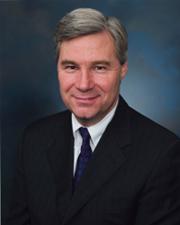 Sen. Sheldon Whitehouse (D-RI)
Legislative Activity
Stay on top of the latest movement without scrolling through every action
Roll call votes on amendments in Senate: Amendment SA 2870 under the order of 12/4/2009, having achieved 60 votes in the affirmative, the amendment was agreed to in Senate by Yea-Nay Vote. 98 - 0. Record Vote Number: 359.
December 4, 2009
View full timeline
Roll call votes on amendments in Senate: Amendment SA 2870 under the order of 12/4/2009, having achieved 60 votes in the affirmative, the amendment was agreed to in Senate by Yea-Nay Vote. 98 - 0. Record Vote Number: 359.
December 4, 2009
Senate amendment agreed to: Amendment SA 2870 under the order of 12/4/2009, having achieved 60 votes in the affirmative, the amendment was agreed to in Senate by Yea-Nay Vote. 98 - 0. Record Vote Number: 359.
December 4, 2009
Considered by Senate. (consideration: CR S12356, S12360-12361)
December 4, 2009
Amendment SA 2870 under the order of 12/4/2009, having achieved 60 votes in the affirmative, the amendment was agreed to in Senate by Yea-Nay Vote. 98 - 0. Record Vote Number: 359.
December 4, 2009
Senate amendment submitted
December 3, 2009
Senate amendment proposed (on the floor): Amendment SA 2870 proposed by Senator Whitehouse to Amendment SA 2786.(consideration: CR S12303-12306; text: CR S12304)
December 3, 2009
Amendment SA 2870 proposed by Senator Whitehouse to Amendment SA 2786. (consideration: CR S12303-12306; text: CR S12304) To promote fiscal responsibility by protecting the Social Security surplus and CLASS program savings in this Act.
December 3, 2009
Votes
1 roll call on this amendment
Text
Proposed
SERVICE MEMBERS HOME OWNERSHIP TAX ACT OF 2009--(Continued)

(Mrs. SHAHEEN assumed the Chair.)
Mr. WHITEHOUSE. I suggest the absence of a quorum.
The PRESIDING OFFICER. The clerk will call the roll.

[[Page S12301]]

The assistant legislative clerk proceeded to call the roll.
Mr. WHITEHOUSE. Madam President, I ask unanimous consent that the
order for the quorum call be rescinded.
The PRESIDING OFFICER. Without objection, it is so ordered.
Mr. WHITEHOUSE. Madam President, I intend shortly to call up an
amendment once the procedural posture is clarified and has been cleared
on the Republican side, an amendment to protect the Social Security
surplus and the CLASS program savings in this act. When I do, I will
then ask for its immediate consideration, but at the moment, that is
still being worked out from a parliamentary standpoint, so my words
will come in advance of that.
I wish to describe the amendment for my colleagues. It is a sense-of-
the-Senate resolution that demonstrates the Senate's commitment to
meaningful deficit reduction in this legislation while also protecting
both the Social Security surpluses generated by the legislation and
savings generated from a significant element of the bill, the long-term
voluntary insurance program created by the Community Living Assistance
Services and Supports Act, what we call the CLASS Act. The amendment
expresses the sense of the Senate that surpluses generated by this bill
for the Social Security trust fund be reserved for Social Security and
that the savings for the long-term insurance program created by the
CLASS Act be reserved for the CLASS program.
The CBO has estimated that this bill will save $130 billion over the
first 10 years and roughly $650 billion over the next 10 years. This
amendment stands for the proposition that these impressive savings will
be protected vis-a-vis the CLASS Act and the Social Security trust
fund.
I wish to speak in particular today about the CLASS Act. This act
creates a voluntary insurance program for seniors and individuals with
disabilities. This program will enable them to afford long-term care
even after they have exhausted coverage offered by Medicare or their
private insurer. Let me make clear that this is not a mandatory
program. It does not increase taxes on anyone. It is a completely
voluntary program that offers an additional insurance option for the
disabled. Without such insurance, disabled people often cannot afford
the massive costs of long-term care. Under current law, they are often
forced to sell their homes or otherwise what is called ``spend down''
their assets until they meet a poverty threshold before they can begin
receiving the help they need.
Certain colleagues on the other side of the aisle have argued that
the CLASS plan would lead to a financially unstable entitlement program
and would rapidly increase the Federal deficit. That is simply not
accurate. The CLASS plan is fully self-sustaining and actuarially
sound, funded by the premiums paid by those individuals who voluntarily
opt into this insurance plan. There are no taxpayer dollars involved.
After individuals pay premiums for 5 years, they become eligible to
receive a cash benefit of no less than $50 per day to assist with the
various costs associated with the onset of a disability or long-term
health condition. These benefits could be used to pay for
transportation to work, for instance, or the construction of a
wheelchair ramp or the hiring of a personal aide--the sorts of things
that so often make the difference between somebody remaining an
independent and productive member of society and requiring the support
of assisted living or nursing home care.
I think we can all agree that it is in everyone's best interest to
try to provide this kind of assistance to people when an unexpected
disability begins to affect their lives, to allow them the support they
need to continue as best they can in their homes, in their apartments,
with their families, at their jobs, and remain, as I said, both
independent and productive.
The Congressional Budget Office has concluded that this plan is
fiscally solvent. In fact, it projected that the program would be
solvent for at least 75 years.
There was a helpful amendment offered in the HELP Committee when we
considered and debated and passed that piece of legislation. The
amendment was offered by the distinguished Senator from New Hampshire,
your colleague, Senator Gregg, the ranking member on the Budget
Committee. It passed unanimously, and it ensures and requires that the
program be actuarially sound for 75 years.
CBO has projected that, in fact, it would be solvent for at least 75
years. CBO further estimated that the program would reduce the deficit
by $72 billion over 10 years, saving $1.6 billion for Medicaid during
the first 4 years of the program. So it has a substantial fiscal
upside.
I am surprised that our colleagues on the other side are criticizing
this element of the bill. It seems to run contrary to the findings that
have been made by the nonpartisan Congressional Budget Office. It is
certainly a stark contrast to their tolerance for their own Medicare
Part D Program, the pharmaceutical program the other side touted so
proudly, which is different from the CLASS Act in many respects: It was
vastly expensive; it was completely unpaid for; it was a massive
handout to the pharmaceutical industry, containing within it the, to
me, appalling proposition that the government was forbidden by law,
forbidden by a previous Congress, to negotiate with the pharmaceutical
industry over the price of drugs and had to take it or leave it,
whatever the pharmaceutical industry charged. Frankly, it is
irresponsible to put the government into that situation. It is fiscally
irresponsible, and it is irresponsible from a management point of view.
It is irresponsible in more ways than I can name. Yet they happily went
that way, the path of fiscal irresponsibility, when it suited the
pharmaceutical industry. Of course, in order to do so, they had to
leave a hole in the Part D pharmaceutical program for seniors to fall
into, what the Presiding Officer knows well and what my colleagues know
well as the dreaded doughnut hole that has caused so many unsuspecting
seniors so much surprise, chagrin, fear, anxiety, and misery. Now,
having been the architects of that program, they criticize the CLASS
Act even though the CBO has found it to be fiscally sound.
It seems there is an enormous double standard between programs
designed for the benefit of, say, the pharmaceutical industry, or
perhaps the insurance industry, and the standards they would apply to
programs that benefit people who suffer from the onset of a
disability--regular Americans, regular families. This is something that
happens to people across this country all the time.
That is really the most important effect of the CLASS Act. As good as
it is on deficits, as much as the CBO has confirmed that it is to our
fiscal advantage to proceed with the CLASS Act, the most important
effect is not on deficits, it is on people.
It is on families. This insurance program will allow disabled people,
young and old, to live more financially secure and productive lives,
free from the fear that medical expenses will impoverish or bankrupt
them, able to make those investments in their own adaptation to their
disability so they can maintain the lifestyle, the job, and the home
they are accustomed to and comfortable with. Studies show that less
than a quarter of private long-term care insurance policies provide a
lifetime of benefits. The CLASS Act fills an important void that has
been left by the public sector for people who seek this protection and
this insurance on a paid-for basis. The CLASS plan is a win-win for
reducing costs in our health care system and protecting Americans who
require long-term care. Our current system plain fails to protect those
who aren't healthy or wealthy enough for private market coverage. It
fails to create an opportunity for individuals to plan and save for
their future lifetime care needs. It fails to provide a sustainable
safety net for individuals who require long-term services and supports
to keep the familiar aspects of their life around them--job, family,
home, hearth.
I will shortly ask that my colleagues support the amendment when it
is called up. It will put the Senate on record as protecting Social
Security. It will put the Senate on record as protecting the CLASS Act
savings scored by CBO. It will put the Senate on record as supporting
the impressive deficit reduction in the bill. I look forward to
favorable consideration when we have a parliamentary agreement on
calling it up.

[[Page S12302]]

I yield the floor.
The PRESIDING OFFICER (Mr. Udall of Colorado). The Senator from New
Hampshire.
Mr. GREGG. I appreciate the proposal of the Senator from Rhode
Island, but I think it needs to be put in its proper context. This is a
sense of the Senate. It has no legal implications. The CLASS Act, as
proposed in the underlying bill, was described by the Senator from
Rhode Island but not fully. The way the CLASS Act works, it is an
insurance program theoretically where people in their thirties and
forties and fifties can buy insurance to cover their retirement years
when they have to go into some sort of long-term care facility and may
be institutionalized. People are paying into this program for decades,
maybe four decades, maybe their thirties right into their seventies or
their twenties into their sixties. The cost of this program does not
actually start to be incurred until these folks move into a long-term
care facility or a managed care facility type of situation for their
retirement years where they need skilled nursing assistance of some
sort.
There is a huge amount of premium that comes in under this program
early which goes against virtually no expenses, because this is a
brandnew program. It is a startup program. It is created by the Federal
Government. It is a government insurance program much like Social
Security and Medicare. The practical effect of that is that money will
come in for years to the Federal coffers. In the first 10 years of this
bill, it is estimated around $90 billion will come in. In the second,
as we move out in the second 10 years, the total over those two periods
of 10 years is about $212 billion. Then more money will come in in the
third 10 years, probably somewhere in the vicinity of $300 billion to
$400 billion potentially. None of this will be spent on the purposes of
this insurance, because almost everybody who is paying in for these
premiums is going to be too young to go into one of these
institutionalized care facilities during those first three decades.
So what happens is that the Federal Government gets this large
windfall of money from these people who are paying their premiums and
spends it, spends it on something else--education, roads, highways,
arts, whatever is the decision on where to spend the money. It gets
spent. That is the way the Federal Government works. It doesn't have
any place to put this money and keep it safe. It comes in, and it gets
spent. When these people retire, when they do go into a situation where
they need assisted living of some sort, then the government gets the
bill. Not us, not those of us who are here. We will be long retired by
then, everybody in this Chamber, except maybe Senator Bennet from
Colorado who is rather young and vibrant. The rest of us will probably
not be around to take advantage of this. It will be our children and
grandchildren who will end up with that bill.
That bill will be staggering. We are talking hundreds of billions, if
not trillions, of dollars of outyear costs as a result of this type of
program; much like Social Security which basically has nothing in the
coffers today, even though trillions of dollars have been paid in, but
which has a lot of obligations. The same thing with Medicare. That was
an insurance program which was supposed to have money in the coffers.
Not there. In fact, it goes into negative cashflow and will be
insolvent beginning in 2010. There is no money when these folks retire
and need it. It will have been spent.
This amendment, well intentioned as a statement, has absolutely no
effect on that series of events. That money will still be spent under
this amendment. After this amendment is passed--and I presume it will
be passed; it is a nonevent amendment having no purpose other than a
political statement--CBO will still score this bill as spending that
money, absolutely score this bill as spending that money, the $90
billion for the next 10 years, the $212 billion for the next 20 years,
the $400 billion after that. That is my guess. The third 10-year
period, my guess is $500 billion. When we get out there 30, 40 years
from now and these people expect to get their insurance paid, then when
our children get the bill for that insurance, it becomes a tax on them,
a direct tax on their earnings. It will affect their lifestyle, their
earning capacity, their ability to buy a home, to send a child to
college, to buy a car. This money will be spent under this bill.
One of my colleagues on the other side of the aisle who is pretty
respected around here on financial matters I believe referred to this
CLASS Act proposal as a Ponzi scheme. That is not too far off.
Basically, we are taking the money from these folks who buy into this
insurance program today. We are spending it on something we want to
spend it on as a Congress today, whether it is something worthwhile
such as a road or education or our national defense, but we are
spending it. We are leaving the people who paid that premium out to
lunch unless 30 or 40 years from now, when they go into that situation
where they need that insurance, the country is strong enough and our
kids are making enough money to pay for the cost of that program. That
is a real gamble for them, and that is called a Ponzi scheme, which is
exactly what this is. This bill, this sense of the Senate, although a
good political document because it allows Members to wander around
their districts and say: I voted to protect the CLASS Act dollars, I
voted that it not be accounted for under this bill, that was a sense of
the Senate. In actuality, it has no effect at all in that area.
All the money that comes into this, insurance money, is going to be
spent somewhere else. And the CBO will still score this bill as taking
credit for that insurance under this program. It is Bernie Madoff
accounting one more time under this bill. You would think after a while
people would get embarrassed--really, it would become embarrassing
after a while. When you match up 10 years of tax increases, 10 years of
Medicare cuts, to 5 years of programmatic spending and claim you have a
program that is fully paid for and is only an $840 billion program,
when you know that if the program, the entire bill is fully phased in,
it is $2.5 trillion in cost. It isn't $500 billion in Medicare cuts
when this thing is fully phased in, it is $1 trillion in Medicare cuts.
It isn't $500 billion of tax increases in this bill and fee increases
on small businesses mostly or on provider groups, it is over $1
trillion of increases. You would think after a while people would be
embarrassed about the manipulation of numbers in that way. But that
doesn't seem to occur. Yet we get this proposal that says, OK, let's do
it again. Let's claim we are doing something we are not doing. Let's
claim we are protecting the dollars that come in under this new CLASS
Act proposal, assuming this program goes into place. Let's claim we are
segregating them somehow so the people who pay their hard-earned
dollars and buy into this CLASS Act think they are getting something
for it, when in fact that will not happen at all, is not going to
happen at all. That money is going to be spent the day it comes in. In
fact, it is already spent. We are already borrowing so much and
spending so much in this government right now. We already have an
obligation of debt that will spend this money.
I guess everybody can walk away feeling good about this amendment,
but substantively, it has no impact at all.
Mr. THUNE. Will the Senator yield for a question?
Mr. GREGG. I am happy to yield.
Mr. THUNE. My understanding is as to the CLASS Act, to make the
deficit situation with the enactment of this bill look better, they
argue they are actually going to reduce the deficit as a result of this
bill because of the revenues that come in early from the CLASS Act. I
think the Senator from New Hampshire has accurately described this. You
get a short-term infusion of revenues and another long-term liability
which is why the Senator from North Dakota described it as a Ponzi
scheme of the highest order, something of which Bernie Madoff would be
proud. I guess my question to the Senator would be, how does this
impact deficits in the long run and the debt in the long run? There was
a lot of discussion around here, probably more rhetoric than action,
about doing something to reduce the deficit and deal with the debt that
continues to pile up and accumulate and at some point will be handed
off to future generations. This Ponzi scheme, as it has been described
by the Senator from North Dakota on

[[Page S12303]]

the other side, in the form of the CLASS Act does seem in the short
term to understate the fiscal impact of the cost of this health bill
which, as the Senator from New Hampshire has described, is $2.5
trillion. But could the Senator elaborate on what happens in the
outyears? You talked about the impact down the road when all the bills
come due. You get all the revenue in the short term, and then some time
down the road that revenue gets spent and you are stuck with all these
liabilities. How is this going to affect deficits and debt in those
years in the future when our children and grandchildren will have to
pay for it?

Mr. GREGG. The Senator has asked a very pointed and appropriate
question, because the answer is pretty startling. The point I think
most people don't understand is that this money gets spent as it comes
in. In other words, let's say over the next 30 years, younger people
pay into this new alleged insurance program, accurately described as a
Ponzi scheme. All that money that comes in will be spent on other
activities of the government and, therefore, the other activities of
government will be allowed to grow fairly dramatically. There will be a
lot of money here. You are talking potentially $1 trillion over the
next 30 years.
Those expenditures, which will have occurred as a result of this
money coming in, which will have nothing at all to do with paying for
the cost of the health care which these people who buy into this CLASS
Act think they are getting--in other words, long-term care insurance,
it has nothing to do with that--it will be on, as I said, education,
roads, national defense, whatever we spend it on around here. Those
expenditures will be built into the baseline forever. They will presume
that there is going to be revenue to pay for them. What happens when
that generation that has bought into the CLASS Act starts to actually
need the money it is alleged it is going to get? Two things happen. The
younger generation is going to have to pay taxes to cover that cost
because the money will not be there. There will be no money in the
kitty, none, zero. There will be zero money in the kitty, the alleged
kitty to pay for this insurance program. Second, ironically, the
government will have been grown by all the money that came in and was
spent on new programs. So you are basically going to double down on the
cost here.
Our children and our grandchildren are going to have to pay twice,
not only to pay for the long-term care which allegedly has been
promised to these people under these insurance programs but also to pay
for all the new spending that will occur as a result of spending the
premiums which were supposed to be saved for these programs. So they
are going to get hit twice. The implications are, quite honestly,
staggering.
We already know we have a $38 trillion unfunded liability in
Medicare. We know, when you combine Medicare, Medicaid, and Social
Security, we have a $60 trillion unfunded liability. If you calculate
in the cost of the CLASS Act on top of that, you are adding potentially
trillions more of unfunded liability, which will all have to be paid by
our children and our grandchildren.
At the essence of this bill, there are a number of problems, but the
problem I find most inappropriate in the way we are doing this is we
are creating a government which our kids cannot afford under any
circumstance. We are absolutely guaranteeing that our children are
going to have a lower standard of living than we had because of the
burden we are going to put on them as a result of these expansive new
programs, which we know cannot be afforded in the outyears.
We already know we cannot afford the government we have in the
outyears. We already know the public debt is headed above 80 percent of
GDP by 2019. So the Senator from South Dakota has touched on a core
issue. What is the real cost of this? Well, it is extraordinary. As I
said, it hits the next generation twice. First, they will have to pay
the taxes to pay for the program that was put on the books, which is
allegedly there, plus they will have to pay to support all the programs
which the money that came in was supposed to be preserved for.
Mr. THUNE. I say to my colleague from New Hampshire, it is the
classic definition of a Ponzi scheme, which, as I said, is how it has
been described not just by the chairman of the Budget Committee from
North Dakota but also by others who have looked at this. Editorial
pages in newspapers across this country have looked at this CLASS Act
and said it does not add up, and it does not add up. I think Ponzi
scheme is a good description.
The Senator from New Hampshire has correctly outlined the impact this
will have on future generations, on deficits and debt, and spending and
the growth of government. That is why it is such a bad idea to include
this. The sense of the Senate resolution is simply that. It has no
legal binding effect on spending. It simply is sort of a political
statement that makes everybody feel better, but in the end it is going
to be our kids who pay.
Mr. GREGG. I think the Senator from South Dakota touched on another
point. The sense of the Senate, basically, confirms the fundamental
flaw of the CLASS Act. The fact that you would think a sense of the
Senate is necessary pretty much proves that everybody around here
understands there is a big game going on with the CLASS Act. The
problem is, of course, the sense of the Senate has no effect of law
and, therefore, the problems the CLASS Act creates in the area of
spending, the revenues that come in for the purpose of something other
than what the CLASS Act alleges people are buying when they pay for
that insurance, will still exist, and the CBO will still score the
CLASS Act as benefiting the budget situation, when it should not be
scored that way at all.
As I said, this is a nice resolution from a political standpoint, but
substantively it has no effect on correcting the problems which the
CLASS Act generate in the area of fiscal policy.
I understand there is a unanimous consent request that somebody
wishes to offer. I was asked if I would listen to it.
Mr. DURBIN. Mr. President, does the Senator yield the floor?
Mr. GREGG. I ask the assistant leader, is he offering a unanimous
consent request? I will yield the floor for the purposes of a unanimous
consent request.
Mr. DURBIN. Mr. President, I ask unanimous consent that the next
amendment in order be one offered by Senator Whitehouse of Rhode
Island, which is at the desk; that the other matter in order during
today's session be a Hatch motion to commit regarding Medicare
Advantage; that no other amendments or motions to commit be in order
during today's session; and that the time in sequence following this
unanimous consent request--I do not want to disadvantage the Senator
from New Hampshire, but if it is our turn on this side of the aisle, I
would ask that Senator Whitehouse first be recognized for the purpose
of calling up his amendment and then I be recognized next, for no more
than 15 minutes; and at that point it is my understanding Senator Hatch
has asked for the floor for 1 hour on his motion.
If there are any other requests, I would be glad to add them to the
unanimous consent request at this point.
Mr. GREGG. Reserving the right to object, my only concern would be
that will take us past 7 o'clock, so you may want to adjust the time.
Mr. DURBIN. I am going to finish this as soon as I have gone through
my preliminary work here. I also ask unanimous consent that the time
until 8 p.m., this evening, be equally divided and controlled between
Senators Whitehouse and Hatch or their designees; that it be in order
during this time for Members to engage in colloquies, as long as those
Members entering into the colloquy remain on the floor.
Mr. GREGG. Is it my understanding, then, the order of recognition
will be Senator Whitehouse, the assistant leader, and then Senator
Hatch?
Mr. DURBIN. Yes.
The PRESIDING OFFICER. Is there objection?
Without objection, it is so ordered.
The Senator from Rhode Island.

Amendment No. 2870 to Amendment No. 2786

Mr. WHITEHOUSE. Mr. President, I now call up amendment No. 2870, an
amendment to protect the Social Security surplus and CLASS program
savings in this act and ask for the amendment's immediate
consideration.
The PRESIDING OFFICER. The clerk will report.

[[Page S12304]]

The assistant legislative clerk read as follows:

The Senator from Rhode Island [Mr. Whitehouse] proposes an
amendment numbered 2870 to amendment No. 2786.

Mr. WHITEHOUSE. Mr. President, I ask unanimous consent that reading
of the amendment be dispensed with.
The PRESIDING OFFICER. Is there objection?
Without objection, it is so ordered.
The amendment is as follows:

(Purpose: To promote fiscal responsibility by protecting the Social
Security surplus and CLASS program savings in this Act)

At the appropriate place, insert the following:

SEC. __. SENSE OF THE SENATE PROMOTING FISCAL RESPONSIBILITY.

(a) Findings.--The Senate makes the following findings:
(1) Based on Congressional Budget Office (CBO) estimates,
this Act will reduce the Federal deficit between 2010 and
2019.
(2) CBO projects this Act will continue to reduce budget
deficits after 2019.
(3) Based on CBO estimates, this Act will extend the
solvency of the Medicare HI Trust Fund.
(4) This Act will increase the surplus in the Social
Security Trust Fund, which should be reserved to strengthen
the finances of Social Security.
(5) The initial net savings generated by the Community
Living Assistance Services and Supports (CLASS) program are
necessary to ensure the long-term solvency of that program.
(b) Sense of the Senate.--It is the sense of the Senate
that--
(1) the additional surplus in the Social Security Trust
Fund generated by this Act should be reserved for Social
Security and not spent in this Act for other purposes; and
(2) the net savings generated by the CLASS program should
be reserved for the CLASS program and not spent in this Act
for other purposes.

Mr. WHITEHOUSE. Mr. President, I yield the floor to the distinguished
assistant majority leader.
Mr. DURBIN. Mr. President, I have listened carefully to the profound
and eloquent statements from my friend and colleague from New
Hampshire, Senator Judd Gregg. He has frequently invoked the name of
the Ponzi family, though I am not personally familiar with them. I
believe they have had some skeletons in their closet by virtue of the
references that have been made. But I will tell him that what he said
about the CLASS Act is inaccurate.
I know that Senator, I see, is leaving the floor. I hope he does not
miss out on this conversation. But--
Mr. GREGG. I was just wondering if the Senator would yield for a
question.
Mr. DURBIN. I would be happy to.
Mr. GREGG. Is the Ponzi family from Chicago?
Mr. DURBIN. No, they are not. I think they are from New England--
Patriots' fans.
I would like to ask the Senator from New Hampshire, if he would
yield, if he is familiar with Doug Elmendorf and the Congressional
Budget Office and the letter of November 18, 2009, to the majority
leader, Harry Reid, in relation to the deficit impact of the CLASS Act.
Mr. GREGG. I appreciate the assistant leader asking me that question.
Regrettably, I am not immediately familiar with it. I have probably
seen it, although I apologize for not being immediately familiar with
it. Therefore, I presume the assistant leader is going to remind me or
at least reacquaint me with its terms. I would note the term ``Ponzi
Act'' did not come from me. It came from the chairman of the Budget
Committee.
Mr. DURBIN. I would just say, it is unfortunate the Senator from New
Hampshire has not seen this letter because if he had had an
opportunity--and it is impossible to read everything--if he had had an
opportunity to read that letter, I do not think he would have made the
speeches he just made on the floor about the CLASS Act because the
Congressional Budget Office tells us that in the first 10 years, the
CLASS Act will reduce the Federal budget deficit by $72.5 billion; in
the second 10 years by a substantial amount, though somewhat less than
$72.5 billion; and in the third 10 years--30 years out--it is
anticipated it will add to the deficit, but, in the words of the letter
from the Congressional Budget Office, by a very small amount over that
next decade.
Mr. GREGG. If the Senator would allow me to comment on that one
point?
Mr. DURBIN. I would be more than happy to allow that.
Mr. GREGG. I fully agree with that analysis. The first 30 years of
the CLASS Act will generate revenues. It will add to the Federal
Treasury and will--and that was the purpose of my discussion; that is
the point I made--during the first 30 years of this proposal, younger
people will be paying in and very few people will be taking out because
they will not have yet qualified for the insurance because they will
not be old enough to go into assisted living.
Mr. DURBIN. Reclaiming the floor, I would just say, if I understand
what the Senator said, he is concerned that in the year 2040, this
program may not work as effectively as we had hoped it would work. I
trust in the wisdom of future Members of the Senate and the House, if
that is necessary, to modify the program.
But it certainly is worthwhile for us to at least reflect on what
this program is. It is a voluntary, self-funded insurance fund for
long-term care for American citizens. It was one of the visions of
Senator Kennedy as part of health care reform, understanding we are
living longer and many times need help in our late years in life and it
can be expensive and deplete a family's savings. Senator Kennedy said:
Let's try to put together a voluntary program where you can pay in and
have, in fact, long-term care insurance available to you, if you need
it.
The fact that this program is virtually solvent for 30 straight years
is an indication of the wisdom of that idea and the way it is planned.
I might add one other thing. We just finished a motion to commit on
the floor relative to Medicare, and many of us argued that the bill
before us, the bill that represents health care reform in this debate,
protects Medicare and guarantees the basic benefits of Medicare. Those
on the other side of the aisle protested and said: No, it does not.
Well, then, Senator Michael Bennet of Colorado offered an amendment
which said, pointblank and clearly, nothing in this bill will, in any
way, diminish guaranteed Medicare benefits, and a surplus generated
here will be to give a longer life to the existing Medicare Program.
The Bennet of Colorado amendment passed 100 to nothing, so not only
does the bill originally protect Medicare, the Bennet amendment
repeated that, and all the Republicans voted for it. Yet they continue
to come to the floor and say: We do not believe what we voted for. We
believe this bill is going to hurt Medicare.
The same thing is true with the CLASS Act because Senator Whitehouse,
who was on the floor momentarily, came forward and said: I will put it
in writing. We are going to put it in writing that the surplus in the
CLASS Act program cannot be used for other purposes and has to be saved
and used for the purposes stated here for long-term care insurance. I
think the Whitehouse amendment is likely to get another 100 votes.
So every time we address a concern from the Republican side of the
aisle, and say the bill addresses that concern or a separate amendment
addresses that concern, they protest: It is not enough. We need more. I
think they protest too much.
I would also say I am troubled today, as I have been for several
weeks, by the position taken from the Republican side of the aisle
about health care reform. For about 13 or 14 days, this bill, in its
entirety, has been available to the American people. You can find it by
Googling ``Senate Democrats'' and it will direct you to our Web site
and you can click on this bill, H.R. 3590, and read it, page after
page--all 2,074 pages of it. That is the way it should be.
There was a lot of angst and worry last August in townhall meetings:
Well, are you going to get this bill sneaked by us? Are we going to get
a chance to read it? Everybody has a chance to read it. But then I
would recommend to those who are searching the Internet to read health
care reform bills that if you want to find the Republican health care
reform bill, look for ``Senate Republicans'' and go to their Web site
and you will be able to click on ``health care reform bill'' and you
will find the Democratic health care reform bill because,
unfortunately, there is no Republican health care reform bill. They
have not offered one. They have had a year to prepare

[[Page S12305]]

it. They have had plenty of ideas they have expressed on the floor.
They have been critical of our efforts. They have offered literally
hundreds of amendments in committee, and yet they cannot come up with a
bill.
It leads you to conclude this is not an easy task. It is not easy at
all. It certainly is not easy to produce a bill such as this one, the
Democratic bill, which generates, over the first 10 years, a $130
billion Federal surplus in our Treasury. This bill adds more in terms
of surplus and deficit reduction than any bill in the history of the
Senate. In the second 10 years, the Congressional Budget Office says
there will be another $650 billion in savings on our deficit.
So for those who argue if we pass this bill we are going deeper in
debt, they ignore the Congressional Budget Office, that referee that
takes a look at all the bills and tells us that over the span of 20
years, we are going to reduce our deficit by some $700 billion or $800
billion, just by virtue of this bill. Republicans have been unable to
produce a bill that reduces the deficit, when it comes to health care,
by a penny. They come here and criticize what we have done, but they
can't produce a bill. All the great legislative minds on their side of
the aisle, and we have been waiting patiently for them to produce a
health care reform bill. They can't or they don't want to. Maybe they
like the current health care system. Maybe they think this is the way
America should be.

Well, many of us don't believe that, and a lot of Americans don't
either. There are a lot of good parts of our system we want to protect,
but there are many parts that need to be changed. We need to make
health care and health insurance more affordable for families and
individuals and businesses. This bill does.
We just had another report from the Congressional Budget Office that
said yes, the cost of premiums will be coming down for many Americans
as a result of this bill. We also understand that some 50 million
Americans don't have health insurance at all. This bill will reach the
highest level of protection for health insurance in the history of the
United States. Ninety-four percent of people in this country will have
the peace of mind and security of health insurance--a dramatic
increase. The Republicans have been unable to come up with any proposal
that moves us toward more coverage for people who don't have health
insurance.
This bill also has many provisions to finally give consumers across
America a chance to fight back when the insurance companies say no, and
they do all the time. People who need critical surgical procedures and
medicines, people who need the kind of care their doctors recommend end
up fighting with the clerk at an insurance company. This bill, the
Democratic health care reform bill, gives these families a fighting
chance against these health insurance companies. I have yet to see the
first bill coming from the Republican side of the aisle in the course
of this debate that would give our families a chance against these
health insurance companies.
I wish to also say when I finish speaking, and we finish on this side
of the aisle, the Senator from Utah will come and speak. I understand
it is the Medicare Advantage Program he will speak to. Now, the
previous motion to commit by Senator McCain of Arizona said: Send this
bill back and make sure you take out any reference to savings in the
Medicare Advantage Program. That was defeated. The vote was 42 to 58.
There were two Democrats who joined the Republicans. They needed 60
votes; it didn't make it. I take it the Senator from Utah may offer
another motion to commit relative to Medicare Advantage. I expect it to
have the same fate, but he has his chance to argue his point of view,
and he may be persuasive to more Members on this side of the aisle.
Unfortunately, although we are good, close friends, and I bask in his
wisdom on a daily basis, he is not going to change my mind on this
issue because the Medicare Advantage Program is a program that needs to
be changed.
Let me tell my colleagues about this program. We started years ago
with the health insurance industry telling us: Government cannot do a
good job when it comes to insurance. Let us show you how private health
insurance companies can sell a Medicare policy more cheaply than the
government. And we invited them to do it.
Over the course of the years, some of them did. They showed some
savings, and they demonstrated to us they could provide Medicare at a
cost lower than the government. But then things changed, and the health
insurance companies kept coming back and saying: Well, we actually need
more money now to provide the same benefits in Medicare that the
government provides.
At last count, the Medicare Advantage Program costs 14 percent more
to provide the same Medicare benefits as the government program. So
these leaders in the private sector who were going to teach us a lesson
about how to sell insurance ended up failing their own lesson plan, and
now this Medicare Advantage Program has turned out to be a flatout
subsidy to the health insurance industry--$170 billion over 10 years.
In other words, the Medicare Program is paying more for Medicare than
what it has to pay so it can subsidize health insurance companies which
are turning multimillion-dollar profits and giving bonuses to their
CEOs.
Some on the other side of the aisle think we need to preserve this;
that we need to preserve this subsidy, make sure we protect the profits
of the health insurance companies, and we need to protect Medicare
Advantage. Well, as Senator Dodd has said so frequently on the Senate
floor, Medicare Advantage is neither Medicare nor an advantage.
I believe, and most agree, it is time for this party to end. These
private health insurance companies didn't keep their word, didn't keep
their promise, and because of that we are in a situation--a
predicament--where we are asking other people covered by Medicare to
subsidize the profits of these private health insurance companies. What
does it cost every Medicare recipient in America to provide this
subsidy and profits to these private health insurance companies under
Medicare Advantage? Ninety dollars a year, on average.
So those who are defending the Medicare Advantage Program as we
currently know it and don't support the reforms in this bill are also
supporting a $90 annual tax on Medicare recipients. My fiscally
conservative Republican friends who run against taxes every chance they
have should reflect on the fact that they are protecting a tax on
Medicare recipients. That, to me, is indefensible.
Mr. WHITEHOUSE. Will the assistant majority leader yield?
Mr. DURBIN. I am happy to yield to the Senator from Rhode Island.
Mr. WHITEHOUSE. I just wanted to ask the distinguished assistant
majority leader to yield for a question through the Chair. Since the
distinguished assistant majority leader was here at the time, and I am
newer to this body and was not here at the time when the Medicare
Advantage Program was originally proposed, I wonder if the
distinguished assistant majority leader would remind us of what the
promises and assertions were that were made by the private insurance
industry at that time as they sought this foothold to get their hands
on this Medicare population.
Mr. DURBIN. It was very basic, I would say to the Senator from Rhode
Island through the Chair. They just said: Now, listen. When it comes to
insurance, the government never gets it right. The bureaucrats who work
for the government, those Federal employees, don't get it right. We do
this for a living. We can show you how to provide Medicare benefits and
save money. So, please, would you just step aside? The private health
insurance companies are going to demonstrate to you how much money we
can save.
Initially, there were some savings; I will say that in fairness. But
over the years, they got greedy, and their greediness led in most
recent times to--I think in 2003, if I am not mistaken, with the
Medicare prescription drug program, when they came in and these same
private health insurance companies said: Now we really need subsidies
to keep offering our wonderful programs, now they tell us they are
charging 14 percent more than basic Medicare.
The PRESIDING OFFICER. The Senator from Illinois has used 15 minutes.

[[Page S12306]]

Mr. DURBIN. Mr. President, I ask unanimous consent for 5 additional
minutes.
The PRESIDING OFFICER. Is there objection?
Without objection, it is so ordered.
Mr. BROWN. Mr. President, will the Senator yield?
Mr. DURBIN. I am happy to yield.
Mr. BROWN. I thank Senator Durbin for his recollection and Senator
Whitehouse for his question and the comments and understanding of this.
My recollection was back 10 years ago when it passed it was the
insurance companies that said: We will do it 5 percent cheaper. We will
save taxpayers 5 percent. But as soon as they did that, as soon as
President Bush was elected in 2000, I remember they started lobbying
Congress for more insurance subsidies. It sort of peaked in 2003 with
the prescription drug deal giveaway where the drug companies and the
insurance companies both got huge government subsidies. They formed the
doughnut hole, and seniors ended up paying a lot more so the drug and
insurance companies could get subsidies. Then that is when the tax was
increased, that $90 tax, if I recall.

Am I right about that, that originally it was actually a good thing
for taxpayers, but then during the Bush years the insurance company
lobby was able to increase that tax on the other 80 or 85 percent of
Medicare beneficiaries, the people who were in what was called fee for
service, who would go to the doctor, go to the hospital and submit to
Medicare and not do it through a private insurance company? Is that
what has happened?
Mr. DURBIN. I would say to the Senator from Ohio that is exactly what
happened because what we have is that in order to pay for the subsidy,
the private health insurance companies that are selling Medicare
Advantage, they had to take the money out of the Medicare system, which
meant less money for everybody else. It translated into $90 a year more
for every Medicare recipient to pay for the subsidy, for the private
health insurance companies that are protected by Medicare Advantage.
Mr. BROWN. If the Senator from Illinois would yield, so these
subsidies then went directly to the insurance companies and then the
insurance companies--they had to live under the Medicare laws, of
course--but these insurance companies then began to insure generally
some healthier people so they could make more money, right?
Mr. DURBIN. That is right.
Mr. BROWN. In those days, the insurance companies--Senator Whitehouse
has talked often about this, as has Senator Harkin who is standing here
now too--that the insurance companies' business model has been to hire
a lot of bureaucrats. They say they are more efficient than Medicare,
but surely they are not. Their administrative costs are 15 percent and
Medicare is 5 percent. But they hire all of these bureaucrats to keep
people from buying policies if they are sick--a preexisting condition--
and then they hire a second group of bureaucrats on the other end to
make sure those people who submit bills for their health care, their
claims, that 30 percent of them are initially denied. So they hire
bureaucrats on both ends to restrict care, add a lot of administrative
costs.
Medicare, I don't think, prohibits people for a preexisting
condition, right? They don't do anything like that.
Mr. DURBIN. No. I would say to the Senator from Ohio the difference
is obvious. With Medicare, anyone who shows up age 65 is eligible for
coverage, no questions asked, other than your age and whether you have
contributed over the course of your lifetime. These health insurance
companies cherry-pick the healthiest people they can, then try to deny
coverage where they can as well, and that is how they make their
profits.
Mr. BROWN. They are pretty good at it.
Mr. DURBIN. So good at it that they are one of the most profitable
sectors in the American economy, and virtually everybody knows somebody
they work with or someone in their family who has had a bad experience
with a health insurance company in America. That is the reality we are
facing today.
Mr. WHITEHOUSE. Mr. President, if I could ask the Senator to yield
for a question, it would appear, then, that not only is there this
subsidy that goes to the private insurance industry, funded by a tax on
all other Medicare recipients, but those private insurance companies
are actually doing their level best to try to pick out a
disproportionately healthy Medicare-eligible population, so what we end
up doing is not only paying more for Medicare Advantage but also for a
healthier population. So it is a double subsidy.
Mr. DURBIN. Make it a triple whammy because the third impact, of
course, is that the healthier people are not part of Medicare. Those
left in Medicare are sicker and more expensive, so the government-run
program ends up being more expensive because those private health
insurance companies cherry-pick out the healthiest people they can
find.
There are those who want to defend Medicare Advantage who think it is
great that we would pay $170 billion in subsidies to these companies
over a 10-year period of time. This bill moves us away from that and
says if these private health insurance companies can't basically
compete and match what government Medicare offers, then it is time for
them to get out of the business and get out of the way. I don't see why
in the world we are arguing about a subsidy for private health
insurance companies when they already make so much money.
So I would at this point yield the floor. I know Senator Hatch has
asked for an hour to speak on his motion. I believe it is a motion to
commit. I yield the floor.
The PRESIDING OFFICER. The Senator from Utah is recognized.
Mr. HATCH. Mr. President, I thank my friend and colleague who has
been making these extraordinary arguments on the Senate floor. I will
spend a little bit of time chatting about those in just a minute.

Motion to Commit

Mr. HATCH. Mr. President, I send a motion to commit with instructions
to the desk and ask for its immediate consideration.
The PRESIDING OFFICER. The clerk will report the motion.
The legislative clerk read as follows:

The Senator from Utah [Mr. Hatch] moves to commit H.R. 3590
to the Committee on Finance with instructions to report the
same back to the Senate with changes that do not include
cuts in payments to Medicare Advantage plans totaling
-$120 billion.

Mr. HATCH. Mr. President, I always enjoy my colleague from Illinois.
He is as good a populist speaker as we have in the Senate. No matter
what comes up, he can talk about it.
I get a big kick out of him saying there are not any Republican
bills. Well, there are six of them. You can get a hold of those bills.
The problem is, we only have 40 votes, and we know it.
The fact is, the more I thought about it, I thought to myself, where
are the printed bills that we always have on our desks? Where is the
Democratic printed bill? I am sure it is somewhere. Usually when we
debate any bill on this floor, we have the bill printed and put on our
desks. Maybe it has been printed, but it isn't on our desks, and I
think there is a good reason for it. It is 2,074 pages long. It is
enough to make you barf.
When you stop and think about it, why do we need 2,074 pages when 85
percent of persons basically like the health insurance they have? The
other 15 percent, if you break it down, you get down to about 7 million
to 15 million people who need our help.
By the time you knock off those who work for a company that provides
health insurance but they don't choose to take it because they would
rather have the money or you take the approximately 11 million people
who qualify for CHIP, the Child Health Insurance Program, or Medicaid,
but aren't enrolled; or you take those who earn over $75,000 a year and
just won't buy it but can afford it, or you take those undocumented
workers or others who are legal aliens who for some reason do not have
coverage, you get down to about 15 million people, at most. We can
subsidize them, and we wouldn't have to throw our whole system out into
the trash can--a system that 85 percent of the American people
basically thinks is working relatively well for them.

It seems crazy to me. Why are we doing that? Fifty percent of the
people in this country basically don't pay

[[Page S12307]]

Federal income taxes as we sit here. The upper 50 percent pay 97
percent of all income taxes. The bottom 50 percent pay about 3 or 4
percent, at the very most. Think about that. What are we going to do--
go to 60 percent so that one side can keep the numbers here so they can
stay in majority control? Are we going to get people to be more
responsible for their own health care?
On top of it all, they want a government plan. Why do they want that?
Medicare is the government plan. For all intents and purposes, it is
very well-intentioned, but it has $38 trillion in unfunded liabilities
as we sit here--mainly because the Federal Government is running it. If
the State governments ran it and we had 50 State laboratories, I doubt
seriously we would be in this terrible fix. We are saddling our
children and grandchildren and great-grandchildren with tremendous
debt. What is their answer? We are going to take $464 billion--almost
$500 billion--out of Medicare, and we are going to put it towards
making our health plan deficit neutral.
They have used every accounting and budgetary gimmick they can to get
this plan below $1 trillion, because they charge taxes from the day it
is passed, but the plan is not implemented for 4 years--until 2014.
That way, they can try to indicate to the American people that they are
bringing the cost of the bill in at under $1 trillion. That is a lot of
money because today we are spending $2.4 trillion on health care, run
primarily by the Federal Government--two-thirds of which is run by the
Federal Government. I might add that there are estimates that $1.2
trillion of that $2.4 trillion is wasted money. Yet we are going to add
another $2.5 trillion, which is what this bill really costs if you
extrapolate it out over 10 years and not just from 2014 to 2020. We are
going to spend another $2.5 trillion, if you extrapolate it out. No
wonder the American people are so up in arms. They ought to be. We are
going to be spending $5 trillion on health care if my friends are
successful in what they are doing. They know we have 40 votes, at most.
I have been here a long time. Senator Lugar and I are the most senior
Republicans on the floor of the Senate. We came at the same time. I
have to say that, having been here all these years, we have never
really had a fiscally conservative majority in the Senate, except
through great Presidential leadership--Reagan, Bush 1, even President
Clinton on occasion, and Bush 2. We have always had enough liberals on
our side to go with the liberal Democrats so we have never really had a
fiscally conservative majority. It would take 60 votes to get this
country under control, from a spending standpoint.
I appreciate the comments of my friend from Illinois about Medicare
Advantage, but he is just plain wrong. Medicare Advantage has made a
tremendous difference in the lives of almost 11 million Medicare
beneficiaries. He failed to mention that the program has given choice
to every Medicare beneficiary across the country, regardless of where
they live. Medicare Advantage saves beneficiaries' dollars. Seniors
have lower copayments, cost sharing, and deductibles through Medicare
Advantage Programs. That is why many lower income seniors participate
in the Medicare Advantage Program. Up to 25 percent of all seniors
participate. Why? Because it works for them.
I was on the Medicare modernization conference committee. We came up
with it because beneficiaries living in rural America did not have
access to Medicare HMO plans before Medicare Advantage was created. If
my friends will take the time to listen to my statement on Medicare
Advantage, I believe they will find it insightful and it will rebut
most everything they are saying.
Mr. President, the motion I just sent to the desk is to commit the
Reid health care bill to the Finance Committee in order to eliminate
the Medicare Advantage cuts of $120 billion contained in this
legislation.
I know I mentioned this point over and over again, but it bears
repeating. Throughout the health care debate, we have heard the
President say he is not going to mess with Medicare. Unfortunately,
that is not the case with the Reid bill we are currently considering.
To be clear, the Reid bill cuts Medicare by $465 billion to fund a new
government program. Unfortunately, our seniors and the disabled will
suffer the consequences as a result of these reductions.
Throughout my Senate service, I have fought to strengthen, preserve,
and protect Medicare. I think most Republicans have, in spite of what
my colleagues say on the other side. Unless we are pouring money down
the drain, they do not believe we are doing anything. Medicare is
already in trouble today. The program faces serious challenges in the
future. The Medicare trust fund will be insolvent by 2017. The program
has more than $37 trillion in unfunded liability. The Reid bill will
make this situation much worse.
Look at the cuts to Medicare. Hospitals, cut $134.7 billion in this
bill. Where are they going to get that money? How are we going to keep
hospitals going in the future? Hospices, cut $7.7 billion. Nursing
homes, cut $14.6 billion. I have been to all kinds of nursing homes in
this country, and they have a rough time. We are going to take over $14
billion from nursing homes, and they are critical to our senior
citizens. For Medicare Advantage, $120 billion is coming out of the
program. Home health agencies, $4.1 billion. So there is $135 billion
from hospitals, $120 billion from Medicare Advantage, about $15 billion
from nursing homes, more than $40 billion from home health care
agencies, and close to $8 billion from hospice providers.
These cuts will threaten beneficiaries' access to care as Medicare
providers find it more and more challenging to provide health services
to Medicare patients. And what is their argument? They say it is the
awful insurance companies causing these problems. No, it is the awful
Federal Government causing these troubles. It is the awful bureaucracy
and the awful Federal Government that dominates all of our lives. If
this bill passes, ``Katy, bar the door.'' Our lives will be completely
controlled by the Federal Government on one-sixth of the American
economy.
Today, I want to focus my comments on the Medicare Advantage Program.
It has been totally distorted by my colleagues, in my opinion--I am
sure not intentionally. They would never do that.
By the way, here is the bill. This is not the printed version; this
is the bill. It is no small bill. It is one of the largest I have seen
in my time here.
Mr. President, I am strongly opposed to the deep cuts--$120 billion
over 10 years--that the Reid bill would impose on the benefits of
almost 11 million Medicare beneficiaries, Medicare beneficiaries who
currently are enrolled in the Medicare Advantage Program.
While they knock Medicare Advantage, they are pushing people toward
the AARP Medigap insurance program. AARP makes hundreds of millions and
billions of dollars off senior citizens. It is small wonder that AARP
supports this monstrosity of a bill. It is in their best financial
interest.
As we consider the serious threat these cuts pose to seniors, I want
to point out that during the Finance Committee markup this fall, we saw
Senator Bill Nelson from Florida, and other Democrats, work to
partially mitigate the impact of the bill's Medicare Advantage funding
cuts. This effort, while taking very small steps, clearly demonstrated
that a number of our Democratic colleagues recognize the value offered
by Medicare Advantage plans and the danger of enacting the deep cuts
proposed by the pending bill. Unfortunately, only a limited number of
States would benefit from the Nelson amendment, so most Medicare
Advantage beneficiaries are not protected from the cuts. But they
recognize how important this program is.
I also recall that 6 years ago, when Congress enacted the Medicare
Modernization Act, we intentionally provided new funding to stabilize
the Medicare health plan program. This was one of the few issues on
which there was strong bipartisan agreement during the 2003 Medicare
debate. I was here. I was on the conference committee. I happened to
bring about that Medicare Modernization Act. In fact, in June 2003,
several of our colleagues, including the Senator from New York and
Senator Kerry from Massachusetts--great Democrats--offered a bipartisan
amendment on the Senate floor to provide additional funding for
benefits under the Medicare Advantage Program. Why would they do that
if it

[[Page S12308]]

is such a lousy program? Now, all of a sudden, it is a lousy program
because they want the money to be used for a massive, new government-
run program. Back then, they wanted additional money for Medicare
Advantage, recognizing how important the program was.
Later that year, as the Medicare conference committee completed its
deliberations, a bipartisan group of 18 Senators signed a letter urging
the conferees to provide a meaningful increase in Medicare Advantage
funding. This letter was signed by a diverse group of colleagues,
including Democratic Senators such as Dianne Feinstein from California,
Christopher Dodd from Connecticut, Ron Wyden from Oregon, Frank
Lautenberg from New Jersey, Patty Murray from Washington, Arlen Specter
from Pennsylvania, Mary Landrieu from Louisiana, and Maria Cantwell,
just to mention a few. It was bipartisan. They recognized how important
this program was, and they recognized we were trying to solve major
problems for people, especially in rural areas.
I think it would be worthwhile to reflect back on the 2003 debate and
remember the reasons this issue inspired such strong bipartisan
consensus. You don't hear it at all from that side at all--after the
program has proven its efficacy and that it works. We supported the
Medicare Advantage plan 6 years ago. It was the right thing to do for
beneficiaries. The same logic holds true today.
We owe it to the beneficiaries to provide a strong, adequately funded
program that provides them with high-quality health care choices. Every
Medicare beneficiary can go into Medicare Advantage if they desire,
under current circumstances.
During the Finance Committee's consideration of the Baucus health
bill, I offered an amendment to protect extra benefits currently
enjoyed by Medicare Advantage beneficiaries. Unfortunately, the
amendment was defeated. In other words, the President's pledge assuring
Americans they would not lose their benefits was not met by either the
Finance Committee bill or the Reid bill currently being considered by
the Senate.
Here is how supporters of the Finance bill justified the Medicare
Advantage reduction: They argued that the extra benefits that would be
cut, such as vision care and dental care for these poor people, reduced
hospital deductibles, lower copayments and premiums, were not statutory
benefits. They claim they were not statutory benefits offered in the
Medicare fee-for-service program.
Therefore, those extra benefits did not count, although a quarter of
the Medicare beneficiaries were getting them from Medicare. But try
telling them that they did not count to a Medicare Advantage enrollee
who has been receiving these additional benefits.
I want to talk about the differences between fee-for-service Medicare
and Medicare Advantage. Because of the gaps in traditional Medicare, it
is incumbent for most beneficiaries to buy a Medigap policy which wraps
around the Medicare benefit. Guess who provides these Medicare
policies, among others, but really in a big way. Why, the AARP.
On average, these policies cost a couple hundred dollars a month. In
comparison, the average monthly premium in a Medicare Advantage plan is
$54 in 2009. These plans also fill in the coverage gaps of Medicare.
Moreover, almost half of all Medicare Advantage beneficiaries are in
plans that charge no monthly premium. Let me say that again. If you
have to buy a Medigap policy for traditional fee-for-service Medicare,
you will have to buy a policy that costs a few hundred dollars a month
compared to Medicare Advantage plans which cost beneficiaries on
average $54 a month in 2009. This is why several studies have shown
that Medicare Advantage is one of the most popular choices for the low-
income elderly because they do not have to buy a Medigap policy.
This week we have had Members on the other side of the aisle claim
that Medicare Advantage is not part of Medicare. That is how far they
have gone to distort the record. Again, I hope nobody was doing that
intentionally and that it is a lack of knowledge about the Medicare
program. Keep in mind, we have Members on the other side of the aisle
who claim Medicare Advantage is not part of Medicare. It is absolutely
unbelievable. I invite every Member making this claim to turn to page
50 of the 2010 Medicare handbook. It expressly says:

A Medicare Advantage Plan . . . is another health coverage
choice you may have as part of Medicare.

That argument has been not only fallacious but should never have been
made. The bottom line is simple. If you are cutting Medicare Advantage
benefits, you are cutting Medicare. I raised this point yesterday, but
I want to raise it again.
Yesterday the distinguished Senator from Connecticut, my friend
Senator Dodd, mentioned that the bureaucrat-controlled Medicare
commission will not cut benefits in Part A and Part B. Once again, my
friends on the other side are only telling you half the story. So much
for transparency. On page 1,005 of this bill I can hardly lift, it
states in plain English:

. . . include recommendations to reduce Medicare payments
under C and D.

Let me translate that in English for everybody. That means the
commission can cut Medicare Advantage, which is Medicare Part C, and
the Medicare prescription drug benefit which is Medicare Part D.
Making sure that we take enough time to discuss a 2,074-page bill
that will affect every American life and every American business is the
sacred duty of every Senator in this Chamber. We must take the time to
fully discuss this bill, and it is going to take some time, believe me.
I have heard several Members from the other side of the aisle
characterize the Medicare Advantage Program as a giveaway to the
insurance industry. Let me say a few words about the creation of
Medicare Advantage.
I served, as I said, as a member of the House-Senate conference
committee which wrote the Medicare Modernization Act of 2003. So did
the distinguished Senator from Montana, Mr. Baucus. Among other things,
this law created the Medicare Advantage Program. When conference
committee members were negotiating the conference report, several of us
insisted that the Medicare Advantage Program was necessary in order to
provide health care coverage choices to Medicare beneficiaries.
At that time, there were many parts of the country where Medicare
beneficiaries did not have adequate choices in coverage. In fact, the
only choice offered to them was traditional fee-for-service Medicare, a
one-size-fits-all government-run health program, which I might add, did
not work well. By creating the Medicare Advantage Program, we provided
beneficiaries with choice in coverage and then empowered them to make
their own health care decisions as opposed to the Federal Government.
We gave them the empowerment to make their own decisions. That is
unique around here. There will not be any empowerment if this bill
passes. In fact, there are almost 2,000 decisions that the Secretary of
Health and Human Services has the authority to make. You might like the
current Health and Human Services Secretary today, but what if a good
conservative gets in that position? Of course, it is very difficult
because a good conservative would be filibustered.
Today every Medicare beneficiary may choose from several health plans
because of what we did through the Medicare Modernization Act of 2003.
We should have learned our lessons from legislative changes made in the
Balanced Budget Act of 1997 when we cut payments for Medicare HMOs.
These plans collapsed, especially in rural areas, because Washington--
our wonderful people here in Washington--decided to set artificially
low payment rates. In fact, in Utah, all Medicare HMOs eventually
ceased operations because they were operating in the red.
I fear history could repeat itself if we are not careful. During the
Medicare Modernization Act conference, we fixed the problem. We
increased reimbursement rates so that all Medicare beneficiaries,
regardless of where they live, be it in Fillmore, UT, or New York City,
had choice in coverage. Again, we did not want beneficiaries stuck with
a one-size-fits-all government plan which, by the way, this monstrosity
is.
Today Medicare Advantage works. Every Medicare beneficiary has access
to a Medicare Advantage plan if they

[[Page S12309]]

so choose. One-quarter of them have so chosen, and it has worked
amazingly well. Close to 90 percent of Medicare beneficiaries
participating in the program are satisfied with their health coverage,
but that could all change should this health care reform legislation
currently being considered become law. Choice in coverage has made a
difference in the lives of more than 10 million Americans nationwide.
Beneficiaries in every State have benefitted from Medicare Advantage.
Let me show you some things here. Since this is very difficult to
read on television, let me go through all these States. These charts
show the number of Medicare Advantage beneficiaries in each state.
Alabama has 181,304 people on Medicare Advantage; Alaska, 462;
Arizona, 329,157; Arkansas, 70,137; California, 1,606,193; Colorado
198,521; Connecticut, 94,181; Delaware, 6,661; the District of
Columbia, 7,976. How about Florida--946,836, almost 1 million people on
Medicare Advantage. Good reason. It works. Georgia, 176,090; Hawaii,
79,386; Idaho, 60,676; Illinois, 176,395; Indiana, 148,174; Iowa,
63,902 people enrolled in Medicare Advantage.
Let's proceed further. Kansas, 34,867 people enrolled in Medicare
Advantage; Kentucky, 110,814; Louisiana, 151,954; Maine, 26,984;
Maryland, 56,812; Massachusetts, 199,727; Michigan, 406,124; Minnesota,
284,101; Mississippi, 44,772; Missouri, 195,036; Montana, 27,592;
Nebraska, 30,571; Nevada, 104,043; New Hampshire, 13,200; New Jersey,
156,607; New Mexico, 73,567; look at New York, 853,387; North Carolina,
251,738 people enrolled in Medicare Advantage who love the program;
North Dakota, 7,633; Ohio, 499,819. Gee whiz, that is a lot of people
who are satisfied with Medicare Advantage. Oklahoma, 84,980; Oregon,
one of the most liberal States in the Union, 249,993; Pennsylvania,
864,040; Puerto Rico, even 400,991; Rhode Island, 65,108; South
Carolina, 110,949--these are senior citizens--South Dakota, 8,973;
Tennessee, 233,024; Texas, 532,242; my own State of Utah, 85,585;
Vermont, only 3,966, but 3,000 people, 4,000 people in Vermont;
Virginia, 151,942; Washington, 225,918; West Virginia, 88,027;
Wisconsin, 243,443; and Wyoming, 3,942.
These are people who benefit from Medicare Advantage who would not
like to lose their current health coverage.
This choice in coverage has made a difference in the lives of more
than almost 11 million people, 11 million individuals nationwide and
families who benefit from this program. The extra benefits I mentioned
earlier are being portrayed as gym memberships as opposed to lower
premiums, copayments, and deductibles.
Let me read some letters from my constituents. These are real lives
being affected by the cuts contemplated in this bill. You should see
some of the beautiful handwriting. Some of it is very shaky but
beautiful, to me anyway.
From Cedar City, UT:

Senator Hatch, I am writing you to request your help in
preserving our Medicare Advantage plans from being cut.
My Medicare Advantage plan provides me with benefits and
savings that traditional Medicare did not provide.
I like my plan very much. It allows me my choice of
Doctors, Hospitals and various specialists if needed.
I do not want to see a single national Health Care Plan.
I do not want cuts in Medicare Advantage Programs.
Senator Hatch, when you go to Washington, DC, please do not
cut our Medicare Advantage Programs.
Vote to maintain our present system. Thank you for your
service.
Sincerely. P.S.--I speak for my husband, too.

I bet.
Here is another one:

Honorable Senator Hatch: Please do not vote for any bill
which would compromise my Medicare Advantage plan. I am 92
years old, and of necessity worked until I was 87, and have
taken pride in being self supporting. I had to retire six and
a half years ago because of pancreatic cancer. Amazingly, I
recovered and live an active, useful life. My Medicare
Advantage plan makes the difference between living with self
respect and having to depend on others. Once again, I beg of
you--don't deprive me of my self respect. Let me keep my
Medicare Advantage plan. Sincerely.

Here is another one:

Dear Senator, we understand our President and Congress
wants to eliminate the Medicare Advantage program for the
elderly.
We were both on Blue Cross/Blue Shield program for several
years, costing us hundreds of dollars each year. Since we
joined the Medicare Advantage program it provides dental,
fitness, vision, and full medical coverage. The cost of this
program has saved us hundreds of dollars.
Please don't let them take this program from the elderly
who are on low fixed incomes and will cause us further
problems. We ask you for your support to save the Medicare
Advantage program.

Here is another one:

Dear Senator Hatch, it has again been brought to my
attention that the Administration is seriously considering
cutting the funding to the Medicare Advantage program. I
would like to encourage you to oppose these funding cuts
because of the negative repercussions seniors and those with
disabilities will suffer if they lose a program due to
insufficient funding.
[Medicare Advantage] health plans give individuals the
freedom to afford the care they need. The premiums and out-
of-pocket costs are allowing recipients to save money on
regular doctor visits as well as medication. These savings
are essential for someone on a low fixed income like many of
the individuals who participate in the program.
If Congress continues to cut the [Medicare Advantage]
program, beneficiaries will not only be forced to pay higher
premiums and higher out of pocket costs but will also lose
the unique benefits that the [Medicare Advantage] health
plans offer, such as disease management and preventive care,
which reduce their daily discomforts and help them avoid
unnecessary hospital visits.
What about this one?

As a retired voter in your state, I would ask you to please
do all that you can to eliminate the proposed cut in Medicare
Advantage funds in the proposed Senate bill. You have
demonstrated the sensitivity for the elderly in our state. I
hope you continue to take our needs as fixed income residents
into consideration.

How about this?

I am greatly concerned about efforts to reduce benefits to
the Medicare Advantage plans. I am a member of the Humana
plan. It has been working for me because of the low premiums,
low deductibles and co-pays, wellness and enhanced preventive
benefits, and coordinated care and disease assistance
programs. I have been unemployed for over a year now for
several reasons, among them my age, I am sure. I received a
monthly $527 social security check as my only income. I can
survive only because I am living with my son and family.
Please do what you can. Thanks so much.

Here is another one:

Dear Senator, I realize times are tough, but my medicare
advantage plan through DMBA is a real blessing to me. I'd
like to think that with all the talk of health care change,
that plans that are working now would not be abandoned, or at
least replaced with something as good, or better. Please
think carefully and with sincere prayer, about the
consequences to old retired people like me, before you vote
on these issues. Thank you.

He recommends that I pray--which I do--about this.
Here is another one:

We like the Medicare Advantage Plan. Seniors need to have a
choice in health care, and help in keeping that program.
Medicare seems to always be cutting benefits for seniors.
Have you talked to seniors lately? Doctors are not accepting
anyone on Medicare and turn them away. This is an issue that
needs to be addressed in health care. Keeping the Medicare
Advantage Plan helps doctors accept a patient that has
Medicare. Without an additional supplemental plan, seniors
are in trouble with health care physicians. Please don't
cause more suffering for seniors by cutting the Medicare
Advantage programs.

Here is one:

Senator, we implore you to not allow the Medicare Advantage
Plan to be compromised. As seniors, on fixed incomes, my
husband and I find the monies, which have soared in 2009/2010
to allow us to participate in the Medicare Advantage Plan.
Please see that this plan will remain available to all
seniors with the same coverage. Sincerely.

Here is one:

As retired, fixed income, senior citizens we benefit by and
rely on a Medicare Advantage Plan. We cannot afford the
premiums that the Medigap insurance would cost if the
Advantage Plans were not available. If not for our Advantage
Plan, we would now be financially destitute because of the
cost of my husband's health care these last 2 years. Without
our Advantage Plan, we would not be able to afford yearly
physical exams and preventive care. We also benefit from the
Silver Sneakers exercise program as part of our plan. Senator
Hatch, we urge you in any new health care plan, to: Keep
Medicare Advantage Plans available; provide no government
option/single payer; give no health care for illegals; fix
the existing health system before adopting something new.

Here is another one:

Medicare Advantage Plans work great. Please don't let
President Obama take them from us.

Here is another one:

We are Republicans from the State of Utah. Our concerns
have to do with the

[[Page S12310]]

Medicare Advantage Program as offered currently to senior
citizens and participants in Medicare. Part of this plan
includes our participation in the Silver Sneakers Program
which gives us the opportunity to use the local recreation
center in Roy, UT. Our current Medicare Advantage Program
covers the cost of the Silver Sneakers Program. Daily use of
the Roy Recreation Center would be prohibitive to us if we
had to carry the burden of the cost of this program. Thus, we
encourage you to keep in mind these concerns as any health
plan is proposed in Congress over the next few months. Thank
you for your consideration in this matter. Please let us know
your position in this matter.

How about this one?

I would like you to support the medicare advantage system
and vote against any cuts to the advantage system. I am a
member of the Humana Advantage program and very happy with
the program. They provide additional benefits over Medicare
with no additional cost, which is a direct financial
advantage to seniors.

Let me just read one more. I have so many of these I could go on for
hours, but let me just read one more.

I'm very concerned about the President's determination to
do away with ``Medicare Advantage.'' My coverage is with
DMBA, which is a nonprofit. It is my understanding DMBA
actually pays some medical expenses over and above what
Medicare authorizes. In addition, they administer the whole
plan, which means I don't have to deal with Medicare
directly. I feel that the amount of premium I pay to DMBA is
worth these benefits. I'm willing to bet that Medicare costs
will increase, if they have to start spending time dealing
with seniors who currently have this kind of third party
intervention. If there are really 10 million seniors who have
``Medicare Advantage,'' how can any of the members of
Congress vote to eliminate it? Thanks, so much, for your time
and efforts.

Well, I think that last letter kind of sums it up. How can anybody
vote to do away with the Medicare Advantage Program?
Just to be clear, the SilverSneakers Program--which has been much
maligned by the other side, who helped to enact the program, and who
talk about prevention and care all the time--is one that has made a
difference in the lives of many seniors because it encourages them to
get out of their homes and remain active. It has been helpful to those
with serious weight issues and valuable to women suffering with
osteoporosis and joint problems.
In fact, I have received several hundred letters telling me how much
Medicare Advantage beneficiaries appreciate the program. I would like
to read a couple of those letters at this time, if I can. I will just
read a few of them because there are many letters.

I recently have suffered from a heart attack and now
receive treatment as a member of the Silver Sneakers. Being a
part of the Silver Sneakers has helped my life immensely. The
treatment I receive at the Silver Sneakers has readily
increased my quality of life after my heart attack. I hope
the funding for Silver Sneakers is not cut.

Well, that is Medicare Advantage. Here is the last I will read on the
list.

I would like to express to you the need for the
SilverSneakers program to continue. I have participated in
this program for about 3 years now. I cannot begin to tell
you the difference it has made since joining the program. I
have not felt better health wise since joining the
SilverSneakers program. My overall wellbeing both physically
and mentally have improved. I go to the gym 3 times a week. I
look forward to this physical activity. I feel physically
better and my joints and body are in better shape than ever.
I feel I have improved my immune system and go to the doctor
less than when I did not participate in this program. I am
retired with a fixed income and it would be difficult for me
to have to pay for a gym membership if this program were to
be eliminated. So I ask you to please consider keeping this
program.

Look, the SilverSneakers Program is a prevention and wellness
program, and almost all of us--if we are really honest about it--would
admit that if we could get our seniors out there walking and exercising
and doing the things that will help them to stay vibrant, alert, and
physically well, it would save us billions of dollars. It is a very
well-thought-out program, but it is a small part of Medicare Advantage.
I thought I would cover it since it has been so maligned by some. If
you read at least the HELP bill, there are a lot of provisions on
wellness and prevention.
Well, in conclusion, I cannot support any bill that would jeopardize
health care coverage for Medicare beneficiaries, and I surely believe
if the bill before the Senate becomes law, Medicare beneficiaries'
health care coverage could be in serious trouble.
I have been in the Senate for over 30 years. I pride myself on being
bipartisan. I have coauthored many bipartisan health care bills since I
first joined the Senate in 1977. As much as anyone in this Chamber, I
want a health reform bill to be enacted this year. Every Republican
does. But we want it to be bipartisan. We want it to be something both
sides can support, such as the CHIP bill, which had a huge bipartisan
vote. This is one-sixth of the American economy. If it doesn't get 75
to 80 votes, it is a lousy bill. I want it to be done right. History
has shown if it is done right, it needs to be a bipartisan bill that
passes the Senate with a minimum of 75 to 80 votes.
We did it on the CHIP bill and on Hatch-Waxman. We did it on a whole
raft of bills in which I have been a major player. There has never been
a bill of this magnitude affecting so many American lives that has
passed this Chamber on an almost straight party-line vote, or maybe
just a straight party-line vote.
The Senate is not the House. This body has a different constitutional
mandate than the House. We are the deliberative body. We are the body
that has, in the past--and should today--worked through these difficult
issues to find clear consensus. True bipartisanship is what is needed.
In the past, the Senate has approved many bipartisan health care bills
that have eventually been signed into law. I mentioned a few: the
Balanced Budget Act of 1997 which included the CHIP program--that was a
Hatch-Kennedy bill--the Ryan White Act, I named the bill after Ryan
White who died from AIDS, with his mother sitting right in the
audience. I stood on the Senate floor and named it the Ryan White Act.
And the Orphan Drug Act, the Americans with Disabilities Act, the
Hatch-Waxman Act, which created the modern generic drug industry. These
are just a few of the success stories. I could go through many, many
others.
If the Senate passes this bill in its current form with a razor-thin
margin of 60 votes or thereabouts, this will become one more example of
the arrogance of power being exerted since the Democrats secured a 60-
vote majority in the Senate and took over the House and the White
House.
I dream someday of having the Republicans having 60 votes. I tell you
one thing, I think we would finally have the total responsibility to
get this country under control, and I believe we would be successful.
There are essentially no checks or balances found in Washington today,
just an arrogance of power with one party ramming through unpopular and
devastating proposals one after the other.
Let me talk now about other negative impacts of this bill, at a time
when we are in a terrible recession, with the current unemployment rate
at 10.2 percent. And if you take away some of the part-time and some of
the other statistics, we are at an effective 17 percent unemployment
rate.
The Reid bill is a job killer. It has a disproportionate impact on
small businesses. This 2,046-page bill contains nearly one-half
trillion dollars in new taxes, fees, and penalties that will
disproportionately affect small businesses, which are the job-creating
engine and the lifeblood of our economy. Seventy percent of all jobs
are created by the small business sector, and actually more if you
really look at it.
According to a recent National Federation of Independent Businesses
Survey, at least 50 percent of small businesses pay taxes at the
individual level through owners that report income of more than
$200,000 and will be hit hardest under the Democratic tax-and-spend
plan with their mandate--their job-killing employer mandate--in this
bill. This is small business. This is not the large corporate world. It
is small business where most of the jobs are generated. Every dollar
lost to new taxes on these businesses will be a dollar taken away from
job creation.
The Reid bill includes a job-killing employer mandate. More
specifically, it contains a $28 billion new tax penalty on employers
for failing to provide coverage. Economists and CBO both agree that
this will hurt employee wages and job creation. That is economists and
CBO--the Congressional Budget Office. According to the Congressional
Budget Office, although this new tax is levied on the employers, it is
the ``workers in those firms who would ultimately bear the burden of
those fees'' in the form of reduced compensation.

[[Page S12311]]

The Center on Budget and Policy Priorities has stated that the
employer mandate will have a disproportionate impact on hiring
practices for low- and moderate-income families. This is the most
important segment in need of help.
The Reid bill increases the Medicare payroll tax. In fact, it imposes
a $54 billion payroll tax increase at a time when we as a nation are
struggling with an unemployment rate of 10.2 percent and an
underemployment rate that I have been speaking about of 17.5 percent.
In addition, the Reid bill fails to lower premiums. Instead of
lowering skyrocketing health care premiums for small businesses across
the Nation, this $2.5 trillion bill, according to the Congressional
Budget Office, will largely maintain the status quo of 5 percent to 6
percent yearly increases in premiums for small businesses. Why? A
combination of heavyhanded regulations and a laundry list of new taxes
on everything from health plans to prescription drugs, to medical
devices which, according to the Joint Committee on Taxation, will
simply be passed on to the consumers.
The Reid bill creates another brandnew Washington-run plan. This
Washington-run plan comes at a time when families and businesses with
private insurance are already paying as much as $1,800 a year more in
premiums, which is nothing more than a hidden tax to make up for the
underpayment by government programs such as Medicare and Medicaid to
health care providers. It is no secret some doctors are not willing to
take Medicare patients and even Medicaid patients because of the
reimbursement rates, among others things, because of the bureaucracy--
the bureaucratic problems. Creating another government-run program will
only increase this hidden tax on families and small businesses to keep
the private coverage of their choice, and I believe it is important for
my colleagues to hear what businesses are saying about the Reid bill.
The National Federation of Independent Business, the premier small
business organization in the country, says:

The Senate Bill Fails Small Business.

The U.S. Chamber of Commerce:

U.S. Chamber stresses disappointment with Senate health
bill.

The National Association of Wholesaler-Distributors:

Wholesaler-Distributors say ``No'' to the Reid Health Bill.

The Small Business Entrepreneurship Council:

Small Business Group Says Reid Health Bill More of the
Same: More Taxes, Mandates, Big Spending and Nothing to Help
Lower Health Insurance Costs.

The Associated Builders and Contractors--great employers in this
country:

ABC Critical of Senate Democratic Health Care Bill.

The National Association of Manufacturers:

NAM says Congress is Taking Health Care Reform in the Wrong
Direction.

The Independent Electrical Contractors sent a letter of opposition to
every Senator.
The International Franchise Association:

Franchise Businesses Oppose Senate Healthcare Reform
Efforts.

There is a better way to handle health care reform. For months, I
have been pushing for a fiscally responsible and step-by-step proposal
that recognizes our current need for spending restraint, while starting
us on a path to sustainable health care reform. There are several areas
of consensus that can form the basis for sustainable, fiscally
responsible, and bipartisan reform. We have a lot ideas over here for
reforming the health insurance market for every American by making sure
no American is denied coverage simply based on a preexisting condition;
protecting the coverage for almost 85 percent of Americans who already
have coverage they like by making that coverage more affordable. This
means reducing costs by rewarding quality and coordinated care, giving
families more information on the costs and choices of their coverage
and treatment options, discouraging frivolous lawsuits, and promoting
prevention and wellness measures.
By the way, the other side is not willing to do anything on tort
reform that some estimate may be costing us as much, in unnecessary
costs, as $300 billion a year.
Giving States flexibility to design unique approaches to health care
reform. Utah is not New York and New York is not Utah.
As we move forward on health care reform, it is important to
recognize that every State has its own unique mix of demographics and
each State has developed its own unique institutions to address its
challenges and each has its own successes. I believe in 50 State
laboratories, where the States may be given the money by the Federal
Government, but they solve their own problems with their own
demographic needs and fitting their own demographic needs, rather than
a one-size-fits-all big Federal Government program which is what this
bill creates.
There is an enormous reservoir of expertise, experience, and field-
tested reform in the States. We should take advantage of those
experiences by placing States at the center of health care reform
efforts so they may use approaches that best reflect their needs and
challenges.
My home State of Utah has taken important and aggressive steps toward
sustainable health care reform. The current efforts to introduce a
defined contribution health benefit system and implement the Utah
health exchange are laudable accomplishments. A vast majority of
Americans agree that a one-size-fits-all Washington solution is not the
right approach. That is what this bill is bound to foist on us.
Unfortunately, the path we are taking in Washington right now is to
simply spend another $2.5 trillion of taxpayer money to further expand
the role of the Federal Government. I do not know many people who
believe that is what we should do. I wish the majority would take a
step back, put their arrogance of power in check, and truly work on a
real bipartisan bill that all of us can support, or at least a good
percentage of us can support--not just one or two Republicans.
The first step in achieving bipartisanship is to support my motion to
commit this bill so Medicare Advantage beneficiaries may keep the
benefits they currently enjoy through Medicare Advantage plans. To me,
it is only fair that the legislation we are currently considering hold
true to the President's promise to the American people that if they
like what they have they may keep it.
I urge my colleagues to support my motion to commit so that promise
will also apply to Medicare Advantage beneficiaries who have benefitted
greatly from what we did in a bipartisan way just a few years ago. I
might add, some of these outside groups have a stake in killing it
because they can make more money on senior citizens. It is not hard to
see why they are behind this great big, huge 2,074-page monstrosity of
a bill. No wonder they don't place this bill on every desk. Maybe they
will. When they do, they will probably put two pages on one sheet so it
will look a little bit smaller.
But it ought to be on every desk. We can even thumb through it while
we are debating and while others are talking. Think what that would do
for all of us Members of the Senate if we thumbed through some of the
things we are doing to America. Remember, this is one-sixth of the
American economy. We could wreck our country with this bill if we pass
it. By passing it, we would turn our future 100 percent over to the
Federal Government that has already put these two wonderful programs,
Medicare and Medicaid, almost in bankruptcy. Those programs can be
better, there is no question. But they are run by Washington, so
naturally we are going to call on taxpayers, over and over again, to
fund the excesses these bureaucracies in Washington impose on all of
us.
The PRESIDING OFFICER (Mr. Begich). The time of the Senator has
expired.
Mr. HATCH. I yield the floor.
The PRESIDING OFFICER. The Senator from Rhode Island is recognized.
Mr. WHITEHOUSE. I know the Senator from Pennsylvania wishes to speak
very shortly, and I will yield to him when he is present on the floor.
But I did wish to react to two points that were made by the very
distinguished Senator from Utah. I say that with true sincerity. He has
been a friend to me since I have been in the

[[Page S12312]]

Senate. He sets a very valuable standard in this institution for
collegiality and dignity and bipartisanship and scholarliness, and he
comes from an extremely distinguished career, prior to his
distinguished career in the Senate, as a lawyer, a leader of the Utah
bar.
But I do think that, as easy as it is to make fun of a 2,074-page
bill, the House bill, which is not significantly different in scale
from this bill, was reviewed. If you look at the substantive language
in it--in a bill, of course, there is a lot of language that simply
connects things into place and is tables and indexes and things such as
that. If you look at the actual language you would read if you were
interested in the substance of the bill on the House side and do a word
count on it, it has fewer words than a ``Harry Potter'' novel. I don't
think it is too much to expect that Members of the Senate should be
prepared to leaf through the equivalent of a ``Harry Potter'' novel
when they are embarking on as significant an effort and endeavor as we
are in reforming the health care system. I think it was about 256,000
words, if I am not mistaken. It is smaller print, admittedly, than a
``Harry Potter'' book because of the way in which the bill is presented
in its traditional format. It is very few words per page, so it looks
big and one can make very entertaining demonstrations with it on the
floor. When you actually get down to reading it, it is about the same
as plowing through--actually less than plowing through a ``Harry
Potter'' novel, and I don't think that should be too much to expect.
I also suggest the reason for the lack of current bipartisanship on
this bill might very well be the arrogance of power of the Democratic
majority--it might be. But I would suggest the facts might also support
a different hypothesis. If you look back at the history of the
development of this bill, it began on a very bipartisan note. It began
with Senator Baucus's ``prepare to launch'' program at the very
beginning of the year, a full-day, bipartisan effort to begin to focus
on the delivery system reform issues. It began with a bipartisan group
negotiating in the Finance Committee. It began with a HELP Committee
bill that allowed for 161, I believe was the number, Republican
amendments in a very open and completely bipartisan process.
Then along came August and the townhall meetings and the beginning of
the radicalization of the Republican Party. We heard, out of that
process, charged buzz words such as ``death panels,'' ``socialized
medicine,'' ``benefits for illegal immigrants,'' ``rationing of
care''--all these words that incite and inflame passions but make no
reasoned case and advance no helpful alternative.
We saw those words and those arguments presented with a crudeness and
a venom that are frankly new to American politics; for example, the
President portrayed with a Hitler mustache. I don't recall, for 8
years, President Bush ever being portrayed with a Hitler mustache. Poor
President Obama comes in and within his first months people are running
around America portraying him with a Hitler mustache because we want to
reform health care.
Certainly, there are a great number of us who believed President Bush
was less than truthful when he came and spoke to us about Iraq and
other subjects, but nobody yelled out ``You lie.'' In President Obama's
first appearance, he was heckled from the floor of the Congress of the
United States.
This September, after the tea bag group and after the townhall death
panel group had become active, 179 Republicans in the House of
Representatives of the Congress of the United States voted to support
their heckler comrade.
Something changed with the radicalization of the Republican Party,
and I am not the only one to have noticed this. A very well-regarded
Philadelphia columnist wrote recently of the Republican right:

If they can get some mileage . . . nothing else matters.

The columnist went on to decry what he called ``the conservative
paranoia'' and ``lunacy'' afoot in our national debate.
The editor of the Manchester Journal Inquirer editorial page wrote of
the GOP, which he called ``this once great and now mostly shameful
party,'' that it ``has gone crazy,'' that it is ``more and more
dominated by the lunatic fringe,'' and that it has ``poisoned itself
with hate.'' He concluded, they ``no longer want to govern. They want
to emote.''
The respected Maureen Dowd of the New York Times, in her column
eulogizing her friend, the late William Safire, lamented the ``vile and
vitriol of today's howling pack of conservative pundits.''
A Nobel Prize-winning economist has said:

The takeover of the Republican Party by the irrational
right is no laughing matter. Something unprecedented is
happening here, and it's very bad for America.

A well-regarded Washington Post writer with a quarter century of
experience covering government and politics, married to a Bush
administration official--we are hardly talking about commentary from
the leftward fringe--has noted about the House health care bill and the
arguments surrounding it ``the appalling amount of misinformation being
peddled by its opponents.'' She called it a ``flood of sheer factual
misstatements about the health-care bill.'' She noted that ``[t]he
falsehood-peddling began at the top'' of the Republican Party. Her
ultimate question was this:

Are the Republican arguments against this bill so weak that
they have to resort to these misrepresentations and
distortions?''

Even the respected head of the Mayo Clinic has recently described the
health care antics we have witnessed as ``mud'' and ``scare tactics.''
It is possible, as the distinguished Senator from Utah suggests, that
the reason bipartisanship is elusive is because Democrats have been
gripped by the arrogance of power. But as somebody who has been witness
to intense efforts to try to recruit Republican support for this bill,
the evidence at least as well supports the theory that something has
happened to the Republican Party in the past months, as the radicalized
Republican right has emerged and taken over and provoked all of these
responses from respected, neutral, seasoned veterans observing the
political scene. I suggest that is at least a possibility.
I would like to change topics for a moment, given that Senator Casey
is not present, and make an additional point that I believe merits
mention. I will yield as soon as he appears to have arrived.
Mr. HATCH. Will the Senator yield for a second?
Mr. WHITEHOUSE. I am delighted to yield.
Mr. HATCH. I would like to have a few minutes to wrap up.
Mr. WHITEHOUSE. Of course. How long would the Senator wish?
Mr. HATCH. I think I can do it in less than 5 minutes.
Mr. WHITEHOUSE. I yield 5 minutes to the distinguished Senator from
Utah right now.
The PRESIDING OFFICER. The Senator from Utah.
Mr. WHITEHOUSE. Would the Senator yield back for one moment?
Mr. HATCH. Surely.
Mr. WHITEHOUSE. I had the opportunity to be on the floor yesterday,
and the time was all under agreement. My time was concluded, and I was
leaving the floor. The Senator from Utah had the occasion to offer some
very kind words about me. Because of the procedural posture we were in,
I did not have the chance to reply or respond at that time. This is the
first time we have been on the floor together since then, when I have
had the chance to have the floor, and I do want to let him know how
much I value what he had to say. I know there are very well-established
standards of protocol here in which we say nice things about each
other, but I felt that what he had to say was not just protocol but was
sincere and heartfelt, and it really does mean a lot to me and is
reciprocated on my part.
I think Senator Hatch brings enormous, as I said earlier, dignity,
erudition, principle, collegiality--many good characteristics to the
floor. He is a force for good in this body, and I am delighted to have
him count me a friend.
I yield him the next 5 minutes.
Mr. HATCH. I thank my colleague. I appreciate the eloquence of my
dear friend. I am going to find fault with some of the things he said,
but I have to say I am grateful to have the distinguished Senator from
Rhode Island with us. He is one of the great additions to the Senate,
in my opinion, a

[[Page S12313]]

very good lawyer who has had tremendous experience in State government.
It is amazing to me that he is supporting this awful bill, this
monstrosity of a bill. But I can live with that. I have seen a lot of
decent, honorable people be deceived by their desire on the Democratic
side to continue to build the Federal Government at the expense of the
States and everybody else. I will say this: I really enjoy my
colleague. I have a lot of respect for him.
I have to take issue with his ``Harry Potter'' comments. Just think
about that. I like the fact that the distinguished Senator from Rhode
Island compares this bill here to a ``Harry Potter'' novel. That is,
perhaps, pretty appropriate because both of them are what I consider to
be works of fantasy and fiction. This thing has 14 pages as a table of
contents alone. Notice how my voice goes up as I am holding it; it puts
that much pressure on your speech diaphragm. I just wish it was as
valuable and would be as valuable to the American people as the ``Harry
Potter'' novels have been.
Let me say one last thing before I close and leave the floor. I
appreciate my colleague. I appreciate his graciousness in all ways. We
have worked closely together on the Intelligence Committee and the
Judiciary Committee and in many other ways. I think he is one of the
great additions to the Senate. In spite of his dogged determination in
support of this awful bill, I still think greatly and very highly of
him.
Let me make a few things clear to my Democratic colleagues. I am not
a great believer that we should follow polls at all, but I think it is
interesting to see what the American people are thinking. My colleagues
seem to think that some of these people who did the tea parties and
some of these other things are rightwing crazies. I know a lot of them.
They are really good people. They are up in arms, and they are really
upset. They are people from all walks of life. Some of them are very
far right. Some of them are far left. The fact is, they are sincere.
They feel what is going to happen here is a denigration of the country.
Unfortunately, I feel the same way. The more we rely totally on the
Federal Government, the worse off this country will be. My colleagues
love the Federal Government. I love it too. I would love to keep it in
its place. It is much easier to control things when you control them
through Washington. However, it is also a way of stifling good ideas if
you do not have the best benefits of the 50 State laboratories that our
Federalist system actually provides.
I noticed in a recent Gallup poll, 53 percent of the Independents are
opposed to this bill. Gallup has been polling for years, is it not
Republican or Democratic. These are Independents. Thirty-seven percent
support the bill. These are not radical Americans, these are
Independents. They are just tired of the tax-and-spend policies of
Washington, DC. There are people in both parties who are guilty of
pushing for those types of policies.
I have to say Democrats are much better at spending Federal dollars
than Republicans in the sense that they spend a lot more of them.
Democrats are not better in watching them either.
Even a Kaiser poll, which is anything but conservative, had 59
percent of the people in this country opposed to this bill.
If I were a Democrat, I would be a little concerned about the
Independents. They are not crazies. They are not people who are out of
line. And neither are these conservatives who are up in arms.
I recently met with a number of the tea party representatives in
Utah. They are fiscal conservatives. They are very concerned. I also
met with representatives of the so-called 912 Group. They are more
concerned with social issues as well as economic issues. They are well-
intentioned, well-thought-out people who are sick and tired of what is
happening here in Washington. The only way they can really get their
ideas heard is by raising cane about it. Frankly, I think they are
right to do so.

We all better stop and take a look at these things and see if we can,
as honest, decent Democrats and honest, decent Republicans, get
together to come up with a bill that has broad bipartisan support of at
least 75 to 80 Senators. I would like it to be more. But that is what
we need to do. This current bill is not the way to get there.
I thank my colleague for his gracious remarks about me. I feel
exactly the same about him. He is a good colleague, a wonderful
attorney, and a great addition to the Senate. I intend to work with him
in every way I can. I just think if he would just tell his side: We are
going to sit down, we are going to work this out, I think we would get
it done.
The PRESIDING OFFICER. The Senator from Rhode Island.
Mr. WHITEHOUSE. Mr. President, I see the distinguished Senator from
Iowa as well as the distinguished Senator from Pennsylvania. Whichever
one of them would like to proceed, I am prepared to yield. It looks as
if it will be the distinguished Senator from Iowa.
I had the very great honor of serving on the HELP Committee during
the time that the HELP Committee section of this bill was prepared. One
of the most vital and important elements of this bill is its new focus
on wellness and prevention to help Americans stay healthy so that it
truly is health care and not just sick care, so that the medical
establishment is not incented to add more and more tests and procedures
because that is what they get paid for but won't have an e-mail contact
or won't have a phone call to help talk a patient through something
because they can't get reimbursed.
The potential value of wellness and prevention in this country is
astonishing. It has been underinvested in because the people who are
responsible for making those choices really don't get the benefit of
them under our present perverse system.
The Senator from Iowa has shown great leadership. He is now chairman
of the HELP Committee, but he certainly chaired, through the committee
deliberations, the health and wellness portions. It was my honor to
watch him in action and see the astonishing results he achieved.
I yield the floor to him and ask unanimous consent that at the
conclusion of the remarks of the distinguished Senator from Iowa, the
Senator from Pennsylvania, Mr. Casey, be recognized.
The PRESIDING OFFICER. Without objection, it is so ordered.
The Senator from Iowa.
Mr. HARKIN. Parliamentary inquiry: What rule are we under right now?
How much time do we have? Are we under any time constraints?
The PRESIDING OFFICER. Under the previous order, the Senator controls
the time until 8 p.m., approximately 15 minutes.
Mr. HARKIN. Mr. President, first I wish to thank my colleague for all
the work he did in our committee. I am sorry he is not still on our
committee. I wish he were. But a lot of the good work we have in our
bill is due to Senator Whitehouse's involvement in the development of
this bill. He was a great member of our committee, and as the chairman,
I sure wish he would come back. That is all I can say.

I say to the Senator, thank you for all the great work you did on
this bill and especially all the wonderful work you did on getting us
the public option that we had in our bill that was adopted by the House
but also all the great work you did on making sure we had a robust
prevention and wellness program in our bill. I have always said that
the best way to bend the cost curve is to keep people healthy in the
first place and keep them out of the hospital.
So I thank my colleague for all his great work on the bill.
Mr. WHITEHOUSE. Mr. President, I thank the chairman of the committee.
Mr. HARKIN. Mr. President, I would like to engage my friend from
Pennsylvania in a little discussion on one part of the bill that was
mentioned earlier today but really has not received much attention. I
think there are some misconceptions about what it does. It is called
the CLASS Act.
Basically, the CLASS Act is a bill that was championed by Senator
Kennedy for many years. It has its genesis in the kind of convoluted
system we

[[Page S12314]]

have now in how we provide for people who become disabled.
Either through their work, through an accident, through illness, or
whatever, people become disabled. As you know, we have a portion of
that under the Social Security system, disability insurance. But, in
fact, it does not take care of any kind of long-term care. So Senator
Kennedy, for many years, championed the idea of giving people the
ability to set aside some money during their working years that would
be sort of like Social Security. It would vest, and then, if, God
forbid, they became disabled, they would then have a certain monthly
income that would enable them to live in their own homes, live in their
own communities, and to ease some of the burdens of their disability.
Before he passed away, Senator Kennedy talked to all of us on the
committee about his dream and his hope that we would have this
incorporated in our health reform bill.
Well, we did this in the HELP Committee. We brought it forward. We
had it scored. We know exactly how it operates. As we will make clear,
I am sure, in our colloquy, it is a program that can be paid for. It is
voluntary, as we said. It will stand on its own two feet. It is not
another entitlement program, as I heard someone say here earlier today.
In fact, it has to be self-financing by the premiums people pay in
during their working years. It is an affordable, long-term care
program. Again, it will allow families to plan for any possibility of a
chronic illness, without having the fear of being put in a nursing
home. As I said, it is voluntary.
The CBO gave us a scoring on this that it was actuarially sound for
75 years--actuarially sound for 75 years. What that means is that the
premiums paid in and the benefits paid out will be kept in proper
alignment. It will be fully solvent.
Quite frankly, Mr. Gregg, the Senator from New Hampshire, on our
committee, basically talked about this, and here is what he said:

I offered an amendment, which was ultimately accepted, that
would require the CLASS Act premiums to be based on a 75-year
actuarial analysis of the program's costs. My amendment
ensures that instead of promising more than we can deliver,
the program will be fiscally solvent and we won't be passing
the buck--or really, passing the debt--to future generations.
I'm pleased the HELP Committee unanimously accepted this
amendment.

Well, we did, and that is why I make the point that this is not
another entitlement program, as was said here earlier today.
Even better, the CBO believes the CLASS Act will save Medicaid $1.4
billion in the first 4 years alone--$1.4 billion in the first 4 years
alone--as a result of families who will be paying into and then using
the CLASS benefit instead of Medicaid to similarly pay for the help
they need to remain at home. That is really what people want. People
want to stay in their own communities. They do not want to have to go
to a nursing home.
The CLASS Act would provide money for assisted transportation, in-
home meals, help with household chores, professional help getting ready
for work, adult daycare, professional personal care. Now, will it pay
for all those things? No, it will not pay for all those things, but it
will give you enough of a basic support so that, coupled with other
things, you would be able to stay at home and maybe even go to work.
You may be disabled, but you may not be so disabled you cannot do some
work; therefore, you need a little bit of help at home to get out in
the morning and go to work or maybe you just need some personal
assistance care that would enable you to stay in your own home rather
than going to a nursing home.
So that is why this amendment is so important. It is voluntary, long
overdue. I think it will begin to give people the peace of mind of
knowing if they pay into this system, after it vests--after 5 years of
vesting--they will then be able to access this program in case they get
disabled.
Mr. President, I see my colleague and my friend from Pennsylvania is
on the floor, a strong supporter of the CLASS Act and what we are
trying to do here in terms of giving people the ability to maintain
themselves if, God forbid, they should become disabled. I will be
delighted to yield whatever time he needs to the Senator from
Pennsylvania and engage in any colloquies he would like.
The PRESIDING OFFICER (Mr. Bennet). The Senator from Pennsylvania.
Mr. CASEY. Mr. President, I thank my colleague and friend, Senator
Harkin, who is now the chairman of the Health, Education, Labor, and
Pensions Committee, taking over for Senator Kennedy. I know he feels an
obligation not only to get this health care bill passed, but he also
feels an obligation to the American people, as I think most people in
this Chamber do, when it comes to health care. In particular, I commend
Senator Harkin for his great support for this legislation over a long
period of time, and in particular for the CLASS Act.
One of the best moments in our deliberations this summer was when
Senator Harkin told a story about a relative of his. In a few moments,
if he would tell that story, it brought home to me how important this
program is and how it relates to the American people and what they do
not have now, especially those Americans with disabilities.
When I step back and look at this program, a couple of things come to
mind--a couple of themes, really. One is the word ``dignity,'' the
dignity of work. So many Americans--by one estimate, 5 million
Americans--under the age of 65 are living in our country who have long-
term care needs, and there are over 70,000 workers with severe
disabilities in the Nation today, who need daily assistance to maintain
their jobs and their independence. So we are talking about a program
which allows them to continue working with a disability. It allows them
to overcome or surmount the barrier that is in front of them. Why would
anyone not want to support this kind of a program, just in that brief
description? But it is a lot more than that. It is about the dignity of
work. It is about having independence, the ability to continue to work
even with a disability. But it is also a very strong program for other
reasons as well.

One is, as Senator Harkin said so well--and Senator Kennedy led us on
this program for many years, advocating for this approach--one
important feature of this, as Senator Harkin says, is it is voluntary.
It is a voluntary, self-funded--self-funded--insurance program with
enrollment for people who are currently employed. So we are talking
about enabling and helping people to work and maintain their dignity
and contribute to our economy. That is what we are talking about here.
We are not talking about some government program we are going to create
that no one knows what the results will be. We know exactly what this
will do for millions of Americans.
Let me make a couple of points before I turn again to our chairman,
Senator Harkin.
First of all, there have been a lot of arguments made on the other
side that we do not need this. Boy, I have not heard an alternative,
which is true in a lot of the debates in the last couple of days. We
hear a lot of criticism and critiques, some of them grossly inaccurate.
But I am still waiting--still waiting--to hear an alternative, another
idea. We do not hear much about that.
But the other side made a lot of points about cost and the budget and
how you pay for programs such as this. Well, let's just turn to the
first chart on my left.
Medicaid pays for a majority of long-term care in the United States
of America. For long-term care, 40 percent of it is paid for by
Medicaid. A lot of people think of the Medicaid Program, which I guess
covers about 60 million Americans, roughly. We should think about long-
term care. People do not often think about Medicaid as being connected
directly to long-term care for older citizens, those who fought our
wars, who worked in our factories, who raised our families, who gave us
life and love, and all they ask for in the twilight years of their
lives is a little help with their health care. Plenty of them are given
skilled care in nursing homes, and for many of those who are in nursing
homes, they have skilled care, and they have a good experience. For
some, it is not so good. They would rather be able to stay at home.
They would rather be able to have opportunities to be provided some
help at home. So they want the kind of dignity I spoke about earlier.
The same

[[Page S12315]]

is true of those who might be a lot younger but who have disabilities
and want to continue working. They want to continue working.
Here is another way to look at this: Projected Medicaid spending on
long-term services and supports is unsustainable because if nothing is
done, Medicaid services for older citizens in America alone will rise
by 500 percent by 2045. You do not have to be--I am certainly not an
expert on how these costs are going up, but you do not have to be an
expert to know that in the year 2000, you are at this level, and by the
year 2045--not that far in the future--you are going to be over at
above $200 billion. So Medicaid long-term services and support spending
for those who happen to be aged 65 or older: $200 billion by 2045. So
this is going up. This is when you do not do anything to meet a health
care challenge. If we want to just keep this number going up, well,
listen to the other side and just not enact any kind of a program.
Let me do one more chart, and then I will turn to Senator Harkin for
a discussion about this.
We hear a lot about spending and savings and how we are going to pay
for health care. Well, if we want to pay for a part of this health care
bill--and a big part of the challenge--we should enact the CLASS Act
because Medicaid savings from this act, as you can see here: $1.6
billion just over the first 4 years. We are not talking about 10 years
or 20 years or 40 years; we are talking about, in 4 years, you get $1.6
billion in savings--over the first 4 years of the implementation of the
CLASS Act--starting in 2016.
So this is affirmative in the sense that it ensures people's dignity.
It allows people to work even with a disability. And it is also
fiscally responsible. And those who benefit from it are paying into it,
and it is voluntary. No one has to do it. It is voluntary.
We have heard a lot of arguments, I say to Senator Harkin, but I
think we know from the work he did, working so many years with Senator
Kennedy on these issues and working in the committee this summer, as
one of our leaders--with Senator Dodd chairing the hearings this
summer--and now as the chairman of the committee, the Senator has been
instrumental in getting not just this legislation moving forward but
especially on the CLASS Act, and I am grateful for him taking on this
responsibility. I want to get the Senator's sense of what he hears from
people in Iowa and his own experience with why this is so essential for
the American people.

Mr. HARKIN. I thank my friend and my colleague from Pennsylvania for
laying out why this is so important, the fact that we are actually
going to get savings for Medicaid from this. That is helping the
States. That helps the States a lot. So we get a lot of bangs for the
buck, as one might say, with the CLASS Act that we have in this bill.
I say to my friend from Pennsylvania I think one of the biggest
concerns people have--they may not express it when they are younger,
but once they start working and they start having a family and they see
one of their friends, a relative, someone in their neighborhood, become
disabled--and believe me, it happens in our neighborhoods, it happens
to our friends--they see that and they wonder, Maybe but for the grace
of God there go I, but what would I do if something like that happened
to me? How would my family, my children function? Where would the money
come from?
So to be able to have the peace of mind, to know there is a program
whereby they can put some money aside every month, voluntarily, for 5
years, and then after that, they would then be able to access money if
they got disabled--talk about a great insurance program. Talk about the
peace of mind this would provide for people.
As I said, as we both have pointed out, this is actuarially sound for
75 years. So it seems to me that for all of these reasons, including
the savings in Medicaid for the soundness of the program, but also for
the peace of mind for people who are working, to know they now have a
program, something they can access, that will provide them--again, I
don't want to sell this for more than it is. This is not something that
will make someone 100 percent whole from their earnings. We are not
trying to tell people that. What this will give them is up to $75 a day
to help them with all of the things I pointed out: maybe getting up,
getting ready to go to work; maybe it is personal attendant services.
It could be a whole host of different things that will enable them to
live in their home, in their community, and, yes, maybe even be able to
go to work every day.
My friend from Pennsylvania referred to the story I told earlier this
summer, and I like to tell it because I think it illustrates what we
are talking about here. I have a nephew, Kelly, my sister's boy. Well,
he is not a boy anymore; he is an older man now, I guess you might say.
He became disabled at a very young age, age 19, a severe paraplegic,
but he was able to go to school, go to college. He was able then to
live by himself in his own home. He had a van with a lift. He could get
his wheelchair up there and punch the button and the doors would open
and the thing would come down and he would get in the van. He had use
of his hands. He could drive to work. He was able to start his own
small business. But every morning he needed a nurse to come into the
home, get him ready to go to work, get him up, get him going, get him
out the door. Every night when he came home, he would stop and do some
shopping on the way, come home to his own house where he lived, in his
own community, among his family. His family was close by. They would
have a nurse every evening do his exercises with him, keep his arms
strong, do all of his other internal things that needed to be done,
make sure he could get to bed. It happened every day. But because of
that, he was able to live a full life, and he still is. Kelly is still
an active man. But that was--gee, I am trying to remember now. I have
to think. That was in 1979, 30 years ago. Kelly must be about almost 50
years old now. I never thought about that. I always think of him as a
kid. But he was able to do that, and he has lived a full life. He has
been able to work, live by himself, do all kinds of wonderful things.
How was he able to afford this? Was his family wealthy? Not a bit,
not at all. In fact, his mother died shortly after the accident
happened. My sister, who had breast cancer, died at an untimely, young
age. But the way Kelly was able to do all this was because he got
injured in the military. He got injured while he was onboard a ship off
the coast of Vietnam. So the VA paid for all of this and is still
paying for it--for his personal services--so that he can live by
himself and get out the door and go to work. I have seen what that has
done for him.
I thought to myself: Well, if we can do this for veterans, what about
other people in our society who, through no fault of their own or
through an accident or whatever, become disabled. I thought about how
much Kelly was able to earn during his lifetime, the fact that he paid
taxes, had his own business. You know, that was a pretty darn good deal
for the taxpayers of this country.
In a small way, that is what we are trying to do here. That is what
we are trying to do, to build a system for someone who gets injured,
becomes disabled, has some support mechanisms so they can also live a
full, rich, and happy quality life without having to go to a nursing
home. That is what this is all about.
As I said before, I say to my friend, it has so much to offer. I
can't imagine there would be any real opposition to this--voluntary,
actuarially sound. It provides a stipend to help people if they become
disabled.
I say to my friend from Pennsylvania it seems to me of all the things
we have been discussing on this health reform bill so far, to me this
is one of the most important. This is one of the most important parts
of this health reform bill. We have never done it before. It is long
overdue. It will be good for our families. It will be good for
businesses. It will help our States because of the cutbacks and they
won't have to pay so much into Medicaid.
I thank my friend from Pennsylvania for his strong support of this. I
say to my friend Ted Kennedy: We are going to get it done. It is going
to happen. We are not going to let this bill get through and go to the
President without having this in it. It is going to be there. There is
no doubt about it. We are going to make it work, just as the Veterans'
Administration worked for my nephew Kelly.

[[Page S12316]]

I yield back to my friend from Pennsylvania. Actually, he asked me a
question and I kind of got off a little bit there on telling my
stories.
Mr. CASEY. I am glad the Senator told that story. For me, this
summer, beginning to learn about the details of the CLASS Act, it was a
way, through the life of the Senator's nephew, to be able to tell the
story about why it was so important. I was thinking as you were talking
about the program and the CLASS Act itself and your own personal story
and why it makes so much sense.
Sitting here to my left on the floor is Connie Garner. She has worked
for years on this legislation with Senator Kennedy. She would know
better than I, and Senator Harkin would know better than I. Ted Kennedy
not only liked this and fought hard for this program, but he wasn't a
guy who just liked interesting ideas, he wanted them to work.
Mr. HARKIN. That is right.
Mr. CASEY. There are times we will be talking about the Children's
Health Insurance Program in this legislation. That is a program that
had its origin in government, and there is a lot of government
involvement in that program. I support it and will fight to the end of
the Earth for it. This program, the CLASS Act, the program that results
from the CLASS Act, is different. It is a hybrid. It is in many ways a
creative way to provide these kinds of services for people with
disabilities. It is not a government entitlement program. It is a
program that doesn't confer rights or an obligation on government
funding, nor does it affect the receipt of or eligibility for other
benefits. It stands on its own financial feet, which is the point that
Senator Harkin made. Why wouldn't we do this?
This wasn't just dreamed up this summer. Senator Kennedy, Senator
Harkin, Connie Garner, and plenty of other folks were working on this
for a lot of years. This is the result of years of work, not a couple
of weeks or months. So they worked on this to get it right, and we have
it right. It makes sense fiscally and it makes sense in terms of the
dignity of people's work, the dignity of people able to stay in their
home and be provided basic services.
All of our families are affected by this. At some point or another,
you are going to have a loved one who wants to work but has a
disability, maybe; or needs long-term care services and doesn't want to
leave the home. Everyone is affected by that. There is not a Member of
the Senate on either side who isn't going to be affected personally
some day by this challenge. All we are saying is we have a way to make
it a little easier for folks. As Senator Harkin said, it doesn't solve
all of the problems, but it helps provide the kind of services we
should have the right to expect.

We have this figured out. Some of these things we can figure out
because of all of the work that was done over many years. This program,
this voluntary self-funded program is one way to do it. Senator Harkin
has been a leader on this and we are grateful for that leadership.
Mr. HARKIN. If the Senator would yield again to me, two other things.
I am glad the Senator mentioned Connie Garner who again, with Senator
Kennedy, has worked so many years on this, and has her own personal
story to tell regarding this, a very poignant story. But I now want to
thank Connie for all of her wonderful work on this and shepherding this
through. She is probably sitting over there wishing we had said this
and that, because we probably forgot something she knows better than we
know. But we do our best, Connie. We do our best with what we have,
anyway, to try to explain this. But I thank Connie for all of her great
work and leadership in getting this to this point.
I wonder if I might impose upon the Senator, if I might--not digress
but talk about one other part of the picture here we are talking about,
in terms of covering people with disabilities. We have been talking
about the CLASS Act, which is prospective. It looks ahead; it provides
the mechanism whereby middle-class families can plan for the future
possibility of an illness or a disability by putting this money away
every month. We have talked about that. But one might ask the question:
What about those who are disabled now? What is happening to them, the
millions of Americans who are already living with a disability? Well,
in 1990, we passed the Americans With Disabilities Act. We began to
break down a lot of barriers in terms of people with disabilities and
accessing daily living, accessing employment, transportation. But what
happened was a few court cases started interfering with this. There was
one court case in particular called the Olmstead decision 10 years ago.
It came out of Georgia. It was a case in Georgia. It went to the
Supreme Court. The Supreme Court said that based upon the Americans
With Disabilities Act, a State had to provide the least restrictive
environment for a person with a disability.
Well, this was wonderful because the only option for many people with
disabilities right now is to go to a nursing home. In fact, our Federal
laws are basically skewed toward putting people in nursing homes.
Let me explain. Right now, about the only support a person with a
severe disability has is through Medicaid. As you know, through
Medicaid you have to spend down until you become poor and then you get
access to Medicaid. But under our laws, Medicaid must pay for you, if
you are disabled, and then you qualify--they must pay for you to be in
an institution or nursing home. They must. They have to pay for you.
If, however, you are a person with a disability and you say: But I
don't want to live in a nursing home; I would like to live--like my
nephew Kelly--in my own house with my friends, in my own neighborhood,
Medicaid doesn't have to pay for it, and in most cases it does not pay
for that. In the vast majority of cases, it doesn't pay for that.
So their beginning movement was in the mid-1990s to provide for
funding for individuals with disabilities so they can live in their own
homes in the community and not have to go to the nursing home. Well,
that bill never--it was called MCASSA, the Medicaid Community Attendant
Support and Services Act.
I always like telling people, I say to my friend from Pennsylvania,
while we sponsored it over in the Senate, the first sponsor of it in
the House was the Speaker at that time who had taken over, and his name
was Newt Gingrich. To this day, he is still supportive of that. A few
years ago, I talked to him, and he was still a strong supporter of
MCASSA. It later became the Community Choice Act. We could never get it
enacted into law.
It is a part of this health care reform bill in this way: It provides
that if a State implements this Community Choice Act, which would allow
people with disabilities to live in the community rather than in a
nursing home, it will then get a bump up. It will get a 6-percent
increase in its Federal match for Medicaid.
As you know, now the Federal Government provides some and the State
provides some for Medicaid. It is roughly 60/40. It varies a little,
but that is roughly it, 60/40. Well, that means that a State now that
would do this would not have to come up with its 40 percent; it would
only have to come up with 34 percent. So it is an incentive for States
to begin to implement the Supreme Court decision of over 10 years ago
that people with disabilities have a right to live in the least
restrictive environment. Again, Medicaid, right now, as I said, will
provide only for nursing home care. States are obligated to pay for
that. They must.
Again, this also is a part of what the elderly in this country are
concerned about too. A lot of them say that if they become disabled,
they don't want to go to a nursing home, but that is their only option
under Medicaid. So that explains why the second biggest priority in
poll after poll for seniors in this bill, after strengthening
Medicare--which we do--is changes to the health care system that will
allow them to get the help they need to stay at home rather than going
to a nursing home.
Again, you might say, why is this so important? Well, a couple of
stories. Two women who brought the Olmstead case, Lois Curtis and
Elaine Wilson, when asked at a hearing what it changed for them,
because they were no longer institutionalized, both spoke of things
that we kind of take for granted: They had new friends. They could meet
new people. They could attend family celebrations. They said:

[[Page S12317]]

We could make Kool-Aid whenever we wanted to. Simple things. They could
go outside and walk in the neighborhood. They got a little dog, and
they could walk the dog in the neighborhood--something they could not
do in the nursing home. That is another part of the bill--very closely
aligned with the CLASS Act, but it pertains to those people with
disabilities right now.
We know, again, from data and statistics we have that by paying for
personal care services and home care services--and you might say that
is really expensive. But we know from data that we get three for one.
In other words, for every one person in a nursing home, for what that
costs, we can provide community and home-based services for three
people. That is three people for every one in a nursing home. So in a
way, yes, it costs money, but for every person we get out of a nursing
home, we can pay for three living in the community. Again, that is not
to mention the kind of quality of life I just mentioned.
This bill for the first time creates the community first choice
option, which gives States an extra share of Federal money--6 percent--
if they agree to provide personal care and services to all eligible
people in their State--I mean those eligible for institutional care. If
they provide that to them, then they get a bump up. And only by making
personal care services available on an equal basis to all those
eligible can we satisfy the promise of the Americans with Disabilities
Act and really meet the Supreme Court mandate in the Olmstead decision.
I say to my friend from Pennsylvania, there are two aspects of the
bill. One is the CLASS Act, which looks ahead and provides that peace
of mind that people know they can have that access. Then we provide for
people with disabilities who are living out there, fearful that the
only thing that will happen to them is they will have to go to a
nursing home. Now we are going to say to States: You provide community-
and home-based services, and we will give you more money to do so
through your Medicaid Program. Hopefully, with that, the States will
begin to move more rapidly to fulfill the mandate of that Supreme Court
decision.
I thank my friend for yielding me this time to explain that.
Mr. CASEY. Mr. President, I yield the floor and suggest the absence
of a quorum.
The PRESIDING OFFICER. The clerk will call the roll.
The bill clerk proceeded to call the roll.
Mr. CASEY. Mr. President, I ask unanimous consent that the order for
the quorum call be rescinded.
The PRESIDING OFFICER. Without objection, it is so ordered.
Mr. CASEY. Mr. President, I ask unanimous consent that on Friday,
December 4, after any leader remarks, the Senate then resume
consideration of H.R. 3590 with debate only in order until 11:30 a.m.,
with no amendments, motions to commit, or any other motion, other than
a motion to reconsider a vote, if applicable, in order during this
period, except those that are currently pending, with the time after
the leader time equally divided and controlled between the leaders or
their designees, with the majority controlling the first portion of
time.
The PRESIDING OFFICER. Without objection, it is so ordered.

____________________