To prevent Medicare from being raided for new entitlements and to use Medicare savings to save Medicare.
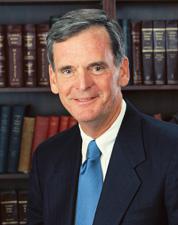 Sen. Judd Gregg (R-NH)
Legislative Activity
Stay on top of the latest movement without scrolling through every action
Senate amendment not agreed to: Amendment SA 2942, under the order of 12/7/2009, not having achieved 60 votes in the affirmative, the amendment was not agreed to in Senate by Yea-Nay Vote. 43 - 56. Record Vote Number: 368.(consideration: CR S12599)
December 7, 2009
View full timeline
Senate amendment not agreed to: Amendment SA 2942, under the order of 12/7/2009, not having achieved 60 votes in the affirmative, the amendment was not agreed to in Senate by Yea-Nay Vote. 43 - 56. Record Vote Number: 368.(consideration: CR S12599)
December 7, 2009
Roll call votes on amendments in Senate: Amendment SA 2942, under the order of 12/7/2009, not having achieved 60 votes in the affirmative, the amendment was not agreed to in Senate by Yea-Nay Vote. 43 - 56. Record Vote Number: 368.(consideration: CR S12599)
December 7, 2009
Considered by Senate. (consideration: CR S12565, S12565-12570, S12575-12597, S12597-12599, S12599)
December 7, 2009
Amendment SA 2942, under the order of 12/7/2009, not having achieved 60 votes in the affirmative, the amendment was not agreed to in Senate by Yea-Nay Vote. 43 - 56. Record Vote Number: 368. (consideration: CR S12599)
December 7, 2009
Proposed amendment SA 2942, under the order of 12/7/2009, not having achieved 60 votes in the affirmative, the amendment was withdrawn in Senate. (consideration: CR S12599)
December 7, 2009
Senate amendment submitted
December 6, 2009
Senate amendment proposed (on the floor): Amendment SA 2942 proposed by Senator Gregg to Amendment SA 2786.(consideration: CR S12544; text: CR S12544)
December 6, 2009
Amendment SA 2942 proposed by Senator Gregg to Amendment SA 2786. (consideration: CR S12544; text: CR S12544) To prevent Medicare from being raided for new entitlements and to use Medicare savings to save Medicare.
December 6, 2009
Votes
1 roll call on this amendment
Text
Proposed
SERVICE MEMBERS HOME OWNERSHIP TAX ACT OF 2009

The ACTING PRESIDENT pro tempore. Under the previous order, the
Senate will resume consideration of H.R. 3590, which the clerk will
report.
The legislative clerk read as follows:

A bill (H.R. 3590) to amend the Internal Revenue Code of
1986 to modify the first-time home buyers credit in the cases
of members of the Armed Forces and certain other Federal
employees, and for other purposes.

Pending:

Reid amendment No. 2786, in the nature of a substitute.
Lincoln amendment No. 2905 (to amendment No. 2786), to
modify the limit on excessive remuneration paid by certain
health insurance providers to set the limit at the same level
as the salary of the President of the United States.
Ensign amendment No. 2927 (to amendment No. 2786), relative
to limitation on amount of attorney's contingency fees.

The ACTING PRESIDENT pro tempore. Under the previous order, the time
until 3:15 p.m. will be for debate with respect to amendment No. 2905,
offered by the Senator from Arkansas, Mrs. Lincoln; and amendment No.
2927, offered by the Senator from Nevada, Mr. Ensign, with the time
equally divided and controlled, with Senators permitted to speak for up
to 10 minutes, with the majority controlling the first 60 minutes and
the Republicans controlling the next 60 minutes.
The Senator from Florida.
Mr. NELSON of Florida. Mr. President, I wish to speak on the bill
and, in part, respond to the minority leader. At the end of the day,
why are we staying around the clock discussing this bill with the
intent that we are going to pass the bill? It is simply that we cannot
continue as we are. We are in a system whereby insurance is not solving
the Nation's health needs.
All you have to do is talk to a doctor. If they haven't already
pulled their hair out, they are about to, in that when they want to
give a certain treatment to a patient, they feel like they have to
negotiate with the insurance company. In fact, the insurance company
often is dictating to them what treatment and what drugs they can or
cannot use or look at the simple little cases we hear about.
They are absolutely simple cases but end up with catastrophic results
because someone is in the middle of a treatment for something and then
they get a notice that their insurance company is going to cancel them
or, perhaps, they have lost their job and they are desperately trying
to get health insurance again and an insurance company uses, as an
excuse, that they had a preexisting condition. It may be a flimsy
excuse. I gave the example yesterday of a reason for denial being
something as silly as a skin rash as a preexisting condition and so
they can't get health insurance now on their own. We have a system that
is out of control.
We hear a lot about cost out here. We hear a lot about cost. Indeed,
if we don't do something about the cost of health care, none of our
people are going to be able to afford it. Talk to corporate America and
the CEOs and listen to them as they describe what the insurance
companies are saying to them and how they are jacking up their rates on
their employer-sponsored group policies. Please, pray that you are not
an individual who can't get a group policy and you are having to go out
there and try to find an individual policy because the likelihood is
you are not going to be able to afford it.
So cost is a critical factor. It is a factor also to the Government
because the U.S. Government cannot afford the cost of Medicare as it
keeps exploding into the future. We have to bring these costs under
control. When you mix that in with the horror stories that we hear of
the 46 million people who don't have health insurance but who, when
they get sick, end up in the emergency room, we know they are getting
that care at the most expensive place while the rest of us pay. That is
a hidden tax.
On average, in this Nation, that hidden tax is $1,000 per family's
health insurance policy. I can tell you, in my State of Florida it is
even higher. It is $1,400. In Florida, a family with a group

[[Page S12525]]

insurance policy is paying $1,400 more per year to take care of those
folks who do not have insurance but end up getting sick, and that bill
is paid by everybody else.
What I have described is a system that is in tilt. It is not working.
The whole purpose of this bill is to try to make it work so, No. 1, it
is affordable; No. 2, that health insurance is available. At the end of
the day, we are going to pass it. At the end of the day, poor old Harry
Reid, our majority leader, is going to figure out a way to get 60 of us
to come down here to shut off the filibuster so we can go to final
passage and get it down to a conference committee in the House. At the
end of the day, after that conference committee comes back, we are
going to get those 60 votes again because this is so desperately
needed, despite all the supposed arguments we hear from the other side.
Can this product be improved? Of course it can. I certainly wish to
share, as I did in the Finance Committee, an amendment that would cause
the pharmaceutical industry to come up with some more money.
They have made a pledge, to their credit. Let me just say that Billy
Tauzin, the head of the pharmaceutical association, is smart. He knows
what he is doing, and he is trying to play ball with the leadership and
the White House. I want the pharmaceutical industry to know this
Senator appreciates that because with everybody else, such as the
insurance industry, trying to kill it deader than a doornail, at least
they are helping. But the pharmaceutical industry said they were coming
forth with $80 billion over 10 years that they were going to
contribute. The hospital industry said they were going to contribute
about $150 billion over 10 years, and so forth. But, in fact, the
pharmaceutical industry is not contributing $80 billion.
Here is a Morgan Stanley analysis for investors of pharmaceutical
stocks. This is their analysis of what is going to happen to the
pharmaceutical industry in the future. Morgan Stanley has said these
guys are so smart, they are not contributing $80 billion. They are
contributing only $22 billion. Why? Because when they say they are
going to contribute discounts to allow half of this so-called doughnut
hole to be filled, that means there is going to be a lot more drugs
sold.
Oh, by the way, the bill takes Medicaid from 100 percent to 133
percent. That is going to mean a lot more drugs sold as a result of
this bill.
So the real loss, or contribution, if you will, of the pharmaceutical
industry is $22 billion over 10 years, not $80 billion. That does not
even include--remember, they just raised their prices 9 percent, three
times the rate of inflation. So they are going to make up a lot of that
anyway.
What I want to plead with the leadership in the White House and the
leadership of the pharmaceutical industry--come back to your $80
billion real figure over 10 years. One way to get there is the
amendment I offered in the Finance Committee that was rejected on a
narrow vote of 13 to 10. Out here on the floor it is my intention to
offer that amendment. I filed it. It would produce, according to the
CBO, $106 billion of taxpayer fund savings over 10 years because the
discounts would have to be there for the Medicaid recipients who are
entitled to discounts, but now, since they buy their drugs through
Medicare, they can't get those discounts. That is because we changed
the law 6 years ago in the prescription drug benefit. That is just
simply not right.
I am not out here to try to punish anybody. I am out here to try to
make this work and to get 60 votes so we can go to final passage. But
everybody has to do their part. Everybody has to contribute for their
part.
I look forward to the future discussions as we close in on what
probably is going to end up being the final passage of this, probably a
week or 8 days down the road.
The ACTING PRESIDENT pro tempore. The time of the Senator has
expired.
The Senator from Pennsylvania is recognized.
Mr. SPECTER. Mr. President, the schedulers have allocated 15 minutes
to me, so I ask unanimous consent at this time that I may speak for up
to 15 minutes.
The ACTING PRESIDENT pro tempore. Without objection, it is so
ordered.
Mr. SPECTER. Mr. President, I have sought recognition to speak in
opposition to the Ensign amendment. The authoritative statement on
attorney's fees has come from the National Association of Insurance
Commissioners in a 2008 document entitled ``Countrywide Summary of
Medical Malpractice Insurance.'' These are authoritative figures on how
much the defense lawyers have taken and how much the plaintiffs'
lawyers have taken.
It shows that the plaintiffs' lawyers, on this state of the record,
are underpaid--paid less than defense lawyers--hardly the cause for an
amendment to lower attorney's fees even more for plaintiffs' lawyers.
These are the statistics by the National Association of Insurance
Commissioners as to the attorney's fees. The attorney's fees for
defendants were $2.110 billion. The total recovery by plaintiffs was
$4.09 billion. Calculating attorney's fees at one-third would mean that
the attorney's fees were, for the plaintiffs' attorneys, $1.340
billion, substantially under the $2.110 billion for defense attorneys.
Attorneys who take on cases on a contingent fee do so because, unlike
insurance companies which have the funds to retain lawyers on an hourly
basis, most plaintiffs are unable to pay attorney's fees, do not have
the capital to do so. The arrangement is worked out that the fee will
be paid by a share of the recovery. If there is no recovery, there is
no fee. Beyond the absence of the fee, the plaintiffs
characteristically cannot afford the costs of litigation. When
depositions are taken or filings are made or various other costs arise,
it is up to the plaintiff's lawyer to pay those fees and those are not
reimbursed.
An effort is being made now to have those deductions on an annual
basis. The plaintiff's attorney cannot even take them in the year when
they are paid. So if you see a situation where, in absolute dollars
plaintiffs' lawyers on contingent fees are paid less than defense
lawyers, and you have added to that the risk factor that the
plaintiff's lawyers may get nothing, there should even be a greater
compensation for plaintiffs' lawyers than defense lawyers. As these
statistics show, it is less.
Most of my experience in the courtroom has been as a prosecuting
attorney, but some experience--I worked for a big law firm, Barnes,
Dechert, Price, Myers and Rhoads, representing the Pennsylvania
railroads, defendants, representing insurance companies. In the firm
practice in that kind of representation, there is frequently a senior
lawyer, junior lawyer, associate, paralegal, and multiple tiers running
up the costs.
Most plaintiffs' lawyers do not have large firms. Many are single
practitioners. To postulate a situation where the fees be cut even
further is just not reasonable or not realistic.
When the contention has been made--it was just made by the Republican
leader, repeated earlier contentions--that there are Senators who voted
in favor of the Kennedy bill on liability reform, it is not so as
represented. First of all, Senator Kennedy's bill in 1995 was a much
different bill. Second, it was a tabling motion. Those who voted
against tabling were willing to consider the issue, not that they
agreed with what was in the bill. Procedurally, when there is a motion
to table, if it is passed the bill is off the floor. If a motion to
table is defeated, then the bill remains on the floor for
consideration. But it does not mean that people who want to consider
the bill are in agreement the bill ought to be enacted.
The issue of attorney's fees and the issue of malpractice litigation
ought to be left to the States in our Federal system. Pennsylvania, my
State, is illustrative of the way State governments can handle the
issue and deal with it to avoid excesses. In Pennsylvania there was a
rule change made to require that before a malpractice suit could be
brought, there had to be a certification from a doctor that the case
fell below applicable standards of care. A second major change was made
which required that the medical malpractice action be brought only in
the county where the cause of action took place. That was a move aimed
at eliminating so-called venue shopping, to go to a venue where there
is likely to be a better result.

[[Page S12526]]

As a consequence of these two rule changes, the number of filings in
Pennsylvania dropped dramatically. With the comparison of the years
2000 to 2002, it was noted that the rates dropped by more than 37
percent in 2003, continued to decline in every succeeding year, and in
2008 had dropped 41.4 percent.
The improvement in the picture was further illustrated by the fact
that the reforms resulted in the reduction of premiums on malpractice
insurance. These reductions are in sharp contrast to 2002, when one
leading carrier increased its rates an average of 40 percent and a
second leading carrier increased its rates by 45 percent. Then the
rates have been decreased consistently and in ensuing years.
Other indications in the success of Pennsylvania was the renewed
interest of companies that want to sell medical malpractice insurance
in Pennsylvania--57 newly licensed entities are now writing medical
malpractice coverage since April, 2002. This is illustrative of the way
the States can deal with this issue. It ought to be left to the States.
Interestingly, the Senator from Nevada, who has proposed this
amendment, has filed legislation this year, S. 45, and in S. 45 he has
a different approach. He allocates for some recoveries up to 40
percent. Why there is a difference now, cutting it back to 33 percent,
and then down to 25 percent, is unexplained. But when an amendment of
this sort is offered on a bill for comprehensive health care reform, it
is not germane to the issues before the Senate. The standard of being
germane means whether there is any provision in the bill now which
relates to this matter.
Had this really been a serious effort to get legislation, the process
or recourse to be followed would have been considerably different. The
way to get legislation enacted is not merely to come before some bill
and offer it without hearings before the committee of jurisdiction,
without the consideration of witnesses. There have been no hearings on
the amendment offered by the Senator from Nevada. Had there been
hearings we would have been in a position to make a determination as to
what are the real facts.
Are the fees collected by plaintiffs' attorneys on a contingent basis
excessive? What is the reality for the justification, in terms of the
time it takes and the expenses involved? But no request was made, to my
knowledge, for a hearing before the Judiciary Committee. I do know that
no hearing was held. So we do not have a factual basis for making an
evaluation of this amendment at this time.
It is my hope that we will move from this amendment and take up the
issues which are in dispute. We need to eliminate and reject the false
rumors which have been advanced. The contention has been made that
there would be death panels as a result of this bill. That has been
thoroughly debunked. There has been a context that there would be cuts
in Medicare. We argued an amendment a few days ago on the contention
that there would be very substantial cuts in Medicare. The AARP opposed
that amendment because it was fallacious. It was untrue. AARP is an
outstanding guardian of the interests and rights of senior citizens,
and AARP opposed that amendment.
The contention has been made that there will be a government takeover
of medical care which has also been disputed and pretty well disproved.
When the government option is offered, it is just that. I believe
America would be well served by having a robust public option. But the
option is nothing more or less than what it says. It is one
alternative. Private insurers would still be in the picture.
There have been repeated contentions that there will be an increase
in the deficit. President Obama is pledged not to sign a bill which
will add to the deficit. I am pledged not to vote for a bill which will
add to the deficit. When you take a look at what this bill will
accomplish, there are very substantial savings in the current cost of
medical care, which is $2.4 trillion. I will be specific in what they
are. With annual examinations available and incentives for people to
take annual examinations, they will be catching what could turn out to
be chronic ailments, very disabling, very expensive. Catching a problem
with a cardiac issue, with a heart problem, or catching breast cancer
at an early stage or catching Hodgkin's at an early stage--I speak with
some experience about this issue--will cut down medical expenses
tremendously. When there are advance directives, there will also be
additional savings. This bill provides for counseling for people who
want to know about advance directives. No one should tell anyone else
what they ought to do about end-of-life medical care, but it is fair to
say consider it, make a decision, have a living will, do not leave it
to the last minute when someone is rushed to the hospital and the
burden then falls on family members. Estimates range as high as 27
percent of Medicare costs in the last few days, few weeks of a person's
life.
There are also very substantial savings available for changes in
lifestyle. Safeway has demonstrated lower insurance premiums for people
who stop smoking, lower insurance premiums for people who have lower
cholesterol. That is another major area of savings.
An additional area of savings would be to change the current approach
of having fines imposed for Medicare.
I ask unanimous consent for 30 additional seconds.
The PRESIDING OFFICER (Mr. Bingaman). Without objection, it is so
ordered.
Mr. SPECTER. Currently the criminal justice system results most of
the time in fines for health care fraud. That is totally ineffective.
But if there were jail sentences imposed, that would be a deterrent to
others, something I learned years ago as a prosecuting attorney. We can
also come to terms on the abortion issue, allowing women to pay for
abortion coverage in their medical care. There is no reason they should
be denied in maintaining the principles of the Hyde amendment with no
federal payment for abortion services.
I thank the Chair and yield the floor.
The PRESIDING OFFICER. The Senator from Illinois.
Mr. DURBIN. Mr. President, I thank the Senator from the Commonwealth
of Pennsylvania for his opening remarks. He has addressed an issue
relative to a pending amendment offered by the Senator from Nevada. He
makes note of a very critical flaw in this amendment. The Senator from
Nevada is restricting the ability of the victims of medical malpractice
to go to court to recover by restricting the attorney's fees that can
be paid, contingency fees, because people usually don't have enough
money to buy an attorney. The attorney takes the case and says: If you
win, then I get paid. If you lose, I don't get paid. Contingent fee
basis.
The Senator from Nevada is restricting the ability of these attorneys
to represent plaintiffs, victims, on a contingency fee basis, but does
not restrict the defense attorneys and the amount they are paid. As the
Senator from Pennsylvania noted, the record is clear, the amount of
money being paid to defense attorneys in medical malpractice cases is
50 percent higher on an annualized basis than that paid to those
representing victims.
I won't question the motive of the Senator from Nevada, but the
effect of his amendment is to reduce the likelihood that an injured
victim will be able to go to court and be represented by an attorney to
make their claim. Our system of justice has a courtroom and jury and a
judge there to make that final decision. What the Senator from Nevada
does is preclude and reduce the possibility that victims can recover.
How many people die each year in America from medical malpractice? The
Institute of Medicine told us 10 years ago the number was 98,000 people
a year. Many more are injured because of medical malpractice. How many
lawsuits, claims are successfully filed each year in America for
medical malpractice, for injuries and deaths? About 11,000. A very
small percentage of the actual victims of malpractice go to court. It
doesn't happen. Those who try to go to court are usually not rich
people so they do it on a contingency fee. What the Senator from Nevada
is trying to do, unfortunately, is to close the courthouse door to
favor the defense of a malpractice case over the victim. That, to me,
is unfortunate, and I hope we are successful in defeating it. For those
who are following the proceedings of the Senate today, either in person
or through C-

[[Page S12527]]

SPAN, it is an unusual--not unprecedented but unusual--meeting on
Sunday. But it is appropriate that we would do something extraordinary
when you consider the matter at hand. This 2,000-page bill is the
health care reform bill that has been in the works now for a year. It
has been considered by three committees in the House and two in the
Senate. The Presiding Officer from New Mexico has the dubious
distinction of having been privy to all of the Senate committee
proceedings and some extraneous proceedings. He has probably been
subjected to more debate on this issue than any other Member.
A lot of hard work has gone into this bill. Some critics say it is
too long. There are too many pages. When you consider that we are
tackling our health care system, which comprises one-sixth of our gross
domestic product--$1 out of every $6 spent in America--it is
understandable that we would need to work carefully and try in a
comprehensive way to address all the issues.
So what does this bill do? First, it is historic in that it moves us
toward 94 percent of the American people having health insurance. Today
about 50 million people don't have health insurance. That is not
counting the people with bad health insurance. These are people who
have no health insurance. Some have lost jobs, some worked for
businesses that can't afford insurance, and some can't afford to buy it
themselves, 50 million of them. Thirty million are going to move toward
coverage in this bill. It will be the largest percentage of Americans
with the security of health insurance protection in our Nation's
history. That is what this bill does.
Secondly, this bill makes health insurance premiums more affordable.
For over 80 percent--some say over 90 percent--of the people in
America, they will see either a reduction in premium or a slowdown in
the rate of growth in health insurance premiums. That is something that
is absolutely essential because health insurance premiums are breaking
the bank. Ten years ago, the average health insurance plan for a family
of four cost $6,000 a year. That is a lot of money, $500 a month. That
was 10 years ago. Now it has doubled. The average is $12,000 a year,
$1,000 a month for a family of four for health insurance coverage. That
is the average, to work and earn $1,000 a month strictly for health
insurance. What is the projection in 8 years? That it will double again
to $24,000, that you will be working and earning $2,000 a month just to
pay for health insurance. That is unaffordable for so many people. That
is why that is one of the highest priorities in this bill.
The third thing this bill does is to give people across America a
fighting chance against the health insurance companies. These private
insurance companies are some of the wealthiest companies in America and
pay the highest amounts to their CEOs each and every year. What we are
trying to do is to make sure they don't turn down people when they need
help the most. Too many of these insurance companies, as has been noted
many times, raise the issue of preexisting conditions and say: We are
not going to cover that particular surgery or that particular drug
because you had a preexisting condition you didn't disclose. They game
the system against the person who is sick. That is going to change.
This bill will provide for coverage despite preexisting conditions, and
we won't allow the insurance companies to assert a limit, a lifetime
limit on what they can pay.

You know what happens. You get seriously ill, and they cut you off.
What is happening today is that two out of three people who file for
bankruptcy in America do so because of medical bills, bills they can't
pay. That tells us that the number of people facing this threat is
huge. But even worse is the fact that some 74 percent of those filing
bankruptcy already have health insurance. It turns out the health
insurance was not worth much when they needed it.
The last thing this bill does--and one of the most important things--
is it doesn't add to the deficit. President Obama told us to do this
job but don't make the deficit worse. The Congressional Budget Office,
which is the referee and umpire when it comes to the cost of bills,
came back and said our bill will actually reduce the Federal deficit by
$130 billion over the first 10 years and $650 billion over the next 10.
Bringing down the cost of health care brings down the cost of
government health programs. It saves us money, saving families and
businesses money, saving the government money. It is the largest
deficit reduction bill ever considered by Congress. It is before us
now.
It is no surprise--we heard this morning from the Republican Senate
leader, and we have heard before--that there are those who are arguing
this is a dangerous bill and this bill should not be passed. I asked my
staff to do a little bit of work on previous debates right here on the
floor of the Senate and what was said.
In 1934, when Congress was considering the Social Security Program,
which gave everybody a basic retirement plan, an insurance plan for
retirement, even after the Social Security bill came to the Senate
floor, not including health insurance, a Republican Senator from
Delaware, Daniel Hastings, said on the floor about Social Security:

I fear it may end the progress of a great country.

A Congressman from the State of New York, James Wadsworth, in the
same debate over Social Security, said that the passage of Social
Security:

. . . opens the door and invites the entrance into the
political field of a power so vast, so powerful as to
threaten the integrity of our institutions and to pull the
pillars of the temple down upon the heads of our descendants.

We know that when former Senator from Ohio Robert Taft was addressing
the effort by President Harry Truman to have universal health care in
America, he said:

I consider it socialism.

It was used against Lyndon Johnson. That same charge was used against
Bill Clinton. It is virtually being used today. When we hear the
Republicans who are opposing this bill come to the floor, I have a
basic question to ask them. We have been at this debate for a year.
Where is your bill? What do you want to do?
Oh, they tell us: We have some bills, and you are going to see them
any day now. Well, I would like to. I would like to see the
comprehensive health reform bill from the Republican side of the aisle.
This is ours, and it has been on the Internet for 2 weeks for everybody
in this Nation to read word by word, line by line. Sadly, there is no
Republican bill.
I know there are two possible reasons for that. This was hard work.
This was not easy politically or otherwise and they have not engaged in
that hard work. What we have seen are press releases and speeches,
graphs and pictures, but no bill, no comprehensive health care reform
bill from the Republican side. Secondly, there are many on that side of
the aisle who like this system of health care. They agree with the
health insurance companies: Let's keep it the way it is.
But Americans know better. We are going to work today in the Senate
on this bill, as we should. While we are working today, 14,000
Americans are going to lose their health insurance. Mr. President,
14,000 Americans lost their health insurance yesterday, and 14,000 will
lose it tomorrow, and every single day of the year. That is how many
people, despite their best efforts, lose their coverage.
We have to stop that. It is time for us to provide the kind of peace
of mind that every single family deserves in America when it comes to
quality and affordable health care.
Mr. President, I yield the floor.
The PRESIDING OFFICER. The Senator from Pennsylvania is recognized.

Amendment No. 2927

Mr. CASEY. Mr. President, I rise this afternoon to speak about one of
the amendments we are going to be voting on later today. As we stand
here today, we are debating the bill on the floor, the health care
bill, where we are trying to do a couple things at one time, and I
think we can, and I think this bill does it, even though we will make
some changes to it.
We are trying to improve the quality of care for Americans, whether
they get their health care through a public program or through a
private insurance company or a private plan. We are trying to finally
use preventive measures to make people healthier and have better health
outcomes.

[[Page S12528]]

We are also working to reduce costs. If you want to talk about it in
terms of a doctor and a patient or a health care system and an
American, who should benefit from the health care system, we basically
want to have people get the care they need from the doctor they choose.
What we are engaged in now is a debate about an amendment which the
other side says is about the fees going to trial lawyers. That is the
way they like to talk about it, and I know that is popular. When the
other side makes an amendment such as this, they like to have a target,
so their target is trial lawyers. But, unfortunately, for this debate,
I think it is misleading because this amendment, which I would urge
people to vote against, is not about lawyers. It is about victims and
whether we are going to ensure that victims have a shot, a fair chance,
when they have a claim for medical negligence when they have been
injured as a result of negligent conduct.
I said before, we are debating the health care bill and we are
talking about costs. This amendment will do nothing to lower costs.
What it will do is not lower anyone's costs. What it will do is
increase the cost or the burden a claimant has to bear when they have a
claim against any kind of hospital or doctor in the case of a medical
negligence case. So the question is, are we going to enable people who
do not have the means to bring cases versus very powerful interests?
That is one of the basic questions we will answer with regard to this
amendment.
I would hope if a member of my family or any family--and I think this
is true of everyone in this Chamber--if a member of your family, as a
result of medical negligence, had to bring a claim, you would hope that
individual could walk into a courtroom or file a claim with someone who
has the skill and the ability to be their advocate. Because I will tell
you one thing, they are going to be up against a very powerful
interest: insurance companies that write medical liability policies, an
incredibly powerful interest.
A lot of us come at this question through our own personal
experience, through the experiences of our families. I had a
grandfather who I never met, my father's father, Alphonsus Casey. He,
like a lot of people in northeastern Pennsylvania, as a young kid, went
into the coal mines at a very young age. He worked as a mule boy. One
of the days he was tending to the mules in that mine, just as a kid, 11
or 12 years old at the time, he was kicked by a mule. He got a scar
that started above his eyebrow and went across his face, split his lip,
and went down through one side of his chin. So he understood injury as
a child, injury in the course of working. I think he also understood
that when he became a lawyer, many years later, well into his
adulthood. He understood what it is like to suffer an injury and to
make a claim for an injury. But what he did is represent injured
workers. That was his law practice. I wonder what he would say if he
were here talking about what happens to victims when they have an
injury they want redress for.
Like on so many other things in this debate, I think the other side
of the aisle is carrying water for the insurance companies. Just my
opinion, but I think that is the case. Yet in the case of medical
negligence and what happens in the real world, we know that 98,000
deaths a year are from preventable medical errors. Let me say that
again. We know there are 98,000 deaths in America a year, according to
the Institute of Medicine, from preventable medical errors.
So what this amendment does is deny patients the attorney of their
choice. It further restricts access to the courts. It drives up costs
for victims. When we talk about bringing a case and the barriers to
doing that, that is not some future result of this amendment. Oh, I
think this amendment will make that problem a lot worse. But right
now--no matter what happens in this debate, no matter what happens on
the vote on this amendment--there are barriers right now for people to
bring a lawsuit. It costs, in many cases, thousands, if not tens of
thousands, to bring a case. And then to see a case all the way through
costs a lot more than that.
What are we talking about here? We are talking about allowing someone
who has a claim for a serious injury to go see a lawyer and to sit down
with that lawyer and enter into an agreement for the fee, whatever that
fee will be, whatever that will be. If that lawyer and that person,
that patient or victim, goes forward with the case, they bear a risk.
The victim bears a risk that they will not be successful and that at
the end of that they will have no recovery at all.
But because of the way the contingent fee works, the lawyer bears a
risk as well that he or she will not be paid, and they also stand a
risk of having to pay for costs the victim cannot pay--and the lawyer
will bear those costs throughout the pursuit of that case.
So here is what we are talking about. This is basically a debate
about victims and whether they are going to have the kind of
representation they need. If I were going in to have surgery in a
hospital, I would hope the surgeon would be someone of the best, the
highest skill possible. I would want the best surgeon, as I take on
that battle. Anyone would.
I would hope we would not do something in the debate to reduce the
chances that a victim of medical negligence could go into a courtroom
or file a claim with the best, most highly skilled lawyer they can
find. I would hope we would not want to do anything that would injure
that basic right.
It is interesting that this amendment applies only to patients--it
does not apply to anyone else--patients who would become victims of
medical negligence.
In conclusion, in terms of what happens in our States, States
regulate the conduct of lawyers. They do it all the time. But we also
have evidence from the States about what happens in these kinds of
cases. In Pennsylvania, for example, in most counties, as to cases
going to trial because of medical malpractice claims--those kinds of
lawsuits--in most counties in Pennsylvania, 90 percent of those cases
are won by the defense, won by the insurance company. That is the
evidence in Pennsylvania.

I know we have others who are ready to speak on this and other
amendments. But I think we should make it very clear. On this
amendment, this is a debate about two parties: victims of medical
negligence versus insurance companies. It is time to choose up which
side you stand on. Unfortunately, this amendment is very clearly
drafted and intended to help insurance companies, not victims of
medical negligence.
I yield the floor.
I suggest the absence of a quorum.
I withhold that suggestion.
The PRESIDING OFFICER. The Senator from Montana is recognized.
Mr. BAUCUS. Mr. President, for the benefit of all Senators, I want to
take a moment to review today's program. This is the seventh day of
debate on the health care reform bill. It has been nearly 2\1/2\ weeks
since the majority leader moved to proceed to this bill. We have now
considered 14 amendments, and we have conducted 10 rollcalls.
Between now and 3:15 this afternoon, the Senate will continue to
debate the amendment by the Senator from Arkansas, Mrs. Lincoln, on
insurance company executive compensation and, at the same time, we will
debate the amendment by Senator Ensign limiting attorney's fees. The
majority controls the first 60 minutes, and the Republicans will
control the next 60 minutes. At 3:15 p.m., the Senate will conduct
back-to-back votes on or in relation to the Lincoln amendment and the
Ensign amendment.
Thereafter, we expect to turn to another Democratic first-degree
amendment and another Republican first-degree amendment. That is the
lineup at this time. It is possible the Senate may vote on those next
two amendments today. As a result, additional votes are possible
following the two votes at 3:15.
Once again, I thank all Senators for their cooperation and courtesy
on this extraordinary weekend session.
Mr. President, I suggest that Senator Harkin be next recognized for 7
minutes.
The PRESIDING OFFICER. The Senator from Iowa is recognized.
Mr. HARKIN. Mr. President, I will have more to say about this later.
But there has been so much talk about fear, fear, fear. Everybody has a
fear. Let's get away from that. It is time to quit talking about fear.
Let's talk about hope. Let's talk about the realities of

[[Page S12529]]

what is affecting people out there, what we are trying to do to make
their lives better. Why do we always want to inject fear into people?
Let's talk about hope. Let's talk about real people and what this bill
does.
As shown in this picture, this is Sarah Posekany of Cedar Falls, IA.
Let me tell you her story. It is incredible. She was diagnosed with
Crohn's disease when she was 15 years old. During her first year in
college, she ran into complications from the disease and had to drop
classes. Because she was no longer a full-time student, her parents'
private health insurance company terminated her coverage. Then the
medical bills piled up. Four years later, she found herself $180,000 in
debt, and was forced to file for bankruptcy.
Sarah has undergone seven surgeries--seven. Here is what is
disturbing. Two of those came as a direct result of not being able to
afford medication. So again, it is an incredible story, but it is a
true story.
So many people have to go through this. Our bill says: Look, you can
stay on your parents' coverage until you are age 26, and--guess what--
no preexisting conditions will apply to you from here on out. Think
about Sarah when we are talking about this bill and the hope she
needs--and so many like her--that we are going to change this system to
make her life better.
Second, this is a picture of Tasha Hudson of Des Moines, IA. She is a
single mother, with three kids. She had a job which provided health
insurance, but she took a new job that paid her more, 50 percent more.
You would think: Isn't that the American way? You learn, you get
better, you get a better paying job. The problem is, the private sector
job did not come with health insurance. Despite the higher pay, she
could not afford the coverage.
Ironically, her higher pay led to cuts in her Medicaid benefits and
the loss of childcare services. As a result, Tasha is now in the
process of returning to a lower paying job, despite its limited
opportunities, for one reason: because it will provide health insurance
for her family. These are real people. These are the people to whom we
need to give hope.

Here is one last one. Eleanor Pierce lives in Cedar Falls, IA. She
lost her job when her company was eliminated. She had the option of
purchasing COBRA, but she couldn't afford it. So she searched for
coverage, but because of high blood pressure--preexisting condition--
she was denied access. So age 62, suffering from high blood pressure,
she had no choice but to go without insurance.
That is why we need this bill. Not for fear--let's quit talking about
fear. Let's talk about hope for the people I just talked about, the
hope that their lives will be better, that they will get the insurance
coverage they need, that they will be able to get on with their lives
and not have to go so far in debt that they have to go into bankruptcy.
If you are a 62-year-old woman with a serious heart condition such as
the one Eleanor has, high blood pressure, you just don't have a prayer,
you are on your own, and the odds of premature death are disturbingly
high. We can and must do better. That is what we ought to be talking
about: hope for the future, not fear.
Mr. President, I yield the floor.
Mr. BAUCUS. Mr. President, I yield to the Senator from Connecticut
all the remaining time, and if he wants to speak for a little longer, I
know we can make some accommodations with the other side.
Mr. DODD. How much time remains?
The PRESIDING OFFICER. Eight minutes is remaining.
Mr. DODD. I thank my colleagues.
Mr. President, some of these numbers get thrown around so much that
it is almost dizzying. I wonder how the average person, even someone
who is intently listening to these debates, can sort it all out: 47
million who have no coverage; 14,000 people every single day in our
country who lose health care coverage either because they are thrown
into personal bankruptcy or because of medical costs or job loss around
the country--14,000 a day, every day, 7 days a week. Just do the math.
For 7 or 8 days, we have been debating this legislation. You can run
the numbers yourself to determine over that period of time how many
citizens across the country have found themselves in that free fall,
that dreaded fear that a child or a loved one may end up needing care.
It is not as though you can postpone the decision to some later time,
as you can about whether to take a vacation or to buy that new car or
maybe to spend more than you thought you would over the holidays coming
up. If you now have a medical emergency and you are one of those 14,000
a day who have lost coverage, what do you do? So sometimes the sheer
magnitude of these numbers can cause us to lose sight of the individual
stories, anecdotes that are not exclusive or isolated but commonplace
stories that are happening as we speak here on this Sunday, on a rare
Sunday session in the Senate because of the importance of this issue.
So I rise today to share a few stories from my own State that I think
put a face on these issues and why we are here. Let me start by asking
some questions because I think too often when we debate these issues,
sometimes we are so removed as Members of this body, from what goes on
in the daily lives of the people we represent that we fail to
appreciate what is happening right outside these doors from this very
Chamber on a daily and an hourly occasion. The 535 of us who have the
privilege of serving in the Congress, including Members of the other
body, none of us here are worrying about losing our health care. Not a
single Member here ever spent a nanosecond worrying about whether they
are going to be dropped from their health care coverage--not one.
Is there anybody among the 535 of us who ever worries about whether
we will be able to afford health care insurance? I don't know of anyone
who ever worries about that, of the 535 who are here.
Has anyone ever been up late at night with a child or a loved one,
wondering whether they are going to be able to afford the treatment
that child may need, or that loved one? I would go so far as to say I
don't think that happens here. God forbid if we are confronted with a
child or a loved one who needs that care. We may worry about that, but
we are not going to worry about whether the insurance will be there or
whether we will have the ability to pay for it. Not one of us ever
worries about that.
Has anybody ever spent hours being bounced from voice mail to voice
mail to voice mail trying to find out why the insurance company you pay
thousands of dollars to every year suddenly refuses to pay for your
spouse's cancer treatments? Has that ever happened to anyone here? I
doubt it. I sincerely doubt it.
Is there anyone stuck in a job that pays very little because you
can't afford to change jobs because you have a preexisting condition
and you know if you go to that new job that may pay more, you are going
to find yourself without the insurance coverage to take care of that
preexisting condition? No one here worries about being in that
particular predicament.
Has anyone been driven into bankruptcy, any Members of Congress,
because they had a medical crisis? We now know that 62 percent of all
bankruptcies this year alone are medical crisis related, and 70 percent
of that 62 percent have health care insurance--70 percent of that 62
percent.
Is anybody here a small business owner who has had to choose between
cutting coverage or putting your employees out of work?
Well, the answer to all of these questions obviously is a resounding
no. None of us have ever had to grapple with what 14,000 people do in
this country every day: losing their coverage, or the underinsured who
discover all of a sudden that the coverage they thought they had
doesn't quite cover the problems, or the out-of-pocket expenses you
have to pay before getting to insurance are so high that you can't
possibly meet them. That goes on every minute of every day all across
our Nation, and it is why we are here on this Sunday in December, to
try to finally see if we cannot come to terms and start moving on a
coverage program, a health care and health insurance coverage program
that makes it possible for all of our fellow citizens to be in the same
position we are.
None of us are immune from health care crises. Every one of us here
has grappled with that at one time or another. The difference is, we
don't ever worry about the ability to pay for it, losing our coverage,
having to go through what every other citizen does every single day.

[[Page S12530]]

These are real people who go through this. We can get so lost in the
weeds on this debate. I am not suggesting the details are unimportant--
they are important--but we are losing sight of the whole; that is, for
80 years every single Congress, whether it has been controlled by
Republicans or Democrats, whether a Democrat or Republican has been in
the White House, has been unable to even come close to solving this
problem.
We are now that close--closer than we have ever been in our history--
to coming up with a health care system that can begin to take care of
that basic right every American ought to have--and it is a right--that
if you are a citizen of the United States and you get sick, you ought
not to be shoved into bankruptcy, lose your job, or have your family
suffer because of your economic circumstances. The privilege of getting
good health care ought not to be based on wealth; it ought to be based
on the fact that we live in the United States of America and we are
able to take care of our fellow citizens when they reach those
difficult times every one of us will at one point or another.
There are stories, and I know my colleagues have them as well.
A young woman in Connecticut, Maria, diagnosed with non-Hodgkins
lymphoma, asked her insurance company to cover her treatments. The
insurance company found out that Maria had once gone to a doctor for
what she thought was a pinched nerve. Even though no tests had been
done for cancer, they denied her claim based on a preexisting
condition. How many have heard these stories? She passed away, by the
way, from that illness.
A young man named Frank disclosed on his insurance application that
he sometimes got headaches. Some months after he got his policy, he
went in for a routine eye exam. The doctor saw something he didn't like
and sent him to a neurologist, who told him that he had multiple
sclerosis. The insurance company told him he should have known his
occasional headaches were a sign of MS and took away his coverage
retroactively. Frank's doctor wrote them a letter saying there was no
way anyone could have known that an ordinary headache was related to
multiple sclerosis. But the insurance left Frank out to dry, sticking
him with a $30,000 medical bill he couldn't afford. Frank's condition
got worse. He had to leave his job and go on public assistance.
Kevin Galvin is a small business owner in my State. I have met with
Kevin a number of times, and we have talked over the last year or so
during my Connecticut Prescriptions for Change listening tour. Kevin
owns a small business, a maintenance company. He employs seven people,
some older, some younger. He can't afford to insure them. He would like
to, but he can't afford it. His younger employees use the emergency
room as their regular doctor. If one of them has a child with an ear
infection----
The PRESIDING OFFICER. The majority time has expired.
Mr. DODD. I ask unanimous consent for 1 additional minute, I ask my
colleagues.
Mr. BAUCUS. I ask unanimous consent for 1 additional minute.
The PRESIDING OFFICER. Is there objection? Without objection, it is
so ordered.
Mr. DODD. I thank my colleagues.
Kevin has three employees in their twenties and thirties. This is
Kevin here, by the way, running this maintenance shop in Hartford, CT.
He has employees in their twenties and thirties who have never had a
physical or a dental cleaning by a hygienist. One of them, age 28, with
two children to support, was out of work for 12 weeks and nearly died
from a staph infection he got from an untreated cavity.
Kevin has been working hard to try to provide for these people, but
he has recently lost people who worked for him for more than 20 years
because they got a job that paid less than he pays them but they can
get health insurance coverage. So here is an employee who leaves a job
in order to get a job where he can have health insurance.
Again, small business owners who go through this are all across our
country.
My simple point is this: Anyone who suggests this bill is the end-all
obviously hasn't been through this process over the last several years.
There will be a lot more work that needs to be done in the years to
come. But we need to do what no other Congress has done before: We need
to start. That is why I feel so passionately about getting this bill
passed and moving it forward. I ask my colleagues to join us.
I yield the floor.
The PRESIDING OFFICER. The Senator from Wyoming.
Mr. ENZI. Mr. President, I yield 5 minutes to the Senator from New
Hampshire and 10 minutes to the Senator from Texas.
Mr. GREGG. Mr. President, I ask unanimous consent that during the
next hour which we control we be allowed to enter into colloquies on
our side of the aisle.
The PRESIDING OFFICER. Without objection, it is so ordered.
Mr. GREGG. Mr. President, we have certainly heard a lot of talk about
Medicare over the last few days, and we have actually even voted on a
few amendments, but they have all had no force of law, and they have
just been statements of purpose. They are called sense of the Senate.
Every one of these sense of the Senate has had as its purpose to try to
give political cover to Members on the other side relative to the issue
of the fact that this bill reduces Medicare spending by close to $\1/2\
trillion in the first 10 years, $1 trillion when it is fully
implemented over a 10-year period, and $2.5 trillion over the first 20
years, and that those reductions in spending in Medicare are going to
translate immediately and unquestionably into a reduction in service
and coverage for Medicare-recipient senior citizens. The money from
that--the $\1/2\ trillion in the first 10 years, the $1 trillion in the
10 years that we are doing the implementation, and the $2.5 trillion
over the next 20 years--is being taken out of the senior citizen
program called Medicare, and it is going to be moved over into a
brandnew entitlement program and into the expansion of Medicaid.
Those dollars will be used to create new Federal programs for people
who have never paid, for the most part, into the Medicare
hospitalization fund; for people who are not senior citizens and
therefore do not, arguably, deserve to receive the benefit of the
Medicare hospitalization fund. As a result, seniors will see their
benefits reduced and other people will get a new benefit through the
Federal Government. Ironically, the new benefit, this new entitlement,
will not be adequately funded either, but large portions of part of
that funding are going to come from the Medicare trust fund.
The problem here is that the Medicare trust fund is insolvent. It has
$30 trillion of outstanding exposure to the Medicare trust fund, which
we don't know how we are going to pay for as seniors retire over the
next 20, 30, 40 years. Thus, there will be a reduction in the benefits
to Medicare, a reduction to Medicare recipients, a reduction in the
Medicare trust fund to the tune of $\1/2\ trillion in the first 10
years, $1 trillion when it is fully implemented, and $2.5 trillion over
the next 20 years.
That type of reduction shouldn't go to create new Federal programs.
If it is going to be done at all, it should go to making the Medicare
trust fund more solvent. Well, that has been essentially the tenure of
some of the proposals from the other side of the aisle. We have heard a
lot of people on the other side of the aisle say: All right, we are not
going to cut Medicare. We are not going to cut Medicare. We are just
going to reduce it by $\1/2\ trillion, and then we are going to create
a new program with it. We are not going to do this to the seniors. We
are not going to take their money and start a new program.
We have heard that statement in different levels of machinations from
the other side of the aisle quite regularly.
I do, however, for the record, want to say--because I have immense
respect for him, and he has been totally forthcoming on these issues,
and very accurate--that the chairman of the Finance Committee has not
represented that is what is happening with the Medicare funds.
He has represented on the floor that those Medicare funds that are
being reduced--those reductions in Medicare spending will go to create
a new program. But a lot of folks on the other side have said they
don't agree with

[[Page S12531]]

that, that is not what they are intending to do. Some of the sense of
the Senate have clearly had that implication in their passage.
So what does that amendment do that I am going to be offering? It
shoots real bullets. No longer is it a political statement, a sense of
the Senate, a thought process, a virtual event saying you want to
protect the Medicare trust funds. This amendment is real. It protects
the Medicare trust fund. It is real hard language, which says that if
you vote for this amendment, you are voting not to move Medicare trust
fund dollars out of the Medicare trust fund, away from Medicare
recipients, over to start a new program; that any new program started
in this bill must be paid for by something other than Medicare.
The PRESIDING OFFICER. The time of the Senator has expired.
Mr. GREGG. Mr. President, I ask unanimous consent for an additional
minute.
The PRESIDING OFFICER. Without objection, it is so ordered.
Mr. GREGG. So this shoots with real bullets. It says, essentially, if
you vote for this amendment, you are voting to keep the Medicare
dollars with Medicare, not to take those dollars that are being cut out
of senior citizen programs and move them to create a brandnew set of
programs at the Federal level.
This will be the vote that I believe determines whether we raid the
Medicare funds for the purpose of creating a new Federal program or
whether we maintain the integrity of the Medicare system. This is a
serious amendment, and it is a real amendment. There is no sense of the
Senate about this. This is enforceable language. Anybody voting against
this amendment is formally voting, unquestionably and unequivocally, to
take $\1/2\ trillion of Medicare funds, in the first 10 years, and move
them over to fund a new program; to take $1 trillion from the Medicare
funds, when fully implemented, and move them to fund a new program; to
take $2.5 trillion, over the next 20 years, of Medicare benefits that
should be going to seniors--because they are Medicare funds and should
be benefiting the solvency of the Medicare funds--and moves them to
create new programs. Anybody who votes against this amendment is
accomplishing that; they are cutting Medicare for the purpose of
creating a new program. If you vote for the amendment, to the extent
Medicare savings occur, they would not be used to fund new programs. It
is a real, enforceable amendment.
The PRESIDING OFFICER (Mr. Kyl). The Senator from Texas is
recognized.
Mr. CORNYN. Mr. President, the President of the United States is
reportedly traveling to Capitol Hill to meet with Senate Democrats in a
few moments. Unfortunately, Republicans are not invited, which follows
an established pattern, where notwithstanding the public statements
that Republican ideas are welcome, they have been rejected at every
stage of the development of this 2,074-page bill. There were party line
votes in the HELP Committee and the Finance Committee and virtually
every Republican idea was rejected. The President is coming to rally
our Democratic friends to basically do it in a ``my way or the
highway'' sort of way. They are going to own it 1,000 percent.
I think it is perhaps very timely to recall some of the President's
promises because, frankly, if the President follows the promises he
made to the American people, he will not be able to sign this bill or
anything similar to it.
First of all, talking about transparency, he said we are going to
have negotiations around a big table on C-SPAN so people can see who is
making arguments on behalf of their constituents and who is making
arguments on behalf of the drug companies or the insurance companies.
The reality is, this bill was merged between the Finance bill and the
HELP Committee bill--merged behind closed doors, with only three
Senators present and presumably their staffs.
Another promise the President made was this:

The plan I am announcing tonight--

This was during the joint session of Congress, I believe, we
attended.

--will slow the growth of health care costs for our families,
our businesses, and our government.

This is a pledge the President made to the American people. That was
his stated goal for this bill. We see something very different in this
2,074-page bill, a different reality. We see that premiums for those in
the individual market--families--will be increased by 10 percent by
2016, according to the CBO. You don't have to take my word for it. It
is not some insurance company talking. This is the Congressional Budget
Office. Businesses that fail to comply with the job-killing mandates in
the bill will face additional taxes of $28 billion--yes, during a
recession when unemployment is at 10 percent. That is according to the
CBO. They also say taxpayers will see Federal outlays for health care
coverage increase by $160 billion over 10 years.
This is from the dean of Harvard Medical School. He said:

In discussions with dozens of health care leaders and
economists, I find near unanimity of opinion that, whatever
its shape, the final legislation that will emerge from
Congress will markedly accelerate national health care
spending.

So much for bending the proverbial cost curve. Then there is this
promise--another solemn promise. The President said:

I have made a solemn pledge that I will sign a universal
health care bill into law by the end of my first term as
President that will cover every American--

This bill obviously does not.

--and cut the cost of a typical family's premium by up to
$2,500 a year.

As I mentioned, under the CBO score, the average premium for families
in the individual market will go up by $2,100, not go down by $2,500--
another promise made that will not be kept if this bill is passed into
law.
Then the President talked about deficits. There has been a lot about
this bill being so-called deficit neutral. If you cut enough benefits
for seniors and raise taxes enough on everybody, you can produce a
deficit-neutral bill. This bill will spend $2.5 trillion over the next
10 years with full implementation. President Obama's chief actuary at
the Center for Medicare and Medicaid Services called the ability to
sign a bill such as this, without raising the deficit, ``unrealistic
and doubtful.'' David Broder, the dean of the Washington press corps,
said:

While the CBO said that both the House-passed bill and the
one Reid has drafted meet Obama's test for being budget
neutral, every expert I have talked to says that the public
has it right. These bills, as they stand, are budget busters.

Then there is the promise of choice. The President said the American
people ought to have choice when it comes to health care, their choice
of their doctors and health plans. The fact is, this bill would consign
60 million Americans to a health care ``gulag'' called Medicaid. I say
that because, although Medicaid provides what some people would say is
coverage, it certainly doesn't provide access. In the metroplex of
Texas, the Dallas-Fort Worth area, 38 percent of doctors will not see a
new Medicaid patient because of Medicaid's low rates.
Then there is this claim that it will not raise taxes. Well, the
Joint Committee on Taxation indicates that 38 percent of the people
earning less than $200,000 a year will see a tax increase under this
bill. In other words, this is another promise the President made that
will be violated if this bill is passed into law because taxes will go
up for 38 percent of the people. As a matter of fact, out of that 38
percent, 24 percent of them will experience a tax increase, even after
taking into account the premium tax credit that is being paid under
this bill. Another promise made, another promise that cannot be kept if
this bill becomes law.
Then there is this one. The President said:

So don't pay attention to those scary stories about how
your benefits will be cut. That will never happen on my
watch. I will protect Medicare.

Dr. Elmendorf, the head of the CBO, said Medicare's managed care
plans would see reduced benefits--I am sorry, that is according to CBS
News. The chief actuary said:

Providers might end their participation in the program,
possibly jeopardizing access to care for beneficiaries.

Dr. Elmendorf said you would see additional benefits that seniors get
under Medicare Advantage cut by about half. Another promise, another
promise broken if this bill becomes law.

[[Page S12532]]

There is this, which pertains to the Ensign amendment pending on the
floor. The President said:

I want to work with the American Medical Association so we
can scale back the excessive defensive medicine that
reinforces our current system, and shift to a system where we
are providing better care simply--rather than simply more
treatment. So this is going to be a priority for me.

If this is a priority for the President of the United States, it is
apparently not a priority of those who have authored this bill because
all that is contained in the bill is a nonbinding sense of the Senate.
We have heard that medical liability reform laws, such as those that
have been passed and implemented in Texas--if passed nationwide, this
bill could bend the cost curve by $54 billion over 10 years. Yet all we
get is a watered-down sense of the Senate that has no binding effect at
all.
If the President was sincere about making those promises to the
American people, then this Congress ought to be sincere about helping
him keep that promise. The fact is, time after time, this bill breaks
the promises that President Obama made to the American people. It is
not too late to change that. I hope that, today, when he meets with
Senate Democrats behind closed doors, to the exclusion of Republicans,
there will be some discussion of how can we help you keep those
promises to the American people because this bill does not.

The PRESIDING OFFICER. The Senator from Wyoming is recognized.
Mr. ENZI. Mr. President, I yield such time as they need to several
Senators for the purpose of a colloquy.
Mr. McCAIN. Mr. President, I suggest the absence of a quorum.
The PRESIDING OFFICER. The clerk will call the roll.
The assistant legislative clerk proceeded to call the roll.
Mr. GREGG. Mr. President, I ask unanimous consent that the order for
the quorum call be rescinded.
The PRESIDING OFFICER. Without objection, it is so ordered.
The Senator from Arizona is recognized.
Mr. McCAIN. Mr. President, I am pleased to see my friends on the
floor again today--very intelligent people, such as the Senator from
New Hampshire and my friend, Senator Enzi, who is an expert on this
issue, and the rest of us who know that a fight not joined is a fight
not enjoyed. I look forward to another spirited discussion with my
colleagues.
Maybe if I could, to start with, I will take up a point about the
debate and discussion we had yesterday on the floor with the Senator
from Montana, the chairman of the committee, where he asked me why did
I think that certain groups supported this legislation pending before
the Senate. I said I didn't know what kinds of deals had been cut. I
referred to the deal made with PhRMA and others. I didn't know exactly
why because I am not taken into the discussions and negotiations off
the floor in the office of the majority leader.
There seems to have been some blowback on that, and somebody said
maybe that wasn't appropriate to talk about deals that were cut. This
morning, on the front page of the Washington Post, it says:

Deals Cut with Health Groups May Be at Peril.

Perhaps the Washington Post is impugning the reputation of someone or
staffers or others. They have certainly impugned mine from time to
time. But the fact is, this is a news story.
Again, I go back, very briefly, because we have a lot to talk about,
my colleagues and I. The fact is, there have been deals cut, just like
is reported in the Washington Post this morning, as has been reported
all over America about the deals cut with various interest groups that
don't necessarily represent the people they claim to represent. I know
the American Medical Association does not represent the majority of
physicians and caregivers. In the State of Arizona, I know too many of
them. I also know they have a very large lobbying presence in our
Nation's Capitol, as do the other interested groups that have ``cut
deals'' that may be at peril now, according to the Washington Post.
With that, I will mention, again, that the doctor is in. Would the
doctor care to give us some enlightened information, before we give our
various opinions on this issue?
Mr. BARRASSO. I agree with the Senator from Arizona. I looked at
another one of his favorite newspapers, the New York Times, today
because we--
Mr. McCAIN. My absolute favorite.
Mr. BARRASSO. On this floor have said the Democratic proposal is
cutting the Medicare the seniors of this country depend on for their
health care. We pointed out that they have taken $120 billion away from
Medicare Advantage. Mr. President, 11 million seniors use Medicare
Advantage. One out of four seniors is on Medicare. The reason they
signed up for Medicare Advantage is because there is an advantage for
the seniors--preventive care, coordinated care, things we know are
important.
Yesterday on this floor, the Democrats voted to cut away from home
health care. This is a lifeline for homebound patients. It helps keep
them out of the hospital and out of the nursing homes. Yet in spite of
all the letters we have read from patients, as well as home health care
communities in all of our States, they have cut back.
Yet the majority whip came to the floor at the opening of the session
today and said: Oh, we have handled all of that. He said: We have
handled all of that with a wonderful resolution of the Senate by
Senator Michael Bennet.
The New York Times today, about that resolution, said:
Democrats decided to respond to the Republicans saying: Hey, you are
cutting Medicare for our seniors. ``Democrats decided to respond . . .
with a meaningless amendment.'' The New York Times editorial today, ``a
meaningless amendment.'' We knew it was meaningless, and we know they
are cutting Medicare from the seniors who depend on it--Medicare
Advantage from hospitals, from nursing homes, from hospice, from home
health care. This is robbing the people who need this care, deserve the
care.
If you said maybe we should take a look at Medicare, then do it, Mr.
President, to save Medicare, to save Medicare that we know is going
broke.
I see the Senator from New Hampshire is here. He has been an expert
on this topic of the budget and ways we can save Medicare. I say to my
friend from New Hampshire, is this not true that Democrats have
proposed a meaningless amendment but they are cutting the guts out of
the Medicare Program on which the seniors of this country are
dependent?
Mr. GREGG. As usual, the Senator from Wyoming is absolutely true. The
sense-of-the-Senate amendments we have had from the other side of the
aisle on Medicare are political amendments meant to make a political
statement, but they have no substantive effect. That is why I brought
forward my amendment which hopefully will be voted on in the next
couple of days or so which says specifically what the Senator from
Wyoming has asked for.
To the extent there are reductions in Medicare spending--and there
may need to be some--that those reductions are reserved for the seniors
for the benefit of their program and to make Medicare more solvent and
no new programs be created on the backs of seniors by cutting Medicare
and moving the money from Medicare over to new programs.
My amendment is not a sense of the Senate. My amendment is a real
amendment. It is the one chance people are going to have to vote for
protecting Medicare and not creating new programs with Medicare money.
And that is what it is going to be.
Mr. McCAIN. To be clear, the amendment of the Senator from New
Hampshire is exactly the same as the White House sense-of-the-Senate
amendment and the Bennet amendment, only it has the actual force of
law.
Mr. GREGG. Absolutely. It is not exactly the same in the sense that
it is real. Theirs is not real. Mine is real. It says you are going to
keep the Medicare money to benefit Medicare, and you are not going to
use the Medicare money for the purpose of creating new programs which
have nothing to do with Medicare for people who are not on Medicare.
Mr. ENSIGN. I say to the Senator from Arizona, another place in this
bill where they have a sense of the Senate that is not real is medical
liability reform. Back in September, when The President addressed the
Nation, he said

[[Page S12533]]

defensive medicine caused by the medical liability crisis may be
contributing to unnecessary costs; there are unnecessary tests.
Let me show you the amount of money they are going to save with their
medical liability reform sense of the Senate in this bill. That is it.
That is how much their sense of the Senate on medical liability reform
is going to save--zero.
In contrast, the Medical liability reform several of us have offered
is real medical liability reform. Several of us have been working on
that. The savings from a real medical liability reform: $100 billion.
We at least have said we have an amendment we are going to vote on
later today. Let's at least do something to get the ball rolling on
medical liability reform with the amendment we are offering today. The
President suggested getting the ball rolling on medical liability
reform.
Back in 1995, Senator Ted Kennedy offered an amendment that would at
least limit attorney's fees. These are contingencies fees. Twenty-one
Democrats who were here back in 1995 who are here now voted for that
limit. They are: Akaka, Baucus, Bingaman, Boxer, Byrd, Conrad, Dodd,
Dorgan, Feingold, Feinstein, Harkin, Inouye, Kerry, Kohl, Lautenberg,
Leahy, Levin, Mikulski, Murray, Reid, and Specter. All 21 of these
Senators voted for caps on attorney's fees. That would at least do
something. That would help get the ball rolling on medical liability
reform.
But the same thing they have done with Medicare, saying they are
going to keep Medicare savings in Medicare, they have not done. It is
not real. Senator Gregg has a real amendment to fix that. I have a real
amendment to fix the medical liability reform that hopefully will be
voted on later as well. But at least let's go for a little bit of
compromise right now.
Mrs. HUTCHISON. Will the Senator from Nevada yield?
Mr. ENSIGN. I will be happy to yield.
Mrs. HUTCHISON. Talk about liability, I have real statistics. I hear
the other side say: Oh, we are going to lower the cost; that is what
health care reform is about, lowering the cost of health care so more
people will have access to affordable options. Yet the main one that is
clearly available is medical malpractice reform, tort reform.
I know the Senator from Nevada has an amendment, and I am a
cosponsor. Let me give some statistics about how we could save money.
Mr. McCAIN. May I ask the Senator from Texas, is it not true that it
is the State of Texas that is the demonstration project for medical
malpractice reform?
Mrs. HUTCHISON. Exactly. And let me tell you what it has done in
Texas and something we could do, and I think we would have bipartisan,
100 percent support in this body because that would be reform that
would help health care.
Since medical malpractice and tort reform has been passed in Texas,
over 7,000 new physicians have flooded into our State--a 7,000
increase. The reason? Tort reform. Since passed just 5, 6 years ago,
physicians in Texas have saved $574 million in liability premiums, and
their liability rates have been cut an average of 27.6 percent, almost
a 30-percent cut in premiums.
What has this done? Today in rural counties, the number of
obstetricians has increased by 27 percent. Twelve counties did not have
one obstetrician before this was passed, and now they do; 24 counties
had no emergency room physicians, and now they do; and 58 counties, in
addition to that, have added one more.
Rural counties are the ones that have suffered the most, and every
State in this Union has rural counties--every one. They are the ones
who are hurt the most. Yet the Medicare cuts will take $135 billion out
of rural hospitals' ability to serve Medicare patients. There is no
medical malpractice reform unless, of course, in a huge bipartisan
effort and gesture we can adopt the Ensign amendment which we are
offering to try to make this a bipartisan bill that can work.
We have seen from Senator Ensign's charts that Democrats have
supported limits on lawyer fees so that we would be able to cut back on
the frivolous lawsuits that have been hampering our ability to cut the
costs in Medicare.
I appreciate so much that Senator Ensign is offering this amendment
because Texas can show us that this will work. It would be meaningful
reform. It would cut the costs and make health care more available and,
most important, it will give patients the opportunity to have doctors
in their rural communities who will not practice today because their
liability premiums are so high they cannot afford to stay in medicine
and give this care to those rural patients. That is what we need.
Mr. McCAIN. May I say in the immortal words of Howard Dean, the
former chairman of the Democratic National Committee--he put it simply:

The reason why tort reform is not in the bill--

Talking about this bill--

The reason why tort reform is not in the bill is because
the people who wrote it did not want to take on the trial
lawyers in addition to everybody else they were taking on,
and that is the plain and simple truth. Now, that's the
truth.

I totally agree with Howard Dean. I could not agree with him more.
Mrs. HUTCHISON. If the Senator will yield, in addition to that, the
House said: We have medical malpractice reform. They put it in their
bill. You know what it says? There will be a State grant program and
States can apply if they can show that they have made a meaningful
effort at curbing frivolous lawsuits. But the only two reasons a State
would not be eligible are if lawyer fees are capped or if damages are
capped. Lawyer fees capped, damages capped--that is off the table. So I
am thinking to myself--maybe the Senator from Nevada could tell me, if
you don't curb lawyer fees and you don't curb the caps, what meaningful
reform do you think we could get in medical malpractice?
Mr. ENSIGN. No question, those are the two most important types of
reforms for medical liability laws that have been placed in the
States--my State of Nevada, Texas, California and other States. The
caps are what have shown a reduction in the medical liability premiums
for doctors. They are what have shown a reduction in the cost of our
health care system.
Mr. President, let me quote because the other side is talking about
these contingency fees; that they need these contingency fees to take
on these lawsuits, especially for those who are very poor. They say it
is the only way for this to happen.
I quote:

Since 1960, the effective hourly rates of tort lawyers--

These are the personal injury attorneys--

have increased 1,000 percent to 1,400 percent (in inflation-
adjusted dollars).
While the overall risk of nonrecovery has remained
essentially constant though it has decreased materially for
such high end tort categories as products liability and
medical malpractice.

The lawyers, basically, have created all these laws that make it
easier for them to sue and their contingency rates have gone up 1,000
to 1,400 percent since 1960, and yet there is no more increased risk
and even reduced risk of nonrecovery in medical malpractice cases. It
is easier to sue nowadays. This comes down to, are you on the patients'
side or the trial lawyers' side? Which side are you on? We are on the
side of the patients; the other side seems to be on the side of the
trial bar.
Mr. McCAIN. The Senator from Alabama.
Mr. SESSIONS. I thank the Senator from Arizona for driving home this
point. The reason that malpractice litigation reform is not in the bill
is simple, plain, and known to every Member of this body because it is
opposed by the plaintiff trial lawyers who are big supporters of
Democratic Members of the body and the President. That is true.
Let me ask Dr. Barrasso, can the Senator think of any other thing
that we could do in reforming health care that could save $100 billion
and not diminish the quality of care in America? Is there anything
else? How do fellow doctors feel about that?
Mr. BARRASSO. When I talk to other doctors, they tell me, across the
board they order a number of tests, expensive tests--call it defensive
medicine--tests that do not necessarily help a patient get better, get
well, but just to make sure they get covered in case they are sued. It
is not unusual, when

[[Page S12534]]

you look at the numbers, that we are talking $100 billion a year in
tests that are done that do not necessarily help somebody get better,
but they are doing it because of the legal atmosphere in this country.
Here we are on the Senate floor on a Sunday afternoon. The President
is less than 100 yards away, a former Member of this body. He ought to
be involving all Senators. He is meeting behind closed doors, possibly
cutting deals, trying to come to arrangements, twisting arms, asking
people to march, follow his marching orders right off a cliff that I
think is going to be coming for health care in America. I think he
ought to be involving all Americans. We are talking to the Americans in
this country. We are not hiding behind closed doors. People who aren't
part of those discussions are completely cut out.

I know my colleague from Tennessee has been outstanding and outspoken
on these very issues, but we are here, and we want to visit with people
because we do have solutions that work; that will not increase the cost
of care, which is what we are seeing now; that are not going to cut
Medicare, which is what the Democrats are proposing; that are not going
to increase taxes, which the Democrats are proposing; and they are not
going to drive up the premiums.
The whole idea behind this was to get the costs under control.
Senator Ensign's amendment does that by taking a look at the lawsuit
abuse that we look at in this country. But I want to turn to my
colleague from Tennessee, who I know has some more points he wants to
make.
Mr. CORKER. I know all of us benefit from the Senator's background as
a physician and knowledge in the industry. I also thank the Senator
from Arizona for spending a lifetime focusing on how special interests
affect this body.
I was thinking about this meeting taking place here in the Capitol
not far from us from 2 to 3 p.m. with the President and 60 of our
colleagues on the left, and I have this image of them being twisted up
like pretzels because of the fact there are so many interest groups
they have to sort of kowtow to. I have this image of a bunch of them up
in a room with a yoga instructor, kind of loosening up, because they
are so twisted in knots trying to basically undo all the pledges they
have made to so many groups.
I think about, for instance, Senator Ensign's amendment to deal with
medical malpractice, but, no, the trial lawyers keep them from doing
that. I think about the kinds of things Senator McCain ran on during
his Presidential election campaign, and others of us have looked at, as
has Senator Gregg, so that people in this country have choice; that we
create a market system that allows people to have choice. But they
cannot do that because the unions don't want them to do so. The unions
don't allow them to cap the exclusion, which many of us have talked
about. The unions keep them from doing appropriate health care reform,
and so instead, what happens, in order to make this work? Again, they
are so twisted up. Remember that Peter Orszag, the major guru within
this administration regarding health care, has said the thing that will
bend the cost curve down would be these exclusions. I am so glad
Senator Gregg, who has the integrity and the longstanding knowledge to
deal with this, is offering an amendment.
Yesterday I was challenged on this by Senators on the other side of
the aisle, but there is no doubt this bill throws seniors under the
bus. We have an insolvent program that money is being taken from to
create a whole new entitlement it is leveraging. If that is not
throwing seniors under the bus, I don't know what is. So we have a
program that is throwing seniors under the bus because the unions
cannot be offended, the trial lawyers cannot be offended, so many other
groups--AARP cannot be offended--and then we also lock 15 of the 31
million Americans who are receiving health care into a program none of
us would be a part of--Medicaid. And they do that because of their
unwillingness to address the free market issues that would make health
care work in this country: medical malpractice issues, addressing
defensive medicine, capping exclusions, and those kinds of things we
Republicans have put forth from day one.
So I think the Senator from Arizona is doing an outstanding job
pointing out the conflicts of interest that exist in this bill. We have
a group on the other side of the aisle that won't address health care
in the appropriate way, and I believe are in another room twisted up in
knots with themselves trying to figure out a way to get out of this box
they have put themselves into, and a President who is basically giving
them a pep talk to keep them from getting out of the box.
I thank the Senator so much.
Mr. McCAIN. Our Republican leader is here on the floor of the Senate,
and he can speak for himself, but I am sure he would appreciate the
opportunity if the President would come and sit down and meet with us.
I think we are all ready to have a meeting with him. Perhaps we would
be able to give our input and recommendations as to what we need to do
to get this bill unstuck.
That was, as I recall, the campaign. And I am getting tired of going
down memory lane here, but that was going to be the ``change.'' That
was going to be the change in Washington. We are going to change the
climate. We are all going to sit down together, Republicans and
Democrats. Well, I think on this Sunday afternoon, we are all
available, are we not, I would ask the Senator from Kentucky?
Mr. McCONNELL. I would say to my friend from Arizona, normally we
would be watching the Redskins game today, but we are here and ready to
sit down with the President and ready to discuss with the American
people this issue.
You know, it was said at the beginning of the debate, if they wanted
to come up with a bill that would pass with 80 votes, the way to do
that is not to craft a bill that no Republican can support and end up
in the position they are in now, trying to get every single Democrat in
line so they can pass this bill, even though they know the American
people are overwhelmingly opposed to it. All the surveys indicate the
American people do not want us to pass this bill. They would like for
us to stop, start over, and get it right, with some of the suggestions
that have been made here on the floor today and other days during this
debate.
Mr. McCAIN. And we could do that, perhaps in the most effective
fashion, if we sat down with the President and made some of the very
points he made in his State of the Union Message.
I want to turn to the Senator from South Dakota, but I want to
mention something first on this issue of tort reform I have never quite
gotten over. One of the most famous cases of the 1970s, and I think it
spilled over into the 1980s, was agent orange, the defoliant that was
used during the Vietnam war and which caused so many physical problems
for our Vietnam veterans who were exposed to it. It was a big class
action suit the trial lawyers won. The trial lawyers got paid off
first, and Vietnam veterans died before the money was distributed to
them. I will never get over that.
Mr. THUNE. I think the reason we are here today is that the Ensign
and Gregg amendments strike at the very crux and the very core and the
very heart of what this is all about. The Democratic majority was
unwilling to take on the trial lawyers, unwilling to do things that
actually bend the cost curve down, such as capping contingency fees,
and so now we are faced with voting on the Ensign amendment, which
would do that, but we are also voting on the Gregg amendment because
they weren't willing to put actual measures in this bill that would
bend the cost curve down. What they have had to resort to is cutting
Medicare to pay for it. A $2.5 trillion expansion of the Federal
Government has to be financed somehow, because there aren't any real
cost-saving measures in here.
I point out to my colleagues that in spite of all that, this is where
we are. The Congressional Budget Office says that even with the all of
the Medicare cuts and all the tax increases that are in here, we
actually still increase spending in this country on health care. The
cost curve goes up. The blue line on this chart represents the existing
cost curve if nothing is done. If we did nothing today, that is what
would happen. That is the blue line. The red line represents what
happens under this bill. We actually raise the cost

[[Page S12535]]

curve even more. Costs for health care in this country under this
legislation go up $160 billion.
How does that affect the individual family? I want to show you
exactly what this means in terms that I think most Americans can
understand. This is the example of a family of four who today is paying
$13,000, a little over $13,000 for their health insurance. Under this
bill, their life doesn't get any better. In the year 2016, they are
going to be paying over $20,000 a year in health insurance. So what
happens is they have locked in the status quo. And that status quo is
year over year increases, double the rate of inflation, all because
they were unwilling to put measures in this bill that actually do
control costs.

If we did something along the lines of the Ensign amendment, that
actually would get these contingency fees under control. We all have
seen the statistics. The CBO has said that would bend the cost curve
down.
We have all talked to physicians in our own States. I talked last
week to a physician from my State who, unsolicited, said that 50
percent of the tests he does are to avoid being sued. Fifty percent of
the tests he conducts are due to defensive medicine. That drives the
cost of health care up for everybody. That is why the Ensign amendment
is so important.
Unfortunately, why we have to vote on the Gregg amendment is because
the Gregg amendment forces the Democrats to put their money where their
mouth is and to see if they mean what they say--that they want all
these savings in Medicare to go into Medicare. We all know that is not
true. To pay for a $2.5 trillion expansion of the Federal Government
and create an entirely new entitlement, you have to take the cuts from
Medicare and put them into this new entitlement program.
So we are voting on a couple of amendments today that will ensure
seniors in this country are not going to be faced with cuts to their
benefits--home health care, nursing homes, hospitals, all those that
receive cuts in this bill--and actually try to substitute something in
there that would get costs under control, and would--according to the
CBO--drive the cost curve down; would do something about this year over
year double the rate of inflation that the average American family is
seeing.
This is what the CBO said would happen to the average American family
of four if this bill passes. Today they are paying $13,000 a year--a
family of four--and in the year 2016, they will be paying $20,000 a
year. Tell me, how is that reform? How can anybody go to an average
American family with a straight face and say they are reforming health
care when all they are doing is locking in permanently year-over-year
increases that are double the rate of inflation, and in some cases even
going up beyond that if you have to buy your insurance in the
individual market?
I am glad the Senator from Nevada has offered this amendment. I am
anxious to see how the other side votes on the amendment the Senator
from New Hampshire has offered which would guarantee these Medicare
savings would go back into Medicare and not be used to pay for a new
government entitlement program at a cost of $2.5 trillion to the
American taxpayer.
Mr. McCAIN. I will recognize the Senator from Texas, who will be
presiding next, and wish to add one more comment.
Mrs. HUTCHISON. I so appreciate the opportunity to talk about these
different areas of cuts and then the increase in spending overall,
because everyone in America today is concerned about the spending and
the debt and the ceiling we are about to reach.
I wanted to bring up one more point on hospitals, because this
affects every State in America. In Texas, 29 percent of our hospitals
are in rural areas. The cuts in this bill will especially affect
hospitals in rural areas. In fact, out of the $135 billion in Medicare
cuts to hospitals, $20 billion is cuts in Medicare payments for
treating low-income seniors and another $23 billion in Medicaid
payments to hospitals for treating low-income patients.
I want to read an excerpt of a letter I received this week from the
Texas Organization of Rural and Community Hospitals, which represents
150 rural hospitals in the State. They write:

We also fear the Medicare cuts as proposed could
disproportionately hurt rural hospitals, which are the health
care safety net for more than 2 million rural Texans. Because
of lower financial margins and higher percentage of Medicare
patients, rural hospitals will be impacted more than urban
hospitals by any reductions in reimbursement. These proposed
Medicare cuts could have a devastating effect on many of the
hospitals, which could lead to curtailing of certain
services. And, the closure of some of these Texas hospitals
is a real possibility. It has happened every time previously
when Congress imposed so-called large-scale, cost-saving
measures.

Well, this is the granddaddy of large-scale cost cuts--$500 billion,
or $\1/2\ trillion--taken out of the hide of the hospitals that are
treating low-income patients and seniors.
I ask the Senator from Nevada if he is experiencing that same thing,
and if he feels that hospitals all over our country are going to be
hurt by this bill?
Mr. ENSIGN. Mr. President, I thank the Senator from Texas for her
comments, and I note that even the Congressional Budget Office has said
when you cut, for instance, reimbursement rates, those are going to
come out of somebody's hide. And basically, the hide it is going to
come out of is the seniors.
As the Senator from Tennessee said, we are throwing seniors under the
bus. When you cut $465 billion out of Medicare, it is going to come out
of services for seniors--if these cuts are real. And in this bill they
are real. That is why the Gregg amendment is going to be so important.
I know the Senator from Kansas wants to jump in, so we welcome you to
the conversation.
Mr. BROWNBACK. I appreciate that. I also note the Ensign amendment,
instead of cutting, creates.
A Robert Woods study in 2006 said caps on things such as this hold
down awards in cases 20 to 30 percent and increases the supply of
physicians, which is something else we need.
I wish to give a better live example that we have in my State of
Kansas. In the early 1980s, mid-1980s the piston engine industry of
aircraft was just about dead. It had been sued--the aircraft industry,
general aviation had been sued so much they were stopping making piston
engine aircraft. Congress, finally, because the industry was dead, said
we are going to put a 17-year statute of limitations on it so after 17
years you cannot sue the manufacturer anymore after that period of
time.
It brought the industry back. They are now being made. There is a new
plant in Independence, KS. There is another one that is making this
aircraft because there was a limitation put, a reasonable limitation on
manufacturing reform.
If we do this, this will create--this will help our medical industry,
it will hold down costs, it will increase the number of physicians.
These sorts of changes have worked. There is no reason at all not to do
this in this bill.
Mr. ENSIGN. I thank the Senator from Kansas for his excellent
remarks. I know the Senator from Florida, the newest Member, one of the
newest Members of the body, would like to join in.
Mr. LeMIEUX. I thank the Senator from Nevada.
I don't know that there is a State that is going to be more impacted
by cuts in health care for seniors than my State of Florida, with 3
million Floridians on Medicare, almost 1 million on Medicare Advantage.
I think it is worth repeating what these cuts are going to mean: $137.5
billion from hospitals that treat seniors. I talked to the director of
a hospital district down where I am from, down in south Florida. He
said these cuts will be devastating: $120 billion from Medicare
Advantage, $14.6 billion from nursing homes that treat seniors, $42
billion from health care for seniors--from home health care, and $7.7
billion from hospice care.
Yesterday, our friends on the other side were trying to convince us
and the American people that there are not going to be any cuts to
benefits. It is not going to affect health care for seniors because
they are going to pay less, but that will just get rid of the waste and
the fraud and the abuse.
Everyone is against waste fraud and abuse. We have a measure on this
side of the aisle that actually, I think, would do something about it.
We have gone through the Reid bill to find all

[[Page S12536]]

the provisions. My staff and I have been going through it, line by
line, to find all the provisions that go after waste, fraud, and
abuse--and there are some, to their credit. But the Congressional
Budget Office has said, in their report that came out on November 18,
the provisions that go toward waste, fraud, and abuse would cut $1.5
billion and create that efficiency. But the cuts are $464 billion. So
if they are going to save $1.5 billion and there is going to be $464
billion in cuts, where are the rest of the cuts going to come from?
It is, as my friend, the Senator from Tennessee, said, seniors are
going to get thrown under the bus. But you are not going to be able to
cut $464 billion, only get $1.5 billion in savings, and not cut
benefits. So seniors who want to go to the hospital are going to have
their benefits cut; seniors who have home health care, their benefits
are going to get cut and all the way down the line. Everyone needs to
understand that at its base, this is a bill that hurts seniors.
Perhaps no State is going to be impacted more than Florida, where we
have this huge population of seniors. I know my friend from Nevada has
a huge population of seniors in his State. We have the highest per
capita number of seniors. We like to say all the rest of the seniors in
the country are eventually going to move to Florida anyway. We are
going to have the greatest generation--we have them there now--we are
going to have more of them living in Florida, and their health care is
going to get cut.
This bill cuts from health care for seniors, it raises taxes, and it
doesn't decrease the cost of health care for the 170 million Americans
who have health insurance now. For some, it raises it.
For me, a new Member to this body, it does not make any sense. But
what does make sense is what my esteemed colleague from New Hampshire
has done with this amendment. If you are for health care for seniors
and you do not want it to be cut and if you are true to your word that
we have to put the savings back into Medicare, then this bill, which
says as its purpose ``to prevent Medicare from being raided for new
entitlements and to use Medicare savings to save Medicare''--I cannot
imagine that anyone could vote against that amendment, because if you
vote against that amendment, you are voting against senior health care.
I ask my colleague from New Hampshire, who has so much experience on
these budget issues, if this amendment is not agreed to, what is going
to happen to the Medicare program?
Mr. GREGG. To begin with, it is going to be reduced by $460 billion
in the first 10 years. In the second 10 years, it will be reduced by $1
trillion. In the full 20-year time, it will be reduced by $3 trillion.
All those funds, all those reductions, will go to create a new
entitlement for people who are not seniors and who probably have not
paid into the HI trust fund, not having paid into the Medicare trust
fund, which is an insurance program, in part.
As a practical matter, it will take scarce resources out of the
Medicare trust fund, which should be used to make the Medicare trust
fund more solvent, and move them over to expand the Government in
another place.
It will mean that we as a government have basically used up some of
the resources which we might want to use to make Medicare more solvent
because it has $35 trillion of unfunded liability out there, and we
will use up those resources to create a new Federal program which will
not help us address this outyear insolvency of Medicare.
It doubles the problem. First, it does not address the Medicare
problems in the future and, second, it creates a brandnew entitlement
which will have to be supported forever by Medicare funds, it appears.
Mr. ENSIGN. I see the Republican whip is on the floor and wants to
join in the fun we are having on a Sunday afternoon. Please join us.
(Mrs. HUTCHISON assumed the chair.)
Mr. KYL. I thank my colleague from Nevada. I had the opportunity,
which we don't have very much anymore, to preside for a half hour,
watching over a dozen of my Republican colleagues engaging in a very
informative debate for the American people.
It occurred to me, as my colleague from Nevada was talking about his
amendment, which would actually reduce the cost of medicine, would
reduce the defensive medicine practiced by physicians and, therefore,
have a tendency to reduce health care costs, that he was doing that by
actually attacking another problem we have been talking about; that is,
these runaway lawsuits or these junk lawsuits that have been talked
about.
As a person who used to practice law, as I was listening to the
Senator, it occurred to me that maybe I should take the microphone and
defend the trial lawyers. So I wish to make sure I have the math right.
Under the amendment of my colleague, there would be a cap on the
amount of attorney's fees these lawyers could get, depending upon how
much money they recovered for their plaintiff client; is that correct?
Mr. ENSIGN. That is correct.
Mr. KYL. First of all, you would get one-third of all the money you
collected up to $150,000. That is $50,000. Then you would get one-
fourth of everything beyond that; is that correct?
Mr. ENSIGN. My colleague is correct.
Mr. KYL. Is my colleague aware that the average malpractice award in
this country today is $4.3 million? Does that sound about right?
Mr. ENSIGN. It depends on the State, but that sounds about right.
Mr. KYL. In fact, over half of all the awards are over $1 million. As
a poor trial lawyer, for every one of these cases--we are not talking
about cases per year and this is per case, you can try 20, 30, 40, 50
cases a year--so for each case, if the average award is $4.3 million, I
am only going to keep $1.1 million. Is that fair; that the trial lawyer
should only get $1.1 million for every one of these cases? Of course,
the clients I am recovering the money for don't get that money. That
money goes into my pocket.

Mr. ENSIGN. Remember, if I would ask a practicing attorney, they also
don't just get that percentage, they also get court costs and various
other research they have to do. It is not that the person who was
injured gets three-quarters; they actually get less than the three-
quarters that even this amendment would limit them to.
Mr. KYL. Exactly so. Under the amendment of my colleague, at least
the plaintiff, on whose behalf the lawsuit was brought, would get a
fair amount of recovery, unlike today, when there are no caps, and we
frequently find the person who was injured gets a very small percentage
after the lawyer gets his chunk, the expert witnesses, other court
costs, and so on.
Maybe I should not defend my lawyer friends. Maybe the Senator is
right. This is a way to attack costs. It is certainly not unfair to the
trial lawyers and actually would benefit the people who do deserve to
get some recovery in these cases where, in fact, they have been
injured.
Mr. ENSIGN. We do have a couple attorneys on the floor, including the
ranking member of the Judiciary Committee, and maybe one of the two of
you could also talk about the true victims who actually have had
medical malpractice against them. How long does it take to get through
the court today because of all of these frivolous lawsuits that clog
the courts?
Mr. SESSIONS. I think the Senator raises a very important point. It
seems to me that there should be mechanisms created to settle cases
much quicker, without the huge payouts going to lawyer fees and
litigation. Don't forget, the insurance company that the doctor hires
and that is defending the doctor charges too. That is all money going
to increase the cost of health care.
I have with me, today, working for me, Dr. Conrad Pierce. On a normal
day in Alabama, he would be my Sunday school teacher today. Today he is
working.
He just retired. He delivered 7,000 babies. He told me, some years
ago, that an average OB's insurance for a year is $60,000. I don't know
whether it is still that way. That was several years ago. Some smaller
town physicians may not deliver more than 60 babies a year. That is
$1,000 per delivery in insurance premiums. It is driven by this
litigation rush we are having, and the pursuit of these big verdicts
that sometimes occur and make lawyers wealthy--and, to be fair,
sometimes serious injuries occur and serious malpractice occurs. But I
absolutely believe this country can, consistent with

[[Page S12537]]

our heritage of allowing individuals to sue for wrongs done to them,
create a much better system for medical malpractice. One of the steps
is the one the Senator has mentioned in his amendment.
Mr. ENSIGN. I appreciate that. Maybe we can have Dr. Barrasso jump
in. I have a good friend who practices obstetrics and gynecology in Las
Vegas, and he is a specialist in high-risk pregnancies. Because of the
messed up medical liability situation, his insurance company limited
the number--the same as Senator Sessions was talking about--limited the
number of high-risk deliveries he could participate in. So if you are
one of the unfortunate ones who got cut off--in other words, he had
reached his cap of the number he could actually deliver, and you are a
woman who has a high-risk pregnancy--there may not be one of the
specialists around. Now you have to deal with just the normal OB who
may not have the expertise.
What does that do to not only the practice of obstetrics but, as an
orthopedic surgeon, I am sure this kind of example plays out in many
other areas in medicine?
Mr. BARRASSO. Standing on the Senate floor, looking at so many
colleagues from States with a lot of rural areas, it is a challenge to
have people who can provide these excellent services, who are very well
trained, know how to do it, how they can provide the services in these
small communities. We have dealt with that in Wheatland, WY, and New
Castle, WY, where the expense for the malpractice insurance for those
physicians was so high that even though they didn't deliver that many
babies in these small communities, they could not afford and the
hospital could not afford to allow them to continue to deliver any
babies. The amount of money they would receive from delivering babies
was not enough to cover the insurance. In New Castle, WY, there were
three physicians qualified to deliver, but the number of deliveries was
such they ended up with no one delivering because they wanted to take
one night and the next and the next. So you have communities all across
our country that are losing highly qualified medical practitioners--
whether it is cardiologists, surgeons, trauma surgeons, whether it is
obstetricians, gynecologist. We are seeing this all over our
communities.
The Senator from Tennessee is here. There are a lot of small
communities where they are going to lose those. We are seeing it in the
cuts yesterday for home health. Those people are not going to be
available to deliver small community care, lifeline, homebound, keeping
them out of nursing homes, keeping them out of hospitals.
There are real consequences of this bill, not just with the junk
lawsuits--that is a big part of it--but also with the Medicare cuts,
also with the increased taxes we are seeing in this bill and how that
is going to affect small businesses, which are the engines that drive
the economy of this country--and profoundly.
We heard the Senator from South Dakota show the premiums families are
going to have to pay for insurance are going to climb faster if this
bill becomes law than if nothing were passed. Even though the President
promised that families in this country on average would see a $2,500-
per-year decline in premiums, the President's own numbers people say:
Sorry, it is going to go up $2,100. That is a $4,600 shift for every
family who tries to buy their own health insurance. That is what we are
seeing in Wyoming.
I ask my colleague from Tennessee if he is seeing the same things at
home.
Mr. CORKER. Madam President, I have just finished my second tour of
all 95 counties in our State. In 91 of the 95 counties in our State,
women do not have access to the types of medical services they should
have. The reason is that this whole issue of malpractice is especially
prevalent in the issue of OB. That is the area of babies being born.
Obviously, a physician cannot determine if there is going to be a
genetic deficiency of some kind or something else. But trial lawyers
are out there waiting to ensure that no matter what happens, even if it
is by the grace of God that something happens that is not so good, the
fact is a trial lawyer is waiting there to take advantage of a
physician. So they have just decided to leave that particular industry.
We have had a bunch of side-by-side votes here. The American people
understand the trickery that takes place. Fortunately, Senator McCain's
favorite publication, the New York Times, pointed out what absurdity it
was yesterday that we passed 100 to zip the Bennett amendment which
everybody knows is toothless.
Today, we have the opportunity to actually have a values vote. The
American people can determine the values of each Senator. Senator
Ensign has an amendment to cap the amount trial lawyers are paid.
Senator Lincoln has one to cap the amount that people who are actually
delivering health insurance are paid. This is a values vote. We have a
nonprofit in our State that pours every bit of its money back into
providing health insurance. Senator Lincoln's amendment would cap the
amount that person is paid. Senator Ensign would cap the amount a trial
lawyer is paid who is pursuing a physician and causing them to pay
more. This is the first of a real values vote.
Mr. ENSIGN. One clarification: We don't cap the total dollar they can
be paid; we just cap the percentage. So even though they will cap at
$400,000 what somebody can be paid for an insurance company, trial
lawyers could still, because they can get up to 25 percent of the
verdict--if the verdict is on average, as we learned from Senator Kyl,
$4 million, they can still make $1 million on that one case, and they
can have however many of those cases they want per year.
Mr. CORKER. I know Senator Enzi wants the floor.
Mr. GRASSLEY. Madam President, there are a number of issues that this
amendment raises. Some are health care-related, most are not.
First, this amendment amends section 162(m) of the Tax Code--a tax
law intended to curb excessive executive compensation.
Unfortunately, section 162(m) has been a disaster. It has encouraged
companies to cook up complex design packages so as to avoid the
limitations under the law.
Actually, excessive executive compensation exploded as a direct
result of section 162(m)--which was enacted back in 1993.
I have consistently made it clear that the outrageous pay practices
of many companies must stop. True pay-for-performance must be the
cornerstone of any compensation package. And the boards of directors,
compensation committees, and shareholders must all be partners in
practicing good corporate governance. We should look to reform section
162(m) of the Tax Code, not add to it. And we should look at whether
Congress needs to reform the way corporate governance is practiced.
This amendment adds to section 162(m). It does not reform it. This
amendment does nothing to empower shareholders to hold the
corporation's board accountable. All it does is hurt shareholders by
taking money out of the company and giving it to the government.
That is right. By limiting a corporation's deduction, shareholders
are the ones who are disadvantaged, not the corporation.
My friends on the other side of the aisle forget that seniors are
often shareholders who rely on dividends and capital gains for income
to live on day in and day out. So actually, my Democratic friends are
enacting policies that will hurt seniors. All in an effort to show the
country that they have it in for the big, bad insurance companies.
I also find it interesting to hear my friends say that it is unfair
for insurance companies to get a taxpayer funded ``subsidy'' in the
form of a tax deduction.
First, all corporations are allowed to deduct compensation as a
business expense. Big, small, private, and public corporations get this
same tax deduction.
Are these companies getting a tax subsidy? If so, why not take the
subsidy away from them?
Now, my friends on the other side may argue that these restrictions
are just like those Congress passed in
T-A-R-P. And the way the legislation works, they would be correct.
But, the executive compensation restrictions in T-A-R-P were
conditions for receiving taxpayer dollars. My constituents in Iowa
would call them bailouts.

[[Page S12538]]

Now my friends may argue that health insurance companies are
benefiting from their reforms and they should pay their ``fair share.''
They may also say that they are receiving the government-subsidized tax
credits for health insurance, which is taxpayer dollars.
The main reason why the government is subsidizing health insurance
for low-income individuals is because the Reid bill forces people to
buy health insurance.
If you force people to buy insurance, you have to make sure it is
affordable for them to buy. This has forced the government to spend
close to $400 billion on these tax credits, which is one of most
expensive parts of the Reid bill. And the cost of these tax credits are
paid with higher taxes, fees, and penalties on the majority of
Americans. Paid by many of those who earn less than $250,000 a year.
Data from the Joint Committee on Taxation tells us that 38 percent of
tax returns making under $200,000 in 2019 will see a tax increase under
the Reid bill. Yet only 8 percent of tax returns in 2019 will be
benefiting from the tax credit. That doesn't seem balanced.
Finally, this amendment directs the revenue generated from it to the
Medicare trust fund. I commend my Democratic friends for crafting
policies that would help shore up Medicare. What is interesting is that
this bill cuts Medicare. To the tune of $400 billion--that is billion
with a B.
And the money raised from cutting Medicare is not being directed to
help shore up Medicare. Rather, the money is being spent on expanding
and creating new entitlement programs. The Joint Committee on Taxation
scored this amendment as raising $651 million over 10 years--that is
million with an M.
So what we have here is $400 billion in cuts in Medicare that is
being used for other spending, in exchange for $600 million which would
be directed Medicare trust fund. Doesn't seem like a fair trade.
Do my friends on the other side feel guilty for using Medicare money
for non-Medicare purposes? And to make up for this guilt, they decided
to direct non-Medicare-related money to the Medicare trust fund?
I will close by saying that my Democratic friends will take to the
floor and say that anyone who votes against this amendment is ``in the
pockets of the insurance companies.'' I will first tell my friends that
they should look in the mirror. Then I will say opposing irrational
policies that add complexity to our tax laws is not protecting
insurance companies.
Let's get on to reforming our health care system, instead of voting
on amendments so my Democratic friends can (1) look like they are
taking it to the insurance companies, and so they can look like (2)
they are helping Medicare solvency.
Mr. INHOFE. Madam President, I support the amendment offered by the
Senator from Nevada, which I have also cosponsored, that calls for real
reform of the medical liability system.
A key component to health care reform in our Nation is medical
liability reform. However, the Democrats are not actually interested in
making changes to the current system as evidenced by the inclusion in
this bill of ``the sense of the Senate that health care reform presents
an opportunity to address issues related to medical malpractice and
medical liability insurance.'' Well that opportunity has come now, with
a vote on this amendment that will limit the amount of contingency fees
available to trial lawyers who bring medical liability actions.
The threat of massive lawsuits and the costs of insuring against them
have driven doctors out of the practice of medicine, influenced doctors
and nurses to avoid certain specialties, and in part led to the steady
increase of health care premiums. With the threat of lawsuits hanging
over their heads, doctors are forced to take extra precautions when
diagnosing and treating patients through the ordering of additional
tests and procedures. The Journal of the American Medical Association
found that 93 percent of doctors admit practicing this type of self-
protective medicine.
A recent study by the Pacific Research Institute estimates the cost
of defensive medicine is at least $191 billion per year, while other
reports put costs over $200 billion annually. According to the
Congressional Budget Office, if Congress adopted only a few of the
malpractice reforms we have seen various States enact, such as Texas
and Alabama, the deficit would decrease by $54 billion over 10 years.
At the heart of this issue, beyond the costs and savings, is the
damage the current liability system does to the relationship patients
have with their doctors. When physicians are afraid they could be sued,
not only do they run unnecessary tests and procedures, but the quality
of care patients receive is compromised. A 2003 GAO report concluded
that defensive medicine has also contributed to access issues,
especially in rural areas. Physicians tend to move to States and areas
with lower liability rates, and hospitals are able to expand available
services.
It is estimated that attorneys' fees and administrative costs amount
to 54 percent of the compensation paid to plaintiffs. Less than 15
cents of every dollar awarded actually goes towards compensation for
the individual. This amendment is not about preventing compensation to
injured individuals; it is about increasing access to doctors and
lowering costs. In fact, this measure allows injured plaintiffs to keep
more of the reward. The simple truth is that lowering the cost of doing
business allows doctors to serve more people at lower costs.
On November 6, I received a letter from the Oklahoma State Medical
Association, confirming that medical liability reform would reduce
health care costs because the practice of defensive medicine adds
billions of dollars to the yearly cost of health care. Oklahoma
physicians pay anywhere from $20,000 to $90,000 a year, depending on
their specialty, for malpractice insurance, and their yearly costs have
risen astronomically since 1999 to the point that some specialties,
like OB-GYNs, have had to change careers or move to other States where
State malpractice reform is already in place. Since 1999, Oklahoma OB-
GYNs have seen their yearly malpractice costs rise from $15,000 to
$63,000.
Meaningful malpractice reform must be a part of any comprehensive
health care reform. This is not a partisan issue. As my colleagues
mentioned yesterday, this amendment was actually proposed by Senator
Kennedy in 1995, with the support of many current Senators on the other
side of the aisle. It will be very interesting to see just how serious
the Democrats are about health care reform. The bill has a ``sense of
the Senate'' recognizing medical malpractice costs are a problem. We
will see if they think it is important to really do anything about it.
The PRESIDING OFFICER (Mr. Brownback). The Senator from Wyoming.
Mr. ENZI. Mr. President, the time for the colloquy has,
unfortunately, expired. The balance of the time goes to the Senator
from Iowa. I thank everybody for their participation.
The PRESIDING OFFICER. The Senator from Iowa is recognized.
Mr. GRASSLEY. Mr. President, I rise to speak in favor of the
amendment of the Senator from New Hampshire.
Because as I have been saying, the people who wrote the excesses of
the Reid bill appear willfully ignorant of what is going on in the rest
of the economy outside of health care.
We are a nation facing very challenging economic times with
industries in financial crisis and Federal debt increasing to all-time
highs.
So we should be considering a bill that would create jobs and prevent
this country from being burdened with a bigger and more unsustainable
Federal budget instead of this health bill.
But instead, we are now considering a bill that cuts half a trillion
dollars from the Medicare Program to fund yet another unsustainable
health care entitlement program.
You have heard from Members on this side of the aisle about how
flawed this approach is and how these drastic Medicare cuts will
threaten beneficiary access to care.
Medicare's chief actuary at the U.S. Department of Health and Human
Services has warned Congress in his report that these cuts could
jeopardize access to health care for beneficiaries.
In fact, a number of Members on the other side of the aisle have made
clear that they share our concerns when they joined us to vote in favor
of motions to eliminate these cuts.

[[Page S12539]]

Most of the Members on the other side of the aisle, however, claim
that this bill does no such thing.
They claim that Medicare money is not being used to start up yet
another unsustainable entitlement program that we clearly can't afford.
They claim that the Reid bill doesn't technically change the law on
guaranteed benefits for beneficiaries.
They are ignoring the fact that while those benefits may be
technically guaranteed, if the cuts put health care providers out of
business, then those guarantees will be nothing more than useless words
in the Medicare Act.
Guaranteed benefits are not worth much without health care providers
who can treat patients, provide home health services, run the hospitals
and hospice agencies.
These claims are not good enough to assure seniors who have paid into
the Medicare Program all these years. It is not good enough for
protecting access to the health care services and benefits they were
promised.
So the Gregg amendment would back up those claims with a real
enforceable mechanism to ensure that Medicare savings aren't being used
to fund a new program.
The Gregg amendment is needed to protect the Medicare Program.
After all, if you knew that the Medicare Program already had $37
trillion in unfunded obligations, would you be assured without an
enforcement mechanism to back up those promises?
No guarantee is worth the paper it is written on without an
enforcement mechanism to back it up. Otherwise, it is just a
meaningless guarantee. It is not real without an enforcement mechanism.
The Gregg amendment provides that enforcement mechanism. It makes the
guarantee real.
Opposition to the Gregg amendment will shine a light on the issue. If
the Gregg amendment is not approved, it should be clear to everyone
watching that all the guarantees they are making that Medicare is
protected in the Reid bill are, in fact, worthless. As a result, I hope
that everyone will be watching carefully how the other side votes on
the Gregg amendment.
Now supporters of the Reid bill trumpet the fact that their drastic
and permanent Medicare cuts extend the life of the program.
I agree that we can't ignore the pending insolvency of the Medicare
Program.
The Medicare hospital insurance trust fund started going broke last
year. In 2008, the Medicare Program began spending more out of this
trust fund than it is taking in.
The Medicare trustees have been warning all of us for years that the
trust fund is going broke. They now predict that it will go broke right
around the corner in 2017.
But rather than work to bridge Medicare's $37 trillion in unfunded
liabilities, this bill cuts half a trillion dollars from the Medicare
Program to fund yet another unsustainable health care entitlement
program.
By diverting Medicare resources elsewhere, this bill ignores other
major problems in the Medicare Program, like fixing the physician
payment flaw with the sustainable growth rate formula, or SGR as it is
known.
So the few years of extended life this bill would give to the
Medicare hospital insurance trust fund is a Pyrrhic victory.
Because the drastic and permanent Medicare cuts in this bill will
worsen health care access and quality.
And the Reid bill leaves problems that have long been vexing Congress
like the fatally flawed physician payment formula unsolved.
The Reid bill will leave Congress with few options for fixing these
problems.
So the Gregg amendment is essential for protecting the Medicare
Program. It is essential for making those guarantees real.
The way the Gregg amendment works to enforce those guarantees is
quite simple.
The Gregg amendment would make sure that the Medicare Program is not
used as a piggy bank to spend for other purposes. It would make sure
that the Medicare Program is not being raided to fund this new program
as the other side claims.
Under this important amendment, the director of the White House
Office of Management and Budget and Medicare's chief actuary would both
be required to add up non-Medicare savings in the bill and compare that
total to the total of new spending and revenues in the bill.
If non-Medicare savings don't offset all the new costs, then the
Treasury Secretary and the HHS Secretary would be prohibited from
implementing the new spending or revenue provisions in the bill.
By doing so, the Gregg amendment would ensure that the non-Medicare
savings are paying for the new spending in this bill. And it would
ensure that Medicare itself is not being used to pay for the new
spending in the bill.
It is that simple.
The amendment therefore would prevent massive government expansions
at the expense of Medicare beneficiaries.
As you can see, this amendment has teeth. This amendment is real.
As opposed to a mere nonbinding sense of the Senate resolution that
the other side has offered to pretend to protect Medicare, the Gregg
amendment requires action to protect the Medicare Program.
The Gregg amendment is the enforcement mechanism for the guarantees
the other side says they are making to protect Medicare benefits.
Slashing Medicare payments to start up another new unsustainable
government entitlement program is not the way to address a big and
unsustainable budget.
That is why I support the Gregg amendment. And I urge my colleagues
to do the same.
Vote to protect Medicare.
Vote to keep Medicare from being used to fund a separate new program.
Vote to keep Medicare funds from being siphoned off.
Vote to put in place a real guarantee that Medicare funds won't be
used.
Vote to back up those promises with real action.
I yield the floor.
The PRESIDING OFFICER (Mr. Franken). The Senator from Wyoming.
Mr. ENZI. What is the status of the time?
The PRESIDING OFFICER. The minority has 50 seconds remaining, and the
majority has 16 minutes 48 seconds.
Mr. ENZI. I will reserve the remainder of my time.
The PRESIDING OFFICER. The Senator from Illinois.
Mr. DURBIN. I ask unanimous consent to be recognized for 5 minutes
under the majority time.
The PRESIDING OFFICER. Without objection, it is so ordered.
Mr. DURBIN. Mr. President, one of the amendments we are about to
consider is offered by the Senator from Nevada.
We know medical malpractice is an issue in this country. The
Institute of Medicine tells us that 98,000 Americans die each year from
medical malpractice. Many more are injured. In the United States of
America each year, there are about 11,000 medical malpractice claims
paid.
There is a concern about the impact of medical malpractice on the
practice of medicine. That is why President Obama and this legislation
were looking together for ways to reduce medical malpractice,
negligence, and errors. We are looking for ways to reduce any number of
lawsuits that may not be necessary. That is a good and positive thing
for us to do.
Unfortunately, the amendment offered by the Senator from Nevada is
not a good amendment to achieve that goal because what the Senator from
Nevada does is puts together a formula for compensating the lawyers who
represent the victims of medical malpractice and reduces the amount of
money that is available. I want every single dollar we can bring to the
victims of medical malpractice, but the fact is, in our country today,
most victims are not wealthy, and the only way they can bring a lawsuit
is if the lawyer says it is a contingency fee. If you, the victim, win,
then I will be paid. If you lose, I am not paid. It is the only way
many people of modest means can get into a courthouse.
The Senator from Nevada wants to limit the amount of money that can
be paid to the attorneys, limit the opportunity for victims to be
represented. If his goal is to reduce the money paid to lawyers, you
would think the amendment would also reduce the money paid to defense
lawyers, those insurance

[[Page S12540]]

company lawyers who are at the other table in the courtroom. Studies
show that 50 percent more is paid to them than paid to the victims'
lawyers. But the Senator from Nevada does not restrict their payment in
any way. In other words, if you are going to try to defeat a victim of
medical malpractice in a courtroom, you can spend an unlimited amount
of money, according to the Senator from Nevada. However, if you are
going to represent that victim, he would limit the amount of money that
counsel, that attorney can be paid. It will mean fewer victims will
have lawyers, and maybe some of the lawyers they have will not be the
best because of the amendment offered by the Senator from Nevada. That
is bad policy. It is not fair to the victims because many of these
victims are innocent victims.
I recall a woman in Chicago who went to one of our more famous
hospitals for the simple removal of a mole from her face. She was
administered a general anesthesia, and during the course of the general
anesthesia, the oxygen, which she was receiving, exploded, caught fire,
and burned off her facial features. She went through repeated
reconstructive surgery, scarring, disfigurement, pain and suffering.
She was an innocent victim. She did nothing wrong. She wanted to make
sure her medical bills were paid, her lost wages were paid, there was
compensation for her pain and suffering. She was not a wealthy person.
She went to an attorney, who said: I will take the case, but it is a
contingency. If you win, I am paid. If you lose, I am not paid.
What the Senator from Nevada does with his amendment is limit the
opportunity for innocent victims, just like her, to go into a
courtroom, into our court of justice, and see justice at the end of the
day. That is not a just result. We need to stick with this bill, which
moves us forward, with innovative ways to reduce medical errors, reduce
medical malpractice, and find ways to resolve the differences between
medical providers and the patients in the fairest possible way. That is
what this bill does. That is what we should do.
The amendment that has been offered by the Senator from Nevada fails
to reach that goal and is fundamentally unfair and unjust to victims
who are just asking for a day in court and for the compensation which
they deserve for their injury.
Mr. President, I reserve the remainder of my time.
The PRESIDING OFFICER. The Senator from Montana.
Mr. BAUCUS. Mr. President, I yield 2 minutes to the Senator from
Arkansas.
The PRESIDING OFFICER. The Senator from Arkansas.

Amendment No. 2905

Mrs. LINCOLN. Mr. President, I think it is so important we look at
the choice we will be making when we vote on this amendment in a few
minutes. It is very simple. When health insurance reform becomes law,
health insurance companies will receive millions of new customers
purchasing their product for the first time.
My amendment is intended to encourage those insurance companies to
put the additional premium dollars they will be bringing in with the
volume of new customers back toward lowering their rates and making
more affordable coverage for consumers, not putting it in their own
pocketbooks.
Where health insurers spent more than 90 cents of every dollar on
patient care in the early 1990s, that number has decreased dramatically
to just over 80 cents for every dollar in 2007, and even more so in
recent years.
According to testimony delivered in the Senate Commerce Committee
earlier this year, this trend has translated into a difference of
several billion dollars in favor of insurance company shareholders and
executives at the expense of health care providers and their patients.
I think it is so important we understand what it is. This amendment
does not dictate what insurance companies can pay their executives.
They have the complete ability to pay what they choose. It is not a
salary cap. But it does limit the American taxpayers' subsidization of
outrageous pay and, instead, devotes those resources to protecting
Medicare.
A vote for this amendment is a vote in support of strengthening the
Medicare trust fund. A vote against this amendment is a vote in support
of having the IRS write a check of $650 million to the health insurance
companies to subsidize the multimillion-dollar salaries they are paying
their executives.
So I urge my colleagues to support this effort on behalf of the
American taxpayer and our seniors and to vote in favor of our
amendment.
Mr. BAUCUS. Mr. President, how much time is remaining on our side?
The PRESIDING OFFICER. There is 9 minutes 39 seconds remaining.
Mr. BAUCUS. Mr. President, I yield 9 minutes 39 seconds to my
esteemed friend from Vermont.
The PRESIDING OFFICER. The Senator from Vermont.
Mr. LEAHY. Mr. President, I thank the senior Senator from Montana.

Amendment No. 2927

Mr. President, let me wear my hat as chairman of the Senate Judiciary
Committee and talk about the amendment we are going to vote on to cap
attorney fees. It is a one-sided amendment. It does not hurt attorneys.
It hurts injured Americans who seek to recover damages in our court
system. It may not be obvious to the nonlawyers listening to this
debate that many ordinary Americans who suffer an injury through
another's negligence cannot afford to pay for the legal representation
they need to go to court.
Our legal system allows for a plaintiff and an attorney to negotiate
to determine what the compensation is going to be. In these cases, the
parties sign a contract where the attorney may agree to work on a case
with no compensation at all unless the victim ultimately receives
compensation from the doctor or hospital responsible for the injury.
This is called a contingency fee. In other words, a judge and a jury
have to agree that person was injured and deserves this compensation.
The parties do not do that. This allows all Americans, not just the
wealthy, to have their day in court.
It should also be noted that if a judge believes a compensation
agreement is unfair to the victim, or if they believe it is
disproportionate, the judge has the power to reduce the fee. I believe
this is the same in virtually every State in this country. States have
regulated the area of attorney compensation extensively, striving for
reasonableness. States have done this. Doesn't that make the most sense
that the States decide?
Let's not forget that lawyers only are compensated if the client's
case is successful and if a jury finds that a wrong was committed and
if that jury finds they should be compensated. This is not some kind of
windfall. It is the result of an attorney's very hard work to redress a
wrong.
The pending amendment would override all of these traditional
considerations. It would impose a flat cap on all attorney fees for
significant injuries. But the amendment would not cap the attorney fees
of those representing a negligent hospital or doctor. That hospital,
those doctors--their insurance companies could pay any amount of money
they wanted, for example, in the case--and there have been cases like
this--where the wrong leg was amputated by mistake or a person was
given the wrong medicine and they end up paralyzed.
But this amendment says, if that person who was paralyzed wants to
sue, we are going to cap the amount of compensation that could be
possibly paid to their attorney. But for the person who wants to escape
liability for giving the wrong medicine that paralyzed a patient--their
insurance companies, their hospitals--they can pay all however much
they want for attorneys. They can pay their own counsel 10 times what a
plaintiff's attorney might get in their effort to prevent a hospital or
doctor from being held liable for that horrible mistake.
Trust me, this gives a defendant every incentive to prolong
litigation. Why should they settle? Why should they admit wrongdoing?
They have the deep pockets. Yet through this amendment, a plaintiff
would be limited by the actions of the Senate--made up of 100 people
who can afford a lawyer, unlike many of the people who are injured? And
so are we going to say that the Senate has capped what a plaintiff's
lawyer can get? By the way--wink, wink, nudge, nudge--if you are the
hospital, the insurance company

[[Page S12541]]

for a doctor or somebody who has done a grievous wrong, just keep this
thing rolling long enough because you have the money and you can just
beat it down.
When a patient receives more than $150,000 in medical expenses or
compensatory or other damages, it is because the injury is severe and
ongoing or because it resulted in death. Those patients are going to
have a tougher time finding someone to hold the person who harmed them
accountable. Adding this insult to injury does not further the laudable
goals of the pending health care bill. We should be increasing patient
safety and health, not punishing those who have already been injured by
wrongdoing.
I understand that yesterday the junior Senator from Nevada identified
several prominent Democrats as having supported a similar amendment
offered by Senator Kennedy a decade ago in a Republican-controlled
Senate. I am not surprised by this tactic, given the disappointing
tenor of the debate. Of course, upon a review of the actual vote,
anyone would see that several Senators in this Chamber, including this
one, opposed a motion to table Senator Kennedy's amendment. That is
hardly the same as advocating a cap on fees.
It is also worth noting that in 1995, the Senate was considering a
draconian products liability bill, not a health care bill. At that
time, the then-Republican majority was attempting to go further than
any other Congress in history to prevent injured Americans from
recovering damages from the corporations that hurt them or their
children.
I am relieved that legislation in 1995 never became law. I can see
why some might have wished it had. Maybe they knew what was going to
come because after that, what came to light were many recent incidents
of harmful products that had been introduced into commerce--many of
them toys for little children--and nothing could have been done about
it had that bill become law. If that bill had become law, I fear we
would have seen many more deaths or serious injuries among children as
a result of faulty products.
I find it ironic, given the often-professed loyalty to the
sovereignty of the States and the sanctity of private contracts, many
on the other side of the aisle now seem to have no concerns about the
vast Federal intrusion into these areas of traditional State control
that this and other medical malpractice reform proposals represent.
Basically they are saying: Oh, we are all for States rights and
sovereignty of the States except when it may cost some of the big
insurance companies some money. We are all in favor of the sanctity of
private contracts--except when it may cost some of the big insurance
companies some money.
So I am going to oppose the amendment offered by Senator Ensign. It
is unfair. It will only hurt Americans who have already been injured by
making it more difficult for them to gain access to our court system.
I yield the floor.
Mr. BAUCUS. Mr. President, how much time remains on this side?
The PRESIDING OFFICER. A minute and a half.
Mr. BAUCUS. A minute and a half. I yield 1 minute to my friend from
California.
The PRESIDING OFFICER. The Senator from California.
Mrs. BOXER. Mr. President, I thank the Senator.
I have been listening to this debate. It has been very interesting.
It is very clear what this amendment does. It hurts the victims who,
through no fault of their own, get hurt in a medical malpractice case
by essentially making it very difficult for them to get the best
attorneys. Some of these cases cry out for the best attorneys.
But let me tell you, I have been in Congress since the 1980s. When a
House Member or a Senator gets into trouble, do you know the first
person they call? An attorney--the best attorney--and they do not come
on this floor and say: Oh, let's make sure those attorneys do not earn
enough money. They are willing to pay whatever it takes with their
campaign accounts. By the way, that is all legal.
But I find it amazing that Senators--who the first person they call
when they are in trouble through their work is an attorney--would wind
up going after victims the way they do. When they are a victim of a
problem, as they see it, they get the best attorneys and they pay the
high price. It is just not right.
The PRESIDING OFFICER. Thirty seconds remain.
Mrs. BOXER. I hope we will defeat the Ensign amendment.
The PRESIDING OFFICER. The Senator from Montana.
Mr. BAUCUS. Mr. President, let me, in closing, remind Senators that
the Senate is about to conduct two back-to-back votes. The first vote
will be on the Lincoln amendment on executive compensation. The second
vote will be on the Ensign amendment on attorney's fees.
Mr. President, I yield back the remaining time.
The PRESIDING OFFICER. Fifteen seconds remains on the minority side.
The Senator from Nevada is recognized.
Mr. ENSIGN. Mr. President, the Ensign amendment is going to come down
to a choice: Are you on the side of the patients or are you on the side
of the trial bar, personal injury attorneys. That is what it comes down
to. Personal injury attorneys will be able to, on their contingency
fees--the first $150,000 they will be able to collect
33\1/3\ percent. Anything above that, we are going to cap them at
collecting 25 percent.
This was from an amendment that was offered in 1995 by Senator Edward
Kennedy. Twenty-one Members of the current Democratic majority who were
also Members of the Senate in 1995 who voted for that amendment. Let's
see how that vote comes out today. It is the right amendment. Let's be
on the side of the patient instead of the side of the personal injury
attorneys.
The PRESIDING OFFICER. All time has expired.
The question is on agreeing to the Lincoln amendment.
Mr. BAUCUS. Mr. President, I ask for the yeas and nays.
The PRESIDING OFFICER. Is there a sufficient second?
There appears to be.
The clerk will call the roll.
The assistant legislative clerk called the roll.
Mr. DURBIN. I announce that the Senator from West Virginia (Mr. Byrd)
is necessarily absent.
Mr. KYL. The following Senator is necessarily absent: the Senator
from Kentucky (Mr. Bunning).
Further, if present and voting, the Senator from Kentucky (Mr.
Bunning) would have voted ``nay.''
The PRESIDING OFFICER. Are there any other Senators in the Chamber
desiring to vote?
The result was announced--yeas 56, nays 42, as follows:

[Rollcall Vote No. 365 Leg.]

YEAS--56

Akaka
Baucus
Bayh
Begich
Bennet
Boxer
Brown
Burris
Cantwell
Cardin
Casey
Dodd
Dorgan
Durbin
Feingold
Feinstein
Franken
Gillibrand
Hagan
Harkin
Inouye
Johnson
Kaufman
Kerry
Kirk
Klobuchar
Kohl
Landrieu
Lautenberg
Leahy
Levin
Lincoln
McCaskill
Menendez
Merkley
Mikulski
Murray
Nelson (NE)
Nelson (FL)
Pryor
Reed
Reid
Rockefeller
Sanders
Schumer
Shaheen
Snowe
Specter
Stabenow
Tester
Udall (CO)
Udall (NM)
Warner
Webb
Whitehouse
Wyden

NAYS--42

Alexander
Barrasso
Bennett
Bingaman
Bond
Brownback
Burr
Carper
Chambliss
Coburn
Cochran
Collins
Conrad
Corker
Cornyn
Crapo
DeMint
Ensign
Enzi
Graham
Grassley
Gregg
Hatch
Hutchison
Inhofe
Isakson
Johanns
Kyl
LeMieux
Lieberman
Lugar
McCain
McConnell
Murkowski
Risch
Roberts
Sessions
Shelby
Thune
Vitter
Voinovich
Wicker

NOT VOTING--2

Bunning
Byrd
The PRESIDING OFFICER. On this vote, the yeas are 56, the nays are
42. Under the previous order, requiring 60 votes for the adoption of
amendment No. 2905, the amendment is withdrawn.
Mr. REID. Mr. President, I move to reconsider the vote, and I move to
lay that motion on the table.
The motion to lay on the table was agreed to.
Mr. REID. Mr. President, I have had a brief conversation this
afternoon

[[Page S12542]]

with the Republican leader. We originally were not going to offer a
side-by-side to the Gregg amendment. We have one more vote. We would
like Senators Gregg and Pryor to lay down their amendments after that.
Because we have told everybody we wouldn't be voting late tonight, we
need to complete work on these matters in the morning. So we will
debate this tomorrow.
It is my understanding that tomorrow there will be a bipartisan
amendment on abortion. We can debate the Pryor and Gregg thing in the
morning, and then we will debate abortion, and we will be able to
dispose of the Gregg and Pryor matters no earlier than 3:15 tomorrow.
So we are going to be debating these two things tomorrow.
I say this off the subject: We have been grinding things out here for
some time on a very partisan basis. I was confronted yesterday with an
issue. We are here working on a Sunday. We had the President come here
to talk to the caucus. The Republican leader said: I don't really think
that is fair. Why should we be out of session? It is your caucus. So I
said: You keep talking; you can preside. I had no concern about any
untoward action taken. In a situation such as that, I had no problem. I
trust implicitly Senator McConnell and Senator Kyl.
I hope that is kind of a breakthrough here. We have to start trusting
each other. It is rarely done. I have never seen that happen before. I
think it is the right thing to do. I am disappointed that there weren't
more Democrats listening to what they had to say. From a procedural
perspective, I never doubted that everything would go fine.
We are going to have one more vote. We will not be in session much
longer today.
The PRESIDING OFFICER. The minority leader is recognized.
Mr. McCONNELL. Mr. President, I thank the majority leader. I did
suggest yesterday that, since the President was not meeting with us, we
had nothing constructive to do during that hour. I suggested that we be
allowed to speak. We worked that out in our first bipartisan moment on
this bill, as he indicated.
With regard to the agenda tomorrow, as the majority leader indicated,
we have the Gregg amendment, the Pryor amendment, and the abortion
amendment. We will have an additional amendment on this side as well.
That is up to four.
Mr. REID. A counter to the abortion amendment or something like that?
Mr. McCONNELL. No.
Mr. REID. Just an additional amendment.
Mr. McCONNELL. Yes.
Mr. REID. Mr. President, I don't really know who is going to offer
the amendment tomorrow for sure, but it is an issue I want to get out
of the way. I think we all do. So it is OK. It will be our slot, no
matter who will be the first person on the amendment.

Amendment No. 2927

The PRESIDING OFFICER. There is now 2 minutes of debate prior to a
vote in relation to amendment No. 2927 offered by Senator Ensign.
The Senator from Nevada is recognized.
Mr. ENSIGN. Mr. President, the 2,074-page health care bill before us
has a provision on medical liability reform. Here are the savings:
zero.
Back in 1995, Senator Edward Kennedy offered an amendment on
liability reform to cap attorney's fees. Twenty-one current Democratic
Senators, who were Members at that time, voted for that amendment. This
chart lists the Members who were in the Senate then.
The Members from the other side of the aisle have made arguments that
plaintiffs need these contingency fees to be that high. Let me quote an
abstract of a study written in the Washington University Law Quarterly:

Since 1960, the effective hourly rates of tort lawyers have
increased 1,000 to 1,400 percent (in inflation-adjusted
dollars), while the overall risk of nonrecovery has . . .
decreased materially for such high-end tort categories as . .
. medical malpractice.

Mr. President, the complete study that I just quoted an abstract of,
is entitled, Effective Hourly Rates of Contingency Fee Lawyers:
Competing Data and Non-Competitive Fees. I would urge all of my fellow
Members to review that study.
Let me also quote from Howard Dean, who said:

The reason why tort reform is not in the bill is because
the people----

The PRESIDING OFFICER. The Senator's time has expired.
Mr. ENSIGN. Mr. President, I ask unanimous consent for 30 more
seconds.
The PRESIDING OFFICER. Without objection, it is so ordered.
Mr. LEAHY. Reserving the right to object. If the Senator receives an
extra minute, then we will have an extra minute on this side.
The PRESIDING OFFICER. Without objection, it is so ordered.
Mr. ENSIGN. Howard Dean said:

The reason why tort reform is not in the bill is because
the people who wrote it did not want to take on the trial
lawyers in addition to everybody else they were taking on,
and that is the plain and simple truth. Now that's the truth.

That is a quote from Howard Dean.
We have a choice. We can be on the side of personal injury attorneys
or we can be on the side of the patients. I think we should be on the
side of the patients and vote for the Ensign amendment.
The PRESIDING OFFICER. The Senator from Vermont.
Mr. LEAHY. Mr. President, it is hard to respond to all the
inaccuracies in the statement of the junior Senator from Nevada.
One, incidentally, he may be interested in knowing, as I was leaving
Burlington, VT, this morning after saying goodbye to a number of our
Guard members I ran into Howard Dean. He hopes we will pass the bill
that is on the floor.
Second, the motion he talks about and those who voted, including this
Senator, was a procedural motion on a question of tabling Senator
Kennedy's amendment. We thought he should be allowed to have a vote. It
was not a vote in favor of caps.
Lastly, if you look at what he has done with this amendment, he is
saying that the insurance companies and the hospitals or somebody who
may have cut the wrong leg off or paralyzed you by giving you the wrong
medication, they can spend all the money they want to stop you from
getting any relief. You, however, will be limited and the Federal
government will override the laws of your State and tell you what you
can contract for on fees with your attorney.
In other words, the people who caused the damage can spend any amount
of money they want to escape liability from the damage. The poor
individual who has been damaged would not have an equal chance at
recompense. Come on. Is the Senate actually going to vote for something
like that? I would hope not.
Mr. ENSIGN. I ask for the yeas and nays.
The PRESIDING OFFICER. Is there a sufficient second?
There is a sufficient second.
The question is on agreeing to amendment No. 2927.
The clerk will call the roll.
The legislative clerk called the roll.
Mr. DURBIN. I announce that the Senator from West Virginia (Mr. Byrd)
is necessarily absent.
Mr. KYL. The following Senator is necessarily absent: the Senator
from Kentucky (Mr. Bunning).
Further, if present and voting, the Senator from Kentucky (Mr.
Bunning) would have voted ``yea.''
The PRESIDING OFFICER. Are there any other Senators in the Chamber
desiring to vote?
The result was announced--yeas 32, nays 66, as follows:

[Rollcall Vote No. 366 Leg.]

YEAS--32

Alexander
Barrasso
Bond
Brownback
Burr
Coburn
Corker
Cornyn
DeMint
Ensign
Enzi
Grassley
Gregg
Hagan
Hutchison
Inhofe
Isakson
Kohl
Kyl
Lieberman
Lincoln
Lugar
McCain
McConnell
Murkowski
Roberts
Sessions
Snowe
Thune
Vitter
Voinovich
Warner

NAYS--66

Akaka
Baucus
Bayh
Begich
Bennet
Bennett
Bingaman
Boxer
Brown
Burris
Cantwell
Cardin
Carper
Casey
Chambliss
Cochran
Collins
Conrad
Crapo
Dodd
Dorgan
Durbin
Feingold
Feinstein
Franken
Gillibrand
Graham
Harkin
Hatch
Inouye
Johanns
Johnson
Kaufman
Kerry
Kirk
Klobuchar

[[Page S12543]]

Landrieu
Lautenberg
Leahy
LeMieux
Levin
McCaskill
Menendez
Merkley
Mikulski
Murray
Nelson (NE)
Nelson (FL)
Pryor
Reed
Reid
Risch
Rockefeller
Sanders
Schumer
Shaheen
Shelby
Specter
Stabenow
Tester
Udall (CO)
Udall (NM)
Webb
Whitehouse
Wicker
Wyden

NOT VOTING--2

Bunning
Byrd
The PRESIDING OFFICER. On this vote, the yeas are 32, the nays are
66. Under the previous order requiring 60 votes for the adoption of
this amendment, the amendment is withdrawn.
Mr. DURBIN. Mr. President, I move to reconsider the vote and to lay
that motion on the table.
The motion to lay on the table was agreed to.
The PRESIDING OFFICER. The Senator from Oklahoma.
Mr. COBURN. Mr. President, I am going to ask to have printed in the
Record a letter dated December 1, 2009, from the insurance commissioner
of the State of Oklahoma--she happens to be of your party, the
majority's party--outlining the significant problems that she sees for
our State if this bill becomes law. This is not a partisan document.
This is a document that relates to what is going to happen to Oklahoma.
If I might summarize, very shortly: It will increase premium costs
and increase the number of uninsured people in Oklahoma. That is
according to our State insurance commissioner, who is of your party. It
will decrease the amount of availability of insurance to people who do
not have insurance today.
The letter states it will not rein in the cost. In fact, it will
increase costs for everybody else in the State of Oklahoma. It will
drive up costs and increase the number of uninsured. It will increase
the costs for the private plans, negatively impacting medical providers
and the health delivery system in Oklahoma, and it will encourage fewer
businesses in Oklahoma to offer benefits.
That is a fairly strong indictment from somebody who cares about the
people of Oklahoma and what is going to happen in health care.
Mr. President, I ask unanimous consent to have printed in the Record
this letter from the State insurance commissioner of Oklahoma.
There being no objection, the material was ordered to be printed in
the Record, as follows:

Oklahoma Insurance Department,

State of Oklahoma,

Oklahoma City, OK, December 1, 2009.
Re Senate Leadership Bill Patient Protection and Affordable
Care Act.

Senator Tom Coburn,
Russell Senate Office Building,
Washington, DC.
Dear Senator, I appreciate the opportunity to give you an
Oklahoma perspective on the latest health care reform measure
being considered by the US Senate. As you are well aware, the
challenges associated with health care in America are
immense. These complex problems require solutions grounded in
fact and sound deliberation.
Large numbers of uninsured Oklahomans generate more than
$954 million dollars in uncompensated medical care each and
every year in our state alone. This cost is shifted to those
with insurance. Recent estimates indicate that this adds an
additional $2,911 annually to health insurance premiums for
an Oklahoma family of four.
As Oklahoma Insurance Commissioner, I strongly support
efforts to provide our citizens with high quality health care
and affordable health insurance. Many features of the Senate
Bill attempt to accomplish this, at least in part, when taken
together. However, in the absence of a strong inducement to
purchase coverage, the consequences of adverse selection can
cause market disruption, higher costs and lower than desired
take-up rates.

Impact to Oklahoma

(1) Individual Mandate:
The Oklahoma Health Care Authority has estimated that there
are nearly 600,000 uninsured working Oklahomans--nearly half
between the ages of 19 and 32. There is no indication that
most of those uninsured would voluntarily enroll in any
health benefit plan.
Our popular Insure Oklahoma individual plan offers
comprehensive, guaranteed issue coverage to individuals
earning less than 200% of federal poverty level for less than
$40 per month, yet we have only 6,000 covered by that plan
and most are over age 30. A healthy 25-year-old male in
Oklahoma can purchase a comprehensive individual health
insurance policy from a major Oklahoma medical insurer for
just $1,634 annually. In Oklahoma, affordability is not the
issue for this age cohort. Therefore, we support an
individual mandate to purchase health insurance that includes
a strong inducement to take up health coverage to avoid the
likelihood of adverse selection when only the older and
healthier are motivated to enroll.
The Senate Leadership bill includes a minor penalty for
non-enrollment scheduled to be phased in over a three year
period beginning in 2014. The penalty is $95 the first year,
increasing to $750 in year three. This penalty is inadequate
to induce a large-scale take up of health coverage among
Oklahoma's uninsured. Even with generous premium credits, the
absence of a strong non-compliance penalty will not encourage
the desired and necessary take-up among the young and healthy
to offset the greater risk and cost of the older and
unhealthier.
(2) Guarantee Issue:
The Senate Leadership bill would require insurers to offer
individual plans on a guaranteed issue basis without pre-
existing condition limitations. We support guaranteed
coverage when accompanied by a mandate to purchase coverage
that is strongly enforced. The absence of a meaningful
penalty for non-enrollment will likely result in those with
chronic or serious health issues purchasing coverage while
younger healthier individuals simply choose to pay the
nominal penalty. The result will be higher insurance rates
due to a higher percentage of insured being higher risk/
expense individuals.
(3) Qualified Health Benefit Plans (QHBP):
The Senate Leadership bill would establish ``Qualified
Health Benefit Plans'' and require all individual/family
plans to conform to QHBP standards by 2014. While the minimum
coverage requirements are suitable for some, they restrict
individual choice and limit the ability of healthy and/or
wealthier individuals from self-insuring part of their risk.
(4) Rating Standards:
The Senate Leadership bill would restrict the use of risk
factors in determining rates to geographic area, smoking and
age and would limit age bands to a 3:1 ratio. The age band
restriction will shift the cost of the older individual to
the younger individual. Blue Cross estimates that this factor
alone will increase the base cost for a healthy 25-year-old
by 44 percent in Oklahoma. This higher cost burden on the
young will further discourage coverage take-up and drive
up costs to the remaining insured's.
(4) Employer Penalties:
The Senate Leadership bill would impose a penalty on
employers who do not offer coverage equal to $750 for any
employee who purchases coverage through a state exchange.
This penalty is inadequate to induce an employer to establish
a plan. Most employers who do not offer coverage have fewer
than 50 employees (only 37 percent of Oklahoma small
businesses offer coverage compared to 48 percent nationally)
and most uninsured Oklahomans work for small businesses. This
nominal penalty creates a potential incentive for certain
small employers who currently offer coverage to employees to
drop their plan and simply incur the penalty at less expense
than the cost of a plan--particularly once the small employer
tax credits sunset.
(5) State-Based Health Insurance Exchanges:
The Senate Leadership bill would require the formation of
state-based exchanges from which individual coverage would be
solely available and small group insurance may be purchased.
While we support the state-based exchange concept and are
currently in the planning stages for a similar concept here
in Oklahoma, the infrastructure costs have been estimated in
the millions of dollars. In the absence of a financial grant,
current state budget limitations will preclude Oklahoma from
making the necessary investment to create the exchange.
(6) Public Health Insurance Option:
The Senate Leadership bill would allow for a federal
``Public Health Insurance Option'' from which states may opt-
out. Oklahoma would likely resist participation as long as
the private insurance market remains robust and competitive.
Although the bill provides that the federal government would
``negotiate'' provider rates, experience with Medicare and
Medicaid suggests that reimbursement rates for a federal
public option would result in low reimbursement rates.
Currently, our medical provider community relies on private
pay to make up the difference in cost of services over
government reimbursement rates resulting in higher private
insurance rates--more cost-shift. In addition, we have
concerns over the potential for government to assert an
unfair advantage that would adversely affect our insurance
markets and further stress our health care delivery system.
(7) Health Insurance Cooperatives (Co-Ops):
The Senate Leadership bill would provide funding to
establish non-profit health insurance ``co-ops,'' We question
the likelihood that this notion will produce a lower cost
option while meeting all requirements stipulated in the bill
(specifically, benefit and solvency requirements). Some of
the principles embodied in this idea already exist. For
example, Oklahoma's largest health insurer, with nearly 30%
of the Oklahoma health insurance marketplace, is a mutual
company owned by policyholders for the benefit of
policyholders.
(8) Premium Credits:
The Senate Leadership bill would provide ``Premium
Credits'' for individuals with incomes up to 400% of FPL. The
majority (approximately 65%) of Oklahoma's uninsured
population have incomes less than 250% of FPL. Currently, 74%
of Oklahoma's total population has incomes of 400% of FPL or
less.

[[Page S12544]]

(9) Medicaid Eligibility Expansion:
The Senate Leadership bill would increase eligibility
requirements for Medicaid. Recently, the Oklahoma State
Coverage Initiative (SCI) process reached consensus and
recommended that Medicaid be extended to adults with incomes
up to 100% of FPL. The Senate Leadership bill would expand
eligibility to all non-elderly persons with incomes up to
133% of FPL. This would increase Medicaid rolls by an
estimated 285,000 adults and the state's annual cost share by
$116 million. This rough estimate is based on current
Medicaid experience and does not include working-aged
individuals who have not accessed reasonable and timely
medical care due to an inability to pay. Our concern is that
the cost of this expansion for the state is severely
underestimated.
(10) Long-Term Care:
The Senate Leadership bill would provide for a federal,
voluntary long-term care insurance plan. This plan appears to
directly compete with the private insurance market based on
reasons other than need.
(11) Anti-Trust Exemption:
The Senate Leadership bill would leave in place the anti-
trust exemption established by the McCarren-Ferguson Act. We
support such a decision. This exemption has long provided for
a more competitive insurance marketplace and has facilitated
solvency among carriers.
(12) Controlling Cost:
As mentioned in the opening of this letter, coverage is
essential to increasing access to affordable health care.
However, this bill does very little to address rapidly
increasing health care costs. Data shows that the number one
driver in health insurance premium costs are increased
medical costs and utilization. As you know, on average,
between $0.80 and $0.90 of every premium dollar for a
comprehensive health plan is spent directly on benefits to
policyholders.
In Oklahoma, we are studying the issue of rising costs as
it relates specifically to our non-profit self-insured state
plan. Medical costs for the Oklahoma State Employee and
Education Group Insurance plan have increased an average of
10% annually in recent years.
Of concern to us are reports from the CBO and others that
the Senate reform plan will reduce premium costs. In
actuality, we believe premium costs will rise substantially
if adverse selection is allowed to occur and if the cost of
medical care is not addressed. While the generous premium
subsidies contemplated by the bill will indeed reduce an
individual's expense in financing their health care needs (a
strategy we agree is necessary to ensure affordability),
health insurance premiums will not be lower.
Again, I thank you for the opportunity to provide this
perspective and I hope that you have found it helpful. If you
wish to further discuss this matter, please do not hesitate
to contact me at anytime.
Sincerely,
Kim Holland,
Commissioner.

Mr. COBURN. Mr. President, I yield the floor.
The PRESIDING OFFICER. The Senator from New Hampshire.
Mr. GREGG. Mr. President, I ask unanimous consent to call up my
amendment No. 2942.
I see the Senator from Arkansas is standing. I thought I was supposed
to offer my amendment first. Is the Senator from Arkansas supposed to
go first?
Mr. PRYOR. I believe the sequence was that I would go first.
Mr. GREGG. I will reserve.
The PRESIDING OFFICER. The Senator from Arkansas.

Amendment No. 2939 to Amendment No. 2786

Mr. PRYOR. Mr. President, I call up amendment No. 2939.
The PRESIDING OFFICER. The clerk will report the amendment.
The legislative clerk read as follows:

The Senator from Arkansas [Mr. Pryor] proposes an amendment
numbered 2939 to amendment No. 2786.

Mr. PRYOR. I ask unanimous consent that further reading of the
amendment be dispensed with.
The PRESIDING OFFICER. Without objection, it is so ordered.
The amendment is as follows:

(Purpose: To require the Secretary to provide information regarding
enrollee satisfaction with qualified health plans offered through an
Exchange through the Internet portal)

On page 134, between lines 10 and 11, insert the following:
(4) Enrollee satisfaction system.--The Secretary shall
develop an enrollee satisfaction survey system that would
evaluate the level of enrollee satisfaction with qualified
health plans offered through an Exchange, for each such
qualified health plan that had more than 500 enrollees in the
previous year. The Exchange shall include enrollee
satisfaction information in the information provided to
individuals and employers through the Internet portal
established under paragraph (5) in a manner that allows
individuals to easily compare enrollee satisfaction levels
between comparable plans.

Mr. GREGG. Mr. President, I ask unanimous consent that the amendment
of the Senator from Arkansas be set aside so I may call up my
amendment.
The PRESIDING OFFICER. Without objection, it is so ordered.

Amendment No. 2942 to Amendment No. 2786

Mr. GREGG. Mr. President, I call up amendment No. 2942.
The PRESIDING OFFICER. The clerk will report the amendment.
The legislative clerk read as follows:

The Senator from New Hampshire [Mr. Gregg], for himself,
and Mr. Corker, Mr. Thune, Mr. Coburn, Mr. Ensign, Mr.
Isakson, Mr. Burr, Mr. Enzi, Mr. Alexander, Mr. Barrasso, Mr.
Cornyn, Mr. McCain, and Mr. LeMieux, proposes an amendment
numbered 2942 to Amendment No. 2786.

Mr. GREGG. I ask unanimous consent that the reading of the amendment
be dispensed with.
The PRESIDING OFFICER. Without objection, it is so ordered.
The amendment is as follows:

(Purpose: To prevent Medicare from being raided for new entitlements
and to use Medicare savings to save Medicare)

At the appropriate place, insert the following:

SEC. ___. PREVENTING THE IMPLEMENTATION OF NEW ENTITLEMENTS
THAT WOULD RAID MEDICARE.

(a) Ban on New Spending Taking Effect.--
(1) Purpose.--The purpose of this section is to require
that savings resulting from this Act must fully offset the
increase in Federal spending and reductions in revenues
resulting from this Act before any such Federal spending
increases or revenue reductions can occur.
(2) In general.--Notwithstanding any other provision of
this Act, the Secretary of the Treasury and the Secretary of
Health and Human Services are prohibited from implementing
the provisions of, and amendments made by, sections 1401,
1402, 2001, and 2101, or any other spending increase or
revenue reduction provision in this Act until both the
Director of the Office of Management and Budget (referred to
in this section as ``OMB'') and the Chief Actuary of the
Centers for Medicare and Medicaid Services Office of the
Actuary (referred to in this section as `` CMS OACT'') each
certify that they project that all of the projected Federal
spending increases and revenue reductions resulting from this
Act will be offset by projected savings from this Act.
(3) Calculations.--For purposes of this section, projected
savings shall exclude any projected savings or other offsets
directly resulting from changes to Medicare and Social
Security made by this Act.
(b) Limit on Future Spending.--On September 1 of each year
(beginning with 2013), the CMS OACT and the OMB shall each
issue an annual report that--
(1) certifies whether all of the projected Federal spending
increases and revenue reductions resulting from this Act,
starting with the next fiscal year and for the following 9
fiscal years, are fully offset by projected savings resulting
from this Act (as calculated under subsection (a)); and
(2) provides detailed estimates of such spending increases,
revenue reductions, and savings, year by year, program by
program and provision by provision.

Mr. PRYOR. Mr. President, I ask unanimous consent that no further
amendments or motions be in order today.
The PRESIDING OFFICER. Without objection, it is so ordered.
The Senator from North Dakota.
Mr. DORGAN. Mr. President, this issue of health care and health care
reform has been an issue that has caused a great deal of advertising
and claims on television from both sides, back and forth. A substantial
amount of the advertising we have seen has been totally and completely
without foundation--completely inaccurate. But, nonetheless, political
dialogue in this country allows one to say whatever one wishes, so the
very aggressive discussion about this issue of health care has taken on
interesting tones--claims by some that Congress is working to undermine
the Medicare Program.
The fact is, those of us on this side of the aisle are the ones who
created the Medicare Program, at a time when most senior citizens had
no health insurance at all. There were no insurance companies in this
country tracking down senior citizens and saying: Do you mind if we
sell you a policy for health care? At a time when people's lives were
going to need an increasing claim on health care benefits, were
insurance companies tracking them down and saying: Can I do business
with you? Of course they weren't. Over half the American people had no
access to health insurance. Folks reaching the end of their lives,
retired, would lay their head down on their pillow at night and wonder
if tomorrow would be

[[Page S12545]]

the day they would get sick and have no health insurance coverage; and
wonder if they would get sick, who would treat them or how they would
find the money to provide for themselves. So the fact is, this Congress
created something called Medicare at a time when it was decided that
maybe we should put together a program to give senior citizens an
opportunity to be covered with health care.
It was decried as socialism--unbelievable--when we tried to put
together this government program to provide Medicare for senior
citizens. Some old guy in a little town in North Dakota one night, at a
town meeting, got up, and he was so angry with the government. He shook
his hand as he spoke. He was a thin, older guy, and his neck was
coursing out and bulging so that I thought he was going to have a heart
attack right there, shouting about the government. At the end of the
meeting, an elderly woman took me aside and said: You know what, I hope
you are not upset with Ernie because he's been pretty emotional about a
lot of things. He just had open heart surgery and he gets kind of
emotional about things.
So I saw the gentleman as he was leaving, and I sidled up to him and
I said: I understand you just had open heart surgery, and he said:
Yeah. So I asked him if his surgery was covered by Medicare, and he
said it was. I said: Well, there is at least one government program
that works. He said: Medicare ``ain't'' government. It just ``ain't''
government.
Well, of course, it is government. The reason he had health insurance
coverage was because we--that is we the government, the Congress, the
American people--decided we weren't going to let people come to the end
of their years and not have health insurance coverage.
Some might say: Well, yes, you put together Social Security and
Medicare and now you have trouble financing it. That is true. That is
true. We have trouble financing it because of success. We can handle
success. Our country can handle success. People are living longer and
better lives these days--longer and better lives--and they claim more
health care during those extra 5, 10 or 20 years they are living.
I have often told my colleagues that I have an 89-year-old uncle who
runs in the Senior Olympics. He runs the 50 meter, the 100 meter, and
the 200 meter. He runs the 100 meter in under 19 seconds at age 89.
Would that have happened 30 years ago? Not likely. But people are
living longer and healthier lives and it causes some strain on Social
Security and Medicare, but we can deal with success. Surely, we can
deal with success.
Now we are talking about a system of health care that doesn't work
for everybody or it doesn't work very well for many people and it works
very well for some others. But should we do nothing or should we decide
to try to tackle this question?
I walked into a restaurant about 2 weeks ago, and I saw what several
of my colleagues have seen: advertisements on the wall. This particular
restaurant, as you walk through the door, has a plate glass window up
to the ceiling, and it had a couple of advertisements on it. Both of
them were advertisements for people who needed to raise money to try to
pay for their health care costs--spaghetti dinners, bake sales, various
things to ask people to come and chip in some money for their health
care needs.
Let me read a few of them. I will not read the name, but this one is
a benefit for Chris's family: A spaghetti feed and silent auction is
going to be held from 5 to 7:30 p.m. to benefit Chris. He is a
sheriff's deputy who was shot in the head and the abdomen while on duty
and is still recovering at a rehabilitation hospital outside of Denver,
CO. They will have a spaghetti feed and silent auction to try to raise
the funds to benefit that family for their needs.
Here is a spaghetti supper, silent auction, bake sale, free-will
offering for supper or donations to be made to the Duane fund at the
Community National Bank. He has stomach cancer that has spread to other
areas and is undergoing various treatments and needs help with medical
and living expenses.
This is what you see on the side of the wall in cafes, posted to a
bulletin board downtown: A burger supper and free-will offering to be
held for Amy. In July, Amy was diagnosed with uterine cancer, which has
metastasized to the lymph nodes. She has had surgery and is now
undergoing chemotherapy radiation and needs to raise funds for health
care costs.
Here is a pancake breakfast to be held for Sean in the school
cafeteria. Scrambled eggs, pancakes, and sausage will be served, and
there will be a free-will offering. Sean's infant daughter was born
with a heart defect and needs corrective surgery and a lengthy stay in
the hospital. The staff is hosting the event to defray the expenses so
they can provide the funds to try to afford this very expensive medical
treatment.
Joyce is the mother of Brandy. Brand is a 16-year-old who was
involved in a car accident weeks after her parents decided to give up
their health care coverage so they could afford mortgage payments. The
family had a meatball and mashed potato dinner benefit last month to
help pay for Brandy's health care needs.
I have a long list. The list goes on, and one wonders whether we
should be oblivious to that, that we walk into the business places in
the downtowns and the Main Streets of our communities and see that
there are many people who have to have a spaghetti supper or burger
feed to see if they can raise enough money just to get to the hospital,
just for transportation, let alone the surgery, let alone the medical
treatment.
I think it is the worst, not the best of our political system that
when we debate these things, there is so much misinformation, so much
bad information that is alleged about legislation to try to deal with
health care.
It is interesting to me, I do not know of an attempt of a government
takeover of the health care system. I have heard it 1,000 times on this
floor. I am not familiar with any legislation that has been discussed
that represents a government takeover of health care. I am just not
familiar with it. Maybe it exists in some cubbyhole someplace, but I
have not seen it. But I know why the allegation comes to the floor
every day--because it works. Scare the devil out of people. Somebody is
trying to have a complete government takeover of the health care
system. I wouldn't support a government takeover of the health care
system. I wouldn't support it. I do support Medicare. By the way, that
is a government-created system to make sure all citizens have access to
health care because the private industry is not going to get there.
They didn't prior to Medicare, and they wouldn't now if we didn't have
Medicare.
The very people who come and talk about government health care, it is
interesting they do not come to the floor of the Senate offering an
amendment that would abolish Medicare. I don't understand--if, in fact,
they really do not like this at all, they should be offering an
amendment that abolishes the Medicare Program, saying it is just not
worthy, to have a system in which the government tries to guarantee
health care for America's seniors. The reason I think they do not is
they agree with Medicare. They believe Medicare should exist, and as a
result, they support a form of government health care, at least for
senior citizens.
What I want to do briefly--I will talk more about that later. I am
going to offer an amendment. I expect it will be tomorrow night or
Tuesday.
I see Senator Grassley is on the floor. He has been a cosponsor of
this legislation, Senator Snowe, Senator McCain and others--many on my
side--Senator Stabenow. There are a lot of folks who have worked on
this, the issue of prescription drug importation. I want to make a
couple of comments about that. I have not been on the floor speaking
about the health care much until now, and I will be offering this
amendment; I guess it will either be tomorrow evening or I expect it to
be on Tuesday. But I want to make a couple of comments about it because
I think it is very important.
I don't think you can leave the issue of health care, having tried to
do things about the escalating costs--some people talk about bending
the cost curve, whatever that means. All I know is, putting the brakes
on increasing costs at the time they are skyrocketing is important for
businesses, for families, for individuals. The question is, What about
prescription drugs? How can we possibly leave that subject behind?

[[Page S12546]]

There are a whole lot of people in this country who are taking
prescription drugs to manage their diseases and keep them out of an
acute-care bed in a hospital. Cholesterol-lowering medicine, blood
pressure-lowering medicine--a whole lot of people take both every day
of their lives and do so to manage health care problems. Yet what they
see with brand-name prescription drugs is a dramatic increase in
prices. I want to just give some examples.
This year alone, the average price of brand-name prescription drugs
has gone up 9.2 percent, well over quadruple the rate of inflation.
Justification for that? I see none. Should we do something about it?
Should we try to put the brakes on some of this? I think we should.
Let's look at some examples. Enbrel, for arthritis, up 12 percent in
2009; Nexium, for ulcers, up 7 percent in 2009; Lipitor, up 5 percent;
Singulair, for asthma, up 12 percent; Plavix, up 8 percent; Boniva, for
osteoporosis, up 18 percent this year.
All of us understand--you watch television in the morning and brush
your teeth, you have a television set there someplace, and they are
saying to you: Do you know what you should be doing? You should be
going to talk to your doctor. You should talk to your doctor and see
whether the purple pill is right for you.
I don't know what the purple pill is, but the television commercial
is pretty seductive. You almost feel like: I ought to find a doctor
someplace; maybe I am missing something; maybe the purple pill is right
for me.
The list go goes on and on. Flomax, Lipitor--you name it, they are
advertising it relentlessly. Go ask your doctor whether these pills are
right for you.
The problem is, the American people, with respect to the price of
prescription drugs, are charged the highest prices in the world. Not
even close--brand-name prescription drugs cost much more here than
anywhere else in the world.
I have in my desk something I would like, by consent, to show. These
are two bottles of Lipitor. This is, by the way, the most popular
cholesterol-lowering drug in America. These bottles, as you can see,
are the same shape. These pills are made in the same place. They are
made in Ireland and then shipped around the world. This bottle was
shipped to the United States. This bottle, with 20-milligram tablets of
Lipitor, was shipped to the United States. You get to buy them as a
U.S. consumer for $4.48 per tablet. This bottle--one is red, one is
blue, same size, same pills, same company--this bottle went to Canada,
same 20-milligram tablets. No, it was not $4.48, which the American
consumer paid, it was $1.83. It does not matter whether it is Canada,
Italy, Spain, Germany, France--I would cite exactly the same numbers in
terms of the American people being told they should be paying double,
triple, in some cases quadruple what other people are paying for
exactly the same prescription drug.
On this chart, this represents inflation--the yellow line. This
represents the increased prices for prescription drugs--the red line--
which I think demonstrates clearly why something ought to be done.
A group of us have put together a piece of legislation that is
simple, and, in my judgment, very effective in addressing this problem
that the American people are charged the highest prices in the world
for brand-name prescription drugs.
An example of that, I sat on a straw bale out on a farm once about a
year or so ago with some people at a town meeting. One of the old guys
out there--he was about 80 years old--he said: My wife and I have
driven to Canada every 3 months so she could buy Tamoxifen to treat her
breast cancer.
I said: Why did you do that?
He said: Because we can't afford to buy Tamoxifen in the United
States. I bought it for one-fifth of the price in Canada of what it
would cost us. My wife has been fighting breast cancer--in her late
seventies now--for 3 years, and the only way we could afford the drug
was to drive into Canada.
Most people cannot drive into Canada. There is an informal
opportunity for people to bring back a 3-month supply on their person
if they go to Canada. Most Americans cannot possibly do that. But the
same drug is sold all over the world by the major drugmakers, and the
difference is they charge the highest prices to the American people.
The question is this: Why shouldn't the American people have some
freedom--the freedom to shop for that same FDA-approved drug wherever
it is sold if it is sold at a fraction of the price? The answer is,
they should have that freedom. Our legislation gives them that freedom.
I assume there will be people coming here and saying: If you pass
this legislation, that allows the American people to access, through
pharmacists or through registered wholesalers, these identical FDA-
approved drugs for a fraction of the price. If you do that somehow, we
are worried we will have an unsafe drug supply, we are worried about
counterfeit drugs.

In this legislation I put together with my colleagues, Senator Snowe,
Senator Stabenow, and Senator Grassley--a wide range, bipartisan group
of Senators--that is pretty unusual. This is a bipartisan amendment, by
the way. But in our legislation, we have the significant changes that
are necessary to ensure safe drug supply, not just those you would ship
in but those you buy here. We talk in our legislation about batch lots
and pedigree and a whole series of things. So you track every drug
right back through the chain of custody, right to its manufacturer, and
that is something we do not do today.
When we offer this, the question is, Do we have the votes to get this
passed? We have tried for a long time. We have been rebuffed here and
there for various reasons.
There is a supposed ``deal'' that has been struck with the
pharmaceutical industry, for $80 billion. I think the pharmaceutical
industry has something like $220 billion a year in revenues, so that is
$2.2 trillion over 10 years. A very small fraction of that $220 billion
was agreed to by the White House, I guess, and somebody here in
Congress.
One of my colleagues who served here years ago said, ``I am not for
any deal I am not a part of.'' Most Members of the Senate were not part
of any deal. So my expectation is, the time and place and reason to
offer this is right now. We can't do health care and leave behind this
question of the cost, the price of prescription drugs.
I think the drug industry is a fine industry. I want them to succeed.
I want them to be profitable. I want them to be successful. I want them
to produce the new miracle lifesaving drugs, and by the way, much of
that comes from public investments we make in the National Institutes
of Health. But I just want them to change their pricing strategy. Why
should the American people be paying the highest prices in the world?
Europe has had a strategy--it is called parallel trading--that they
have had in place over 20 years. If you are in England and want to buy
a drug from France, no problem. If you are in Spain and want to buy a
drug from Italy, no problem. They have done it for 20 years
successfully. Somehow, people are suggesting that we can't do what the
Europeans do? That is nonsense.
We are going to offer this legislation: myself, Senator McCain, I
mentioned Senator Stabenow, Senator Grassley--there are so many Members
of the Democratic and Republican side on this. We will offer this
legislation, and I hope we will have the 60 votes necessary to pass it.
I hope finally, at last--at long, long last--we will have enough people
standing on the floor of Senate who will say: You know what, I am on
the side of the American people here. I am not interested in having the
American people pay the highest prices in the world for prescription
drugs. How about some fair pricing for a change, fair pricing for the
American people? And how about some freedom, freedom for the American
people to access those identical drugs where they are sold at a
fraction of the price? Why restrict the freedom of the American people?
Everybody talks about this being a global economy. Well, that is so
when it benefits everybody else, but what about a global economy that
benefits the consumer when they want to access an FDA-approved drug
when it is sold elsewhere for a half, quarter, or eighth of the price?
Let's give people a little freedom. I hear people talk about freedom
on the floor of the Senate. This will be a bill in which we decide
whether we want to

[[Page S12547]]

give the American people the freedom to access those low-cost
prescription drugs.
I am going to have a lot to talk about when we offer this amendment.
Just this year, again, just this year the price of prescription drugs
has increased 9.2 percent.
I showed the chart. There is no reason that brand-named prescription
drugs should be on a stepladder like that. What about the people who
struggle, trying to figure out how to buy those drugs? Does anybody
care about them?
They say the deal that was made with the pharmaceutical industry
affects what is called the doughnut hole, and 50 percent of the
doughnut hole is being filled if they buy brand-named--I don't care
about that. That is a recipe for a stew I was not part of making. What
I do care about is a whole lot of folks going to the grocery store
where the pharmacy is in the back of the store and they are trying to
figure out, what do these drugs cost me this time when I fill them so I
know how much money I have left to buy food. Over and over in this
country, people are making those choices. There is no excuse for a 9-
percent increase in these brand-name prescription drugs this year, in
anticipation of health care reform.
The fact is, health care reform ought to contain the kinds of things
that begin to put brakes on this.
I am not saying you put the brakes on it by imposing government
pricing. I am saying you put the brakes on it by giving the American
people the freedom to access those drugs where they are sold at a
fraction of the price they are sold here. And you give the American
people that freedom, I guarantee you, they will shop where they get the
best price on identical drugs, FDA approved. It will force the
pharmaceutical industry to reprice drugs in the United States.
A couple quick points in conclusion. President Barack Obama was a
cosponsor of this legislation last year when he was a Senator. The
Chief of Staff at the White House, Rahm Emanuel, was one of the leaders
in the House on this legislation last year when he served in the House.
It tells you a little something about the breadth of support that
exists or existed for this. Somebody told me at the door as I came in:
We are not sure the White House is supporting this. I fully expect the
White House to support an amendment they supported last year in the
Senate.
There are big issues and small issues. This issue is an important
issue. A lot of us have worked for a long time to get it right. We have
been thwarted by a very powerful industry that has a lot of friends in
this town. I am hoping the consumers have a lot of friends as well. A
lot of people are out there struggling to try to figure out how to
afford the prescription drugs they need to take. A whole lot of folks
are deciding, I guess what I will do is get the prescription drugs the
doctor says I should have, and I will cut them in half and see if I can
make that work somehow. The next time they show up at the counter, it
is 9 percent more.
I say knock off a little of that advertising. There are different
reports, but there are some reports that say they spend more money on
marketing promotion and advertising than they do on research. How about
knocking off a little of that advertising if that is causing some of
the relentless price increases.
I want to begin the discussion because we will have a full discussion
on this when it comes to the floor. It will be either tomorrow
afternoon or Tuesday morning. Senator McCain will be joining me on the
floor and many of my colleagues on both sides of the aisle to see if we
can't finally lift this piece of legislation and get it over the finish
line. It is important for the American people.
I yield the floor.
The PRESIDING OFFICER. The Senator from Iowa.
Mr. GRASSLEY. Mr. President, I had a chance to hear the Senator from
North Dakota. I am not rising to speak on that issue right now, but I
support him in that effort. I thank him for working with my staff over
a period of years to develop a bill that does not violate any of our
trade agreements. That is an important aspect of the work of the Senate
Finance Committee on which I serve. I look forward to that debate
coming up.
Mr. DORGAN. Will the Senator yield for a question?
Mr. GRASSLEY. I yield.
Mr. DORGAN. I wanted to say it is so rare for us to have a bipartisan
amendment. Those of us who have worked on this, including Senator
Grassley and Senator McCain and many on my side, will be faced once
again with the charge that this would undermine safety and so on. I
wanted to make the point that Senator Grassley was one of those who
especially worked with us--and Senator McCain--to make sure we had
safety in this legislation, pedigrees, batch lots, safety that does not
exist now even in domestic supply, let alone imported drugs.
I appreciate the Senator from Iowa working with us on this
legislation. This is a good piece of legislation. I look forward to
seeing the Senator from Iowa on the floor when we get it to the floor
to have that debate.
Mr. GRASSLEY. I thank Senator Dorgan. He gave a very good description
just now of how careful this piece of legislation--of which I am a
cosponsor--would go not only to make price transparency and price
competitiveness much better for the American consumer but to guarantee
the same safety we would for drugs imported as we do for drugs produced
here.
I rise to speak in a generic way about this 2,074-page bill that is
before us, to speak about people who have raised questions about
whether this bill is or is not a first step toward a government
takeover of health care. I take the position that it is definitely a
first step in that direction. If you spend a little bit of time
watching any of the cable news stations, you will hear someone talking
about how the current health reform proposals represent a government
takeover of our health care system. The phrase ``government takeover''
has become a common talking point for people opposed to this pending
bill. Unfortunately, these opponents rarely explain why this bill
warrants such a claim, that it is a step toward government takeover of
the entire health care system or the nationalization of health care.
Supporters of these bills don't do much better as well. These
supporters dispute the claim but at the same time they seem unaware of
all the new roles and responsibilities the Federal Government is taking
on in this 2,074-page health care reform bill. I want to explain why I
see the pending bills as a government takeover of our health care
system.
I don't come to the floor to scare people or misinform them. I am
more than willing to listen to different points of view. But if I am
going to use the phrase ``government takeover,'' I want to make sure
other Senators--and particularly my constituents in Iowa--know what I
am talking about. I wish to start with the simplest example of
government takeover, the government-run plan. It is sometimes referred
to as the public option. This one seems to be pretty straightforward.
In other words, the government-run plan is a pretty straightforward
example that people can understand the government getting more
involved.
If you wonder maybe sometimes why the public at the grassroots is a
little bit concerned about the takeover of health care by the Federal
Government, remember that it was only a few months ago the Federal
Government nationalized General Motors, as an example, and has
partially nationalized individual banks and financial institutions--in
a sense, taking a big step toward nationalizing the whole financial
system with the Federal Reserve system's intimate involvement and the
Secretary of the Treasury's intimate involvement in a lot of decision
making there or decisions that affect the entire financial system.
We are here with the prospect of building upon other things that have
happened this year, having the Federal Government take over health
care. The public option is one step in that direction. I see a
government-run plan, whether it is an opt out, an opt in, a trigger or
a straight government plan paying Medicare rates, as this country's
first step toward a single-payer system. A single-payer system is a
government-run system, one system for the entire country, as in Canada,
without options or choices that people have. I don't want you to take
my word for it.
Let's look at a quote from Representative Jan Schakowsky of Illinois:

[[Page S12548]]

A public option will put the private insurance industry out
of business and lead to single payer.

I have another quote by Representative Barney Frank of Massachusetts:

If we could get a good public option it could lead to
single payer, and that's the best way to reach single payer.

Judging by these quotes, I would say both of these prominent Members
of the Democratic party agree that the so-called public option is a
first step toward government taking over our health care system. But we
don't need to rely only upon sound bites. Let me explain why I see the
government-run plan leading to a single-payer system. The government-
run plan may start out with some rules to keep it from having an unfair
advantage over private insurers. Supporters might say it is on a level
playing field with private insurers. They may say it would have to pay
the same rates, form networks, and be independently solvent. But I
remind people, when they hear those promises today, why something the
government is doing can be competitive and not unfair competition with
the private sector.
Those same kinds of promises were made during the Medicare debate way
back in 1965. Supporters of the bill in 1965 promised the new
government health insurance program would not interfere with the
practice of medicine and would pay fair reimbursement rates. But over
time, as the costs of the program exceeded projections, the government
broke promises it made. The pending bills represent a government
takeover of our health care system, because I believe the same thing
that happened in 1965 with Medicare, the government breaking its
promises, will also happen with the so-called public option.
In fact, I want to quote from a recent Wall Street Journal article:

Any policy guardrails built this year can be dismantled
once the basic public option architecture is in place . . .
That is what has always happened with government health
programs.

Isn't that what Representative Schakowsky and Representative Frank
were saying? Start in a very simple way, saying to people the private
sector needs competition. Government will give that competition. But
start with a government-run plan so you can end up with a single-payer
system, regardless of how innocent it sounded when you first started
out. Slowly but surely, the government plan would take over the market.
This is just one example of why I see the pending bills as a government
takeover of our health care system. But there are others.
I wish to take a look at some health insurance reforms that are
within this bill. All of these insurance reforms aren't bad as separate
items. But coupled with all the bad things in the bill, it makes it
difficult to sort out the good things.
For instance, I support stronger rules and regulations for private
insurers. This is within the principle of the Federal Government's
constitutional power to regulate interstate commerce, going way back to
1944 or 1945. The Supreme Court ruled that. Then Congress passed the
McCarran-Ferguson Act and gave it right back to the States to do, where
it has been basically regulated. But this bill brings a lot of that
regulation back to the Federal Government. I do support some stronger
rules and regulations. Congress should make sure that people are not
discriminated against because of preexisting conditions, and people
should not have to stay up at night worrying about whether their
insurance will be there when they get sick and need it most, just as
you wouldn't want your fire insurance on your house canceled at the
same time the fire starts in the house.
Those are the kinds of reforms I say are good in this bill and could
get strong bipartisan support. But the pending bills go much further
than creating stronger rules and regulations.
First, let's keep in mind that under current law, health insurance is
primarily regulated under McCarran-Ferguson at the State level. State
insurance commissioners and legislatures set most of the rules. The
health reform proposals being debated in the Senate and over in the
House would have the Federal Government take over these
responsibilities. Under the present bills, the Federal Government,
either through the Secretary of Health and Human Services, or a newly
created office of health choices commissioner, or an unelected Federal
health board is going to decide what health insurance has to look like.
What every health plan has to cover is what the Federal Government is
going to decide.
It is not just a case of ending discrimination. It is a case of the
Federal Government saying what that health insurance plan needs to look
like. If your current coverage does not meet one of the bronze, silver,
gold, or platinum categories set up by the Federal Government--despite
the President's promise--you may not be able to keep what you have.
The Federal Government is also going to set a national standard for
how much insurers can vary prices between younger and older
beneficiaries. These reforms will result in drastic price increases,
particularly for younger and healthier beneficiaries. This means
millions of people who are expecting lower costs as a result of reform
will end up paying higher premiums.
So the Federal Government will decide how much plans can charge and
what benefits can be covered. To help make these decisions, the Federal
Government will have a newly created comparative effectiveness research
program. This program would be similar to the ones in Great Britain and
other foreign governments that decide which treatments you can and
cannot have.
I want everyone to understand that the principle of comparative
effectiveness research in and of itself is not something I oppose
because I think when it is used as a way of informing patients and
providers about best practices, it is a good thing to have. But I am
also worried this research could be used as a tool for government to
ration care. Especially the reason for my concern is the recently
passed House bill failed to include a prohibition on rationing that was
in their original discussion draft. That discussion draft of the House
bill, H.R. 3200, stated that the committee should ``[e]nsure that
essential benefits coverage does not lead to rationing of health
care.''
But, unfortunately, that line was not included in the final bill.
Now, that makes you wonder: When everybody says comparative
effectiveness research is not going to be used to ration care, then why
would you object to a statement saying: ``Ensure that essential
benefits coverage does not lead to rationing of health care.'' Why
wouldn't that be in the bill if that is what you believe?
So under these pending bills, you have the Federal Government telling
private plans how much they can charge and deciding what benefits they
have to cover. Then the Federal Government is going to tell them--
again, a Federal intervention in health care and a step toward more
nationalization--they are not only going to tell them what benefits
they have to cover, but then the Federal Government is going to tell
you that you have to buy it.
Understand, as far as I know, in the 225-year history of our great
country, the Federal Government has never said you had to buy
anything--buy or not buy anything. They do not tell you.
Somebody is going to say: Well, the States make you buy car
insurance. Well, under the 10th amendment, the States can do anything
they want to that is not prohibited by the Federal Government. But the
Federal Government is a government of limited power.
So you have the Federal Government saying you have to buy health
insurance. But the government takeover does not stop there. The
proposed bills also include the biggest expansion of the Medicaid
Program since it was created in 1965. The bills force 14 million more
Americans into Medicaid, even though many doctors will not see Medicaid
patients. Under current law, the government already pays for about 50
percent of health care. But with the new subsidies and massive Medicaid
expansion, the Federal Government will eclipse the private market when
it comes to paying for health care services.
I am sure some of my colleagues saw recently released data from the
inspector general showing that about 12 percent of Medicare payments
were payment errors that could be the result of fraud, waste, and
abuse. It is no wonder then that Medicare is scheduled to be insolvent
within the next 10 years.
Clearly, the government cannot afford or even manage the programs it

[[Page S12549]]

has now. But here we are debating the single largest expansion of
government health care in history embodied in this 2,074-page bill.
So I would like to review why I see the current bill as a government
takeover of our health care system.
First, there is a government-run plan that will drive private health
plans out of business. In fact, some Democratic legislators have said
publicly they see it as a first step toward a single-payer system.
Second, States will no longer be in charge of their own insurance
markets. The Federal Government is going to take over the
responsibility of setting premiums and defining benefits. So regardless
of whether you are getting your health insurance through an employer or
on your own, when you go to buy a new policy, the Federal Government is
going to tell you what you can and cannot buy. If you do not buy the
coverage the government has chosen for you, you could end up paying a
new tax or even end up in jail under this new intrusive health
insurance mandate that is going to be enforced by the Internal Revenue
Service.
Interestingly, an analysis of similar health reform legislation said
the IRS would have to grow by 25 percent in order to manage all the new
taxes, fees, and mandates.
By the way, I have written a letter to the Secretary of the Treasury
trying to get exactly some estimate of how much money it is going to
take for the IRS to administer this program, and we do not have an
answer yet.
Finally, we have the single largest expansion of Medicaid since its
inception. Current proposals plan to add 14 million people to the
Medicaid Program--a program that States already cannot afford.
All of this begs the question then: At more than 2,000 pages, and
about $2.5 trillion in spending when fully implemented, how can anyone
say the pending bills do not represent a government takeover of health
care? From the government-run plan, to a Federal takeover of private
health insurance, to a massive expansion of Medicaid, I find it hard to
call the pending bills anything else.
The American people want lower costs, higher quality, and better
access. That is clear. I share these goals, but I cannot support any
bill that I believe hands our private system of medicine over to a
bunch of Washington bureaucrats. That is not what my constituents want,
and it is not what this country needs.
I yield the floor.
The PRESIDING OFFICER. The Senator from Alabama.
Mr. SESSIONS. Mr. President, I thank Senator Grassley for his
leadership on this issue.
I am going to share some facts and fictions that are relevant to this
bill. I think it will explain to anybody who looks at it carefully why
Senator Grassley and others who hoped to be able to support this
legislation are not able to support it. It is why I am not able to
support it.
Supporters of this legislation promise that it will do a number of
things. We are being told we should support it and vote for it. But it
does not do those things that are advertised of it. I wish it did. I
wish we could create something for nothing. I wish we could make these
numbers balance, but they do not.
Earlier today, one of our colleagues on the other side of the aisle
said: We would not do anything about hurting Medicare. We Democrats, 45
years ago, created the program, and we would not do anything to hurt
it.
Well, then, we are going to have a vote. We are going to have a
serious vote coming up, probably tomorrow, on the Gregg amendment.
Senator Judd Gregg is one of the most knowledgeable persons in the
Senate on Medicare. He has worked hard on it for a number of years. He
chaired the Budget Committee when Republicans were in the majority, and
now he is the ranking Republican. Everybody respects him. He has
offered an amendment that would make sure we do not raid Medicare--and
that is exactly what this bill would do. If this bill does not raid
Medicare, then why wouldn't everybody vote for the Gregg amendment?
We are entering a time in which we will have a defining moment. Some
of my colleagues will say they voted for the Bennet amendment. As we
said then, the amendment meant nothing. It did not do what they said it
would do because it did not prohibit the raiding of the Medicare trust
fund. But my colleagues wanted to adopt it. This is why people are
angry with Congress--it was a cover amendment.
For a day or two it seemed as if the cover may have worked; that by
voting for this amendment, my colleagues who are supporting this
legislation could say they voted to not hurt Medicare. They could go
back home and say: I voted for the Bennet amendment.
Well, the New York Times--along with anybody who takes the time to
look at the amendment--said it was meaningless. And the New York Times
supports the legislation. It is meaningless. It was absolutely
meaningless. The amendment does not do anything, and will not protect
the Medicare program.
We are going to have an opportunity to deal with that tomorrow. The
numbers in this bill are not adding up. The way this bill is being
financed in part is by a $465 billion raid on Medicare. Well, I am
going to raise a number of issues, but I will not do them all today, so
you can rest with some relaxation.
As to some of the things that are critical to whether a person can
support this kind of reform, the fiction that has been stated is that
the bill's net total cost is $848 billion. Well, in truth, when the
bill is fully implemented, the first 10 years of full implementation
costs $2.5 trillion, three times the number that their supporters
claim.
How can this happen? Well, Senator Reid and whomever he selected met
down the hall in secret, and they talked about the numbers, and they
were worried about how to meet the president's claim that their bill
would not cost more than $900 billion. They were trying to promise it
would be only $848 billion, but the numbers were not adding up.
So what did they do? They delayed the implementation of the
expenditures the bill promises for 5 years. So they delay the
expenditures, the benefits they promised, for 5 years, but the taxes
start now. That way, you can take the first 10 years of the bill, and
it looks pretty good because you only have expenditures--the big
expenditures--for 5 years, and you have revenue for 10. Well, this is
flimflammery. It is not honest. The numbers do not add up.
If you examine the bill's costs when it is fully implemented for 10
years, it is $2.5 trillion, $2,500 billion.
So I would say, first of all, that is a fiction. The fact is that
these numbers are not accurate. They did not do what they said they
were going to do. The bill does not do what it promises.
No. 2, the President told us in a joint session of Congress that he
will not sign a bill that adds one dime to the deficit. Well, that is
pretty good. In fact, they produced this $848 billion bill, they say,
that it is going to only cost $848 billion. They say, boy, give us a
pat on the back. Not only is it going to be deficit neutral and not add
to the debt, it is going to increase revenues by $130 billion, and we
will pay down the debt. Have you heard that? We are going to pay down
the debt.
But they had a number of problems. One of them was they promised to
pay the doctors a reasonable fee. Under the existing law, the way it
was passed in one of the budget balancing acts, doctors are set to take
a 23-percent reduction in their payments in 2011 for doing Medicare
work--23 percent--which we know we cannot allow to occur. Doctors will
quit doing Medicare. Many of them are having difficulty continuing to
see Medicare patients now. We cannot cut them 23 percent. So what did
the writers of this bill do? They increased the doctors' reimbursement
for 1 year. Next year, they give them a one-half-percent increase. But
in the next 9 years, their budget assumptions assume the doctors will
take a 23-percent cut. That is absolutely bogus. We are not going to
cut the doctors 23 percent. We cannot do so and maintain health care in
America for our seniors. And yet, that is one of the major problems
with Medicare today: we are not on a sound financial basis. This bill
assumes that Medicare expenditures for physicians is going to drop 23
percent in 2011 and remain at that rate--and that amounts to a $250
billion shortfall from 2011 through 2019.

So, they ask: how can we figure out how to do this, how to make this
bill

[[Page S12550]]

deficit-neutral and less than $900 billion? We don't want to admit that
our bill is not a $130 billion surplus over 10 years if we have to pay
the doctors, which we are going to pay one way or the other. If we pay
the doctors, it will actually be a $120 billion deficit on that issue
alone. So what can they do? They came up with a budgetary gimmick. They
just took physician pay out of the health care reform package, and
decided to try to pass it on the floor of the Senate, with every penny
of it, $250 billion, going to the deficit--not a penny of it paid for.
So if you bring the physician pay issue back up, and add it to the
health care reform bill that we are supposed to be passing, you end up
at the beginning of the whole thing with a $120 billion deficit. So, to
avoid that, supporters of this bill moved physician pay out of the bill
and tried to pass it. A lot of the Democratic colleagues wouldn't vote
for that. It failed because, out in the open before the whole world,
people did not want to vote, after all of this deficit that we are
imposing on our children and grandchildren, for another $250 billion
hit to the debt. How can we continue to do that? So it was voted down,
thank goodness. But the problem is still there. You have to raise $494
billion in taxes to make this bill deficit-neutral. Instead of using
that money to fund new entitlement programs, maybe we ought to use that
tax revenue to pay for the program we have: Medicare, the one that is
slipping into serious default, one in which we are not paying the
doctors what we should be paying them for the work they do. If we are
going to raise taxes, maybe that is what we ought to do with the
money--and not create a new entitlement benefit that is going to grow
and far exceed costs projections in the years to come and further
jeopardize our spending. As I think most of my colleagues are pretty
well informed, under the present spending program we will double the
entire debt of the United States of America in 5 years. Then, in 10
years, we will triple it. It will go from $5.7 trillion to over $17
trillion in 10 years. We cannot keep doing this. It is unsustainable
and the American people know it.
So, the cost promises of the bill are not being met. There are a lot
of other points too. I would just first mention the fact that it was
contended at the beginning that this reform bill ought to be able to
keep us from spending so much of our gross domestic product on health
care. It is a serious matter. We definitely need to wrestle with the
cost of health care. It is not an easy thing to deal with. But what
does this bill do? It promised it was going to do something about that.
It was going to bend the cost curve. Our cost curve on health care is
currently going up, and this bill was going to bend it downward,
contain the growth of health care as a percentage of the gross domestic
product in America, and free up money for economic growth and jobs and
other important items.
Well, does the bill do that? No, it doesn't. As Senator Thune has
pointed out, and others have, health care currently is about 17 percent
of our gross domestic product. Of the total wealth of America, its
productivity, 17 percent goes to providing health care. If this bill is
passed, it will increase to 21 percent, and that is a faster rate of
increase than if we didn't pass this bill at all. That is a big deal. I
thought we had a promise and a commitment that the bill would reduce
the percentage of growth there. Indeed, it will not.
There are a number of other issues that I will be talking about,
including how the actual premiums for average families for insurance
will be going up instead of going down as has been promised by the
President and how this bill will increase the deficit and not reduce
it; how it will increase the percentage of GDP to health care and not
decrease it; how it will increase taxes and how it will raid Medicare,
but not shore up the program. I am just going to repeat this again,
because it is important: This bill is a raid on Medicare. It cannot be
disputed, in my view. The idea that we could take $465 billion out of
Medicare and put it into an entirely new program without having any
adverse effect on Medicare is something I don't think anybody can
imagine to be true.
How did they do that, you might ask. Well, Senator Sessions, surely
they thought this through. How can they say that? This is the gimmick.
This is how they do it: We are not denying any ``guaranteed'' benefits
under Medicare, they say. Don't worry, seniors. All your guaranteed
benefits are going to be provided. Where does the $465 billion come
from? Well, we are just going to cut the providers, not your benefits.
We are going to cut hospitals. We are going to cut hospice. We are
going to cut home health care. We are going to cut nursing homes. We
are going to cut disproportionate share hospitals that treat the poor,
all of these things. We are going to cut all of these institutions and
groups that provide health care, but don't worry. You will still get
all of the benefits you had before. Study after study indicates that
the health care providers are already operating on the margin. Health
care will be savaged under this bill.
Second, if, indeed, we could save money in Medicare--and I think
there are some savings there, and we need to work at it and see what we
can do without breaching the promise we made to our seniors--if we
could save money there, let me ask my colleagues: What would you do
with the money that is saved? Would you use it to try to keep Medicare
healthy, or would you create a new entitlement program with it and raid
the seniors' money?
Well, that is what has happened. The savings that are from Medicare
need to be kept in Medicare so that we can keep the program from going
insolvent in 2017. We should use that money, those savings to help the
seniors.
Remember, Medicare is funded and has been funded by people such as
Bill Eberle from Huntsville, AL, who wrote me about it. He said he paid
into the fund for 40 years and now he is ready to draw down benefits.
He didn't get any benefit from his years of Medicare taxes until he hit
65. But now he is ready to draw, and we are considering taking his
money and spending it on somebody else. He doesn't like that. He
doesn't think that is right, and he is correct.
That is why I am not able to support the legislation. It doesn't do
what it promised. It is going to make our health care situation worse.
It is going to create greater debt at a time when our spending is
already out of control.
I thank the Chair and my colleagues. I hope as this debate goes
forward that we can make some improvements, although I am not confident
of the direction that we are headed right now. It seems as though any
significant attempt to make real progress with the bill is failing. But
Senator Gregg's amendment is important. I hope my colleagues will study
up on it and vote to preserve Medicare and to keep the savings that can
be obtained in Medicare in the program, and not create a new
entitlement.
I thank the Chair.
Mr. ENZI. Mr. President, I rise in support of Senator Judd Gregg's
amendment, which would prevent the Medicare cuts in the Reid bill from
being used to pay to create a new entitlement program to cover the
uninsured.
I do not oppose covering the uninsured. Nor do I oppose reforming the
Medicare Program. We should do those things.
What I oppose is the Reid bill. This is the wrong approach to solve
these problems.
The amendment offered by my friend from New Hampshire highlights the
main problems with the Reid bill and suggests a better approach.
His amendment would protect the savings from the Medicare Program,
and prevent them from being used to create a new entitlement.
This would mean that this new program would not have to rely on cuts
to Medicare to fund its operation. It would also reserve all of the
money taken from Medicare so that it could be used to fix the problems
in the Medicare Program.
Some Democrats have argued that we are not creating a new entitlement
program. They are simply wrong. Just like Social Security, Medicare and
Medicaid, this bill will commit the Federal Treasury to paying for
these new subsidies for the uninsured forever.
That means that, as Federal spending continues to grow, this new
program will continue to grow. It will crowd out other federal spending
priorities, like education and national defense.
Any future attempts to modify or restrain its growth will be met by
cries

[[Page S12551]]

of indignation, arguing that cuts would devastate access to health
care. If anyone has any doubts, they should look at the transcripts
from our debate on the Deficit Reduction Act.
In 2005, Congress tried to reduce Medicare spending by about $20
billion and enact modest reforms to the Medicaid Program. These
programs would have strengthened the long-term solvency of these
programs and helped reduce the Federal deficit.
In response, Senator Reid called that bill an ``immoral document.''
The junior Senator from California said she strongly opposed the cuts
in the bill, because they would ``cut Medicare and Medicaid by $27
billion.''
Yet today, these same Members and the rest of my Democratic
colleagues want to create a new entitlement program that will spend
hundreds of billions of dollars. And they would pay for it by cutting
$464 billion from the Medicare Program.
I believe these facts highlight why we need to adopt the Gregg
amendment. I don't believe we should create a new entitlement program,
which will permanently obligate our children and grandchildren to pay
its costs. If my colleagues insist on doing it, however, at a minimum
we need to guarantee that any new program has a stable and reliable
source of funding.
The Medicare cuts in this bill are neither stable nor reliable.
My Democratic colleagues have spoken at length about how the Medicare
provisions in this bill will bend the growth of heath care spending.
That is unfortunately far from accurate.
If you don't believe me, listen to what other nationally recognized
experts have to say.
According to the New York Times, the CEO of the world renowned Mayo
Clinic dismissed the reforms in the bill. Dennis Cortese said the Reid
bill only took baby steps towards revamping the current fee-for-service
system.
The dean of the Harvard Medical School, Jeffery Flier, said that the
bills being considered in Congress would accelerate national health
care spending.
I wish there were more actual reforms in this bill. I applaud some of
the efforts that Senator Baucus included that will create incentives
for coordinated care and rewarding providers who provide higher
quality. I believe those are exactly the types of things that we should
be doing to improve the Medicare Program.
Unfortunately, the savings from these actual reforms are a few
pennies compared to the dollars of arbitrary payment cuts included in
this bill.
According to the Congressional Budget Office, all of the savings from
the various policies to link Medicare payments to quality and encourage
better coordination of care in the Reid bill provide less than $20
billion in total savings.
In contrast, the Reid bill includes over $220 billion in arbitrary
payment cuts to health care providers, including hospitals, nursing
homes, home health agencies and hospice providers. The Reid bill also
includes an additional $120 billion in cuts to Medicare Advantage
plans.
Those are not reforms. Instead they represent the best efforts of
folks in Washington to guess how much it actually costs real doctors
and nurses to provide health care services to Medicare beneficiaries.
These cuts are an excellent example of how government price controls
work.
Medicare does not negotiate payment rates with providers, like
private insurers. Medicare uses price controls to set payment rates.
Experts in Washington then look at various reported costs, revenues and
profits of health care providers and then decide how much we should pay
health care providers.
I have often said that everyone thinks they know everything about a
business, until they actually have to run it. As a former small
business owner, I want to assure them, it is actually a lot harder than
it looks.
The Medicare cuts in this bill are based on the efforts of folks in
Washington to decide how much it costs to run a nursing home in
Cheyenne or a home health agency in Gillette. Based on their past track
record, I don't have much confidence in their abilities.
In 1997, Congress passed the Balanced Budget Act. It contained over
$434 billion in Medicare payment cuts. Lots of really smart folks in
Washington made arguments similar to those we are hearing today about
how these cuts would not harm providers or beneficiaries.
What happened after these cuts went into effect? Within two years,
these cuts had driven four of the largest nursing home chains in the
Nation into bankruptcy.
Vencor, Sun Healthcare, Integrated Health Services and Mariner Post-
Acute Network all filed for bankruptcy. Between them, they operated
1,400 nursing homes that provided care for hundreds of thousands of
Medicare beneficiaries.
Similarly, the bill also included cuts in payments to Medicare +
Choice plans. After these cuts went into effect, one out of every four
plans pulled out of the Medicare Program. Millions of beneficiaries
then lost the extra benefits that these plans had provided.
Given this track record, I have grave concerns about what the
Medicare cuts in the Reid bill would do to Medicare beneficiaries and
the doctors, hospitals and other providers who treat them.
I have even greater concerns about using any estimated savings from
these cuts to fund this new entitlement program for the uninsured.
That is why we should pass the Gregg amendment. Rather than relying
on cuts that could devastate the Medicare Program, let's find a stable
and reliable funding source that we could use to pay for health care
reform.
The Gregg amendment says that savings from any Medicare cuts should
be reserved for the Medicare Program. That way, if the Washington
experts again got it wrong, we will not have already spent all the
savings on another program.
Mr. INHOFE. Mr. President, yesterday the U.S. Senate voted on two
measures, one by the Senator from Massachusetts and one by the Senator
from Nebraska relating to home health benefits. I was unable to attend
yesterday's session of the Senate but had I voted, I would have voted
for both measures.
Home health and hospice benefits are very important to Oklahomans. In
fact, the National Association for Home Care and Hospice reported that
Oklahomans alone may receive a cut of over $1 billion in home health
and hospice benefits under this bill. I understand the value of home
health and hospice very well. In March 2007, I introduced legislation
with Senators Thad Cochran, Roger Wicker, Pete Domenici, and Richard
Shelby, the Preserving Access to Hospice Act, to ensure America's
terminally ill seniors have access to hospice care, by providing
immediate relief for hospices impacted by the Medicare hospice cap and
authorizing a MedPAC study on the cap issue. Identical legislation was
introduced in the House led by Congressman John Sullivan with many
cosponsors. I introduced this legislation because of a flawed provision
in Federal law which required hospices to repay the Centers for
Medicare and Medicaid Services, CMS, for serving eligible patients in
prior years. Many small, family, and community-owned hospices faced
closure, and patients faced losing access to hospice care. In Oklahoma
especially, hospice care companies of all sizes service a large number
of Oklahomans. However, in 2005, 41 percent of the hospices providing
care in Oklahoma received letters from CMS demanding repayment. Since
then, I have been working to help small, community hospices in Oklahoma
as they face repayment letters from CMS for millions of dollars.
Without help, hospices face closure and the discharge of significant
numbers of terminally ill patients, possibly into more expensive care.
In fact, during last summer's contentious debate on physician Medicare
reimbursements, I argued at the very least for a MedPAC study on
payment methodology for hospice care to evaluate if there is a problem
with payments and whether cap amount revisions are needed.
I understand and greatly appreciate the value of good home health
care and hospice benefits.
Admittedly, one of the measures considered yesterday would have been
better than the other. The amendment from the Senator from
Massachusetts simply said that nothing in the bill should result in the
reduction of guaranteed home health benefits. The problem is that
access to home health is

[[Page S12552]]

not a ``guaranteed'' Medicare benefit. So even though the amendment
from the Senator from Massachusetts passed 96 to 0, will it have a real
impact on protecting seniors from the loss of access to home health
care? No. The better approach was offered by the Senator from Nebraska.
Unfortunately, the better approaches are failing by party line votes.
However, I compliment the Senator from Virginia, Mr. Webb, for his
support of the motion by the Senator from Nebraska. This motion would
have recommitted this entire legislation to the appropriate Senate
committee to remove the cuts to home health benefits. I think that is
the best and most direct approach. I think that is the most honest
approach. Simply remove the cuts. For the past several days we have
been discussing the cuts to Medicare and especially the cuts to
Medicare Advantage. In each case, the Republicans have offered motions
and amendments to recommit this massive 2,000-page health bill back to
committee to improve it, namely, to remove the cuts to programs seniors
and the disabled use. I was disappointed to see this most recent
attempt to send this massive bill back to committee to improve it fail
41 to 53.
I look forward to today's debate. One scheduled for a vote is on
medical malpractice reform. It will be very interesting to see just how
serious the Democrats are about health care reform. Currently, the bill
only has a ``sense of the Senate'' recognizing medical malpractice
costs are a problem. We'll see if they think it is important to really
do anything about it.

____________________