S.Amdt. 3010Senate111th Congress (2009-2011)2nd degree
S.Amdt. 3010
Sponsored by 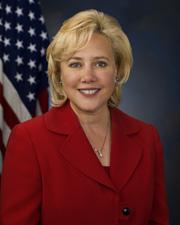 Sen. Mary L. Landrieu (D-LA)
Sen. Mary L. Landrieu (D-LA)Submitted December 8, 2009
Legislative Activity
Stay on top of the latest movement without scrolling through every action
Floor
Latest Action
Senate amendment submitted
December 8, 2009
Text
Submitted
TEXT OF AMENDMENTS

SA 3001. Mrs. HAGAN submitted an amendment intended to be proposed to
amendment SA 2786 proposed by Mr. Reid (for himself, Mr. Baucus, Mr.
Dodd, and Mr. Harkin) to the bill H.R. 3590, to amend the Internal
Revenue Code of 1986 to modify the first-time homebuyers credit in the
case of members of the Armed Forces and certain other Federal
employees, and for other purposes; which was ordered to lie on the
table; as follows:

On page 974, between lines 9 and 10, insert the following:

SEC. 3316. IMPROVEMENT IN PART D MEDICATION THERAPY
MANAGEMENT (MTM) PROGRAMS.

(a) In General.--Section 1860D-4(c)(2) of the Social
Security Act (42 U.S.C. 1395w-104(c)(2)) is amended--
(1) by redesignating subparagraphs (C), (D), and (E) as
subparagraphs (E), (F), and (G), respectively; and
(2) by inserting after subparagraph (B) the following new
subparagraphs:
``(C) Required interventions.--For plan years beginning on
or after the date that is 2 years after the date of the
enactment of the Patient Protection and Affordable Care Act,
prescription drug plan sponsors shall offer medication
therapy management services to targeted beneficiaries
described in subparagraph (A)(ii) that include, at a minimum,
the following to increase adherence to prescription
medications or other goals deemed necessary by the Secretary:
``(i) An annual comprehensive medication review furnished
person-to-person or using telehealth technologies (as defined
by the Secretary) by a licensed pharmacist or other qualified
provider. The comprehensive medication review--

``(I) shall include a review of the individual's
medications and may result in the creation of a recommended
medication action plan or other actions in consultation with
the individual and with input from the prescriber to the
extent necessary and practicable; and
``(II) shall include providing the individual with a
written or printed summary of the results of the review.

The Secretary, in consultation with relevant stakeholders,
shall develop a standardized format for the action plan under
subclause (I) and the summary under subclause (II).
``(ii) Follow-up interventions as warranted based on the
findings of the annual medication review or the targeted
medication enrollment and which may be provided person-to-
person or using telehealth technologies (as defined by the
Secretary).
``(D) Assessment.--The prescription drug plan sponsor shall
have in place a process to assess, at least on a quarterly
basis, the medication use of individuals who are at risk but
not enrolled in the medication therapy management program,
including individuals who have experienced a transition in
care, if the prescription drug plan sponsor has access to
that information.
``(E) Automatic enrollment with ability to opt-out.--The
prescription drug plan sponsor shall have in place a process
to--
``(i) subject to clause (ii), automatically enroll targeted
beneficiaries described in subparagraph (A)(ii), including
beneficiaries identified under subparagraph (D), in the
medication therapy management program required under this
subsection; and
``(ii) permit such beneficiaries to opt-out of enrollment
in such program.''.
(b) Rule of Construction.--Nothing in this section shall
limit the authority of the Secretary of Health and Human
Services to modify or broaden requirements for a medication
therapy management program under part D of title XVIII of the
Social Security Act or to study new models for medication
therapy management through the Center for Medicare and
Medicaid Innovation under section 1115A of such Act, as added
by section 3021.
______

SA 3002. Mrs. HAGAN submitted an amendment intended to be proposed to
amendment SA 2786 proposed by Mr. Reid (for himself, Mr. Baucus, Mr.
Dodd, and Mr. Harkin) to the bill H.R. 3590, to amend the Internal
Revenue Code of 1986 to modify the first-time homebuyers credit in the
case of members of the Armed Forces and certain other Federal
employees, and for other purposes; which was ordered to lie on the
table; as follows:

[[Page S12716]]

On page 1722, after line 24, insert the following:
``(C) Use of technology.--The Secretary shall incorporate
the use of technologies, including analytics and predictive
modeling, as part of the analysis process for the purpose of
identifying fraud, abuse, or improper payments prior to the
payment of claims. Such analysis technologies shall at a
minimum--
``(i) have the capability to detect emerging fraud schemes
through the use of automated predictive modeling techniques;
and
``(ii) improve the efficiency and effectiveness of current
fraud and abuse detection methods by incorporating predictive
risk scoring techniques that minimize investigations that
result in false positive outcomes.''.
______

SA 3003. Mrs. HAGAN submitted an amendment intended to be proposed to
amendment SA 2786 proposed by Mr. Reid (for himself, Mr. Baucus, Mr.
Dodd, and Mr. Harkin) to the bill H.R. 3590, to amend the Internal
Revenue Code of 1986 to modify the first-time homebuyers credit in the
case of members of the Armed Forces and certain other Federal
employees, and for other purposes; which was ordered to lie on the
table; as follows:

At the end of title III, insert the following:

Subtitle __--Better Diabetes Care

SEC. __1. SHORT TITLE.

This subtitle may be cited as the ``Catalyst to Better
Diabetes Care Act of 2009''.

SEC. __2. DIABETES SCREENING COLLABORATION AND OUTREACH
PROGRAM.

(a) Establishment.--With respect to diabetes screening
tests and for the purposes of reducing the number of
undiagnosed seniors with diabetes or prediabetes, the
Secretary of Health and Human Services (referred to in this
subtitle as the ``Secretary''), in collaboration with the
Director of the Centers for Disease Control and Prevention
(referred to in this section as the ``Director''), shall--
(1) review uptake and utilization of diabetes screening
benefits to identify and address any existing problems with
regard to utilization and data collection mechanisms;
(2) establish an outreach program to identify existing
efforts by agencies and by the private and nonprofit sectors
to increase awareness among seniors and providers of diabetes
screening benefits; and
(3) maximize cost effectiveness in increasing utilization
of diabetes screening benefits.
(b) Consultation.--In carrying out this section, the
Secretary and the Director shall consult with--
(1) various units of the Federal Government, including the
Centers for Medicare & Medicaid Services, the Surgeon General
of the Public Health Service, the Agency for Healthcare
Research and Quality, the Health Resources and Services
Administration, and the National Institutes of Health; and
(2) entities with an interest in diabetes, including
industry, voluntary health organizations, trade associations,
and professional societies.

SEC. __3. ADVISORY GROUP REGARDING EMPLOYEE WELLNESS AND
DISEASE MANAGEMENT BEST PRACTICES.

(a) Establishment.--The Secretary shall establish an
advisory group consisting of representatives of the public
and private sector. The advisory group shall include--
(1) representatives of the Department of Health and Human
Services;
(2) representatives of the Department of Commerce; and
(3) members of the public, representatives of the private
sector, and representatives of the small business community,
who have experience with diabetes or in administering and
operating employee wellness and disease management programs.
(b) Duties.--The advisory group established under
subsection (a) shall examine and make recommendations of best
practices of employee wellness and disease management
programs in order to--
(1) provide public and private sector entities with
improved information in assessing the role of employee
wellness and disease management programs in saving money and
improving quality of life for patients with chronic
illnesses; and
(2) encourage the adoption of effective employee wellness
and disease management programs.
(c) Report.--Not later than 1 year after the date of the
enactment of this Act, the advisory group established under
subsection (a) shall submit to the Secretary the results of
the examination under subsection (b)(1).

SEC. __4. NATIONAL DIABETES REPORT CARD.

(a) In General.--The Secretary, in collaboration with the
Director of the Centers for Disease Control and Prevention
(referred to in this section as the ``Director''), shall
prepare on a biennial basis a national diabetes report card
(referred to in this section as a ``Report Card'') and, to
the extent possible, for each State.
(b) Contents.--
(1) In general.--Each Report Card shall include aggregate
health outcomes related to individuals diagnosed with
diabetes and prediabetes including--
(A) preventative care practices and quality of care;
(B) risk factors; and
(C) outcomes.
(2) Updated reports.--Each Report Card that is prepared
after the initial Report Card shall include trend analysis
for the Nation and, to the extent possible, for each State,
for the purpose of--
(A) tracking progress in meeting established national goals
and objectives for improving diabetes care, costs, and
prevalence (including Healthy People 2010); and
(B) informing policy and program development.
(c) Availability.--The Secretary, in collaboration with the
Director, shall make each Report Card publicly available,
including by posting the Report Card on the Internet.

SEC. __5. IMPROVEMENT OF VITAL STATISTICS COLLECTION.

(a) In General.--The Secretary, acting through the Director
of the Centers for Disease Control and Prevention and in
collaboration with appropriate agencies and States, shall--
(1) promote the education and training of physicians on the
importance of birth and death certificate data and how to
properly complete these documents, including the collection
of such data for diabetes and other chronic diseases;
(2) encourage State adoption of the latest standard
revisions of birth and death certificates; and
(3) work with States to re-engineer their vital statistics
systems in order to provide cost-effective, timely, and
accurate vital systems data.
(b) Death Certificate Additional Language.--In carrying out
this section, the Secretary may promote improvements to the
collection of diabetes mortality data, including the addition
of a question for the individual certifying the cause of
death regarding whether the deceased had diabetes.

SEC. __6. STUDY ON APPROPRIATE LEVEL OF DIABETES MEDICAL
EDUCATION.

(a) In General.--The Secretary shall, in collaboration with
the Institute of Medicine and appropriate associations and
councils, conduct a study of the impact of diabetes on the
practice of medicine in the United States and the
appropriateness of the level of diabetes medical education
that should be required prior to licensure, board
certification, and board recertification.
(b) Report.--Not later than 2 years after the date of the
enactment of this Act, the Secretary shall submit a report on
the study under subsection (a) to the Committees on Ways and
Means and Energy and Commerce of the House of Representatives
and the Committees on Finance and Health, Education, Labor,
and Pensions of the Senate.

SEC. __7. AUTHORIZATION OF APPROPRIATIONS.

There are authorized to be appropriated to carry out this
subtitle such sums as may be necessary.
______

SA 3004. Mrs. HAGAN (for herself and Mr. Bennet) submitted an
amendment intended to be proposed to amendment SA 2786 proposed by Mr.
Reid (for himself, Mr. Baucus, Mr. Dodd, and Mr. Harkin) to the bill
H.R. 3590, to amend the Internal Revenue Code of 1986 to modify the
first-time homebuyers credit in the case of members of the Armed Forces
and certain other Federal employees, and for other purposes; which was
ordered to lie on the table; as follows:

On page 32, after line 24, add the following:
``(d) Clear Transparency of Health Care Charges.--
``(1) Public disclosure of reimbursement amounts.--A health
insurance issuer offering group or individual health
insurance coverage shall report at least once a year to the
Secretary the current allowable reimbursement that the issuer
will provide for all covered benefits and services (other
than prescription medications dispensed through a licensed
pharmacy), including--
``(A) with respect to services provided by in-network
providers where payment is made in part or in full on a fee
for service basis, the current allowed charge for specific
services using currently accepted procedure coding associated
with each provider; and
``(B) the expected reasonable and allowed charges made for
services by out-of-network providers and the amount the
issuer would reimburse for such charges.
``(2) Accessibility.--Information submitted to the
Secretary under paragraph (1) shall be maintained by the
Secretary in a manner that ensures that such information is
readily accessible by the public.
``(3) Regulations.--Not later than one year after the date
of enactment of the Patient Protection and Affordable Care
Act, the Secretary shall promulgate regulations to implement
the requirements of this subsection.''.
______

SA 3005. Ms. LANDRIEU (for herself, Mrs. Shaheen, and Ms. Snowe)
submitted an amendment intended to be proposed to amendment SA 2786
proposed by Mr. Reid (for himself, Mr. Baucus, Mr. Dodd, and Mr.
Harkin) to the bill H.R. 3590, to amend the Internal Revenue Code of
1986 to modify the first-time homebuyers credit in the case of members
of the Armed Forces and certain other Federal employees, and for other
purposes; which was ordered to lie on the table; as follows:

On page 150, line 5, strike ``small business development
centers'' and insert ``resource partners of the Small
Business Administration''.

[[Page S12717]]

______

SA 3006. Ms. LANDRIEU (for herself, Mrs. Shaheen, and Ms. Snowe)
submitted an amendment intended to be proposed to amendment SA 2786
proposed by Mr. Reid (for himself, Mr. Baucus, Mr. Dodd, and Mr.
Harkin) to the bill H.R. 3590, to amend the Internal Revenue Code of
1986 to modify the first-time homebuyers credit in the case of members
of the Armed Forces and certain other Federal employees, and for other
purposes; which was ordered to lie on the table; as follows:

On page 1280, between lines 18 and 19, insert the
following:

(VIII) small business concerns (as defined under section 3
of the Small Business Act (15 U.S.C. 632)) and self-employed
individuals; and

______

SA 3007. Ms. LANDRIEU (for herself, Mrs. Shaheen, and Ms. Snowe)
submitted an amendment intended to be proposed to amendment SA 2786
proposed by Mr. Reid (for himself, Mr. Baucus, Mr. Dodd, and Mr.
Harkin) to the bill H.R. 3590, to amend the Internal Revenue Code of
1986 to modify the first-time homebuyers credit in the case of members
of the Armed Forces and certain other Federal employees, and for other
purposes; which was ordered to lie on the table; as follows:

On page 163, between lines 21 and 22, insert the following:
(4) a survey of the cost and affordability of health care
insurance provided under the Exchanges for owners and
employees of small business concerns (as defined under
section 3 of the Small Business Act (15 U.S.C. 632)),
including data on enrollees in Exchanges and individuals
purchasing health insurance coverage outside of Exchanges;
and
______

SA 3008. Ms. LANDRIEU (for herself, Ms. Snowe, and Mrs. Shaheen)
submitted an amendment intended to be proposed to amendment SA 2786
proposed by Mr. Reid (for himself, Mr. Baucus, Mr. Dodd, and Mr.
Harkin) to the bill H.R. 3590, to amend the Internal Revenue Code of
1986 to modify the first-time homebuyers credit in the case of members
of the Armed Forces and certain other Federal employees, and for other
purposes; which was ordered to lie on the table; as follows:

On page 2074, after line 25, add the following:

SEC. 9024. SMALL BUSINESS PROCUREMENT.

Part 19 of the Federal Acquisition Regulation, section 15
of the Small Business Act (15 U.S.C. 644), and any other
applicable laws or regulations establishing procurement
requirements relating to small business concerns (as defined
in section 3 of the Small Business Act (15 U.S.C. 632)) may
not be waived with respect to any contract awarded under any
program or other authority under this Act or an amendment
made by this Act.
______

SA 3009. Ms. LANDRIEU (for herself, Mrs. Shaheen, and Ms. Snowe)
submitted an amendment intended to be proposed to amendment SA 2786
proposed by Mr. Reid (for himself, Mr. Baucus, Mr. Dodd, and Mr.
Harkin) to the bill H.R. 3590, to amend the Internal Revenue Code of
1986 to modify the first-time homebuyers credit in the case of members
of the Armed Forces and certain other Federal employees, and for other
purposes; which was ordered to lie on the table; as follows:

On page 54, between lines 16 and 17, insert the following:
(f) Allocation of Funding for Small Businesses.--Of the
amount appropriated under subsection (e), a reasonable
amount, as determined by the Secretary, shall be used to
provide reimbursement to participating employment-based plans
of small employers with 50 or fewer employees.
______

SA 3013. Ms. LANDRIEU (for herself, Mrs. Shaheen, and Ms. Snowe)
submitted an amendment intended to be proposed to amendment SA 2786
proposed by Mr. Reid (for himself, Mr. Baucus, Mr. Dodd, and Mr.
Harkin) to the bill H.R. 3590, to amend the Internal Revenue Code of
1986 to modify the first-time homebuyers credit in the case of members
of the Armed Forces and certain other Federal employees, and for other
purposes; which was ordered to lie on the table; as follows:

Beginning on page 55, line 4, strike ``website,'' and all
that follows through line 5 on page 56 and insert the
following: ``website, through which a resident of, or small
business in, any State may identify affordable health
insurance coverage options in that State.
(2) Connecting to affordable coverage.--An Internet website
established under paragraph (1) shall, to the extent
practicable, provide ways for residents of, and small
businesses in, any State to receive information on at least
the following coverage options:
(A) Health insurance coverage offered by health insurance
issuers, other than coverage that provides reimbursement only
for the treatment or mitigation of--
(i) a single disease or condition; or
(ii) an unreasonably limited set of diseases or conditions
(as determined by the Secretary).
(B) Medicaid coverage under title XIX of the Social
Security Act.
(C) Coverage under title XXI of the Social Security Act.
(D) A State health benefits high risk pool, to the extent
that such high risk pool is offered in such State; and
(E) Coverage under a high risk pool under section 1101.
(F) Coverage within the small group market for small
businesses and their employees, including reinsurance for
early retirees under section 1102, tax credits available
under section 45R of the Internal Revenue Code of 1986 (as
added by section 1421), and other information specifically
for small businesses regarding affordable health care
options.''.
______

SA 3011. Ms. LANDRIEU (for herself, Mrs. Shaheen, and Mrs. Lincoln)
submitted an amendment intended to be proposed to amendment SA 2786
proposed by Mr. Reid (for himself, Mr. Baucus, Mr. Dodd, and Mr.
Harkin) to the bill H.R. 3590, to amend the Internal Revenue Code of
1986 to modify the first-time homebuyers credit in the case of members
of the Armed Forces and certain other Federal employees, and for other
purposes; which was ordered to lie on the table; as follows:

Beginning on page 349, line 16, strike all through page
350, line 14.
______

SA 3012. Ms. LANDRIEU (for herself, Mrs. Shaheen, and Ms. Stabenow)
submitted an amendment intended to be proposed to amendment SA 2786
proposed by Mr. Reid (for himself, Mr. Baucus, Mr. Dodd, and Mr.
Harkin) to the bill H.R. 3590, to amend the Internal Revenue Code of
1986 to modify the first-time homebuyers credit in the case of members
of the Armed Forces and certain other Federal employees, and for other
purposes; which was ordered to lie on the table; as follows:

On page 2074, after line 25, add the following:

SEC. 9024. EXTENSION OF SMALL BUSINESS TAX CREDIT TO 5 YEARS.

(a) In General.--Section 45R(e)(2) of the Internal Revenue
Code of 1986, as added by section 1421(a), is amended by
striking ``2-consecutive-taxable year'' and inserting ``5-
consecutive-taxable year''.
(b) Conforming Amendment.--Section 45R(i)) of the Internal
Revenue Code of 1986, as so added, is amended by striking
``2-year'' and inserting ``5-year''.
(c) Effective Date.--The amendments made by this section
shall take effect as if included in the enactment of section
1421.
______

SA 3013. Ms. LANDRIEU (for herself, Mrs. Shaheen, and Ms. Stabenow)
submitted an amendment intended to be proposed to amendment SA 2786
proposed by Mr. Reid (for himself, Mr. Baucus, Mr. Dodd, and Mr.
Harkin) to the bill H.R. 3590, to amend the Internal Revenue Code of
1986 to modify the first-time homebuyers credit in the case of members
of the Armed Forces and certain other Federal employees, and for other
purposes; which was ordered to lie on the table; as follows:

On page 274, after line 25, add the following:

SEC. 90__. PARTIAL DEDUCTION FOR HEALTH INSURANCE COSTS IN
COMPUTING SELF-EMPLOYMENT TAXES.

(a) In General.--Paragraph (4) of section 162(l) of the
Internal Revenue Code of 1986 is amended to read as follows:
``(4) Reduced deduction for self-employment tax purposes.--
In determining an individual's net earnings from self-
employment (within the meaning of section 1402(a)) for
purposes of chapter 2, the deduction allowable by reason of
this subsection shall be reduced by an amount equal to 50
percent of the amount which would otherwise be allowable
(determined without regard to this paragraph).''.
(b) Effective Date.--The amendments made by this section
shall apply to taxable years beginning after the date of the
enactment of this Act.
______

SA 3014. Ms. LANDRIEU (for herself, Mrs. Shaheen, and Ms. Stabenow)
submitted an amendment intended to be proposed to amendment SA 2786
proposed by Mr. Reid (for himself, Mr. Baucus, Mr. Dodd, and Mr.
Harkin) to the bill H.R. 3590, to amend the Internal Revenue Code of
1986 to modify the first-time homebuyers credit in the case of members
of the Armed Forces and certain other Federal employees, and for other
purposes; which was ordered to lie on the table; as follows:

On page 2074, after line 25, add the following:

SEC. 9024. EXTENSION OF SMALL BUSINESS TAX CREDIT TO 2010.

(a) In General.--Subsections (d)(3)(B)(i) and (g) of
section 45R of the Internal Revenue Code of 1986, as added by
section 1421(a),

[[Page S12718]]

is amended by striking ``2011'' each place it appears and
inserting ``2010, 2011''.
(b) Conforming Amendments.--
(1) Section 280C(h) of the Internal Revenue Code of 1986,
as added by section 1421(d)(1), is amended by striking
``2011'' and inserting ``2010, 2011''.
(2) Section 1421(f) is amended by striking ``2010'' both
places it appears and inserting ``2009''.
(c) Effective Date.--The amendments made by this section
shall take effect as if included in the enactment of section
1421.
______

SA 3015. Mr. ENSIGN submitted an amendment intended to be proposed to
amendment SA 2786 proposed by Mr. Reid (for himself, Mr. Baucus, Mr.
Dodd, and Mr. Harkin) to the bill H.R. 3590, to amend the Internal
Revenue Code of 1986 to modify the first-time homebuyers credit in the
case of members of the Armed Forces and certain other Federal
employees, and for other purposes; which was ordered to lie on the
table; as follows:

At the appropriate place, insert the following:

SEC. __. PROTECTION OF ACCESS TO QUALITY HEALTH CARE THROUGH
THE DEPARTMENT OF VETERANS AFFAIRS AND THE
DEPARTMENT OF DEFENSE.

(a) Health Care Through Department of Veterans Affairs.--
Nothing in this Act shall be construed to prohibit, limit, or
otherwise penalize veterans and dependents eligible for
health care through the Department of Veterans Affairs under
the laws administered by the Secretary of Veterans Affairs
from receiving timely access to quality health care in any
facility of the Department or from any non-Department health
care provider through which the Secretary provides health
care.
(b) Health Care Through Department of Defense.--
(1) In general.--Nothing in this Act shall be construed to
prohibit, limit, or otherwise penalize eligible beneficiaries
from receiving timely access to quality health care in any
military medical treatment facility or under the TRICARE
program.
(2) Definitions.--In this subsection:
(A) The term ``eligible beneficiaries'' means covered
beneficiaries (as defined in section 1072(5) of title 10,
United States Code) for purposes of eligibility for mental
and dental care under chapter 55 of title 10, United States
Code.
(B) The term ``TRICARE program'' has the meaning given that
term in section 1072(7) of title 10, United States Code.
______

SA 3016. Mr. ENSIGN submitted an amendment intended to be proposed to
amendment SA 2786 proposed by Mr. Reid (for himself, Mr. Baucus, Mr.
Dodd, and Mr. Harkin) to the bill H.R. 3590, to amend the Internal
Revenue Code of 1986 to modify the first-time homebuyers credit in the
case of members of the Armed Forces and certain other Federal
employees, and for other purposes; which was ordered to lie on the
table; as follows:

On page 246, between lines 7 and 8, insert the following:
``(C) Special rules to ensure citizens and nationals of the
united states have the same health care choices as legal
immigrants.--
``(i) In general.--Notwithstanding any other provision of
this Code, the Patient Protection and Affordable Care Act, or
any amendment made by that Act, any taxpayer who--

``(I) is a citizen or national of the United States; and
``(II) has a household income which is not greater than 133
percent of an amount equal to the poverty line for a family
of the size involved,

may elect to enroll in a qualified health plan through the
Exchange established by the State under section 1311 of the
Patient Protection and Affordable Care Act instead of
enrolling in the State Medicaid plan under title XIX of the
Social Security, or under a waiver of such plan.
``(ii) Special rules.--

``(I) An individual making an election under clause (i)
shall waive being provided with medical assistance under the
State Medicaid plan under title XIX of the Social Security,
or under a waiver of such plan while enrolled in a qualified
health plan.
``(II) In the case of an individual who is a child, the
child's parent or legal guardian may make such an election on
behalf of the child.
``(III) Any individual making such an election, or on whose
behalf such an election is made, shall be treated as an
applicable taxpayer with a household income which is equal to
100 percent of the poverty line for a family of the size
involved.

______

SA 3017. Mr. ENSIGN submitted an amendment intended to be proposed to
amendment SA 2786 proposed by Mr. Reid (for himself, Mr. Baucus, Mr.
Dodd, and Mr. Harkin) to the bill H.R. 3590, to amend the Internal
Revenue Code of 1986 to modify the first-time homebuyers credit in the
case of members of the Armed Forces and certain other Federal
employees, and for other purposes; which was ordered to lie on the
table; as follows:

At the end of part I of subtitle C of title I, insert the
following:

SEC. 1202. APPLICATION OF WELLNESS PROGRAMS PROVISIONS TO
CARRIERS PROVIDING FEDERAL EMPLOYEE HEALTH
BENEFITS PLANS.

(a) In General.--Notwithstanding section 8906 of title 5,
United States Code (including subsections (b)(1) and (b)(2)
of such section), section 2705(j) of the Public Health
Service Act (as added by section 1201) (relating to wellness
programs) shall apply to carriers entering into contracts
under section 8902 of title 5, United States Code.
(b) Proposals.--Carriers may submit separate proposals
relating to voluntary wellness program offerings as part of
the annual call for benefit and rate proposals to the Office
of Personnel Management.
(c) Effective Date.--This subsection shall take effect on
the date of enactment of this Act and shall apply to
contracts entered into under section 8902 of title 5, United
States Code, that take effect with respect to calendar years
that begin more than 1 year after that date.
______

SA 3018. Mr. ENSIGN submitted an amendment intended to be proposed to
amendment SA 2786 proposed by Mr. Reid (for himself, Mr. Baucus, Mr.
Dodd, and Mr. Harkin) to the bill H.R. 3590, to amend the Internal
Revenue Code of 1986 to modify the first-time homebuyers credit in the
case of members of the Armed Forces and certain other Federal
employees, and for other purposes; which was ordered to lie on the
table; as follows:

At the appropriate place, insert the following:

SEC. __. APPOINTMENT OF HEALTH CARE CZARS.

Notwithstanding any other provision of this Act, any
individual appointed by the President as a czar to handle
health care issues shall be subject to Senate confirmation.
______

SA 3019. Mr. ENSIGN submitted an amendment intended to be proposed to
amendment SA 2786 proposed by Mr. Reid (for himself, Mr. Baucus, Mr.
Dodd, and Mr. Harkin) to the bill H.R. 3590, to amend the Internal
Revenue Code of 1986 to modify the first-time homebuyers credit in the
case of members of the Armed Forces and certain other Federal
employees, and for other purposes; which was ordered to lie on the
table; as follows:

On page 100, line 16, insert `` or meets the requirements
for a high deductible health plan under section 223(c)(2) of
the Internal Revenue Code of 1986'' after ``section
1302(a)''.
______

SA 3020. Mr. ENSIGN submitted an amendment intended to be proposed to
amendment SA 2786 proposed by Mr. Reid (for himself, Mr. Baucus, Mr.
Dodd, and Mr. Harkin) to the bill H.R. 3590, to amend the Internal
Revenue Code of 1986 to modify the first-time homebuyers credit in the
case of members of the Armed Forces and certain other Federal
employees, and for other purposes; which was ordered to lie on the
table; as follows:

At the appropriate place, insert the following:

SEC. __. EQUIVALENT BANKRUPTCY PROTECTIONS FOR HEALTH SAVINGS
ACCOUNTS AS RETIREMENT FUNDS.

(a) In General.--Section 522 of title 11, United States
Code, is amended by adding at the end the following new
subsection:
``(r) Treatment of Health Savings Accounts.--For purposes
of this section, any health savings account (as described in
section 223 of the Internal Revenue Code of 1986) shall be
treated in the same manner as an individual retirement
account described in section 408 of such Code.''.
(b) Effective Date.--The amendment made by this section
shall apply to cases commencing under title 11, United States
Code, after the date of the enactment of this Act.
______

SA 3021. Mr. ENSIGN submitted an amendment intended to be proposed to
amendment SA 2786 proposed by Mr. Reid (for himself, Mr. Baucus, Mr.
Dodd, and Mr. Harkin) to the bill H.R. 3590, to amend the Internal
Revenue Code of 1986 to modify the first-time homebuyers credit in the
case of members of the Armed Forces and certain other Federal
employees, and for other purposes; which was ordered to lie on the
table; as follows:

On page 816, after line 20, insert the following:

SEC. 3115. ENSURING THAT AN INDIVIDUAL WHO ELECTS TO OPT-OUT
OF MEDICARE PART A BENEFITS IS NOT ALSO
REQUIRED TO OPT-OUT OF SOCIAL SECURITY
BENEFITS.

Notwithstanding any other provision of law, in the case of
an individual who elects to opt-out of benefits under part A
of title XVIII of the Social Security Act, such individual
shall not be required to opt-out of

[[Page S12719]]

benefits under title II of such Act as a condition for making
such election.
______

SA 3022. Mr. ENSIGN submitted an amendment intended to be proposed to
amendment SA 2786 proposed by Mr. Reid (for himself, Mr. Baucus, Mr.
Dodd, and Mr. Harkin) to the bill H.R. 3590, to amend the Internal
Revenue Code of 1986 to modify the first-time homebuyers credit in the
case of members of the Armed Forces and certain other Federal
employees, and for other purposes; which was ordered to lie on the
table; as follows:

On page 923, between lines 7 and 8, insert the following:

SEC. __. LIMITATION ON IMPLEMENTATION.

Notwithstanding any other provision of law, the Secretary
of Health and Human Services (in this section referred to as
the ``Secretary'') shall not implement the amendments made by
and the provisions of this part for any year unless the
Secretary certifies with respect to such year that such
amendments and provisions will not result in any individual
who would otherwise be enrolled in a Medicare Advantage plan
under part C of title XVIII of the Social Security Act being
forced away from or losing their enrollment in such plan, as
such enrollment was in effect on the day before the date of
enactment of this Act.
______

SA 3023. Mr. ENSIGN submitted an amendment intended to be proposed to
amendment SA 2786 proposed by Mr. Reid (for himself, Mr. Baucus, Mr.
Dodd, and Mr. Harkin) to the bill H.R. 3590, to amend the Internal
Revenue Code of 1986 to modify the first-time homebuyers credit in the
case of members of the Armed Forces and certain other Federal
employees, and for other purposes; which was ordered to lie on the
table; as follows:

On page 1053, between lines 2 and 3, insert the following:

SEC. 3404. ENSURING MEDICARE SAVINGS ARE KEPT IN THE MEDICARE
PROGRAM.

No reduction in outlays under the Medicare program under
title XVIII of the Social Security Act under the provisions
of and amendments made by this Act may be utilized to offset
any outlays under any other program or activity of the
Federal government.
______

SA 3024. Mr. ENSIGN submitted an amendment intended to be proposed to
amendment SA 2786 proposed by Mr. Reid (for himself, Mr. Baucus, Mr.
Dodd, and Mr. Harkin) to the bill H.R. 3590, to amend the Internal
Revenue Code of 1986 to modify the first-time homebuyers credit in the
case of members of the Armed Forces and certain other Federal
employees, and for other purposes; which was ordered to lie on the
table; as follows:

At the appropriate place, insert the following:

SEC. __. PROHIBITION ON USING MEDICARE SAVINGS TO OFFSET
PROGRAMS UNRELATED TO MEDICARE.

Title III of the Congressional Budget Act of 1974 (2 U.S.C.
621 et seq.) is amended by adding at the end the following:

``SEC. 316. PROHIBITION ON USING MEDICARE SAVINGS TO OFFSET
PROGRAMS UNRELATED TO MEDICARE.

``For purposes of this title and title IV, a reduction in
outlays under title XVIII of the Social Security Act may not
be counted as an offset to any outlays under any other
program or activity of the Federal Government.''.
______

SA 3025. Mr. ENSIGN submitted an amendment intended to be proposed to
amendment SA 2786 proposed by Mr. Reid (for himself, Mr. Baucus, Mr.
Dodd, and Mr. Harkin) to the bill H.R. 3590, to amend the Internal
Revenue Code of 1986 to modify the first-time homebuyers credit in the
case of members of the Armed Forces and certain other Federal
employees, and for other purposes; which was ordered to lie on the
table; as follows:

On page 1050, between lines 9 and 10, insert the following:
``(n) Reductions in Medicare Program Spending Not Counted
Towards the Pay-as-you-go Scorecard.--Any reductions in
Medicare program spending enacted pursuant to this section
shall not count towards the pay-as-you-go scorecard under
section 201(a)(6) of S. Con. Res. 21 (110th Congress).''.
______

SA 3026. Mr. ENSIGN submitted an amendment intended to be proposed to
amendment SA 2786 proposed by Mr. Reid (for himself, Mr. Baucus, Mr.
Dodd, and Mr. Harkin) to the bill H.R. 3590, to amend the Internal
Revenue Code of 1986 to modify the first-time homebuyers credit in the
case of members of the Armed Forces and certain other Federal
employees, and for other purposes; which was ordered to lie on the
table; as follows:

On page 2044, between lines 7 and 8, insert the following:
(d) Additional Hospital Insurance Tax Solely Dedicated to
Medicare.--It is the policy of Congress that the additional
hospital insurance taxes resulting from the amendments made
by this section shall, as is the case regarding such taxes
under the Social Security Act as in effect on the date of the
enactment of this Act, be deposited into the Federal Hospital
Insurance Trust Fund and under the terms of that Trust Fund
used only for purposes of funding the medicare program under
part A of title XVIII of the Social Security Act.
______

SA 3027. Mr. ENSIGN submitted an amendment intended to be proposed to
amendment SA 2786 proposed by Mr. Reid (for himself, Mr. Baucus, Mr.
Dodd, and Mr. Harkin) to the bill H.R. 3590, to amend the Internal
Revenue Code of 1986 to modify the first-time homebuyers credit in the
case of members of the Armed Forces and certain other Federal
employees, and for other purposes; which was ordered to lie on the
table; as follows:

On page 436, between lines 14 and 15, insert the following:

SEC. 2008. STATE OPTION TO OPT-OUT OF MEDICAID COVERAGE
EXPANSION TO AVOID ASSUMING UNFUNDED FEDERAL
MANDATE.

Notwithstanding any other provision of this Act (or an
amendment made by this Act), the Governor of a State shall
have the authority to opt out of any provision under this Act
or any amendment made by this Act that requires the State to
expand coverage under the Medicaid program if the State
agency responsible for administering the State plan under
title XIX certifies that such expansion would result in an
increase of at least 1 percent in the total amount of
expenditures by the State for providing medical assistance to
all individuals enrolled under the State plan, when compared
to the total amount of such expenditures for the most
recently ended State fiscal year.
______

SA 3028. Mr. ENSIGN submitted an amendment intended to be proposed by
him to the bill H.R. 3590, to amend the Internal Revenue Code of 1986
to modify the first-time homebuyers credit in the case of members of
the Armed Forces and certain other Federal employees, and for other
purposes; which was ordered to lie on the table; as follows:

At the appropriate place, insert the following:

SEC. __. STUDY AND REPORT ON MEDICARE COVERAGE FOR MEDICAL
EQUIPMENT USED IN THE TREATMENT OF CIRCULATORY
DISEASES.

(a) Study.--The Secretary of Health and Human Services
shall conduct a study on the feasibility and advisability of
providing for reimbursement under the Medicare program under
title XVIII of the Social Security Act for gradient pumps and
compression stockings that are used in the treatment of
individuals with lymphedema, chronic venous insufficiency,
and other circulatory diseases. Such study shall include an
analysis of the following:
(1) The types of gradient pumps and compression stockings
that are currently available on the market.
(2) The clinical appropriateness of providing gradient
pumps and compression stockings for Medicare beneficiaries
who have been diagnosed with lymphedema, chronic venous
insufficiency, and other circulatory diseases.
(3) The financial impact on the Medicare program (including
a description of any resulting costs or savings) if
reimbursement were to be provided for gradient pumps and
compression stockings that are used in the treatment of
lymphedema, chronic venous insufficiency, and other
circulatory diseases.
(b) Report.--Not later than 1 year after the date of
enactment of this Act, the Secretary of Health and Human
Services shall submit a report to Congress on the study
conducted under subsection (a), together with recommendations
for such legislation and administrative action as the
Secretary determines appropriate.
______

SA 3029. Mr. THUNE submitted an amendment intended to be proposed to
amendment SA 2786 proposed by Mr. Reid (for himself, Mr. Baucus, Mr.
Dodd, and Mr. Harkin) to the bill H.R. 3590, to amend the Internal
Revenue Code of 1986 to modify the first-time homebuyers credit in the
case of members of the Armed Forces and certain other Federal
employees, and for other purposes; which was ordered to lie on the
table; as follows:

On page 356, between lines 19 and 20, insert the following:
``(f) Limitation.--A full-time employee shall not be taken
into account for purposes of calculating the amount of any
assessable payment imposed under subsections (a), (b), or (c)
if such employee performs the majority of services in a
State--
``(1) the unemployment rate of which exceeds 6 percent, and
``(2) the Governor of which has certified that the
assessable penalties imposed under this section have
contributed to such unemployment rate.''.

[[Page S12720]]

______

SA 3030. Mrs. FEINSTEIN (for herself, Mr. Rockefeller, and Mr.
Whitehouse) submitted an amendment intended to be proposed to amendment
SA 2786 proposed by Mr. Reid (for himself, Mr. Baucus, Mr. Dodd, and
Mr. Harkin) to the bill H.R. 3590, to amend the Internal Revenue Code
of 1986 to modify the first-time homebuyers credit in the case of
members of the Armed Forces and certain other Federal employees, and
for other purposes; which was ordered to lie on the table; as follows:
On page 37, strike line 10 through line 14 and insert the
following:
``(1) In general.--
``(A) Establishment.--The Secretary, in conjunction with
States, shall establish a uniform process for the annual
review, beginning with the 2010 plan year and subject to
subsection (b)(2)(A), of unreasonable increases in premiums
for health insurance coverage.
``(B) Electronic reporting.--The process established under
subparagraph (A) shall include an electronic reporting system
established by the Secretary through which health insurance
issuers shall report to the Secretary and State insurance
commissioners the information requested by the Secretary
pursuant to this subsection.

On page 37, between lines 24 and 25, insert the following:
``(3) Health insurance rate authority.--
``(A) In general.--The Secretary shall establish a Health
Insurance Rate Authority (referred to in this paragraph as
the `Authority') to be composed of 7 members to be appointed
by the Secretary, of which--
``(i) at least 2 members shall be a consumer advocate with
expertise in the insurance industry;
``(ii) at least 1 member shall be an individual who is a
medical professional;
``(iii) at least 1 member shall be a representative of
health insurance issuers; and
``(iv) such remaining members shall be individuals who are
recognized for their expertise in health finance and
economics, actuarial science, health facility management,
health plans and integrated delivery systems, reimbursement
of health facilities, and other related fields, who provide
broad geographic representation and a balance between urban
and rural members.
``(B) Role.--In addition to the other duties of the
Authority set forth in this subsection, the Authority shall
advise and make recommendations to the Secretary concerning
the Secretary's duties under this subsection.
``(4) Corrective action for unjustified rate increases.--
``(A) In general.--Pursuant to the procedures set forth in
this paragraph, the Secretary or the relevant State insurance
commissioner shall--
``(i) review potentially unreasonable rate increases and
determine whether such increases are justified; and
``(ii) take action to ensure that any rate increase found
to be unjustified under clause (i) is corrected, through
mechanisms including--

``(I) denial of the rate increase;
``(II) modification of the rate increase;
``(III) ordering rebates to consumers; or
``(IV) any other actions that correct for the unjustified
increase.

``(B) Required report.--The Secretary shall ensure that,
not later than 6 months after the date of enactment of the
Patient Protection and Affordable Care Act, the National
Association of Insurance Commissioners (referred to in this
section as the `Association'), in conjunction with States, or
other appropriate body, will provide to the Secretary and the
Authority a report on--
``(i) State authority to review rates in each insurance
market, and methodologies used in such reviews;
``(ii) rating requests received by the State in the
previous 12 months and subsequent actions taken by States to
approve, deny, or modify such requests; and
``(iii) justifications by insurance issuers for rate
requests.
``(C) Determination of who conducts reviews for each
state.--Using the report submitted pursuant to subparagraph
(B), the Secretary shall determine not later than 1 year
after the date of enactment of the Patient Protection and
Affordable Care Act--
``(i) for which States the State insurance commissioner
shall undertake the actions described in subparagraph (A)--

``(I) based on the Secretary's determination that the State
has sufficient authority and capability to deny rates, modify
rates, provide rebates, or take other corrective actions; and
``(II) as a condition of receiving a grant under subsection
(c)(1); and

``(ii) for which States the Secretary shall undertake the
actions described in subparagraph (A), based on the
Secretary's determination that such States lacks the
authority and capability described in clause (i).
``(D) Transition period.--Until the Secretary makes the
determinations described in subparagraph (C), the relevant
State insurance commissioner shall, as a condition of
receiving a grant under subsection (c)(1), carry out the
action described in subparagraph (A).
``(E) Sunset.--Beginning on the date on which subsection
(b)(2)(A) applies, the requirements of this paragraph shall
no longer have force or effect.
``(5) Prioritizing proposed premium increases for review.--
In determining which proposed premium increases to review
under this subsection, the Secretary or the relevant State
insurance commissioner may prioritize--
``(A) rate increases which exceed market averages;
``(B) rate increases that will impact large numbers of
consumers; and
``(C) rate reviews requested from States, if applicable.
``(6) Annual report.--
``(A) Uniform data collection system.--The Secretary, in
consultation with the Association and the Authority, shall
develop a uniform data collection system for rate
information, which shall include information on rates,
medical loss ratios, consumer complaints, solvency, reserves,
and any other relevant factors of market conduct.
``(B) Preparation of annual report.--Using the data
obtained in accordance with subparagraph (A), the Authority
shall annually produce a single, aggregate report on
insurance market behavior, which includes--
``(i) State-by-State information on rate increases from one
year to the next, including by issuer and by market and
including medical trends, benefit changes, and relevant
demographic changes; and
``(ii) a national growth rate percentage for every issuer,
which shall be based on aggregated data of such issuer from
premiums sold in the each market.
``(C) Distribution.--The Authority shall share the annual
report described in subparagraph (B) with States, and include
such report in the information disclosed to the public.
``(7) Recommendation on exchange participation.--
``(A) In general.--Based on the information provided
pursuant to this subsection and other relevant information,
the official described in subparagraph (B) shall make
recommendations to State Exchanges about whether particular
health insurance issuers should be excluded from
participation in the Exchange based on a pattern of excessive
premium increases, low medical loss ratios, or market
conduct.
``(B) Reviewing official.--Either the Secretary or the
relevant State insurance commissioner or commissioners, based
on the determination in paragraph (4)(C), shall make the
recommendations described in subparagraph (A).
On page 144, line 12, strike ``may'' and insert ``shall''.
______

SA 3031. Mr. WHITEHOUSE (for himself and Mr. Casey) submitted an
amendment intended to be proposed to amendment SA 2786 proposed by Mr.
Reid (for himself, Mr. Baucus, Mr. Dodd, and Mr. Harkin) to the bill
H.R. 3590, to amend the Internal Revenue Code of 1986 to modify the
first-time homebuyers credit in the case of members of the Armed Forces
and certain other Federal employees, and for other purposes; which was
ordered to lie on the table; as follows:

On page 1507, after line 19, insert the following:

SEC. 5510. SUPPORT OF GRADUATE MEDICAL EDUCATION PROGRAMS IN
WOMEN'S HOSPITALS.

Subpart IX of part D of title III of the Public Health
Service Act (42 U.S.C. 256e et seq.) is amended--
(1) in the subpart heading, by adding ``and Women's
Hospitals'' at the end; and
(2) by adding at the end the following:

``SEC. 340E-1. SUPPORT OF GRADUATE MEDICAL EDUCATION PROGRAMS
IN WOMEN'S HOSPITALS.

``(a) Payments.--The Secretary shall make two payments
under this section to each women's hospital for each of
fiscal years 2010 through 2014, one for the direct expenses
and the other for indirect expenses associated with operating
approved graduate medical residency training programs. The
Secretary shall promulgate regulations pursuant to the
rulemaking requirements of title 5, United States Code, which
shall govern payments made under this subpart.
``(b) Amount of Payments.--
``(1) In general.--Subject to paragraphs (2) and (3), the
amounts payable under this section to a women's hospital for
an approved graduate medical residency training program for a
fiscal year shall be each of the following:
``(A) Direct expense amount.--The amount determined in
accordance with subsection (c) for direct expenses associated
with operating approved graduate medical residency training
programs for a fiscal year.
``(B) Indirect expense amount.--The amount determined in
accordance with subsection (c) for indirect expenses
associated with the treatment of more severely ill patients
and the additional costs relating to teaching residents in
such programs for a fiscal year.
``(2) Capped amount.--
``(A) In general.--The total of the payments made to
women's hospitals under paragraph (1) in a fiscal year shall
not exceed the funds appropriated under subsection (e) for
such payments for that fiscal year.
``(B) Pro rata reductions of payments.--If the Secretary
determines that the amount of funds appropriated under
subsection (e) for a fiscal year is insufficient to provide
the total amount of payments otherwise due for such periods
under paragraph (1), the Secretary shall reduce the amounts
so payable on a pro rata basis to reflect such shortfall.

[[Page S12721]]

``(3) Annual reporting required.--The provisions of
subsection (b)(3) of section 340E shall apply to women's
hospitals under this section in the same manner as such
provisions apply to children's hospitals under such section
340E. In applying such provisions, the Secretary may make
such modifications as may be necessary to apply such
provisions to women's hospitals.
``(c) Application of Certain Provisions.--The provisions of
subsections (c) and (d) of section 340E shall apply to
women's hospitals under this section in the same manner as
such provisions apply to children's hospitals under such
section 340E. In applying such provisions, the Secretary may
make such modifications as may be necessary to apply such
provisions to women's hospitals.
``(d) Making of Payments.--
``(1) Interim payments.--The Secretary shall determine,
before the beginning of each fiscal year involved for which
payments may be made for a hospital under this section, the
amounts of the payments for direct graduate medical education
and indirect medical education for such fiscal year and shall
(subject to paragraph (2)) make the payments of such amounts
in 12 equal interim installments during such period. Such
interim payments to each individual hospital shall be based
on the number of residents reported in the hospital's most
recently filed Medicare cost report prior to the application
date for the Federal fiscal year for which the interim
payment amounts are established. In the case of a hospital
that does not report residents on a Medicare cost report,
such interim payments shall be based on the number of
residents trained during the hospital's most recently
completed Medicare cost report filing period.
``(2) Withholding.--The Secretary shall withhold up to 25
percent from each interim installment for direct and indirect
graduate medical education paid under paragraph (1) as
necessary to ensure a hospital will not be overpaid on an
interim basis.
``(3) Reconciliation.--Prior to the end of each fiscal
year, the Secretary shall determine any changes to the number
of residents reported by a hospital in the application of the
hospital for the current fiscal year to determine the final
amount payable to the hospital for the current fiscal year
for both direct expense and indirect expense amounts. Based
on such determination, the Secretary shall recoup any
overpayments made and pay any balance due to the extent
possible. The final amount so determined shall be considered
a final intermediary determination for the purposes of
section 1878 of the Social Security Act and shall be subject
to administrative and judicial review under that section in
the same manner as the amount of payment under section
1886(d) of such Act is subject to review under such section.
``(e) Authorization of Appropriations.--There are
authorized to be appropriated to carry out this section,
$12,000,000 for fiscal year 2010, and such sums as may be
necessary for each of fiscal years 2011 through 2014.
``(f) Definitions.--In this section:
``(1) Approved graduate medical residency training
program.--The term `approved graduate medical residency
training program' has the meaning given the term `approved
medical residency training program' in section 1886(h)(5)(A)
of the Social Security Act.
``(2) Direct graduate medical education costs.--The term
`direct graduate medical education costs' has the meaning
given such term in section 1886(h)(5)(C) of the Social
Security Act.
``(3) Women's hospital.--The term `women's hospital' means
a hospital--
``(A) that has a Medicare provider agreement under title
XVIII of the Social Security Act;
``(B) that has an approved graduate medical residency
training program;
``(C) that has not been excluded from the Medicare
prospective payment system;
``(D) that had at least 3,000 births during 2007, as
determined by the Centers for Medicare & Medicaid Services;
and
``(E) with respect to which and as determined by the
Centers for Medicare & Medicaid Services, less than 4 percent
of the total discharges from the hospital during 2007 were
Medicare discharges of individuals who, as of the time of the
discharge--
``(i) were enrolled in the original Medicare fee-for-
service program under part A of title XVIII of the Social
Security Act; and
``(ii) were not enrolled in--

``(I) a Medicare Advantage plan under part C of title XVIII
of that Act;
``(II) an eligible organization under section 1876 of that
Act; or
``(III) a PACE program under section 1894 of that Act.''.

______

SA 3032. Mrs. BOXER submitted an amendment intended to be proposed to
amendment SA 2786 proposed by Mr. Reid (for himself, Mr. Baucus, Mr.
Dodd, and Mr. Harkin) to the bill H.R. 3590, to amend the Internal
Revenue Code of 1986 to modify the first-time homebuyers credit in the
case of members of the Armed Forces and certain other Federal
employees, and for other purposes; which was ordered to lie on the
table; as follows:

On page 36, strike line 23 and insert the following: ``be
necessary to carry out this section.

``SEC. 2793A. IMPROVING OVERSIGHT OF INSURER SERVICE TO
BENEFICIARIES.

``(a) Definitions.--In this section--
``(1) the term `database' means the database established
under subsection (b); and
``(2) the term `NAIC' means the National Association of
State Insurance Commissioners.
``(b) Monitoring Insurer Handling of Requests for Coverage
of Medical Care.--
``(1) Establishment.--The Secretary shall, in consultation
with the NAIC, establish and maintain a nationally consistent
database that, using standardized definitions, tracks claims
handling performance by--
``(A) all group health plans (and health insurance issuers
offering group health insurance coverage in connection with a
group health plan) and health insurance issuers that offer
health insurance coverage in the individual market; and
``(B) external review organizations that consider and
resolve external appeals from such plans and issuers.
``(2) Content.--The database shall include information on
the nature, timing, final disposal, and other relevant
details (as determined by the Secretary) of claims, appeals,
reviews, and requests for or denials of treatment by the
entities described in paragraph (1). The Secretary may limit
the content of the database to those claims that are
monetarily significant, as determined by the Secretary.
``(3) Collection of data.--The Secretary shall have the
authority to collect and audit data from entities described
in paragraph (1) necessary to implement the database, except
that, in the case of such plans and issuers subject to the
Employee Retirement Income Security Act of 1974, such data
shall be collected by the Secretary of Labor for use by the
Secretary. At the discretion of the Secretary, such data
collection authority may be delegated to State insurance
regulators.
``(4) Data protection and privacy.--The Secretary and the
Secretary of Labor shall ensure the confidentiality and
privacy of any claims data submitted pursuant to this
section. Within 1 year of the date of enactment of this
section, the Secretary shall promulgate a proposed regulation
to ensure that such data is protected against any violation
of the privacy and confidentiality of an individual's medical
records. Within 180 days of such promulgation, the
Comptroller General shall publish a report on the adequacy of
such regulation to ensure such protection. The database shall
not include names, unencrypted Social Security numbers,
addresses, or other information that may uniquely identify an
individual.
``(5) Tabulation; classification.--The Secretary shall work
with the NAIC to develop a procedure for centralized
tabulation and classification of consumer complaints related
to claims handling, appeals, and reviews by the entities
described in paragraph (1).
``(c) Implementation.--The Secretary shall implement the
database not later than 2 years after the date of enactment
of this section.
``(d) Dissemination.--The Secretary shall make the database
available to State insurance regulators, health exchanges,
and consumer assistance ombudsmen, provided that such
entities ensure the confidentiality and privacy of medical
records and comply with all existing privacy laws, and shall
update the database on a quarterly basis.
``(e) Reporting.--Not later than January 1, 2013, and on an
annual basis thereafter, the Secretary shall issue a public
report assessing the performance of the plans and issuers
described in subsection (b)(1)(A) regarding claims handling,
appeals, and reviews. Such report shall assess whether there
is any evidence of a pattern of denial or delay of medically
necessary claims or appeals.''.
______

SA 3033. Mr. CASEY (for himself and Mr. Specter) submitted an
amendment intended to be proposed to amendment SA 2786 proposed by Mr.
Reid (for himself, Mr. Baucus, Mr. Dodd, and Mr. Harkin) to the bill
H.R. 3590, to amend the Internal Revenue Code of 1986 to modify the
first-time homebuyers credit in the case of members of the Armed Forces
and certain other Federal employees, and for other purposes; which was
ordered to lie on the table; as follows:

On page 1133, between lines 22 and 23, insert the
following:

SEC. 3511. CONSISTENT QUALITY ACCREDITATION REQUIREMENTS FOR
PROVIDERS CONTRACTING WITH MEDICARE ADVANTAGE
PLANS AND STATE MEDICAID PROGRAMS.

(a) Medicare Advantage.--Section 1854(a)(6)(B)(iii) of the
Social Security Act (42 U.S.C. 1395w-24(a)(6)(B)(iii)) is
amended--
(1) by striking ``In order to'' and inserting the
following:
``(aa) In general.--In order to''; and
(2) by adding at the end the following:
``(bb) Quality assurance.--An MA organization shall not
prohibit a particular hospital, physician or other entity
within a category of healthcare providers from eligibility to
contract with the MA organization because of a separate
policy of the MA organization that does not recognize an
approved nationally recognized accreditation organization
with the appropriate `deeming authority' from the
Secretary.''.
(b) State Medicaid Plan Requirement.--Section 1902(a)(23)
of the Social Security Act (42 U.S.C. 1396a(a)(23)) is
amended by inserting ``and (C) the State plan and a primary

[[Page S12722]]

care case-management system (described in section
1915(b)(1)), a medicaid managed care organization, or a
similar entity shall not prohibit a particular hospital,
physician or other entity within a category of healthcare
providers from being qualified to perform a service or
services because of a separate policy of the State plan,
system, organization, or entity that does not recognize an
approved nationally recognized accreditation organization
with the appropriate `deeming authority' from the Secretary''
after ``subsection (g) and in section 1915''.
(c) Effective Date.--The amendments made by this section
take effect on the date of enactment of this Act and, in the
case of MA organizations under part C of title XVIII of the
Social Security Act, apply to plan years beginning after that
date.
______

SA 3034. Mr. TESTER submitted an amendment intended to be proposed to
amendment SA 2786 proposed by Mr. Reid (for himself, Mr. Baucus, Mr.
Dodd, and Mr. Harkin) to the bill H.R. 3590, to amend the Internal
Revenue Code of 1986 to modify the first-time homebuyers credit in the
case of members of the Armed Forces and certain other Federal
employees, and for other purposes; which was ordered to lie on the
table; as follows:

On page 828, between lines 3 and 4, insert the following:

SEC. 3130. CAPITAL INFRASTRUCTURE REVOLVING LOAN PROGRAM FOR
RURAL ENTITIES.

(a) In General.--The Public Health Service Act (42 U.S.C.
201 et seq.) is amended by inserting after section 1602 the
following:

``SEC. 1603. CAPITAL INFRASTRUCTURE REVOLVING LOAN PROGRAM
FOR RURAL ENTITIES.

``(a) Authority To Make and Guarantee Loans.--
``(1) Authority to make loans.--The Secretary may make
loans from the fund established under section 1602(d) to any
rural entity for projects for capital improvements,
including--
``(A) the acquisition of software and hardware necessary to
implement electronic health records as required under section
3011;
``(B) the acquisition of land necessary for the capital
improvements;
``(C) the renovation or modernization of any building;
``(D) the acquisition or repair of fixed or major movable
equipment; and
``(E) such other project expenses as the Secretary
determines appropriate.
``(2) Authority to guarantee loans.--
``(A) In general.--The Secretary may guarantee the payment
of principal and interest for loans made to rural entities
for projects for any capital improvement described in
paragraph (1) to any non-Federal lender.
``(B) Interest subsidies.--In the case of a guarantee of
any loan made to a rural entity under subparagraph (A), the
Secretary may pay to the holder of such loan, for and on
behalf of the project for which the loan was made, amounts
sufficient to reduce (by not more than 3 percent) the net
effective interest rate otherwise payable on such loan.
``(b) Amount of Loan.--The principal amount of a loan
directly made or guaranteed under subsection (a) for a
project for capital improvement may not exceed $2,500,000.
``(c) Funding Limitations.--
``(1) Government credit subsidy exposure.--The total of the
Government credit subsidy exposure under the Federal Credit
Reform Act of 1990 scoring protocol with respect to the loans
outstanding at any time with respect to which guarantees have
been issued, or which have been directly made, under
subsection (a) may not exceed $50,000,000 per year.
``(2) Total amounts.--Subject to paragraph (1), the total
of the principal amount of all loans directly made or
guaranteed under subsection (a) may not exceed $400,000,000
per year.
``(d) Capital Assessment and Planning Grants.--
``(1) Nonrepayable grants.--Subject to paragraph (2), the
Secretary may make a grant to a rural entity, in an amount
not to exceed $50,000, for purposes of capital assessment and
business planning.
``(2) Limitation.--The cumulative total of grants awarded
under this subsection may not exceed $2,500,000 per year.
``(e) Termination of Authority.--The Secretary may not
directly make or guarantee any loan under subsection (a) or
make a grant under subsection (d) after September 30,
2013.''.
(b) Rural Entity Defined.--Section 1624 of the Public
Health Service Act (42 U.S.C. 300s-3) is amended by adding at
the end the following:
``(15)(A) The term `rural entity' includes--
``(i) a rural health clinic, as defined in section
1861(aa)(2) of the Social Security Act;
``(ii) any medical facility with at least 1 bed, but not
more than 49 beds, that is located in--
``(I) a county that is not part of a metropolitan
statistical area; or
``(II) a rural census tract of a metropolitan statistical
area (as determined under the most recent modification of the
Goldsmith Modification, originally published in the Federal
Register on February 27, 1992 (57 Fed. Reg. 6725)); and
``(iii) a hospital that is classified as a critical access
hospital or a rural hospital with fewer than 1,500 discharges
per year.
``(B) For purposes of subparagraph (A), the fact that a
clinic, facility, or hospital has been geographically
reclassified under the Medicare program under title XVIII of
the Social Security Act shall not preclude a hospital from
being considered a rural entity under clause (i) or (ii) of
subparagraph (A).''.
(c) Conforming Amendments.--Section 1602 of the Public
Health Service Act (42 U.S.C. 300q-2) is amended--
(1) in subsection (b)(2)(D), by inserting ``or
1603(a)(2)(B)'' after ``1601(a)(2)(B)''; and
(2) in subsection (d)--
(A) in paragraph (1)(C), by striking ``section
1601(a)(2)(B)'' and inserting ``sections 1601(a)(2)(B) and
1603(a)(2)(B)''; and
(B) in paragraph (2)(A), by inserting ``or 1603(a)(2)(B)''
after ``1601(a)(2)(B)''.
______

SA 3035. Mr. ENSIGN submitted an amendment intended to be proposed to
amendment SA 2786 proposed by Mr. Reid (for himself, Mr. Baucus, Mr.
Dodd, and Mr. Harkin) to the bill H.R. 3590, to amend the Internal
Revenue Code of 1986 to modify the first-time homebuyers credit in the
case of members of the Armed Forces and certain other Federal
employees, and for other purposes; which was ordered to lie on the
table; as follows:

At the appropriate place, insert the following:

SEC. __. HEALTH CARE SAFETY NET ENHANCEMENT.

(a) Limitation on Liability.--Notwithstanding any other
provision of law, a health care professional shall not be
liable in any medical malpractice lawsuit for a cause of
action arising out of the provision of, or the failure to
provide, any medical service to a medically underserved or
indigent individual while engaging in the provision of pro
bono medical services.
(b) Requirements.--Subsection (a) shall not apply--
(1) to any act or omission by a health care professional
that is outside the scope of the services for which such
professional is deemed to be licensed or certified to
provide, unless such act or omission can reasonably be
determined to be necessary to prevent serious bodily harm or
preserve the life of the individual being treated;
(2) if the services on which the medical malpractice claim
is based did not arise out of the rendering of pro bono care
for a medically underserved or indigent individual; or
(3) to an act or omission by a health care professional
that constitutes willful or criminal misconduct, gross
negligence, reckless misconduct, or a conscious, flagrant
indifference to the rights or safety of the individual harmed
by such professional.
(c) Definition.--In this section--
(1) the term ``medically underserved individual'' means an
individual who does not have health care coverage under a
group health plan, health insurance coverage, or any other
health care coverage program; and
(2) the term ``indigent individual'' means and individual
who is unable to pay for the health care services that are
provided to the individual.
______

SA 3036. Mr. ENSIGN submitted an amendment intended to be proposed to
amendment SA 2786 proposed by Mr. Reid (for himself, Mr. Baucus, Mr.
Dodd, and Mr. Harkin) to the bill H.R. 3590, to amend the Internal
Revenue Code of 1986 to modify the first-time homebuyers credit in the
case of members of the Armed Forces and certain other Federal
employees, and for other purposes; which was ordered to lie on the
table; as follows:

At the appropriate place, insert the following:

SEC. __. DISASTER VOLUNTEER HEALTH CARE PROFESSIONAL
PROTECTION.

(a) Limitation on Liability.--Notwithstanding any other
provision of law, with respect to an area in which a major
disaster has been declared in accordance with the Robert T.
Stafford Disaster Relief and Emergency Assistance Act (42
U.S.C. 5721 et seq.), a health care professional who is
providing health or dental services on a voluntary basis in
such area, or to a non-resident victim of the disaster
involved, shall not be liable for damages in a medical
malpractice lawsuit for a cause of action arising out of an
act or omission of such professional in providing the
services involved.
(b) Requirements.--Subsection (a) shall not apply--
(1) to any act or omission by a health care professional
that is outside the scope of the services for which such
professional is deemed to be licensed or certified to
provide, unless such act or omission can reasonably be
determined to be necessary to prevent serious bodily harm or
preserve the life of the individual being treated;
(2) if the services on which the medical malpractice claim
is based did not arise out of the rendering of voluntary care
in the disaster area or were provided to an individual who
was not a victim of the disaster; or
(3) to an act or omission by a health care professional
that constitutes willful or criminal misconduct, gross
negligence, reckless misconduct, or a conscious, flagrant
indifference to the rights or safety of the individual harmed
by such professional.

[[Page S12723]]

(c) Limitation on Vicarious Liability.--An individual or a
health care institution that deploys or uses a volunteer
described in subsection (a) shall not be vicariously liable
in a medical malpractice lawsuit with respect to services
described in such subsection unless the volunteer involved is
determined to be liable.
(d) Reciprocity With Respect to Licensed or Certified
Health Care Professionals.--A health care professional that
is licensed or certified in a State and who is providing
health or dental services on a voluntary basis in an area in
which a major disaster has been declared in accordance with
the Robert T. Stafford Disaster Relief and Emergency
Assistance Act (42 U.S.C. 5721 et seq.), shall be deemed to
be licensed or certified by the State in which such area is
located with respect to such health or dental services,
subject to any additional conditions, limitations, or
expansions that may be applied by the chief executive of the
State in which such area is located.
______

SA 3037. Mr. JOHNSON (for himself, Mr. Franken, Mr. Burris, and Mr.
Warner) submitted an amendment intended to be proposed to amendment SA
2786 proposed by Mr. Reid (for himself, Mr. Baucus, Mr. Dodd, and Mr.
Harkin) to the bill H.R. 3590, to amend the Internal Revenue Code of
1986 to modify the first-time homebuyers credit in the case of members
of the Armed Forces and certain other Federal employees, and for other
purposes; which was ordered to lie on the table; as follows:

On page 731, between lines 16 and 17, insert the following:
``(xix) Utilizing a diverse network of providers of
services and suppliers to improve care coordination for
applicable individuals described in subsection (a)(4)(A)(i)
with 2 or more chronic conditions and a history of prior-year
hospitalization through interventions developed under the
Medicare Coordinated Care Demonstration Project under section
4016 of the Balanced Budget Act of 1997 (42 U.S.C. 1395b-1
note).
______

SA 3038. Mr. ROCKEFELLER submitted an amendment intended to be
proposed to amendment SA 2786 proposed by Mr. Reid (for himself, Mr.
Baucus, Mr. Dodd, and Mr. Harkin) to the bill H.R. 3590, to amend the
Internal Revenue Code of 1986 to modify the first-time homebuyers
credit in the case of members of the Armed Forces and certain other
Federal employees, and for other purposes; which was ordered to lie on
the table; as follows:

On page 436, between lines 14 and 15, insert the following:

SEC. 2008. EXTENSION OF ARRA INCREASE IN FMAP.

Section 5001 of the American Recovery and Reinvestment Act
of 2009 (Public Law 111-5) is amended--
(1) in subsection (a)(3), by striking ``first calendar
quarter'' and inserting ``first 3 calendar quarters'';
(2) in subsection (b)(2), by inserting before the period at
the end the following: ``, and such paragraph shall not apply
to calendar quarters beginning on or after October 1, 2010'';
(3) in subsection (c)(4)(C)(ii), by striking ``December
2009'' and ``January 2010'' and inserting ``June 2010'' and
``July 2010'', respectively;
(4) in subsection (d), by inserting ``ending before October
1, 2010'' after ``entire fiscal years'' and after ``with
respect to fiscal years'';
(5) in subsection (g)(1), by striking ``September 30,
2011'' and inserting ``December 31, 2011''; and
(6) in subsection (h)(3), by striking ``December 31, 2010''
and inserting ``June 30, 2011''.
______

SA 3039. Mr. ROCKEFELLER submitted an amendment intended to be
proposed to amendment SA 2786 proposed by Mr. Reid (for himself, Mr.
Baucus, Mr. Dodd, and Mr. Harkin) to the bill H.R. 3590, to amend the
Internal Revenue Code of 1986 to modify the first-time homebuyers
credit in the case of members of the Armed Forces and certain other
Federal employees, and for other purposes; which was ordered to lie on
the table; as follows:

On page 436, between lines 14 and 15, insert the following:

SEC. 2008. MANAGED CARE ORGANIZATIONS.

(a) Minimum Medical Loss Ratio.--
(1) Medicaid.--Section 1903(m)(2)(A) of the Social Security
Act (42 U.S.C. 1396b(m)(2)(A)) is amended--
(A) by striking ``and'' at the end of clause (xi);
(B) by striking the period at the end of clause (xii) and
inserting ``; and''; and
(C) by adding at the end the following new clause:
``(xiii) such contract has a medical loss ratio, as
determined in accordance with a methodology specified by the
Secretary, that is a percentage (not less than 85 percent)
specified by the Secretary.''.
(2) CHIP.--Section 2107(e)(1) of such Act (42 U.S.C.
1397gg(e)(1)), as amended by sections 2101(d)(2), 2101(e),
and 6401(c), is amended--
(A) by redesignating subparagraphs (H) through (O) as
subparagraphs (I) through (P); and
(B) by inserting after subparagraph (G) the following new
subparagraph:
``(H) Section 1903(m)(2)(A)(xiv) (relating to application
of minimum loss ratios), with respect to comparable contracts
under this title.''.
(3) Effective date.--The amendments made by this subsection
shall apply to contracts entered into or renewed on or after
July 1, 2010.
(b) Patient Encounter Data.--
(1) In general.--Section 1903(m)(2)(A)(xi) of the Social
Security Act (42 U.S.C. 1396b(m)(2)(A)(xi)) is amended by
inserting ``and for the provision of such data to the State
at a frequency and level of detail to be specified by the
Secretary'' after ``patients''.
(2) Effective date.--The amendment made by paragraph (1)
shall apply with respect to contract years beginning on or
after January 1, 2010.
______

SA 3040. Mr. ROCKEFELLER submitted an amendment intended to be
proposed to amendment SA 2786 proposed by Mr. Reid (for himself, Mr.
Baucus, Mr. Dodd, and Mr. Harkin) to the bill H.R. 3590, to amend the
Internal Revenue Code of 1986 to modify the first-time homebuyers
credit in the case of members of the Armed Forces and certain other
Federal employees, and for other purposes; which was ordered to lie on
the table; as follows:

On page 436, between lines 14 and 15, insert the following:

SEC. 2008. AUTOMATIC INCREASE IN THE FEDERAL MEDICAL
ASSISTANCE PERCENTAGE DURING PERIODS OF
NATIONAL ECONOMIC DOWNTURN.

(a) National Economic Downturn Assistance FMAP.--
(1) In general.--Section 1905 of the Social Security Act
(42 U.S.C. 1396d), as amended by sections 2001(a)(3), 2006,
4106(b), and 4107, is amended--
(A) in subsection (b), in the first sentence--
(i) by striking ``and (5)'' and inserting ``(5)''; and
(ii) by inserting ``and (6) with respect to each fiscal
year quarter other than the first quarter of a national
economic downturn assistance period described in subsection
(cc)(1), the Federal medical assistance percentage for any
State described in subsection (cc)(2) shall be equal to the
national economic downturn assistance FMAP determined for the
State for the quarter under subsection (cc)(3)'' before the
period; and
(B) by adding at the end the following:
``(cc) National Economic Downturn Assistance FMAP.--For
purposes of clause (6) of the first sentence of subsection
(b):
``(1) National economic downturn assistance period.--A
national economic downturn assistance period described in
this paragraph--
``(A) begins with the first fiscal year quarter for which
the Secretary determines that for at least 23 States, the
rolling average unemployment rate for that quarter has
increased by at least 10 percent over the corresponding
quarter for the most recent preceding 12-month period for
which data are available (in this subsection referred to as
the `trigger quarter'); and
``(B) ends with the first succeeding fiscal year quarter
for which the Secretary determines that less than 23 States
have a rolling average unemployment rate for that quarter
with an increase of at least 10 percent over the
corresponding quarter for the most recent preceding 12-month
period for which data are available.
``(2) Eligible state.--A State described in this paragraph
is a State for which the Secretary determines that the
rolling average unemployment rate for the State for any
quarter occurring during a national economic downturn
assistance period described in paragraph (1) has increased
over the corresponding quarter for the most recent preceding
12-month period for which data are available.
``(3) Determination of national economic downturn
assistance fmap.--
``(A) In general.--The national economic downturn
assistance FMAP for a fiscal year quarter determined with
respect to a State under this paragraph is equal to the
Federal medical assistance percentage for the State for that
quarter increased by the number of percentage points
determined by--
``(i) dividing--

``(I) the Medicaid additional unemployed increased cost
amount determined under subparagraph (B) for the quarter; by
``(II) the State's total Medicaid quarterly spending amount
determined under subparagraph (C) for the quarter; and

``(ii) multiplying the quotient determined under clause (i)
by 100.
``(B) Medicaid additional unemployed increased cost
amount.--For purposes of subparagraph (A)(i)(I), the Medicaid
additional unemployed increased cost amount determined under
this subparagraph with respect to a State and a quarter is
the product of the following:
``(i) State increase in rolling average number of
unemployed individuals from the base quarter of
unemployment.--

``(I) In general.--The amount determined by subtracting the
rolling average number of

[[Page S12724]]

unemployed individuals in the State for the base unemployment
quarter for the State determined under subclause (II) from
the rolling average number of unemployed individuals in the
State for the quarter.
``(II) Base unemployment quarter defined.--

``(aa) In general.--For purposes of subclause (I), except
as provided in item (bb), the base quarter for a State is the
quarter with the lowest rolling average number of unemployed
individuals in the State in the 12-month period preceding the
trigger quarter for a national economic downturn assistance
period described in paragraph (1).
``(bb) Exception.--If the rolling average number of
unemployed individuals in a State for a quarter occurring
during a national economic downturn assistance period
described in paragraph (1) is less than the rolling average
number of unemployed individuals in the State for the base
quarter determined under item (aa), that quarter shall be
treated as the base quarter for the State for such national
economic downturn assistance period.
``(ii) National average amount of additional federal
medicaid spending per additional unemployed individual.--In
the case of--

``(I) a calendar quarter occurring in fiscal year 2012,
$350; and
``(II) a calendar quarter occurring in any succeeding
fiscal year, the amount applicable under this clause for
calendar quarters occurring during the preceding fiscal year,
increased by the annual percentage increase in the medical
care component of the consumer price index for all urban
consumers (U.S. city average), as rounded up in an
appropriate manner.

``(iii) State nondisabled, nonelderly adults and children
medicaid spending index.--

``(I) In general.--With respect to a State, the quotient
(not to exceed 1.00) of--

``(aa) the State expenditure per person in poverty amount
determined under subclause (II); divided by--
``(bb) the National expenditure per person in poverty
amount determined under subclause (III).

``(II) State expenditure per person in poverty amount.--For
purposes of subclause (I)(aa), the State expenditure per
person in poverty amount is the quotient of--

``(aa) the total amount of annual expenditures by the State
for providing medical assistance under the State plan to
nondisabled, nonelderly adults and children; divided by
``(bb) the total number of nonelderly adults and children
in poverty who reside in the State, as determined under
paragraph (4)(A).

``(III) National expenditure per person in poverty
amount.--For purposes of subclause (I)(bb), the National
expenditure per person in poverty amount is the quotient of--

``(aa) the sum of the total amounts determined under
subclause (II)(aa) for all States; divided by
``(bb) the sum of the total amounts determined under
subclause (II)(bb) for all States.
``(C) State's total medicaid quarterly spending amount.--
For purposes of subparagraph (A)(i)(II), the State's total
Medicaid quarterly spending amount determined under this
subparagraph with respect to a State and a quarter is the
amount equal to--
``(i) the total amount of expenditures by the State for
providing medical assistance under the State plan to all
individuals enrolled in the plan for the most recent fiscal
year for which data is available; divided by
``(ii) 4.
``(4) Data.--In making the determinations required under
this subsection, the Secretary shall use, in addition to the
most recent available data from the Bureau of Labor
Statistics Local Area Unemployment Statistics for each State
referred to in paragraph (5), the most recently available--
``(A) data from the Bureau of the Census with respect to
the number of nonelderly adults and children who reside in a
State described in paragraph (2) with family income below the
poverty line (as defined in section 2110(c)(5)) applicable to
a family of the size involved (or, if the Secretary
determines it appropriate, a multiyear average of such data);
``(B) data reported to the Secretary by a State described
in paragraph (2) with respect to expenditures for medical
assistance under the State plan under this title for
nondisabled, nonelderly adults and children; and
``(C) econometric studies of the responsiveness of Medicaid
enrollments and spending to changes in rolling average
unemployment rates and other factors, including State
spending on certain Medicaid populations.
``(5) Definition of `rolling average number of unemployed
individuals', `rolling average unemployment rate'.--In this
subsection, the term--
``(A) `rolling average number of unemployed individuals'
means, with respect to a calendar quarter and a State, the
average of the 12 most recent months of seasonally adjusted
unemployment data for each State;
``(B) `rolling average unemployment rate' means, with
respect to a calendar quarter and a State, the average of the
12 most recent monthly unemployment rates for the State; and
``(C) `monthly unemployment rate' means, with respect to a
State, the quotient of--
``(i) the monthly seasonally adjusted number of unemployed
individuals for the State; divided by
``(ii) the monthly seasonally adjusted number of the labor
force for the State,

using the most recent data available from the Bureau of Labor
Statistics Local Area Unemployment Statistics for each State,
``(6) Increase in cap on payments to territories.--With
respect to any fiscal year quarter for which the national
economic downturn assistance Federal medical assistance
percentage applies to Puerto Rico, the Virgin Islands, Guam,
the Northern Mariana Islands, or American Samoa, the amounts
otherwise determined for such commonwealth or territory under
subsections (f) and (g) of section 1108 shall be increased by
such percentage of such amounts as the Secretary determines
is equal to twice the average increase in the national
economic downturn assistance FMAP determined for all States
described in paragraph (2) for the quarter.
``(7) Scope of application.--The national economic downturn
assistance FMAP shall only apply for purposes of payments
under section 1903 for a quarter and shall not apply with
respect to--
``(A) disproportionate share hospital payments described in
section 1923;
``(B) payments under title IV or XXI; or
``(C) any payments under this title that are based on the
enhanced FMAP described in section 2105(b).
``(8) Additional requirement for certain states.--In the
case of a State described in paragraph (2) that requires
political subdivisions within the State to contribute toward
the non-Federal share of expenditures required under section
1902(a)(2), the State shall not require that such political
subdivisions pay for any fiscal year quarters occurring
during a national economic downturn assistance period a
greater percentage of the non-Federal share of such
expenditures, or a greater percentage of the non-Federal
share of payments under section 1923, than the respective
percentage that would have been required by the State under
State law in effect on the first day of the fiscal year
quarter occurring immediately prior to the trigger quarter
for the period.''.
(2) Effective date; no retroactive application.--The
amendments made by paragraph (1) take effect on January 1,
2012. In no event may a State receive a payment on the basis
of the national economic downturn assistance Federal medical
assistance percentage determined for the State under section
1905(cc)(3) of the Social Security Act for amounts expended
by the State prior to January 1, 2012.
(b) GAO Study and Report.--
(1) Study.--The Comptroller General of the United States
shall analyze the previous periods of national economic
downturn, including the most recent such period in effect as
of the date of enactment of this Act, and the past and
projected effects of temporary increases in the Federal
medical assistance percentage under the Medicaid program with
respect to such periods.
(2) Report.--Not later than April 1, 2011, the Comptroller
General of the United States shall submit a report to
Congress on the results of the analysis conducted under
paragraph (1). Such report shall include such recommendations
as the Comptroller General determines appropriate for
modifying the national economic downturn assistance FMAP
established under section 1905(cc) of the Social Security Act
(as added by subsection (a)) to improve the effectiveness of
the application of such percentage in addressing the needs of
States during periods of national economic downturn,
including recommendations for--
(A) improvements to the factors that begin and end the
application of such percentage;
(B) how the determination of such percentage could be
adjusted to address State and regional economic variations
during such periods; and
(C) how the determination of such percentage could be
adjusted to be more responsive to actual Medicaid costs
incurred by States during such periods, as well as to the
effects of any other specific economic indicators that the
Comptroller General determines appropriate.
______

SA 3041. Mr. ROCKEFELLER submitted an amendment intended to be
proposed to amendment SA 2786 proposed by Mr. Reid (for himself, Mr.
Baucus, Mr. Dodd, and Mr. Harkin) to the bill H.R. 3590, to amend the
Internal Revenue Code of 1986 to modify the first-time homebuyers
credit in the case of members of the Armed Forces and certain other
Federal employees, and for other purposes; which was ordered to lie on
the table; as follows:

On page 397, beginning on line 2, strike ``under'' and all
that follows through line 6, and insert ``not pregnant and
are''
______

SA 3042. Mr. ROCKEFELLER submitted an amendment intended to be
proposed to amendment SA 2786 proposed by Mr. Reid (for himself, Mr.
Baucus, Mr. Dodd, and Mr. Harkin) to the bill H.R. 3590, to amend the
Internal Revenue Code of 1986 to modify the first-time homebuyers
credit in the case of members of the Armed Forces and certain other
Federal employees, and for other purposes; which was ordered to lie on
the table; as follows:

On page 553, between lines 14 and 15, insert the following:

[[Page S12725]]

SEC. 2708. EVALUATION OF STATE COMPLIANCE WITH PROVISION OF
COMMUNITY-BASED SERVICES TO INDIVIDUALS WITH
DISABILITIES.

Not later than December 31, 2010, and annually thereafter,
the Inspector General of the Department of Justice shall
prepare and submit a report to Congress that evaluates the
adequacy of efforts by States to provide appropriate home and
community-based services to individuals with disabilities in
accordance with the requirements under Olmstead v. L.C., 527
U.S. 581 (1999).
______

SA 3043. Mr. ROCKEFELLER submitted an amendment intended to be
proposed to amendment SA 2786 proposed by Mr. Reid (for himself, Mr.
Baucus, Mr. Dodd, and Mr. Harkin) to the bill H.R. 3590, to amend the
Internal Revenue Code of 1986 to modify the first-time homebuyers
credit in the case of members of the Armed Forces and certain other
Federal employees, and for other purposes; which was ordered to lie on
the table; as follows:

Beginning on page 397, strike line 15 and all that follows
through page 398, line 25.
______

SA 3044. Mr. ROCKEFELLER submitted an amendment intended to be
proposed by him to the bill H.R. 3590, to amend the Internal Revenue
Code of 1986 to modify the first-time homebuyers credit in the case of
members of the Armed Forces and certain other Federal employees, and
for other purposes; which was ordered to lie on the table; as follows:

At the appropriate place, insert the following:

SEC. _. PAYMENT OF MEDICARE LIABILITY TO STATES AS A RESULT
OF THE SPECIAL DISABILITY WORKLOAD PROJECT.

(a) In General.--The Secretary, in consultation with the
Commissioner, shall work with each State to reach an
agreement, not later than 6 months after the date of
enactment of this Act, on the amount of a payment for the
State related to the Medicare program liability as a result
of the Special Disability Workload project, subject to the
requirements of subsection (c).
(b) Payments.--
(1) Deadline for making payments.--Not later than 30 days
after reaching an agreement with a State under subsection
(a), the Secretary shall pay the State, from the amounts
appropriated under paragraph (2), the payment agreed to for
the State.
(2) Appropriation.--Out of any money in the Treasury not
otherwise appropriated, there is appropriated $4,000,000,000
for fiscal year 2010 for making payments to States under
paragraph (1).
(3) Limitations.--In no case may the aggregate amount of
payments made by the Secretary to States under paragraph (1)
exceed $4,000,000,000.
(c) Requirements.--The requirements of this subsection are
the following:
(1) Federal data used to determine amount of payments.--The
amount of the payment under subsection (a) for each State is
determined on the basis of the most recent Federal data
available, including the use of proxies and reasonable
estimates as necessary, for determining expeditiously the
amount of the payment that shall be made to each State that
enters into an agreement under this section. The payment
methodology shall consider the following factors:
(A) The number of SDW cases found to have been eligible for
benefits under the Medicare program and the month of the
initial Medicare program eligibility for such cases.
(B) The applicable non-Federal share of expenditures made
by a State under the Medicaid program during the time period
for SDW cases.
(C) Such other factors as the Secretary and the
Commissioner, in consultation with the States, determine
appropriate.
(2) Conditions for payments.--A State shall not receive a
payment under this section unless the State--
(A) waives the right to file a civil action (or to be a
party to any action) in any Federal or State court in which
the relief sought includes a payment from the United States
to the State related to the Medicare liability under title
XVIII of the Social Security Act (42 U.S.C. 1395 et seq.) as
a result of the Special Disability Workload project; and
(B) releases the United States from any further claims for
reimbursement of State expenditures as a result of the
Special Disability Workload project (other than
reimbursements being made under agreements in effect on the
date of enactment of this Act as a result of such project,
including payments made pursuant to agreements entered into
under section 1616 of the Social Security Act or section
211(1)(1)(A) of Public Law 93-66).
(3) No individual state claims data required.--No State
shall be required to submit individual claims evidencing
payment under the Medicaid program as a condition for
receiving a payment under this section.
(4) Ineligible states.--No State that is a party to a civil
action in any Federal or State court in which the relief
sought includes a payment from the United States to the State
related to the Medicare liability under title XVIII of the
Social Security Act (42 U.S.C. 1395 et seq.) as a result of
the Special Disability Workload project shall be eligible to
receive a payment under this section while such an action is
pending or if such an action is resolved in favor of the
State.
(d) Definitions.--In this section:
(1) Commissioner.--The term ``Commissioner'' means the
Commissioner of Social Security.
(2) Medicaid program.--The term ``Medicaid program'' means
the program of medical assistance established under title XIX
of the Social Security Act (42 U.S.C. 1396a et seq.) and
includes medical assistance provided under any waiver of that
program approved under section 1115 or 1915 of such Act (42
U.S.C. 1315, 1396n) or otherwise.
(3) Medicare program.--The term ``Medicare program'' means
the program established under title XVIII of the Social
Security Act (42 U.S.C. 1395 et seq.).
(4) Secretary.--The term ``Secretary'' means the Secretary
of Health and Human Services.
(5) Sdw case.--The term ``SDW case'' means a case in the
Special Disability Workload project involving an individual
determined by the Commissioner to have been eligible for
benefits under title II of the Social Security Act (42 U.S.C.
401 et seq.) for a period during which such benefits were not
provided to the individual and who was, during all or part of
such period, enrolled in a State Medicaid program.
(6) Special disability workload project.--The term
``Special Disability Workload project'' means the project
described in the 2008 Annual Report of the Board of Trustees
of the Federal Old-Age and Survivors Insurance and Federal
Disability Insurance Trust Funds, H.R. Doc. No. 110-104,
110th Cong. (2008).
(7) State.--The term ``State'' means each of the 50 States
and the District of Columbia.

SEC. _. REQUIREMENTS FOR MEDICAID PROVIDERS TO ACCEPT IN-
NETWORK PAYMENT RATES FOR SERVICES PROVIDED TO
MEDICAID MANAGED CARE ENROLLEES.

(a) In General.--Section 1932(b) of the Social Security Act
(42 U.S.C. 1396u-2(b)) is amended by adding at the end the
following
``(9) Assuring access to services furnished by non-contract
providers.--Any provider of items or services for which
medical assistance is provided under the State plan or under
a waiver of the plan that does not have in effect a contract
with a Medicaid managed care entity that establishes payment
amounts for items or services furnished to a beneficiary
enrolled in the entity's Medicaid managed care plan shall
accept as payment in full no more than the amounts (less any
payments for indirect costs of medical education and direct
costs of graduate medical education) that it could collect if
the beneficiary received medical assistance under this title
other than through enrollment in such an entity. In a State
where rates paid to hospitals under the State plan are
negotiated by contract and not publicly released, the payment
amount applicable under this subparagraph shall be the
average contract rate that would apply under the State plan
for general acute care hospitals or the average contract rate
that would apply under such plan for tertiary hospitals.''.
(b) Effective Date.--The amendment made by subsection (a)
takes effect on January 1, 2010.
______

SA 3045. Mr. KERRY (for himself, Mr. Kirk, Mr. Schumer, Mrs.
Gillibrand, Mr. Leahy, Mr. Sanders, Mr. Carper, and Mr. Kaufman)
submitted an amendment intended to be proposed to amendment SA 2786
proposed by Mr. Reid (for himself, Mr. Baucus, Mr. Dodd, and Mr.
Harkin) to the bill H.R. 3590, to amend the Internal Revenue Code of
1986 to modify the first-time homebuyers credit in the case of members
of the Armed Forces and certain other Federal employees, and for other
purposes; which was ordered to lie on the table; as follows:

Beginning on page 402, strike line 15 and all that follows
through page 403, line 9, and insert the following:
``(A) Newly eligible.--The term ``newly eligible'' means an
individual described in subclause (VIII) of section
1902(a)(10)(A)(i) who, on the date of enactment of the
Patient Protection and Affordable Care Act, is not eligible
under the State plan for full benefits or for benchmark
coverage described in section 1937(b)(1) or benchmark
equivalent coverage described in section 1937(b)(2), or is
eligible but not enrolled (or is on a waiting list) for such
benefits or coverage through a waiver under the plan that has
a capped or limited enrollment that is full.
______

SA 3046. Mr. KERRY (for himself, Ms. Stabenow, Ms. Collins, Ms.
Snowe, Mr. Wyden, Mrs. Lincoln, Mr. Johnson, Mr. Specter, and Mrs.
Gillibrand) submitted an amendment intended to be proposed to amendment
SA 2786 proposed by Mr. Reid (for himself, Mr. Baucus, Mr. Dodd, and
Mr. Harkin) to the bill H.R. 3590, to amend the Internal Revenue Code
of 1986 to modify the first-time homebuyers credit in the case of
members of the Armed Forces and certain other Federal employees, and
for other purposes; which

[[Page S12726]]

was ordered to lie on the table; as follows:

Beginning on page 983, strike line 11 and all that follows
through page 984, line 3, and insert the following:
``(vi) Productivity adjustment.--After determining the home
health market basket percentage increase under clause (iii),
and after application of clause (v), the Secretary shall
reduce such percentage, for 2015 and each subsequent year, by
the productivity adjustment described in section
1886(b)(3)(B)(xi)(II). The application of the preceding
sentence may result in the home health market basket
percentage increase under clause (iii) being less than 0.0
for a year, and may result in payment rates under the system
under this subsection for a year being less than such payment
rates for the preceding year.''.
______

SA 3047. Mr. KERRY (for himself, Mr. Wyden, Mr. Whitehouse, Mr. Reed)
submitted an amendment intended to be proposed to amendment SA 2786
proposed by Mr. Reid (for himself, Mr. Baucus, Mr. Dodd, and Mr.
Harkin) to the bill H.R. 3590, to amend the Internal Revenue Code of
1986 to modify the first-time homebuyers credit in the case of members
of the Armed Forces and certain other Federal employees, and for other
purposes; which was ordered to lie on the table; as follows:

At the appropriate place, insert the following:

SEC. __. MEDICARE PATIENT IVIG ACCESS DEMONSTRATION PROJECT.

(a) Establishment.--The Secretary shall establish and
implement a demonstration project under title XVIII of the
Social Security Act to evaluate the benefits of providing
payment for items and services needed for the administration,
within the homes of Medicare beneficiaries, of intravenous
immune globin for the treatment of primary immune deficiency
diseases.
(b) Duration and Scope.--
(1) Duration.--Beginning not later than January 1, 2011,
the Secretary shall conduct the demonstration project for a
period of 3 years.
(2) Scope.--The Secretary shall enroll not greater than
4,000 Medicare beneficiaries who have been diagnosed with
primary immunodeficiency disease for participation in the
demonstration project. A Medicare beneficiary may participate
in the demonstration project on a voluntary basis and may
terminate participation at any time.
(c) Reimbursement.--The Secretary shall establish an hourly
rate for payment for items and services needed for the
administration of intravenous immune globin based on the low-
utilization payment adjustment under the prospective payment
system for home health services established under section
1895 of the Social Security Act (42 U.S.C. 1395fff).
(d) Study and Report to Congress.--
(1) Interim evaluation and report.--Not later than 24
months after the date of enactment of this Act, the Secretary
shall submit to Congress a report that contains the
following:
(A) An interim evaluation of the impact of the
demonstration project on access for Medicare beneficiaries to
items and services needed for the administration of
intravenous immune globin within the home.
(B) An analysis of the appropriateness of implementing a
new methodology for payment for intravenous immune globulins
in all care settings under part B of title XVIII of the
Social Security Act (42 U.S.C. 1395k et seq.).
(C) An analysis of the feasability of reducing the lag time
with respect to data used to determine the average sales
price under section 1847A of the Social Security Act (42
U.S.C. 1395w-3a).
(D) An update to the report entitled ``Analysis of Supply,
Distribution, Demand, and Access Issues Associated with
Immune Globulin Intravenous (IGIV)'', issued in February 2007
by the Office of the Assistant Secretary for Planning and
Evaluation of the Department of Health and Human Services.
(2) Final evaluation and report.--Not later than July 1,
2014, the Secretary shall submit to Congress a report that
contains a final evaluation of the impact of the
demonstration project on access for Medicare beneficiaries to
items and services needed for the administration of
intravenous immune globin within the home.
(e) Offset.--
(1) In general.--Section 1861(n) of the Social Security Act
(42 U.S.C. 1395x(n)) is amended by adding at the end the
following: ``Such term includes disposable drug delivery
systems, including elastomeric infusion pumps, for the
treatment of colorectal cancer.''.
(2) Effective date.--The amendment made by paragraph (1)
shall apply to items furnished on or after the date of
enactment of this Act.
(f) Definitions.--In this section:
(1) Demonstration project.--The term ``demonstration
project'' means the demonstration project conducted under
this section.
(2) Medicare beneficiary.--The term ``Medicare
beneficiary'' means an individual who is entitled to, or
enrolled for, benefits under part A of title XVIII of the
Social Security Act or enrolled for benefits under part B of
such title.
(3) Secretary.--The term ``Secretary'' means the Secretary
of Health and Human Services.
______

SA 3048. Mr. BARRASSO submitted an amendment intended to be proposed
to amendment SA 2786 proposed by Mr. Reid (for himself, Mr. Baucus, Mr.
Dodd, and Mr. Harkin) to the bill H.R. 3590, to amend the Internal
Revenue Code of 1986 to modify the first-time homebuyers credit in the
case of members of the Armed Forces and certain other Federal
employees, and for other purposes; which was ordered to lie on the
table; as follows:

On page 172, between lines 11 and 12, insert the following:
(E) Repayment of funds.--A person that receives Federal
funds under a loan or grant under this section shall be
required to reimburse the Federal Government for the full
amount received under such loan or grant on terms established
by the Secretary, but in no event shall such repayment be
made later than 10 years after the date on which such loan or
grant was made.
______

SA 3049. Mr. BARRASSO submitted an amendment intended to be proposed
to amendment SA 2786 proposed by Mr. Reid (for himself, Mr. Baucus, Mr.
Dodd, and Mr. Harkin) to the bill H.R. 3590, to amend the Internal
Revenue Code of 1986 to modify the first-time homebuyers credit in the
case of members of the Armed Forces and certain other Federal
employees, and for other purposes; which was ordered to lie on the
table; as follows:

On page 436, between lines 14 and 15, insert the following:

SEC. 2008. PROTECTION OF MEDICAID WAIVER AUTHORITY.

No provision of this Act or any amendment made by this Act
shall limit or otherwise restrict any authority in effect on
the date of enactment of this Act which the Secretary of
Health and Human Services may exercise under section 1915 or
1115 of the Social Security Act or otherwise to encourage
States to develop innovation programs to provide health
insurance to uninsured individuals or to contain health care
costs by granting States budget neutral Medicaid waivers Any
provision of this Act or an amendment of this Act that is
contrary to the preceding sentence is null and void.
______

SA 3050. Mr. BARRASSO submitted an amendment intended to be proposed
to amendment SA 2786 proposed by Mr. Reid (for himself, Mr. Baucus, Mr.
Dodd, and Mr. Harkin) to the bill H.R. 3590, to amend the Internal
Revenue Code of 1986 to modify the first-time homebuyers credit in the
case of members of the Armed Forces and certain other Federal
employees, and for other purposes; which was ordered to lie on the
table; as follows:

On page 1998, strike lines 13 through 24.
______

SA 3051. Mr. BARRASSO submitted an amendment intended to be proposed
to amendment SA 2786 proposed by Mr. Reid (for himself, Mr. Baucus, Mr.
Dodd, and Mr. Harkin) to the bill H.R. 3590, to amend the Internal
Revenue Code of 1986 to modify the first-time homebuyers credit in the
case of members of the Armed Forces and certain other Federal
employees, and for other purposes; which was ordered to lie on the
table; as follows:

On page 816, after line 20, insert the following:

SEC. 3115. RURAL HEALTH CLINIC REIMBURSEMENT.

Section 1833(f) of the Social Security Act (42 U.S.C.
1395l(f)) is amended--
(1) in paragraph (1), by striking ``, and'' at the end and
inserting a semicolon;
(2) in paragraph (2)--
(A) by striking ``in a subsequent year'' and inserting
``after 1988 and before 2010''; and
(B) by striking the period at the end and inserting a
semicolon; and
(3) by adding at the end the following new paragraphs:
``(3) in 2010, at $85 per visit; and
``(4) in a subsequent year, at the limit established under
this subsection for the previous year increased by the
percentage increase in the MEI (as defined in section
1842(i)(3)) applicable to primary care services (as defined
in section 1842(i)(4)) furnished as of the first day of that
year.''.
______

SA 3052. Mr. BARRASSO submitted an amendment intended to be proposed
to amendment SA 2786 proposed by Mr. Reid (for himself, Mr. Baucus, Mr.
Dodd, and Mr. Harkin) to the bill H.R. 3590, to amend the Internal
Revenue Code of 1986 to modify the first-time homebuyers credit in the
case of members of the Armed Forces and certain other Federal
employees, and for other purposes; which was ordered to lie on the
table; as follows:

On page 1266, between lines 17 and 18, insert the
following:

[[Page S12727]]

SEC. 4403. RURAL HEALTH CLINIC AND COMMUNITY HEALTH CENTER
COLLABORATIVE ACCESS EXPANSION.

Section 330 of the Public Health Service Act (42 U.S.C.
254b), as amended by section 4206, is amended by adding at
the end the following:
``(t) Rule of Construction With Respect to Rural Health
Clinics.--
``(1) In general.--Nothing in this section shall be
construed to prevent a community health center from
contracting with a federally certified rural health clinic
(as defined by section 1861(aa)(2) of the Social Security
Act) for the delivery of primary health care services that
are available at the rural health clinic to individuals who
would otherwise be eligible for free or reduced cost care if
that individual were able to obtain that care at the
community health center. Such services may be limited in
scope to those primary health care services available in that
rural health clinic.
``(2) Assurances.--In order for a rural health clinic to
receive funds under this section through a contract with a
community health center under paragraph (1), such rural
health clinic shall establish policies to ensure--
``(A) nondiscrimination based upon the ability of a patient
to pay; and
``(B) the establishment of a sliding fee scale for low-
income patients.''.
______

SA 3053. Mr. INHOFE submitted an amendment intended to be proposed to
amendment SA 2786 proposed by Mr. Reid (for himself, Mr. Baucus, Mr.
Dodd, and Mr. Harkin) to the bill H.R. 3590, to amend the Internal
Revenue Code of 1986 to modify the first-time homebuyers credit in the
case of members of the Armed Forces and certain other Federal
employees, and for other purposes; which was ordered to lie on the
table; as follows:

On page 2026, strike line 3 and insert the following:
(i) Exclusion of Assistive Devices for People With
Disabilities.--
(1) In general.--The term ``medical device sales'' shall
not include sales of any assistive device for people with
disabilities.
(2) Reduction of aggregate fee amount.--The $2,000,000,000
amount in subsection (b)(1) shall be reduced in each calendar
year by the amount which bears the same ratio to such
$2,000,000,000 amount as the amount of the sales of devices
described in paragraph (1) for such calendar year bears to
the amount of total medical device sales (without regard to
this subsection) for such calendar year, as determined by the
Secretary.
(j) Application of Section.--This section shall
______

SA 3054. Mr. ROBERTS (for himself and Mr. Kyl) submitted an amendment
intended to be proposed to amendment SA 2786 proposed by Mr. Reid (for
himself, Mr. Baucus, Mr. Dodd, and Mr. Harkin) to the bill H.R. 3590,
to amend the Internal Revenue Code of 1986 to modify the first-time
homebuyers credit in the case of members of the Armed Forces and
certain other Federal employees, and for other purposes; which was
ordered to lie on the table; as follows:

On page 1703, between lines 4 and 5, insert the following:

SEC. 6303. PROHIBITION ON THE USE OF COST IN COMPARATIVE
EFFECTIVENESS RESEARCH.

(a) In General.--Notwithstanding any other provision of
law, in no case may the cost of any medical treatment, item,
or service described in subsection (b) be considered a factor
in any comparative effectiveness research conducted--
(1) by the Federal Government; or
(2) by any other entity using funding provided by the
Federal Government.
(b) Medical Treatment, Item, or Service.--The medical
treatments, services, and items described in this subsection
are health care interventions, protocols for treatment, care
management, and delivery, procedures, medical devices,
diagnostic tools, pharmaceuticals (including drugs and
biologicals), integrative health practices, and any other
strategies or items being used in the treatment, management,
and diagnosis of, or prevention of illness or injury in,
individuals.
(c) Inclusion.--The comparative effectiveness research
described under subsection (a) includes any such research
conducted or funded by--
(1) the Patient-Centered Outcomes Research Institute under
section 1181 of the Social Security Act (as added by section
6301);
(2) the Department of Health and Human Services, including
the Agency for Healthcare Research and Quality and the
National Institutes of Health; and
(3) the Federal Coordinating Council for Comparative
Effectiveness Research established under section 804 of
Division A of the American Recovery and Reinvestment Act of
2009 (42 U.S.C. 299b-8).
(d) Application.--This section shall apply to any
comparative effectiveness research--
(1) that is ongoing as of the date of enactment of this
Act; or
(2) that is conducted after the date of enactment of this
Act.
______

SA 3055. Mr. ENSIGN submitted an amendment intended to be proposed to
amendment SA 2786 proposed by Mr. Reid (for himself, Mr. Baucus, Mr.
Dodd, and Mr. Harkin) to the bill H.R. 3590, to amend the Internal
Revenue Code of 1986 to modify the first-time homebuyers credit in the
case of members of the Armed Forces and certain other Federal
employees, and for other purposes; which was ordered to lie on the
table; as follows:

On page 1983, strike lines 1-11 and insert the following:

``(II) the 3-year average FEHB program premium increase for
such year.

If any amount determined under this clause is not a multiple
of $50, such amount shall be rounded to the nearest multiple
of $50.
(iv) 3-year average fehb program premium increase.--For
purposes of clause (iii)--

(I) In general.--The term ``3-year average FEHB program
premium increase'' means, with respect to any calendar year,
the average of the FEHB program premium increases for the
preceding 3 calendar years.
(II) FEHB premium increase.--The term ``FEHB program
premium increase'' means, with respect to any calendar year,
the average amount of the increases in premiums (if any) for
all plans offered under the Federal Employee Health Benefits
Program under chapter 89 of title 5, United States Code,
which were offered under such program for the preceding
calendar year.

______

SA 3056. Mr. ENSIGN submitted an amendment intended to be proposed to
amendment SA 2786 proposed by Mr. Reid (for himself, Mr. Baucus, Mr.
Dodd, and Mr. Harkin) to the bill H.R. 3590, to amend the Internal
Revenue Code of 1986 to modify the first-time homebuyers credit in the
case of members of the Armed Forces and certain other Federal
employees, and for other purposes; which was ordered to lie on the
table; as follows:

On page 340, strike lines 1 through 14 and insert the
following:
``(A) Waiver of criminal and civil penalties and
interest.--In the case of any failure by a taxpayer to timely
pay any penalty imposed by this section--
``(i) such taxpayer shall not be subject to any criminal
prosecution or penalty with respect to such failure, and
``(ii) no penalty, addition to tax, or interest shall be
imposed with respect to such failure or such penalty.
``(B) Limited collection actions permitted.--In the case of
the assessment of any penalty imposed by this section, the
Secretary shall not take any action with respect to the
collection of such penalty other than--
``(i) giving notice and demand for such penalty under
section 6303,
``(ii) crediting under section 6402(a) the amount of any
overpayment of the taxpayer against such penalty, and
``(iii) offsetting any payment owed by any Federal agency
to the taxpayer against such penalty under the Treasury
offset program.''.
______

SA 3057. Mr. ENSIGN submitted an amendment intended to be proposed to
amendment SA 2786 proposed by Mr. Reid (for himself, Mr. Baucus, Mr.
Dodd, and Mr. Harkin) to the bill H.R. 3590, to amend the Internal
Revenue Code of 1986 to modify the first-time homebuyers credit in the
case of members of the Armed Forces and certain other Federal
employees, and for other purposes; which was ordered to lie on the
table; as follows:

Beginning on page 334, line 19, strike all through page
335, line 2, and insert the following:
``(2) Middle income individuals and families.--Any
applicable individual for any month during a calendar year if
the individual's household income for the taxable year
described in section 1412(b)(1)(B) of the Patient Protection
and Affordable Care Act is less than $200,000 ($250,000 in
the case of a joint return), determined in the same manner as
under subsection (c)(4).
______

SA 3058. Mr. ENSIGN submitted an amendment intended to be proposed to
amendment SA 2786 proposed by Mr. Reid (for himself, Mr. Baucus, Mr.
Dodd, and Mr. Harkin) to the bill H.R. 3590, to amend the Internal
Revenue Code of 1986 to modify the first-time homebuyers credit in the
case of members of the Armed Forces and certain other Federal
employees, and for other purposes; which was ordered to lie on the
table; as follows:

On page 2074, after line 25, add the following:

SEC. ____. NO FEDERAL TAX INCREASE IMPOSED ON MIDDLE INCOME
INDIVIDUALS AND FAMILIES.

(a) In General.--Notwithstanding any provision of, or
amendment made by this Act, no such provision or amendment
which, directly or indirectly, results in a Federal tax
increase shall be administered in such manner as to impose
such an increase on any middle income taxpayer.
(b) Middle Income Taxpayer.--For purposes of this section,
the term ``middle income taxpayer'' means, for any taxable
year,

[[Page S12728]]

any taxpayer with adjusted gross income (as defined in
section 62 of the Internal Revenue Code of 1986) of less than
$200,000 ($250,000 in the case of a joint return of tax).
______

SA 3059. Mr. ENSIGN submitted an amendment intended to be proposed to
amendment SA 2786 proposed by Mr. Reid (for himself, Mr. Baucus, Mr.
Dodd, and Mr. Harkin) to the bill H.R. 3590, to amend the Internal
Revenue Code of 1986 to modify the first-time homebuyers credit in the
case of members of the Armed Forces and certain other Federal
employees, and for other purposes; which was ordered to lie on the
table; as follows:

On page 1999, strike lines 1 through 20.
______

SA 3060. Mr. ENSIGN submitted an amendment intended to be proposed to
amendment SA 2786 proposed by Mr. Reid (for himself, Mr. Baucus, Mr.
Dodd, and Mr. Harkin) to the bill H.R. 3590, to amend the Internal
Revenue Code of 1986 to modify the first-time homebuyers credit in the
case of members of the Armed Forces and certain other Federal
employees, and for other purposes; which was ordered to lie on the
table; as follows:

Strike section 9004.
______

SA 3061. Mr. ENSIGN submitted an amendment intended to be proposed to
amendment SA 2786 proposed by Mr. Reid (for himself, Mr. Baucus, Mr.
Dodd, and Mr. Harkin) to the bill H.R. 3590, to amend the Internal
Revenue Code of 1986 to modify the first-time homebuyers credit in the
case of members of the Armed Forces and certain other Federal
employees, and for other purposes; which was ordered to lie on the
table; as follows:

On page 2074, after line 25, add the following:

SEC. 9024. TAXES NOT FEES, PENALTIES, OR ASSESSABLE PAYMENTS.

(a) Taxes Not Fees.--Sections 4375, 4376, 4377, and 9511 of
the Internal Revenue Code of 1986 (as added by section
6301(e)) and sections 9008, 9009, and 9010 are each amended
by striking ``fee'' or ``fees'' each place they appear and
inserting ``tax'' or ``taxes'', respectively.
(b) Taxes Not Penalties.--Section 5000A of the Internal
Revenue Code of 1986 (as added by section 1501(b)) is amended
by striking ``penalty'' each place it appears (other than the
second place in paragraphs (1) and (2)(A) of subsection (g)
thereof) and inserting ``tax''.
(c) Taxes Not Assessable Payments.--Section 4980H of the
Internal Revenue Code of 1986 (as added by section 1513(a))
and section 1513(c)(1) are each amended by striking
``assessable payment'' or ``assessable payments''each place
they appear and inserting ``tax'' or ``taxes'', respectively.
______

SA 3062. Mr. ENSIGN submitted an amendment intended to be proposed to
amendment SA 2786 proposed by Mr. Reid (for himself, Mr. Baucus, Mr.
Dodd, and Mr. Harkin) to the bill H.R. 3590, to amend the Internal
Revenue Code of 1986 to modify the first-time homebuyers credit in the
case of members of the Armed Forces and certain other Federal
employees, and for other purposes; which was ordered to lie on the
table; as follows:

On page 357, strike line 15 and insert the following:
(d) Report on Impact of Penalties.--Not later than 18
months after the date of the enactment of this Act, the
Comptroller General shall submit to Congress a report on the
assessable payments imposed under section 4980H of the
Internal Revenue Code of 1986 (as added by the amendments
made by this section). The report submitted under this
subsection shall include a detailed analysis of the impact of
such assessable penalty on--
(1) employer profits,
(2) Federal revenues, including any decrease in tax
revenues due to any decrease in employer profits as a result
of such assessable penalties,
(3) the level of wages and benefits of employees,
(4) the hours worked by employees, including whether
employees are classified as part-time or full-time employees,
and
(5) the termination of employees.
(e) Effective Date.--The amendments made by
______

SA 3063. Mr. AKAKA (for himself and Mr. Inouye) submitted an
amendment intended to be proposed to amendment SA 2786 proposed by Mr.
Reid (for himself, Mr. Baucus, Mr. Dodd, and Mr. Harkin) to the bill
H.R. 3590, to amend the Internal Revenue Code of 1986 to modify the
first-time homebuyers credit in the case of members of the Armed Forces
and certain other Federal employees, and for other purposes; which was
ordered to lie on the table; as follows:

On page 515 of the amendment, between lines 11 and 12,
insert the following:

SEC. 2552. ESTABLISHMENT OF PERMANENT MEDICAID DSH ALLOTMENT
FOR HAWAII.

(a) In General.--Section 1923(f)(6) of the Social Security
Act (42 U.S.C. 1396r-4(f)(6)) is amended--
(1) by striking the paragraph heading and inserting the
following: ``Allotment adjustments for tennessee and
hawaii''; and
(2) in subparagraph (B), by adding at the end the
following:
``(iii) Allotment for 2d, 3rd, and 4th quarter of fiscal
year 2012, fiscal year 2013, and succeeding fiscal years.--
Notwithstanding the table set forth in paragraph (2) or
paragraph (7):

``(I) 2d, 3rd, and 4th quarter of fiscal year 2012.--The
DSH allotment for Hawaii for the 2d, 3rd, and 4th quarters of
fiscal year 2012 shall be $7,500,000.
``(II) Treatment as a low-dsh state for fiscal year 2013
and succeeding fiscal years.--With respect to fiscal year
2013, and each fiscal year thereafter, the DSH allotment for
Hawaii shall be increased in the same manner as allotments
for low DSH States are increased for such fiscal year under
clauses (ii) and (iii) of paragraph (5)(B).
``(III) Certain hospital payments.--The Secretary may not
impose a limitation on the total amount of payments made to
hospitals under the QUEST section 1115 Demonstration Project
except to the extent that such limitation is necessary to
ensure that a hospital does not receive payments in excess of
the amounts described in subsection (g), or as necessary to
ensure that such payments under the waiver and such payments
pursuant to the allotment provided in this clause do not, in
the aggregate in any year, exceed the amount that the
Secretary determines is equal to the Federal medical
assistance percentage component attributable to
disproportionate share hospital payment adjustments for such
year that is reflected in the budget neutrality provision of
the QUEST Demonstration Project.''.

(b) Conforming Amendment.--Effective October 1, 2011,
paragraph (7) of section 1923(f) of such Act (42 U.S.C.
1396r-4(f)), as added by section 2551, is amended--
(1) in subparagraph (A), in the matter preceding clause
(i), by striking ``subparagraph (E)'' and inserting
``subparagraphs (E) and (G)''; and
(2) by adding at the end the following:
``(G) Nonapplication.--The preceding provisions of this
paragraph shall not apply to the DSH allotment determined for
the State of Hawaii for a fiscal year under paragraph (6).''.
______

SA 3064. Mr. CASEY submitted an amendment intended to be proposed to
amendment SA 2786 proposed by Mr. Reid (for himself, Mr. Baucus, Mr.
Dodd, and Mr. Harkin) to the bill H.R. 3590, to amend the Internal
Revenue Code of 1986 to modify the first-time homebuyers credit in the
case of members of the Armed Forces and certain other Federal
employees, and for other purposes; which was ordered to lie on the
table; as follows:

On page 124, between lines 16 and 17, insert the following:
(4) Nondiscrimination on abortion and respect for rights of
conscience.--
(A) Nondiscrimination.--A Federal agency or program, and
any State or local government that receives Federal financial
assistance under this Act (or an amendment made by this Act),
may not--
(i) subject any individual or institutional health care
entity to discrimination; or
(ii) require any health plan created or regulated under
this Act (or an amendment made by this Act) to subject any
individual or institutional health care entity to
discrimination,

on the basis that the health care entity does not provide,
pay for, provide coverage of, or refer for abortions.
(B) Definition.----In this section, the term `` `health
care entity' '' includes an individual physician or other
health care professional, a hospital, a provider-sponsored
organization, a health maintenance organization, a health
insurance plan, or any other kind of health care facility,
organization, or plan.
(C) Administration.--The Office for Civil Rights of the
Department of Health and Human Services is designated to
receive complaints of discrimination based on this section,
and coordinate the investigation of such complaints.
______

SA 3065. Mr. CARDIN (for himself and Mr. Brown) submitted an
amendment intended to be proposed to amendment SA 2786 proposed by Mr.
Reid (for himself, Mr. Baucus, Mr. Dodd, and Mr. Harkin) to the bill
H.R. 3590, to amend the Internal Revenue Code of 1986 to modify the
first-time homebuyers credit in the case of members of the Armed Forces
and certain other Federal employees, and for other purposes; which was
ordered to lie on the table; as follows:

On page 396, between lines 8 and 9, insert the following:

[[Page S12729]]

Subtitle H--Patient Protections

PART I--IMPROVING MANAGED CARE

Subpart A--Utilization Review; Claims

SEC. 1601. UTILIZATION REVIEW ACTIVITIES.

(a) Compliance With Requirements.--
(1) In general.--A group health plan, and a health
insurance issuer that provides health insurance coverage,
shall conduct utilization review activities in connection
with the provision of benefits under such plan or coverage
only in accordance with a utilization review program that
meets the requirements of this section and section 1602.
(2) Use of outside agents.--Nothing in this section shall
be construed as preventing a group health plan or health
insurance issuer from arranging through a contract or
otherwise for persons or entities to conduct utilization
review activities on behalf of the plan or issuer, so long as
such activities are conducted in accordance with a
utilization review program that meets the requirements of
this section.
(3) Utilization review defined.--For purposes of this
section, the terms ``utilization review'' and ``utilization
review activities'' mean procedures used to monitor or
evaluate the use or coverage, clinical necessity,
appropriateness, efficacy, or efficiency of health care
services, procedures or settings, and includes prospective
review, concurrent review, second opinions, case management,
discharge planning, or retrospective review.
(b) Written Policies and Criteria.--
(1) Written policies.--A utilization review program shall
be conducted consistent with written policies and procedures
that govern all aspects of the program.
(2) Use of written criteria.--
(A) In general.--Such a program shall utilize written
clinical review criteria developed with input from a range of
appropriate actively practicing health care professionals, as
determined by the plan, pursuant to the program. Such
criteria shall include written clinical review criteria that
are based on valid clinical evidence where available and that
are directed specifically at meeting the needs of at-risk
populations and covered individuals with chronic conditions
or severe illnesses, including gender-specific criteria and
pediatric-specific criteria where available and appropriate.
(B) Continuing use of standards in retrospective review.--
If a health care service has been specifically pre-authorized
or approved for a participant, beneficiary, or enrollee under
such a program, the program shall not, pursuant to
retrospective review, revise or modify the specific
standards, criteria, or procedures used for the utilization
review for procedures, treatment, and services delivered to
the enrollee during the same course of treatment.
(C) Review of sample of claims denials.--Such a program
shall provide for a periodic evaluation of the clinical
appropriateness of at least a sample of denials of claims for
benefits.
(c) Conduct of Program Activities.--
(1) Administration by health care professionals.--A
utilization review program shall be administered by qualified
health care professionals who shall oversee review decisions.
(2) Use of qualified, independent personnel.--
(A) In general.--A utilization review program shall provide
for the conduct of utilization review activities only through
personnel who are qualified and have received appropriate
training in the conduct of such activities under the program.
(B) Prohibition of contingent compensation arrangements.--
Such a program shall not, with respect to utilization review
activities, permit or provide compensation or anything of
value to its employees, agents, or contractors in a manner
that encourages denials of claims for benefits.
(C) Prohibition of conflicts.--Such a program shall not
permit a health care professional who is providing health
care services to an individual to perform utilization review
activities in connection with the health care services being
provided to the individual.
(3) Accessibility of review.--Such a program shall provide
that appropriate personnel performing utilization review
activities under the program, including the utilization
review administrator, are reasonably accessible by toll-free
telephone during normal business hours to discuss patient
care and allow response to telephone requests, and that
appropriate provision is made to receive and respond promptly
to calls received during other hours.
(4) Limits on frequency.--Such a program shall not provide
for the performance of utilization review activities with
respect to a class of services furnished to an individual
more frequently than is reasonably required to assess whether
the services under review are medically necessary and
appropriate.

SEC. 1602. PROCEDURES FOR INITIAL CLAIMS FOR BENEFITS AND
PRIOR AUTHORIZATION DETERMINATIONS.

(a) Procedures of Initial Claims for Benefits.--
(1) In general.--A group health plan, or health insurance
issuer offering health insurance coverage, shall--
(A) make a determination on an initial claim for benefits
by a participant, beneficiary, or enrollee (or authorized
representative) regarding payment or coverage for items or
services under the terms and conditions of the plan or
coverage involved, including any cost-sharing amount that the
participant, beneficiary, or enrollee is required to pay with
respect to such claim for benefits; and
(B) notify a participant, beneficiary, or enrollee (or
authorized representative) and the treating health care
professional involved regarding a determination on an initial
claim for benefits made under the terms and conditions of the
plan or coverage, including any cost-sharing amounts that the
participant, beneficiary, or enrollee may be required to make
with respect to such claim for benefits.
(2) Access to information.--
(A) Timely provision of necessary information.--With
respect to an initial claim for benefits, the participant,
beneficiary, or enrollee (or authorized representative) and
the treating health care professional (if any) shall provide
the plan or issuer with access to information requested by
the plan or issuer that is necessary to make a determination
relating to the claim. Such access shall be provided not
later than 5 days after the date on which the request for
information is received, or, in a case described in
subparagraph (B) or (C) of subsection (b)(1), by such earlier
time as may be necessary to comply with the applicable
timeline under such subparagraph.
(B) Limited effect of failure on plan or issuer's
obligations.--Failure of the participant, beneficiary, or
enrollee to comply with the requirements of subparagraph (A)
shall not remove the obligation of the plan or issuer to make
a decision in accordance with the medical exigencies of the
case and as soon as possible, based on the available
information, and failure to comply with the time limit
established by this paragraph shall not remove the obligation
of the plan or issuer to comply with the requirements of this
section.
(3) Oral requests.--In the case of a claim for benefits
involving an expedited or concurrent determination, a
participant, beneficiary, or enrollee (or authorized
representative) may make an initial claim for benefits
orally, but a group health plan, or health insurance issuer
offering health insurance coverage, may require that the
participant, beneficiary, or enrollee (or authorized
representative) provide written confirmation of such request
in a timely manner on a form provided by the plan or issuer.
In the case of such an oral request for benefits, the making
of the request (and the timing of such request) shall be
treated as the making at that time of a claims for such
benefits without regard to whether and when a written
confirmation of such request is made.
(b) Timeline for Making Determinations.--
(1) Prior authorization determination.--
(A) In general.--A group health plan, or health insurance
issuer offering health insurance coverage, shall make a prior
authorization determination on a claim for benefits (whether
oral or written) in accordance with the medical exigencies of
the case and as soon as possible, but in no case later than
14 days from the date on which the plan or issuer receives
information that is reasonably necessary to enable the plan
or issuer to make a determination on the request for prior
authorization and in no case later than 28 days after the
date of the claim for benefits is received.
(B) Expedited determination.--Notwithstanding subparagraph
(A), a group health plan, or health insurance issuer offering
health insurance coverage, shall expedite a prior
authorization determination on a claim for benefits described
in such subparagraph when a request for such an expedited
determination is made by a participant, beneficiary, or
enrollee (or authorized representative) at any time during
the process for making a determination and a health care
professional certifies, with the request, that a
determination under the procedures described in subparagraph
(A) would seriously jeopardize the life or health of the
participant, beneficiary, or enrollee or the ability of the
participant, beneficiary, or enrollee to maintain or regain
maximum function. Such determination shall be made in
accordance with the medical exigencies of the case and as
soon as possible, but in no case later than 72 hours after
the time the request is received by the plan or issuer under
this subparagraph.
(C) Ongoing care.--
(i) Concurrent review.--

(I) In general.--Subject to clause (ii), in the case of a
concurrent review of ongoing care (including
hospitalization), which results in a termination or reduction
of such care, the plan or issuer must provide by telephone
and in printed form notice of the concurrent review
determination to the individual or the individual's designee
and the individual's health care provider in accordance with
the medical exigencies of the case and as soon as possible.
(II) Contents of notice.--Such notice shall include, with
respect to ongoing health care items and services, the number
of ongoing services approved, the new total of approved
services, the date of onset of services, and the next review
date, if any, as well as a statement of the individual's
rights to further appeal.

(ii) Rule of construction.--Clause (i) shall not be
construed as requiring plans or issuers to provide coverage
of care that would exceed the coverage limitations for such
care.
(2) Retrospective determination.--A group health plan, or
health insurance issuer offering health insurance coverage,
shall make a retrospective determination on a claim for
benefits in accordance with the medical exigencies of the
case and as soon as

[[Page S12730]]

possible, but not later than 30 days after the date on which
the plan or issuer receives information that is reasonably
necessary to enable the plan or issuer to make a
determination on the claim, or, if earlier, 60 days after the
date of receipt of the claim for benefits.
(c) Notice of a Denial of a Claim for Benefits.--Written
notice of a denial made under an initial claim for benefits
shall be issued to the participant, beneficiary, or enrollee
(or authorized representative) and the treating health care
professional in accordance with the medical exigencies of the
case and as soon as possible, but in no case later than 2
days after the date of the determination (or, in the case
described in subparagraph (B) or (C) of subsection (b)(1),
within the 72-hour or applicable period referred to in such
subparagraph).
(d) Requirements of Notice of Determinations.--The written
notice of a denial of a claim for benefits determination
under subsection (c) shall be provided in printed form and
written in a manner calculated to be understood by the
participant, beneficiary, or enrollee and shall include--
(1) the specific reasons for the determination (including a
summary of the clinical or scientific evidence used in making
the determination); and
(2) the procedures for obtaining additional information
concerning the determination.
(e) Definitions.--For purposes of this part:
(1) Authorized representative.--The term ``authorized
representative'' means, with respect to an individual who is
a participant, beneficiary, or enrollee, any health care
professional or other person acting on behalf of the
individual with the individual's consent or without such
consent if the individual is medically unable to provide such
consent.
(2) Claim for benefits.--The term ``claim for benefits''
means any request for coverage (including authorization of
coverage), for eligibility, or for payment in whole or in
part, for an item or service under a group health plan or
health insurance coverage.
(3) Denial of claim for benefits.--The term ``denial''
means, with respect to a claim for benefits, a denial (in
whole or in part) of, or a failure to act on a timely basis
upon, the claim for benefits and includes a failure to
provide benefits (including items and services) required to
be provided under this part.
(4) Treating health care professional.--The term ``treating
health care professional'' means, with respect to services to
be provided to a participant, beneficiary, or enrollee, a
health care professional who is primarily responsible for
delivering those services to the participant, beneficiary, or
enrollee.

Subpart B--Access to Care

SEC. 1611. CHOICE OF HEALTH CARE PROFESSIONAL.

(a) Primary Care.--If a group health plan, or a health
insurance issuer that offers health insurance coverage,
requires or provides for designation by a participant,
beneficiary, or enrollee of a participating primary care
provider, then the plan or issuer shall permit each
participant, beneficiary, and enrollee to designate any
participating primary care provider who is available to
accept such individual.
(b) Specialists.--
(1) In general.--Subject to paragraph (2), a group health
plan and a health insurance issuer that offers health
insurance coverage shall permit each participant,
beneficiary, or enrollee to receive medically necessary and
appropriate specialty care, pursuant to appropriate referral
procedures, from any qualified participating health care
professional who is available to accept such individual for
such care.
(2) Limitation.--Paragraph (1) shall not apply to specialty
care if the plan or issuer clearly informs participants,
beneficiaries, and enrollees of the limitations on choice of
participating health care professionals with respect to such
care.
(3) Construction.--Nothing in this subsection shall be
construed as affecting the application of section 114
(relating to access to specialty care).

SEC. 1612. ACCESS TO EMERGENCY CARE.

(a) Coverage of Emergency Services.--
(1) In general.--If a group health plan, or health
insurance coverage offered by a health insurance issuer,
provides or covers any benefits with respect to services in
an emergency department of a hospital, the plan or issuer
shall cover emergency services (as defined in paragraph
(2)(B))--
(A) without the need for any prior authorization
determination;
(B) whether the health care provider furnishing such
services is a participating provider with respect to such
services;
(C) in a manner so that, if such services are provided to a
participant, beneficiary, or enrollee--
(i) by a nonparticipating health care provider with or
without prior authorization, or
(ii) by a participating health care provider without prior
authorization, the participant, beneficiary, or enrollee is
not liable for amounts that exceed the amounts of liability
that would be incurred if the services were provided by a
participating health care provider with prior authorization;
and
(D) without regard to any other term or condition of such
coverage (other than exclusion or coordination of benefits,
or an affiliation or waiting period, permitted under section
2701 of the Public Health Service Act, section 701 of the
Employee Retirement Income Security Act of 1974, or section
9801 of the Internal Revenue Code of 1986, and other than
applicable cost-sharing).
(2) Definitions.--In this section:
(A) Emergency medical condition.--The term ``emergency
medical condition'' means a medical condition manifesting
itself by acute symptoms of sufficient severity (including
severe pain) such that a prudent layperson, who possesses an
average knowledge of health and medicine, could reasonably
expect the absence of immediate medical attention to result
in a condition described in clause (i), (ii), or (iii) of
section 1867(e)(1)(A) of the Social Security Act.
(B) Emergency services.--The term ``emergency services''
means, with respect to an emergency medical condition--
(i) a medical screening examination (as required under
section 1867 of the Social Security Act) that is within the
capability of the emergency department of a hospital,
including ancillary services routinely available to the
emergency department to evaluate such emergency medical
condition, and
(ii) within the capabilities of the staff and facilities
available at the hospital, such further medical examination
and treatment as are required under section 1867 of such Act
to stabilize the patient.
(C) Stabilize.--The term ``to stabilize'', with respect to
an emergency medical condition (as defined in subparagraph
(A)), has the meaning give in section 1867(e)(3) of the
Social Security Act (42 U.S.C. 1395dd(e)(3)).
(b) Reimbursement for Maintenance Care and Post-
Stabilization Care.--A group health plan, and health
insurance coverage offered by a health insurance issuer, must
provide reimbursement for maintenance care and post-
stabilization care in accordance with the requirements of
section 1852(d)(2) of the Social Security Act (42 U.S.C.
1395w-22(d)(2)). Such reimbursement shall be provided in a
manner consistent with subsection (a)(1)(C).
(c) Coverage of Emergency Ambulance Services.--
(1) In general.--If a group health plan, or health
insurance coverage provided by a health insurance issuer,
provides any benefits with respect to ambulance services and
emergency services, the plan or issuer shall cover emergency
ambulance services (as defined in paragraph (2)) furnished
under the plan or coverage under the same terms and
conditions under subparagraphs (A) through (D) of subsection
(a)(1) under which coverage is provided for emergency
services.
(2) Emergency ambulance services.--For purposes of this
subsection, the term ``emergency ambulance services'' means
ambulance services (as defined for purposes of section
1861(s)(7) of the Social Security Act) furnished to transport
an individual who has an emergency medical condition (as
defined in subsection (a)(2)(A)) to a hospital for the
receipt of emergency services (as defined in subsection
(a)(2)(B)) in a case in which the emergency services are
covered under the plan or coverage pursuant to subsection
(a)(1) and a prudent layperson, with an average knowledge of
health and medicine, could reasonably expect that the absence
of such transport would result in placing the health of the
individual in serious jeopardy, serious impairment of bodily
function, or serious dysfunction of any bodily organ or part.

SEC. 1613. TIMELY ACCESS TO SPECIALISTS.

(a) Timely Access.--
(1) In general.--A group health plan or health insurance
issuer offering health insurance coverage shall ensure that
participants, beneficiaries, and enrollees receive timely
access to specialists who are appropriate to the condition
of, and accessible to, the participant, beneficiary, or
enrollee, when such specialty care is a covered benefit under
the plan or coverage.
(2) Rule of construction.--Nothing in paragraph (1) shall
be construed--
(A) to require the coverage under a group health plan or
health insurance coverage of benefits or services;
(B) to prohibit a plan or issuer from including providers
in the network only to the extent necessary to meet the needs
of the plan's or issuer's participants, beneficiaries, or
enrollees; or
(C) to override any State licensure or scope-of-practice
law.
(3) Access to certain providers.--
(A) In general.--With respect to specialty care under this
section, if a participating specialist is not available and
qualified to provide such care to the participant,
beneficiary, or enrollee, the plan or issuer shall provide
for coverage of such care by a nonparticipating specialist.
(B) Treatment of nonparticipating providers.--If a
participant, beneficiary, or enrollee receives care from a
nonparticipating specialist pursuant to subparagraph (A),
such specialty care shall be provided at no additional cost
to the participant, beneficiary, or enrollee beyond what the
participant, beneficiary, or enrollee would otherwise pay for
such specialty care if provided by a participating
specialist.
(b) Referrals.--
(1) Authorization.--Subject to subsection (a)(1), a group
health plan or health insurance issuer may require an
authorization in order to obtain coverage for specialty
services under this section. Any such authorization--
(A) shall be for an appropriate duration of time or number
of referrals, including an authorization for a standing
referral where appropriate; and

[[Page S12731]]

(B) may not be refused solely because the authorization
involves services of a nonparticipating specialist (described
in subsection (a)(3)).
(2) Referrals for ongoing special conditions.--
(A) In general.--Subject to subsection (a)(1), a group
health plan or health insurance issuer shall permit a
participant, beneficiary, or enrollee who has an ongoing
special condition (as defined in subparagraph (B)) to receive
a referral to a specialist for the treatment of such
condition and such specialist may authorize such referrals,
procedures, tests, and other medical services with respect to
such condition, or coordinate the care for such condition,
subject to the terms of a treatment plan (if any) referred to
in subsection (c) with respect to the condition.
(B) Ongoing special condition defined.--In this subsection,
the term ``ongoing special condition'' means a condition or
disease that--
(i) is life-threatening, degenerative, potentially
disabling, or congenital; and
(ii) requires specialized medical care over a prolonged
period of time.
(c) Treatment Plans.--
(1) In general.--A group health plan or health insurance
issuer may require that the specialty care be provided--
(A) pursuant to a treatment plan, but only if the treatment
plan--
(i) is developed by the specialist, in consultation with
the case manager or primary care provider, and the
participant, beneficiary, or enrollee, and
(ii) is approved by the plan or issuer in a timely manner,
if the plan or issuer requires such approval; and
(B) in accordance with applicable quality assurance and
utilization review standards of the plan or issuer.
(2) Notification.--Nothing in paragraph (1) shall be
construed as prohibiting a plan or issuer from requiring the
specialist to provide the plan or issuer with regular updates
on the specialty care provided, as well as all other
reasonably necessary medical information.
(d) Specialist Defined.--For purposes of this section, the
term ``specialist'' means, with respect to the condition of
the participant, beneficiary, or enrollee, a health care
professional, facility, or center that has adequate expertise
through appropriate training and experience (including, in
the case of a child, appropriate pediatric expertise) to
provide high quality care in treating the condition.

SEC. 1614. ACCESS TO PEDIATRIC CARE.

(a) Pediatric Care.--In the case of a person who has a
child who is a participant, beneficiary, or enrollee under a
group health plan, or health insurance coverage offered by a
health insurance issuer, if the plan or issuer requires or
provides for the designation of a participating primary care
provider for the child, the plan or issuer shall permit such
person to designate a physician (allopathic or osteopathic)
who specializes in pediatrics as the child's primary care
provider if such provider participates in the network of the
plan or issuer.
(b) Construction.--Nothing in subsection (a) shall be
construed to waive any exclusions of coverage under the terms
and conditions of the plan or health insurance coverage with
respect to coverage of pediatric care.

SEC. 1615. PATIENT ACCESS TO OBSTETRICAL AND GYNECOLOGICAL
CARE.

(a) General Rights.--
(1) Direct access.--A group health plan, or health
insurance issuer offering health insurance coverage,
described in subsection (b) may not require authorization or
referral by the plan, issuer, or any person (including a
primary care provider described in subsection (b)(2)) in the
case of a female participant, beneficiary, or enrollee who
seeks coverage for obstetrical or gynecological care provided
by a participating health care professional who specializes
in obstetrics or gynecology.
(2) Obstetrical and gynecological care.--A group health
plan or health insurance issuer described in subsection (b)
shall treat the provision of obstetrical and gynecological
care, and the ordering of related obstetrical and
gynecological items and services, pursuant to the direct
access described under paragraph (1), by a participating
health care professional who specializes in obstetrics or
gynecology as the authorization of the primary care provider.
(b) Application of Section.--A group health plan, or health
insurance issuer offering health insurance coverage,
described in this subsection is a group health plan or
coverage that--
(1) provides coverage for obstetric or gynecologic care;
and
(2) requires the designation by a participant, beneficiary,
or enrollee of a participating primary care provider.
(c) Construction.--Nothing in subsection (a) shall be
construed to--
(1) waive any exclusions of coverage under the terms and
conditions of the plan or health insurance coverage with
respect to coverage of obstetrical or gynecological care; or
(2) preclude the group health plan or health insurance
issuer involved from requiring that the obstetrical or
gynecological provider notify the primary care health care
professional or the plan or issuer of treatment decisions.

SEC. 1616. CONTINUITY OF CARE.

(a) Termination of Provider.--
(1) In general.--If--
(A) a contract between a group health plan, or a health
insurance issuer offering health insurance coverage, and a
treating health care provider is terminated (as defined in
subsection (e)(4)), or
(B) benefits or coverage provided by a health care provider
are terminated because of a change in the terms of provider
participation in such plan or coverage,
the plan or issuer shall meet the requirements of paragraph
(3) with respect to each continuing care patient.
(2) Treatment of termination of contract with health
insurance issuer.--If a contract for the provision of health
insurance coverage between a group health plan and a health
insurance issuer is terminated and, as a result of such
termination, coverage of services of a health care provider
is terminated with respect to an individual, the provisions
of paragraph (1) (and the succeeding provisions of this
section) shall apply under the plan in the same manner as if
there had been a contract between the plan and the provider
that had been terminated, but only with respect to benefits
that are covered under the plan after the contract
termination.
(3) Requirements.--The requirements of this paragraph are
that the plan or issuer--
(A) notify the continuing care patient involved, or arrange
to have the patient notified pursuant to subsection (d)(2),
on a timely basis of the termination described in paragraph
(1) (or paragraph (2), if applicable) and the right to elect
continued transitional care from the provider under this
section;
(B) provide the patient with an opportunity to notify the
plan or issuer of the patient's need for transitional care;
and
(C) subject to subsection (c), permit the patient to elect
to continue to be covered with respect to the course of
treatment by such provider with the provider's consent during
a transitional period (as provided for under subsection (b)).
(4) Continuing care patient.--For purposes of this section,
the term ``continuing care patient'' means a participant,
beneficiary, or enrollee who--
(A) is undergoing a course of treatment for a serious and
complex condition from the provider at the time the plan or
issuer receives or provides notice of provider, benefit, or
coverage termination described in paragraph (1) (or paragraph
(2), if applicable);
(B) is undergoing a course of institutional or inpatient
care from the provider at the time of such notice;
(C) is scheduled to undergo non-elective surgery from the
provider at the time of such notice;
(D) is pregnant and undergoing a course of treatment for
the pregnancy from the provider at the time of such notice;
or
(E) is or was determined to be terminally ill (as
determined under section 1861(dd)(3)(A) of the Social
Security Act) at the time of such notice, but only with
respect to a provider that was treating the terminal illness
before the date of such notice.
(b) Transitional Periods.--
(1) Serious and complex conditions.--The transitional
period under this subsection with respect to a continuing
care patient described in subsection (a)(4)(A) shall extend
for up to 90 days (as determined by the treating health care
professional) from the date of the notice described in
subsection (a)(3)(A).
(2) Institutional or inpatient care.--The transitional
period under this subsection for a continuing care patient
described in subsection (a)(4)(B) shall extend until the
earlier of--
(A) the expiration of the 90-day period beginning on the
date on which the notice under subsection (a)(3)(A) is
provided; or
(B) the date of discharge of the patient from such care or
the termination of the period of institutionalization, or, if
later, the date of completion of reasonable follow-up care.
(3) Scheduled non-elective surgery.--The transitional
period under this subsection for a continuing care patient
described in subsection (a)(4)(C) shall extend until the
completion of the surgery involved and post-surgical follow-
up care relating to the surgery and occurring within 90 days
after the date of the surgery.
(4) Pregnancy.--The transitional period under this
subsection for a continuing care patient described in
subsection (a)(4)(D) shall extend through the provision of
post-partum care directly related to the delivery.
(5) Terminal illness.--The transitional period under this
subsection for a continuing care patient described in
subsection (a)(4)(E) shall extend for the remainder of the
patient's life for care that is directly related to the
treatment of the terminal illness or its medical
manifestations.
(c) Permissible Terms and Conditions.--A group health plan
or health insurance issuer may condition coverage of
continued treatment by a provider under this section upon the
provider agreeing to the following terms and conditions:
(1) The treating health care provider agrees to accept
reimbursement from the plan or issuer and continuing care
patient involved (with respect to cost-sharing) at the rates
applicable prior to the start of the transitional period as
payment in full (or, in the case described in subsection
(a)(2), at the rates applicable under the replacement plan or
coverage after the date of the termination of the contract
with the group health plan or health insurance issuer) and
not to impose cost-sharing with respect to the patient in

[[Page S12732]]

an amount that would exceed the cost-sharing that could have
been imposed if the contract referred to in subsection (a)(1)
had not been terminated.
(2) The treating health care provider agrees to adhere to
the quality assurance standards of the plan or issuer
responsible for payment under paragraph (1) and to provide to
such plan or issuer necessary medical information related to
the care provided.
(3) The treating health care provider agrees otherwise to
adhere to such plan's or issuer's policies and procedures,
including procedures regarding referrals and obtaining prior
authorization and providing services pursuant to a treatment
plan (if any) approved by the plan or issuer.
(d) Rules of Construction.--Nothing in this section shall
be construed--
(1) to require the coverage of benefits which would not
have been covered if the provider involved remained a
participating provider; or
(2) with respect to the termination of a contract under
subsection (a) to prevent a group health plan or health
insurance issuer from requiring that the health care
provider--
(A) notify participants, beneficiaries, or enrollees of
their rights under this section; or
(B) provide the plan or issuer with the name of each
participant, beneficiary, or enrollee who the provider
believes is a continuing care patient.
(e) Definitions.--In this section:
(1) Contract.--The term ``contract'' includes, with respect
to a plan or issuer and a treating health care provider, a
contract between such plan or issuer and an organized network
of providers that includes the treating health care provider,
and (in the case of such a contract) the contract between the
treating health care provider and the organized network.
(2) Health care provider.--The term ``health care
provider'' or ``provider'' means--
(A) any individual who is engaged in the delivery of health
care services in a State and who is required by State law or
regulation to be licensed or certified by the State to engage
in the delivery of such services in the State; and
(B) any entity that is engaged in the delivery of health
care services in a State and that, if it is required by State
law or regulation to be licensed or certified by the State to
engage in the delivery of such services in the State, is so
licensed.
(3) Serious and complex condition.--The term ``serious and
complex condition'' means, with respect to a participant,
beneficiary, or enrollee under the plan or coverage--
(A) in the case of an acute illness, a condition that is
serious enough to require specialized medical treatment to
avoid the reasonable possibility of death or permanent harm;
or
(B) in the case of a chronic illness or condition, is an
ongoing special condition (as defined in section (b)(2)(B)).
(4) Terminated.--The term ``terminated'' includes, with
respect to a contract, the expiration or nonrenewal of the
contract, but does not include a termination of the contract
for failure to meet applicable quality standards or for
fraud.

Subpart C--Protecting the Doctor-Patient Relationship

SEC. 1621. PROHIBITION OF INTERFERENCE WITH CERTAIN MEDICAL
COMMUNICATIONS.

(a) General Rule.--The provisions of any contract or
agreement, or the operation of any contract or agreement,
between a group health plan or health insurance issuer in
relation to health insurance coverage (including any
partnership, association, or other organization that enters
into or administers such a contract or agreement) and a
health care provider (or group of health care providers)
shall not prohibit or otherwise restrict a health care
professional from advising such a participant, beneficiary,
or enrollee who is a patient of the professional about the
health status of the individual or medical care or treatment
for the individual's condition or disease, regardless of
whether benefits for such care or treatment are provided
under the plan or coverage, if the professional is acting
within the lawful scope of practice.
(b) Nullification.--Any contract provision or agreement
that restricts or prohibits medical communications in
violation of subsection (a) shall be null and void.

Subpart D--Definitions

SEC. 1631. DEFINITIONS.

(a) Incorporation of General Definitions.--Except as
otherwise provided, the provisions of section 2791 of the
Public Health Service Act shall apply for purposes of this
part in the same manner as they apply for purposes of title
XXVII of such Act.
(b) Secretary.--Except as otherwise provided, the term
``Secretary'' means the Secretary of Health and Human
Services, in consultation with the Secretary of Labor and the
term ``appropriate Secretary'' means the Secretary of Health
and Human Services in relation to carrying out this part
under sections 2706 and 2751 of the Public Health Service Act
and the Secretary of Labor in relation to carrying out this
part under section 713 of the Employee Retirement Income
Security Act of 1974.
(c) Additional Definitions.--For purposes of this part:
(1) Applicable authority.--The term ``applicable
authority'' means--
(A) in the case of a group health plan, the Secretary of
Health and Human Services and the Secretary of Labor; and
(B) in the case of a health insurance issuer with respect
to a specific provision of this part, the applicable State
authority (as defined in section 2791(d) of the Public Health
Service Act), or the Secretary of Health and Human Services,
if such Secretary is enforcing such provision under section
2722(a)(2) or 2761(a)(2) of the Public Health Service Act.
(2) Enrollee.--The term ``enrollee'' means, with respect to
health insurance coverage offered by a health insurance
issuer, an individual enrolled with the issuer to receive
such coverage.
(3) Group health plan.--The term ``group health plan'' has
the meaning given such term in section 733(a) of the Employee
Retirement Income Security Act of 1974, except that such term
includes a employee welfare benefit plan treated as a group
health plan under section 732(d) of such Act or defined as
such a plan under section 607(1) of such Act.
(4) Health care professional.--The term ``health care
professional'' means an individual who is licensed,
accredited, or certified under State law to provide specified
health care services and who is operating within the scope of
such licensure, accreditation, or certification.
(5) Health care provider.--The term ``health care
provider'' includes a physician or other health care
professional, as well as an institutional or other facility
or agency that provides health care services and that is
licensed, accredited, or certified to provide health care
items and services under applicable State law.
(6) Network.--The term ``network'' means, with respect to a
group health plan or health insurance issuer offering health
insurance coverage, the participating health care
professionals and providers through whom the plan or issuer
provides health care items and services to participants,
beneficiaries, or enrollees.
(7) Nonparticipating.--The term ``nonparticipating'' means,
with respect to a health care provider that provides health
care items and services to a participant, beneficiary, or
enrollee under group health plan or health insurance
coverage, a health care provider that is not a participating
health care provider with respect to such items and services.
(8) Participating.--The term ``participating'' means, with
respect to a health care provider that provides health care
items and services to a participant, beneficiary, or enrollee
under group health plan or health insurance coverage offered
by a health insurance issuer, a health care provider that
furnishes such items and services under a contract or other
arrangement with the plan or issuer.
(9) Prior authorization.--The term ``prior authorization''
means the process of obtaining prior approval from a health
insurance issuer or group health plan for the provision or
coverage of medical services.
(10) Terms and conditions.--The term ``terms and
conditions'' includes, with respect to a group health plan or
health insurance coverage, requirements imposed under this
part with respect to the plan or coverage.

SEC. 1632. PREEMPTION; STATE FLEXIBILITY; CONSTRUCTION.

(a) Continued Applicability of State Law With Respect to
Health Insurance Issuers.--
(1) In general.--Subject to paragraph (2), this part shall
not be construed to supersede any provision of State law
which establishes, implements, or continues in effect any
standard or requirement solely relating to health insurance
issuers (in connection with group health insurance coverage
or otherwise) except to the extent that such standard or
requirement prevents the application of a requirement of this
part.
(2) Continued preemption with respect to group health
plans.--Nothing in this part shall be construed to affect or
modify the provisions of section 514 of the Employee
Retirement Income Security Act of 1974 with respect to group
health plans.
(3) Construction.--In applying this section, a State law
that provides for equal access to, and availability of, all
categories of licensed health care providers and services
shall not be treated as preventing the application of any
requirement of this part.
(b) Application of Substantially Compliant State Laws.--
(1) In general.--In the case of a State law that imposes,
with respect to health insurance coverage offered by a health
insurance issuer and with respect to a group health plan that
is a non-Federal governmental plan, a requirement that
substantially complies (within the meaning of subsection (c))
with a patient protection requirement (as defined in
paragraph (3)) and does not prevent the application of other
requirements under this subtitle (except in the case of other
substantially compliant requirements), in applying the
requirements of this part under section 2720 and 2754 (as
applicable) of the Public Health Service Act (as added by
part II), subject to subsection (a)(2)--
(A) the State law shall not be treated as being superseded
under subsection (a); and
(B) the State law shall apply instead of the patient
protection requirement otherwise applicable with respect to
health insurance coverage and non-Federal governmental plans.

[[Page S12733]]

(2) Limitation.--In the case of a group health plan covered
under title I of the Employee Retirement Income Security Act
of 1974, paragraph (1) shall be construed to apply only with
respect to the health insurance coverage (if any) offered in
connection with the plan.
(3) Definitions.--In this section:
(A) Patient protection requirement.--The term ``patient
protection requirement'' means a requirement under this part,
and includes (as a single requirement) a group or related set
of requirements under a section or similar unit under this
part.
(B) Substantially compliant.--The terms ``substantially
compliant'', substantially complies'', or ``substantial
compliance'' with respect to a State law, mean that the State
law has the same or similar features as the patient
protection requirements and has a similar effect.
(c) Determinations of Substantial Compliance.--
(1) Certification by states.--A State may submit to the
Secretary a certification that a State law provides for
patient protections that are at least substantially compliant
with one or more patient protection requirements. Such
certification shall be accompanied by such information as may
be required to permit the Secretary to make the determination
described in paragraph (2)(A).
(2) Review.--
(A) In general.--The Secretary shall promptly review a
certification submitted under paragraph (1) with respect to a
State law to determine if the State law substantially
complies with the patient protection requirement (or
requirements) to which the law relates.
(B) Approval deadlines.--
(i) Initial review.--Such a certification is considered
approved unless the Secretary notifies the State in writing,
within 90 days after the date of receipt of the
certification, that the certification is disapproved (and the
reasons for disapproval) or that specified additional
information is needed to make the determination described in
subparagraph (A).
(ii) Additional information.--With respect to a State that
has been notified by the Secretary under clause (i) that
specified additional information is needed to make the
determination described in subparagraph (A), the Secretary
shall make the determination within 60 days after the date on
which such specified additional information is received by
the Secretary.
(3) Approval.--
(A) In general.--The Secretary shall approve a
certification under paragraph (1) unless--
(i) the State fails to provide sufficient information to
enable the Secretary to make a determination under paragraph
(2)(A); or
(ii) the Secretary determines that the State law involved
does not provide for patient protections that substantially
comply with the patient protection requirement (or
requirements) to which the law relates.
(B) State challenge.--A State that has a certification
disapproved by the Secretary under subparagraph (A) may
challenge such disapproval in the appropriate United States
district court.
(C) Deference to states.--With respect to a certification
submitted under paragraph (1), the Secretary shall give
deference to the State's interpretation of the State law
involved and the compliance of the law with a patient
protection requirement.
(D) Public notification.--The Secretary shall--
(i) provide a State with a notice of the determination to
approve or disapprove a certification under this paragraph;
(ii) promptly publish in the Federal Register a notice that
a State has submitted a certification under paragraph (1);
(iii) promptly publish in the Federal Register the notice
described in clause (i) with respect to the State; and
(iv) annually publish the status of all States with respect
to certifications.
(4) Construction.--Nothing in this subsection shall be
construed as preventing the certification (and approval of
certification) of a State law under this subsection solely
because it provides for greater protections for patients than
those protections otherwise required to establish substantial
compliance.
(5) Petitions.--
(A) Petition process.--Effective on the date on which the
provisions of this subtitle become effective, as provided for
in section 1652, a group health plan, health insurance
issuer, participant, beneficiary, or enrollee may submit a
petition to the Secretary for an advisory opinion as to
whether or not a standard or requirement under a State law
applicable to the plan, issuer, participant, beneficiary, or
enrollee that is not the subject of a certification under
this subsection, is superseded under subsection (a)(1)
because such standard or requirement prevents the application
of a requirement of this part.
(B) Opinion.--The Secretary shall issue an advisory opinion
with respect to a petition submitted under subparagraph (A)
within the 60-day period beginning on the date on which such
petition is submitted.
(d) Definitions.--For purposes of this section:
(1) State law.--The term ``State law'' includes all laws,
decisions, rules, regulations, or other State action having
the effect of law, of any State. A law of the United States
applicable only to the District of Columbia shall be treated
as a State law rather than a law of the United States.
(2) State.--The term ``State'' includes a State, the
District of Columbia, Puerto Rico, the Virgin Islands, Guam,
American Samoa, the Northern Mariana Islands, any political
subdivisions of such, or any agency or instrumentality of
such.

SEC. 1633. REGULATIONS.

The Secretaries of Health and Human Services and Labor
shall issue such regulations as may be necessary or
appropriate to carry out this part. Such regulations shall be
issued consistent with section 104 of Health Insurance
Portability and Accountability Act of 1996. Such Secretaries
may promulgate any interim final rules as the Secretaries
determine are appropriate to carry out this part.

SEC. 1634. INCORPORATION INTO PLAN OR COVERAGE DOCUMENTS.

The requirements of this part with respect to a group
health plan or health insurance coverage are deemed to be
incorporated into, and made a part of, such plan or the
policy, certificate, or contract providing such coverage and
are enforceable under law as if directly included in the
documentation of such plan or such policy, certificate, or
contract.

PART II--APPLICATION OF QUALITY CARE STANDARDS TO GROUP HEALTH PLANS
AND HEALTH INSURANCE COVERAGE UNDER THE PUBLIC HEALTH SERVICE ACT

SEC. 1641. APPLICATION TO GROUP HEALTH PLANS AND GROUP HEALTH
INSURANCE COVERAGE.

(a) In General.--Subpart 2 of part A of title XXVII of the
Public Health Service Act, as amended by section 1001, is
further amended by adding at the end the following new
section:

``SEC. 2720. PATIENT PROTECTION STANDARDS.

``Each group health plan shall comply with patient
protection requirements under part I of subtitle H of title I
of the Patient Protection and Affordable Care Act, and each
health insurance issuer shall comply with patient protection
requirements under such part with respect to group health
insurance coverage it offers, and such requirements shall be
deemed to be incorporated into this subsection.''.
(b) Conforming Amendment.--Section 2721(b)(2)(A) of such
Act (42 U.S.C. 300gg-21(b)(2)(A)) is amended by inserting
``(other than section 2720)'' after ``requirements of such
subparts''.

SEC. 1642. APPLICATION TO INDIVIDUAL HEALTH INSURANCE
COVERAGE.

Part B of title XXVII of the Public Health Service Act is
amended by inserting after section 2753 the following new
section:

``SEC. 2754. PATIENT PROTECTION STANDARDS.

``Each health insurance issuer shall comply with patient
protection requirements under part I of subtitle H of title I
of the Patient Protection and Affordable Care Act with
respect to individual health insurance coverage it offers,
and such requirements shall be deemed to be incorporated into
this subsection.''.

SEC. 1643. COOPERATION BETWEEN FEDERAL AND STATE AUTHORITIES.

Part C of title XXVII of the Public Health Service Act (42
U.S.C. 300gg-91 et seq.), as amended by section 1002, is
further amended by adding at the end the following:

``SEC. 2795. COOPERATION BETWEEN FEDERAL AND STATE
AUTHORITIES.

``(a) Agreement With States.--A State may enter into an
agreement with the Secretary for the delegation to the State
of some or all of the Secretary's authority under this title
to enforce the requirements applicable under part I of
subtitle H of title I of the Patient Protection and
Affordable Care Act with respect to health insurance coverage
offered by a health insurance issuer and with respect to a
group health plan that is a non-Federal governmental plan.
``(b) Delegations.--Any department, agency, or
instrumentality of a State to which authority is delegated
pursuant to an agreement entered into under this section may,
if authorized under State law and to the extent consistent
with such agreement, exercise the powers of the Secretary
under this title which relate to such authority.''.

PART III--AMENDMENTS TO THE EMPLOYEE RETIREMENT INCOME SECURITY ACT OF
1974

SEC. 1651. APPLICATION OF PATIENT PROTECTION STANDARDS TO
GROUP HEALTH PLANS AND GROUP HEALTH INSURANCE
COVERAGE UNDER THE EMPLOYEE RETIREMENT INCOME
SECURITY ACT OF 1974.

(a) In General.--Subpart B of part 7 of subtitle B of title
I of the Employee Retirement Income Security Act of 1974, as
amended by section 1562, is further amended by adding at the
end the following new section:

``SEC. 716. PATIENT PROTECTION STANDARDS.

``(a) In General.--Subject to subsection (b), a group
health plan (and a health insurance issuer offering group
health insurance coverage in connection with such a plan)
shall comply with the requirements of part I of subtitle H of
title I of the Patient Protection and Affordable Care Act (as
in effect as of the date of the enactment of such Act), and
such requirements shall be deemed to be incorporated into
this subsection.
``(b) Plan Satisfaction of Certain Requirements.--
``(1) Satisfaction of certain requirements through
insurance.--For purposes of subsection (a), insofar as a
group health plan provides benefits in the form of health
insurance coverage through a health insurance issuer, the
plan shall be treated as meeting

[[Page S12734]]

the following requirements of part I of subtitle H of title I
of the Patient Protection and Affordable Care Act with
respect to such benefits and not be considered as failing to
meet such requirements because of a failure of the issuer to
meet such requirements so long as the plan sponsor or its
representatives did not cause such failure by the issuer:
``(A) Section 1611 (relating to choice of health care
professional).
``(B) Section 1612 (relating to access to emergency care).
``(C) Section 1613 (relating to timely access to
specialists).
``(D) Section 1614 (relating to access to pediatric care).
``(E) Section 1615 (relating to patient access to
obstetrical and gynecological care).
``(F) Section 1616 (relating to continuity of care), but
only insofar as a replacement issuer assumes the obligation
for continuity of care.
``(2) Application to prohibitions.--Pursuant to rules of
the Secretary, if a health insurance issuer offers health
insurance coverage in connection with a group health plan and
takes an action in violation of section 1621 of the Patient
Protection and Affordable Care Act (relating to prohibition
of interference with certain medical communications), the
group health plan shall not be liable for such violation
unless the plan caused such violation.
``(3) Construction.--Nothing in this subsection shall be
construed to affect or modify the responsibilities of the
fiduciaries of a group health plan under part 4 of subtitle
B.
``(4) Treatment of substantially compliant state laws.--For
purposes of applying this subsection, any reference in this
subsection to a requirement in a section or other provision
in subtitle H of title I of the Patient Protection and
Affordable Care Act with respect to a health insurance issuer
is deemed to include a reference to a requirement under a
State law that substantially complies (as determined under
section 1632(c) of such Act) with the requirement in such
section or other provisions.
``(c) Conforming Regulations.--The Secretary shall issue
regulations to coordinate the requirements on group health
plans and health insurance issuers under this section with
the requirements imposed under the other provisions of this
title.''.
(b) Satisfaction of ERISA Claims Procedure Requirement.--
Section 503 of such Act (29 U.S.C. 1133) is amended by
inserting ``(a)'' after ``Sec. 503.'' and by adding at the
end the following new subsection:
``(b) In the case of a group health plan (as defined in
section 733) compliance with the requirements of subpart A of
part I of subtitle H of title I of the Patient Protection and
Affordable Care Act, and compliance with regulations
promulgated by the Secretary, in the case of a claims denial
shall be deemed compliance with subsection (a) with respect
to such claims denial.''.
(c) Conforming Amendments.--(1) Section 732(a) of such Act
(29 U.S.C. 1185(a)) is amended by striking ``section 711''
and inserting ``sections 711 and 716''.
(2) The table of contents in section 1 of such Act is
amended by inserting after the item relating to section 715
the following new item:

``Sec. 716. Patient protection standards''.
(d) Effect on Collective Bargaining Agreements.--In the
case of health insurance coverage maintained pursuant to one
or more collective bargaining agreements between employee
representatives and one or more employers that was ratified
before the date of enactment of this title, the provisions of
this section (and the amendments made by this section) shall
not apply until the date on which the last of the collective
bargaining agreements relating to the coverage terminates.
Any coverage amendment made pursuant to a collective
bargaining agreement relating to the coverage which amends
the coverage solely to conform to any requirement added by
this section (or amendments) shall not be treated as a
termination of such collective bargaining agreement.

SEC. 1652. EFFECTIVE DATE.

This subtitle (and the amendments made by this subtitle)
shall become effective for plan years beginning on or after
the date that is 6 months after the date of enactment of this
Act.
______

SA 3066. Mrs. BOXER submitted an amendment intended to be proposed to
amendment SA 2786 proposed by Mr. Reid (for himself, Mr. Baucus, Mr.
Dodd, and Mr. Harkin) to the bill H.R. 3590, to amend the Internal
Revenue Code of 1986 to modify the first-time homebuyers credit in the
case of members of the Armed Forces and certain other Federal
employees, and for other purposes; which was ordered to lie on the
table; as follows:

On page 1907, after line 25, add the following:
``(P) An entity that is owned or operated by a unit of
local government which provides mental health or health care
services and is located in a county in which the rate of
uninsurance is above the national rate of uninsurance for the
under-65 population, based on the best available estimate of
the rate of uninsurance published by the Bureau of the
Census.''.
______

SA 3067. Mr. PRYOR (for himself, Mrs. Boxer, and Mr. Rockefeller)
submitted an amendment intended to be proposed to amendment SA 2786
proposed by Mr. Reid (for himself, Mr. Baucus, Mr. Dodd, and Mr.
Harkin) to the bill H.R. 3590, to amend the Internal Revenue Code of
1986 to modify the first-time homebuyers credit in the case of members
of the Armed Forces and certain other Federal employees, and for other
purposes; which was ordered to lie on the table; as follows:

At the appropriate place, insert the following:

SEC. __. FEDERAL TRADE COMMISSION OVERSIGHT OVER HEALTH
INSURANCE ISSUERS.

Section 6 of the Federal Trade Commission Act (15 U.S.C.
46) is amended in the undesignated matter following
subsection (l), by striking ``Nothing'' and all that follows
through ``was made.'' and inserting the following:
``Notwithstanding the Act of March 9, 1945 (15 U.S.C. 1011
et seq.) and the definition of corporation in section 4, the
Commission may use the authority described in this section to
conduct studies, prepare reports, and disclose information
relating to insurance, without regard to whether the subject
of the study, report, or the information is for-profit or
not-for-profit.
``Subject to the Act of March 9, 1945 (15 U.S.C. 1011 et
seq.) and notwithstanding the definition of corporation in
section 4, the provisions of this Act shall apply to an
insurer without regard to whether such insurer is for-profit
or not-for-profit. For purposes of this paragraph, an
employer or membership organization not organized for its own
profit or that of its members that provides health care or
medical malpractice benefits only to its employees or members
shall not be deemed to be a health insurer or a medical
malpractice insurer, provided that this exclusion shall not
apply to a separate entity that issues insurance or to an
organization whose sole or primary membership benefit is
insurance.''.
______

SA 3068. Mr. KYL (for himself, Mr. Roberts, Mr. Vitter, Mr. Grassley,
Mr. Crapo, Mr. Coburn, Mr. Barrasso, and Mr. Johanns) submitted an
amendment intended to be proposed to amendment SA 2786 proposed by Mr.
Reid (for himself, Mr. Baucus, Mr. Dodd, and Mr. Harkin) to the bill
H.R. 3590, to amend the Internal Revenue Code of 1986 to modify the
first-time homebuyers credit in the case of members of the Armed Forces
and certain other Federal employees, and for other purposes; which was
ordered to lie on the table; as follows:

At the appropriate place, insert the following:

SEC. __. PROHIBITION ON CERTAIN USES OF DATA OBTAINED FROM
COMPARATIVE EFFECTIVENESS RESEARCH; ACCOUNTING
FOR PERSONALIZED MEDICINE AND DIFFERENCES IN
PATIENT TREATMENT RESPONSE.

(a) In General.--Notwithstanding any other provision of
law, a Federal department, office, or representative--
(1) shall not use data obtained from the conduct of
comparative effectiveness research, including such research
that is conducted or supported using funds appropriated under
the American Recovery and Reinvestment Act of 2009 (Public
Law 111-5), to deny coverage of an item or service under a
Federal health care program (as defined in section 1128B(f)
of the Social Security Act (42 U.S.C. 1320a-7b(f))),
including under plans offered under the Federal Employees
Health Benefits Program (under chapter 89 of title 5, United
States Code), or under private health insurance; and
(2) shall ensure that comparative effectiveness research
conducted or supported by the Federal Government accounts for
factors contributing to differences in the treatment response
and treatment preferences of patients, including patient-
reported outcomes, genomics and personalized medicine, the
unique needs of health disparity populations, and indirect
patient benefits.
(b) Rule of Construction.--Nothing in this section shall be
construed as affecting the authority of the Commissioner of
Food and Drugs under the Federal Food, Drug, and Cosmetic Act
or the Public Health Service Act.
(c) Patient Centered Outcomes Research Institute Board.--
Notwithstanding section 1181(f)(1)(A) and (B) of the Social
Security Act (as added by section 6301(a)), no Federal
officer or employee (including Federally elected officials
and members of Congress) shall serve on the Board of
Governors of the Patient Centered Outcomes Research
Institute.
______

SA 3069. Mr. KOHL submitted an amendment intended to be proposed by
him to the bill H.R. 3590, to amend the Internal Revenue Code of 1986
to modify the first-time homebuyers credit in the case of members of
the Armed Forces and certain other Federal employees, and for other
purposes; which was ordered to lie on the table; as follows:

At the appropriate place, insert the following:

[[Page S12735]]

TITLE __--COMBATING ELDER ABUSE AND SILVER ALERTS

SEC. _11. SHORT TITLE.

This title may be cited as the ``Combating Elder Abuse and
National Silver Alert Act of 2009''.

Subtitle A--Elder Abuse Victims Act of 2009

SEC. _21. SHORT TITLE.

This subtitle may be cited as the ``Elder Abuse Victims Act
of 2009''.

PART I--ELDER ABUSE VICTIMS

SEC. _31. ANALYSIS, REPORT, AND RECOMMENDATIONS RELATED TO
ELDER JUSTICE PROGRAMS.

(a) In General.--Subject to the availability of
appropriations to carry out this section, the Attorney
General, in consultation with the Secretary of Health and
Human Services, shall carry out the following:
(1) Study.--Conduct a study of laws and practices relating
to elder abuse, neglect, and exploitation, which shall
include--
(A) a comprehensive description of State laws and practices
relating to elder abuse, neglect, and exploitation;
(B) a comprehensive analysis of the effectiveness of such
State laws and practices; and
(C) an examination of State laws and practices relating to
specific elder abuse, neglect, and exploitation issues,
including--
(i) the definition of--

(I) ``elder'';
(II) ``abuse'';
(III) ``neglect'';
(IV) ``exploitation''; and
(V) such related terms the Attorney General determines to
be appropriate;

(ii) mandatory reporting laws, with respect to--

(I) who is a mandated reporter;
(II) to whom must they report and within what time frame;
and
(III) any consequences for not reporting;

(iii) evidentiary, procedural, sentencing, choice of
remedies, and data retention issues relating to pursuing
cases relating to elder abuse, neglect, and exploitation;
(iv) laws requiring reporting of all nursing home deaths to
the county coroner or to some other individual or entity;
(v) fiduciary laws, including guardianship and power of
attorney laws;
(vi) laws that permit or encourage banks and bank employees
to prevent and report suspected elder abuse, neglect, and
exploitation;
(vii) laws relating to fraud and related activities in
connection with mail, telemarketing, or the Internet;
(viii) laws that may impede research on elder abuse,
neglect, and exploitation;
(ix) practices relating to the enforcement of laws relating
to elder abuse, neglect, and exploitation; and
(x) practices relating to other aspects of elder justice.
(2) Development of plan.--Develop objectives, priorities,
policies, and a long-term plan for elder justice programs and
activities relating to--
(A) prevention and detection of elder abuse, neglect, and
exploitation;
(B) intervention and treatment for victims of elder abuse,
neglect, and exploitation;
(C) training, evaluation, and research related to elder
justice programs and activities; and
(D) improvement of the elder justice system in the United
States.
(3) Report.--Not later than 2 years after the date of
enactment of this Act, submit to the chairman and ranking
member of the Special Committee on Aging of the Senate, and
the Speaker and minority leader of the House of
Representatives, and the Secretary of Health and Human
Services, and make available to the States, a report that
contains--
(A) the findings of the study conducted under paragraph
(1);
(B) a description of the objectives, priorities, policies,
and a long-term plan developed under paragraph (2); and
(C) a list, description, and analysis of the best practices
used by States to develop, implement, maintain, and improve
elder justice systems, based on such findings.
(b) GAO Recommendations.--Not later than 18 months after
the date of enactment of this Act, the Comptroller General
shall review existing Federal programs and initiatives in the
Federal criminal justice system relevant to elder justice and
shall submit to Congress--
(1) a report on such programs and initiatives; and
(2) any recommendations the Comptroller General determines
are appropriate to improve elder justice in the United
States.
(c) Authorization of Appropriations.--There are authorized
to be appropriated to carry out this section $6,000,000 for
each of the fiscal years 2010 through 2016.

SEC. _32. VICTIM ADVOCACY GRANTS.

(a) Grants Authorized.--The Attorney General, after
consultation with the Secretary of Health and Human Services,
may award grants to eligible entities to study the special
needs of victims of elder abuse, neglect, and exploitation.
(b) Authorized Activities.--Funds awarded pursuant to
subsection (a) shall be used for pilot programs that--
(1) develop programs for and provide training to health
care, social, and protective services providers, law
enforcement, fiduciaries (including guardians), judges and
court personnel, and victim advocates; and
(2) examine special approaches designed to meet the needs
of victims of elder abuse, neglect, and exploitation.
(c) Authorization of Appropriations.--There are authorized
to be appropriated to carry out this section $3,000,000 for
each of the fiscal years 2010 through 2016.

SEC. _33. SUPPORTING LOCAL PROSECUTORS AND COURTS IN ELDER
JUSTICE MATTERS.

(a) Grants Authorized.--Subject to the availability of
appropriations under this section, the Attorney General,
after consultation with the Secretary of Health and Human
Services, shall award grants to eligible entities to provide
training, technical assistance, policy development,
multidisciplinary coordination, and other types of support to
local prosecutors and courts handling elder justice-related
cases, including--
(1) funding specially designated elder justice positions or
units in local prosecutors' offices and local courts; and
(2) funding the creation of a Center for the Prosecution of
Elder Abuse, Neglect, and Exploitation to advise and support
local prosecutors and courts nationwide in the pursuit of
cases involving elder abuse, neglect, and exploitation.
(b) Authorization of Appropriations.--There are authorized
to be appropriated to carry out this section $6,000,000 for
each of the fiscal years 2010 through 2016.

SEC. _34. SUPPORTING STATE PROSECUTORS AND COURTS IN ELDER
JUSTICE MATTERS.

(a) In General.--Subject to the availability of
appropriations under this section, the Attorney General,
after consultation with the Secretary of Health and Human
Services, shall award grants to eligible entities to provide
training, technical assistance, multidisciplinary
coordination, policy development, and other types of support
to State prosecutors and courts, employees of State Attorneys
General, and Medicaid Fraud Control Units handling elder
justice-related matters.
(b) Creating Specialized Positions.--Grants under this
section may be made for--
(1) the establishment of specially designated elder justice
positions or units in State prosecutors' offices and State
courts; and
(2) the creation of a position to coordinate elder justice-
related cases, training, technical assistance, and policy
development for State prosecutors and courts.
(c) Authorization of Appropriations.--There are authorized
to be appropriated to carry out this section $6,000,000 for
each of the fiscal years 2010 through 2016.

SEC. _35. SUPPORTING LAW ENFORCEMENT IN ELDER JUSTICE
MATTERS.

(a) In General.--Subject to the availability of
appropriations under this section, the Attorney General,
after consultation with the Secretary of Health and Human
Services, the Postmaster General, and the Chief Postal
Inspector for the United States Postal Inspection Service,
shall award grants to eligible entities to provide training,
technical assistance, multidisciplinary coordination, policy
development, and other types of support to police, sheriffs,
detectives, public safety officers, corrections personnel,
and other first responders who handle elder justice-related
matters, to fund specially designated elder justice positions
or units designed to support first responders in elder
justice matters.
(b) Authorization of Appropriations.--There are authorized
to be appropriated to carry out this section $8,000,000 for
each of the fiscal years 2010 through 2016.

SEC. _36. EVALUATIONS.

(a) Grants Under This Part.--
(1) In general.--In carrying out the grant programs under
this part, the Attorney General shall--
(A) require each recipient of a grant to use a portion of
the funds made available through the grant to conduct a
validated evaluation of the effectiveness of the activities
carried out through the grant by such recipient; or
(B) as the Attorney General considers appropriate, use a
portion of the funds available under this part for a grant
program under this part to provide assistance to an eligible
entity to conduct a validated evaluation of the effectiveness
of the activities carried out through such grant program by
each of the grant recipients.
(2) Applications.--
(A) Submission.--To be eligible to receive a grant under
this part, an entity shall submit an application to the
Attorney General at such time, in such manner, and containing
such information as the Attorney General may require, which
shall include--
(i) a proposal for the evaluation required in accordance
with paragraph (1)(A); and
(ii) the amount of assistance under paragraph (1)(B) the
entity is requesting, if any.
(B) Review and assistance.--
(i) In general.--An employee of the Department of Justice,
after consultation with an employee of the Department of
Health and Human Services with expertise in evaluation
methodology, shall review each application described in
subparagraph (A) and determine whether the methodology
described in the proposal under subparagraph (A)(i) is
adequate to gather meaningful information.
(ii) Denial.--If the reviewing employee determines the
methodology described in such proposal is inadequate, the
reviewing employee shall recommend that the Attorney General
deny the application for the grant,

[[Page S12736]]

or make recommendations for how the application should be
amended.
(iii) Notice to applicant.--If the Attorney General denies
the application on the basis of such proposal, the Attorney
General shall inform the applicant of the reasons the
application was denied, and offer assistance to the applicant
in modifying the proposal.
(b) Other Grants.--Subject to the availability of
appropriations under this section, the Attorney General shall
award grants to appropriate entities to conduct validated
evaluations of grant activities that are funded by Federal
funds not provided under this part, or other funds, to reduce
elder abuse, neglect, and exploitation.
(c) Authorization of Appropriations.--There are authorized
to be appropriated to carry out this section $7,000,000 for
each of the fiscal years 2010 through 2016.

SEC. _37. DEFINITIONS.

In this part:
(1) Elder.--The term ``elder'' means an individual age 60
or older.
(2) Elder justice.--The term ``elder justice'' means--
(A) from a societal perspective, efforts to--
(i) prevent, detect, treat, intervene in, and prosecute
elder abuse, neglect, and exploitation; and
(ii) protect elders with diminished capacity while
maximizing their autonomy; and
(B) from an individual perspective, the recognition of an
elder's rights, including the right to be free of abuse,
neglect, and exploitation.
(3) Eligible entities.--The term ``eligible entity'' means
a State or local government agency, Indian tribe or tribal
organization, or any other public or nonprofit private entity
that is engaged in and has expertise in issues relating to
elder justice or a field necessary to promote elder justice
efforts.

PART II--ELDER SERVE VICTIM GRANT PROGRAMS

SEC. _41. ESTABLISHMENT OF ELDER SERVE VICTIM GRANT PROGRAMS.

(a) Establishment.--The Attorney General, acting through
the Director of the Office of Victims of Crime of the
Department of Justice (in this section referred to as the
``Director''), shall, subject to appropriations, carry out a
three-year grant program to be known as the Elder Serve
Victim grant program (in this section referred to as the
``Program'') to provide grants to eligible entities to
establish programs to facilitate and coordinate programs
described in subsection (e) for victims of elder abuse.
(b) Eligibility Requirements for Grantees.--To be eligible
to receive a grant under the Program, an entity must meet the
following criteria:
(1) Eligible crime victim assistance program.--The entity
is a crime victim assistance program receiving a grant under
the Victims of Crime Act of 1984 (42 U.S.C. 1401 et seq.) for
the period described in subsection (c)(2) with respect to the
grant sought under this section.
(2) Coordination with local community based agencies and
services.--The entity shall demonstrate to the satisfaction
of the Director that such entity has a record of community
coordination or established contacts with other county and
local services that serve elderly individuals.
(3) Ability to create ecrt on timely basis.--The entity
shall demonstrate to the satisfaction of the Director the
ability of the entity to create, not later than 6 months
after receiving such grant, an Emergency Crisis Response Team
program described in subsection (e)(1) and the programs
described in subsection (e)(2).

For purposes of meeting the criteria described in paragraph
(2), for each year an entity receives a grant under this
section the entity shall provide a record of community
coordination or established contacts described in such
paragraph through memoranda of understanding, contracts,
subcontracts, and other such documentation.
(c) Administrative Provisions.--
(1) Consultation.--Each program established pursuant to
this section shall be developed and carried out in
consultation with the following entities, as appropriate:
(A) Relevant Federal, State, and local public and private
agencies and entities, relating to elder abuse, neglect, and
exploitation and other crimes against elderly individuals.
(B) Local law enforcement including police, sheriffs,
detectives, public safety officers, corrections personnel,
prosecutors, medical examiners, investigators, and coroners.
(C) Long-term care and nursing facilities.
(2) Grant period.--Grants under the Program shall be issued
for a three-year period.
(3) Locations.--The Program shall be carried out in six
geographically and demographically diverse locations, taking
into account--
(A) the number of elderly individuals residing in or near
an area; and
(B) the difficulty of access to immediate short-term
housing and health services for victims of elder abuse.
(d) Personnel.--In providing care and services, each
program established pursuant to this section may employ a
staff to assist in creating an Emergency Crisis Response
Teams under subsection (e)(1).
(e) Use of Grants.--
(1) Emergency crisis response team.--Each entity that
receives a grant under this section shall use such grant to
establish an Emergency Crisis Response Team program by not
later than the date that is six months after the entity
receives the grant. Under such program the following shall
apply:
(A) Such program shall include immediate, short-term
emergency services, including shelter, care services, food,
clothing, transportation to medical or legal appointment as
appropriate, and any other life services deemed necessary by
the entity for victims of elder abuse.
(B) Such program shall provide services to victims of elder
abuse, including those who have been referred to the program
through the adult protective services agency of the local law
enforcement or any other relevant law enforcement or referral
agency.
(C) A victim of elder abuse may not receive short-term
housing under the program for more than 30 consecutive days.
(D) The entity that established the program shall enter
into arrangements with the relevant local law enforcement
agencies so that the program receives quarterly reports from
such agencies on elder abuse.
(2) Additional services required to be provided.--Not later
than one year after the date an entity receives a grant under
this section, such entity shall have established the
following programs (and community collaborations to support
such programs):
(A) Counseling.--A program that provides counseling and
assistance for victims of elder abuse accessing health care,
educational, pension, or other benefits for which seniors may
be eligible under Federal or applicable State law.
(B) Mental health screening.--A program that provides
mental health screenings for victims of elder abuse to
identify and seek assistance for potential mental health
disorders such as depression or substance abuse.
(C) Emergency legal advocacy.--A program that provides
legal advocacy for victims of elder abuse and, as
appropriate, their families.
(D) Job placement assistance.--A program that provides job
placement assistance and information on employment, training,
or volunteer opportunities for victims of elder abuse.
(E) Bereavement counseling.--A program that provides
bereavement counseling for families of victims of elder
abuse.
(F) Other services.--A program that provides such other
care, services, and assistance as the entity considers
appropriate for purposes of the program.
(f) Technical Assistance.--The Director shall enter into
contracts with private entities with experience in elder
abuse coordination or victim services to provide such
technical assistance to grantees under this section as the
entity determines appropriate.
(g) Reports to Congress.--Not later than 12 months after
the commencement of the Program, and annually thereafter, the
entity shall submit a report to the Chairman and Ranking
Member of the Committee on the Judiciary of the House of
Representatives, and the Chairman and Ranking Member of the
Special Committee on Aging of the Senate. Each report shall
include the following:
(1) A description and assessment of the implementation of
the Program.
(2) An assessment of the effectiveness of the Program in
providing care and services to seniors, including a
comparative assessment of effectiveness for each of the
locations designated under subsection (c)(3) for the Program.
(3) An assessment of the effectiveness of the coordination
for programs described in subsection (e) in contributing
toward the effectiveness of the Program.
(4) Such recommendations as the entity considers
appropriate for modifications of the Program in order to
better provide care and services to seniors.
(h) Definitions.--For purposes of this section:
(1) Elder abuse.--The term ``elder abuse'' means any type
of violence or abuse, whether mental or physical, inflicted
upon an elderly individual, and any type of criminal
financial exploitation of an elderly individual.
(2) Elderly individual.--The term ``elderly individual''
means an individual who is age 60 or older.
(i) Authorization of Appropriations.--There is authorized
to be appropriated for the Department of Justice to carry out
this section $3,000,000 for each of the fiscal years 2010
through 2012.

Subtitle B--National Silver Alert

SEC. _51. SHORT TITLE.

This subtitle may be cited as the ``National Silver Alert
Act''.

SEC. _52. DEFINITIONS.

For purposes of this subtitle:
(1) State.--The term ``State'' means each of the 50 States,
the District of Columbia, the Commonwealth of Puerto Rico,
the United States Virgin Islands, Guam, American Samoa, and
the Commonwealth of the Northern Mariana Islands.
(2) Missing senior.--The term ``missing senior'' refers to
any individual who--
(A) is reported to, or identified by, a law enforcement
agency as a missing person; and
(B) meets the requirements to be designated as a missing
senior, as determined by the State in which the individual is
reported or identified as a missing person.

SEC. _53. SILVER ALERT COMMUNICATIONS NETWORK.

The Attorney General shall, subject to the availability of
appropriations under section _57, establish a national Silver
Alert communications network within the Department of Justice
to provide assistance to regional and local search efforts
for missing seniors through the initiation, facilitation, and
promotion of local elements of the network

[[Page S12737]]

(known as Silver Alert plans) in coordination with States,
units of local government, law enforcement agencies, and
other concerned entities with expertise in providing services
to seniors.

SEC. _54. SILVER ALERT COORDINATOR.

(a) National Coordinator Within Department of Justice.--The
Attorney General shall designate an individual of the
Department of Justice to act as the national coordinator of
the Silver Alert communications network. The individual so
designated shall be known as the Silver Alert Coordinator of
the Department of Justice (referred to in this subtitle as
the ``Coordinator'').
(b) Duties of the Coordinator.--In acting as the national
coordinator of the Silver Alert communications network, the
Coordinator shall--
(1) work with States to encourage the development of
additional Silver Alert plans in the network;
(2) establish voluntary guidelines for States to use in
developing Silver Alert plans that will promote compatible
and integrated Silver Alert plans throughout the United
States, including--
(A) a list of the resources necessary to establish a Silver
Alert plan;
(B) criteria for evaluating whether a situation warrants
issuing a Silver Alert, taking into consideration the need
for the use of such Alerts to be limited in scope because the
effectiveness of the Silver Alert communications network may
be affected by overuse, including criteria to determine--
(i) whether the mental capacity of a senior who is missing,
and the circumstances of his or her disappearance, warrant
the issuance a Silver Alert; and
(ii) whether the individual who reports that a senior is
missing is an appropriate and credible source on which to
base the issuance of a Silver Alert;
(C) a description of the appropriate uses of the Silver
Alert name to readily identify the nature of search efforts
for missing seniors; and
(D) recommendations on how to protect the privacy, dignity,
independence, and autonomy of any missing senior who may be
the subject of a Silver Alert;
(3) develop proposed protocols for efforts to recover
missing seniors and to reduce the number of seniors who are
reported missing, including protocols for procedures that are
needed from the time of initial notification of a law
enforcement agency that the senior is missing through the
time of the return of the senior to family, guardian, or
domicile, as appropriate, including--
(A) public safety communications protocol;
(B) case management protocol;
(C) command center operations;
(D) reunification protocol; and
(E) incident review, evaluation, debriefing, and public
information procedures;
(4) work with States to ensure appropriate regional
coordination of various elements of the network;
(5) establish an advisory group to assist States, units of
local government, law enforcement agencies, and other
entities involved in the Silver Alert communications network
with initiating, facilitating, and promoting Silver Alert
plans, which shall include--
(A) to the maximum extent practicable, representation from
the various geographic regions of the United States; and
(B) members who are--
(i) representatives of senior citizen advocacy groups, law
enforcement agencies, and public safety communications;
(ii) broadcasters, first responders, dispatchers, and radio
station personnel; and
(iii) representatives of any other individuals or
organizations that the Coordinator determines are necessary
to the success of the Silver Alert communications network;
and
(6) act as the nationwide point of contact for--
(A) the development of the network; and
(B) regional coordination of alerts for missing seniors
through the network.
(c) Coordination.--
(1) Coordination with other agencies.--The Coordinator
shall coordinate and consult with the Secretary of
Transportation, the Federal Communications Commission, the
Assistant Secretary for Aging of the Department of Health and
Human Services, the head of the Missing Alzheimer's Disease
Patient Alert Program, and other appropriate offices of the
Department of Justice in carrying out activities under this
subtitle.
(2) State and local coordination.--The Coordinator shall
consult with local broadcasters and State and local law
enforcement agencies in establishing minimum standards under
section _55 and in carrying out other activities under this
subtitle, as appropriate.
(d) Annual Reports.--Not later than one year after the date
of enactment of this Act, and annually thereafter, the
Coordinator shall submit to Congress a report on the
activities of the Coordinator and the effectiveness and
status of the Silver Alert plans of each State that has
established or is in the process of establishing such a plan.
Each such report shall include--
(1) a list of States that have established Silver Alert
plans;
(2) a list of States that are in the process of
establishing Silver Alert plans;
(3) for each State that has established such a plan, to the
extent the data is available--
(A) the number of Silver Alerts issued;
(B) the number of individuals located successfully;
(C) the average period of time between the issuance of a
Silver Alert and the location of the individual for whom such
Alert was issued;
(D) the State agency or authority issuing Silver Alerts,
and the process by which Silver Alerts are disseminated;
(E) the cost of establishing and operating such a plan;
(F) the criteria used by the State to determine whether to
issue a Silver Alert; and
(G) the extent to which missing individuals for whom Silver
Alerts were issued crossed State lines;
(4) actions States have taken to protect the privacy and
dignity of the individuals for whom Silver Alerts are issued;
(5) ways that States have facilitated and improved
communication about missing individuals between families,
caregivers, law enforcement officials, and other authorities;
and
(6) any other information the Coordinator determines to be
appropriate.

SEC. _55. MINIMUM STANDARDS FOR ISSUANCE AND DISSEMINATION OF
ALERTS THROUGH SILVER ALERT COMMUNICATIONS
NETWORK.

(a) Establishment of Minimum Standards.--Subject to
subsection (b), the Coordinator shall establish minimum
standards for--
(1) the issuance of alerts through the Silver Alert
communications network; and
(2) the extent of the dissemination of alerts issued
through the network.
(b) Limitations.--
(1) Voluntary participation.--The minimum standards
established under subsection (a) of this section, and any
other guidelines and programs established under section _54,
shall be adoptable on a voluntary basis only.
(2) Dissemination of information.--The minimum standards
shall, to the maximum extent practicable (as determined by
the Coordinator in consultation with State and local law
enforcement agencies), provide that appropriate information
relating to the special needs of a missing senior (including
health care needs) are disseminated to the appropriate law
enforcement, public health, and other public officials.
(3) Geographic areas.--The minimum standards shall, to the
maximum extent practicable (as determined by the Coordinator
in consultation with State and local law enforcement
agencies), provide that the dissemination of an alert through
the Silver Alert communications network be limited to the
geographic areas which the missing senior could reasonably
reach, considering the missing senior's circumstances and
physical and mental condition, the modes of transportation
available to the missing senior, and the circumstances of the
disappearance.
(4) Age requirements.--The minimum standards shall not
include any specific age requirement for an individual to be
classified as a missing senior for purposes of the Silver
Alert communication network. Age requirements for
determinations of whether an individual is a missing senior
shall be determined by each State, and may vary from State to
State.
(5) Privacy and civil liberties protections.--The minimum
standards shall--
(A) ensure that alerts issued through the Silver Alert
communications network comply with all applicable Federal,
State, and local privacy laws and regulations; and
(B) include standards that specifically provide for the
protection of the civil liberties and sensitive medical
information of missing seniors.
(6) State and local voluntary coordination.--In carrying
out the activities under subsection (a), the Coordinator may
not interfere with the current system of voluntary
coordination between local broadcasters and State and local
law enforcement agencies for purposes of the Silver Alert
communications network.

SEC. _56. TRAINING AND OTHER RESOURCES.

(a) Training and Educational Programs.--The Coordinator
shall make available to States, units of local government,
law enforcement agencies, and other concerned entities that
are involved in initiating, facilitating, or promoting Silver
Alert plans, including broadcasters, first responders,
dispatchers, public safety communications personnel, and
radio station personnel--
(1) training and educational programs related to the Silver
Alert communication network and the capabilities,
limitations, and anticipated behaviors of missing seniors,
which shall be updated regularly to encourage the use of new
tools, technologies, and resources in Silver Alert plans; and
(2) informational materials, including brochures, videos,
posters, and websites to support and supplement such training
and educational programs.
(b) Coordination.--The Coordinator shall coordinate--
(1) with the Assistant Secretary for Aging of the
Department of Health and Human Services in developing the
training and educational programs and materials under
subsection (a); and
(2) with the head of the Missing Alzheimer's Disease
Patient Alert Program within the Department of Justice, to
determine if any existing material with respect to training
programs or educational materials developed or used as
subtitle of such Patient Alert Program are appropriate and
may be used for the programs under subsection (a).

[[Page S12738]]

SEC. _57. AUTHORIZATION OF APPROPRIATIONS FOR THE SILVER
ALERT COMMUNICATIONS NETWORK.

There are authorized to be appropriated to the Department
of Justice such sums as may be necessary to carry out the
Silver Alert communications network as authorized under this
subtitle.

SEC. _58. GRANT PROGRAM FOR SUPPORT OF SILVER ALERT PLANS.

(a) Grant Program.--Subject to the availability of
appropriations to carry out this section, the Attorney
General shall carry out a program to provide grants to States
for the development and enhancement of programs and
activities for the support of Silver Alert plans and the
Silver Alert communications network.
(b) Activities.--Activities funded by grants under the
program under subsection (a) may include--
(1) the development and implementation of education and
training programs, and associated materials, relating to
Silver Alert plans;
(2) the development and implementation of law enforcement
programs, and associated equipment, relating to Silver Alert
plans;
(3) the development and implementation of new technologies
to improve Silver Alert communications; and
(4) such other activities as the Attorney General considers
appropriate for supporting the Silver Alert communications
network.
(c) Federal Share.--The Federal share of the cost of any
activities funded by a grant under the program under
subsection (a) may not exceed 50 percent.
(d) Distribution of Grants on Geographic Basis.--The
Attorney General shall, to the maximum extent practicable,
ensure the distribution of grants under the program under
subsection (a) on an equitable basis throughout the various
regions of the United States.
(e) Administration.--The Attorney General shall prescribe
requirements, including application requirements, for grants
under the program under subsection (a).
(f) Authorization of Appropriations.--
(1) There is authorized to be appropriated to the
Department of Justice $5,000,000 for each of the fiscal years
2010 through 2014 to carry out this section and, in addition,
$5,000,000 for each of the fiscal years 2010 through 2014 to
carry out subsection (b)(3).
(2) Amounts appropriated pursuant to the authorization of
appropriations in paragraph (1) shall remain available until
expended.

SEC. _59. SAMMY KIRK VOLUNTARY ELECTRONIC MONITORING PROGRAM.

(a) Program Authorized.--The Attorney General, after
consultation with the Secretary of Health and Human Services,
is authorized to award grants to States and units of local
government to carry out programs to provide voluntary
electronic monitoring services to elderly individuals to
assist in the location of such individuals if such
individuals are reported as missing.
(b) Authorization of Appropriations.--There are authorized
to be appropriated to carry out this section $2,000,000 for
each of the fiscal years 2010 through 2014.
(c) Designation.--The grant program authorized under this
section shall be referred to as the ``Sammy Kirk Voluntary
Electronic Monitoring Program''.

Subtitle C--Kristen's Act Reauthorization

SEC. _61. SHORT TITLE.

This subtitle may be cited as ``Kristen's Act
Reauthorization of 2009''.

SEC. _62. FINDINGS.

Congress finds the following:
(1) Every year thousands of adults become missing due to
advanced age, diminished mental capacity, or foul play. Often
there is no information regarding the whereabouts of these
adults and many of them are never reunited with their
families.
(2) Missing adults are at great risk of both physical harm
and sexual exploitation.
(3) In most cases, families and local law enforcement
officials have neither the resources nor the expertise to
undertake appropriate search efforts for a missing adult.
(4) The search for a missing adult requires cooperation and
coordination among Federal, State, and local law enforcement
agencies and assistance from distant communities where the
adult may be located.
(5) Federal assistance is urgently needed to help with
coordination among such agencies.

SEC. _63. GRANTS FOR THE ASSISTANCE OF ORGANIZATIONS TO FIND
MISSING ADULTS.

(a) Grants.--
(1) Grant program.--Subject to the availability of
appropriations to carry out this section, the Attorney
General shall make competitive grants to public agencies or
nonprofit private organizations, or combinations thereof,
to--
(A) maintain a national resource center and information
clearinghouse for missing and unidentified adults;
(B) maintain a national, interconnected database for the
purpose of tracking missing adults who are determined by law
enforcement to be endangered due to age, diminished mental
capacity, or the circumstances of disappearance, when foul
play is suspected or circumstances are unknown;
(C) coordinate public and private programs that locate or
recover missing adults or reunite missing adults with their
families;
(D) provide assistance and training to law enforcement
agencies, State and local governments, elements of the
criminal justice system, nonprofit organizations, and
individuals in the prevention, investigation, prosecution,
and treatment of cases involving missing adults;
(E) provide assistance to families in locating and
recovering missing adults; and
(F) assist in public notification and victim advocacy
related to missing adults.
(2) Applications.--The Attorney General shall periodically
solicit applications for grants under this section by
publishing a request for applications in the Federal Register
and by posting such a request on the website of the
Department of Justice.
(b) Other Duties.--The Attorney General shall--
(1) coordinate programs relating to missing adults that are
funded by the Federal Government; and
(2) encourage coordination between State and local law
enforcement and public agencies and nonprofit private
organizations receiving a grant pursuant to subsection (a).

SEC. _64. AUTHORIZATION OF APPROPRIATIONS.

There are authorized to be appropriated to carry out this
subtitle $4,000,000 for each of fiscal years 2010 through
2020.
______

SA 3070. Mrs. HAGAN submitted an amendment intended to be proposed to
amendment SA 2786 proposed by Mr. Reid (for himself, Mr. Baucus, Mr.
Dodd, and Mr. Harkin) to the bill H.R. 3590, to amend the Internal
Revenue Code of 1986 to modify the first-time homebuyers credit in the
case of members of the Armed Forces and certain other Federal
employees, and for other purposes; which was ordered to lie on the
table; as follows:

On page 510, between lines 9 and 10, insert the following:

SEC. 2504. EXCEPTION TO MEDICAID COVERAGE EXCLUSION OF WEIGHT
LOSS DRUGS AND INCLUSION OF WEIGHT LOSS DRUGS
AS COVERED MEDICARE PART D DRUGS.

(a) Elimination of Medicaid Exclusion.--Section
1927(d)(2)(A) of the Social Security Act (42 U.S.C. 1396r-
8(d)(2)(A)) is amended by inserting ``, other than
prescription weight loss agents approved by the Food and Drug
Administration when used for obese patients or for overweight
patients with a weight-related co-morbidity, such as
hypertension, type 2 diabetes, or dyslipidemia'' after
``weight gain''.
(b) Inclusion of Coverage Under Medicare Part D.--Section
1860D-2(e)(1) of the Social Security Act (42 U.S.C. 1395w-
102(e)(1)) is amended in the flush matter after and below
subparagraph (B), by inserting ``and prescription weight loss
agents approved by the Food and Drug Administration when used
for obese patients or for overweight patients with a weight-
related co-morbidity such as hypertension, type 2 diabetes or
dyslipidemia,'' before the period.
(c) Effective Date.--The amendments made by this section
shall apply to services furnished on or after January 1,
2011.
______

SA 3071. Mrs. HAGAN submitted an amendment intended to be proposed to
amendment SA 2786 proposed by Mr. Reid (for himself, Mr. Baucus, Mr.
Dodd, and Mr. Harkin) to the bill H.R. 3590, to amend the Internal
Revenue Code of 1986 to modify the first-time homebuyers credit in the
case of members of the Armed Forces and certain other Federal
employees, and for other purposes; which was ordered to lie on the
table; as follows:

On page 861, between lines 19 and 20, insert the following:

SEC. 3137A. TREATMENT OF CERTAIN MEDICARE GEOGRAPHIC
CLASSIFICATION REVIEW BOARD (MGCRB)
RECLASSIFICATIONS.

(a) In General.--Notwithstanding any other provision of
law, for purposes of making payments under Section 1886(d) of
the Social Security Act (42 U.S.C. 1395 ww (d)), the
Secretary of Health and Human Services shall permit any
hospital with Medicare Geographic Classification Review Board
reclassifications that overlap for one fiscal year with the
option to continue year three of the earlier reclassification
while waiving year one of the subsequent reclassification.
Such option shall be in addition to the option to immediately
transition to year one of the subsequent reclassification
with the loss of year three of the earlier reclassification.
(b) Application.--
(1) In general.--Subsection (a) shall apply to discharges
occurring on or after October 1, 2009.
(2) Special rule for fy 2010.--In the case of any hospital
whose year three Medicare Geographic Classification Review
Board reclassification was lost or eliminated for fiscal
2010, the Secretary of Health and Human Services shall
establish a process under which such hospital shall have 30
days from the date of the enactment of this Act to notify the
Secretary of the hospital's election to continue for fiscal
2010 the third year of their earlier Medicare Geographic
Classification Review Board reclassification.
______

SA 3072. Mrs. HAGAN submitted an amendment intended to be proposed to
amendment SA 2786 proposed by Mr. Reid (for himself, Mr. Baucus, Mr.
Dodd, and Mr. Harkin) to the bill H.R. 3590, to amend the Internal
Revenue

[[Page S12739]]

Code of 1986 to modify the first-time homebuyers credit in the case of
members of the Armed Forces and certain other Federal employees, and
for other purposes; which was ordered to lie on the table; as follows:

On page 1255, line 14, after the first period insert the
following:

``SEC. 399MM-4. WORKPLACE DISEASE MANAGEMENT AND WELLNESS
PUBLIC-PRIVATE PARTNERSHIP.

``(a) In General.--The Secretary, in coordination with the
Secretary of Labor, the Secretary of the Treasury, the
Secretary of Commerce, the Administrator of the Small
Business Administration, employers (including small, medium,
and large employers), employer organizations, worksite health
promotion organizations, State and local health departments,
Indian tribes and tribal organizations, and academic
institutions, shall provide for the implementation of a
national public-private partnership to--
``(1) promote the benefits of workplace wellness programs;
``(2) understand what types of disease prevention and
workplace wellness programs are effective, considering
different environments, factors, and circumstances;
``(3) understand the obstacles to the implementation of
disease prevention and workplace wellness programs, issues
relating to employer size and resources, and best practices
for the scalable implementation of such programs;
``(4) understand what factors influence employees to
participate in workplace disease prevention and wellness
programs;
``(5) emphasize an integrated and coordinated approach to
workplace disease management and wellness programs;
``(6) ensure informed decisions through the sharing of high
quality information and best practices; and
``(7) recommend policies to encourage or stimulate the
utilization of worksite disease management and wellness
programs, including specific recommendations as to the types
of technical and other assistance that may be necessary to
fully implement section 399MM.
``(b) Report.--Not later than 180 days after the date of
enactment of this Act, the Secretary shall submit to the
Committee on Health, Education, Labor, and Pensions of the
Senate and the Committee on Energy and Commerce of the House
of Representatives, a report that contains--
``(1) the findings of the public-private partnership
implemented under subsection (a); and
``(2) recommendations for statutory changes that may be
required or useful to implement the findings described in
paragraph (1) and to encourage the development of worksite
disease management and wellness programs.
``(c) Recommendations by CDC.--The Director of the Centers
for Disease Control and Prevention shall collect information
concerning workplace wellness programs and make
recommendations to the Secretary on ways to improve such
programs.''.
______

SA 3073. Mrs. FEINSTEIN submitted an amendment intended to be
proposed by her to the bill H.R. 3590, to amend the Internal Revenue
Code of 1986 to modify the first-time homebuyers credit in the case of
members of the Armed Forces and certain other Federal employees, and
for other purposes; which was ordered to lie on the table; as follows:

At the appropriate place, insert the following:

SEC. _. ADULT DAY HEALTH CARE SERVICES.

(a) In General.--The Secretary of Health and Human Services
shall not--
(1) withhold, suspend, disallow, or otherwise deny Federal
financial participation under section 1903(a) of the Social
Security Act (42 U.S.C. 1396b(a)) for the provision of adult
day health care services, day activity and health services,
or adult medical day care services, as defined under a State
Medicaid plan approved during or before 1994, during such
period if such services are provided consistent with such
definition and the requirements of such plan; or
(2) withdraw Federal approval of any such State plan or
part thereof regarding the provision of such services (by
regulation or otherwise).
(b) Effective Date.--Subsection (a) shall apply with
respect to services provided on or after October 1, 2008.
______

SA 3074. Mrs. FEINSTEIN submitted an amendment intended to be
proposed to amendment SA 2786 proposed by Mr. Reid (for himself, Mr.
Baucus, Mr. Dodd, and Mr. Harkin) to the bill H.R. 3590, to amend the
Internal Revenue Code of 1986 to modify the first-time homebuyers
credit in the case of members of the Armed Forces and certain other
Federal employees, and for other purposes; which was ordered to lie on
the table; as follows:

On page 453, between lines 5 and 6, insert the following:

SEC. 2203. PERMITTING LOCAL PUBLIC AGENCIES TO ACT AS
MEDICAID ENROLLMENT BROKERS.

Section 1903(b)(4) of the Social Security Act (42 U.S.C.
1396b(b)(4)) is amended by adding at the end the following
new subparagraph:
``(C)(i) Subparagraphs (A) and (B) shall not apply in the
case of a local public agency that is acting as an enrollment
broker under a contract or memorandum with a State medicaid
agency, provided the local public agency does not have a
direct or indirect financial interest with any medicaid
managed care plan for which it provides enrollment broker
services.
``(ii) In determining whether a local public agency has a
direct or indirect financial interest with a medicaid managed
care plan under clause (i), the status of a local public
agency as a contractor of the plan does not constitute having
a direct or indirect financial interest with the plan.''.
______

SA 3075. Mr. DURBIN submitted an amendment intended to be proposed to
amendment SA 2786 proposed by Mr. Reid (for himself, Mr. Baucus, Mr.
Dodd, and Mr. Harkin) to the bill H.R. 3590, to amend the Internal
Revenue Code of 1986 to modify the first-time homebuyers credit in the
case of members of the Armed Forces and certain other Federal
employees, and for other purposes; which was ordered to lie on the
table; as follows:

On page 1266, between lines 17 and 18, insert the
following:

Subtitle F--Programs Relating to Congenital Heart Disease

SEC. 4501. PROGRAMS RELATING TO CONGENITAL HEART DISEASE.

(a) Short Title.--This subtitle may be cited as the
``Congenital Heart Futures Act''.
(b) Programs Relating to Congenital Heart Disease.--
(1) Public education and awareness; national registry;
advisory committee.--Title III of the Public Health Service
Act (42 U.S.C. 241 et seq.), as amended by section 4303, is
further amended by adding at the end the following:

``PART V--PROGRAMS RELATING TO CONGENITAL HEART DISEASE

``SEC. 399NN-1. PUBLIC EDUCATION AND AWARENESS OF CONGENITAL
HEART DISEASE.

``(a) In General.--The Secretary, acting through the
Director of the Centers for Disease Control and Prevention
and in collaboration with appropriate congenital heart
disease patient organizations and professional organizations,
may directly or through grants, cooperative agreements, or
contracts to eligible entities conduct, support, and promote
a comprehensive public education and awareness campaign to
increase public and medical community awareness regarding
congenital heart disease, including the need for life-long
treatment of congenital heart disease survivors.
``(b) Eligibility for Grants.--To be eligible to receive a
grant, cooperative agreement, or contract under this section,
an entity shall be a State or private nonprofit entity and
shall submit to the Secretary an application at such time, in
such manner, and containing such information as the Secretary
may require.''.

``SEC. 399NN-2. NATIONAL CONGENITAL HEART DISEASE REGISTRY.

``(a) In General.--The Secretary, acting through the
Director of the Centers for Disease Control and Prevention,
may--
``(1) enhance and expand infrastructure to track the
epidemiology of congenital heart disease and to organize such
information into a nationally-representative surveillance
system with development of a population-based registry of
actual occurrences of congenital heart disease, to be known
as the `National Congenital Heart Disease Registry'; or
``(2) award a grant to one eligible entity to undertake the
activities described in paragraph (1).
``(b) Purpose.--The purpose of the Congenital Heart Disease
Registry shall be to facilitate further research into the
types of health services patients use and to identify
possible areas for educational outreach and prevention in
accordance with standard practices of the Centers for Disease
Control and Prevention.
``(c) Content.--The Congenital Heart Disease Registry--
``(1) may include information concerning the incidence and
prevalence of congenital heart disease in the United States;
``(2) may be used to collect and store data on congenital
heart disease, including data concerning--
``(A) demographic factors associated with congenital heart
disease, such as age, race, ethnicity, sex, and family
history of individuals who are diagnosed with the disease;
``(B) risk factors associated with the disease;
``(C) causation of the disease;
``(D) treatment approaches; and
``(E) outcome measures, such that analysis of the outcome
measures will allow derivation of evidence-based best
practices and guidelines for congenital heart disease
patients; and
``(3) may ensure the collection and analysis of
longitudinal data related to individuals of all ages with
congenital heart disease, including infants, young children,
adolescents, and adults of all ages.
``(d) Coordination With Federal, State, and Local
Registries.--In establishing the National Congenital Heart
Registry, the Secretary may identify, build upon, expand, and
coordinate among existing data and surveillance systems,
surveys, registries, and other

[[Page S12740]]

Federal public health infrastructure, including--
``(1) State birth defects surveillance systems;
``(2) the State birth defects tracking systems of the
Centers for Disease Control and Prevention;
``(3) the Metropolitan Atlanta Congenital Defects Program;
and
``(4) the National Birth Defects Prevention Network.
``(e) Public Access.--The Congenital Heart Disease Registry
shall be made available to the public, as appropriate,
including congenital heart disease researchers.
``(f) Patient Privacy.--The Secretary shall ensure that the
Congenital Heart Disease Registry is maintained in a manner
that complies with the regulations promulgated under section
264 of the Health Insurance Portability and Accountability
Act of 1996.
``(g) Eligibility for Grant.--To be eligible to receive a
grant under subsection (a)(2), an entity shall--
``(1) be a public or private nonprofit entity with
specialized experience in congenital heart disease; and
``(2) submit to the Secretary an application at such time,
in such manner, and containing such information as the
Secretary may require.
``(h) Authorization of Appropriations.--There are
authorized to be appropriated to carry out this section such
sums as may be necessary for each of fiscal years 2010
through 2014.''.

``SEC. 399NN-3. ADVISORY COMMITTEE ON CONGENITAL HEART
DISEASE.

``(a) Establishment.--The Secretary, acting through the
Director of the Centers for Disease Control and Prevention,
may establish an advisory committee, to be known as the
`Advisory Committee on Congenital Heart Disease' (referred to
in this section as the `Advisory Committee').
``(b) Membership.--The members of the Advisory Committee
may be appointed by the Secretary, acting through the Centers
for Disease Control and Prevention, and shall include--
``(1) at least one representative from--
``(A) the National Institutes of Health;
``(B) the Centers for Disease Control and Prevention; and
``(C) a national patient advocacy organization with
experience advocating on behalf of patients living with
congenital heart disease;
``(2) at least one epidemiologist who has experience
working with data registries;
``(3) clinicians, including--
``(A) at least one with experience diagnosing or treating
congenital heart disease; and
``(B) at least one with experience using medical data
registries; and
``(4) at least one publicly or privately funded researcher
with experience researching congenital heart disease.
``(c) Duties.--The Advisory Committee may review
information and make recommendations to the Secretary
concerning--
``(1) the development and maintenance of the National
Congenital Heart Disease Registry established under section
399NN-2;
``(2) the type of data to be collected and stored in the
National Congenital Heart Disease Registry;
``(3) the manner in which such data is to be collected;
``(4) the use and availability of such data, including
guidelines for such use; and
``(5) other matters, as the Secretary determines to be
appropriate.
``(d) Report.--Not later than 180 days after the date on
which the Advisory Committee is established and annually
thereafter, the Advisory Committee shall submit a report to
the Secretary concerning the information described in
subsection (c), including recommendations with respect to the
results of the Advisory Committee's review of such
information.''.
(2) Congenital heart disease research.--Subpart 2 of part C
of title IV of the Public Health Service Act (42 U.S.C. 285b
et seq.) is amended by adding at the end the following:

``SEC. 425. CONGENITAL HEART DISEASE.

``(a) In General.--The Director of the Institute may
expand, intensify, and coordinate research and related
activities of the Institute with respect to congenital heart
disease, which may include congenital heart disease research
with respect to--
``(1) causation of congenital heart disease, including
genetic causes;
``(2) long-term outcomes in individuals with congenital
heart disease, including infants, children, teenagers,
adults, and elderly individuals;
``(3) diagnosis, treatment, and prevention;
``(4) studies using longitudinal data and retrospective
analysis to identify effective treatments and outcomes for
individuals with congenital heart disease; and
``(5) identifying barriers to life-long care for
individuals with congenital heart disease.
``(b) Coordination of Research Activities.--The Director of
the Institute may coordinate research efforts related to
congenital heart disease among multiple research institutions
and may develop research networks.
``(c) Minority and Medically Underserved Communities.--In
carrying out the activities described in this section, the
Director of the Institute shall consider the application of
such research and other activities to minority and medically
underserved communities.''.
(c) Authorization of Appropriations.--There are authorized
to be appropriated to carry out the amendments made by this
section such sums as may be necessary for each of fiscal
years 2010 through 2014.
______

SA 3076. Mr. DURBIN (for himself and Mr. Sanders) submitted an
amendment intended to be proposed to amendment SA 2786 proposed by Mr.
Reid (for himself, Mr. Baucus, Mr. Dodd, and Mr. Harkin) to the bill
H.R. 3590, to amend the Internal Revenue Code of 1986 to modify the
first-time homebuyers credit in the case of members of the Armed Forces
and certain other Federal employees, and for other purposes; which was
ordered to lie on the table; as follows:

Strike section 4107 and insert the following:

SEC. 4107. COVERAGE OF COMPREHENSIVE TOBACCO CESSATION
SERVICES IN MEDICAID.

(a) Requiring Coverage of Counseling and Pharmacotherapy
for Cessation of Tobacco Use.--Section 1905 of the Social
Security Act (42 U.S.C. 1396d), as amended by sections
2001(a)(3)(B) and 2303, is further amended--
(1) in subsection (a)(4)--
(A) by striking ``and'' before ``(C)''; and
(B) by inserting before the semicolon at the end the
following new subparagraph: ``; and (D) counseling and
pharmacotherapy for cessation of tobacco use (as defined in
subsection (bb))''; and
(2) by adding at the end the following:
``(bb)(1) For purposes of this title, the term `counseling
and pharmacotherapy for cessation of tobacco use' means
diagnostic, therapy, and counseling services and
pharmacotherapy (including the coverage of prescription and
nonprescription tobacco cessation agents approved by the Food
and Drug Administration) for cessation of tobacco use by
individuals who use tobacco products or who are being treated
for tobacco use that is furnished--
``(A) by or under the supervision of a physician; or
``(B) by any other health care professional who--
``(i) is legally authorized to furnish such services under
State law (or the State regulatory mechanism provided by
State law) of the State in which the services are furnished;
and
``(ii) is authorized to receive payment for other services
under this title or is designated by the Secretary for this
purpose.
``(2) Subject to paragraph (3), such term is limited to--
``(A) services recommended with respect to individuals in
`Treating Tobacco Use and Dependence: 2008 Update: A Clinical
Practice Guideline', published by the Public Health Service
in May 2008, or any subsequent modification of such
Guideline; and
``(B) such other services that the Secretary recognizes to
be effective for cessation of tobacco use.
``(3) Such term shall not include coverage for drugs or
biologicals that are not otherwise covered under this
title.''.
(b) Exception From Optional Restriction Under Medicaid
Prescription Drug Coverage.--Section 1927(d)(2)(F) of the
Social Security Act (42 U.S.C. 1396r-8(d)(2)(F)), as
redesignated by section 2502(a), is amended by inserting
before the period at the end the following: ``, except when
recommended in accordance with the Guideline referred to in
section 1905(bb)(2)(A), agents approved by the Food and Drug
Administration under the over-the-counter monograph process
for purposes of promoting, and when used to promote, tobacco
cessation''.
(c) Removal of Cost-Sharing for Counseling and
Pharmacotherapy for Cessation of Tobacco Use.--
(1) General cost-sharing limitations.--Section 1916 of the
Social Security Act (42 U.S.C. 1396o) is amended in each of
subsections (a)(2)(D) and (b)(2)(D) by inserting ``and
counseling and pharmacotherapy for cessation of tobacco use
(as defined in section 1905(bb)) and covered outpatient drugs
(as defined in subsection (k)(2) of section 1927 and
including nonprescription drugs described in subsection
(d)(2) of such section) that are prescribed for purposes of
promoting, and when used to promote, tobacco cessation in
accordance with the Guideline referred to in section
1905(bb)(2)(A)'' after ``section 1905(a)(4)(C),''.
(2) Application to alternative cost-sharing.--Section
1916A(b)(3)(B) of such Act (42 U.S.C. 1396o-1(b)(3)(B)) is
amended by adding at the end the following:
``(xi) Counseling and pharmacotherapy for cessation of
tobacco use (as defined in section 1905(bb)) and covered
outpatient drugs (as defined in subsection (k)(2) of section
1927 and including nonprescription drugs described in
subsection (d)(2) of such section) that are prescribed for
purposes of promoting, and when used to promote, tobacco
cessation in accordance with the Guideline referred to in
section 1905(bb)(2)(A).''.
(d) Effective Date.--The amendments made by this section
shall take effect on October 1, 2010.
______

SA 3077. Mr. DURBIN submitted an amendment intended to be proposed to
amendment SA 2786 proposed by Mr. Reid (for himself, Mr. Baucus, Mr.
Dodd, and Mr. Harkin) to the bill H.R. 3590, to amend the Internal
Revenue Code of 1986 to modify the first-time

[[Page S12741]]

homebuyers credit in the case of members of the Armed Forces and
certain other Federal employees, and for other purposes; which was
ordered to lie on the table; as follows:

On page 816, after line 20, add the following:

SEC. 3115. MEDICARE PASS-THROUGH PAYMENTS FOR CRNA SERVICES.

(a) Treatment of Critical Access Hospitals as Rural in
Determining Eligibility for CRNA Pass-Through Payments.--
Section 9320(k) of the Omnibus Budget Reconciliation Act of
1986 (42 U.S.C. 1395k note), as added by section 608(c)(2) of
the Family Support Act of 1988 and amended by section 6132 of
the Omnibus Budget Reconciliation Act of 1989, is amended by
adding at the end the following:
``(3) Any facility that qualifies as a critical access
hospital (as defined in section 1861(mm)(1) of the Social
Security Act) shall be treated as being located in a rural
area for purposes of paragraph (1) regardless of any
geographic reclassification of the facility, including such a
reclassification of the county in which the facility is
located as an urban county (also popularly known as a Lugar
county) under section 1886(d)(8)(B) of the Social Security
Act (42 U.S.C. 1395ww(d)(8)(B)).''.
(b) Treatment of Standby and On-Call Costs.--Such section
9320(k), as amended by subsection (a), is further amended by
adding at the end the following:
``(4) In determining the reasonable costs incurred by a
hospital or critical access hospital for the services of a
certified registered nurse anesthetist under this subsection,
the Secretary shall include standby costs and on-call costs
incurred by the hospital or critical access hospital,
respectively, with respect to such nurse anesthetist.''.
(c) Effective Dates.--
(1) Treatment of cahs as rural in determining crna pass-
through eligibility.--The amendment made by subsection (a)
shall apply to calendar years beginning on or after the date
of the enactment of this Act (regardless of whether the
geographic reclassification of a critical access hospital
occurred before, on, or after such date).
(2) Inclusion of standby costs and on-call costs in
determining reasonable costs of crna services.--The amendment
made by subsection (b) shall apply to costs incurred in cost
reporting periods beginning in fiscal years after fiscal year
2003.
______

SA 3078. Ms. KLOBUCHAR (for herself and Ms. Snowe) submitted an
amendment intended to be proposed to amendment SA 2786 proposed by Mr.
Reid (for himself, Mr. Baucus, Mr. Dodd, and Mr. Harkin) to the bill
H.R. 3590, to amend the Internal Revenue Code of 1986 to modify the
first-time homebuyers credit in the case of members of the Armed Forces
and certain other Federal employees, and for other purposes; which was
ordered to lie on the table; as follows:

At the appropriate place in title IV, insert the following:

SEC. __. YOUNG WOMEN'S BREAST HEALTH AWARENESS AND SUPPORT OF
YOUNG WOMEN DIAGNOSED WITH BREAST CANCER.

(a) Short Title.--This section may be cited as the ``Young
Women's Breast Health Education and Awareness Requires
Learning Young Act of 2009'' or ``EARLY Act''.
(b) Amendment.--Title III of the Public Health Service Act
(42 U.S.C. 241 et seq.) is amended by adding at the end the
following:

``PART S--PROGRAMS RELATING TO BREAST HEALTH AND CANCER

``SEC. 399HH. YOUNG WOMEN'S BREAST HEALTH AWARENESS AND
SUPPORT OF YOUNG WOMEN DIAGNOSED WITH BREAST
CANCER.

``(a) Public Education Campaign.--
``(1) In general.--The Secretary, acting through the
Director of the Centers for Disease Control and Prevention,
shall conduct a national evidence-based education campaign to
increase awareness of young women's knowledge regarding--
``(A) breast health in young women of all racial, ethnic,
and cultural backgrounds;
``(B) breast awareness and good breast health habits;
``(C) the occurrence of breast cancer and the general and
specific risk factors in women who may be at high risk for
breast cancer based on familial, racial, ethnic, and cultural
backgrounds such as Ashkenazi Jewish populations;
``(D) evidence-based information that would encourage young
women and their health care professional to increase early
detection of breast cancers; and
``(E) the availability of health information and other
resources for young women diagnosed with breast cancer on--
``(i) fertility preservation;
``(ii) support, including social, emotional, psychosocial,
financial, lifestyle, and caregiver support;
``(iii) familial risk factors; and
``(iv) prevention and early detection strategies to reduce
recurrence or metastasis;
``(2) Evidence-based, age appropriate messages.--The
campaign shall provide evidence-based, age-appropriate
messages and materials as developed by the Centers for
Disease Control and Prevention and the Advisory Committee
established under paragraph (4).
``(3) Media campaign.--In conducting the education campaign
under paragraph (1), the Secretary shall award grants to
entities to establish national multimedia campaigns oriented
to young women that may include advertising through
television, radio, print media, billboards, posters, all
forms of existing and especially emerging social networking
media, other Internet media, and any other medium determined
appropriate by the Secretary.
``(4) Advisory committee.--
``(A) Establishment.--Not later than 60 days after the date
of the enactment of this section, the Secretary, acting
through the Director of the Centers for Disease Control and
Prevention, shall establish an advisory committee to assist
in creating and conducting the education campaigns under
paragraph (1) and subsection (b)(1).
``(B) Membership.--The Secretary, acting through the
Director of the Centers for Disease Control and Prevention,
shall appoint to the advisory committee under subparagraph
(A) such members as deemed necessary to properly advise the
Secretary, and shall include organizations and individuals
with expertise in breast cancer, disease prevention, early
detection, diagnosis, public health, social marketing,
genetic screening and counseling, treatment, rehabilitation,
palliative care, and survivorship in young women.
``(b) Health Care Professional Education Campaign.--
``(1) In general.--The Secretary, acting through the
Director of the Centers for Disease Control and Prevention,
and in consultation with the Administrator of the Health
Resources and Services Administration, shall conduct an
education campaign among physicians and other health care
professionals to increase awareness--
``(A) of breast health, symptoms, and early diagnosis and
treatment of breast cancer in young women, including specific
risk factors such as family history of cancer and women that
may be at high risk for breast cancer, such as Ashkenazi
Jewish population;
``(B) on how to provide counseling to young women about
their breast health, including knowledge of their family
cancer history and importance of providing regular clinical
breast examinations;
``(C) concerning the importance of discussing healthy
behaviors, and increasing awareness of services and programs
available to address overall health and wellness, and making
patient referrals to address tobacco cessation, good
nutrition, and physical activity;
``(D) on when to refer patients to a health care provider
with genetics expertise;
``(E) on how to provide counseling that addresses long-term
survivorship and health concerns of young women diagnosed
with breast cancer; and
``(F) on when to provide referrals to organizations and
institutions that provide credible health information and
substantive assistance and support to young women diagnosed
with breast cancer, including--
``(i) re-entry into the workforce or school;
``(ii) infertility as a result of treatment;
``(iii) neuro-cognitive effects;
``(iv) important effects of cardiac, vascular, muscle, and
skeletal complications; and
``(v) secondary malignancies.
``(2) Materials.--The education campaign under paragraph
(1) may include the distribution of print, video, and Web-
based materials on assisting physicians and other health care
professionals in achieving the goals of this section.
``(c) Prevention Research Activities.--The Secretary,
acting through--
``(1) the Director of the Centers for Disease Control and
Prevention, shall conduct prevention research on breast
cancer in younger women, including--
``(A) behavioral, survivorship studies, and other research
on the impact of breast cancer diagnosis on young women;
``(B) formative research to assist with the development of
educational messages and information for the public, targeted
populations, and their families about breast health, breast
cancer, and healthy lifestyles;
``(C) testing and evaluating existing and new social
marketing strategies targeted at young women; and
``(D) surveys of health care providers and the public
regarding knowledge, attitudes, and practices related to
breast health and breast cancer prevention and control in
high-risk populations; and
``(2) the Director of the National Institutes of Health,
shall conduct research to develop and validate new screening
tests and methods for prevention and early detection of
breast cancer in young women.
``(d) Support for Young Women Diagnosed With Breast
Cancer.--
``(1) In general.--The Secretary shall award grants to
organizations and institutions to provide health information
from credible sources and substantive assistance directed to
young women diagnosed with breast cancer and pre-neoplastic
breast diseases on issues such as--
``(A) education and counseling regarding fertility
preservation;
``(B) support, including social, emotional, psychosocial,
financial, lifestyle, and caregiver support;
``(C) familial risk factors; and
``(D) prevention and early education strategies to reduce
recurrence or metastasis.

[[Page S12742]]

``(2) Priority.--In making grants under paragraph (1), the
Secretary shall give priority to applicants that deal
specifically with young women diagnosed with breast cancer
and pre-neoplastic breast disease.
``(e) No Duplication of Effort.--In conducting an education
campaign or other program under subsections (a), (b), (c), or
(d), the Secretary shall avoid duplicating other existing
Federal breast cancer education efforts.
``(f) Measurement; Reporting.--The Secretary, acting
through the Director of the Centers for Disease Control and
Prevention, shall--
``(1) measure--
``(A) young women's awareness regarding breast health,
including knowledge of family cancer history, specific risk
factors and early warning signs, and young women's proactive
efforts at early detection;
``(B) the number or percentage of young women utilizing
information regarding lifestyle interventions that foster
healthy behaviors such as tobacco cessation, nutrition, and
physical activity;
``(C) the number or percentage of young women receiving
regular clinical breast exams; and
``(D) the number or percentage of young women who perform
breast self exams, and the frequency of such exams, before
the implementation of this section;
``(2) establish quantitative benchmarks to measure the
impact of activities under this section;
``(3) not less than every 3 years, measure the impact of
such activities; and
``(4) submit reports to the Congress on the results of such
measurements.
``(g) Definitions.--In this section--
``(1) the term `State' means each of the several States,
the District of Columbia, the Commonwealth of Puerto Rico,
American Samoa, Guam, the Commonwealth of the Northern
Mariana Islands, the United States Virgin Islands, and the
Trust Territory of the Pacific Islands; and
``(2) the term `young women' means women 15 to 44 years of
age.
``(h) Authorization of Appropriations.--To carry out
subsections (a), (b), (c)(1), and (d), there are authorized
to be appropriated $9,000,000 for each of the fiscal years
2010 through 2014.''.

____________________