S.Amdt. 3115Senate111th Congress (2009-2011)2nd degree
S.Amdt. 3115
Sponsored by 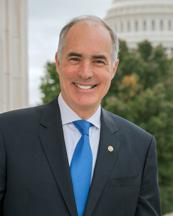 Sen. Robert P. Casey Jr. (D-PA)
Sen. Robert P. Casey Jr. (D-PA)Submitted December 10, 2009
Legislative Activity
Stay on top of the latest movement without scrolling through every action
Floor
Latest Action
Senate amendment submitted
December 10, 2009
Text
Submitted
SA 3115. Mr. CASEY submitted an amendment intended to be proposed to
amendment SA 2786 proposed by Mr. Reid (for himself, Mr. Baucus, Mr.
Dodd, and Mr. Harkin) to the bill H.R. 3590, to amend the Internal
Revenue Code of 1986 to modify the first-time homebuyers credit in the
case of members of the Armed Forces and certain other Federal
employees, and for other purposes; which was ordered to lie on the
table; as follows:

On page 1609, after line 23, insert the following:

SEC. 6108. COMMUNITY INTEGRATED NURSING CARE HOMES
DEMONSTRATION PROGRAM.

(a) Short Title.--This section may be cited as the
``Community Integrated Nursing Care Homes Demonstration
Program Act'' or the ``CINCH Demonstration Program''.
(b) Establishment.--
(1) In general.--The Secretary shall establish the CINCH
demonstration program to test the viability of multiple small
house nursing homes that are embedded within residential
neighborhoods and collectively certified to provide services
through a single eligible operating entity in order to reduce
administrative costs and provide related cost savings to the
Medicare and Medicaid programs.
(2) Duration and scope.--
(A) Duration.--The Secretary shall conduct the CINCH
demonstration program for a period of 5 years.
(B) Scope.--The Secretary shall select not more than 6
sites (as described in paragraph (3)) to participate in the
CINCH demonstration program, with each site to be operated by
a different eligible operating entity (as described under
subsection (c)(2)) and not less than 2 sites to be located in
rural areas.
(3) Sites.--
(A) In general.--A site shall consist of not less than 2
locations, with each location containing not more than 2
small house nursing homes, that are operated by an eligible
operating entity under such entity's nursing home license and
provider certification.
(B) Locations.--
(i) Distances.--Distances between locations within a site
may vary based upon market demand and availability, with
maximum distances between locations to be established by the
eligible operating entity based upon the ability of such
entity to--

(I) deliver required services and supervision in a timely
and appropriate manner; and
(II) subject to paragraph (5), meet all applicable
statutory and regulatory requirements for operation of a
nursing home.

(ii) Adjoining parcels.--A location shall--

(I) consist of a single parcel of land or multiple
adjoining parcels of land; and
(II) be separate from any other location and operate on a
non-adjoining parcel of land from such location.

(C) Number of small house nursing homes per site.--A site
shall contain not less than 4 small house nursing homes and
not greater than--
(i) in rural areas (or a site that encompasses a rural
area), 12 small house nursing homes; or
(ii) in urban or suburban areas, 24 small house nursing
homes.
(4) Continuation of treatment as single provider.--The
Secretary shall develop a process to allow a site, following
the 5-year period for the CINCH demonstration program, to
continue operation through a single operating entity and
receive certification as a single provider for purposes of
Medicare and Medicaid, including provisions to permit such
continuation following a change in ownership of a
participating small house nursing home.
(5) Waiver authority.--The Secretary may waive such
requirements of titles XI, XVIII, and XIX of the Social
Security Act as may be necessary to carry out the CINCH
demonstration program and shall develop a process that
permits sites to be certified and reimbursed under Medicare
and Medicaid.
(c) Selection.--
(1) Technical assistance provider.--
(A) In general.--Not later than 90 days after the date of
enactment of this Act, the Secretary, through a request for
proposal process, shall select a technical assistance
provider that shall be responsible for assisting and
monitoring eligible operating entities (as described under
paragraph (2)).
(B) Minimum requirements.--In selecting the technical
assistance provider, the Secretary shall ensure that such
organization--
(i) is a national not-for-profit organization that is in
good standing;
(ii) has a consistent, clearly articulated, and research-
based model for operation of small house nursing homes;
(iii) has not less than 10 years of experience in providing
development, operation, regulatory, policy, and financial
consulting services to clients or partners seeking to
innovate the provision of long-term care;
(iv) has demonstrated a successful process and record (for
not less than 4 years) for selection and assistance of
multiple organizations in implementation of a small house
nursing home model, including development, operations, and
staff training;
(v) has established curricula for training of leadership,
clinical, and direct care staff;
(vi) has demonstrated capacity, through its own resources
and consultants, to--

(I) collect Minimum Data Set (``MDS'') information and
financial data from eligible operating entities; and

[[Page S12915]]

(II) benchmark and analyze such financial data on not less
than a quarterly basis;

(vii) has the ability to administer the CINCH demonstration
program without additional funding from Federal, State, or
local governmental sources;
(viii) agrees to provide technical assistance services to
eligible operating entities for a fee that is not greater
than its usual and customary fee for such services; and
(ix) agrees to maintain a provider network for small house
nursing homes participating in the CINCH demonstration
program for a fee that is not greater than its usual and
customary fee for such services.
(C) Preferences.--In selecting the technical assistance
provider, the Secretary shall give preference to an
organization that has demonstrated experience in related
business activities, including community-based care models,
health care financing, and demonstration programs.
(2) Eligible operating entity.--
(A) In general.--Selection of eligible operating entities
shall be determined by the technical assistance provider
through a request for proposal process on a continual basis.
(B) Minimum requirements.--An eligible operating entity
seeking to participate in the CINCH demonstration program
shall be required to--
(i) commit to maintaining the small house nursing home
requirements described under subsection (d) and permit the
technical assistance provider to conduct periodic evaluations
to ensure adherence to such requirements;
(ii) maintain membership in a small house nursing home
provider network that is maintained by the technical
assistance provider; and
(iii) ensure that, for each site, at least 30 percent of
the total capacity developed under the CINCH demonstration
program is provided to residents that are receiving nursing
home benefits under Medicaid.
(d) Small House Nursing Home Requirements.--To be eligible
to participate in the CINCH demonstration program, a small
house nursing home shall--
(1) subject to subsection (b)(5), have been certified by a
State or local entity (in accordance with applicable State
and local law) to operate a nursing home;
(2) operate in compliance with any direct care and
certified nurse assistant staffing requirements under Federal
and State law;
(3) provide nursing home services, as required under State
law and applicable licensing standards, that shall not be
less comprehensive or high-acuity than services provided by
the eligible operating entity within the immediate
surrounding community;
(4) provide for meals cooked in the small house nursing
home and not prepared in a central kitchen and transported to
the nursing home;
(5) provide for a universal worker approach to resident
care (such as a certified nursing assistant who provides
personal care, socialization services, meal preparation
services, and laundry and housekeeping services);
(6) provide for direct care staffing at a rate of not less
than 4 hours per resident per day, with direct care staff
(including certified nurse assistants) to be onsite, awake,
and available within each nursing home at all times;
(7) provide for direct nursing care at a rate of not less
than 1 hour per resident per day, with a nurse to be awake
and available at each location at all times (with nurses to
be shared between not more than 2 nursing homes on each site)
as part of a nursing staff that meets or exceeds applicable
Federal and State requirements for qualifications, services,
and availability;
(8) provide for any other clinical, operational,
management, or facility staff and services as required under
applicable Federal and State requirements, with such staff to
be available from centralized or distributed locations;
(9) provide for consistent staff assignments and self-
directed work teams of direct care staff;
(10) provide training for all staff involved in the
operations of the nursing home (for not less than 120 hours
for each universal worker and not less than 60 hours for each
leadership and clinical team member, to be completed for the
majority of the staff before they start to work in a small
house nursing home) concerning the philosophy, operations,
and skills required to implement and maintain self-directed
care, self-managed work teams, a noninstitutional approach to
life and care in long-term care, appropriate safety and
emergency skills, cooking from scratch by the direct care
staff and food handling and safety, and other elements
required for successful operation of the nursing home;
(11) ensure that the percentage of residents in each
nursing home who are short-stay rehabilitation residents does
not exceed 20 percent at any time (unless the small house
nursing home is entirely devoted to providing rehabilitation
services), except that a long-term resident transferring back
to a nursing home after an acute episode and who is receiving
rehabilitation services for which payment is made under the
Medicare program shall not be counted toward such limitation;
(12) provide the technical assistance provider with MDS
information and financial data in a timely manner on a
monthly basis; and
(13) consist of a physical environment designed to look and
feel like a home, rather than an institution, and that
shall--
(A) be designed to serve as a fully independent and
disabled accessible house or apartment, with not more than 10
residents within such house or apartment, and that shall only
be connected to or share areas that would be generally shared
between private homes (such as a driveway) or apartments
(such as a lobby or laundry room);
(B) contain residential-style design elements and materials
throughout the home that are similar to those in the
immediate surrounding community and that do not use
commercial and institutional elements and products (such as a
nurses' station, medication carts, hospital or office-type
florescent lighting, acoustical tile ceilings, institutional-
style railings and corner guards, and room numbering and
labeling) unless mandated by authorities with appropriate
jurisdiction over the nursing home;
(C) provide private, single occupancy bedrooms that are
shared only at the request of a resident to accommodate a
spouse, partner, family member, or friend, and that contains
a full private bathroom that includes, at a minimum, a
toilet, sink, and accessible shower;
(D) contain a living area where residents and staff may
socialize, dine, and prepare food together that provides, at
a minimum, a living room seating area, a dining area large
enough for a single table serving all residents and not less
than 2 staff members, and an open full kitchen;
(E) contain ample natural light in each habitable space
that is provided through exterior windows and other means,
with window areas, exclusive of skylights and clerestories,
being a minimum of 10 percent of the area of the room;
(F) have a life-safety rating that is sufficient to meet
State and local standards for nursing facilities and
appropriately accommodate individuals who cannot evacuate the
nursing home without assistance; and
(G) contain built-in safety features to allow all areas of
the nursing home to be accessible to residents during the
majority of the day and night.
(e) No Additional Payment.--The technical assistance
provider, as well as any eligible operating entities and
participating small house nursing homes, shall not receive
any additional payment or reimbursement under the Medicare or
Medicaid programs based upon their participation in the CINCH
demonstration program.
(f) Evaluation and Report.--
(1) In general.--Not later than 4 years after the date of
enactment of this Act, the technical assistance provider
shall evaluate the performance of each of the sites
participating under the CINCH demonstration program and shall
submit to Congress and the Secretary a report containing the
results of such evaluation.
(2) Evaluation requirements.--The evaluation shall include
an analysis of--
(A) not less than 12 months of MDS information and
financial data from at least 10 small house nursing homes;
and
(B) results from focus groups or surveys regarding health
outcomes for residents and program costs.
(g) Definitions.--In this section:
(1) CINCH demonstration program.--The term ``CINCH
demonstration program'' means the demonstration program
conducted under this section.
(2) Medicaid.--The term ``Medicaid'' means the program for
medical assistance established under title XIX of the Social
Security Act (42 U.S.C. 1396 et seq.).
(3) Medicare.--The term ``Medicare'' means the program for
medical assistance established under title XVIII of the
Social Security Act (42 U.S.C. 1395 et seq.).
(4) Nursing home.--The term ``nursing home'' means--
(A) a skilled nursing facility (as defined in section
1819(a) of the Social Security Act (42 U.S.C. 1395i-3(a)));
or
(B) a nursing facility (as defined in section 1919(a) of
the Social Security Act (42 U.S.C. 1396r(a))).
(5) Research-based.--The term ``research-based'' means
research that--
(A) has been conducted by an objective researcher or
research team that has--
(i) no financial or affiliated organizational interest in
the success of the model; and
(ii) expertise in long-term care, with not less than 3
research articles relating to long-term care that have been
published in leading peer-reviewed journals;
(B) has been conducted according to generally accepted
research practices;
(C) has been published in a leading peer-reviewed journal
on aging or long-term care; and
(D) indicates a measurable improvement in multiple aspects
of quality of life and care.
(6) Secretary.--The term ``Secretary'' means the Secretary
of Health and Human Services.
(7) Rural area.--The term ``rural area'' means any area
other than an urban or suburban area.
(8) Suburban area.--The term ``suburban area'' means any
urbanized area that is contiguous and adjacent to an urban
area.
(9) Urban area.--The term ``urban area'' means a city or
town that has a population of greater than 50,000
inhabitants.
______