S.Amdt. 3132Senate111th Congress (2009-2011)2nd degree
S.Amdt. 3132
Sponsored by 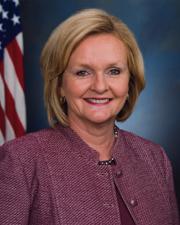 Sen. Claire McCaskill (D-MO)
Sen. Claire McCaskill (D-MO)Submitted December 10, 2009
Legislative Activity
Stay on top of the latest movement without scrolling through every action
Floor
Latest Action
Senate amendment submitted
December 10, 2009
Text
Submitted
SA 3132. Mrs. McCASKILL submitted an amendment intended to be
proposed to amendment SA 2786 proposed by Mr. Reid (for himself, Mr.
Baucus, Mr. Dodd, and Mr. Harkin) to the bill H.R. 3590, to amend the
Internal Revenue Code of 1986 to modify the first-time homebuyers
credit in the case of members of the Armed Forces and certain other
Federal employees, and for other purposes; which was ordered to lie on
the table; as follows:

On page 40, between lines 21 and 22, insert the following:

SEC. 1003A. STUDY TO PROVIDE HEALTH CARE INFLATION
TRANSPARENCY AND ACCOUNTABILITY.

(a) Findings.--Congress finds the following:
(1) Manufacturers of drugs have increased wholesale prices
of brand-name drugs by approximately 9 percent in the period
from 2008 to 2009, while all other sectors of the economy
experienced a 1.3 percent decline in such period.
(2) Insurance brokers and benefits consultants predict that
the small business clients of such brokers and consultants
will experience an increase in premiums by an average of
approximately 15 percent for 2010, which is double the rate
of such increase that occurred for 2009.
(b) Definitions.--In this section:
(1) Health care sector.--The term ``health care sector''
includes manufacturers of drugs, manufacturers of devices,
hospitals, insurance companies, laboratories, and health care
providers that are affected by this Act (and the amendments
made by this Act).

[[Page S12926]]

(2) Health insurance issuer.--The term ``health insurance
issuer'' means those health insurance issuers subject to
section 2794(a) of the Public Health Service Act (as added by
section 1003)
(3) Secretary.--The term ``Secretary'' means the Secretary
of Health and Human Services.
(c) Annual Study.--
(1) In general.--The Secretary, in coordination with the
Attorney General and the Chairman of the Federal Trade
Commission, shall, on an annual basis, collect and study data
on pricing in the health care sector. Such data shall include
the information provided to the Secretary under section
2794(b)(1)(A) of the Public Health Service Act (as added by
section 1003).
(2) Initial study.--The initial such study shall be for the
1-year period beginning on July 1, 2009, and ending on the
date of the first report under subsection (e).
(3) Subsequent studies.--Each subsequent study shall be for
the 1-year period following the date of the preceding report
under subsection (e).
(d) Collection of Data.--Health insurance issuers and
entities operating within the health care sector shall
provide to the Secretary information on price, demographics,
and any other variable or factor the Secretary may deem
necessary to determine if premiums, retail or wholesale
prices, or other costs are being increased unreasonably,
including information about the actuarial value of the plans
of the issuer and the medical loss ratio of such plans.
(e) Reports.--
(1) In general.--Based on the annual study conducted under
subsection (c), the Secretary, in coordination with the
Attorney General and the Chairman of the Federal Trade
Commission, shall publish an annual report on the excess
price inflation in the health care sector that occurred
during the period described in such subsection.
(2) Excess price inflation.--For purposes of the report,
the term ``excess price inflation'' shall be defined by the
Secretary, in consultation with the Attorney General, the
Director of the Congressional Budget Office, and other
Government experts and economists as the Secretary determines
appropriate.
(f) Effect of Study and Reports.--
(1) Reimbursement rates.--The results of the study and
report under this section shall be taken into account--
(A) when reimbursement rates for Federal health programs
are established for the years following such report; and
(B) by States, when making recommendations under section
2974(b)(1)(B) of the Public Health Service Act (as added by
section 1003).
(2) Rebates.--
(A) Health insurance issuers.--Based on a study conducted
under subsection (c), if insurance premiums of a health
insurance issuer are determined by the Secretary, in
coordination with the Attorney General and the Chairman of
the Federal Trade Commission, to meet the definition of
excess price inflation, such issuer shall provide to each
enrollee of such issuer a rebate. The amount of the rebate
shall be calculated using the formula described under section
2718(b) of the Public Health Service Act (as added by section
1001), except for the amount of the excess price inflation
shall be substituted for the amount of the premium revenues.
(B) Health care sector entities.--Based on a study
conducted under subsection (c), if the Secretary determines,
in coordination with the Attorney General and the Chairman of
the Federal Trade Commission, that an entity within the
health care sector has increased price of goods or services
related to such entity's participation in the health care
sector, such as drugs or devices, sufficient to meet the
definition of excess price inflation, then such entity shall
pay to the Treasury the amount of the excess price inflation
for the purpose of deficit reduction.
(3) Appeal of determination.--The Secretary shall establish
an effective appeals process under which a health insurance
issuer or health care entity within the health care sector
may appeal the determination of excess price inflation
described in paragraph (2). In making an appeals
determination, the Secretary may consult with the Attorney
General, the Chairman of the Federal Trade Commission, the
Director of the Congressional Budget Office, and other
Government experts and economists as the Secretary determines
appropriate.
(g) Public Availability.--The Secretary shall make each
report under subsection (e), and the supporting data
describing excess price inflation in the health care sector,
available to the public.
______