S.Amdt. 3225Senate111th Congress (2009-2011)2nd degree
S.Amdt. 3225
Sponsored by 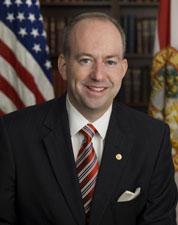 Sen. George S. LeMieux (R-FL)
Sen. George S. LeMieux (R-FL)Submitted December 15, 2009
Legislative Activity
Stay on top of the latest movement without scrolling through every action
Floor
Latest Action
Senate amendment submitted
December 15, 2009
Text
Submitted
SA 3225. Mr. LeMIEUX submitted an amendment intended to be proposed
to amendment SA 2786 proposed by Mr. Reid (for himself, Mr. Baucus, Mr.
Dodd, and Mr. Harkin) to the bill H.R. 3590, to amend the Internal
Revenue Code of 1986 to modify the first-time homebuyers credit in the
case of members of the Armed Forces and certain other Federal
employees, and for other purposes; which was ordered to lie on the
table; as follows:

At the appropriate place in title VI, insert the following:

SEC. __. ESTABLISHMENT OF OFFICE OF DEPUTY SECRETARY FOR
HEALTH CARE FRAUD PREVENTION IN THE DEPARTMENT
OF HEALTH AND HUMAN SERVICES; APPOINTMENT AND
POWERS OF DEPUTY SECRETARY.

(a) In General.--There is hereby established in the
Department of Health and Human Services the Office of the
Deputy Secretary for Health Care Fraud Prevention (referred
to in this section as the ``Office'').
(b) Duties of the Office.--The Office shall--
(1) direct the appropriate implementation within the
Department of Health and Human Services of health care fraud
prevention and detection recommendations made by Federal
Government and private sector antifraud and oversight
entities;
(2) routinely consult with the Office of the Inspector
General for the Department of Health and Human Services, the
Attorney General, and private sector health care antifraud
entities to identify emerging health care fraud issues
requiring immediate action by the Office;
(3) through a fixed fee for implementation and maintenance
plus results-based contingency fee contract entered into with
an entity that has experience in designing and implementing
antifraud systems in the financial sector and experience and
knowledge of the various service delivery and reimbursement
models of Federal health programs, provide for the design,
development, and operation of a predictive model antifraud
system (in accordance with subsection (d)) to analyze health
care claims data in real-time to identify high risk claims
activity, develop appropriate rules, processes, and
procedures and investigative research approaches, in
coordination with the Office of the Inspector General for the
Department of Health and Human Services, based on the risk
level assigned to claims activity, and develop a
comprehensive antifraud database for health care activities
carried out or managed by Federal health agencies;
(4) promulgate and enforce regulations relating to the
reporting of data claims to the health care antifraud system
developed under paragraph (3) by all Federal health agencies;
(5) establish thresholds, in consultation with the Office
of the Inspector General of the Department of Health and
Human Services and the Department of Justice--
(A) for the amount and extent of claims verified and
designated as fraudulent, wasteful, or abusive through the
fraud prevention system developed under paragraph (3) for
excluding providers or suppliers from participation in
Federal health programs; and
(B) for the referral of claims identified through the
health care fraud prevention

[[Page S13262]]

system developed under paragraph (3) to law enforcement
entities (such as the Office of the Inspector General,
Medicaid Fraud Control Units, and the Department of Justice);
and
(6) share antifraud information and best practices with
Federal health agencies, health insurance issuers, health
care providers, antifraud organizations, antifraud databases,
and Federal, State, and local law enforcement and regulatory
agencies.
(c) Deputy Secretary for Health Care Fraud Prevention.--
(1) Establishment.--There is established within the
Department of Health and Human Services the position of
Deputy Secretary for Health Care Fraud Prevention (referred
to in this section as the ``Deputy Secretary''). The Deputy
Secretary shall serve as the head of the Office, shall act as
the chief health care fraud prevention and detection officer
of the United States, and shall consider and direct the
appropriate implementation of recommendations to prevent and
detect health care fraud, waste, and abuse activities and
initiatives within the Department.
(2) Appointment.--The Deputy Secretary shall be appointed
by the President, by and with the advice and consent of the
Senate, and serve for a term of 5 years, unless removed prior
to the end of such term for cause by the President.
(3) Powers.--Subject to oversight by the Secretary, the
Deputy Secretary shall exercise all powers necessary to carry
out this section, including the hiring of staff, entering
into contracts, and the delegation of responsibilities to any
employee of the Department of Health and Human Services or
the Office appropriately designated for such responsibility.
(4) Duties.--
(A) In general.--The Deputy Secretary shall--
(i) establish and manage the operation of the predictive
modeling system developed under subsection (b)(3) to analyze
Federal health claims in real-time to identify high risk
claims activity and refer risky claims for appropriate
verification and investigative research;
(ii) consider and order the appropriate implementation of
fraud prevention and detection activities, such as those
recommended by the Office of the Inspector General of the
Department of Health and Human Services, the Government
Accountability Office, MedPac, and private sector health care
antifraud entities;
(iii) not later than 6 months after the date on which he or
she is initially appointed, submit to Congress an
implementation plan for the health care fraud prevention
systems under subsection (d); and
(iv) submit annual performance reports to the Secretary and
Congress that, at minimum, shall provide an estimate of the
return on investment with respect to the system, for all
recommendations made to the Deputy Secretary under this
section, a description of whether such recommendations are
implemented or not implemented, and contain other relevant
performance metrics.
(B) Analysis and recommendations.--The Deputy Secretary
shall provide required strategies and treatments for claims
identified as high risk (including a system of designations
for claims, such as ``approve'', ``decline'', ``research'',
and ``educate and pay'') to the Centers for Medicare &
Medicaid Services, other Federal and State entities
responsible for verifying whether claims identified as high
risk are payable, should be automatically denied, or require
further research and investigation.
(C) Limitation.--The Deputy Secretary shall not have any
criminal or civil enforcement authority otherwise delegated
to the Office of Inspector General of the Department of
Health and Human Services or the Attorney General.
(5) Regulations.--The Deputy Secretary shall promulgate and
enforce such rules, regulations, orders, and interpretations
as the Deputy Secretary determines to be necessary to carry
out the purposes of this section. Such authority shall be
exercised as provided under section 553 of title 5, United
States Code.
(d) Health Care Fraud Prevention System.--
(1) In general.--The fraud prevention system established
under subsection (b)(3) shall be designed as follows:
(A) In general.--The fraud prevention system shall--
(i) be holistic;
(ii) be able to view all provider and patient activities
across all Federal health program payers;
(iii) be able to integrate into the existing health care
claims flow with minimal effort, time, and cost;
(iv) be modeled after systems used in the Financial
Services industry; and
(v) utilize integrated real-time transaction risk scoring
and referral strategy capabilities to identify claims that
are statistically unusual.
(B) Modularized architecture.--The fraud prevention system
shall be designed from an end-to-end modularized perspective
to allow for ease of integration into multiple points along a
health care claim flow (pre- or post-adjudication), which
shall--
(i) utilize a single entity to host, support, manage, and
maintain software-based services, predictive models, and
solutions from a central location for the customers who
access the fraud prevention system;
(ii) allow access through a secure private data connection
rather than the installation of software in multiple
information technology infrastructures (and data facilities);
(iii) provide access to the best and latest software
without the need for upgrades, data security, and costly
installations;
(iv) permit modifications to the software and system edits
in a rapid and timely manner;
(v) ensure that all technology and decision components
reside within the module; and
(vi) ensure that the third party host of the modular
solution is not a party, payer, or stakeholder that reports
claims data, accesses the results of the fraud prevention
systems analysis, or is otherwise required under this section
to verify, research, or investigate the risk of claims.
(C) Processing, scoring, and storage.--The platform of the
fraud prevention system shall be a high volume, rapid, real-
time information technology solution, which includes data
pooling, data storage, and scoring capabilities to quickly
and accurately capture and evaluate data from millions of
claims per day. Such platform shall be secure and have (at a
minimum) data centers that comply with Federal and State
privacy laws.
(D) Data consortium.--The fraud prevention system shall
provide for the establishment of a centralized data file
(referred to as a ``consortium'') that accumulates data from
all government health insurance claims data sources.
Notwithstanding any other provision of law, Federal health
care payers shall provide to the consortium existing claims
data, such as Medicare's ``Common Working File'' and Medicaid
claims data, for the purpose of fraud and abuse prevention.
Such accumulated data shall be transmitted and stored in an
industry standard secure data environment that complies with
applicable Federal privacy laws for use in building medical
waste, fraud, and abuse prevention predictive models that
have a comprehensive view of provider activity across all
payers (and markets).
(E) Market view.--The fraud prevention system shall ensure
that claims data from Federal health programs and all markets
flows through a central source so the waste, fraud, and abuse
system can look across all markets and geographies in health
care to identify fraud and abuse in Medicare, Medicaid, the
State Children's Health Program, TRICARE, and the Department
of Veterans Affairs, holistically. Such cross-market
visibility shall identify unusual provider and patient
behavior patterns and fraud and abuse schemes that may not be
identified by looking independently at one Federal payer's
transactions.
(F) Behavior engine.--The fraud prevention system shall
ensure that the technology used provides real-time ability to
identify high-risk behavior patterns across markets,
geographies, and specialty group providers to detect waste,
fraud, and abuse, and to identify providers that exhibit
unusual behavior patterns. Behavior pattern technology that
provides the capability to compare a provider's current
behavior to their own past behavior and to compare a
provider's current behavior to that of other providers in the
same specialty group and geographic location shall be used in
order to provide a comprehensive waste, fraud, and abuse
prevention solution.
(G) Predictive model.--The fraud prevention system shall
involve the implementation of a statistically sound,
empirically derived predictive modeling technology that is
designed to prevent (versus post-payment detect) waste,
fraud, and abuse. Such prevention system shall utilize
historical transaction data, from across all Federal health
programs and markets, to build and re-develop scoring models,
have the capability to incorporate external data and external
models from other sources into the health care predictive
waste, fraud, and abuse model, and provide for a feedback
loop to provide outcome information on verified claims so
future system enhancements can be developed based on previous
claims experience.
(H) Change control.--The fraud prevention system platform
shall have the infrastructure to implement new models and
attributes in a test environment prior to moving into a
production environment. Capabilities shall be developed to
quickly make changes to models, attributes, or strategies to
react to changing patterns in waste, fraud, and abuse.
(I) Scoring engine.--The fraud prevention system shall
identify high-risk claims by scoring all such claims on a
real-time capacity prior to payment. Such scores shall then
be communicated to the fraud management system provided for
under subparagraph (J).
(J) Fraud management system.--The fraud prevention system
shall utilize a fraud management system, that contains
workflow management and workstation tools to provide the
ability to systematically present scores, reason codes, and
treatment actions for high-risk scored transactions. The
fraud prevention system shall ensure that analysts who review
claims have the capability to access, review, and research
claims efficiently, as well as decline or approve claims
(payments) in an automated manner. Workflow management under
this subparagraph shall be combined with the ability to
utilize principles of experimental design to compare and
measure prevention and detection rates between test and
control strategies. Such strategy testing shall allow for
continuous improvement and maximum effectiveness in keeping
up with ever changing fraud and abuse patterns. Such system
shall provide the capability to test different treatments or

[[Page S13263]]

actions randomly (typically through use of random digit
assignments).
(K) Decision technology.--The fraud prevention system shall
have the capability to monitor consumer transactions in real-
time and monitor provider behavior at different stages within
the transaction flow based upon provider, transaction and
consumer trends. The fraud prevention system shall provide
for the identification of provider and claims excessive usage
patterns and trends that differ from similar peer groups,
have the capability to trigger on multiple criteria, such as
predictive model scores or custom attributes, and be able to
segment transaction waste, fraud, and abuse into multiple
types for health care categories and business types.
(L) Feedback loop.--The fraud prevention system shall have
a feedback loop where all Federal health payers provide pre-
payment and post-payment information about the eventual
status of a claim designated as ``Normal'', ``Waste'',
``Fraud'', ``Abuse'', or ``Education Required''. Such
feedback loop shall enable Federal health agencies to measure
the actual amount of waste, fraud, and abuse as well as the
savings in the system and provide the ability to retrain
future, enhanced models. Such feedback loop shall be an
industry file that contains information on previous fraud and
abuse claims as well as abuse perpetrated by consumers,
providers, and fraud rings, to be used to alert other payers,
as well as for subsequent fraud and abuse solution
development.
(M) Tracking and reporting.--The fraud prevention system
shall ensure that the infrastructure exists to ascertain
system, strategy, and predictive model return on investment.
Dynamic model validation and strategy validation analysis and
reporting shall be made available to ensure a strategy or
predictive model has not degraded over time or is no longer
effective. Queue reporting shall be established and made
available for population estimates of what claims were
flagged, what claims received treatment, and ultimately what
results occurred. The capability shall exist to complete
tracking and reporting for prevention strategies and actions
residing farther upstream in the health care payment flow.
The fraud prevention system shall establish a reliable metric
to measure the dollars that are never paid due to
identification of fraud and abuse, as well as a capability to
effectively test and estimate the impact from different
actions and treatments utilized to detect and prevent fraud
and abuse for legitimate claims. Measuring results shall
include waste and abuse.
(N) Operating tenet.--The fraud prevention system shall not
be designed to deny health care services or to negatively
impact prompt-pay laws because assessments are late. The
database shall be designed to speed up the payment process.
The fraud prevention system shall require the implementation
of constant and consistent test and control strategies by
stakeholders, with results shared with Federal health program
leadership on a quarterly basis to validate improving
progress in identifying and preventing waste, fraud, and
abuse. Under such implementation, Federal health care payers
shall use standard industry waste, fraud, and abuse measures
of success.
(2) Coordination.--The Deputy Secretary shall coordinate
the operation of the fraud prevention system with the
Department of Justice and other related Federal fraud
prevention systems.
(3) Operation.--The Deputy Secretary shall phase-in the
implementation of the system under this subsection beginning
not later than 18 months after the date of enactment of this
Act, through the analysis of a limited number of Federal
health program claims. Not later than 5 years after such date
of enactment, the Deputy Secretary shall ensure that such
system is fully phased-in and applicable to all Federal
health program claims.
(4) Non-payment of claims.--The Deputy Secretary shall
promulgate regulations to prohibit the payment of any health
care claim that has been identified as potentially
``fraudulent'', ``wasteful'', or ``abusive'' until such time
as the claim has been verified as valid.
(5) Application.--The system under this section shall only
apply to Federal health programs (all such programs),
including programs established after the date of enactment of
this Act.
(6) Regulations.--The Deputy Secretary shall promulgate
regulations providing the maximum appropriate protection of
personal privacy consistent with carrying out the Office's
responsibilities under this section.
(e) Protecting Participation in Health Care Antifraud
Programs.--
(1) In general.--Notwithstanding any other provision of
law, no person providing information to the Secretary under
this section shall be held, by reason of having provided such
information, to have violated any criminal law, or to be
civilly liable under any law of the United States or of any
State (or political subdivision thereof) unless such
information is false and the person providing it knew, or had
reason to believe, that such information was false.
(2) Confidentiality.--The Office shall, through the
promulgation of regulations, establish standards for--
(A) the protection of confidential information submitted or
obtained with regard to suspected or actual health care
fraud;
(B) the protection of the ability of representatives the
Office to testify in private civil actions concerning any
such information; and
(C) the sharing by the Office of any such information
related to the medical antifraud programs established under
this section.
(f) Protecting Legitimate Providers and Suppliers.--
(1) Initial implementation.--Not later than 2 years after
the date of enactment of this Act, the Secretary shall
establish procedures for the implementation of fraud and
abuse detection methods under all Federal health programs
(including the programs under titles XVIII, XIX, and XXI of
the Social Security Act) with respect to items and services
furnished by providers of services and suppliers that
includes the following:
(A) In the case of a new applicant to be such a provider or
supplier, a background check, and in the case of a supplier a
site visit prior to approval of participation in the program
and random unannounced site visits after such approval.
(B) Not less than 5 years after the date of enactment of
this Act, in the case of a provider or supplier who is not a
new applicant, re-enrollment under the program, including a
new background check and, in the case of a supplier, a site-
visit as part of the application process for such re-
enrollment, and random unannounced site visits after such re-
enrollment.
(2) Requirement for participation.--In no case may a
provider of services or supplier who does not meet the
requirements under paragraph (1) participate in any Federal
health program.
(3) Background checks.--The Secretary shall determine the
extent of the background check conducted under paragraph (1),
including whether--
(A) a fingerprint check is necessary;
(B) a background check shall be conducted with respect to
additional employees, board members, contractors or other
interested parties of the provider or supplier; and
(C) any additional national background checks regarding
exclusion from participation in Federal health programs (such
as the program under titles XVIII, XIX, or XXI of the Social
Security Act), including conviction of any felony, crime that
involves an act of fraud or false statement, adverse actions
taken by State licensing boards, bankruptcies, outstanding
taxes, or other indications identified by the Inspector
General of the Department of Health and Human Services are
necessary.
(4) Limitation.--No payment may be made to a provider of
services or supplier under any Federal health program if such
provider or supplier fails to obtain a satisfactory
background check under this subsection.
(5) Federal health program.--In this subsection, the term
``Federal health program'' means any program that provides
Federal payments or reimbursements to providers of health-
related items or services, or suppliers of such items, for
the provision of such items or services to an individual
patient.
(g) Use of Savings.--Notwithstanding any other provision on
law, amounts remaining at the end of a fiscal year in the
account for any Federal health program to which this section
applies that the Secretary of Health and Human Services
determines are remaining as a result of the fraud prevention
activities applied under this section shall remain in such
account and be used for such program for the next fiscal
year.
(h) Definition.--The term ``Federal health agency'' means
the Department of Health and Human Services, the Department
of Veterans Affairs, and any Federal agency with oversight or
authority regarding the provision of any medical benefit,
item, or service for which payment may be made under a
Federal health care plan or contract.
______