To protect Social Security.
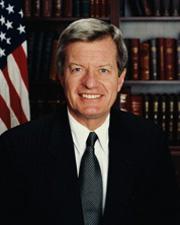 Sen. Max Baucus (D-MT)
Legislative Activity
Stay on top of the latest movement without scrolling through every action
Senate amendment agreed to: Amendment SA 3300 as modified under the order of 12/22/2009, having achieved 60 votes in the affirmative, the amendment was agreed to in Senate by Yea-Nay Vote. 97 - 0. Record Vote Number: 4.(text as modified: CR S216)
January 26, 2010
View full timeline
Senate amendment agreed to: Amendment SA 3300 as modified under the order of 12/22/2009, having achieved 60 votes in the affirmative, the amendment was agreed to in Senate by Yea-Nay Vote. 97 - 0. Record Vote Number: 4.(text as modified: CR S216)
January 26, 2010
Roll call votes on amendments in Senate: Amendment SA 3300 as modified under the order of 12/22/2009, having achieved 60 votes in the affirmative, the amendment was agreed to in Senate by Yea-Nay Vote. 97 - 0. Record Vote Number: 4.(text as modified: CR S216)
January 26, 2010
Considered by Senate. (consideration: CR S211, S216-221)
January 26, 2010
Amendment SA 3300 as modified under the order of 12/22/2009, having achieved 60 votes in the affirmative, the amendment was agreed to in Senate by Yea-Nay Vote. 97 - 0. Record Vote Number: 4. (text as modified: CR S216)
January 26, 2010
Considered by Senate. (consideration: CR S174)
January 25, 2010
Considered by Senate. (consideration: CR S135)
January 22, 2010
Considered by Senate. (consideration: CR S73, S74-75, S76-77)
January 21, 2010
Senate amendment submitted
January 20, 2010
Senate amendment proposed (on the floor): Amendment SA 3300 proposed by Senator Baucus to Amendment SA 3299.(consideration: CR S23-26, S26-28; text: CR S23)
January 20, 2010
Amendment SA 3300 proposed by Senator Baucus to Amendment SA 3299. (consideration: CR S23-26, S26-28; text: CR S23) To protect Social Security.
January 20, 2010
Votes
1 roll call on this amendment
Text
Modified
INCREASING THE STATUTORY LIMIT ON THE PUBLIC DEBT

The ACTING PRESIDENT pro tempore. Under the previous order, the
Senate will resume consideration of H.J. Res. 45, which the clerk will
report.
The legislative clerk read as follows:

A joint resolution (H.J. Res. 45) increasing the statutory
limit on the public debt.

Pending:

Baucus (for Reid) amendment No. 3299, in the nature of a
substitute.
Baucus amendment No. 3300 (to amendment No. 3299), to
protect Social Security.
Conrad-Gregg amendment No. 3302 (to amendment No. 3299), to
establish a Bipartisan Task Force for Responsible Fiscal
Action, to assure the long-term fiscal stability and economic
security of the Federal Government of the United States, and
to expand future prosperity and growth for all Americans.
Reid amendment No. 3305 (to amendment No. 3299), to
reimpose statutory pay-as-you-go.
Baucus amendment No. 3306 (to amendment No. 3299), to
establish a Bipartisan Task Force for Responsible Fiscal
Action, to assure the long-term fiscal stability and economic
security of the Federal Government of the United States, and
to expand future prosperity and growth for all Americans.

The ACTING PRESIDENT pro tempore. Under the previous order, the time
until 11:30 shall be equally divided between the two leaders or their
designees.
The Senator from Montana.
Mr. BAUCUS. Madam President, I understand there has been a time
allocation amongst several of us, but I would like to yield 5 minutes
of the time reserved to me to the Senator from Illinois.
Mr. GREGG. Madam President, if the Senator will yield, I ask
unanimous consent that I be recognized to manage the time on our side.
The ACTING PRESIDENT pro tempore. Without objection, it is so
ordered.
Mr. GREGG. After the Senator from Illinois, I will yield up to 10
minutes to the Senator from Alabama.
The ACTING PRESIDENT pro tempore. The Senator from Illinois is
recognized.

The Economy

Mr. DURBIN. Madam President, I thank the chairman of the Senate
Finance Committee, the Senator from Montana, for yielding 5 minutes.
I have listened carefully to the statement made by the Republican
minority leader on the floor, and I think he has characterized the last
year leaving out some very important facts, some glaring omissions in
his statement.
What the Republican leader failed to mention is, when this President
came to the White House, he inherited the worst economic mess in the
history of this country since the Great Depression. The President
turned to both parties--Democrats and Republicans--and said: We need to
turn this economy around and do it quickly. He, personally, appealed to
the Republican Members of the Senate and the House to join him in a
bipartisan effort to turn this economy around. At the end of the day,
the President put forward a plan to reinvest in America and recover
this economy that didn't draw one single Republican vote of support in
the House and only three Republican Senate votes. It was, in fact,
largely a Democratic effort but not because the President didn't try to
include the Republicans in this effort.
What has been the net impact? The Senator from Kentucky comes to the
floor and is very critical of the state of the economy. It is easy to
be critical. But let us understand from where we came. When the
President took office, we were losing in the range of 800,000 jobs a
month in America--800,000 a month. It was awful. Now we are down to
about 10 percent of that total per month that we are losing. It is
still too high. We want to start gaining jobs. But understand, in 1
year, we have reduced by 90 percent the monthly loss in unemployment.
It is a trend line which is positive, moving us toward a growing
economy and growing employment. That is because the President took
leadership, took control, and--largely with Democratic votes--passed a
stimulus package.
Also, remember that in April of last year--2009--the Dow Jones
industrial index was at 6,500. This morning it is at 10,000. That
index, which at least is a reliable index of some economic growth,
showed almost a 60-percent increase in value over this 1-year period of
time.
To be totally dismissive of this effort by the administration is to
ignore the obvious: We have come a long way. We have stared down at the
abyss and we have drawn back and we are starting to regain our stride,
as we should. But to dismiss this and say it is just a vain effort that
had no impact is to ignore the obvious.
Let me also say about the health care bill that we know--and the
Senator from Montana, as our leader in the Finance Committee, knows
this personally--of the efforts the Senator from Montana made to reach
out to the Republican side of the aisle. He had 61 personal meetings
with Republican Senators--Senators Grassley and Enzi and Snowe--in an
effort to make this a bipartisan bill. Sadly, it didn't result in a
bipartisan bill but not for lack of effort on our side, not for lack of
effort in the Senate HELP Committee or the Senate Finance Committee,
where 170 Republican amendments were adopted. Yet, at the end of the
day, only one Republican Senator--Senator Snowe of Maine--would cast a
favorable vote for the committee effort. To argue this has been a
partisan effort, well, it has been, to some extent, but not for lack of
effort on the Democratic side to engage the Republicans.
What if the Republicans had their way on health care? What if we
literally walked away from this challenge? I tell you what will happen:
In 7 years, the Medicare Trust Fund will be exhausted. Under the bill
we had before the Senate, we added 9 years of life to that Medicare
Trust Fund. If we do nothing, as many Republicans would have us do,
that Medicare Trust Fund will start to fail in 7 years.
Let me also add, if we do nothing, the number of uninsured will grow
from 47 million today in America to 57 million and continue to grow.
People will lose their insurance, and those insured will have little
protection as this market becomes even more ruthless.
Finally, let me add, the cost of health insurance, if we do nothing,
is going to grow dramatically. We expect it to more than double in 10
years. Think about that--what it means to individual wage earners,
businesses, and families if more and more money has to be plowed into
health insurance costs with no increase in coverage. That is the
reality of the Republican approach. Do nothing or do little but go
slowly. Take tiny, little pieces of this instead of looking at the
challenge we face. That may be the political reality, but I don't
applaud it.
Our effort at comprehensive health care reform took on an issue which
is central to our economy's growth. If we don't deal with the cost of
health care, unfortunately, we are going to find ourselves in a very
difficult competitive position in the world.
The ACTING PRESIDENT pro tempore. The Senator's time has expired.
Mr. DURBIN. Madam President, I yield the floor.
The ACTING PRESIDENT pro tempore. The Senator from Alabama.

Bernanke Reappointment

Mr. SESSIONS. Madam President, I wish to share a few remarks on the
reappointment of Mr. Bernanke as Chairman of the Federal Reserve Board.
I do

[[Page S212]]

believe we should state our views about it. I stand in opposition to
his nomination; I intend to vote against it.
First, I believe the financial debacle this Nation is desperately
attempting to work its way through did not have to happen. That free
economies have a tendency to boom and bust, there can be no doubt. But
sound Federal economic and fiscal policy that promotes stability and a
sound dollar can mitigate against the excesses of market cycles and
keep them from ratcheting out of control, as we have seen here.
What role did Mr. Bernanke play before the bubble burst? For 3 years,
he served on the Federal Reserve Board, where much of our Nation's
financial policy is set and, in 2006, he followed Mr. Greenspan as
Chairman. The American people have a right to ask: How did he perform
during that period? Did he see this crisis coming, did he give warning,
and did he take any actions that could have ameliorated or avoided the
catastrophe that has befallen us? The minutes of the Federal Reserve
Board during the critical 2003 time period show he was what the Wall
Street Journal called ``the intellectual architect'' of the loose money
policies that, as the Journal notes, kept:

. . . monetary policy exceptionally easy for far too long
as the economy grew rapidly from 2003-2005. He imagined a
``deflation'' that never occurred, ignored the asset bubbles
in commodities and housing, dismissed concerns about dollar
weakness, and in the process stoked the credit mania that led
to the financial panic.

That is what the Wall Street Journal said about it, and I think that
has to be considered an accurate and fair comment. Only responsible
actions, perhaps painful to us now in the short run, founded on mature
understanding of the forces that actually control world economies will
do today. The time for artificial government policies and spending and
stimulus is past. Nothing comes from nothing. Reducing deficits
significantly will be necessary and will be painful, but only such a
policy, resolutely executed, will inspire real confidence that we are
on the right track.

Transferring massive private debt to massive government
debt, as we have done, tripling our total national debt in 10
years--as we are on the path to do under the President's own
budget--is wrong and unacceptable. Experts and the normal
person know such policies will only end poorly. We need the
kind of responsible policies the bipartisan team of Fed
Chairman Paul Volcker and President Reagan executed, policies
that led eventually to 20 years of sound growth. But, for
sure, stabilizing an economy in turmoil was difficult for
them and for the American people at the time, for a while.
But the people understood sound policy was needed in the
early 1980s, and they stayed with their strong leaders
through the tough times. The people knew then we had acted
irresponsibly--as we have today--and they knew a steep hill
had to be climbed to get us on sound footing. They met the
challenge.

I am not seeing that kind of leadership today. President Reagan knew
he would be criticized, but he knew this great Nation would rebound. He
had confidence in our people and in free markets. He did not, for one
moment, believe expanding government would lead to economic growth.
During this time of economic turmoil, I don't think we are hearing
that kind of economic straight, honest talk. We are told not to worry;
that we are going to spend our way out of debt. We will have the
government stimulate the economy. Well, if that is so easy, why don't
we do it every day--just spend, spend, spend forever? If that doesn't
work, we can have another stimulus package, they tell us. Deficits
don't matter. Debt doesn't matter. We will worry about the consequences
of that later. The President of the European Union said this strategy
was the economic ``road to hell.'' And I think that is an embarrassment
to the United States. The Chinese are aghast. But this is the plan of
the President and Mr. Bernanke--spend it now, worry later.
Mr. Bernanke's nomination is before us today. He was the prime
architect of the policies that got us into this mess. He did not see it
coming. He supported the disastrous $800 billion stimulus package,
every penny of which was mainly social spending--had to be borrowed,
and it has not produced the kind of jobs and growth we needed because
it was not focused sufficiently on job creation.
Mr. Bernanke also supported the $182 billion bailout of AIG, and now
we know most of that money was used to compensate AIG's counterparties,
such as Goldman Sachs and Deutsche Bank at 100 cents on the dollar,
which I think is unthinkable. Last November, the TARP inspector
general, Neil Barofsky, reported that the Federal Reserve did not
believe AIG's counterparties posed a systemic risk to the economy,
which frankly calls into question the entire justification for the
bailout.
Amazingly, Chairman Bernanke has learned little from these errors,
and that worries me. Tragically, he is supporting or acquiescing in
policies that I think have proven not to work and are contrary to sound
common sense. If there is any dispute about his leadership, I call my
colleagues' attention to his speech on January 3. There he plainly
refused to acknowledge his loose money policies were a significant
factor in creating the bubble and the inevitable bust. Incredibly, he
relied on half-truths to justify his abandonment of the Taylor rule, a
formula that has proven to work to contain the temptation for
excessively low interest rates.
While anyone can make a mistake, becoming too insulated, too
arrogant, too political, and coming to believe tried and true
principles no longer apply in the new world of today, is especially
dangerous. He has not admitted his mistakes nor is he calling us to the
tried and true. Sound money, low taxes, solid, steady growth, and
increased productivity based on the historic principles of a free
economy--principles that are as immutable as the law of gravity--are
the foundation of economic growth, not government spending and Fed
maneuvering.
At one of my townhall meetings, a man offered that his daddy always
said, ``You can't borrow your way out of debt.'' How true. Shouldn't we
be hearing such common sense from the Fed? You can't produce something
from nothing. There is no free lunch. Somebody will pay. Our ``masters
of the universe'' think these rules don't apply to them--a most
dangerous arrogance indeed.
Right now, the American people, our constituents, are the ones
paying. It is time for the ``masters of the universe'' who are
responsible to pay--those who rejected the tried and true; those who
believe that since we are blessed with their leadership, with their
brilliance, America doesn't have to move forward steadily and soundly;
that the old verities do not apply and, if things get a bit dicey, why
by exercising their skill and exceptional knowledge they can fix it
before anything bad happens. Did that happen before, in 2007? They were
not so smart then.
I think these are the most dangerous leaders--the ones who know the
rules but believe they are so brilliant that they may ignore them.
Mr. Taylor, the one of the rule, laid it out in the Wall Street
Journal on January 11, 2010. I don't see how anyone can seriously argue
that keeping interest rates so low, maintaining easy money, during the
2002-2005 period did not play a significant role in the bubble and the
resulting bust. Not only was Chairman Bernanke intimately involved in
the creation of these disastrous policies, as was President Obama's
Secretary of Treasury Geithner, but he maintains today his violation of
the Taylor rule was no harm no foul.
Chairman Bernanke should be rejected for his grievous previous
mistakes that helped cause this economic debacle, and he should be
rejected, even more emphatically, for his failure to learn from his
mistakes.
In December, former Chairman Alan Greenspan testified before the
Senate Committee on Homeland Security and Government Affairs, saying:

The challenge to contain this threat is more urgent than at
any time in our history. Our nation has never before had to
confront so formidable a fiscal crisis as is now visible just
over the horizon.

That is a real warning.
We need a courageous Chairman of the Fed, of the quality and firmness
of Chairman Volcker, one who average Americans, and importantly, our
top corporate leaders, will recognize as being a consistent voice and
force for sound financial policy--one who knows he is not so brilliant
that he can cease to be bound by the iron laws of economics and
markets.
We need a courageous Fed Chairman who has the firmness of Mr. Volcker
to lead us through this period. I have not

[[Page S213]]

seen that in Mr. Bernanke and will oppose his nomination.
I yield the floor.
The ACTING PRESIDENT pro tempore. The Senator from North Dakota is
recognized.
Mr. CONRAD. Madam President, I yield 5 minutes to the Senator from
Colorado.
The ACTING PRESIDENT pro tempore. The Senator from Colorado is
recognized.

amendment no. 3302

Mr. BENNET. Madam President. I would like to express my strong
support for the Conrad-Gregg fiscal task force amendment. I thank
Chairman Conrad and Senator Gregg for crafting a proposal that rises
above petty Washington partisan bickering.
When my oldest daughter Caroline was born in 1999, our Nation's debt
stood at about $5.6 trillion. Our country welcomed her with an unpaid
bill totaling $20,000--the amount every American would have to pay up
in order to balance the budget.
But there was reason for hope. A President was working with Congress,
using pay-go and discretionary spending limits--and reducing our annual
deficit down to virtually zero, even running a surplus in a much
stronger economy than today's.
Two years later, we welcomed Caroline's younger sister Halina into
our family. Our debt had jumped to about $5.8 trillion. She also owed
about $20,000. We had a new administration with new priorities--tax
cuts that were not paid for, a prescription drug plan that was piled on
the deficit, and unfunded mandates like No Child Left Behind, and the
war in Iraq.
In 2004, we welcomed our youngest daughter Anne. The debt had
skyrocketed to over $7.3 trillion. Anne's share of the national debt
stood at $25,000.
By Caroline's 10th birthday last year, the national debt stood at
about $11 trillion--double what it was when she was born. She owed
about $36,000 at this point. I would have to say that is a lousy
birthday present for any 10-year-old.
Now we have had to deal with the worst recession since the Great
Depression, and the necessary steps we have taken to provide middle
class and small business tax cuts and preserve jobs for police officers
and teachers have contributed to the red ink.
Today, our debt stands at just over $12 trillion. Each person owes
about $40,000. By 2019, the White House projects that it will double
yet again. If we do not come to our senses soon, we may pass the point
of no return with this unfair and vast mortgage on our children's
future.
The other day I was at a house party in Denver and I was talking
about how we were passing this debt on to our kids and they were going
to have to pay it back. Caroline was with me. We walked outside the
party and she said: Daddy? I said: What? She said: Just to be clear, I
am not paying that back. Which I think is the right attitude we should
have. We need to take care of it now.
No Member of this body wants my three daughters or any child to
inherit the fiscal mess we have caused. Yet partisan stalemate prevents
reform from even getting off the ground.
For my part, I introduced the Deficit Reduction Act, which would
reinstitute discretionary spending limits and cap our deficit to 3
percent of the GDP, and I cosponsored pay-go. Yet even ideas as basic
as these have faced stiff opposition.
We need the Conrad-Gregg amendment. Their commission would enable
Congress to reduce the deficit without the usual backroom deals,
appeasing of special interest groups, and engaging in partisan
blamesmanship.
It is a shame that a commission is necessary. But it is. We have to
take the partisanship out of reducing the deficit or nothing will get
done. The commission can do this. Sadly, Congress, left to its own
devices, has proven that it will not.
Conrad-Gregg is a chance to make Congress live by fiscal rules. I
commend the President for expressing his strong support for this
amendment.
And to my Republican and Democratic colleagues, now is our chance to
show that you are serious about real reform--serious about reducing our
deficit.
I urge my colleagues to follow Judd Gregg's lead, and to follow Kent
Conrad's lead. They designed this commission to allow for everyone's
point of view.
When I think about extending the debt limit, I cannot help but return
to my daughters and all the children across this country. They have
their entire lives in front of them.
Most of us in this body are parents or grandparents or aunts or
uncles. One way or another, we are in public service to help our kids.
Let's view the Conrad-Gregg proposal through their eyes. They are
depending on us to plan for their future--to pay for our tax cuts and
to restrain our spending impulses to only the most important
priorities.
I urge support for the deficit commission proposal. We need 60
Senators to stand for fiscal responsibility. Let's not allow this
chance for bipartisan breakthrough to pass us by. Vote yes on Conrad-
Gregg. I yield the floor.
The ACTING PRESIDENT pro tempore. The Senator from North Dakota is
recognized.
Mr. CONRAD. I thank the Senator from Colorado for his very powerful
and persuasive remarks this morning. I hope colleagues are listening.
This is a time that will define part of our economic future. This vote
this morning will be a vote that will be recorded in history.
Senator Begich is seeking time.
Mr. BEGICH. Madam President, I am seeking to speak on this issue.
Mr. CONRAD. I yield 5 minutes to the Senator from Alaska, Senator
Begich.
Mr. BEGICH. Madam President, I rise today to support the Conrad-Gregg
amendment. Our economic recovery and our Nation's long-term economic
health are at risk. Americans are watching and waiting for Congress and
the administration to do the right thing and not accept the status quo.
Deficit and debt will rise to an unprecedented level in the coming
decades without major changes in our fiscal policies. As of today, our
national debt has reached a staggering $12.3 trillion. It has continued
to climb at an average of $3.89 billion per day since the fall of 2007.
I am not complaining. Like you, we are freshmen here. But we were
dealt the cards and we have the responsibility to take care of it and
handle it. If we do not address this, the Federal debt will go
skyrocketing from 53 percent of our gross domestic product at the end
of fiscal 2009 to more than 300 percent of GDP in 2050. If we take no
action, that will be almost three times the existing record which was
set back when the debt had reached 122 percent of GDP at the end of
World War II. That would leave the economy vulnerable to significant
harm.
Since 2001 we have acted as though debts and deficits did not matter.
The national debt has nearly doubled since then because of the way we
have paid for things such as wars in Iraq and Afghanistan and the Bush
tax schemes. Congresses of the past dealt with these by not paying for
them and that has made the recession worse. We are on track to double
it yet again. Our economic future is on the line and we must work
together to fight for stability and a solution.
The fiscal situation is wreaking havoc in my own State of Alaska.
Alaska's unemployment rate is at a record level of 8.4 percent. Our
economic security clearly is at risk. China is our No. 1 creditor and
has put us on notice regarding their concerns about American economic
decisions. What would happen if China and other foreign nations decided
they would no longer engage in financial relationships with the United
States? The answer is frightening: higher taxes and interest rates.
To my friends across the aisle, let's put aside partisan politics and
do what is right for the American people. Many of you are preparing to
vote against raising the debt limit as well as the Conrad-Gregg
amendment and others. In fact, six of my Republican friends withdrew
their support for this amendment this past Friday, just 24 hours before
the Obama administration endorsed it. What does that say to the
American people? What does it say to the American families trying to
balance their family budgets? It says politics as usual.
I know my own constituents expect me to play by the same rules they
do, to be responsible and pay the bills. I remind all of you that
increasing the debt limit does not authorize a single cent of new
spending. It simply enables

[[Page S214]]

the Government to pay the bills and prevents the truly dire consequence
that would cripple us if the nation were ever in a position of being in
a default.
You have a unique opportunity to show Americans that you are willing
to put aside your political differences for economic security and the
future of this country. I call upon my six colleagues to reconsider and
join me in doing the right thing.
Americans are frustrated by the political games that are played here
in Washington. I stand here before you wondering if some of my friends
across the aisle are suffering from amnesia. How is it that so many of
my Republican colleagues voted seven times to raise the debt limit when
they were in the majority and voted at least that many times for
policies and spending that were not paid for, but today they stand
prepared to vote against America simply paying the bills? I call upon
my colleagues on both sides of the aisle to support the Conrad-Gregg
amendment or, if that fails, other options that I know will be prepared
by Senator Baucus and others. It is critical that we deal with this
deficit.
Again, I am not complaining. I got elected. I ran for this office. We
were dealt the cards and it is the responsibility of this Congress to
step up, pay the bills, and look at the long-term future. As Senator
Bennet laid out, speaking about his family, his child doesn't want to
pay the bill in the future. We have a responsibility and it is a
painful responsibility because the bills have mounted and there has
been a lack of that responsibility over the last decade plus. But it is
incumbent upon us to reach across the aisle and figure out the right
solution for the long term.
I yield the remainder of my time.
The ACTING PRESIDENT pro tempore. The Senator from North Dakota is
recognized.
Mr. CONRAD. Madam President, I thank the Senator from Alaska, Mr.
Begich, for his strong statement. I also thank him for his attention to
the deficit and debt. In meeting after meeting, the Senator from Alaska
has been one of the leaders, along with Senator Bennet of Colorado and
Senator Udall of Colorado.
Over and over, they have emphasized the need to our colleagues to
face up to the debt threat. I very much appreciate their leadership.
The ACTING PRESIDENT pro tempore. The Senator from New Hampshire is
recognized.
Mr. GREGG. Madam President, I also wish to express my appreciation to
the Senator from Alaska and the Senator from Colorado, Senator Bennet,
for supporting this effort by myself and Senator Conrad.
It is important to note what we are trying do is address what is
coming at us as a fiscal crisis of inordinate proportions which will
probably leave this Nation in a situation where it will either be
fiscally bankrupt or confronting a massive reduction in the standard of
living for our children.
It is a serious issue. I am glad there is a coming together on both
sides on the need to address it. At this time I yield 5 minutes to the
Senator from Colorado, Mr. Udall.
The ACTING PRESIDENT pro tempore. The Senator from Colorado.
Mr. UDALL of Colorado. Madam President, I want to start out by
acknowledging the tremendous leadership of Senator Gregg and Senator
Conrad. Their work together is a breath of fresh air in a town that,
unfortunately, has become polarized over these last months. But the
amendment today before us is a chance to start anew.
In that spirit, I rise today in support of the Conrad-Gregg amendment
of which I am an original cosponsor. As we have heard, the amendment
would create a bipartisan task force to comb through the Federal budget
and then make recommendations for reining in our annual exploding
deficits.
In this light, I also applaud President Obama's call yesterday for a
3-year freeze in Federal discretionary spending. This is a bold
announcement. The President has made clear he has heard the American
people, including those from Colorado who have asked that the Federal
Government get control over its ever-increasing deficits and debt.
Deficit spending, kept as a manageable percentage of our economic
output, is one thing, but a deficit of the magnitude that we now face
is not sustainable. The trajectory we are on makes our current annual
deficit look like peanuts. We are at, in sum, a critical point in our
Nation's economic history. If we fail to address this issue now, the
Federal deficit will have significant economic ramifications in the
short run, as Senator Gregg has pointed out, and it will severely
undermine the prospects for our children and our grandchildren in the
long run.
Our exploding debt could drive disastrous inflation and leave future
generations with fewer resources to invest in, among other things,
infrastructure and education. My colleague from Colorado, Senator
Bennet, put it in perspective when he said: Each and every Coloradan
today owes $40,000 to our national debt. In addition, American
taxpayers last year put forward $250 billion to our creditors just for
interest payments on our debt. Think what that $250 billion could have
done if it was not directed to those interest payments.
If we do nothing, by the year 2019 the American taxpayers will owe
over $700 billion in annual interest alone. That is more than we spent
last year to fund two wars and finance all of our other defense
responsibilities.
So we have a daunting challenge. We need to spur job creation, spend
wisely, and also chart a course for a balanced Federal budget. Our
government, as Senator Bennet pointed out, should live by the same
budgeting rules hard-working Colorado families live by every day. It
makes no difference what your political party is, commonsense budgeting
is just good policy.
In the coming days I look forward to hearing more about President
Obama's proposals to put a freeze in place. I want to study the budget
the White House will send us too. I am going to keep fighting for other
solutions, practical solutions, to restoring fiscal responsibility,
such as tough statutory pay-go rules, earmark reform, a line-item veto
authority for the President, and offering the Conrad-Gregg fiscal task
force that is before us today.
Unfortunately, as is often the case, partisan politics continues to
get in the way of pragmatic solutions, and there has been more interest
in casting blame for deficit spending than breaking the mold and trying
a new approach. Well, I have something to say today. Both parties are
responsible for the present situation. So let's quit pointing fingers
and let's go to work and bridge our political divides. We can do that
by putting in place this bipartisanship fiscal task force to review the
entire budget and then force us to take a vote on those
recommendations.
It will be a hard pill to swallow, but it is medicine that we need to
take. In today's political atmosphere, it is unfortunate that the
Democrats and Republicans have a hard time finding common ground. But
this Gregg-Conrad Commission provides a strong example of how we indeed
can and must work together on bipartisan solutions to meet our Nation's
most pressing problems.
Coloradans, I know, expect no less from me or from Senator Bennet.
The fact that President Obama has signaled his strong support for this
amendment underlines the critical importance of this effort.
Back in Colorado, back in New Hampshire, back in North Dakota, and
throughout the rest of the United States, families are tightening their
belts, living within their means, and paying down their own personal
debt. When they look at Washington, all they see is partisan bickering
and exploding national debt, and no efforts to find viable solutions.
So, in my opinion, and the opinion of many Senators, the best and
perhaps the only way to effectively address this potential calamity of
a tsunami of debt is through a special process such as that being
proposed by Senators Conrad and Gregg.
I urge my fellow Senators to support this amendment. We can move
ahead in a responsible and important way.
I yield the floor.
The ACTING PRESIDENT pro tempore. The Senator from North Dakota.
Mr. CONRAD. Madam President, I thank the Senator from Colorado, Mr.
Udall. Over and over, he has emphasized the need for fiscal
responsibility in dealing with the long-term debt. I very much
appreciate his words this morning.

[[Page S215]]

The ACTING PRESIDENT pro tempore. The Senator from Montana is
recognized.
Mr. BAUCUS. Madam President, I do not think there is any disagreement
among Senators that it is important to reduce our deficit and debt.
That is not the issue at all. So that should be off the table. The
question is how.
Madam President, the journalist Brooks Atkinson once said:

The perfect bureaucrat . . . is the [person] who manages to
make no decisions and escape all responsibility.

The Senators from North Dakota and New Hampshire have come up with
the perfect process to transform all Senators into bureaucrats. They
have come up with a process that saves all Senators from making
decisions.
They have come up with a process to escape Congress's central
responsibility.
At the core of the Conrad-Gregg proposal is the idea that Senators
could not amend this new commission's recommendations. Senators could
not change the commission's product. Senators could not exercise their
central responsibility as legislators.
Two things most define a Senator. Senators can amend legislation,
even with different subjects. And Senators can debate legislation,
sometimes at length. The Conrad-Gregg proposal curtails both of those
defining powers.
The Conrad-Gregg proposal completely eliminates the ability to amend.
And the Conrad-Gregg proposal sharply limits the ability to debate.
And that is why the first amendment that this Senator offered would
protect Social Security. The Conrad-Gregg proposal would not allow
Senators to offer amendments to protect Social Security later. So that
is why we have to vote to protect Social Security now, while we still
can.
The Conrad-Gregg proposal would allow Senators to escape
responsibility for cutting Social Security later. So that is why we
have to vote now, while we still can, to ensure that this new
commission cannot cut Social Security later.
Social Security is a solemn contract that we as a Nation made with
our seniors. They were the Greatest Generation. They fought World War
II. They fought in Korea. They worked a lifetime. They paid their
taxes. And now, we owe them the benefits that they earned.
Social Security is one of the greatest poverty-fighting machines ever
invented. If Social Security did not exist, 44 percent of America's
seniors would live in poverty today. Social Security lifts 13 million
American seniors out of poverty.
America's seniors rely on Social Security. For two-thirds of
America's seniors, Social Security provides most of their income. For
one-third of America's seniors, Social Security provides almost all of
their income.
The chairman and ranking Republican member of the Budget Committee
have painted a big red bull's-eye on Social Security. Their commission
is a Social Security-cutting machine.
This morning, we will put that proposition to the test. If Senators
want to put Social Security on the cutting table, then they should vote
against my amendment. But if they truly want to protect Social
Security, if they do not want this new commission to cut Social
Security, then they should vote for my amendment.
At least with regard to Social Security, let us not stand by like
bureaucrats. Let us take responsibility. And let us protect this vital
lifeline.
I regret that I have only one other amendment slot available to me.
Because I also want offer an amendment to protect veterans programs. We
owe a solemn duty to America's veterans, as well.
I also want to offer an amendment to protect America's ranchers and
farmers from this commission's cuts.
I also want to offer an amendment to protect America's poorest
citizens from this commission's cuts to Medicaid.
The point is: We don't know where this commission will cut. All we
know is that if we adopt this new Conrad-Gregg commission, we will not
be able to offer amendments to stop it from cutting Social Security,
Medicare, veterans programs, farm price supports, or the safety net for
the poorest among us.
Yes, we should address the fiscal challenges before us.
But that does not mean that we have to become bureaucrats. That does
not mean that we have to stop making decisions for ourselves. That does
not mean that we have to give up all responsibility.
For those who favor creating a fiscal commission, there is an
alternative. Pending before the Senate, in addition to the Conrad-Gregg
commission, is this Senator's amendment to create a fiscal commission.
My amendment would create the exact same commission as the Conrad-
Gregg amendment. But my amendment would not create new fast-track
procedures for the commission's product.
Thus, my amendment would allow Members of Congress from both parties
to come together to formulate policies to address our fiscal
challenges.
But my amendment would protect the rights of Senators to offer
amendments to the commission's recommendations. My alternative would
allow Senators the best of both worlds--a bipartisan statutory
commission, without the damage to the Senate's process.
Some who advocate the Conrad-Gregg amendment have asserted that we
have employed special procedures like the Andrews Air Force Base summit
to enact prior budget agreements. They cite these budget agreements as
a reason to adopt the Conrad-Gregg amendment.
But let's look at two recent budget agreements, those of 1990 and
1997. Both of these agreements led to substantial deficit reduction.
Congress enacted both of these budget agreements using the existing
budget process. Both in 1990 and in 1997, Congress employed the budget
reconciliation process to enact these agreements.
And as a result, the Senate considered numerous amendments to each of
these amendments.
The 1990 budget agreement had the support of the first President Bush
as well as the Democratic leadership of Congress. Even so, the Senate
considered 23 amendments. The Senate voted on 21 amendments to that
legislation. That was a broad, bipartisan agreement. But the Senate
still allowed amendment. And then, the Senate passed that landmark
legislation, using the existing budget process.
Again, in 1997, the President and the congressional leadership came
together in a bipartisan budget agreement. That time, in 1997, it was
President Clinton and the Republican leadership in Congress. And even
though it was a bipartisan agreement, the Senate considered 77
amendments. And the Senate voted on 47 amendments to that legislation.
And then, the Senate enacted that landmark legislation.
Thus, in the two most successful recent bipartisan efforts to enact
substantial deficit reduction, the Senate employed the existing budget
process. And the Senate allowed Senators to amend those agreements.
That is the process that Congress employed in 1990 and 1997. And that
is the process that Congress should employ to implement any bipartisan
agreement today.
This Senator knows something about bipartisan agreements. This
Senator knows something about legislating.
Moving major legislation is not easy. But it is not impossible,
either.
This Senate has, in recent memory, passed legislation to reform
health care. We have enacted legislation to expand coverage for
children. We have enacted legislation to provide life-saving
prescription drugs to America's seniors. We have enacted legislation to
cut taxes broadly for middle-income Americans.
And this Senate has, within the memory of this Senator and many of
our colleagues, enacted major deficit reduction legislation in 1990, in
1993, and again in 1997.
None of those efforts came easily. But then, few good things in life
do.
That does not mean that they were impossible. That means that they
took skill. That means that they took effort. That means that they took
courage.
Bureaucrats do not enact great legislation. Senators do.
I call upon my colleagues. The people of our States elected us to do
this work. Let us not shirk our responsibility.
Let us make decisions for ourselves. Let us accept the responsibility
that

[[Page S216]]

our constituents gave us. And let us reject this commission.

Amendment No. 3300, as Modified

Mr. BAUCUS. I ask unanimous consent that my amendment No. 3300 be
modified with the modification I send to the desk.
The PRESIDING OFFICER (Mr. Udall of New Mexico). Without objection,
it is so ordered.
The amendment (No. 3300), as modified, is as follows:

At the appropriate place, insert the following:
(_) (a) Limitation on Changes to the Social Security Act.--
Notwithstanding any other provision of law, it shall not be
in order in the Senate or the House of Representatives to
consider any bill or resolution pursuant to any expedited
procedure to consider the recommendations of a Task Force for
Responsible Fiscal Action or other commission that contains
recommendations with respect to the old-age, survivors, and
disability insurance program established under title II of
the Social Security Act, or the taxes received under
subchapter A of chapter 9; the taxes imposed by subchapter E
of chapter 1; and the taxes collected under section 86 of
part II of subchapter B of chapter 1 of the Internal Revenue
Code.
(b) Waiver.--This section may be waived or suspended in the
Senate only by the affirmative vote of three-fifths of the
Members, duly chosen and sworn.
(c) Appeals.--An affirmative vote of three-fifths of the
Members of the Senate, duly chosen and sworn, shall be
required in the Senate to sustain an appeal of the ruling of
the Chair on a point of order raised under this section.

Mr. BAUCUS. This modification, which I make on behalf of Senator
Grassley and myself, would make clear that changes to Social Security
taxes would be off the table, as well.
The Parliamentarian's Office has advised us that this is how the
Chair would have interpreted my original language. This modification
makes that entirely clear.
The PRESIDING OFFICER. The Senator from New Hampshire is recognized.
Mr. GREGG. Mr. President, would the Chair advise us as to the status
of the time?
The PRESIDING OFFICER. The Senator from New Hampshire has 19 minutes,
13 seconds remaining. The Senator from Montana has 4 minutes remaining.
The Senator from North Dakota has 6 minutes remaining.
Mr. GREGG. I yield 5 minutes of my time to the Senator from North
Dakota.
Mr. CONRAD. I thank the Senator from New Hampshire and the Chair.
Mr. President, this debate is about the economic future of the
country. This is the headline in Newsweek magazine from December 7,
2009: ``How great powers fall. Steep debt, slow growth, and high
spending kill empires--and America could be next.''
If you go to the inside of the story, it reads:

This is how empires decline. It begins with a debt
explosion. It ends with an inexorable reduction in the
resources available for the Army, Navy and Air Force. . . .
If the United States doesn't come up soon with a credible
plan to restore the federal budget to balance over the next
five to 10 years, the danger is very real that the debt
crisis could lead to a major weakening of American power.

That is what this debate is about. We are on a course that is totally
unsustainable. We are headed for a debt of 400 percent of the gross
domestic product in 50 years. That is the estimate of the Congressional
Budget Office and others who have looked at it, including the
Government Accountability Office and the Office of Management and
Budget. All of them have warned that we are on an utterly unsustainable
course.
The National Journal, in an article on November 7 last year, said:

The debt problem is worse than you think.

In the article, they said:

Simply put, even alarmists may be underestimating the size
of the (debt) problem, how quickly it will become unbearable,
and how poorly prepared our political system is to deal with
it.

Senator Gregg and I, after several years of effort and consultation
with our colleagues, have come up with a proposal we will be voting on
in just minutes. It provides that all task force members are directly
accountable to the American people. There are 18 members of the task
force--16 Members of Congress evenly divided between Democrats and
Republicans and 2 representatives of the administration, with the
Secretary of the Treasury being specifically named.
For those who have asserted that this is an outsourcing of our
responsibility, no, this is an outsourcing to ourselves. Sixteen of the
18 members of the commission are Members of Congress. Two are
representatives of the administration. It is currently-serving Members
of Congress selected by the Democratic and Republican leaders, with the
Treasury Secretary and one other official representing the
administration. These are people who are accountable to the American
people. This is not an abdication of responsibility; this is an
acceptance of responsibility, an acknowledgment that what we have been
doing has not worked. What could be more clear?
The record is there for everyone to see--a doubling of the debt in
the previous administration, a scheduled doubling of the debt in the
current administration if we fail to act. The fiscal task force we have
proposed has everything on the table, spending and revenues.
The proposal we have made provides for an expedited process, with
recommendations to be received after the 2010 election, with fast-track
consideration in the Senate and the House. It is true, we have a
proposal that does not permit amendments. Why? Because all of us know
the game that is played. If we permit amendments, there will be a
Democratic amendment and there will be a Republican amendment. There
will be a dozen other amendments that will suggest they have a way of
doing what needs to be done, and that will then permit them to actually
vote against the final resolution. That is what has happened year after
year, as the debt has mounted and mounted.
What we are proposing leaves no place to hide. Let's give 18 Members
and representatives of the administration the responsibility to come up
with a plan, and then let's vote on the plan, with the final vote
before the 111th Congress adjourns. Every Member of this Senate will
have a chance to vote. When they say this is outsourcing, it is
outsourcing to Members of Congress and the administration to come up
with a plan. There is no outsourcing of the vote. The vote is going to
occur right here and in the House.
The PRESIDING OFFICER. The time of the Senator from North Dakota has
expired.
Mr. GREGG. I yield the Senator an additional 4 minutes.
The PRESIDING OFFICER. Without objection, it is so ordered.
Mr. CONRAD. In addition, we have done everything we can, Senator
Gregg and I, to ensure a bipartisan outcome. Fourteen of the 18 task
force members must agree to the recommendations. Final passage requires
supermajorities in both the House and Senate. The President still
retains his veto power. Make no mistake, Congress makes this decision
and the President must agree.
The President has issued this weekend a very strong endorsement of
the proposal. He said:

That's why I strongly support legislation currently under
consideration to create a bipartisan, fiscal commission to
come up with a set of solutions to tackle our nation's fiscal
challenges.

The American people support this effort. In a recent poll by Peter
Hart, 70 percent favor the creation of a bipartisan commission.
On the question of what is included, we have said everything should
be included. Why? Look at where we are. The red line is the spending
line. Spending as a share of our national income is the highest it has
been since 1950. Spending is the highest it has been in 60 years, and
revenue is the lowest it has been in 60 years. Of course, the task
force has to look at both.
The assertion has been made that the task force would put the bull's-
eye on Social Security and Medicare. We have just learned from the
Congressional Budget Office that Social Security is cash-negative
today, and the report just released 1 hour ago by the CBO says that
Social Security is going to be cash-negative every year but two until
2016 and then it is going to be permanently cash-negative. Those who
want to defend Social Security are going to have to change Social
Security because Social Security is headed for insolvency. The same is
true of Medicare. Medicare is cash-negative today. The trustees tell us
it will be bankrupt in 2017, 7 years from today.

[[Page S217]]

Let me conclude by saying that over and over we have heard people
come to the floor and say: We know we have a problem. How do we deal
with it? I suggest to my colleagues, trying what we have been doing is
a proven failure. It is time for something different. It is time for an
attempt that brings both sides together, Republicans and Democrats,
with an assurance that the recommendations of the commission come to a
vote to face up to this debt threat. Make no mistake, this country
confronts one of the greatest economic challenges in our Nation's
history. The question before us today is, Do we have the courage to
stand up to it?
I know groups on the right and the left are right now calling our
colleagues asking them to vote no. Groups on the right are saying:
Well, this could lead to more revenue. Groups on the left are saying:
This could lead to reductions in entitlement programs.
Everything must be on the table. America must take charge of its
economic destiny. Now is the time. Now is the opportunity. This is a
bipartisan proposal to take the debt threat on in a bipartisan way. I
urge my colleagues' support.
The PRESIDING OFFICER. Who yields time?
Mr. GREGG. What is the time situation?
The PRESIDING OFFICER. The Senator from New Hampshire has 9\1/2\
minutes. The Senator from Montana has 4 minutes. The Senator from North
Dakota has 6 minutes.
Mr. GREGG. Did the Senator from Montana wish to speak?
I suggest the absence of a quorum.
The PRESIDING OFFICER. The clerk will call the roll.
The assistant legislative clerk proceeded to call the roll.
Mr. GREGG. I ask unanimous consent that the order for the quorum call
be rescinded.
The PRESIDING OFFICER. Without objection, it is so ordered.

Amendment No. 3300

Mr. GREGG. Mr. President, let me first address to my colleagues the
issue of the Baucus amendment, as modified now by the Grassley
language. I think it is an important amendment.
A lot of my colleagues on our side of the aisle have come up to me
and said: We are concerned about the tax issue. I know a lot of people
on the other side and our side of the aisle said: We are concerned
about the Social Security issue. As I understand the Baucus-Grassley
amendment, it essentially says: There is a 60-vote point of order now
on Social Security benefits and taxes, so that before you can proceed
to the commission's up-or-down vote, you will get two more votes--one
on Social Security benefits and one on payroll taxes. So there can be
no question but that those two extraordinarily sensitive issues are
raised and are aggressively handled in a bipartisan way because you
would have to waive it with 60 votes.
That is an important point. The reason I raise it is because I don't
think there is a real issue here with Social Security benefits or
taxes. I know the interest groups out there are ginning up the issue.
That is what they do. That is how they make their money. That is how
they get to drive around town in limousines. They send out fundraising
letters and say: Conrad-Gregg is going to destroy Social Security or it
is going to raise taxes. But that is not going to happen. Who is on the
commission? There are eight people appointed by our leadership, Senator
McConnell and Congressman Boehner, and there are eight people appointed
by your leadership, Senator Reid and Speaker Pelosi.
So we are giving them a gun. Do you think they are going to put the
gun to their head and pull the trigger on taxes or on Social Security?
Of course not. They are going to act responsibly. The proposal they
come back with is going to be bipartisan. That is the whole purpose. It
is fair, it is balanced, and it will make progress. It will not
completely resolve the problem, but it will make progress, and it will
say to the world: We are making progress on this absolutely critical
problem; which is the fiscal insolvency of our Nation that we are
headed toward.
We know, without question, our country goes into what amounts to
fiscal bankruptcy probably within 7, maybe 10 years. We will be unable
to catch up with the debt we have put on the books. We will be unable
to pay for that debt in a reasonable way because, basically, people are
going to start saying: I am not going to lend you guys any more money,
except at outrageous interest rates.
So we have to take action. We can wait until the time happens. We can
wait until we hit this wall. We can wait until we go off this cliff,
where our debt goes to 100 percent of GDP, which we know will happen.
Today it was reported our deficit this year is going to be at least
$1.34 trillion, and for as far as the eye can see it is going to be $1
trillion-a-year deficits and the debt will have doubled in 5 years and
tripled in 10 years.
The practical implication of that is our Nation is on a path that is
absolutely unsustainable, where our children will get a country where
they cannot afford to pay down that debt or, if they do pay it down, it
is going to basically take away the resources they would have used--our
kids would have used--to buy a house, send their kids to college or get
a new car.
Something should be done now. Why wait until we hit the wall? Isn't
it our job, as responsible people, as the people who have been
entrusted with the governance of this Nation, to do something? If you
want to look at the scene of the crime where this has happened, it has
happened in the Congress. We are the ones who have put on the books the
policies which have led to this crisis, this looming crisis. So it
should be our job to straighten it out. That is what this commission,
this task force does. It is balanced, it is fair, and it is structured
in a way that will be bipartisan because it requires a supermajority--
14 of the 18 people--just to report the proposal. Then it requires a
supermajority to pass it in both Houses. Then the President has to sign
it or it comes back for a 67-vote veto override vote, which is a true
supermajority.
So this proposal will be absolutely bipartisan, it will be balanced,
it will be fair, it will address the outyear fiscal insolvency of this
Nation, and it is the only game in town. There are a lot of other
proposals floating around this place, but they are all political cover.
That is all they are. They are all political cover. They are structured
basically to give people a vote so they can go back and run a campaign
ad and say: I was acting responsibly. I voted for the XYZ proposal. But
none of those proposals work. We know they do not work. We have been
here before. We have seen this before. We have seen this story before.
Regular order does not work around here.
So unless you have fast-track approval, unless you have an up-or-down
vote, unless you have no amendments--for the reasons the Senator from
North Dakota has outlined--unless you have a balanced commission with a
supermajority to report, you do not get bipartisanship, you do not get
fairness, and you do not get action. So what we propose leads to
action.
I wish to say, again, especially to people on my side, if you are
concerned about this tax issue--which I think is a straw dog because I
know Mitch McConnell is not going to appoint four Senators to this
group who are for some sort of massive expansion in taxes, and
certainly Congressman Boehner is in the same camp, so I think it is a
straw-dog argument being ginned up by people who basically have other
agendas, in my opinion--but if you believe it is a serious argument,
then the Baucus amendment takes it away. It essentially takes it away,
the Baucus-Grassley amendment.
So I would hope people would look at that amendment and agree with
the chairman of the Finance Committee, the Senator from Montana, Mr.
Baucus, that this is an appropriate amendment because it redresses the
concerns around here on the issue of taxes and on the issue of Social
Security and it makes this whole process even stronger.
Mr. President, I reserve the remainder of my time.
The PRESIDING OFFICER. The Senator from Montana is recognized.
Mr. BAUCUS. Thank you, Mr. President.
I thank the Senator from New Hampshire, Mr. Gregg.
There is a real reason why it is important to protect Social
Security. Social Security is probably the most successful social
program this Congress, this country, has ever adopted. Look

[[Page S218]]

how many people it has helped. If we did not have Social Security
today, 44-some percent of American seniors would be living in poverty--
that many. At one time, it was 50 percent. It is close to 50 percent of
America's seniors who would be living in poverty today without Social
Security.
These are mostly people who have worked hard during their lives: the
World War II generation, the product of the Great Depression, the
Korean war. These are hard-working Americans, the real soul of America,
by and large, and they deserve Social Security.
About one-third of America's seniors today get almost all their
income from Social Security. About one-third get almost all their
income from Social Security. So why in the world would we even
contemplate cutting Social Security? It makes no sense. That is why I
offer this amendment, to make it clear we do not cut Social Security.
Social Security, also, is not a big problem in our American fiscal
situation. Social Security does not go ``belly up'' until about the
year 2043. It is not a big problem in our fiscal situation. It is not.
There are also reasons why we protect Social Security. Other reasons
are recognized by this Congress. In 1985, for example, Senator Hawkins
from Florida offered an amendment that passed that Social Security be
exempt from the reconciliation process. That is in the law today. In
1990, we took Social Security out of the unified budget. That is in the
law today.
This body, this Congress, over the years, has recognized the
importance--not the importance, the critical importance--of Social
Security. It is so important that it should not be part of
reconciliation, and it should not be part of the unified budget. We
should protect Social Security. So I say to my colleagues, vote for
this amendment I am offering to protect Social Security. Show to
American seniors we hear their needs, we are taking action to protect
them.
I hope very much this amendment passes because then it will take one
item off this budget commission, if it passes; and it should not pass,
in my judgment. I will have more to say about that later because the
regular order has worked here. We have cut the budget three times in
the regular order since 1990. It works. That is what we, as Senators,
should do. We should use the regular order to make sure we do get our
fiscal situation back in order. But first let's vote for the amendment
to protect Social Security.
Mr. President, I reserve the remainder of my time.
The PRESIDING OFFICER. The Senator from North Dakota is recognized.
Mr. CONRAD. Mr. President, I have no problem with the amendment
offered by Senator Baucus. Basically, what it does is creates another
60-vote hurdle to any work the commission would do, and this underlying
proposal requires 60 votes. So I do not see the Baucus amendment as a
problem for the vote that will follow. So I would say to Members,
Senator Baucus has made a strong argument for his amendment and to have
another 60-vote hurdle does not change what would be required to get a
commission recommendation because we would require 60 votes.
The far larger question is whether we have an alternative approach to
what we are currently doing. What we are currently doing I do not think
is poised to deal with the challenge of the debt threat confronting the
United States. I do not think it is possible for it to cope effectively
with what we confront.
Is the Senator from Minnesota seeking time?
Ms. KLOBUCHAR. No, I am not. Thank you.
Mr. CONRAD. I do not see that the Baucus amendment does fundamental
damage to the amendment that follows, and to put up another 60-vote
hurdle to protect Social Security is not an unreasonable request by the
Senator from Montana, the chairman of the Finance Committee.
On the second vote, I think it is absolutely critical we continue the
momentum that has been building to sending a message to the American
people and the markets all across the world that the United States is
prepared to stand and deal with this debt threat.
Mr. LIEBERMAN. Mr. President, the Senate is at its best when we
tackle challenges together, Democrats, Republicans, and Independents
working together to solve the big problems that confront this country.
Today we face a monumental problem--our fiscal crisis. Consider the
measure before us now; legislation to increase the statutory limit on
public debt to over $14 trillion--a staggering number. Many of us are
loathe to approve this measure to allow the Federal Government to add
nearly $2 trillion to our national debt.
Yet the alternative is also not acceptable; namely, that the United
States default on its obligations. If we fail to increase the national
debt limit, the United States would have to suspend payments for
Active-Duty military salaries, for Social Security benefits, for
veterans' compensation and pension payments, and for unemployment
benefit and Medicare payments to States.
Still, we should not approve this dramatic expansion of public debt
without taking steps here and now to reverse course and get control
over this economic crisis. We can do that in a bipartisan manner by
approving the Conrad-Gregg amendment. This amendment, which I have
cosponsored and which has the support of President Obama, would put in
place a commission to make recommendations on how to reduce the
deficit. These recommendations would be considered by the House and
Senate under fast-track procedures and would not be amendable.
Like so many Americans I have become increasingly alarmed by the
magnitude of mounting debt our country carries and the potential impact
of our unfunded liabilities. I believe that if we fail to act, we will
be confronted with an economic tsunami that will far surpass the
current crisis. The adoption of this amendment to authorize a fiscal
commission will be the first step toward preventing the economic
disaster that is looming on the horizon. And, adoption of this
amendment will send a message to the American people that Democrats,
Republicans, and Independents are ready to work together to put our
country first and address the critical issues of the day.
Earlier this year I joined my colleague, Senator Voinovich, in
introducing a similar bipartisan proposal, the SAFE Commission Act, and
last month I joined the chairman of the Senate Budget Committee,
Senator Conrad, and the ranking member, Senator Gregg, in introducing
the Bipartisan Task Force for Responsible Fiscal Action Act of 2009, a
bill which is reflected in the amendment before us. Both bills call for
a fiscal commission to make recommendations on how to restore fiscal
sanity and balance. And both bills require that the recommendations be
considered under fast-track procedures under which amendments are not
allowed. My committee, the Senate Homeland Security and Governmental
Affairs Committee, held a hearing on fiscal commissions last year and
heard testimony from Senators Conrad and Gregg as well as former
Federal Reserve Chairman Greenspan and former Comptroller General David
Walker in support of this concept.
As our long-term economic challenges mount, the need for this type of
commission is ever more evident. I have no doubt that all my colleagues
are aware of the daunting numbers:
Our national debt is about $12 trillion and rising.
Nearly half of the $7 trillion in publicly held debt is held by
foreign governments.
Interest on Treasury debt securities this year is $382 billion.
Consider now many worthwhile programs we could fund with $382 billion.
Our current national debt pales in comparison to our unfunded
promises and commitments.
Current unfunded liabilities considered together total $56.4
trillion, according to information published by the Peter G. Peterson
Foundation.
Mr. President, $36.3 trillion of this is Medicare benefits not
covered by taxes and other contributions, and $6.6 trillion of this
amount is Social Security benefits not covered by taxes and other
contributions.
This unfunded liability comes to $483,000 for each American
household.
Total spending for this current year is around $3.7 trillion, and
only $1.2 trillion of this is discretionary, or subject to
appropriations. Simply put, we have very little control over most of
our spending. And this pattern only

[[Page S219]]

gets worse as the 77 million baby boomers retire in ever larger numbers
further straining the balance sheets for Medicare and Social Security.
My great concern in the context of health care reform has always been
that we not do anything to exacerbate the uncontrollable costs on our
national ledger.
Our children and grandchildren must pay these bills and face the
economic perils that large deficits can induce, including reduced
national savings, pressure on interest rates, and dependence on foreign
governments to finance our debt. Recently, a lead Moody's analyst, when
commenting on our current and projected deficits, stated that the AAA
rating of the United States is not guaranteed.
The solutions to addressing our staggering fiscal imbalances revolve
around implementing unpopular measures like cutting spending or raising
revenues, and controlling health care costs. Yet Congress as an
institution has proven itself incapable of enacting such bitter
medicine. Our constituents don't want their taxes raised, their
benefits cuts, or their Federal services pared back. The very structure
of Congress makes it difficult to advance the kinds of legislative
proposals that are necessary to achieve substantial and long-term
fiscal balance in the face of constituent opposition. And the
partisanship that has become pervasive makes a difficult task
impossible.
This is why I am convinced that the only way to enact real fiscal
reforms is by a special process such as that contained in this proposal
to establish a fiscal commission. I commend President Obama for coming
out in support of this amendment and urge all Members of this body to
vote for this amendment and in doing so vote for the future vitality of
our economy and strength as a nation.
Mr. KERRY. Mr. President, this vote is a difficult one for procedural
and process reasons. Many of us worry about the precedent of
circumventing key Senate committees on such vital issues where
Congress's responsibility is clear and compelling.
Still, a larger and looming reality is staring us in the face. This
is no ordinary moment. We cannot continue our current fiscal path and
rely on China to finance our debts for decades. With the Federal budget
deficit at $1.4 trillion this year alone and the Federal debt at above
$12 trillion, it is undeniable that we must together address soaring
Federal spending and revenue issues, and we must also find real answers
that preserve critical programs like Social Security and Medicare for
future generations.
We have been in difficult fiscal circumstances before. When I first
came to the Senate, we were saddled with then-record deficits and I
broke with many in our caucus to support the Gramm-Rudman-Hollings
Balanced Budget and Emergency Deficit Control Act of 1985. That
initiative wasn't perfect but it was a start--and it marked a break
with an attitude that the sky was the limit for spending. During the
1990s, I supported spending cuts and fiscal restraint that helped lead
to budget surpluses. Unfortunately, in 2001 we began an 8-year period
where the Vice President of the United States himself famously advised
that ``deficits don't matter.'' Run-away spending coupled with massive
tax cuts for those at the top helped turn projected surpluses into all
too real record deficits. Two wars, and a near-financial collapse,
bail-out, and a needed stimulus have all added to the situation we face
today. We need to put aside partisan differences and work together to
control the deficit.
That is why I have voted in favor the Conrad/Gregg amendment which
creates a bipartisan fiscal task force. These issues cannot be ignored.
There are many ways we must tackle them in the years ahead--and this
commission should be just one of them, and I also believe Congress
should have the opportunity to amend the task force recommendations. I
will continue to work with Senate Budget Committee Chairman Conrad and
President Obama to develop a task force that will put our Federal
budget on a sustainable path.
In the past, I have introduced line-item veto legislation and
cosponsored legislation to address corporate subsidies. These ideas
need to be revisited. We should be open to all ideas that will reign in
looming deficits. The bottom line is undeniable: these questions cannot
be deferred or denied, they must be addressed, and that will require
more--much more--than this single vote by the Senate.
Ms. MIKULSKI. Mr. President, people are angry and they are anxious.
They are worried their middle class way of life is slipping by. During
the last several months as I listened to people they had very clear
messages.
First, ensure the solvency and stability of Medicare and, they said,
no Medicare rationing.
Second, they said to get the government's fiscal house in order. They
said to be as frugal as they have to be in their own homes.
I absolutely agree the government has to get its fiscal house in
order. And I am unrelenting in making sure that Medicare is there when
people need it, and is there in the way their doctor says they need to
have it.
I fear this commission is a back door to rationing Medicare. I
pledged during health care reform, and I pledge now, I will not ration
Medicare.
I agree that Congress needs a gut check on spending, but we don't
need a gutless vote. I worry that this commission will be a fast track
process to ration Medicare run by a group with limited accountability
selected by the very same politicians who were incapable of making the
tough decisions. I will not vote for a commission to ration Medicare.
Social Security is not the real cause of the debt crisis. It has
never added to the debt. It can be fixed through regular order with
small tweaks that don't cut benefits.
I believe tough decisions on the budget and revenue should be made in
the full light of day and through regular order with full
accountability, and without subcontracting responsibility to a
commission.
I support the goal of fiscal responsibility. We need urgent action.
We must clean up the mess of many years of failed economic policies
while ensuring the long-term health and economic security of Americans
through the protection of Medicare and Social Security and at the same
time, be aware that we must deal with job creation and the wrenching
problem of home foreclosures.
I have made tough budget decisions in the past. I opposed tax cuts
that went to the lavishly wealthy and cuts that let hedge fund managers
pay lower taxes than their secretaries. I opposed tax cuts for
corporations that shipped jobs overseas. I have used the powers of both
my office and of other institutions to fight waste, fraud and abuse.
In the late 1990s, I was one of nine votes against repealing the
Glass-Steagall Act which allowed banks to make risky bets with
families' checking accounts with little regulation and no
accountability, leaving taxpayers to clean up the mess with TARP. And
it created the go-go permissiveness that got our economy into a ditch
with a big recession that is part of the debt problem.
During the prescription drug debate I voted against the bill because
Bush and the Republican Congress refused to allow the government to
negotiate with drug companies for lower prices. It was just one more
give away for drug and insurance companies so they could charge seniors
and the government more for prescription drugs.
I have stood for strong and independent inspectors general at Federal
agencies so they have power to ensure fairness and accountability. I
asked the Department of Justice IG to investigate when political
appointees were awarding grants to their friends. And IG made
recommendations to reform the grant process.
I asked the Government Accountability Office to recommend reforms for
the Chesapeake Bay Program to focus the bay program on results because
the bay program was fudging its data to overstate progress in cleaning
up the bay.
I have fought on my own committee against botched government
boondoggles--lavish conferences with $4 meatballs at the Department of
Justice, satellite construction contracts that have run billions over
budget and years behind schedule, and Enron-like accounting in the
AmeriCorps Program.
And I have supported strong protections for whistleblowers, so
talented civil servants can come forward about wrongdoing without fear
of retribution

[[Page S220]]

when they uncovered corrupt practices. I believe some commissions can
work, like the Bipartisan Policy Center's Debt Reduction Task Force
headed by Pete Domenici and Alice Rivlin that will issue tough
recommendations on revenue and spending.
I look forward to their findings and I want to hear recommendations
from others. I would support a commission like the one proposed by
Senator Baucus where there could be amendments and full debate so we
could vote to stop the rationing of Medicare and raising taxes on the
middle class.
I support the goal of fiscal responsibility. I don't support this
process with its fast-tracking, muffling of amendments and limited
debate. This is not the way to address programs touching every American
family. I don't support shifting the burden and risks to seniors and
their families.
I will not support this commission or rationing Medicare, raiding
Social Security or any backdoor way of raising taxes on the middle
class.
Mr. SPECTER. Mr. President, I agree with strong comprehensive efforts
to eliminate the annual Federal deficit and reduce the national debt.
Regrettably, the events of the past several decades demonstrate that
Congress has failed to demonstrate the political will to deal with the
deficit and debt.
However, I am concerned about legislation to delegate to a commission
Congress's core constitutional responsibilities on matters like Social
Security, Medicare, and revenue.
I was deeply involved in a related issue when I was the lead party-
plaintiff and personally argued against the closing of the Philadelphia
Navy Yard in the case of Dalton v. Specter. In a similar context, the
Congress created a military base closing commission which decided which
bases to close with only a yes-or-no vote by Congress on the entire
package. I argued the case personally in the Supreme Court of the
United States in 1994 and the Court upheld the closing of the
Philadelphia Navy Yard in the context that the Court would have had to
overturn closures of some 300 other bases involved in the same
commission report.
It is a tough vote to again vote to raise the debt ceiling, but it is
indispensable if the U.S. Government is to function and retain its
credit standing in the world commercial markets. I will continue to
work and to press my colleagues to exercise the political will to
eliminate the deficit and reduce the national debt.
Mr. CONRAD. Mr. President, how much time do I have?
The PRESIDING OFFICER. The Senator from North Dakota has 4 minutes.
Mr. CONRAD. How much time does Senator Baucus and Senator Gregg
retain?
The PRESIDING OFFICER. The Senator from Montana has 1 minute. The
Senator from New Hampshire has 20 seconds.
Mr. CONRAD. All right.
Mr. GREGG. Mr. President, I am sorry, what is the time again?
The PRESIDING OFFICER. The Senator from New Hampshire has 20 seconds.
Mr. CONRAD. Mr. President, would the Senator like me to yield half my
time to him?
Mr. GREGG. No. I will yield my 20 seconds to the Senator from North
Dakota to complete our presentation.
Mr. CONRAD. I thank the Senator.
Let me go back to where I began.
What is this about? This is fundamentally about the economic future
of the United States. Newsweek magazine, cover story, December 7: ``How
Great Powers Fall.'' ``Steep debt, slow growth, and high spending kill
empires.''
Colleagues, is there any doubt we are on a collision course with
economic reality? The Congressional Budget Office, 1\1/2\ hours ago,
issued a new report saying the deficit for this year will be $1.350
trillion--$1.350 trillion--and, in coming years, staggering deficits
for as far as the eye can see. The debt--which swelled to more than
double its 2001 level during the previous administration's 8 years--the
debt is expected to rise by a similar magnitude over the next 5 years
and then again in 10 years.
There is, to me, no question that doing things the same old way that
has led to this crisis is unlikely to lead to a different result.
Senator Gregg and I have a special responsibility to our colleagues
with respect to the budget. The budget process--if you look at it--we
have done 35 budgets since the Budget Act; 29 of the 35 have been for
budgets of 5 years or less. This is not a 5-year issue; this is a long-
term issue. In the short term, we have had to take on more deficits and
debt to prevent a global economic collapse. But now we must pivot and
put in place a long-term plan to deal with the crisis confronting this
Nation.
That crisis is a debt threat of unprecedented proportion. Never
before in American history have we faced the prospect of a debt that
would reach 400 percent of the gross domestic product of the country;
increasingly, that debt is financed by borrowing from abroad. Last
year, a substantial portion of the debt was financed by foreign
entities.
This is the time. This is the moment. This is the chance for us to
put in place a process to deal with the debt. I urge my colleagues to
support it.
I yield the floor.
The PRESIDING OFFICER. The Senator from Montana has 1 minute
remaining.
Who yields time?
The Senator from Montana is recognized.

Amendment No. 3300

Mr. BAUCUS. Mr. President, I am happy to learn from the Senator from
North Dakota he favors my amendment or at least he says it would not
cause any injustice to his central mission.
My main point is, the regular order does work here. In 1990, 1993,
1997, Congress passed reconciliation budget resolutions that worked,
and I believe, frankly, we have it within ourselves as Senators to do
the same again, to pass a budget resolution through reconciliation to
get the deficit under control, working with the President. I very much
hope the President, in his State of the Union Message and his budget
that is placed in the Congress, starts to get the budget under control.
Very much of this depends upon the President and working with the
Congress. It is not just Congress. I urge all of us to remember the
regular order has worked in the past. It has worked several times.
The Andrews Air Force Base agreement was put through regular order.
Regular order does work, and that is what we as Senators should do. We
are not bureaucrats. We are Senators.
The PRESIDING OFFICER. All time has expired.
Mr. BAUCUS. Mr. President, I ask for the yeas and nays on my
amendment.
The PRESIDING OFFICER. Is there a sufficient second?
There appears to be a sufficient second.
The question is on agreeing to the Baucus amendment No. 3300, as
modified.
The clerk will call the roll.
The assistant legislative clerk called the roll.
Mr. DURBIN. I announce that the Senator from Virginia (Mr. Warner)
and the Senator from Virginia (Mr. Webb) are necessarily absent.
Mr. KYL. The following Senator is necessarily absent: the Senator
from Alaska (Ms. Murkowski).
The PRESIDING OFFICER. Are there any other Senators in the Chamber
desiring to vote?
The result was announced--yeas 97, nays 0, as follows:

[Rollcall Vote No. 4 Leg.]

YEAS--97

Akaka
Alexander
Barrasso
Baucus
Bayh
Begich
Bennet
Bennett
Bingaman
Bond
Boxer
Brown
Brownback
Bunning
Burr
Burris
Byrd
Cantwell
Cardin
Carper
Casey
Chambliss
Coburn
Cochran
Collins
Conrad
Corker
Cornyn
Crapo
DeMint
Dodd
Dorgan
Durbin
Ensign
Enzi
Feingold
Feinstein
Franken
Gillibrand
Graham
Grassley
Gregg
Hagan
Harkin
Hatch
Hutchison
Inhofe
Inouye
Isakson
Johanns
Johnson
Kaufman
Kerry
Kirk
Klobuchar
Kohl
Kyl
Landrieu
Lautenberg
Leahy
LeMieux
Levin
Lieberman
Lincoln
Lugar
McCain
McCaskill
McConnell
Menendez
Merkley
Mikulski
Murray
Nelson (NE)
Nelson (FL)
Pryor
Reed
Reid
Risch
Roberts
Rockefeller
Sanders
Schumer
Sessions
Shaheen
Shelby
Snowe
Specter
Stabenow
Tester
Thune
Udall (CO)
Udall (NM)
Vitter
Voinovich
Whitehouse
Wicker
Wyden

[[Page S221]]

NOT VOTING--3

Murkowski
Warner
Webb
The PRESIDING OFFICER. On this vote, the yeas are 97, the nays are 0.
Under the previous order requiring 60 votes for the adoption of this
amendment, the amendment, as modified, is agreed to.

Amendment No. 3302

The PRESIDING OFFICER. Under the previous order, there will now be 2
minutes of debate equally divided prior to a vote in relation to
amendment No. 3302, offered by the Senator from North Dakota, Mr.
Conrad.
Mr. CONRAD. Mr. President, how much time is available?
The PRESIDING OFFICER. There is 1 minute on each side.
Mr. CONRAD. Mr. President, I will take 30 seconds.
I believe this is a defining moment for this Chamber and for this
Congress. The question before the body is will we adopt a special
process to face up to the debt threat looming over this Nation. We are
headed, I say to my colleagues, for a debt 400 percent of the gross
domestic product of this country.
Senator Gregg and I have proposed, in a bipartisan way, with
bipartisan cosponsorship, a plan to look at spending and revenues. The
revenues are the lowest they have been in 60 years. The spending is the
highest it has been in 60 years. It is time for us to take on this
challenge, to do it together, to strengthen our Nation.
I urge our colleagues to vote aye.
The PRESIDING OFFICER. The Senator from Montana is recognized.
Mr. BAUCUS. Mr. President, there is no doubt that we have to get our
fiscal house in order. That is not an issue before us right now. So
let's take that off the table. All Senators agree we have to address
our fiscal situation.
Second is the question of what is the best way to do it. I remind our
colleagues that we have used the regular order to cut budget deficits
in 1990, 1993, and 1997. The Andrews Air Force Base summit agreement
was passed through regular order, through reconciliation. We have done
it. We have used reconciliation, regular order to get budget deficits
under control.
In addition, I have an alternative commission amendment. It is the
same as the Conrad commission but with one exception, and that is it is
amendable on the floor of the Senate. So if you want to have some sense
of Senators--we are not going to be bureaucrats, we are going to be
Senators--my amendment allows a commission where we as Senators can
amend the commission's recommendations.
Regular order has worked in this body--new Members do not know that--
in 1990, 1993, and 1997.
The PRESIDING OFFICER. The Senator's time has expired.
Mr. CONRAD. I ask for the yeas and nays.
The PRESIDING OFFICER. Is there a sufficient second?
There appears to be a sufficient second.
The question is on agreeing to amendment No. 3302.
The clerk will call the roll.
The bill clerk called the roll.
Mr. KYL. The following Senator is necessarily absent: the Senator
from Alaska (Ms. Murkowski).
The PRESIDING OFFICER. Are there any other Senators in the Chamber
desiring to vote?
The result was announced--yeas 53, nays 46, as follows:

[Rollcall Vote No. 5 Leg.]

YEAS--53

Alexander
Bayh
Begich
Bennet
Bingaman
Bond
Boxer
Carper
Chambliss
Collins
Conrad
Corker
Cornyn
Dorgan
Durbin
Enzi
Feingold
Feinstein
Franken
Gillibrand
Graham
Gregg
Hagan
Isakson
Johanns
Johnson
Kaufman
Kerry
Klobuchar
Kohl
Landrieu
Leahy
LeMieux
Levin
Lieberman
Lincoln
Lugar
McCaskill
Menendez
Nelson (NE)
Nelson (FL)
Pryor
Reid
Schumer
Shaheen
Tester
Udall (CO)
Vitter
Voinovich
Warner
Webb
Wicker
Wyden

NAYS--46

Akaka
Barrasso
Baucus
Bennett
Brown
Brownback
Bunning
Burr
Burris
Byrd
Cantwell
Cardin
Casey
Coburn
Cochran
Crapo
DeMint
Dodd
Ensign
Grassley
Harkin
Hatch
Hutchison
Inhofe
Inouye
Kirk
Kyl
Lautenberg
McCain
McConnell
Merkley
Mikulski
Murray
Reed
Risch
Roberts
Rockefeller
Sanders
Sessions
Shelby
Snowe
Specter
Stabenow
Thune
Udall (NM)
Whitehouse

NOT VOTING--1

Murkowski
The PRESIDING OFFICER. On this vote, the yeas are 53, the nays are
46. Under the previous order requiring 60 votes for the adoption of
this amendment, the amendment is withdrawn.
The Senator from Montana is recognized.
Mr. BAUCUS. Mr. President, I ask Senator LeMieux be recognized to
speak for 10 minutes, and immediately following his remarks the Senate
stand in recess.
The PRESIDING OFFICER. Without objection, it is so ordered.
The Senator from Florida is recognized.
Mr. LeMIEUX. Mr. President, I rise again to talk about the
unsustainable spending of this country and the debt that we cannot
afford. Just a moment ago a proposal by Senator Conrad and Senator
Gregg to put together a commission to tackle the spending of this
country was defeated in this Chamber. I supported the proposal. It was
not a perfect proposal. It was a proposal that some Republicans did not
like because of the opportunity it might promote to have a tax
increase. It was a proposal some Democrats did not like because they
thought the spending might be too tough on entitlement programs such as
Social Security and Medicare. But it was a proposal that both Democrats
and Republicans, I hoped, would like enough to move forward.
The spending problem we have is like a cancer. This Chamber refuses
to seek any treatment. While I did not like the proposal completely, I
at least supported it because I knew we needed to do something. Our
spending is out of control. We have a $12 trillion debt. The deficit of
last year was $1.4 trillion, more than the past 4 years in the Bush
administration combined.
I am new to this Chamber so the bizarre still seems bizarre to me;
and perhaps the longer you are here, bizarre starts to seem normal. But
we cannot spend more than we take in. We cannot continue to amass debt
for which our children will have to pay. Right now we have to borrow
money from countries such as China because we can no longer raid Social
Security and Medicare because those programs now need those dollars to
be paid out.
At some point this country is going to have to pay the piper. At some
point we are going to have to dramatically cut spending or dramatically
increase taxes. At some point investors from around the world will not
invest in this country anymore because we will not be a good
investment. That is already starting to happen. We are already seeing
folks from around the world investing in countries such as Brazil
because they see it as a superior opportunity to this country.
At some point we will not be a first-rate economic power unless the
people in this Chamber and the Chamber down the hall have the courage
to do something about it.
What we should be doing is balancing the budget. We should be
proposing a balanced budget amendment and a line-item veto for the
President. I put forward this measure. The majority of the States do
it, the majority of the Governors have that line-item veto, but it is
tilting at windmills. I know it is unrealistic because this Chamber
will not even do what Senator Conrad and Senator Gregg tried to do just
a few moments ago. I will continue to stand up and speak on this
because if we do not sound the alarm, the future of this country is in
peril.
Now we are about to embark upon raising the debt limit.
This time, $1.9 trillion. I have talked about this before, and for
those who have heard it, it is going to seem like old news. But I feel
as if I have to continue to stress how much money this is. If you take
$1 million and lay it edge to edge, it will cover two football fields;
$1 billion will cover the city of Key West, FL, 3.4 square miles; and
$1 trillion will cover the State of Rhode Island twice. If you stack $1
trillion from the ground up to the sky, it would go more than 600
miles. This is an enormous amount of money. We throw these amounts
around, trillions and billions. It is hard to grasp how much

[[Page S222]]

it is. Now our interest payment has become one of the largest payments
we make every year, nearly $200 billion alone on interest. We cannot
put bandaids over this. We cannot say we are going to freeze spending;
we have to cut spending.
In the State of the Union Address on Wednesday, apparently the
President of the United States is going to offer the idea that we are
going to cut spending in some discretionary spending items, about 17
percent of the budget. Leader Boehner over in the House said it is like
going to a pie-eating contest and deciding you are going to go on a
diet. It is like that family sitting around the table and trying to
decide how they are going to cut their spending. Instead of making
meaningful cuts, it is like saying: OK, we will cut our spending on
beer and pizza. It is not enough. It is not enough. We are spending
much more than we can afford to. And my three kids--soon to be four--
are not going to want to live in this country because they are not
going to have the same opportunities as they could in other places in
the world. Shame on us if we fail our children in that way.
So I stand with my colleagues--Senator Coburn, Senator McCain, and
Senator Enzi--in support of amendment No. 3303, which is an alternative
to increasing the debt ceiling. Instead of increasing the debt ceiling
and borrowing more money when we cannot afford to, we are going to cut
spending by $120 billion, which is a good start. How do we do it? We go
across all of the agencies and say they have to cut 5 percent. Right
now, American families are cutting more than 5 percent from their
household budgets. Small businesses in places such as Florida and
around the country have to cut more than 5 percent. These are difficult
times. When is the last time a government agency cut anything? I bet
you could cut 20 or 30 percent out of these agencies and not have a
meaningful impact on the services they render. And this asks for 5
percent, a 5-percent cut across the board.
It also directs that agencies consolidate more than 640 duplicative
programs that have been found. We know there are more than that. That
is just the 640 that have been found. This requires the Government
Accountability Office to identify other duplicative programs that can
be cut and rescinds unobligated funds--the money sitting out there in
the budget for these agencies that they have not spent. Let's take that
money back and put that against the deficit. We are borrowing money
now. We should not have money sitting around when we are borrowing
money and paying interest on it.
So it is a good proposal, and I hope it passes. But the truth is, it
probably will not because there are folks in this Chamber, Democrats
and Republicans alike, who will not stand up and face the hard truth
that we have to cut spending. If we do not make the hard choices and
stand up as leaders in this country, our future is in peril. When we
look back 10, 20 years from now and it is too far gone, the only folks
whom we are going to have to blame are ourselves. This is not a
Democratic problem, not a Republican program, it is a problem of this
Congress.
Go back to March 2006. The President of the United States, then a
Senator, said:

The fact that we are here today to debate raising America's
debt limit is a sign of leadership failure, is a sign that
the U.S. Government cannot pay its own bills.

Do not take it from me, take it from the President of the United
States. We have to do more. I am disappointed that Gregg-Conrad failed.
It was not perfect, but it was something. I hope Senator Coburn's
measure prevails, but I am skeptical.
The American people get it. The American people understand this is a
problem, and that is why we have these big swings in these elections.
The same passion that propelled President Obama into office is the same
passion that propelled our new Senator from Massachusetts into office,
from two opposite parties, because the American people are frustrated
that this body does not work. And if we do not change the rules and
start to get serious and if we keep muddling along the path of
disaster, we are going to fail our country.
We may not get it done while I am here in the Senate. I only have
this year. But I am going to keep coming to the floor and I am going to
keep speaking out about it because somebody has to sound the alarm.
I yield the floor.
The PRESIDING OFFICER. The Senator from Ohio.
Mr. BROWN. I ask unanimous consent to address the Senate for 10
minutes.
The PRESIDING OFFICER. Without objection, it is so ordered.

The Economy

Mr. BROWN. Tomorrow night, the President of the United States will
come down the hall and speak in the House of Representatives,
addressing a joint session of Congress, for the State of the Union, the
address Presidents have been giving for decades in this country. He
will speak directly to the American people, to people in this country
who work so hard, play by the rules, but simply can't get ahead. They
feel they can't get ahead, and in so many cases they can't get ahead no
matter how hard they work. He will speak to Ohioans who understand that
it takes more than 1 year to turn around 8 years of failed economic
policy.
I listened with some amusement to some of the other speakers before
me and am a bit incredulous about the hypocrisy, not of the Senator
from Florida, who was not here during the first part of this last
decade, but when, with such enthusiasm, so many of my colleagues here
voted for a war that probably will cost $1 trillion before it is over
but did not want to pay for it so didn't find a way to cut spending or
raise taxes to pay for it, voted for a giveaway to the drug companies,
the insurance companies, all in the name of privatizing Medicare--
hundreds of billions of dollars that we are paying for, that our
children and grandchildren are paying for. Again, though, they did not
cut spending or raise taxes; they added it to the bill, to the debt for
our children and grandchildren. And in 2001, 2003, 2005, they voted for
tax cuts for the wealthy, who pay much less in taxes than they have
historically in this country--again, no spending cuts, no comparable
tax increases to make up for that. No wonder we went from a budget
surplus a decade ago, when President Clinton took office, to huge
budget deficits today.
President Obama made a decision, as he had to in January--a year ago,
we lost 700,000 jobs, the month Barrack Obama became President. And you
have to spend. You have to spend to stimulate the economy. All
reputable economists--literally, all reputable economists say that if
we had not given the tax cuts, done the help for the States that kept
the States from laying off literally hundreds of thousands of police
officers, firefighters, mental health counselors, librarians, teachers,
people who serve us as a country, they would have lost their jobs. It
would have been much worse. And the stimulus spending that is going to
help companies such as BASF in Elyria, OH, where the President visited
last Friday, that helped create jobs with new lithium battery
technology.
The President, as I said, was in my home county, in Elyria, OH,
Lorain County Community College, this past Friday. This was the first
Presidential visit since 1948 when Harry Truman came to Lorain County,
OH, and spoke about how Congress was not doing any of the things that
mattered to fight the problems of that day. And the President was not
partisan, but the President made it clear that Republicans' reluctance
to help get this economy back on track, help with job creation, is
really what set us back. That is why the President was in Lorain County
to talk about job creation, talk about helping small businesses,
talk about helping with exports, talk about helping unfreeze credit
because so many companies cannot get credit.

The President also, though, has thrown his support behind what many
of us in Ohio are seeing as our State becoming the Silicone Valley of
alternative energy. Toledo, OH, has more solar energy manufacturing
jobs than any city in America. I was in Cincinnati this week--just
yesterday, in fact--and in Cincinnati there is a steel company that was
making steel drums for oil fields, and it is now making steel
components for wind turbines. I could take you around my State and show
you what they are doing in Cleveland, in Mansfield, in Youngstown, and

[[Page S223]]

in Akron and Dayton and Columbus, all kinds of job creation with
alternative energy.
But we need a better national economy. That is why yesterday in
Cincinnati the President and Chairman of the Export-Import Bank, Fred
Hochberg, came to that city at my request and did a roundtable with
community bankers on how we can help them help their customers to
export more and met with a group of entrepreneurs, a group of
businesspeople in Cincinnati who were there in order to learn how to
get help so they can export.
The big companies, such as Procter & Gamble and GE, both major,
important citizens in Cincinnati, don't need all that much help to
figure out how they are going to export products, but smaller companies
of 5, 10, 50, 100, and 200 employees need some assistance. When they
try to export, when they are working in another country trying to find
customers and trying to export their products, sell their products, so
often other companies with which they are competing usually have their
government standing right side by side with them in partnership.
That is what we need to do for our small businesses, especially our
small manufacturers that are trying to sell more products abroad,
creating jobs in this country. We know that for $1 billion we export,
it creates--whether it is in Albuquerque or whether it is in Ashland,
OH, whether it is in Santa Fe or whether it is in Sidney, OH, we know
that $1 billion in exports creates about 15,000 jobs.
Right now, we have a huge trade deficit, hundreds of billions of
dollars in trade deficit. We know that costs us jobs. That is why what
happened in Cincinnati yesterday is so important, so the Export-Import
Bank can help these smaller companies that want to export, help them
find financing, help them figure out how you license products if you
want to sell them in Hungary or you want to sell them in Bangladesh or
Nigeria or France, help them figure out how to get through the rules
and deal with language barriers and deal with all kinds of problems
that larger companies have a staff to do. Smaller companies need some
assistance, need a partnership with their government. That is what that
meeting was all about yesterday. That is what the President
understands.
We need to help small business, we need to unfreeze credit, we need
to do direct spending for infrastructure to prepare for the future, and
we need to export more. Those are some of the keys to job creation. The
President, when he speaks down the hall in the joint session of
Congress tomorrow night for the State of the Union, will address a lot
of those issues. It is time that the obstruction in this Chamber stops,
and we can move forward and begin to do those kind of things we need to
do.
I yield the floor.

____________________