To provide grants for energy efficient appliances in lieu of tax credits.
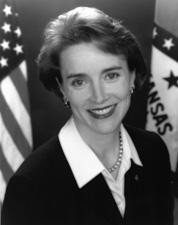 Sen. Blanche L. Lincoln (D-AR)
Legislative Activity
Stay on top of the latest movement without scrolling through every action
Senate amendment proposed (on the floor): Amendment SA 3416 proposed by Senator Baucus for Senator Lincoln to Amendment SA 3336.(consideration: CR S1222-1224; text: CR S1224)
March 5, 2010
View full timeline
Senate amendment proposed (on the floor): Amendment SA 3416 proposed by Senator Baucus for Senator Lincoln to Amendment SA 3336.(consideration: CR S1222-1224; text: CR S1224)
March 5, 2010
Senate amendment agreed to: Amendment SA 3416 agreed to in Senate by Unanimous Consent.
March 5, 2010
Amendment SA 3416 proposed by Senator Baucus for Senator Lincoln to Amendment SA 3336. (consideration: CR S1222-1224; text: CR S1224) To provide grants for energy efficient appliances in lieu of tax credits.
March 5, 2010
Amendment SA 3416 agreed to in Senate by Unanimous Consent.
March 5, 2010
Senate amendment submitted
March 4, 2010
Text
Proposed
TAX EXTENDERS ACT OF 2009

The ACTING PRESIDENT pro tempore. Under the previous order, the
Senate will resume consideration of H.R. 4213, which the clerk will
report.
The assistant legislative clerk read as follows:

A bill (H.R. 4213) to amend the Internal Revenue Code of
1986 to extend certain expiring provision, and for other
purposes.

Pending:

Baucus amendment No. 3336, in the nature of a substitute.
Landrieu modified amendment No. 3335 (to amendment No.
3336) to amend the Internal Revenue Code of 1986 to extend
for 2 years the low-income housing credit rules for buildings
in GO Zones, and for other purposes.
Reid (for Murray) modified amendment No. 3356 (to amendment
No. 3336) to extend the TANF Emergency Fund through fiscal
year 2011 and to provide funding for summer employment for
youth.
Coburn amendment No. 3358 (to amendment No. 3336) to
require the Senate to be transparent with taxpayers about
spending.
Baucus (for Webb/Boxer) amendment No. 3342 (to amendment
No. 3336) to amend the Internal Revenue Code of 1986 to
impose an excise tax on excessive 2009 bonuses received from
certain major recipients of Federal emergency economic
assistance, to limit the deduction allowable for such
bonuses.
Feingold/Coburn amendment No. 3368 (to amendment No. 3336)
to provide for the rescission of unused transportation
earmarks and to establish a general reporting requirement for
any unused earmarks.
Reid amendment No. 3417 (to amendment No. 3336) to
temporarily modify the allocation of geothermal receipts.
McCain/Graham amendment No. 3427 (to amendment No. 3336) to
prohibit the use of reconciliation to consider changes in
Medicare.
Lincoln amendment No. 3401 (to amendment No. 3336) to
improve a provision relating to emergency disaster
assistance.

Mr. REID. I suggest the absence of a quorum.
The ACTING PRESIDENT pro tempore. The clerk will call the roll.
The assistant legislative clerk proceeded to call the roll.
The ACTING PRESIDENT pro tempore. The Senator from Montana.
Mr. BAUCUS. Mr. President, I ask unanimous consent that the order for
the quorum call be rescinded.
The ACTING PRESIDENT pro tempore. Without objection, it is so
ordered.
Mr. BAUCUS. Mr. President, we are now on our fifth day of
consideration of this important legislation to create jobs and extend
vital safety net and tax provisions.
As a reminder, this legislation would prevent millions of Americans
from falling through the safety net. It would put cash into the hands
of Americans who would spend it quickly, boosting economic demand. It
would extend critical programs and tax incentives that create jobs.
We had another productive day on the bill yesterday. We conducted
three rollcall votes on amendments. We adopted four amendments. As I
count it, there are nine amendments pending.

[[Page S1213]]

Those amendments are the underlying substitute amendment, Senator
Landrieu's amendment on the Go-Zones, Senator Murray's amendment on
summer employment for youth, Senator Coburn's amendment on
transparency, Senator Webb's amendment on executive bonuses, a
Feingold-Coburn amendment to rescind unused transportation earmarks, an
amendment by Senator Reid of Nevada on geothermal receipts, a McCain
amendment on the use of budget reconciliation, and a Lincoln amendment
on emergency disaster assistance.
A piece of legislation such as this is like a long-distance run. It
starts out with a lot of energy and a lot of activity. After a while it
reaches its stride, plateaus, and moderates its pace. But then the pace
picks up again near the finish; that is, if we have much energy left.
For this bill, most of the activity is behind us. This bill reached
its stride. We see the finish line ahead on Tuesday or so, and we
expect a final push then.
We will work today to clear as many of the pending amendments as we
can. If Senators have other noncontroversial amendments, we are happy
to try to clear those today as well. The Senate will conduct no
rollcall votes today.
The majority leader indicated that we would see a cloture vote on
this bill on Tuesday, and we hope to conclude action on this bill on
Tuesday as well.
I thank all Senators for their cooperation.
Mr. President, I suggest the absence of a quorum.
The ACTING PRESIDENT pro tempore. The clerk will call the roll.
The legislative clerk proceeded to call the roll.
Mr. NELSON of Florida. Mr. President, I ask unanimous consent that
the order for the quorum call be rescinded.
The ACTING PRESIDENT pro tempore. Without objection, it is so
ordered.
Mr. NELSON of Florida. Mr. President, I had hoped to call up an
amendment I have. Of course, I would have had to have gotten unanimous
consent to set aside the pending amendment in order to do that. It is
my understanding that we will attempt to do that parliamentary
procedure at a later time.
What I would like to do at this point is explain the amendment I will
be offering. May I proceed?
The ACTING PRESIDENT pro tempore. The Senator may.
Mr. NELSON of Florida. Mr. President, this is an amendment to restore
some sanity and common sense to the executive pay practices that have
outraged all of us that we have seen on Wall Street among the biggest
financial institutions in this country. It is very simple and
straightforward.
It encourages large banks and financial institutions to adopt widely
accepted and sound compensation practices. Banks, under this amendment,
that would fail to adopt those standards would lose the benefit of
certain tax deductions, such as the tax deduction of their executive
compensation as a cost of doing business over $1 million per executive.
In other words, they could no longer deduct the large compensation
payments they make to highly paid employees. But we do not limit it to
$1 million compensation. The bank could pay whatever it wanted. We are
just going to get some commonsense practices in here.
With the status of financial reform legislation uncertain, I believe
we are going to have to deal with this issue immediately because of the
angst in the country. I think all of us have read with astonishment the
recent reports that Wall Street banks continue to pay outlandish
bonuses to the executives who may not be so deserving. Then, just to
add insult to injury to the American taxpayer, many of those
institutions are still living on taxpayer-funded life support.
In most business professions, pay for executives should chase
performance. Managers and executives are rewarded for creating lasting
value to their companies. Unsuccessful managers and executives are
shown the door. But these basic commonsense principles have been lost
in these major Wall Street financial institutions that we have seen
uncovered over the last several months.
This year, total Wall Street bonuses exceeded $20 billion. In less
than a year and a half after the fall of Lehman Brothers, it is back to
business as usual for some of our major banks, and that is inexcusable.
We have been here before. We had this same debate last spring. Remember
when AIG paid absurd bonuses to financial traders who had managed one
major accomplishment? And what was that accomplishment? They drove
their company into the ground.
Although we talked and talked on the floor of the Senate and
legislation was introduced, Congress failed to act back then, a year
ago. And here we are again. There is an old saying that comes to mind:
Fool me once, shame on you. Fool me twice, shame on me.
If we are going to right this financial ship of state, we are going
to have to tackle all of the flaws in our financial system, and that
includes executive pay, and executive pay specifically on Wall Street.
There is now almost unanimous recognition that poorly crafted
executive pay practices at major banks and financial institutions
contributed to the near collapse of the financial system and the need
that we had to step up to that almost caused financial meltdown, the
need of a $700 billion taxpayer-funded bailout called TARP, Toxic
Assets Relief Program.
Think: Just last week the general counsel of the Federal Reserve
Board of Governors testified that the compensation practices in the
banking sector were a contributing cause to the crisis. In January, the
Federal Deposit Insurance Corporation, FDIC, found that ``excessive and
imprudent risk taking remains a contributing factor in the financial
institution failures and losses to the Deposit Insurance Fund.''
The FDIC attributes these continuing failures and losses in part to
bank compensation practices. Current pay practices encourage this
excessive risk taking because short-term gains are heavily rewarded,
even if they are unsustainable. The negative consequences of severe
losses are often externalized and shifted to the shareholders and
ultimately, when we have to bail them out, to the public taxpayers.
The Federal safety net for financial institutions encourages traders
and executives to take unnecessary risk, and the most obvious example
is the $700 billion Wall Street bailout which I and other Senators
initially opposed. Executives who should have been left without their
shirts instead were left with golden parachutes.
Let's take an example. The CEO of Bank of America resigned at the end
of last year with a $73 million severance package. Bank of America is
one poster child for a poorly managed financial institution. Why? It
received $45 billion in taxpayer funds to avoid insolvency.
To put that in perspective, that is almost $150 from every man,
woman, and child in this country. It is the equivalent of every
American writing a check for $150 to Bank of America's management. Once
the CEO was basically asked to step down, he walked away with a $73
million severance package.
Did Bank of America respond by ramping up lending to small businesses
to help get the economy going? That is what we begged them to do. That
is what we have been begging, through the TARP and the stimulus bill,
to make programs for loans to small business available. Did Bank of
America do that? No. But they did manage to find $73 million for their
CEO's severance package. What we find is that Wall Street all too often
has rewarded failure with bloated bonuses and outrageous severance
packages.
If we want to get to real and meaningful financial reform, it is
going to have to include changes in the existing compensation culture
in the financial industry.
I know what the response is going to be: Why should you penalize us?
In order to get good executives, we are going to have to pay these big
compensation packages.
As far as this Senator is concerned, that is fine. But we need to
make sure a huge compensation package is tied to performance.
The amendment I am offering is going to put an end to the reality
disconnect on that street known as Wall Street that has rewarded
failure and that emphasizes short-term stock appreciation over long-
term growth. This amendment does so by putting some

[[Page S1214]]

basic and well-accepted principles of sound compensation practices in
the Tax Code.

For example, major banks and financial institutions would only be
able to deduct their large executive compensation payments if the pay
complies with the rules that focus on rewarding long-term performance.
These principles were developed by the Financial Stability Board, the
council of major central banks. These are fellow bankers who set up
these principles. The Federal Reserve was instrumental in developing
those compensation principles.
So the tax deductions for major banks would be conditioned on the
following: If you are going to have a compensation executive package
over $1 million, it must be performance based, and at least half of the
performance-based compensation must vest over an extended period of 5
years or more. This will tie compensation not only to performance but
to long-term performance. For executives at public companies, at least
half of the performance-based compensation must be paid in employer
stock, and compensation agreements for top executives must include a
clawback provision that will retract deferred compensation in the event
of ethical misconduct. Lastly, the compensation agreements must
prohibit employees from engaging in personal hedging strategies, such
as compensation insurance, that undermine the risk alignment
principles.
In addition, the employer's bonus pool must take into account the
institution's liquidity needs, reserve requirements, and the risk that
future projected revenues will not materialize.
Finally, this amendment I am going to offer creates new and
meaningful executive compensation disclosure requirements so that
shareholders can be empowered and investors can be empowered to hold
banks accountable for compensation practices that fail to fully comply
with these new tax rules that are there by virtue of the principles
adopted.
Of course, the special interests are going to come in and argue that
Congress should not get involved in compensation decisions, that the
market knows best. They will argue if Congress passes measures such as
this that Wall Street is going to pack up its bags and move to greener
pastures abroad. Unfortunately, right now, what the market knows is
that big short-term gains lead to big bonuses, and big losses lead to
taxpayer-funded bailouts. And the American taxpayer is fed up.
This is only going to apply to the largest 57 banks in this country.
This is not going to apply to most of the banks in this country. We
need to take real steps now to reform compensation practices, and it is
my hope that the chairman of the Finance Committee is going to be able
to get this amendment accepted without opposition. It is common sense,
it is desperately needed, and the American people are crying out for
reform.
Mr. President, I yield the floor, and I suggest the absence of a
quorum.
The ACTING PRESIDENT pro tempore. The clerk will call the roll.
The legislative clerk proceeded to call the roll.
Mr. BAUCUS. Mr. President, I ask unanimous consent that the order for
the quorum call be rescinded.
The ACTING PRESIDENT pro tempore. Without objection, it is so
ordered.

Bozeman's Resiliency

Mr. BAUCUS. Mr. President, I rise in mourning and remembrance on the
first anniversary of a devastating natural gas explosion in downtown
Bozeman, MT.
At 8:11 in the morning, 1 year ago, downtown Bozeman was quiet, under
a thick blanket of snow. One minute later, a blast ripped through the
silence, killing a young woman named Tara Reistad Bowman and
devastating most of the 200 block of East Main Street.
Windows were shattered as far as four blocks away. A passing cyclist
commuting to work was thrown off his bike by the blast, and 911 calls
showed that the explosion was felt miles away. The firefighters and
rescue crews responding to the blast later found that a natural gas
line behind Montana Trails Gallery was cracked and that a gas leak had
caused the explosion.
Ten businesses and several apartment units were leveled by the blast
or engulfed in the flames that followed. Boodles and Starky's, the
Rocking R Bar, and the American Legion--all destroyed. Assistant City
Manager Chuck Winn described it as the worst catastrophe he had ever
seen in the city.
Firefighters from Bozeman, from Big Sky, and from Three Forks--nearby
communities--all came to the rescue to put out the blaze. These brave
men and women stopped the fire from spreading to nearby stores. The
Montana National Guard was called upon to help provide security.
One year after this tragedy, we pause to recognize today as a day of
mourning and remembrance. We join the men and women of Bozeman who will
observe a moment of silence this morning.
Today, Montanans will mourn the loss of Tara Bowman. Our thoughts and
prayers go out to her friends and her family and all who knew her. I
never met Tara, but I understand she was a very special woman. She was
a talented artist and a mentor to other artists in Bozeman. Tara liked
to paint in the quiet morning. She had come into work early to the
Montana Trails Art Gallery the morning of the blast. Her family and
many friends around Bozeman miss her dearly.
Today, as we mourn, we also remember the actions of the people of
Bozeman after the blast. Oftentimes, in the routine of everyday life,
we forget we may be called upon at any moment to act heroically. There
were many heroes that day in Bozeman. More than 70 firefighters from
departments throughout Gallatin County answered the call for help.
Although it took hours to shut off the natural gas that had caused the
initial blast, the volunteers continued to fight the blaze.
Many had left their day jobs to perform this dangerous duty. The
calls to help continued long after the blaze was extinguished.
Residents had lost their homes and small business owners had lost their
livelihoods. In the truest expression of what it is to be a Montanan,
the people of Bozeman pulled together to help the victims of the blast
and rebuild downtown.
Local businesses donated food to emergency workers. They donated
lumber to cover shattered windows. A community relief fund provided
$200,000 for those left homeless to find shelter and replace paychecks
for those left jobless.
The story of a man named Chris Cundy fully illustrates this generous
spirit. Chris was left homeless after the explosion and the subsequent
fire destroyed almost everything he owned. Chris even lost the tools of
his trade: his musical instruments--several electronic keyboards and a
grand piano. But then the community stepped in. The Red Cross met his
immediate needs--toothbrushes, soap, towels, and debit cards. Musicians
around Bozeman raised funds to help replace his instruments. A fellow
renter borrowed a saxophone from a local music store so he could keep
playing to pay the bills.
After the explosion, Chris started playing music full time and even
performed to raise funds for the victims of the earthquake in Haiti.
Chris has proven that good can come from tragedy. He told the Bozeman
Chronicle:

The scope and depth of the community's support depicts
values that exist only with people who truly care about one
another.

A year later, I am glad to report that downtown Bozeman has made
great strides. The American Legion has already begun to rebuild, and
plans have been submitted to reconstruct many of the other destroyed
businesses as well. I am working to make sure Federal dollars help fund
the reconstruction.
At this time next year, city officials expect every business impacted
by the blast to be back on its feet and in operation. That is the
resiliency of Bozeman and the spirit of Montana.
Today, we pause to remember last year's blast in mourning of our
loss. We remember the actions taken by the great people of Bozeman, and
we proceed with renewed hope for the future.
Mr. President, I suggest the absence of a quorum.
The ACTING PRESIDENT pro tempore. The clerk will call the roll.
The legislative clerk proceeded to call the roll.
Mr. WARNER. Mr. President, I ask unanimous consent the order for the
quorum call be rescinded.
The ACTING PRESIDENT pro tempore. Without objection, it is so
ordered.

[[Page S1215]]

Mr. WARNER. Mr. President, I rise to talk about an amendment I hope
ultimately will be given a chance for consideration on this very
important legislation we are working on right now. I commend the chair
of the Finance Committee for his good work on trying to focus this next
round of job-creation activities that will be created, I believe, as we
move forward on extending some of the tax provisions that expired last
year. Some of these tax provisions were part of our stimulus bill that,
about a year ago, we passed to help jump-start job activities; a
stimulus bill I sometimes think the American public--perhaps we never
explained. In fact, close to one-third of that bill was tax cuts,
another third was direct assistance to States and localities, and the
final third was a series of new initiatives, many of which are just now
starting to come to pass.
I can recall, about a year ago, I came to the Senate floor as we were
debating the stimulus, the American Recovery and Reinvestment Act, to
talk about fiscal accountability; to talk about our long-term outlook;
and to make some recommendations on how we might better track the
performance and outcome of the American Recovery and Reinvestment Act,
what most folks commonly refer to as the stimulus.
Here we are 1 year later and unfortunately it appears critical
Recovery Act reports and plans have gone missing or have been long
ignored or were never fully developed in the first place. As we debate
this important piece of legislation that extends a number of the tax
provisions, I think we ought to take this moment as well to correct
some of the deficiencies in reporting on the fiscal responsibility I
think all of us on both sides of the aisle would like to see in the
overall Recovery Act activities. We have this chance, at this point, to
correct course and to ensure we can account for every dollar. Now it is
time to correct management and transparency gaps that still exist.
Today, I would like simply to very briefly go through a couple things
my amendment would do. Hopefully, the chair of the Finance Committee
and folks on the other side will agree to have these amendments
incorporated. My amendment will, in three very important ways, correct
the management and transparency gaps that still exist in the Recovery
Act. First, it will require agencies to update the implementation plans
they have developed last year for high-risk programs.
High risk has this connotation that somehow it is a bad area or bad
idea. No, the high-risk areas I am defining are those programs that are
over $2 billion that saw a funding increase of over 150 percent more
than their fiscal year 2008 funding or are brandnew programs. These
programs will be required to update their plan by July 1, 2010.
Let me take a moment and describe what kind of programs I am talking
about. As I mentioned a few moments ago, the stimulus broke into tax
cuts, assistance to the States, and then, finally, an agreement that we
ought to take up a series of areas that have for years been talked
about in this country but, candidly, we have never done much about--
broadband technology, high-speed rail, smart grid, health care
information technology. These are all areas that, again, had broad
support on both sides of the aisle, that we talked about, and only in
the case of the stimulus were there actually funds put behind these
initiatives. The challenge was, a year ago many of these areas had very
little funding or had no programmatic prior experience so the
administration appropriately took some time to gear up these programs.
We are just starting to see some of the disbursement on high-speed rail
and disbursement on the President's Race to the Top education grants.
But for these new programmatic areas, we need to make sure there is a
plan in place, that there are metrics in place, and that we know how
these dollars are being spent out. So the first part of my amendment
will require these programs in high-risk areas to update their plans by
July 1 of this year.
Second, my amendment will require these high-risk programs to report
back to Congress and the public quarterly, beginning September 30,
2010.
These reports must include performance and financial data to let us
know whether these programs are working and meeting the goals they
defined in their initial business plan that they would lay out to us in
July of this year.
I think this is terribly important. These are areas that, because
they are new--I think they have enormous popular support, but because
they are new, we need to make sure that at the front end of these
program implementations, we have that business plan in place, we have
the metrics, and we have a reporting mechanism.
The second part of my amendment is an area that we have been working
with the inspector general around the Recovery Act, Mr. Devaney, and
others. I think many of us in this Chamber would be disturbed to find
out that the recent quarterly report showed that over 1,000 recipients
of stimulus funding--1,000 agencies, departments, grantees--had failed
to report back the legally required data on how these dollars have been
distributed, what kind of tracking is in place. Consequently, when we
hear critiques, particularly from the other side, about the stimulus,
about the job creation and efficiency, well, an appropriate rebuttal
requires facts being in place. Over 1,000 of the recipients that have
received stimulus funds have basically ignored the law and failed to
report back. So my amendment proposes financial penalties of up to
$250,000 for recipients of the stimulus funds who knowingly fail to
comply with the existing quarterly reporting requirements. We have to
ensure that our agencies, Congress, and the public are getting the
information they need to know if these important investments are
working.
The amendment requires agencies to notify recipients if they miss a
deadline. They will provide an opportunity for the recipient to report
and offer technical assistance if they need that assistance to get back
on track. But if recipients knowingly do not file the required reports
or if they ignore these agency requests for this information, agencies
may impose a penalty to hold these recipients accountable. The
amendment provides sufficient discretion for agencies to set penalties,
such as consideration of whether the recipient is a nonprofit,
government, or small business entity. We don't want to add on a new
burden, but we simply want those who are receiving financial assistance
from the stimulus fund to actually fulfill their obligation and make
sure they report back to us and the public on how those dollars are
being spent.
I repeat, it is not too late to correct the gaps in program
management and transparency in the American Recovery and Reinvestment
Act. So much of the Recovery Act funding is still in the pipeline. As a
matter of fact, at the end of last fiscal year, last October, only 18
percent of our recovery dollars had been spent out. Even at the end of
this fiscal year, at the end of September 2010, only about 54 percent
of the dollars will be spent out. We still have literally hundreds of
billions of dollars to be spent out from this program.
We have to make sure--we owe it to ourselves, we owe it to the
public--that we have in place both the appropriate metrics on these
high-risk programs and that those other organizations that are
receiving dollars do what is their legal requirement to report back on
this terribly important data.
I hope we can get this amendment adopted. I look forward to working
with my colleagues on both sides of the aisle to bring this added
transparency and this added management oversight to this very important
activity.
I yield the floor, and I suggest the absence of a quorum.
The ACTING PRESIDENT pro tempore. The clerk will call the roll.
The legislative clerk proceeded to call the roll.
Mr. BENNETT. Mr. President, I ask unanimous consent that the order
for the quorum call be rescinded.
The ACTING PRESIDENT pro tempore. Without objection, it is so
ordered.
Mr. BENNETT. Mr. President, I ask unanimous consent that I be allowed
to proceed as in morning business.
The ACTING PRESIDENT pro tempore. Without objection, it is so
ordered.
Mr. BENNETT. Thank you, Mr. President. I appreciate the courtesy.
(The remarks of Mr. Bennett and Mr. Sessions pertaining to the
introduction of S. 3083 are printed in today's Record under
``Statements on Introduced Bills and Joint Resolutions.'')

[[Page S1216]]

Mr. BENNETT. Mr. President, I yield the floor.
The PRESIDING OFFICER (Mr. Franken). The Senator from Alabama.

Military Commissions

Mr. SESSIONS. Mr. President, I was pleased to see an article in the
Boston Globe today saying:

. . . White House advisers are close to recommending that
President Barack Obama opt for military tribunals for the
self-professed Sept. 11 mastermind, Khalid Sheik Mohammed and
four of his alleged henchmen, senior officials said.
The review of where and how to hold a Sept. 11 trial is not
over, so no recommendation is yet before the president and
Obama has not made a determination on his own, officials
said. The review is not likely to be finished this week.

The officials spoke on the condition of anonymity.
I will just say, I think that is right. I appreciate the President
reevaluating the position taken by his Attorney General. I think it was
based on a number of errors in analysis of the nature of the conflict
we are in and the status of law, frankly, in America today. I have
written about that in the Politico publication.
I will make a point or two about the five errors, mistakes, sometimes
even falsehoods, it seems to me, that have been put forth to justify
trying military combatants--unlawful combatants, really--in civilian
courts and why this is not a good idea and some of the thought
processes we should go through.
On February 3, Attorney General Holder wrote this:

Since the September 11 attacks, the practice of the U.S.
Government followed by prior and current administrations
without a single exception has been to arrest and detain
under Federal criminal law all terror suspects who are
apprehended inside the United States.

That was his letter. The Attorney General is incorrect in that. It is
made clear by his own citation in that very same letter of the Jose
Padilla and the Ali Al-Marri cases. In those two cases, President
George W. Bush ordered each terror suspect transferred into military
custody after they were captured on U.S. soil. It does not mean they
cannot later be tried in civilian court, if that is appropriate and you
have a good reason for doing that. It is not often I could see what
that would be the case, but it could be. You are not prohibited from
doing it. The law has apparently established that. They were taken into
military custody. That means the Speedy Trial Act is not triggered. It
means the government does not have to pay an attorney for them. And it
means they can be interrogated, but interrogated consistent with the
techniques Congress has approved in legislation that dealt with the
controversy over what kind of interrogation is appropriate. We have
legislated on that issue.
Secondly, administration officials have often noted that Richard
Reid, the so-called shoe bomber, was charged in the civilian criminal
system, but they fail to mention that the military commission was not
even in place when he was arrested in December of 2001, not long after
9/11. The Military Commission Order No. 1 that created the military
commissions was not signed into law until the next year in March.
Congress, which dealt with these issues, did not authorize,
legislatively, the commission system and its structure until 2006. So
that is not a very good argument, is it?
Mr. Holder, in his letter to me and other Senators, stunningly cites
the Second Circuit decision in the Padilla case to assert that the
President lacks the authority to detain a U.S. citizen as an enemy
combatant on U.S. soil. He cites the Second Circuit and says the
Padilla case is authority for the proposition that the President lacks
the authority to detain a U.S. citizen as an enemy combatant on U.S.
soil if he is captured. The Attorney General, however, fails to note
that the Supreme Court reversed that decision, stating in the 2004
Hamdi v. Rumsfeld case that there is no bar to this Nation holding one
of its own citizens as an enemy combatant. A citizen, no less than an
alien, can be ``part of or supporting forces hostile to the United
States or coalition partners'' and ``engaged in armed conflict against
the United States,'' and ``such a citizen, if released, would pose the
same threat of returning to the front during the ongoing conflict.'' Of
course, that is accurate. Just because you are a citizen does not mean
you cannot attack the United States, join with forces hostile to it and
attack the United States.
How they missed that citation is pretty stunning. If a lawyer in the
Department of Justice in the Solicitor General's Office arguing before
a court of appeals somewhere in America failed to note that the opinion
he was citing was overruled, they would be subject to disciplinary
action. The lawyer is an officer of the court; they have to know what
they are citing to the court. They should not ask them to believe
something that is not accurate. Yet that came out of the Attorney
General's Office. We can do that, is my point.
On the question of granting terror suspects Miranda rights--that is,
the right to remain silent, the right to a lawyer, that kind of thing--
the Attorney General and his team have cited the Padilla case to
suggest the government could not have held Mr. Abdulmutallab, the
Christmas Day bomber this past Christmas, in military custody without
affording him the same access to counsel he was due as a criminal
defendant. That is just not true. You do not have to capture a person
on the battlefield. And this is the legal situation we are talking
about when they captured Abdulmutallab. In World War II, if you
captured a Japanese or German soldier, you did not appoint them
lawyers. You did not try them often. You held them until the war was
over, and they did not get trials during that time.
To support this totally unjustified position, they note in one of
their letters that the judge in the case, Judge Michael Mukasey, who
later became Attorney General of the United States--and a fabulous
legal mind--who at that time was a Federal judge in New York, granted
Mr. Padilla a lawyer. So they say he is entitled to a lawyer. But that
was long after his arrest and it arose from a much lighter contest
about his detention and whether he should be given a hearing in Federal
court. The judge agreed to give him a habeas corpus hearing and
appointed a lawyer for him. But that is not to say that Abdulmutallab,
who was captured on Christmas Day and interrogated for 50 minutes, was
entitled to be given a lawyer or be given Miranda rights. It is not
accurate. It is not correct.
In Mr. Holder's letter of February 3, he wrote this:

The Bush administration used the criminal justice system to
convict more than 300 individuals on terrorism related
charges.

We have heard that argument made time and again by Members of the
Senate. Last May, Senator Kyl wrote to Mr. Holder seeking basic
information to support these claims. Senator Kyl noted that ``a
comparison of terrorists in Federal prisons to terrorists detained in
Guantanamo is instructive only if the severity of their actions, their
background, and allegiance is equivalent.'' No answer was received. In
November, I asked Attorney General Holder at a Senate Judiciary
Committee hearing if he would provide that information. He responded
unequivocally:

I will supply you with those 300 names and what they were
convicted of. I will be glad to do that.

Months later, he has still not provided the list. I think the reason
is clear, frankly: the facts do not support that allegation, that
statement.
Many of the individuals labeled as terrorists by the Obama
administration whom they are counting in this number--I think they have
now dropped it down to 195 or 200--were prosecuted for far lesser
crimes than Mr. Abdulmutallab, who had a bomb on his person to blow up
a plane, who had come directly from al-Qaida in Yemen, attacking this
country as a direct representative of al-Qaida in Yemen, carrying an
al-Qaida bomb. Mr. Andrew McCarthy, a former Federal prosecutor in
terrorism cases in New York, recently shed light on a 2008 article
published by Human Rights First which said that 195 defendants have
been convicted so far in 199 terrorism-related cases. But Mr. McCarthy
digs into it and notes that the report defines ``terrorism'' so broadly
that its finding included prosecutions for false statements, financial
fraud, and immigration fraud.
Some say: You are politicizing this matter, Jeff. Don't be so
critical.
That is what Mr. Gibbs at the White House says, that criticizing and
raising

[[Page S1217]]

objections to falsehoods and inaccuracies, and legal statements that
are not in error is somehow politicizing it. We have young men and
women in combat today. Their lives are at risk. I think the leaders of
our country in a time of war should not be spinning this Congress, but
giving us the unvarnished truth.
I wanted to say that, and to say I am glad there is now apparently an
evaluation going on as to how best to handle this situation. I was also
pleased that Senator John McCain and Senator Joe Lieberman introduced
their legislation--I believe yesterday they introduced it or the day
before--that would call for trials of unprivileged enemy belligerents.
That is the more recent term. It used to be ``unlawful combatants.''
Now it is ``unprivileged enemy belligerents'' in military custody. It
says they are not to be given Miranda rights. They can be detained in
military custody for initial interrogation and to determine their
status. It uses Congress's spending power to deny funding to article
III civilian trials for these unprivileged enemy belligerents and
mandates, in effect, trials by military commission.
I would just note, Congress passed legislation and funding to deal
with the Supreme Court's concerns about the legitimacy or the propriety
of the procedures used in military commissions. They raised questions
about that; found several things they believed were inadequate, and
Congress dealt with it. We had a debate for a number of weeks and we
passed legislation. The military, at the same time, was reading the
opinion and changing their procedures to be in compliance with the
Supreme Court and the laws of our country.
We put money in establishing our courtroom in Guantanamo to try these
cases, and we are basically ready to go, after a lot of years, I will
admit, of uncertainty. Now the President, unwisely--probably based on
an improvident campaign promise that he would end this--is attempting
to end it. But I hope now he will reevaluate at least some of that and
we can get this system back in the right order because an unlawful
enemy combatant can be tried for crimes. A lawful soldier can't be
tried.
If you capture an enemy--a Japanese soldier or a German soldier who
is fighting for his country and he is out there in his uniform and
fighting according to the laws of war--they are not prosecuted. But if
you sneak into the United States surreptitiously, carrying a bomb in
order to sabotage and kill innocent men, women, and children, contrary
to the rules of war, then you can be tried. You can be detained as long
as the war continues as an unlawful combatant. If you violated the laws
of war, you can be tried for it.
For example, Khalid Sheikh Mohammed, who is the alleged mastermind of
9/11, can be tried for murder in military commissions because he was
not a common criminal. He was a part of al-Qaida, executing a military
attack on the United States, contrary to the rules of war.
So I would hope we can move forward with this in a good way; that the
President will take the lead because these kinds of decisions are
easier made in the executive branch than by the legislative branch
having to cut off funds or pass legislation mandating this or that. The
Constitution certainly allows these cases to be tried, and the Supreme
Court has so approved it.
In fact, Attorney General Holder, in the Judiciary Committee, as a
result of questions I asked him, has agreed these cases can be tried in
military commissions and that there is no constitutional prohibition of
it. In fact, he said it was a policy decision that caused him to have
the cases tried in civilian courts and not in military courts. I
believe that is a policy error and it needs to be corrected.
I yield the floor, and I suggest the absence of a quorum.
The PRESIDING OFFICER. The clerk will call the roll.
The bill clerk proceeded to call the roll.
Mr. LeMIEUX. Mr. President, I ask unanimous consent that the order
for the quorum call be rescinded.
The PRESIDING OFFICER. Without objection, it is so ordered.
Mr. LeMIEUX. I ask unanimous consent to speak as in morning business.
The PRESIDING OFFICER. Without objection, it is so ordered.

Latin America

Mr. LeMIEUX. Mr. President, I rise today to speak about our relations
with our neighbors to the south in Latin America. I recently had the
opportunity to travel to Latin America and visit the countries of
Honduras, Panama, and Colombia. These meetings were very productive.
During these meetings I had the chance to meet with the new President
of Honduras, President Lobo, as well as our great ally and friend,
President Uribe of the country of Colombia.
Our partnership and friendship with Latin America goes back many
decades. In recent times we have used wonderful programs such as USAID
and the Millennium Challenge Corporation to help build the
infrastructure of Latin America as well as provide the tools to create
jobs that will be sustainable in these countries.
Our goal in Latin America is simply this: We want them to succeed. We
want strong neighbors with good democracies, with a respect for the
rule of law, a place where their people can be free and prosper and
hopefully establish great trading partnerships with us in the United
States of America.
But the history of Latin America, even recently, is while there have
been many successes, there have also been setbacks. We have recently
had troubles in Honduras with President Zelaya, the former President
who tried to stay in office, and then we had an ouster of him. There is
a debate among us as to whether that was a coup or whether it was
legally done. But, nonetheless, it was a disruption in that country's
emerging democracy.
In meeting with President Lobo, I was impressed that he has put
together a national unity government endeavoring to create those
democratic institutions and strengthen the ones that Honduras was
building upon and establish a rule of law that will give countries such
as America and business people from our country the opportunity to
transact business in that country.
I believe that under President Lobo's leadership, we have got a good
chance for Honduras reemerging on the stage in Latin America as a good
and healthy democracy.
I was pleased that Secretary Clinton recently recognized the
democratically elected president. I encourage President Obama to
receive President Lobo. We need friends in the region. We need friends
for a number of reasons. We need friends in Latin America, specifically
Central America, because of the devastating and harmful drug trade. The
drug trade in Latin America that funnels drugs and guns to this country
is not just a challenge in and of itself because of the deadly
narcotics it brings to America, it is a challenge because of the
violence and the organized structure of violence that goes with it.
Recently we saw drug gangs in Mexico extract the worst form of
vengeance upon a family of a young military officer. A military officer
died in Mexico killing the head of a drug cartel. He was celebrated by
that country in what would be akin to a state funeral. And the drug
cartel, to exact vengeance and to send a signal, killed all of the
members of that soldier's family. That is terrible.
The money that is provided by these drugs that run from northern
South America, the Colombia region, and then through Central America,
these connections, that violent chain is very dangerous to this
country. It is dangerous for many reasons, but there is an increasing
danger. There is an increasing danger that has occurred with the
entrance of Iran and its progeny into Latin America. We now know that
Ahmadinejad is trying to show his sphere of influence in Latin America;
that Hezbollah and Hamas, surrogate groups for Iran, who have done most
of their damage in Lebanon and in Gaza, are now setting up shop in
Latin America.
One of the reasons I am here to speak on the floor today is I am
concerned that the same networks that transported violence and drugs
and guns to this country could be used by Hezbollah and Hamas to
provide a national security threat to us in this country and
potentially bring terrorism to us in that way.
So our friendship with these countries such as Honduras, our
friendship with countries such as Panama, our friendship with countries
such as Colombia matter. It not only matters because we care about the
human rights

[[Page S1218]]

of the people in those countries and we want them to be prosperous and
free, but it matters because of our own national security.
Good, stable democratic partners are good for the United States of
America. So we should continue to acknowledge President Lobo. We should
restore the visas that were suspended during the Zelaya incident. We
should do everything we can to encourage trade to continue with the
Millennium Challenge Corporation, continue with USAID so that country
can be prosperous and free and secure.
The same goes for Panama. Panama is a wonderful friend and partner to
the United States. The Panama Canal, which the United States had for
many years but now is in the hands of Panama, is a tremendous trading
conduit to our country, and the Panama Canal is expanding. Right now,
dredging and other works are being put in place to allow larger ships
to come through the Panama Canal. Why is that important to the United
States of America? Well, no longer will these post-panamax ships from
China have to go to California to let off their goods. No longer will
they have to go around the bottom of South America. Now they can come
through the Panama Canal and service the eastern seaboard of the United
States.
For a State such as mine in Florida this is very important. So we
have to do the work in this country to make sure we are ready for
those, what they call post-Panamax ships, that our ports are dredged
deep enough that we have the security and the infrastructure in place
to make sure we can receive those large ships.
I have been an advocate for making sure that Florida's ports are
ready to receive those ships, because that trade will create thousands
of jobs not just in my home State but all across this country.
That brings me to the point of trade. We have pending trade
agreements that have not yet been sent over by the White House to be
ratified by this Congress; trade agreements with Panama that need to be
ratified, trade agreements with Colombia that need to be ratified, and
also with South Korea. It makes no sense not to ratify those
agreements.
Let me turn my attention, if I can, to Colombia. We have no better
friend in Latin America than President Uribe. President Uribe will go
down in history as one of the greatest leaders in this hemisphere. He,
in my mind, is akin to Abraham Lincoln to their country, because when
he came into office about 8 years ago, we were on the verge of Colombia
turning into a narcoterrorist state, in which the drug gangs would have
taken over the country.
In fact, before President Uribe came to office, the previous
President sought to negotiate with the FARC by setting aside a part of
the country as a safe haven for the FARC. It was a disaster. I am told
that when President Uribe was sworn into office, almost 8 years ago,
that the FARC was shelling and bombing Bogota to try to kill him on his
inauguration. It is hard for us to realize what a civil war would be
like, but that has been the situation in Colombia.
Because of the efforts of the United States of America, and because
of our military and trade support, and Plan Colombia, which we put $1
billion into, Colombia turned the tide. The good guys are winning, and
the FARC, the narcoterrorists, are losing. We are doing a very good job
of beating those folks back. President Uribe must be commended.
But of all of our friends in the hemisphere, we have not ratified the
free trade agreement with Colombia. We have done it with Peru, we have
done the Central America Free Trade Agreement, CAFTA, but not Colombia.
This agreement is 4 years old. I have spoken to our United States Trade
Representative and urged him to urge this administration to send these
trade agreements here.
I know the problem is not the Senate. The problem is down the hall
with our colleagues in the House. I know they are concerned about
certain issues in Colombia. I want to point out for my friends in the
House of Representatives, because they are concerned about organized
labor in Colombia, that under the leadership of this government in
Colombia, homicides of union members are down nearly 80 percent since
2002. Homicides, in general, are down 45 percent in 2008, the lowest
point in 22 years. Kidnappings are down by more than 80 percent, and
acts of terrorism are down 63 percent.
I had a chance to go to Bogota. It is a beautiful and wonderful city.
It rises nearly 8,000 feet above sea level, which is 3,000 more feet
than Denver. Yet it is green and verdant, and it is one of the world's
most unbelievable places to grow flowers, and 75 percent or more of the
flowers that come in this country that you get at your florist come to
us through Colombia. When they come from Colombia, guess where they go
through to get to the United States of America. They all come through
Miami, which makes me proud as a Senator from Florida.
That trade we have right now, the Colombians benefit from free trade
but we do not benefit in return. We must ratify this agreement. We must
acknowledge our friends in Colombia. By not ratifying the agreement,
the signal we are sending is that perhaps our relationship with them,
under this administration, is not as good as it has been with previous
administrations. We do not want to send that wrong signal to a model
country for Latin America.
But let me again talk about this concern I have about the emerging
threat of Iran and its influence in Latin America. There is a deadly
combination forming between Ahmadinejad of Iran and Hugo Chavez of
Venezuela. I ask unanimous consent that this newspaper article which I
am about to read from be printed in the Record.
There being no objection, the material was ordered to be printed in
the Record, as follows:

Venezuela Plotted To Kill Rival, Spain Says

(By Santiago Perez and Jose de Cordoba)

Madrid.--Spain and Venezuela headed toward a potential
diplomatic face-off after a Spanish judge on Monday accused
Caracas of collaborating with rebel groups to assassinate
Colombian President Alvaro Uribe and other top political
figures.
Spanish National Court Judge Eloy Velasco alleged Monday
that the Venezuelan government had collaborated with Basque
separatist group ETA and Colombia's main guerrilla group in a
plot against leaders living in or traveling to Spain that
began in late 2003.
The allegations were part of an indictment that ordered 12
alleged members of ETA and of the Revolutionary Armed Forces
of Colombia, or FARC, to stand trial on charges of conspiracy
to commit murder and terrorism, according to a copy reviewed
by The Wall Street Journal.
``There is evidence . . . showing the cooperation of the
Venezuelan government in the illegal collaboration between
FARC and ETA,'' according to the indictment.
Spanish Prime Minister Jose Luis Rodriguez Zapatero,
speaking at a news conference Monday in Hanover, Germany,
said he had ordered his Foreign Ministry to ``request an
explanation from the Venezuelan government'' regarding the
allegations. ``We are awaiting such explanation,'' Mr.
Zapatero said.
Caracas responded angrily to the allegations. Venezuela's
Foreign Ministry, in a statement, dismissed the charges as
``biased and unfounded.''
Hayden Pirelac a congressman from the ruling coalition of
Venezuelan President Hugo Chavez, said the Spanish judge's
allegations were part of a campaign ``to discredit
Venezuela,'' adding: ``We don't give guerrillas refuge, or
have any pact with guerrillas.''
The allegations come at a bad time for Mr. Chavez, whose
popularity is falling due to electricity shortages and an
economy mired in recession and high inflation. They could
also prove tricky for Colombia and Spain, both of which have
been trying to move beyond past differences with Venezuela's
populist leader.
The indictments also bring fresh attention to Spain's
National Court, whose judges act on their own investigations
and are independent from Spain's executive and legislative
branches. Some judges have gained international attention,
and criticism, for their handling of global cases involving
other governments, including an investigation into
allegations of U.S. torture at Guantanamo Bay.
Mr. Velasco, by contrast, has handled mainly local and less
controversial terrorism cases, maintaining a low profile
domestically and internationally.
Mr. Uribe, one of the targets of the alleged assassination
plots, responded cautiously. ``I think we should react
prudently and see what is going on through diplomatic
channels,'' he told Colombian radio from Uruguay.
Another alleged target, former Colombian President Andres
Pastrana, also demanded an explanation from Venezuela. ``We
are talking about an alleged plot against the lives of, among
others, two Colombian acting heads of state,'' he said in a
statement.
Mr. Velasco issued international arrest warrants and
extradition requests for the 12

[[Page S1219]]

men named in the indictment, all of whom allegedly belong to
either ETA or FARC and whose whereabouts are unknown. One
man, identified as Arturo Cubillas Fontan, is believed to be
living in Venezuela.
In detailing Caracas's alleged role, Mr. Velasco pointed to
Mr. Cubillas Fontan, who the judge says led ETA's activities
in Latin America since 1999 and acted as a link with the
FARC. It says Mr. Cubillas Fontan was hired by Venezuela's
Agriculture Ministry in 2005.
Mr. Cubillas Fontan's alleged contacts with the FARC
included ``military training for ETA members in the Colombian
jungle, in exchange for ETA's help in Spain, locating
terrorist targets sought by FARC,'' according to the
indictment. Those targets included visiting Colombian
dignitaries, including Messrs. Pastrana and Uribe and current
Vice President Francisco Santos.
The document also says that during a training course on
explosives, FARC members were accompanied by ``an escort
vehicle with Venezuelan soldiers that was arranged and
organized'' by Mr. Cubillas Fontan and another person.
Venezuela's government, in its statement; said Mr. Cubillas
Fontan had been living in Venezuela since 1989 under a deal
struck by then-Venezuelan leader Carlos Andres Perez and
former Spanish Prime Minister Felipe Gonzalez.
Information used in the indictment came from the laptop
computer of a top FARC guerrilla commander killed by
Colombian forces in 2008. In the months that followed, the
computer files revealed what international intelligence
officials say are close ties between the FARC and top members
of Mr. Chavez's government.
The Venezuelan government has long insisted that the
information from the computers was made up by the Colombian
government in an attempt to discredit Mr. Chavez, an
allegation Colombia denies.
The indictments will prove challenging for Spain, one of
Venezuela's major trade partners. The two sides improved
their diplomatic relations under the stewardship of Mr.
Zapatero, a leftist, but the road hasn't been smooth.
Mr. Chavez in 2008 made a surprise announcement he was
nationalizing the Venezuelan franchise of Banco Santander,
though the improved relations with Madrid might have helped
the Spanish financial giant secure a $1.05 billion payment
for the unit, more than many analysts expected.
Colombia has also been trying to mend fences with
Venezuela, despite a rocky relationship in the past few years
thanks largely to ideological differences between Mr. Chavez
and the conservative Mr. Uribe. Last year, after Mr. Uribe
agreed to host U.S. bases in Colombia, Mr. Chavez cut
economic ties.
Last week, Mr. Chavez and Mr. Uribe got in a shouting match
at a regional meeting of heads of state in Cancun, after Mr.
Uribe told the Venezuelan leader to ``be a man'' and discuss
the Venezuelan trade embargo. In the following days, both
sides said they would try to bury the hatchet.
In addition to the 12 people who were ordered to stand
trial on murder and terrorism charges, Mr. Velasco also
charged Remedios Garcia Albert with the crime of
collaboration with a terrorist group, according to the
indictment.
In the document, Mr. Velasco described Ms. Garcia Albert as
an alleged member of FARC's international support group
residing in Spain and ordered her to present herself in court
for questioning on March 24.
According to court officials, Ms. Garcia Albert, a Spanish
national, is free on bail linked to another terrorism case. A
lawyer for Ms. Garcia Albert wasn't immediately available for
comment.
Spain doesn't try people in absentia, so a trial for the
other 12 people would take place only if they are arrested.
Latin America's oldest and biggest guerrilla group, the
FARC has been fighting to overthrow the Colombian government
and install a Marxist dictatorship for four decades. The
guerrillas, who in 2001 encircled the capital, kidnapping
motorists who ventured out at will, has been put on its heels
by Mr. Uribe, a provincial lawyer who has revamped Colombia's
military and driven the rebels back into Colombia's jungles.
In 2008, the Colombian army bombed the jungle hideout of
Raul Reyes, the group's No. 2 commander. His laptop included
details of attempts by top Venezuelan military and
intelligence officials to give money and weapons to the FARC,
which, like ETA is considered a terrorist organization by the
U.S. and European Union.
Once a peasant guerrilla army, the FARC lost most of its
ideological motivation and turned to drug trafficking,
extortion and kidnapping for funding. It now has an estimated
8,000 combatants under arms, down from a high of about
18,000.

Mr. LeMIEUX. This article from March 2, 2010, I believe it is a Wall
Street Journal article, talks about the revelation that has occurred
that Hugo Chavez and his government were involved with the Basque
separatist group in Spain in an effort to assassinate the President of
Colombia, President Uribe.
This article from March 2, 2010 says that:

Spanish National Court Judge Eloy Velasco alleged Monday
that the Venezuelan government had collaborated with Basque
separatist group ETA and Colombia's main guerrilla group
[which is the FARC] in a plot against leaders living in or
traveling to Spain that began in late 2003.
The allegations were part of an indictment that ordered 12
alleged members of ETA and of the FARC to stand trial on
charges of conspiracy to commit murder and terrorism.

This was an effort to assassinate the President of Colombia. And it
was done, according to this judge, in combination with the President of
Venezuela, Hugo Chavez, who is just as bad as Raul Castro in Cuba. He
is trying to spread the same tyranny to the country of Venezuela, a
country that was formerly free. He is shutting down media, he is
arresting college students, he is destroying the economy to the point
where there are now brownouts because they cannot provide enough
electricity, a country which has tremendous oil reserves and energy
reserves.
But he is not using those to bring money into the country, he is
shutting the economy down. He is bringing despair to his people. The
Cuban Government is now involved in the operation of Venezuela. They
are calling it Vene-Cuba. This is a danger to us. Who is received by
Hugo Chavez in Venezuela? Ahmadinejad from Iran. And what do we believe
and what are we concerned about? That Hezbollah and Hamas are now
setting up shop in Venezuela, in the region as well.
I have another article that I ask unanimous consent to have printed
in the Record from the Associated Press by Curt Anderson. ``Three men
charged in Miami with financing Hezbollah.''
There being no objection, the material was ordered to be printed in
the Record, as follows:

[From the Associated Press, Feb. 19, 2010]

Three Men Charged in Miami With Financing Hezbollah

(By Curt Anderson)

Miami.--Three men were charged in an indictment unsealed
Friday with illegally exporting electronics and video games
to a South American shopping center that U.S. officials claim
funnels money to the Hezbollah militant group.
The men, along with a fourth still being sought in South
America, are accused of violating a U.S. ban on transactions
involving people or entities on a Treasury Department list of
suspected terrorist fundraising networks. Hezbollah, which is
fiercely anti-Israel and allied with Iran, is considered a
terrorist group by the U.S.
The shopping center, Galeria Page in Ciudad del Este,
Paraguay, was included on the banned list in December 2006
along with owner Muhammad Yusif Abdallah. Abdallah is
described as a senior Hezbollah leader in a region of South
America long considered a haven for counterfeiting,
smuggling, piracy and other crimes.
The suspects arrested in the U.S. Immigration and Customs
Enforcement investigation were identified in court documents
as Khaled Safadi, 56, and 43-year-old Emilio Gonzalez, both
of Miami; and 46-year-old Ulises Talavera-Campos, a citizen
of Paraguay.
Attorney Michael Tein represents Safadi, whom he said is
innocent.
``Terrorism?'' Tein said. ``More like `The Great Sony
Playstation Caper.' The indictment literally charges them
with selling Playstation 2 video games to Paraguay. That's
some weapon of mass destruction.''
It wasn't immediately clear if the other two had attorneys,
and a bail hearing was scheduled for Wednesday.
The men also face charges of conspiracy and smuggling. They
face a maximum of 35 years each in prison if convicted.
According to the indictment, the three men ran companies
that used the Port of Miami to move goods including Sony
Playstation video game consoles, digital cameras and other
items that eventually wound up at the Paraguay destination.
About $1 million in exports were identified by ICE, the FBI,
Treasury officials and other investigators with Miami's Joint
Terrorism Task Force.
The men allegedly used fake invoices, false addresses and
phony names to mask the true destination of the goods. The
companies involved also were indicted.
John Morton, assistant Homeland Security secretary for ICE,
said the arrests will disrupt a network involved in ``the
illicit trade of commodities that support terrorist
activities and ultimately threaten the national security of
the United States.''
Hezbollah, which means ``Party of God'' in Arabic, fought a
2006 war with Israel and has been blamed for numerous suicide
bombings and other attacks. The Lebanon-based group has
become a more conventional political entity in recent years,
holding seats in Lebanon's parliament as well as two Cabinet
posts.

Mr. LeMIEUX.

Three men were charged in an indictment unsealed Friday
with illegally exporting electronics and video games to a
South American shopping center that U.S. officials claim
funnels money to a Hezbollah militant group.

[[Page S1220]]

John Morton, assistant Homeland Security secretary for ICE,
said the arrests will disrupt a network in ``the illicit
trade of commodities that support terrorist activities and
ultimately threaten the national security of the United
States.''

In his book ``The Gathering Storm,'' Winston Churchill described all
the failed attempts and all the missed opportunities of Europe in the
years building up in the 1930s to World War II. The failure of courage,
the missed opportunities to stop Nazi Germany in its rise, Winston
Churchill described it as a gathering storm because there were signs
all along the way of fascism and the war machine that Adolf Hitler was
building. What did the allies do when Germany reestablished its
presence in the land between France and Germany, in that Rhineland
region, and sent their troops back in? They did nothing. What did the
allies do when the Germans went into Czechoslovakia? They did nothing.
There were these steps along the way. It was a gathering storm that was
ignored until it was too late.
The point I am trying to convey is, we have an existential threat
with Iran. Ahmadinejad is an existential threat to this country. We
know he is trying to build the ability to have nuclear weapons. We know
he is talking with Hugo Chavez about mining uranium. That is our
concern, and the sanctions and the discussions we are having are not
working. I give credit to Secretary Clinton on recently coming out and
saying we don't even know that Ahmadinejad is in charge of Iran. It may
be the Revolutionary Guard, the military, that is running Iran. But the
time for talk is over. We have to work on the world community to impose
sanctions against Iran. We need to stop trading as a world community
with Iran. We need to stop buying oil from them. We need to shut them
down until the people of Iran can take their country back, bring back
human rights, democracy, the right to petition the government, the
right to elect leaders, the right to free speech. Iran was a
progressive society before 1979. We see the young people in the streets
who have been beaten down, trying to express their views, trying to say
the election of Ahmadinejad was not legitimate.
I explain these things because I believe Iran is trying to set up
shop in Latin America. We need strong, bolstered friends in the region
to defend against this. We do not need Hezbollah and Hamas posing a
national security threat right here in our own hemisphere. There is a
gathering storm. The steps we take today, if we are strong, bold and
vigilant, can stop the storm from breaking upon us.
I yield the floor and suggest the absence of a quorum.
The PRESIDING OFFICER. The clerk will call the roll.
The legislative clerk proceeded to call the roll.
The PRESIDING OFFICER. The Senator from Connecticut.
Mr. DODD. Mr. President, I ask unanimous consent that the order for
the quorum call be rescinded.
The PRESIDING OFFICER. Without objection, it is so ordered.

Financial System Reform

Mr. DODD. Mr. President, I wish to take a few minutes to lay out
where we are on this effort to do reform of the financial structures of
our economy. It has been a long undertaking and I will not take a lot
of time and I will not go into great detail. But I thought it might be
helpful for my colleagues and others to get some sense or a feel of how
things are progressing. So I wish to share some thoughts on some major
issues we are grappling with.
I wish to begin by thanking the 22 other members of the Banking
Committee. About one-quarter of the Senate is seated at that table in
our Banking Committee hearing room. I wish to thank every member for
their work. We have been deeply involved now for well over a year--more
than a year; a year and a half--on the issue of how we should shape the
regulatory structure of reform. This year we have had somewhere around
80 hearings, listening to a broad range of experts and others who have
brought their thoughts and ideas, not to mention the informal meetings
that occur outside of the normal hearing process.
It has been a very long undertaking, and worthwhile. We have been
trying to examine the causes of this problem that has been so
devastating to our country and to others outside of our country--the
economic near collapse--and then, from that experience, trying to shape
and set up policies that will fill in those gaps that led us to this
problem.
Secondly, we are trying to take steps so that we are prepared to
deal, as we will at some point in the future have to, with another
economic crisis as it comes along, and to have what I call an
architecture or a structure that will allow our system to be able to
respond far more prudently than it was able to during the last couple
of years.
I should add as well a third goal, and that is to create a structure
to not only grapple with the crisis, but also be a source of innovation
and creativity for wealth creation and job creation that our financial
services sector had a reputation of accomplishing, or at least helping
to accomplish over the years. Those are not inconsistent goals. It is a
challenge to balance them. It is never perfectly right. But our
responsibility--both as legislators in this Chamber and the other body,
as well as the role of regulators and, obviously, those in the private
sector and public sector--is to try and strike that balance between
protecting the public and consumers who use financial services, as well
as to be able to provide a level of confidence to those who use them,
that the system is going to be safe.
It doesn't mean you are going to get a guaranteed return when you buy
a stock, but you ought to feel confident when you deposit your paycheck
that the institution is going to be there, or you are going to be
protected from losing those resources.
So I wish to take a few minutes and share some thoughts on where we
are. I will quickly add, as well, I wish to pay particular thanks to
the members of the committee. As many people are aware, Senator Shelby
and I, my ranking member, have worked closely together over the last 3
years that I have been chairman of this committee on a wide range of
issues, and I am grateful to him for his efforts. He is, obviously,
significantly involved in this debate. I wish to thank Bob Corker, the
Senator from Tennessee. He is a new Member of this Chamber, but has
performed, I think, a tremendous task of trying to sit down and work
out the differences, and they are complex and they are difficult.
Nonetheless, he has rolled up his sleeves and demonstrated a level of
maturity and interest far beyond the years of his service. All of us--
and I, certainly--wish to thank him publicly as well for his efforts,
and that of his staff, trying to help us get there.
Other members of the committee, including Jack Reed of Rhode Island,
Chuck Schumer, Mark Warner, have taken on particular heavy lifts, and I
will talk about them in a minute as I discuss what is going on, along
with Judd Gregg of New Hampshire and Mike Crapo of Idaho. So there have
been a lot of people involved in this as we go forward. I would be
remiss if I didn't acknowledge their hard work and that of their staffs
over these many months.
We are still not there yet. I am not here to announce an agreement or
to tell my colleagues we have reached a consensus. We are trying to get
there, but we are not there yet. We are making an effort to see if we
can't develop a set of proposals that will enjoy broad support in this
institution as we go forward.
So we have all seen, of course, the devastating consequences. I
hardly need to spend much time enumerating them here. People are living
them every day, and they don't necessarily need to hear them outlined.
However, I will just share again what all of us are painfully aware of.
Mr. President, 8.4 million jobs have been lost since December of
2007. The unemployment rate is currently at 9.7 percent. It has been
obviously far too high. I think all of us know, as the Presiding
Officer does, that there are pockets in our country where that 9.7 is
maybe half the unemployment rate in certain areas of rural America and
urban America. An astonishing 6.1 million Americans have been without a
job for half a year or more in our Nation. Millions of our fellow
citizens who did nothing wrong have nonetheless lost homes, their
retirement security, their jobs, their health care. Small businesses
have been unable to access credit and have been forced to lay off
workers, reduce production, or even have

[[Page S1221]]

had to shut their doors. Working class families in our country have
seen their wealth decline significantly, and, worst of all, today we
remain entirely vulnerable to yet another crisis.
We haven't finished this work, and if something were to happen again
tomorrow, as much as we have been working on this issue, we haven't
passed the necessary legislation to minimize a crisis bringing us close
to the brink of financial collapse as the one we are presently in did.
So, obviously, the status quo--I am getting kind of tired of using
those words; business as usual, whatever words you want to use to
describe it--cannot persist. Congress, in my view, must pass
comprehensive, meaningful reform of our financial system. My hope and
intention is to do everything I can in the waning days of my service
after 30 years here to achieve that goal.
We have to correct the failures that allowed us to get into this
mess, but we must also develop a regulatory system that is prepared for
the next one, and one that is going to invite, as well, the kind of
creativity and innovation that allow for job creation and wealth
creation that our system has in the past provided.
Over a year ago, the Banking Committee, as I pointed out earlier, set
out to investigate the causes of financial crises and the
vulnerabilities that lie in our financial regulatory structure. Over
the last year or more, we have held literally dozens and dozens of
gatherings, hearings, informal and formal meetings. We have listened to
hundreds of experts in a wide variety of fields who have been either
affected by, or who have offered some ideas as to how we can create
this architecture about which I have spoken. We have examined and
reexamined all sets of proposals sent to us by the White House, the
Treasury, the Federal Reserve, the FDIC, and others.
In November of last year, I offered my colleagues a discussion draft
of where I was. I didn't suggest it had cosponsors or backers, but I
thought people ought to know where the chairman of the committee was,
so I laid out a broad proposal in these areas. It certainly produced a
discussion, I can tell my colleagues. Not always a welcome one from
certain corners, but I thought people ought to know at least where I
stood on these issues. If I were going to write this alone and I didn't
want anyone else to offer their ideas and suggestions, I had some
pretty strong and sound ideas as to where we ought to be. I then asked
my fellow committee members, Democrats and Republicans, to work on
major parts of the bill. It is so complex and so big and broad, the
subject matter, that I didn't think any one member, even a chairman and
a ranking member, could necessarily put their arms around all of it. So
I asked various members who expressed an interest in various subject
matters if they would take on the responsibility, a Democrat and a
Republican working together, to see if they could come up with some
ideas that would be sound, intelligent reforms of the financial system.
It has been an enormous task. As I said a moment ago, these are
incredibly complex issues, but with the good work done by so many on
the committee, I believe we are well on our way to producing a very
strong bill. The problems with our economy run system-wide, and while
there is the temptation by some to address only one or two issues and
claim victory and call it a day, we are working in our committee on a
bill that will attack these problems and vulnerabilities in a rather
comprehensive way, one that we believe will make a difference.
The bill as we fashion it is designed to achieve four major
accomplishments: No. 1--and the first priority, I would argue, if I had
to prioritize whether the others fall into this category--is ending
too-big-to-fail bailouts. That, to me, is the most important thing we
can achieve here.

Never, ever again should the American taxpayer of this country be
forced to write a check, which they did, because there is an implicit
guarantee that the Federal Government of the United States will bail
out a company lest it threaten the stability of the economy as a whole.
It will make it so undesirable for a company to get too big or too
complex with new capital, new leverage requirements, supervisory
requirements, and set up a mechanism so large, complex companies can be
shut down through bankruptcy or resolution in a way that does not
threaten the economy or expose the American taxpayers, as they have
been. It is a resolution, it is a bankruptcy, it is a receivership, and
it is painful to creditors, to shareholders, and to the management who
bear the burden but not taxpayers.
We are very close to achieving that. Again, I thank Mark Warner of
Virginia and Bob Corker of Tennessee who dealt with this issue, this
and systemic risk, which I will mention in a minute. They worked I
don't know how many hours sitting down trying to fashion this
resolution mechanism. But the idea that we would watch the American
taxpayer write out a check for $700 billion, knowing the reaction of
the American public--by the way, in the absence of what we are trying
to do here, I think we did the right thing. Had we not done it, the
financial problem would have been a lot worse. We never again ought to
be put in that position, where that is the only alternative we have.
This bill will address that issue.
Secondly, we create an early warning system in the economy so
somebody is looking out for the next big problem. The bill would create
what we call a systemic risk council--that is our goal--that will have
the job of looking across the economy to identify unsafe products,
activities, institutions that could threaten the economy as a whole in
the future. We cannot afford to be caught off guard again by obvious
weaknesses in our system because no one is responsible for taking a
broad view.
Again, it is not going to stop everything, but we did not have this
ability in the past. Again, Mark Warner and Bob Corker have worked very
hard on a resolution mechanism and systemic risk and all of us owe them
a debt of gratitude for their efforts.
Third, we bring transparency and accountability to the exotic
instruments, such as derivatives and credit default swaps, things that
are rather arcane to most Americans, to put it mildly, but have been
lurking too long in the dark and were able to cause untold damage to
our economy because they lacked transparency and regulation. We change
that in this bill. That is our hope anyway, if we get to the conclusion
of it.
We have to regulate these activities that left investors and our
economy open to the tremendous risks they did not even know existed.
Literally, billions of dollars being traded--frankly, gambled--behind
closed doors drove our economy to the verge of collapse. Senator Jack
Reed of Rhode Island, Senator Judd Gregg of New Hampshire, and their
staffs have been working on this issue over many weeks to try and come
up with an intelligent, thoughtful, well-drafted set of proposals on
these exotic instruments, particularly derivatives. I thank them for
the job they have done, and I am confident when our colleagues have had
a chance to be briefed about their efforts, there will be broad-based
support for what is included in our bill.
We have to rein in these crazy compensation packages that have
outraged the public and hurt companies by rewarding short-term profits
and wild risk-taking. Senator Chuck Schumer of New York, Senator Mike
Crapo of Idaho, and their staffs have been working on governance
issues. More work needs to be done on this issue. I thank both our
colleagues, again a Democrat and Republican, for trying to come up with
ideas on governance issues that will avoid some of the problems with
which we are all too familiar.
We create--and one that has attracted the most attention because of
the issues involved--a strong and independent consumer protection
watchdog, one that has never existed but has come to financial
services. It is somewhat ironic we have a Consumer Product Safety
Commission, so if we buy a toy for our children or a product or an
appliance and it does not work or it causes us great harm or danger,
there is a place called the Consumer Product Safety Commission which
will protect us from these hazardous appliances.
Yet when it comes to financial services, we have had no place to go
to get a similar kind of protection. That analogy has been drawn by
others in the past, and I think it is an appropriate one.

[[Page S1222]]

We have undertaken this effort. It is controversial because I think
there are a lot of fears people have about what we are trying to
achieve with all this. Yet if you look back and you watch what has
unfolded over the last couple years, and particularly where you see
some of these barons of the financial services sector reaping millions
of dollars in bonuses after their companies have been shored up through
taxpayer efforts, and yet the very people who had their homes, their
jobs, their retirement, their health care, their life savings put at
risk, what do they get, having come up with the tax dollars to protect
these industries? We want to see to it that we never have again the
consumer of financial products be unprotected when we start examining
these issues.
We are working on this issue to put together what I set out as
principles that should be included in a consumer protection watchdog.
The failure to protect consumers, as I think most people know, led to
some of the dangerous practices we saw and put our economy at so much
risk. People were given mortgages they did not understand and could not
afford. To ensure strong consumer protection, the real question is:
Will this office have the independence and the authority it needs to
get the job done to take care of consumers?
I focused on four principles from the very beginning of this debate
involving this consumer protection idea we hope to produce. One, that
it have an independent head appointed by the President of the United
States and confirmed by this body, the Senate; second, that it have an
independent budget so the office will have the resources it needs to do
the job; third, that it have the autonomy to craft rules to protect
consumers; and fourth, an ability to enforce those rules as well.
With these features, the office, I think, can act to protect
consumers from the kinds of abuses we have seen, such as skyrocketing
credit card interest rates, an explosion in checking account fees or
predatory lending by the mortgage industry. Where rent space is less
important--not unimportant, less important--what power and authority it
has is the critical question.
Obviously, we want to do this in a way that does not jeopardize the
safety and soundness of institutions. I do not believe there
necessarily is any conflict, although some suggest there may be.
We are trying to provide, as well, a mechanism to resolve when, in
fact, we have some conflict between safety and soundness and consumer
protection. I understand that concern. We are trying to accommodate
that while simultaneously maintaining the independence and autonomy of
this agency.
Our goal is to end the status quo, as I said earlier--words I am
getting tired of using, but doing nothing is unacceptable--and to
create a system where honest businesses, large and small, can thrive on
a level playing field, where middle-class families can find work,
invest with confidence, and achieve the dreams they have for themselves
and their children.
Today, I am pleased to report that good work has been done by
Democrats and Republicans both on the Banking Committee to put
financial reform in a strong position. While we do not have a
bipartisan agreement yet at all, we are trying to. I don't know if it
will happen. I am optimistic it can happen. I have been around here
long enough to know these things can fall apart easily. It is fragile.
Complex issues you think you resolved can produce unintended
consequences. Most importantly, getting it right--while I would like to
get it done soon, I want to make sure we do it correctly and properly.
This is one of the hardest tasks I have been asked to undertake in my
years here, to try and fashion these proposals in a way that can bring
broad support in this institution. We do not have an agreement yet, but
because I have colleagues, such as the ones I mentioned on the
Democratic side, such as Jack Reed, Mark Warner, Chuck Schumer, Tim
Johnson--I can go down the list of those who worked on the issues--and
I also have colleagues such as Bob Corker, Dick Shelby, Judd Gregg, and
others to make an effort on that side to see if we can make agreements.
I know everything we are hearing about Congress these days, that
nothing seems to be working here, but we are making an effort to come
up with a proposal that will achieve those goals, a good, strong bill
and one that will enjoy good, strong support in this institution.
I hope I have not talked too long, but I wished to give at least a
flavor of where things are today. As I said, we are not done yet. We
are in a pretty strong position to achieve a good, strong bill and one
we can be proud of in this institution.
I yield the floor and suggest the absence of a quorum.
The PRESIDING OFFICER. The clerk will call the roll.
The assistant legislative clerk proceeded to call the roll.
Mr. BAUCUS. Mr. President, I ask unanimous consent that the order for
the quorum call be rescinded.
The PRESIDING OFFICER. Without objection, it is so ordered.

Amendment No. 3335 as Further Modified, Amendment No. 3383, as
Modified, Amendment No. 3374, as Modified, Amendment No. 3397, as
Modified, Amendment No. 3411, as Modified, Amendment No. 3416 En Bloc

Mr. BAUCUS. Mr. President, I ask unanimous consent that it be in
order for the following amendments to be called up and reported by
number, en bloc; further, that the Landrieu amendment No. 3335, which
is pending, be further modified with the changes at the desk; that the
remaining amendments listed here, except amendment No. 3416, be
modified with the changes at the desk: Wicker amendment No. 3383; Bayh-
Vitter amendment No. 3374; Rockefeller amendment No. 3397; Roberts
amendment No. 3411; Lincoln amendment No. 3416; that the amendments, as
modified or as further modified, be considered and agreed to en bloc,
and the motions to reconsider be considered made and laid upon the
table en bloc.
The PRESIDING OFFICER. Without objection, it is so ordered.
The amendments were agreed to, as follows:

Amendment No. 3335, as Further Modified

On page 268, between lines 11 and 12, insert the following:

SEC. 6__. EXTENSION OF LOW-INCOME HOUSING CREDIT RULES FOR
BUILDINGS IN GO ZONES.

Section 1400N(c)(5) is amended by striking ``January 1,
2011'' and inserting ``January 1, 2013''.

SEC. 6__. INCREASE IN INFORMATION RETURN PENALTIES.

(a) Failure To File Correct Information Returns.--
(1) In general.--Subsections (a)(1), (b)(1)(A), and
(b)(2)(A) of section 6721 are each amended by striking
``$50'' and inserting ``$100''.
(2) Aggregate annual limitation.--Subsections (a)(1),
(d)(1)(A), and (e)(3)(A) of section 6721 are each amended by
striking ``$250,000'' and inserting ``$1,500,000''.
(b) Reduction Where Correction Within 30 Days.--
(1) In general.--Subparagraph (A) of section 6721(b)(1) is
amended by striking ``$15'' and inserting ``$30''.
(2) Aggregate annual limitation.--Subsections (b)(1)(B) and
(d)(1)(B) of section 6721 are each amended by striking
``$75,000'' and inserting ``$250,000''.
(c) Reduction Where Correction on or Before August 1.--
(1) In general.--Subparagraph (A) of section 6721(b)(2) is
amended by striking ``$30'' and inserting ``$60''.
(2) Aggregate annual limitation.--Subsections (b)(2)(B) and
(d)(1)(C) of section 6721are each amended by striking
``$150,000'' and inserting ``$500,000''.
(d) Aggregate Annual Limitations for Persons With Gross
Receipts of Not More Than $5,000,000.--Paragraph (1) of
section 6721(d) is amended--
(1) by striking ``$100,000'' in subparagraph (A) and
inserting ``$500,000'',
(2) by striking ``$25,000'' in subparagraph (B) and
inserting ``$75,000'', and
(3) by striking ``$50,000'' in subparagraph (C) and
inserting ``$200,000''.
(e) Penalty in Case of Intentional Disregard.--Paragraph
(2) of section 6721(e) is amended by striking ``$100'' and
inserting ``$250''.
(f) Adjustment for Inflation.--Section 6721 is amended by
adding at the end the following new subsection:
``(f) Adjustment for Inflation.--
``(1) In general.--For each fifth calendar year beginning
after 2012, each of the dollar amounts under subsections (a),
(b), (d) (other than paragraph (2)(A) thereof), and (e) shall
be increased by such dollar amount multiplied by the cost-of-
living adjustment determined under section 1(f)(3) determined
by substituting `calendar year 2011' for `calendar year 1992'
in subparagraph (B) thereof.
``(2) Rounding.--If any amount adjusted under paragraph
(1)--
``(A) is not less than $75,000 and is not a multiple of
$500, such amount shall be rounded to the next lowest
multiple of $500, and

[[Page S1223]]

``(B) is not described in subparagraph (A) and is not a
multiple of $10, such amount shall be rounded to the next
lowest multiple of $10.''.
(g) Effective Date.--The amendments made by this section
shall apply with respect to information returns required to
be filed on or after January 1, 2011.

Amendment No. 3383, as Modified

(Purpose: To amend the Internal Revenue Code of 1986 to extend tax-
exempt bond financing in the GO Zone, and for other purposes)

On page 268, between lines 11 and 12, insert the following:

SEC. 6__. TAX-EXEMPT BOND FINANCING.

(a) In General.--Paragraphs (2)(D) and (7)(C) of section
1400N(a) are each amended by striking ``January 1, 2011'' and
inserting ``January 1, 2012''.
(b) Conforming Amendments.--Sections 702(d)(1) and 704(a)
of the Heartland Disaster Tax Relief Act of 2008 (Public Law
110-343; 122 Stat. 3913, 3919) are each amended by
striking``January 1, 2011'' each place it appears and
inserting ``January 1, 2012''.

SEC. 6__. APPLICATION OF LEVY TO PAYMENTS TO FEDERAL VENDORS
RELATING TO PROPERTY.

(a) In General.--Section 6331(h)(3) is amended by striking
``goods or services'' and inserting ``property, goods, or
services''.
(b) Effective Date.--The amendment made by this section
shall apply to levies approved after the date of the
enactment of this Act.

Amendment No. 3374, as Modified

(Purpose: To clarify the low-income housing credits that are eligible
for the low-income housing elections, and for other purposes)

On page 268, between lines 11 and 12, insert the following:

SEC. 6__. ELECTION FOR REFUNDABLE LOW-INCOME HOUSING CREDIT
FOR 2010.

Subsection (n) of section 42, as added by section 121, is
amended to read as follows:
``(n) Election for Refundable Credits.--
``(1) In general.--The housing credit agency of each State
shall be allowed a credit in an amount equal to such State's
2010 low-income housing refundable credit election amount,
which shall be payable by the Secretary as provided in
paragraph (5).
``(2) 2010 low-income housing refundable credit election
amount.--For purposes of this subsection, the term `2010 low-
income housing refundable credit election amount' means, with
respect to any State, such amount as the State may elect
which does not exceed 85 percent of the product of--
``(A) the sum of--
``(i) 100 percent of the State housing credit ceiling for
2010 which is attributable to amounts described in clauses
(i) and (iii) of subsection (h)(3)(C), plus any increase in
the State housing credit ceiling for 2010 made by reason of
section 1400N(c) (including as such section is applied by
reason of sections 702(d)(2) and 704(b) of the Tax Extenders
and Alternative Minimum Tax Relief Act of 2008), and
``(ii) 40 percent of the State housing credit ceiling for
2010 which is attributable to amounts described in clauses
(ii) and (iv) of such subsection, plus any increase in the
State housing credit ceiling for 2010 made by reason of the
application of such section 702(d)(2) and 704(b), multiplied
by
``(B) 10.
For purposes of subparagraph (A)(ii), in the case of any area
to which section 702(d)(2) or 704(b) of the Tax Extenders and
Alternative Minimum Tax Relief Act of 2008 applies, section
1400N(c)(1)(A) shall be applied without regard to clause (i)
``(3) Coordination with non-refundable credit.--For
purposes of this section, the amounts described in clauses
(i) through (iv) of subsection (h)(3)(C) with respect to any
State for 2010 shall each be reduced by so much of such
amount as is taken into account in determining the amount of
the credit allowed with respect to such State under paragraph
(1).
``(4) Special rule for basis.--Basis of a qualified low-
income building shall not be reduced by the amount of any
payment made under this subsection.
``(5) Payment of credit; use to finance low-income
buildings.--The Secretary shall pay to the housing credit
agency of each State an amount equal to the credit allowed
under paragraph (1). Rules similar to the rules of
subsections (c) and (d) of section 1602 of the American
Recovery and Reinvestment Tax Act of 2009 shall apply with
respect to any payment made under this paragraph, except that
such subsection (d) shall be applied by substituting `January
1, 2012' for `January 1, 2011'.''.

SEC. 6__. LOW-INCOME HOUSING GRANT ELECTION.

(a) Clarification of Eligibility of Low-Income Housing
Credits for Low-Income Housing Grant Election.--Paragraph (1)
of section 1602(b) of the American Recovery and Reinvestment
Tax Act of 2009 is amended--
(1) by inserting ``, plus any increase in the State housing
credit ceiling for 2009 attributable to any State housing
credit ceiling returned in 2009 to the State by reason of
section 1400N(c) of such Code (including as such section is
applied by reason of sections 702(d)(2) and 704(b) of the Tax
Extenders and Alternative Minimum Tax Relief Act of 2008)''
after ``1986'' in subparagraph (A), and
(2) by inserting ``, plus any increase in the State housing
credit ceiling for 2009 attributable to any additional State
housing credit ceiling made by reason of the application of
such section 702(d)(2) and 704(b)'' after ``such section'' in
subparagraph (B).
(b) Application of Additional Housing Credit Amount for
Purposes of 2009 Grant Election.--Subsection (b) of section
1602 of the American Recovery and Reinvestment Tax Act of
2009, as amended by subsection (a), is amended by adding at
the end the following flush sentence:
``For purposes of paragraph (1)(B), in the case of any area
to which section 702(d)(2) or 704(b) of the Tax Extenders and
Alternative Minimum Tax Relief Act of 2008 applies, section
1400N(c)(1)(A) of such Code shall be applied without regard
to clause (i).''.
(c) Effective Date.--The amendments made by this section
shall apply as if included in the enactment of section 1602
of the American Recovery and Reinvestment Tax Act of 2009.

SEC. 6__. ROLLOVERS FROM ELECTIVE DEFERRAL PLANS TO ROTH
DESIGNATED ACCOUNTS.

(a) In General.--Section 402A(c) of the Internal Revenue
Code of 1986 is amended by adding at the end the following
new paragraph:
``(4) Taxable rollovers to designated roth accounts.--
``(A) In general.--Notwithstanding sections 402(c),
403(b)(8), and 457(e)(16), in the case of any distribution to
which this paragraph applies--
``(i) there shall be included in gross income any amount
which would be includible were it not part of a qualified
rollover contribution,
``(ii) section 72(t) shall not apply, and
``(iii) unless the taxpayer elects not to have this clause
apply, any amount required to be included in gross income for
any taxable year beginning in 2010 by reason of this
paragraph shall be so included ratably over the 2-taxable-
year period beginning with the first taxable year beginning
in 2011.
Any election under clause (iii) for any distributions during
a taxable year may not be changed after the due date for such
taxable year.
``(B) Distributions to which paragraph applies.--In the
case of an applicable retirement plan which includes a
qualified Roth contribution program, this paragraph shall
apply to a distribution from such plan other than from a
designated Roth account which is contributed in a qualified
rollover contribution to the designated Roth account
maintained under such plan for the benefit of the individual
to whom the distribution is made.
``(C) Other rules.--The rules of subparagraphs (D), (E),
and (F) of section 408A(d)(3) (as in effect for taxable years
beginning after 2009) shall apply for purposes of this
paragraph.''.

amendment no. 3397, as modified

(Purpose: To amend the Internal Revenue Code of 1986 to modify the
requirements for exterior windows, doors, and skylights to be eligible
for the credit for nonbusiness energy property, and for other purposes)

On page 268, between lines 11 and 12, insert the following:

SEC. 6__. MODIFICATION OF STANDARDS FOR WINDOWS, DOORS, AND
SKYLIGHTS WITH RESPECT TO THE CREDIT FOR
NONBUSINESS ENERGY PROPERTY.

(a) In General.--Paragraph (4) of section 25C(c) is amended
by striking ``unless'' and all that follows and inserting
``unless--
``(A) in the case of any component placed in service after
the date which is 90 days after the date of the enactment of
the American Workers, State, and Business Relief Act of 2010,
such component meets the criteria for such components
established by the 2010 Energy Star Program Requirements for
Residential Windows, Doors, and Skylights, Version 5.0 (or
any subsequent version of such requirements which is in
effect after January 4, 2010),
``(B) in the case of any component placed in service after
the date of the enactment of the American Workers, State, and
Business Relief Act of 2010 and on or before the date which
is 90 days after such date, such component meets the criteria
described in subparagraph (A) or is equal to or below a U
factor of 0.30 and SHGC of 0.30, and
``(C) in the case of any component which is a garage door,
such component is equal to or below a U factor of 0.30 and
SHGC of 0.30.''.
(b) Effective Date.--The amendment made by this section
shall apply to property placed in service after the date of
the enactment of this Act.

SEC. 6__. PARTICIPANTS IN GOVERNMENT SECTION 457 PLANS
ALLOWED TO TREAT ELECTIVE DEFERRALS AS ROTH
CONTRIBUTIONS.

(a) In General.--Section 402A(e)(1) (defining applicable
retirement plan) is amended by striking ``and'' at the end of
subparagraph (A), by striking the period at the end of
subparagraph (B) and inserting ``, and'', and by adding at
the end the following:
``(C) an eligible deferred compensation plan (as defined in
section 457(b)) of an eligible employer described in section
457(e)(1)(A).''.
(b) Elective Deferrals.--Section 402A(e)(2) (defining
elective deferral) is amended to read as follows:
``(2) Elective deferral.--The term `elective deferral'
means--
``(A) any elective deferral described in subparagraph (A)
or (C) of section 402(g)(3), and
``(B) any elective deferral of compensation by an
individual under an eligible deferred compensation plan (as
defined in section 457(b)) of an eligible employer described
in section 457(e)(1)(A).''.

[[Page S1224]]

(c) Effective Date.--The amendments made by this section
shall apply to taxable years beginning after December 31,
2010.

amendment no. 3411, as modified

(Purpose: To extend the special allowance for certain property, and for
other purposes)

On page 268, between lines 11 and 12, insert the following:

SEC. 6__. EXTENSION OF SPECIAL ALLOWANCE FOR CERTAIN
PROPERTY.

(a) In General.--Section 15345(d)(1)(D) of the Food
Conservation and Energy Act of 2008 (Public Law 110-246) is
amended by striking ``December 31, 2009'' and inserting
``December 31, 2010''.
(b) Conforming Amendment.--Section 15345(d)(1)(F) of such
Act is amended by striking ``January 1, 2008'' and inserting
``January 1, 2010''.
(c) Effective Date.--The amendments made by this section
shall take effect as if included in section 15345 of the Food
Conservation and Energy Act of 2008.

SEC. 6__. APPLICATION OF BAD CHECKS PENALTY TO ELECTRONIC
PAYMENTS.

(a) In General.--Section 6657 is amended--
(1) by striking ``If any check or money order in payment of
any amount'' and inserting ``If any instrument in payment, by
any commercially acceptable means, of any amount'', and
(2) by striking ``such check'' each place it appears and
inserting ``such instrument''.
(b) Effective Dates.--The amendments made by this section
shall apply to instruments tendered after the date of the
enactment of this Act.

amendment no. 3416

(Purpose: To provide grants for energy efficient appliances in lieu of
tax credits)

On page 268, between lines 11 and 12, insert the following:

SEC. __. GRANTS FOR ENERGY EFFICIENT APPLIANCES IN LIEU OF
TAX CREDIT.

In the case of any taxable year which includes the last day
of calendar year 2009 or calendar year 2010, a taxpayer who
elects to waive the credit which would otherwise be
determined with respect to the taxpayer under section 45M of
the Internal Revenue Code of 1986 for such taxable year shall
be treated as making a payment against the tax imposed under
subtitle A of such Code for such taxable year in an amount
equal to 85 percent of the amount of the credit which would
otherwise be so determined. Such payment shall be treated as
made on the later of the due date of the return of such tax
or the date on which such return is filed. Elections under
this section may be made separately for 2009 and 2010, but
once made shall be irrevocable.

Amendment No. 3430 to Amendment No. 3336

(Purpose: To modify the pension funding provisions)

Mr. BAUCUS. Mr. President, I ask unanimous consent that the pending
amendments be set aside and that amendment No. 3430 then be called up.
The PRESIDING OFFICER. Without objection, it is so ordered.
The clerk will report.
The assistant legislative clerk read as follows:

The Senator from Montana [Mr. Baucus], for Mr. Isakson, for
himself, and Mr. Cardin, proposes an amendment numbered 3430
to amendment No. 3336.

Mr. BAUCUS. Mr. President, I ask unanimous consent that further
reading of the amendment be dispensed with.
The PRESIDING OFFICER. Without objection, it is so ordered.
(The amendment is printed in today's Record under ``Text of
Amendments.'')
The PRESIDING OFFICER. The majority leader.
Mr. REID. Mr. President, I want to spend a minute talking about some
remarks I made this morning, especially in light of how they are being
irresponsibly mischaracterized by those seeking to score political
points.
Today, we learned that 36,000 Americans lost their jobs in February.
Those families don't need today's Department of Labor report or anyone
else in Washington to tell them what that means for putting food on the
table or making car payments or utility payments or affording their
health care. It is devastating news. If we are going to discuss the
state of our economy and the direction in which it is going, if we are
going to talk about it like adults, let us take a step back and put the
number into context.
Economists, as reported by the Wall Street Journal, Bloomberg News
Wire, and other publications believed that 75,000 to 80,000 Americans
were going to lose their jobs last month. That is more than double what
the actual number turned out to be. That number, of course, is still
too high. But I was glad this morning when I heard the unemployment
number proved the pundits wrong by some 50 percent. Those economists
thought the employment rate was going to go up. Well, it didn't. But
the unemployment rate is still too high, and anyone from Nevada can
tell anyone who wants to listen about that fact.
We could ask the 40,000 Americans who economists thought were in the
line of fire but who still had a job to go to this morning, and they
will tell you that they were relieved February wasn't as bad as
expected. And remember, if you compare where we were last year and
where we are today, if you compare where we were before the Recovery
Act and where we are now, there is no question we stopped a terrible
situation from getting even worse.
In the 3 months before the Recovery Act, 750,000 to 800,000 people
lost their jobs--in those 3 months alone. Then the Recovery Act kicked
in, and in the last 3 months, that number is down from 750,000 to
36,000. That is not all. In the quarter before the Recovery Act, the
economy shrank by more than 6 percent. In the last quarter, the economy
grew by 6 percent. Expert after expert has said as many as 2\1/2\
million people who have jobs today would not have them had we not had
the Recovery Act. Expert after expert has said our recession would have
become another depression if we had done nothing, as some urged. Going
from 750,000 to 800,000 job losses to 36,000 is not the end, but it is
a step in the right direction. Taking our economy from a 6-percent
contraction to 6 percent growth is not the end, but it is a step in the
right direction.
People should start looking literally at the glass being half full
rather than half empty. People should start betting on the success of
this country, not the failure, as some have done.
The President said this morning that the 6-percent growth we had last
quarter is not the end, but it is a step in the right direction. And as
he said this morning, it is still more than we should tolerate. We
don't pretend for a minute it is enough. I know Nevada's families and
businesses are hurting, and that is why we are doing even more to put
people back to work and why we worked so hard to pass a jobs bill last
month that the House passed yesterday. That is so important.
The jobs bill is going to be great for small businesses. It will save
a million highway jobs, allow small businesses to hire people who have
been off work for 60 days, give small businesses an incentive to buy
things and write them off for up to $250,000. They do not have to
depreciate it. And the Buy America Bonds, one of the premier successful
issues in our Recovery Act that Governors and local officials wanted,
is in the bill we passed. I was at the White House, along with others,
yesterday where the President signed a bill that rewards businesses
with tax cuts for keeping jobs here at home and not sending them
overseas.
But again, let us put this in context. What was the response from my
friends on the other side of the aisle? It is incredible. We have been
told that the bill will create more than 200,000 jobs--the Travel
Promotion Act. What did my friends on the other side say? They agreed
with some of the ideas in the bill, but they decided to play politics
and they voted against it anyway, with rare exception.
It is why we fought so hard to extend unemployment health benefits
for those thrown out in the streets by the Republican recession. What
was the response of our Republican colleagues to preserve unemployment
compensation with unemployment health benefits? The response from my
Republican colleagues, even though they said they agreed with helping
those who had lost their jobs through no fault of their own, was they
delayed and delayed and let the benefits expire. And when thousands
were told to go home from their jobs without pay, and with many more at
risk, they sat silently by.
That is why we passed the Travel Promotion Act, which the President
signed yesterday--a bill that would create jobs and cut the deficit by
$\1/2\ billion. It is a bill that will bring foreign tourists to the
United States so they can spend their money all across our country. But
how did the Republicans react? They delayed it for months and months
and months and months, only to vote for it in the end.
We will keep going. We will pass a long-term extension of
unemployment insurance, health benefits for the unemployed and tax cuts
for small businesses. We will create incentives for companies to invest
in renewable energy--projects that will make States

[[Page S1225]]

such as Nevada the leaders of the new clean energy economy, with green
jobs from coast to coast that can never be outsourced. It is why we
will finish the job on health care reform, which both bodies of
Congress have already passed--a plan with contents my State and the
country overwhelmingly support.
Fixing our broken health care system will save lives, save money, and
save Medicaid and Medicare, but it will also save jobs--as many as 34
million over the next decade. The reason each of these steps is
important--the Recovery Act, our jobs bill, extension of unemployment
and health benefits, promoting tourism, tax cuts and incentives, and
health care reform--is because they each add certainty and security to
our businesses, our States, and our country. They each represent a
strong new brick along the road to recovery that we need to build.
Yet for some reason, those on the other side simply can't bring
themselves to admit what we are doing is working. We are nowhere
finished with that work, but the people of Nevada and the rest of the
American people know that the emergency steps we took and the ones we
will take have turned us around and now we are facing in the right
direction. We have a long way to go, as the President said, and we will
move past this.
So I encourage my Republican friends to remember this critical
context before their political reflections lead them to make claims
they know to be false. I warn them once again that this country has no
place and no patience for those who root for failure.
Mr. President, I suggest the absence of a quorum.
The PRESIDING OFFICER. The clerk will call the roll.
The assistant legislative clerk proceeded to call the roll.
Mr. REID. Mr. President, I ask unanimous consent that the order for
the quorum call be rescinded.
The PRESIDING OFFICER. Without objection, it is so ordered.

Cloture Motion

Mr. REID. Mr. President, I send a cloture motion to the desk.
The PRESIDING OFFICER. The cloture motion having been presented under
rule XXII, the Chair directs the clerk to read the motion.
The legislative clerk read as follows:

Cloture Motion

We, the undersigned Senators, in accordance with the
provisions of rule XXII of the Standing Rules of the Senate,
hereby move to bring to a close debate on the Baucus
substitute amendment No. 3336 to H.R. 4213, the Tax Extenders
Act of 2009.
Harry Reid, Max Baucus, Richard J. Durbin, Roland W.
Burris, Kent Conrad, Benjamin L. Cardin, Patrick J.
Leahy, John D. Rockefeller, IV, Robert Menendez, Daniel
K. Inouye, Robert P. Casey, Jr., Jon Tester, Bill
Nelson, Charles E. Schumer, Kay R. Hagan, Sheldon
Whitehouse, Tom Harkin.

Cloture Motion

Mr. REID. Mr. President, I send another cloture motion to the desk.
The PRESIDING OFFICER. The cloture motion having been presented under
rule XXII, the Chair directs the clerk to read the motion.
The legislative clerk read as follows:

Cloture Motion

We, the undersigned Senators, in accordance with the
provisions of rule XXII of the Standing Rules of the Senate,
hereby move to bring to a close debate on H.R. 4213, the Tax
Extenders Act of 2009.
Harry Reid, Max Baucus, Richard J. Durbin, Roland W.
Burris, Kent Conrad, Benjamin L. Cardin, Patrick J.
Leahy, John D. Rockefeller, IV, Robert Menendez, Daniel
K. Inouye, Robert P. Casey, Jr., Jon Tester, Bill
Nelson, Charles E. Schumer, Kay R. Hagan, Sheldon
Whitehouse, Tom Harkin.

Mr. REID. Mr. President, I ask unanimous consent that on Tuesday,
March 9, after the Senate resumes consideration of H.R. 4213, it
proceed to vote in relation to the following amendments, in the order
listed, and with no amendments in order to the amendments; and that
prior to each vote there be 4 minutes of debate, equally divided and
controlled in the usual form, and after the first vote in this
sequence, the succeeding votes be limited to 10 minutes:
Baucus amendment No. 3429 on the subject matter of the Coburn
amendment No. 3358; the Coburn amendment No. 3358; the Murray amendment
No. 3356, as modified; the Republican leader, or designee, amendment on
the same subject matter as the Murray amendment No. 3356; that at 2:30
p.m., Tuesday, March 9, the Senate proceed to vote on the motion to
invoke cloture on the Baucus substitute amendment No. 3336, with the
mandatory quorum being waived.
The PRESIDING OFFICER. Without objection, it is so ordered.

____________________