To provide an explanation of the budgetary effects of legislation considered by the Senate.
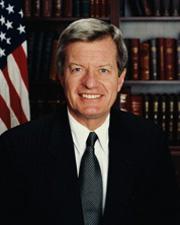 Sen. Max Baucus (D-MT)
Legislative Activity
Stay on top of the latest movement without scrolling through every action
Senate amendment proposed (on the floor): Amendment SA 3429 proposed by Senator Baucus to Amendment SA 3336.(consideration: CR S1285; text: CR S1285)
March 9, 2010
View full timeline
Senate amendment proposed (on the floor): Amendment SA 3429 proposed by Senator Baucus to Amendment SA 3336.(consideration: CR S1285; text: CR S1285)
March 9, 2010
Senate amendment agreed to: Amendment SA 3429 agreed to in Senate by Voice Vote.
March 9, 2010
Amendment SA 3429 proposed by Senator Baucus to Amendment SA 3336. (consideration: CR S1285; text: CR S1285) To provide an explanation of the budgetary effects of legislation considered by the Senate.
March 9, 2010
Amendment SA 3429 agreed to in Senate by Voice Vote.
March 9, 2010
Senate amendment submitted
March 5, 2010
Text
Proposed
TAX EXTENDERS ACT OF 2009

The PRESIDING OFFICER. Under the previous order, the Senate will
resume consideration of H.R. 4213 which the clerk will report.
The assistant legislative clerk read as follows:

A bill (H.R. 4213), to amend the Internal Revenue Code of
1986 to extend certain expiring provisions, and for other
purposes.

Pending:

Baucus amendment No. 3336, in the nature of a substitute.
Reid (for Murray-Kerry) further modified amendment No. 3356
(to amendment No. 3336), to extend the TANF Emergency Fund
through fiscal year 2011 and to provide funding for summer
employment for youth.
Coburn amendment No. 3358 (to amendment No. 3336), to
require the Senate to be transparent with taxpayers about
spending.

[[Page S1285]]

Baucus (for Webb-Boxer) amendment No. 3342 to (amendment
No. 3336), to amend the Internal Revenue Code of 1986 to
impose an excise tax on excessive 2009 bonuses received from
certain major recipients of Federal emergency economic
assistance, to limit the deduction allowable for such
bonuses.
Feingold-Coburn amendment No. 3368 (to amendment No. 3336),
to provide for the rescission of unused transportation
earmarks and to establish a general reporting requirement for
any unused earmarks.
Reid amendment No. 3417 (to amendment No. 3336), to
temporarily modify the allocation of geothermal receipts.
McCain-Graham amendment No. 3427 (to amendment No. 3336),
to prohibit the use of reconciliation to consider changes in
Medicare.
Lincoln amendment No. 3401 (to amendment No. 3336), to
improve a provision relating to emergency disaster
assistance.
Baucus (for Isakson-Cardin) modified amendment No. 3430 (to
amendment No. 3336), to modify the pension funding
provisions.

The PRESIDING OFFICER. The Senator from Montana is recognized.

Amendment No. 3429 to Amendment No. 3336

Mr. BAUCUS. Mr. President, pursuant to the previous order, on behalf
of the chairmen of the Rules and Budget committees, I call up my
amendment No. 3429.
The PRESIDING OFFICER. The clerk will report.
The assistant legislative clerk read as follows:

The Senator from Montana [Mr. Baucus] proposes an amendment
numbered 3429 to amendment No. 3336.

Mr. BAUCUS. I ask unanimous consent that reading of the amendment be
dispensed with.
The PRESIDING OFFICER. Without objection, it is so ordered.
The amendment is as follows:

(Purpose: To provide an explanation of the budgetary effects of
legislation considered by the Senate)

At the appropriate place, insert the following:

SEC. __. BUDGETARY EFFECTS OF LEGISLATION PASSED BY THE
SENATE.

(a) Establishment of Web Page.--
(1) In general.--Not later than 90 days after the enactment
of this Act, the Secretary of the Senate shall establish on
the official website of the United States Senate
(
www.senate.gov
) a page entitled ``Information on the
Budgetary Effects of Legislation Considered by the Senate''
which shall include--
(A) links to appropriate pages on the website of the
Congressional Budget Office (
www.cbo.gov
) that contain cost
estimates of legislation passed by the Senate; and
(B) as available, links to pages with any other information
produced by the Congressional Budget Office that summarize or
further explain the budgetary effects of legislation
considered by the Senate.
(2) Updates.--The Secretary of the Senate shall update this
page every 3 months.
(b) CBO Requirements.--Nothing in this section shall be
construed as imposing any new requirements on the
Congressional Budget Office.

Mr. BAUCUS. The first amendment is a simple attempt to improve the
availability of budgetary information on what Congress does. This
amendment would require the Secretary of the Senate to create a new Web
site that clearly provides information from the Congressional Budget
Office on the legislative actions of the Senate. This is a side-by-side
amendment to the Coburn amendment on the same subject.
I believe Senator Coburn has the same purpose in mind, but we have
drafted this side-by-side amendment to avoid new burdens on the
Congressional Budget Office. The Rules Committee and Budget Committee
worked together with us on the drafting of this amendment to assure
that it would work.
I urge my colleagues to support the amendment.
I yield the remainder of my time.
The PRESIDING OFFICER. Is all time yielded back? If all time is
yielded back, the question is on agreeing to the amendment.
The amendment (No. 3429) was agreed to.
Mr. BAUCUS. Mr. President, I move to reconsider the vote.
Mr. SCHUMER. I move to lay that motion on the table.
The PRESIDING OFFICER. Without objection, it is so ordered.
The motion to lay on the table was agreed to.

Amendment No. 3358

The PRESIDING OFFICER. The question is on agreeing to the Coburn
amendment No. 3358. There is 4 minutes, evenly divided, before the
vote. The Senator from Oklahoma is recognized.
Mr. COBURN. Mr. President, we just voice voted an amendment that will
not do anything. What this amendment says is, where we violate our own
rules in terms of pay-go, we will actually publish both the number of
times and the amount of dollars we do that. It is about transparency of
the Senate, being honest with the American people.
With great fanfare, the Senator from Montana came down and we put
into law a pay-go law. Since that time, including this bill, we will
have passed $120 billion of debt to our kids by saying we waive pay-go.
That is OK. That is the right of the body to do that. But it is not
OK not to let the American people know that and let them keep track of
us.
This amendment is very simple. Anytime we create a new program,
anytime we pass and violate the pay-go rules by overriding the pay-go
point of order, then we should list that with the American people so
they can see what we are doing. It is quite simple, quite
straightforward. It doesn't require any time. You will spend forever
going to the Congressional Budget Office to find this. This makes it
very simple, very straightforward.
I reserve the remainder of my time.
The PRESIDING OFFICER. The Senator from Montana is recognized.
Mr. BAUCUS. Mr. President, I think we can vote on this. I yield the
remainder of my time, but before I do, I think it is a step toward
transparency, and I urge all my colleagues to vote for it.
The PRESIDING OFFICER. The Senator from Oklahoma.
Mr. COBURN. I ask for the yeas and nays.
The PRESIDING OFFICER. Is there a sufficient second? There appears to
be. All time is yielded back.
The question is on agreeing to the amendment. The clerk will call the
roll.
The assistant legislative clerk called the roll.
The result was announced--yeas 100, nays 0, as follows:

[Rollcall Vote No. 44 Leg.]

YEAS--100

Akaka
Alexander
Barrasso
Baucus
Bayh
Begich
Bennet
Bennett
Bingaman
Bond
Boxer
Brown (MA)
Brown (OH)
Brownback
Bunning
Burr
Burris
Byrd
Cantwell
Cardin
Carper
Casey
Chambliss
Coburn
Cochran
Collins
Conrad
Corker
Cornyn
Crapo
DeMint
Dodd
Dorgan
Durbin
Ensign
Enzi
Feingold
Feinstein
Franken
Gillibrand
Graham
Grassley
Gregg
Hagan
Harkin
Hatch
Hutchison
Inhofe
Inouye
Isakson
Johanns
Johnson
Kaufman
Kerry
Klobuchar
Kohl
Kyl
Landrieu
Lautenberg
Leahy
LeMieux
Levin
Lieberman
Lincoln
Lugar
McCain
McCaskill
McConnell
Menendez
Merkley
Mikulski
Murkowski
Murray
Nelson (NE)
Nelson (FL)
Pryor
Reed
Reid
Risch
Roberts
Rockefeller
Sanders
Schumer
Sessions
Shaheen
Shelby
Snowe
Specter
Stabenow
Tester
Thune
Udall (CO)
Udall (NM)
Vitter
Voinovich
Warner
Webb
Whitehouse
Wicker
Wyden
The amendment (No. 3358) was agreed to.

Amendment No. 3356, as Further Modified

The PRESIDING OFFICER. There is 4 minutes equally divided on the
Murray amendment No. 3356.
The Senator from Washington.
Mrs. MURRAY. I ask unanimous consent to use 1 minute and for Senator
Kerry to have the second minute.
The PRESIDING OFFICER. Without objection, it is so ordered.
Mrs. MURRAY. Mr. President, I am offering the youth summer jobs
amendment to build on the extremely successful summer jobs program that
made it possible for over 313,000 young people to have a job. I have
personally heard amazing stories from these young men and women who got
a job. It changed their lives and gave them the experience they needed.
This amendment will provide $1.3 billion to create up to 500,000
temporary jobs this coming summer. It will invest in critical
employment and learning programs that will help not only these young
people but the businesses that hire them. The underlying bill is going
to help millions of families across the country who need a job. This
amendment will make sure young people get a start in their professional
lives, firmly planted on their feet and moving toward success.

[[Page S1286]]

I yield the floor.
The PRESIDING OFFICER. The Senator from Massachusetts.
Mr. KERRY. Mr. President, I thank Senator Murray for her work on this
amendment.
Today, almost 15 million Americans are unemployed, 9 million can only
find part-time work, and 25 percent of our Nation's teenagers and 42
percent of African-American teenagers are unemployed. Both the TANF
Emergency Fund and the summer jobs program provide desperately needed
jobs to our Nation's families who are the most vulnerable to our
economic downturn. According to the Center on Budget and Policy
Priorities, extending the TANF Emergency Fund will save more than
100,000 jobs. And providing up to $1.3 billion in funding for the
summer jobs program will create 500,000 summer jobs.
I promise my colleagues, provide these summer jobs, and it will save
far more than that money in the criminal justice system and in other
social services. This is money well invested.
The PRESIDING OFFICER. The Senator from New Hampshire is recognized.
Mr. GREGG. Mr. President, why do we keep doing this? Why do we keep
passing debt on to our children? Why do we keep running program after
program out here that is shrouded in sweetness and light but not paid
for?
We just passed a pay-go point of order 4 weeks ago to great fanfare,
great breast-beating about how fiscally responsible we were going to
be. Yet time after time since we passed that pay-go point of order,
amendments have been brought to the floor which violate it. This is
another one. This amendment costs $2 billion which is not paid for.
Summer jobs may be good. I am sure they are. But why do we want to
put the debt for those summer jobs onto the children of the people who
are having the summer jobs?
If this is a priority--and it is--let's pay for it. Let's take the
money out of some other account. But let's not add to the debt, and
let's not once again violate the pay-go rules which this Senate has so
loudly proclaimed is the manner in which we will discipline ourselves
fiscally. It is a $2 billion item. If we can't stand by pay-go for $2
billion, we are making a farce out of it.
As a result of this violation of pay-go, I raise a point of order
against the amendment pursuant to section 201(a) of S. Res. 21, the
concurrent resolution on the budget for fiscal year 2008.
The PRESIDING OFFICER. The Senator from Washington.
Mr. BAUCUS. How much time does the Senator from Washington have?
The PRESIDING OFFICER. The Senator has consumed her time.
Mrs. MURRAY. Mr. President, let me be clear: Working with the Finance
Committee, this amendment is paid for over 10 years.
I ask that the budget point of order be waived.
Mr. GREGG. Mr. President, is this a pay-go point of order violation?
Mrs. MURRAY. I move that the budget point of order be waived and ask
for the yeas and nays.
The PRESIDING OFFICER. Is there a sufficient second?
There appears to be.
The question is on agreeing to the motion. The clerk will call the
roll.
The bill clerk called the roll.
The yeas and nays resulted--yeas 55, nays 45, as follows:

[Rollcall Vote No. 45 Leg.]

YEAS--55

Akaka
Baucus
Bayh
Begich
Bennet
Bingaman
Boxer
Brown (OH)
Burris
Byrd
Cantwell
Cardin
Carper
Casey
Conrad
Dodd
Dorgan
Durbin
Feingold
Feinstein
Franken
Gillibrand
Hagan
Harkin
Inouye
Johnson
Kaufman
Kerry
Klobuchar
Kohl
Landrieu
Lautenberg
Leahy
Levin
Lieberman
Lincoln
Menendez
Merkley
Mikulski
Murray
Nelson (FL)
Pryor
Reed
Reid
Rockefeller
Sanders
Schumer
Shaheen
Specter
Stabenow
Tester
Udall (CO)
Udall (NM)
Whitehouse
Wyden

NAYS--45

Alexander
Barrasso
Bennett
Bond
Brown (MA)
Brownback
Bunning
Burr
Chambliss
Coburn
Cochran
Collins
Corker
Cornyn
Crapo
DeMint
Ensign
Enzi
Graham
Grassley
Gregg
Hatch
Hutchison
Inhofe
Isakson
Johanns
Kyl
LeMieux
Lugar
McCain
McCaskill
McConnell
Murkowski
Nelson (NE)
Risch
Roberts
Sessions
Shelby
Snowe
Thune
Vitter
Voinovich
Warner
Webb
Wicker
The PRESIDING OFFICER. On this vote, the yeas are 55, the nays are
45. Three-fifths of the Senators duly chosen and sworn not having voted
in the affirmative, the motion is rejected.
The point of order is sustained, and the amendment falls.
The Senator from New York is recognized.

____________________