To reduce the deficit by establishing discretionary spending caps.
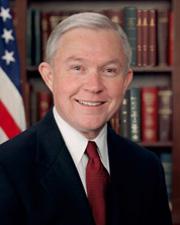 Sen. Jeff Sessions (R-AL)
Legislative Activity
Stay on top of the latest movement without scrolling through every action
Roll call votes on amendments in Senate: Motion to waive all applicable budgetary discipline with respect to amendment SA 3453 rejected in Senate by Yea-Nay Vote. 56 - 40. Record Vote Number: 57.
March 18, 2010
View full timeline
Roll call votes on amendments in Senate: Motion to waive all applicable budgetary discipline with respect to amendment SA 3453 rejected in Senate by Yea-Nay Vote. 56 - 40. Record Vote Number: 57.
March 18, 2010
Considered by Senate. (consideration: CR S1693, S1695-1697, S1715-1716)
March 18, 2010
Point of order that amendment SA 3453 violates the Budget Act raised in Senate.
March 18, 2010
Motion to waive all applicable budgetary discipline with respect to amendment SA 3453 rejected in Senate by Yea-Nay Vote. 56 - 40. Record Vote Number: 57.
March 18, 2010
SA 3453 fell when motion to waive all applicable budgetary discipline rejected.
March 18, 2010
Considered by Senate. (consideration: CR S1647)
March 17, 2010
Considered by Senate. (consideration: CR S1582)
March 16, 2010
Considered by Senate. (consideration: CR S1429, S1448-1453; text as modified: CR S1448-1450)
March 11, 2010
Senate amendment submitted
March 10, 2010
Senate amendment proposed (on the floor): Amendment SA 3453 proposed by Senator Sessions to Amendment SA 3452.(consideration: CR S1350-1352)
March 10, 2010
Amendment SA 3453 proposed by Senator Sessions to Amendment SA 3452. (consideration: CR S1350-1352) To reduce the deficit by establishing discretionary spending caps.
March 10, 2010
Votes
1 roll call on this amendment
Text
Modified
TAX ON BONUSES RECEIVED FROM CERTAIN TARP RECIPIENTS--Continued

The PRESIDING OFFICER. The Senator from Nebraska is recognized.
(The remarks of Mr. Johanns pertaining to the submission of S. Res.
452 are located in today's Record under ``Submitted Resolutions.'')
The PRESIDING OFFICER. The Senator from Utah is recognized.

Health Care Reform

Mr. HATCH. Mr. President, I rise, joined by my friend, the
distinguished Senator from South Dakota and chairman of the Senate
Republican Policy Committee, to discuss the health care legislation
being considered in Congress. The current debate is primarily about
process. But before addressing that, I wish to remind everyone that in
the end, this is about the substance of the legislation that Washington
liberals want to impose upon the country by any means necessary.
This legislation is bad, both for what it represents and for what it
would do. It represents a massive Federal Government takeover of the
health care system. The health care and health insurance systems could
be significantly improved with policies that respect individual choice,
that embrace our system of federalism, in which the States can tailor
solutions to their own needs and demographics. It could. But Washington
liberals have rejected that path.
What would this legislation do? As I have argued in the past, this
legislation would bust the limits the Constitution places on Federal
Government power. Liberty itself depends on those limits, it always has
and it always will. Those limits mean Congress may exercise only the
powers listed in the Constitution. None of those powers authorizes
Congress to take such unprecedented steps as requiring that individuals
spend their own money to purchase a particular good or service, such as
health insurance, or face a financial penalty. This legislation would
unnecessarily take this country into unchartered political and legal
territory.
We just heard from the Congressional Budget Office that President
Obama's policies will add a staggering $8.5 trillion--that is trillion
with a ``t''--to our already sky-high national debt.
This is before passage of the health care tax-and-spend bill that
would cost another $2.5 trillion. Claims that this boondoggle will
lower the deficit result from some pretty impressive accounting tricks.
This legislation, for example, would start taking money from Americans
immediately but would not provide any benefits to them for years. How
about that as a neat way to lower a bill's supposed cost?
What do Americans get for all these trillions of dollars? They would
be required to buy health insurance, but only 7 percent of Americans
would receive any government subsidy to do so. Washington liberals say
this bill cuts taxes, but 93 percent of all Americans would not be
eligible for any tax benefit. Contrary to President Obama's explicit
pledge, one-quarter of Americans making under $200,000 per year would
see their taxes go up. Middle-class American families paying higher
taxes will outnumber those receiving any government subsidy by more
than 3 to 1.
And after the higher taxes, increased government control, greater
regulation, and paltry help in buying health insurance, this
legislation would not control health care costs, which is the main
reason for the concern about health insurance in the first place.
It does nothing to rein in the junk lawsuits that drive up costs and
drive doctors out of medicine. Instead, this legislation would cut $500
billion from Medicare to pay for a massive new government entitlement
system that would include 159 new boards and other bureaucratic
entities.
Last month, the White House released an 11-page document titled ``The
President's Proposal.'' Calling it that, I suppose, was to make it
appear to be a meaningful step in a genuine negotiation. It is nothing
of the kind. One of the most obvious changes suggested in this document
was elimination of the Medicaid subsidy that the Senate bill gave to
only one State. That was for political rather than policy reasons. And
I cannot forget to mention that this 11-page document's suggested
changes would add at least $75 billion more to the cost of the Senate
bill. That is around $7 billion a page. But it offered nothing to
change the real defects in this legislation.
For these and so many other reasons, this legislation is the wrong
way to address the challenges we face in health care and health
insurance.
Let me turn to my friend from South Dakota, Senator Thune. Now that
we have been debating these issues for the better part of a year, what
do the American people think of these liberal Washingtonian proposals
and how did we get where we are today?
Mr. THUNE. I say to the Senator from Utah that he has made, over the
course of the last year, many compelling arguments about the substance
of this legislation and just now summarized what some of those are. The
reason the American people have rejected this legislation is because
they understand the substance of it. As the Senator pointed out, it has
tax increases, Medicare cuts, and premium increases for most Americans.
They figured that out a long time ago. That is why, if you look at the
public opinion surveys that have been done with regard to the bill
itself and to the process by which it got where it is, the American
people reject it.
The reconciliation process, which has been talked about as a way in
which to ultimately pass this through the House and then through the
Senate, there have been polls that have asked the American public what
they think of using reconciliation to enact health care reform.
The Gallup poll from February 25: 52 percent of Americans oppose the
use of reconciliation. Last week's Rasmussen Report poll shows that 53
percent of Americans are opposed to the health care plan. Perhaps the
most telling poll is a CNN poll from February 24--if you can believe
this--that says 48 percent of Americans want Congress to start working
on a new bill, and 25 percent of Americans want Congress to stop
working on health care. Added together, that is 73 percent of the
American public that wants Congress to either stop working on health
care altogether or start over.
I am not among those who think we ought to stop working on this. This
is a big, important issue to the American people. They want us to do
it. But they want us to get it right. What is being proposed by our
colleagues on the other side and what so far has been rammed through on
a very partisan basis is a $2.5 trillion expansion of the Federal
Government that expands the health care entitlement but does very
little to reform health care in this county or to address the
underlying drivers of health care costs in this country.
So the Senator from Utah is absolutely right in describing why the
American people are so opposed to this legislation; that is, because
they understand it. They know what it does. They are concerned about
the cost of their health care insurance in this country. They are
concerned as well about those who do not have health care, and we have
come up with solutions we think make sense to cover those who do not
have coverage. But I think it is pretty clear where the American people
come down on this issue.
Incidentally, I think that is also what many of these elections we
have had recently are about. If you look at

[[Page S1438]]

what happened in Virginia, New Jersey, and most recently in
Massachusetts, many of those elections were referendums, if you go
inside the numbers, on the health care issue. I think it is a clear
message to Washington that these health care proposals are not
acceptable to the American people. Yet it does not seem that those of
us in Washington, DC--or at least some of us--are listening to that
message. Frankly, I believe, I say to my colleague from Utah, this is a
bad bill. It has been rejected by the American people, part of it
because of the substance of it; part of it because the normal process
has not been followed. We all know what was done to get that extra vote
to try and pass this bill through the Senate, to get that 60th vote--
all these backroom deals that were put together at the last minute. We
have heard the ``Cornhusker kickback'' chronicled, we have heard the
``Louisiana purchase'' chronicled many times over the last several
months.
But I think the point, very simply, I say to my friend from Utah, is
that, one, the American people understand this will lead to higher
costs for most Americans, it is going to increase their cost of health
insurance in this country; two, they want to see a bill that is put
together in a way that elicits bipartisan support.
The Senator from Utah has been here since 1977. He has been involved
in a whole series of important bipartisan debates, where important
legislation was acted on in the Senate, but it was done in a way that
had support from both Republicans and Democrats. I think that is what
the American people expect of this process. They also expect us to
conduct ourselves in a way that is transparent.
Doing legislation, 2,700-page bills behind closed doors, adding last-
minute backroom deals to try and get that illusive 60th vote to pass
it, and now using reconciliation--something that clearly was not
designed for this process--is another issue that is even worsening the
American public's opinion not only of the substance of this legislation
but also the process.
I wish to ask my colleague about reconciliation. But before I do
that, I wish to mention one thing because many of us--you and I both
and others on our side--have talked a lot during the course of this
debate about the cost and what we ought to be doing to address health
care. If we wish to address health care in this country for most
Americans--or reform health care--it means getting costs under control.
We have been arguing for some time that most Americans--and I think
the Congressional Budget Office has validated this, the Actuary for the
Centers for Medicare & Medicaid Services has validated this--that if
you are buying in the individual market, you are going to see your
insurance premiums go up above what they would normally go up, 10
percent to 13 percent, and if you are someone who buys in the large
employer or small employer market, you are still going to see your
health insurance premiums go up; they are going to be going up at the
rate they are today or maybe slightly higher, but the rate they are
going up today is twice the rate of inflation.
Yesterday, the Senator from Illinois, the distinguished whip in the
majority, the Democratic whip, said on the floor of the Senate:

Anyone who would stand before you and say, well, if you
pass health care reform, next year's health care premiums are
going down, I don't think is telling the truth. I think it is
likely they would go up, but what we're trying to do is slow
the rate of increase.

So there you have it. We have been saying this all along--an
acknowledgment by folks on the other side who are finally saying or
reiterating what we have been saying all along; that is, health
premiums are going to go up.
I think if you are someone who, as I said, buys in the individual
marketplace or who is in the large or small employer market, you are
going to see your premiums go up. The question is How much? I think for
most Americans, they would go up significantly.
But I say to my colleague--and I would ask him because he has been
here since reconciliation almost was put in place; you have to go back
to 1974 and the Budget Act--but I am told it has been used 18 or 19
times since then. Since the Senator came here in 1977, I think every
time reconciliation has been used, the Senator has been part of that
process, has had to vote on that. There probably is not anybody in this
Chamber who is more experienced on the issue of reconciliation--what it
was designed to do, what it can do--than the Senator from Utah.
So I would ask the Senator if he could explain to those of us who
have not been here as long exactly what reconciliation was designed to
be used for, how it is designed to function, and why it is not
applicable to the case of trying to restructure or reorder literally
one-sixth of the American economy, which is what health care represents
in this country.

Mr. HATCH. I thank my colleague for his cogent remarks because my
friend from North Dakota is absolutely right. The American people are
not buying this, nor are they going to buy this misuse of
reconciliation.
Even with large majorities in the Senate and the House, the White
House, and most of the mainstream media, Washington liberals have not
been able to convince the American people this is the right way to go.
The American people oppose this bill. They want us to start over, and
they want us to adopt step-by-step, commonsense reforms.
We could do that, but Washington liberals instead are determined to
find some way to get their way. The latest procedural gambit, which has
been raised by my colleague, is called reconciliation. Before talking
about what reconciliation is, I have to emphasize what it is not.
Reconciliation is not simply an alternative to the Senate's regular
process for handling legislation. Instead, reconciliation is an
exception to that process.
While the House is about action, the Senate is about deliberation,
and the rules in each body reflect its role. For more than 200 years,
Senate rules have allowed smaller groups of Senators to slow down or
stop legislation. The House is a simple majority vote body, but the
Senate is not. This creates checks and speed bumps to legislation, but
passing legislation is not supposed to be easy, especially something
that affects one-sixth of the American economy.
Reconciliation is the exception to that because it limits debate and
amendments and requires only a simple majority. It allows for only 20
hours of debate. It actually weakens the role the Senate plays in the
legislative branch and, therefore, this exception to our regular order
was created to handle a small category of legislation related to the
budget. While thousands of public laws have been enacted since the
reconciliation process was created, that process, as the distinguished
Senator from South Dakota said, has been used only 19 times to enact
legislation of any kind into law.
Not only is reconciliation a rare exception to our regular
legislative process, but using reconciliation to pass sweeping social
legislation, as opposed to budget or tax legislation, is even more
rare. Reconciliation has been used only three times to pass such major
social legislation. Welfare reform passed in 1996 with 78 votes, child
health insurance passed in 1997 with 85 votes, and a college tuition
bill passed in 2007 with 79 votes. In each case, dozens of Senators in
the minority party supported the legislation.
The health care legislation before us is not the kind of budget or
tax legislation that has been the primary focus of the reconciliation
process in the past. It is much more like the welfare reform or child
health insurance bills, except for one very important thing: The health
care legislation is a completely, 100-percent, partisan bill--100
percent. The reconciliation process, which from the start is a rare
exception to our regular process, has never been used for such
sweeping, major social legislation that did not have wide bipartisan
support--never. It was never supposed to be used for that. You can
criticize the three times social legislation was passed, and your
criticism might be considered valid by some, but the fact is, those
bills were bipartisan.
Washington liberals obviously know this because their latest talking
point is, reconciliation will not be used to pass the large health care
bill only to change the big health care bill. My friends, that is a
distinction without a difference. The bill Washington liberals want is
the combination of the big Senate bill and the smaller fixer bill. In

[[Page S1439]]

fact, they cannot stomach the one without the other. The bill they
want, whether passed in one piece or two, cannot pass Congress through
the regular legislative process. The health care bill that Washington
liberals want, if it can be passed at all, can only be passed through
an illegitimate use of this extraordinary process called
reconciliation.
By the way, I would like to remind my friends on the other side of
the aisle that the reconciliation process has been used only twice to
pass a purely partisan bill on any subject, even those that
reconciliation may have been designed for. In both cases--1993, when
Democrats were in charge, and 2005, when Republicans were in charge--
the American people in the next election threw the majority party out
and gave the other party a chance to run the Senate.
Just as Washington liberals cannot convince the American people to
support the substance of this legislation, they cannot make the case
that reconciliation is a legitimate way to pass it.
Let me also say, there are those in the House who want to distort
this reconciliation process even further by devising a way so that
House Members do not have to actually vote directly on the Senate-
passed bill. They want to create a rule that would deem the Senate bill
as passed. Talk about distorting the process. Talk about the lack of
guts to stand and vote for what they claim is so good. Talk about
deceiving the American people. They have already distorted the
reconciliation rules, but that would be a bridge too far.
I ask my friend from South Dakota, Senator Thune, whether he has
seen, as I have, the spin and misdirection that have been employed to
give the impression that this is a legitimate process to pass this
unpopular legislation.
Mr. THUNE. Well, I would say to my friend from Utah, it is
interesting how the semantics and terminology changes in Washington
depending upon what point you are trying to make. But many of our
colleagues who have weighed in heavily against the use of
reconciliation on a range of subjects--more specifically now health
care reform--are now referring to it as simply a simple majority: All
we are asking for is a simple majority vote, which does represent a
spin and misdirection.
Because, as the Senator from Utah has noted, reconciliation, as a
procedure, has a fairly special place in the history of the Senate,
going back to 1974, when it was created. It is to be used for specific
purposes: to reconcile spending, revenues, tax increases, tax cuts--
primarily to accomplish deficit reduction.
As the Senator from Utah has pointed out, when it is used to enact
significant legislation, generally it has broad bipartisan support. The
Senator mentioned welfare reform. It had 78 votes for it. That is the
most frequently cited example of the use of reconciliation for
something that was policy oriented. But, remember, that had 78 votes in
the Senate. A huge and decisive majority of Senators decided to vote
for its use in that case.
You also have, as I said, other examples where it was done to
accomplish reducing taxes, increasing taxes. Those are all arguably
legitimate uses under the procedure of reconciliation.
But now what you are finding is legislation that literally would
restructure and reorder one-sixth of the American economy that would
have profound consequences and a profound impact on the American people
for not only the near term but the long term. We are talking about
using this ``go your own way,'' ``go it alone'' process of
reconciliation simply because using regular order cannot accomplish the
objective that is desired by the Democratic majority. So they have
fallen back on the use of reconciliation for something that is
unprecedented.
It is interesting to me, if you look historically at what some of our
colleagues have said, there are not many people who have more
experience with this issue or more experience in the Senate than the
Senator from Utah, but the Senator from West Virginia, a member of the
Democratic majority, has been here even longer and is cited most often
as being the author of the current budget process that we have, which
includes this reconciliation procedure. He wrote a letter a year ago
which I wish to submit for the Record, and I wish to quote the first
paragraph from that letter of a year ago in April. He said:

Dear colleague:
I oppose using the budget reconciliation process to pass
health care reform and climate change legislation. Such a
proposal would violate the intent and spirit of the budget
process and do serious injury to the constitutional role of
the Senate.

There being no objection, the material was ordered to be printed in
the Record, as follows:

U.S. Senate,

Committee on Appropriations,

Washington, DC, April 2, 2009
Dear Colleague: I oppose using the budget reconciliation
process to pass health care reform and climate change
legislation. Such a proposal would violate the intent and
spirit of the budget process, and do serious injury to the
Constitutional role of the Senate.
As one of the authors of the reconciliation process, I can
tell you that the ironclad parliamentary procedures it
authorizes were never intended for this purpose.
Reconciliation was intended to adjust revenue and spending
levels in order to reduce deficits. It was not designed to
cut taxes.It was not designed to create a new climate and
energy regime, and certainly not to restructure the entire
health care system. Woodrow Wilson once said that the
informing function is the most important function of
Congress. How do we inform? We publicly debate and amend
legislation. We receive public feedback, which allows us to
change and improve proposals. Matters that affect the lives
and livelihoods of our people must not be rushed through the
Senate using a procedural fast track that the people never
get a chance to comment upon or fully understand.
Reconciliation bills are insulated from debate and
amendments. Debate is limited to twenty hours, and a majority
vote can further limit debate. The rules are stacked against
a partisan Minority, and also against dissenting views within
the Majority caucus. It is such a dangerous process that in
the 1980s, the then-Republican Majority and then-Democratic
Minority adopted language, now codified as the Byrd Rule, to
discourage extraneous matter from being attached to these
fast-track measures.
The Senate cannot perform its Constitutional role if
Senators forgo debate and amendments. I urge Senators to
jealously guard their individual rights to represent their
constituents on such critical matters as the budget process
moves forward.
With kind regards, I am
Sincerely yours,
Robert C. Byrd.

Mr. THUNE. That is what the author of reconciliation said a year ago
about trying to do health care reform through this process that the
majority has decided to use.
There are lots of other examples of our colleagues in the Senate on
the other side of the aisle--and I could go on and on. The majority
leader, Senator Reid, in November of 2009 said: ``I am not using
reconciliation.''
Senator Conrad, the chairman of the Budget Committee, said in March
2009 on the Senate floor:

I don't believe reconciliation was ever intended for the
purpose of writing this kind of substantive reform
legislation such as health care reform.

Even the President, when he was a Senator at that time, and now
President said reconciliation is a bad idea.
So we could go on and on and we can find these statements of our
colleagues on the other side who, in the past, have expressed
opposition, and not just timid, tepid opposition but, I would argue,
very aggressive opposition to the use of reconciliation for something
this consequential and are now sort of falling back.
I have 18 Democrats on the record who have said they oppose
reconciliation and are now saying they think this could be used for
this purpose and now is being referred to as a simple majority.
So, again, I would say to my colleague from Utah that I think the
spin that is going on now to try to confuse the American people about
what is happening is something we need to end. We need to be
transparent and clear with the American people about what is being done
here.
I would simply ask my colleague from Utah whether he thinks the
process of using reconciliation, the process that has led us to this
point, or, for that matter, the underlying substance of this bill, is
something the American people would be proud of and would want to see
us pass in the Senate.
Mr. HATCH. My friend from South Dakota hit the nail on the head. I
appreciate his remarks. If this legislation were sound policy, if it
incorporated consensus ideas, if it had any level of real support among
the American people, Washington liberals would not

[[Page S1440]]

need to use the gimmicks they are using. They wouldn't have to use the
tricks that are being used. They wouldn't have to use the spin that the
Senator from South Dakota so accurately described.
I mentioned earlier that the reconciliation process has never been
used to enact sweeping social legislation that did not have wide
bipartisan support.
Mr. ROCKEFELLER. Would the Senator yield?
Mr. HATCH. I am happy to yield for a question because I do want to
finish my remarks.
Mr. ROCKEFELLER. As I understand it--and I am presiding over the
Federal Aviation Administration legislation, so this is a little
offtrack, but it is very hard for me to listen to this kind of dialogue
week after week without having these thoughts and questions.
Mr. HATCH. OK.
Mr. ROCKEFELLER. The Senate passed with 60 votes the health care bill
which is now----
Mr. HATCH. Sixty partisan votes.
Mr. ROCKEFELLER. Right--which is now on the way over to the House.
The House has it.
Mr. HATCH. Right.
Mr. ROCKEFELLER. The question is, is the House going to pass it. If
there is going to be any health care reform at all, the House has to
pass it. Now, if the House does pass it, it will then constitute about
85 to 90 percent of the entire health care bill.
I listened to my good friend and the Senator from South Dakota talk
about 16 percent of the gross national product. But the bill that will
come out of the House--hopefully passed--and, therefore, will not have
to come back to the Senate will, No. 1, be nowhere--will be the vast
majority of the 16 percent, if that is an accurate figure. But one
thing that is even more clear to me is it will have absolutely nothing
to do with reconciliation, just the regular legislative process.
The only question about reconciliation and the only place where it
applies from this Senator's point of view is on that particular add-on
that would be done to include some Republican ideas and include a few
more things that the House wants to do.
I ask the Senator from Utah, why does he say this is reconciliation
affecting 16 percent of GDP when, in fact, it affects 14 percent or 15
percent of GDP, which is simply in the regular order of Senate process
and has nothing to do with reconciliation?
Mr. HATCH. Well, I have already said that it is the combination of
these bills that Washington liberals want and that combination cannot
pass without reconciliation. First of all, we know the House doesn't
like the bill that passed in the Senate. If they had the votes to pass
it over in the House, it would already be passed. So what they have
done is come up with some cockamamie misuse of reconciliation to do a
smaller bill.
Mr. ROCKEFELLER. I have stipulated that.
Mr. HATCH. Let me finish--doing a smaller bill that, assuming they
can pass the large bill, would then come over here.
I submit to you--and I know it is absolutely true--they can't pass
the larger bill. I have also indicated that they may abuse the rules
further by getting a special rule over there that would would have to
deem the Senate bill as having been passed by the House even though
there never was a vote on it.
So the key vote would be the vote on the rule to deem the Senate bill
as passed. That is a really, really mixed up and messed up version of
the reconciliation process. There is only one reason they are doing
that, and that is because it is the only way they can possibly get the
health care reform they want.
Mr. ROCKEFELLER. Then I would further inquire: I don't see any
possibility of the House changing a bill, which would have to come back
over to the Senate, because it would be highly unlikely the Senate
would be able to pass that bill. So I don't think that will be the
process. I think what the House will do--and they said they haven't
done it; therefore they can't do it--well, they said that about the
Senate bill in the Senate, too, and we did, and it was very close for
reasons that it got no votes from your side. But that is not the point.
The point is, reconciliation on 16 percent of the GDP, if they pass
it--and this is all in the full time of working out the process on the
House side the Senate bill, which is what they want to try to do, and
then the reconciliation is not done on their side, it is done on our
side, in which we put in a few things to--whatever will be attractive
to Republicans as well as some things which will help with liberals on
the Democratic side in the House because they are more liberal than we
are.
That, I would say to my good friend from Utah, is not reconciliation,
but it is put that way for months now. I am on the floor and I have
this microphone and you are being kind enough to be patient with me,
but it isn't reconciliation. The Senator from South Dakota said it is
16 percent of the gross domestic product. It isn't. It is probably
about 5 percent, 6 percent.
Mr. HATCH. Well, I wish to finish my remarks.
Mr. ROCKEFELLER. I thank the Senator.
Mr. HATCH. I am happy to do it. I wish to finish my remarks, but the
real problem is that the House is having difficulty passing the Senate
bill because an awful lot of liberals don't like it, and an awful lot
of conservative Democrats don't like it--if there are any conservative
Democrats in that body; there may be a few, although there aren't any
over here in this body. The only way they can get the bill back over
here with their small reconciliation package that they talked about--
the only way they can do that is by abusing the rules.
Frankly, if they had the votes to pass it, it would have been passed
by now. The Senator from West Virginia and I both know they don't have
the votes.
Let me just continue on with my remarks. I mentioned earlier that the
reconciliation process has never been used to enact sweeping social
legislation that did not have wide bipartisan support, but I also wish
to emphasize that such major legislation has had wide bipartisan
support even when passed through the regular legislative process. That
is the best way to achieve such significant change that can impact so
much of our economy and virtually every American family.
The Senate, for example, passed the Social Security Act in August
1935 by a voice vote. The legislation creating the Medicare Program in
July 1965 received 70 votes, a bipartisan vote. Legislation such as the
Americans with Disabilities Act, in which I played a significant role,
passed in 1990 by a vote of 94 to 6, and a revision in 2008 passed the
Senate and the House unanimously. That is the best way to enact
sweeping social legislation with wide bipartisan support and the deep
consensus of the American people.
If you look at the meeting down at the White House of Republicans and
Democrats and the President, I think it was shocking to many who had
been blaming Republicans for not coming up with a bill, knowing that
there was no chance it would even be considered, to see that
Republicans had a lot of ideas and were willing to work with Democrats,
would have worked together. We could have started by doing the things
we can agree on and then go from there and see what we can do to bring
about a bipartisan consensus. But, no, that wasn't good enough.
So whether our regular legislative process is used or the exception
to that process called reconciliation is used, major social legislation
has had wide bipartisan support. This one does not. Legislation with
much less impact on the health care bills before us had to have wide
bipartisan support. But rather than compromise or deviate in any way
from their big government, federally controlled, one-size-fits-all
approach, Washington liberals have insisted that they know better than
the American people, and the American people have caught on to them.
These liberals are determined to have their way by any means necessary,
even by the illegitimate use of an extraordinary process such as
reconciliation.
I ask unanimous consent that a column by this body's former majority
leader, Dr. Bill Frist, appearing in the February 25 edition of the
Wall Street Journal be placed in the Record following my remarks.
The PRESIDING OFFICER. Without objection, it is so ordered.
(See exhibit 1.)

[[Page S1441]]

Mr. HATCH. Mr. President, Senator Frist cogently argues that using
reconciliation for this health care legislation would be a historic and
dangerous mistake.
There is still time to turn back from this path. There is still time
to do what nearly three-quarters of Americans want us to do and that is
start over and work together. I hope we do. I told the President 3 days
after the inauguration, when I was down there at their request, that I
would be happy to work with him, and I know a lot of other Republicans
would be happy to. We were never even called on it.
I wish to thank my distinguished colleague from South Dakota, Senator
Thune, for his leadership in this body and his articulate arguments
here today. I have appreciated them. He does a great job leading our
policy committee and is a real advocate for sound ideas and
conservative principles. I hope he feels as I do, as we have outlined
today, that on both substance and process the Senate is heading in the
wrong direction on health care reform. We need to pull back and do it
right.
Mr. THUNE. If the Senator will yield for just one final point.
Mr. HATCH. I am happy to yield.
Mr. THUNE. I think it is an important one point. I hear articulated
by our colleagues on the other side the whole process by which the
House is acting on this legislation. I served for three terms in the
House of Representatives. I still have colleagues and friends over
there, and I know they have a way, through the rules process, of doing
a lot of things that aren't allowed in the Senate.
The Senate was designed by our Founders to be more free flowing, to
slow things down, and to be more deliberative. The Rules Committee
allows them to put together what is called a self-enacting, self-
executing rule and, as you said, to ``deem as passed'' the Senate bill
without a rollcall vote or without a recorded vote on it, which tells
us right there that there are a lot of House Members who don't want to
vote on the Senate-passed bill. They don't want to go on the record.
The only way that bill can pass in the House of Representatives is
with an accompanying reconciliation vehicle that makes the fixes that
most of those House Members want to make.
My point simply is this: Health care reform cannot pass absent this
reconciliation process that is being promised on the House side, and
also being promised to House Members is that if they vote for it over
there, the Senate will follow suit. With all the points of order that
will lie against this legislation when it comes to the Senate, in all
likelihood the House Members are being asked to take an incredible leap
of faith that the Senate is going to be able to maintain many of the
provisions they added to the reconciliation bill in the House.
The point--and I come back to the dialog the Senator from Utah had
with the Senator from West Virginia because I think it is an
interesting point of discussion and one criticism I heard from our
colleagues on the other side--but, frankly, the House of
Representatives could not pass health care reform absent this
reconciliation vehicle. It is about one-sixth of our economy. It is
about reordering, restructuring, literally, something that is personal
and important to every American. When you are talking about doing
issues of that consequence and that impact, it ought to be done, as the
Senator from Utah has mentioned, as has been done in the past, in a
bipartisan way that elicits the best suggestions and ideas of both
sides and gets a broad bipartisan vote in the Senate.
I thank the Senator from Utah for his leadership.
Mr. HATCH. I appreciate the Senator's remarks. Make no bones about
it, they know they cannot pass the bill that has been sent over there,
so they are going to attempt this extraordinary rules gimmick.
Frankly, it really disturbs me that on something this important,
something that affects one-sixth of the American economy, they are
willing to play games with this in order to get their will when a vast
majority of the American people are against what they are doing. Only
about 24 percent are for it. Frankly, they want their way no matter
what. If they pull this off, and I question whether they can, but if
they do, I believe they are going to pay a tremendous price.
It is not the way we should be legislating, especially since a number
of us have been willing to work with them on issues we agree on first--
and there is a lot we could agree on first--and then go from there and
battle it out on the issues on which we cannot agree. That is a pretty
good offer, and it has been on the table from the inauguration on.
There is something more to this. It is a question of power. If they
get control of the health care system of this country and they move it
more and more into the Federal Government and more and more people
become dependent on the Federal Government, then it is a question of
power.
I want to make fewer and fewer people dependent on the Federal
Government. I would like to have people have freedoms. This is going to
take away freedoms. Not only that, in order to arrive at this $2.5
trillion bill, they have had to use accounting gimmicks like imposing
taxes first and then 4 years later implementing other parts of the
bill. Some of it will not be implemented until 2018, long after
President Obama, assuming he is elected to two terms, is gone. That is
to accommodate their union friends, knowing that otherwise they will
never have the guts to enact that part of the bill.
This bill is going to cost a lot more. We are already spending $2.4
trillion on our health care system in this country. They want to add
another $2.5 trillion to it. They say it is $1 trillion, but they use
gimmicks for the first several years. Can you imagine $5 trillion for
health care? And they still do not cover everybody in our society.
There is a real issue of whether they are covering a lot of people the
American taxpayers are going to have to pay for who should not be
covered.
To use this process to slip such a bill through, it is abysmal. They
should be ashamed of themselves. They act as if the American people are
so doggone stupid, they cannot figure it out. They have already figured
it out. They know it is not a good thing.
Mr. THUNE. Will the Senator yield?
Mr. HATCH. Yes, I yield.
Mr. THUNE. I think they have figured it out, which is why the last
survey I quoted was the CNN survey which said 48 percent of the people
want us to start over and 25 percent want Congress to quit working on
the issue altogether. That is literally three-quarters of Americans who
have rejected the substance of this legislation--higher taxes, expanded
government, Medicare cuts, higher premiums for most Americans--and some
who flatout do not want anything done, which, as I said, is not the
view to which I subscribe. Three-quarters of Americans understand what
this bill is about. They know how it was put together, and they reject
both.
Mr. HATCH. I know the distinguished Senator knows as well as I know
that there are 1,700 provisions in this bill that turn the power over
to make decisions on our health care matters to the Secretary of Health
and Human Services. I don't care whether the Secretary is a Democrat or
a Republican. Naturally, I prefer a Republican, but I don't care
whether they are either. That kind of power should not be turned over
to the bureaucracy.
I think Republicans are willing to stand up and have the guts to do
it. My gosh, there has not been a hand extended to us at all during
this process. They just said: Take it or leave it.
I was in the Gang of 7 on the Finance Committee. I thought that the
chairman was trying his best but was not given enough power to really
come up with a health care bill, except within the parameters they had
already decided. He was so restricted. I decided that I could no longer
continue in those talks.
The bill turned out as I thought it would. They took the HELP
Committee bill and then they took aspects of the Finance bill and in
one office, with even very few Democrats--no Republicans--they came up
with this monstrosity of a bill on which the House now does not want to
vote. They are going to do anything they can to avoid that vote, even
gimmicking up the whole process. That is disgraceful, in my eyes.
I do not need to go on any further. I think we ought to start over.
We ought to do it right. We ought to work together and start with the
issues on

[[Page S1442]]

which we can agree. I think there would be a number of considerable
issues we can agree on, starting with people who have preexisting
conditions. They ought to be able to get health insurance. We all agree
on that. There are a number of other things on which we can agree.
I thank my dear colleague from South Dakota. I thank him for the
excellent remarks he made on the floor. I appreciate him answering some
of the questions I had.
I yield the floor.

Exhibit 1

[From the Wall Street Journal, Feb. 25, 2010]

A Historic and Dangerous Senate Mistake: Using `Reconciliation' To Ram
Through Health Reform Would Only Deepen Partisan Passions

(By Bill Frist)

Senate Majority Leader Harry Reid has announced that while
Democrats have a number of options to complete health-care
legislation, he may use the budget reconciliation process to
do so. This would be an unprecedented, dangerous and historic
mistake.
Budget reconciliation is an arcane Senate procedure whereby
legislation can be passed using a lowered threshold of
requisite votes (a simple majority) under fast-track rules
that limit debate. This process was intended for incremental
changes to the budget--not sweeping social legislation.
Using the budget reconciliation procedure to pass health-
care reform would be unprecedented because Congress has never
used it to adopt major, substantive policy change. The
Senate's health bill is without question such a change: It
would fundamentally alter one-fifth of our economy.
The first use of this special procedure was in the fall of
1980, as the Democratic majority in Congress moved to reduce
entitlement programs in response to candidate Ronald Reagan's
focus on the growing deficit. Throughout the 1980s and '90s,
reconciliation was used to reduce deficit projections and to
enact budget enforcement mechanisms. In early 2001, with
projected surpluses well into the future, it was used to
return a portion of that surplus to the public by changing
tax rates.
Senators of both parties have assiduously avoided using
budget reconciliation as a mechanism to pass expansive social
legislation that lacks bipartisan support. In 1993,
Democratic leaders--including the dean of Senate procedure
and an author of the original Budget Act, Robert C. Byrd--
appropriately prevailed on the Clinton administration not to
use reconciliation to adopt its health-care agenda. It was
used to pass welfare reform in 1996, an entitlement program,
but the changes had substantial bipartisan support.
In 2003, while I was serving as majority leader,
Republicans used the reconciliation process to enact tax
cuts. I was approached by members of my own caucus to use
reconciliation to extend prescription drug coverage to
millions of Medicare recipients. I resisted. The Congress
considered the legislation under regular order, and the
Medicare Modernization Act passed through the normal
legislative procedure in 2003.
The same concerns I expressed about using this procedure to
fast-track prescription drug expansions with a simple
majority vote were similarly expressed by Majority Leader
Reid, Senate Budget Committee Chairman Kent Conrad, Finance
Committee Chairman Max Baucus, and others last year when they
chose not to use the procedure to enact their health-care
legislation. Over the past several months, an additional 15
Democratic senators have expressed opposition to using this
tool.
The concerns about using reconciliation to bypass Senate
rules which do not limit debate reflect the late New York
Democratic Sen. Pat Moynihan's admonishment--that significant
policy changes impacting almost all Americans should be
adopted with bipartisan support if the legislation is to
survive and be supported in the public arena.
Applying the reconciliation process is dangerous because it
would likely destroy its true purpose, which is to help enact
fiscal policy consistent with an agreed-upon congressional
budget blueprint. Worse, using reconciliation to amend a bill
before it has become law in order to avoid the normal House
and Senate conference procedure is a total affront to the
legislative process.
Finally, enacting sweeping health-care reform through
reconciliation is a mistake because of rapidly diminishing
public support for the strictly partisan Senate and House
health bills. The American people disdain the backroom deals
that have been cut with the hospital and pharmaceutical
industries, the unions, the public display of the
``cornhusker kickback,'' etc. The public will likely--and in
my opinion, rightly--rebel against the use of a procedural
tactic to lower the standard threshold for passage because of
a lack of sufficient support in the Senate.
Americans want bipartisan solutions for major social and
economic issues; they don't want legislative gimmicks that
force unpopular legislation through the Senate. Thomas
Jefferson once referred to the Senate as ``the cooling
saucer'' of the legislative process. Using budget
reconciliation in this way would dramatically alter the
founders' intent for the Senate, and transform it from
cooling saucer to a boiling teapot of partisanship.
Mr. Reid was right to rule out this option when this saga
began last year. He would be wise to abandon it today.

The PRESIDING OFFICER. The Senator from West Virginia.
Mr. ROCKEFELLER. Mr. President, I suggest the absence of a quorum.
The PRESIDING OFFICER. The clerk will call the roll.
The bill clerk proceeded to call the roll.
Mr. BURRIS. Madam President, I ask unanimous consent that the order
for the quorum call be rescinded.
The PRESIDING OFFICER (Mrs. Shaheen). Without objection, it is so
ordered.

Health Care Reform

Mr. BURRIS. Madam President, I just heard an interesting colloquy
between two distinguished friends from across the aisle in reference to
health care. Although I found that back-and-forth dialogue very
interesting, one problem with the dialogue was it was misinformation
that my distinguished colleagues are putting out on this floor and to
the people of America. They keep saying we should start over on health
care. They are saying we didn't incorporate any of their proposals. And
that is the farthest thing from the truth.
The work on this bill took over a year, and they had all the input.
Even the President of the United States incorporated their ideas into
the bill we passed from this distinguished body, in the bill that is
now lying between the House and the Senate. So while I found their
colloquy very interesting, I hope the American people will begin to
look at what is being put out here, what is being said here, and
realize that our distinguished colleagues across the aisle don't want
to see health care reform enacted. Evidently, they want to continue
with the same old ways, with the insurance companies controlling this
health sick system, not health care system. It is a profit-making
system for them. I hope the American people will see right through
their comments.
I want to talk today about whether there are real winners and losers
in this health care debate. Since the beginning of the debate over
health care reform, we have heard an awful lot about the political
problems associated with taking on this issue. It is difficult, it is
divisive, and there are no easy answers, and for those reasons, it is
no wonder our elected leaders have been unable to solve this problem
for almost 100 years. This is nothing new. We have been working on this
in this body for over 97 years.
There will never be a shortage of reasons to put off the tough
questions, to avoid the tough issues and kick the can down the road.
There will never be a shortage of roadblocks and excuses. Over the last
century, we have heard an awful lot of them. But we must not settle for
that any longer. We must reject the tired politics of the past and the
tired politics of right now--and the politics we just heard from my
distinguished colleagues from across the aisle. It is now time to lead.
It is time to say: Enough is enough--to stop shrugging off the
difficult problems and to meet them head on. It is time to
fundamentally change the conversation.
We have heard far too much about the political winners and losers in
the health care debate and not enough about the real winners and losers
in America's health care system. So let us refocus the terms of this
discussion and keep the perspective where it should be: on the ordinary
Americans who need our help, the ordinary Americans who need health
care coverage now.
Because this isn't about electoral math. It is not about poll numbers
or partisan talking points or cold statistics. It is about hard-working
folks who are suffering and dying every single day under a system that
is badly in need of repair. It is about the people whose lives and
livelihoods are on the line. Our success or failure at passing reform
will have political consequences for some of the people in this
Chamber, but I believe those concerns are insignificant compared to the
real consequences it will have for ordinary Americans all across this
country.
So I call upon my colleagues in the Senate and my friends in the
media to focus our attention on what matters. Let's talk about what
reform means for regular folks, not politicians or special

[[Page S1443]]

interests or even insurance lobbyists. This is bigger than politics.
This is about addressing a national problem that has touched untold
millions of lives over the past 100 years.
As we debate this legislation today, there are 47 million people in
this country without any insurance coverage at all, and there are
another 41 million people who lack stable coverage. For every year we
fail to pass reform, another 45,000 Americans will die because they do
not have health insurance and can't get access to the care they need.
These are the people who are depending on us--folks in Illinois and
every other State in this Union. These are the people who stand to
benefit from our reform proposals and who continue to suffer every
single day that we fail to take action; for example, people such as
Linda and her husband, back in my home State of Illinois. In 2008, they
were paying $577 per month for health insurance under the COBRA
program. They each had a clean bill of health and had no reason to fear
illness or injury. But when their COBRA coverage ran out on the first
day of 2009, their premiums jumped up to over $1,000 per month. They
had no idea why the change was so drastic. They were perfectly healthy.
Yet their monthly bills had almost doubled. So to try to save money,
Linda and her husband switched to the individual insurance market and
got a plan with a $5,000 deductible and a large copay. The switch was
easy. They didn't even have to get a physical exam. Like many
Americans, they had every reason to believe their coverage was secure.
When Linda's husband got sick in October of 2009, he had a successful
bypass surgery. The insurance provider approved the procedure ahead of
time. But once the surgery was complete, the company simply changed its
mind. Even though Linda and her husband had never been treated for
previous heart problems, and even though he had not even been diagnosed
with anything, Blue Cross/Blue Shield suddenly decided he had a
preexisting condition and they rescinded his policy. His coverage ended
on the spot, and he and his wife were left out in the cold. Today, they
owe medical bills that add up to $208,000, with $89,000 about to go
into collection.
Linda and her husband are just like millions of us in this country;
they were perfectly healthy; they thought they had stable insurance;
they paid for quality coverage. And then, when they needed it most,
their insurance company walked away from them. That is absurd. That
should not happen to anybody in the United States of America.
I think Linda said it best when she said:

They did nothing but take our money, and now they're
sticking us with the bill.

This is outrageous and it is totally unacceptable. Yet this is the
reality faced by millions of Americans every single day. Insurance
companies should no longer be allowed to pull this kind of bait-and-
switch action on anybody. That is why we need to pass reform that will
give people like Linda the ability to hold insurance companies
accountable so they can stop abusing their customers. That is why we
need to restore robust competition to the market, so people can shop
around if they don't think they are getting a fair deal with their
insurance provider. That is why we need reform that will provide real
cost savings, so coverage is affordable for Linda and her husband,
along with millions of others like them. These are the people our
legislation is designed to help.
I think we have heard enough talk about the political winners and
losers in the health care debate. We have heard enough about
Washington. Because across America, the only real winners are the big
insurance corporations that continue to rake in the cash, making record
profits. We saw the reports given on their income for 2009--record
profits for the insurance companies, with less coverage, and millions
of Americans being denied coverage. The only real losers are the hard-
working Americans who can't afford coverage and can't get treatment.
It is our duty to fight for these folks, and I would urge my
colleagues to honor this sacred trust. The other day President Obama
gave a stern speech that captured the spirit of this fight. He called
for bipartisan cooperation and urged regular Americans to get angry and
to get fired up and to say: We aren't going to take it anymore. He
asked them to get involved in this process so we can pass this bill and
make reform a reality for Linda and millions of others.
My colleagues, let us take President Obama's speech as a wake-up
call. Let us listen to the will of the American people. We have moved
this legislation further than any other Congress. At this time, we
cannot let this legislation not become effective. It should become
effective, it will become effective, and we must finish the job.
Madam President, I yield the floor, and I suggest the absence of a
quorum.
The PRESIDING OFFICER. The clerk will call the roll.
The assistant legislative clerk proceeded to call the roll.
Mr. SPECTER. Madam President, I ask unanimous consent that the order
for the quorum call be rescinded.
The PRESIDING OFFICER. Without objection, it is so ordered.

Amendment No. 3485 to Amendment No. 3452

Mr. SPECTER. Madam President, I have sought recognition to discuss an
amendment I intend to offer.
The U.S. shipyards play an important role in supporting our Nation's
maritime presence by building and repairing our domestic fleet. The
industry has a significant impact on our national economy by adding
billions of dollars to our annual output. The commercial shipbuilding
and ship repair industry is a pillar of the American steelworker labor
force, employing nearly 40,000 skilled workers.
In the year 2000, the Philadelphia shipyard was rebuilt on the site
of the U.S. Navy shipyard. The Philadelphia Naval Shipyard was a
historical institution in Philadelphia, employed upwards of 40,000
during the height of the war. At the time of its closing, it employed
about 7,000. We fought the case to retain the Philadelphia Naval
Shipyard all the way to the Supreme Court of the United States because
the government on the BRAC had concealed information from admirals that
the yard ought to be kept open. But the case was too difficult, argued
on the grounds that there was an unconstitutional delegation of
authority to the base-closing commission. But the Supreme Court would
have had to have overturned some 300 decisions to leave the
Philadelphia Naval Shipyard intact.
The Aker Philadelphia Shipyard employs some 1,200 highly skilled
professional workers. Since 2003, it has built more than 50 percent of
the large commercial vessels produced in the United States.
Additionally, the shipyard contributes over $230 million annually to
the Philadelphia region--$5 to $7 million per month in local purchases,
$8.5 million in annual revenues to the city of Philadelphia--and
supports over 8,000 jobs throughout the region. Today, the Aker
Philadelphia Shipyard is one of only two companies producing large
commercial vessels in the United States and is a critical asset to the
economic vitality of the mid-Atlantic region of the domestic
shipbuilding industry.
Since the economic downturn, shipyards such as the Aker Philadelphia
Shipyard do not qualify for loan guarantees under existing programs at
the Department of Transportation. Without assistance, shipyards will be
forced to begin reducing their highly skilled workforce.
As the economy recovers, so will the need for ships and our domestic
shipbuilding capacity. There will also be an additional need for ships,
as almost $5 billion worth of double-hull construction and conversion
work will need to take place by the year 2015 to meet the double-hull
requirement under the Oil Pollution Control Act of 1990.
To address this dire situation facing our domestic shipbuilding
industry, I am seeking the establishment of a loan guarantee program
where the Secretary of Transportation can issue a loan guarantee for
$165 million to qualifying shipyards. Because loan guarantees leverage
funding, the program would require only $15 million to leverage the
$165 million. The $15 million is offset by reprogramming previously
appropriated funds, so there is no additional spending associated with
this program. The Federal assistance would be short-term financing,
bridge financing, to enable shipyards to remain in operation and meet
the future anticipated demand for domestically produced ships.

[[Page S1444]]

I ask unanimous consent to have the full text of my statement printed
in the Record.
There being no objection, the material was ordered to be printed in
the Record, as follows:

Mr. SPECTER. Mr. President, I seek recognition to speak on
an amendment I am offering to H.R. 1586, which is the
legislative vehicle for the FAA Air Transportation
Modernization and Safety Improvement Act.'' This amendment
would create a loan guarantee program to maintain the
domestic manufacturing capacity for shipbuilding.
With the U.S. economy still struggling to recover,
manufacturing investments can have an immediate impact.
Manufacturers have lost more than two million jobs since the
recession began in December of 2007, so there is an
opportunity to create a large number of jobs in the industry
and to simultaneously revitalize our economy and overall
global competitiveness. One area where benefits can
immediately be seen is the shipbuilding industry. U.S.
shipyards play an important role in supporting our Nation's
maritime presence by building and repairing our domestic
fleet; and the industry has a significant impact on our
national economy by adding billions of dollars to U.S.
economic output annually.
These shipbuilding investments are vital to the United
States, creating thousands of good-paying jobs across the
country. The commercial shipbuilding and ship repair industry
is a pillar of the American skilled labor workforce employing
nearly 40,000 skilled workers; and the ships produced
domestically are an integral part of commerce, international
trade, the Navy, Coast Guard, and other military and
emergency support. With more than 80 percent of the world's
trade carried in whole or part by seaborne transportation,
the shipbuilding industry has always had and will continue to
have a large industrial base that can support significant job
creation and economic growth.
Since the mid 1990s, the industry has been experiencing a
period of expansion and renewal. The last expansion was
largely market-driven, backed by long-term customer
commitments. Those new assets created much more productive
and advanced ships than those they replaced. For example,
articulated double-hull tank barge units replaced single-hull
product tankers in U.S. coastal trades, and new dual
propulsion double-hull crude carriers replaced 30+ year-old,
steam propulsion single-hull crude carriers. The new crude
carriers are larger, faster, more fuel-efficient and have a
four-fold increase in efficiency over the vessels they
replaced.
During the last expansion, the Department of
Transportation's Maritime Administration touted the success
of Aker Philadelphia Shipyard as a great achievement for the
American shipbuilding industry. In 2000, Aker Philadelphia
Shipyard was rebuilt on the site of a closed U.S. Navy
shipyard. In a few short years, the shipyard became the
country's most modern shipbuilding facility employing 1,200
highly skilled professional workers. Since 2003, it has built
more than 50 percent of the large commercial vessels produced
in the United States. Additionally, the shipyard contributes
over $230 million annually to the Philadelphia region, $5
million to $7 million per month in local purchases, $8.6
million in annual tax revenues to the City of Philadelphia,
and supports over 8,000 jobs throughout the region. Today,
Aker Philadelphia Shipyard is one of only two companies
producing large commercial vessels in the United States and
is a critical asset to the economic viability of the mid-
Atlantic region and the domestic shipbuilding industry.
Despite these successes, the economic collapse has stalled
the shipbuilding industry by delaying planned ship
acquisitions, constraining the credit markets, and making
large vessel acquisitions impossible to finance. The long-
term customer driven commitments that drove the last
expansion are not a possibility in this economic climate. As
a result, this industry, which is a part of the national
security industrial base, supports thousands of highly
skilled jobs, and is critical to the industrial fabric of our
nation, is struggling to survive.
Since the economic downturn, shipyards such as the Aker
Philadelphia Shipyard do not qualify for loan guarantees
under existing programs at the Department of Transportation.
Without assistance, shipyards will be forced to begin
reducing their highly skilled workforce, apprentice programs,
and vendor and supplier contracts, at a time when we can
least afford additional job losses. If this situation
persists and companies like Aker were to cease operations,
our nation's ability to construct commercial vessels would be
severely limited and the investments we made to build this
state-of-the-art facility would be lost.
At the same time, there is a strong and direct correlation
between the performance of shipbuilding and the global
economy and trade. Shipbuilding activities rise when global
trade and the economy grow. Likewise, shipbuilding will be
among the first activities to suffer when trade slumps and
the economy stutters. This puts shipbuilding at the forefront
of one of the world's key and most important economic
activities, and a reliable barometer of economic performance.
As the economy recovers, so will the need for ships and our
domestic shipbuilding capacity. The Maritime Administration
has recognized that construction of vessels for the Nation's
marine highway system could result in significant new
opportunities for U.S. shipyards. The shipbuilding industry
is also developing vessel portfolios that can be leveraged by
the government including military vessels to meet the
nation's needs in time of national emergency. For example,
the Navy's Littoral Combat Ship and Joint High Speed Vessel
programs are based on commercially designed and available
vessels. There will also be a need for additional ships as
almost $5 billion worth of double hull construction and
conversion work will need to take place by 2015 to meet the
double hull requirement under the Oil Pollution Act of 1990.
To address the dire situation facing the domestic
shipbuilding industry, I am seeking the establishment of a
loan guarantee program, where the Secretary of Transportation
can issue a loan guarantee for $165 million to qualifying
shipyards. Because loan guarantees leverage funding, the
program would require only $15 million to leverage $165
million. This $15 million is offset by reprogramming
previously appropriated funds, so there is no additional
spending associated with this program.
The federal assistance would be a short-term financing
``bridge'' to enable shipyards to remain in operation and
meet the future anticipated demand for domestically produced
ships. I encourage my colleagues to help maintain the
commercial shipbuilding capacity of the United States through
the inclusion of a loan guarantee program.

Mr. SPECTER. It is my intent to offer this amendment when the time is
right. I know the distinguished majority leader is now arranging a
schedule of pending amendments for votes. So I will not offer it at
this time but will seek to have all of the relevant record and all of
the relevant information included in the Record as I have stated.
I yield the floor.
The PRESIDING OFFICER. The Senator from North Dakota.
Mr. DORGAN. Madam President, the legislation on the floor of the
Senate is the FAA reauthorization bill. Senator Rockefeller is here,
Senator Hutchison has been here, and we are working now, trying to find
a way to move the legislation. It has attracted a lot of amendments
that have nothing at all to do with the subject. It is as if some
believe this is not urgent or important. Of course, nothing could be
further from the truth. There is an urgency to this legislation.
I know it is not, perhaps, the highest profile legislation in the
Congress these days, but we have a requirement to reauthorize the
activities of the FAA. We have now failed to do that and instead had to
extend their authorization 11 successive times. But because we extend
it, we then do not improve the authorization and do the things that are
necessary for improving airline safety, the things that are necessary
to include the passenger bill of rights which is in this bill, airport
improvement funds, and particularly modernization of the air traffic
control system.
I mentioned yesterday the urgency of moving on what is called
NextGen; that is, next-generation air traffic control.
In this country, we now fly to ground-based radar. We have all of
these airplanes in the sky. Most of them have a transponder or
something that puts a mark on a controller's screen somewhere in an air
traffic control sector, and it says, this is where the airplane is.
Well, that is technically right at that nanosecond, that is where the
airplane is, but instantly thereafter the airplane is somewhere else,
and for the next 7 seconds or so, as the sweep of the radar occurs,
that airplane, particularly if it is a jet, is long gone from that
little spot. So because we do not know exactly where the airplane is--
we know about where the airplane is--we have routes that are flown that
are much less direct than they should be. We use more fuel than we
should. Rather than have direct flights, we cost the passengers time
and we pollute the air by keeping that airplane in the sky longer
because we cannot fly direct routes because we do not fly by GPS. Our
children can operate by GPS with their cell phones, but we cannot fly
or we do not fly a system of GPS. We fly a system of ground-based radar
for our navigation, and that has been around forever.
I mentioned yesterday the circumstances of being able to control air
traffic in this country. When people began to learn how to fly and they
started flying airplanes and figured out they could make money by
carrying the mail, they could only do that when the Sun was up because
they could not figure out how to fly at night. So they started building
bonfires, and then they would fly to a bonfire, put a big-

[[Page S1445]]

old bonfire out there 50 miles away and fly to a bonfire and then land.
Then they put up light stanchions with the lights into the air so they
could fly toward the lights. Then they invented radar. Then they fly
based on and guided by ground-based radar.
But we are way beyond ground-based radar right now. That is what we
still use. But you do not drive a car out here with ground-based radar;
you drive a car with GPS. Talk about all of the people who are driving
their vehicles using this little monitor--that is GPS. Your kids have
GPS on their cell phones, but if you are on a 757 with 250 people
behind the cockpit flying from Washington, DC, to Seattle, you are not
flying by GPS because they do not have the technology, they do not have
the equipage in the planes, in most cases, and they do not have the
capability on the ground through the FAA to convert from ground-based
radar to GPS and something called Next Generation, modernization of the
air traffic control system.
If we pass this legislation, finally, at long last, we will move in
that direction aggressively. I have met with the Europeans and others
who are moving aggressively on Next Generation, and we just keep
extending--11 times--the FAA reauthorization bill.
So we bring it to the floor. It includes safety, which I will talk
about in a moment, it includes investment in the airport infrastructure
in this country, which means jobs, putting people back to work. But we
bring the bill to the floor at long last, I think 3 years after it
should have been done but we could not do it because it got extended.
Now we have amendments that have nothing at all to do with this--
earmark moratoriums, discretionary spending limits, school vouchers for
Washington, DC, coastal impact programs for drilling. They do not have
the foggiest thing to do with the bill that is on the floor of the
Senate, which is why it is so hard to get things done.
I have often said, you know, the difference between a glacier and the
Senate is at least you can see a glacier move from time to time. It is
so hard to get things done. And this is a demonstration of it right
now. People come trotting to the floor of the Senate and say: Oh, we
are working on aviation safety. You know what. Why don't I offer an
amendment on something that has nothing to do with it at all and then
go back to my office. It is unbelievable to me.
Let me talk for a moment about safety because that also represents
the urgency in this bill.
I chaired the hearing--several of them now--on the tragic crash that
occurred in Buffalo, NY, 1 year ago. It took 50 lives--the captain, the
copilot, flight attendants, passengers, and 1 person died on the
ground. This is a case where, when we investigate it, as we have, a lot
of things went wrong. We have a very safe system, very few accidents,
but if you investigate what happened that night flying into Buffalo,
NY, you understand we are not far away from another accident unless we
fix some of these things.
Here is a Dash 8 airplane, propeller airplane, flying at night in icy
conditions in the winter, about to land in Buffalo, NY.
Here is what we have learned. I don't know whether it is just this
case, just this cockpit, just this airplane, but I doubt it. What we
learned is the captain of the plane had not slept in a bed 2 nights
previous. The copilot had not slept in a bed the night before. Two
people in the cockpit had not slept in a bed the night before the
flight. Why? The copilot flew from Seattle all the way to Newark to be
at the duty station because that is where she went to work. She flew
all night long on a plane that stopped in Memphis to get to the duty
station. This is a young woman making between $20,000 and $23,000 a
year in salary. Do we think a young pilot making $20,000 or $23,000--
which raises another question about compensation, low compensation--do
we think that person, if that person travels all night, is going to
have the money to pay for a hotel? I don't think so. Two people in that
cockpit flying at night in the winter with icing conditions.
We now know that what are supposed to be sterile conditions in the
cockpit, speaking only below 10,000 feet and only about what is
happening with that airplane, that sterile condition was violated
repeatedly, talking about other things, careers and so on. We know now
there was a training deficiency with respect to the issue of the stick
push and the stick shaker which engaged when the icing became
significant. We now know that the most wanted list of airline safety
requirements from the NTSB, they have had on their most wanted list
several things that deal with fatigue, with icing that have been there
for 10, 15 years. All of these things come together and raise questions
about how do you fix this, how do you make sure this doesn't happen
again.
I am not suggesting that regional airlines are unsafe, although I
think evidence suggests that the most recent crashes have been regional
carriers. There are questions about the number of hours required to be
able to sit in the right seat on a regional carrier. There are
questions about whether the majors that hire a regional carrier to
carry passengers have some responsibility for that. I believe they
should. But when someone gets on a regional carrier, which carries 50
percent of the passengers in the country, all they see is the fuselage
and the marking that says United, Continental, Delta, USAIR. That is
all they see. But that may not be the company that is transporting
them. It may be a very different company, a regional airline company.
The question is, that trunk carrier whose brand exists on the
fuselage, have they required the same set of standards? Is there one
level of safety? That is a requirement dating back at the time in the
mid-1990s, one level of safety. When you step on an airplane, you
should have the opportunity to believe that in that cockpit, on that
plane, with the training and so on, there is one level expected. I
think this crash in Buffalo raises serious questions about whether that
exists.
I had a chart that describes a combination of a couple of issues. One
is duty time. The other is fatigue. The third is commuting. In this
case, with this tragedy, I want to show what has occurred. It requires
us to address this issue. I want to show a chart that shows Colgan Air
pilots. This could be a chart of virtually any airline, the major
carriers or the regional carriers. What it shows is where the Colgan
pilots were commuting from in order to get to the work station at
Newark, living in Seattle, Portland, Los Angeles, San Francisco, and
commuting to work all the way across the country. It is not unusual.
Commuting has been going on for a long time. But the issue of commuting
is a reasonable issue for us to try to understand and do something
about.
It also relates to the issue of fatigue. Do you think in that cockpit
on that airplane, with a pilot who hadn't slept in a bed for 2 nights
and a copilot that hadn't slept in a bed the night previous, there was
not fatigue? It seems pretty unlikely that that group was not fatigued.
We don't in this bill address the issue of commuting. Randy Babbitt,
the FAA Administrator, now has sent to OMB a rulemaking on fatigue
which is important.
My point is, this crash, this tragedy a year ago raised so many
questions. You can make the point that this is a very safe system. All
of us fly all the time. Most every weekend we get on airplanes
believing that we are being transported safely. I am not trying to
scare anybody to say that is not the case. I am saying you can decide
to ignore some of the things we have discovered about the Colgan crash,
but we do that at our risk, at the risk of reducing that margin of
safety.
Here is what a pilot said in a Wall Street Journal article on the
subject. This is an 18-year veteran pilot describing the routine of
commuter flights with short layovers in the middle of night: Take a
shower, brush your teeth, then pretend you slept.
An important issue for those who fly airplanes, an important issue in
terms of the question, are pilots fatigued? This shows a pilot watching
a movie on his computer at a crash house in Sterling Park, VA. It
houses up to 20 to 24 occupants and is designed to give flight crews
from regional airlines a quiet place to sleep near their base. Many
can't afford hotels.
The copilot made between $20,000 and $23,000 a year. That was her
salary. She had a part-time job working at a coffee shop. She got on
the airplane in Seattle to fly to Newark to begin her

[[Page S1446]]

workday because that is where her duty station was. She flew all night
long to do it. The fact is, crews who are making that amount of money,
particularly those who are flying right seat in an airplane, did not
have the funding to get a motel room.
My point is, Senator Rockefeller and I and others have worked on this
FAA reauthorization bill to try to address a wide range of issues. This
is one, the issue of safety.
In addition, the captain of this plane had failed a number of
different exams along the way to getting accredited. But the airline
that hired the pilot was not able to have the information to understand
that. This legislation changes that. This airline has said: Had we
known about the failure of those exams, this pilot would not have been
hired. But he was because the company didn't know. This legislation
fixes that. If you want to hire a pilot, you know everything there is
to know about the record of that pilot.
My point is, Senator Rockefeller and I, Senator Hutchison and others,
have brought this bill to the floor of the Senate at long last hoping
that perhaps we can get a bill passed. There is an urgency here with
respect to safety and other things. I hope Senator Rockefeller and
others can expect some cooperation. It is very hard to get cooperation
here on the floor of the Senate, but if ever there is something we
might decide to cooperate on, how about making certain there is an
extra margin of safety in the skies by passing legislation that
addresses, among other issues, aviation safety. If we do that, we will
give the American people some measure of confidence on this important
subject.
I yield the floor.
The PRESIDING OFFICER. The Senator from Arizona.
Mr. McCAIN. Madam President, I ask unanimous consent to set aside the
pending amendment and call up amendment No. 3475.
Mr. ROCKEFELLER. I object.
The PRESIDING OFFICER. Objection is heard.
Mr. McCAIN. I understand that is the process right now. However, I
will discuss the amendment. It is very simple. It would place a
moratorium on all earmarks in years in which there is a deficit. I am
pleased to be joined in this effort by my good friend from Indiana
Senator Bayh. I thank him for his leadership and courage.
I am sure I don't need to remind my colleagues about our Nation's
fiscal situation. But let's review the facts anyway. This morning the
Treasury Department announced that the government racked up a record
high monthly budget deficit of $220.9 billion last month. We now have a
deficit of over $1.4 trillion and a debt of over $12.5 trillion. I
recently have seen a bumper sticker in Arizona that says: Please don't
tell the President what comes after a trillion.
Unemployment remains close to 10 percent. According to Forbes.com, a
record 2.8 million American households were threatened with foreclosure
last year. That number is expected to rise to well over 3 million homes
this year. Even with all of this, we continue to spend and spend and
spend. Every time we pass an appropriations bill with increased
spending loaded up with earmarks, we are robbing future generations of
their ability to obtain the American dream. I believe that is immoral.
That is why I have been pleased and somewhat surprised over the last
several days to hear about the renewed bipartisan interest in banning
earmarks. I am thankful for the attention. I welcome the Democratic
House leadership to the fight against earmarks.
According to today's Washington Post:

Facing an election year backlash over runaway spending and
ethics scandals, House Democrats moved Wednesday to ban
earmarks for private companies, sparking a war between the
parties over which would embrace the most dramatic steps to
change the way business is done in Washington.

I applaud the Democrats in the other body for this step. It is a
small step, but it is a step in the right direction. As House
Appropriations Committee Chairman Obey pointed out, the fiscal year
2010 budget included more than 1,000 earmarks for private companies. So
the effect of the moratorium proposed by the other body would be a
reduction of about 1,000 earmarks. The problem with this is that there
were over 9,000 earmarks loaded onto just one of the bills we passed
last year.
According to Taxpayers for Common Sense, last year's earmarks funded
by Congress but not requested by the administration totaled $15.9
billion. So we spent $15.9 billion on earmarks while we are facing the
highest national debt in history. Additionally, according to today's
Congressional Quarterly, ``there are several significant catches'' to
the House Democrats' earmark moratorium. They note:

If a program is not formally considered an earmark,
according to congressional rules, for instance, it could
escape any ban. Billions of dollars in spending for the
defense industry could end up slipping through that caveat
alone, analysts say.

So why am I not surprised. Thankfully, the House Republican caucus
recognized the fact that the Speaker's proposal did little to seriously
address the problem so they upped the ante and voted unanimously to
impose an across-the-board earmark ban on their conference. I
congratulate Mr. Boehner and especially Congressman Flake of Arizona
for taking this bold step. It was the right thing to do.
Unfortunately, this newfound zeal for attacking earmarks is not
shared by their Senate counterparts. According to today's Congressional
Quarterly:

Senate Democrats signal that they would not follow suit,
even as senior House Republicans responded that all earmarks
should be banned.

Congressional Quarterly also noted:

It is not clear where Majority Leader Harry Reid stands.
His office declined to comment on the House appropriations
move. But the Senate appropriators' opposition does not bode
well for a ban's prospects in that body.

Again, I am not surprised. The Washington Post article I cited
earlier also noted that:

The latest earmark reform efforts follow a wave of
investigations focusing on House appropriators' actions. The
Justice Department has looked into the earmarking activities
of several lawmakers and, relying on public documents, the
House Ethics Committee investigated five Democrats and two
Republicans on the Appropriations defense subcommittee,
finding that the lawmakers steered more than $245 million to
clients of a lobbying firm under federal criminal
investigation.
The lawmakers collected more than $840,000 in political
contributions from the firm's lobbyists and clients in a
little more than two years.

The battle over earmarks has been waged over many years--I have been
engaged in it for 20 years--and I am under no illusions that it will
end anytime soon. I was encouraged in January 2007 when the Senate
passed, by a vote of 96 to 2, an ethics and lobbying reform package
which contained, meaningful earmark reforms. I believed that at last we
would finally enact some effective reforms. Unfortunately, that victory
was short lived.
In August 2007--some 8 months later--we were presented with a bill
containing very watered-down earmark provisions and doing far too
little to rein in wasteful earmarks and porkbarrel spending. I find
myself encouraged by what I have heard over the last several days, but
I have been around here long enough to know not to get my hopes up. I
do not look at this as being cynical, just practical.
Let's take a look at some of the things we have spent hundreds of
billions of taxpayers' dollars on over the last several years: $165,000
for maple syrup research in Vermont; $150,000 for the Polynesian
Voyaging Society in Honolulu; $250,000 for turtle observer funding;
$500,000 for the Bellevue Arts Museum in Washington; $2 million for the
algae research in Washington; $500,000--one of my all-time favorites;
it comes back all the time--to the National Wild Turkey Federation in
Nebraska; $799,000 for soybean research; $349,000 for pig waste
management in North Carolina; $819,000 for catfish genome research in
Alabama; $250,000 for gypsy moth research in New Jersey; $1 million for
potato research at Oregon State University--and the list goes on--a
$250,000 earmark for the Iowa Vitality Center at Iowa State University.
The list goes on and on.
For over 20 years, I have fought vigorously against the wasteful
practice of earmarking. The fight has been a lonely one and has not won
me friends in this town over the years. But it is an important fight,
and I am confident that, in the end, the opponents of this practice
will be victorious. The corruption which stems from earmarking has
resulted in current and former Members of both the House and the Senate

[[Page S1447]]

either under investigation, under indictment, or in prison.
Again, I was pleased to see that the Speaker of the House and the
chairman of the House Appropriations Committee have recognized earmarks
for what they are: a corrupting influence that should not be tolerated
in these times of fiscal crisis--or ever. I applaud my Republican
colleagues in the House and Senate, especially Senators Coburn and
DeMint, who have called for a yearlong moratorium on all earmarks. I
fully support and join them in those efforts.
But I also think we need to do more. We need a complete ban on
earmarks until our budget is balanced and we have eliminated our
massive deficit. This amendment, if considered--and I will make it
considered at one point or another--will have a proposal to do just
that, and I encourage my colleagues to join me in this effort. It is
what the American people want, and we have an obligation to give it to
them.
We, as Members of Congress, owe it to the American people to conduct
ourselves in a way that reinforces, rather than diminishes, the
public's faith and confidence in Congress. An informed citizenry is
essential to a thriving democracy, and a democratic government operates
best in the disinfecting light of the public eye. By seriously
addressing the corrupting influence of earmarks, we will allow Members
to legislate with the imperative that our government must be free from
corrupting influences, both real and perceived. We must act now to
ensure that the erosion we see today in the public's confidence in
Congress does not become a complete collapse of faith in our
institutions. We can and we must end the practice of earmarking.
I have traveled around the country and all around my home State of
Arizona. I have seen the Tea Party participants. I have met citizens in
my State who have never ever been involved in the political process
before. They are angry, they are frustrated, and they want change. They
want the change that was promised them last November, which they have
not gotten. They want us to act as careful stewards of their tax
dollars.
Just the other night, my colleague from Arizona, Senator Kyl, and I
were on a teleconference call to the citizens of our State, and many
thousands of them were on the call, and we responded to their
questions. A guy on the phone--he was from Thatcher, AZ--said: I've
never been involved nor cared much about politics before. But you have
gotten me off the couch.
``You have gotten me off the couch.'' We have lots of people ``off
the couch'' because they are saying: Enough. They are saying: Enough of
a $1.4 trillion debt this year and an increase in that debt for next
year of some $1.5 trillion and an accumulated debt of $12.5 trillion.
They believe we have spent too much and we have taxed too much.
So I hope we can send a message by completely banning earmarks and go
through the appropriate process for the funding of sometimes much
needed projects; that is, the authorization and then appropriation
route. Many people believe I am saying--I and those of us who oppose
earmarks--that we are against any projects for anyone's State or much
needed help.
It is not the case. What we are saying is that we want any project
and expenditure of taxpayers' dollars authorized and then appropriated.
That way, by authorizing, the authorizing committees can compare all
the virtues or the necessities of every project and match them up
against one another rather than an appropriation being added in the
middle of the night that is directly related to a position on the
Appropriations Committee or a position of influence rather than merit.
We cannot afford to continue that practice which has led to the anger
and cynicism of the American people, and also has led over time to the
investigation, sometimes indictment, and even incarceration of Members
of Congress in Federal prison.
So I urge my colleagues to now stand up and do the right thing; that
is, to ban the earmarks, at least until we can tell the American people
we have eliminated this debt we have laid on our children and our
grandchildren.
I say to the distinguished chairman of the committee, I did have an
amendment on bicycle storage facilities, and one other. Perhaps at the
appropriate time--I will be glad to brief the chairman and his staff--
it would be appropriately in order.
Madam President, I suggest the absence of a quorum.
The PRESIDING OFFICER. The clerk will call the roll.
The assistant legislative clerk proceeded to call the roll.
Mr. ROCKEFELLER. Madam President, I ask unanimous consent that the
order for the quorum call be rescinded.
The PRESIDING OFFICER. Without objection, it is so ordered.
Mr. ROCKEFELLER. Madam President, a primary emphasis I have put into
this Federal aviation bill over the last number of years is modernizing
our air traffic control system. I have heard myself talk about it so
much that I am tired of listening to myself. But, on the other hand, I
am not sure other people have heard it enough, it is so important.
One way of explaining it is that most cars use a more sophisticated
global positioning system than do our air carriers, our legacy
airlines. That is kind of pathetic and it has to end. The only way we
can do that is by modernizing the air traffic control system. It is
doable. There is money in the bill to do it on an annual basis. It
should be completed by the year 2025. In fact, it has already begun. In
one of the Gulf States, it is completed and they are using it. Mongolia
is using it, and we just would think it is not too much to ask to catch
up to Mongolia on air traffic control.
We have a very safe air system, but it is not safe enough. By that I
mean we move 30,000 flights a day in America. More than half of all the
air traffic in the world is American. Nearly 700 million people per
year use our airplanes. So how you position airplanes and how you guide
them and how they know where they are and where they are going and how
they can most quickly and safely get there is very important.
The FAA's recent forecasts say there will be probably a 50-percent
increase in the foreseeable future. That will be well over 1 billion
passengers per year. But we are already stretched too thin in the air
traffic control system that we have, which is antiquated and which is
owned by no other industrialized country in the world, obviously,
including Mongolia, which probably is not fully industrialized.
So the Next Generation Air Transportation System--and the word for it
is NextGen; we just use that word--will create the capacity, will save
us millions of dollars, it will help clean up our air because airplanes
will be able to go from one place to the other because they will be
able to see in real time what the weather patterns are, where other
planes are. It will help the air traffic controllers on the ground
position them. Airplanes will be able to fly more closely to each
other's tail, so to speak. In all ways, it will be much more efficient,
much more manageable--all in real time. We do it with our automobiles,
and we ought to be able to do it with planes.
It is very good environmentally, which to the Presiding Officer, the
Senator from New Hampshire, may sound like a reasonable prospect. Jet
fuel is not inexpensive, and it is not carbon free. This will produce a
lot less carbon emissions. It will also lower another kind of emission,
which is noise, which affects people, and not just in this city but
everywhere.
Most importantly, NextGen will dramatically improve safety, and that
is the whole point. It will provide pilots and air traffic controllers
with better situational awareness. It is what we do for our troops, it
is what we do for ourselves, and we need to do it for our airplanes.
If you can see weather maps in real time--and you just know airplanes
are going this way and that way to avoid what they visually see in the
way of clouds or rain or whatever--if they can get it in real-time GPS,
then they can cut right through and go from point to point much
quicker.
So our bill, S. 1451, takes a lot of steps right away to do that. We
will be spending $500 million a year--that is in the bill--on this. We
expect it to be finished by 2025. It seems like a long time. We are not
going to pay for all of it. We are going to ask the airlines to pay for
equipage, which is their electronic response to what is on the ground,
which is what we will pay for. Obviously,

[[Page S1448]]

every airplane will have to have that. They will want to do that. They
will not like paying for it, but they will not like not having it when
everybody else does.
The bill takes further steps to make certain about NextGen. This is
one of those items that does not sound very good, but if it is done
properly, it will be very good. We create an air traffic control
modernization oversight board within the FAA, and they will be active.
We establish a chief NextGen officer at the FAA. That is a person and a
group to be responsible simply for seeing that progress is on schedule,
pushing people who have to be pushed, and we will include
representatives of Federal employees in the planning of the NextGen
projects. It is appropriate that we include people who fly airplanes in
this.

So we need to begin implementing this technology now, and we need to
get to the day when we can know we are as safe as we are in our car.
Actually, I am not sure that is the right encouraging statement, but it
is dangerous up there and we take a lot of chances. I have been in an
airplane that was struck by lightning, a single-engine plane with one
pilot. I did a lot of praying, and here I am.
Senator Dorgan was speaking about safety. The grieving families from
flight 3407, that accident in Buffalo, NY, are never to be forgotten,
and we can never allow a tragedy such as that to happen again. That is
the problem when you have commuter airlines. Fifty percent of all our
air traffic is now commuter airlines. As I am sure the Presiding
Officer understands, in West Virginia and New Hampshire, we don't get--
you get a lot more than we do of major jet flights. We don't get those
very much. So we make do with the propellers, and I squeeze my 6-foot-7
frame as best I can usually next to the exit door because there is more
room there.
But that accident in Buffalo, NY, was avoidable. It didn't have to
happen, and it shouldn't ever happen again. We have an important
opportunity to make serious changes, and we need to make sure these
changes put safety first. Safety is always the No. 1 consideration.
So a few ideas. Our bill includes measures to strengthen the Nation's
aviation safety system and takes great strides to promote something
called one level of safety. As I stand here speaking to the Presiding
Officer, I can't believe that one level of safety is going to be
achieved within 6 months, but that is the objective of the bill--that
nobody gets to be more safe than somebody else.
When the Senator from North Dakota was talking about--and this is
airline pilot folks. They pay their senior people a great deal. But if
you pay somebody who did not land in Buffalo, NY, in that tragic
flight, he was being paid between $20,000 and $25,000. Neither the
Presiding Officer's State nor mine pay teachers that little. It is
shocking. It is absolutely shocking that an airline pilot would be
subject to those wages and, therefore, can't stay in a motel overnight
and, therefore, may go one or two nights without sleep and then fly a
plane. We can't do that. We can't allow that. That is why we want to
get to this bill, and we ought to pass this bill instead of waiting
year after year and postponing it 11 times, as we have, by extending
the authorization.
So in recent years we actually have seen the safest period in
aviation history, even with the busiest system in the world. The air
traffic controllers oversee over 30,000 flights a day--I think it is
closer to 36,000 flights a day--and, again, 800 million people each
year. But there are ways we can do better. Our passengers and the
dedicated airline workforce deserve better.
As chairman of the Commerce Committee and as former chairman of the
Aviation Subcommittee for more than 10 years--I have been into this a
lot--I appreciate the work Senator Dorgan, who is now chairman of the
Aviation Subcommittee, has done to continue to focus on safety, using
flight 3407 that crashed in Buffalo as his sort of emotional touch
point but simply driving and driving and driving--we have had actually
eight safety hearings in the committee since that time, since that
accident.
One could say, well, so what. But that is what galvanizes us. That is
what allows us to put together a better safety section in this bill
which, in fact, we have done.
So in the bill, we strengthen greatly the training and certification
of commercial aviation pilots, two vague words with two very sharp
meanings.
Our bill requires the FAA to reevaluate pilot training and
qualifications and issue a new rule to make certain flight crew members
have the proper skills and experience. They either do or they don't.
They have to be evaluated, and if they don't make it, they are out. I
don't know what the union will say about that, but that is what we have
to do. If the FAA fails to do this and do so by the end of 2011, then
all air carrier pilots must have at least 1,500 flight hours, and now
it would be more at the 800 level. In other words, that is a jolt. That
is a real stick which we are holding out there in this bill to make
them better in their certification and the rest of it.
We focus a lot on pilot fatigue. That is a human phenomenon, but it
is a dangerous one if you are flying an airplane. It requires the FAA
to revise the flight and duty time regulations for commercial airline
pilots and issue the final rule within 1 year. No, that is not tomorrow
but within 1 year, they will have a schedule that will hopefully stop
this kind of thing, where pilots fly in from San Francisco, don't get
any sleep, have to sleep in a little bunk house.
We also require some other key changes. We require an electronic
database that the FAA must develop and that carriers must consult to
obtain a full picture of a pilot's experience and skills before giving
them such enormous responsibility. They have to pass that database
examination.
The FAA will also require air carriers to implement a formal remedial
training program for underperforming pilots. The underperforming is a
hard thing to evaluate, but it is doable, and the remedial training is
not hard to do. That is just time in simulated cockpits or in real
cockpit situations.
In conclusion, we all must understand the reality we are living with;
that our utmost priority is always safety, but that is easier said than
accomplished. The National Transportation Safety Board recently
determined pilot error was the primary cause of that accident in
Buffalo, flight 3407. To put it even more clearly, this tragedy simply
did not have to happen and could have been avoided, and by passing this
bill, we can do more to make sure we don't repeat that kind of history.
Safety is always important. I don't know of anyplace where it is more
important than in the skies.
I thank the Presiding Officer. I yield the floor and note the absence
of a quorum.
The PRESIDING OFFICER. The clerk will call the roll.
The legislative clerk proceeded to call the roll.
Mr. ROCKEFELLER. Madam President, I ask unanimous consent that the
order for the quorum call be rescinded.
The PRESIDING OFFICER. Without objection, it is so ordered.

Amendment No. 3453, as Modified

Mr. ROCKEFELLER. Madam President, I ask unanimous consent that the
Sessions amendment No. 3453 be modified with the changes at the desk.
The PRESIDING OFFICER. Without objection, it is so ordered.
The amendment (No. 3453), as modified, is as follows:

At the end, insert the following:

SEC. _01. DISCRETIONARY SPENDING LIMITS.

(a) In General.--Title III of the Congressional Budget Act
of 1974 is amended by inserting at the end the following:

``discretionary spending limits

``Sec. 316.  (a) Discretionary Spending Limits.--It shall
not be in order in the House of Representatives or the Senate
to consider any bill, joint resolution, amendment, or
conference report that includes any provision that would
cause the discretionary spending limits as set forth in this
section to be exceeded.
``(b) Limits.--In this section, the term `discretionary
spending limits' has the following meaning subject to
adjustments in subsection (c):
``(1) For fiscal year 2011--
``(A) for the defense category (budget function 050),
$564,293,000,000 in budget authority; and
``(B) for the nondefense category, $529,662,000,000 in
budget authority.
``(2) For fiscal year 2012--
``(A) for the defense category (budget function 050),
$573,612,000,000 in budget authority; and

[[Page S1449]]

``(B) for the nondefense category, $533,232,000,000 in
budget authority.
``(3) For fiscal year 2013--
``(A) for the defense category (budget function 050),
$584,421,000,000 in budget authority; and
``(B) for the nondefense category, $540,834,000,000 in
budget authority.
``(4) With respect to fiscal years following 2013, the
President shall recommend and the Congress shall consider
legislation setting limits for those fiscal years.
``(c) Adjustments.--
``(1) In general.--After the reporting of a bill or joint
resolution relating to any matter described in paragraph (2),
or the offering of an amendment thereto or the submission of
a conference report thereon--
``(A) the Chairman of the Senate Committee on the Budget
may adjust the discretionary spending limits, the budgetary
aggregates in the concurrent resolution on the budget most
recently adopted by the Senate and the House of
Representatives, and allocations pursuant to section 302(a)
of the Congressional Budget Act of 1974, by the amount of new
budget authority in that measure for that purpose and the
outlays flowing there from; and
``(B) following any adjustment under subparagraph (A), the
Senate Committee on Appropriations may report appropriately
revised suballocations pursuant to section 302(b) of the
Congressional Budget Act of 1974 to carry out this
subsection.
``(2) Matters described.--Matters referred to in paragraph
(1) are as follows:
``(A) Overseas deployments and other activities.--If a bill
or joint resolution is reported making appropriations for
fiscal year 2011, 2012, or 2013, that provides funding for
overseas deployments and other activities, the adjustment for
purposes paragraph (1) shall be the amount of budget
authority in that measure for that purpose but not to
exceed--
``(i) with respect to fiscal year 2011, $50,000,000,000 in
new budget authority;
``(ii) with respect to fiscal year 2012, $50,000,000,000 in
new budget authority; and
``(iii) with respect to fiscal year 2013, $50,000,000,000
in new budget authority.
``(B) Internal revenue service tax enforcement.--
``(i) In general.--If a bill or joint resolution is
reported making appropriations for fiscal year 2011, 2012, or
2013, that includes the amount described in clause (ii)(I),
plus an additional amount for enhanced tax enforcement to
address the Federal tax gap (taxes owed but not paid)
described in clause (ii)(II), the adjustment for purposes of
paragraph (1) shall be the amount of budget authority in that
measure for that initiative not exceeding the amount
specified in clause (ii)(II) for that fiscal year.
``(ii) Amounts.--The amounts referred to in clause (i) are
as follows:

``(I) For fiscal year 2011, $7,171,000,000, for fiscal year
2012, $7,243,000,000, and for fiscal year 2013,
$7,315,000,000.
``(II) For fiscal year 2011, $899,000,000, for fiscal year
2012, and $908,000,000, for fiscal year 2013, $917,000,000.

``(C) Continuing disability reviews and ssi
redeterminations.--
``(i) In general.--If a bill or joint resolution is
reported making appropriations for fiscal year 2011, 2012, or
2013 that includes the amount described in clause (ii)(I),
plus an additional amount for Continuing Disability Reviews
and Supplemental Security Income Redeterminations for the
Social Security Administration described in clause (ii)(II),
the adjustment for purposes of paragraph (1) shall be the
amount of budget authority in that measure for that
initiative not exceeding the amount specified in clause
(ii)(II) for that fiscal year.
``(ii) Amounts.--The amounts referred to in clause (i) are
as follows:

``(I) For fiscal year 2011, $276,000,000, for fiscal year
2012, $278,000,000, and for fiscal year 2013, $281,000,000.
``(II) For fiscal year 2011, $490,000,000; for fiscal year
2012, and $495,000,000; for fiscal year 2013, $500,000,000.

``(iii) Asset verification.--

``(I) In general.--The additional appropriation permitted
under clause (ii)(II) may also provide that a portion of that
amount, not to exceed the amount specified in subclause (II)
for that fiscal year instead may be used for asset
verification for Supplemental Security Income recipients, but
only if, and to the extent that the Office of the Chief
Actuary estimates that the initiative would be at least as
cost effective as the redeterminations of eligibility
described in this subparagraph.
``(II) Amounts.--For fiscal year 2011, $34,340,000, for
fiscal year 2012, $34,683,000, and for fiscal year 2013,
$35,030,000.

``(D) Health care fraud and abuse.--
``(i) In general.--If a bill or joint resolution is
reported making appropriations for fiscal year 2011, 2012, or
2013 that includes the amount described in clause (ii) for
the Health Care Fraud and Abuse Control program at the
Department of Health & Human Services for that fiscal year,
the adjustment for purposes of paragraph (1) shall be the
amount of budget authority in that measure for that
initiative but not to exceed the amount described in clause
(ii).
``(ii) Amount.--The amount referred to in clause (i) is for
fiscal year 2011, $314,000,000, for fiscal year 2012,
$317,000,000, and for fiscal year 2013, $320,000,000.
``(E) Unemployment insurance improper payment reviews.--If
a bill or joint resolution is reported making appropriations
for fiscal year 2011, 2012, or 2013 that includes
$10,000,000, plus an additional amount for in-person
reemployment and eligibility assessments and unemployment
improper payment reviews for the Department of Labor, the
adjustment for purposes paragraph (1) shall be the amount of
budget authority in that measure for that initiative but not
to exceed--
``(i) with respect to fiscal year 2011, $51,000,000 in new
budget authority;
``(ii) with respect to fiscal year 2012, $51,000,000 in new
budget authority; and
``(iii) with respect to fiscal year 2013, $52,000,000 in
new budget authority.
``(F) Low-income home energy assistance program (liheap).--
If a bill or joint resolution is reported making
appropriations for fiscal year 2011, 2012, or 2013 that
includes $3,200,000,000 in funding for the Low-Income Home
Energy Assistance Program and provides an additional amount
up to $1,900,000,000 for that program, the adjustment for
purposes of paragraph (1) shall be the amount of budget
authority in that measure for that initiative but not to
exceed $1,900,000,000.
``(d) Emergency Spending.--
``(1) Authority to designate.--In the Senate, with respect
to a provision of direct spending or receipts legislation or
appropriations for discretionary accounts that Congress
designates as an emergency requirement in such measure, the
amounts of new budget authority, outlays, and receipts in all
fiscal years resulting from that provision shall be treated
as an emergency requirement for the purpose of this
subsection.
``(2) Exemption of emergency provisions.--Any new budget
authority, outlays, and receipts resulting from any provision
designated as an emergency requirement, pursuant to this
subsection, in any bill, joint resolution, amendment, or
conference report shall not count for purposes of this
section, sections 302 and 311 of the Congressional Budget Act
of 1974, section 201 of S. Con. Res. 21 (110th Congress)
(relating to pay-as-you-go), and section 311 of S. Con. Res.
70 (110th Congress) (relating to long-term deficits).
``(3) Designations.--If a provision of legislation is
designated as an emergency requirement under this subsection,
the committee report and any statement of managers
accompanying that legislation shall include an explanation of
the manner in which the provision meets the criteria in
paragraph (6).
``(4) Definitions.--In this subsection, the terms `direct
spending', `receipts', and `appropriations for discretionary
accounts' mean any provision of a bill, joint resolution,
amendment, motion, or conference report that affects direct
spending, receipts, or appropriations as those terms have
been defined and interpreted for purposes of the Balanced
Budget and Emergency Deficit Control Act of 1985.
``(5) Point of order.--
``(A) In general.--When the Senate is considering a bill,
resolution, amendment, motion, or conference report, if a
point of order is made by a Senator against an emergency
designation in that measure, that provision making such a
designation shall be stricken from the measure and may not be
offered as an amendment from the floor.
``(B) Supermajority waiver and appeals.--
``(i) Waiver.--Subparagraph (A) may be waived or suspended
in the Senate only by an affirmative vote of three-fifths of
the Members, duly chosen and sworn.
``(ii) Appeals.--Appeals in the Senate from the decisions
of the Chair relating to any provision of this paragraph
shall be limited to 1 hour, to be equally divided between,
and controlled by, the appellant and the manager of the bill
or joint resolution, as the case may be. An affirmative vote
of three-fifths of the Members of the Senate, duly chosen and
sworn, shall be required to sustain an appeal of the ruling
of the Chair on a point of order raised under this paragraph.
``(C) Definition of an emergency designation.--For purposes
of subparagraph (A), a provision shall be considered an
emergency designation if it designates any item as an
emergency requirement pursuant to this paragraph.
``(D) Form of the point of order.--A point of order under
subparagraph (A) may be raised by a Senator as provided in
section 313(e) of the Congressional Budget Act of 1974.
``(E) Conference reports.--When the Senate is considering a
conference report on, or an amendment between the Houses in
relation to, a bill, upon a point of order being made by any
Senator pursuant to this paragraph, and such point of order
being sustained, such material contained in such conference
report shall be deemed stricken, and the Senate shall proceed
to consider the question of whether the Senate shall recede
from its amendment and concur with a further amendment, or
concur in the House amendment with a further amendment, as
the case may be, which further amendment shall consist of
only that portion of the conference report or House
amendment, as the case may be, not so stricken. Any such
motion in the Senate shall be debatable. In any case in which
such point of order is sustained against a conference report
(or Senate amendment derived from such conference report by
operation of this subsection), no further amendment shall be
in order.
``(6) Criteria.--

[[Page S1450]]

``(A) In general.--For purposes of this subsection, any
provision is an emergency requirement if the situation
addressed by such provision is--
``(i) necessary, essential, or vital (not merely useful or
beneficial);
``(ii) sudden, quickly coming into being, and not building
up over time;
``(iii) an urgent, pressing, and compelling need requiring
immediate action;
``(iv) subject to clause (ii), unforeseen, unpredictable,
and unanticipated; and
``(v) not permanent, temporary in nature.
``(7) Unforeseen.--An emergency that is part of an
aggregate level of anticipated emergencies, particularly when
normally estimated in advance, is not unforeseen.
``(e) Limitations on Changes to Exemptions.--It shall not
be in order in the Senate or the House of Representatives to
consider any bill, resolution, amendment, or conference
report that would exempt any new budget authority, outlays,
and receipts from being counted for purposes of this section.
``(f) Point of Order in the Senate.--
``(1) Waiver.--The provisions of this section shall be
waived or suspended in the Senate only--
``(A) by the affirmative vote of two-thirds of the Members,
duly chosen and sworn; or
``(B) in the case of the defense budget authority, if
Congress declares war or authorizes the use of force.
``(2) Appeal.--Appeals in the Senate from the decisions of
the Chair relating to any provision of this section shall be
limited to 1 hour, to be equally divided between, and
controlled by, the appellant and the manager of the measure.
An affirmative vote of two-thirds of the Members of the
Senate, duly chosen and sworn, shall be required to sustain
an appeal of the ruling of the Chair on a point of order
raised under this section.
``(3) Limitations on changes to this subsection.--It shall
not be in order in the Senate or the House of Representatives
to consider any bill, resolution, amendment, or conference
report that would repeal or otherwise change this
subsection.''.
(b) Table of Contents.--The table of contents set forth in
section 1(b) of the Congressional Budget and Impoundment
Control Act of 1974 is amended by inserting after the item
relating to section 315 the following new item:

``Sec. 316. Discretionary spending limits.''.

Mr. ROCKEFELLER. Madam President, I yield the floor and note the
absence of a quorum.
The PRESIDING OFFICER. The clerk will call the roll.
The legislative clerk proceeded to call the roll.
Mrs. SHAHEEN. Mr. President, I ask unanimous consent the order for
the quorum call be rescinded.
The PRESIDING OFFICER (Mr. Franken). Without objection, it is so
ordered.

International Women's Day

Mrs. SHAHEEN. Mr. President, I rise to express my disappointment, and
frankly bewilderment, over the blocking of a resolution to recognize
International Women's Day. This week, on Monday, March 8, the world
commemorated International Women's Day, a day for people around the
world to celebrate the economic, political, and social achievements of
women--past, present, and future.
We have made significant progress over the years in advancing women's
rights and these should be celebrated. However, International Women's
Day is also a day to recognize how much work there is yet to do in the
struggle for equal rights and opportunities.
But last week, I, along with three of our colleagues--Senator Cardin,
Senator Gillibrand, and Senator Boxer--submitted a resolution to do
that, to recognize and honor those women in the United States and
around the world who have worked throughout history to ensure that
women are guaranteed equality and basic human rights and to recognize
the significant obstacles women continue to face. Our resolution
garnered 15 cosponsors from both sides of the aisle, so both our
Republican colleagues and Democrats cosponsored this resolution.
I think it is important to note that over the last several years,
Congress has unanimously passed similar statements supporting the goals
of International Women's Day and encouraging people across the country
to observe this important day with appropriate programs and activities.
But this year, while this day was celebrated and recognized around
the world, it was not recognized by the Senate. This noncontroversial,
bipartisan resolution was blocked and the blocking of this resolution,
is inexplicable and indefensible. But, sadly, it is not surprising
because obstruction seems to have become a way of doing business around
here no matter how innocuous the issue.
Because we were not able to get agreement from the other side in
passing this resolution, I would like to read into the Record some of
the statements that are in the resolution so we can honor, at least in
our Record, the contributions of women around the world.

Whereas women around the world participate in the
political, social, and economic life of their communities and
play the predominant role in providing and caring for their
families;
. . . Whereas although strides have been made in recent
decades, women around the world continue to face significant
obstacles in all aspects of their lives including
discrimination, gender-based violence, and denial of basic
human rights;
Whereas women are responsible for 66 percent of the work
done in the world, yet earn only 10 percent of the income
earned in the world;
Whereas women account for approximately 70 percent of
individuals living in poverty world-wide;
. . . Whereas women in developing countries are
disproportionately affected by global climate change;
. . . Whereas according to the Department of State, 56
percent of all forced labor victims are women and girls;
Whereas according to the United Nations, 1 in 3 women in
the world will be beaten, coerced into sex, or otherwise
abused in her lifetime;
. . . Whereas, the United Nations theme for International
Women's Day 2010 is ``Equal rights, equal opportunities:
Progress for all'': Now, therefore, be it
Resolved, That the Senate . . .
recognizes and honors the women in the United States and
around the world who have worked throughout history to strive
to ensure that women are guaranteed equality and basic human
rights;
reaffirms the commitment to end gender-based discrimination
in all forms, to end violence against women and girls
worldwide; and
encourages the people of the United States to observe
International Women's Day with appropriate programs and
activities.

That is a brief version of the full resolution, but I think you can
tell by what I read, this is a resolution that recognizes the
challenges that still face too many women, not only in this country but
especially in developing countries around the world. I hope next year
when International Women's Day comes around, this body, the Senate,
will be willing to recognize that day and recognize what is happening
with women across the country and around the world.
The PRESIDING OFFICER. The Senator from Maryland.
Mr. CARDIN. Mr. President, I thank Senator Shaheen for her leadership
on S. Res. 433. I thank her for coming to the floor this evening to
explain what this resolution does, that it would have the Senate go on
record in support of recognizing March 8 as International Women's Day.
I appreciate Senator Shaheen reading into the Record what is included
in this resolution. The resolution supports the goals of International
Women's Day. It recognizes that the economic growth and empowerment of
women is inextricably linked with the potential of nations to generate
economic growth in sustainable democracies. It recognizes the women in
the United States and around the world who have worked throughout
history to strive to ensure that women are guaranteed equality and
basic human rights. It reaffirms the commitment to end gender-based
discrimination in all forms, to end violence against women and girls
worldwide, and encourages the people of the United States to observe
International Women's Day with appropriate programs and activities.
I think it is important, as Senator Shaheen has done, to point out we
have not been able to adopt this resolution because of the objection of
a Senator. This should have been done. There is nothing controversial
in this resolution. It has 15 cosponsors. It is bipartisan.
But most important, it points out a very important fact about women
around the world; that is, that they are being discriminated against;
they are being abused; they are being treated unjustly, and we should
go on record as to what we need to do in order to recognize that fact.
It is beyond dispute. These are the facts. These are facts stated by
respected international organizations about how women and girls are
abused.
We know about the trafficking of young women and girls. We know about
the lack of maternal health care. We know about the lack of health care
for children. We know about the discrimination in education. In Sub-
Saharan

[[Page S1451]]

Africa, only 17 percent of girls are enrolled in secondary schools. We
know about that. We know about the abuses in the workforce, the fact
that Senator Shaheen mentioned--66 percent of the work done by women
and only 10 percent of the income. These are facts, and we know we need
to go on record to say we will not allow this to continue.
I am disappointed we are not going to be able to approve this
resolution because of the objections. I think it is an inappropriate
use of a Senator's right to object. I think it is important the
American people understand that. I thank my colleague from New
Hampshire for bringing to the attention of our colleagues in the
Senate, bringing to the attention of the American people, that we stand
for gender equality. Unfortunately, one Senator is preventing us from
passing a resolution that should have been passed unanimously by this
body.
I yield the floor.
The PRESIDING OFFICER. The Senator from Georgia.

Tribute to Kate Puzey

Mr. ISAKSON. Mr. President, I rise on a very sad moment for me, but a
very poignant moment as well. This morning at 6:30, when I got up in my
condominium in Washington, I lit a candle. When I return there this
evening, I will relight that candle. If you go on YouTube and look to
``Light A Candle for Kate Puzey,'' you will understand why I lit it,
because 12 months ago today, March 11 of last year, Katherine ``Kate''
Puzey was murdered in Benin, Africa. Two years of volunteer teaching in
a school in Benin and she was brutally murdered, her life was taken.
I didn't know Kate Puzey in life, but I have come to know her well in
death. When I read the article in the Atlanta newspaper about her
death, I was compelled to go to the funeral that day, to a family I did
not know in a neighborhood I had not visited. I sat at the back of the
church, and I listened for 2 hours to the tributes of young person
after young person, minister after minister, teacher after teacher,
Peace Corps volunteer after Peach Corps volunteer, talking about this
wonderful woman of the world, this wonderful light to the world. Kate
Puzey graduated at the top of her class in Cumming, GA, Forsyth County,
in high school. She went on to William and Mary College, graduated with
distinction and honors, was president of student government in high
school, was everything you would like to see in a young person.
But she was not just a citizen of America, she was a citizen of the
world.
She cared about the less fortunate. She cared deeply about troubled
children. She committed her life to the Peace Corps immediately upon
her graduation from college.
She was assigned to Benin, in west Africa. I am on the Africa
subcommittee and travel to Africa every year. Last year I was in
Rwanda, Tanzania, Sudan and Darfur, Kenya. I understand the wonderful
work of the Peace Corps volunteers in Africa. They are bringing hope
out of despair, love out of tragedy. That was Kate's mission in life.
To listen to those Peace Corps volunteers who served with her--and
they came to visit me and tell me about her--she was a shining star for
America, she was a shining star for the children of Benin, Africa, she
was everything John Kennedy intended the Peace Corps to be around the
world when he created it 49 years ago this month.
Tragically, though, Kate was murdered. She was brutally murdered at
the hands of an alleged person who is pending trial in Benin now, a
person who is alleged to have murdered her because Kate Puzey did what
is right. You see, Kate, as a teacher in this school, learned there was
an individual who was sexually abusing young African children in Benin.
Benin is not like Washington. You do not pick up the phone and call
the main desk and order something; you don't pick up a newspaper and
read it; you do not send an e-mail, because it does not exist. To
communicate is very difficult.
But Kate, at risk to herself, communicated back to the central office
what she had learned was taking place in the abuse of these children.
The next day she was murdered at night in her hut.
The trial has not taken place yet. I am never going to convict
anybody until they have had their day of justice. But from all the
evidence that has been seen, Kate Puzey died because she did what is
right. It caused me to think, when I met with her folks a few weeks
ago, and listened to their concerns about other young people around the
world volunteering in the Peace Corps, that maybe there is something we
ought to do as a tribute for the sacrifice of Kate Puzey's life; that
is, find a way to provide for these volunteers a protection, such as
whistleblowers receive every day in government.
You see, whistleblower protection for those who would report
something that is being done wrong keeps them from being abused. But
Peace Corps people are not employees, they are volunteers. I met with
Aaron Williams not too long ago, the new Director, who is doing a
wonderful job at the Peace Corps. He agreed to meet with Kate's
parents, Lois and Harry Puzey, who suggested to him some of the things
that could be done as a tribute to Kate, and hopefully preventing
something like this from ever happening again. I know Aaron Williams is
looking at that. I commend him for the investigation he is doing.
Christopher Dodd from Connecticut, in this body, a Peace Corps
volunteer himself many years ago, and I have met. He has some
legislation coming soon on the Peace Corps. I spoke to him about
incorporating a protection similar to whistleblower protection that
government employees have for these volunteers who are in the Peace
Corps, and immediately he seized on the idea, because he recognized
what I know: Peace Corps volunteers are not in the luxury spots around
the world. They live in danger and with very little support. They live
way out, but they live there because they want to help. They want to
protect. They want to right the wrongs.
When I travel to Africa every year, in every country I go, I invite
Peace Corps volunteers for breakfast or lunch or dinner. I am always
struck, first, that it usually takes them a couple of days to get to
me, because they have to hitch rides or literally walk, because there
is no transportation. I realize how remote their service is. But I also
realize how wonderfully received their service is in the countries
where they serve. We are blessed as a nation to have had a President
who created the Peace Corps. We are blessed as a nation to have 7,600
Americans right now volunteering around the world, 155 of them from my
home State of Georgia.
But periodically we face great tragedy. A year ago, Kate Puzey's life
was taken away from her and her family, tragically. As sad as that
tragedy is, we need to bring hope from that tragedy. From the despair
that her family feels, we need to have a sense of love, and the best
way to do it is to see to it that we pass legislation to protect or add
protection to Peace Corps volunteers for providing information that is
critical to be known and protect them from retribution.
I will work with Chris Dodd on that as a tribute to Kate Puzey, and
when I go home tonight, I am going to relight that candle, a candle
that pays tribute to the life and the love and the many successes of
Kate Puzey.
While taken from us at the age of 24, she has left us with a legacy
of everything that is right with America, everything that is right with
our youth, everything that is right with the Peace Corps; that is, to
deliver the message of hope to people around the world who have no
hope, promise to those who have despair and hope for the future of
mankind.
I pay tribute to the life of Catherine ``Kate'' Puzey, of Cumming,
GA.
I yield the floor and I suggest the absence of a quorum.
The PRESIDING OFFICER. The clerk will call the roll.
The assistant legislative clerk proceeded to call the roll.
Mr. WHITEHOUSE. Mr. President, I ask unanimous consent that the order
for the quorum call be rescinded.
The PRESIDING OFFICER. Without objection, it is so ordered.

Health Care

Mr. WHITEHOUSE. Mr. President, more than a year ago I came to the
Senate floor to share stories I had heard from Rhode Islanders who are
struggling in our broken health care system. Since then I have been
here on many occasions continuing to share

[[Page S1452]]

those stories and continuing to urge Congress to get to work on
legislation to transform our health care system so all Americans can
receive the health care they deserve.
Over the past year, with my colleagues in the Senate on the HELP
Committee, our colleagues on the Finance Committee--the many colleagues
who were active in preparing this legislation and working on the Senate
floor--we have worked through differences, ironed out details, and
slowly but surely moved toward creating a reformed health care system
that will lower costs, cover millions of the uninsured, and deliver the
care we need when we need it.
Today, we stand on the brink, on the doorstep, just a few short steps
away, from achieving this landmark reform. As we move forward to take
those welcome final steps, let's not forget that the deliberate failure
to act--as our Republican colleagues recommend--would leave millions of
Americans mired in a status quo that consistently--consistently--fails
them.
I recently heard from Valerie, a working mother in Warwick, who
carried the health insurance coverage for her entire family until she
lost her job. The double blow of losing her job and her insurance left
Valerie and her husband with very few choices. The choice they faced
was a difficult one. Here is what they decided: After paying for costly
individual plans for their teenagers, they could not afford coverage
for themselves. So they went ahead, covered their kids, and have left
themselves exposed to the devastating financial consequences of getting
sick while uninsured.
Here is what Valerie wrote to me:

Looking back on our lives, major life decisions have been
based upon the availability and affordability of health
insurance for our family. I have had to pass up job
opportunities and make other major sacrifices to ensure we
had affordable insurance. Now that isn't even possible.

Valerie is one of the 14,000 Americans who lose their health care
coverage every day we do not act. Mr. President, 14,000 is a very big
number, but it is just a number. Behind each one of those 14,000 people
is a story like Valerie's and a family who is worried and anxious,
perhaps even frightened.
For Emily, a resident of Barrington, the continuation of the status
quo would prolong the endless runaround she and her husband have
endured to get just one health insurance claim resolved.
Last March, Emily's husband required back surgery. The insurance
company preapproved the coverage, assuring him the surgery would be
paid for. With this assurance, Emily's husband went to the hospital and
went through with the surgery.
Months later, however, the insurance company still had not paid. They
began to ask for more information. Emily resubmitted lengthy paperwork,
but she heard nothing back. Nine months have now passed--9 months--and
the insurer has yet to pay the $17,000 charge for her husband's
surgery.
Nationally, insurance company overhead has more than doubled in the
past 6 years. It is up more than 100 percent in the past 6 years. It is
now estimated to cost America $128 billion. What do you suppose they
spent that money on when they doubled their overhead and their
bureaucracy? More people to take cases such as Emily's and find more
ways to deny and delay their payment.
If we do not change the status quo, there will be even more insurance
bureaucracy, even more fighting to delay or deny claims, and even more
people such as Emily and her husband who are on the short end of the
stick when the insurance companies engage with them.
For Christine, a concerned mother in Providence, the status quo has
left her worried sick about her son. Christine has always provided
health insurance for her family, but when her son turned 23 years old
he became ineligible for coverage under her insurance policy.
In this difficult economy, Christine's son has only been able to find
part-time work, like so many other Americans, so many Rhode Islanders.
Christine writes this:

It breaks my heart when he expresses to me that he feels
insecure and strange that he is not covered medically.

Christine prays that nothing goes wrong with her son that would
require medical care, and asks me: ``What is he to do?''
Well, when this bill passes, Christine's son will have something to
do. He will be able to stay on her family coverage until he turns 26.
These stories I have shared today--stories from anxious families of
fear, uncertainty, and frustration--are the direct result of the
rampant dysfunction in the broken status quo of our health care system.
I know the Presiding Officer, who comes from Minnesota, sees this in
his home State every day.
The legislation we passed in the Senate on Christmas Eve will begin
to correct this rampant dysfunction. It will begin to make our system
start to work for the American people and not support the insurance
companies working against them.
To our Republican colleagues who seek to delay and obstruct this
historic reform, I have to say we need to pass comprehensive health
care reform so people like Valerie never have to make the choice
between health insurance for herself and health insurance for her
children. We need to pass comprehensive health care reform so that
people such as Emily and her husband can't be denied care or denied
payment or get the runaround from profit-driven insurance companies. We
need to pass comprehensive health care reform so that children such as
Christine's son can stay on their parents' insurance policies,
particularly during this tough economy, until the age of 26, helping
them get by during those exciting, challenging, tumultuous years when a
young person gets out of college and starts to find their way in the
workforce, those years between college and an established career.

These changes will make a real difference in the lives of millions of
Americans. I hope all of my colleagues will hit the reset button on
their opposition and will think of the Emilys and the Valeries and the
Christines in their home States, the thousands of Americans whose lives
will be made better in real and important ways by this reform. I urge
them to join us in supporting this historic effort.
I yield the floor, and I note the absence of a quorum.
The PRESIDING OFFICER (Mr. Burris). The clerk will call the roll.
The bill clerk proceeded to call the roll.
Mr. ROCKEFELLER. Mr. President, I ask unanimous consent the order for
the quorum call be rescinded.
The PRESIDING OFFICER. Without objection, it is so ordered.

Unanimous Consent Agreement

Mr. ROCKEFELLER. Mr. President, I ask unanimous consent that the list
that I will send to the desk shortly be the only first-degree
amendments in order to H.R. 1586 other than any pending amendments;
that the first-degree amendments be subject to second-degree amendments
which are relevant to the amendment to which offered; that managers'
amendments be in order if they have been cleared by the managers and
leaders and, if offered, they be considered and agreed to and the
motion to reconsider be laid upon the table; further, that upon
disposition of all amendments, the substitute amendment, as amended, if
amended, be agreed to and the motion to reconsider be laid upon the
table; the bill, as amended, be read a third time and the Senate
proceed to vote on the passage of the bill; that upon passage, the
title amendment, which is at the desk, be considered and agreed to and
the motion to reconsider be laid upon the table.
The PRESIDING OFFICER. Without objection, it is so ordered.
The list of amendments is as follows:

Democratic List--FAA

Baucus: 1. Relevant to any on list.
Begich: 1. Alaska Native training, 2. Oxygen cylinders, 3.
NextGen Avionics.
Bingaman: 1. EAS.
Cantwell; 1. Increase number of beyond perimeter exemption
DCA, 2. Bond financing fixed wing emergency medical aircraft
(#3477), 3. Study natural soundscape preservation, 4.
Required navigation performance improvements, 5.
Implementation NextGen, 6. Rollover treatment IRAs airline
carrier bankruptcy, 7. Shipping investment withdrawal rules.
Cardin: 1. Worker safety, 2. Passenger bill of rights, 3.
EAS, 4. Relevant.
Durbin: 1. Study airline and intercity rail codeshare
arrangements, 2. Development best practices/metrics/design/
maintenance.
Feingold: 1. Transportation earmarks (pending), 2. Airport
development funds.
Feinstein: 1. Cabin air quality.

[[Page S1453]]

Landrieu: 1. Passenger rights.
Lautenberg: 1. Newark Airport Traffic study #3473, 2.
Transportation terminal fees #3484.
Lieberman: D.C. Schools (pending).
Menendez: 1. Transparency of fees, 2. Fuel surcharges, 3.
Monitoring of air noise in NYC/NJ air space, 4. Pilot
distraction study.
Nelson (NE): 1. Passenger fare charges.
Nelson (FL): 1. General Aviation/Military airport program
#3479.
Rockefeller: 1. Relevant to any on list, 2. Relevant to any
on list.
Reid: 1. Clark County lands #3467, 2. Airport improvement
land lease #3468, 3. Flood mitigation #3469, 4. Relevant to
any on list.
Schumer: 1. Rules relocation #3478, 2. Transfer off peak
slots #3480, 3. Pilot qualifications.
Shaheen: 1. Expansion New Hampshire site.
Specter: 1. Qualified shipyards loan guarantees.
Warner: 1. DCA slots/perimeter rules, 2. DCA slots/
perimeter rules, 3. DCA slots/perimeter rules, 4. Volunteer
pilot organization (medical airlift).
Wyden: 1. Regulating air tours in national parks.
Sessions: 3453.
Vitter: 3458.
DeMint: 3454.
McCain: 3472, Bicycle storage facilities, Grand Canyon
Overflights, NextGen, Earmarks moratorium.
Ensign: 3476, DCA perimeter rules.
Johanns: FAA.
Inhofe: 3464, Volunteer Pilots.
Coburn: Audit Airports with 10,000 Enplanements, Offset
National Park Tour Management Plans, Repeal an Essential Air
Service Alternative Program, Reform the Essential and Small
Air Service program, Prioritize Aviation national priorities
over earmarks, Cap subsidy rate per passenger for certain
programs.
Collins: FAA hearing in Maine.
Murkowski: FAA trainee program, flight service stations.
Bunning: Pilots.
Crapo: 3457, Boise TRACON.
Barrasso: 3474.
Bennett: 3462.
Hutchison: 3481, 2. relevant to list.
Grassley: 1. relevant to list.
McConnell: 1. relevant to list.
Wicker: 3494, Amtrak technicals.

____________________