To clarify application requirements relating to the coastal impact assistance program.
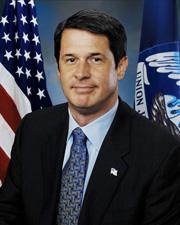 Sen. David Vitter (R-LA)
Legislative Activity
Stay on top of the latest movement without scrolling through every action
Roll call votes on amendments in Senate: Motion to waive all applicable budgetary discipline with respect to amendment SA 3458 rejected in Senate by Yea-Nay Vote. 41 - 57. Record Vote Number: 52.
March 16, 2010
View full timeline
Roll call votes on amendments in Senate: Motion to waive all applicable budgetary discipline with respect to amendment SA 3458 rejected in Senate by Yea-Nay Vote. 41 - 57. Record Vote Number: 52.
March 16, 2010
Considered by Senate. (consideration: CR S1582, S1598, S1603-1604, text as modified: CR S1598)
March 16, 2010
Point of order that amendment SA 3458 violates Budget Act raised in Senate.
March 16, 2010
Motion to waive all applicable budgetary discipline with respect to amendment SA 3458 rejected in Senate by Yea-Nay Vote. 41 - 57. Record Vote Number: 52.
March 16, 2010
SA 3458 fell when motion to waive all applicable budgetary discipline rejected.
March 16, 2010
Senate amendment proposed (on the floor): Amendment SA 3458 proposed by Senator Vitter to Amendment SA 3452.(consideration: CR S1429; text: CR S1429)
March 11, 2010
Amendment SA 3458 proposed by Senator Vitter to Amendment SA 3452. (consideration: CR S1429; text: CR S1429) To clarify application requirements relating to the coastal impact assistance program.
March 11, 2010
Senate amendment submitted
March 10, 2010
Votes
1 roll call on this amendment
Text
Modified
TAX ON BONUSES RECEIVED FROM CERTAIN TARP RECIPIENTS

The PRESIDING OFFICER. Under the previous order, the Senate will
resume consideration of H.R. 1586, which the clerk will report.
The legislative clerk read as follows:

A bill (H.R. 1586) to impose an additional tax on bonuses
received from certain TARP recipients.

Pending:

Rockefeller amendment No. 3452, in the nature of a
substitute.
Sessions/McCaskill modified amendment No. 3453 (to
amendment No. 3452), to reduce the deficit by establishing
discretionary spending caps.
Lieberman amendment No. 3456 (to amendment No. 3452), to
reauthorize the DC opportunity scholarship program.
Vitter amendment No. 3458 (to amendment No. 3452), to
clarify application requirements relating to the coastal
impact assistance program.
DeMint amendment No. 3454 (to amendment No. 3452), to
establish an earmark moratorium for fiscal years 2010 and
2011.
Feingold amendment No. 3470 (to amendment No. 3452), to
provide for the rescission of unused transportation earmarks
and to establish a general reporting requirement for any
unused earmarks.

The PRESIDING OFFICER. The Senator from Arizona.

AmendmentS Nos. 3472, 3475, 3527, and 3528 to Amendment No. 3452

Mr. McCAIN. Mr. President, I ask unanimous consent to set aside the
pending amendment and that I be allowed to call up four amendments that
are at the desk. They are amendment No. 3472, Amendment No. 3475, an
amendment that has been at the desk on FAA reauthorization and--they
are all at the desk--and the fourth concerns the Federal Aviation
Administration finance proposal for development and implementation of
technology for the Next Generation Air Transportation System.
The PRESIDING OFFICER. Without objection, it is so ordered.
The clerk will report the amendments.
The legislative clerk read as follows:

The Senator from Arizona [Mr. McCain] proposes amendments
en bloc numbered 3472, 3475, 3527, and 3528 to amendment No.
3452.

Mr. McCAIN. Is amendment No. 3528 on the Grand Canyon National Park?
The PRESIDING OFFICER. Yes, it is.
The amendments are as follows:

amendment no. 3472

(Purpose: To prohibit the use of passenger facility charges for the
construction of bicycle storage facilities)

On page 29, after line 21, insert the following:
Sec. 207(b) Prohibition on Use of Passenger Facility
Charges To Construct Bicycle Storage Facilities.--Section
40117(a)(3) is amended--
(1) by redesignating subparagraphs (A) through (G) as
clauses (i) through (vii);
(2) by striking ``The term'' and inserting the following:
``(A) In general.--The term''; and
(3) by adding at the end the following:
``(B) Bicycle storage facilities.--A project to construct a
bicycle storage facility may not be considered an eligible
airport-related project.''.

amendment no. 3475

(Purpose: To prohibit earmarks in years in which there is a deficit)

At the end, insert the following:

SEC. ___. EARMARKS PROHIBITED IN YEARS IN WHICH THERE IS A
DEFICIT.

(a) In General.--It shall not be in order in the Senate or
the House of Representatives to consider a bill, joint
resolution, or conference report containing a congressional
earmark or an earmark attributable to the President for any
fiscal year in which there is or will be a deficit as
determined by CBO.
(b) Congressional Earmark.--In this section, the term
``congressional earmark'' means the following:
(1) A congressionally directed spending item, as defined in
Rule XLIV of the Standing Rules of the Senate.
(2) A congressional earmark for purposes of Rule XXI of the
House of Representatives.
(c) Waiver and Appeal.--
(1) Waiver.--This section may be waived or suspended in the
Senate only by the affirmative vote of three-fifths of the
Members, duly chosen and sworn.
(2) Appeals.--Appeals in the Senate from the decisions of
the Chair relating to any provision of this section shall be
limited to 1 hour, to be equally divided between, and
controlled by, the appellant and the manager of the bill or
joint resolution, as the case may be. An affirmative vote of
three-fifths of the Members of the Senate, duly chosen and
sworn, shall be required to sustain an appeal of the ruling
of the Chair on a point of order raised under this section.

amendment no. 3527

(Purpose: To require the Administrator of the Federal Aviation
Administration to develop a financing proposal for fully funding the
development and implementation of technology for the Next Generation
Air Transportation System)

On page 84, between lines 21 and 22, insert the following:

SEC. 319. REPORT ON FUNDING FOR NEXTGEN TECHNOLOGY.

Not later than 90 days after the date of the enactment of
this Act, the Administrator of the Federal Aviation
Administration shall submit to Congress a report that
contains--
(1) a financing proposal that--
(A) uses innovative methods to fully fund the development
and implementation of technology for the Next Generation Air
Transportation System in a manner that does not increase the
Federal deficit; and
(B) takes into consideration opportunities for involvement
by public-private partnerships; and
(2) recommendations with respect to how the Administrator
and Congress can provide operational benefits, such as
benefits relating to preferred airspace, routings, or runway
access, for air carriers that equip their aircraft with
technology necessary for the operation of the Next Generation
Air Transportation System before the date by which the
Administrator requires the use of such technology.

amendment no. 3528

(Purpose: To provide standards for determining whether the substantial
restoration of the natural quiet and experience of the Grand Canyon
National Park has been achieved and to clarify regulatory authority
with respect to commercial air tours operating over the Park)

At the end of title VII, add the following:

SEC. 723. OVERFLIGHTS IN GRAND CANYON NATIONAL PARK.

(a) Determinations With Respect to Substantial Restoration
of Natural Quiet and Experience.--
(1) In general.--Notwithstanding any other provision of
law, for purposes of section 3(b)(1) of Public Law 100-91 (16
U.S.C. 1a-1 note), the substantial restoration of the natural
quiet and experience of the Grand Canyon National Park (in
this subsection referred to as the ``Park'') shall be
considered to be achieved in the Park if, for at least 75
percent of each day, 50 percent of the Park is free of sound
produced by commercial air tour operations that have an
allocation to conduct commercial air tours in the Park as of
the date of the enactment of this Act.
(2) Considerations.--
(A) In general.--For purposes of determining whether
substantial restoration of the natural quiet and experience
of the Park has been achieved in accordance with paragraph
(1), the Secretary of the Interior (in this section referred
to as the ``Secretary'') shall use--
(i) the 2-zone system for the Park in effect on the date of
the enactment of this Act to assess impacts relating to
subsectional restoration of natural quiet at the Park,
including--

(I) the thresholds for noticeability and audibility; and
(II) the distribution of land between the 2 zones; and

(ii) noise modeling science that is--

[[Page S1583]]

(I) developed for use at the Park, specifically Integrated
Noise Model Version 6.2;
(II) validated by reasonable standards for conducting field
observations of model results; and
(III) accepted and validated by the Federal Interagency
Committee on Aviation Noise.

(B) Sound from other sources.--The Secretary shall not
consider sound produced by sources other than commercial air
tour operations, including sound emitted by other types of
aircraft operations or other noise sources, for purposes of--
(i) making recommendations, developing a final plan, or
issuing regulations relating to commercial air tour
operations in the Park; or
(ii) determining under paragraph (1) whether substantial
restoration of the natural quiet and experience of the Park
has been achieved.
(3) Continued monitoring.--The Secretary shall continue
monitoring noise from aircraft operating over the Park below
17,999 feet MSL to ensure continued compliance with the
substantial restoration of natural quiet and experience in
the Park.
(4) Day defined.--For purposes of this subsection, the term
``day'' means the hours between 7:00 a.m. and 7:00 p.m.
(b) Regulation of Commercial Air Tour Operations.--
Commercial air tour operations over the Grand Canyon National
Park Special Flight Rules Area shall continue to be conducted
in accordance with subpart U of part 93 of title 14, Code of
Federal Regulations (as in effect on the day before the date
of the enactment of this Act), except as follows:
(1) Curfews for commercial flights.--The hours for the
curfew under section 93.317 of title 14, Code of Federal
Regulations, shall be revised as follows:
(A) Entry into effect of curfew.--The curfew shall go into
effect--
(i) at 6:00 p.m. on April 16 through August 31;
(ii) at 5:30 p.m. on September 1 through September 15;
(iii) at 5:00 p.m. on September 16 through September 30;
(iv) at 4:30 p.m. on October 1 through October 31; and
(v) at 4:00 p.m. on November 1 through April 15.
(B) Termination of curfew.--The curfew shall terminate--
(i) at 8:00 a.m. on March 16 through October 15; and
(ii) at 9:00 a.m. on October 16 through March 15.
(2) Modifications of air tour routes.--
(A) Dragon corridor.--Commercial air tour routes for the
Dragon Corridor (Black 1A and Green 2 routes) shall be
modified to include a western ``dogleg'' for the lower \1/3\
of the Corridor to reduce air tour noise for west rim
visitors in the vicinity of Hermits Rest and Dripping
Springs.
(B) Zuni point corridor.--Commercial air tour routes for
the Zuni Point Corridor (Black 1 and Green 1 routes) shall be
modified--
(i) to eliminate crossing over Nankoweap Basin; and
(ii) to limit the commercial air tour routes commonly known
as ``Snoopy's Nose'' to extend not farther east than the
Grand Canyon National Park boundary.
(C) Permanence of black 2 and green 4 air tour routes.--The
locations of the Black 2 and Green 4 commercial air tour
routes shall not be modified unless the Administrator of the
Federal Aviation Administration determines that such a
modification is necessary for safety reasons.
(3) Special rules for marble canyon sector.--
(A) Flight allocation.--The flight allocation cap for
commercial air tour operations in Marble Canyon (Black 4
route) shall be modified to not more than 5 flights a day to
preserve permanently the high level of natural quiet that has
been achieved in Marble Canyon.
(B) Curfew.--Commercial air tour operations in Marble
Canyon (Black 4 route) shall be subject to a year-round
curfew that enters into effect one hour before sunset and
terminates one hour after sunrise.
(C) Elimination of commercial air tour route.--The Black 5
commercial air tour route for Marble Canyon shall be
eliminated.
(4) Conversion to quiet aircraft technology.--
(A) In general.--All commercial air tour aircraft operating
in the Grand Canyon National Park Special Flight Rules Area
shall be required to fully convert to quiet aircraft
technology (as determined in accordance with appendix A to
subpart U of part 93 of title 14, Code of Federal Regulations
(as in effect on the day before the date of the enactment of
this Act)) by not later than the date that is 15 years after
the date of the enactment of this Act.
(B) Incentives for conversion.--The Secretary and the
Administrator of the Federal Aviation Administration shall
provide incentives for commercial air tour operators that
convert to quiet aircraft technology before the date
specified in subparagraph (A), such as--
(i) reducing overflight fees for those operators; and
(ii) increasing the flight allocations for those operators.
(5) Hualapai economic development exemption.--The exception
for commercial air tour operators operating under contracts
with the Hualapai Indian Nation under section 93.319(f) of
title 14, Code of Federal Regulations (as in effect on the
day before the date of the enactment of this Act) may not be
terminated, unless the Administrator of the Federal Aviation
Administration determines that terminating the exception is
necessary for safety reasons.
(c) Flight Allocation Cap.--
(1) Prohibition on reduction of flight allocation cap.--
Notwithstanding any other provision of law, the allocation
cap for commercial air tours operating in the Grand Canyon
National Park Special Flight Rules Area in effect on the day
before the date of the enactment of this Act may not be
reduced.
(2) Rulemaking to increase flight allocation cap.--Not
later than 180 days after the date of the enactment of this
Act, the Administrator of the Federal Aviation Administration
shall issue a notice of proposed rulemaking that--
(A) reassesses the allocations for commercial air tours
operating in the Grand Canyon National Park Special Flight
Rules Area in light of gains with respect to the restoration
of natural quiet and experience in the Park;
(B) makes equitable adjustments to those allocations,
subject to continued monitoring under subsection (a)(3); and
(C) facilitates the use of new quieter aircraft technology
by allowing commercial air tour operators using such
technology to petition the Federal Aviation Administration to
adjust allocations in accordance with improvements with
respect to the restoration of natural quiet and experience in
the Park resulting from such technology.
(3) Interim flight allocations.--
(A) In general.--Until the Administrator issues a final
rule pursuant to paragraph (2), for purposes of the
allocation cap for commercial air tours operating in the
Grand Canyon National Park Special Flight Rules Area--
(i) from November 1 through March 15, a flight operated by
a commercial air tour operator described in subparagraph (B)
shall count as \1/2\ of 1 allocation; and
(ii) from March 16 through October 31, a flight operated by
a commercial air tour operator described in subparagraph (B)
shall count as \3/4\ of 1 allocation.
(B) Commercial air tour operator described.--A commercial
air tour operator described in this subparagraph is a
commercial air tour operator that--
(i) operated in the Grand Canyon National Park Special
Flight Rules Area before the date of the enactment of this
Act; and
(ii) operates aircraft that use quiet aircraft technology
(as determined in accordance with appendix A to subpart U of
part 93 of title 14, Code of Federal Regulations (as in
effect on the day before the date of the enactment of this
Act)).
(d) Commercial Air Tour User Fees.--Notwithstanding section
4(n)(2)(A) of the Land and Water Conservation Fund Act of
1965 (16 U.S.C. 460l-6a(n)(1)(2)(A)), the Secretary--
(1) may establish a commercial tour use fee in excess of
$25 for each commercial air tour aircraft with a passenger
capacity of 25 or less for air tours operating in the Grand
Canyon National Park Special Flight Rules Area in order to
offset the costs of carrying out this section; and
(2) if the Secretary establishes a commercial tour use fee
under paragraph (1), shall develop a method for providing a
significant discount in the amount of that fee for air tours
that operate aircraft that use quiet aircraft technology (as
determined in accordance with appendix A to subpart U of part
93 of title 14, Code of Federal Regulations (as in effect on
the day before the date of the enactment of this Act)).

Amendment No. 3475

Mr. McCAIN. I would like to discuss all four amendments briefly. The
first is the prohibition on earmarks in years in which there is a
deficit. I have been pleased and somewhat surprised over the past week
to hear about the renewed bipartisan interest in banning earmarks. I am
thankful for the attention and I welcome the House Democratic
leadership to the fight against earmarks.
According to last Thursday's Washington Post:

Facing an election year backlash over runaway spending and
ethics scandals, House Democrats moved Wednesday to ban
earmarks for private companies, sparking a war between the
parties over which would embrace the most dramatic steps to
change the way business is done in Washington.

I was pleased to see that the Speaker of the House and the chairman
of the House Appropriations Committee have recognized earmarks for what
they are: a corrupting influence that should not be tolerated in these
times of fiscal crisis.
I applaud my Republican colleagues in the House and Senate,
especially Senators Coburn and DeMint, who have called for a year-long
moratorium on all earmarks. I fully support and join them in those
efforts, but I think we need to do more.
We need a complete ban on earmarks until our budget is balanced and
we have eliminated our massive deficit. This amendment promises to do
just that. I encourage my colleagues to join

[[Page S1584]]

me in this effort. It is what the American people want. We have an
obligation to give it to them.
I am pleased to be joined by my good friend from Indiana, Senator
Bayh.

Amendment No. 3472

The next amendment I would like to discuss very quickly is that no
funds from the passenger facility fee could be used to construct bike
storage facilities at airports.
As many know, the passenger facility fee is assessed on every ticket
for any flight. Currently, this fee is $4.50 per flight. During these
very difficult economic times for most Americans, the bill from the
House raises this fee to $7 and indexes it to inflation. It is
frustrating, but it is more frustrating that taxes and fees make up as
much as 25 percent of every passenger's airline ticket.
I think most airline passengers would agree with me that they would
rather see more improvements to ensure faster travel times and safer
departures and arrivals.
The Atlanta Journal Constitution reported earlier this year, on
January 14, 2010, that $1.5 million of passenger facility fees were
used for a ``function art project of glass panels laminated with
patterns of tree bark.''
It sounds beautiful, but I know most Americans want these excessive
fees and charges to be used effectively and for the goal that Congress
intended: to improve safety and performance.

Amendment No. 3527

On the issue of the amendment concerning moving Next Generation air
traffic control forward, this amendment would require the FAA to report
back to Congress in 90 days with proposals for innovative financing
mechanisms to further the deployment and implementation of a modernized
air traffic control system known as NextGen.
Specifically, the report requires these innovative financing
proposals to not increase our Federal deficit and consider public-
private partnerships. As the distinguished chairman of the committee
knows all so well, modernizing our outdated air traffic control system
will positively impact all Americans by decreasing airport delays,
improving the flow of commerce, and advancing our Nation's air quality
by reducing aircraft carbon emissions.
Every day Americans sit on a runway and miss meetings, children's
soccer games, family dinners, and other important events due to air
traffic delays that could have been avoided if our Nation had a
modernized air traffic control system.
Thousands of goods are delayed for delivery each year due to air
traffic delays which results in more than $40 billion in costs each
year that are passed on to consumers, according to the Joint Economic
Committee.
The Government Accountability Office estimates that one in every four
flights in the United States of America is delayed. The airlines have
called our air traffic control system ``an outdated World War II radar
system.''
The FAA's Next Generation Air Transportation System, NextGen, will
transform the current ground-based radar air traffic control system to
one that uses precision satellites, digital network communications, and
an integrated weather system.
Moving from a ground-based to a satellite-based system will enable
more flights to occupy the same airspace, meaning the ontime
performance improvements would be a reality, and would triple the
aircraft capacity according to airlines. However, the administration
and Congress have not provided adequate funding toward air traffic
control modernization, and instead continue to fund billions of dollars
of earmarks. The FAA estimates it will cost up to $42 billion to
implement a modern air traffic control system.
Congress appropriated $188 million for air traffic control
modernization in 2008, and $638 million in 2009, then another $358
million in the fiscal year 2010 Department of Transportation
appropriations bill. However, that same bill dedicated $1.7 billion on
transportation earmarks. We have to stop spending billions of dollars
and instead cut spending or at least spend taxpayers' dollars on worthy
projects.
Again, I would like to thank the chairman of the committee for his
efforts over many years on FAA modernization. There is no doubt the
airlines are right when they describe our air traffic control system as
``an outdated World War II radar system.''
It is a shame that all of these years we have had attempts that
failed and wasted billions of dollars in our efforts to modernize the
air traffic control system, and we have failed. But we have to redouble
our efforts.
As we expect the economy to recover, there will be more aircraft
flying in crowded airspace. There will be a more dangerous situation
unless we modernize our air traffic control system.

Amendment No. 3528

The final amendment I have is to provide standards for determining
whether the substantial restoration of the natural quiet and experience
of the Grand Canyon National Park has been achieved, and to clarify
regulatory authority with respect to commercial air tours operating
over the park.
I see my colleagues waiting, and I will not take a lot of time on
this amendment. But I would like to mention to my colleagues that it
was approximately 25 years ago that I proposed legislation to restore
natural quiet in the great experience over the Grand Canyon National
Park.
All of these years have intervened and there still have not been
regulations written to implement that legislation. All of us share the
same goal. We have been able to sit down, with the help of the majority
leader's office, Senator Ensign's office, Senator Kyl's office, and
others to try to make progress on this important issue.
I think we have brought all parties together. I think there is
consensus. So I am hoping that we will be able to adopt this amendment
without further disagreement. It is important that we restore the
natural quiet and experience of the Grand Canyon National Park. At the
same time, it is also very important that people from all over the
world have the opportunity to enjoy one of the great and magnificent
experiences that any person can have; that is, to view the Grand Canyon
from the air as well as from the ground.
I think this legislation represents that careful balance. I thank
Senator Reid and Senator Ensign and Senator Kyl for their efforts in
crafting this legislation. It is time we acted. I appreciate the
indulgence of my colleagues.
I yield the floor.
The PRESIDING OFFICER. The Senator from West Virginia.
Mr. ROCKEFELLER. Mr. President, I would say to the good Senator from
the State of Arizona that we have a number of amendments that are
already more or less agreed to. More amendments are coming in,
including several that he has mentioned. We want a chance to look at
those to see whether those are--I heard one amendment, for example,
that sounded pretty easy to do.
The earmark amendment, I actually--I am not dissing this, but I just
cannot resist but point something out; that is, on earmarks, this would
ban earmarks for the foreseeable future. Let me redefine that.
In the last 71 years, the Congress of the United States has not had a
budget deficit in only 13 years. So you can see for the foreseeable
future it is sort of a large matter. Nevertheless, we welcome the
chance to look at that and work on it.
I yield the floor.
The PRESIDING OFFICER. The Senator from New Jersey.
Mr. MENENDEZ. Mr. President, I rise to talk about two issues. First,
I will talk about the pending business before the Senate, which is the
FAA reauthorization, in a moment. I certainly want to commend my dear
friend and colleague, the distinguished chairman of the Commerce
Committee, for what he has done in bringing the reauthorization to the
floor and the manner in which he has fashioned it.
This is an opportunity to create 150,000 jobs, modernize our system
for this 21st century, save millions of gallons of fuel that get spent
under a system that is antiquated, and people sitting in planes just
idling, and $9 billion in lost revenue to the Nation as a result of an
antiquated system. All of this will be dealt with, with the FAA
reauthorization.
But before I get to that I want to speak for a moment on an item that
we will be voting on tomorrow which is critically important to make
sure we put the Nation back to work, the HIRE Act. One of those items I
believe is incredibly important that has been getting the wrong view
here is the question of the Build America Bonds. It is

[[Page S1585]]

one that has been debated quite a bit on the Senate floor the last
couple of times we have been in session. My view is that these bonds
have been one of the most successful pieces of the economic recovery
package passed last year. They have helped to finance nearly $80
billion in economic development projects in all 50 States.
Those are projects that are a win-win for America. By helping States
and local governments finance vital public infrastructure projects, we
are putting Americans back to work; building better, stronger
communities, better schools, retooling our infrastructure, and
preparing for the new economy. That is what makes the Build America
Bonds so effective. By lowering borrowing costs, these bonds
incentivize investments in our communities across America. This gives
State and local entities resources to fund badly needed projects,
projects from which we all benefit.
These bonds have been a resounding success. As a matter of fact, in a
November article by Stephen Gandel that appeared on time.com, it ran
under this headline: ``A Stimulus Success: Build America Bonds Are
Working.''
In this article, Amy Resnick, the editor in chief of a publication
which follows bond markets, was quoted as saying: ``It's clearly been a
success as a means of stimulating the economy.''
When we talk about stimulating the economy, ultimately we are talking
about putting Americans back to work. The bill we have before us, that
we will vote on tomorrow, expands this successful program to allow
issuers of school construction and energy project bonds to convert
these tax credit bonds into a Build America Bond. Seems like a rather
simple provision to me, a commonsense provision that says if it has
been successful, why not expand on it. If we can stimulate needed
construction for schools and communities across America, if we have a
proven way to promote putting people to work on critical energy
projects, why wouldn't we do it?
Some of my Republican friends say they want to work on job creation,
but I find it ironic that on one hand they speak about creating jobs,
but on the other hand they criticize Build America Bonds for ``doing
too much'' to create jobs and facilitate investment in vital public
projects in communities across America.
You can't have it both ways. You can't blame the majority for not
focusing on job creation while criticizing one of the most successful
programs as having done too much. At a time of 10 percent unemployment,
the question is not are we helping our communities too much; rather,
the fundamental question the Congress must be focused on is how do we
create more investment so we can create more jobs so that we can put
more Americans back to work. The lessons of history are important.
Build America Bonds, the jobs they create, the good they do, underscore
some of the historic differences between this side of the aisle and the
other. History tells us that in difficult economic times, creating
badly needed jobs for families struggling to make ends meet strengthens
the economy and helps us rebuild a better future.
In the Great Depression, Franklin Roosevelt understood the need for
government to step in and create jobs. He rebuilt America's rusted old
19th century infrastructure, retooled old systems and prepared the
Nation for the 20th century. History has a way of repeating itself. We
should not ignore it. We should instead learn from it, learn from our
great successes so we don't repeat our worst failures. A proactive
government creating a jobs agenda and putting people back to work
during the New Deal and rebuilding our infrastructure was one of those
successes. On the other hand, a static government doing nothing to
create jobs in the face of massive unemployment, as Herbert Hoover did,
was one of our worst failures.
The lesson of history is clear. If we are too shortsighted to repeat
the things that work, we are doomed to repeat the things that failed.
Finally, on the second issue and the pending issue before the Senate,
we need this FAA reauthorization bill because it will create jobs, over
150,000. It will reduce congestion, that $9 billion lost for America by
airplanes idling and people not being productive at work as they try to
get to their business appointments and others who get lost along the
way in terms of the time lost being with their families and friends. It
also improves safety, which should be job 1. It will invest in
infrastructure that will get more people to their destinations on two
words we want to hear more and more, as the chairman is trying to make
happen: On time.
It will address several essential safety issues related to oversight,
pilot training, pilot safety, and pilot fatigue after the tragic Colgan
Air crash last year in Buffalo. This bill takes several steps to ensure
that, 1, an extremely high level of safety exists throughout the entire
transportation system. It protects passengers from being stranded on
the tarmac like those at Stewart Airport in New York who sat on a plane
that ran out of food. Things got so bad that each passenger was given
four potato chips and half a cup of water. That is simply ridiculous
and unacceptable. This bill will put an end to these stories by
requiring each airline to provide adequate provisions to stranded
planes and give all passengers the right to deplane after 3 hours, if
not sooner.
I salute Senator Rockefeller and the members of the Commerce
Committee who have worked to bring this important bill to the floor.
There are some things I hope we have offered that will be accepted
into a managers' amendment. I look forward to some opportunities. We
have something called the Clear Airfares Act. I believe when you buy a
ticket, you should have the right to know what you are paying for.
Anything short of that is simply unfair. My amendment No. 3506 would
require airlines to be upfront with their fees so consumers can make an
informed decision. It seems as though the airlines never have met a fee
they do not like. These are some of them. We have two easels here to
try to make the case. It is rather busy, but this gives you a sense to
these two chart that lay out 13 common airline fees that 18 different
airlines assign--fees for ordering tickets by phone, fuel surcharges,
for traveling with a pet. Last year they invented a new fee. It is
called the holiday fee. Because these fees don't appear alongside a
ticket's base airfare, consumers have little idea of how much the
ticket will eventually cost them.
I brought an example we worked on to dramatize what we are talking
about here. Airline A's ticket from BWI to La Guardia appears to be $2
cheaper than airline B's ticket, $223.50 compared to $225.40. But then
come the hidden fees. Airline A charges you $120 round trip to check
two bags plus an additional $200 to travel with a pet. By contrast,
airline B allows you to check two bags for free and charges you $150 to
travel with a pet. The end result, when you add up the fees, what
appeared to be the least expensive ticket for the same exact flight is
actually $150 more expensive. My amendment shines a light on airline
fees and surcharges so consumers have an accurate picture about what
their trip is likely to cost them. We hope the committee will accept
that.
We also have an amendment on focused flying which was written in
response to the flight that flew 150 miles beyond its destination,
allegedly because the pilots were too distracted to notice the airport.
I am pleased. Working with the committee and Senator Dorgan, we were
able to include language in the underlying bill that would prohibit
unnecessary electronic devices from the cockpit. However, it is
important we look at all pilot distractions. Our amendment calls for
the FAA to conduct a study on the broader issue of distractive flying
and its impact on flight safety.
The last amendment I have filed would require the FAA to monitor the
air noise impacts of New Jersey, New York, and Philadelphia airspace
redesign and simply provide the data to the public. I have not been
supportive of the airspace redesign in part because it was done in such
a way where noise impacts are rather severe. Now that the redesign is
being implemented, the public has a right to know what consequences
there are in that redesign and that some level of transparency should
be provided to the flying public and the communities affected.
Lastly, I look forward to what I hope is an end product, as we move
through this Chamber and have a conference,

[[Page S1586]]

that no longer makes it tougher for some workers to organize unions
than others who do the same work. I believe the rules should be applied
evenly across the board. Unions help improve safety standards which not
only benefit workers, they touch all of us who drive on the roads and
fly in the skies. I hope the ultimate result will create that
opportunity. It is time we finally pass the FAA reauthorization. It
will create jobs. It will make our flying experience safer. It will
make it more efficient. We will save money in our economy.
I look forward to working with Chairman Rockefeller to make the bill
one we can continue to be proud of as we fly the skies of our country.
I yield the floor.
The PRESIDING OFFICER. The Senator from West Virginia.
Mr. ROCKEFELLER. Mr. President, I compliment the Senator from New
Jersey who is complimented far too little for doing so many good things
but did a lot of them on the floor this afternoon. I appreciate what he
said which is not related to aviation, about the school bond. It makes
an enormous difference. It has been changed a bit to make it more
effective at the State level. I appreciate the fact that he said that.
And the points he made with respect to some of the amendments to the
aviation bill seemed to make a lot of sense. The last one may cause
some discussion, but I know the Senator and I know what is in his
heart. He always speaks the truth.
Mr. MENENDEZ. I thank my distinguished colleague and chairman for his
remarks and observations. We look forward to working with the committee
to achieve some of these things and to achieve ultimate success with
him at the end of the day.
Mr. ROCKEFELLER. You could join the Commerce Committee. You are right
up there in the leadership. I respect everything the Senator from New
Jersey does.
I yield the floor and suggest the absence of a quorum.
The PRESIDING OFFICER. The clerk will call the roll.
The legislative clerk proceeded to call the roll.
Mr. DORGAN. Mr. President, I ask unanimous consent that the order for
the quorum call be rescinded.
The PRESIDING OFFICER. Without objection, it is so ordered.
Mr. DORGAN. Mr. President, I have just visited with Senator
Rockefeller. Of course, we, along with Senator Hutchison, are trying to
pass an FAA reauthorization bill, which is not as easy as it sounds.
This is not one of the most controversial or difficult or passionate
issues that divide America. We have plenty of those issues around. But
this is about modernizing our air traffic control system, about
reauthorizing the Airport Improvement Program, improving air safety--a
wide range of issues. Still, anything that is brought to the floor of
the Senate these days slows down--way, way, way down--and that is the
case with this bill as well. I have described it as similar to trying
to walk through wet cement to try to get something through the
Congress.
We have amendments pending dealing with school vouchers, putting
discretionary caps on budgets, earmark reform--things that have very
little or in most cases nothing to do with this underlying bill. It is
just that this is an authorization bill open for amendment, so we have
amendments on a wide range of issues. We also have other amendments
that have been offered that are germane and relate to this piece of
legislation, and we have been working through trying to put together an
en bloc amendment with our staffs and Senator Rockefeller's staff,
working through, with other colleagues, some of the suggestions. They
make a lot of sense. I think we are making progress there.
I have described before the need for this legislation. Last year, I
met with some of the Europeans who are putting together the
modernization program in Europe. This issue of modernization of the air
traffic control system--I think I heard Senator McCain talk about World
War II vintage air traffic control. It is the case that for those who
are now taking off this minute from National Airport, when that
airplane leaves the runway and is in the national airspace, it is the
case that someone in a control tower somewhere is watching that
airplane. Why? Because there is a lot of traffic up there.
This is the most complex airspace in the world here in the United
States, and I think the FAA, the Federal Aviation Administration, does
a terrific job in operating the most complex system in the world. We
have the safest skies in the world, there is no question about that. We
have had one particularly fatal accident in the last year. That tragedy
occurred in Buffalo, NY, with Colgan Air, in which 50 people tragically
lost their lives, including the pilot and copilot and flight attendant.
But the fact is, we have safe skies, and I would be the last to come to
the floor of the Senate and say the American public should be worried
about safety. It is the case, however, that the Colgan crash gave us a
roadmap to some changes that I believe are necessary and that I and
Senator Rockefeller and Senator Hutchison have put in this bill. The
issues we have discovered from that tragedy persuaded us that a number
of things needed to be done.
The FAA itself has worked on aviation safety for a long while. The
National Transportation Safety Board, which investigates aviation
accidents, has made recommendations. In fact, they have a most wanted
list. There are some recommendations that will improve air safety that
have been on the most wanted list for a long, long time, some for well
over a decade and not yet adopted. So the Administrator of the FAA,
Randy Babbitt, has worked with us. I know he is working diligently to
try to address some of those issues.
Let me mention safety in just a moment, but let me talk for a moment
about modernizing the system.
When people say: Well, what is that about, it means we are moving
from the tracking of that airplane that just left National Airport--I
think we have about one a minute that is authorized at that slot
airport, so every minute, an airplane is leaving that airport. When
that airplane is at cruising altitude and on its way up to cruising
altitude, it has a transponder, and that transponder is sending
signals. That signal shows up on a screen. That screen is in front of
an air traffic controller. That screen shows that airplane, in most
cases by number, and that air traffic controller is directing that
airplane with its traffic through other routes flown by other
airplanes. It is all about safety, making sure airplanes can fly in a
congested, crowded sky.
The dilemma--by the way, it has been relatively safe. It certainly is
safer than in the old days when they first started flying at night.
During the day, they would fly by sight, years and years ago. Then, at
night, they would fly to bonfires. They would fly to a bonfire and then
fly 50 miles to another bonfire as they carried the mail at night.
Eventually they would fly to lights, and then eventually they would fly
to ground-based radar. It has been around a long time.
The problem is, ground-based radar only shows where a jet plane is
right at that moment--any airplane, for that matter, but a jet moves
very fast, so at that nanosecond when that sweep of the radar shows
that airplane in that airspace, that is exactly where it is. But a
nanosecond later, it is somewhere else. Especially with a jet, with the
next 5 or 7 seconds it takes to sweep the radar, that jet is somewhere
other than where the dot showed it on the screen. Now we have the
capability to know much more precisely than that where the airplane is,
but because we only know about where that airplane is, we have to space
airplanes for a margin of safety and we fly less direct routes. The
result is, we use more fuel in that plane by flying a less direct
route. We have to have much wider spacing of airplanes in a congested
airspace. We are polluting the skies with more fuel used. We are
costing the airplanes and the passengers the extra fuel. We are also
taking extra time for the passengers to get to where they are headed
because of less direct routes.
All of that can change with a new system of global positing, GPS.
Everybody understands what GPS is. You have GPS in your automobile in
many cases. You type in an address and it shows you where your car is
and where the address is and it takes you right to the address. If your
child has a cell phone, in most cases they have access to GPS in their
cell phone. In many cases, your child with a cell phone has

[[Page S1587]]

the opportunity, with some of the providers, to link with their best
friends--their five best friends, for example--and each of them with
their cell phone can have GPS locators, so they can access their five
friends and know exactly where each of the five is. We can do that with
children and cell phones. We cannot do it today with commercial
airplanes. We cannot know exactly where that airliner is with GPS
technology. That is because we have not yet modernized.
That is what this is all about--modernization of the air traffic
control system. When we do--and we will--we will be able to fly much
more direct routes, have a greater margin of safety, save fuel, save
the environment. We will do all of these things. Other parts of the
world are doing it, and so must we. That is why Senator Rockefeller and
I have brought a bill to the floor that moves directly and aggressively
toward what is called modernization of the air traffic control systems.
It sounds complicated. It is less complicated than one would think. It
needs the FAA to build the facilities on the ground, and it needs the
airplanes to have the equipage in the jet or the airplane itself. When
we do that and have the procedures and the developed process, we will
have modernized the air traffic control system. That is what the
legislation is about.
The legislation is also about building infrastructure across the
country. If you are going to fly, you have to have someplace to land
and someplace for passengers to embark and disembark. It means runways
and terminals. It means a wide range of things. This also includes the
Essential Air Service Program, which provides essential air service
through contracts to smaller communities. As I indicated earlier, it
addresses the issue of safety.
Let me describe safety for a moment, as I have done a couple of times
on the floor because I think it is very important.
One-half of the flights in this country are by regional airlines. The
passengers do not necessarily know it is a regional airline. They get
on, in most cases, a smaller airplane, and it says United, US Airways,
Delta, Continental, but it is not that company at all. That is just the
brand on the airplane, and it is a regional company, in most cases,
that is flying for the larger carrier. In some cases, the larger
carrier owns the regional, but in most cases, it is a regional flying
under contract to one of the major carriers.
What we have discovered in several hearings, in the aftermath of the
Colgan accident, is some very difficult circumstances in terms of
mistakes that were made and things that we think we need to improve and
correct. Some of it we do in this bill.
The pilot who was in charge of the Colgan plane that evening--flying
at night, in ice, in the winter, into Buffalo, NY, from Newark
Airport--that pilot, we discovered later, had failed a number of pilot
exams along the way. We have learned that the CEO of this company,
Colgan, indicated: Had we known about these multiple failures along the
way of this pilot's credentials, we would not have hired the pilot. But
they did not know because they did not have access to all of that
information. This legislation provides that access shall be made
available. So those hiring decisions will be better decisions.
The issue of fatigue is very important and was very evident as part
of the cause, I believe, of that Colgan accident in Buffalo. There is
almost never a circumstance where there was an airplane accident in
this country where the accident report says definitively: This was
caused by fatigue. But we know, of course, there are a number of
tragedies that were caused by fatigue.
Let me point out something we learned with respect to this particular
flight, and my assumption is it is not peculiar to this flight. This
chart shows the Colgan Air pilots' commuting prior to a flight. On this
particular flight, on that evening, when the passengers boarded that
flight, the copilot, who got in the right seat of that cockpit, had
flown from Seattle, WA, to Newark Airport in order to reach her duty
station. She lived in Seattle and she worked out of Newark. She flew
all night long, deadheaded on a FedEx plane to Memphis, changed, and
flew to Newark all night long. The pilot commuted from Florida to
Newark. So you have two people in the cockpit: one from Florida who
commuted to Newark and one from Seattle who commuted to Newark.
What we now have heard from testimony from the National
Transportation Safety Board is the pilot of that airplane had not slept
in a bed the two previous nights, the copilot had not slept in a bed
the previous night. Was this crash caused by fatigue? There will never
be something that definitively suggests that, but if you were a
passenger on an airplane and in the cockpit sat a pilot and copilot,
neither of whom had slept in a bed the previous night or two nights,
would you believe fatigue was the cause of perhaps a misjudgment in the
cockpit? I would. I would.
The question is not, Can you end all commuting? I do not expect you
can probably end all commuting. But the question is, Does some of this
commuting invariably cause fatigue? I believe it does. And how do you
begin to address that? The FAA Administrator has now sent to the Office
of Management and Budget, I believe, his rulemaking on fatigue, so that
is a step forward because we have to address that.
As shown on this chart, this quote is from a discussion by a regional
pilot in the Wall Street Journal of September 12, 2008. He said:

Take a shower, brush your teeth, pretend you slept.

That is what a regional pilot says about the kind of work on regional
carriers, where you have a lot of stops, small routes or short routes:
``Take a shower, brush your teeth, pretend you slept.''
Again, I think it raises the question--and a reasonable question--
about how do you make this circumstance change. How do you promote
greater safety in circumstances where there is so much commuting, where
you have duty time that often allows for less than is necessary to
sleep at night? There is the full 8 hours, to be sure. But by the time
you get to a hotel somewhere during duty time, it is quite often the
case you have not slept a full night.
In this case of the Colgan flight, we have now learned the copilot on
that airplane not only traveled all the way across country to reach her
duty station, but she is someone who made in the neighborhood of
$20,000 to $23,000 a year. Does anybody believe a copilot on a
commercial carrier paid $20,000 to $23,000 a year is going to be able
to afford hotel rooms when they get to their duty station prior to
taking a flight? I don't think so. That is not an unreasonable thing to
expect to have happen.
Let me say, my discussion of this is not to tarnish regional
airlines. They play a very important role in our air traffic system in
the commercial aviation system--very important. My hope is, though,
working with the regional carriers, these safety provisions we have
included in this piece of legislation will substantially improve safety
and avoid the kind of circumstances that existed on that particular
Colgan flight.
I mentioned previously the families of the victims on that Colgan
flight have been real champions for aviation safety. They have never
missed a hearing. They have shown up at all the events in Washington,
DC, whether it is a hearing or other activities, to say: I am here on
behalf of my son, my daughter, my brother, my mother who perished in
that crash. The fact is, that diligence and that effort has made a
difference and shows itself in this legislation.
We also, in this legislation, are addressing the issue of pilot hours
as qualifications. I will talk about that some other time.
I think there is a lot here to commend this bill to my colleagues. It
is urgent we get this passed through the Senate, get to conference, be
able to reach a conference agreement with the House, and get the bill
signed. We will, by that, I think improve the infrastructure in this
country, substantially increase jobs--we are estimating 150,000 new
jobs as a result of it--and dramatically change the air traffic control
system from an archaic system to a modern system. All that is good for
the country.
There is way too much that is needed to be done in this country to
improve things, especially in areas of infrastructure and
modernization, that is

[[Page S1588]]

left undone. Let's at least get this piece for commercial aviation and
for all aviation completed.
I have mentioned almost exclusively the issue of commercial aviation.
I do not want to leave the floor again without saying there is another
component to aviation in our country; that is, general aviation. Many
of us fly on small planes a lot. I learned how to fly a small plane
years and years ago. General aviation plays a very important role in
the area of aviation in our lives.
In States such as Alaska, the Presiding Officer's State, or perhaps
West Virginia or North Dakota, in States such as that, the ability to
get on a Cessna 210 or a King Air, if we are lucky, or perhaps even a
Mooney or a 172 Cessna and go someplace and get there, sometimes in
circumstances where there are not a lot of roads, as would be the case
in Alaska, and other circumstances where you have wide distances to
travel on a Friday, Saturday or Sunday--general aviation is so
important and they do so much good work.
In addition, very few people talk--it is true of general aviation and
also commercial aviation--about the mercy flights, flying a heart for a
donor on a mercy flight, or flying someone who needs desperate
treatment to save a life. It goes on every day all across this
country--corporate jets, private planes, and, yes, even with commercial
airliners.
We are in the process right now of beginning to fight a flood in
Fargo-Moorhead. That river will go up 20 feet in about 10 days. It is
going to be 20 feet by Friday from 2 weeks ago. I recall last year when
the flood occurred, then Northwest Airlines, now Delta Airlines, flew
some very large planes into Fargo for relief purposes. They never asked
for anything. They just said they were coming. There is a lot of work
that goes on by some of the major carriers, as well as corporate and
general aviation, that is very important.
Again, I thank Senator Rockefeller for the work he and Senator
Hutchison have done. I, as chairman, and Senator DeMint, as ranking
member, of the Subcommittee on Aviation are pleased to be working with
them.
I yield the floor and suggest the absence of a quorum.
The PRESIDING OFFICER (Mrs. Gillibrand). The clerk will call the
roll.
The assistant legislative clerk proceeded to call the roll.
Mr. SPECTER. Madam President, I ask unanimous consent the order for
the quorum call be rescinded.
The PRESIDING OFFICER. Without objection, it is so ordered.

United States and Israel Controversy

Mr. SPECTER. Madam President, I have sought recognition to comment on
the current controversy between the United States and Israel on the
settlement issue.
Before the current controversy between the United States and Israel
escalates further, I suggest all parties cool the rhetoric, avoid
public recriminations, determine exactly what happened and consider
some fundamental questions.
What are the facts? It has been reported that there are 1,600 new
settlements in East Jerusalem in violation of Israeli commitments.
Authoritative sources insist that the announcement by a mid-level
official at the Ministry of the Interior only involved planning subject
to judicial review with no groundbreaking for 3 years. Another report
said U.S. officials extracted a secret promise from Prime Minister
Netanyahu not to allow provocative steps in East Jerusalem. Is it true
that the United States accepted the 10-month moratorium on settlements
with caveats that excluded East Jerusalem in line with the insistence
by Israeli officials dating back to Prime Minister Golda Meir that
Jerusalem was under Israeli exclusive sovereignty?
It is conceded that Prime Minister Netanyahu was blindsided by the
announcement. It is further acknowledged that the Israeli Minister of
the Interior is a member of the ultra-conservative Shaos party whose
participation is essential to the continuation of the coalition
government.
These matters need to be thought through before making public
pronouncements that could significantly damage the U.S.-Israeli
relationship and give aid and comfort to the enemies of the Mideast
peace process.
The rock solid alliance between the United States and Israel has
withstood significant disagreements for six decades. The mutual
interests which bind these two countries together have always been
stronger than the most substantial differences. The United States needs
to respect Israeli security interests, understanding that Israel cannot
lose a war and survive. The United States has many layers of defense to
protect our security interests and survive.
I suggest that if we all take a few deep breaths, think through the
pending questions and reflect on the importance of maintaining U.S.-
Israeli solidarity, we can weather this storm.
(The further remarks of Mr. Specter pertaining to the introduction of
S. 3120 are located in today's Record under ``Statements on Introduced
Bills and Joint Resolutions.'')
Mr. SPECTER. I thank my distinguished colleague from Connecticut for
awaiting those few comments and yield the floor.
The PRESIDING OFFICER. The Senator from Connecticut.

Amendment No. 3456

Mr. LIEBERMAN. Madam President, it was a pleasure to yield that time
to my friend from Pennsylvania, which he used very well.
I rise to continue a discussion of amendment No. 3456, which has been
offered by Senators Collins, Byrd, Feinstein, Voinovich, Ensign, and
myself, which would reauthorize the Opportunity Scholarship Program for
students, needy and deserving students here in the District of
Columbia, sometimes referred to as the DC voucher program.
This amendment would, as I say, reauthorize this program which
otherwise would either atrophy over time--there are still 1,300
students in it, but now, for the last 2 years, it has not been
reauthorized. President Obama in his budget says this probably will be
the last year that Federal funding would be in it. The nonprofit
corporation that has administered this program has said--under the
circumstances the Congress by our inaction and in some sense
interruption have created--they cannot continue to administer the
program. No one else has come forward to do that.
This amendment says, effectively, it would be a tragedy, a human
tragedy, 1,300 human tragedies--that 1,300 economically disadvantaged
students in the District of Columbia who have been given a lifeline out
of failing public schools to try to better educate themselves so they
can live a life of self-sufficiency and satisfaction--that all that
hope would be ended, all that opportunity would be ended.
This amendment would turn all that around and say the Senate believes
this program is at least worth continuing as an experiment. But more
than that, it has worked, by independent evaluation. Why terminate it?
There is no good reason to terminate it. Would the Chancellor of the
District of Columbia School System, Michelle Rhee, obviously an
advocate for the public schools here--as I am, as the other Senators,
Collins, Byrd, Feinstein, Voinovich, and Ensign are--would the
Chancellor of a public school system here support this program if it
were not a good program? Of course not. Would she support it if she
thought it was a threat to the public schools? Of course not. That is
her first and major commitment. She supports a 5-year extension of this
program that this amendment would authorize because, as she said
poignantly to our Government Affairs Committee, which has jurisdiction
over matters related to the District of Columbia--she said until she
can say to a parent of a child at a school that has been designated
under Federal law as a failing school, a school that has failed to give
those children an equal educational opportunity--until, Chancellor Rhee
has told us, she can say to the parent, ``that public school that your
child is in here in the District of Columbia, our Nation's Capital, is
prepared to give your child an equal and good educational
opportunity,'' then she cannot say terminate the DC Opportunity
Scholarship Program which gives low-income, economically disadvantaged
children a lifeline, a passport, a scholarship they can use at a
private or faith-based school of their choice.
This program was started after difficult and intricate negotiations
in

[[Page S1589]]

2004. It was started with a basic premise that is deeply and
wonderfully American, which is: Hey, this is the country whose
Declaration of Independence said that the government was being created
in the first place, in 1776, to secure the rights to life, liberty, and
the pursuit of happiness; that everybody has an endowment from our
Creator--not by the government; the government is there to secure those
rights--the endowment came from God, from our Creator. One of the
fundamental ways in which we have attempted over our history to secure
those rights is through the public school system, through our school
system.
Generations and generations of Americans, new Americans, immigrant
Americans, have come here and the school system has given them an
opportunity for education and they have gone on to not only make a
success of themselves but contribute enormously to our country.
The sad fact is that a lot of our public schools today are failing
particularly our economically disadvantaged students. There is a
terrible gap based on income and race and ethnicity, an achievement
gap, in our public school system. No Child Left Behind and various
Federal programs are trying hard to close that, but it has not been
closed yet.
That is why a lot of us got together in 2004, the administration and
both parties, and tried to negotiate and ultimately did negotiate a
compromise which was based not on supporting any particular educational
institution but founded on that goal that was in the Declaration of
Independence, that is characteristically and fundamentally American,
the individual and, in this case, the individual child. How many
individual children, in this case in the Nation's Capital, can we give
a better education so they can develop their God-given talent to the
highest level possible, which they cannot do if they are not getting a
good education?
So in this compromise that was enacted in 2004, we basically created
new income streams. Some people say: Oh, the DC Opportunity Scholarship
Program looks like it is working. It is a good idea to help kids get a
scholarship to a private or faith-based school, but I am against it
because it takes money from public schools. Wrong. That was the whole
premise.
In fact, to even it out, when we adopted this program we gave an
equal amount of additional money to the DC Public Schools as went into
the DC Opportunity Scholarship Program, then a new stream of money into
charter schools in the District of Columbia. That was the agreement
that was made. It was a good agreement. Those of us who support the DC
Opportunity Scholarship Program are not at all unhappy to give an equal
amount of extra money to the public schools and to the charter school
movement in the District.
I guess the program is controversial because some people do not want
to experiment with something other than the public school system on how
to educate the individual. OK, I respect that. I understand that.
Teachers unions are at the forefront of the opposition. They are
against this bill. I understand that. But I disagree, respectfully.
This is not an assault on teachers or the public schools. As Chancellor
Rhee has said: This is a temporary lifeline for students who are in
schools designated under Federal law as inadequate to educate them, to
give them an opportunity to step up and go to a private or a faith-
based school where they can do better.
I do not know why anyone would want to terminate this program. It is
a small program. As I will make clear in a few moments, it has been
positively evaluated. Particularly, I repeat, why would we want to
intervene when the leader of the DC Public Schools says this
Opportunity Scholarship Program should be continued because it is good
for kids in the District of Columbia. She cannot really say to parents:
I can give a good, first-class education to all of your children.
Parents like this program a lot. Kids like it. We heard moving
testimony from children in the system. Polling in the District of
Columbia shows very strong support for it, particularly and not
surprisingly in economically disadvantaged areas.
Look, let's talk from the facts. Most of us, I will say ``us,''
including me, have the money to send our kids to either private or
faith-based schools because we think they can get a better education
there or the kind of education we want them to get, particularly if it
is in a faith-based school.
These are parents who do not have that choice because they do not
have the money. Imagine the frustration that we would feel if our
children were trapped in a public school where we knew they were not
getting a good education that would compromise the rest of their life
and yet we did not have the money to get them a better education.
That is all this program deems, the Opportunity Scholarship Program.
It is a scholarship to give economically disadvantaged kids an
opportunity to rise to the limits of their ability. A vote against this
amendment, I really believe, is a vote to take away opportunity for
1,300 economically disadvantaged students who are now in the program
and hundreds of others who would join if and when this program is
extended.
There have been hundreds of students involved. At its peak there were
1,930 students enrolled for the 2007-2008 school year. Because no new
students could enroll, because the program was not reauthorized to that
extent by Congress, enrollment declined to 1,721 for the 2008-2009
school year. It is now at 1,319.
Here is a terrible thing that happened: Last year, 216 students were
offered a scholarship for the year that followed, the school year that
followed. Then that offer, because of opposition to this program and a
decision not to allow new students into it, was revoked by the
Secretary of Education of the United States.
Since its inception, the Opportunity Scholarship Program has served
over 3,000 students, and more than 8,400 have applied to participate.
Over 85 percent of the students in this program would be attending a
school in need of improvement, corrective action, or restructuring as
designated under Federal law. This is a remarkable program that really
does deserve to be continued.
I note the presence of my colleague and friend and cosponsor, Senator
Ensign. If the Senator would like to speak at this time, I will be glad
to yield the floor, and then I will take it back after he has
concluded.
The PRESIDING OFFICER. The Senator from Nevada.
Mr. ENSIGN. Madam President, first of all, I appreciate all of the
great work that the chairman has done on this piece of legislation.
This is a bipartisan piece of legislation that we are talking about
today. We are talking about the DC Opportunity Scholarship Program.
Why is it on the bill that deals with the FAA, people would ask?
Well, it is on there because we have been trying to get this
reauthorized for a long time. In the Senate, we have to take whatever
vehicle we can get.
I appreciate the leadership of Senator Lieberman and the work he has
done, as well as many of my other colleagues. Unfortunately, there are
forces on the other side who apparently think giving opportunity
scholarships for 1,300 poor children in the District of Columbia is
somehow a threat to our public education system in America.
I heard the chairman talk about Michelle Rhee. Michelle is one of the
true reformers of education. She is a believer in the public education
system in America, as I am. I know that Chairman Lieberman is a big
believer in the public education system. That is one of the reasons we
want to explore and test various reform proposals to actually see if
they will work, or see if they do not work.
Well, so far, there have been 1,300 students participating in the DC
Opportunity Scholarship Program. Based on the satisfaction of their
parents, it is serving the students well. Remember, when they get a
scholarship, they do not have to go. Let me repeat that. If they are in
a public school system, they are zoned for that public school system.
They cannot afford to go anyplace else; they do not have any choice.
But if they get one of these DC scholarships, nobody forces them to use
it. Nobody forces them to go to one of those other private schools.
Why do the parents and the kids like it? They like it because they
are escaping from a bad school.
As Senator Lieberman discussed, 85 percent of the kids who
participate in

[[Page S1590]]

this program are from failing schools; failing based on objective
criteria. The average household income is about $25,000 a year for the
families of these kids who are participating in the DC Opportunity
Scholarship Program. These are kids are from low-income families. They
cannot afford to take their kids out of these failing schools by
themselves. That is why we wanted to experiment to see whether the DC
Opportunity Scholarship Program worked. Did it help the kids'
educational system? Education in America has been called the new civil
right. Well, I think that is exactly right. I think we need to look at
education as a way to lift people out of poverty. But just because kids
are getting an education at school, it does not give them the
opportunities that other kids are getting. It is not a question of
money. The DC Public School System spends $15,000 per year per student.
It is one of the highest, if not the highest, in the country. It is
about $4,600 a year more than the national average. It is almost three
times more than what Nevada spends per student.
But I can guarantee you, I do not know of anybody in Nevada who would
rather have their kids going here in Washington, DC, Public Schools
than going to public school in Nevada. It is because of the poor
performance of Washington, DC Public Schools.
Now, Michelle Rhee, to her credit, is doing a good job improving the
public schools. But they have so far to go. The Mayor of Washington,
DC, supports the DC Opportunity Scholarship Program. The parents of
these children--there were over 7,000 people who just signed a petition
in Washington, DC, to continue this program. I have met many of these
students. When you talk to them, and you look in their faces and you
say: Do you want this program to continue? Is this something that has
helped you in your life? The students who have participated in the DC
Opportunity Scholarship Program say it is one of the best things that
ever happened to them in their life. DC Opportunity Scholarship Program
allowed the students to get out of a school that had high crime rates,
that had low performance, and where sometimes the teachers did not have
great attitudes. The students went to a caring, loving atmosphere where
they had a chance to succeed.
That is really what this whole thing is about. Recent data shows that
about 26 percent of eighth graders in the DC Public Schools score below
basic in math. Students of DC Public Schools rank near the bottom in
the Nation in both SAT and ACT scores. About half of the DC students do
not even graduate from high school.
On the other side of the coin, when you look at what has happened
with the DC Opportunity Scholarship kids, a rigorous study by the
Institute of Education Services found that students in the program
experienced statistically significant improvements in reading that were
equal to more than 3 months of additional schooling.
The study also found that students in five out of ten subgroups
improved in reading, and parents experienced increased satisfaction
with the quality and the safety of their children's schools.
Dr. Wolf, who was the principal investigator for the Department of
Education study, has stated:

. . . the D.C. scholarship program has proven to be the
most effective education policy evaluated by the federal
government's official education research arm so far.

You know, Rome was not built in a day. I believe we owe it to DC's
children to continue this program and to continue the research on these
promising gains.
Do we know that the DC Opportunity Scholarship Program will work in
the future? No. But it is promising research so far. So we should not
discontinue the DC Opportunity Scholarship Program. We should fund it,
make sure that it continues and continue to study it.
Unfortunately, what has happened is that in the public school system,
there are forces who believe that giving parents choice is somehow a
threat to our public school system. To me, it is just about the kids
and their education. That is who should come first in our education
system, the children. Let's put their education and future first. Let's
not have special interests decide who is going to control education.
That is what the DC Opportunity Scholarship Program is all about. I
see Senator Collins is on the Senate floor. I appreciate her work,
Senator Lieberman, Senator Voinovich, and many others in the Senate who
have worked in a bipartisan fashion. Let's not let this bill go down.
Secretary Duncan is a reformer. There is no question he has brought
some reform proposals that I think deserve looking at.
He has talked a lot about putting our kids first in our education
system. This is one way we can do it. We need to support Michelle Rhee
in her efforts to improve the public school system, but we also need to
keep this valuable program, the DC Opportunity Scholarship Program,
intact for those 1,300 kids and their families who are enjoying its
benefits.
I yield the floor and thank the chairman for allowing me to speak.
The PRESIDING OFFICER. The Senator from Connecticut.
Mr. LIEBERMAN. Madam President, I thank Senator Ensign for his
cosponsorship, for his convincing and informed argument for this
amendment. I couldn't agree more. There is such an irony here.
Secretary Duncan of Education is a reformer. The President supports
school reforms. Michelle Rhee is trying very hard and valiantly and
effectively to reform the DC Public Schools. Why would Secretary Duncan
and members of the administration and some in this body and our
colleagues in the other body oppose this program, an opportunity
scholarship program which Chancellor Rhee supports because it is
consistent with her attempt and the attempt of Secretary Duncan to
reform our public schools? The only answer I can think of is that
certain interest groups, including particularly teachers unions, oppose
this measure.
For me, that is not an acceptable reason to terminate the hopes of
1,300 children in a program in the Nation's Capital.
I note, with pleasure, the presence of our colleague from Maine,
Senator Collins.
I yield the floor.
The PRESIDING OFFICER. The Senator from Maine.
Ms. COLLINS. Madam President, let me begin by saluting the leadership
of my colleague, the chairman of the Homeland Security Committee,
Senator Lieberman. He has been so persistent in ensuring a debate on
this program. His leadership on this issue, as on every other issue I
work with him on, has been exemplary.
I am pleased to join Senators Lieberman, Ensign, Voinovich,
Feinstein, and Byrd in offering this amendment to reauthorize the DC
Opportunity Scholarship Program.
More than 5 years ago, leaders in the District of Columbia became
frustrated with institutionalized failure within the public school
system, and designed a ``three-sector'' strategy that provided new
funding for public schools, public charter schools and new educational
options for needy children. Working with the District, Congress then
implemented the DC School Choice Incentive Act in 2004, giving birth to
the DC Opportunity Scholarship Program. The program is the first to
provide federally funded scholarships to students, and has enabled low-
income students from the District of Columbia public school system to
attend the independent-private or parochial school of their choice. For
many of these students, this was their first opportunity to access a
high quality education.
The program has clearly filled a need, a fact that is illustrated by
the long lines of parents waiting to enroll their children in the
program. Since its inception, more than 7,000 students have applied for
scholarships. With demand so high, it is dismaying that critics would
seek to dismantle the program.
The inspiring stories we have heard from parents and students
participating in the program, parallels what we have learned from
recent independent studies conducted by the University of Arkansas and
the Institute of Education Sciences at the U.S. Department of
Education.
In December 2009, University of Arkansas researchers released the
findings of a new evaluation entitled ``Family Reflections on the
District of Columbia Opportunity Scholarship Program.'' The project
sought to ``capture the contextual nuances of what is

[[Page S1591]]

happening in the lives of the families experiencing the Program'' by
conducting a qualitative assessment.
The study showed that parents were overwhelmingly satisfied with
their children's experience in the program. Common reasons for this
higher level of satisfaction included, appreciation for the ability to
choose their child's school, the success their children are having in
new school environments, and the support provided by the Washington
Scholarship Fund.

In March 2009, the Department of Education released its evaluation of
the program's impact after three years, which showed that overall;
students offered scholarships had higher reading achievement than those
not offered scholarships, the equivalent of an additional three months
of learning.
As I noted previously, this amendment has bipartisan support and was
crafted using input from Members on both sides of the aisle. As chair
and ranking member of the Financial Services General Government
Appropriations Subcommittee, Senator Durbin and I held a hearing last
September on funding for schools in the District. We heard from
stakeholders representing DC Public Schools, DC Public Charter Schools,
and the DC Opportunity Scholarship Program. This amendment is the
byproduct of their input as well as that of my distinguished colleague,
Senator Durbin.
In addition to providing scholarships for low-income students and
their family's real choice in education, the amendment authorizes $20
million for DC public schools and $20 million for pubic charter
schools--so that all students in the District have access to a high
quality education.
Further, our amendment includes provisions supported by Senator
Durbin. Among other things, it provides that all participating OSP
schools maintain a valid certificate of occupancy issued by the DC
government, that core subject matter teachers in OSP schools must hold
at least a bachelor's degree, and that all OSP schools must be
accredited.
We all must place what's best for students first. If Congress were to
discontinue funding for DC opportunity scholarships, it is estimated
that 86 percent of the students would be reassigned to schools that did
not meet ``adequate yearly progress'' goals in reading and math for the
2006-07 school year. We simply cannot afford to allow that to happen. I
urge my colleagues to support this amendment.
We are talking about averting a true tragedy by adopting the
Lieberman amendment, which I am pleased to cosponsor. I do not use that
word ``tragedy'' often nor lightly. That is what we are talking about.
We are talking about the futures of young people in the District of
Columbia. That is what is at stake in this debate. It is that serious.
It is important to go back and look at the history of the DC
scholarship program. More than 5 years ago, the leaders of the District
of Columbia became so frustrated with the institutionalized failure
within the District's public school system that they came to Congress
and worked with Members of Congress on both sides of the aisle to
design a new three-sector strategy that provided new funding for public
schools in the District, for public charter schools, and for
scholarships for low-income children who might choose to attend a
private school.
Working with the District's leaders, Congress then passed the DC
School Choice Incentive Act of 2004, giving birth to the DC Opportunity
Scholarship Program. For many of these students, this was their first
opportunity to access a high-quality education, an education that would
give them the opportunity to excel, the opportunity for a bright
future. That is what the debate is about. Indeed, we have seen
incredible enthusiasm for this program, and the three-pronged approach
has helped DC's public schools to get on the path of improvement and
DC's charter schools which are also providing some quality educational
opportunities.
But a young man who testified before our Homeland Security and
Governmental Affairs Committee put it very well when he was asked by a
Senator who opposed the DC scholarship program why we should not,
instead, focus solely on the DC Public Schools.
He said: Mr. Senator, the DC schools didn't get bad overnight, and
they are not going to get better overnight.
Clearly, what he was saying was, why should he lose the opportunity
for a good education and a bright future while he is waiting for DC
Public Schools to get better.
I join in the admiration for Michelle Rhee, who is working very hard
with the mayor and with the city council to improve the DC Public
Schools. We are making progress. We rejoice in that progress. We
support that progress. That is why we are continuing to provide Federal
funding for DC's public schools. But as this young man told us, the DC
schools did not get bad overnight, and they are not going to get better
overnight, no matter what extraordinary leadership they are receiving.
The DC scholarship program has clearly filled a need, a fact that is
illustrated by the long lines of parents waiting to enroll their
children in the program. Since its inception, more than 7,000 students
have applied for scholarships. With demand so high, with the stakes so
great, it is dismaying, to say the least--I think it is tragic--that
critics are seeking to dismantle this program.
The inspiring stories we have heard from parents and students
participating in the DC scholarship program parallel what we have
learned from recent independent, rigorous studies conducted by the
University of Arkansas and the Institute of Education Sciences at the
U.S. Department of Education. Senator Lieberman and I heard firsthand
from the researcher who conducted that study. He told us parents were
overwhelmingly satisfied with their children's experience in this
program, and they also told us the students offered scholarships had
higher reading achievement than those not offered scholarships, the
equivalent of an additional 3 months of learning. Given that these
students had not been enrolled in these better schools for very long,
that is impressive progress. I am certain as their education continues,
if it is allowed to continue, we will see even more substantial
educational gains.
It is so disappointing--it is discouraging and dismaying--that we are
having to fight for the continuation of a program that each and every
day is making a difference in the lives of these children.
I am going to challenge my colleagues, before you decide how you are
going to vote on this program, if you are inclined to vote against our
amendment, first talk to just one student who is enrolled in this
program and their parents. If you then can come to the floor and, in
good conscience, vote against the Lieberman-Collins amendment--well,
suffice it to say, I don't think our colleagues can, in good
conscience, vote against our amendment, if they have talked to any of
the students and their families who are benefiting from this program.
It would be truly a tragedy for the children of the District of
Columbia if this program is not continued.
Let me end my comments with one startling fact. If Congress were to
discontinue funding for DC opportunity scholarships, it is estimated 86
percent of the students would be returned to schools that are failing
schools, schools that did not meet the adequate yearly progress
standard for reading and math for the 2006-2007 school year. We simply
cannot, in good conscience, allow that to happen.
I hope my colleagues will take a close look at the facts revealed by
our hearing, the rigorous studies that have been done to compare
educational progress, the recommendations of the chancellor of the DC
Public Schools and, most of all, I hope they will listen to the
students and to the families whose lives have been changed for the
better due to this program.
I yield the floor.
The PRESIDING OFFICER (Mr. Kaufman). The Senator from Connecticut.
Mr. LIEBERMAN. I thank my colleague, Senator Collins, for coming to
the floor, for being a cosponsor of this amendment. And for the
passionate and reasoned way in which she spoke.
Two things come to mind in listening to her remarks. One is, we are
very often dealing with big national or international matters on the
floor of the Senate--health care reform, jobs act, whatever. They all
involve people,

[[Page S1592]]

of course. But here is one which is local, and we can actually quantify
the people. We have 1,319 children who are in private or faith-based
schools because of this DC Opportunity Scholarship Program, getting, by
their own telling and that of their parents, so much better an
education, feeling better about themselves, being on the road of
opportunity.
If we don't authorize this, although the administration has said it
is committed to at least following these students through high school,
there is not enough money there to do that. The President, in the
budget, said this is probably the last year he will fund it. There is
not enough money to carry these students through high school.
The second point is, with all the uncertainty in the program, the
current administrator of it, a nonprofit corporation, has said they
don't want to do this anymore. So far, no one else has been found to do
it.

So this definitely closes the door to opportunity for hundreds of
other students in the District and their parents to give them a better
education, while Chancellor Rhee, over the next 5 years, is trying to
make every school in the District of Columbia a good school.
But, secondly, it really focuses us on the possibility that these
1,319 children will be forced to go back to the public schools in their
neighborhoods, and 86 percent of those schools, as Senator Collins has
said, are designated under Federal law as inadequate. None of us would
let our kids go there, and we would pay their way out. But these
parents who benefit from this program cannot.
So Senator Collins has really spoken of this as a tragedy, a human
tragedy--she is right--that you could look into the face of each of
these 1,319 kids and say: Sorry, you can't go on in this school you all
are so happy to be going to at this point.
The second point is this, and I say this respectfully: It has been
very rare, when I have been involved in a debate in the Senate on a
matter, that I have not felt there were some respectable, good
arguments on the other side. I did not agree with them. On balance,
they did not convince me my position was wrong. But I must say that on
this one I cannot think of a single good reason to be opposed to this
amendment: 5 more years of an experimental program, $20 million to the
DC Opportunity Scholarship Program out of, by my recollection, $13
billion of Federal taxpayer money that goes to title I schools, and
over $25 billion that goes from the Federal Government to public
schools around America in the No Child Left Behind Program--a total of
$25 billion or $26 billion.
This is $20 million for these DC Opportunity Scholarships, alongside
$20 million more to the DC Public Schools that they will not otherwise
get, and $20 million more for the charter schools. In fact, if this
program is allowed to die and those 1,319 students are forced back into
the public schools in their neighborhoods, that adds, by the estimate
of one independent authority I have seen, at least $14 million more to
the expense of the DC Public School System to take them back.
So I welcome people who oppose this amendment to come to the floor to
debate it, but honestly, listening to Senator Collins, I cannot think
of a good reason to be against this amendment. I thank the Senator very
much for coming over, for her cosponsorship, and for all the work we
have been able to do together.
Again, I say, why did this come before the Homeland Security and
Governmental Affairs Committee? Because historically--the Presiding
Officer, I am now proud to say, is a new member of the committee--the
Governmental Affairs Committee has been given jurisdiction over matters
regarding the District of Columbia. It is in that capacity that we have
done oversight of this program.
I note the presence of another cosponsor--and I will give her a
moment to get ready--Senator Feinstein of California, whom I will yield
to whenever she wants to speak.
One of the arguments against this--actually, since no one is on the
floor opposing this, I am going to use a memo sent out this afternoon
by staff to Senators opposing the amendment from the Democratic
leadership office, I believe. I will just pick out a few of these.
The first problem cited: This program was passed in 2003 as a 5-year
pilot program. It has now been extended twice through appropriations
bills to minimize the disruption to students already in the program,
and a plan for winding it down is in place. But that is the point.
So they say: Reauthorization is not needed to keep students in the
schools they are in. That, according to the DC authorities on this, is
not true. There is not enough money in it to keep them in there. The
President said, in his budget this year, this would probably be the
last time he would recommend appropriating to this program. The promise
was to keep these students in the Opportunity Scholarship Program right
through graduation from high school. There is not enough money there.
But more to the point, there is every reason to do it, based on the
independent evaluation of the program, based on Michelle Rhee,
chancellor of the DC Public Schools, who is supporting the 5-year
reauthorization because she feels it is necessary.
Incidentally, this reauthorization is also supported by Mayor Fenty.
He supports the tripartite appropriation: public schools, charter
schools, and the Opportunity Scholarship Program. And it is supported
in a letter from a majority of the members of the city council of the
District.
I want to quote--I will come back to it again--Michelle Rhee. This is
why it is not adequate to say this ought to be just appropriated every
year and keep these students in the program dangling every year, making
it harder to find an independent administrator of the program, why
reauthorization is needed. But listen to this. This is Michelle Rhee in
testimony before the Financial Services and General Government
Subcommittee on September 16 of last year. She says:

[O]n a regular basis, I have parents from Wards 7 and 8
(which are our highest poverty wards, which are also the home
of our lowest performing schools) come to me and they've done
everything a parent should do and they say, ``I've looked at
all the data, I know my neighborhood school and the schools
surrounding are not performing at the level that I want them
to. So I participated in the out-of-boundary process; I went
through the lottery and I didn't get a slot at one of the
schools I wanted.'' So they look at me and say, ``Now what?
What are you going to do?''

Michelle Rhee answered in her testimony:

And I cannot look at those parents in the eye right now at
this point and offer every single one of them a spot in a
school that I think is a high-performing school.

Here is a gutsy comment from this chancellor who is really devoted to
the improvement of the public schools. Chancellor Rhee says:

And until I think we are able to do that, which I think is
on that five-year horizon, then I believe that we do need to
have choice for our families and I think they do have to have
the ability to participate: either to move into a charter
school or to use the opportunity scholarships.

End of quote from the chancellor of the DC Public School System. I
have the greatest respect for her. It took a lot of guts to say that.
But she said ``5-year horizon,'' and that is what this reauthorization
does. It gives these kids--these parents who know their children are
not getting a good education in the public school they are in--who have
not been able to go to one of the out-of-boundary, out-of-their-
neighborhood schools because the schools are packed, have not made it
into a charter school because I gather there are thousands waiting who
cannot get into the existing charter schools--let's give them an
opportunity to get one of these opportunity scholarships and have a
chance for a better education and a better life.
Mr. President, I am going to stop now. I am very grateful for the
cosponsorship by the distinguished Senator from California, a former
mayor, of course, who is intimately knowledgeable on public education,
who is committed to public education and yet really concerned about
every child. That is what this program is about.
I will yield the floor at this moment.
The PRESIDING OFFICER. The Senator from California.
Mrs. FEINSTEIN. Mr. President, I thank you for the recognition.
I thank the distinguished Senator and chairman of the committee for
his leadership on this issue. Also, the Senator from Maine is in the
Chamber. I thank her for her support.

[[Page S1593]]

This has not been an easy program. It has always surprised me that
people oppose anything that might give an individual another
opportunity. I believe very deeply that some children do well in one
kind of setting, other children do well in another kind of setting, and
the real goal of education ought to be to provide a number of different
choices for youngsters so you can see where they learn best and then
enable them to be in that situation. I also have always had a hard time
understanding why only the well-to-do can afford a private school, why
youngsters have to go to schools that are among the most troubled and,
candidly, the worst anywhere because that is the way it is and that is
what public education insists it be. So I have supported this program
for some 6 years now, since its inception under the leadership of
District of Columbia Mayor Anthony Williams, and I strongly believe it
should be continued. It is right.
It started out as a 5-year pilot program to determine whether
youngsters, low-income students, do, in fact, learn more and learn
better in some of DC's private and parochial schools. The program's
most recent evaluation results show this program is, in fact, valid and
students are, in fact, improving. So I say, why not reauthorize it?
What is everybody scared of? Why not reauthorize it? The scholarships
of up to $7,500 that are offered through the DC Opportunity Scholarship
Program help children make their education in a private or parochial
school possible.
Currently, we know this: There are 1,319 children who attend 45
private and parochial schools. They all come from families where the
average income is $25,000, and 85 percent of these students would be in
DC's worst performing public schools if it were not for this program.
This amendment would extend the life of this worthy program for 5
more years and allow both current and new students the opportunity to
participate. What are we afraid of? It is supported by DC Mayor Adrian
Fenty, as the chairman said; DC School Chancellor Michelle Rhee--one
very gutsy young superintendent; a majority of the District's council;
and by parents in the District.
What are we afraid of?
Preliminary evaluations by the U.S. Department of Education's
Institute of Education Sciences have shown academic gains and student
improvement. When these students entered the program 6 years ago, they
were performing in the bottom third on reading and math tests in the
District's public schools. Last year's more comprehensive evaluation
shows that reading test scores of students receiving a scholarship were
higher by the equivalent of 3 months of additional schooling. It showed
that they increased to the 35th percentile on the SAT-9 national
standardized test from the 33rd percentile where they were before
entering the program. So progress has been made. Specifically, pilot
program students scored 4.5 points higher in reading on the SAT-9, with
a total score of 635.4 when compared to the District's public school
students' score of 630.9. These academic gains are despite the many
challenges these students face outside the classroom, coming from
families where the average income is $25,000.
I look forward to learning more in the months ahead of how students
are performing in the program and the impact it has had on them. But in
the meantime, there are these results. They may not be major, but what
they are showing is that youngsters are learning to read better in this
new setting than they were in the public school setting. That, indeed,
is something.
I would like to share three examples with you of how the program has
helped change the lives of the District's youngsters and how it has
shown to give them a chance to reach their highest potential.
Let me give you the first one. OK. Here we are. This is a picture of
Shirley-Ann Tomdio, a ninth grade student at Georgetown Visitation High
School. I have someone very close to me at Georgetown Visitation. This
is a tough academic school, so this youngster has gone from one of the
worst schools to a very strong academic school. The scholarship has
allowed her to attend this school for the past 5 years. She is now a
ninth grade student at Georgetown Visitation School, and she wants to
go to college and become a surgeon. She was the eighth grade
valedictorian at Sacred Heart Middle School which is located in the
District's neighborhood of Columbia Heights.

Shirley-Ann said at her eighth grade graduation speech last year:

The DC OSP [Opportunity Scholarship Program] is important
to me because without it I wouldn't be able to receive the
best education possible. It should continue so that my
brother, sister, and other students get the same chance.
Every child should get the chance to go to a good school.

Who can disagree with that? That is her statement. She is one of the
lucky ones. She will go on, and she will do well.
The second student is Carlos Battle. He is a twelfth grade student at
Georgetown Day School. He has attended a private school for the past 6
years, since the program started. He is a well-rounded student,
participating in school plays. He enjoys classes in classical and
modern dance. He plays on the basketball team. And he maintains a solid
grade point average of 3.1. He wants to go to college and has already
been accepted to Northeastern University with a possible full
scholarship, and Loyola University, among other colleges.
He comes from a family with a single mother and has a younger brother
named Calvin who is currently an eighth grader at St. Francis Xavier
Academy, also with a scholarship from the program.
Carlos said this about his experience in the program:

The scholarships I have received through the Washington
Scholarship Fund have afforded me countless opportunities,
but most important, I have been given the chance to better
myself. Now, instead of wanting to be someone who is well-
known on the streets, I'd rather be someone who is well-known
for his education, communication, and advocacy skills. I now
no longer have to worry about fights breaking out in my
classroom, or being threatened on a constant basis.
With this security, I'm able to focus harder and become
more active in my school's community. Even better, I can look
forward to the future. If I keep on this same track, I am
almost guaranteed a better future for my family and for
myself.

Why should we be afraid of this program?
Let me show you a third youngster, Sanya Arias. This is someone who
is now attending St. John's University in New York. She graduated last
year from Archbishop Carroll High School with a 3.95 grade point
average and is now in her first year at St. John's University in New
York with a full scholarship, and she loves it.
The DC opportunity scholarship helped Sanya attend Archbishop Carroll
High where she was vice president of her class, captain of the soccer
team, on the lacrosse team, and president of the International Club.
In addition to her many extracurricular activities, Sanya took all
honors and advanced placement courses. She said this about her
experience in the program after just graduating from Archbishop Carroll
High School:

It just shows the difference from 7th and 8th grade to
where I am now, where my friends strive to succeed and they
influence me to want to succeed along with them. So, I'm
really grateful for this opportunity.

Why don't the words of students such as Sanya, Carlos, and Shirley-
Ann affect us? Why don't they enable us to see that choice in education
is not something that is threatening?
I serve on the Appropriations Committee. I was one of the deciding
votes in that committee when this came up. We put a lot of amount of
money, additionally, into the District for public education to be able
to sustain a simple choice opportunity program.
This program goes to the District's neediest students from the
District's most failing schools. I have just shown my colleagues three
who have succeeded. Is that not worth it? I do not understand why we
are so afraid to give needy youngsters the opportunity of choice in
education, to allow someone who cannot do well in a certain setting to
have a different setting in which they may well be able to do very
well.
I say to these three youngsters: All the more power to you. I am very
proud. We should listen to students such as Sanya, Carlos, and Shirley-
Ann and continue to provide this program to the District's neediest
children. We need different models for different children, and I think
this program is showing that.

[[Page S1594]]

I don't know, there is a lot of lobbying against the program. The
teachers union does not like the program. I don't understand why. I
don't understand what is to fear. I don't understand why, if you
provide some funding for poor children to go to a special environment
to learn and they learn and this youngster now is in a university
because of it--I think that is what we are all about. I strongly
support this program.
I thank Senator Lieberman for his support and advocacy for it and his
leadership in bringing this to the floor. I hope we have the votes.
I yield the floor.
The PRESIDING OFFICER. The Senator from Connecticut.
Mr. LIEBERMAN. Mr. President, briefly, I thank my colleague and dear
friend from California for a wonderful statement. First, I say
officially as an Independent that the Senator from California has begun
demonstrating her independence of mind, spirit, and heart.
Secondly, I cannot tell the Senator how important it was that she did
what she did with those three students because this is personal. This
matters to individual students. It is hard to imagine the talents these
three have shown and have developed would have been developed in the
same way, unfortunately, at the school they were consigned to by their
neighborhood.
Years ago, I learned an expression from some wise person--a hundred
years ago--that if you save one life, it is as if you saved the whole
world because every individual has all the potential of the world
within them. That probably was talking more about physically saving a
life. The truth is, in a way, that is real. By giving these kids an
equal educational opportunity, we are giving them the ability to save
their own lives.
I cannot thank the Senator from California enough for a wonderful
statement. I appreciate it very much.
I note the presence of my friend and colleague from Ohio, Senator
Voinovich, who has been a long-time advocate, going back to his days in
Ohio, for better educational opportunity for every child.
I yield the floor and look forward to his statement at this time.
The PRESIDING OFFICER. The Senator from Ohio.
Mr. VOINOVICH. Mr. President, I thank Senator Lieberman for the
leadership he has shown in this effort to make a difference in the
lives of students in the District of Columbia. The Senator from
California did a beautiful job of outlining the difference it has made
for just a few who have been able to participate in the program thus
far.
I rise, of course, to support the amendment--the amendment that will
continue to give thousands of children in the District of Columbia an
opportunity for a good education.
It was first authorized in 2004. The program has the potential to
provide 1,700 children with scholarships of up to $7,500 each to attend
the school of their choice. To qualify, students must live in the
District and have a household income of no more than 185 percent of the
poverty line. In the District, recipients' average family income is
$24,300. These are very poor kids from families who are just making it.
It is not something we have created to make available to everyone.
Unfortunately, while the program can provide 1,700 children with
scholarships, it does not. Increasingly, prohibitive language in the
appropriations bills and a hostile administration--and I mean hostile--
has already decreased participation significantly. The program now
helps just over 1,300 students.
It is baffling to me why this administration has focused so much
attention opposing a successful program which has provided a high-
quality education to more than 3,300 children. According to the
independent evaluator of the program, ``participating DC students are
reading at higher levels as a result of the Opportunity Scholarship
Program.'' That is why, since 2004, approximately 9,000 families have
applied for spots in the program--nearly three applications for each
available scholarship.
In its fiscal year 2011 budget request, President Obama has indicated
this will be the last year he expects to request funding for the
program based on declining participation. Give me a break. I say to the
President: It is difficult to participate in a program that is closed
to new applicants. Participation levels are down because the Secretary
of Education rescinded more than 200 scholarships to deserving children
for the current school year, and he did so after enrollment in
desirable charter and public schools had already begun.
Are we going to allow these children to return to failing, unsafe
schools? High school graduation rates in the District's public schools
are consistently among the worst in the Nation. According to the
Washington Post--which, by the way, has editorialized in favor of this
over and over--just over half the District's teenage students attend a
school that is ``persistently dangerous,'' as defined by the DC
Government. On an average school day, nine violent incidents are
reported throughout the school system.
I would like to say that Michelle Rhee is doing her very best to
bring back the school system. The DC Tuition Assistance Grant Program
has been a help to many of these students. In fact, we increased
attendance to college education because of the TAG Program. She is
doing everything she can. Here is someone who came in here and wants to
make a difference for the District. Before our Governmental Affairs
Committee, she came out strongly and said this program should be
continued. Mayor Fenty, the Mayor of the District of Columbia, again
said this program should be continued.
What I find troubling is that some of our leaders who have exercised
their right to school choice are denying that right to District
parents. President Obama enrolled his children in a private school.
There is no way he would allow his kids to attend the DC public
schools.
Listen to this: Secretary of Education Arne Duncan moved his family
to Virginia, saying:

I didn't want to try to save the country's children and our
educational system and jeopardize my own children's
education.

Hear that?

I don't want to try to save the country's children and our
educational system and jeopardize my own children's
education.

He has that opportunity. These people who take advantage of the
program do not have that opportunity.
To quote former DC Mayor Anthony Williams:

It is only fair to allow low-income parents the same
choices that we all have, to select the best educational
environment for their child.

In a letter to Senate Democrats regarding the DC program, the
National Education Association wrote:

Throughout its history, NEA has strongly opposed any
diversion of limited public funds to private schools.

Unfortunately, the letter neglects the fact that the scholarships
were designed according to a three-sector approach under which not a
single dime has been cut from public schools. In fact, when we came in
with this program--I think the Senator from Connecticut remembers--we
put $14 million into charters, $14 million into the public school
system, and $14 million into the scholarship program. We did not take a
dime away from the District. In fact, they made out quite well on it.
Add up 3 times 14, whatever that is. That is not bad coming from the
Congress so we can move forward with some new ideas.
I have to tell my colleagues something. The merits of the program are
of little importance to the NEA. I know this because after endorsing my
1998 Senate campaign, here is what they said. I love this:

It is fair to say that no other Governor has done more for
education and Ohio's children.

That is the NEA. They then quickly withdrew support for my 2004
campaign because I supported the DC School Choice Act. I was told--I
will never forget it. I went into the interview. They all sit around.
You know how it is. I answered their questions. After it was over, my
opponent did the same thing.
Later on I heard back from the people who were there. They said: You
did a terrific job. We appreciate what you have done, but you are not
going to get it because we have been told from the boys in Washington:
There is no way you are going to be allowed to endorse George Voinovich
because he came out for the DC Scholarship Program.
Mr. President, I know the same kind of pressure is on many Members of
this

[[Page S1595]]

Senate. What they are afraid of is, if they vote for this amendment
Senator Lieberman has, it will hurt them with the OEA or the NEA they
have in their respective States. Senator Lieberman has done the job
explaining what this is. This is not a big deal. Why can't they stand
and say: This is a little bitty program that is helping a bunch of kids
in the District of Columbia. Give me a break. Why shouldn't I support
it?
I may be a little emotional about this, but Ohioans knew this was a
good program way back in 1995 when, as Governor, I supported the
opportunity scholarships with the Cleveland Scholarship and Tutoring
Program Office. This was opposed--of course it was--but Ohioans knew it
was a good program. Over 1,900 students participated in the first year.
So with hard work and dedication, we fought for the program for nearly
a decade. Finally, on June 27, 2002, the U.S. Supreme Court, in a
landmark decision, agreed that the program was constitutional in Zelman
v. Simmons-Harris.
When I leave the Senate, I am going to write a book. One of the
things I am going to talk about in that book is that landmark decision
that started out in the State of Ohio in 1995 because I told the
legislature the Cleveland system was going down the tubes and they
needed to do something else. We finally got them to agree to put that
scholarship program into Cleveland, OH. As a result of that program,
over 1,900 participated in the beginning of it. Today, there are 6,000
students who are participating in that program.
The benefits, I would like to say, go beyond the academic. I think
the Senator from California did a beautiful job in laying out how this
helps academically, but a study by the Buckeye Institute in Ohio found
students involved in the Cleveland program are gaining access to a more
integrated school experience. It is very important they have this kind
of experience.
This program wasn't available when I was mayor, and my children
probably wouldn't have been eligible for it, but I will never forget
that my son George was the only White kid in his class in a major work
program in the city of Cleveland, and I have to tell you he is a
different person because of the fact that he had that experience.
My daughter was one of two White kids who were in a class that was
all African American. The program was terrific and they took advantage
of it and they had a learning experience they would not have had if it
hadn't been for this program that brought kids together for a special
program.
In his closing testimony before our committee, former Mayor Anthony
Williams said:

Quite frankly, I am befuddled by the proposal to have the
program die by attrition. I cannot understand why anyone
could eliminate a program that has uplifted the lives,
fulfilled the dreams and given hopes to thousands of low-
income families.

I am also befuddled by that idea, and I urge my colleagues to stand
and be counted. Support the Lieberman amendment. Let's let these kids
have an opportunity that without this program they are not going to
have available to them.
The PRESIDING OFFICER. The Senator from Connecticut.
Mr. LIEBERMAN. Mr. President, I rise to thank Senator Voinovich for
his statement. He brings several thoughts to my mind. The first is:
Senator Voinovich, I am going to miss you when you retire at the end of
this year. You are a straight shooter, you are a straight talker, and
you speak from your heart. You have had a lot of practical experience--
as mayor, as Governor, and as a Member of the Senate--and you bring it
all to bear in what you said.
Secondly, I look forward to buying that book you are about to write.
I hope it is about your career broadly, but I would be real interested
in that Ohio opportunity scholarships or voucher program.
Mr. VOINOVICH. If the Senator would yield, Mr. President, I would
like to say, I hope that one of the things I write about is the
Lieberman amendment that passed the Senate.
Mr. LIEBERMAN. Well, let's call it the Lieberman-Voinovich amendment.
Senator Voinovich has spoken from his own experience in the Ohio
case. As he said, sometimes people say opportunity scholarships or
vouchers are constitutionally suspect or unconstitutional. Not true.
The Supreme Court has ruled that the Ohio voucher program was a neutral
private choice program that did not violate the establishment clause.
But I will tell you what rings in my ear is the questions that have
been raised by my colleagues in support of this amendment. Senator
Voinovich said: Why would you vote against this amendment? Why would
you vote against this program? As the Senator from California, Mrs.
Feinstein, said: What is there to be afraid of in this program? It
doesn't take money away from the public schools. The head of the DC
Public School System is for the program because she thinks it will
benefit the children who need it, whom she knows she can't give a
quality eduction to over the 5 years of the authorization program.
This program has been tested by an independent evaluator, Dr. Patrick
Wolf, principal investigator for the U.S. Department of Education
study, and he concluded that:

The DC voucher program has proven to be the most effective
education innovation policy program evaluated by the Federal
Government's official education research arm so far.

Of the 11 innovation programs investigated, studies showed only 3
have reported any statistically significant achievement gains, and the
gains reported in the Opportunity Scholarship Program in the District
of Columbia are the highest thus far.
I know Senator Rockefeller wants to return to the FAA authorization
bill, so I will begin to wind this up. I thank all my colleagues who
came over to speak on behalf of the amendment. I regret that nobody has
come to speak against it. I was looking forward to a good debate. So I
have to go back to this staff memo sent out to Senators against the
amendment. We have actually dealt with all the arguments made:
Public dollars should be spent on public schools that accept all
students subject to uniform public standards. This program accepts the
students who apply, and when there are too many, they subject them to a
lottery. It is a wide-open program.
They cite the Department of Education study. They do not do it
fairly. They speak wrongly: DC parents already have choices about where
to send their children with the public charter school network. Yet we
know those programs are oversubscribed.
The fact is, all the arguments made in this memo against the DC
Opportunity Scholarship Program and keeping it alive in the hopes that
the lives of a limited number of students in the DC school system--
1,300; maybe with this reauthorization they will be able to add a
couple hundred more in each year for the next 5 years; maybe it will be
1,000 more children--will be better and for whom the doors of
opportunity will be opened in a way they are not opened now. Why would
anybody oppose this? I can't think of a good reason.
The group that has been most vigorously opposed has been the teachers
unions. I understand why, but their interests do not outweigh the
interests of these children, economically disadvantaged, with dreams
and hopes they can't realize in the schools they are in but who have
those hopes elevated and realized--as those three beautiful pictures of
students who have been in this program that Senator Feinstein showed
us.
Look, along with Chancellor Rhee, I hope for and, in fact, envision a
day when the DC Opportunity Scholarship Program is not needed and it
will not be needed because the DC Public School System will be
providing a good education to every student who lives in the District
of Columbia. But that, as Chancellor Rhee has said, is not the reality
these children and their families live in today. Many schools in our
Nation's Capital, as the chancellor has said, are not providing an
adequate education to the students.
I repeat: I will bet there is not a Member of this Senate, if their
children were consigned by neighborhood allocation systems, who would
not spend the money to get their children out of those schools because
their children's lives and hopes and dreams would be compromised,
through no fault of their own, simply because the schools were not
adequate to educate them. So this is all about helping some

[[Page S1596]]

of those students by supporting this amendment to reauthorize the DC
Opportunity Scholarship Program 5 more years.
I hope and pray what Chancellor Rhee said is right; that in 5 years
she can look every parent of every student in the DC Public School
System in the eye and say: Your child is at a school where he or she
can get a good education so we don't need the DC Opportunity
Scholarship Program anymore. But for now, Chancellor Rhee says we need
it, Mayor Fenty says we need it, former Mayor Williams--who helped to
create the program--is strongly for it, and a July 2009 poll conducted
in the District of Columbia says, 75 percent of District residents want
and need the DC Opportunity Scholarship Program.
I don't see a reason why a majority of Members of this Senate,
hopefully an overwhelming bipartisan majority, would speak against
this; would frustrate the hopes of all these families, all these
students, and all these leaders of education in the District of
Columbia. So I am going to yield the floor with the hope that we can
have a vote on this soon, and I urge my colleagues to think about the
1,319 children whose lives will be compromised, whose dreams will be
stifled if this program is not reauthorized.
I thank Senator Rockefeller for his patience while we continued on
this amendment, and with that, I yield the floor.
Ms. MIKULSKI. Mr. President, I rise to vehemently oppose Senator
Lieberman's amendment to reauthorize the District of Columbia
Opportunity Scholarship Program. This amendment would extend a program
that impacts fewer than 5 percent of the District's public school
children, and, after more than 5 years in operation, has proved to be
little more than an ineffective exercise in ideologically driven
education reform.
The DC Opportunity Scholarship Program has minimal impact and scant
evidence of any academic benefit to the students who participate in the
program. It also siphons vital Federal money away from DC families that
enroll their boys and girls in public schools. I would rather see that
money invested in research-driven, high-impact education initiatives
that benefit public schools open to all children. Let's invest more in
DC's early education programs, so that moms and dads have kids ready
for kindergarten when they get there. Let's boost funding for teacher
recruitment to bring the best teachers into DC's most challenged
schools, which can have a tough time recruiting top talent. Let's
invest in the renovation and modernization of DC's oldest school
buildings, so students and families are guaranteed safe, clean, and
healthy learning environments. Let's ramp up funding to improve DC's
special education programs, so that parents aren't forced to send their
children to costly, private special education providers.
I can understand why parents would be excited about the opportunity
to send their child to a private school. I myself am the product of a
Catholic education. But I cannot reconcile that potential benefit to
parents with the fact that certain members of Congress believe they can
act like DC's school board. I believe the District of Columbia should
have a voice and a vote in Congress; that they should receive
statehood. I believe they should control their own money. And, I
believe that if DC would like to have a voucher program the DC School
Board should vote for it and pay for it with local, not Federal, tax
dollars.
I urge my colleagues to join me in opposing Senator Lieberman's
amendment.
The PRESIDING OFFICER. The Senator from West Virginia.
Mr. ROCKEFELLER. Mr. President, I rise to get back to something
called the Federal Aviation Administration reauthorization bill. It is
the bill we are on. I do not hesitate to say my daughter was one of the
cofounders of a charter school, very successful, in Washington, DC, but
I would also say to her, as I would to proponents of this legislation
which is being discussed--vouchers--that in the Federal aviation bill,
we are talking about 500 million Americans who fly every year. Not to
diminish them nor my daughter's incredible work--1,300 students--that
figure is going to rise very shortly to over 1 billion, and therefore
what we do in the Federal aviation bill, which is the pending business,
is incredibly important.
Senator Byron Dorgan has discussed safety issues and other aspects of
the legislation and he is the chairman of the Subcommittee on Aviation
Operations, Safety, and Security, which I was for 10 years before I
became chairman of the full committee, so I care passionately about the
Federal Aviation Administration bill. I recognize it is not the most
colorful, gallant legislation in the history of the world but, believe
me, it affects every single American. It used to be that only 16
percent of Americans fly. Now everybody flies.
There is no way to describe how frustrated passengers are, and they
have every right to be. This Federal aviation bill, incidentally, has
been extended or laid over 11 different times. Eleven different times
we have not been able to get to it, until this day. So I am glad we had
the previous discussion and we are going to get to a number of
amendments and vote on them before 6 o'clock this evening, after I
announce some agreements that have been already been reached. So
progress is being made, and I just wish to see it continue being made.
You have to figure that some passengers--not many cases but in some
cases--have been kept waiting 9 hours on a tarmac. I can't even begin
to do the body math of 9 hours, but I don't choose to because it is not
pleasant. How does one eat? How does one keep sanity? Presumably, the
engines are running. If they are, there is air. If they are not, there
is no air. So it is extremely stuffy. You are without food, you are
without water, you are without facilities and, most important, you are
without any information to know where you are. This is all absolutely
unacceptable.

In one little section of the bill, I want to say a couple of the
things we do to fix that. This bill requires that air carriers in
coordination with airports develop contingency plans to make certain
they are prepared for these kinds of delays which will happen and which
do happen. As more and more people fly, they will happen more
frequently. It is a fact of life.
Under our bill, passengers have to have access to water, they have to
have access to food, to restroom facilities, and to medical attention.
They cannot remain on the tarmac for over 3 hours. I think that is
stretching it. There is one little caveat which I sort of accept--at
least it is in the bill--that if a pilot in his or her judgment
believes that within the next 30 minutes or less they will take off,
they do not have to go back to the terminal to disgorge their
passengers so they can get caught up on water, facilities, medical
attention, all the rest of it.
These are such commonsense protections, but they affect so many
people and children. I have five grandchildren. I am trying to think
what my five grandchildren would be acting like after 3 hours on a
plane that has not gone anywhere. I am trying to imagine that from
various points of view and none of them comes out very favorably, not
one of them.
The air carriers will also have to post on their Web site which of
their flights as a matter of their record tend to be delayed, tend to
be canceled, tend to be on time, or diverted. That is a matter of
record. It is not doing every one, but those which are likely to do
that. That is on the Web site so when the passenger purchases tickets
they get that, and that information has to be updated on a monthly
basis and it has to be provided to customers before they purchase a
ticket, Web site or no Web site. That is an advance in keeping
passengers happier.
Any air carrier selling a ticket must disclose the actual air
carrier. Why do I say that? Because, as Senator Dorgan has said a
number of times, oft you do not know what you are flying on. There is a
United up here, and a Colgan down here, and you don't know what you are
flying on so you do not know who to hold accountable. We think
accountability matters so you are told before you get the ticket what
plane you are going to be flying on--who owns that plane, who flies
that plane. So you do not, as I routinely--in West Virginia, this
Senator--they are all propeller flights with one or two exceptions.
Senator Dorgan has also pointed out that 50 percent of all our
aviation in

[[Page S1597]]

America--and we do fly half the people in the world. We are half the
world's air traffic, right in North America. So we have to know whether
they are a regional carrier and we have to know the information about
them before people buy their ticket.
Passengers have been overlooked. They have been dismissed by the
aviation system for so many years because we could get away with it and
everybody was prospering. But along this time people were suffering,
grievously sometimes. I think a lot of people--in fact, I think of a
couple of my sisters and some people in my office, who, just when they
are in an airplane, they change. They get white-knuckled. It is a
cylinder, and people react in different ways to that. So we need to
give passengers all the comfort, the information, and the transparency
they can possibly have.
I just make that short statement. It is one aspect of our very long
and comprehensive FAA authorization bill which has been waiting now for
3 years to reauthorization, and which we wish to do.
The PRESIDING OFFICER (Mrs. Hagan). The Senator from North Dakota.
Mr. DORGAN. Madam President, as the Senator from West Virginia said,
we are on the FAA reauthorization bill, that is reauthorizing the
programs that deal with aviation safety and air traffic control and
airport improvement funds and essential air service--all of these
issues. For the last hour we have been hearing debate about a school
voucher program in the District of Columbia. Why would that be the
case? Because this is an authorization bill and anyone can come and
offer any amendment to an authorization bill. So Senator Lieberman and
the cosponsors of his amendment are well within their rights to do
that. It has nothing at all to do with the bill on the floor of the
Senate, however.
Because we are going to vote on it, however, let me say a few words
about it. I have spoken about the FAA reauthorization bill previously
this afternoon and will again later, but let me talk for a moment about
the issue of school vouchers. First, this is not the place to do it.
This is not the place to offer the amendment. They have the right to
offer the amendment but we are trying to get a bill done here.
The rest of the world is moving forward to modernize the aircraft
control system and we, with the most congested and complicated air
traffic control space in the world, we have extended the FAA
authorization 11 straight times because we have not been able to get a
bill done.
We will probably have three or four votes today and none of them have
anything to do with the FAA. I hope we will clear some amendments.
Senator Rockefeller has been working hard to clear some amendments, but
the votes we will have today have to do with earmark reform or school
vouchers or any number of other subjects, discretionary budget caps,
having nothing to do with the underlying bill. But if we must vote on
them, let me at least take a couple of moments to respond to what we
have heard for the last hour.
I know the people who came here to support the voucher amendment are
enormously passionate about their support. The amendment is providing
vouchers paid for by the American taxpayer for about 1,200 students in
the District of Columbia, to attend private schools. In short, it
provides public funding for certain students to attend private schools.
I am a big supporter of education. I believe education is our future.
I believe when Thomas Jefferson said that anybody who believes a
country can be both ignorant and free believes in something that never
was and never can be. I understand that. I think education is the
building block and foundation for America's future. In fact, it has
been the success of America, that we designed education from the very
start differently from many other countries. We said we are going to
have a system of public education--public education, that means public
schools that allow every child to go into that school and come out of
that school with whatever their God-given talents allow them to become.
We are not going to move people off, in the sixth grade or eighth
grade, based on ability. That is not the way we are going to do it.
Every child can enter those classrooms and decide to graduate with
whatever their God-given talent allows them to achieve in this
education system.
That is public education. I know people say to me America's schools
do not work. Oh, really? Really? If you get to the Moon, anybody, would
you please tell me whose bootprints are on the Moon? They are not
Chinese or Russian, they are bootprints made by an American, made
possible by people who were educated in America's public school system,
who helped us to understand the science and math that allowed us to
learn to build airplanes and learn to fly them and then build rockets
and walk on the Moon and plant an American flag on the Moon. Public
education has been remarkable for this country.
I walked into the oldest House Member's office the first day I came
to the Congress. His name was Claude Pepper and he had two photographs
behind his chair, at his desk, that I have never forgotten. Claude was
in his mid- or late eighties. One photo was of Orville and Wilbur
Wright making the first airplane flight, December 17, 1903, 59 seconds
off the ground, the first human-powered flight. The photo was
autographed ``To Congressman Claude Pepper with deep admiration,
Orville Wright,'' before Orville died.

But just behind it was a second photograph of Neil Armstrong stepping
gently with his boot on the surface of the Moon. I thought to myself,
what is the distance measured between those two photographs? About four
inches. But think of the distance in education, to learn to fly and fly
to the Moon. Someone else didn't do that. We did that, with a network
of public education that says to every kid: You can become whatever
your God-given talents allow you to become.
Universal education in a system of public schools. Is it perfect?
Certainly not. Has it worked? You bet. I am so tired of people trashing
public schools. I go into a lot of classrooms and I almost never leave
the classroom without thinking to myself: What an American hero
teaching in that classroom. They didn't choose the profession that pays
the most, for sure. But that teacher, that man or woman who is teaching
those kids, what a remarkable person that is. I always leave classrooms
feeling that way.
Let me talk about this program very quickly. This program, a voucher
program to create public funding for a certain number of students here
in the District of Columbia to attend private schools, was established
as a 5-year pilot program in 2003. That is 7 years ago; a 5-year pilot
program. It has now been extended twice through appropriations bills in
order to minimize the disruption for students already in the program
and a plan to wind it down is now in place. Reauthorization is not
needed to keep current students in their schools.
In my judgment, public dollars should be spent on public schools.
Yes, there are improvements that are needed in public schools. Why
don't we invest in those improvements. Here in the District of Columbia
they are $40 million short of what is needed. Yet we are using public
dollars to support vouchers for private schools. I know it is not a lot
of money but this is a program that, 7 years ago, was authorized for 5
years. It demonstrates how hard it is to shut down any program. At a
time when education budgets are being slashed for public schools, we
ought to be directing the money we have in the public domain for public
schools.
Those who wish to attend private schools, they pay private tuition, I
understand that. But our public funding ought to be devoted to
strengthen our public schools.
Let me talk for a moment about a study that has been done of this
voucher program. It has produced very mixed results. The Department of
Education did a study that was mandated. After 3 years, no
statistically significant achievement impacts were registered for
students coming from the lowest performing schools. The reason that is
important is that was the target of this program, low-performance
schools, to allow those parents to get those kids out of those schools
and give them a voucher to go to a private school. What we have
discovered from the Department of Education study is for those very
schools, the target schools, the lower performing schools, there is no

[[Page S1598]]

statistical achievement impact for students who came from those schools
going into this voucher program.
Some of my colleagues said you have to give these people a choice and
a chance. How about giving them a choice? The District of Columbia
already has choices. There are choices available to parents on where to
send their kids. There is a robust public charter school network with
60 charter schools here in the District of Columbia. Unlike voucher
schools, public charter schools are open to all students, subject to
the same accountability as all other schools, public schools; the same
accountability standards. So the parents in DC already have some of
that flexibility about which schools their children shall attend.
This program has not gone through the full committee process since
2003. The Homeland Security and Governmental Affairs Committee has yet
to mark up this legislation in this Congress. More important, this
amendment has nothing at all to do with the bill that is on the floor
of the Senate.
I do not support this on its merits. I didn't support it in the
Appropriations Committee. I do not support it now. I believe we ought
to defeat it at this point, not because I do not support education but
it is precisely because I support public education that we ought not be
spooning off money here into a voucher program, taking public funds and
moving them into private schools with, as I indicated, very mixed
results as reported in a study that was done by the U.S. Department of
Education.
I want for our children, for all children, to have the best education
they can have. Our public school system has served this country well,
but we have a lot of challenges. I will, finally, say this: One of the
significant challenges of the public school system is not that teachers
are poor teachers; it is not that the school is a bad school; it is, a
school inherits virtually everything that exists in that town or that
neighborhood and has to deal with it. That is just a fact.
So it is a challenge sometimes to, in public schools, do all that we
want to do. But if we look at a couple of hundred years of history in
the United States of America, it is pretty hard to conclude that we, as
opposed to all other countries, we are the ones with universal
education. We are the ones who supported public education. It is pretty
hard to conclude that we have come up short relative to other
countries.
Let me make one other point and perhaps boast just for a moment. If
North Dakota were a country and not a State, a country not a State, we
would rank second in the world next to Singapore in eighth grade math
scores.
Does good news get reported very often? Not very often. It is just
bad news that sells. This is an old saying: Bad news travels halfway
around the world before good news gets its shoes on.
We ought to spend a day talking about the good news of education and
then spend time as well addressing the challenges because there are
some difficulties that we need to address. But I did want to say I am
not going to vote for this voucher amendment. I do not think it is the
right choice. I believe the proper choice is to strengthen public
education, address the challenges of public education. We can do that.
Our parents did it, our grandparents did it, and we can have the same
kind of impact on our future as they did.
I yield the floor.
The PRESIDING OFFICER. The Senator from Delaware.
Mr. KAUFMAN. Madam President, I ask unanimous consent to speak as in
morning business for up to 25 minutes.
The PRESIDING OFFICER. Without objection, it is so ordered.

Lehman Brothers

Mr. KAUFMAN. Madam President, last Thursday the bankruptcy examiner
for Lehman Brothers Holdings, Incorporated released a 2,200-page report
about the demise of the firm, which included riveting detail on the
firm's accounting practices. That report has put into sharp relief what
many have expected all along: that fraud and potential criminal conduct
were at the heart of this financial crisis.
Now that we are beginning to learn many of the facts, at least with
respect to the activities of Lehman Brothers, the country has every
right to be outraged.
I yield the floor, and I suggest the absence of a quorum.
The PRESIDING OFFICER. The clerk will call the roll.
The assistant legislative clerk proceeded to call the roll.
Mr. ROCKEFELLER. I ask unanimous consent that the order for the
quorum call be rescinded.
The PRESIDING OFFICER. Without objection, it is so ordered.
Mr. ROCKEFELLER. Madam President, I ask unanimous consent that the
Senate now resume consideration of the DeMint amendment No. 3454, and
that at 6 p.m. the Senate proceed to vote in relation to the amendment,
with the time until then divided and controlled between Senators Inouye
and DeMint or their designees; and that upon disposition of amendment
No. 3454, the Senate then proceed to vote in relation to the following
amendments with 2 minutes of debate prior to each vote equally divided
and controlled in the usual form; and that after the first vote in this
sequence, the remaining votes be limited to 10 minutes each; and that
no amendment be in order to any of the amendments in this order, prior
to a vote in relation thereto; and that in the case where there is a
modification, the amendment be so modified with the changes at the
desk.
The amendments are Feingold amendment No. 3470, as modified; Vitter
amendment No. 3458, as modified; Lieberman amendment No. 3456.
The PRESIDING OFFICER. Is there objection?
Mrs. HUTCHISON. Madam President, I will not object, but I would like
to add that Senator Cochran be protected, with Senator Inouye, to have
some of the divided time but that it not affect the 6 o'clock
beginning.
The PRESIDING OFFICER. That is the understanding of the Chair.
Without objection, it is so ordered.
The amendments, as modified, are as follows:

amendment no. 3458, as modified

At the end of title VII, add the following:

SEC. 7__. COASTAL IMPACT ASSISTANCE PROGRAM AMENDMENTS.

Section 31 of the Outer Continental Shelf Lands Act (43
U.S.C. 1356a) is amended--
(1) in subsection (c), by adding at the end the following:
``(5) Application requirements; availability of funding.--
On approval of a plan by the Secretary under this section,
the producing State shall--
``(A) not be subject to any additional application or other
requirements (other than notifying the Secretary of which
projects are being carried out under the plan) to receive the
payments; and
``(B) be immediately eligible to receive payments under
this section.''

amendment no. 3470, as modified

At the end, insert the following:

TITLE ___--RESCISSION OF UNUSED TRANSPORTATION EARMARKS AND GENERAL
REPORTING REQUIREMENT

SEC. _01. DEFINITION.

In this title, the term ``earmark'' means the following:
(1) A congressionally directed spending item, as defined in
Rule XLIV of the Standing Rules of the Senate.
(2) A congressional earmark, as defined for purposes of
Rule XXI of the Rules of the House of Representatives.

SEC. _02. RESCISSION.

Any earmark of funds provided for the Department of
Transportation with more than 90 percent of the appropriated
amount remaining available for obligation at the end of the
9th fiscal year following the fiscal year in which the
earmark was made available is rescinded effective at the end
of that 9th fiscal year, except that the Secretary of
Transportation may delay any such rescission if the Secretary
determines that an additional obligation of the earmark is
likely to occur during the following 12-month period.

SEC. _03. AGENCY WIDE IDENTIFICATION AND REPORTS.

(a) Agency Identification.--Each Federal agency shall
identify and report every project that is an earmark with an
unobligated balance at the end of each fiscal year to the
Director of OMB.
(b) Annual Report.--The Director of OMB shall submit to
Congress and publically post on the website of OMB an annual
report that includes--
(1) a listing and accounting for earmarks with unobligated
balances summarized by agency including the amount of the
original earmark, amount of the unobligated balance, and the
year when the funding expires, if applicable;
(2) the number of rescissions resulting from this title and
the annual savings resulting from this title for the previous
fiscal year; and
(3) a listing and accounting for earmarks provided for the
Department of Transportation scheduled to be rescinded at the
end of the current fiscal year.

[[Page S1599]]

The PRESIDING OFFICER. Who yields time?
Mrs. HUTCHISON. Madam President, I just wanted to say to my
colleagues that they need to prepare now for a 6 o'clock vote. Anyone
wanting to debate will be able to do so within the constraints of the
resolution that we just passed.
Senator Inouye is on the Senate floor. We are expecting Senator
Cochran and Senator DeMint. So I hope if anyone else wants to have time
within those timeframes that they would come to the floor now because I
will object to any delay beyond 6 o'clock to start these four votes.
I yield the floor.
Mr. ROCKEFELLER. I suggest the absence of a quorum.
The PRESIDING OFFICER. The clerk will call the roll.
The assistant legislative clerk proceeded to call the roll.
Mr. INOUYE. Madam President, I ask unanimous consent that the order
for the quorum call be rescinded.
The PRESIDING OFFICER. Without objection, it is so ordered.
Mr. INOUYE. Madam President, the amendment offered by the Senator
from South Carolina is, simply stated, a misguided attempt which would
turn over the power of the purse to the executive branch. It will not
save a penny toward the deficit. It will allow unelected bureaucrats
who have no accountability to voters to determine how Federal tax
dollars are expended instead of the Congress.
Despite the protestations of a few Senators and an active media
campaign spurred on by well-financed so-called watchdogs, this
amendment is a solution to a problem that does not exist.
For the sake of my colleagues who may still want to support a
moratorium on earmarks, let me point out where we are at this moment.
Since retaking the majority in 2006, the Democratic-led Congress has
reduced funding for earmarks by more than 50 percent.
As the new chairman of the appropriations committee last year I vowed
with the Chairman of the House Appropriations Committee, Representative
Obey, that we would continue on the path set by former Chairman Byrd to
reduce earmarks until they represented less than 1 percent of
discretionary spending.
We achieved that objective in the fiscal year 2010 Appropriations
Bills, and we have agreed that we will not exceed 1 percent as long as
we are chairmen of our respective committees.
If we look at the numbers in 2006, the completed appropriations Acts
included $16.7 billion in what are called ``Non-project Based Earmarks.
Madam President, $8.4 billion of these were in defense and the
remainder in non-defense programs. In the fiscal year 2010 bills, we
ended the year with a total of $8.2 billion in earmarks, $4.1 billion
in defense and $4.1 billion in non-defense, well below 50 percent of
the amount in 2006.
As a percentage of discretionary spending, non-project based earmarks
are hardly \1/2\ of 1 percent. Not only have we accomplished our
objective, we have exceeded our goal.
I am sure others will cite different numbers and try to say that we
have many more earmarks than we are counting. The earmark definition
that we use for FY 2010 is the one that comes from the Senate rules.
Other outside groups may want to consider additional congressional
items as earmarks, but we can only go by what the Senate has declared
as earmarks.
In summation, let me say this. Since the Democrats have retaken the
Congress we have reduced earmarks by more than 50 percent. We are well
below 1 percent of total discretionary spending for non-project based
earmarks, and we will not be going above 1 percent as long as I am
Chairman.
As the Senate considers this amendment, I believe it is time we have
an honest debate about the overall subject of earmarks. What they are
and what they aren't.
First and foremost, earmarks have nothing to do with the deficit. And
let me say that another way to make sure everyone understands.
If we eliminate all earmarks this year or forever, it will not save a
nickel in Federal spending. Not a dime. Not this year, next year, or
ever.
So to continue on this theme, if we adopt the amendment from the
senator from South Carolina, we won't save a penny in fiscal year 2010
or fiscal year 2011. We just change who gets to decide what we spend.
The definition of an earmark is to carve out funding from a budget
for a specific purpose. It is not adding to the budget. When we specify
that we want an agency to spend a portion of its budget on a specific
item we aren't increasing that agency's budget, we are simply
reallocating funding within the budget for that purpose.
If that is not completely understood let's look at it this way. The
president submits his request to the Congress for funding by agency and
budget functions.
Our budget committee reviews the funding requested and tells the
appropriations committee how much funding it can spend in the budget
resolution.
The budget resolution makes no assumptions about earmarks. It doesn't
designate earmark levels in any way, shape or form.
The appropriations committee then divides the total funding provided
in the budget resolution among its subcommittees.
The committee doesn't increase an allocation for earmarks, nor does
it reduce the allocation if earmarks are not funded.
Instead it provides the subcommittee with a total amount it can
spend. For example, the Foreign Operations subcommittee usually chooses
not to proide earmarks. That doesn't change the amount of spending the
subcommittee provides.
If the Senate adopts this amendment it will dictate that the fiscal
year 2011 there will be no earmarks, but the budget committee won't be
reducing the allocation to the appropriations committee. The
appropriations committee won't reduce the subcommittee allocations. We
will just defer to the executive branch to determine how taxpayer funds
are spent.
So this debate like all others on the issue of earmarks is who gets
to determine how taxpayer funds are allocated, the congress or the
Executive Branch?
All my colleagues are aware that the Constitution requires the
Congress to determine where our Nation's funds should be spent. There
can be no argument on that.
Why then do a handful of members persist in advocating the
elimination of the congressional discretion to allocate funds?
Some raise the factor of corruption. We are all too aware the role
that earmarks played in the corruption and eventual conviction of one
Republican member of the House of Representatives.
While other corruption has swept other Members of the House, little
of that had to do with earmarks. It has involved paid vacations or
gifts. It has had to do with sweetheart deals in legislation, or
possible bribes for legislative favors.
Moreover, the appropriations committee has enacted reforms to
minimize any possible chance of corruption by increasing transparency.
As Chairman I now require members to place all of their earmarks on
their website 30 days before we act upon their requests.
We then post all earmarks that are to be included in appropriations
bills on the committee's website 24 hours before the full committee
takes action on the bill.
Furthermore, as directed under Senate Rules, we require each Senator
to certify that he or she has no pecuniary interest in any earmark that
is requested.
We cannot legislate morality. What we can do and have done, however,
is to put safeguards in place to ensure that our actions are above
board, transparent, and in the best interest of our constituents.
Clearly if this amendment were to become law it would change who does
the earmarking, not whether earmarks are done.
On February 1, the President submitted his appropriations requests to
the Congress. The staff of the appropriations committee has begun its
detailed examination of that request.
My colleagues should know that our review by the staff and the
members of our subcommittees takes months to complete. However, in our
preliminary review of the budget we have discovered that the President
has requested earmarks totalling $25 billion.
This is a conservative estimate of the executive branch's earmarks
and it

[[Page S1600]]

uses the same criteria as we would use to identify a congressional
spending earmark, specific location or entity, noncompetitive award,
and specific dollar amount.
In this first assessment, we find that the administration request
exceeds congressional earmarks that were approved last year by more
than 100 percent, twice as much.
This amendment would do nothing to stop the practice of earmarking,
but rather only eliminate the congressional influence in that process.
But for those who want to persist in championing this amendment as a
reform, they should seriously think about the following information.
Last week, the democratic leadership of the House Appropriations
Committee announced that they no longer would include earmarks done on
behalf of for-profit entities, that means for all practical purposes,
private companies.
The reaction from the lobbying community and other interested parties
was swift.
According to a March 11 Washington Post article:

Lobbyists said a prohibition against for profit earmarks
will shift their focus from Capitol Hill to the Federal
agencies.

Mr. Alan Chvotkin, a lobbyist for the Professional Services Council,
was also quoted saying:

There will be greater attention focused on protecting
programs in the President's Budget.

Lobbyists and oversight organizations both agree--the lobbyists will
simply go around the Congress and attempt to get their earmarks in the
President's Request.
A story that appeared in the March 11 edition of Roll Call reports
that Bill Allison of the nonpartisan Sunlight Foundation, which
advocates for government transparency, said earmarks should remain in
appropriations bills.

``The dangerous earmarkers are those going underground,''
Mr. Allison said. ``The real solution is to make them
transparent.''

Instead of banning earmarks, Mr. Allison said Congress should focus
on creating a centralized place for the public to see who is requesting
earmarks and an easily navigable process for following an earmark from
start to finish.
Let me say for the record we already do that.
And finally, this from Laura Peterson of Taxpayers for Common Sense,
an organization that has been outspoken in its criticism of the
appropriations committee.
In a March 10 Congressional Quarterly article, she said:

Any ban on spending defined as earmarks could end up
increasing the practice of securing funding without formally
requesting an earmark. I would be concerned that some
earmarks might just migrate to the appropriations bills as
committee adds.

If it weren't so serious it would be almost laughable. Under this
amendment, we won't eliminate earmarks, we will only eliminate our
role, a role the Constitution has assigned to the Congress.
Moreover, all our efforts at making earmarks more transparent would
be rendered moot.
The reforms we have implemented, which ensured full and open
disclosure of who sponsors earmarks, as well as who has given money to
those sponsoring earmarks, would be irrelevant.
Instead, we will have these decisions made by unelected bureaucrats
in back rooms of agencies scattered all over this city. Is this the
transparency that earmark opponents desired? I think not.
I don't understand why those who are the most opposed to the policies
of the current president are so intent on putting additional power into
his hands and those who serve the Executive Branch. Article I of the
Constitution states very clearly:

No money shall be drawn from the Treasury, but in
consequence of appropriations made by law.

The DeMint amendment tramples on the framework established by our
founding fathers. In fact, James Madison believed the power of the
purse to be the most important power of congress. He called it ``The
most complete and effectual weapon with which any Constitution can arm
the immediate representatives of the people.''
I want all my colleagues to understand what we are doing today. I
want everyone watching this body on the television to understand what
we are doing today, so that in the future, no one can say, ``I didn't
know.''
This amendment shifts the power to designate the expenditure of and
accountability for taxpayers' hard earned dollars away from the
representatives they elected, to the Executive Branch, where unelected
bureaucrats who are accountable to no taxpayer will make the decisions
of where those dollars will be spent.
There were indeed corruptions in the earmark process in the past. No
one will dispute that. A Republican member of the House was convicted
for corruption related to earmarking.
But we as Democrats addressed that issue when we came into power. We
implemented reforms which ensured full and open disclosure of who
sponsors earmarks, as well as who has given money to those sponsoring
earmarks. It is all outlined for the world to see.
Now with this amendment, not only is transparency in the Congress not
continued, but we are shifting the decisionmaking related to billions
of dollars--which is another way of saying earmarking--to unelected
bureaucrats.
As I said, now with this amendment, not only is transparency in the
Congress not continued, but we are shifting the decision-making related
to billions of dollars--which is another way of saying earmarking--to
unelected bureaucrats that do not have to post anything about their
relationships to recipients, who they meet with, when they meet with
them, or who bought them dinner. None of those reporting requirements
apply to unelected bureaucrats.
I am a strong proponent of earmarks. I am proud to sponsor earmarks
that meet the needs of my constituents. Like every other Member of this
body, I believe I understand the needs of my State better than the
bureaucrats downtown do. I am closer to the people of Hawaii and I owe
my allegiance to them.
I will continue to support earmarks for Hawaii as I will support the
legitimate earmarks from other members of this institution.
The founders of our great Nation in their wisdom correctly placed the
power of the purse in the hands of our elected legislators.
Those who seek to overturn that decision by placing artificial
constraints on our ability to carry out that mandate are ultimately
undermining our Nation's freedoms. They would create a system where
there is no accountability to the voter on how their tax dollars are
spent.
This amendment is one of many this institution has faced and will
continue to face that seeks to alter the way taxpayer funds are
allocated.
Perhaps unwittingly, but if enacted it would turn over spending
decisions to the executive branch and weaken our separation of powers.
We should not tolerate that.
Finally, to remind my colleagues, this amendment won't save a nickel.
It has no impact on the deficit. The amendment serves no purpose other
than to take away the Congress's right to determine how funds are
allocated. I urge all my colleagues to reject this amendment.
The PRESIDING OFFICER. The time of the Senator from Hawaii has
expired.
Mr. INOUYE. Madam President, I thank you very much and I hope this
amendment is defeated.
The PRESIDING OFFICER. Who yields time?
Mr. INOUYE. Madam President, I suggest the absence of a quorum.
The PRESIDING OFFICER. The clerk will call the roll.
The assistant legislative clerk proceeded to call the roll.
Mr. COCHRAN. Madam President, I ask unanimous consent that the order
for the quorum call be rescinded.
The PRESIDING OFFICER. Without objection, it is so ordered.
The Senator from Mississippi.
Mr. COCHRAN. Madam President, I understand we have time allocated to
this side of the aisle, and the Senator from South Carolina has agreed
to yield me a few minutes, and then he is going to close up debate
after I speak.
The PRESIDING OFFICER. The Senator is recognized.
Mr. COCHRAN. Madam President, I oppose the amendment of the Senator
from South Carolina. He is a friend of mine. He is a distinguished
Senator. He makes an impact here in the Senate that is very impressive.
But I think his proposal to impose a virtual moratorium on
congressionally directed spending is not in the public's interest.

[[Page S1601]]

Some Senators who support the amendment voted earlier this year
against creation of a deficit reduction commission and against pay-as-
you-go rules. They argued that those initiatives were merely fig leaves
and might make Congress feel good, but would not serve any useful
purpose and might actually operate against our effort to reduce the
national debt.
This amendment also may make you feel good, feel like you are doing
something to reduce spending, but in reality, it does not accomplish
that goal. Earmarking has nothing to do with how much the Federal
Government spends, but it has everything to do with who decides how the
Federal Government spends.
The DeMint amendment applies to earmarks in any bill--whether it is
authorizing legislation, tax bills, or appropriations bills. The
Appropriations Committee drafts bills that conform to the discretionary
spending levels established in the annual budget resolution. If it is
the will of the Congress, as expressed in the budget resolution, to
increase domestic spending by 5 percent, the Appropriations Committee
produces bills to conform to that level of spending. If the will of the
Senate is to cut discretionary spending below a certain level, the
committee will do that as well.
In any case, the committee allocates the discretionary amounts of
funding for Federal programs as provided in the budget resolution. We
also review the President's budget request, the levels of funding in
prior years, and other considerations that are important. We meet with
many outside groups during the annual hearing process. We review the
requests for funding of every government agency in the executive
branch. We also consider the priorities expressed by Members of the
Senate. Some come to our hearings and testify as witnesses. We have an
annual series of hearings reviewing every Department's budget requests
and the agencies that operate within those Departments.
We subject the entire process to careful scrutiny. The Senate as a
whole is involved as they want to be in negotiations with the other
body, letting us know what their views are, and what we should argue
for during conferences with the House. In disagreements with the
administration, the Congress really has the power for the final say-so.
We do not all agree on the spending levels approved in the budget
resolution. The Senator from South Carolina and I are likely to agree
that the discretionary spending level approved for fiscal year 2010 was
too high. But the level of spending is not the question before us. The
question proposed by the DeMint amendment is whether Congress will
allow the executive branch to make 100 percent of all the decisions
about how spending is allocated or whether Congress will preserve its
constitutional prerogative to appropriate funds for the purposes it
deems meritorious.
There are many outstanding civil servants within the executive branch
who do their best to manage in a careful way Federal funds in a
professional manner. But those persons are not necessarily familiar
with the interests of the people in our respective States and with the
needs of those we represent.
It is naive to think that political considerations are not going to
be a part of the executive branch decisionmaking process. History
belies the notion that executive branch judgment with regard to
spending is superior to the legislative branch.
Are my colleagues happy with the way stimulus funding has been spent,
unfettered by congressional earmarks? Will western Senators be
comfortable appropriating lump sums of money to the Department of the
Interior for land acquisition not knowing what lands will be acquired?
Inspector general reports arrive almost weekly describing wasteful and
sometimes fraudulent spending by executive branch agencies.
Some may think executive branch spending decisions are entirely merit
based, immune from political pressure and lapses in judgment. But they
are not. That is one of the reasons I am not willing to cede every
spending decision to the executive branch. I am not talking about
political party-driven decisions, but I am not willing to concede
superior public interests in the executive branch as compared with the
legislative branch. I think the people of my State are entitled to be
represented by advocates of projects that are important to the
interests of their State. The programs and legislation that benefit our
State they want me to support, and they want it to be in the best
interests of my State and the country.
Each Member has to make his or her own analysis of each bill based on
the entirety of its contents, the Member's views and background, his or
her view of the national interest. So the presence or absence of
earmarks is not the determining factor in the quality of the
legislative process.
Every piece of legislation we consider in the Senate affects all of
our citizens, communities, and industries in different ways. The bill
currently before the Senate, which is the FAA authorization bill, has
many provisions of particular interest and benefit to communities and
sectors of the aviation community.
Madam President, I know the time is limited, and I do not want to
prolong the debate. I do not question the motives of any Senator in
this legislative process. Actions that we are taking are driven by
notions of what is in the best interests of the country. We just happen
to disagree, and I strongly disagree with this amendment.
Should we throw up our hands and say: This is a tough job, and let's
turn it over to the executive branch; let's respect their decisions,
forget our own interests in our States, and our own individual
backgrounds and experience? Of course not. That would be an abdication
of our responsibilities as Senators.
So the solution is to adopt an aggressive budget resolution; consider
all spending and tax bills in a transparent fashion; subject them to
public, careful scrutiny; allow Members to propose amendments on any
and all provisions of any and all appropriations bills. When they judge
it to be wasteful, vote against it. Cut the spending or approve it. In
any case, do what each individual Senator thinks is in the public
interest, unfettered by makeshift budget restraints that accomplish
nothing except shift power from the Congress to the Executive.
The PRESIDING OFFICER. The Senator from South Carolina. Mr. DeMINT.
Thank you, Madam President. I thank the Senator from Mississippi and--
--
Mr. INHOFE. Will the Senator yield?
Mr. DeMINT. No.
Mr. INHOFE. Will the Senator yield?
Mr. DeMINT. No.
Mr. INHOFE. For a question?
Mr. DeMINT. Yes, sir.
Mr. INHOFE. Would you be willing to give me 2 minutes? That is all I
need. I want to say and make sure everyone understands this. I have a
totally different argument against this. I happen to be ranked as the
most conservative Member of the Senate, and all you are trying to do
with this thing--all you will end up doing, if you are successful, is
giving all this to the executive branch.
Mr. DeMINT. I thank the Senator. I reclaim my time.
Mr. INHOFE. Well----
Mr. DeMINT. All the time so far----
The PRESIDING OFFICER. The Senator from South Carolina.
Mr. DeMINT. All the time so far has been used----
Mr. INHOFE. Let me ask----
The PRESIDING OFFICER. The Senator from South Carolina.
Mr. INHOFE. For a unanimous consent request.
The PRESIDING OFFICER. The Senator from South Carolina has the floor.
Mr. INHOFE. I ask for a unanimous consent request, please.
Mr. DeMINT. Thank you, Madam President.
The PRESIDING OFFICER. The Senator does not have the floor.
The Senator from South Carolina.
Mr. DeMINT. If the Senator will yield, all the time so far has been
yielded to those who oppose the bill. As I understand it, the time will
be cut off at 6, and I will use that remaining time.
I do want to thank the appropriators, the Senator from Mississippi,
all of those who work for the entire Senate to do what the Members ask
as far as to look out for their States, and I do not call into account
their motives at all. But I think as Members of the Senate we have to
ask ourselves: Is the way we are doing this working?
We can have all the theoretical arguments we want. But what we have
is trillions of dollars of debt, many wasteful projects. The trust in
our government is at an all-time low, and the earmarks we are sending
out all across the

[[Page S1602]]

country are mostly now with borrowed money.
So we can talk about our theories all we want, but what we are doing
is not working, and perception is reality. With all of our debt, the
corruption, the waste, every American has a right to question what we
are doing right now. Clearly, if it is a constitutional responsibility
for all of us to be here to get money for our States, somehow for the
first 200 years of our country that was missed because even a few years
ago Ronald Reagan would veto a bill with less than a couple hundred
earmarks in it because of all the pork and waste. But now we are in the
thousands and tens of thousands. It is out of control. The waste and
the fraud and the abuse is so obvious that it is time we see it in the
Senate.
If you look at the Constitution, a couple of principles are clear.
They expect uniformity across the States, nonpreferential treatment,
and that is not what happens with earmarks. Folks, we have to admit,
while a lot of the proponents of earmarks will say it is a small part
of our total budget, that is like looking at a long train that covers a
whole mile and saying the engine is just a small part of that train.
But the engine is what pulls the whole train, and earmarks are what
pull through a lot of spending and a lot of borrowing.
Just going back 1 year, the big bailout bill--almost a trillion
dollars--failed to pass the House, and then they added earmarks and it
passed. Following that was a stimulus bill, a candy store of earmarks.
After that, the omnibus bill with thousands of earmarks that sailed
through the Congress, and even the health care bill. With the
``Nebraska kickback,'' the ``Louisiana purchase,'' Americans now know
that we buy votes with earmarks.
Isn't it time we just take a timeout for 1 year and see if we can
reform this system? Some of the reforms people are talking about that
we have been talking about for years that we have not done--it is time
to admit what we are doing is not working.
In the House of Representatives, yesterday, the Republicans led the
way. They do not agree on how to deal with earmarks long term, but they
agreed that it is enough of a problem that they decided to take a 1-
year moratorium on earmarks. The House Republican Conference voted to
eliminate earmarks for 1 year. It gives us a chance to take a timeout
to try to work on this.
As to the argument that if we do not do earmarks, the administration
will do it, folks, we have every power here by the way we appropriate
to disallow the use of funds for certain things. We could not only here
do what we are supposed to do, which is pass bills that provide funding
for programs, and then provide the oversight for the administration--
and we require they only use the funds in a nonpreferential, formula-
based way or competitive grants or bids--we have every way to restrain
the way the administration uses the funds that we appropriate. Then
what would happen is, we would resist big spending bills because we did
not have our parochial interests, our conflicts of interest to get
money for our States.
Senators, we are not here to get money for our States. We are here as
representatives of our States in the United States of America, and we
put up our hands and say: We are going to defend and protect the
Constitution that is about the general welfare of America. We cannot
continue to come here every day and talk about our unsustainable debt,
and then say: I have to have $1 million for my museum or my local sewer
plant when, in fact, this is borrowed money.
We do not have the money we need to keep the promises to seniors we
have made for Social Security and Medicare and to defend our country.
Yet we spend most of the year trying to get earmarks for our local
communities so we can do a press release, so we can talk about bringing
home the bacon.
So we can talk about how a lot of these projects may have merit, but
what doesn't have merit is when we forgo the interests of our Nation,
the general welfare of our people, so that we can do our press releases
on our tens of thousands of earmarks.
It is time to bring it to a close, at least for 1 year. The House has
taken a bold stand, at least on the Republican side. Let's vote to take
a timeout on earmarks, try to get our house in order, re-earn the trust
of the American people, and stop putting this debt on the shoulders of
our children.
We have a chance in a few minutes to vote on a moratorium of earmarks
for 1 year. This is the very least we can do for the people of the
United States of America. All of these arguments we can push aside.
What America thinks right now is true. There is a connection between
the waste, the fraud, the abuse, the debt, the borrowing, and earmarks.
There is no question about it.
I implore my colleagues: Set aside the self-interests for one vote.
Let's do what is best for our country and vote for a 1-year timeout on
earmarks.
Thank you, Mr. President.
Mr. INHOFE. Mr. President, could I ask unanimous consent to have 15
seconds----
Mr. ROCKEFELLER addressed the Chair.
The PRESIDING OFFICER (Mr. Udall of Colorado). The Senator from West
Virginia is recognized.
Mr. INHOFE. Mr. President, I ask unanimous consent to have a
response.
Mr. ROCKEFELLER. Mr. President, I move to table the amendment and
hope it is defeated.
The PRESIDING OFFICER. The Senator from Oklahoma does not have the
floor and cannot propound a unanimous consent request at this time.
The Senator from West Virginia has made a motion to table.
Mr. ROCKEFELLER. I ask for the yeas and nays.
The PRESIDING OFFICER. Is there a sufficient second? There is a
sufficient second.
The question is on agreeing to the motion.
The clerk will call the roll.
The bill clerk called the roll.
Mr. DURBIN. I announce that the Senator from West Virginia (Mr. Byrd)
and the Senator from Montana (Mr. Tester) are necessarily absent.
I further announce that if present and voting, the Senator from
Montana (Mr. Tester) would vote ``yea.''
Mr. KYL. The following Senator is necessarily absent: the Senator
from Utah (Mr. Bennett).
The PRESIDING OFFICER. Are there any other Senators in the Chamber
desiring to vote?
The result was announced--yeas 68, nays 29, as follows:

[Rollcall Vote No. 50 Leg.]

YEAS--68

Akaka
Alexander
Baucus
Begich
Bennet
Bingaman
Bond
Boxer
Brown (OH)
Bunning
Burris
Cantwell
Cardin
Carper
Casey
Cochran
Collins
Conrad
Dodd
Dorgan
Durbin
Feinstein
Franken
Gillibrand
Gregg
Hagan
Harkin
Hutchison
Inhofe
Inouye
Johnson
Kerry
Klobuchar
Kohl
Landrieu
Lautenberg
Leahy
Levin
Lieberman
Lincoln
Lugar
Menendez
Merkley
Mikulski
Murkowski
Murray
Nelson (NE)
Nelson (FL)
Pryor
Reed
Reid
Roberts
Rockefeller
Sanders
Schumer
Shaheen
Shelby
Snowe
Specter
Stabenow
Udall (CO)
Udall (NM)
Voinovich
Warner
Webb
Whitehouse
Wicker
Wyden

NAYS--29

Barrasso
Bayh
Brown (MA)
Brownback
Burr
Chambliss
Coburn
Corker
Cornyn
Crapo
DeMint
Ensign
Enzi
Feingold
Graham
Grassley
Hatch
Isakson
Johanns
Kaufman
Kyl
LeMieux
McCain
McCaskill
McConnell
Risch
Sessions
Thune
Vitter

NOT VOTING--3

Bennett
Byrd
Tester
The motion was agreed to.
Mr. COCHRAN. I move to reconsider the vote, and I move to lay that
motion on the table.
The motion to lay on the table was agreed to.

Amendment No. 3470

The PRESIDING OFFICER. There is now 2 minutes debate equally divided
prior to a vote in relation to amendment No. 3470, offered by the
Senator from Wisconsin, Mr. Feingold.
The Senator from Wisconsin.
Mr. FEINGOLD. Mr. President, the Feingold-Coburn-Sherrod Brown-
McCain-McCaskill amendment rescinds any earmarks that have sat on the
shelf at the Department of Transportation for more than 10 years
without more than 10 percent of it being obligated or spent. It also
requires a report by the OMB on how many of these old,

[[Page S1603]]

unspent earmarks are at all Federal agencies. This would save an
estimated $626 million in the first year and more down the road as
other unused earmarks hit the 10-year milestone.
I know many Senators support transportation spending to create jobs
and deal with crumbling infrastructure, as do I. But these unused and
often unwanted earmarks do nothing to create jobs and fix roads.
The Bush administration supported the amendment, and the Obama
administration and Chairwomen Boxer and Murray support the amendment. I
hope it is adopted easily.
The PRESIDING OFFICER. Who yields time in opposition?
Mrs. HUTCHISON. Mr. President, I yield my 1 minute to the Senator
from Oklahoma.
The PRESIDING OFFICER. The Senator from Oklahoma.
Mr. INHOFE. Mr. President, first of all, I would like to make one
statement on the DeMint amendment that was just defeated. I have to say
this, as the person who was most recently characterized as the most
conservative Member of the Senate: If there is anyone out there who
thinks that was a conservative vote on earmarks, they are wrong. There
has never been one case where an earmark has saved one penny that has
been reduced.
I have to say this: Senator DeMint had $70 million worth of highway
earmarks that were in the amendment that we are talking about right
now.
Real quickly: The Feingold amendment does not reduce the deficit one
penny. Because of environmental laws and other things, the CBO and the
administration have said the average time for a highway project is 13
years. For example, in my State of Oklahoma, Highway 40--a huge
project--was started in 1991. If this amendment had been in there, that
project would have been terminated in 2001.
I urge my conservative friends, unless you just don't like highways
and roads, to kill this amendment.
Mrs. HUTCHISON. Mr. President, I ask for the yeas and nays.
The PRESIDING OFFICER. Is there a sufficient second?
There is a sufficient second.
The question is on agreeing to the amendment.
The clerk will call the roll.
The legislative clerk called the roll.
Mr. DURBIN. I announce that the Senator from West Virginia (Mr. Byrd)
is necessarily absent.
Mr. KYL. The following Senator is necessarily absent: the Senator
from Utah (Mr. Bennett).
The PRESIDING OFFICER. Are there any other Senators in the Chamber
desiring to vote?
The result was announced--yeas 87, nays 11, as follows:

[Rollcall Vote No. 51 Leg.]

YEAS--87

Akaka
Barrasso
Baucus
Bayh
Begich
Bennet
Bingaman
Boxer
Brown (OH)
Brownback
Bunning
Burr
Burris
Cantwell
Cardin
Carper
Casey
Chambliss
Coburn
Collins
Conrad
Corker
Cornyn
Crapo
DeMint
Dodd
Dorgan
Durbin
Ensign
Enzi
Feingold
Feinstein
Franken
Gillibrand
Graham
Grassley
Gregg
Hagan
Harkin
Hatch
Hutchison
Inouye
Isakson
Johanns
Johnson
Kaufman
Kerry
Klobuchar
Kohl
Kyl
Lautenberg
Leahy
LeMieux
Lieberman
Lincoln
Lugar
McCain
McCaskill
McConnell
Menendez
Merkley
Mikulski
Murkowski
Murray
Nelson (NE)
Nelson (FL)
Pryor
Reed
Reid
Risch
Roberts
Sanders
Schumer
Sessions
Shaheen
Snowe
Specter
Stabenow
Tester
Thune
Udall (CO)
Udall (NM)
Vitter
Warner
Webb
Whitehouse
Wyden

NAYS--11

Alexander
Bond
Brown (MA)
Cochran
Inhofe
Landrieu
Levin
Rockefeller
Shelby
Voinovich
Wicker

NOT VOTING--2

Bennett
Byrd
The amendment (No. 3470), as modified, was agreed to.
Mrs. MURRAY. Mr. President, I move to reconsider the vote.
Ms. STABENOW. I move to lay that motion on the table.
The motion to lay on the table was agreed to.

Amendment No. 3458

The PRESIDING OFFICER. There is now 2 minutes of debate equally
divided prior to a vote in relation to amendment No. 3458 offered by
the Senator from Louisiana, Mr. Vitter.
The Senator from Louisiana is recognized.
Mr. VITTER. Mr. President, I ask unanimous consent that Senators
Hutchison and Landrieu be added as cosponsors of the amendment.
The PRESIDING OFFICER. Without objection, it is so ordered.
Mr. VITTER. Mr. President, in 2005 we passed the CF program, which is
revenue sharing for States, for coastal conservation and other
purposes. Unfortunately, that money has been very slow to get to
States. Only 15 percent that was supposed to have been distributed by
now has been. This amendment helps fix that. It does not spend new
money, it does not increase the deficit.
I yield the remainder of my time to Senator Landrieu.
Ms. LANDRIEU. Mr. President, I join my colleague in supporting this
amendment. We have modified it from the original version. No
environmental laws will be ignored. The process will be followed. But
this amendment would simply expedite getting money to the Gulf Coast
States and to other States that benefit from this program. I ask my
colleagues to support it.
The PRESIDING OFFICER. Who yields time?
The Senator from New Mexico.
Mr. BINGAMAN. Mr. President, this amendment is completely unrelated
to the FAA reauthorization legislation. It deals with a matter that is
in the jurisdiction of the Energy Committee. It would make, in my view,
inappropriate changes to a program that provides assistance to six
coastal States.
I oppose the amendment. I urge my colleagues to oppose it as well. In
my view, it will dilute the authority of the Secretary of Interior to
properly oversee and ensure the accountability for the funds that are
being spent in these programs.
I raise a point of order that the pending amendment violates section
311(a)(2)(A) of the Congressional Budget Act of 1974.
The PRESIDING OFFICER. The Senator from Louisiana.
Mr. VITTER. Mr. President, with regard to this technical point of
order, pursuant to section 904 of the Congressional Budget Act of 1974,
section 4(G)(3) of the Statutory Pay-As-You-Go Act of 2010, I move to
waive all applicable sections of those acts and applicable budget
resolutions for purposes of my amendment and ask for the yeas and nays.
The PRESIDING OFFICER. Is there a sufficient second? There is a
sufficient second.
The question is on agreeing to the motion.
The clerk will call the roll.
The assistant legislative clerk called the roll.
Mr. DURBIN. I announce that the Senator from West Virginia (Mr.
Byrd), is necessarily absent.
Mr. KYL. The following Senator is necessarily absent: the Senator
from Utah (Mr. Bennett).
The PRESIDING OFFICER. Are there any other Senators in the Chamber
desiring to vote?
The yeas and nays resulted--yeas 41, nays 57, as follows:

[Rollcall Vote No. 52 Leg.]

YEAS--41

Alexander
Barrasso
Bayh
Begich
Bond
Brownback
Bunning
Burr
Chambliss
Cochran
Corker
Cornyn
Crapo
DeMint
Ensign
Enzi
Graham
Grassley
Hagan
Hatch
Hutchison
Inhofe
Isakson
Johanns
Kyl
Landrieu
LeMieux
Lugar
McCain
McConnell
Murkowski
Nelson (NE)
Risch
Roberts
Sessions
Shelby
Snowe
Thune
Vitter
Voinovich
Wicker

NAYS--57

Akaka
Baucus
Bennet
Bingaman
Boxer
Brown (MA)
Brown (OH)
Burris
Cantwell
Cardin
Carper
Casey
Coburn
Collins
Conrad
Dodd
Dorgan
Durbin
Feingold
Feinstein
Franken
Gillibrand
Gregg
Harkin
Inouye
Johnson
Kaufman
Kerry
Klobuchar
Kohl
Lautenberg
Leahy
Levin
Lieberman
Lincoln
McCaskill
Menendez
Merkley
Mikulski
Murray
Nelson (FL)
Pryor
Reed
Reid
Rockefeller
Sanders
Schumer
Shaheen
Specter
Stabenow
Tester
Udall (CO)
Udall (NM)
Warner
Webb
Whitehouse
Wyden

[[Page S1604]]

NOT VOTING--2

Bennett
Byrd
The PRESIDING OFFICER. On this vote, the yeas are 41, the nays are
57. Three-fifths of the Senators duly chosen and sworn not having voted
in the affirmative, the motion is not agreed to. The point of order is
sustained and the amendment falls.
The Senator from Washington.
Mrs. MURRAY. Senators should note that the next vote is the last vote
we are going to have this evening. The managers do have a managers'
package; they are going to clear it tonight.
Tomorrow morning after the Senate convenes at 9:30 a.m., we are
slated to complete action on Job 1, so Senators should expect up to two
rollcall votes at that time.
As a reminder to all Senators, at 2 p.m. tomorrow there is going to
be a live quorum so that we can receive the House managers with respect
to the impeachment proceedings. Therefore, all Members are urged to be
in the Chamber at 2 p.m. so that proceedings can be expedited.
I yield the floor.

Amendment No. 3456

The PRESIDING OFFICER. There is now 2 minutes of debate equally
divided prior to a vote in relation to amendment No. 3456 offered by
the Senator from Connecticut, Mr. Lieberman.
The Senator from Connecticut is recognized.
Mr. LIEBERMAN. Mr. President, this is a bipartisan amendment
introduced by Senators Collins, Burr, Voinovich, Feinstein, Ensign, and
myself. It would benefit schoolchildren in the District of Columbia,
reauthorizing a program we created 7 years ago now that has worked: $20
million to the DC public schools, $20 million to charter schools, and
$20 million to the Opportunity Scholarship Program.
The last part is the controversial part. But it should not be. As
Senator Feinstein said in her remarks on this amendment, what is there
in this amendment to be afraid of? It has helped 1,300 economically
disadvantages children to have an opportunity to get out of a public
school that the Chancellor of the DC Public Schools says is not working
for them.
This measure is supported by Mayor Fenty, Chancellor Michelle Rhee, a
majority of the members of the DC Public Schools, and it has been
judged by an independent evaluator to be the most effective program of
its kind in America.
I urge my colleagues to support the amendment.
The PRESIDING OFFICER. Who yields time in opposition?
The Senator from Iowa.
Mr. HARKIN. Mr. President, first, this program has never been
authorized. It was only put into an appropriations bill in 2003. It was
extended once.
We had the Department of Education, not this one, the previous one,
and this one, do studies of whether this was successful. After 3 years,
no statistically significant achievement impacts were observed for
students who came from the lowest performing schools--which was the
target of the program--or for students who entered the program
academically behind. No achievement impacts were found for male
students, and there was no statistically significant impact on math
scores. Already DC parents have a choice. We have over 60 charter
schools here in the District of Columbia, and it is growing all the
time. So there is a choice for them to go to charter schools which are
public schools open to everyone and they do not discriminate.
So, again, there is no reason for this authorization. The kids who
are in those schools on those vouchers can continue. There is no
problem with that. But why open it for vouchers when we have got the
charter schools building up here?
I might add the chairman of the Committee also, Senator Rockefeller,
opposes the amendment.
Mr. BAUCUS. Mr. President, I ask for the yeas and nays.
The PRESIDING OFFICER. Is there a sufficient second?
There appears to be.
The question is on agreeing to the amendment.
The clerk will call the roll.
The bill clerk called the roll.
Mr. DURBIN. I announce that the Senator from West Virginia (Mr. Byrd)
is necessarily absent.
Mr. KYL. The following Senators are necessarily absent: the Senator
from Utah (Mr. Bennett) and the Senator from Alabama (Mr. Shelby).
The PRESIDING OFFICER. Are there any other Senators in the Chamber
desiring to vote?
The result was announced--yeas 42, nays 55, as follows:

[Rollcall Vote No. 53 Leg.]

YEAS--42

Alexander
Barrasso
Bond
Brown (MA)
Brownback
Bunning
Burr
Chambliss
Coburn
Cochran
Collins
Corker
Cornyn
Crapo
DeMint
Ensign
Enzi
Feinstein
Graham
Grassley
Gregg
Hatch
Hutchison
Inhofe
Isakson
Johanns
Kyl
LeMieux
Lieberman
Lugar
McCain
McConnell
Murkowski
Nelson (FL)
Risch
Roberts
Sessions
Thune
Vitter
Voinovich
Warner
Wicker

NAYS--55

Akaka
Baucus
Bayh
Begich
Bennet
Bingaman
Boxer
Brown (OH)
Burris
Cantwell
Cardin
Carper
Casey
Conrad
Dodd
Dorgan
Durbin
Feingold
Franken
Gillibrand
Hagan
Harkin
Inouye
Johnson
Kaufman
Kerry
Klobuchar
Kohl
Landrieu
Lautenberg
Leahy
Levin
Lincoln
McCaskill
Menendez
Merkley
Mikulski
Murray
Nelson (NE)
Pryor
Reed
Reid
Rockefeller
Sanders
Schumer
Shaheen
Snowe
Specter
Stabenow
Tester
Udall (CO)
Udall (NM)
Webb
Whitehouse
Wyden

NOT VOTING--3

Bennett
Byrd
Shelby
The amendment (No. 3456) was rejected.
The PRESIDING OFFICER. The Senator from West Virginia is recognized.

Amendments Nos. 3462; 3467; 3472; 3473, as Modified; 3474, as Modified;
3482, as Modified; 3486, as Modified; 3487; 3497; 3503; 3504; 3508;
3509; 3510; and 3531 to Amendment No. 3452

Mr. ROCKEFELLER. Mr. President, I ask unanimous consent that the
pending amendment be set aside and that it be in order for the Senate
to consider en bloc the amendments listed here--I will read them in a
moment--and that the amendments be considered and agreed to; that in
the case where an amendment is modified, the amendment, as modified, be
considered and agreed to; and the motions to reconsider be laid upon
the table en bloc; and that no amendments be in order to the amendments
considered in this agreement.
The amendments are as follows: Bennett-Hatch No. 3462; Reid-Ensign
No. 3467; McCain No. 3472; Lautenberg No. 3473, to be modified;
Barrasso No. 3474, to be modified; Durbin No. 3482, to be modified;
Schumer No. 3486, to be modified; Bingaman No. 3487; Cardin No. 3497;
Menendez No. 3503; Menendez No. 3504; Johanns No. 3508; Johanns No.
3509; Johanns No. 3510; and Coburn No. 3531.
The PRESIDING OFFICER. Is there objection?
Without objection, it is so ordered.
The amendments were agreed to, as follows:

AMENDMENT NO. 3462

(Purpose: To authorize the Secretary of Transportation to release
restrictions on the use of certain property conveyed to the City of St.
George, Utah for airport purposes)

At the appropriate place, insert the following:

SEC. __. RELEASE FROM RESTRICTIONS.

(a) In General.--Subject to subsection (b), and
notwithstanding section 16 of the Federal Airport Act (as in
effect on August 28, 1973) and sections 47125 and 47153 of
title 49, United States Code, the Secretary of Transportation
is authorized to grant releases from any of the terms,
conditions, reservations, and restrictions contained in the
deed of conveyance dated August 28, 1973, under which the
United States conveyed certain property to the city of St.
George, Utah, for airport purposes.
(b) Condition.--Any release granted by the Secretary of
Transportation pursuant to subsection (a) shall be subject to
the following conditions:
(1) The city of St. George, Utah, shall agree that in
conveying any interest in the property which the United
States conveyed to the city by deed on August 28, 1973, the
city will receive an amount for such interest which is equal
to its fair market value.
(2) Any amount received by the city under paragraph (1)
shall be used by the city of St. George, Utah, for the
development or improvement of a replacement public airport.

[[Page S1605]]

AMENDMENT NO. 3467

(Purpose: To authorize Clark County, Nevada, to permit the use of
certain lands in the Las Vegas McCarran International Airport Environs
Overlay District for transient lodging and associated facilities)

On page 364, between lines 17 and 18, insert the following:

SEC. 434. AUTHORIZATION OF USE OF CERTAIN LANDS IN THE LAS
VEGAS MCCARRAN INTERNATIONAL AIRPORT ENVIRONS
OVERLAY DISTRICT FOR TRANSIENT LODGING AND
ASSOCIATED FACILITIES.

(a) In General.--Notwithstanding any other provision of law
and except as provided in subsection (b), Clark County,
Nevada, is authorized to permit transient lodging, including
hotels, and associated facilities, including enclosed
auditoriums, concert halls, sports arenas, and places of
public assembly, on lands in the Las Vegas McCarran
International Airport Environs Overlay District that fall
below the forecasted 2017 65 dB day-night annual average
noise level (DNL), as identified in the Noise Exposure Map
Notice published by the Federal Aviation Administration in
the Federal Register on July 24, 2007 (72 Fed. Reg. 40357),
and adopted into the Clark County Development Code in June
2008.
(b) Limitation.--No structure may be permitted under
subsection (a) that would constitute a hazard to air
navigation, result in an increase to minimum flight
altitudes, or otherwise pose a significant adverse impact on
airport or aircraft operations.

AMENDMENT NO. 3472

(Purpose: To prohibit the use of passenger facility charges for the
construction of bicycle storage facilities)

On page 29, after line 21, insert the following:
Sec. 207(b) Prohibition on Use of Passenger Facility
Charges To Construct Bicycle Storage Facilities.--Section
40117(a)(3) is amended--
(1) by redesignating subparagraphs (A) through (G) as
clauses (i) through (vii);
(2) by striking ``The term'' and inserting the following:
``(A) In general.--The term''; and
(3) by adding at the end the following:
``(B) Bicycle storage facilities.--A project to construct a
bicycle storage facility may not be considered an eligible
airport-related project.''.

AMENDMENT NO. 3473, AS MODIFIED

(Purpose: To require a report on Newark Liberty Airport air traffic
control)

At the end of title VII, add the following:

SEC. 723. REPORT ON NEWARK LIBERTY AIRPORT AIR TRAFFIC
CONTROL TOWER.

Not later than 90 days after the date of the enactment of
this Act, the Administrator of the Federal Aviation
Administration shall report to the Committee on Commerce,
Science, and Transportation of the Senate, and the Committee
on Transportation and Infrastructure of the House of
Representatives, on the Federal Aviation Administration's
plan to staff the Newark Liberty Airport air traffic control
tower at negotiated staffing levels within 1 year after such
date of enactment.

amendment no. 3474, as modified

(Purpose: To require the Administrator to prioritize the review of
construction projects that are carried out in cold weather States)

At the end of title VII, add the following:

SEC. 723. PRIORITY REVIEW OF CONSTRUCTION PROJECTS IN COLD
WEATHER STATES.

The Administrator of the Federal Aviation Administration
shall, to the maximum extent practicable, schedule the
Administrator's review of construction projects so that
projects to be carried out in a States in which the weather
during a typical calendar year prevents major construction
projects from being carried out before May 1 are reviewed as
early as possible.

amendment no. 3482, as modified

At the end of title VII, add the following:

SEC. 720. AIR-RAIL CODESHARE STUDY.

(a) Codeshare Study.--Not later than 180 days after the
date of the enactment of this Act, the GAO shall conduct a
study of--
(1) the current airline and intercity passenger rail
codeshare arrangements;
(2) the feasibility and costs to taxpayers and passengers
of increasing intermodal connectivity of airline and
intercity passenger rail facilities and systems to improve
passenger travel.
(b) Considerations.--The study shall consider--
(1) the potential benefits to passengers and costs to
taxpayers from the implementation of more integrated
scheduling between airlines and Amtrak or other intercity
passenger rail carriers achieved through codesharing
arrangements;
(2) airport operations that can improve connectivity to
intercity passenger rail facilities and stations.
(c) Report.--Not later than 1 year after commencing the
study required by subsection (a), the Comptroller shall
submit the report to the Committee on Commerce, Science, and
Transportation of the Senate and the Committee on
Transportation and Infrastructure of the House of
Representatives. The report shall include any conclusions of
the Comptroller resulting from the study.

amendment no. 3486, as modified

On page 201, strike lines 20 through 24, and insert the
following:
(b) Minimum Experience Requirement.--
(1) In general.--The final rule prescribed under subsection
(a) shall, among any other requirements established by the
rule, require that a pilot--
(A) have not less than 800 hours of flight time before
serving as a flightcrew member for a part 121 air carrier;
and
(B) demonstrate the ability to--
(i) function effectively in a multipilot environment;
(ii) function effectively in an air carrier operational
environment;
(iii) function effectively in adverse weather conditions,
including icing conditions if the pilot is expected to be
operating aircraft in icing conditions;
(iv) function effectively during high altitude operations;
and
(v) adhere to the highest professional standards.
(2) Hours of flight experience in difficult operational
conditions.--The total number of hours of flight experience
required by the Administrator under paragraph (1) for pilots
shall include a number of hours of flight experience in
difficult operational conditions that may be encountered by
an air carrier that the Administrator determines to be
sufficient to enable a pilot to operate an aircraft safely in
such conditions.

amendment no. 3487, as modified

(Purpose: To preserve the essential air service program)

At the end of subtitle B of title IV, add the following:

SEC. 419. REPEAL OF ESSENTIAL AIR SERVICE LOCAL PARTICIPATION
PROGRAM.

(a) In General.--Subchapter II of chapter 417 of title 49,
United States Code, is amended by striking section 41747, and
such title 49 shall be applied as if such section 41747 had
not been enacted.
(b) Clerical Amendment.--The table of sections for chapter
417 of title 49, United States Code, is amended by striking
the item relating to section 41747.

AMENDMENT NO. 3497

(Purpose: To extend the termination date for the final order with
respect to determining mileage eligibility for essential air service)

Strike section 412 and insert the following:

SEC. 412. EXTENSION OF FINAL ORDER ESTABLISHING MILEAGE
ADJUSTMENT ELIGIBILITY.

Section 409(d) of the Vision 100--Century of Aviation
Reauthorization Act (49 U.S.C. 41731 note) is amended by
striking ``September 30, 2010.'' and inserting ``September
30, 2013.''.

AMENDMENT NO. 3503

(Purpose: To require an ongoing monitoring of and report on the New
York/New Jersey/Philadelphia Metropolitan Area Airspace Redesign)

At the end of title VII, add the following:

SEC. 723. ON-GOING MONITORING OF AND REPORT ON THE NEW YORK/
NEW JERSEY/PHILADELPHIA METROPOLITAN AREA
AIRSPACE REDESIGN.

Not later than 270 days after the date of the enactment of
this Act and every 180 days thereafter until the completion
of the New York/New Jersey/Philadelphia Metropolitan Area
Airspace Redesign, the Administrator of the Federal Aviation
Administration shall, in conjunction with the Port Authority
of New York and New Jersey and the Philadelphia International
Airport--
(1) monitor the air noise impacts of the New York/New
Jersey/Philadelphia Metropolitan Area Airspace Redesign; and
(2) submit to Congress a report on the findings of the
Administrator with respect to the monitoring described in
paragraph (1).

AMENDMENT NO. 3504

(Purpose: To require the Administrator of the Federal Aviation
Administration to conduct a study of the safety impact of distracted
pilots)

On page 204, between lines 17 and 18, insert the following:
(e) Study.--
(1) In general.--The Administrator of the Federal Aviation
Administration shall review relevant air carrier data and
carry out a study--
(A) to identify common sources of distraction for the
cockpit flight crew on commercial aircraft; and
(B) to determine the safety impacts of such distractions.
(2) Report.--Not later than 6 months after the date of the
enactment of this Act, the Administrator shall submit a
report to the Committee on Commerce, Science, and
Transportation of the Senate and the Committee on
Transportation and Infrastructure of the House of
Representatives that contains--
(A) the findings of the study conducted under paragraph
(1); and
(B) recommendations about ways to reduce distractions for
cockpit flight crews.

AMENDMENT NO. 3508

(Purpose: To require the Coptroller General of the United States to
study the impact of increases in fuel prices on the long-term viability
of the Airport and Airway Trust Fund and on the aviation industry in
general)

At the end of title VII, add the following:

SEC. 723. STUDY ON AVIATION FUEL PRICES.

(a) In General.--Not later than 180 days after the date of
the enactment of this Act, the Comptroller General of the
United States shall conduct a study and report to Congress on
the impact of increases in aviation fuel prices on the
Airport and Airway Trust Fund

[[Page S1606]]

and the aviation industry in general. The study shall include
the impact of increases in aviation fuel prices on--
(1) general aviation;
(2) commercial passenger aviation;
(3) piston aircraft purchase and use;
(4) the aviation services industry, including repair and
maintenance services;
(5) aviation manufacturing;
(6) aviation exports; and
(7) the use of small airport installations.
(b) Assumptions About Aviation Fuel Prices.--In conducting
the study required by subsection (a), the Comptroller General
shall use the average aviation fuel price for fiscal year
2010 as a baseline and measure the impact of increases in
aviation fuel prices that range from 5 percent to 200 percent
over the 2010 baseline.

AMENDMENT NO. 3509

(Purpose: To require the Administrator of the Federal Aviation
Administration to identify the benefits of ADS-B for small and medium-
sized airports and general aviation users)

On page 77, strike lines 13 through 18, and insert the
following:
(2)  IDENTIFICATION and measurement of benefits.--In the
report required by paragraph (1), the Administrator shall
identify actual benefits that will accrue to National
Airspace System users, small and medium-sized airports, and
general aviation users from deployment of ADS-B and provide
an explanation of the metrics used to quantify those
benefits.

AMENDMENT NO. 3510

(Purpose: To extend conditionally the deadlines for equipping aircraft
with ADS-B Technology)

On page 80, after line 21, insert the following:
(d) Conditional Extension of Deadlines for Equipping
Aircraft With ADS-B Technology.--
(1) ADS-B out.--In the case that the Administrator fails to
complete the initial rulemaking described in subparagraph (A)
of subsection (b)(1) on or before the date that is 45 days
after the date of the enactment of this Act, the deadline
described in clause (ii) of such subparagraph shall be
extended by an amount of time that is equal to the amount of
time of the period beginning on the date that is 45 days
after the date of the enactment of this Act and ending on the
date on which the Administrator completes such initial
rulemaking.
(2) ADS-B in.--In the case that the Administrator fails to
initiate the rulemaking required by paragraph (2) of
subsection (b) on or before the date that is 45 days after
the date of the enactment of this Act, the deadline described
in subparagraph (B) of such paragraph shall be extended by an
amount of time that is equal to the amount of time of the
period beginning on the date that is 45 days after the date
of the enactment of this Act and ending on the date on which
the Administrator initiates such rulemaking.

amendment no. 3531

(Purpose: To discontinue a Federal program that has never been used
since its creation in 2003)

On page 114, strike line 8 and all that follows through
page 116, line 6 and insert the following:

SEC. 414. CONVERSION OF FORMER EAS AIRPORTS.

(a) In General.--Section 41745 is amended to read as
follows:

``Sec. 41745. Conversion of lost eligibility airports

``(a) In General.--The Secretary shall establish a program
to provide general aviation conversion funding for airports
serving eligible places that the Secretary has determined no
longer qualify for a subsidy.
``(b) Grants.--A grant under this section--
``(1) may not exceed twice the compensation paid to provide
essential air service to the airport in the fiscal year
preceeding the fiscal year in which the Secretary determines
that the place served by the airport is no longer an eligible
place; and
``(2) may be used--
``(A) for airport development (as defined in section
47102(3)) that will enhance general aviation capacity at the
airport;
``(B) to defray operating expenses, if such use is approved
by the Secretary; or
``(C) to develop innovative air service options, such as
on-demand or air taxi operations, if such use is approved by
the Secretary.
``(c) AIP Requirements.--An airport sponsor that uses funds
provided under this section for an airport development
project shall comply with the requirements of subchapter I of
chapter 471 applicable to airport development projects funded
under that subchapter with respect to the project funded
under this section.
``(d) Limitation.--The sponsor of an airport receiving
funding under this section is not eligible for funding under
section 41736.''.
(b) Clerical Amendment.--The table of sections for chapter
417 is amended by striking the item relating to section 41745
and inserting the following:
``41745. Conversion of lost eligibility airports.''.

Mr. McCAIN. Mr. President, I am proud to introduce an amendment along
with Senators Reid, Ensign and Kyl to clarify the Grand Canyon
Overflights Act of 1987 that sought to restore the natural quiet of the
canyon from commercial air tour overflights. After 23 years of numerous
rulemakings by the National Park Service and the Federal Aviation
Administration, and a lawsuit in 2002, it is now time to move forward
to ensure that the 5 million visitors to the Grand Canyon can enjoy its
majestic beauty by air or by foot without excessive noise from
commercial air tour operators.
Specifically, this amendment would set forth in statute the
``substantial restoration of the natural quiet and experience of the
Grand Canyon'' is achieved if for at least 75 percent of each day--
between 7 a.m. and 7 p.m--50 percent of the park is free from the sound
produced by commercial air tour operations. Additionally, the amendment
provides curfews for overflights, particularly during the peak visitor
season, so many visitors can enjoy the grand sunset at the Grand Canyon
relatively free from overflight noise.
The amendment also sets forth curfews and reduced flight allocations
for specific parts of the canyon that are particularly special for many
visitors, including the Dragon Corridor on the west rim in the vicinity
of Hermits Rest and Dripping Spring, the Zuni Point Corridor that
includes the area known as ``Snoopy's Nose,'' and Marble Canyon. I have
many fond memories of hiking the canyon with my sons, most recently
just last year, and I hope all Americans are able to enjoy the beauty
of the canyon without the interference of excessive noise from air
tours. I believe this amendment allows without waiting another 23 years
for progress.
Over the past few years, there have been strong improvements in quiet
technology for aircraft. I am pleased that several of the air tour
operators that provide air tours at the Grand Canyon have migrated to
quiet technology aircraft. This amendment would mandate the conversion
to quiet technology for all air tour operations within 15 years of
enactment. Additionally, this amendment provides numerous incentives
for operators to convert to quiet technology, including a reduced park
entrance fee and increased flight allocations for aircraft that utilize
quiet technology.
Lastly, this amendment requires the FAA to review flight allocations
for air tour operators serving the Grand Canyon. These allocations have
not been reviewed since 2001 and are based on 1990s data. Tourism is
essential to Arizona's economic recovery. Over 37 million visitors came
to Arizona in 2008 generating over $2.5 billion in tax revenues. There
are over 300,000 jobs in Arizona that are tied to tourism in Arizona,
and we must ensure that these jobs continue to exist and grow.
Over 5 million tourists, hikers and adventure seekers visited the
Grand Canyon in 2008. These visitors have also contributed millions of
dollars to the great States of Arizona and Nevada, in addition to the
local communities surrounding the Grand Canyon. We must ensure that
these visitors have the ability to view the canyon by air if they wish
to do so, but in a manner that maintains ``natural quite'' for those
visiting the canyon by foot. I think this amendment achieves that goal.
Again, I am proud to have the support of Senators Reid, Ensign, and
Kyl who share my commitment to continuing the progress that has been
made toward establishing ``natural quiet'' at the Grand Canyon, while
continuing to ensure that its majesty is available to be viewed by air
for those who wish to do so. I hope my colleagues will join me in
supporting this important amendment.
Mr. KERRY. Mr. President, the FAA bill we are considering contains
important new changes in both the Disadvantaged Business Enterprise
Program, DBE, and the Airport Concessions Disadvantaged Business
Enterprise, ACDBE, program. While we have made progress, discrimination
in airport related business remains pervasive. Both of these programs
are critical to our Nation's efforts to level the playing field in
airport related contracting.
Over the past couple of years, both in my role on the Commerce
Committee and Aviation Subcommittee and in my former role as chairman
of the Committee on Small Business and Entrepreneurship, I have
received an enormous amount of evidence about the ongoing existence of
race and gender discrimination against minority and

[[Page S1607]]

women owned businesses. Discrimination impacts every aspect of the
contracting process, every major industry category and hurts all types
of disadvantaged business owners including African Americans, Hispanic
Americans, Asian Americans, Native Americans, and women. Here in the
Congress, we have received a great deal of evidence about the
discrimination that specifically impacts minority and women owned
businesses in the airport business context. In September of 2008 the
Committee on Small Business heard testimony from diverse perspectives
about the ongoing problem of discrimination in lending and access to
capital across the disadvantaged business perspective, including
discrimination against minority and women businesses in airport related
business issues. In March of 2009, the House Committee on
Transportation and Infrastructure conducted an extensive hearing
focused on the DBE and ACDBE programs. They heard testimony about
discrimination and needed program improvements from the administration,
researchers, advocates and minority and women businesses themselves.
And the Senate Aviation subcommittee itself received similar testimony
and evidence in our May 2009 hearing--including a large number of
disparity studies outlining extremely compelling statistical testimony
of discrimination in airport related contracting.
The present day effects of past discrimination, and ongoing current
discrimination, continue to be barriers to minority and women owned
businesses. Even in the context of the highest constitutional scrutiny
required by the Supreme Court, this powerful evidence of discrimination
makes the maintenance of these programs imperative and constitutional.
It also makes all the more important the changes we have proposed to
improve the programs--adjusting the personal net worth cap for
inflation, prohibiting excessive and discriminatory bonding, and
improving certification training. The disturbing fact is,
discrimination is still a major impediment to the formation, growth and
success of minority and women business owners. That is unacceptable.
Race and gender discrimination are bad for minority and women business
owners, bad for our economy and morally wrong. With this bill, we are
seeking to remedy that wrong in the FAA context.

vote explanation

Mr. TESTER. Mr. President, due to a meeting at the White House today,
I regret I was unable to make the vote on the motion to table the
DeMint amendment No. 3454 to H.R. 1586, the legislative vehicle for FAA
reauthorization. If present, I would have voted aye, to table the
amendment.

____________________