To require the Corporation to amend the definition of the term "assessment base".
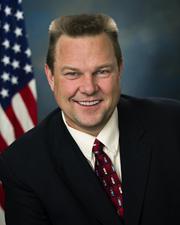 Sen. Jon Tester (D-MT)
Legislative Activity
Stay on top of the latest movement without scrolling through every action
Senate amendment agreed to: Amendment SA 3749 agreed to in Senate by Yea-Nay Vote. 98 - 0. Record Vote Number: 132.
May 6, 2010
View full timeline
Senate amendment agreed to: Amendment SA 3749 agreed to in Senate by Yea-Nay Vote. 98 - 0. Record Vote Number: 132.
May 6, 2010
Roll call votes on amendments in Senate: Amendment SA 3749 agreed to in Senate by Yea-Nay Vote. 98 - 0. Record Vote Number: 132.
May 6, 2010
Considered by Senate. (consideration: CR S3296-3299)
May 6, 2010
Amendment SA 3749 agreed to in Senate by Yea-Nay Vote. 98 - 0. Record Vote Number: 132.
May 6, 2010
Senate amendment proposed (on the floor): Amendment SA 3749 proposed by Senator Tester to Amendment SA 3739.(consideration: CR S3149-3150, S3153-3157; text: CR S3149)
May 5, 2010
Amendment SA 3749 proposed by Senator Tester to Amendment SA 3739. (consideration: CR S3149-3150, S3153-3157; text: CR S3149) To require the Corporation to amend the definition of the term "assessment base".
May 5, 2010
Senate amendment submitted
April 29, 2010
Votes
1 roll call on this amendment
Text
Proposed
RESTORING AMERICAN FINANCIAL STABILITY ACT OF 2010--Continued

Amendment No. 3737

The PRESIDING OFFICER. There is now 4 minutes of debate equally
divided prior to a vote on the Boxer amendment.
The Senator from California.
Mrs. BOXER. Mr. President, I would like everyone to take a look at
these headlines from September 2008: ``Nightmare on Wall Street, Where
Do We Go From Here?'' All of us who went through this, whether we were
in the Senate or we were looking at what was happening to our
investments on Wall Street, we saw over 3 short days in September of
2008, Lehman Brothers, Merrill Lynch, and AIG collapsed and the stock
market plunged. Seniors lost their retirement savings, and families
lost their jobs and homes. Small businesses stopped hiring. It was a
nightmare. That is what it was. If there is one thing we should all be
able to agree on, it is this: The American taxpayer should never again
have to bail out Wall Street firms that gambled away our savings and
wreaked havoc on our economy.
My amendment is very clear. It is not a sense of the Senate. It has
the force of law. It is straightforward. It is an ironclad assurance
that a failing, insolvent Wall Street firm must be liquidated, and the
cost of that liquidation must come either from selling off the firm's
assets or from industry assessments of the big Wall Street firms.
I will retain the remainder of my time in case there is a debate. I
hope this is close to a unanimous vote. It is clear, and I hope we will
agree.
I retain the remainder of my time.
The PRESIDING OFFICER. The Senator from Alabama.
Mr. SHELBY. Mr. President, I yield back the time and ask for the yeas
and nays.
The PRESIDING OFFICER. Is there a sufficient second?
There appears to be.
The question is on agreeing to the amendment.
The clerk will call the roll.
The assistant legislative clerk called the roll.
Mr. DURBIN. I announce that the Senator from West Virginia (Mr. Byrd)
and the Senator from Massachusetts (Mr. Kerry) are necessarily absent.
I further announce that if present and voting, the Senator from
Massachusetts (Mr. Kerry would vote ``yea.''
Mr. KYL. The following Senator is necessarily absent: the Senator
from Utah (Mr. Bennett).
The PRESIDING OFFICER. Are there any other Senators in the Chamber
desiring to vote?
The result was announced--yeas 96, nays 1, as follows:

[Rollcall Vote No. 130 Leg.]

YEAS--96

Akaka
Alexander
Barrasso
Baucus
Bayh
Begich
Bennet
Bingaman
Bond
Boxer
Brown (MA)
Brown (OH)
Brownback
Bunning
Burr
Burris
Cantwell
Cardin
Carper
Casey
Chambliss
Coburn
Cochran
Collins
Conrad
Corker
Cornyn
Crapo
DeMint
Dodd
Dorgan
Durbin
Ensign
Enzi
Feingold
Feinstein
Franken
Gillibrand
Graham
Grassley
Gregg
Hagan
Harkin
Hatch
Hutchison
Inhofe
Inouye
Isakson
Johanns
Johnson
Kaufman
Klobuchar
Kohl
Landrieu
Lautenberg
Leahy
LeMieux
Levin
Lieberman
Lincoln
Lugar
McCain
McCaskill
McConnell
Menendez
Merkley
Mikulski
Murkowski
Murray
Nelson (NE)
Nelson (FL)
Pryor
Reed
Reid
Risch
Roberts
Rockefeller
Sanders
Schumer
Sessions
Shaheen
Shelby
Snowe
Specter
Stabenow
Tester
Thune
Udall (CO)
Udall (NM)
Vitter
Voinovich
Warner
Webb
Whitehouse
Wicker
Wyden

NAYS--1

Kyl

NOT VOTING--3

Bennett
Byrd
Kerry
The amendment (No. 3737) was agreed to.
Mr. DODD. I move to reconsider the vote.
Mr. INOUYE. I move to lay that motion on the table.
The motion to lay on the table was agreed to.
The PRESIDING OFFICER. The Senator from Alabama.

Amendment No. 3827 to Amendment No. 3739

Mr. SHELBY. Mr. President, I call up my amendment, which is at the
desk.
The PRESIDING OFFICER. The clerk will report.
The bill clerk read as follows:

The Senator from Alabama [Mr. Shelby], for himself and Mr.
Dodd, proposes an amendment numbered 3827 to amendment No.
3739.

(The amendment is printed in today's Record under ``Text of
Amendments.'')

[[Page S3148]]

The PRESIDING OFFICER. There will be 4 minutes of debate, evenly
divided, on the amendment.
The Senator from Alabama.
Mr. SHELBY. Mr. President, I yield back my time. I think we have
debated this quite a while this afternoon. Most people know about it.
The PRESIDING OFFICER. The Senator from Connecticut.
Mr. DODD. Mr. President, again, I thank my colleagues. I thank
Senator Corker, Senator Warner, and Senator Shelby. A lot of work went
into this amendment. I urge my colleagues to support it.
I yield back our time and ask for the yeas and nays.
The PRESIDING OFFICER. Is there a sufficient second?
There is a sufficient second.
The question is on agreeing to the amendment.
The clerk will call the roll.
The bill clerk called the roll.
Mr. DURBIN. I announce that the Senator from West Virginia (Mr. Byrd)
is necessarily absent.
Mr. KYL. The following Senator is necessarily absent: the Senator
from Utah (Mr. Bennett).
The PRESIDING OFFICER (Mr. Franken). Are there any other Senators in
the Chamber desiring to vote?
The result was announced--yeas 93, nays 5, as follows:

[Rollcall Vote No. 131 Leg.]

YEAS--93

Akaka
Alexander
Barrasso
Baucus
Bayh
Begich
Bennet
Bingaman
Bond
Boxer
Brown (MA)
Brown (OH)
Brownback
Bunning
Burr
Burris
Cantwell
Cardin
Carper
Casey
Chambliss
Cochran
Collins
Conrad
Corker
Crapo
Dodd
Durbin
Ensign
Enzi
Feingold
Feinstein
Franken
Gillibrand
Graham
Grassley
Gregg
Hagan
Harkin
Hutchison
Inhofe
Inouye
Isakson
Johanns
Johnson
Kaufman
Kerry
Klobuchar
Kohl
Kyl
Landrieu
Lautenberg
Leahy
LeMieux
Levin
Lieberman
Lincoln
Lugar
McCain
McCaskill
McConnell
Menendez
Merkley
Mikulski
Murkowski
Murray
Nelson (NE)
Nelson (FL)
Pryor
Reed
Reid
Risch
Roberts
Rockefeller
Sanders
Schumer
Sessions
Shaheen
Shelby
Snowe
Specter
Stabenow
Tester
Thune
Udall (CO)
Udall (NM)
Vitter
Voinovich
Warner
Webb
Whitehouse
Wicker
Wyden

NAYS--5

Coburn
Cornyn
DeMint
Dorgan
Hatch

NOT VOTING--2

Bennett

Byrd

The amendment (No. 3827) was agreed to.
Mr. DODD. Mr. President, I move to reconsider the vote.
Mr. SHELBY. I move to lay that motion on the table.
The motion to lay on the table was agreed to.

Amendments Nos. 3755 and 3757, En Bloc

The PRESIDING OFFICER. The Senate will now vote on the two Snowe
amendments en bloc.
If there is no further debate on the amendments, the question is on
agreeing to the amendments en bloc.
The amendments (Nos. 3755 and 3757) were agreed to.
Mr. DODD. Mr. President, I move to reconsider the vote.
Mr. SHELBY. I move to lay that motion on the table.
The motion to lay on the table was agreed to.
The PRESIDING OFFICER. The Senator from Alabama is recognized.

Amendment No. 3826 to Amendment No. 3739

Mr. SHELBY. Mr. President, I rise to bring up amendment No. 3826, the
Republican consumer protection alternative. This amendment has been
cosponsored by 14 of my colleagues. It is amendment No. 3826.
The PRESIDING OFFICER. The clerk will report.
The bill clerk read as follows:

The Senator from Alabama [Mr. Shelby], for himself, Mr.
McConnell, Mr. Bennett, Mr. Crapo, Mr. Corker, Mr. Johanns,
Mrs. Hutchison, Mr. Vitter, Mr. Bunning, Mr. Chambliss, Mr.
Cornyn, Mr. Bond, and Mr. Enzi, proposes an amendment
numbered 3826 to amendment No. 3739.

Mr. SHELBY. Mr. President, I ask unanimous consent that reading of
the amendment be dispensed with.
The PRESIDING OFFICER. Without objection, it is so ordered.
(The amendment is printed in today's Record under ``Text of
Amendments.'')
The PRESIDING OFFICER. The Senator from Connecticut is recognized.
Mr. DODD. Mr. President, before they begin debate on the next
amendment, I thank my colleagues. This has been a difficult time even
getting to this point. I thank Senator Shelby and his staff and my
staff and others. We have had a vote on the Boxer amendment, 96 to 1.
We had a vote, 93 to 5, on the Shelby-Dodd amendment. We adopted two
Snowe amendments in the last hour. That is a pretty good beginning on
this bill.
I want to tell my colleagues I have received about 95 amendments to
the bill that people will propose. I believe Members ought to be able
to be heard on their amendments. This is something that will have to be
self-imposed discipline, to some degree, but if Members will restrain
themselves on time, more colleagues will get a chance to be a part of
the bill and to be heard. If you ask for too much time, it will make it
difficult. I just ask people to be considerate of each other. Most
times, an amendment can be made--a big amendment--with an hour or two
of debate and others less than that, maybe 20 minutes or 30 minutes
equally divided. Again, I am not suggesting some amendments are more
important than others. If you bring the amendments to us for review,
perhaps we can adopt some or make them part of a managers' amendment.
We will both have to check them out. If we can do that, we can reduce
the number significantly. I think we have some smart proposals. I
cannot do that alone. My colleague will have to agree with that.
It would help us a great deal if we can move this along, and I say
that respectfully. I don't know whether we have an agreement on when we
might vote on this amendment. I will ask my colleague to give us some
idea. I would like you to think about how much time you would like, and
keep in mind your fellow colleagues who would like to be heard on their
amendments.
Mr. DORGAN. Will the Senator yield for a question?
Mr. DODD. Yes, I am glad to yield.
Mr. DORGAN. I think it is commendable that there has been a burst of
activity on the Senate floor in the last couple of hours. We have had a
number of votes. It took some while to wait for this to happen. I agree
with the Senator from Connecticut and the Senator from Alabama that to
the extent we can accommodate votes on a wide range of subjects--this
is an issue that is very consequential to the future of the country,
and we want to get it right.
From my standpoint, I have a couple of amendments I think are very
important. Time agreements are not a problem for me. I am interested in
having the opportunity to explain an amendment and have a short debate
and then have the Senate register its judgment. I appreciate what the
Senator just said. He would like to see us move along and be able to
offer amendments. There are a lot of them on too big to fail and credit
default swaps. I will talk to the managers. I hope I will have an
opportunity to get them on the floor and get them offered.
Mr. DODD. I hope we can stay away from filibusters and get everybody
to have an up-or-down vote. This is a very important bill, and it is
also about how this institution functions and whether we trust each
other to be able to offer an amendment, have an adequate amount of time
to debate, and then vote up or down. That is how we ought to function.
I hope this bill will not only produce a good product in the end but
will also have the healing quality this institution needs. We have been
through a lot in this Congress. We need to get back to acting like
colleagues, respecting each other's opinions, having a good partisan
debate but doing it in a civil fashion, having the consideration each
person deserves to be heard, and having a vote up or down. I offer that
as a suggestion on how we might proceed.
Mr. SANDERS. If the Senator will yield, do we have any sense of what
is happening this afternoon?
Mr. DODD. I will find out from my colleague.
Mr. SHELBY. Mr. President, I join my colleague from Connecticut. We
have had a burst of activity this afternoon. I think we are off to a
good start. We have to remember that this bill is

[[Page S3149]]

about 1,500 pages. This doesn't only affect a little bit of our
economy, it affects all of our economy in one way or the other.
I have just laid down an amendment--the Republican alternative to the
consumer products--and a lot of people are going to want to debate it
on both sides. We are not here to delay this bill in any way. I think
it is so important and it is so comprehensive that we are going to have
a healthy debate. I appreciate the remarks of the Senator from
Connecticut. I believe he understands that very well.
Mr. DODD. My colleague from Montana wishes to speak.
The PRESIDING OFFICER. The Senator from Montana is recognized.
Mr. TESTER. Mr. President, I inquire of Senator Dodd, at this point
in time, does he want me call up my amendment No. 3749 or just talk
about it?
Mr. SHELBY. The Senator can call it up.
Mr. DODD. My friend can call up his amendment.

Amendment No. 3749 to Amendment No. 3739

Mr. TESTER. Mr. President, I ask unanimous consent to set aside the
pending amendment, and I call up amendment No. 3749.
The PRESIDING OFFICER. Without objection, it is so ordered. The clerk
will report.
The legislative clerk read as follows:

The Senator from Montana [Mr. Tester], for himself, Mr.
Conrad, Mrs. Murray, and Mr. Burris, proposes an amendment
numbered 3749 to amendment No. 3739.

Mr. TESTER. Mr. President, I ask unanimous consent that reading of
the amendment be dispensed with.
The PRESIDING OFFICER. Without objection, it is so ordered.
The amendment is as follows:

(Purpose: To require the Corporation to amend the definition of the
term ``assessment base'')

On page 368, strike line 3 and all that follows through
page 369, line 14, and insert the following:
(b) Assessment Base.--The Corporation shall amend the
regulations issued by the Corporation under section 7(b)(2)
of the Federal Deposit Insurance Act (12 U.S.C. 1817(b)(2))
to define the term ``assessment base'' with respect to an
insured depository institution for purposes of that section
7(b)(2), as an amount equal to--
(1) the average consolidated total assets of the insured
depository institution during the assessment period; minus
(2) the sum of--
(A) the average tangible equity of the insured depository
institution during the assessment period; and
(B) in the case of an insured depository institution that
is a custodial bank (as defined by the Corporation, based on
factors including the percentage of total revenues generated
by custodial businesses and the level of assets under
custody) or a banker's bank (as that term is used in section
5136 of the Revised Statutes (12 U.S.C. 24)), an amount that
the Corporation determines is necessary to establish
assessments consistent with the definition under section
7(b)(1) of the Federal Deposit Insurance Act (12 U.S.C.
1817(b)(1)) for a custodial bank or a banker's bank.

Mr. TESTER. Mr. President, I rise to urge my colleagues to support
the Tester-Hutchison amendment. My colleague from Texas and I came to
the floor yesterday to talk about this bipartisan, commonsense
amendment to hold banks accountable for their behavior and to preserve
the integrity of the FDIC deposit insurance fund.
Our amendment would force big banks to pay their fair share of
insurance by basing assessments on assets rather than deposits. It
would fix the lopsided assessment system that we have now, which
unfairly burdens our community banks. It would ensure that the FDIC has
the necessary resources to maintain the health of the deposit insurance
fund.
Senator Hutchison and I think this amendment makes a good deal of
common sense. I am pleased this is one of the first amendments up for
consideration because it highlights the fact that Democrats and
Republicans do agree on ways we can strengthen what is already a very
good bill. Senator Hutchison and I are joined by Senators Conrad,
Murray, Burris, Brown of Massachusetts, Harkin, Shaheen, Cornyn,
Johanns, Nelson of Florida, and Nelson of Nebraska in offering this
important bipartisan amendment.
After working on this bill for months with the good Senator Dodd and
the Banking Committee, I am pleased we are finally getting an
opportunity to debate this bill and move it forward.
I know there are a number of other bipartisan amendments like this
one where Members can join together to work to improve this bill. I
look forward to considering them also.
With that, when the time is right, when leadership has agreed, I hope
we can get a vote on amendment No. 3749.
I yield the floor.
The PRESIDING OFFICER. The Senator from Rhode Island is recognized.
Mr. DORGAN. Mr. President, before the Senator from Rhode Island
speaks, let me just ask if he will yield so that I may ask a question.
Mr. WHITEHOUSE. Yes.
Mr. DORGAN. Mr. President, the Senator from Montana has offered an
amendment. I am trying to determine if there is a list and how I might
get on the list. I might propound the question to the Senator from
Connecticut. There has been a Republican amendment offered, and that
was set aside and the Senator from Montana offered one. I would like to
talk to whoever is making a list.
Mr. DODD. There isn't one. This amendment will be agreed to. It is
not going to require a vote. Other matters will require debate and
discussion. That was the only reason to do this--to get it in the
queue--and at some point today there will be an agreement to accept
that amendment. They just didn't do it yet. I don't have a particular
queue lined up.
It is my intention to ask Senator Sanders to offer his, once we
complete this--to be the next in line. I ask my colleagues to, instead
of jumping up one after another trying to get in the queue, come and
talk to us and let us orchestrate it in a way that will allow for
consideration of various parts of the bill.
Mr. DORGAN. Mr. President, I thank my colleague from Rhode Island for
his courtesy, and I thank Senator Dodd. I was here earlier. I will come
and talk about that queue as it exists. I hope my amendment on too big
to fail will be part of the early amendments.
The PRESIDING OFFICER. The Senator from Rhode Island.
Mr. WHITEHOUSE. Mr. President, I was delighted to give the
distinguished Senator from North Dakota a chance to clarify that.
I will speak just for a minute about amendment No. 3746, which I will
not be calling up right now but which I intend to work with Chairman
Dodd on to call up later.
I wanted to mention that this afternoon this amendment received the
endorsement of Americans for Financial Reform, a coalition of dozens of
national and State consumer groups that are working to help pass the
critical legislation we are debating today.
In addition to the coalition as a whole, the amendment has been
endorsed by individual members as well, including the AARP, the
Consumer Federation of America, Consumers Action, Consumers Union, and
on behalf of its low-income clients, the National Consumer Law Center.
These groups have sent a letter to each of my colleagues which reads
in part:

On behalf of consumers, AFR strongly urges you to support
Whitehouse's Interstate Lending Amendment. By reinstating
protections that existed prior to the U.S Supreme Court's
decision in Marquette National Bank of Minneapolis v. First
of Omaha Service Corp (1978), Congress will take a step in
the right direction toward protecting consumers and leveling
the playing field between national credit card companies and
their local and community oriented counterparts.
The Whitehouse Interstate Lending Amendment takes a strong
step towards restoring to each state the ability to protect
its citizens from lenders based in other states. We strongly
urge you to vote in favor of this Amendment and in favor of
the consumer protections this Amendment promotes. By leveling
the playing field between national banks and local lenders,
you will send a strong signal to Main Street that their
interests count. We urge adoption of this modest, yet
tremendously helpful amendment.

Mr. President, I ask unanimous consent to have printed in the Record
this letter dated today from Americans for Financial Reform.
There being no objection, the material was ordered to be printed in
the Record, as follows:

Americans for

Financial Reform,

Washington, DC, May 5, 2010.
Re Support for Whitehouse Interstate Lending amendment to S.
3217.

U.S. Senate,
Washington, DC.
Dear Senator: The consumer, employee, investor, community
and civil rights groups

[[Page S3150]]

who are members of Americans for Financial Reform (AFR) write
to express strong support for the Whitehouse Interstate
Lending Amendment that will be offered during floor debate on
S. 3217, the ``Restoring American Financial Stability Act.''
This amendment will restore to the states the ability to
enforce interest rate caps against out-of-state lenders. By
so doing, the amendment will help level the playing field so
that intrastate lenders such as community banks, local
retailers, and credit unions no longer are bound by stricter
lending limits than national credit card companies.
Under current law, national banks are bound only by the
lending laws of the state in which the bank is based. As a
result, the current system gives lenders an incentive to
locate in states with weak or non-existent interest
restrictions. A handful of states, eager to attract lucrative
credit card business and related tax revenues, have all but
eliminated their consumer protections.
On behalf of consumers, AFR strongly urges you to support
Whitehouse's Interstate Lending Amendment. By reinstating
protections that existed prior to the U.S. Supreme Court's
decision in Marquette National Bank of Minneapolis v. First
of Omaha Service Corp (1978), Congress will take a step in
the right direction toward protecting consumers and leveling
the playing field between national credit card companies and
their local and community oriented counterparts.
The Whitehouse Interstate Lending Amendment takes a strong
step towards restoring to each state the ability to protect
its citizens from lenders based in other states. We strongly
urge you to vote in favor of this Amendment and in favor of
the consumer protections this Amendment promotes. By leveling
the playing field between national banks and local lenders,
you will send a strong signal to Main Street that their
interests count. We urge adoption of this modest, yet
tremendously helpful amendment.
Please direct questions to Maureen Thompson.
Sincerely,
Americans for Financial Reform.

Mr. WHITEHOUSE. Mr. President, I know the membership of this
organization that supports the amendment includes AARP, as I mentioned,
that also supported it individually, the Center for Responsible
Lending, Common Cause, Consumers Union, the NAACP, the National
Association of Investment Professionals, the National Council of La
Raza, and the Veterans Chamber of Commerce, in addition to a great
number of other organizations.
This is an important amendment. It closes a loophole that was opened
by the Supreme Court decision of 30 years ago, the decision to define
the term ``located'' in the National Banking Act from way back in the
Civil War era, 1863, as meaning the location where the bank is located,
not the location where the consumer is located, so that when there is a
bank in one State doing business with a consumer in another State, the
laws of the bank's State govern.
There is nothing particularly wrong with that decision. The problem
is that the banks figured out that they could go to States that had the
worst consumer protections or go to States that would be willing to
chuck their consumer protections in return for the influx of business.
From those States which have the worst consumer protection laws, they
could then market their products around to other States and undercut
and dodge around the laws of Rhode Island, the laws of Minnesota, the
laws of Connecticut, the laws of Iowa, the laws of Virginia--the laws
of all the States that for more than 200 years, in the history of our
Republic, had this authority to regulate interest and to protect our
consumers.
This is an unintentional loophole. It has created grievous abuse of
consumers who for the first time in the history of America are paying
30-plus interest rates under the law. When you and I were growing up,
Mr. President, if a flier came in the mail that offered a credit card
with a 30-percent interest rate, that would probably be a matter to
bring to the attention of the authorities because it would be illegal.
Now they market this stuff at will, and too many Americans, too many of
our State residents, too many consumers are paying exorbitant and what
would in that State be illegal interest rates because of that loophole.
It is long past time to change it. This amendment would close it.
I urge the support of my colleagues, and I look forward to the chance
to call up this amendment.
I yield the floor. I suggest the absence of a quorum.
The PRESIDING OFFICER. The clerk will call the roll.
The assistant bill clerk proceeded to call the roll.
Mr. HARKIN. Mr. President, I ask unanimous consent that the order for
the quorum call be rescinded.
The PRESIDING OFFICER. Without objection, it is so ordered.

Amendment No. 3812

Mr. HARKIN. Mr. President, I come to the floor to speak about an
amendment I have filed along with Senators Schumer and Sanders,
amendment No. 3812. The purpose of the amendment is very simple: to
protect consumers from being charged unfair and unreasonable fees by
ATM machines.
How often have you gone to an ATM machine to access your own cash
from your own credit union or your own bank and they charge you a
couple bucks, $2.50, $2.25, $3, $4? We have seen as high as $5 in parts
of the country. I wish to talk about that issue, how unfair it is.
In recent years, Congress has acted to protect consumers by setting
appropriate limits on the types of fees that financial institutions can
charge consumers in areas such as credit cards, and spurred by a good
proposal by Chairman Dodd, the Federal Reserve is now considering rules
regarding overdraft fees. One area that remains unregulated is the fees
consumers pay to use ATMs.

Right now there is no limit that the operator of an ATM can charge a
consumer for using that machine. Currently, the only regulation in this
area--clearly insufficient, I might add--is that the operator must
disclose how much they will charge. So when you access an ATM it has to
tell you how much they are charging you and you can then refuse to do
that, if you want. But this nominal disclosure requirement does nothing
to ensure the charges are not arbitrary ways for banks and third-party
owners of these machines to make an unreasonable sum on the backs of
consumers.
Some of my colleagues may remember that until 1996, most processing
networks actually prohibited the operators of ATMs from adding an
additional surcharge for the use of the ATMs. Instead, to cover the
cost of the transactions, banks paid fees that passed between the
consumers' banks, the ATM operating bank, and the card network. That
fee of about 50 cents still changes hands today to cover the cost of
processing. Simply put: By charging consumers these fees while
collecting fees from other banks, these big banks are double-dipping on
the backs of consumers. My amendment would end that double-dipping.
Enticed by the prospect of easy money, in 1996 the rules that
prevented banks from charging consumers were overturned by the big card
networks--Visa, Mastercard, and the big banks. For this reason, in,
1997, I was a cosponsor, along with Chairman Dodd and others, of a
measure introduced by then-Banking Committee Chairman D'Amato that
would have required the card networks to restore these rules and charge
nothing for ATMs. Unfortunately, we were unsuccessful in that effort.
But it was bipartisan. Chairman D'Amato was a Republican.
As a result, because we were unsuccessful in 1997, the amount of fees
that consumers pay has skyrocketed. According to estimates by the
Federal Reserve, the average surcharge fee paid by consumers for
accessing their own money is $2.66. As I said, in some cases--in
airports and other places--it is as much as $5 for gaining access to
your own money.
That doesn't seem right to me, and it doesn't seem right to a lot of
consumers. It is unfair for people to pay that much to access their own
cash. If ATM operators want to charge a fee to cover the cost of
providing a service, I can understand that. But that fee needs to
relate to what it actually costs to process the transaction, not just
the maximum they think they can get away with.
To ensure these fees are reasonable and related to the costs of
processing the transaction, my amendment would require the new Consumer
Financial Protection Bureau to ensure that fees charged consumers at
ATMs bear a reasonable relation to the cost of processing the
transaction.
The best data available suggests that the cost of processing a
transaction today--ready for this--is 36 cents. Think about that the
next time you go to the ATM and you have to get some cash and it comes
up and says they are charging $2.50. The real cost of that is

[[Page S3151]]

about 36 cents. Where does the rest of the money go? The rest of the
money goes to the big banks and the big card networks, and they are
making a fortune.
We got that data from a survey conducted by the Office of Thrift
Supervision, which suggested in 1997--the time we had our amendment--
that the cost of processing a transaction was only 27 cents. So we
factored in inflation, and that would bring the cost to about 36 cents
today, and that assumes any improvements in technology have not brought
down costs, which, obviously, they have. We have new technologies,
faster speed networks, which probably has brought the cost down. So
when I say the cost of going to an ATM machine to access money is 36
cents, that is on the high side.
So what our amendment basically says is that they can set up a
reasonable charge based upon what the costs are, but we put an upper
limit. We say no more than 50 cents per transaction. So our amendment
would basically say anytime you go to your ATM machine they have to
charge you a reasonable fee based upon what would be set, but in no
case more than 50 cents, in no case more than 50 cents.
Again, I would just point out that until 2002, in my State of Iowa,
the law required any bank establishing an ATM had to make that
available at no cost--no fee to all users. So Iowa did not charge any
fees at all, and Iowa banks did just fine under this agreement. Iowa
consumers were protected from unfair fees.
But in 2002, this reasonable Iowa law was preempted by Federal
banking regulators. Federal banking regulators preempted this. Again,
in the absence of these laws, the Federal banking regulators have taken
no action to limit the amount of fees consumers can be charged.
According to the New Rules Project, national banks--these big banks--
collected almost $5 million in ATM fees from Iowa consumers in the
first 6 months after the Iowa law was overturned. Iowa credit unions
data said it was about $10 million just in the first year. Well, add
that up, and that can come to a lot of money.
Anyway, I bring this example of how things were in Iowa before 2002
because it is the kind of balance that the bill pending before us
should restore. Quite frankly, things have tipped so far in favor of
big banks in this country, and so far away from consumers, that we
often don't even know what a reasonable balance looks like anymore. But
the example of Iowa from several years ago in which consumers were
protected from unfair ATM fees while banks still profited, is an
example--I think an excellent example--of the balance we need to return
to.
So this broader bill that Senator Dodd and Senator Shelby have
brought forward isn't antibusiness or antibank, but it does seek to
return us to a situation in which the needs of consumers and the rights
of businesses are considered alongside one another. It restores some
balance for consumers in our society.
When I looked at this bill, I thought: Well, there is one area that
kind of seems to be getting overlooked. I suppose a lot of people might
say: Well, $2 is not much. Well, here is the other unfair thing about
it. The average person going to an ATM machine probably takes out $20,
$50 to get them through a day or 3 or 4 days in the week, and they are
charged $2.50 for accessing that $20 or $50. Someone else goes in and
wants to get $500, and they are charged the same $2.50. So the burden
falls more heavily on low-income people, moderate-income people who
need to use the ATM machines to get some cash to get them through. That
is grossly unfair.
It is unfair that the banks and the ATM operators can charge whatever
they want to charge. As I pointed out earlier, according to the Office
of Thrift Supervision and the data they collected, the average cost of
processing this ATM transaction is only 36 cents. Why are you being
charged $2.50 or $3 or as much as $5? Well, that is what this amendment
seeks to stop; again, to get this balance back where it should be.
My amendment is also supported by the U.S. Public Interest Research
Group, the Consumer Federation of America, Consumer Action, Consumers
Union, and the National Consumer Law Center on behalf of its low-income
clients.
I close by thanking my colleague, Senator Dodd, for his tireless work
to move this critical bill forward and to again help establish that
balance in our country between our consumers, our depositors, our
community banks, and the big banks. As I said, we have gotten so far
off track we hardly recognize what a balance is any longer. I think
this bill does a great thing in trying to restore that balance. I just
want to make sure that consumers are no longer taken advantage of by
these unfair ATM fees that are out there, and that is why I will be
offering this amendment at the appropriate time.
Mr. President, I see the chairman is here.
Mr. DODD. If my colleague will yield.
Mr. HARKIN. Sure.
Mr. DODD. I just want to thank him for all his work. We have spent a
lot of time in the last year or so on the health care debate, where we
sat next to each other day after day going through all of that. We,
obviously, go back a lot longer than that.
The Senator from Iowa and I arrived here on the very same day. The
pages have oftentimes asked me when did I get here, and I have said:
Thomas Jefferson was President when I arrived.
It wasn't quite that long ago, but we arrived together on the same
day, 35 years ago, in the House of Representatives, and we have been
great friends and colleagues.
No one cares more about not only his State but people all across this
country who struggle. He is the author of the Americans with
Disabilities Act, affecting millions of Americans, and I have a family
member who benefitted from Senator Harkin's work. I wish there had been
someone around in the 1930s when she was born who might have stood up
and recognized her talents and ability. Fortunately, she grew up in a
family where they did some things and she ended up helping restore the
American Montessori system of teaching as an early childhood
development specialist. But had she been born under different
circumstances, I suspect she would have been doing piecemeal work
somewhere.
So there is a lot for which our country has to thank the Senator from
Iowa. I appreciate his efforts on this amendment and thank him for his
general concerns on the bill as well.
Mr. HARKIN. I thank my friend from Connecticut. Every time I see my
good friend here, I think of all the work that he did in getting our
health care bill through, and now this. Talk about going out on a high
note. I am sorry, as he knows, that he is not going to be here after
this year.
Again, I think the fact that Senator Dodd did the health care bill
and got it through was a great achievement for the people of this
country and now this financial reform, to make sure we don't go through
what we did a few years ago again and to help our consumers have a
little better balance in their dealings with the big banks and the big
investment houses. This is a great bill, and I compliment him for it.
I know it has been a long tough slog, as they say, but future
generations will look back and thank Senator Dodd both for the health
care bill, and I think for this financial reform bill. A lot of people
may not understand all the intricacies of it--the high finance and all
that stuff. Sometimes you can get a little dizzy thinking about all
this stuff. But he understands it. He gets it. And Senator Dodd has
done a magnificent job in putting this bill together. It is going to
help protect our consumers in this country.
So that is why I am proud to support it. I hope he doesn't mind if I
offer an amendment to it, as I am going to do on the ATM piece. But I
thank the Senator, and I yield the floor. I suggest the absence of a
quorum.
The PRESIDING OFFICER. The clerk will call the roll.
The legislative clerk proceeded to call the roll.
Mr. MENENDEZ. Mr. President, I ask unanimous consent the order for
the quorum call be rescinded.
The PRESIDING OFFICER. Without objection, it is so ordered.
Mr. MENENDEZ. Mr. President, I come to the floor this afternoon to
talk about the bill before us. I commend my colleague, the chairman of
the Senate Banking Committee, Senator Dodd, for his leadership on this
crucial reform.
I want to start off by reiterating what I know many of my colleagues

[[Page S3152]]

have said, that this is a strong bill and it is a necessary bill. There
is no doubt that we need Wall Street reform and we need it now. When
tens of millions of Americans have lost their jobs, homes, and savings,
Americans cannot wait any longer to end the reckless Wall Street
practices that caused those problems.
I certainly never want to see us again be in a position where we had
the Chairman of the Federal Reserve come to us, about a year and a half
ago, and say to members of the Senate Banking Committee, you need to
act because financial institutions are on the verge of collapse and
their collapse would create a consequence to the national economy of
enormous proportions.
I will never forget the dialog that took place there, in essence when
Chairman Bernanke was asked, the Chairman of the Federal Reserve, what
happened? Don't you have enough time, some tools at the Federal Reserve
to get us through this period of time? He basically said, if you don't
act you will have a global meltdown which basically means a new
depression in the 21st century. Certainly a depression in the 21st
century is much different than the depression this country lived
through under President Roosevelt.
Since he is someone whose expertise is in Depression era economics,
how we got into the Depression, what made it worse, how we got out of
it, it was a pretty compelling set of arguments.
So here we are. What we want to do is make sure we are never put at
that risk again; that there is not anything that is too big to fail
because, in doing so, you can make all the wrong decisions knowing that
even when you make the wrong decisions, and they are risky, the
taxpayers will have to bail you out because we cannot have the
country's whole economy go under. At the same time, we want to try to
strengthen our regulatory process so we not only not face that reality
but we create clear rules of the road.
I am for a free market. I believe in a free market. But there is a
difference between a free market and a free-for-all market. There is a
difference between when someone takes their own capital, whether as a
company or as an individual, and makes an investment and when the
investment does good, good for them; but when the investment goes bad
we all have to pay for it. We cannot have a system where profits are
privatized but losses become the general public's responsibility. That
is, in essence, the core of what we are trying to do here--to make sure
that such a system, which is what we have had, not a free market but a
free-for-all market, gets changed so we never face that again.
As I said, I think this is an incredibly strong bill. But even a
strong bill can have suggestions to make a good bill even stronger. I
commend Chairman Dodd for being open to ideas to make this bill even
stronger, regardless of which side of the aisle they come from. Now
that we have broken the Republican logjam that has been holding this
bill up for over a week, I hope we can get to the business of fully
legislating in a full and open debate. I know that is what the American
people want and expect, that the Senators they sent to Washington
actually get to work on the business of fixing these problems; not that
they sit on their hands while one party holds up debate because the
bill didn't do everything they wanted it to or because we had
conversations--some of our colleagues on the other side of the aisle
had conversations with Wall Street and basically they don't like a lot
of what we are doing here. But, in fact, it is critical to the Nation's
economic security.
I am glad to see that we have colleagues now on the train. I hope
people do not try to pull the emergency brake switch to try to stop us
from going to where we need to go.
I think this is a great bill but there are some amendments I plan to
offer to the bill. I think they make the bill even stronger. I have
filed an open books amendment, to require companies to be more
transparent in their financial reporting. Many experts believe one of
the reasons we got into this mess in the first place was because no
one--not investors, not regulators, not counterparties, not even the
people running the companies--could actually figure out the true value
of these big Wall Street banks. That is because banks hid a significant
percentage of their liabilities, their risks, off their balance sheets.
For example, Lehman Brothers treated $50 billion in repurchase
agreement transactions as sales instead of financing transactions on
their balance sheets, misleading everyone about the state of Lehman's
finances.
The bottom line, you know, may sound very technical but if I can take
my liabilities off of my personal balance sheet and put them somewhere
else and look as though I am better off than I am, that is
fundamentally wrong. Clearly, had there been more transparency we might
have dealt with the Lehman situation sooner, thus reducing the
repercussions of a catastrophic bankruptcy.
The amendment I am proposing is simple. It requires companies that
are designated as systemically risky to disclose all their off-balance
sheet activities in their annual 10-K report to the Securities and
Exchange Commission, and provide detailed justifications for why they
are keeping those liabilities off their balance sheets.
It also requires disclosure of daily average leverage ratios in
quarterly reports. This will prevent companies from moving liabilities
off their balance sheets only days before when they are reporting
earnings, as Lehman and others allegedly did.
It is a step toward transparency. We know capital markets work best
when they are transparent. That is the thrust of what this bill is
trying to do. Put simply, the largest banks should not be able to
deceive regulators, investors, counterparties, and the public, by
hiding their liabilities in off-balance vehicles. We need transparency
and clarity, not trickery and deception.
I also am happy to join with Senator Akaka, who is leading on this
particular amendment but I am his prime cosponsor, to require
stockbrokers to act in the best interests of their clients. What a
revolutionary concept, that stockbrokers act in the best interests of
their clients. Brokers are not required to act in the best interests of
their clients and can sell clients worse investments because they make
more money on them, without the client ever knowing it. Brokers are
only required to have reasonable grounds to believe that a property
they are recommending is suitable for the customer, even if it is not
the best product for the customer. Typically, brokers do not have to
make disclosures about conflicts of interest or past infractions. In
contrast, investment advisers are legally and ethically bound to put a
client's interest ahead of their own--in essence to have a fiduciary
duty; and to fully disclose those conflicts they may have.
All brokers currently have exactly the same conflict of interest that
Goldman Sachs had in its civil fraud case by the Securities and
Exchange Commission: financial incentives to steer clients toward bad
investment products that brokers made more money on.
But retail investors are confused. They commonly think the services
that investment advisers and brokers provide are nearly identical. An
SEC Commission study in 2008 by the RAND Corporation found that
investors were confused about the differences. So I don't think we need
further studies. Senator Akaka's amendment and mine would end the
confusion. It would require brokers to act in the best interests of
their clients, just as investment advisers already do. It requires
brokers to disclose conflicts of interest, so brokers would have to
tell retail clients if they get more fees for selling a particular
mutual fund or annuity product.
It gives the FTC discretion to apply a fiduciary duty standard for
all types of investors which would include institutional investors who
are victimized by the allegations in the Goldman Sachs case. Investment
advice should be transparent. If there are conflicts of interest or
higher fees for a particular product, investors should know about it.
Investors need to know that brokers have a duty to act in their best
interest.
I also have an amendment to expand the opportunities for women and
minorities in banking. Currently, the staff of financial regulatory
agencies lags in diversity. According to the Office of Personnel
Management, minorities comprise only 18.7 percent of financial
institution examiners; women comprise 34 percent.

[[Page S3153]]

A recent GAO report found that among minority banks, only about one-
third thought their regulators were doing a good or very good job of
making an effort to protect or promote their interests and less than a
third of minority-owned institutions have utilized services offered by
the regulators in the last 3 years.
Only 5.7 percent of African-American firms and 5.6 percent of
Hispanic firms obtained bank loans to start their businesses, compared
to 12 percent of nonminority firms.
The amendment I am proposing would rectify this by creating the
Offices of Minority and Women Advancement at all the major financial
regulatory agencies. Those offices would be responsible for all matters
of diversity, including diversity in agency employment and contracts.
Office directors would provide annual reports to Congress on diversity
issues, with recommendations for improvements.
The amendment would also require publicly traded companies to provide
in annual SEC filings ``diversity report cards'' which would break down
by gender and race the percentages of officers and employees who are
minorities and women and the percentage of total compensation they
receive.
Finally, it extends the minority banking requirements under section
308 of the Financial Institutions Reform, Recovery and Enforcement Act
to the Federal Reserve and the OCC. A similar amendment has already
passed the House of Representatives unanimously. I would certainly hope
we could do the same here.
Diversity within the Federal banking agencies will help ensure
different perspectives are being brought to bear on issues and enhances
the likelihood these solutions will be comprehensive and inclusive of a
broad range of views. It will make our banking system fairer, more
stable, and more just.
I also have an amendment with Senator Merkley, to prohibit corporate
executives and highly paid employees from hedging against any decrease
in the market value of their employer's stock. This amendment is one
that I think is very important because I am concerned there are a lot
of bad incentives undermining the goals of executive compensation.
A recent study found that at least 2,000 cases at 911 firms over an
11-year period in which executives tried to profit by betting against
their own company--by betting against their own company. Hedging
undermines, in my mind, the whole point of incentive compensation to
make sure that executives only benefit when the company does well.
If they can hedge their stock, then it does not matter how well the
company does, because either way the executive makes money. Tails they
win, heads they win. That simply is fundamentally wrong. Worse, it may,
in some cases, give executives an incentive to sort of ``throw the
game,'' to use their privileged position to take a position that may
very well not be in the company and its employees' best interests and
then make a killing by selling the company stock short. Not good for
the company, not good for the employee, not good for investors. My
amendment would place a ban on stock hedging by executives and highly
paid company employees, namely those making more than $1 million per
year, preventing them from betting against their own company.
Put simply: Executives and highly compensated employees should never
have financial incentives to act against the best interests of their
very own company.
I am hoping some of these may very well be able to see their way into
a managers' package. I hope we do not have to come to the floor to
offer all of them.
The recession has hit everyone. Community Development Financial
Institutions have been hit hard, especially hard. They are in a tough
position because they have got to rely on the big banks for capital,
which is neither affordable nor easily accessible.
My amendment would authorize the Treasury Department to guarantee
bonds issued by qualified Community Development Financial Institutions
for the purpose of community and economic development loans. There is
also no cost to the taxpayers to do this. CDFIs have a track record of
job creation and community development. They are the most effective way
to infuse capital in low-income communities because the capital goes
directly into those communities and economic development efforts.
In focusing on the finances of Wall Street, I think this is an
opportunity not to forget about the finances of Main Street, where most
of the jobs are and the devastating impact that Wall Street's actions
have had on Main Street.
Lastly, I wish to talk about whistleblower protections. They are the
first and most effective line of defense against corporate fraud and
other misconduct, yet because of inadequate protections against
retaliation, would-be corporate whistleblowers often keep quiet when
they could be protecting the public from illegal activity.
As we have seen in the emerging Lehman Brothers scandal, a
whistleblower who tried to alert management to illegal accounting
tricks was fired. Though the Sarbanes-Oxley Act of 2002 did much to
expand protection of corporate whistleblowers from retaliation, it
lacks several modern whistleblower protections that have been standard
in every piece of legislation since 2006.
My amendment updates Sarbanes-Oxley protections against retaliation
by giving whistleblowers 180 days to file a claim instead of the 90
that exists right now; giving whistleblowers their day in court with a
clearer right to a jury trial; clarifying that whistleblowers are
entitled to compensatory damages; strengthening due process rights for
whistleblowers by eliminating inconsistencies in current law;
preventing employers from gagging whistleblowers by holding them to
contractual obligations; ensuring that whistleblowers will be protected
for all disclosures of material misconduct.
We think those opportunities strengthen a citizen to be able to
engage and to come forth in a way that protects the company, that
protects the investors, that protects all of us in the economy at
large. So, again, I want to commend Chairman Dodd for his leadership in
this effort. It has been a pleasure, as a member of the Banking
Committee, working with him on some of the underlying provisions that
he has already included in the bill that makes it so strong.
I stand ready to work together to address these remaining issues,
some of which I hope we can work through and get accepted, others
which, if necessary, I am ready to come to the floor and seek to offer.
At the end of the day, I want a bill that puts New Jerseyans in a
position, and all Americans, in which they will never be asked to reach
into their pockets to take care of the excessive decisions of companies
that privatized the profit but then said, when it went bad and the
gamble did not go well, that all of us should pay. We cannot have that.
That is what the core of this bill does. That is why I have been proud
to work with the chairman.
I yield the floor.
The PRESIDING OFFICER. The Senator from Connecticut.
Mr. DODD. Mr. President, before our colleague from New Jersey leaves,
let me thank him. He is a member of our Banking Committee, and a very
valuable member. He has been tremendously helpful as we have worked
together, through my 37 or 38 months as chairman of the committee, very
closely on the housing issues, on the credit card legislation.
There have been some 42 measures that have come through the Banking
Committee in the last 38 months, 37 of which have become the law of the
land. That is a pretty good record out of our committee. It reflects
the tremendous effort of members of that committee to help pull
together sound pieces of legislation.
Senator Menendez has been critical in so many of those efforts. I
want to thank him for that and I want to thank him for his ideas on
this bill. We are hoping we get many of these amendments up and have a
chance to debate them. But I thank him for his contribution already.
The PRESIDING OFFICER. The Senator from Texas.

Amendment No. 3749

Mrs. HUTCHISON. Mr. President, I rise to speak on the Hutchison-
Tester amendment. This is an amendment that truly will help community
banks. It will level the playing field for them. It is something I have
been working on

[[Page S3154]]

for several months, during all the consideration this bill has gone
through in committee. This was one of the first things I wanted to
attack.
I am pleased we are going to get a vote very soon on this amendment,
either a voice vote or a record vote. I know that with the bipartisan
support we have, we will pass this amendment.
I thank the cosponsors of the amendment: Senators Conrad, Murray,
Burris, Brown of Massachusetts, Harkin, Shaheen, Cornyn, Johanns,
Nelson of Florida, and Nelson of Nebraska, as well as, of course,
Senator Tester and myself.
We are trying to level the playing field for community banks. The
underlying bill sets a way of assessing the banks by the FDIC. There
has been flexibility in the past, but we are going to set in statute
with this amendment that banks will be assessed based on assets minus
capital. That should be the way to assess.
Community banks, with less than $10 billion in assets, rely heavily
on customer deposits for funding. But that penalizes these very safe
institutions with these customer deposits by forcing them to pay
deposit insurance premiums far beyond the risk they would pose to the
bank system. Despite making up just 20 percent of the Nation's assets,
these community banks contribute 30 percent of the premiums to the
FDIC. At the same time, large banks hold 80 percent of the banking
industry's assets but pay only 70 percent of the premiums. There is no
reason for community banks to have to make up this gap.
What we need is a level playing field. It is the community banks that
are loaning to our businesses. It is community banks that are keeping
our communities supported in so many ways, from the football programs,
to the scoreboards in stadiums, to making sure small businesses have
inventory loans. Community banks didn't cause the problems. To have
them pay more proportionately in FDIC insurance than the big banks do
is unfair.
Senator Tester and I want to correct this inequity. That is exactly
what the Hutchison-Tester amendment does.
I appreciate very much Senator Dodd saying he agrees with us, that he
will work with us to pass this amendment. I am pleased we have such
bipartisan support. It will immensely improve the bill and give
community banks one of the pieces they need to stay in business and
hopefully free them to provide more liquidity to the businesses in
communities all across America.
I yield the floor.
Mr. DODD. Mr. President, I thank my friend from Texas, a member of
our committee, Senator Hutchison. There are a lot of amendments people
will offer that subtract or add provisions to the bill. Her amendment
with Senator Tester and others is a very important piece. This could be
a separate bill. It could be a freestanding idea. This would qualify as
such an idea. Maybe it doesn't sound like much to people, but to
consider the liabilities, that really gives a far more accurate picture
of the financial condition of a smaller bank. Therefore, the
assessments make so much more sense if you have a fuller view of how
that institution is doing.
It is so painful, on Friday afternoons after 4 or 5 o'clock, every
week, 5 banks, 6 banks, 10 banks--I feel so bad when I hear the names--
a lot of them in small towns in our country, maybe small amounts, some
of them a little larger--you think about a small town where there might
be one lending institution, maybe two but not much more than that--when
one closes its doors, what it means to a community to lose that lending
institution where everybody knows everybody and you don't have to have
a computer printout to know whether Mrs. Hutchison or Mr. Dodd is going
to be able to meet that obligation; they have known the family. They
know how it works, to be able to help them by reducing the burden
financially on them.
At the same time, we need to keep up that insurance because you want
to protect depositors. However badly you feel--and I do every week when
I read the names of the smalltown banks that have to close their
doors--you want to make sure those customers can show up Monday morning
and handle their finances. Shifting the burden a bit more to larger
institutions that can afford to do so is a great idea.
As my colleague knows, I was prepared to accept it this afternoon. I
don't have the right to do that on my own. If I did, if I were king for
a moment, I would say: Let's accept the Hutchison-Tester amendment. I
am confident we will.
I thank my colleague and Senator Tester for offering a very sound,
very worthwhile proposal that will be a help to community banks.
Mrs. HUTCHISON. I thank the distinguished chairman of the committee.
Of course, we could take over the world right now, since he and I are
the only ones on the floor.
Seriously, Mr. President, this is significant because I do believe
this bill is going to pass. We are working very productively to try to
make some changes in the bill that will make it much better for
community banks.
As the chairman knows, the FDIC has decided to prefund its deposit
insurance fund for the next 3 years by the end of this year. If we
change this formula and ensure community banks will not carry the
heavier burden, that is going to have an impact this year in the
liquidity of those banks and their capability to lend.
I appreciate very much the chairman's support. I look forward to
having our amendment either voice voted or a record vote. I think we
will win overwhelmingly with the support of the chairman and ranking
member.
Mr. LEAHY. Mr. President, last week we began debate on Senator Dodd's
Wall Street reform legislation. This is the culmination of a lengthy
dialogue on how best to rein in Wall Street's excesses, and bring about
a new era of corporate responsibility. I have pushed, and will continue
to push, for reform that preserves the role of the antitrust laws as a
tool to keep Wall Street honest and promote competition in the
financial industry.
The recent economic crisis showed all of us that corporations do not
act responsibly without adequate oversight. As we work to pass this
landmark legislation, it is important to remember that, today, there is
another industry that is not required to even play by the same rules of
competition as everyone else. Benefiting from a six-decade-old special
interest exemption, the health insurance industry is not subject to the
Nation's antitrust laws. We can surely agree that health insurers
should not be allowed to collude to fix prices and allocate markets.
Large corporate interests impact the daily lives of hardworking
Americans and must be regulated. When any large corporation acts
irresponsibly, whether it is a financial institution or a health
insurance company, Americans pay the price. Today I filed the Health
Insurance Industry Antitrust Enforcement Act as an amendment to the
Wall Street reform bill. This amendment, which is cosponsored by 21
other Senators, will repeal the health insurers' antitrust exemption
and ensure that they follow basic rules of fair competition.
Competition ensures that consumers will pay lower prices and receive
more choices.
Congress and the President have recently enacted comprehensive health
insurance reform. It was clear from that debate, and from the Judiciary
Committee's hearing on this issue in October, that the time to repeal
the health insurers' antitrust exemption is now. The language I am
offering today passed overwhelmingly in the House, and it is supported
by the President. It has received a cross-section of support from
groups such as the Consumer Federation of America, the Consumers Union,
and the American Antitrust Institute. This repeal will ensure that
basic rules of fair competition apply to those reforms included in the
new health insurance reform laws.
Last fall, I introduced similar legislation to repeal the health
insurers' antitrust exemption. The Judiciary Committee hearing I
chaired examined the merits of this repeal. The lack of affordable
health insurance plagues families throughout our country, and this
amendment is an important step towards ensuring that health insurers
are subject to the laws of fair competition.
Today, I renew my call for the Senate to take up and pass this
amendment to repeal the antitrust exemption for health insurance
companies. I hope all Senators will join me in support.
I suggest the absence of a quorum.
The PRESIDING OFFICER. The clerk will call the roll.

[[Page S3155]]

The assistant editor of the Daily Digest proceeded to call the roll.
Mr. FRANKEN. Mr. President, I ask unanimous consent that the order
for the quorum call be rescinded.
The PRESIDING OFFICER (Mr. Dodd). Without objection, it is so
ordered.
Mr. FRANKEN. Mr. President, I would like to talk a little further
about the problems with credit rating agencies. Yesterday, I filed an
amendment to the Wall Street reform bill that would create a Credit
Rating Agency Board and help encourage competition and, most
importantly, accuracy in the credit rating system.
The major role the credit rating agencies played in the recent
financial crisis has been largely overlooked. Most of the blame has
been directed at Wall Street's oversized banks and the investment firms
that were securitizing any kind of debt they could get their hands on.
Ultimately, these firms got their hands on quite a lot, and one of
their favorite products became mortgage-backed securities.
Investment banks and hedge funds realized there was a lot of money to
be made--there is about $9 trillion worth of mortgage-backed securities
in the market right now. So they securitized every mortgage they could
find, and once this happened, this source of easy profits dried up. So
Wall Street demanded more, and mortgage lenders all too happily lowered
their lending standards and delivered a new fleet of subprime mortgages
for Wall Street to securitize.
As we all know, subprime mortgages are riskier than regular
mortgages. That is why they are called subprime. Borrowers are more
likely to default. Yet when these risky mortgages were packaged, firms
were able to sell them easily.
One of their biggest selling points? Well, they came with a nice big
``AAA'' stamped on them--three letters that say: This product is safe.
This product belongs as part of a pension fund, a retirement account or
an educational endowment.
So that is where many of these risky subprime mortgage-backed
securities ended up. When they failed, they ended up costing working
Americans billions and billions of dollars in losses to their savings.
But much of this could have been prevented, if only the ratings for
these exotic securities had reflected their true risk.
We need to reform the way credit rating agencies do business. Right
now, there is nothing to compel them to produce ratings that reflect a
product's real risk. Quite the contrary, they are incentivized to
provide highly inflated ratings so they can keep getting repeat
business.
That is why I have filed an amendment to change the incentives in the
industry. My amendment, No. 3808, which I have crafted with Senators
Schumer and Nelson, would finally encourage competition and accuracy in
an industry that has little of either.
To stop the jockeying by raters to get repeat business, my amendment
would create a clearinghouse--a clearinghouse--to assign a rating
agency to a product issuer for the purpose of an initial rating. The
clearinghouse--which will be a self-regulatory organization called the
Credit Rating Agency Board--will set up its own rules on how this
assignment will work. It could be random, it could be formula based,
just as long as the issuer does not choose which agency rates its
product. This will eliminate the incentive for the rater to give an
inflated rating in the hopes of getting that repeat business.
The Credit Rating Agency Board would be comprised of industry
experts: investors, issuers, raters, and, of course, independents. A
majority of its members would be investors, including institutional
investors who have experience managing pension funds and university
endowments. They would have a vested interest in accurate credit
ratings because they depend on them when making investments.
Another key element of my amendment is that the Board will regularly
evaluate the performance of the credit rating agencies, and they would
have to take that performance into account in coming up with an
assignment mechanism. In my mind, there is no better way to get
accurate ratings than giving more initial rating jobs to the most
accurate raters--and fewer jobs to those that repeatedly do a sloppy
job.
Finally, the Board will be able to prevent raters from charging
unreasonable fees. This will strike at the heart of sweetheart deals,
in which a rater asks for more money for a better rating. Make no
mistake, that is what has been happening. Just last week, Chairman
Levin held a hearing in the Permanent Subcommittee on Investigations.
His team revealed many e-mail exchanges between issuers and credit
rating agencies that exposed how they did business.
Here is one e-mail from Moody's to Merrill Lynch, and I quote:

We have spent significant amount of resources on this deal
and it will be difficult for us to continue with this process
if we do not have an agreement on the fee issue. . . . We are
agreeing to this under the assumption that this will not be a
precedent for any future deals and that you work with us
further on this transaction to try to get to some middle
ground with respect to the ratings.

Does this sound like Moody's was objectively evaluating the value and
risk of Merrill's product? It doesn't sound like that to me.
I am confident the assignment process under my amendment will result
in increased competition in the credit rating industry and provide
incentives to produce accurate ratings. The amendment allows issuers to
go to whichever rating agency they choose for second or third ratings,
but these followup ratings will more likely be accurate because raters
know they will be compared to the initial rating. More accurate ratings
will mean safer products that end up in pension funds and in retirement
accounts. Safer products mean more retirement security for working
Americans.
So, once again, this all boils down to security and stability in our
financial system. The greed and recklessness driving Wall Street over
the past decade has wreaked havoc on our economy, and we need to take
bold action to rein it in.
Ignoring the magnitude of this problem will only come back to haunt
us. We simply can't let that happen. We must take action to
fundamentally change the way the system works by putting accuracy first
in these ratings.
I call on my colleagues to join me and Senators Schumer, Nelson,
Brown, Whitehouse, and Murray in supporting this essential reform to
restore integrity to the credit rating agency system.
Thank you, Mr. President. I yield the floor, and I note the absence
of a quorum.
The PRESIDING OFFICER (Mr. Begich). The clerk will call the roll.
The legislative clerk proceeded to call the roll.
The PRESIDING OFFICER. The Senator from Mississippi.
Mr. WICKER. Mr. President, I ask unanimous consent that the order for
the quorum call be rescinded.
The PRESIDING OFFICER. Without objection, it is so ordered.
Mr. WICKER. Mr. President, I had not intended to speak tonight, but
having heard my friend, the Senator from Minnesota, speak about the
problems with the rating agencies, I thought I would rise to say that
in very many respects the Senator from Minnesota is correct. It is my
understanding that the underlying bill as yet has no provision
whatsoever dealing with the rating agencies. I think certainly if that
remains, it will be a major flaw in the legislation.
I don't know the details of the amendment the Senator from Minnesota
was referring to, but I certainly welcome debate about the rating
agencies to make sure they are accurate and to acknowledge so many
mistakes that have been made by those agencies in the past. So I wish
to commend the Senator for his debate about this issue.
Mr. DODD. Mr. President, will the Senator yield?
Mr. WICKER. Mr. President, I have a couple more points I wish to
make, and I don't have much more time. But I am happy to yield to the
chairman.
Mr. DODD. Mr. President, title IX of the bill--and I am not
suggesting you are going to love every dotted i and crossed t, but in
title IX of our bill we do cover rating agencies. Again, this is a
complex area, and there are different ideas about how to do this. But
the legitimate point made by the Senator from Minnesota about rating
agencies is something we share, and in title IX we try to address ways
in which we can get far more accountability out of these agencies.

[[Page S3156]]

Mr. WICKER. Mr. President, reclaiming my time, I appreciate that. I
think the Senator would also concede that there are many in this body
and in this building who would make a case that the bill is far from
adequate as regards to the rating agencies, and we will have debate
about that.
Mr. DODD. I accept that argument, but I would not accept the argument
there is nothing in the bill about rating agencies.
Mr. WICKER. I appreciate the Senator's statement. I hope we can
strengthen the bill in regards to rating agencies. I also hope we can
do this: We have an opportunity in some amendments later on in this
debate--perhaps next week or perhaps the week after--to address this
question of the GSEs, Fannie and Freddie. I think almost everyone would
acknowledge that much of the problem that was caused in 2007 and 2008
stemmed from the GSEs. There has been an effort on the part of Senator
Shelby and others over time to rein in and have some important
regulations for Fannie Mae and Freddie Mac. I would hope we could have
an honest to goodness debate and include this very important aspect of
financial reform in this legislation; otherwise, I think we haven't
gotten to part of the problem.
Then, I would say also, we are going to have debate over the next few
days and perhaps weeks about this all-powerful consumer agency that
would be created. Certainly, we need to protect the consumers. But as I
understand this legislation which we will be asked to consider and to
vote on and have an opportunity to debate, it creates one of the most
important--one of the most powerful, all-powerful individuals in the
entire Federal Government; someone who would not even have to answer to
a board, as head of this all-powerful consumer protection agency. I
think the fact that we are hearing more from Main Street rising up in
dismay saying the Main Street agencies didn't cause these problems--the
car dealers, the orthodontists who might finance payments over time,
the medium-sized banks and credit unions--they say: Mr. Senator, we are
not part of the problem. Why are we being penalized and brought into
the purview of this all-powerful Washington, DC, regulator?
I think the concerns of Main Street can be addressed by the Senate,
and we can still pass a bill that will cover the abuses of Wall Street
which, after all, is what we are after.
So I wanted to use the remarks of the Senator from Minnesota as a
springboard to begin to discuss a number of issues, including Freddie
and Fannie, including dealing with too much power in the form of this
regulator, as well as dealing with the issue which the Senator brought
up of the rating agencies.
I thank the President, and I yield the floor.
The PRESIDING OFFICER. The Senator from Connecticut.
Mr. DODD. Mr. President, just on my own time, again, I don't
necessarily expect agreement on everything, but I wanted to make the
point that 40 pages of our bill deals with rating agencies. This isn't
a page or two or a thought or two. There are sections that go in this
bill from section 931 to 939, with subtitle C: Improvements on the
regulation of credit rating agencies. Forty pages of this book deals
specifically with ways in which we try to get greater accountability
and reform in the credit rating agencies--a very important issue, one
that obviously people have additional ideas about, and I accept that.
There might be ideas that even strengthen this; I don't claim
perfection. But I want to make sure people have looked at the bill
before they get up and suggest there is nothing in this bill about it.
Quite the contrary, there is a very strong section on rating agencies.
So, again, people are entitled to their own opinions but not their
own facts. With all due respect to my friend from Mississippi who has
unfortunately left the floor, I wish to make the point to him that he
might not like what I have written--we have written--but there is very
strong language in here on getting that greater accountability out of
our rating agencies.
With that, Mr. President, I notice at least one additional Member who
perhaps is going to come over to be heard, so I note the absence of a
quorum.
The PRESIDING OFFICER. The clerk will call the roll.
The legislative clerk proceeded to call the roll.
Mr. DODD. Mr. President, I ask unanimous consent that the order for
the quorum call be rescinded.
The PRESIDING OFFICER. Without objection, it is so ordered.
Mr. DODD. Mr. President, I ask unanimous consent that on Thursday,
May 6, after the opening of the Senate, the time until 10 a.m. be for
debate with respect to the Tester-Hutchison amendment No. 3749, with
the time equally divided and controlled in the usual form; that at 10
a.m., the Senate proceed to vote in relation to the amendment, with no
amendment in order to the amendment prior to the vote; further, that
the Sanders amendment No. 3738 be the next Democratic amendment in
order, and to clarify for the Record, the amendment would be called up
upon disposition of the pending Shelby amendment No. 3826.
The PRESIDING OFFICER. Is there objection?
Without objection, it is so ordered.
Mr. DODD. Mr. President, let me say this, if I can, while we are
waiting to do the wrap-up here. We finished up on the series of votes
sometime around 4 o'clock or 3:30 this afternoon. It is now 6:30. Other
than some statements made by Members regarding various amendments, the
pending amendment is the one offered by my colleague from Alabama
dealing with the consumer protection part of the bill. I am anxious for
us to debate that. I regret we didn't have any debate this afternoon.
I made the point that Members have amendments--and we have all been
around--most people--long enough to know that with some 90 amendments,
it is not going to mean every amendment people have will be offered.
But to the extent that time is used effectively, we can maximize the
number of amendments that can be offered. Whether you agree with our
colleagues or not, they ought to be given the opportunity to offer an
amendment and to debate it and get a vote. Again, that doesn't mean
every amendment will be treated equally here, but I have been
determined to try to make this work for as many Members as
possible. But when 2 or 3 hours go by and not a word is spoken about a
pending amendment, the hour will come--and I can predict the debate:
You have not given us enough time to debate our amendments. I am
keeping score privately about the times that have gone vacant when no
one has talked on a pending amendment.

Tomorrow, after the disposition of the Tester-Hutchison, Hutchison-
Tester amendment, I will be asking at that time prior to that vote for
a time agreement on the pending amendment. My hope is it will be
reasonable, take an hour or so to do that. I understand that. But I am
not going to tolerate a whole morning wasted on that with all these
other amendments. We need to have that debate and then move along. I
say that respectfully.
We are not going to spend an endless number of days on this bill.
There are a lot of other matters to be considered by this body. This is
a very important bill, and it is important that we listen to the
various ideas people want to offer to it.
I say this to my colleagues: Try to keep the time requests short.
This was a good beginning today, but I would have preferred we could
have used the last 2 or 3 hours to debate the pending amendment and
then schedule a vote in the morning. I believe 2 or 3 hours to debate
an amendment ought to be adequate. I recognize that not every amendment
is considered as important as others. Prioritizing the amendments is
important.
Senator Bernie Sanders has an amendment that will come up afterward.
I cannot speak for him, but I asked him. He said he might take an hour.
That is a reasonable request. He has an important amendment and wants
to be heard on it. I hope Members will follow the Sanders example and
be respectful of others so we can get many amendments in.
My hope is that tomorrow evening we will be here later. We are going
to be here Friday, I gather. I do not make those decisions, but I have
been led by the leadership to believe we will be here Friday. If I had
my way, we would be here Saturday and Sunday to get the bill done. I
will be urging the leader to keep us here as long as necessary to have
a full debate on this bill. I am not sure I will succeed in those
requests, but I want to make them.

[[Page S3157]]

Given the complexity of this bill and the interest Members have, if
we utilize the time rather than sitting in quorum calls hour after
hour--we will hear that bellowing that occurs: I never had a chance to
be heard on my amendment. Why didn't I have time to be heard? The
answer is going to be--I am keeping the record here--how much time I
have been sitting around waiting for someone to come debate an
amendment.
If I sound a little frustrated--it is a little too early in the
debate to get frustrated, but I wanted to express it in advance of the
real frustration that will come later on.
There will be no more votes this evening.
I see my colleague from Colorado is here. I am going to do the wrap-
up and then allow my colleague to be heard.

____________________