To remove statutory references to credit rating agencies.
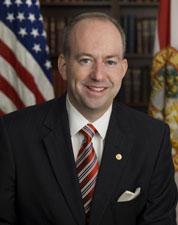 Sen. George S. LeMieux (R-FL)
Legislative Activity
Stay on top of the latest movement without scrolling through every action
Senate amendment proposed (on the floor): Amendment SA 3774 proposed by Senator LeMieux to Amendment SA 3739.(consideration: CR S3674-3678, S3682-3683)
May 13, 2010
View full timeline
Senate amendment proposed (on the floor): Amendment SA 3774 proposed by Senator LeMieux to Amendment SA 3739.(consideration: CR S3674-3678, S3682-3683)
May 13, 2010
Roll call votes on amendments in Senate: Amendment SA 3774 as modified agreed to in Senate by Yea-Nay Vote. 61 - 38. Record Vote Number: 147.(text as modified: CR S3675)
May 13, 2010
Senate amendment agreed to: Amendment SA 3774 as modified agreed to in Senate by Yea-Nay Vote. 61 - 38. Record Vote Number: 147.(text as modified: CR S3675)
May 13, 2010
Amendment SA 3774 proposed by Senator LeMieux to Amendment SA 3739. (consideration: CR S3674-3678, S3682-3683) To remove statutory references to credit rating agencies.
May 13, 2010
Amendment SA 3774 as modified agreed to in Senate by Yea-Nay Vote. 61 - 38. Record Vote Number: 147. (text as modified: CR S3675)
May 13, 2010
Senate amendment submitted
May 3, 2010
Votes
1 roll call on this amendment
Text
Modified
RESTORING AMERICAN FINANCIAL STABILITY ACT OF 2010

The ACTING PRESIDENT pro tempore. Under the previous order, the
Senate will resume consideration of S. 3217, which the clerk will
report.
The assistant legislative clerk read as follows:

A bill (S. 3217) to promote the financial stability of the
United States by improving accountability and transparency in
the financial system, to end ``too big to fail,'' to protect
the American taxpayer by ending bailouts, to protect
consumers from abusive financial services practices, and for
other purposes.

Pending:

Reid (for Dodd/Lincoln) amendment No. 3739, in the nature
of a substitute.
Collins amendment No. 3879 (to amendment No. 3739), to
mandate minimum leverage and risk-based capital requirements
for insured depository institutions, depository institution
holding companies, and nonbank financial companies that the
Council identifies for Board of Governors supervision and as
subject to prudential standards.
Brownback modified amendment No. 3789 (to amendment No.
3739), to provide for an exclusion from the authority of the
Bureau of Consumer Financial Protection for certain
automobile manufacturers.
Brownback (for Snowe/Pryor) amendment No. 3883 (to
amendment No. 3739), to ensure small business fairness and
regulatory transparency.
Specter modified amendment No. 3776 (to amendment No.
3739), to amend section 20 of the Securities Exchange Act of
1934 to allow for a private civil action against a person
that provides substantial assistance in violation of such
Act.
Dodd (for Leahy) amendment No. 3823 (to amendment No.
3739), to restore the application of the Federal antitrust
laws to the business of health insurance to protect
competition and consumers.
Sessions amendment No. 3832 (to amendment No. 3739), to
provide an orderly and transparent bankruptcy process for
non-bank financial institutions and prohibit bailout
authority.
Dodd (for Durbin) amendment No. 3989 (to amendment No.
3739), to ensure that the fees that small businesses and
other entities are charged for accepting debit cards are
reasonable and proportional to the costs incurred, and to
limit payment card networks from imposing anti-competitive
restrictions on small businesses and other entities that
accept payment cards.
Dodd (for Franken) amendment No. 3991 (to amendment No.
3739), to instruct the Securities and Exchange Commission to
establish a self-regulatory organization to assign credit
rating agencies to provide initial credit ratings.

The ACTING PRESIDENT pro tempore. The Senator from Pennsylvania.

Amendment No. 3776, As Modified

Mr. SPECTER. Madam President, I have sought recognition to ask
cosponsors of the pending amendment who wish to present an argument to
come to the floor as early as practical. The pending amendment involves
reinstating a civil cause of action against aiders and abettors. The
law, up until 1994 with a Supreme Court decision, provided that aiders
and abettors were liable for damages for those who had been defrauded
in securities transactions.
We all know the massive problems caused by Wall Street operations
with many allegations of fraud. In our effort to reform Wall Street,
this is a very important provision. Traditionally, people who have been
injured, lost money, as a result of fraud have had a civil right of
action to go into a civil court. The law had been uniform that under
the Securities Act those cases could be brought.
There have been two Supreme Court decisions which have modified that,
requiring this act change the decisions of the Supreme Court of the
United States--which we have the authority to do: not decided on
constitutional grounds but decided on grounds of statutory
interpretations. So Congress has the plenary power to make that
modification.
I have offered the amendment and argued it briefly. We will discuss
it further a little later this morning. I offered it on behalf of
Senator Reed of Rhode Island, Senator Kaufman, Senator Durbin, Senator
Harkin, Senator Leahy, Senator Levin, Senator Menendez, Senator
Whitehouse, Senator Franken, Senator Feingold, and Senator Merkley, and
I want to let all of the cosponsors know the matter is now on the
floor, and if they care to support the arguments, now would be the time
to come to the floor.

[[Page S3665]]

Madam President, I see other colleagues waiting for recognition, so I
yield the floor.
Mr. WYDEN. Madam President, I note the absence of a quorum.
The ACTING PRESIDENT pro tempore. The clerk will call the roll.
The assistant legislative clerk proceeded to call the roll.
Mr. WYDEN. Madam President, I ask unanimous consent that the order
for the quorum call be rescinded.
The ACTING PRESIDENT pro tempore. Without objection, it is so
ordered.
Mr. WYDEN. Madam President, I am going to speak for about 5 minutes
on the effort to finally, once and for all, eliminate secret holds in
the Senate. Senator Grassley, my partner in this effort for a decade,
will also speak. Then, two colleagues on our side who are a part of
this large, bipartisan coalition, Senator Whitehouse and Senator
Bennet, and who also have done very good work along with Senator
Grassley, Senator Inhofe, and Senator Collins, who have been part of a
bipartisan coalition, will take just a few minutes.
Let me also express my appreciation to the chairman of the committee,
Senator Dodd, Senator Durbin, and others who have been so helpful.
This bipartisan amendment will abolish the secret hold in the Senate,
which, in my view, is a violation--an indefensible violation--of the
public's right to know. With a secret hold, any Senator can block a
piece of legislation or a nomination in secret simply by telling the
leader of their party of their desire. This means that one person,
without any public disclosure whatsoever, can keep the American people
from even getting a peek at what is public business.
When asked why he robbed banks, Willie Sutton said: ``That's where
the money is.'' In the Senate, secret holds are where the power is.
With a secret hold, one of the most powerful tools a Senator has to
affect the lives of our people can be exercised anonymously.
In 2007, the Senate sought to eliminate secret holds. Since then, big
loopholes have been developed to keep too much Senate business in the
dark, unaccountable, and away from the public.
This bipartisan amendment closes those loopholes. With this
bipartisan proposal, every single hold in the Senate will have an owner
who is public within 2 days. It is an amendment that will be enforced.
Here is how it would work: If a Senator puts a hold on a bill or
nomination, they are required to submit a written notice in the
Congressional Record within 2 days. When that bill or nomination comes
to the floor and any Senator objects to its consideration on the
grounds of a hold, one of two things will happen: either the Senator
placing the secret hold will have their name publicly released or the
Senator who objects on their behalf will own that hold, and then that
individual will have their name published in the Congressional Record.
For the first time, there would be both public accountability and peer
pressure on those trying to keep Senate business behind closed doors.
The bipartisan proposal includes two additional reforms. First, the
proposal eliminates the ability a Senator has today to lift a hold
before the current 6-day period expires and never have it disclosed.
This has been a huge abuse. It has allowed a Senator to do business in
secret and never have it reported.
With the new proposal, if a Senator places a hold--even for a day,
even for a minute--that hold is going to be disclosed. Second, the
proposal makes it harder for a group of Senators to place revolving
holds on a nomination or a bill. I particularly thank Senator
Whitehouse, who has highlighted this issue of revolving holds in his
past comments on the floor. With the 6-day time period, a group of
Senators can literally pass a hold from one colleague to another and
never have it disclosed. By requiring all holds to be made public, it
will be much more difficult to find new Senators to place revolving
holds.
What this comes down to is the question of whether public business
ought to actually be done in public. It seems to me that if it is
important enough for a Senator to say they are making it a priority to
keep a bill or nomination from coming to a vote, that ought to be a
public matter and not be something that is decided in the shadows, away
from the public and unaccountable.
I thank my colleagues. This has been part of a bipartisan coalition.
No one has put more time into this cause than my friend from Iowa,
Senator Grassley. I also thank Senator McCaskill, who has prosecuted
this cause of accountability and openness relentlessly, along with
Senators Warner, Whitehouse, Bennet, Inhofe, and Collins--I could go
on.
Finally, there is a desire in the Senate to eliminate secret holds
once and for all. I will close with this. I don't think that 1 out of
100 people in this country have any idea what a secret hold is. Most
people probably think it is some kind of hairspray. It is one of the
most powerful tools in our democracy that is being used to keep what is
public business from the eyes of the American people, and it has to
change.
I will yield to my colleagues, Senators Grassley, Whitehouse, and
Bennet. I thank Chairman Dodd and Senator Shelby for indulging us at
this time. It seems to me that when Senator Dodd has done so much good
in terms of arguing for openness and accountability on Wall Street,
this is a perfect time to say we ought to have that in the Senate. That
is what we are going to do on a bipartisan basis today.
I yield the floor.
The ACTING PRESIDENT pro tempore. The Senator from Iowa is
recognized.
Mr. GRASSLEY. Madam President, I thank Senator Wyden for his
leadership and for working together with me and other Senators over a
long period of time. I think he referred to maybe 10 years that we have
been struggling to get to what we are finally getting to today.
In the past, we thought we had victories and they turned out to be
hollow victories--maybe a little more openness but largely ineffective.
So maybe now we will finally be able to accomplish an effective
openness in the Senate on one of the most powerful tools a Senator has.
I think it gives hope to the fact that if you are right, eventually
right wins out, even in the Senate. Long struggle does pay. I think we
are bringing simply common sense to a process in the Senate. It is, as
my friend from Oregon said, transparency, and with transparency we have
accountability.
The amendment Senator Wyden and I have offered would restore the
prohibition on secret holds the Senate voted for overwhelmingly in a
previous Congress--the 109th Congress--and make it even more robust. As
I said, those turned out to be largely not very effective.
At that time, in the 109th Congress, our measure passed as an
amendment to the ethics reform bill by a vote of 84 to 13. That bill
never became law, but the next Congress passed then what is referred in
the title of the legislation as the Honest Leadership and Open
Government Act. Our provision was also originally included in that
bill.
Ironically, as I have alluded to, in a move that reflected neither
honest leadership nor open government, our provisions were altered
substantially--I might say too substantially--behind closed doors,
before we had final passage.
The current provisions essentially say it is OK to keep a hold
anonymous until 6 days after someone asks unanimous consent to proceed
to a bill or a nominee. I am not going to explain how that process
works out, but it can be summed up in the words that it is a very
ineffective sort of transparency, hardly doing any good whatsoever.
The amendment that is before us says Senators must go public from the
moment they place the hold.
Perhaps I should take this opportunity to address what a hold is all
about. A hold arises out of the right of all Senators to withhold their
consent when unanimous consent is asked.
It goes without saying that any Senator has a right to object to a
unanimous consent request that the Senator does not support because it
is not unanimous unless, obviously, we all support it.
In the old days, when Senators conducted much of their daily business
from their desk on the Senate floor, it was a simple matter to stand
and say, ``I object'' when necessary, and, of course, that Senator was
immediately identified. Now, Since most Senators spend so much time off
the Senate floor in committee hearings, meeting

[[Page S3666]]

with constituents, and other sorts of obligations that we have, we have
tended to rely upon the majority and minority leaders to protect our
rights and prerogatives as individual Senators, asking them to object
on our behalf.
Just as any Senator has the right to stand on the Senate floor and
say, ``I object,'' it is perfectly legitimate to ask another Senator to
object on our behalf if we cannot make it to the floor when consent is
requested.

By that same token, it would be illegitimate, not to mention
impossible, for a Senator to stand on the floor and object anonymously.
Senators have no inherent right to have others object on their behalf
and keep their identity secret.
If a Senator has a legitimate reason to object to proceeding to a
bill or a nominee, then he or she ought to have the guts to do so
publicly.
I believe this is part of expanding the principle of open government.
The public's business ought to be public. Lack of transparency in the
public policy process leads to cynicism and distrust of public
officials and, quite honestly, less accountability.
I maintain that the use of secret holds--with emphasis upon the
adjective ``secret''--damages public confidence in the institution of
the Senate. The public's business ought to be done in public, period.
I have made it my practice to put a statement in the Record when I
have placed a hold on a nominee or a bill for over a decade. I can tell
you that is no burden whatsoever, and it hasn't hurt me in any way
whatsoever to let my colleagues and the public know--for the last
decade--that Senator Chuck Grassley had a hold on a bill and why I had
that hold on a bill or nominee.
Our amendment--the one before us--would make it crystal clear that
holds are to be public. Senators placing a hold must get a statement in
the Record within 2 days, and they must give permission to their
leaders at the time they place the hold to object in their name.
Also, if a Senator objects, ostensibly on behalf of another Senator
but refuses to name the Senator he is objecting for and that Senator
doesn't come forward within those 2 days, the objecting Senator will be
listed as having that hold, owning that hold.
I wish to make it clear that we do not come to this lightly. We have
tried other paths to accomplish our goal. I said those other paths have
turned out to be largely ineffective.
We sought the advice and assistance of several majority and minority
leaders over the last decade, and we twice tried informal policies
issued jointly by the two leaders, in 1999 and 2003, but those turned
out to be as flimsy as the sheet of paper on which they were written.
So working with two former majority leaders, Senators Lott and Byrd,
we crafted the policy I mentioned earlier that the Senate adopted by a
vote of 84 to 13, which was later gutted.
It is this policy, with some improvements--in fact, some very needed
improvements--that we are introducing today. It is important the Senate
have the opportunity to speak on this issue as a body. I look forward
to this vote and finally having a true victory against secrecy.
I yield the floor.
The ACTING PRESIDENT pro tempore. The Republican leader is
recognized.

National Police Week

Mr. McCONNELL. Madam President, all across the country this week,
Americans will honor the law enforcement officers who keep our towns
and communities safe and pay solemn tribute to those who have lost
their lives in the line of duty. National Police Week is a time to
thank all those whose service preserves the rule of law, at great risk
to themselves.
I wish to pay special tribute to one of those heroes today, Officer
Bryan J. Durman. Officer Durman was a 27-year-old, decorated,
Lexington, KY, police officer and a veteran of the U.S. Air Force. He
was, tragically, the first Lexington police officer to die in the line
of duty in over 20 years.
This past April 29, he was responding to a noise complaint when he
was struck by a car and killed. He leaves behind his wife Brandy and
their 4-year-old son Brayden.
Bryan Durman went to Paul Laurence Dunbar High School in Lexington,
where he was on the wrestling team. After graduation in 2001, he
enlisted with the Air Force. He rose to the rank of staff sergeant and
served in both Operation Enduring Freedom and Operation Iraqi Freedom.
More important, it was while serving in the Air Force that Bryan met
Brandy, his wife.
Bryan's mother, Margaret Durman, says that from the time her son was
a small boy, she knew he would grow up to be a peacemaker. After
leaving Air Force service in July 2007, Bryan returned to Lexington to
keep the peace here at home and was accepted into the Lexington police
academy.
In his 3 years of service with the Lexington metro police department,
Bryan earned great respect from his colleagues and the community. ``The
amount of support that we have received speaks volumes about the
caliber of person Bryan was and his character,'' says his wife Brandy.
For administering lifesaving CPR to a vehicle collision victim and to
a woman in medical emergency in two separate instances, Bryan received
the Lifesaving Award and the Exceptional Service Award. His family will
be presented with those awards as a small reminder that, as his mother
puts it, Bryan ``died doing something that he loved.''
During this National Police Week, as we remember our peace officers
and their families, we also remember the loved ones Officer Durman
leaves behind: his wife, Brandy; his son, Brayden; his mother, Margaret
Durman; his sisters, Monique Wanner, Michelle Wiesman, and Danielle
Hood; his brothers, John A. Day and David P. Durman II; his brother-in-
law, Robert Fletcher; and many other family members and friends.
Brandy will always have a fond memory of a recent Christmas when
Bryan and Brayden received toy dart guns. Father and son spent much of
the day playing with their new toys. ``I found about 50 darts in the
Christmas tree,'' Brandy says. ``They were in the sink, in the
bathtub.''
The day after Officer Durman's death, Lexington police officers wore
black bands across their badges as a tribute to their fallen brother.
The bands are also a stark reminder of the hazards of the job each and
every peace officer in Kentucky and across the country faces every day.
The Senate has the deepest admiration and respect for police officers
in every community in the Nation. We recognize theirs is both an
honorable job and a dangerous one. We recognize they bravely risk their
lives for ours. I appreciate all they do. And America is grateful.
Madam President, I yield the floor.
The ACTING PRESIDENT pro tempore. The Senator from Texas.
Mr. CORNYN. Madam President, I know there are a number of Senators on
the floor who wish to speak on unrelated matters. I wish to speak on
the underlying bill. I believe Senator Whitehouse and maybe Senator
McCaskill and Senator Bennet wish to speak on the hold issue. I merely
ask that we alternate back and forth after the next speaker speaks on
whatever subject they do and that I then be allowed to speak on the
underlying bill and then go back to the other side of the aisle.
The ACTING PRESIDENT pro tempore. The Senator from Connecticut.
Mr. DODD. Madam President, if I may make a suggestion to my friend
from Texas, as I understand, my colleagues are going to speak 2 or 3
minutes apiece. So the cumulative time of all three Senators will be
about 6 or 8 minutes. I know the Senator from Texas has a longer
statement to make on Senator Sessions's amendment.
Mr. CORNYN. I will be glad to defer to them under those circumstances
and then ask to be recognized following those 6 or 7 minutes.
Mr. DODD. Madam President, I make that request.
Mr. WYDEN. Will the Senator yield for a question? Again, to save
time--the Senator from Connecticut has been very gracious to allow an
opportunity to do this--Senator Whitehouse, Senator McCaskill, and
Senator Bennet are all going to speak. I think that would allow us to
set up time later for the vote, and we would have to formally offer the
amendment. Would that be acceptable to the chairman?
Mr. DODD. I cannot agree to anything at this point. We can certainly
talk with the leadership about that.

[[Page S3667]]

Mr. WYDEN. It is acceptable to the leader.
Mr. DODD. I am not in a position to give that consent. That is
something that has to go through leadership. Let's get the speeches
done so we can get back on the bill.
Mr. WYDEN. All right.
The ACTING PRESIDENT pro tempore. The Senator from Rhode Island.
Mr. WHITEHOUSE. Madam President, I congratulate Senator Wyden and
Senator Grassley for their long effort to eliminate the secret holds in
this body. They thought they had succeeded in 2007 with a mechanism
that would scrub secret holds and make them public after 6 days. But it
turns out that a number of our colleagues on the other side discovered
a loophole in the rule. Whether it is called the old switcheroo or
revolving holds or hold laundering, they found a way to defeat the
purpose of a rule that was voted for by 84 Members of the Senate on a
strong bipartisan basis. That is why we are back here today.
I want to also add to the role of honor on this subject Claire
McCaskill, who has done the lion's share of the work of shepherding in
some cases 100 stalled nominees blockaded on the Executive Calendar
through those 2007 year procedures so that we could get to the point of
proving that there were, in fact, secret holds and that despite the
rule, hold laundering was taking place and the rule was not being put
into effect and holds were being kept secret.
I suppose an asterisk on the role of honor should go to Senator
Coburn, who is the one Senator on the Republican side who had the
courage to stand up and disclose his actual holds. Everybody else went
to some other Senator and said: I don't want my name on this. Would you
please take my hold over so I can avoid the rule, keep my hold, and
have no accountability.
Perhaps there once was a reason for a secret hold, for this kind of
business to be done in the dark, in the shadows, and anonymously. I
think history and common sense tell us that deeds that are done in the
dark are not usually ones of which we are proud. Certainly, the
experience of the last few months has shown that if there ever was a
legitimate use for secret holds, that purpose has evaporated. It has
evaporated under the pressure of blocked nominees numbering, in some
cases, over 100--a systematic approach, a systematic attempt to disable
this administration's ability to govern by systematically opposing
nominees, irrespective of the merits; opposing nominees who came out of
committee in a bipartisan fashion; opposing nominees who came out of
committee with zero opposing votes; with Senators raising objections to
nominees they voted for in committee. There is clearly something more
going on than a sincere concern about an individual nominee.
Finally, this effort to what I call hold launder and to avoid the
rule 84 Senators stood up and voted for that does nothing more than put
your hold in the plain light of day shows that the 2007 rule,
unfortunately, has been ineffective and that it is time for a change.
I have continuing gratitude for Senator Wyden, Senator Grassley, and
for all those who have supported us on this issue and particularly for
Senator McCaskill for her relentless presence on the floor, making this
actually happen.
I yield the floor.
The ACTING PRESIDENT pro tempore. The Senator from Colorado.
Mr. BENNET. Madam President, I join my colleagues in support of the
effort Senator Wyden and Senator Grassley have led to end the corrosive
practice of secret holds. This is a reform that is needed and cannot
wait.
I have been in Washington for only about a year, but it did not take
that long to realize our government needs to fundamentally change the
way it does business. Coloradans deserve a government that works for
them. They are tired of the petty partisanship in Washington. They want
their elected officials to listen and address their day-to-day
concerns. I cannot think of a worse example of this dysfunction than
the secret hold. It is undemocratic, and it is hurting our economy.
Quite a few of us in the Senate--the chairman and I--have young
daughters, young kids who are familiar with the ups and downs of a long
car ride heading out on vacation. The first hour always seems to go
pretty well, full of excitement about where everybody is headed. But it
is not long before that excitement turns to restlessness and that
restlessness turns to secretly doing everything they can to bother
their siblings just for the sake of doing it. And every time you turn
around, they stop and smile and claim their innocence.
It never occurred to me that experience would actually prepare me to
come to the Senate. Countless nominations and important legislation
make their way to the floor. Senators make speeches about the
importance of doing the country's business, appearing motivated to get
the job done, to get the American people's work done. But when the
cameras are off, they use the secret hold to bring this progress to a
stop.
Since I have been here, I have seen nominees and bipartisan
legislation held up for weeks, only to pass with 97 or 98 votes, all to
score political points and waste the American people's time and the
American people's money.
Earlier this year, we spent months working to reform health care. We
have spent a lot of time under the chairman's leadership trying to fix
Wall Street. It is past time we fix the way Washington works as well.
Congress must stop living under a glass dome. The Wyden-Grassley
amendment is simple. It requires any Senator seeking to hold up the
Nation's business to publicly announce his or her hold. All holds
should be in writing, made public for the other 99 of us and, most
importantly, for the American people so they can render their own
judgment.
While I support this amendment, I have legislation that would go even
further. My legislation would not only end secret holds, as this
amendment does, but also require that any hold be bipartisan or else it
expires after 2 legislative days. All holds, public or private, would
expire in 30 days. At that point, the pending business would be ready
to be considered on the Senate floor.
The Senate was designed to be the greatest deliberative body in the
world. Let's have the debate and put an end to these secretive attempts
to prevent debate.
Once again, I thank Senators Wyden and Grassley for their leadership
and look forward to the passage of this amendment. I also wish to
recognize the great work our colleague from Missouri, Claire McCaskill,
has done bringing this legislation to this point.
Madam President, I yield the floor.
The ACTING PRESIDENT pro tempore. The Senator from Missouri.
Mrs. McCASKILL. Madam President, first, let me say how grateful I am
to Senator Cornyn for his patience. I will try to be very brief because
I know he is waiting to address the underlying bill.
I think everything that needs to be said has been said. I will be
interested in this vote because there is a group of people right now
who voted for a rule that simply said: You have to disclose your secret
holds if a certain procedure takes place. There are a bunch of people
who voted for that who are not doing it. I do not know how that
computes in the mind of a U.S. Senator. I do not know how you vote for
a rule that requires you to disclose and then you knowingly continue to
keep a hold secret.
I had a colleague tell me the other day they had talked with a
colleague across the aisle about a couple of judges they desperately
wanted to get released from the land of secret holds. This colleague
visited with a Republican about it, and the Republican told her: The
leader says he has to get something for it. You have to get something
for it? Have we come to that, that you get to hold on to someone whose
life is in limbo to be a U.S. district judge until you get something
for it? That is not the way the American people want us to operate
around here.
I know Senator Grassley and Senator Wyden have toiled in this field
for a long time. I appreciate their efforts. I thank all my colleagues
who have been helpful in us bringing this to the attention of the
American people. We now have 60 Senators who have signed a letter
saying they will never engage in secret holds and they want them
completely abolished. The Wyden-Grassley approach is almost as good as

[[Page S3668]]

never. It is a very limited window, and I pray that it will work. I had
been wildly optimistic it would work right after I voted for the rule
back in 2007. I thought, this is all it is going to take. I am not as
optimistic, frankly, right now. Games may still be played. I think we
have to get to 67 names on that letter.
The American people have to rise with their pitch forks, the way they
are in so many other ways, and say: Enough already. Stop this
incredibly bad habit of thinking you can hold up nominations just
because you feel like it and never have to own it.
I encourage everyone to vote for the Wyden-Grassley amendment. I
appreciate Senator Cornyn's patience with us this morning. I look
forward to a vote on this amendment. I really want to find out who is
secretly holding right now, who votes for this amendment, and how they
reconcile those two things.
The ACTING PRESIDENT pro tempore. The Senator from Texas.
Mr. CORNYN. Madam President, I want to speak on the underlying bill,
particularly on the Sessions amendment to the bill, but let me just
precede that with some more general comments.
I was very concerned when I read in the most recent publication of
National Affairs comments from the inspector general of TARP--appointed
to oversee that program that has now gotten completely out of control.
More to the point, he says what has happened since September of 2008 is
that we have seen further consolidation of the banking industry.
Actually, he has said what has happened is that things have actually
gotten worse as a result of the several mergers that have actually made
banks larger. The implicit guarantee of moral hazard that we are not
going to let these large institutions fail has contributed to them
engaging in more and more risky conduct.
The problem with too big to fail and these large institutions,
particularly large banks with assets of over $100 billion, is that they
can actually borrow money cheaper than community banks in Texas or New
York or Connecticut or elsewhere, and they actually represent a $34
billion subsidy to the largest 18 banks in America because this bill
does nothing to eliminate the concept of too big to fail. Indeed, in
many ways, it makes it worse. It institutionalizes the concept.
I want to address specifically the provisions in the Dodd bill--the
underlying bill--which have to do with how we deal with these large
financial institutions if they get into trouble. The underlying bill
empowers the Federal Deposit Insurance Corporation--which previously
has had no experience dealing with investment banks or other companies
that engage in financial transactions, other than depository banks--to
seize a vast range of financial companies based on nothing more than
their impression that the institution is in ``danger of default.''
Of course, we know one of the reasons we have gotten into this mess--
why Wall Street has gotten into the shape it has gotten into--is
because either regulators were too close to the people they were
supposed to regulate or they were asleep at the switch. If we empower
the Federal Deposit Insurance Corporation now to take on this new role
as megaregulator in the resolution authority, it literally is going to
have to run these businesses--something they are not prepared to do,
something they have never done before. It will actually encourage
management at the institutions that are subject to this new expanded
authority of the FDIC to foster stronger relationships with the
regulators, further entangling the government with the fabric of the
U.S. private sector.
This underlying legislation creates a resolution scheme for large
complex financial institutions that allows the FDIC to serve in
multiple capacities at once--as corporate management, as creditor to
the corporation, and referee of the liquidation process. There is no
question that in the underlying bill there are going to be enormous
conflicts of interest on the part of the government agency itself when
it is required to wear this many hats at the same time.
The underlying bill also provides the government--and here
specifically the FDIC--the authority to discriminate among creditors of
the same class. All we have to do is look at what happened when the
Federal Government took over General Motors, where we saw the
government's $15 billion gift to labor unions to the disadvantage of
the bond holders. This is the same sort of abuse that is propagated and
continued in the underlying resolution authority in the bill which
needs to be fixed. It needs to be changed.
This underlying legislation also forces companies that are
financially sound and that have done nothing wrong to contribute to a
fund to bail out organizations and institutions--I should say
companies--that have been irresponsible and done exactly the wrong
thing.
I must say I really wonder why we are rushing through this
legislation so fast when the very commission that Congress has created
to report back to us--the Financial Crisis Inquiry Commission--is not
supposed to report until December. So in the very complex and
complicated area such as financial regulatory reform, we are going to
be denied the very report that Congress commissioned, which is due in
December, that will tell us, hopefully, how to get this done and get it
done right.
I think it is a terrible mistake for us to give the FDIC this
incredible authority and discretion which will just alter the
relationship again between the private sector and government. We have
seen a tendency over the last year and a half to grow government and to
basically burden the private sector in ways that cause many people to
wonder whether we are still committed to a free enterprise system or
whether we are going to have one government takeover after another.
This legislation--particularly this resolution authority--represents
something that will provide for more government intervention in the
private sector without making sure ``too big to fail' comes to an end.

Amendment No. 3832

I want to talk specifically about the Sessions amendment, as I said,
because the Sessions amendment restores the rule of law to the
resolution authority that would be granted under this bill. Under
American bankruptcy law, we have an adversarial process. We have judges
who are independent, we have a requirement that when you walk into
bankruptcy court you actually have to swear under oath, under the
penalty of perjury, that what you are saying is the truth, the whole
truth, and nothing but the truth, so help you God.
I don't know why we should allow these big financial institutions
that are covered by the resolution authority under the underlying bill
a special set of rules. Why shouldn't they be forced to operate under
the same rules--bankruptcy rules--that apply to every business that
gets into financial trouble all across America today? Many scholars and
policy analysts have argued convincingly that bankruptcy reform would
be the most effective action Congress could take to protect against
future financial panics and bailouts.
There is one note I would make of the Lehman Brothers bankruptcy. As
the Chair and my colleagues know, there was a voluminous report written
by the court-appointed examiner who dissected the Lehman Brothers
bankruptcy for reasons why Lehman Brothers failed. This is a 2,209-page
examiner's report which documents accounting gimmicks that were used to
hide the extent of Lehman's indebtedness, which was not even known to
the Securities and Exchange Commission because the Securities and
Exchange Commission took the position it didn't have jurisdiction to do
this very sort of regulation and very sort of oversight that might have
detected and prevented the meltdown of Lehman Brothers and all across
Wall Street.
Amazingly, Richard Fuld, chief executive of Lehman Brothers, when he
was confronted with the examiner's report documenting the various
maneuvers, including one known as Repo 105 transactions, said he had no
knowledge of the accounting maneuvers that were used to take some of
the financial obligations of Lehman Brothers off its books.
So I would ask my colleagues: Don't we want this sort of transparency
and accountability that comes only out of a bankruptcy-type resolution
authority? Don't we want that kind of information so we can hold the
people who were responsible for these huge meltdowns of our financial
system accountable? I would say we must insist on

[[Page S3669]]

that kind of accountability. Unfortunately, under the authority given
to the FDIC to conduct this resolution in the Dodd bill, there will be
no sort of report by court-appointed examiners such as the one that
exposed Lehman Brothers' accounting gimmicks and the complete
abdication of responsibility of the chief executive officer for not
knowing what kind of accounting transactions were taking place and
which hid a lot of their liabilities not only from him but also from
examiners. We would not have that kind of information.
That is another reason I believe bankruptcy provides a far superior
way of handling this resolution rather than giving the FDIC--a sort of
FDIC on steroids--the power to make these decisions without the kind of
transparency and accountability we need.
Recently, in the Wall Street Journal, a couple of professors wrote:

If there were a silver bullet in financial reform,
legislation would have been enacted a long time ago. There
isn't, but removing the special treatment of derivatives in
bankruptcy comes close. It could provide the basis for a
sensible compromise on derivatives regulation while also
addressing the bailout problem.

That is exactly what the Sessions amendment does. With a small tweak
of bankruptcy law, we could assure that everyone is going to have to
play by the same rules, and when any financial institution goes
bankrupt the automatic stay, which protects the court's jurisdiction to
be able to sort out the creditors and debtors, can be used in an
appropriate way to deal with derivatives contracts. Currently,
derivatives contracts are exempted from the automatic stay, which
creates a very dangerous risk of a run on the bankrupt entity's
derivatives book. This could lead to a cascade effect, exacerbating
systemic risk. The Sessions amendments provides for timely court
supervision over any stay on derivatives contracts. Other than that,
the Bankruptcy Code would apply as it does every day in bankruptcy
courts across this country involving businesses both large and small.
So I think the Sessions amendment provides much more transparency,
much greater accountability, much more certainty, and certainly helps
restore the rule of law to an otherwise discretionary authority over a
Federal agency that has never exercised this kind of authority before,
one that has the very real danger of perpetuating the kind of picking
of winners and losers that we saw in the GM bankruptcy where the
bondholders, who were supposed to be among the most secure creditors,
if not the most secure, were forced to take a significant loss in favor
of unions, which happened to be more active players in the political
process.
So I would urge my colleagues to support the Sessions amendment,
which makes bankruptcy a preferable alternative to dealing with future
failures of financial institutions.
Madam President, I yield the floor.
The ACTING PRESIDENT pro tempore. The Senator from Nevada.
Mr. ENSIGN. Madam President, we are venturing down a dangerous path
that threatens to put the economic future of our country in jeopardy.
When the housing market collapsed, the government stepped in with a
blank check to bail out the Nation's largest mortgage giants--Fannie
Mae and Freddie Mac. When the automakers started to feel the pinch of a
downward economic turn, again the government stepped in, taxpayer money
in hand, and bailed them out. When the giants of the financial market
started to see their bank accounts drop below zero, again the U.S.
Government stepped in to bail them out, allowing them to sidestep the
pain of their financial mismanagement--pain that was then passed on to
hard-working Americans, many of whom are barely scraping by during
these difficult economic times.
The pain was certainly not felt by the managers of these institutions
when they received exorbitant bonuses, despite their bad performance.
This country has witnessed bailout after bailout after bailout. Yet
not one piece of legislation has passed this body that would establish
protections for taxpayers to ensure that we do not remain on the hook
for bailing out these institutions every single time they mismanage
themselves.
Unfortunately, this financial reform bill that we have before us
continues this trend. Last week, I offered an amendment that would have
restricted the size of Fannie Mae and Freddie Mac so they would not
continue to be too big to fail. My amendment was defeated, largely
along party lines.
Senator McCain offered an amendment this week that would have reduced
the size of Fannie and Freddie, while moving to let them stand on their
own so the government gets out of the business of subsidizing
mortgages. Again, his amendment was defeated, largely along party
lines.
Today, we have another chance to listen to the American people and to
stop the bailouts of these mismanaged corporations. The amendment
offered by Senator Sessions, of which I am a cosponsor, will do this by
taking away the bailout option, to, instead, force these companies to
declare bankruptcy. This amendment will produce a clear set of rules
which will create certainty in the marketplace, rather than continuing
the precedents set during the crisis where the government was allowed
to pick winners and losers.
This is not the first time I fought against these bailouts. In 2008,
when we were debating the bailout of the automakers, I offered an
amendment, along with Senator Shelby, that would have required the big
three to file Chapter 11 bankruptcy. At that time, I argued that this
was the best way to ensure the automakers would emerge in the future as
successful companies. I still believe that. Chapter 11 bankruptcy would
have allowed them to restructure their firms and would have protected
the employees of these automakers by keeping politics out of the
process by eliminating the need for an auto czar. Unfortunately, the
government stepped in and, with the exception of Ford, decided to bail
them out. I thought this was wrong at that time, and I still believe
this was the wrong thing to do.
While we cannot erase the decisions of the past that led to the
bailouts of the automakers, Fannie and Freddie and the financial firms,
we can correct course to ensure that the American taxpayers get off the
hook for bailing out these industries in the future by forcing them to
file bankruptcy, should they mismanage their finances again in the
future.
The reality is, when Americans mismanage their funds or are unable to
stay afloat under mounting debt, they file bankruptcy. I am sure many
would rather have the government step in and pay off their debt, but
this is simply an unsustainable option.
The same argument can be made for bailouts of financial firms.
Bailout after bailout footed by the taxpayers will force our already
debt-laden country into further debt that we cannot afford to crawl out
from under. We are already rapidly approaching this reality. These
bailouts do not incentivize these institutions to minimize their risks.
Instead, they go as far as to privatize the profits while socializing
the risks of their losses.
The amendment offered by Senator Sessions offers hard-working
Americans a reprieve from footing another financial sector bailout. But
he also discourages these companies from continuing the irresponsible
practices that got them into trouble in the first place. Under the
financial bill we are currently debating, the government will continue
to pick winners and losers and the taxpayer will continue to foot the
bill, unless we adopt the amendment offered by Senator Sessions. This
amendment would make these companies utilize an enhanced bankruptcy
process, which would ensure that the costs are covered by the financial
institutions and their creditors, not the taxpayer.
The amendment creates a new chapter 14 in the Bankruptcy Code that
will utilize many of the tenets in chapter 11 reorganization bankruptcy
but will be for the specific use of the big financial institutions.
This addition to the Bankruptcy Code creates a new pathway to limit the
cascading spread of risk and panic throughout the financial system and
ensures the more orderly wind down of these financial institutions
insulated from bailouts and political influence.
The amendment offered by Senator Sessions delivers much needed
transparency, accountability, stability, and due process through the
use of bankruptcy courts and the expertise that we have in bankruptcy
courts. Further, to

[[Page S3670]]

protect the taxpayers, it specifically denies the Federal Government
the authority to take over firms, dictate the terms of the
reorganization or liquidation, and support them with Federal bailouts.
This amendment guarantees real reform that will result in real
stability.
This is what the American people are asking us to do. They are asking
us to make sure they are not the ones responsible for bailing out these
financial giants that make poor decisions. The American people are
working hard to weather through these tough economic times, and we owe
them much more than legislation that will continue to allow the
government to pick winners and losers and will allow too big to fail to
continue.
I hope we adopt the Sessions amendment. Unfortunately, almost every
good amendment that has been offered to this Wall Street bill has been
defeated, largely along party lines. This is an amendment that will
actually stop too big to fail. It is a responsible amendment. It is my
hope that we will finally adopt a good amendment to this bill.
I yield the floor and I suggest the absence of a quorum.
The ACTING PRESIDENT pro tempore. The clerk will call the roll.
The bill clerk proceeded to call the roll.
Mr. SPECTER. Mr. President, I ask unanimous consent the order for the
quorum call be rescinded.
The ACTING PRESIDENT pro tempore. Without objection, it is so
ordered.

Amendment No. 3776

Mr. SPECTER. Madam President, I have sought recognition to comment
further about the pending amendment to make tortfeasors, under the
Securities Act, liable for civil damages; that is, people who engage in
fraudulent conduct. We have a deep recession. Millions of people have
lost their jobs. There were enormous financial losses. There were many
contentions of fraudulent practices being responsible for that conduct.
In this act, we are seeking to reform Wall Street.
The practice had been, the law had been, for decades, under the
Securities Act, someone who was cheated, defrauded by people who
practice under the Securities Act could sue them. That would involve
those aiders and abettors and people in the chain beyond the principal
would be responsible. I have offered an amendment on behalf of myself
and Senators Reed, Kaufman, Durbin, Harkin, Leahy, Levin, Menendez,
Whitehouse, Franken, Feingold, and Merkley to reinstate the law prior
to what it had been prior to the decision of the Supreme Court. The
Supreme Court has held that aiders and abettors are not liable and that
there is a requirement that the defendant must have made the
representation directly to the person buying or selling the securities,
which is a sharp reversal from what the law had been.
It is anomalous, unheard of, to have criminal liability under the
Federal Criminal Code for aiding and abetting but not to have liability
under the civil claims. It is a much higher standard of proof, criminal
culpability, to put somebody in jail than it is to establish a claim
for monetary damages. But that is where we find the law and we find
people in urgent need of this kind of standing to recover their damages
but also to have this procedure serve as a deterrent to Wall Street
fraud.
The issue was succinctly summarized by a distinguished Federal judge,
Judge Gerald Lynch, in a case captioned In re Refco Litigation, 609 F.
Supp. 2d 304 (S.D.N.Y. 2009), to this effect:

It is perhaps dismaying that participants in a fraudulent
scheme who may even have committed criminal acts are not
answerable in damages to the victims of fraud. . . . There
are accomplices and there are accomplices: after all, in the
criminal context, when the Godfather orders a hit, he is only
an accomplice to murder--one who ``counsels, commands,
induces or procures'' but he is nonetheless liable as a
principal for the commission of the crime. Likewise, some
civil accomplices are deeply and indispensably implicated in
wrongful conduct.

So that you have aiders and abettors. There have to be people who are
participants in the fraud. It simply is not a one-person operation.
Yesterday, I put into the Record the impact of these civil suits in
financial recoveries compared to the lesser amounts which can be
collected by the SEC. Illustrative of that were two cases--Enron, where
the SEC recovered $450 million and the private litigants recovered $7.3
billion--14, 15 times more. In the WorldCom case, the SEC recovered
$750 million, the private litigants recovered $6.85 billion. So there
is an enormous difference.
This is a subject I have had a deep concern about going back to my
law school days, when I wrote a comment for the Yale Law Journal on the
subject, about the importance of private prosecutions. Private actions
have been very important--treble damages under our antitrust laws, very
important under our securities laws.
In 1995, we restricted the scope of discovery. I urged the President,
at that time, to veto the bill.
Just a very brief personal story. I was in my condo one night at
about 10:30, quarter of 11, I got a call from the White House. The
President came on the line and said: Do you have a few minutes to let
me read to you my veto message? Well, I had more than a few minutes. I
was very interested in the President's veto message.
But the law, nonetheless, notwithstanding the veto, the law was
modified.
There is other litigation pending to open the scope of pleading.
Federal Rules of Civil Procedure have traditionally been what we call
notice pleading; that is, put the defendants on notice as to the claim.
Then, under the discovery proceedings, the party is then entitled to
probe into the records of the defendant because these are all
transactions within the sole control and possession of the defendant on
almost all circumstances.
When the Supreme Court of the United States was considering taking
the Stoneridge case, I wrote President Bush a letter, on August 3,
2007, urging him to allow the Solicitor General to respond to the
request of the Securities and Exchange Commission for the Solicitor
General to argue the case. The Solicitor General was precluded from
doing so. Stoneridge came down with a very restrictive holding that the
people responsible had to make direct representations to the person
buying or selling the securities--which is an unrealistic and
unreasonable standard. It backed up the prior decision of the Supreme
Court in 1994, in Central Bank of Denver, which eliminated aiders and
abettors from responsibility.
This is a very important bill. I did compliment the distinguished
chairman for his very effective work on it.
I do believe it is fair and accurate to say this is one of the most
important provisions of this bill.
I thank the Chair and yield the floor.
The ACTING PRESIDENT pro tempore. The Senator from North Dakota.
Mr. DORGAN. Madam President, I wanted to note during this discussion
some commentary this week about something that is quite extraordinary.
We saw news reports this week about a perfect game that was pitched in
the Major Leagues recently by a pitcher from the Oakland Athletics
named Braden. In all of the history of baseball, it was the 19th
perfect game ever pitched. But it is not the only perfect thing that
has happened recently.
We have news reports now that the four biggest banks in America have
scored a perfect 61-day run, never having lost money in 61 days. That
is like a perfect game, batting 1,000. It is all of those things.
How is it that the four largest banks in the country could, for the
first quarter of the year, make money every single day? Is the system
rigged? A columnist named Jonathan Well pointed out that if you managed
a highly leveraged, diversified investment fund and have become so
skilled at it that you had a 70-percent probability of winning on any
given trading day, the prospect of your winning 63 times in a row would
be about 1.75 billion. Even if you had a 95-percent chance of winning
every day because you were so skilled at picking all of the right
investments, you would have about a 3.9-percent chance of doing it on
63 straight trading days. And yet four of the largest banks in America,
Goldman Sachs, JPMorgan Chase, Bank of America and Citi, scored a
perfect game.
How did that happen? Does it happen because the Federal Reserve Board
loans them money at near-zero interest rate, and then they invest in
10-year Treasuries at 3.8 percent? That is how you make profits every
single day. Is that a rigged game? Can everyone do

[[Page S3671]]

that? If everyone can do that, I have got a sure-fire way here for
everybody to make money. You get to borrow from the Federal Reserve
Board for near nothing, and then you can invest it in 3.8-percent 10-
year Treasury notes.
It is interesting this relates to something else we have been trying
to do for a while. We have been trying to get information about how
much money the Federal Reserve Board is lending those investment banks
and the biggest banks in America. How much money is the Federal Reserve
Board giving them and at what rate? We know it is at a near-zero rate,
but we do not know how much and to whom.
The Federal Reserve Board has now been told by two Federal courts,
you have a responsibility to tell the American people and the Congress
who got your money and what the terms were and how much. The Federal
Reserve Board has said, we do not intend to tell everybody. They have
now appealed it to a third Federal court.
I have led the effort in letters to the Fed Chairman saying, you have
a responsibility here. But now this latest evidence tells us how this
game is played. Isn't it interesting, and isn't it pathetic, that at a
time when so many people wake up in the morning jobless, so many people
are still losing money on their homes, on their assets, losing hope and
losing confidence in the future of this economy, that at the very top
of the heap, some of the same firms that caused the problem that threw
this country into the deepest recession since the Great Depression now
announce they are pitching a perfect game every single day. They are
batting 1,000 and pitching perfect games. Why? It appears to me that it
is not about lending money to help restore America and help firms that
want to expand by providing capital. It appears to me that their
reports suggest they are once again back doing the same things they
used to do, except this time they understand that they cannot fail.
They borrow money from the Fed at near-zero interest rates, and
invest it in Fed 10-year notes at 3.8 percent. That is about as close
to guaranteed income as you can get. But it is not guaranteed income
for all of the American people, it is just for the folks at the very
top of the chain, the biggest financial firms.
Again, let my say as I do every time I come to the floor, I don't
have a grief against the biggest financial firms. We need big financial
firms. But we do not need them too big to fail. And we certainly do not
need to be feeding them with a strategy that says, I tell you what; we
will give you a deal no other American has. You get to go to a window
at the Fed, get money for almost nothing, and then invest it back in
Fed bonds and pay 3.8 percent. We will give you a guaranteed annual
income.
I just wanted to make note. It is too often little known, and it is
seldom raising much concern among anybody these days, that all of this
is happening. I think it is scandalous. It seems to me worth mentioning
the only perfect game that is going on around here was not by a pitcher
named Braden, but it is by some of the biggest financial institutions
in the country that are not only fully recovered but have guaranteed
income opportunities every single day, every single day, while a lot of
the American people are trying to figure out, how am I going to pay the
rent? How am I going to find another job?
I had come to the floor because I want to indulge--I should not say
indulge. I wonder if the Senator from Connecticut will indulge me for a
moment. I have spoken to the Senator, and I recognize that doing what
he is doing is perhaps a cross between a migraine headache and a root
canal. This is tough business out here hour after hour after hour and
day after day.
I respect that. I was on the floor with a piece of legislation last
year that took forever and it did try my patience. So kudos to my
colleague from Connecticut. I respect the difficult job he has.
I have had an amendment, along with Senator Kaufman, Senators Levin,
Cantwell, Feingold, Sanders, and so on, a Dorgan amendment No. 4008. I
would ask the courtesy of being able to set aside the pending amendment
and call up this amendment. I do not intend to proceed with it, I just
want to get it pending. I would proceed with debate at any time that is
convenient. I do not want to inconvenience the Senator and the
schedules he has. But I wish to ask if he would give me the opportunity
to at least call it up, get it pending, and then we will proceed at a
pace and at a time that would be convenient to the manager of the bill.
Mr. DODD. Let me say first, I appreciate my colleague from North
Dakota's inquiry. All I am trying to do in this--and, again, everyone
can do that. I suppose there are about 60 amendments, and if we can
have everyone's amendment called up, we end up with 60 amendments
pending around the place. It adds to the difficulty of sorting it out,
because obviously it takes consent to withdraw amendments, to modify
amendments, do all sorts of things. So while it seems harmless enough
to do so, it complicates the job, which is to sequence events, because
obviously then it takes consent to do different things, at which point,
for all sorts of different reasons, people can have motivations on why
not to give consent, including people who may oppose the amendment, for
reasons they want the amendment pending. So I will be very candid with
my friend from North Dakota, it complicates my job. But, obviously, I
do not want to cause anyone discomfort in the process. They all have
amendments they want to bring up, and my job here is to try and
orchestrate in a way so that amendments can be brought up, be discussed
and debated.
My concern is that we end up with sort of this flood. Then everyone
comes over, why not give everyone else the same courtesy along the way.
If we do, then we end up potentially with chaos, on what happens to be
a pretty good bill, I think at this juncture. More work needs to be
done, I will be the first to acknowledge and admit that. But there is
no guarantee that because we are in a good spot right now and heading,
I think, toward a good conclusion of this bill--there are those who
frankly would like to see it lose. I know that. There are thousands of
lobbyists who have been hired to oppose this piece of legislation, the
underlying bill that is before us. They are here in town and will use
every mechanism and vehicle available to them to throw this off track.
They are very smart. They do not just get paid well, they are bright,
and they know how to do this. Many of them, in fact, worked up in these
buildings for years. So they know how the place operates. They know a
consent to bring up an amendment is, lay it aside, and pending, and
they know what unanimous consent means in this body. Any one Member
here can object.

So it does add difficulties to the management of the bill to have an
unlimited amount of amendments brought up and pending, of which you
then try to go through and orchestrate an outcome here that gets us to
a reasonable conclusion where people are given an opportunity to debate
their amendments.
So, again, I know what I am in for once this starts. We run the risk,
I will say--I am very blunt on the Record. If we start this process,
which I am fearful will be the case, we run the risk of losing this
bill. That is the reality. This is not hyperbole. I have been here for
30 years, and I have watched what can happen. When you have got this
many opponents, the opponents of this bill who are determined to throw
this bill off track, to stop too big to fail, consumer protection, from
getting the kind of sunlight on derivatives, all of those issues,
including what my colleague from North Dakota wishes to achieve, there
are people who will use every means available to destroy this piece of
legislation.
We only have a couple of days left, maybe, and then we are going to
move on to other bills. I urge my colleagues here--Senator Shelby and I
are doing our best to try and accommodate all of our colleagues. We
have had no tabling motions, we have had no filibusters on this bill,
we have dealt with literally I do not know many amendments, I think
some 20 or 30 amendments already. So we are moving through it and we
are getting to everyone who is along the way.
So, again, if my colleagues want to go this route, I understand it,
but I would be less than honest if I said, does it help or hurt the
effort. Candidly, having everyone come over and demanding they be in
line hurts.
Mr. DORGAN. Madam President, let me say, my purpose here is not to
add

[[Page S3672]]

to the burdens of the Senator from Connecticut, who is trying to get a
bill through the Congress and signed by the President. I understand
that.
I think I tried to in my opening comments be pretty complimentary of
the work and understanding of the work. I agree there are times when
there is a straw that breaks the camel's back. I also think this camel
can carry a bit more. What I wish is, I think the Senator from
Connecticut would agree that I have been to this floor a fair number of
times, spoken with some passion and some vigor on things that I care a
lot about. It is not as though I came out of a closet someplace here in
the cloakroom and started talking about the issue that I intend to
offer an amendment.
What I wish to do, with the consent of the Senator from Connecticut,
is ask unanimous consent that the pending amendment be set aside and to
call up amendment No. 4008.
The ACTING PRESIDENT pro tempore. Is there objection?
Mr. DODD. Reserving the right to object, I will make the case again.
There are unlimited Members who wish to be in line. I understand that.
I warn my colleagues, no amendment, in my view, is more important than
the underlying bill. Understand that if we go this route, and I end up
with every Member coming over and making that request--and there are
many more who want to do that here--once this starts, then my ability
to get us to the conclusion of a good bill is at risk. So I am going to
object.
The ACTING PRESIDENT pro tempore. Objection is heard.
Mr. DORGAN. Let me say that unfortunately when I, last evening, saw
the note on the desk in front of us that said ``no further rollcall
votes'' I had another event, and so I left the Chamber, because there
were no further votes, and I went to the other event.
I discovered later that even as I was leaving the Chamber, I
understood that there were three amendments at that point made in
order. There were, I believe, two Republican amendments and one
Democratic amendment that were noticed, and I think the chairman
indicated they would be the next amendments. That is the basis on which
I left this Chamber.
When I came back this morning, I understand that a fair number of
other amendments had been called up, the pending amendment had been set
aside, and other amendments had been called up. I do not know how many.
I think four or six amendments, perhaps, beyond the three. I was
unaware that opportunities such as that would have existed last
evening. I think as one Member of the Senate who has spent a
considerable amount of time on this floor on this issue, had I been
aware last evening that the gate was open a bit to be able to get an
amendment pending that I have talked about many times on this floor, I
would have been here last evening.
I was not aware of that, and that is the basis on which I came this
morning at 11 o'clock. I hope the Senator from Connecticut would not
object. I would hope he would rethink that. He has every right as
chairman to decide to manage this bill as he wishes. We cannot have 100
managers for this bill. The chairman has done a lot of work to bring
the bill to the floor.
On the other hand, this issue is not some ordinary issue. The country
will live with the consequences of this bill perhaps for a decade,
perhaps more, perhaps less than a decade if we do not do the right
things and we suffer another economic near collapse. We will have
another bill on the floor for those who are here in 2 years or 5 years.
What I want is financial reform to be done, done well, done right. I
was going to say to the Senator from Connecticut, the amendment I have
offered is an amendment that I think is very important.
I don't have any idea whether we have the votes for it. But I do
think it is one of those pieces that is essential--critical, in fact--
in order to address financial difficulties going forward. If we don't
pierce this unbelievable building bubble of speculation that has caused
a significant part of our problem, then we will not have addressed the
real issues of financial reform. The issue of what are called naked
credit default swaps, those are newly created instruments by which
people make wagers with one another with no insurable interest on any
side of the security. If we don't put a dagger in the heart of that
kind of activity--and that is not shutting down, as my colleague from
Georgia said yesterday, the use of credit default swaps. It is shutting
down one portion of them, the largest portion that is just a flatout
gambling device.
I hope we can address these issues. I think I have been respectful to
the chairman of the committee. I say to the chairman if I am allowed to
set this amendment aside and offer amendment No. 4008, I will certainly
be willing to have a reasonably short time period for debate. That kind
of cooperation is also important in the construct of trying to get this
bill done. It is an amendment that should have a lengthier debate.
When I left the floor yesterday, the Senator from Georgia had an
amendment. I think it was 2\1/2\ hours later that we had a vote. This
amendment is much more consequential than that. I am willing, if we can
at least get it pending, when the Senator from Connecticut believes it
is appropriate to debate it, to engage in an agreement on a short
timeframe.
Mr. DODD. Madam President, let me say to my colleague, I have any
number of colleagues who would like to be doing the same thing. All of
them believe strongly in their amendments. I am not arguing about the
substance of the amendment. At the conclusion of last evening, we tried
to establish a sequence. I have no problem putting my colleague's
amendment in the next tranche. My problem is, what do I say to the next
colleague who wants to do the same thing? At what point do I say: I
can't manage this if we are going to do it this way. Anyone can make a
request, and I am trying to deal with these requests as they come
forward and put it together in a way that allows us to go forward.
We will vote shortly on the Sessions amendment, a Franken amendment.
Senator Durbin has an amendment I would like to have called up. Trying
to get time agreements is the art of management of legislation. I do
not want to deprive anyone of offering an amendment. But at some
point--what is the point of having someone sit in this chair if we just
all come over and offer amendments and get in line somehow and then we
have 60 amendments? Taking unanimous consent at some point to drop that
creates a problem in terms of managerial capacity.
My colleague will get, to the best of my ability, a chance to have
his amendment come up and, hopefully, an adequate amount of time to
debate it. I respectfully ask him to give me a chance so I don't end up
opening the door to the next Senator making a similar passionate
request. At some point we have to put a stop to this so I can manage
the bill and go forward. That is all I am saying.
Mr. DORGAN. I am not unsympathetic to what the Senator is doing. It
is the case that I, certainly as one Senator, see amendments being
offered again and again by Senators from the Banking Committee, and
they had a pretty good shot at this for a good long while before it
came to the floor. Those of us who don't serve on that committee just
want an opportunity to get amendments pending and up and so on.
Mr. DODD. The next three amendments--those of Senators Durbin,
Specter, and Franken--are not offered by members of the committee.
Mr. DORGAN. I am speaking about amendments that have been offered. If
the Senator objects, he has the right, but I will be back. If I am in
the next tranche the Senator from Connecticut announces, that is fine.
I will be able to offer an amendment. But between now and then, I guess
I would like to understand how the system is going to work because I
will continue to come and ask consent to offer this amendment. Then
when we do debate it, I will have a real debate. This is the heart and
soul of trying to shut down a system that creates unbelievable
speculation in the economy and poses great danger.
I might point out, we should not always assume that we are in safe
territory on all of these issues. Colleagues probably saw the news this
morning. Last month's Federal budget deficit is $83 billion. Take a
look at what the trade deficit is. As I mentioned, in the midst of all
this, the biggest financial institutions in the country are batting a
thousand. Every single day they make a profit with what I think looks
like a rigged system.

[[Page S3673]]

This bill is very important. I want the Senator from Connecticut to
succeed. If we don't pass a financial reform bill, the American people
have a right to look at the Congress and say: What on Earth are you
there for? What are you doing? But not just any bill, a bill that
actually addresses the heart of the issues that caused the near
economic collapse of this country. That is what we need to have
accomplished at the end of this process. That is what brings me to the
Senate floor. I am sorry I can't get this pending at the moment. But as
Governor Schwarzenegger said in a previous life: I will be back, and
soon.
The ACTING PRESIDENT pro tempore. The Senator from South Carolina.

Amendment No. 3832

Mr. DeMINT. Madam President, I rise to speak in favor of the Sessions
bankruptcy amendment. This is critical to the current financial debate
because one of the big issues in whether we treat some companies and
some banks differently. The current bankruptcy laws create a
predictable rule of law. There is no arbitrary or political
decisionmaking. When a company can't pay its bills, it can ask for
bankruptcy protection to restructure or liquidate in some kind of
controlled fashion. This is what is meant by ``justice is blind.'' Our
courts, our legal system and political systems do not get involved with
deciding which companies have to be liquidated, go through bankruptcy.
During our current financial meltdown, the government decided to pick
winners and losers, to bail out some companies, some banks, and not
others.
The underlying financial regulation bill makes that system permanent,
essentially throwing out the rule of law and allowing the political
system, the bureaucratic system to decide which companies need to be
treated differently while others have to go through the bankruptcy
process. The Sessions amendment would treat all companies the same and
allow an orderly restructuring or liquidation of banks, regardless of
how big they are.
The underlying bill abandons the rule of law. It suspends free market
principles, and it perpetuates the idea that there are some companies
that are too big to fail and have to be treated differently. It even
expands that arbitrary system by giving the FDIC the ability to pick
companies they think might fail and to seize them if they are not
meeting certain criteria. The market does not decide which company is
failing anymore. This becomes a political system which sets up
corruption and political meddling as part of the financial system.
There is no reason we can't have special bankruptcy courts to deal
with large banking institutions so their failure does not take down the
whole financial system. This idea that some people in Washington are
going to look at Wall Street or anywhere in the country and decide
which company is too big to fail, has to be treated differently, while
this company goes through a traditional bankruptcy process--that puts
us right back where we are now, where people in the government can
arbitrarily take taxpayer money and bail out one company. Maybe it is
their political friends and supporters--or maybe they don't bail out
the companies that are their political enemies. It makes no sense to
make bold promises to the American people that we are going to end too
big to fail when this bill actually makes it permanent.
I encourage my colleagues to consider the Sessions amendment. It
would take us back to a rule-of-law that is predictable, that let's
every company, every bank know if they can't pay their bills, they have
to go through a predetermined system, not one that is decided by
bureaucrats at the last minute based on criteria that could change at
any moment.
Let's get this one right. The underlying bill will not do what we
promise. The Sessions amendment will move us in the right direction to
keep our promises to the American people.
I yield the floor.
The ACTING PRESIDENT pro tempore. The Senator from Minnesota.

Amendment No. 3991

Mr. FRANKEN. Madam President, let me say how thankful I am that
Senator Dodd has worked with us to get my amendment to a vote. I know
how hard he has been working on this bill and how precious floor time
is during this debate.
Last week I proposed an amendment with Senator Schumer and Senator
Bill Nelson to reform our Nation's credit rating industry. Today I am
thrilled to announce that Senators Grassley, Kaufman, Durbin, Harkin,
Klobuchar, Levin, Wyden, and Begich have joined as cosponsors. Senator
Grassley, of course, is the ranking member of the Finance Committee and
a senior member of the Budget Committee. Senator Levin led the
Permanent Subcommittee on Investigations which revealed some of the
credit rating industry's worst abuses. Senator Kaufman has also been a
leading critic of the rating agencies, pointing out how these agencies
kept AAA ratings ``rolling off the assembly,'' despite consistent and
increasing indications that they were totally unwarranted. Senators
Durbin, Harkin, and Klobuchar have long established themselves as
strong voices on behalf of consumers.
Over 20 of my colleagues have now cosponsored my amendment, including
senior members of the Senate Finance and Banking Committees. Since I
have filed this amendment, I have come to the floor several times to
explain the different aspects of it. Now that this amendment will be up
for a vote, I wish to step back and summarize. To underscore the scope
of this problem, I want to explain how this amendment is a simple
investor-based solution to the problem. Here it is in a nutshell.
There is a staggering conflict of interest affecting the credit
rating industry. The way it works now, issuers of securities are paying
for the credit ratings. They shop around for their ratings, selecting
those agencies that tend to offer them the best ratings and threatening
to stay away from rating agencies that are too tough on them. Because
of this, the credit rating agencies are issuing ratings that are orders
of magnitude higher than they should be. We know this from the record.
We know from the PSI release of e-mails that this was the case. This
conflict of interest has cost American investors and pensioners
billions of dollars because supposedly risk-free investments have
failed or been downgraded to junk status.
My amendment will correct that conflict of interest by having an
independent third party assign the credit rating agency that conducts
the initial rating for newly issued complex financial problems. My
amendment puts investors in charge, not the government.
Let's take this from the top. Right now, when a bank issues a
product, it gets a credit rating--it gets a couple credit ratings
before they will sell their product. But the problem is, they don't get
their rating from an independent agency. They don't get it from someone
who has a real interest in being accurate. Rather, issuing banks
currently get their credit ratings from rating agencies they hire, and
they pay them upwards of $1 million per transaction.
Now, you do not have to be Adam Smith to guess what has happened. As
with any other financial transaction, the issuers--the buyers of credit
ratings--shopped around for ratings. When they would go to a credit
rating agency, and the credit rating agency did not give them the
rating they wanted, they would not hire them the next time. So the
credit rating agencies responded in kind. They changed their algorithms
for rating the products when the ratings they produced were too low,
and, thus, they repeatedly overrated terrible securities.
This is not a hypothetical. The Permanent Subcommittee on
Investigations, Senator Levin's committee, uncovered pages upon pages
of e-mails confirming this is exactly what happens. But I think the
numbers explain it the best, and we know this. Of all the subprime
mortgage-backed securities issued in 2006 and 2007 that received a AAA
rating, over 90 percent have since been downgraded to junk status.
Credit rating agencies will counter that the downgrading of AAA bonds
to junk status occurred because of the unpredictable collapse of the
housing market. Two points here: The e-mails that were released in the
investigation by the Permanent Subcommittee on Investigations showed
that the credit rating agency knew what was happening. Here is an e-
mail from 2006. This is from one of the Standard & Poor's executives:

[[Page S3674]]

[T]his is like another banking crisis potentially looming!!

There was an executive who said they wished they could go public with
the loss figures they were seeing--this is in 2006--but that ``may be
too much of a powder keg.'' And there are e-mails where they were
saying: We better increase the ratings so we keep getting business.
These were the guys who got it. Admittedly, there were guys who did
not get it in the credit rating agencies. But there is an old Upton
Sinclair quote, which is: You can't get a man to understand something
that his salary depends on him not understanding.
So there is this inherent conflict of interest, which is, if I give a
good rating to these subprime mortgage-backed securities, I am going to
make a lot of money; there is a lot of money here; my salary depends on
my not getting what is happening. That all emanates from the conflict
of interest. That is what I am going after. That is why they either
ignored what they were seeing in 2006, or, if they got it, they did not
say anything about it. So some were maybe less than completely getting
it, and others who got it were corrupt. It was all for the same reason:
because of this conflict of interest.
These downgrades did not just result in major losses to Wall Street.
They resulted in multibillion-dollar losses to millions of Americans,
especially pension holders. CalPERS, which 1\1/2\ million Californians
rely on for their pensions and health benefits, lost $1 billion.
Pensioners in Ohio lost $\1/2\ billion. The same story is repeated all
across the country.
This was people's retirement money. This was not people buying
yachts. This was not people staying a night at the Waldorf. This was
their retirement money. So this was the problem, the conflict of
interest.
Let me tell you how our amendment addresses this problem. My
amendment would call for a new clearinghouse, regulated by the SEC, to
assign issuers to a credit rating agency that will give them their
first rating on complex financial products. They would be assigned.
That means an issuer will no longer be able to shop around for a
rating. They will not be able to pressure a rating agency into giving a
good score in exchange for future business. Over time, the
clearinghouse will monitor the ratings these agencies give out and
refine its method of assignments. It can reward agencies that are more
accurate and give fewer assignments to those that are less accurate. It
will incentivize accuracy. Imagine that. In doing so, it will give
smaller agencies a chance to get into the action.
Standard & Poor's and Moody's and Fitch do about, what, 94 percent of
the business. The other agencies will get a chance because what will be
rewarded is accuracy.
By making these simple changes--and it is a very simple change; it is
a third party--the amendment will eliminate the fundamental conflict of
interest at the core--at the core--of this problem.
Some people are going to tell you this is a government takeover of
the credit rating industry. That is patently, 100 percent false. The
clearinghouse will not issue a single rating. The clearinghouse is not
going to tell credit rating agencies how to determine their ratings. In
fact, every single rating an agency gives after being assigned a
security will have a disclaimer that says, ``This is not a government-
approved rating.''
Moreover, the clearinghouse will be run by investors such as managers
of pension funds and managers of university endowments. OK. There is
not a single seat on this board that would be reserved for a government
official. Moreover, while the initial board members are to be named by
the SEC, after the initial appointments, the board itself will choose
its future members. There will be a representative from the rating
agencies, there will be a representative from the banks, but a majority
will be investors. This makes sense. We will be putting people in
charge who are the people who are actually buying the securities, and
who pay the price when the securities prove to be significantly
overrated.
So let me repeat that. We are putting the buyers of securities--not
the government--in charge. OK.
The clearinghouse will be an independent, self-regulatory
organization that operates with oversight from the SEC, just like the
Financial Industry Regulatory Authority or FINRA.
Finally, this board will not act as an intermediary for every credit
rating issued. It will only assign an agency to do the initial rating--
the first rating an issuer receives. The issuer is then free to seek as
many other credit ratings as it wants from whomever it wants, as most
issuers currently do.
I am merely proposing that at least one rating--the initial rating--
from an issuer be free from the conflicts of interest inherent in an
issuer-pays system. This initial rating will then serve as a check
against any possible inflation in subsequent ratings.
You may also have heard there are alternative proposals that would
eliminate any requirement of reliance upon a credit rating issued by an
NRSRO. Senator LeMieux, my good colleague from Florida, will be
offering a side-by-side to this amendment. Now, my only problem with
this is, this approach ignores the reality that ratings will, by
necessity, continue and will always play a role in our economy.
Investors will still rely on them even if the statutes do not mandate
it.
I believe Senator LeMieux's approach does absolutely nothing to
tackle the conflicts of interest or address the current oligopoly, both
of which would surely persist under this approach, especially the
conflicts of interest.
There is nothing in Senator LeMieux's approach that I understand is
contradictory at all to what I am doing. So if a Member would like to
vote for Senator LeMieux's side-by-side, it would be fine. You have to
determine for yourself the value of that. I am just saying it does not
get at the heart of the matter, which is the conflict of interest: the
issuer actually paying the rating agency for the rating.
With the help of Senators Schumer and Nelson, I have crafted a
measure that is not liberal or conservative. It is not moderate. It is
not on any spectrum. It just makes sense. It is common sense. This is
like the solving of forum shopping in courts. It is an elegant
solution. I can say that because I did not think of it. Some professors
in academia thought of it, and I guess the chief economist at Patton
Boggs. It is just a simple, elegant idea. So it is not conservative; it
is not liberal. It is just common sense.
That is why Senator Wicker has embraced this amendment. Senator
Grassley has embraced this amendment. It is just plain common sense.
That is why Senators Levin, Johnson, Murray, Durbin, Whitehouse, Brown,
Merkley, Bingaman, Lautenberg, Shaheen, Casey, Sanders, Kaufman,
Harkin, Klobuchar, Wyden, and Begich also support the amendment.
That is why Americans for Financial Reform support it. That is why
the Consumers Union supports it; the Teamsters, the National
Association of Consumer Advocates, Public Citizen, SEIU, and a number
of other national organizations stand behind this amendment.
That is why, as I said, leading economists in academia and private
industry support this amendment. In fact, as I was saying, the chief
economist at Patton Boggs, Dr. David Raboy, who first developed a
similar proposal, is squarely behind this amendment. Of course he would
be; he developed it.
That is why independent, smaller rating agencies have come out in
support of this amendment. That is why this amendment cannot wait.
I urge colleagues on both sides of the aisle to vote in favor of this
amendment.
I thank you, Madam President.
I believe my good colleague from Florida has a side-by-side which, as
I say, in no way conflicts--I do not believe--with this amendment. I
yield the floor.
The ACTING PRESIDENT pro tempore. The Senator from Florida.

Amendment No. 3774, as Modified, to Amendment No. 3739

Mr. LeMIEUX. Madam President, I ask unanimous consent to temporarily
set aside the pending amendment so I may call up amendment No. 3774, as
modified.
The ACTING PRESIDENT pro tempore. Is there objection?
Without objection, the clerk will report the amendment.
The assistant legislative clerk read as follows:

[[Page S3675]]

The Senator from Florida [Mr. LeMieux] proposes an
amendment numbered 3774, as modified, to amendment No. 3739.

Mr. LeMIEUX. Madam President, I ask unanimous consent that reading of
the amendment be dispensed with.
The ACTING PRESIDENT pro tempore. Without objection, it is so
ordered.
The amendment, as modified, is as follows:

(Purpose: To remove statutory references to credit rating agencies)

On page 1036, strike line 14 and all that follows through
page 1041, line 3, and insert the following:

SEC. 939. REMOVAL OF STATUTORY REFERENCES TO CREDIT RATINGS.

(a) Federal Deposit Insurance Act.--The Federal Deposit
Insurance Act (12 U.S.C. 1811 et seq.) is amended--
(1) in section 7(b)(1)(E)(i), by striking ``credit rating
entities, and other private economic'' and insert ``private
economic, credit,'';
(2) in section 28(d)--
(A) in the subsection heading, by striking ``Not of
Investment Grade'';
(B) in paragraph (1), by striking ``not of investment
grade'' and inserting ``that does not meet standards of
credit-worthiness as established by the Corporation'';
(C) in paragraph (2), by striking ``not of investment
grade'';
(D) by striking paragraph (3);
(E) by redesignating paragraph (4) as paragraph (3); and
(F) in paragraph (3), as so redesignated--
(i) by striking subparagraph (A);
(ii) by redesignating subparagraphs (B) and (C) as
subparagraphs (A) and (B), respectively; and
(iii) in subparagraph (B), as so redesignated, by striking
``not of investment grade'' and inserting ``that does not
meet standards of credit-worthiness as established by the
Corporation''; and
(3) in section 28(e)--
(A) in the subsection heading, by striking ``Not of
Investment Grade'';
(B) in paragraph (1), by striking ``not of investment
grade'' and inserting ``that does not meet standards of
credit-worthiness as established by the Corporation''; and
(C) in paragraphs (2) and (3), by striking ``not of
investment grade'' each place that it appears and inserting
``that does not meet standards of credit-worthiness
established by the Corporation''.
(b) Federal Housing Enterprises Financial Safety and
Soundness Act of 1992.--Section 1319 of the Federal Housing
Enterprises Financial Safety and Soundness Act of 1992 (12
U.S.C. 4519) is amended by striking ``that is a nationally
registered statistical rating organization, as such term is
defined in section 3(a) of the Securities Exchange Act of
1934,''.
(c) Investment Company Act of 1940.--Section
6(a)(5)(A)(iv)(I) Investment Company Act of 1940 (15 U.S.C.
80a-6(a)(5)(A)(iv)(I)) is amended by striking ``is rated
investment grade by not less than 1 nationally registered
statistical rating organization'' and inserting ``meets such
standards of credit-worthiness as the Commission shall
adopt''.
(d) Revised Statutes.--Section 5136A of title LXII of the
Revised Statutes of the United States (12 U.S.C. 24a) is
amended--
(1) in subsection (a)(2)(E), by striking ``any applicable
rating'' and inserting ``standards of credit-worthiness
established by the Comptroller of the Currency'';
(2) in the heading for subsection (a)(3) by striking
``Rating or Comparable Requirement'' and inserting
``Requirement'';
(3) subsection (a)(3), by amending subparagraph (A) to read
as follows:
``(A) In general.--A national bank meets the requirements
of this paragraph if the bank is one of the 100 largest
insured banks and has not fewer than 1 issue of outstanding
debt that meets standards of credit-worthiness or other
criteria as the Secretary of the Treasury and the Board of
Governors of the Federal Reserve System may jointly
establish.''.
(4) in the heading for subsection (f), by striking
``Maintain Public Rating or'' and inserting ``Meet Standards
of Credit-worthiness''; and
(5) in subsection (f)(1), by striking ``any applicable
rating'' and inserting ``standards of credit-worthiness
established by the Comptroller of the Currency''.
(e) Securities Exchange Act of 1934.--Section 3(a)
Securities Exchange Act of 1934 (15 U.S.C. 78a(3)(a)) is
amended--
(1) in paragraph (41), by striking ``is rated in one of the
two highest rating categories by at least one nationally
registered statistical rating organization'' and inserting
``meets standards of credit-worthiness as established by the
Commission''; and
(2) in paragraph (53)(A), by striking ``is rated in 1 of
the 4 highest rating categories by at least 1 nationally
registered statistical rating organization'' and inserting
``meets standards of credit-worthiness as established by the
Commission''.
(f) World Bank Discussions.--Section 3(a)(6) of the
amendment in the nature of a substitute to the text of H.R.
4645, as ordered reported from the Committee on Banking,
Finance and Urban Affairs on September 22, 1988, as enacted
into law by section 555 of Public Law 100-461, (22 U.S.C.
286hh(a)(6)), is amended by striking ``credit rating'' and
inserting ``credit-worthiness''.
(g) Effective Date.--The amendments made by this section
shall take effect 2 years after the date of enactment of this
Act.
(1) In general.--Commission shall undertake a study on the
feasability and desirability of--
(A) standardizing credit ratings terminology, so that all
credit rating agencies issue credit ratings using identical
terms;
(B) standardizing the market stress conditions under which
ratings are evaluated;
(C) requiring a quantitative correspondence between credit
ratings and a range of default probabilities and loss
expectations under standardized conditions of economic
stress; and
(D) standardizing credit rating terminology across asset
classes, so that named ratings correspond to a standard range
of default probabilities and expected losses independent of
asset class and issuing entity.
(2) Report.--Not later than 1 year after the date of
enactment of this Act, the Commission shall submit to
Congress a report containing the findings of the study under
paragraph (1) and the recommendations, if any, of the
Commission with respect to the study.

Mr. LeMIEUX. Madam President, I come to the floor today to talk about
this important issue my friend from Minnesota has brought forth, and I
congratulate him on the work he has done. We know one of the main
reasons we had our financial debacle in 2008 was that credit agencies
failed to do their job. They put AAA stamps of approval on products
that deserved no such stamp. The investing world relied upon the fact
that rating agencies were supposed to do their job, and they failed to
do their job.
So just as when you read Consumer Reports, and you believe they are
giving objective information and a good accounting of how a product is
or is not safe, the investing world thought Fitch and Moody's and S&P
and these others had done their job and had done the due diligence. So
I congratulate, again, my friend from Minnesota. He has focused on one
of the main reasons we had our financial debacle.
Unfortunately, much of what is in this 1,409-page bill does not go
after what caused the debacle in 2008. We do not deal with Fannie and
Freddie. We did not pass significant underwriting standards yesterday
in the Corker amendment. We have a chance to address the issue of the
rating agencies, because, but for their failure to do their job, we may
not have had this debacle that destroyed, as some estimate, $600
trillion worth of wealth.

Where I differ with my friend from Minnesota is that I don't think he
has gone far enough. I appreciate his efforts to go after conflicts of
interest. I believe there are conflicts of interest. We cannot have the
people whose products they rate pay them. He is right about that, but I
would go further. My amendment writes these organizations out of law.
Why should we reward them and allow them to continue to have what, in
effect, is a government-sponsored monopoly? Federal law says
creditworthiness will be determined by these rating agencies. Why
should we reward them by allowing them to continue in any fashion to
have the sanction and permission and basically a monopoly granted by
Federal law? That doesn't make any sense to me.
So the amendment I am proposing, again, is not, as my friend from
Minnesota said, inconsistent with his amendment, and I believe there
will be Members who will vote for his amendment and my amendment. I am
glad we are both focused on addressing this issue.
What my amendment will do is take away this sanctioned monopoly that
holds out these rating agencies as the entities that determine what is
creditworthy. Certainly, rating agencies will still exist, but there
will be more rating agencies involved, plus banks themselves will have
to do the due diligence to convince the FDIC or whoever the regulator
is that the bonds they hold on their books are creditworthy. In a way,
we are saying that the astrology we relied upon in the past didn't
work. Let's have some new and better astrology.
The rating agencies don't work. Did they not work because they had a
conflict of interest? Perhaps. Did they not work because they are
incompetent independent of that conflict of interest? Perhaps. I hope
what my amendment does will achieve both goals. They will not be paid
by these same investment banks if they are no longer written into law,
I believe. Plus, if they are no longer written into law, there will
have to be something in the marketplace that people can rely upon

[[Page S3676]]

when they have to make their case to your Federal regulator that these
instruments are creditworthy. Someone is going to have to do their
homework.
My friend from Minnesota is exactly right that the damage done in the
marketplace was done in large part because of our reliance upon these
rating agencies. The Wall Street Journal on April 21 said:

When the government ordains--

And that is an important word--

Moody's and Standard & Poor's as official arbiters of risk,
the damage can be catastrophic because so many people rely
upon them.

So let's stop ordaining them. Why are we going to reward bad
behavior?
My friend from Minnesota, who has gotten his language from professors
and others, the language we have worked on--it is not a conservative
idea; it is not a Democratic idea. In fact, it is exactly the same as
the language Barney Frank put forward on the House side. So we have a
liberal Democrat and a conservative Republican working to the same end.
So let's not just go halfway. Let's go all the way. Let's make sure
these rating agencies don't get rewarded for bad behavior.
This will take some time to implement. It needs time for the market
to adjust. There is a 2-year period in this amendment for this to take
effect. That is important so that banks can beef up their staff to make
sure they can do the due diligence, do the homework, to prove
creditworthiness. It is good for the market to settle, which it will
need to do, from relying upon just these three big rating agencies.
I believe the solution has to go the full measure. While I
congratulate my friend from Minnesota for tackling this issue and while
I also don't think our two measures are inconsistent, I believe the
amendment I am proposing, which is almost exactly--similar to the
language of Barney Frank on the House side--is the right answer to
really get us off this ordination of these rating agencies.
Madam President, I yield the floor.
The ACTING PRESIDENT pro tempore. The Senator from New York.
Mr. SCHUMER. Madam President, I rise in strong support of the Franken
amendment.
First, I wish to praise my colleague from Minnesota for the great job
he has done on this amendment. This is going to make a huge difference.
It strengthens the section that is already in Senator Dodd's fine bill,
on which Senator Jack Reed did great work, and now it goes a little
further.
In particular, I thank my colleague from Minnesota for really getting
at the heart of the conflicts of interest. We can vote around the
conflict of interest, we can shine a mirror of light on the conflict of
interest, but unless we get to the heart of it, we are not going to
undo the problem. The Senator from Minnesota does that, and I praise
him for his fine work. I think that if this amendment passes, it is
going to be one of the lasting contributions and one of the most
significant contributions to prevent a future crisis from happening.
Nobel economist Joseph Stiglitz said:

I view the rating agencies as one of the key culprits . . .
They were the party that performed the alchemy that converted
the securities from F-rated to A-rated. The banks could not
have done what they did without the complicity of the rating
agencies.

Credit rating agencies played an important role--an unfortunate and
important role--in what led up to the financial crisis. They adopted
questionable practices intended to win over clients and capture greater
market share, ignoring the true credit quality of the complex
securities at the heart of the market meltdown. They neglected their
own internal controls and developed a coziness with clients. And
because rating the complicated structured finance products brought in
more money to these agencies, they raced each other to the bottom,
competing for clients by inflating ratings. Because the clients had an
incentive to sell products with the highest ratings to investors, the
rating agencies would give them advice on how to structure their
products to score AAA. This race to the bottom is the easiest,
quickest, and least disputatious. Giving an AAA rating is one of the
major culprits of the financial crisis we are seeing.
The conflict of interest-ridden industry helped bring our economy to
its knees. To provide one example, 93 percent of AAA-rated subprime
mortgage-backed securities issued in 2006 have been downgraded to junk
status. Is that incredible? Ninety-three percent went from AAA to junk
status. That is not an accident and, frankly, that doesn't just happen
because people make mistakes. There was something more pernicious at
work, which was conflict of interest. That is the fundamental problem.
Again, 93 percent of the securities the rating agencies concluded were
of the highest quality, least risky investments, in just 2 years they
became worthless. Many people lost money. Some were big investors, some
were small investors, some were large banks and institutions, and some
were pension funds that had the savings of millions of hard-working
Americans. Everyone suffered because of what the credit rating agencies
did. This bill we are debating this week makes important strides in
holding the rating agencies accountable to their credit quality
assessments.
Once again, I commend Senator Dodd, our able chairman, and Senator
Jack Reed, our able chairman of the securities subcommittee, for the
immense work they did in this area. Requiring the creation of a new
Office of Credit Rating Agencies at the SEC; disclosures of rating
methodologies; prohibiting compliance officers from working on ratings
methodologies or sales; a new liability provision; and requiring rating
analysts to pass qualifying exams all helps.

As I said, the provision Senator Franken is offering and I am proud
to cosponsor goes to the heart of the conflict of interest. It doesn't
go around the edges of the conflict of interest but is a dagger at the
heart. This amendment breaks that inherent conflict by having a third
party, a neutral third party, step in-between. Issuers will no longer
be able to choose a rating agency and directly influence what kind of
ratings they get.
The amendment establishes a board of highly knowledgeable and
experienced people, a majority of whom will be from the investor
industry, including pension funds, municipalities, and retail investors
who got clobbered in this financial crisis because the rating agencies
were getting paid by the issuer and had an incentive to issue the best
rating possible.
How the heck--this is a little digression--how the heck no-doc loans
got AAA ratings over and over, packages of no-doc loans--what does that
mean to the average person? It means they never asked you if you could
afford to pay the mortgage, and they got AAA credit ratings. What was
going on, and why didn't anyone catch it? Well, the Dodd part and the
Reed part of the amendment will catch it, but the Franken part of the
amendment will prevent it by having a noninterested party make a
rating.
The Franken amendment establishes a board of highly knowledgeable and
experienced people, as I said. They have to submit their products to be
rated to the board and, like a wheel, the board will choose a rating
agency for each product. When I say a wheel, it is like a wheel; it
comes up randomly. Where did Senator Franken--and I have spoken with
him about this, so I know--where did he come up with this idea? This is
how we prevent forum shopping, bias of judges. When you go to the
Southern District of New York and you have a case, it is a wheel and
you get a judge randomly. In the past, we have found there were even
conflicts of interest in the judiciary because you got to choose your
own judge, just as the issuer now gets to choose its own credit rating
agency. The wheel makes it random. You don't choose it. That is a big,
huge step forward.
The board will also monitor the performance of these ratings and
ensure the rating agencies are qualified to rate the products. This
model will motivate rating agencies to develop and gain the right
expertise and methodologies so they can become eligible to rate
different classes of structured finance products, and the smaller
rating agencies and investor-paid agencies will have a level playing
field to compete against the big three.
This proposal has a broad range of bipartisan support. I greatly
appreciate not only Senator Franken's outstanding work on this issue
but the cosponsorship of Senators Nelson, Whitehouse, Brown, Murray,

[[Page S3677]]

Merkley, Bingaman, Lautenberg, Shaheen, Casey, Sanders, Johnson,
Kaufman, Durbin, Harkin, and--thank you to our Republican friends--
Senators Wicker and Grassley.
So I hope we will get unanimous support for this amendment. I hope we
won't leave out any major provisions. I hope we won't modify it or
weaken it. Let's stick to this amendment. It is modest and thoughtful
and goes to the heart of what helped cause the financial crisis--the
inherent conflict of interest in the way credit rating agencies worked.
I yield the floor.
The ACTING PRESIDENT pro tempore. The Senator from Connecticut.
Mr. DODD. Madam President, I was going to address the underlying
question here, but I know my colleague from Maine wishes to be heard on
a different amendment.
Let me say briefly that I appreciate the comments and I appreciate
the efforts of Senator Franken in this regard. Forty pages of our bill
are exclusively dedicated to rating agencies. We spent an inordinate
amount of time on the rating agency question. This is a complex issue
and the source of a lot of discomfort. There is a headline in one of
the national newspapers this morning that talks about the rating
agencies and the problems they have posed in giving ratings to products
that were worth vastly less than their claims.
Very briefly, on the underlying bill, the SEC will have a new office
of credit ratings to regulate and promote accuracy in ratings, staffed
with experts in structured, corporate, and municipal debt finance. The
office's own examination staff will conduct annual inspections, and the
essential findings will be available to the public. The SEC will have
expanded authority to suspend the registration of agencies that
consistently produce ratings without integrity. It will have more
authority to sanction ratings agencies that violate the law, including
penalties for management for failure to supervise employees who break
the law.
The bill imposes tough new requirements on credit rating agencies.
Ratings agency boards are subject to new rules for independence.
Ratings analysts must be separated from those who sell the firm's
services. Agencies must publicly disclose when they materially change
their procedures or methodologies or make significant errors and update
their credit ratings accordingly. Agencies must establish strong
internal controls for following procedures and methodologies and have
these attested to by their CEO to the SEC. The agencies must establish
hotlines for whistleblowers and complaints, retain complaints about the
firm's work for regulators to examine.
Compliance officers must submit annual compliance reports to the SEC.
They are required to consider credible information they received from
sources other than the issuers in making the ratings, rather than
relying on the--basing ratings only on the issuer's representations.
Investors are empowered. The agencies must disclose more about their
ratings assumptions, limitations, risks, accuracy, and factors that
might lead to change in ratings. Agencies must disclose their track
record of ratings in a way that is in compliance so that users can
compare ratings for accuracy across different agencies.
It also will have the benefit of having new pleading standards so
when private suits are brought, they will be able to have actions
brought against these rating agencies.
The issuer or underwriters of any asset-backed security shall make
available any due diligence reports, and on and on.
The point I want to make is we have spent a lot of time on this
issue. A lot of work went into this issue. My colleague from Minnesota
has what I think is a good and sound idea. Here is my concern as
chairman of the committee. I do not know what the implications are
because we have had no real examination of having the wheel about which
my friend from New York talked. Not all rating agencies are equal.
There ought to be more of them. There are smaller ones out there that
ought to be able to grow in their competency and do things. But there
are companies of different sizes and needs, and merely changing a
rating agency based on an arbitrary choice without considering whether
the rating agency can do the job is my concern.
I like the idea because what it does do is get away from the conflict
of interest. That is as it presently exists. Here is the quandary we
have: Right now, the company that seeks the rating agency pays the
rating agency. Obviously, on its face, you have a problem. If I am
buying a service from you--and by the way, I would like to get a AAA
rating--I have a pretty good chance of getting it whether I deserve it
or not. The alternative idea, somebody said, is why don't you have the
buyers of the rating agency? There is a similar problem. They might
like to have a DDD rating to lower the value. So you have a conflict on
either side of this question that is difficult and difficult to
resolve.
Compound the problem with the fact that the rating agencies, as
presently construed, prior to our language in this bill, basically rely
on the information from the very purchase of the rating agency to
determine whether it is a good product. There is no due diligence done
by the rating agency. Our bill changes all of that.
It is with a great deal of reluctance--as I said to my colleague from
Minnesota, I was prepared to take a good study of this; in fact,
language that would recommend the SEC and others--the SEC has authority
under existing law to deal with conflicts of interest. They have the
power to do it. Whether they do it is another matter. That is always
the issue with a regulator.
I am concerned what this means. I say that respectfully to the
author. He has worked hard on this amendment. There are a lot of good
ideas in it. I am just uneasy about what the implications can be. I
would be remiss if I did not express that as chairman of the committee
having spent hours listening to the debate back and forth.
On the amendment offered by our colleague from Florida, there is a
different set of issues I have, but I also have to express my
opposition to that amendment. The reason is because very simply we know
that credit ratings are far from the perfect measure. We know that. We
wrestled with this.
I agree that the markets may place too much reliance on credit
ratings. But the way to address the problem is not to simply repeal the
safety and soundness provisions of the law. That is what he is asking
us to do.
While I have problems with the present system and we made major
inroads on how to address that in ways we thought made some sense, the
idea of the Senator from Florida that because we are not happy with the
present structure--although I think the bill before us does an awful
lot in 40 pages to deal with how this is to be accomplished--he repeals
all of it. Someone may have a better idea out there, but to get rid of
what we have, leaving a vacant space, in a sense, is not my view of the
way this ought to be addressed. Congress could not simply repeal safety
and soundness laws without careful prior study of the impact on the
markets. That is what we are doing with the LeMieux amendment.
Our bill sets out a process by which overreliance on these rating
agencies can be reduced without creating risk throughout the financial
system. That is my concern. Stripping everything out of safety and
soundness in this area does not get you safety and soundness.
With regard to both amendments, I am more attracted to the amendment
offered by Senator Franken, and I like the idea of where he is going. I
just do not know whether it is sound. Again, it is the kind of thing I
wish to see examined--and that is not to suggest he has not done that--
where you take the time and go through the process.
It is with some reluctance that I express my opposition to both
amendments and urge my colleagues to review, if they care to, the 40
pages of effort we have made in our bill.
Jack Reed of Rhode Island deserves a lot of credit for having worked
particularly hard on the rating issue in our committee and the
subcommittee dealing with securities. We think we have a strong bill in
these areas. I would be the first to say it is far from perfect, but we
did our best to find a way to get far greater responsibility and
accountability out of the credit rating agencies. There is a great
concern here that accountability and responsibility needs to be taken
into consideration.
As I said, our bill has 40 pages of safeguards to strengthen the SEC,
empower investors, and to make rating

[[Page S3678]]

agencies far more responsible and accountable.
Madam President, I yield the floor.
The PRESIDING OFFICER (Mrs. Hagan). The Senator from Maine.

Amendment No. 3883

Ms. SNOWE. Madam President, I rise to speak today on amendment No.
3883, which is pending, which I have offered with my good friend and
colleague from Arkansas, Senator Pryor.
I ask unanimous consent that Senator Pryor be able to follow my
remarks.
The PRESIDING OFFICER. Without objection, it is so ordered.
Mr. LEVIN. Will the Senator yield for a question?
Ms. SNOWE. I will be glad to yield.
Mr. LEVIN. How long does the Senator expect to take?
Ms. SNOWE. Fifteen minutes.
Mr. LEVIN. Does the Senator from Maine know how long Senator Pryor
will take?
Ms. SNOWE. About 5 minutes.
Mr. LEVIN. I thank the Senator.
Ms. SNOWE. Madam President, the amendment that is pending that we
have offered--and I add that also has been cosponsored by Senator
Graham and Senator Menendez--would ensure that small businesses are
considered in the federal rulemaking process by the Bureau of Consumer
Financial Protection that would be created in this bill.
The more attentive we are with respect to small businesses and the
issues incorporated in this legislation, the better small businesses
will be in their ability to create jobs and to survive what is a very
difficult and tragic economic environment.
This amendment would ensure that when the newly created bureau
promulgates rules and regulations, it fully considers the economic
impact those rules and regulations would impose on our Nation's more
than 30 million small businesses that have created 64 percent of all
new jobs over the past 15 years and no question will drive our Nation's
economic recovery. Indeed, we are depending on these small businesses
to lead us out of this jobless recovery.
We know a jobless recovery is not a true recovery. We have more than
15 million Americans who are unemployed or underemployed. Clearly, it
is going to be small businesses that pave the way toward employment.

Plain and simple, onerous regulations are crushing the
entrepreneurial spirit of America's small businesses. In 2009 alone,
there were close to 70,000 pages in the Federal Register, and the
annual cost of Federal regulations now totals more than $1.1 trillion.
Furthermore, according to the research by the Small Business
Administration's Office of Advocacy, small firms--and this is no
surprise--bear a disproportionate burden, paying approximately 45
percent more per employee in annual regulation compliance than larger
firms.
The amendment we are offering today would ensure small business
fairness and regulatory transparency by first designating the Consumer
Financial Protection Bureau as a ``covered agency'' under the
Regulatory Flexibility Act so that small business review panel
provisions would apply to the bureau's rulemaking. These advisory small
business panels currently apply to EPA and OSHA and have been extremely
successful in helping to shape more workable regulations at these
agencies for small businesses across America.
Since 1996, when these small business panel provisions were passed
unanimously in the Senate and signed into law by then-President
Clinton, the EPA has convened 35 panels and OSHA has convened 9 panels.
The findings of the panel reports have helped EPA and OSHA improve
draft proposals by tailoring regulatory approaches to the unique
situations of small businesses.
I know there are some who will argue that my amendment will undermine
the rulemaking capacity of the bureau. This simply is not the case.
According to the SBA Office of Advocacy report, ``The panel process
does not replace, but enhances, the regular notice-and-comment
process.''
The Office of Advocacy has also found that these small business
review panels have facilitated ``revisions or adjustments to be made to
an agency draft rule that mitigated its potentially adverse effects on
small entities, but did not compromise the rule's public policy
objective.''
Others have expressed concern that these small business advocacy
review panels should not apply to the bureau because they apply to no
other financial regulatory authority. Unfortunately, there is continued
frustration by leaders in the small business community toward
government agencies and one-size-fits-all regulation. Independent
agencies, such as the Securities and Exchange Commission, the SEC, and
its approach to regulation under Sarbanes-Oxley, and the Federal
Communications Commission, the FCC, and its rulemaking governing
telecommunications practices are too often cited as failing to
adequately consider their impact on small business prior to issuing new
regulatory mandates. This is why it is vital that small business
requirements apply to the new independent agency that is created in the
underlying legislation.
Still others will argue that our amendment is unnecessary because my
earlier amendment to this legislation provides for an exemption for
small businesses from the regulatory requirements of the bureau.
However, we must go further to ensure that rules that the bureau
promulgates do not unintentionally impact small firms' job creation
capacity. That is why our amendment would also specify during the
rulemaking process the bureau must consider the economic effects its
rule would have on the cost of credit for small businesses.
According to a recent National Federation of Independent Business,
NFIB, survey--and that is the foremost organization that speaks for
small businesses--42 percent of small business owners use a personal
credit card for business purposes. It is imperative that small business
interests are fully considered when the bureau issues regulations on
consumer credit cards, so that however well-intentioned, the bureau
does not inadvertently cut off vital small business credit sources,
especially during these tenuous economic times when a recent Federal
Deposit Insurance Corporation survey noted that banks posted their
sharpest decline in lending since 1942.
That is a big issue right now because lending is not occurring to
small businesses. That is one of the issues we must address in any
small business tax relief package. Those discussions are ongoing right
now with the Treasury Department and the Administrator of the Small
Business Administration, Karen Mills, with Chairman Landrieu of the
Small Business Committee, myself, and key staff from the Finance
Committee, and the leadership of both the Republican and Democratic
sides because it is so critical. If we cannot get access to lending to
small businesses, jobs cannot be created.
We do not want to compound the problem with the creation of this
bureau that ignores the implications when it comes to applications for
credit from small businesses. After all, all the entities under this
legislation--even the smaller institutions--all the entities will be
covered under this bureau with respect to regulations. We must make
sure that the smallest financial institutions' voices are heard because
they are the ones that primarily provide access to small businesses,
not to mention the credit card companies that also will certainly be
regulated under this bureau.
We want to make sure we are not just having the big institutions'
voices heard but not the small financial institutions and not how it
will affect small businesses throughout the country.
To give an understanding of how strongly regarded and supported this
legislation is, we have a broad cross-section of stakeholders who
support this amendment, more than 23 organizations that represent
millions and millions of small business owners. I am going to list them
now because they are so important, given the support they are providing
this amendment and how critical they think it is to the functioning of
this bureau and being cognizant of the regulations that are issued,
that they do not adversely affect the well-being of small businesses
during these tumultuous economic times. You have the Associated
Builders and Contractors, the Association of Kentucky Fried Chicken
Franchisees,

[[Page S3679]]

the Hearth, Patio & Barbecue Association, Hispanic Leadership Fund,
Independent Electrical Contractors, Institute for Liberty,
International Franchise Association, the National Association for the
Self-Employed, the National Federation of Independent Business, the
National Lumber and Building Material Dealers Association, the National
Restaurant Association, the National Roofing Contractors Association,
the National Small Business Association, the Printing Industries of
America, the S Corporation Association, Small Business &
Entrepreneurship Council, Society of American Florists, the Society of
Chemical Manufacturers & Affiliates, the Tire Industry Association, the
U.S. Chamber of Commerce, the U.S. Black Chamber of Commerce, the
United States Hispanic Chamber of Commerce, and the Women Impacting
Public Policy.

As you can see, a broad array of stakeholders are so concerned about
the pending legislation with respect to this bureau that they support
this amendment.
These groups have sent a letter as well to both the chairman and the
ranking member of the Banking Committee as well as the majority and
minority leadership because they are so concerned about the underlying
legislation, the creation of this Consumer Financial Protection Bureau,
and how it will affect small businesses. I wish to quote from their
letter. It says that our amendment is:

. . . an effort to prevent unintended consequences by a new
agency that could harm the small business sector . . . and
provides assurance that small business access to credit is a
top consideration by Bureau officials as they take on the
important task of overseeing our financial sector.

Just to give you another indication of how supportive and how
important these advisory panels are--the ones that would be created in
order to review the regulations that would be issued by this bureau--
this would be before they issue the proposed rule that these advisory
panels would be created--this has occurred under EPA as well as OSHA
since 1996. To give an illustration of the rules that have been
reviewed through these advisory panels that are created--within a 60-
day period, I might add, they would be required to report to the bureau
on their assessment of any particular rule before they propose and
issue that rule so we can understand the ramifications. The EPA has
issued rules that created an advisory panel on groundwater, radon and
drinking water, arsenic and drinking water, and diesel fuel
requirements, just to give an illustration.
Since 1996, these advisory panels, as the SBA Office of Advocacy has
indicated in their materials, has provided extremely valuable
information on the real-world impact--and that is important to
understand, the real-world impact, when a small business has to digest
and to live by and to implement any rules and regulations issued by
this bureau and the compliance costs of these agency proposals. So,
clearly, this will have enormous benefits to small businesses because
we will have a chance to review, in advance, through these advisory
panels that would be comprised of the rulemaking agency--in this
instance it would be the Consumer Financial Protection Bureau--
representatives of the small business community, as well as the Office
of Management and Budget's Office of Information and Regulatory
Affairs. So there would be a broad array of voices including small
business concerns to examine these rules before they are proposed for
the rulemaking process.
Doesn't that make sense? Isn't it important to understand the
ramifications before we issue these regulations that could have adverse
consequences for small businesses as they attempt to survive during
these tenuous economic times?
The SBA Office of Advocacy has indicated in their materials with
respect to how these panels work--and, again, they are required under
law within 60 days to make a proposal to the bureau in terms of the
ramifications or the effects or other considerations that ought to be
incorporated as they issue their proposed rule.
The purpose of the panel process is threefold, and this is from the
SBA Office of Advocacy. First, the panel process ensures that small
entities that would be affected by a regulatory proposal are consulted
about the pending action and offered an opportunity to provide
information on its potential effect. Second, a panel can develop,
consider and recommend less burdensome alternatives to a regulatory
proposal when warranted. Finally, the rulemaking agency has the benefit
of input from both real-world small entities and the panel's report and
analysis prior to publication.
Doesn't it make sense? It saves everybody a lot of aggravation, a lot
of money, a lot of energy that would have to be devoted in the
rulemaking process after they issue the proposal rather than before
they issue the proposal for the rulemaking process.
It clearly does make sense and that is why it has worked so well for
EPA and OSHA and that is why it will work well under this circumstance
and most especially during these times when we are creating this bureau
that will have a wide-ranging effect on financial institutions all
across this country that ultimately will affect the more than 30
million small businesses, because 42 percent of them depend on personal
credit cards for credit. We want to make sure we are considering the
consequences of anything that is done.
Also, the downstream effect of bank regulations would be considered
as well as a potential effect of a regulation by this bureau. When
banking practices are restricted, they do not just affect consumers,
they also affect small businesses--higher capital requirements tighten
the availability of credit for small businesses. That is another
example of a potential rule that would come out of this bureau that
could directly affect small businesses. So it is not only consumers, it
is also small businesses.
The regulation of angel investors--a very important fact. In fact,
NFIB has written on this question because there will be subsequent
amendments to address this issue as well. But the regulation of angel
investors also affects the economic well-being of small businesses
because they use them as a source of capital. I know that NFIB is
concerned about the reduced pool, as they have indicated in their
letter, with respect to angel investors. Many small businesses depend
on these individuals who invest to provide that kind of startup capital
in their businesses. There are other significant small entities in the
financial products industry who are likely to be overlooked in the
bureau's rulemaking process. The panel requirement will benefit these
businesses and will benefit the bureau's consideration of how their
rules should be tailored to minimize the impact on these businesses
while maximizing the intended benefits overall for small businesses.
This is not anything unique to what we don't already know about how
important the Regulatory Flexibility Act is overall. Every agency is
required to consider the effect of any rule or law and how it is going
to have implications on small businesses and two agencies--the EPA and
OSHA--are required to establish advisory panels when it is determined
rules are going to be issued that have consequences on small businesses
and that gives them the opportunity to have input into the process
before this bureau issues those rules.
I think it makes a great deal of sense. It is reasonable, it is
logical, and it averts any unintended consequences in the onset of the
process rather than waiting to see how well it takes effect, and then
we discover that, in fact, it depresses the ability of small businesses
to create jobs or to survive.
So I hope we can get very strong support for this legislation. I am
very appreciative of the work of my colleague, Senator Pryor, with whom
I work on the Small Business Committee. He does a great job and has
provided a great deal of input into the drafting of this legislation,
and I appreciate his leadership. I appreciate the fact that it is done
on a bipartisan basis because I think we all recognize the pivotal role
small businesses play in today's economy and will certainly depend on
playing a critical role in the future.
I ask unanimous consent to have printed in the Record a report
regarding the Regulatory Flexibility Act.
There being no objection, the material was ordered to be printed in
the Record, as follows:

[[Page S3680]]

TABLE A.4--SBREFA PANELS THROUGH FISCAL YEAR 2009
----------------------------------------------------------------------------------------------------------------
Final rule
Rule title                Date convened      Report completed    NPRM 1 published       published
----------------------------------------------------------------------------------------------------------------
Environmental Protection Agency

Nonroad Diesel Engines..........  03/25/97...........  05/23/97..........  09/24/97..........           10/23/98
Industrial Laundries Effluent     06/06/97...........  08/08/97..........  12/12/97..........  .................
Guideline 2.
Stormwater Phase................  06/19/97...........  08/07/97..........  01/09/98..........           12/08/99
Transportation Equipment          07/16/97...........  09/23/97..........  06/25/98..........           08/14/00
Cleaning Effluent Guideline.
Centralized Waste Treatment       11/06/97...........  01/23/98..........  09/10/03..........           12/22/00
Effluent Guideline.
...................  ..................  01/13/99..........  .................
Underground Injection Control     02/17/98...........  04/17/98..........  07/29/98..........           12/07/99
Class V Wells.
Ground Water....................  04/10/98...........  06/09/98..........  05/10/00..........           11/08/06
Federal Implementation Plan       06/23/98...........  08/21/98..........  10/21/98..........           04/28/06
(FIP) for Regional Nitrogen
Oxides Reductions.
Section 126 Petitions...........  06/23/98...........  08/21/98..........  09/30/98..........           05/25/99
Radon in Drinking Water.........  07/09/98...........  09/18/98..........  11/02/99..........  .................
Long Term 1 Enhanced Surface      08/21/98...........  10/19/98..........  04/10/00..........           01/14/02
Water Treatment.
Filter Backwash Recycling.......  08/21/98...........  10/19/98..........  04/10/00..........           06/08/01
Light Duty Vehicles/Light Duty    08/27/98...........  10/26/98..........  05/13/99..........           02/10/00
Trucks Emissions and Sulfur in
Gasoline.
Arsenic in Drinking Water.......  03/30/99...........  06/04/99..........  06/22/00..........           01/22/01
Recreational Marine Engines.....  06/07/99...........  08/25/99..........  10/05/01..........           11/08/02
...................  ..................  08/14/02..........  .................
Diesel Fuel Sulfur Control        11/12/99...........  03/24/00..........  06/02/00..........           01/18/01
Requirements.
Lead Renovation and Remodeling    11/23/99...........  03/03/00..........  01/10/06..........  .................
Rule.
Metals Products and Machinery     12/09/99...........  03/03/00..........  01/03/01..........           05/13/03
Effluent Guideline.
Concentrated Animal Feedlots      12/16/99...........  04/07/00..........  01/12/01..........           02/12/03
Effluent Guideline.
Reinforced Plastics Composites..  04/06/00...........  06/02/00..........  08/02/01..........           04/21/03
Stage 2 Disinfectant Byproducts   04/25/00...........  06/23/00..........  08/11/03..........           01/04/06
Long Term 2 Enhanced Surface
Water Treatment.
...................  ..................  08/18/03..........           01/05/06
Nonroad Large Spark Ignition      05/03/01...........  07/17/01..........  10/05/01..........           11/08/02
Engines, Recreational Land
Engines, Recreational Marine
Gas Tanks, and Highway
Motorcycles.
...................  ..................  08/14/02..........  .................
Construction and Development      07/16/01...........  10/12/01..........  06/24/02..........  .................
Effluent Guidelines 3.
...................  ..................  11/28/08..........  .................
Aquatic Animal Production         01/22/02...........  06/19/02..........  09/12/02..........           08/23/04
Industry.
Lime Industry--Air Pollution....  01/22/02...........  03/25/02..........  12/20/02..........           01/05/04
Nonroad Diesel Emissions--Tier    10/24/02...........  12/23/02..........  05/23/03..........           06/29/04
IV Rules.
Cooling Water Intake Structures-- 02/27/04...........  04/27/04..........  11/24/04..........           06/15/06
Phase III Facilities.
Section 126 Petition (2005 Clean  04/27/05...........  06/27/05..........  08/24/05..........           04/28/06
Air Implementation Rule--CAIR).
Federal Implementation Plan for   04/27/05...........  06/27/05..........  08/24/05..........           04/28/06
Regional Nitrogen Oxides (2005
CAIR).
Mobile Source Air Toxics........  09/07/05...........  11/08/05..........  03/29/06..........           02/26/07
Nonroad Spark-ignition Engines/   08/17/06...........  10/17/06..........  05/18/07..........           10/08/08
Equipment.
Total Coliform Monitoring Rule    01/31/08...........  03/31/08..........  ..................  .................
(TCR).
Renewable Fuel Standards 2        07/09/08...........  09/05/08..........  05/26/09..........  .................
(RFS2).
Occupational Safety and Health Administration

Tuberculosis 4..................  09/10/96...........  11/12/96..........  10/17/97..........  .................
Safety and Health Program Rule..  10/20/98...........  12/19/98..........  **................  .................
Ergonomics Program Standard.....  03/02/99...........  04/30/99..........  11/23/99..........           11/14/00
Electric Power Generation,        04/01/03...........  06/30/03..........  06/15/05..........  .................
Transmission, and Distribution.
Confined Spaces in Construction.  09/26/03...........  11/24/03..........  11/28/07..........  .................
Occupational Exposure to          10/20/03...........  12/19/03..........  ..................  .................
Respirable Crystalline Silica
Dust.
Cranes and Derricks in            08/18/06...........  10/17/06..........  10/09/08..........  .................
Construction.
Occupational Exposure to          01/03/04...........  04/20/04..........  10/04/04..........           02/28/06
Hexavalent Chromium.
Occupational Exposure to          09/17/07...........  01/15/08..........  ..................  .................
Beryllium.
Occupational Exposure to          05/05/09...........  07/02/09..........  ..................  .................
Diacetyl.
----------------------------------------------------------------------------------------------------------------
1 Notice of Proposed Rulemaking (NPRM) published in the Federal Register.
2 Proposed rule was withdrawn August 18, 1999. EPA does not plan to issue a final rule.
3 Proposed rule was withdrawn on April 26, 2004. EPA issued a new proposal November 28, 2008.
4 Proposed rule was withdrawn on December 31, 2003. OSHA does not plan to issue a final rule.
** In process.

Chapter 41--Regulatory Panels

In 1996, SBREFA amended the RFA to include a number of
important provisions. One of those was section 609, which
requires, among other things, that certain agencies conduct
special outreach efforts to ensure that small entity views
are carefully considered prior to the issuance of a proposed
rule. This outreach is accomplished through the work of small
business advocacy review panels, often referred to as SBREFA
panels.

who must hold SBREFA panels?

The statute requires that the Environmental Protection
Agency (EPA) and the Occupational Safety and Health
Administration (OSHA) evaluate their regulatory proposals to
determine whether SBREFA panels should be convened. The
requirement for SBREFA panels may appear to impose additional
steps for EPA and OSHA in their rulemaking processes.
However, the panel process only formalizes the outreach
requirements and analyses that the Administrative Procedure
Act and the RFA already mandate for all new rules that affect
small businesses. Any additional work that may be needed in
this special early outreach effort should be offset by time
saved at the other end of the regulatory process. When
problems are resolved before a proposed rule is published,
objections from the public are reduced. Experience has shown
that the panel process results in better rules, better
compliance and reduced litigation. In at least one instance,
EPA withdrew a regulatory proposal based on work performed in
connection with the panel process.

how is the decision to hold a SBREFA panel made?

For each proposed rule, the RFA requires that an agency
either certify that the proposal has no significant economic
impact on a substantial number of small entities, or prepare
an initial regulatory flexibility analysis (IRFA) on the
proposal. Whenever EPA or OSHA determines that a regulatory
proposal may have a significant economic impact on a
substantial number of small entities, the law further
requires that the agency convene a SBREFA panel. This SBREFA
panel outreach must take place before the publication of the
proposed rule. SBREFA panels are required for all EPA and
OSHA rules for which an IRFA is required. However, the Chief
Counsel for Advocacy may waive the panel requirement upon the
request of EPA or OSHA under certain conditions. To waive the
panel requirement, the Chief Counsel must find that convening
a panel would not advance the effective participation of
small entities in the rulemaking process. Section 609(e) of
the RFA lays out several factors in making this
determination, including consideration of whether small
entities have already been consulted in the rulemaking
process and whether special circumstances warrant the prompt
issuance of a rule.

how does a SBREFA panel work?

A SBREFA panel consists of a representative or
representatives from the rulemaking agency, the Office of
Management and Budget's Office of Information and Regulatory
Affairs (OIRA) and the Chief Counsel for Advocacy.
The panel solicits information and advice from small entity
representatives (SERs), who are individuals that represent
small entities affected by the proposal SERs help the panel
better understand the ramifications of the proposed rule.
Invariably, the participation of SERs provides extremely
valuable information on the real-world impacts and compliance
costs of agency proposals.
The law requires that a SBREFA panel be convened and
complete its report with recommendations within a 60-day
period. The formal panel process begins with the convening of
the panel by the rulemaking agency. The date is normally
fixed after consultation with both Advocacy and OIRA. Before
convening, the three agencies usually work together to
discuss regulatory alternatives and their advantages and
disadvantages. The rulemaking agency usually has preliminary
discussions with small entities about its draft proposal
before the panel is formally convened. These preparations
ensure that the panel process can be completed during the
statutorily specified 60-day period.
The product of a SBREFA panel's work is its panel report on
the regulatory proposal under review. The panel completes its
final report, including its recommendations, early in a
rule's developmental stages, so that the agency has the
benefit of the report's findings prior to publication of a
proposed rule. The panel report also becomes part of the
official docket for the proposed rule.
The purpose of the panel process is threefold. First the
panel process ensures that small entities that would be
affected by a regulatory proposal are consulted about the
pending action and offered an opportunity to

[[Page S3681]]

provide information on its potential effects. Second, a panel
can develop, consider, and recommend less burdensome
alternatives to a regulatory proposal when warranted.
Finally, the rulemaking agency has the benefit of input from
both real-world small entities and the panel's report and
analysis prior to publication.

suggested SBREFA panel timeline

The RFA provides that the formal panel process must be
concluded within 60 days from the formal convening of the
panel to the completion of its report. Experience has shown
that the panel process works best if agencies and panel
members accomplish as much preliminary work as possible
before the formal convening of the panel. A suggested
timeline follows, although panel members have flexibility to
adjust their pre-panel work schedules to ensure the best
outcome for each individual rule.

Ms. SNOWE. Madam President, I yield the floor and now also yield to
the Senator from Arkansas.
The PRESIDING OFFICER. The Senator from Arkansas.
Mr. PRYOR. Madam President, at this point I wish to thank my
colleague from the State of Maine. She has been a great leader in small
business matters. She and I serve on the Small Business Committee
together, and we have been working for, I guess, 3 years now on the
Regulatory Flexibility Act and other related efforts to try to make
sure the proper environment exists in America for small businesses to
thrive and for entrepreneurs to be successful.
This amendment would make certain that key provisions of the
Regulatory Flexibility Act, which require that Federal agencies fully
consider during the rulemaking process the economic impact on small
firms, would apply to the CFPB created in the bill offered by Senator
Dodd. This amendment would ensure that the newly created CFPB, when it
is promulgating its rules and regulations, fully consider the economic
impact those rules and regs would impose on our Nation's almost 30
million small firms, which have created 64 percent of all the new jobs
in this country over the last 15 years and, undoubtedly, will drive
this Nation's economic recovery.
The last point I wish to make before I make a few closing comments is
the fact that we, as the Senate and as the House, should be aware and
should address the fact that onerous regulations can crush
entrepreneurial spirit for America's small businesses. In 2009 alone--
last year--during a recession, there were close to 70,000 pages added
to the Federal Register of new regulations. The annual cost of
complying with Federal regulations totals about $1.1 trillion.
I am not saying we should end all regulation. I think most of these--
or at least a lot of these--make a lot of sense and there are good
reasons for a lot of them. But we have to be careful and we have to
understand the impact that these regulations have on small businesses.
We want our small businesses to thrive. We want our small businesses to
be successful. If we are not careful, an agency such as the CFPB--and
there are many other Federal agencies--can create rules and relations
that actually choke off business opportunities for entrepreneurs and
for small businesses.
So I am proud to join my friend and colleague from Maine on this
amendment, and I would encourage other colleagues to look at this
amendment, look at the text of the amendment. I have enjoyed working
with the Senator from Maine, over the last few years, when it comes to
trying to help small businesses.
With that, I yield the floor.

Amendment No. 3808

The PRESIDING OFFICER. The Senator from Michigan.
Mr. LEVIN. Madam President, I come to the floor to support the
amendment of the Senator Franken, amendment No. 3808, along with his
cosponsors. This will address a major unresolved cause of the financial
meltdown.
The cause which this amendment focuses on is the flawed and
inaccurate credit ratings that labeled poor-quality mortgage-backed
securities and high-risk collateralized debt obligations as AAA
investments. AAA means they were on par, in the view of these rating
agencies, with U.S. Treasurys. Investors from pension funds, to
universities, municipalities, insurance companies, and more lost
hundreds of billions of dollars, in part, because of these ratings.
How did the credit rating agencies get it so wrong? A big part of the
answer--one that would be remedied by the Franken amendment--is the
inherent conflict of interest that now permeates the credit rating
industry. I am going to read from a few e-mails we uncovered and
disclosed at our hearings. We had long hearings. We have been
investigating this economic meltdown that we had--the financial
meltdown--for about a year and a half. One of the four hearings we had
was looking at the credit rating agencies--looking at Standard &
Poor's, looking at Moody's--and looking through their documents, which
we subpoenaed, literally, by the millions.
Listen to some of these e-mails, and we want to focus on what this
conflict of interest is. If you want to get a feel for how it is that
the credit rating agencies are being paid by the very people whose
financial instruments they are doing the ratings of, listen to just a
few of these e-mails which we got.
One Standard & Poor's analyst wrote that a ratings model that could
have been released months before wasn't because we had to massage the
subprime numbers; if ``we didn't have to massage the sub-prime . . .
numbers to preserve market share.''
Inside Standard & Poor's you have their analysts saying we had to
massage the numbers on this financial document. Why? Not because the
rating required it or because the merits required it, but in order to
preserve their market share they were massaging the subprime numbers.
Here is an e-mail from a UBS banker warning Standard & Poor's not to
make it harder to get high credit ratings. This is a UBS banker,
talking to the credit rating agency:

Heard you guys are revising your residential [mortgage
backed security] rating methodology. . . . Heard your ratings
could be 5 notches back of mo[o]dy's equivalent. This is
going to kill your [residential business]. It may force us
[UBS] to do moodyfitch only cdos.

The Standard & Poors manager who received the e-mail asked a
colleague, ``[A]ny truth to this?'' The response:

We put out some criteria a couple of weeks ago that we will
begin to use for deals closing in July. . . . We certainly
did not intend to do anything to bump us off a significant
amount of deals.

They are worried about their deals. They are worried about their
bottom line. The country worries about whether those AAA ratings are
real.
Here is another example, called Vertical ABS. A major bank asks
Standard & Poor's and Moody's to rate one of these financial
instruments. The bank refused to cooperate with the analysts--so the
bank is not working with the analysts at Standard & Poor's and Moody's
to rate a CDO. One analyst now is complaining to another, inside of
this credit rating agency.

Don't see why we have to tolerate lack of cooperation.
Deals likely not to perform.

``Deals likely not to perform,'' one analyst inside to another. That
is Exhibit 94b, by the way, if anyone wants to look it up.
Despite the analyst's judgment that financial instrument, that CDO,
was unlikely to perform, both Moody's and Standard & Poor's rated it,
giving AAA ratings to the four top levels of that particular CDO. What
happened? Six months later both agencies downgraded that financial
instrument and it later collapsed.
One more example. In June 2007, a Moody's analyst sent an email to a
Merrill Lynch banker stating that he could not finalize a rating until
the issue of fees was resolved. The Merrill Lynch banker responded:
``We are okay with the revised fee schedule for this transaction. We
are agreeing to this under the assumption that this will not be a
precedent for any future deals and that you will work with us further
on this transaction to try to get to some middle ground with respect to
the ratings.'' Moody's assured the Merrill analyst that its deal
analysis was independent from its fees, but it is clear as glass what
is going on here. That is Exhibit 23 from our hearing.
It is past time to tackle the conflicts problem. This bill is the
right legislation, and the Franken amendment takes the problem head on.
It would direct the SEC to create a self-regulatory organization, a
clearinghouse or SRO, to develop a method of assigning credit rating
agencies to provide initial ratings to structured finance products. The
entity would have the discretion to develop its own methodology for
assignment--it could use a rotating system or a formula, just as long
as the

[[Page S3682]]

issuer doesn't get to choose the rater. It wouldn't set prices or issue
ratings, it would just act as an intermediary between issuers and
raters. In addition, it could increase the number of assignments to a
particular credit rating agency, based on that agency's past
performance, or decrease assignments in the case of poor performance,
creating a key incentive for accurate ratings.
The amendment would also permit issuers to go to whichever credit
rating agency they wanted for second or third ratings.
I commend Senator Franken for this far-sighted effort to correct the
conflicts problem. If we don't fix it now, we are going to be right
back here with another financial crisis fueled by inaccurate,
conflicts-ridden credit ratings.
I want to note that, while this amendment attacks the most important
problem with CRAs, there are a number of other problems that also need
to be addressed in the credit rating agency area. To me, the most
important remaining problem is eliminating the current statutory ban
that prevents real SEC oversight. This is what current law says right
now in 15 U.S.C. section 78o-7(c)(2):

Notwithstanding any other provision of law, neither the
Commission nor any State (or political subdivision thereof)
may regulate the substance of credit ratings or the
procedures and methodologies by which any nationally
recognized statistical rating organization determines credit
ratings.

To me, that statutory ban against looking at the substance of a
rating or the procedures or methodologies used to produce that rating
is absurd. It ought to be eliminated. We can't give the SEC the
responsibility for overseeing credit rating agencies and then prevent
them from looking at the substance of a rating or the procedures or
methodologies used to produce that rating.
I have introduced an amendment with Senator Kaufman that would
eliminate that statutory provision and direct the SEC to set standards
and exercise oversight of credit rating agency procedures and
methodologies, including qualitative and quantitative data and models,
to ensure that the ratings have a reasonable basis in fact and
analysis. Given the overwhelming evidence at our hearing about basic
flaws in the rating models, how the models were tweaked to help
clients, and how the models were ignored when agencies wanted to
inflate ratings, it defies common sense to prohibit the SEC from
looking at the models and the procedures.
The Levin-Kaufman amendment would also preclude the credit rating
agencies from relying on due diligence that they had reason to believe
was wrong. Our investigation showed that the credit rating agencies
knew that they were relying on bad information because of the rampant
fraud and weak underwriting standards, and this led to bad ratings.
Again, this is a commonsense fix, that we hope to offer later or have
incorporated into a managers amendment.
In the meantime, I urge my colleagues to vote in support of the much-
needed Franken amendment to eliminate the inherent conflicts of
interest that now infest the credit rating industry.
I know the leader is trying to get on with votes, but I want to alert
colleagues that our hearings, based on a 1\1/2\ year investigation,
looked at one of the major causes of this collapse. One of the major
causes was because our credit rating agencies were interested in their
bottom lines instead of getting accurate ratings for the financial
instruments, which our universities, our pension funds were buying.
The Franken amendment corrects it. It requires that this conflict of
interest be ended. It does not just study it, it requires an end to the
conflict of interest by allowing the Securities and Exchange Commission
to identify an independent intermediary who will put a process in place
to end this conflict of interest. I commend Senator Franken for his
amendment.
The PRESIDING OFFICER. The majority leader.
Mr. REID. Madam President, I appreciate my friend from Michigan
yielding the floor. I appreciate the statement. I appreciate the work
the Subcommittee on Investigations has done and I appreciate the work
his Permanent Subcommittee on Investigations has done. They have done
remarkably good work.
I ask unanimous consent the Senate now proceed to vote in relation to
the following amendments in the order listed; that no amendments be in
order to any of the amendments covered in this agreement: Franken
amendment No. 3991; LeMieux amendment No. 3774, as modified, and as a
side-by-side to No. 3991; provided further that after the first vote in
the sequence, the remaining vote be limited to 10 minutes; and that
there be 2 minutes of debate equally divided and controlled prior to
the second vote; further, that at the conclusion of these votes,
Senator Kaufman be recognized for a period of 5 minutes as in morning
business; that at the conclusion of his remarks, the Senate then stand
in recess until 2 p.m.; that at 2 p.m. there be a period of morning
business, in which Senators Menendez, Lautenberg, and Nelson of Florida
be permitted to speak on the subject of S. 3305 and make a unanimous
consent request upon the subject; that immediately thereafter the
Senate resume the consideration of S. 3217 and there be 5 minutes
debate remaining in order to the Sessions amendment No. 3832, with the
time equally divided and controlled in the usual form; that upon the
use or yielding back of time, the Senate proceed to vote in relation to
the Sessions amendment.
The PRESIDING OFFICER. Without objection, it is so ordered.

Amendment No. 3991

The PRESIDING OFFICER. Under the previous order, the question is on
agreeing to the Franken amendment.
Mr. KYL. I ask for the yeas and nays.
The PRESIDING OFFICER. Is there a sufficient second?
There appears to be a sufficient second.
The clerk will call the roll.
The assistant legislative clerk called the roll.
Mr. DURBIN. I announce that the Senator from West Virginia (Mr. Byrd)
is necessarily absent.
The PRESIDING OFFICER. Are there any other Senators in the Chamber
desiring to vote?
The result was announced--yeas 64, nays 35, as follows:

[Rollcall Vote No. 146 Leg.]

YEAS -- 64

Akaka
Baucus
Begich
Bennet
Bingaman
Boxer
Brown (MA)
Brown (OH)
Burris
Cantwell
Cardin
Carper
Casey
Cochran
Collins
Conrad
Crapo
Dorgan
Durbin
Ensign
Feingold
Feinstein
Franken
Gillibrand
Graham
Grassley
Hagan
Harkin
Inouye
Johnson
Kaufman
Kerry
Klobuchar
Kohl
Landrieu
Lautenberg
Leahy
Levin
Lincoln
McCaskill
Menendez
Merkley
Mikulski
Murkowski
Murray
Nelson (FL)
Pryor
Reid
Risch
Rockefeller
Sanders
Schumer
Shaheen
Snowe
Specter
Stabenow
Tester
Udall (CO)
Udall (NM)
Warner
Webb
Whitehouse
Wicker
Wyden

NAYS--35

Alexander
Barrasso
Bayh
Bennett
Bond
Brownback
Bunning
Burr
Chambliss
Coburn
Corker
Cornyn
DeMint
Dodd
Enzi
Gregg
Hatch
Hutchison
Inhofe
Isakson
Johanns
Kyl
LeMieux
Lieberman
Lugar
McCain
McConnell
Nelson (NE)
Reed
Roberts
Sessions
Shelby
Thune
Vitter
Voinovich

NOT VOTING--1

Byrd

The amendment (No. 3991) was agreed to.
The PRESIDING OFFICER. The Senator from Massachusetts.

Visit to the Senate by President Hamid Karzai of Afghanistan

Mr. KERRY. Madam President, we are currently being visited in
Washington by the President of Afghanistan. He has been in the Senate
engaged in a luncheon with Senators. I ask unanimous consent that the
President of Afghanistan, Hamid Karzai, be permitted the privilege of
coming on the floor to be greeted by the Senate, together with his
Ministers who are here for a series of important meetings.
The PRESIDING OFFICER. Without objection, it is so ordered.
[Applause.]

Amendment No. 3774, as Modified

The PRESIDING OFFICER (Mr. Burris). Under the previous order, there
are 2 minutes of debate equally

[[Page S3683]]

divided on the LeMieux amendment No. 3774.
Who yields time?
The Senator from Florida.
Mr. LeMIEUX. Mr. President, this Chamber just supported and voted for
the Franken amendment. My measure goes further. My measure says we are
going to write these rating agencies out of the law. We should not
reward bad behavior. There are other ways to determine
creditworthiness. There will be a 2-year period to figure that out.
There is a better way to solve this problem. These rating agencies were
responsible for this debacle.
I yield the remainder of my time to my colleague, Senator Cantwell.
Ms. CANTWELL. Mr. President, this language was also offered in the
House by our colleague, Barney Frank. It is appropriate that we don't
require Federal agencies to just rely on these rating agencies. It is
critical that agencies such as the FDIC and the Comptroller of the
Currency use their discretion to come up with appropriate standards of
creditworthiness and not rely on the monopoly of rating agencies. I
hope my colleagues will support the amendment.
The PRESIDING OFFICER. Who yields time in opposition?
The Senator from Connecticut.
Mr. DODD. Briefly, my concern with this amendment is we are replacing
the rating agencies without having anything in their place. I urge my
colleagues to vote no and yield back my time.
The PRESIDING OFFICER. The question is on agreeing to the amendment.
Mr. ENSIGN. I ask for the yeas and nays.
The PRESIDING OFFICER. Is there a sufficient second?
There appears to be a sufficient second.
The clerk will call the roll.
The bill clerk called the roll.
Mr. DURBIN. I announce that the Senator from West Virginia (Mr. Byrd)
is necessarily absent.
The PRESIDING OFFICER. Are there any other Senators in the Chamber
desiring to vote?
The result was announced--yeas 61, nays 38, as follows:

[Rollcall Vote No. 147 Leg.]

YEAS--61

Alexander
Barrasso
Bayh
Begich
Bennet
Bennett
Bond
Boxer
Brown (MA)
Brownback
Bunning
Burr
Cantwell
Chambliss
Coburn
Cochran
Collins
Corker
Cornyn
Crapo
DeMint
Dorgan
Ensign
Enzi
Feingold
Graham
Grassley
Gregg
Hatch
Hutchison
Inhofe
Isakson
Johanns
Kaufman
Klobuchar
Kyl
Landrieu
LeMieux
Levin
Lincoln
Lugar
McCain
McCaskill
McConnell
Menendez
Murkowski
Murray
Reid
Risch
Roberts
Sanders
Sessions
Shelby
Snowe
Specter
Thune
Udall (CO)
Vitter
Voinovich
Wicker
Wyden

NAYS--38

Akaka
Baucus
Bingaman
Brown (OH)
Burris
Cardin
Carper
Casey
Conrad
Dodd
Durbin
Feinstein
Franken
Gillibrand
Hagan
Harkin
Inouye
Johnson
Kerry
Kohl
Lautenberg
Leahy
Lieberman
Merkley
Mikulski
Nelson (NE)
Nelson (FL)
Pryor
Reed
Rockefeller
Schumer
Shaheen
Stabenow
Tester
Udall (NM)
Warner
Webb
Whitehouse

NOT VOTING--1

Byrd

The amendment (No. 3774), as modified, was agreed to.
The PRESIDING OFFICER. The Senator from Delaware is recognized.

____________________