S.Amdt. 3878Senate111th Congress (2009-2011)2nd degree
S.Amdt. 3878
Sponsored by 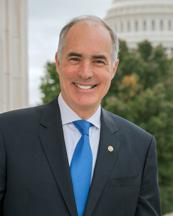 Sen. Robert P. Casey Jr. (D-PA)
Sen. Robert P. Casey Jr. (D-PA)Submitted May 6, 2010
Legislative Activity
Stay on top of the latest movement without scrolling through every action
Floor
Latest Action
Senate amendment submitted
May 6, 2010
Text
Submitted
SA 3878. Mr. CASEY (for himself, Mr. Brown of Ohio, and Mr. Harkin)
submitted an amendment intended to be proposed to amendment SA 3739
proposed by Mr. Reid (for Mr. Dodd (for himself and Mrs. Lincoln)) to
the bill S. 3217, to promote the financial stability of the United
States by improving accountability and transparency in the financial
system, to end ``too big to fail,'' to protect the American taxpayer by
ending bailouts, to protect consumers from abusive financial services
practices, and for other purposes; which was ordered to lie on the
table; as follows:

On page 1044, between lines 2 and 3, insert the following:

SEC. 9__. STUDY ON TRANSACTION FEE.

(a) In General.--The Securities and Exchange Commission and
the Commodity Futures Trading Commission, in coordination
with the Department of the Treasury, shall conduct a study on
the implementation of a transaction fee on all security-based
transactions, including swap and security-based swap
transactions (except those transactions that are primarily
for the purpose of hedging or mitigating risk), stock, debt
instruments, and any other security that the heads of the
Federal agencies described in this subsection determine to be
appropriate to be included in the study.
(b) Purpose.--The purpose of the study shall be to assess--
(1) past experiences with transaction fees, with an
emphasis on fee avoidance or behavior modification, migration
of capital, and impact on individual investors and small and
medium-sized businesses;
(2) the advantages and disadvantages of the implementation
of the transaction fee in the United States alone, as
compared to the introduction of the fee on a global basis;
(3) the potential to generate sufficient revenue to reduce
the deficit, fund job creation, and meet the humanitarian and
global development obligations of the United States;
(4) how a transaction fee needs to be designed in order to
mitigate any negative side effects that may result from the
indirect assessment on the raising of capital;
(5) the impact, if any, a transaction fee would have on the
practice of day trading;
(6) to what extent a financial transaction fee would
contribute to the stabilization of the financial markets in
terms of the effect of the fee on speculation and on
transparency;
(7) whether a transaction fee would prevent a future
financial crisis by targeting certain types of risky
transactions (which transactions shall be determined by the
agencies conducting the study);
(8) the different transaction fee options, with a
particular focus on--
(A) the financial transactions tax and financial activities
tax, as described in the report entitled ``International
Monetary Fund Report: A Fair and Substantial Contribution by
the Financial Sector''; and
(B) implementing the transaction fee on individuals earning
more than $250,000 and corporations;
(9) whether the transaction fee would assist in building
healthy capital, ensuring the ability of the banking system
to finance real economy investments; and
(10) whether excessive risk-taking is or would be prevented
through implementation of a transaction fee.
(c) Public Participation.--The study described in
subsection (a) shall be carried out in a manner to provide to
the public an adequate period of time to provide comments on
the implementation of a transaction fee.
(d) Report.--Not later than 90 days after the date of
enactment of this Act, the Securities and Exchange Commission
and the Commodity Futures Trading Commission, in coordination
with the Department of the Treasury, shall submit to Congress
a report that describes the results of the study.
______