S.Amdt. 3923Senate111th Congress (2009-2011)2nd degree
S.Amdt. 3923
Sponsored by 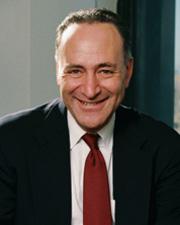 Sen. Charles E. Schumer (D-NY)
Sen. Charles E. Schumer (D-NY)Submitted May 10, 2010
Legislative Activity
Stay on top of the latest movement without scrolling through every action
Floor
Latest Action
Senate amendment submitted
May 10, 2010
Text
Submitted
TEXT OF AMENDMENTS

SA 3922. Mr. MERKLEY (for himself, Mr. Brown of Ohio, Mrs. Boxer, Mr.
Feingold, Ms. Snowe, and Mr. Sanders) submitted an amendment intended
to be proposed to amendment SA 3739 proposed by Mr. Reid (for Mr. Dodd,
(for himself and Mrs. Lincoln)) to the bill S. 3217, to promote
stability of the United States by improving accountability and
transparency in the financial system, to end ``too big to fall'', to
protect the American taxpayer by ending bailouts, to protect consumers
from abusive financial services practices, and for other purposes;
which was ordered to lie on the table; as follows:

On page 392, strike line 6 and all that follows through the
matter following line 2 on page 409, and insert the
following:
``(D) to coordinate Federal efforts and develop Federal
policy on prudential aspects of international insurance
matters, including representing the United States, as
appropriate, in the International Association of Insurance
Supervisors (or a successor entity) and assisting the
Secretary in negotiating Covered Agreements;
``(E) to determine, in accordance with subsection (f),
whether State insurance measures are preempted by Covered
Agreements;
``(F) to consult with the States (including State insurance
regulators) regarding insurance matters of national
importance and prudential insurance matters of international
importance; and
``(G) to perform such other related duties and authorities
as may be assigned to the Office by the Secretary.
``(2) Advisory functions.--The Office shall advise the
Secretary on major domestic and prudential international
insurance policy issues.
``(d) Scope.--The authority of the Office shall extend to
all lines of insurance except health insurance, as such
insurance is determined by the Secretary based on section
2791 of the Public Health Service Act (42 U.S.C. 300gg-91),
and crop insurance, as established by the Federal Crop
Insurance Act (7 U.S.C. 1501 et seq.).
``(e) Gathering of Information.--
``(1) In general.--In carrying out the functions required
under subsection (c), the Office may--
``(A) receive and collect data and information on and from
the insurance industry and insurers;
``(B) enter into information-sharing agreements;
``(C) analyze and disseminate data and information; and
``(D) issue reports regarding all lines of insurance except
health insurance.
``(2) Collection of information from insurers and
affiliates.--
``(A) In general.--Except as provided in paragraph (3), the
Office may require an insurer, or any affiliate of an
insurer, to submit such data or information as the Office may
reasonably require in carrying out the functions described
under subsection (c).
``(B) Rule of construction.--Notwithstanding any other
provision of this section, for purposes of subparagraph (A),
the term `insurer' means any person that is authorized to
write insurance or reinsure risks and issue contracts or
policies in 1 or more States.
``(3) Exception for small insurers.--Paragraph (2) shall
not apply with respect to any insurer or affiliate thereof
that meets a minimum size threshold that the Office may
establish, whether by order or rule.
``(4) Advance coordination.--Before collecting any data or
information under paragraph (2) from an insurer, or any
affiliate of an insurer, the Office shall coordinate with
each relevant State insurance regulator (or other relevant
Federal or State regulatory agency, if any, in the case of an
affiliate of an insurer) to determine if the information to
be collected is available from, or may be obtained in a
timely manner by, such State insurance regulator,
individually or collectively, another regulatory agency, or
publicly available sources. Notwithstanding any other
provision of law, each such relevant State insurance
regulator or other Federal or State regulatory agency is
authorized to provide to the Office such data or information.
``(5) Confidentiality.--
``(A) Retention of privilege.--The submission of any
nonpublicly available data and information to the Office
under this subsection shall not constitute a waiver of, or
otherwise affect, any privilege arising under Federal or
State law (including the rules of any Federal or State court)
to which the data or information is otherwise subject.
``(B) Continued application of prior confidentiality
agreements.--Any requirement under Federal or State law to
the extent otherwise applicable, or any requirement pursuant
to a written agreement in effect between the original source
of any nonpublicly available data or information and the
source of such data or information to the Office, regarding
the privacy or confidentiality of any data or information in
the possession of the source to the Office, shall continue to
apply to such data or information after the data or
information has been provided pursuant to this subsection to
the Office.
``(C) Information sharing agreement.--Any data or
information obtained by the Office may be made available to
State insurance regulators, individually or collectively,
through an information sharing agreement that--
``(i) shall comply with applicable Federal law; and
``(ii) shall not constitute a waiver of, or otherwise
affect, any privilege under Federal or State law (including
the rules of any Federal or State Court) to which the data or
information is otherwise subject.
``(D) Agency disclosure requirements.--Section 552 of title
5, United States Code, shall apply to any data or information
submitted to the Office by an insurer or an affiliate of an
insurer.
``(6) Subpoenas and enforcement.--The Director shall have
the power to require by subpoena the production of the data
or information requested under paragraph (2), but only upon a
written finding by the Director that such data or information
is required to carry out the functions described under
subsection (c) and that the Office has coordinated with such
regulator or agency as required under paragraph (4).
Subpoenas shall bear the signature of the Director and shall
be served by any person or class of persons designated by the
Director for that purpose. In the case of contumacy or
failure to obey a subpoena, the subpoena shall be enforceable
by order of any appropriate district court of the United
States. Any failure to obey the order of the court may be
punished by the court as a contempt of court.
``(f) Preemption of State Insurance Measures.--
``(1) Standard.--A State insurance measure shall be
preempted if, and only to the extent that the Director
determines, in accordance with this subsection, that the
measure--
``(A) directly treats less favorably a non-United States
insurer domiciled in a foreign jurisdiction that is subject
to a Covered Agreement than a United States insurer
domiciled, licensed, or otherwise admitted in that State; and

[[Page S3477]]

``(B) is inconsistent with a Covered Agreement.
``(2) Determination.--
``(A) Notice of potential inconsistency.--Before making any
determination under paragraph (1), the Director shall--
``(i) notify and consult with the appropriate State
regarding any potential inconsistency or preemption;
``(ii) cause to be published in the Federal Register notice
of the issue regarding the potential inconsistency or
preemption, including a description of each State insurance
measure at issue and any applicable Covered Agreements;
``(iii) provide interested parties a reasonable opportunity
to submit written comments to the Office;
``(iv) consider any comments received; and
``(v) consider the effect of preemption on--

``(I) the protection of policyholders and policy claimants;
``(II) the maintenance of the safety, soundness, integrity,
and financial responsibility of any entity involved in the
business of insurance or insurance operations;
``(III) ensuring the integrity and stability of the United
States financial system; and
``(IV) the creation of a gap or void in financial or market
conduct regulation of any entity involved in the business of
insurance or insurance operations in the United States; and

``(B) Scope of review.--For purposes of this subsection,
the determination of the Director regarding State insurance
measures shall be limited to the subject matter contained
within the Covered Agreement involved.
``(C) Notice of determination of inconsistency.--Upon
making any determination under paragraph (1), the Director
shall--
``(i) notify the appropriate State of the determination and
the extent of the inconsistency;
``(ii) establish a reasonable period of time, which shall
not be less than 90 days, before the determination shall
become effective;
``(iii) notify the Committee on Banking, Housing, and Urban
Affairs of the Senate and the Committee on Financial Services
of the House of Representatives of the inconsistency; and
``(iv) cause to be published in the Federal Register notice
of the determination and the extent of the inconsistency.
``(3) Notice of effectiveness.--Upon the conclusion of the
period referred to in paragraph (2)(C)(ii), if the basis for
such determination still exists, the determination shall
become effective and the Director shall--
``(A) cause to be published a notice in the Federal
Register that the preemption has become effective, as well as
the effective date; and
``(B) notify the appropriate State.
``(4) Limitation.--No State may enforce a State insurance
measure to the extent that such measure has been preempted
under this subsection.
``(g) Applicability of Administrative Procedures Act.--
Determinations of inconsistency made pursuant to subsection
(f)(2) shall be subject to the applicable provisions of
subchapter II of chapter 5 of title 5, United States Code
(relating to administrative procedure), and chapter 7 of such
title (relating to judicial review), except that in any
action for judicial review of a determination of
inconsistency, the court shall determine the matter de novo.
``(h) Regulations, Policies, and Procedures.--The Secretary
may issue orders, regulations, policies, and procedures to
implement this section.
``(i) Consultation.--The Director shall consult with State
insurance regulators, individually or collectively, to the
extent the Director determines appropriate, in carrying out
the functions of the Office.
``(j) Savings Provisions.--Nothing in this section shall--
``(1) preempt--
``(A) any State insurance measure that governs any
insurer's rates, premiums, underwriting, or sales practices;
``(B) any State coverage requirements for insurance;
``(C) the application of the antitrust laws of any State to
the business of insurance; or
``(D) any State insurance measure governing the capital or
solvency of an insurer, except to the extent that such State
insurance measure directly treats a non-United States insurer
less favorably than a United States insurer and in that case
only to the extent of the less favorable treatment of the
non-United States insurer domiciled in a foreign jurisdiction
that is subject to a Covered Agreement;
``(2) be construed to alter, amend, or limit any provision
of the Consumer Financial Protection Agency Act of 2010; or
``(3) affect the preemption of any State insurance measure
otherwise inconsistent with and preempted by Federal law.
``(k) Retention of Existing State Regulatory Authority.--
Nothing in this section or section 314 shall be construed to
establish or provide the Office or the Department of the
Treasury with general supervisory or regulatory authority
over the business of insurance.
``(l) Annual Report to Congress.--Beginning September 30,
2011, the Director shall submit a report on or before
September 30 of each calendar year to the President and to
the Committee on Banking, Housing, and Urban Affairs of the
Senate and the Committee on Financial Services of the House
of Representatives on the insurance industry, any actions
taken by the Office pursuant to subsection (f) (regarding
preemption of inconsistent State insurance measures), the
status of international insurance prudential matters and
negotiations, including on standard-setting, and any other
information as deemed relevant by the Director or as
requested by such Committees.
``(m) Study and Report on Regulation of Insurance.--
``(1) In general.--Not later than 18 months after the date
of enactment of this section, the Government Accountability
Office shall conduct a study and submit a report to Congress
on how to modernize and improve the system of insurance
regulation in the United States.
``(2) Considerations.--The study and report required under
paragraph (1) shall be based on and guided by the following
considerations:
``(A) Systemic risk regulation with respect to insurance.
``(B) Capital standards and the relationship between
capital allocation and liabilities, including standards
relating to liquidity and duration risk.
``(C) Consumer protection for insurance products and
practices, including gaps in state regulation.
``(D) The degree of national uniformity of State insurance
regulation, including the feasability and costs and benefits
of alternative Federal or State actions, such as interstate
compacts, that would encourage the States to accomplish the
regulatory goal of uniformity that may be identified as being
achieved through any proposed Federal regulation of
insurance.
``(E) The regulation of insurance companies and affiliates
on a consolidated basis.
``(F) International coordination of insurance regulation.
``(3) Additional factors.--The study and report required
under paragraph (1) shall also examine the following factors:
``(A) The costs and benefits of potential Federal
regulation of insurance across various lines of insurance
(except health insurance).
``(B) The feasibility of regulating only certain lines of
insurance at the Federal level, while leaving other lines of
insurance to be regulated at the State level.
``(C) The ability of any potential Federal regulation or
Federal regulators to eliminate or minimize regulatory
arbitrage.
``(D) The impact that developments in the regulation of
insurance in foreign jurisdictions might have on the
potential Federal regulation of insurance.
``(E) The ability of any potential Federal regulation or
Federal regulator to provide robust consumer protection for
policyholders.
``(F) The potential consequences of subjecting insurance
companies to a Federal resolution authority, including the
effects of any Federal resolution authority--
``(i) on the operation of State insurance guaranty fund
systems, including the loss of guaranty fund coverage if an
insurance company is subject to a Federal resolution
authority;
``(ii) on policyholder protection, including the loss of
the priority status of policyholder claims over other
unsecured general creditor claims;
``(iii) in the case of life insurance companies, the loss
of the special status of separate account assets and separate
account liabilities; and
``(iv) on the international competitiveness of insurance
companies.
``(G) Such other factors as the Government Accountability
Office determines necessary or appropriate, consistent with
the principles set forth in paragraph (2).
``(4) Required recommendations.--The study and report
required under paragraph (1) shall also contain any
legislative, administrative, or regulatory recommendations,
as the Government Accountability Office determines
appropriate, to carry out or effectuate the findings set
forth in such report.
``(5) Consultation.--With respect to the study and report
required under paragraph (1), the Government Accountability
Office shall consult with the National Association of
Insurance Commissioners, consumer organizations,
representatives of the insurance industry and policyholders,
and other organizations and experts, as appropriate.
``(n) Definitions.--In this section and section 314, the
following definitions shall apply:
``(1) Affiliate.--The term `affiliate' means, with respect
to an insurer, any person who controls, is controlled by, or
is under common control with the insurer.
``(2) Insurer.--The term `insurer' means any person engaged
in the business of insurance, including reinsurance.
``(3) Covered agreements.--The term `Covered Agreements'
means a written bilateral or multilateral agreement entered
into between the United States and a foreign government,
authority, or regulatory entity after the date of the
enactment of the Restoring American Financial Stability Act
of 2010 regarding prudential measures applicable to the
business of insurance or reinsurance that--
``(A) provides for recognition of other countries'
prudential measures with respect to the business of insurance
or reinsurance;
``(B) protects insurance consumers in the United States;
``(C) promotes the integrity and stability of the financial
system; and

[[Page S3478]]

``(D) meets the regulatory goals of the States with respect
to the comparable subject matter.
``(4) Non-united states insurer.--The term `non-United
States insurer' means an insurer that is organized under the
laws of a jurisdiction other than a State, but does not
include any United States branch of such an insurer.
``(5) Office.--The term `Office' means the Office of
National Insurance established by this section.
``(6) State insurance measure.--The term `State insurance
measure' means any State law, regulation, administrative
ruling, bulletin, guideline, or practice relating to or
affecting prudential measures applicable to insurance or
reinsurance.
``(7) State insurance regulator.--The term `State insurance
regulator' means any State regulatory authority responsible
for the supervision of insurers.
``(8) United states insurer.--The term `United States
insurer' means--
``(A) an insurer that is organized under the laws of a
State; or
``(B) a United States branch of a non-United States
insurer.
``(o) Authorization of Appropriations.--There are
authorized to be appropriated for the Office for each fiscal
year such sums as may be necessary.

``SEC. 314. COVERED AGREEMENTS.

``(a) In General.--The Secretary of the Treasury is
authorized to negotiate and enter into Covered Agreements on
behalf of the United States.
``(b) Savings Provision.--Nothing in this section or
section 313 shall be construed to affect the development and
coordination of United States international trade policy or
the administration of the United States trade agreements
program. It is to be understood that the negotiation of
Covered Agreements under such sections is consistent with the
requirement of this subsection.
``(c) Requirements for Consultation.--
``(1) In general.--Before initiating negotiations to enter
into a Covered Agreement under subsection (a), during such
negotiations, and before entering into any such agreement,
the Secretary shall consult with the United States Trade
Representative, the relevant Congressional committees, and
the insurance commissioners of the States and territories of
the United States.
``(2) Application of apa.--The initiation of negotiations
to enter into a Covered Agreement under subsection (a) and
the decision to enter into any such Covered Agreement shall
be subject to notice and comment rulemaking under the
Administrative Procedures Act.
``(d) Entry Into Force.--A Covered Agreement under
subsection (a) may enter into force with respect to the
United States only if--
``(1) the Secretary has made available for public review by
posting in the Federal Register a copy of the final legal
text of the Covered Agreement; and
``(2) a period of 90 calendar days beginning on the date on
which the copy of the final legal text of the Covered
Agreement is made available for public review under paragraph
(1) has expired.''.
(b) Duties of Secretary.--Section 321(a) of title 31,
United States Code, is amended--
(1) in paragraph (7), by striking ``; and'' and inserting a
semicolon;
(2) in paragraph (8)(C), by striking the period at the end
and inserting ``; and''; and
(3) by adding at the end the following new paragraph:
``(9) advise the President on major domestic and
international prudential policy issues in connection with all
lines of insurance except health insurance.''.
(c) Clerical Amendment.--The table of sections for
subchapter I of chapter 3 of title 31, United States Code, is
amended by striking the item relating to section 312 and
inserting the following new items:

``Sec. 312. Terrorism and financial intelligence.
``Sec. 313. Office of National Insurance.
``Sec. 314. Covered Agreements.
``Sec. 315. Continuing in office.''.
______

SA 3923. Mr. SCHUMER (for himself, Mr. Reed, Mr. Akaka, and Mr.
Menendez), submitted an amendment intended to be proposed to amendment
SA 3739 proposed by Mr. Reid (for Mr. Dodd (for himself and Mrs.
Lincoln)) to the bill S. 3217, to promote the financial stability of
the United States by improving accountability and transparency in the
financial system, to end ``too big to fail'', to protect the American
taxpayer by ending bailouts, to protect consumers from abusive
financial services practices, and for other purposes; which was ordered
to lie on the table; as follows:

On page 1248, strike line 22 and all that follows through
page 1249, line 10 and insert the following:
(1) Covered persons.--This section shall apply to any
covered person who is not a person described in section
1025(a) or 1026(a).
On page 1255, line 5, strike ``(A) In general.--The
Bureau'' and insert the following:
``(A) Notice.--If the Federal Trade Commission is
authorized to enforce any Federal consumer financial law
described in paragraph (1), either the Bureau or the Federal
Trade Commission shall serve written notice to the other of
the intent to take any enforcement action, prior to
initiating such an enforcement action, except that if the
Bureau or the Federal Trade Commission, in filing the action,
determines that prior notice is not feasible, the Bureau or
the Federal Trade Commission may provide notice immediately
upon initiating such enforcement action.
``(B) Coordination.--The Bureau''.
On page 1255, line 10, strike ``(1)(A)''.
On page 1255, line 19, strike ``(B)'' and insert ``(C)''.
On page 1256, line 15, strike ``(C)'' and insert ``(D)''.
On page 1256, line 19, strike ``(D)'' and insert ``(E)''.
On page 1255, line 10, strike ``(1)(A)''.
______

SA 3924. Mr. SCHUMER submitted an amendment intended to be proposed
to amendment SA 3739 proposed by Mr. Reid (for Mr. Dodd (for himself
and Mrs. Lincoln)) to the bill S. 3217, to promote the financial
stability of the United States by improving accountability and
transparency in the financial system, to end ``too big to fail'', to
protect the American taxpayer by ending bailouts, to protect consumers
from abusive financial services practices, and for other purposes;
which was ordered to lie on the table; as follows:

On page 1522, line 6, strike ``date.'' and insert the
following: ``date.

SEC. 1105. FHA MORTGAGE INSURANCE PROGRAMS.

(a) FHA Mortgage Amount Limits for Elevator-type
Structures.--
(1) Amendments.--Title II of the National Housing Act (12
U.S.C. 1707 et seq.) is amended--
(A) in section 207(c)(3)(A) (12 U.S.C. 1713(c)(3)(A))--
(i) by inserting ``with sound standards of construction and
design'' after ``elevator-type structures''; and
(ii) by striking ``to not to exceed'' and all that follows
through the semicolon at the end and inserting ``by not more
than 50 percent of the amounts specified in this subparagraph
for each unit size;'';
(B) in section 213(b)(2)(A) (12 U.S.C. 1715e(b)(2)(A))--
(i) by inserting ``with sound standards of construction and
design'' after ``consist of elevator-type structures''; and
(ii) by striking ``to not to exceed'' and all that follows
through ``; (B)(i)'' and inserting ``by not more than 50
percent of the amounts specified in this subparagraph for
each applicable family unit size; (B)(i)'';
(C) in section 220(d)(3)(B)(iii)(I) (12 U.S.C.
1715k(d)(3)(B)(iii)(I))--
(i) by inserting ``with sound standards of construction and
design'' after ``consist of elevator-type structures''; and
(ii) by striking ``family unit not to exceed'' and all that
follows through ``design; and'' and inserting ``family unit
by not more than 50 percent of the amounts specified in this
subclause for each applicable family unit size; and'';
(D) in section 221(d) (12 U.S.C. 1715l(d))--
(i) in paragraph (3)(ii)(I)--

(I) by inserting ``with sound standards of construction and
design'' after ``consist of elevator-type structures''; and
(II) by striking ``to not to exceed'' and all that follows
through ``design;'' and inserting ``by not more than 50
percent of the amounts specified in this subclause for each
applicable family unit size;''; and

(ii) in paragraph (4)(ii)(I)--

(I) by inserting ``with sound standards of construction and
design'' after ``consist of elevator-type structures''; and
(II) by striking ``to not to exceed'' and all that follows
through ``design;'' and inserting ``by not more than 50
percent of the amounts specified in this subclause for each
applicable family unit size;'';

(E) in section 231(c)(2)(A) (12 U.S.C. 1715v(c)(2)(A))--
(i) by inserting ``with sound standards of construction and
design'' after ``consist of elevator-type structures''; and
(ii) by striking ``to not to exceed'' and all that follows
through ``design;'' and inserting ``by not more than 50
percent of the amounts specified in this subparagraph for
each applicable family unit size;''; and
(F) in section 234(e)(3)(A) (12 U.S.C. 1715y(e)(3)(A))--
(i) by inserting ``with sound standards of construction and
design'' after ``consist of elevator-type structures''; and
(ii) by striking ``to not to exceed'' and all that follows
through ``sound standards of construction and design;'' and
inserting ``by not more than 50 percent of the amounts
specified in this subparagraph for each applicable family
unit size;''.
(b) FHA Mortgage Amount Limits for Extremely High-cost
Areas.--Section 214 of the National Housing Act (12 U.S.C.
1715d) is amended--
(1) in the first sentence--
(A) by inserting ``or with respect to projects consisting
of more than four dwelling units located in an extremely
high-cost area, as determined by the Secretary'' after ``or
the Virgin Islands,'';
(B) by striking ``or the Virgin Islands without sacrifice''
and inserting ``or the Virgin Islands, or to construct
projects consisting of more than four dwelling units on
property located in an extremely high-cost area, as
determined by the Secretary, without sacrifice''; and

[[Page S3479]]

(C) by striking ``or the Virgin Islands in such'' and
inserting ``or the Virgin Islands, or with respect to
projects consisting of more than four dwelling units located
in an extremely high-cost area, as determined by the
Secretary, in such'';
(2) in the second sentence--
(A) by striking ``the Virgin Islands shall'' and inserting
``the Virgin Islands, or with respect to a project consisting
of more than four dwelling units located in an extremely
high-cost area, as determined by the Secretary, shall''; and
(B) by striking ``Virgin Islands:'' and inserting ``Virgin
Islands, or in the case of a project consisting of more than
four dwelling units in an extremely high-cost area as
determined by the Secretary, in such extremely high-cost
area:''; and
(3) in the section heading, by striking ``and the virgin
islands'' and inserting ``the virgin islands, and extremely
high-cost areas''.
(c) Effective Date.--The amendments made by this section
shall apply to mortgages insured under title II of the
National Housing Act on and after the date of enactment of
this Act.
______

SA 3925. Mr. SHELBY submitted an amendment intended to be proposed to
amendment SA 3739 proposed by Mr. Reid (for Mr. Dodd (for himself and
Mrs. Lincoln)) to the bill S. 3217, to promote the financial stability
of the United States by improving accountability and transparency in
the financial system, to end ``too big to fail'', to protect the
American taxpayer by ending bailouts, to protect consumers from abusive
financial services practices, and for other purposes; which was ordered
to lie on the table; as follows:

On page 1004, strike line 15 and all that follows through
page 1044, line 2, and insert the following:

SEC. 931. REMOVAL OF REFERENCES TO CREDIT RATINGS IN FEDERAL
LAW.

(a) Covered Federal Agency.--In this section, the term
``covered Federal agency'' means--
(1) the Commission;
(2) the Corporation;
(3) the Board of Governors;
(4) the National Credit Union Administration;
(5) the Federal Housing Finance Agency; and
(6) the Office of the Comptroller of the Currency.
(b) Review by Covered Federal Agencies.--Not later than 2
years after the date of enactment of this Act, each covered
Federal agency shall--
(1) review all statutes, rules, regulations, forms, and
interpretive guidance administered or issued by the covered
Federal agency to identify references to the term
``nationally recognized statistical rating organization'';
(2) amend the rules, regulations, forms, and interpretive
guidance that the covered Federal agency has identified under
paragraph (1) to ensure that the rules, regulations, forms,
and interpretive guidance neither require nor promote
reliance by persons regulated by the covered Federal agency
on credit ratings issued by a nationally recognized
statistical rating organization; and
(3) submit to the Committee on Banking, Housing and Urban
Affairs of the Senate and the Committee on Financial Services
of the House of Representatives a report that contains
recommendations for amendments to any statute that the
covered Federal agency has identified under paragraph (1) to
ensure that the statute neither requires nor promotes
reliance on credit ratings issued by a nationally recognized
statistical rating organization.
(c) Review by Comptroller General.--
(1) Review required.--Not later than 1 year after the date
of enactment of this Act, the Comptroller General of the
United States shall--
(A) review all statutes, rules, regulations, forms, and
interpretive guidance administered or issued by each Federal
agency that is not a covered Federal agency to identify
references to the term ``nationally recognized statistical
rating organization'';
(B) recommend to each Federal agency that is not a covered
Federal agency, and for which the Comptroller General has
identified rules, regulations, forms, and interpretive
guidance under subparagraph (A), amendments to the relevant
rules, regulations, forms, and interpretive guidance to
ensure that the rules, regulations, forms, and interpretive
guidance neither require nor promote reliance by persons
regulated by the Federal agency on credit ratings issued by a
nationally recognized statistical rating organization; and
(C) submit to Congress a report that contains
recommendations for amendments to any statute that the
Comptroller General has identified under subparagraph (A) to
ensure that the statute neither requires nor promotes
reliance on credit ratings issued by a nationally recognized
statistical rating organization.
(2) Amendments.--Not later than 2 years after the date of
enactment of this Act, any Federal agency to which the
Comptroller General has made a recommendation under paragraph
(1)(B) shall amend any rules, regulations, forms, or
interpretive guidance identified by the Comptroller General
to ensure that the rules, regulations, forms, or interpretive
guidance neither require nor promote reliance by persons
regulated by the Federal agency on credit ratings issued by a
nationally recognized credit rating organization.
______

SA 3926. Ms. STABENOW (for herself, Mr. Bennett, Mr. Hatch, and Mr.
Levin) submitted an amendment intended to be proposed to amendment SA
3739 proposed by Mr. Reid (for Mr. Dodd (for himself and Mrs. Lincoln))
to the bill S. 3217, to promote the financial stability of the United
States by improving accountability and transparency in the financial
system, to end ``too big to fail'', to protect the American taxpayer by
ending bailouts, to protect consumers from abusive financial services
practices, and for other purposes; which was ordered to lie on the
table; as follows:

On page 431, strike lines 14 through 20 and insert the
following:
(ii) results from--

(I) the merger or whole acquisition of a commercial firm
that directly or indirectly controls the industrial bank,
credit card bank, or trust bank in a bona fide merger with or
acquisition by another commercial firm, as determined by the
appropriate Federal banking agency;
(II) an acquisition of voting shares in a publicly traded
holding company of a industrial bank if, after the
acquisition, the acquiring shareholder (or group of
shareholders acting in concert)--

(aa) holds less than 25 percent of the voting shares of the
company; and
(bb) has obtained all regulatory approvals required for
such change of control under section 7(j) of the Federal
Deposit Insurance Act (12 U.S.C. 1817(j)) and any applicable
State law; or

(III) an internal reorganization of affiliated entities in
which the ownership of the industrial bank, credit card bank,
or trust bank is transferred from one affiliate to another
after receiving all regulatory approvals required for such
change of control under section 7(j) of the Federal Deposit
Insurance Act (12 U.S.C. 1817(j)) and any applicable State
law.

______

SA 3927. Mr. LEAHY submitted an amendment intended to be proposed to
amendment SA 3739 proposed by Mr. Reid (for Mr. Dodd (for himself and
Mrs. Lincoln)) to the bill S. 3217, to promote the financial stability
of the United States by improving accountability and transparency in
the financial system, to end ``too big to fail'', to protect the
American taxpayer by ending bailouts, to protect consumers from abusive
financial services practices, and for other purposes; which was ordered
to lie on the table; as follows:

On page 749, line 17 strike all through page 752, line 11,
and insert the following:
``(2) Prohibition of disclosure of identity.--
``(A) In general.--Except as provided in paragraph (B) of
this subsection, or with the written consent of the
whistleblower, the Commission may not disclose the name,
identity or identifying information about the whistleblower
who has provided information to the Commission.
``(B) Notice and applicability to other government agencies
and foreign authorities.--Whenever the Commission makes a
disclosure to other agencies and foreign authorities, it
shall provide reasonable advance notice to the whistleblower
if disclosure of that person's identity or identifying
information is to occur. Any entity that receives such as
disclosure shall protect the whistleblower's confidentiality
in accordance with this subsection.
On page 990, line 7, strike all through page 993, line 7,
and insert the following:
``(2) Prohibition of disclosure of identity.--
``(A) In general.--Except as provided in paragraph (B), or
with the written consent of the whistleblower, the Commission
may not disclose the name, identity or identifying
information about the whistleblower who has provided
information to the Commission.
``(B) Notice and applicability to other government agencies
and foreign authorities.--Whenever the Commission makes a
disclosure to other agencies and foreign authorities, it
shall provide reasonable advance notice to the whistleblower
if disclosure of that person's identity or identifying
information is to occur. Any entity that receives such as
disclosure shall protect the whistleblower's confidentiality
in accordance with this subsection.
______

SA 3928. Mr. BENNET (for himself, Mr. Tester Mr. Isakson, Ms.
Klobuchar, Mr. Begich, Mr. Udall of Colorado, and Mr. LeMieux)
submitted an amendment intended to be proposed by him to the bill S.
3217, to promote the financial stability of the United States by
improving accountability and transparency in the financial system, to
end ``too big to fail'', to protect the American taxpayer by ending
bailouts, to protect consumers from abusive financial services
practices, and

[[Page S3480]]

for other purposes; which was ordered to lie on the table; as follows:

At the end of the bill, insert the following:

TITLE XIII--PAY IT BACK ACT

SEC. 1301. SHORT TITLE.

This title may be cited as the ``Pay It Back Act''.

SEC. 1302. AMENDMENT TO REDUCE TARP AUTHORIZATION.

Section 115(a) of the Emergency Economic Stabilization Act
of 2008 (12 U.S.C. 5225(a)) is amended--
(1) in paragraph (3)--
(A) by striking ``If'' and inserting ``Except as provided
in paragraph (4), if'';
(B) by striking ``, $700,000,000,000, as such amount is
reduced by $1,259,000,000, as such amount is reduced by
$1,244,000,000'' and inserting ``$550,000,000,000''; and
(C) by striking ``outstanding at any one time''; and
(2) by adding at the end the following:
``(4) If the Secretary, with the concurrence of the
Chairman of the Board of Governors of the Federal Reserve
System, determines that there is an immediate and substantial
threat to the economy arising from financial instability, the
Secretary is authorized to purchase troubled assets under
this Act in an amount equal to amounts received by the
Secretary before, on, or after the date of enactment of the
Pay It Back Act for repayment of the principal of financial
assistance by an entity that has received financial
assistance under the TARP or any other program enacted by the
Secretary under the authorities granted to the Secretary
under this Act, but only--
``(A) to the extent necessary to address the threat; and
``(B) upon transmittal of such determination, in writing,
to the appropriate committees of Congress.''.

SEC. 1303. REPORT.

Section 106 of the Emergency Economic Stabilization Act of
2008 (12 U.S.C. 5216) is amended by inserting at the end the
following:
``(f) Report.--The Secretary of the Treasury shall report
to Congress every 6 months on amounts received and
transferred to the general fund under subsection (d).''.

SEC. 1304. AMENDMENTS TO HOUSING AND ECONOMIC RECOVERY ACT OF
2008.

(a) Sale of Fannie Mae Obligations and Securities by the
Treasury; Deficit Reduction.--Section 304(g)(2) of the
Federal National Mortgage Association Charter Act (12 U.S.C.
1719(g)(2)) is amended--
(1) by redesignating subparagraph (C) as subparagraph (D);
and
(2) by inserting after subparagraph (B) the following:
``(C) Deficit reduction.--The Secretary of the Treasury
shall deposit in the General Fund of the Treasury any amounts
received by the Secretary from the sale of any obligation
acquired by the Secretary under this subsection, where such
amounts shall be--
``(i) dedicated for the sole purpose of deficit reduction;
and
``(ii) prohibited from use as an offset for other spending
increases or revenue reductions.''.
(b) Sale of Freddie Mac Obligations and Securities by the
Treasury; Deficit Reduction.--Section 306(l)(2) of the
Federal Home Loan Mortgage Corporation Act (12 U.S.C.
1455(l)(2)) is amended--
(1) by redesignating subparagraph (C) as subparagraph (D);
and
(2) by inserting after subparagraph (B) the following:
``(C) Deficit reduction.--The Secretary of the Treasury
shall deposit in the General Fund of the Treasury any amounts
received by the Secretary from the sale of any obligation
acquired by the Secretary under this subsection, where such
amounts shall be--
``(i) dedicated for the sole purpose of deficit reduction;
and
``(ii) prohibited from use as an offset for other spending
increases or revenue reductions.''.
(c) Sale of Federal Home Loan Banks Obligations by the
Treasury; Deficit Reduction.--Section 11(l)(2) of the Federal
Home Loan Bank Act (12 U.S.C. 1431(l)(2)) is amended--
(1) by redesignating subparagraph (C) as subparagraph (D);
and
(2) by inserting after subparagraph (B) the following:
``(C) Deficit reduction.--The Secretary of the Treasury
shall deposit in the General Fund of the Treasury any amounts
received by the Secretary from the sale of any obligation
acquired by the Secretary under this subsection, where such
amounts shall be--
``(i) dedicated for the sole purpose of deficit reduction;
and
``(ii) prohibited from use as an offset for other spending
increases or revenue reductions.''.
(d) Repayment of Fees.--Any periodic commitment fee or any
other fee or assessment paid by the Federal National Mortgage
Association or Federal Home Loan Mortgage Corporation to the
Secretary of the Treasury as a result of any preferred stock
purchase agreement, mortgage-backed security purchase
program, or any other program or activity authorized or
carried out pursuant to the authorities granted to the
Secretary of the Treasury under section 1117 of the Housing
and Economic Recovery Act of 2008 (Public Law 110-289; 122
Stat. 2683), including any fee agreed to by contract between
the Secretary and the Association or Corporation, shall be
deposited in the General Fund of the Treasury where such
amounts shall be--
(1) dedicated for the sole purpose of deficit reduction;
and
(2) prohibited from use as an offset for other spending
increases or revenue reductions.

SEC. 1305. FEDERAL HOUSING FINANCE AGENCY REPORT.

The Director of the Federal Housing Finance Agency shall
submit to Congress a report on the plans of the Agency to
continue to support and maintain the Nation's vital housing
industry, while at the same time guaranteeing that the
American taxpayer will not suffer unnecessary losses.

SEC. 1306. REPAYMENT OF UNOBLIGATED ARRA FUNDS.

(a) Rejection of ARRA Funds by State.--Section 1607 of the
American Recovery and Reinvestment Act of 2009 (Public Law
111-5; 123 Stat. 305) is amended by adding at the end the
following:
``(d) Statewide Rejection of Funds.--If funds provided to
any State in any division of this Act are not accepted for
use by the Governor of the State pursuant to subsection (a)
or by the State legislature pursuant to subsection (b), then
all such funds shall be--
``(1) rescinded; and
``(2) deposited in the General Fund of the Treasury where
such amounts shall be--
``(A) dedicated for the sole purpose of deficit reduction;
and
``(B) prohibited from use as an offset for other spending
increases or revenue reductions.''.
(b) Withdrawal or Recapture of Unobligated Funds.--Title
XVI of the American Recovery and Reinvestment Act of 2009
(Public Law 111-5; 123 Stat. 302) is amended by adding at the
end the following:

``SEC. 1613. WITHDRAWAL OR RECAPTURE OF UNOBLIGATED FUNDS.

``Notwithstanding any other provision of this Act, if the
head of any executive agency withdraws or recaptures for any
reason funds appropriated or otherwise made available under
this division, and such funds have not been obligated by a
State to a local government or for a specific project, such
recaptured funds shall be--
``(1) rescinded; and
``(2) deposited in the General Fund of the Treasury where
such amounts shall be--
``(A) dedicated for the sole purpose of deficit reduction;
and
``(B) prohibited from use as an offset for other spending
increases or revenue reductions.''.
(c) Return of Unobligated Funds by End of 2012.--Section
1603 of the American Recovery and Reinvestment Act of 2009
(Public Law 111-5; 123 Stat. 302) is amended by--
(1) striking ``All funds'' and inserting ``(a) In
General.--All funds''; and
(2) adding at the end the following:
``(b) Repayment of Unobligated Funds.--Any discretionary
appropriations made available in this division that have not
been obligated as of December 31, 2012, are hereby rescinded,
and such amounts shall be deposited in the General Fund of
the Treasury where such amounts shall be--
``(1) dedicated for the sole purpose of deficit reduction;
and
``(2) prohibited from use as an offset for other spending
increases or revenue reductions.
``(c) Presidential Waiver Authority.--
``(1) In general.--The President may waive the requirements
under subsection (b), if the President determines that it is
not in the best interest of the Nation to rescind a specific
unobligated amount after December 31, 2012.
``(2) Requests.--The head of an executive agency may also
apply to the President for a waiver from the requirements
under subsection (b).''.
______

SA 3929. Mr. CORKER submitted an amendment intended to be proposed to
amendment SA 3739 proposed by Mr. Reid (for Mr. Dodd (for himself and
Mrs. Lincoln)) to the bill S. 3217, to promote the financial stability
of the United States by improving accountability and transparency in
the financial system, to end ``too big to fail'', to protect the
American taxpayer by ending bailouts, to protect consumers from abusive
financial services practices, and for other purposes; which was ordered
to lie on the table; as follows:

On page 1223, line 8, strike Sec. 1017, and insert the
following:

SEC. 1017. FUNDING; PENALTIES AND FINES.

(a) Overall Operating Budget.--
(1) In general.--Eighteen months after the designated
transfer date, and annually thereafter, the Director shall
prepare an operating budget for the Bureau. The Director
shall submit the budget to the Board of Governors for
approval.
(2) Budget itemization required.--The Director shall
include in each budget submitted pursuant to paragraph (1) an
itemization of the amount of funds necessary to carry out the
functions of the Bureau, including any expenditures necessary
to address recommendations or findings of material
deficiencies by the Comptroller General of the United States.
(b) Fees and Assessments.--
(1) In general.--The Bureau shall establish, by rule,
assessment schedules, including the assessment base and
rates, applicable to nondepository covered persons described
in section 1024(a).

[[Page S3481]]

(2) Nondepository covered persons.--The assessments imposed
by the Bureau by rules established pursuant to paragraph (1)
shall, with respect to covered persons described in section
1024(a), be set to recover the costs of the Bureau in
carrying out its supervisory and enforcement responsibilities
described in section 1024.
(3) Transfer of funds from board of governors.--To the
extent that assessments do not provide funding sufficient to
meet the amount subject to the limitation in paragraph (4),
funds shall be transferred from the Board of Governors.
(4) Limitation.--The assessments imposed by the Bureau by
rules established pursuant to paragraph (1) and any funds
transferred from the Board of Governors collectively shall
not exceed 5 percent of the total operating expenses of the
Federal Reserve System, as reported in the Annual Report of
the Board of Governors for fiscal year 2006.
(c) Fund Established.--
(1) In general.--The Secretary shall establish in the
Treasury of the United States, a separate account, to be
known as the ``Consumer Financial Protection Fund'' (referred
to in this title as the ``CFP Fund''). Fees and assessments
collected under this section shall be deposited into the CFP
Fund.
(2) Rule of construction.--Any amounts deposited into the
CFP Fund may not be construed to be Government funds or
appropriated monies.
(3) No apportionment.--Any amounts deposited into the CFP
Fund shall not be subject to apportionment for the purpose of
chapter 15 of title 31, United States Code, or under any
other authority.
(4) Availability.--Funds in the CFP Fund shall be
immediately available to the Bureau and under the control of
the Bureau, and shall remain available until expended, to pay
the expenses of the Bureau in carrying out its duties and
responsibilities.
(d) Financial, Operating Plans and Forecasts.--
(1) Operating plans and forecasts.--The Director shall
provide to the Director of the Office of Management and
Budget copies of the financial operating plans and forecasts
of the Director, as prepared by the Director in the ordinary
course of the operations of the Bureau, and copies of the
quarterly reports of the financial condition and results of
operations of the Bureau, as prepared by the Director in the
ordinary course of the operations of the Bureau.
(2) Financial statements.--The Bureau shall prepare
annually a statement of--
(A) assets and liabilities and surplus or deficit;
(B) income and expenses; and
(C) sources and application of funds.
(3) Financial management systems.--The Bureau shall
implement and maintain financial management systems that
comply with Federal financial management systems requirements
and applicable Federal accounting standards.
(4) Assertion of internal controls.--The Director shall
provide to the Comptroller General of the United States an
assertion as to the effectiveness of the internal controls
that apply to financial reporting by the Bureau, using the
standards established under section 3512(c) of title 31,
United States Code.
(5) Rule of construction.--This subsection may not be
construed as implying any obligation on the part of the
Director to consult with or obtain the consent or approval of
the Director of the Office of Management and Budget with
respect to any report, plan, forecast, or other information
referred to in this subsection or any jurisdiction or
oversight over the affairs or operations of the Bureau.
(e) Audit of the Bureau.--
(1) In general.--The Comptroller General of the United
States shall annually audit the financial transactions of the
Bureau in accordance with the United States generally
accepted government auditing standards, as may be prescribed
by the Comptroller General. The audit shall be conducted at
the place or places where accounts of the Bureau are normally
kept. The representatives of the Government Accountability
Office shall have access to the personnel and to all books,
accounts, documents, papers, records (including electronic
records), reports, files, and all other papers, automated
data, things, or property belonging to or under the control
of or used or employed by the Bureau pertaining to its
financial transactions and necessary to facilitate the audit,
and such representatives shall be afforded full facilities
for verifying transactions with the balances or securities
held by depositories, fiscal agents, and custodians. All such
books, accounts, documents, records, reports, files, papers,
and property of the Bureau shall remain in possession and
custody of the Bureau. The Comptroller General may obtain and
duplicate any such books, accounts, documents, records,
working papers, automated data and files, or other
information relevant to such audit without cost to the
Comptroller General, and the right of the Comptroller General
to access to such information shall be enforceable pursuant
to section 716(c) of title 31, United States Code.
(2) Report.--
(A) Report on annual audit.--The Comptroller General shall
submit to the Congress a report of each annual audit
conducted under this subsection, which report shall--
(i) set forth the scope of the audit;
(ii) include the statement of--

(I) assets and liabilities and surplus or deficit;
(II) income and expenses; and
(III) sources and application of funds;

(iii) include any detailed findings of material
deficiencies;
(iv) include such comments and information as may be deemed
necessary to inform Congress of the financial operations and
condition of the Bureau; and
(v) be presented, together with recommendations with
respect thereto, as the Comptroller General may deem
necessary and advisable to improve the business practices of
the Bureau or correct any material deficiencies.
(B) Copies.--A copy of each report submitted under
subparagraph (A) shall be furnished to the President and to
the Bureau at the time such report is submitted to Congress.
(C) Follow-up report.--The Bureau shall submit to Congress
a report following each annual audit conducted under this
subsection that includes a detailed explanation of any
recommendations or findings of material deficiencies,
together with a corrective action plan, including a timeline,
for addressing the findings and recommendations of the
Comptroller General.
(3) Assistance and costs.--For the purpose of conducting an
audit under this subsection, the Comptroller General may, in
the discretion of the Comptroller General, employ by
contract, without regard to section 3709 of the Revised
Statutes of the United States (41 U.S.C. 5), professional
services of firms and organizations of certified public
accountants for temporary periods or for special purposes.
Upon the request of the Comptroller General, the Director of
the Bureau shall transfer to the Government Accountability
Office from funds available, the amount requested by the
Comptroller General to cover the full costs of any audit and
report conducted by the Comptroller General under this
subsection. The Comptroller General shall credit funds
transferred to the account established for salaries and
expenses of the Government Accountability Office, and such
amount shall be available upon receipt and without fiscal
year limitation to cover the full costs of the audit and
report.
(f) Transition.--Until such time as an assessment schedule
has been established pursuant to this section and the
necessary contributions have been deposited into the CFP
Fund, the functions assigned under this section to the Bureau
shall be funded in accordance with section 1066(c).
(g) Limitation on Distribution of Funds.--
(1) In general.--None of the funds made available under
this title shall be used for or to support private litigation
or to fund political activities, nor be provided to any--
(A) organization which has been indicted for a violation
under Federal law relating to an election for Federal office;
and
(B) organization which employs any applicable individual.
(2) Applicable individuals defined.--In this subsection,
the term ``applicable individual'' means an individual who--
(A) is--
(i) employed by the organization in a permanent or
temporary capacity;
(ii) contracted or retained by the organization; or
(iii) acting on behalf of, or with the express or apparent
authority of, the organization; and
(B) has been indicted for a violation under Federal law
relating to an election for Federal office.
(h) Appearances Before Congress.--The Director of the
Bureau shall appear before the Committee on Banking, Housing,
and Urban Affairs of the Senate and the Committee on
Financial Services of the House of Representatives at semi-
annual hearings regarding the reports required under
subsection (i).
(i) Reports Required.--The Director shall, concurrent with
each semi-annual hearing referred to in subsection (a),
prepare and submit to the President and to the Committee on
Banking, Housing, and Urban Affairs of the Senate and the
Committee on Financial Services.
On page 1210, strike line 1 and all that follows through
page 1211, line 19.
______

SA 3930. Mr. CORKER submitted an amendment intended to be proposed to
amendment SA 3739 proposed by Mr. Reid (for Mr. Dodd (for himself and
Mrs. Lincoln)) to the bill S. 3217, to promote the financial stability
of the United States by improving accountability and transparency in
the financial system, to end ``too big to fail'', to protect the
American taxpayer by ending bailouts, to protect consumers from abusive
financial services practices, and for other purposes; which was ordered
to lie on the table; as follows:

On page 1290, between lines 4 and 5, insert the following:
(s) No Authority Over Underwriting Standards for
Residential Mortgage Loans.--
(1) Rule of construction.--Nothing in this title may be
construed as conferring authority on the Bureau to exercise
any rulemaking or other authority for matters pertaining to
underwriting standards with respect to residential mortgage
loans, except as otherwise authorized under section 1024.
(2) Definitions.--For purposes of this subsection--
(A) the term `residential mortgage loan' means any
extension of credit primarily for

[[Page S3482]]

personal, family, or household use that is secured by a
mortgage, deed of trust, or other equivalent security
interest in a dwelling or residential real estate upon which
is constructed or intended to be constructed a dwelling; and
(B) the terms ``credit'' and ``dwelling'' have the same
meanings as in section 103 of the Truth in Lending Act (15
U.S.C. 1602).
On page 1430, strike line 8 and all that follows through
page 1440, line 21.
______

SA 3931. Mr. MERKLEY (for himself, Mr. Levin, Mr. Brown of Ohio, Mr.
Kaufman, Mrs. Shaheen, Mrs. Feinstein, Mr. Casey, Mr. Nelson of
Florida, Mr. Burris, Mr. Begich, Mr. Inouye, Mr. Whitehouse, Mrs.
McCaskill, Mr. Udall of Colorado, Ms. Mikulski, Mr. Sanders, Mr. Udall
of New Mexico, and Mr. Reed) submitted an amendment intended to be
proposed to amendment SA 3739 proposed by Mr. Reid (for Mr. Dodd (for
himself and Mrs. Lincoln)) to the bill S. 3217, to promote the
financial stability of the United States by improving accountability
and transparency in the financial system, to end ``too big to fail'',
to protect the American taxpayer by ending bailouts, to protect
consumers from abusive financial services practices, and for other
purposes; which was ordered to lie on the table; as follows:

On page 484, strike line 16 and all that follows through
page 497, line 8, and insert the following:

SEC. 619. PROHIBITIONS ON PROPRIETARY TRADING AND CERTAIN
RELATIONSHIPS WITH HEDGE FUNDS AND PRIVATE
EQUITY FUNDS.

The Bank Holding Company Act of 1956 (12 U.S.C. 1841 et
seq.) is amended by adding at the end the following:

``SEC. 13. PROHIBITIONS ON PROPRIETARY TRADING AND CERTAIN
RELATIONSHIPS WITH HEDGE FUNDS AND PRIVATE
EQUITY FUNDS.

``(a) In General.--
``(1) Prohibition.--Unless otherwise provided in this
section, a banking entity shall not--
``(A) engage in proprietary trading; or
``(B) acquire or retain any equity, partnership, or other
ownership interest in or sponsor a hedge fund or a private
equity fund.
``(2) Nonbank financial companies.--Any nonbank financial
company supervised by the Board that engages in proprietary
trading or takes or retains any equity, partnership, or other
ownership interest in or sponsors a hedge fund or a private
equity fund shall be subject by the Board, in consultation
with the Securities and Exchange Commission and the Commodity
Futures Trading Commission, to additional capital
requirements for and additional quantitative limits with
regards to such proprietary trading and taking or retaining
any equity, partnership, or other ownership interest in or
sponsorship of a hedge fund or a private equity fund, except
that permitted activities as described in subsection (d)
shall be subject to additional capital and additional
quantitative limits as prescribed pursuant to subsection
(d)(3).
``(b) Study and Rulemaking.--
``(1) Study.--
``(A) In general.--Not later than 6 months after the date
of enactment of this section, the Financial Stability
Oversight Council shall study and make recommendations on
implementing the provisions of this section.
``(B) Contents of study.--Not later than 6 months after the
date of enactment of this Act, the Council shall study and
make recommendations on implementing the provisions of this
section so as to--
``(i) promote and enhance the safety and soundness of
banking entities;
``(ii) protect taxpayers and enhance financial stability by
minimizing the risk that depository institutions and the
affiliates of depository institutions will engage in unsafe
and unsound activities;
``(iii) limit the inappropriate transfer of Federal
subsidies from institutions that benefit from deposit
insurance and liquidity facilities of the Federal Government
to unregulated entities;
``(iv) reduce conflicts of interest between the self-
interest of banking entities and nonbank financial companies,
and the interests of the customers of such entities and
companies;
``(v) not unreasonably raise the cost of credit or other
financial services, reduce the availability of credit or
other financial services, or impose other costs on households
and businesses in the United States;
``(vi) limit activities that have caused undue risk or loss
in banking entities and nonbank financial companies, or that
might reasonably be expected to create undue risk or loss in
such banking entities and nonbank financial companies; and
``(vii) appropriately accommodate the business of insurance
within an insurance company subject to regulation in
accordance with the relevant insurance company investment
laws while protecting the safety and soundness of an
affiliated insured depository institution and the United
States financial system.
``(2) Rulemaking.--
``(A) In general.--Not later than 9 months after the
completion of the study under paragraph (1), the appropriate
Federal banking agencies, in consultation with the Securities
and Exchange Commission and the Commodity Futures Trading
Commission, (unless otherwise provided in this section) shall
consider the findings of the study under paragraph (1) and
adopt rules to carry out this section.
``(B) Coordinated rulemaking.--
``(i) Coordination, consistency, and comparability.--In
developing and issuing regulations pursuant to this section,
the agencies shall consult and coordinate with each other for
the purposes of assuring, to the extent possible, that such
regulations are comparable and provide for consistent
application and implementation of the applicable provisions
of this section to avoid providing advantages or imposing
disadvantages to the companies affected by this subsection
and to protect the safety and soundness of the banking
entities and nonbank financial companies supervised by the
Board.
``(ii) Council role.--The chairperson of the Council shall
be responsible for coordination of the regulations issued
under this section.
``(c) Effective Date.--The provisions of this section shall
take effect 18 months after the date of adoption of final
rules under subsection (b)(2), but not later than 3 years
after the date of enactment of this section.
``(d) Permitted Activities.--
``(1) In general.--Notwithstanding the restrictions in
subsection (a), to the extent permitted by other laws or
regulations, and subject to the limitations under paragraph
(2) and any restrictions or limitations that the appropriate
Federal banking agencies, in consultation with the Securities
and Exchange Commission and the Commodity Futures Trading
Commission, may jointly determine, the following activities
(in this section referred to as `permitted activities') are
permitted:
``(A) The purchase, sale, acquisition, or disposition of
obligations of the United States or any agency thereof;
obligations, participations, or other instruments of or
issued by the Government National Mortgage Association, the
Federal National Mortgage Association, the Federal Home Loan
Mortgage Corporation, a Federal Home Loan Bank, the Federal
Agricultural Mortgage Corporation, or a Farm Credit System
institution chartered under and subject to the provisions of
the Farm Credit Act of 1971 (12 U.S.C. 2001 et. seq.), and
obligations of any State or of any political subdivision
thereof.
``(B) The purchase, sale, acquisition, or disposition of
securities and other instruments described in subsection
(i)(4) in connection with underwriting, market-making, or in
facilitation of customer relationships, to the extent that
any such activities permitted by this subparagraph are
designed to not exceed the reasonably expected near term
demands of clients, customers, or counterparties.
``(C) Risk-mitigating hedging activities designed to reduce
risks to the banking entity or nonbank financial company.
``(D) The purchase, sale, acquisition, or disposition of
securities and other instruments described in subsection
(i)(4) on behalf of customers.
``(E) Investments in one or more small business investment
companies or investments designed primarily to promote the
public welfare, as provided in paragraph (11) of section 5136
of the Revised Statutes of the United States (12 U.S.C. 24).
``(F) The purchase, sale, acquisition, or disposition of
securities and other instruments described in subsection
(i)(4) by a regulated insurance company directly engaged in
the business of insurance for the general account of the
company and by any affiliate of such regulated insurance
company provided such activities are solely for the general
account of the regulated insurance company, if--
``(i) the purchase, sale, acquisition, or disposition is
conducted in compliance with, and subject to, the insurance
company investment laws, regulations, and written guidance of
the State or jurisdiction in which each such insurance
company is domiciled; and
``(ii) the appropriate Federal banking agencies, after
consultation with the Financial Stability Oversight Council
and the relevant insurance commissioners of the States and
territories of the United States, have not jointly
determined, after notice and comment, that a particular law,
regulation, or written guidance described in clause (i) is
insufficient to protect the safety and soundness of the
company or the banking entity or the financial stability of
the United States.
``(G) Proprietary trading conducted by a company pursuant
to paragraph (9) or (13) of section 4(c), provided that the
trading occurs solely outside of the United States and that
the company is not directly or indirectly controlled by a
United States person.
``(H) The acquisition or retention of any equity,
partnership, or other ownership interest in or the
sponsorship of a hedge fund or a private equity fund by a
company pursuant to section 4(c) (9) or (13) solely outside
of the United States, provided that no ownership interest in
the hedge fund or private equity fund is offered for sale or
sold to a resident of the United States and that the company
is not directly or indirectly controlled by a company that is
organized in the United States.
``(I) Such other activity as the appropriate Federal
banking agencies, in consultation with the Securities and
Exchange Commission and the Commodity Futures Trading
Commission, jointly determine through regulation, as provided
for in subsection (c), would promote and protect the safety
and soundness of the banking entity or nonbank

[[Page S3483]]

financial company and the financial stability of the United
States.
``(2) Limitation on permitted activities.--
``(A) In general.--No transaction, class of transactions,
or activity may be deemed a permitted activity under
paragraph (1) if it--
``(i) would involve or result in a material conflict of
interest (as such term shall be defined jointly by rule)
between the banking entity or the nonbank financial company
and its clients, customers, or counterparties;
``(ii) would result, directly or indirectly, in an unsafe
and unsound exposure by the banking entity or nonbank
financial company to high-risk assets or high-risk trading
strategies (as such terms shall be defined jointly by rule);
``(iii) would pose a threat to the safety and soundness of
such banking entity or nonbank financial company; or
``(iv) would pose a threat to the financial stability of
the United States.
``(B) Rulemaking.--The appropriate Federal banking
agencies, in consultation with the Securities and Exchange
Commission and the Commodity Futures Trading Commission,
shall issue regulations to implement subparagraph (A) as part
of the regulations provided for under subsection (b)(2).
``(3) Capital and quantitative limitations.--The Board, in
consultation with the Securities and Exchange Commission and
the Commodity Futures Trading Commission, shall adopt rules
imposing additional capital requirements and quantitative
limitations regarding the activities permitted under this
section if the Board determines that additional capital and
quantitative limitations are appropriate to protect the
safety and soundness of the banking entities and nonbank
financial companies engaged in such activities.
``(e) Anti-evasion.--
``(1) Rulemaking.--The appropriate Federal banking
agencies, in consultation with the Securities and Exchange
Commission and the Commodity Futures Trading Commission,
shall jointly issue regulations as part of the rulemaking
provided for in subsection (c) regarding internal controls
and recordkeeping in order to insure compliance with this
section.
``(2) Termination of activities or investment.--
Notwithstanding any other provision of law, whenever an
appropriate Federal banking agency or the Securities and
Exchange Commission or Commodity Futures Trading Commission,
as appropriate, has reasonable cause to believe that a
banking entity or nonbank financial company under the
respective agency's jurisdiction has made an investment or
engaged in an activity in a manner that is intended to evade
the requirements of this section (including through an abuse
of any permitted activity), the appropriate Federal banking
agency or the Securities and Exchange Commission or Commodity
Futures Trading Commission, as appropriate, shall order,
after due notice and opportunity for hearing, the banking
entity or nonbank financial company to terminate the activity
and, as relevant, dispose of the investment; provided that
nothing in this subparagraph shall be construed to limit the
inherent authority of any Federal agency or state regulatory
authority to further restrict any investments or activities
under otherwise applicable provisions of law.
``(f) Limitations on Relationships With Hedge Funds and
Private Equity Funds.--
``(1) In general.--No banking entity that serves, directly
or indirectly, as the investment manager or investment
adviser to a hedge fund or private equity fund may enter into
a covered transaction, as defined in section 23A of the
Federal Reserve Act (12 U.S.C. 371c) with the hedge fund or
private equity fund.
``(2) Treatment as member bank.--A banking entity that
serves, directly or indirectly, as the investment manager or
investment adviser to a hedge fund or private equity fund
shall be subject to section 23B of the Federal Reserve Act
(12 U.S.C. 371c-1), as if such person were a member bank and
such hedge fund or private equity fund were an affiliate
thereof.
``(g) Limitation on Contrary Authority.--No activity that
is authorized for a banking entity or a nonbank financial
company supervised by the Board under any other provision of
law may be engaged in, directly or indirectly, by a banking
entity or a nonbank financial company supervised by the Board
under such authority or under any other provision of law, if
such activity is prohibited or restricted under this section.
``(h) Rule of Construction.--Nothing in this section may be
construed to limit the inherent authority of any Federal
agency or state regulatory authority under otherwise
applicable provisions of law.
``(i) Definitions.--In this section, the following
definitions shall apply:
``(1) Banking entity.--The term `banking entity' means any
insured depository institution (as defined in section 3 of
the Federal Deposit Insurance Act (12 U.S.C. 1813)), any
company that controls an insured depository institution, or
that is treated as a bank holding company for purposes of
section 8 of the International Banking Act, and any affiliate
or subsidiary of any such entity.
``(2) Hedge fund; private equity fund.--The terms `hedge
fund' and `private equity fund' mean a company or other
entity that is exempt from registration as an investment
company pursuant to section 3(c)(1) or 3(c)(7) of the
Investment Company Act of 1940 (15 U.S.C. 80a-3(c)(1) or 80a-
3(c)(7)), or such similar funds as jointly determined
appropriate by the appropriate Federal banking agencies, the
Securities and Exchange Commission, and the Commodity Futures
Trading Commission.
``(3) Nonbank financial company.--The terms `nonbank
financial company supervised by the Board' and `nonbank
financial company' mean any United States nonbank financial
company or foreign nonbank financial company supervised by
the Board under section 113 of the Financial Stability Act of
2010.
``(4) Proprietary trading.--The term `proprietary trading'
means engaging as a principal for its own trading account in
any transaction to purchase or sell, or otherwise acquire or
dispose of, any security, contract of sale of a commodity for
future delivery, any option on any such contract, swap,
security-based swap, or any other security or financial
instrument that the appropriate Federal banking agencies, in
consultation with the Securities and Exchange Commission and
the Commodity Futures Trading Commission, may jointly, by
rule, determine.
``(5) Trading account.--For all banking entities and
nonbank financial companies covered by this section, the term
`trading account' shall be defined consistent with guidance
issued by the Board with regard to financial statements of
bank holding companies and shall include any account used for
acquiring or taking positions in such items principally for
the purpose of selling in the near term (or otherwise with
the intent to resell in order to profit from short-term price
movements), and any such other accounts as the appropriate
Federal banking agencies, in consultation with the Securities
and Exchange Commission and the Commodity Futures Trading
Commission, may jointly, by rule, determine.
``(6) Sponsor.--The term to `sponsor' a fund means to--
``(A) serve as a general partner, managing member, or
trustee of a fund;
``(B) in any manner select or control (or having employees,
officers, or directors, or agents who constitute) a majority
of the directors, trustees, or management of a fund; or
``(C) share with a fund, for corporate, marketing,
promotional, or other purposes, the same name or a variation
of the same name.''.

SEC. 619A. STUDY OF BANK ACTIVITIES.

(a) Study.--Not later than 18 months after the date of
enactment of this Act, the appropriate Federal banking
agencies shall jointly review and prepare a report on
activities permitted as part of the business of banking under
Federal and State law including activities authorized by
statute and by order, interpretation and guidance and shall
as part of the report review and consider--
(1) the type of activities or investment;
(2) any financial, operational, managerial or reputation
risks associated with or presented as a result of the banking
entity engaged in the activity or making the investment; and,
(3) risk mitigation activities undertaken by the banking
entity with regard to the risks.
(b) Report and Recommendations to the Council and to
Congress.--The appropriate Federal banking agencies shall
submit to the Council, the Committee on Financial Services of
the House of Representatives, and the Committee on Banking,
Housing, and Urban Affairs of the Senate the study conducted
pursuant to subsection (a) no later than two months after its
completion. In addition to the information described in
subsection (a), the report shall include recommendations
regarding--
(1) whether each activity or investment has or could have a
negative effect on the safety and soundness of the banking
entity or the United States financial system;
(2) the appropriateness of the conduct of each activity or
type of investment by banking entities; and,
(3) additional restrictions as may be necessary to address
risks to safety and soundness.

SEC. 619B. CONFLICTS OF INTEREST.

The Securities Act of 1933 (15 U.S.C. 77a et seq.) is
amended by inserting after section 27A the following:

``SEC. 27B. CONFLICTS OF INTEREST RELATING TO CERTAIN
SECURITIZATIONS.

``(a) In General.--An underwriter, placement agent, initial
purchaser, or sponsor, or any affiliate or subsidiary of any
such entity, of an asset-backed security (as such term is
defined in section 3 of the Securities and Exchange Act of
1934 (15 U.S.C. 78c), which for the purposes of this section
shall include a synthetic asset-backed security), shall not,
during such period as the asset-backed security is
outstanding or such lesser period as the Commission
determines is appropriate, engage in any transaction that
would involve or result in any material conflict of interest
with respect to any investor in a transaction arising out of
such activity.
``(b) Rulemaking.--Not later than 180 days after the date
of enactment of this section, The Commission shall issue
rules for the purpose of implementing subsection (a)
including any appropriate disclosures or other measures.
``(c) Exception.--The prohibitions of subsection (a) shall
not apply to risk-mitigating hedging activities necessary to
conduct the underwriting, placement, initial purchase, or
sponsorship, provided that this subparagraph shall not
otherwise limit the application of section 15(G) of the
Securities Exchange Act of 1934 (15 U.S.C. 78a et seq.).''.

[[Page S3484]]

______

SA 3932. Mr. DURBIN submitted an amendment intended to be proposed by
him to the bill S. 3217, to promote the financial stability of the
United States by improving accountability and transparency in the
financial system, to end ``too big to fail'', to protect the American
taxpayer by ending bailouts, to protect consumers from abusive
financial services practices, and for other purposes; which was ordered
to lie on the table; as follows:

At the end of subtitle G of title X, add the following:

SEC. 1077. REASONABLE FEES AND RULES FOR PAYMENT CARD
TRANSACTIONS.

The Electronic Fund Transfer Act (15 U.S.C. 1693 et seq.)
is amended--
(1) by redesignating sections 920 and 921 as sections 921
and 922, respectively; and
(2) by inserting after section 919 the following:

``SEC. 920. REASONABLE FEES AND RULES FOR PAYMENT CARD
TRANSACTIONS.

``(a) Reasonable Interchange Transaction Fees for
Electronic Debit Transactions.--
``(1) Regulatory authority.--The Board shall have authority
to establish rules, pursuant to section 553 of title 5,
United States Code, regarding any interchange transaction fee
that an issuer or payment card network may charge with
respect to an electronic debit transaction.
``(2) Reasonable fees.--The amount of any interchange
transaction fee that an issuer or payment card network may
charge with respect to an electronic debit transaction shall
be reasonable and proportional to the actual cost incurred by
the issuer or payment card network with respect to the
transaction.
``(3) Rulemaking required.--The Board shall issue final
rules, not later than 9 months after the date of enactment of
the Consumer Financial Protection Act of 2010, to establish
standards for assessing whether the amount of any interchange
transaction fee described in paragraph (2) is reasonable and
proportional to the actual cost incurred by the issuer or
payment card network with respect to the transaction.
``(4) Considerations.--In issuing rules required by this
section, the Board shall--
``(A) consider the functional similarity between--
``(i) electronic debit transactions; and
``(ii) checking transactions that are required within the
Federal Reserve bank system to clear at par;
``(B) distinguish between--
``(i) the actual incremental cost incurred by an issuer or
payment card network for the role of the issuer or the
payment card network in the authorization, clearance, or
settlement of a particular electronic debit transaction,
which cost shall be considered under paragraph (2); and
``(ii) other costs incurred by an issuer or payment card
network which are not specific to a particular electronic
debit transaction, which costs shall not be considered under
paragraph (2); and
``(C) consult, as appropriate, with the Comptroller of the
Currency, the Board of Directors of the Federal Deposit
Insurance Corporation, the Director of the Office of Thrift
Supervision, the National Credit Union Administration Board,
the Administrator of the Small Business Administration, and
the Director of the Bureau of Consumer Financial Protection.
``(5) Exemption for small issuers.--This subsection shall
not apply to issuers that, together with affiliates, have
assets of less than $1,000,000,000, and the Board shall
exempt such issuers from rules issued under paragraph (3).
``(6) Effective date.--Paragraph (2) shall become effective
12 months after the date of enactment of the Consumer
Financial Protection Act of 2010.
``(b) Limitation on Anti-competitive Payment Card Network
Restrictions.--
``(1) No restrictions on offering discounts for use of a
competing payment card network.--A payment card network shall
not, directly or through any agent, processor, or licensed
member of the network, by contract, requirement, condition,
penalty, or otherwise, inhibit the ability of any person to
provide a discount or in-kind incentive for payment through
the use of a card or device of another payment card network.
``(2) No restrictions on offering discounts for use of a
form of payment.--A payment card network shall not, directly
or through any agent, processor, or licensed member of the
network, by contract, requirement, condition, penalty, or
otherwise, inhibit the ability of any person to provide a
discount or in-kind incentive for payment by the use of cash,
check, debit card, or credit card.
``(3) No restrictions on setting transaction minimums or
maximums.--A payment card network shall not, directly or
through any agent, processor, or licensed member of the
network, by contract, requirement, condition, penalty, or
otherwise, inhibit the ability of any person to set a minimum
or maximum dollar value for the acceptance by that person of
any form of payment.
``(c) Definitions.--For purposes of this section, the
following definitions shall apply:
``(1) Debit card.--The term `debit card'--
``(A) means any card, or other payment code or device,
issued or approved for use through a payment card network to
debit an asset account for the purpose of transferring money
between accounts or obtaining goods or services, whether
authorization is based on signature, PIN, or other means;
``(B) includes general use prepaid cards, as that term is
defined in section 915(a)(2)(A) (15 U.S.C. 1693l-1(a)(2)(A));
and
``(C) does not include paper checks.
``(2) Credit card.--The term `credit card' has the same
meaning as in section 103 of the Truth in Lending Act (15
U.S.C. 1602).
``(3) Discount.--The term `discount'--
``(A) means a reduction made from the price that customers
are informed is the regular price; and
``(B) does not include any means of increasing the price
that customers are informed is the regular price.
``(4) Electronic debit transaction.--The term `electronic
debit transaction' means a transaction in which a person uses
a debit card to debit an asset account.
``(5) Interchange transaction fee.--The term `interchange
transaction fee' means any fee established by a payment card
network that has been established for the purpose of
compensating an issuer or payment card network for its
involvement in an electronic debit transaction.
``(6) Issuer.--The term `issuer' means any person who
issues a debit card, or the agent of such person with respect
to such card.
``(7) Payment card network.--The term `payment card
network' means an entity that directly, or through licensed
members, processors, or agents, provides the proprietary
services, infrastructure, and software that route information
and data to conduct transaction authorization, clearance, and
settlement, and that a person uses in order to accept as a
form of payment a brand of debit card, credit card or other
device that may be used to carry out debit or credit
transactions.''.
______

SA 3933. Mr. CORKER submitted an amendment intended to be proposed to
amendment SA 3739 proposed by Mr. Reid (for Mr. Dodd (for himself and
Mrs. Lincoln)) to the bill S. 3217, to promote the financial stability
of the United States by improving accountability and transparency in
the financial system, to end ``too big to fail'', to protect the
American taxpayer by ending bailouts, to protect consumers from abusive
financial services practices, and for other purposes; which was ordered
to lie on the table; as follows:

On page 1291, line 15 strike ``, DECEPTIVE, OR ABUSIVE''
and insert ``OR DECEPTIVE''.
On page 1291, line 20, strike ``, deceptive, or abusive''
and insert ``or deceptive''.
On page 1292, line 1, strike ``, deceptive, or abusive''
and insert ``or deceptive''.
On page 1293, strike lines 3 through 20.
On page 1293, line 21, strike ``(e)'' and insert ``(d)''.
______

SA 3934. Mr. SCHUMER (for himself and Mrs. Gillibrand) submitted an
amendment intended to be proposed to amendment SA 3739 proposed by Mr.
Reid (for Mr. Dodd (for himself and Mrs. Lincoln)) to the bill S. 3217,
to promote the financial stability of the United States by improving
accountability and transparency in the financial system, to end ``too
big to fail'', to protect the American taxpayer by ending bailouts, to
protect consumers from abusive financial services practices, and for
other purposes; which was ordered to lie on the table; as follows:

On page 567, lines 7 and 8, strike ``, subject to the
requirements of section 5(b)''.
On page 727, after line 25, insert the following:
(C) Prior approval required.--Notwithstanding any other
provision of this section, a derivatives clearing
organization shall submit to the Commission for prior
approval each proposed new rule, or amendment or
interpretation of an existing rule, that materially changes
the terms and conditions, as determined by the Commission,
of--
(i) admission and continuing eligibility standards for
members of and participants in the derivatives clearing
organization, including the financial resources required for
a member of a derivatives clearing organization;
(ii) management of the risks associated with discharging
the responsibilities of a derivatives clearing organization;
and
(iii) management of events when members or participants
become insolvent or otherwise default on their obligations to
a derivatives clearing organization.
On page 728, line 1, strike ``(C)'' and insert ``(D)''.
On page 783, lines 5 and 6, strike ``, subject to the
requirements of section 5(b)''.
On page 881, between lines 6 and 7, insert the following:
(c) Prior Approval Required.--Notwithstanding any other
provision of this title or of the Securities Exchange Act of
1934, and for purposes of clarification, each proposed new
rule, or amendment or interpretation of an existing rule, of
a registered clearing agency, as that term is defined in
section 3(a)(23) of the Securities Exchange Act of 1934,
shall be filed with the Securities and Exchange Commission
for approval in accordance with section 19(b) of such Act,
and

[[Page S3485]]

shall not become effective unless such approval is obtained,
to the extent such proposal, amendment, or interpretation
would change, in a manner not provided for under section
19(b)(3)(A) of such Act, as determined by the Commission, the
terms and conditions of--
(1) admission and continuing eligibility standards for
members of and participants in a registered clearing agency,
including the financial obligations of a member of a
registered clearing agency;
(2) management of the risks associated with the discharge
of the responsibilities of a registered clearing agency; or
(3) management of events when members or participants
become insolvent or otherwise default on their obligations to
a registered clearing agency.
______

SA 3935. Mrs. GILLIBRAND submitted an amendment intended to be
proposed to amendment SA 3739 proposed by Mr. Reid (for Mr. Dodd (for
himself and Mrs. Lincoln)) to the bill S. 3217, to promote the
financial stability of the United States by improving accountability
and transparency in the financial system, to end ``too big to fail'',
to protect the American taxpayer by ending bailouts, to protect
consumers from abusive financial services practices, and for other
purposes; which was ordered to lie on the table; as follows:

On page 632, between lines 4 and 5, insert the following:
``(e) Applicability of Certain Requirements.--The
requirements set forth in subsection (c)(7) and subsection
(d)(2) shall only apply to entities from jurisdictions in
which a swap data repository is located and only if the
Commission determines that such swap data repository does not
make all data obtained by such swap data repository available
on terms and conditions comparable to those on which a swap
data repository registered with the Commission makes data
available.''.
On page 632, line 5, strike ``(e)'' and insert ``(f)''.
On page 632, line 16, strike ``(f)'' and insert ``(g)''.
On page 633, line 17, strike ``(f)'' and insert ``(g)''.
On page 634, line 18, strike ``(g)'' and insert ``(h)''.
On page 634, line 24, strike ``(h)'' and insert ``(i)''.
On page 844, between lines 2 and 3, insert the following:
``(6) Applicability of certain requirements.--The
requirements set forth in subparagraph (G) and subparagraph
(H)(ii) shall only apply to entities from jurisdictions in
which a security-based swap data repository is located and
only if the Commission determines that such security-based
swap data repository does not make all data obtained by such
security-based swap data repository available on terms and
conditions comparable to those on which a security-based swap
data repository registered with the Commission makes data
available.''.
On page 844, line 3, strike ``(6)'' and insert ``(7)''.
On page 844, line 18, strike ``(7)'' and insert ``(8)''.
On page 847, line 1, strike ``(7)'' and insert ``(8)''.
On page 848, line 6, strike ``(8)'' and insert ``(9)''.
On page 848, line 13, strike ``(9)'' and insert ``(10)''.
______

SA 3936. Mrs. GILLIBRAND submitted an amendment intended to be
proposed to amendment SA 3739 proposed by Mr. Reid (for Mr. Dodd (for
himself and Mrs. Lincoln)) to the bill S. 3217, to promote the
financial stability of the United States by improving accountability
and transparency in the financial system, to end ``too big to fail'',
to protect the American taxpayer by ending bailouts, to protect
consumers from abusive financial services practices, and for other
purposes; which was ordered to lie on the table; as follows:

On page 541, strike line 24 and insert the following:

as a major swap participant.
``(E) Consultation; coordination.--In making a
determination under subparagraph (B), the Commission shall
consult with the members of the Council, and shall seek to
establish standards consistent with standards established by
the Securities and Exchange Commission, in determining
substantial positions for security-based major swap
participants.''.
On page 767, between lines 10 and 11, insert the following:
``(E) Consultation; coordination.--In making a
determination under subparagraph (B), the Commission shall
consult with the members of the Council, and shall seek to
establish standards consistent with standards established by
the Commodity Futures Trading Commission, in determining
substantial positions for major swap participants.
______

SA 3937. Mrs. LANDRIEU (for herself, Mr. Chambliss, and Mr. Isakson)
submitted an amendment intended to be proposed to amendment SA 3739
proposed by Mr. Reid (for Mr. Dodd (for himself and Mrs. Lincoln)) to
the bill S. 3217, to promote the financial stability of the United
States by improving accountability and transparency in the financial
system, to end ``too big to fail'', to protect the American taxpayer by
ending bailouts, to protect consumers from abusive financial services
practices, and for other purposes; which was ordered to lie on the
table; as follows:

On page 1273, line 6, insert ``significantly'' after
``extended''.

____________________