To modify the bill as reported.
What it does: 36 changes: adds 2 sections, replaces text in 25 places, inserts text in 6 places, strikes text in 3 places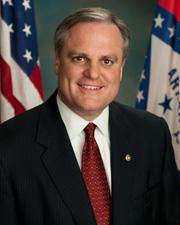 Sen. Mark L. Pryor (D-AR)
What it changes
36 changes to S. 3304 · 3 shown in the bill's text
We couldn't read part of this amendment. That part is shown as written below.
Change 1: Adds SEC. 3. PROPRIETARY TECHNOLOGY on page 48, between lines 3 and 4
Adds a sectionPrinted pageInserted: SEC. 3. PROPRIETARY TECHNOLOGY.
Inserted: No action taken by the Federal Communications Commission to implement this Act or any amendment made by this Act shall mandate the use or incorporation of proprietary technology.
Original wording
On page 48, between lines 3 and 4, insert the following:
Change 2: Replaces “persons” with “individuals”
[struck: persons][inserted: individuals]Original wording
On page 49, line 6, strike “persons” and insert “individuals”
Change 3: Rewrites page 56, line 22 through page 57, line 12
ReplacesPrinted pageRemoves page 56, line 22 through page 57, line 12 of the printed bill. See that page
Inserted: (a) Manufacturing.--
Inserted: (1) In general.--With respect to equipment manufactured after the effective date of the regulations established pursuant to subsection (e), and subject to those regulations, a manufacturer of equipment used for advanced communications services, including end user equipment, network equipment, and software, shall ensure that the equipment and software that such manufacturer offers for sale or otherwise distributes in interstate commerce shall be accessible to and usable by individuals with disabilities, unless the requirements of this subsection are not achievable.
Inserted: (2) Industry flexibility.--A manufacturer of equipment may satisfy the requirements of paragraph (1) with respect to such equipment by--
Inserted: (A) ensuring that the equipment that such manufacturer offers is accessible to and usable by individuals with disabilities without the use of third party applications, peripheral devices, software, hardware, or customer premises equipment; or
Inserted: (B) if such manufacturer chooses, using third party applications, peripheral devices, software, hardware, or customer premises equipment that is available to the consumer at nominal cost and that individuals with disabilities can access.
Inserted: (b) Service Providers.--
Inserted: (1) In general.--With respect to services provided after the effective date of the regulations established pursuant to subsection (e), and subject to those regulations, a provider of advanced communications services shall ensure that such services offered by such provider in or affecting interstate commerce are accessible to and usable by individuals with disabilities, unless the requirements of this subsection are not achievable.
Inserted: (2) Industry flexibility.--A provider of services may satisfy the requirements of paragraph (1) with respect to such services by--
Inserted: (A) ensuring that the services that such provider offers are accessible to and usable by individuals with disabilities without the use of third party applications, peripheral devices, software, hardware, or customer premises equipment; or
Inserted: (B) if such provider chooses, using third party applications, peripheral devices, software, hardware, or customer premises equipment that is available to the consumer at nominal cost and that individuals with disabilities can access.
Original wording
On page 56, beginning with line 22, strike through line 12 on page 57, and insert the following:
Change 4: Rewrites page 58, line 1 through page 59, line 7
ReplacesPrinted pageRemoves page 58, line 1 through page 59, line 7 of the printed bill. See that page
Inserted: (e) Regulations.--
Inserted: (1) In general.--Within one year after the date of enactment of the Twenty-First Century Communications and Video Accessibility Act of 2010, the Commission shall promulgate such regulations as are necessary to implement this section. In prescribing the regulations, the Commission shall--
Inserted: (A) include performance objectives to ensure the accessibility, usability, and compatibility of advanced communications services and the equipment used for advanced communications services by individuals with disabilities;
Inserted: (B) provide that advanced communications services, the equipment used for advanced communications services, and networks used to provide advanced communications services may not impair or impede the accessibility of information content when accessibility has been incorporated into that content for transmission through advanced communications services, equipment used for advanced communications services, or networks used to provide advanced communications services;
Inserted: (C) determine the obligations under this section of manufacturers, service providers, and providers of applications or services accessed over service provider networks; and
Inserted: (D) not mandate technical standards, except that the Commission may adopt technical standards as a safe harbor for such compliance if necessary to facilities the manufacturers' and service providers' compliance with sections (a) through (c).
Inserted: (2) Prospective guidelines.--The Commission shall issue prospective guidelines for a manufacturer or provider regarding the requirements of this section.
Original wording
On page 58, beginning with line 1, strike through line 7 on page 59, and insert the following:
Change 5: Rewrites page 60, lines 11–21
ReplacesPrinted pageRemoves page 60, lines 11–21 of the printed bill. See that page
Inserted: (h) Commission Flexibility.--
Inserted: (1) Waiver.--The Commission shall have the authority, on its own motion or in response to a petition by a manufacturer or provider of advanced communications services or any interested party, to waive the requirements of this section for any feature or function of equipment used to provide or access advanced communications services, or for any class of such equipment, for any provider of advanced communications services, or for any class of such services, that--
Inserted: (A) is capable of accessing an advanced communications service; and
Inserted: (B) is designed for multiple purposes, but is designed primarily for purposes other than using advanced communications services.
Inserted: (2) Small entity exemption.--The Commission may exempt small entities from the requirements of this section.
Inserted: (i) Customized Equipment or Services.--The provisions of this section shall not apply to customized equipment or services that are not offered directly to the public, or to such classes of users as to be effectively available directly to the public, regardless of the facilities used.
Inserted: (j) Rule of Construction.--This section shall not be construed to require a manufacturer of equipment used for advanced communications or a provider of advanced communications services to make every feature and function of every device or service accessible for every disability.
Original wording
On page 60, strike lines 11 through 21, and insert the following:
Change 6: Replaces “section 255 or 716,” with “section 255, 716, or 718,”
[struck: section 255 or 716,][inserted: section 255, 716, or 718,]Original wording
On page 61, line 4, strike “section 255 or 716,” and insert “section 255, 716, or 718,”.
Change 7: Replaces “section 255 or 716.” with “section 255, 716, or 718.”
[struck: section 255 or 716.][inserted: section 255, 716, or 718.]Original wording
On page 61, line 12, strike “section 255 or 716.” and insert “section 255, 716, or 718.”.
Change 8: Replaces “section 255 or 716.” with “section 255, 716, or 718.”
[struck: section 255 or 716.][inserted: section 255, 716, or 718.]Original wording
On page 61, line 16, strike “section 255 or 716.” and insert “section 255, 716, or 718.”.
Change 9: Replaces “section 255 or 716” with “section 255, 716, or 718”
[struck: section 255 or 716][inserted: section 255, 716, or 718]Original wording
On page 61, line 19, strike “section 255 or 716” and insert “section 255, 716, or 718”.
Change 10: Rewrites page 62, lines 7–14
ReplacesPrinted pageRemoves page 62, lines 7–14 of the printed bill. See that page
Inserted: (i) If the Commission determines that a violation has occurred, the Commission may, in the order issued under this subparagraph or in a subsequent order, direct the manufacturer or service provider to bring the service, or in the case of a manufacturer, the next generation of the equipment or device, into compliance with requirements of those sections within a reasonable time established by the Commission in its order.
Original wording
On page 62, strike lines 7 through 14 and insert the following:
Change 11: Inserts “Before issuing a final order under paragraph (3)(B)(i), the Commission shall provide such…” after the period
Inserted: Before issuing a final order under paragraph (3)(B)(i), the Commission shall provide such party a reasonable opportunity to comment on any proposed remedial action.
Original wording
On page 63, line 4, after the period insert “Before issuing a final order under paragraph (3)(B)(i), the Commission shall provide such party a reasonable opportunity to comment on any proposed remedial action.”.
Change 12: Replaces “sections 255 and 716” with “sections 255, 716, and 718”
[struck: sections 255 and 716][inserted: sections 255, 716, and 718]Original wording
On page 63, line 8, strike “sections 255 and 716” and insert “sections 255, 716, and 718”.
Change 13: Replaces “section 255 or 716.” with “section 255, 716, or 718.”
[struck: section 255 or 716.][inserted: section 255, 716, or 718.]Original wording
On page 64, line 21, strike “section 255 or 716.” and insert “section 255, 716, or 718.”.
Change 14: Replaces “section 255 and 716.” with “sections 255, 716, and 718.”
In S. 3304 · Reported to Senate
"(1) In general.--Every two years after the date of enactment of the Twenty-First Century Communications and Video Accessibility Act of 2010, the Commission shall submit to the Committee on Commerce, Science, and Transportation of the Senate and the Committee on Energy and Commerce of the House of Representatives a report that includes the following:
"(A) An assessment of the level of compliance with
[struck: section][inserted: sections] 255[struck: ][inserted: , 716, ]and[struck: 716][inserted: 718]."(B) An evaluation of the extent to which any accessibility barriers still exist with respect to new communications technologies.
Original wording
On page 65, line 20, strike “section 255 and 716.” and insert “sections 255, 716, and 718.”.
Change 15: Replaces “sections 255 and 716.” with “sections 255, 716, and 718.”
[struck: sections 255 and 716.][inserted: sections 255, 716, and 718.]Original wording
On page 68, line 15, strike “sections 255 and 716.” and insert “sections 255, 716, and 718.”.
Change 16: Strikes “sections 255 and 716.”
Struck: sections 255 and 716.
Original wording
On page 69, line 2, strike “sections 255 and 716.”
Change 17: Adds SEC. 718. INTERNET BROWSERS BUILT INTO TELEPHONES USED WITH PUBLIC MOBILE SERVICES on page 69, between lines 2 and 3
Adds a sectionPrinted pageInserted: SEC. 718. INTERNET BROWSERS BUILT INTO TELEPHONES USED WITH PUBLIC MOBILE SERVICES.
Inserted: (a) Accessibility.--If a manufacturer of a telephone used with public mobile services (as such term is defined in section 710(b)(4)(B)) includes an Internet browser in such telephone, or if a provider of mobile service arranges for the inclusion of a browser in telephones to sell to customers, the manufacturer or provider shall ensure that the functions of the included browser (including the ability to launch the browser) are accessible to and usable by individuals who are blind or have a visual impairment, unless doing so is not achievable, except that this subsection shall not impose any requirement on such manufacturer or provider--
Inserted: (1) to make accessible or usable any Internet browser other than a browser that such manufacturer or provider includes or arranges to include in the telephone; or
Inserted: (2) to make Internet content, applications, or services accessible or usable (other than enabling individuals with disabilities to use an included browser to access such content, applications, or services).
Inserted: (b) Industry Flexibility.--A manufacturer or provider may satisfy the requirements of subsection (a) with respect to such telephone or services by--
Inserted: (1) ensuring that the telephone or services that such manufacture or provider offers is accessible to and usable by individuals with disabilities without the use of third party applications, peripheral devices, software, hardware, or customer premises equipment; or
Inserted: (2) using third party applications, peripheral devices, software, hardware, or customer premises equipment that is available to the consumer at nominal cost and that individuals with disabilities can access.
Inserted: (b) Effective Date for Section 718.--Section 718 of the Communications Act of 1934, as added by subsection (a), shall take effect 3 years after the date of enactment of this Act.
Original wording
On page 69, between lines 2 and 3, insert the following:
Change 18: Replaces “(b)” with “(c)”
[struck: (b)][inserted: (c)]Original wording
On page 69, line 3, strike “(b)” and insert “(c)”.
Change 19: Replaces “255 or 716,” with “255, 716, or 718,”
[struck: 255 or 716,][inserted: 255, 716, or 718,]Original wording
On page 69, line 9, strike “255 or 716,” and insert “255, 716, or 718,”.
Change 20: Replaces “(c)” with “(d)”
[struck: (c)][inserted: (d)]Original wording
On page 69, line 18, strike “(c)” and insert “(d)”.
Change 21: Replaces “SEC. 718.” with “SEC. 719.”
In S. 3304 · Reported to Senate
Title VII of the Communications Act of 1934, as amended by section 104, is further amended by adding at the end the following:
"SEC.
[struck: 718][inserted: 719]. RELAY SERVICES FOR DEAF-BLIND INDIVIDUALS."(a) In general.--Within 6 months after the date of enactment of the Equal Access to 21st Century Communications Act, the Commission shall establish rules that define as eligible for relay service support those programs that are approved by the Commission for the distribution of specialized customer premises equipment designed to make telecommunications service, Internet access service, and advanced communications, including interexchange services and advanced telecommunications and information services, accessible by individuals who are deaf-blind.
Original wording
On page 70, line 5, strike “SEC. 718.” and insert “SEC. 719.”.
Change 22: Replaces “performance requirements” with “performance objectives”
[struck: performance requirements][inserted: performance objectives]Original wording
On page 79, line 20, strike “performance requirements” and insert “performance objectives”.
Change 23: Replaces “performance requirements” with “performance objectives”
[struck: performance requirements][inserted: performance objectives]Original wording
On page 79, line 23, strike “performance requirements” and insert “performance objectives”.
Change 24: Replaces “performance requirements” with “performance objectives”
[struck: performance requirements][inserted: performance objectives]Original wording
On page 81, line 12, strike “performance requirements” and insert “performance objectives”.
Change 25: Replaces “performance requirements” with “performance objectives”
[struck: performance requirements][inserted: performance objectives]Original wording
On page 81, line 15, strike “performance requirements” and insert “performance objectives”.
Change 26: Strikes page 87, line 12
StrikesPrinted pageRemoves page 87, line 12 of the printed bill. See that page
Original wording
On page 87, strike line 12
Change 27: Inserts “recon. granted in part and denied in part, (16 F.C.C.R. 1251 (2001)),” after “(2000)),”
In S. 3304 · Reported to Senate
"(f) Video Description.--
"(1) Reinstatement of regulations.--On the day that is 1 year after the date of enactment of the Twenty-First Century Communications and Video Accessibility Act of 2010, the Commission shall, after a rulemaking, reinstate its video description regulations contained in the Implementation of Video Description of Video Programming Report and Order (15 F.C.C.R. 15,230 (2000)), [inserted: recon. granted in part and denied in part, (16 F.C.C.R. 1251 (2001)), ]modified as provided in paragraph (2).
"(2) Modifications to reinstated regulations.--Such regulations shall be modified only as follows:
Original wording
On page 86, line 16, after “(2000)),” insert “recon. granted in part and denied in part, (16 F.C.C.R. 1251 (2001)),”.
Change 28: Replaces “that” with “insofar as such programming”
[struck: that][inserted: insofar as such programming]Original wording
On page 86, line 22, strike “that” and insert “insofar as such programming”.
Change 29: Inserts “that at least 50 hours per quarter of prime time programming that is not exempt under thi…” after “networks”
…networks[inserted: that at least 50 hours per quarter of prime time programming that is not exempt under this paragraph.]…
Original wording
On page 87, line 1, after “networks” insert “that at least 50 hours per quarter of prime time programming that is not exempt under this paragraph.”
Change 30: Replaces “(i)” with “(h)”
[struck: (i)][inserted: (h)]Original wording
On page 90, line 4, strike “(i)” and insert “(h)”.
Change 31: Inserts new text on page 92, line 24
InsertsPrinted pageInserted: (3) Alternate means of compliance.--An entity may meet the requirements of this section through alternate means than those prescribed by regulations pursuant to subsection (b), as revised pursuant to paragraph (2)(A) of this subsection, if the requirements of this section are met, as determined by the Commission.
Original wording
On page 92, after line 24, insert the following:
Change 32: Replaces “that--” with “that, if technically feasible--”
[struck: that--][inserted: that, if technically feasible--]Original wording
On page 93, line 23, strike “that--” and insert “that, if technically feasible--”.
Change 33: Inserts new text on page 98, between lines 7 and 8
InsertsPrinted pageInserted: (e) Alternate Means of Compliance.--An entity may meet the requirements of sections 303(u), 303(z), and 330(b) of the Communications Act of 1934 through alternate means than those prescribed by regulations pursuant to subsection (d) if the requirements of those sections are met, as determined by the Commission.
Original wording
On page 98, between lines 7 and 8, insert the following:
Change 34: Inserts new text on page 100, between lines 2 and 3
InsertsPrinted pageInserted: (c) Alternate Means of Compliance.--An entity may meet the requirements of section 303(aa) of the Communications Act of 1934 through alternate means than those prescribed by regulations pursuant to subsection (b) if the requirements of those sections are met, as determined by the Commission.
Original wording
On page 100, between lines 2 and 3, insert the following:
Change 35: Replaces “(c)” with “(d)”
[struck: (c)][inserted: (d)]Original wording
On page 100, line 3, strike “(c)” and insert “(d)”.
Change 36: Strikes “and”
Struck: and
Original wording
On page 92, line 19, strike “and”
Shown as written
On page 46, after line 16, after the item relating to section 2 insert the following:
On page 48, beginning in line 21, strike “sites and venues” and insert “websites and services”.
On page 59, beginning in line 16, strike “section,” and insert “section and section 718,”.
On page 63, beginning in line 11, strike “sections 255 and 716,” and insert “sections 255, 716, and 718,”.
the closing quotation marks, and the second period and insert “sections 255, 716, and 718.”.
-25 and on page 85, strike lines 1-24.
On page 88, between line 22 and 23, insert the following:
On page 92, line 24, strike the closing quotation marks and the second period.
and on page 92, after line 19, insert “(iii) shall clarify that, for the purposes of implementation, of this subsection, the terms “video programming distribution” and “video programming providers” include an entity that makes available directly to the end user video programming through a distribution method that uses Internet protocol; and”
On page 92, line 20, strike (iii) and insert (vii)”
On page 92, between line 19 and 20, insert “(v) and describe the responsibilities of video programming providers or distributors and video programming owners. (vi) shall establish a mechanism to make available to video programming providers and distributors information on video programming subject to the Act on an ongoing basis. (vii) shall consider that the video programming provider or distributor shall be deemed in compliance if such entity enables the rendering or pass through of closed captions and video description signals and make a good faith effort to identify video programming subject to the Act using the mechanism created in (vi).
Read automatically from the Congressional Record. Check the original before relying on it.
As printed
SA 4603. Mr. REID (for Mr. Pryor (for himself, Mr. Ensign, Mr. Kerry, and Mrs. Hutchison)) proposed an amendment to the bill S. 3304, to increase the access of persons with disabilities to modern communications, and for other purposes; as follows:
On page 46, after line 16, after the item relating to section 2 insert the following:
Sec. 3. Proprietary technology.
On page 48, between lines 3 and 4, insert the following:
SEC. 3. PROPRIETARY TECHNOLOGY.
No action taken by the Federal Communications Commission to implement this Act or any amendment made by this Act shall mandate the use or incorporation of proprietary technology.
On page 48, beginning in line 21, strike “sites and venues” and insert “websites and services”.
On page 49, line 6, strike “persons” and insert “individuals”
On page 56, beginning with line 22, strike through line 12 on page 57, and insert the following:
“(a) Manufacturing.--
“(1) In general.--With respect to equipment manufactured after the effective date of the regulations established pursuant to subsection (e), and subject to those regulations, a manufacturer of equipment used for advanced communications services, including end user equipment, network equipment, and software, shall ensure that the equipment and software that such manufacturer offers for sale or otherwise distributes in interstate commerce shall be accessible to and usable by individuals with disabilities, unless the requirements of this subsection are not achievable.
“(2) Industry flexibility.--A manufacturer of equipment may satisfy the requirements of paragraph (1) with respect to such equipment by--
“(A) ensuring that the equipment that such manufacturer offers is accessible to and usable by individuals with disabilities without the use of third party applications, peripheral devices, software, hardware, or customer premises equipment; or
“(B) if such manufacturer chooses, using third party applications, peripheral devices, software, hardware, or customer premises equipment that is available to the consumer at nominal cost and that individuals with disabilities can access.
“(b) Service Providers.--
“(1) In general.--With respect to services provided after the effective date of the regulations established pursuant to subsection (e), and subject to those regulations, a provider of advanced communications services shall ensure that such services offered by such provider in or affecting interstate commerce are accessible to and usable by individuals with disabilities, unless the requirements of this subsection are not achievable.
“(2) Industry flexibility.--A provider of services may satisfy the requirements of paragraph (1) with respect to such services by--
“(A) ensuring that the services that such provider offers are accessible to and usable by individuals with disabilities without the use of third party applications, peripheral devices, software, hardware, or customer premises equipment; or
“(B) if such provider chooses, using third party applications, peripheral devices, software, hardware, or customer premises equipment that is available to the consumer at nominal cost and that individuals with disabilities can access.
On page 58, beginning with line 1, strike through line 7 on page 59, and insert the following:
“(e) Regulations.--
“(1) In general.--Within one year after the date of enactment of the Twenty-First Century Communications and Video Accessibility Act of 2010, the Commission shall promulgate such regulations as are necessary to implement this section. In prescribing the regulations, the Commission shall--
“(A) include performance objectives to ensure the accessibility, usability, and compatibility of advanced communications services and the equipment used for advanced communications services by individuals with disabilities;
“(B) provide that advanced communications services, the equipment used for advanced communications services, and networks used to provide advanced communications services may not impair or impede the accessibility of information content when accessibility has been incorporated into that content for transmission through advanced communications services, equipment used for advanced communications services, or networks used to provide advanced communications services;
“(C) determine the obligations under this section of manufacturers, service providers, and providers of applications or services accessed over service provider networks; and
“(D) not mandate technical standards, except that the Commission may adopt technical standards as a safe harbor for such compliance if necessary to facilities the manufacturers' and service providers' compliance with sections (a) through (c).
“(2) Prospective guidelines.--The Commission shall issue prospective guidelines for a manufacturer or provider regarding the requirements of this section.
On page 59, beginning in line 16, strike “section,” and insert “section and section 718,”.
On page 60, strike lines 11 through 21, and insert the following:
“(h) Commission Flexibility.--
“(1) Waiver.--The Commission shall have the authority, on its own motion or in response to a petition by a manufacturer or provider of advanced communications services or any interested party, to waive the requirements of this section for any feature or function of equipment used to provide or access advanced communications services, or for any class of such equipment, for any provider of advanced communications services, or for any class of such services, that--
“(A) is capable of accessing an advanced communications service; and
“(B) is designed for multiple purposes, but is designed primarily for purposes other than using advanced communications services.
“(2) Small entity exemption.--The Commission may exempt small entities from the requirements of this section.
“(i) Customized Equipment or Services.--The provisions of this section shall not apply to customized equipment or services that are not offered directly to the public, or to such classes of users as to be effectively available directly to the public, regardless of the facilities used.
“(j) Rule of Construction.--This section shall not be construed to require a manufacturer of equipment used for advanced communications or a provider of advanced communications services to make every feature and function of every device or service accessible for every disability.
On page 61, line 4, strike “section 255 or 716,” and insert “section 255, 716, or 718,”.
On page 61, line 12, strike “section 255 or 716.” and insert “section 255, 716, or 718.”.
On page 61, line 16, strike “section 255 or 716.” and insert “section 255, 716, or 718.”.
On page 61, line 19, strike “section 255 or 716” and insert “section 255, 716, or 718”.
On page 62, strike lines 7 through 14 and insert the following:
(i) If the Commission determines that a violation has occurred, the Commission may, in the order issued under this subparagraph or in a subsequent order, direct the manufacturer or service provider to bring the service, or in the case of a manufacturer, the next generation of the equipment or device, into compliance with requirements of those sections within a reasonable time established by the Commission in its order.
On page 63, line 4, after the period insert “Before issuing a final order under paragraph (3)(B)(i), the Commission shall provide such party a reasonable opportunity to comment on any proposed remedial action.”.
On page 63, line 8, strike “sections 255 and 716” and insert “sections 255, 716, and 718”.
On page 63, beginning in line 11, strike “sections 255 and 716,” and insert “sections 255, 716, and 718,”.
On page 64, line 21, strike “section 255 or 716.” and insert “section 255, 716, or 718.”.
On page 65, line 20, strike “section 255 and 716.” and insert “sections 255, 716, and 718.”.
On page 68, line 15, strike “sections 255 and 716.” and insert “sections 255, 716, and 718.”.
On page 69, line 2, strike “sections 255 and 716.”, the closing quotation marks, and the second period and insert “sections 255, 716, and 718.”.
On page 69, between lines 2 and 3, insert the following:
“SEC. 718. INTERNET BROWSERS BUILT INTO TELEPHONES USED WITH PUBLIC MOBILE SERVICES.
“(a) Accessibility.--If a manufacturer of a telephone used with public mobile services (as such term is defined in section 710(b)(4)(B)) includes an Internet browser in such telephone, or if a provider of mobile service arranges for the inclusion of a browser in telephones to sell to customers, the manufacturer or provider shall ensure that the functions of the included browser (including the ability to launch the browser) are accessible to and usable by individuals who are blind or have a visual impairment, unless doing so is not achievable, except that this subsection shall not impose any requirement on such manufacturer or provider--
“(1) to make accessible or usable any Internet browser other than a browser that such manufacturer or provider includes or arranges to include in the telephone; or
“(2) to make Internet content, applications, or services accessible or usable (other than enabling individuals with disabilities to use an included browser to access such content, applications, or services).
“(b) Industry Flexibility.--A manufacturer or provider may satisfy the requirements of subsection (a) with respect to such telephone or services by--
“(1) ensuring that the telephone or services that such manufacture or provider offers is accessible to and usable by individuals with disabilities without the use of third party applications, peripheral devices, software, hardware, or customer premises equipment; or
“(2) using third party applications, peripheral devices, software, hardware, or customer premises equipment that is available to the consumer at nominal cost and that individuals with disabilities can access.”.
(b) Effective Date for Section 718.--Section 718 of the Communications Act of 1934, as added by subsection (a), shall take effect 3 years after the date of enactment of this Act.
On page 69, line 3, strike “(b)” and insert “(c)”.
On page 69, line 9, strike “255 or 716,” and insert “255, 716, or 718,”.
On page 69, line 18, strike “(c)” and insert “(d)”.
On page 70, line 5, strike “SEC. 718.” and insert “SEC. 719.”.
On page 79, line 20, strike “performance requirements” and insert “performance objectives”.
On page 79, line 23, strike “performance requirements” and insert “performance objectives”.
On page 81, line 12, strike “performance requirements” and insert “performance objectives”.
On page 81, line 15, strike “performance requirements” and insert “performance objectives”.
On page 87, strike line 12-25 and on page 85, strike lines 1-24.
On page 86, line 16, after “(2000)),” insert “recon. granted in part and denied in part, (16 F.C.C.R. 1251 (2001)),”.
On page 86, line 22, strike “that” and insert “insofar as such programming”.
On page 87, line 1, after “networks” insert “that at least 50 hours per quarter of prime time programming that is not exempt under this paragraph.”
On page 88, between line 22 and 23, insert the following:
“(4) Continuing commission authority.--
“(A) In general.--The Commission may not issue additional regulations unless the Commission determines, at least 2 years after completing the reports required in paragraph (3), that the need for and benefits of providing video description for video programming, insofar as such programming is transmitted for display on television, are greater than the technical and economic costs of providing such additional programming.
“(B) Limitation.--If the Commission makes the determination under subparagraph (A) and issues additional regulations, the Commission may not increase, in total, the hour requirement for additional described programming by more than 75 percent of the requirement in the regulations reinstated under paragraph (1).
“(C) Application to designated market areas.--
“(i) In general.--After the Commission completes the reports on video description required in paragraph (3), the Commission shall phase in the video description regulations for the top 60 designated market areas, except that the Commission may grant waivers to entities in specific designated market areas where it deems appropriate.
“(ii) Phase-in deadline.--The phase-in described in clause (i) shall be completed not later than 6 years after the date of enactment of the Twenty-First Century Communications and Video Accessibility Act of 2010.
“(iii) Report.--Nine years after the date of enactment of the Twenty-First Century Communications and Video Accessibility Act of 2010, the Commission shall submit to the Committee on Energy of the House of Representatives and the Committee on Commerce, Science, and Transportation of the Senate a report assessing--
“(I) the types of described video programming that is available to consumers;
“(II) consumer use of such programming;
“(III) the costs to program owners, providers, and distributors of creating such programming;
“(IV) the potential costs to program owners, providers, and distributors in designated market areas outside of the top 60 of creating such programming;
“(IV) the benefits to consumers of such programming;
“(V) the amount of such programming currently available; and
“(VI) the need for additional described programming in designated market areas outside the top 60.
(iv) Additional market areas.--Ten years after the date of enactment of the Twenty-First Century Communications and Video Accessibility Act of 2010, the Commission shall have the authority, based upon the findings, conclusions, and recommendations contained in the report under clause (iii), to phase in the video description regulations for up to an additional 10 designated market areas each year--
“(I) if the costs of implementing the video description regulations to program owners, providers, and distributors in those additional markets are reasonable, as determined by the Commission; and
“(II) except that the Commission may grant waivers to entities in specific designated market areas where it deems appropriate.
Beginning with line 15 on page 89, strike through line 3 on page 90.
On page 90, line 4, strike “(i)” and insert “(h)”.
On page 92, line 24, strike the closing quotation marks and the second period.
On page 92, after line 24, insert the following:
“(3) Alternate means of compliance.--An entity may meet the requirements of this section through alternate means than those prescribed by regulations pursuant to subsection (b), as revised pursuant to paragraph (2)(A) of this subsection, if the requirements of this section are met, as determined by the Commission.”.
On page 93, line 23, strike “that--” and insert “that, if technically feasible--”.
On page 98, between lines 7 and 8, insert the following:
(e) Alternate Means of Compliance.--An entity may meet the requirements of sections 303(u), 303(z), and 330(b) of the Communications Act of 1934 through alternate means than those prescribed by regulations pursuant to subsection (d) if the requirements of those sections are met, as determined by the Commission.
On page 100, between lines 2 and 3, insert the following:
(c) Alternate Means of Compliance.--An entity may meet the requirements of section 303(aa) of the Communications Act of 1934 through alternate means than those prescribed by regulations pursuant to subsection (b) if the requirements of those sections are met, as determined by the Commission.
On page 100, line 3, strike “(c)” and insert “(d)”.
On page 92, line 19, strike “and” and on page 92, after line 19, insert “(iii) shall clarify that, for the purposes of implementation, of this subsection, the terms “video programming distribution” and “video programming providers” include an entity that makes available directly to the end user video programming through a distribution method that uses Internet protocol; and”
On page 92, line 20, strike (iii) and insert (vii)”
On page 92, between line 19 and 20, insert “(v) and describe the responsibilities of video programming providers or distributors and video programming owners. (vi) shall establish a mechanism to make available to video programming providers and distributors information on video programming subject to the Act on an ongoing basis. (vii) shall consider that the video programming provider or distributor shall be deemed in compliance if such entity enables the rendering or pass through of closed captions and video description signals and make a good faith effort to identify video programming subject to the Act using the mechanism created in (vi).
Legislative Activity
Stay on top of the latest movement without scrolling through every action
Senate amendment submitted
August 5, 2010
View full timeline
Senate amendment submitted
August 5, 2010
Senate amendment agreed to: Amendment SA 4603 agreed to in Senate by Unanimous Consent.
August 5, 2010
Senate amendment proposed (on the floor): Amendment SA 4603 proposed by Senator Reid for Senator Pryor.(consideration: CR S6989)
August 5, 2010
Amendment SA 4603 proposed by Senator Reid for Senator Pryor. (consideration: CR S6989) To modify the bill as reported.
August 5, 2010
Amendment SA 4603 agreed to in Senate by Unanimous Consent.
August 5, 2010