S.Amdt. 4808Senate111th Congress (2009-2011)2nd degree
S.Amdt. 4808
Sponsored by 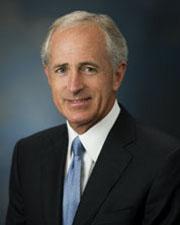 Sen. Bob Corker (R-TN)
Sen. Bob Corker (R-TN)Submitted December 14, 2010
Legislative Activity
Stay on top of the latest movement without scrolling through every action
Floor
Latest Action
Senate amendment submitted
December 14, 2010
Text
Submitted
SA 4808. Mr. CORKER (for himself, Mrs. McCaskill, Mr. Alexander, Mr.
Burr, Mr. Chambliss, Mr. Cornyn, Mr. Isakson, Mr. LeMieux, and Mr.
McCain) submitted an amendment intended to be proposed to amendment SA
4753 proposed by Mr. Reid (for himself and Mr. McConnell) to the bill
H.R. 4853, to amend the Internal Revenue Code of 1986 to extend the
funding and expenditure authority of the Airport and Airway Trust Fund,
to amend title 49, United States Code, to extend authorizations for the
airport improvement program, and for other purposes;

[[Page S9263]]

which was ordered to lie on the table; as follows:

On page _, between lines _ and _, insert the following:

TITLE __--CAP ACT OF 2010

SEC. _01. SHORT TITLE.

This title may be cited as the ``Commitment to American
Prosperity Act of 2010'' or the ``CAP Act of 2010''.

SEC. _02. FINDINGS.

Congress finds the following:
(1) This Act is authorized by the United States
Constitution under clause 1 of section 8 of article I,
relating to the power of the Congress to tax and spend.
(2) Total Federal outlays have averaged 20.4 percent of
gross domestic product over the past 50 years.
(3) Total Federal outlays in fiscal year 2010 were 23.8
percent of gross domestic product.
(4) Total Federal outlays in fiscal year 2020 will be 25.9
percent of gross domestic product.
(5) It is appropriate and necessary to put total federal
outlays under a limitation, as a percent of gross domestic
product, such that a downward glide path ultimately brings
spending in line with historical norms.

SEC. _03. OUTLAYS EXCEEDING THE GDP OUTLAY LIMIT.

(a) Definitions.--Section 250(c)(4) of the Balanced Budget
and Emergency Deficit Control Act of 1985 is amended by
striking paragraph (4), redesignating the succeeding
paragraphs accordingly, and adding the following paragraphs:
``(19) The term `GDP', for any fiscal year, means the gross
domestic product during such fiscal year consistent with
Department of Commerce definitions.
``(20)(A) The term `emergency requirement' means any
provision that provides new budget authority and resulting
outlays for a situation that poses a threat to life,
property, or national security and is--
``(i) sudden, quickly coming into being, and not building
up over time;
``(ii) an urgent, pressing, and compelling need requiring
immediate action;
``(iii) unforeseen, unpredictable, and unanticipated; and
``(iv) not permanent, temporary in nature.
``(B) An emergency that is part of an aggregate level of
anticipated emergencies, particularly when normally estimated
in advance, is not unforeseen.
``(21) The term `target fiscal year' means the fiscal year
in which a GDP outlay limit is in effect under section
253A.''.
(b) Caps.--The Balanced Budget and Emergency Deficit
Control Act of 1985 is amended by inserting after section 253
the following:

``SEC. 253A. ENFORCING GDP OUTLAY LIMITS.

``(a) Enforcing GDP Outlay Limits.--In this section, the
term `GDP outlay limit' means an amount, as estimated by OMB,
equal to--
``(1) the average GDP for the first 3 of the 4 fiscal years
preceding the target fiscal year (fiscal year 2009, fiscal
year 2010 and fiscal year 2011 for target year fiscal year
2013, and so on); multiplied by
``(2)(A) 25 percent for fiscal year 2013; and
``(B) for fiscal years 2014 through 2022, 25 percent minus
0.168 percent accumulating for each fiscal year (25 percent
minus .168 percent in fiscal year 2014, 25 percent minus .336
percent in fiscal year 2015, and so on).
``(b) GDP Outlay Limit and Outlays.--
``(1) Determining the gdp outlay limit.--The Office of
Management and Budget shall estimate the GDP outlay limit for
the target fiscal year at the outset of the previous fiscal
year, on April 30, on August 20, and 15 days after the
conclusion of the fiscal year. CBO shall provide advisory
reports calculating the GDP outlay limit at identical times.
``(2) Total federal outlays.--In this section, total
Federal outlays shall--
``(A) include all on-budget and off-budget outlays; and
``(B) exclude surplus-funded redemptions of the public
debt.
``(c) Sequestration.--
``(1) In general.--
``(A) Excess spending.--Not later than 45 calendar days
after the beginning of a fiscal year, OMB shall conduct a
sequestration to eliminate the excess outlay amount.
``(B) Definition.--For purposes of this subsection, the
term `excess outlay amount' means the amount by which total
Federal outlays for a fiscal year exceed the GDP outlay limit
as adjusted pursuant to paragraph (2).
``(2) Preview report.--CBO shall submit an advisory
sequestration preview report as described in section
254(c)(4) on August 10 of each year. OMB shall produce an
sequestration preview report on August 20 as described in
section 254(c)(4). Fifteen days after the fiscal year begins,
OMB shall issue an updated sequestration report as described
in section 254(e). Thirty days later, the OMB should issue
its final sequestration report as described in section
254(f)(3). It shall be accompanied by a Presidential order
detailing the uniform spending reductions. The reductions
should generally follow the process set forth in section 253
and 254, except as provided in this section.
``(3) Congressional action.--If the August 20 OMB report
projects a sequestration, the Senate and House Budget
Committees may report a resolution directing their committees
to change the existing law to achieve the goals outlined in
the August 20 report. If the Committees report their
respective resolutions, a reconciliation process shall be
triggered in accordance with section 258C.
``(4) Reducing nonexempt budgetary resources by a uniform
percentage.--OMB shall calculate the uniform percentage by
which the budgetary resources of nonexempt direct and
discretionary spending programs are to be sequestered such
that the outlay savings resulting from that sequestration, as
calculated under this subsection, to eliminate excess
outlays.
``(d) Exceptions.--Total Federal outlays may exceed the GDP
outlay limit if during the fiscal year the excess amount is
being paid to reduce the public debt or the public debt is
zero.
``(e) No Exempt Programs.--Section 255 shall not apply to
this section, except that payments for net interest (budget
function 900) shall be exempt.
``(f) Look Back.--If, after June 30, a bill resulting in
outlays for the fiscal year in progress is enacted that
causes excess outlays, the excess outlays for the next fiscal
year shall be increased by the amount or amounts of that
breach.''.
(c) Effective Date.--This section shall apply beginning in
fiscal year 2013 and beyond.

SEC. _05. ENFORCEMENT PROCEDURES UNDER THE CONGRESSIONAL
BUDGET ACT OF 1974.

(a) Enforcement.--Title III of the Congressional Budget Act
of 1974 is amended by adding after section 315 the following:

``SEC. 316. ENFORCEMENT PROCEDURES.

``(a) GDP Outlay Limits.--It shall not be in order in the
House of Representatives or the Senate to consider any bill,
joint resolution, amendment, or conference report that
includes any provision that would cause the most recently
reported, current GDP outlay limits set forth in section 253A
of the Balanced Budget and Emergency Deficit Control Act of
1985 to be exceeded.
``(b) Waiver or Suspension.--
``(1) In the senate.--The provisions of this section may be
waived or suspended in the Senate only by the affirmative
vote of two-thirds of the Members, duly chosen and sworn.
``(2) In the house.--The provisions of this section may be
waived or suspended in the House of Representatives only by a
rule or order proposing only to waive such provisions by an
affirmative vote of two-thirds of the Members, duly chosen
and sworn.
``(c) Point of Order Protection.--In the House, it shall
not be in order to consider a rule or order that waives the
application of paragraph (2) of subsection (b).
``(d) Motion to Suspend.--It shall not be in order for the
Speaker to entertain a motion to suspend the application of
this section under clause 1 of rule XV.''.
(b) Table of Contents.--The table of contents in section
1(b) of the Congressional Budget and Impoundment Control Act
of 1974 is amended by inserting after the item relating to
section 315 the following:

``Sec. 316. Enforcement procedures.''.
______