To invest in innovation through research and development, to improve competitiveness of the United States, and for other purposes.
What it does: Replaces the bill's text with a full substitute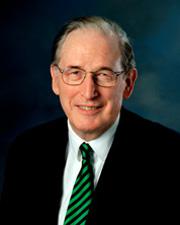 Sen. John D. Rockefeller IV (D-WV)
What it changes
1 change to H.R. 5116 · shown in the bill's text
Replaces the bill's text with a full substitute
Replaces the full textEverything after the enacting clauseIn H.R. 5116 · Referred in Senate
SECTION 1. SHORT TITLE; TABLE OF CONTENTS.
(a) Short Title.--
[struck: This][inserted: this] Act may be cited as the "America COMPETES Reauthorization Act of 2010"[inserted: or the "America Creating Opportunities to Meaningfully Promote Excellence in Technology, Education, and Science Reauthorization Act of 2010"].(b) Table of Contents.--The table of contents for this Act is as follows:
Sec. 1. Short title; table of contents.
Struck: TITLE I--SCIENCE AND TECHNOLOGY POLICY
Struck: Subtitle A--National Nanotechnology Initiative Amendments
Struck: Sec. 101. Short title.
Struck: Sec. 102. National nanotechnology program amendments.
Show 4 more struck paragraphsShow less
Struck: Sec. 103. Societal dimensions of nanotechnology.
Struck: Sec. 104. Technology transfer.
Struck: Sec. 105. Research in areas of national importance.
Struck: Sec. 106. Nanomanufacturing research.
Sec.
[struck: 107][inserted: 2]. Definitions.Struck: Subtitle B--Networking and Information Technology Research and Development
Struck: Sec. 111. Short title.
Struck: Sec. 112. Program planning and coordination.
Struck: Sec. 113. Large-scale research in areas of national importance.
Show 57 more struck paragraphsShow less
Struck: Sec. 114. Cyber-physical systems and information management.
Struck: Sec. 115. National Coordination Office.
Struck: Sec. 116. Improving networking and information technology education.
Struck: Sec. 117. Conforming and technical amendments.
Struck: Subtitle C--Other OSTP Provisions
Struck: Sec. 121. Federal scientific collections.
Struck: Sec. 122. Coordination of manufacturing research and development.
Struck: Sec. 123. Interagency public access committee.
Struck: Sec. 124. Fulfilling the potential of women in academic science and engineering.
Struck: Sec. 125. National Competitiveness and Innovation Strategy.
Struck: TITLE II--NATIONAL SCIENCE FOUNDATION
Struck: Sec. 201. Short title.
Struck: Subtitle A--General Provisions
Struck: Sec. 211. Definitions.
Struck: Sec. 212. Authorization of appropriations.
Struck: Sec. 213. National Science Board administrative amendments.
Struck: Sec. 214. Broader impacts review criterion.
Struck: Sec. 215. National Center for Science and Engineering Statistics.
Struck: Sec. 216. Collection of data on demographics of faculty.
Struck: Subtitle B--Research and Innovation
Struck: Sec. 221. Support for potentially transformative research.
Struck: Sec. 222. Facilitating interdisciplinary collaborations for national needs.
Struck: Sec. 223. National Science Foundation manufacturing research and education.
Struck: Sec. 224. Strengthening institutional research partnerships.
Struck: Sec. 225. National Science Board report on mid-scale instrumentation.
Struck: Sec. 226. Sense of Congress on overall support for research infrastructure at the Foundation.
Struck: Sec. 227. Partnerships for innovation.
Struck: Sec. 228. Prize awards.
Struck: Sec. 229. Collaboration in planning for stewardship of large-scale facilities.
Struck: Sec. 230. Green chemistry basic research.
Struck: Subtitle C--STEM Education and Workforce Training
Struck: Sec. 241. Graduate student support.
Struck: Sec. 242. Postdoctoral fellowship in STEM education research.
Struck: Sec. 243. Robert Noyce teacher scholarship program.
Struck: Sec. 244. Institutions serving persons with disabilities.
Struck: Sec. 245. Institutional integration.
Struck: Sec. 246. Postdoctoral research fellowships.
Struck: Sec. 247. Broadening participation training and outreach.
Struck: Sec. 248. Transforming undergraduate education in STEM.
Struck: Sec. 249. Twenty-first century graduate education.
Struck: Sec. 250. Undergraduate broadening participation program.
Struck: Sec. 251. Grand challenges in education research.
Struck: Sec. 252. Research experiences for undergraduates.
Struck: Sec. 253. Laboratory science pilot program.
Struck: Sec. 254. STEM industry internship programs.
Struck: Sec. 255. Tribal colleges and universities program.
Struck: Sec. 256. Cyber-enabled learning for national challenges.
Struck: Sec. 257. Sense of Congress.
Struck: TITLE III--STEM EDUCATION
Struck: Sec. 301. Coordination of Federal STEM education.
Struck: Sec. 302. Advisory committee on STEM education.
Struck: Sec. 303. STEM education at the Department of Energy.
Struck: Sec. 304. Green energy education.
Struck: Sec. 305. Sense of Congress.
Struck: Sec. 306. Sense of Congress.
Struck: Sec. 307. National Academy of Sciences report on strengthening the capacity of 2-year institutions of higher education to provide STEM opportunities.
Struck: Sec. 308. Encouraging Federal scientists and engineers to participate in STEM education.
Inserted: Sec. 3. Budgetary impact statement.
Inserted: TITLE I--OFFICE OF SCIENCE AND TECHNOLOGY POLICY
Inserted: Sec. 101. Coordination of Federal STEM education.
Inserted: Sec. 102. Coordination of advanced manufacturing research and development.
Inserted: Sec. 103. Interagency public access committee.
Inserted: Sec. 104. Federal scientific collections.
Inserted: Sec. 105. Prize competitions.
Inserted: TITLE II--NATIONAL AERONAUTICS AND SPACE ADMINISTRATION
Inserted: Sec. 201. NASA's contribution to innovation and competitiveness.
Inserted: Sec. 202. NASA's contribution to education.
Inserted: Sec. 203. Assessment of impediments to space science and engineering workforce development for minority and under-represented groups at NASA.
Inserted: Sec. 204. International Space Station's contribution to national competitiveness enhancement.
Show 6 more inserted paragraphsShow less
Inserted: Sec. 205. Study of potential commercial orbital platform.
Inserted: Sec. 206. Definitions.
Inserted: TITLE III--NATIONAL OCEANIC AND ATMOSPHERIC ADMINISTRATION
Inserted: Sec. 301. Oceanic and atmospheric research and development program.
Inserted: Sec. 302. Oceanic and atmospheric science education programs.
Inserted: Sec. 303. Workforce study.
TITLE IV--NATIONAL INSTITUTE OF STANDARDS AND TECHNOLOGY
Sec. 401. Short title.
Sec. 402. Authorization of appropriations.
Sec. 403. Under Secretary of Commerce for Standards and Technology.
Struck: Sec. 404. Reorganization of NIST laboratories.
Struck: Sec. 405. Federal Government standards and conformity assessment coordination.
Sec.
[struck: 406][inserted: 404]. Manufacturing[struck: extension partnership][inserted: Extension Partnership].Sec.
[struck: 407][inserted: 405]. Emergency communication and tracking technologies research initiative.Struck: Sec. 408. TIP Advisory Board.
Struck: Sec. 409. Underrepresented minorities.
Struck: Sec. 410. Cyber security standards and guidelines.
Struck: Sec. 411. Nanomaterial initiative.
Show 353 more struck paragraphsShow less
Struck: Sec. 412. Disaster resilient buildings and infrastructure.
Struck: Sec. 413. Report on the use of modeling and simulation.
Struck: Sec. 414. Green manufacturing and construction.
Struck: Sec. 415. Manufacturing research.
Struck: Sec. 416. Definitions.
Struck: TITLE V--INNOVATION
Struck: Sec. 501. Office of Innovation and Entrepreneurship.
Struck: Sec. 502. Federal loan guarantees for innovative technologies in manufacturing.
Struck: Sec. 503. Regional innovation program.
Struck: Sec. 504. Clean Energy Consortium.
Struck: TITLE VI--DEPARTMENT OF ENERGY
Struck: Subtitle A--Office of Science
Struck: Sec. 601. Short title.
Struck: Sec. 602. Definitions.
Struck: Sec. 603. Mission of the Office of Science.
Struck: Sec. 604. Basic Energy Sciences Program.
Struck: Sec. 605. Biological and Environmental Research Program.
Struck: Sec. 606. Advanced Scientific Computing Research Program.
Struck: Sec. 607. Fusion energy research program.
Struck: Sec. 608. High Energy Physics Program.
Struck: Sec. 609. Nuclear Physics Program.
Struck: Sec. 610. Science Laboratories Infrastructure Program.
Struck: Sec. 611. Authorization of appropriations.
Struck: Subtitle B--Advanced Research Projects Agency-Energy
Struck: Sec. 621. Short title.
Struck: Sec. 622. ARPA-E amendments.
Struck: Subtitle C--Energy Innovation Hubs
Struck: Sec. 631. Short title.
Struck: Sec. 632. Energy Innovation Hubs.
Struck: Subtitle D--Cooperative Research and Development Fund
Struck: Sec. 641. Short title.
Struck: Sec. 642. Cooperative research and development fund.
Struck: Subtitle E--Technology Transfer Database
Struck: Sec. 651. Technology transfer database.
Struck: TITLE VII--MISCELLANEOUS
Struck: Sec. 701. Sense of Congress.
Struck: Sec. 702. Persons with disabilities.
Struck: Sec. 703. Veterans and service members.
Struck: Sec. 704. Budgetary effects.
Struck: Sec. 705. Limitation.
Struck: Sec. 706. Prohibition on lobbying.
Struck: Sec. 707. Information requests by labor organizations.
Struck: Sec. 708. Limitation.
Struck: Sec. 709. No salaries for viewing pornography.
Struck: Sec. 710. Ineligibility for awards or grants.
Struck: TITLE I--SCIENCE AND TECHNOLOGY POLICY
Struck: Subtitle A--National Nanotechnology Initiative Amendments
Struck: SEC. 101. SHORT TITLE.
Struck: This subtitle may be cited as the "National Nanotechnology Initiative Amendments Act of 2010".
Struck: SEC. 102. NATIONAL NANOTECHNOLOGY PROGRAM AMENDMENTS.
Struck: The 21st Century Nanotechnology Research and Development Act (15 U.S.C. 7501 et seq.) is amended--
Struck: (1) by striking section 2(c)(4) and inserting the following new paragraph:
Struck: "(4) develop, within 12 months after the date of enactment of the National Nanotechnology Initiative Amendments Act of 2010, and update every 3 years thereafter, a strategic plan to guide the activities described under subsection (b) that specifies near-term and long-term objectives for the Program, the anticipated time frame for achieving the near-term objectives, and the metrics to be used for assessing progress toward the objectives, and that describes--
Struck: "(A) how the Program will move results out of the laboratory and into applications for the benefit of society, including through cooperation and collaborations with nanotechnology research, development, and technology transition initiatives supported by the States;
Struck: "(B) how the Program will encourage and support interdisciplinary research and development in nanotechnology; and
Struck: "(C) proposed research in areas of national importance in accordance with the requirements of section 105 of the National Nanotechnology Initiative Amendments Act of 2010;";
Struck: (2) in section 2--
Struck: (A) in subsection (d)--
Struck: (i) by redesignating paragraphs (1) through (5) as paragraphs (2) through (6), respectively; and
Struck: (ii) by inserting the following new paragraph before paragraph (2), as so redesignated by clause (i) of this subparagraph:
Struck: "(1) the Program budget, for the previous fiscal year, for each agency that participates in the Program, including a breakout of spending for the development and acquisition of research facilities and instrumentation, for each program component area, and for all activities pursuant to subsection (b)(10);"; and
Struck: (B) by inserting at the end the following new subsection:
Struck: "(e) Standards Setting.--The agencies participating in the Program shall support the activities of committees involved in the development of standards for nanotechnology and may reimburse the travel costs of scientists and engineers who participate in activities of such committees.";
Struck: (3) by striking section 3(b) and inserting the following new subsection:
Struck: "(b) Funding.--(1) The operation of the National Nanotechnology Coordination Office shall be supported by funds from each agency participating in the Program. The portion of such Office's total budget provided by each agency for each fiscal year shall be in the same proportion as the agency's share of the total budget for the Program for the previous fiscal year, as specified in the report required under section 2(d)(1).
Struck: "(2) The annual report under section 2(d) shall include--
Struck: "(A) a description of the funding required by the National Nanotechnology Coordination Office to perform the functions specified under subsection (a) for the next fiscal year by category of activity, including the funding required to carry out the requirements of section 2(b)(10)(D), subsection (d) of this section, and section 5;
Struck: "(B) a description of the funding required by such Office to perform the functions specified under subsection (a) for the current fiscal year by category of activity, including the funding required to carry out the requirements of subsection (d); and
Struck: "(C) the amount of funding provided for such Office for the current fiscal year by each agency participating in the Program.";
Struck: (4) by inserting at the end of section 3 the following new subsection:
Struck: "(d) Public Information.--(1) The National Nanotechnology Coordination Office shall develop and maintain a database accessible by the public of projects funded under the Environmental, Health, and Safety, the Education and Societal Dimensions, and the Nanomanufacturing program component areas, or any successor program component areas, including a description of each project, its source of funding by agency, and its funding history. For the Environmental, Health, and Safety program component area, or any successor program component area, projects shall be grouped by major objective as defined by the research plan required under section 103(b) of the National Nanotechnology Initiative Amendments Act of 2010. For the Education and Societal Dimensions program component area, or any successor program component area, the projects shall be grouped in subcategories of--
Struck: "(A) education in formal settings;
Struck: "(B) education in informal settings;
Struck: "(C) public outreach; and
Struck: "(D) ethical, legal, and other societal issues.
Struck: "(2) The National Nanotechnology Coordination Office shall develop, maintain, and publicize information on nanotechnology facilities supported under the Program, and may include information on nanotechnology facilities supported by the States, that are accessible for use by individuals from academic institutions and from industry. The information shall include at a minimum the terms and conditions for the use of each facility, a description of the capabilities of the instruments and equipment available for use at the facility, and a description of the technical support available to assist users of the facility.";
Struck: (5) in section 4(a)--
Struck: (A) by striking "or designate";
Struck: (B) by inserting "as a distinct entity" after "Advisory Panel"; and
Struck: (C) by inserting at the end "The Advisory Panel shall form a subpanel with membership having specific qualifications tailored to enable it to carry out the requirements of subsection (c)(7).";
Struck: (6) in section 4(b)--
Struck: (A) by striking "or designated" and "or designating"; and
Struck: (B) by adding at the end the following: "At least one member of the Advisory Panel shall be an individual employed by and representing a minority-serving institution.";
Struck: (7) by amending section 5 to read as follows:
Struck: "SEC. 5. TRIENNIAL EXTERNAL REVIEW OF THE NATIONAL NANOTECHNOLOGY PROGRAM.
Struck: "(a) In General.--The Director of the National Nanotechnology Coordination Office shall enter into an arrangement with the National Research Council of the National Academy of Sciences to conduct a triennial review of the Program. The Director shall ensure that the arrangement with the National Research Council is concluded in order to allow sufficient time for the reporting requirements of subsection (b) to be satisfied. Each triennial review shall include an evaluation of the--
Struck: "(1) research priorities and technical content of the Program, including whether the allocation of funding among program component areas, as designated according to section 2(c)(2), is appropriate;
Struck: "(2) effectiveness of the Program's management and coordination across agencies and disciplines, including an assessment of the effectiveness of the National Nanotechnology Coordination Office;
Struck: "(3) Program's scientific and technological accomplishments and its success in transferring technology to the private sector; and
Struck: "(4) adequacy of the Program's activities addressing ethical, legal, environmental, and other appropriate societal concerns, including human health concerns.
Struck: "(b) Evaluation To Be Transmitted to Congress.--The National Research Council shall document the results of each triennial review carried out in accordance with subsection (a) in a report that includes any recommendations for ways to improve the Program's management and coordination processes and for changes to the Program's objectives, funding priorities, and technical content. Each report shall be submitted to the Director of the National Nanotechnology Coordination Office, who shall transmit it to the Advisory Panel, the Committee on Commerce, Science, and Transportation of the Senate, and the Committee on Science and Technology of the House of Representatives not later than September 30 of every third year, with the first report due September 30, 2010.
Struck: "(c) Funding.--Of the amounts provided in accordance with section 3(b)(1), the following amounts shall be available to carry out this section:
Struck: "(1) $500,000 for fiscal year 2010.
Struck: "(2) $500,000 for fiscal year 2011.
Struck: "(3) $500,000 for fiscal year 2012."; and
Struck: (8) in section 10--
Struck: (A) by amending paragraph (2) to read as follows:
Struck: "(2) Nanotechnology.--The term 'nanotechnology' means the science and technology that will enable one to understand, measure, manipulate, and manufacture at the nanoscale, aimed at creating materials, devices, and systems with fundamentally new properties or functions."; and
Struck: (B) by adding at the end the following new paragraph:
Struck: "(7) Nanoscale.--The term 'nanoscale' means one or more dimensions of between approximately 1 and 100 nanometers.".
Struck: SEC. 103. SOCIETAL DIMENSIONS OF NANOTECHNOLOGY.
Struck: (a) Coordinator for Societal Dimensions of Nanotechnology.--The Director of the Office of Science and Technology Policy shall designate an associate director of the Office of Science and Technology Policy as the Coordinator for Societal Dimensions of Nanotechnology. The Coordinator shall be responsible for oversight of the coordination, planning, and budget prioritization of activities required by section 2(b)(10) of the 21st Century Nanotechnology Research and Development Act (15 U.S.C. 7501(b)(10)). The Coordinator shall, with the assistance of appropriate senior officials of the agencies funding activities within the Environmental, Health, and Safety and the Education and Societal Dimensions program component areas of the Program, or any successor program component areas, ensure that the requirements of such section 2(b)(10) are satisfied. The responsibilities of the Coordinator shall include--
Struck: (1) ensuring that a research plan for the environmental, health, and safety research activities required under subsection (b) is developed, updated, and implemented and that the plan is responsive to the recommendations of the subpanel of the Advisory Panel established under section 4(a) of the 21st Century Nanotechnology Research and Development Act (15 U.S.C. 7503(a)), as amended by this subtitle;
Struck: (2) encouraging and monitoring the efforts of the agencies participating in the Program to allocate the level of resources and management attention necessary to ensure that the ethical, legal, environmental, and other appropriate societal concerns related to nanotechnology, including human health concerns, are addressed under the Program, including the implementation of the research plan described in subsection (b); and
Struck: (3) encouraging the agencies required to develop the research plan under subsection (b) to identify, assess, and implement suitable mechanisms for the establishment of public- private partnerships for support of environmental, health, and safety research.
Struck: (b) Research Plan.--
Struck: (1) In general.--The Coordinator for Societal Dimensions of Nanotechnology shall convene and chair a panel comprised of representatives from the agencies funding research activities under the Environmental, Health, and Safety program component area of the Program, or any successor program component area, and from such other agencies as the Coordinator considers necessary to develop, periodically update, and coordinate the implementation of a research plan for this program component area. In developing and updating the plan, the panel convened by the Coordinator shall solicit and be responsive to recommendations and advice from--
Struck: (A) the subpanel of the Advisory Panel established under section 4(a) of the 21st Century Nanotechnology Research and Development Act (15 U.S.C. 7503(a)), as amended by this subtitle; and
Struck: (B) the agencies responsible for environmental, health, and safety regulations associated with the production, use, and disposal of nanoscale materials and products.
Struck: (2) Development of standards.--The plan required under paragraph (1) shall include a description of how the Program will help to ensure the development of--
Struck: (A) standards related to nomenclature associated with engineered nanoscale materials;
Struck: (B) engineered nanoscale standard reference materials for environmental, health, and safety testing; and
Struck: (C) standards related to methods and procedures for detecting, measuring, monitoring, sampling, and testing engineered nanoscale materials for environmental, health, and safety impacts.
Struck: (3) Components of plan.--The plan required under paragraph (1) shall, with respect to activities described in paragraphs (1) and (2)--
Struck: (A) specify near-term research objectives and long- term research objectives;
Struck: (B) specify milestones associated with each near- term objective and the estimated time and resources required to reach each milestone;
Struck: (C) with respect to subparagraphs (A) and (B), describe the role of each agency carrying out or sponsoring research in order to meet the objectives specified under subparagraph (A) and to achieve the milestones specified under subparagraph (B);
Struck: (D) specify the funding allocated to each major objective of the plan and the source of funding by agency for the current fiscal year; and
Struck: (E) estimate the funding required for each major objective of the plan and the source of funding by agency for the following 3 fiscal years.
Struck: (4) Transmittal to congress.--The plan required under paragraph (1) shall be submitted not later than 60 days after the date of enactment of this Act to the Committee on Commerce, Science, and Transportation of the Senate and the Committee on Science and Technology of the House of Representatives.
Struck: (5) Updating and appending to report.--The plan required under paragraph (1) shall be updated annually and appended to the report required under section 2(d) of the 21st Century Nanotechnology Research and Development Act (15 U.S.C. 7501(d)).
Struck: (c) Nanotechnology Partnerships.--
Struck: (1) Establishment.--As part of the program authorized by section 9 of the National Science Foundation Authorization Act of 2002, the Director of the National Science Foundation shall provide 1 or more grants to establish partnerships as defined by subsection (a)(2) of that section, except that each such partnership shall include 1 or more businesses engaged in the production of nanoscale materials, products, or devices. Partnerships established in accordance with this subsection shall be designated as "Nanotechnology Education Partnerships".
Struck: (2) Purpose.--Nanotechnology Education Partnerships shall be designed to recruit and help prepare secondary school students to pursue postsecondary level courses of instruction in nanotechnology. At a minimum, grants shall be used to support--
Struck: (A) professional development activities to enable secondary school teachers to use curricular materials incorporating nanotechnology and to inform teachers about career possibilities for students in nanotechnology;
Struck: (B) enrichment programs for students, including access to nanotechnology facilities and equipment at partner institutions, to increase their understanding of nanoscale science and technology and to inform them about career possibilities in nanotechnology as scientists, engineers, and technicians; and
Struck: (C) identification of appropriate nanotechnology educational materials and incorporation of nanotechnology into the curriculum for secondary school students at one or more organizations participating in a Partnership.
Struck: (3) Selection.--Grants under this subsection shall be awarded in accordance with subsection (b) of such section 9, except that paragraph (3)(B) of that subsection shall not apply.
Struck: (d) Undergraduate Education Programs.--
Struck: (1) Activities supported.--As part of the activities included under the Education and Societal Dimensions program component area, or any successor program component area, the Program shall support efforts to introduce nanoscale science, engineering, and technology into undergraduate science and engineering education through a variety of interdisciplinary approaches. Activities supported may include--
Struck: (A) development of courses of instruction or modules to existing courses;
Struck: (B) faculty professional development; and
Struck: (C) acquisition of equipment and instrumentation suitable for undergraduate education and research in nanotechnology.
Struck: (2) Course, curriculum, and laboratory improvement authorization.--There are authorized to be appropriated to the Director of the National Science Foundation to carry out activities described in paragraph (1) through the Course, Curriculum, and Laboratory Improvement program from amounts authorized under section 7002(c)(2)(B) of the America COMPETES Act, $5,000,000 for fiscal year 2010.
Struck: (3) Advanced technology education authorization.--There are authorized to be appropriated to the Director of the National Science Foundation to carry out activities described in paragraph (1) through the Advanced Technology Education program from amounts authorized under section 7002(c)(2)(B) of the America COMPETES Act, $5,000,000 for fiscal year 2010.
Struck: (e) Interagency Working Group.--The National Science and Technology Council shall establish under the Nanoscale Science, Engineering, and Technology Subcommittee an Education Working Group to coordinate, prioritize, and plan the educational activities supported under the Program.
Struck: (f) Societal Dimensions in Nanotechnology Education Activities.-- Activities supported under the Education and Societal Dimensions program component area, or any successor program component area, that involve informal, precollege, or undergraduate nanotechnology education shall include education regarding the environmental, health and safety, and other societal aspects of nanotechnology.
Struck: (g) Remote Access to Nanotechnology Facilities.--(1) Agencies supporting nanotechnology research facilities as part of the Program shall require the entities that operate such facilities to allow access via the Internet, and support the costs associated with the provision of such access, by secondary school students and teachers, to instruments and equipment within such facilities for educational purposes. The agencies may waive this requirement for cases when particular facilities would be inappropriate for educational purposes or the costs for providing such access would be prohibitive.
Struck: (2) The agencies identified in paragraph (1) shall require the entities that operate such nanotechnology research facilities to establish and publish procedures, guidelines, and conditions for the submission and approval of applications for the use of the facilities for the purpose identified in paragraph (1) and shall authorize personnel who operate the facilities to provide necessary technical support to students and teachers.
Struck: SEC. 104. TECHNOLOGY TRANSFER.
Struck: (a) Prototyping.--
Struck: (1) Access to facilities.--In accordance with section 2(b)(7) of 21st Century Nanotechnology Research and Development Act (15 U.S.C. 7501(b)(7)), the agencies supporting nanotechnology research facilities as part of the Program shall provide access to such facilities to companies for the purpose of assisting the companies in the development of prototypes of nanoscale products, devices, or processes (or products, devices, or processes enabled by nanotechnology) for determining proof of concept. The agencies shall publicize the availability of these facilities and encourage their use by companies as provided for in this section.
Struck: (2) Procedures.--The agencies identified in paragraph (1)--
Struck: (A) shall establish and publish procedures, guidelines, and conditions for the submission and approval of applications for use of nanotechnology facilities;
Struck: (B) shall publish descriptions of the capabilities of facilities available for use under this subsection, including the availability of technical support; and
Struck: (C) may waive recovery, require full recovery, or require partial recovery of the costs associated with use of the facilities for projects under this subsection.
Struck: (3) Selection and criteria.--In cases when less than full cost recovery is required pursuant to paragraph (2)(C), projects provided access to nanotechnology facilities in accordance with this subsection shall be selected through a competitive, merit-based process, and the criteria for the selection of such projects shall include at a minimum--
Struck: (A) the readiness of the project for technology demonstration;
Struck: (B) evidence of a commitment by the applicant for further development of the project to full commercialization if the proof of concept is established by the prototype; and
Struck: (C) evidence of the potential for further funding from private sector sources following the successful demonstration of proof of concept. The agencies may give special consideration in selecting projects to applications that are relevant to important national needs or requirements.
Struck: (b) Use of Existing Technology Transfer Programs.--
Struck: (1) Participating agencies.--Each agency participating in the Program shall--
Struck: (A) encourage the submission of applications for support of nanotechnology related projects to the Small Business Innovation Research Program and the Small Business Technology Transfer Program administered by such agencies; and (B) through the National Nanotechnology Coordination Office and within 6 months after the date of enactment of this Act, submit to the Committee on Commerce, Science, and Transportation of the Senate and the Committee on Science and Technology of the House of Representatives--
Struck: (i) the plan described in section 2(c)(7) of the 21st Century Nanotechnology Research and Development Act (15 U.S.C. 7501(c)(7)); and
Struck: (ii) a report specifying, if the agency administers a Small Business Innovation Research Program and a Small Business Technology Transfer Program--
Struck: (I) the number of proposals received for nanotechnology related projects during the current fiscal year and the previous 2 fiscal years;
Struck: (II) the number of such proposals funded in each year;
Struck: (III) the total number of nanotechnology related projects funded and the amount of funding provided for fiscal year 2004 through fiscal year 2008; and
Struck: (IV) a description of the projects identified in accordance with subclause (III) which received private sector funding beyond the period of phase II support.
Struck: (2) National institute of standards and technology.--The Director of the National Institute of Standards and Technology in carrying out the requirements of section 28 of the National Institute of Standards and Technology Act (15 U.S.C. 278n) shall--
Struck: (A) in regard to subsection (d) of that section, encourage the submission of proposals for support of nanotechnology related projects; and
Struck: (B) in regard to subsection (g) of that section, include a description of how the requirement of subparagraph (A) of this paragraph is being met, the number of proposals for nanotechnology related projects received, the number of such proposals funded, the total number of such projects funded since the beginning of the Technology Innovation Program, and the outcomes of such funded projects in terms of the metrics developed in accordance with such subsection (g).
Struck: (3) TIP advisory board.--The TIP Advisory Board established under section 28(k) of the National Institute of Standards and Technology Act (15 U.S.C. 278n(k)), in carrying out its responsibilities under subsection (k)(3), shall provide the Director of the National Institute of Standards and Technology with--
Struck: (A) advice on how to accomplish the requirement of paragraph (2)(A) of this subsection; and
Struck: (B) an assessment of the adequacy of the allocation of resources for nanotechnology related projects supported under the Technology Innovation Program.
Struck: (c) Industry Liaison Groups.--An objective of the Program shall be to establish industry liaison groups for all industry sectors that would benefit from applications of nanotechnology. The Nanomanufacturing, Industry Liaison, and Innovation Working Group of the National Science and Technology Council shall actively pursue establishing such liaison groups.
Struck: (d) Coordination With State Initiatives.--Section 2(b)(5) of the 21st Century Nanotechnology Research and Development Act (15 U.S.C. 7501(b)(5)) is amended to read as follows:
Struck: "(5) ensuring United States global leadership in the development and application of nanotechnology, including through coordination and leveraging Federal investments with nanotechnology research, development, and technology transition initiatives supported by the States;".
Struck: SEC. 105. RESEARCH IN AREAS OF NATIONAL IMPORTANCE.
Struck: (a) In General.--The Program shall include support for nanotechnology research and development activities directed toward application areas that have the potential for significant contributions to national economic competitiveness and for other significant societal benefits. The activities supported shall be designed to advance the development of research discoveries by demonstrating technical solutions to important problems in such areas as nano-electronics, energy efficiency, health care, and water remediation and purification. The Advisory Panel shall make recommendations to the Program for candidate research and development areas for support under this section.
Struck: (b) Characteristics.--
Struck: (1) In general.--Research and development activities under this section shall--
Struck: (A) include projects selected on the basis of applications for support through a competitive, merit- based process;
Struck: (B) involve collaborations among researchers in academic institutions and industry, and may involve nonprofit research institutions and Federal laboratories, as appropriate;
Struck: (C) when possible, leverage Federal investments through collaboration with related State initiatives; and
Struck: (D) include a plan for fostering the transfer of research discoveries and the results of technology demonstration activities to industry for commercial development.
Struck: (2) Procedures.--Determination of the requirements for applications under this subsection, review and selection of applications for support, and subsequent funding of projects shall be carried out by a collaboration of no fewer than 2 agencies participating in the Program. In selecting applications for support, the agencies shall give special consideration to projects that include cost sharing from non- Federal sources.
Struck: (3) Interdisciplinary research centers.--Research and development activities under this section may be supported through interdisciplinary nanotechnology research centers, as authorized by section 2(b)(4) of the 21st Century Nanotechnology Research and Development Act (15 U.S.C. 7501(b)(4)), that are organized to investigate basic research questions and carry out technology demonstration activities in areas such as those identified in subsection (a).
Struck: (c) Report.--Reports required under section 2(d) of the 21st Century Nanotechnology Research and Development Act (15 U.S.C. 7501(d)) shall include a description of research and development areas supported in accordance with this section, including the same budget information as is required for program component areas under paragraphs (1) and (2) of such section 2(d).
Struck: SEC. 106. NANOMANUFACTURING RESEARCH.
Struck: (a) Research Areas.--The Nanomanufacturing program component area, or any successor program component area, shall include research on--
Struck: (1) development of instrumentation and tools required for the rapid characterization of nanoscale materials and for monitoring of nanoscale manufacturing processes; and
Struck: (2) approaches and techniques for scaling the synthesis of new nanoscale materials to achieve industrial-level production rates.
Struck: (b) Green Nanotechnology.--Interdisciplinary research centers supported under the Program in accordance with section 2(b)(4) of the 21st Century Nanotechnology Research and Development Act (15 U.S.C. 7501(b)(4)) that are focused on nanomanufacturing research and centers established under the authority of section 105(b)(3) of this subtitle shall include as part of the activities of such centers--
Struck: (1) research on methods and approaches to develop environmentally benign nanoscale products and nanoscale manufacturing processes, taking into consideration relevant findings and results of research supported under the Environmental, Health, and Safety program component area, or any successor program component area;
Struck: (2) fostering the transfer of the results of such research to industry; and
Struck: (3) providing for the education of scientists and engineers through interdisciplinary studies in the principles and techniques for the design and development of environmentally benign nanoscale products and processes.
Struck: (c) Review of Nanomanufacturing Research and Research Facilities.--
Struck: (1) Public meeting.--Not later than 12 months after the date of enactment of this Act, the National Nanotechnology Coordination Office shall sponsor a public meeting, including representation from a wide range of industries engaged in nanoscale manufacturing, to--
Struck: (A) obtain the views of participants at the meeting on--
Struck: (i) the relevance and value of the research being carried out under the Nanomanufacturing program component area of the Program, or any successor program component area; and
Struck: (ii) whether the capabilities of nanotechnology research facilities supported under the Program are adequate--
Struck: (I) to meet current and near-term requirements for the fabrication and characterization of nanoscale devices and systems; and
Struck: (II) to provide access to and use of instrumentation and equipment at the facilities, by means of networking technology, to individuals who are at locations remote from the facilities; and
Struck: (B) receive any recommendations on ways to strengthen the research portfolio supported under the Nanomanufacturing program component area, or any successor program component area, and on improving the capabilities of nanotechnology research facilities supported under the Program. Companies participating in industry liaison groups shall be invited to participate in the meeting. The Coordination Office shall prepare a report documenting the findings and recommendations resulting from the meeting.
Struck: (2) Advisory panel review.--The Advisory Panel shall review the Nanomanufacturing program component area of the Program, or any successor program component area, and the capabilities of nanotechnology research facilities supported under the Program to assess--
Struck: (A) whether the funding for the Nanomanufacturing program component area, or any successor program component area, is adequate and receiving appropriate priority within the overall resources available for the Program;
Struck: (B) the relevance of the research being supported to the identified needs and requirements of industry;
Struck: (C) whether the capabilities of nanotechnology research facilities supported under the Program are adequate--
Struck: (i) to meet current and near-term requirements for the fabrication and characterization of nanoscale devices and systems; and
Struck: (ii) to provide access to and use of instrumentation and equipment at the facilities, by means of networking technology, to individuals who are at locations remote from the facilities; and
Struck: (D) the level of funding that would be needed to support--
Struck: (i) the acquisition of instrumentation, equipment, and networking technology sufficient to provide the capabilities at nanotechnology research facilities described in subparagraph (C); and
Struck: (ii) the operation and maintenance of such facilities. In carrying out its assessment, the Advisory Panel shall take into consideration the findings and recommendations from the report required under paragraph (1).
Struck: (3) Report.--Not later than 18 months after the date of enactment of this Act, the Advisory Panel shall submit to the Committee on Commerce, Science, and Transportation of the Senate and the Committee on Science and Technology of the House of Representatives a report on its assessment required under paragraph (2), along with any recommendations and a copy of the report prepared in accordance with paragraph (1).
Struck: SEC. 107. DEFINITIONS.
Struck: In this subtitle, terms that are defined in section 10 of the 21st Century Nanotechnology Research and Development Act (15 U.S.C. 7509) have the meaning given those terms in that section.
Struck: Subtitle B--Networking and Information Technology Research and Development
Struck: SEC. 111. SHORT TITLE.
Struck: This subtitle may be cited as the "Networking and Information Technology Research and Development Act of 2010".
Struck: SEC. 112. PROGRAM PLANNING AND COORDINATION.
Struck: (a) Periodic Reviews.--Section 101 of the High-Performance Computing Act of 1991 (15 U.S.C. 5511) is amended by adding at the end the following new subsection:
Struck: "(d) Periodic Reviews.--The agencies identified in subsection (a)(3)(B) shall--
Struck: "(1) periodically assess the contents and funding levels of the Program Component Areas and restructure the Program when warranted, taking into consideration any relevant recommendations of the advisory committee established under subsection (b); and
Struck: "(2) ensure that the Program includes large-scale, long- term, interdisciplinary research and development activities, including activities described in section 104.".
Struck: (b) Development of Strategic Plan.--Section 101 of such Act (15 U.S.C. 5511) is amended further by adding after subsection (d), as added by subsection (a) of this section, the following new subsection:
Struck: "(e) Strategic Plan.--
Struck: "(1) In General.--The agencies identified in subsection (a)(3)(B), working through the National Science and Technology Council and with the assistance of the National Coordination Office established under section 102, shall develop, within 12 months after the date of enactment of the Networking and Information Technology Research and Development Act of 2010, and update every 3 years thereafter, a 5-year strategic plan to guide the activities described under subsection (a)(1).
Struck: "(2) Contents.--The strategic plan shall specify near-term and long-term objectives for the Program, the anticipated time frame for achieving the near-term objectives, the metrics to be used for assessing progress toward the objectives, and how the Program will--
Struck: "(A) foster the transfer of research and development results into new technologies and applications for the benefit of society, including through cooperation and collaborations with networking and information technology research, development, and technology transition initiatives supported by the States;
Struck: "(B) encourage and support mechanisms for interdisciplinary research and development in networking and information technology, including through collaborations across agencies, across Program Component Areas, with industry, with Federal laboratories (as defined in section 4 of the Stevenson- Wydler Technology Innovation Act of 1980 (15 U.S.C. 3703)), and with international organizations;
Struck: "(C) address long-term challenges of national importance for which solutions require large-scale, long-term, interdisciplinary research and development;
Struck: "(D) place emphasis on innovative and high-risk projects having the potential for substantial societal returns on the research investment;
Struck: "(E) strengthen all levels of networking and information technology education and training programs to ensure an adequate, well-trained workforce; and
Struck: "(F) attract more women and underrepresented minorities to pursue postsecondary degrees in networking and information technology.
Struck: "(3) National Research Infrastructure.--The strategic plan developed in accordance with paragraph (1) shall be accompanied by milestones and roadmaps for establishing and maintaining the national research infrastructure required to support the Program, including the roadmap required by subsection (a)(2)(E).
Struck: "(4) Recommendations.--The entities involved in developing the strategic plan under paragraph (1) shall take into consideration the recommendations-- "(A) of the advisory committee established under subsection (b); and "(B) of the stakeholders whose input was solicited by the National Coordination Office, as required under section 102(b)(3).
Struck: "(5) Report to Congress.--The Director of the National Coordination Office shall transmit the strategic plan required under paragraph (1) to the advisory committee, the Committee on Commerce, Science, and Transportation of the Senate, and the Committee on Science and Technology of the House of Representatives.".
Struck: (c) Additional Responsibilities of Director.--Section 101(a)(2) of such Act (15 U.S.C. 5511(a)(2)) is amended--
Struck: (1) by redesignating subparagraphs (E) and (F) as subparagraphs (F) and (G), respectively; and
Struck: (2) by inserting after subparagraph (D) the following new subparagraph:
Struck: "(E) encourage and monitor the efforts of the agencies participating in the Program to allocate the level of resources and management attention necessary to ensure that the strategic plan under subsection (e) is developed and executed effectively and that the objectives of the Program are met;".
Struck: (d) Advisory Committee.--Section 101(b)(1) of such Act (15 U.S.C. 5511(b)(1)) is amended by inserting after "an advisory committee on high-performance computing," the following: "in which the co-chairs shall be members of the President's Council of Advisors on Science and Technology and with the remainder of the committee".
Struck: (e) Report.--Section 101(a)(3) of such Act (15 U.S.C. 5511(a)(3)) is amended--
Struck: (1) in subparagraph (C)--
Struck: (A) by striking "is submitted," and inserting "is submitted, the levels for the previous fiscal year,"; and
Struck: (B) by striking "each Program Component Area;" and inserting "each Program Component Area and research area supported in accordance with section 104;";
Struck: (2) in subparagraph (D)--
Struck: (A) by striking "each Program Component Area," and inserting "each Program Component Area and research area supported in accordance with section 104,";
Struck: (B) by striking "is submitted," and inserting "is submitted, the levels for the previous fiscal year,"; and
Struck: (C) by striking "and" after the semicolon;
Struck: (3) by redesignating subparagraph (E) as subparagraph (G); and
Struck: (4) by inserting after subparagraph (D) the following new subparagraphs:
Struck: "(E) include a description of how the objectives for each Program Component Area, and the objectives for activities that involve multiple Program Component Areas, relate to the objectives of the Program identified in the strategic plan required under subsection (e);
Struck: "(F) include--
Struck: "(i) a description of the funding required by the National Coordination Office to perform the functions specified under section 102(b) for the next fiscal year by category of activity;
Struck: "(ii) a description of the funding required by such Office to perform the functions specified under section 102(b) for the current fiscal year by category of activity; and
Struck: "(iii) the amount of funding provided for such Office for the current fiscal year by each agency participating in the Program; and".
Struck: (f) Definition.--Section 4 of such Act (15 U.S.C. 5503) is amended--
Struck: (1) by redesignating paragraphs (1) through (7) as paragraphs (2) through (8), respectively;
Struck: (2) by inserting before paragraph (2), as so redesignated, the following new paragraph:
Struck: "(1) 'cyber-physical systems' means physical or engineered systems whose networking and information technology functions and physical elements are deeply integrated and are actively connected to the physical world through sensors, actuators, or other means to perform monitoring and control functions;";
Struck: (3) in paragraph (4), as so redesignated--
Struck: (A) by striking "high-performance computing" and inserting "networking and information technology"; and
Struck: (B) by striking "supercomputer" and inserting "high-end computing";
Struck: (4) in paragraph (6), as so redesignated, by striking "network referred to as" and all that follows through the semicolon and inserting "network, including advanced computer networks of Federal agencies and departments;"; and
Struck: (5) in paragraph (7), as so redesignated, by striking "National High-Performance Computing Program" and inserting "networking and information technology research and development program".
Struck: SEC. 113. LARGE-SCALE RESEARCH IN AREAS OF NATIONAL IMPORTANCE.
Struck: Title I of such Act (15 U.S.C. 5511) is amended by adding at the end the following new section:
Struck: "SEC. 104. LARGE-SCALE RESEARCH IN AREAS OF NATIONAL IMPORTANCE.
Struck: "(a) In General.--The Program shall encourage agencies identified in section 101(a)(3)(B) to support large-scale, long-term, interdisciplinary research and development activities in networking and information technology directed toward application areas that have the potential for significant contributions to national economic competitiveness and for other significant societal benefits. Such activities, ranging from basic research to the demonstration of technical solutions, shall be designed to advance the development of research discoveries. The advisory committee established under section 101(b) shall make recommendations to the Program for candidate research and development areas for support under this section.
Struck: "(b) Characteristics.--
Struck: "(1) In general.--Research and development activities under this section shall--
Struck: "(A) include projects selected on the basis of applications for support through a competitive, merit- based process;
Struck: "(B) involve collaborations among researchers in institutions of higher education and industry, and may involve nonprofit research institutions and Federal laboratories, as appropriate;
Struck: "(C) when possible, leverage Federal investments through collaboration with related State initiatives; and
Struck: "(D) include a plan for fostering the transfer of research discoveries and the results of technology demonstration activities, including from institutions of higher education and Federal laboratories, to industry for commercial development.
Struck: "(2) Cost-sharing.--In selecting applications for support, the agencies shall give special consideration to projects that include cost sharing from non-Federal sources.
Struck: "(3) Agency collaboration.--If 2 or more agencies identified in section 101(a)(3)(B), or other appropriate agencies, are working on large-scale research and development activities in the same area of national importance, then such agencies shall strive to collaborate through joint solicitation and selection of applications for support and subsequent funding of projects.
Struck: "(4) Interdisciplinary research centers.--Research and development activities under this section may be supported through interdisciplinary research centers that are organized to investigate basic research questions and carry out technology demonstration activities in areas described in subsection (a). Research may be carried out through existing interdisciplinary centers, including those authorized under section 7024(b)(2) of the America COMPETES Act (Public Law 110- 69; 42 U.S.C. 1862o-10).".
Struck: SEC. 114. CYBER-PHYSICAL SYSTEMS AND INFORMATION MANAGEMENT.
Struck: (a) Additional Program Characteristics.--Section 101(a)(1) of such Act (15 U.S.C. 5511(a)(1)) is amended--
Struck: (1) in subparagraph (H), by striking "and" after the semicolon;
Struck: (2) in subparagraph (I), by striking the period at the end and inserting a semicolon; and
Struck: (3) by adding at the end the following new subparagraphs:
Struck: "(J) provide for increased understanding of the scientific principles of cyber-physical systems and improve the methods available for the design, development, and operation of cyber-physical systems that are characterized by high reliability, safety, and security; and
Struck: "(K) provide for research and development on human-computer interactions, visualization, and information management.".
Struck: (b) Task Force.--Title I of such Act (15 U.S.C. 5511) is amended further by adding after section 104, as added by section 113 of this Act, the following new section:
Struck: "SEC. 105. UNIVERSITY/INDUSTRY TASK FORCE.
Struck: "(a) Establishment.--Not later than 180 days after the date of enactment of the Networking and Information Technology Research and Development Act of 2010, the Director of the National Coordination Office established under section 102 shall convene a task force to explore mechanisms for carrying out collaborative research and development activities for cyber-physical systems, including the related technologies required to enable these systems, through a consortium or other appropriate entity with participants from institutions of higher education, Federal laboratories, and industry.
Struck: "(b) Functions.--The task force shall--
Struck: "(1) develop options for a collaborative model and an organizational structure for such entity under which the joint research and development activities could be planned, managed, and conducted effectively, including mechanisms for the allocation of resources among the participants in such entity for support of such activities;
Struck: "(2) propose a process for developing a research and development agenda for such entity, including objectives and milestones;
Struck: "(3) define the roles and responsibilities for the participants from institutions of higher education, Federal laboratories, and industry in such entity;
Struck: "(4) propose guidelines for assigning intellectual property rights and for the transfer of research results to the private sector; and
Struck: "(5) make recommendations for how such entity could be funded from Federal, State, and non-governmental sources.
Struck: "(c) Composition.--In establishing the task force under subsection (a), the Director of the National Coordination Office shall appoint an equal number of individuals from institutions of higher education and from industry with knowledge and expertise in cyber-physical systems, of which 2 may be selected from Federal laboratories.
Struck: "(d) Report.--Not later than 1 year after the date of enactment of the Networking and Information Technology Research and Development Act of 2010, the Director of the National Coordination Office shall transmit to the Committee on Commerce, Science, and Transportation of the Senate and the Committee on Science and Technology of the House of Representatives a report describing the findings and recommendations of the task force.".
Struck: SEC. 115. NATIONAL COORDINATION OFFICE.
Struck: Section 102 of such Act (15 U.S.C. 5512) is amended to read as follows:
Struck: "SEC. 102. NATIONAL COORDINATION OFFICE.
Struck: "(a) Establishment.--The Director shall establish a National Coordination Office with a Director and full-time staff.
Struck: "(b) Functions.--The National Coordination Office shall--
Struck: "(1) provide technical and administrative support to--
Struck: "(A) the agencies participating in planning and implementing the Program, including such support as needed in the development of the strategic plan under section 101(e); and
Struck: "(B) the advisory committee established under section 101(b);
Struck: "(2) serve as the primary point of contact on Federal networking and information technology activities for government organizations, academia, industry, professional societies, State computing and networking technology programs, interested citizen groups, and others to exchange technical and programmatic information;
Struck: "(3) solicit input and recommendations from a wide range of stakeholders during the development of each strategic plan required under section 101(e) through the convening of at least 1 workshop with invitees from academia, industry, Federal laboratories, and other relevant organizations and institutions;
Struck: "(4) conduct public outreach, including the dissemination of findings and recommendations of the advisory committee, as appropriate; and
Struck: "(5) promote access to and early application of the technologies, innovations, and expertise derived from Program activities to agency missions and systems across the Federal Government and to United States industry.
Struck: "(c) Source of Funding.--
Struck: "(1) In general.--The operation of the National Coordination Office shall be supported by funds from each agency participating in the Program.
Struck: "(2) Specifications.--The portion of the total budget of such Office that is provided by each agency for each fiscal year shall be in the same proportion as each such agency's share of the total budget for the Program for the previous fiscal year, as specified in the report required under section 101(a)(3).".
Struck: SEC. 116. IMPROVING NETWORKING AND INFORMATION TECHNOLOGY EDUCATION.
Struck: Section 201(a) of such Act (15 U.S.C. 5521(a)) is amended--
Struck: (1) by redesignating paragraphs (2) through (4) as paragraphs (3) through (5), respectively; and
Struck: (2) by inserting after paragraph (1) the following new paragraph:
Struck: "(2) the National Science Foundation shall use its existing programs, in collaboration with other agencies, as appropriate, to improve the teaching and learning of networking and information technology at all levels of education and to increase participation in networking and information technology fields, including by women and underrepresented minorities;".
Struck: SEC. 117. CONFORMING AND TECHNICAL AMENDMENTS.
Struck: (a) Section 3.--Section 3 of such Act (15 U.S.C. 5502) is amended--
Struck: (1) in the matter preceding paragraph (1), by striking "high-performance computing" and inserting "networking and information technology";
Struck: (2) in paragraph (1), in the matter preceding subparagraph (A), by striking "high-performance computing" and inserting "networking and information technology";
Struck: (3) in subparagraphs (A) and (F) of paragraph (1), by striking "high-performance computing" each place it appears and inserting "networking and information technology"; and
Struck: (4) in paragraph (2)--
Struck: (A) by striking "high-performance computing and" and inserting "networking and information technology and"; and
Struck: (B) by striking "high-performance computing network" and inserting "networking and information technology".
Struck: (b) Title I.--The heading of title I of such Act (15 U.S.C. 5511) is amended by striking "HIGH-PERFORMANCE COMPUTING" and inserting "NETWORKING AND INFORMATION TECHNOLOGY".
Struck: (c) Section 101.--Section 101 of such Act (15 U.S.C. 5511) is amended--
Struck: (1) in the section heading, by striking "high-performance computing" and inserting "networking and information technology research and development";
Struck: (2) in subsection (a)--
Struck: (A) in the subsection heading, by striking "National High-Performance Computing" and inserting "Networking and Information Technology Research and Development";
Struck: (B) in paragraph (1) of such subsection--
Struck: (i) in the matter preceding subparagraph (A), by striking "National High-Performance Computing Program" and inserting "networking and information technology research and development program";
Struck: (ii) in subparagraph (A), by striking "high-performance computing, including networking" and inserting "networking and information technology"; and
Struck: (iii) in subparagraphs (B), (C), and (G), by striking "high-performance" each place it appears and inserting "high-end"; and
Struck: (C) in paragraph (2) of such subsection--
Struck: (i) in subparagraphs (A) and (C)--
Struck: (I) by striking "high-performance computing" each place it appears and inserting "networking and information technology"; and
Struck: (II) by striking "development, networking," each place it appears and inserting "development,"; and
Struck: (ii) in subparagraphs (F) and (G), as redesignated by section 112(c)(1) of this Act, by striking "high-performance" each place it appears and inserting "high-end";
Struck: (3) in subsection (b)(1), in the matter preceding subparagraph (A), by striking "high-performance computing" both places it appears and inserting "networking and information technology"; and
Struck: (4) in subsection (c)(1)(A), by striking "high-performance computing" and inserting "networking and information technology".
Struck: (d) Section 201.--Section 201(a)(1) of such Act (15 U.S.C. 5521(a)(1)) is amended by striking "high-performance computing" and all that follows through "networking;" and inserting "networking and information research and development;".
Struck: (e) Section 202.--Section 202(a) of such Act (15 U.S.C. 5522(a)) is amended by striking "high-performance computing" and inserting "networking and information technology".
Struck: (f) Section 203.--Section 203(a)(1) of such Act (15 U.S.C. 5523(a)(1)) is amended by striking "high-performance computing and networking" and inserting "networking and information technology".
Struck: (g) Section 204.--Section 204(a)(1) of such Act (15 U.S.C. 5524(a)(1)) is amended--
Struck: (1) in subparagraph (A), by striking "high-performance computing systems and networks" and inserting "networking and information technology systems and capabilities"; and
Struck: (2) in subparagraph (C), by striking "high-performance computing" and inserting "networking and information technology".
Struck: (h) Section 205.--Section 205(a) of such Act (15 U.S.C. 5525(a)) is amended by striking "computational" and inserting "networking and information technology".
Struck: (i) Section 206.--Section 206(a) of such Act (15 U.S.C. 5526(a)) is amended by striking "computational research" and inserting "networking and information technology research".
Struck: (j) Section 208.--Section 208 of such Act (15 U.S.C. 5528) is amended--
Struck: (1) in the section heading, by striking "high-performance computing" and inserting "networking and information technology"; and
Struck: (2) in subsection (a)--
Struck: (A) in paragraph (1), by striking "High- performance computing and associated" and inserting "Networking and information";
Struck: (B) in paragraph (2), by striking "high- performance computing" and inserting "networking and information technologies";
Struck: (C) in paragraph (4), by striking "high- performance computers and associated" and inserting "networking and information"; and
Struck: (D) in paragraph (5), by striking "high- performance computing and associated" and inserting "networking and information".
Struck: Subtitle C--Other OSTP Provisions
Struck: SEC. 121. FEDERAL SCIENTIFIC COLLECTIONS.
Struck: (a) Management of Scientific Collections.--The Office of Science and Technology Policy, in consultation with relevant Federal agencies, shall ensure the development of formal policies for the management and use of Federal scientific collections to improve the quality, organization, access, including online access, and long-term preservation of such collections for the benefit of the scientific enterprise.
Struck: (b) Definition.--For the purposes of this section, the term "scientific collection" means a set of physical specimens, living or inanimate, created for the purpose of supporting science and serving as a long-term research asset, rather than for their market value as collectibles or their historical, artistic, or cultural significance.
Struck: (c) Clearinghouse.--The Office of Science and Technology Policy, in consultation with relevant Federal agencies, shall ensure the development of an online clearinghouse for information on the contents of and access to Federal scientific collections.
Struck: (d) Disposal of Collections.--The policies developed under subsection (a) shall--
Inserted: Sec. 406. Broadening participation.
Inserted: Sec. 407. NIST Fellowships.
Inserted: Sec. 408. Green manufacturing and construction.
Inserted: Sec. 409. Definitions.
Inserted: TITLE V--SCIENCE, TECHNOLOGY, ENGINEERING, AND MATHEMATICS SUPPORT PROGRAMS
Inserted: SUBTITLE A--NATIONAL SCIENCE FOUNDATION
Inserted: Sec. 501. Short title.
Inserted: Sec. 502. Definitions.
Inserted: Sec. 503. Authorization of appropriations.
Inserted: Sec. 504. National Science Board administrative amendments.
Inserted: Sec. 505. National Center for Science and Engineering statistics.
Inserted: Sec. 506. National Science Foundation manufacturing research and education.
Show 123 more inserted paragraphsShow less
Inserted: Sec. 507. National Science Board report on mid-scale instrumentation.
Inserted: Sec. 508. Partnerships for innovation.
Inserted: Sec. 509. Sustainable chemistry basic research.
Inserted: Sec. 510. Graduate student support.
Inserted: Sec. 511. Robert Noyce teacher scholarship program.
Inserted: Sec. 512. Undergraduate broadening participation program.
Inserted: Sec. 513. Research experiences for high school students.
Inserted: Sec. 514. Research experiences for undergraduates.
Inserted: Sec. 515. STEM industry internship programs.
Inserted: Sec. 516. Cyber-enabled learning for national challenges.
Inserted: Sec. 517. Experimental Program to Stimulate Competitive Research.
Inserted: Sec. 518. Sense of the Senate regarding the science, technology, engineering, and mathematics talent expansion program.
Inserted: Sec. 519. Sense of the Senate regarding the National Science Foundation's contributions to basic research and education.
Inserted: Sec. 520. Academic technology transfer and commercialization of university research.
Inserted: Sec. 521. Study to develop improved impact-on-society metrics.
Inserted: Sec. 522. NSF grants in support of sponsored post-doctoral fellowship programs.
Inserted: Sec. 523. Collaboration in planning for stewardship of large-scale facilities.
Inserted: Sec. 524. Cloud computing research enhancement.
Inserted: Sec. 525. Tribal colleges and universities program.
Inserted: Sec. 526. Broader impacts review criterion.
Inserted: Sec. 527. Twenty-first century graduate education.
Inserted: SUBTITLE B--STEM-TRAINING GRANT PROGRAM
Inserted: Sec. 551. Purpose.
Inserted: Sec. 552. Program requirements.
Inserted: Sec. 553. Grant program.
Inserted: Sec. 554. Grant oversight and administration.
Inserted: Sec. 555. Definitions.
Inserted: Sec. 556. Authorization of appropriations.
Inserted: TITLE VI--INNOVATION
Inserted: Sec. 601. Office of innovation and entrepreneurship.
Inserted: Sec. 602. Federal loan guarantees for innovative technologies in manufacturing.
Inserted: Sec. 603. Regional innovation program.
Inserted: Sec. 604. Study on economic competitiveness and innovative capacity of United States and development of national economic competitiveness strategy.
Inserted: Sec. 605. Promoting use of high-end computing simulation and modeling by small- and medium-sized manufacturers.
Inserted: TITLE VII--NIST GREEN JOBS
Inserted: Sec. 701. Short title.
Inserted: Sec. 702. Findings.
Inserted: Sec. 703. National Institute of Standards and Technology competitive grant program.
Inserted: TITLE VIII--GENERAL PROVISIONS
Inserted: Sec. 801. Government Accountability Office review.
Inserted: Sec. 802. Salary restrictions.
Inserted: Sec. 803. Additional research authorities of the FCC.
Inserted: TITLE IX--DEPARTMENT OF ENERGY
Inserted: Sec. 901. Science, engineering, and mathematics education programs.
Inserted: Sec. 902. Energy research programs.
Inserted: Sec. 903. Basic research.
Inserted: Sec. 904. Advanced Research Project Agency-Energy.
Inserted: TITLE X--EDUCATION
Inserted: Sec. 1001. References.
Inserted: Sec. 1002. Repeals and conforming amendments.
Inserted: Sec. 1003. Authorizations of appropriations and matching requirement.
Inserted: SEC. 2. DEFINITIONS.
Inserted: In this Act:
Inserted: (1) Director.--In title I, the term "Director" means the Director of the Office of Science and Technology Policy.
Inserted: (2) STEM.--The term "STEM" means the academic and professional disciplines of science, technology, engineering, and mathematics.
Inserted: SEC. 3. BUDGETARY IMPACT STATEMENT.
Inserted: The budgetary effects of this Act, for the purpose of complying with the Statutory Pay-As-You-Go-Act of 2010, shall be determined by reference to the latest statement titled "Budgetary Effects of PAYGO Legislation" for this Act, submitted for printing in the Congressional Record by the Chairman of the Senate Budget Committee, provided that such statement has been submitted prior to the vote on passage.
Inserted: TITLE I--OFFICE OF SCIENCE AND TECHNOLOGY POLICY
Inserted: SEC. 101. COORDINATION OF FEDERAL STEM EDUCATION.
Inserted: (a) Establishment.--The Director shall establish a committee under the National Science and Technology Council, including the Office of Management and Budget, with the responsibility to coordinate Federal programs and activities in support of STEM education, including at the National Science Foundation, the Department of Energy, the National Aeronautics and Space Administration, the National Oceanic and Atmospheric Administration, the Department of Education, and all other Federal agencies that have programs and activities in support of STEM education.
Inserted: (b) Responsibilities.--The committee established under subsection (a) shall--
Inserted: (1) coordinate the STEM education activities and programs of the Federal agencies;
Inserted: (2) coordinate STEM education activities and programs with the Office of Management and Budget;
Inserted: (3) encourage the teaching of innovation and entrepreneurship as part of STEM education activities;
Inserted: (4) review STEM education activities and programs to ensure they are not duplicative of similar efforts within the Federal government;
Inserted: (5) develop, implement through the participating agencies, and update once every 5 years a 5-year STEM education strategic plan, which shall--
Inserted: (A) specify and prioritize annual and long-term objectives;
Inserted: (B) specify the common metrics that will be used to assess progress toward achieving the objectives;
Inserted: (C) describe the approaches that will be taken by each participating agency to assess the effectiveness of its STEM education programs and activities; and
Inserted: (D) with respect to subparagraph (A), describe the role of each agency in supporting programs and activities designed to achieve the objectives; and
Inserted: (6) establish, periodically update, and maintain an inventory of federally sponsored STEM education programs and activities, including documentation of assessments of the effectiveness of such programs and activities and rates of participation by women, underrepresented minorities, and persons in rural areas in such programs and activities.
Inserted: (b) Responsibilities of OSTP.--The Director shall encourage and monitor the efforts of the participating agencies to ensure that the strategic plan under subsection (b)(5) is developed and executed effectively and that the objectives of the strategic plan are met.
Inserted: (c) Report.--The Director shall transmit a report annually to Congress at the time of the President's budget request describing the plan required under subsection (b)(5). The annual report shall include--
Inserted: (1) a description of the STEM education programs and activities for the previous and current fiscal years, and the proposed programs and activities under the President's budget request, of each participating Federal agency;
Inserted: (2) the levels of funding for each participating Federal agency for the programs and activities described under paragraph (1) for the previous fiscal year and under the President's budget request;
Inserted: (3) an evaluation of the levels of duplication and fragmentation of the programs and activities described under paragraph (1);
Inserted: (4) except for the initial annual report, a description of the progress made in carrying out the implementation plan, including a description of the outcome of any program assessments completed in the previous year, and any changes made to that plan since the previous annual report; and
Inserted: (5) a description of how the participating Federal agencies will disseminate information about federally supported resources for STEM education practitioners, including teacher professional development programs, to States and to STEM education practitioners, including to teachers and administrators in schools that meet the criteria described in subsection (c)(1)(A) and (B) of section 3175 of the Department of Energy Science Education Enhancement Act (42 U.S.C. 7381j(c)(1)(A) and (B)).
Inserted: SEC. 102. COORDINATION OF ADVANCED MANUFACTURING RESEARCH AND DEVELOPMENT.
Inserted: (a) Interagency Committee.--The Director shall establish or designate a Committee on Technology under the National Science and Technology Council. The Committee shall be responsible for planning and coordinating Federal programs and activities in advanced manufacturing research and development.
Inserted: (b) Responsibilities of Committee.--The Committee shall--
Inserted: (1) coordinate the advanced manufacturing research and development programs and activities of the Federal agencies;
Inserted: (2) establish goals and priorities for advanced manufacturing research and development that will strengthen United States manufacturing;
Inserted: (3) work with industry organizations, Federal agencies, and Federally Funded Research and Development Centers not represented on the Committee, to identify and reduce regulatory, logistical, and fiscal barriers within the Federal government and State governments that inhibit United States manufacturing;
Inserted: (4) facilitate the transfer of intellectual property and technology based on federally supported university research into commercialization and manufacturing;
Inserted: (5) identify technological, market, or business challenges that may best be addressed by public-private partnerships, and are likely to attract both participation and primary funding from industry;
Inserted: (6) encourage the formation of public-private partnerships to respond to those challenges for transition to United States manufacturing; and
Inserted: (7) develop, and update every 5 years, a strategic plan to guide Federal programs and activities in support of advanced manufacturing research and development, which shall--
Inserted: (A) specify and prioritize near-term and long-term research and development objectives, the anticipated time frame for achieving the objectives, and the metrics for use in assessing progress toward the objectives;
Inserted: (B) specify the role of each Federal agency in carrying out or sponsoring research and development to meet the objectives of the strategic plan;
Inserted: (C) describe how the Federal agencies and Federally Funded Research and Development Centers supporting advanced manufacturing research and development will foster the transfer of research and development results into new manufacturing technologies and United States based manufacturing of new products and processes for the benefit of society to ensure national, energy, and economic security;
Inserted: (D) describe how Federal agencies and Federally Funded Research and Development Centers supporting advanced manufacturing research and development will strengthen all levels of manufacturing education and training programs to ensure an adequate, well-trained workforce;
Inserted: (E) describe how the Federal agencies and Federally Funded Research and Development Centers supporting advanced manufacturing research and development will assist small- and medium-sized manufacturers in developing and implementing new products and processes; and
Inserted: (F) take into consideration the recommendations of a wide range of stakeholders, including representatives from diverse manufacturing companies, academia, and other relevant organizations and institutions.
Inserted: (c) Report.--Not later than 1 year after the date of enactment of this Act, the Director shall transmit the strategic plan developed under subsection (b)(7) to the Senate Committee on Commerce, Science, and Transportation, and the House of Representatives Committee on Science and Technology, and shall transmit subsequent updates to those committees as appropriate.
Inserted: SEC. 103. INTERAGENCY PUBLIC ACCESS COMMITTEE.
Inserted: (a) Establishment.--The Director shall establish a working group under the National Science and Technology Council with the responsibility to coordinate Federal science agency research and policies related to the dissemination and long-term stewardship of the results of unclassified research, including digital data and peer-reviewed scholarly publications, supported wholly, or in part, by funding from the Federal science agencies.
Inserted: (b) Responsibilities.--The working group shall--
Inserted: (1) identify the specific objectives and public interests that need to be addressed by any policies coordinated under (a);
Inserted: (2) take into account inherent variability among Federal science agencies and scientific disciplines in the nature of research, types of data, and dissemination models;
Inserted: (3) coordinate the development or designation of standards for research data, the structure of full text and metadata, navigation tools, and other applications to maximize interoperability across Federal science agencies, across science and engineering disciplines, and between research data and scholarly publications, taking into account existing consensus standards, including international standards;
Inserted: (4) coordinate Federal science agency programs and activities that support research and education on tools and systems required to ensure preservation and stewardship of all forms of digital research data, including scholarly publications;
Inserted: (5) work with international science and technology counterparts to maximize interoperability between United States based unclassified research databases and international databases and repositories;
Inserted: (6) solicit input and recommendations from, and collaborate with, non-Federal stakeholders, including the public, universities, nonprofit and for-profit publishers, libraries, federally funded and non federally funded research scientists, and other organizations and institutions with a stake in long term preservation and access to the results of federally funded research;
Inserted: (7) establish priorities for coordinating the development of any Federal science agency policies related to public access to the results of federally funded research to maximize the benefits of such policies with respect to their potential economic or other impact on the science and engineering enterprise and the stakeholders thereof;
Inserted: (8) take into consideration the distinction between scholarly publications and digital data;
Inserted: (9) take into consideration the role that scientific publishers play in the peer review process in ensuring the integrity of the record of scientific research, including the investments and added value that they make; and
Inserted: (10) examine Federal agency practices and procedures for providing research reports to the agencies charged with locating and preserving unclassified research.
Inserted: (c) Patent or Copyright Law.--Nothing in this section shall be construed to undermine any right under the provisions of title 17 or 35, United States Code.
Inserted: (d) Application with Existing Law.--Nothing defined in section (b) shall be construed to affect existing law with respect to Federal science agencies' policies related to public access.
Inserted: (e) Report to Congress.--Not later than 1 year after the date of enactment of this Act, the Director shall transmit a report to Congress describing--
Inserted: (1) the specific objectives and public interest identified under (b)(1);
Inserted: (2) any priorities established under subsection (b)(7);
Inserted: (3) the impact the policies described under (a) have had on the science and engineering enterprise and the stakeholders, including the financial impact on research budgets;
Inserted: (4) the status of any Federal science agency policies related to public access to the results of federally funded research; and
Inserted: (5) how any policies developed or being developed by Federal science agencies, as described in subsection (a), incorporate input from the non-Federal stakeholders described in subsection (b)(6).
Inserted: (f) Federal Science Agency Defined.--For the purposes of this section, the term "Federal science agency" means any Federal agency with an annual extramural research expenditure of over $100,000,000.
Inserted: SEC. 104. FEDERAL SCIENTIFIC COLLECTIONS.
Inserted: (a) Management of Scientific Collections.--The Office of Science and Technology Policy shall develop policies for the management and use of Federal scientific collections to improve the quality, organization, access, including online access, and long-term preservation of such collections for the benefit of the scientific enterprise. In developing those policies the Office of Science and Technology Policy shall consult, as appropriate, with--
Inserted: (1) Federal agencies with such collections; and
Inserted: (2) representatives of other organizations, institutions, and other entities not a part of the Federal Government that have a stake in the preservation, maintenance, and accessibility of such collections, including State and local government agencies, institutions of higher education, museums, and other entities engaged in the acquisition, holding, management, or use of scientific collections.
Inserted: (b) Clearinghouse.--The Office of Science and Technology Policy, in consultation with relevant Federal agencies, shall ensure the development of an online clearinghouse for information on the contents of and access to Federal scientific collections.
Inserted: (c) Disposal of Collections.--The policies developed under subsection (a) shall--
(1) require that, before disposing of a scientific collection, a Federal agency shall--
(A) conduct a review of the research value of the collection; and
2 unchanged paragraphsHide unchanged text
(B) consult with researchers who have used the collection, and other potentially interested parties, concerning--
(i) the collection's value for research purposes; and
(ii) possible additional educational uses for the collection; and
(2) include procedures for Federal agencies to transfer scientific collections they no longer need to researchers at institutions or other entities qualified to manage the collections.
(
[struck: e][inserted: d]) Cost Projections.--The Office of Science and Technology Policy, in consultation with relevant Federal agencies, shall develop a common set of methodologies to be used by Federal agencies for the assessment and projection of costs associated with the management and preservation of their scientific collections.Struck: SEC. 122. COORDINATION OF MANUFACTURING RESEARCH AND DEVELOPMENT.
Struck: (a) Interagency Committee.--The Director of the Office of Science and Technology Policy shall establish or designate an interagency committee under the National Science and Technology Council with the responsibility for planning and coordinating Federal programs and activities in manufacturing research and development.
Struck: (b) Responsibilities of Committee.--The interagency committee established or designated under subsection (a) shall--
Struck: (1) coordinate the manufacturing research and development programs and activities of the Federal agencies;
Show 71 more struck paragraphsShow less
Struck: (2) establish goals and priorities for manufacturing research and development that will strengthen United States manufacturing; and
Struck: (3) develop and update every 5 years thereafter a strategic plan to guide Federal programs and activities in support of manufacturing research and development, which shall--
Struck: (A) specify and prioritize near-term and long-term research and development objectives, the anticipated time frame for achieving the objectives, and the metrics for use in assessing progress toward the objectives;
Struck: (B) specify the role of each Federal agency in carrying out or sponsoring research and development to meet the objectives of the strategic plan;
Struck: (C) describe how the Federal agencies supporting manufacturing research and development will foster the transfer of research and development results into new manufacturing technologies, processes, and products for the benefit of society and the national interest; and
Struck: (D) describe how the Federal agencies supporting manufacturing research and development will strengthen all levels of manufacturing education and training programs to ensure an adequate, well-trained workforce.
Struck: (c) Recommendations.--In the development of the strategic plan required under subsection (b)(3), the Director of the Office of Science and Technology Policy, working through the interagency committee, shall take into consideration the recommendations of a wide range of stakeholders, including representatives from diverse manufacturing companies, academia, and other relevant organizations and institutions.
Struck: (d) Report to Congress.--Not later than 1 year after the date of enactment of this Act, the Director of the Office of Science and Technology Policy shall transmit the strategic plan developed under subsection (b)(3) to the Committee on Commerce, Science, and Transportation of the Senate, and the Committee on Science and Technology of the House of Representatives, and shall transmit subsequent updates to those committees when completed.
Struck: SEC. 123. INTERAGENCY PUBLIC ACCESS COMMITTEE.
Struck: (a) Establishment.--The Director of the Office of Science and Technology Policy shall establish a working group under the National Science and Technology Council with the responsibility to coordinate Federal science agency research and policies related to the dissemination and long-term stewardship of the results of unclassified research, including digital data and peer-reviewed scholarly publications, supported wholly, or in part, by funding from the Federal science agencies.
Struck: (b) Responsibilities.--The working group established under subsection (a) shall--
Struck: (1) coordinate the development or designation of uniform standards for research data, the structure of full text and metadata, navigation tools, and other applications to achieve interoperability across Federal science agencies, across science and engineering disciplines, and between research data and scholarly publications, taking into account existing consensus standards, including international standards;
Struck: (2) coordinate Federal science agency programs and activities that support research and education on tools and systems required to ensure preservation and stewardship of all forms of digital research data, including scholarly publications;
Struck: (3) work with international science and technology counterparts to maximize interoperability between United States based unclassified research databases and international databases and repositories;
Struck: (4) solicit input and recommendations from, and collaborate with, non-Federal stakeholders, including universities, nonprofit and for-profit publishers, libraries, federally funded research scientists, and other organizations and institutions with a stake in long term preservation and access to the results of federally funded research; and
Struck: (5) establish priorities for coordinating the development of any Federal science agency policies related to public access to the results of federally funded research to maximize uniformity of such policies with respect to their benefit to, and potential economic or other impact on, the science and engineering enterprise and the stakeholders thereof.
Struck: (c) Patent or Copyright Law.--Nothing in this section shall be construed to affect any right under the provisions of title 17 or 35, United States Code.
Struck: (d) Report to Congress.--Not later than 1 year after the date of enactment of this Act, the Director of the Office of Science and Technology Policy shall transmit a report to Congress describing--
Struck: (1) any priorities established under subsection (b)(5);
Struck: (2) the status of any Federal science agency policies related to public access to the results of federally funded research; and
Struck: (3) how any policies developed or being developed by Federal science agencies, as described in paragraph (2), incorporate input from the non-Federal stakeholders described in subsection (b)(4).
Struck: (e) Definition.--For the purposes of this section, the term "Federal science agency" means any Federal agency with an annual extramural research expenditure of over $100,000,000.
Struck: (f) Sense of Congress Regarding Peer Review.--It is the sense of Congress that peer review is an important part of the process of ensuring the integrity of the record of scientific research, and that the National Science and Technology Council working group established under this section should take into account the role that scientific publishers play in the peer review process.
Struck: SEC. 124. FULFILLING THE POTENTIAL OF WOMEN IN ACADEMIC SCIENCE AND ENGINEERING.
Struck: (a) Definition.--In this section, the term "Federal science agency" means any Federal agency that is responsible for at least 2 percent of total Federal research and development funding to institutions of higher education, according to the most recent data available from the National Science Foundation.
Struck: (b) Workshops to Enhance Gender Equity in Academic Science and Engineering.--
Struck: (1) In general.--Not later than 6 months after the date of enactment of this Act, the Director of the Office of Science and Technology Policy shall develop a uniform policy for all Federal science agencies to carry out a program of workshops that educate program officers, members of grant review panels, institution of higher education STEM department chairs, and other federally funded researchers about methods that minimize the effects of gender bias in evaluation of Federal research grants and in the related academic advancement of actual and potential recipients of these grants, including hiring, tenure, promotion, and selection for any honor based in part on the recipient's research record.
Struck: (2) Interagency coordination.--The Director of the Office of Science and Technology Policy shall ensure that programs of workshops across the Federal science agencies are coordinated and supported jointly as appropriate. As part of this process, the Director of the Office of Science and Technology Policy shall ensure that at least 1 workshop is supported every 2 years among the Federal science agencies in each of the major science and engineering disciplines supported by those agencies.
Struck: (3) Organizations eligible to carry out workshops.--Federal science agencies may carry out the program of workshops under this subsection by making grants to eligible organizations. In addition to any other organizations made eligible by the Federal science agencies, the following organizations are eligible for grants under this subsection:
Struck: (A) Nonprofit scientific and professional societies and organizations that represent one or more STEM disciplines.
Struck: (B) Nonprofit organizations that have the primary mission of advancing the participation of women in STEM.
Struck: (4) Characteristics of workshops.--The workshops shall have the following characteristics:
Struck: (A) Invitees to workshops shall include at least--
Struck: (i) the chairs of departments in the relevant discipline from at least the top 50 institutions of higher education, as determined by the amount of Federal research and development funds obligated to each institution of higher education in the prior year based on data available from the National Science Foundation;
Struck: (ii) members of any standing research grant review panel appointed by the Federal science agencies in the relevant discipline;
Struck: (iii) in the case of science and engineering disciplines supported by the Department of Energy, the individuals from each of the Department of Energy National Laboratories with personnel management responsibilities comparable to those of an institution of higher education department chair; and
Struck: (iv) Federal science agency program officers in the relevant discipline, other than program officers that participate in comparable workshops organized and run specifically for that agency's program officers.
Struck: (B) Activities at the workshops shall include research presentations and interactive discussions or other activities that increase the awareness of the existence of gender bias in the grant-making process and the development of the academic record necessary to qualify as a grant recipient, including recruitment, hiring, tenure review, promotion, and other forms of formal recognition of individual achievement, and provide strategies to overcome such bias.
Struck: (C) Research presentations and other workshop programs, as appropriate, shall include a discussion of the unique challenges faced by women who are members of historically underrepresented groups.
Struck: (D) Workshop programs shall include information on best practices and the value of mentoring undergraduate and graduate women students as well as outreach to girls earlier in their STEM education.
Struck: (5) Report.--
Struck: (A) In general.--Not later than 5 years after the date of enactment of this Act, the Director of the Office of Science and Technology Policy shall transmit to the Committee on Science and Technology of the House of Representatives and the Committee on Commerce, Science, and Transportation of the Senate a report evaluating the effectiveness of the program carried out under this subsection to reduce gender bias towards women engaged in research funded by the Federal Government. The Director of the Office of Science and Technology Policy shall include in this report any recommendations for improving the evaluation process described in subparagraph (B).
Struck: (B) Minimum criteria for evaluation.--In determining the effectiveness of the program, the Director of the Office of Science and Technology Policy shall consider, at a minimum--
Struck: (i) the rates of participation by invitees in the workshops authorized under this subsection;
Struck: (ii) the results of attitudinal surveys conducted on workshop participants before and after the workshops;
Struck: (iii) any relevant institutional policy or practice changes reported by participants; and
Struck: (iv) for individuals described in paragraph (4)(A)(i) or (iii) who participated in at least 1 workshop 3 or more years prior to the due date for the report, trends in the data for the department represented by the chair or employee including faculty data related to gender as described in section 216.
Struck: (C) Institutional attendance at workshops.--As part of the report under subparagraph (A), the Director of the Office of Science and Technology Policy shall include a list of institutions of higher education science and engineering departments whose representatives attended the workshops required under this subsection.
Struck: (6) Minimizing costs.--To the extent practicable, workshops shall be held in conjunction with national or regional disciplinary meetings to minimize costs associated with participant travel.
Struck: (c) Extended Research Grant Support and Interim Technical Support for Caregivers.--
Struck: (1) Policies for caregivers.--Not later than 6 months after the date of enactment of this Act, the Director of the Office of Science and Technology Policy shall develop a uniform policy to--
Struck: (A) extend the period of grant support for federally funded researchers who have caregiving responsibilities; and
Struck: (B) provide funding for interim technical staff support for federally funded researchers who take a leave of absence for caregiving responsibilities.
Struck: (2) Report.--Upon developing the policy required under paragraph (1), the Director of the Office of Science and Technology Policy shall transmit a copy of the policy to the Committee on Science and Technology of the House of Representatives and to the Committee on Commerce, Science, and Transportation of the Senate.
Struck: (d) Collection of Data on Federal Research Grants.--
Struck: (1) In general.--Each Federal science agency shall collect standardized annual composite information on demographics, field, award type and budget request, review score, and funding outcome for all applications for research and development grants to institutions of higher education supported by that agency.
Struck: (2) Reporting of data.--
Struck: (A) The Director of the Office of Science and Technology Policy shall establish a policy to ensure uniformity and standardization of data collection required under paragraph (1).
Struck: (B) Not later than 2 years after the date of enactment of this Act, and annually thereafter, each Federal science agency shall submit data collected under paragraph (1) to the National Science Foundation.
Struck: (C) The National Science Foundation shall be responsible for storing and publishing all of the grant data submitted under subparagraph (B), disaggregated and cross-tabulated by race, ethnicity, and gender, in conjunction with the biennial report required under section 37 of the Science and Engineering Equal Opportunities Act (42 U.S.C. 1885d).
Struck: SEC. 125. NATIONAL COMPETITIVENESS AND INNOVATION STRATEGY.
Struck: Not later than one year after the date of the enactment of this Act, the Director of the White House Office of Science and Technology Policy shall submit to Congress and the President a national competitiveness and innovation strategy for strengthening the innovative and competitive capacity of the Federal Government, State and local governments, institutions of higher education, and the private sector that includes--
Struck: (1) proposed legislative changes and action;
Struck: (2) proposed actions to be taken collectively by executive agencies, including White House offices;
Struck: (3) proposed actions to be taken by individual executive agencies, including White House offices; and
Struck: (4) a proposal for metrics-based monitoring and oversight of the progress of the Federal Government with respect to improving conditions for the innovation occurring in and the competitiveness of the United States.
Struck: TITLE II--NATIONAL SCIENCE FOUNDATION
Struck: SEC. 201. SHORT TITLE.
Struck: This title may be cited as the "National Science Foundation Authorization Act of 2010".
Struck: Subtitle A--General Provisions
Struck: SEC. 211. DEFINITIONS.
Inserted: (e) Scientific Collection Defined.--In this section, the term "scientific collection" means a set of physical specimens, living or inanimate, created for the purpose of supporting science and serving as a long-term research asset, rather than for their market value as collectibles or their historical, artistic, or cultural significance, and, as appropriate and feasible, the associated specimen data and materials.
Inserted: SEC. 105. PRIZE COMPETITIONS.
Inserted: (a) In General.--The Stevenson-Wydler Technology Innovation Act of 1980 (15 U.S.C. 3701 et seq.) is amended by adding at the end the following:
Inserted: "SEC. 24. PRIZE COMPETITIONS.
Inserted: "(a) Definitions.--In this section:
Inserted: "(1) Agency.--The term 'agency' means a Federal agency.
Inserted: "(2) Director.--The term 'Director' means the Director of the Office of Science and Technology Policy.
Inserted: "(3) Federal agency.--The term 'Federal agency' has the meaning given under section 4, except that term shall not include any agency of the legislative branch of the Federal Government.
Inserted: "(4) Head of an agency.--The term 'head of an agency' means the head of a Federal agency.
Inserted: "(b) In General.--Each head of an agency, or the heads of multiple agencies in cooperation, may carry out a program to award prizes competitively to stimulate innovation that has the potential to advance the mission of the respective agency.
Inserted: "(c) Prizes.--For purposes of this section, a prize may be one or more of the following:
Inserted: "(1) A point solution prize that rewards and spurs the development of solutions for a particular, well-defined problem.
Show 99 more inserted paragraphsShow less
Inserted: "(2) An exposition prize that helps identify and promote a broad range of ideas and practices that may not otherwise attract attention, facilitating further development of the idea or practice by third parties.
Inserted: "(3) Participation prizes that create value during and after the competition by encouraging contestants to change their behavior or develop new skills that may have beneficial effects during and after the competition.
Inserted: "(4) Such other types of prizes as each head of an agency considers appropriate to stimulate innovation that has the potential to advance the mission of the respective agency.
Inserted: "(d) Topics.--In selecting topics for prize competitions, the head of an agency shall consult widely both within and outside the Federal Government, and may empanel advisory committees.
Inserted: "(e) Advertising.--The head of an agency shall widely advertise each prize competition to encourage broad participation.
Inserted: "(f) Requirements and Registration.--For each prize competition, the head of an agency shall publish a notice in the Federal Register announcing--
Inserted: "(1) the subject of the competition;
Inserted: "(2) the rules for being eligible to participate in the competition;
Inserted: "(3) the process for participants to register for the competition;
Inserted: "(4) the amount of the prize; and
Inserted: "(5) the basis on which a winner will be selected.
Inserted: "(g) Eligibility.--To be eligible to win a prize under this section, an individual or entity--
Inserted: "(1) shall have registered to participate in the competition under any rules promulgated by the head of an agency under subsection (f);
Inserted: "(2) shall have complied with all the requirements under this section;
Inserted: "(3) in the case of a private entity, shall be incorporated in and maintain a primary place of business in the United States, and in the case of an individual, whether participating singly or in a group, shall be a citizen or permanent resident of the United States; and
Inserted: "(4) may not be a Federal entity or Federal employee acting within the scope of their employment.
Inserted: "(h) Consultation With Federal Employees.--An individual or entity shall not be deemed ineligible under subsection (g) because the individual or entity used Federal facilities or consulted with Federal employees during a competition if the facilities and employees are made available to all individuals and entities participating in the competition on an equitable basis.
Inserted: "(i) Liability.--
Inserted: "(1) In general.--
Inserted: "(A) Definition.--In this paragraph, the term 'related entity' means a contractor or subcontractor at any tier, and a supplier, user, customer, cooperating party, grantee, investigator, or detailee.
Inserted: "(B) Liability.--Registered participants shall be required to agree to assume any and all risks and waive claims against the Federal Government and its related entities, except in the case of willful misconduct, for any injury, death, damage, or loss of property, revenue, or profits, whether direct, indirect, or consequential, arising from their participation in a competition, whether the injury, death, damage, or loss arises through negligence or otherwise.
Inserted: "(2) Insurance.--Participants shall be required to obtain liability insurance or demonstrate financial responsibility, in amounts determined by the head of an agency, for claims by--
Inserted: "(A) a third party for death, bodily injury, or property damage, or loss resulting from an activity carried out in connection with participation in a competition, with the Federal Government named as an additional insured under the registered participant's insurance policy and registered participants agreeing to indemnify the Federal Government against third party claims for damages arising from or related to competition activities; and
Inserted: "(B) the Federal Government for damage or loss to Government property resulting from such an activity.
Inserted: "(3) Exception.--The head of an agency may not require a participant to waive claims against the administering entity arising out of the unauthorized use or disclosure by the agency of the intellectual property, trade secrets, or confidential business information of the participant.
Inserted: "(j) Intellectual Property.--
Inserted: "(1) Prohibition on the government acquiring intellectual property rights.--The Federal Government may not gain an interest in intellectual property developed by a participant in a competition without the written consent of the participant.
Inserted: "(2) Licenses.--The Federal Government may negotiate a license for the use of intellectual property developed by a participant for a competition.
Inserted: "(k) Judges.--
Inserted: "(1) In general.--For each competition, the head of an agency, either directly or through an agreement under subsection (l), shall appoint one or more qualified judges to select the winner or winners of the prize competition on the basis described under subsection (f). Judges for each competition may include individuals from outside the agency, including from the private sector.
Inserted: "(2) Restrictions.--A judge may not--
Inserted: "(A) have personal or financial interests in, or be an employee, officer, director, or agent of any entity that is a registered participant in a competition; or
Inserted: "(B) have a familial or financial relationship with an individual who is a registered participant.
Inserted: "(3) Guidelines.--The heads of agencies who carry out competitions under this section shall develop guidelines to ensure that the judges appointed for such competitions are fairly balanced and operate in a transparent manner.
Inserted: "(4) Exemption from faca.--The Federal Advisory Committee Act (5 U.S.C. App.) shall not apply to any committee, board, commission, panel, task force, or similar entity, created solely for the purpose of judging prize competitions under this section.
Inserted: "(l) Administering the Competition.--The head of an agency may enter into an agreement with a private, nonprofit entity to administer a prize competition, subject to the provisions of this section.
Inserted: "(m) Funding.--
Inserted: "(1) In general.--Support for a prize competition under this section, including financial support for the design and administration of a prize or funds for a monetary prize purse, may consist of Federal appropriated funds and funds provided by the private sector for such cash prizes. The head of an agency may accept funds from other Federal agencies to support such competitions. The head of an agency may not give any special consideration to any private sector entity in return for a donation.
Inserted: "(2) Availability of funds.--Notwithstanding any other provision of law, funds appropriated for prize awards under this section shall remain available until expended. No provision in this section permits obligation or payment of funds in violation of section 1341 of title 31, United States Code.
Inserted: "(3) Amount of prize.--
Inserted: "(A) Announcement.--No prize may be announced under subsection (f) until all the funds needed to pay out the announced amount of the prize have been appropriated or committed in writing by a private source.
Inserted: "(B) Increase in amount.--The head of an agency may increase the amount of a prize after an initial announcement is made under subsection (f) only if--
Inserted: "(i) notice of the increase is provided in the same manner as the initial notice of the prize; and
Inserted: "(ii) the funds needed to pay out the announced amount of the increase have been appropriated or committed in writing by a private source.
Inserted: "(4) Limitation on amount.--
Inserted: "(A) Notice to congress.--No prize competition under this section may offer a prize in an amount greater than $50,000,000 unless 30 days have elapsed after written notice has been transmitted to the Committee on Commerce, Science, and Transportation of the Senate and the Committee on Science and Technology of the House of Representatives.
Inserted: "(B) Approval of head of agency.--No prize competition under this section may result in the award of more than $1,000,000 in cash prizes without the approval of the head of an agency.
Inserted: "(n) General Service Administration Assistance.--Not later than 180 days after the date of the enactment of the America COMPETES Reauthorization Act of 2010, the General Services Administration shall provide government wide services to share best practices and assist agencies in developing guidelines for issuing prize competitions. The General Services Administration shall develop a contract vehicle to provide agencies access to relevant products and services, including technical assistance in structuring and conducting prize competitions to take maximum benefit of the marketplace as they identify and pursue prize competitions to further the policy objectives of the Federal Government.
Inserted: "(o) Compliance With Existing Law.--
Inserted: "(1) In General.--The Federal Government shall not, by virtue of offering or providing a prize under this section, be responsible for compliance by registered participants in a prize competition with Federal law, including licensing, export control, and nonproliferation laws, and related regulations.
Inserted: "(2) Other prize authority.-- Nothing in this section affects the prize authority authorized by any other provision of law.
Inserted: "(p) Annual Report.--
Inserted: "(1) In general.--Not later than March 1 of each year, the Director shall submit to the Committee on Commerce, Science, and Transportation of the Senate and the Committee on Science and Technology of the House of Representatives a report on the activities carried out during the preceding fiscal year under the authority in subsection (b).
Inserted: "(2) Information included.--The report for a fiscal year under this subsection shall include, for each prize competition under subsection (b), the following:
Inserted: "(A) Proposed goals.--A description of the proposed goals of each prize competition.
Inserted: "(B) Preferable method.--An analysis of why the utilization of the authority in subsection (b) was the preferable method of achieving the goals described in subparagraph (A) as opposed to other authorities available to the agency, such as contracts, grants, and cooperative agreements.
Inserted: "(C) Amount of cash prizes.--The total amount of cash prizes awarded for each prize competition, including a description of amount of private funds contributed to the program, the sources of such funds, and the manner in which the amounts of cash prizes awarded and claimed were allocated among the accounts of the agency for recording as obligations and expenditures.
Inserted: "(D) Solicitations and evaluation of submissions.--The methods used for the solicitation and evaluation of submissions under each prize competition, together with an assessment of the effectiveness of such methods and lessons learned for future prize competitions.
Inserted: "(E) Resources.--A description of the resources, including personnel and funding, used in the execution of each prize competition together with a detailed description of the activities for which such resources were used and an accounting of how funding for execution was allocated among the accounts of the agency for recording as obligations and expenditures.
Inserted: "(F) Results.--A description of how each prize competition advanced the mission of the agency concerned.".
Inserted: (b) Repeal of space act limitation.--Section 314(a) of the National Aeronautics and Space Act of 1958 (42 U.S.C. 2459f-1 is amended by striking "The Administration may carry out a program to award prizes only in conformity with this section.".
Inserted: TITLE II--NATIONAL AERONAUTICS AND SPACE ADMINISTRATION
Inserted: SEC. 201. NASA'S CONTRIBUTION TO INNOVATION AND COMPETITIVENESS.
Inserted: It is the sense of Congress that a renewed emphasis on technology development would enhance current mission capabilities and enable future missions, while encouraging NASA, private industry, and academia to spur innovation. NASA's Innovative Partnership Program is a valuable mechanism to accelerate technology maturation and encourage the transfer of technology into the private sector.
Inserted: SEC. 202. NASA'S CONTRIBUTION TO EDUCATION.
Inserted: (a) Sense Of Congress.--It is the sense of Congress that NASA is uniquely positioned to interest students in science, technology, engineering, and mathematics, not only by the example it sets, but through its education programs.
Inserted: (b) Educational Program Goals.--NASA shall develop and maintain educational programs--
Inserted: (1) to carry out and support research based programs and activities designed to increase student interest and participation in STEM, including students from minority and underrepresented groups;
Inserted: (2) to improve public literacy in STEM;
Inserted: (3) that employ proven strategies and methods for improving student learning and teaching in STEM;
Inserted: (4) to provide curriculum support materials and other resources that--
Inserted: (A) are designed to be integrated with comprehensive STEM education;
Inserted: (B) are aligned with national science education standards;
Inserted: (C) promote the adoption and implementation of high-quality education practices that build toward college and career-readiness; and
Inserted: (5) to create and support opportunities for enhanced and ongoing professional development for teachers using best practices that improve the STEM content and knowledge of the teachers, including through programs linking STEM teachers with STEM educators at the higher education level.
Inserted: SEC. 203. ASSESSMENT OF IMPEDIMENTS TO SPACE SCIENCE AND ENGINEERING WORKFORCE DEVELOPMENT FOR MINORITY AND UNDERREPRESENTED GROUPS AT NASA.
Inserted: (a) Assessment.--The Administrator shall enter into an arrangement for an independent assessment of any impediments to space science and engineering workforce development for minority and underrepresented groups at NASA, including recommendations on--
Inserted: (1) measures to address such impediments;
Inserted: (2) opportunities for augmenting the impact of space science and engineering workforce development activities and for expanding proven, effective programs; and
Inserted: (3) best practices and lessons learned, as identified through the assessment, to help maximize the effectiveness of existing and future programs to increase the participation of minority and underrepresented groups in the space science and engineering workforce at NASA.
Inserted: (b) Report.--A report on the assessment carried out under subsection (a) shall be transmitted to the House of Representatives Committee on Science and Technology and the Senate Committee on Commerce, Science, and Transportation not later than 15 months after the date of enactment of this Act.
Inserted: (c) Implementation.--To the extent practicable, the Administrator shall take all necessary steps to address any impediments identified in the assessment.
Inserted: SEC. 204. INTERNATIONAL SPACE STATION'S CONTRIBUTION TO NATIONAL COMPETITIVENESS ENHANCEMENT.
Inserted: (a) Sense of Congress.--It is the sense of the Congress that the International Space Station represents a valuable and unique national asset which can be utilized to increase educational opportunities and scientific and technological innovation which will enhance the Nation's economic security and competitiveness in the global technology fields of endeavor. If the period for active utilization of the International Space Station is extended to at least the year 2020, the potential for such opportunities and innovation would be increased. Efforts should be made to fully realize that potential.
Inserted: (b) Evaluation and Assessment of NASA's Interagency Contribution.--Pursuant to the authority provided in title II of the America COMPETES Act (Public Law 110-69), the Administrator shall evaluate and, where possible, expand efforts to maximize NASA's contribution to interagency efforts to enhance science, technology, engineering, and mathematics education capabilities, and to enhance the Nation's technological excellence and global competitiveness. The Administrator shall identify these enhancements in the annual reports required by section 2001(e) of that Act (42 U.S.C. 16611a(e)).
Inserted: (c) Report to the Congress.--Within 120 days after the date of enactment of this Act, the Administrator shall provide to the House of Representatives Committee on Science and Technology and the Senate Committee on Commerce, Science, and Transportation a report on the assessment made pursuant to subsection (a). The report shall include--
Inserted: (1) a description of current and potential activities associated with utilization of the International Space Station which are supportive of the goals of educational excellence and innovation and competitive enhancement established or reaffirmed by this Act, including a summary of the goals supported, the number of individuals or organizations participating in or benefiting from such activities, and a summary of how such activities might be expanded or improved upon;
Inserted: (2) a description of government and private partnerships which are, or may be, established to effectively utilize the capabilities represented by the International Space Station to enhance United States competitiveness, innovation and science, technology, engineering, and mathematics education; and
Inserted: (3) a summary of proposed actions or activities to be undertaken to ensure the maximum utilization of the International Space Station to contribute to fulfillment of the goals and objectives of this Act, and the identification of any additional authority, assets, or funding that would be required to support such activities.
Inserted: SEC. 205. STUDY OF POTENTIAL COMMERCIAL ORBITAL PLATFORM PROGRAM IMPACT ON SCIENCE, TECHNOLOGY, ENGINEERING, AND MATHEMATICS.
Inserted: (a) In General.--Section 1003 of the National Aeronautics and Space Administration Authorization Act of 2010 (42 U.S.C. 18421) is amended to read as follows:
Inserted: "SEC. 1003. STUDY OF POTENTIAL COMMERCIAL ORBITAL PLATFORM PROGRAM IMPACT ON SCIENCE, TECHNOLOGY, ENGINEERING, AND MATHEMATICS.
Inserted: "A fundamental and unique capability of NASA is in stimulating science, technology, engineering, and mathematics education in the United States. In ensuring maximum use of that capability, the Administrator shall carry out a study to--
Inserted: "(1) identify the benefits of and lessons learned from ongoing and previous NASA orbital student programs including, at a minimum, the Get Away Special (GAS) and Earth Knowledge Acquired by Middle School Students (EarthKAM) programs, on science, technology, engineering, and mathematics education;
Inserted: "(2) assess the potential impacts on science, technology, engineering, and mathematics education of a program that would facilitate the development of scientific and educational payloads involving United States students and educators and the flights of those payloads on commercially available orbital platforms, when available and operational, with the goal of providing frequent and regular payload launches;
Inserted: "(3) identify NASA expertise, such as NASA science, engineering, payload development, and payload operations, that could be made available to facilitate a science, technology, engineering, and mathematics program using commercial orbital platforms; and
Inserted: "(4) identify the issues that would need to be addressed before NASA could properly assess the merits and feasibility of the program described in paragraph (2).".
Inserted: (c) Effective Date.--The amendment made by subsection (a) shall take effect on October 12, 2010.
Inserted: SEC. 206. DEFINITIONS.
In this title:
Struck: (1) Director.--The term "Director" means the Director of the National Science Foundation established under section 2 of the National Science Foundation Act of 1950 (42 U.S.C. 1861).
Struck: (2) Foundation.--The term "Foundation" means the National Science Foundation established under section 2 of the National Science Foundation Act of 1950 (42 U.S.C. 1861).
Struck: (3) Institution of higher education.--The term "institution of higher education" has the meaning given such term in section 101(a) of the Higher Education Act of 1965 (20 U.S.C. 1001(a)).
Struck: (4) State.--The term "State" means one of the several States, the District of Columbia, the Commonwealth of Puerto Rico, the Virgin Islands, Guam, American Samoa, the Commonwealth of the Northern Mariana Islands, or any other territory or possession of the United States.
Show 3 more struck paragraphsShow less
Struck: (5) STEM.--The term "STEM" means science, technology, engineering, and mathematics.
Struck: (6) United states.--The term "United States" means the several States, the District of Columbia, the Commonwealth of Puerto Rico, the Virgin Islands, Guam, American Samoa, the Commonwealth of the Northern Mariana Islands, and any other territory or possession of the United States.
Struck: SEC. 212. AUTHORIZATION OF APPROPRIATIONS.
Inserted: (1) Administrator.--The term "Administrator" means the Administrator of NASA.
Inserted: (2) NASA.--The term "NASA" means the National Aeronautics and Space Administration.
Inserted: TITLE III--NATIONAL OCEANIC AND ATMOSPHERIC ADMINISTRATION
Inserted: SEC. 301. OCEANIC AND ATMOSPHERIC RESEARCH AND DEVELOPMENT PROGRAM.
Inserted: Section 4001 of the America COMPETES Act (33 U.S.C. 893) is amended--
Inserted: (1) by inserting "(a) In General.--" before "The Administrator"; and
Inserted: (2) by adding at the end the following:
Inserted: "(b) Oceanic and Atmospheric Research and Development Program.--The Administrator shall implement programs and activities--
Inserted: "(1) to identify emerging and innovative research and development priorities to enhance United States competitiveness, support development of new economic opportunities based on NOAA research, observations, monitoring modeling, and predictions that sustain ecosystem services;
Inserted: "(2) to promote United States leadership in oceanic and atmospheric science and competitiveness in the applied uses of such knowledge, including for the development and expansion of economic opportunities; and
Inserted: "(3) to advance ocean, coastal, Great Lakes, and atmospheric research and development, including potentially transformational research, in collaboration with other relevant Federal agencies, academic institutions, the private sector, and nongovernmental programs, consistent with NOAA's mission to understand, observe, and model the Earth's atmosphere and biosphere, including the oceans, in an integrated manner.
Inserted: "(c) Report.--No later than 12 months after the date of enactment of the America COMPETES Reauthorization Act of 2010, the Administrator, in consultation with the National Science Foundation or other such agencies with mature transformational research portfolios, shall develop and submit a report to the Senate Committee on Commerce, Science, and Transportation and the House of Representatives Committee on Science and Technology that describes NOAA's strategy for enhancing transformational research in its research and development portfolio to increase United States competitiveness in oceanic and atmospheric science and technology. The report shall--
Show 39 more inserted paragraphsShow less
Inserted: "(1) define 'transformational research';
Inserted: "(2) identify emerging and innovative areas of research and development where transformational research has the potential to make significant and revolutionary -advancements in both understanding and U.S. science leadership;
Inserted: "(3) describe how transformational research priorities are identified and appropriately -balanced in the context of NOAA's broader research portfolio;
Inserted: "(4) describe NOAA's plan for developing a competitive peer review and priority-setting -process, funding mechanisms, performance and evaluation measures, and transition-to-operation guidelines for transformational research; and
Inserted: "(5) describe partnerships with other agencies involved in transformational research.".
Inserted: SEC. 302. OCEANIC AND ATMOSPHERIC SCIENCE EDUCATION PROGRAMS.
Inserted: Section 4002 of the America COMPETES Act (33 U.S.C. 893a) is amended--
Inserted: (1) by striking "the agency." in subsection (a) and inserting "agency, with consideration given to the goal of promoting the participation of individuals from underrepresented groups in STEM fields and in promoting the acquisition and retention of highly qualified and motivated young scientists to complement and supplement workforce needs.";
Inserted: (2) by redesignating subsections (b) and (c) as subsections (c) and (d), respectively;
Inserted: (3) by inserting after subsection (a) the following:
Inserted: "(b) Educational Program Goals.--The education programs developed by NOAA shall, to the extent applicable--
Inserted: "(1) carry out and support research based programs and activities designed to increase student interest and participation in STEM;
Inserted: "(2) improve public literacy in STEM;
Inserted: "(3) employ proven strategies and methods for improving student learning and teaching in STEM;
Inserted: "(4) provide curriculum support materials and other resources that--
Inserted: "(A) are designed to be integrated with comprehensive STEM education;
Inserted: "(B) are aligned with national science education standards; and
Inserted: "(C) promote the adoption and implementation of high-quality education practices that build toward college and career-readiness; and
Inserted: "(5) create and support opportunities for enhanced and ongoing professional development for teachers using best practices that improves the STEM content and knowledge of the teachers, including through programs linking STEM teachers with STEM educators at the higher education level.";
Inserted: (4) by striking "develop" in subsection (c), as redesignated, and inserting "maintain"; and
Inserted: (5) by adding at the end thereof the following:
Inserted: "(e) STEM defined.--In this section, the term 'STEM' means the academic and professional disciplines of science, technology, engineering, and mathematics.".
Inserted: SEC. 303. WORKFORCE STUDY.
Inserted: (a) In General.--The Secretary of Commerce, in cooperation with the Secretary of Education, shall request the National Academy of Sciences to conduct a study on the scientific workforce in the areas of oceanic and atmospheric research and development. The study shall investigate--
Inserted: (1) whether there is a shortage in the number of individuals with advanced degrees in oceanic and atmospheric sciences who have the ability to conduct high quality scientific research in physical and chemical oceanography, meteorology, and atmospheric modeling, and related fields, for government, nonprofit, and private sector entities;
Inserted: (2) what Federal programs are available to help facilitate the education of students hoping to pursue these degrees;
Inserted: (3) barriers to transitioning highly qualified oceanic and atmospheric scientists into Federal civil service scientist career tracks;
Inserted: (4) what institutions of higher education, the private sector, and the Congress could do to increase the number of individuals with such post baccalaureate degrees;
Inserted: (5) the impact of an aging Federal scientist workforce on the ability of Federal agencies to conduct high quality scientific research; and
Inserted: (6) what actions the Federal government can take to assist the transition of highly qualified scientists into Federal career scientist positions and ensure that the experiences of retiring Federal scientists are adequately documented and transferred prior to retirement from Federal service.
Inserted: (b) Coordination.--The Secretary of Commerce and the Secretary of Education shall consult with the heads of other Federal agencies and departments with oceanic and atmospheric expertise or authority in preparing the specifications for the study.
Inserted: (c) Report.--No later than 18 months after the date of enactment of this Act, the Secretary of Commerce and the Secretary of Education shall transmit a joint report to each committee of Congress with jurisdiction over the programs described in 4002(b) of the America COMPETES Act (33 U.S.C. 893a(b)), as amended by section 302 of this Act, detailing the findings and recommendations of the study and setting forth a prioritized plan to implement the recommendations.
Inserted: (d) Program and Plan.--The Administrator of the National Oceanic and Atmospheric Administration shall evaluate the National Academy of Sciences study and develop a workforce program and plan to institutionalize the Administration's Federal science career pathways and address aging workforce issues. The program and plan shall be developed in consultation with the Administration's cooperative institutes and other academic partners to identify and implement programs and mechanisms to ensure that--
Inserted: (1) sufficient highly qualified scientists are able to transition into Federal career scientist positions in the Administration's laboratories and programs; and
Inserted: (2) the technical and management experiences of senior employees are documented and transferred before leaving Federal service.
Inserted: TITLE IV--NATIONAL INSTITUTE OF STANDARDS AND TECHNOLOGY
Inserted: SEC. 401. SHORT TITLE.
Inserted: This title may be cited as the "National Institute of Standards and Technology Authorization Act of 2010".
Inserted: SEC. 402. AUTHORIZATION OF APPROPRIATIONS.
(a) Fiscal Year 2011.--
(1) In general.--There are authorized to be appropriated to the
[struck: Foundation $7,481,000,000 ][inserted: Secretary of Commerce $918,900,000 ]for [inserted: the National Institute of Standards and Technology for ]fiscal year 2011.(2) Specific allocations.--Of the amount authorized
[struck: under][inserted: by] paragraph (1)--(A)
[struck: $6,020,000,000][inserted: $584,500,000] shall be[struck: made available ][inserted: authorized ]for [inserted: scientific and technical ]research and[struck: related ][inserted: services laboratory ]activities;Struck: (B) $945,000,000 shall be made available for education and human resources;
Struck: (C) $166,000,000 shall be made available for major research equipment and facilities construction;
Struck: (D) $330,000,000 shall be made available for agency operations and award management;
Struck: (E) $4,840,000 shall be made available for the Office of the National Science Board; and
Show 1 more struck paragraphShow less
Struck: (F) $14,830,000 shall be made available for the Office of Inspector General.
Inserted: (B) $124,800,000 shall be authorized for the construction and maintenance of facilities; and
Inserted: (C) $209,600,000 shall be authorized for industrial technology services activities, of which--
Inserted: (i) $141,100,000 shall be authorized for the Manufacturing Extension Partnership program under sections 25 and 26 of such Act (15 U.S.C. 278k and 278l), of which not more than $5,000,000 shall be for the competitive grant program under section 25(f) of such Act; and
Inserted: (ii) $10,000,000 shall be authorized for the Malcolm Baldrige National Quality Award program under section 17 of the Stevenson-Wydler Technology Innovation Act of 1980 (15 U.S.C. 3711a).
(b) Fiscal Year 2012.--
(1) In general.--There are authorized to be appropriated to the
[struck: Foundation $8,127,000,000 ][inserted: Secretary of Commerce $970,800,000 ]for [inserted: the National Institute of Standards and Technology for ]fiscal year 2012.(2) Specific allocations.--Of the amount authorized
[struck: under][inserted: by] paragraph (1)--(A)
[struck: $6,496,000,000][inserted: $661,100,000] shall be[struck: made available ][inserted: authorized ]for [inserted: scientific and technical ]research and[struck: related ][inserted: services laboratory ]activities;Struck: (B) $1,020,000,000 shall be made available for education and human resources;
Struck: (C) $235,000,000 shall be made available for major research equipment and facilities construction;
Struck: (D) $356,000,000 shall be made available for agency operations and award management;
Struck: (E) $5,010,000 shall be made available for the Office of the National Science Board; and
Show 1 more struck paragraphShow less
Struck: (F) $15,350,000 shall be made available for the Office of Inspector General.
Inserted: (B) $84,900,000 shall be authorized for the construction and maintenance of facilities; and
Inserted: (C) $224,800,000 shall be authorized for industrial technology services activities, of which--
Inserted: (i) $155,100,000 shall be authorized for the Manufacturing Extension Partnership program under sections 25 and 26 of such Act (15 U.S.C. 278k and 278l), of which not more than $5,000,000 shall be for the competitive grant program under section 25(f) of such Act; and
Inserted: (ii) $10,300,000 shall be authorized for the Malcolm Baldrige National Quality Award program under section 17 of the Stevenson-Wydler Technology Innovation Act of 1980 (15 U.S.C. 3711a).
(c) Fiscal Year 2013.--
(1) In general.--There are authorized to be appropriated to the
[struck: Foundation $8,764,000,000 ][inserted: Secretary of Commerce $1,039,709,000 ]for [inserted: the National Institute of Standards and Technology for ]fiscal year 2013.(2) Specific allocations.--Of the amount authorized
[struck: under][inserted: by] paragraph (1)--(A)
[struck: $7,009,000,000][inserted: $676,700,000] shall be[struck: made available ][inserted: authorized ]for [inserted: scientific and technical ]research and[struck: related ][inserted: services laboratory ]activities;Struck: (B) $1,100,000,000 shall be made available for education and human resources;
Struck: (C) $250,000,000 shall be made available for major research equipment and facilities construction;
Struck: (D) $384,000,000 shall be made available for agency operations and award management;
Struck: (E) $5,180,000 shall be made available for the Office of the National Science Board; and
Show 20 more struck paragraphsShow less
Struck: (F) $15,890,000 shall be made available for the Office of Inspector General.
Struck: (d) Fiscal Year 2014.--
Struck: (1) In general.--There are authorized to be appropriated to the Foundation $9,436,000,000 for fiscal year 2014.
Struck: (2) Specific allocations.--Of the amount authorized under paragraph (1)--
Struck: (A) $7,562,000,000 shall be made available for research and related activities;
Struck: (B) $1,187,000,000 shall be made available for education and human resources;
Struck: (C) $250,000,000 shall be made available for major research equipment and facilities construction;
Struck: (D) $415,000,000 shall be made available for agency operations and award management;
Struck: (E) $5,370,000 shall be made available for the Office of the National Science Board; and
Struck: (F) $16,440,000 shall be made available for the Office of Inspector General.
Struck: (e) Fiscal Year 2015.--
Struck: (1) In general.--There are authorized to be appropriated to the Foundation $10,161,000,000 for fiscal year 2015.
Struck: (2) Specific allocations.--Of the amount authorized under paragraph (1)--
Struck: (A) $8,160,000,000 shall be made available for research and related activities;
Struck: (B) $1,281,000,000 shall be made available for education and human resources;
Struck: (C) $250,000,000 shall be made available for major research equipment and facilities construction;
Struck: (D) $447,000,000 shall be made available for agency operations and award management;
Struck: (E) $5,550,000 shall be made available for the Office of the National Science Board; and
Struck: (F) $17,020,000 shall be made available for the Office of Inspector General.
Struck: SEC. 213. NATIONAL SCIENCE BOARD ADMINISTRATIVE AMENDMENTS.
Inserted: (B) $121,300,000 shall be authorized for the construction and maintenance of facilities; and
Inserted: (C) $241,709,000 shall be authorized for industrial technology services activities, of which--
Inserted: (i) $165,100,000 shall be authorized for the Manufacturing Extension Partnership program under sections 25 and 26 of such Act (15 U.S.C. 278k and 278l), of which not more than $5,000,000 shall be for the competitive grant program under section 25(f) of such Act; and
Inserted: (ii) $10,609,000 shall be authorized for the Malcolm Baldrige National Quality Award program under section 17 of the Stevenson-Wydler Technology Innovation Act of 1980 (15 U.S.C. 3711a).
Inserted: SEC. 403. UNDER SECRETARY OF COMMERCE FOR STANDARDS AND TECHNOLOGY.
Inserted: (a) Establishment.--The National Institute of Standards and Technology Act is amended by inserting after section 3 the following:
Inserted: "SEC. 4. UNDER SECRETARY OF COMMERCE FOR STANDARDS AND TECHNOLOGY.
Inserted: "(a) Establishment.--There shall be in the Department of Commerce an Under Secretary of Commerce for Standards and Technology (in this section referred to as the 'Under Secretary').
Inserted: "(b) Appointment.--The Under Secretary shall be appointed by the President by and with the advice and consent of the Senate.
Inserted: "(c) Compensation.--The Under Secretary shall be compensated at the rate in effect for level III of the Executive Schedule under section 5314 of title 5, United States Code.
Inserted: "(d) Duties.--The Under Secretary shall serve as the Director of the Institute and shall perform such duties as required of the Director by the Secretary under this Act or by law.
Inserted: "(e) Applicability.--The individual serving as the Director of the Institute on the date of enactment of the National Institute of Standards and Technology Authorization Act of 2010 shall also serve as the Under Secretary until such time as a successor is appointed under subsection (b).".
Show 115 more inserted paragraphsShow less
Inserted: (b) Conforming Amendments.--
Inserted: (1) Title 5, united states code.--
Inserted: (A) Level iii.--Section 5314 of title 5, United States Code, is amended by inserting before the item "Associate Attorney General" the following:
Inserted: "Under Secretary of Commerce for Standards and Technology, who also serves as Director of the National Institute of Standards and Technology.".
Inserted: (B) Level iv.--Section 5315 of title 5, United States Code, is amended by striking "Director, National Institute of Standards and Technology, Department of Commerce.".
Inserted: (2) National institute of standards and technology act.--Section 5 of the National Institute of Standards and Technology Act (15 U.S.C. 274) is amended by striking the first, fifth, and sixth sentences.
Inserted: SEC. 404. MANUFACTURING EXTENSION PARTNERSHIP.
Inserted: (a) Community College Support.--Section 25(a) of the National Institute of Standards and Technology Act (15 U.S.C. 278k(a)) is amended--
Inserted: (1) by striking "and" after the semicolon in paragraph (4);
Inserted: (2) by striking "Institute." in paragraph (5) and inserting "Institute; and"; and
Inserted: (3) by adding at the end the following:
Inserted: "(6) providing to community colleges information about the job skills needed in small- and medium-sized manufacturing businesses in the regions they serve.".
Inserted: (b) Innovative Services Initiative.--Section 25 of such Act (15 U.S.C. 278k) is amended by adding at the end the following:
Inserted: "(g) Innovative Services Initiative.--
Inserted: "(1) Establishment.--The Director shall establish, within the Centers program under this section, an innovative services initiative to assist small- and medium-sized manufacturers in--
Inserted: "(A) reducing their energy usage, greenhouse gas emissions, and environmental waste to improve profitability;
Inserted: "(B) accelerating the domestic commercialization of new product technologies, including components for renewable energy and energy efficiency systems; and
Inserted: "(C) identification of and diversification to new markets, including support for transitioning to the production of components for renewable energy and energy efficiency systems.
Inserted: "(2) Market demand.--The Director may not undertake any activity to accelerate the domestic commercialization of a new product technology under this subsection unless an analysis of market demand for the new product technology has been conducted.".
Inserted: (c) Reports.--Section 25 of such Act (15 U.S.C. 278k), as amended by subsection (b), is further amended by adding at the end the following:
Inserted: "(h) Reports.--
Inserted: "(1) In general.--In submitting the 3-year programmatic planning document and annual updates under section 23, the Director shall include an assessment of the Director's governance of the program established under this section.
Inserted: "(2) Criteria.--In conducting the assessment, the Director shall use the criteria established pursuant to the Malcolm Baldrige National Quality Award under section 17(d)(1)(C) of the Stevenson-Wydler Technology Innovation Act of 1980 (15 U.S.C. 3711a(d)(1)(C)).".
Inserted: (d) Hollings Manufacturing Extension Partnership Program Cost-Sharing.--Section 25(c) of such Act (15 U.S.C. 278k(c)) is amended by adding at the end the following:
Inserted: "(7) Not later than 90 days after the date of enactment of the National Institute of Standards and Technology Authorization Act of 2010, the Comptroller General shall submit to Congress a report on the cost share requirements under the program. The report shall--
Inserted: "(A) discuss various cost share structures, including the cost share structure in place prior to such date of enactment, and the effect of such cost share structures on individual Centers and the overall program; and
Inserted: "(B) include recommendations for how best to structure the cost share requirement to provide for the long-term sustainability of the program.".
Inserted: "(8) If consistent with the recommendations in the report transmitted to Congress under paragraph (7), the Secretary shall alter the cost structure requirements specified under paragraph (3)(B) and (5) provided that the modification does not increase the cost share structure in place before the date of enactment of the America COMPETES Reauthorization Act of 2010, or allow the Secretary to provide a Center more than 50 percent of the costs incurred by that Center.".
Inserted: (e) Advisory Board.--Section 25(e)(4) of such Act (15 U.S.C. 278k(e)(4)) is amended to read as follows:
Inserted: "(4) Federal advisory committee act applicability.--
Inserted: "(A) In general.--In discharging its duties under this subsection, the MEP Advisory Board shall function solely in an advisory capacity, in accordance with the Federal Advisory Committee Act.
Inserted: "(B) Exception.--Section 14 of the Federal Advisory Committee Act shall not apply to the MEP Advisory Board.'.
Inserted: (f) Designation of Program.--
Inserted: (1) In general.--Section 25 of the National Institute of Standards and Technology Act (15 U.S.C. 278k), as amended by subsection (c), is further amended by adding at the end the following:
Inserted: "(i) Designation.--
Inserted: "(1) Hollings manufacturing extension partnership.--The program under this section shall be known as the 'Hollings Manufacturing Extension Partnership'.
Inserted: "(2) Hollings manufacturing extension centers.--The Regional Centers for the Transfer of Manufacturing Technology created and supported under subsection (a) shall be known as the 'Hollings Manufacturing Extension Centers' (in this Act referred to as the 'Centers').".
Inserted: (2) Conforming amendment to consolidated appropriations act, 2005.--Division B of title II of the Consolidated Appropriations Act, 2005 (Public Law 108-447; 118 Stat. 2879; 15 U.S.C. 278k note) is amended under the heading "industrial technology services" by striking "2007: Provided further, That" and all that follows through "Extension Centers." and inserting "2007.".
Inserted: (3) Technical amendments.--
Inserted: (A) Section 25(a) of the National Institute of Standards and Technology Act (15 U.S.C. 278k(a)) is amended in the matter preceding paragraph (1) by striking "Regional Centers for the Transfer of Manufacturing Technology" and inserting "regional centers for the transfer of manufacturing technology".
Inserted: (B) Section 25 of such Act (15 U.S.C. 278k), as amended by subsection (f), is further amended by adding at the end the following:
Inserted: "(j) Community College Defined.--In this section, the term 'community college' means an institution of higher education (as defined under section 101(a) of the Higher Education Act of 1965 (20 U.S.C. 1001(a))) at which the highest degree that is predominately awarded to students is an associate's degree.".
Inserted: (h) Evaluation of Obstacles Unique to Small Manufacturers.--Section 25 of such Act (15 U.S.C. 278k), as amended by subsection (g), is further amended by adding at the end the following:
Inserted: "(k) Evaluation of Obstacles Unique to Small Manufacturers.--The Director shall--
Inserted: "(1) evaluate obstacles that are unique to small manufacturers that prevent such manufacturers from effectively competing in the global market;
Inserted: "(2) implement a comprehensive plan to train the Centers to address such obstacles; and
Inserted: "(3) facilitate improved communication between the Centers to assist such manufacturers in implementing appropriate, targeted solutions to such obstacles.".
Inserted: (i) NIST Act Amendment.--Section 25(f)(3) of the National Institute of Standards and Technology Act (15 U.S.C. 278k(f)(3)) is amended by striking "Director of the Centers program," and inserting "Director of the Hollings MEP program,".
Inserted: SEC. 405. EMERGENCY COMMUNICATION AND TRACKING TECHNOLOGIES RESEARCH INITIATIVE.
Inserted: (a) Establishment.--The Director shall establish a research initiative to support the development of emergency communication and tracking technologies for use in locating trapped individuals in confined spaces, such as underground mines, and other shielded environments, such as high-rise buildings or collapsed structures, where conventional radio communication is limited.
Inserted: (b) Activities.--In order to carry out this section, the Director shall work with the private sector and appropriate Federal agencies to--
Inserted: (1) perform a needs assessment to identify and evaluate the measurement, technical standards, and conformity assessment needs required to improve the operation and reliability of such emergency communication and tracking technologies;
Inserted: (2) support the development of technical standards and conformance architecture to improve the operation and reliability of such emergency communication and tracking technologies; and
Inserted: (3) incorporate and build upon existing reports and studies on improving emergency communications.
Inserted: (c) Report.--Not later than 18 months after the date of enactment of this Act, the Director shall submit to Congress and make publicly available a report describing the assessment performed under subsection (b)(1) and making recommendations about research priorities to address gaps in the measurement, technical standards, and conformity assessment needs identified by the assessment.
Inserted: SEC. 406. BROADENING PARTICIPATION.
Inserted: (a) Research Fellowships.--Section 18 of the National Institute of Standards and Technology Act (15 U.S.C. 278g-1) is amended by adding at the end the following:
Inserted: "(c) Underrepresented Minorities.--In evaluating applications for fellowships under this section, the Director shall give consideration to the goal of promoting the participation of underrepresented minorities in research areas supported by the Institute.".
Inserted: (b) Postdoctoral Fellowship Program.--Section 19 of such Act (15 U.S.C. 278g-2) is amended by adding at the end the following: "In evaluating applications for fellowships under this section, the Director shall give consideration to the goal of promoting the participation of underrepresented minorities in research areas supported by the Institute.".
Inserted: (c) Teacher Development.--Section 19A(c) of such Act (15 U.S.C. 278g-2a(c)) is amended by adding at the end the following: "The Director shall give special consideration to an application from a teacher from a high-need school, as defined in section 200 of the Higher Education Act of 1965 (20 U.S.C. 1021).".
Inserted: SEC. 407. NIST FELLOWSHIPS.
Inserted: (a) Post-Doctoral Fellowship Program.--Section 19 of the National Institute of Standards and Technology Act (15 U.S.C. 278g-2) is amended by striking ", in conjunction with the National Academy of Sciences,".
Inserted: (b) Research Fellowships.--Section 18(a) of that Act (15 USC 278g-1(a)) is amended by striking "up to 1.5 percent of the".
Inserted: (c) Commerce, Science, and Technology Fellowship Program.--Section 5163(d) of the Omnibus Trade and Competition Act of 1988 (15 U.S.C. 1533) is repealed.
Inserted: SEC. 408. GREEN MANUFACTURING AND CONSTRUCTION.
Inserted: The Director shall carry out a green manufacturing and construction initiative--
Inserted: (1) to develop accurate sustainability metrics and practices for use in manufacturing;
Inserted: (2) to advance the development of standards, including high performance green building standards, and the creation of an information infrastructure to communicate sustainability information about suppliers; and
Inserted: (3) to move buildings toward becoming high performance green buildings, including improving energy performance, service life, and indoor air quality of new and retrofitted buildings through validated measurement data.
Inserted: SEC. 409. DEFINITIONS.
Inserted: In this title:
Inserted: (1) Director.--The term "Director" means the Director of the National Institute of Standards and Technology.
Inserted: (2) Federal agency.--The term "Federal agency" has the meaning given such term in section 4 of the Stevenson-Wydler Technology Innovation Act of 1980 (15 U.S.C. 3703).
Inserted: (3) High performance green building.--The term "high performance green building" has the meaning given that term by section 401(13) of the Energy Independence and Security Act of 2009 (42 U.S.C. 17061(13)).
Inserted: TITLE V--SCIENCE, TECHNOLOGY, ENGINEERING, AND MATHEMATICS SUPPORT PROGRAMS
Inserted: SUBTITLE A--NATIONAL SCIENCE FOUNDATION
Inserted: SEC. 501. SHORT TITLE.
Inserted: This subtitle may be cited as the "National Science Foundation Authorization Act of 2010".
Inserted: SEC. 502. DEFINITIONS.
Inserted: In this subtitle:
Inserted: (1) Director.--The term "Director" means the Director of the National Science Foundation.
Inserted: (2) EPSCoR.--The term "EPSCoR" means the Experimental Program to Stimulate Competitive Research.
Inserted: (3) Foundation.--The term "Foundation" means the National Science Foundation established under section 2 of the National Science Foundation Act of 1950 (42 U.S.C. 1861).
Inserted: (4) Institution of higher education.--The term "institution of higher education" has the meaning given such term in section 101(a) of the Higher Education Act of 1965 (20 U.S.C. 1001(a)).
Inserted: (5) State.--The term "State" means one of the several States, the District of Columbia, the Commonwealth of Puerto Rico, the Virgin Islands, Guam, American Samoa, the Commonwealth of the Northern Mariana Islands, or any other territory or possession of the United States.
Inserted: (6) United States.--The term "United States" means the several States, the District of Columbia, the Commonwealth of Puerto Rico, the Virgin Islands, Guam, American Samoa, the Commonwealth of the Northern Mariana Islands, and any other territory or possession of the United States.
Inserted: SEC. 503. AUTHORIZATION OF APPROPRIATIONS.
Inserted: (a) Fiscal Year 2011.--
Inserted: (1) In general.--There are authorized to be appropriated to the Foundation $7,424,400,000 for fiscal year 2011.
Inserted: (2) Specific allocations.--Of the amount authorized by paragraph (1)--
Inserted: (A) $5,974,782,000 shall be made available to carry research and related activities;
Inserted: (B) $937,850,000 shall be made available for education and human resources;
Inserted: (C) $164,744,000 shall be made available for major research equipment and facilities construction;
Inserted: (D) $327,503,000 shall be made available for agency operations and award management;
Inserted: (E) $4,803,000 shall be made available for the Office of the National Science Board; and
Inserted: (F) $14,718,000 shall be made available for the Office of Inspector General.
Inserted: (b) Fiscal Year 2012.--
Inserted: (1) In general.--There are authorized to be appropriated to the Foundation $7,800,000,000 for fiscal year 2012.
Inserted: (2) Specific allocations.--Of the amount authorized by paragraph (1)--
Inserted: (A) $6,234,281,000 shall be made available to carry research and related activities;
Inserted: (B) $978,959,000 shall be made available for education and human resources;
Inserted: (C) $225,544,000 shall be made available for major research equipment and facilities construction;
Inserted: (D) $341,676,000 shall be made available for agency operations and award management;
Inserted: (E) $4,808,000 shall be made available for the Office of the National Science Board; and
Inserted: (F) $14,732,000 shall be made available for the Office of Inspector General.
Inserted: (c) Fiscal Year 2013.--
Inserted: (1) In general.--There are authorized to be appropriated to the Foundation $8,300,000,000 for fiscal year 2013.
Inserted: (2) Specific allocations.--Of the amount authorized by paragraph (1)--
Inserted: (A) $6,637,849,000 shall be made available to carry research and related activities;
Inserted: (B) $1,041,762,000 shall be made available for education and human resources;
Inserted: (C) $236,764,000 shall be made available for major research equipment and facilities construction;
Inserted: (D) $363,670,000 shall be made available for agency operations and award management;
Inserted: (E) $4,906,000 shall be made available for the Office of the National Science Board; and
Inserted: (F) $15,049,000 shall be made available for the Office of Inspector General.
Inserted: SEC. 504. NATIONAL SCIENCE BOARD ADMINISTRATIVE AMENDMENTS.
(a) Staffing at the National Science Board.--Section 4(g) of the National Science Foundation Act of 1950 (42 U.S.C. 1863(g)) is amended by striking "not more than 5".
(b) [inserted: National ]Science
[struck: and Engineering Indicators Due Date][inserted: Board Reports].--Section 4(j)([struck: 1][inserted: 2]) of the National Science Foundation Act of 1950 (42 U.S.C. 1863(j)([struck: 1][inserted: 2])) is amended by[struck: striking][inserted: inserting] "[struck: January 15" and inserting ][inserted: within the authority of the Foundation (or otherwise as requested by the Congress or the President)]"[struck: May 31][inserted: after ]"[inserted: individual policy matters"].Struck: (c) National Science Board Reports.--Section 4(j)(2) of the National Science Foundation Act of 1950 (42 U.S.C. 1863(j)(2)) is amended by inserting "within the authority of the Foundation (or otherwise as requested by the appropriate Congressional committees of jurisdiction or the President)" after "individual policy matters".
(
[struck: d][inserted: c]) Board Adherence to Sunshine Act.--Section 15(a)[inserted: (2)] of the National Science Foundation Authorization Act of 2002 (42 U.S.C. 1862n-5(a)[inserted: (2])[inserted: )] is amended--Struck: (1) by striking paragraph (3) and redesignating paragraphs (4) and (5) as paragraphs (3) and (4), respectively;
Struck: (2) in paragraph (3), as so redesignated by paragraph (1) of this subsection--
Struck: (A) by striking "February 15" and inserting "April 15"; and
Struck: (B) by striking "the audit required under paragraph (3) along with" and inserting "any"; and
Show 21 more struck paragraphsShow less
Struck: (3) in paragraph (4), as so redesignated by paragraph (1) of this subsection, by striking "To facilitate the audit required under paragraph (3) of this subsection, the" and inserting "The".
Struck: SEC. 214. BROADER IMPACTS REVIEW CRITERION.
Struck: (a) Goals.--The Foundation shall apply a Broader Impacts Review Criterion to achieve the following goals:
Struck: (1) Increased economic competitiveness of the United States.
Struck: (2) Development of a globally competitive STEM workforce.
Struck: (3) Increased participation of women and underrepresented minorities in STEM.
Struck: (4) Increased partnerships between academia and industry.
Struck: (5) Improved pre-K-12 STEM education and teacher development.
Struck: (6) Improved undergraduate STEM education.
Struck: (7) Increased public scientific literacy.
Struck: (8) Increased national security.
Struck: (b) Policy.--Not later than 6 months after the date of enactment of this Act, the Director shall develop and implement a policy for the Broader Impacts Review Criterion that--
Struck: (1) provides for educating professional staff at the Foundation, merit review panels, and applicants for Foundation research grants on the policy developed under this subsection;
Struck: (2) clarifies that the activities of grant recipients undertaken to satisfy the Broader Impacts Review Criterion shall--
Struck: (A) to the extent practicable employ proven strategies and models and draw on existing programs and activities; and
Struck: (B) when novel approaches are justified, build on the most current research results;
Struck: (3) allows for some portion of funds allocated to broader impacts under a research grant to be used for assessment and evaluation of the broader impacts activity;
Struck: (4) encourages institutions of higher education and other nonprofit education or research organizations to develop and provide, either as individual institutions or in partnerships thereof, appropriate training and programs to assist Foundation-funded principal investigators at their institutions in achieving the goals of the Broader Impacts Review Criterion as described in subsection (a); and
Struck: (5) requires principal investigators applying for Foundation research grants to provide evidence of institutional support for the portion of the investigator's proposal designed to satisfy the Broader Impacts Review Criterion, including evidence of relevant training, programs, and other institutional resources available to the investigator from either their home institution or organization or another institution or organization with relevant expertise.
Struck: SEC. 215. NATIONAL CENTER FOR SCIENCE AND ENGINEERING STATISTICS.
Struck: (a) Establishment.--There is established within the Foundation a National Center for Science and Engineering Statistics (in this section referred to as the "Center"), that shall serve as a central Federal clearinghouse for the collection, interpretation, analysis, and dissemination of objective data on science, engineering, technology, and research and development.
Inserted: (1) by striking "The Board" and inserting "To ensure transparency of the Board's entire decision-making process, including deliberations on Board business occurring within its various subdivisions, the Board"; and
Inserted: (2) by adding at the end the following: "The preceding requirement will apply to meetings of the full Board, whenever a quorum is present; and to meetings of its subdivisions, whenever a quorum of the subdivision is present.".
Inserted: SEC. 505. NATIONAL CENTER FOR SCIENCE AND ENGINEERING STATISTICS.
Inserted: (a) Establishment.--There is established within the Foundation a National Center for Science and Engineering Statistics that shall serve as a central Federal clearinghouse for the collection, interpretation, analysis, and dissemination of objective data on science, engineering, technology, and research and development.
(b) Duties.--In carrying out subsection (a) of this section, the Director, acting through the Center shall--
(1) collect, acquire, analyze, report, and disseminate statistical data related to the science and engineering enterprise in the United States and other nations that is relevant and useful to practitioners, researchers, policymakers, and the public, including statistical data on--
4 unchanged paragraphsHide unchanged text
(A) research and development trends;
(B) the science and engineering workforce;
(C) United States competitiveness in science, engineering, technology, and research and development; and
(D) the condition and progress of United States STEM education;
(2) support research using the data it collects, and on methodologies in areas related to the work of the Center; and
(3) support the education and training of researchers in the use of large-scale, nationally representative data sets.
(c) Statistical Reports.--The Director or the National Science Board, acting through the Center, shall issue regular, and as necessary, special statistical reports on topics related to the national and international science and engineering enterprise such as the biennial report required by section 4
[struck: ](j)(1) of the National Science Foundation Act of 1950 (42 U.S.C. 1863(j)(1)) on indicators of the state of science and engineering in the United States.Struck: SEC. 216. COLLECTION OF DATA ON DEMOGRAPHICS OF FACULTY.
Struck: (a) Collection of Data.--The Director shall report, in conjunction with the biennial report required under section 37 of the Science and Engineering Equal Opportunities Act (42 U.S.C. 1885d), statistical summary data on the demographics of STEM discipline faculty at institutions of higher education in the United States, disaggregated and cross-tabulated by race, ethnicity, and gender. At a minimum, the Director shall consider--
Struck: (1) the number and percent of faculty by gender, race, and age;
Struck: (2) the number and percent of faculty at each rank, by gender, race, and age;
Show 25 more struck paragraphsShow less
Struck: (3) the number and percent of faculty who are in nontenure- track positions, including teaching and research, by gender, race, and age;
Struck: (4) the number of faculty who are reviewed for promotion, including tenure, and the percentage of that number who are promoted, by gender, race, and age;
Struck: (5) faculty years in rank by gender, race, and age;
Struck: (6) faculty attrition by gender, race, and age;
Struck: (7) the number and percent of faculty hired by rank, gender, race, and age; and
Struck: (8) the number and percent of faculty in leadership positions, including endowed or named chairs, serving on promotion and tenure committees, by gender, race, and age.
Struck: (b) Recommendations.--The Director shall solicit input and recommendations from relevant stakeholders, including representatives from institutions of higher education and nonprofit organizations, on the collection of data required under subsection (a), including the development of standard definitions on the terms and categories to be used in the collection of such data.
Struck: (c) Report to Congress.--Not later than 2 years after the date of enactment of this Act, the Director shall submit a report to Congress on how the Foundation will gather the demographic data on STEM faculty, including--
Struck: (1) a description of the data to be reported and the sources of those data;
Struck: (2) justification for the exclusion of any data described in paragraph (1); and
Struck: (3) a list of the definitions for the terms and categories, such as "faculty" and "leadership positions", to be applied in the reporting of all data described in paragraph (1).
Struck: Subtitle B--Research and Innovation
Struck: SEC. 221. SUPPORT FOR POTENTIALLY TRANSFORMATIVE RESEARCH.
Struck: (a) Policy.--The Director shall establish a policy that requires the Foundation to use at least 5 percent of its research budget to fund high-risk, high-reward basic research proposals. Support for facilities and infrastructure, including preconstruction design and operations and maintenance of major research facilities, shall not be counted as part of the research budget for the purposes of this section.
Struck: (b) Implementation.--In implementing such policy, the Foundation may--
Struck: (1) develop solicitations specifically for high-risk, high- reward basic research;
Struck: (2) establish review panels for the primary purpose of selecting high-risk, high-reward proposals or modify instructions to standard review panels to require identification of high-risk, high-reward proposals; and
Struck: (3) support workshops and participate in conferences with the primary purpose of identifying new opportunities for high- risk, high-reward basic research, especially at interdisciplinary interfaces.
Struck: (c) Definition.--For purposes of this section, the term "high- risk, high-reward basic research" means research driven by ideas that have the potential to radically change our understanding of an important existing scientific or engineering concept, or leading to the creation of a new paradigm or field of science or engineering, and that is characterized by its challenge to current understanding or its pathway to new frontiers.
Struck: SEC. 222. FACILITATING INTERDISCIPLINARY COLLABORATIONS FOR NATIONAL NEEDS.
Struck: (a) In General.--The Director shall award competitive, merit-based awards in amounts not to exceed $5,000,000 over a period of up to 5 years to interdisciplinary research collaborations that are likely to assist in addressing critical challenges to national security, competitiveness, and societal well-being and that--
Struck: (1) involve at least 2 co-equal principal investigators at the same or different institutions;
Struck: (2) draw upon well-integrated, diverse teams of investigators, including students or postdoctoral researchers, from one or more disciplines; and
Struck: (3) foster creativity and pursue high-risk, high-reward research.
Struck: (b) Priority.--In selecting grant recipients under this section, the Director shall give priority to applicants that propose to utilize advances in cyberinfrastructure and simulation-based science and engineering.
SEC.
[struck: 223][inserted: 506]. NATIONAL SCIENCE FOUNDATION MANUFACTURING RESEARCH AND EDUCATION.(a) Manufacturing Research.--The Director shall carry out a program to award merit-reviewed, competitive grants to institutions of higher education to support fundamental research leading to transformative advances in manufacturing technologies, processes, and enterprises that will support United States manufacturing through improved performance, productivity, sustainability, and competitiveness. Research areas may include--
(1) nanomanufacturing;
3 unchanged paragraphsHide unchanged text
(2) manufacturing and construction machines and equipment, including robotics, automation, and other intelligent systems;
(3) manufacturing enterprise systems;
(4) advanced sensing and control techniques;
(5) materials processing; and
(6) information technologies for manufacturing, including predictive and real-time models and simulations, and virtual manufacturing.
(b) Manufacturing Education.--In order to help ensure a
[struck: well- trained ][inserted: well-trained ]manufacturing workforce, the Director shall award grants to strengthen and expand scientific and technical education and training in advanced manufacturing, including through the Foundation's Advanced Technological Education program.Struck: SEC. 224. STRENGTHENING INSTITUTIONAL RESEARCH PARTNERSHIPS.
Struck: (a) In General.--For any Foundation research grant, in an amount greater than $2,000,000, to be carried out through a partnership that includes one or more minority-serving institutions or predominantly undergraduate institutions and one or more institutions described in subsection (b), the Director shall award funds directly, according to the budget justification described in the grant proposal, to at least two of the institutions of higher education in the partnership, including at least one minority-serving institution or one predominantly undergraduate institution, to ensure a strong and equitable partnership.
Struck: (b) Institutions.--The institutions referred to in subsection (a) are institutions of higher education that are among the 100 institutions receiving, over the 3-year period immediately preceding the awarding of grants, the highest amount of research funding from the Foundation.
Struck: (c) Report.--Not later than one year after the date of enactment of this Act, the Director shall provide a report to Congress on institutional research partnerships identified in subsection (a) funded in the previous fiscal year.
SEC.
[struck: 225][inserted: 507]. NATIONAL SCIENCE BOARD REPORT ON MID-SCALE INSTRUMENTATION.(a) Mid-scale Research Instrumentation Needs.--The National Science Board shall evaluate the needs, across all disciplines supported by the Foundation, for mid-scale research instrumentation that falls between the instruments funded by the Major Research Instrumentation program and the very large projects funded by the Major Research Equipment and Facilities Construction program.
(b) Report on Mid-scale Research Instrumentation Program.--Not later than 1 year after the date of enactment of this Act, the National Science Board shall submit to Congress a report on mid-scale research instrumentation at the Foundation. At a minimum, this report shall include--
3 unchanged paragraphsHide unchanged text
(1) the findings from the Board's evaluation of instrumentation needs required under subsection (a), including a description of differences across disciplines and Foundation research directorates;
(2) a recommendation or recommendations regarding how the Foundation should set priorities for mid-scale instrumentation across disciplines and Foundation research directorates;
(3) a recommendation or recommendations regarding the appropriateness of expanding existing programs, including the Major Research Instrumentation program or the Major Research Equipment and Facilities Construction program, to support more instrumentation at the mid-scale;
(4) a recommendation or recommendations regarding the need for and appropriateness of a new, Foundation-wide program or initiative in support of mid-scale instrumentation, including any recommendations regarding the administration of and budget for such a program or initiative and the appropriate scope of instruments to be funded under such a program or initiative; and
(5) any recommendation or recommendations regarding other options for supporting mid-scale research instrumentation at the Foundation.
Struck: SEC. 226. SENSE OF CONGRESS ON OVERALL SUPPORT FOR RESEARCH INFRASTRUCTURE AT THE FOUNDATION.
Struck: It is the sense of Congress that the Foundation should strive to keep the percentage of the Foundation budget devoted to research infrastructure in the range of 24 to 27 percent, as recommended in the 2003 National Science Board report entitled "Science and Engineering Infrastructure for the 21st Century".
SEC.
[struck: 227][inserted: 508]. PARTNERSHIPS FOR INNOVATION.(a) In General.--The Director shall carry out a program to award merit-reviewed, competitive grants to institutions of higher education to establish and to expand partnerships that promote innovation and increase the
[struck: economic and social ]impact of research by developing tools and resources to connect new scientific discoveries to practical uses.(b) Partnerships.--
(1) In general.--To be eligible for funding under this section, an institution of higher education must propose establishment of a partnership that--
(A) includes at least one private sector entity; and
(B) may include other institutions of higher education, public sector institutions, private sector entities, and
[struck: social enterprise ]nonprofit organizations.(2) Priority.--In selecting grant recipients under this section, the Director shall give priority to partnerships that include one or more institutions of higher education
[struck: that are among the 100 institutions receiving, over the 3-year period immediately preceding the awarding of grants, the highest amount of research funding from the Foundation ]and at least one of the following:(A) A minority serving institution.
(B) A primarily undergraduate institution.
(C) A 2-year institution of higher education.
(c) Program.--Proposals funded under this section shall seek
[struck: to]--(1) [inserted: to ]increase the
[struck: economic or social ]impact of the most promising research at the institution or institutions of higher education that are members of the partnership through knowledge transfer or commercialization;(2) [inserted: to ]increase the engagement of faculty and students across multiple disciplines and departments, including faculty and students in schools of business and other appropriate non-STEM fields and disciplines in knowledge transfer activities;
(3) [inserted: to ]enhance education and mentoring of students and faculty in innovation and entrepreneurship through networks, courses, and development of best practices and curricula;
(4) [inserted: to ]strengthen the culture of the institution or institutions of higher education to undertake and participate in activities related to innovation and leading to economic or social impact;
(5) [inserted: to ]broaden the participation of all types of institutions of higher education in activities to meet STEM workforce needs and promote innovation and knowledge transfer; and
(6) [inserted: to ]build lasting partnerships with local and regional businesses, local and State governments, and other relevant entities.
(d) Additional Criteria.--In selecting grant recipients under this section, the Director shall also consider the extent to which the applicants are able to demonstrate evidence of institutional support for, and commitment to--
(1) achieving the goals of the program as described in subsection (c);
1 unchanged paragraphHide unchanged text
(2) expansion to an institution-wide program if the initial proposal is not for an institution-wide program; and
(3) sustaining any new innovation tools and resources generated from funding under this program.
(e) Limitation.--No funds provided under this section may be used to construct or renovate a building or structure.
Struck: SEC. 228. PRIZE AWARDS.
Struck: (a) Short Title.--This section may be cited as the "Generating Extraordinary New Innovations in the United States Act of 2010".
Struck: (b) In General.--The Director shall carry out a pilot program to award innovation inducement cash prizes in any area of research supported by the Foundation. The Director may carry out a program of cash prizes only in conformity with this section.
Struck: (c) Topics.--In identifying topics for prize competitions under this section, the Director shall--
Show 42 more struck paragraphsShow less
Struck: (1) consult widely both within and outside the Federal Government;
Struck: (2) give priority to high-risk, high-reward research challenges and to problems whose solution could improve the economic competitiveness of the United States; and
Struck: (3) give consideration to the extent to which the topics have the potential to raise public awareness about federally sponsored research.
Struck: (d) Types of Contests.--The Director shall consider all categories of innovation inducement prizes, including--
Struck: (1) contests in which the award is to the first team or individual who accomplishes a stated objective; and
Struck: (2) contests in which the winner is the team or individual who comes closest to achieving an objective within a specified time.
Struck: (e) Advertising and Announcement.--
Struck: (1) Advertising and solicitation of competitors.--The Director shall widely advertise prize competitions to encourage broad participation, including by individuals, institutions of higher education, nonprofit organizations, and businesses.
Struck: (2) Announcement through federal register notice.--The Director shall announce each prize competition by publishing a notice in the Federal Register. This notice shall include the subject of the competition, the duration of the competition, the eligibility requirements for participation in the competition, the process for participants to register for the competition, the amount of the prize, and the criteria for awarding the prize, including the method by which the prize winner or winners will be selected.
Struck: (3) Time to announcement.--The Director shall announce a prize competition within 18 months after receipt of appropriated funds.
Struck: (f) Funding.--
Struck: (1) Funding sources.--Prizes under this section shall consist of Federal appropriated funds and any funds raised pursuant to donations authorized under section 11(f) of the National Science Foundation Act of 1950 (42 U.S.C. 1870(f)) for specific prize competitions.
Struck: (2) Announcement of prizes.--The Director may not issue a notice as required by subsection (e)(2) until all of the funds needed to pay out the announced amount of the prize have been appropriated or committed in writing by another entity pursuant to paragraph (1).
Struck: (g) Eligibility.--To be eligible to win a prize under this section, an individual or entity--
Struck: (1) shall have complied with all of the requirements under this section;
Struck: (2) in the case of a private entity, shall be incorporated in and maintain a primary place of business in the United States, and in the case of an individual, whether participating singly or in a group, shall be a United States citizen or national, or an alien lawfully admitted to the United States for permanent residence;
Struck: (3) shall not be a Federal entity, a Federal employee acting within the scope of his or her employment, or a person employed at a Federal laboratory acting within the scope of his or her employment; and
Struck: (4) shall not have utilized Federal funds to engage in research on the topic for which the prize is being awarded.
Struck: (h) Awards.--
Struck: (1) Number of competitions.--The Director may announce up to 5 prize competitions through the end of fiscal year 2013.
Struck: (2) Size of award.--The Director may determine the amount of each prize award based on the prize topic, but no award shall be less than $1,000,000 or greater than $3,000,000.
Struck: (3) Selecting winners.--The Director may convene an expert panel to select a winner of a prize competition. If the panel is unable to select a winner, the Director shall determine the winner of the prize.
Struck: (4) Public outreach.--The Director shall publicly award prizes utilizing the Foundation's existing public affairs and public outreach resources.
Struck: (i) Administering the Competition.--The Director may enter into an agreement with a private, nonprofit entity to administer the prize competition, subject to the provisions of this section.
Struck: (j) Intellectual Property.--The Federal Government shall not, by virtue of offering or awarding a prize under this section, be entitled to any intellectual property rights derived as a consequence of, or in direct relation to, the participation by a registered participant in a competition authorized by this section. This subsection shall not be construed to prevent the Federal Government from negotiating a license for the use of intellectual property developed for a prize competition under this section.
Struck: (k) Liability.--The Director may require a registered participant in a prize competition under this section to waive liability against the Federal Government for injuries and damages that result from participation in such competition.
Struck: (l) Nonsubstitution.--Any programs created under this section shall not be considered a substitute for Federal research and development programs.
Struck: (m) Reporting Requirement.--Not later than 5 years after the date of enactment of this Act, the National Science Board shall transmit to Congress a report containing the results of a review and assessment of the pilot program under this section, including--
Struck: (1) a description of the nature and status of all completed or ongoing prize competitions carried out under this section, including any scientific achievements, publications, intellectual property, or commercialized technology that resulted from such competitions;
Struck: (2) any recommendations regarding changes to, the termination of, or continuation of the pilot program;
Struck: (3) an analysis of whether the program is attracting contestants more diverse than the Foundation's traditional academic constituency;
Struck: (4) an analysis of whether public awareness of innovation or of the goal of the particular prize or prizes is enhanced;
Struck: (5) an analysis of whether the Foundation's public image or ability to increase public scientific literacy is enhanced through the use of innovation inducement prizes; and
Struck: (6) an analysis of the extent to which private funds are being used to support registered participants.
Struck: (n) Early Termination of Contests.--The Director shall terminate a prize contest before any registered participant wins if the Director determines that an unregistered entity has produced an innovation that would otherwise have qualified for the prize award.
Struck: (o) Authorization of Appropriations.--
Struck: (1) In general.--
Struck: (A) Awards.--There are authorized to be appropriated to the Director for the period encompassing fiscal years 2011 through 2013 $12,000,000 for carrying out this section.
Struck: (B) Administration.--Of the amounts authorized in subparagraph (A), not more than 15 percent for each fiscal year shall be available for the administrative costs of carrying out this section.
Struck: (2) Carryover of funds.--Funds appropriated for prize awards under this section shall remain available until expended, and may be transferred, reprogrammed, or expended for other purposes as authorized by law only after the expiration of 7 fiscal years after the fiscal year for which the funds were originally appropriated. No provision in this section permits obligation or payment of funds in violation of section 1341 of title 31 of the United States Code (commonly referred to as the Anti-Deficiency Act).
Struck: SEC. 229. COLLABORATION IN PLANNING FOR STEWARDSHIP OF LARGE-SCALE FACILITIES.
Struck: It is the sense of Congress that the Foundation should, in its planning for construction and stewardship of large facilities, coordinate and collaborate with other Federal agencies, including the Department of Energy's Office of Science, to ensure that joint investments may be made when practicable. In particular, the Foundation should ensure that it responds to recommendations by the National Academy of Sciences and working groups convened by the National Science and Technology Council regarding such facilities and opportunities for partnership with other agencies in the design and construction of such facilities. For facilities in which research in multiple disciplines will be possible, the Director should include multiple units within the Foundation during the planning process.
SEC.
[struck: 230][inserted: 509].[struck: GREEN][inserted: SUSTAINABLE] CHEMISTRY BASIC RESEARCH.The Director shall establish a Green Chemistry Basic Research program to award competitive, merit-based grants to support research into green and sustainable chemistry which will lead to clean, safe, and economical alternatives to traditional chemical products and practices. The research program shall provide sustained support for green chemistry research, education, and technology transfer through--
(1) merit-reviewed competitive grants to individual investigators and teams of investigators, including, to the extent practicable, young investigators, for research;
1 unchanged paragraphHide unchanged text
(2) grants to fund collaborative research partnerships among universities, industry, and nonprofit organizations;
(3) symposia, forums, and conferences to increase outreach, collaboration, and dissemination of green chemistry advances and practices; and
(4) education, training, and retraining of undergraduate and graduate students and professional chemists and chemical engineers, including through partnerships with industry, in green chemistry science and engineering.
Struck: Subtitle C--STEM Education and Workforce Training
SEC.
[struck: 241][inserted: 510]. GRADUATE STUDENT SUPPORT.(a) Finding.--The Congress finds that--
(1) the Integrative Graduate Education and Research Traineeship program is an important program for training the next generation of scientists and engineers in team-based interdisciplinary research and problem solving, and for providing them with the many additional skills, such as communication skills, needed to thrive in diverse STEM careers; and
(2) the Integrative Graduate Education and Research Traineeship program is no less valuable to the preparation and support of graduate students than the Foundation's Graduate Research Fellowship program.
(b) Equal Treatment of IGERT and GRF.--Beginning in fiscal year 2011, the Director shall increase or, if necessary, decrease funding for the Foundation's Integrative Graduate Education and Research Traineeship program (or any program by which it is replaced) at least at the same rate as it increases or decreases funding for the Graduate Research Fellowship program.
(c) Support for Graduate Student Research From the Research Account.--For each of the fiscal years 2011 through
[struck: 2015][inserted: 2013], at least 50 percent of the total Foundation funds allocated to the Integrative Graduate Education and Research Traineeship program and the Graduate Research Fellowship program shall come from funds appropriated for Research and Related Activities.(d) Cost of Education Allowance for GRF Program.--Section 10 of the National Science Foundation Act of 1950 (42 U.S.C. 1869) is amended--
(1) by inserting "(a)[inserted: In General.--]" before "The Foundation is authorized"; and
(2) by adding at the end the following
[struck: new subsection]:"(b) [inserted: Amount.--]The Director shall establish for each year the amount to be awarded for scholarships and fellowships under this section for that year. Each such scholarship and fellowship shall include a cost of education allowance of $12,000, subject to any restrictions on the use of cost of education allowance as determined by the Director.".
Struck: SEC. 242. POSTDOCTORAL FELLOWSHIP IN STEM EDUCATION RESEARCH.
Struck: (a) In General.--The Director shall establish postdoctoral fellowships in STEM education research to provide recent doctoral degree graduates in STEM fields with the necessary skills to assume leadership roles in STEM education research, program development, and evaluation in our Nation's diverse educational institutions.
Struck: (b) Awards.--
Struck: (1) Duration.--Fellowships may be awarded under this section for a period of up to 24 months in duration, renewable for an additional 12 months. The Director shall establish criteria for eligibility for renewal of the fellowship.
Show 13 more struck paragraphsShow less
Struck: (2) Stipend.--The Director shall determine the amount of the award for a fellowship, which shall include a stipend and a research allowance, and may include an educational allowance.
Struck: (3) Location.--A fellowship shall be awarded for research at any institution of higher education that offers degrees in fields supported by the Foundation, or at any institution or organization that the Director determines is eligible for education research grants from the Foundation.
Struck: (4) Number of awards.--The Director may award up to 20 new fellowships per year.
Struck: (c) Research.--Fellowships under this section shall be awarded for research on STEM education at any educational level, including grades pre-K-12, undergraduate, graduate, and general public education, in both formal and informal settings. Research topics may include--
Struck: (1) learning processes and progressions;
Struck: (2) knowledge transfer, including curriculum development;
Struck: (3) uses of technology as teaching and learning tools;
Struck: (4) integrating STEM fields; and
Struck: (5) assessment of student learning and program evaluation.
Struck: (d) Eligibility.--To be eligible for a fellowship under this section, an individual must--
Struck: (1) be a United States citizen or national, or an alien lawfully admitted to the United States for permanent residence, at the time of application; and
Struck: (2) have received a doctoral degree in one of the STEM fields supported by the Foundation within 3 years prior to the fellowship application deadline.
Struck: (e) Outreach.--In carrying out the program under this section, the Director shall conduct outreach efforts to encourage applications from underrepresented groups.
SEC.
[struck: 243][inserted: 511]. ROBERT NOYCE TEACHER SCHOLARSHIP PROGRAM.(a) Matching Requirement.--Section 10A(h)(1) of the National Science Foundation Authorization Act of 2002 (42 U.S.C. 1862n-1a(h)(1)) is amended to read as follows:
"(1) In general.--An eligible entity receiving a grant under this section shall provide, from non-Federal sources, to carry out the activities supported by the grant--
"(A) in the case of grants in an amount of less than $1,500,000, an amount equal to at least 30 percent of the amount of the grant, at least one half of which shall be in cash; and
"(B) in the case of grants in an amount of $1,500,000 or more, an amount equal to at least 50 percent of the amount of the grant, at least one half of which shall be in cash.".
(b) Retiring STEM Professionals.--Section 10A[inserted: (a)(2)(A)] of the National Science Foundation Authorization Act of 2002 (42 U.S.C. 1862n-1a
[struck: ) is amended in subsection ](a)(2)(A)[struck: ][inserted: ) is amended ]by inserting "including retiring professionals in those fields," after "mathematics professionals,".Struck: SEC. 244. INSTITUTIONS SERVING PERSONS WITH DISABILITIES.
Struck: For the purposes of the activities and programs supported by the Foundation, institutions of higher education chartered to serve large numbers of students with disabilities, including Gallaudet University, Landmark College, and the National Technical Institute for the Deaf, shall have a designation consistent with the designation for other institutions that serve populations underrepresented in STEM to ensure that institutions of higher education chartered to serve persons with disabilities can benefit from STEM bridge programs and from research partnerships with major research universities. Nothing in this section shall be construed to amend or otherwise affect any of the definitions for minority-serving institutions under title III or title V of the Higher Education Act of 1965.
Struck: SEC. 245. INSTITUTIONAL INTEGRATION.
Struck: (a) Innovation Through Institutional Integration.--The Director shall award grants for the institutional integration of projects funded by the Foundation with a focus on education, or on broadening participation in STEM by underrepresented groups, for the purpose of increasing collaboration and coordination across funded projects and institutions and expanding the impact of such projects within and among institutions of higher education in an innovative and sustainable manner.
Show 63 more struck paragraphsShow less
Struck: (b) Program Activities.--The program under this section shall support integrative activities that involve the strategic and innovative combination of Foundation-funded projects and that provide for--
Struck: (1) additional opportunities to increase the recruitment, retention, and degree attainment of underrepresented groups in STEM disciplines;
Struck: (2) the inclusion of programming, practices, and policies that encourage the integration of education and research;
Struck: (3) seamless transitions from one educational level to another, including from a 2-year to a 4-year institution; and
Struck: (4) other activities that expand and deepen the impact of Foundation-funded projects with a focus on education, or on broadening participation in STEM by underrepresented groups, and enhance their sustainability.
Struck: (c) Review Criteria.--In selecting recipients of grants under this section, the Director shall consider at a minimum--
Struck: (1) the extent to which the proposed project addresses the goals of project and program integration and adds value to the existing funded projects;
Struck: (2) the extent to which there is a proven record of success for the existing projects on which the proposed integration project is based; and
Struck: (3) the extent to which the proposed project addresses the modification of programming, practices, and policies necessary to achieve the purpose described in subsection (a).
Struck: (d) Priority.--In selecting recipients of grants under this section, the Director shall give priority to proposals for which a senior institutional administrator, including a dean or other administrator of equal or higher rank, serves as the principal investigator.
Struck: SEC. 246. POSTDOCTORAL RESEARCH FELLOWSHIPS.
Struck: (a) In General.--The Director shall establish a Foundation-wide postdoctoral research fellowship program, to award competitive, merit- based postdoctoral research fellowships in any field of research supported by the Foundation.
Struck: (b) Duration and Amount.--Fellowships may be awarded under this section for a period of up to 3 years in duration. The Director shall determine the amount of the award for a fellowship, which shall include a stipend and a research allowance, and may include an educational allowance.
Struck: (c) Eligibility.--To be eligible to receive a fellowship under this section, an individual--
Struck: (1) must be a United States citizen or national, or an alien lawfully admitted to the United States for permanent residence, at the time of application;
Struck: (2) must have received a doctoral degree in any field of research supported by the Foundation within 3 years prior to the fellowship application deadline, or will complete a doctoral degree no more than 1 year after the application deadline; and
Struck: (3) may not have previously received funding as the principal investigator of a research grant from the Foundation, unless such funding was received as a graduate student.
Struck: (d) Priority.--In evaluating applications for fellowships under this section, the Director shall give priority to applications that include--
Struck: (1) proposals for interdisciplinary research; or
Struck: (2) proposals for high-risk, high-reward research.
Struck: (e) Additional Considerations.--
Struck: (1) In general.--In evaluating applications for fellowships under this section, the Director shall give consideration to the goal of promoting the participation of individuals identified in section 33 or 34 of the Science and Engineering Equal Opportunities Act (42 U.S.C. 1885a or 1885b) and veterans.
Struck: (2) Definition.--For purposes of this subsection, the term "veteran" means a person who--
Struck: (A) served on active duty (other than active duty for training) in the Armed Forces of the United States for a period of more than 180 consecutive days, and who was discharged or released therefrom under conditions other than dishonorable; or
Struck: (B) served on active duty (other than active duty for training) in the Armed Forces of the United States and was discharged or released from such service for a service-connected disability before serving 180 consecutive days. For purposes of subparagraph (B), the term "service- connected" has the meaning given such term under section 101 of title 38, United States Code.
Struck: (f) Nonsubstitution.--The fellowship program authorized under this section is not intended to replace or reduce support for postdoctoral research through existing programs at the Foundation.
Struck: (g) Outreach.--In carrying out the program under this section, the Director shall conduct outreach efforts to encourage applications from underrepresented groups.
Struck: SEC. 247. BROADENING PARTICIPATION TRAINING AND OUTREACH.
Struck: The Director shall provide education and training--
Struck: (1) to Foundation staff and grant proposal review panels on effective mechanisms and tools for broadening participation in STEM by underrepresented groups, including reviewer selection and mitigation of implicit bias in the review process; and
Struck: (2) to Foundation staff on related outreach approaches.
Struck: SEC. 248. TRANSFORMING UNDERGRADUATE EDUCATION IN STEM.
Struck: Section 17 of the National Science Foundation Authorization Act of 2002 (42 U.S.C. 1862n-6) is amended to read as follows:
Struck: "SEC. 17. TRANSFORMING UNDERGRADUATE EDUCATION IN STEM.
Struck: "(a) In General.--The Director shall award grants, on a competitive, merit-reviewed basis, to institutions of higher education (or to consortia thereof) to reform undergraduate STEM education for the purpose of increasing the number and quality of students studying toward and completing baccalaureate degrees in STEM and improving the STEM learning outcomes for all undergraduate students, including through--
Struck: "(1) development, implementation, and assessment of innovative, research-based approaches to transforming the teaching and learning of disciplinary or interdisciplinary STEM at the undergraduate level; and
Struck: "(2) expansion of successful STEM reform efforts beyond a single course or group of courses to achieve reform within an entire academic unit, or expansion of successful reform efforts beyond a single academic unit to other STEM academic units within an institution or to comparable academic units at other institutions.
Struck: "(b) Uses of Funds.--Activities supported by grants under this section may include--
Struck: "(1) creation of multidisciplinary or interdisciplinary courses or programs that formalize collaborations for the purpose of improved student instruction and research in STEM;
Struck: "(2) expansion of undergraduate STEM research opportunities to include interdisciplinary research opportunities and research opportunities in industry, at Federal labs, and at international research institutions or research sites;
Struck: "(3) implementation or expansion of bridge programs, including programs that address student transition from 2-year to 4-year institutions, and cohort, tutoring, or mentoring programs proven to enhance student recruitment or persistence to degree completion in STEM, including recruitment or persistence to degree completion of individuals identified in section 33 or 34 of the Science and Engineering Equal Opportunities Act (42 U.S.C. 1885a or 1885b);
Struck: "(4) improvement of undergraduate STEM education for nonmajors, including education majors;
Struck: "(5) implementation of evidence-based, technology-driven reform efforts that directly impact undergraduate STEM instruction or research experiences;
Struck: "(6) development and implementation of faculty and graduate teaching assistant development programs focused on improved instruction, mentoring, assessment of student learning, and support of undergraduate STEM students;
Struck: "(7) support for graduate students and postdoctoral fellows to participate in instructional or assessment activities at primarily undergraduate institutions;
Struck: "(8) research on teaching and learning of STEM at the undergraduate level related to the proposed reform effort, including assessment and evaluation of the proposed reform activities, research on scalability and sustainability of approaches to reform, and development and implementation of longitudinal studies of students included in the proposed reform effort; and
Struck: "(9) support for initiatives that advance the integration of global challenges such as sustainability into disciplinary and interdisciplinary STEM education.
Struck: "(c) Partnership.--An institution of higher education may partner with one or more other nonprofit education or research organizations, including scientific and engineering societies, for the purposes of carrying out the activities authorized under this section.
Struck: "(d) Selection Process.--
Struck: "(1) Applications.--An institution of higher education seeking a grant under this section shall submit an application to the Director at such time, in such manner, and containing such information as the Director may require. The application shall include, at a minimum--
Struck: "(A) a description of the proposed reform effort;
Struck: "(B) a description of the research findings that will serve as the basis for the proposed reform effort or, in the case of applications that propose an expansion of a previously implemented reform effort, a description of the previously implemented reform effort, including indicators of success such as data on student recruitment, persistence to degree completion, and academic achievement;
Struck: "(C) evidence of institutional support for, and commitment to, the proposed reform effort, including long-term commitment to implement successful strategies from the current reform effort beyond the academic unit or units included in the grant proposal or to disseminate successful strategies to other institutions;
Struck: "(D) a description of existing or planned institutional policies and practices regarding faculty hiring, promotion, tenure, and teaching assignment that reward faculty contributions to undergraduate STEM education; and
Struck: "(E) a description of the plans for assessment and evaluation of the proposed reform activities, including evidence of participation by individuals with experience in assessment and evaluation of teaching and learning programs.
Struck: "(2) Review of applications.--In selecting grant recipients under this section, the Director shall consider at a minimum--
Struck: "(A) the likelihood of success in undertaking the proposed effort at the institution submitting the application, including the extent to which the faculty, staff, and administrators of the institution are committed to making the proposed institutional reform a priority of the participating academic unit or units;
Struck: "(B) the degree to which the proposed reform will contribute to change in institutional culture and policy such that a greater value is placed on faculty engagement in undergraduate education;
Struck: "(C) the likelihood that the institution will sustain or expand the reform beyond the period of the grant; and
Struck: "(D) the degree to which scholarly assessment and evaluation plans are included in the design of the reform effort, including the degree to which such assessment and evaluation contribute to the systematic accumulation of knowledge on STEM education.
Struck: "(3) Priority.--For proposals that include an expansion of existing reform efforts beyond a single academic unit, the Director shall give priority to proposals for which a senior institutional administrator, including a dean or other administrator of equal or higher rank, serves as the principal investigator or a coprincipal investigator.
Struck: "(4) Grant distribution.--The Director shall ensure, to the extent practicable, that grants awarded under this section are made to a variety of types of institutions of higher education.".
Struck: SEC. 249. TWENTY-FIRST CENTURY GRADUATE EDUCATION.
Inserted: SEC. 512 UNDERGRADUATE BROADENING PARTICIPATION PROGRAM.
Inserted: The Foundation shall continue to support the Historically Black Colleges and Universities Undergraduate Program, the Louis Stokes Alliances for Minority Participation program, the Tribal Colleges and Universities Program, and Hispanic-serving institutions as separate programs.
Inserted: SEC. 513. RESEARCH EXPERIENCES FOR HIGH SCHOOL STUDENTS.
Inserted: The Director shall permit specialized STEM high schools conducting research to participate in major data collection initiatives from universities, corporations, or government labs under a research grant from the Foundation, as part of the research proposal.
Inserted: SEC. 514. RESEARCH EXPERIENCES FOR UNDERGRADUATES.
Inserted: (a) Research Sites.--The Director shall award grants, on a merit-reviewed, competitive basis, to institutions of higher education, nonprofit organizations, or consortia of such institutions and organizations, for sites designated by the Director to provide research experiences for 6 or more undergraduate STEM students for sites designated at primarily undergraduate institutions of higher education and 10 or more undergraduate STEM students for all other sites, with consideration given to the goal of promoting the participation of individuals identified in section 33 or 34 of the Science and Engineering Equal Opportunities Act (42 U.S.C. 1885a or 1885b). The Director shall ensure that--
Inserted: (1) at least half of the students participating in a program funded by a grant under this subsection at each site shall be recruited from institutions of higher education where research opportunities in STEM are limited, including 2-year institutions;
Inserted: (2) the awards provide undergraduate research experiences in a wide range of STEM disciplines;
Inserted: (3) the awards support a variety of projects, including independent investigator-led projects, interdisciplinary projects, and multi-institutional projects (including virtual projects);
Inserted: (4) students participating in each program funded have mentors, including during the academic year to the extent practicable, to help connect the students' research experiences to the overall academic course of study and to help students achieve success in courses of study leading to a baccalaureate degree in a STEM field;
Inserted: (5) mentors and students are supported with appropriate salary or stipends; and
Inserted: (6) student participants are tracked, for employment and continued matriculation in STEM fields, through receipt of the undergraduate degree and for at least 3 years thereafter.
Show 142 more inserted paragraphsShow less
Inserted: (b) Inclusion of Undergraduates in Standard Research Grants.--The Director shall require that every recipient of a research grant from the Foundation proposing to include 1 or more students enrolled in certificate, associate, or baccalaureate degree programs in carrying out the research under the grant shall request support, including stipend support, for such undergraduate students as part of the research proposal itself rather than as a supplement to the research proposal, unless such undergraduate participation was not foreseeable at the time of the original proposal.
Inserted: SEC. 515. STEM INDUSTRY INTERNSHIP PROGRAMS.
Inserted: (a) In General.--The Director may award grants, on a competitive, merit-reviewed basis, to institutions of higher education, or consortia thereof, to establish or expand partnerships with local or regional private sector entities, for the purpose of providing undergraduate students with integrated internship experiences that connect private sector internship experiences with the students' STEM coursework. The partnerships may also include industry or professional associations.
Inserted: (b) Internship Program.-- The grants awarded under section (a) may include internship programs in the manufacturing sector.
Inserted: (c) Use of Grant Funds.--Grants under this section may be used--
Inserted: (1) to develop and implement hands-on learning opportunities;
Inserted: (2) to develop curricula and instructional materials related to industry, including the manufacturing sector;
Inserted: (3) to perform outreach to secondary schools;
Inserted: (4) to develop mentorship programs for students with partner organizations; and
Inserted: (5) to conduct activities to support awareness of career opportunities and skill requirements.
Inserted: (d) Priority.--In awarding grants under this section, the Director shall give priority to institutions of higher education or consortia thereof that demonstrate significant outreach to and coordination with local or regional private sector entities and Regional Centers for the Transfer of Manufacturing Technology established by section 25(a) of the National Institute of Standards and Technology Act (15 U.S.C. 278k(a)) in developing academic courses designed to provide students with the skills or certifications necessary for employment in local or regional companies.
Inserted: (c) Outreach to Rural Communities.--The Foundation shall conduct outreach to institutions of higher education and private sector entities in rural areas to encourage those entities to participate in partnerships under this section.
Inserted: (d) Cost-share.--The Director shall require a 50 percent non-Federal cost-share from partnerships established or expanded under this section.
Inserted: (e) Restriction.--No Federal funds provided under this section may be used--
Inserted: (1) for the purpose of providing stipends or compensation to students for private sector internships unless private sector entities match 75 percent of such funding; or
Inserted: (2) as payment or reimbursement to private sector entities, except for institutions of higher education.
Inserted: (f) Report.--Not less than 3 years after the date of enactment of this Act, the Director shall submit a report to Congress on the number and total value of awards made under this section, the number of students affected by those awards, any evidence of the effect of those awards on workforce preparation and jobs placement for participating students, and an economic and ethnic breakdown of the participating students.
Inserted: SEC. 516. CYBER-ENABLED LEARNING FOR NATIONAL CHALLENGES.
Inserted: The Director shall, in consultation with appropriate Federal agencies, identify ways to use cyber-enabled learning to create an innovative STEM workforce and to help retrain and retain our existing STEM workforce to address national challenges, including national security and competitiveness, and use technology to enhance or supplement laboratory based learning.
Inserted: SEC. 517. EXPERIMENTAL PROGRAM TO STIMULATE COMPETITIVE RESEARCH.
Inserted: (a) Findings.--The Congress finds that--
Inserted: (1) The National Science Foundation Act of 1950 stated, "it shall be an objective of the Foundation to strengthen research and education in the sciences and engineering, including independent research by individuals, throughout the United States, and to avoid undue concentration of such research and education,";
Inserted: (2) National Science Foundation funding remains highly concentrated, with 27 States and 2 jurisdictions, taken together, receiving only about 10 percent of all NSF research funding; each of these States received only a fraction of one percent of Foundation's research dollars each year;
Inserted: (3) the Nation requires the talent, expertise, and research capabilities of all States in order to prepare sufficient numbers of scientists and engineers, remain globally competitive and support economic development.
Inserted: (b) Continuation of Program.--The Director shall continue to carry out EPSCoR, with the objective of helping the eligible States to develop the research infrastructure that will make them more competitive for Foundation and other Federal research funding. The program shall continue to increase as the National Science Foundation funding increases.
Inserted: (c) Congressional Reports.--The Director shall report to the appropriate committees of Congress on an annual basis, using the most recent available data--
Inserted: (1) the total amount made available, by State, under EPSCoR;
Inserted: (2) the amount of co-funding made available to EPSCoR States;
Inserted: (3) the total amount of National Science Foundation funding made available to all institutions and entities within EPSCoR States; and
Inserted: (4) efforts and accomplishments to more fully integrate the 29 EPSCoR jurisdictions in major activities and initiatives of the Foundation.
Inserted: (d) Coordination of EPSCoR and Similar Federal Programs.--
Inserted: (1) Another finding.--The Congress finds that a number of Federal agencies have programs, such as Experimental Programs to Stimulate Competitive Research and the National Institutes of Health Institutional Development Award program, designed to increase the capacity for and quality of science and technology research and training at academic institutions in States that historically have received relatively little Federal research and development funding.
Inserted: (2) Coordination required.--The EPSCoR Interagency Coordinating Committee, chaired by the National Science Foundation, shall--
Inserted: (A) coordinate EPSCoR and Federal EPSCoR-like programs to maximize the impact of Federal support for building competitive research infrastructure, and in order to achieve an integrated Federal effort;
Inserted: (B) coordinate agency objectives with State and institutional goals, to obtain continued non-Federal support of science and technology research and training;
Inserted: (C) develop metrics to assess gains in academic research quality and competitiveness, and in science and technology human resource development;
Inserted: (D) conduct a cross-agency evaluation of EPSCoR and other Federal EPSCoR-like programs and accomplishments, including management, investment, and metric-measuring strategies implemented by the different agencies aimed to increase the number of new investigators receiving peer-reviewed funding, broaden participation, and empower knowledge generation, dissemination, application, and national research and development competitiveness;
Inserted: (E) coordinate the development and implementation of new, novel workshops, outreach activities, and follow-up mentoring activities among EPSCoR or EPSCoR-like programs for colleges and universities in EPSCoR States and territories in order to increase the number of proposals submitted and successfully funded and to enhance statewide coordination of EPSCoR and Federal EPSCoR-like programs;
Inserted: (F) coordinate the development of new, innovative solicitations and programs to facilitate collaborations, partnerships, and mentoring activities among faculty at all levels in non-EPSCoR and EPSCoR States and jurisdictions;
Inserted: (G) conduct an evaluation of the roles, responsibilities and degree of autonomy that program officers or managers (or the equivalent position) have in executing EPSCoR programs at the different Federal agencies and the impacts these differences have on the number of EPSCoR State and jurisdiction faculty participating in the peer review process and the percentage of successful awards by individual EPSCoR State jurisdiction and individual researcher; and
Inserted: (H) conduct a survey of colleges and university faculty at all levels regarding their knowledge and understanding of EPSCoR, and their level of interaction with and knowledge about their respective State or Jurisdictional EPSCoR Committee.
Inserted: (3) Meetings and reports.--The Committee shall meet at least twice each fiscal year and shall submit an annual report to the appropriate committees of Congress describing progress made in carrying out paragraph (2).
Inserted: (e) Federal Agency Reports.--Each Federal agency that administers an EPSCoR or Federal EPSCoR-like program shall submit to the OSTP as part of its Federal budget submission--
Inserted: (1) a description of the program strategy and objectives;
Inserted: (2) a description of the awards made in the previous year, including--
Inserted: (A) the percentage of reviewers and number of new reviewers from EPSCoR States;
Inserted: (B) the percentage of new investigators from EPSCoR States;
Inserted: (C) the number of programs or large collaborator awards involving a partnership of organizations and institutions from EPSCoR and non-EPSCoR States; and
Inserted: (3) an analysis of the gains in academic research quality and competitiveness, and in science and technology human resource development, achieved by the program in the last year.
Inserted: (f) National Academy of Sciences Study.--
Inserted: (1) In general.--The Director shall contract with the National Academy of Sciences to conduct a study on all Federal agencies that administer an Experimental Program to Stimulate Competitive Research or a program similar to the Experimental Program to Stimulate Competitive Research.
Inserted: (2) Matters to be addressed.--The study conducted under paragraph (1) shall include the following:
Inserted: (A) A delineation of the policies of each Federal agency with respect to the awarding of grants to EPSCoR States.
Inserted: (B) The effectiveness of each program.
Inserted: (C) Recommendations for improvements for each agency to achieve EPSCoR goals.
Inserted: (D) An assessment of the effectiveness of EPSCoR States in using awards to develop science and engineering research and education, and science and engineering infrastructure within their States.
Inserted: (E) Such other issues that address the effectiveness of EPSCoR as the National Academy of Sciences considers appropriate.
Inserted: SEC. 518. SENSE OF THE CONGRESS REGARDING THE SCIENCE, TECHNOLOGY, ENGINEERING, AND MATHEMATICS TALENT EXPANSION PROGRAM.
Inserted: It is the sense of the Congress that--
Inserted: (1) the Science, Technology, Engineering, and Mathematics Talent Expansion Program established by the National Science Foundation Authorization Act of 2002 continues to be an effective program to increase the number of students, who are citizens or permanent residents of the United States, receiving associate or baccalaureate degrees in established or emerging fields within science, technology, engineering, and mathematics, and its authorization continues;
Inserted: (2) the strategies employed continue to strengthen mentoring and tutoring between faculty and students and provide students with information and exposure to potential career pathways in science, technology, engineering, and mathematics areas;
Inserted: (3) this highly competitive program awarded 145 Program implementation awards and 12 research projects in the first 6 years of operations; and
Inserted: (4) the Science, Technology, Engineering, and Mathematics Talent Expansion Program should continue to be supported by the National Science Foundation.
Inserted: SEC. 519. SENSE OF THE CONGRESS REGARDING THE NATIONAL SCIENCE FOUNDATION'S CONTRIBUTIONS TO BASIC RESEARCH AND EDUCATION.
Inserted: (a) Findings.--The Congress finds that--
Inserted: (1) the National Science Foundation is an independent Federal agency created by Congress in 1950 to, among other things, promote the progress of science, to advance the national health, prosperity, and welfare, and to secure the national defense;
Inserted: (2) the Foundation is the funding source for approximately 20 percent of all federally supported basic research conducted by America's colleges and universities, and is the major source of Federal backing for mathematics, computer science and other sciences;
Inserted: (3) the America COMPETES Act of 2007 helped rejuvenate our focus on increasing basic research investment in the physical sciences, strengthening educational opportunities in the science, technology, engineering, and mathematics fields and developing a robust innovation infrastructure; and
Inserted: (4) reauthorization of the America COMPETES Act should continue a robust investment in basic research and education and preserve the essence of the original Act by increasing the investment focus on science, technology, engineering, and mathematics basic research and education as a national priority.
Inserted: (b) Sense of the Congress.--It is the sense of the Congress that--
Inserted: (1) the National Science Foundation is the finest scientific foundation in the world, and is a vital agency that must support basic research needed to advance the United States into the 21st century;
Inserted: (2) the National Science Foundation should focus Federal research and development resources primarily in the areas of science, technology, engineering, and mathematics basic research and education; and
Inserted: (3) the National Science Foundation should strive to ensure that federally-supported research is of the finest quality, is ground breaking, and answers questions or solves problems that are of utmost importance to society at large.
Inserted: SEC. 520. ACADEMIC TECHNOLOGY TRANSFER AND COMMERCIALIZATION OF UNIVERSITY RESEARCH.
Inserted: (a) In General.--Any institution of higher education (as such term is defined in section 101(A) of the Higher Education Act of 1965 (20 U.S.C. 1001(a))) that receives National Science Foundation research support and has received at least $25,000,000 in total Federal research grants in the most recent fiscal year shall keep, maintain, and report annually to the National Science Foundation the universal record locator for a public website that contains information concerning its general approach to and mechanisms for transfer of technology and the commercialization of research results, including--
Inserted: (1) contact information for individuals and university offices responsible for technology transfer and commercialization;
Inserted: (2) information for both university researchers and industry on the institution's technology licensing and commercialization strategies;
Inserted: (3) success stories, statistics, and examples of how the university supports commercialization of research results;
Inserted: (4) technologies available for licensing by the university where appropriate; and
Inserted: (5) any other information deemed by the institution to be helpful to companies with the potential to commercialize university inventions.
Inserted: (b) NSF Website.--The National Science Foundation shall create and maintain a website accessible to the public that links to each website mentioned under (a).
Inserted: (c) Trade Secret Information.--Notwithstanding subsection (a), an institution shall not be required to reveal confidential, trade secret, or proprietary information on its website.
Inserted: SEC. 521. STUDY TO DEVELOP IMPROVED IMPACT-ON-SOCIETY METRICS.
Inserted: (a) In General.--Within 180 days after the date of enactment of this Act, the Director of the National Science Foundation shall contract with the National Academy of Sciences to initiate a study to evaluate, develop, or improve metrics for measuring the potential impact-on-society, including--
Inserted: (1) the potential for commercial applications of research studies funded in whole or in part by grants of financial assistance from the Foundation or other Federal agencies;
Inserted: (2) the manner in which research conducted at, and individuals graduating from, an institution of higher education contribute to the development of new intellectual property and the success of commercial activities;
Inserted: (3) the quality of relevant scientific and international publications; and
Inserted: (4) the ability of such institutions to attract external research funding.
Inserted: (b) Report.--Within 1 year after initiating the study required by subsection (a), the Director shall submit a report to the Senate Committee on Commerce, Science, and Transportation and the House of Representatives Committee on Science and Technology setting forth the Director's findings, conclusions, and recommendations.
Inserted: SEC. 522. NSF GRANTS IN SUPPORT OF SPONSORED POST-DOCTORAL FELLOWSHIP PROGRAMS.
Inserted: The Director of the National Science Foundation may utilize funds appropriated to carry out grants to institutions of higher education (as such term is defined in section 101(a) of the Higher Education Act of 1965 (20 U.S.C. 1001(a))) to provide financial support for post-graduate research in fields with potential commercial applications to match, in whole or in part, any private sector grant of financial assistance to any post-doctoral program in such a field of study.
Inserted: SEC. 523. COLLABORATION IN PLANNING FOR STEWARDSHIP OF LARGE-SCALE FACILITIES.
Inserted: It is the sense of Congress that--
Inserted: (1) the Foundation should, in its planning for construction and stewardship of large facilities, coordinate and collaborate with other Federal agencies, including the Department of Energy's Office of Science, to ensure that joint investments may be made when practicable;
Inserted: (2) in particular, the Foundation should ensure that it responds to recommendations by the National Academy of Sciences and working groups convened by the National Science and Technology Council regarding such facilities and opportunities for partnership with other agencies in the design and construction of such facilities; and
Inserted: (3) for facilities in which research in multiple disciplines will be possible, the Director should include multiple units within the Foundation during the planning process.
Inserted: SEC. 524. CLOUD COMPUTING RESEARCH ENHANCEMENT.
Inserted: (a) Research Focus Area.--The Director may support a national research agenda in key areas affected by the increased use of public and private cloud computing, including--
Inserted: (1) new approaches, techniques, technologies, and tools for--
Inserted: (A) optimizing the effectiveness and efficiency of cloud computing environments; and
Inserted: (B) mitigating security, identity, privacy, reliability, and manageability risks in cloud-based environments, including as they differ from traditional data centers;
Inserted: (2) new algorithms and technologies to define, assess, and establish large-scale, trustworthy, cloud-based infrastructures;
Inserted: (3) models and advanced technologies to measure, assess, report, and understand the performance, reliability, energy consumption, and other characteristics of complex cloud environments; and
Inserted: (4) advanced security technologies to protect sensitive or proprietary information in global-scale cloud environments.
Inserted: (b) Establishment.--
Inserted: (1) In general.--Not later than 60 days after the date of enactment of this Act, the Director shall initiate a review and assessment of cloud computing research opportunities and challenges, including research areas listed in subsection (a), as well as related issues such as--
Inserted: (A) the management and assurance of data that are the subject of Federal laws and regulations in cloud computing environments, which laws and regulations exist on the date of enactment of this Act;
Inserted: (B) misappropriation of cloud services, piracy through cloud technologies, and other threats to the integrity of cloud services;
Inserted: (C) areas of advanced technology needed to enable trusted communications, processing, and storage; and
Inserted: (D) other areas of focus determined appropriate by the Director.
Inserted: (2) Unsolicited proposals.--The Director may accept unsolicited proposals that review and assess the issues described in paragraph (1). The proposals may be judged according to existing criteria of the National Science Foundation.
Inserted: (c) Report.--The Director shall provide an annual report for not less than 5 consecutive years to Congress on the outcomes of National Science Foundation investments in cloud computing research, recommendations for research focus and program improvements, or other related recommendations. The reports, including any interim findings or recommendations, shall be made publicly available on the website of the National Science Foundation.
Inserted: (d) NIST Support.--The Director of the National Institute of Standards and Technology shall--
Inserted: (1) collaborate with industry in the development of standards supporting trusted cloud computing infrastructures, metrics, interoperability, and assurance; and
Inserted: (2) support standards development with the intent of supporting common goals.
Inserted: SEC. 525. TRIBAL COLLEGES AND UNIVERSITIES PROGRAM.
Inserted: (a) In General.--The Director shall continue to support a program to award grants on a competitive, merit-reviewed basis to tribal colleges and universities (as defined in section 316 of the Higher Education Act of 1965 (20 U.S.C. 1059c), including institutions described in section 317 of such Act (20 U.S.C. 1059d), to enhance the quality of undergraduate STEM education at such institutions and to increase the retention and graduation rates of Native American students pursuing associate's or baccalaureate degrees in STEM.
Inserted: (b) Program Components.--Grants awarded under this section shall support--
Inserted: (1) activities to improve courses and curriculum in STEM;
Inserted: (2) faculty development;
Inserted: (3) stipends for undergraduate students participating in research; and
Inserted: (4) other activities consistent with subsection (a), as determined by the Director.
Inserted: (c) Instrumentation.--Funding provided under this section may be used for laboratory equipment and materials.
Inserted: SEC. 526. BROADER IMPACTS REVIEW CRITERION.
Inserted: (a) Goals.--The Foundation shall apply a Broader Impacts Review Criterion to achieve the following goals:
Inserted: (1) Increased economic competitiveness of the United States.
Inserted: (2) Development of a globally competitive STEM workforce.
Inserted: (3) Increased participation of women and underrepresented minorities in STEM.
Inserted: (4) Increased partnerships between academia and industry.
Inserted: (5) Improved pre-K-12 STEM education and teacher development.
Inserted: (6) Improved undergraduate STEM education.
Inserted: (7) Increased public scientific literacy.
Inserted: (8) Increased national security.
Inserted: (b) Policy.--Not later than 6 months after the date of enactment of this Act, the Director shall develop and implement a policy for the Broader Impacts Review Criterion that--
Inserted: (1) provides for educating professional staff at the Foundation, merit review panels, and applicants for Foundation research grants on the policy developed under this subsection;
Inserted: (2) clarifies that the activities of grant recipients undertaken to satisfy the Broader Impacts Review Criterion shall--
Inserted: (A) to the extent practicable employ proven strategies and models and draw on existing programs and activities; and
Inserted: (B) when novel approaches are justified, build on the most current research results;
Inserted: (3) allows for some portion of funds allocated to broader impacts under a research grant to be used for assessment and evaluation of the broader impacts activity;
Inserted: (4) encourages institutions of higher education and other nonprofit education or research organizations to develop and provide, either as individual institutions or in partnerships thereof, appropriate training and programs to assist Foundation-funded principal investigators at their institutions in achieving the goals of the Broader Impacts Review Criterion as described in subsection (a); and
Inserted: (5) requires principal investigators applying for Foundation research grants to provide evidence of institutional support for the portion of the investigator's proposal designed to satisfy the Broader Impacts Review Criterion, including evidence of relevant training, programs, and other institutional resources available to the investigator from either their home institution or organization or another institution or organization with relevant expertise.
Inserted: SEC. 527. TWENTY-FIRST CENTURY GRADUATE EDUCATION.
(a) In General.--The Director shall award grants, on a competitive, merit-reviewed basis, to institutions of higher education to implement or expand research-based reforms in master's and doctoral level STEM education that emphasize preparation for diverse careers utilizing STEM degrees, including at diverse types of institutions of higher education, in industry, and at government agencies and research laboratories.
(b) Uses of Funds.--Activities supported by grants under this section may include--
1 unchanged paragraphHide unchanged text
(1) creation of multidisciplinary or interdisciplinary courses or programs for the purpose of improved student instruction and research in STEM;
(2) expansion of graduate STEM research opportunities to include interdisciplinary research opportunities and research opportunities in industry, at Federal laboratories, and at international research institutions or research sites;
(3) development and implementation of future faculty training programs focused on improved instruction, mentoring, assessment of student learning, and support of undergraduate STEM students;
(4) support and training for graduate students to participate in instructional activities beyond the traditional teaching assistantship, and especially as part of ongoing educational reform efforts, including at pre-K-12 schools,
[struck: informal science education institutions, ]and primarily undergraduate institutions;(5) creation, improvement, or expansion of innovative graduate programs such as science master's degree programs;
(6) development and implementation of seminars, workshops, and other professional development activities that increase the ability of graduate students to engage in innovation, technology transfer, and entrepreneurship;
13 unchanged paragraphsHide unchanged text
(7) development and implementation of seminars, workshops, and other professional development activities that increase the ability of graduate students to effectively communicate their research findings to technical audiences outside of their own discipline and to nontechnical audiences;
(8) expansion of successful STEM reform efforts beyond a single academic unit to other STEM academic units within an institution or to comparable academic units at other institutions; and
(9) research on teaching and learning of STEM at the graduate level related to the proposed reform effort, including assessment and evaluation of the proposed reform activities and research on scalability and sustainability of approaches to reform.
(c) Partnership.--An institution of higher education may partner with one or more other nonprofit education or research organizations, including scientific and engineering societies, for the purposes of carrying out the activities authorized under this section.
(d) Selection Process.--
(1) Applications.--An institution of higher education seeking a grant under this section shall submit an application to the Director at such time, in such manner, and containing such information as the Director may require. The application shall include, at a minimum--
(A) a description of the proposed reform effort;
(B) in the case of applications that propose an expansion of a previously implemented reform effort at the applicant's institution or at other institutions, a description of the previously implemented reform effort;
(C) evidence of institutional support for, and commitment to, the proposed reform effort, including long-term commitment to implement successful strategies from the current reform effort beyond the academic unit or units included in the grant proposal or to disseminate successful strategies to other institutions; and
(D) a description of the plans for assessment and evaluation of the grant proposed reform activities.
(2) Review of applications.--In selecting grant recipients under this section, the Director shall consider at a minimum--
(A) the likelihood of success in undertaking the proposed effort at the institution submitting the application, including the extent to which the faculty, staff, and administrators of the institution are committed to making the proposed institutional reform a priority of the participating academic unit or units;
(B) the degree to which the proposed reform will contribute to change in institutional culture and policy such that a greater value is placed on preparing graduate students for diverse careers utilizing STEM degrees;
(C) the likelihood that the institution will sustain or expand the reform beyond the period of the grant; and
(D) the degree to which scholarly assessment and evaluation plans are included in the design of the reform effort.
Struck: (e) Repeal.--Section 7034 of the America COMPETES Act (42 U.S.C. 1862o-13) is repealed.
Struck: SEC. 250. UNDERGRADUATE BROADENING PARTICIPATION PROGRAM.
Struck: (a) Undergraduate Broadening Participation Program.--The Foundation shall continue to support the Historically Black Colleges and Universities Undergraduate Program, the Louis Stokes Alliances for Minority Participation program, and the Tribal Colleges and Universities Program as separate programs at least through September 30, 2011.
Struck: (b) Plan.--Prior to any realignment or consolidation of the programs described in subsection (a), in addition to the Hispanic- Serving Institutions Undergraduate Program required by section 7033 of the America COMPETES Act (42 U.S.C. 1862o-12), the Director shall develop a plan clarifying the objectives and rationale for such changes. The plan shall include a description of how such changes would result in--
Show 479 more struck paragraphsShow less
Struck: (1) meeting or strengthening the common goal of the separate programs to increase the number of individuals from underrepresented groups attaining undergraduate STEM degrees; and
Struck: (2) addressing the unique needs of the different types of minority serving institutions and underrepresented groups currently provided for by the separate programs.
Struck: (c) Recommendations.--In the development of the plan required under subsection (b), the Director shall at a minimum--
Struck: (1) consider the recommendations and findings of the National Academy of Sciences report required by section 7032 of the America COMPETES Act (Public Law 110-69); and
Struck: (2) solicit recommendations and feedback from a wide range of stakeholders, including representatives from minority serving institutions, other institutions of higher education, and other entities with expertise on effective mechanisms to increase the recruitment and retention of members of underrepresented groups in STEM fields, and the attainment of STEM degrees by underrepresented groups.
Struck: (d) Approval by Congress.--The plan developed under this section shall be transmitted to Congress at least 3 months prior to the implementation of any realignment or consolidation of the programs described in subsection (a).
Struck: SEC. 251. GRAND CHALLENGES IN EDUCATION RESEARCH.
Struck: (a) In General.--The Director and the Secretary of Education shall collaborate, in consultation with the Director of the National Institutes of Health, in--
Struck: (1) identifying, prioritizing, and developing strategies to address grand challenges in research and development on the teaching and learning of STEM at the pre-K-12 level, in formal and informal settings, for diverse learning populations, including individuals identified in section 33 or 34 of the Science and Engineering Equal Opportunities Act (42 U.S.C. 1885a or 1885b), and students in rural schools;
Struck: (2) carrying out research and development to address the grand challenges identified in paragraph (1); and
Struck: (3) ensuring the dissemination of the results of such research and development.
Struck: (b) Stakeholder Input.--In identifying the grand challenges required in subsection (a), the Director and the Secretary shall--
Struck: (1) take into consideration critical research gaps identified in existing reports, including reports by the National Academies, on the teaching and learning of STEM at the pre-K-12 level in formal and informal settings; and
Struck: (2) solicit input from a wide range of stakeholders, including local and State education officials, STEM teachers, STEM education researchers, scientific and engineering societies, STEM faculty at institutions of higher education, informal STEM education providers, businesses with a large STEM workforce, and other stakeholders in the teaching and learning of STEM at the pre-K-12 level, and may enter into an arrangement with the National Research Council for these purposes.
Struck: (c) Topics to Consider.--In identifying the grand challenges required in subsection (a), the Director and the Secretary, in order to provide students with increased access to rigorous courses of study in STEM, increase the number of students who are prepared for advanced study and careers in STEM, and increase the effective teaching of STEM subjects, shall at a minimum consider the following topics:
Struck: (1) Research on scalability, sustainability, and replication of successful STEM activities, programs, and models, in formal and informal environments.
Struck: (2) Research that utilizes a systems approach to identifying challenges and opportunities to improve the teaching and learning of STEM, including development and evaluation of model systems that support improved teaching and learning of STEM across entire school districts and States, and encompassing and integrating the teaching and learning of STEM in formal and informal venues, and in K-12 schools and institutions of higher education.
Struck: (3) Research to understand what makes a STEM teacher effective and pre-service and in-service STEM teacher training and professional development effective, including development of tools and methodologies to measure STEM teacher effectiveness.
Struck: (4) Research and development on cyber-enabled tools and programs and television based tools and programs for learning and teaching STEM, including development of tools and methodologies for assessing cyber and television enabled teaching and learning.
Struck: (5) Research and development on STEM teaching and learning in informal environments, including development of tools and methodologies for assessing STEM teaching and learning in informal environments.
Struck: (6) Research and development on how integrating engineering with mathematics and science education may--
Struck: (A) improve student learning of mathematics and science;
Struck: (B) increase student interest and persistence in STEM; or
Struck: (C) improve student understanding of engineering design principles and of the built world.
Struck: (7) Research to understand what makes hands-on, inquiry- based classroom experiences effective, including development of tools and methodologies for assessing such experiences.
Struck: (d) Report to Congress.--Not later than 18 months after the date of enactment of this Act, the Director and the Secretary shall report back to Congress with a description of--
Struck: (1) the grand challenges identified pursuant to this section;
Struck: (2) the role of each agency in supporting research and development activities to address the grand challenges;
Struck: (3) the common metrics that will be used to assess progress toward meeting the grand challenges;
Struck: (4) plans for periodically updating the grand challenges;
Struck: (5) how the agencies will disseminate the results of research and development activities carried out under this section to STEM education practitioners, to other Federal agencies that support STEM programs and activities, and to non- Federal funders of STEM education; and
Struck: (6) how the agencies will support implementation of best practices identified by the research and development activities.
Struck: SEC. 252. RESEARCH EXPERIENCES FOR UNDERGRADUATES.
Struck: (a) Research Sites.--The Director shall award grants, on a merit- reviewed, competitive basis, to institutions of higher education, nonprofit organizations, or consortia of such institutions and organizations, for sites designated by the Director to provide research experiences for 6 or more undergraduate STEM students for sites designated at primarily undergraduate institutions of higher education and 10 or more undergraduate STEM students for all other sites, with consideration given to the goal of promoting the participation of individuals identified in section 33 or 34 of the Science and Engineering Equal Opportunities Act (42 U.S.C. 1885a or 1885b). The Director shall ensure that--
Struck: (1) at least half of the students participating in a program funded by a grant under this subsection at each site shall be recruited from institutions of higher education where research opportunities in STEM are limited, including 2-year institutions;
Struck: (2) the awards provide undergraduate research experiences in a wide range of STEM disciplines;
Struck: (3) the awards support a variety of projects, including independent investigator-led projects, interdisciplinary projects, and multi-institutional projects (including virtual projects);
Struck: (4) students participating in each program funded have mentors, including during the academic year to the extent practicable, to help connect the students' research experiences to the overall academic course of study and to help students achieve success in courses of study leading to a baccalaureate degree in a STEM field;
Struck: (5) mentors and students are supported with appropriate salary or stipends; and
Struck: (6) student participants are tracked, for employment and continued matriculation in STEM fields, through receipt of the undergraduate degree and for at least 3 years thereafter.
Struck: (b) Inclusion of Undergraduates in Standard Research Grants.--The Director shall require that every recipient of a research grant from the Foundation proposing to include 1 or more students enrolled in certificate, associate, or baccalaureate degree programs in carrying out the research under the grant shall request support, including stipend support, for such undergraduate students as part of the research proposal itself rather than as a supplement to the research proposal, unless such undergraduate participation was not foreseeable at the time of the original proposal.
Struck: SEC. 253. LABORATORY SCIENCE PILOT PROGRAM.
Struck: Section 7026 of the America COMPETES Act (Public Law 110-69) is amended by striking subsections (d) and (e).
Struck: SEC. 254. STEM INDUSTRY INTERNSHIP PROGRAMS.
Struck: (a) In General.--The Director may award grants, on a competitive, merit-reviewed basis, to institutions of higher education, or consortia thereof, to establish or expand partnerships with local or regional private sector entities, for the purpose of providing undergraduate students with integrated internship experiences that connect private sector internship experiences with the students' STEM coursework. Such partnerships may also include industry or professional associations.
Struck: (b) Priority.--In awarding grants under this section, the Director shall give priority to institutions of higher education or consortia thereof that demonstrate significant outreach to and coordination with local or regional private sector entities in developing academic courses designed to provide students with the skills necessary for employment in local or regional companies.
Struck: (c) Outreach to Rural Communities.--The Foundation shall conduct outreach to institutions of higher education and private sector entities in rural areas to encourage those entities to participate in partnerships under this section.
Struck: (d) Cost-share.--The Director shall require a 50 percent non- Federal cost-share from partnerships established or expanded under this section.
Struck: (e) Restriction.--No Federal funds provided under this section may be used--
Struck: (1) for the purpose of providing stipends or compensation to students for private sector internships; or
Struck: (2) as payment or reimbursement to private sector entities, except for institutions of higher education.
Struck: (f) Report.--Not less than 3 years after the date of enactment of this Act, the Director shall submit a report to Congress on the number and total value of awards made under this section, the number of students affected by those awards, any evidence of the effect of those awards on workforce preparation and jobs placement for participating students, and an economic and ethnic breakdown of the participating students.
Struck: SEC. 255. TRIBAL COLLEGES AND UNIVERSITIES PROGRAM.
Struck: (a) In General.--The Director shall continue to support a program to award grants on a competitive, merit-reviewed basis to tribal colleges and universities (as defined in section 316 of the Higher Education Act of 1965 (20 U.S.C. 1059c)), including institutions described in section 317 of such Act (20 U.S.C. 1059d), to enhance the quality of undergraduate STEM education at such institutions and to increase the retention and graduation rates of Native American students pursuing associate's or baccalaureate degrees in STEM.
Struck: (b) Program Components.--Grants awarded under this section shall support--
Struck: (1) activities to improve courses and curriculum in STEM;
Struck: (2) faculty development;
Struck: (3) stipends for undergraduate students participating in research; and
Struck: (4) other activities consistent with subsection (a), as determined by the Director.
Struck: (c) Instrumentation.--Funding provided under this section may be used for instrumentation.
Struck: SEC. 256. CYBER-ENABLED LEARNING FOR NATIONAL CHALLENGES.
Struck: The Director shall, in consultation with appropriate Federal agencies, identify ways to use cyber-enabled learning to create an innovative STEM workforce and to help retrain and retain our existing STEM workforce to address national challenges, including national security and competitiveness.
Struck: SEC. 257. SENSE OF CONGRESS.
Struck: It is the sense of Congress that retaining graduate-level talent trained at American universities in Science, Technology, Engineering, and Mathematics (STEM) fields is critical to enhancing the competitiveness of American businesses.
Struck: TITLE III--STEM EDUCATION
Struck: SEC. 301. COORDINATION OF FEDERAL STEM EDUCATION.
Struck: (a) Short Title.--This section may be cited as the "STEM Education Coordination Act of 2010".
Struck: (b) Definition.--In this section, the term "STEM" means science, technology, engineering, and mathematics.
Struck: (c) Establishment.--The Director of the Office of Science and Technology Policy shall establish a committee under the National Science and Technology Council with the responsibility to coordinate Federal programs and activities in support of STEM education, including at the National Science Foundation, the Department of Energy, the National Aeronautics and Space Administration, the National Oceanic and Atmospheric Administration, the Department of Education, and all other Federal agencies that have programs and activities in support of STEM education.
Struck: (d) Responsibilities of the Committee.--The committee established under subsection (c) shall--
Struck: (1) coordinate the STEM education activities and programs of the Federal agencies;
Struck: (2) develop, implement through the participating agencies, and update once every 5 years a 5-year STEM education strategic plan, which shall--
Struck: (A) specify and prioritize annual and long-term objectives;
Struck: (B) specify the common metrics that will be used to assess progress toward achieving the objectives;
Struck: (C) describe the approaches that will be taken by each participating agency to assess the effectiveness of its STEM education programs and activities;
Struck: (D) with respect to subparagraph (A), describe the role of each agency in supporting programs and activities designed to achieve the objectives;
Struck: (E) describe the approaches that will be taken by each agency to increase the participation of underrepresented minority groups in STEM studies and careers both for programs specifically designed to broaden participation and for all programs in general, including by providing for programs and activities that increase participation by individuals in these groups at all institutions, and by increasing the engagement of Historically Black Colleges and Universities and minority-serving institutions in the STEM education and outreach activities supported by the agencies; and
Struck: (F) describe the approaches that will be taken by each participating agency to conduct outreach designed to promote widespread public understanding of career opportunities in the STEM fields specific to the workforce needs of each agency, including outreach to women, Latinos, African-Americans, Native Americans, and other students from groups underrepresented in STEM; and
Struck: (3) establish, periodically update, and maintain an inventory of federally sponsored STEM education programs and activities, including documentation of assessments of the effectiveness of such programs and activities and rates of participation by underrepresented minorities in such programs and activities; and
Struck: (4) establish and maintain a publically accessible online database of all federally sponsored STEM education programs and activities at all levels and for all audiences, including students, teachers, and the general public.
Struck: (e) Responsibilities of OSTP.--The Director of the Office of Science and Technology Policy shall encourage and monitor the efforts of the participating agencies to ensure that the strategic plan under subsection (d)(2) is developed and executed effectively and that the objectives of the strategic plan are met.
Struck: (f) Report.--The Director of the Office of Science and Technology Policy shall transmit a report annually to Congress at the time of the President's budget request describing the plan required under subsection (d)(2). The annual report shall include--
Struck: (1) a description of the STEM education programs and activities for the previous and current fiscal years, and the proposed programs and activities under the President's budget request, of each participating Federal agency;
Struck: (2) the levels of funding for each participating Federal agency for the programs and activities described under paragraph (1) for the previous fiscal year and under the President's budget request;
Struck: (3) except for the initial annual report, a description of the progress made in carrying out the implementation plan, including a description of the outcome of any program assessments completed in the previous year, and any changes made to that plan since the previous annual report; and
Struck: (4) a description of how the participating Federal agencies will disseminate information about federally supported resources for STEM education practitioners, including teacher professional development programs, to States and to STEM education practitioners, including to teachers and administrators in high-need schools, as defined in section 200 of the Higher Education Act of 1965 (20 U.S.C. 1021).
Struck: SEC. 302. ADVISORY COMMITTEE ON STEM EDUCATION.
Struck: (a) In General.--The President shall establish or designate an advisory committee on science, technology, engineering, and mathematics (STEM) education.
Struck: (b) Membership.--The advisory committee established or designated by the President under subsection (a) shall be chaired by at least 2 members of the President's Council of Advisors on Science and Technology, with the remaining advisory committee membership consisting of non-Federal members who are specially qualified to provide the President with advice and information on STEM education. Membership of the advisory committee, at a minimum, shall include individuals from the following categories of individuals and organizations:
Struck: (1) Elementary school and secondary school administrator associations.
Struck: (2) STEM educator professional associations.
Struck: (3) Organizations that provide informal STEM education activities.
Struck: (4) Institutions of higher education.
Struck: (5) Scientific and engineering professional societies.
Struck: (6) Business and industry associations.
Struck: (7) Foundations that fund STEM education activities.
Struck: (c) Responsibilities.--The responsibilities of the advisory committee shall include--
Struck: (1) soliciting input from teachers and administrators in both public and private schools, local educational agencies, States, and other public and private STEM education stakeholder groups for the purpose of informing the Federal agencies that support STEM education programs on the STEM education needs of States and school districts, including the unique needs of schools in rural areas;
Struck: (2) soliciting input from all STEM education, including through the interagency committee established under section 301, stakeholder groups regarding STEM education programs, including STEM education research programs, supported by Federal agencies;
Struck: (3) providing advice to the Federal agencies, including through the interagency committee established under section 301, that support STEM education programs on how their programs can be better aligned with the needs of States and school districts as identified in paragraph (1), consistent with the mission of each agency;
Struck: (4) offering guidance to the President on current STEM education activities, research findings, and best practices, with the purpose of increasing connectivity between public and private STEM education efforts;
Struck: (5) facilitating improved coordination between federally supported STEM education programs and activities and State level activities, including the efforts of P-16 and P-20 councils in the States; and
Struck: (6) providing advice to Federal agencies on how their STEM technical training and education programs can be better aligned with the workforce needs of States and regions.
Struck: (d) Definitions.--For purposes of this section:
Struck: (1) P-16.--The term "P-16" refers to a system of education that encompasses preschool through undergraduate level education.
Struck: (2) P-20.--The term "P-20" refers to a system of education that encompasses preschool through graduate level education.
Struck: SEC. 303. STEM EDUCATION AT THE DEPARTMENT OF ENERGY.
Struck: (a) Definitions.--Section 5002 of the America COMPETES Act (42 U.S.C. 16531) is amended--
Struck: (1) by redesignating paragraphs (2) through (4) as paragraphs (3) through (5), respectively; and
Struck: (2) by inserting after paragraph (1) the following new paragraph:
Struck: "(2) Energy systems science and engineering.--The term 'energy systems science and engineering' means--
Struck: "(A) nuclear science and engineering, including--
Struck: "(i) nuclear engineering;
Struck: "(ii) nuclear chemistry;
Struck: "(iii) radiochemistry; and
Struck: "(iv) health physics;
Struck: "(B) hydrocarbon system science and engineering, including--
Struck: "(i) petroleum or reservoir engineering;
Struck: "(ii) environmental geoscience;
Struck: "(iii) petrophysics;
Struck: "(iv) geophysics;
Struck: "(v) geochemistry;
Struck: "(vi) petroleum geology;
Struck: "(vii) ocean engineering;
Struck: "(viii) environmental engineering; and
Struck: "(ix) carbon capture and sequestration science and engineering;
Struck: "(C) energy efficiency and renewable energy technology systems science and engineering, including with respect to--
Struck: "(i) solar technology systems;
Struck: "(ii) wind technology systems;
Struck: "(iii) buildings technology systems;
Struck: "(iv) transportation technology systems;
Struck: "(v) hydropower systems;
Struck: "(vi) marine and hydrokinetic technology systems;
Struck: "(vii) geothermal systems; and
Struck: "(viii) biomass technology systems; and
Struck: "(D) energy storage and distribution systems science and engineering, including with respect to--
Struck: "(i) energy storage; and
Struck: "(ii) energy delivery.".
Struck: (b) Science, Technology, Engineering, and Mathematics Education Programs.--Subpart B of the Department of Energy Science Education Enhancement Act (42 U.S.C. 7381g et seq.) is amended--
Struck: (1) in section 3170--
Struck: (A) by amending paragraph (1) to read as follows:
Struck: "(1) Director.--The term 'Director' means the Director of STEM Education appointed or designated under section 3171(c)(1).";
Struck: (B) by redesignating paragraph (2) as paragraph (3);
Struck: (C) by inserting after paragraph (1) the following new paragraph:
Struck: "(2) Energy systems science and engineering.--The term 'energy systems science and engineering' means--
Struck: "(A) nuclear science and engineering, including--
Struck: "(i) nuclear engineering;
Struck: "(ii) nuclear chemistry;
Struck: "(iii) radiochemistry; and
Struck: "(iv) health physics;
Struck: "(B) hydrocarbon system science and engineering, including--
Struck: "(i) petroleum or reservoir engineering;
Struck: "(ii) environmental geoscience;
Struck: "(iii) petrophysics;
Struck: "(iv) geophysics;
Struck: "(v) geochemistry;
Struck: "(vi) petroleum geology;
Struck: "(vii) ocean engineering;
Struck: "(viii) environmental engineering; and
Struck: "(ix) carbon capture and sequestration science and engineering;
Struck: "(C) energy efficiency and renewable energy technology systems science and engineering, including with respect to--
Struck: "(i) solar technology systems;
Struck: "(ii) wind technology systems;
Struck: "(iii) buildings technology systems;
Struck: "(iv) transportation technology systems;
Struck: "(v) hydropower systems;
Struck: "(vi) marine and hydrokinetic technology systems;
Struck: "(vii) geothermal systems; and
Struck: "(viii) biomass technology systems; and
Struck: "(D) energy storage and distribution systems science and engineering, including with respect to--
Struck: "(i) energy storage; and
Struck: "(ii) energy delivery."; and
Struck: (D) by adding at the end the following new paragraph:
Struck: "(4) STEM.--The term 'STEM' means science, technology, engineering, and mathematics.";
Struck: (2) by striking chapters 1, 2, 3, 4, and 6;
Struck: (3) by inserting after section 3170 the following new chapter:
Struck: "CHAPTER 1--STEM EDUCATION
Struck: "SEC. 3171. STEM EDUCATION.
Struck: "(a) In General.--The Secretary of Energy shall develop, conduct, support, promote, and coordinate formal and informal educational activities that leverage the Department's unique content expertise and facilities to contribute to improving STEM education at all levels in the United States, and to enhance awareness and understanding of STEM, including energy sciences, in order to create a diverse skilled scientific and technical workforce essential to meeting the challenges facing the Department and the Nation in the 21st century.
Struck: "(b) Programs.--The Secretary shall carry out evidence-based programs designed to increase student interest and participation, including by women and underrepresented minority students, improve public literacy and support, and improve the teaching and learning of energy systems science and engineering and other STEM disciplines supported by the Department. Programs authorized under this subsection may include--
Struck: "(1) informal educational programming designed to excite and inspire students and the general public about energy systems science and engineering and other STEM disciplines supported by the Department, while strengthening their content knowledge in these fields;
Struck: "(2) teacher training and professional development opportunities for pre-service and in-service elementary and secondary teachers designed to increase the content knowledge of teachers in energy systems science and engineering and other STEM disciplines supported by the Department, including through hands-on research experiences;
Struck: "(3) research opportunities for secondary school students, including internships at the National Laboratories, that provide secondary school students with hands-on research experiences as well as exposure to working scientists;
Struck: "(4) research opportunities at the National Laboratories for undergraduate and graduate students pursuing degrees in energy systems science and engineering and other STEM disciplines supported by the Department;
Struck: "(5) competitive scholarships, fellowships, and traineeships for undergraduate and graduate students in energy systems science and engineering and other STEM disciplines supported by the Department;
Struck: "(6) competitive grants for institutions of higher education (as defined under section 101(a) of the Higher Education Act of 1965 (20 U.S.C. 1001(a))), including 2-year institutions of higher education, to establish or expand degree programs or courses in energy systems science and engineering; and
Struck: "(7) professional training for energy auditors, field technicians, and building contractors, in the areas of building energy retrofits and audits or related renewable energy technology installations.
Struck: "(c) Organization of STEM Education Programs.--
Struck: "(1) Director of stem education.--The Secretary shall appoint or designate a Director of STEM Education, who shall have the principal responsibility to oversee and coordinate all programs and activities of the Department in support of STEM education, including energy systems science and engineering education, across all functions of the Department.
Struck: "(2) Qualifications.--The Director shall be an individual, who by reason of professional background and experience, is specially qualified to advise the Secretary on all matters pertaining to STEM education, including energy systems science and engineering education, at the Department.
Struck: "(3) Duties.--The Director shall--
Struck: "(A) oversee and coordinate all programs in support of STEM education, including energy systems science and engineering education, across all functions of the Department;
Struck: "(B) represent the Department as the principal interagency liaison for all STEM education programs, unless otherwise represented by the Secretary, the Under Secretary for Science, or the Under Secretary for Energy;
Struck: "(C) prepare the annual budget and advise the Under Secretary for Science and the Under Secretary for Energy on all budgetary issues for STEM education, including energy systems science and engineering education, relative to the programs of the Department;
Struck: "(D) establish, periodically update, and maintain a publicly accessible online inventory of STEM education programs and activities, including energy systems science and engineering education programs and activities;
Struck: "(E) develop, implement, and update the Department of Energy STEM education strategic plan, as required by subsection (d);
Struck: "(F) increase, to the maximum extent practicable, the participation and advancement of women and underrepresented minorities at every level of STEM education, including energy systems science and engineering education; and
Struck: "(G) perform such other matters relating to STEM education as are required by the Secretary, the Under Secretary for Science, or the Under Secretary for Energy.
Struck: "(d) Department of Energy Stem Education Strategic Plan.--The Director of STEM education appointed or designated under subsection (c)(1) shall develop, implement, and update once every 3 years a 3-year STEM education strategic plan for the Department, which shall--
Struck: "(1) identify and prioritize annual and long-term STEM education goals and objectives for the Department that are aligned with the overall goals of the National Science and Technology Council Committee on STEM Education Strategic plan required under section 301(d)(2) of the STEM Education Coordination Act of 2010;
Struck: "(2) describe the role of each program or activity of the Department in contributing to the goals and objectives identified under paragraph (1);
Struck: "(3) specify the metrics that will be used to assess progress toward achieving those goals and objectives; and
Struck: "(4) describe the approaches that will be taken to assess the effectiveness of each STEM education program and activity supported by the Department.
Struck: "(e) Outreach to Students From Underrepresented Groups.--In carrying out a program authorized under this section, the Secretary shall give consideration to the goal of promoting the participation of individuals identified in section 33 or 34 of the Science and Engineering Equal Opportunities Act (42 U.S.C. 1885a or 1885b).
Struck: "(f) Consultation and Partnership With Other Agencies.--In carrying out the programs and activities authorized under this section, the Secretary shall--
Struck: "(1) consult with the Secretary of Education and the Director of the National Science Foundation regarding activities designed to improve elementary and secondary STEM education; and
Struck: "(2) consult and partner with the Director of the National Science Foundation in carrying out programs under this section designed to build capacity in STEM education at the undergraduate and graduate level, including by supporting excellent proposals in energy systems science and engineering that are submitted for funding to the Foundation's Advanced Technological Education Program."; and
Struck: (4) in section 3191--
Struck: (A) in subsection (a)--
Struck: (i) by striking "web-based" and inserting ", through a publicly available website,"; and
Struck: (ii) by inserting "and project-based learning opportunities" after "laboratory experiments";
Struck: (B) in subsection (b)(1), by inserting ", including energy systems science and engineering" after "the science of energy"; and
Struck: (C) by striking subsection (d).
Struck: (c) Energy Applied Science Talent Expansion Program for Institutions of Higher Education.--
Struck: (1) Amendment.--Strike sections 5004 and 5005 of the America COMPETES Act (42 U.S.C. 16532 and 16533) and insert the following new section:
Struck: "SEC. 5004. ENERGY APPLIED SCIENCE TALENT EXPANSION PROGRAM FOR INSTITUTIONS OF HIGHER EDUCATION.
Struck: "(a) Purposes.--The purposes of this section are--
Struck: "(1) to address the decline in the number of and resources available to energy systems science and engineering programs at institutions of higher education, including community colleges; and
Struck: "(2) to increase the number of graduates with degrees in energy systems science and engineering, an area of strategic importance to the economic competitiveness and energy security of the United States.
Struck: "(b) Establishment.--The Secretary shall award grants, on a competitive, merit-reviewed basis, to institutions of higher education to implement or expand the energy systems science and engineering educational and technical training capabilities of the institution, and to provide merit-based financial support for master's and doctoral level students pursuing courses of study and research in energy systems sciences and engineering.
Struck: "(c) Use of Funds.--An institution of higher education that receives a grant under this section may use the grant to--
Struck: "(1) provide traineeships, including stipends and cost of education allowances, to master's and doctoral students;
Struck: "(2) develop or expand multidisciplinary or interdisciplinary courses or programs;
Struck: "(3) recruit and retain new faculty;
Struck: "(4) develop or improve core and specialized course content;
Struck: "(5) encourage interdisciplinary and multidisciplinary research collaborations;
Struck: "(6) support outreach efforts to recruit students, including individuals identified in section 33 or 34 of the Science and Engineering Equal Opportunities Act (42 U.S.C. 1885a or 1885b); and
Struck: "(7) pursue opportunities for collaboration with industry and National Laboratories.
Struck: "(d) Criteria.--Criteria for awarding a grant under this section shall be based on--
Struck: "(1) the potential to attract new students to the program;
Struck: "(2) academic rigor; and
Struck: "(3) the ability to offer hands-on education and training opportunities for graduate students in the emerging areas of energy systems science and engineering.
Struck: "(e) Priority.--The Secretary shall give priority to proposals that involve active partnerships with a National Laboratory or other energy systems science and engineering related entity, as determined by the Secretary.
Struck: "(f) Duration and Amount.--
Struck: "(1) Duration.--A grant under this section may be for up to 5 years in duration.
Struck: "(2) Amount.--An institution of higher education that receives a grant under this section shall be eligible for up to $1,000,000 for each year of the grant period.
Struck: "(g) Authorization of Appropriations.--There are authorized to be appropriated to the Secretary to carry out this section--
Struck: "(1) $30,000,000 for fiscal year 2011;
Struck: "(2) $32,000,000 for fiscal year 2012;
Struck: "(3) $36,000,000 for fiscal year 2013;
Struck: "(4) $38,000,000 for fiscal year 2014; and
Struck: "(5) $40,000,000 for fiscal year 2015.".
Struck: (2) Conforming amendment.--The table of contents for the America COMPETES Act is amended by striking the items relating to sections 5004 and 5005 and inserting the following:
Struck: Sec. 5004. Energy applied science talent expansion program for institutions of higher education.
Struck: (d) Department of Energy Early Career Awards for Science, Engineering, and Mathematics Researchers.--Section 5006 of the America COMPETES Act (42 U.S.C. 16534) is amended--
Struck: (1) in subsection (a), by striking "Director of the Office" and all that follows through "shall carry" and inserting "Secretary shall carry";
Struck: (2) in subsection (b)(1)--
Struck: (A) in subparagraph (A), by inserting "per year" after "$80,000"; and
Struck: (B) in subparagraph (B), by striking "$125,000" and inserting "$175,000 per year";
Struck: (3) in subsection (c)(1), by striking ", as determined by the Director";
Struck: (4) in subsections (c)(2), (e), (f), and (g), by striking "Director" each place it appears and inserting "Secretary";
Struck: (5) in subsection (d), by striking "merit-reviewed" and inserting "merit-based, peer reviewed"; and
Struck: (6) in subsection (h)--
Struck: (A) by striking ", acting through the Director,"; and
Struck: (B) by striking "$25,000,000 for each of fiscal years 2008 through 2010" and inserting "such sums as are necessary".
Struck: (e) Protecting America's Competitive Edge (PACE) Graduate Fellowship Program.--Section 5009 of the America COMPETES Act (42 U.S.C. 16536) is amended--
Struck: (1) in subsection (c)--
Struck: (A) in paragraph (1), by striking "involving written and oral interviews, that will result in a wide distribution of awards throughout the United States,"; and
Struck: (B) in paragraph (2)(B)(iv), by striking "verbal and";
Struck: (2) in subsection (d)(1)(B)(i), by inserting "partial or full" before "graduate tuition"; and
Struck: (3) by striking subsection (f).
Struck: (f) Repeal.--Section 3164 of the Department of Energy Science Education Enhancement Act (42 U.S.C. 7381a) is repealed.
Struck: SEC. 304. GREEN ENERGY EDUCATION.
Struck: (a) Short Title.--This section may be cited as the "Green Energy Education Act of 2010".
Struck: (b) Definition.--For the purposes of this section:
Struck: (1) Director.--The term "Director" means the Director of the National Science Foundation.
Struck: (2) High performance building.--The term "high performance building" has the meaning given that term in section 914(a) of the Energy Policy Act of 2005 (42 U.S.C. 16194(a)).
Struck: (c) Graduate Training in Energy Research and Development.--
Struck: (1) Funding.--In carrying out research, development, demonstration, and commercial application activities authorized for the Department of Energy, the Secretary may contribute funds to the National Science Foundation for the Integrative Graduate Education and Research Traineeship program to support projects that enable graduate education related to such activities.
Struck: (2) Consultation.--The Director shall consult with the Secretary when preparing solicitations and awarding grants for projects described in paragraph (1).
Struck: (d) Curriculum Development for High Performance Building Design.--
Struck: (1) Funding.--In carrying out advanced energy technology research, development, demonstration, and commercial application activities authorized for the Department of Energy related to high performance buildings, the Secretary may contribute funds to curriculum development activities at the National Science Foundation for the purpose of improving undergraduate or graduate interdisciplinary engineering and architecture education related to the design and construction of high performance buildings, including development of curricula, of laboratory activities, of training practicums, or of design projects. A primary goal of curriculum development activities supported under this subsection shall be to improve the ability of engineers, architects, landscape architects, and planners to work together on the incorporation of advanced energy technologies during the design and construction of high performance buildings.
Struck: (2) Consultation.--The Director shall consult with the Secretary when preparing solicitations and awarding grants for projects described in paragraph (1).
Struck: (3) Priority.--In awarding grants with respect to which the Secretary has contributed funds under this subsection, the Director shall give priority to applications from departments, programs, or centers of a school of engineering that are partnered with schools, departments, or programs of design, architecture, landscape architecture, and city, regional, or urban planning.
Struck: SEC. 305. SENSE OF CONGRESS.
Struck: It is the Sense of Congress that--
Struck: (1) in order to maintain our Nation's competitiveness, we must improve the quality of STEM education in the Nation;
Struck: (2) the incorporation of engineering education at the elementary and secondary levels has the potential to improve student learning and achievement in science and mathematics, and to increase the technological literacy of all students;
Struck: (3) formal and informal educational providers, including K- 12 schools, should integrate engineering design principles into their curriculum; and
Struck: (4) exposing elementary and secondary students to engineering education can expand students' understanding of engineering and their awareness of career opportunities in these fields.
Struck: SEC. 306. SENSE OF CONGRESS.
Struck: For science, technology, engineering, and mathematics (STEM) education programs or activities authorized under this Act or amendments made by this Act, it is the sense of Congress that when more than 1 applicant is competing for the same grant and the applications from each applicant are considered equal in merit by the grant-awarding authority, the grant-awarding authority shall give additional consideration to any of the following:
Struck: (1) An applicant that has not previously received funding.
Struck: (2) An applicant that is an institution of higher education in a rural area.
Struck: SEC. 307. NATIONAL ACADEMY OF SCIENCES REPORT ON STRENGTHENING THE CAPACITY OF 2-YEAR INSTITUTIONS OF HIGHER EDUCATION TO PROVIDE STEM OPPORTUNITIES.
Struck: Not later than 6 months after the date of enactment of this Act, the Office of Science and Technology Policy shall enter into a contract with the National Academy of Sciences to carry out a study evaluating the role of 2-year institutions of higher education as STEM educators, including in the preparation of students for direct entry into the STEM workforce and in preparation of students for transition into 4-year STEM degree programs, as well as the role of the Federal Government in helping 2-year institutions of higher education build their capacity to be effective STEM educators. At a minimum, the report shall include--
Struck: (1) an evaluation of the current capacity of 2-year institutions of higher education to be effective STEM educators, including in the preparation of students for direct entry into the STEM workforce and for transition into 4-year STEM degree programs;
Struck: (2) a description of existing challenges to expanding opportunities for 2-year institutions of higher education to provide and enhance STEM learning and provide STEM degrees that prepare students well for direct entry into the STEM workforce or for transition into 4-year degree programs;
Struck: (3) identification and description of Federal programs that have successfully strengthened the capacity of 2-year institutions of higher education to provide and enhance STEM opportunities;
Struck: (4) a recommendation or recommendations regarding how Federal agencies should set priorities for supporting STEM education at 2-year institutions of higher education;
Struck: (5) a recommendation or recommendations regarding ways Federal agencies can provide increased opportunities for 2-year institutions of higher education to participate across their portfolios of STEM education and research programs, including--
Struck: (A) ways to engage 2-year institution of higher education faculty and students with research experiences;
Struck: (B) strategies for improving the curriculum and teaching of developmental mathematics given that many 2-year institutions of higher education provide remediation in mathematics and other STEM coursework; and
Struck: (C) enhancing the basic scientific laboratory infrastructure; and
Struck: (6) a recommendation or recommendations regarding the need for and appropriateness of new Federal programs in support of STEM education at 2-year institutions of higher education.
Struck: SEC. 308. ENCOURAGING FEDERAL SCIENTISTS AND ENGINEERS TO PARTICIPATE IN STEM EDUCATION.
Struck: Not later than 6 months after the date of enactment of this Act, the Director of the Office of Science and Technology Policy, in consultation with the Department of Education, shall develop a policy to--
Struck: (1) increase volunteerism in STEM education activities by encouraging scientists and engineers from Federal science agencies conducting nonmilitary scientific research and development, including scientists and engineers of the federally funded research and development centers supported by those agencies, to volunteer in STEM education activities, and by providing administrative support for such scientists and engineers to engage in such volunteerism; and
Struck: (2) support increased communication and partnerships between scientists and engineers from Federal science agencies conducting nonmilitary scientific research and development, including scientists and engineers of the federally funded research and development centers supported by those agencies, and elementary and secondary schools and teachers through volunteerism in STEM education activities.
Struck: TITLE IV--NATIONAL INSTITUTE OF STANDARDS AND TECHNOLOGY
Struck: SEC. 401. SHORT TITLE.
Struck: This title may be cited as the "National Institute of Standards and Technology Authorization Act of 2010".
Struck: SEC. 402. AUTHORIZATION OF APPROPRIATIONS.
Struck: (a) Fiscal Year 2011.--
Struck: (1) In general.--There are authorized to be appropriated to the Secretary of Commerce $991,100,000 for the National Institute of Standards and Technology for fiscal year 2011.
Struck: (2) Specific allocations.--Of the amount authorized under paragraph (1)--
Struck: (A) $620,000,000 shall be authorized for scientific and technical research and services laboratory activities;
Struck: (B) $125,000,000 shall be authorized for the construction and maintenance of facilities; and
Struck: (C) $246,100,000 shall be authorized for industrial technology services activities, of which--
Struck: (i) $95,000,000 shall be authorized for the Technology Innovation Program under section 28 of the National Institute of Standards and Technology Act (15 U.S.C. 278n);
Struck: (ii) $141,100,000 shall be authorized for the Manufacturing Extension Partnership program under sections 25 and 26 of such Act (15 U.S.C. 278k and 278l); and
Struck: (iii) $10,000,000 shall be authorized for the Malcolm Baldrige National Quality Award program under section 17 of the Stevenson- Wydler Technology Innovation Act of 1980 (15 U.S.C. 3711a).
Struck: (b) Fiscal Year 2012.--
Struck: (1) In general.--There are authorized to be appropriated to the Secretary of Commerce $992,400,000 for the National Institute of Standards and Technology for fiscal year 2012.
Struck: (2) Specific allocations.--Of the amount authorized under paragraph (1)--
Struck: (A) $657,200,000 shall be authorized for scientific and technical research and services laboratory activities;
Struck: (B) $85,000,000 shall be authorized for the construction and maintenance of facilities; and
Struck: (C) $250,200,000 shall be authorized for industrial technology services activities, of which--
Struck: (i) $89,000,000 shall be authorized for the Technology Innovation Program under section 28 of the National Institute of Standards and Technology Act (15 U.S.C. 278n);
Struck: (ii) $150,900,000 shall be authorized for the Manufacturing Extension Partnership program under sections 25 and 26 of such Act (15 U.S.C. 278k and 278l); and
Struck: (iii) $10,300,000 shall be authorized for the Malcolm Baldrige National Quality Award program under section 17 of the Stevenson- Wydler Technology Innovation Act of 1980 (15 U.S.C. 3711a).
Struck: (c) Fiscal Year 2013.--
Struck: (1) In general.--There are authorized to be appropriated to the Secretary of Commerce $1,079,809,000 for the National Institute of Standards and Technology for fiscal year 2013.
Struck: (2) Specific allocations.--Of the amount authorized under paragraph (1)--
Struck: (A) $696,700,000 shall be authorized for scientific and technical research and services laboratory activities;
Struck: (B) $122,000,000 shall be authorized for the construction and maintenance of facilities; and
Struck: (C) $261,109,000 shall be authorized for industrial technology services activities, of which--
Struck: (i) $89,000,000 shall be authorized for the Technology Innovation Program under section 28 of the National Institute of Standards and Technology Act (15 U.S.C. 278n);
Struck: (ii) $161,500,000 shall be authorized for the Manufacturing Extension Partnership program under sections 25 and 26 of such Act (15 U.S.C. 278k and 278l); and
Struck: (iii) $10,609,000 shall be authorized for the Malcolm Baldrige National Quality Award program under section 17 of the Stevenson- Wydler Technology Innovation Act of 1980 (15 U.S.C. 3711a).
Struck: (d) Fiscal Year 2014.--
Struck: (1) In general.--There are authorized to be appropriated to the Secretary of Commerce $1,126,227,000 for the National Institute of Standards and Technology for fiscal year 2014.
Struck: (2) Specific allocations.--Of the amount authorized under paragraph (1)--
Struck: (A) $738,500,000 shall be authorized for scientific and technical research and services laboratory activities;
Struck: (B) $124,000,000 shall be authorized for the construction and maintenance of facilities; and
Struck: (C) $263,727,000 shall be authorized for industrial technology services activities, of which--
Struck: (i) $80,000,000 shall be authorized for the Technology Innovation Program under section 28 of the National Institute of Standards and Technology Act (15 U.S.C. 278n);
Struck: (ii) $172,800,000 shall be authorized for the Manufacturing Extension Partnership program under sections 25 and 26 of such Act (15 U.S.C. 278k and 278l); and
Struck: (iii) $10,927,000 shall be authorized for the Malcolm Baldrige National Quality Award program under section 17 of the Stevenson- Wydler Technology Innovation Act of 1980 (15 U.S.C. 3711a).
Struck: (e) Fiscal Year 2015.--
Struck: (1) In general.--There are authorized to be appropriated to the Secretary of Commerce $1,191,955,000 for the National Institute of Standards and Technology for fiscal year 2015.
Struck: (2) Specific allocations.--Of the amount authorized under paragraph (1)--
Struck: (A) $782,800,000 shall be authorized for scientific and technical research and services laboratory activities;
Struck: (B) $133,000,000 shall be authorized for the construction and maintenance of facilities; and
Struck: (C) $276,155,000 shall be authorized for industrial technology services activities, of which--
Struck: (i) $80,000,000 shall be authorized for the Technology Innovation Program under section 28 of the National Institute of Standards and Technology Act (15 U.S.C. 278n);
Struck: (ii) $184,900,000 shall be authorized for the Manufacturing Extension Partnership program under sections 25 and 26 of such Act (15 U.S.C. 278k and 278l); and
Struck: (iii) $11,255,000 shall be authorized for the Malcolm Baldrige National Quality Award program under section 17 of the Stevenson- Wydler Technology Innovation Act of 1980 (15 U.S.C. 3711a).
Struck: SEC. 403. UNDER SECRETARY OF COMMERCE FOR STANDARDS AND TECHNOLOGY.
Struck: (a) Establishment.--Section 4 of the National Institute of Standards and Technology Act is amended to read as follows:
Struck: "SEC. 4. UNDER SECRETARY OF COMMERCE FOR STANDARDS AND TECHNOLOGY.
Struck: "(a) Establishment.--There shall be in the Department of Commerce an Under Secretary of Commerce for Standards and Technology (in this section referred to as the 'Under Secretary').
Struck: "(b) Appointment.--The Under Secretary shall be appointed by the President by and with the advice and consent of the Senate.
Struck: "(c) Compensation.--The Under Secretary shall be compensated at the rate in effect for level III of the Executive Schedule under section 5314 of title 5, United States Code.
Struck: "(d) Duties.--The Under Secretary shall serve as the Director of the Institute and shall perform such duties as required of the Director by the Secretary under this Act or by law.
Struck: "(e) Applicability.--The individual serving as the Director of the Institute on the date of enactment of the National Institute of Standards and Technology Authorization Act of 2010 shall also serve as the Under Secretary until such time as a successor is appointed under subsection (b).".
Struck: (b) Conforming Amendments.--
Struck: (1) Title 5, united states code.--
Struck: (A) Level iii.--Section 5314 of title 5, United States Code, is amended by inserting before the item "Associate Attorney General" the following: "Under Secretary of Commerce for Standards and Technology, who also serves as Director of the National Institute of Standards and Technology.".
Struck: (B) Level iv.--Section 5315 of title 5, United States Code, is amended by striking "Director, National Institute of Standards and Technology, Department of Commerce.".
Struck: (2) National institute of standards and technology act.-- Section 5 of the National Institute of Standards and Technology Act (15 U.S.C. 274) is amended by striking the first, fifth, and sixth sentences.
Struck: SEC. 404. REORGANIZATION OF NIST LABORATORIES.
Struck: (a) Organization.--The Director shall reorganize the scientific and technical research and services laboratory program into the following operational units:
Struck: (1) The Physical Measurement Laboratory, whose mission is to realize and disseminate the national standards for length, mass, time and frequency, electricity, temperature, force, and radiation by activities including fundamental research in measurement science, the provision of measurement services and standards, and the provision of testing facilities resources for use by the Federal Government.
Struck: (2) The Information Technology Laboratory, whose mission is to develop and disseminate standards, measurements, and testing capabilities for interoperability, security, usability, and reliability of information technologies, including cyber security standards and guidelines for Federal agencies, United States industry, and the public, through fundamental and applied research in computer science, mathematics, and statistics.
Struck: (3) The Engineering Laboratory, whose mission is to develop and disseminate advanced manufacturing and construction technologies to the United States manufacturing and construction industries through activities including measurement science research, performance metrics, tools for engineering applications, and promotion of standards adoption.
Struck: (4) The Material Measurement Laboratory, whose mission is to serve as the national reference laboratory in biological, chemical, and material sciences and engineering through activities including fundamental research in the composition, structure, and properties of biological and environmental materials and processes, the development of certified reference materials and critically evaluated data, and other programs to assure measurement quality in materials and biotechnology fields.
Struck: (5) The Center for Nanoscale Science and Technology, a national shared-use facility for nanoscale fabrication and measurement, whose mission is to develop innovative nanoscale measurement and fabrication capabilities to support researchers from industry, institutions of higher education, the National Institute of Standards and Technology, and other Federal agencies in nanoscale technology from discovery to production.
Struck: (6) The NIST Center for Neutron Research, a national user facility, whose mission is to provide neutron-based measurement capabilities to researchers from industry, institutions of higher education, the National Institute of Standards and Technology, and other Federal agencies in support of materials research, nondestructive evaluation, neutron imaging, chemical analysis, neutron standards, dosimetry, and radiation metrology.
Struck: (b) Additional Duties.--The Director may assign additional duties to the operational units listed in subsection (a) that are consistent with the missions of such units.
Struck: (c) Revision.--
Struck: (1) In general.--Subsequent to the reorganization required under subsection (a), the Director may revise the organization of the scientific and technical research and services laboratory program.
Struck: (2) Report to congress.--Any revision to the organization of such program under paragraph (1) shall be submitted in a report to the Committee on Science and Technology of the House of Representatives and the Committee on Commerce, Science, and Transportation of the Senate at least 60 days before the effective date of such revision.
Struck: SEC. 405. FEDERAL GOVERNMENT STANDARDS AND CONFORMITY ASSESSMENT COORDINATION.
Struck: (a) Coordination.--Section 2(b) of the National Institute of Standards and Technology Act (15 U.S.C. 272(b)) is amended--
Struck: (1) in paragraph (12), by striking "and" after the semicolon;
Struck: (2) in paragraph (13), by striking the period at the end and inserting a semicolon; and
Struck: (3) by adding after paragraph (13) the following:
Struck: "(14) to promote collaboration among Federal departments and agencies and private sector stakeholders in the development and implementation of standards and conformity assessment frameworks to address specific Federal Government policy goals; and
Struck: "(15) to convene Federal departments and agencies, as appropriate, to--
Struck: "(A) coordinate and determine Federal Government positions on specific policy issues related to the development of international technical standards and conformity assessment-related activities; and
Struck: "(B) coordinate Federal department and agency engagement in the development of international technical standards and conformity assessment-related activities.".
Struck: (b) Report.--The Director, in consultation with appropriate Federal agencies, shall submit a report annually to Congress addressing the Federal Government's technical standards and conformity assessment- related activities. The report shall identify--
Struck: (1) current and anticipated international standards and conformity assessment-related issues that have the potential to impact the competitiveness and innovation capabilities of the United States;
Struck: (2) any action being taken by the Federal Government to address these issues and the Federal agency taking that action; and
Struck: (3) any action that the Director is taking or will take to ensure effective Federal Government engagement on technical standards and conformity assessment-related issues, as appropriate, where the Federal Government is not effectively engaged.
Struck: SEC. 406. MANUFACTURING EXTENSION PARTNERSHIP.
Struck: (a) Community College Support.--Section 25(a) of the National Institute of Standards and Technology Act (15 U.S.C. 278k(a)) is amended--
Struck: (1) in paragraph (4), by striking "and" after the semicolon;
Struck: (2) in paragraph (5), by striking the period at the end and inserting "; and"; and
Struck: (3) by adding after paragraph (5) the following:
Struck: "(6) providing to community colleges information about the job skills needed in small- and medium-sized manufacturing businesses in the regions they serve.".
Struck: (b) Innovative Services Initiative.--Section 25 of such Act (15 U.S.C. 278k) is amended by adding at the end the following:
Struck: "(g) Innovative Services Initiative.--
Struck: "(1) Establishment.--The Director may establish, within the Centers program under this section, an innovative services initiative to assist small- and medium-sized manufacturers in--
Struck: "(A) reducing their energy usage and environmental waste to improve profitability; and
Struck: "(B) accelerating the domestic commercialization of new product technologies, including components for renewable energy systems.
Struck: "(2) Market demand.--The Director may not undertake any activity to accelerate the domestic commercialization of a new product technology under this subsection unless an analysis of market demand for the new product technology has been conducted.".
Struck: (c) Reports.--Section 25 of such Act (15 U.S.C. 278k) is further amended by adding after subsection (g), as added by subsection (b), the following:
Struck: "(h) Reports.--
Struck: "(1) In general.--In submitting the 3-year programmatic planning document and annual updates under section 23, the Director shall include an assessment of the Director's governance of the program established under this section.
Struck: "(2) Criteria.--In conducting such assessment, the Director shall use the criteria established pursuant to the Malcolm Baldrige National Quality Award under section 17(d)(1)(C) of the Stevenson-Wydler Technology Innovation Act of 1980 (15 U.S.C. 3711a(d)(1)(C)).".
Struck: (d) Hollings Manufacturing Extension Partnership Program Cost- Sharing.--Section 25(c) of such Act (15 U.S.C. 278k(c)) is amended by adding at the end the following:
Struck: "(7) Notwithstanding paragraphs (1), (3), and (5), for fiscal year 2011 through fiscal year 2015, the Secretary may not provide to a Center more than 50 percent of the costs incurred by such Center and may not require that a Center's cost share exceed 50 percent.
Struck: "(8) Not later than 4 years after the date of enactment of the National Institute of Standards and Technology Authorization Act of 2010, the Secretary shall submit to Congress a report on the cost share requirements under the program. The report shall--
Struck: "(A) discuss various cost share structures, including the cost share structure in place prior to such date of enactment and the cost share structure in place under paragraph (7), and the effect of such cost share structures on individual Centers and the overall program; and
Struck: "(B) include a recommendation for how best to structure the cost share requirement after fiscal year 2015 to provide for the long-term sustainability of the program.".
Struck: (e) Advisory Board.--Section 25(e)(4) of such Act (15 U.S.C. 278k(e)(4)) is amended to read as follows:
Struck: "(4) Federal advisory committee act applicability.--
Struck: "(A) In general.--In discharging its duties under this subsection, the MEP Advisory Board shall function solely in an advisory capacity, in accordance with the Federal Advisory Committee Act.
Struck: "(B) Exception.--Section 14 of the Federal Advisory Committee Act shall not apply to the MEP Advisory Board.".
Struck: (f) Definitions.--Section 25 of such Act (15 U.S.C. 278k) is further amended by adding after subsection (h), as added by subsection (c), the following:
Struck: "(i) Definition.--In this section, the term 'community college' means an institution of higher education (as defined under section 101(a) of the Higher Education Act of 1965 (20 U.S.C. 1001(a))) at which the highest degree that is predominately awarded to students is an associate's degree.".
Struck: (g) Evaluation of Obstacles Unique to Small Manufacturers.--Section 25 of such Act (15 U.S.C. 278k) is further amended by adding after subsection (i), as added by subsection (f), the following:
Struck: "(j) Evaluation of Obstacles Unique to Small Manufacturers.--The Director shall--
Struck: "(1) evaluate obstacles that are unique to small manufacturers that prevent such manufacturers from effectively competing in the global market;
Struck: "(2) implement a comprehensive plan to train the Centers to address such obstacles; and
Struck: "(3) facilitate improved communication between the Centers to assist such manufacturers in implementing appropriate, targeted solutions to such obstacles.".
Struck: SEC. 407. EMERGENCY COMMUNICATION AND TRACKING TECHNOLOGIES RESEARCH INITIATIVE.
Struck: (a) Establishment.--The Director shall establish a research initiative to support the development of emergency communication and tracking technologies for use in locating trapped individuals in confined spaces, such as underground mines, and other shielded environments, such as high-rise buildings or collapsed structures, where conventional radio communication is limited.
Struck: (b) Activities.--In order to carry out this section, the Director shall work with the private sector and appropriate Federal agencies to--
Struck: (1) perform a needs assessment to identify and evaluate the measurement, technical standards, and conformity assessment needs required to improve the operation and reliability of such emergency communication and tracking technologies;
Struck: (2) support the development of technical standards and conformance architecture to improve the operation and reliability of such emergency communication and tracking technologies; and
Struck: (3) incorporate and build upon existing reports and studies on improving emergency communications.
Struck: (c) Report.--Not later than 18 months after the date of enactment of this Act, the Director shall submit to Congress and make publicly available a report describing the assessment performed under subsection (b)(1) and making recommendations about research priorities to address gaps in the measurement, technical standards, and conformity assessment needs identified by such assessment.
Struck: SEC. 408. TIP ADVISORY BOARD.
Struck: Section 28(k)(4) of the National Institute of Standards and Technology Act (15 U.S.C. 278n(k)(4)) is amended to read as follows:
Struck: "(4) Federal advisory committee act applicability.--
Struck: "(A) In general.--In discharging its duties under this subsection, the TIP Advisory Board shall function solely in an advisory capacity, in accordance with the Federal Advisory Committee Act.
Struck: "(B) Exception.--Section 14 of the Federal Advisory Committee Act shall not apply to the TIP Advisory Board.".
Struck: SEC. 409. UNDERREPRESENTED MINORITIES.
Struck: (a) Research Fellowships.--Section 18 of the National Institute of Standards and Technology Act (15 U.S.C. 278g-1) is amended by adding at the end the following:
Struck: "(c) Underrepresented Minorities.--In evaluating applications for fellowships under this section, the Director shall give consideration to the goal of promoting the participation of underrepresented minorities in research areas supported by the Institute.".
Struck: (b) Postdoctoral Fellowship Program.--Section 19 of such Act (15 U.S.C. 278g-2) is amended by adding at the end the following: "In evaluating applications for fellowships under this section, the Director shall give consideration to the goal of promoting the participation of underrepresented minorities in research areas supported by the Institute.".
Struck: (c) Teacher Development.--Section 19A(c) of such Act (15 U.S.C. 278g-2a(c)) is amended by adding at the end the following: "The Director shall give special consideration to an application from a teacher from a high-need school, as defined in section 200 of the Higher Education Act of 1965 (20 U.S.C. 1021).".
Struck: SEC. 410. CYBER SECURITY STANDARDS AND GUIDELINES.
Struck: Cyber security standards and guidelines developed by the National Institute of Standards and Technology for use by United States industry and the public shall be voluntary.
Struck: SEC. 411. NANOMATERIAL INITIATIVE.
Struck: The Director shall carry out a nanomaterial research initiative to--
Struck: (1) develop reference materials for nanomaterials and derived products to be used in benchmarking toxicity, calibrating instruments, and facilitating laboratory comparisons;
Struck: (2) assist in the development of international documentary standards relating to nanomaterials;
Struck: (3) develop instruments and measurement methods to determine the physical and chemical properties of nanomaterials; and
Struck: (4) gather and develop data to support the correlation of physical and chemical properties of nanomaterials to any environmental, safety, or other risks.
Struck: SEC. 412. DISASTER RESILIENT BUILDINGS AND INFRASTRUCTURE.
Struck: (a) Establishment.--The Director shall carry out a disaster resilient buildings and infrastructure program.
Struck: (b) Real-scale Structures.--As part of the program, the Director shall--
Struck: (1) develop the capability to test real-scale structures under realistic fire and structural loading conditions; and
Struck: (2) assist in the validation of predictive models by developing a database on the performance of large-scale structures under realistic fire and structural loading conditions.
Struck: (c) Database.--As part of the program, the Director shall develop a database on the performance of the built environment during natural and man-made hazard events.
Struck: SEC. 413. REPORT ON THE USE OF MODELING AND SIMULATION.
Struck: (a) In General.--Within 1 year after the date of enactment of this Act, the Director shall submit a report to Congress examining the use of high-performance computational modeling and simulation by small- and medium-sized manufacturers.
Struck: (b) Specific Requirements.--Such report shall include the following:
Struck: (1) An assessment of the current utilization of high- performance computational modeling and simulation by small- and medium-sized manufacturers.
Struck: (2) An examination of any barriers or challenges to the use of high-performance computational modeling and simulation by small- and medium-sized manufacturers, including--
Struck: (A) access to high-performance computing facilities and resources;
Struck: (B) the availability of software and other applications tailored to meet the needs of such manufacturers;
Struck: (C) appropriate expertise and training; and
Struck: (D) the availability of tools and other methods to understand and manage the costs and risks associated with transitioning to the use of computational modeling and simulation.
Struck: (3) Recommendations for addressing any barriers or challenges identified in paragraph (2) and, if appropriate, suggestions for action that the Federal Government may take to foster the development and utilization of high-performance computing resources by small- and medium-sized manufacturers.
Struck: (c) Consultation.--In carrying out this section, the Director shall consult with the Office of Science and Technology Policy and with other relevant Federal agencies.
Struck: SEC. 414. GREEN MANUFACTURING AND CONSTRUCTION.
Struck: The Director shall carry out a green manufacturing and construction initiative to--
Struck: (1) develop accurate sustainability metrics and practices for use in manufacturing;
Struck: (2) advance the development of standards and the creation of an information infrastructure to communicate sustainability information about suppliers; and
Struck: (3) improve energy performance, service life, and indoor air quality of new and retrofitted buildings through validated measurement data.
Struck: SEC. 415. MANUFACTURING RESEARCH.
Struck: (a) In General.--The Director shall carry out a program to support transformational manufacturing research.
Struck: (b) Activities.--As part of such program, the Director shall--
Struck: (1) develop and disseminate measurement tools and capabilities for new additive manufacturing and robotics technologies and methods;
Struck: (2) establish new techniques and methods to efficiently generate and assemble products integrating nanoscale materials and devices; and
Struck: (3) carry out other research with significant transformational potential for manufacturing.
Struck: SEC. 416. DEFINITIONS.
Struck: In this title:
Struck: (1) Director.--The term "Director" means the Director of the National Institute of Standards and Technology.
Struck: (2) Federal agency.--The term "Federal agency" has the meaning given such term in section 4 of the Stevenson-Wydler Technology Innovation Act of 1980 (15 U.S.C. 3703).
Struck: TITLE V--INNOVATION
Struck: SEC. 501. OFFICE OF INNOVATION AND ENTREPRENEURSHIP.
Struck: The Stevenson-Wydler Technology Innovation Act of 1980 (15 U.S.C. 3701 et seq.) is amended by adding at the end the following new section:
Struck: "SEC. 24. OFFICE OF INNOVATION AND ENTREPRENEURSHIP.
Inserted: SUBTITLE B--STEM-TRAINING GRANT PROGRAM
Inserted: SEC. 551. PURPOSE.
Inserted: The purpose of this subtitle is to replicate and implement programs at institutions of higher education that provide integrated courses of study in science, technology, engineering, or mathematics, and teacher education, that lead to a baccalaureate degree in science, technology, engineering, or mathematics with concurrent teacher certification.
Inserted: SEC. 552. PROGRAM REQUIREMENTS.
Inserted: The Director shall replicate and implement undergraduate degree programs under this subtitle that--
Inserted: (1) are designed to recruit and prepare students who pursue a baccalaureate degree in science, technology, engineering, or mathematics to become certified as elementary and secondary teachers;
Inserted: (2) require the education department (or its equivalent) and the departments or division responsible for preparation of science, technology, engineering, and mathematics majors at an institution of higher education to collaborate in establishing and implementing the program at that institution;
Inserted: (3) require students participating in the program to enter the program through a field-based course and to continue to complete field-based courses supervised by master teachers throughout the program;
Inserted: (4) hire sufficient teachers so that the ratio of students to master teachers in the program does not exceed 100 to 1;
Inserted: (5) include instruction in the use of scientifically-based instructional materials and methods, assessments, pedagogical content knowledge (including the interaction between mathematics and science), the use of instructional technology, and how to incorporate State and local standards into the classroom curriculum;
Inserted: (6) restrict to students participating in the program those courses that are specifically designed for the needs of teachers of science, technology, engineering, and mathematics; and
Inserted: (7) require students participating in the program to successfully complete a final evaluation of their teaching proficiency, based on their classroom teaching performance, conducted by multiple trained observers, and a portfolio of their accomplishments.
Show 71 more inserted paragraphsShow less
Inserted: SEC. 553. GRANT PROGRAM.
Inserted: (a) In General.--The Director shall establish a grant program to support programs at institutions of higher education to carry out the purpose of this subtitle.
Inserted: (b) Geographical Considerations.--In the administration of this subtitle, the Director shall take such steps as may be necessary to ensure that grants are equitably distributed across all regions of the United States, taking into account population density and other geographic and demographic considerations.
Inserted: (c) Amount of Grant.--Subject to the requirements of subsection (d), the Director may award grants annually on a competitive basis to institutions of higher education in the amount of $2,000,000, per institution of which--
Inserted: (1) $1,500,000 shall be used--
Inserted: (A) to design, implement, and evaluate a program that meets the requirements of section 552;
Inserted: (B) to employ master teachers at the institution to oversee field experiences;
Inserted: (C) to provide a stipend to mentor teachers participating in the program; and
Inserted: (D) to support curriculum development and implementation strategies for science, technology, engineering, and mathematics content courses taught through the program; and
Inserted: (2) up to $500,000 shall be set aside by the grantee for technical support and evaluation services from the institution whose programs will be replicated.
Inserted: (d) Eligibility.--To be eligible to apply for a grant under this section, an institution of higher education shall--
Inserted: (1) include former secondary school science, technology, engineering, or mathematics master teachers as faculty in its science department for this program;
Inserted: (2) grant terminal degrees in science, technology, engineering, and mathematics; and
Inserted: (3) have a process to be used in establishing partnerships with local educational agencies for placement of participating students in their field experiences, including a process for identifying mentor teachers working in local schools to supervise classroom field experiences in cooperation with university-based master teachers;
Inserted: (4) maintain policies allowing flexible entry to the program throughout the undergraduate coursework;
Inserted: (5) require that master teachers employed by the institution will supervise field experiences of students in the program;
Inserted: (6) require that the program complies with State certification or licensing requirements and the requirements under section 9101(23) of the Elementary and Secondary Education Act of 1965 (20 U.S.C. 7801(23)) for highly qualified teachers;
Inserted: (7) develop during the course of the grant a plan for long-term support and assessment of its graduates, which shall include--
Inserted: (A) induction support for graduates in their first one to two years of teaching;
Inserted: (B) systems to determine the teaching status of graduates and thereby determine retention rates; and
Inserted: (C) methods to analyze the achievement of students taught by graduates, and methods to analyze classroom practices of graduates; and
Inserted: (8) be able upon completion of the grant at the end of 5 years to fund essential program costs, including salaries of master teachers and other necessary personnel, from recurring university budgets.
Inserted: (e) Application Requirements.--An institution of higher education seeking a grant under the program shall submit an application to the Director in such form, at such time, and containing such information and assurances as the Director may require, including--
Inserted: (1) a description of the current rate at which individuals majoring in science, technology, engineering, and mathematics become certified as elementary and secondary teachers;
Inserted: (2) a description for the institution's plan for increasing the numbers of students enrolled in and graduating from the program supported under this subtitle;
Inserted: (3) a description of the institution's capacity to develop a program in which individuals majoring in science, technology, engineering, and mathematics can become certified as elementary and secondary teachers;
Inserted: (4) identification of the organizational unit within the department or division of arts and sciences or the science department at the institution that will adopt teacher certification for elementary and secondary teachers as its primary mission;
Inserted: (5) identification of core faculty within the department or division of arts and sciences or the science department at the institution to champion teacher preparation in their departments by teaching courses dedicated to preparing future elementary and secondary school teachers, helping create new degree plans, advising prospective students within their major, and assisting as needed with program administration;
Inserted: (6) identification of core faculty in the education department or its equivalent at the institution to champion teacher preparation by creating and teaching courses specific to the preparation of science, technology, engineering, and mathematics and working closely with colleagues in the department or division of arts and sciences or the science department; and
Inserted: (7) a description of involving practical, field-based experience in teaching and degree plans enabling students to graduate in 4 years with a major in science, technology, engineering, or mathematics and elementary or secondary school teacher certification.
Inserted: (f) Matching Requirement.--An institution of higher education may not receive a grant under this section unless it provides, from non-federal sources, to carry out the activities supported by the grant, an amount that is not less than--
Inserted: (1) 35 percent of the amount of the grant for the first fiscal year of the grant;
Inserted: (2) 55 percent of the amount of the grant for the second and third fiscal years of the grant; and
Inserted: (3) 75 percent of the amount of the grant for the fourth and fifth fiscal years of the grant.
Inserted: (g) Guidance.--Within 90 days after the date of enactment of this Act, the Director shall initiate a proceeding to promulgate guidance for the administration of the grant program established under subsection (a).
Inserted: SEC. 554. GRANT OVERSIGHT AND ADMINISTRATION.
Inserted: (a) In General.--The Director may execute a contract for program oversight and fiscal management with an organization at an institution of higher education, a non-profit organization, or other entity that demonstrates capacity for and experience in--
Inserted: (1) replicating 1 or more similar programs at regional or national levels;
Inserted: (2) providing programmatic and technical implementation assistance for the program;
Inserted: (3) performing data collection and analysis to ensure proper implementation and continuous program improvement; and
Inserted: (4) providing accountability for results by measuring and monitoring achievement of programmatic milestones.
Inserted: (b) Oversight Responsibilities.--
Inserted: (1) Mandatory duties.--If the Director executes a contract under subsection (a) with an organization for program oversight and fiscal management, the organization shall--
Inserted: (A) ensure that a grant recipient faithfully replicates and implements the program or programs for which the grant is awarded;
Inserted: (B) ensure that grant funds are used for the purposes authorized and that a grant recipient has a system in place to track and account for all Federal grant funds provided;
Inserted: (C) provide technical assistance to grant recipients;
Inserted: (D) collect and analyze data and report to the Director annually on the effects of the program on--
Inserted: (i) the progress of participating students in achieving teaching competence and teaching certification;
Inserted: (ii) the participation of students in the program by major, compared with local and State needs on secondary teachers by discipline; and
Inserted: (iii) the participation of students in the program by demographic subgroup;
Inserted: (E) collect and analyze data and report to the Director annually on the effects of the program on the academic achievement of elementary and secondary school students taught by graduates of programs funded by grants under this subtitle; and
Inserted: (F) submit an annual report to the Director demonstrating compliance with the requirements of subparagraphs (A) through (E).
Inserted: (2) Discretionary duties.--At the request of the Director, the organization under contract under subsection (a) may assist the Director in evaluating grant applications.
Inserted: (c) Reports to Congress.--The Director shall submit a copy of the annual report required by subsection (b)(1)(F) to the Senate Committee on Commerce, Science, and Transportation, the Senate Committee on Health, Education, Labor, and Pensions, the House of Representatives Committee on Science and Technology, and the House of Representatives Committee on Education and Labor.
Inserted: SEC. 555. DEFINITIONS.
Inserted: In this subtitle:
Inserted: (1) Field-based course.--The term "field-based course" means a course of instruction offered by an institution of higher education that includes a requirement that students teach a minimum of 3 lessons or sequences of lessons to elementary or secondary students.
Inserted: (2) Institution of higher education.--The term "institution of higher education" has the meaning given that term by section 101 of the Higher Education Act of 1965 (20 U.S.C. 1001).
Inserted: (3) Master teacher.--The term "master teacher" means an individual--
Inserted: (A) who has been awarded a master's or doctoral degree by an institution of higher education;
Inserted: (B) whose graduate coursework included courses in mathematics, science, computer science, or engineering;
Inserted: (C) who has at least 3 years teaching experience in K-12 settings; and
Inserted: (D) whose teaching has been recognized for exceptional accomplishments in educating students, or is demonstrated to have resulted in improved student achievement.
Inserted: (4) Mentor teacher.--The term "mentor teacher" means an elementary or secondary school classroom teacher who assists with the training of students participating in a field-based course.
Inserted: (5) Director.--The term "Director" means the Director of the National Science Foundation.
Inserted: SEC. 556. AUTHORIZATION OF APPROPRIATIONS.
Inserted: There are authorized to be appropriated to the Director to carry out this subtitle $10,000,000 for each of fiscal years 2011 through 2013.
Inserted: TITLE VI--INNOVATION
Inserted: SEC. 601. OFFICE OF INNOVATION AND ENTREPRENEURSHIP.
Inserted: The Stevenson-Wydler Technology Innovation Act of 1980 (15 U.S.C. 3701 et seq.), as amended by section 106 of this Act, is amended by adding at the end the following:
Inserted: "SEC. 25. OFFICE OF INNOVATION AND ENTREPRENEURSHIP.
"(a) In General.--The Secretary shall establish an Office of Innovation and Entrepreneurship to foster innovation and the commercialization of new technologies, products, processes, and services with the goal of promoting productivity and economic growth in the United States.
"(b) Duties.--The Office of Innovation and Entrepreneurship shall be responsible for--
"(1) developing policies to accelerate innovation and advance the commercialization of research and development, including federally funded research and development;
"(2) identifying existing barriers to innovation and commercialization, including access to capital and other resources, and ways to overcome those barriers[inserted: , particularly in States participating in the Experimental Program to Stimulate Competitive Research];
"(3) providing access to relevant data, research, and technical assistance on innovation and commercialization;
"(4) strengthening collaboration on and coordination of policies relating to innovation and commercialization, including those focused on the needs of small businesses and rural communities, within the Department of Commerce
[struck: and ][inserted: , ]between the Department of Commerce and other Federal agencies, [inserted: and between the Department of Commerce and appropriate State government agencies and institutions, ]as appropriate; and"(5) any other duties as determined by the Secretary.
"(c) Advisory Committee.--The Secretary shall establish an Advisory Council on Innovation and Entrepreneurship to provide advice to the Secretary on carrying out subsection (b).".
SEC.
[struck: 502][inserted: 602]. FEDERAL LOAN GUARANTEES FOR INNOVATIVE TECHNOLOGIES IN MANUFACTURING.The Stevenson-Wydler Technology Innovation Act of 1980 (15 U.S.C. 3701 et seq.)
[struck: is further ][inserted: , as ]amended by[struck: adding after ]section[struck: 24, as added ][inserted: 601, is further amended ]by[struck: section 501 of this title, ][inserted: adding at the end ]the following[struck: new section]:"SEC.
[struck: 25][inserted: 26]. FEDERAL LOAN GUARANTEES FOR INNOVATIVE TECHNOLOGIES IN MANUFACTURING."(a) Establishment.--The Secretary shall establish a program to provide loan guarantees for obligations to
[struck: small- or ][inserted: small-or ]medium-sized manufacturers for the use or production of innovative technologies."(b) Eligible Projects.--A loan guarantee may be made under
[struck: such][inserted: the] program only for a project that[struck: reequips][inserted: re-equips], expands, or establishes a manufacturing facility in the United States[struck: to]--"(1) [inserted: to ]use an innovative technology or an innovative process in manufacturing;
[struck: or]"(2) [inserted: to ]manufacture an innovative technology product or an integral component of such [inserted: a ]product
[struck: .][inserted: ; or]Inserted: "(3) to commercialize an innovative product, process, or idea that was developed by research funded in whole or in part by a grant from the Federal government.
"(c) Eligible Borrower.--A loan guarantee may be made under
[struck: such][inserted: the] program only for a borrower who is a small- or medium-sized manufacturer, as determined by the Secretary under the criteria established pursuant to subsection ([struck: m][inserted: l])."(d) Limitation on Amount.--A loan guarantee shall not exceed an amount equal to 80 percent of the obligation, as estimated at the time at which the loan guarantee is issued.
"(e) Limitations on Loan Guarantee.--No loan guarantee shall be made unless the Secretary determines that--
11 unchanged paragraphsHide unchanged text
"(1) there is a reasonable prospect of repayment of the principal and interest on the obligation by the borrower;
"(2) the amount of the obligation (when combined with amounts available to the borrower from other sources) is sufficient to carry out the project;
"(3) the obligation is not subordinate to other financing;
"(4) the obligation bears interest at a rate that does not exceed a level that the Secretary determines appropriate, taking into account the prevailing rate of interest in the private sector for similar loans and risks; and
"(5) the term of an obligation requires full repayment over a period not to exceed the lesser of--
"(A) 30 years; or
"(B) 90 percent of the projected useful life, as determined by the Secretary, of the physical asset to be financed by the obligation.
"(f) Defaults.--
"(1) Payment by secretary.--
"(A) In general.--If a borrower defaults (as defined in regulations promulgated by the Secretary and specified in the loan guarantee) on the obligation, the holder of the loan guarantee shall have the right to demand payment of the unpaid amount from the Secretary.
"(B) Payment required.--Within such period as may be specified in the loan guarantee or related agreements, the Secretary shall pay to the holder of the loan guarantee the unpaid interest on and unpaid principal of the obligation as to which the borrower has defaulted, unless the Secretary finds that there was no default by the borrower in the payment of interest or principal or that the default has been remedied.
"(C) Forbearance.--Nothing in this subsection precludes any forbearance by the holder of the obligation for the benefit of the borrower which may be agreed upon by the parties to the obligation and approved by the Secretary.
"(2) Subrogation.--
"(A) In general.--If the Secretary makes a payment under paragraph (1), the Secretary shall be subrogated to the rights, as specified in the loan guarantee, of the recipient of the payment or related agreements including, if appropriate, the authority (notwithstanding any other provision of law)
[struck: to]--"(i) [inserted: to ]complete, maintain, operate, lease, or otherwise dispose of any property acquired pursuant to such loan guarantee or related agreement; or
"(ii) [inserted: to ]permit the borrower, pursuant to an agreement with the Secretary, to continue to pursue the purposes of the project if the Secretary determines that such an agreement is in the public interest.
"(B) Superiority of rights.--The rights of the Secretary, with respect to any property acquired pursuant to a loan guarantee or related agreements, shall be superior to the rights of any other person with respect to the property.
"(3) Notification.--If the borrower defaults on an obligation, the Secretary shall notify the Attorney General of the default.
Struck: "(g) Payment of Principal and Interest by Secretary.--With respect to any obligation guaranteed under this section, the Secretary may enter into a contract to pay, and pay, holders of the obligation for and on behalf of the borrower from funds appropriated for that purpose the principal and interest payments that become due and payable on the unpaid balance of the obligation if the Secretary finds that--
Struck: "(1)(A) the borrower is unable to make the payments and is not in default;
Struck: "(B) it is in the public interest to permit the borrower to continue to pursue the project; and
Struck: "(C) the probable net benefit to the Federal Government in paying the principal and interest will be greater than that which would result in the event of a default;
Show 2 more struck paragraphsShow less
Struck: "(2) the amount of the payment that the Secretary is authorized to pay shall be no greater than the amount of principal and interest that the borrower is obligated to pay under the obligation being guaranteed; and
Struck: "(3) the borrower agrees to reimburse the Secretary for the payment (including interest) on terms and conditions that are satisfactory to the Secretary.
"(
[struck: h][inserted: g]) Terms and Conditions.--A loan guarantee under this section shall include such detailed terms and conditions as the Secretary determines appropriate[struck: to]--"(1) [inserted: to ]protect the interests of the United States in the case of default; and
"(2) [inserted: to ]have available all the patents and technology necessary for any person selected, including the Secretary, to complete and operate the project.
"(
[struck: i][inserted: h]) Consultation.--In establishing the terms and conditions of a loan guarantee under this section, the Secretary shall consult with the Secretary of the Treasury."(
[struck: j][inserted: i]) Fees.--"(1) In general.--The Secretary shall charge and collect fees for loan guarantees in amounts the Secretary determines are sufficient to cover applicable administrative expenses.
"(2) Availability.--Fees collected under this subsection shall--
1 unchanged paragraphHide unchanged text
"(A) be deposited by the Secretary into the Treasury of the United States; and
"(B) remain available until expended, subject to such other conditions as are contained in annual appropriations Acts.
"(3) Limitation.--In charging and collecting fees under paragraph (1), the Secretary shall take into consideration the amount of the obligation.
"(
[struck: k][inserted: j]) Records.--"(1) In general.--With respect to a loan guarantee under this section, the borrower, the lender, and any other appropriate party shall keep such records and other pertinent documents as the Secretary shall prescribe by regulation, including such records as the Secretary may require to facilitate an effective audit.
"(2) Access.--The Secretary and the Comptroller General of the United States, or their duly authorized representatives, shall have access to records and other pertinent documents for the purpose of conducting an audit.
"(
[struck: l][inserted: k]) Full Faith and Credit.--The full faith and credit of the United States is pledged to the payment of all loan guarantees issued under this section with respect to principal and interest."(
[struck: m][inserted: l]) Regulations.--The Secretary shall issue final regulations before making any loan guarantees under the program.[struck: Such][inserted: The] regulations shall include--"(1) criteria that the Secretary shall use to determine eligibility for loan guarantees under this section, including--
"(A) whether a borrower is a small- or
[struck: medium- sized ][inserted: medium-sized ]manufacturer; and"(B) whether a borrower demonstrates that a market exists for the innovative technology product, or the integral component of such [inserted: a ]product, to be manufactured, as evidenced by written statements of interest from potential purchasers;
"(2) criteria that the Secretary shall use to determine the amount of any fees charged under subsection (
[struck: j][inserted: i]), including criteria related to the amount of the obligation;"(3) policies and procedures for selecting and monitoring lenders and loan performance; and
"(4) any other policies, procedures, or information necessary to implement this section.
"(
[struck: n][inserted: m]) Audit.--"(1) Annual independent audits.--The Secretary shall enter into an arrangement with an independent auditor for annual evaluations of the program under this section.
"(2) Comptroller general review.--The Comptroller General of the United States shall conduct a biennial review of the Secretary's execution of the program under this section.
"(3) Report.--The results of the independent audit under paragraph (1) and the Comptroller General's review under paragraph (2) shall be provided directly to the Committee on Science and Technology of the House of Representatives and the Committee on Commerce, Science, and Transportation of the Senate.
"(
[struck: o][inserted: n]) Report to Congress.--Concurrent with the submission to Congress of the President's annual budget request in each year after the date of enactment of[struck: this section][inserted: the America COMPETES Reauthorization Act of 2010], the Secretary shall transmit to the Committee on Science and Technology of the House of Representatives and the Committee on Commerce, Science, and Transportation of the Senate a report containing a summary of all activities carried out under this section."(
[struck: p][inserted: o]) Coordination and Nonduplication.--To the maximum extent practicable, the Secretary shall ensure that the activities carried out under this section are coordinated with, and do not duplicate the efforts of, other loan guarantee programs within the Federal Government."(
[struck: q][inserted: p]) MEP Centers.--The Secretary may use centers established under section 25 of the National Institute of Standards and Technology Act (15 U.S.C. 278k) to provide information about the program established under this section and to conduct outreach to potential borrowers, as appropriate."(
[struck: r][inserted: q]) Minimizing Risk.--The Secretary shall promulgate regulations and policies to carry out this section in accordance with Office of Management and Budget Circular No. A-129, entitled 'Policies for Federal Credit Programs and Non-Tax Receivables', as in effect on the date of enactment of[struck: this section][inserted: the America COMPETES Reauthorization Act of 2010]."(
[struck: s][inserted: r]) Sense of Congress.--It is the sense of Congress that no loan guarantee shall be made under this section unless the borrower agrees to use a federally-approved electronic employment eligibility verification system to verify the employment eligibility of--"(1) all persons hired during the contract term by the borrower to perform employment duties within the United States; and
"(2) all persons assigned by the borrower to perform work within the United States on the project.
"(
[struck: t][inserted: s]) Definitions.--In this section:"(1) Cost.--The term 'cost' has the meaning given such term under section 502 of the Federal Credit Reform Act of 1990 (2 U.S.C. 661a).
"(2) Innovative process.--The term 'innovative process' means a process that is significantly improved as compared to the process in general use in the commercial marketplace in the United States at the time the loan guarantee is issued.
2 unchanged paragraphsHide unchanged text
"(3) Innovative technology.--The term 'innovative technology' means a technology that is significantly improved as compared to the technology in general use in the commercial marketplace in the United States at the time the loan guarantee is issued.
"(4) Loan guarantee.--The term 'loan guarantee' has the meaning given such term in section 502 of the Federal Credit Reform Act of 1990 (2 U.S.C. 661a). The term includes a loan guarantee commitment (as defined in section 502 of such Act (2 U.S.C. 661a)).
"(5) Obligation.--The term 'obligation' means the loan or other debt obligation that is guaranteed under this section.
"(6) Program.--The term 'program' means the loan guarantee program established in subsection (a).
Struck: "(u) Authorization of Appropriations.--
"(
[struck: 1][inserted: t])[struck: Cost][inserted: Authorization] of[struck: loan guarantees][inserted: Appropriations].--There are authorized to be appropriated[struck: $100,000,000][inserted: $20,000,000] for each of fiscal years 2011 through[struck: 2015][inserted: 2013] to provide the cost of loan guarantees under this section.[inserted: ".]Struck: "(2) Principal and interest.--There are authorized to be appropriated such sums as are necessary to carry out subsection (g).".
SEC.
[struck: 503][inserted: 603]. REGIONAL INNOVATION PROGRAM.The Stevenson-Wydler Technology Innovation Act of 1980 (15 U.S.C. 3701 et seq.)
[struck: is further ][inserted: , as ]amended by[struck: adding after ]section[struck: 25, as added ][inserted: 602, is further amended ]by[struck: section 502 of this title,][inserted: adding at the end thereof] the following[struck: new section]:"SEC.
[struck: 26][inserted: 27]. REGIONAL INNOVATION PROGRAM."(a) Establishment.--The Secretary shall establish a regional innovation program to encourage and support the development of regional innovation strategies, including regional innovation clusters[inserted: and science and research parks].
[struck: "][inserted: '](b)[struck: Regional Innovation ]Cluster Grants.--"(1) In general.--As part of the program established under subsection (a), the Secretary may award grants on a competitive basis to eligible recipients for activities relating to the formation and development of regional innovation clusters.
"(2) Permissible activities.--Grants awarded under this subsection may be used for activities determined appropriate by the Secretary, including the following:
6 unchanged paragraphsHide unchanged text
"(A) Feasibility studies.
"(B) Planning activities.
"(C) Technical assistance.
"(D) Developing or strengthening communication and collaboration between and among participants of a regional innovation cluster.
"(E) Attracting additional participants to a regional innovation cluster.
"(F) Facilitating market development of products and services developed by a regional innovation cluster, including through demonstration, deployment, technology transfer, and commercialization activities.
"(G) Developing relationships between a regional innovation cluster and entities or clusters in other regions.
"(H) Interacting with the public and State and local governments to meet the goals of the cluster.
"(3) Eligible recipient[inserted: defined].--
[struck: For purposes of ][inserted: In ]this subsection, the term 'eligible recipient' means[struck: any of the following:][inserted: --]"(A)
[struck: A][inserted: a] State[struck: .][inserted: ;]"(B)
[struck: An][inserted: an] Indian tribe[struck: .][inserted: ;]"(C)
[struck: A][inserted: a] city or other political subdivision of a State[struck: .][inserted: ;]"(D)
[struck: An][inserted: an] entity that--"(i) is a nonprofit organization, an institution of higher education, a
[struck: public- private ][inserted: public-private ]partnership, a science [inserted: or research ]park, a Federal laboratory, or an economic development organization or similar entity; and"(ii) has an application that is supported by a State or a political subdivision of a State
[struck: .][inserted: ; or]"(E)
[struck: A][inserted: a] consortium of any of the entities[struck: listed][inserted: described] in subparagraphs (A) through (D)."(4) Application.--
"(A) In general.--An eligible recipient shall submit an application to the Secretary at such time, in such manner, and containing such information and assurances as the Secretary may require.
"(B) Components.--The application shall include, at a minimum, a description of the regional innovation cluster supported by the proposed activity, including a description of
[struck: the following:][inserted: --]"(i)
[struck: Whether][inserted: whether] the regional innovation cluster is supported by the private sector, State and local governments, and other relevant stakeholders[struck: .][inserted: ;]"(ii)
[struck: How][inserted: how] the existing participants in the regional innovation cluster will encourage and solicit participation by all types of entities that might benefit from participation, including newly formed entities and those rival[struck: to ]existing participants[struck: .][inserted: ;]"(iii)
[struck: The][inserted: the] extent to which the regional innovation cluster is likely to stimulate innovation and have a positive impact on regional economic growth and development[struck: .][inserted: ;]"(iv)
[struck: Whether][inserted: whether] the participants in the regional innovation cluster have access to, or contribute to, a well-trained workforce[struck: .][inserted: ;]"(v)
[struck: Whether][inserted: whether] the participants in the regional innovation cluster are capable of attracting additional funds from non-Federal sources[struck: .][inserted: ; and]"(vi)
[struck: The][inserted: the] likelihood that the participants in the regional innovation cluster will be able to sustain activities once grant funds under this subsection have been expended."(C) Special consideration.--The Secretary shall give special consideration to applications from regions that contain communities negatively impacted by trade.
"(5) Special consideration.--The Secretary shall give special consideration to an eligible recipient who agrees to collaborate with local workforce investment area boards.
"(6) Cost share.--The Secretary may not provide more than 50 percent of the total cost of any activity funded under this subsection.
"(7) Use and application of research and information program.--To the maximum extent practicable, the Secretary shall ensure that activities funded under this subsection use and apply any relevant research, best practices, and metrics developed under the program established in subsection (c).
Struck: "(c) Regional Innovation Research and Information Program.--
Struck: "(1) In general.--As part of the program established under subsection (a), the Secretary shall establish a regional innovation research and information program to--
Struck: "(A) gather, analyze, and disseminate information on best practices for regional innovation strategies (including regional innovation clusters), including information relating to how innovation, productivity, and economic development can be maximized through such strategies;
Struck: "(B) provide technical assistance, including through the development of technical assistance guides, for the development and implementation of regional innovation strategies (including regional innovation clusters);
Show 2 more struck paragraphsShow less
Struck: "(C) support the development of relevant metrics and measurement standards to evaluate regional innovation strategies (including regional innovation clusters), including the extent to which such strategies stimulate innovation, productivity, and economic development; and
Struck: "(D) collect and make available data on regional innovation cluster activity in the United States, including data on--
Inserted: "(c) Science and Research Park Development Grants.--
Inserted: "(1) In general.--As part of the program established under subsection (a), the Secretary may award grants for the development of feasibility studies and plans for the construction of new science parks or the renovation or expansion of existing science parks.
Inserted: "(2) Limitation on amount of grants.--The amount of a grant awarded under this subsection may not exceed $750,000.
Inserted: "(3) Award.--
Inserted: "(A) Competition required.--The Secretary shall award grants under this subsection pursuant to a full and open competition.
Inserted: "(B) Geographic dispersion.-- In conducting a competitive process, the Secretary shall consider the need to avoid undue geographic concentration among any one category of States based on their predominant rural or urban character as indicated by population density.
Inserted: "(C) Selection criteria.--The Secretary shall publish the criteria to be utilized in any competition for the selection of recipients of grants under this subsection, which shall include requirements relating to the--
Inserted: "(i) effect the science park will have on regional economic growth and development;
Inserted: "(ii) number of jobs to be created at the science park and the surrounding regional community each year during its first 3 years;
Inserted: "(iii) funding to be required to construct, renovate or expand the science park during its first 3 years;
Inserted: "(iv) amount and type of financing and access to capital available to the applicant;
Inserted: "(v) types of businesses and research entities expected in the science park and surrounding regional community;
Show 49 more inserted paragraphsShow less
Inserted: "(vi) letters of intent by businesses and research entities to locate in the science park;
Inserted: "(vii) capability to attract a well trained workforce to the science park;
Inserted: "(viii) the management of the science park during its first 5 years;
Inserted: "(ix) expected financial risks in the construction and operation of the science park and the risk mitigation strategy;
Inserted: "(x) physical infrastructure available to the science park, including roads, utilities, and telecommunications;
Inserted: "(xi) utilization of energy-efficient building technology including nationally recognized green building design practices, renewable energy, cogeneration, and other methods that increase energy efficiency and conservation;
Inserted: "(xii) consideration to the transformation of military bases affected by the base realignment and closure process or the redevelopment of existing buildings, structures, or brownfield sites that are abandoned, idled, or underused into single or multiple building facilities for science and technology companies and institutions;
Inserted: "(xiii) ability to collaborate with other science parks throughout the world;
Inserted: "(xiv) consideration of sustainable development practices and the quality of life at the science park; and
Inserted: "(xv) other such criteria as the Secretary shall prescribe.
Inserted: "(4) Allocation constraints.--The Secretary may not allocate less than one-third of the total grant funding allocated under this section for any fiscal year to grants under subsection (b) or this subsection without written notification to the Senate Committee on Commerce, Science, and Transportation and the House of Representatives Committees on Science and Technology and on Energy and Commerce.
Inserted: "(d) Loan Guarantees for Science Park Infrastructure.--
Inserted: "(1) In general.--Subject to paragraph (2), the Secretary may guarantee up to 80 percent of the loan amount for projects for the construction or expansion, including renovation and modernization, of science park infrastructure.
Inserted: "(2) Limitations on guarantee amounts.--The maximum amount of loan principal guaranteed under this subsection may not exceed--
Inserted: "(A) $50,000,000 with respect to any single project; and
Inserted: "(B) $300,000,000 with respect to all projects.
Inserted: "(3) Selection of guarantee recipients.--The Secretary shall select recipients of loan guarantees under this subsection based upon the ability of the recipient to collateralize the loan amount through bonds, equity, property, and such other things of values as the Secretary shall deem necessary. Recipients of grants under subsection (c) are not eligible for a loan guarantee during the period of the grant. To the extent that the Secretary determines it to be feasible, the Secretary may select recipients of guarantee assistance in accord with a competitive process that takes into account the factors set out in subsection (c)(3)(C) of this section.
Inserted: "(4) Terms and conditions for loan guarantees.--The loans guaranteed under this subsection shall be subject to such terms and conditions as the Secretary may prescribe, except that--
Inserted: "(A) the final maturity of such loans made or guaranteed may not exceed the lesser of--
Inserted: "(i) 30 years; or
Inserted: "(ii) 90 percent of the useful life of any physical asset to be financed by the loan;
Inserted: "(B) a loan guaranteed under this subsection may not be subordinated to another debt contracted by the borrower or to any other claims against the borrowers in the case of default;
Inserted: "(C) a loan may not be guaranteed under this subsection unless the Secretary determines that the lender is responsible and that provision is made for servicing the loan on reasonable terms and in a manner that adequately protects the financial interest of the United States;
Inserted: "(D) a loan may not be guaranteed under this subsection if--
Inserted: "(i) the income from the loan is excluded from gross income for purposes of chapter 1 of the Internal Revenue Code of 1986; or
Inserted: "(ii) the guarantee provides significant collateral or security, as determined by the Secretary in coordination with the Secretary of the Treasury, for other obligations the income from which is so excluded;
Inserted: "(E) any guarantee provided under this subsection shall be conclusive evidence that--
Inserted: "(i) the guarantee has been properly obtained;
Inserted: "(ii) the underlying loan qualified for the guarantee; and
Inserted: "(iii) absent fraud or material misrepresentation by the holder, the guarantee is presumed to be valid, legal, and enforceable;
Inserted: "(F) the Secretary may not extend credit assistance unless the Secretary has determined that there is a reasonable assurance of repayment; and
Inserted: "(G) new loan guarantees may not be committed except to the extent that appropriations of budget authority to cover their costs are made in advance, as required under section 504 of the Federal Credit Reform Act of 1990 (2 U.S.C. 661c).
Inserted: "(5) Payment of losses.--
Inserted: "(A) In general.--If, as a result of a default by a borrower under a loan guaranteed under this subsection, after the holder has made such further collection efforts and instituted such enforcement proceedings as the Secretary may require, the Secretary determines that the holder has suffered a loss, the Secretary shall pay to the holder the percentage of the loss specified in the guarantee contract. Upon making any such payment, the Secretary shall be subrogated to all the rights of the recipient of the payment. The Secretary shall be entitled to recover from the borrower the amount of any payments made pursuant to any guarantee entered into under this section.
Inserted: "(B) Enforcement of rights.--The Attorney General shall take such action as may be appropriate to enforce any right accruing to the United States as a result of the issuance of any guarantee under this section.
Inserted: "(C) Forbearance.--Nothing in this section may be construed to preclude any forbearance for the benefit of the borrower which may be agreed upon by the parties to the guaranteed loan and approved by the Secretary, if budget authority for any resulting subsidy costs (as defined in section 502(5) of the Federal Credit Reform Act of 1990) is available.
Inserted: "(6) Evaluation of credit risk.--
Inserted: "(A) The Secretary shall periodically assess the credit risk of new and existing direct loans or guaranteed loans.
Inserted: "(B) Not later than 2 years after the date of the enactment of the America COMPETES Reauthorization Act of 2010, the Comptroller General of the United States shall--
Inserted: "(i) conduct a review of the subsidy estimates for the loan guarantees under this section; and
Inserted: "(ii) submit to Congress a report on the review conducted under this paragraph.
Inserted: "(7) Termination.--A loan may not be guaranteed under this section after September 30, 2013.
Inserted: "(8) Authorization of appropriations.--There are authorized to be appropriated $7,000,000 for each of fiscal years 2011 through 2013 for the cost (as defined in section 502(5) of the Federal Credit Reform Act of 1990) of guaranteeing $300,000,000 in loans under this section, such sums to remain available until expended.
Inserted: "(e) Regional Innovation Research and Information Program.--
Inserted: "(1) In general.--As part of the program established under subsection (a), the Secretary shall establish a regional innovation research and information program--
Inserted: "(A) to gather, analyze, and disseminate information on best practices for regional innovation strategies (including regional innovation clusters), including information relating to how innovation, productivity, and economic development can be maximized through such strategies;
Inserted: "(B) to provide technical assistance, including through the development of technical assistance guides, for the development and implementation of regional innovation strategies (including regional innovation clusters);
Inserted: "(C) to support the development of relevant metrics and measurement standards to evaluate regional innovation strategies (including regional innovation clusters), including the extent to which such strategies stimulate innovation, productivity, and economic development; and
Inserted: "(D) to collect and make available data on regional innovation cluster activity in the United States, including data on--
"(i) the size, specialization, and competitiveness of regional innovation clusters;
"(ii) the regional domestic product contribution, total jobs and earnings by key occupations, establishment size, nature of specialization, patents, Federal research and development spending, and other relevant information for regional innovation clusters; and
1 unchanged paragraphHide unchanged text
"(iii) supply chain product and service flows within and between regional innovation clusters.
"(2) Research grants.--The Secretary may award research grants on a competitive basis to support and further the goals of the program established under this subsection.
"(3) Dissemination of information.--Data and analysis compiled by the Secretary under the program established in this subsection shall be made available to other Federal agencies, State and local governments, and nonprofit and for-profit entities.
"(4)
[struck: Cluster ][inserted: Regional innovation ]grant program.--The Secretary shall incorporate data and analysis relating to any[struck: regional innovation cluster supported by a grant ][inserted: grant under subsection (b) or (c) and any loan guarantee ]under subsection ([struck: b][inserted: d]) into the program established under this subsection."(
[struck: d][inserted: f]) Interagency Coordination.--"(1) In general.--To the maximum extent practicable, the Secretary shall ensure that the activities carried out under this section are coordinated with, and do not duplicate the efforts of, other programs at the Department of Commerce or other Federal agencies.
"(2) Collaboration.--
"(A) In general.--The Secretary shall explore and pursue collaboration with other Federal agencies, including through multiagency funding opportunities, on regional innovation strategies.
"(B) Small businesses.--The Secretary shall ensure that such collaboration with Federal agencies prioritizes the needs and challenges of small businesses.
"(
[struck: e][inserted: g]) Evaluation.--"(1) In general.--Not later than
[struck: 4][inserted: 3] years after the date of enactment of[struck: this section][inserted: the America COMPETES Reauthorization Act of 2010], the Secretary shall enter into a contract with an independent entity, such as the National Academy of Sciences, to conduct an evaluation of the program established under subsection (a)."(2) Requirements.--The evaluation shall include--
"(A) whether
[struck: such][inserted: the] program is achieving its goals;"(B) any recommendations for how
[struck: such][inserted: the] program may be improved; and"(C) a recommendation as to whether
[struck: such][inserted: the] program should be continued or terminated."(
[struck: f][inserted: h]) Definitions.--In this section:"(1) Regional innovation cluster.--The term 'regional innovation cluster' means a geographically bounded network of similar, synergistic, or complementary entities that--
"(A) are engaged in or with a particular industry sector;
1 unchanged paragraphHide unchanged text
"(B) have active channels for business transactions and communication;
"(C) share specialized infrastructure, labor markets, and services; and
"(D) leverage the region's unique competitive strengths to stimulate innovation and create jobs.
Struck: "(2) State.--The term 'State' means one of the several States, the District of Columbia, the Commonwealth of Puerto Rico, the Virgin Islands, Guam, American Samoa, the Commonwealth of the Northern Mariana Islands, or any other territory or possession of the United States.
Struck: "(g) Authorization of Appropriations.--There are authorized to be appropriated such sums as are necessary for each of fiscal years 2011 through 2015 to carry out this section, including such sums as are necessary to carry out the evaluation required under subsection (e).".
Struck: SEC. 504. CLEAN ENERGY CONSORTIUM.
Struck: (a) Purpose.--The Secretary shall carry out a program to establish a Clean Energy Consortium to enhance the Nation's economic, environmental, and energy security by promoting commercial application of clean energy technology and ensuring that the United States maintains a technological lead in the development and commercial application of state-of-the-art energy technologies. To achieve these purposes the program shall leverage the expertise and resources of the university and private research communities, industry, venture capital, national laboratories, and other participants in energy innovation to support collaborative, cross-disciplinary research and development in areas not being served by the private sector in order to develop and accelerate the commercial application of innovative clean energy technologies.
Show 263 more struck paragraphsShow less
Struck: (b) Definitions.--For purposes of this section:
Struck: (1) Clean energy technology.--The term "clean energy technology" means a technology that--
Struck: (A) produces energy from solar, wind, geothermal, biomass, tidal, wave, ocean, and other renewable energy resources (as such term is defined in section 610 of the Public Utility Regulatory Policies Act of 1978);
Struck: (B) more efficiently transmits, distributes, or stores energy;
Struck: (C) enhances energy efficiency for buildings and industry, including combined heat and power;
Struck: (D) enables the development of a Smart Grid (as described in section 1301 of the Energy Independence and Security Act of 2007 (42 U.S.C. 17381)), including integration of renewable energy resources and distributed generation, demand response, demand side management, and systems analysis;
Struck: (E) produces an advanced or sustainable material with energy or energy efficiency applications; or
Struck: (F) improves energy efficiency for transportation, including electric vehicles.
Struck: (2) Cluster.--The term "cluster" means a network of entities directly involved in the research, development, finance, and commercial application of clean energy technologies whose geographic proximity facilitates utilization and sharing of skilled human resources, infrastructure, research facilities, educational and training institutions, venture capital, and input suppliers.
Struck: (3) Consortium.--The term "Consortium" means a Clean Energy Consortium established in accordance with this section.
Struck: (4) Project.--The term "project" means an activity with respect to which a Consortium provides support under subsection (e).
Struck: (5) Qualifying entity.--The term "qualifying entity" means each of the following:
Struck: (A) A research university.
Struck: (B) A State or Federal institution with a focus on the advancement of clean energy technologies.
Struck: (C) A nongovernmental organization with research or technology transfer expertise in clean energy technology development.
Struck: (6) Secretary.--The term "Secretary" means the Secretary of Energy.
Struck: (7) Technology development focus.--The term "technology development focus" means the unique clean energy technology or technologies in which a Consortium specializes.
Struck: (8) Translational research.--The term "translational research" means coordination of basic or applied research with technical applications to enable promising discoveries or inventions to achieve commercial application of energy technology.
Struck: (c) Role of the Secretary.--The Secretary shall--
Struck: (1) have ultimate responsibility for, and oversight of, all aspects of the program under this section;
Struck: (2) select a recipient of a grant for the establishment and operation of a Consortium through a competitive selection process;
Struck: (3) coordinate the innovation activities of the Consortium with those occurring through other Department of Energy entities, including the National Laboratories, the Advanced Research Projects Agency--Energy, Energy Innovation Hubs, and Energy Frontier Research Collaborations, and within industry, including by annually--
Struck: (A) issuing guidance regarding national energy research and development priorities and strategic objectives; and
Struck: (B) convening a conference of staff of the Department of Energy and representatives from such other entities to share research results, program plans, and opportunities for collaboration.
Struck: (d) Entities Eligible for Support.--A consortium shall be eligible to receive support under this section if--
Struck: (1) it is composed of--
Struck: (A) 2 research universities with a combined annual research budget of $500,000,000; and
Struck: (B) 1 or more additional qualifying entities;
Struck: (2) its members have established a binding agreement that documents--
Struck: (A) the structure of the partnership agreement;
Struck: (B) a governance and management structure to enable cost-effective implementation of the program;
Struck: (C) a conflicts of interest policy consistent with subsection (e)(1)(B);
Struck: (D) an accounting structure that meets the requirements of the Department of Energy and can be audited under subsection (f)(4); and
Struck: (E) that it has an External Advisory Committee consistent with subsection (e)(3);
Struck: (3) it receives funding from States, consortium participants, or other non-Federal sources, to be used to support project awards pursuant to subsection (e);
Struck: (4) it is part of an existing cluster or demonstrates high potential to develop a new cluster; and
Struck: (5) it operates as a nonprofit organization.
Struck: (e) Clean Energy Consortium.--
Struck: (1) Role.--The Consortium shall support translational research activities leading to commercial application of clean energy technologies, in accordance with the purposes of this section, through issuance of awards to projects managed by qualifying entities and other entities meeting the Consortium's project criteria, including national laboratories. The Consortium shall--
Struck: (A) develop and make available to the public through the Department of Energy's Web site proposed plans, programs, project selection criteria, and terms for individual project awards under this subsection;
Struck: (B) establish conflict of interest procedures, consistent with those of the Department of Energy, to ensure that employees and designees for Consortium activities who are in decisionmaking capacities disclose all material conflicts of interest, including financial, organizational, and personal conflicts of interest;
Struck: (C) establish policies--
Struck: (i) to prevent resources provided to the Consortium from being used to displace private sector investment otherwise likely to occur, including investment from private sector entities that are members of the Consortium;
Struck: (ii) to facilitate the participation of private entities that invest in clean energy technologies to perform due diligence on award proposals, to participate in the award review process, and to provide guidance to projects supported by the Consortium; and
Struck: (iii) to facilitate the participation of parties with a demonstrated history of commercial application of clean energy technologies in the development of Consortium projects;
Struck: (D) oversee project solicitations, review proposed projects, and select projects for awards; and
Struck: (E) monitor project implementation.
Struck: (2) Distribution of awards.--The Consortium, with prior approval of the Secretary, shall distribute awards under this subsection to support clean energy technology projects conducting translational research, provided that at least 50 percent of such support shall be provided to projects related to the Consortium's clean energy technology development focus. Upon approval by the Secretary, all remaining funds shall be available to support any clean energy technology projects conducting translational research.
Struck: (3) External advisory committee.--
Struck: (A) In general.--The Consortium shall establish an External Advisory Committee, the members of which shall have extensive and relevant scientific, technical, industry, financial, or research management expertise. The External Advisory Committee shall review the Consortium's proposed plans, programs, project selection criteria, and projects and shall ensure that projects selected for awards meet the conflict of interest policies of the Consortium. External Advisory Committee members other than those representing Consortium members shall serve for no more than 3 years. All External Advisory Committee members shall comply with the Consortium's conflict of interest policies and procedures.
Struck: (B) Members.--The External Advisory Committee shall consist of--
Struck: (i) 5 members selected by the Consortium's research universities;
Struck: (ii) 2 members selected by the Consortium's other qualifying entities;
Struck: (iii) 2 members selected at large by other External Advisory Committee members to represent the entrepreneur and venture capital communities; and
Struck: (iv) 1 member appointed by the Secretary.
Struck: (4) Conflict of interest.--The Secretary may disqualify an application or revoke funds distributed to the Consortium if the Secretary discovers a failure to comply with conflict of interest procedures established under paragraph (1)(B).
Struck: (f) Grant.--
Struck: (1) In general.--The Secretary shall make a grant under this section in accordance with section 989 of the Energy Policy Act of 2005 (42 U.S.C. 16353). The Secretary shall award the grant, on a competitive basis, to 1 regional Consortium, for a term of 3 years.
Struck: (2) Amount.--A grant under this subsection shall be in an amount not greater than $10,000,000 per fiscal year over the 3 years of the term of the grant.
Struck: (3) Use.--The grant distributed under this section shall be used exclusively to support project awards pursuant to subsection (e)(1) and (2), provided that the Consortium may use not more than 10 percent of the amount of such grant for its administrative expenses related to making such awards. The grant made under this section shall not be used for construction of new buildings or facilities, and construction of new buildings or facilities shall not be considered as part of the non-Federal share of a cost sharing agreement under this section.
Struck: (4) Audit.--The Consortium shall conduct, in accordance with such requirements as the Secretary may prescribe, an annual audit to determine the extent to which a grant distributed to the Consortium under this subsection, and awards under subsection (e), have been utilized in a manner consistent with this section. The auditor shall transmit a report of the results of the audit to the Secretary and to the Government Accountability Office. The Secretary shall include such report in an annual report to Congress, along with a plan to remedy any deficiencies cited in the report. The Government Accountability Office may review such audits as appropriate and shall have full access to the books, records, and personnel of the Consortium to ensure that the grant distributed to the Consortium under this subsection, and awards made under subsection (e), have been utilized in a manner consistent with this section.
Struck: (5) Revocation of awards.--The Secretary shall have authority to review awards made under this subsection and to revoke such awards if the Secretary determines that the Consortium has used the award in a manner not consistent with the requirements of this section.
Struck: TITLE VI--DEPARTMENT OF ENERGY
Struck: Subtitle A--Office of Science
Struck: SEC. 601. SHORT TITLE.
Struck: This subtitle may be cited as the "Department of Energy Office of Science Authorization Act of 2010".
Struck: SEC. 602. DEFINITIONS.
Struck: Except as otherwise provided, in this subtitle:
Struck: (1) Department.--The term "Department" means the Department of Energy.
Struck: (2) Director.--The term "Director" means the Director of the Office of Science.
Struck: (3) Office of science.--The term "Office of Science" means the Department of Energy Office of Science.
Struck: (4) Secretary.--The term "Secretary" means the Secretary of Energy.
Struck: SEC. 603. MISSION OF THE OFFICE OF SCIENCE.
Struck: (a) Mission.--The mission of the Office of Science shall be the delivery of scientific discoveries, capabilities, and major scientific tools to transform the understanding of nature and to advance the energy, economic, and national security of the United States.
Struck: (b) Duties.--In support of this mission, the Secretary shall carry out, through the Office of Science, programs on basic energy sciences, biological and environmental research, advanced scientific computing research, fusion energy sciences, high energy physics, and nuclear physics through activities focused on--
Struck: (1) Science for Discovery to unravel nature's mysteries through the study of subatomic particles, atoms, and molecules that make up the materials of our everyday world to DNA, proteins, cells, and entire biological systems;
Struck: (2) Science for National Need by--
Struck: (A) advancing a clean energy agenda through research on energy production, storage, transmission, efficiency, and use; and
Struck: (B) advancing our understanding of the Earth's climate through research in atmospheric and environmental sciences and climate change; and
Struck: (3) National Scientific User Facilities to deliver the 21st century tools of science, engineering, and technology and provide the Nation's researchers with the most advanced tools of modern science including accelerators, colliders, supercomputers, light sources and neutron sources, and facilities for studying the nanoworld.
Struck: (c) Supporting Activities.--The activities described in subsection (b) shall include providing for relevant facilities and infrastructure, analysis, coordination, and education and outreach activities.
Struck: (d) User Facilities.--The Director shall carry out the construction, operation, and maintenance of user facilities to support the activities described in subsection (b). As practicable, these facilities shall serve the needs of the Department, industry, the academic community, and other relevant entities for the purposes of advancing the missions of the Department.
Struck: (e) Other Authorized Activities.--In addition to the activities authorized under this subtitle, the Office of Science shall carry out such other activities it is authorized or required to carry out by law.
Struck: (f) Coordination and Joint Activities.--The Department's Under Secretary for Science shall ensure the coordination of activities under this subtitle with the other activities of the Department, and shall support joint activities among the programs of the Department.
Struck: (g) Domestically Sourced Hardware.--
Struck: (1) Plan.--The Director shall develop a plan to increase the percentage of domestically sourced hardware for planned and ongoing projects of the Office of Science. In developing this plan, the Director shall--
Struck: (A) give consideration to technologies that the United States does not currently have the capacity to manufacture and to procurement activities that can strengthen United States high-technology competitiveness broadly;
Struck: (B) seek opportunities to engage and partner with domestic manufacturers; and
Struck: (C) annually assess levels of domestically available goods relevant to planned and ongoing projects of the Office of Science.
Struck: (2) International agreements.--This subsection shall be applied in a manner consistent with United States obligations under international agreements.
Struck: (3) Report to congress.--Not later than 1 year after the date of enactment of this Act, the Director shall transmit the plan developed under this subsection to the Committee on Energy and Natural Resources of the Senate and the Committee on Science and Technology of the House of Representatives, and shall transmit any appropriate updates to those committees.
Struck: (h) Merit-reviewed Study.--As part of the President's annual budget request, the Secretary shall include a detailed summary of the degree to which current research activities are competitive and merit- reviewed, including a list of activities that would have been undertaken in the absence of Congressionally-directed projects and an analysis of the effects of increasing the proportion of competitive, merit-reviewed activities on the strategic objectives of the Office of Science.
Struck: SEC. 604. BASIC ENERGY SCIENCES PROGRAM.
Struck: (a) Program.--As part of the activities authorized under section 603, the Director shall carry out a program in basic energy sciences, including materials sciences and engineering, chemical sciences, physical biosciences, and geosciences, for the purpose of providing the scientific foundations for new energy technologies.
Struck: (b) Basic Energy Sciences User Facilities.--
Struck: (1) In general.--The Director shall carry out a program for the construction, operation, and maintenance of national user facilities to support the program under this section. As practicable, these facilities shall serve the needs of the Department, industry, the academic community, and other relevant entities to create and examine new materials and chemical processes for the purposes of advancing new energy technologies and improving the competitiveness of the United States. These facilities shall include--
Struck: (A) x-ray light sources;
Struck: (B) neutron sources;
Struck: (C) electron beam microcharacterization centers;
Struck: (D) nanoscale science research centers; and
Struck: (E) other facilities the Director considers appropriate, consistent with section 603(d).
Struck: (2) Facility construction and upgrades.--Consistent with the Office of Science's project management practices, the Director shall support construction of--
Struck: (A) the National Synchrotron Light Source II;
Struck: (B) a Second Target Station at the Spallation Neutron Source; and
Struck: (C) an upgrade of the Advanced Photon Source to improve brightness and performance.
Struck: (c) Energy Frontier Research Centers.--
Struck: (1) In general.--The Director shall carry out a grant program to provide awards, on a competitive, merit-reviewed basis, to multi-institutional collaborations or other appropriate entities to conduct fundamental and use-inspired energy research to accelerate scientific breakthroughs related to needs identified in--
Struck: (A) the Grand Challenges report of the Department's Basic Energy Sciences Advisory Committee;
Struck: (B) the Basic Energy Sciences Basic Research Needs workshop reports;
Struck: (C) energy-related Grand Challenges for Engineering, as described by the National Academy of Engineering; or
Struck: (D) other relevant reports identified by the Director.
Struck: (2) Collaborations.--A collaboration receiving a grant under this subsection may include multiple types of institutions and private sector entities.
Struck: (3) Selection and duration.--
Struck: (A) In general.--A collaboration under this subsection shall be selected for a period of 5 years.
Struck: (B) Reapplication.--After the end of the period described in subparagraph (A), a grantee may reapply for selection for a second period of 5 years on a competitive, merit-reviewed basis.
Struck: (4) No funding for construction.--No funding provided pursuant to this subsection may be used for the construction of new buildings or facilities.
Struck: (d) Accelerator Research and Development.--The Director shall carry out research and development on advanced accelerator technologies relevant to the development of Basic Energy Sciences user facilities, in consultation with the Office of Science's High Energy Physics and Nuclear Physics programs.
Struck: SEC. 605. BIOLOGICAL AND ENVIRONMENTAL RESEARCH PROGRAM.
Struck: (a) In General.--As part of the activities authorized under section 603, and coordinated with the activities authorized in section 604, the Director shall carry out a program of research, development, and demonstration in the areas of biological systems science and climate and environmental science to support the energy and environmental missions of the Department.
Struck: (b) Biological Systems Science Activities.--
Struck: (1) Activities.--As part of the activities authorized under subsection (a), the Director shall carry out research, development, and demonstration activities in fundamental, structural, computational, and systems biology to increase systems-level understanding of complex biological systems, which shall include activities to--
Struck: (A) accelerate breakthroughs and new knowledge that will enable cost-effective sustainable production of--
Struck: (i) biomass-based liquid transportation fuels, including hydrogen;
Struck: (ii) bioenergy; and
Struck: (iii) biobased products, that support the energy and environmental missions of the Department;
Struck: (B) improve understanding of the global carbon cycle, including processes for removing carbon dioxide from the atmosphere, through photosynthesis and other biological processes, for sequestration and storage; and
Struck: (C) understand the biological mechanisms used to destroy, immobilize, or remove contaminants from subsurface environments.
Struck: (2) Research plan.--
Struck: (A) Requirement.--Not later than 1 year after the date of enactment of this Act, the Director shall prepare and transmit to Congress a research plan describing how the activities authorized under this subsection will be undertaken.
Struck: (B) Utilization of existing plan.--In developing the plan in subparagraph (A), the Director may utilize an existing research plan and update such plan to incorporate the activities identified in paragraph (1).
Struck: (C) Updates.--Not later than 3 years after the initial report under this paragraph, and at least once every 3 years thereafter, the Director shall update the research plan and transmit it to Congress.
Struck: (3) Bioenergy research centers.--
Struck: (A) In general.--In carrying out the activities under paragraph (1), the Director shall support at least 3 bioenergy research centers to accelerate basic biological research, development, demonstration, and commercial application of biomass-based liquid transportation fuels, bioenergy, and biobased products that support the energy and environmental missions of the Department and are produced from a variety of regionally diverse feedstocks.
Struck: (B) Geographic distribution.--The Director shall ensure that the bioenergy research centers under this paragraph are established in geographically diverse locations.
Struck: (C) Selection and duration.--A center established under subparagraph (A) shall be selected on a competitive, merit-reviewed basis for a period of 5 years beginning on the date of establishment of that center. A center already in existence on the date of enactment of this Act may continue to receive support for a period of 5 years beginning on the date of establishment of that center.
Struck: (4) Enabling synthetic biology plan.--
Struck: (A) In general.--The Secretary, in consultation with other relevant Federal agencies, the academic community, research-based nonprofit entities, and the private sector, shall develop a comprehensive plan for federally supported research and development activities that will support the energy and environmental missions of the Department and enable a competitive synthetic biology industry in the United States.
Struck: (B) Plan.--The plan developed under subparagraph (A) shall assess the need to create a database for synthetic biology information, the need and process for developing standards for biological parts, components and systems, and the need for a federally funded facility that enables the discovery, design, development, production, and systematic use of parts, components, and systems created through synthetic biology. The plan shall describe the role of the Federal Government in meeting these needs.
Struck: (C) Submission to congress.--The Secretary shall transmit the plan developed under subparagraph (A) to the Congress not later than 9 months after the date of enactment of this Act.
Struck: (5) Computational biology and systems biology knowledgebase.--As part of the activities described in paragraph (1), the Director, in collaboration with the Advanced Scientific Computing Research program described in section 606, shall carry out research in computational biology, acquire or otherwise ensure the availability of hardware for biology- specific computation, and establish and maintain an open virtual database and information management system to centrally integrate systems biology data, analytical software, and computational modeling tools that will allow data sharing and free information exchange within the scientific community.
Struck: (6) Prohibition on biomedical and human cell and human subject research.--
Struck: (A) No biomedical research.--In carrying out activities under subsection (b), the Secretary shall not conduct biomedical research.
Struck: (B) Limitations.--Nothing in subsection (b) shall authorize the Secretary to conduct any research or demonstrations--
Struck: (i) on human cells or human subjects; or
Struck: (ii) designed to have direct application with respect to human cells or human subjects.
Struck: (C) Information sharing.--Nothing in this paragraph shall restrict the Department from sharing information, including research findings, research methodologies, models, or any other information, with any Federal agency.
Struck: (7) Repeal.--Section 977 of the Energy Policy Act of 2005 (42 U.S.C. 16317) is repealed.
Struck: (c) Climate and Environmental Sciences Activities.--
Struck: (1) In general.--As part of the activities authorized under subsection (a), the Director shall carry out climate and environmental science research, which shall include activities to--
Struck: (A) understand, observe, and model the response of the Earth's atmosphere and biosphere, including oceans and the Great Lakes, to increased concentrations of greenhouse gas emissions, and any associated changes in climate;
Struck: (B) understand the processes for sequestration, destruction, immobilization, or removal of, and understand the movement of, contaminants and carbon in subsurface environments, including at facilities of the Department; and
Struck: (C) inform potential mitigation and adaptation options for increased concentrations of greenhouse gas emissions and any associated changes in climate.
Struck: (2) Subsurface biogeochemistry research.--
Struck: (A) In general.--As part of the activities described in paragraph (1), the Director shall carry out research to advance a fundamental understanding of coupled physical, chemical, and biological processes for controlling the movement of sequestered carbon and subsurface environmental contaminants, including field observations of subsurface microorganisms and field- scale subsurface research.
Struck: (B) Coordination.--
Struck: (i) Director.--The Director shall carry out activities under this paragraph in accordance with priorities established by the Department's Under Secretary for Science to support and accelerate the decontamination of relevant facilities managed by the Department.
Struck: (ii) Under secretary for science.--The Department's Under Secretary for Science shall ensure the coordination of the activities of the Department, including activities under this paragraph, to support and accelerate the decontamination of relevant facilities managed by the Department.
Struck: (3) Next-generation ecosystem-climate experiment.--
Struck: (A) In general.--As part of the activities described in paragraph (1), the Director, in collaboration with other relevant agencies that are participants in the United States Global Change Research Program, shall carry out the selection and development of a next-generation ecosystem-climate change experiment to understand the impact and feedbacks of increased temperature and elevated carbon levels on ecosystems.
Struck: (B) Report.--Not later than 1 year after the date of enactment of this Act, the Director shall transmit to the Congress a report containing--
Struck: (i) an identification of the location or locations that have been selected for the experiment described in subparagraph (A);
Struck: (ii) a description of the need for additional experiments; and
Struck: (iii) an associated research plan.
Struck: (4) Ameriflux network coordination and research.--As part of the activities described in paragraph (1), the Director shall carry out research and coordinate the AmeriFlux Network to directly observe and understand the exchange of greenhouse gases, water vapor, and heat energy within terrestrial ecosystems and the response of those systems to climate change and other dynamic terrestrial landscape changes. The Director, in collaboration with other relevant Federal agencies, shall--
Struck: (A) identify opportunities to incorporate innovative and emerging observation technologies and practices into the existing Network;
Struck: (B) conduct research to determine the need for increased greenhouse gas observation Network facilities across North America to meet future mitigation and adaptation needs of the United States; and
Struck: (C) examine how the technologies and practices described in subparagraph (A), and increased coordination among scientific communities through the Network, have the potential to help characterize terrestrial baseline greenhouse gas emission sources and sinks in the United States and internationally.
Struck: (5) Climate and earth modeling.--As part of the activities described in paragraph (1), the Director, in collaboration with the Advanced Scientific Computing Research program described in section 606, shall carry out research to develop, evaluate, and use high-resolution regional climate, global climate, Earth, and predictive models to inform decisions on reducing the impacts of changing climate.
Struck: (6) Integrated assessment research.--As part of the activities described in paragraph (1), the Director shall carry out research into options for mitigation of and adaptation to climate change through multiscale models of the entire climate system. Such modeling shall include human processes and greenhouse gas emissions, land use, and interaction among human and Earth systems.
Struck: (7) Coordination.--The Director shall coordinate activities under this subsection with other Office of Science activities and with the United States Global Change Research Program.
Struck: (d) User Facilities and Ancillary Equipment.--
Struck: (1) In general.--The Director shall carry out a program for the construction, operation, and maintenance of user facilities to support the program under this section. As practicable, these facilities shall serve the needs of the Department, industry, the academic community, and other relevant entities.
Struck: (2) Included functions.--User facilities described in paragraph (1) shall include facilities which carry out--
Struck: (A) genome sequencing and analysis of plants, microbes, and microbial communities using high throughput tools, technologies, and comparative analysis;
Struck: (B) molecular level research in biological, chemical, environmental, and subsurface sciences, including synthesis, dynamic properties, and interactions among natural and engineered materials; and
Struck: (C) measurement of cloud and aerosol properties used for examining atmospheric processes and evaluating climate model performance, including ground stations at various locations, mobile resources, and aerial vehicles.
Struck: SEC. 606. ADVANCED SCIENTIFIC COMPUTING RESEARCH PROGRAM.
Struck: (a) In General.--As part of the activities authorized under section 603, the Director shall carry out a research, development, demonstration, and commercial application program to advance computational and networking capabilities to analyze, model, simulate, and predict complex phenomena relevant to the development of new energy technologies and the competitiveness of the United States.
Struck: (b) Coordination.--
Struck: (1) Director.--The Director shall carry out activities under this section in accordance with priorities established by the Department's Under Secretary for Science to determine and meet the computational and networking research and facility needs of the Office of Science and all other relevant energy technology and energy efficiency programs within the Department.
Struck: (2) Under secretary for science.--The Department's Under Secretary for Science shall ensure the coordination of the activities of the Department, including activities under this section, to determine and meet the computational and networking research and facility needs of the Office of Science and all other relevant energy technology and energy efficiency programs within the Department.
Struck: (c) Research to Support Energy Applications.--As part of the activities authorized under subsection (a), the program shall support research in high-performance computing and networking relevant to energy applications, including both basic and applied energy research programs carried out by the Secretary.
Struck: (d) Reports.--
Struck: (1) Advanced computing for energy applications.--Not later than one year after the date of enactment of this Act, the Secretary shall transmit to the Congress a plan to integrate and leverage the expertise and capabilities of the program described in subsection (a), as well as other relevant computational and networking research programs and resources supported by the Federal Government, to advance the missions of the Department's applied energy and energy efficiency programs, including the development of smart grid technologies.
Struck: (2) Exascale computing.--At least 18 months prior to the initiation of construction or installation of any exascale- class computing facility, the Secretary shall transmit a plan to the Congress detailing--
Struck: (A) the proposed facility's cost projections and capabilities to significantly accelerate the development of new energy technologies;
Struck: (B) technical risks and challenges that must be overcome to achieve successful completion and operation of the facility; and
Struck: (C) an assessment of the scientific and technological advances expected from such a facility relative to those expected from a comparable investment in expanded research and applications at terascale- class and petascale-class computing facilities.
Struck: (e) Applied Mathematics and Software Development for High-end Computing Systems.--The Director shall carry out activities to develop, test, and support mathematics, models, and algorithms for complex systems, as well as programming environments, tools, languages, and operating systems for high-end computing systems (as defined in section 2 of the Department of Energy High-End Computing Revitalization Act of 2004 (15 U.S.C. 5541)).
Struck: (f) High-end Computing Facilities.--The Director shall--
Struck: (1) provide for sustained access by the public and private research community in the United States to high-end computing systems, including access to the National Energy Research Scientific Computing Center and to Leadership Systems (as defined in section 2 of the Department of Energy High-End Computing Revitalization Act of 2004 (15 U.S.C. 5541));
Struck: (2) provide technical support for users of such systems; and
Struck: (3) conduct research and development on next-generation computing architectures and platforms to support the missions of the Department.
Struck: (g) Outreach.--The Secretary shall conduct outreach programs and may form partnerships to increase the use of and access to high- performance computing modeling and simulation capabilities by industry, including manufacturers.
Struck: SEC. 607. FUSION ENERGY RESEARCH PROGRAM.
Struck: (a) Program.--As part of the activities authorized under section 603, the Director shall carry out a fusion energy sciences research and enabling technology development program to effectively address the scientific and engineering challenges to building a cost-competitive fusion power plant and a competitive fusion power industry in the United States. As part of this program, the Director shall carry out research activities to expand the fundamental understanding of plasmas and matter at very high temperatures and densities.
Struck: (b) ITER.--The Director shall coordinate and carry out the responsibilities of the United States with respect to the ITER international fusion project pursuant to the Agreement on the Establishment of the ITER International Fusion Energy Organization for the Joint Implementation of the ITER Project.
Struck: (c) Identification of Priorities.--Not later than 18 months after the date of enactment of this Act, the Secretary shall transmit to the Congress a report on the Department's proposed research and development activities in magnetic fusion over the 10 years following the date of enactment of this Act under four realistic budget scenarios. The report shall--
Struck: (1) identify specific areas of fusion energy research and enabling technology development in which the United States can and should establish or solidify a lead in the global fusion energy development effort; and
Struck: (2) identify priorities for initiation of facility construction and facility decommissioning under each of those scenarios.
Struck: (d) Fusion Materials Research and Development.--The Director, in coordination with the Assistant Secretary for Nuclear Energy of the Department, shall carry out research and development activities to identify, characterize, and create materials that can endure the neutron, plasma, and heat fluxes expected in a commercial fusion power plant. As part of the activities authorized under subsection (c), the Secretary shall--
Struck: (1) provide an assessment of the need for a facility or facilities that can examine and test potential fusion and next generation fission materials and other enabling technologies relevant to the development of commercial fusion power plants; and
Struck: (2) provide an assessment of whether a single new facility that substantially addresses magnetic fusion, inertial fusion, and next generation fission materials research needs is feasible, in conjunction with the expected capabilities of facilities operational as of the date of enactment of this Act.
Struck: (e) Enabling Technology Development.--The Secretary shall carry out activities to develop technologies necessary to enable the reliable, sustainable, safe, and economically competitive operation of a commercial fusion power plant.
Struck: (f) Fusion Simulation Project.--In collaboration with the Office of Science's Advanced Scientific Computing Research program described in section 606, the Director shall carry out a computational project to advance the capability of fusion researchers to accurately simulate an entire fusion energy system.
Struck: (g) Inertial Fusion Energy Research and Development Program.--The Secretary shall carry out a program of research and technology development in inertial fusion for energy applications, including ion beam and laser fusion. Not later than 180 days after the release of a report from the National Academies on inertial fusion energy research, the Secretary shall transmit to Congress a report describing the Department's plan to incorporate any relevant recommendations from the National Academies' report into this program.
Struck: SEC. 608. HIGH ENERGY PHYSICS PROGRAM.
Struck: (a) Program.--As part of the activities authorized under section 603, the Director shall carry out a research program on the elementary constituents of matter and energy and the nature of space and time.
Struck: (b) Neutrino Research.--As part of the program described in subsection (a), the Director shall carry out research activities on rare decay processes and the nature of the neutrino, which may--
Struck: (1) include collaborations with the National Science Foundation on relevant projects; and
Struck: (2) utilize components of existing accelerator facilities to produce neutrino beams of sufficient intensity to explore research priorities identified by the High Energy Physics Advisory Panel or the National Academy of Sciences.
Struck: (c) Dark Energy and Dark Matter Research.--As part of the program described in subsection (a), the Director shall carry out research activities on the nature of dark energy and dark matter. These activities shall be consistent with research priorities identified by the High Energy Physics Advisory Panel or the National Academy of Sciences, and may include--
Struck: (1) the development of space-based and land-based facilities and experiments; and
Struck: (2) collaborations with the National Aeronautics and Space Administration, the National Science Foundation, or international collaborations on relevant research projects.
Struck: (d) Accelerator Research and Development.--The Director shall carry out research and development in advanced accelerator concepts and technologies to reduce the necessary scope and cost for the next generation of particle accelerators.
Struck: (e) International Collaboration.--The Director, as practicable and in coordination with other appropriate Federal agencies as necessary, shall ensure the access of United States researchers to the most advanced accelerator facilities and research capabilities in the world, including the Large Hadron Collider.
Struck: SEC. 609. NUCLEAR PHYSICS PROGRAM.
Struck: (a) Program.--As part of the activities authorized under section 603, the Director shall carry out a research program, and support relevant facilities, to discover and understand various forms of nuclear matter.
Struck: (b) Facility Construction and Upgrades.--Consistent with the Office of Science's project management practices, the Director shall carry out--
Struck: (1) an upgrade of the Continuous Electron Beam Accelerator Facility to a 12 gigaelectronvolt beam of electrons; and
Struck: (2) construction of the Facility for Rare Isotope Beams.
Struck: (c) Isotope Development and Production for Research Applications.-- The Director shall carry out a program for the production of isotopes, including the development of techniques to produce isotopes, that the Secretary determines are needed for research, excluding medical research. In making this determination, the Secretary shall consider any relevant recommendations made by Federal advisory committees, the National Academies, and interagency working groups in which the Department participates.
Struck: SEC. 610. SCIENCE LABORATORIES INFRASTRUCTURE PROGRAM.
Struck: (a) Program.--The Director shall carry out a program to improve the safety, efficiency, and mission readiness of infrastructure at Office of Science laboratories. The program shall include projects to--
Struck: (1) renovate or replace space that does not meet research needs;
Struck: (2) replace facilities that are no longer cost effective to renovate or operate;
Struck: (3) modernize utility systems to prevent failures and ensure efficiency;
Struck: (4) remove excess facilities to allow safe and efficient operations; and
Struck: (5) construct modern facilities to conduct advanced research in controlled environmental conditions.
Struck: (b) Minor Construction Projects.--
Struck: (1) Authority.--Using operation and maintenance funds or facilities and infrastructure funds authorized by law, the Secretary may carry out minor construction projects with respect to laboratories administered by the Office of Science.
Struck: (2) Annual report.--The Secretary shall submit to Congress, as part of the annual budget submission of the Department, a report on each exercise of the authority under subsection (a) during the preceding fiscal year. Each report shall include a summary of maintenance and infrastructure needs and associated funding requirements at each of the laboratories, including the amount of both planned and deferred infrastructure spending at each laboratory. Each report shall provide a brief description of each minor construction project covered by the report.
Struck: (3) Cost variation reports.--If, at any time during the construction of any minor construction project, the estimated cost of the project is revised and the revised cost of the project exceeds the minor construction threshold, the Secretary shall immediately submit to Congress a report explaining the reasons for the cost variation.
Struck: (4) Definitions.--In this section--
Struck: (A) the term "minor construction project" means any plant project not specifically authorized by law for which the approved total estimated cost does not exceed the minor construction threshold; and
Struck: (B) the term "minor construction threshold" means $10,000,000, with such amount to be adjusted by the Secretary in accordance with the Engineering News- Record Construction Cost Index, or an appropriate alternative index as determined by the Secretary, once every five years after the date of enactment of this Act.
Struck: (5) Nonapplicability.--Sections 4703 and 4704 of the Atomic Energy Defense Act (50 U.S.C. 2743 and 2744) shall not apply to laboratories administered by the Office of Science.
Struck: SEC. 611. AUTHORIZATION OF APPROPRIATIONS.
Struck: There are authorized to be appropriated to the Secretary for the activities of the Office of Science--
Struck: (1) $5,247,000,000 for fiscal year 2011, of which--
Struck: (A) $1,875,000,000 shall be for Basic Energy Sciences activities under section 604;
Struck: (B) $667,000,000 shall be for Biological and Environmental Research activities under section 605; and
Struck: (C) $466,000,000 shall be for Advanced Scientific Computing Research activities under section 606;
Struck: (2) $5,614,000,000 for fiscal year 2012, of which--
Struck: (A) $2,025,000,000 shall be for Basic Energy Sciences activities under section 604;
Struck: (B) $720,000,000 shall be for Biological and Environmental Research activities under section 605; and
Struck: (C) $503,000,000 shall be for Advanced Scientific Computing Research activities under section 606;
Struck: (3) $6,007,000,000 for fiscal year 2013, of which--
Struck: (A) $2,187,000,000 shall be for Basic Energy Sciences activities under section 604;
Struck: (B) $778,000,000 shall be for Biological and Environmental Research activities under section 605; and
Struck: (C) $544,000,000 shall be for Advanced Scientific Computing Research activities under section 606;
Struck: (4) $6,428,000,000 for fiscal year 2014, of which--
Struck: (A) $2,362,000,000 shall be for Basic Energy Sciences activities under section 604;
Struck: (B) $840,000,000 shall be for Biological and Environmental Research activities under section 605; and
Struck: (C) $587,000,000 shall be for Advanced Scientific Computing Research activities under section 606; and
Struck: (5) $6,878,000,000 for fiscal year 2015, of which--
Struck: (A) $2,551,000,000 shall be for Basic Energy Sciences activities under section 604;
Struck: (B) $907,000,000 shall be for Biological and Environmental Research activities under section 605; and
Struck: (C) $634,000,000 shall be for Advanced Scientific Computing Research activities under section 606.
Struck: Subtitle B--Advanced Research Projects Agency-Energy
Struck: SEC. 621. SHORT TITLE.
Struck: This subtitle may be cited as the "ARPA-E Reauthorization Act of 2010".
Struck: SEC. 622. ARPA-E AMENDMENTS.
Inserted: "(2) Science park.--The term 'Science park' means a property-based venture, which has--
Inserted: "(A) master-planned property and buildings designed primarily for private-public research and development activities, high technology and science-based companies, and research and development support services;
Inserted: "(B) a contractual or operational relationship with one or more science- or research-related institution of higher education or governmental or non-profit research laboratories;
Inserted: "(C) a primary mission to promote research and development through industry partnerships, assisting in the growth of new ventures and promoting innovation-driven economic development;
Inserted: "(D) a role in facilitating the transfer of technology and business skills between researchers and industry teams; and
Inserted: "(E) a role in promoting technology-led economic development for the community or region in which the science park is located. A science park may be owned by a governmental or not-for-profit entity, but it may enter into partnerships or joint ventures with for-profit entities for development or management of specific components of the park.
Inserted: "(3) State.--The term 'State' means one of the several States, the District of Columbia, the Commonwealth of Puerto Rico, the Virgin Islands, Guam, American Samoa, the Commonwealth of the Northern Mariana Islands, or any other territory or possession of the United States.
Inserted: "(i) Authorization of Appropriations.--Except as provided in subsection (d)(8), there are authorized to be appropriated $100,000,000 for each of fiscal years 2011 through 2013 to carry out this section (other than for loan guarantees under subsection (d)).".
Inserted: SEC. 604. STUDY ON ECONOMIC COMPETITIVENESS AND INNOVATIVE CAPACITY OF UNITED STATES AND DEVELOPMENT OF NATIONAL ECONOMIC COMPETITIVENESS STRATEGY.
Inserted: (a) Study.--
Inserted: (1) In general.--Not later than 1 year after the date of the enactment of this Act, the Secretary of Commerce shall complete a comprehensive study of the economic competitiveness and innovative capacity of the United States.
Inserted: (2) Matters covered.--The study required by paragraph (1) shall include the following:
Show 169 more inserted paragraphsShow less
Inserted: (A) An analysis of the United States economy and innovation infrastructure.
Inserted: (B) An assessment of the following:
Inserted: (i) The current competitive and innovation performance of the United States economy relative to other countries that compete economically with the United States.
Inserted: (ii) Economic competitiveness and domestic innovation in the current business climate, including tax and Federal regulatory policy.
Inserted: (iii) The business climate of the United States and those of other countries that compete economically with the United States.
Inserted: (iv) Regional issues that influence the economic competitiveness and innovation capacity of the United States, including--
Inserted: (I) the roles of State and local governments and institutions of higher education; and
Inserted: (II) regional factors that contribute positively to innovation.
Inserted: (v) The effectiveness of the Federal Government in supporting and promoting economic competitiveness and innovation, including any duplicative efforts of, or gaps in coverage between, Federal agencies and departments.
Inserted: (vi) Barriers to competitiveness in newly emerging business or technology sectors, factors influencing underperforming economic sectors, unique issues facing small and medium enterprises, and barriers to the development and evolution of start-ups, firms, and industries.
Inserted: (vii) The effects of domestic and international trade policy on the competitiveness of the United States and the United States economy.
Inserted: (viii) United States export promotion and export finance programs relative to export promotion and export finance programs of other countries that compete economically with the United States, including Canada, France, Germany, Italy, Japan, Korea, and the United Kingdom, with noting of export promotion and export finance programs carried out by such countries that are not analogous to any programs carried out by the United States.
Inserted: (ix) The effectiveness of current policies and programs affecting exports, including an assessment of Federal trade restrictions and State and Federal export promotion activities.
Inserted: (x) The effectiveness of the Federal Government and Federally funded research and development centers in supporting and promoting technology commercialization and technology transfer.
Inserted: (xi) Domestic and international intellectual property policies and practices.
Inserted: (xii) Manufacturing capacity, logistics, and supply chain dynamics of major export sectors, including access to a skilled workforce, physical infrastructure, and broadband network infrastructure.
Inserted: (xiii) Federal and State policies relating to science, technology, and education and other relevant Federal and State policies designed to promote commercial innovation, including immigration policies.
Inserted: (C) Development of recommendations on the following:
Inserted: (i) How the United States should invest in human capital.
Inserted: (ii) How the United States should facilitate entrepreneurship and innovation.
Inserted: (iii) How best to develop opportunities for locally and regionally driven innovation by providing Federal support.
Inserted: (iv) How best to strengthen the economic infrastructure and industrial base of the United States.
Inserted: (v) How to improve the international competitiveness of the United States.
Inserted: (3) Consultation.--
Inserted: (A) In general.--The study required by paragraph (1) shall be conducted in consultation with the National Economic Council of the Office of Policy Development, such Federal agencies as the Secretary considers appropriate, and the Innovation Advisory Board established under subparagraph (B). The Secretary shall also establish a process for obtaining comments from the public.
Inserted: (B) Innovation advisory board.--
Inserted: (i) In general.--The Secretary shall establish an Innovation Advisory Board for purposes of obtaining advice with respect to the conduct of the study required by paragraph (1).
Inserted: (ii) Composition.--The Advisory Board established under clause (i) shall be comprised of 15 members, appointed by the Secretary--
Inserted: (I) who shall represent all major industry sectors;
Inserted: (II) a majority of whom should be from private industry, including large and small firms, representing advanced technology sectors and more traditional sectors that use technology; and
Inserted: (III) who may include economic or innovation policy experts, State and local government officials active in technology-based economic development, and representatives from higher education.
Inserted: (iii) Exemption from faca.--The Federal Advisory Committee Act (5 U.S.C. App.) shall not apply to the advisory board established under clause (i).
Inserted: (b) Strategy.--
Inserted: (1) In general.--Not later than 1 year after the completion of the study required by subsection (a), the Secretary shall develop, based on the study required by subsection (a)(1), a national 10-year strategy to strengthen the innovative and competitive capacity of the Federal Government, State and local governments, United States institutions of higher education, and the private sector of the United States.
Inserted: (2) Elements.--The strategy required by paragraph (1) shall include the following:
Inserted: (A) Actions to be taken by individual Federal agencies and departments to improve competitiveness.
Inserted: (B) Proposed legislative actions for consideration by Congress.
Inserted: (C) Annual goals and milestones for the 10-year period of the strategy.
Inserted: (D) A plan for monitoring the progress of the Federal Government with respect to improving conditions for innovation and the competitiveness of the United States.
Inserted: (c) Report.--
Inserted: (1) In general.--Upon the completion of the strategy required by subsection (b), the Secretary of Commerce shall submit to Congress and the President a report on the study conducted under subsection (a) and the strategy developed under subsection (b).
Inserted: (2) Elements.--The report required by paragraph (1) shall include the following:
Inserted: (A) The findings of the Secretary with respect to the study conducted under subsection (a).
Inserted: (B) The strategy required by subsection (b).
Inserted: SEC. 605. PROMOTING USE OF HIGH-END COMPUTING SIMULATION AND MODELING BY SMALL- AND MEDIUM-SIZED MANUFACTURERS.
Inserted: (a) Findings.--Congress finds that--
Inserted: (1) the utilization of high-end computing simulation and modeling by large-scale government contractors and Federal research entities has resulted in substantial improvements in the development of advanced manufacturing technologies; and
Inserted: (2) such simulation and modeling would also benefit small-and medium-sized manufacturers in the United States if such manufacturers were to deploy such simulation and modeling throughout their manufacturing chains.
Inserted: (b) Policy.--It is the policy of the United States to take all effective measures practicable to ensure that Federal programs and policies encourage and contribute to the use of high-end computing simulation and modeling in the United States manufacturing sector.
Inserted: (c) Study.--
Inserted: (1) In general.--Not later than 30 days after the date of the enactment of this Act, the Secretary of Commerce, in consultation with the Secretary of Energy and the Director of the Office of Science and Technology Policy, shall carry out, through an interagency consulting process, a study of the barriers to the use of high-end computing simulation and modeling by small- and medium-sized manufacturers in the United States.
Inserted: (2) Factors.--In carrying out the study required by paragraph (1), the Secretary of Commerce, in consultation with the Secretary of Energy and the Director of the Office of Science and Technology Policy, shall consider the following:
Inserted: (A) The access of small- and medium-sized manufacturers in the United States to high-performance computing facilities and resources.
Inserted: (B) The availability of software and other applications tailored to meet the needs of such manufacturers.
Inserted: (C) Whether such manufacturers employ or have access to individuals with appropriate expertise for the use of such facilities and resources.
Inserted: (D) Whether such manufacturers have access to training to develop such expertise.
Inserted: (E) The availability of tools and other methods to such manufacturers to understand and manage the costs and risks associated with transitioning to the use of such facilities and resources.
Inserted: (3) Report.--Not later than 270 days after the commencement of the study required by paragraph (1), the Secretary of Commerce shall, in consultation with the Secretary of Energy and the Director of the Office of Science and Technology Policy, submit to Congress a report on such study. Such report shall include such recommendations for such legislative or administrative action as the Secretary of Commerce considers appropriate in light of the study to increase the utilization of high-end computing simulation and modeling by small- and medium-sized manufacturers in the United States.
Inserted: (d) Authorization of Demonstration and Pilot Programs.--As part of the study required by subsection (c)(1), the Secretary of Commerce, the Secretary of Energy, and the Director of the Office of Science and Technology Policy may carry out such demonstration or pilot programs as either Secretary or the Director considers appropriate to gather experiential data to evaluate the feasibility and advisability of a specific program or policy initiative to reduce barriers to the utilization of high-end computer modeling and simulation by small- and medium-sized manufacturers in the United States.
Inserted: TITLE VII--NIST GREEN JOBS
Inserted: SEC. 701. SHORT TITLE.
Inserted: This title may be cited as the "NIST Grants for Energy Efficiency, New Job Opportunities, and Business Solutions Act of 2010" or the "NIST GREEN JOBS Act of 2010".
Inserted: SEC. 702. FINDINGS.
Inserted: Congress finds the following:
Inserted: (1) Over its 20-year existence, the Hollings Manufacturing Extension Partnership has proven its value to manufacturers as demonstrated by the resulting impact on jobs and the economies of all 50 States and the Nation as a whole.
Inserted: (2) The Hollings Manufacturing Extension Partnership has helped thousands of companies reinvest in themselves through process improvement and business growth initiatives leading to more sales, new markets, and the adoption of technology to deliver new products and services.
Inserted: (3) Manufacturing is an increasingly important part of the construction sector as the industry moves to the use of more components and factory built sub-assemblies.
Inserted: (4) Construction practices must become more efficient and precise if the United States is to construct and renovate its building stock to reduce related carbon emissions to levels that are consistent with combating global warming.
Inserted: (5) Many companies involved in construction are small, without access to innovative manufacturing techniques, and could benefit from the type of training and business analysis activities that the Hollings Manufacturing Extension Partnership routinely provides to the Nation's manufacturers and their supply chains.
Inserted: (6) Broadening the competitiveness grant program under section 25(f) of the National Institute of Standards and Technology Act (15 U.S.C. 278k(f)) could help develop and diffuse knowledge necessary to capture a large portion of the estimated $100 billion or more in energy savings if buildings in the United States met the level and quality of energy efficiency now found in buildings in certain other countries.
Inserted: (7) It is therefore in the national interest to expand the capabilities of the Hollings Manufacturing Extension Partnership to be supportive of the construction and green energy industries.
Inserted: SEC. 703. NATIONAL INSTITUTE OF STANDARDS AND TECHNOLOGY COMPETITIVE GRANT PROGRAM.
Inserted: (a) In General.--Section 25(f)(3) of the National Institute of Standards and Technology Act (15 U.S.C. 278k(f)(3)) is amended--
Inserted: (1) by striking "to develop" in the first sentence and inserting "to add capabilities to the MEP program, including the development of"; and
Inserted: (2) by striking the last sentence and inserting "Centers may be reimbursed for costs incurred under the program. These themes--
Inserted: "(A) shall be related to projects designed to increase the viability both of traditional manufacturing sectors and other sectors, such as construction, that increasingly rely on manufacturing through the use of manufactured components and manufacturing techniques, including supply chain integration and quality management;
Inserted: "(B) shall be related to projects related to the transfer of technology based on the technological needs of manufacturers and available technologies from institutions of higher education, laboratories, and other technology producing entities; and
Inserted: "(C) may extend beyond these traditional areas to include projects related to construction industry modernization.".
Inserted: (b) Selection.--Section 25(f)(5) of the National Institute of Standards and Technology Act (15 U.S.C. 278k(f)(5)) is amended to read as follows:
Inserted: "(5) Selection.--
Inserted: "(A) In general.--Awards under this section shall be peer reviewed and competitively awarded. The Director shall endeavor to select at least one proposal in each of the 9 statistical divisions of the United States (as designated by the Bureau of the Census). The Director shall select proposals to receive awards that will--
Inserted: "(i) create jobs or train newly hired employees;
Inserted: "(ii) promote technology transfer and commercialization of environmentally focused materials, products, and processes;
Inserted: "(iii) increase energy efficiency; and
Inserted: "(iv) improve the competitiveness of industries in the region in which the Center or Centers are located.
Inserted: "(B) Additional selection criteria.--The Director may select proposals to receive awards that will--
Inserted: "(i) encourage greater cooperation and foster partnerships in the region with similar Federal, State, and locally funded programs to encourage energy efficiency and building technology; and
Inserted: "(ii) collect data and analyze the increasing connection between manufactured products and manufacturing techniques, the future of construction practices, and the emerging application of products from the green energy industries.".
Inserted: (c) Other Modifications.--Section 25(f) of the National Institute of Standards and Technology Act (15 U.S.C. 278k(f)) is amended--
Inserted: (1) by adding at the end the following:
Inserted: "(7) Duration.--Awards under this section shall last no longer than 3 years.
Inserted: "(8) Eligible participants.--In addition to manufacturing firms eligible to participate in the Centers program, awards under this subsection may be used by the Centers to assist small- or medium-sized construction firms. Centers may be reimbursed under the program for working with such eligible participants.
Inserted: "(9) Authorization of appropriations.--In addition to any amounts otherwise authorized or appropriated to carry out this section, there are authorized to be appropriated to the Secretary of Commerce $7,000,000 for each of the fiscal years 2011 through 2013 to carry out this subsection.".
Inserted: TITLE VIII--GENERAL PROVISIONS
Inserted: SEC. 801. GOVERNMENT ACCOUNTABILITY OFFICE REVIEW.
Inserted: Not later than May 31, 2013, the Comptroller General of the United States shall submit a report to the Senate Committee on Commerce, Science, and Transportation and the House of Representatives Committee on Science and Technology that evaluates the status of the programs authorized in this Act, including the extent to which such programs have been funded, implemented, and are contributing to achieving the goals of the Act.
Inserted: SEC. 802. SALARY RESTRICTIONS.
Inserted: (a) Obscene Matter on Federal Property.--None of the funds authorized under this Act may be used to pay the salary of any individual who is convicted of violating section 1460 of title 18, United States Code.
Inserted: (b) Use of Federal Computers for Child Pornography or Exploitation of Minors.--None of the funds authorized under this Act may be used to pay the salary of any individual who is convicted of a violation of section 2252 of title 18, United States Code.
Inserted: SEC. 803. ADDITIONAL RESEARCH AUTHORITIES OF THE FCC.
Inserted: Title I of the Communications Act of 1934 (47 U.S.C. 151 et seq.) is amended by adding at the end the following:
Inserted: "SEC. 12. ADDITIONAL RESEARCH AUTHORITIES OF THE FCC.
Inserted: "In order to carry out the purposes of this Act, the Commission may--
Inserted: "(1) undertake research and development work in connection with any matter in relation to which the Commission has jurisdiction; and
Inserted: "(2) promote the carrying out of such research and development by others, or otherwise to arrange for such research and development to be carried out by others.".
Inserted: TITLE IX--DEPARTMENT OF ENERGY
Inserted: SEC. 901. SCIENCE, ENGINEERING, AND MATHEMATICS EDUCATION PROGRAMS.
Inserted: (a) In General.--Sections 3171, 3175, and 3191 of the Department of Energy Science Education Enhancement Act (42 U.S.C. 7381h, 7381j, 7381p) are repealed.
Inserted: (b) Authorization of Appropriations for Summer Institutes.--Section 3185(f) of the Department of Energy Science Education Enhancement Act (42 U.S.C. 7381n(f)) is amended--
Inserted: (1) in paragraph (2), by striking "and" at the end;
Inserted: (2) in paragraph (3), by striking the period at the end and inserting "; and"; and
Inserted: (3) by adding at the end the following:
Inserted: "(4) $25,000,000 for each of fiscal years 2011 through 2013.".
Inserted: (c) Conforming Amendments.--
Inserted: (1) Subpart B of the Department of Energy Science Education Enhancement Act (42 U.S.C. 7381g et seq.) is amended by striking chapters 1, 2, and 5 (42 U.S.C. 7381h, 7381j, 7381p).
Inserted: (2) Section 3195 of the Department of Energy Science Education Enhancement Act (42 U.S.C. 7381r) is amended by striking "chapters 1, 3, and 4" each place it appears and inserting "chapters 3 and 4".
Inserted: SEC. 902. ENERGY RESEARCH PROGRAMS.
Inserted: (a) Nuclear Science Talent Program.--Section 5004(f) of the America COMPETES Act (42 U.S.C. 16532(f)) is amended--
Inserted: (1) in paragraph (1)--
Inserted: (A) in subparagraph (B), by striking "and" at the end;
Inserted: (B) in subparagraph (C), by striking the period at the end and inserting a semicolon; and
Inserted: (C) by adding at the end the following:
Inserted: "(D) $9,800,000 for fiscal year 2011;
Inserted: "(E) $10,100,000 for fiscal year 2012; and
Inserted: "(F) $10,400,000 for fiscal year 2013."; and
Inserted: (2) in paragraph (2)--
Inserted: (A) in subparagraph (B), by striking "and" at the end;
Inserted: (B) in subparagraph (C), by striking the period at the end and inserting a semicolon; and
Inserted: (C) by adding at the end the following:
Inserted: "(D) $8,240,000 for fiscal year 2011;
Inserted: "(E) $8,500,000 for fiscal year 2012; and
Inserted: "(F) $8,750,000 for fiscal year 2013.".
Inserted: (b) Hydrocarbon Systems Science Talent Program.--Section 5005 of the America COMPETES Act (42 U.S.C. 16533) is amended--
Inserted: (1) in subsection (b)(2)--
Inserted: (A) in subparagraph (H), by striking "and" at the end;
Inserted: (B) in subparagraph (I), by striking the period at the end and inserting "; and"; and
Inserted: (C) by adding at the end the following:
Inserted: "(J) hydrocarbon spill response and remediation."; and
Inserted: (2) in subsection (f)(1)--
Inserted: (A) in subparagraph (B), by striking "and";
Inserted: (B) in subparagraph (C), by striking the period at the end and inserting a semicolon; and
Inserted: (C) by adding at the end the following:
Inserted: "(D) $9,800,000 for fiscal year 2011;
Inserted: "(E) $10,000,000 for fiscal year 2012; and
Inserted: "(F) $10,400,000 for fiscal year 2013.".
Inserted: (c) Early Career Awards.--Section 5006(h) of the America COMPETES Act (42 U.S.C. 16534(h)) is amended by striking "2010" and inserting "2013".
Inserted: (d) Protecting America's Competitive Edge (PACE) Graduate Fellowship Program.--Section 5009(f) of the America COMPETES Act (42 U.S.C. 16536(f)) is amended--
Inserted: (1) in paragraph (2), by striking "and" at the end;
Inserted: (2) in paragraph (3), by striking the period at the end and inserting a semicolon; and
Inserted: (3) by adding at the end the following:
Inserted: "(4) $20,600,000 for fiscal year 2011;
Inserted: "(5) $21,200,000 for fiscal year 2012; and
Inserted: "(6) $21,900,000 for fiscal year 2013.".
Inserted: (e) Distinguished Scientist Program.--Section 5011(j) of the America COMPETES Act (42 U.S.C. 16537(j)) is amended--
Inserted: (1) in paragraph (2), by striking "and" at the end;
Inserted: (2) in paragraph (3), by striking the period at the end and inserting a semicolon; and
Inserted: (3) by adding at the end the following:
Inserted: "(4) $31,000,000 for fiscal year 2011;
Inserted: "(5) $32,000,000 for fiscal year 2012; and
Inserted: "(6) $33,000,000 for fiscal year 2013.".
Inserted: SEC. 903. BASIC RESEARCH.
Inserted: Section 971(b) of the Energy Policy Act of 2005 (42 U.S.C. 16311(b)) is amended--
Inserted: (1) in paragraph (3), by striking "and" at the end;
Inserted: (2) in paragraph (4), by striking the period at the end and inserting a semicolon; and
Inserted: (3) by adding at the end the following:
Inserted: "(5) $5,247,000,000 for fiscal year 2011;
Inserted: "(6) $5,614,000,000 for fiscal year 2012; and
Inserted: "(7) $6,007,000,000 for fiscal year 2013.".
Inserted: SEC. 904. ADVANCED RESEARCH PROJECTS AGENCY-ENERGY.
Section 5012 of the America COMPETES Act (42 U.S.C. 16538) is amended--
Struck: (1) in subsection (c)(2)--
Inserted: (1) in subsection (a)(3), by striking "subsection (m)(1)" and inserting "subsection (n)(1)";
(
[struck: A][inserted: 2]) in[struck: subparagraph][inserted: subsection] ([inserted: c)(2)(]A), by inserting "and applied" after "advances in fundamental";Struck: (B) by striking "and" at the end of subparagraph (B);
Struck: (C) by striking the period at the end of subparagraph (C) and inserting "; and"; and
Struck: (D) by adding at the end the following new subparagraph:
Struck: "(D) promoting the commercial application of advanced energy technologies.";
Show 2 more struck paragraphsShow less
Struck: (2) in subsection (e)(3), by amending subparagraph (C) to read as follows:
Struck: "(C) research and development of advanced manufacturing process and technologies for the domestic manufacturing of novel energy technologies; and";
(3) in subsection (e)--
Struck: (A) by striking "and" at the end of paragraph (3)(D);
Struck: (B) by striking the period at the end of paragraph (4) and inserting "; and"; and
Struck: (C) by adding at the end the following new paragraph:
Inserted: (A) in paragraph (3)--
Inserted: (i) by striking subparagraph (C) and inserting the following:
Inserted: "(C) research and development of advanced manufacturing process and technologies for the domestic manufacturing of novel energy technologies; and"; and
Inserted: (ii) in subparagraph (D), by striking "and" after the semicolon at the end;
Inserted: (B) in paragraph (4), by striking the period at the end and inserting "; and"; and
Inserted: (C) by adding at the end the following:
"(5) pursuant to subsection (c)(2)(C)--
"(A) ensuring that applications for funding disclose the extent of current and prior efforts, including monetary investments as appropriate, in pursuit of the technology area for which funding is being requested;
"(B) adopting measures to ensure that, in making awards, program managers adhere to the
[struck: objectives in][inserted: purposes of] subsection (c)(2)(C); and"(C) providing as part of the annual report required by subsection (h)(1) a summary of the instances of and reasons for ARPA-E funding projects in technology areas already being undertaken by industry.";
(4) by redesignating subsections (f) through (m) as subsections (g)
[struck: , (h),][inserted: through] ([struck: i), (j), (l), (m), (]n),[struck: and (o), ]respectively;(5) by inserting after subsection (e) the following
[struck: new subsection]:Struck: "(f) Awards.--In carrying out this section, the Director may initiate and execute awards in the form of grants, contracts, cooperative agreements, cash prizes, and other transactions. The Director shall make awards designed to overcome the long-term and high- risk barriers relating to the goals and means set forth in subsection (c) and facilitate submissions, where possible by small businesses and entrepreneurs, pursuant to announcements published not less frequently than annually, of funding opportunities for--
Struck: "(1) specific areas of technological innovation; and
Struck: "(2) broadly defined areas of science and technology, to remain open for periods of one year.";
Inserted: "(f) Awards.--In carrying out this section, the Director may provide awards in the form of grants, contracts, cooperative agreements, cash prizes, and other transactions.";
(6) in subsection (g)
[struck: , ][inserted: (]as[struck: so ]redesignated by paragraph (4)[struck: of this section][inserted: )]--(A) by redesignating paragraphs (1) and (2) as paragraphs (2) and (3), respectively;
(B) by inserting before paragraph (2)
[struck: , ][inserted: (]as[struck: so ]redesignated by subparagraph (A)[struck: of this paragraph, ][inserted: ) ]the following[struck: new paragraph]:"(1) In general.--The Director shall establish and maintain within ARPA-E a staff with sufficient qualifications and expertise to enable ARPA-E to carry out
[struck: its][inserted: the] responsibilities [inserted: of ARPA-E ]under this section in conjunction with[struck: the][inserted: other] operations of the[struck: rest of the ]Department.";(C) in paragraph (2)
[struck: (A), ][inserted: (]as[struck: so ]redesignated by subparagraph (A)[struck: of this paragraph][inserted: )]--(i) in the paragraph heading, by striking "Program managers" and inserting "Program directors";
(ii) [inserted: in subparagraph (A), ]by striking "program managers[inserted: for each of]" and inserting "program directors[inserted: for]";
[struck: and]Struck: (iii) by striking "each of".
Struck: (D) in paragraph (2)(B), as so redesignated by subparagraph (A) of this paragraph--
Inserted: (iii) in subparagraph (B)--
([inserted: I) in the matter preceding clause (]i)[inserted: ,] by striking "program manager" and inserting "program director";
(
[struck: ii][inserted: II]) in clause (iv), by striking ", with advice under subsection (j) as appropriate,";(
[struck: iii][inserted: III]) by redesignating clauses (v) and (vi) as clauses (vi) and (viii), respectively;(
[struck: iv][inserted: IV]) by inserting after clause (iv) the following[struck: new clause]:"(v) identifying innovative cost-sharing arrangements for ARPA-E projects, including through use of the authority [inserted: provided ]under section 988(b)(3) of the Energy Policy Act of 2005 (42 U.S.C. 16352(b)(3));";
(
[struck: v][inserted: V]) in clause (vi)[struck: , ][inserted: (]as[struck: so ]redesignated by[struck: clause][inserted: subclause] ([struck: iii][inserted: III])[struck: of this subparagraph][inserted: )], by striking "; and" and inserting a semicolon; and(
[struck: vi][inserted: VI]) by inserting after clause (vi)[struck: , ][inserted: (]as[struck: so ]redesignated by[struck: clause][inserted: subclause] ([struck: iii][inserted: III])[struck: of this subparagraph, ][inserted: ) ]the following[struck: new clause]:"(vii) identifying mechanisms for commercial application of successful energy technology development projects, including through establishment of partnerships between awardees and commercial entities; and";
Struck: (E) in paragraph (2)(C), as so redesignated by subparagraph (A) of this paragraph, by inserting "up to" after "shall be";
Struck: (F) in paragraph (3)(B), as so redesignated by subparagraph (A) of this paragraph, by striking "not less than 70, and not more than 120," and inserting "not more than 120"; and
Struck: (G) by adding at the end the following new paragraph:
Struck: "(4) Fellowships.--The Director is authorized to select exceptional early-career and senior scientific, legal, business, and technical personnel to serve as fellows to work at ARPA-E for terms not to exceed two years. Responsibilities of fellows may include--
Show 6 more struck paragraphsShow less
Struck: "(A) supporting program directors in program creation, design, implementation, and management;
Struck: "(B) exploring technical fields for future ARPA-E program areas;
Struck: "(C) assisting the Director in the creation of the strategic vision for ARPA-E referred to in subsection (h)(2);
Struck: "(D) preparing energy technology and economic analyses; and
Struck: "(E) any other appropriate responsibilities identified by the Director.";
Struck: (7) in subsection (h)(2), as so redesignated by paragraph (4) of this section--
Inserted: (iv) in subparagraph (C), by inserting "not more than" after "shall be"; and
Inserted: (D) in paragraph (3) (as redesignated by subparagraph (A))--
Inserted: (i) in subparagraph (A)--
Inserted: (I) in clause (i), by striking "and" after the semicolon at the end; and
Inserted: (II) by striking clause (ii) and inserting the following:
Inserted: "(ii) fix the basic pay of such personnel at a rate to be determined by the Director at rates not in excess of Level II of the Executive Schedule (EX-II) without regard to the civil service laws; and
Inserted: "(iii) pay any employee appointed under this subpart payments in addition to basic pay, except that the total amount of additional payments paid to an employee under this subpart for any 12-month period shall not exceed the least of the following amounts:
Inserted: "(I) $25,000.
Inserted: "(II) The amount equal to 25 percent of the annual rate of basic pay of the employee.
Inserted: "(III) The amount of the limitation that is applicable for a calendar year under section 5307(a)(1) of title 5, United States Code.";
Inserted: (ii) in subparagraph (B), by striking "not less than 70, and not more than 120," and inserting "not more than 120";
Inserted: (7) in subsection (h)(2) (as redesignated by paragraph (4))--
(A) by striking "2008" and inserting "2010"; and
(B) by striking "2011" and inserting
[struck: ]"2013";(8) by
[struck: amending][inserted: striking] subsection (j)[struck: , ][inserted: (]as[struck: so ]redesignated by paragraph (4)[struck: of this section, to read as follows][inserted: ) and inserting the following]:"(j) Federal Demonstration of Technologies.--The Director shall seek opportunities to partner with purchasing and procurement programs of Federal agencies to demonstrate energy technologies resulting from activities funded through ARPA-E.";
Struck: (9) by inserting after such subsection (j) the following new subsection:
Struck: "(k) Events.--
Struck: "(1) The Director is authorized to convene, organize, and sponsor events that further the objectives of ARPA-E, including events that assemble awardees, the most promising applicants for ARPA-E funding, and a broad range of ARPA-E stakeholders (which may include members of relevant scientific research and academic communities, government officials, financial institutions, private investors, entrepreneurs, and other private entities), for the purposes of--
Struck: "(A) demonstrating projects of ARPA-E awardees;
Show 4 more struck paragraphsShow less
Struck: "(B) demonstrating projects of finalists for ARPA- E awards and other energy technology projects;
Struck: "(C) facilitating discussion of the commercial application of energy technologies developed under ARPA-E and other government-sponsored research and development programs; or
Struck: "(D) such other purposes as the Director considers appropriate.
Struck: "(2) Funding for activities described in paragraph (1) shall be provided as part of the technology transfer and outreach activities authorized under subsection (o)(4)(B).";
Inserted: (9) in subsection (l) (as redesignated by paragraph (4))--
(
[struck: 10][inserted: A]) in[struck: subsection][inserted: paragraph] ([struck: m)(]1),[struck: as so redesignated ]by[struck: paragraph (4) of this section, by ]striking "4 years" and inserting[struck: ]"6 years";[inserted: and](
[struck: 11][inserted: B]) in[struck: subsection][inserted: paragraph] ([struck: m)(]2)(B),[struck: as so redesignated ]by[struck: paragraph (4) of this section, by ]inserting ", and[struck: how ][inserted: the manner in which ]those lessons may apply to the operation of other programs[struck: within][inserted: of] the Department[struck: of Energy]" after "ARPA-E";[inserted: and]Struck: (12) by amending subsection (o)(2), as so redesignated by paragraph (4) of this section, to read as follows:
Struck: "(2) Authorization of appropriations.--Subject to paragraph (4), there are authorized to be appropriated to the Director for deposit in the Fund, without fiscal year limitation--
Struck: "(A) $300,000,000 for fiscal year 2011;
Struck: "(B) $450,000,000 for fiscal year 2012;
Show 3 more struck paragraphsShow less
Struck: "(C) $600,000,000 for fiscal year 2013;
Struck: "(D) $800,000,000 for fiscal year 2014; and
Struck: "(E) $1,000,000,000 for fiscal year 2015.";
(
[struck: 13][inserted: 10]) in subsection ([struck: o][inserted: n])[struck: , ][inserted: (]as[struck: so ]redesignated by paragraph (4)[struck: of this section, by][inserted: )]--Struck: (A) striking paragraph (4); and
Struck: (B) redesignating paragraph (5) as paragraph (4); and
Struck: (14) in subsection (o)(4)(B), as so redesignated by paragraphs (4) and (13)(B) of this subsection--
Struck: (A) by striking "2.5 percent" and inserting "5 percent"; and
Show 103 more struck paragraphsShow less
Struck: (B) by inserting ", consistent with the goal described in subsection (c)(2)(D) and within the responsibilities of program directors as specified in subsection (g)(2)(B)(vii)" after "outreach activities".
Struck: Subtitle C--Energy Innovation Hubs
Struck: SEC. 631. SHORT TITLE.
Struck: This subtitle may be cited as the "Energy Innovation Hubs Authorization Act of 2010".
Struck: SEC. 632. ENERGY INNOVATION HUBS.
Struck: (a) Establishment of Program.--
Struck: (1) In general.--The Secretary of Energy shall carry out a program to enhance the Nation's economic, environmental, and energy security by making grants to consortia for establishing and operating Energy Innovation Hubs to conduct and support, whenever practicable at one centralized location, multidisciplinary, collaborative research, development, demonstration, and commercial application of advanced energy technologies in areas not being served by the private sector.
Struck: (2) Technology development focus.--The Secretary shall designate for each Hub a unique advanced energy technology development focus.
Struck: (3) Coordination.--The Secretary shall ensure the coordination of, and avoid unnecessary duplication of, the activities of Hubs with those of other Department of Energy research entities, including the National Laboratories, the Advanced Research Projects Agency--Energy, and Energy Frontier Research Centers, and within industry. Such coordination shall include convening and consulting with representatives of staff of the Department of Energy, representatives from Hubs and the qualifying entities that are members of the consortia operating the Hubs, and representatives of such other entities as the Secretary considers appropriate, to share research results, program plans, and opportunities for collaboration.
Struck: (4) Administration.--The Secretary shall administer this section with respect to each Hub through the Department program office appropriate to administer the subject matter of the technology development focus assigned under paragraph (2) for the Hub.
Struck: (b) Consortia.--
Struck: (1) Eligibility.--To be eligible to receive a grant under this section for the establishment and operation of a Hub, a consortium shall--
Struck: (A) be composed of no fewer than 2 qualifying entities;
Struck: (B) operate subject to a binding agreement entered into by its members that documents--
Struck: (i) the proposed partnership agreement, including the governance and management structure of the Hub;
Struck: (ii) measures to enable cost-effective implementation of the program under this section;
Struck: (iii) a proposed budget, including financial contributions from non-Federal sources;
Struck: (iv) conflict of interest procedures consistent with subsection (d)(3), all known material conflicts of interest, and corresponding mitigation plans;
Struck: (v) an accounting structure that enables the Secretary to ensure that the consortium has complied with the requirements of this section; and
Struck: (vi) an external advisory committee consistent with subsection (d)(2); and
Struck: (C) operate as a nonprofit organization.
Struck: (2) Application.--A consortium seeking to establish and operate a Hub under this section, acting through a prime applicant, shall transmit to the Secretary an application at such time, in such form, and accompanied by such information as the Secretary shall require, including a detailed description of the elements of the consortium agreement required under paragraph (1)(B). If the consortium members will not be located at one centralized location, such application shall include a communications plan that ensures close coordination and integration of the Hub's activities.
Struck: (c) Selection and Schedule.--The Secretary shall select consortia for grants for the establishment and operation of Hubs through competitive selection processes. In selecting consortia, the Secretary shall consider the information a consortium must disclose according to subsection (b), as well as any existing facilities a consortium will provide for Hub activities. Grants made to a Hub shall be for a period not to exceed 5 years, after which the grant may be renewed, subject to a competitive selection process.
Struck: (d) Hub Operations.--
Struck: (1) In general.--Hubs shall conduct or provide for multidisciplinary, collaborative research, development, demonstration, and commercial application of advanced energy technologies within the technology development focus designated for the Hub by the Secretary under subsection (a)(2). Each Hub shall--
Struck: (A) encourage collaboration and communication among the member qualifying entities of the consortium and awardees by conducting activities whenever practicable at one centralized location;
Struck: (B) develop and publish on the Department of Energy's website proposed plans and programs;
Struck: (C) submit an annual report to the Secretary summarizing the Hub's activities, including detailing organizational expenditures, listing external advisory committee members, and describing each project undertaken by the Hub; and
Struck: (D) monitor project implementation and coordination.
Struck: (2) External advisory committee.--Each Hub shall establish an external advisory committee, the membership of which shall have sufficient expertise to advise and provide guidance on scientific, technical, industry, financial, and research management matters.
Struck: (3) Conflicts of interest.--
Struck: (A) Procedures.--Hubs shall establish conflict of interest procedures, consistent with those of the Department of Energy, to ensure that employees and consortia designees for Hub activities who are in decisionmaking capacities disclose all material conflicts of interest, including financial, organizational, and personal conflicts of interest.
Struck: (B) Disqualification and revocation.--The Secretary may disqualify an application or revoke funds distributed to a Hub if the Secretary discovers a failure to comply with conflict of interest procedures established under subparagraph (A).
Struck: (e) Prohibition on Construction.--
Struck: (1) In general.--No funds provided pursuant to this section may be used for construction of new buildings or facilities for Hubs. Construction of new buildings or facilities shall not be considered as part of the non-Federal share of a Hub cost- sharing agreement.
Struck: (2) Test bed and renovation exception.--Nothing in this subsection shall prohibit the use of funds provided pursuant to this section, or non-Federal cost share funds, for the construction of a test bed or renovations to existing buildings or facilities for the purposes of research if the Oversight Board determines that the test bed or renovations are limited to a scope and scale necessary for the research to be conducted.
Struck: (f) Oversight Board.--The Secretary shall establish and maintain within the Department an Oversight Board to oversee the progress of Hubs.
Struck: (g) Priority Consideration.--The Secretary shall give priority consideration to applications in which 1 or more of the institutions under subsection (b)(1)(A) are 1890 Land Grant Institutions (as defined in section 2 of the Agricultural Research, Extension, and Education Reform Act of 1998 (7 U.S.C. 7061)), Predominantly Black Institutions (as defined in section 318 of the Higher Education Act of 1965 (20 U.S.C. 1059e)), Tribal Colleges or Universities (as defined in section 316(b) of the Higher Education Act of 1965 (20 U.S.C. 1059c(b)), or Hispanic Serving Institutions (as defined in section 318 of the Higher Education Act of 1965 (20 U.S.C. 1059e)).
Struck: (h) Definitions.--For purposes of this section:
Struck: (1) Advanced energy technology.--The term "advanced energy technology" means an innovative technology--
Struck: (A) that produces energy from solar, wind, geothermal, biomass, tidal, wave, ocean, or other renewable energy resources;
Struck: (B) that produces nuclear energy;
Struck: (C) for carbon capture and sequestration;
Struck: (D) that enables advanced vehicles, vehicle components, and related technologies that result in significant energy savings;
Struck: (E) that generates, transmits, distributes, utilizes, or stores energy more efficiently than conventional technologies, including through Smart Grid technologies; or
Struck: (F) that enhances the energy independence and security of the United States by enabling improved or expanded supply and production of domestic energy resources, including coal, oil, and natural gas.
Struck: (2) Hub.--The term "Hub" means an Energy Innovation Hub established in accordance with this section.
Struck: (3) Institution of higher education.--The term "institution of higher education" has the meaning given that term in section 101(a) of the Higher Education Act of 1965 (20 U.S.C. 1001(a)).
Struck: (4) Qualifying entity.--The term "qualifying entity" means--
Struck: (A) an institution of higher education;
Struck: (B) an appropriate State or Federal entity, including the Department of Energy Federally Funded Research and Development Centers;
Struck: (C) a nongovernmental organization with expertise in advanced energy technology research, development, demonstration, or commercial application; or
Struck: (D) any other relevant entity the Secretary considers appropriate.
Struck: (5) Secretary.--The term "Secretary" means the Secretary of Energy.
Struck: (i) Authorization of Appropriations.--There are authorized to be appropriated to the Secretary to carry out this section--
Struck: (1) $110,000,000 for fiscal year 2011;
Struck: (2) $135,000,000 for fiscal year 2012;
Struck: (3) $195,000,000 for fiscal year 2013;
Struck: (4) $210,000,000 for fiscal year 2014; and
Struck: (5) $210,000,000 for fiscal year 2015.
Struck: Subtitle D--Cooperative Research and Development Fund
Struck: SEC. 641. SHORT TITLE.
Struck: This subtitle may be cited as the "Cooperative Research and Development Fund Authorization Act of 2010".
Struck: SEC. 642. COOPERATIVE RESEARCH AND DEVELOPMENT FUND.
Struck: (a) In General.--The Secretary of Energy shall make funds available to Department of Energy National Laboratories for the Federal share of cooperative research and development agreements. The Secretary of Energy shall determine the apportionment of such funds to each Department of Energy National Laboratory and shall ensure that special consideration is given to small business firms and consortia involving small business firms in the selection process for which cooperative research and development agreements will receive such funds.
Struck: (b) Reporting.--Each year the Secretary shall submit to Congress a report that describes how funds were expended under this subtitle.
Struck: (c) Authorization of Appropriations.--There are authorized to be appropriated to the Secretary such sums as are necessary to carry out this section each fiscal year. No funds allocated for this section shall come from funds allocated for the Office of Science.
Struck: Subtitle E--Technology Transfer Database
Struck: SEC. 651. TECHNOLOGY TRANSFER DATABASE.
Struck: To support the commercial application of new energy technologies development by the Department of Energy, the Secretary of Energy may establish an online database of technologies, capabilities, and resources available to the public at the National Laboratories.
Struck: TITLE VII--MISCELLANEOUS
Struck: SEC. 701. SENSE OF CONGRESS.
Struck: It is the sense of Congress that, among the programs and activities authorized in this Act, those that correspond to the recommendations of the National Academy of Sciences' 2005 report entitled "Rising Above the Gathering Storm" remain critical to maintaining long-term United States economic competitiveness, and accordingly shall receive funding priority.
Struck: SEC. 702. PERSONS WITH DISABILITIES.
Struck: For the purposes of the activities and programs supported by this Act and the amendments made by this Act--
Struck: (1) institutions of higher education chartered to serve large numbers of students with disabilities, including Gallaudet University, Landmark College, and the National Technical Institute for the Deaf, and institutions of higher education offering science, technology, engineering, and mathematics research and education activities and programs that serve veterans with disabilities, shall receive special consideration in the review of any proposals by these institutions for funding under the research and education programs authorized in this Act to ensure that institutions of higher education chartered to or serving persons with disabilities benefit from such research and education activities and programs; and
Struck: (2) agencies with respect to which appropriations are authorized under this Act shall also conduct outreach to veterans with disabilities pursuing studies in science, technology, engineering, and mathematics to ensure that such veterans are aware of and benefit from the research and education activities and programs authorized by this Act.
Struck: SEC. 703. VETERANS AND SERVICE MEMBERS.
Struck: In awarding scholarships and fellowships under this Act, an institution of higher education shall give preference to applications from veterans and service members, including those who have received or will receive the Afghanistan Campaign Medal or the Iraq Campaign Medal as authorized by Public Law 108-234 (10 U.S.C. 1121 note; 118 Stat. 655) and Executive Order No. 13363.
Struck: SEC. 704. BUDGETARY EFFECTS.
Struck: The budgetary effects of this Act, for the purpose of complying with the Statutory Pay-As-You-Go Act of 2010, shall be determined by reference to the latest statement titled "Budgetary Effects of PAYGO Legislation" for this Act, submitted for printing in the Congressional Record by the Chairman of the House Budget Committee, provided that such statement has been submitted prior to the vote on passage.
Struck: SEC. 705. LIMITATION.
Struck: No funds authorized under this Act shall be used for the employment of, or shall be received by, any individual who has been convicted of, or pleaded guilty to, a crime of child molestation, rape, or any other form of sexual assault.
Struck: SEC. 706. PROHIBITION ON LOBBYING.
Struck: Nothing in this Act shall be construed to supercede section 1913 of title 18, United States Code.
Struck: SEC. 707. INFORMATION REQUESTS BY LABOR ORGANIZATIONS.
Struck: (a) Eligibility for Funds.--Notwithstanding any other provision of this Act, a public institution of higher education that employs employees who are represented by a labor organization and perform work on an activity or program supported by this Act or an amendment made by this Act shall be eligible to receive funding for facilities and administrative costs for any activity or program supported by this Act or the amendments made by this Act only if the institution maintains a policy that meets the requirements set forth in subsection (b).
Struck: (b) Requirements.--A policy described under subsection (a) shall require that the institution provide, within 15 days of receipt of a request by a labor organization representing the employees of the institution described in subsection (a), any information which the labor organization has a lawful right to obtain under applicable labor laws. Such a policy shall provide that, on a case-by-case basis, such 15 days may be extended to a longer time period by mutual agreement of the labor organization and the institution.
Struck: (c) Failure to Comply With Policy.--
Struck: (1) Complaint of noncompliance.--In the case of an institution of higher education that does not provide information requested by a labor organization in compliance with the requirements of a policy described in subsections (a) and (b), the labor organization may file a complaint of noncompliance with the head of the agency overseeing any activity or program supported by this Act or the amendments made by this Act for which the institution is receiving funds.
Struck: (2) Notification to institution.--Upon receiving such a complaint, the head of such agency shall notify the institution of the complaint and provide the institution an additional 30 days to provide the requested information to the labor organization or otherwise explain why the complaint of non- compliance is not valid.
Struck: (3) Agency action.--If the information has not been provided by the institution at the conclusion of such 30 day period and the head of such agency determines the complaint to be valid, the head of such agency shall suspend payment of any funds for facilities and administrative costs that would otherwise be available to such institution for all activities and programs supported by this Act and the amendments made by this Act until such time as the requested information has been provided by the institution.
Struck: (d) Definitions.--For purposes of this section--
Struck: (1) the term "institution of higher education" has the meaning given such term in section 101(a) of the Higher Education Act of 1965 (20 U.S.C. 1001(a)), except that such term does not include a private institution of higher education; and
Struck: (2) the term "facilities and administrative costs" means facilities and administrative (F&A) costs as defined in the Office of Management and Budget Revised Circular A-21 (Cost Principles for Educational Institutions, published in the Federal Register on May 10, 2004).
Struck: (e) Effective Date.--This section shall take effect on January 1, 2011.
Struck: SEC. 708. LIMITATION.
Struck: No funds authorized to be appropriated by this Act or the amendments made by this Act may be used to purchase gift items, knickknacks, souvenirs, trinkets, or other items without direct educational value.
Struck: SEC. 709. NO SALARIES FOR VIEWING PORNOGRAPHY.
Struck: None of the funds authorized under this Act may be used to pay the salary of any individual who has been officially disciplined for violations of subpart G of the Standards of Ethical Conduct for Employees of the Executive Branch for viewing, downloading, or exchanging pornography, including child pornography, on a Federal Government computer or while performing official Federal Government duties.
Struck: SEC. 710. INELIGIBILITY FOR AWARDS OR GRANTS.
Struck: None of the funds authorized under this Act shall be available to make awards to or provide grants for an institution of higher education under this Act if that institution is prevented from receiving funds for contracts or grants for education under section 983 of title 10, United States Code.
Struck: Passed the House of Representatives May 28, 2010.
Inserted: (A) in paragraph (2)--
Inserted: (i) in subparagraph (A), by striking "and" after the semicolon at the end;
Inserted: (ii) in subparagraph (B), by striking the period at the end and inserting a semicolon; and
Inserted: (iii) by adding at the end the following:
Inserted: "(C) $300,000,000 for fiscal year 2011;
Inserted: "(D) $306,000,000 for fiscal year 2012; and
Inserted: "(E) $312,000,000 for fiscal year 2013.";
Inserted: (B) by striking paragraph (4);
Inserted: (C) by redesignating paragraph (5) as paragraph (4); and
Inserted: (D) in paragraph (4)(B) (as redesignated by subparagraph (C))--
Inserted: (i) by striking" 2.5 percent" and inserting "5 percent"; and
Inserted: (ii) by inserting ", consistent with the goal described in subsection (c)(2)(D) and within the responsibilities of program directors described in subsection (g)(2)(B)(vii)" after "outreach activities".
Show 28 more inserted paragraphsShow less
Inserted: TITLE X--EDUCATION
Inserted: SEC. 1001. REFERENCES.
Inserted: Except as otherwise expressly provided, wherever in this title an amendment or repeal is expressed in terms of an amendment to, or repeal of, a section or other provision, the reference shall be considered to be made to a section or other provision of the America COMPETES Act (Public Law 110-69).
Inserted: SEC. 1002. REPEALS AND CONFORMING AMENDMENTS.
Inserted: (a) Repeals.--The following provisions of the Act are repealed:
Inserted: (1) Section 6001 (20 U.S.C. 9801).
Inserted: (2) Part III of subtitle A of title VI (20 U.S.C. 9841).
Inserted: (3) Subtitle B of title VI (20 U.S.C. 9851 et seq.)
Inserted: (4) Subtitle C of title VI (20 U.S.C. 9861 et seq.).
Inserted: (5) Subtitle E of title VI (20 U.S.C. 9881 et seq.).
Inserted: (b) Conforming Amendments.--The Act is amended--
Inserted: (1) by redesignating section 6002 (20 U.S.C. 9802) as section 6001;
Inserted: (2) by redesignating subtitle D of title VI (20 U.S.C. 9871) as subtitle B of title VI; and
Inserted: (3) by redesignating section 6401 (20 U.S.C. 9871) as section 6201.
Inserted: SEC.1003. AUTHORIZATIONS OF APPROPRIATIONS AND MATCHING REQUIREMENT.
Inserted: (a) Teachers for a Competitive Tomorrow.--Section 6116 (20 U.S.C. 9816) is amended to read as follows:
Inserted: "SEC. 6116. AUTHORIZATION OF APPROPRIATIONS.
Inserted: "There are authorized to be appropriated to carry out this part $4,000,000 for each of fiscal years 2011 through 2013, of which--
Inserted: "(1) $2,000,000 shall be available to carry out section 6113 for each of fiscal years 2011 through 2013; and
Inserted: "(2) $2,000,000 shall be available to carry out section 6114 for each of fiscal years 2011 through 2013.".
Inserted: (b) Advanced Placement and International Baccalaureate Programs and Matching Requirement.--Section 6123 (20 U.S.C. 9833) is amended--
Inserted: (1) in subsection (h)(1)--
Inserted: (A) by striking "100" and inserting "50"; and
Inserted: (B) by striking "200" and inserting "100"; and
Inserted: (2) by striking subsection (l) and inserting the following:
Inserted: "(l) Authorization of Appropriations.--There are authorized to be appropriated to carry out this section $75,000,000 for each of fiscal years 2011 through 2013.".
Inserted: (c) Alignment of Education Programs.--Section 6201(j), as redesignated by section 1002(b)(3), is amended to read as follows:
Inserted: "(j) Authorization of Appropriations.--There are authorized to be appropriated to carry out this section $120,000,000 for each of fiscal years 2011 and 2012.".
Original wording
Strike all after the enacting clause and insert the following:
Read automatically from the Congressional Record. Check the original before relying on it.
As printed
SA 4843. Mr. BINGAMAN (for Mr. Rockefeller (for himself, Mrs. Hutchison, Mr. Bingaman, Mr. Alexander, Mr. Lieberman, Mr. Coons, and Mr. Brown of Massachusetts)) proposed an amendment to the bill H.R. 5116, to invest in innovation through research and development, to improve the competitiveness of the United States, and for other purposes; as follows:
Strike all after the enacting clause and insert the following:
SECTION 1. SHORT TITLE; TABLE OF CONTENTS.
(a) Short Title.--this Act may be cited as the “America COMPETES Reauthorization Act of 2010” or the “America Creating Opportunities to Meaningfully Promote Excellence in Technology, Education, and Science Reauthorization Act of 2010”.
(b) Table of Contents.--The table of contents for this Act is as follows:
Sec. 1. Short title; table of contents.
Sec. 2. Definitions.
Sec. 3. Budgetary impact statement.
TITLE I--OFFICE OF SCIENCE AND TECHNOLOGY POLICY
Sec. 101. Coordination of Federal STEM education.
Sec. 102. Coordination of advanced manufacturing research and development.
Sec. 103. Interagency public access committee.
Sec. 104. Federal scientific collections.
Sec. 105. Prize competitions.
TITLE II--NATIONAL AERONAUTICS AND SPACE ADMINISTRATION
Sec. 201. NASA's contribution to innovation and competitiveness.
Sec. 202. NASA's contribution to education.
Sec. 203. Assessment of impediments to space science and engineering workforce development for minority and under-represented groups at NASA.
Sec. 204. International Space Station's contribution to national competitiveness enhancement.
Sec. 205. Study of potential commercial orbital platform.
Sec. 206. Definitions.
TITLE III--NATIONAL OCEANIC AND ATMOSPHERIC ADMINISTRATION
Sec. 301. Oceanic and atmospheric research and development program.
Sec. 302. Oceanic and atmospheric science education programs.
Sec. 303. Workforce study.
TITLE IV--NATIONAL INSTITUTE OF STANDARDS AND TECHNOLOGY
Sec. 401. Short title.
Sec. 402. Authorization of appropriations.
Sec. 403. Under Secretary of Commerce for Standards and Technology.
Sec. 404. Manufacturing Extension Partnership.
Sec. 405. Emergency communication and tracking technologies research initiative.
Sec. 406. Broadening participation.
Sec. 407. NIST Fellowships.
Sec. 408. Green manufacturing and construction.
Sec. 409. Definitions.
TITLE V--SCIENCE, TECHNOLOGY, ENGINEERING, AND MATHEMATICS SUPPORT PROGRAMS
SUBTITLE A--NATIONAL SCIENCE FOUNDATION
Sec. 501. Short title.
Sec. 502. Definitions.
Sec. 503. Authorization of appropriations.
Sec. 504. National Science Board administrative amendments.
Sec. 505. National Center for Science and Engineering statistics.
Sec. 506. National Science Foundation manufacturing research and education.
Sec. 507. National Science Board report on mid-scale instrumentation.
Sec. 508. Partnerships for innovation.
Sec. 509. Sustainable chemistry basic research.
Sec. 510. Graduate student support.
Sec. 511. Robert Noyce teacher scholarship program.
Sec. 512. Undergraduate broadening participation program.
Sec. 513. Research experiences for high school students.
Sec. 514. Research experiences for undergraduates.
Sec. 515. STEM industry internship programs.
Sec. 516. Cyber-enabled learning for national challenges.
Sec. 517. Experimental Program to Stimulate Competitive Research.
Sec. 518. Sense of the Senate regarding the science, technology, engineering, and mathematics talent expansion program.
Sec. 519. Sense of the Senate regarding the National Science Foundation's contributions to basic research and education.
Sec. 520. Academic technology transfer and commercialization of university research.
Sec. 521. Study to develop improved impact-on-society metrics.
Sec. 522. NSF grants in support of sponsored post-doctoral fellowship programs.
Sec. 523. Collaboration in planning for stewardship of large-scale facilities.
Sec. 524. Cloud computing research enhancement.
Sec. 525. Tribal colleges and universities program.
Sec. 526. Broader impacts review criterion.
Sec. 527. Twenty-first century graduate education.
SUBTITLE B--STEM-TRAINING GRANT PROGRAM
Sec. 551. Purpose.
Sec. 552. Program requirements.
Sec. 553. Grant program.
Sec. 554. Grant oversight and administration.
Sec. 555. Definitions.
Sec. 556. Authorization of appropriations.
TITLE VI--INNOVATION
Sec. 601. Office of innovation and entrepreneurship.
Sec. 602. Federal loan guarantees for innovative technologies in manufacturing.
Sec. 603. Regional innovation program.
Sec. 604. Study on economic competitiveness and innovative capacity of United States and development of national economic competitiveness strategy.
Sec. 605. Promoting use of high-end computing simulation and modeling by small- and medium-sized manufacturers.
TITLE VII--NIST GREEN JOBS
Sec. 701. Short title.
Sec. 702. Findings.
Sec. 703. National Institute of Standards and Technology competitive grant program.
TITLE VIII--GENERAL PROVISIONS
Sec. 801. Government Accountability Office review.
Sec. 802. Salary restrictions.
Sec. 803. Additional research authorities of the FCC.
TITLE IX--DEPARTMENT OF ENERGY
Sec. 901. Science, engineering, and mathematics education programs.
Sec. 902. Energy research programs.
Sec. 903. Basic research.
Sec. 904. Advanced Research Project Agency-Energy.
TITLE X--EDUCATION
Sec. 1001. References.
Sec. 1002. Repeals and conforming amendments.
Sec. 1003. Authorizations of appropriations and matching requirement.
SEC. 2. DEFINITIONS.
In this Act:
(1) Director.--In title I, the term “Director” means the Director of the Office of Science and Technology Policy.
(2) STEM.--The term “STEM” means the academic and professional disciplines of science, technology, engineering, and mathematics.
SEC. 3. BUDGETARY IMPACT STATEMENT.
The budgetary effects of this Act, for the purpose of complying with the Statutory Pay-As-You-Go-Act of 2010, shall be determined by reference to the latest statement titled “Budgetary Effects of PAYGO Legislation” for this Act, submitted for printing in the Congressional Record by the Chairman of the Senate Budget Committee, provided that such statement has been submitted prior to the vote on passage.
TITLE I--OFFICE OF SCIENCE AND TECHNOLOGY POLICY
SEC. 101. COORDINATION OF FEDERAL STEM EDUCATION.
(a) Establishment.--The Director shall establish a committee under the National Science and Technology Council, including the Office of Management and Budget, with the responsibility to coordinate Federal programs and activities in support of STEM education, including at the National Science Foundation, the Department of Energy, the National Aeronautics and Space Administration, the National Oceanic and Atmospheric Administration, the Department of Education, and all other Federal agencies that have programs and activities in support of STEM education.
(b) Responsibilities.--The committee established under subsection (a) shall--
(1) coordinate the STEM education activities and programs of the Federal agencies;
(2) coordinate STEM education activities and programs with the Office of Management and Budget;
(3) encourage the teaching of innovation and entrepreneurship as part of STEM education activities;
(4) review STEM education activities and programs to ensure they are not duplicative of similar efforts within the Federal government;
(5) develop, implement through the participating agencies, and update once every 5 years a 5-year STEM education strategic plan, which shall--
(A) specify and prioritize annual and long-term objectives;
(B) specify the common metrics that will be used to assess progress toward achieving the objectives;
(C) describe the approaches that will be taken by each participating agency to assess the effectiveness of its STEM education programs and activities; and
(D) with respect to subparagraph (A), describe the role of each agency in supporting programs and activities designed to achieve the objectives; and
(6) establish, periodically update, and maintain an inventory of federally sponsored STEM education programs and activities, including documentation of assessments of the effectiveness of such programs and activities and rates of participation by women, underrepresented minorities, and persons in rural areas in such programs and activities.
(b) Responsibilities of OSTP.--The Director shall encourage and monitor the efforts of the participating agencies to ensure that the strategic plan under subsection (b)(5) is developed and executed effectively and that the objectives of the strategic plan are met.
(c) Report.--The Director shall transmit a report annually to Congress at the time of the President's budget request describing the plan required under subsection (b)(5). The annual report shall include--
(1) a description of the STEM education programs and activities for the previous and current fiscal years, and the proposed programs and activities under the President's budget request, of each participating Federal agency;
(2) the levels of funding for each participating Federal agency for the programs and activities described under paragraph (1) for the previous fiscal year and under the President's budget request;
(3) an evaluation of the levels of duplication and fragmentation of the programs and activities described under paragraph (1);
(4) except for the initial annual report, a description of the progress made in carrying out the implementation plan, including a description of the outcome of any program assessments completed in the previous year, and any changes made to that plan since the previous annual report; and
(5) a description of how the participating Federal agencies will disseminate information about federally supported resources for STEM education practitioners, including teacher professional development programs, to States and to STEM education practitioners, including to teachers and administrators in schools that meet the criteria described in subsection (c)(1)(A) and (B) of section 3175 of the Department of Energy Science Education Enhancement Act (42 U.S.C. 7381j(c)(1)(A) and (B)).
SEC. 102. COORDINATION OF ADVANCED MANUFACTURING RESEARCH AND DEVELOPMENT.
(a) Interagency Committee.--The Director shall establish or designate a Committee on Technology under the National Science and Technology Council. The Committee shall be responsible for planning and coordinating Federal programs and activities in advanced manufacturing research and development.
(b) Responsibilities of Committee.--The Committee shall--
(1) coordinate the advanced manufacturing research and development programs and activities of the Federal agencies;
(2) establish goals and priorities for advanced manufacturing research and development that will strengthen United States manufacturing;
(3) work with industry organizations, Federal agencies, and Federally Funded Research and Development Centers not represented on the Committee, to identify and reduce regulatory, logistical, and fiscal barriers within the Federal government and State governments that inhibit United States manufacturing;
(4) facilitate the transfer of intellectual property and technology based on federally supported university research into commercialization and manufacturing;
(5) identify technological, market, or business challenges that may best be addressed by public-private partnerships, and are likely to attract both participation and primary funding from industry;
(6) encourage the formation of public-private partnerships to respond to those challenges for transition to United States manufacturing; and
(7) develop, and update every 5 years, a strategic plan to guide Federal programs and activities in support of advanced manufacturing research and development, which shall--
(A) specify and prioritize near-term and long-term research and development objectives, the anticipated time frame for achieving the objectives, and the metrics for use in assessing progress toward the objectives;
(B) specify the role of each Federal agency in carrying out or sponsoring research and development to meet the objectives of the strategic plan;
(C) describe how the Federal agencies and Federally Funded Research and Development Centers supporting advanced manufacturing research and development will foster the transfer of research and development results into new manufacturing technologies and United States based manufacturing of new products and processes for the benefit of society to ensure national, energy, and economic security;
(D) describe how Federal agencies and Federally Funded Research and Development Centers supporting advanced manufacturing research and development will strengthen all levels of manufacturing education and training programs to ensure an adequate, well-trained workforce;
(E) describe how the Federal agencies and Federally Funded Research and Development Centers supporting advanced manufacturing research and development will assist small- and medium-sized manufacturers in developing and implementing new products and processes; and
(F) take into consideration the recommendations of a wide range of stakeholders, including representatives from diverse manufacturing companies, academia, and other relevant organizations and institutions.
(c) Report.--Not later than 1 year after the date of enactment of this Act, the Director shall transmit the strategic plan developed under subsection (b)(7) to the Senate Committee on Commerce, Science, and Transportation, and the House of Representatives Committee on Science and Technology, and shall transmit subsequent updates to those committees as appropriate.
SEC. 103. INTERAGENCY PUBLIC ACCESS COMMITTEE.
(a) Establishment.--The Director shall establish a working group under the National Science and Technology Council with the responsibility to coordinate Federal science agency research and policies related to the dissemination and long-term stewardship of the results of unclassified research, including digital data and peer-reviewed scholarly publications, supported wholly, or in part, by funding from the Federal science agencies.
(b) Responsibilities.--The working group shall--
(1) identify the specific objectives and public interests that need to be addressed by any policies coordinated under (a);
(2) take into account inherent variability among Federal science agencies and scientific disciplines in the nature of research, types of data, and dissemination models;
(3) coordinate the development or designation of standards for research data, the structure of full text and metadata, navigation tools, and other applications to maximize interoperability across Federal science agencies, across science and engineering disciplines, and between research data and scholarly publications, taking into account existing consensus standards, including international standards;
(4) coordinate Federal science agency programs and activities that support research and education on tools and systems required to ensure preservation and stewardship of all forms of digital research data, including scholarly publications;
(5) work with international science and technology counterparts to maximize interoperability between United States based unclassified research databases and international databases and repositories;
(6) solicit input and recommendations from, and collaborate with, non-Federal stakeholders, including the public, universities, nonprofit and for-profit publishers, libraries, federally funded and non federally funded research scientists, and other organizations and institutions with a stake in long term preservation and access to the results of federally funded research;
(7) establish priorities for coordinating the development of any Federal science agency policies related to public access to the results of federally funded research to maximize the benefits of such policies with respect to their potential economic or other impact on the science and engineering enterprise and the stakeholders thereof;
(8) take into consideration the distinction between scholarly publications and digital data;
(9) take into consideration the role that scientific publishers play in the peer review process in ensuring the integrity of the record of scientific research, including the investments and added value that they make; and
(10) examine Federal agency practices and procedures for providing research reports to the agencies charged with locating and preserving unclassified research.
(c) Patent or Copyright Law.--Nothing in this section shall be construed to undermine any right under the provisions of title 17 or 35, United States Code.
(d) Application with Existing Law.--Nothing defined in section (b) shall be construed to affect existing law with respect to Federal science agencies' policies related to public access.
(e) Report to Congress.--Not later than 1 year after the date of enactment of this Act, the Director shall transmit a report to Congress describing--
(1) the specific objectives and public interest identified under (b)(1);
(2) any priorities established under subsection (b)(7);
(3) the impact the policies described under (a) have had on the science and engineering enterprise and the stakeholders, including the financial impact on research budgets;
(4) the status of any Federal science agency policies related to public access to the results of federally funded research; and
(5) how any policies developed or being developed by Federal science agencies, as described in subsection (a), incorporate input from the non-Federal stakeholders described in subsection (b)(6).
(f) Federal Science Agency Defined.--For the purposes of this section, the term “Federal science agency” means any Federal agency with an annual extramural research expenditure of over $100,000,000.
SEC. 104. FEDERAL SCIENTIFIC COLLECTIONS.
(a) Management of Scientific Collections.--The Office of Science and Technology Policy shall develop policies for the management and use of Federal scientific collections to improve the quality, organization, access, including online access, and long-term preservation of such collections for the benefit of the scientific enterprise. In developing those policies the Office of Science and Technology Policy shall consult, as appropriate, with--
(1) Federal agencies with such collections; and
(2) representatives of other organizations, institutions, and other entities not a part of the Federal Government that have a stake in the preservation, maintenance, and accessibility of such collections, including State and local government agencies, institutions of higher education, museums, and other entities engaged in the acquisition, holding, management, or use of scientific collections.
(b) Clearinghouse.--The Office of Science and Technology Policy, in consultation with relevant Federal agencies, shall ensure the development of an online clearinghouse for information on the contents of and access to Federal scientific collections.
(c) Disposal of Collections.--The policies developed under subsection (a) shall--
(1) require that, before disposing of a scientific collection, a Federal agency shall--
(A) conduct a review of the research value of the collection; and
(B) consult with researchers who have used the collection, and other potentially interested parties, concerning--
(i) the collection's value for research purposes; and
(ii) possible additional educational uses for the collection; and
(2) include procedures for Federal agencies to transfer scientific collections they no longer need to researchers at institutions or other entities qualified to manage the collections.
(d) Cost Projections.--The Office of Science and Technology Policy, in consultation with relevant Federal agencies, shall develop a common set of methodologies to be used by Federal agencies for the assessment and projection of costs associated with the management and preservation of their scientific collections.
(e) Scientific Collection Defined.--In this section, the term “scientific collection” means a set of physical specimens, living or inanimate, created for the purpose of supporting science and serving as a long-term research asset, rather than for their market value as collectibles or their historical, artistic, or cultural significance, and, as appropriate and feasible, the associated specimen data and materials.
SEC. 105. PRIZE COMPETITIONS.
(a) In General.--The Stevenson-Wydler Technology Innovation Act of 1980 (15 U.S.C. 3701 et seq.) is amended by adding at the end the following:
“SEC. 24. PRIZE COMPETITIONS.
“(a) Definitions.--In this section:
“(1) Agency.--The term ‘agency' means a Federal agency.
“(2) Director.--The term ‘Director' means the Director of the Office of Science and Technology Policy.
“(3) Federal agency.--The term ‘Federal agency' has the meaning given under section 4, except that term shall not include any agency of the legislative branch of the Federal Government.
“(4) Head of an agency.--The term ‘head of an agency' means the head of a Federal agency.
“(b) In General.--Each head of an agency, or the heads of multiple agencies in cooperation, may carry out a program to award prizes competitively to stimulate innovation that has the potential to advance the mission of the respective agency.
“(c) Prizes.--For purposes of this section, a prize may be one or more of the following:
“(1) A point solution prize that rewards and spurs the development of solutions for a particular, well-defined problem.
“(2) An exposition prize that helps identify and promote a broad range of ideas and practices that may not otherwise attract attention, facilitating further development of the idea or practice by third parties.
“(3) Participation prizes that create value during and after the competition by encouraging contestants to change their behavior or develop new skills that may have beneficial effects during and after the competition.
“(4) Such other types of prizes as each head of an agency considers appropriate to stimulate innovation that has the potential to advance the mission of the respective agency.
“(d) Topics.--In selecting topics for prize competitions, the head of an agency shall consult widely both within and outside the Federal Government, and may empanel advisory committees.
“(e) Advertising.--The head of an agency shall widely advertise each prize competition to encourage broad participation.
“(f) Requirements and Registration.--For each prize competition, the head of an agency shall publish a notice in the Federal Register announcing--
“(1) the subject of the competition;
“(2) the rules for being eligible to participate in the competition;
“(3) the process for participants to register for the competition;
“(4) the amount of the prize; and
“(5) the basis on which a winner will be selected.
“(g) Eligibility.--To be eligible to win a prize under this section, an individual or entity--
“(1) shall have registered to participate in the competition under any rules promulgated by the head of an agency under subsection (f);
“(2) shall have complied with all the requirements under this section;
“(3) in the case of a private entity, shall be incorporated in and maintain a primary place of business in the United States, and in the case of an individual, whether participating singly or in a group, shall be a citizen or permanent resident of the United States; and
“(4) may not be a Federal entity or Federal employee acting within the scope of their employment.
“(h) Consultation With Federal Employees.--An individual or entity shall not be deemed ineligible under subsection (g) because the individual or entity used Federal facilities or consulted with Federal employees during a competition if the facilities and employees are made available to all individuals and entities participating in the competition on an equitable basis.
“(i) Liability.--
“(1) In general.--
“(A) Definition.--In this paragraph, the term ‘related entity' means a contractor or subcontractor at any tier, and a supplier, user, customer, cooperating party, grantee, investigator, or detailee.
“(B) Liability.--Registered participants shall be required to agree to assume any and all risks and waive claims against the Federal Government and its related entities, except in the case of willful misconduct, for any injury, death, damage, or loss of property, revenue, or profits, whether direct, indirect, or consequential, arising from their participation in a competition, whether the injury, death, damage, or loss arises through negligence or otherwise.
“(2) Insurance.--Participants shall be required to obtain liability insurance or demonstrate financial responsibility, in amounts determined by the head of an agency, for claims by--
“(A) a third party for death, bodily injury, or property damage, or loss resulting from an activity carried out in connection with participation in a competition, with the Federal Government named as an additional insured under the registered participant's insurance policy and registered participants agreeing to indemnify the Federal Government against third party claims for damages arising from or related to competition activities; and
“(B) the Federal Government for damage or loss to Government property resulting from such an activity.
“(3) Exception.--The head of an agency may not require a participant to waive claims against the administering entity arising out of the unauthorized use or disclosure by the agency of the intellectual property, trade secrets, or confidential business information of the participant.
“(j) Intellectual Property.--
“(1) Prohibition on the government acquiring intellectual property rights.--The Federal Government may not gain an interest in intellectual property developed by a participant in a competition without the written consent of the participant.
“(2) Licenses.--The Federal Government may negotiate a license for the use of intellectual property developed by a participant for a competition.
“(k) Judges.--
“(1) In general.--For each competition, the head of an agency, either directly or through an agreement under subsection (l), shall appoint one or more qualified judges to select the winner or winners of the prize competition on the basis described under subsection (f). Judges for each competition may include individuals from outside the agency, including from the private sector.
“(2) Restrictions.--A judge may not--
“(A) have personal or financial interests in, or be an employee, officer, director, or agent of any entity that is a registered participant in a competition; or
“(B) have a familial or financial relationship with an individual who is a registered participant.
“(3) Guidelines.--The heads of agencies who carry out competitions under this section shall develop guidelines to ensure that the judges appointed for such competitions are fairly balanced and operate in a transparent manner.
“(4) Exemption from faca.--The Federal Advisory Committee Act (5 U.S.C. App.) shall not apply to any committee, board, commission, panel, task force, or similar entity, created solely for the purpose of judging prize competitions under this section.
“(l) Administering the Competition.--The head of an agency may enter into an agreement with a private, nonprofit entity to administer a prize competition, subject to the provisions of this section.
“(m) Funding.--
“(1) In general.--Support for a prize competition under this section, including financial support for the design and administration of a prize or funds for a monetary prize purse, may consist of Federal appropriated funds and funds provided by the private sector for such cash prizes. The head of an agency may accept funds from other Federal agencies to support such competitions. The head of an agency may not give any special consideration to any private sector entity in return for a donation.
“(2) Availability of funds.--Notwithstanding any other provision of law, funds appropriated for prize awards under this section shall remain available until expended. No provision in this section permits obligation or payment of funds in violation of section 1341 of title 31, United States Code.
“(3) Amount of prize.--
“(A) Announcement.--No prize may be announced under subsection (f) until all the funds needed to pay out the announced amount of the prize have been appropriated or committed in writing by a private source.
“(B) Increase in amount.--The head of an agency may increase the amount of a prize after an initial announcement is made under subsection (f) only if--
“(i) notice of the increase is provided in the same manner as the initial notice of the prize; and
“(ii) the funds needed to pay out the announced amount of the increase have been appropriated or committed in writing by a private source.
“(4) Limitation on amount.--
“(A) Notice to congress.--No prize competition under this section may offer a prize in an amount greater than $50,000,000 unless 30 days have elapsed after written notice has been transmitted to the Committee on Commerce, Science, and Transportation of the Senate and the Committee on Science and Technology of the House of Representatives.
“(B) Approval of head of agency.--No prize competition under this section may result in the award of more than $1,000,000 in cash prizes without the approval of the head of an agency.
“(n) General Service Administration Assistance.--Not later than 180 days after the date of the enactment of the America COMPETES Reauthorization Act of 2010, the General Services Administration shall provide government wide services to share best practices and assist agencies in developing guidelines for issuing prize competitions. The General Services Administration shall develop a contract vehicle to provide agencies access to relevant products and services, including technical assistance in structuring and conducting prize competitions to take maximum benefit of the marketplace as they identify and pursue prize competitions to further the policy objectives of the Federal Government.
“(o) Compliance With Existing Law.--
“(1) In General.--The Federal Government shall not, by virtue of offering or providing a prize under this section, be responsible for compliance by registered participants in a prize competition with Federal law, including licensing, export control, and nonproliferation laws, and related regulations.
“(2) Other prize authority.-- Nothing in this section affects the prize authority authorized by any other provision of law.
“(p) Annual Report.--
“(1) In general.--Not later than March 1 of each year, the Director shall submit to the Committee on Commerce, Science, and Transportation of the Senate and the Committee on Science and Technology of the House of Representatives a report on the activities carried out during the preceding fiscal year under the authority in subsection (b).
“(2) Information included.--The report for a fiscal year under this subsection shall include, for each prize competition under subsection (b), the following:
“(A) Proposed goals.--A description of the proposed goals of each prize competition.
“(B) Preferable method.--An analysis of why the utilization of the authority in subsection (b) was the preferable method of achieving the goals described in subparagraph (A) as opposed to other authorities available to the agency, such as contracts, grants, and cooperative agreements.
“(C) Amount of cash prizes.--The total amount of cash prizes awarded for each prize competition, including a description of amount of private funds contributed to the program, the sources of such funds, and the manner in which the amounts of cash prizes awarded and claimed were allocated among the accounts of the agency for recording as obligations and expenditures.
“(D) Solicitations and evaluation of submissions.--The methods used for the solicitation and evaluation of submissions under each prize competition, together with an assessment of the effectiveness of such methods and lessons learned for future prize competitions.
“(E) Resources.--A description of the resources, including personnel and funding, used in the execution of each prize competition together with a detailed description of the activities for which such resources were used and an accounting of how funding for execution was allocated among the accounts of the agency for recording as obligations and expenditures.
“(F) Results.--A description of how each prize competition advanced the mission of the agency concerned.”.
(b) Repeal of space act limitation.--Section 314(a) of the National Aeronautics and Space Act of 1958 (42 U.S.C. 2459f-1 is amended by striking “The Administration may carry out a program to award prizes only in conformity with this section.”.
TITLE II--NATIONAL AERONAUTICS AND SPACE ADMINISTRATION
SEC. 201. NASA'S CONTRIBUTION TO INNOVATION AND COMPETITIVENESS.
It is the sense of Congress that a renewed emphasis on technology development would enhance current mission capabilities and enable future missions, while encouraging NASA, private industry, and academia to spur innovation. NASA's Innovative Partnership Program is a valuable mechanism to accelerate technology maturation and encourage the transfer of technology into the private sector.
SEC. 202. NASA'S CONTRIBUTION TO EDUCATION.
(a) Sense Of Congress.--It is the sense of Congress that NASA is uniquely positioned to interest students in science, technology, engineering, and mathematics, not only by the example it sets, but through its education programs.
(b) Educational Program Goals.--NASA shall develop and maintain educational programs--
(1) to carry out and support research based programs and activities designed to increase student interest and participation in STEM, including students from minority and underrepresented groups;
(2) to improve public literacy in STEM;
(3) that employ proven strategies and methods for improving student learning and teaching in STEM;
(4) to provide curriculum support materials and other resources that--
(A) are designed to be integrated with comprehensive STEM education;
(B) are aligned with national science education standards;
(C) promote the adoption and implementation of high-quality education practices that build toward college and career-readiness; and
(5) to create and support opportunities for enhanced and ongoing professional development for teachers using best practices that improve the STEM content and knowledge of the teachers, including through programs linking STEM teachers with STEM educators at the higher education level.
SEC. 203. ASSESSMENT OF IMPEDIMENTS TO SPACE SCIENCE AND ENGINEERING WORKFORCE DEVELOPMENT FOR MINORITY AND UNDERREPRESENTED GROUPS AT NASA.
(a) Assessment.--The Administrator shall enter into an arrangement for an independent assessment of any impediments to space science and engineering workforce development for minority and underrepresented groups at NASA, including recommendations on--
(1) measures to address such impediments;
(2) opportunities for augmenting the impact of space science and engineering workforce development activities and for expanding proven, effective programs; and
(3) best practices and lessons learned, as identified through the assessment, to help maximize the effectiveness of existing and future programs to increase the participation of minority and underrepresented groups in the space science and engineering workforce at NASA.
(b) Report.--A report on the assessment carried out under subsection (a) shall be transmitted to the House of Representatives Committee on Science and Technology and the Senate Committee on Commerce, Science, and Transportation not later than 15 months after the date of enactment of this Act.
(c) Implementation.--To the extent practicable, the Administrator shall take all necessary steps to address any impediments identified in the assessment.
SEC. 204. INTERNATIONAL SPACE STATION'S CONTRIBUTION TO NATIONAL COMPETITIVENESS ENHANCEMENT.
(a) Sense of Congress.--It is the sense of the Congress that the International Space Station represents a valuable and unique national asset which can be utilized to increase educational opportunities and scientific and technological innovation which will enhance the Nation's economic security and competitiveness in the global technology fields of endeavor. If the period for active utilization of the International Space Station is extended to at least the year 2020, the potential for such opportunities and innovation would be increased. Efforts should be made to fully realize that potential.
(b) Evaluation and Assessment of NASA's Interagency Contribution.--Pursuant to the authority provided in title II of the America COMPETES Act (Public Law 110-69), the Administrator shall evaluate and, where possible, expand efforts to maximize NASA's contribution to interagency efforts to enhance science, technology, engineering, and mathematics education capabilities, and to enhance the Nation's technological excellence and global competitiveness. The Administrator shall identify these enhancements in the annual reports required by section 2001(e) of that Act (42 U.S.C. 16611a(e)).
(c) Report to the Congress.--Within 120 days after the date of enactment of this Act, the Administrator shall provide to the House of Representatives Committee on Science and Technology and the Senate Committee on Commerce, Science, and Transportation a report on the assessment made pursuant to subsection (a). The report shall include--
(1) a description of current and potential activities associated with utilization of the International Space Station which are supportive of the goals of educational excellence and innovation and competitive enhancement established or reaffirmed by this Act, including a summary of the goals supported, the number of individuals or organizations participating in or benefiting from such activities, and a summary of how such activities might be expanded or improved upon;
(2) a description of government and private partnerships which are, or may be, established to effectively utilize the capabilities represented by the International Space Station to enhance United States competitiveness, innovation and science, technology, engineering, and mathematics education; and
(3) a summary of proposed actions or activities to be undertaken to ensure the maximum utilization of the International Space Station to contribute to fulfillment of the goals and objectives of this Act, and the identification of any additional authority, assets, or funding that would be required to support such activities.
SEC. 205. STUDY OF POTENTIAL COMMERCIAL ORBITAL PLATFORM PROGRAM IMPACT ON SCIENCE, TECHNOLOGY, ENGINEERING, AND MATHEMATICS.
(a) In General.--Section 1003 of the National Aeronautics and Space Administration Authorization Act of 2010 (42 U.S.C. 18421) is amended to read as follows:
“SEC. 1003. STUDY OF POTENTIAL COMMERCIAL ORBITAL PLATFORM PROGRAM IMPACT ON SCIENCE, TECHNOLOGY, ENGINEERING, AND MATHEMATICS.
“A fundamental and unique capability of NASA is in stimulating science, technology, engineering, and mathematics education in the United States. In ensuring maximum use of that capability, the Administrator shall carry out a study to--
“(1) identify the benefits of and lessons learned from ongoing and previous NASA orbital student programs including, at a minimum, the Get Away Special (GAS) and Earth Knowledge Acquired by Middle School Students (EarthKAM) programs, on science, technology, engineering, and mathematics education;
“(2) assess the potential impacts on science, technology, engineering, and mathematics education of a program that would facilitate the development of scientific and educational payloads involving United States students and educators and the flights of those payloads on commercially available orbital platforms, when available and operational, with the goal of providing frequent and regular payload launches;
“(3) identify NASA expertise, such as NASA science, engineering, payload development, and payload operations, that could be made available to facilitate a science, technology, engineering, and mathematics program using commercial orbital platforms; and
“(4) identify the issues that would need to be addressed before NASA could properly assess the merits and feasibility of the program described in paragraph (2).”.
(c) Effective Date.--The amendment made by subsection (a) shall take effect on October 12, 2010.
SEC. 206. DEFINITIONS.
In this title:
(1) Administrator.--The term “Administrator” means the Administrator of NASA.
(2) NASA.--The term “NASA” means the National Aeronautics and Space Administration.
TITLE III--NATIONAL OCEANIC AND ATMOSPHERIC ADMINISTRATION
SEC. 301. OCEANIC AND ATMOSPHERIC RESEARCH AND DEVELOPMENT PROGRAM.
Section 4001 of the America COMPETES Act (33 U.S.C. 893) is amended--
(1) by inserting “(a) In General.--” before “The Administrator”; and
(2) by adding at the end the following:
“(b) Oceanic and Atmospheric Research and Development Program.--The Administrator shall implement programs and activities--
“(1) to identify emerging and innovative research and development priorities to enhance United States competitiveness, support development of new economic opportunities based on NOAA research, observations, monitoring modeling, and predictions that sustain ecosystem services;
“(2) to promote United States leadership in oceanic and atmospheric science and competitiveness in the applied uses of such knowledge, including for the development and expansion of economic opportunities; and
“(3) to advance ocean, coastal, Great Lakes, and atmospheric research and development, including potentially transformational research, in collaboration with other relevant Federal agencies, academic institutions, the private sector, and nongovernmental programs, consistent with NOAA's mission to understand, observe, and model the Earth's atmosphere and biosphere, including the oceans, in an integrated manner.
“(c) Report.--No later than 12 months after the date of enactment of the America COMPETES Reauthorization Act of 2010, the Administrator, in consultation with the National Science Foundation or other such agencies with mature transformational research portfolios, shall develop and submit a report to the Senate Committee on Commerce, Science, and Transportation and the House of Representatives Committee on Science and Technology that describes NOAA's strategy for enhancing transformational research in its research and development portfolio to increase United States competitiveness in oceanic and atmospheric science and technology. The report shall--
“(1) define ‘transformational research';
“(2) identify emerging and innovative areas of research and development where transformational research has the potential to make significant and revolutionary -advancements in both understanding and U.S. science leadership;
“(3) describe how transformational research priorities are identified and appropriately -balanced in the context of NOAA's broader research portfolio;
“(4) describe NOAA's plan for developing a competitive peer review and priority-setting -process, funding mechanisms, performance and evaluation measures, and transition-to-operation guidelines for transformational research; and
“(5) describe partnerships with other agencies involved in transformational research.”.
SEC. 302. OCEANIC AND ATMOSPHERIC SCIENCE EDUCATION PROGRAMS.
Section 4002 of the America COMPETES Act (33 U.S.C. 893a) is amended--
(1) by striking “the agency.” in subsection (a) and inserting “agency, with consideration given to the goal of promoting the participation of individuals from underrepresented groups in STEM fields and in promoting the acquisition and retention of highly qualified and motivated young scientists to complement and supplement workforce needs.”;
(2) by redesignating subsections (b) and (c) as subsections (c) and (d), respectively;
(3) by inserting after subsection (a) the following:
“(b) Educational Program Goals.--The education programs developed by NOAA shall, to the extent applicable--
“(1) carry out and support research based programs and activities designed to increase student interest and participation in STEM;
“(2) improve public literacy in STEM;
“(3) employ proven strategies and methods for improving student learning and teaching in STEM;
“(4) provide curriculum support materials and other resources that--
“(A) are designed to be integrated with comprehensive STEM education;
“(B) are aligned with national science education standards; and
“(C) promote the adoption and implementation of high-quality education practices that build toward college and career-readiness; and
“(5) create and support opportunities for enhanced and ongoing professional development for teachers using best practices that improves the STEM content and knowledge of the teachers, including through programs linking STEM teachers with STEM educators at the higher education level.”;
(4) by striking “develop” in subsection (c), as redesignated, and inserting “maintain”; and
(5) by adding at the end thereof the following:
“(e) STEM defined.--In this section, the term ‘STEM' means the academic and professional disciplines of science, technology, engineering, and mathematics.”.
SEC. 303. WORKFORCE STUDY.
(a) In General.--The Secretary of Commerce, in cooperation with the Secretary of Education, shall request the National Academy of Sciences to conduct a study on the scientific workforce in the areas of oceanic and atmospheric research and development. The study shall investigate--
(1) whether there is a shortage in the number of individuals with advanced degrees in oceanic and atmospheric sciences who have the ability to conduct high quality scientific research in physical and chemical oceanography, meteorology, and atmospheric modeling, and related fields, for government, nonprofit, and private sector entities;
(2) what Federal programs are available to help facilitate the education of students hoping to pursue these degrees;
(3) barriers to transitioning highly qualified oceanic and atmospheric scientists into Federal civil service scientist career tracks;
(4) what institutions of higher education, the private sector, and the Congress could do to increase the number of individuals with such post baccalaureate degrees;
(5) the impact of an aging Federal scientist workforce on the ability of Federal agencies to conduct high quality scientific research; and
(6) what actions the Federal government can take to assist the transition of highly qualified scientists into Federal career scientist positions and ensure that the experiences of retiring Federal scientists are adequately documented and transferred prior to retirement from Federal service.
(b) Coordination.--The Secretary of Commerce and the Secretary of Education shall consult with the heads of other Federal agencies and departments with oceanic and atmospheric expertise or authority in preparing the specifications for the study.
(c) Report.--No later than 18 months after the date of enactment of this Act, the Secretary of Commerce and the Secretary of Education shall transmit a joint report to each committee of Congress with jurisdiction over the programs described in 4002(b) of the America COMPETES Act (33 U.S.C. 893a(b)), as amended by section 302 of this Act, detailing the findings and recommendations of the study and setting forth a prioritized plan to implement the recommendations.
(d) Program and Plan.--The Administrator of the National Oceanic and Atmospheric Administration shall evaluate the National Academy of Sciences study and develop a workforce program and plan to institutionalize the Administration's Federal science career pathways and address aging workforce issues. The program and plan shall be developed in consultation with the Administration's cooperative institutes and other academic partners to identify and implement programs and mechanisms to ensure that--
(1) sufficient highly qualified scientists are able to transition into Federal career scientist positions in the Administration's laboratories and programs; and
(2) the technical and management experiences of senior employees are documented and transferred before leaving Federal service.
TITLE IV--NATIONAL INSTITUTE OF STANDARDS AND TECHNOLOGY
SEC. 401. SHORT TITLE.
This title may be cited as the “National Institute of Standards and Technology Authorization Act of 2010”.
SEC. 402. AUTHORIZATION OF APPROPRIATIONS.
(a) Fiscal Year 2011.--
(1) In general.--There are authorized to be appropriated to the Secretary of Commerce $918,900,000 for the National Institute of Standards and Technology for fiscal year 2011.
(2) Specific allocations.--Of the amount authorized by paragraph (1)--
(A) $584,500,000 shall be authorized for scientific and technical research and services laboratory activities;
(B) $124,800,000 shall be authorized for the construction and maintenance of facilities; and
(C) $209,600,000 shall be authorized for industrial technology services activities, of which--
(i) $141,100,000 shall be authorized for the Manufacturing Extension Partnership program under sections 25 and 26 of such Act (15 U.S.C. 278k and 278l), of which not more than $5,000,000 shall be for the competitive grant program under section 25(f) of such Act; and
(ii) $10,000,000 shall be authorized for the Malcolm Baldrige National Quality Award program under section 17 of the Stevenson-Wydler Technology Innovation Act of 1980 (15 U.S.C. 3711a).
(b) Fiscal Year 2012.--
(1) In general.--There are authorized to be appropriated to the Secretary of Commerce $970,800,000 for the National Institute of Standards and Technology for fiscal year 2012.
(2) Specific allocations.--Of the amount authorized by paragraph (1)--
(A) $661,100,000 shall be authorized for scientific and technical research and services laboratory activities;
(B) $84,900,000 shall be authorized for the construction and maintenance of facilities; and
(C) $224,800,000 shall be authorized for industrial technology services activities, of which--
(i) $155,100,000 shall be authorized for the Manufacturing Extension Partnership program under sections 25 and 26 of such Act (15 U.S.C. 278k and 278l), of which not more than $5,000,000 shall be for the competitive grant program under section 25(f) of such Act; and
(ii) $10,300,000 shall be authorized for the Malcolm Baldrige National Quality Award program under section 17 of the Stevenson-Wydler Technology Innovation Act of 1980 (15 U.S.C. 3711a).
(c) Fiscal Year 2013.--
(1) In general.--There are authorized to be appropriated to the Secretary of Commerce $1,039,709,000 for the National Institute of Standards and Technology for fiscal year 2013.
(2) Specific allocations.--Of the amount authorized by paragraph (1)--
(A) $676,700,000 shall be authorized for scientific and technical research and services laboratory activities;
(B) $121,300,000 shall be authorized for the construction and maintenance of facilities; and
(C) $241,709,000 shall be authorized for industrial technology services activities, of which--
(i) $165,100,000 shall be authorized for the Manufacturing Extension Partnership program under sections 25 and 26 of such Act (15 U.S.C. 278k and 278l), of which not more than $5,000,000 shall be for the competitive grant program under section 25(f) of such Act; and
(ii) $10,609,000 shall be authorized for the Malcolm Baldrige National Quality Award program under section 17 of the Stevenson-Wydler Technology Innovation Act of 1980 (15 U.S.C. 3711a).
SEC. 403. UNDER SECRETARY OF COMMERCE FOR STANDARDS AND TECHNOLOGY.
(a) Establishment.--The National Institute of Standards and Technology Act is amended by inserting after section 3 the following:
“SEC. 4. UNDER SECRETARY OF COMMERCE FOR STANDARDS AND TECHNOLOGY.
“(a) Establishment.--There shall be in the Department of Commerce an Under Secretary of Commerce for Standards and Technology (in this section referred to as the ‘Under Secretary').
“(b) Appointment.--The Under Secretary shall be appointed by the President by and with the advice and consent of the Senate.
“(c) Compensation.--The Under Secretary shall be compensated at the rate in effect for level III of the Executive Schedule under section 5314 of title 5, United States Code.
“(d) Duties.--The Under Secretary shall serve as the Director of the Institute and shall perform such duties as required of the Director by the Secretary under this Act or by law.
“(e) Applicability.--The individual serving as the Director of the Institute on the date of enactment of the National Institute of Standards and Technology Authorization Act of 2010 shall also serve as the Under Secretary until such time as a successor is appointed under subsection (b).”.
(b) Conforming Amendments.--
(1) Title 5, united states code.--
(A) Level iii.--Section 5314 of title 5, United States Code, is amended by inserting before the item “Associate Attorney General” the following:
“Under Secretary of Commerce for Standards and Technology, who also serves as Director of the National Institute of Standards and Technology.”.
(B) Level iv.--Section 5315 of title 5, United States Code, is amended by striking “Director, National Institute of Standards and Technology, Department of Commerce.”.
(2) National institute of standards and technology act.--Section 5 of the National Institute of Standards and Technology Act (15 U.S.C. 274) is amended by striking the first, fifth, and sixth sentences.
SEC. 404. MANUFACTURING EXTENSION PARTNERSHIP.
(a) Community College Support.--Section 25(a) of the National Institute of Standards and Technology Act (15 U.S.C. 278k(a)) is amended--
(1) by striking “and” after the semicolon in paragraph (4);
(2) by striking “Institute.” in paragraph (5) and inserting “Institute; and”; and
(3) by adding at the end the following:
“(6) providing to community colleges information about the job skills needed in small- and medium-sized manufacturing businesses in the regions they serve.”.
(b) Innovative Services Initiative.--Section 25 of such Act (15 U.S.C. 278k) is amended by adding at the end the following:
“(g) Innovative Services Initiative.--
“(1) Establishment.--The Director shall establish, within the Centers program under this section, an innovative services initiative to assist small- and medium-sized manufacturers in--
“(A) reducing their energy usage, greenhouse gas emissions, and environmental waste to improve profitability;
“(B) accelerating the domestic commercialization of new product technologies, including components for renewable energy and energy efficiency systems; and
“(C) identification of and diversification to new markets, including support for transitioning to the production of components for renewable energy and energy efficiency systems.
“(2) Market demand.--The Director may not undertake any activity to accelerate the domestic commercialization of a new product technology under this subsection unless an analysis of market demand for the new product technology has been conducted.”.
(c) Reports.--Section 25 of such Act (15 U.S.C. 278k), as amended by subsection (b), is further amended by adding at the end the following:
“(h) Reports.--
“(1) In general.--In submitting the 3-year programmatic planning document and annual updates under section 23, the Director shall include an assessment of the Director's governance of the program established under this section.
“(2) Criteria.--In conducting the assessment, the Director shall use the criteria established pursuant to the Malcolm Baldrige National Quality Award under section 17(d)(1)(C) of the Stevenson-Wydler Technology Innovation Act of 1980 (15 U.S.C. 3711a(d)(1)(C)).”.
(d) Hollings Manufacturing Extension Partnership Program Cost-Sharing.--Section 25(c) of such Act (15 U.S.C. 278k(c)) is amended by adding at the end the following:
“(7) Not later than 90 days after the date of enactment of the National Institute of Standards and Technology Authorization Act of 2010, the Comptroller General shall submit to Congress a report on the cost share requirements under the program. The report shall--
“(A) discuss various cost share structures, including the cost share structure in place prior to such date of enactment, and the effect of such cost share structures on individual Centers and the overall program; and
“(B) include recommendations for how best to structure the cost share requirement to provide for the long-term sustainability of the program.”.
“(8) If consistent with the recommendations in the report transmitted to Congress under paragraph (7), the Secretary shall alter the cost structure requirements specified under paragraph (3)(B) and (5) provided that the modification does not increase the cost share structure in place before the date of enactment of the America COMPETES Reauthorization Act of 2010, or allow the Secretary to provide a Center more than 50 percent of the costs incurred by that Center.”.
(e) Advisory Board.--Section 25(e)(4) of such Act (15 U.S.C. 278k(e)(4)) is amended to read as follows:
“(4) Federal advisory committee act applicability.--
“(A) In general.--In discharging its duties under this subsection, the MEP Advisory Board shall function solely in an advisory capacity, in accordance with the Federal Advisory Committee Act.
“(B) Exception.--Section 14 of the Federal Advisory Committee Act shall not apply to the MEP Advisory Board.'.
(f) Designation of Program.--
(1) In general.--Section 25 of the National Institute of Standards and Technology Act (15 U.S.C. 278k), as amended by subsection (c), is further amended by adding at the end the following:
“(i) Designation.--
“(1) Hollings manufacturing extension partnership.--The program under this section shall be known as the ‘Hollings Manufacturing Extension Partnership'.
“(2) Hollings manufacturing extension centers.--The Regional Centers for the Transfer of Manufacturing Technology created and supported under subsection (a) shall be known as the ‘Hollings Manufacturing Extension Centers' (in this Act referred to as the ‘Centers').”.
(2) Conforming amendment to consolidated appropriations act, 2005.--Division B of title II of the Consolidated Appropriations Act, 2005 (Public Law 108-447; 118 Stat. 2879; 15 U.S.C. 278k note) is amended under the heading “industrial technology services” by striking “2007: Provided further, That” and all that follows through “Extension Centers.” and inserting “2007.”.
(3) Technical amendments.--
(A) Section 25(a) of the National Institute of Standards and Technology Act (15 U.S.C. 278k(a)) is amended in the matter preceding paragraph (1) by striking “Regional Centers for the Transfer of Manufacturing Technology” and inserting “regional centers for the transfer of manufacturing technology”.
(B) Section 25 of such Act (15 U.S.C. 278k), as amended by subsection (f), is further amended by adding at the end the following:
“(j) Community College Defined.--In this section, the term ‘community college' means an institution of higher education (as defined under section 101(a) of the Higher Education Act of 1965 (20 U.S.C. 1001(a))) at which the highest degree that is predominately awarded to students is an associate's degree.”.
(h) Evaluation of Obstacles Unique to Small Manufacturers.--Section 25 of such Act (15 U.S.C. 278k), as amended by subsection (g), is further amended by adding at the end the following:
“(k) Evaluation of Obstacles Unique to Small Manufacturers.--The Director shall--
“(1) evaluate obstacles that are unique to small manufacturers that prevent such manufacturers from effectively competing in the global market;
“(2) implement a comprehensive plan to train the Centers to address such obstacles; and
“(3) facilitate improved communication between the Centers to assist such manufacturers in implementing appropriate, targeted solutions to such obstacles.”.
(i) NIST Act Amendment.--Section 25(f)(3) of the National Institute of Standards and Technology Act (15 U.S.C. 278k(f)(3)) is amended by striking “Director of the Centers program,” and inserting “Director of the Hollings MEP program,”.
SEC. 405. EMERGENCY COMMUNICATION AND TRACKING TECHNOLOGIES RESEARCH INITIATIVE.
(a) Establishment.--The Director shall establish a research initiative to support the development of emergency communication and tracking technologies for use in locating trapped individuals in confined spaces, such as underground mines, and other shielded environments, such as high-rise buildings or collapsed structures, where conventional radio communication is limited.
(b) Activities.--In order to carry out this section, the Director shall work with the private sector and appropriate Federal agencies to--
(1) perform a needs assessment to identify and evaluate the measurement, technical standards, and conformity assessment needs required to improve the operation and reliability of such emergency communication and tracking technologies;
(2) support the development of technical standards and conformance architecture to improve the operation and reliability of such emergency communication and tracking technologies; and
(3) incorporate and build upon existing reports and studies on improving emergency communications.
(c) Report.--Not later than 18 months after the date of enactment of this Act, the Director shall submit to Congress and make publicly available a report describing the assessment performed under subsection (b)(1) and making recommendations about research priorities to address gaps in the measurement, technical standards, and conformity assessment needs identified by the assessment.
SEC. 406. BROADENING PARTICIPATION.
(a) Research Fellowships.--Section 18 of the National Institute of Standards and Technology Act (15 U.S.C. 278g-1) is amended by adding at the end the following:
“(c) Underrepresented Minorities.--In evaluating applications for fellowships under this section, the Director shall give consideration to the goal of promoting the participation of underrepresented minorities in research areas supported by the Institute.”.
(b) Postdoctoral Fellowship Program.--Section 19 of such Act (15 U.S.C. 278g-2) is amended by adding at the end the following: “In evaluating applications for fellowships under this section, the Director shall give consideration to the goal of promoting the participation of underrepresented minorities in research areas supported by the Institute.”.
(c) Teacher Development.--Section 19A(c) of such Act (15 U.S.C. 278g-2a(c)) is amended by adding at the end the following: “The Director shall give special consideration to an application from a teacher from a high-need school, as defined in section 200 of the Higher Education Act of 1965 (20 U.S.C. 1021).”.
SEC. 407. NIST FELLOWSHIPS.
(a) Post-Doctoral Fellowship Program.--Section 19 of the National Institute of Standards and Technology Act (15 U.S.C. 278g-2) is amended by striking “, in conjunction with the National Academy of Sciences,”.
(b) Research Fellowships.--Section 18(a) of that Act (15 USC 278g-1(a)) is amended by striking “up to 1.5 percent of the”.
(c) Commerce, Science, and Technology Fellowship Program.--Section 5163(d) of the Omnibus Trade and Competition Act of 1988 (15 U.S.C. 1533) is repealed.
SEC. 408. GREEN MANUFACTURING AND CONSTRUCTION.
The Director shall carry out a green manufacturing and construction initiative--
(1) to develop accurate sustainability metrics and practices for use in manufacturing;
(2) to advance the development of standards, including high performance green building standards, and the creation of an information infrastructure to communicate sustainability information about suppliers; and
(3) to move buildings toward becoming high performance green buildings, including improving energy performance, service life, and indoor air quality of new and retrofitted buildings through validated measurement data.
SEC. 409. DEFINITIONS.
In this title:
(1) Director.--The term “Director” means the Director of the National Institute of Standards and Technology.
(2) Federal agency.--The term “Federal agency” has the meaning given such term in section 4 of the Stevenson-Wydler Technology Innovation Act of 1980 (15 U.S.C. 3703).
(3) High performance green building.--The term “high performance green building” has the meaning given that term by section 401(13) of the Energy Independence and Security Act of 2009 (42 U.S.C. 17061(13)).
TITLE V--SCIENCE, TECHNOLOGY, ENGINEERING, AND MATHEMATICS SUPPORT PROGRAMS
SUBTITLE A--NATIONAL SCIENCE FOUNDATION
SEC. 501. SHORT TITLE.
This subtitle may be cited as the “National Science Foundation Authorization Act of 2010”.
SEC. 502. DEFINITIONS.
In this subtitle:
(1) Director.--The term “Director” means the Director of the National Science Foundation.
(2) EPSCoR.--The term “EPSCoR” means the Experimental Program to Stimulate Competitive Research.
(3) Foundation.--The term “Foundation” means the National Science Foundation established under section 2 of the National Science Foundation Act of 1950 (42 U.S.C. 1861).
(4) Institution of higher education.--The term “institution of higher education” has the meaning given such term in section 101(a) of the Higher Education Act of 1965 (20 U.S.C. 1001(a)).
(5) State.--The term “State” means one of the several States, the District of Columbia, the Commonwealth of Puerto Rico, the Virgin Islands, Guam, American Samoa, the Commonwealth of the Northern Mariana Islands, or any other territory or possession of the United States.
(6) United States.--The term “United States” means the several States, the District of Columbia, the Commonwealth of Puerto Rico, the Virgin Islands, Guam, American Samoa, the Commonwealth of the Northern Mariana Islands, and any other territory or possession of the United States.
SEC. 503. AUTHORIZATION OF APPROPRIATIONS.
(a) Fiscal Year 2011.--
(1) In general.--There are authorized to be appropriated to the Foundation $7,424,400,000 for fiscal year 2011.
(2) Specific allocations.--Of the amount authorized by paragraph (1)--
(A) $5,974,782,000 shall be made available to carry research and related activities;
(B) $937,850,000 shall be made available for education and human resources;
(C) $164,744,000 shall be made available for major research equipment and facilities construction;
(D) $327,503,000 shall be made available for agency operations and award management;
(E) $4,803,000 shall be made available for the Office of the National Science Board; and
(F) $14,718,000 shall be made available for the Office of Inspector General.
(b) Fiscal Year 2012.--
(1) In general.--There are authorized to be appropriated to the Foundation $7,800,000,000 for fiscal year 2012.
(2) Specific allocations.--Of the amount authorized by paragraph (1)--
(A) $6,234,281,000 shall be made available to carry research and related activities;
(B) $978,959,000 shall be made available for education and human resources;
(C) $225,544,000 shall be made available for major research equipment and facilities construction;
(D) $341,676,000 shall be made available for agency operations and award management;
(E) $4,808,000 shall be made available for the Office of the National Science Board; and
(F) $14,732,000 shall be made available for the Office of Inspector General.
(c) Fiscal Year 2013.--
(1) In general.--There are authorized to be appropriated to the Foundation $8,300,000,000 for fiscal year 2013.
(2) Specific allocations.--Of the amount authorized by paragraph (1)--
(A) $6,637,849,000 shall be made available to carry research and related activities;
(B) $1,041,762,000 shall be made available for education and human resources;
(C) $236,764,000 shall be made available for major research equipment and facilities construction;
(D) $363,670,000 shall be made available for agency operations and award management;
(E) $4,906,000 shall be made available for the Office of the National Science Board; and
(F) $15,049,000 shall be made available for the Office of Inspector General.
SEC. 504. NATIONAL SCIENCE BOARD ADMINISTRATIVE AMENDMENTS.
(a) Staffing at the National Science Board.--Section 4(g) of the National Science Foundation Act of 1950 (42 U.S.C. 1863(g)) is amended by striking “not more than 5”.
(b) National Science Board Reports.--Section 4(j)(2) of the National Science Foundation Act of 1950 (42 U.S.C. 1863(j)(2)) is amended by inserting “within the authority of the Foundation (or otherwise as requested by the Congress or the President)” after “individual policy matters”.
(c) Board Adherence to Sunshine Act.--Section 15(a)(2) of the National Science Foundation Authorization Act of 2002 (42 U.S.C. 1862n-5(a)(2)) is amended--
(1) by striking “The Board” and inserting “To ensure transparency of the Board's entire decision-making process, including deliberations on Board business occurring within its various subdivisions, the Board”; and
(2) by adding at the end the following: “The preceding requirement will apply to meetings of the full Board, whenever a quorum is present; and to meetings of its subdivisions, whenever a quorum of the subdivision is present.”.
SEC. 505. NATIONAL CENTER FOR SCIENCE AND ENGINEERING STATISTICS.
(a) Establishment.--There is established within the Foundation a National Center for Science and Engineering Statistics that shall serve as a central Federal clearinghouse for the collection, interpretation, analysis, and dissemination of objective data on science, engineering, technology, and research and development.
(b) Duties.--In carrying out subsection (a) of this section, the Director, acting through the Center shall--
(1) collect, acquire, analyze, report, and disseminate statistical data related to the science and engineering enterprise in the United States and other nations that is relevant and useful to practitioners, researchers, policymakers, and the public, including statistical data on--
(A) research and development trends;
(B) the science and engineering workforce;
(C) United States competitiveness in science, engineering, technology, and research and development; and
(D) the condition and progress of United States STEM education;
(2) support research using the data it collects, and on methodologies in areas related to the work of the Center; and
(3) support the education and training of researchers in the use of large-scale, nationally representative data sets.
(c) Statistical Reports.--The Director or the National Science Board, acting through the Center, shall issue regular, and as necessary, special statistical reports on topics related to the national and international science and engineering enterprise such as the biennial report required by section 4(j)(1) of the National Science Foundation Act of 1950 (42 U.S.C. 1863(j)(1)) on indicators of the state of science and engineering in the United States.
SEC. 506. NATIONAL SCIENCE FOUNDATION MANUFACTURING RESEARCH AND EDUCATION.
(a) Manufacturing Research.--The Director shall carry out a program to award merit-reviewed, competitive grants to institutions of higher education to support fundamental research leading to transformative advances in manufacturing technologies, processes, and enterprises that will support United States manufacturing through improved performance, productivity, sustainability, and competitiveness. Research areas may include--
(1) nanomanufacturing;
(2) manufacturing and construction machines and equipment, including robotics, automation, and other intelligent systems;
(3) manufacturing enterprise systems;
(4) advanced sensing and control techniques;
(5) materials processing; and
(6) information technologies for manufacturing, including predictive and real-time models and simulations, and virtual manufacturing.
(b) Manufacturing Education.--In order to help ensure a well-trained manufacturing workforce, the Director shall award grants to strengthen and expand scientific and technical education and training in advanced manufacturing, including through the Foundation's Advanced Technological Education program.
SEC. 507. NATIONAL SCIENCE BOARD REPORT ON MID-SCALE INSTRUMENTATION.
(a) Mid-scale Research Instrumentation Needs.--The National Science Board shall evaluate the needs, across all disciplines supported by the Foundation, for mid-scale research instrumentation that falls between the instruments funded by the Major Research Instrumentation program and the very large projects funded by the Major Research Equipment and Facilities Construction program.
(b) Report on Mid-scale Research Instrumentation Program.--Not later than 1 year after the date of enactment of this Act, the National Science Board shall submit to Congress a report on mid-scale research instrumentation at the Foundation. At a minimum, this report shall include--
(1) the findings from the Board's evaluation of instrumentation needs required under subsection (a), including a description of differences across disciplines and Foundation research directorates;
(2) a recommendation or recommendations regarding how the Foundation should set priorities for mid-scale instrumentation across disciplines and Foundation research directorates;
(3) a recommendation or recommendations regarding the appropriateness of expanding existing programs, including the Major Research Instrumentation program or the Major Research Equipment and Facilities Construction program, to support more instrumentation at the mid-scale;
(4) a recommendation or recommendations regarding the need for and appropriateness of a new, Foundation-wide program or initiative in support of mid-scale instrumentation, including any recommendations regarding the administration of and budget for such a program or initiative and the appropriate scope of instruments to be funded under such a program or initiative; and
(5) any recommendation or recommendations regarding other options for supporting mid-scale research instrumentation at the Foundation.
SEC. 508. PARTNERSHIPS FOR INNOVATION.
(a) In General.--The Director shall carry out a program to award merit-reviewed, competitive grants to institutions of higher education to establish and to expand partnerships that promote innovation and increase the impact of research by developing tools and resources to connect new scientific discoveries to practical uses.
(b) Partnerships.--
(1) In general.--To be eligible for funding under this section, an institution of higher education must propose establishment of a partnership that--
(A) includes at least one private sector entity; and
(B) may include other institutions of higher education, public sector institutions, private sector entities, and nonprofit organizations.
(2) Priority.--In selecting grant recipients under this section, the Director shall give priority to partnerships that include one or more institutions of higher education and at least one of the following:
(A) A minority serving institution.
(B) A primarily undergraduate institution.
(C) A 2-year institution of higher education.
(c) Program.--Proposals funded under this section shall seek--
(1) to increase the impact of the most promising research at the institution or institutions of higher education that are members of the partnership through knowledge transfer or commercialization;
(2) to increase the engagement of faculty and students across multiple disciplines and departments, including faculty and students in schools of business and other appropriate non-STEM fields and disciplines in knowledge transfer activities;
(3) to enhance education and mentoring of students and faculty in innovation and entrepreneurship through networks, courses, and development of best practices and curricula;
(4) to strengthen the culture of the institution or institutions of higher education to undertake and participate in activities related to innovation and leading to economic or social impact;
(5) to broaden the participation of all types of institutions of higher education in activities to meet STEM workforce needs and promote innovation and knowledge transfer; and
(6) to build lasting partnerships with local and regional businesses, local and State governments, and other relevant entities.
(d) Additional Criteria.--In selecting grant recipients under this section, the Director shall also consider the extent to which the applicants are able to demonstrate evidence of institutional support for, and commitment to--
(1) achieving the goals of the program as described in subsection (c);
(2) expansion to an institution-wide program if the initial proposal is not for an institution-wide program; and
(3) sustaining any new innovation tools and resources generated from funding under this program.
(e) Limitation.--No funds provided under this section may be used to construct or renovate a building or structure.
SEC. 509. SUSTAINABLE CHEMISTRY BASIC RESEARCH.
The Director shall establish a Green Chemistry Basic Research program to award competitive, merit-based grants to support research into green and sustainable chemistry which will lead to clean, safe, and economical alternatives to traditional chemical products and practices. The research program shall provide sustained support for green chemistry research, education, and technology transfer through--
(1) merit-reviewed competitive grants to individual investigators and teams of investigators, including, to the extent practicable, young investigators, for research;
(2) grants to fund collaborative research partnerships among universities, industry, and nonprofit organizations;
(3) symposia, forums, and conferences to increase outreach, collaboration, and dissemination of green chemistry advances and practices; and
(4) education, training, and retraining of undergraduate and graduate students and professional chemists and chemical engineers, including through partnerships with industry, in green chemistry science and engineering.
SEC. 510. GRADUATE STUDENT SUPPORT.
(a) Finding.--The Congress finds that--
(1) the Integrative Graduate Education and Research Traineeship program is an important program for training the next generation of scientists and engineers in team-based interdisciplinary research and problem solving, and for providing them with the many additional skills, such as communication skills, needed to thrive in diverse STEM careers; and
(2) the Integrative Graduate Education and Research Traineeship program is no less valuable to the preparation and support of graduate students than the Foundation's Graduate Research Fellowship program.
(b) Equal Treatment of IGERT and GRF.--Beginning in fiscal year 2011, the Director shall increase or, if necessary, decrease funding for the Foundation's Integrative Graduate Education and Research Traineeship program (or any program by which it is replaced) at least at the same rate as it increases or decreases funding for the Graduate Research Fellowship program.
(c) Support for Graduate Student Research From the Research Account.--For each of the fiscal years 2011 through 2013, at least 50 percent of the total Foundation funds allocated to the Integrative Graduate Education and Research Traineeship program and the Graduate Research Fellowship program shall come from funds appropriated for Research and Related Activities.
(d) Cost of Education Allowance for GRF Program.--Section 10 of the National Science Foundation Act of 1950 (42 U.S.C. 1869) is amended--
(1) by inserting “(a) In General.--” before “The Foundation is authorized”; and
(2) by adding at the end the following:
“(b) Amount.--The Director shall establish for each year the amount to be awarded for scholarships and fellowships under this section for that year. Each such scholarship and fellowship shall include a cost of education allowance of $12,000, subject to any restrictions on the use of cost of education allowance as determined by the Director.”.
SEC. 511. ROBERT NOYCE TEACHER SCHOLARSHIP PROGRAM.
(a) Matching Requirement.--Section 10A(h)(1) of the National Science Foundation Authorization Act of 2002 (42 U.S.C. 1862n-1a(h)(1)) is amended to read as follows:
“(1) In general.--An eligible entity receiving a grant under this section shall provide, from non-Federal sources, to carry out the activities supported by the grant--
“(A) in the case of grants in an amount of less than $1,500,000, an amount equal to at least 30 percent of the amount of the grant, at least one half of which shall be in cash; and
“(B) in the case of grants in an amount of $1,500,000 or more, an amount equal to at least 50 percent of the amount of the grant, at least one half of which shall be in cash.”.
(b) Retiring STEM Professionals.--Section 10A(a)(2)(A) of the National Science Foundation Authorization Act of 2002 (42 U.S.C. 1862n-1a(a)(2)(A)) is amended by inserting “including retiring professionals in those fields,” after “mathematics professionals,”.
SEC. 512 UNDERGRADUATE BROADENING PARTICIPATION PROGRAM.
The Foundation shall continue to support the Historically Black Colleges and Universities Undergraduate Program, the Louis Stokes Alliances for Minority Participation program, the Tribal Colleges and Universities Program, and Hispanic-serving institutions as separate programs.
SEC. 513. RESEARCH EXPERIENCES FOR HIGH SCHOOL STUDENTS.
The Director shall permit specialized STEM high schools conducting research to participate in major data collection initiatives from universities, corporations, or government labs under a research grant from the Foundation, as part of the research proposal.
SEC. 514. RESEARCH EXPERIENCES FOR UNDERGRADUATES.
(a) Research Sites.--The Director shall award grants, on a merit-reviewed, competitive basis, to institutions of higher education, nonprofit organizations, or consortia of such institutions and organizations, for sites designated by the Director to provide research experiences for 6 or more undergraduate STEM students for sites designated at primarily undergraduate institutions of higher education and 10 or more undergraduate STEM students for all other sites, with consideration given to the goal of promoting the participation of individuals identified in section 33 or 34 of the Science and Engineering Equal Opportunities Act (42 U.S.C. 1885a or 1885b). The Director shall ensure that--
(1) at least half of the students participating in a program funded by a grant under this subsection at each site shall be recruited from institutions of higher education where research opportunities in STEM are limited, including 2-year institutions;
(2) the awards provide undergraduate research experiences in a wide range of STEM disciplines;
(3) the awards support a variety of projects, including independent investigator-led projects, interdisciplinary projects, and multi-institutional projects (including virtual projects);
(4) students participating in each program funded have mentors, including during the academic year to the extent practicable, to help connect the students' research experiences to the overall academic course of study and to help students achieve success in courses of study leading to a baccalaureate degree in a STEM field;
(5) mentors and students are supported with appropriate salary or stipends; and
(6) student participants are tracked, for employment and continued matriculation in STEM fields, through receipt of the undergraduate degree and for at least 3 years thereafter.
(b) Inclusion of Undergraduates in Standard Research Grants.--The Director shall require that every recipient of a research grant from the Foundation proposing to include 1 or more students enrolled in certificate, associate, or baccalaureate degree programs in carrying out the research under the grant shall request support, including stipend support, for such undergraduate students as part of the research proposal itself rather than as a supplement to the research proposal, unless such undergraduate participation was not foreseeable at the time of the original proposal.
SEC. 515. STEM INDUSTRY INTERNSHIP PROGRAMS.
(a) In General.--The Director may award grants, on a competitive, merit-reviewed basis, to institutions of higher education, or consortia thereof, to establish or expand partnerships with local or regional private sector entities, for the purpose of providing undergraduate students with integrated internship experiences that connect private sector internship experiences with the students' STEM coursework. The partnerships may also include industry or professional associations.
(b) Internship Program.-- The grants awarded under section (a) may include internship programs in the manufacturing sector.
(c) Use of Grant Funds.--Grants under this section may be used--
(1) to develop and implement hands-on learning opportunities;
(2) to develop curricula and instructional materials related to industry, including the manufacturing sector;
(3) to perform outreach to secondary schools;
(4) to develop mentorship programs for students with partner organizations; and
(5) to conduct activities to support awareness of career opportunities and skill requirements.
(d) Priority.--In awarding grants under this section, the Director shall give priority to institutions of higher education or consortia thereof that demonstrate significant outreach to and coordination with local or regional private sector entities and Regional Centers for the Transfer of Manufacturing Technology established by section 25(a) of the National Institute of Standards and Technology Act (15 U.S.C. 278k(a)) in developing academic courses designed to provide students with the skills or certifications necessary for employment in local or regional companies.
(c) Outreach to Rural Communities.--The Foundation shall conduct outreach to institutions of higher education and private sector entities in rural areas to encourage those entities to participate in partnerships under this section.
(d) Cost-share.--The Director shall require a 50 percent non-Federal cost-share from partnerships established or expanded under this section.
(e) Restriction.--No Federal funds provided under this section may be used--
(1) for the purpose of providing stipends or compensation to students for private sector internships unless private sector entities match 75 percent of such funding; or
(2) as payment or reimbursement to private sector entities, except for institutions of higher education.
(f) Report.--Not less than 3 years after the date of enactment of this Act, the Director shall submit a report to Congress on the number and total value of awards made under this section, the number of students affected by those awards, any evidence of the effect of those awards on workforce preparation and jobs placement for participating students, and an economic and ethnic breakdown of the participating students.
SEC. 516. CYBER-ENABLED LEARNING FOR NATIONAL CHALLENGES.
The Director shall, in consultation with appropriate Federal agencies, identify ways to use cyber-enabled learning to create an innovative STEM workforce and to help retrain and retain our existing STEM workforce to address national challenges, including national security and competitiveness, and use technology to enhance or supplement laboratory based learning.
SEC. 517. EXPERIMENTAL PROGRAM TO STIMULATE COMPETITIVE RESEARCH.
(a) Findings.--The Congress finds that--
(1) The National Science Foundation Act of 1950 stated, “it shall be an objective of the Foundation to strengthen research and education in the sciences and engineering, including independent research by individuals, throughout the United States, and to avoid undue concentration of such research and education,”;
(2) National Science Foundation funding remains highly concentrated, with 27 States and 2 jurisdictions, taken together, receiving only about 10 percent of all NSF research funding; each of these States received only a fraction of one percent of Foundation's research dollars each year;
(3) the Nation requires the talent, expertise, and research capabilities of all States in order to prepare sufficient numbers of scientists and engineers, remain globally competitive and support economic development.
(b) Continuation of Program.--The Director shall continue to carry out EPSCoR, with the objective of helping the eligible States to develop the research infrastructure that will make them more competitive for Foundation and other Federal research funding. The program shall continue to increase as the National Science Foundation funding increases.
(c) Congressional Reports.--The Director shall report to the appropriate committees of Congress on an annual basis, using the most recent available data--
(1) the total amount made available, by State, under EPSCoR;
(2) the amount of co-funding made available to EPSCoR States;
(3) the total amount of National Science Foundation funding made available to all institutions and entities within EPSCoR States; and
(4) efforts and accomplishments to more fully integrate the 29 EPSCoR jurisdictions in major activities and initiatives of the Foundation.
(d) Coordination of EPSCoR and Similar Federal Programs.--
(1) Another finding.--The Congress finds that a number of Federal agencies have programs, such as Experimental Programs to Stimulate Competitive Research and the National Institutes of Health Institutional Development Award program, designed to increase the capacity for and quality of science and technology research and training at academic institutions in States that historically have received relatively little Federal research and development funding.
(2) Coordination required.--The EPSCoR Interagency Coordinating Committee, chaired by the National Science Foundation, shall--
(A) coordinate EPSCoR and Federal EPSCoR-like programs to maximize the impact of Federal support for building competitive research infrastructure, and in order to achieve an integrated Federal effort;
(B) coordinate agency objectives with State and institutional goals, to obtain continued non-Federal support of science and technology research and training;
(C) develop metrics to assess gains in academic research quality and competitiveness, and in science and technology human resource development;
(D) conduct a cross-agency evaluation of EPSCoR and other Federal EPSCoR-like programs and accomplishments, including management, investment, and metric-measuring strategies implemented by the different agencies aimed to increase the number of new investigators receiving peer-reviewed funding, broaden participation, and empower knowledge generation, dissemination, application, and national research and development competitiveness;
(E) coordinate the development and implementation of new, novel workshops, outreach activities, and follow-up mentoring activities among EPSCoR or EPSCoR-like programs for colleges and universities in EPSCoR States and territories in order to increase the number of proposals submitted and successfully funded and to enhance statewide coordination of EPSCoR and Federal EPSCoR-like programs;
(F) coordinate the development of new, innovative solicitations and programs to facilitate collaborations, partnerships, and mentoring activities among faculty at all levels in non-EPSCoR and EPSCoR States and jurisdictions;
(G) conduct an evaluation of the roles, responsibilities and degree of autonomy that program officers or managers (or the equivalent position) have in executing EPSCoR programs at the different Federal agencies and the impacts these differences have on the number of EPSCoR State and jurisdiction faculty participating in the peer review process and the percentage of successful awards by individual EPSCoR State jurisdiction and individual researcher; and
(H) conduct a survey of colleges and university faculty at all levels regarding their knowledge and understanding of EPSCoR, and their level of interaction with and knowledge about their respective State or Jurisdictional EPSCoR Committee.
(3) Meetings and reports.--The Committee shall meet at least twice each fiscal year and shall submit an annual report to the appropriate committees of Congress describing progress made in carrying out paragraph (2).
(e) Federal Agency Reports.--Each Federal agency that administers an EPSCoR or Federal EPSCoR-like program shall submit to the OSTP as part of its Federal budget submission--
(1) a description of the program strategy and objectives;
(2) a description of the awards made in the previous year, including--
(A) the percentage of reviewers and number of new reviewers from EPSCoR States;
(B) the percentage of new investigators from EPSCoR States;
(C) the number of programs or large collaborator awards involving a partnership of organizations and institutions from EPSCoR and non-EPSCoR States; and
(3) an analysis of the gains in academic research quality and competitiveness, and in science and technology human resource development, achieved by the program in the last year.
(f) National Academy of Sciences Study.--
(1) In general.--The Director shall contract with the National Academy of Sciences to conduct a study on all Federal agencies that administer an Experimental Program to Stimulate Competitive Research or a program similar to the Experimental Program to Stimulate Competitive Research.
(2) Matters to be addressed.--The study conducted under paragraph (1) shall include the following:
(A) A delineation of the policies of each Federal agency with respect to the awarding of grants to EPSCoR States.
(B) The effectiveness of each program.
(C) Recommendations for improvements for each agency to achieve EPSCoR goals.
(D) An assessment of the effectiveness of EPSCoR States in using awards to develop science and engineering research and education, and science and engineering infrastructure within their States.
(E) Such other issues that address the effectiveness of EPSCoR as the National Academy of Sciences considers appropriate.
SEC. 518. SENSE OF THE CONGRESS REGARDING THE SCIENCE, TECHNOLOGY, ENGINEERING, AND MATHEMATICS TALENT EXPANSION PROGRAM.
It is the sense of the Congress that--
(1) the Science, Technology, Engineering, and Mathematics Talent Expansion Program established by the National Science Foundation Authorization Act of 2002 continues to be an effective program to increase the number of students, who are citizens or permanent residents of the United States, receiving associate or baccalaureate degrees in established or emerging fields within science, technology, engineering, and mathematics, and its authorization continues;
(2) the strategies employed continue to strengthen mentoring and tutoring between faculty and students and provide students with information and exposure to potential career pathways in science, technology, engineering, and mathematics areas;
(3) this highly competitive program awarded 145 Program implementation awards and 12 research projects in the first 6 years of operations; and
(4) the Science, Technology, Engineering, and Mathematics Talent Expansion Program should continue to be supported by the National Science Foundation.
SEC. 519. SENSE OF THE CONGRESS REGARDING THE NATIONAL SCIENCE FOUNDATION'S CONTRIBUTIONS TO BASIC RESEARCH AND EDUCATION.
(a) Findings.--The Congress finds that--
(1) the National Science Foundation is an independent Federal agency created by Congress in 1950 to, among other things, promote the progress of science, to advance the national health, prosperity, and welfare, and to secure the national defense;
(2) the Foundation is the funding source for approximately 20 percent of all federally supported basic research conducted by America's colleges and universities, and is the major source of Federal backing for mathematics, computer science and other sciences;
(3) the America COMPETES Act of 2007 helped rejuvenate our focus on increasing basic research investment in the physical sciences, strengthening educational opportunities in the science, technology, engineering, and mathematics fields and developing a robust innovation infrastructure; and
(4) reauthorization of the America COMPETES Act should continue a robust investment in basic research and education and preserve the essence of the original Act by increasing the investment focus on science, technology, engineering, and mathematics basic research and education as a national priority.
(b) Sense of the Congress.--It is the sense of the Congress that--
(1) the National Science Foundation is the finest scientific foundation in the world, and is a vital agency that must support basic research needed to advance the United States into the 21st century;
(2) the National Science Foundation should focus Federal research and development resources primarily in the areas of science, technology, engineering, and mathematics basic research and education; and
(3) the National Science Foundation should strive to ensure that federally-supported research is of the finest quality, is ground breaking, and answers questions or solves problems that are of utmost importance to society at large.
SEC. 520. ACADEMIC TECHNOLOGY TRANSFER AND COMMERCIALIZATION OF UNIVERSITY RESEARCH.
(a) In General.--Any institution of higher education (as such term is defined in section 101(A) of the Higher Education Act of 1965 (20 U.S.C. 1001(a))) that receives National Science Foundation research support and has received at least $25,000,000 in total Federal research grants in the most recent fiscal year shall keep, maintain, and report annually to the National Science Foundation the universal record locator for a public website that contains information concerning its general approach to and mechanisms for transfer of technology and the commercialization of research results, including--
(1) contact information for individuals and university offices responsible for technology transfer and commercialization;
(2) information for both university researchers and industry on the institution's technology licensing and commercialization strategies;
(3) success stories, statistics, and examples of how the university supports commercialization of research results;
(4) technologies available for licensing by the university where appropriate; and
(5) any other information deemed by the institution to be helpful to companies with the potential to commercialize university inventions.
(b) NSF Website.--The National Science Foundation shall create and maintain a website accessible to the public that links to each website mentioned under (a).
(c) Trade Secret Information.--Notwithstanding subsection (a), an institution shall not be required to reveal confidential, trade secret, or proprietary information on its website.
SEC. 521. STUDY TO DEVELOP IMPROVED IMPACT-ON-SOCIETY METRICS.
(a) In General.--Within 180 days after the date of enactment of this Act, the Director of the National Science Foundation shall contract with the National Academy of Sciences to initiate a study to evaluate, develop, or improve metrics for measuring the potential impact-on-society, including--
(1) the potential for commercial applications of research studies funded in whole or in part by grants of financial assistance from the Foundation or other Federal agencies;
(2) the manner in which research conducted at, and individuals graduating from, an institution of higher education contribute to the development of new intellectual property and the success of commercial activities;
(3) the quality of relevant scientific and international publications; and
(4) the ability of such institutions to attract external research funding.
(b) Report.--Within 1 year after initiating the study required by subsection (a), the Director shall submit a report to the Senate Committee on Commerce, Science, and Transportation and the House of Representatives Committee on Science and Technology setting forth the Director's findings, conclusions, and recommendations.
SEC. 522. NSF GRANTS IN SUPPORT OF SPONSORED POST-DOCTORAL FELLOWSHIP PROGRAMS.
The Director of the National Science Foundation may utilize funds appropriated to carry out grants to institutions of higher education (as such term is defined in section 101(a) of the Higher Education Act of 1965 (20 U.S.C. 1001(a))) to provide financial support for post-graduate research in fields with potential commercial applications to match, in whole or in part, any private sector grant of financial assistance to any post-doctoral program in such a field of study.
SEC. 523. COLLABORATION IN PLANNING FOR STEWARDSHIP OF LARGE-SCALE FACILITIES.
It is the sense of Congress that--
(1) the Foundation should, in its planning for construction and stewardship of large facilities, coordinate and collaborate with other Federal agencies, including the Department of Energy's Office of Science, to ensure that joint investments may be made when practicable;
(2) in particular, the Foundation should ensure that it responds to recommendations by the National Academy of Sciences and working groups convened by the National Science and Technology Council regarding such facilities and opportunities for partnership with other agencies in the design and construction of such facilities; and
(3) for facilities in which research in multiple disciplines will be possible, the Director should include multiple units within the Foundation during the planning process.
SEC. 524. CLOUD COMPUTING RESEARCH ENHANCEMENT.
(a) Research Focus Area.--The Director may support a national research agenda in key areas affected by the increased use of public and private cloud computing, including--
(1) new approaches, techniques, technologies, and tools for--
(A) optimizing the effectiveness and efficiency of cloud computing environments; and
(B) mitigating security, identity, privacy, reliability, and manageability risks in cloud-based environments, including as they differ from traditional data centers;
(2) new algorithms and technologies to define, assess, and establish large-scale, trustworthy, cloud-based infrastructures;
(3) models and advanced technologies to measure, assess, report, and understand the performance, reliability, energy consumption, and other characteristics of complex cloud environments; and
(4) advanced security technologies to protect sensitive or proprietary information in global-scale cloud environments.
(b) Establishment.--
(1) In general.--Not later than 60 days after the date of enactment of this Act, the Director shall initiate a review and assessment of cloud computing research opportunities and challenges, including research areas listed in subsection (a), as well as related issues such as--
(A) the management and assurance of data that are the subject of Federal laws and regulations in cloud computing environments, which laws and regulations exist on the date of enactment of this Act;
(B) misappropriation of cloud services, piracy through cloud technologies, and other threats to the integrity of cloud services;
(C) areas of advanced technology needed to enable trusted communications, processing, and storage; and
(D) other areas of focus determined appropriate by the Director.
(2) Unsolicited proposals.--The Director may accept unsolicited proposals that review and assess the issues described in paragraph (1). The proposals may be judged according to existing criteria of the National Science Foundation.
(c) Report.--The Director shall provide an annual report for not less than 5 consecutive years to Congress on the outcomes of National Science Foundation investments in cloud computing research, recommendations for research focus and program improvements, or other related recommendations. The reports, including any interim findings or recommendations, shall be made publicly available on the website of the National Science Foundation.
(d) NIST Support.--The Director of the National Institute of Standards and Technology shall--
(1) collaborate with industry in the development of standards supporting trusted cloud computing infrastructures, metrics, interoperability, and assurance; and
(2) support standards development with the intent of supporting common goals.
SEC. 525. TRIBAL COLLEGES AND UNIVERSITIES PROGRAM.
(a) In General.--The Director shall continue to support a program to award grants on a competitive, merit-reviewed basis to tribal colleges and universities (as defined in section 316 of the Higher Education Act of 1965 (20 U.S.C. 1059c), including institutions described in section 317 of such Act (20 U.S.C. 1059d), to enhance the quality of undergraduate STEM education at such institutions and to increase the retention and graduation rates of Native American students pursuing associate's or baccalaureate degrees in STEM.
(b) Program Components.--Grants awarded under this section shall support--
(1) activities to improve courses and curriculum in STEM;
(2) faculty development;
(3) stipends for undergraduate students participating in research; and
(4) other activities consistent with subsection (a), as determined by the Director.
(c) Instrumentation.--Funding provided under this section may be used for laboratory equipment and materials.
SEC. 526. BROADER IMPACTS REVIEW CRITERION.
(a) Goals.--The Foundation shall apply a Broader Impacts Review Criterion to achieve the following goals:
(1) Increased economic competitiveness of the United States.
(2) Development of a globally competitive STEM workforce.
(3) Increased participation of women and underrepresented minorities in STEM.
(4) Increased partnerships between academia and industry.
(5) Improved pre-K-12 STEM education and teacher development.
(6) Improved undergraduate STEM education.
(7) Increased public scientific literacy.
(8) Increased national security.
(b) Policy.--Not later than 6 months after the date of enactment of this Act, the Director shall develop and implement a policy for the Broader Impacts Review Criterion that--
(1) provides for educating professional staff at the Foundation, merit review panels, and applicants for Foundation research grants on the policy developed under this subsection;
(2) clarifies that the activities of grant recipients undertaken to satisfy the Broader Impacts Review Criterion shall--
(A) to the extent practicable employ proven strategies and models and draw on existing programs and activities; and
(B) when novel approaches are justified, build on the most current research results;
(3) allows for some portion of funds allocated to broader impacts under a research grant to be used for assessment and evaluation of the broader impacts activity;
(4) encourages institutions of higher education and other nonprofit education or research organizations to develop and provide, either as individual institutions or in partnerships thereof, appropriate training and programs to assist Foundation-funded principal investigators at their institutions in achieving the goals of the Broader Impacts Review Criterion as described in subsection (a); and
(5) requires principal investigators applying for Foundation research grants to provide evidence of institutional support for the portion of the investigator's proposal designed to satisfy the Broader Impacts Review Criterion, including evidence of relevant training, programs, and other institutional resources available to the investigator from either their home institution or organization or another institution or organization with relevant expertise.
SEC. 527. TWENTY-FIRST CENTURY GRADUATE EDUCATION.
(a) In General.--The Director shall award grants, on a competitive, merit-reviewed basis, to institutions of higher education to implement or expand research-based reforms in master's and doctoral level STEM education that emphasize preparation for diverse careers utilizing STEM degrees, including at diverse types of institutions of higher education, in industry, and at government agencies and research laboratories.
(b) Uses of Funds.--Activities supported by grants under this section may include--
(1) creation of multidisciplinary or interdisciplinary courses or programs for the purpose of improved student instruction and research in STEM;
(2) expansion of graduate STEM research opportunities to include interdisciplinary research opportunities and research opportunities in industry, at Federal laboratories, and at international research institutions or research sites;
(3) development and implementation of future faculty training programs focused on improved instruction, mentoring, assessment of student learning, and support of undergraduate STEM students;
(4) support and training for graduate students to participate in instructional activities beyond the traditional teaching assistantship, and especially as part of ongoing educational reform efforts, including at pre-K-12 schools, and primarily undergraduate institutions;
(5) creation, improvement, or expansion of innovative graduate programs such as science master's degree programs;
(6) development and implementation of seminars, workshops, and other professional development activities that increase the ability of graduate students to engage in innovation, technology transfer, and entrepreneurship;
(7) development and implementation of seminars, workshops, and other professional development activities that increase the ability of graduate students to effectively communicate their research findings to technical audiences outside of their own discipline and to nontechnical audiences;
(8) expansion of successful STEM reform efforts beyond a single academic unit to other STEM academic units within an institution or to comparable academic units at other institutions; and
(9) research on teaching and learning of STEM at the graduate level related to the proposed reform effort, including assessment and evaluation of the proposed reform activities and research on scalability and sustainability of approaches to reform.
(c) Partnership.--An institution of higher education may partner with one or more other nonprofit education or research organizations, including scientific and engineering societies, for the purposes of carrying out the activities authorized under this section.
(d) Selection Process.--
(1) Applications.--An institution of higher education seeking a grant under this section shall submit an application to the Director at such time, in such manner, and containing such information as the Director may require. The application shall include, at a minimum--
(A) a description of the proposed reform effort;
(B) in the case of applications that propose an expansion of a previously implemented reform effort at the applicant's institution or at other institutions, a description of the previously implemented reform effort;
(C) evidence of institutional support for, and commitment to, the proposed reform effort, including long-term commitment to implement successful strategies from the current reform effort beyond the academic unit or units included in the grant proposal or to disseminate successful strategies to other institutions; and
(D) a description of the plans for assessment and evaluation of the grant proposed reform activities.
(2) Review of applications.--In selecting grant recipients under this section, the Director shall consider at a minimum--
(A) the likelihood of success in undertaking the proposed effort at the institution submitting the application, including the extent to which the faculty, staff, and administrators of the institution are committed to making the proposed institutional reform a priority of the participating academic unit or units;
(B) the degree to which the proposed reform will contribute to change in institutional culture and policy such that a greater value is placed on preparing graduate students for diverse careers utilizing STEM degrees;
(C) the likelihood that the institution will sustain or expand the reform beyond the period of the grant; and
(D) the degree to which scholarly assessment and evaluation plans are included in the design of the reform effort.
SUBTITLE B--STEM-TRAINING GRANT PROGRAM
SEC. 551. PURPOSE.
The purpose of this subtitle is to replicate and implement programs at institutions of higher education that provide integrated courses of study in science, technology, engineering, or mathematics, and teacher education, that lead to a baccalaureate degree in science, technology, engineering, or mathematics with concurrent teacher certification.
SEC. 552. PROGRAM REQUIREMENTS.
The Director shall replicate and implement undergraduate degree programs under this subtitle that--
(1) are designed to recruit and prepare students who pursue a baccalaureate degree in science, technology, engineering, or mathematics to become certified as elementary and secondary teachers;
(2) require the education department (or its equivalent) and the departments or division responsible for preparation of science, technology, engineering, and mathematics majors at an institution of higher education to collaborate in establishing and implementing the program at that institution;
(3) require students participating in the program to enter the program through a field-based course and to continue to complete field-based courses supervised by master teachers throughout the program;
(4) hire sufficient teachers so that the ratio of students to master teachers in the program does not exceed 100 to 1;
(5) include instruction in the use of scientifically-based instructional materials and methods, assessments, pedagogical content knowledge (including the interaction between mathematics and science), the use of instructional technology, and how to incorporate State and local standards into the classroom curriculum;
(6) restrict to students participating in the program those courses that are specifically designed for the needs of teachers of science, technology, engineering, and mathematics; and
(7) require students participating in the program to successfully complete a final evaluation of their teaching proficiency, based on their classroom teaching performance, conducted by multiple trained observers, and a portfolio of their accomplishments.
SEC. 553. GRANT PROGRAM.
(a) In General.--The Director shall establish a grant program to support programs at institutions of higher education to carry out the purpose of this subtitle.
(b) Geographical Considerations.--In the administration of this subtitle, the Director shall take such steps as may be necessary to ensure that grants are equitably distributed across all regions of the United States, taking into account population density and other geographic and demographic considerations.
(c) Amount of Grant.--Subject to the requirements of subsection (d), the Director may award grants annually on a competitive basis to institutions of higher education in the amount of $2,000,000, per institution of which--
(1) $1,500,000 shall be used--
(A) to design, implement, and evaluate a program that meets the requirements of section 552;
(B) to employ master teachers at the institution to oversee field experiences;
(C) to provide a stipend to mentor teachers participating in the program; and
(D) to support curriculum development and implementation strategies for science, technology, engineering, and mathematics content courses taught through the program; and
(2) up to $500,000 shall be set aside by the grantee for technical support and evaluation services from the institution whose programs will be replicated.
(d) Eligibility.--To be eligible to apply for a grant under this section, an institution of higher education shall--
(1) include former secondary school science, technology, engineering, or mathematics master teachers as faculty in its science department for this program;
(2) grant terminal degrees in science, technology, engineering, and mathematics; and
(3) have a process to be used in establishing partnerships with local educational agencies for placement of participating students in their field experiences, including a process for identifying mentor teachers working in local schools to supervise classroom field experiences in cooperation with university-based master teachers;
(4) maintain policies allowing flexible entry to the program throughout the undergraduate coursework;
(5) require that master teachers employed by the institution will supervise field experiences of students in the program;
(6) require that the program complies with State certification or licensing requirements and the requirements under section 9101(23) of the Elementary and Secondary Education Act of 1965 (20 U.S.C. 7801(23)) for highly qualified teachers;
(7) develop during the course of the grant a plan for long-term support and assessment of its graduates, which shall include--
(A) induction support for graduates in their first one to two years of teaching;
(B) systems to determine the teaching status of graduates and thereby determine retention rates; and
(C) methods to analyze the achievement of students taught by graduates, and methods to analyze classroom practices of graduates; and
(8) be able upon completion of the grant at the end of 5 years to fund essential program costs, including salaries of master teachers and other necessary personnel, from recurring university budgets.
(e) Application Requirements.--An institution of higher education seeking a grant under the program shall submit an application to the Director in such form, at such time, and containing such information and assurances as the Director may require, including--
(1) a description of the current rate at which individuals majoring in science, technology, engineering, and mathematics become certified as elementary and secondary teachers;
(2) a description for the institution's plan for increasing the numbers of students enrolled in and graduating from the program supported under this subtitle;
(3) a description of the institution's capacity to develop a program in which individuals majoring in science, technology, engineering, and mathematics can become certified as elementary and secondary teachers;
(4) identification of the organizational unit within the department or division of arts and sciences or the science department at the institution that will adopt teacher certification for elementary and secondary teachers as its primary mission;
(5) identification of core faculty within the department or division of arts and sciences or the science department at the institution to champion teacher preparation in their departments by teaching courses dedicated to preparing future elementary and secondary school teachers, helping create new degree plans, advising prospective students within their major, and assisting as needed with program administration;
(6) identification of core faculty in the education department or its equivalent at the institution to champion teacher preparation by creating and teaching courses specific to the preparation of science, technology, engineering, and mathematics and working closely with colleagues in the department or division of arts and sciences or the science department; and
(7) a description of involving practical, field-based experience in teaching and degree plans enabling students to graduate in 4 years with a major in science, technology, engineering, or mathematics and elementary or secondary school teacher certification.
(f) Matching Requirement.--An institution of higher education may not receive a grant under this section unless it provides, from non-federal sources, to carry out the activities supported by the grant, an amount that is not less than--
(1) 35 percent of the amount of the grant for the first fiscal year of the grant;
(2) 55 percent of the amount of the grant for the second and third fiscal years of the grant; and
(3) 75 percent of the amount of the grant for the fourth and fifth fiscal years of the grant.
(g) Guidance.--Within 90 days after the date of enactment of this Act, the Director shall initiate a proceeding to promulgate guidance for the administration of the grant program established under subsection (a).
SEC. 554. GRANT OVERSIGHT AND ADMINISTRATION.
(a) In General.--The Director may execute a contract for program oversight and fiscal management with an organization at an institution of higher education, a non-profit organization, or other entity that demonstrates capacity for and experience in--
(1) replicating 1 or more similar programs at regional or national levels;
(2) providing programmatic and technical implementation assistance for the program;
(3) performing data collection and analysis to ensure proper implementation and continuous program improvement; and
(4) providing accountability for results by measuring and monitoring achievement of programmatic milestones.
(b) Oversight Responsibilities.--
(1) Mandatory duties.--If the Director executes a contract under subsection (a) with an organization for program oversight and fiscal management, the organization shall--
(A) ensure that a grant recipient faithfully replicates and implements the program or programs for which the grant is awarded;
(B) ensure that grant funds are used for the purposes authorized and that a grant recipient has a system in place to track and account for all Federal grant funds provided;
(C) provide technical assistance to grant recipients;
(D) collect and analyze data and report to the Director annually on the effects of the program on--
(i) the progress of participating students in achieving teaching competence and teaching certification;
(ii) the participation of students in the program by major, compared with local and State needs on secondary teachers by discipline; and
(iii) the participation of students in the program by demographic subgroup;
(E) collect and analyze data and report to the Director annually on the effects of the program on the academic achievement of elementary and secondary school students taught by graduates of programs funded by grants under this subtitle; and
(F) submit an annual report to the Director demonstrating compliance with the requirements of subparagraphs (A) through (E).
(2) Discretionary duties.--At the request of the Director, the organization under contract under subsection (a) may assist the Director in evaluating grant applications.
(c) Reports to Congress.--The Director shall submit a copy of the annual report required by subsection (b)(1)(F) to the Senate Committee on Commerce, Science, and Transportation, the Senate Committee on Health, Education, Labor, and Pensions, the House of Representatives Committee on Science and Technology, and the House of Representatives Committee on Education and Labor.
SEC. 555. DEFINITIONS.
In this subtitle:
(1) Field-based course.--The term “field-based course” means a course of instruction offered by an institution of higher education that includes a requirement that students teach a minimum of 3 lessons or sequences of lessons to elementary or secondary students.
(2) Institution of higher education.--The term “institution of higher education” has the meaning given that term by section 101 of the Higher Education Act of 1965 (20 U.S.C. 1001).
(3) Master teacher.--The term “master teacher” means an individual--
(A) who has been awarded a master's or doctoral degree by an institution of higher education;
(B) whose graduate coursework included courses in mathematics, science, computer science, or engineering;
(C) who has at least 3 years teaching experience in K-12 settings; and
(D) whose teaching has been recognized for exceptional accomplishments in educating students, or is demonstrated to have resulted in improved student achievement.
(4) Mentor teacher.--The term “mentor teacher” means an elementary or secondary school classroom teacher who assists with the training of students participating in a field-based course.
(5) Director.--The term “Director” means the Director of the National Science Foundation.
SEC. 556. AUTHORIZATION OF APPROPRIATIONS.
There are authorized to be appropriated to the Director to carry out this subtitle $10,000,000 for each of fiscal years 2011 through 2013.
TITLE VI--INNOVATION
SEC. 601. OFFICE OF INNOVATION AND ENTREPRENEURSHIP.
The Stevenson-Wydler Technology Innovation Act of 1980 (15 U.S.C. 3701 et seq.), as amended by section 106 of this Act, is amended by adding at the end the following:
“SEC. 25. OFFICE OF INNOVATION AND ENTREPRENEURSHIP.
“(a) In General.--The Secretary shall establish an Office of Innovation and Entrepreneurship to foster innovation and the commercialization of new technologies, products, processes, and services with the goal of promoting productivity and economic growth in the United States.
“(b) Duties.--The Office of Innovation and Entrepreneurship shall be responsible for--
“(1) developing policies to accelerate innovation and advance the commercialization of research and development, including federally funded research and development;
“(2) identifying existing barriers to innovation and commercialization, including access to capital and other resources, and ways to overcome those barriers, particularly in States participating in the Experimental Program to Stimulate Competitive Research;
“(3) providing access to relevant data, research, and technical assistance on innovation and commercialization;
“(4) strengthening collaboration on and coordination of policies relating to innovation and commercialization, including those focused on the needs of small businesses and rural communities, within the Department of Commerce, between the Department of Commerce and other Federal agencies, and between the Department of Commerce and appropriate State government agencies and institutions, as appropriate; and
“(5) any other duties as determined by the Secretary.
“(c) Advisory Committee.--The Secretary shall establish an Advisory Council on Innovation and Entrepreneurship to provide advice to the Secretary on carrying out subsection (b).”.
SEC. 602. FEDERAL LOAN GUARANTEES FOR INNOVATIVE TECHNOLOGIES IN MANUFACTURING.
The Stevenson-Wydler Technology Innovation Act of 1980 (15 U.S.C. 3701 et seq.), as amended by section 601, is further amended by adding at the end the following:
“SEC. 26. FEDERAL LOAN GUARANTEES FOR INNOVATIVE TECHNOLOGIES IN MANUFACTURING.
“(a) Establishment.--The Secretary shall establish a program to provide loan guarantees for obligations to small-or medium-sized manufacturers for the use or production of innovative technologies.
“(b) Eligible Projects.--A loan guarantee may be made under the program only for a project that re-equips, expands, or establishes a manufacturing facility in the United States--
“(1) to use an innovative technology or an innovative process in manufacturing;
“(2) to manufacture an innovative technology product or an integral component of such a product; or
“(3) to commercialize an innovative product, process, or idea that was developed by research funded in whole or in part by a grant from the Federal government.
“(c) Eligible Borrower.--A loan guarantee may be made under the program only for a borrower who is a small- or medium-sized manufacturer, as determined by the Secretary under the criteria established pursuant to subsection (l).
“(d) Limitation on Amount.--A loan guarantee shall not exceed an amount equal to 80 percent of the obligation, as estimated at the time at which the loan guarantee is issued.
“(e) Limitations on Loan Guarantee.--No loan guarantee shall be made unless the Secretary determines that--
“(1) there is a reasonable prospect of repayment of the principal and interest on the obligation by the borrower;
“(2) the amount of the obligation (when combined with amounts available to the borrower from other sources) is sufficient to carry out the project;
“(3) the obligation is not subordinate to other financing;
“(4) the obligation bears interest at a rate that does not exceed a level that the Secretary determines appropriate, taking into account the prevailing rate of interest in the private sector for similar loans and risks; and
“(5) the term of an obligation requires full repayment over a period not to exceed the lesser of--
“(A) 30 years; or
“(B) 90 percent of the projected useful life, as determined by the Secretary, of the physical asset to be financed by the obligation.
“(f) Defaults.--
“(1) Payment by secretary.--
“(A) In general.--If a borrower defaults (as defined in regulations promulgated by the Secretary and specified in the loan guarantee) on the obligation, the holder of the loan guarantee shall have the right to demand payment of the unpaid amount from the Secretary.
“(B) Payment required.--Within such period as may be specified in the loan guarantee or related agreements, the Secretary shall pay to the holder of the loan guarantee the unpaid interest on and unpaid principal of the obligation as to which the borrower has defaulted, unless the Secretary finds that there was no default by the borrower in the payment of interest or principal or that the default has been remedied.
“(C) Forbearance.--Nothing in this subsection precludes any forbearance by the holder of the obligation for the benefit of the borrower which may be agreed upon by the parties to the obligation and approved by the Secretary.
“(2) Subrogation.--
“(A) In general.--If the Secretary makes a payment under paragraph (1), the Secretary shall be subrogated to the rights, as specified in the loan guarantee, of the recipient of the payment or related agreements including, if appropriate, the authority (notwithstanding any other provision of law)--
“(i) to complete, maintain, operate, lease, or otherwise dispose of any property acquired pursuant to such loan guarantee or related agreement; or
“(ii) to permit the borrower, pursuant to an agreement with the Secretary, to continue to pursue the purposes of the project if the Secretary determines that such an agreement is in the public interest.
“(B) Superiority of rights.--The rights of the Secretary, with respect to any property acquired pursuant to a loan guarantee or related agreements, shall be superior to the rights of any other person with respect to the property.
“(3) Notification.--If the borrower defaults on an obligation, the Secretary shall notify the Attorney General of the default.
“(g) Terms and Conditions.--A loan guarantee under this section shall include such detailed terms and conditions as the Secretary determines appropriate--
“(1) to protect the interests of the United States in the case of default; and
“(2) to have available all the patents and technology necessary for any person selected, including the Secretary, to complete and operate the project.
“(h) Consultation.--In establishing the terms and conditions of a loan guarantee under this section, the Secretary shall consult with the Secretary of the Treasury.
“(i) Fees.--
“(1) In general.--The Secretary shall charge and collect fees for loan guarantees in amounts the Secretary determines are sufficient to cover applicable administrative expenses.
“(2) Availability.--Fees collected under this subsection shall--
“(A) be deposited by the Secretary into the Treasury of the United States; and
“(B) remain available until expended, subject to such other conditions as are contained in annual appropriations Acts.
“(3) Limitation.--In charging and collecting fees under paragraph (1), the Secretary shall take into consideration the amount of the obligation.
“(j) Records.--
“(1) In general.--With respect to a loan guarantee under this section, the borrower, the lender, and any other appropriate party shall keep such records and other pertinent documents as the Secretary shall prescribe by regulation, including such records as the Secretary may require to facilitate an effective audit.
“(2) Access.--The Secretary and the Comptroller General of the United States, or their duly authorized representatives, shall have access to records and other pertinent documents for the purpose of conducting an audit.
“(k) Full Faith and Credit.--The full faith and credit of the United States is pledged to the payment of all loan guarantees issued under this section with respect to principal and interest.
“(l) Regulations.--The Secretary shall issue final regulations before making any loan guarantees under the program. The regulations shall include--
“(1) criteria that the Secretary shall use to determine eligibility for loan guarantees under this section, including--
“(A) whether a borrower is a small- or medium-sized manufacturer; and
“(B) whether a borrower demonstrates that a market exists for the innovative technology product, or the integral component of such a product, to be manufactured, as evidenced by written statements of interest from potential purchasers;
“(2) criteria that the Secretary shall use to determine the amount of any fees charged under subsection (i), including criteria related to the amount of the obligation;
“(3) policies and procedures for selecting and monitoring lenders and loan performance; and
“(4) any other policies, procedures, or information necessary to implement this section.
“(m) Audit.--
“(1) Annual independent audits.--The Secretary shall enter into an arrangement with an independent auditor for annual evaluations of the program under this section.
“(2) Comptroller general review.--The Comptroller General of the United States shall conduct a biennial review of the Secretary's execution of the program under this section.
“(3) Report.--The results of the independent audit under paragraph (1) and the Comptroller General's review under paragraph (2) shall be provided directly to the Committee on Science and Technology of the House of Representatives and the Committee on Commerce, Science, and Transportation of the Senate.
“(n) Report to Congress.--Concurrent with the submission to Congress of the President's annual budget request in each year after the date of enactment of the America COMPETES Reauthorization Act of 2010, the Secretary shall transmit to the Committee on Science and Technology of the House of Representatives and the Committee on Commerce, Science, and Transportation of the Senate a report containing a summary of all activities carried out under this section.
“(o) Coordination and Nonduplication.--To the maximum extent practicable, the Secretary shall ensure that the activities carried out under this section are coordinated with, and do not duplicate the efforts of, other loan guarantee programs within the Federal Government.
“(p) MEP Centers.--The Secretary may use centers established under section 25 of the National Institute of Standards and Technology Act (15 U.S.C. 278k) to provide information about the program established under this section and to conduct outreach to potential borrowers, as appropriate.
“(q) Minimizing Risk.--The Secretary shall promulgate regulations and policies to carry out this section in accordance with Office of Management and Budget Circular No. A-129, entitled ‘Policies for Federal Credit Programs and Non-Tax Receivables', as in effect on the date of enactment of the America COMPETES Reauthorization Act of 2010.
“(r) Sense of Congress.--It is the sense of Congress that no loan guarantee shall be made under this section unless the borrower agrees to use a federally-approved electronic employment eligibility verification system to verify the employment eligibility of--
“(1) all persons hired during the contract term by the borrower to perform employment duties within the United States; and
“(2) all persons assigned by the borrower to perform work within the United States on the project.
“(s) Definitions.--In this section:
“(1) Cost.--The term ‘cost' has the meaning given such term under section 502 of the Federal Credit Reform Act of 1990 (2 U.S.C. 661a).
“(2) Innovative process.--The term ‘innovative process' means a process that is significantly improved as compared to the process in general use in the commercial marketplace in the United States at the time the loan guarantee is issued.
“(3) Innovative technology.--The term ‘innovative technology' means a technology that is significantly improved as compared to the technology in general use in the commercial marketplace in the United States at the time the loan guarantee is issued.
“(4) Loan guarantee.--The term ‘loan guarantee' has the meaning given such term in section 502 of the Federal Credit Reform Act of 1990 (2 U.S.C. 661a). The term includes a loan guarantee commitment (as defined in section 502 of such Act (2 U.S.C. 661a)).
“(5) Obligation.--The term ‘obligation' means the loan or other debt obligation that is guaranteed under this section.
“(6) Program.--The term ‘program' means the loan guarantee program established in subsection (a).
“(t) Authorization of Appropriations.--There are authorized to be appropriated $20,000,000 for each of fiscal years 2011 through 2013 to provide the cost of loan guarantees under this section.”.
SEC. 603. REGIONAL INNOVATION PROGRAM.
The Stevenson-Wydler Technology Innovation Act of 1980 (15 U.S.C. 3701 et seq.), as amended by section 602, is further amended by adding at the end thereof the following:
“SEC. 27. REGIONAL INNOVATION PROGRAM.
“(a) Establishment.--The Secretary shall establish a regional innovation program to encourage and support the development of regional innovation strategies, including regional innovation clusters and science and research parks.
‘(b) Cluster Grants.--
“(1) In general.--As part of the program established under subsection (a), the Secretary may award grants on a competitive basis to eligible recipients for activities relating to the formation and development of regional innovation clusters.
“(2) Permissible activities.--Grants awarded under this subsection may be used for activities determined appropriate by the Secretary, including the following:
“(A) Feasibility studies.
“(B) Planning activities.
“(C) Technical assistance.
“(D) Developing or strengthening communication and collaboration between and among participants of a regional innovation cluster.
“(E) Attracting additional participants to a regional innovation cluster.
“(F) Facilitating market development of products and services developed by a regional innovation cluster, including through demonstration, deployment, technology transfer, and commercialization activities.
“(G) Developing relationships between a regional innovation cluster and entities or clusters in other regions.
“(H) Interacting with the public and State and local governments to meet the goals of the cluster.
“(3) Eligible recipient defined.--In this subsection, the term ‘eligible recipient' means--
“(A) a State;
“(B) an Indian tribe;
“(C) a city or other political subdivision of a State;
“(D) an entity that--
“(i) is a nonprofit organization, an institution of higher education, a public-private partnership, a science or research park, a Federal laboratory, or an economic development organization or similar entity; and
“(ii) has an application that is supported by a State or a political subdivision of a State; or
“(E) a consortium of any of the entities described in subparagraphs (A) through (D).
“(4) Application.--
“(A) In general.--An eligible recipient shall submit an application to the Secretary at such time, in such manner, and containing such information and assurances as the Secretary may require.
“(B) Components.--The application shall include, at a minimum, a description of the regional innovation cluster supported by the proposed activity, including a description of--
“(i) whether the regional innovation cluster is supported by the private sector, State and local governments, and other relevant stakeholders;
“(ii) how the existing participants in the regional innovation cluster will encourage and solicit participation by all types of entities that might benefit from participation, including newly formed entities and those rival existing participants;
“(iii) the extent to which the regional innovation cluster is likely to stimulate innovation and have a positive impact on regional economic growth and development;
“(iv) whether the participants in the regional innovation cluster have access to, or contribute to, a well-trained workforce;
“(v) whether the participants in the regional innovation cluster are capable of attracting additional funds from non-Federal sources; and
“(vi) the likelihood that the participants in the regional innovation cluster will be able to sustain activities once grant funds under this subsection have been expended.
“(C) Special consideration.--The Secretary shall give special consideration to applications from regions that contain communities negatively impacted by trade.
“(5) Special consideration.--The Secretary shall give special consideration to an eligible recipient who agrees to collaborate with local workforce investment area boards.
“(6) Cost share.--The Secretary may not provide more than 50 percent of the total cost of any activity funded under this subsection.
“(7) Use and application of research and information program.--To the maximum extent practicable, the Secretary shall ensure that activities funded under this subsection use and apply any relevant research, best practices, and metrics developed under the program established in subsection (c).
“(c) Science and Research Park Development Grants.--
“(1) In general.--As part of the program established under subsection (a), the Secretary may award grants for the development of feasibility studies and plans for the construction of new science parks or the renovation or expansion of existing science parks.
“(2) Limitation on amount of grants.--The amount of a grant awarded under this subsection may not exceed $750,000.
“(3) Award.--
“(A) Competition required.--The Secretary shall award grants under this subsection pursuant to a full and open competition.
“(B) Geographic dispersion.-- In conducting a competitive process, the Secretary shall consider the need to avoid undue geographic concentration among any one category of States based on their predominant rural or urban character as indicated by population density.
“(C) Selection criteria.--The Secretary shall publish the criteria to be utilized in any competition for the selection of recipients of grants under this subsection, which shall include requirements relating to the--
“(i) effect the science park will have on regional economic growth and development;
“(ii) number of jobs to be created at the science park and the surrounding regional community each year during its first 3 years;
“(iii) funding to be required to construct, renovate or expand the science park during its first 3 years;
“(iv) amount and type of financing and access to capital available to the applicant;
“(v) types of businesses and research entities expected in the science park and surrounding regional community;
“(vi) letters of intent by businesses and research entities to locate in the science park;
“(vii) capability to attract a well trained workforce to the science park;
“(viii) the management of the science park during its first 5 years;
“(ix) expected financial risks in the construction and operation of the science park and the risk mitigation strategy;
“(x) physical infrastructure available to the science park, including roads, utilities, and telecommunications;
“(xi) utilization of energy-efficient building technology including nationally recognized green building design practices, renewable energy, cogeneration, and other methods that increase energy efficiency and conservation;
“(xii) consideration to the transformation of military bases affected by the base realignment and closure process or the redevelopment of existing buildings, structures, or brownfield sites that are abandoned, idled, or underused into single or multiple building facilities for science and technology companies and institutions;
“(xiii) ability to collaborate with other science parks throughout the world;
“(xiv) consideration of sustainable development practices and the quality of life at the science park; and
“(xv) other such criteria as the Secretary shall prescribe.
“(4) Allocation constraints.--The Secretary may not allocate less than one-third of the total grant funding allocated under this section for any fiscal year to grants under subsection (b) or this subsection without written notification to the Senate Committee on Commerce, Science, and Transportation and the House of Representatives Committees on Science and Technology and on Energy and Commerce.
“(d) Loan Guarantees for Science Park Infrastructure.--
“(1) In general.--Subject to paragraph (2), the Secretary may guarantee up to 80 percent of the loan amount for projects for the construction or expansion, including renovation and modernization, of science park infrastructure.
“(2) Limitations on guarantee amounts.--The maximum amount of loan principal guaranteed under this subsection may not exceed--
“(A) $50,000,000 with respect to any single project; and
“(B) $300,000,000 with respect to all projects.
“(3) Selection of guarantee recipients.--The Secretary shall select recipients of loan guarantees under this subsection based upon the ability of the recipient to collateralize the loan amount through bonds, equity, property, and such other things of values as the Secretary shall deem necessary. Recipients of grants under subsection (c) are not eligible for a loan guarantee during the period of the grant. To the extent that the Secretary determines it to be feasible, the Secretary may select recipients of guarantee assistance in accord with a competitive process that takes into account the factors set out in subsection (c)(3)(C) of this section.
“(4) Terms and conditions for loan guarantees.--The loans guaranteed under this subsection shall be subject to such terms and conditions as the Secretary may prescribe, except that--
“(A) the final maturity of such loans made or guaranteed may not exceed the lesser of--
“(i) 30 years; or
“(ii) 90 percent of the useful life of any physical asset to be financed by the loan;
“(B) a loan guaranteed under this subsection may not be subordinated to another debt contracted by the borrower or to any other claims against the borrowers in the case of default;
“(C) a loan may not be guaranteed under this subsection unless the Secretary determines that the lender is responsible and that provision is made for servicing the loan on reasonable terms and in a manner that adequately protects the financial interest of the United States;
“(D) a loan may not be guaranteed under this subsection if--
“(i) the income from the loan is excluded from gross income for purposes of chapter 1 of the Internal Revenue Code of 1986; or
“(ii) the guarantee provides significant collateral or security, as determined by the Secretary in coordination with the Secretary of the Treasury, for other obligations the income from which is so excluded;
“(E) any guarantee provided under this subsection shall be conclusive evidence that--
“(i) the guarantee has been properly obtained;
“(ii) the underlying loan qualified for the guarantee; and
“(iii) absent fraud or material misrepresentation by the holder, the guarantee is presumed to be valid, legal, and enforceable;
“(F) the Secretary may not extend credit assistance unless the Secretary has determined that there is a reasonable assurance of repayment; and
“(G) new loan guarantees may not be committed except to the extent that appropriations of budget authority to cover their costs are made in advance, as required under section 504 of the Federal Credit Reform Act of 1990 (2 U.S.C. 661c).
“(5) Payment of losses.--
“(A) In general.--If, as a result of a default by a borrower under a loan guaranteed under this subsection, after the holder has made such further collection efforts and instituted such enforcement proceedings as the Secretary may require, the Secretary determines that the holder has suffered a loss, the Secretary shall pay to the holder the percentage of the loss specified in the guarantee contract. Upon making any such payment, the Secretary shall be subrogated to all the rights of the recipient of the payment. The Secretary shall be entitled to recover from the borrower the amount of any payments made pursuant to any guarantee entered into under this section.
“(B) Enforcement of rights.--The Attorney General shall take such action as may be appropriate to enforce any right accruing to the United States as a result of the issuance of any guarantee under this section.
“(C) Forbearance.--Nothing in this section may be construed to preclude any forbearance for the benefit of the borrower which may be agreed upon by the parties to the guaranteed loan and approved by the Secretary, if budget authority for any resulting subsidy costs (as defined in section 502(5) of the Federal Credit Reform Act of 1990) is available.
“(6) Evaluation of credit risk.--
“(A) The Secretary shall periodically assess the credit risk of new and existing direct loans or guaranteed loans.
“(B) Not later than 2 years after the date of the enactment of the America COMPETES Reauthorization Act of 2010, the Comptroller General of the United States shall--
“(i) conduct a review of the subsidy estimates for the loan guarantees under this section; and
“(ii) submit to Congress a report on the review conducted under this paragraph.
“(7) Termination.--A loan may not be guaranteed under this section after September 30, 2013.
“(8) Authorization of appropriations.--There are authorized to be appropriated $7,000,000 for each of fiscal years 2011 through 2013 for the cost (as defined in section 502(5) of the Federal Credit Reform Act of 1990) of guaranteeing $300,000,000 in loans under this section, such sums to remain available until expended.
“(e) Regional Innovation Research and Information Program.--
“(1) In general.--As part of the program established under subsection (a), the Secretary shall establish a regional innovation research and information program--
“(A) to gather, analyze, and disseminate information on best practices for regional innovation strategies (including regional innovation clusters), including information relating to how innovation, productivity, and economic development can be maximized through such strategies;
“(B) to provide technical assistance, including through the development of technical assistance guides, for the development and implementation of regional innovation strategies (including regional innovation clusters);
“(C) to support the development of relevant metrics and measurement standards to evaluate regional innovation strategies (including regional innovation clusters), including the extent to which such strategies stimulate innovation, productivity, and economic development; and
“(D) to collect and make available data on regional innovation cluster activity in the United States, including data on--
“(i) the size, specialization, and competitiveness of regional innovation clusters;
“(ii) the regional domestic product contribution, total jobs and earnings by key occupations, establishment size, nature of specialization, patents, Federal research and development spending, and other relevant information for regional innovation clusters; and
“(iii) supply chain product and service flows within and between regional innovation clusters.
“(2) Research grants.--The Secretary may award research grants on a competitive basis to support and further the goals of the program established under this subsection.
“(3) Dissemination of information.--Data and analysis compiled by the Secretary under the program established in this subsection shall be made available to other Federal agencies, State and local governments, and nonprofit and for-profit entities.
“(4) Regional innovation grant program.--The Secretary shall incorporate data and analysis relating to any grant under subsection (b) or (c) and any loan guarantee under subsection (d) into the program established under this subsection.
“(f) Interagency Coordination.--
“(1) In general.--To the maximum extent practicable, the Secretary shall ensure that the activities carried out under this section are coordinated with, and do not duplicate the efforts of, other programs at the Department of Commerce or other Federal agencies.
“(2) Collaboration.--
“(A) In general.--The Secretary shall explore and pursue collaboration with other Federal agencies, including through multiagency funding opportunities, on regional innovation strategies.
“(B) Small businesses.--The Secretary shall ensure that such collaboration with Federal agencies prioritizes the needs and challenges of small businesses.
“(g) Evaluation.--
“(1) In general.--Not later than 3 years after the date of enactment of the America COMPETES Reauthorization Act of 2010, the Secretary shall enter into a contract with an independent entity, such as the National Academy of Sciences, to conduct an evaluation of the program established under subsection (a).
“(2) Requirements.--The evaluation shall include--
“(A) whether the program is achieving its goals;
“(B) any recommendations for how the program may be improved; and
“(C) a recommendation as to whether the program should be continued or terminated.
“(h) Definitions.--In this section:
“(1) Regional innovation cluster.--The term ‘regional innovation cluster' means a geographically bounded network of similar, synergistic, or complementary entities that--
“(A) are engaged in or with a particular industry sector;
“(B) have active channels for business transactions and communication;
“(C) share specialized infrastructure, labor markets, and services; and
“(D) leverage the region's unique competitive strengths to stimulate innovation and create jobs.
“(2) Science park.--The term ‘Science park' means a property-based venture, which has--
“(A) master-planned property and buildings designed primarily for private-public research and development activities, high technology and science-based companies, and research and development support services;
“(B) a contractual or operational relationship with one or more science- or research-related institution of higher education or governmental or non-profit research laboratories;
“(C) a primary mission to promote research and development through industry partnerships, assisting in the growth of new ventures and promoting innovation-driven economic development;
“(D) a role in facilitating the transfer of technology and business skills between researchers and industry teams; and
“(E) a role in promoting technology-led economic development for the community or region in which the science park is located. A science park may be owned by a governmental or not-for-profit entity, but it may enter into partnerships or joint ventures with for-profit entities for development or management of specific components of the park.
“(3) State.--The term ‘State' means one of the several States, the District of Columbia, the Commonwealth of Puerto Rico, the Virgin Islands, Guam, American Samoa, the Commonwealth of the Northern Mariana Islands, or any other territory or possession of the United States.
“(i) Authorization of Appropriations.--Except as provided in subsection (d)(8), there are authorized to be appropriated $100,000,000 for each of fiscal years 2011 through 2013 to carry out this section (other than for loan guarantees under subsection (d)).”.
SEC. 604. STUDY ON ECONOMIC COMPETITIVENESS AND INNOVATIVE CAPACITY OF UNITED STATES AND DEVELOPMENT OF NATIONAL ECONOMIC COMPETITIVENESS STRATEGY.
(a) Study.--
(1) In general.--Not later than 1 year after the date of the enactment of this Act, the Secretary of Commerce shall complete a comprehensive study of the economic competitiveness and innovative capacity of the United States.
(2) Matters covered.--The study required by paragraph (1) shall include the following:
(A) An analysis of the United States economy and innovation infrastructure.
(B) An assessment of the following:
(i) The current competitive and innovation performance of the United States economy relative to other countries that compete economically with the United States.
(ii) Economic competitiveness and domestic innovation in the current business climate, including tax and Federal regulatory policy.
(iii) The business climate of the United States and those of other countries that compete economically with the United States.
(iv) Regional issues that influence the economic competitiveness and innovation capacity of the United States, including--
(I) the roles of State and local governments and institutions of higher education; and
(II) regional factors that contribute positively to innovation.
(v) The effectiveness of the Federal Government in supporting and promoting economic competitiveness and innovation, including any duplicative efforts of, or gaps in coverage between, Federal agencies and departments.
(vi) Barriers to competitiveness in newly emerging business or technology sectors, factors influencing underperforming economic sectors, unique issues facing small and medium enterprises, and barriers to the development and evolution of start-ups, firms, and industries.
(vii) The effects of domestic and international trade policy on the competitiveness of the United States and the United States economy.
(viii) United States export promotion and export finance programs relative to export promotion and export finance programs of other countries that compete economically with the United States, including Canada, France, Germany, Italy, Japan, Korea, and the United Kingdom, with noting of export promotion and export finance programs carried out by such countries that are not analogous to any programs carried out by the United States.
(ix) The effectiveness of current policies and programs affecting exports, including an assessment of Federal trade restrictions and State and Federal export promotion activities.
(x) The effectiveness of the Federal Government and Federally funded research and development centers in supporting and promoting technology commercialization and technology transfer.
(xi) Domestic and international intellectual property policies and practices.
(xii) Manufacturing capacity, logistics, and supply chain dynamics of major export sectors, including access to a skilled workforce, physical infrastructure, and broadband network infrastructure.
(xiii) Federal and State policies relating to science, technology, and education and other relevant Federal and State policies designed to promote commercial innovation, including immigration policies.
(C) Development of recommendations on the following:
(i) How the United States should invest in human capital.
(ii) How the United States should facilitate entrepreneurship and innovation.
(iii) How best to develop opportunities for locally and regionally driven innovation by providing Federal support.
(iv) How best to strengthen the economic infrastructure and industrial base of the United States.
(v) How to improve the international competitiveness of the United States.
(3) Consultation.--
(A) In general.--The study required by paragraph (1) shall be conducted in consultation with the National Economic Council of the Office of Policy Development, such Federal agencies as the Secretary considers appropriate, and the Innovation Advisory Board established under subparagraph (B). The Secretary shall also establish a process for obtaining comments from the public.
(B) Innovation advisory board.--
(i) In general.--The Secretary shall establish an Innovation Advisory Board for purposes of obtaining advice with respect to the conduct of the study required by paragraph (1).
(ii) Composition.--The Advisory Board established under clause (i) shall be comprised of 15 members, appointed by the Secretary--
(I) who shall represent all major industry sectors;
(II) a majority of whom should be from private industry, including large and small firms, representing advanced technology sectors and more traditional sectors that use technology; and
(III) who may include economic or innovation policy experts, State and local government officials active in technology-based economic development, and representatives from higher education.
(iii) Exemption from faca.--The Federal Advisory Committee Act (5 U.S.C. App.) shall not apply to the advisory board established under clause (i).
(b) Strategy.--
(1) In general.--Not later than 1 year after the completion of the study required by subsection (a), the Secretary shall develop, based on the study required by subsection (a)(1), a national 10-year strategy to strengthen the innovative and competitive capacity of the Federal Government, State and local governments, United States institutions of higher education, and the private sector of the United States.
(2) Elements.--The strategy required by paragraph (1) shall include the following:
(A) Actions to be taken by individual Federal agencies and departments to improve competitiveness.
(B) Proposed legislative actions for consideration by Congress.
(C) Annual goals and milestones for the 10-year period of the strategy.
(D) A plan for monitoring the progress of the Federal Government with respect to improving conditions for innovation and the competitiveness of the United States.
(c) Report.--
(1) In general.--Upon the completion of the strategy required by subsection (b), the Secretary of Commerce shall submit to Congress and the President a report on the study conducted under subsection (a) and the strategy developed under subsection (b).
(2) Elements.--The report required by paragraph (1) shall include the following:
(A) The findings of the Secretary with respect to the study conducted under subsection (a).
(B) The strategy required by subsection (b).
SEC. 605. PROMOTING USE OF HIGH-END COMPUTING SIMULATION AND MODELING BY SMALL- AND MEDIUM-SIZED MANUFACTURERS.
(a) Findings.--Congress finds that--
(1) the utilization of high-end computing simulation and modeling by large-scale government contractors and Federal research entities has resulted in substantial improvements in the development of advanced manufacturing technologies; and
(2) such simulation and modeling would also benefit small-and medium-sized manufacturers in the United States if such manufacturers were to deploy such simulation and modeling throughout their manufacturing chains.
(b) Policy.--It is the policy of the United States to take all effective measures practicable to ensure that Federal programs and policies encourage and contribute to the use of high-end computing simulation and modeling in the United States manufacturing sector.
(c) Study.--
(1) In general.--Not later than 30 days after the date of the enactment of this Act, the Secretary of Commerce, in consultation with the Secretary of Energy and the Director of the Office of Science and Technology Policy, shall carry out, through an interagency consulting process, a study of the barriers to the use of high-end computing simulation and modeling by small- and medium-sized manufacturers in the United States.
(2) Factors.--In carrying out the study required by paragraph (1), the Secretary of Commerce, in consultation with the Secretary of Energy and the Director of the Office of Science and Technology Policy, shall consider the following:
(A) The access of small- and medium-sized manufacturers in the United States to high-performance computing facilities and resources.
(B) The availability of software and other applications tailored to meet the needs of such manufacturers.
(C) Whether such manufacturers employ or have access to individuals with appropriate expertise for the use of such facilities and resources.
(D) Whether such manufacturers have access to training to develop such expertise.
(E) The availability of tools and other methods to such manufacturers to understand and manage the costs and risks associated with transitioning to the use of such facilities and resources.
(3) Report.--Not later than 270 days after the commencement of the study required by paragraph (1), the Secretary of Commerce shall, in consultation with the Secretary of Energy and the Director of the Office of Science and Technology Policy, submit to Congress a report on such study. Such report shall include such recommendations for such legislative or administrative action as the Secretary of Commerce considers appropriate in light of the study to increase the utilization of high-end computing simulation and modeling by small- and medium-sized manufacturers in the United States.
(d) Authorization of Demonstration and Pilot Programs.--As part of the study required by subsection (c)(1), the Secretary of Commerce, the Secretary of Energy, and the Director of the Office of Science and Technology Policy may carry out such demonstration or pilot programs as either Secretary or the Director considers appropriate to gather experiential data to evaluate the feasibility and advisability of a specific program or policy initiative to reduce barriers to the utilization of high-end computer modeling and simulation by small- and medium-sized manufacturers in the United States.
TITLE VII--NIST GREEN JOBS
SEC. 701. SHORT TITLE.
This title may be cited as the “NIST Grants for Energy Efficiency, New Job Opportunities, and Business Solutions Act of 2010” or the “NIST GREEN JOBS Act of 2010”.
SEC. 702. FINDINGS.
Congress finds the following:
(1) Over its 20-year existence, the Hollings Manufacturing Extension Partnership has proven its value to manufacturers as demonstrated by the resulting impact on jobs and the economies of all 50 States and the Nation as a whole.
(2) The Hollings Manufacturing Extension Partnership has helped thousands of companies reinvest in themselves through process improvement and business growth initiatives leading to more sales, new markets, and the adoption of technology to deliver new products and services.
(3) Manufacturing is an increasingly important part of the construction sector as the industry moves to the use of more components and factory built sub-assemblies.
(4) Construction practices must become more efficient and precise if the United States is to construct and renovate its building stock to reduce related carbon emissions to levels that are consistent with combating global warming.
(5) Many companies involved in construction are small, without access to innovative manufacturing techniques, and could benefit from the type of training and business analysis activities that the Hollings Manufacturing Extension Partnership routinely provides to the Nation's manufacturers and their supply chains.
(6) Broadening the competitiveness grant program under section 25(f) of the National Institute of Standards and Technology Act (15 U.S.C. 278k(f)) could help develop and diffuse knowledge necessary to capture a large portion of the estimated $100 billion or more in energy savings if buildings in the United States met the level and quality of energy efficiency now found in buildings in certain other countries.
(7) It is therefore in the national interest to expand the capabilities of the Hollings Manufacturing Extension Partnership to be supportive of the construction and green energy industries.
SEC. 703. NATIONAL INSTITUTE OF STANDARDS AND TECHNOLOGY COMPETITIVE GRANT PROGRAM.
(a) In General.--Section 25(f)(3) of the National Institute of Standards and Technology Act (15 U.S.C. 278k(f)(3)) is amended--
(1) by striking “to develop” in the first sentence and inserting “to add capabilities to the MEP program, including the development of”; and
(2) by striking the last sentence and inserting “Centers may be reimbursed for costs incurred under the program. These themes--
“(A) shall be related to projects designed to increase the viability both of traditional manufacturing sectors and other sectors, such as construction, that increasingly rely on manufacturing through the use of manufactured components and manufacturing techniques, including supply chain integration and quality management;
“(B) shall be related to projects related to the transfer of technology based on the technological needs of manufacturers and available technologies from institutions of higher education, laboratories, and other technology producing entities; and
“(C) may extend beyond these traditional areas to include projects related to construction industry modernization.”.
(b) Selection.--Section 25(f)(5) of the National Institute of Standards and Technology Act (15 U.S.C. 278k(f)(5)) is amended to read as follows:
“(5) Selection.--
“(A) In general.--Awards under this section shall be peer reviewed and competitively awarded. The Director shall endeavor to select at least one proposal in each of the 9 statistical divisions of the United States (as designated by the Bureau of the Census). The Director shall select proposals to receive awards that will--
“(i) create jobs or train newly hired employees;
“(ii) promote technology transfer and commercialization of environmentally focused materials, products, and processes;
“(iii) increase energy efficiency; and
“(iv) improve the competitiveness of industries in the region in which the Center or Centers are located.
“(B) Additional selection criteria.--The Director may select proposals to receive awards that will--
“(i) encourage greater cooperation and foster partnerships in the region with similar Federal, State, and locally funded programs to encourage energy efficiency and building technology; and
“(ii) collect data and analyze the increasing connection between manufactured products and manufacturing techniques, the future of construction practices, and the emerging application of products from the green energy industries.”.
(c) Other Modifications.--Section 25(f) of the National Institute of Standards and Technology Act (15 U.S.C. 278k(f)) is amended--
(1) by adding at the end the following:
“(7) Duration.--Awards under this section shall last no longer than 3 years.
“(8) Eligible participants.--In addition to manufacturing firms eligible to participate in the Centers program, awards under this subsection may be used by the Centers to assist small- or medium-sized construction firms. Centers may be reimbursed under the program for working with such eligible participants.
“(9) Authorization of appropriations.--In addition to any amounts otherwise authorized or appropriated to carry out this section, there are authorized to be appropriated to the Secretary of Commerce $7,000,000 for each of the fiscal years 2011 through 2013 to carry out this subsection.”.
TITLE VIII--GENERAL PROVISIONS
SEC. 801. GOVERNMENT ACCOUNTABILITY OFFICE REVIEW.
Not later than May 31, 2013, the Comptroller General of the United States shall submit a report to the Senate Committee on Commerce, Science, and Transportation and the House of Representatives Committee on Science and Technology that evaluates the status of the programs authorized in this Act, including the extent to which such programs have been funded, implemented, and are contributing to achieving the goals of the Act.
SEC. 802. SALARY RESTRICTIONS.
(a) Obscene Matter on Federal Property.--None of the funds authorized under this Act may be used to pay the salary of any individual who is convicted of violating section 1460 of title 18, United States Code.
(b) Use of Federal Computers for Child Pornography or Exploitation of Minors.--None of the funds authorized under this Act may be used to pay the salary of any individual who is convicted of a violation of section 2252 of title 18, United States Code.
SEC. 803. ADDITIONAL RESEARCH AUTHORITIES OF THE FCC.
Title I of the Communications Act of 1934 (47 U.S.C. 151 et seq.) is amended by adding at the end the following:
“SEC. 12. ADDITIONAL RESEARCH AUTHORITIES OF THE FCC.
“In order to carry out the purposes of this Act, the Commission may--
“(1) undertake research and development work in connection with any matter in relation to which the Commission has jurisdiction; and
“(2) promote the carrying out of such research and development by others, or otherwise to arrange for such research and development to be carried out by others.”.
TITLE IX--DEPARTMENT OF ENERGY
SEC. 901. SCIENCE, ENGINEERING, AND MATHEMATICS EDUCATION PROGRAMS.
(a) In General.--Sections 3171, 3175, and 3191 of the Department of Energy Science Education Enhancement Act (42 U.S.C. 7381h, 7381j, 7381p) are repealed.
(b) Authorization of Appropriations for Summer Institutes.--Section 3185(f) of the Department of Energy Science Education Enhancement Act (42 U.S.C. 7381n(f)) is amended--
(1) in paragraph (2), by striking “and” at the end;
(2) in paragraph (3), by striking the period at the end and inserting “; and”; and
(3) by adding at the end the following:
“(4) $25,000,000 for each of fiscal years 2011 through 2013.”.
(c) Conforming Amendments.--
(1) Subpart B of the Department of Energy Science Education Enhancement Act (42 U.S.C. 7381g et seq.) is amended by striking chapters 1, 2, and 5 (42 U.S.C. 7381h, 7381j, 7381p).
(2) Section 3195 of the Department of Energy Science Education Enhancement Act (42 U.S.C. 7381r) is amended by striking “chapters 1, 3, and 4” each place it appears and inserting “chapters 3 and 4”.
SEC. 902. ENERGY RESEARCH PROGRAMS.
(a) Nuclear Science Talent Program.--Section 5004(f) of the America COMPETES Act (42 U.S.C. 16532(f)) is amended--
(1) in paragraph (1)--
(A) in subparagraph (B), by striking “and” at the end;
(B) in subparagraph (C), by striking the period at the end and inserting a semicolon; and
(C) by adding at the end the following:
“(D) $9,800,000 for fiscal year 2011;
“(E) $10,100,000 for fiscal year 2012; and
“(F) $10,400,000 for fiscal year 2013.”; and
(2) in paragraph (2)--
(A) in subparagraph (B), by striking “and” at the end;
(B) in subparagraph (C), by striking the period at the end and inserting a semicolon; and
(C) by adding at the end the following:
“(D) $8,240,000 for fiscal year 2011;
“(E) $8,500,000 for fiscal year 2012; and
“(F) $8,750,000 for fiscal year 2013.”.
(b) Hydrocarbon Systems Science Talent Program.--Section 5005 of the America COMPETES Act (42 U.S.C. 16533) is amended--
(1) in subsection (b)(2)--
(A) in subparagraph (H), by striking “and” at the end;
(B) in subparagraph (I), by striking the period at the end and inserting “; and”; and
(C) by adding at the end the following:
“(J) hydrocarbon spill response and remediation.”; and
(2) in subsection (f)(1)--
(A) in subparagraph (B), by striking “and”;
(B) in subparagraph (C), by striking the period at the end and inserting a semicolon; and
(C) by adding at the end the following:
“(D) $9,800,000 for fiscal year 2011;
“(E) $10,000,000 for fiscal year 2012; and
“(F) $10,400,000 for fiscal year 2013.”.
(c) Early Career Awards.--Section 5006(h) of the America COMPETES Act (42 U.S.C. 16534(h)) is amended by striking “2010” and inserting “2013”.
(d) Protecting America's Competitive Edge (PACE) Graduate Fellowship Program.--Section 5009(f) of the America COMPETES Act (42 U.S.C. 16536(f)) is amended--
(1) in paragraph (2), by striking “and” at the end;
(2) in paragraph (3), by striking the period at the end and inserting a semicolon; and
(3) by adding at the end the following:
“(4) $20,600,000 for fiscal year 2011;
“(5) $21,200,000 for fiscal year 2012; and
“(6) $21,900,000 for fiscal year 2013.”.
(e) Distinguished Scientist Program.--Section 5011(j) of the America COMPETES Act (42 U.S.C. 16537(j)) is amended--
(1) in paragraph (2), by striking “and” at the end;
(2) in paragraph (3), by striking the period at the end and inserting a semicolon; and
(3) by adding at the end the following:
“(4) $31,000,000 for fiscal year 2011;
“(5) $32,000,000 for fiscal year 2012; and
“(6) $33,000,000 for fiscal year 2013.”.
SEC. 903. BASIC RESEARCH.
Section 971(b) of the Energy Policy Act of 2005 (42 U.S.C. 16311(b)) is amended--
(1) in paragraph (3), by striking “and” at the end;
(2) in paragraph (4), by striking the period at the end and inserting a semicolon; and
(3) by adding at the end the following:
“(5) $5,247,000,000 for fiscal year 2011;
“(6) $5,614,000,000 for fiscal year 2012; and
“(7) $6,007,000,000 for fiscal year 2013.”.
SEC. 904. ADVANCED RESEARCH PROJECTS AGENCY-ENERGY.
Section 5012 of the America COMPETES Act (42 U.S.C. 16538) is amended--
(1) in subsection (a)(3), by striking “subsection (m)(1)” and inserting “subsection (n)(1)”;
(2) in subsection (c)(2)(A), by inserting “and applied” after “advances in fundamental”;
(3) in subsection (e)--
(A) in paragraph (3)--
(i) by striking subparagraph (C) and inserting the following:
“(C) research and development of advanced manufacturing process and technologies for the domestic manufacturing of novel energy technologies; and”; and
(ii) in subparagraph (D), by striking “and” after the semicolon at the end;
(B) in paragraph (4), by striking the period at the end and inserting “; and”; and
(C) by adding at the end the following:
“(5) pursuant to subsection (c)(2)(C)--
“(A) ensuring that applications for funding disclose the extent of current and prior efforts, including monetary investments as appropriate, in pursuit of the technology area for which funding is being requested;
“(B) adopting measures to ensure that, in making awards, program managers adhere to the purposes of subsection (c)(2)(C); and
“(C) providing as part of the annual report required by subsection (h)(1) a summary of the instances of and reasons for ARPA-E funding projects in technology areas already being undertaken by industry.”;
(4) by redesignating subsections (f) through (m) as subsections (g) through (n), respectively;
(5) by inserting after subsection (e) the following:
“(f) Awards.--In carrying out this section, the Director may provide awards in the form of grants, contracts, cooperative agreements, cash prizes, and other transactions.”;
(6) in subsection (g) (as redesignated by paragraph (4))--
(A) by redesignating paragraphs (1) and (2) as paragraphs (2) and (3), respectively;
(B) by inserting before paragraph (2) (as redesignated by subparagraph (A)) the following:
“(1) In general.--The Director shall establish and maintain within ARPA-E a staff with sufficient qualifications and expertise to enable ARPA-E to carry out the responsibilities of ARPA-E under this section in conjunction with other operations of the Department.”;
(C) in paragraph (2) (as redesignated by subparagraph (A))--
(i) in the paragraph heading, by striking “Program managers” and inserting “Program directors”;
(ii) in subparagraph (A), by striking “program managers for each of” and inserting “program directors for”;
(iii) in subparagraph (B)--
(I) in the matter preceding clause (i), by striking “program manager” and inserting “program director”;
(II) in clause (iv), by striking “, with advice under subsection (j) as appropriate,”;
(III) by redesignating clauses (v) and (vi) as clauses (vi) and (viii), respectively;
(IV) by inserting after clause (iv) the following:
“(v) identifying innovative cost-sharing arrangements for ARPA-E projects, including through use of the authority provided under section 988(b)(3) of the Energy Policy Act of 2005 (42 U.S.C. 16352(b)(3));”;
(V) in clause (vi) (as redesignated by subclause (III)), by striking “; and” and inserting a semicolon; and
(VI) by inserting after clause (vi) (as redesignated by subclause (III)) the following:
“(vii) identifying mechanisms for commercial application of successful energy technology development projects, including through establishment of partnerships between awardees and commercial entities; and”;
(iv) in subparagraph (C), by inserting “not more than” after “shall be”; and
(D) in paragraph (3) (as redesignated by subparagraph (A))--
(i) in subparagraph (A)--
(I) in clause (i), by striking “and” after the semicolon at the end; and
(II) by striking clause (ii) and inserting the following:
“(ii) fix the basic pay of such personnel at a rate to be determined by the Director at rates not in excess of Level II of the Executive Schedule (EX-II) without regard to the civil service laws; and
“(iii) pay any employee appointed under this subpart payments in addition to basic pay, except that the total amount of additional payments paid to an employee under this subpart for any 12-month period shall not exceed the least of the following amounts:
“(I) $25,000.
“(II) The amount equal to 25 percent of the annual rate of basic pay of the employee.
“(III) The amount of the limitation that is applicable for a calendar year under section 5307(a)(1) of title 5, United States Code.”;
(ii) in subparagraph (B), by striking “not less than 70, and not more than 120,” and inserting “not more than 120”;
(7) in subsection (h)(2) (as redesignated by paragraph (4))--
(A) by striking “2008” and inserting “2010”; and
(B) by striking “2011” and inserting”2013”;
(8) by striking subsection (j) (as redesignated by paragraph (4)) and inserting the following:
“(j) Federal Demonstration of Technologies.--The Director shall seek opportunities to partner with purchasing and procurement programs of Federal agencies to demonstrate energy technologies resulting from activities funded through ARPA-E.”;
(9) in subsection (l) (as redesignated by paragraph (4))--
(A) in paragraph (1), by striking “4 years” and inserting”6 years”; and
(B) in paragraph (2)(B), by inserting “, and the manner in which those lessons may apply to the operation of other programs of the Department” after “ARPA-E”; and
(10) in subsection (n) (as redesignated by paragraph (4))--
(A) in paragraph (2)--
(i) in subparagraph (A), by striking “and” after the semicolon at the end;
(ii) in subparagraph (B), by striking the period at the end and inserting a semicolon; and
(iii) by adding at the end the following:
“(C) $300,000,000 for fiscal year 2011;
“(D) $306,000,000 for fiscal year 2012; and
“(E) $312,000,000 for fiscal year 2013.”;
(B) by striking paragraph (4);
(C) by redesignating paragraph (5) as paragraph (4); and
(D) in paragraph (4)(B) (as redesignated by subparagraph (C))--
(i) by striking” 2.5 percent” and inserting “5 percent”; and
(ii) by inserting “, consistent with the goal described in subsection (c)(2)(D) and within the responsibilities of program directors described in subsection (g)(2)(B)(vii)” after “outreach activities”.
TITLE X--EDUCATION
SEC. 1001. REFERENCES.
Except as otherwise expressly provided, wherever in this title an amendment or repeal is expressed in terms of an amendment to, or repeal of, a section or other provision, the reference shall be considered to be made to a section or other provision of the America COMPETES Act (Public Law 110-69).
SEC. 1002. REPEALS AND CONFORMING AMENDMENTS.
(a) Repeals.--The following provisions of the Act are repealed:
(1) Section 6001 (20 U.S.C. 9801).
(2) Part III of subtitle A of title VI (20 U.S.C. 9841).
(3) Subtitle B of title VI (20 U.S.C. 9851 et seq.)
(4) Subtitle C of title VI (20 U.S.C. 9861 et seq.).
(5) Subtitle E of title VI (20 U.S.C. 9881 et seq.).
(b) Conforming Amendments.--The Act is amended--
(1) by redesignating section 6002 (20 U.S.C. 9802) as section 6001;
(2) by redesignating subtitle D of title VI (20 U.S.C. 9871) as subtitle B of title VI; and
(3) by redesignating section 6401 (20 U.S.C. 9871) as section 6201.
SEC.1003. AUTHORIZATIONS OF APPROPRIATIONS AND MATCHING REQUIREMENT.
(a) Teachers for a Competitive Tomorrow.--Section 6116 (20 U.S.C. 9816) is amended to read as follows:
“SEC. 6116. AUTHORIZATION OF APPROPRIATIONS.
“There are authorized to be appropriated to carry out this part $4,000,000 for each of fiscal years 2011 through 2013, of which--
“(1) $2,000,000 shall be available to carry out section 6113 for each of fiscal years 2011 through 2013; and
“(2) $2,000,000 shall be available to carry out section 6114 for each of fiscal years 2011 through 2013.”.
(b) Advanced Placement and International Baccalaureate Programs and Matching Requirement.--Section 6123 (20 U.S.C. 9833) is amended--
(1) in subsection (h)(1)--
(A) by striking “100” and inserting “50”; and
(B) by striking “200” and inserting “100”; and
(2) by striking subsection (l) and inserting the following:
“(l) Authorization of Appropriations.--There are authorized to be appropriated to carry out this section $75,000,000 for each of fiscal years 2011 through 2013.”.
(c) Alignment of Education Programs.--Section 6201(j), as redesignated by section 1002(b)(3), is amended to read as follows:
“(j) Authorization of Appropriations.--There are authorized to be appropriated to carry out this section $120,000,000 for each of fiscal years 2011 and 2012.”.
Legislative Activity
Stay on top of the latest movement without scrolling through every action
Senate amendment submitted
December 17, 2010
View full timeline
Senate amendment submitted
December 17, 2010
Senate amendment agreed to: Amendment SA 4843 agreed to in Senate by Unanimous Consent.
December 17, 2010
Senate amendment proposed (on the floor): Amendment SA 4843 proposed by Senator Bingaman for Senator Rockefeller.(consideration: CR S10451-10452)
December 17, 2010
Amendment SA 4843 proposed by Senator Bingaman for Senator Rockefeller. (consideration: CR S10451-10452) To invest in innovation through research and development, to improve competitiveness of the United States, and for other purposes.
December 17, 2010
Amendment SA 4843 agreed to in Senate by Unanimous Consent.
December 17, 2010