In the nature of a substitute.
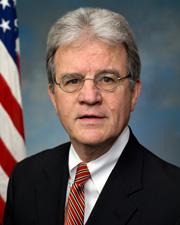 Sen. Tom Coburn (R-OK)
Legislative Activity
Stay on top of the latest movement without scrolling through every action
Senate amendment submitted
February 25, 2009
View full timeline
Senate amendment submitted
February 25, 2009
Roll call votes on amendments in Senate: Amendment SA 581 not agreed to in Senate by Yea-Nay Vote. 7 - 91. Record Vote Number: 68.
February 25, 2009
Senate amendment not agreed to: Amendment SA 581 not agreed to in Senate by Yea-Nay Vote. 7 - 91. Record Vote Number: 68.
February 25, 2009
Senate amendment proposed (on the floor): Amendment SA 581 proposed by Senator Coburn.(consideration: CR S2458, S2460; text: CR S2458)
February 25, 2009
Amendment SA 581 proposed by Senator Coburn. (consideration: CR S2458, S2460; text: CR S2458) In the nature of a substitute.
February 25, 2009
Amendment SA 581 not agreed to in Senate by Yea-Nay Vote. 7 - 91. Record Vote Number: 68.
February 25, 2009
Votes
1 roll call on this amendment
Text
Proposed
DISTRICT OF COLUMBIA HOUSE VOTING RIGHTS ACT OF 2009

The ACTING PRESIDENT pro tempore. Under the previous order, the
Senate will resume consideration of S. 160, which the clerk will report
by title.
The assistant legislative clerk read as follows:

A bill (S. 160) to provide the District of Columbia a
voting seat and the State of Utah an additional seat in the
House of Representatives.

The ACTING PRESIDENT pro tempore. The Senator from Connecticut is
recognized.
Mr. LIEBERMAN. Mr. President, I thank the Chair. I thank the majority
leader for his statement on this bill, S. 160, the DC House Voting
Rights Act. I think he got right to the point. This measure has been
before Congress for quite a long time. The bill before us is the result
of a bipartisan compromise that was worked out in the House of
Representatives last year between Delegate Norton and then-Congressman
Tom Davis.
There are questions about the bill. Obviously, there are different
points of view. I am very grateful that yesterday 62 Members of this
body, including 8 Republicans, voted to stop a filibuster to invoke
cloture to get to this bill. I think people are ready to debate it on
its merits.
I feel very strongly that this bill rights a historic injustice. It
is hard to believe, when you stop to think about it; maybe we become
accustomed to things and forget how unacceptable they are and how
unaccustomed we should be, but 600,000 Americans are deprived of having
voting representation in the Congress of the United States because they
happen to live, of all places, in the capital of this greatest
democracy in the world.
There are a lot of historic reasons for this originally, but then
they became political reasons, frankly partisan. But none of them holds
any real sway against the ideal that animates our country. This is a
representative democracy. And finally the residents of the District got
a delegate in the House, but the delegate cannot vote.
Think of it. If any one of us, the 100 of us who are privileged to be
Senators were told for some reason that we could be Senators, we could
represent our States, we could participate in debates, but then when
the roll was called, we could not vote--it is unbelievable. This is
what we have done to the 600,000 residents of the District of Columbia
and to their Delegate in the House.

This bill would right that wrong. I would say that few, if any, of
our colleagues would argue that somehow the status quo is acceptable;
that is, that 600,000 people do not have a voting representative in
Congress.
We are the only democracy--and, of course, we believe we are the
greatest democracy in the world. Historically, we began the moment of
democracy throughout the world. We are the only democracy in the world
where the residents of our capital do not have any voting
representation in Congress.
So I think, generally speaking, Members of the Senate understand and
accept the injustice of the status quo. The objections are primarily
constitutional as I have heard them. I believe the arguments on behalf
of the constitutionality of this proposal are strong and convincing,
certainly to me.
My cosponsor of this legislation, the distinguished Senator from
Utah, Orrin Hatch, who has, generally speaking, been acknowledged as a
wonderful lawyer, a great constitutional scholar, in fact, has written
an essay for the Harvard Law Journal, making the case for the
constitutionality of this proposal. I commend that to all of our
colleagues, particularly those who have doubts about the
constitutionality of this measure.
But I honestly think that most people have accepted the injustice
question. The constitutionality, okay, let's have some amendments. As
Senator Reid said, we have got today, tomorrow. We are here. Let's have
some amendments and put it in issue, give the Senate the choice that
deals with the constitutionality. Some think there ought to be a
constitutional amendment to achieve voting representation in the
Congress. I do not think that is necessary.
Some think the District of Columbia, the residents should, for
purposes of representation in Congress, become part of Maryland or
Virginia. There is some historical precedent for that argument, way
back. Let's debate it. But let's get it done. This measure has strong
support and it has the urgency of justice delayed about it.
So the question before the Senate, as it so often is, are we going to
face the differences here and debate them and then have a vote so we
can conclude this debate and go back to our States Thursday evening and
have a good weekend with our constituents at home or are we going to
delay this and use this as a vehicle for unrelated matters that will
achieve nothing? That, as usual, is the challenge before us.
I am here, and I look forward to colleagues coming as soon as
possible to speak, and hopefully to offer amendments, with the goal
that Senator Reid has set--we can finish this goal by tomorrow,
Thursday. Senator Reid has made it clear that if he gets the sense
during the day today that there is going to be delay, and there are
amendments that are not relevant to the bill, he is going to file
cloture. That will mean we will have to stay here on Friday to vote on
cloture, and we will not be able to finish this bill presumably until
the first part of next week. I hope that does not happen. Please come
to the floor and let's talk about it.
I do want to, while I have a moment--I am sure Members are rushing
from their offices right now to come to the floor to offer amendments--
I do want to talk for the record about the interesting compromise that
Delegate Norton and Congressman Davis achieved last year, and this
answers the question of: Why Utah?
This bill would increase the size of the House of Representatives to
437, adding two new Members to the House. This is quite historic both
in terms of righting the injustice suffered for now more than two
centuries by the residents of our Nation's capital, but also that we
are adding Members to the House of Representatives. That does not
happen too often in our history.
One of those seats would go to the District of Columbia, the other as
part of the compromise would, for the next 2 years, until the
reapportionment of the House that will follow the 2010 census, go to
Utah. I would say to clarify, that after the 2010 census, the District
would retain its seat because of the injustice that we are correcting.
But the second seat would go to whichever State deserves it; that is,
according to the population found in the 2010 census.
So let me explain why Utah now. Utah has had an objection to the
outcome of the 2000 census and the Congressional apportionment that
followed it. According to the 2000 census, the State of Utah missed out
on getting a fourth seat in the House of Representatives by 857 people.
This was a very thin margin of error, particularly when one considers
the methodology of the count and the way it uniquely affected Utah.
Remember, 857 people short of getting a fourth seat as compared to
another State. According to officials of the State of Utah, somewhere
between 11,000 and 14,000 members of the Church of Latter-day Saints,
Mormons, missionaries living abroad but citizens of the United States,
residents of Utah, were not counted. It is true, however, that members
of the military who are abroad are counted.
In two separate court cases, the State of Utah argued that the
methodology of the count of the census was flawed because government
officials, including military personnel, were counted in the census,
while other Americans, including the LDS missionaries, were not. Our
colleagues in the House had an insight. It was one of those moments of
compromise. Perhaps it seems we are combining apples and pears, but--
and I will stop the metaphor and not go on to a sweet fruit salad--the
fact is, this made a lot of sense. Our colleagues in the House
recognized that in these two sets of complaints--the historic one for
the District and the one for Utah, more current--there was a potential
solution to the longstanding impasse on DC voting rights.
Let's state what is implicit. Over time, I fear people concluded,
notwithstanding the justice of the argument made by residents of the
District that they deserve voting representation, it is clear, and we
must acknowledge what is clear, the registration of voters

[[Page S2435]]

in the District is overwhelmingly Democratic. So in terms of partisan
balance in the House, the feeling, obviously, was that when the
District of Columbia gets a voting representative in the House of
Representatives, that representative will almost always be Democratic.
Utah tends to be Republican, though not totally; there is one Member of
the House from Utah today who is a Democrat.
There was another judgment involved, an interesting one which we tend
not to think of. If we just added one seat for the District of
Columbia, a voting representative, we would end up with 436 Members of
the House, an even number, and no constitutional mechanism for breaking
a tie. Obviously, presumably a motion that resulted in a tie would
fail, but it seems an unsatisfactory resolution to the problem. Without
an odd number of Members of the House, gridlock would ensue in too many
cases. How would the House, for instance, organize itself if the split
between the political parties was even? Clearly, the Vice President
does not serve as a tie-breaking vote for the House, as is the case in
the Senate. It could be impossible to elect a Speaker or appoint
committee chairs. So the solution devised by our colleagues in the
House in the last session of Congress increased the size of the House
by two Members to 437, which pairs a new seat for the District of
Columbia with a new seat for Utah. That simultaneously gives the
District the representation it deserves, keeps the House as an uneven
number of seats, and balances a likely Democratic seat from the
District with a likely Republican seat from Utah.
This is the balance that resulted in the legislation that is before
us. It is a compromise but, as in so many cases--and it is a pragmatic
compromise--it results in a good solution, frankly, to two problems,
one longstanding for the District, the other more current and brief for
Utah.
In submitting this legislation from the committee, we are not judging
the manner in which the 2000 census was conducted or the outcome of
legal disputes that followed. That is a matter of record. However, it
is a statistical fact that Utah was the next State in line to receive
an additional seat in the House of Representatives. Given that fact, it
is a reasonable bipartisan compromise to create the two voting seats
proposed in S. 160. I stress, again, that Utah only receives this seat
under this bill for 2 years. The bill has no impact on the conduct of
the next census in 2010 and subsequent reapportionment. Once
reapportionment is conducted for the 2012 election, the Utah seat will
be awarded based on population increases to the State that thereby has
earned it. It could be Utah. It could be another State. If Utah's 2010
population does not entitle the State to a fourth congressional seat,
it will not retain the seat it will receive under this bill.
The bill offers an opportunity to right the wrong Utah believes it
suffered in 2000, the closeness of its numbers and also the fact that
Mormon missionaries, way beyond the 857 gap between Utah and the State
that got the additional seat, way beyond that number, 11,000 to 14,000.
I think this is a very fair compromise that ensures, bottom line, every
citizen of the country is given the most precious right democracy can
provide, the right to vote for someone who can represent him or her
with a vote in Congress. When one doesn't have that, as is the case
with the District of Columbia, apart from the frustration I described
earlier that Delegate Norton must experience every time the roll is
opened in the House, we have the inequity of residents of the District
volunteering and being sent to war. Yet the Delegate of the District in
the House has no vote on questions of war or peace. We have soldiers
returning as veterans, and yet the representative from the District has
no vote on the benefits we will confer or not confer on veterans. The
residents of the District are not only taxed without representation,
which is, as our Founders asserted, a form of tyranny, but they are
taxed very heavily. They pay the second highest rate of Federal
taxation per capita. Yet they have no voting representation in Congress
on the rate of taxation, the manner of taxation or, of course, where
the revenue goes.
They are the only governmental entity, outside of a Federal agency,
that has to have its budget approved by the Congress. When we are tied
up in gridlock and the budget doesn't pass, it means the District of
Columbia is in a terrible predicament because it can't get the money it
needs to operate. Yet the District has no voting representation on
matters of appropriations in Congress. This is the moment to end this
antiquity, a profoundly unjust and, frankly, un-America antiquity.
I urge colleagues to come to the Chamber. Let's have some amendments
and debate, and let's get this done by tomorrow afternoon.
I yield the floor and suggest the absence of a quorum.
The ACTING PRESIDENT pro tempore. The clerk will call the roll.
The assistant legislative clerk proceeded to call the roll.
Mr. McCAIN. Mr. President, I ask unanimous consent that the order for
the quorum call be rescinded.
The ACTING PRESIDENT pro tempore. Without objection, it is so
ordered.
Mr. McCAIN. Mr. President, in consultation with the managers, the
Senator from Connecticut and the Senator from Arizona, I make a
constitutional point of order against this bill on the grounds that it
violates article I, section 2, of the Constitution, and I ask for the
yeas and nays.
The ACTING PRESIDENT pro tempore. Under the precedent and practices
of the Senate, the Chair has no power or authority to pass on such a
point of order. The Chair, therefore, under the precedent of the
Senate, submits the question to the Senate: Is the point of order well
taken?
Mr. McCAIN. Mr. President, I understand that now the motion is
debatable.
The ACTING PRESIDENT pro tempore. The Senator is correct.
Mr. McCAIN. Mr. President, I have a statement on this issue, and I
look forward to debating it and a vote at the wishes of the majority
and Republican leader on this constitutional point of order.
Mr. LIEBERMAN. Mr. President, I appreciate very much that Senator
McCain came to the floor to raise this point of order. As I said
earlier, this is a matter that concerns people. I feel strongly that
the measure is constitutional. But this is exactly what we should be
debating. I look forward to his arguments and to responding to them.
I thank the Chair.
The ACTING PRESIDENT pro tempore. The Senator from Arizona is
recognized.
Mr. McCAIN. Mr. President, I thank the chairman of the Homeland
Security Committee, through whose committee this legislation is
proceeding.
I appreciate the frustration felt by the residents of the District of
Columbia at the absence of a vote in Congress. I fully understand and
appreciate that. I also believe it is important that we look back at
both the Constitution itself and the intention of our Founding Fathers,
which was to create the District of Columbia as a base of Government.
According to many experts, the District of Columbia is not a State,
so therefore is not entitled to that representation. Also, one has to
raise the obvious question: If the District of Columbia is entitled to
a Representative in the U.S. House of Representatives, then why isn't
it also entitled to two Senators? If the District of Columbia is
entitled to a Member of Congress, why isn't Puerto Rico, which would
probably entail 9 or 10 Members of Congress? Why are other territories
of the United States not entitled to full-fledged Members of the U.S.
House of Representatives and, indeed, the U.S. Senate?
After great deliberation and debate, our Founding Fathers enshrined
in the Constitution, 222 years ago, a unique form of government that
proposes a distribution of power and checks and balances on each
branch. So, too, the Founding Fathers considered and provided for a
unique Federal city to serve as our Nation's seat of government. No
single Member would represent the interest of the District but all
Members of Congress would share responsibility for the city's well-
being. I believe that when you look at distribution of tax revenues and
when you look at other measurements, the District of Columbia has been
well represented by all Members of Congress.

[[Page S2436]]

The Framers specifically limited voting representation in the House
of Representatives to States. Article I, section 2, of the Constitution
provides unequivocally:

The House of Representatives shall be composed of Members
chosen every second year by the People of the several States.

If they had wanted the District of Columbia to have the
representation, they would have designated so in the Constitution.
Asked to opine on the meaning of the word ``States'' in the context of
House representation, Federal courts have consistently accorded that
word its plain meaning, concluding that the word ``States'' does not
include territories or possessions or even the District of Columbia.
Again, I express my sympathy for the residents of the District of
Columbia. But to now act in direct contravention to the intent and
words of our Founding Fathers, I believe, is a violation of the
Constitution of the United States. And to somehow work a deal that
includes the State of Utah having an additional seat in return for that
is an incredible violation. I will talk more about that.
First, I wish to say that it is very clear the Congress simply cannot
amend the Constitution by legislation--no matter how noble the cause.
Congress has once before pursued an appropriate constitutional
resolution to this issue. In 1978, Congress passed a joint resolution
proposing to amend the Constitution to provide for the representation
for the District of Columbia in Congress. Seven years later, that
resolution failed to obtain the required approval of the 38 States
necessary for ratification under article V of the Constitution. There
is no reason proponents of voting rights for the District can't pursue
this process again. There is a process for amending the Constitution of
the United States. There is no reason why those residents of the
District of Columbia, and other supporters, should not pursue the
legitimate process of amending the Constitution of the United States.
It should not be done and, in my view, cannot be done. The courts will
decide, if we don't decide here, that it is unconstitutional to do so.
I welcome such a process, rather than the consideration of this bill,
which is clearly unconstitutional--not only in my judgment but in the
overwhelming body of legal opinion.
In addition to being unconstitutional, as I said, I am concerned that
this bill is more a product of politics than of principle. Look at what
this legislation before us does. It doesn't simply grant the District
of Columbia a voting seat in the House; it adds another congressional
seat for the State of Utah. The obvious question is, Why Utah? Why not
Arizona or Nevada or New Jersey? As a representative of the people of
the State of Arizona, who, I believe, legitimately and continuously, as
one of the fastest growing States, have been deprived of additional
seats because of the way the census was conducted--and now we are going
to give a seat to the State of Utah on the grounds that the census was
not accurate. I don't know of any fast-growing State in America that
doesn't believe we were undercounted--and legitimately--in the census.
Now, as I understand it--and maybe the proponents of an additional
seat for Utah can more eloquently and convincingly describe it than I
can--they are saying it is because they came closest in the census to
being eligible for another seat in the Congress. The State of Nevada is
the fastest growing State in America. Arizona has been among those that
are fast growing. But why Utah? What in the world does an additional
seat for Utah have to do with representation for the District of
Columbia? It can only be interpreted in one way, and that is an attempt
to buy votes. We are talking about the Constitution of the United
States here, about representation in the Congress of the United States
of America, not some political deal.
I have sympathy for the State of Utah if they think they were
undercounted in the census. I have sympathy for all States that were
undercounted in the census. What some supporters of the bill argue is
that Utah is the next State in line to receive a House seat after the
last census in 2000 and reapportionment. Nevada was the fastest growing
State from 1986 to 2004, until Arizona overtook Nevada as the fastest
growing State in 2006, according to the U.S. Census Bureau. Nevada,
once again, regained this title for its high growth between 2006 and
2007. For the first time in over 25 years, Utah was listed this year as
the fastest growing State, as its population climbed 2.5 percent, with
Arizona being second, with a population growth of 2.3 percent. Despite
this percentage growth, Texas, California, North Carolina, and Georgia
added more people than Utah, Nevada, or Arizona between 2007 and 2008.
Mr. President, we are getting on a slippery slope here. Do you judge it
by percentage of growth, numbers of votes?
It brings us back to a final question: What in the world would
awarding an additional seat to another State have to do with voting
rights for the District of Columbia?
I have provided those statistics to illustrate there are other States
that have experienced far more phenomenal growth than Utah. I love
Utah. It is a wonderful State. But the wheels were greased for Utah to
receive an additional seat well before it was listed as the fastest
growing State this year. And if the State of Utah or any other State
was undercounted, that should be taken into consideration; we should
fix the census in the year 2010 and make sure any injustice is
corrected. But to somehow say we are going to award a State an
additional seat not in keeping with the process of how reapportionment
is conducted every 10 years is remarkable and certainly
unconstitutional.
In 2004, lawmakers began floating an idea of a compromise bill to
balance a House seat for the District of Columbia, which obviously we
assume would be won by a Democrat, with a seat for a congressional
district in Utah, which most assume would be won by a Republican. The
May 3, 2005, editorial in the Washington Post called this a ``win-win
situation.'' While this may be a win-win situation for Washington, DC,
and Utah, it is hardly a win for the millions of Americans who are
living in high-growth States.
In fact, according to a report by the Congressional Research Service,
if the District was considered to be a State during the last
apportionment, North Carolina would not have gained a seat. According
to a study by the Republican policy committee, if this bill is enacted
and the House of Representatives is expanded to 437 seats, then New
Jersey would keep a congressional seat it would otherwise lose. Again,
this illustrates there are winners and losers in an apportionment, but
these districts should be chosen based on concrete data from the
census, not by political parties attempting to craft legislation that
flies in the face of our Founding Fathers' intentions.

In a February 6, 2009, editorial, the Los Angeles Times states:

This is obviously partisan horse-trading.

The Los Angeles Times is right. Yes, partisan horse trading happens
all the time, but this time partisan horse trading would do grave
violence to our Constitution.
A commentator wrote in the February 13, 2009, edition of the
Washington Times:

. . . the enactment of blatantly unconstitutional legislation
to bypass the constitutional amendment process and give the
District of Columbia a seat in the House of Representatives
in a crass triumph of raw political power over the rule of
law.

I couldn't agree more.
Again, I regret I am unable to support this legislation to provide
the residents of the District voting representation in the House of
Representatives. However, I took a solemn oath to defend our
Constitution as a U.S. Senator. In testifying before the Homeland
Security and Governmental Affairs Committee in 2007, Professor Jonathan
Turley described this horse trading as ``the most premeditated
unconstitutional act by Congress in decades.''
We, as Senators, cannot avoid the constitutional issue. While the
Supreme Court may be the final arbiter of constitutionality, Congress,
as the first branch of Government, has an independent duty to consider
the constitutionality of the bills we pass, especially where, as here,
our own independent Congressional Research Service advises that
``although not beyond question, it would appear likely that the
Congress does not have authority to grant voting representation in the
House of Representatives to the District of Columbia'' as contemplated
by this bill.

[[Page S2437]]

We really have two aspects of this legislation. First of all, does
Congress have the constitutional authority to grant voting rights or an
additional seat in the House of Representatives by legislation rather
than amending the Constitution of the United States?
As I pointed out earlier in my statement, the fact is, it was tried
in 1978 in the proper fashion and did not receive the approval of the
38 States necessary to amend the Constitution. So now we are trying to
basically amend the Constitution of the United States by legislation.
That is not in keeping with the authority and responsibility of the
Congress of the United States of America.
The second is, of course, what in the world does granting voting
rights to the District of Columbia have to do with granting another
seat to another State? One can only interpret that, as one of the
editorials did, as political horse trading. There is no constitutional
basis for granting a seat to any State in the United States of America
without it being backed up, as laid out by our Founding Fathers, by the
results of a census.
I will agree, as I have said before, coming from a State that has
been consistently undercounted in our population, the census needs to
be fixed to more accurately reflect the true population of every State
in America, and that has not happened with the fastest growing States.
But to grant a seat to a State because they were ``fastest growing''
and maybe closest to the requirement for an additional seat turns
everything on its head.
What kind of a precedent would we be setting by legislation allowing
a State to have another seat in the U.S. House of Representatives, with
thousands of votes that would be taken?
I also would like to mention, again, if the District of Columbia
deserves a voting representative in the U.S. House of Representatives,
doesn't the District of Columbia also deserve two U.S. Senators? How
intellectually do you make the argument they deserve a vote in the
other body, a coequal body--although we certainly do not recognize that
very often. But the fact is, it is a coequal body. They are going to
have a vote over there, but they are not going to have representation
over here.
Finally, I would like to point out that we have territories in which
citizens of the United States reside. Those who were born in those
territories, according to a U.S. Supreme Court decision, are citizens
of the United States. In fact, they are even eligible to run for
President of the United States if they are born in a U.S. territory.
What about Puerto Rico? What about the Virgin Islands? What about the
Marianas? What about other territories that are part of the United
States of America and in which our citizens also reside who then vote
for Representatives in the other body, but those Representatives
obviously do not have voting power?
I conclude by saying this is a serious issue. It is a serious issue.
It has been clouded by the understandable concern that Members of
Congress have for the people who reside in the District of Columbia. We
see their license plates every day: ``Taxation without
Representation.'' But the way to give them those voting rights is
through amending the Constitution of the United States, not a
legislative act that clearly is not within the constitutional authority
granted by our Founding Fathers to the Congress of the United States.
I look forward to a spirited debate on this issue. I think it is an
important one. If this DC voting rights bill does pass and this
constitutional point of order is rejected by a majority of the Senate,
I have very little doubt that the courts of the United States of
America will reject this proposal.
Again, I appreciate and admire and respect the manager of this bill,
the distinguished chairman of the Homeland Security Committee, and the
senior ranking member, the Senator from Maine. But I think there is a
huge credibility problem when you add on a provision for adding a seat
to a State for which there is not any factual or, frankly, rational
argument for except that perhaps this measure will gain more support.
I urge my colleagues to take a very close look at what we are doing.
The most sacred obligation we have is to respect and preserve the
Constitution of the United States of America in everything we do. I
have very little doubt this legislation before us violates the
Constitution of the United States of America.
I yield the floor.
The PRESIDING OFFICER (Mr. Bennet). The Senator from Connecticut.
Mr. LIEBERMAN. Mr. President, I thank my friend from Arizona for his
kind words and also for the serious constitutional questions he raised.
As I said earlier, this is exactly what we ought to be debating on
this bill. I take it as a given that neither he nor anyone else I heard
speak in this Chamber would say that it is fair or just or consistent
with the first principles of our representative democracy, this great
Republic of ours, that 600,000 Americans be denied the fundamental
right to be represented in Congress by somebody who can actually vote.
Pretty much everybody will agree that is wrong, all the more
unacceptable because these 600,000 people happen to live in the Capital
of this great democracy of ours.
The question is, in one sense, the constitutionality of S. 160, the
House District Voting Rights Act that is before us, and in a second
sense, which the Senator from Arizona has raised, the wisdom, if you
will, of combining the voting rights for residents of the District with
an extra seat, in the short run, for the State of Utah. I wish to take
some time to respond to these serious arguments.
As I understand it--and I think I do--what the Senator from Arizona
and other opponents of the constitutionality of this bill say is that
the question of the District of Columbia's voting rights in the House
should be settled by section 2 of article I of our Constitution, which
says the House shall be made up of Members chosen ``by the People of
the several States.'' And they argue that because the District of
Columbia is not a State, its residents cannot have representation in
the House, presumably at least not without a constitutional amendment.
Those of us who feel strongly that this measure before the Senate is
constitutional base our claim on the District clause of the
Constitution which states that the Congress has the power ``To exercise
exclusive Legislation in all Cases whatsoever, over such District,''
referring, of course, to the Federal District that was created at the
time of the Constitution as the National Capital.
Our courts have described in the centuries since this authority in
the District clause as a ``unique and sovereign power'' and ``sweeping
and inclusive in its character.'' Unlike many congressional powers, it
is not balanced against the countervailing rights of the States.

As former, I believe he was Associate Attorney General, maybe Deputy
Attorney General during the previous administration, the Bush
administration, Viet Dinh, stated in his testimony before the House of
Representatives on this matter:

[W]hen Congress acts pursuant to the District Clause, it
acts as a legislature of national character, exercising
``complete legislative control as contrasted with the limited
power of a state legislature, on the one hand, and as
contrasted with the limited sovereignty which Congress
exercises within the boundaries of the states, on the
other.''

That is a very interesting argument about the unique powers of
Congress pursuant to this District clause.
Then Mr. Viet Dinh concludes in support of this legislation and the
constitutionality of this legislation:

In few, if any, other areas does the Constitution grant any
broader authority for Congress to legislate.

That is what we are doing here.
Those who question the constitutionality of the legislation, as I
mentioned, rely on section 2 of article I. They rely uniquely and
almost totally on the word ``States,'' that the Members of the House
shall be chosen by ``the People of the several States.'' So they say
the District of Columbia is not a State; therefore, without amending
the Constitution, we, in Congress, even under the powerful District
clause, do not have the power to grant voting rights in Congress to the
Representative of the District of Columbia.
But there is a very clear and powerful line of Supreme Court cases in
which the High Court and other courts have upheld Congress's right to
treat the District of Columbia as a State and

[[Page S2438]]

to treat it as a State for matters that are extremely consequential:
for Federal taxation; in other words, the right to tax residents of the
States might free the residents of the District from this obligation.
Yet the courts have said the District itself can be treated as a
State for purposes of Federal taxation, for purposes of Federal court
jurisdiction. This was the question of diversity of jurisdiction. I
don't have to go into the details. The courts have said it would be an
anomaly to say because you happen to be an American living in the
District, you cannot gain access to the Federal courts because the
Constitution says the various States with regard to diversity and
jurisdiction. The same with the right to a jury trial and, very
powerfully, the same with regard to interstate commerce. There it is
interstate commerce. We have the interstate commerce clause of the
Constitution which has given birth to probably thousands of pieces of
legislation, a very active role of oversight for the Government. And
even though it is the interstate commerce clause, the courts have said
very clearly that the District should be considered a State,
notwithstanding the literal words in the Constitution. Because
effectively, if you don't, you will create an enclave where people
can't be taxed, people can't gain access to the Federal courts, people
don't have a right to a jury trial, and people can't be protected by
generations of legislation and regulation passed pursuant to the
interstate commerce clause.

For instance, as long ago as 1805, in the case of Hepburn v. Ellzey,
Justice Marshall--the great Justice Marshall--ruled that the District
of Columbia could not be considered a State for purposes of diversity
jurisdiction under the Constitution, which allows Federal courts to
hear disputes between residents of different States. His opinion,
nonetheless, remarked on the incongruity of such a result, and Justice
Marshall invited Congress to find a solution. Many years later--
unfortunately, many years later--Congress did so, and in 1949 the
Supreme Court, in the Tidewater case, upheld a congressional statute
that said the District should be treated as a State for purposes of
diversity jurisdiction.
Citing such cases, former Federal Circuit Court Judge Patricia Wald
has testified--and again she testified on behalf of this legislation
and its constitutionality:

The rationale of the courts in all these cases has been
that Congress, under the District Clause, has the power to
impose on District residents similar obligations and to grant
similar rights as the States claim power to do under the
Constitution itself.

So Congress is saying because the States get certain powers from the
Constitution, if we don't treat the District as a State, its residents
will be deprived of protections, or the Federal Government will be
deprived of the right to tax them, for instance. And Judge Wald
continued:

Given that the District is in reality what I might call a
City-State of 600,000 people--

Where the population, as I indicated in my opening statement
yesterday morning, is just about equal to or greater than four States--

engaged in a multitude of private businesses and occupations,
there is realistically no other way that a federalist union
can do business under the Constitution.

It is also true that Congress has already extended the right of
Federal representation, voting representation in Congress, to those who
are not citizens of any State. I know this is an unusual statement and
an exception, but there is the Uniformed and Overseas Citizens Voting
Act. And in that, Congress authorized American citizens overseas to
continue to vote for Members of Congress in their last domestic State
of residence, regardless of whether they had been citizens of that
State and no matter how long they stay overseas. Indeed, as I mentioned
yesterday, these people would lose this unusual right to voting
representation here in Congress, in States they no longer reside in--
and they may not have been there in quite a while--by absentee ballot
from elsewhere in the world, only if they renounced their American
citizenship or they returned to the United States and came to live in
the District of Columbia. Now, that is an anomalous and unacceptable
result. Citizens of Federal enclaves within a State are also free to
vote in Federal elections held by the State--a right upheld by the
Supreme Court.
Notably, Congress has already used this vast authority that I have
referred to under the District clause to extend voting rights to
residents of the District of Columbia. Between 1789 and 1800, Congress,
acting under the District clause, granted residents of the new
District--the Nation's capital--the right to vote in their former
States of Maryland and Virginia, even though they were actually no
longer residents of those States--the land having been formally ceded
to the Federal Government to form the new capital district.
Let me now address a few of the other arguments that have been raised
by Members, constitutional arguments that have been raised by those who
oppose the bill on constitutional grounds.
It has been argued that because the constitutional amendment XXIII
was required to grant the District Presidential electors in the
electoral college, likewise a constitutional amendment should be
required to provide the District with voting representation in the
House. But these two issues are distinct. The XXIII amendment worked a
fundamental change to the electoral college under Article II of the
Constitution. As such, Congress could not legislate with the same
latitude it has within Article I, where the District clause is found
along with the clause governing composition of the U.S. House.
Some opponents of our proposal also cite the 1990 case of Adams v.
Clinton to argue that it would be unconstitutional to grant DC citizens
voting rights in the House. That is not the case, in my opinion. In
Adams, the DC Government and residents brought a case alleging it was a
denial of their constitutional rights to exclude them from
representation in Congress. The majority opinion of the three-judge
court stated, ``We are not blind to the inequity of the situation
plaintiffs seek to change,'' but concluded that the court itself could
not grant the District residents voting rights in Congress as a matter
of constitutional right. But the court did not address whether Congress
was empowered to provide voting rights through exercise of the District
clause.
As former Solicitor General and Federal Circuit Court Judge Kenneth
Starr testified before the House in 2004 on legislation similar to the
one before us now, S. 160:

While the Constitution may not affirmatively grant the
District's residents the right to vote in congressional
elections, the Constitution does affirmatively grant Congress
plenary power to govern the District's affairs.

In fact, the majority opinion in Adams arguably invited such an
approach by stating that for plaintiffs to obtain Federal
representation, ``they must plead their cause in other venues.'' And
presumably that meant the Congress.
Another concern raised by opponents of the bill is that it is a
slippery slope, as the Senator from Arizona said. If Congress has the
authority to grant the District a voting representative in the House,
what is to stop it from adding two Senators or extending full voting
rights to the U.S. territories? I respectfully suggest that these
concerns are unfounded. The legislation before us only addresses DC
voting rights in the House, and the legal case for this action and its
validity is unique.
First, with respect to the Senate, this bill could not be clearer. In
Section 2(a)(2) it states:

The District of Columbia shall not be considered a State
for purposes of representation in the United States Senate.

But our colleagues have argued: Could some future Congress, using the
arguments used on behalf of this bill, pass similar legislation to give
DC full voting rights in the Senate? To me, that is a very debatable
argument at best. Even some of the legal experts who support this bill
believe a different and much more difficult analysis would apply to a
bill regarding Senate representation because of the distinct language
and history of the constitutional provisions governing composition of
the Senate and the greater emphasis on the States as such.
The territories are also a distinct and different case. Different
constitutional provisions provide for the creation of the District and
the Federal territories. The District enjoys a unique legal and
historical status, and one

[[Page S2439]]

that largely mirrors the rights and responsibilities of the States. Its
residents pay full taxes and face military conscription. The same is
not true of the residents of the territories. Amendment XXIII extended
the right to vote in Presidential elections to residents of the
District but not to residents of the American territories.
As legal expert Richard Bress concluded in testimony on our
legislation last session:

Taken together, these differences between the territories
and the District render highly unlikely the suggestion that
granting voting rights to District residents would lead, as a
legal or policy matter, to granting similar privileges to
residents of the U.S. territories.

Finally, in his comments, Senator McCain questioned: How do we put
together voting rights for the District of Columbia with an extra seat
for Utah; isn't this just a pragmatic political agreement? Well, in
some sense it is. But in another sense, like so many pragmatic
agreements around here--and this is one of the best of them because it
is bipartisan--it achieves a just result: Finally, after all these
years in which this outrageous anomaly has been allowed to exist,
District residents will get voting representation in the House, and it
also corrects what I think was an injustice done to the State of Utah
in the last census--and which is one that I referred to earlier--when
it came just 857 votes short of another seat, but the census did not
count what was estimated--or proven in the court case--between 11,000
and 14,000 Mormon missionaries who were clearly residents of Utah but
were elsewhere in the world on their years of missionary service.
The truth is that for too long now partisan concerns have stopped
Members of Congress from doing what they knew was right, which is to
give residents of the District voting rights. And the partisan concerns
are understandable, even if they should not have blocked the result. It
is a matter of fact that the residents of the District are
overwhelmingly registered as members of the Democratic party. So in the
normal course, it would be extremely likely that any Member of the
House from the District would be voting and organizing with the
Democrats. And I suppose if the shoe were on the other foot and this
was a largely Republican voting population, to be fair about it,
Democrats would probably have a similar feeling.
Last session, acknowledging the inequity of the District's case and
the understandable if ultimately unacceptable partisan concerns, two of
our colleagues in the House--Delegate Eleanor Holmes Norton of the
District and Tom Davis former Republican Congressman from Virginia--
tried to work this out. Acknowledging the inequity that I referred to
which Utah felt it suffered, and actually went to court on in the last
census, a decision was made to put these two together.
There was also an institutional necessity, if I can add to this. It
wasn't a kind of apples and oranges--two problems, let's bring them
together and have a bipartisan result, because the new Member of the
House from Utah is likely to be a member of the Republican Party. If we
only added the one seat for the District, the House would have an even
number of Members. One can imagine the gridlock that you would not want
to see in the House. You could have an equal number of Members of both
parties and a failure to organize, failure to be able to select a
Speaker, or a failure to be able to organize committees. On a tie vote,
there is no one in the House to exercise tie-breaking authority,
similar to the Vice President here in the Senate. So legislation could
fail as a result of a tie vote, and that is not a good result
either. There was that institutional benefit that if you are going to
add one, you really should add two to bring the total back to an uneven
number and avoid the problems we have talked about.

I do want to make clear that this kind of equitable grant of an
additional seat to Utah, based on what happened after the last census,
is only for 2 years. Obviously, if we give the District voting rights,
it will go on forever, but it is only for 2 years because another
census is coming in 2010 and there will be a reapportionment following
that census. If Utah is next in line for that extra seat based on
population, of course Utah will hold that extra seat. But if there is
another State that, based on population, has a greater claim for that
extra seat, then they will get it as well.
I am happy to acknowledge that the bill before us is the result of a
political compromise, a bipartisan compromise in the House, but I am
not embarrassed by it. I do not think it taints the result because the
result is so profoundly just in the case of the District, and I believe
also just in the case of Utah, and it only lasts for this one time.
I have tried to argue here, No. 1, on the constitutionality of this
measure under the District clause; No. 2, that, yes, this is a
bipartisan political agreement, but it is done for good reasons, and
that does not taint it at all; and No. 3, I would say that in the bill
before us there is provision for an expedited appeal to the courts on
the constitutionality. We know there are constitutional differences
that have been argued by the Senator from Arizona and myself this
morning. We assume they will be tested in court. In the interests of
efficient functioning of our Government, we provide in this measure for
an expedited appeal.
This is not the first time this would happen. The most significant
case I remember, and I am sure it is one of many, is the landmark
campaign finance reform legislation that bears the name of my friend
from Arizona and our friend from Wisconsin, the McCain-Feingold
legislation. Some argued vociferously on the floor that it was
unconstitutional. So within the legislation, in a way quite similar to
what we have done here on this, it was provided that there be an
expedited appeal. That was a way of saying, even if you believe this
legislation may be unconstitutional, we are a legislative body, we do
not know, really. I believe this legislation is constitutional, but
ultimately--I feel that very strongly, I said that it is, but the
ultimate arbiter of that, of course, is the courts.
So I urge my colleagues who have constitutional questions about this
legislation but really want to stop the inequity imposed on the
residents of the District, that they do not have voting representation
here, to vote for this measure because it contains with it an expedited
appeal which will occur on the constitutionality of the legislation.
With that, I yield the floor.
The PRESIDING OFFICER. The Senator from Arizona.
Mr. KYL. Mr. President, I appreciate the comments of the Senator from
Connecticut--in particular, his comments at the conclusion of his
remarks about the appropriateness of an expedited appeal. We are both
very certain of our constitutional judgment on this. We are both
lawyers. We each come to a totally different conclusion about what is
constitutional or not. Fortunately, we have the courts to resolve the
issues. As with previous legislation, we had the good sense to include
an expedited appeal to the courts so that the issue can be resolved one
way or the other. I would note there is one thing that is needed to
effectuate this--to be sure that, as it was in the McCain-Feingold
legislation, an appeal can be facilitated by ensuring pro bono counsel
can represent plaintiff in the case.
Let me also reference a fact that my colleague from Arizona is
usually quick to point out. He likes to say he is unburdened by a law
degree. That certainly can be a burden for those of us who have the
degree, but what he has argued illustrates not only the sensibility of
our Constitution but also his extensive knowledge of it. I always
appreciate his point of view on these issues because of his wide-
reaching experience which helps us understand the reasons for the
constitutional provision. I support the constitutional point of order
he has raised because I do deeply believe the action the Senate is
being asked to take here is unconstitutional.
The creation of a House seat for the District by legislation rather
than constitutional amendment is what is before us here, and we believe
that only by constitutional amendment can the additional representation
be appropriately granted.
I would like to respond briefly to the comments of my colleague from
Connecticut. They are all well stated. They are the arguments in
opposition to the proposition. I referred to a couple of them
yesterday, but let me refresh those and then discuss one other matter.
The primary argument of the proponents of the bill is to rely on the
so-

[[Page S2440]]

called District clause, which is article I, section 8, clause 17. The
District of Columbia Circuit Court actually interpreted this clause in
a case called Neild v. District of Columbia in 1940. What the court
noted in that case was that the District clause does indeed allow
Congress to legislate within the District for ``every proper purpose of
government'' and gives Congress ``full and unlimited jurisdiction to
provide for the general welfare of citizens within the District of
Columbia by any and every act of legislation which it may deem
conducive to that end,'' subject, of course, to the negative
prohibitions of the Constitution.
But proponents argue that because the District clause allows Congress
to do things in the District of Columbia that States themselves cannot
do, then it must also follow that Congress, with regard--that it must
also allow Congress to do things with regard to the District that only
States can do. For example, article I, section 10, of the Constitution
bars States from doing things such as coining money, entering into
treaties, and keeping troops. But none of these restrictions apply to
Congress in the exercise of its power to govern the District.
Proponents of this bill argue that it follows from this sweeping
power that Congress may also grant District residents the rights of
citizenship in a State, including the right to congressional
representation. But this argument does not follow. Congress has some
powers in the District that are broader than the powers of a State, but
this does not mean that every power of a State must also extend to the
District. States and the District of Columbia are different under the
Constitution, and each has some rights and powers that the other lacks.
I note in this regard that the Senator from Connecticut quoted from
an opinion of Justice Marshall in a very early case in which Justice
Marshall saw a problem with the commerce clause and, because of his
view that the District of Columbia was not equivalent to a State,
invited Congress to solve the problem, which, many years later, as the
Senator noted, Congress did do. But, of course, what this case stands
for is the proposition that Justice Marshall, who was there at the time
and well understood the intent of the Framers, appreciated that he
could not do it from the bench. He could not say that the District was
the same as a State and therefore he had the ability to fix the
problem. That had to be done in another way.
There is a big difference between those kinds of problems dealing
with adversity jurisdiction or the commerce clause, and so on, and the
fundamental status as a political entity, which would change the
representation of the House of Representatives. Moreover, it would make
no sense, in the same document where the Framers specifically composed
the House of Members of the several States and then specifically
designated the District of Columbia as something other than a State,
that the Framers then forgot to give the District representation in the
House. The Framers had the opportunity to provide the District with a
Representative in the House but, of course, declined to do so.
The text of the Constitution on this matter is clear. It says
Congress shall be composed of Representatives from States and States
alone. Here is the exact wording:

The House of Representatives shall be composed of members
chosen every second year by the people of the several states,
and the electors in each state shall have the qualifications
requisite for electors of the most numerous branch of the
state legislature.
No person shall be a Representative who shall not have
attained to the age of twenty five years . . . and who shall
not . . . be an inhabitant of that state in which he shall be
chosen.

And finally:

[E]ach state shall have at least one Representative. When
vacancies happen in the Representation from any state, the
executive authority thereof shall issue writs of election to
fill such vacancies.

So any act by Congress purporting to grant a seat in the House of
Representatives would contradict this plain text and would be
unconstitutional.
My colleague from Connecticut also noted that we have, for Americans
residing abroad, enabled them to vote. But, of course, it is tied to
their last domestic residence to a State. It is the State to which
these votes go. So, even in those situations where there has been a
need to accommodate the fact that Americans are not all residing at
that moment in a State, we have tied their vote to the State from which
they have come.
I mentioned one case, but I would also like to briefly discuss some
other cases because judicial precedent has accumulated over the years
and strongly supports the point my colleague from Arizona makes with
regard to the constitutionality of this legislation.
In Bolling v. Sharpe, the companion case to Brown v. Board of
Education, the U.S. Supreme Court expressly recognized that when it
came to the application of the fundamental constitutional principles,
the District could not be considered to be the same thing as a State.
The Bolling petitioners had challenged the constitutionality of racial
segregation in the DC public schools. The Court held that such
segregation was unconstitutional in the District, but the Bolling Court
was very careful to make clear that the District was not equivalent to
the States and not subject to the same legal strictures.
Brown v. Board of Education was based on the 14th amendment, which by
its own terms applied only to the States. Because the District is not a
State, the Bolling Court reasoned different rules had to apply to this
case.
Here is how the Court explained it:

We have this day held that the Equal Protection Clause of
the Fourteenth Amendment prohibits the states from
maintaining racially segregated public schools. The legal
problem in the District of Columbia is somewhat different,
however. The Fifth Amendment, which is applicable to the
District of Columbia, does not contain an equal protection
clause, as does the Fourteenth Amendment, which applies only
to the states.

So the Court obviously had a dilemma. It went on to reach the same
result as in Brown v. Board of Education and strike down racial
segregation, but on different grounds. It was careful to emphasize that
the law that applies to the District is different because the District
is not a State.
Other courts have also emphasized that the District is not a State.
My colleague mentioned Adams v. Clinton. DC residents there argued
that they had a constitutional right to elect a Representative to
Congress but the three-judge district court, examining the text and the
history, determined that the District is not a State under article I,
section 1, and therefore the plaintiffs did not have a judicially
cognizable right to congressional representation.
In another case from the DC Circuit Court, Michel v. Anderson, the
court affirmed the constitutional principle that Congress cannot grant
voting rights to citizens of the District. The court considered
congressional rule changes that will allow Delegates from the District
and U.S. territories the right to vote in committees and even the
committee of the whole in the House. Some Members of Congress sued,
claiming these rules went too far. Although the District of Columbia
Circuit Court upheld the new rules, it noted that the rules passed
constitutional muster only because they did not give the essential
qualities of representation to the Delegates; namely, according to the
court, it was acceptable to allow the Delegates to participate in
deliberations and secondary votes--for example, in committees and the
committee of the whole--as long as their votes would not be decisive in
the final vote on final passage of the bill. There was a reason for
that. The bottom line: The District has a voting Representative in the
House to the full extent that it can be granted by the Congress short
of a constitutional amendment. At that point, for full representation
there would need to be a constitutional amendment.
In a similar vein, in United States v. Cohen, then-Judge Scalia
explained, again in a DC Circuit Court decision, that the District
clause ``enables Congress to do many things in the District of Columbia
which it has no authority to do in the 50 States.'' But Judge Scalia
went on to emphasize ``[t]hat there has never been any rule law that
Congress must treat people in the District of Columbia exactly as
people are treated in the various States.''
Finally, in Banner v. United States, the DC Circuit, in a panel that
included now-Chief Justice Roberts, rejected a constitutional challenge
to congressional legislation that prevents the DC

[[Page S2441]]

government from imposing a ``commuter tax'' on people who work in the
District but reside in Virginia or Maryland. The Court stated that
Congress had broad authority to legislate under the District clause but
also noted:

None of this is to say that Congress can legislate for the
District without regard to other constitutional constraints.

And of particular relevance to the present debate, the DC Circuit
panel stated:

[T]he Constitution denies District residents voting
representation in Congress.

These cases are all clear, and they all reach either the same result
or are all based upon the same reasoning. The final constitutional
argument was also addressed by the Senator from Connecticut. This has
to do with the 23rd amendment. Let me discuss that.
When Congress in the past has addressed the District's special
status, it has acknowledged that status is dictated by the
Constitution, and it recognized that a constitutional amendment was
necessary to change the status, as we have just seen. So when Congress
sought to give the District a vote in Presidential elections, it passed
the 23rd amendment to the Constitution. When Congress dealt with this
issue before, it dealt with it correctly. Congress does have the power
to grant the District representation in the House if it deems that it
is necessary and desirable. But the proper way to do this is through
the mechanism that the Framers provided in the Constitution: the
amendment process in article V.
Prior to the ratification of the 23rd amendment in 1961, District
residents could not choose electors for purposes of choosing the
President and Vice President; but because of this amendment, District
residents are now able to select electors ``equal to the whole number
of Senators and Representatives in Congress to which the District would
be entitled if it were a State, but in no event more than the least
populous State.''
Congress thus recognized in the 1960s that it did have the authority
under the District clause and without amending the Constitution to
allow District residents to choose Presidential electors.
The 23rd amendment to the Constitution itself recognizes that the
District is not a State and cannot be treated as one. First, it ensures
that the District, even if otherwise entitled by population, may not
appoint a number of electors greater than that of the least populous
State. As a consequence, even if the District grew enough in population
that as a State it would be entitled to three Representatives and two
Senators, let's say if a smaller State than was not entitled to three
Representatives existed, the District's electors would be limited to a
number equal to those of the smaller State.
Even under the 23rd amendment, for the purpose of selecting
Presidential electors, the Constitution recognizes that the District is
not the same as a State and is not entitled to be represented in the
National Government in the same way.
So where does that leave us? What is next were we to pass this
constitutional amendment? There has been an argument made, I think,
that the proponents of this legislation would perhaps try, for example,
to extend this to representation in the Senate as well. My colleague
from Connecticut has said: No, there are totally different historical
reasons that would not be so. I accept that there are, in fact,
historical reasons that would preclude us from doing that. But I would
also suggest the very reasons which caused Congress, the political
reasons which caused some in Congress to change from the previous
position--which has also been a constitutional amendment is required--
to a legislative proposal here, would be very likely to occur in the
future on this particular issue as well. I think the same thing could
occur with respect to representation in territories, such as the
Territory of Puerto Rico, for example.
So if, in fact, today we say, no, that could not possibly be because
of tradition and the historical understanding, that is not necessarily
the case given the fact that we have now at least some in this body who
have thrown over the historical tradition and case law and
understanding that only by constitutional amendment could the
Constitution--could there be an amendment to allow the District
representation.
So I am going to urge my colleagues to vote against the resolution. I
am going to urge them to vote to sustain the point of order that my
colleague from Arizona has made. There is a constitutional issue, and
we need to be on record as to what we believe to be the correct
decision. If we believe it is constitutional, then there will be an
opportunity to express that in this amendment. If we believe it is
unconstitutional, we will have the opportunity to express that. Many of
us want to express that proposition.
At the end of the day, however, as my friend from Connecticut has
pointed out, the ultimate resolution is not going to be what we believe
but, rather, what the courts say with respect to the issue. Again, for
that reason, it is important to have a workable, expedited procedure
for resolution of this issue in the courts. And I am hopeful we can
achieve that in the legislation, even should the legislation pass over
the objections of those of us who disagree with it.
I yield the floor.
The PRESIDING OFFICER (Mr. Casey.) The Senator from Vermont is
recognized.
Mr. WHITEHOUSE. Would the Senator yield for a unanimous consent
request?
Mr. LEAHY. Mr. President, I so yield without losing my right to the
floor.
The PRESIDING OFFICER. Without objection, it is so ordered.
Mr. WHITEHOUSE. Mr. President, I ask unanimous consent that at the
conclusion of the remarks of the distinguished Chairman I be
recognized.
The PRESIDING OFFICER. Without objection, it is so ordered.
Mr. LEAHY. Mr. President, the Senate now considers a bill to provide
voting rights to citizens of the Nation's Capital city. I am proud to
cosponsor the District of Columbia House Voting Rights Act of 2009.
This important legislation would end over 200 years of unfair treatment
to nearly 600,000 Americans living in the District of Columbia, a
population roughly equal to the size of Vermont, and give them a vote
in the House of Representatives. Earlier this week, the Senate finally
broke through the Republican filibuster of this legislation that
stalled its consideration in the last Congress. That filibuster
prevented its passage, despite the bipartisan support of 57 Senators, a
majority of the Senate. The vote earlier this week to overcome that
filibuster is an encouraging step toward guaranteeing all citizens
representation in our Government.
Last Congress, President Bush threatened to veto this bill. This
time, when the Congress passes this bill, I am confident President
Obama, who cosponsored and voted for the bill when serving in this body
as a Senator from Illinois, will sign it into law.
I commend Congresswoman Eleanor Holmes Norton and Senator Hatch for
having worked out a voting rights bill for the District of Columbia
that can and should pass with bipartisan support. The bill we consider
today would give the District of Columbia delegate a vote in the House
of Representatives. To remove partisan political opposition, it accords
Utah an additional vote in the House, as well.
As a young lawyer, Congresswoman Norton worked for civil rights and
voting rights around the country. It is a cruel irony that as the
District of Columbia's longtime representative in Congress, she still
does not yet have the right to vote. She is a strong voice in Congress,
but the citizens living in the Nation's Capital deserve her vote on
their behalf to count.
I believe this legislation is within congressional power as provided
in the Constitution. This is not a partisan conclusion. Lawyers from
across the political spectrum, from Judge Patricia Wald to Kenneth
Starr and former Assistant Attorney General Viet Dinh, agree that this
action is constitutional. After careful study, we have all concluded
that Congress has the constitutional authority to grant voting rights
in the House of Representatives to the representative of the citizens
of the District of Columbia.
Last Congress, the Judiciary Committee held a hearing on this issue,
and heard compelling testimony from constitutional experts that such a
bill is constitutional. They highlighted the fact that Congress's
greater power to confer statehood on the District certainly encompasses
the lesser action to

[[Page S2442]]

grant District residents voting rights in the House of Representatives.
Moreover, Congress has often treated the District of Columbia as a
``State'' for a variety of purposes. Congresswoman Eleanor Holmes
Norton reminded us that ``Congress has not had the slightest difficulty
in treating the District as a State, with its laws, its treaties, and
for constitutional purposes.''
Examples of these actions include a revision of the Judiciary Act of
1789 that broadened Article III diversity jurisdiction to include
citizens of the District, even though the Constitution expressly
provides that Federal courts may hear cases ``between citizens of
different States.'' Congress has also treated the District as a
``State'' for purposes of congressional power to regulate commerce
``among the several States.''
The sixteenth amendment, the Federal income tax amendment, grants
Congress the power directly to tax incomes ``without apportionment
among the several States'' and that taxing power has been interpreted
to apply to residents of the District. The District of Columbia car
license plates or tags remind us every day that District residents
suffer from ``Taxation Without Representation,'' a battle cry during
the founding days of this Republic.
Hundreds of thousands of Americans residing in the District of
Columbia are required to pay Federal taxes. In fact, the District of
Columbia residents pay the second highest Federal taxes per capita in
the Nation, yet residents have no say in how those dollars are spent.
We must also remember that many who serve bravely in our armed services
come from the District of Columbia. The brave men and women who defend
our values and freedoms abroad must also enjoy those same rights here
at home.
Opponents of this bill claim that the citizens of the District of
Columbia do indeed have representation, that they fall under the
jurisdiction of all 100 Senators and 435 Representatives and are
sufficiently provided for by Congress. To that argument I say that
there is no substitute for direct representation in Congress. How many
of us in either party would be willing to go back to our State and say
``You do not need your representatives because other States are going
to represent you?'' I do not believe that would go over well in the
Commonwealth of Pennsylvania. Chairman Lieberman knows that would not
go over well in his State of Connecticut. I guarantee you that would
not go over well in the State of Vermont. Similarly, the citizens of
the District of Columbia also deserve the chance to elect a
representative who has not only a voice in Congress, but a vote as
well.
Over 50 years ago, after overcoming filibusters and obstruction, the
Senate rightfully passed the Civil Rights Act in 1957 and the Voting
Rights Act in 1965. Let us build on that tradition and extend the reach
and resolve of America's representative democracy. I am pleased that we
took the first step in overcoming the filibuster of this legislation,
and I urge all Senators to support the final passage of this bill
without further delay.
The PRESIDING OFFICER. The Senator from Connecticut.
Mr. LIEBERMAN. Mr. President, I ask unanimous consent that a vote on
the McCain constitutional point of order occur at 2 p.m. today; that
the 10 minutes immediately prior to the vote be equally divided and
controlled between Senators McCain and myself or our designees; and
that no amendments or motions be in order to the constitutional point
of order.
The PRESIDING OFFICER. Without objection, it is so ordered.
The Senator from Arizona.

Amendment No. 574

Mr. KYL. Mr. President, I ask unanimous consent that it be in order
to consider an amendment at the desk and that the reading of the
amendment be dispensed with.
The PRESIDING OFFICER. Without objection, it is so ordered.
The clerk will report.
The bill clerk read as follows:

The Senator from Arizona [Mr. Kyl] proposes an amendment
numbered 574.

The amendment is as follows:

(Purpose: To provide for expedited judicial review for Members of
Congress)

On page 27, strike line 21 through the end of the bill and
insert the following:

SEC. 8. JUDICIAL REVIEW.

(a) Special Rules for Actions Brought on Constitutional
Grounds.--If any action is brought to challenge the
constitutionality of any provision of this Act or any
amendment made by this Act, the following rules shall apply:
(1) The action shall be filed in the United States District
Court for the District of Columbia and shall be heard by a 3-
judge court convened pursuant to section 2284 of title 28,
United States Code.
(2) A copy of the complaint shall be delivered promptly to
the Clerk of the House of Representatives and the Secretary
of the Senate.
(3) A final decision in the action shall be reviewable only
by appeal directly to the Supreme Court of the United States.
Such appeal shall be taken by the filing of a notice of
appeal within 10 days, and the filing of a jurisdictional
statement within 30 days, of the entry of the final decision.
(4) It shall be the duty of the United States District
Court for the District of Columbia and the Supreme Court of
the United States to advance on the docket and to expedite to
the greatest possible extent the disposition of the action
and appeal.
(b) Intervention by Members of Congress.--
(1) In general.--In any action in which the
constitutionality of any provision of this Act or any
amendment made by this Act is challenged (including an action
described in subsection (a)), any member of the House of
Representatives (including a Delegate or Resident
Commissioner to the Congress) or the Senate shall have the
right to intervene or file legal pleadings or briefs either
in support of or opposition to the position of a party to the
case regarding the constitutionality of the provision or
amendment.
(2) Court efficiency.--To avoid duplication of efforts and
reduce the burdens placed on the parties to the action, the
court in any action described in paragraph (1) may make such
orders as it considers necessary, including orders to require
intervenors taking similar positions to file joint papers or
to be represented by a single attorney at oral argument.
(c) Challenge by Members of Congress.--Any Member of
Congress may bring an action, subject to the special rules
described in subsection (a), to challenge the
constitutionality of any provision of this Act or any
amendment made by this Act.

Mr. KYL. Mr. President, I understand this amendment has been cleared
on both sides.
The PRESIDING OFFICER. Is there further debate?
Mr. LIEBERMAN. Mr. President, I will not object. I just wish to say
this amendment is supported not only by myself but the majority leader.
It adds language to the bill. It is similar language that was in the
so-called McCain-Feingold bill. So we support the amendment.
The PRESIDING OFFICER. The question is on agreeing to the amendment.
The amendment (No. 574) was agreed to.
Mr. LIEBERMAN. Mr. President, I move to reconsider the vote.
Mr. KYL. I move to lay that motion on the table.
The motion to lay on the table was agreed to.
The PRESIDING OFFICER. The Senator from Nevada.

Amendment No. 575

(Purpose: To restore Second Amendment rights in the District of
Columbia)

Mr. ENSIGN. Mr. President, I ask unanimous consent that the pending
amendment be set aside so I may call up my amendment, which I have sent
to the desk.
The PRESIDING OFFICER. Is there objection?
Without objection, the clerk will report.
The bill clerk read as follows:

The Senator from Nevada [Mr. Ensign], for himself, Mr.
Vitter, Mr. Coburn, Mr. DeMint, Mr. Burr, Mr. Wicker, Mr.
Thune, Mr. Grassley, Mr. Risch, Mr. Inhofe, Mr. Bennett, Mr.
Enzi, Mr. Chambliss, Mr. Isakson, and Mr. Crapo, proposes an
amendment numbered 575.

Mr. ENSIGN. Mr. President, I ask unanimous consent that reading of
the amendment be dispensed with.
The PRESIDING OFFICER. Without objection, it is so ordered.
(The amendment is printed in today's Record under ``Text of
Amendments.'')
Mr. ENSIGN. Mr. President, while we are here debating the
constitutional implications of this bill, I want to take this time to
discuss a 30-year constitutional injustice happening right here in
Washington, DC.
On June 26 of last year, the Supreme Court issued a landmark ruling
affirming the second amendment right to bear arms as an individual and
constitutionally protected right. In District of Columbia v. Heller,
the Court

[[Page S2443]]

affirmed that the District of Columbia's ban on ownership of handguns
was an unconstitutional restriction on that right. Prior to this
decision, Washington, DC, had enforced the most prohibitive gun control
laws of any city in the nation. Not only did the District prohibit
ownership of handguns, it also required that allowed firearms, such as
rifles and shotguns, be ``unloaded and disassembled'' or ``bound by a
trigger lock.''
Millions of Americans were supportive of Mr. Heller, who was simply
wishing to excise his constitutional right to protect himself.
Recognizing the District's restrictions were not only unreasonable but
also unconstitutional, the majority of the Supreme Court held that
``the District's ban on handgun possession in the home violates the
Second Amendment, as does its prohibition against rendering any lawful
firearm in the home operable for the purpose of immediate self-
defense.''
Despite the Court's ruling in June, the District of Columbia City
Council has continued to exact onerous and unconstitutional firearm
regulations on law-abiding residents.
In response to the District's obstruction of the text and spirit of
the Court's decision, the House of Representatives passed H.R. 6842,
the National Capital Security and Safety Act. Last year, almost half
this body joined me in a letter to the majority leader urging prompt
consideration of this bill, which was denied and the bill died. That
bill would have unequivocally restored the Second Amendment rights of
the District residents, and that is why I offer this updated bill as an
amendment to S. 160 and encourage my Senate colleagues to join me to
address this real injustice.
Mr. President, the residents of the District have waited long enough,
and it is time for us to ensure that they realize their constitutional
right to bear arms. We must pass this amendment so the Second Amendment
rights of the citizens of DC are protected.
This amendment is substantively identical to the bipartisan
compromise that passed the House last year, with the exception that it
repeals the 2008 DC anti-gun law that was enacted in the interim, and
the inclusion of a severability clause. As I said, these are merely
technical changes to this widely supported bill that 47 of my
colleagues supported in a letter to the Democratic leader in the 110th
Congress and two of our new Senate colleagues voted for while they were
in the House, when it passed by a vote of 266 to 152 including 85
Democrats.
These changes were necessary to guarantee the second amendment rights
to DC residents are adequately protected. Instead of abdicating our
constitutional duties as a co-equal branch of Government, we should
enact legislation such as my amendment, to defend and protect the
constitutional rights of American citizens. It is high time we address
this real constitutional injustice and adopt my amendment.
Mr. President, it is high time that we address this real
constitutional injustice and pass my amendment. According to the Census
Bureau, Washington, DC, is the 27th largest city, with close to 600,000
residents. Similarly large cities, however, have not enacted comparably
restrictive gun laws. For example, both Las Vegas proper and the
District of Columbia are cities with populations between 500,000 and
600,000 residents. According to the Census Bureau, in 2007, Las Vegas
without incorporated areas, was the 28th largest city, just behind DC.
These cities, however, have very different gun-control laws.
According to FBI Criminal Justice Information Service Division, in
2007, the murder and non-negligent manslaughter rates were higher in DC
than Las Vegas, including all the incorporated areas. When you include
the incorporated areas, this more than doubles the population count in
Las Vegas. In fact, if you total all the population of Nevada, DC still
would reigns in this category. Can you honestly tell me gun control in
DC has been effective?
According to the FBI, murder rates in the United States peaked at
around 10.2 per 100,000 persons in 1980. Despite the strictest gun ban
in the country, however, murder rates in the District continued to
climb well into the 1980s and 1990s, peaking in 1996 at about 80.6 per
100,000--nearly 8 times the average of what the rest of the United
States had experienced.
Since then, the murder rate in DC has declined somewhat and is now
fairly level, following a national trend of decreasing violence. As
this chart shows, however, the murder rate in DC still remains over 250
percent higher relative to the 48 largest cities in America.
Law-abiding, Nevada residents only need to register handguns if they
live in Clark County, the home of Las Vegas. And then, to do so, they
simply bring an unloaded handgun to any police substation--unlike the
District of Columbia's single location--where they receive a cursory
background check and are given a gun registration card. There are no
fees or other onerous hurdles to infringe on the Second Amendment
rights of law-abiding citizens.
The DC gun registration laws for lawfully permitted firearms are even
more restrictive than Nevada laws for concealed-carry permits. Yet, I
repeat, even with a gun ban, DC crime rates are significantly higher.
Disarming the law-abiding residents of DC has made them easy prey for
criminals to target. Furthermore, most criminals who use guns get them
through unregulated channels. According to the Bureau of Justice
statistics, most criminals get guns via theft or the black market.
According to the ATF, almost 90 percent are acquired through
unregulated channels, and the median time between a gun's acquisition
and its use in a crime is over 6 years.
Mr. President, it is high time we address this real constitutional
injustice and let DC citizens lawfully defend themselves. I urge my
colleagues to support my amendment to protect the Second Amendment
rights of DC residents.
Mr. President, I yield the floor.
The PRESIDING OFFICER. The Senator from Alaska.
Ms. MURKOWSKI. Mr. President, first, I wish to thank my colleague
from Nevada for bringing up this very important issue. Those of us who
are strong supporters of second amendment rights clearly are looking at
this issue and appreciate his leadership.
Earlier this morning, the Senator from Arizona raised a
constitutional point of order as it relates to the bill before us, S.
160. I have to admit, I kind of took a step back and said: Well, a
constitutional point of order--I am not sure I am familiar with that.
So we went to Riddick's, which is our encyclopedia of Senate
precedents, and looked up ``constitutional point of order'' and some of
the history there.
I was surprised to find that a constitutional point of order was
raised during the consideration of the Alaska statehood bill.
I have had an opportunity on the floor, throughout this past year, to
remind all my colleagues that this year is the 50th anniversary of
Alaska's statehood and some of the debate that took place on the floor
of the Senate and the process that we as a State took to gain
statehood.
I pulled up the Congressional Record from this debate on the
constitutional point of order. It is quite interesting, quite
fascinating, from Alaska's perspective, because the point of order that
was being discussed was whether section 10 of the Alaska Statehood Act
violated the requirement that States come into the Union on equal
footing.
The argument that was made at the time was that half of Alaska's
territory would be withdrawn by the federal government, depriving the
proposed State of Alaska at the time the power to have a uniform system
of taxation. Alaska's experience seeking voting representation in
Congress explains why I have taken such great interest in the debate
over representation for the District of Columbia.
In Alaska, it was a huge fight--a huge fight--as to whether we should
become a State. My grandparents on both sides were involved in the
debate at the time. It was a fight to gain control of our resources. It
was a fight to determine who had control of our fish. As Alaska
observes the 50th anniversary of its admission to statehood I reflect
back on our fight for voting representation in Congress. This is why I
believe it is so important for the people of Alaska to have voting
representation in the House of Representatives.
I appreciate the pleas of the people of the District of Columbia, the
residents

[[Page S2444]]

of this very small area, for voting representation within the Congress
because it was not too long ago those same cries were being heard back
in Alaska. You have to give the District of Columbia government credit
for a pretty effective lobbying campaign. I do not know of any other
place that has used their license plates to tell the rest of the
country what it is they are asking for: no taxation without
representation.
There are significant differences between Alaska's fight for
statehood and the cause of representation in the House for Washington,
DC. Alaska, 50 years ago, was a territory. The District of Columbia is
a different entity, a federal enclave created by our Constitution. Our
Constitution makes it clear that they are not a State. However, I
supported cloture on the motion to proceed to S. 160 yesterday because
I believed it was important that we have this debate on the floor of
the Senate and that we hear the perspectives being presented, whether
it is from the Senator from Connecticut or the Senators from Arizona,
and to allow this issue, which is so important to some 600,000 people,
to be debated. I represent a State of just a little over 600,000.

It was back in 1960, June 17, that the Congress approved and sent to
the States for ratification the 23rd amendment. It was the 23rd
amendment that extended to the people of the District of Columbia
representation in the electoral college. It was 285 days later that the
23rd amendment was ratified by the States. That ratification settled
the question of whether the people of the District of Columbia should
have the right to vote for President, and it settled that question
absolutely conclusively, by way of amendment to our U.S. Constitution.
I believe the people of the District of Columbia have been without
representation in the Congress for too long. I have strongly supported
the view that the people of the District should have voting
representation in the House of Representatives, but what we have before
us today, S. 160, does not conclusively resolve the question of whether
they will.
We know the question of whether Congress may, by legislation, grant
the District of Columbia a vote in the House of Representatives has
been a matter of spirited debate not only here on this floor but with
constitutional scholars on all sides of the issue. It was our assistant
majority leader yesterday who observed that S. 160 has attracted--I
think the words were some strange bedfellows amongst the community of
constitutional scholars. We have very distinguished individuals such as
Ken Starr and Viet Dinh who suggest that, in fact, S. 160 is
constitutional. On the other side, we have an extremely well-respected
gentleman, Jonathan Turley, who has testified that despite the best of
motivations, S. 160 is fundamentally flawed on a constitutional level
and would only serve to delay true reform for District residents. His
conclusion is that this legislation is facially unconstitutional.
We also have a review by our nonpartisan Congressional Research
Service, their assessment and their analysis, and they, too, cast doubt
on the constitutionality of S. 160. Their report, dated February 17,
2009, states:

Although not beyond question, it would appear likely that
Congress does not have the authority to grant voting
representation in the House of Representatives to the
District of Columbia.

So the key point here is this: I believe the District of Columbia
deserves representation in the House of Representatives, but S. 160
does not conclusively resolve the question of whether they will get it.
I think we have heard on this floor that this is going to lead to
litigation. The issue, of course, is how do we interpret article I,
section 2, of the Constitution, which says:

The House of Representatives shall be composed of members
chosen . . . by the people of the several States.

I don't think there is any dispute amongst the constitutional
scholars who are out there that the District of Columbia is not a State
for the purposes of article I, section 2. If the courts shall conclude
that article I, section 2, of the Constitution means what it says--that
only the people of the several States can send voting Representatives
to the House--then basically we start all over. We start all over. We
start anew with a constitutional amendment on DC representation.
So I would suggest to the body that what we are engaging in today is
almost a cruel hoax because what we are doing is we are delaying the
end of taxation without representation for several more years. What we
are doing is getting this into the courts. Is that what the people of
the District are really seeking?
I think 49 years ago the Congress understood what we needed to do in
order to provide clarity and to conclusively resolve the issue of the
District of Columbia with the 23rd amendment. We knew the way to handle
it was to give the people of the District of Columbia a voice in the
selection of the President and Vice President, and the route they chose
to take was the route of a constitutional amendment. They knew then
that was the proper route to take, and I would suggest that today it is
the proper route to take to provide for this. This Senator believes
that is what we owe to the people of the District of Columbia, to get
it right the first time. Let's resolve this. A constitutional amendment
passed by the Congress, ratified by the States, settles the matter of
DC representation conclusively, and S. 160 doesn't.
Now, we know the history on this. This was tried once before. A
constitutional amendment was adopted by two-thirds of both bodies and
sent to the States for ratification. Unfortunately, only 16 States
chose to ratify within that 7-year period. So we basically come back to
start over. I would suggest that is the method and manner we need to
approach as we try to provide representation for the 600,000 people who
are residents of the District of Columbia.
I am prepared to support a constitutional amendment and to work for
its ratification, and I intend to introduce that constitutional
amendment today. It will not be part of S. 160. A constitutional
amendment is a different process, one that is done through joint
resolution as opposed to a Senate measure or a House measure. I believe
amending our Constitution will provide justice for the people of the
District of Columbia, and I look forward to working toward that end.
With that, I yield the floor.

Amendment No. 576 to Amendment No. 575

(Purpose: To restore Second Amendment rights in the District of
Columbia)

The PRESIDING OFFICER. The Senator from Oklahoma.
Mr. COBURN. Mr. President, what is the pending amendment?
The PRESIDING OFFICER. Amendment 575 offered by the Senator from
Nevada.
Mr. COBURN. Mr. President, I ask unanimous consent to offer a
perfecting second-degree amendment to Senator Ensign's amendment.
The PRESIDING OFFICER. Without objection, it is so ordered. The clerk
will report.
The bill clerk read as follows:

The Senator from Oklahoma [Mr. Coburn] proposes an
amendment numbered 576 to amendment No. 575.

Mr. COBURN. I ask unanimous consent that the reading of the amendment
be dispensed with.
The PRESIDING OFFICER. Without objection, it is so ordered.
(The amendment is printed in today's Record under ``Text of
Amendments.'')
Mr. COBURN. Mr. President, this is simply a perfecting amendment to
change the date of the actual enactment of this bill.
I ask unanimous consent to speak for a few moments on the underlying
bill.
The PRESIDING OFFICER. The Senator is recognized.
Mr. COBURN. I will do that for a very short period of time.
We have heard a lot about the constitutionality of this, but I think
there is an important point that has not been raised, and I would take
exception to the fact that this is not a partisan debate. This is about
whether we really follow this wonderful little document each of us in
this Chamber has sworn an allegiance to and what it says.

I wish to quote a legal scholar because I think it leads to a lot of
common sense. Here is the quote:

It would be ridiculous to suggest that the delegates to the
Constitutional Convention or ratification conventions would
have worked out such specific and exacting rules for the
composition of Congress, only to give the majority of
Congress the right to create

[[Page S2445]]

a new form of voting members from federal enclaves like the
District. It would have constituted the realization of the
worst fears for many delegates, particularly the Anti-
Federalists, to have an open-ended ability of the majority to
manipulate the rolls of Congress and to use areas under the
exclusive control of the Federal Government as the source for
new voting Members.

I have no doubt that if this present bill is passed, it will be found
unconstitutional. As my colleague from Alaska stated earlier, if what
we want to do is change the Constitution, the way to do that is through
a constitutional amendment and a joint resolution.
So there is no question that people who are taxed have the right to
representation, but there is another way to solve that. The best way to
solve it is to eliminate the tax on the citizens of the District of
Columbia. I will be offering an amendment this afternoon that will do
just that.
I yield the floor.
The PRESIDING OFFICER. The Senator from Alabama.
Mr. SESSIONS. Mr. President, this is a distressing situation where,
for some reason, we have abandoned the knowledge we gained in 1977 that
it takes a constitutional amendment to get representation in the
Congress for the District of Columbia. There is so much in the
Constitution that refers to this, but article I--the very first
article--section 2, says the House of Representatives--that is what we
are talking about: giving a Member of the House a vote for the District
of Columbia--shall be composed of Members ``chosen every second year by
the people of the several States.'' It goes on to say that the
requirements of a Representative are that they should be--they must be,
when elected, ``an inhabitant of that state in which he shall be
chosen.'' The Senate--discussed in section 3--of the United States
``shall be composed of two Senators from each State.''
So I know there is politics here, and I hope when the Supreme Court
reads this debate they look right through it because I don't think it
is a sound position we are dealing with. I believe Senator McCain has
rightly raised a point of order as to the constitutionality of this
bill.
I wish to make some general remarks.
I think the legislation is an affront to the Constitution. Professor
Jonathan Turley, one of the liberal outstanding scholars of the law,
who has testified before our committee a number of times, testified
before the House Judiciary Committee recently--this is the language he
used, and I am sure he would consider himself a Democrat. He said he
considers this bill to be ``one of the most premeditated
unconstitutional acts by Congress in decades.''
Congress cannot, consistent with the Constitution, pass a bill that
gives congressional voting rights to a non-state without violating the
plain text of the Constitution. The Framers of our Constitution
envisioned a Federal city that would not be beholden to any State
government. The text of the Constitution does not provide anywhere that
a non-state may have a congressional voting Member. Also, the District
of Columbia is not a forgotten city. In fact, it receives more Federal
dollars, per capita, than any State in the United States.
History is clear that the Framers excluded the District of Columbia
from having direct congressional representation. Our Founders could
have placed the seat of the Federal Government within a State--and that
was discussed--thus ensuring direct congressional representation from
that city, but they chose not to do so. As James Madison stated in
Federalist No. 43, there was fear that the State that encompassed the
Nation's Capital would have too much influence over Congress. It has a
lot now. The Framers feared that, symbolically, the honor given to one
State would create ``an imputation of awe and influence'' as compared
to other States. That is, that the State would have an advantage in
some fashion.
Thus, when the Framers of our Constitution considered carefully how
to treat the Nation's Capital, they provided in the District clause--
article I, section 8, clause 17, of the Constitution--that Congress had
the power to ``exercise exclusive Legislation in all cases whatsoever,
over such District.''
So it gave Congress the legislative power over the District, clearly.
Congress was, of course, made up of Representatives from States. This
meant that residents of the District would not have direct
representation in Congress--they understood that, clearly, from the
beginning and, indeed, they have never had it--but instead, they would
have indirect representation and that such direct representation was
reserved only for the residents of States.
Second, this bill violates the plain text of the Constitution, as I
noted. Article 1, section 2 says ``each State shall have at least one
representative.'' Further, one of the qualifications to be a
Congressman is to ``be an Inhabitant of that State in which he shall be
chosen.'' As George Smith, the former senior counsel at the Department
of Justice's Office of Legal Counsel recently wrote and was published:
``All told, no fewer than 11 constitutional provisions make it clear
that congressional representation is linked inextricably to
statehood.''
Congress has recognized this fact in years past. In 1977, Congress
passed a constitutional amendment, which was never ratified by the
States, but we passed it. It was a constitutional amendment that would
have given the D.C. residents congressional representation. I suppose
that was then and this is now. Now we are just going to pass a law that
doesn't have to have a supermajority in Congress or be ratified by the
States. That is a lot easier to do. I remind my colleagues that while
political winds may change, the plain text of the Constitution doesn't.
The Constitution says only States may have congressional
representation, and no bill, no mere congressional legislation, no law
we pass can change that fact. The Constitution is the supreme law of
the land. Our legislation can't alter the constitutional requirements.
We can alter the Constitution through the amendment process, as has
been previously done, to fix this very problem.
Alexander Hamilton, many years ago, wrote:

The qualifications of the persons who may . . . be chosen,
are defined and fixed in the Constitution, and are
unalterable by the legislature.

Finally, the District is not, as I said, forgotten. Its residents
have indirect representation. All 435 Members of the Congress travel in
the traffic here, go in and out of the city, and 100 Senators likewise
do the same. They have done pretty well by way of getting money out of
the Federal Government.
One of the Framers' concerns, which Madison articulated, was a fear
that the ``host'' State would benefit too much from ``the gradual
accumulation of public improvements at the stationary residence of the
Government.'' According to the most recent data available, as of 2005,
the District of Columbia taxpayers received more in Federal funding per
dollar of Federal taxes paid than any of the 50 States. According to
the Tax Foundation, for every $1 of Federal tax paid in 2005 by the
District of Columbia citizens, they received approximately $5.55 in
Federal spending. This ranks the District the highest nationally by a
wide margin. For example, New Mexico, which is perceived to be the most
benefitted State, received $2.03 in Federal spending per $1 of tax
payments their citizens made. But even that amount is $3.52 less than
what the citizens of D.C. receive. Perhaps, some would say Madison's
fear has become a reality, with all the jobs that are here and paying
good wages--how many of us would love to carve out some of these
agencies and have them be settled in Birmingham or Baltimore or New
York? Then that tax revenue would be spent in our States. But it is
being spent here.
I am just saying I don't believe the District of Columbia is being
abused. In fact, they are doing pretty well with taxpayers' money all
in all. I know the argument that you don't collect property tax on
Government property and everything, but they are doing pretty well
under any fair analysis.
The Framers envisioned a Federal district serving as the National
Government's home. That district was not to be a State, and the
District of Columbia was never to be treated as a State. Granting a
non-state congressional representation and voting rights in the
Congress of the United States violates the Framers' intent, pretty
clearly, and the plain language of the Constitution. Congress, as
Professor Turley notes, ``cannot legislatively amend the Constitution
by re-defining

[[Page S2446]]

a voting member of [the House of Representatives].''
We have all sworn to uphold the Constitution and to defend it. As
written, this bill violates the Constitution and it will, I predict, be
struck down by the Court. I think it is going to come back from the
Court like a rubber ball off that wall. If it doesn't, we are going to
learn something about the Supreme Court of the United States--something
we don't want to know. I submit that we cannot in good faith vote for
this bill without conflicting with our oath to the Constitution. So
that is why I cannot support it.
I would just point out a recent case decided November 4, 2005, in the
U.S. Court of Appeals for the District of Columbia. The panel consisted
of now-Chief Justice John Roberts; Judge Harry Edwards, appointed by
President Carter; and Judith Rogers, appointed by President Clinton,
for whatever that is worth. I hate to even say that because we expect
our judges to put away partisan activities when they put their robes
on. So that is just background.
Basically, the court dealt with an argument over taxes. As part of
their holding--it is a per curiam opinion; no one judge was considered
to be the author. They all agreed to this language. They said:

Congress, when it legislates for the District, stands in
the same relation to District residents as a state
legislature does to the residents of its own State.

So we stand in the same position to the people of D.C., as set up by
our Founders, as the State legislatures do to the people of the States.
The court also noted:

Not only may statutes of Congress or otherwise national
application be applied to the District of Columbia--

That is the tax laws--

but Congress may also exercise all the police and
regulatory powers which a state legislature or municipal
government would have in legislating for state or local
purposes.

Then the court said:

This is true notwithstanding that the Constitution denies
District residents voting representation in Congress.

So this panel, in 2005, concluded--all three judges--that the
Constitution denies District residents voting representation in
Congress.
I am not personally of the view that people who voluntarily live
within the borders of the District of Columbia have to have direct
congressional representation. I guess it is a matter that we can
discuss and debate. Arguments on both sides can be made. I simply say
the matter is conclusively decided by the plain language of the
Constitution.
As Mr. Smith says, 11 different places in the Constitution say that
representation in Congress must come from States. It does not come from
districts. It does not come from territories. It does not come from
tribal areas. It comes from States.
If we would like to change it, maybe we can, but we are bound by the
laws and our Constitution, and a mere statutory act of this Congress is
not able to reverse the Constitution. Therefore, I will object to the
passage of this legislation. I think it is incorrect. I will support
Mr. McCain's constitutional point of order because I see no other
rational conclusion.
As shown by a recent opinion from the District Court of the District
of Columbia in 2005, the Constitution does not give congressional
voting rights to residents of the District of Columbia.
The PRESIDING OFFICER (Mrs. Hagan). The Senator from Maryland is
recognized.
Ms. MIKULSKI. Madam President, I rise in support of the DC Voting
Rights Act. I rise from a new seat, a new chair in the Senate. My desk
is now moved to the center aisle. I rise from this desk for the very
first time to speak about a new opportunity to expand democracy. That
is what the DC Voting Rights Act is--it is about democracy, about
fairness, and about empowerment.
The DC Voting Rights Act simply gives the District Representative
full voting rights in the U.S. House of Representatives. I also want to
point out to my colleagues that this is not only about the District of
Columbia, but this is also about Utah. What this legislation does, in a
sense of fairness and parity, is grant a seat to the District of
Columbia and an additional seat to Utah. What we are doing is trying to
adjust, without amending the Constitution, wrongs that need to be
righted. The DC Voting Rights Act gives the District Representative
full voting rights in the House of Representatives.
Right now, the District of Columbia is represented--and I might add
very ably--by Congresswoman Eleanor Holmes Norton, a distinguished
public servant. She is called a Delegate to Congress. We call her
Congresswoman. When she moves around her great area, she is also called
that. What is she allowed to do? One, she is able to have a voice. That
is important. So the people of DC do have a voice. But in Congress, a
voice also usually means a vote. That is where it doesn't work the way
we think it should. She is able to vote in her committee, but she is
not able to vote on the House floor. We think that is wrong. We think
she should have a voice and we think she should have a vote.
The residents of the District of Columbia are the only residents in a
democratic country in the capital city who do not have a vote in
determining the fate and direction of the Nation.
What we have essentially done is disempower the over 600,000
residents of the District of Columbia. Yet we do not disempower them
when we call them to serve for war. The District of Columbia, through
its National Guard, has served ably and willingly. Yet even though they
go to fight for the entire United States of America and they are sent
to war by the Congress of the United States, they have no voice, no
vote in the direction of their own country. This is not right.
DC residents go by the same rules and laws as the United States of
America. They pay taxes. They pay, by the way, Federal taxes because
they see themselves as part of the Federal Government. But the Federal
Government does not see that they have full representation. I wish
sometime we could have those DC residents who fought in wars in the
balconies. They fought through the National Guard, and they fought
through the regular military. They have fought and they have died, most
recently in Iraq and Afghanistan. But when they come home, they are
treated like second-class citizens. I don't think that is right.
I also happen to believe if you pay taxes--there was a famous patriot
who said: If you pay taxes, you should have representation. If it was
good enough for Patrick Henry and Patrick Kennedy, it should be good
for us. If you pay taxes to the Federal Government, your representative
should have a vote in the Congress of the United States. That is what
we want to do today.
When we think about all the major issues that are debated in
Congress--the economy, health care, education, the direction of our
national security--these issues affect the residents of the District of
Columbia the same way they affect Maryland or Virginia or Texas or
Alabama or North Carolina. Yet the DC residents do not have a vote on
these issues.
How would you feel, Madam President, if you did not have anyone
representing you on those issues or if your Congresspeople could have a
voice but not a vote? I think the District of Columbia deserves this,
and they have been waiting a very long time. The District of Columbia
has been waiting for this for 200 years.
Last year when we tried, we fell three votes short. But we are in a
new day in Washington, and I hope this new day will be new democracy,
the expansion of democracy. We love to expand democracy around the
world. Let's expand democracy to the District of Columbia.
The District of Columbia has been made the target of congressional
pet projects. We often shove ideas at them. We undo what they often
want to pass for themselves. We think they should be able to have a
vote to exercise the direction both for themselves and for the Nation.
Currently, DC residents are represented by a delegate. This would
give full voting power in the House of Representatives. It would give
Utah one additional representative. This solution is fair, it is
nonpartisan, and it will enfranchise 600,000 District of Columbia
residents and also enfranchise the State of Utah to have one additional
representative that they barely missed in a census that was flawed in
many ways.
I stand today as a friend and neighbor to the people of the District
of Columbia. We in Maryland live next door

[[Page S2447]]

to the District. Many of the constituents I represent, the sons and
daughters live in Maryland, the moms and dads continue to live in the
District of Columbia. I know their fierce devotion to this country, the
fact that they are proud to be residents of the Capital of the United
States of America. They love doing their duty by participating in their
community, by paying their taxes, and going to war, if necessary. But
they believe participation and taxation should have representation. I
believe like they do; we should give it to them and give it to them
this week in this Senate. The time is now.
I yield the floor.
The PRESIDING OFFICER. The Senator from Texas.
Mr. CORNYN. Madam President, when we are sworn in to the Senate, we
raise our right hand, put our left hand on the Bible, and swear to
uphold the Constitution and laws of the United States. That is why I am
very troubled and concerned that those of us who have taken that sacred
oath to uphold the Constitution would, in fact, purport to violate the
Constitution by passage of S. 160, the DC voting rights bill.
This bill, at various times, has been called the DC voting rights
bill; at other times it has been called the DC statehood bill. Of
course, DC is not a State, but DC would have to be a State under the
Constitution to get the voting Member of the Congress for which the
proponents of this legislation are calling.
By the way, if DC is a State for the purpose of creating a district
for a Member of Congress, why would not DC be a State for the purpose
of having two U.S. Senators? Of course, even the proponents of this
legislation know that would be a bridge too far, but this is the first
incremental step to considering the District of Columbia as a State
entitled, they say, to a Member of Congress, as well as two Members of
the Senate.
I believe this legislation is unconstitutional. There is a
constitutional way to do it, but the proponents of this result have
found that to be a tough row to hoe, to pass a constitutional
amendment. So now they have come back trying to do it the so-called
easy way but in a way that violates the Constitution and, I would say,
cannot be reconciled with the oath that each of us takes.
I know it is common to say the courts will fix it. We ourselves have
a duty to pass only legislation that we believe is truly
constitutional. For us to say we have the votes now, as some of my
colleagues have indicated, we have the votes to do it, but let's not
pay attention to the constitutionality of it I think is a very serious
mistake.
We all sympathize with the desire of the residents of the District of
Columbia to be represented in Congress. But as I said, there are
constitutional ways to do this, and this legislation is not a
constitutional way to accomplish that goal.
I don't know how the constitutional limitation or, indeed, the
prohibition to passing this legislation and expecting it to be enforced
could be more plain. Of course, the Constitution in article I, section
2, limits House seats to States alone. The District of Columbia is not
a State and, therefore, the District of Columbia may not have a House
district and be represented by a voting Member of the House of
Representatives.
I am not asking anybody to take my word for it. Let's just look at
the text of the Constitution.
The text of the Constitution repeatedly and clearly limits
representation in the House of Representatives to the States. The
apportionment of Representatives is governed by section 2 of the 14th
amendment, which provides: ``Representatives shall be apportioned among
the several States.''
As I mentioned a moment ago, article I, section 2, of the
Constitution establishes the House of Representatives and governs its
membership. Each of that section's first four clauses specifies
States--not cities, not the District of Columbia--as those entities
that are entitled to representation in the House.
The first clause provides that Representatives are chosen ``by the
People of the several States.''
The second clause provides that a Representative must be ``an
inhabitant of the State in which he [or she] shall be chosen.''
The third clause says that ``each State shall have at least one
Representative.''
The fourth clause specifies that ``when vacancies happen in the
Representation from any State,'' the Governor of that State shall call
an election.
Article I, section 4, of the U.S. Constitution provides that rules
for the elections of House Members ``shall be prescribed in each State
by the Legislature thereof. . . .''
Just as the text of the U.S. Constitution makes plain that only
States are to be represented in the House of Representatives, it is
equally clear the District of Columbia is not a State for purposes of
such representation.
Article I, section 8, of the Constitution specifies that the Federal
Government ``District,'' the District of Columbia, was to be formed
``by Cession of particular States.'' This provision distinguishes
between States and the Federal District in which we are presently
located formed by cession of the States.
If that is not enough--the plain text of the Constitution--then I
think all we need to do is look back at the 23rd amendment of the
Constitution, where the proponents of this result actually tried to do
it the right way. The 23rd amendment to the Constitution, which granted
the District of Columbia Presidential electors, gives the District of
Columbia the number of electors it would be entitled to if it were a
State. This constitutional text presupposes that the District is not a
State, as that term is used in the Constitution, for purposes of
apportioning Representatives, Senators, and electors.
In short, the text of the Constitution could not be clearer, that
Members of Congress are to be elected only from States and that the
District of Columbia is not a State.
One may be asking why would we be having this debate 230-something
years since this country was founded. It has been understood and,
indeed, has been the uninterrupted practice and precedent of our
Republic that people have regarded the District of Columbia not as a
State and not entitled to a Member of the House. Otherwise, why would
this just be coming up now? From the founding until recently, the
evidence shows it was understood that a constitutional amendment would
be required to give the District a voting seat in Congress. Of course,
since the founding, the District has never been granted a voting seat
in Congress. Representation has been apportioned in accordance with the
constitutional provisions I have cited every 10 years since 1790. In
other words, every 10 years we have a census, and every 10 years
Congress apportions seats in accordance with these constitutional
provisions, every 10 years since 1790. Never in the history of this
country has a Congress or a President acted on the belief or on the
theory that they had the power somehow to apportion a Representative to
the District of Columbia.
Indeed, the Framers of the 23rd amendment clearly thought that
granting the District Presidential electors, as I mentioned a moment
ago, required a constitutional amendment. Similarly, in 1977, Congress
passed a constitutional amendment that would actually have given the
District residents what they seek by this act of legislation. At least
at that time, the consensus of Congress was a constitutional amendment
was required.
If the Framers of the 23rd amendment or the authors of the DC voting
rights amendment believed they could have achieved their ends by mere
legislation alone without submitting themselves to the admittedly
difficult process of constitutional amendment, don't you think they
would have done so? Clearly, they would have done so.
Furthermore, the Federal courts have long interpreted the word
``State'' in section 1 of the 14th amendment to exclude the District of
Columbia. Thus, due process, equal protection, and other constitutional
challenges to District laws, such as in the recent Heller case--that
was the DC gun rights case--are brought under the Bill of Rights rather
than the fourteenth amendment that would incorporate the Bill of Rights
and apply them to the States.
If the District of Columbia is not a State for purposes of section 1
of the 14th amendment, it seems odd to argue it is a State for purposes
of section 2 of

[[Page S2448]]

the 14th amendment in the very next sentence of the U.S. Constitution.
The history of our first two centuries under our Constitution
demonstrates an uninterrupted consensus by all three branches of
Government that the District could not be represented in Congress
without a constitutional amendment. Why Congress would even consider
passing a piece of legislation that is going to be challenged in the
courts and ultimately be decided by the U.S. Supreme Court--and I am
predicting here today they will say this is an unconstitutional act by
the very same Federal officials who have taken an oath to uphold and
defend the laws and Constitution of the United States--why we would do
this is baffling to me.
So why could anyone think a bill such as this might actually be
upheld? Well, there was a clever lawyer, as there frequently is behind
novel legal theories. It was not until 1991, shortly after the
Constitution's bicentennial, that a clever law student first advanced
the argument that Congress could create a Representative for the
District of Columbia through simple legislation. Legislation purporting
to do that was first introduced in 2004. This novel legal theory lacks
merit, as I have argued, and cannot overcome the weight of textual and
historical evidence that would all but declare that this bill is
unconstitutional.
Supporters of this theory cite the District clause of the
Constitution that gives Congress power to ``exercise exclusive
legislation in all cases whatsoever'' over the District. Because the
District is not a State, it doesn't have a State legislature, and so
Congress is given that authority under the Constitution. This plenary
power, it is argued, gives Congress unfettered power to determine the
District's representation in Congress.
But this power cannot be used in any kind of logical way to vitiate
the carefully crafted apportionment of representation elsewhere in the
four corners of the Constitution. By the logic of the act's supporters,
Congress would exercise unlimited plenary power to repeal freedom of
speech in the District or give the District 436 representatives in the
House and 101 Senators.
The absurdity of this argument is highlighted by the fact this
District clause goes on to give Congress the same plenary power--``Like
Authority''--over Federal institutions such as, ``Forts, Magazines,
Arsenals, dock- Yards, and other needful Buildings,'' in the quaint
language of the Constitution. But surely this does not mean that on the
basis of the District clause Congress can grant a vote in Congress to a
federal dockyard or an arsenal. It doesn't make any sense.
Congress should not adopt an overly aggressive or overly expansive
role of its powers under one section of the Constitution that allows it
to violate--somehow magically--the clear language and intent of other
provisions of the same Constitution. Like all of Congress's powers, the
District clause is limited by the context and the rest of the same
Constitution.
As the Supreme Court of the United States first noted back in the
early 19th century in Marbury v. Madison, and has continually affirmed
throughout our history, if Congress could alter the Constitution's
meaning through mere legislation, then the Constitution would cease to
be ``superior, paramount law, unchangeable by ordinary means.''
On another note, having argued from a historical perspective, and
from the text of the Constitution the historical practice, the
political impact of what the Senate is being asked to do--aside from
these constitutional concerns--we need to look at the impact of this
legislation on the size of congressional delegations in all other
States after the 2010 census and beyond.
As I noted earlier, every 10 years we recalculate how many seats will
be available to the U.S. House of Representatives from each State,
since there is a fixed number. Of course now it is 435. Because of
that, every 10 years some States are winners and some States are
losers. High population growth States, such as my State--Texas--are
likely to get as many as three new congressional seats after the next
census. This bill would change the list of winners and losers after the
2010 census and for every census thereafter.
Think about this, colleagues: Some States clearly are going to lose a
seat or two in Congress after the 2010 census. Just as my State will
gain up to three seats, there will be other States that will lose a
seat because of population shifts in our country. There are other
States that are not clear winners or clear losers but are on the
bubble. I ask my colleagues to consider what they are doing to the
interests of their State before they vote on this bill. It could be
that by voting for this legislation some Senators will be putting their
States on the bubble now and for decades to come.
Now, what does that mean? Well, let me ask this question: Do you want
to explain to your constituents that your State must lose a seat after
the census so the District of Columbia can gain a seat by this
legislation? Are Senators going to vote for a bill that might mean
their State would receive one less congressional district after the
next census, because they want the District to have one? Do you want to
explain to your constituents that you would have had another seat after
the census, but instead you are going to have the same number and the
District of Columbia is going to grow by an additional seat as a result
of your vote on this legislation?
The increase in House membership from 435 to 437 disguises this
issue, but only if you are not paying very close attention. Think about
this: If the membership of the House had been 437 after the 2000
census, which States would hold those two seats today? The answer would
be Utah and New York. So New York is a big loser in this bill because
we are expanding membership in the House without giving New York the
seat its people deserve based on the current law.
We don't know which State will be the biggest loser after 2010. If
the current census projection holds, it is likely to be New Jersey or
Oregon. The fact is we don't know which State would be entitled to that
437th seat if it weren't awarded to the District of Columbia by this
legislation. But we do know this: There will be winners and there will
be losers. And there will be a new loser every 10 years after this bill
passes if it is not struck down, as I predict it will be, by the U.S.
Supreme Court.
The ultimate impact of this bill on our representation in the House
of Representatives is unclear, but I believe the bill's lack of
constitutional foundation is clear. For that reason, I believe Senator
McCain's constitutional point of order should be sustained.
I will close where I started: Each of us, as U.S. Senators, has taken
a sacred oath to uphold the laws and Constitution of the United States.
So how, under any interpretation, would we vote to pass a law that is
so clearly unconstitutional? Why is it that Congress would totally
abdicate its responsibility in considering legislation to determine
whether it is constitutional or not and to kick that responsibility
over to the Federal courts?
I believe all of us--Members of the House, Members of the Senate,
Federal judges, the President of the United States--have a
responsibility to uphold the laws and the Constitution of the United
States. And if this Senate passes this clearly unconstitutional
legislation, it will have violated its sacred oath to uphold the
Constitution, in my humble view.
I yield the floor, and I suggest the absence of a quorum.
The PRESIDING OFFICER. The clerk will call the roll.
The assistant legislative clerk proceeded to call the roll.
Mr. HATCH. Madam President, I ask unanimous consent the order for the
quorum call be rescinded.
The PRESIDING OFFICER. Without objection, it is so ordered.
Mr. HATCH. Madam President, my friend from Arizona, Senator McCain,
this morning raised what he called a constitutional point of order
about S. 160. I would like to just respond to a few of his arguments.
He is my friend, and I appreciate his leadership in this body. I
appreciate the fact that he went through this great campaign and
asserted such influence but also such dedication to this country. I
have appreciated his dedication to our country ever since I met him.
But I do have some comments to make about his constitutional point of
order.
The Senator from Arizona said that this bill is obviously, plainly,
and blatantly unconstitutional because the District is not a State.

[[Page S2449]]

For him, the constitutional debate apparently begins and ends with a
single word.
As I said on Tuesday, however, noting that the District is not a
State is a factual observation; it is not itself a constitutional
argument.
It is a premise, not a conclusion.
There are many other factors to consider in order properly to answer
the constitutional question.
The Senator from Arizona is entitled to answer that question however
he choose, but I believe it is necessary to at least consider the
factors relevant to the answer.
I, for one, have not avoided the constitutional issue.
I have confronted the issue directly.
I have testified about it before the Senate Homeland Security
Committee.
I have spoken about it on this floor.
I have written and published an extensive article about the issue.
I have sent that article to my colleagues, including to the Senator
from Arizona.
I do not demand, or even expect, that my colleagues necessarily agree
with me on this issue, but I would like to hear at least an attempt to
respond to those arguments.
America's founders, those who wrote the Constitution we are talking
about, passed legislation allowing Americans living on the land ceded
for the District to vote in congressional elections. They did that.
That land was no more a State in 1790 than the District is today.
Those Americans did not live in a State.
I do not understand why treating District residents today as if they
lived in a congressional district is constitutionally different than
treating them in 1790 as if they lived in Virginia or Maryland.
No one argued in 1790 that doing so was unconstitutional.
It seems to me that the Constitution would have been, if anything,
even more clear and plain to its own drafters in 1790 than it is to us
Senators here today.
Congress has provided, by legislation, that Americans living abroad
can vote in congressional elections.
They do not live in a State.
They do not even live in America.
I would like to hear from the Senator from Arizona why Congress can
provide voting rights for Americans living in other countries but
cannot provide voting rights for Americans living in this country.
If it were so obviously, plainly, and unequivocally obvious that the
word ``States'' in the Constitution can never include the District,
then the Supreme Court would not have ruled that the authority of
Congress to regulate interstate commerce applies to the District.
The Supreme Court would not have ruled that the sixth amendment right
to a speedy and public trial in the State where a crime was committed
applies to the District.
The Supreme Court would not have ruled that Congress can extend to
the District Federal Court jurisdiction over lawsuits between citizens
of different States.

The Supreme Court would not have held that the apportionment of taxes
among the States applies to the District.
The Supreme Court would not have upheld Congress's authority to
implement in the District the fourteenth amendment's commands regarding
the States.
The Supreme Court has indeed held all these things.
If Congress could not provide for the District the House
representation the Constitution gives to the States, the Supreme Court
would not have affirmed a decision saying that such a goal could indeed
be pursued in the political process.
I assume the Senator from Arizona is aware of these and many other
similar decisions over the past two centuries.
He is certainly entitled to believe that all of these decisions were
wrongly decided.
But, with respect, rather than simply repeating the word States, he
should at least attempt to explain why those decisions are all wrong
or, in some way, are different than the issue before us now.
And, again with respect for my colleague whom I admire, these Court
decisions establish that the Senator from Arizona is simply incorrect
when he says that courts have consistently ruled that the word States
excludes the District.
The Senator from Arizona also asked why territories would not be
entitled to the same congressional representation as the District.
As the Senator himself acknowledged, however, the District is an
entirely unique entity in America.
America's founders intended that the District permanently to be a
jurisdiction separate from State control.
It should remain that way.
Territories, in contrast, are jurisdictions which can, and in some
cases are intended to, become States.
I am unclear why the Senator from Arizona included this argument in a
constitutional point of order because it is not a constitutional
argument.
It is instead a political argument, and it has been raised and
addressed before.
My friend from Arizona also questioned whether Utah is included in
this bill.
As the Senator from Connecticut explained, both before and after the
remarks of the Senator from Arizona, the House of Representatives must
have an odd number of Members.
One will go to the District, and the other to the State which would
have next qualified for one under the 2000 census.
As such, this decision was, as the Senator from Arizona said it
should be, based on census data.
It is not, as he alleged, simply an arbitrary, irrational, backroom
partisan political deal.
This debate about what the Constitution allows Congress to do is
important and worthwhile.
I believe the constitutional foundation of this bill is more than
sufficiently solid to justify voting for this bill and I hope my
colleagues will.
I hope my colleagues will vote down this constitutional point of
order which I think is not justified under either the Constitution or
under our rules.
I suggest the absence of a quorum.
The PRESIDING OFFICER. The clerk will call the roll.
The assistant legislative clerk proceeded to call the roll.
Mr. GRASSLEY. Madam President, I ask unanimous consent that the order
for the quorum call be rescinded.
The PRESIDING OFFICER. Without objection, it is so ordered.
Mr. GRASSLEY. Madam President, I ask unanimous consent to speak as in
morning business for 6 minutes.
(The remarks of Mr. Grassley pertaining to the introduction of S. 474
are printed in today's Record under ``Statements on Introduced Bills
and Joint Resolutions.'')
The PRESIDING OFFICER. The Senator from Connecticut is recognized.
Mr. LIEBERMAN. It is fortuitous that I happened to be on the Senate
floor managing the DC Voting Rights Act. But I take this opportunity to
thank my friend from Iowa for this introduction of this legislation.
It is consistent with not only the actions that I have been
privileged to be involved with him on but what our committee has stood
for. We will give it a thorough review and, hopefully, we will be able
to bring it forward. Senator Akaka is a very active and senior member
of our committee. I am sure his advocacy will help a lot in moving the
legislation forward. I thank my friend from Iowa for introducing this
legislation.
The PRESIDING OFFICER (Mr. Cardin). Under the previous order, the
first 10 minutes prior to the 2 p.m. vote are equally divided and
controlled by the Senator from Connecticut, Mr. Lieberman, and the
Senator from Arizona, Mr. McCain.
Mr. LIEBERMAN. Mr. President, I believe the distinguished Senator
from West Virginia, Mr. Byrd, is going to speak in support of the point
of order Senator McCain has raised.
The PRESIDING OFFICER. The Senator from West Virginia.
Mr. BYRD. Mr. President, I oppose S. 160, the District of Columbia
House Voting Rights Act. I must--in other words, I have to--review and
renew my objections to legislation of this kind. I have to speak and
speak loudly--can you hear me--to its flaws, as I have done when
similar erroneous attempts have been made to amend the Constitution
with legislation.
As I have said previously, my quarrel is not with the intent of the
legislation

[[Page S2450]]

but with the vehicle with which the Congress is seeking to effect this
change.
What does the Constitution say? Article I, section 2, of the
Constitution says--now listen:

The House of Representatives shall be composed of Members
chosen every second Year by the people of the several States
. . .

The Constitution does not include the residents of the District of
Columbia in this context as a State.
We know--or we ought to know--from our history books that our
Founding Fathers sought out a Federal city that would not have to rely
upon the protections of any one State. Their vision, the vision of the
Founding Fathers, a center of government apart from the States, is seen
in the distinction made in article I, section 8, between the ``States''
and a ``District.'' Therefore, under the Constitution, the District is
not a State. Consequently, a constitutional amendment is required to
give the District's citizens voting representation in Congress. This is
the step that ought to be taken. It is the step I have consistently
supported. As far back as 1978, as the majority leader of the Senate,
this body, I--let me identify myself: Robert C. Byrd--spoke in support
of and voted for H.J. Res. 554, a joint resolution that proposed
amending the Constitution to provide for representation of the District
of Columbia in Congress. Where is that? Here.
Every Member of this Senate ascribes to the underlying tenet of our
system of government; namely, that the Government of the United States
of America serves only by the consent of its citizens, as expressed
through their elected representatives. That is us, their elected
representatives. Every Senator seeks the goal of upholding and
perfecting our representative form of government, but the difference
lies in how we seek to effect those rights.
I contend that this is no way to go about doing it. While the goal in
this case is laudable, it is a dangerous course on which we embark.
Simply passing a law that grants voting rights to an entity that is not
a State is plainly circumventing the Constitution. As John Adams noted:
``Facts are stubborn things.'' Let me say that again. This is John
Adams talking now, not Robert C. Byrd. ``Facts are stubborn things.''
That is right, I may say to the Senator.

Facts are stubborn things; and whatever may be our wishes,
our inclination, or the dictates of our passions, they cannot
alter the state of facts and evidence.

So I say this imperfect method of legislation employed to amend the
Constitution has already been met with swift opposition and solid
opposition. The text of the legislation anticipates that very outcome
by providing for the Court's expedited review. And legal challenges
will surely come quickly--don't doubt it--calling into question the
validity of this legislation, and the fate of the District's long-
sought voting rights will be further bogged down in a swamp--a swamp--
of litigation.
Providing voting rights for the District through a constitutional
amendment would provide the clarity and the constitutionality needed
and would also avoid the path of litigation. Anything short of a
constitutional amendment will be insufficient and will certainly set a
dangerous precedent.
While it is indeed an arduous task to amend the Constitution, and
rightly so, thank heavens, something so critical as representation in
the House for the people of the District of Columbia compels it.
Shortcuts have no place here. In this instance because of litigation,
any shortcut, so-called, may turn out to be the long cut, the long way
home for the very deserving, long-suffering people of the Capital City
of this country, Washington, DC.
I will support the point of order raised by Senator McCain against
the underlying bill, as it addresses this most crucial issue.
I thank the distinguished, very able Senator. I thank the Chair and I
yield the floor.
The PRESIDING OFFICER. The Senator from Connecticut.
Mr. LIEBERMAN. Mr. President, during the remarks we have just been
privileged to hear, the Senator from West Virginia said: ``I--let me
identify myself: Robert C. Byrd.'' May I say, there was no need for
that identification. There is only one Robert C. Byrd. And may I add,
it has been an honor to serve with you now for 20-plus years, to learn
from you, to respect your love of the Senate, of the Constitution, and
to hear you deliver the remarks that you have just delivered.
Mr. BYRD. It has been my honor, my dear friend.
Mr. LIEBERMAN. Thank you, sir.
In the spirit of your history of great debate, I nonetheless, and
with total respect, rise to oppose the point of order brought forth by
the Senator from Arizona.
We have here a contest between two provisions of our great
Constitution. The Senator from Arizona and the Senator from West
Virginia rely on the provisions of article I, section 2, clause 1 that
says the House Members be chosen by the people of the several States.
Those of us who support the measure before us, S. 160, rely instead on
article I, section 8, clause 17, the so-called District clause.
It is true the Constitution does require that House Members be
elected by the people of the several States. But it is also true
Congress has repeatedly not applied that language literally. To fully
protect the interests of people living in the Capital City, the Framers
gave Congress extremely broad authority over all matters related to the
Federal District under the so-called District clause I have referred
to.
Here is where the courts have spoken exactly to where we are now. The
courts have said this clause, the District clause, gives Congress
extraordinary and plenary power over the District of Columbia and, more
to the point, have upheld congressional treatment of the District as a
State for very important purposes of diversity jurisdiction and
interstate commerce.
Article III, for instance, of the Constitution provides that courts
may hear cases ``between Citizens of different States.'' The Supreme
Court actually initially ruled under this language that residents of
our Nation's Capital could not sue residents of other States in Federal
courts. But in 1940, Congress said that was wrong and asked that
residents of the District be treated as a State for that purpose, a law
that was upheld in the case of DC v. Tidewater Transfer Company of
1949.
The Constitution also allows Congress to regulate commerce among the
several States. That is the language of the Constitution, which
literally would exclude the District of Columbia and make it impossible
for its residents to enjoy all the protections adopted under the
Commerce clause. But Congress's authority to treat the District as a
State for Commerce clause purposes was upheld in the case of
Stoughtenburg v. Hennick.
So what we are asking for has constitutional precedent. More to the
point, ultimately, or as much to the point, is the underlying reality
that the Senator from West Virginia and the Senator from Arizona speak
to eloquently, which I presume all of us share, which is, it is an
outrageous injustice that 600,000 residents of America who happen to
live in our Capital City do not have any voting representation in
Congress.
Final point. The legislation before us presumes that there will be a
legal challenge to its constitutionality, and that will be decided
under the expedited procedures provided for in this legislation, in
wording almost exactly similar to that provided in the so-called
McCain-Feingold landmark campaign finance reform legislation. The
Supreme Court will decide.
So if you feel the status quo is unjust, I still urge you to vote for
this legislation, even if you wonder about the constitutional basis of
it because ultimately that is the judgment of one of the other two
branches of our Government that the Supreme Court will decide.
Therefore, I respectfully ask my colleagues to vote no on the point of
order.
The PRESIDING OFFICER. The Senator from Arizona.
Mr. McCAIN. Mr. President, I am aware that the hour has expired. I
ask unanimous consent for 30 seconds.
The PRESIDING OFFICER. Without objection, it is so ordered.
The Senator from Arizona is recognized.
Mr. McCAIN. Mr. President, I cannot add to the persuasive argument
presented by the most respected Member of the Senate on constitutional
matters and other matters. I thank Senator Byrd for his opinion. I
thank him

[[Page S2451]]

for his many years of service. I know all of us, however we vote on
this issue, respect and admire his views. Thank you, sir.
Mr. President, I ask for the yeas and nays.
The PRESIDING OFFICER. Is there a sufficient second?
There appears to be a sufficient second.
The question is on agreeing to the constitutional point of order
raised by the Senator from Arizona, whether it is well taken. The yeas
and nays have been ordered. The clerk will call the roll.
The bill clerk called the roll.
Mr. DURBIN. I announce that the Senator from Massachusetts (Mr.
Kennedy) is necessarily absent.
The PRESIDING OFFICER. Are there any other Senators in the Chamber
desiring to vote?
The result was announced--yeas 36, nays 62, as follows:

[Rollcall Vote No. 67 Leg.]

YEAS--36

Alexander
Barrasso
Bennett
Bond
Brownback
Bunning
Burr
Byrd
Chambliss
Coburn
Cochran
Corker
Cornyn
Crapo
DeMint
Ensign
Enzi
Graham
Grassley
Gregg
Hutchison
Inhofe
Isakson
Johanns
Kyl
Martinez
McCain
McConnell
Murkowski
Risch
Roberts
Sessions
Shelby
Thune
Vitter
Wicker

NAYS--62

Akaka
Baucus
Bayh
Begich
Bennet
Bingaman
Boxer
Brown
Burris
Cantwell
Cardin
Carper
Casey
Collins
Conrad
Dodd
Dorgan
Durbin
Feingold
Feinstein
Gillibrand
Hagan
Harkin
Hatch
Inouye
Johnson
Kaufman
Kerry
Klobuchar
Kohl
Landrieu
Lautenberg
Leahy
Levin
Lieberman
Lincoln
Lugar
McCaskill
Menendez
Merkley
Mikulski
Murray
Nelson (FL)
Nelson (NE)
Pryor
Reed
Reid
Rockefeller
Sanders
Schumer
Shaheen
Snowe
Specter
Stabenow
Tester
Udall (CO)
Udall (NM)
Voinovich
Warner
Webb
Whitehouse
Wyden

NOT VOTING--1

Kennedy

The PRESIDING OFFICER. On this vote, the constitutional point of
order is not well taken.
Mr. LIEBERMAN. Mr. President, I move to reconsider the vote, and I
move to lay that motion on the table.
The motion to lay on the table was agreed to.
Mr. LIEBERMAN. Mr. President, I suggest the absence of a quorum.
The PRESIDING OFFICER. The clerk will call the roll.
The legislative clerk proceeded to call the roll.
Mr. THUNE. Mr. President, I ask unanimous consent that the order for
the quorum call be rescinded.
The PRESIDING OFFICER (Mr. Merkley). Without objection, it is so
ordered.

Amendment No. 579

Mr. THUNE. Mr. President, I call up my amendment that is at the desk,
and I ask for its immediate consideration.
The PRESIDING OFFICER. Is there objection to setting aside the
pending amendment?
Without objection, it is so ordered.
The clerk will report.
The legislative clerk read as follows:

The Senator from South Dakota [Mr. Thune], for himself, Mr.
Vitter, Mr. Grassley, Mr. Wicker, Mr. Coburn, Mr. DeMint, Mr.
Inhofe, Mr. Bennett, Mr. Enzi, and Mr. Risch, proposes an
amendment numbered 579.

The amendment is as follows:

(Purpose: To amend chapter 44 of title 18, United States Code, to allow
citizens who have concealed carry permits from the State or the
District of Columbia in which they reside to carry concealed firearms
in another State or the District of Columbia that grants concealed
carry permits, if the individual complies with the laws of the State or
the District of Columbia)

At the appropriate place, insert the following:

SEC. ___. RESPECTING STATES RIGHTS AND CONCEALED CARRY
RECIPROCITY ACT OF 2009.

(a) Short Title.--This section may be cited as the
``Respecting States Rights and Concealed Carry Reciprocity
Act of 2009''.
(b) Reciprocity for the Carrying of Certain Concealed
Firearms.--
(1) In general.--Chapter 44 of title 18, United States
Code, is amended by inserting after section 926C the
following:

``Sec. 926D. Reciprocity for the carrying of certain
concealed firearms

``Notwithstanding any provision of the law of any State or
the District of Columbia or political subdivision thereof--
``(1) a person who is not prohibited by Federal law from
possessing, transporting, shipping, or receiving a firearm,
and is carrying a valid license or permit which is issued
pursuant to the law of any State or the District of Columbia
and which permits the person to carry a concealed firearm,
may carry in any State or the District of Columbia a
concealed firearm in accordance with the terms of the license
or permit, subject to the laws of the State or the District
of Columbia in which the firearm is carried concerning
specific types of locations in which firearms may not be
carried; and
``(2) a person who is not prohibited by Federal law from
possessing, transporting, shipping, or receiving a firearm,
and is otherwise than as described in paragraph (1) entitled
to carry a concealed firearm in and pursuant to the law of
the State or the District of Columbia in which the person
resides, may carry in any State or the District of Columbia a
concealed firearm in accordance with the laws of the State or
the District of Columbia in which the person resides, subject
to the laws of the State or the District of Columbia in which
the firearm is carried concerning specific types of locations
in which firearms may not be carried.''.
(2) Clerical amendment.--The table of sections for chapter
44 of title 18 is amended by inserting after the item
relating to section 926C the following:

``926D. Reciprocity for the carrying of certain concealed firearms.''.
(c) Severability.--If any other provision of this Act,
another amendment made by this Act, or the application of
such provision or amendment to any person or circumstance is
held to be unconstitutional, this section and the application
of the provisions of such to any person or circumstance shall
not be affected thereby.
(d) Effective Date.--The amendments made by this section
shall take effect 90 days after the date of enactment of this
Act.

Mr. THUNE. Mr. President, my amendment is a very simple amendment. It
allows individuals the right to carry a lawfully concealed firearm
across State lines while at the same time respecting the laws of the
host State. It is very similar to legislation I introduced earlier, a
stand-alone bill, S. 371, which currently has 19 Senate cosponsors.
As I believe and the Supreme Court found last June, the second
amendment of the Constitution provides law-abiding citizens have the
right to possess firearms in order to defend themselves and their
families. As such, I believe a State's border should not be a limit on
this right. Today, there are 48 States that have laws permitting some
form of concealed carry. While some States with concealed carry laws
grant reciprocity to permit holders from other select States, what my
amendment would do is eliminate the need for these laws by allowing an
individual to carry a concealed firearm across State lines if they
either have a valid permit or if under their State of residence they
are legally entitled to do so.
After entering another State, the individual must respect the laws of
the host State as they apply to conceal-and-carry permits, including
the specific types of locations in which firearms may not be
carried. Reliable empirical research shows that States with concealed
carry laws enjoy significantly lower violent crime rates than those
States that do not. For example, for every year a State has a concealed
carry law, the murder rate declines by 3 percent, rape by 2 percent,
and robberies by over 2 percent.

My amendment is relevant to this debate because it underscores the
selective support that the District of Columbia has when it comes to
individual rights such as the second amendment, and together with
Senator Ensign's amendment will increase these rights. Specifically,
anytime the word ``State'' is mentioned throughout my amendment, DC is
also explicitly mentioned as well.
My amendment is a common-sense measure that will strengthen public
safety throughout the Nation. And I would hope if the Senate is willing
to pass the unconstitutional legislation that is before us--the
underlying bill creating an additional Member of Congress within the
District of Columbia--then the Senate should also be able and willing
to pass amendments which are constitutional and protect each citizen's
second amendment rights.
Mr. President, I urge my colleagues to support this amendment, and I
yield the floor.
Mr. LIEBERMAN. Mr. President, I suggest the absence of a quorum.
The PRESIDING OFFICER. The clerk will call the roll.
The legislative clerk proceeded to call the roll.

[[Page S2452]]

Mr. KYL. Mr. President, I ask unanimous consent that the order for
the quorum call be rescinded.
The PRESIDING OFFICER. Without objection, it is so ordered.

amendment no. 585

(Purpose: To provide for the retrocession of the District of Columbia
to the State of Maryland, and for other purposes)

Mr. KYL. Mr. President, in a few moments I am going to propose an
amendment. I thought to conserve time that I would simply describe the
amendment now, and then as soon as it is copied, I will distribute it
and ask unanimous consent that the pending business be laid aside so
that I can offer that amendment.
This is the retrocession amendment. It is an amendment that has been
frequently offered in the House of Representatives over the years, and
it is the alternative to the constitutional mechanism for providing the
District of Columbia with representation in the House and Senate.
Rather than going the constitutional amendment route, there is one
thing we know we can constitutionally do legislatively. Congress has
the ability to retrocede to the State of Maryland all of the non-
Federal areas within the District of Columbia that adjoin Maryland. The
effect of that, obviously, is to give the residents of the District of
Columbia today the same rights as other citizens of Maryland, if this
procedure were to be followed.
Under this amendment, it would require an affirmative action of the
Legislature of the State of Maryland, so that if the Legislature of
Maryland did not wish to proceed with this, then it would not occur. It
also would require the repeal of the 23rd amendment to the
Constitution, as I will describe in just a moment. But the effect of it
is, as I said, to allow the residents of the District to enjoy
representation in both the House of Representatives and the Senate. It
would do so without violating the Constitution's requirements that only
States be represented in Congress and it would do so without creating a
city state that would have disproportionate leverage in Congress and
over the Federal budget.

The amendment provides quite simply that after certain conditions are
satisfied:

The territory ceded to Congress by the State of Maryland to
serve as the District constituting the permanent seat of the
Government of the United States is ceded and relinquished to
the State of Maryland.

Retrocession, as I said, includes a minor exception for the so-called
national areas--the White House, the Capitol building, the Supreme
Court building, and the other Federal buildings and monuments around
the National Mall. The length of the amendment is simply due to the
fact that there is a full description in section 3 of the amendment of
the area that would remain under the exclusive jurisdiction and control
of the Congress.
There is an important transition provision that would allow lawsuits
begun in the District of Columbia to be continued in Maryland courts.
The amendment also provides that until the next reapportionment, the DC
Delegate will serve as a full Member of the House of Representatives
from Maryland. As I said, there are two conditions that would have to
be satisfied before it takes effect. First, the State of Maryland would
have to enact accepting the retrocession of the District to Maryland;
and second, amendment XXIII, which currently gives the District three
electoral votes in Presidential elections, would need to be repealed.
The reason for this is that in the absence of such a repeal,
amendment XXIII might be construed not to be mooted and might be
construed to give the very few residents living around the National
Mall three electoral votes. The intent here is not to capture anyone
who actually has an abode in that area, but there are some people who
might be living there nonetheless.
We believe the amendment is the most reasonable means of providing
representation in Congress to the residents of the District. It is a
solution that is based on precedent. Obviously, as we all know, in 1846
the part of the District south of the Potomac River was retroceded to
the Commonwealth of Virginia and became Arlington County and old
Alexandria. We have done this before. We know how it works.
If we adopt the amendment, the residents of Maryland could have a
vote in the House and in the Senate within a year or two. If we
continue down our current unconstitutional path, the legislation will
be tied up in litigation for several years and, at least in the view of
many of us, then struck down and we will be back at the drawing board.
Unlike proposals to grant statehood to the District of Columbia,
retrocession provides representation to the District residents in the
national legislature but without creating a city state that would
further skew representation in the Senate.
In that regard, I would note that the number of people represented in
most of the congressional districts of the United States exceeds the
number of people who are residents of the District of Columbia. As
State population continues to grow, there is every reason to believe
that ratio would continue to exist.
I urge my colleagues to support this sensible constitutional means of
providing representation in Congress to the residents of the District
of Columbia.
At this point I ask unanimous consent that pending business be laid
aside for the purpose of offering an amendment.
The PRESIDING OFFICER. Is there objection to setting aside the
pending amendment?
Without objection, it is so ordered.
The clerk will report the amendment.
The assistant legislative clerk read as follows:

The Senator from Arizona (Mr. Kyl) proposes an amendment
numbered 585.

(The amendment is printed in today's Record under ``Text of
Amendments.'')
Mr. KYL. Mr. President, I note for the benefit of colleagues that we
now have, I think, two pending amendments.
I urge my Republican colleagues, if they wish to speak to either of
these two amendments or to lay down further amendments--we have good
cooperation here on both sides of the aisle to move forward with this
legislation, and if Members who have an interest can be here and
express their views or offer their amendments, we can move through the
bill more quickly.
I will suggest the absence of a quorum here, but in the event Members
on the Republican side wish to speak, certainly this would be a good
time for them to come down and speak to the bill and offer amendments.
I suggest the absence of a quorum.
The PRESIDING OFFICER. The clerk will call the roll.
The assistant legislative clerk proceeded to call the roll.
Mr. DURBIN. Mr. President, I ask unanimous consent the order for the
quorum call be rescinded.
The PRESIDING OFFICER. Without objection, it is so ordered.
Mr. DURBIN. Mr. President, there are several amendments pending. This
is a bill which is trying to make history. I thank Senator Lieberman,
Senator Hatch, and others for bringing this bill to the floor. We have
600,000 residents who live right here in the District of Columbia who
do not have a vote. They do not have a vote in the House of
Representatives nor in the Senate. They never have. They were created
as a kind of Capitol District without a voting Congressman,
Congresswoman, or Senator. Of course, the people in the District of
Columbia pay Federal taxes. Their sons and daughters take an oath to
protect America and march off to war. At least seven have recently died
in Iraq and Afghanistan. They are bound by virtually all the Federal
laws that people in Illinois or Oregon or Connecticut would be bound
by, but they do not have a voice.
There is no representation of 600,000 people. I think that is a gross
miscarriage of justice. I salute those who bring this bill to the floor
today to give the District of Columbia, specifically the 600,000 people
who live here, that voice in Congress. It is long overdue.
But there is an interesting relationship between Congress and the
District of Columbia. Even though they do not have a voice in the
Congress, Congress has always had a voice in the District. Congress has
assumed a role somewhere between Governor and mayor when it comes to
the District of Colombia. I have seen it when I served in the House and
the Senate. A lot of Members from all over the United States of America
who secretly long to be mayors get their chance. They come to

[[Page S2453]]

Washington, they come to Congress, and they sit down and they play
mayor for the District of Columbia.
They make all kinds of decisions, decisions that do not relate to war
and peace or Federal Government; decisions that in most places are
going to be confined to mayors and city councils or Governors or
legislatures. People in Congress cannot suppress the urge to be mayors,
so they make all kinds of rules for the District of Columbia. Some of
them are nothing short of outrageous.
They delve into issues which the people in this city ought to decide
for themselves--zoning issues, issues of public health, issues that,
frankly, we do not have any business working on. But we can't stop
ourselves. These Senators who want to be mayors get their chance. You
can be a Senator from another State, but you can play part-time mayor
in the District of Columbia.
That is one of the good reasons for this underlying bill, so finally
at least some person can stand up in the House of Representatives and
say: I am representing these people and these people do not care for
what you are doing to them.
Along come a couple of amendments here. They are in this big
constitutional debate, history making, about the future of Washington,
DC, and several of my colleagues cannot suppress the urge to be mayor.
They want to be mayor of the District of Columbia.
One of them has come in with a proposal relative to firearms in the
District of Columbia. This is offered by Senator Ensign of the State of
Nevada and about a half dozen or a dozen other Republican Senators.
Here is what they are trying to do.
They want us to write the ordinances for firearms in the District of
Columbia. Are we going to do it in a committee hearing? Bring in the
police? Bring in the experts? Sit down and do this thoughtfully? No. We
are not going to have any committee hearings. We are going to allow the
National Rifle Association to write the gun ordinance for the District
of Columbia.

Do you want to guess what is going to be in that ordinance? Not much,
when it comes to dealing with firearms.
I guess you could be sarcastic and say why would you worry about
controlling firearms in Washington, DC? I am not going to be sarcastic
because I can recall a time not that long ago when a deranged
individual brought a gun into this Capitol building and fatally injured
two Capitol Hill policemen before he was finally suppressed.
I can recall when a President of the United States at the Washington
Hilton hotel on Connecticut Avenue, a man by the name of Ronald Reagan,
was shot down in the District of Columbia.
I can recall time and again the efforts made, by men and women who
are Capitol police officers, to protect us and our visitors, wondering
at any moment whether someone was going to open fire on them.
I can recall not that long ago an inauguration with 2 million people
on the Mall and the overwhelming concern we all had for the safety of
everyone involved and particularly for our new President or First Lady,
the First Family. I saw the length we went through to protect them
because of the obvious--we live in a dangerous place. We live in a
dangerous time. A person with a gun, if they are willing to lose their
own lives, can take out the lives of almost anyone. That is a fact. So,
is there reason for us to be careful when it comes to guns? In my
hometown of Springfield there is. In the great city of Chicago that I
represent, you bet there will be. Kids are getting gunned down every
day--certainly in Washington, DC, our capital city.
Guns need to be taken seriously--I won't say more seriously. Every
life is precious. But when we are entertaining visitors from around the
world who come to our Washington, DC, U.S. Capitol, we want to offer
them protection and safety as they travel. Maybe it is a special
circumstance here. But this town needs to be as safe as possible, for
the people arriving here, for the visitors, for all of us.
So the National Rifle Association has decided they want to establish
the standard for firearms in the District of Columbia. Let me tell you
what they would do, to give you an idea if they could write the
ordinance for guns in the District of Columbia, with the Ensign
amendment. There are a few things they would like to do. The amendment
would provide:

The District of Columbia government shall not have
authority to enact laws or regulations that discourage or
eliminate the private ownership or use of firearms.

If that is your starting point, listen to what follows. It blocks the
District of Columbia from passing any background check or registration
regulations, even sensible regulations that are needed to help law
enforcement know who is buying guns. So the first thing the NRA wants
to do is say we cannot ask you for a background check to find out if
you should be able to own a firearm in the District of Columbia. What a
great starting point.
It also prevents the District of Columbia passing laws that require
gun proficiency training. It even prohibits them from educating parents
about child gun safety.
You read the stories--we all do--about children killed when they find
a firearm at home, play with it, shoot themselves or a playmate, a
little brother or a little sister. This bill would prohibit the
District of Columbia from establishing gun safety training.
The amendment would also prohibit the DC City Council from taking
steps to unduly burden--that is the language of the bill--the
acquisition or use of firearms by persons not already prohibited under
Federal law. That means that DC could not pass a law, for example,
restricting access to guns by those convicted of misdemeanor sex
offenses involving a child.
That is a fact--because the Federal law does not prohibit that, DC
could not. A person convicted of a misdemeanor sex offense with a child
could not be prohibited, under this NRA amendment, from owning a
firearm in the District of Columbia. Make you feel safer? Would it make
anyone feel safer? Obviously, some people at the NRA would.
Let me tell you what else. It repeals the age limits for legal gun
possession. Now, this is a good one. Let's basically say you cannot
tell someone you are too young to own a gun or maybe too old and
feeble. It repeals DC's prohibition on gun possession by anyone who was
voluntarily committed to a mental institution in the last 5 years. How
many times have we heard the stories on college campuses, in my State,
in the State of Virginia, of someone who had a serious mental illness,
turned to violence and killed innocent people?
It happened in Illinois. It happened in Virginia. It happened in
other places. So governments try to keep guns out of the hands of
people who are mentally unstable. The Ensign amendment would stop the
government of the District of Columbia from imposing that standard when
it came to possession of a firearm.
It also repeals, while we are at it, not just those voluntarily
committed to mental institutions, but it would repeal the DC
government's prohibition on gun possession for those who have been
judged by a court to be chronic alcoholics; you cannot stop them. Under
this Ensign amendment, they can own a gun. It is their second amendment
right.
Well, I will tell you what. That is not what the Supreme Court said.
The Supreme Court said reasonable regulation of firearms was still the
standard in America. But I am afraid the Ensign amendment goes way
beyond reasonable regulation.
Well, here is another one. What if you had a requirement that before
someone could buy a gun in the District of Columbia, they had to be
able to see, a vision test. Not unreasonable. You want to have a gun or
drive a car, you ought to be able to do it safely. This bill would
prohibit the District of Columbia from imposing an onerous burden that
a person has to pass a vision test in order to own a firearm.
I find this incredible. It is also unimaginable to me that this law
expressly allows the residents of the District of Columbia to cross
borders into our States, buy firearms and come back. There is no
restriction, no limitation.
Now, I admit it has not worked very well. There has been a lot of gun
violence in this town, even with that law. But why do we want to raise
this white flag and say we are not even going to

[[Page S2454]]

try to restrict or limit them? So when the supporters of the Ensign
amendment say DC does not need any gun laws because Federal gun laws
are strong enough, pay attention, they are, in fact, trying to weaken
Federal gun laws at the very same time they are passing this amendment.
We do not debate guns around here much anymore. We used to.
Basically, we reached a point where there are not many people who will
stick their political necks out to vote for sensible gun control--too
big a hassle. The NRA is going to target you back home, and you are
going to have to spend a lot of money to try to explain to people, as I
have, if you want to own a gun, if you want to use it safely,
responsibly, for self-defense or sporting purposes, your right should
be protected.
But you also ought to accept the responsibility, the responsibility
to make certain that people check on your background so you do not have
a criminal record, a history of mental illness, chronic alcoholism. You
ought to be able to limit the kind of guns people buy. I mean, there
are some people in my State and all over who say you should not limit
people. They should be able to buy whatever they want.
I do not buy that. I have always said, if you need an AK-47 to go
deer hunting, you ought to stick to fishing. Obviously, you do not know
how to use a gun, you just want to spray bullets until something stops
moving. There are also limitations in most places as to where you can
take your gun and how you can use it. I do not think that is
unreasonable.
Coming from a family, people who are hunters and sportsmen, they are
pretty conscientious. They lock up the guns in the gun cabinet. They
know when the rabbit season starts and when the squirrel season starts
and they are out there. They do not want to take their gun into the
mall. It would not make, in my opinion, sense to them. That gun has a
purpose.
But there are other people who disagree, people who think this is an
absolute right. I am afraid that is what has inspired the Ensign
amendment. I do not know if Senator Ensign or the people, the dozen or
so folks who have cosponsored this amendment, have all gone back to
their home States and said: We hope you will do exactly this. My guess
is they have not. My guess is Senator Ensign has not gone to the mayor
of Las Vegas and said: Let's take all the gun laws out; that ought to
help us bring in some tourists. I do not think he has done that. Maybe
he has, in all fairness. I will give him his chance to respond to that
on the floor.
But it strikes me as peculiar and fundamentally unjust that Senators
who will not impose these standards in their own hometowns want to
impose them in the District of Columbia. They do not have the courage
to stand in their own hometowns and say: We ought to let people with a
history of mental illness have guns. Why? Because reasonable people
would say to them: Are you out of your mind? They would not say someone
judged by the court as a chronic alcoholic ought to be able to buy an
assault weapon. Not unless you happen to live in the Nation's Capital,
where Senators get to be mayor, where Senators try to write gun laws,
where Senators pass ordinances here. It is a shame.
It has been going on for a long time. I am not picking on the
sponsors of this amendment. It has been going on as long as I have been
here. But it does not make any sense. If there was ever a town, and if
there was ever a time where we should take the extra measure to be
safe, it is this town at this moment.
We have to make sure the men and women who serve in elected office,
the wonderful staff people whom we have, the millions of visitors who
come into this building come in with peace of mind, knowing they and
their families are going to be safe, not to worry that some law passed
in the Senate is going to create a shooting gallery right outside the
Capitol grounds.
This amendment does not make good sense. It certainly does not make
common sense. It is not required by the Supreme Court. It is an
amendment that basically is an attempt for the National Rifle
Association to do a little temperature check, find out where they are
in this new Congress, to push to the limits the gun issue and to see
who is going to follow it.
I know a lot of Members who said: Well, that is their decision, I
respect them for it. But I respectfully disagree. Let us keep DC safe.
Let's make sure all the people who value this city and the great
tradition and heritage of this city take an extra measure to make it a
safe place for visitors, for those who live here, for kids going to
school, for folks going to church on Sunday. I do not think they
deserve anything less.
If one of those Senators, any one of these Senators want to stand up
and say: I have proposed this gun ordinance in my hometown and my home
State, I think it should apply to Washington, they would have more
credibility. But without that, they just want to experiment, experiment
on a city that for over 200 years has not had a voice in this Congress,
experiment on a city that is a helpless victim, many times to these
political experiments that people like to try, through Congress, on
Washington, DC.
I urge my colleagues: Read this. Take the time to read this
amendment. Pause and reflect and ask yourself one question: Would I
want this in my hometown? Is this a standard? I know some will say yes,
but most will say no. This is extreme. This goes too far.
The District of Columbia is trying its best after the Supreme Court
challenged and voided one of its ordinances. It rewrote its gun law. It
allows for the registration of pistols, revolvers, and long guns for
self-defense at home. So people in the District can have a gun in their
home for self-defense.
It bans assault weapons and junk guns used for crime. It prevents
persons with a history of violence within 5 years from registering a
gun. It prevents a person convicted of domestic violence or who is the
subject of a protective order, within 5 years, from registering a gun.
It prevents a person with multiple alcohol-related offenses within 5
years from registering a gun. It requires that an applicant for a gun
complete a firearm safety training course. It limits an applicant to
registering one gun every 30 days. It bans magazines on guns over 10
rounds. It tightens gun dealer licensing requirements. It requires all
new semiautomatic pistols to be stamped so they can be traced in a
crime.
It protects children by requiring registrants to safely store their
firearms, and it abolishes concealed carry licenses, except in very
narrow circumstances. That is the law if you want to own a gun in the
District of Columbia. If you have a legal right to do so, you have to
follow some basic rules, commonsense rules, rules that will be thrown
right out the window with the Ensign amendment.
That is not good for the District, it is not good for America. I urge
my colleagues to oppose this amendment.
I yield the floor.
The PRESIDING OFFICER. The Senator from South Carolina.

Amendment No. 573

Mr. DeMINT. Mr. President, I appreciate the comments of the Senator
from Illinois, and I think it helps to set up some of my comments as
well. We are talking about a bill on DC voting rights that has a lot to
do with our Constitution. I have an amendment to that that also has a
lot to do with our Constitution; that is, the right of free speech and
the right of freedom of the press, what we will call the Broadcasters
Freedom Act.
The interesting point about the talk of my previous colleague is, he
was talking about the urge to be mayor here in the Senate. It is
interesting, after we just passed this massive stimulus bill, where we
were telling not only mayors but every Governor in the country what
they had to do and how they need to spend their money, to control
everything from education to health care.
We cannot resist the urge to be Governors and mayors and, in fact, we
cannot resist the urge to substitute our opinions of what should happen
to our whole constitutional form of Government. It is interesting to
hear about the guns amendment and the opinions there. I respect the
Senator's opinion about the gun laws, what they should be.
But the fact is, that what we do here is not about our opinion, it is
about our oath of office, of protecting and defending the Constitution.
The Constitution does not give me a right to decide who is going to
bear arms. I mean it is a basic constitutional right.
It does not give us the right to use our own opinions and good
intentions

[[Page S2455]]

on every piece of legislation. One of the reasons as a country we are
so much in debt--and this is attributed to both parties--is we have
moved away from any constitutional mooring of limited Government to the
point now where it is whoever's opinion can prevail is what passes.
An appeal to the Constitution is almost irrelevant. There is no way
you can interpret the Constitution to say the Federal District of
Columbia is going to have Congressmen and Senators. Now, I respect an
opinion of anyone who says it should not be that way, that people who
pay taxes should have Congressmen and Senators. But the fact is, our
oath of office is to defend the Constitution, not to employ our own
opinions, to do what we think is right, to get money for our States.
That is a pretty simple judgment to make in this case, if we can
count, if we can look at the language of the Constitution and see
something so obvious. Now, sure, we do not like it, we do not like the
way it has turned out. There are 600,000 people living here and a lot
of people with very good intentions say they should have the same
rights as States. But that is our opinion, it is not the Constitution.
What worries me about a lot of our rights that are given in the
Constitution, particularly our Bill of Rights, not only the right to
bear arms, which people's opinion is being substituted for the
Constitution, but the same thing has happened with the right of free
speech, the freedom of the press in our country, which has been so
instrumental to maintaining freedom and the ability of the American
people to be vigilant over their Government, finding out what is going
on here.
Back in 1949, the Federal Government implemented what was called the
fairness doctrine over concerns that with the relatively few number of
radio stations across the country, a diversity of opinion would not be
heard.
Substituting our own good opinion for that of the Constitution, there
are some in Washington who decided we needed to referee what was said
on radio.
If one political opinion was expressed, the fairness doctrine
required that they have an opposite opinion also expressed. The whole
idea was to create a diversity of points of view. The fact is, as with
many things we do here, it had exactly the opposite effect of what was
intended. It put a chilling effect on political speech because what
radio station would want to deal with the liability of expressing an
opinion if someone else was going to come in and say they had to have
somebody else express a different opinion? It violates the right of
free speech and, in the process, actually puts a chilling effect on the
development of political points of view in radio.
In 1987, it had become obvious what this was doing. Thousands of
radio stations were developing all over the country. The Reagan
administration overturned this so-called fairness doctrine, which was
really a radio censorship act. With that act gone, we have seen the
development of radio talk shows all over the country. One can tune in
anywhere and get all kinds of diversity of opinion.
Frankly, it has become very annoying to a lot of Congressmen and
Senators. There is nothing worse than going home and trying to tell
people one thing, and they actually find out that is not the truth.
Increasingly, that has been happening with bills we are passing, when
folks back home find out through talk radio those guys didn't even read
that bill. The front cover of that bill says it is not amnesty, but the
bill says it is. The President says there are no earmarks, but open it
up and there are thousands of earmarks in the bill. The President says
he is expanding our energy supplies, but then look and see that they
actually have a drilling moratorium that we didn't know about.
Talk radio has become very annoying to politicians who don't want
Americans to know the truth. So increasingly a number of people in
Congress are looking back to that fairness doctrine and thinking we
need to bring it back. We need to censor radio talk shows. We need to
create that liability, that risk. Every time someone freely expresses
an opinion, that station needs to know that they are liable to make
sure another opinion is expressed.
Who is going to decide what should be expressed? The Governors and
the Mayor in Washington? In fact, what we are finding out is so many
people on the other side can't resist the urge to be Founding Fathers.
They want to change the Constitution and change what it means and
ignore it. But freedom of speech is so important. The fact is, people
in this Senate who swore an oath to the Constitution are actually
advocating bringing back radio censorship and certainly will eventually
apply it to the blogosphere and the Web. They will not stop with radio
talk shows. We need to act to make sure this oppression, this tyranny
is not reimposed on the American people.
It is not just important to protect what radio talk show hosts can
say. What we are really trying to protect is what millions of Americans
are free to listen to: different opinions, facts, information about
where to find more complete information about what is going on. The
primary reason more and more Americans are standing up and are outraged
about what is going on here is because they are finally finding out the
truth about what we are doing, how much money we are spending, how much
we are borrowing, the porkbarrel earmarks we are sending all over the
country, basically changing the mission of the Federal Government from
one that stands for the national interest and constitutional government
to one that is essentially trying to run local governments and State
governments and to rearrange the Constitution.
The Federal Communications Commission could actually reimplement this
radio censorship idea without Congress. That is why my amendment I will
offer tomorrow, the Broadcasters Freedom Act, will prohibit the Federal
Communications Commission from bringing back any part of the radio
censorship they called at one time the fairness doctrine.
Some here will say it is not germane to this debate on DC voting
rights. But DC voting rights are about the Constitution and whether we
will follow it. If we don't respect the Constitution on one issue, why
should we respect it on another? The fact that people at the FCC and
here in Congress are talking about bringing it back means it is germane
to this discussion. It is germane to everything we do here, the right
to freedom of speech. The freedom of the press is so foundational to
our form of government, our way of life, it is germane to everything we
do here.
This amendment is so important to what we do because if we can't get
the American people informed and engaged and activated and get them to
stand and express their outrage, this Government, this Congress, is
going to continue to violate the Constitution at every turn; to
substitute their opinion, whether it be the first amendment or second
amendment, any time their opinion is different from the Constitution.
Their belief and the prevailing belief here in Congress is, if you can
pass something, then it is legal. It doesn't matter if it violates the
Constitution. What will matter is if the American people know what we
are doing. They are going to stand up. They will e-mail. They will
call. They will express their outrage to these people who are taking
our constitutional rights every day. They are going to hear from the
people back home, and they will back down or they will be brought home
at the next election.
That is why radio freedom, freedom of the press, talk radio,
bloggers, cable TV, all these alternative media that are going around,
the New York Times and the other liberal press, and taking the truth
and the facts to the American people is something we have to protect
with our lives in Congress. The broadcasters freedom amendment that
will be offered tomorrow is critically important to what we do.
I urge all of my colleagues, don't buy these lame arguments that it
is not germane to this constitutional debate. Don't buy the argument
that it is not relevant because no one is bringing it up. We have seen
what people can sneak into bills that we don't get a chance to read. We
need to make it a law that the FCC or this Congress cannot implement
any aspect of the fairness doctrine. That is what this amendment is
about.
I urge colleagues to take the Constitution seriously, take this
amendment seriously. Vote for it and show

[[Page S2456]]

the American people that we will stand for their constitutional rights.
I yield the floor.
The PRESIDING OFFICER. The Senator from Illinois.
Mr. BURRIS. Mr. President, I rise to support the District of Columbia
House Voting Rights Act. For too long politics has trumped basic
fairness. This is not a bill for statehood but one that ensures the
simple and long overdue right of American citizens to have a voice in
their Government. It is the duty of any democracy to have every citizen
represented. America is a model for democracy around the world. Right
here at home in our own Capital City almost 600,000 Americans live
without a full vote in their Government. Passage of this bill is a
matter of fundamental rights. Citizens of Washington, DC, pay taxes
like everyone else, but they have no voice in how their taxes are
spent. The phrase ``no taxation without representation'' used by the
original Thirteen Colonies is every bit as relevant today.
The residents of our Capital City pay one of the highest tax rates in
the Nation, but they do not have a single voting representative in
either House of Congress. Unlike every other city in America,
Washington, DC, is forced to remain dependent upon Congress for even
the most basic functions. Congress has control over DC's local budget.
Congress can review and overturn laws that DC residents pass. Even more
important to consider is the brave service and sacrifice Washington's
men and women in uniform make in serving our Nation in the Armed
Forces. These great patriots deserve full participation in Congress.
The foundation of our system of government is that all citizens are
represented in the Federal Government. Today we must make good on the
promise and grant full and fair representation to the people of
Washington, DC.
This issue has been around a long time. Finally, in this bill, we
have a balanced and sensible approach, one seat for the District of
Columbia and one additional seat for the State of Utah.
I urge passage of this bill to give full, equal voice to the
residents of this District and allow those 600,000 citizens to finally
become full members of our Republic.
I yield the floor.

Amendment No. 575

The PRESIDING OFFICER (Mr. Burris). The Senator from Connecticut.
Mr. LIEBERMAN. Mr. President, I rise to oppose the amendment offered
by the Senator from Nevada, Mr. Ensign, with regard to gun control. I
do so for five reasons.
First, this amendment is completely unrelated to the DC House Voting
Rights Act before us today. If it bears any relationship to this bill,
it is in an inadvertent, unintended way to make the point of how badly
we in Congress treat the District, as if we have the right not only to
deprive it of voting representation in the House of Representatives--
600,000 residents without voting representation, no government with
consent of the governed--but we exercise, by this amendment, if it
passes, the right to intervene in the District when its own legislative
body, the council, has legislated and impose our desires on them.
Let me come back to my first point. The amendment is unrelated to the
DC House Voting Rights Act. We should not be adding controversial, non-
germane issues to what I believe is a historic civil rights bill that
finally nullifies what has gone on for most of American history, which
is a voting rights injustice. Residents of the District have fought for
decades to win the voting rights the rest of us take for granted. It
has taken tremendous work over more than this year to get this bill to
where it is today, to enable us to actually be on the Senate floor
debating a voting rights bill.
We had a good debate earlier on a constitutional point of order
raised by the Senator from Arizona, Mr. McCain, that went to the heart
of the bill. That is what we ought to be debating. That point of order
was rejected, but it was relevant to what we are all about in S. 160.
Congress has on many occasions, of course, debated legislation related
to gun ownership, which is the subject of the Ensign amendment,
unrelated to the DC House Voting Rights Act. No doubt we will have the
opportunity to debate the issue of gun ownership and gun rights in the
future. Opponents have raised relevant concerns about the
constitutionality and appropriateness of the legislation we are
considering. That is what we should be debating, not gun legislation.
I fear, of course, in doing so, what we are doing on the Ensign
amendment is we are going to cloud the prospects for this bill with
controversial, unrelated amendments that take us from the focus here,
which is that 600,000 Americans do not have voting representation in
Congress.
Second, I believe Congress should not limit the District's ability to
enact its own measures with regard to gun violence. Some Senators,
Members of this body, may believe as a policy matter that the
District's gun laws are not adequate, not correct, but the District's
gun laws have no effect whatsoever on the varying gun ownership laws of
the States. The fact is that none of our constituents--not one of our
constituents--will be affected or is affected by the gun laws of the
District of Columbia. We do not represent anybody who is a resident and
voter in the District of Columbia.
The gun rights of residents of other States are guided and controlled
and enabled pursuant to the laws and regulations enacted by the elected
officials and executive officials in those States. Likewise, the
elected officials of the District of Columbia have enacted laws
regarding gun ownership that I believe this body should respect, just
as I would want this body to respect the laws of my State with regard
to guns or anything else. As I will explain in a moment, in fact, the
District of Columbia has enacted new gun laws in response to the court
case of DC v. Heller. Congress should not be singling out particular
States and localities to repeal their laws on guns or anything else.
This is not a uniform nationwide standard that will be adopted if the
Ensign amendment passes. This is a law with regard to guns for the
District of Columbia. It is as if a law of my State of Connecticut was
challenged in the Supreme Court, and it was invalidated, and actually
my legislature then responded to the constitutional invalidation by
adopting a law which they believed was consistent with the Supreme
Court decision, but then we in Congress came along and said: No,
Connecticut, that is not enough. We are going to tell you exactly what
your law should be--not for the entire United States of America but for
the State of Connecticut. I would be outraged. Any Member of this
Chamber would be outraged if we did to one of our States what this
amendment proposes to do to the District. It is just not fair, and it
is not consistent with our basic principles of limited Federal
Government and the rights of States and localities to legislate for
themselves.
That is my second point. Congress should not limit the District's
ability to enact laws of its own regarding guns or anything else.
The third point is this: This amendment is actually outdated. The
Ensign amendment is the same as legislation that passed the House last
September to remove restrictions on gun ownership in the District. But
there is an important point that has been left out here.
Last month, January, the District's government enacted new gun laws
that are their response to the holding of the Supreme Court in the DC
v. Heller decision. The Heller decision struck down several provisions
of the District's previous municipal code regarding guns. The decision
particularly invalidated the District's handgun ban and trigger lock-
storage requirement. But consistent with the newly enacted District of
Columbia law adopted by the council, those provisions are no longer in
the law. So the Ensign amendment, in fact, is outdated. In fact, if you
look carefully at this amendment, it repeals and modifies provisions
that used to be in the DC law but no longer are because the recent
enactment of the DC City Council removed those provisions of the law.
So my third point is the Ensign amendment is outdated and does not
relate to the reality that has been created by the District's City
Council itself.
Fourth, let me talk about the District's new gun measures and their
relationship to the Heller decision. The

[[Page S2457]]

Supreme Court made clear in its decision in Heller that the second
amendment meant something. It is something this Senator has always
felt. There is a constitutional right to bear arms. But that right, I
have always felt, is no more unlimited than any other right in the
Constitution, including the fundamental--I would almost say sacred--
rights in the first amendment. Those are not unlimited either, as we
know. So the Supreme Court decision said that the total bans in the DC
law on gun ownership, possession of guns in the home, were
unconstitutional and violative of the second amendment. But the
decision also made clear that reasonable regulation of gun ownership
was permissible.
This amendment essentially invalidates a whole series of what I
believe the Supreme Court would find to be reasonable regulations of
gun ownership and again does not acknowledge what the DC City Council
has done.
The gun laws the District passed last month restore the right of gun
ownership for self-defense in homes here in the District and amend the
District's safe-storage requirements so that a firearm no longer needs
to be kept bound by a trigger lock within the home. The District's new
gun law permanently repealed DC's ban on semiautomatic firearms and
permits residents to own semiautomatic pistols. If you look at the
Ensign amendment, you would not believe that was true. In fact, in the
Inoperable Pistol Amendment Act of 2008, the city of the District of
Columbia provided a self-defense exception to allow residents with
registered firearms to carry these weapons lawfully in their homes or
places of business. Additionally, the Firearms Control Amendment Act of
2008 exempted from the registration requirement ``[a]ny person who
temporarily possesses a firearm registered to another person while in
the home of the registrant'' if that person believes they are in
imminent danger. So these are the very real rights of gun owners that
are now enshrined, adopted in the DC law that has been passed.
My fifth point is this, and I referred to it a moment ago: The Ensign
amendment goes much further than the Supreme Court did in limiting the
right of localities, States, and municipalities to regulate gun
ownership while recognizing the second amendment constitutional right
to bear arms. In fact, Justice Scalia wrote the majority opinion in the
Heller case, and he specifically noted that a wide range of gun laws
would be lawful and not violative of the second amendment--everything
from laws ``forbidding the carrying of firearms in sensitive places''
to ``conditions and qualifications on the commercial sale of arms.''
The amendment offered by my colleague from Nevada would overturn
provisions that the Heller decision did not address and did not strike
down.
This amendment provides that the government of the District of
Columbia ``shall not have authority to enact laws or regulations that
discourage or eliminate the private ownership or use of firearms.''
Potentially, this could prevent the District from passing legislation
regarding background checks, which have been widely accepted by courts,
or registration regulations that are needed to help law enforcement
keep tabs of who is buying and owning guns in the District.
The Ensign amendment repeals DC's ban on sniper rifles that can
pierce armor plating up to a mile away and its ban on military-style
semiautomatic weapons and high-capacity ammunition magazines.
The amendment repeals DC's requirements--modeled on a California law
which has been strongly supported by law enforcement agencies--that
semiautomatic pistols manufactured after January 1, 2011, be
microstamp-ready. Microstamping is a law enforcement tool that helps
solve gun crimes by imprinting shell casings with a unique identifier
so they can quickly be matched to the handguns that fire them.
The Ensign amendment also repeals the District's age limits for legal
gun possession. Imagine how we would feel in my State of Connecticut or
in the Presiding Officer's State of Illinois if Congress came along and
told us how to write laws for our States.
This amendment repeals the District of Columbia's prohibition on gun
possession by anyone who was voluntarily committed to a mental
institution in the last 5 years. It repeals the District's prohibition
on gun possession for those who have been adjudicated as chronic
alcoholics and those who have failed a vision test. This would be--I do
not even want to say it. It is shocking.
The amendment also weakens Federal law. Federal law prohibits gun
dealers from selling handguns directly to out-of-State consumer buyers
because of the high risk this creates for interstate gun trafficking.
But this amendment would allow DC residents to cross State lines to buy
handguns in neighboring States, undermining those Federal
antitrafficking laws.
It is no surprise that the chief of police of the District of
Columbia, Cathy Lanier, has testified that the legislation on which the
Ensign amendment is based would undermine safety and security in the
Nation's Capital.
So those are five reasons why I believe this amendment should not be
adopted. But as the chairman of the committee that has reported out the
underlying bill and as somebody who personally has worked for a lot of
years to try to right this wrong on the residents of the District of
Columbia, our Nation's Capital--the capital of the greatest democracy
in the world--not having a voting representative in Congress, I just
think this amendment, leaving aside its merits or demerits, adds
something to this historic piece of legislation that just does not
belong and may, along the way, complicate its path to passage.
So regardless of your position on gun control--and I state again, I
have always believed the second amendment has meaning, that it makes
constitutional the right to bear arms, but that it is not unlimited--
this amendment comes close to a judgment that the second amendment
really is unlimited. So that is why I, on its merits, think it goes too
far.
But whatever you think of the merits, if you really believe in
helping eliminate one of the last vestiges of voting rights blocks in
our country--when you think about it, when the Constitution was
adopted, people of color could not vote. Good God, people of color were
only counted as three-fifths of people who were White. Woman could not
vote. A lot of men could not vote if they were not property owners. And
over the years, on this journey of ours, from the ideals in our
Declaration of Independence, we have gone forward to eliminate one
after another block to the reality that the Government was premised on
that you would not have governing without the consent of the
governed. Yet this bizarre anomaly remains in our Nation's Capital
where people are deprived of the right to have a voting representative
here.

So I appeal to my colleagues, whatever your position on gun ownership
and gun violence, whatever your position on the amendment offered by
the Senator from Nevada, please don't stand in the doorway, as Bob
Dylan once sang, and block this underlying bill or cause it to become
more controversial than it should be.
I thank my colleagues, I thank the Chair, and I yield the floor.
The PRESIDING OFFICER. The Senator from Utah.
Mr. BENNETT. Mr. President, I ask unanimous consent to speak for 10
minutes.
The PRESIDING OFFICER. Without objection, it is so ordered.
Mr. BENNETT. I ask the Chair to notify me when I have consumed 8
minutes.
The PRESIDING OFFICER. The Chair will do so.
Mr. BENNETT. Mr. President, I have two items I wish to discuss, one
that has already been raised on the floor by my friend, Senator DeMint,
with respect to his proposed amendment No. 573 to the underlying bill.
As I understand it, Senator DeMint will be offering an amendment
dealing with the fairness rule. I was a cosponsor of this legislation
in the last Congress and I am happy to support it in this Congress;
that is, the position that says we should not allow the FCC to
reinforce what has been called the fairness rule that was dropped some
years ago. Who can be against fairness? Well, I am in favor of
fairness, but I am opposed to censorship, under the mislabeling that we
have here, the fairness doctrine is nothing more than censorship. The
Federal Government would say to a radio or television broadcaster we
have

[[Page S2458]]

determined that the broadcasting that you have been doing is not fair
and so you are going to be ordered by the Government to present a
different point of view on your show and we will determine whether it
is fair or it is not. The fairness doctrine was imposed on the grounds
that radio was such a pervasive medium that anything that was said on
radio regarding politics should be balanced by someone who holds a
different point of view. Right away, this raises the question of how
many points of view?
We have seen Presidential elections where we had President Clinton,
where we had Pat Buchanan, where we had Ralph Nader, and some minor
candidates, and who determines which one is important enough to qualify
for a fairness opportunity on radio? According to the so called
Fairness Doctrine, the government determines. Who determines,
therefore, what is one position that deserves putting down so that
other positions can be raised in the name of fairness? The Federal
Government. What do we get into when the Federal Government has the
authority to make these kinds of decisions? Again, there is a word for
it and it is called censorship.
One way to deal with an argument, to use the Latin phrase ``reductio
ad absurdum,'' which means ``reduce it to an absurdity.'' Take it to
its ultimate end. If we are going to take the Fairness Doctrine to it's
ultimate end, then we are going to say to the late night comedians,
when you make a joke about a Democrat, since you are on the airwaves,
you must make a joke of equivalent nastiness about a Republican. When
you put down the President, you must find an equivalent Republican
figure to put down in the name of fairness. The consequence of all of
that, of course, if it were enforced, would be that the late night
comedians get shut down all together.
We have already had an opportunity for fairness, if you will, with
respect to talk radio. When a group of people got together and financed
a liberal talk show host--one who aspires to enter this body at some
time--the public spoke. The station went out of business. Let the
public decide what they are going to listen to and let the public
decide how they are going to pick. There are so many outlets for
different points of view that we do not need to go back to the Fairness
Doctrine and impose Government censorship on the way people think and
respond.
The PRESIDING OFFICER. The Senator from Oklahoma.

Amendment No. 581

Mr. COBURN. Mr. President, I ask unanimous consent that the pending
amendment be set aside and that amendment No. 581 be called up.
The PRESIDING OFFICER. Is there objection?
Without objection, it is so ordered.
The clerk will report the amendment.
The bill clerk read as follows:

The Senator from Oklahoma [Mr. Coburn] proposes an amendment numbered
581.

Mr. COBURN. Mr. President, I ask unanimous consent that the reading
of the amendment be dispensed with.
The PRESIDING OFFICER. Without objection, it is so ordered.
The amendment is as follows:

(Purpose: In the nature of a substitute)

Strike all after the enacting clause and insert the
following:

SECTION 1. ELIMINATION OF FEDERAL INCOME TAX FOR RESIDENTS OF
THE DISTRICT OF COLUMBIA.

Due to the unique status of the District of Columbia,
created by the Constitution of the United States, bona fide
residents of the District (other than Members of Congress)
shall, notwithstanding any other provision of law, be exempt
from the individual Federal income tax for taxable years
beginning after the date of the enactment of this Act.

Mr. COBURN. Mr. President, I know my colleague from New York wishes
to speak and I will be very brief. I should not take more than 10
minutes.
We are in a debate about the District of Columbia and the fact that
they are taxed and not represented with a vote in the Congress. It is a
legitimate debate. I tend to look at the Constitution and, as a matter
of fact, as I read the Constitution--and I am not a constitutional
lawyer, but I will tell my colleagues that anybody who reads the
Constitution can say this is an unconstitutional bill we have in front
of us.
I also reject the idea that the District of Columbia does not have
representation. All one has to do is look at the facts: $66,000 per
resident of the District of Columbia, that is how much money the
Federal Government spends per capita in the District of Columbia. That
is $5.5 for every dollar they pay in taxes. So the 535 votes in the
Congress have well represented them greater than any other group of
citizens in the country. But there is a claim--a legitimate claim--that
they don't have their own representative and that they are taxed.
This is a simple amendment. What it says is while we work this out,
the way to be fair is to eliminate Federal income tax on citizens of
the District of Columbia. They don't have a vote. Their tags even say
taxation without representation is unfair; no taxation without
representation. This solves that. They will have to change all of the
auto tags. I don't know what that will cost. But the fact is we will
take away Federal income taxes on money earned in the District of
Columbia from every citizen of the District of Columbia.
Now, two things happen with that, especially since they have 535
representatives already. Think about what will happen to the District
of Columbia in terms of income. Think about what will happen to the
District of Columbia in terms of economic progress. Think about what
will happen in terms of the value of the ownership of any asset in the
District of Columbia. Think of the growth. Think of the modernization
that will happen as we make this the center of progress based on the
idea that because there is no representation, there should be no
Federal taxation. It is a very simple, straightforward amendment. It
solves the immediate problem. When we finally do a constitutional
amendment with a joint resolution, which we are ultimately going to
have to do, what we will have done is given the people of the District
of Columbia the benefit of having a tax advantage because they don't
have, under their thinking, representation in the Congress.
I am not trying to have a cute vote. If I had my way, I would try to
eliminate almost every Federal income tax. As the Senator from New York
knows, I try to do that quite often, and try to eliminate a lot of
spending. The whole point being, there is a legitimate point to be made
by the citizens of the District of Columbia in that they are treated
differently than everybody else in this country. My argument is they
actually have 535 representatives plus their Delegate, and it has shown
to be very effective for them, because no place else in the country
gets as much Federal money per capita as the District of Columbia. So
if we want to treat the citizens of the District of Columbia fairly--by
the way, this excludes all Members of Congress, so if my colleagues are
thinking about voting for it for a selfish reason, please don't. If you
are thinking about voting for this amendment on the basis of fairness,
please consider it.

Amendment No. 575

I wish to take a few more minutes to comment on the Ensign amendment,
if I might, and then I will finish. The Ensign amendment isn't about
concealed carrying, it is about the right that is guaranteed under the
second amendment to be applied to people in the District of Columbia.
James Madison wrote in Federalist No. 46:

Besides the advantage of being armed, which the Americans
possess over the people of almost every other nation . . .
forms a barrier against the enterprises of ambition, more
insurmountable than any which a simple government of any form
can admit of.

If you look at the murder rate in the District of Columbia, what
happened when the gun ban in 1975 was first instituted, we didn't see
it rise that much because we allowed people to keep their guns. When
the complete ban took place, we saw a fivefold rise that is still going
up--except for the last 2 years--in the murder rate compared to the
rest of the cities in this country. There is something to be said for
the thinking that a perpetrator of a felony thinks he or she may
possibly be harmed significantly. That tends to drive down violent
crime--we know that--in the States that have concealed carry, and that,
I believe, is 26 or 28 States. It may be even more than that now.
The fact is, this isn't about concealed carry; this is about
guaranteeing the

[[Page S2459]]

rights of individual citizens in the District of Columbia to represent
themselves with a right that every other citizen in this country has.
Because Congress didn't act on that right, it took the Heller decision
to give them that right. All this does is bring into line the District
of Columbia with the rest of the States in the country. I will have
taken the amount of time that I should in favor of Senator Schumer. I
thank him very much for the consideration of allowing me to go first. I
thank the chairman of the committee as well.
The PRESIDING OFFICER. The Senator from New York is recognized.
Mr. SCHUMER. Mr. President, I rise in opposition to a dangerous
amendment that would go far beyond authorizing gun possession for self-
defense in the home and create serious threats to public safety, and
that is the Ensign amendment.
First, I support the Lieberman bill to bring representation to the
District of Columbia, which seems to be in total keeping with what
America is all about. I just say to my good friend from Oklahoma that
representation, of course, involves dealing with taxation, but it
involves many other things. To simply say the people of the District of
Columbia don't have to pay any taxes but would be deprived of other
rights in these Chambers, to me, is not what this bill is all about. It
is a fine bill and a long overdue bill. It is a compromise, obviously.
But it is one that moves us up the steps to gaining representation for
the hundreds of thousands of the hard-working, taxpaying citizens of
the District of Columbia.
Now, of course, we are getting into the sort of season of irrelevant
or controversial amendments. The Ensign amendment is certainly the
second of those. Let me say this: The Heller case basically said there
is an individual right to bear arms. I have some degree of sympathy
with those who are in the pro-gun movement who say: Hey, so many
Americans look to expand the first amendment, the fourth amendment, and
the fifth and sixth amendments broadly, and then see the second
amendment through a narrow pinhole, saying that it is only involving
militias.
If you believe in a broad and expansive Constitution, how is it that
just one of them is perceived as narrow as possible? The Heller
decision says it is not just militias that have a right to bear arms,
or members of them, but individuals. But every Justice in that case,
including Justice Scalia, made the opposite point. Just as those in the
pro-gun movement have some justification in saying it is unfair to
regard every amendment expansively except the second, those of us who
believe more in gun control have the right to say that every amendment
has a limitation.
I am a strong believer in the first amendment, but I don't vote
against libel laws or pornography laws. I certainly agree with, I
believe Oliver Wendell Holmes, who said: You cannot falsely scream fire
in a crowded theater. So those are limitations on the first amendment.
I say to my friends in the pro-gun movement, if every other amendment
has limitations, such as the first, fourth, fifth, sixth--and many on
that side of the aisle are for more strict limitations on those
amendments than we might be--how is it that the second amendment should
not have any limitation?
This proposal by Senator Ensign, my friend from Nevada, just shows
the absurdity of that argument because there are things in this
amendment that people would say defy common sense. It defies common
sense to say someone who was voluntarily committed to a mental
institution should be allowed to get a gun. It defies common sense to
say someone who can't pass a sight test should have a right to a gun.
It defies common sense to say a 10-year-old has a right to carry a
shotgun. Yet in the defense of an overly expansive view of the second
amendment, even conceding that it does apply to these individuals, my
colleague from Nevada wishes to say those things. Again, how many
people in America think if you fail a sight test, you should have a
right to a gun? You might say some sight tests are faulty. Well, change
the test. How many people would say someone who has been in a mental
institution--voluntarily committed--should have the right to have a
gun?
This is about Washington, DC, but didn't we learn on the campus of
Virginia Tech about the destructive link when mentally ill people are
allowed to acquire guns? Wasn't the country in an uproar about that?
Yet here, just a few short years later, as parents of those slain
students are still mourning, we are about to say in the District of
Columbia, a neighboring jurisdiction, if you not just have a mental
illness, but it has to be pretty significant if you have been in a
mental institution, you should have a right to have a gun.
So all we are trying to do in opposing the Ensign amendment is invoke
common sense. We are not getting into the discussion of whether the
second amendment applies to individuals or just to those in militias.
The Supreme Court has ruled on that. We are saying to our friends, just
as they get up on the floor and advocate limitations on every other
amendment, it is contradictory to say the second amendment should not
have the most reasonable of limitations. There can't be a more
reasonable restriction than the requirement that someone be required to
see before they are allowed on the streets with a gun. It just doesn't
make sense.
One other point: My colleagues on the other side of the aisle tend to
advocate for States rights in the broad balance of things. The States
should have the ability to make these decisions. It is clear the
District of Columbia, with its high crime rate, is not Nevada, Wyoming,
or Nebraska. It is clear that firearms cause far more damage in the
District of Columbia than they do in many other States. Why shouldn't
the citizens of the District of Columbia have the right to determine,
within constitutional confines, how those firearms may be used and who
may have them? If you are for a State being able to decide so many
other policies, and you don't like the encroaching Federal Government,
why is it different for guns? I guess that is at the nub of the Ensign
amendment, Mr. President.
Somehow the sponsor of this amendment seems to believe that guns are
different from everything else. The supporters of this amendment seem
to believe that guns are different from everything else--limitations on
every other amendment but not the second amendment. States rights is a
good thing, but not when it comes to the States' or localities' view to
regulate guns. Why is it different?
If you want to cite the Heller case in defense of the individual
right to bear arms, the Heller case also says--Justice Scalia--that
restrictions on firearms that are reasonable, like bans on mentally ill
people having access to guns, are constitutional and could be, and
should be, decided by the citizens of Washington, DC.
So this amendment, make no mistake about it, if passed, will lead to
needless maiming and deaths. It is a serious amendment; it is not
frivolous. It goes way beyond a political statement on an important
bill. I hope my colleagues will rise to the occasion and reject it.
I yield the floor.
The PRESIDING OFFICER. The Senator from Connecticut.
Mr. LIEBERMAN. Mr. President, I suggest the absence of a quorum.
The PRESIDING OFFICER. The clerk will call the roll.
The legislative clerk proceeded to call the roll.
Mr. LIEBERMAN. Mr. President, I ask unanimous consent the order for
the quorum call be rescinded.
The PRESIDING OFFICER (Mr. Nelson of Florida). Without objection, it
is so ordered.
Mr. LIEBERMAN. Mr. President, I have a unanimous consent to offer
that has been cleared on both sides. It is as follows:
I ask unanimous consent that at 5:45 p.m. today, the Senate proceed
to vote in relation to the Coburn amendment No. 581, with the time
until then equally divided and controlled between Senators Coburn and
Lieberman or their designees, and that no amendment be in order to the
Coburn amendment prior to the vote in relation to the amendment.
The PRESIDING OFFICER. Without objection, it is so ordered.
Mr. LIEBERMAN. Mr. President, I suggest the absence of a quorum.
The PRESIDING OFFICER. The clerk will call the roll.
The assistant legislative clerk proceeded to call the roll.

[[Page S2460]]

Mr. LIEBERMAN. Mr. President, I ask unanimous consent that the order
for the quorum call be rescinded.
The PRESIDING OFFICER. Without objection, it is so ordered.
Mr. LIEBERMAN. Mr. President, I ask unanimous consent that I be
allowed to speak for a few minutes or until Senator Coburn arrives,
whichever event occurs earlier.
The PRESIDING OFFICER. Without objection, it is so ordered.

Amendment No. 581

Mr. LIEBERMAN. I thank the Chair.
I rise to speak against Coburn amendment No. 581. I suppose that in
part I should say that this amendment, sponsored as it is by an
opponent of the underlying bill, accepts one of the major contentions
we are making about the inequity of the current situation, which is
that the 600,000 residents of the District of Columbia, uniquely among
all Americans, do not have voting representation in Congress.
Nonetheless, they are taxed. I mean, this goes back to one of the early
American Revolutionary slogans or principles, which is ``taxation
without representation is tyranny.'' Our proposal, S. 160, the House
Voting Rights Act, responds to that inequity by providing for voting
representation in the House of Representatives for the District of
Columbia. The Coburn amendment takes the opposite view and says that
since the District does not have representation, well, by God, they
should not be subject to taxation. So it would eliminate the Federal
tax. This amendment would eliminate Federal taxes for DC residents. But
that is not what DC residents are asking or we are offering on their
behalf. I mean, the point of this is that residents of the District of
Columbia do pay taxes. They pay higher per capita taxes to the Federal
Government than any other entity but one. They are second highest,
approximately $20 billion a year.
Second, they not only have been conscripted into our military
services, but since the Volunteer Army, they have volunteered.
Residents of this District have not only served, but they have
sacrificed their lives in the cause of American security and freedom.
So the point is that there is something very, I hope, inspiring about
this. The residents of the District of Columbia are not asking for any
free ride. They want to be contributors to America in every way,
including Federal taxation, but they also expect to be represented in
the House of Representatives with a voting Representative. So on behalf
of what I would describe as the patriotic citizens of the District of
Columbia, I would say this amendment makes a point, but it is not a
sound or fair one.
I polled the members of my staff who live in the District of Columbia
to ask how they would advise me to vote. I am pleased to say that they
put principle ahead of personal interests and have urged me to vote
against this amendment.
I also say that if the amendment passed, we would have yet another
enormous gap, and this gap we now have between Federal expenditures and
revenues would grow even larger.
So perhaps Senator Coburn is making a point, but it is not one that I
believe we ought to adopt in an amendment; therefore, I would urge my
colleagues to oppose the amendment.
The PRESIDING OFFICER. The Senator from Arizona is recognized.
Mr. KYL. Mr. President, I would like to ask my colleague from
Connecticut a question or two about this. First of all, I think it is
correct that all of us would like to see a way, a proper way--and we
disagree about what that way is--for the residents of the District of
Columbia to have a full franchise in terms of congressional
representation. Failing that, I think Senator Coburn was simply saying
they should not have to pay taxes.
I was wondering myself about potentially a second-degree amendment
that might give that option to other States or congressional districts
on the theory that maybe this would be a two-fer for their
constituents: they could vote to get rid of their Congressman and the
income tax. I wonder if my colleague would have an idea about such an
amendment.
Mr. LIEBERMAN. To my friend from Arizona, I do have some ideas about
such an amendment, but I guess it would be best to not verbalize them
on the floor.
Actually, we are at a time in our history, difficult as it is
economically, where I think people are turning to the Federal
Government and asking for not such a free ride but asking for help.
There is a wonderful word; I do not know if it is in the dictionary;
the word is ``deviltry.'' It is another way to say mischievous or
mischief.
I think our friend from Oklahoma may be up to a little deviltry with
this amendment.
Mr. KYL. I think the Senator from Connecticut is probably right about
that. His point is to draw an important distinction, and that is that
there are two elements to this, one being the taxation and the other
the representation. The Senator from Connecticut rightly points to a
very important episode in our history where the Founding Fathers tied
those two together. There are other factors as well.
I urge support for the amendment.
The PRESIDING OFFICER. Under the previous order, the question is on
agreeing to amendment No. 581 offered by the Senator from Oklahoma.
Mr. LIEBERMAN. I ask for the yeas and nays.
The PRESIDING OFFICER. Is there a sufficient second?
There appears to be.
The clerk will call the roll.
The bill clerk called the roll.
Mr. DURBIN. I announce that the Senator from Massachusetts (Mr.
Kennedy) is necessarily absent.
The PRESIDING OFFICER (Mr. Burris). Are there any other Senators in
the Chamber desiring to vote?
The result was announced--yeas 7, nays 91, as follows:

[Rollcall Vote No. 68 Leg.]

YEAS--7

Bunning
Burr
Coburn
DeMint
Graham
Kyl
Wicker

NAYS--91

Akaka
Alexander
Barrasso
Baucus
Bayh
Begich
Bennet
Bennett
Bingaman
Bond
Boxer
Brown
Brownback
Burris
Byrd
Cantwell
Cardin
Carper
Casey
Chambliss
Cochran
Collins
Conrad
Corker
Cornyn
Crapo
Dodd
Dorgan
Durbin
Ensign
Enzi
Feingold
Feinstein
Gillibrand
Grassley
Gregg
Hagan
Harkin
Hatch
Hutchison
Inhofe
Inouye
Isakson
Johanns
Johnson
Kaufman
Kerry
Klobuchar
Kohl
Landrieu
Lautenberg
Leahy
Levin
Lieberman
Lincoln
Lugar
Martinez
McCain
McCaskill
McConnell
Menendez
Merkley
Mikulski
Murkowski
Murray
Nelson (FL)
Nelson (NE)
Pryor
Reed
Reid
Risch
Roberts
Rockefeller
Sanders
Schumer
Sessions
Shaheen
Shelby
Snowe
Specter
Stabenow
Tester
Thune
Udall (CO)
Udall (NM)
Vitter
Voinovich
Warner
Webb
Whitehouse
Wyden

NOT VOTING--1

Kennedy

The amendment (No. 581) was rejected.
Mr. LIEBERMAN. Mr. President, I move to reconsider the vote, and I
move to lay that motion on the table.
The motion to lay on the table was agreed to.
Mr. LIEBERMAN. Mr. President, I suggest the absence of a quorum.
The PRESIDING OFFICER. The clerk will call the roll.
The bill clerk proceeded to call the roll.
Mr. AKAKA. Mr. President, I ask unanimous consent that the order for
the quorum call be rescinded.
The PRESIDING OFFICER. Without objection, it is so ordered.
Mr. AKAKA. Mr. President, as chairman of the District of Columbia
subcommittee, I rise today in support of S. 160, the District of
Columbia Voting Rights Act of 2009. I vote to enfranchise thousands of
District residents and to affirm my commitment to the fundamental right
of all Americans to participate in our great democracy.
Despite our Nation's founding principle of ``no taxation without
representation,'' District of Columbia residents lack full
representation in Congress. They have sent sons and daughters to war in
defense of our country, and they have paid Federal taxes in support of
our Government. Despite this, the distinguished Delegate from the
District of Columbia lacks a vote on the floor of the House of
Representatives.
Fair voting representation is fundamental to our democracy. I
understand the challenges facing the District's residents, and I
sympathize with its trouble to attain voting representation

[[Page S2461]]

in Congress. I also understand that this will be an ongoing discussion.
I am sensitive to the concerns raised by my colleagues on the
constitutionality of our actions.
Legal scholars have testified before the Homeland Security and
Governmental Affairs Committee and the Senate Judiciary Committee that
Congress does have the constitutional authority to extend a vote to a
District Representative in the House. I believe this legislation is
constitutional, but ultimately it is the role of the courts to decide.
Our representative democracy is based on the principle that citizens
of this country should have a say in the laws that govern this country.
If citizens disagree with the laws, they have the power to vote for
different representatives. By extending this core principle to the
District of Columbia, I believe this bill would be a decisive step
forward for the rights of DC residents.

Amendment No. 575

Now I wish to address the pending Ensign amendment.
Today, we are addressing voting rights. Now is not an appropriate
time to cloud the debate with amendments on gun control. Last year,
when this gun issue was brought up on the Senate floor before being
considered by the committee, I joined 10 of my colleagues in a letter
to the majority leader asking that the bill follow Senate procedures
and be referred to committee before consideration on the floor.
As the chairman of the subcommittee charged with the oversight of the
District of Columbia, I am familiar with the debate on DC's gun
policies. Last year, the U.S. Supreme Court in the Heller decision
struck down the District of Columbia's gun ban. Since then, the DC City
Council has taken necessary steps to comply with the Supreme Court's
decision, including the passage of legislation to address issues raised
by the ruling. I do not believe any congressional action is needed to
help DC comply with the Heller decision, but, more importantly, this is
not the appropriate time to consider and vote on this issue.
I am not against gun ownership. I am for self-determination. I
strongly encourage my colleagues to give the District of Columbia and
its citizens the opportunity to vote on and establish their own rules
regarding gun control. It would be ironic if we were to with one hand
finally give the people of the District voting representation but on
the other hand take away their right to self-determination by forcing
them to adopt a gun control policy on which they were unable to vote.
I, therefore, urge my colleagues to vote no on the Ensign amendment and
all related amendments.
I am proud to lend my support for the underlying bill. I urge my
colleagues to vote in support of voting rights for the residents of the
District of Columbia and to reject any amendment that would abridge
those rights or is not germane to the issue at hand.
Mr. President, I suggest the absence of a quorum.
The PRESIDING OFFICER. The clerk will call the roll.
The legislative clerk proceeded to call the roll.
Mr. LIEBERMAN. Mr. President, I ask unanimous consent that the order
for the quorum call be rescinded.
The PRESIDING OFFICER. Without objection, it is so ordered.
Mr. LIEBERMAN. Mr. President, I have a unanimous consent agreement to
propound which has been cleared on both sides.
I ask unanimous consent that when the Senate resumes consideration of
S. 160 on Thursday, February 26, the time until 10:30 a.m. be for
debate with respect to the Kyl amendment No. 585, with the time equally
divided and controlled between Senators Kyl and Lieberman or their
designees, with no amendment in order to the amendment prior to the
vote, and that at 10:30 a.m. the Senate proceed to vote in relation to
the amendment.
The PRESIDING OFFICER. Is there objection?
Without objection, it is so ordered.
Mr. LIEBERMAN. I thank the Chair.
I suggest the absence of a quorum.
The PRESIDING OFFICER. The clerk will call the roll.
The legislative clerk proceeded to call the roll.
Mr. REID. Mr. President, I ask unanimous consent that the order for
the quorum call be rescinded.
The PRESIDING OFFICER (Mr. Begich). Without objection, it is so
ordered.

Cloture Motion

Mr. REID. Mr. President, I send a cloture motion to the desk.
The PRESIDING OFFICER. The cloture motion having been presented under
rule XXII, the Chair directs the clerk to read the motion.
The assistant legislative clerk read as follows:

Cloture Motion

We, the undersigned Senators, in accordance with the
provisions of rule XXII of the Standing Rules of the Senate,
hereby move to bring to a close debate on S. 160, the
District of Columbia House Voting Rights Act of 2009.
Harry Reid, Richard Durbin, Sheldon Whitehouse, Jeanne
Shaheen, Patty Murray, Bernard Sanders, Roland W.
Burris, Charles E. Schumer, Debbie Stabenow, Barbara A.
Mikulski, Bill Nelson, John F. Kerry, Christopher J.
Dodd, Frank R. Lautenberg, Jeff Bingaman, Amy
Klobuchar, Robert Menendez, Barbara Boxer.

Mr. REID. Mr. President, I ask unanimous consent that the mandatory
quorum call be waived.
The PRESIDING OFFICER. Without objection, it is so ordered.
Mr. REID. Mr. President, I would like to announce to everyone where
we are in regard to this bill. We have been working through the
amendments. Senator Lieberman has done a terrific job. I understand
there will be a few more that may be offered. We expect to have votes
throughout Thursday on pending amendments, and those that are offered
on Thursday we are going to try to dispose of those tomorrow.
I filed cloture today, but I hope it isn't necessary to have this
cloture vote. However, if necessary, we will look forward to seeing if
we can get a consent agreement to have the vote tomorrow; otherwise, we
are going to wind up coming in Friday morning. I hope that is not
necessary. This is a piece of legislation that has been talked about
for a long time. We have had it on the Senate floor before. I think
everyone has had the ability to offer whatever they believe is
appropriate.
I really express my appreciation for the cooperation of all Members,
both Democrats and Republicans, but especially Senator Kyl, who did
some very good work with Senator Lieberman this afternoon.

____________________