To require the use of competitive procedures to award contracts, grants, and cooperative agreements funded under this Act.
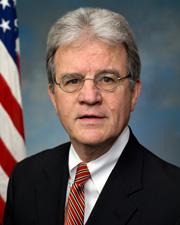 Sen. Tom Coburn (R-OK)
Legislative Activity
Stay on top of the latest movement without scrolling through every action
Senate amendment not agreed to: Amendment SA 596 not agreed to in Senate by Yea-Nay Vote. 38 - 57. Record Vote Number: 77.
March 4, 2009
View full timeline
Senate amendment not agreed to: Amendment SA 596 not agreed to in Senate by Yea-Nay Vote. 38 - 57. Record Vote Number: 77.
March 4, 2009
Roll call votes on amendments in Senate: Amendment SA 596 not agreed to in Senate by Yea-Nay Vote. 38 - 57. Record Vote Number: 77.
March 4, 2009
Considered by Senate. (consideration: CR S2728, S2734-2735, S2748-2749, S2750-2751)
March 4, 2009
Amendment SA 596 not agreed to in Senate by Yea-Nay Vote. 38 - 57. Record Vote Number: 77.
March 4, 2009
Senate amendment proposed (on the floor): Amendment SA 596 proposed by Senator Coburn.(consideration: CR S2667-2668; text: CR S2667)
March 3, 2009
Amendment SA 596 proposed by Senator Coburn. (consideration: CR S2667-2668; text: CR S2667) To require the use of competitive procedures to award contracts, grants, and cooperative agreements funded under this Act.
March 3, 2009
Senate amendment submitted
March 2, 2009
Votes
1 roll call on this amendment
Text
Proposed
RECESS

The PRESIDING OFFICER. Under the previous order, the Senate stands in
recess until 2:15 p.m. today.
Thereupon, the Senate, at 12:38 p.m., recessed until 2:15 p.m. and
reassembled when called to order by the Presiding Officer (Mr. Burris).
Mrs. MURRAY. Mr. President, I suggest the absence of a quorum.
The PRESIDING OFFICER. The clerk will call the roll.
The legislative clerk proceeded to call the roll.
Mr. ENSIGN. Mr. President, I ask unanimous consent that the order for
the quorum call be rescinded.
The PRESIDING OFFICER. Without objection, it is so ordered.

[[Page S2659]]

Motion to Commit With Instructions

Mr. ENSIGN. Mr. President, I send a motion to the desk and ask for
its immediate consideration.
The PRESIDING OFFICER. The clerk will report the motion.
The legislative clerk read as follows:

The Senator from Nevada [Mr. Ensign] moves to commit the
bill (H.R. 1105) to the Committee on Appropriations with
instructions to report the same back to the Senate with the
following amendment:

Mr. ENSIGN. Mr. President, I ask unanimous consent that further
reading of the amendment be dispensed with.
The PRESIDING OFFICER. Without objection, it is so ordered.
The amendment is as follows:
Sec. ___. (a) Across-the-Board-Reduction.--Amounts
appropriated under this Act for--
(1) fiscal year 2009 shall be reduced by $18,981,000,000;
and
(2) fiscal year 2010 shall be reduced by $3,274,000,000.
(b) Implementation.--The Director of the Office of
Management and Budget shall administer the reductions in
subsection (a) to the amount of budget authority provided or
obligation limit imposed for any discretionary account of
this Act.
Mr. ENSIGN. Mr. President, I don't think we need a long time to
discuss this amendment. It is a pretty simple amendment. What it says
is, we are going to take this bill back to the Appropriations Committee
and have the Appropriations Committee make the appropriate cuts so this
bill comes back at the 2008 funding level.
We have to ask ourselves: When is the Senate going to start being
fiscally responsible? The other side of the aisle criticized us, and
rightly so, for free spending over the last 8 years. That was one of
the things President Obama campaigned on and the Democrats across the
country campaigned on. They said they were going to be the party of
fiscal responsibility.
The debt held by the public has continued to increase. The problem is
that under the President's new budget, over the next 5 years, the debt
is actually going to double. Over the 10-year budget he has proposed,
the debt held by the public is going to triple from already
unsustainable levels.
My amendment says that we give spending a little haircut around here.
It is not significant. It is saying that at a time when we recently
passed a stimulus package, which tremendously increased Government
spending, let us not take last year's spending bills and also
tremendously increase their levels of spending. The current omnibus
proposes an 8-percent growth in the size of our Government from one
year to the next. We are talking about a record deficit this year.
$1.75 trillion is a big number; people can't even get their arms around
that number.
If you to spent $1 million a day, 7 days a week, 365 days a year,
beginning at the time Jesus was born, you still wouldn't be at your
first $1 trillion today. Our deficit this year is $1.75 trillion. To
add to that deficit with this spending bill, I believe, is outrageous.
There is a saying--and I don't remember who said it, exactly or how
it was said, but it is basically along these lines: The systems of
government such as we have always collapse due to two reasons: The
first one is a moral collapse, the second one is followed by an
economic collapse. You can understand why they happen in that order.
Because what happens if people aren't moral enough to care about future
generations? What they do is they vote people into office who give them
what they want. They borrow from the Treasury to get it, and when the
debt gets too high, it collapses the economy.
What we are doing around here is exactly that. We are repeating the
mistakes of history. We are borrowing from our children. We are running
up huge debts. If folks don't think our economy can't completely
collapse due to the huge debt burden we are passing, they have another
thing coming. Confidence in the dollar right now is questionable around
the world. Looking into the future, as we run up these larger and
larger deficits and add to a huge burgeoning debt in the United States,
people around the world are going to wonder about the strength of the
dollar. They are going to wonder whether they want to continue to buy
our Treasury bonds and finance our debt. If they stop buying our bonds,
our economy collapses. It literally falls off the cliff.
We have a fiscal responsibility to be moral enough to care about
future generations of Americans, to not continue to add dollar after
dollar, million after million, billion after billion, trillion after
trillion onto their debt load. I would encourage this body to adopt
this reasonable amendment to this bill; that instead of increasing the
Government 8 percent over last year on these particular spending bills,
let us freeze it at last year's level. We are not asking to cut
anything, but let's freeze it at last year's level.
It will be up to the Appropriations Committee to decide whether some
accounts are more worthy than others. They can plus up those or cut
others that are not as worthy. They can take care of Members' projects
if they wish to take care of Members' projects. But the bottom line is,
this amendment would at least start down the road of fiscal
responsibility to future generations.
I have a couple other comments. Can anybody rightly say this bill is
full of good spending, of justified spending? We have heard about all
the earmarks. Let me note a few of them, if you think this bill is full
of good spending. Mr. President, $1.79 million--and I am not
exaggerating--$1.79 million for swine odor and manure management
research. I am a veterinarian by profession. I understand that pigs
smell and pig farms smell worse than almost anything else. But when did
it become the responsibility of the Federal Government to control pig
odor? Shouldn't that be the responsibility of pig farmers?

Of course we need to pay back the labor unions. There is $190,000 to
the Plumbers Local Union 27 and Steamfitters Union 449, and that is in
Pennsylvania for the Western Pennsylvania Pipe Trades Regional Training
Project. We also have almost $500,000 for the George Meany Center for
Labor Studies at the National Labor College.
I have a whole list. As a matter of fact, I ask unanimous consent to
have this list of earmarks printed in the Record.
There being no objection, the material was ordered to be printed in
the Record, as follows:

Notable Earmarks

These earmarks are listed in the Joint Explanatory
Statement which was published in the Congressional Record of
February 23, 2009; after each earmark is the page number in
the Record where it is listed.
$1.76 million for a honey bee lab (H1691).
$1.79 million for swine odor and manure management research
(H1692).
$767,000 for subtropical beef germplasm (H1692).
$245,000 for aegilops cylindrica (jointed goatgrass)
(H1700).
$469,000 for ethnobotanicals (ethnobotany is ``the plant
lore and agricultural customs of a people'') (H1698).
$5.8 million to the Edward M. Kennedy Institute for the
Senate in Boston for the planning and design of a building
and possible support for an endowment (H2296).
$5 million for New Leaders for New Schools, an organization
whose executive director is likely to be named the next chief
of staff at the Department of Education (H2371).
$190,000 to the Plumbers Local Union 27 & Steamfitters
Local Union 449, Coraopolis, Pennsylvania, for the Western
Pennsylvania Pipe Trades Regional Training Project (H2364).
$238,000 to the San Francisco Department of Economic and
Workforce Development, San Francisco, California, for the
Green Jobs Workforce Development Training Pilot project
(H2365).
$238,000 to Marquette University, Milwaukee, Wisconsin, for
a dental health outreach program (H2335).
$95,000 to the State of New Mexico, Santa Fe, to collect
and analyze data about the need and potential locations for a
dental school within the state (H2348).
$571,000 to the U.S. Virgin Islands Department of Health,
St. Thomas, Virgin Islands, of which $190,000 is for
facilities and equipment for a mental health facility
(H2350).
$476,000 to the George Meany Center for Labor Studies at
the National Labor College, Silver Spring, Maryland, for
curriculum development (H2297).
$1.6 million to the Michigan Community College Association
for an alternative energy training initiative (H2299).
$1.2 million for eyeglasses for students whose educational
performance may be hindered because of poor vision (H2285).
$618,000 for teacher training in the Samoan language
(H2279).
$485,000 for a boarding school for at-risk Native students
from remote villages across western Alaska (H2284).
$476,000 to expand the PE4life physical education program
across Iowa (H2289).
$428,000 to the University of Texas Libraries for the
Latino Veterans Oral History Project (H2368).
$381,000 for the Cedar Rapids Symphony Orchestra (H2280).
$381,000 for a business school in Des Moines, Iowa to
recruit and train captioners and court reporters (H2293).

[[Page S2660]]

$357,000 for Farmingdale State College in New York to
develop a green building curriculum (H2297).
$333,000 to train college students in closed captioning
(H2295).
$285,000 for an associate degree program for air traffic
controllers (H2293).
$262,000 to support the advancement of underrepresented
minority pharmacists and pharmaceutical scientists (H2294).
$243,000 for the commercial driver's license training
program at White Mountain Community College in New Hampshire
(H2305).
$238,000 for the University of Hawaii to provide cultural
education (H2297).
$238,000 for emergency and preparedness education programs
in Beverly Hills, California (H2291).
$238,000 for daily physical education activities in Detroit
(H2281).
$214,000 for the Stony Brook University School of
Journalism in New York to teach scientists how to effectively
communicate with the public and the press (H2303).
$190,000 for Hawaii Community College to provide cultural
education (H2297).
$190,000 for Southeastern Illinois College to develop a
mining and mine safety curriculum (H2302).
$143,000 for equipment at the University of Guam Marine
Laboratory (H2303).
$95,000 for scholarships and program costs related to
prosthetic dentistry and clinical prosthodontics (H2293).
$95,000 for Indiana University of Pennsylvania for
curriculum development for a mine safety course and research
on the use of mine maps (H2298).
$95,000 for Murray State University in Kentucky to purchase
equipment for the Breathitt Veterinary Clinic (H2300).
$65,000 for a feasibility study of potential Iowa school
sites (H2282).
Certain earmarks that have been linked to a lobbying firm
reported to be under federal investigation include $951,500
for a Direct Methanol Fuel Cell (DMFC) (H2044), $951,500 for
Adaptive Liquid Crystal Windows (H2038), and $951,400 for an
anti-idling Lithium Ion Battery Program (H2038).

Mr. ENSIGN. There are plenty of others we could go through, but for
the sake of time, let's just be fiscally responsible right now. Let's
add a little fiscal responsibility into this body, and let's adopt this
amendment that says we are going to freeze spending from Government
that was not already plussed-up in the stimulus bill. Let's be fiscally
responsible.
I yield the floor.
The PRESIDING OFFICER. The Senator from Washington is recognized.
Mrs. MURRAY. Mr. President, I rise to oppose the amendment that has
just been offered by the Senator from Nevada. I go home every weekend
and I talk to families across my State. There is no doubt that people
are hurting. Thousands of people have been laid off from their jobs,
and thousands more are worried that this week they are the ones who are
going to be laid off from their jobs.
Since we first came into session in January, we have been working as
hard as I have ever seen to address these challenges that are facing
millions of Americans today--losing their jobs, losing their homes,
losing their retirement. We are trying to get this economy back on
track and instill some confidence in this country so we can move
forward. We passed a major economic recovery package just a few weeks
ago. It is being implemented as we speak and will be implemented over
the coming weeks and months.
Here we are today talking about a bill that basically is the
responsibility of Congress, every single year, to fund the Government
agencies that help make our country work. We should have had this bill
passed 3, 4, 5 months ago. We did not. This bill was done. It was ready
to go by the end of July. All of the appropriations committees had
finished their work. They had passed them out of the Appropriations
Committee, almost all of them on a unanimous vote, some of them with
just a few negative votes in committee.
But the responsibility of the Senate and House and Congress every
year is to pass our spending bills. We pass these bills in order to
make our agencies work, whether it is the Food and Drug Administration
that makes sure our food is safe, whether it is our air traffic
controllers who manage the flights out of our airports, whether it is
our health care agencies that do research and important work for this
Nation's health, whether it is Government agencies that fund
agriculture or any of the other agencies we have. These are people who
go to work every day whose function it is to make our economy and our
country work so that average citizens do not have to sit at home and
worry about whether the drug they purchase is safe or whether the
agriculture they buy at the market is safe or whether their schools are
funded or whether we provide individuals the basic health care
Americans know they need in order to keep their families secure.
It is too bad these bills didn't pass a few months ago. Why didn't
they? Because we had an administration whose bottom line was to say no.
The President at the time, President Bush, said: I will say no to these
bills as they come to my desk.
But here in the Senate and in the House, we said: These bills are
important, but if this President is going to veto them, we are going to
wait a few months for the election.
That happened, we have a brandnew President, and, unfortunately a few
months late because we were working on an economic stimulus package, we
are here to pass these bills. I wish they were done a few months ago. I
know all of us do. But we should not delay it any further. All of the
people who worked with us to get these bills passed, everyone in the
country, whether it is a YMCA that has a domestic violence center that
is waiting for $100,000 that we marked up in committee and appropriated
last year for them, or highway projects we marked up in this bill, or
transit projects, across the board, whether it is law enforcement,
whether it is consumer product safety, whether it is the numerous
housing agencies that are funded in this--they have known for several
months what they are going to get. They are waiting for us to finish
our work this week, by this deadline, Friday, so we do not go back to a
CR. It is our responsibility to pass these bills.
The Senate had a very strong vote just a few hours ago to say we are
not going to work off a continuing resolution. We are going to do a
responsible job of funding these agencies, as we said.
The amendment of the Senator from Nevada that now comes before us
sends us into a tailspin. It says we are going to send these bills back
to the Appropriations Committee to cut some $20 billion out of them and
come back to us. First of all, just from a process point of view, this
is not going to happen by this Friday, and if we do not get this bill
passed by this Friday, the Government shuts down. I can talk about the
consequences of that. I have been in this body before when the
Government shut down. It is not pretty, and we do not want to be there
for a million reasons that I am happy to talk about for some time, but
we will leave that for another day.
The fact is, to send this bill back to the Appropriations Committee
and tell them to cut $20 billion out of it, that will underfund
critical initiatives this Senate and this House believe are important.
Let me talk for a minute about housing. We all know that one of the
reasons our economy is in such trouble today is because of the housing
crisis that has come before us. In this bill--if we do not pass it as
it is written and before the Senate today, we have about 45,000
families who will lose their jobs on top of the thousands we have
already seen. We cannot afford to put those families in jeopardy. Yet
that is essentially what will happen if the amendment of the Senator
from Nevada is agreed to.
We are working hard to make sure our families do not go into
foreclosure. The amendment of the Senator puts all of those families at
risk. Single-family guaranteed housing loans are at risk under the
amendment of the Senator. Federal law enforcement efforts through the
Department of Justice are at risk through the amendment of the Senator.
Antiterrorist enforcement programs through the Department of Treasury
are at risk under the amendment of the Senator. U.S. attorneys are at
risk. Food and medical product safety--right at a time when we are all
worried about peanut butter--is at risk. Consumer product safety--the
risk goes on. All of these priorities that we worked through our
committee on a bipartisan basis and said we need to move these
initiatives forward are at risk under the amendment of the Senator.
I believe we have to all go back to our responsibilities. All of us
wish the bill could have passed a few months ago. It didn't. It is in
front of us now. We need to pass this bill, get it to the President's
desk, and then we will have

[[Page S2661]]

an opportunity to look at a budget for 2010. Our Budget Committee will
look at that budget hard, we will pass the budget out--it will have to
pass in the Senate and House--and it will set the parameters for next
year's appropriations bills. Those appropriations committees will then,
in the next few months, begin to work on their bill. For anybody who
has issues, small or large, that is the appropriate place to begin the
debate and amendment process and hopefully in regular order to pass
those bills and move forward. But we should not jeopardize this bill at
this point. That is not responsible. That is not what any of us should
be doing at this point.

Finally, let me talk about the debt issue we have been hearing so
much about. None of us wants to operate this country in debt. All of us
are fiscally responsible. I have heard every Member of the Senate come
forward and talk about making sure we keep our house in order.
Who got us to where we are today? The Republicans who came into power
under George Bush turned historic surpluses into historic deficits by
not being honest about the costs in front of us--whether it was the
Iraq war or whether it was other costs that were paid off-budget,
emergencies across the country--not coming forward and being honest
about the fact that we do need to fund health care research or
education for our kids. Why have these bills not passed before the
election? Because even Republicans didn't want to cut education or to
cut health care, which would have been what we had to do to meet the
President's budget level.
I take a backseat to no one when it comes to making sure our country
moves forward in a fiscally responsible way and deals with the debt we
have. But at the cost of laying off thousands of people because we are
not being responsible and up-front about the job we have to do is
irresponsible.
I hope our colleagues will defeat the amendment by Senator Ensign,
move on, pass this bill this week, and then we can have all the debate
we want about the budget that will come before this body shortly, about
the appropriations moving forward.
Let me remind all of us that what we are talking about here is
extremely important. No one wants to get a pink slip. No one wants to
see their job lost. No one wants to see their health care at risk,
their education at risk, or for that matter, within my appropriations
bill, their flight from their airport at risk because we have not added
air traffic controllers, which is in this bill. There are many other
issues in this bill that are at risk under the proposal of the Senator,
and I urge our colleagues to defeat this amendment and move forward,
doing what we were sent here to do, and that is be responsible.
I yield the floor.
The PRESIDING OFFICER. The Senator from Nevada is recognized.
Mr. ENSIGN. Mr. President, I wish to first address a few of the
misrepresentations of my amendment by the Senator from Washington. My
amendment does not cut any specific program, and you know it. It says
to the Appropriations Committee: We will send this back to the
Appropriations Committee, and you determine which programs are funded
and which ones are not funded. But you will fund them at last year's
level. If you want to raise the level in certain areas, then you will
have to cut funding in other areas.
We just have to ask ourselves the question: Does anybody believe
there is wasteful Washington spending? Does our Government have any
wasteful spending in it? If you say there obviously is wasteful
spending, when was the last time we cut anything? When was the last
time we cut any wasteful spending? Congress needs to address this
wasteful spending. Part of the Appropriations Committee job is
oversight. The Committee then figures out what is working, what is not
working, fund what works and cut what does not work. But that doesn't
happen around here. All they do is add and add.
If you check the Constitution, the purse strings are controlled by
Congress, not by the President. Democrats are entering their third year
of that control in both houses. So what we have to do here is exercise
our authority and say we are going to be fiscally responsible. You can
say you are fiscally responsible all you want, but unless you act on
it, the words are hollow.
Businesses across America are looking for ways to cut waste from
their budgets during this economic downturn. Do you know what they are
finding? Talk to them. I have been in business myself. I understand
that when times are good, you sometimes add staff you don't need, you
waste money in places you don't need to, and that is in the private
sector. The Government is less efficient than the private sector.
Times are tough in this country, instead of thinking we will just add
to the deficit, we will just raise taxes, let's look for efficiency and
let's eliminate wasteful spending. We have a bill in front of us that
is going to increase spending over last year's level by 8 percent. Is
that fiscally responsible? We just passed a nearly $1 trillion spending
bill called the stimulus bill, and now we are going to increase this by
8 percent? It seems to me that is not fiscal responsibility. That is
the height of irresponsibility.
Let's have a debate on this, but let's have a honest debate.
We are not cutting any specific programs. Do not say we are cutting
education. Do not say we are cutting health care. Do not say we are
cutting police and firefighters because this amendment does not do
that.
What this amendment says is, let's send this bill back to the
Appropriations Committee, to last year's level. The Appropriations
Committee can determine which programs are funded at what level. If you
believe there are certain priorities that need more funding, then fund
them; otherwise, let's be honest about this debate. And I am more than
happy to go back and forth with the other side about the merits. But if
anybody thinks there is not wasteful spending going on in Washington,
DC, you need to wake up and smell the coffee because it is outrageous
how much waste there is in our Government today--outrageous. We do not
require fiscal discipline in our agencies, and that is what we need to
start doing.
I yield the floor.
The PRESIDING OFFICER. The Senator from New York is recognized.
Mr. SCHUMER. I ask unanimous consent to address the Senate as in
morning business.
The PRESIDING OFFICER. Without objection, it is so ordered.

president obama's missile shield letter to russia

Mr. SCHUMER. Mr. President, I rise today in support of President
Obama's critical recognition that Russia must be a major player in
blocking Iran's development of dangerous weapons. Yesterday, it was
reported that the President wrote to Russia's President Dmitri Medvedev
signaling an openness to re-examining the contested missile defense
system in Eastern Europe, while urging Russia to help us stop Iran from
developing nuclear warheads and long-range weapons.
This overture by President Obama is Reaganesque in its boldness. It
has the potential to represent the most cooperative approach to a
global threat by our two countries since President Reagan and Gorbachev
signed the missile treaty 20 years ago.
It signals the ushering in of a new era of tough and smart thinking
about foreign policy that has been desperately lacking in the White
House. Rather than alienating potential allies, President Obama and his
team are demonstrating that they will abandon the Bush unilateral
approach to nuclear nonproliferation in favor of galvanizing
international support to meet the challenge posed by these deadly
weapons.
I am not an after-the-fact supporter of this strategy. I have long
thought that the key to de-fanging Iran's nuclear threat lies in
Russia's cooperation in imposing tough economic sanctions on Iran. In
fact, in an opinion piece published by the Wall Street Journal last
summer, I urged President Bush to offer to Russia a deal: in exchange
for walking back the missile defense system that Russia so opposes, the
U.S. should get Russia to back the United States' economic sanctions on
Iran that are our best stick for making sure that their nuclear threat
does not become a reality.
I also made this suggestion in person at the White House last year. I
was literally told by Vice President Cheney ``We can't do that.'' Well,
there's new

[[Page S2662]]

leadership in Washington and President Obama says ``Yes we can.''
Today, there should be no lingering doubt that Iran represents a
profound threat to our global security. The latest International Atomic
Energy Agency report confirms that Iran remains in hot pursuit of a
nuclear program. The report told us that Iran now possesses 1,010
kilograms, 2,222 pounds, of low-enriched uranium, which raises concerns
that it now has sufficient uranium and the means to enrich it to
produce nuclear warheads.
Whether President Ahmadinejad actually intends to make good on his
threat remains to be seen. But what we do know is that the
administration needs to use every diplomatic tool in our arsenal to
halt Iran's progress in the development of deadly nuclear weapons.
In the recent past, we have made some progress in ratcheting up
economic pressure on Iran by sanctioning four of Iran's major state-
owned banks. This move has dramatically limited Iran's ability to
conduct international business, as a growing number of foreign banks
are unwilling to risk reputational harm or loss of access to U.S.
financial markets. More economic pressure can and must be applied.
These sanctions are effective against Iran for several reasons.
Despite the fact that the leadership and government of Iran is a
theocracy, the Iranian people are largely secular and look westward for
their cultural bearings. It's a common sight to see satellite dishes
hidden in air-conditioning ducts, so Iranians can stay abreast of
Western culture. Its growing youthful population also has strong ties
to the west. MTV is a popular TV channel among the young in the
country, not al-Jazeera. Iran is also wealthier than most neighbors in
its region, and its inhabitants have enjoyed a higher standard of
living than most people living in the Middle East.
However, Russia is blunting the impact of the sanctions. Economic
self-interest motivates Russia's arguments that there is no evidence
that Iran has a secret nuclear weapons program and that sanctions would
undermine the International Atomic Energy Agency's efforts. Russia
makes money from business with Iran, since Russia currently supplies
over 75 percent of Iran's arms imports. Russia continues to supply Iran
with nuclear fuel and to train Iran's nuclear engineers.
More ominously, Prime Minister Putin's nationalist rhetoric, designed
to remake Russia into a global power and restore nationalist pride to
the Russians, has led Russia into an even tighter embrace with Iran, an
embrace that must be untangled if we are ever to truly eliminate the
Iranian nuclear threat.
It is also not a secret that little has raised Russia's anger and
fueled its nationalist impulses more than the Bush administration's
missile shield plan. Putin argued that such a plan would both reignite
the arms race of the 1980s and damage Russia's relations with the
United States, Poland, and the Czech Republic. He also said that the
shield would prompt Russia to increase its own defenses and abrogate
its commitments to demilitarize under the Treaty on Conventional Armed
Forces in Europe.
Despite Russia's loud complaints over this missile shield, the Bush
administration plowed ahead, securing reluctant agreement from our
allies at the NATO summit earlier last summer to move forward with its
implementation.
Let me be clear. The United States is committed to both protecting
against the threat of a nuclear Iran and protecting a free and
prosperous Eastern Europe. But the Bush administration's plan to deploy
the missile defense system in Poland and the Czech Republic has never
made much sense. The technology has never been proven to work, it has
not been determined to be cost-effective, and it will do nothing to
tackle the ultimate source of this threat, Iran's stubborn refusal to
abandon its nuclear program. At the same time, it does very little to
preserve the necessary and very important independence of Eastern
Europe.
In this context, it seems clear that the U.S. and Russia each have
something to gain from each other. President Obama appears to recognize
this dynamic. In exchange for joining the West in imposing economic
sanctions on Iran until they stop their pursuit of nuclear weapons, I
encourage the administration to roll back its predecessor's plans for a
missile shield. It makes sense. With Russia on board, economic
sanctions will have much greater success, and countries like China will
certainly think twice before engaging with the Iranian regime. Russian
participation will give multilateral sanctions against Iran real teeth,
and we can halt Iran's nuclear program before it is too late.
The President's gesture to Russia is the kind of smart, targeted
diplomacy our dangerous world needs. Given that a nuclear Iran is such
a profound threat, this strategy makes eminent sense. The United States
could give up a non-vital missile program in Eastern Europe in exchange
for vitally needed Russian cooperation to prevent Iran from going
nuclear. President Obama and President Medvedev do not need to look
into each other's soul. They just need to be able to trust each other's
handshake.
The PRESIDING OFFICER. The Senator from Hawaii is recognized.
Mr. INOUYE. Mr. President, the measure before us, H.R. 1105, is
consistent with the funding levels approved in the budget resolution.
Therefore, I sincerely believe there is no justification for any
amendment to reopen this bill to further cuts.
The Republicans argue there is an overlap between the funds added in
the recovery bill and the omnibus bill before us. At the request of
Republican Members, Senator Cochran and I called upon our staff to
conduct a bipartisan review of the impact that the Recovery Act has on
the omnibus bill. That review determined that there is, at most,
minimal overlap. Let me explain. First, there are 900 programs in the
omnibus bill. Fewer than 20 percent receive stimulus funds. For those
who may want to offer an across-the-board cut to this bill, they would
be harming more than 80 percent of the programs for the Department of
Agriculture, Commerce, Justice, Treasury, HUD, Energy, and so on.
Second, of the programs with stimulus funds, only 100 have an
increase in the 2009 omnibus bill above the 2008 funding level, and
many of those increases just cover inflation or are relatively small.
Nearly half of these programs averaged about $5 million in increase
between 2008 and 2009. In many cases this does not even cover the cost
of inflation.
Analysis will show there are 30 programs in the bill before us which
grow substantially between 2008 and 2009 by a total of $15 billion. Of
the omnibus growth of the $15 billion we measured, $13 billion is
either entirely unrelated to the stimulus bill or is required in
addition to the Recovery Act funds to achieve policy objectives or was
funded in response to strong political support which would eliminate
any chance of reducing it.
I would like to mention a few critical priorities that would go unmet
if the Congress were to pass a CR rather than the omnibus. On food and
medical product safety inspections, this omnibus bill would provide the
Food and Drug Administration with an increase of nearly $325 million,
of which $150 million is included in the current continuing resolution.
If this measure is not enacted into law, the proposed increased
funding for the FDA would be reduced by $175 million. This reduction in
funding would significantly decrease the number of food and medical
product safety inspections, both domestic and overseas, that the FDA
could perform.
On the matter of consumer product safety, this measure would provide
the Consumer Product Safety Commission with an increase of $25 million
or 32 percent above the 2008 level. Without this funding increase, this
Commission would not be able to implement many of the reforms and new
directives contained in the newly enacted Consumer Product Safety
Improvement Act to make children's products safer, such as the consumer
complaint database, an overseas presence, and increased inspector
general staffing, and staffing generally.
On the matter of the enforcement of securities law, inadequate
resources for the Securities and Exchange Commission would hamper the
ability to undertake vigorous enforcement of security laws to help
bolster the integrity of the financial markets just when such
enforcement is needed.

[[Page S2663]]

On the matter of the Federal Aviation Administration, this agency
faces a crisis in maintaining an adequate workforce of trained air
traffic controllers. Without the increase provided in this omnibus
bill, the FAA would be forced to freeze or reduce the number of new air
traffic controllers the agency can bring on board and train, worsening
the experience shortage we already have in our air traffic control
towers. One accident is one too many.

These are only some of the many priorities in this legislation that
would go unmet if we fail to pass this bill as written. This omnibus
bill is a good package. It is bipartisan and noncontroversial. It is in
compliance with the budget resolution for the committee.
Again, I believe there is no justification for an amendment to reopen
this bill to further cuts that would do harm to the important national
priorities I have mentioned.
I suggest the absence of a quorum.
The PRESIDING OFFICER (Mr. Sanders). The clerk will call the roll.
The legislative clerk proceeded to call the roll.
Mr. INOUYE. Mr. President, I ask unanimous consent that the order for
the quorum call be rescinded.
The PRESIDING OFFICER. Without objection, it is so ordered.

Motion to Commit With Instructions, as Modified

Mr. INOUYE. Mr. President, I ask unanimous consent that the Senate
proceed to vote in relation to the Ensign motion to commit with
instructions, as modified with the changes at the desk; and that no
amendments be in order to the motion prior to a vote in relation to the
motion to commit; that upon disposition of the motion to commit,
Senator Hutchison be recognized to offer an amendment which provides
for a reduction in funding with no amendment in order to the amendment
prior to a vote in relation to the amendment.
The PRESIDING OFFICER. Is there objection?
Without objection, it is so ordered.
The motion to commit with instructions, as modified, is as follows:

Mr. Ensign moves to commit the bill H. R. 1105 to the
Committee on Appropriations of the Senate with instructions
to report the same back to the Senate with the following
changes:
Sec. ___. (a) Amounts appropriated under this Act for--
(1) fiscal year 2009 shall be reduced by $18,981,000,000;
and
(2) fiscal year 2010 shall be reduced by $3,274,000,000.

Mr. INOUYE. Mr. President, I ask for the yeas and nays.
The PRESIDING OFFICER. Is there a sufficient second?
There appears to be a sufficient second.
The question is on agreeing to the motion.
The clerk will call the roll.
The assistant legislative clerk called the roll.
Mr. DURBIN. I announce that the Senator from Indiana (Mr. Bayh), the
Senator from North Dakota (Mr. Conrad), and the Senator from
Massachusetts (Mr. Kennedy) are necessarily absent.
Mr. KYL. The following Senators are necessarily absent: the Senator
from Nebraska (Mr. Johanns) and the Senator from Alabama (Mr.
Sessions).
The PRESIDING OFFICER. Are there any other Senators in the Chamber
desiring to vote?
The result was announced--yeas 33, nays 61, as follows:

[Rollcall Vote No. 75 Leg.]

YEAS--33

Alexander
Barrasso
Bennett
Brownback
Bunning
Burr
Chambliss
Coburn
Corker
Cornyn
Crapo
DeMint
Ensign
Enzi
Graham
Grassley
Gregg
Hatch
Hutchison
Inhofe
Isakson
Kyl
Lugar
Martinez
McCain
McConnell
Murkowski
Risch
Roberts
Thune
Vitter
Voinovich
Wicker

NAYS--61

Akaka
Baucus
Begich
Bennet
Bingaman
Bond
Boxer
Brown
Burris
Byrd
Cantwell
Cardin
Carper
Casey
Cochran
Collins
Dodd
Dorgan
Durbin
Feingold
Feinstein
Gillibrand
Hagan
Harkin
Inouye
Johnson
Kaufman
Kerry
Klobuchar
Kohl
Landrieu
Lautenberg
Leahy
Levin
Lieberman
Lincoln
McCaskill
Menendez
Merkley
Mikulski
Murray
Nelson (FL)
Nelson (NE)
Pryor
Reed
Reid
Rockefeller
Sanders
Schumer
Shaheen
Shelby
Snowe
Specter
Stabenow
Tester
Udall (CO)
Udall (NM)
Warner
Webb
Whitehouse
Wyden

NOT VOTING--5

Bayh
Conrad
Johanns
Kennedy
Sessions
The motion, as modified, was rejected.
Mrs. MURRAY. I move to reconsider the vote, and I move to lay that
motion on the table.
The motion to lay on the table was agreed to.
The PRESIDING OFFICER. The Senator from Texas.

Motion to Commit with Instructions

Mrs. HUTCHISON. Mr. President, I have a motion at the desk which I
would like to call up for consideration.
The PRESIDING OFFICER. The clerk will report.
The bill clerk read as follows:

The Senator from Texas [Mrs. Hutchison] moves to commit the
bill H. R. 1105 to the Committee on Appropriations of the
Senate with instructions to report the same back to the
Senate with the following change:
Amend spending levels in the bill so as to report back a bill
with an aggregate non-security spending level at fiscal year
2008 funding level, adjusted for inflation, by reducing
duplicative or non-essential funding in the $787,000,000,000
stimulus bill also referred to as the American Recovery and
Reinvestment Act of 2009.

Mrs. HUTCHISON. Mr. President, the amendment that was just defeated
was to hold us to the 2008 spending levels after the $1 trillion of
stimulus spending that has already been passed and signed by the
President. My amendment would be for the nonsecurity spending for 2008,
plus the rate of inflation at 3.8 percent.
Basically, what I am doing is asking that we commit the bill to the
Appropriations Committee to amend and find the places in the omnibus
bill that is before us or the stimulus bill from 2 weeks ago where we
would take out the amount of spending that is duplicative or
nonessential in the amount of approximately $12 billion. This is a very
modest cut, but it would begin to put us on the road toward some fiscal
responsibility. We have just passed a $1 trillion stimulus package. It
is in all of the areas that we could spend money on, and many of those
are duplicated in what we are taking up on the floor right now.

So if you take the nonsecurity spending of 2008 and you add the
regular inflation at 3.8, the Congressional Budget Office says that it
would be about $12 billion in cuts that the Appropriations Committee
would be able to find. So we are not saying here to slash across the
board. We are certainly holding harmless defense and veterans. But we
are saying that the Appropriations Committee should look at what we
have passed and see where there is duplication and cut $12 billion out
of this spending bill, and then we will be setting the precedent that
we are going back to fiscal responsibility, which is setting the budget
and having a reasonable increase--the rate of inflation--which has been
the normal procedure here until this year.
When you look at the bill that is before us, it would cost about $408
billion, according to the Congressional Budget Office. When you account
for the previous continuing resolution, which provided funding for
defense, military construction, veterans affairs, and homeland
security, the top line fiscal year 2009 spending level would exceed $1
trillion. This does not include last year's supplemental nor the
stimulus which we have just passed, which, when you combine those
bills, would be another total of $1.4 trillion. That is a 49-percent
increase over a 1-year period. If we want to exclude the emergency or
one-time actions, such as supplementals or the stimulus, then you would
have an increase over last year's spending by $83 billion, which would
be an 8.8-percent increase over last year's spending. That is more than
twice the rate of inflation, at 3.8 percent.
Let's take some examples. I will look at my committee, Commerce
Committee, and the areas of my jurisdiction. We authorize broadband
grants. We share this jurisdiction with the Agriculture Committee. We
provided a total of $7.2 billion for broadband grants and loans in the
stimulus package, $4.7 billion for the NTIA, and $2.5 billion for rural
utility service. Yet in this bill we are adding another $400

[[Page S2664]]

million. That totals, for the fiscal year 2009 spending, a 4,500-
percent increase. Why do we need another $400 million when we haven't
even begun to spend the $7.2 billion from the stimulus yet?
How about the National Institute of Standards and Technology? This is
a program I support. It is a valid program, just as the previous one.
But here we are increasing the NIST funding by $31 million over last
year's funding level and we just gave NIST $220 million not 2 weeks
ago. So the Institute of Standards and Technology would be increased
not by $31 million, but $251 million over a 1-year period.
These are only some of the items in my own committee's jurisdiction.
There are 122 accounts in this bill that received stimulus funding, and
I support most of what is in this bill because the Appropriations
Committee took up these spending bills last year. We had the ability to
amend, in most cases, and we know what is in those bills. However, they
were increased on the House side since we took them up last year, and
now we have, between now and October 1 of this year, this spending bill
for all of the accounts except the security accounts.
Why don't we show the American people that we are going to exercise
fiscal restraint; that we know we have just passed $1 trillion in
stimulus spending--some of which arguably is stimulus and some of which
arguably is not, but we passed that stimulus bill--and it is going to
cost our taxpayers $1 trillion. We hope it will increase the revenue,
because we hope it will increase jobs and it will keep people in their
jobs. That is what we want it to do. But now we are in the regular
appropriations cycle, from today until October 1, and we are talking
about $408 billion more in spending, some of which has already been
provided for in the stimulus package we passed.
The American people, some of whom have lost their jobs, some of whom
have received notice that their mortgages are going to be foreclosed
and their homes are going to be taken, are saying: What are they doing
up there? How can they spend money like that without any regard to what
is fiscally responsible? And how we are going to pay it off? Because
this is more debt, and we are going to increase, and increase again,
and everyone who owns something or who has a mortgage understands this.
We don't have to do this. We can say today, in a bipartisan way, that
we are going to turn a new page; we are going to turn a new page in
this Congress and the Appropriations Committee is going to do its work.
The Appropriations Committee is going to, in a bipartisan way, start
looking at this $408 billion bill and compare it to the 122 accounts in
this bill that got stimulus 2 weeks ago and we are going to find $12
billion in cuts--$12 billion out of $408 billion. It could come out of
the stimulus. If that were the preferred way to go, we could go back
into the stimulus in the outyears. It doesn't have to be in the next 2
years, it can be in the outyears of the stimulus. The Appropriations
Committee would be authorized to go into either bill and shrink $12
billion.
It seems almost unthinkable that we would not be able to cut $12
billion out of $1.408 trillion of taxpayer money that is coming out of
Washington and which is debt because we don't have the money to pay for
it.
I urge my colleagues to pass this amendment. Let us show the American
people that we do understand we should have fiscal responsibility and
restraint, as every household in this country is experiencing right
now; and that from now forward our appropriations bills are going to be
in the regular order; that we are going to have a budget, and we are
going to live within that budget, and we are not going to add 5 percent
or 8 percent and then bring it over here and pass it with no
amendments. That is business as usual. That is not change, it is not
bipartisanship, and it is not acceptable.
Mr. President, I yield the floor, and I reserve the remainder of my
time.
The PRESIDING OFFICER (Mr. Kaufman). The Chair recognizes the Senator
from Florida.
Mr. MARTINEZ. Mr. President, I ask unanimous consent to be recognized
for 20 minutes and that the time not be counted against Senator
Hutchison's time.
The PRESIDING OFFICER. Without objection, it is so ordered.

CUBA

Mr. MARTINEZ. Mr. President, as this mammoth appropriations bill is
being considered, there are some ramifications that go way beyond the
fiscal impact of this bill and the prudence of those measures. It is
about the policy implications of some of the things that have been
woven into this bill. I am particularly referring to those issues
referring to our relationship with Cuba.
This Senate has debated over many years issues relating to Cuba, a
close neighbor; unfortunately, over the last half century, not a
friendly neighbor. I think back to about 1898, when this Senate was
very much in favor of Cuba's freedom from Spain and American forces
intervened. In 1902, Cuba's freedom as an independent nation, freed
from Spain, was granted as a result of actions by our Congress as well
as our President.
As the Senate considers taking steps that would change the current
approach to policy regarding Cuba, we should reflect on how and why we
have the current policy in place and the ramifications of adjusting
that policy at this moment in time, even temporarily.
The United States-Cuba policy is a living, breathing entity. Over the
years, it has been adjusted, loosened, tightened, and tested. Ten
successive U.S. Presidents have affirmed the policy, bolstering
provisions for the sake of those brutalized by the regime, seeking no
harm to the general Cuban public while denying the regime the resources
it so desperately needs to keep the stranglehold on power.
The United States has always had the general welfare of the Cuban
people in mind as evidenced by our generous humanitarian aid and the
promise it is of untethered assistance. The United States is the No. 1
supplier of humanitarian aid to Cuba. The American people, in 2007
alone, sent $240 million in private assistance through reputable
humanitarian assistance organizations. The foundation of our policy
takes aim at the actions of the regime that expropriated private
property without compensation--property owned by American citizens. On
top of this foundation is our message that Cubans deserve access to
free and fair elections, basic human rights, and the rule of law.
The United States built this policy so as to stand with the Cuban
people, who are denied the freedoms we as Americans receive as a
birthright. As we consider stripping enforcement of the sanctions, I
wish to spend some time talking about what this policy means to the
Cuban people, the American Government, and me personally, as someone
who witnessed the violence of this revolution firsthand.
United States-Cuba relations during the Castro era have largely been
defined by Cuba's record of anti-Americanism and aggressive acts of
hostility. When Fidel Castro took power in the early days of 1959,
there were promises of democracy, free press, and elections. But such
reforms never took place. In fact, a violent dictatorial regime came in
its place. Many executions took place--killings without trial, without
due process. Our President, then Dwight D. Eisenhower, built a
framework for the anti-Castro policy by placing trade sanctions on
sugar, oil, and guns.
When barrels of Soviet oil began to arrive in Havana, United States
oil companies in Cuba refused to continue refining oil, paving the way
for further nationalization of United States assets--oil refineries in
this instance. All of these nationalizations took place without
compensation to American companies. And to this day, there never has
been compensation. All of the properties owned by Americans were taken.
Later, little by little, properties owned by Cubans were taken until
there was no vestige of private property left in Cuba whatsoever.
My own personal story, my own life, was touched, as I was a young boy
when all of this took place. Ultimately, as a result of persecution of
those of us who were people of faith, as well as the stifling
atmosphere in a totally controlled society, as a teenager, I emigrated
to the United States. I watched firsthand the tensions between Cuba and
the United States in a very personal way.

[[Page S2665]]

I remember watching the television and the news accounts of tensions
rising between the United States and Cuba--escalating and leading up to
the Cuban Missile Crisis.
That began in July of 1962, when Raul Castro went to Moscow, and the
bonds between Cuba and Russia strengthened.
The Castro brothers engaged with Russia and agreed to allow the
Soviets to deploy nuclear missiles, under Moscow's jurisdiction on the
island of Cuba. By the fall of 1962, Soviet freighters began delivering
shipments of middle-range ballistic missiles.
In an address to the nation on October 22, 1962, on the eve of my
16th birthday, President John F. Kennedy warned of the imminent danger
presented by the emerging Soviet-Cuba alliance.
In describing Cuba's nuclear strike capabilities, Kennedy said:

Several of them include medium range ballistic missiles,
capable of carrying a nuclear warhead for a distance of more
than 1,000 nautical miles. Each of these missiles, in short,
is capable of striking Washington, D.C., the Panama Canal,
Cape Canaveral, Mexico City, or any other city in the
southeastern part of the United States, in Central America,
or in the Caribbean area.

Five days later, in a letter to Russian Primer Nikita Khrushchev,
Fidel Castro offered the island in sacrifice and urged the Soviets to
use nuclear weapons against the United States if necessary.
Let's be clear, the Castro regime, under Fidel and Raul Castro,
then--as they are today--in power, wanted first strike nuclear attacks
against the United States. Fidel Castro urged the Russians to let the
missiles fly toward our soil.
Fortunately for all, Khrushchev's response to the Castro request was
to urge, ``. . . patience, firmness and more firmness.''
And these events are the foundation for U.S. Cuba policy; brutality,
the theft of U.S.-owned assets, and the threat of nuclear catastrophe.
All of these things perpetrated by the Castro brothers who were in
power in 1959, and who remain in power today.
In the years between the Cuban Missile Crisis and now, the United
States has made many good faith efforts and attempts to unilaterally
engage Cuba and restore relations.
Without fail, every single attempt has failed due to the actions of
the Castro regime.
Several attempts involved our offering concessions similar to those
in the bill before us today.
In 1975, Secretary of State Henry Kissinger, during President Gerald
Ford's presidency, tried to broker a deal with Cuba that would have
lifted the trade sanctions and normalized relations. But the regime
chose another route. It wanted to project power abroad. It was more
interested in acting as a surrogate of the Soviets than it was in
better relations with the United States. So Cuba sent troops to Angola.
These troops engaged in a war as surrogates of the Soviet Union, where
Cuban men died and where the Cuban Armed Forces were engaged in battle.
They seized the capital city of Luanda, and the group then proclaimed
independence from Portugal.

In an effort to promote peace and stability, Secretary Kissinger had
no choice but to tell Cuba that as long as they had troops in Africa,
the deal to normalize relations with Cuba was off the table.
In April 1980, during the Presidency of Jimmy Carter the U.S.
Government once again reached out to the Cuban regime. This was
rebuffed in a different way. This time it was as a result of more than
10,000 Cubans who were seeking asylum in the Peruvian Embassy; Cuban-
American exile groups reached out to the island asking if willing
Cubans could be allowed safe passage to the United States.
The response from the Cuban people was overwhelming and more than
125,000 Cubans fled for freedom in what became known as The Mariel
boatlift. In the months that the boatlift took place, the U.S.
established an interests section in Havana and reciprocated by allowing
Cuba to establish theirs in Washington.
This would have been a bright spot for U.S.-Cuba relations except for
the fact that the Castro regime took advantage of our generosity.
As thousands of Cubans lined up for the chance to live in freedom,
the Castro regime opened its prisons and mental hospitals and sent
patients and their worst criminals, murderers, thieves, and drug
dealers into the United States with the idea that they would be turned
loose to wreak havoc in the U.S.
This was not only cynical but also an act of aggression during a time
when President Carter had extended a hand of friendship.
Once discovered, the Castro regime refused to take back the criminals
and many were absorbed by our prison system where they remain to this
day because they will not accept them back.
The Mariel Boatlift, as it is now known, was symbolic of the desire
of the Cuban people to live freely and the flight of the people of Cuba
to friendlier places, but also of the frustrating attempts to have a
better relationship with the Cuban government.
Frustrated with the conditions allowed by the Cuban regime, more than
125,000 Cubans made the journey to the United States. Many were
reunited with family and friends, and all had a chance at a better
life.
In February 1982, the U.S. Secretary of State added Cuba to the list
of countries supporting international terrorists. The U.S. State
Department issued a report detailing Cuba's activities.
The State Department asserted that Cuba had, quote, ``encouraged
terrorism in the hope of provoking indiscriminate violence and
repression, in order to weaken government legitimacy and attract new
converts to armed struggle.''
Cuba was noted to have very active operations throughout Central
America and especially in Nicaragua, El Salvador, and Guatemala.
It was reportedly providing, ``advice, safe haven, communications,
training, and some financial support to several violent South American
organizations.''
The long record of the Cuban government's lack of respect for human
life extends beyond the 1960s, 1970s and 1980s. In 1996, the Castro
regime engineered a civilian murder that shocked the conscience of all
Americans.
On February 24, 1996, the regime ordered the shoot down of two
unarmed civilian planes flying over international waters on a
humanitarian mission.
Four people were killed. Three U.S. citizens and a permanent U.S.
resident; Armando Alejandre, Jr., Carlos Costa, Mario de la Pena, and
Pablo Morales.
These men were part of a Florida-based humanitarian organization
called ``Brothers to the Rescue,'' a group credited with spotting and
saving the lives of thousands of Cubans who spotted and helped rescue
Cubans trying to raft across the Florida Straits.
Following a thorough Federal investigation, it was determined the
regime premeditated the shoot down as part of a conspiracy called
Operation Scorpion--a mission designed to send a message to the Cuban
exile community.
In the months leading up to the shoot down, Cuban-piloted MiG jets
practiced intercepting and firing on slow-moving planes similar to
those flown by the Brothers.
Further, the regime infiltrated an agent into Brothers for the sole
purpose of encouraging the group to fly into the regime's death trap.
This agent disappeared the day before the shoot down and reappeared
in Havana to denounce the humanitarian group.
The Southern District of Florida would eventually find and charge 14
individuals including Cuban spies.
The reaction from the international community was swift and harsh.
The United Nations Security Council passed a resolution condemning
Cuba.
The European Union followed suit. Here in the United States, we
strengthened sanctions against Cuba through the Helms-Burton Act.
A known state-sponsor of terror, the Cuban regime engaged in
premeditated murder, in international airspace.
And the same people who orchestrated this unprovoked attack, Fidel
and Raul Castro, are still in power today.
Incidents such as these strengthen the resolve of Cubans looking for
a better life.
Jose Marti, a Cuban hero, referred to as the ``Apostle for Cuban
Independence,'' once said, ``Man loves liberty, even if he does not
know that he loves it. He is driven by it and flees from it where it
does not exist.''

[[Page S2666]]

Many have fled Cuba for our shores.
During the early days of the regime from 1959 to 1962, it is
estimated that the U.S. resettled 200,000 Cuban refugees.
There are well over 1.5 million Cuban refugees in the U.S. and many
more in Spain, Mexico, and throughout Latin America and the world where
the Cuban Diaspora has gone, escaping tyranny and seeking freedom.
According to the State Department:

These include former political prisoners, persecuted
religious minorities, human rights activists, forced labor
conscripts, and those discriminated against or harmed based
on their political or religious beliefs.

Those who choose to stay behind and courageously oppose the regime's
radical ways are subjected to violence, torture, and even murder.
According to Armando Lago, an economist who has attempted to compile
a list of every person killed since the start of the Cuban revolution,
Raul Castro was personally responsible for 550 executions in 1959
alone--executed without trial, without cause, without mercy--Raul
Castro, the figurehead of Cuba's modern regime.
Lago has documented 500 murders by prison guards, 500 deaths from
medical neglect, 200 suicides of political prisoners, and more than
1,000 assassinations and disappearances.
Those who have voiced opposition to the regime's policies have been
forced to endure harsh consequences.
Under the Cuban Criminal Code, the regime has the legal authority to
detain and arrest anyone deemed not in line with the Communist State.
These individuals are defined under Article 103 of the Cuban Criminal
Code as:

Any person who incites against the social order,
international solidarity or the communist State, by means of
oral or written propaganda or in any other way; prepares,
distributes or possesses propaganda . . . Any person who
disseminates false news or malicious predictions likely to
cause alarm or discontent among the population, or public
disorder . . . [or] Any person who permits utilization of the
mass communication media shall be punished with one to four
years imprisonment.

Once in prison, these individuals are subjected to unsanitary
conditions, harassment, and beatings.
Here are just a few of the conditions reported by the Inter-American
Commission on Human Rights.

The nutrition and hygienic situation, together with the
deficiencies in medical care continue to be alarming and have
caused numerous medical problems among the prison population.
Anemia, diarrhea, skin diseases and also parasitism due to
polluted water, appear to be commonplace in the majority of
the country's prisons, while in some such as the Manacas and
Combinado del Este facilities cases of tuberculosis have been
recorded.
Moreover, inmates who have made any form of protest about
the treatment received or who reject reeducation, which
according to information received consists of political and
ideological training, have been subjected to reprisals such
as beatings, being shut up in punishment cells (which are
extremely small, with the door closed and where the prisoner
can be kept for months without seeing the light of the sun),
being transferred to prisons normally far from where their
families live, suspension of family visits, or denial of
medical treatment.

This is in sharp contrast to the much publicized detention facility
in Guantanamo. I have visited there and conditions are as good there or
better than those in Florida jails. Organizations can visit Guantanamo.
That is the only jail in Cuba that can be visited by an international
organization like the Red Cross. The Cuban government refuses any human
rights organization permission to visit their prisons.
The fact is the only uninspected, deplorable prisons in Cuba are
those run by the Cuban government. Their gulag continues today
unchecked, and would continue even in spite of us reaching out through
this bill in this misguided way.
According to the U.S. State Department's 2008 Report on Cuban Human
Rights released last week:

. . . the government continued to deny its citizens their
basic human rights and committed numerous, serious abuses.
The government denied citizens the right to change their
government.

In describing these abuses of human rights, the report states:

The following human rights problems were reported: beatings
and abuse of detainees and prisoners, including human rights
activists, carried out with impunity; harsh and life-
threatening prison conditions, including denial of medical
care; harassment, beatings, and threats against political
opponents by government-recruited mobs, police, and State
Security officials; arbitrary arrest and detention of human
rights advocates and members of independent professional
organizations; denial of fair trial; and interference with
privacy, including pervasive monitoring of private
communications.

The report notes,

. . . severe limitations on freedom of speech and press;
denial of peaceful assembly and association; restrictions on
freedom of movement, including selective denial of exit
permits to citizens and the forcible removal of persons from
Havana to their hometowns; restrictions on freedom of
religion; and refusal to recognize domestic human rights
groups or permit them to function legally.

One of the political prisoners mentioned in the State Department
report is a man named Tomas Ramos Rodriguez, who was released on June
16 after 18 years in prison.
Following his release, Tomas Ramos noted that ``prison authorities
beat prisoners with truncheons on a near-daily basis with impunity.
Families of prisoners continued to report that prison staff sometimes
goaded inmates with promises of rewards [if they would] beat a
political prisoner.''
In describing the prison conditions, Tomas Ramos recalled the ``cell
floors that had standing pools of water contaminated with sewage.''
Additionally, the report tells the story of a physician named Rodolfo
Martinez Vigoa, who complained to the Ministry of Public Health about
the condition of the local health clinic in Artemisa as well as the
salaries of his employees.
In response, instead of taking care of the problem, the regime stood
by as ``approximately 300 persons arrived at Martinez's house and
shouted insults, calling him a traitor and a counter revolutionary. The
government later stripped Martinez of his medical license.''
There is a long litany of the human rights abuses that exist in Cuba.
The fact is, with these conditions, we would dare not have a free-trade
agreement with Colombia because of concerns about human rights.
President Obama, during his campaign, indicated he was concerned about
human rights conditions in Colombia so, therefore, he would not be for
a free-trade agreement with Colombia. It would seem to me that to be
consistent, he would have to veto this bill if, in fact, it contains a
relaxation of trade with Cuba, particularly if it gets into the area of
providing credits, which is what this bill would do, to those in Cuba
who do not pay their bills.
The fact is, there have been some pretend changes in Raoul Castro's
regime since he took over Cuba. Citizens are allowed to use cell
phones. That sounds like a great thing. The problem is the average
Cuban makes $17 a month. The average cell phone in Cuba costs about
$64. With the activation fee as high as $120, never mind the contract
fee on a month-to-month basis.
Another change is Cuban citizens can now stay in hotel rooms that
have been historically reserved only for tourists. The problem is,
hotel rooms cost as much as 11 times the average monthly salary of a
Cuban. These are not changes, these are sham assurances aimed at hiding
the regime's struggle to remain financially solvent.
One clear change that has occurred is the rise of short-term arrests
for so-called dangerous activity. Arbitrary detentions of prodemocracy
activists have increased five times, from 325 in 2007 to 1,500 in 2008.
These are just those that have been documented. Hundreds more, I am
sure, take place that would be difficult to document because they
happened in parts of the country where our diplomats certainly are not
allowed to travel, and certainly there are no human rights
organizations that could monitor it.
The regime's promise of change has fallen short of what the Cuban
people want and deserve. Where are the anticipated reforms? There have
been 2 years of Raoul's rule and nothing has happened.
Even the most modest calls for reform go unanswered. Since the
average Cuban earns $17 a month, but the prices of goods and services
are almost what they are here, many families find it very difficult to
get by.
For those Cubans who have family members living abroad, here in the
U.S. or Spain or elsewhere, they can receive remittances without a
Government penalty. But the Cuban Government, unlike any other
Government in the world, takes 20 percent from any incoming money.

[[Page S2667]]

A person living in the United States who sends funds to Brazil,
Ecuador, Colombia, or China, they can expect to pay a private
transaction fee of somewhere in the neighborhood of 2.5 percent. The
Cuban Government takes a 20-percent cut right off the top. In this bill
we will unilaterally be letting the Cuban Government receive unlimited
remittances, asking them to do nothing--unilaterally lifting the
restrictions on remittances while asking the Cuban Government to do
nothing.
Would it not be nice if we were to tell the Cuban Government that in
exchange for allowing them to now receive unlimited remittances, which
may not be a bad thing, then they should, in fact, act in a way that
allows the poor people of Cuba and those here sacrificing to send them
help, not to be taking a 20-percent cut from the moneys they send to
their relatives and loved ones in Cuba. These are not measures designed
to serve the interests of the Cuban people.
But there is another yet darker side to this regime, as the anti-
Americanism and the antagonism to our country has exemplified the
actions of this regime throughout its time. Cuba and its anti-
Americanism has fallen in line with Venezuela.
Mr. President, I ask unanimous consent I be allowed to have 5
additional minutes to conclude my remarks.
The PRESIDING OFFICER. Without objection, it is so ordered.
Mr. MARTINEZ. The relationship between Venezuela and Cuba is very
close and obviously designed in their alliance to exercise an anti-
American policy. But it does not stop there. It also includes the very
dangerous Government of Iran.
Fidel Castro visited Iran in 2001. Mahmoud Ahmadinejad visited Cuba
in 2006, following a visit in 2000 by then-President Khatami. The fact
is, Chavez is in and out of Cuba regularly. The fact is, these
governments are functioning as an alliance of sorts in the region,
trying to thwart and provoke an anti-American attitude.
Before voting on this spending bill, we ought to give serious
consideration to what changing the U.S. policy toward Cuba would mean
going forward. While some may feel that the U.S. policy is punitive, it
was created with the interests of the Cuban people in mind. Relaxing
restrictions and allowing additional remittances would provide the
regime with additional revenue, cash that would help it maintain its
repressive policies.
According to the Cuban Assets Control Regulation: Persons visiting a
member of the immediate family, who is a Cuban national, for a period
not to exceed 14 days, those are allowed today once every 3 years.
What is likely to happen under these proposed changes in the omnibus
is a spike increase in tourist travel under the guise of humanitarian
activity. That does not serve the interest of the Cuban people and
those who seek freedom inside Cuba.
In addition to that, this legislation before us would extend credit
through the U.S. banking system to a Cuban nation that recently
disclosed it owes more than $29 billion to the Paris Club, a debt they
stopped making payment on back in the 1980s.
In fact, Cuba has the second worst credit of any nation in the world.
And to that country, we are now proposing, in this legislation, in
these financial times we are living in, to provide the Cuban Government
with credit that can purchase agricultural goods in this country and
also medicine, in fact, to the tune of some $780 million a year.
They have been doing just fine paying cash on the barrel head. This
bill will give them credit. Why would we do that to this Cuban
Government? Why would we do that to this enemy of the United States,
when we would not sign and ratify a free-trade agreement with a country
such as Colombia, which is a friend, a partner, an ally.
As we consider changing U.S. policy regarding Cuba, why are we doing
it in a way where we ask for nothing? We tie neither of the changes
called for in this omnibus to any yardstick of improvement. We do not
call for the release of political prisoners; we do not call for
lowering of the remittance fee from 20 percent to something more
reasonable; we do not ask for any signs of positive behavior. We just
lay the changes out there and then hope for the best. That is not the
way we ought to approach a regime that has rebuffed our overtures for
normal relations and humanitarian aid and instead seeks to undermine
our alliances and our interests in the region.
The fact is, the Cuban Government is no friend of the United States.
This is not just some benign dictator in Latin America; this is a
government that purposely, during the entire time that it has existed,
has had an antagonism and has exhibited every type of hostility toward
the United States, which it continues to exhibit to this day.
Now, there are those who believe that Raul Castro is a reformer.
After 2 years in power, as I pointed out earlier, little or no reforms
have taken place. Great hopes were raised by him with many who are
hoping for some sign. Yesterday, those signs of change were even
further dashed when he had a major shakeup in his Government, and
Carlos Lage, who has essentially been the Prime Minister of the Cuban
Government, and one of those people whom folks believed was, in fact, a
reformer, and the hopes were all pinned that if Lage would take over,
that he might be the next President--in fact, he was fired yesterday,
and he is no longer any sign of hope for undermining change in Cuba.
In fact, what happened yesterday in Cuba, by any other standard, by
any other measure in any other country would be considered a military
coup. We already have a totalitarian system. Now Raul Castro has put
all of his friends from the military, all aging people in their
seventies and older, as close to him as he can put them. Some of them
are the most radical, the most vicious of those who have enforced
Cuba's totalitarian regime over the years that it has existed, and they
are now in the throes of government.
So, essentially, what we have here is not an example of a change in
regime but one that is only consolidating power, trying to only exact
more repression from its people, while at the same time exhibiting
hostility and anti-Americanism anywhere that it goes and anywhere that
it speaks.
So I would hope we can have this debate outside of this omnibus bill
because it would be great to have a discussion on what our policy ought
to be on Cuba--not to have it lumped into this massive spending measure
that has to be passed by Friday. I would love for us to talk about Cuba
in terms of how we encourage respect for human rights, how we encourage
this Government to behave as a normal, law-abiding nation. The fact is,
this unilateral act which, frankly, would not be met with any
reciprocity is a mistake. It is a sign that we are trying now to
legislate policy in a bill that is about spending and a very dramatic
change in U.S. foreign policy.
The PRESIDING OFFICER. The Senator from Oklahoma is recognized.

Amendment No. 596

Mr. COBURN. Mr. President, I ask unanimous consent that the pending
amendment be set aside and that amendment No. 596 be called up.
The PRESIDING OFFICER. Without objection, it is so ordered.
The clerk will report.
The legislative clerk read as follows:

The Senator from Oklahoma [Mr. Coburn] proposes an
amendment numbered 596.

Mr. COBURN. Mr. President, I ask unanimous consent that the reading
of the amendment be dispensed with.
The PRESIDING OFFICER. Without objection, it is so ordered.
The amendment is as follows:

(Purpose: To require the use of competitive procedures to award
contracts, grants, and cooperative agreements funded under this Act)

On page 1120, between lines 6 and 7, insert the following:

prohibition on no-bid earmarks

Sec. 414.  (a) Notwithstanding any other provision of this
Act, none of the funds appropriated or otherwise made
available by this Act may be used to make any payment in
connection with a contract unless the contract is awarded
using competitive procedures in accordance with the
requirements of section 303 of the Federal Property and
Administrative Services Act of 1949 (41 U.S.C. 253), section
2304 of title 10, United States Code, and the Federal
Acquisition Regulation.
(b) Notwithstanding any other provision of this Act, none
of the funds appropriated or otherwise made available by this
Act may be awarded by grant or cooperative agreement unless
the process used to award such grant or cooperative agreement
uses competitive procedures to select the grantee or award
recipient.

Mr. COBURN. Mr. President, I have to identify with the words of
Senator

[[Page S2668]]

Hutchison about how the American public have to view this bill,
especially in light of the fact of the stimulus bill we just passed. I
will add some more to those comments as we go through this amendment.
This is a very straightforward amendment. It has been voted on by the
Senate several times. Last time it passed 97 to 0. All it requires is
that the money expended in this, where appropriate, be competitively
bid.
I am sure there is going to be people who vote against this this time
because of the situation in which we find ourselves. I wonder how you
go back to your State and say that you do not think we ought to
competitively bid the money we are going to spend on behalf of the
American people. But some are going to say that.
We will hear all sorts of things. What this requires is all
contracts, all grants, and cooperative agreements awarded under this
act to be competitively bid. What do we know about competitive bids and
what do we know that President Obama campaigned on? His campaign was,
anything over $25,000 in the Federal Government ought to be
competitively bid. So I have no doubt that my friend, the President,
will endorse this idea. It is an essential part of his campaign to help
us clean up the corruption, clean up the cost excesses, and clean up
the overruns that we have seen.
The other thing is, we already have several laws that require it. But
then we have words in the appropriations bill that exempt us from those
laws requiring competitive bidding. So what do we do in this bill? We
actually take away the enforcement of existing statutes so we do not
have to competitively bid. Is it not interesting that the reason we do
not want competitive bids mainly has to do with earmarks. It has to do
with the fact that people have earmarks in the bill that they want to
go to a certain set of people; maybe not the best qualified to perform
that function or task under which the Government wants this service to
be done, but you can bet your bottom dollar it is where the Senator or
the Congressman wants it to go so he can get credit for it.
So not only do we have a tendency for less than sunshine, what we
have bred is tremendous inefficiency. And it goes back to the very idea
of why earmarks are so damaging to this country, which is because they
give elevation and attention to the politically entitled money class.
That is where 80 percent of the 7,700 earmarks in this bill are; they
are to the politically entitled money class in this country, the people
who can give campaign donations. That is who they are to.
So we do not want competitive bidding because the person we are
counting on sending money back for a campaign contribution will not get
the contract. So the deal does not get completed. In May 2006, the
Senate voted 98 to 0 to require that we have competitive bidding on the
stimulus package. We voted 97 to 0. What did we do in conference? They
took it out so their friends do not have to competitively bid. Where I
come from, in Oklahoma, we call that corruption. We call it corruption.
That is a tough word. But that is what is going on with a lot of the
money that our grandchildren are going to pay back that is going to go
on this bill and in the stimulus bill.
The other reason we should do this is because no-bid contracts
historically, when you look at them, never give value. What we get is
cost overruns.
Great example: The census this next year is going to cost close to
$20 billion. The census in 2000 cost $10 billion. Now we have to be
scratching our head to say, why would it double? Well, $1 billion of
that is because the Census Bureau had a no-bid contract for electronic
data collection that fell on its face.
In spite of oversight by this body, in spite of assurances that it
would not happen, we wasted $800-plus million on one contract that we
cannot utilize anything from. That is the competency of no-bid
contracts. If we do a review of this bill in the future, and we did not
put in competitive bidding, we are going to see that same thing to a
lesser degree across the whole board.
The other thing, the reason we should use competitive bidding, is
that all of us would do it if it was our own money. We would want to
get value. We would want to make sure we got the most value for the
dollar that was spent.
We do not do that because it is not our money. Now there is a
Congressman on the other side from Arizona who has above his desk
written in great big red ink: The greatest pleasure in the world is to
spend somebody else's money. But it instills all sorts of mischief when
we do it.
So this is very straightforward, very direct. There are no tricks. It
just says: Let's do what everybody else in the country would do who was
making the decision about spending $410 billion. They would make sure
each segment of it got some competitive bidding so we could reassure
ourselves that at least we were getting value. It is not hard to do. It
is easy guidelines. It is straightforward. Let's not exempt this bill
from that.

Amendment No. 608

I ask unanimous consent to set aside the pending amendment and call
up amendment 608.
The PRESIDING OFFICER. Without objection, it is so ordered.
The clerk will report.
The legislative clerk read as follows:

The Senator from Oklahoma [Mr. Coburn] proposes an
amendment numbered 608.

Mr. COBURN. I ask unanimous consent that reading of the amendment be
dispensed with.
The PRESIDING OFFICER. Without objection, it is so ordered.
The amendment is as follows:

(Purpose: To provide funds for the Emmett Till Unsolved Civil Rights
Crime Act from funds already provided for the Weed and Seed Program)

On page 135, line 6, strike the period and insert ``of
which $10,000,000 shall be available for grants to state or
local law enforcement for expenses to carry out prosecutions
and investigations authorized by the Emmett Till Unsolved
Civil Rights Crime Act established under Public Law 110-
344.''.

Mr. COBURN. This is an amendment that is about a serious issue. I
agree that $10 million in a bill of $410 billion is not a lot of money
in relationship, but let me tell you what this $10 million is going to
do. There are 100 unsolved civil rights murders from the 1950s and
1960s and 1970s that have not been investigated, that have not come
forward because Congress hasn't put the money there.
Last year, under great fanfare, several of my colleagues were
critical of me because I wanted to pay for it as we passed the Emmett
Till Unsolved Civil Rights Crime bill. What I said in opposing that
bill initially, which I never was successful in getting it paid for,
was that there is plenty of money at the Justice Department if we just
direct the Justice Department to put $10 million to this. There are
three cases recently that are coming due, three that have been solved
now. We have several other leads. Timing is of the essence.
What I was told is: No, we will appropriate this money this year.
That is what we were told. I won't go into the five pages of quotes by
the general cosponsors of the Emmett Till Unsolved Civil Rights Crime
bill, about how they would put the money in right now. Guess what is
not in this bill. What is not in this bill is any money to the Justice
Department to be directed to the Emmett Till unsolved civil rights
crimes. They said to my staff: Don't worry about it. There is plenty of
money at the Justice Department to do it. So the same argument that was
not good enough last year when we tried to pay for it is now turned
around, and they say: It is the same amount of money. We now have it,
in their judgment. But we didn't last year.
The fact is, there is a sham being perpetrated. It is to claim a
moral position and say you will fund something and then, when it comes
time to have to give up an earmark or have to eliminate something else,
you can't quite have the courage to pull up to the level of moral
transparency and keep your commitments.
The information is fading away quickly. They are old crimes. People
who have testimony are dying and won't be available for the future. Yet
we have the insistence to say it doesn't matter to spend that money
now.
There is nothing in this bill more important than solving unsolved
civil rights crimes. The reason is because it says something about our
justice system. It says we realize that justice delayed is justice
denied, and the hurt and trauma that came out of this country in the
civil rights movement will

[[Page S2669]]

only get closed when we have true justice. For us to now in a petty way
say: We will get it next year, do you realize that ``next year'' is
coming September 30, and 6 months from now, two or three more witnesses
will be gone, two or three more people who committed a crime will not
get convicted because the evidence and the testimony will be gone? Yet
we can't bring ourselves to the point of saying this is a priority.
This says something about who we are, that we are going to give up a
few earmarks so we can actually stand on the side of justice. The
hypocrisy of the debate we heard last year and then what we hear today
at the staff level about why we can't fund this is unfortunate.
I advise the Senator from Connecticut, I have two more amendments to
offer. I will talk a very short time and then be finished, if that is
OK with him.
The PRESIDING OFFICER. The Senator from Connecticut.
Mr. LIEBERMAN. I thank my friend. I have come over to speak in
morning business, and I will be happy to wait until he is done.
Mr. COBURN. I will come back to the floor and discuss these
amendments again, but I will give the courtesy to my friend from
Connecticut of being fairly short.

Amendment No. 623

The next amendment is amendment No. 623. I ask unanimous consent that
the pending amendment be set aside and amendment number 623 be called
up.
The PRESIDING OFFICER. Is there objection?
Mr. LIEBERMAN. Objection.
The PRESIDING OFFICER. Objection is heard.
Mr. LIEBERMAN. I object on behalf of the Democratic leader.
The PRESIDING OFFICER. Objection is heard.
Mr. COBURN. I renew my request to set aside the pending amendment and
call up amendment No. 623.
Mr. LIEBERMAN. Mr. President, having heard from higher authorities, I
withdraw my objection.
The PRESIDING OFFICER. Without objection, it is so ordered.
The clerk will report.
The legislative clerk read as follows:

The Senator from Oklahoma [Mr. Coburn] proposes an
amendment numbered 623.

Mr. COBURN. I ask unanimous consent that reading of the amendment be
dispensed with.
The PRESIDING OFFICER. Without objection, it is so ordered.
The amendment is as follows:

(Purpose: To prohibit taxpayer dollars from being earmarked to 14
clients of a lobbying firm under Federal investigation for making
campaign donations in exchange for political favors for the group's
clients)

At the appropriate place, insert the following:
Sec. __.  Notwithstanding any other provision of this Act,
none of the funds made available under this Act may be
obligated or otherwise expended for any congressionally
directed spending item for--
(1) DIRECT Methanol Fuel Cell (IN);
(2) Solar Energy Windows and Smart IR Switchable Building
Technologies (PA);
(3) Adaptive Liquid Crystal Windows (OH);
(4) Anti-idling Lithium Ion Battery Program, California
(CA) ;
(5) Advanced Engineering Environment for Sandia National
Lab (MA);
(6) Multi-Disciplined Integrated Collaborative Environment
(MDICE) (MO);
(7) Hydrogen Optical Fiber Sensors (CA);
(8) Flexible Thin-Film Silicon Solar Cells (OH);
(9) CATALYST: Explorations in Aerospace and Innovation
education program;
(10) Carnegie Mellon University, Pittsburgh, PA, for
renovation and equipment;
(11) Mount Aloysius College, Cresson, PA, for college
preparation programs;
(12) Washington & Jefferson College, Washington, PA, for
science education outreach programs;
(13) DePaul University, Chicago, IL, for math and science
teacher education in Chicago Public Schools; and
(14) Nazareth Hospital, Philadelphia, PA, for renovation
and equipment.

Mr. COBURN. I gave my assurance yesterday to the majority leader that
I would offer no division of any amendments so he would not worry that
we would have more votes than he wanted. But I will make the point at
this time, at the rate we are going, we will have less than 12
amendments on a $410 billion bill that spends $363 million a page. I
would love for every American to know we are so good in the committee
that none of us should be able to have significant amendments to modify
this bill that I guarantee has $50 billion worth of waste, fraud,
abuse, or lack of direction in how the money is spent. So to be able to
get four amendments on the floor, just four on a $410 billion bill,
which we are only going to spend 3 days on, I have to agree to limit
what the American people should know about this bill. That tells you
where we are in the Senate. But I agreed to do that to be able to at
least bring some forward.
This amendment is entitled PMA earmarks. We are in the midst of an
investigation of a lobbying firm that is alleged to have committed some
very serious felonies. It is uniquely curious that as this has
progressed, they have decided to shut down. However, within the bill,
not through necessarily their clients' fault, and not saying what they
are trying to do was necessarily wrong in terms of the intent of the
earmark, within this bill are 14 earmarks that you can see, if you have
any common sense, if you look at the lobbying efforts of the PMA firm
and then look at campaign contributions in the Congress, you can see a
very worrisome pattern. That is the very reason I don't do earmarks. If
I did earmarks, the last thing I would do would be take any campaign
money from somebody for whom I did an earmark.
Needless to say, the accusation and the alleged straw donor technique
used by this lobbying firm to funnel campaign funds to Members who then
give earmarks through this bill, 14 of them listed in this bill--all
this amendment does is say: In the cloud of this and the way it looks,
ought we be continuing to do that under the cloud of what look to be
very serious allegations of impropriety at the least and, at the worst,
quid pro quos for placing earmarks in campaign funds?
We will vote on this amendment. It probably won't pass. Then the
American people make a judgment about how well connected we are to
reality. The stench associated with this investigation is at the root
cause of us having $300 billion worth of waste a year in Congress in
the money we spend. It is at the root cause that we can't get
commonsense amendments passed that lack competition, lack funding, real
priorities in a timely fashion, such as the Emmett Till bill. This is
at the root of it. It is the pay-to-play game. All this amendment does
is wipe out those. It just strikes them. It won't delay the bill. It
does nothing but strike them. If they are legitimate, let them come
back in this next year's bill and be done in an ethical,
straightforward, aboveboard, transparent manner that doesn't utilize
the concept of under-the-table, false campaign contributions,
allegedly.

Amendment No. 610

I ask unanimous consent that that amendment be set aside, and I call
up amendment No. 610.
The PRESIDING OFFICER (Mrs. McCaskill). Without objection, it is so
ordered.
The clerk will report.
The legislative clerk read as follows:

The Senator from Oklahoma [Mr. Coburn] proposes an
amendment numbered 610.

Mr. COBURN. I ask unanimous consent that reading of the amendment be
dispensed with.
The PRESIDING OFFICER. Without objection, it is so ordered.
The amendment is as follows:

(Purpose: To prohibit funding for congressional earmarks for wasteful
and parochial pork projects)

At the appropriate place, insert the following:
Sec. __.  Notwithstanding any other provision of this Act,
none of the funds made available under this Act may be
obligated or otherwise expended for any congressionally
directed spending item for--
(1) the Pleasure Beach Water Taxi Service Project of
Connecticut;
(2) the Old Tiger Stadium Conservancy of Michigan;
(3) the Polynesian Voyaging Society of Hawaii;
(4) the American Lighthouse Foundation of Maine;
(5) the commemoration of the 150th anniversary of John
Brown's raid on the arsenal at Harpers Ferry National
Historic Park in West Virginia;
(6) the Orange County Great Park Corporation in California;
(7) odor and manure management research in Iowa;
(8) tattoo removal in California;
(9) the California National Historic Trail Interpretive
Center in Nevada;
(10) the Iowa Department of Education for the Harkin grant
program; and
(11) the construction of recreation and fairgrounds in
Kotzebue, Alaska.

Mr. COBURN. This is a simple little amendment. Out of the 7,700
earmarks,

[[Page S2670]]

I took 11 that looked a little stinky to me, a little questionable--
just 11. If I had my way, I would offer an individual amendment on
every earmark in this bill, but just 11. I will go through them very
lightly for a moment, and then I will come back and talk on it later,
maybe this evening.
I want you to put this in your mind, that this year we are borrowing
$6,000 from every man, woman, and child. That is how much we are going
into debt, $6,000 for every man, woman, and child. Put that in your
mind as we talk about whether these ought to be a priority: A $1.9
million earmark for the Pleasure Beach water taxi service in
Connecticut. That may be great to do, but we are borrowing all this
from our grandkids. Our kids are already broke, so now we are borrowing
from our grandkids. Our kids will never have the same standard of
living we have. Now we are going into our grandkids, and next year we
will be going into our great grandkids. Should we spend $2 million on a
water taxi service? I will show the pictures later of where this is to.
It will knock your socks off.
There is a $3.8 million earmark to preserve the remnants of the old
Tiger Stadium in Detroit. It may be a good idea to preserve that.
Should we be doing that now when we are borrowing all that money? Is
that a priority for the Congress? If it is really a priority for the
Congress, I don't belong here. I just don't think the same way the
Congress thinks if that is a priority right now for us, to preserve an
old stadium that we are not going to do anything with, and we can
preserve it later, spending that kind of money.
There is $238,000 for the Polynesian Voyaging Society of Honolulu,
which organization runs sea voyages in ancient-style sailing canoes.
Tell me, as we borrow $6,000 from every man, woman, and child in this
country, that is a priority. I can't see it being a priority. I don't
think anybody from my State can see that being a priority. I don't know
about the rest of the States. I would be interested to hear the answers
of the Senators who are going to vote against this amendment and what
they tell people. I would like to have it in my repertory. I would like
to know what to tell people about this kind of foolishness.
There is a $300,000 earmark to commemorate the 150th anniversary of
John Brown's raid on the arsenal at Harper's Ferry National Historic
Park in West Virginia. Let's do it for no money. Let's just commemorate
it, and let's save 300 grand for our grandkids.
There is $1.719 million for pig odor and manure management in Ames,
IA. That goes to Iowa State University. Pigs stink. We know why. We
know where they live. So is that a priority for us right now?

There is $475,000 for the Orange County Great Park in California.
More millionaires live there than anywhere else in the world. Yet we
are going to spend money for a new park now when we are borrowing this
amount of money?
Here is my favorite: $200,000 earmarked for tattoo removal in Mission
Hills, CA. We are going to take Federal money, send it to California,
and say: You can have this money to remove tattoos. I would think under
a personal responsibility platform if you were responsible for getting
a tattoo put on you, you might ought to be responsible for getting it
taken off, and I do not think our grandchildren ought to be paying for
it.
There is $1.5 million for the California National Historic Trail
Interpretive Center. We are going to build another interpretive center
at a time of economic malaise--as President Obama calls it, a crisis. I
do not think it is a crisis. I think we are in a deep slump, but I do
not think it is a crisis yet. It is a crisis to those people who have
lost their job. But the more we say ``crisis,'' the worse we make it.
But we are going to do an interpretive center now? Is now the time we
should be doing it, knowing we are borrowing the money? Remember, for
every $1 million we borrow, we are going to pay back $3 million. I am
not including long-term interest costs in any of these numbers.
Then there is a $5,471,000 earmark for the Harkin grant program in
Iowa, which says Iowa gets treated differently than every other State
in this country. They actually get direct money going directly for
public education outside all the other programs. We have been doing it
for years, but everybody else in this country gets to pay so Senator
Harkin can look good in Iowa. I have attacked this earmark before. It
is wrong. It is unfair. It is not befitting the body. But it is going
to stay in. So we have brandnew schools in Iowa, and the rest of us
deal with what we have in our States.
Then we have $380,000 for the construction of recreation and
fairgrounds in a town in Alaska. It may be a good idea. But should we
do it now? Should we do it at that cost?

Amendment No. 623, as Modified

Madam President, I ask unanimous consent that on amendment No. 623,
lines 19 through 21 be removed.
The PRESIDING OFFICER. Would the Senator clarify the language to be
stricken from his amendment.
Mr. COBURN. On amendment No. 623, lines 19 through 21.
The PRESIDING OFFICER. The Chair thanks the Senator.
Is there objection?
Without objection, it is so ordered.
The amendment (No. 623), as modified, is as follows:

At the appropriate place, insert the following:
Sec. __.  Notwithstanding any other provision of this Act,
none of the funds made available under this Act may be
obligated or otherwise expended for any congressionally
directed spending item for--
(1) DIRECT Methanol Fuel Cell (IN);
(2) Solar Energy Windows and Smart IR Switchable Building
Technologies (PA);
(3) Adaptive Liquid Crystal Windows (OH);
(4) Anti-idling Lithium Ion Battery Program, California
(CA);
(5) Advanced Engineering Environment for Sandia National
Lab (MA);
(6) Multi-Disciplined Integrated Collaborative Environment
(MDICE) (MO);
(7) Hydrogen Optical Fiber Sensors (CA);
(8) Flexible Thin-Film Silicon Solar Cells (OH);
(9) CATALYST: Explorations in Aerospace and Innovation
education program;
(10) Carnegie Mellon University, Pittsburgh, PA, for
renovation and equipment;
(11) Mount Aloysius College, Cresson, PA, for college
preparation programs;
(12) Washington & Jefferson College, Washington, PA, for
science education outreach programs;
(14) Nazareth Hospital, Philadelphia, PA, for renovation
and equipment.

Mr. COBURN. Madam President, I will end now so I can yield to my
friend, the chairman of my committee, the Senator from Connecticut, so
he will have an opportunity to speak on the floor but not before I ask
unanimous consent to have printed in the Record a listing of the
earmarks provided today by Taxpayers for Common Sense. I ask unanimous
consent that list be printed in the Record.
There being no objection, the material was ordered to be printed in
the Record, as follows:

----------------------------------------------------------------------------------------------------------------
Solo, with
Senator               Solo earmarks  Number of   Solo and with  Number of  other members,  Number of
earmarks   other members   earmarks   and president   earmarks
----------------------------------------------------------------------------------------------------------------
Cochran........................     $75,908,475         65    $470,857,775        204    $563,152,775        210
Wicker.........................       4,324,000          9     390,993,300        143     453,735,300        146
Landrieu.......................      10,328,500         31     332,099,063        177     487,845,063        179
Harkin.........................      66,860,000         56     292,360,036        177     370,123,036        185
Vitter.........................       4,034,000         16     249,182,063        142     403,558,063        154
Bond...........................      85,691,491         54     248,160,991         86     333,429,191         98
Feinstein......................      76,899,425         46     235,027,932        153     776,706,649        183
Inouye.........................      46,380,205         42     225,077,157        106     225,893,157        110
Shelby.........................     114,484,250         64     219,398,750        125     219,398,750        125
Grassley.......................         355,000          8     199,144,486        119     276,907,486        127
Murkowski......................          74,000     ,75071      181,499,75        093     181,595,750         95
Murray.........................      39,228,250         44     170,960,050        155     500,923,962        177
Lincoln........................               0          0     167,348,125         93     298,025,125         97
Pryor..........................               0          0     167,048,125         92     297,725,125         96
Menendez.......................               0          0     159,759,300        171     273,276,160        182
Lautenberg.....................         760,450          3     158,760,500        173     272,277,360        184

[[Page S2671]]

Hutchison......................       9,851,000         35     152,859,250        106     267,153,966        113
Levin, Carl....................       3,800,000          2     152,111,836        178     158,521,836        181
Stabenow.......................               0          1     152,024,336        178     158,434,336        181
Byrd...........................     122,804,900         60     151,786,400         76     175,459,400         80
Cardin.........................       1,271,000          7    149,835,1501         22     357,955,150        127
Mikulski.......................       8,229,625          9     142,020,875         89     350,140,875         94
Boxer..........................       7,546,250         16     139,495,021        116     515,511,738        133
Schumer........................      21,952,250         37     137,959,867        209     724,706,765        218
Bingaman.......................      13,807,750         22     134,582,375        107     214,165,375        117
Akaka..........................         835,000          2     132,775,702         50     132,775,702         51
Durbin.........................      35,577,250         48     132,418,750         97     218,058,154        108
Dorgan.........................      36,547,100         10     127,910,091         62     197,896,091         66
Specter........................      25,320,000        134     126,771,246        265     168,471,246        267
Domenici*......................      19,588,625         13     125,081,702         82     281,468,702         99
Webb...........................       8,568,000          7     112,710,750         71     202,031,858         74
Coleman*.......................       1,055,000          8     109,183,625         83     208,071,685         90
Reid...........................      26,628,613         56     108,705,429        108     142,048,429        113
Martinez.......................      18,758,000          8     106,711,896         62     502,217,592         73
Casey..........................      27,169,750         11     103,440,139        137     145,140,139        140
Nelson, Ben....................       5,506,000         10     103,316,050         80     512,740,050         90
Klobuchar......................       4,740,000          6     100,155,625         67     175,108,685         70
Kerry..........................               0          0      97,015,450        123     132,015,450        126
Wyden..........................         427,750          3      94,859,425        104     266,537,425        115
Dole*..........................       9,162,250         19      93,974,205         72     126,670,205         79
Bennett, Robert................      18,026,500         23      93,568,150         63     195,731,150         66
Warner.........................          95,000          1      91,702,750         56     181,023,858         59
Sessions, Jeff.................       4,250,500         12      89,930,750         31      89,930,750         31
Smith, Gordon*.................               0          0      88,696,675         84     260,374,675         95
Kennedy, Ted...................         714,000          1      86,416,450        124     121,416,450        127
Cornyn.........................       2,518,000          5      85,965,000         52     199,738,716         58
Johnson, Tim...................      12,341,000         23      81,570,400         65     114,340,400         66
Inhofe.........................      53,133,500         34      80,161,625         73      80,161,625         74
Cantwell.......................         143,000          2      78,327,050         96     132,096,380        102
McConnell......................      51,186,000         36      75,548,325         53     267,789,325         57
Baucus.........................       2,496,750          9      75,402,750         62     134,250,750         65
Tester.........................       1,863,000          4      71,504,000         52     130,352,000         55
Voinovich......................      13,501,000          6      70,528,820        103      76,969,820        107
Kohl...........................      23,832,000         44      63,496,500         89      70,696,500         93
Hatch..........................         711,000          7      63,219,650         42     164,926,650         44
Burr...........................       1,284,000          3      61,940,500         35      61,940,500         35
Thune..........................       4,275,000          6      59,589,400         38      92,359,400         39
Leahy..........................      36,161,125         52      58,197,375         75      62,025,375         76
Ensign.........................               0          0      52,589,000         26      55,289,000         28
Biden..........................               0          0      52,061,420         55      52,061,420         55
Dodd...........................               0          0      49,462,574         61      49,462,574         61
Brownback......................      12,020,048         21      47,721,273         68      72,711,273         74
Roberts........................       2,202,000         11      46,908,875         60      82,664,875         68
Brown, Sherrod.................       3,161,500          8      46,738,860         86      56,816,860         89
Carper.........................               0          0      46,232,420         53      46,232,420         53
Chambliss......................       4,253,000          7      45,706,125         67      48,372,125         69
Craig*.........................       1,012,000          2      44,921,389         45      45,421,389         46
Salazar, Ken*..................       7,500,000         20      44,639,900         69     191,969,110         79
Lieberman......................       1,164,000          2      43,742,976         59      43,742,976         59
Conrad.........................               0          0      42,290,313         40      42,290,313         40
Graham.........................       9,545,000         14      40,634,500         37      45,214,500         39
Crapo..........................         100,000          1      39,439,389         52      74,390,389         55
Hager..........................       7,195,000          5      38,830,550         41      43,450,550         43
Reed...........................      10,755,750         24      38,399,822         71      38,399,822         71
Nelson, Bill...................       5,715,750         11      37,632,965         58      37,632,965         58
Lugar..........................       3,276,000         10      35,481,153         52      35,481,153         52
Alexander, Lamar...............       5,544,500         11      32,116,000         37     179,765,000         41
Allard*........................       5,798,750          7      30,655,900         43     154,408,110         49
Isakson........................       1,425,000          2      29,993,375         48      30,902,375         50
Collins........................         380,000          1      28,724,500         45      32,174,500         47
Snowe..........................               0          0      26,807,500         42      30,257,500         44
Whitehouse.....................               0          0      26,456,572         45      26,456,572         45
Kyl............................       4,950,000          3      25,768,000         10      60,262,000         12
Gregg..........................      10,028,000         19      24,175,000         39      24,253,000         40
Sununu*........................       3,207,500          8      17,756,500         23      17,756,500         23
Corker.........................         760,000          1      17,716,500         16     165,365,500         19
Bayh...........................       1,188,000          4      14,957,760         17      14,957,760         17
Barrasso.......................       2,713,000          4      12,373,350         19      12,373,350         19
Sanders........................       5,877,725         16      10,942,725         26      10,942,725         26
Enzi...........................       1,725,000          5      10,894,350         18      10,894,350         18
Bunning........................         735,000          5      10,618,175         13      10,618,175         13
Clinton*.......................               0          0       6,714,000          3       6,714,000          3
Rockefeller....................               0          0       5,019,000          1       5,019,000          1
Coburn.........................               0          0               0          0               0          0
DeMint.........................               0          0               0          0               0          0
Feingold.......................               0          0               0          0               0          0
McCain.........................               0          0               0          0               0          0
McCaskill......................               0          0               0          0               0          0
Obama*.........................               0          0               0          0               0          0
Stevens*.......................               0          0               0          0               0          0
----------------------------------------------------------------------------------------------------------------

Mr. COBURN. With that, Madam President, I yield the floor, and I
thank the Senator from Connecticut.
The PRESIDING OFFICER. The Senator from Connecticut.
Mr. LIEBERMAN. Madam President, I thank my friend from Oklahoma.
(The remarks of Mr. LIEBERMAN are printed in today's Record under
``Morning Business.'')
Mr. LIEBERMAN. I suggest the absence of a quorum.
The PRESIDING OFFICER. The clerk will call the roll.
The assistant legislative clerk proceeded to call the roll.
Mr. INOUYE. Madam President, I ask unanimous consent that the order
for the quorum call be rescinded.
The PRESIDING OFFICER. Without objection, it is so ordered.
Mr. INOUYE. Madam President, the motion offered by the Senator from
Texas, Mrs. Hutchison, is very similar to the motion of the Senator
from Nevada that the Senate defeated. There is only one difference
between the two motions. This motion allows for the cost of inflation
to be provided, and the previous one did not.
I have already informed the Senate why making reductions in this bill
is not a good idea, but I wish to remind my colleagues once again that
the level of funding in this bill is consistent with the amount
approved by the Congress in the budget resolution. Second, as the
Senator from Texas knows, the omnibus bill was written by the
Appropriations subcommittees in a bipartisan process and these bills
were reported out of the committee--five of them unanimously and two
almost unanimously. The subcommittees worked with their House
counterparts to craft this legislation. It reflects a fair compromise
between the two bodies.

[[Page S2672]]

But, once again, the argument in favor of cutting the omnibus is that
there is overlap between the funds in the Recovery Act and in the
omnibus bill. As I have noted previously, this simply is not the case.
The funds in the Recovery Act are either unrelated to the omnibus or
were assumed in the levels approved by the Recovery Act.
This motion also suggests that the committee should cut nonessential
spending. I, for one, would argue that this bill contains only
essential funds, but I recognize for a few of my colleagues
nonessential spending equates to earmarks. I wish to remind my
colleagues once again that on the question of earmarks, there is $3.8
billion in congressionally directed spending in this bill. This
represents less than 1 percent of the total bill. If you eliminated all
of the earmarks in this bill, including those of Hawaii and Texas, you
would still have to cut at least $8 billion more from other valid
programs. If we have to cut this bill to the fiscal year 2008 level,
that means there are a number of worthy projects that will have to be
reconsidered.
For example, the State and Foreign Operations chapter of the bill
provides a total of $5.5 billion for programs to combat HIV/AIDS--$388
million above former President Bush's request and $459 million above
the fiscal year 2008 request. This increase was supported by Democrats
and Republicans. Of this amount, $600 million is provided for the
Global Fund to fight HIV/AIDS, which is $400 million above the request.
Additionally within the total, $350 million is provided for USAID
programs to combat HIV/AIDS. These additional funds, which pay for
life-sustaining and antiretroviral drugs, prevention and care programs,
would be lost to the detriment of 1 million people who would receive
lifesaving treatment this year. With this funding, 2 million additional
HIV infections would be prevented this year. Instead of 10 million
lives we are saving today, we have the opportunity to save 12 million
people. We have the opportunity with this bill to save or care for 1
million more orphans and vulnerable children who are either infected
with HIV or have been orphaned because a parent died from HIV. Do we
think that the Senate wants to reconsider this item?
Freezing funding would mean $350 million less for the FBI to protect
our Nation and our communities from terrorism and violent crime. The
FBI would have to institute an immediate hiring freeze of agents,
analysts, and support staff. This will mean 650 fewer FBI special
agents and 1,250 fewer intelligence analysts and other professionals
fighting crime and terrorism on U.S. soil. Surely the Senator from
Texas doesn't want us to go back and reduce funding for the FBI.
More than 30 Members requested the committee add funds for operations
of our national parks. If we have to cut program goals, we will lose
3,000 park rangers. While there are funds in the Recovery Act for the
Park Service, these funds were not for rangers or park operations; they
were to cover deferred maintenance projects. These are projects that
are ready to go and can be started almost immediately to stimulate the
economy as intended. There is no duplication between the Recovery Act
and the omnibus for our national parks.
I could stand here all day and list example after example of the
types of programs that are funded in this omnibus bill with the
increases that the Senator's amendment would eliminate. These examples
shouldn't come as any surprise to the Members of the Senate, if they
remember that these bills were written by our subcommittee chairmen and
ranking members in a bipartisan fashion. They were marked up in open
session with all Members able to offer amendments and the final product
was drafted with our House colleagues on a bipartisan basis. Once
again, the omnibus bill is a good package of bills. It is bipartisan,
it is noncontroversial, and it is in compliance with the budget
resolution totals for the committee. The idea of stimulus overlap is
not based on fact. The question of earmarks is a minor point in the
significant bill that protects Democratic priorities. So I believe this
bill deserves the support of every Member of the Senate. I urge my
colleagues to vote against this motion.
If I may speak on another subject, the Senator from Oklahoma raised
questions regarding the Polynesian Voyaging Society. Students learn in
different ways, and educators are constantly pressed to find inspiring
ways to educate our young people, particularly those who are considered
at risk. That is what the Polynesian Voyaging Society offers. The
voyages organized by the Society help to train educators and scientists
in ocean resource stewardship. In addition, through the use of the
Internet, the society interactively communicates with students during
the voyage to share the knowledge gained.
This initiative supports cultural education programs geared toward
enhancing leadership skills and cultural knowledge through deep sea
voyaging for students. These traditional voyaging skills utilize
noninstrument navigation skills whereby participants have to rely upon
themselves and their crews to arrive safely at their destination. The
voyage is much more than one of miles; it is a voyage of young people
discovering that they are able to accomplish more than they ever
thought possible.
This knowledge of self-reliance and interdependence helps to
transform students, especially native Hawaiian students, so they may
chart a positive future. The program also makes science more accessible
to school students as they follow the journey. Many students are
encouraged to study science and care about the environment because of
this program. Numerous college science majors mentioned activities on
the Polynesian Voyaging Society as the reason why they chose to study
science.
This leadership opportunity has been shown to be especially effective
with at-risk youth diagnosed with mental illness. The success of
traditional methods of addressing mental illness in adolescents
involves a strong family support system. One study revealed the
students who participated in this program showed great improvement
regardless of the support that the student received from family. In
effect, this program has been able to transcend existing social
problems within the student's own family so that these young people can
grow and develop into contributing members of the community.
As noted in the National Academies' Study, ``Rising Above The
Gathering Storm,'' creating opportunities and incentives for students
to pursue science studies is a critical component of ensuring America's
future competitiveness. The Polynesian Voyaging Society's programs are
geared toward providing such opportunities.

On a personal note, the program is geared to assist Native Hawaiians,
in particular. As we find in Native societies throughout the United
States, Native Americans have not only been mistreated and victims of
discrimination, they have been deprived of their culture. In earlier
days, they were forced to become Christians. They were forced to wear
suits. They were forced not to wear feathers.
While in this Polynesian program, I have spoken to many of the
students, and there are certain points that should be made. Several
students came up to me, for example, and said, ``I am proud to be a
Hawaiian.'' That is one of the things we have found lacking in Native
Hawaiian youth--pride in their ancestry--especially when they learn
their ancestors took a voyage much longer than the one Columbus took
across the Atlantic, double the length, and the Hawaiians knew where
they were headed--to Hawaiki, which is presently the State of Hawaii.
Columbus thought he was going elsewhere, and he got lost. It makes them
a bit proud of their ancestry. They learned their ancestors were great
warriors, great voyagers, great administrators, and great farmers. This
is a very inexpensive way to restore the pride that is much in need
among our Native Hawaiian youth.
I have been told that the assistant leader will be seeking
recognition. I am happy to yield the floor.
The PRESIDING OFFICER. The Senator from Illinois is recognized.
Mr. DURBIN. Madam President, before I make a few remarks about the
underlying bill, I want to say that those following this debate on the
floor are witnessing a piece of history. Senator Dan Inouye of Hawaii
has made such amazing contributions to this country. As a young man,
his service in World War II led to his being honored

[[Page S2673]]

with the Congressional Medal for his bravery in battle. He has carried
the wounds of that battle now for many years. He used his time in the
service to inspire him to higher levels of public service in our
Government and beyond the military, serving in Congress and as a U.S.
Senator from the State of Hawaii. He is, in fact, a legend in the
history of the Senate. I am honored to call him a colleague.
Parenthetically, 6 years ago, when I was sworn in to my second term, I
chose Senator Inouye to escort me for that swearing-in ceremony because
of my great respect for him and all he has meant to our country, his
State of Hawaii, and to me personally.
What you just heard in his comments about Native Hawaiians you could
have heard as well about his commitment to Native Americans. From the
beginning, Danny Inouye has been there to fight for those who
oftentimes were not given the same treatment, same respect, and same
rights as other Americans. His voice has made a difference time and
time again. When he comes to us and talks about this underlying Omnibus
appropriations bill and some of the programs that will help Native
Hawaiians and Native Americans, it is with a commitment from the heart.
He really believes in helping these people, many of whom have been
treated badly by the United States in our founding years.
I wanted to preface my remarks by saying, for those looking for a
reason to support this bill, Senator Danny Inouye, our chairman, has
given a good, solid reason, so that we can balance the books and right
the wrongs that occurred in previous generations.
I want to come down to practical considerations. The pending
amendment would dramatically cut this bill. Some of the cuts would make
a big difference. I look back and remember what happened not that long
ago, over two holiday seasons, when parents and families across America
were frightened that the toys they were buying were dangerous. The
paint contained lead that could have a negative physical impact on a
child. We traced many of the toys back to China and found that not only
were they careless in their manufacture, but we were careless, as a
government, in our inspection.
The agency responsible for it, the Consumer Product Safety
Commission, was one of the small agencies that most people never heard
of. When it became a scare and concern for parents in America, we
started to pay attention. In my subcommittee, we had this particular
Commission. I decided to make a substantial change in the funding and
staffing so that this Commission could protect Americans not just from
dangerous toys but dangerous products all around. So what we did in the
bill was provide $105 million for the Consumer Product Safety
Commission, an increase of $25 million over last year's spending, and
$10 million above the committee's report. The idea is to put the people
and resources there and overseas to make sure we protect American
families and consumers from dangerous products. I think most people
would agree that is money well spent. When any of us go into a store
and buy a product, we assume some agency of the Government took a look
at it. It turns out that, in many cases, this small Commission could
not keep up with that challenge. If the pending amendment by Senator
Hutchison prevails, that money won't be there. This agency will be cut
back again, and families will be vulnerable again. I don't want that to
happen.
We also put in $943 million for the Securities and Exchange
Commission. It is an increase of $37 million over the previously
enacted level. The additional money we are putting into the SEC is a
direct result of reports of dereliction of duty and their failure to
respond to serious challenges. We all know about the Bernard Madoff
scandal, where that man created a Ponzi scheme that went undetected and
unpunished until there were innocent victims all across the United
States of this man's chicanery. The SEC, it turns out, had been warned
years before and didn't follow through.
The SEC has an important role in our free market economy to make
certain that stocks and other financial instruments are done in a
transparent and honest way. That is why we are increasing the size of
the appropriation for this agency. The pending amendment would cut that
back at a time when we are in such economic turmoil. We need to have
certainty as Americans that we are safe when we invest and that
somebody in the Government is keeping an eye on those transactions and
those companies.
The same is true for the Commodity Futures Trading Commission. It is
an important Commission that deals with financial instruments, such as
futures, and those instruments that relate to things such as the cost
of oil. We paid close attention to that when gasoline was $4.50 a
gallon. I provide $146 million through my committee to the CFTC. That
is a 31-percent increase over last year's appropriation. Why? So they
can buy the computers to keep up with the hundreds of thousands and
millions of transactions, so they can detect wrongdoing and correct it
before innocent people lose their life savings, and before people who
count on the integrity of the American financial institutions are
defrauded. I think that is money well spent, and it is money we should
spend in this instance.
I say to those who are cutting back and say: We are just making
across-the-board cuts, it is not really going to touch us, there are
three specific examples where money is included in this appropriations
bill to protect American families and consumers, money that is small in
comparison to larger appropriations but can make a significant
difference in the role of Government and, I guess, the fact that the
function of Government to help the helpless and protect those who need
it is honored. I hope everybody will come to the floor and think long
and hard about this bill.
I will add one closing fact. Many people remember the flooding that
occurred in Cedar Rapids, IA, last year. It was devastating. One of the
buildings devastated was the courthouse in Cedar Rapids. As a result, I
had a request from Senators Charles Grassley and Tom Harkin to come up
with emergency funds to rebuild this courthouse in the right way, so
that it could be safe and functional after the flooding. We had $182
million in the 2009 Consolidated Security, Disaster Assistance, and
Continuing Appropriations bill for that purpose. It is an earmark, make
no mistake about it. We earmarked the funds for that courthouse that
was devastated by floodwaters at the request of Senators Grassley and
Harkin. I believe this was the right expenditure. It is an earmark that
we can justify as being important not just to Iowa but to the Nation. I
hope both Senators know we listen carefully to them in our
subcommittee. With Senator Brownback of Kansas, we work to be
responsive to the real needs of our colleagues across America. This is
a responsible bill. I commend it to my colleagues. I hope we can enact
it soon because on Friday our temporary spending measures will expire,
and we need a long-term Omnibus appropriations bill so that we can get
to work on the next fiscal year in an orderly manner, under the
leadership of Chairman Inouye.
I yield the floor.
The PRESIDING OFFICER. The Senator from Hawaii is recognized.
Mr. INOUYE. Madam President, I am overwhelmed by the generous remarks
of the distinguished Senator from Illinois. Thank you very much.
I suggest the absence of a quorum.
The PRESIDING OFFICER. The clerk will call the roll.
The assistant legislative clerk proceeded to call the roll.
Mr. REID. Madam President, I ask unanimous consent that the order for
the quorum call be rescinded.
The PRESIDING OFFICER. Without objection, it is so ordered.
Mr. REID. Madam President, I ask unanimous consent that at 5:45
today, the Senate vote in relation to the Hutchison amendment, with the
4 minutes prior to the vote equally divided and controlled between
Senators Hutchison and Inouye or their designees, and that the previous
order prohibiting amendments prior to a vote remain in effect. Madam
President, the 4 minutes will cause a vote not to be right at 5:45, but
it will be close.
The PRESIDING OFFICER. Is there objection?
Without objection, it is so ordered.
Mr. REID. Madam President, I alert all Members that we have a number
of people who want to speak in relation to the Coburn amendments. We
also are told by the Republican staff that there

[[Page S2674]]

are a number of Senators who would be willing to offer amendments on
the Republican side. I have spoken to the Republican staff, and they
say they can lay down two of those and debate them tonight. That is
fine with us.
Tomorrow, of course, we are going to come in at 9:30. Then we have to
go to the House because Prime Minister Brown is here. That is at 10:30.
And then there are other things going on. The Republican leader and I
have been invited to a lunch with Prime Minister Brown, and there are
other things. We have a steering meeting of the Republicans, I
understand, during the lunch hour--I think that is what it is called.
We have a chairman lunch. We are not going to be able to have the votes
on any of these amendments until after we finish these things
tomorrow. That will give us the afternoon to have some votes and find
out where we are on this bill tomorrow.

We have had some good debate today. These have been very difficult
amendments. I think they go to the heart of the bill, especially those
offered by Senator McCain, Senator Ensign, and Senator Hutchison. The
rest of them I will have comments on at a later time.
I hope Senators understand where we are and where we are headed on
this legislation.
Mr. INOUYE. Madam President, I yield back the remainder of the time.
The PRESIDING OFFICER. All time is yielded back.
The question is on agreeing to the motion.
Mr. INOUYE. I ask for the yeas and nays.
The PRESIDING OFFICER. Is there a sufficient second?
There appears to be a sufficient second.
The clerk will call the roll.
The bill clerk called the roll.
Mr. DURBIN. I announce that the Senator from North Dakota (Mr.
Conrad) and the Senator from Massachusetts (Mr. Kennedy) are
necessarily absent.
Mr. KYL. The following Senators are necessarily absent: the Senator
from Nebraska (Mr. Johanns) and the Senator from Alabama (Mr.
Sessions).
The ACTING PRESIDENT pro tempore (Mrs. Shaheen). Are there any other
Senators in the Chamber desiring to vote?
The result was announced yeas 40, nays 55, as follows:

[Rollcall Vote No. 76 Leg.]

YEAS--40

Alexander
Barrasso
Bayh
Bennett
Brownback
Bunning
Burr
Chambliss
Coburn
Cochran
Collins
Corker
Cornyn
Crapo
DeMint
Ensign
Enzi
Graham
Grassley
Gregg
Hatch
Hutchison
Inhofe
Isakson
Klobuchar
Kyl
Lincoln
Lugar
Martinez
McCain
McCaskill
McConnell
Murkowski
Nelson (NE)
Risch
Roberts
Thune
Vitter
Voinovich
Wicker

NAYS--55

Akaka
Baucus
Begich
Bennet
Bingaman
Bond
Boxer
Brown
Burris
Byrd
Cantwell
Cardin
Carper
Casey
Dodd
Dorgan
Durbin
Feingold
Feinstein
Gillibrand
Hagan
Harkin
Inouye
Johnson
Kaufman
Kerry
Kohl
Landrieu
Lautenberg
Leahy
Levin
Lieberman
Menendez
Merkley
Mikulski
Murray
Nelson (FL)
Pryor
Reed
Reid
Rockefeller
Sanders
Schumer
Shaheen
Shelby
Snowe
Specter
Stabenow
Tester
Udall (CO)
Udall (NM)
Warner
Webb
Whitehouse
Wyden

NOT VOTING--4

Conrad
Johanns
Kennedy
Sessions
The motion was rejected.
The ACTING PRESIDENT pro tempore. The Senator from Mississippi is
recognized.

Amendment No. 607

Mr. WICKER. Madam President, I ask unanimous consent that the pending
amendment be set aside and that I be allowed to call up my amendment.
The ACTING PRESIDENT pro tempore. Without objection, it is so
ordered. The clerk will report the amendment.
The bill clerk read as follows:

The Senator from Mississippi [Mr. Wicker] proposes an
amendment numbered 607.

Mr. WICKER. Madam President, I ask unanimous consent that the reading
of the amendment be dispensed with.
The ACTING PRESIDENT pro tempore. Without objection, it is so
ordered.
The amendment is as follows:

(Purpose: To require that amounts appropriated for the United Nations
Population Fund are not used by organizations which support coercive
abortion or involuntary sterilization)

On page 927, strike line 14 and all that follows through
page 929, line 20, and insert the following:
(b) Availability of Funds.--Funds appropriated under the
heading ``International Organizations and Programs'' in this
Act that are available for UNFPA and are not made available
for UNFPA because of the operation of any provision of law,
shall be transferred to the ``Global Health and Child
Survival'' account and shall be made available for family
planning, maternal, and reproductive health activities,
subject to the regular notification procedures of the
Committee on Appropriations of the Senate and the Committee
on Appropriations of the House of Representatives.
(c) Prohibition on Use of Funds in China.--None of the
funds made available under ``International Organizations and
Programs'' may be made available for the UNFPA for a country
program in the People's Republic of China.
(d) Conditions on Availability of Funds.--Amounts made
available under ``International Organizations and Programs''
for fiscal year 2006 for the UNFPA may not be made available
to UNFPA unless--
(1) the UNFPA maintains amounts made available to the UNFPA
under this section in an account separate from other accounts
of the UNFPA;
(2) the UNFPA does not commingle amounts made available to
the UNFPA under this section with other sums; and
(3) the UNFPA does not fund abortions.
(e) Report to Congress and Dollar-for-Dollar Withholding of
Funds.--
(1) In general.--Not later than 4 months after the date of
the enactment of this Act, the Secretary of State shall
submit a report to the Committee on Appropriations of the
Senate and the Committee on Appropriations of the House of
Representatives indicating the amount of funds that the UNFPA
is budgeting for the year in which the report is submitted
for a country program in the People's Republic of China.
(2) Deduction.--If a report submitted under paragraph (1)
indicates that the UNFPA plans to spend funds for a country
program in the People's Republic of China in the year covered
by the report, the amount of such funds that the UNFPA plans
to spend in the People's Republic of China shall be deducted
from the funds made available to the UNFPA after March 1 for
obligation for the remainder of the fiscal year in which the
report is submitted.
(f) Rule of Construction.--Nothing in this section may be
construed to limit the authority of the President to deny
funds to any organization by reason of the application of
another provision of this Act or any other provision of law.

Mr. WICKER. Madam President, I also ask unanimous consent that the
following Senators be added as cosponsors of amendment No. 607: Senator
Enzi, Senator Bunning, Senator Inhofe, Senator Coburn, Senator Vitter,
and Senator Grassley.
The ACTING PRESIDENT pro tempore. Without objection, it is so
ordered.
Mr. THUNE. Madam President, would the Senator yield?
Mr. WICKER. I will yield to the Senator.
The ACTING PRESIDENT pro tempore. The Senator from South Dakota.
Mr. THUNE. I ask unanimous consent to be added as a cosponsor to the
Senator's amendment.
The ACTING PRESIDENT pro tempore. Without objection, it is so
ordered.
Mr. WICKER. Madam President, I spoke at some length yesterday about
this amendment. It deals with one issue and one issue only--whether
U.S. taxpayer dollars will be provided in this omnibus bill to help
fund coercive population control policies, such as China's one-child
policy--a policy that relies on coerced abortion and forced
sterilization.
Specifically, this pro-child, pro-family, pro-woman amendment would
restore the Kemp-Kasten antipopulation control provision, which has
been a fundamental part of our foreign policy for almost a quarter
century. As it has always done, Kemp-Kasten allows the President of the
United States to certify that funds are not used for coercive family
practices. As it has always done, the provision would allow the
President to release those funds after he has made such a
certification.
My amendment is needed because the underlying bill reverses this
longstanding provision. The omnibus bill

[[Page S2675]]

that we have before us purports to retain Kemp-Kasten, but then it also
includes six troubling words that effectively kill the provision. In
addition to Kemp-Kasten, the bill directs funds to the United Nations
Population Fund, or UNFPA ``notwithstanding any other provision of
law.''
Perhaps these words were added inadvertently. I don't know. But the
words that are added--those six little words--represent a loophole that
in effect guts Kemp-Kasten and alters this longstanding bipartisan
foreign policy in the process.
Some people may ask why restoring Kemp-Kasten is important, and here
is why. The U.N. Population Fund, a group that is in line to receive
some $50 million in this bill, has actively supported, comanaged, and
whitewashed crimes against women under the cover of family planning.
Under the Kemp-Kasten provision, the last administration withheld money
from UNFPA for this very reason. I would like to quote then-Secretary
of State Colin Powell, who stated:

UNFPA support of and involvement in China's population
planning activities allows the Chinese Government to
implement more effectively its program of coercive abortion.
Therefore, it is not permissible to continue funding UNFPA at
this time.

That is the end of the quote from our Secretary of State.
A further analysis by the U.S. State Department of the Chinese
program on family planning reveals this--I will quote from the State
Department analysis:

China's birth limitation program retains harshly coercive
elements in law and practice, including coercive abortion and
involuntary sterilization.

Does anyone in this Senate want to spend U.S. funds to support these
activities: coercive abortion and involuntary sterilization? I think we
ought to have a unanimous consensus in the Congress that we have no
business spending our taxpayers' dollars on such things. The report
goes on to say:

The State Department summarized these practices in its 2007
China Country Report on Human Rights Practices. . . . These
measures include the implementation of birth limitation
regulations, the provision of obligatory contraceptive
services, and the use of incentives and penalties to induce
compliance.

Further in the report, and I continue to quote:

China's Birth Limitation Program relies on harshly coercive
measures such as so-called ``social maintenance'' fees.

And to skip down further:

In families that already have two children, one parent is
often pressured to undergo sterilization. A number of
provinces have legal provisions that require a woman to have
an abortion if her pregnancy violates government regulations.
. . .

I wish we could stop this practice worldwide. China is a sovereign
nation, and they have the power to impose these laws on their people.
But taxpayer funds should not be spent from the U.S. Treasury to assist
an organization that funds such practices in China.
The most recent State Department report on UNFPA activities shows
that their funds are indeed funneled to Chinese agencies that
coercively enforce the very practices I just read about. Are we to
believe that in less than a year the UNFPA has changed its practices?
That is not a bet I am willing to take with the taxpayers' money.
The Wicker amendment should be adopted to once again give the
President, President Obama, the opportunity to certify that UNFPA, or
any other organization, is not participating in family planning
techniques such as the harsh techniques I just read about.
My amendment does not represent a radical shift or departure from
what is normal. In fact, it simply returns the language in this bill to
language that was agreed upon by both Republicans and Democrats in last
year's Foreign Operations appropriations bill during a time when
Democrats controlled the House of Representatives and controlled the
Senate of the United States. The language that I am offering was agreed
upon by Republicans and Democrats.
Finally, there have been concerns voiced about the need not to make
changes in this bill. We have been told this bill has been
preconferenced. Persons say that in doing so we might delay the bill's
passage by sending it back to the House for approval. I admit the
funding contained in this bill is important, but that does not mean we
can forget about our jobs as legislators. I do not believe the other
body will let this bill die simply because we are doing what is right,
by clarifying our country's policy of standing against coercive
population control practices like forced abortion and forced
sterilization.
I realize opinions in this Chamber and across our country vary
greatly on the issue of abortion. I am pro-life and I am mindful that
some Members in this body would describe themselves as pro-choice. But
regardless of where we come down on that issue, can't we agree that we
do not want to spend taxpayer dollars to force this on women who do not
want this procedure? We ought to all be able to agree that is wrong and
that is a misuse of American taxpayer funds.
The United States should not turn its head on coercive family control
programs like sterilization and forced abortion, and our taxpayers
should not have their dollars used to help fund such horrible acts. My
amendment will help stop that from happening. It restores a
longstanding foreign policy provision. It reflects our Nation's
commitment to promoting human rights. I urge its adoption.
I yield the floor.
The ACTING PRESIDENT pro tempore. The Senator from Louisiana.
Ms. LANDRIEU. Madam President, I rise to speak on the underlying bill
just for a moment. I know some of my colleagues are on the floor of the
Senate, and I will be very brief.
I come to the floor to support the underlying bill and also to give a
few brief remarks about the legislative branch, which I chair, for the
record. The legislative branch in this bill is funded at $4.4 billion--
not an insignificant amount of money but very small relative to the
overall bill. There is a $43 million increase over last year, which is
an 11-percent increase, which would seem on the face of it rather
significant, so I thought I would like to explain.
It is more than the cost of living, more than inflation, but there
are three very good reasons we thought--both Republican and Democrat on
our committee--that this was the right thing to do. First of all,
building up Congress's oversight responsibilities at this time is
critical. We have seen much of the scandal and corruption and
unregulated situations that have led us to the place we are. Congress
needs to make sure we are doing a better job with our inspector general
offices, with our general oversight, particularly because we are
stepping up so much additional spending for stimulus and investment.
Our committee thought that was the responsible thing to do, to actually
invest in greater oversight. So about 38 percent of this increase is
related to that.
Second, there is a backlog of life safety issues related to this
great Capitol complex. Trust me, there is no money in here for carpet
or fancy lighting or extra offices for anyone. This is for basically
asbestos removal--which can be life threatening, as you know, and cause
serious harm to those people who work in this Capitol, both our staffs
and the workforce. That is an unmet need. There is over $1 billion of
unmet needs. This bill attempts to just deal with some immediate
situations.
Finally, now that the Capitol Visitor Center is open, there are some
additional security requirements of our Capitol Police. This project
was started many years ago. It was supported by both Democrats and
Republicans. It is now open, was dedicated recently, but we have to
operate it appropriately. We have to make sure it is secure, not just
for ourselves and our staff, but for the millions of visitors who come.
There is some increased funding for Capitol Police that reflects that
this Capitol Visitor Center is the greatest expansion of this building
in over 100 years. It was not just a small addition, it was quite a
large addition, and we need that extra security.
Finally, there is a full request, that was met, by the Library of
Congress to provide new modern technology for the visually impaired. It
is something that was a high priority for the community of the blind
and the visually impaired, millions of Americans who have no access to
books as we normally read them but need these digital talking

[[Page S2676]]

books. Not only does it help the Library of Congress but ensures every
library in America, including school libraries, has access, so children
who do not have their sight, and adults, can read and remain part of
this economy.
Those are the reasons this bill has been expanded by 11 percent. I
hope my colleagues understand. We have gotten pretty much broad-based
support.
As I said Madam President, 38 percent of the total increase goes
towards increased staffing for the Government Accountability Office and
the Congressional Budget Office to allow for greater oversight of the
Federal Government. The help of these agencies is more critical than
ever during this time of economic uncertainty and national crisis. GAO
and CBO intend to beef up their staffing levels to meet Congress's
needs as we tackle the many critical issues facing us today.
Nearly 23 percent of the overall fiscal year 2009 increase goes to
the Architect of the Capitol for fire and life safety projects in the
Capitol Complex--including $56 million for asbestos removal and
structural repairs in the utility tunnels which provide steam and
chilled water throughout the entire complex.
Congress is facing a tremendous backlog of structural problems in our
aging infrastructure here on Capitol Hill which has grown to over $1.4
billion. This bill provides a small but much-needed step towards
addressing this backlog. Many of our buildings in the Capitol Complex
lack the adequate fire and life safety requirements to keep Congress in
compliance with health and safety regulations. As I said, I am proud of
the funding included in this bill which will address these inadequacies
and help make the Capitol safer for our staff and for our visitors. It
would be irresponsible not to tackle these problems now--we will just
be kicking them down the road where they will be more expensive and
more difficult to repair.
The bill includes funding for the United States Capitol Police to
hire and train additional personnel to provide security for the now
open Capitol Visitor Center. The CVC which opened December 5 is a huge
success and a much-needed addition to our Complex providing security,
educational opportunities, restaurant facilities and many other
amenities to the millions of visitors who arrive on our doorsteps each
year. The bill also provides funding to fully implement the merger of
the Library of Congress Police force with the Capitol Police. This
long-awaited merger is essential to maintaining streamlined security
throughout the Capitol Complex. Quite simply, this bill will provide
the resources needed to the Capitol Police to effectively perform their
required missions without putting more on their plate than they can do.
This bill fully funds the Library of Congress, including the
Library's request for the Books for the Blind and Physically
Handicapped. The Library's fiscal year 2009 budget includes $29 million
to move forward on the Digital Talking Book for the blind project. This
project is a high priority for this Congress and for the blind
community. It is vital that the blind receive uninterrupted access to
something the rest of us take for granted--books and other reading
materials that allow us to work and learn. This bill supports that
important goal allowing this project to proceed on schedule and provide
more titles than originally anticipated. This is a key issue of
fairness which we can and must address now.
The funding in this bill puts the Legislative Branch on solid footing
for the future and invests in the right priorities. We should strongly
support it.

The ACTING PRESIDENT pro tempore. The Senator from South Dakota is
recognized.

Amendment No. 635

Mr. THUNE. Madam President, I ask unanimous consent that the pending
amendment be set aside and I be able to call up amendment No. 635 and
make it pending.
The ACTING PRESIDENT pro tempore. Without objection, it is so
ordered. The clerk will report.
The legislative clerk read as follows:

The Senator from South Dakota [Mr. Thune], proposes an
amendment numbered 635.

Mr. THUNE. Madam President, I ask unanimous consent the reading of
the amendment be dispensed with.
The ACTING PRESIDENT pro tempore. Without objection, it is so
ordered.
The amendment is as follows:

(Purpose: To provide funding for the Emergency Fund for Indian Safety
and Health, with an offset)

On page 458, after line 25, insert the following:

emergency fund for indian safety and health

For deposit in the Emergency Fund for Indian Safety and
Health established by subsection (a) of section 601 of the
Tom Lantos and Henry J. Hyde United States Global Leadership
Against HIV/AIDS, Tuberculosis, and Malaria Reauthorization
Act of 2008 (25 U.S.C. 443c), for use by the Attorney
General, the Secretary of Health and Human Services, and the
Secretary of the Interior in accordance with that section,
$400,000,000, to be derived by transfer of an equal
percentage from each other program and project for which
funds are made available by this Act.

Mr. THUNE. Let me explain very simply what this amendment does.
Last summer, President Bush signed into law a $50 billion foreign aid
bill; HIV and AIDS was the purpose, the direction of the bill. Included
as part of that PEPFAR bill was a $2 billion authorization that I and a
bipartisan group of Senators worked on, including that redirected money
to critical public safety, health care, and water needs in Indian
Country. All of the Senators who worked on the amendment's inclusion in
the final package, including now Vice President Biden and Secretary of
State Clinton, recognized there are great needs internationally, but
they also realized we have equal or maybe even greater needs right here
at home on our Nation's reservations.
The final PEPFAR bill created a $2 billion, 5-year authorization
beginning in fiscal year 2009 for an emergency fund for Indian health
and safety. Over the 5-year authorization, $750 million could be spent
on public safety, $250 million on health care, and $1 billion for water
settlements.
In order to ensure that the emergency fund for Indian health and
safety was funded as quickly as possible, I and six of my colleagues
sent a letter to President Bush last year asking that he include
funding in the fiscal year 2010 budget for the emergency fund. Then we
worked to get a total of 21 Senators to send a similar letter to
President Obama on November 24, 2008. I believe this continued
bipartisan effort underscores the support for addressing the needs that
exist in Indian Country.
What the amendment does is seek to remedy this without raising the
overall cost of the omnibus bill. It simply reduces discretionary
spending throughout the bill by $400 million, the fiscal year 2009
authorized amount from PEPFAR, and redirects that money to the
emergency fund for Indian safety and health. This amounts to less than
one-tenth of 1 percent cut from each program funded in the omnibus
bill.
Bear in mind the omnibus bill includes an overall funding increase of
8.3 percent over last year's appropriated level--that on top of the
stimulus bill that passed earlier this year that, as we all know,
poured billions of dollars into many of these Federal agencies. So what
I am suggesting is we carve out one-tenth of 1 percent of the cost of
this bill. As I said, take the overall increase in this year's bill
from 8.3 percent over last year's appropriated amount to an 8.2-percent
increase over last year's amount.
Since this appropriations bill was put together--I think it was put
together in very short order behind closed doors, not to mention the
fact that none of the nine appropriations bills were ever voted on in
the Senate--I believe my amendment is a commonsense proposal that will
ensure that we allocate tax dollars where they are needed the most.
The needs are great in Indian Country and I know many of my
colleagues on both sides of the aisle would agree.
Nationwide 1 percent of the U.S. population does not have safe and
adequate water for drinking and sanitation needs. On our Nation's
reservations this number climbs to an average of 11 percent and in the
worst parts of Indian Country to 35 percent.
This lack of reliable safe water leads to high incidences of disease
and infection. The Indian Health Service has estimated that for each $1
it spends on safe drinking water and sewage systems it gets a
twentyfold return in health benefits.

[[Page S2677]]

The Indian Health Service estimates that in order to provide all
Native Americans with safe drinking water and sewage systems in their
home they would need over $2.3 billion.
Nationally, Native Americans are three times as likely to die from
diabetes compared to the rest of the population.
An individual that is served by Indian Health Service is 50 percent
more likely to commit suicide than the general population.
On the Oglala Sioux Reservation in my home State of South Dakota the
average life expectancy for males is 56 years old. In Iraq it is 58,
Haiti it is 59, and in Ghana it is 60, all higher than right here in
America.
One out of every three Native American women will be raped in their
lifetime.
According to a recent Department of the Interior report, tribal jails
are so grossly insufficient when it comes to cell space, that only half
of the offenders who should be incarcerated are being put in jail.
That same report found that constructing or rehabilitating only those
detention centers that are most in need will cost $8.4 billion.
The South Dakota attorney general released a study at the end of last
year on tribal criminal justice statistics and found: homicide rates on
South Dakota reservations are almost 10 times higher than those found
in the rest of South Dakota and forcible rapes on South Dakota
reservations are seven times higher than those found in the rest of
South Dakota.
Clearly there are great needs in Indian County and my commonsense
amendment would be a good step forward in addressing some of these
needs because the emergency fund for Indian safety and health can be
used for: detention and IHS facility construction, rehabilitation, and
replacement; investigations and prosecutions of crimes in Indian
Country; cross-deputization and other cooperative agreements between
State or local governments and Indian tribes; IHS contract health care;
and water supply projects approved by Congress.
Passage of my original amendment to PEPFAR clearly shows a commitment
by the Senate to addressing domestic priorities for Native Americans.
I urge support for my amendment to fund this authorized emergency
fund for fiscal year 2009.
The ACTING PRESIDENT pro tempore. The Senator from Alaska.

Amendment No. 599

Ms. MURKOWSKI. Madam President, I ask unanimous consent to set the
pending amendment aside for the purpose of calling up an amendment.
Mrs. MURRAY. Madam President, I would ask the Senator from Alaska
which amendment she is sending.
Ms. MURKOWSKI. This is amendment No. 599.
The ACTING PRESIDENT pro tempore. Is there objection?
Without objection, it is so ordered.
The clerk will report.
The legislative clerk read as follows:

The Senator from Alaska [Ms. Murkowski], for herself, Mr.
Begich, and Mr. Inhofe, proposes an amendment numbered 599.

Mrs. MURRAY. Madam President, I ask unanimous consent that the
reading of the amendment be dispensed with.
The ACTING PRESIDENT pro tempore. Without objection, it is so
ordered.
The amendment is as follows:

(Purpose: To modify a provision relating to the repromuglation of final
rules by the Secretary of the Interior and the Secretary of Commerce)

On page 541, strikes lines 1 through 10 and insert the
following:
(1) the Secretary of the Interior and the Secretary of
Commerce may withdraw or repromulgate the rule described in
subsection (c)(1) in accordance with each requirement
described in subchapter II of chapter 5, and chapter 7, of
title 5, United States Code (commonly known as the
``Administrative Procedure Act''), except that the public
comment period shall be for a period of not less than 60
days; and
(2) the Secretary of the Interior may withdraw or
repromulgate the rule described in subsection (c)(2) in
accordance with each requirement described in subchapter II
of chapter 5, and chapter 7, of title 5, United States Code
(commonly known as the ``Administrative Procedure Act''),
except that the public comment period shall be for a period
of not less than 60 days.

Ms. MURKOWSKI. The amendment I bring forward this evening would
modify section 429 of the bill we have before us. This amendment does
not cost us any money. It will, in fact, eliminate a major obstacle to
job creation, including many of the construction projects that were
funded under the recently passed stimulus bill.
To be more specific, I am introducing an amendment to modify section
429 to require the Departments of Interior and Commerce to follow the
process provided by existing law to withdraw and alter two provisions
that were essential ingredients last year in the decision by former
Secretary of the Interior Dirk Kempthorne when he listed the polar
bears of northern Alaska as threatened under the Endangered Species
Act.
Section 429, as it now stands, would allow those agencies to withdraw
those regulations arbitrarily and then reissue them immediately without
public comment. My amendment does not overturn the listing of the polar
bears as threatened, even though up in Alaska most of us feel the
listing was premature and perhaps totally unnecessary, but it will
require the Department to follow existing public notice and comment
statutes, if they want to modify last year's listing decision and the
related carbon emissions rule in the future.
We are asking that you follow the process that is in place. Section
429 of the omnibus provides a provision that allows the Secretaries of
Interior and Commerce to withdraw the final rule relating to the
interagency cooperation under the Endangered Species Act and the final
rule relating to endangered and threatened wildlife plants, the special
rule for the polar bear.
This section allows the Secretaries of either Commerce or Interior,
or both, to withdraw the two Endangered Species Act rules promulgated
under section 7 of that act within 60 days of adoption of the omnibus
bill and then reissue the rule without having to go through any notice
or any public comment period, or be subject to any judicial review as
to whether their actions were responsible.
Last year, after years of comment and review, the Interior Department
elected to list the polar bear as threatened, solely because of the
fear that greenhouse gas emissions will raise temperatures sufficiently
in the future, causing the Arctic pack ice that the bear relies on for
habitat to melt, making it more difficult for the bears to feed.
During the scientific review that was conducted before the listing
decision, there was very little to no evidence that indicated that
neither very carefully limited subsistence hunting activities by the
Alaska Natives, nor onshore or offshore oil and gas exploration or
production activities in any way would disturb the bears or place
stress on their population.
So it was for that reason, based on all the science and the research,
for that reason that the listing decision specifically provided, and
this was set forth in section 4(d) of the act, it provided that oil or
gas development or subsistence hunting will not be impacted by any
action plan the Department will craft to remedy bear population issues
in the future. Those provisions were added after extensive public
comment and based on a full scientific review.
Now, without any scientific review, at the last minute, someone in
the House of Representatives has decided to impose as fact their
opinion that the bears should be listed as threatened without
limitation. This provision makes a mockery of what we know and accept
and applaud with the scientific review process.
In all the science leading up to the listing, there was no evidence
that oil or gas exploration and development were having any effect on
the bears which are already carefully regulated under the Marine Mammal
Protection Act. In fact, the populations of both the Beaufort and
Chukchi Sea areas have actually risen by around 500 bears since 1972,
and any anecdotal evidence of minor recent declines is purely
anecdotal.
Now, yes, Fish and Wildlife researchers have some evidence that bears
may have dietary issues that may impact juvenile survival rates if the
ice melt causes dislocation of the seal populations. But that problem
has nothing to do directly with oil or gas or subsistence activities.

[[Page S2678]]

Withdrawal of the 4(d) protections could prompt lawsuits to stop any
action that would increase carbon dioxide or any greenhouse gas
emissions anywhere in the country, not just in the State of Alaska but
anywhere in the country, if the project had not first consulted with
U.S. Fish and Wildlife on potential impacts.
What this means, the potential for this is that every powerplant
permit anywhere that might increase carbon emissions could face a
lawsuit. Damage could extend past fossil fuel projects to include an
incredible array, agricultural practices, any increase in livestock
numbers, new road construction, literally any project or activity that
might increase greenhouse gas emissions.
Suits that could be triggered by this seemingly limited change could
stop many of the construction projects that this body has provided
funding for in this stimulus bill to help get this Nation's economy
moving again.
Now, the Center for Biological Diversity has already stated it
intends to use the polar bear listing to regulate greenhouse gas
emissions. But I am afraid such overreaching could actually harm
environmental protections. That is because such an effort to overreach
could trigger such a backlash that it harms support for the entire
Endangered Species Act.
The administration is planning to ask Congress to pass cap-and-trade
legislation this year to regulate greenhouse gasses. Debate over that
bill is the proper place for this issue to be tackled, not through a
back-door amendment to this key appropriations bill that will not
permit public process.
For my home State of Alaska, the amendment's impacts are immediate
and they are far reaching. It is almost certain to result in lawsuits
to stop oil and gas development in northern Alaska, both onshore and
off. Such suits certainly could stop the exploration needed to produce
new natural gas finds. We know this is vital to the viability of an
Alaska natural gas line to bring our clean-burning natural gas to the
lower 48.
This project has been supported by the administration and most every
Member of this body. We recognize that such sites could endanger Native
subsistence activities, not just for the bears and marine mammals that
the bears prey upon but for any species, such as the western and
central Arctic caribou herds. These are vital food sources for our
Alaska Natives.
So what my amendment does is it requires that if either the carbon
emissions consultation rule or the polar bear 4(d) rule is to be
withdrawn or reissued, such action is subject to the requirements of
the Administrative Procedures Act, with at least a 60-day comment
period.
What this does, it essentially gets us back to the status quo, where
the Secretaries can now withdraw or repromulgate these regulations, but
they have to follow the APA. Nothing Earth shattering, we are not
plowing new ground. We are saying, follow the process we set up. The
provision in the budget bill does much more than overturn Bush
administration rules, it violates the public process and scientific
review called for in the Endangered Species Act, and by doing that it
weakens and risks support for the act.
As it stands, under section 429, the Secretaries can make dramatic
and far-reaching changes with their rules and regulations and do so
without having to comply with the longstanding Federal process
requiring public notice and comment by the American public and by
knowledgeable scientists. We should not make a mockery of the formal
ESA review process and the APA, the Administrative Procedures Act. We
should support this amendment to strike the House waiver of those acts
and require that those laws be enforced.
I cannot stress how important this is to the Nation, to the American
energy production of the workings of the stimulus bill, and eventually
to the integrity of the Endangered Species Act and this Nation's
administrative process.
Now, this afternoon President Obama issued a new directive on the
ESA. But it is only pertaining to the optional consultation portion of
section 7. The directive requests the Secretaries of the Interior and
Commerce to review the regulation issued on December 16, 2008, and
determine whether to undertake new rulemaking. Until such review is
completed, the President requested the heads of all agencies to
exercise their discretion, under the new regulation, to follow the
prior longstanding consultation and concurrence process.
But this Presidential order did not address the issue of the polar
bear 4(d) rule and does not remove the House omnibus rider. It does not
maintain the Administrative Procedures Act requirement, and it does not
negate the need for my amendment.
I yield the floor.
Mrs. MURRAY. I ask unanimous consent that the Senate proceed to a
period of morning business with the time equally divided in the usual
form.
Mr. COBURN. I would ask if the Senator would modify her amendment to
allow for me to speak on the Wicker amendment. Could we do that?
Mrs. MURRAY. Madam President, I modify my request and ask unanimous
consent that Senator Coburn be allowed to speak for 5 minutes on the
amendment, and following his remarks, the Senate move to a period of
morning business, with the time equally divided in the usual manner
with a 10-minute limitation.
The ACTING PRESIDENT pro tempore. Without objection, it is so
ordered.
The Senator from Oklahoma.

Amendment No. 607

Mr. COBURN. Madam President, I wanted to spend a minute talking about
the Wicker amendment No. 607. I am having trouble, from a philosophical
viewpoint, understanding why the language is in this bill the way it
is. There is no confusion as to my stand on pro-life issues, pro-choice
versus pro-life. I stand in the corner of pro-life. But I want to
debate this issue as if I were pro-choice, that I believe that the law
as we have it today should be enforced. If, in fact, we believe that
if, in fact, women have a right to choose, why in the world would we
send money to UNFP that is going to take that right away from women in
other countries? It is beyond me that these little six words in the
bill, ``notwithstanding any other provision of law,'' are intended to
eliminate the ability of the President to certify that our UNFP money
is going to be used for coercive abortions and coercive sterilizations.
I am having trouble understanding why those in this body who absolutely
believe without a doubt that a woman has a definite right to choose on
whether to carry a pregnancy to term, have a definite right to choose
the number of children they are going to have or have none, we would
allow this bill to go through here this way that will deny that ability
to Chinese women.
If somebody in our body can explain that to me, I would love them to
do so. You can't be on both sides of this issue. Either you believe in
a woman's right to choose or you do not or you only believe in a
woman's right to choose in America. And because the Chinese have too
many people, you don't think that same human right ought to be given to
women in China. I won't go into the details. There is no question that
UNFP will mix this money, and we will fund forced abortions in China.
That is what these six words do. They mean American taxpayer dollars
are going to go to China to enforce coercive abortion against the will
of women and force sterilization against the will of women in China.
China is not in bad shape. They don't need our money in the first
place. But then we are going to send that money over there to enable
and allow that policy to progress. I find it disconcerting that anybody
who is pro-choice could not vote for the Wicker amendment. Because what
it says is, you are double minded. The standard applying in this
country is one thing, but human beings throughout the rest of the
world, that same standard doesn't apply. I think it is unfortunate that
this was put in here. We will rue the day it was.
In fact, we lessen our own human rights campaigns for equal treatment
and the protection of human rights around the world as we do that.
I yield the floor.
The ACTING PRESIDENT pro tempore. The Senator from Oklahoma.
Mr. INHOFE. Madam President, I request the regular order.

[[Page S2679]]

____________________