To require that amounts appropriated for the United Nations Population Fund are not used by organizations which support coercive abortion or involuntary sterilization.
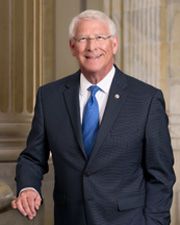 Sen. Roger F. Wicker (R-MS)
Legislative Activity
Stay on top of the latest movement without scrolling through every action
Senate amendment not agreed to: Amendment SA 607 not agreed to in Senate by Yea-Nay Vote. 39 - 55. Record Vote Number: 81.
March 5, 2009
View full timeline
Senate amendment not agreed to: Amendment SA 607 not agreed to in Senate by Yea-Nay Vote. 39 - 55. Record Vote Number: 81.
March 5, 2009
Roll call votes on amendments in Senate: Amendment SA 607 not agreed to in Senate by Yea-Nay Vote. 39 - 55. Record Vote Number: 81.
March 5, 2009
Considered by Senate. (consideration: CR S2789, S2790-2795)
March 5, 2009
Amendment SA 607 not agreed to in Senate by Yea-Nay Vote. 39 - 55. Record Vote Number: 81.
March 5, 2009
Considered by Senate. (consideration: CR S2728, S2754; text as modified: CR S2754)
March 4, 2009
Senate amendment proposed (on the floor): Amendment SA 607 proposed by Senator Wicker.(consideration: CR S2674-2675, S2678; text: CR S2674)
March 3, 2009
Amendment SA 607 proposed by Senator Wicker. (consideration: CR S2674-2675, S2678; text: CR S2674) To require that amounts appropriated for the United Nations Population Fund are not used by organizations which support coercive abortion or involuntary sterilization.
March 3, 2009
Senate amendment submitted
March 2, 2009
Votes
1 roll call on this amendment
Text
Modified
OMNIBUS APPROPRIATIONS ACT, 2009--Continued

The PRESIDING OFFICER. The Senator from California.
Mrs. BOXER. Mr. President, I suggest the absence of a quorum.
The PRESIDING OFFICER. The clerk will call the roll.
The legislative clerk proceeded to call the roll.
Mr. INHOFE. Mr. President, I ask unanimous consent that the order for
the quorum call be rescinded.
The PRESIDING OFFICER. Without objection, it is so ordered.

Amendment No. 596

Mr. INOUYE. Mr. President, amendment No. 596, offered by the Senator
from Oklahoma, prohibiting funding from being used for no-bid contracts
would appear on its face to be a good amendment, an amendment that some
are asking: Why would I vote against this?
When this amendment first appeared as an amendment to the recovery
act, the Senate passed it by a unanimous vote because it appeared to be
a good-government amendment. However, what we quickly learned as we
began conference negotiations with the House is that the consequences
of this amendment are more far reaching than simply prohibiting no-bid
contracts.
Because of the way this amendment is drafted, it is destructive to
small business and minority-owned businesses in this country, as well
as to Native American funding. This amendment states the only
procedures that can be used to award funds in this act are the
procedures in accordance with only section 303 of the Federal Property
and Administrative Services Act. As a result, this amendment prohibits
agencies from making any awards to small businesses through statutes
that have been enacted over the years that provide assistance to small
businesses, including small veteran-owned businesses, service-disabled,
veteran-owned businesses, minority-owned businesses, tribal
enterprises, women-owned businesses, HUBZone-qualified businesses, and
other entities covered through the SBA programs, as well as the Javits-
Wagner-O'Day Act, just to name a few.
Mr. President, in terms of Native American funding, this provision
would essentially overturn the so-called ``638'' contracts whereby a
tribe contracts with the Bureau of Indian Affairs or Indian Health
Service or other agency to perform the function of that agency. These
contracts are not competitive pursuant to the Indian Self-Determination
Act and other statutes enacted to help Native Americans.
In fact, efforts were made to correct this language during the
conference negotiation of the recovery act so that small businesses--
the backbone of this country--and Native American funding would not be
unnecessarily penalized by language that combined the broad dismissal
of authorization statutes and the narrow citing of one procurement law.
Even with the significant improvements made to the original text, the
Senator from Alaska, who is the ranking member on the Energy and
Natural Resources Committee, asked that I enter into a colloquy with
her during consideration of the conference report to clarify that the
language did not impact existing Federal procurement law applicable to
programs that allow for set-asides and direct-award procurements.
Mr. President, I cannot speak to the intentions of the Senator from
Oklahoma as to what he wants to accomplish with this amendment. To be
clear, however, I can speak to the consequences of the pending
amendment. It will have a destructive impact on the small business
programs and Native American programs mentioned above.
Do we really want to prohibit small veteran-owned businesses,
service-disabled, veteran-owned businesses from Federal funding
opportunities unless they compete in the same manner as large
corporations? Do we really want to prohibit small women-owned
businesses from Federal funding opportunities unless they compete in
the same manner with large corporations? Do we really want to say our
Federal agencies must ignore existing Federal procurement laws that
govern these small business programs and Native American programs and
allow only these small businesses to compete subject to section 303 of
the law?
This amendment systematically ignores years of Small Business
Committee and Indian Affairs Committee authorizations enacted into law
by insisting that all contracts be awarded through one specific section
of one specific law. This is the exact language the Senator from
Oklahoma offered during Senate consideration of the recovery act and
not the provision that was amended after Members were made aware of the
negative impacts on our small business community.
Consequently, while it appears to be a good-government amendment, it
is in fact the opposite. If this amendment is adopted, it will cause
significant disruptions to small businesses across this country, and I
don't wish to be part of that effort. Small businesses make up 99.7
percent of our Nation's employers and 50.3 percent of our Nation's
private sector employment. Denying the ability of these small
businesses to compete on a level playing field would severely impact
small businesses that are

[[Page S2735]]

already struggling to stay afloat during the current economic downturn.
Given the information we have learned since this amendment was first
proposed several weeks ago, and given the fact the language before us
does not take into account and address the many problems raised after
it was first proposed, I encourage my colleagues to oppose this
amendment. It is the least we can do for our small businesses,
particularly given the economic crisis we are currently in.
Mr. President, I yield the floor.
The PRESIDING OFFICER. The Senator from Oklahoma is recognized.

Amendment No. 608

Mr. COBURN. Mr. President, I would like to speak a few minutes on the
Emmett Till amendment that I have up. We heard this morning from the
Honorable Senator from Maryland, utilizing the letter from the Attorney
General saying they would work hard in approving and working on the
Emmett Till Unsolved Civil Rights Crime Act. However, the defense for
not approving my amendment was the fact that the Justice Department is
going to work hard on it anyway.
I would note for my colleagues that is exactly the opposite amendment
that we had last year when we were trying to pass this bill, when it
was my contention that we didn't need additional money and that the
Justice Department could do it. What we heard almost unanimously
outside this Chamber is they couldn't do it without funding.
So now we have an amendment that actually puts in funding to go after
these perpetrators of these heinous crimes. Yet we don't want to do it
because now the very excuse we said wasn't good enough last year is
good enough this year.
That is disloyal to the cause, No. 1; and, No. 2, it does not make
any sense in light of the very statements made by some of the very same
Senators last year.
The fact is, not funding this will make a real difference in the
number of cases that get brought to prosecution. We have a letter from
the Attorney General that says he will try, but what we are talking
about is giving him more money so he does not have any excuse for not
trying--which lines up exactly with the reasoning behind the
appropriations bills on almost every other topic.
I say to my colleagues, having a letter which was generated last year
in my support for trying not to increase the funding--which was said
that wasn't adequate, that we needed funding--now the fact that you
refused to fund something you promised to fund and say it will get done
anyway does not speak very well of our effort in that behalf.
It is my hope the Senate will look hard and long at this. You cannot
have it both ways. You cannot say you need to authorize funding, we
need to have funding, and send out a press release saying you
authorized $15 million a year for the next few years to do something
and then have a chance to fund it and not fund it and say we didn't
need to authorize the funding in the first place. It is hypocritical,
in my opinion, and my hope is we will give great and concerted
consideration to my amendment.
I yield the floor and suggest the absence of a quorum.
The PRESIDING OFFICER. The clerk will call the roll.
The legislative clerk proceeded to call the roll.
Mr. ENSIGN. Mr. President, I ask unanimous consent that the order for
the quorum call be rescinded.
The PRESIDING OFFICER. Without objection, it is so ordered.
Mr. ENSIGN. Mr. President, very soon I am going to talk about an
amendment I want to offer on the DC Voucher Program for low-income
kids. But first I want to talk about the bill in general for a few
minutes.
Yesterday, I talked about the spending bill we have before us as
being 8 percent over spending from last year on various programs that
are contained within the bill.
We just had Secretary of Treasury Geithner before the Senate Finance
Committee. I asked him a question. I said: I applaud the President for
hosting a fiscal responsibility summit just last week at the White
House. I think that was a great thing. It set some very important goals
for us to be fiscally responsible to the next generation. I told him
this administration had an opportunity to say these are last years
bills, drafted under a different administration. But rather, they said,
we are going to look the other way; we are not going to hold to our
``no earmarks'' pledge or fiscal responsibility pledge on this bill, we
are going to do that on future things.
But the problem is, it is not just this bill that increases spending
by 8 percent. This bill gets added into the baseline. This extra $23
billion gets added into this year's baseline, which means that next
year's the baseline goes up and the budget for the next year after that
goes up, and up and up, so this $23 billion increase in federal
spending ends up being several hundred billion over 10 years. That is
not what we should be doing now.
We have entitlements that are going to be exploding. Every family in
America today is looking for ways to cut their budget. We are hearing
that the movie industry is actually doing pretty well right now because
people are saying: That is actually a little luxury I can afford,
because they can't afford some of the bigger luxuries they wanted.
Instead of buying cars or big-purchase items, they are buying smaller
things. That is why Wal-Mart seems to be doing well at this point.
People are looking for values.
Businesses across the country are looking to cut expenses. They are
looking to cut wasteful spending. Every bureaucracy, whether it is
private or public, grows over time, so businesses are looking for ways
to be able to handle these tough economic times.
Local governments and State governments are forced to live within a
budget. So what are they doing? They are making tough choices right
now. Even with the money the Federal Government sent them, they are
still having to make difficult choices, so they are looking for what
wasteful spending is out there and what ways they can cut back on
waste.
The one place that seems immune to cutting wasteful spending is the
Federal Government, and the people responsible for that are right here
in this Chamber and in the Chamber across the Capitol. We control the
purse strings. This is not a time for us to increase spending. This is
a time for us to ask every Federal agency, department, program out
there: How can you save money right now? How can you cut administrative
costs? Which programs are duplicative? Which programs are working and
which ones are not? Let's take the money away from the programs that
are less efficient right now, let's cut back on bureaucracy instead of
expanding the bureaucracy at this point. I would say this is really an
irresponsible moment for this Congress.
I applaud two Members from the other side of the aisle, Senator Evan
Bayh and Senator Russ Feingold. They have come out in opposition to
this bill because they said pretty much the same things I was saying
this morning. Senator Evan Bayh from Indiana wrote a great opinion
editorial today in the Wall Street Journal laying out why this is an
irresponsible bill and why he is going to be opposing it.
If we are going to care about our children and our grandchildren, we
cannot wait a year or 2 years. We need to be fiscally responsible
today. We should have been doing it in the past years as well. I agree
there has been irresponsible spending in this body by both sides of the
aisle and by the previous administration, but that is no excuse for us
to say we can just continue it.
Federal spending has been rising and rising, much of it off budget. I
agree with the Democrats when they criticize Republicans in the
previous administration for off-budget spending. I have been one of the
people up here saying the tricks we were playing with the budget on
defense were dishonest. They were trying to say they were not
increasing spending because it would take money away from defense,
knowing it would be added on later so they could increase other
spending bills. That was dishonest. That was dishonest budgeting, and
it is time to get to honest budgeting.
But it is also not just honest budgeting we need to get to. We need
to get to fiscal responsibility. So really take a look at what we are
doing here. Think about the next generation and

[[Page S2736]]

future generations. Do we really want to add this kind of debt burden,
where they have to pay hundreds of billions of dollars and even
trillions of dollars in interest just because we were unwilling to take
tough votes here in the Senate?
The second issue I wish to talk about is the issue of DC choice. The
schools in Washington, DC, are some of the worst schools in America. We
brought this issue up last week, and we were able to get an agreement
that, instead of having a vote on the DC voting rights bill, the
majority leader would give us time on the Senate floor to reauthorize
the program. It is a program that says for very low income kids in the
District of Columbia, we are going to experiment and see if maybe we
can give them a decent education.
The District of Columbia spends around $15,000 a year per student on
public school education. We said we will give them a $7,500 voucher
towards the ability to go to a private school, a school of their
choice. The number of people who want to get into this program is
incredible. Why? Because DC schools are failing too many children. DC
schools are mostly made up of minorities, and we are trapping those
very minorities into a school system that by and large does not work.
So the DC voucher system was put in to at least take a few of those
students out and see if they can do better in a different setting. Does
it work? Some people say we are not measuring it right. All you have to
do to know whether it works or not is to talk to the parents and to the
students who have been involved in the program. Guess what. They want
it to continue. As a matter of fact, they would like to see it expand.
But what are we doing? This bill all but guarantees its elimination.
How does it do that? If this language is not removed from the omnibus
the program would be effectively cut. The omnibus contains language to
eliminate the program after the 2009-10 school year unless congress
reauthorizes it and DC City Council approves it. We know where the
votes are on the DC City Council. The votes on the DC City Council
would kill the program. The teachers unions in the District of
Columbia, as they are in most cases, are totally opposed to any kind of
voucher system. They believe it is a threat to their power base.
I am concerned about the kids and their education. That is all I am
concerned about. If this program is going to work--and it seems to be
working based on the interest of the number of families who want in it
and based on the desire of the families who are in it to continue in
it--then that is what we should be concerned about.
I am going to be offering an amendment that would strike the language
in the omnibus bill and would allow us to authorize it this year in the
Senate. That is the right thing to do, to make sure these kids still
have a chance to get a good education in the United States.
I yield the floor.
The PRESIDING OFFICER. The Senator from Iowa is recognized.
Mr. HARKIN. Mr. President, I come to the floor to speak in opposition
to an amendment offered by the Senator from Oklahoma, who singles out
two instances of congressionally directed funding that were included in
the fiscal year 2009 Omnibus appropriations bill under my name. The
Senator has claimed that these earmarks are inappropriate or wasteful
and should be removed from the bill. One provides $5.7 million for
competitive school modernization grants in my State of Iowa. The other
provides $1.8 million for national research into swine odor and manure
management at the Soil Tilth Laboratory in Ames, Iowa.
At the outset, as a constitutional matter, I first take issue with
the premise underlying the amendment of the Senator, the idea that
Congress has no business directing the expenditure of Federal moneys
through congressionally directed funding; that somehow there is
something inherently wrong or evil in this practice and that only the
executive branch should determine the details of where moneys are to be
spent. This stands the Constitution on its head. Article I, section 9,
expressly gives Congress the power of the purse, both to collect
moneys--levy taxes--and to direct where that money is to go. I would
say that the Executive, the President of the United States, does not
have the constitutional authority to spend one single dime of our
taxpayers' money. That authority has been given to the President, the
executive branch, over the last 200 years by the Congress, but there is
no constitutional basis for the President spending any money. So,
therefore, that is inherently a constitutional function of the
Congress. At any moment, at any time, if we want to, we can pass
legislation taking all that money back here and saying the President
cannot spend a dime unless we say so. We do not want to do that,
obviously. But we could. We would be in our constitutional right to do
so. So there is not something inherently wrong with Congress directing
funding. In fact, I would say it is more appropriate for Congress to do
that than for the President.
It is an odd practice--if the President requests it in the budget, it
is not an earmark, but if we put it in, it is an earmark.
Someone please tell me the logic of that. So, again, I basically
disagree with sort of the underlying premise that somehow executive
branch employees, all those bureaucrats, have a much better
understanding of where and how Federal funds should be spent most
effectively in our States and in our districts.
Now, again, over the years we have permitted that to happen, but we,
through our oversight functions, can look at how that money is being
spent, and through our congressionally directed funding can decide how
some of that is spent. So it is not a constitutional issue. It is not a
constitutional issue, at least as far as Congress goes, as far as
directing where spending should be made.
But I want to talk about these two earmarks mentioned, both of which
address significant needs both nationally and in my State of Iowa. I
will talk about the second earmark, funding research into swine odor
and manure management later in my remarks.
I want to say at the outset, I am proud of both of those earmarks or
congressionally directed spending, and I stand behind them. I believe
the Senator from Oklahoma's attempt to strike them from the bill is
extremely shortsighted and misguided, quite frankly.
So let me spend a few minutes discussing why I included these items
in the bill. Let me start first with the $5.7 million for competitive
school modernization grants. For years I have argued that the genius of
our education system in America is its diversity; local school
districts deciding what is taught, what books to buy, what teachers to
hire, how to run their schools. We do not have, as some other countries
have, a top-down structure where the central government decides exactly
what is to be taught, how it is to be taught, and everybody gets the
same thing. I have been to those countries. A lot of them tout their
educational system. But, quite frankly, it does not have the kind of
creativity and diversity and spontaneity that our diversified education
has in this country. So that is the genius of the American system of
education.
The failure of the American education system is how we pay for it. I
wish someone would show me somewhere in the Constitution where it says
that elementary and secondary education in America is to be paid for by
property taxes. You will look and you will not find it anywhere in the
Constitution. So why do we do it that way?
Well, I delved into the history of this, and it kind of goes like
this: In the early days of the founding of our country, before we were
a nation, in the Colonies, people wanted to have a free public
education. Well, it was free for white males at that time, but,
nonetheless, free. But since we had no taxing system other than tariffs
and property taxes, that was the only way they could pay for it. So
tariffs and property taxes became the support mechanism for local
schools in the Colonies, and that kind of continued on. It continued
on. The tariffs went by the wayside, so then it became a property tax-
based function for paying for elementary and secondary schools in
America. The first time the Federal Government ever got involved in
education in any way whatsoever was in 1864 with Morrill, the bill that
Lincoln signed for setting up land grant colleges and universities.
That was the first time, and that was only higher education. That was
higher education.

[[Page S2737]]

The next time the Federal Government got involved in education was
almost 100 years later. It was after World War II when we set up the GI
bill to pay for our young veterans to go to college, and then that was
higher education.
Then we had the Eisenhower program, the National Defense Student Loan
Program in the 1950s. Again, higher education. The first time the
Federal Government ever got involved in elementary and secondary
education was title I, providing some Federal help to low-income
schools to try to help right this imbalance out there.
Then we had the Education of the Handicapped Children's Act, which
later became IDEA, the Individuals with Disabilities Education Act. So
the Federal Government has not been involved--well, unless you want to
take the School Lunch Program. The School Lunch Program and breakfast
came along later, but the School Lunch Program, which came in after
World War II as a feeding program, not as an educational program. I
forgot to mention that.
So the Federal Government's involvement in elementary and secondary
education has been as of late and very small, only title I, and
basically IDEA, the Individuals with Disabilities Education Act.
Jonathan Kozol wrote a book in the eighties called ``Savage
Inequality,'' and this was the savage inequality: What he talked about
is how he traveled around America and how he found there were some
great schools and great facilities in one place, and very bad schools
with bad facilities in another place. He asked the question why. Why is
this? Well, it was because if you happened to be born and raised in
Fairfax County, for example, where there is a high income level and
very high property taxes, you get great schools. If you are born and
raised in Bedford-Stuyvesant, or in inner city south Los Angeles, or in
some rural areas of Iowa or Missouri or Oklahoma, Kansas, chances are
you got very low property taxes and you got poor schools.
So he asked the question, and then I asked the question: Why should
where you are born, the circumstances of your birth and where you are
raised, why should that be determinative of the quality of the physical
school you have? Why should that determine it? That is the savage
inequality of our educational system.
Well, I began thinking about this some years ago on how we would kind
of right this system, how we would tend to solve this imbalance, on the
one hand by not interfering with the genius of the American school
system, which is, who is hired and who is fired, who teaches, what they
teach, the textbooks, all that, how do we not interfere with that, but
at the same time try to balance these savage inequalities.
Then one day it occurred to me. I was walking out of my office one
day. This is many years ago, back in the late eighties. And I have on
my wall, right by the door that goes out of my office, a framed piece
of paper. It is a little orange card. It has always been there. I have
always kept it there to remind me of something. It is my father's WPA
card, when he worked on the WPA in the 1930s.
It occurred to me that when I was a teenager, my father took me to
visit Lake Ahquabi, which is a lake south of Des Moines, which is now
still being used as a recreational lake. They built that; still being
used today.
He took me to visit a high school, Cornerstone, WPA, 1940, that he
had worked on; still being used today. I dare say there are schools all
over America that are still being used, built by the WPA. Finally it
occurred to me that perhaps one role the Federal Government could take
in helping to balance these savage inequalities of rich areas versus
poor areas in terms of the quality of the school facilities is to be
involved in modernizing and building new schools and getting the
technology into these schools. That way you do not interfere with who
is hired, who is fired, what is taught, what textbooks to buy. You are
only helping to build new schools. We did that in the 1930s and we have
been using a lot of these schools ever since.
So I might add, as an aside, that when I sought the nomination of my
party for President in 1991 and 1992, this was one of my platforms. I
talked about the need to invest in the infrastructure. I called it the
blueprint for America. On my document I had a picture of a blueprint.
Part of it was building and remodernizing schools through the Federal
taxing system, rather than relying on property taxes.
Well, I didn't win the Presidency, obviously, but I continued in that
endeavor. I could not quite get it through, although we did have 1 year
finally we got it through. In 2000, the last year of the Clinton
administration, we got $1 billion for a national program of modernizing
and helping to modernize schools. That was reduced down to about $800
million. It went out 1 year. The next year President Bush came in and
the program got ended. So we did have 1 year of it and, quite frankly,
that 1 year, that money went out quite well and did a lot of
innovative, good things with schools all over America.
Since I could not get the Federal Government to do this in the
broader basis, I decided to see what would happen in my State of Iowa
if we started doing this, what would happen, how would this work. So
since 1998, I have been fortunate to secure funding for my State's
schools in this regard.
The actual allocations are funds are not made by me, they are made by
the Iowa Department of Education, which undertakes a grant competition
to select the most worthy and needy school districts that receive these
grants for a range of renovation and repair efforts. There are kinds of
pots. One pot is for fire and safety, which requires no match. The
other is for building and renovation which does require a local match.

Now, I might say that since 1998 this Federal funding has leveraged
public and private funding so the dollars that have gone out there have
multiplied tremendously. I think my colleague called the funding unfair
and wrong. He believes it is unfair that Iowa's schools receive funding
while children elsewhere in the United States are forced to learn in
antiquated, crumbling school buildings.
Well, I agree with my friend from Oklahoma. He is correct in one
respect. There is indeed a persistent and unfair disparity in the
quality of schools across the country, the savage inequalities, I just
mentioned. Jonathan Kozol wrote the book about it in the 1980s.
In fact, for the last several years, local spending on school
facilities in affluent communities is almost twice as high as in our
poorest communities.
So I ask the question again, why should the circumstances of your
birth, where you are born and where you are raised, determine the
quality of the school you go to? Why should it? So we tried to
alleviate this imbalance. Sure, you want every State in the Nation to
have this. As I said to my friend from Oklahoma, he may not have heard
this, in this year 2000, we did get it through for every State. But
that was only 1 year, and then in 2001 the Bush administration came in
and stopped it. But in that 1 year, it did go out.
Now, again, and most recently in the stimulus bill, in the American
Recovery and Reinvestment Act, we did in the Senate put in $16 billion
for school construction and renovation to go out all over America. I
was happy about that. I thought this was something that would put
people to work, stimulate the economy and build schools for our kids,
get new technology into our schools.
Well, because of opposition on that side, that was stricken from the
bill. In the conference it was stricken. So, again, I do not mean to
have this only for Iowa, I would love to do this for the entire United
States.
So again, if I could not do it there, at least I wanted to see what
would happen in the State of Iowa. And I can tell you that over the
years, each Federal dollar that has gone into my State for this has
leveraged an additional $5-plus additional from public and private
sources.
How does that happen? Well, a lot of times school districts would try
to pass a bond issue. They could not pass it to renovate or something,
because they are poor people, you know, and this means raising property
taxes. We have a lot of elderly in Iowa. Raising property taxes is hard
when they are on a fixed income.
So they don't vote for the bond issues. All of a sudden they applied
for one of these competitive grants to the

[[Page S2738]]

Department of Education in the State of Iowa. The State of Iowa gave
them a grant, but they had to match. Guess what happened. They passed
the bond issue and built new schools. It has leveraged private
involvement, people with businesses, endowments, and even individuals
who have come forward to put money into local schools because they had
this grant.
I ask unanimous consent to print in the Record some letters I
received. One is from Paula Vincent, superintendent of the Clear Creek
Amana School District. She points out that receipt of a school
construction grant was instrumental in her district passing a $2.5
million bond referendum to build two new schools. Prior to receiving
the grant, her district did not have a history of passing bond
referendums for school improvement. Not only did this bond referendum
pass on the first vote, but it broke records for voter turnout and has
led to additional support for school infrastructure from surrounding
communities. She estimates that an initial $100,000 grant led to an
additional $28 million in local funding to improve school buildings.
That is way over 5 to 1. That may be an anomaly, but that is what she
says happened in their area.
I have other letters from individuals on these grants and what it has
done.
There being no objection, the material was ordered to be printed in
the Record, as follows:

Clear Creek Amana

Community School District,

Oxford, IA, March 3, 2009.
Hon. Tom Harkin,
First Ave. NE,
Cedar Rapids, IA.
Dear Senator Harkin, Thank you for your continual advocacy
for facility construction and renovation. As you know, Clear
Creek Amana was fortunate to receive one of the Iowa
Demonstration Construction Grants to aid in the construction
of a new elementary school.
This half million dollar Harkin grant was helpful to our
district in successfully passing a twenty-five and a half
million dollar general obligation bond referendum to build
two new schools. In Iowa, school districts must receive a
super majority, sixty percent approval, to pass any bond
issues. Our community did not have a history of passing bond
referendums for school improvement prior to this latest
attempt and had never passed a bond referendum on the first
vote. Not only did the community approve the bond referendum
on the first vote, but also broke previous voter turnout
records. The federal support was one of the factors members
of our community listed as a reason they voted in favor of
the proposed bond referendum.
The positive success of the bond referendum led to
additional community support from cities within the school
district boundaries. For example, the City of North Liberty
provided land for the new elementary school, street and
utility access to the construction site and an additional
half million dollars toward the construction of the new
elementary school. Likewise, the city of Tiffin and the Iowa
Department of Transportation are partnering with the district
to widen the highway leading to the new high school. Using
conservative estimates, the half million dollars of federal
support leveraged an additional twenty-eight million dollars
to improve the school facilities within the Clear Creek Amana
District.
Having resources to construct new buildings allowed us to
take advantage of the latest information regarding excellent
school design. With the assistance of our architects and
engineers and the cooperation of students, staff and
community members we are confident that our new schools will
provide improved learning environments for CCA students and
staff. A few of our design features include: increased
student and staff access to technology; updated science labs
and equipment; flexible teaching and learning spaces with
planned areas for small and large group instruction; common
areas for teacher teams to plan, and study together; shared
school and community spaces such as preschool, library/media
center, physical fitness areas, before and after school space
and shared gym space; and added safety features such as
controlled building access with limited exterior door entry
points, electronic door controls and sprinkler systems.
Again, federal support through the school construction
grants played a key role in making these improvements to the
overall safety and quality of the learning environment in our
schools possible.
Federal school construction dollars also have a positive
impact on environmental concerns. We were able to incorporate
multiple energy saving features into the design of the new
buildings by participation in the Commercial New Construction
Program provided by the Weidt Group, Minnetonka, Minnesota,
and funded by the local utility companies.
The benefits of building an energy efficient building
include a cash rebate from the utility companies of about
$250,000 as well as lower operational costs for the lifetime
of the new buildings. Many of the selected energy strategies
also contribute to the quality of the learning environment
(natural lighting, temperature controls in each classroom).
We believe these energy-efficient strategies add significant
investment value to the buildings and minimize many negative
environmental impacts typically caused by new construction.
We have experienced a significant benefit from a modest
federal investment in school infrastructure. We have every
reason to believe our students will benefit from the improved
learning environment in our new schools and we expect we will
see some of this benefit in higher student achievement.
Higher achievement by our nation's children ultimately
translates to a brighter future for all of us when these
children take their place as contributing members of the
workforce and of the educated citizenry essential for a
democratic society.
Thank you for your work in including school infrastructure
support in Federal legislation.
Sincerely,
Paula Vincent,
Superintendent.
____

Corning Community Schools,

Corning, IA, March 3, 2009.
Senator Tom Harkin,
Hart Senate Office Building,
Washington, DC.
Dear Senator Harkin, With all due respect, I would like to
express my concern about an amendment that has been offered
to eliminate the Harkin Fire Safety Grants. I am the
superintendent of Corning Community Schools in southwest
Iowa. Our school is located in Adams County which is one of
the poorest areas, of not only our state, but of the country.
Our local patrons are willing, but unable, to raise enough
funds to maintain our school facilities which were built in
the 1930s. It is only through the Harkin Fire Safety Grants
that we are able to keep our facilities open and provide a
safe environment for our children to work and play in. The
Harkin grants have allowed us to make our buildings
handicapped accessible, so all children are given equal
opportunity to attend classes on the second and third floor
of our facility. The Harkin grants have created an equal
playing field so the children of our district have the same
safe environments as wealthier districts. The Harkin Fire
Safety Grants have provided handicapped doors, fire alarm
systems, warning devices, and fire safe doors. Without these
funds our school would have been closed down and children
would have been forced to travel long distances to other
schools.
I truly applaud your efforts in providing these funds for
schools. Considering all of the foolish ways the government
spends money, I can't believe that anyone would want to end
this program. The Harkin Fire Safety Grants provide funds
that are making a difference in the lives of children. What
could be better? I encourage you to continue the good fight
for the poor people of Iowa. I encourage you to continue to
fight the shifting of funds to ``bail-out'' private
businesses at the expense of our children and the future of
this great nation. If there is anything I can do to help
preserve these funds, please let me know. On behalf of the
Corning Community School District, the patrons of Adams
County, and most of all the children of our district, we
thank you for these funds.
Respectfully,
Mike Wells,
Superintendent.
____

Des Moines Public School System,

Des Moines, IA, March 3, 2009.
Dear Senator Harkin, As a member of the Des Moines School
Board I would like to thank you for all the work you have
done to enable our school system to receive Harkin Grants.
Without them our urban school district would be lagging
behind in both infrastructure and fire safety needs.
The Des Moines Public School System is an urban school
district with a free and reduced lunch rate above 50 percent.
We have received a total of 8 Harkin Grants in the amount of
$4.275 million dollars. We have used the Harkin Grants in a
number of our buildings. For example, we have been able to
use the infrastructure portion of the Harkin Grants to add to
our renovations at Moulton School, Capitol View Elementary
and Carver Elementary. All three of these schools have a free
and reduced lunch rate over 79 percent. The Harkin Grants
have helped to bring 21st century buildings to students of
all economic backgrounds. Harkin Grants have also been used
to help Des Moines East High School with its renovation
expansion to meet the needs of its urban population. We have
also received Harkin Grants for renovations at one of our
downtown schools. Without this funding our urban school
district would be lagging behind our suburban counterparts.
Our nearly 30,000 students have also become safer at school
through the fire safety component of the Harkin Grants. That
portion has been instrumental in allowing us to keep our
children safer in a school district that does not have the
resources of many suburban schools. They have helped to bring
our buildings to a superior level of safety.
In conclusion, as a board member of the Des Moines Public
School System, I would like you to know how important your
Harkin Grants have been in renovating some of our high
poverty schools and in keeping all our students safe.
Programs like the Harkin Grants have helped us immensely. You
will never know how much these grants mean to

[[Page S2739]]

an urban system like the Des Moines Public Schools.
Gratefully yours,
Patty J. Link,
Director, Board of Education.

Mr. HARKIN. Rather than trying to deprive the schoolchildren in Iowa
of this funding, I encourage the Senator from Oklahoma to extend this
program to his own State and to all other States and the District of
Columbia. In the coming weeks, I will reintroduce the Public School
Repair and Renovation Act, which I have been introducing for some time,
which would create a competitive grant program for schools across
America to receive funds to repair and renovate school facilities based
upon the successful program we have had in Iowa. Were some mistakes
made in the beginning? Yes. But the Department of Education, over the
last 10 years, has figured out how to do this, how to separate the two
pots--one for fire and safety with no match requirements, one for
buildings and innovation requiring a match--and then taking in the
proposals on a competitive basis and deciding where the money should
go. I encourage the Senator from Oklahoma to support this bill. I ask
him to be an original cosponsor to get this out to schools all over the
country.
Now let me also talk about the $1.8 million I secured in this bill
for research into swine odor and manure management. That always brings
a smile to everyone's face. David Letterman will be talking about it
and Jay Leno will be talking about it, $1.8 million to study why pigs
smell. I suppose that is the way they will couch it. We all know how
the game is played. Critics will take something such as this with a
funny sounding name or purpose, hold it up for ridicule. For some
reason, especially outside rural America, the very word ``manure''
seems to be cause for laughter and levity and jokes. In farm country,
manure and odor management are profoundly serious challenges that can
be mitigated through scientific research. I urge the Senator to visit
farms in his own State. Ask his own farmers and neighbors about whether
it is worthwhile to conduct research into animal odor and manure
management.
If I am not mistaken--and I may be--I believe the attorney general of
Oklahoma, a few years ago, brought an action against the neighboring
State of Arkansas in terms of some of the effluent coming into Oklahoma
and this raised questions of manure management and how it is put on the
land and such. That is what this research is about. Some people living
in rural America are concerned about livestock agriculture and its
environmental impacts. So it makes good sense to fund research that
addresses how rural communities and livestock agriculture can coexist.
I wish to point out this item did not originate as a congressionally
directed earmark. This research unit of the Agriculture Research
Service originated administratively within the U.S. Department of
Agriculture to conduct scientific research to address significant
challenges facing livestock agriculture. This item is only included as
an earmark now because the last Bush budget proposed to terminate a
number of ongoing agricultural research projects in order to come in at
a lower funding level, knowing full well this needed research would
likely be restored by Congress, which is what we are doing. But it
didn't originate here in Congress. It originated administratively.
Let me also point out to the Senator from Oklahoma, this is not a
project for the State of Iowa. It provides funding for the Agricultural
Research Service which is the main in-house research arm of the U.S.
Department of Agriculture. The mission of ARS is ``to find solutions to
agricultural problems that affect Americans every day from field to
table.''
One might say the money is going out to ARS in Iowa. That is because
that is where they do the research. If ARS was doing research on
peanuts, they would probably be doing it at an ARS research facility in
Georgia. If they were doing it on cotton, they would be doing it in
Mississippi or someplace not in Iowa. So why are they doing it in Iowa?
Because one-fourth of all the hogs in America are produced in my State.
We are the No. 1 producer of pork, and we are very proud of it. The
pork industry is critical to our State's economy. But as the demand has
grown for pork and as we produce more pork, one can understand that the
management problems of what to do with the waste has become very
serious, not only for the odor problems but for the waste itself.
At any given day, we have 20 million hogs living in Iowa. Think about
it, 20 million. A lot of farmers use the the manure from hogs as
fertilizer. The Department of Agriculture, soil scientists, and others
have encouraged that. But there can be odor problems and other
environmental impacts. So that is what this research seeks to resolve.
It looks at improving nutrient or feed efficiency in swine. This
research would help the livestock industry make better use of co-
products from the production of biofuels, which is a growing industry
in our State and the Nation. Quite frankly, we can't feed the
byproducts to swine like we can cows. They are not a ruminant animal.
But this research is looking at how to improve those byproducts for
swine--everything from the feed to the byproducts and odor--to improve
the quality of life for those who live in rural areas. We have had
swine odor and manure management challenges in my State. And not only
in Iowa; as chairman of the Agriculture Committee, I have visited North
Carolina and have witnessed the same issues there too. So how do we
alleviate this? How do we make it possible for a very good industry,
the swine industry, to meet the demand and at the same time be good
neighbors and do it in an environmentally sound way? That is what this
money is for. The research doesn't only help Iowa it helps all across
the country because it is research conducted by the Agricultural
Research Service. They are doing it in Iowa because that is where most
of the hogs are. Congress didn't originate it here. It originated with
the administration.
A lot of States share the same problem we do with odor and waste
problems. I suppose we will hear a lot of jokes on David Letterman and
Jay Leno. A lot of other people will be making jokes about this money
for manure. Keep in mind, this is not wasteful or unnecessary or
frivolous. This is very important to the daily lives of the people of
my State and every other place where we raise swine.
I appreciate this opportunity to share with my colleagues my reasons
for including these two items in the Omnibus appropriations bill. I
stand here and say, unequivocally, I am proud of both of them. I
believe the effort to remove them from the bill is misguided. I urge
colleagues to vote against the Coburn amendment.
I yield the floor.
The PRESIDING OFFICER (Mrs. Hagan). The Senator from Oklahoma.
Mr. COBURN. Madam President, it is interesting, the first of the
Senator's remarks had to do with the Constitution. He conveniently
skipped over article I, section 8, and went straight to article I,
section 9. If you read what Madison and the Founders wrote about
article I, section 9, they had a very limited scope for what we ought
to be doing. As a matter of fact, the trouble we find ourselves in
today is because we have abandoned the enumerated powers of the
Constitution. We have excused them and we have said: We should fund it
all.
As far as education, Federal funds fund 20 percent of education but
80 percent of the problems. If you think our schools are successful,
look at our scores compared to everywhere else in the world. Our scores
started going down when the Federal Government started getting involved
in education, not prior.
The other assumption is, you have to have a great building to have a
great education. That is absolutely wrong. Education is based on the
incentive of the children, the quality of the teacher, and the control
of discipline. You can teach as well in a Quonset hut as you can the
most modern school, if you have motivated kids, great teachers, and
great control of the classroom.
The purpose for trying to eliminate these earmarks isn't necessarily
that they are wrong. They are truly unauthorized, but that would be a
totally different story if a group of peers had said these are
priorities, but they haven't. The problem is, is it a priority now,
when every penny you will use, whether it is the new school program you
want me to cosign or the earmarks

[[Page S2740]]

you have in the bill today, is going to be borrowed from your
grandchildren.
The very schools you are going to build in Iowa, that we are not
going to build in the rest of the country, by leveraging Federal
dollars are going to be charged to the kids of the kids who are there.
They are going to pay for it. It is not about whether it is right or
wrong; it is about whether it is a priority, whether we ought to be
doing it now.
The Agricultural Research Service is a fine organization. Every time
we need money for agriculture, we steal money from the Agricultural
Research Service. There is nothing wrong with studying manure and its
application as both a fertilizer, soil enhancer, and other things.
There is nothing wrong with studying the other aspect of the odor. We
slaughter 10,000 hogs a day in one plant in Oklahoma. I know exactly
what it smells like. I have traveled every farm area in my State. As a
matter of fact, to me a lot of it smells pretty good compared to what
you smell in the cities. But the fact is, is it a priority that we
spend that money now?
The real problem we have isn't earmarks. It is two: One is, we give
this document short shrift; No. 2, we have become parochialized. We
forget what our oath was that we signed when we came in here, to uphold
the Constitution, to do the right things for this country as a whole in
the long term and do the best things we can for the future of the
children who follow. But what we have turned into is what can we take
home; how do we look good at home; how do we send Federal dollars home.
The reason the stimulus bill was bad is because we took the lack of
fiscal discipline in this body and we transferred it to every State
house in the country. Ask any Governor what is happening now that we
have passed the stimulus. The hard choices will not be made in the
States. So the future prospect for fiscal discipline in the States is
now gone. The next time they have problems, they will be counting on
us. We have now transferred our bad habit of being fiscally
irresponsible to the States.
I think it is ridiculous that at this time in our Nation, when we are
going to have a $1.7 trillion deficit, we would spend the first penny
on anything other than a necessity because when we have a $1.6 trillion
deficit, it is not just $1.6 trillion, it is $1.6 trillion we are going
to borrow over the next 30 years, and we are going to be paying awfully
high interest rates. It is not very long--2015--when we are going to be
at 40 percent of the budget going to interest. There will not be a
Harkin school program for Iowa in 2015 because there will not be any
money. We will not be able to borrow any more money because the
interest rates and the cost to borrow it will be too high because the
rest of the world will doubt whether we can pay back the money.
So the prudence I am asking for in trying to eliminate some of the
earmarks is to think about the long term rather than the short term, to
think about what is best for our country in the long term, not what is
best for us and how we look at home, and to do what is within the
framework of the Constitution.
The final point I will make: Presidential earmarks ought to have
exactly the same dealing as we do with congressional earmarks--get them
authorized, put them in a list of priorities, and then fund them. But
do not send an earmark to the floor that is not authorized by the
Congress and the relevant committee it comes through.
With that, I yield the floor.
The PRESIDING OFFICER. The Senator from Iowa.
Mr. HARKIN. Madam President, I appreciate the engagement by my friend
from Oklahoma on this issue. But I will point out, first of all, one
little mistake I think the Senator might have made. The research for
the ARS for the swine research is well within the authorization the
Agriculture Committee provided in the farm bill. It is well within
their purview. So it is not outside their purview whatsoever. Again, I
say the reason we put it in there: It has been administratively asked
for before, but the Bush administration in the last year did not
include it because they wanted to cut down their request, knowing full
well we would probably fund it, which we have done here. But I just
wanted to point that out.
Interestingly, the Senator mentioned article I, section 8, of the
Constitution. Article I, section 8, of the Constitution, I would point
out, is very clear:

The Congress shall have Power To lay and collect Taxes,
Duties, Imposts and Excises, to pay the Debts and provide for
the Defense and general Welfare of the United
States. . .;
To borrow money on the credit of the United States;. . . .

Et cetera, et cetera.
Well, Congress--Congress, it says--has the power and authority to
provide for the general welfare and to borrow money. I do not like to
borrow money more than anyone else. But the Senator from Oklahoma said
something about: Well, the money we are using to build these schools is
borrowing from our grandchildren. I cannot think of a better thing to
borrow from our grandchildren than to build better schools. As I
pointed out, my father worked on WPA. I have his WPA card hanging on
the wall of my office. They built schools all over America, schools
which we are still using today. In fact, one of the Iowa Department of
Education grants went to a middle school--it used to be a high school--
it is a middle school that was built by WPA and had been in such
disrepair, but the building itself was sound. They just had an old
heating plant. Kids were getting sick. It was cold and drafty in the
wintertime. They got a grant. They came in. They put in a new
geothermal heating system. They put in double-paned windows. Here is a
school built by WPA in 1939 and, with just a little bit more money,
today is going to be used for another 50 more years for kids. So I say,
if we are going to borrow from our grandchildren, let's build them
better schools so the kids today will be better educated and will make
more money and so our grandchildren will be better off.
Lastly, my friend from Oklahoma says that better buildings do not
lead to better schools. He said: You could learn in Quonset huts, you
could have a better education in a Quonset hut, I guess, than in some
of our better schools. Well, I do not know how to respond to that. If
you have a Quonset hut, are you going to have the up-to-date, latest
technology in terms of the Internet? Probably not. Are you going to
have up-to-date technology in terms of a science lab? Probably not.
Physics lab? Probably not. Biology lab? Probably not. So what kind of
education are you going to get in that Quonset hut? If we are sending
our kids to school in Quonset huts, what are we telling them about how
we value education? I daresay the nicest things that our kids should
see in their daily lives ought to be where they go to school. They
ought to be the brightest, the best lit, the best built, with the
latest technology, with the best teachers and the best material. Then
we are saying to our kids: Here is what we value.
So I could not disagree more with my friend from Oklahoma that kids
will learn as well in a Quonset hut as they can in a nice building. All
you have to do is look at the test scores of kids from schools that are
in areas where they have high property taxes, a lot of wealth. Just
look at those test scores and look at the scores of the kids who come
from your poverty areas and rural areas. I do not mean just inner city
but rural poverty areas. Look at their test scores. That will tell you
something right there. Why? They cannot afford to hire the best
teachers. They cannot afford to pay more for their teachers. They
cannot afford to have the best laboratory and equipment and Internet
technology for our kids.
So I could not disagree more with my friend from Oklahoma. I believe
one of the most important things we can do in the Federal Government is
to provide funds for the building and rebuilding and modernization of
our schools all over America. As I said, I am sorry we are not doing it
nationwide. We tried, and we will try again. But it is the one way we
can help our local property taxpayers, help our kids--not interfere
with what they are taught or how they are taught or what teachers they
hire or what books they use. Let's take a page from what we did in the
1930s. Let's do it again. Let's build more schools all over America and
make them modern and up to date for our kids so our grandkids will have
a better life.
Madam President, I yield the floor.
The PRESIDING OFFICER. The Senator from Michigan.

[[Page S2741]]

Amendment No. 610

Mr. LEVIN. Madam President, amendment No. 610 would strike from the
bill funding for a number of projects. One of the projects which would
be stricken is funding which I requested for the redevelopment of part
of old Tiger Stadium and its ballfield. It is in an economically
distressed area of Detroit called Corktown. I support funding of this
project from the Economic Development Initiatives account. The purpose
of that account is for projects such as this.
Historically, old ballparks have been demolished after Major League
teams move out. Members of the community in Detroit, where I live,
recognized the economic development value in old Tiger Stadium and its
ballfield, so they formed a nonprofit organization called the Old Tiger
Stadium Conservancy to help preserve a piece of this part of Detroit
and its baseball history and to help revitalize the economy of downtown
Detroit, because this is very close to the downtown in an area called
Corktown.
The conservancy has been working with the city, which owns the
stadium. This is a stadium owned by the city of Detroit. They worked on
a plan to preserve part of this stadium--the original part of the
stadium, which had been called Navin Field 140 years ago--and to do
this for a number of purposes; mainly, so that youth leagues would be
playing on that field.
That field and that piece of the stadium are a huge magnet for
economic development. So to preserve that field--that field of dreams--
and to redevelop that part of the stadium's structure and the adjacent
land and to use the adjacent land for retail shops, restaurants, and
other commercial and entertainment attractions will bring economic
activity into a distressed neighborhood and into the city of Detroit.
Now, it was said yesterday, I believe, that it did not make sense for
this fund to preserve an old stadium we are not going to do anything
with. That is just simply not accurate. There is huge interest by
developers in this old piece of Tiger Stadium and the field it is part
of. Part of this old stadium has been demolished, demolished by the
city, so what is left is a piece of this stadium, essentially between
first and third base. This field and this piece of the stadium is
nothing short of an anchor for the economic development project that
will bring much needed jobs to a part of the city that desperately
needs them. The conservancy has already received a number of letters of
interest from local organizations and financial institutions expressing
the desire to participate in the redevelopment, to bring commercial
operations into the remaining stadium structure and the neighborhood
area.
For too many years, economic development in this area has been
stymied because of the unpredictable status of what was to happen to
this property at the corner of Michigan and Trumbull, right near
downtown Detroit. So there is now a new excitement, not only for the
expectation of sports activities on the field, where youth teams will
come and play, but also for the adjacent commercial retail, sports
training programs, and other activities that will be attracted to the
site.
According to the Housing and Community Development Act of 1974, the
Economic Development Initiatives account, which this is part of, will
benefit persons of low- and moderate-income and may be used for a
number of purposes, including the restoration and preservation of
historic properties and for economic development to improve the use of
land for residential, commercial, industrial, recreational, and other
needed activity centers. This project is what the 1974 act had in mind
because it reuses part of a historic structure which has been sitting
vacant for a decade and maintains its historic field as a recreational
and commercial center of economic growth in a low- to moderate-income
neighborhood in the city of Detroit.
So I hope this amendment will be defeated. This is an expenditure
that comes from an important fund called the Economic Development
Initiatives account. That fund is going to be spent in any event, and I
can think of a few other things which also should come out of that
account, but this is surely one of them. I hope this amendment is
defeated and these funds are retained.
I thank the Chair and yield the floor.
The PRESIDING OFFICER. The Senator from Maine.
Ms. COLLINS. Madam President, I rise to speak in support of funding
in this bill for the American Lighthouse Foundation. This allocation
was recommended to the Appropriations Committee by Senator Snowe and by
me. Now, I can understand why those who are unfamiliar with this
program might view this as an easy target. That is why I have come to
the floor to explain to my colleagues, who may not be familiar with
this program, why it is important and why it warrants Federal support.
The nonprofit American Lighthouse Foundation in Rockland, ME,
partners with the U.S. Coast Guard to protect, restore, and preserve
federally owned historic lighthouse properties. Let me repeat that.
These are federally owned, and I wonder if the sponsor of this
amendment understands that is the case.
The Coast Guard leases lighthouses to the American Lighthouse
Foundation in an effort to help support restoration because the
foundation raises private funds that help to relieve some of the burden
that otherwise would fall on the American taxpayer.
The three Maine lighthouses that will directly benefit from that
funding--Owls Head, Pemaquid Point, and Wood Island--are maintained by
the U.S. Coast Guard as active aids to navigation. Let me repeat that
point. These are active aids to navigation. The Presiding Officer knows
how important that is. These lighthouses perform a vital function for
Maine's lobster and fishing industries, as well as for commercial
shipping and recreational boaters. They are critical active navigation
aids.
I would also note the American Lighthouse appropriation is a direct
investment in Federal property, a responsibility that dates to 1789
when the first Congress extended Federal funding to lighthouses. This
isn't new. This isn't something the Senators from Maine dreamed up when
we were trying to come up with worthy projects. This goes back to the
beginning days of our Republic.
By working in partnership with the Coast Guard, the foundation has
been able to raise funds from the private sector. Over the past decade,
the foundation has invested more than $2 million in restoring
lighthouses throughout New England, and in the process, saved the
Federal Government much money by improving these sites with private
sector dollars. So this is a wonderful public-private partnership. It
is the kind of partnership we in Congress like to see and that we
promote.
So, again, let me make three points I have to believe that the
sponsor of this amendment was not fully aware of: First, that these
lighthouses are federally owned; they are Federal property. Second,
they house within them active aids to navigation maintained by the
Coast Guard--the lights, the horn. These active aids to navigation are
used by our fishing industry, our lobstermen, by commercial shippers,
by recreational boaters. These are active lighthouses. Third, this is a
public-private partnership. The foundation raises millions of dollars
from private sources to help restore these lighthouses that contain
aids to navigation used by the Coast Guard. Thus, the burden is shifted
from the Federal Government to the private sector, and that is
extremely helpful.
So I think this is a great example of why it is important that those
of us who are sponsoring this funding come to the floor and explain it.
I think when that is done, it casts a whole new light on the purpose of
this funding and why it deserves Federal support.
Madam President, I yield the floor.
The PRESIDING OFFICER. The Senator from Hawaii.

Amendment No. 623

Mr. INOUYE. Madam President, I wish to speak on amendment No. 623, an
amendment submitted by the Senator from Oklahoma, because it is most
troubling for several reasons.
First, this amendment presumes guilt without the benefit of the full
legal process. Second, it presumes that the 14 clients actively or
knowingly participated in the alleged activities of the firm without
any evidence to support that assumption. Third, the amendment will
punish the clients for having funds allocated to their projects

[[Page S2742]]

without any knowledge of wrongdoing. Fourth, it makes the assumption
that Members requested these projects because of ties to the lobbying
firm rather than because these projects addressed the needs of their
constituents.
The last thing we in this body should do on matters such as this is
rush to judgment. Yes, we know the firm was raided by the FBI, and we
also know the firm is in the process of being disbanded, but we also
know no one from the firm has been convicted of any crime. In fact, as
far as we know, no one has even been indicted for a crime. Further,
there is nothing to suggest that the clients themselves are being
investigated, much less guilty of some Federal offense. There has been
absolutely no indication by anyone involved in the actual investigation
that any of the clients of the PMA firm were involved in any illicit
activity.
Under our legal system, everyone is presumed innocent until proven
guilty, but under this amendment we will presume such guilt. We will
presume guilt even of those who are not under investigation. It is not
the responsibility of the Senate to presume guilt. That determination
should be left to the courts based on evidence presented by Federal
investigators.
Our ``evidence,'' however, is based on press reports. But even in
this most questionable evidence, there has been no assertion that the
clients were involved in any type of criminal activity and certainly
none has been accused of any wrongdoing. Nonetheless, the amendment
would deny funding for projects included in this bill by Members of the
House and the Senate. The projects were approved by the relevant
subcommittees and displayed publicly on the Internet.
Rather than assuming guilt, what we should assume is that Members who
asked for these projects did so because they believe they will serve
the needs of their constituents. We have no information that indicates
that funds were recommended for these programs because of the efforts
of any lobbying firm. We can't even say with certainty the funds were
included at the behest of this particular lobbying firm. I would point
out that the Senator from Oklahoma must also not be so sure since he
has modified his amendment to remove one of the projects which he
originally had on his list.
Are we seriously considering voting to cut funds for projects because
we think they might--they might--have been related to a firm which is
under investigation, even though the projects' advocates are not under
investigation?
As do many of my colleagues, I meet with lobbyists every year--dozens
of them. They seek hundreds of millions of dollars in earmarks in
appropriations bills. I am not the only Member in this situation.
Incidentally, the firm is not a Hawaiian firm, although the projects
involved are Hawaiian. For the most part, the lobbyists with whom I
meet request funds for projects pertaining to my State of Hawaii. But
as do most Members of Congress, I seek funding only for ones which I
believe will have the greatest benefit for my State and for its
citizens and which hold the greatest promise for achieving a larger
national objective. This is what we were elected to do--to serve our
constituents.
Why do we presume guilt in this instance instead of innocence? Why do
we assume wrongdoing by clients because they hired this lobbying firm?
Why should we assume Members requested funds because of the efforts of
the lobbying firm instead of the merits of the programs?
I can't speak personally of any of these projects because most of
them were included by the House and agreed to by our subcommittees, but
I do believe most Members act responsibly. I, for one, am willing to
give the Members who sponsored these projects the benefit of the doubt
that they did so because they believe the projects were meritorious and
worthy of their support. I am not willing to presume our Members are
guilty of wrongdoing because their constituents hired some lobbyist who
might--and I emphasize the word ``might''--have been engaged in some
illegal activity.
Do any of us seriously believe the Members who sponsored these
programs in their States and districts did so for any reason other than
it benefited their constituents or they believed in the work the
clients are engaged in? For every Duke Cunningham willing to trade
earmarks for cash, there are 534 other Congressmen and Senators who
would never think of doing such a thing. I do not believe we should
impugn the motives of the Members who sponsored these earmarks, and I
can think of no reason to do so.
I recognize this is what we call a tough vote. Many Members might
wish to vote in favor of this amendment because they fear the news spot
that says they supported crooked earmarks. But my colleagues should
understand if we don't stand up for this institution--the Senate--and
its Members, no one else will. We should all recognize the next time
this could be your earmark or mine. You could be the one standing on
the Senate floor forced to defend yourself because someone is accused
of wrongdoing, even though that matter is completely unrelated to your
behavior.

This is actually a simple matter. There is no evidence to support
wrongdoing by the Members involved. There is no evidence to suggest
these projects are not meritorious. There is no evidence to suggest the
clients who engaged in these projects did anything wrong.
Finally, we cannot be certain anyone engaged in any wrongdoing. This
amendment sets a course down a slippery slope that is unnecessary.
Federal laws already provide remedies to recoup funds depending on the
circumstances if our legal system determines laws were broken. Funds
can be rescinded and improper payments can be recovered by the agencies
involved.
Finally, the agencies have their own rules and regulations to follow
if they believe there is any impropriety involved. We should allow the
legal process to work and then assess an appropriate response based on
the results. We should not convict the clients and Members and enact
punishment before we even know whether a crime has been committed.
Therefore, I urge my colleagues to oppose this unfair amendment.
I suggest the absence of a quorum.
The PRESIDING OFFICER. Will the Senator withhold his request?
Mr. INOUYE. I am sorry. Yes, I withhold.
The PRESIDING OFFICER. The Senator from Kansas is recognized.
Mr. BROWNBACK. Madam President, I thank my colleague from Hawaii,
with whom I have had the great pleasure of serving in this body, for
withholding that request.
I come to the Senate floor today to address the Omnibus
appropriations bill, as well as to address one of the major needs of a
major industry in our State.
I would ask my colleagues to think about this for a second: If there
was a business in the United States they knew about that contributed
annually around $150 billion to the U.S. economy; employed 1.2 million
people, mostly in the manufacturing sector of the economy; is a major
export driver with 40 percent of their production--40 percent of this
$150 billion going to overseas sales, contributing to the economy,
contributing as a multiplier, and a significant multiplier--to the
economy, I think most people would say: What is the business and how do
we support it? How do we move it on forward in these tough economic
times, if the business is having a great deal of difficulty? The one
major thing they are asking from the Government now is not to badmouth
them, not to talk them down. It is to be positive about this business
instead of being down. So of all the businesses we have coming to us
asking for money, for support and grants and these sorts of things, we
have one that is a major industry, an exporter, and a major
manufacturer. They want us not to badmouth them anymore. We should be
able to comply with that request, and we ought to.

I am talking about the general aviation industry, which is this $150
billion industry, flying 1.2 million people, primarily in the
manufacturing sector. It is a major exporter that is growing but is
having enormous difficulty in this economic and global climate because
so much export was going overseas. Federal officials are making fun and
saying people should not fly on these business aircraft; they should
not use these things. They are making it a matter of derision.

[[Page S2743]]

The industry is simply asking us not to do that; help us out, don't
talk us down, don't hurt us. The industry is appreciative of the bonus
depreciation that was put in the stimulus package, and I am also
appreciative of that. I hope it can help. It doesn't help when the
President and others say people are disappearing on private jets and
flying around the country.
I think it is helpful to present a few facts on the actual situation
and say who actually uses business aircraft and where they go. Eighty-
six percent of the passengers on business aircraft are not company
senior officials but instead are mostly midlevel employees, including
salespeople, engineers, and other technical specialists. These
companies have operations in a number of different places. They can't
get into convenient commercial airports, and they use business aircraft
to get these people back and forth between various sites very
efficiently.
A lot of my colleagues don't realize there are some 5,000 airports
nationwide, but only 500 are served by commercial airlines. So 10
percent are served by commercial airlines and the other 90 percent are
not. How do you get in and out of all the other 90 percent, other than
by using business aircraft--whether it is propeller or jet? They are
what ends up connecting a lot of people on a rapid basis throughout the
country. That is important for people to realize. Without the use of a
lot of business aircraft, you are going to have much more inefficiency
in companies, a lot more difficulty getting people from point A to B.
In a lot of cases, you have emergency situations where you have
business aircraft moving people who are very sick from one place to get
them to a critical hospital; it gives them access. Behind all this and
the numbers I am talking about, you have a bunch of people working for
these companies.
I will show you some pictures of people in my State. I am proud of
the work they do in business aircraft. This is King Air by Beechcraft.
The assembly line is back here. I have been in these factories a number
of times. It is an interesting and cool business. It is one a lot of
places around the world are trying to steal from the United States. The
Japanese, the Brazilians, and certainly the Chinese are trying to take
this manufacturing business from the United States. We are the center
of business aviation and of the construction of these planes for the
world. As you might guess, it is a high-wage, high-skill manufacturing
field. It is a great business. Consequently, you have a number of other
competitors trying to break into this field at the same time our
Government is talking down this business in the United States. The
workers in my State who are making these great quality aircraft are
saying: Just don't talk bad about us.
I have some other pictures I wish to show you of other people in this
business. I want individuals to be able to see this. Behind every
discussion, you have the people who make the aircraft. Most people who
see this aircraft probably say there is probably somebody well-to-do
inside. But more likely it is an engineer, a salesperson or a
technician. These are the people building it. This is a Hawker 4000. It
is a great aircraft that came out. I will show another aircraft. These
are made in Wichita, with a lot of suppliers from the entire region and
the country that are going into making these aircraft. These are some
of the volunteers, the employees working here, volunteering in the
community and this is from the Christmas season and this is soccer.
Here are some of their products. I will show another one as well, so
people can get an idea of who all is involved in this picture. This is
the rollout of an aircraft, a Cessna. This is the celebration of the
rollout of the first Sovereign jet. You can see in the picture the
people involved in this.
I hope my colleagues will take note that when they use a cheap shot
to say we should not have these guys using business aircraft, 90
percent of your airports would not be accessible if people were not
using these. These are experts getting to various operations. The
corporations would be far less efficient, and they would lose the
connection for people to be able to make it to medical services that
are critical in some places in the country. There is a lot of good this
business does, and it is a business dominated by the United States. We
need to support it, not hurt it.
Finally, on an amendment I hope comes up on a separate issue in the
omnibus bill, there is a sunsetting of the DC scholarship program. I
raise the point to my colleagues that this has been a very successful
program, with a strong support base from the people who are using it
and a desire to continue to use it. I think we ought to continue it
rather than sunset this particular program.
In the omnibus bill, the opportunity scholarship program is sunsetted
unless there is reauthorization that takes place. Hopefully, that will
occur this year, and reauthorization will occur.
Listen to who is participating in this program, and if it is
sunsetted, who cannot continue to participate. The average annual
income of the people participating was around $22,800, far below the
eligibility level for this program, which is 185 percent of the Federal
poverty level or $39,000. The actual number is $22,736, and that is the
average annual income of the people participating. Just over 1,700
students are participating in the program. They are trying to get into
schools that are better for their kids because the DC Public Schools
have not served them well.
The DC Public Schools' per pupil expenditure is the highest in the
country at $15,000. The DC class size is one of the lowest in the
country; it is a 14-to-1 student to teacher ratio. Yet reading scores
continue to languish near or at the bottom of national assessment in
the Nation. Recent data shows that 69 percent of fourth graders in the
DC public schools are reading below basic levels. DC students ranked
last in the Nation in both SAT and ACT scores. Forty-two percent of DC
students drop out of school compared to 31 percent nationwide.
People fudge with figures and say it doesn't mean this or that, but
what you have are 1,700-plus students who have opted to use a
scholarship to get into a private school that they are very happy with,
that they are performing well in, and that the parents are happy with,
rather than the DC Public School System that, by and large, is not
serving students well, and the longer you stay in that system, the
poorer you are doing.
Most representatives, Congressmen and Senators, who have children and
grandchildren in DC don't send their children to public schools. As a
matter of fact, I don't know if anybody in this body does. Yet we
consign people who don't have the income ability to get out of the DC
public system into a school system that has failed students. A number
of efforts are being made to change this system. I applaud the efforts
by the mayor's office and the superintendent of schools, Michelle Rhee.
But if you are in the system, these changes are taking time to make and
you don't have time when you are going through the first, second,
third, and fourth grades. Each year you are losing ground.
Here is a group of students who have found a way to get into a better
situation. We should not take that away. It is wrong for us to take
that away. I know they believe it is wrong to take that away. I urge my
colleagues to not let this program be sunsetted but to reestablish it.
I would like to see it expanded so more students could take advantage
of it as well.
I yield the floor.
The PRESIDING OFFICER. The Senator from Hawaii is recognized.

Amendment No. 608

Mr. INOUYE. Madam President, may I associate myself with the comments
of the chair of the Commerce, State, Justice Subcommittee regarding the
amendment proposing an earmark for the Emmett Till Unsolved Civil
Rights Crime Act.
Make no mistake, no one in this Chamber is interested in denying
funding to resolve unsolved civil rights cases--no one. But what we are
interested in doing is passing this bill as quickly as possible, so
that the Department of Justice has the necessary and adequate funding
to pursue these cases.
This amendment slows down that process. This amendment earmarks $10
million with existing funding for the Weed and Seed Program, which is
an authorized competitive grant program under title I of the Omnibus
Crime and Control and Safe Streets Act, which funds communitywide
strategies to reduce violent crime, drug abuse, and gang activities.

[[Page S2744]]

This authorized program has nothing to do with resolving unsolved
civil rights cases. Yet this amendment takes almost half the funding in
one authorized program designed to combat violent crime and gang
activities and earmarks it for a different program that already has
millions in funding available for this effort.
I am confident this administration's Department of Justice will be
using its resources to solve as many of these cases as possible.
The Department of Justice has at its disposal $123 million provided
for the Civil Rights Division, $151 million in funding to reduce the
backlog of untested DNA evidence, and $30 million for State and local
governments to investigate and prosecute civil rights violations.
These are just a few of the many authorized civil rights-related
programs for which the subcommittee chair has provided increased
funding for the fiscal year 2009.
The best way to fund initiatives of the Emmett Till Unsolved Civil
Rights Crime Act is to pass this measure--the underlying measure--now
and send it to the President for his signature. The amendment of the
Senator from Oklahoma detracts from that effort, while providing no
overall benefit.
I yield the floor and suggest the absence after quorum.
The PRESIDING OFFICER. The clerk will call the roll.
The assistant legislative clerk proceeded to call the roll.
Mrs. BOXER. Mr. President, I ask unanimous consent that the order for
the quorum call be rescinded.
The PRESIDING OFFICER (Mr. Cardin). Without objection, it is so
ordered.
Mrs. BOXER. Mr. President, I think it is a good time to take stock of
where we are on this bill and to give my thoughts and feelings to my
colleagues on why it is so important to get it done and move it
swiftly.
The bill that is before us is unfinished business. It is an Omnibus
appropriations bill that finishes up the funding for this year. The
reason we are in this situation is for a variety of reasons, including
an election, and the appropriations bills did not get done. Some of
them did, but most of them did not get done. This bill wraps them up in
a package, and here is where we are. We have two choices: Either we
pass this bill the way it is or we go back to the continuing resolution
which takes us back a year and a half ago.
It is very important for us to consider that point because a year and
a half ago, life in America was very different. A year and a half ago,
we were not in the jam we are in now economically. We did not see homes
being lost at such a rapid rate. We did not see unemployment figures
going into the double digits in some of our States, including
California, which I am so proud to represent, my State. But it has over
10 percent unemployment at this time. If we go backward, as Senator
McCain is suggesting, and other colleagues, if we go backward to the
continuing resolution approach where we ignore everything that has
happened, then we have a budget for this year that is irrelevant in
many aspects.
Why do I say that? In this particular omnibus bill--which I am sure
has flaws, because nothing in life is perfect--we do address the
housing crisis. In this omnibus bill, we do give the SEC, the
Securities and Exchange Commission, the funding it needs to move
against these Ponzi schemes and these frauds that are being perpetrated
on the people. In this bill, we do more for education. We do more for
health care. In this bill, we step up to the best of our ability to
address some of these problems.
We know that if any of these amendments are adopted, it is going to
weigh this bill down because the House has acted and said basically:
This is last year's business; we don't want to get bogged down with it.
Either take it or leave it. That is where we are.
As I have said often on this floor, we usually do not have a chance
to get the perfect bill around here. It is very difficult to get the
perfect bill, unless each of us wrote it his or her own way. Then it
would be perfect for us.
Clearly, there are issues with this bill. But I want to say again, if
you were sitting with your family and you went back to last year's
budget and all of a sudden you realized that in the last 12 months,
things had radically changed in your family--let's say you had a child
who got sick with a terrible disease, let's say that your grandma had
to go into a nursing home and she needed certain things--you would
realize that last year's budget does not fit what your requirements
are. You would have to address your child's health, your grandma's
situation to be relevant for the year.
It doesn't always mean spending more money. I am not suggesting that
at all. But this omnibus bill does respond to the needs of our people.
Put that together with the stimulus bill, which is finally beginning to
bear fruit out there--and I am excited about it because we are starting
to see the funding flow to our States, we are starting to see people
get back to work. Once we do this, it is another boost to the people of
our great country.
These amendments that are coming at us at the end of the day, I
believe many of them are meant to weigh this bill down, to take this
bill off course. I am going to talk about a couple of those amendments.
Senator Coburn has an amendment for he says, the worst projects in
the world--whatever he calls it. He is going after them. And one of
those projects that he picks is one I was proud to get in here. So I
want to talk about it because I am proud of it. The way Senator Coburn
describes it, you wouldn't know what I did.
He says there is money in the bill for the Great Park in Orange
County. But what he doesn't say is there is funding in here, and it is
not that much funding compared to a lot of these items--$475,000 to
restore the El Toro Marine Corps Air Station hangar No. 244. This
hangar was opened in 1943 to house aircraft during World War II. The
hangar is being renovated. It is being turned into a military history
museum and a welcoming center for the park.
This particular $475,000 is not going for anything other than the
renovation of this hangar to bring it back to life, to serve as a
tribute to our veterans and to their military service. It will be on
the site of what used to be a leading military installation on the west
coast. Millions of U.S. military personnel during World War II, Korea,
Vietnam, and the Cold War passed through El Toro. This base reuse
project honors our military history and the service and the sacrifice
of our military men and women.
This is not the first time my Republican friends have gone after
veterans. I had another funding request. We were able to win that one,
and we will win this one, too. I believe it. They were going after a
program to help disabled veterans get back to a normal life. They
actually did that. But we beat them then, and we will beat them now.
The hangar needs a number of repairs and upgrades to make it suitable
for public use. This deals with the upgrade of electricity, fire safety
systems. And 100 jobs will be created. Not bad. Mr. President, 100 jobs
will be created through the rehab of this building, and another 10 to
20 full-time jobs will be created to staff the facility when it is
built.
Here is the thing. Orange County, in which this particular project
resides, is a Republican county. Registered Republicans outnumber
registered Democrats by 235,000 voters, and they voted for this project
58 to 42 percent in an election where 500,000 votes were cast. Yet I
have a Senator who comes on the floor and tries to say this is some
frivolous, horrible project. I resent it, and so do the veterans resent
it.
I ask unanimous consent to have printed in the Record a series of
letters from veterans very concerned about Senator Coburn's amendment.
There being no objection, the material was ordered to be printed in
the Record as follows:

March 3, 2009.
Senator Barbara Boxer and Members of Congress.
Dear Senator, I am taking this opportunity to formally
thank you for all the success Orange County has experienced
with the redevelopment of the former Marine Corps Air Station
El Toro. If you had not taken a leadership role in helping
the Orange County voters decide the future of the surplus
military property at El Toro, I am certain our aspirations
for a Great Park at the site would not have materialized.
Now, as the Orange County Great Park Corporation's lead
sponsor for the development of a heritage museum honoring the
contributions of our community to the defense of this great
country, I must seek your

[[Page S2745]]

support once again. In the creative scheme to preserve an in-
tact 1943 vintage U.S. Marine Corps squadron area, including
two logistics buildings and a squadron administration-
headquarters facility, and a historic hangar (hangar #244)
our corporation seeks federal funds to help defray renovation
costs.
The veterans and civilian employees who worked, transited,
or were stationed at MCAS El Toro would be the primary
beneficiaries of your successful efforts. We will incorporate
the restoration of the subject buildings into an education
program for local students--least we allow history to be
forgotten.
My heartfelt request comes to you not only from a retired
U.S. Marine Corps aviator, citizen activist with a twenty
year experience defending the voters rights to decide the
former MCAS El Toro's final design and use, but, also from my
experiences as a Director at the Orange County Great Park
Corporation and as a Commissioner of the California State
Parks and Recreation Commission.
Our heritage museum needs your resolute support at this
critical point in time. Please present this message to your
fellow member of Congress.
Respectfully,
William Gustav Kogerman,
LtCol USMC (Ret); Director, Orange County Great Park
Corporation; Commissioner, State Parks and Recreation
Commission.
____

March 3, 2009.

Re: Renovation of Hangar #244 at MCAS El Toro.

Members of Congress: I have recently been informed that
funding for the renovation of hangar 244 at the Great Park
has been withdrawn. This is a travesty. MCAS El Toro once
stood as an American symbol of freedom, providing a sense of
security and an abundance of opportunity for surrounding
communities. It would be a shame to allow the last remaining
hangar standing at the Great Park to fall rather than serve
as a reminder of the service this once great post served to
the residents of Orange County and Southern California.
I strongly support the renovation of hangar #244.
John Rotolo,
GySgt USMC (Ret).
____

Both while in the military and since, I have traveled
abroad. As a nation, we have done very little relative to our
European counterparts to preserve historic treasures. This
persistent desire to upgrade and update leaves our society at
a historical disadvantage. Our society quickly forgets our
roots and those who have fought to preserve them. As a
result, the patriotic nature of our society has been damaged
because we've underfunded the preservation of sites such as
Hanger #244.
This past January, I was in the UK and visited Winston
Churchills' Museum and Cabinet War Rooms (<a href='http://
cwr.iwm.org.uk/'>http://
cwr.iwm.org.uk/</a>). This is a fine example of how preserving
historic military locations can communicate to the masses,
the greatness of the military and its ability to produce such
leadership. The people that I was with that day expressed
great pride in their country, what they stood for and the
military's accomplishments.
As a former Sergeant in the USMC stationed at MCAS Tustin,
I had spent considerable time at MCAS El Toro.
Geographically, I would suggest that MCAS El Toro's location
and ease of access is an ideal location for a historic
landmark. I stand behind your initiative to renovate hanger
#244 at MCAS El Toro and wish that your funding returns with
due speed.
Regards,
Dave Ristow,
Chief Financial Officer, KSS Retail
____

LtCol Clifton Wallace USMC (Ret),

Irvine, CA.

Re: MCAS El Toro Hangar #244.

Members of Congress: I would like to publically add my
emphatic support for the project to renovate Hangar 244 at
the former Marine Corps Air Station El Toro, California now
the Orange County Great Park. I served as a pilot at MCAS El
Toro from 1977 until I retired from the Marine Corps in 1999
and feel it is extremely important that Hangar 244 be
renovated and restored to its historical condition.
Hangar 244 is an original hangar from the 1940s and the
last remaining historic hangar at the Great Park. It must be
renovated and preserved to not only preserve the building but
also the heritage of five decades of service to our nation's
defense. The Great Park intends to build an aviation/heritage
museum at the site and Hangar 244 will be a historic center
piece for this new museum.
On October 2, 2008, the Orange County Great Park
Corporation conducted an ``El Toro Homecoming'' event which
honored veterans from World War II that were stationed at
MCAS El Toro. Several hundred WWII veterans attended this
historically important and emotional tribute conducted in
Hangar 244 resulting in rich memories and moving stories by
the men and women who served our nation during this time of
great need. I strongly encourage support for the Hangar 244
renovation project and strongly request that funds for this
project be restored.
Semper Fi,
Clifton Wallace.
____

Col Thomas Q. O'Hara USMCR (Ret),

Lake Forest, CA.

CEO Orange County Great Park,
Irvine, CA.
Sir, I would like to express my wholehearted support for
the renovation of hangar #244 at the former Marine Corps Air
Station El Toro, CA now the Orange County Great Park. I
served at MCAS El Toro in the 1960s, 1970s, 1980s, and 1990s
and feel it extremely important that hangar #244, an original
hangar from the 1940s, and the last remaining historic hangar
at the Great Park be renovated and preserved to not only
preserved the building but also the heritage that over five
decades of service to our nation is represented by that last
hangar. The Great Park intends to build an aviation/heritage
museum at the site and hangar #244 will be a historic center
piece for the new museum. I strongly encourage support for
the renovation project and hope funds for this project are
restored.
Semper Fi,
Tom O'Hara.

Mrs. BOXER. Mr. President, here is one letter. It is to Members of
Congress signed ``Semper Fi, Clifton Wallace.'' He is a retired marine.
He says:

I'd like to publicly add my emphatic support for the
project to renovate Hangar 244 at the former Marine Corps
Station El Toro, California now the Orange County Great Park.
I served as a pilot . . . from 1977 until I retired in 1999
and feel it is extremely important that Hangar 244 be
renovated and restored to its historical condition.
Hangar 244 is an original hangar from the 1940s and the
last remaining historic hangar at the Great Park. It must be
renovated and preserved to not only preserve the building but
also the heritage of five decades of service to our nation's
defense. . . .

He says:

On October 2, 2008, the Orange County Great Park
Corporation conducted an ``El Toro Homecoming'' event which
honored veterans from World War II that were stationed at
[this base]. Several hundred WWII veterans attended this
historically important and emotional tribute conducted in
Hangar 244 resulting in rich memories and moving stories by
the men and women who served our nation during this time of
great need. I strongly encourage support for the Hangar 244
renovation project and strongly request that the funds [be
there].

That is one. And this goes on veteran after veteran. Senator Coburn
comes to the floor and talks about the Great Park and the free balloon
rides that the kids have there. What does that have to do with this
line item that turns this hangar into a museum for those who put their
life on the line? I will say, Senator Coburn has gotten them so riled
up and so worked up and so upset. For what reason? None that I can see.
So here is a circumstance where we have a line item our veterans
want. One of them talks about visiting Europe and saying how much more
the Europeans have preserved these memories of their fighting men and
women compared to our country and he begs Senators not to strip this
out.
Here we have a circumstance where Senator Coburn is saying I have a
line item that is about ``the Great Park,'' but he does not say what
the purpose of the line item is: to restore the hangar and turn it into
a military museum and a visitor center to celebrate those who have
given so much to our Nation.
Then we have another amendment by Senator Murkowski. What she wants
to do is go back to the bad old days of the Friday night midnight rules
that the Bush administration took at the very end of their days here.
The midnight rules were put in place and ran roughshod over the rights
of the public to participate in the rulemaking process.
The language in the bill goes back to the status quo ante. In other
words, it goes back to before the Bush administration issued its
midnight rules.
On December 11, 2008, almost 35 years to the day after the Endangered
Species Act became law, and after the Republicans lost the election,
the Bush administration issued a midnight rule which allows Federal
agencies to decide unilaterally that consultations with the U.S. Fish
and Wildlife Service or the National Marine Fisheries Service are not
necessary when there is any type of development proposal. That midnight
rule made a mockery of the process we are supposed to follow.
According to press reports, a Department of Interior e-mail indicated
the Fish and Wildlife Service received 300,000 comments on the proposed
rule. The agency reviewed 200,000 of these

[[Page S2746]]

comments in 32 hours. This is an average of 6,000 comments every hour.
Let's face it, Mr. President, I don't care how many people you had
looking at these comments, it is not possible that they could have
reviewed the outcry from all over the country.
Now, who agrees with me? Dozens of groups. I am going to read some of
the groups that said: No, don't do this. Yet they did it anyway:

The Audubon, American Rivers, Arizona Wilderness Coalition,
Californians for Western Wilderness, Center for Biological
Diversity, Defenders of Wildlife, Endangered Species
Coalition, Friends of Red Rock Canyon, Friends of the
Missouri Breaks Monument, Grand Canyon Wildlands Council, the
Trust for Public Land, the Wilderness Society, Union of
Concerned Scientists, World Wildlife Fund, Partnership for
the National Trails System, Natural Resources Defense
Council, Oregon Natural Desert Association, National Trust
for Historic Preservation . . .

I am not reading them all, Mr. President, so I ask unanimous consent
to have printed in the Record the entire list.
There being no objection, the material was ordered to be printed in
the Record, as follows:

Audubon, American Rivers, Arizona Wilderness Coalition,
Californians for Western Wilderness, Center for Biological
Diversity, Cienega Watershed Partnership, Defenders of
Wildlife, Earthjustice, Endangered Species Coalition, Friends
of the Agua Fria National Monument, Friends of Red Rock
Canyon, Friends of the Desert Mountains.
Friends of the Missouri Breaks Monument, Friends of the
Sonoran Desert National Monument, Grand Canyon Wildlands
Council, Grand Staircase Escalante Partners, Idaho
Conservation League, International Dark-Sky Association,
League of Conservation Voters, National Parks Conservation
Association, National Trust for Historic Preservation,
National Wildlife Federation, National Wildlife Refuge
Association, Natural Resources Defense Council, Oregon
Natural Desert Association.
Partnership for the National Trails System, Rincon
Institute, San Juan Citizens Alliance, Scenic America, Sierra
Club, Sky Island Alliance, Snake River Raptor Volunteers,
Soda Mountain Wilderness Council, Southern Utah Wilderness
Alliance, The Trust for Public Land, The Wilderness Society,
Tuleyome, Union of Concerned Scientists, World Wildlife Fund.

Mrs. BOXER. Mr. President, you have the Bush administration, after
they lost the election, take this step, not even looking at the peer-
reviewed scientific evidence. The CRS--the Congressional Research
Service--said there appears to be little additional protections by this
act.
So they had two of these midnight rules. One dealt with the
consultations they are supposed to have with environmental agencies
before permits are given; the second one had to do with the polar bear.
The Bush administration determined that the polar bear is a threatened
species, and we all know, just from a little bit of reading or watching
TV, that the polar bear is endangered or, I would say, certainly
threatened because the ice habitat is melting literally under their
feet. The Endangered Species Act applies to the polar bear. Oh, no, the
Bush administration said, we are going to deny key protections for the
polar bear under the Endangered Species Act. So they unilaterally
decided by a rule that the only thing that will apply to the polar bear
is marine mammal protection, not the Endangered Species Act, and the
Bush administration put in this special rule without any notice or
comment. They simply decided they wanted to eliminate the ESA's
protections for the polar bear, and once again they ran roughshod over
the process.
So in this omnibus bill, this is all we do. We say let's go back to
regular order. Let's go back to the status quo ante. Let's go back to
the way it was before these midnight rules were passed. I am very
disappointed we have to vote on this because I think it is a matter of
common sense and pride in the place we work. We need to follow a
process.
It has nothing to do with how one feels about the polar bear.
Frankly, I am heartbroken when I see what is happening to the polar
bear. Other people may not be moved by it, may not be touched by it.
But it doesn't matter how one feels about the polar bear. What matters
is that we stand for the laws we passed in this great country under
Republican and Democratic administrations, and the Endangered Species
Act was one of those. If we see it isn't working, we can take steps,
but let's not shortcut the process. So I hope we will oppose the
Murkowski amendment.
Again, not everybody will agree with me the polar bear deserves
protection under ESA. Not everybody will agree with me that before a
permit is granted there ought to be consultation with Fish and
Wildlife. Frankly, I think that is a very modest and moderate position
to take and a commonsense position. But don't support an amendment
which just says: To heck with what the public says. We don't care. It
doesn't matter. Cut it short. Remove the Endangered Species Act. Remove
the consultation process. That is not a way to go, and especially for
the Bush administration to do it after the election, on one of those
late-night announcements. Let's give this administration a chance to
take a look at both of these rules, take a look at making sure the
scientists are listened to, the public is listened to.
So, again, in closing, I want to say this in summing up. Senator
Coburn has attacked the veterans in my State by calling a line item in
this bill one of the worst projects in this bill. He actually did. The
veterans in my State are up in arms, and I put the letters in the
Record and I hope we will vote against the Coburn amendment. The way he
has presented it is so unfair to my veterans. He talks about free
balloon rides and the Great Park. The funding here is simply to
refurbish a historic hangar, the only hangar at El Toro that can be
preserved to remember these veterans. So I hope we will vote that down,
and I hope we will vote down the Murkowski amendment because if you
vote for her amendment, friends, what you are saying is the process
should be truncated; that it doesn't matter who the President is--
President Obama.
In other words, if you vote for this as a process, you are saying to
this new President: Well, we support your being able to just decide
whatever you want; to ignore the public comments, ignore the
scientists; just get up and do whatever you want at midnight. I think
that is wrong, and I don't care if the President is Republican or
Democrat, we shouldn't do it that way. It isn't the right way to do it.
So I hope we will take a stand against that kind of government, and I
hope we will take a stand in favor of my veterans. I hope we can, in
fact, pass this bill and get on with our business because the option is
to go back to a bill that was written--basically, it goes back to the
old budget, before we had all the problems we have now. I think it is
looking backwards. I think it is putting our government in reverse at a
time when we need to move forward with confidence. I believe passing
this bill is an important part of what we need to do this week.
Mr. President, I yield the floor.
The PRESIDING OFFICER. The Senator from Arizona.

Amendment No. 623

Mr. McCAIN. Mr. President, I rise to briefly discuss the amendment
that has been proposed by the Senator from Oklahoma, Mr. Coburn, to
prohibit funding for PMA-related earmarks.
A lot of Americans don't know who PMA is, Mr. President. In fact, I
didn't until recently, but it is very interesting. The Coburn
amendment, by the way, would strike 13 projects where funding is
directed to clients of the PMA Group, a lobbying firm currently under
Federal investigation for corruption.
Today, we have before us a massive omnibus spending bill totaling
nearly $410 billion that contains over 9,000 earmarks. Perhaps even
more troubling than the number of earmarks is to whom and how some of
this funding is being directed. Contained within this legislation are
13 earmarks totaling over $10 million directed to clients of the PMA
Group.
Mr. President, the PMA Group is a lobbying firm that was recently
forced to close its doors after the home of its owner and offices were
raided last November by the FBI for suspicious campaign donation
practices. That investigation continues to this day.
Well known for its deep ties to Capitol Hill, the PMA Group has a
long and lucrative history for securing earmarks for its clients,
including approximately $300 million in the fiscal year 2008 Defense
appropriations bills--none of them authorized, by the way--$300
million.
There have been many accusations against the PMA Group, including
using straw donors to further spread

[[Page S2747]]

their wealth to curry favor with influential Members of Congress. A
February 14, 2009, Washington Post article examined campaign
contributions reportedly given by members of the PMA Group and found
``several people who were not registered lobbyists and did not work for
the lobbying firm,'' including a 75-year-old California man who,
despite being listed in financial disclosure documentation as a donor
and PMA employee, had never even heard of the firm.
Mr. President, I ask unanimous consent to have printed in the Record
that complete article.
There being no objection, the material was ordered to be printed in
the Record, as follows:

[From the Washington Post, Feb. 14, 2009]

Despite Listing, Donors Don't Work for Firm Being Probed

(By Carol D. Leonnig)

Marvin Hoffman is listed in campaign finance records as one
of the many lobbyists with the powerful PMA Group donating
money to lawmakers. But Hoffman is a soon-to-retire
information technology manager in Marina del Rey, Calif., who
has never heard of the Arlington lobbying firm or the Indiana
congressman to whom he supposedly gave $2,000.
``It's alarming that someone is stealing my identity
somewhere,'' Hoffman, 75, said in an interview. ``I've never
heard of this company.''
Another contributor listed as a PMA lobbyist is, in fact, a
sales manager for an inflatable boat manufacturer in New
Jersey. John Hendricksen said he did make campaign donations
but never worked at PMA and does not know how he ended up
listed in records that way.
These errors, along with other unusual donations linked to
the firm, come as the Justice Department examines allegations
that PMA may have violated campaign finance laws. The offices
of PMA, which ranked last year as the 10th-largest Washington
lobbying firm by earnings, were raided in November by FBI
agents and Defense Department investigators.
Federal investigators are focused on allegations that PMA
founder Paul Magliocchetti, a former appropriations staffer
close to Rep. John P. Murtha (D-Pa.), may have reimbursed
some of his staff to cover contributions made in their names
to Murtha and other lawmakers, according to two sources
familiar with the investigation. PMA has long had a
reputation for securing earmarks from congressional
appropriators, particularly for defense contractors, and it
has donated generously to influential members of Congress.
Magliocchetti personally gave $98,000 in campaign donations
last year, according to campaign records.
Federal election laws limit the amount of money individuals
may contribute to candidates, but lobbying firms often show
their clout by collecting and bundling contributions. It is
illegal for employers to reimburse donors for their
contributions.
The Washington Post examined contributions that were
reported as being made by PMA employees and consultants, and
found several people who were not registered lobbyists and
did not work at the lobbying firm. It is unclear whether the
donors misidentified as PMA associates are part of the
federal probe.
A PMA spokesman said the firm's management does not know
Hoffman or Hendricksen and does not know how the errors were
made in reports to the Federal Election Commission.
``It's up to the campaigns to report contributions in their
FEC filings,'' said PMA spokesman Patrick Dorton.
FEC spokeswoman Mary Brandenberger said she has not often
seen such misidentified donations, but if a complaint were
received, the commission would first question the campaign
about its record-keeping.
Jan Witold Baran, a campaign finance and ethics expert and
Wiley Rein lawyer, said the errors pose serious questions and
should be cleared up.
``It's true that candidate campaigns have the
responsibility for disclosure, but the information they
obtain usually comes from the contributor or the person who
solicited from the contributor,'' Baran said. ``The question
is: Where did that information come from?''
Murtha aide Matthew Mazonkey said the congressman was not
the recipient of the erroneous donations.
PMA, founded in 1989 by Magliocchetti, a former Murtha aide
to the House Appropriations Committee, has enjoyed a high
success rate in winning earmarks for its clients, which
include such major defense contractors as Lockheed and
General Dynamics. PMA also represents a circle of lesser-
known but also successful contractors such as Argon ST, MTS
Technologies, DRS Technologies and Advanced Acoustic
Concepts. Many PMA clients have opened offices in Murtha's
western Pennsylvania district, donated generously to him, and
received millions in earmarks requested by the congressman.
In the last election cycle, PMA and its clients donated
$775,000 to Murtha's campaigns. Last year, those clients
received earmarks worth $299 million and arranged by Murtha
and his colleagues.
The majority of PMA's 35 lobbyists had worked on Capitol
Hill or at the Pentagon. Several of the top lobbyists were
also PMA directors and had ties to lawmakers.
Two men listed in campaign finance reports as together
giving $30,000 to lawmakers and being part of the PMA Group
team are not Washington lobbyists at all. They live and work
in the Florida resort community of Amelia Island, where PMA
founder Magliocchetti has a beachfront condominium. Both are
listed as directors of PMA.
John Pugliese had been a sommelier at the posh Ritz-Carlton
Hotel on the island, his family said. Jon C. Walker is in
charge of golf marketing at the neighboring Amelia Island
Golf Club, according to club personnel and its Web site. They
each donated identical amounts to the same lawmakers, in 12
installments each, almost always on the same date.
Walker and Pugliese did not return repeated phone calls and
messages.
Pugliese is listed as a PMA Group ``associate,'' and Walker
is a PMA Group ``consultant'' in finance records.
Rebecca DeRosa, who is listed as a part-time accountant at
PMA and director, recently married Magliocchetti and has
given generously on PMA's behalf for several years. Last year
alone, she personally gave $73,000 to lawmakers and
congressional political action committees, records show. For
most of those donations, she is listed as a PMA employee. Her
donations included $22,000 to the Democratic Congressional
Campaign Committee and $4,250 to Rep. James P. Moran Jr. (D-
Va.).
DeRosa did not answer her phone or returns calls to the
Gaithersburg office of the DRS subsidiary, where she is
listed as an employee.

Mr. McCAIN. An article from the Congressional Quarterly on February
19 noted another curious statistic from the PMA Group's financial
disclosure forms. Somehow during the course of the last four election
cycles, PMA's political action committee reported expenses of $18. Now,
I have heard of businesses trying to cut overhead costs, but spending
$18 over 8 years doesn't pass the smell test.
I don't use the word ``corruption'' lightly, Mr. President. I don't.
But we have seen the abuses of the appropriations process before, and
we obviously haven't learned. Whether it was Jack Abramoff bilking
millions of dollars from numerous Indian tribes or Duke Cunningham
steering high-value defense contracts to firms that curried his favor
through bribes and extravagant trips around the world, we have a broken
system that breeds this sort of behavior.
Let me remind you there are former Members of Congress and staff
members who now reside in Federal prison. The allegations against the
PMA Group are serious and troubling, and we in Congress should treat
them as such. How in the world do we approve 13 earmarks that were
obtained by a group that has been raided and shut down by the FBI? How
do we tell the American people we did such a thing--$10 million and
over $300 million in last year's Defense appropriations bill?
Mr. President, the American people, sooner or later, are going to
hold us accountable. Why should we approve earmarks from an
organization that is clearly in violation of numerous laws, including
having the FBI raid them and shut them down? They have all said they
are no longer in business anymore, and clearly there are people listed
in campaign finance reports--and I will quote again from the Washington
Post article:

. . . giving $30,000 to lawmakers and being part of the PMA
Group team are not Washington lobbyists at all. They live and
work in the Florida resort community of Amelia Island, where
PMA founder Magliocchetti has a beachfront condominium. Both
are listed as directors of PMA.

And the article goes on and on, Mr. President.

"John Pugliese had been a sommelier at the posh Ritz-
Carlton Hotel on the island,'' his family said. John C.
Walker is in charge of golf marketing at the neighboring
Amelia Island Golf Club, according to club personnel and its
Web site. They each donated identical amounts to the same
lawmakers, in 12 installments each, almost always on the same
date.
I will talk some more about this before this is over because the
American people are beginning to figure it out. The American people are
rising up in strenuous objection to this kind of process, with 9,000
porkbarrel earmark projects on them. Some of them are of value. Some
are not. We do not know because it did not go through the authorization
process these projects need to go through to be properly vetted and
authorized by the authorizing committees.
We are not through with this bill, I am happy to say. I will be
talking a lot

[[Page S2748]]

more about it, and the American people are talking a lot more about it.
There have been some statements made that I am angry. I am angry, but I
am not nearly as angry as the taxpayers are. I am not nearly as angry
as the people who see that we are going to give $10 million in earmarks
that were obtained by a company, a lobbying outfit, that has been
raided and shut down by the FBI.
I urge my colleagues to vote in favor of the Coburn amendment to
remove at least the $10 million from this porkbarrel bill that was
obtained through an organization of questionable credentials,
questionable donors, and certainly--according to the FBI, having shut
them down--being people who do not deserve to be able to have $10
million of the taxpayers' dollars.
I yield the floor.
The PRESIDING OFFICER. The Senator from Louisiana is recognized.
Ms. LANDRIEU. Mr. President, I come to the floor to speak against
Coburn amendment No. 596, not the amendment Senator McCain was speaking
to, and also to put some personal remarks in the Record in a few
minutes. I understand some of my colleagues are here to speak as well,
but since I am on the floor, I would like to make a comment about PMA.
I do not know PMA. I don't know the organization. But the Senator
from Arizona certainly knows there are processes and ways to get at
this other than amending this bill, which has a very tight deadline and
is very important to all of the agencies of this Government.
He raises some legitimate points. He is angry. Many of us are angry
about this process that has gone too far. But may I remind my colleague
from Arizona that this Democratic-led Congress has reduced the number
of earmarks by 50 percent, has made every single one transparent, has
gone through an open and public process, and none, to my knowledge--on
the testimony of the chairman of the committee who is on the floor
now--has been put in at any time in a closed-door conference session,
which was done routinely when the other side was in charge. While it is
not perfect, while investigations must continue to go on and people
must be held accountable, the Senator from Arizona knows he is not the
only one angry, he is not the only one helping to lead this reform
effort. President Obama himself has done a great deal of work on this
subject, and we will continue to.
The second point I would like to make as an appropriator and one who
does have directed spending in this bill is that since when did every
authorizing committee turn out to be perfect in their authorization
language? Since when did every bill that goes through every committee
come out to a perfect end? We have a long list of bills and
authorization programs that did not work, that were ineffective. So
since when is it appropriate to come and say every authorization is
perfect, but those things that were debated openly in the
appropriations committee--testimony given, evidence in support of some
of these programs--are all put in sort of a subcategory? I resent that.
This is a balance between authorizers and appropriators. It always
has been and probably always will be. What we need to do is get back to
a balance, which was completely out of whack when the Republicans were
in charge of the budget process. As Democrats are trying, with some of
our colleagues' support, to get a handle on this situation, I think the
public is at least pleased that we are moving in that direction. We do
have a ways to go. I certainly will admit that. With the leadership of
Senator Inouye, I think we are making some progress.

Amendment No. 596

On the Coburn amendment No. 596, I rise in opposition to it. It is a
difficult amendment to oppose because on its face it seems as if it
makes a great deal of sense. In fact, there was a strong vote for it on
another bill. But I rise in opposition on this point alone: The
amendment calls for everything in the bill to be competitively bid. On
its face, it sounds like the right thing to do. Most people do put
contracts out for competitive bid in the private sector. But there are
any number of times the private sector does not do that. In the public
sector, there are any number of reasons--whether it is special
intelligence procurement; whether it is in the small business sector;
whether it is programs that reach out especially to veterans where
there are certain new technologies that have to be sole-sourced and not
competitively bid--there are any number. The Senator from Oklahoma
knows that very well. He is actually on the Homeland Security Committee
and, I believe, the subcommittee that has jurisdiction. Mr. President,
you and I serve on that committee with him. There is a way to go about
narrowing or making sure that most of the Federal procurement is done
through competitive bid. Not on this bill. Not this day. Not at this
time.
It is not as if there are not some good arguments, but that is the
problem with these amendments. They are not here to try to change and
reform, contrary to what the others talk about. They are here to stop,
to delay, to derail, to cause something to fail. They are not here in a
constructive way.
That is why I am urging my colleagues to oppose Coburn amendment No.
596, to vote down the McCain and others amendments that have been
offered--not because they do not have some kernels of truth in what
they are trying to do, but this is not the time to do it and this is
not the bill.
Finally, because I know my colleague from Missouri is here to speak,
and others, I wish to take a moment, if I may, to pay tribute to a
young man who worked for me for many years--actually, for 12 years.
(The remarks of Ms. LANDRIEU are printed in today's Record under
``Morning Business.'')
The PRESIDING OFFICER. The Senator from Missouri is recognized.
(The remarks of Mrs. McCASKILL and Mr. UDALL of Colorado pertaining
to the submission of S. Res. 63 are located in today's Record under
``Submission of Concurrent and Senate Resolutions.'')
Mr. UDALL of Colorado. Mr. President, I suggest the absence of a
quorum.
The PRESIDING OFFICER. The clerk will call the roll.
The legislative clerk proceeded to call the roll.
Mr. DORGAN. I ask unanimous consent that the order for the quorum
call be rescinded.
The PRESIDING OFFICER. Without objection, it is so ordered.

Amendment No. 596

Mr. DORGAN. Mr. President, we will vote this afternoon on a number of
amendments to the Omnibus appropriations bill. I want to comment
briefly on one of them, and that is the Coburn amendment No. 596. That
amendment presumably requires competitive bidding procedures to award
contracts. That is a subject for which I have very strong support. I am
all in favor of competitive bidding. I am tired of seeing sole-source
contracts and contracts that go to special companies. I have held 18
hearings on the subject of contracting in Iraq. I have seen the most
unbelievable waste, fraud and abuse that has ever happened in the
history of this country. So sign me up as somebody who believes in
competitive bidding and contracts. But let me make the point that this
amendment goes way beyond the goal of requiring competitive bidding in
support of saving the taxpayers money. This amendment does something
much more than that.
This amendment--because it has not come through a committee and is
not the product of a committee hearing--people don't understand. For
example, it would set back 30 years of progress with respect to Indian
communities and tribal governments where we have pursued something
called Indian self-determination. The approach for self-determination
on Indian reservations is to allow those tribal governments to access
some of the funds in the programs designed explicitly for tribal
governments dealing with housing, health care, education, and law
enforcement. This amendment would essentially deny them opportunities
to access those funds and move them off into a completely different
process. It undermines the whole notion of self-determination for
Indian reservations.
I know that is not what was intended by the author. I know that is
not what was intended. But we should not, in any event, here in the
twelfth hour, consider amendments that have not been the part of any
hearing I am aware of. We should not pass legislation that would have
the consequence

[[Page S2749]]

of undermining 30 years of progress. This progress is moving towards
self-determination on Indian reservations where tribal governments are
able to access those funds explicitly to best use them to benefit their
tribal government.
We have the most significant poverty, unemployment, health care
crisis, and homelessness anywhere in this country on Indian
reservations. Many of them are living in Third World conditions. Health
care is being rationed. It ought to be front-page news. Forty percent
of the health care needs for American Indians is unmet. We have kids
and elders dying because the money isn't there to provide adequate
health care. The same is true with respect to education and housing. We
have tried over the period to begin moving in the direction of self-
determination in which, rather than have someone in some agency decide
how tribes must address their housing or health care issue, self-
determination for tribes allows them to begin to use that funding to
best address their needs. I don't think anybody wants to upend the
program. That wouldn't make any sense. We don't want to have a
circumstance where we subvert progress that we have made in recent
years on self-determination for Indian tribes.
This is only one issue. I am sure there are dozens with respect to
this amendment. I couldn't support an amendment that, while it sounds
good, has significant, unintended consequences for the first Americans.
The first Americans were here to meet us, they are those who now live
in substantial poverty, and those for whom legislation dealing with
self-determination has tried to help by moving in a different
direction. We should not undermine that. We should not in any way
injure that approach to try to improve life on American Indian
reservations. That is not the intent of the author, but I know that
will be the consequence.
I hope my colleagues will join me in voting against the amendment.
I yield the floor and suggest the absence of a quorum.
The PRESIDING OFFICER. The clerk will call the roll.
The legislative clerk proceeded to call the roll.
Mr. DeMINT. Mr. President, I ask unanimous consent that the order for
the quorum call be rescinded.
The PRESIDING OFFICER (Mr. Merkley). Without objection, it is so
ordered.
Mr. DeMINT. Mr. President, it was great to hear Mrs. McCaskill, the
Senator from Missouri, speaking on the floor. She has been a real
champion of fighting one of the real causes of excess spending and
waste in Washington. She came down to talk about earmarks. In this
case, she was talking about Republican earmarks. I congratulate her
because we have to go after them all. If there is one thing in this
whole Congress that is bipartisan, it is earmarks. If America wants to
know how well bipartisanship works, you can look at earmarks because
when it comes to wasteful spending, there is great bipartisan agreement
here in the Congress that as long as we get our pork, as long as we get
our political projects we can take back home, then we will vote for
whatever is in the bill no matter how big it is.
Senator McCaskill, though relatively new to the Senate, has been
willing to take on not just my party but her own in fighting this root
cause of much of the wasteful spending in Washington. So I commend her
very much for coming to the floor, not just today but many other times.
She has worked with me on several earmark-related bills. She
supported a 1-year moratorium on earmarks, which then-candidate Senator
Obama flew back to vote to suspend earmarks for a year so we could look
at ways to reform them so we would not continue this pattern of very
wasteful spending.
I honestly believe the reason we are looking at trillion dollar bills
today is because of this whole earmarking process. This $400 billion
Omnibus appropriations bill we are considering this week, I am
convinced would be voted down if the leadership on both sides had not
sprinkled earmarks for about every Member of the House and the Senate.
It is a way to pass bills that otherwise would not pass.
I do need to correct one thing Senator McCaskill mentioned, which is
this idea that since the Democrats took over the majority, they have
cut earmarks in half. I wish that were true, but, unfortunately, it is
not. If you look at this chart I have in the Chamber, earmarks have
grown under bipartisan agreement for years.
As we came into 2006, we began--several of us in the Senate and the
House were putting increasing pressure on both sides to cut the number
of earmarks, and they dropped a little bit. But this lower figure here,
as shown on the chart, came as the Republicans had lost the majority in
the election but had not yet given up the majority in that January. A
number of us held back an omnibus bill with thousands of earmarks in
it, and we ended the year 2007 with less earmarks than we had had in
almost 10 years.
But, as you see, under the Democratic majority, it is already back to
the second highest number, counting this omnibus we are talking about
this week with over 9,000 new earmarks which are totally unnecessary,
totally against the things that have been said in the last election,
that in 2009, at least counting as of this week, we are nearly at
12,000--the second highest in history. So neither party can boast we
have done anything significant about earmarks.
As America looks in, they are becoming increasingly outraged at this
flagrant waste we are shamelessly involved with every week. So I
commend Senator McCaskill for taking on both parties, senior Members in
both parties, on this earmark issue.
But the real issue now comes back to leadership in our country, and
is there anyone in Washington with the power to change this who is
willing to take on the issue. My hope has been since the last election
that while I know I will disagree with President Obama on a number of
things, it was my understanding and my hope he would keep his word on
fighting earmarks. He certainly talked about it during his election.
He said, in April of 2008: We can no longer accept a process that
doles out earmarks based on a Member of Congress's seniority rather
than the merit of the project.
He said, in October of 2008: We need earmark reform, and when I'm
President, I will go line by line to make sure we're not spending money
unwisely.
But, last week, his Budget Director said: This omnibus we are talking
about this year is last year's business. We just need to move on.
So I guess this week we have suspended the Presidency, we have
suspended hope and change, and we have gone back to nearly 12,000
earmarks.
Senator McCaskill said: Do not take anyone seriously who says one
thing and does another. That is the worst sin of all.
What I am afraid of, at this point in the new Presidency, is that the
only change that has occurred in Washington is the change with the
President himself. This is an issue he said he would help us on. This
is an issue he said he knew was a core problem of waste and corruption
here in Washington. This is not a Republican or Democratic issue.
Neither party can sit down here and say they are righteous in this. But
both parties need to come to the understanding, the realization, that
this earmarking process is destroying our whole work as a Congress.
You see, what this has done is this has trained the American people
to believe that our purpose here in Washington is to take money home to
our States and congressional districts. It is teaching the American
people that we use earmarks as a reward to help those groups and
organizations that helped us get elected. Or we use taxpayer money to
bail out people who have been irresponsible in their decisionmaking.
But what we have forgotten is that our constitutional oath is to
defend and protect the Constitution of the United States of America,
not to get projects for our district. But what earmarking has done has
perverted the whole purpose of this Congress. Instead of working on
fixing a Tax Code that is destroying our economic base in this country,
and overseeing our financial system to keep it from financial collapse,
and fixing Social Security and Medicare so we can keep our promises to
seniors, and defending our country by funding the military properly--
instead of doing that, we spend most of

[[Page S2750]]

the year here in Washington figuring out which local roads and bridges
and water and sewer plants and bike paths we are going to build.
In this omnibus bill or ominous bill--whatever you want to call it--
it is hard to read the list and then think about the rhetoric of how
treacherous these times are, how difficult they are, and that every
penny we spend of taxpayer money has to go to help our economy and help
the American people.
What does $1.8 million for swine odor and manure management research
have to do with these difficult times we are in, or $200,000 for a
tattoo removal violence prevention outreach program, or $75,000 for a
Totally Teen Zone where people can play Xbox?

Folks, if I read this, it is only going to make you madder and madder
and madder. This is a mix of Republican and Democratic earmarks. You
would hear a lot of Senators say: I know this is a bad bill, I know it
is wasteful, but I have something in it for back home. I can't vote
against it.
There is only one person in Washington who can stop all this because
Congressmen and Senators will say, similar to a bunch of drunks: I am
not going to drink as much tomorrow. But they don't have the power to
stop themselves. I have become convinced, after 10 years of being in
the House and the Senate, we don't have the power to stop ourselves.
There is one person in Washington who can lead on this issue and he
said he would lead on this issue and he said this is a change we could
expect from his administration. The President should veto this omnibus
bill with over 9,000 earmarks in it--9,000 of what I am reading here.
It takes money. They say: It is not that much money; oh, it is just $7
billion or $8 billion or whatever; but the reason we are passing a $400
billion bill that we should not be passing right now is because it has
these earmarks in it.
The reason you won't see very many people on the floor of this Senate
come in and vote no is because they have something in it for back home
that they have already done a press release on, taking credit and
beating their chests for taking home the bacon, but the taxpayers are
paying for it. Folks are getting more and more outraged, and I am, too,
because I have children and I have grandchildren now and I know we are
taking all these millions of dollars and putting it on their backs for
the rest of their lives and taking credit for our little projects in
our press reports.
There is only one person who can stop this; the person America counts
on today for changing the way we do business in Washington. After only
a month in office, if this system has changed him rather than him
changing the system, then we are all in trouble. We have not reduced
earmarks, and we are on track to have the highest number of earmarks in
history within the next year, in a bipartisan fashion. There is nothing
noble about combining bad ideas from both parties and calling it
bipartisanship, and that is what we are doing here today.
I would encourage the President to threaten a veto of this bill, to
follow through on a veto of this bill, and make this Congress send this
bill back to committee and do the things America needs instead of the
things we want politically to help us get elected in our next election
that is coming up.
I wish to thank, again, the Senator from Missouri, Mrs. McCaskill,
for bringing up this issue and having the courage to fight both parties
on a very important issue to our country.
Mr. President, I yield the floor.
The PRESIDING OFFICER. The Senator from Hawaii.
Mr. INOUYE. Mr. President, on behalf of the leadership, I ask
unanimous consent that the Senate now proceed to vote in relation to
the Coburn amendment No. 596; that no amendment be in order to the
amendment prior to a vote; that upon disposition of amendment No. 596,
the Senate resume consideration of the Coburn amendment No. 608; and
that there be 20 minutes of debate remaining with respect to the
amendment, with no amendment in order to the amendment prior to a vote
in relation thereto; with the time equally divided and controlled
between Senators Leahy and Coburn or their designees; that upon the use
of that time, the Senate proceed to vote in relation to amendment No.
608.
The PRESIDING OFFICER. Is there objection?
Mr. INOUYE. Mr. President, I wish to clarify the time. There is no
time at this moment, but it will be soon.
The PRESIDING OFFICER. Without objection, it is so ordered.
Mr. REID. Mr. President, prohibiting no-bid contracts is a laudable
goal. With billions of dollars wasted on no-bid contracts by the
previous administration, it is a goal that Democrats and Republicans
should embrace.
But Amendment No. 596 which is disguised as a good government
amendment does far more harm than good.
This amendment would require that only procedures in accordance with
section 303 of the Federal Property Administrative Services Act would
be eligible to receive funds.
The result would be to strictly limit opportunities for small
businesses, minority-owned businesses and Native Americans to receive
agency contracts.
The Indian Self-Determination Act and the Native American Housing
Assistance and Self-Determination Act allow tribes to provide
governmental services to their members by entering contracts and
receiving grants. Requiring these contracts and grants to go through a
competitive process would undermine the purposes of tribal self-
determination.
The tribes in Nevada and throughout America know how to best serve
their members' interests. Tribes enter contracts with the Bureau of
Indian Affairs and the Indian Health Services to provide these
services. This amendment threatens their authority to do so.
Enacting this amendment would roll back years of Small Business and
Indian Affairs Committee authorizations by requiring that all contracts
be awarded through just one specific section of one specific law.
Small businesses employ more than half of our country's private
sector workforce. If we pass this resolution and deny these small
businesses the ability to compete on a level playing field, we will be
severely impeding our country's desperately needed job creation engine.
Congress has authorized a number of procedures over the years to help
small businesses, veteran-owned businesses, minority-owned businesses
and tribal enterprises gain access to government contracts. We have
done so on a strong bipartisan basis because we recognize that small
businesses are able to provide the same level of skill and service as
their larger counterparts. We should continue giving these small
companies a fair chance to earn business, prosper, grow and create the
jobs our country desperately needs.
Mr. INOUYE. Mr. President, I ask for the yeas and nays on the Coburn
amendment No. 596.
The PRESIDING OFFICER. Is there a sufficient second? There appears to
be.
The question is on agreeing to the amendment.
The clerk will call the roll.
The assistant legislative clerk called the roll.
Mr. DURBIN. I announce that the Senator from North Dakota (Mr.
Conrad) and the Senator from Massachusetts (Mr. Kennedy) are
necessarily absent.
Mr. KYL. The following Senators are necessarily absent: the Senator
from Nebraska (Mr. Johanns) and the Senator from Alabama (Mr.
Sessions).
The PRESIDING OFFICER. Are there any other Senators in the Chamber
desiring to vote?
The result was announced--yeas 38, nays 57, as follows:

[Rollcall Vote No. 77 Leg.]

YEAS--38

Alexander
Barrasso
Bayh
Bennett
Brownback
Bunning
Burr
Chambliss
Coburn
Corker
Cornyn
Crapo
DeMint
Ensign
Enzi
Feingold
Graham
Grassley
Gregg
Hagan
Hatch
Inhofe
Isakson
Klobuchar
Kyl
Martinez
McCain
McCaskill
McConnell
Risch
Roberts
Shelby
Specter
Thune
Vitter
Voinovich
Warner
Webb

NAYS--57

Akaka
Baucus
Begich
Bennet
Bingaman
Bond
Boxer
Brown
Burris
Byrd
Cantwell
Cardin
Carper
Casey
Cochran
Collins
Dodd
Dorgan
Durbin
Feinstein
Gillibrand
Harkin
Hutchison
Inouye
Johnson
Kaufman
Kerry

[[Page S2751]]

Kohl
Landrieu
Lautenberg
Leahy
Levin
Lieberman
Lincoln
Lugar
Menendez
Merkley
Mikulski
Murkowski
Murray
Nelson (FL)
Nelson (NE)
Pryor
Reed
Reid
Rockefeller
Sanders
Schumer
Shaheen
Snowe
Stabenow
Tester
Udall (CO)
Udall (NM)
Whitehouse
Wicker
Wyden

NOT VOTING--4

Conrad
Johanns
Kennedy
Sessions
The amendment (No. 596) was rejected.
Mrs. MURRAY. Mr. President, I move to reconsider the vote.
Mr. LEVIN. I move to lay that motion on the table.
The motion to lay on the table was agreed to.

Amendment No. 608

The PRESIDING OFFICER. There will now be 20 minutes of debate prior
to a vote on amendment No. 608 of the Senator from Oklahoma. Who yields
time?
The Senator from Oklahoma is recognized.

Amendment No. 608

Mr. COBURN. Mr. President, this amendment is a very straightforward
amendment. This Senate made a commitment last year through the Emmett
Till Unsolved Civil Rights Crime Act that we would fund in this bill
money to be applied to the Justice Department to start and bring up to
a level that is appropriate the funding of the investigative,
prosecutorial, and other necessary agencies with which to go after
these unsolved crimes.
The reason it is important is that in most of these crimes, the
witnesses are very elderly. So the timeliness of it is very important.
It is interesting today that the other side produced a letter from
the Attorney General that states exactly the opposite position they
took last year when I opposed trying to get the money to pay for this
bill. They bring forth a letter that says Attorney General Holder is
going to make sure we try to do this within the funds he has. That is
the very argument I made last year, but it was not good enough. So we
had hundreds of press releases go out on all these things we are going
to do on the Emmett Till Unsolved Civil Rights Crime Act. Yet when it
comes time to fund it this year, we cannot find $10 million in a $410
billion bill to do it. Either we mean to do it and we mean to uphold
the promise we made to this group that has worked hard to have that
bill passed or we are full of hot air.
This amendment takes $10 million from a program that has questionable
results in half of its grant money. I will not go into the details of
it. Yet we will not fund this bill. I said last year on the Senate
floor, we will see if you fund it. And sure enough, you didn't fund it.
So you didn't keep your commitment, you didn't keep your commitment to
Alvin Sykes, a guy who has worked 10 years to get that bill passed. And
now we come up and say we will take care of it through the
administration, which was the very argument I used that said we didn't
need increased authorization. Now all of a sudden you say that is good
enough. Well, it is not good enough. It breaks your commitment to fully
fund this program to bring to justice those who committed these
terrible crimes.
I reserve the remainder of my time.
The PRESIDING OFFICER. The Senator from Vermont.
Mr. LEAHY. Mr. President, how much time is available in opposition to
this amendment?
The PRESIDING OFFICER. Ten minutes.
Mr. LEAHY. Mr. President, I recall the young man who killed his
parents and threw himself at the mercy of the court saying: You have to
give me mercy, I am now an orphan. I have heard that line used before
on this floor and I use it again in this instance because I hope we can
tell the truth about what happened on the Emmett Till Unsolved Civil
Rights Crime Act.
I worked very hard over the last two years with Senator Dodd and
Congressman Lewis to pass the Emmett Till Unsolved Civil Rights Crime
Act to provide resources for the Department of Justice and Federal
Bureau of Investigation to investigate and prosecute decades-old
unsolved civil rights cold case crimes. It could have been law earlier
had not Republican opposition obstructed its enactment. We tried to get
this bill through the Senate. It was being held up. Now, after the
efforts to stop it from becoming law in the first place, we are told:
Oh, my gosh, my Emmett Till bill, which I love so much, you are not
funding it right. That is not right. This should have been a
noncontroversial bill and it should not have taken several Congresses
to pass.
Indeed, passage ended years of opposition by Senator Coburn and
others across the aisle. In June 2007, we unsuccessfully attempted to
get Senate consideration and passage of the bill by unanimous consent.
Senator Coburn placed a hold on the Till bill. The Senator from
Oklahoma also announced that he opposed the Till bill because the FBI
is already investigating and prosecuting old civil rights cases and
because crimes committed before 1970 cannot be prosecuted under most
Federal civil rights statutes.
Majority Leader Reid included the Emmett Till bill in the Advancing
America's Priorities Act, S. 3297, last summer. It was still opposed by
the Senator from Oklahoma who objected to its consideration.
I worked for months to have it considered and passed as a separate
stand alone measure. I have to thank Senator Dodd and Representative
John Lewis for their leadership and hard work in persevering and
getting it through the full Senate over the objection and the
roadblocks of the Senator from Oklahoma. I was happy when he finally
ended his opposition, after much public criticism, and I told him so at
the time. After he lifted his hold, the full Senate passed the Till
bill unanimously by voice vote. Senator Coburn announced that he
``can't convince'' his colleagues that ``there are plenty of funds'' at
Justice to probe these old crimes, so he decided to lift his hold.
I am glad that Senator Coburn finally ended his opposition to the
Emmett Till bill. I know that he now likes to emphasize that he
belatedly became a supporter of the bill, but that was after years of
having stalled its passage. Regrettably, the current Coburn amendment
appears to be as mischievous as was his unsuccessful amendment to the
District of Columbia House voting rights bill last week. It should
suffer the same fate. It should not delay or deter passage of the
Omnibus appropriations bill that needs to be passed by the Senate and
signed by the President this week.
This special ``earmark'' that the Senator from Oklahoma is proposing
is just not needed. Its functional impact if accepted would be to
prevent enactment of the Omnibus appropriations bill this week and
force it to be reconsidered by the House of Representatives. At a time
when confidence and funding of our Nation's institutions is critical,
we should not be playing games with funding. We need to get it done. We
need to work together to solve the Nation's problems.
In fact, this Omnibus appropriations bill increases funding for the
Justice Department, specifically for the Civil Rights Division, and
already increases funding available to Emmett Till-type investigations
and grants. I doubt that anyone in the Senate is a stronger supporter
of Federal assistance to State and local law enforcement than I.
Providing that support will take place when the Omnibus appropriations
bill is enacted and we can provide the increased funding at last year's
appropriated levels and the funding in the continuing resolution. I
believe the best way to move forward, if we support the Emmett Till
bill and care to solve unsolved civil rights era crimes, is to pass the
Omnibus appropriations bill without adding this additional, unnecessary
``earmark.''
The able chair of the Appropriations Subcommittee, a long-time
supporter of the Emmett Till bill, has set forth, not only does the
Civil Rights Division get more funding under the bill, not only does
the inspector general receive more funding under the bill, but $30
million is available under the bill for competitive funds for States
and local jurisdictions, including for investigating and prosecuting
civil rights violations. In addition, the increased funding for U.S.
attorneys' offices, something for which some of us have been fighting
for years, is significant; the funding for grants to State forensic
labs is significant; and there is more than $150 million to reduce the
backlog of offender profiles and untested DNA, something we have fought
for in the Debbie Smith Act for years.

[[Page S2752]]

Does anybody doubt Attorney General Holder is sensitive to these
matters? Of course he is. Our first African-American Attorney General
does not need to be lectured or mandated on investigating heinous
crimes committed against African Americans during the civil rights era.
He has spoken about his dedication to restoring the Civil Rights
Division. He will demonstrate his commitment. Indeed, in his recent
letter to Chairwoman Mikulski he reiterates the Justice Department's
``wholehearted'' support for the goals of the Emmett Till Unsolved
Civil Rights Crime Act, notes some of the actions the Department has
already taken, and states his ``personal commitment'' to pursue these
matters. Ironically, Senator Coburn voted against the nomination of
Eric Holder, as well.
I join Chairman Inouye, the distinguished chair of the Appropriations
Committee; Chairwoman Mikulski, the chair of the Appropriations
Subcommittee; Senator Dodd, the author of the Emmett Till Unsolved
Civil Rights Crime Act; and the majority leader in opposing this
amendment at this time on this legislation.
Our interest is actually in going after these unsolved crimes, not in
trying to add a poison pill amendment to the bill on the Senate floor.
That is what we did, we fought for years over the objection of the
Senator from Oklahoma to get the Emmett Till bill passed. Let's not now
kill it with an amendment on the floor.
The PRESIDING OFFICER. The Senator from Connecticut.
Mr. DODD. Mr. President, I will be very brief. Senator Leahy
described the situation very well. One name that was not mentioned in
the discussion here was Jim Talent, a former colleague of ours from
Missouri, a former Republican Member of this body who was the principal
author of the Emmett Till legislation. I was his cosponsor, and when he
left, I became the lead sponsor and others joined on both sides of the
aisle to adopt this legislation to pursue unsolved civil rights cases.
I say to my friend from Oklahoma, I am pleased we resolved it. He had
some problems not so much with the idea of investigating unsolved
matters. His concern was, if I recall, whether the matter ought to be
authorized without having an offset at the time. As I recall, that was
the debate.
We went a year, maybe longer, while this was held up and we were not
able to adopt it. The argument is that had we done so, when it finally
passed unanimously in this body, it was after the Commerce-Justice-
Science appropriations bill was adopted. So it was too late to get the
funding in that proposal. As a result, we ended up with an
authorization.
As Senator Leahy has pointed out, Eric Holder has testified, in fact,
I think, in response to questions of my friend from Oklahoma, whether
there would be funding for this program during either his confirmation
hearing or an appearance before the committee. He responded there was
adequate funding. He said--I think his quote was at the time he would
``figure out ways to try to move money around'' to investigate and
prosecute these crimes.
Of course, under this omnibus bill before us, Department of Justice
funds can be used to investigate unsolved civil rights crimes. The
money includes $123 million for the Civil Rights Division at the
Department of Justice responsible for investigating cold cases, which
is $7 million more than the fiscal year 2008 levels. There is an
additional $30 million for competitive funds for State and local
governments. Eligible activities include expenses associated with
investigating and prosecuting civil rights violations that are criminal
in nature.
Obviously, as Senator Leahy and others have pointed out, it is
critically important we get this omnibus bill done or funding
altogether will be eliminated. I say it is time we move forward. This
has been an important matter, the fact that we received unanimous
support on this effort back a few months ago.
Jim Talent, who came up with the idea, thought we ought to pursue
these matters. I thought it was a worthy one. That is why I joined him
in it. On a bipartisan basis, we stepped forward. It would be
unfortunate at this hour to take this omnibus bill, which has resources
to do that, to reject this and obviously send the whole matter into
conference, which would delay the funding that is appropriated in this
bill.
With that, I respectfully say to my friend from Oklahoma that I
appreciate his support of the underlying concept and bill, that we
pursue these matters of unsolved civil rights cases. I welcome his
participation in that. I strongly urge my colleagues respectfully to
reject the amendment so we can move forward and provide the funding
necessary for the bill.
Mr. President, I yield the floor.
The PRESIDING OFFICER. The Senator from Oklahoma.
Mr. COBURN. Mr. President, first, I regret the inference that my
obstruction to this bill was anything other than financial. To me it is
a fairly low blow to imply, by the chairman of the Judiciary Committee,
that I had a motivation other than financial. I am known in this body
for trying to make us more efficient and to save money.
The second thing is it is laughable to call it an earmark. It is
authorized. That is what we passed last year. It is authorized. It is
authorized by 100 Senators. The commitment that was made was that we
would fund it.
One of my negotiations for finally agreeing is that if you are going
to do this and you are going to authorize it at $15 million a year, you
ought to at least fund it since the very statements were that we didn't
have the money within the Justice Department to do this the way the
Justice Department was funded.
There is not one mention of this bill in either the report language
or the text of the bill related to this particular act. So what we see
is cover.
I truly wish to see us solve all these. But the game that is being
played today is somebody forgot to fund it.
The final point I will make before my time runs out is that if this
gets added, we are not going to not fund this. This bill is still going
to pass, we are still going to do the hard work, and we are still going
to fund the agencies. To imply otherwise is disingenuous.
This amendment was put up in a sincere effort to keep a commitment to
Alvin Sykes, not to create mischief, not to be a bill killer, but to
create a commitment. The last thing I told Alvin Sykes: You got it
authorized. Your problem is going to be getting it funded. He was
assured by the office of Senator Dodd and others that it would be
funded. And what do you know, the bill comes through and it is not
funded. I don't know if it was a mistake. Just say it was a mistake and
we will take care of it in the next bill. But to deny the fact we made
a commitment and now are not keeping it and assign all sorts of motives
different than what they are is pretty distasteful, I would say.
I reserve the remainder of my time.
The PRESIDING OFFICER. The Senator from Vermont.
Mr. LEAHY. Mr. President, I was going back over the notes of what I
said. I don't find anything where I ascribe any motives to the Senator
from Oklahoma. I am shocked that he thought I had. If there is any
implication in the record that I was ascribing motive to my friend and
valued member of the Senate Judiciary Committee, it certainly was not
intended. I did, however, relate the fact that he held up the bill for
some considerable period of time. That is a fact. That is in the
Record. That is known. I will let him explain why he held it up. I
ascribe no motives. In fact, in my 36 years in the Senate, I have not
ascribed motives to any colleague of mine, even if he or she placed a
hold on a bill. I am not about to start now. The fact is, the Senator
from Oklahoma did place a hold on the important Emmett Till bill. The
fact is, the full Senate did pass it over his objection. The fact is,
we do have a letter from Eric Holder, the Attorney General, promising
that his Justice Department has already, and will continue, to commit
its resources towards prosecuting civil rights era cold cases. The fact
is, the money we want to have is already in the bill we consider today.
And the fact is, we have to pass this bill with the appropriations in
here, including for the Department of Justice, so we can move forward
as a nation. We must ensure that the Emmett Till bill is more than
simply a statute. It must also be an answer to the hopes of all
Americans that justice might finally occur in

[[Page S2753]]

so many of the unsolved civil rights cases.

Mr. President, I ask unanimous consent to have printed in the Record
the letter from Eric Holder.
There being no objection, the material was ordered to be printed in
the Record, as follows:

The Attorney General,

Washington, DC, March 3, 2009.
Hon. Barbara Mikulski,
Chairwoman, Subcommittee on Commerce, Justice, Science and
Related Agencies, Committee on Appropriations, U.S.
Senate, Washington, DC.
Dear Madam Chairwoman: The Department of Justice
wholeheartedly supports the goals of the Emmett Till Unsolved
Civil Rights Crime Act. The racially-motivated murders from
the civil rights era constitute some of the greatest
blemishes upon our history.
The Department is working in partnership with the National
Association for the Advancement of Colored People, the
Southern Poverty Law Center, and the National Urban League to
investigate the unsolved racially-motivated violent crimes
committed more than 40 years ago. The FBI has prioritized the
top dozen of these cases, though there are more than 100
unsolved murder cases from the civil rights era under review
by the FBI.
You have my personal commitment that the Department will
continue to pursue these serious crimes in those matters in
which the law and the facts would permit effective law
enforcement action. We will continue to use our resources and
expertise to identify and locate those responsible for these
crimes and prosecute them whenever possible, consistent with
the Principles of Federal Prosecution.
Sincerely,
Eric H. Holder, Jr.

Mr. LEAHY. Mr. President, how much time remains?
The PRESIDING OFFICER. There is 20 seconds remaining.
Mr. LEAHY. Mr. President, I withhold the remainder of my time.
The PRESIDING OFFICER (Mr. Burris). The Senator from Oklahoma.
Mr. COBURN. Mr. President, how much time do I have remaining?
The PRESIDING OFFICER. There is 4\1/2\ minutes remaining.
Mr. COBURN. I thank the Chair.
You know, it is interesting, when I hold bills it is hardly ever on
policy. Every one of you got a letter from me--everybody in this body--
which said I will oppose all new legislation if you are spending new
money unless you decrease authorization somewhere else. The American
people get that.
You can't keep growing the government and promising we will do
things. So we are seeing it wrung out--the true operations of the
Senate--because what we are doing is promising something, but when it
comes down to dividing the pie, we don't have the money. So instead of
recalling our press releases, we don't fund them. We don't keep our
commitments.
No wonder the American people don't trust Congress. We play games. We
manipulate. This is something that should have had, and was committed
to having, a line item in the appropriations bill to make sure this
money funds what is necessary on a timely basis.
The letter the chairman of the Judiciary just submitted for the
Record has already been submitted for the Record. It was submitted this
morning. But it is ironic that the very argument I used in trying to
get them to offset this bill last year is the very argument they are
using now to say we don't need to have a line item in the
appropriations bill for it. It wasn't a good enough argument last year,
but it is a good enough argument now that you don't want to fund this
directly.
This is a matter of timing. We ought to put the money in this on a
timely basis to make sure we solve these crimes. The witnesses are
dying and the information is going away. Justice denied comes about
because we are delaying justice. Regardless of the good intentions of
the Attorney General, we can force them to spend this money in that
way, and the way to do that is to put a line item in the bill.
Mr. President, I reserve the remainder of my time.
The PRESIDING OFFICER. Who yields time?
Mr. LEAHY. Mr. President, there is very little time left to the
Senator from Vermont. I serve on both the Appropriations Committee and
also as Chairman of the Senate Judiciary Committee, the committee that
has oversight over the Department of Justice. The amendment of the
Senator from Oklahoma to fund the Emmett Till bill is unnecessary and
would kill the overall appropriations. I will oppose it.
The PRESIDING OFFICER. The Senator's time has expired.
The Senator from Oklahoma.
Mr. COBURN. Mr. President, this amendment would not kill this bill.
What it will do is, it will go back to the House, and they will have to
agree to it. Everybody knows that. We have known this day was coming
for a long time. Whatever the outcome, the fact is, those commitments
weren't kept. We didn't do what we told the very people who worked very
hard to accomplish this we would do, and it sheds a light on our body
that should not be there.
Mr. President, I yield back the remainder of my time, and I ask for
the yeas and nays.
The PRESIDING OFFICER. Is there a sufficient second?
There is a sufficient second.
The question is on agreeing to the Coburn amendment.
The clerk will call the roll.
The bill clerk called the roll.
Mr. DURBIN. I announce that the Senator from North Dakota (Mr.
Conrad) and the Senator from Massachusetts (Mr. Kennedy) are
necessarily absent.
Mr. KYL. The following Senators are necessarily absent: the Senator
from Nebraska (Mr. Johanns) and the Senator from Alabama (Mr.
Sessions).
The PRESIDING OFFICER. Are there any other Senators in the Chamber
desiring to vote?
The result was announced--yeas 37, nays 58, as follows:

[Rollcall Vote No. 78 Leg.]

YEAS--37

Alexander
Barrasso
Bennett
Bond
Brownback
Bunning
Burr
Chambliss
Coburn
Cochran
Collins
Corker
Cornyn
Crapo
DeMint
Ensign
Enzi
Graham
Grassley
Hatch
Hutchison
Inhofe
Isakson
Kyl
Lugar
Martinez
McCain
McCaskill
McConnell
Risch
Roberts
Shelby
Specter
Thune
Vitter
Voinovich
Wicker

NAYS--58

Akaka
Baucus
Bayh
Begich
Bennet
Bingaman
Boxer
Brown
Burris
Byrd
Cantwell
Cardin
Carper
Casey
Dodd
Dorgan
Durbin
Feingold
Feinstein
Gillibrand
Gregg
Hagan
Harkin
Inouye
Johnson
Kaufman
Kerry
Klobuchar
Kohl
Landrieu
Lautenberg
Leahy
Levin
Lieberman
Lincoln
Menendez
Merkley
Mikulski
Murkowski
Murray
Nelson (FL)
Nelson (NE)
Pryor
Reed
Reid
Rockefeller
Sanders
Schumer
Shaheen
Snowe
Stabenow
Tester
Udall (CO)
Udall (NM)
Warner
Webb
Whitehouse
Wyden

NOT VOTING--4

Conrad
Johanns
Kennedy
Sessions
The amendment (No. 608) was rejected.
Mr. COCHRAN. Mr. President, I move to reconsider the vote by which
the amendment was not agreed to.
Mr. REID. I move to lay that motion on the table.
The motion to lay on the table was agreed to.
The PRESIDING OFFICER. The majority leader.
Mr. REID. We have a couple more amendments offered by the Senator
from Oklahoma that we are going to try to dispose of this evening. It
is my wish that we could do that about 5:30 this afternoon. So people
who wish to speak on the remaining two Coburn amendments should come
and do that.
We do not have an agreement yet to that effect, but we are sure going
to try to get to that. As everybody knows, there is an event at the
White House that Senator McConnell and the chairmen and ranking members
have been invited to attend. We are going to do that. We are going to
move through as many of these amendments as we can tonight. I would
like to only get those two amendments voted on.
That means we have three that have already been filed, so we are
going to come in early in the morning and start working on those. It is
my understanding that there are a number of other amendments people
want to offer. But I should alert everyone, we are kind of winding
down. We have tomorrow to work on this. But I would hope everyone would
understand we have been through a lot of amendments, with no
prerequisites as to what they are, and I think that unless something
untoward happens, I am going to

[[Page S2754]]

file cloture on this tonight for a Friday morning cloture vote.
We will have to see at that time how many amendments we can dispose
of tomorrow to see what the temperature of the body is. It would
certainly be possible, with a consent agreement, that we can dispose of
this tomorrow. But it is up to the Senators as to what they want to do.
As I have indicated, the CR expires on Friday. So we have to do
something. I have told people this, but so there is no
misunderstanding, I have spoken, in fact with the Speaker last night,
had a meeting with her about 4:30 in the afternoon. She said: We have
put our Members through a lot over here on this appropriations bill. I
am not going to put them through any more. If there are any amendments,
we are going to do a CR for the rest of the year.
But the information I have given the Senate is nothing new. I said
that earlier this week. So we have had good debate on all these
amendments. I hope it continues.

Amendments Nos. 607 and 635

Mr. KYL. Mr. President, while the leader is still here, I ask
unanimous consent that the Thune amendment No. 635, and the Wicker
amendment No. 607 be modified with the changes that are at the desk.
Mrs. BOXER. Reserving the right to object, I have not seen those
modifications.
Now I am being told they are very minor. In that case I will not
object.
The PRESIDING OFFICER. Without objection, it is so ordered.
The amendments (Nos. 607 and 635), as modified, are as follows:

AMENDMENT NO. 607

On page 927, strike line 14 and all that follows through
page 929, line 20, and insert the following:
(b) Availability of Funds.--Funds appropriated under the
heading ``International Organizations and Programs'' in this
Act that are available for UNFPA and are not made available
for UNFPA because of the operation of any provision of law,
shall be transferred to the ``Global Health and Child
Survival'' account and shall be made available for family
planning, maternal, and reproductive health activities,
subject to the regular notification procedures of the
Committee on Appropriations of the Senate and the Committee
on Appropriations of the House of Representatives.
(c) Prohibition on Use of Funds in China.--None of the
funds made available under ``International Organizations and
Programs'' may be made available for the UNFPA for a country
program in the People's Republic of China.
(d) Conditions on Availability of Funds.--Amounts made
available under ``International Organizations and Programs''
for fiscal year 2009 for the UNFPA may not be made available
to UNFPA unless--
(1) the UNFPA maintains amounts made available to the UNFPA
under this section in an account separate from other accounts
of the UNFPA;
(2) the UNFPA does not commingle amounts made available to
the UNFPA under this section with other sums; and
(3) the UNFPA does not fund abortions.
(e) Report to Congress and Dollar-for-Dollar Withholding of
Funds.--
(1) In general.--Not later than 4 months after the date of
the enactment of this Act, the Secretary of State shall
submit a report to the Committee on Appropriations of the
Senate and the Committee on Appropriations of the House of
Representatives indicating the amount of funds that the UNFPA
is budgeting for the year in which the report is submitted
for a country program in the People's Republic of China.
(2) Deduction.--If a report submitted under paragraph (1)
indicates that the UNFPA plans to spend funds for a country
program in the People's Republic of China in the year covered
by the report, the amount of such funds that the UNFPA plans
to spend in the People's Republic of China shall be deducted
from the funds made available to the UNFPA after March 1 for
obligation for the remainder of the fiscal year in which the
report is submitted.
(f) Rule of Construction.--Nothing in this section may be
construed to limit the authority of the President to deny
funds to any organization by reason of the application of
another provision of this Act or any other provision of law.

AMENDMENT NO. 635

On page 458, after line 25, insert the following:

emergency fund for indian safety and health

For deposit in the Emergency Fund for Indian Safety and
Health established by subsection (a) of section 601 of the
Tom Lantos and Henry J. Hyde United States Global Leadership
Against HIV/AIDS, Tuberculosis, and Malaria Reauthorization
Act of 2008 (25 U.S.C. 443c), for use by the Attorney
General, the Secretary of Health and Human Services, and the
Secretary of the Interior in accordance with that section,
$400,000,000, to be derived by transfer of an equal
percentage from each other program and project for which
funds are made available by this Act, notwithstanding the
limitation contained in section 3: Provided, That, not later
than 30 days after the date of enactment of this Act, the
Director of the Office of Management and Budget shall submit
to the Committees on Appropriations of the House of
Representatives and the Senate a report regarding the
transfer.

The PRESIDING OFFICER. The Senator from Arizona.
Mr. KYL. Mr. President, in deference to the majority leader's
request, I will not ask that amendment No. 635--
Mr. REID. Would my friend withhold for a unanimous consent request?
Mr. KYL. I will.
Mr. REID. Mr. President, I ask unanimous consent that the votes in
relation to the Coburn amendments Nos. 610 and 623 occur at 5:35 p.m.
today with no amendments in order to either amendment prior to a vote;
and that the votes occur in the order listed with 2 minutes of debate
equally divided prior to the second vote; and that the second vote be
10 minutes in duration.
The PRESIDING OFFICER. Is there objection?
Mr. INHOFE. Reserving the right to object, I will not object, but I
would like to make an inquiry, if I could, of the majority. I have been
trying to get up a noncontroversial amendment for a long period of
time. It is one that has actually been on this legislation since 1996,
supported by Democrats and Republicans. I have to have an opportunity
to get this thing up.
Mr. REID. Mr. President, I indicated to the Republican floor staff
that that is one amendment we are aware is going to be offered. We hope
to be able to start offering those as soon as we finish the votes this
evening--at least yours and maybe a couple others we will consider, the
one amendment Senator Kyl is going to speak on now.
I asked Senator Kerry, the chairman of the committee, to take a look
at it before we make an agreement on it, but yours is one we are aware
of. We understand it. We are ready. I would only say to my friend from
Oklahoma, I do not know what word you used--noncontroversial or
whatever it is--that is in the eye of the beholder.
Mr. INHOFE. That is also in the eye of the majority of Democrats and
Republicans in the last 17 years.
Mr. REID. But the majority has changed.
The PRESIDING OFFICER. Without objection, it is so ordered.
Mr. KYL. Mr. President, I was going to offer for consideration my
amendment No. 634, but I will do that after the second vote at the
request of the majority leader. Let me take a couple minutes right now
to explain what this amendment is.
During the Presidential campaign, President Obama said:

If we can impose the kinds of sanctions that, say, for
example, Iran right now imports gasoline, even though it's an
oil-producer, because its oil infrastructure has broken down,
if we can prevent them from importing the gasoline that they
need and the refined petroleum products, that starts changing
their cost-benefit analysis. That starts putting the squeeze
on them.

Indeed, I think the President is exactly right about that. I know of
no disagreement with that proposition. I also think there would be no
disagreement with the proposition that U.S. taxpayers should not be
supporting Iran's energy sector. As a result, I have offered or I will
be offering this amendment No. 634 that does exactly that. It says very
simply: That none of the funds made available in this appropriations
legislation, can go to companies helping Iran either import or export
energy or energy-related goods.
It also does give the President the authority to waive the provision
if he deems it necessary for a valid national security reason.
Two quick points for colleagues who may say: Well, of course, we are
not going to allow any of this money to go to companies that provide
this kind of relief to Iran's energy sector. I would note two examples.
Senator Lieberman and I sent a letter to the Export-Import Bank last
October because the bank gave $900 million to loan guarantees to a
company that was exporting gasoline to Iran. When we asked the bank
whether it thought the taxpayers should be funding those kinds of
benefits to Iran, one of the points raised in the response to me, one
that was, by the way, rather indirect in answering the question I asked
was:

The Ex-Im Bank generally is prohibited from taking foreign
policy determinations

[[Page S2755]]

into account when making credit decisions pursuant to its
Charter.

Well, of course, those are the kinds of considerations the American
taxpayers would want to be taken into account. I would also note, on
Monday, the Wall Street Journal noted that several of our colleagues
from the other body wrote to the Secretary of Energy concerning a
purchase of crude oil from another company doing business in Iran's
energy sector. In this case, the company is named Vitol, a Netherlands
trading firm that was fined $17.5 million after a jury convicted the
company for criminal misdeeds related to the oil-for-food scandal.
Obviously, the U.S. Government should not be doing business with a
company such as that.
Mr. President, I ask unanimous consent that a piece from the American
Foreign Policy Council by Orde Kittrie and carried, I believe, in the
Wall Street Journal, be printed in the Record at the end of my
comments.
The PRESIDING OFFICER. Without objection, it is so ordered.
(See exhibit 1.)
Mr. KYL. I would hope when my colleagues have an opportunity to vote
on this amendment, they will agree that ensuring the appropriate use of
American taxpayer money is important, it is one of our obligations. We
agree with the President that is the kind of thing we can do to put
some pressure on Iran, and as a result, we should not be sending our
money to companies that would be supporting the energy sector in Iran.
I appreciate my colleagues' consideration of the amendment when we
have an opportunity to offer it, debate it, and vote on it.

Exhibit 1

[From the Wall Street Journal, Nov. 13, 2008]

How to Put the Squeeze on Iran

Cutting off its gasoline imports may be the only peaceful way to get
Tehran to abandon its nuclear weapons program

(By Orde F. Kittrie)

If Barack Obama is to persuade Iran to negotiate away its
illegal nuclear weapons program, he will first need to
generate more leverage than what the Bush administration is
leaving him with. The current U.N. sanctions have proven too
weak to dissuade Tehran's leaders, and Russia and China seem
determined to keep those sanctions weak. Meanwhile, the
regime continues to insist there are no incentives in
exchange for which it would halt or even limit its nuclear
work.
However, Tehran has an economic Achilles' heel--its
extraordinarily heavy dependence on imported gasoline. This
dependence could be used by the United States to peacefully
create decisive leverage over the Islamic Republic.
Iranian oil wells produce far more petroleum (crude oil)
than Iran needs. Yet, remarkably for a country investing so
much in nuclear power, Iran has not developed sufficient
capacity to refine that crude oil into gasoline and diesel
fuel. As a result, it must import some 40% of the gasoline it
needs for internal consumption.
In recent months, Iran has, according to the respected
trade publication International Oil Daily and other sources
including the U.S. government, purchased nearly all of this
gasoline from just five companies, four of them European: the
Swiss firm Vitol; the Swiss/Dutch firm Trafigura; the French
firm Total; British Petroleum; and one Indian company,
Reliance Industries. If these companies stopped supplying
Iran, the Iranians could replace only some of what they
needed from other suppliers--and at a significantly higher
price. Neither Russia nor China could serve as alternative
suppliers. Both are themselves also heavily dependent on
imports of the type of gasoline Iran needs.
Were these companies to stop supplying gasoline to Iran,
the world-wide price of oil would be unaffected--the
companies would simply sell to other buyers. But the impact
on Iran would be substantial.
When Tehran attempted to ration gasoline during the summer
of 2007, violent protests forced the regime to back down.
Cutting off gasoline sales to Iran, or even a significant
reduction, could have an even more dramatic effect.
In Congress, there is already bipartisan support for
peacefully cutting off gasoline sales to Iran until it stops
its illicit nuclear activities. Barack Obama, John McCain and
the House of Representatives have all declared their support.
On June 4 of this year, for example, Sen. Obama said at a
speech in Washington, D.C.: ``We should work with Europe,
Japan and the Gulf states to find every avenue outside the
U.N. to isolate the Iranian regime--from cutting off loan
guarantees and expanding financial sanctions, to banning the
export of refined petroleum to Iran.''
He repeated this sentiment during the presidential
candidates' debate on Oct. 7: ``Iran right now imports
gasoline . . . if we can prevent them from importing the
gasoline that they need . . . that starts changing their
cost-benefit analysis. That starts putting the squeeze on
them.''
How do we stop the gasoline from flowing? The Bush
administration has reportedly never asked the Swiss, Dutch,
French, British or Indian governments to stop gasoline sales
to Iran by the companies headquartered within their borders.
An Obama administration should make this request, and do the
same with other governments if other companies try to sell
gasoline to Iran.
But the U.S. also has significant direct leverage over the
companies that currently supply most of Iran's imported
gasoline.
Consider India's Reliance Industries which, according to
International Oil Daily, ``reemerged as a major supplier of
gasoline to Iran'' in July after taking a break for several
months. It ``delivered three cargoes of gasoline totaling
around 100,000 tons to Iran's Mideast Gulf port of Bandar
Abbas from its giant Jamnagar refinery in India's western
province of Gujarat.'' Reliance reportedly ``entered into a
new arrangement with National Iranian Oil Co. (NIOC) under
which it will supply around . . . three 35,000-ton cargoes a
month, from its giant Jamnagar refinery.'' One hundred
thousand tons represents some 10% of Iran's total monthly
gasoline needs.
The Jamnagar refinery is heavily supported by U.S. taxpayer
dollars. In May 2007, the U.S. Export-Import Bank, a
government agency that assists in financing the export of
U.S. goods and services, announced a $500 million loan
guarantee to help finance expansion of the Jamnagar refinery.
On Aug. 28, 2008, Ex-Im announced a new $400 million long-
term loan guarantee for Reliance, including additional
financing of work at the Jamnagar refinery.
Or consider the Swiss firm Vitol. According to
International Oil Daily, Vitol ``over the past few years has
accounted for around 60% of the gasoline shipped to Iran.''
Vitol is currently building a $100 million terminal in Port
Canaveral, Florida.
Last year, when Minnesota Gov. Tim Pawlenty discovered that
an Indian company, Essar, was seeking to both invest some
$1.6 billion in Minnesota and invest over $5 billion in
building a refinery in Iran, he put Essar to a choice. Mr.
Pawlenty threatened to block state infrastructure subsidies
and perhaps even construction permits for the Minnesota
purchase unless Essar withdrew from the Iranian investment.
Essar promptly withdrew from the Iranian investment.
Florida officials could consider taking a similar stance
with Vitol.
The Minnesota example is not the only precedent. U.S.
outreach to foreign banks and to oil companies considering
investing in Iran's energy sector has reportedly convinced
more than 80 banks and several major potential oil-field
investors to cease all or some of their business with Iran.
Among them: Germany's two largest banks (Deutsche Bank and
Commerzbank), London-based HSBC, Credit Suisse, Norwegian
energy company StatoilHydro, and Royal Dutch Shell.
A sustained initiative may be able to convince most or all
current and potential suppliers that the profits to be gained
from continuing to sell gasoline to Iran will be dwarfed by
the lost loan guarantees and subsidies and foregone profits
they will incur in the U.S. from continuing to do business
with Iran.
Last Sunday, a group of 60 Iranian economists called for
the regime to drastically change course, saying that
President Mahmoud Ahmadinejad's ``tension-creating'' foreign
policy has ``scared off foreign investment and inflicted
heavy damage on the economy.'' The economists said the
current sanctions, as weak as they are, have cost Iran
billions of dollars by forcing it to use middlemen for
exports and imports. Halting Iran's gasoline supply could
contribute to reaching a tipping point--at which economic
pressures and protests convince the regime its illicit
nuclear program poses too great a risk to its grip over the
Iranian people.
If the federal and key state governments in the U.S. were
to make it their goal to achieve a halt by companies selling
gasoline to Iran, it could be a game-changer. It may be our
best remaining hope for peacefully convincing Iran to desist
from developing nuclear weapons.

The PRESIDING OFFICER. The Senator from Washington is recognized.
Mrs. MURRAY. Mr. President, I rise this evening to address criticism
that has been raised by some of our Republican colleagues about the
Omnibus appropriations bill that is before us today. As I have talked
about repeatedly, this bill that is in front of us now is very
critical. At the end of this week, a few days from now, the continuing
resolution we have been operating under is going to expire. At that
time, the Government will shut down if we do not take action.
This bill we are talking about keeps the Government running at a time
when we desperately need Federal employees on the job working to help
our economy recover. Our communities are counting on the money and the
work in this bill. This bill fulfills the commitment we made to our
communities back in June and July, when we marked up these
appropriations bills. It ensures that the basic needs of Government,
from housing to law enforcement, to transportation safety are met

[[Page S2756]]

and that our agencies keep up with inflation.
I have come to the floor because some of my colleagues on the other
side of the aisle have been raising questions about the 1 percent of
funding in this bill that they call earmarks. I wish to spend a minute
talking about that 1 percent of this funding.
The fact is, this is money that is being directed to critical needs
in our communities, projects that our local leaders say they badly need
so they can keep people safe or help them fund housing or ensure that
local businesses stay strong.
Opposing that money means opposing new jobs, updating infrastructure
and economic opportunity in local communities, including many in my
home State at a time when communities across this country need all the
help they can get to recover from this economic crisis. For example,
this bill includes $3 million to help widen a very dangerous stretch of
road between Walla Walla and Pasco in my home State of Washington.
Now, in the last 18 years, there have been over 1,000 accidents on
that stretch of highway. Over 400 people have been hurt and more than
30 people have died. It is so dangerous a stretch of highway that local
officials formed a coalition just to fight for funding to widen that
highway. I have been very proud to work with them to help make their
community safe. The sooner we can get that highway fixed the better.
This bill also includes $3 million to reimburse communities in
Washington State for some of the cost of protecting our northern
border. Now, most of the communities on our northern border are very
small. But they bear the large burden of protecting our Nation from
international criminals, including drug dealers and potential
terrorists, and jailing international fugitives.
In fact, in Whatcom County, in the northern part of my State of
Washington, they spend about $2 million from their general fund, from
the county's general fund, every year to process these border-related
criminal cases. They shoulder, this poor little county, an unfair
burden in return for keeping all of us safe.
Those police and sheriffs along the border have made it clear to me
that they need help. I was glad to work in this bill to help ensure
that the Federal Government, us, is stepping up to support that local
county.
This bill includes over $700,000 to build 83 studio apartments for
chronically homeless and mentally ill people in Seattle, with at least
a third of the space designated for homeless veterans. Because of this
housing money, they are going to have a stable place to live. It will
prevent some of the most vulnerable people in our community from
falling through the cracks and allow them the chance to focus on
getting treatment and rebuilding their lives.
Cascade Supportive Housing is a key part of King County's 10-year
plan to end homelessness. Not only will this money help the people who
live there, it will take a burden off the social safety net and
ultimately save all of us money in services we would have had to
provide. So like all of the projects listed, this might not have gotten
Federal support if that community had not come to me as their Senator
and if I had not been able to work hard, as my job is, to secure money
in this appropriations bill. I am proud I can include funding for
programs that help my constituents.
We have heard these projects called insulting and wasteful. Tell that
to the commuters in Walla Walla. Tell that to the families trying to
keep their homes in Seattle. Tell that to law enforcement personnel in
Bellingham in Whatcom County.
Washington State is 2,500 miles away from this Nation's Capitol. When
I come to DC, it is my responsibility to fight for my home State. I
don't want to leave the decisions about what is best for Washington up
to a bureaucrat in an agency who has never been to or even heard of
Walla Walla or Pasco or Blaine, who has no idea who the people in those
communities are or what their needs are. The Founders of our
Constitution didn't want that either. In fact, our Nation's Founders
made it clear that the administration has no right to spend money
without congressional approval. They believed the people, through their
representatives--and that is all of us--should make those decisions.
Without congressionally directed spending, the President would have
unprecedented power to determine where all of our taxpayer dollars are
spent.
It is easy for critics to pull out projects that may sound funny to
them or make an easy cable news story. They do this and then try to
paint every bit of congressionally directed spending with one brush. I
reject those efforts. I reject the notion that each and every bit of
spending we direct is correct or wasteful. My constituents do too.
Additionally, unlike the pictures some of my colleagues are trying to
paint, none of this spending is secret. Last Congress, Democrats led
the most sweeping ethics and earmark reform in history. This year, the
Appropriations Committees in both the House and Senate went out of
their way to voluntarily bring that transparency to a new level. Last
year, we reduced earmark spending by 43 percent. After President Obama
won in November, we then went back and cut it by 5 percent more. Each
and every earmark in this bill now has a name attached to it. Anyone
who wants to can go online and find out who is asking for money and for
what. That is the accountability and the transparency our constituents
deserve and we have provided.
Secondly, Democrats are not the only ones directing money in this
bill. Nearly half of the earmarks Republicans object to were inserted
by Republicans themselves. This bill directs $475,000 to build an
emergency shelter at a Women's Bay in Alaska; $475,000 to Harbor Homes
in Nashua, NH, to build housing for honorably discharged homeless
veterans; $475,000 for the construction of a residential substance
abuse treatment center for women and their children in Sioux Falls, SD;
$617,000 for a new building for the Houston food bank in Houston, TX;
and $190,000 to build low-income housing in New Orleans. These and
dozens of other projects are going to help families who are hungry or
veterans who are homeless. They will enable parents to get access to
high-quality childcare and families to find safe, affordable housing.
They are good projects, and I am sure the Republican Senators who put
them in these bills did so because they know this money will make a
real difference for people in their communities. They know that if they
didn't fight for funding in this bill, it is going to be up to some DC
bureaucrat who might not know that the Houston food bank needs a new
roof or that there is a real need for an emergency shelter at Women's
Bay, AK. All of these create jobs. They direct money to vital
infrastructure needs. They help strengthen communities for the future.
Senators who oppose this bill say it is full of waste. I doubt any of
the Senators who asked for this money would say their project was money
gone to waste. I bet neither would the communities that need the money
to help shelter families or support businesses or keep people safe.
The point is, just as I don't expect a Senator from Oklahoma or
Arizona to know the needs of Walla Walla or Bellingham, I don't want to
tell another Senator that I know their State better than they. We have
huge needs in this country today. We cannot afford to tie this bill up
any longer on petty, baseless arguments. We cannot afford to risk
shutting down the Government at the end of the day.
I urge colleagues, let's get this bill passed. Let's move forward.
Let's get to work addressing the real problems Americans face every
day.
I yield the floor.
The PRESIDING OFFICER. The Senator from Hawaii.
Mr. INOUYE. Mr. President, I ask permission to speak as chairman of
the Senate Committee on Appropriations Defense Subcommittee. I realize
the Defense bill is not part of this package, but I have become quite
concerned with the debate because I am certain many of my fellow
Americans are now reaching the conclusion that earmarks are evil, that
it is a waste, the money is down the drain.
I would like to share with my colleagues and refresh their memory as
to what some of the funds have been spent for. This may come as a
surprise to many Americans, but breast cancer research is in the
Defense bill. It is an earmark. The National Institutes of Health has
just declared that the finest

[[Page S2757]]

research on breast cancer is that program. That is an earmark because
no one wanted to put in money for breast cancer. Now it is becoming the
fad of the Nation. It is popular. But it took an earmark to begin that
program. We have spent millions of dollars.
Then we have an aircraft called the C-17. It is now the most
productive and the best working aircraft we have to carry cargo and
personnel. Then we have the F-22, a fighter plane that requires a
landing space just about the size of this room. I am citing these
because these have shortened a war in Iraq. There is also the Predator,
the unmanned vehicle. We send a plane out with no pilot, but it sends
back signals and photographs, makes it possible for the men and women
on the field to know what is on the other side of the mountain. That is
an earmark. It did not come out of the mind of the President of the
United States or from the Defense Department. It came from the minds of
the members of the committee. I dare anyone to suggest that these are
evil products. It has helped to shorten the war. It has helped to save
lives. It will bring back the brave and courageous men and women from
Iraq.
Yes, there are many more I can cite. But I think these few should
remind us that earmarks are not evil.
I yield the floor and suggest the absence of a quorum.
The PRESIDING OFFICER. The clerk will call the roll.
The legislative clerk proceeded to call the roll.
Mr. McCAIN. Mr. President, I ask unanimous consent that the order for
the quorum call be rescinded.
The PRESIDING OFFICER. Without objection, it is so ordered.
Mr. McCAIN. Mr. President, the Coburn amendment concerning the
removal of line item appropriations from the bill that were sponsored
by a group called PMA is pending before the Senate. I think it would be
of interest to my colleagues to have some additional information about
this organization.
I have mentioned before this organization's offices were raided in
November in connection with an FBI investigation into its campaign
contribution practices. According to multiple news accounts, the
Associated Press reported Tuesday that the home of the founder of the
PMA group, former House appropriations aide Paul Magliochetti, was also
raided. Also, by doing some cursory research, we became aware that CQ
reported last week that 104 Members of the House sponsored or
cosponsored earmarks for clients of the PMA group in a single bill--the
fiscal 2008 Defense appropriations bill. That set of lawmakers got $1.8
million in campaign contributions from the PMA group and its employees
between 2001 and 2008. I also pointed out earlier today there was a
Washington Post story as well as others reporting that there are
campaign contributors who are listed as being contributors who have no
knowledge, nor have ever been involved, in making campaign
contributions.
I also noted that the payment for inserting the 14 appropriations--
the 14 projects--in this bill to PMA Group comes to a total of $2.185
million. That is not a bad business for 1 year, to get paid $2.185,
nearly $2.2 million of the taxpayers money--for getting porkbarrel
projects inserted in appropriations bills. It is another reason why we
should take these projects out. Many of these projects have been going
on for some time and have been receiving very large amounts of Federal
dollars for a long period of time. Most of them are doing the business
that could be done by the National Science Foundation or done by the
Department of Defense in competitive bidding, and many other ways that
funding for these various companies and projects could have been
implemented. Instead, they were inserted in an appropriations bill
without authorization, without hearings, and without scrutiny. It is a
very large amount of money--over $10 million which is being
appropriated--and I am sure the payment to that lobbying group comes
out of the money they are able to secure through this process.
So a cursory examination of the 14 projects identified revealed over
$2 million paid to PMA as a fee for their services of a lobbying group
that secured the earmarks. I think it is another reason why the Coburn
amendment should be adopted. If the Coburn amendment is not adopted,
then clearly, it is not only business as usual in Washington, but it
indicates without a doubt that even if the FBI raids your headquarters,
even if the home of the head of the lobbying group is raided by the
FBI, your projects will still be inserted into appropriations bills
without authorization, without scrutiny, and without competition.
This is a very important vote that is coming up. It is only--when I
say ``only''--$10 million, but this organization, PMA, has been able to
secure hundreds of millions of dollars over the years for various
entities. If we go ahead and do not remove these projects, then it is
not only business as usual in Washington, it has hit a new low.
I wish to thank the Senator from Oklahoma for his courage. I am
aware, as he is, that it is not the most popular thing to do, to come
to the floor and try to eliminate these projects and help work to
reform the system that is obviously badly broken.
I note the presence of the majority leader on the floor. I did note
his quote today where he said that the amendment is ``a nice try, but
there's no lobbying organization I know of that is earmarked.''
Well, they are identified in the bill as according to the legislation
or rule we passed last year. It may be a nice try, but I want to assure
the majority leader that as long as I am here, I will come to this
floor and I will go to the American people and try to stop this
terrible waste of their tax dollars at a time when Americans are
experiencing the most difficult of times.
With that, I thank the Senator from Oklahoma again for his courage
and his hard work.
I yield the floor.
Mr. COBURN. Mr. President, could I inquire of the Chair what the
order of business is now?
The PRESIDING OFFICER (Mr. Schumer). Votes are scheduled to begin at
5:35.
Mr. COBURN. Do we have any arrangement for the division of time?
The PRESIDING OFFICER. No, there is no such arrangement.
Mr. COBURN. I ask unanimous consent to be recognized and to share
that time with anybody in opposition.
Mr. REID. Mr. President, I think the only speakers left are Dr.
Coburn and myself, so he can go ahead and use any time he wants and if
he goes over, I can use my time.
The PRESIDING OFFICER. The Senator from Oklahoma.
Mr. COBURN. Mr. President, this amendment is straightforward. There
is an alleged significant violation of Federal law associated with the
firm that was responsible for lobbying for the insertion of these 13
earmarks. I have not said anything about the quality of these earmarks.
I have not said anything about the individuals who actually placed
them. What I ask my colleagues is, in light of where we are today,
should we not back off and say these should be stricken from the bill
at this time until that situation is clarified?
It is prudent from a couple of standpoints. The investigation is
rolling forward. We have had private residences now searched by the
FBI, computers taken, and information pulled under subpoenas and search
warrants issued by Federal courts. Do we want to be in the midst of
passing things that were connected with what appears to be and is
alleged to be improper behavior both in terms of the source of the
funds, the payment of campaign funds, and the lobbying efforts on
behalf of these firms?
I cast no aspersion on the firms or the entities that are getting
this, nor on the individuals who have placed these earmarks. But I can
tell my colleagues the American people are not going to be happy if we
don't recognize that maybe there is a checkpoint here where we ought to
reconsider what we are doing in light of the developing situation
around this firm. If we go forward and assume there will be
prosecutions and convictions, we find ourselves in a very uncomfortable
position of having encouraged it. We also send a signal to other
individual lobbying firms that there isn't a standard of behavior to
which we will not respond to their lobbying efforts.
I ask my colleagues to take a look at this not as Members of the
Senate but as individual citizens outside of the

[[Page S2758]]

Senate in the country, as others look at us and say, What are you
doing?
Is there not a point in time--again, I make the point that the
Senator from Arizona made that it would be totally different if these
were authorized earmarks, but they are not. They went through the
Appropriations Committee, not the authorizing committees. They have
never been judged by a group of our peers. They weren't voted on; they
were inserted. We raise the specter of whether we can be trustworthy in
front of the American people. We need to work to regain their trust.
I will not say any more. This will speak a lot about our body and
what the American people say. I understand the votes are lining up. I
understand that. But I will assure you that I will keep coming to the
floor on earmarks--not because I am against earmarks. If you authorize
an earmark, I will give you your right to do whatever you want to do.
On unauthorized earmarks that aren't vetted and are put out in front of
the rest of the Congress and the rest of the individuals on committees
to have a vote on whether they are a priority, I am going to keep
raising that issue. I am sorry if that is irritating, but that is the
way it is going to be.
Mr. President, Senator Boxer defended an earmark she sponsored that I
have singled out as an example of misplaced priorities.
The Boxer earmark, which is one of nearly 9,000 tucked into this
bill, is listed on page 100 of the bill's report and is described only
as $475,000 ``for improvements to the Orange County Great Park'' from
the Economic Development Initiatives to ``Orange County Great Park
Corporation, CA.''
Nothing more is stated as to the purpose or intent of this earmark.
Senator Boxer claimed that my criticism of this earmark was an insult
to veterans in her state. This is apparently because the unwritten and
unspecified intention of the earmark according to her statement is to
restore the El Toro Marine Corps Air Station Hangar Number 244 into a
history museum and welcoming center.
The reality is this type of legislating without transparency is an
insult to all taxpayers.
With nearly 9,000 earmarks in this bill described with nothing more
than a few words or a single vague phrase, it is next to impossible for
anyone other than the Senators and lobbyists who requested these
earmarks to know the real intent of how billions of dollars in taxpayer
dollars are intended to be spent.
As I found from statements made by the Senator from California and
the Great Park's own Website, the Great Park ``will be larger than New
York's Central Park and San Francisco's Golden Gate Park COMBINED.''
This municipal park is expected to cost $1.1 billion. Its main
attraction is a massive helium balloon operated by two pilots with six-
figure salaries. According to the Orange County Great Park Corporation
Website, ``The Orange County Great Park Plan will provide a wide array
of active and passive uses, including a 2.5 mile canyon and lake, miles
of walking and biking trails, a cultural terrace, Orange County's
largest sports park, a botanical garden, and a tethered helium
observation balloon that will be an icon for the Great Park. More than
3,885 of the 4,700 acres will be dedicated to open space, education,
and other public uses.''
As found by the Los Angeles Times, the Great Park also includes a
$300,000 tent designed to resemble an airplane hangar that costs
$75,000 a year to clean; a four-person visitor center crew hired under
a $370,000 annual contract; a series of orange dots painted along the
park's entrance road at a cost of $14,000.
Additional costs have included $838,000 to build a road to the
balloon, plant citrus trees and buy a $300,000 special 50-by-50-foot
tent that will serve as the visitor center, $380,000 a year for two
balloon pilots, a hostess and maintenance, $100,000 a year for a
balloon replacement fund, $94,000 a year for portable restrooms,
$52,000 annually for security between 1 and 5 a.m., and $30,000 a year
for trash removal.
This appropriation of almost half a million dollars could have gone
to any of these initiatives none of which sound like true national
priorities.
Local county officials were, in fact, outraged with what local funds
were being appropriated for. The bulk of the first $52 million the city
spent on this project went to hire a team of dozens of design,
engineering and public relations consultants, to build the balloon ride
and to pay administrative staff.
``To have nothing more than a balloon and the possibility of a 27-
acre park is disappointing,'' said county Supervisor Bill Campbel, ``
They're spending a lot on engineers, PR people and other things, and
they're not delivering.''
State Assemblyman Todd Spitzer--a Republican from Orange Country--
also criticized the city for not building recreation facilities that
could be used by the public, while wasting money on ``a ridiculous,
oversized balloon and free rides.''
With a state-wide unemployment rate at over 10 percent and almost 2
million unemployed, Californians may also prefer these funds to be
spent on other more pressing priorities.
While we all want to honor the great sacrifices or our veterans, I do
not believe this earmark is a national priority, especially in light of
the poor local spending decisions made in the past on this ambitious
municipal park project. Perhaps this money and the billions spent on
the other pork projects in this bill could have been better spent on
veterans health care or survivor benefits for the spouses and families
of those who lost their lives fighting for our great Nation.
Ms. SNOWE. Mr. President, I rise in opposition to the Coburn
amendment No. 610, which will eliminate, among other appropriations
requests one that my colleague from Maine, Senator Collins, and I had
submitted that would help preserve and rehabilitate historic
lighthouses along the Maine coast.
At a time when our economy continues to cascade downward with
unemployment at record highs, I do believe it is critical to scrutinize
the size and scope of spending measures which is frankly what we did in
regard to the recently enacted stimulus package--so I understand the
impetus behind my colleague's amendment. At the same time, regrettably,
his amendment would potentially harm not only the existence of an
historic emblem of my State and our Nation, but also a key economic
catalyst for tourism that is part and parcel of my home State and the
livelihood of many of her citizens.
Each lighthouse tells a different story and each one is as integral
to the history and narrative of our State as the magnificent landscapes
on which they proudly stand. That is why, in 1995, I introduced a bill
that would later become law to establish the Maine Lights Program. We
succeeded in preserving this significant component of American heritage
through collaboration among the Federal Government, the State of Maine,
local communities, and private organizations, while at the same time,
relieving what had become a costly strain on the U.S. Coast Guard.
Across the country, responsibility for the care of our lighthouses
has been assumed by nonprofit historic societies--many of which are
struggling in these uncertain economic times. That is why this bill
would appropriate $380,000 to the American Lighthouse Foundation,
stewards of 11 of Maine's 83 historic lighthouses.
I believe that the essential word in my previous sentence is
``stewards''--because the structures are still federally owned
property. It is not private property, it is not city or town property
or even State property, but Federal property. It is also imperative to
note that these lighthouses are operable aids to navigation.
Lighthouses may seem a quaint relic of a bygone era, however they are
not an anachronism. Daily, lighthouses lead our Nation's mariners and
fishermen away from danger.
Given that the maintenance of lighthouses is now being transferred
under the National Lighthouse Preservation Act from Federal ownership
to nonprofit historical societies like the American Lighthouse
Foundation, the task of providing the required resources to ensure the
longevity and viability of these lighthouses would also represent a
welcomed economic boost both to tourism and also to job creation.
The fact is, tourism has become increasingly crucial to Maine's
economy, as manufacturing jobs have fled our

[[Page S2759]]

State, not to mention our Nation. In fact, in 2006, the most recent
year for which statistics are available, approximately one-fifth of
State sales tax revenues were attributable to tourism, and, when income
and fuel taxes are added, the Maine State government collected $429
million tourism-related tax dollars in that year.
The Maine State Planning Office, which has quantified more precisely
the pivotal role tourism plays in the Maine economy, found that in
2006, tourism generated $10 billion in sales of goods and services,
140,000 jobs, and $3 billion in earnings. Tourism accounts for one in
five dollars of sales throughout Maine's economy and supported the
equivalent of one in six Maine jobs. The Planning Office also
discovered that an estimated 10 million overnight trips and 30 million
day trips were taken that year in Maine, with travelers spending nearly
$1 billion on lodging, $3 billion on food, and $1 billion on
recreational activities.
But those statistics are from 3 years ago--before the economy began
to unravel at an accelerating rate, and so given these economic times
confronting all of us, the financial necessity of our lighthouses,
especially to tourism, has grown, not dissipated.
And so, I urge my colleagues to defeat this amendment and send a
message not only that historic preservation of our nation's prominent
buildings and structures--like our lighthouses--continues to be in the
national interest, but also that tourism is an industry we should be
striving to support as a key antidote to our ailing economy.
Mr. BYRD. Mr. President, my colleague from Oklahoma has offered an
amendment which seeks to eliminate funding for 11 initiatives. Among
those initiatives he seeks to eliminate is language authorizing the
National Park Service to expend up to $300,000 to defray the costs of
the events associated with the 150th anniversary of John Brown's raid
on the arsenal at Harpers Ferry.
For those whose memories need refreshing, on the evening of October
16, 1859, abolitionist John Brown led a group of men to Harpers Ferry
to seize control of the town and steal weapons from the old Federal
armory to be used in the cause against slavery. By the morning of
October 18, the engine house, later known as John Brown's Fort, was
surrounded by a company of U.S. Marines under the command of COL Robert
E. Lee of the U.S. Army. With most of his men either dead or captured,
John Brown was taken into custody, tried, and found guilty of treason,
conspiring with slaves to rebel, and murder. Although John Brown's
short-lived raid on Harpers Ferry failed, his trial and execution
helped to focus the Nation's attention on the moral issue of slavery
and constituted a major step toward the Civil War.
I had requested $300,000 to enable the National Park Service to fully
support the myriad activities that have been planned in the Harpers
Ferry area throughout this year to highlight the relevance of John
Brown's raid to the history of this country. Ultimately, the Interior
Appropriations Subcommittee, rather than supporting direct funding,
included language to provide the National Park Service the authority to
expend up to $300,000 for the anniversary effort.
The Park Service is expecting that nearly 100,000 people will
participate in the series of reenactments, dramatic productions, family
activities, and special tours that have been planned by the John Brown
Sesquicentennial Quad-State Committee. Supporting the events for such
crowds at the Harpers Ferry National Historical Park will largely be
the burden of the National Park Service. Without the additional
support, the agency reports that planned activities at Harpers Ferry
would likely have to be reduced in scope by 75 percent.
As a Congress, we should be doing all in our power to keep the unique
history of our country alive and accessible to anyone who wants to
learn. In better understanding the significance of the Harpers Ferry
raid, we learn about our Nation's failures, our mistakes, and the
inequities of our past. But we also learn about the values and ideals
upon which our Nation was founded--the values and ideals that have
inspired the American people throughout our history. Writing about the
thousands of soldiers who lost their lives during the Civil War battle
at Antietam, historian Bruce Catton explained that those men did not
die for a few feet of a cornfield or a rocky hill. They died that this
country might be permitted to go on, and that it might be permitted to
fulfill the great hope of our Founding Fathers.
So may be said of all those courageous men who participated in the
historic raid on Harpers Ferry. They paid the ultimate sacrifice to
permit this country to go on, to fulfill the great hope of our Founding
Fathers. They sacrificed to promote and to protect the freedom and
liberties of all Americans. As President Abraham Lincoln said of those
soldiers who fell in the Battle of Gettysburg, they ``gave their lives
that this Nation might live.''
Without this knowledge of our heritage, we cannot appreciate the
hard-won freedoms that are now our birthright. As I have said before,
one does not protect what one does not value. And one does not value
what one does not understand.
Mr. INOUYE. Mr. President, many of my colleagues whose spending
initiatives are under attack by this amendment have spoken today to
provide a more detailed explanation of what the funding would be used
for.
If we took the time to listen, we discovered that what may appear
frivolous based on a three word description is actually relevant to the
programs under which the funding is provided, and relevant to improving
the lives of our constituents.
For example, the tattoo removal earmark on this list is for a program
run by Providence Holy Cross Hospital in Mission Hills, CA, to remove
gang insignia tattoos of reforming gang members. It is an effective
anti-crime program founded by Sister June Wilkerson.
For ex-gang members, having a tattoo often means not getting hired
for a job, or beaten or killed. It is that simple. It is that
effective.
I have a few comments about the bill as a whole and earmarks. I would
also like to note that this bill reflects a reduction in earmarks of 45
percent from fiscal year 2006 and a 5-percent reduction from last year.
These initiatives are not a surprise to anyone in this chamber. Every
earmark in this bill is on the Internet.
A few Members are simply trying to pick a project here and a project
there to attack to further their effort to amend and delay passage and
possibly kill this bill.
We need to finish our work here.
I have no problems with reforming the way we do business, in fact, in
our continuing effort to provide unprecedented transparency to the
process, Chairman Obey and I announced further reforms to begin with
the 2010 bills, including: (1) a further reduction in earmarks. We have
committed to reducing earmarks to 50 percent from fiscal year 2006
level; (2) posting requests online to offer more opportunity for public
scrutiny of member requests. Members will be required to post
information on their earmark requests on their web sites at the time
the request is made explaining the purpose of the earmark and why it is
a valuable use of taxpayer funds; and (3) early public disclosure to
increase public scrutiny of committee decisions.
Earmark disclosure tables will be made publically available the same
day as the House or Senate subcommittee rather than full committee
reports their bill or 24 hours before full committee consideration of
appropriations legislation that has not been marked up by a Senate
subcommittee.
I urge my colleagues to oppose this amendment.
The PRESIDING OFFICER. The majority leader is recognized.
Mr. REID. Mr. President, if I don't finish my remarks before 5:35, I
ask that everybody recognize that the vote may occur a minute or two
right after 5:35.
This amendment directs the Senate to eliminate 13 separate science
and education projects from this bill. The Senator from Oklahoma claims
these projects are somehow associated with a lobbying outfit that is
under some kind of an investigation. He acknowledges that the quality
of the congressionally directed spending is not questioned, that the
persons whose names are associated with these congressionally directed
funding matters are not in question. So what is this all about?

[[Page S2760]]

I wish to remind my colleagues of the many reforms this Congress has
imposed on the earmarking process. The days of unlimited and
unaccountable congressionally directed spending are gone. Those days
are behind us. We passed the most sweeping ethics and lobbying reform
in the history of the country--and rightfully so. We have never gone
beyond that.
Last year, when we were back in power for the first time in a number
of years, we Democrats dramatically reduced the volume of earmarks in
the bills--by 43 percent. In this bill, we reduced them another 5
percent. The volume of earmarks is less than half what they were in
2006 when our Republican colleagues were in the majority.
Just as important, under our reforms, each and every congressionally
directed spending earmark in this bill is fully disclosed and
transparent to the public. What does that mean? Each of these is backed
by a letter from a House or Senate sponsor certifying that they and
their family members have absolutely no financial interest in the
earmark. For every one of these earmarks, the name of the grantee and
the House or Senate sponsor are posted on the Internet for the public
to see. So there is the name of the person requesting it, a
certification that no one benefits from it other than the person to
whom the money is directed, and they are posted on the Internet before
any of these are voted on in the House or Senate.
This amendment is the third separate amendment the Senator from
Oklahoma sought to present to the Senate on this topic of
congressionally directed spending. Everybody knows how I feel about
these. I am a Member of the Congress of the United States. I believe in
the Constitution. I believe that when the Founding Fathers set up this
country, they set up three separate and equal branches of Government.
What Congress has been doing since we became a country is have the
Congress involved in where spending takes place. I have an obligation
to the people of Nevada to make sure there is not some bureaucrat down
in one of these big offices in Washington, DC, who determines every
penny spent in Nevada. I think I have a better outlook on this than a
lot of people who are bureaucrats. I have been here going on 27 years,
and I have done my best to direct congressional spending to places in
Nevada where I think it helped. It has helped. I am one who believes we
are going to reduce these earmarks even more. We have made that
commitment. But no one should lecture me on what my role is as a Member
of Congress.
I say that this amendment, I repeat, is the third separate amendment
the Senator from Oklahoma has sought to present on this topic. A couple
of days ago, the Senator filed amendment No. 609 to address this
lobbying outfit known as PMA. I don't even know what that stands for; I
have no idea. Yesterday, he filed a completely different amendment, No.
623, which he called to the floor. That amendment purported to list
earmarks in this bill that are associated with this suspect lobbying
organization. Then, after he presented No. 623 to the Senate, he
realized he had a project listed in this amendment for DePaul
University that probably had absolutely nothing to do with this
lobbying group. So he got consent--we didn't object to changing the
amendment--to remove that project from the list.
That is the central point. We don't necessarily know who the lobbying
groups are behind the projects that are asked to be appropriated by
Members of Congress, just as Senator Coburn didn't know who the
lobbyist was for this project for DePaul. We don't include earmarks at
the behest of lobbyists; we include them at the behest of elected
Members of Congress. That is what the Appropriations Committee does.
There are famous firms in town--Tommy Boggs--everybody knows Patton
Boggs, but that firm has nothing in here. They are a big lobbying
outfit. Their name doesn't appear on anything. The only thing that
appears is what is in the Record, and it is so transparent, you could
not try to hide anything if you wanted to anymore. You have to list
everything, and it appears in the Record days before we vote on it.
For the projects I champion in Nevada, I don't check to find out if a
lobbyist cared. I don't really care, Mr. President. A lot of my
constituents in the city of Las Vegas, Clark County; the city of Reno,
Boulder City; North Las Vegas, and the universities have lobbyists. I
don't give those entities I just mentioned an earmark because some
lobbyist asked for it. I support projects in Nevada because they are
brought to me by my mayors, community organizations, and universities.
I support them because I believe they will improve the lives of people
in my State.
We cannot start picking and eliminating earmarks because we think we
know who the lobbyist may be, just like DePaul University. Lobbyists
don't face the voters. Lobbyists are not accountable for the merits of
these projects, and nobody has focused more attention on lobbyists than
President Obama. Congressmen and Senators are accountable for these
projects, not lobbyists. Congressmen and Senators will be held
accountable by constituents, not lobbyists. Every one of these
objections to funding that the Senator from Oklahoma has raised has the
name of a Member of Congress by it. That is the person responsible.
I hope my colleagues will join me in defeating this vexatious
amendment which is without any foundation.

Cloture Motion

Mr. President, I send a cloture motion to the desk.
The PRESIDING OFFICER. The clerk will read the motion.
The assistant legislative clerk read as follows:

Cloture Motion

We, the undersigned Senators, in accordance with the
provisions of rule XXII of the Standing Rules of the Senate,
hereby move to bring to a close debate on H.R. 1105, the
Omnibus Appropriations Act.
Harry Reid, Daniel K. Inouye, Patty Murray, E. Benjamin
Nelson, Mark L. Pryor, Amy Klobuchar, Debbie Stabenow,
Bernard Sanders, Patrick J. Leahy, Sheldon Whitehouse,
Byron L. Dorgan, Richard Durbin, Charles E. Schumer,
Jack Reed, Barbara A. Mikulski, Mary L. Landrieu, Jon
Tester, Tom Harkin.

Mr. REID. Mr. President, I indicated to my friend, the distinguished
Republican leader, that I would file a cloture motion. I didn't tell
him when. I said it would be today. One reason I am doing it now is
that during the day we have had scores of other amendments filed. It is
obvious there is no effort to help us pass this extremely important
legislation. I think the time has come to bring it to a close. We can
vote either Friday morning or we can vote sometime tomorrow. Other
amendments will be offered, and I understand that. We will work with
the minority as to what those amendments should be. We know we have
three pending. I have talked to a number of other Senators on the
Republican side who want to offer amendments. We will take those into
consideration.
Mr. President, I ask that the mandatory quorum be waived.
The PRESIDING OFFICER. Without objection, it is so ordered.
Mr. REID. I yield the floor.
The PRESIDING OFFICER. The question is on agreeing to amendment No.
610, offered by Senator Coburn.
Mr. REID. Mr. President, I ask for the yeas and nays.
The PRESIDING OFFICER. Is there a sufficient second? There is a
sufficient second.
The clerk will call the roll.
The assistant legislative clerk called the roll.
Mr. DURBIN. I announce that the Senator from North Dakota (Mr.
Conrad) and the Senator from Massachusetts (Mr. Kennedy) are
necessarily absent.
Mr. KYL. The following Senators are necessarily absent: the Senator
from Nebraska (Mr. Johanns) and the Senator from Alabama (Mr.
Sessions).
The PRESIDING OFFICER. Are there any other Senators in the Chamber
desiring to vote?
The result was announced--yeas 34, nays 61, as follows:

[Rollcall Vote No. 79 Leg.]

YEAS--34

Barrasso
Bayh
Bennet
Brownback
Bunning
Burr
Chambliss
Coburn
Corker
Cornyn
Crapo
DeMint
Ensign
Enzi
Feingold
Graham
Grassley
Gregg
Hatch
Hutchison
Inhofe
Isakson
Kyl
Lugar
Martinez
McCain
McConnell
Nelson (FL)

[[Page S2761]]

Risch
Roberts
Thune
Udall (CO)
Vitter
Wicker

NAYS--61

Akaka
Alexander
Baucus
Begich
Bennett
Bingaman
Bond
Boxer
Brown
Burris
Byrd
Cantwell
Cardin
Carper
Casey
Cochran
Collins
Dodd
Dorgan
Durbin
Feinstein
Gillibrand
Hagan
Harkin
Inouye
Johnson
Kaufman
Kerry
Klobuchar
Kohl
Landrieu
Lautenberg
Leahy
Levin
Lieberman
Lincoln
McCaskill
Menendez
Merkley
Mikulski
Murkowski
Murray
Nelson (NE)
Pryor
Reed
Reid
Rockefeller
Sanders
Schumer
Shaheen
Shelby
Snowe
Specter
Stabenow
Tester
Udall (NM)
Voinovich
Warner
Webb
Whitehouse
Wyden

NOT VOTING--4

Conrad
Johanns
Kennedy
Sessions
The amendment (No. 610) was rejected.
Mrs. MURRAY. Mr. President, I move to reconsider the vote.
Mr. LEAHY. I move to lay that motion on the table.
The motion to lay on the table was agreed to.

Amendment No. 623, as Modified

The PRESIDING OFFICER. There will now be 2 minutes of debate equally
divided before a vote on amendment No. 623, as modified.
The Senator from Oklahoma.
Mr. COBURN. Mr. President, I yield back my time.
Mrs. MURRAY. I yield back our time.
The PRESIDING OFFICER. All time is expired.
The yeas and nays have not been ordered.
Mr. COBURN. I ask for the yeas and nays.
The PRESIDING OFFICER. Is there a sufficient second?
There is a sufficient second.
The clerk will call the roll.
The bill clerk called the roll.
Mr. DURBIN. I announce that the Senator from North Dakota (Mr.
Conrad) and the Senator from Massachusetts (Mr. Kennedy) are
necessarily absent.
Mr. KYL. The following Senators are necessarily absent: the Senator
from Nebraska (Mr. Johanns) and the Senator from Alabama (Mr.
Sessions).
The PRESIDING OFFICER (Ms. Cantwell). Are there any other Senators in
the Chamber desiring to vote?
The result was announced--yeas 43, nays 52, as follows:

[Rollcall Vote No. 80 Leg.]

YEAS--43

Alexander
Barrasso
Bayh
Bennet
Bennett
Bond
Brownback
Bunning
Burr
Chambliss
Coburn
Cochran
Collins
Corker
Cornyn
Crapo
DeMint
Ensign
Enzi
Feingold
Graham
Grassley
Gregg
Hatch
Hutchison
Inhofe
Isakson
Klobuchar
Kyl
Lincoln
Lugar
Martinez
McCain
McConnell
Murkowski
Nelson (FL)
Risch
Roberts
Shelby
Snowe
Thune
Vitter
Wicker

NAYS--52

Akaka
Baucus
Begich
Bingaman
Boxer
Brown
Burris
Byrd
Cantwell
Cardin
Carper
Casey
Dodd
Dorgan
Durbin
Feinstein
Gillibrand
Hagan
Harkin
Inouye
Johnson
Kaufman
Kerry
Kohl
Landrieu
Lautenberg
Leahy
Levin
Lieberman
McCaskill
Menendez
Merkley
Mikulski
Murray
Nelson (NE)
Pryor
Reed
Reid
Rockefeller
Sanders
Schumer
Shaheen
Specter
Stabenow
Tester
Udall (CO)
Udall (NM)
Voinovich
Warner
Webb
Whitehouse
Wyden

NOT VOTING--4

Conrad
Johanns
Kennedy
Sessions
The amendment (No. 623), as modified, was rejected.
Mrs. MURRAY. Madam President, I move to reconsider the vote and I
move to lay that motion on the table.
The motion to lay on the table was agreed to.
Mr. SCHUMER. Madam President, I suggest the absence of a quorum.
The PRESIDING OFFICER. The clerk will call the roll.
The bill clerk proceeded to call the roll.
Mr. REID. Madam President, I ask unanimous consent the order for the
quorum call be rescinded.
The PRESIDING OFFICER. Without objection, it is so ordered.
Mr. REID. Madam President, we have now pending three votes; three
amendments are still pending. I have spoken to the distinguished
manager of the bill on the Republican side. He wishes to offer an
amendment on behalf of Senator Kyl, Senator Crapo, and one by Senator
Inhofe. Is that right, I say through the Chair to my friend from
Mississippi?
Mr. COCHRAN. Madam President, the leader is correct.
Mr. REID. That gives us six votes to work out sometime tomorrow. I
think, from our perspective, we are drawing to the end of a little
situation on which we have been here all week. I think we have given
everyone the opportunity to offer amendments. We have filed now about
70-some-odd amendments. I think we have been more than reasonable on
this bill. The time for this CR runs out the day after tomorrow.
Originally, as some will recall, Friday was listed as a ``no vote''
day and we were hopeful that could take place. I am still hopeful we
can work out something tomorrow. If we cannot work out something with
the minority tomorrow, we will have a cloture vote, probably about 9:30
on Friday. We hope that is not necessary but that we will see. We are
going to do our best.
I have been informed by the distinguished manager of the bill on the
Republican side that he believes that each of the three Senators--
Crapo, Inhofe and Kyl--would agree to time agreements on their
amendments.
The other three amendments have had some discussion but we will have
to have some more because, of course, they were laid down yesterday.
I think that gives the body an understanding of where we are and
where we are going to go tomorrow. We will probably come in about 9:30
tomorrow and try to work through these amendments.
The PRESIDING OFFICER. The Senator from Mississippi is recognized.

Amendments Nos. 634, 613, and 638

Mr. COCHRAN. Madam President, in keeping with the statement of the
majority leader, I ask unanimous consent that the pending amendments be
set aside and that amendment No. 634 by Senator Kyl, No. 613 by Senator
Inhofe, and No. 638 by Senator Crapo be called up.
The PRESIDING OFFICER. Is there objection?
Without objection, it is so ordered.
The clerk will report.
The legislative clerk read as follows:

The Senator from Mississippi [Mr. Cochran], for Mr. Kyl,
proposes an amendment numbered 634.
The Senator from Mississippi [Mr. Cochran], for Mr. Inhofe,
proposes an amendment numbered 613.
The Senator from Mississippi [Mr. Cochran], for Mr. Crapo,
for himself, Mr. Vitter, and Mr. Corker, proposes an
amendment numbered 638.

The amendments are as follows:

AMENDMENT NO. 634

(Purpose: To prohibit the expenditure of amounts made available under
this Act in a contract with any company that has a business presence in
Iran's energy sector)

At the appropriate place, insert the following:
Sec. __. (a) Except as provided under subsection (b), none
of the funds made available under this Act may be spent by a
Federal agency in a new contract or other expenditure of
Federal funds with a company identified by the Department of
the Treasury Office of Foreign Assets Control (OFAC) as
having a business presence in Iran's energy sector, including
Iran's refineries, gasoline, refined petroleum products, and
oil and natural gas fields.
(b) The President may waive the application of subsection
(a), on a case-by-case basis, if the President--
(1) determines that such waiver is necessary for the
national security interests of the United States; and
(2) submits an unclassified report to Congress, with a
classified annex if necessary, that describes the reasons
such waiver is necessary.

AMENDMENT NO. 613

(Purpose: To provide that no funds may be made available to make any
assessed contribution or voluntary payment of the United States to the
United Nations if the United Nations implements or imposes any taxation
on any United States persons)

On page 942, between lines 14 and 15, insert the following:

restriction on assessed contributions and voluntary payments to united
nations

Sec. 7093.  None of the funds appropriated or otherwise
made available under any title of this Act may be made
available to make any assessed contribution or voluntary
payment of the United States to the United Nations if the
United Nations implements or

[[Page S2762]]

imposes any taxation on any United States persons.

AMENDMENT NO. 638

(Purpose: To strike a provision relating to Federal Trade Commission
authority over home mortgages)

Strike section 626 of title VI, of Division D.

(At the request of Mr. Reid, the following statement was ordered to
be printed in the Record.)
<bullet> Mr. CONRAD. Madam President, I wish to offer for the record
the Budget Committee's official scoring of H.R. 1105, the Omnibus
Appropriations Act for fiscal year 2009.
The bill, as passed by the House, provides $407.6 billion in
nonemergency discretionary budget authority, BA, for fiscal year 2009,
which will result in new outlays of $244.5 billion. When outlays from
prior-year budget authority are taken into account, discretionary
outlays for the bill will total $468.1 billion.
The bill also includes $100 million in emergency discretionary BA for
2009 resulting in $85 million in new outlays for the Secret Service.
When the nonemergency funding in H.R. 1105 is combined with the
funding included in H.R 2638, the Consolidated Security, Disaster
Assistance, and Continuing Appropriations Act for fiscal year 2009, the
overall level equals the Appropriations Committee's 302(a) allocation
for budget authority and is $2.5 billion below the committee's
allocation for outlays.
Each appropriations subcommittee included in H.R. 1105 is at its
respective 302(b) suballocation for budget authority and outlays.
The bill would cause the 2009 budget resolution spending aggregates
to be exceeded and would therefore be subject to a point of order under
Section 311(a)(2)(A) of the Congressional Budget Act. In addition,
several provisions in the bill make changes in mandatory programs--
CHIMPs--that are subject to a point of order under section 314 of S.
Con. Res. 70, the concurrent budget resolution for fiscal year 2009.
Finally, the bill includes an emergency designation pursuant to section
204 of S. Con. Res. 21, the concurrent resolution on the budget for
fiscal year 2008. No other points of order lie against the bill as
passed by the House.
I ask unanimous consent that the table displaying the Budget
Committee scoring of the bill be printed in the Record.
There being no objection, the material was ordered to be printed in
the Record, as follows:

HR. 1105, Omnibus Appropriations Act, 2009

[Spending comparisons--House Passed Bill (in millions of dollars)]

Total Funding
House-Passed Bill:
Budget Authority............................................407,602
Outlays.....................................................468,067
Previously-enacted:
Budget Authority............................................605,084
Outlays.....................................................636,433
Total:
Budget Authority..........................................1,012,686
Outlays...................................................1,104,500
Senate 302(a) allocation:
Budget Authority..........................................1,012,686
Outlays...................................................1,107,004
House-Passed Bill Compared To:
Senate 302(a) allocation:
Budget Authority..................................................0
Outlays......................................................-2,504

Note: The bill also includes $100 million in emergency funding for the
Secret Service.<bullet>

Mr. REID. Madam President, I suggest the absence of a quorum.
The PRESIDING OFFICER. The clerk will call the roll.
The bill clerk proceeded to call the roll.
Mr. WARNER. Madam President, I ask unanimous consent that the order
for the quorum call be rescinded.
The PRESIDING OFFICER. Without objection, it is so ordered.

____________________