To prohibit the use of funds by the Federal Communications Commission to repromulgate the Fairness Doctrine.
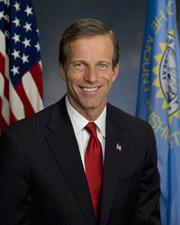 Sen. John Thune (R-SD)
Legislative Activity
Stay on top of the latest movement without scrolling through every action
Senate amendment proposed (on the floor): Amendment SA 662 proposed by Senator Thune.(consideration: CR S2931-2932, S2935-2936, S2942; text: CR S2931)
March 10, 2009
View full timeline
Senate amendment proposed (on the floor): Amendment SA 662 proposed by Senator Thune.(consideration: CR S2931-2932, S2935-2936, S2942; text: CR S2931)
March 10, 2009
Senate amendment not agreed to: Amendment SA 662 not agreed to in Senate by Yea-Nay Vote. 47 - 50. Record Vote Number: 92.
March 10, 2009
Roll call votes on amendments in Senate: Amendment SA 662 not agreed to in Senate by Yea-Nay Vote. 47 - 50. Record Vote Number: 92.
March 10, 2009
Amendment SA 662 proposed by Senator Thune. (consideration: CR S2931-2932, S2935-2936, S2942; text: CR S2931) To prohibit the use of funds by the Federal Communications Commission to repromulgate the Fairness Doctrine.
March 10, 2009
Amendment SA 662 not agreed to in Senate by Yea-Nay Vote. 47 - 50. Record Vote Number: 92.
March 10, 2009
Senate amendment submitted
March 4, 2009
Votes
1 roll call on this amendment
Text
Proposed
OMNIBUS APPROPRIATIONS ACT, 2009--CONTINUED

The PRESIDING OFFICER. The Senator from Texas is recognized.
Mrs. HUTCHISON. Mr. President, what is the pending order?
The PRESIDING OFFICER. There is no pending order. There has been no
unanimous consent. The Senator is recognized.
Mrs. HUTCHISON. Mr. President, I rise today to speak in opposition to
the Omnibus appropriations bill that is before us. I think this debate
has been good. We have had amendments. I thank the majority leader for
allowing amendments to be offered. I note that not one amendment has
been agreed to, but nevertheless we have had the debate and I think the
American people do deserve to know more about this bill and why there
are so many objections to it.
I am speaking against it today because of its sheer size. It is a
$408 billion bill. But when you account for the previous bills that
have already passed appropriations this fiscal year for defense,
military construction, veterans affairs, and homeland security, the
bottom line is for fiscal year 2009 we are going to spend $1 trillion.
Passage of this bill will mark the first time in U.S. history that our
regular appropriations process, funding Government in the routine and
regular order, will surpass $1 trillion.
Last week I offered an amendment. Senator McCain offered an
amendment, Senator Coburn offered several amendments, Senator DeMint,
Senator Vitter, Senator Kyl--so many amendments have been offered but
they were basically different ways to bring down the cost of this bill
to some kind of responsible, agreed-upon area so we can say we are
doing the people's bidding by taking care of taxpayer dollars. That is
what we tried to do.
First, Senator McCain offered an amendment to say let's do a
continuing resolution that funds Government at 2008 levels until
October 1, the end of the fiscal year. Next, an amendment was offered
by Senator Ensign that basically said 2008 spending levels, but with
the new bill, with the new authorizations. It will have all of the
congressional imprint but it will be 2008 levels. That failed.
My amendment was 2008 levels with the rate of inflation, so instead
of an 8-percent increase in spending in a 1-year period, double the
rate of inflation, it would have been a 3.8 percent increase from 2008,
which I thought was quite reasonable. Furthermore, I said let's decide
that we will only take it from the accounts in the bill before us that
duplicate what we passed in the stimulus bill weeks ago. In that way,
we would say to the American people we are going to fund the Government
at 2008 levels plus the rate of inflation, and the way we are going to
cut it back is to let the Appropriations Committee decide which of the
duplicated accounts that were passed in the stimulus bill 2 weeks ago
would be taken

[[Page S2931]]

out--either the stimulus bill or the bill before us. That was my
amendment and it too failed.
We have tried everything we know how to do in a reasonable and
responsible way to say to the American people: Everyone is hurting
right now and we should not be spending in the regular order on regular
Government business, 8 percent above last year's rate. My amendment
would have been a 1-percent cut from this bill and the Appropriations
Committee could have chosen where that went. I also suggested that we
take it out of the duplicate measures that we passed within 1 month of
each other. The American people expect more responsible actions from
Congress than spending without restraint.
I hear from my constituents all the time. A lot of common sense is
coming out of my constituents. I wish we could export the good old
Texas common sense to the Congress because what we are saying is why
don't we look at the big picture here? Instead of a $1 trillion
stimulus spending package on top of $1 trillion to fund Government for
the next 9 months, and furthermore we have not even dealt with the
financial institutions yet, why don't we step back and look at the
problem we have, which is that our financial institutions are not
working, our small businesses are not getting credit so they are not
able to borrow to stay in business, and the housing market is in the
tank? We have not addressed those issues yet and here we are, spending
as if there is no restraint, adding to the debt because we do not have
the money in the bank. I cannot think of anything more irresponsible
than what we are doing in these last couple of months in the Congress.
Actually, the stimulus packages from last year were also erroneous.
But couldn't we have learned from the mistakes? Couldn't we have
learned from what did not work in the first stimulus package? But, no,
we do not seem to have learned, even though it was less than a year
ago. I think the American people are showing the concern they have
because the stock market is low, and is not getting stabilized.
Now we have coming on the heels of this omnibus bill, which we are
not accounting for, a $3.6 trillion budget proposed by the President
with a deficit for 2010 projected at $1.75 trillion. The cumulative
debt of America today is $11 trillion. The proposed budget plan
recently suggested a doubling of this debt over the long term.
Mr. President, 25 percent of the national debt that we are
accumulating is owned by foreigners. The Chinese Government owns almost
$700 billion of our debt. This is the same Chinese Government that last
weekend took a rather hostile action toward one of our naval vessels in
the South China Sea. I think we should be looking at the national
security implications of having so much of our country's debt in the
hands of any foreign country or any foreign national.
In addition to the concerns about whether the borrowers are going to
buy our debt--what if they say: $10 trillion, $11 trillion, you know,
maybe we will buy your debt, but the risk is too great and we will have
to jack up the interest rate? What is that going to do to an economy
that is teetering so badly?
I do not think we can turn a blind eye to the long-term consequences
of this debt burden. It is not only irresponsible but it borders on
being reckless. When are we going to stop it? If not today, then when?
We have a chance today to say to the American people we will go back to
the drawing boards and we will put reasonable limits on the amount of
debt we are accumulating. We will put limits on the deficits that are
being created. I think we should go back to 2008 levels because we
passed a $1 trillion spending plan. Why not go back to 2008 levels and
take out the duplication from the stimulus bill and what is in the bill
before us today? That would be a responsible action that might start
giving confidence to the American people that the Congress and the
President will be able to work together in a bipartisan way to act
responsibly, with the big picture in mind. I urge the President of the
United States not to go forward with the budget that he has put
forward, not to go forward with an energy plan that is going to start
increasing taxes on every electric bill that every consumer in this
country will have, but instead to step back and say let's fix the
financial industries. Let's fix the financial institutions. The idea
has been propounded is that the FDIC is going to start putting an
assessment on every bank deposit to pay for these other schemes that
have no impact whatsoever.
There are a lot of things coming out of here that do not make sense.
I think it is time for us to begin to show the American people we are
going to step back. We are going to fix the financial markets so people
can borrow to make payroll and keep people working, so people can stay
in their homes and not get foreclosed, and to shore up the housing
industry and help them start building and selling homes again.
If we can start there, then we will know what kind of stimulus we
need, or what kind of further spending would be in the best interest of
this country to get our economy going again. But until then, we should
not pass the bill before us today. We should go back to the drawing
board and begin responsible, bipartisan leadership from Congress and
the President on behalf of the American people.
I yield the floor.
The PRESIDING OFFICER. Who seeks recognition?
The Senator from South Dakota.

Amendment No. 662

Mr. THUNE. Mr. President, I ask unanimous consent to call up
amendment No. 662, and make it pending.
The PRESIDING OFFICER. Without objection, the pending amendment is
set aside. The clerk will report.
The legislative clerk read as follows:

The Senator from South Dakota [Mr. Thune], for himself, Mr.
DeMint, Mr. Inhofe, and Mr. Enzi, proposes an amendment
numbered 662.

The amendment is as follows:

(Purpose: To prohibit the use of funds by the Federal Communications
Commission to repromulgate the Fairness Doctrine)

On page 410, after line 2, insert the following:
Sec. 753.  None of the funds appropriated in this Act may
be used by the Federal Communications Commission to prescribe
any rule, regulation, policy, doctrine, standard, guideline,
or other requirement that has the purpose or effect of
reinstating or repromulgating (in whole or in part) the
requirement that broadcasters present or ascertain opposing
viewpoints on issues of public importance, commonly referred
to as the ``Fairness Doctrine'', as such doctrine was
repealed in In re Complaint of Syracuse Peace Council against
Television Station WTVH, Syracuse New York, 2 FCC Rcd. 5043
(1987).

Mr. THUNE. Mr. President, 2 weeks ago, 87 Members of the Senate voted
to uphold our first amendment rights by supporting a statutory
prohibition on the so-called fairness doctrine. The amendment was
offered by Senator DeMint and was accepted as part of the DC voting
rights bill which is currently awaiting consideration by the House of
Representatives. I am concerned that once the House considers this
bill, whenever that might occur, and the Senate and House versions are
conferenced together, this provision will no longer be a part of the
final DC voting rights bill.
I will say I am hopeful that the DeMint amendment is retained in the
final version of the DC Voting Rights Act, but I am fearful it will be
stripped out behind closed doors when the conference committee gets
underway.
So I filed an amendment to the Omnibus appropriations bill that would
prohibit the FCC from using any funds to reinstate the fairness
doctrine during the current fiscal year.
If this amendment is accepted to the omnibus bill, then the 87
Senators who supported this prohibition last week will have assurances
that the fairness doctrine will not be reinstated for the remainder of
this year regardless of whether the DeMint amendment remains part of
the DC Voting Rights Act.
I would also like to remind my colleagues a similar provision was
included as part of the fiscal year 2008 Omnibus appropriations bill,
section 621, that was enacted into law last year. However, that
language was not included as part of the fiscal year 2009 Omnibus
appropriations bill.
Now, one of the arguments that has been made against this amendment
from my colleagues on the other side is, well, this issue is not that
important. Nobody really cares about it. It is not going to happen.
If that is the case, then why is it that the prohibition on funding
to reinstate the fairness doctrine was stripped out of this bill after
it had been included in the fiscal year 2008 appropriations bill?

[[Page S2932]]

The so-called fairness doctrine has a long and infamous history in
our country. The FCC promulgated the fairness doctrine in 1949 to
ensure the contrasting viewpoints would be presented on radio and
television. In 1985, the FCC began repealing the doctrine after
concluding that it actually had the opposite effect.
They concluded then what we still know today, and that is the
fairness doctrine resulted in broadcasters limiting coverage of
controversial issues of public importance.
Now, recently, many on the left have advocated reinstating the
doctrine. They argue that broadcasters, including talk radio, should
present both sides of any issue because they use the public airwaves.
However, recent calls to reinstate the fairness doctrine failed to take
into account several considerations, which I will mention in just a
moment. But in the event that there would be any question about whether
there are those out there who would like to see this happen--because
that has been one of the arguments raised in the course of the debate,
that nobody in here is very serious about really doing this--if you
look at what the Speaker of the House said when she was asked: Do you
personally support revival of the fairness doctrine? She said, ``Yes.''
The leader of the Democrats in the House of Representatives recently
said:

There is a real concern about the monopoly of information
and the skewering of information that the American public
gets.
First, as to the monopoly. Obviously if one group or a
large group controls information and only allows one
perspective to be presented, that is not good for democracy.
That is not good for the American public.

That is, of course, what the fairness doctrine is directed at. It can
have great merit. Those are the two top Democrats in the House of
Representatives, and those are statements made within the last year.
Then perhaps even more telling is what was said by a top staffer in
the House. And it says:

Conservative radio is a huge threat and political advantage
for Republicans, and we have had to find a way to limit it.

I would submit that really is what this is all about. We have had
Members on this side, in the Senate, on the other side of the aisle,
who have made similar statements. Recently, on a radio program one of
my colleagues on the other side was asked: Do you think there will be a
push to reinstate the fairness doctrine? ``I don't know; I certainly
hope so'' was the answer.
Do you support it? ``I do.''
I mean, would you want this radio station to have to change? ``I
would. I would want this station and all stations to present a balanced
perspective and different point of view.''
What we are talking about is a first amendment right. In reality, the
fairness doctrine resulted in less, not more, broadcasting of issues
that are important to the public because airing controversial issues
subjected broadcasters to regulatory burdens and potentially severe
liabilities. They simply made the rational choice not to air any such
content at all.
Now, the number of radio and TV stations and development of newer
broadcast media, such as cable and satellite TV and satellite radio,
have grown dramatically in the past 50 years. In 1949, there were 51
television stations and about 2,500 radio stations in the entire United
States.
In 1985, there were 1,200 television stations and 9,800 radio
stations. Today, there are nearly 1,800 television stations and nearly
14,000 radio stations. There is simply no scarcity to justify content
regulation such as the fairness doctrine.
The third point I will make is this: Development of new media, social
networking, and access to the Internet has changed media forever.
Supporters of government-mandated balance either ignore the new
multiple sources of media or they reveal their true intention, which is
to regulate content on all forms of communication and ultimately stifle
certain viewpoints on certain media such as talk radio.
Fourth, broadcast content is driven by consumer demand. Consumers of
media show whether they are being served well by broadcasters when they
choose either to tune in or turn off the programming that is being
offered. The fairness doctrine runs counter to individual choice and
freedom to choose what we listen to or see on the air or read on the
Internet.
The fairness doctrine should not be reinstated, and 2 weeks ago the
Senate acted in a strong bipartisan manner in opposition to the
fairness doctrine. I am asking the Senate to agree to my amendment
because it simply prohibits any funding from being used to reinstate
the fairness doctrine just as we included as part of last year's
Omnibus appropriations bill.
Adoption of my amendment would ensure that our first amendment rights
are protected and that consumers have the freedom to choose what they
see and hear over our airwaves. This amendment ensures that the Federal
Communications Commission does not use any resources to reinstate the
fairness doctrine through the end of the fiscal year until a more
permanent solution can be reached through a statutory prohibition.
As I said, 2 weeks ago, the Senate adopted this by a vote of 87 to
11. There were 87 Senators in the Senate who agreed to language that
was contained in the DeMint amendment to the DC Voting Rights Act.
Similar language prohibiting the FCC from reinstating the fairness
doctrine again, as I said earlier, was contained in last year's Omnibus
appropriations bill. The administration of President Obama is on record
opposing efforts to reinstate the fairness doctrine. It makes sense, in
my judgment, that we echo all of those statements and the vote that was
made by the Senate a couple of weeks ago by including a prohibition on
funding for the FCC to reinstate the fairness doctrine.
Again, we do not know what is going to happen in the DC Voting Rights
Act, whether this provision is going to be stripped out, whether the
DeMint amendment is going to be stripped out. So it is important, in my
view, that we reinforce the vote by making a strong statement, at least
for this fiscal year's funding, that funding in the FCC cannot and will
not be used to reinstate the fairness doctrine.
There is no reason for the Senate not to vote for this language. I
hope my colleagues will join me in supporting this amendment and
putting us on record when it comes to the funding that would be used to
reinstate the fairness doctrine that this appropriations bill will not
do that.
I yield the floor.
The PRESIDING OFFICER. The Senator from New Jersey.
Mr. MENENDEZ. Mr. President, I rise to engage my colleagues, Senator
Nelson and Senator Martinez, in a colloquy. And as I do, let me start
off by saying, we want to take a moment to discuss some important
provisions in the omnibus bill. I discussed these provisions at length
last week on the Senate floor, and I want to give an update as to where
things stand today.
As I discussed last week, this bill includes three important foreign
policy changes with respect to Cuba that have not been subjected to
debate in this body. They have not gone to the Foreign Relations
Committee, they have not been subject to a vote in either body, and
these modifications deserve a full examination. This has not taken
place. Instead, this body would have been forced to swallow these
changes in the crudest process I can imagine, without analysis, and
without inclusion.
Since we have been unable to debate the substance of these
provisions, I have asked for a clarification, along with my colleagues,
to the Secretary of the Treasury on the implementation of these
provisions and expressed my concern for their possible implications and
the unproductive signals they might send to those who are fighting for
democratic change on the island.
We did this to get clear, first, of what might have been major
loopholes that could have been exploited by individuals or
organizations seeking to circumvent the longstanding and necessary
economic embargo. In response, Secretary Geithner has provided me with
two letters that I ask unanimous consent be printed in the Record.
There being no objection, the material was ordered to be printed in
the Record, as follows:

[[Page S2933]]

Department of the Treasury,

Washington, DC, March 5, 2009.
Senator Robert Menendez,
U.S. Senate,
Washington, DC.
Senator Bill Nelson,
U.S. Senate,
Washington, DC.
Dear Senators: I understand that you have concerns with
provisions of the Omnibus Appropriations Act, 2009 that would
amend Cuba sanctions on travel and agricultural and medical
trade. As you know, the Obama Administration had nothing to
do with these or any other provisions of that bill.
We are, however, currently reviewing United States policy
toward Cuba to determine the best way to foster democratic
change in Cuba and improve the lives of the Cuban people.
Your views and the views of others on Capitol Hill will be
important to that review, and the President remains committed
to consulting with you as we consider changes to Cuba policy.
I understand that one of your chief concerns with the
Omnibus is Section 622, which would prohibit the Treasury
Department from using funds to administer, implement, or
enforce the current definition of ``cash in advance,'' which
is one of the permissible ways to finance exports to Cuba.
Treasury believes that this change likely will have no
influence on current financing rules. The term ``cash in
advance'' is in the Trade Sanctions Reform and Export
Enhancement Act of 2000 and therefore private parties are and
will continue to be statutorily required to comply with those
payment terms. Because the bill's language does not modify or
negate the statutory requirement in the 2000 Act, exporters
will still be required to receive payment in advance of
shipment and will not be permitted to export to Cuba on
credit other than through third-country banks.
I also understand you are concerned about Section 620. As
you know that is a provision that will also be administered
by the Department of the Treasury. I can assure you that
regulations promulgated pursuant to that provision will seek
to ensure that only travel for credible sales of food and
medical products is authorized.
Sincerely,
Timothy F. Geithner,
Secretary of the Treasury.
____

Department of the Treasury,

Washington, DC, March 9, 2009.
Hon. Robert Menendez,
U.S. Senate,
Washington, DC.
Dear Senator Menendez: You have expressed concerns to me
about provisions of H.R. 1105, the FY 2009 Omnibus
Appropriations bill, regarding Cuba sanctions. You have also
shared your views regarding Section 620 of the bill, which
relates specifically to travel to Cuba for the commercial
sales of agricultural and medical goods pursuant to the Trade
Sanctions Reform and Export Enhancement Act of 2000.
Section 620 would be administered by the Department of the
Treasury. The regulations promulgated pursuant to that
provision would provide that the representatives of only a
narrow class of businesses would be eligible, under a new
general license, to travel to Cuba to market and sell
agricultural and medical goods. Any business using the
general license would be required to provide both advance
written notice outlining the purpose and scope of the planned
travel and, upon return, a report outlining the activities
conducted, including the persons with whom they met, the
expenses incurred, and business conducted in Cuba. All
travelers who take advantage of the general license would
also have their daily expenses limited to the then-applicable
State Department per diem rate.
It is my hope that this letter has assisted you in
understanding how the Treasury Department would implement
Section 620 of H.R. 1105, the FY 2009 Omnibus Appropriations
bill. If there is anything that I can do to be of assistance
in the future, please do not hesitate to contact me.
Sincerely,
Timothy F. Geithner,
Secretary of the Treasury.

Mr. MENENDEZ. Section 620 liberalizes individual travel regulations
to Cuba for the promotion of agricultural and medical sales. This
provision would systemically broaden the category of licenses available
and allow individuals, in a self-policing manner, to travel to the
island under the auspices of selling such supplies.
While I am sympathetic to the U.S. agricultural industry, I remain
concerned that provision was written with the aim not of benefitting
the private sector but, rather, of undercutting the current travel
regulations for individuals and putting a wedge in a broader issue of
denying our currency to the Castro regime. Depending on how this
provision was implemented, it could encourage a radical break in
existing travel regulations and provide the Castro regime with enhanced
financial benefit in the pursuit of its repressive policies.
As a result, we asked Secretary Geithner specifically how the
provision would be implemented. Secretary Geithner assured us in his
letter dated March 5, 2009:

Regulations promulgated pursuant to that provision,
[Section 620] will seek to ensure that only travel for
credible sales of food and medical products is authorized.

In his letter dated March 9, 2009, Secretary Geithner wrote:

The regulations promulgated pursuant to that to provision
[Section 620] would provide that the representatives of only
a narrow class of business would be eligible, under a new
general license, to travel to Cuba to market and sell
agricultural and medical goods. Any business using the
general license would be required to provide both advance
written notice outlining the purpose and scope of the planned
travel and, upon return, a report outlining the activities
conducted, including the persons with whom they met, the
expenses incurred, and business conducted in Cuba.

Section 622 concerns cash in advance payments. This provision would
strip the ability of the Department of the Treasury to enforce a 2005
amendment that defined the term ``cash in advance.''
In his March 5 letter, Secretary Geithner wrote that the U.S.
Treasury ``believes that this change likely will have no influence on
current financing rules. The term `cash in advance' is in the Trade
Sanctions Reform and Export Enhancement Act of 2000 and therefore
private parties are and will continue to be statutorily required to
comply with those payment terms. Because the bill's language does not
modify or negate the statutory requirement in the 2000 Act, exporters
will still be required to receive payments in advance of shipment and
will not be permitted to export to Cuba on credit other than through
third-country banks.''
Which is the law today.
This comes particularly at a moment that is very important. The Paris
Club recently announced that Cuba has defaulted on over $9 billion of
obligations. At a time that we are facing challenges in the United
States in terms of our financial institutions and credit, in general,
to be giving credit to a country that has not only a repressive policy
but has $30 billion in default is not, in my mind, good policy.
President Obama said:

My policy toward Cuba will be guided by one word:
Libertad----

Which means freedom--

and the road to freedom for all Cubans must begin with
justice for Cuba's political prisoners, the rights of free
speech, a free press and freedom of assembly; and it must
lead to elections that are free and fair.

I could not agree more with President Obama on this point, and I
fully support him in moving forward in this direction.
Finally, I know some of my colleagues might be confused about my
persistence with this issue over the last couple of weeks. So let me
clarify what, for me, is a principled position.
First, I have many citizens in New Jersey whose personal stories
speak powerfully to the repression of the Castro regime. Many of them
have spent 10 to 20 years of their lives in a prison cell. Their only
crime was trying to seek peaceful change in their country. They are now
proud U.S. citizens. But they languished in a jail for a decade or two
decades simply for seeking to make peaceful change. Many of them were
tortured in that process. They are a powerful reminder to me every day,
when I am back in New Jersey, of that reality.

Second, let me propose that for some it is difficult to imagine the
deep personal significance these changes have for the human rights and
democracy activists on the island who fight for the ability to speak
freely and think freely, as well as my own personal convictions on this
issue that my family has both lived under and died trying to change.
Changes in our Nation's policy toward Cuba, such as changes in our
Nation's policy toward any nation our country determines a state
sponsor of terrorism--such as Iran, Sudan, and Syria--are extremely
delicate policy issues. Any such changes in our policy with these
countries deserve a democratic debate and careful deliberation. It is
simply undemocratic to tuck them in the middle of a large unrelated but
must-pass spending bill.
I thank Secretary Geithner for his understanding of the sensitivity
of these issues, working with Senator Nelson and myself to ensure that
the spirit of the legislation is carried out

[[Page S2934]]

in a responsible manner. I also thank my colleagues in the Senate who
have worked with us on this and others who have understood and Majority
Leader Reid for working with me on getting clarification on the
implementation of these provisions. It is disappointing that the
process unfolded in this way. We will look just as unkindly upon any
future attempts to make significant foreign policy decisions of any
sort, not only about Cuba, in this type of secretive and undemocratic
manner. Instead, I wish to work with my colleagues in an open and
transparent manner to deliberate the substance before we get to this
point, even though, at the end of the day, we may still not find common
ground. I would, of course, prefer that the provisions not be in this
bill at all. But the assurances I have received from Secretary Geithner
have allayed my most significant concerns, and I will vote in favor of
the Omnibus appropriations bill.
I yield to the distinguished senior Senator from Florida, who has
been an ally in this effort to ensure that the clarifications needed
were there. He is a tremendous advocate for freedom and democracy for
the people of Cuba. I was privileged to work with him in getting the
clarifications and making sure we are in a position so human rights
activists and political dissidents in Cuba still have their opportunity
to create change.
The PRESIDING OFFICER. The Senator from Florida is recognized.
Mr. NELSON of Florida. Mr. President, I commend Senator Menendez for
the conviction and passion with which he comes to this important
position of influencing the Senate on this particular issue. I likewise
wish to say the same thing about my colleague from Florida who has been
my good friend for 31 years and who comes to this issue with equal
passion and commitment. I thank my colleague from Florida for coming
out here on the floor. Even though this issue was negotiated among
Senator Menendez and myself and Secretary Geithner, he is willing to
come and stand to embrace the product of our work.
I wish to call to the attention of the Senate that our majority
leader, Senator Reid of Nevada, came up to me and indicated he supports
this and wanted me to state that to the Senate.
I came to Congress 30 years ago. This issue has been an issue that
any Floridian has lived with for a long time. I have supported an
economic embargo against Cuba along with a ban on tourist travel to the
island. I am a supporter of isolating the regime in Havana and giving
the Cuban people the democracy they so desperately seek. The provisions
in this omnibus that came out of the Appropriations Committee did not
do away with the embargo but did weaken it. I think the better course
is to allow our new President to undertake his own review of U.S.
policy toward Cuba before pushing hasty and ill-advised language
through on an omnibus bill, as Senator Menendez said, that was crafted
behind closed doors, kept from public view, and kept from the rest of
the Senate's view until it was disgorged from the full committee only a
couple weeks ago; ``it'' being the omnibus, a must-pass piece of
legislation to keep the Government functioning.
As Senator Menendez has outlined, we reached out to the Secretary of
the Treasury and to the White House to clarify the implementation and
enforcement of these regulations. Senator Menendez has already put into
the Record Secretary Geithner's letter of March 5 and his responsive
clarification in a letter of March 9. I wish to enter into the Record
the letter Senator Menendez and I sent to Secretary Geithner on March
6, memorializing the personal conversation we had with him, to which he
so graciously then followed up with his letter of March 9.
I ask unanimous consent that it be printed in the Record.
There being no objection, the material was ordered to be printed in
the Record, as follows:

U.S. Senate,

Washington, DC, March 6, 2009.
Hon. Timothy F. Geithner,
Secretary of the Treasury, Department of the Treasury,
Washington, DC.
Dear Secretary Geithner: We appreciate your recent
correspondence clarifying the implementation of Sec. 622 of
the Omnibus Appropriations Act of 2009. As we discussed last
night, we continue to have serious concerns with Section 620.
Thank you for your personal commitment that the Department of
the Treasury will promulgate regulations pursuant to Section
620 that:
1. Provide a narrow definition of the eligible businesses
that may travel to Cuba to sell agricultural and medical
products under a general license;
2. Require written notice to the Office of Foreign Assets
Control (OFAC) in advance of travel to Cuba outlining the
purpose and scope of such travel to Cuba, pursuant to the
provisions as defined above;
3. Require a filing upon return of travel to Cuba by
travelers outlining activities conducted, including persons
with whom they met, the amount of expenses incurred, and the
business conducted; and
4. Limit such travelers to the current Department of State
per diem.
Currently, the Office of Foreign Assets Control (OFAC)
pursues significant enforcement with regard to travel
regulations relating to Cuba. We would expect that such
enforcement would not be diminished in the ultimate
enforcement of the regulations outlined above.
Sincerely,
Robert Menendez.
Bill Nelson.

Mr. NELSON of Florida. I would like to engage my colleague from
Florida, Senator Martinez, in this colloquy.
The PRESIDING OFFICER. The Senator from Florida.
Mr. MARTINEZ. Mr. President, I thank my two colleagues from New
Jersey and Florida for what they have had to say but most of all for
the work they have done. They have done good work. We have stood
together, the three of us, along with others but particularly the three
of us with the most immediate concern with this issue, in a way that is
heartening. To me, oftentimes I have seen our names written as
hardliners on Cuba. I prefer to think of ourselves as voices of freedom
standing to oppression. That is what is at stake. People in the
district of Senator Menendez and people in Florida, countless of them,
we know their stories. We know their names. We know their suffering. It
isn't about settling an old score because these conditions continue
even today. Oscar Elias Biscet, to name one. He is in jail. His family
seldom gets to visit him. His health is in peril. It is because of all
these things that are not only part of history, but they are also part
of today's reality, that we stand on the side of freedom. That means a
state that is a sponsor of terror needs to be treated differently.
I daresay that while I might not agree with everything that might be
done, I trust President Obama and Secretary of State Clinton to do a
review of our policy toward Cuba and then, perhaps in the light of day,
have a discussion about what would and would not be appropriate. What I
would object to is anything that would be unilateral, that simply would
say: We will do this, that and the other thing and expect nothing on
behalf of those oppressed people of Cuba. We need to expect that there
will be reciprocity of some type, that there will be steps taken by the
Cuban Government contrary to what they seem to have done last week,
which is to circle the wagons and hint of more military control of the
Government and more repression for the people.
I deeply thank both Senators Nelson and Menendez for what they were
able to accomplish in this misguided piece of legislation. I agree with
them, it was inserted in the dark of night with no debate and
discussion. The letters and the understanding they have reached with
the Secretary of the Treasury handles the problem as it relates to
agricultural sales to Cuba as well as the related licensing for travel
relating to doing business in Cuba.
We talk often about an embargo. This embargo supposedly is limited to
trade sanctions because we sell almost a billion dollars in
agricultural goods to Cuba. We sell medicine. More humanitarian aid
flows to Cuba from here than any other country in the world, hundreds
of thousands, into the billions of dollars in remittances that go from
folks in this country to those in Cuba. Sadly, the Cuban Government
takes too big a cut out of it.
I look forward to this implementation, which I think fixes the
problem created by this misguided legislation. I thank both the
Senators for their yeoman work in getting this accomplished. I remain
concerned about travel by family members. While I am not one to
begrudge anyone who wants to see an uncle or aunt, there will be a need
for regulations that will enshrine what I know will be a different
policy

[[Page S2935]]

under President Obama, and I respect that completely. But there needs
to be some regulation about the frequency of travel and also about the
amount of per diem dollars carried back and forth to Cuba. I am sure
those will be forthcoming down the road.
I believe it is important we continue to request that if there is
going to be legislating on this topic, that it be done in the open air,
that we have an opportunity for fair debate and for a legislative
process that is worthy of the kind of institution we are.
I thank both my colleagues for the great work and appreciate the fact
that we have been able to maintain what is an important foreign policy
initiative that should never be disturbed in the way this was done but
should be left in the hands of the Executive and be done carefully,
measuredly and after study and consideration.
Mr. NELSON of Florida. Mr. President, I thank Senator Martinez again.
It is important we understand that when we have that full and fair and
open debate in the sunshine, we remember what Candidate Obama said
during the campaign. He said what he wanted to do was go back to the
status quo ante on travel to Cuba by family members every year instead
of once every 3 years and to have more remittances every quarter than
was cut back a few years ago by the previous administration. That seems
to be common sense and family value oriented. That is what the
candidate who became our next President articulated.
Then once the new President announces his declaration of that policy,
we can come out here and openly debate that issue. While there has been
disagreement within this body over the most effective way for us to
help the Cuban people, I believe if there is to be a new strategy
toward Cuba, we must have the opportunity for the Commander in Chief to
lay it out, not have it come from the tinkering of a few lawmakers
inserting language in a must-pass appropriations bill without any
opportunity for debate.
I stand with our Cuban American families, many of them in Florida,
who have ties to loved ones still on the island. That is why I support
President Obama's efforts to allow increased family travel once a year,
instead of only once every 3 years, and the increased remittances to
family members.
Our job in guiding U.S. foreign policy toward Cuba is to isolate the
Castro regime but not to prevent families from being able to take care
of their loved ones. On the basis of these letters entered in the
Record today and on the personal assurance of the Secretary of the
Treasury, which we appreciate very much, I have been assured by the
administration as to the implications and enforcement of these
regulations. Although I agree with many of my colleagues that this
omnibus bill is far from perfect, I believe it is in the best interests
of the country to provide the badly needed operational funding for the
U.S. Government and for other important initiatives.
This bill includes funding for lifesaving equipment at Florida
hospitals, for sheriffs' offices, and for police departments to upgrade
communications systems or to prevent kids from joining street gangs. It
provides money for cleaning up blighted downtown neighborhoods, for
retraining workers who are losing their jobs, and for projects to save
one of the world's greatest natural treasures, the Florida Everglades.
These are just a few of the reasons why this legislation is so
important.
If this bill, shepherded through this body by our esteemed chairman
of the Appropriations Committee, Senator Inouye, were not to pass,
NASA's contractors would have to start laying off skilled aerospace
workers developing the replacement of the space shuttle. So it is my
intention to vote for cloture on the 2009 omnibus bill, and I urge our
colleagues to do so.

Mr. President, I yield to Senator Menendez.
The PRESIDING OFFICER (Mr. Kaufman). The Chair recognizes the Senator
from New Jersey.
Mr. MENENDEZ. Thank you, Mr. President.
Let me now make some broader comments about the omnibus, having
expressed my concerns. And, again, in recognition and in light of the
assurances we have received on the matter that Senator Nelson, Senator
Martinez, and I have discussed, I have come to the floor today to
support the omnibus bill.
It is an important measure to help our economy recover and keep
essential public services running. It includes important funding for my
home State of New Jersey, including everything from an initial burst of
capital for a new trans-Hudson tunnel--incredibly important to move
large numbers of people across the Hudson River to New York, and also
for reverse commutes, for economic opportunity, access to hospitals, a
whole host of critical issues in a way that is promoting mass transit
and does so not only in terms of economic opportunity and an enormous
number of jobs that will be created as a result of that but also as it
relates to the quality of life and the environment by moving a lot more
people in a high-speed, nonpolluting process versus through a car--to
support for flood control and protection of our shore--which is
incredibly important in terms of the tourism and fishing industry and
the economy of New Jersey--to grants that allow local law enforcement
to have the latest technology to help the police officer on the beat.
This bill invests in education, strengthening our commitment to
science over the next decade so we can have a workforce that can
compete on a global playing field and be second to no one in terms of
that ability in those fields that are going to be the competitive
future opportunities for our citizens and for our Nation.
It makes strong advances in health care. It includes more than $30
billion for lifesaving research so that the National Institutes of
Health leaves no stone unturned in the search for treatment for cancer,
for diabetes, and the Alzheimer's that I have watched take over my
strong and proud mother.
The bill allows us to immunize an additional 15,000 children against
debilitating diseases. And it funds the Patient Navigator program I
established to help citizens make their way through a complicated
health care system.
The legislation puts resources toward revitalizing local communities
and keeping families in their homes--because the housing crisis is at
the root of our overall economic crisis. It funds community and
economic development in over 1,000 cities and towns, gives competitive
grants to revitalize neighborhoods, and renews section 8 vouchers to
help nearly 45,000 families keep a place to call home.
In short, the omnibus makes a broad range of the kind of worthy,
needed investments that will help our economy recover and our citizens
get through this difficult time. I am happy to see the Senate move
forward on this vitally important legislation. Although I know I am not
the only Senator to have felt frustration in this process, I wish to
take this opportunity to express that I am always open to discussions
with my colleagues, and I hope we can work together in the future to
make sure in the greatest deliberative body in the world we will all do
our part to deliberate before we take significant action.
With that, Mr. President, I yield the floor.
The PRESIDING OFFICER. The Senator from Hawaii.

Amendment No. 662

Mr. INOUYE. Mr. President, I rise in opposition to amendment No. 662,
an amendment offered by the Senator from South Dakota. This amendment
would prevent the Federal Communications Commission from reinstating
the fairness doctrine.
This amendment is totally unnecessary. There is no funding in this
bill for the FCC to reinstate the fairness doctrine. This bill does not
contain any provisions directing the FCC to reinstate the fairness
doctrine.
Further, President Obama does not support reinstating the fairness
doctrine. The FCC repealed this doctrine in 1987, and has no plans to
bring it back.
Finally, last week, 87 Senators, including myself, voted to include a
similar amendment to the voting rights bill that would prevent the FCC
from reinstating the fairness doctrine, which is exactly what this
amendment would do. So there is no question about Democratic support
for the position being proposed by the South Dakota Senator.
I wish to take a few seconds and talk about the history of this
issue. The

[[Page S2936]]

fairness doctrine, which was originally adopted by the FCC in 1949--60
years ago--is a concept that broadcasters should cover issues fairly,
allowing for different viewpoints to be presented in a balanced way.
I agree with the goals the fairness doctrine advanced, but the need
for this policy today has become obsolete. In the 1950s, there were
only three nationwide broadcast stations--NBC, ABC, and CBS. There was
a legitimate public concern that the small number of media outlets
could abuse their power and present a biased public agenda. At that
time, the fairness doctrine was the right answer to a small and heavily
concentrated media world.
A lot has changed since the 1950s. Technology has exploded. There are
more ways than ever to hear a variety of perspectives and opinions on
any number of issues. There are hundreds of channels on cable TV. We
have public broadcasting, which was nonexistent at that time. We have
more than 14,000 AM and FM radio stations, and hundreds of satellite
radio stations. We also have the Internet.
As I stated earlier, the FCC repealed the provision in 1987, and has
no plans to reinstate this doctrine. The amendment is simply an attempt
to take an issue on which a vast majority of the Members of this
Chamber voted in agreement last week and offer it to an unrelated bill
of significant importance to the day-to-day operation of our
Government.
It does not belong in this bill. I urge my colleagues to oppose this
matter so we can send the bill to the President of the United States.

Amendment No. 604

Mr. President, if I may, I wish to speak on another amendment. This
is amendment No. 604.
The bill before us, the Omnibus appropriations bill, would provide
funding for the majority of the Federal Departments which have been
funded under a continuing resolution since October of 2008.
This bill, the omnibus bill, is not an authorization bill. At the
request of both the chairman and ranking member of the authorizing
committee of jurisdiction, this bill includes a simple 1-year extension
of the E-Verify employment verification system, known as the Basic
Pilot Program, and includes a simple extension of the EB-5 program.
The Appropriations Committee chose not to include the controversial
authorization measures associated with the E-Verify Program. Rather,
the extension provided in the Omnibus appropriations bill provides the
authorizing committee ample time during this session of Congress to
consider the 6-year authorizing legislation contained in this
amendment.
The continuing resolution expires at midnight this Wednesday, March
11 and, therefore, I urge my colleagues to oppose this controversial
authorization language, particularly since this bill provides time to
the authorizing committees to address this issue through the
authorizing process.
I oppose that amendment.

Amendment No. 674

Mr. President, now, if I may, I wish to speak on another amendment.
This is amendment No. 674, which would prohibit the use of funds to
implement Executive Order 13496 which was issued on January 30 of this
year.
This Executive order requires Federal contractors to post a notice
informing workers of their existing labor rights under Federal labor
laws. The pending amendment, however, prohibits President Obama's order
from being implemented unless it uses the same exact language as a
prejudiced order issued by former President George W. Bush in 2001.
The Bush Executive order required Federal contractors to post a
Federal labor rights notice, but that notice only provided one-sided
material about the right to not join a union or pay certain union dues.
Unlike President Bush's order, President Obama's executive order does
not limit the notice to pro- or anti-union material, and it does not
dictate what specific language must be used. It simply requires the
Department of Labor to issue guidelines within 120 days from January 30
of this year about the notice, and for the notice to be more
comprehensive and informative than the Bush Executive order.
Mandating that the one-sided Executive order from the previous
administration be restored defies logic. Many new federally funded
projects to improve our Nation's infrastructure are underway and
productive labor relations are more important than ever. Ensuring that
workers are aware of their rights promotes better working relationships
between labor and contractors.
Federal law gives the President discretion to determine what is in
this notice. President Bush exercised that right during the 8 years he
served as President, and issued an Executive order on this matter that
many of us in this Chamber believed to be one sided. President Obama
deserves the same authority and discretion that was afforded to
President Bush to issue Executive orders. The Congress should not take
steps to intercede on this matter by adopting this amendment and,
therefore, I urge my colleagues to vote no.
Mr. President, I yield the floor.
I suggest the absence of a quorum.
The PRESIDING OFFICER. The clerk will call the roll.
The assistant legislative clerk proceeded to call the roll.
Mr. ENSIGN. Mr. President, I ask unanimous consent that the order for
the quorum call be rescinded.
The PRESIDING OFFICER. Without objection, it is so ordered.

Amendment No. 615

Mr. ENSIGN. Mr. President, I wish to speak once again about my
amendment dealing with the DC Opportunity Scholarship Program we have
here in the District of Columbia. Currently, 1,700 children from lower
income families are able to attend a private school with a $7,500
voucher thanks to this program, a program we implemented about 5 years
ago.
It seems the No. 1 priority for the National Education Association,
one of the largest unions in the country, is to eliminate this program.
We are talking about real children here. These are two of the kids who
attend school with President Obama's children. It is a great school.
The President and Mrs. Obama could afford to send their kids to any
school. They chose this particular school because it is an excellent
school. They chose not to send them to a public school in Washington,
DC. After seeing some of the statistics on the DC public schools, it
doesn't surprise me. Why should these two happy, healthy kids who are
enrolled at the same school as the President's children be forced to
leave?
The bill before us allows the program to continue for one more year,
then, if not reauthorized and approved by the DC City Council, the bill
de-funds the program and forces 1,700 children out of private schools
where they are happy, healthy and learning.
I quoted these statistics earlier: forty-five percent of Senators and
37 percent of members of the House send their children to private
schools. That is almost four times the rate of the general population.
Quality education shouldn't be only for a privileged few. We should be
able to send kids such as Sarah and James here to the schools where
they can get a better education, where they are safer.
The safety of DC public schools is a major concern. One-half of all
teenagers attending DC public schools are in a school that has enough
criminal activity to be classified as persistently dangerous. In school
year 2006-2007, DC Metropolitan Police reported that over 6,500 crimes
were committed in D.C. public schools. Too many of these schools are
not safe.
It is a civil right to get a good education. So we came up with a
plan a few years ago that took up to 2,000 poor children in the metro
DC area and sent them to a school of their parents' choice. Washington,
DC, spends more than any school District in America per student. The
District of Columbia spends over $15,000 per student per year--three
times as much as we spend in my home State of Nevada. Yet the public
schools are failing here in Washington. So we decided to design a
program to see if we can help some of those kids escape the failing
public schools in Washington. We thought: if it works as a pilot
project, maybe we can expand it to other places.
Well, the National Education Association has come out with their No.
1 priority, which is to destroy this program. My question is, Why? I
believe they are afraid this program is working, so it is a threat to
their power. It

[[Page S2937]]

is a threat to union member dues. That is unfortunate because when it
comes to education, our only concern should be in the quality of
education for our children. They need that kind of quality education to
compete in the 21st century.
I have a couple other kids to tell my colleagues about.
This is Sanya. She is a beautiful, happy young lady, and is receiving
a great education in a private school here in DC. Today, she has a 3.95
GPA. She is the vice president of her class. She is the captain of her
soccer team, a player on the lacrosse team, president of the
International Club, and she is a peer minister. She is a future leader
whom we are going to be taking out of the school she loves if this bill
is enacted without my amendment.
Rashawn is 16 years old and a handsome devil. He started school in
1996. His father had him tested and found out he was 3 years behind his
grade level. The scholarship program provided him the opportunity to go
to the Academia De La Recta Christian Day School. Rashawn said he can
now do his classwork with very little help because of the scholarship.
His sister, Dominique, who is 14 years of age, is now attending the
same school, and these are her words. She says: ``I love my school now.
I am working on my level on my grade.''
Do we really want to take these kids out of their schools? Do we
really want to do that? We have to ask ourselves, Do we want to protect
this bill and the special interests this bill is addressing so much
that we are actually going to pull 1,700 children from lower income
families out of the schools they are attending today? I think it is
unconscionable that we are going to be doing that.
Breanna Williams is 9 years of age and in the fourth grade. She loves
her new school, St. Peters. She is getting all A's and B's. She loves
to read and is reading at a level above her grade. In addition, Breanna
plays clarinet in the school band. When she grows up, she wants to be a
translator and travel the world.
Lastly, I wish to tell my colleagues about Ronald Holassie. He is
currently Washington, DC's deputy youth mayor. I had the honor of
meeting this young man, and I had the honor of meeting his little
brother, Richard. His little brother, Richard, 8 years of age, came to
our press conference and stole the show. These are two incredibly
bright young men. Ronald, a tenth grader, runs track, he is studying
physics, mentoring middle-school students, and absolutely loves every
minute of it. As the Youth Deputy Mayor, he considers saving this
program his chief legislative priority, because he has seen what it has
done for him and what it has done for his little brother.
So individually and collectively these programs are working. We just
have to put ourselves in a commonsense position.
There have been some studies quoted here claiming that this program
wasn't working. First of all, the studies were incredibly flawed. We
pointed out all of the flaws of the study. But we just have to ask
ourselves, if 45% of the Senators send their kids to private schools,
and they pay a lot of money to do that, would they do that if they
thought the educational opportunity was inferior? Of course not. It
just makes common sense. Do you think the parents of these 1,700
children would voluntarily send their kids to the DC schools of their
choice if these schools were inferior or if their kids weren't getting
a better education? Well, of course not.
This is what President Obama's Education Secretary said about the DC
scholarship program. He said:

It is a mistake to take kids out of a school where they're
happy and safe and satisfied. I think those kids need to stay
in their school.

So we need to adopt my amendment to keep the DC scholarship program
funded. It is the right thing to do for these kids. Showing them we
care more about their education than we do some special interest group
is the right thing to do.
So I urge all of my colleagues, when they are voting, to think of
Ronald. Think of the kids we have talked about and many others. Instead
of doing away with this program, let's study it. Let's study what is
working about it. If it is working, let's expand it to other places in
the country.
America leads the world when it comes to higher education. Our
colleges and universities are the best. One of the reasons they are the
best is because you can take a GI bill, student loan or Pell grant, and
you have the opportunity to attend any college you desire. You have a
choice. About 5 years ago, this program gave these kids a choice. Our
public, K-12 school system is in bad shape when compared to the rest of
the industrialized world. We are falling behind, especially in science,
math and in the technical fields. If we want our kids to have the
chance to compete in the 21st century, we have to improve our school
system. One of the ways to do that is through competition. This is just
a little experiment and a little competition that some people now want
to come to this floor and destroy.
So let's think of these kids, and let's think of kids all over
America when we are thinking about the educational choices we are going
to be making in the Senate. Let's give children in DC a choice. We, as
senators, are fortunate enough to have a choice for our children.
Forty-five percent of the Senators chose private schools, including the
chief opponent of this amendment, Senator Durbin.
I thank the Chair. I yield the floor, and I suggest the absence of a
quorum.
The PRESIDING OFFICER. The clerk will call the roll.
The assistant legislative clerk proceeded to call the roll.
Mr. SESSIONS. Mr. President, I ask unanimous consent that the order
for the quorum call be rescinded.
The PRESIDING OFFICER. Without objection, it is so ordered.

Amendment No. 604

Mr. SESSIONS. Mr. President, I hope that in a little bit we will vote
in favor of the amendment I have offered to extend the E-Verify system
for 5 years. It is time we do that. It is a proven, effective system
that brings integrity to our immigration system.
The E-Verify system is up and working today all over America. Between
1,000 and 2,000 businesses a week are signing up voluntarily. Over
112,000 have already signed up. When an applicant submits an
application for a position with a company, the company can input their
Social Security number into an electronic system, and the computer
checks it to see whether it is a valid Social Security number.
People who are not authorized to be in the U.S. know they can use any
Social Security number you choose. We found a few years ago that
hundreds of people were using the exact same Social Security number to
get a job. People were also using the same fake ID and getting jobs in
that fashion. E-Verify is a program that would help eliminate the jobs
magnet, the ability of a person who enters America illegally to get a
job. If employees aren't authorized to work after they have been
checked through E-Verify, nobody will be arrested. Police officers are
going to be called out. Nobody is going to be put in jail under this
system. What would happen is the employer would simply say: You don't
qualify. You are not a legal resident. If there is any doubt about it,
the applicant has a mechanism to very quickly validate their status if
they have a legitimate status to validate. It can make a big
difference.
The Heritage Foundation and I believe the Center for Immigration
Studies a few days ago did a study, and they estimate that under the
stimulus bill, 300,000 people who are not legally American will be
given jobs.
My colleagues probably saw the article--I am sure many of my
colleagues did--a couple of days ago where 700 people signed up for a
janitor's job in Ohio. The American people are seeing an increase in
unemployment. I don't think the numbers are going to reach as high as
they did in the 1980s--at least that is the testimony we just had at
the Budget Committee at two different hearings--where employment
reached 9.4 percent, 8.6 percent. People were estimating what
unemployment will reach. I don't know what it will reach, but I know a
lot of good people are out of work and looking for a job. We created a
stimulus package, $800 billion worth, and that stimulus package was
supposed to create jobs. The President says he wants to create 3
million, and we have just been given a report that says almost 10
percent of those jobs could go to people who are in the country
unlawfully.

[[Page S2938]]

Let me just say as an aside something that worries me. I think every
Member of this Congress should be worried about it. Under President
Bush's Executive order 12989, which was supposed to be implemented in
February of this year, every business that got a contract with the U.S.
Government must use the E-Verify system. As I said, over 112,000 are
using it voluntarily today.

What worries me is that President Obama pushed back implementation of
that Executive Order. He has now put it off until May 21. At the same
time, our Democratic leadership is blocking an effort to make E-Verify
permanent or even extend it for just 5 years.
What does that signal, I ask? Do we want people here unlawfully in
this country to get jobs working for the Government when there are
hundreds of people applying for a janitor's job? Do we want contractors
who hire illegals to get Government work while Americans cannot get the
jobs? I don't think so.
I will just say with regard to extending the E-Verify Program, in the
House they had a square vote on it last July. It passed 407 to 2. So
now we are not going to put that in this legislation. I was blocked 3
times in my attempt to get a vote on the amendment as part of the
stimulus package. At least, I have to say, I am pleased I will
apparently get a vote on this bill. But I am troubled with what I am
hearing that the leadership is going to put pressure on Democratic
Members to vote no. There is a majority there, and if they do, it will
not even pass today.
I urge my colleagues to listen to the telephone calls. I am getting
calls asking that I vote for it. It is my amendment. People care about
this issue. The American people wonder what it is we are doing here. Do
we not get it? Do we not understand what this is all about? It is about
a jobs package to create jobs for lawful American workers. They can be
noncitizens, but they need to be lawfully present in the country.
The first thing you do in dealing with a situation of illegality is
stop rewarding it. You do not give them good jobs.
I am amazed there is an objection to this amendment. I had a
suspicion that a move was afoot to keep my amendment from passing on
the stimulus bill, and that turned out to be correct. In addition to a
5 year extension, the House accepted an amendment making E-Verify
mandatory for stimulus money recipients without objection in the House
Appropriations Committee. It was in their bill, but Senate leadership
was able to block us from getting a vote on it. So we did not get a
vote and it was not in the Senate bill.
What happened when they went to conference? Speaker Pelosi and the
majority leader meet. They control the conference. And, oh, goodness,
they decided the House would concede and the amendment would be taken
out of the bill. Since the Senate had not put it in the bill, it would
be stripped from the legislation. That is how the stimulus package
passed without any E-Verify extension. I think it has expired now,
actually.
We need a long-term extension because it is going to cause businesses
that don't use it to wonder whether they should sign up if they do not
even know it is going to be a continuing system. It would be very bad.
The new Secretary of Homeland Security, Secretary Napalitano,
President Obama's Secretary, says she does favor this program. Michael
Chertoff, the previous Secretary of Homeland Security, strongly
supported this program. A bipartisan group of people support it. We
need to extend it. We need to actually make it permanent, and we need
to make it apply to all Government contractors, as even President Bush
required in his Executive order, which has now been abrogated by
President Obama.
To sum up, this amendment does not make E-Verify required for
Government contractors. All it does is extend the E-Verify system for
another 5 years. I cannot imagine we would let this cornerstone of a
plan to establish a lawful system of immigration to expire. We are on
the verge of that now.
I urge my colleagues to support this amendment.
I yield the floor.
The PRESIDING OFFICER. The Chair recognizes the Senator from
Oklahoma.

Amendment No. 622

Mr. INHOFE. Mr. President, one of the amendments we are going to have
the opportunity to vote on this afternoon is the Thune amendment. I
have some strong feelings about it. I wish to make a couple
observations that I think are necessary dealing with the fairness
doctrine.
As indicated by the vote on Senator DeMint's amendment to the DC
Voting Rights Act, any attempt on the part of any Senator to reinstate
the fairness doctrine clearly goes against the will of Congress and the
American people. It is a dangerous policy to enact more Government
policing of our airwaves.
With the onset of the Internet and other media technology, there are
countless sources of information at our fingertips. I can remember, and
you can remember, I say to the Chair, many years ago when we had
nothing but three networks, and we didn't even have talk shows at that
time. Then CNN came along. I guess it was the first cable network.
At the time, there was limited opportunity. As it is now, with all
the information that is going around, that is no longer a problem.
Senator DeMint's amendment addressed this issue. It was similar to
the intent of the Thune amendment that will be coming up this
afternoon. The DeMint amendment was adopted by a margin of 87 to 11.
One would believe, then, that the Thune amendment would pass by an
equally substantial margin. However, it was obvious at the time the
vote on the DeMint amendment was merely a political game on the part of
some of my colleagues to mask their true intent to regulate broadcast
media, and I suspect the vote on this amendment will be different. I
encourage my colleagues on the other side of the aisle to hold true to
their earlier conviction and pass this measure by an equally
substantial margin.
A lot of mail went out after that vote. People were talking about how
they were going to protect first amendment rights, and we were not
going to try to infringe on the airwaves with the fairness doctrine.
While reinstatement of the fairness doctrine still poses a threat to
free speech on the airwaves, the debate over Government regulation of
broadcast media has changed. Media ownership diversity and broadcast
localism are the new liberal tools they intend to use to regulate the
airwaves.
Two weeks ago, in a straight party-line vote, Democrats chose to
adopt an amendment--it was amendment No. 591 sponsored by Senator
Richard Durbin of Illinois--which calls on the FCC to ``encourage and
promote diversity in communication media ownership and to ensure that
broadcast station licenses are used in the public interest.''
That is very nebulous, very vague language, just enough to scare
people who are in business but not enough to define what they are
trying to do. There is no indication in the legislation as to what
``encourage and promote diversity'' and ``in the public interest''
means. These clauses can be interpreted by the FCC in any manner they
choose.
The Durbin doctrine, as I refer to it, is legislation that is so
incredibly vague and so potentially far reaching that there is no
certainty what the end result will be. This is not good governance.
This is not a good idea.
Another threat to our freedom of speech is a proposal called
broadcast localism. We have two different issues. We have localism and
then we have, of course, the diversity issue. Neither one is well
defined. The FCC gave notice of proposed localism regulations in
January of 2008. While the proposal was ultimately dropped, it is
indicative of future attempts to regulate the airwaves and is something
all Americans need to know about.
Among other things, the proposal would have required radio stations
to adhere to programming advice from community advisory boards. It
doesn't say what kind of advice. It doesn't say who these boards are.
It could be ACORN. It could be just about anybody, I suppose. Then to
report every 3 months on the content of their programming, they have to
report what the content is when it has been a matter of public record
anyway. They talk about how their program reflects the community
interest. If you have one biased source of localism, they can dictate
the content of broadcast material.
The localism rule, if it were promulgated, would mean that radio
stations

[[Page S2939]]

would have to comply with blanket regulations and broadcast programming
that may not be commercially viable and be forced to take into account
the advice of community advisory boards over their regular listeners.
Right now it is market driven. That is what people do not understand.
The reason we have content--I admit it is biased on the conservative
side because most people are biased on the conservative side. In my
State of Oklahoma, it does not matter if you are Democrat or
Republican. They are people who are conservative. They want limited
Government. They want limited taxation. I think Oklahoma is not the
only State that is unique in that respect. Although the rule was
ultimately abandoned, President Obama has expressed support for a new
localism regulation, and it is expected to come up again under this
administration.
Both localism and diversity--those are the keywords--in media
ownership will force radio stations to comply with blanket regulations
and to broadcast programming that is not commercially viable rather
than taking into account the needs of their communities.
I was in Bartonsville, OK, last week. There is a guy up there named
Kevin Potter who owns a station. That is his whole livelihood. He has
been doing it for as many years as I can remember. It is a very
competitive business he is in. He has to comply with something if it is
specific, but this is so nebulous he doesn't know what he has to comply
with. He is panicking that they would have the power under this new
regulation to shut him down.
I think what is most concerning to me is the enforcement procedure
for breaches of localism and diversity. Certainly, no one has been able
to determine what that is or what the definition is.
Senator Durbin's amendment requires affirmative action on the part of
the FCC stating ``the Commission shall take actions to encourage and
promote diversity.'' It doesn't stipulate what actions or to what
degree but instead leaves the enforcement mechanism up to the
determination of the FCC, which is likely to be emboldened by the
affirmative language of the amendment. I find it to be extremely
dangerous and this, too, should be a concern of everyone.
We tried to do this on the Senate floor, I think it was 2 years ago,
when there was an objection that most of the broadcast radio talk shows
and television shows were biased on the conservative side. I admit they
are. There is no question about that.
There was an attempt made--I think it was Senator Harkin at that
time--to change the content of what our troops overseas would be
listening to on the overseas radio.
Frankly, that probably would have passed. We arranged to have a
survey done through the Army Times of all those overseas, and it was 97
percent wanting the market to determine--in other words, the
conservative type of programming.
I hope when the Thune amendment comes up that we will support it. To
do otherwise, to me, is a little bit disingenuous and would show that
the 87 people who voted in favor of the DeMint amendment are not really
concerned about it.
I have often been concerned. I hear all over my State of Oklahoma
that it is a tough enough business to deal with, to have a station that
makes money and survives. On the issue of localism, Kevin Potter told
me: We pay attention to localism because we have to sell products. We
interrupt these nationally syndicated programs with weather reports and
with all the local things.
So localism is there, and it is there because the market demands it,
not because Government says you have to do it. I just think, let's let
the market take its effect. I will certainly support the Thune
amendment and hope that our colleagues will do what they did with the
DeMint amendment.
I yield the floor.
The PRESIDING OFFICER. The Senator from Illinois.

Amendment No. 615

Mr. DURBIN. Mr. President, later this afternoon, the Senate will
consider an amendment by the Senator from Nevada, Mr. Ensign, relative
to the DC Voucher Program. Senator Ensign has been on the floor several
times today to discuss this program. I wanted to make certain the
record was clear on both sides as to the issue before us.
This was an experimental program that was started 5 years ago. At
that time, under the Bush administration, with a Republican Congress,
they made a proposal to the District of Columbia. They basically said:
We will give you somewhere in the range of $14 million to $18 million
for your public schools--which any school district would gladly
accept--and another $14 million to $18 million for your charter schools
if you will use a similar amount to start a DC voucher program. So we
started this program 5 years ago and had some $14 to $18 million, and
it was said to the District of Columbia, we will pay tuition, we will
give families up to $7,500 to pay the tuition of children who want to
attend private schools.

The argument was made that the DC Public Schools were not as good as
they should be; that many of these children would have a much better
opportunity if they attended these voucher schools. So this was an
experiment. It had never been tried before. There was some controversy
associated with it. I offered amendments in the Appropriations
Committee to try to establish what kind of standards there would be at
these DC voucher schools. In fact, I thought my amendments were rather
straightforward--the kind of amendments most people would take for
granted.
The first amendment I offered in the committee said: I hope all the
teachers in the DC voucher private schools will have college degrees.
That amendment was defeated. The argument was made that we shouldn't
restrict the teachers in those schools, who may be nontraditional. They
may not have a college diploma. Though we require in the public schools
that all teachers have college degrees, they didn't want to require
that in the DC voucher schools.
The second amendment I offered said the buildings where the DC
voucher schools are being conducted should meet the basic life safety
codes--health and fire safety code of the District of Columbia. That
was rejected as well because these would be nontraditional buildings.
Now what kind of comfort does that give a parent whose kids are going
to school--whether it is a public school, a charter school or a voucher
school--if there is any question of safety? But my amendment was
rejected.
The third amendment I suggested was one I thought was only fair. If
we are trying to create a private school voucher so students can have a
better learning opportunity, at the end of a year or two we need to
measure success. The only way to measure success is if the DC Public
Schools and the voucher schools use the same achievement test so we can
see if a fourth or fifth grader in one school or the other is doing
better. That was rejected too. They wanted no comparison.
Excuse me if I am suspicious of this program if you can't mandate
bachelor's degrees for teachers, if you can't mandate the buildings
pass the health and safety code of the District of Columbia, and you
can't mandate they have the same basic tests so we can compare them. So
I went into this skeptical. I thought the fix was on. They were going
to create this program with few, if any, rules and take it or leave it.
Well, it went forward and it was funded. After a year or two, the
Department of Education and the General Accountability Office took a
look at it and they raised serious questions about all this money--
these millions of dollars coming into this program in a hurry--and
whether they had the proper management techniques, whether they were
handling the money right, whether they were giving it out properly, and
whether the right families were receiving it--some fundamental
accounting and bookkeeping issues which we should ask of every program,
particularly those using taxpayers' money. So there was a question of
the administration of the program. Then they went on to find some
things which were troubling. For example, the GAO report said schools
that didn't traditionally charge tuition were now being funded. In
other words, they were free schools before we created this program and
now they were charging tuition.
What does that mean? For the school year 2006-2007, they offered
scholarships to about 30 students in one of

[[Page S2940]]

these schools, and a school that traditionally had asked only for a
small monthly fee as a sign of commitment to the school. They raised
their money from charity and donors. Now, since the Federal Government
was here with this DC voucher scholarship program, they decided that 30
of their students should qualify for these scholarships. Well, that
comes out to $210,000 being spent by the Federal Government in a school
that traditionally didn't even charge tuition. Does that raise a
question? It raised a question in my mind.
They also found out there were a number of schools that lacked these
occupancy certificates. Even after I offered this amendment raising a
question about the safety of the schools, the schools went on to
operate without filing the adequate certificates with the District of
Columbia--the City of Washington, DC--that they were safe and that
they, in fact, offered the kind of facilities they said they did. The
GAO report said District officials provided documentation indicating
that 3 of 18 schools the GAO selected for review lacked certificates of
occupancy--3 out of 18. Six of them had permits that did not specify
their use as a private school, child development center or before and
after school care center, and 7 of the 18 appeared to have occupancy
permits that designated use as child development centers with before
and after school care.
It turned out there wasn't a consistent presentation by these schools
of what they were. They included in the GAO report photos of two of
these schools. One of these schools looked like a single-family
residence in a neighborhood where they were supposedly holding school
in the basement. Another one looked like some kind of commercial
building. It didn't look like a school at all. It raised a question in
my mind as to why we would allow them to get by with this. If they were
receiving Federal money to sustain their program, at a minimum they
ought to have teachers with a bachelor's degree, they ought to meet the
requirements of safety, and they ought to have a test they can compare
with the DC Public Schools. They didn't.
Now, what happened? The program was 5 years in duration. It was
described as a pilot program--an experimental program--and the idea
was, at the end of the day, to take a measurement as to whether this
worked: Did this provide better education for the millions of dollars
we put into it? Well, if we followed the law, that program would have
expired in June of this year. I was in charge of the Appropriations
Committee for the District of Columbia, and I decided that wasn't fair
to the 1,700 students currently in the DC voucher scholarship program.
To cut them off as of June of this year, without any certainty as to
what is going to happen the next year, I thought was unfair to the
students and their families. So instead of ending the program, which
would have happened without an authorization, I extended it 1 year so
it will cover the students in these programs for the school year 2009-
2010.
I thought that was fair. And I said in that period of time Congress
had to do its job. We had to go in and ask these questions about the
schools: Are they working? Are they worth the money spent? Are the
teachers doing a good job? Are the students better off at the end of
the day?
Senator Ensign has brought some impressive photographs of young
students who have been successful using this program, but we have to
ask about 1,700 students and what is working and what isn't.
The second thing we said in the bill which we are considering is that
this is a program that affects one public school district--Washington,
DC--that is managed by the DC City Council. I believe that if they are
going to extend this program beyond next school year, the government of
Washington, DC, should decide whether they want it in their school
district. I wouldn't want it in Chicago--which I am proud to represent,
or in Springfield, IL, my hometown--to have someone come in from the
Federal Government and say: We are creating a new school program here.
We don't care what the local voters say or the local school board says.
We are from the Federal Government; we are only here to help you.
I don't buy that logic. So we said those two things are required:
Reauthorize the program, have the DC City Council approve the program,
and then we can consider going forward. Now, the committee that
considers this reauthorization is not a hostile and angry committee. It
is chaired by Senator Joe Lieberman from Connecticut, who has expressed
his support for the DC voucher program. So it isn't as if I am sending
it to a committee that is going to deep six it and forget it. He is
going to have a hearing about the future of the DC voucher schools.
Senator Ensign, who comes to the floor and argues we should not ask the
questions, we should not demand reauthorization, we should not ask the
DC City Council whether they want the program to continue, is also a
member of that committee. So he will have his chance under the bill
that is before us to make this evaluation.
Now, let me be very candid about this. Half the students are in
Catholic schools. The archdiocese of Washington is offering education
to many of these students. I have had teachers and parents and others
who have come to me and said it is working. A lot of these kids who
otherwise wouldn't be getting a good education are getting a good
education. I don't believe the archdiocese and schools should be
frightened by this examination. If they are doing what they say they
are doing--and I trust they are--this examination is going to prove it,
and they are going to find out, at the end of the day, that the money
is being well spent.
In the recent version of the Catholic newspaper here, which was
published in the Washington, DC, area--and I will not read it in
detail--there was some language about how a reauthorization could take
years. Well, that is not the fact. It can be done on a very expeditious
basis by the committee. Senator Reid, the majority leader, has said he
will bring this matter to the floor for consideration.
Let us assess where we are with this DC voucher program, which would
have expired in June of this year. We have extended it another year. We
have said the 1,700 students are protected. They can continue to go to
the schools they are attending right now. We have said that in that
period of time Congress will take a look at the program and decide if
the money is well spent and then report a bill if they want to
reauthorize the program to the Senate floor for consideration. I think
that is fair.
I hope those who are opposed to my language in this bill can come
before the Senate and explain the alternative. If we are going to
continue this program, literally for millions of dollars each year, and
never ask any questions, it is not only unfair to taxpayers, it is
unfair to the students. We have to make sure this is working and
working effectively.
I had it within my power, I believe, to have ended this program, as
promised, in June of 2009. I didn't do it. I extended it for an
additional year. So those who argue the language in this bill kills
this program are ignoring the obvious.
Mr. President, I yield the floor.

Amendment No. 665, Withdrawn

Mr. REID. Mr. President, I ask unanimous consent that at 4:15 p.m.
today, the Senate proceed to vote in relation to the following
amendments in the order listed, with the time until 4:15 p.m. equally
divided and controlled between the leaders or their designees, that the
Bunning amendment No. 665 be withdrawn as soon as this order is
entered: Cornyn No. 673; Cornyn No. 674; Thune No. 662; Sessions No.
604; Ensign No. 615; that there be 4 minutes equally divided and
controlled prior to the Ensign vote; and Vitter No. 621; provided
further that prior to the vote in relation to amendment No. 621, the
majority leader be recognized, and that the time the majority leader
consumes not count as time against the debate time previously provided
under the orders of March 6 and 9; further that the other relevant
provisions of those previous orders remain in effect.
The PRESIDING OFFICER. Is there objection?
Without objection, it is so ordered.
Under the previous order, amendment No. 665 is withdrawn.
Mr. DURBIN. Mr. President, I suggest the absence of a quorum.
The PRESIDING OFFICER. The clerk will call the roll.
The bill clerk proceeded to call the roll.

[[Page S2941]]

Mr. DURBIN. Mr. President, I ask unanimous consent that the order for
the quorum call be rescinded.
The PRESIDING OFFICER. Without objection, it is so ordered.
Mr. DURBIN. Mr. President, I ask unanimous consent that during the
quorum call the time remaining between now and the time the vote is
scheduled be evenly divided between the two sides.
The PRESIDING OFFICER. Without objection, it is so ordered.
Mr. DURBIN. Mr. President, I suggest the absence of a quorum.
The PRESIDING OFFICER. The clerk will call the roll.
The bill clerk proceeded to call the roll.
Mr. REID. Mr. President, I ask unanimous consent that the order for
the quorum call be rescinded.
The PRESIDING OFFICER (Mr. Nelson of Nebraska.) Without objection, it
is so ordered.

Amendment No. 673

The PRESIDING OFFICER. Under the previous order, there will now be 2
minutes of debate equally divided prior to a vote in relation to
amendment No. 673, offered by the Senator from Texas, Mr. Cornyn.
The Senator from Texas is recognized.
Mr. CORNYN. Mr. President, if amendment No. 673 is adopted, State
attorneys general could still enforce the Truth in Lending Act, they
can still hire outside counsel, they just could not do so on a
contingency fee basis.
Contingency fee contracts offer three hazards in this context that
are not presented with more traditional fee arrangements. First, there
is a serious risk of overcompensating the lawyer at a loss to
taxpayers, since typically they work on 30 percent up to 50 percent of
whatever is recovered goes to the lawyers and not to the taxpayers, as
should be the case.
Second, the proposed prospect of contingency fees actually creates an
incentive for trial lawyers to encourage litigation that State would
not otherwise bring. State attorneys general could initiate this
litigation when it is in the public interest. With contingency
arrangements, too often the lawyer decides who should initiate the case
because, of course, of the profit motive. And this undermines the
current regulatory regime.
Third, contingency fee agreements have been proven to be a temptation
for corruption.
The PRESIDING OFFICER. The Senator's time has expired.
Mr. CORNYN. For that reason I ask my colleagues to support the
amendment.
Mr. PRYOR. Mr. President, I rise in opposition to the Cornyn
amendment, and I do this for three reasons. First, the Federal Trade
Commission does not have the resources to pursue all bad actors in the
lending markets under their jurisdiction.
The States need the ability to enforce what the FTC is doing in their
State. Occasionally State governments do not have adequate resources or
the expertise on these very complicated matters. Sometimes they need
outside counsel. And in order to get outside counsel, they need to put
that in a contingency fee in many cases.
Also, I have great concern that this amendment may be
unconstitutional. I am not sure that the Congress can limit the States'
ability to bring an action or to structure a contract for outside
counsel.
So for those three reasons, I would respectfully ask my colleagues to
vote against the Cornyn amendment.
I thank everybody for their hard work.
I yield the floor.
The PRESIDING OFFICER. The question is on agreeing to the amendment.
Mr. CORNYN. Mr. President, I ask for the yeas and nays.
The PRESIDING OFFICER. Is there a sufficient second?
There appears to be a sufficient second.
The clerk will call the roll.
The bill clerk called the roll.
Mr. DURBIN. I announce that the Senator from New York (Mrs.
Gillibrand) and the Senator from Massachusetts (Mr. Kennedy) are
necessarily absent.
Mr. KYL. The following Senator is necessarily absent: the Senator
from Nebraska (Mr. Johanns).
The PRESIDING OFFICER. Are there any other Senators in the Chamber
desiring to vote?
The result was announced--yeas 32, nays 64, as follows:

[Rollcall Vote No. 90 Leg.]

YEAS--32

Alexander
Barrasso
Bond
Brownback
Bunning
Burr
Chambliss
Coburn
Cochran
Collins
Corker
Cornyn
DeMint
Ensign
Enzi
Grassley
Gregg
Hutchison
Inhofe
Isakson
Kyl
Lugar
McCain
McConnell
Murkowski
Roberts
Sessions
Snowe
Thune
Vitter
Voinovich
Wicker

NAYS--64

Akaka
Baucus
Bayh
Begich
Bennet
Bennett
Bingaman
Boxer
Brown
Burris
Byrd
Cantwell
Cardin
Carper
Casey
Conrad
Crapo
Dodd
Dorgan
Durbin
Feingold
Feinstein
Graham
Hagan
Harkin
Hatch
Inouye
Johnson
Kaufman
Kerry
Klobuchar
Kohl
Landrieu
Lautenberg
Leahy
Levin
Lieberman
Lincoln
Martinez
McCaskill
Menendez
Merkley
Mikulski
Murray
Nelson (FL)
Nelson (NE)
Pryor
Reed
Reid
Risch
Rockefeller
Sanders
Schumer
Shaheen
Shelby
Specter
Stabenow
Tester
Udall (CO)
Udall (NM)
Warner
Webb
Whitehouse
Wyden

NOT VOTING--3

Gillibrand
Johanns
Kennedy
The amendment (No. 673) was rejected.
Mr. NELSON of Florida. Mr. President, I move to reconsider the vote.
Mr. BEGICH. I move to lay that motion on the table.
The motion to lay on the table was agreed to.

Amendment No. 674

The PRESIDING OFFICER. Under the previous order, there will now be 2
minutes of debate equally divided prior to a vote in relation to
amendment No. 674 offered by the Senator from Texas, Mr. Cornyn.
Mr. CORNYN. Mr. President, my amendment would protect workers'
paychecks and promote transparency. Currently, the NLRB permits an
employer and union to enter into a contract that requires all employees
in a bargaining unit to pay union dues as a condition of employment
whether or not the employee actually is a member of the union.
In a Supreme Court case recently, Communication Workers v. Beck, the
Court ruled that nonunion workers could get a refund for that portion
of their dues which would be used for political action or other
purposes other than collective bargaining. President Obama has now
changed the rules by Executive order, and now Federal contractors are
no longer required to post signs in the workplace informing workers of
their rights regarding union dues. President Obama's Executive order
does not change the law, for workers are still entitled to the refund.
It is just that now, under the Executive order, employers don't have to
tell the workers of their rights, which they should.
My amendment prohibits omnibus funds from being used for this
provision of the Executive order. I ask my colleagues for their
support.
The PRESIDING OFFICER. Who yields time in opposition?
Mr. DURBIN. Mr. President, I rise to oppose the Cornyn amendment and
urge my colleagues to oppose it as well.
On January 30, President Obama issued Executive Order 13496 to inform
Federal contractor employees of their rights under Federal labor law.
Under the Executive order, there are 120 days of rulemaking to
prescribe the size, form, and content of this notice to be posted. In
other words, it is underway at this moment.
I am opposed to this amendment because we didn't restrict the ability
of former President Bush to inform employees of Federal employers of
their labor rights. We should allow President Obama the same
opportunity.
I urge Members to vote no.
The PRESIDING OFFICER. All time has expired.
Mr. MARTINEZ. Mr. President, I ask for the yeas and nays.
The PRESIDING OFFICER. Is there a sufficient second?
There appears to be a sufficient second.
The question is on agreeing to the amendment.
The clerk will call the roll.

[[Page S2942]]

The legislative clerk called the roll.
Mr. DURBIN. I announce that the Senator from Massachusetts (Mr.
Kennedy) is necessarily absent.
Mr. KYL. The following Senator is necessarily absent: the Senator
from Nebraska (Mr. Johanns).
The result was announced--yeas 38, nays 59, as follows:

[Rollcall Vote No. 91 Leg.]

YEAS--38

Alexander
Barrasso
Bennett
Bond
Brownback
Bunning
Burr
Chambliss
Coburn
Cochran
Collins
Corker
Cornyn
Crapo
DeMint
Ensign
Enzi
Graham
Grassley
Gregg
Hatch
Hutchison
Inhofe
Isakson
Kyl
Lugar
Martinez
McCain
McConnell
Murkowski
Risch
Roberts
Sessions
Shelby
Snowe
Thune
Vitter
Wicker

NAYS--59

Akaka
Baucus
Bayh
Begich
Bennet
Bingaman
Boxer
Brown
Burris
Byrd
Cantwell
Cardin
Carper
Casey
Conrad
Dodd
Dorgan
Durbin
Feingold
Feinstein
Gillibrand
Hagan
Harkin
Inouye
Johnson
Kaufman
Kerry
Klobuchar
Kohl
Landrieu
Lautenberg
Leahy
Levin
Lieberman
Lincoln
McCaskill
Menendez
Merkley
Mikulski
Murray
Nelson (FL)
Nelson (NE)
Pryor
Reed
Reid
Rockefeller
Sanders
Schumer
Shaheen
Specter
Stabenow
Tester
Udall (CO)
Udall (NM)
Voinovich
Warner
Webb
Whitehouse
Wyden

NOT VOTING--2

Johanns
Kennedy

The amendment (No. 674) was rejected.

Amendment No. 662

The PRESIDING OFFICER (Mrs. McCaskill). Under the previous order,
there will now be 2 minutes of debate equally divided prior to a vote
in relation to amendment No. 662, offered by the Senator from South
Dakota, Mr. Thune.
Who yields time? The Senator from South Dakota is recognized.
Mr. THUNE. Madam President, amendment No. 662 is simply a prohibition
on funding being used to implement the fairness doctrine.
A couple of weeks ago, the Senate had a vote, and 87 Members of the
Senate voted for a statutory prohibition on reinstating the fairness
doctrine. In fact, the appropriations bill last year included similar
language to what I am proposing in my amendment that would prohibit the
FCC from using funds, appropriating funds to implement the fairness
doctrine. So it is consistent with what the appropriations bill
included last year. It was not included in this year's bill. All this
simply does is makes it consistent with what we did in last year's
appropriations bill.
Furthermore, the legislation that was actually passed by the Senate 2
weeks ago, the DC voting rights bill, my hope is the prohibition on
implementing the fairness doctrine will stay in that legislation, but I
have a fear that when it gets to conference with the House, it might be
stripped out. This is yet another way of ensuring that funds will not
be used to implement this very bad idea.
I yield the floor.
The PRESIDING OFFICER. The Senator from Hawaii is recognized.
Mr. INOUYE. Madam President, this amendment is unnecessary. There is
no funding in the bill to reinstate the fairness doctrine. The bill
does not contain any provisions directing the FCC to reinstate the
doctrine. President Obama does not support it. The FCC has no plans to
reinstate the doctrine. Opposition to the amendment is not based on
substance, it is based on fact. It does not belong in the bill.
Things have changed since the fairness doctrine was adopted in 1949.
Today, there are more ways than ever to hear a variety of opinions on
any issue. We have hundreds of channels on cable TV, over 14,000 AM and
FM stations, and we have the Internet. Therefore, we don't need it.
I urge a ``no'' vote.
Mr. THUNE. Madam President, I ask for the yeas and nays.
The PRESIDING OFFICER. Is there a second? There appears to be a
sufficient second.
The question is on agreeing to the amendment.
The clerk will call the roll.
The bill clerk called the roll.
Mr. DURBIN. I announce that the Senator from Massachusetts (Mr.
Kennedy) is necessarily absent.
Mr. KYL. The following Senator is necessarily absent: the Senator
from Nebraska (Mr. Johanns).
The result was announced--yeas 47, nays 50, as follows:

[Rollcall Vote No. 92 Leg.]

YEAS--47

Alexander
Barrasso
Bayh
Begich
Bennett
Bond
Brownback
Bunning
Burr
Chambliss
Coburn
Cochran
Collins
Corker
Cornyn
Crapo
DeMint
Ensign
Enzi
Feingold
Graham
Grassley
Gregg
Hatch
Hutchison
Inhofe
Isakson
Klobuchar
Kyl
Lugar
Martinez
McCain
McConnell
Murkowski
Nelson (NE)
Risch
Roberts
Sessions
Shelby
Snowe
Specter
Thune
Udall (CO)
Vitter
Voinovich
Webb
Wicker

NAYS--50

Akaka
Baucus
Bennet
Bingaman
Boxer
Brown
Burris
Byrd
Cantwell
Cardin
Carper
Casey
Conrad
Dodd
Dorgan
Durbin
Feinstein
Gillibrand
Mrs. Hagan
Harkin
Inouye
Johnson
Kaufman
Kerry
Kohl
Landrieu
Lautenberg
Leahy
Levin
Lieberman
Lincoln
McCaskill
Menendez
Merkley
Mikulski
Murray
Nelson (FL)
Pryor
Reed
Reid
Rockefeller
Sanders
Schumer
Shaheen
Stabenow
Tester
Udall (NM)
Warner
Whitehouse
Wyden

NOT VOTING--2

Johanns
Kennedy

The amendment (No. 662) was rejected.
Mr. KERRY. Madam President, I move to reconsider the vote, and I move
to lay that motion on the table.
The motion to lay on the table was agreed to.

Amendment No. 604

The PRESIDING OFFICER. Under the previous order, there is 2 minutes
equally divided prior to a vote in relation to amendment No. 604
offered by the Senator from Alabama, Mr. Sessions.
The Senator from Alabama is recognized for 2 minutes.
Mr. SESSIONS. Madam President, 1 minute or 2 minutes?
The PRESIDING OFFICER. Excuse me, 1 minute.
Mr. SESSIONS. Madam President, this amendment simply will extend the
authorization for the E-Verify system for 5 years. On this current
bill, it will be extended only for 6 months. I ask why we would not
make it a more extended period of time unless we have doubts about it,
unless we don't like it, unless we are looking for a way to eliminate
it.
It is the core system businesses are signing up to use voluntarily.
Over 100,000 are now using it. They punch in a Social Security number
and determine whether the job applicant who is before them is legally
authorized to be employed, if they are legally in the country. That is
what it is. It is not required to be used even in Government contracts.
It does not require there to be any police officers, detention spaces,
or any enforcement. It simply allows businesses to use this system
voluntarily.
We cannot allow it to expire. I am amazed we are not extending it
permanently. We need to do that. And we need to soon pass legislation,
which this bill does not do, that would require all Government
contractors to use the system because that would have been the law as
of January until President Obama stopped that Executive Order.
The PRESIDING OFFICER. The Senator from Vermont.
Mr. LEAHY. Madam President, my good friend from Alabama knows that
the bill contains an extension of the E-Verify Program through
September 30 of this year. I share his frustration about short-term
extensions. Similarly, I have been trying to work in good faith to
extend the EB-5 Regional Center Program, which is as important to
Alabama as it is to Vermont.
Much to the detriment of the economic benefits created by the EB-5
program, such as capital investments and new jobs in American
communities, the Senator from Alabama and others have refused to pass
an EB-5 extension without simultaneously extending the E-Verify
Program. I believe they should both be extended.

[[Page S2943]]

While I have no objection to reauthorizing the E-Verify Program for a
longer term, so long as it remains voluntary and free of mandates, I
cannot vote for one that leaves the EB-5 program behind.
Besides, in the context of this bill which has to be passed and
enacted to keep the Federal Government running, this amendment is
inappropriate. It is the wrong action at this time and would jeopardize
the swift passage of this legislation.
I support the efforts of Chairman Inouye, Senator Byrd, and others to
oppose it.
I ask for the yeas and nays.
The PRESIDING OFFICER. Is there a sufficient second?
There appears to be a sufficient second.
Mr. LEAHY. Madam President, I move to table the amendment, and I ask
for the yeas and nays.
The PRESIDING OFFICER. Is there a sufficient second on the motion to
table?
There appears to be a sufficient second.
The yeas and nays were ordered.
Mr. REID. Madam President, I ask the Senate to allow me to make a
statement prior to this next vote.
The PRESIDING OFFICER. Without objection, it is so ordered.

Tribute to Senator Leahy

Mr. REID. Madam President, I pause to honor the senior Senator from
Vermont, Patrick Leahy, chairman of the Judiciary Committee. He will
cast his 13,000th vote.
(Applause.)
This is a remarkable tally that few men or women in the hallowed
history of this Chamber can match. But I guess what we note most about
our friend from Vermont--I think I can say ``we''--is not the quantity
of his votes so much as the quality. In his 3\1/2\ decades of service
in the Senate, Pat Leahy has been a reliable friend in the cause of
justice.
Pat was elected to the Senate at the age of 34. Few gave this young
prosecutor from Burlington much of a chance to win. After all, not a
single Democrat had ever been elected to the U.S. Senate from Vermont.
And, of course, Vermont was one of our early States.
Senator Leahy recalls that the Republican Senator George Aiken was
asked by some to resign his seat a day early to give Senator Leahy a
headstart in seniority among his fellow freshmen, which you could do.
Senator Leahy recalls Senator Aiken replying:

If Vermont is foolish enough to elect a Democrat, let him
be number 100.

On the contrary, the people of Vermont acted wisely by sending
Patrick Leahy to Washington and sent him again and again and again and
again.
As chairman of the Judiciary Committee, Senator Leahy has been a
national leader for an independent judiciary, the promotion of equal
rights, and the protection of our Constitution. He also has been
chairman in the past of our Agriculture Committee, where he did
remarkably good work protecting the State of Vermont and all
agricultural interests. As a senior member of the Appropriations
committee, Senator Leahy has ensured that all communities throughout
Vermont and across America have access to the tools they need to grow
and to prosper. Senator Leahy is a leading voice for conservation and
environmental protection. He has led the charge to expand broadband
access to rural communities.
Senator Leahy is also a leader on foreign policy, working to protect
human rights across the world while ensuring our men and women in
uniform have the training, equipment, and respect they need and
deserve.
This is a fine man, and it can best be shown as a result of his
wonderful wife Marcelle. I am fortunate to call Senator Leahy my
friend. I am fortunate I have had the good fortune of being able to
serve in the Senate with this senior Senator from the State of Vermont,
Patrick Leahy.
Congratulations, Patrick, on your 13,000th vote as a U.S. Senator.
(Applause.)
The PRESIDING OFFICER. The minority leader.
Mr. McCONNELL. Madam President, let me add to our friend and
colleague from Vermont for this side of the aisle how much we admire
and respect his extraordinary record. He and I had an opportunity to
serve together as either ranking member or chairman--we switched hats
several times--of the Foreign Operations Subcommittee of
Appropriations.
I will pick out one area for which I think Pat Leahy is known around
the world, and that is his efforts with regard to demining all over the
world.
He has made an extraordinary contribution, not only to his State but
his Nation. I know I speak for all Republicans in congratulating my
friend from Vermont for his--how many votes is this?--13,000th vote.
I yield the floor.
The PRESIDING OFFICER. The Senator from Pennsylvania.
Mr. SPECTER. Madam President, I join in congratulating the
distinguished senior Senator from Vermont. I have had the pleasure of
knowing him longer than his Senate colleagues because we met in 1970 at
a district attorneys convention where I was the host in Philadelphia.
We have been fast friends ever since, going on the 29th year I have
been working with him on the Judiciary Committee and on the
Appropriations Committee. We have disagreed very infrequently. Mostly,
we have been able to carry forward bipartisanship, which has been in
the interest of the Senate and in the interest of the country.
I could commend him for many of his votes, but I would pick out his
vote in favor of Chief Justice Roberts at a time when there were
considerable political considerations and strengths against an
affirmative vote. He saw the importance of a unifying factor being the
ranking member--I chaired at that time--and saw the importance of a
unifying factor with a courageous vote.
He has been an extraordinary Senator. I look forward to seeing him
serve many years, and I hope to serve with him.
I thank the Chair and yield the floor.
The PRESIDING OFFICER. The Senator from Vermont.
Mr. LEAHY. Madam President, I don't want to hold up the votes, but I
do want to thank my dear friend, the majority leader, and my good
friend, the Republican leader, for their kind remarks and, of course,
my friend, the senior Senator from Pennsylvania. As he said, we first
knew each other when we were much younger and prosecutors.
I will just take a moment. When Marcelle and I first came here in
January 1975 with three young children--Kevin, Alicia, and Mark--we
never thought we would be here this long. I have enjoyed every moment
of it. But especially, I have served with hundreds and hundreds of
Senators, both Republican and Democratic Senators. I have enjoyed my
relationship with every single one of the men and women with whom I
have had the privilege to serve.
We have often said we are the conscience of the Nation--the Senate.
Only 100 of us have the privilege to serve here at any given time to
represent a great and wonderful Nation of 300 million people. It is a
privilege, and it is an honor.
I thank my colleagues for this tribute. This is something I will long
remember.
I yield the floor.
The PRESIDING OFFICER. The question is on agreeing to the motion.
The yeas and nays have been ordered.
The clerk will call the roll.
The assistant legislative clerk called the roll.
Mr. DURBIN. I announce that the Senator from Massachusetts (Mr.
Kennedy) is absent.
Mr. KYL. The following Senator is necessarily absent: the Senator
from Nebraska (Mr. Johanns).
The result was announced--yeas 50, nays 47, as follows:

[Rollcall Vote No. 93 Leg.]

YEAS--50

Akaka
Begich
Bennet
Bingaman
Boxer
Brown
Burris
Byrd
Cantwell
Cardin
Carper
Casey
Conrad
Dodd
Dorgan
Durbin
Feingold
Feinstein
Gillibrand
Hagan
Harkin
Inouye
Johnson
Kaufman
Kerry
Kohl
Landrieu
Lautenberg
Leahy
Levin
Lieberman
Lincoln
Menendez
Merkley
Mikulski
Murray
Nelson (FL)
Pryor
Reed
Reid
Rockefeller
Sanders
Schumer
Shaheen
Stabenow
Udall (CO)
Udall (NM)
Warner
Whitehouse
Wyden

[[Page S2944]]

NAYS--47

Alexander
Barrasso
Baucus
Bayh
Bennett
Bond
Brownback
Bunning
Burr
Chambliss
Coburn
Cochran
Collins
Corker
Cornyn
Crapo
DeMint
Ensign
Enzi
Graham
Grassley
Gregg
Hatch
Hutchison
Inhofe
Isakson
Klobuchar
Kyl
Lugar
Martinez
McCain
McCaskill
McConnell
Murkowski
Nelson (NE)
Risch
Roberts
Sessions
Shelby
Snowe
Specter
Tester
Thune
Vitter
Voinovich
Webb
Wicker

NOT VOTING--2

Johanns
Kennedy

The motion was agreed to.
Mr. LEAHY. Madam President, I move to reconsider the vote.
Mr. CARPER. I move to lay that motion on the table.
The motion to lay on the table was agreed to.

Amendment No. 615

The PRESIDING OFFICER. Under the previous order, there will now be 4
minutes of debate equally divided prior to a vote in relation to
amendment No. 615, offered by the Senator from Nevada, Mr. Ensign.
The Senator from Nevada is recognized.
Mr. ENSIGN. Madam President, in the underlying bill there is language
addressing the DC Opportunity Scholarship Program that would
effectively, after next year, kill the program. It requires that not
only it be reauthorized by Congress but also that the DC City Council
approve the program. There are 1,700 kids from families making an
average of less than $24,000 a year that now participate in this
program. The parents love this program. The kids love this program. I
am a big believer in the public school system, but the DC Public
Schools, which spend more than any other school district in the
country, over $15,000 per student per year, are failing too many kids
in Washington. So this program was put in to give some low-income kids
the opportunity to succeed.
Guess what. They are thriving in this program. Earlier, the senior
Senator from Illinois said we have to make sure all the teachers have
4-year degrees. The omnibus bill before us requires that. My amendment
does not touch that requirement. He also says we have to make sure they
are in structurally safe schools. The bill before us requires that. My
amendment does not touch that. So those are both side issues that are
not affected at all by my amendment.
We need to put special interests aside and focus on the children from
Washington, DC, especially those low-income children
I ask unanimous consent that this letter from the Mayor of
Washington, DC, Adrian Fenty, be printed in the Record.
There being no objection, the material was ordered to be printed in
the Record, as follows:

Washington, DC,

March 10, 2009.
Hon. Dianne Feinstein,
U.S. Senate,
Washington, DC.
Dear Senator Feinstein: Thank you for contacting me about
the DC Opportunity Scholarship Program. I appreciate your
continued interest in matters that are vitally important to
the residents of the District of Columbia.
As my staff had the opportunity to advise your staff last
week, the position of the Administration is consistent with
our position during the last two budgets--we support the
three sector approach initiated by the Williams
Administration because in the past two years the District has
made tremendous strides toward improving the educational
experience of all students.
Accordingly, we do not support any measures that would
reverse the three sector approach or strategy. We further
agree with Secretary of Education Arne Duncan: that while the
ultimate goal is to fix the entire school system it would not
be productive to disrupt the education of children who are
presently enrolled in private schools through the DC
Opportunity Scholarship Program.
Once again, thank you for your inquiry and continued
support of the District of Columbia. If you have any
questions please feel free to contact me or Bridget Davis in
my Office of Policy and Legislative Affairs.
Sincerely,
Adrian M. Fenty,
Mayor.

Mr. ENSIGN. Mayor Fenty is agreeing with the Education Secretary, who
says these kids should not be pulled out of this program, and this
program should not end. There are so many scholarship recipients across
this town who want to stay in their private schools. We should stand up
for the kids and not the special interest groups, such as the National
Education Association, that want to end this program.
Mr. VOINOVICH. Madam President, I rise in support of the amendment by
Senator Ensign to continue funding for the DC Opportunity Scholarship
Program, which has given thousands of children in the District of
Columbia a chance to escape failing schools. Unfortunately, the
underlying bill contains language which would have a devastating impact
on low-income families in the District of Columbia by prematurely
ending the program.
Many of us are outraged that a Member of the Senate has included a
provision to kill the program. The provision has not gone unnoticed. On
March 6 The Washington Post asked why ``anyone would want to force
children out of schools where they are happy, safe and satisfied'' and
on March 9, Newsweek asked why lawmakers would consider stopping a $14
million program which is a ``rounding error'' on the General Motors
bailout figure. Finally, The Wall Street Journal calls it what it is:
``perhaps the most odious of double standards in American life today:
the way some of our loudest champions of public education vote to keep
other people's children--mostly inner-city blacks and Latinos--trapped
in schools where they'd never let their own kids set foot.'' Whoever is
responsible should be ashamed and admit who put them up to it. I think
I know who is behind efforts to end this program.
The program provides 1,700 children with scholarships of up to $7,500
each to attend the school of their choice. To qualify, students must
live in the District and have a household income of no more than 18
percent of the poverty line. For 2008-2009, the average income for
families using the program was just over $23,000 a year.
Since 2004 when the program began, approximately 7,200 families have
applied for spots in the program--nearly four applicants for each
available scholarship. It is a program that has repeatedly shown
improved family satisfaction and increase parental involvement.
The students themselves are perhaps the best testimonials. Tiffany
Dunston, valedictorian of Archbishop Carroll High School's class of
2008, who was a four year scholarship recipient, is now studying
biochemistry at Syracuse University. Tiffany's thoughts on the program
underscore why this program must continue: ``I am determined to build a
better life and want others in my community to have that chance as
well.'' Another scholarship student, Ronald Holassie, was recently
sworn in as deputy youth mayor for the District. Ronald says he
``wouldn't be where he is today'' without his scholarship.
It is premature to add conditions to this important program. This
spring, Congress will have the results of the comprehensive analysis of
the program. Chairman Lieberman has committed to holding a hearing to
review the program and discuss proposals for improvement in advance of
the Senate's debate on reauthorization. I appreciate the majority
leader's commitment to a fair debate on long-term reauthorization.
My colleagues know that I have been through this fight before. As
Governor I supported opportunity scholarships for Cleveland in 1992.
With hard work and dedication, we managed to get the bill through in
1995 and within 3 years, over 3,600 children were attending the school
of their choice. Just last year, there were over 6,000 students
participating!
It wasn't easy. After we stood-up the Cleveland Scholarship and
Tutoring Program, the American Federation of Teachers, National
Education Association, and others filed a lawsuit and for nearly a
decade Ohioans fought for the program. All along I had advocated that
the program was constitutional. I will never forget the day when the
U.S. Supreme Court agreed the program was constitutional in Zelman v.
Simmons-Harris, 536 U.S. 639, on June 27, 2002. The program continues
to thrive and expand because of its success. I consider it one of the
major contributions to our country's educational system. It is a morsel
on our smorgasbord of educational opportunities.
And the benefits go far beyond the academic. A study by the Buckeye
Institute found that students involved in

[[Page S2945]]

the Cleveland program are gaining access to a more integrated school
experience. Here in Washington, a Georgetown University study found
that with their children in safer schools, parents were free to focus
on their child's academic development and the school's curriculum.
Now, after so much progress and money invested, some Members of
Congress wish to establish premature roadblocks for the program. What
is lost in the underlying language is the need for the children of the
District of Columbia to have every opportunity to receive a high-
quality education. How offensive for Members of Congress, many with the
means to send their children to any school, to limit the ability of
District students to do the same.
Just last week, one of my esteemed colleagues came to the floor and
discussed how he had sent his children to private Catholic School. He
said that it was a family decision and that they made the ``extra
sacrifice'' to pay for it. What my colleague fails to realize is that
many of the parochial schools that participate in the program do so
because they are giving witness to the Second Great Commandment.
During the State of the Union, President Obama said that ``good
education is no longer just a pathway to opportunity--it is a
prerequisite . . . to ensure that every child has access to a complete
and competitive education--from the day they are born to the day they
begin a career.'' The DC Opportunity Scholarship Program provides
District students the pathway to meet the President's goal. Shame on
the President for not getting involved and telling his friends in the
Senate how embarrassed he is about what they are attempting to do to
the DC Opportunity Scholarship Program in this bill.
Two weeks ago, the Senate voted by supermajority to give voting
rights to the District of Columbia--which I was proud to cosponsor. I
am sure if we were to let parents in the District vote on this
amendment--let the parents tell Congress what they want for their
children--their answer would be to continue funding the DC Opportunity
Scholarship Program.
The language in the base bill takes away the opportunity for parents
of limited means to choose the best education available for their
children. The Omnibus appropriations bill provides $410 billion to fund
Federal programs through the end of the fiscal year. Surely my
colleagues would be willing to continue to spend $14 million on a
program that continues to give quality education to thousands of
deserving children.
I urge my colleagues to support the amendment.
I wanted to briefly comment on the remarks by the senior Senator from
New York in opposition to Ensign amendment 615 to H.R. 1105. The
Senator emphasized the importance of local support for educational
programs. My colleagues may be interested to know that the DC
Opportunity Scholarship Program had the support of the District of
Columbia government when it was created.
On June 24, 2003, in testimony before the House Committee on
Government Reform, then District of Columbia Mayor Anthony Williams
testified, ``I support the President's desire to create a scholarship
program in the District. I believe, if done effectively, such a program
could truly expand choice to low-income families, who currently do not
have the same freedom of choice enjoyed by more affluent families.''
The PRESIDING OFFICER. The majority whip is recognized.
Mr. DURBIN. Madam President, 5 years ago we created an experimental
pilot plan for 5 years that would expire in June of this year. Rather
than let it expire and these 1,700 students and their families be
disadvantaged, we extended it for a year in this bill. What is going to
happen in the course of that year? Senator Lieberman's committee is
going to take a close look to see if the over $70 million we spent on
this program has worked. Are the students getting a good education,
better than they would in public schools, better than in charter
schools? Are the teachers competent in this program? Are the schools
they are learning in safe buildings?
These are fundamental questions we should ask of every school
program. I do not understand reluctance on the other side to have an
honest evaluation of the program that has cost us over $70 million in
taxpayer funds.
At the end of the day, those schools that are doing a good job will
be given good grades. Those that are failing in this process do not
deserve to be renewed. I have extended this program for a year in the
bill, and the other provision, which I am going to allow Senator
Schumer to address, gives to the DC City Council the same thing you
would want the Las Vegas City Council to have if Congress tried to
impose a program on them.
I yield my remaining time to Senator Schumer.
Mr. SCHUMER. I thank my colleague for his excellent remarks. The
bottom line is this: On the issue of vouchers in DC schools, some
people are for them; some people are against them. We are all for our
local school districts determining what they ought to do. I would not
want Washington to tell any of my 800 school districts in New York they
must have vouchers or they can't have vouchers. Yet this law, which was
put on the books 5 years ago, forces DC to use the program.
The amendment is very simple. It says leave it up to the DC City
Council. I think every one of us would support that kind of
independence and autonomy for our local school boards.
I yield the floor.
Mr. ENSIGN. Is there any time remaining?
The PRESIDING OFFICER. There is no time remaining. The question is on
agreeing to the amendment.
Mr. ENSIGN. I ask for the yeas and nays.
The PRESIDING OFFICER. Is there a sufficient second? There is a
sufficient second.
The clerk will call the roll.
The legislative clerk called the roll.
Mr. DURBIN. I announce that the senator from Massachusetts (Mr.
Kennedy) is necessarily absent.
Mr. KYL. The following Senator is necessarily absent: the Senator
from Nebraska (Mr. Johanns).
The PRESIDING OFFICER (Mr. Tester). Are there any other Senators in
the Chamber desiring to vote?
The result was announced--yeas 39, nays 58, as follows:

[Rollcall Vote No. 94 Leg.]

YEAS--39

Alexander
Barrasso
Bennett
Bond
Brownback
Bunning
Burr
Byrd
Chambliss
Coburn
Cochran
Collins
Corker
Cornyn
DeMint
Ensign
Enzi
Graham
Grassley
Gregg
Hatch
Hutchison
Inhofe
Isakson
Kyl
Lieberman
Lugar
Martinez
McCain
McConnell
Risch
Roberts
Sessions
Shelby
Thune
Vitter
Voinovich
Warner
Wicker

NAYS--58

Akaka
Baucus
Bayh
Begich
Bennet
Bingaman
Boxer
Brown
Burris
Cantwell
Cardin
Carper
Casey
Conrad
Crapo
Dodd
Dorgan
Durbin
Feingold
Feinstein
Gillibrand
Hagan
Harkin
Inouye
Johnson
Kaufman
Kerry
Klobuchar
Kohl
Landrieu
Lautenberg
Leahy
Levin
Lincoln
McCaskill
Menendez
Merkley
Mikulski
Murkowski
Murray
Nelson (FL)
Nelson (NE)
Pryor
Reed
Reid
Rockefeller
Sanders
Schumer
Shaheen
Snowe
Specter
Stabenow
Tester
Udall (CO)
Udall (NM)
Webb
Whitehouse
Wyden

NOT VOTING--2

Johanns
Kennedy

The amendment (No. 615) was rejected.
Mrs. FEINSTEIN. Mr. President, I move to reconsider the vote.
Mr. REID. I move to lay that motion on the table.
The motion to lay on the table was agreed to.
The PRESIDING OFFICER. The majority leader is recognized.

Unanimous Consent Request--S. 542

Mr. REID. Mr. President, last week the junior Senator from Louisiana
offered an amendment to the Omnibus appropriations bill that would
change the way the cost-of-living adjustments are given to Members of
the House and the Senate. The bill before us, which has already passed
the House, ensures there will be no cost-of-living adjustment in 2010.
Most Senators, me included, have indicated support for that provision
that is in this bill.
Senator Vitter's amendment would require the House and the Senate to
vote every year on cost-of-living adjustments rather than having those
adjustments take effect immediately. I

[[Page S2946]]

agree with Senator Vitter that cost-of-living adjustments for Members
of Congress should not be automatic. That is why I introduced a
freestanding bill last week that would do just that. That is why we
seek consent to pass this bill before we are scheduled to vote on the
amendment by the Senator from Louisiana.
By passing this legislation as a stand-alone, it can become law
without threatening completion of this appropriations bill. If Senators
want to demonstrate their support for the proposed automatic cost-of-
living adjustments, they can and should support my stand-alone
legislation. It is fiscally responsible, responsible to the state of
our economy, and will allow us to continue the good progress we have
made toward passing this bill.
Objecting to this request will have two negative results: It will
jeopardize our ability to pass legislation ending the automatic COLAs,
and it will deal a serious blow to our efforts to pass this
appropriations bill. Any Senator who wishes to end the automatic COLA
should support this consent request I will shortly make. Likewise, any
Senator who wishes to move forward with the omnibus will support my
request. The only way to accomplish these objectives is to support my
request, take up and pass the stand-alone pay adjustment bill.
I urge all of my colleagues to support this unanimous consent pay
request.
Mr. President, I ask unanimous consent that the Senate proceed to the
consideration of Calendar No. 29, S. 542, a bill which repeals the
provisions of law to provide for an automatic pay adjustment to Members
of Congress; that the bill be read three times, passed, and the motion
to reconsider be laid upon the table.
This is a serious piece of legislation. It accomplishes what the
Senator from Louisiana obviously wants to accomplish. I would hope we
can do this tonight. It would end all discussion on autopay
adjustments. We should do that.
The PRESIDING OFFICER. Is there objection?
Mr. VITTER. Mr. President, reserving the right to object.
The PRESIDING OFFICER. The Senator from Louisiana.
Mr. VITTER. Mr. President, I believe the way to actually get this
done, to actually pass this into law, is to include it in a must-pass
bill, such as the appropriations bill before us, not to point to a
stand-alone to give people cover for votes; a bill that would not be
taken up on the floor of the House. So in that regard I would simply
ask the majority leader, does he have a commitment from the Speaker of
the House that his bill will be given a vote on the House floor in the
near future?
Mr. REID. Mr. President, it is obvious that this is an important
issue. We have an economy that is in distress. That is why we should
pass this. I have not gotten commitments from anyone in the House. But
it seems to me there is tremendous movement to get this accomplished.
I say to my friend from Louisiana, this is an important piece of
legislation. We should go ahead and pass this. We know there are not
going to be any amendments to the appropriations bill that I can get
through the House. That is clear.
Everyone read in the newspaper what happened there Thursday night. So
I would hope that in good faith this is not an effort to avoid
anything, this is not an effort to try to play any legislative games.
This is important legislation, I repeat for the third time, that we
should adopt, and the House will take care of this itself.
Now, for me to stand and say what the House is going to do--I think
it is pretty clear that with what is going on around the rest of the
country, there is going to be significant support for this legislation,
as I hope there is here in this body.
The PRESIDING OFFICER. Is there objection?
Mr. VITTER. Mr. President, reserving the right to object.
Ms. STABENOW. Would the majority leader yield for a question?
The PRESIDING OFFICER. The Senator from Louisiana is recognized.
Mr. VITTER. Well, certainly I agree with the distinguished majority
leader on one point: there is movement on this issue. Just 12 hours
after I was finally able to secure a vote on my amendment, after being
blocked at every turn for a week, the majority leader himself adopted
the cause and introduced, out of the blue, a stand-alone amendment. I
wish he had been with his colleague, Senator Feingold, on this issue
since at least the year 2000, when Senator Feingold has had legislation
on the topic. I applaud Senator Feingold for that.
But, again, I renew my objection because I think this stand-alone
bill is nothing more than cover, nothing more than something to point
to, when it will not be taken up on the floor of the House. I would be
happy to lift my objection to the majority leader's stand-alone bill if
the Speaker of the House publicly commits to a vote of his bill on the
House floor in the very near future.
The PRESIDING OFFICER. The majority leader.
Mr. REID. I will certainly yield to my friend from Michigan.
Mr. President, I did not block his amendment last week. I never heard
from him until we were here Thursday night, late. I have had a number
of Republicans come to me--as I look through this crowd here, there
were a number of Senators who came to me and said: We would like our
amendments to be offered. There was general agreement Thursday night
after final passage did not take place; Senators told me they wanted to
offer amendments. They talked during the week the same way.
So I did not block his amendment. The Democrats did not block it. No
one knew he wanted to offer it, that I know of, on this side of the
aisle.
I am using leader time so no one feels constrained.
The PRESIDING OFFICER. The Senator from Michigan is recognized.
Ms. STABENOW. Mr. President, I say to the majority leader, is it not
true that if this amendment were to pass on this bill, that, in fact,
it would never take effect because it will not be taken up in the
House? But if we pass it independently, as our leader has put forward,
and we all support it, it would, in fact, pass immediately in the
Senate and then go to the House for consideration?
Mr. REID. I say to my friend from Michigan, it is clear as the
daylight hour that my friend from Louisiana doesn't want the underlying
bill to pass. Common sense dictates the best way to go is by adopting
this consent agreement I made.
Let me also say this: I will be happy to ask consent--I ask unanimous
consent the Senate proceed to consideration of Calendar No. 29, this
legislation, S. 542, tomorrow, March 11, at 3 p.m. I make a commitment
that I will bring this bill up. If there are people who don't want to
agree to this tonight, assuming the Senator from Louisiana is that
person, I will bring it up some other time. I am committed to doing
this.
The PRESIDING OFFICER. Is there objection?
Mr. VITTER. Reserving the right to object, again, unfortunately, the
same game is at work. I would object. I would also be happy to lift my
objection if the Speaker of the House would offer a public commitment
to give Senator Reid's bill a vote on the House floor in the near
future.
Mr. REID. Mr. President, to show how--what is the right word--how
Senator Vitter is not serious, he knows that I can't represent what the
Speaker is going to do. She doesn't know I am here doing this. She runs
her little show over there, and I do my best to have some input on what
happens here. But I can't make that kind of commitment.
I can't imagine why anyone would object to our passing this. It would
move this down the road a long way. I am sorry the Senator from
Louisiana obviously is not serious about passing this legislation,
because I have asked that we do it right now. I have asked that we go
to it tomorrow. He objects.
The PRESIDING OFFICER. Is there objection?
Mr. VITTER. There is objection.
The PRESIDING OFFICER. Objection is heard.

Amendment No. 621

Under the previous order, there is now 2 minutes of debate equally
divided prior to a vote in relation to amendment No. 621 offered by the
Senator from Louisiana, Mr. Vitter.
The Senator from Louisiana.

[[Page S2947]]

Mr. VITTER. Mr. President, in this economy there are millions of
Americans who are seeing their savings dwindle to nothing, who are
losing their jobs, their homes. Yet they also see, as recently as last
January 1, Members of Congress getting an automatic pay raise, in that
instance $4,700. It is wrong. The system that has these pay raises on
autopilot is wrong. We should have full, open debates and votes. That
is what my amendment would ensure.
I reserve the remainder of my time.
The PRESIDING OFFICER. The Senator from California.
Mrs. BOXER. Mr. President, Senator Vitter wants to bring this bill
down. He wants to score political points. Do you know what is in this
bill? We stop our pay raise from next year. He wants to bring this bill
down. We stop our pay raise in this bill. Senator Reid offered a
unanimous consent request. All of us could have gone right down the
aisle here together saying every year we vote on a cost-of-living
raise. So don't be fooled by this. The people need our help, the help
that is offered in this bill. People are unemployed. There is funding
in this bill to get them back to work, to do the business of
government. This bill stops our pay raise. This is a cheap shot, in my
opinion. We ought to vote no.
The PRESIDING OFFICER. The majority leader.
Mr. REID. The Senator from California is absolutely right. If this
bill goes down, the work we have done, in keeping with Senator
Feingold--that is, to not have a cost-of-living adjustment next year--
we would have to start all over. This is wrong. We should move forward
and defeat this amendment.
Mr. VITTER. Mr. President, how much time remains?
The PRESIDING OFFICER. The Senator has 22 seconds.
Mr. VITTER. People do need our help and the people are watching. So
if you want to change the law that puts our pay raises on autopilot
while they suffer, that system, not pass on it one year but change that
law, vote for this amendment. If you want to kill that concept, vote
against the amendment.
I ask for the yeas and nays.
The PRESIDING OFFICER. Is there a sufficient second?
Mr. REID. I move to table the amendment.
The PRESIDING OFFICER. Is there a sufficient second?
There appears to be.
The yeas and nays were ordered.
Mr. REID. I ask for the yeas and nays on the motion to table.
The PRESIDING OFFICER. Is there a sufficient second on the yeas and
nays on the motion to table?
There appears to be.
The question is on agreeing to the motion.
The clerk will call the roll.
The assistant legislative clerk called the roll.
Mr. DURBIN. I announce that the Senator from Massachusetts (Mr.
Kennedy) is necessarily absent.
Mr. KYL. The following Senator is necessarily absent: the Senator
from Nebraska (Mr. Johanns).
The PRESIDING OFFICER. Are there any other Senators in the Chamber
desiring to vote?
The result was announced--yeas 52, nays 45, as follows:

[Rollcall Vote No. 95 Leg.]

YEAS--52

Akaka
Baucus
Begich
Bennet
Bingaman
Boxer
Brown
Burris
Byrd
Cantwell
Cardin
Carper
Casey
Cochran
Conrad
Dorgan
Durbin
Feinstein
Gillibrand
Gregg
Hagan
Harkin
Inouye
Johnson
Kaufman
Kerry
Kohl
Landrieu
Lautenberg
Leahy
Levin
Lieberman
Lugar
Martinez
Menendez
Merkley
Mikulski
Murray
Nelson (FL)
Pryor
Reed
Reid
Rockefeller
Sanders
Schumer
Shaheen
Stabenow
Udall (CO)
Udall (NM)
Warner
Whitehouse
Wicker

NAYS--45

Alexander
Barrasso
Bayh
Bennett
Bond
Brownback
Bunning
Burr
Chambliss
Coburn
Collins
Corker
Cornyn
Crapo
DeMint
Dodd
Ensign
Enzi
Feingold
Graham
Grassley
Hatch
Hutchison
Inhofe
Isakson
Klobuchar
Kyl
Lincoln
McCain
McCaskill
McConnell
Murkowski
Nelson (NE)
Risch
Roberts
Sessions
Shelby
Snowe
Specter
Tester
Thune
Vitter
Voinovich
Webb
Wyden

NOT VOTING--2

Johanns

Kennedy
The motion was agreed to.
Mr. KERRY. Mr. President, I opposed the amendment offered by Senator
Vitter to the Fiscal Year 2009 Omnibus appropriations bill that would
repeal the automatic cost of living adjustment, COLA, for Members of
Congress starting in fiscal year 2010. The Omnibus appropriations bill
already eliminates the Members of Congress COLA for fiscal year 2010. I
choose to give my COLA to worthy charities because I know that many
families in Massachusetts and across the Nation are struggling to make
ends meet and need help.
I opposed the Vitter amendment because it could have jeopardized the
enactment of the omnibus legislation which includes critical
investments in America's future. Given the process of the bill winding
its way through Congress, the Vitter amendment would have essentially
stopped the omnibus in its tracks. We can't afford to have this bill
delayed. The bill increases our energy security by prioritizing
research and development of renewable energy and energy efficiency
including solar power, biofuels, vehicle technologies, energy-efficient
buildings, and advanced energy research. It also includes strong
investments into cutting-edge science so that our Nation will maintain
its preeminence in the global economy and create new jobs. The bill
also keeps Americans safe by supporting the Community Oriented Policing
Services, or COPS program, and the Byrne justice assistance grants,
which help State and local law enforcement fight and prevent crime in
communities across America.
The Vitter amendment should be considered on another legislative
vehicle that would not jeopardize our national priorities.
Mr. CASEY. Mr. President, I support annual votes on congressional pay
raises to avoid automatic cost of living increases. I was a cosponsor
of an alternative by Senator Reid that would have accomplished this
goal without derailing the Omnibus appropriations bill. The underlying
Omnibus appropriations bill cancels the pay raise that would have gone
into effect in January 2010. Additionally, I have previously stated
that I will give the 2009 cost of living increase to charity.
Unfortunately, this amendment was nothing more than political
grandstanding and a poison pill designed to block necessary
appropriations bills from passing and I was forced to vote against the
amendment.
Mr. REID. Mr. President, I move to reconsider the vote, and I move to
lay that motion on the table.
The motion to lay on the table was agreed to.
The PRESIDING OFFICER. The majority leader is recognized.
Mr. REID. Mr. President, I ask unanimous consent that the 30 minutes
prior to the cloture vote be reduced to 10 minutes, to be divided as
previously ordered, with the remaining provisions of the previous order
in effect, meaning that Senator Inouye will control 5 minutes and
Senator Cochran will control 5 minutes.
Let me say this, Mr. President: I simply want to tell everyone--
Democrats and Republicans--this has been very difficult, but I think it
has been good for this institution. And I, frankly--I do not want to
lay out all of my dirty laundry, but I think it has been good for me. I
think the situation that has developed on the Republican side--I had a
number of Republican Senators come to me and say: We need a few more
amendments, and I had enough votes to pass it, and I ignored them. That
will not happen in the future. I am going to try to be more aware of
trying to create a better feeling in this body, not necessarily count
60 or 51, whatever it is.
So I appreciate what everyone has done here, but especially do I
appreciate the two managers of this bill. This has been extremely
difficult for them. All of the difficult issues had to be resolved by
them. I think people looking at this Senate today should know how
fortunate we are as a country to have two people such as Dan Inouye and
Thad Cochran being the managers of this bill. These are two of the
best, and I want to personally extend my appreciation. I applaud and
commend both of them for doing an excellent job on a very difficult
piece of work.

[[Page S2948]]

I have spoken to both of them. Everyone should understand, we are
going to move into an appropriations process we can all be proud of. No
more of these big, lumpy bills. We are going to move forward and try to
do a bill at a time.
Again, thanks for everyone's cooperation.
Mr. President, there is a unanimous consent request pending.
The PRESIDING OFFICER. Without objection, it is so ordered.
There is now 10 minutes equally divided.

LOAN GUARANTEE PROGRAM

Mr. BENNETT. Mr. President, for the benefit of the Senate, I would
like to discuss with the chairman of the Appropriations Subcommittee on
Energy and Water the congressional intent with respect to the funding
provided by the pending legislation, H.R. 1105, regarding the
Department of Energy's loan guarantee program.
The pending legislation provides a total of $47 billion for eligible
projects pursuant to title XVII of the Energy Policy Act of 2005, to
remain available until committed, of which $18.5 billion shall be for
nuclear power facilities.
In order to address budget scoring issues raised by the Congressional
Budget Office, regarding third party financing, the conferees included
legislation recommended by CBO counsel. CBO staff believes there is
concern that the Federal Government might incur mandatory spending as a
result of entering into power purchase agreements for energy projects
that also receive loan guarantees from the Department of Energy.
While CBO acknowledges that this scoring issue is separate from the
1-percent subsidy cost that CBO has assessed the title XVII since
fiscal year 2007, the conferees were obliged to include language
drafted by CBO that would mitigate the possible scoring impact.
The language is drafted to capture as many possible third party
financing options and as a result has created several unintended
consequences. Specifically, the omnibus language could inadvertently
have an adverse impact on a number of pending projects, for numerous
title XVII eligible projects including the American Centrifuge Plant,
ACP. The ACP project will employ more than 3,000 people in Ohio and
thousands of employees with contracts to build this facility including
ATK and Hexcel located in Utah.
First, I would like to thank the chairman of the Subcommittee on
Energy and Water for his work since taking over this subcommittee in
2007 to support the loan guarantee program and his willingness to find
the necessary resources, when budget requests were insufficient.
I know the chairman is familiar with this frustrating interpretation
and ask if he would be willing to work with me and others to find a
solution to these inadvertent problems and to correct them in the first
possible legislation following the enactment of this legislation?
Would the chairman of the Subcommittee on Energy and Water also agree
with me that the Department of Energy should therefore continue to work
on the pending loan guarantee applications for those projects which
could be adversely impacted by this legislation if not corrected, such
as those for renewable projects and for USEC's loan guarantee
application for its ACP project?
Mr. DORGAN. Mr. President, I agree with the ranking member of the
Subcommittee on Energy and Water that the House-passed language
contains flaws that we would all like to see remedied. In response to
his two questions I will state the following.
First, I am willing to work with him and any other Member who has a
similar concern about the unintended impact of the language on these
energy projects.
Second, I agree that the Department of Energy, including its Loan
Guarantee Office, should not cease, delay or slow down its processing
of any of these pending loan guarantee applications.
The Department of Energy should continue to take all actions and
steps necessary and predicate for the issuance of a final loan
guarantee so that a final loan guarantee can be issued upon enactment
of the necessary technical corrections and competitive selection.
I can assure the ranking member of the Energy and Water Subcommittee
that I will work with him to try to correct this situation.
Accordingly, the Department of Energy and its Loan Guarantee Office
should proceed to process these loan guarantee applications
expeditiously so as to be prepared to act immediately on these pending
loan guarantee applications to issue final loan guarantees if
corrective legislation is enacted.
Mr. VOINOVICH. Mr. President, I am very pleased with the commitments
of the chairman and ranking member of the Appropriations Subcommittee
on Energy and Water to fix these flaws in the pending legislation. All
of these energy projects are very important to the future of our
country as we work towards achieving energy independence and cleaner
environment.
USEC's American Centrifuge Plant project is not only very important
to Ohio, it is particularly important to the Nation.
The ACP project is shovel-ready and is estimated to create over 3,000
jobs in Ohio where it is located, and another 3,000 or more jobs in 11
other States around the country through manufacturing and engineering
contracts.
The ACP project will have the capacity to provide domestically
enriched uranium to fuel over one-half of the 104 domestic nuclear
powerplants that provide nearly all of our emission-free base-load
electricity.
Once built, the ACP project will be the only U.S.-owned source of
nuclear fuel that is critically important for various national security
reasons.
I would like to observe that the Governors of Ohio, Maryland,
Tennessee and Kentucky strongly support USEC's ACP project.
Mr. President, I will ask unanimous consent that the letter from the
Governors of Ohio, Maryland, Tennessee and Kentucky be printed in the
Record following my statement.
I would also like to observe that President Obama, during his
campaign visits to Ohio last summer, expressed his support for USEC's
ACP project, as articulated in his letter to Governor Strickland of
Ohio dated September 2, 2008, and I will ask unanimous consent that
that letter also be printed in the Record following my statement.
I thank the chairman and the ranking member of the Appropriations
Subcommittee on Energy and Water.
Mr. BROWN. Mr. President, I also thank the chairman and the ranking
member of the Subcommittee on Energy and Water for their willingness to
work on addressing the unintended consequences associated with this
language. Ensuring that the language is appropriately modified is
crucial to ensure the U.S. has the flexibility to maintain a
domestically owned and produced source of enriched uranium, rather than
relying on other nations.
I am not happy with the long delay in getting the next generation
enrichment technology up and running in Piketon, OH. Good paying jobs
are at stake. Our national security is at stake. And, freedom from
dependency on foreign sources of uranium is at stake.
I look forward to working with the senior Senator from Ohio and the
chairman and ranking member to address the concerns arising from this
language.
Mr. VOINOVICH. Mr. President, I ask unanimous consent that the 2
letters to which I referred be printed in the Record.
There being no objection, the material was ordered to be printed in
the Record, as follows:

December 19, 2008.
Hon. George W. Bush,
The White House,
Washington, DC.
Dear Mr. President: Our states provide the domestic
infrastructure to support the proposed American Centrifuge
Plant (ACP) in Piketon, Ohio. We are asking that you direct
your Administration to act promptly within existing funding
authorities and take the steps needed to reach a Department
of Energy (DOE) conditional loan guarantee agreement for this
project. Prompt action is essential in order to avoid
demobilization of the project and workforce layoffs within
the next several months.
Also, ACP represents the only U.S. advanced technology for
uranium enrichment that can meet both domestic energy
security and national security needs; the use of which would
mitigate the present need to import over half of the domestic
nuclear fuel supply from Russia. It is critically important
that

[[Page S2949]]

we develop our domestic enrichment capabilities so we as a
Nation do not create an unhealthy reliance on foreign nations
for our sources of enriched uranium. It is especially
important to our States that ACP will create a new domestic
manufacturing infrastructure of 6,000 high-skilled jobs in 12
states. In addition, many of the technologies ACP would
utilize, such as high precision machining and carbon fiber
fabrication, will be able to support the growth of other new
domestic industries.
Your Administration has taken a leadership role in
promoting the resurgence of safe and secure domestic nuclear
energy. The ACP project offers the opportunity to put a
tangible capstone on this effort.
While DOE has made significant progress with its loan
guarantee program, continued implementation of the ACP
project is vulnerable without timely action and a conditional
loan guarantee agreement. Therefore, we are seeking your
commitment to set the appropriate timetable for decision-
making, without compromise to the creditworthiness standards
set for the program. Your leadership also would send a strong
message that the business of government has not been
diminished during this time of turmoil in the financial
markets.
We will continue to work with your staff to reach a
conditional loan guarantee agreement by the end of this
Administration.
Sincerely,
Ted Strickland,
Governor of Ohio.
Martin O'Malley,
Governor of Maryland.
Phil Bredesen,
Governor of Tennessee.
Steven L. Beshear,
Governor of Kentucky.
____

September 2, 2008.
Governor Ted Strickland,
Riffe Center,
Columbus, OH.
Dear Governor Strickland: You have continued to be a strong
advocate for the workforce and surrounding communities of the
Piketon Enrichment Plant and throughout Ohio. This workforce
and community have made significant contributions to our
nation's defense and energy security needs for over the past
half-century.
There are a number of steps I will take as President to
assure the future health and prosperity of this community and
its workforce. Under my administration, the Piketon site
workforce and the surrounding communities will play a central
role in our nation's domestic energy supply through private
sector and government initiatives. The Piketon site is ideal
for either traditional or advanced energy programs, or both.
The Piketon site has vast infrastructure and potential reuse
applications are very promising.
Under my administration, energy programs that promote safe
and environmentally-sound technologies and are domestically
produced, such as the enrichment facility in Ohio, will have
my full support. I will work with the Department of Energy to
help make loan guarantees available for this and other
advanced energy programs that reduce carbon emissions and
break the tie to high cost, foreign energy sources.
I will ensure that workers' rights, pensions and retirement
health care benefits are fully protected and facilitate
pension portability for workers among the various contractors
and subcontractors as new missions unfold with the Department
of Energy. We will work with the respective union leadership
at the Portsmouth site to assure that their members' rights
are fully protected.
I will assure that the benefits due under the ``Energy
Employee Occupational Illness Compensation Program Act'' of
2000 will be provided in a timely and equitable manner. I
understand that it is imperative to help those workers who
were made sick or ill while serving in our nation's defense
nuclear facilities. The delays and foot-dragging over the
past several years is simply inexcusable. If necessary, I
will support legislative reforms to assure that workers will
be promptly compensated. I will not tolerate further excuses
or delays in the implementation of this important
legislation, which has left deserving workers waiting. I will
also support the on-going medical screening program to help
workers identify occupational illnesses that may have been
caused from work at this facility.
I will work with Congress to provided adequate funding and
will direct the Energy Department to commence Decontamination
and Decommissioning activities of those facilities which are
no longer needed, and maximize the employment of site workers
to achieve this end. The failure to clean up this site
quickly will delay future economic development opportunities
and only add additional mortgage costs and pose undue
environmental risks.
I will help assure the Depleted Uranium Hexaflouride (DUF-
6) Conversion Facility in Piketon will be operational on an
expedited time schedule. This project was authorized through
legislation in July 1998, however, it is still not
operational. I will work with Congress to fund this project
and the disposition of the 20,000 plus cylinders of legacy
uranium material. This project will create jobs for at least
20 years and remove thousands of tons of depleted uranium.
I will support funding the cleanup of soil, groundwater and
hazardous waste from legacy operations. I want to assure that
when we declare the Piketon site is cleaned up, it will mean
that health and environmental hazards are not left behind so
that new businesses can locate at the Piketon facility
without concern.
I will direct my Administration to work with the community
leadership to develop a long-term site plan to include
opportunities to reuse the Portsmouth plant site and maximize
the vast infrastructure while creating needed jobs in the
Southern Ohio region. I ant committed to making the Piketon
facility a ``multi-mission site'' to drive economic
development and environmental improvements.
Combined. I recognize these steps will assure energy
security, environmental restoration and job creation for
Southeastern Ohio and I look forward to working with you on
this important project for the state.
Sincerely,
Barack Obama.

Clerical Error on Beef Improvement Research

Mr. BENNETT. Mr. President, I rise today to join with our Chair,
Senator Kohl, in a colloquy to correct a clerical error in the
attribution table accompanying Division I of H.R. 1105. Senator Bond is
listed as having requested the ``Beef Improvement Research'' project
under the Agriculture, Rural Development, Food and Drug Administration,
Cooperative State Research Education and Extension Service. My staff
has confirmed that this project was not requested by Senator Bond and,
as such, Senator Bond's name should not be listed as a requestor.
Mr. KOHL. My colleague and former subcommittee ranking member,
Senator Bennett, is correct. This resulted from a clerical error
involving confusion between two different projects on beef research.
Senator Bond should not be listed as a sponsor of the Beef Improvement
Research project.
Mr. BENNETT. I thank the Chair for his assistance in this matter.
Mr. BROWNBACK. Mr. President, I rise today to address a provision in
the statement to accompany the fiscal year 2009 Omnibus appropriations
bill that seeks to address a critical issue in our country, the rising
rate of childhood obesity. Over the last several years, Senator Harkin
and I have worked jointly to address this issue.
During this time, we have focused our efforts on bringing together
the different sectors in our society that are equipped to address this
crucial issue for our Nation's children. It is my firm belief, that
there is not just one solution to reducing the rates of childhood
obesity but this should be a collective effort.
To that end, I am encouraged that there are those in the food and
beverage industry, the advertising industry and media industry that
have taken voluntary steps to address this issue.
I am pleased that the Ad Council has also worked to address childhood
obesity as well with donated multimedia efforts since October 2005 that
have equaled $170 million. This initiative includes creative
partnerships with NFL, Qubo, an NBC-owned children's network, and the
U.S. Olympics.
It is my firm belief that the best option to address this issue is
not by rushing into government regulation but by working together to
address this issue within our spirit of a free-market society--and that
is the intention behind this language that directs the Federal Trade
Commission to create a working group among the Food and Drug
Administration, the Centers for Disease Control and Prevention, and the
Secretary of Agriculture. I also hope that as this working group
convenes they will first study the Better Business Bureau's Children's
Food and Beverage Advertising Initiative, and determine whether
initiatives such as these would suffice to address this crucial issue,
before they implement the remainder of the directive. And, consistent
with the current focus of self-regulatory initiatives, I think it would
be more appropriate to limit the scope of the working group activities
to children under the age of 12.
I have found that oftentimes the best results are rooted in industry-
led reforms and it is my intention that this working group will keep
this intent in mind as they study and develop ways in which to address
foods marketed to our children. For example, in July 2007 and again in
September 2008, the Grocery Manufacturers Association commissioned
studies of U.S. advertising trends through Georgetown Economic
Services. These studies have shown that as food and beverage marketers

[[Page S2950]]

have shifted the mix of products advertised to children, not only are
children today seeing fewer food, beverage and restaurant ads on
television, they are seeing far fewer ads for soft drinks, cookies,
snacks and candy, while being exposed to more ads for soups, juices,
fruits, and vegetables and water than they were in 2004.
I truly believe that with everyone coming together around a free
market principled approach that we will have more expedient and
effective results for our children.
Mr. AKAKA. Mr. President, I support the Omnibus Appropriations Act. I
appreciate all of the efforts made by my friend, the senior Senator
from Hawaii, to develop and manage this tremendously important bill. I
also value the effort of the ranking member of the Appropriations
Committee as well as all of the work done by the subcommittee chairmen
and ranking members to draft the omnibus.
Continuing resolutions hinder the ability of agencies to meet the
needs of our communities and address changing circumstances. We must
enact this legislation in order to have a more effective and responsive
Federal Government in dealing with many of the problems that our Nation
is confronted with currently. This legislation improves access to
health care, education, housing, and economic development
opportunities. It also provides essential support for financial
literacy programs, transportation infrastructure investments,
sustainable energy development, natural resource preservation, and
investor protection efforts.
This bill will help further promote medical research. Investments in
medical research have tremendous potential to improve the lives of so
many people by developing better methods to prevent, detect, and treat
different illnesses. I am also proud that the legislation increases the
ability of our federally qualified community health centers to better
meet the medical needs of our communities.
The fiscal year 2009 omnibus bill will help ensure that our Nation's
students are prepared for the challenges of the 21st century. This
includes funding for programs to help disadvantaged students reach
their potential as well as funding to help recruit and retain highly
skilled and talented teachers. The fiscal year 2009 Omnibus also
includes $1.2 million in funding for Impact Aid. Impact Aid assists
school districts that have lost property tax revenue due to the
presence of tax-exempt Federal property, including Indian lands and
military bases. It is vital to a State like Hawaii where there is a
significant military presence.
This legislation also provides vital resources for housing. Ten
million dollars is provided for the Native Hawaiian housing block
grant, which is administered in the State of Hawaii by the Department
of Hawaiian Home Lands, DHHL. DHHL is the largest affordable housing
developer in the State of Hawaii. Although these resources provide only
about one-tenth of the DHHL's spending, it is extremely important to
support additional home ownership opportunities for residents
throughout Hawaii.
I also appreciated the inclusion of funding for the Laiopua 2020
Community Center. Economic Development Initiative resources will
facilitate the development of this comprehensive community center. The
community center will improve the quality of life for residents in the
growing Kona community by increasing access to social services,
recreational facilities, and educational and economic opportunities.
The omnibus provides a slight increase in resources for the Community
Development Block Grant, CDBG, Program. CDBG provides essential Federal
resources to help meet the specific needs of communities. In Hawaii,
our counties utilize CDBG resources to help provide affordable housing,
assist the homeless, expand day care facilities, provide meals to low-
income families, strengthen our medical infrastructure by making
physical improvements to our community health centers, and expand
opportunities to help individuals with disabilities find employment.
This bill provides essential resources intended to improve our
Nation's financial literacy lending and improve individual
understanding of economics and personal finance. This bill includes
$1.447 million in funding to implement the Excellence in Economic
Education Act, which promotes economic and financial literacy among
students in kindergarten through high school. An additional $1.6
million is provided for the Department of the Treasury's Office of
Financial Education to increase access to financial education and
protect consumers against predatory lending. Also, I applaud the
inclusion of a directive in the bill that requires the Internal Revenue
Service, IRS, in consultation with the National Taxpayer Advocate, to
educate consumers about the costs of refund anticipation loans and
expand access to alternative methods of obtaining timely refunds.
The act also will improve our roads, transit, and airports;
strengthen Hawaii's transportation infrastructure; and increase the
mobility of our residents.
Provisions contained within the act enable the U.S. Army Corps of
Engineers to address our Nation's critical navigation, flood control,
and environmental restoration needs. I was pleased that more than $1.6
million was provided for Hawaii projects.
Recognizing that shoreline erosion threatens upland development and
coastal habitats along much of Hawaii's shoreline, I worked to provide
funding for a regional sediment management demonstration program to
further understand the dynamics of complex coastal processes and
promote the development of long-term strategies for sediment
management. On the island of Molokai funding has been provided to
complete a much needed water resource study in order to more
effectively manage ground-water resources. Wise stewardship and
management at a watershed level has a significant impact on the health
and quality of numerous natural resources. Inclusion of funds to
address stream management and restoration is critical for Hawaii. These
resources will assist and protect communities in Hawaii from
destruction caused by severe weather and flooding, as well as promote
conservation and revival of our islands' ecosystems.
The fiscal year 2009 omnibus includes provisions that will go a long
way to improve advancements in science and technology, as well as
enhance U.S. competitiveness. In Hawaii and the Pacific, we are
uniquely confronted by climate fluctuations and its impact on the
public, economic development, and health of our ecosystems and
wildlife. I am proud to have supported the inclusion of $1.75 million
for the International Pacific Research Center at the University of
Hawaii to conduct systematic and reliable climatographic research of
the Pacific region. Improving our understanding of climate variability
empowers us to use data and models to mitigate adverse impacts.
Hawaii is home to some of the world's most critically threatened and
endangered species, including the endemic Hawaiian monk seal. For years
I have been an advocate for the conservation and recovery of the
critically endangered monk seal and other cetaceans in the Pacific. The
National Marine Fisheries Service issued the first Hawaiian monk seal
recovery plan in 1983 and a revised plan in 2007. The Hawaiian monk
seals are vulnerable due to a variety of influences, including human
disturbances of birth and nursery habitats, entanglement in marine
debris, and commercial fisheries. In the last 50 years the Hawaiian
monk seal population has fallen by 60 percent. To address this need, I
worked to include $2.6 million in this act to address female and
juvenile monk seal survival and enhancement, as well as efforts to
minimize monk seal mortality. In addition, these funds will strengthen
coordinated regional office efforts for field response teams and
enhance implementation of the 2007 recovery plan.
The preservation of our national parks, forests, and public lands has
been a priority of utmost importance. Public lands are valued assets
that must be properly managed for the benefit of all Americans and
future generations. I am encouraged that the act supports the
preservation of our natural landscapes, furthers conservation of
wildlife, expands water resource assessment, and fosters wise
management of our Nation's natural resources.
Given the unique needs of Hawaii, I supported funding in the Fiscal
Year 2009 omnibus to fortify the preservation of four endangered
Hawaiian

[[Page S2951]]

waterbirds located within the James Campbell National Wildlife Refuge,
as well as combat the threat of invasive species on our natural and
cultural heritage. Invasive species are the primary cause of decline in
Hawaii's threatened and endangered species, and cause hundreds of
millions of dollars in damage to Hawaii's agricultural industry,
tourism, real estate, and water quality. Funding will continue the
ongoing, collaborative, interagency, and community-based effort to
address invasive species impacts. Such joint action, cooperative
agreements, and collaboration will be needed to control invasive
species that are crossing geographic and jurisdictional boundaries.
I am pleased that the omnibus supports the development of sustainable
and clean energy. We must continue to invest in development and
implementation of energy from renewable, efficient sources as this
Nation transitions away from foreign oil. Our energy security and
independence depend on conducting advanced research and better
utilizing energy from sources including the sun, wind, ocean.
Included in the act is $3.1 million to support the ongoing Hawaii-New
Mexico Sustainable Energy Security Partnership. In order to develop,
demonstrate, and deploy technologies that enhance usage of renewable
resources, the Partnership evaluates electric and transportation
infrastructure, tests technologies, and provides sound science to
inform debate and the implementation of public policy. Building upon
its successful development of a comprehensive model of the
transportation and electricity infrastructures on the Big Island and
Maui, these funds will be used to support promising projects identified
for implementation on those islands, as well as extend efforts to
evaluate and address the energy infrastructure needs on Oahu and Kauai.
I am encouraged by the inclusion of funding to improve Hawaii's
infrastructure and nurture sustainable agriculture production. Our
agricultural industry is a key component of our State's economy, and I
have long supported the policies and programs cultivating opportunities
for our farmers and rural communities. Further, funds supporting
research, extension, and teaching efforts are necessary as we prepare a
skilled and thriving workforce focused on developing sustainable
solutions that improve the health of our environment, as well as the
quality and efficiency in production.
Another important provision I want to highlight is the critical
support included for the Securities and Exchange Commission, SEC, to
better protect investors. I will continue to work with the SEC to
ensure it has the statutory authority and resources necessary to better
protect and educate investors and promote market stability.
In conclusion, I want to thank the senior Senator from Hawaii for all
of his extraordinary efforts to develop and shepherd this comprehensive
bill through the legislative process. The Nation and our home State of
Hawaii will benefit tremendously from its passage.
Mr. LEVIN. Mr. President, Congress will hopefully with this vote
finally complete action on the fiscal year 2009 appropriations bills.
This bill addresses some of the Nation's critical needs. It also
addresses some of Michigan's special needs such as protecting the Great
Lakes, improving our transportation infrastructure, and supporting our
manufacturers and small businesses. In addition, it supplies our local
law enforcement with tools they need to protect our citizens and
provides support for our communities to help our most vulnerable
citizens during this economic crisis.
This bill includes funding for a number of important Great Lakes
programs. With the funding in this bill, the Thunder Bay Marine
Sanctuary and Under Water Preserve will be able to complete the
exhibits in the new visitor's facility. The bill provides a $2 million
increase for the Great Lakes Legacy program which has made a positive
impact on the Lakes by removing contaminated sediment. This bill also
provides funds to the Corps of Engineers to complete construction of
the permanent dispersal barrier in order to stop Asian carp and other
invasive species from entering the Great Lakes.
I am pleased that funding of over $50 million that I requested for
dredging and other operation and maintenance needs for Michigan's ports
and harbors was included in this bill. The Great Lakes navigational
system faces a backlog of 16 million cubic yards of dredging needs,
which has had very real negative impacts on Great Lakes shipping.
Several freighters have gotten stuck in Great Lakes channels, ships
have had to carry reduced loads, and some shipments have simply ceased
altogether. While an increase in some water levels is helping somewhat
in this regard, the Great Lakes navigational system has an accumulation
of maintenance needs. The additional funding that was included will
help address this backlog, and I will keep working to increase
appropriations and the budget so this important maritime highway, so
that one of the lowest cost ways to transport supplies to industry and
products to consumers, is not impeded.
The bill also provides $17 million to the Corps of Engineers for the
Soo Lock replacement project, which would serve as a backup for the
current Poe Lock. Total annual shipping on the Great Lakes exceeds 180
million tons, over half of which goes through the Soo Locks. Funding
for the lock is critical to ensuring that this system remains
operational.
This bill provides a boost in funding for our Nation's transportation
infrastructure which will put people to work while improving mobility,
safety and competitiveness in Michigan and around the country. The bill
provides $15.39 billion for the Federal Aviation Administration, an
increase of $865 million over the fiscal year 2008 levels. Included in
that total is $9.04 billion for Federal Aviation Administration
operations that would be used to improve safety and air traffic
organization, and to increase the hiring and training of air traffic
controllers and aviation safety inspectors. The bill provides $40.7
billion in highway funding, $483.9 million above fiscal year 2008
levels. It also provides $1.45 billion for the National Railroad
Passenger Corporation, Amtrak, a $128.1 million increase over the
fiscal year 2008 level. It also provides $10.1 billion for Federal
Transit Administration, $773 million over fiscal year 2008 levels.
This bill also includes a number of programs to help technology
companies and manufacturers in Michigan and throughout the country,
including funding for the Manufacturing Extension Partnership, MEP, and
the Technology Innovation Program, TIP. The bill includes $110 million
for the MEP program. President Bush proposed to eliminate the program
in his fiscal year 2009 budget. MEP is the only Federal program
dedicated to providing technical support and services to small- and
medium-sized manufacturers. MEP is a nationwide network of proven
resources that enables manufacturers to compete globally, supports
greater supply chain integration, and provides access to information,
training and technologies that improve efficiency, productivity, and
profitability. In fiscal year 2007 alone, based on services provided in
fiscal year 2006, MEP helped to: create or retain over 52,500 jobs,
generate more than $6.765 billion in sales, and stimulate more than
$1.65 billion in economic growth. MEP is needed now more than ever as
our small and medium manufacturers struggle to survive in this serious
recession.
The bill includes $65 million for the Technology Innovation Program,
TIP, the successor to the Advanced Technology Program, ATP. While
slightly less than the fiscal year 2008 level it is still significant
given the fact that President Bush proposed zeroing out the program in
his fiscal year 2009 budget. TIP is a cost-sharing program that
promotes the development of new, innovative products that are made and
developed in the United States, helping American companies compete
against their foreign competitors and contribute to the growth of the
U.S. economy. During this terrible recession the TIP program is an
important way to stimulate job growth and high technology R&D in the
United States.
I am pleased that this bill continues the current ban on using
Federal funds for future Federal contracts to so-called ``inverted''
U.S. companies that, to avoid certain U.S. taxes, have reincorporated
in an offshore tax haven country but left their offices and production
service facilities here in the

[[Page S2952]]

U.S. We should not further reward inversion by granting them Federal
contracts. It is unfair to the U.S. companies left to operate on an
uneven playing field, and it is unfair to the rest of our taxpayers who
pay their fair share.
The fiscal year 2009 omnibus bill includes an increase in funding
over fiscal year 2008 in a number of important areas at the Department
of Energy. In particular, this bill includes $273 million for advanced
vehicle technologies, an increase of $58 million over fiscal year 2008,
with additional funding included for research and development on
advanced battery technologies. The bill also includes $217 million for
biomass and biorefinery systems, an increase of $17 million over fiscal
year 2008, which should allow for continued and increased support of
innovative technologies for production of ethanol and biofuels produced
from cellulosic materials. The omnibus also includes modest increases
for both solar and wind energy research and development that will
contribute to ongoing efforts to improve the efficiency and decrease
the cost of commercialization of these technologies. I am also pleased
that this bill includes additional new funding for loan guarantees for
advanced innovative technologies, specifically providing up to $18.5
billion for loan guarantees for renewable energy, energy efficiency,
and manufacturing that will be available for important projects such as
biofuels production and advanced battery manufacturing.
This bill includes a significant increase in several areas of funding
for science and technology. Within the Department of Energy, this bill
includes an increase of $754 million for the Office of Science, which
will increase federal support for basic research and support the goals
and programs of the America Competes Act, which called for a doubling
of the U.S. investment in science over 10 years. It also includes
increases in science programs at the National Science Foundation and
the National Institute of Standards and Technology, both of which have
a significant role to play in development of advanced technologies that
will keep the U.S. competitive in the global market.
This legislation provides funding for state and local law enforcement
and crime prevention. It includes much needed funding for the Community
Organized Policing Services, COPS, program, which provides our police
departments with the technology and training tools needed to prevent
and detect crime and for the Office of Justice Programs that provides
funding for Byrne justice assistance grants, juvenile justice programs,
and drug courts. It also provides $415 million to the Office on
Violence Against Women so that we can better prevent and prosecute
violent crimes against women. Finally, I am pleased that the
legislation includes $185 million for interoperable radio systems.
During this economic crisis, it is especially important that this
bill includes vital funding for our Nation's nutrition, housing and
economic development programs that will provide much-needed help to our
communities. This bill includes increased funding for the Supplemental
Nutrition Program, SNAP, and the Special Supplemental Nutrition Program
for Women, Infants, and Children, WIC, which help provide nutritious
food to many in this country who are in need. It also includes
increased funding for public and affordable housing programs that
provide housing to low-income Americans and $1.7 billion, which is $91
million above the 2008 funding level, for homeless assistance grants
which provide rental assistance, emergency shelter, transitional and
permanent housing, and supportive services to homeless persons and
families to help break the cycle of homelessness and to move homeless
persons and families into permanent housing. In addition, this bill
provides $3.9 billion, $34 million above the 2008 funding level, for
the community development block grant, CDBG, program which will fund
community and economic development projects to revitalize our
communities.
This bill includes funding I requested for the redevelopment of part
of the old Tiger Stadium and its ball field. This funding will help the
surrounding community move forward on a plan to preserve part of the
old Tiger Stadium and its ball field as a premier baseball field for
youth leagues and to redevelop part of the stadium structure and
adjacent land to be used for retail shops and restaurants and other
commercial and entertainment attractions. This funding will not only
help preserve this part of Detroit and baseball history, but also bring
much needed jobs and economic activity into this neighborhood and to
the city of Detroit.
I am glad that we have finally completed the fiscal year 2009
appropriations bills. While it is unfortunate that we once again had to
consider nine different bills packaged into a single omnibus spending
measure, I am very pleased that this bill includes funding for many
important national programs and projects that will especially benefit
Michigan. It is my hope that we will be able to complete a timely, open
and transparent appropriations process in the coming year.
Mr. ROCKEFELLER. Mr. President, these are difficult times in our
country. American families are facing challenges that we have not seen
in decades, we have record budget deficits, and we are fighting two
wars.
The national economic crisis is affecting so many people across our
Nation and in West Virginia, and we must give the economic recovery
plan time to do what it was designed to do--create jobs and reinvest in
the American dream.
In West Virginia, factories and businesses are closing their doors.
Unemployment rose in all 55 counties in January 2009. Our statewide
unemployment rate jumped from 4.4 percent in December to 6.2 percent in
just 1 month. And February and March have brought additional plant
closures, and more employees have lost their jobs.
As we work in Congress on ways to get our economy back on track and
create new jobs, I stand ready to help and take bold action that will
deliver real, workable solutions to families. And I am committed to
working with our State leaders to do everything we can to bring
opportunities to West Virginia.
It is very important that we in Congress do everything possible to
uphold the public trust, protect taxpayer dollars, and show with our
actions and not just our words that we take seriously our obligation
and honor to serve the people.
One of the ways the legislation before us today, H.R. 1105, the
Omnibus Appropriations Act of 2009, does that is by prohibiting the
annual cost-of-living pay adjustment, COLA, for Members of Congress
from taking effect in calendar year 2010. This is a good, small, but
important step, and I thank our leadership for including this important
provision. Now is not the time for an increase in the COLA for Members
of Congress.
I represent constituents who earn $25,000 to $35,000 annually, and
the notion that we in Congress would allow a COLA increase for
ourselves, while they are just trying to put food on the table and make
ends meet, is completely unacceptable. Given the state of the economy,
and the income and job losses across this Nation, I strongly oppose a
congressional pay increase in this bill.
I also strongly support efforts to suspend permanently the automatic
congressional COLA. It will be some time before our economy turns
around and the American people feel a sense of financial security
again. And especially in a recession, any congressional pay increase
should be subject to an up-or-down vote each year, and not simply occur
automatically.
That is why I am glad to be a cosponsor of S. 542, legislation
introduced by Majority Leader Reid to repeal the provision of law that
provides automatic COLAs for Members of Congress. I do not believe we
should amend the pending bill to do this--the amendment, like so many
others offered by the minority over the past week, is really a Trojan
horse to kill or delay the Omnibus Appropriations Act, which is already
overdue and meets our basic obligation to keep the government running.
But the issue is an important one, deserving of immediate action and I
appreciate the leader's commitment to act quickly on it.
I believe having transparency, accountability, and an up-or-down vote
on the COLA every year makes a lot of sense--both for Congress and the
American people. The American people deserve to be represented by
Members of Congress who are in touch with the everyday struggles of the
very people

[[Page S2953]]

who elected them. Just like their family budgets, Congress has to
budget and live within our means and make careful spending decisions
based on our most pressing priorities.
I support this bill today because it is the absolutely right thing to
do and West Virginia families deserve no less.
The PRESIDING OFFICER. Who yields time?
The Senator from Hawaii.
Mr. INOUYE. Mr. President, I rise to support the Omnibus
Appropriations Act and encourage my colleagues to vote for cloture.
This bill provides additional resources so our Government will be
better able to meet the challenges of the economic crisis we face
today.
I would remind my colleagues that without enactment of this bill, the
Securities and Exchange Commission will not get the additional funding
it needs to increase the integrity of the financial markets. The
Federal Housing Administration will have to stop helping families
facing foreclosure to refinance into affordable mortgages at the worst
possible time for such a stoppage to occur.
The Food and Drug Administration will not receive the funding it
needs to significantly increase the number of food and medical product
safety inspections, both domestic and overseas, that it could otherwise
perform.
If the Omnibus is not enacted, $550 million less would be provided
for the FBI to protect our Nation and our communities from terrorism
and violent crime. Not passing this bill means 650 fewer FBI special
agents, and 1,250 fewer intelligence analysts and other professionals
fighting crime and terrorism on U.S. soil.
In conclusion, I ask the fundamental question: Will the United States
be better off in the next year, and will the Federal Government be in a
better position to help lead our country out of this deep recession, if
we pass this bill? The answer is obviously, yes. It is in America's
best interests to close the book on the last administration and to help
the new administration hit the ground running.
Now is not the time to relitigate past policy battles. Now is the
time to clear the decks and look to the future. For all these reasons,
I urge my colleagues to join me in supporting cloture on H.R. 1105.
The PRESIDING OFFICER. Who yields time?
The Senator from Arizona.
Mr. McCAIN. Mr. President, I know the hour is a bit advanced, so I
will not take much time. I think it is pretty clear what the outcome of
this vote will be, so I will not take a lot more time of this body. I
have spent a lot of time on the Senate floor in the last week or so
talking about this legislation before us.
I think there are a couple things that need to be mentioned again.
Somehow it seems to be accepted around here that earmarks are a
standard practice and that they have been going on forever, and it is
somehow the purview of the Appropriations Committee to do these
earmarks, which Americans have become pretty familiar with, I am happy
to say, in the last week or so.
That is not so. It is not so. In 1991, there was a total of 537
earmarks for the entire appropriations process. This evil has grown,
and it has grown, and it has grown--to the point where we now have
close to 9,000 earmarks. All we are asking is to authorize. We have
talked a lot about the individual earmarks. But the fact is, they are
not authorized. I heard one of my colleagues today, on this side of the
aisle, say: Well, the authorizing committees are too busy. Really?
Really? So all we are asking is to go back to what this body had done
and the Congress had done for a couple hundred years; that is,
authorize the projects.
So what has happened? It has grown and grown and grown. Today, a
former staffer on the Appropriations Committee pled guilty in Federal
court. What did it have to do with? It had to do with earmarks, and we
have former Members of Congress now residing in Federal prison because
of this gateway drug, as my colleague from Oklahoma, Senator Coburn,
calls it.
So last November the American people, as I am keenly aware, voted for
change. They voted for change, and somehow we are saying: This is last
year's business--only this is funding this year's operations.
So we will vote to pass this bill, and the message is, my friends and
colleagues, that it is business as usual in Washington, while
unemployment is 8.1 percent and employers have to cut another 651,000
jobs.
So if the President were serious about his pledge for change, he
would veto this bill. He will not. Now, he will say we are going to
outline a process of dealing with this problem in a different way. I
quote from Mr. Gibbs:

. . . and that the rules of the road going forward for those
many appropriations bills that will go through Congress and
come to his desk will be done differently.

Well, the first chance we get to show people change is business as
usual in the Senate and the House. It is very unfortunate. It is very
unfortunate. We should not be astonished at the low approval ratings we
have here when Americans see the expenditure of their hard-earned tax
dollars in the projects we have talked about in the past without
scrutiny, without authorization, and certainly not in a fashion the
American people want their tax dollars spent. So we will invoke cloture
and we will move forward. The bill will go to the President's desk, he
will sign it, and the signal to the American people is: You voted for
change, but you are not getting any change today.

I yield the floor.
The PRESIDING OFFICER. The Senator from Hawaii.
Mr. INOUYE. Mr. President, I yield back the remainder of my time.
The PRESIDING OFFICER. The Senator from Mississippi.
Mr. COCHRAN. Mr. President, before yielding the time so we can vote,
I wish to commend and thank the distinguished Senator from Hawaii for
his leadership of the Appropriations Committee, particularly in our
negotiations that we have had with Members of the other body. We are
not legislating in a vacuum. These proposals and provisions of this
bill have been carefully reviewed by our committee. In this case, it
includes I think about seven bills that were individually written and
proposed to the full committee by the subcommittees, after a series of
hearings reviewing the administration's requests for funding, listening
to outside groups that had opinions and views about the level of
appropriations for many accounts and programs. But our true leader who
deserves praise for this final work product, as I said, is the
distinguished Senator from Hawaii.
I yield back the remainder of our time.
The PRESIDING OFFICER. The majority leader is recognized.
Mr. REID. Has all time been used, Mr. President?
The PRESIDING OFFICER. Yes.
Mr. REID. Mr. President, the order that is now in effect indicates
that if there are 60 votes on this cloture vote, there will be just a
voice vote on final passage. I ask the Chair if that is factual.
The PRESIDING OFFICER. The yeas and nays have not been ordered on the
measure.
Mr. REID. So that is the understanding we have. If that, in fact, is
the case, then we would--this will be the last vote today.
People are asking: What are we going to do the rest of the week?
First of all, we are going to spend the rest of this week on
nominations. We are going to try to get one up tomorrow that we can
debate and hopefully vote on. We may not be able to do that.
I would say to everyone there has been a lot of pent-up desire to
come out and give speeches on other issues. I think we will have plenty
of time to do that tomorrow. So we will set aside a couple hours, at
least, tomorrow for morning business. I look forward to this vote and
ending this long process on this appropriations bill.

Cloture Motion

The PRESIDING OFFICER. Under the previous order and pursuant to rule
XXII, the Chair lays before the Senate the pending cloture motion,
which the clerk will report.
The legislative clerk read as follows:

Cloture Motion

We, the undersigned Senators, in accordance with the
provisions of rule XXII of the Standing Rules of the Senate,
do hereby move to bring to a close debate on H.R. 1105, the
Omnibus Appropriations Act:
Harry Reid, Daniel K. Inouye, Bernard Sanders, Tom Udall,
Patrick J. Leahy, Ron Wyden, Christopher J. Dodd,
Benjamin L. Cardin, Mark R. Warner, John

[[Page S2954]]

D. Rockefeller IV, Debbie Stabenow, Patty Murray,
Richard Durbin, Edward E. Kaufman, Jim Webb, Mark
Begich, Byron L. Dorgan, Carl Levin, Dianne Feinstein,
Roland W. Burris.

The PRESIDING OFFICER. By unanimous consent, the mandatory quorum
call is waived.
The question is, Is it the sense of the Senate that debate on H.R.
1105, an act making omnibus appropriations for the fiscal year ending
September 30, 2009, and for other purposes, shall be brought to a
close?
The yeas and nays are mandatory under the rule.
The clerk will call the roll.
The legislative clerk called the roll.
Mr. DURBIN. I announce that the Senator from Massachusetts (Mr.
Kennedy) is necessarily absent.
Mr. KYL. The following Senator is necessarily absent: the Senator
from Nebraska (Mr. Johanns).
The PRESIDING OFFICER (Mr. Udall of Colorado). Are there any other
Senators in the Chamber desiring to vote?
The result was announced--yeas 62, nays 35, as follows:

[Rollcall Vote No. 96 Leg.]

YEAS--62

Akaka
Alexander
Baucus
Begich
Bennet
Bingaman
Bond
Boxer
Brown
Burris
Byrd
Cantwell
Cardin
Carper
Casey
Cochran
Conrad
Dodd
Dorgan
Durbin
Feinstein
Gillibrand
Hagan
Harkin
Inouye
Johnson
Kaufman
Kerry
Klobuchar
Kohl
Landrieu
Lautenberg
Leahy
Levin
Lieberman
Lincoln
Menendez
Merkley
Mikulski
Murkowski
Murray
Nelson (FL)
Nelson (NE)
Pryor
Reed
Reid
Rockefeller
Sanders
Schumer
Shaheen
Shelby
Snowe
Specter
Stabenow
Tester
Udall (CO)
Udall (NM)
Warner
Webb
Whitehouse
Wicker
Wyden

NAYS--35

Barrasso
Bayh
Bennett
Brownback
Bunning
Burr
Chambliss
Coburn
Collins
Corker
Cornyn
Crapo
DeMint
Ensign
Enzi
Feingold
Graham
Grassley
Gregg
Hatch
Hutchison
Inhofe
Isakson
Kyl
Lugar
Martinez
McCain
McCaskill
McConnell
Risch
Roberts
Sessions
Thune
Vitter
Voinovich

NOT VOTING--2

Johanns
Kennedy
The PRESIDING OFFICER. On this vote, the yeas are 62, the nays are
35. Three-fifths of the Senators duly chosen and sworn having voted in
the affirmative, the motion is agreed to.
Mr. INOUYE. Mr. President, I wish to recognize the staff of the
Senate Committee on Appropriations. Since I assumed the chairmanship of
the committee less than 2 months ago, on January 21, the staff of the
committee has accomplished some extraordinary things.
The committee held a markup on the American Recovery and Reinvestment
Act less than a week after I assumed the gavel, on January 27. We
passed the Recovery Act on Februay 10, held an open conference with the
House and then passed the conference report on February 14. On February
17, the President signed the Recovery Act into law.
The committee then moved immediately to take up the 2009 Omnibus Act,
which we have passed today. I want to recognize the many late nights,
the weekends, and the lost family time that have all been sacrificed by
staff in order that we might accomplish the passage of two significant
appropriations bills in less than 2 months.
As is our tradition, the committee operated in a fully bipartisan
fashion in all of our efforts, and our nonpartisan support staff did
their usual superb job of allowing the policy staff to complete their
work under such tight deadlines.
Without the hard work, dedication and extraordinary effort of all the
staff members of this committee, we would not have passed the Recovery
Act or the 2009 omnibus. As the chairman of this committee, and on
behalf of the American people who they serve so well, I thank them for
their exceptional efforts and for providing me such an outstanding
start to my time as leader of this committee.
I submit the names of all of the staff members of the Senate
Appropriations Committee for the Record.
The list is as follows:

Carrie Apostolou, Arex Avanni, Michael Bain, Dennis
Balkham, Gabrielle Batkin, Katie Batte, Ellen Beares, Rebecca
Benn, Suzanne Bentzel, Lisa Bernhardt, Jessica Berry, Rob
Blumenthal, David Bonine, John Bray, Dale Cabaniss, Art
Cameron, George A Castro, Doug Clapp.
Roger Cockrell, John J. Conway, Erin Corcoran, Carol
Cribbs, Margaret Cummisky, Teri Curtin, Allen Cutler, Scott
Dalzell, Rebecca Davies, Nicole Di Resta, Mary Dietrich,
Drenan Dudley, Fitz Elder, Kate Eltrich, Christina Evans,
Bruce Evans, Alycia Farrell, Erik Fatemi, Kate Fitzpatrick.
Leif Fonnesbeck, Galen Fountain, Jessica Frederick, Lauren
Frese, Brad Fuller, Barry Gaffney, Colleen Gaydos, Paul
Grove, Katy Hagan, Adrienne Hallett, Diana Hamilton, Ben
Hammond, Jonathan Harwitz, Lila Helms, Stewart Holmes,
Charles Houy, Doris Jackson, Virginia James, Rachel Jones.
Jon Kamarck, Dennis Kaplan, Kate Kaufer, Charles Kieffer,
Peter Kiefhaber, Jeff Kratz. Mark Laisch, Richard Larson,
Ellen Maldonado, Nikole Manatt, Stacy McBride, Matthew
McCardle, Meaghan McCarthy, Rachel Milberg, Mark Moore,
Fernanda Motta, Ellen Murray, Scott Nance.
Hong Nguyen, Nancy Olkewicz, Scott O'Malia, Thomas
Osterhoudt, Sudip Parikh, Melissa Petersen, Brian Potts,
Dianne Preece, Bob Putnam, Erik Raven, Gary Reese, Tim
Rieser, Peter Rogoff, Betsy Schmid, Rachelle Schroeder, Chad
Schulken.
LaShawnda Smith, Renan Snowden, Reggie Stewart, Goodloe
Sutton, Rachael Taylor, Bettilou Taylor, Christa Thompson,
Marianne Upton, Chip Walgren, Chris Watkins, Jeremy Weirich,
Augusta Wilson, Sarah Wilson, Brian Wilson, Franz
Wuerfmannsdobler, Michele Wymer, Bridget Zarate.

The PRESIDING OFFICER. Under the previous order, cloture having been
invoked, all postcloture time is yielded back. The question is on the
third reading and passage of the bill.
The bill (H.R. 1105) was ordered to a third reading and was read the
third time.
The PRESIDING OFFICER. The bill having been read the third time, the
question is on passage of the bill.
The bill (H.R. 1105) was passed.
Mr. DURBIN. Mr. President, I move to reconsider the vote.
Mr. REID. I move to lay that motion on the table.
The motion to lay on the table was agreed to.
The PRESIDING OFFICER. The Senator from Illinois is recognized.

____________________