To prohibit the use of funds to implement an Executive Order relating to employee notice of rights under Federal labor laws.
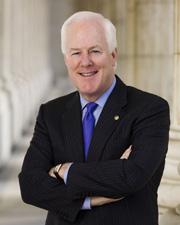 Sen. John Cornyn (R-TX)
Legislative Activity
Stay on top of the latest movement without scrolling through every action
Senate amendment proposed (on the floor): Amendment SA 674 proposed by Senator Cornyn.(consideration: CR S2921-2922, S2936, S2941-2942; text: CR S2921)
March 10, 2009
View full timeline
Senate amendment proposed (on the floor): Amendment SA 674 proposed by Senator Cornyn.(consideration: CR S2921-2922, S2936, S2941-2942; text: CR S2921)
March 10, 2009
Senate amendment not agreed to: Amendment SA 674 not agreed to in Senate by Yea-Nay Vote. 38 - 59. Record Vote Number: 91.
March 10, 2009
Roll call votes on amendments in Senate: Amendment SA 674 not agreed to in Senate by Yea-Nay Vote. 38 - 59. Record Vote Number: 91.
March 10, 2009
Amendment SA 674 proposed by Senator Cornyn. (consideration: CR S2921-2922, S2936, S2941-2942; text: CR S2921) To prohibit the use of funds to implement an Executive Order relating to employee notice of rights under Federal labor laws.
March 10, 2009
Amendment SA 674 not agreed to in Senate by Yea-Nay Vote. 38 - 59. Record Vote Number: 91.
March 10, 2009
Senate amendment submitted
March 9, 2009
Votes
1 roll call on this amendment
Text
Proposed
OMNIBUS APPROPRIATIONS ACT, 2009

The ACTING PRESIDENT pro tempore. Under the previous order, the
Senate will resume consideration of H.R. 1105 which the clerk will
report by title.
The legislative clerk read as follows:

A bill (H.R. 1105) making omnibus appropriations for the
fiscal year ending September 30, 2009, and for other
purposes.

Pending:

Ensign amendment No. 615, to strike the restrictions on the
District of Columbia Opportunity Scholarship Program.
Kyl amendment No. 629, to provide that no funds may be used
to resettle Palestinians from Gaza into the United States.
Bunning amendment No. 665, to require the Secretary of
State to issue a report on investments by foreign companies
in the energy sector of Iran.
Sessions amendment No. 604, to extend the pilot program for
employment eligibility confirmation established in title IV
of the Illegal Immigration Reform and Immigrant
Responsibility Act of 1996 for 6 years.

The ACTING PRESIDENT pro tempore. The Senator from Texas is
recognized.

Amendment No. 673

Mr. CORNYN. Madam President, I ask unanimous consent to set aside any
pending amendment and call up Cornyn amendment No. 673 and ask for its
immediate consideration.
The ACTING PRESIDENT pro tempore. Without objection, it is so
ordered.
The clerk will report.
The legislative clerk read as follows:

The Senator from Texas [Mr. Cornyn] proposes an amendment
numbered 673.

[[Page S2921]]

Mr. CORNYN. I ask unanimous consent that the reading of the amendment
be dispensed with.
The ACTING PRESIDENT pro tempore. Without objection, it is so
ordered.
The amendment is as follows:

(Purpose: To prevent collection of excessive contingency legal fees by
lawyers hired to protect the public interest)

On page 366, line 24, strike ``rule.'' and insert the
following: ``rule, provided that an attorney general of a
State may not enter into a contingency fee agreement for
legal or expert witness services relating to a civil action
under this section. For purposes of this paragraph, the term
'contingency fee agreement' means a contract or other
agreement to provide services under which the amount or the
payment of the fee for the services is contingent in whole or
in part on the outcome of the matter for which the services
were obtained.''.

Mr. CORNYN. Madam President, I rise to offer an amendment 673 to the
Omnibus appropriations bill. As a former State attorney general, I am
very concerned that the current bill lets State attorneys general
outsource their responsibilities on behalf of their citizens to enforce
the Truth in Lending Act. This is a very important piece of legislation
that was passed in 1968 to protect consumers in credit transactions by
requiring clear disclosure of key terms of the lending agreement at all
costs. As I said, this is an important piece of legislation. However,
the current provision in the bill allows the attorney general, the
elected representative of the people--the people's lawyer--to basically
hire trial lawyers on a contingency fee arrangement. Thus, the
litigation that might follow under this piece of legislation would
benefit not just the citizens, not just the public, not just the
taxpayers but trial lawyers too. I don't believe that should be the
intent of Congress.
Specifically, this amendment clarifies that State attorneys general
may not outsource these lawsuits to outside lawyers or expert witnesses
on a contingency fee basis. As we all know, contingency fee means you
get a piece of the pie if you win. This would not prohibit attorneys
general from hiring lawyers on a more reasonable basis, such as a set
fee or an hourly rate, but the new causes of action created by this
bill could add up to significant money damages, and this money, as I
indicated, should be paid to the people, not to private lawyers.
Both Democrats and Republicans have expressed some concerns about the
enforcement of this Truth in Lending Act by State attorneys general.
Senator Dodd, the distinguished Senator from Connecticut, said that
``giving such broad authority to State attorneys general would be a
departure from the current regulatory regime,'' and he is right.
This amendment prevents the authority to enforce the Truth in Lending
Act from being further disbursed by State attorneys general delegating
it to trial lawyers on a contingency fee basis. Without this amendment,
it is likely that plaintiffs' lawyers will develop class action
lawsuits, then go to their State attorney general proposing to pursue
these cases on a contingency fee basis, perhaps reaping millions of
dollars in attorneys' fees awards.
My colleagues have expressed concerns the bill would increase the
number of authorized enforcers from 1 to 51. I would submit that unless
this amendment is adopted, we are effectively increasing the number of
authorized enforcers of this legislation from 1 to 5,100 or more.
Hiring outside counsel on a contingency fee basis, unfortunately, as
we have learned through hard experience, can lead to other problems,
including the appearance of corruption or outright corruption. For
example, my predecessor in office, the Texas attorney general, entered
into contingency fee agreements with outside lawyers in the tobacco
litigation, which was then being pursued across the country. These
lawyers ended up making roughly $3 billion in attorneys fees through
contingency fee provisions that my predecessor in office entered into.
Unfortunately, my predecessor also falsified records in an attempt to
funnel some of that money to a friend, and he paid the price. He went
to the Federal penitentiary.
This is not just a problem in my State; this is a national problem as
well. Last year, the Wall Street Journal reported and editorialized
about the appearance of corruption in Mississippi, where the State
attorney general had retained as many as 27 law firms as outside
counsel to pursue at least 20 different State lawsuits over a 5-year
period. In 2007 alone, the attorney general received almost $800,000 in
political contributions from those same lawyers and law firms and,
thus, the appearance of conflict of interest, if not an outright
conflict, was created.
This kind of conflict of interest has no place in the attorney
general's job, which is to protect the legal interests of the people of
his or her State. Amendment No. 673 would ensure that State attorneys
general either do the work themselves in enforcing this law or hire an
outside lawyer at a reasonable, competitive hourly rate or flat rate;
no windfall attorneys' fees for hitting the long ball over the fence.
When Federal agencies bring suits to enforce the Truth in Lending
Act, they are barred from hiring outside counsel on a contingency fee
basis. All I am suggesting is that this same rule should apply to the
State attorneys general who are now authorized enforcers under the law.
Particularly at this time in our Nation's economic history, it should
hardly be one of Congress's priorities to increase the number of
lawsuits. We cannot sue our way to recovery. Unless amendment 673 is
adopted, the bill would give trial lawyers a share of the public's
money and will disrupt the Federal credit regulatory regime and, as I
indicated a moment ago, create dangerous incentives to corruption. I
ask my colleagues to support amendment No. 673.

Amendment No. 674

Madam President, I have another amendment, Cornyn amendment No. 674,
so I now ask unanimous consent to set aside temporarily my previous
amendment and ask for the immediate consideration of amendment No. 674.
The ACTING PRESIDENT pro tempore. Is there objection?
Without objection, it is so ordered.
The clerk will report.
The legislative clerk read as follows:

The Senator from Texas [Mr. Cornyn] proposes an amendment
numbered 674.

Mr. CORNYN. I ask unanimous consent that the reading of the amendment
be dispensed with.
The ACTING PRESIDENT pro tempore. Without objection, it is so
ordered.
The amendment is as follows:

(Purpose: To prohibit the use of funds to implement an Executive Order
relating to employee notice of rights under Federal labor laws)

At the appropriate place in title I of division F, insert
the following:
Sec. __.  No funds made available under this Act shall be
used to implement the Executive Order dated January 30, 2009,
entitled ``Notification of Employee Rights Under Federal
Labor Laws'' to the extent that the implementation of such
order is in conflict with Executive Order 13201, dated
February 17, 2001.

Mr. CORNYN. Madam President, my second and final amendment to this
Omnibus appropriations bill would help protect workers' paychecks and
increase transparency, something we all heard our new President speak
about just a few short weeks ago--I believe about 50 days ago now--when
he said he believed increased transparency would increase
accountability and help restore the public's confidence in their
Government. This amendment is offered in that vein.
The U.S. Supreme Court, in Communication Workers v. Beck, said
workers could not be forced to pay dues for purposes other than
collective bargaining. That means workers have the right to keep more
of their money rather than support political action committees,
lobbying and gifts, things they may not even agree with.
We know every dollar counts in this economy, and many workers object
to scenes such as the one we saw last week in Miami. There, the AFL-CIO
held a meeting at the Fontainebleau Resort, which describes itself as
``the epicenter of style, fame, and glamour.'' Now, if workers don't
want to support that kind of extravagance based on their union dues,
they shouldn't have to. And, frankly, who can blame them?
The Bush administration issued an Executive order that required
employers to post signs at the workplace that informed workers of these
rights regarding union dues. These notices are similar to those that
inform workers of

[[Page S2922]]

their rights regarding family and medical leave, workplace safety,
equal employment opportunity, and other rights they have under the law.
Now, this chart shows what the notice says. It says:

Under Federal law, employees cannot be required to join a
union or maintain membership in a union in order to retain
their jobs. Under certain conditions, the law permits a union
and an employer to enter into a union security agreement
requiring employees to pay uniform periodic dues and
initiation fees. However, employees who are not union members
can object to the use of their payments for certain purposes
and can only be required to pay their share of union costs
relating to collective bargaining, contract administration,
and grievance adjustment.

It goes on to say:

If you do not want to pay that portion of dues or fees used
to support activities not related to collective bargaining,
contract administration, or grievance adjustment, you are
entitled to an appropriate reduction in your payment.

Meaning your payment of your union dues.

If you believe that you have been required to pay dues or
fees used in part to support activities not related to
collective bargaining, contract administration, or grievance
adjustment, you may be entitled to a refund and to
appropriate reduction in future payments. For further
information concerning your rights, you may wish to contact
the National Labor Relations Board, either at one of its
regional offices or at the following address.

The Supreme Court has said when a worker pays their dues, they cannot
be forced to financially support things they don't agree with, whether
it is extravagant spending at the Fontainebleau Resort or perhaps even
a political speech where a union might use those dues to help finance a
campaign against a political candidate or perhaps an incumbent.
President Obama, unfortunately, has signed an Executive order that,
among other things, rescinds the requirement to inform workers of their
rights regarding union dues. This Executive order, contrary to what we
heard a few short weeks ago, actually reduces transparency in the
workplace, and it places unnecessary limits on the information
available to help workers make informed decisions about their union
dues.
Amendment No. 674 would prohibit Federal funds from being used to
implement that part of President Obama's Executive order related to
this notice to workers. It would have no other effect on the Executive
order, other than to reinstate this notice to workers that you don't
have to join a union; and, No. 2, if you do not join a union, you
cannot be forced to finance points of view or activities you disagree
with, and you can assure that your money can only be used for
legitimate collective bargaining contract administration and grievance
adjustment.
I urge my colleagues to support amendment No. 674.
I yield the floor and suggest the absence of a quorum.
The ACTING PRESIDENT pro tempore. The clerk will call the roll.
The legislative clerk proceeded to call the roll.
Mr. PRYOR. Madam President, I ask unanimous consent that the order
for the quorum call be rescinded.
The ACTING PRESIDENT pro tempore. Without objection, it is so
ordered.

Amendment No. 673

Mr. PRYOR. Madam President, I rise today to speak against an
amendment filed by Senator Cornyn of Texas. The amendment deals with
the ability of State attorneys general to hire outside counsel for
various lawsuits they may be pursuing. I wish to talk about that
amendment for a few minutes and tell my colleagues how that works in
the real world.
One of the things we did when I was in the State attorney general's
office is we looked at several cases on which we considered hiring
outside counsel because the State did not have the resources to front
the costs of the litigation. We ended up not retaining any outside
counsel. We did not pursue those matters. Nonetheless, the fact that we
had the ability to look at that option is very important for States. It
is also very important for State sovereignty. In fact, I am not
convinced--I have to look at the U.S. Constitution--I am not convinced
that the U.S. Congress can limit a State's ability to file a lawsuit.
My sense is that the States have that authority. They can do what they
want to do. They are sovereign. My guess is that this amendment may be
unconstitutional. I have not yet done a thorough analysis of it, but
that is my suspicion.
I say this too. One of the points my colleagues need to remember
about the State AGs is that most of them--I think over 42, 43, 44 State
attorneys general are just like us: they are elected by the people.
There are a few appointed one way or another--by a supreme court, a
legislature, a Governor. That happens State to State, but the vast
majority of them are elected just as we are. They have accountability.
They are responsible to the people who elected them. There is that
check and balance that already exists. I am not sure about other States
because I don't know how their outside counsel statutes work, but in
our State, in order for us to hire outside counsel, we have to go to
the legislature and get their approval, and we also have to get the
Governor to sign off on it. Again, States are going to be different on
point.
Again, in Arkansas, we have another check and balance beyond just
that the State attorney general is elected and is accountable to the
people. There is also a check and balance between the State attorney
general's office and the legislature and the Governor. Everyone has an
interest to make sure this is done right and done well. It works very
well in our State. If we had a lot of State attorneys general here,
they would agree that it worked very well for them as well.
Another point I wish to address in the Cornyn amendment is the
underlying premise of this amendment. My understanding is it is based
on some language dealing with the Federal Trade Commission in the
omnibus bill we are discussing today and will vote on later today. We
have to recognize that the Federal Government does not always have the
manpower or the attention span or the ability, for one reason or
another, to go after some bad actors out there. The States do not
always have that manpower, attention span, or ability either, but the
fact that the States can help augment and supplement the enforcement of
the Federal Trade Commission and other Federal agencies can be very
good for the people of this country.
Again, we need to allow the States the flexibility to be on the team.
They need to be on the team because these folks--again, most of them--
are elected by their people. Most of them have some sort of consumer
protection function or some sort of public safety function. Most of
them have an office that is ready, willing, and able to make sure their
State's citizenry is protected and taken care of sometimes when the
Federal Government cannot do it or is not able to do it or is not
willing to do it. The State AG enforcement can be a very important part
of that protection.
With regard to the narrow issue of whether States can hire outside
counsel, let me speak about that point for a moment.
When I was elected to the State attorney general's office in Arkansas
in 1998--we all remember the tobacco case, the big, mammoth tobacco
case. I was elected and within weeks it settled. By the time I became
attorney general, sworn into office, the case was over. It was done,
and we were in the enforcement phase. The case itself was behind us.
One of the first things I had to do--this literally happened on the
first day I was in office--is I had to undo an outside counsel
agreement my predecessor had entered into. Here, again, not only have I
never entered into an outside counsel agreement as an attorney general,
but I undid one my predecessor tried to enter into. That puts me in a
different position than most people because I had been around this
issue a lot during my years in the attorney general's office.
The other point we need to keep in mind about the tobacco case--and
this is just true for how State AGs work--one of the reasons, and I
would say the primary reason, that the States brought that case in the
first place is because Washington failed to act. Washington failed to
act. We may remember those days in the nineties. President Clinton
wanted to do something with the tobacco companies. He wanted to have a
global settlement of these claims. I was not around then. A lot of my
colleagues were around then

[[Page S2923]]

and remember the details of those discussions and the bill that came
through. It got bogged down in the Congress. In fact, I remember
listening to the news media saying it came like a Christmas tree--
everybody was adding an ornament as it went through the process. It
never passed. It got burdened down, and it never passed and never got
to the President's desk for his signature. So when Congress did not
act, the States did.
We have seen that in other context as well. When there is a void,
when there is a vacuum and the Federal Government is not out there
trying to take care of an issue, whatever it may be, oftentimes the
States want action. It could be the Governors, it could be the State
AGs, it could be the State legislatures, but--what is the old saying
about power abhors a vacuum? That is what happens in this country.
Again, we need to keep the States' flexibility in bringing lawsuits if
they need to do that.
The other point we need to keep in mind is that a lot of today's
litigation, a lot of the litigation the States are either involved in
or are looking at is very complex and very expensive. I personally
believe that an outside counsel contract can make a lot of sense.
Again, we looked at these contracts when I was in the attorney
general's office. We never did one, but we looked at them very closely
because there are cases where it is very complex, it is very expensive,
and you can structure an agreement with an outside counsel. It is not a
get-rich-quick scheme by the outside lawyers, by the plaintiffs'
attorneys, but it really is good for public policy, and if it is done
right and done well, the public interest is very much served.
I think we should look at the Cornyn amendment. With all due respect
to my colleague and friend from Texas, I think we should vote against
the Cornyn amendment. We should not limit the States' ability to hire
outside counsel if they feel they need to. Let the States make that
decision. As I mentioned before, constitutionally, I am not sure we
have the authority to limit the States anyway.
In the end, the interest of our people back home would be disserved
if we adopted this amendment because what we would do would be to take
some of the authority, some of the ability away from the State to
protect its citizenry. As this amendment is voted on--apparently later
this afternoon; I don't know exactly when it will be voted on--as it is
voted on, I strongly urge my colleagues to vote no on the Cornyn
amendment.
I yield the floor.
The ACTING PRESIDENT pro tempore. The Senator from Louisiana.
Mr. VITTER. Madam President, I take the floor to give a little
background, important background on the amendment I will call up later
today. That Vitter amendment would do away with the system that is now
in place under the law whereby Members of Congress get automatic pay
increases annually without any open debate and without any open, clear
rollcall vote.
Madam President, I have to say, Americans--certainly Louisianans in
my State--are frustrated about a lot that is going on in Washington and
in Congress. They are frustrated about the direction of the country,
about runaway spending, about bailouts, but they are also frustrated
with how we in Congress often seem to do our business. They are not
frustrated so much with disagreement. People can have legitimate
disagreements, vast differences in points of view and philosophy and
approaches to issues. What they are most frustrated about is pure
partisanship for partisanship's sake, political games, and a cynical
approach to doing what should be the people's business in the Halls of
Congress.
Unfortunately, a lot of voters and citizens in Louisiana and across
the country are going to view some of the maneuvering and some of the
political strategizing over attempts to defeat my amendment in that
light, and they are certainly going to consider it more of the same.
What am I talking about? Well, we have a big omnibus spending bill on
the floor of the Senate, and last week the majority leader took great
pains to say--including from his spot on the floor several times--we
are going to have an open amendment process; that the floor is open for
business, it is open for amendments. He invited Members to come on
down. We will consider them. We are moving forward and taking care of
amendments, having votes, and getting back to the proper procedure of
the Senate.
I was excited to hear that because I had an amendment I very much
wanted to call up for debate and a vote. The problem is, when I tried
to do that, both through staff and individually, we were blocked every
step of the way. At every turn, my amendment would never be put in
order. It was never allowed to be called up, and I was never allowed to
get that vote on this pay raise amendment.
Thursday night, that changed, and it changed for one simple reason:
The majority leader needed to cancel a vote. He needed 60 votes for
cloture. He didn't have the votes, as he explained from his podium. To
cancel that vote, under the rules of the Senate, he needed unanimous
consent--the consent of each and every Member of this body. Well, I
took the opportunity--after a week of being frustrated and blocked and
hemmed in at every turn from getting a vote on my amendment--to say
very simply, in a straightforward way: I will be happy to grant that
unanimous consent request with regard to my role in this if--if and
only if--I will finally be guaranteed a vote on my amendment. The
majority leader had to agree, and he did agree.
So here we are today, the following week, debating the Vitter pay
raise amendment to stop pay raises on autopilot. This will finally lead
to a vote. But as soon as that vote was scheduled, a sort of funny
thing happened. The next day the majority leader introduced his own
bill, coauthored by the entire Democratic leadership, which would do
the same thing. Now, if I thought I had gained that many enthusiastic
converts to the cause, I would be excited. But even though I was born
at night, I wasn't born last night. I know--and every observer to the
process knows--something else is going on. The something else is
simple: The majority leader filed his own bill regarding automatic pay
raises simply to be able to point to it and say: I am offering this
bill, we can push this forward through this vehicle, and therefore you
must vote against the Vitter amendment to the omnibus spending bill.
Again, I think the American people are going to be frustrated by the
maneuvering and the cynical political games. I think they want a full,
straightforward open debate. I think they want to hear where people are
coming from. If folks support this idea of changing and doing away with
automatic pay raises--pay raises on autopilot and no debate, no votes,
they just happen every year--then I think they are going to want to see
those Members vote for the Vitter amendment on the floor of this body
today.
Quite frankly, I think it is a cynical maneuver to point to a bill
that will never pass, that is controlled by individuals who don't want
the measure to pass, in order to defeat an amendment that can pass and
that can be the vehicle for this important change and reform. So I
would encourage all Members to support the Vitter amendment, to support
the idea in the form in which it can actually be passed into law.
This is a must-pass bill. This is an appropriations bill--something
to fund this part of the Government. Something has to pass within the
next several days. In this bill--in the original version of this bill--
the pay raise issue is already there. It is a perfectly germane and
natural amendment to the bill and agrees with my provision to do away
with automatic pay raises. Nothing could be more natural than to debate
the issue on this bill, to offer this amendment on this bill, and it is
the legitimate and appropriate and effective way if we actually do want
to pass this into law.
The way to never pass it into law is to have a stand-alone straw man;
to point to a separate bill that will never be passed, certainly in the
House.
Now, I expect what will happen is, the majority leader will not only
point to this stand-alone bill, but he will actually ask unanimous
consent that it be passed through the Senate and sent down the road to
the House in the process. Well, that would be very promising if there
was any hope whatsoever that the Speaker of the House and the House
leadership would take up the matter and put it on the House floor.

[[Page S2924]]

So I would ask the majority leader and the Speaker of the House if they
have had those discussions. Is there a commitment to putting any stand-
alone bill passed through the Senate on the House floor for a vote in
the very near future?
If there is that commitment, I would love to hear that expressed
publicly, clearly, and in a straightforward way, and then that would
rebut my argument that this is all a cynical, political game. I am
afraid we are not going to hear those assurances. We are not going to
hear that public commitment because I am afraid what is swirling around
my amendment is a cynical political game. Let us treat the people's
business the way it should be treated. Let us come to the floor, let us
express our opinions. If we have legitimate differences of opinion, let
us express them and let us debate them. But let us do it in that
straightforward way and then let us have a vote on the Vitter
amendment--the amendment that would do away with automatic pay raises--
which is the true effective way to pass this reform into law on a must-
pass appropriations bill.
I urge all my colleagues to come to the floor in that spirit. I urge
all my colleagues to express themselves and wherever they are coming
from in that straightforward way, in that straightforward spirit and
not to drop in stand-alone bills the day after I was finally able to
secure a vote on this matter, particularly when this proposal--thanks
to my good friend, Senator Russ Feingold--has been around at least
since the year 2000, 9 years. Neither the majority leader nor any of
his Democratic leadership who are cosponsors to his brand new bill have
ever reached out to Senator Feingold to express support and join him in
supporting his bill, which, as I say, has been around since the year
2000.
I am now happy to yield to the distinguished Senator from Iowa.
The ACTING PRESIDENT pro tempore. The Senator from Iowa.

Amendment No. 604

Mr. GRASSLEY. Madam President, I rise to speak on another amendment.
I spoke on Senator Vitter's amendment yesterday, and I spoke in support
of it. I will now speak on the Sessions amendment.
I rise in support of the Sessions amendment to extend the E-Verify
Program for a period of 5 years. The E-Verify Program is an effective
Web-based tool that provides employers with a process for the purpose
of verifying the Social Security numbers and, at the same time, for the
main purpose of determining the legal status of newly hired employees.
As my colleagues know, it is unlawful for employers to knowingly hire
or employ aliens not eligible to work in the United States. Under
current law, if the documents provided by an employee reasonably appear
on their face to be genuine, then the employer has met the obligation
to review the worker's documents. Unfortunately, counterfeit documents
and stolen identities have made a mockery of this law. But with the E-
Verify Program, employers can electronically verify a new hire's
employment authorization through the Social Security Administration
and, if necessary, follow it up with the Department of Homeland
Security databases.
E-Verify has been an extremely successful program for employers who
are seeking to comply with the law. The program is voluntary and free
for all employers. Right now, over 100,000 employers have signed up for
the program, and, in addition, each week more than 2,000 employers sign
up. E-Verify has a proven track record--more than 5 million queries by
employers were made last year and, of those, 96.1 percent were verified
automatically.

The small percentage of applicants who receive a tentative
nonconfirmation must sort out their records with the Social Security
Administration. I would think if the Social Security Administration has
bad information about you, you would want to clear that up for sure
anyway. Many times this is a simple misunderstanding with the Social
Security Administration or a case in which records were not updated. In
the event a person receives a tentative nonconfirmation after his
employment application, that person can still continue to work and
cannot be fired.
The Sessions amendment would extend the E-Verify Program for 5 more
years. Now, frankly, I would like to see more reforms to the E-Verify
Program. For example, I would like to make E-Verify mandatory for all
businesses. I would like employers to check all their employees through
E-Verify, not just new hires. I would also like to see the program made
a permanent provision in our immigration laws. But for now, I am happy
to support this first baby step in extending E-Verify for 5 years.
There is a bottom line to everything we do around here, and the
bottom line is that this amendment is a jobs amendment. Our economy is
on the skids. Americans are losing their jobs. The E-Verify Program
will help stimulate the economy by preserving jobs for a legal
workforce. It will help root out illegal workers who are taking jobs
from Americans. We need the E-Verify Program to encourage employers to
use the system to prevent them from hiring foreign labor that has come
here illegally.
I wish to make clear this has nothing to do with whether we have
people coming to this country. It has nothing to do with whether we
have people coming to this country to work. It only has to do with laws
being followed--following the rule of law--to make sure people are
working here legally and are conforming with our laws. That is all this
is about, and E-Verify is a process--not mandatory, but a process to
help people who are employers to verify whether the people who apply
for the jobs are here legally and are registered with our Social
Security system in a legal way.

I urge my colleagues, then, to support the Sessions amendment. Of
course I appreciate very much the leadership of Senator Sessions in
this E-Verify Program extension for 5 years, which is what the
amendment calls for.
I yield the floor and I don't see anybody yet ready to speak so I
suggest the absence of a quorum.
The PRESIDING OFFICER (Mrs. Gillibrand). The clerk will call the
roll.
The assistant legislative clerk proceeded to call the roll.
Mr. GRASSLEY. Madam President, I ask unanimous consent the order for
the quorum call be rescinded.
The PRESIDING OFFICER. Without objection, it is so ordered.

Amendment No. 621

Mr. GRASSLEY. Madam President, for Senator Vitter, I ask his
amendment be called up. It is amendment No. 621.
The PRESIDING OFFICER. Is there objection?
Without objection, it is so ordered.
The clerk will report.
The assistant legislative clerk read as follows:

The Senator from Iowa (Mr. Grassley), for Mr. Vitter, for
himself, Mr. Feingold, Mr. Grassley, and Mr. Ensign, proposes
an amendment numbered 621.

Mr. GRASSLEY. I ask unanimous consent the reading of the amendment be
dispensed with.
The PRESIDING OFFICER. Without objection, it is so ordered.
The amendment is as follows:

(Purpose: To repeal the provision of law that provides automatic pay
adjustments for Members of Congress)

At the appropriate place, insert the following:

SEC. ___. ELIMINATION OF AUTOMATIC PAY ADJUSTMENTS FOR
MEMBERS OF CONGRESS.

(a) In General.--Paragraph (2) of section 601(a) of the
Legislative Reorganization Act of 1946 (2 U.S.C. 31) is
repealed.
(b) Technical and Conforming Amendments.--Section 601(a)(1)
of such Act is amended--
(1) by striking ``(a)(1)'' and inserting ``(a)'';
(2) by redesignating subparagraphs (A), (B), and (C) as
paragraphs (1), (2), and (3), respectively; and
(3) by striking ``as adjusted by paragraph (2) of this
subsection'' and inserting ``adjusted as provided by law''.
(c) Effective Date.--This section shall take effect on
December 31, 2010.

Mr. GRASSLEY. Madam President, I suggest the absence of a quorum.
The PRESIDING OFFICER. The clerk will call the roll.
The assistant legislative clerk proceeded to call the roll.
Mr. GREGG. Madam President, I ask unanimous consent the order for the
quorum call be rescinded.
The PRESIDING OFFICER. Without objection, it is so ordered.
Mr. GREGG. Madam President, I rise today to speak a little bit about
where we are in our economic situation in

[[Page S2925]]

this country and specifically as it is affected by the President's
budget as he has brought it forward. I want to begin by acknowledging
my respect and appreciation for what this administration has tried to
do in the area of stabilizing the financial industry of this country.
They, in conjunction with the Chairman of the Federal Reserve, Treasury
Secretary Geithner, and Larry Summers, the Special Adviser to the
President, along, obviously, with the input of Chairman Volcker, have
put together a very comprehensive effort to try to use the strengths of
the Federal Reserve and the Federal Government to basically inject
liquidity into the system and put stability into the financial system
of the country.
There has been a tremendous amount of commentary on this and much of
it has reflected a lack of confidence in the initiatives that have been
brought forward by this administration because, in many instances, they
have not been as specific as they might have been. But the general
thrust of what the administration has done in this area has been
positive and I believe we are starting to see it work. The initial TARP
dollars, which were put in by the prior administration, did stabilize
the banking industry during a critical time. That has been followed on
with additional TARP dollars from this administration, followed on by
the initiatives from the Fed in the area of TALF, which basically is
potentially over $1 trillion of support for new loans in the area of
consumer credit and maybe commercial real estate; trying to do
something in the mortgage area--initiatives have begun there using the
FDIC and also the Treasury and the Fed again; in the area of basically
underwriting the stability of major banking systems in the country,
significant efforts have been made; and we are now hearing there is
going to be an additional effort made to take toxic loans off the
balance sheets of the banks using the leverage from the private sector.
All this has been, in my opinion, the right way to go. I didn't
support the stimulus package because I thought it was unfocused and I
did not think the dollars were used as effectively as they might. I
wanted to see the dollars in the real estate area. But as a very
practical statement, on balance the efforts of this administration to
try to stabilize the financial industry, because stabilizing the
financial industry is critical to getting the economy going, have been
positive in my opinion. There is still a long way to go and there are
more specifics that need to come and I guess more of that is going to
come this week.
But that initiative to try to get this economy going and try to
address the issue of people's concerns about their jobs and the value
of their homes and their ability to live their lives in a constructive
way in the face of severe financial distress which is being caused by
this recession, stands in juxtaposition to this budget they have sent
up. It is as if they have a ying and yang personality down there at the
White House because they sent us up a whole group of ideas in the area
of stabilizing the financial industries and trying to get the economy
going with their stimulus package, the purpose of which is to lift the
economy using the Federal Government.

Then they sent us up a budget which essentially creates a massive
expansion in spending, a massive expansion in taxation, a massive
expansion in borrowing, not only in the short run when you might be
able to justify more spending, when you can justify more spending and
borrowing, but as far as the eye can see with the practical effect of
having a dampening effect, throwing a wet blanket on top of this
country's productivity capabilities and this country's ability to be
moving forward as an entrepreneurial society.
Look at the budget in specifics. The budget, in the short run, spikes
the deficit dramatically. I am not going to argue with that. That may
be necessary--maybe not at the levels they are doing it, but it may be
necessary. It is necessary in order to put liquidity into the market,
put liquidity into the American economy.
But then it continues to expand the size of Government; 28 percent of
GDP will be the size of the Government this year. That is massive
compared to our historical size of the Government as part of the GDP.
That has got to come down. It does come down, but it does not come down
all that much. By the fifth, sixth, seventh year, we still have
Government spending that is 22, 23 percent of GDP. We have a deficit in
the fifth year that is 3 to 4 percent of GDP.
The debt of the Federal Government, the public debt, is doubled in 5
years under this budget. It is tripled in 10 years under this budget.
Taxes are increased by $1.4 trillion under this budget, $1.4 trillion.
What are those taxes used for? Not to reduce the deficit but to expand
the size of the Government even further.
Health care is essentially put on a track toward nationalization.
Educational loans are nationalized. Discretionary spending goes up by
almost three-quarters of a trillion dollars. And there is absolutely no
restraint in any accounts of any significance on the spending side of
the ledger in this budget. So that by the time we get to the fourth and
fifth year of this budget, rather than seeing the numbers come down to
something that is manageable for our society, rather than seeing the
debt-to-GDP ratio come down to what might be a manageable number, it
remains at a very high level, 67 percent.
Historically, debt to GDP in this country has been about 40 percent.
Those are numbers. What do they mean? Well, essentially, instead of
having a traditionally strong industrialized society, where your debt
is manageable at 40 percent of your GDP, you are heading toward a
banana republic society or country where your GDP-to-debt ratio is up
around 70 percent. You cannot sustain that. Yet this budget presumes we
are going to have a debt-to-GDP ratio of the banana republic type as
far as the eye can see.
And the deficit? It is claimed that it is cut in half. Well, if you
increase the deficit four times, and then you cut it in half, you do
not gain very much. That is like taking four steps backward and only
two steps forward. The practical effect of that is that we still end up
with a deficit 4 or 5 years out, well after we are past this
recessionary period, hopefully. I am sure we will be past it by then
because we are a resilient nation. A deficit which is still way above
the historical norm for this country, a $712 billion deficit is
projected by the year 2019 under this budget, 3 to 4 percent of GDP.
That is not sustainable. What is the practical effect of this?
Well, the practical effect is that we give our kids a country they
cannot afford. We put on them a debt burden which basically stymies
their ability to succeed and prosper.
In addition to this, you have got to look at the policies underlying
this budget. What are the policies that are driving this massive
expansion of Government in this massive expansion of debt? Well, they
are basically policies which say, we are going to take the Government
and we are going to explode its role relative to the private sector
activities.
There is a proposal in this budget, as I mentioned earlier, to
nationalize the student loan program. That is certainly an unnecessary
act. We had a very vibrant private sector student loan program and a
vibrant public sector student loan program. There is no reason we
cannot have both. That is no longer acceptable. We are going to
nationalize the student loan program.
There is a $636 billion place holder in this budget for the expansion
of health care. They say it is a downpayment. Well, if it is a
downpayment, we are talking about health care expenditures exceeding $1
trillion under this budget, growth in health care costs. Well, health
care already absorbs 17 percent of the gross national product. That is
about 5 percent higher than any other industrialized nation. It is not
that we do not put enough money in our health care system, it is that
we do not use it very well. And to increase the dollars going into
health care by those numbers means what you are proposing is
essentially for the Government to take over the entire health care
system at some point in the future--another great expansion in the size
of Government.
Then you have got this expansion on the discretionary side of the
account. Every discretionary program expanding, except for defense,
where they play a gimmick for the purposes of claiming budgetary
savings that do not even exist on spending that will not occur.
So the goal of this budget is not to contain or to slow the rate of
growth of

[[Page S2926]]

Government in the outyears after we are past this recession, it is
rather to explode the size of Government as we move out of this
recession, and put in place a government that continues to grow at a
rate which the economy cannot afford and which obviously our children
cannot afford.
How is this paid for, this dramatic expansion of Government? Well,
most of it is borrowed, borrowed money. But some of it comes out of
taxes. There are major new taxes proposed. We have all heard about the
taxes on the wealthy. Let me point out that essentially what is being
proposed here is that if you make more than $250,000, your income is
going to be nationalized. Well, there are a lot of wealthy people who
make more than $250,000, but there are also a lot of small businesses
in this country that make $250,000.
That is where jobs come from in this country--the person running the
local restaurant, the person running the local garage, the person who
started a software company, the person who has initiated a new product,
a new catalog product, maybe, selling something. All of these are small
businesses, and they are across this Nation, and they are what create
jobs. When you say to those folks, well, we are going to tax away
whatever you make above a certain amount, $250,000, you are saying to
them they do not have the assets to reinvest in their small businesses.
You are basically going to create a huge disincentive. This creates a
huge disincentive for small businesses to expand and for people to be
added, for employees to be added to their businesses. It throws a wet
blanket on the expansion of small business.
There is another tax in here that is not talked about too much. They
call it a carbon tax. This is a massive new tax on everybody's electric
bill. If you described it fairly, it should be described as a national
sales tax on electricity. If you use electricity for anything,
something in your home, if you use energy basically for anything--and
almost every American does; I cannot think of anyone who does not--you
are going to find yourself hit with a new tax, this carbon tax, this
national sales tax on energy.
And what does it amount to? It is not a small sum. It is scored in
this budget. It is understated in this budget. It is scored at, I
think, $70 billion a year or something like that. That is still a lot
of money, by the way. But it is understated. According to the MIT study
and according to the numbers which were being used last year when this
was being discussed, the actual number is closer to $300 billion, $300
billion in a brandnew tax burden on the American consumer.
And what is this tax used for? Well, it is used, in large part, for
walking-around money for various constituencies who have an interest in
getting money from the Federal Government. It is not used to contain
the Federal Government or to reduce its size by reducing the deficit. A
large percentage of these tax revenues are going to be added to various
initiatives around here which are the projects of Members--worthwhile,
I am sure.

But it is pretty hard to justify hitting Americans with a brandnew
national sales tax on their energy bills for the purposes of expanding
this Government, which is already too large to begin with. And,
remember, none of this expansion in the Government taxes takes into
account the huge costs which we have coming at us which we do not know
how we are going to handle. Those are the costs of the retirement of
the baby boom generation, for as this baby boom generation continues to
retire--it has begun retiring now--it is going to generate massive
costs on our Government.
We know we have $60 trillion of unfunded liability to pay for
Medicare, Social Security, and Medicaid for the baby boom generation as
it retires. And why is that? Why are there all of those trillions of
dollars? Why is all of that money out there and obligated?
Because we have created a massive cost, and we have the largest
generation in America retiring that is going to push that cost onto our
children. We go from 35 million retired people to 70 million retired
people, and most of that is going to occur by the end of this
administration's term in office should the President be reelected.
So you would think that in this budget they would have said, well, we
better start addressing that issue. We better start disciplining
ourselves relative to how we are going to handle this massive increase
in spending, which we know is coming at us--I call it a fiscal
tsunami--as a result of the baby boom generation retiring. But, no, not
one word in this budget about containing or slowing down or in any way
addressing the issue of entitlement spending as a result of retirement
of the baby boom generation.
The practical effect is there is an elephant in the room that we know
we are going to have to address relative to cost that is not addressed,
but at the same time the budget radically expands the size of
Government, using resources that might have been used to address
entitlement reform.
It is a budget which, if you look at it, essentially says to the
productive and entrepreneurial side of our Nation: We are going to tax
you. We are going to regulate you. And we are going to create an
atmosphere where we are going to crowd out your ability to borrow money
because the Federal Government is going to borrow so much money.
It is simply an attack on the entrepreneurial elements of our
society, the people, the small business people who go out there and
create jobs. That is why I said there is a conundrum here. On the one
side this Government is proposing all sorts of initiatives, which I
agree with, to try to float the economy using the liquidity of the
Federal Government in a lot of different areas but primarily focused on
getting stability back into our financial system and helping people who
have mortgages that they cannot pay.
But, on the other side, you have this budget sent up here which is a
clear and present attack essentially on the productive side of our
ledger as a nation, while it expands radically the size of Government.
So you can understand why the stock market and others are saying, whoa,
what is happening here? Who am I to believe, the part of the
administration which says we are going to try to get this economy going
or the part of this administration that says, once we get it going, we
are going to stuff it down with a major new tax burden and a dramatic
expansion in Government?
So much more could have been accomplished in this budget than what
has been proposed. If it had come forward with any reasonable ideas in
the area of disciplining and managing the entitlement accounts, there
would have been strong bipartisan support for that. But none were put
on the table.
The opportunity to move forward in the area of Social Security was
not taken. The opportunity to do something significant in the area of
Medicare was certainly not taken in this budget, and the practical
effect of that is, that if you are looking at this budget, and you are
an investor from somewhere around the world buying American bonds--and,
remember, most of our debt today is being bought by people outside the
United States. They are basically funding our capacity as a nation to
function--you are going to look at this budget and you are going to
say, do I have confidence that the bonds I am buying are going to have
the value that I am putting into them 5 or 10 years from now?
If I look at this budget, I am going to conclude that the American
Government is not going to discipline itself, that it is going to
continue to run a debt-to-GDP ratio that is not sustainable, and that,
therefore, it is very likely that maybe my debt that I am buying from
the United States, the Treasury bonds I am buying, are not going to be
the value I am paying for them.
This budget not only stifles the entrepreneurial spirit of America in
the outyears--and people looking 4 or 5 years down the road are not
thinking that far now, but in October, this budget repeals many of the
tax initiatives which create entrepreneurship and tax people at a
heavier rate; it starts pretty soon here--at the same time it is
putting at risk the value of our currency and the value of our debt. It
is saying to the world: We are not going to discipline ourselves in the
outyears.
When we raise taxes, which this administration is proposing--and that
is what they said they would do--one presumes they would do what
President Clinton did when he raised taxes. He

[[Page S2927]]

used it to try to reduce the deficit. With the help of a Republican
Congress, which limited spending, we were able to accomplish that. This
budget does not accomplish that. This budget takes $1.4 trillion in new
taxes and spends it on a massive expansion of the Federal Government in
the area of health care and the way we finance student loans, all the
different initiatives basically expanding Government's role.
The practical effect of that will be to weaken the dollar, our
currency, and to cause people to question the value of our debt. That
is serious. That is very serious for us as a nation.
I agree with those who say the market is confused by this
administration. It is confused because, on one hand the administration
is pursuing what is a necessary policy to get liquidity into the market
and stabilize the financial industry, stabilize the housing industry,
but, on the other hand, it has put forward a budget which is probably
the largest expansion of Government in the history of the country or
the largest proposed expansion of Government in the history of the
country, unpaid for and, therefore, threatening the future of our
children with debt they can't possibly afford.
As we move forward in this effort, I suggest a better course of
action would be for this administration to come forward with some
fiscal discipline. Why don't they propose some specific ideas which
will address the impending fiscal tsunami? There are bipartisan
initiatives in the Senate to do so. Senator Conrad and I have proposed
a procedure which would allow us to put in place a process which would
lead to policy, which would lead to a vote, which would actually limit
and make affordable a large percentage of the outyear cost of
entitlement programs as we try to fund the retirement of the baby boom
generation.
Take us up on that offer. It has very significant bipartisan support.
Why not take up an initiative in the area of trying to get the deficit
and the debt back to the prerecession period? When we went into the
recession, the debt was 40 percent of GDP. The deficit was down to
about 1.5 percent of GDP. Let's get back to those numbers. If we are
going to raise revenues, let's use them to reduce the deficit, not to
expand the size of Government.
These are initiatives that would get a lot of Republican support,
certainly on the first point. There might even be some support on the
second idea of getting the deficit down. I would certainly support
lowering the debt. But the proposal as put forward now is confusing.
Not only is it confusing, but if it were actually put in place, it
would put our country in a very serious situation as our children try
to lead their lives and move forward in a nation which gives them an
opportunity for prosperity.
I yield the floor and suggest the absence of a quorum.
The PRESIDING OFFICER. The clerk will call the roll.
The assistant legislative clerk proceeded to call the roll.
Mr. KYL. Madam President, I ask unanimous consent that the order for
the quorum call be rescinded.
The PRESIDING OFFICER. Without objection, it is so ordered.

Amendment No. 629 Withdrawn

Mr. KYL. Madam President, yesterday I spoke to my pending amendment
No. 629, an amendment that would have required an assurance that none
of the funds in the underlying legislation would be used to resettle
Gazans in the United States. There had been a flurry of news stories
suggesting that an Executive order by the President might have that
result.
In contacting the State Department, we have been assured that is not
the case. As a result, I ask unanimous consent to withdraw the
amendment and to have printed in the Record a letter from the U.S.
Department of State, Michael Polt, Acting Assistant Secretary,
addressed to me, dated March 9.
There being no objection, the material was ordered to be printed in
the Record, as follows:

U.S. Department of State,

Washington, DC, March 9, 2009.
Hon. Jon Kyl,
U.S. Senate.
Dear Senator Kyl: Thank you for your inquiry regarding
Presidential Determination No. 2009-15, signed on January 27,
2009, which approved a $20.3 million drawdown from the
Emergency Refugee and Migration Assistance Fund (ERMA) to
assist Palestinian refugees and conflict victims in Gaza.
These funds will be used to provide humanitarian assistance
to Palestinian refugees and conflict victims in Gaza. None of
these funds will be used to resettle Gazans in the United
States.
We appreciate your inquiry regarding this U.S. humanitarian
program. If we can be of further assistance on this or any
other issue, please do not hesitate to contact us.
Sincerely,

Michael C. Polt,

Acting Assistant Secretary,
Legislative Affairs.

Mr. KYL. Madam President, I will read the two specific sentences from
the letter that cleared up this matter. The letter says:

These funds will be used to provide humanitarian assistance
to Palestinian refugees and conflict victims in Gaza. None of
these funds will be used to resettle Gazans in the United
States.

As a result of that assurance, the amendment is not necessary, and
that is one less vote my colleagues have to take this afternoon.
I note the absence of a quorum.
The PRESIDING OFFICER. The clerk will call the roll.
The bill clerk proceeded to call the roll.
Mr. ENSIGN. Madam President, I ask unanimous consent that the order
for the quorum call be rescinded.
The PRESIDING OFFICER. Without objection, it is so ordered.

Amendment No. 615

Mr. ENSIGN. Madam President, I wish to talk about my amendment
dealing with the DC Opportunity Scholarship Program. Unfortunately, if
the current bill should pass, this program will end. There is specific
language in the bill that says unless this program is reauthorized and
the DC City Council approves it, 1,700 children will lose their
opportunity scholarships that allow them to attend a private school in
the District of Columbia. That is unfortunate, and that is why my
amendment must be adopted.
When we take a close look at the data on DC schools, it is no wonder
the DC opportunity scholarship parents are so vocal about keeping this
program alive. Here in the District of Columbia, public schools spend,
on average, over $14,000 per year per student. The DC class size has
one of the lowest student-teacher ratios in the country, 14 to 1. Yet
reading scores continue to languish at or near the bottom in every
national assessment. Recent data shows that 69 percent of fourth
graders in the DC Public Schools are reading below basic levels as
defined by the Department of Education. DC students in DC Public
Schools ranked last in the Nation in both SAT and ACT scores. About 42
percent of DC students drop out of school.
Beyond the low performance in the classroom, DC schools are often
violent and dangerous. A Federal government study found that roughly 12
percent of DC students were threatened or injured by someone possessing
a weapon on school property during a recent school year. This
percentage is well above the national average. Perhaps, it is because
of these statistics, that President Obama chose to enroll both his
daughters in a private school.
Let's see what his Secretary of Education said about the DC
scholarship program:

I don't think it makes sense to take kids out of a school
where they're happy and safe and satisfied and learning. I
think those kids need to stay in their school.

Secretary Duncan was referring to the D.C. Opportunity Scholarship
Program, the same program we are trying to save today.
Michelle Rhee, the Chancellor of DC city schools said:

I would never, as long as I am in this role, do anything to
limit another parent's ability to make a choice for their
child. Ever.

That is what she said.
DC Mayor Fenty said:

We should not disrupt the education of children who are
presently enrolled in private schools through the DC
Opportunity Scholarship Program.

Last Friday, Senator Durbin, the senior Senator from Illinois, made
some charges against this DC Opportunity Scholarship Program that I
wish to address. Senator Durbin claims the program doesn't work. He
claimed the Department of Education study proves the DC Opportunity
Scholarship Program doesn't work. What Senator Durbin failed to mention
were some of the fundamental flaws of the Department of Education
study. First, the study fails to examine the performance

[[Page S2928]]

of students who actually took advantage of the scholarship and actually
attended private school versus the performance of those who attended
public schools. Instead, it compares the students who were just offered
the scholarships to those in public schools. In fact, over a quarter of
the students who were considered private school participants for
purposes of this study did not even attend the private schools.
This study has many flaws and we could go through all of them. How
can the program be considered not working yet there are 1,700 kids
whose parents showed they are satisfied and that think their kids are
getting a better education? The parents are happier, and they can sleep
well knowing their kids are going to safer schools. I believe that if
there were more than 1,700 scholarships available, there would be a lot
more people who would be enrolled in the program because of the
satisfaction of both the parents and the teachers.
According to the Heritage Foundation, 37 percent of the members in
the House of Representatives and 45 percent of Senators send their
children to private schools. That is almost four times the rate of the
general population. The senior Senator from Illinois, Mr. Durbin,
stated on Friday that he and his wife sent their children to private
Catholic schools. He said this was their choice, and it was a personal
family decision. I respect Senator Durbin's choice to send his own
children to private schools, but why should the choice to send children
to private schools be the right of only a privileged Senator's family
or those who make a lot of money?
Keep in mind, the 1,700 children we are talking about come from
families whose average income is less than $23,000 a year. A good
education is a civil right, and this should not be the exclusive
purview of the rich or the well connected.
Before closing, I wish to highlight some of the stories of success in
the DC Opportunity Scholarship Program so it can be clear who is losing
out because of the Democrats' efforts to kill the Program. I wish to
put some names with some of the faces and show how important this
program truly is.
Sarah and James Parker attend the Sidwell Friends School in our
Nation's Capital with President Obama's children. Here they are right
here. Unlike the Obama girls, they could not afford this school without
the $7,500 voucher they received from the DC Opportunity Scholarship
Program. Now, keep in mind, these two students are funded at half what
it costs to send a child to DC Public Schools. Every time we take these
students out of the public schools in Washington, the DC Public Schools
save money. So why would we want to end this program? Plus the fact
that these kids love going to school where they are going.
Now, Sanya Arias is a scholarship recipient who lives in Adams
Morgan. She said some of her friends she went to school with in middle
school and who now attend public high school speak using profanities
and aren't making the kind of progress she is making academically. This
is Sanya, here. Sanya said in middle school she started slacking off
and she would have probably followed her friends' path if she didn't
receive the scholarship to attend private school. Sanya currently has a
GPA of 3.95. She is vice president of her class, captain of the soccer
team, a player on the lacrosse team, president of the International
Club, and a peer minister. This is the type of student the Democrats
are going to take out of a school that she loves so much.
Rashawn is 16 years of age and started school in 1996. His father had
him tested and found he was 3 years behind his grade level. The
scholarship program gave him the opportunity to attend Academia De La
Recta Christian Day School where Rashawn has said: ``I can now do my
classwork with very little help'' because of this scholarship.
Dominique, who is Rashawn's sister, is a 14-year-old girl who lives
in Washington, DC. She is now attending the same school and, in
Dominique's own words, she says: ``I love my school, and I am working
on my level and my grade.''
Breanna Williams is a 9-year-old girl in the fourth grade. She loves
her new school, St. Peter's, because she is getting all As and Bs. She
loves to read and is doing that at a level above her grade. In
addition, Breanna plays the clarinet in the school band and when
Breanna grows up, she wants to be a translator who travels the world.
I would be remiss if I did not reintroduce you to Ronald Holassie. He
is a 10th grader at Archbishop Carroll High School in the District,
where he is thriving--running track, studying physics, mentoring
middle-school students. Further, he has just been appointed as DC's
deputy youth mayor. Ronald said that maintaining the DC opportunity
scholarship is his chief legislative priority. Ending the program will
send Ronald, who is just a sophomore, to Woodson High School, a failing
school under the No Child Left Behind Act, for his senior year.
Individually and collectively, these students demonstrate just how
important it is to continue the DC Opportunity Scholarship Program and
just how wrong the program's opponents are to eliminate it for
political purposes. We should continue this scholarship program and
help students like the ones I just pointed out--help them to continue
to succeed and to develop in our Nation's Capital. I ask President
Obama and the Democrats to keep Sarah, James, Sanya, Rashawn,
Dominique, Breanna, and Ronald in mind before deciding to kill the DC
Opportunity Scholarship Program. I ask my colleagues to please join me
in supporting this critical program.
Madam President, I will close with this. I met Ronald last week. I
met him and his folks. I met his little brother who is also in the
program. I looked in their eyes and saw their heartfelt pleas to keep
this program going. I challenge any member to look into their eyes and
then vote against this program. We should be putting kids before
special interest groups. Shouldn't our educational system be about
kids? Shouldn't it be about their education and providing them the
opportunities to compete in the 21st century?
I think the people who are against this program are afraid of this
program for one reason--because it is actually working. This program is
very popular. The senior Senator from Illinois sends his kids to
private school. Parents choose to send their kids to private schools
because they want better education for their kids.
Let's give these children a chance at a better education. Let's prove
that it is working. Let's study the students and the program. Don't
stop this program when it is still in its infancy. Let's decide how we
need to measure it, prove it is working or not working. But I predict
that at the end of the day, if we really follow these kids in an
objective manner, we will show this program has great promise, and
maybe we can even take it to other places in the country and help other
low-income kids get a better chance at a better education.
Madam President, I yield the floor.
The PRESIDING OFFICER. The Senator from Illinois.
Mr. DURBIN. Madam President, I am glad I am here to speak in
reference to the Ensign amendment. Senator Ensign mentioned my name
several times during the course of that debate, which he is entitled to
do on the floor of the Senate. I would like to respond.
Five years ago, we started a program in the District of Columbia. It
was never tried before by the Federal Government. Here is the program.
We said we would give to the parents of up to 2,000 students Federal
money to pay for the tuition costs of sending their kids to private
schools. It was called the DC Voucher Program. At the time--it was
proposed 5 years ago--it was proposed as a pilot program. It basically
said we are going to do this on an experimental basis to see whether it
works, whether at the end of the day these kids going into private
schools will turn out to be better and more successful students, and
then at the end of the authorizing period Congress will make a decision
whether to proceed forward with this program.
Sometime last year, I ended up with the responsibility of funding
this program just as it was about to expire. It was going to expire
this June, at the end of this school year. I said: I don't think that
is fair. We have not done the evaluation we were supposed to do. We
have not considered reauthorizing the program as we planned to do. And
we do not want to leave 1,700 students and their families in suspense
about their future. So, unlike the statement

[[Page S2929]]

made by the Senator from Nevada, I did not end the program in the bill.
I think he knows I did not. Instead, we extended it an additional year
beyond the authorization period. We said that we will cover the kids in
this program for not only the school year we are in right now but the
next school year, 2009 to 2010. I did not think it was fair for these
kids to be uncertain about where they would be in the next school year
while Congress did its work.
What has happened to this DC Voucher Program? Let me tell my
colleagues what happened initially to the DC Voucher Program. I offered
three amendments in the Senate Appropriations Committee to this
program. Here is what they were, I say to Senator Ensign:
No. 1, I said that any DC voucher school teacher had to have a
college degree. Is that a radical idea? Do you have any public schools
in Nevada where the teachers do not have a college degree? We don't in
Illinois. We put this up for a vote, and the people who were supporting
the DC Voucher Program voted it down. They said: We can't require
teachers in these private schools to have a college degree. Imagine
that.
The second amendment I offered said the buildings that we will call
DC voucher schools have to pass the Life Safety Code. They have to be
safe buildings so that if there is a fire in the building, the kids
will survive. I don't know of a single school in Nevada or Illinois
that is not in a safe building, an inspected building. Do you know what
happened to the amendment in the committee? They voted it down. They
told me: Don't get in the way of creativity. We have these voucher
schools that are very creative. The teachers may not have college
degrees and the building may not be judged safe, but these are creative
ideas. This could work, Senator, step aside.
The third thing I said was that it is only fair, since we are all
critical of the current DC public schools and what is happening there,
in most instances, that we have the same achievement test offered in
the voucher school as in the DC public school so that at the end of a
year or 2 years or 3 years, we can compare the results. Are the kids
really doing better? It was voted down.
Durbin, you are standing in the way of creativity. These are voucher
schools. They don't need teachers with college degrees. They don't need
to be in buildings that are inspected and safe. We don't need to have
comparable tests. You are missing the point.
I guess I did miss the point. Do you know what happened when the
General Accountability Office took a look at these schools? They found
that many of them were world-class schools. And I bet you the students
the Senator from Nevada was pointing to were the products of those
schools. Do you know what they also found, I say to Senator Ensign.
They also found schools where somebody's mom or somebody's wife
declared themselves principals and teachers and went in to teach
without college degrees and received Federal subsidies to do it.
Mr. ENSIGN. Madam President, will the Senator yield?
Mr. DURBIN. I will yield when I finish.
They also found schools that did not pass the Life Safety Code
inspection. They found schools where they had misrepresented what the
building was being used for. And, of course, there were no comparative
tests they could use.
In my mind, if this were to be an experimental program, a pilot
program, and we wanted to make sure that the kids were protected and
that at the end of the day we could measure the results honestly and
accurately, you would have included these provisions. Unfortunately,
they were not included.
So now the question is, Should the Federal taxpayers continue to
subsidize the education of the students in the DC voucher schools? It
is a legitimate question, and it is one that a serious committee should
look at. In fact, I think it should be a committee the Senator serves
on, and that is what we suggested. He is a member of the Homeland
Security and Governmental Affairs Committee, chaired by Senator
Lieberman. He came to the floor when the Senator asked 2 weeks ago and
stated publicly: Yes, I will have a hearing on the reauthorization of
the DC Voucher Program, and, in fact, has indicated to many of us that
he supports the program. He is no enemy of the program.
So when our bill says we ought to take a look at the total results of
the millions of dollars we put into DC voucher schools, let's judge how
the students are doing--incidentally, in the first year or two, it
turned out that the test scores, when they tried to compare them, they
said there doesn't seem to be much difference between students
in voucher schools and those in public schools. Maybe that has changed.
It is certainly worth asking the question.

In this bill, I also require now that the teachers in the DC voucher
schools in this next year have a college degree. Is that what you call
ending the program? I think it makes the program more responsible. I
think it makes the program more likely to produce students with a good
education.
Let me tell you what else happened. When the Department of Education
took a look at this program, they raised questions about whether the
people administering the program were spending the money wisely,
whether they were watching how the resources were gathered and spent.
There is a lot of talk about oversight here and a lot of criticism that
taxpayers' money and Government funds are being wasted. That is a fair
criticism of everything we do on the floor. Why should this program be
any exception? Why should we create a standard for this program that is
different from any other program in Government or any agency of
Government? I think it ought to withstand the oversight and review that
every single program does.
I want to also tell you that this provision which created these
schools--the law is a DC City Council ordinance. It was codified. It
was made a law in the DC City Council, where it said specifically:

The Secretary may make grants under this section for a
period of not more than 5 years.

We have gone beyond 5 years. I have not only allowed it, I said we
should. It is only fair it go beyond at least an additional year. Now
the Senator from Nevada objects to the DC government itself deciding
whether to continue this program. For a lot of people who come to this
floor and talk about home rule, local control of schools, they are
basically saying to DC: You don't have any voice in this matter. You
are our laboratory. We will decide what happens to your school right
here in Congress.
The Senate and the House of Representatives are filled with many
gifted politicians, people who have served in many offices throughout
their careers and bring that service as an experience to help them
serve in the Senate. But it turns out that many of them, more than
anything else, always wanted to be mayors, and in particular Mayor of
the District of Columbia. Time and again, this Congress--and an attempt
is being made right now--tries to preempt the District of Columbia from
making its own choices for its own citizens. I would no more think of
imposing on Las Vegas, NV, an education program that its school
district did not want, would not accept, without saying to them: You
ought to have a voice in this as well.
So at the end of the day, we say the program needs to be reauthorized
to make sure it is working, that the money is not being wasted, and the
program needs to be approved by the DC City Council.
I have met some of these students to whom Senator Ensign has
referred. They are truly impressive. They tell a wonderful story about
lives that were turned around and new opportunities. And that is
exactly what I wanted to create for my children and what everyone else
wants to create. But believe me, we are not going to create new
opportunities when we have DC voucher schools stuck in the basement of
a home where the principal has no academic credentials and the teachers
do not have college degrees. We are not going to create excellence in
buildings which are dangerous for kids to be in. We are not going to
create excellence until we have accurate measurement between the
progress students are making in the DC voucher schools and in the
public schools as well.
While we are engaged in this conversation, many on the other side--I
am not pointing at the Senator from Nevada when I say this--many on the
other side have completely given up on the DC public schools. They are
wrong.

[[Page S2930]]

Michelle Rhee is the new chancellor of education in the District of
Columbia. She is an extraordinarily talented young woman who has come
from the Teach For America Program, one of the most successful new
programs and largest employer of college grads in America. She was
successful in Baltimore in bringing back a classroom that had fallen
behind. She went up to New York to recruit nontraditional teachers. And
she is now here with the same dedication and commitment. I am not about
to give up on DC public schools. I honestly believe the vast majority
of kids are going to be in those public schools, and they deserve a
decent education. As much as we can help them, we should. To despair
and say there is no hope for these public schools is not fair to
Michelle Rhee, to the new Mayor, Mayor Fenty, or to those who want to
see this new day in education in the District of Columbia.
I think an honest evaluation of the DC voucher schools, as well as
the DC charter schools, and a commitment to reform in the DC public
schools is the answer. For those who want to stop and say no
evaluation, no reauthorization, no investigation, spend the money on
the program, no questions asked, I am going to say no. I am going to
fight this amendment because I think it is a move in the wrong
direction. It is a move away from accountability. It is a move away
from a local voice in the future of the education of kids in the
District of Columbia. And it is a movement away from quality and back
to the DC voucher original model that did not include the most basic
standards we require of virtually every public school in America.
I can tell you that many who are participating in the DC Voucher
Program agree with the reforms I have suggested. I have talked with
them about it. There are those who will resist it. We cannot let them
win the day by adopting the Ensign amendment.
Now I will yield for a question.
Mr. ENSIGN. I thank Senator Durbin for yielding.
Madam President, is the Senator aware that in all of the private
schools these kids are attending the core subject teachers have 4-year
degrees and that it was only in subjects such as art and wood shop that
they did not necessarily have 4-year degrees? Madam President, I ask
the Senator from Illinois, through the Chair, whether he is aware of
that.
Mr. DURBIN. Madam President, I say to the Senator from Nevada that
the complement of teachers in the DC voucher schools has changed and
improved over the years, there is no question about that. But it is
also true to say that the standards imposed on the DC public school
teachers are not being followed by the teachers in the DC voucher
schools. We have created a double standard. As far as I am concerned,
if you are arguing that we shouldn't require all teachers to have the
appropriate academic credentials based on the course they teach, I ask
in response, through the Chair, is that the standard you are suggesting
for your home State of Nevada?

Mr. ENSIGN. Madam President, I actually send my kids to schools where
not all of the teachers in core subjects have 4-year degrees. But if a
teacher is teaching art, if a teacher is teaching woodshop, or some
other kind of program, I would ask: Does the Senator from Illinois
really believe imposing that on private schools is necessary?
You send your kids to private schools just as I am sending my kids to
private schools. We sent them where we thought they would get a good
education. Does the Senator think these parents who are taking
advantage of these programs don't care enough about their kids to send
them to the best schools? That is why they are choosing to get them out
of public schools. Wouldn't the Senator from Illinois agree those are
wise parents signing up voluntarily for this program because they care
about their kids?
Mr. DURBIN. I would like to respond to the Senator--I know our time
is about to end--by saying that when the GAO did their study,
incidentally, they found what you stated on the floor was not exactly
the case. It turned out there were teachers in so-called ``core
academic subjects'' without college degrees. Those subjects include
English, reading, and language arts, math, science, foreign language,
civics and government, economics, art, history, and geography. That is
the definition of core academic subjects. And the teachers in many
voucher schools did not meet those requirements.
I might also say to the Senator from Nevada that my wife and I made a
personal decision to send our children to Catholic schools, knowing we
would be paying public property taxes in my hometown of Springfield,
IL, to support public education, and we had an additional financial
burden on our family to pay for tuition, as you have. We accepted that
burden, and I believe it is part of the bargain. We support public
education, but we made a family decision to pay for our kids to go to
Catholic schools.
I have supported public school referenda throughout my time in my
hometown. I believe public education is the core when it comes to the
development of the community. In my hometown of East St. Louis, when
the public schools went to Haiti, the Catholic schools followed quickly
behind. They are all in this together.
Madam President, I know we have run out of time.

____________________