To require Federal agencies to determine on an annual basis the quantity of land that is owned by each Federal agency and the cost to taxpayers of the ownership of the land.
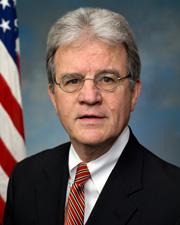 Sen. Tom Coburn (R-OK)
Legislative Activity
Stay on top of the latest movement without scrolling through every action
Roll call votes on amendments in Senate: Motion to table amendment SA 677 agreed to in Senate by Yea-Nay Vote. 58 - 39. Record Vote Number: 104.(consideration: CR S3388)
March 19, 2009
View full timeline
Roll call votes on amendments in Senate: Motion to table amendment SA 677 agreed to in Senate by Yea-Nay Vote. 58 - 39. Record Vote Number: 104.(consideration: CR S3388)
March 19, 2009
Considered by Senate. (consideration: CR S3385, S3386-3387, S3388)
March 19, 2009
Motion to table amendment SA 677 agreed to in Senate by Yea-Nay Vote. 58 - 39. Record Vote Number: 104. (consideration: CR S3388)
March 19, 2009
Senate amendment proposed (on the floor): Amendment SA 677 proposed by Senator Coburn to Amendment SA 684.(consideration: CR S3340-3342; text: CR S3340-3341)
March 18, 2009
Amendment SA 677 proposed by Senator Coburn to Amendment SA 684. (consideration: CR S3340-3342; text: CR S3340-3341) To require Federal agencies to determine on an annual basis the quantity of land that is owned by each Federal agency and the cost to taxpayers of the ownership of the land.
March 18, 2009
Senate amendment submitted
March 17, 2009
Votes
1 roll call on this amendment
Text
Proposed
LEGISLATIVE SESSION

______

REVOLUTIONARY WAR AND WAR OF 1812 BATTLEFIELD PROTECTION ACT

The PRESIDING OFFICER. Under the previous order, the Senate will
resume consideration of H.R. 146, which the clerk will report by title.
The legislative clerk read as follows:

A bill (H.R. 146) to establish a battlefield acquisition
grant program for the acquisition and protection of
nationally significant battlefields and associated sites of
the Revolutionary War and the War of 1812, and for other
purposes.

The Senate resumed consideration of the bill.
Pending:

Bingaman amendment No. 684, in the nature of a substitute;
Coburn amendment No. 680 to amendment No. 684, to ensure
that the general public has full access to our national parks
and to promote the health and safety of all visitors and
employees of the National Park Service;
Coburn amendment No. 679 to amendment No. 684, to provide
for the future energy needs of the United States and
eliminate restrictions on the development of renewable

[[Page S3339]]

energy;
and Coburn amendment No. 675 to amendment No. 684, to
prohibit the use of eminent domain and to ensure that no
American has their property forcibly taken from them by
authorities granted under this Act.

The PRESIDING OFFICER. The Senator from Oklahoma is recognized.
Mr. COBURN. Mr. President, first of all, I ask unanimous consent to
have printed in the Record the statement of the Secretary of the
Interior, Ken Salazar, given yesterday before the Senate Committee on
Energy and Natural Resources. I think Members will find significant
support for my amendment on alternative energy in his statement.
There being no objection, the material was ordered to be printed in
the Record, as follows:

Statement of Ken Salazar, Secretary of the Interior, Before the Senate
Committee on Energy and Natural Resources on Energy Development on the
Public Lands and Outer Continental Shelf

Thank you, Chairman Bingaman, Senator Murkowski, and
Members of the Committee, for giving me the opportunity to
come before you today to discuss energy development on public
lands and the Outer Continental Shelf (OCS) under the
Department of the Interior's jurisdiction. This is my first
hearing before you since my confirmation as Secretary of the
Interior and it is an honor to be here.
President Obama has pledged to work with you to develop a
new energy strategy for the country. His New Energy for
America plan will create a clean energy-based economy that
promotes investment and innovation here at home, generating
millions of new jobs. It will ensure energy security by
reducing our dependence on foreign oil, increasing
efficiency, and making responsible use of our domestic
resources. Finally, it will reduce greenhouse gas emissions.
During his visit to the Department for our 160th
anniversary celebration two weeks ago, the President spoke
about the Department's major role in helping to create this
new, secure, reliable and clean energy future. The vast
landholdings and management jurisdiction of the Department's
bureaus, encompassing 20 percent of the land mass of the
United States and 1.7 billion acres of the Outer Continental
Shelf, are key to realizing this vision through the
responsible development of these resources.
These lands have some of the highest renewable energy
potential in the nation. The Bureau of Land Management has
identified a total of approximately 20.6 million acres of
public land with wind energy potential in the 11 western
states and approximately 29.5 million acres with solar energy
potential in the six southwestern states. There are also over
140 million acres of public land in western states and Alaska
with geothermal resource potential.
There is also significant wind and wave potential in our
offshore waters. The National Renewable Energy Lab has
identified more than 1,000 gigawatts of wind potential off
the Atlantic coast, and more than 900 gigawatts of wind
potential off the Pacific Coast.
Renewable energy companies are looking to partner with the
government to develop this renewable energy potential. We
should responsibly facilitate this development.
Unfortunately, today, in BLM southwestern states, there is a
backlog of over 200 solar energy applications. In addition,
there are some 20 proposed wind development projects on BLM
lands in the west. These projects would create engineering
and construction jobs.
To help focus the Department of the Interior on the
importance of renewable energy development, last Wednesday,
March 11, I issued my first Secretarial Order. The order
makes facilitating the production, development, and delivery
of renewable energy top priorities for the Department. Of
course, this would be accomplished in ways that also project
our natural heritage, wildlife, and land and water resources.
The order also establishes an energy and climate change
task force within the Department, drawing from the leadership
of each of the bureaus. The task force will be responsible
for, among other things, quantifying the potential
contributions of renewable energy resources on our public
lands and the OCS and identifying and prioritizing specific
``zones'' on our public lands where the Department can
facilitate a rapid and responsible move to significantly
increased production of renewable energy from solar, wind,
geothermal, incremental or small hydroelectric power on
existing structures, and biomass sources. The task force will
prioritize the permitting and appropriate environmental
review of transmission rights-of-way applications that are
necessary to deliver renewable energy generation to
consumers, and will work to resolve obstacles to renewable
energy permitting, siting, development, and production
without compromising environmental values.
Accomplishing these goals may require new policies or
practices or the revision of existing policies or practices,
including possible revision of the Programmatic Environmental
Impact Statements (PEISs) for wind and geothermal energy
development and the West-Wide Corridors PEIS that BLM has
completed, as well as their Records of Decision. The
Department of Interior will work with relevant agencies to
explore these options.
We will also, as I have said before, finalize the
regulations for offshore renewable development authorized by
section 388 of the Energy Policy Act of 2005, which gave the
Secretary of the Interior authority to provide access to the
OCS for alternative energy and alternate use projects. This
rulemaking was proposed but never finalized by the previous
Administration.
For these renewable energy zones to succeed, we will need
to work closely with other agencies, states, Tribes and
interested communities to determine what electric
transmission infrastructure and transmission corridors are
needed and appropriate to deliver these renewable resources
to major population centers. We must, in effect, create a
national electrical superhighway system to move these
resources from the places they are generated to where they
are consumed. We will assign a high priority to completing
the permitting and appropriate environmental review of
transmission rights-of-way applications that are necessary to
accomplish this task.
Developing these renewable resources requires a balanced
and mindful approach that addresses the impacts of
development on wildlife, water resources and other interests
under the Department's management jurisdiction. I recognize
this responsibility, and it is not a charge I take lightly.
At the same time, we must recognize that we will likely be
dependent on conventional sources--oil, gas, and coal--for a
significant portion of our energy for many years to come.
Therefore it is important that the Department continue to
responsibly develop these energy resources on public lands.
In the past 7 weeks, the Department has held seven major
oil and gas lease sales onshore, netting more than $33
million for taxpayers. And tomorrow I will be in New Orleans
for a lease sale covering approximately 34.6 million offshore
acres in the Central Gulf of Mexico. This sale includes 4.2
million acres in the 181 South Area, opened as a result of
the Gulf of Mexico Energy Security Act. Continuing to develop
these assets, through an orderly process and based on sound
science, adds important resources to our domestic energy
production.
Based on this approach, I announced last week that I would
be hosting four regional public meetings next month in order
to gather a broad range of viewpoints from all parties
interested in energy development on the OCS. In addition, I
directed the Minerals Management Service and the U.S.
Geological Survey to assemble a report on our offshore oil
and gas resources and the potential for renewable energy
resources, including wind, wave, and tidal energy. The
results of that report will be presented and discussed with
the public.
The meetings will be held in Atlantic City, New Jersey, New
Orleans, Louisiana, Anchorage, Alaska, and San Francisco,
California, during the first two weeks in April.
These meetings are an integral part of our strategy for
developing a new, comprehensive, and environmentally
appropriate energy development plan for the OCS. I have also
extended the comment period on the previous Administration's
proposed 5-year Plan for development by 180 days. We will use
the information gathered at these regional meetings to help
us develop the new 5-year plan on energy development on the
OCS.
Similarly, again based on sound science, policy and public
input, we will move forward with a second round of research,
development, and demonstration leases for oil shale in
Colorado and Utah. While we need to move aggressively with
these technologies, these leases will help answer the
critical questions about oil shale, including about the
viability of emerging technologies on a commercial scale, how
much water and power would be required, and what impact
commercial development would have on land, water, wildlife,
communities and on addressing global climate change.
We are also proceeding with development onshore, where
appropriate, on our public lands. As I noted above, the
responsible development of our oil, gas and coal resources
help us reduce our dependence on foreign oil, but this
development must be done in a thoughtful and balanced way,
and in a way that allows us to protect our signature
landscapes, natural resources, wildlife, and cultural
resources.
We also need to ensure that this development results in a
fair return to the public that owns these federal minerals.
That's why the President's 2010 Budget includes several
proposals to improve this return by closing loopholes,
charging appropriate fees, and reforming how royalties are
set. Of course, I'll be happy to discuss these in more detail
after the Administration's full budget request is released in
the coming weeks.
Implementation of the President's energy plan will
ultimately focus the nation on development of a new green
economy and move us toward energy independence, and I and my
team are working hard to put that plan into place.
Mr. Chairman, I know you and the Committee, along with the
Majority Leader and others in Congress, are working hard on
these issues. I believe we are being presented today with an
historic opportunity to enhance our economy, our environment,
and our national security. Too much is at stake for us to
miss this opportunity.
Thank you, Mr. Chairman and Members of the Committee. I am
happy to answer any questions that you may have.

[[Page S3340]]

Mr. COBURN. Mr. President, we are putting the cart before the horse,
because one of the things the Secretary spoke about yesterday is that
we have to figure out how to transfer all this renewable energy from
Federal lands. What this bill and what a previous amendment that I have
offered and that is now pending would do is to say this bill is going
to offset that. We are not going to know where we need to send it or
how we need to send it. With this bill, we are going to deny the
options to the Secretary of the Interior in terms of transmission lines
with geothermal, with solar, and with wind.
Mr. President, I also ask unanimous consent to have printed in the
Record the opening statement of the chairman of the Energy and Natural
Resources Committee, Senator Bingaman, because I am very pleased with
his statements on oil and gas and renewables, and it again would
support the amendment I have offered that we should not preclude
renewables from this bill.
There being no objection, the material was ordered to be printed in
the Record, as follows:

Energy Production on Federal Lands

I want to welcome my colleagues, our witnesses and
especially Secretary Salazar to today's hearing on the
important topic of energy development on public lands and the
Outer Continental Shelf. Our Nation has abundant energy
resources, a good portion of which are found on our onshore
public lands and the Outer Continental Shelf. These resources
are owned by all of the people of the United States, and
their management is entrusted to the Federal Government.
That's why we're particularly pleased that our new
Secretary of the Interior is here today to tell us about his
vision for the development of our energy resources on public
lands, both onshore and offshore. Secretary Salazar has
important decisions to make--decisions that may prove
essential to our Nation's energy security and economic well-
being--but also decisions that will impact the landscape and
our environment for generations to come.
I look forward to hearing more about the Administration's
plans in this regard. I hope that Secretary Salazar can share
with us his vision for how we can determine the best places
for energy development on the OCS, and how we can move
forward to get more energy production--both oil and gas and
renewables--in a safe and environmentally sound manner from
the Outer Continental Shelf.
I know that the Secretary is also interested in our onshore
oil and gas leasing program. We recognize the contribution of
that program to our energy supply. I hope that under his
leadership, the BLM can resolve any resource conflicts up
front, so that this important program can run smoothly and
efficiently. To this end, it is also important that the
inspection and enforcement program at the BLM be well-funded.
Finally, this Administration is clearly committed to
renewable energy. I know Secretary Salazar is. The Department
of the Interior and the Forest Service have a key role in the
siting of generation and transmission facilities for wind and
solar energy. I know that Secretary Salazar has already
undertaken initiatives to bring about more renewable energy
production on Federal lands.--Jeff Bingaman, Chairman,
Committee on Energy and Natural Resources.

Amendment No. 682 to Amendment No. 684

(Purpose: To protect scientists and visitors to federal lands from
unfair penalties for collecting insignificant rocks)

Mr. COBURN. Mr. President, I ask unanimous consent that the pending
amendment be set aside and amendment No. 682 be brought up and
considered.
The PRESIDING OFFICER. Without objection, it is so ordered. The clerk
will report.
The legislative clerk read as follows:

The Senator from Oklahoma [Mr. Coburn] proposes an
amendment numbered 682 to amendment No. 684.

Mr. COBURN. Mr. President, I ask unanimous consent that the amendment
be considered as read.
The PRESIDING OFFICER. Without objection, it is so ordered.
(The amendment is printed in today's Record under ``Text of
Amendments.'')
Mr. COBURN. Mr. President, this is a very simple amendment. We do
have a problem with thieves stealing significant fossil remains from
public lands, but the way the bill is written currently is that we are
going to hit a fly with a sledgehammer. What we are going to do is put
Scout leaders and troops, graduate students, and the regular public in
line for tremendously harsh penalties if they inadvertently or
inconsequentially pick up a small rock that might have a fossil.
All this amendment does is it tells the Secretary that ``they shall
allow,'' without penalty, the insignificant capture of these small
items--not to resell, not for going on the black market, but actually
for educational purposes--by Scout troops, graduate students, college
classes, and the like.
What we know from the history is that there have been significant
difficulties in terms of the lack of law enforcement on public lands.
This goes back to one of our other amendments we talked about earlier,
which is not only is there a backlog in the repair and care of our
public lands, but we don't have the money to enforce and protect the
very assets which we think are paleontological assets, which we know
are valuable both for history and science. We haven't had the forces
capable of even enforcing what is already illegal. It is already
illegal to steal those items from public land.
So what this amendment does is just change the wording from ``may''
to ``shall''; that the Secretary ``shall allow casual collecting'' that
will not harm any of our public lands and will not put the truly
innocent--simply inquiring minds--at risk of the harsh penalties of
this segment of the bill. It is as simple as that. All it does is
lighten up on the inadvertent and the non-inappropriate looking for
small fossils and small rocks that may not even contain fossils. We
have already had testimony that the majority of the people who have
been arrested under the illegal statute have not been those who have
been in the black market. It has been Scout leaders and graduate
students and college professors who have actually been out there.
So I think it is a commonsense amendment, and I hope my colleagues
will consider it and adopt it so that we don't overshoot on what is
intended to be a solution to a very serious problem.
I would also like to spend a moment in rebutting some of the words of
the Senator from California. I have not yet offered, but intend to
offer, one amendment that will in fact strike some earmarks from this
bill. The San Joaquin River has, no question, been engaged in a
lawsuit. But if you ago back to 1924 and see what the Federal
Government said about the salmon run over this area, it was already in
decline. As a matter of fact, it was in a decline to a level very close
to what we have seen today.
What we have had is a lawsuit that has reached a settlement that now
we are to pay $1 billion with the specific goal not of 100,000 salmon,
not of 30,000 salmon, but the goal in the settlement is 500 salmon. The
likelihood of achieving that, for $1 billion, first of all, is
unlikely. The ultimate outside costs are going to be tremendous. What
are the costs? Through this lawsuit, we are going to put at jeopardy,
put at risk, $20 billion worth of economic activity in one of the most
fertile areas of California.
The Congressman who represents 85 percent of that district and his
constituents are adamantly opposed to this settlement because they know
what it is going to do in terms of the water resource for that
agricultural community. Not everyone supports this settlement, as the
Senator from California said, certainly not the Congressman
representing the district.
The other claim Senator Feinstein made is it would be less costly
than the alternative litigation. If you use the two analyses done in
the late 1990s regarding the economic impacts of water supply
reductions, estimates paint the total costs of this settlement to the
community at over $10 billion; $10 billion is the economic loss to be
associated with this settlement.
At a time of economic difficulty, the last thing we need to be doing
is cutting out another $10 billion of economic productivity.

Amendment No. 677 to Amendment No. 684

I ask the pending amendment be set aside and amendment No. 677 be
called up.
The PRESIDING OFFICER. Without objection, it is so ordered. The clerk
will report.
The legislative clerk read as follows:

The Senator from Oklahoma [Mr. Coburn] proposes an
amendment numbered 677 to amendment No. 684.

The amendment reads as follows:

(Purpose: To require Federal agencies to determine on an annual basis
the quantity of land that is owned by each Federal agency and the cost
to taxpayers of the ownership of the land)

At the appropriate place, insert the following:

[[Page S3341]]

SEC. ___. ANNUAL REPORT RELATING TO LAND OWNED BY FEDERAL
GOVERNMENT.

(a) Annual Report.--
(1) In general.--Subject to paragraph (2), not later than
May 15, 2009, and annually thereafter, the Director of the
Office of Management and Budget (referred to in this section
as the ``Director'') shall ensure that a report that contains
the information described in subsection (b) is posted on a
publicly available website.
(2) Extension relating to certain segment of report.--With
respect to the date on which the first annual report is
required to be posted under paragraph (1), if the Director
determines that an additional period of time is required to
gather the information required under subsection (b)(3)(B),
the Director may--
(A) as of the date described in paragraph (1), post each
segment of information required under paragraphs (1), (2),
and (3)(A) of subsection (b); and
(B) as of May 15, 2010, post the segment of information
required under subsection (b)(3)(B).
(b) Required Information.--Except as provided in subsection
(c), an annual report described in subsection (a) shall
contain, for the period covered by the report--
(1) a description of the total quantity of--
(A) land located within the jurisdiction of the United
States, to be expressed in acres;
(B) the land described in subparagraph (A) that is owned by
the Federal Government, to be expressed--
(i) in acres; and
(ii) as a percentage of the quantity described in
subparagraph (A); and
(C) the land described in subparagraph (B) that is located
in each State, to be expressed, with respect to each State--
(i) in acres; and
(ii) as a percentage of the quantity described in
subparagraph (B);
(2) a description of the total annual cost to the Federal
Government for maintaining all parcels of administrative land
and all administrative buildings or structures under the
jurisdiction of each Federal agency; and
(3) a list and detailed summary of--
(A) with respect to each Federal agency--
(i) the number of unused or vacant assets;
(ii) the replacement value for each unused or vacant asset;
(iii) the total operating costs for each unused or vacant
asset; and
(iv) the length of time that each type of asset described
in clause (i) has been unused or vacant, organized in
categories comprised of periods of--

(I) not more than 1 year;
(II) not less than 1, but not more than 2, years; and
(III) not less than 2 years; and

(B) the estimated costs to the Federal Government of the
maintenance backlog of each Federal agency, to be--
(i) organized in categories comprised of buildings and
structures; and
(ii) expressed as an aggregate cost.
(c) Exclusions.--Notwithstanding subsection (b), the
Director shall exclude from an annual report required under
subsection (a) any information that the Director determines
would threaten national security.
(d) Use of Existing Annual Reports.--An annual report
required under subsection (a) may be comprised of any annual
report relating to the management of Federal real property
that is published by a Federal agency.

Mr. COBURN. Mr. President, this is a simple amendment, too. It is a
good housekeeping amendment. What this amendment does is requires the
Federal Government every year to detail to the people of this country
the amount of the property that the Federal Government owns and the
cost of that land ownership to taxpayers. Do you realize right now we
have 21,000 buildings that are owned by the Federal Government sitting
empty? We have 40 million square feet of excess space that is not being
used, just by the Department of Energy alone.
The Federal Government currently does not disclose these assets. As a
matter of fact, they do not even know what they are. What this
amendment would do is ask the Federal Government, through the OMB, to
create an inventory of Federal assets as far as land and buildings are
concerned. We do not know what it costs us to maintain it. We don't
know if it is economical for us to continue to maintain it as a Federal
Government property or whether we ought to put it up for sale or we
ought to cede it to the States, to an Indian tribe or some other
Government agency where it can be utilized. We just don't have the
knowledge. Without this kind of knowledge there is no way that Congress
can manage Federal properties and Federal lands.
What this would specifically require is the Office of Management and
Budget to issue a report detailing the following: the total amount of
land in the United States that is owned by the Federal Government; the
percentage of all U.S. property controlled by the Federal Government,
that is controlled--maybe not owned but controlled; the total cost of
operating and maintaining Federal real property, including land,
buildings and structures; a list of all Federal property that is either
unused or vacant--that is something we should know which we do not
know--and the estimated cost of the maintenance backlog on Federal
land, buildings, and properties by agency.
This will give taxpayers greater transparency. It allows the
taxpayers to know what kind of poor stewards we are with Federal
property and land. It will also give us a focus to direct the
maintenance backlog that we have today, to create a priority for it. We
can see it in light of all the maintenance problems by agency.
It also will help us when we are considering a bill like this one.
Nobody knows the total impact of this bill--this bill, 170 bills.
Nobody has done a study to say what the total impact is going to be. We
don't know what the total impact is going to be on energy transmission.
What we do know is it is going to hinder it greatly. What it does is it
gives us a management tool.
According to the Congressional Research Service, the total amount of
Federal land is unknown. In fact, different sources show significantly
different estimates. This is their direct quote:

The estimate of $650 million assumes the four Federal land
management agencies have reasonably accurate data on lands
under their jurisdiction, and the Department of Defense.

I would note that this amendment specifically excludes any properties
that should not be known publicly, that are of national security or
defense nature.
It is interesting, the Government tracks property we own, but the
taxpayers cannot track the property the Government owns. Let me repeat
that. Government at all levels tracks the property we own, but the
taxpayers are not allowed to track the property the Government owns
through them--ridiculous. The Government should have to disclose
exactly the same information, when it is not a national security issue,
that we have to disclose on our own property.
What we do know is that the Federal Government controls more than
one-fourth of the Nation's total land, and that continues to grow. It
is going to grow by almost 3 million acres in this bill. Between 1997
and 2004, the latest years for which reliable information was
available, Federal land ownership increased from 563 million to 654.7
million acres. In 7 years it grew 100 million acres. That is 100
million acres on which nobody is collecting any property tax. It is 100
million acres we are not taking care of. It is 100 million acres that
have facilities and structures and backlogs on maintenance issues on it
that are costing us dearly every year. As the Federal Government takes
more land, the costs of maintaining the property increases and the
maintenance backlogs continue to grow.
It also does something else. In this 100 million acres of growth in
the 7 years up to 2004, that is 100 million acres that is not available
to the American public to utilize in a productive way, in a way that
could build capacity, could build wealth, could build jobs. None of
that happens. The only jobs that come with Federal Government programs
or Federal Government property is Federal jobs that are not necessarily
productive of new assets, new wealth, and new job creation beyond it.
The other thing we know is, as this 100 million acres has been added
over the previous 7 years, that the maintenance backlog of what we do
own has fallen further and further behind. We know, according to the
GAO, the maintenance backlog just at the Forest Service--not the
national parks--we know that is somewhere between $12 billion and $19
billion. But the Forest Service has tripled.
The other problem I mentioned earlier, of the 21,000 buildings we
have now that we are not utilizing, we could reduce the debt by $18
billion just in the maintenance costs to those buildings. Think about
that. We have 21,000 buildings sitting. We are not doing anything with
them except maintaining them, and we are spending $18 billion that we
do not have taking care of buildings whereas we could get $18 billion
for those buildings if we would dispose of them. But we have been
blocked in this body from proposing real property reform.

[[Page S3342]]

The first step, then, is to know what we have, and this is just a
guess of what we have. I mentioned earlier that the Department of
Energy--I said 40--it is 20 million square feet of excess capacity.
That is three times the size of the Pentagon. So three times the size
of the Pentagon, you could put five U.S. Capitols inside the Pentagon
in terms of square footage.
The other benefit from this is transparency will help us every time
in every way. Knowing what we need to know about Federal property,
knowing what we need to know about maintenance backlogs, is key to us
fixing the problem. We cannot manage Federal property unless we know
what we are managing, unless we have the details and the data. My hope
is this amendment will be accepted and that the American people can
actually know what they own, much like the Government knows what they
own.
I have one other amendment to offer, but I will defer that to a later
point in time, and at this time I yield the floor.
The PRESIDING OFFICER (Mrs. McCaskill). The Senator from New Mexico
is recognized.
Mr. BINGAMAN. Madam President, I believe at 2 o'clock we are
proceeding to vote on a nomination and then also on three of the six
amendments that are being proposed by the Senator from Oklahoma to this
omnibus lands bill. I just want to speak briefly about the three
amendments that we are expected to vote on in the sequence of votes
beginning at 2 o'clock.

Amendment No. 680

As I understand it, the first of those is an amendment, SA 680,
prohibiting construction in the national parks. This amendment
prohibits the National Park Service from beginning any new construction
until the Secretary determines that ``all existing sites, structures,
trails, and transportation infrastructure of the National Park Service
are--fully operational; fully accessible to the public; and propose no
health or safety risk to the general public or employees of the
National Park Service.''
The amendment excludes from the new construction ban, first, ``the
replacement of existing structures in cases in which rehabilitation
costs exceed new construction costs''; or, second, the second area that
is excluded from the construction ban would be ``any new construction
that the Secretary determines to be necessary for public safety.''
The amendment, as I read it, would eliminate the ability of Congress
to determine what funds should be appropriated to each park. In all
likelihood, the Secretary would never be able to make the certification
called for in the amendment since there would always be some backlog.
So this amendment would ensure that we would not proceed with new
construction in our national parks.
The amendment also appears to prohibit the expenditure of already
appropriated funds, if the construction has not yet begun, which would
negate funds recently appropriated as part of the American Recovery and
Reinvestment Act and also funds contained in the Omnibus Appropriations
Act that was approved by this Congress.
For those reasons, I urge my colleagues to oppose that amendment.

Amendment No. 679

The second amendment I wanted to talk about is Coburn amendment No.
679. That amendment states:

Notwithstanding any other provision of this Act, nothing in
this Act shall restrict the development of renewable energy
on public land, including geothermal, solar and wind energy
and related transmission infrastructure.

Madam President, the proponent of the amendment argues we should not
designate the wilderness or national park or other conservation in the
areas set out in this bill because they will restrict our sources of
energy. I disagree with that.
For example, the bill, as it stands before us, designates 15 new
wilderness areas. None of those areas have significant energy
development potential. Three of the wilderness areas are within
national parks where energy development is already not allowed. So the
wilderness designation would not change that in any way.
The remaining wilderness areas are on land administered by the Bureau
of Land Management or the Forest Service, and those agencies have
provided information to our committee, the Energy Committee, that the
new wilderness areas have low or no potential for energy development
within the areas designated.
In addition to the wilderness areas, the amendment would undermine
the designation of several other areas that are created to protect
naturally significant features. For example, the bill designates a new
national monument and a new national conservation area in my home State
of New Mexico, one of which will protect a series of fossilized
prehistoric trackways and the other which protects a large cave system.
Neither site is appropriate for energy development. Neither designation
would reduce the contribution made by New Mexico as a major energy
provider.
We are currently working on an energy bill in our Energy and Natural
Resources Committee that will encourage the development of renewable
energy. However, the areas designated in this bill will not reduce our
Nation's ability to develop these resources.

Amendment No. 675

The third amendment I wished to briefly describe or discuss is the
amendment No. 675 offered by the Senator from Oklahoma. This amendment
states that no land or interest in land shall be acquired under this
act by eminent domain.
First, it is important to understand that there are no provisions in
this act that grant the Federal Government eminent domain authority.
That authority already exists. It has existed since the founding of the
country.
The use of eminent domain authority, however, is limited and
controlled by the fifth amendment and by certain Federal statutes.
These provisions require just compensation when eminent domain is
actually used.
Secondly, there are no major land acquisitions in the bill. The
amendment could impact the water projects that are authorized by the
bill, particularly the Indian water rights settlement and rural water
projects that are authorized in titles IX and X of the regulation.
Eminent domain, while sparingly used, has at times been a crucial
tool for the Bureau of Reclamation in its attempts to complete
important water projects. Examples that come to mind are the Central
Arizona Project. My colleagues from Arizona are very familiar with the
benefits that has brought to the State of Arizona.
The Central Utah Project, again, my colleagues from Utah undoubtedly
know the value of that project. In such cases, without this tool, it
likely would have been impossible to complete the reservoirs and
drinking water pipelines and irrigation canals that are so crucial to
the communities that are served by those projects.
The amendment that is being offered is problematic for several
reasons. Let me recount those: First, it would impede the construction
or increase the cost of several of the water projects provided for in
this bill. This could result in the failure to complete projects or to
implement one or more of the Indian water rights settlements that are
being resolved.
The Navajo settlement, which includes a rural water project critical
to the Navajo people, is one of particular importance to me. It needs
to be fully implemented without delay, and elimination of this
authority would impede that. The language of the amendment is not
limited to Federal agencies. Accordingly, it would be interpreted to
restrict eminent domain by State-based entities if Federal money is
involved as part of a condemnation.
The Eastern New Mexico Project is an example of a project where the
local water authority will be responsible for securing rights of way
for the project. It does not intend to condemn any property rights, but
it will have that power, if needed, to deliver much needed water to the
communities in rural New Mexico that will be served by the project. The
Coburn amendment could interfere with the authority of that local
entity to complete that project.
Finally, the Bureau of Reclamation indicates it has at times used so-
called friendly condemnation to acquire State and local lands when the
relevant government entities do not have the authority to sell such
land. This has been a valuable tool to the Bureau of Reclamation and
could be prohibited by the Coburn amendment.

[[Page S3343]]

In sum, for well over 100 years, the Bureau of Reclamation, as one
agency, has balanced public needs with private property rights to help
address critical water needs throughout the West. I expect that
Reclamation's approach will not change as a result of anything in this
bill. The Coburn amendment is unnecessary, would likely complicate the
work done by numerous communities to address the water issues that
affect their future.
I urge my colleagues to oppose that amendment as well.
I yield the floor. I see my colleague from Oklahoma is here and would
like to continue with his other amendments.
The PRESIDING OFFICER. The Senator from Oklahoma is recognized.
Mr. COBURN. While I thank the chairman, the Senator from New Mexico,
for his words and his comments, I would note that true eminent domain
was not truly exercised in this country until the authority was given
in 1960, not at the start of our founding. As a matter of fact, we
believed in property rights in our founding. It is only since 1960 have
we decided the Government knows better than a private landowner.
I ask unanimous consent to have printed in the Record the present
ongoing debate on eminent domain between the Friars and the National
Park Service on the Appalachian Trail, just to show you how
controversial the taking of land of private homeowners, landowners is,
when we, in our ultimate wisdom, say we know better than the people who
own private land in this country.
There being no objection, the material was ordered to be printed in
the Record, as follows:

Friars and National Park Service Face Off on Appalachian Trail

Eminent domain proceedings halted

(By Margaret O'Sullivan)

The Franciscan Friars and Sisters of the Atonement at
Graymoor met with officials from the National Park Service:
Judy Brumback, Chief of the Acquisitions Division and Pamela
Underhill, Park Manager of the Appalachian Trail; US Senator
Charles E. Schumer and Congresswoman Sue Kelly on August 7.
The topic was the disputed 20-acre parcel the National Park
Service wants as ``a buffer area'' for the Appalachian Trail.
As reported in this paper on July 19, 2000 the Park Service
obtained an easement on 58 acres of Friar land just north of
the contested section in 1984 when the Friars sold the
development rights of that parcel to the Park Service. The
following year the agreement was violated when a pumphouse
for a sewage treatment plant was built by the Franciscan
Friars on the land.
After a private meeting on a hot and humid August 7,
between the Friars and the Park Service, moderated by Senator
Schumer and Congresswoman Kelly, Senator Schumer said that
letters had been going back and forth to the Park Service
since May this year and finally the situation had come to a
head. He stated that ``good news'' is on the way: The lawsuit
is on hold, the parties have come back to the table for talks
and they have a basic agreement in that their goals are not
really in conflict.
A further meeting is scheduled for August 23, 2000 when
discussions will take place in order to resolve the dispute.
Senator Schumer further stated that it is great to have the
Friary here--it is probably the best part of the Appalachian
Trail, if one was caught in a storm or in need. The Friars
welcome anyone who might need assistance, a shower or a meal
while hiking the trail. As Senator Schumer indicated, there
are many solutions short of legal action. He said he has ``a
nose'' for when disputes will escalate or get resolved and it
is positive for the community to bring both sides together.
The situation should be resolved amiably; there are no gains
by continued fighting.
Congresswoman Kelly said that recently the National Park
Service had turned down a request from her office to arrange
a meeting between the Friars and the Park Service to resolve
the matter. Instead the National Park Service initiated
eminent domain proceedings through the Justice Department.
She hadn't thought another meeting would rake place this soon
but stated that ``it appears that the Park service is finally
coming to its senses.'' ``Their decision to pursue this case
using such heavy-handed tactics is wrong. The Justice
Department should play no role in this matter. The Friars
contribute to our community every day. Their work has touched
the lives of countless individuals and the Hudson Valley
community as a whole. I don't want to see their work hindered
in any way.'' She said it was a good sign that the Justice
Department had withdrawn any legal action and emphasized that
the dispute is not about development but about the use of
land.
Rev. Arthur M. Johnson, Minister General of Graymoor, (Fr.
Art) thanked both Senator Schumer and Congresswoman Kelly for
``pressuring'' the two factions to get together face to face.
He felt that the Friary and the National Park Service
actually had a common goal, and that is people. Hiking the
Appalachian Trail gives people a natural experience while the
Friary wants to continue their ministry to help those in
need. Many hikers, over 400 a year in fact, have experienced
the Franciscan hospitality while hiking the Trail, a service
recognized by hikers and the Park Service alike. He felt it
was a ``win-win'' situation for all.
Pamela Underhill, Park Manager of the Appalachian National
Scenic Trail, agreeing in principle with Fr. Art, stated that
it was rewarding to meet and felt that the lines of
communication had vastly improved. She too touched on the
common goal theme, which offered both a ``Godly and natural
retreat.'' She reiterated the need for a ``buffer zone''
along the trail, which is the heart of the matter. Although
Ms. Underhill and Fr. Art had both hiked the Trail, they had
never hiked together--August 7th was the first time.
They hit the trail along with other Friars, Senator
Schumer, Congresswoman Kelly and members of the press. All
agreed that it was very beneficial to actually see the site
in question, and the position of the pumphouse in proximity
to the Appalachian Trail. Putting their ``worst fears'' on
the table, Pamela Underhill stated that she is concerned
about the Trail and development of any land in close
proximity to the Appalachian Trail. Fr. Art's concerns were
about the future of their ministry. He did not want to see
any plans they may have for the future undermined which could
curtail their ability to sustain the needed infrastructure to
minister to the thousands of men and women who come to
Graymoor each year.
Both sides are optimistic about the upcoming meeting on
August 23rd.

Mr. COBURN. I would also note the testimony yesterday given by the
Secretary of the Interior on his idea that we have to figure out where
the transmission lines are going to run.
This bill goes against exactly his testimony before your committee
yesterday. Because what he said was, we need to plan ahead where the
transmission lines are going to go. We need to know that before we
block off anything else. That was the implication of his testimony.
For these renewable energy sites to succeed, we need to work closely
with other agencies, States, tribes, and interested communities to
determine what electric transmission infrastructure and corridors are
needed and appropriate to deliver the renewable resources to major
population centers. Our own Secretary of the Interior, our former
colleague, says we have the cart before the horse.
What we heard in opposition to the first amendment, No. 680, is a
continued slight to the American people in terms of taking care of the
properties we have. Now, the GAO says, and the IG of the Department of
the Interior, it is somewhere between $12 and $19 billion in backlog.
What we hear is nobody wants to put a priority in taking care of what
we have. What we want to do is build more new and let what we have
crumble. The last thing we should be doing is building something new
until we take care of what we have. Go to any of our national parks and
talk to the people who are in charge of the maintenance and they will
tell you: Congress never gives us the money to take care of it. And it
is growing at $1 billion a year in terms of backlog.
I understand the chairman's reluctance to accept these amendments. I
respect him greatly. But we are going to continue on doing what we have
been doing, which is a shame looking at our national parks.
I have not even talked seriously about the backlog at the Forest
Service. So if we want to deny the amendment to not start new
construction unless the Secretary certifies it is something for safety
or that it would, in fact, help us build something that would cost more
to fix than to repair, then we are going to keep on allowing this
backlog to grow. That is exactly what this bill does. This amendment is
not trying to stop or play any games, it is saying, let's catch up with
the real need we have in our parks now. Let's catch up with the needs
on the National Mall. Let's catch up with the $200 million backlog at
the Statue of Liberty. No, we are not going to do that. We are going to
authorize all these new programs. Then we are going to fund the new
programs because we look better doing it than taking care of the very
valuable assets we have.
I disagree with my colleague from New Mexico on the importance and
the intention of that amendment. The amendment is to cause us to focus
on priorities which this body has not. One of the reasons we have not
is because we do not have my other amendment

[[Page S3344]]

saying we need a list of what we have, where we have it, what the
problems are, and what the backlogs are.
With that I yield the floor.
The PRESIDING OFFICER (Mr. Brown.) The Senator from Iowa is
recognized.
Mr. GRASSLEY. Mr. President, I ask unanimous consent to speak as in
morning business.
The PRESIDING OFFICER. Without objection, it is so ordered.

2010 Budget

Mr. GRASSLEY. Mr. President, yesterday I had an opportunity to
address my colleagues on my concerns with the budget sent to us by
President Obama, a bloated budget crawling with tax increases. Today, I
would like to be more specific in that discussion.
Almost 3 weeks ago, President Obama sent his first budget up to
Capitol Hill. The deficit and debt proposed in that budget are eye-
popping. President Obama is correct when he says he inherited a record
budget deficit of $1.2 trillion. Let me repeat that because this
Senator and the Senator from Idaho are willing to be very transparent
on what the numbers are. You do not argue with them.
I can say we agree with what President Obama said, that he inherited
a record budget deficit of $1.2 trillion. This is a chart that shows
the pattern of Federal deficits over the past few years. We go out to
the year 2019 because the Congressional Budget Office always looks
ahead in their projections. You can see what those deficits are--
obviously, very high where we are right now because of the recession we
are in and things of that nature.
But from the talk around here, especially the talk from the
Congressional Democratic leadership, you would think they got majority
power just this January, 2 months ago. You would think there was no
role of the Democratic Party in creating deficits that President Obama
inherited. Now we even have some in the administration who are joining
this chorus. A very smart guy, a guy we all ought to respect for his
understanding of economics, former Treasury Secretary Summers, now
Director of the National Economic Council, said Sunday on a news show
that a Republican President--and emphasis upon Republican Congress--had
left President Obama with this inherited deficit.
Well, I am sure Senator McConnell would have liked to have been
majority leader, but he would be glad to correct Dr. Summers and let
him know he was not majority leader but was minority leader during the
years of 2007 and 2008.
Likewise, Congressman Boehner, though he would like to be Speaker,
was not Speaker. He would be glad to point out he was leader of the
minority, the Republicans, within the minority in the House and not
Speaker during 2007 and 2008.
So the correction comes from the fact that Congressional Democrats
and the last Republican administration agreed on the fiscal policy in
the last Congress. The Congress, namely the Democratic leadership,
together with former President George W. Bush and that administration,
wrote the stimulus bill, wrote the housing bills, and had a great deal
to do with financial bailouts.
The congressional Democratic leadership wrote the budgets and the
spending bills of 2007 and 2008. So we need to set the facts straight.
President Obama did, as I said twice--I will say again--inherit the
deficit and debt. But--and a very important ``but''--the inheritance
had bipartisan origins, the Democratic Congress, on the one hand, and a
Republican President on the other hand.
Now, what is more, the budget the President sent up would make this
extraordinary level of debt an ordinary level of debt.
We have to think about the budget coming up because this is budget
month. These issues are going to be driven home to the people. We have
an extraordinary level of debt in this budget. It soon may look like an
ordinary level of debt, and it will be. What is now an extraordinary
burden on our children and grandchildren would become an ordinary
burden.
I have a chart that shows this inherited debt. The inherited debt
meaning what was inherited by this administration on the day they were
sworn into office, January 20 of this year, is here. This black line is
the percentage of gross national product. This is real dollars. So you
see by 2019 how it grows and how it still is very big debt. But this
inherited debt is not a pretty picture. But the picture gets uglier
because in the last year of the budget, meaning the budget the
President sent up here, debt held by the public would be two-thirds, 67
percent, of our gross national product. In other words, what was
inherited has the national debt coming down to about 42 percent of
gross national product, but what is happening from this point on with
the budget we have, this black line will come up here at 67 percent.
That is the legacy of this budget.
That number assumes also the return of a healthy economy, which we
all hope happens. I suppose most Presidents would assume a healthy
economy, but it is not a certainty. That means President Obama's budget
assumes that a prosperous United States will carry the debt to more
than two-thirds of the gross national product as we look out 10 years
ahead, and the Congressional Budget Office does that on an automatic
basis. That number, if the economy is healthy, will be 67 percent,
right here, that black line. If the budget is not as healthy as what
they project then, of course, that black line will be higher than 67
percent.
In terms of proposed tax policy, the President's budget does contain
some common ground. If President Obama wants to pursue tax relief, he
will find no better ally than we Republicans. If President Obama wants
to embrace fiscal responsibility and reduce the deficit by cutting
wasteful spending, Republicans on Capitol Hill will have his back. From
our perspective, good fiscal policy keeps the tax burden low on
American families, workers and small businesses and keeps wasteful
spending in check. For the hard-working American taxpayers, there is
some good news in this budget. President Obama's budget proposes to
make permanent about 80 percent of the bipartisan tax relief plans set
to expire in less than 2 years. For 8 long years, Republicans have
tried to make this bipartisan tax relief permanent. Now the Democratic
leadership seems to have seen some of that light. They now agree with
us Republicans that families should be able to count on marriage
penalty relief, on a double child tax credit. Democratic leaders now
seem to agree with decisions that were in the bipartisan tax bill of
2003, agree with us Republicans that low-income seniors who rely on
capital gains and dividend income will be able to rely on low rates of
taxation as they draw on their savings.
Democratic leaders now agree with Republicans that middle-income
families will be able to count on relief from the alternative minimum
tax. They were never supposed to be taxed in the first place, but it is
not indexed. So they would agree that we protect middle-class taxpayers
from the AMT which was not indexed. President Obama will find many
Republican allies in his efforts to make these tax relief policies
permanent.
I wish the budget I am referring to, the budget that came to the Hill
a couple weeks ago, was as taxpayer friendly, but it is not. There is a
lot of bad news for American taxpayers. If you put gas in a car, heat
or cool your home, use electricity to cook a meal, turn on the lights,
power a computer, there is a new energy tax for you in the budget from
the President. This tax would exceed a trillion dollars. I better say
``could'' exceed because the figure in the budget is less than that,
but most everybody around here thinks it is going to be over a trillion
dollars.
This budget also raises taxes on those making more than $250,000.
That sounds like a lot of money to most Americans. If we were only
talking about the idle rich, maybe the news wouldn't be so bad. But we
are not talking about coupon clippers on Park Avenue. We are not
talking about the high-paid, corporate jet-flying, well-paid hedge fund
managers in Chicago, San Francisco or other high-income, liberal
meccas. Many of the Americans targeted for this hefty tax hike are
successful small business owners. Unlike the financial engineers of the
flush, liberal meccas of New York, Chicago, and San Francisco, a lot of
these small businesses add value beyond just shuffling paper. There is
bipartisan agreement that small business and all these businesses are
the main drivers

[[Page S3345]]

of our dynamic economy. Small businesses create 74 percent of all new
private sector jobs, according to latest statistics. On Monday, my
President, President Obama, used a similar figure of 70 percent.
Whether it is 70 or 74 percent, it means the vast majority of small
businesses create most of the new jobs in America. They are the
employment machine. Both sides agree we ought to not hurt key job
producers that small businesses are.
President Obama also mentioned his zero capital gains proposal for
small business startups. It might surprise you, but we Republicans
agree with President Obama on that issue. We are still trying to figure
out why Democratic leadership doesn't agree with the President on that
small business-friendly proposal, because we tried to get a better
proposal in the stimulus bill. If we also agree that small business is
the key to creating new jobs, why does the Democratic leadership and
the President's budget propose a new tax increase directed at these
small businesses of America that are most likely to create new jobs?
Wait a minute, please. Many on the left side of the political spectrum
say only 2 or 3 percent of the small businesses are affected by this
tax increase. That figure was developed by a think tank, and it is
based on a microsimulation model. Treasury studies show the figure to
be considerably higher. But to focus solely on the filer percentage is
to miss the forest for the trees. It is to assume that all small
businesses have the same level of activity, that they employ the same
workers, that they buy the same number of machines, that they make the
same number of sales. Common sense has to prevail, and common sense
will tell you that can't be the case.
In fact, it is not the case. The data on small business activity
tells a different story. I come to that conclusion this way. According
to a recent Gallup survey, over half the small business owners
employing over 20 workers would pay higher taxes under the President's
budget. This chart depicts the number of small businesses hit by this
tax increase. We point to different levels of employment of small
business being affected by this. We get to a point out here where we
have 950,000 businesses, one-sixth of small businesses, with 1 to 499
employees are hit by it. Do we want to destroy that employment machine?
I don't think so. But this tax proposal will do that.
I have another chart that shows that roughly half the firms that
employ two-thirds of small business workers, those with 20 or more
workers, are hit by the tax rate hikes in the President's budget. I
will not go through all of them, but we can see here, 50 percent of the
employers with employees of somewhere between 20 and 499 are hit by
that big, fat tax increase.
According to Treasury Department data, not mine, these small
businesses account for nearly 70 percent of small business income. So
there is a big tax hit on small businesses that employ 20 or more
workers. It is a marginal tax rate increase of 20 percent. Everybody,
Democrat or Republican, ought to think about how these dynamic small
businesses, responsible for two-thirds of small businesses, will react.
That 20 percent in new taxes has to come from somewhere.
We Republicans will also scrutinize the budget for other major new
taxes. We have discussed the new cutbacks on itemized deductions. I am
referring to home mortgage interest, charities and State and local
taxes. We Republicans will question a broad-based energy tax that
actually cuts jobs and could, according to the Massachusetts Institute
of Technology, cost consumers and businesses trillions.
In these troubled economic times, we ought to err on the side of
keeping taxes and spending low and reduce the deficit. Keeping taxes
and spending low, along with reversing the growth in Federal debt, will
push the economy back to growth. It is the only way we will provide
more opportunities for all Americans.
Getting our private sector going, making small business strong is the
basis for getting out of this recession and continuing to grow. I hope
throughout this process of the budget debate, we will remember a firm
fact that ought to be common sense, but I am not sure in this town it
is seen as common sense: Government does not create wealth. Government
consumes wealth.
I hope my colleagues will listen to my friend from Idaho as he gives
his version of the budget. He is an outstanding member of our Finance
Committee, and I appreciate his work.
I yield the floor.
The PRESIDING OFFICER (Mrs. Hagan). The senior Senator from Idaho is
recognized.
Mr. CRAPO. Madam President, I ask unanimous consent to speak as in
morning business.
The PRESIDING OFFICER. Without objection, it is so ordered.
Mr. CRAPO. Thank you very much, Madam President.
I appreciate the opportunity to come to the floor this morning and
join with my colleague, Senator Grassley from Iowa, who is the ranking
member of the Finance Committee. It is truly a pleasure to serve with
him on that committee. He is one of those who, day in and day out, year
in and year out, fights for fiscal responsibility at the Federal level.
I appreciate his support and share in the comments he has made already
today.
I wish to start my remarks by talking about a meeting I had this
morning in my office with a couple of mayors from two Idaho cities and
a number of young students whom they brought with them from their
respective cities to come to Washington, DC. These two mayors have
established a mayor's council of students in their cities and work with
these students on public issues and help these young people find an
effective way to be active and involved.
As they came to visit with me today, they brought up two issues. The
first issue they brought up was the alarming rate of high school
dropouts and the need for us to pay attention to our educational
system. They talked with me about a number of interesting ideas we
should pursue as we try to regain America's lead in excellence in
education. I am going to have more to say about that on the floor and
in other contexts on another day.
But I thought it was very interesting; the second issue they brought
up with me was directly relevant to the remarks I planned to make on
the floor today; that is, they brought me a set of petitions--I am
holding them in my hand right now--with the signatures of about 400
students in Idaho, whom I think properly reflect many, many, more than
they, who have asked that we pay attention to our national debt and our
inability--our inability in Congress--to achieve fiscal responsibility.
These young people said what I and many others have been saying, only
they said it best; that is, that our inability to control our fiscal
house here in Washington, DC, is jeopardizing their future and it is
jeopardizing their children's future and their children's future.
Now, we often say that on the floor, but I had the opportunity today
to meet with these young people who looked me in the eye and asked me
to do everything I can to help protect them from what they see
happening as a result of a runaway Congress and a runaway spending plan
in this Congress that will specifically fall on their shoulders to
bear.
Well, they talked with me about things such as who owns our national
debt. They pointed out, as most Americans are starting to realize, that
foreign nations own most of our national debt, which raises additional
threats to our security.
Today, China and Japan are the primary holders of our national debt.
As I think many Americans have noted recently, the Chinese are starting
to wonder whether this investment in U.S. debt instruments is a viable
investment because of the spending policies of our Nation.
Well, I am here to talk about the budget that this Senate and this
Congress are now beginning to consider. In addition to sitting on the
Finance Committee, I sit on the Budget Committee. In the next few
weeks, the Budget Committee is going to begin its deliberations on the
budget the President has submitted to us.
Every year, the President submits to Congress a budget. I do not
think in any year I have served in Congress has the Congress actually
adopted the exact budget the President has proposed. But the
President's budget proposal acts as a guide from which the Congress
then crafts its own budget.

[[Page S3346]]

I believe this year Congress must be very careful in following the
proposals or using as a model or a guide the budget which we have been
given.
As shown on this chart, the budget that has been proposed to us will
increase taxes by approximately $1.4 trillion. This number is hard to
get at because we do not have the details yet. The reason I say that is
because many--including myself--believe that is a very low number in
terms of the actual amount of the tax increases. I will explain that in
a moment.
It increases discretionary spending by $725 billion. These are 10-
year numbers. As my colleague from Iowa said, the budgets project out
over a 10-year cycle, and it increases mandatory spending by $1.2
trillion.
If you look at the spending side of this for a minute--for those who
do not pay attention to our discussion of different pieces of the
budget here in Washington, mandatory spending generally is spending
that previous Congresses and previous Presidents have already debated,
passed into law, and signed into law and is ongoing. I call it spending
that is on autopilot because this spending will happen regardless of
whether Congress ever votes or meets again. It is law, and regardless
of the status of the economy, regardless of the demographics of our
Nation and what is happening in the world in which we are living today,
the law requires this spending occur. It is what often we call
entitlement spending--``entitlement'' because the law has created an
entitlement, and if a person qualifies in a certain way, they are
entitled to receive payment under the law.
Now, the vast majority of this entitlement spending, as most people
know, is Medicare, Medicaid, and Social Security. There are other
entitlement laws, mandatory spending laws, in the United States, but
the vast majority--the vastly largest percentage--are Medicare,
Medicaid, and Social Security. Also added into this category of
mandatory spending is interest on the national debt because that also
must be paid.
So you can think of the mandatory spending or autopilot spending as
basically this column here, as shown on the chart, that represents
about two-thirds--roughly, about two-thirds--of all the spending in
each year's average budget.
The discretionary spending is everything else. That is what we
actually vote on in Congress every year in our appropriations process.
As I have said, it is roughly about a third of our budget. That
spending can also be divided roughly in half. Approximately half of it
is national defense and security spending; and approximately half of it
is everything other than defense. So you often hear us talk about
nondefense discretionary spending. That is what we are talking about:
the things Congress actually votes on every year.
Together, our discretionary spending and our mandatory spending are
the spending side of our budget. As you can see on this chart, we are
proposing in both categories dramatic increases over the next 10 years.
The fiscal restraint is not there. At a time when Americans are
tightening their belts, this budget grows the size of Government by 9
percent--9-percent growth for nondefense programs in just the year 2010
alone. If you go back to the 2009 budget we adopted and finalized in
our appropriations process in this Congress and add the growth there
into it as well, you will see a 20-percent growth--a 20-percent
growth--in our nondefense spending in this country since the year 2008.
The fiscal restraint is lacking in this budget proposal. In fact,
there is only one category of this budget in which there is any actual
reduction in spending, and that is in the defense side of the ledger.
There are actual proposed reductions in defense spending in the
President's budget. But only in that category.
If we look at the tax side for a moment, you can see there is $1.4
trillion of new taxes. As I said a minute ago, that number is kind of
hard to quantify. Why is that hard to quantify?
Well, the President has said his tax policies would reduce taxes for
95 percent of American taxpayers. That statement can only be accurate
if you only look at one kind of tax; namely, income taxes. I believe it
is correct that in the income tax category, there will not be an
increase for the vast majority of Americans, and, in fact, for
most Americans we might actually see a reduction.

But if you look at all the other proposals for tax increases and tax
adjustments in the President's budget, you see there is going to be a
huge increase in tax payments by Americans in every category of income
in this country.
Those taxes include things such as a brandnew--and this is the part
that makes it difficult to give a final number--a brandnew tax on
energy. It is part of what some have called the cap-and-trade proposal
the President has made on carbon fuels. Others have called it a cap-
and-tax approach.
The point, however, is, under this new energy proposal, somewhere
between $600 billion and $2 trillion of new cost will be put on carbon-
emitting energy sources, and Americans will pay those increased costs,
primarily in their utility bills. The President himself has said this
proposal would cause electricity rates to skyrocket. We do not know
exactly to what level, but everyone who uses electricity, everyone who
pumps gas at the gas station, everyone who uses natural gas can expect
to see--and we do not know the details yet, which is why we cannot give
the details on the numbers, but they can expect to see significantly
increased costs for them in their household budgets.
Now, some would say that is not a tax. That is just a fee or it is
just an increase in the price of your electricity as a result of some
national policies. But however you say it, the fact is, there is a
projected revenue to the Federal Treasury to come from people who will
pay more on their electricity bills and pay more on their gasoline and
other fuel bills that will be somewhere in the neighborhood of $1.4
trillion. Many of us think it is going to be closer to $2 trillion.
The list goes on.
It is proposed the capital gains and dividends tax rates go up. Some
argue that only hurts wealthy people. In fact, the argument made on
this floor so often is: Any tax increase is justified as being a tax
increase on only the wealthy. Well, if you look at dividends and
capital gains and look at the kinds of people in this country who own
stock, either in their own individual account or through a pension
fund, it reaches far deeper than just the wealthy. The people who are
impacted day in and day out by having to pay tax on dividends and
capital gains are far more people than simply those who are the so-
called wealthy.
The list goes on.
The bottom line is, the budget will raise taxes by about $1.4
trillion and raise spending--both in discretionary and mandatory
levels--a greater amount.
Now let me look at this last category shown on the chart. It is
called mandatory savings. The number there is zero. Now, why do we have
that column? In order to change--remember the law I told you about
earlier: The entitlement programs are already the law. If we are going
to change and gain savings in this category of mandatory spending, we
have to literally vote to change the law. It takes 60 votes in the
Senate to do that because we always face a filibuster when we try to
find savings in this category of entitlement spending.
But in the budget proposal the Budget Committee will put forward, the
Budget Committee is allowed to propose that there be savings here. And
then, if the Budget Committee can get that proposal adopted in the
budget, our respective committees of jurisdiction in the areas where
the entitlements lie are required by the budget to find those savings
and make law-change proposals to Congress so we can achieve some
savings.
The reason I have this column on the chart is because in the budget
that has been proposed, there are no savings proposed. There is not
even a request that $1 of savings be found in the entire entitlement
system. That is wrong also.
Now, let's go to the next chart.
This is a chart that shows the deficits we expect to face--not the
national debt but the deficits, the yearly deficits we expect to face.
That means the amount of money we will spend beyond our projected
revenue.
The blue line, as shown on the chart, is what we call the BEA
baseline. What that means is that is current law. If we do not change
any law and do not do

[[Page S3347]]

anything in Congress and do not put any more increased spending into
place, what would our deficits look like? We can see there is a big
spike here, in about 2009 and 2010, and then it drops off dramatically.
Under current law, it tails down rather dramatically over the next 10
years.

Now, one of the reasons it goes down so dramatically over the next 10
years is that we have a number of tax cuts that were passed in the 2001
and 2003 timeframe that are going to expire, which means if we do
nothing, taxes are going to go up dramatically, and we are going to see
the deficit drop dramatically because everybody is going to be paying a
lot more taxes. If we allow those tax cuts to stay in place--and I
believe we are starting to get some consensus that we do that--then
this line for what current law would be with those tax cuts staying in
place would be somewhere between the red line and the blue line.
The point I wish to make, though, is the red line is the proposed
budget we are now dealing with. As my colleagues can see, the spending
in excess of revenue is dramatically higher than current law under the
proposed budget.
There is another point that needs to be made, and I think this point
shows it as well as anything. The President has said his goal is to
reduce the deficit by half in the next 4 to 5 years, but as my
colleagues can see by the chart, that will happen anyway under current
law.
Now, why will that happen anyway under current law? That will happen
anyway under current law because this spike we are looking at is the
result of the phenomenal spending spree that Congress has been on since
last fall. Actually, even going into the spring of last year, you may
recall that Congress, to stimulate the economy, passed a $158 billion
bill, I think it was, for rebate checks, to send rebate checks out to
Americans so they could stimulate the economy. Well, we have seen that
those checks didn't actually stimulate the economy, but it did add $158
billion to our spending.
Then we had the $700 billion TARP bill, $350 billion under President
Bush and $350 billion under President Obama. We had the $800 billion
stimulus package, much of which we will be spending out in this
timeframe. We have had the auto bailout, and actually part of it--most
of it, so far--has come from the TARP dollars. But we are seeing a
spending spree by Congress which is driving these deficits up
dramatically over the next 2 years.
But assuming--and this is an important assumption--assuming Congress
does not continue this pattern of bailouts and Congress does not
continue this pattern of $800 billion stimulus spending bills, then we
should see this spending rate of Congress drop back down. So assuming
Congress doesn't continue this rampant spending spree it is on, the
deficit will return itself to half without any real effort and, in
fact, without any real cuts in spending.
The last thing this chart shows that is very notable is, in the
outyears--again, current law starts seeing us get our deficit under
control, but the proposed budget starts us growing this deficit and
leaves it at a permanent level around $600 billion. We are dealing with
a proposed budget that leaves America with a proposed ongoing and
growing deficit for the indefinite future of about $600 billion. That
is not good enough. We need to be following a line on our deficit that
brings us toward balance, and we can't do that. We can't achieve that.
One last point: We had Secretary Geithner before our Budget Committee
last week to talk about this budget. In his comments, Secretary
Geithner acknowledged that the tax increases that are being proposed--
the ones I had on the previous chart--are going to actually harm our
economy in our effort to build back right now. He acknowledged the
point that this is the wrong time to be increasing taxes and that taxes
at this time would have a chilling effect on our ability to restimulate
our economic activity. But he defended these tax increase proposals by
saying that they are not projected to take place until the year 2011,
at which point the economy is supposed to be back in good shape.
Therefore, we can let the economy get healthy again, and then we can
hit it with some tax increases and then it will be OK.
Well, first of all, I don't believe it is necessarily going to be OK
to hit the economy as it is starting to stabilize again in 2011, even
if it is starting to stabilize at that point. But there is no consensus
that we will be out of this difficulty by that time. So I asked
Secretary Geithner: If the economy is not strong by 2011, will you
still push for these tax cuts--increases--or are these tax increases
contingent on a strong economy? In other words, if we don't have the
strength you are projecting we will have, will you still propose the
tax increases? He ducked the question.
I think the reason he ducked the question is because the answer was,
yes; the taxes are going to go up regardless of what happens with the
economy, and we are just hoping and projecting that we are not going to
have any problem there because we think the economy is going to be fine
in 2011.
Well, I certainly hope the economy is fine in 2011, and I don't think
that will be a good time to hit it with a huge tax burden again anyway,
but it is clearly wrong to put into place a path toward tax increases
when we don't know whether the economy is going to remain strong.
Let's put up the last chart. The last chart just shows the debt we
are growing. The chart before was deficits. The debt is the
accumulation of all of our deficits over time. You will see right in
here and around the 2009 timeframe, we were at around $6 trillion--
actually, it was growing up into the $7 trillion and $8 trillion level,
and Congress is starting a spending spike that is starting to drive up
our national debt. It is hard to get a handle on our national debt
right now, but it is between $10 trillion and $11 trillion. It is
projected that our national debt--excuse me, the debt held by the
public, and there are different pieces of the debt--but the debt held
by the public--that is the debt we talk about when we talk about China
and Japan and other nations buying our bonds and pension plans and so
forth. The debt held by the public under this proposed budget will
double in 5 years and triple in 10 years. That is remarkable and it is
scary that we could have a budget that proposes a wall of debt like
this and does not put into place any kind of spending restraint
proposals but adds increased taxes, which will make it harder for our
economy to keep up with this spending level, and proposes no effort to
address the entitlement growth that is probably the biggest driver of
spending in the Federal budget.
I guess I should clarify that--the biggest driver except when
Congress gets engaged in stimulus packages and bailouts, at which point
Congress becomes the biggest driver. But assuming we can stop the
tendency in Congress to spend as rapidly as we have been doing over the
last 6 months, then we must turn our attention to the entitlement
programs and begin to find a way to find savings in them.
So I will conclude with this: Many have said on this floor that this
budget spends too much, taxes too much, and results in too much debt.
It couldn't be said more succinctly or better. This budget jeopardizes
the economic strength of our Nation. It taxes far too much, it spends
far too much, and it leaves us with a legacy of debt that our children
and our grandchildren will face to their detriment.
With that, I yield the floor.
The PRESIDING OFFICER. The Senator from Texas is recognized.
Mrs. HUTCHISON. Madam President, I have been listening to Senator
Crapo's remarks, and I think he has made some excellent points. The
Senator is pointing out the long-term consequences of this incredible
spending proposal that has been put before us on top of two incredible
spending proposals that we have passed in the last month in this
Congress. So I do hope the people of America start looking at the long-
term effects of this spending increase at a time when our economy is
seriously in jeopardy. I hope we can stop it at the budget and start
showing the American people that we know everyone is concerned about
their future. Everyone is concerned about their jobs, their retirement.
We need to act accordingly in Congress; and that is, to spend taxpayer
dollars wisely and not continue to borrow as we have been just in the
last 2 months. It is going to be a spiral that I don't know how we
overcome. So we have to start overcoming it right now, and that is with
the budget proposal that has been put before us.

[[Page S3348]]

The PRESIDING OFFICER. The Senator from Georgia is recognized.

Coburn Amendments

Mr. CHAMBLISS. Madam President, I rise to speak in support of the
three amendments filed by Senator Coburn that we are going to be voting
on shortly to the omnibus lands package.
With this country in the dire economic straits we are in, with the
housing market crumbling, and with all of the major issues we have on
our plate, I am not sure I understand why we are here dealing with a
lands package today but, more importantly, why we are dealing with this
lands package.
This omnibus lands package is truly antistimulus because it will
erect new barriers to energy exploration and squander billions of
taxpayer dollars on low-priority, parochial programs and frivolous
earmarks.
The bill is another direct challenge from Congress to President
Obama's pledge to clean up the earmark process. Last week, the
President pledged to eliminate earmarks that didn't serve a legitimate
purpose. He also said that each earmark must be scrutinized at public
hearings. None of the individual earmarks in this bill were subject to
public hearings, nor would many Americans describe earmarks such as a
$3.5 million birthday bash for St. Augustine, FL, a legitimate public
purpose.
The omnibus lands bill should be subject to a full and open amendment
process. For months, the leader on the other side has argued that the
bill is ``noncontroversial'' and should pass by a voice vote, with no
amendments and no recorded rollcall votes. Yet, last week, 144 Members
of the House of Representatives voted against the bill because it does
need major revision. More than 100 organizations, ranging from the U.S.
Chamber of Commerce to the National Wildlife Refuge Association, have
expressed their opposition to this package.
The bill blocks the development of both renewable and oil and gas
energy resources--one of the critical issues we are still facing in
this country even with the price of a barrel of oil down and the price
of a cubic foot of natural gas down. But they are not going to stay
down. One bill in the package locks up at least 8.8 trillion cubic feet
of natural gas and more than 300 million barrels of oil in a single
field, which is equal to nearly twice as much natural gas as all
Americans use in a year. All of that will be off limits at a time when
we are seeking to take advantage of our natural resources in this
country. The bill includes 92 National Wild and Scenic Rivers
designations, covering over 1,100 miles that will prohibit any pipeline
or transmission crossing. In 19 cases, the bill permanently withdraws
Federal lands from future mineral and geothermal leasing.
Since the Senate last considered the lands bill, Secretary Salazar
has withdrawn major energy leases in both Utah and Wyoming that were
the subject of a coordinated lawsuit brought by extreme anti-energy
groups.
The three amendments we are going to be voting on do three basic
things to try to improve this package. First, amendment No. 679 strikes
provisions that restrict the development of renewable energy on public
lands, including but not limited to geothermal, wind, solar, biomass,
and related transmission infrastructure. Amendment No. 680 bars new
construction until all current sites are certified by the Secretary as
fully operational, ensuring full access by the public and posing no
health or safety threat. The National Park Service is currently facing
a $10 billion maintenance backlog. Yet we are going to be adding to
their inventory. The third amendment prohibits the use of eminent
domain for any provision authorized in the bill.
These are basic, commonsense amendments that ought to be supported by
everybody here. If we are going to have this lands package debated and
voted on--and, again, I am not clear as to exactly why we are dealing
with this in the middle of our other crises--certainly we ought to make
commonsense amendments applicable to basic provisions in this huge
package that is going to be the most major acquisition of lands by the
Federal Government, which is already the largest landowner in our
country over the last two decades.
With that, I urge adoption of the Coburn amendments on which we are
getting ready to vote.
I yield the floor and suggest the absence of a quorum.
The PRESIDING OFFICER. The clerk will call the roll.
The bill clerk proceeded to call the roll.
Mr. BINGAMAN. Mr. President, I ask unanimous consent that the order
for the quorum call be rescinded.
The PRESIDING OFFICER (Mr. Cardin). Without objection, it is so
ordered.

____________________