To provide for the future energy needs of the United States and eliminate restrictions on the development of renewable energy.
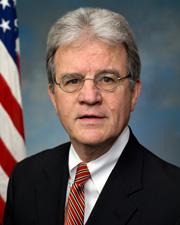 Sen. Tom Coburn (R-OK)
Legislative Activity
Stay on top of the latest movement without scrolling through every action
Roll call votes on amendments in Senate: Motion to table amendment SA 679 agreed to in Senate by Yea-Nay Vote. 65 - 33. Record Vote Number: 102.(consideration: CR S3349-3350)
March 18, 2009
View full timeline
Roll call votes on amendments in Senate: Motion to table amendment SA 679 agreed to in Senate by Yea-Nay Vote. 65 - 33. Record Vote Number: 102.(consideration: CR S3349-3350)
March 18, 2009
Considered by Senate. (consideration: CR S3338-3339, S3349-3350)
March 18, 2009
Motion to table amendment SA 679 agreed to in Senate by Yea-Nay Vote. 65 - 33. Record Vote Number: 102. (consideration: CR S3349-3350)
March 18, 2009
Senate amendment submitted
March 17, 2009
Senate amendment proposed (on the floor): Amendment SA 679 proposed by Senator Coburn to Amendment SA 684.(consideration: CR S3152-3154; text: CR S3152)
March 17, 2009
Amendment SA 679 proposed by Senator Coburn to Amendment SA 684. (consideration: CR S3152-3154; text: CR S3152) To provide for the future energy needs of the United States and eliminate restrictions on the development of renewable energy.
March 17, 2009
Votes
1 roll call on this amendment
Text
Proposed
REVOLUTIONARY WAR AND WAR OF 1812 BATTLEFIELD PROTECTION ACT--Continued

Mr. REID. Mr. President, I now ask unanimous consent that Senator
Brown be recognized for 5 minutes--
Mr. THUNE. Mr. President, if the leader would yield, I think the
Senator

[[Page S3150]]

from Oklahoma will lay down his amendments, which would take up to a
half an hour, 40 minutes. Whenever he concludes, I ask that I proceed.
Mr. REID. Mr. President, I ask unanimous consent that the Senator
from Ohio, Mr. Brown, be recognized for up to 5 minutes; that Senator
Coburn be recognized to lay down whatever amendments he chooses, and
speak up to one-half hour; that following that time Senator Thune then
be recognized.
The PRESIDING OFFICER. Without objection, it is so ordered.
The Senator from Ohio.
Mr. BROWN. Mr. President, I ask unanimous consent to speak as in
morning business.
The PRESIDING OFFICER. Without objection, it is so ordered.

AIG

Mr. BROWN. Mr. President, the unemployment rate in my State of Ohio
is 8.8 percent. The poverty rate is 13.1 percent. Lines at food
pantries snake around buildings and down the street. In AIG, executives
are receiving $1 million bonuses. Failed executives, executives who
have made a mess of their company, are receiving $1 million bonuses.
When the house of cards AIG built eventually collapsed, the Bush
administration, then the Obama administration, provided financial
support. They had no choice; doing nothing in the face of AIG's
collapse could turn a national economic downturn into a full-blown,
decades-long economic collapse. But what do you tell a Cincinnatian who
has lost her job or a Clevelander who has lost their home or someone in
Mansfield, OH, who is standing in line at a food pantry when they hear
that AIG executives are earning millions in bonuses as they suck up
taxpayer dollars, tens and tens and tens of billions of taxpayer
dollars like a vacuum?
I am going to tell them we are not only going after those bonuses, we
are going after the corporate-centric, consequences-free culture that
fueled those million-dollar bonuses. Many of my conservative colleagues
don't believe in regulation. I would like one of them to stand with a
straight face and tell the American public that overregulation is the
reason AIG accepted taxpayer-funded Government aid and then gave
million-dollar bonuses to its employees.
How did AIG dig itself into this hole? How did the Bush
administration, which simply didn't do the regulation they should have
done, let it happen? In the short-term, either AIG CEO Edward Liddy,
installed by the Bush administration months ago, needs to renegotiate
these bonus contracts to get taxpayer money back or the employees need
to give up their bonuses voluntarily or Congress and the administration
need to act to get these dollars back. That means we impose a one-time
tax on these employees on so-called retention bonuses. If we impose a
one-time tax on these employees that approximates their net bonuses, so
be it.
Usually after a statement that begins ``in the short-term,'' there
follows a statement that begins ``in the long-term.'' Not this time. In
the short-term, we need to return these bonuses to taxpayers, and in
the short-term we need to change the rules of the road so no company,
no matter how big, such as AIG, which accepts TARP funds, can fritter
away those dollars on huge pay packages and lavish bonuses, as the
Senator from North Dakota pointed out, while passing through those tax
dollars and making whole companies such as Goldman Sachs of New York,
Barclays in London, Societe Generale in Paris, Deutsche Bank in
Germany, American taxpayer dollars passing through AIG executives'
hands going directly to those foreign and domestic banks making them
whole, when they made bad decisions just like AIG made bad decisions.
In the short term, not the long term, maybe most importantly of all, we
need to rewrite Federal regulations to prevent the arrogance and
recklessness and the greed and self-aggrandizement from turning
financial institutions into a weight around America's neck and
pickpockets robbing the American people. It is what we have to do.
I yield the floor and suggest the absence of a quorum.
The PRESIDING OFFICER. The clerk will call the roll.
The bill clerk proceeded to call the roll.
Mr. COBURN. I ask unanimous consent that the order for the quorum
call be rescinded.
The PRESIDING OFFICER. Without objection, it is so ordered.
Mr. COBURN. I ask unanimous consent that instead of going in the
order that the unanimous consent had requested, Senator Vitter from
Louisiana be recognized for 5 minutes, then followed by myself, and
then followed by Senator Thune.
The PRESIDING OFFICER. Without objection, it is so ordered.
The Senator from Louisiana.

Automatic Pay Raises

Mr. VITTER. Mr. President, I rise to applaud the action the Senate
took by unanimous consent, passing my language to get rid of the
automatic pay raises for Members of Congress through the Senate. I
thank Senator Reid for joining in this effort after my amendment was
made in order on the Omnibus appropriations bill. I thank everyone who
cooperated in passing this by unanimous consent. I was happy to give
that consent for my part since my vote on an amendment on another bill
was no longer at stake, so it wouldn't drain votes away from my
amendment. We did come together to do that, and we did pass this
through the Senate. Obviously, this is a bicameral legislature so the
story is not over. I encourage everyone to come together and
encourage--no, do more than encourage--pressure the House of
Representatives to do the right thing and pass this reform. The last
week has proven what can be changed when we come together and listen to
the voice of the people.
A week ago this wasn't on radar. This was not a possibility. Today it
has passed the Senate. How did that happen? It happened because we
brought up the issue. We came together. I joined with Senator Feingold,
who has been an advocate of this issue for some time. We had an open
debate. The people's voices from around the country were heard, and we
reacted to that in a positive way. I say that because it proves what
can happen in the House. The House leadership has made clear they don't
want to bring up this matter. They certainly don't want to pass this
bill into law. But we can change that, even more than that, the
American people can change that and call their House Members and demand
that the leadership have a fair vote and pass this into law.
I thank Senator Reid for changing his language from last week and
adopting mine so there would be no further automatic pay raises in the
near future, if this bill is adopted. Under his standalone bill filed
last week, there would have been at least one more autopilot automatic
pay raise to go into effect. Under my original language, which he
adopted in this latest version which just passed through the Senate by
unanimous consent, that is not the case. It would change the autopilot
automatic pay raise system immediately. That was an important and
necessary correction on his part. I thank him for making that
correction.
We are on a bipartisan roll. Let's keep it up. Let's bring that
spirit, that public debate, let's bring that public pressure to the
House of Representatives. When the people are involved and when their
voice is heard, it is amazing what can change around here and what can
get done.
I yield the floor.
The PRESIDING OFFICER. The Senator from Oklahoma.

Amendment No. 680 To Amendment No. 684

Mr. COBURN. Mr. President, I will spend some time tonight offering
two amendments to the bill under consideration.
I begin by asking: Why is it in the midst of all the problems that
face the country, the Senate is going to spend time on an omnibus lands
package? It is no emergency. There is no crisis. There is nothing
critical about it. Instead of working on the problems that are in front
of this country, we will spend the next 2\1/2\ days or next 1\1/2\ days
on a 1,243-page bill that has 170 separate bills in it that, in fact,
for the average American doesn't come anywhere close to being a
priority. One has to ask that question. Why are we doing this? We don't
have anything better to do. We don't have anything more important to
do. If that is the case, we probably should go on until we do have
something that can make a significant change in the country.

[[Page S3151]]

I call up amendment No. 680.
The PRESIDING OFFICER. The clerk will report.
The legislative clerk read as follows:

The Senator from Oklahoma [Mr. Coburn] proposes an
amendment numbered 680.

Mr. COBURN. I ask unanimous consent that reading of the amendment be
dispensed with.
The PRESIDING OFFICER. Without objection, it is so ordered.
The amendment is as follows:

(Purpose: To ensure that the general public has full access to our
national parks and to promote the health and safety of all visitors and
employees of the National Park Service)

At the appropriate place, insert the following:

SEC. __. LIMITATIONS ON NEW CONSTRUCTION.

(a) In General.--Except as provided in subsection (b), the
Secretary of the Interior (acting through the Director of the
National Park Service) (referred to in this section as the
``Secretary'') shall not begin any new construction in units
of the National Park System until the Secretary determines
that all existing sites, structures, trails, and
transportation infrastructure of the National Park Service
are--
(1) fully operational;
(2) fully accessible to the public; and
(3) pose no health or safety risk to the general public or
employees of the National Park Service.
(b) Exclusions.--Subsection (a) shall not affect--
(1) the replacement of existing structures in cases in
which rehabilitation costs exceed new construction costs; or
(2) any new construction that the Secretary determines to
be necessary for public safety.

Mr. COBURN. I spent about an hour this afternoon talking about the
problems of the National Park Service. They are severe. I introduced
into the record the GAO report on the problems at the Department of
Interior, as well as the testimony of the acting inspector general,
Mary Kendall, about the significant problems that parks are
experiencing. Our parks are falling down. The maintenance backlog,
according to the Park Service, is $8.9 billion. But according to the
testimony of the GAO, it is somewhere between $13 and $19 billion.
This is a very straightforward amendment. What it says is, before we
start anything new and new parks, we are going to bring up-to-date what
should be brought up-to-date in the parks we have today. That is
important because they need to be fully operational. They need to be
fully accessible to the public which many are not now because of
maintenance backlogs. They need to pose no safety or health risk for
both the employees of the parks and the Department of Interior as well
as the American citizen, some 270 million who visit them every year.
This is a very straightforward amendment. It says we are going to do
something we don't often do. We are going to prioritize how we spend
money in the parks. What we are saying is, we are not going to do any
new construction in terms of units of the national park system until
the Secretary--and this is left to the Secretary, not us--determines
that the existing sites, the structures, trails and transportation
infrastructure of the National Park Service are fully operational,
fully accessible to the public, and pose no health or safety risk to
either the public or park employees.
We have thought about other things. We want to make sure there is an
exclusion in there. If something is going to cost more to repair than
to build something new, we say build something new. The other thing,
anything that the Secretary deems is important for public safety that
is new, we let them do that as well. All this is saying is with this
$10 billion of new authorizations and $900 million of mandatory
spending accompanying this bill, the first thing we ought to do is take
care of what we have before we start off on another project.
The crown jewels of our national parks are fading. They are fading
because we won't take care of them. The backlog since the last time we
considered this bill has grown by $400 million. That is just what we
know since the last time we considered this bill. The other thing we
know from the GAO report is there is a marked risk to both employees
and the public in many areas of our national parks. The other thing we
know is many of our best parks, the Grand Canyon, for example, a large
number of the trails are in such disrepair that they are closed. The
people can't access them because we haven't said put the money where it
needs to go to make sure we keep the things we have today operational
and pristine. So it is straightforward.
What we also know is that the agency needs some help in terms of
priorities. In spite of what we have had, oftentimes we are sending
them messages to do something else that is not within these priorities.
All we are saying is, we have these wonderful assets. Before we go
create new assets and new things to enjoy, let's take care of the ones
we have. We would not build a new addition onto our own homes when the
whole rest of the home is collapsing from lack of maintenance. The
first thing we would do is take care of the home, the maintenance of
the home.
The bill in front of us actually has the potential to make the
situation in our parks worse. It is because we are going to mandate
certain things in the bill that will take away from true priorities of
maintaining our existing structures.
A recent memo prepared by the Facility Management Division of the
National Park Service reveals at least 10 States where the National
Park Service backlog exceeds $100 million. At least 20 States have
facilities with deferred maintenance exceeding $50 million. That
excludes $4 billion that is sitting there for roads and bridges in our
national parks. This is in spite of the historically high
appropriations levels we have sent to the parks.
I listed earlier--and I will not list again--all the things the
National Park Service is responsible for. But it is a litany that, when
you look at it, is almost incomprehensible that one agency can take
care of everything we have asked them to take care of.
The USS Arizona now faces a maintenance backlog of $33.4 million; the
Gettysburg National Battlefield site, $29.4 million; the Statue of
Liberty Park has a backlog of $196 million. Are we going to let it fall
apart while we create something new or should we take care of what we
have first?
What we do know from both the inspector general's report and the GAO
is the Park Service is denying access in an increasing number of areas
because of the growing maintenance backlog.
Representative Rob Bishop is from Utah. The Dinosaur National
Monument is largely inaccessible due to its overwhelming backlog. The
center is designed so a kid can go in there and see, within the
mountainside, the fossils that are there and see what scientists say
about those fossils and then be able to put all that together in their
mind. Unfortunately, no one has been able to access this building for
10 years--for 10 years--because we do not have enough money to fix the
building and it has been condemned.
So here is an area where there is great educational value, great
historical value and for 10 years the building has been condemned and
we have not put the money there. This amendment is meant to fix what is
wrong now before we spend money on new things.
According to the inspector general of the Department of Interior,
financial management has remained a top challenge for the Department,
and their work--this is the inspector general--has documented decades
of maintenance, health, and safety issues that place Interior
Department employees at a health and safety risk, as well as the
public.
A report by the Coalition of National Park Service Retirees found
widespread evidence of major problems that will be evident, including
decreased safety for visitors, longer emergency response times,
endangerment of protected resources, and dirtier and less well-
maintained parks. The problem will only grow worse in the coming years
if we pass this bill and do not prioritize the maintenance backlog.
It is noted that at the Grand Canyon, the cross-canyon water line is
deteriorating so badly that it had 30 leaks this year and is in danger
of failing entirely. Yet we did not spend any money on that in this
bill. We did not authorize them to fix it. We are not about taking
care; we are about solving our own political situation.
At Yellowstone, 10,000 gallons of raw sewage this past year leaked
from a broken pipe and flowed into a trout-spawning stream in
Yellowstone National Park. It is the absence of maintenance. We know
the life expectancy of many of these infrastructures, and

[[Page S3152]]

yet we have not done anything about it.
Carlsbad Caverns--a great experience. Sewer lines were actually
leaking into the caves because of deferred maintenance. Superintendent
Benjamin said: Believe me, if there's sewage dripping down into the
cavern, people are not going to believe we are doing a good job.
No kidding. Well, that starts with us.
The National Park System has grown to almost 400 units, 84 million
acres, and a $9.6 billion maintenance backlog. That is according to the
Park Service. It is much higher if you look at the GAO's numbers.
We appropriated $540 million for new land acquisition from 2001 to
2008. We have increased the number of National Heritage Areas since
2000 from 18 to 40. We added 10 more in January of this year. In the
110th Congress, 35 bills were introduced to expand the National Wild
and Scenic Rivers.
The National Park Service already manages over 3,000 miles of scenic
rivers. This bill includes 1,200 miles. But yet the maintenance
dollars, the dollars put there to take care of what we have, are not
there.
In April of 2008, the Congress passed and the President signed the
Consolidated Natural Resources Act. That was another big lands bill
that impacted land and property rights in over 30 States. It authorized
$380 million in new spending and not one way of paying for it and none
of it for maintenance backlogs.
What we also know is this agency, the Department of Interior, is
unable to prioritize the maintenance of existing obligations over new
commitments. They get mixed signals. We say: Go do this new one. And
then we send appropriations dollars and say: You have to spend it on
this rather than taking care of a rotting sewage line.
Until we in Congress and the administration prioritize the
maintenance of our existing national parks, these problems are going to
grow. There is no excuse for it.

Amendment No. 679 to Amendment No. 684

So I would put forward this is a simple amendment. It does not cost
us anything. It actually saves us money because to repair something
that is falling down--before it gets to that stage--is much cheaper
than waiting until it is a catastrophe. Consequently, if we were to
plan appropriately, and if we were to direct the funds appropriately,
we would be repairing that which we need to repair so we do not spend
extra dollars once they have failed.
My hope is we will get positive consideration of this amendment. This
is a commonsense amendment. People at home would do the same thing.
They take care of what they have before they go and add something else
that is going to take away money that is required to maintain what they
have.
I would say, again, individuals do not build additions to their homes
when the roof and the foundation is caving in and neither should the
Park Service and neither should Congress.
Mr. President, I ask unanimous consent that the pending amendment be
set aside and that amendment No. 679 be called up.
The PRESIDING OFFICER. Without objection, it is so ordered.
The clerk will report.
The legislative clerk read as follows:

The Senator from Oklahoma [Mr. Coburn] proposes an
amendment numbered 679 to amendment No. 684.

Mr. COBURN. Mr. President, I ask unanimous consent that reading of
the amendment be dispensed with.
The PRESIDING OFFICER. Without objection, it is so ordered.
The amendment is as follows:

(Purpose: to provide for the future energy needs of the United States
and eliminate restrictions on the development of renewable energy)

At the appropriate place, insert the following:

SEC.   . DEVELOPMENT OF RENEWABLE ENERGY ON PUBLIC LAND.

Notwithstanding any other provision of this Act, nothing in
this Act shall restrict the development of renewable energy
on public land, including geothermal, solar, and wind energy
and related transmission infrastructure.

Mr. COBURN. Mr. President, I suggest the absence of a quorum.
The PRESIDING OFFICER. The clerk will call the roll.
The legislative clerk proceeded to call the roll.
Mr. COBURN. Mr. President, I ask unanimous consent that the order for
the quorum call be rescinded.
The PRESIDING OFFICER. Without objection, it is so ordered.
Mr. COBURN. Mr. President, I wish to read this amendment because it
is very short and very straightforward:

At the appropriate place, insert the following:
Notwithstanding any other provision of this Act, nothing in
this Act shall restrict the development of renewable energy--

``Renewable energy''--

on public land, including geothermal, solar, and wind energy
and related transmission infrastructure.

Very straightforward. We had a great experience with the harsh
reality that we are energy dependent this past summer. It is going to
come back again. Unfortunately or fortunately--depending on how you
look at it--in the West, where the Government owns 1 out of every 2
acres, the vast majority of geothermal land resides.
What you will see--as indicated on this map--through this area,
through southern California, along the coast of California, and Oregon,
Idaho, Nevada, Colorado, New Mexico, some areas of Montana, Wyoming,
and Arizona, is where the vast resources of a clean renewable energy
exists: geothermal.
The only problem is, in this bill we gut a large portion of that and
say we can never touch it. Well, why would we, if we believe in climate
change--and I am a skeptic, but I will take that point for a moment.
Let's say we believe in climate change and we want to have energy
produced that does not increase the CO<inf>2</inf> content of the
atmosphere. Why would we pass a bill that takes and restricts a large
portion of this area from geothermal?
We know in Nevada and Arizona, for example, solar is a massive source
for clean energy. Yet in this bill, in both the wilderness areas and
the heritage areas and all these other areas, we are going to restrict
not only the utilization of geothermal and wind and solar but also the
ability to capture it and move it somewhere else.
Well, if we take all this area for geothermal, and if you concentrate
Nevada and Arizona in terms of the solar and then you look at the wind
corridor that comes up through here, as shown on this map, and say you
cannot send a transmission line anywhere across any of these
properties, what we are doing is shooting ourselves in the foot. We do
not want carbon-based energy. And now, where the Government owns 650
million acres, we do not want wind, solar or geothermal. Why would we
do that?
I guess we are going to go all nuclear. We do not see any nuclear
coming from the President. We do not see any nuclear coming from
anywhere else. So what are we going to have? We are going to have no
energy.
So we are going to limit hydrocarbon energy, and then we are going to
take our greatest sources for wind, solar and geothermal and we are
going to say: Sorry, that is off limits. You cannot use it here. You
cannot extract it.
Geothermal is so powerful because it is a direct conversion. We
capture steam and we capture a temperature gradient that turns a
turbine that puts off nothing but water vapor--no CO<inf>2</inf>, no
nitrous oxide, no sulfur dioxide. It is free energy. Yet in this bill
we are going to take 2.2 million acres out of these areas and say: You
cannot touch it for renewable energy. Why would we do that? So all this
amendment says is you can do whatever you want on all these areas, as
what we have done in the bill, but you cannot exclude it from renewable
energy.
I am reminded, everybody wants renewable energy, but they just do not
want it in their own backyard. Everybody wants us to have wind. We love
wind. We have turbines like crazy in Oklahoma, like they do in North
Dakota and South Dakota and several other States. We are happy to have
it. But if you applied the same thing to Oklahoma, in terms of
wilderness areas, we would not have any of the windmills that are
generating a significant portion of our alternative renewable energy
today in Oklahoma. More importantly, you would not be able to transport
the energy you are creating that is renewable, that does not create
CO<inf>2</inf>, that does not supposedly contribute to ``climate
change.''
We are going to pass a bill that is going to significantly restrict
that.

[[Page S3153]]

What are we thinking? Why would we limit alternative renewable energy
access in all these Federal lands, this extra 2.2 million to 3 million
acres? Why would we do that? It is almost like we have a death wish.
Either that or we are not thinking, we are not considering what we are
going to need in the future. We are considering the short term, but we
are not considering the long term.
So this map shows us specifically where geothermal is available. If
you look down in southern California, we have heritage areas. Knock it
out. If you look in Oregon, Idaho, Montana, Colorado, Arizona, New
Mexico, we have heritage areas. We knock it out, saying: You can never
utilize this land to capture clean alternative renewable energy. That
is ludicrous.
So all this amendment does is say: Yes, you can. We are going to do
everything else under the heritage areas, under the wilderness areas,
under all the other restrictions we put in this bill, but we are going
to capture renewable, clean energy for the American people. We should
do nothing, given the fact that we are in trouble on energy and we
don't even know it right now.

What we know is the supply-demand glide is going like this and we are
in a recession now, and we don't feel it, but as we lock in and cut
exploration for natural gas in this country, we will see a twofold
increase in natural gas within the next 18 months. We know that because
we have built reserves every year until this year in natural gas. We
know we consume 4.6 trillion cubic feet of natural gas every year in
this country. As they shut down the exploration for known areas of
natural gas because the price is under $4, what we know is the demand
is not going to decrease significantly over what it is because we have
gone to alternative sources for power generation--a lot of it natural
gas--that the demand is going to increase and the supply is going to
become static.
What is going to happen? The price of natural gas is going to go up.
What is that going to do to utility bills? Before we do a monstrous
cap-and-trade that is going to severely raise everybody's electrical
rates in this country, we are going to limit an alternative supply for
electricity with this bill, because we are going to limit the access to
geothermal, we are going to limit the access to wind, and we are going
to limit the access to solar, and solar thermal electricity generation.
I have trouble figuring it out. It must be my commonness being from
Oklahoma, but I can't figure out why we would--I know we are going to
cut one leg off in terms of going green over the next 20 years. I can't
figure out why we are cutting off the other leg. I am wondering what we
are going to use for power in this country. If we are going to severely
limit alternative renewable, nonpolluting energy that is clean and we
are going to massively limit--as the Department of Interior is
already--exploration for hydrocarbon-based fuels, and we are going to
limit the significance of coal, of which we have over 300 years
available to us, what are we going to use for energy? We are also going
to slow down the permitting process and the loans for nuclear, so what
are we going to use? What is going to keep the lights on?
This amendment is about keeping the lights on in a way that nobody
should be able to object to. It is not carbon based. It is a renewable,
it is essentially almost free, it is something we can capture without
any significant greenhouse effect. Yet we are going to limit it with
this bill. I think it is significantly foolish on our part.
What we know is that this 140 million acres we see here, if we add in
what is already in wilderness areas, what is already off limits in
terms of national forests and Federal lands, you add in--and this does
not include except a small portion of Alaska--we are going to markedly
limit our resources. Ninety percent of all the geothermal capability in
this country--a clean source for renewable energy--is found on Federal
lands. As we grow the limitations on Federal lands, what we are going
to do is take that 90 percent and we are going to take anywhere from 50
to 70 percent of that and say you can't have it. There are 29 million
acres with solar potential in six southwestern States--these six
States. If you can't transmit the power through power lines, if you
can't disturb the soil to build, whether you put it above ground or
underground, if you can't cross a river with a power line either
overhead or under the river, how are we going to transmit the power?
What we are saying is we believe in renewable, clean energy, but we
don't.
The other point I wish to make is we now have in this country in
wilderness areas alone 108 million acres. Do you know how many acres we
have in developed land in this country? It is 106 million. Not counting
the Federal lands outside of wilderness, which is 650 million acres, we
have 108 million acres of wilderness and only 106 million acres of
developed land. Where do we stop to the point where we don't steal away
from the future potential energy production in this country? I am not
talking carbon based; I am talking noncarbon based. How do we get the
power from geothermal from these concentrated areas to the west coast
and back to the upper Midwest if we can't cross any of these areas? And
then, what is the cost and what is the line loss load when we have to
do something such as this and then go underground and then come back
up? It becomes prohibitive, and then we lose all advantage from
renewable energy.
The other area we know where we have tremendous potential in all of
these areas and others is biomass. We have a tremendous source.
Approximately one-third of the 747 million acres across the United
States is covered in forest land. Fifty-seven percent of those forests
are owned by the Federal Government. Also, 590 million wet tons of
biomass are available in the U.S. annually--590 million tons. Sixteen
percent of renewable energy generated right now from electricity comes
from biomass and 3 percent of our total energy in the year 2000. I
don't have the dates for where we are today.
Here is what the U.S. Forest Service says: ``The technology to
generate energy from wood has entered a new millennium with virtually
limitless possibilities.''
Yet, even if we generate it, we can't transmit it under this bill, or
the difficulty of costs for transmitting it will be prohibitive.
Each of the designations in this bill--somebody challenge me on
this--each of the designations in this bill specifically withdraw the
land from future mineral and geothermal leasing. That includes the
wilderness areas, the wilderness study areas, and the wild and scenic
rivers. They are withdrawn. They can't be used. Right now, there are
708 federally imposed wilderness areas totaling 107 million acres of
land in 44 States. That will go to 1.92 million acres with the passage
of this bill. It is a small portion of the 2 billion acres in this
country, but it still denies the fact that we have more land now in
wilderness than we have developed. The prohibition from capturing clean
energy, renewable energy, and nonpolluting energy is unfortunate.
One of the things that is wrong with this bill also is that we are
viewing tomorrow's energy potential on all of these lands with today's
technology. Just like when you go back and look at the old BLM studies
and the Department of the Interior studies on the land, if you use old
technology, you can say there is no energy there. When you use new 3D
seismic and electromagnetic seismology, what we see is a whole great
potential for all other sources, including geothermal.
The other concern I have with this bill, and the reason I have this
amendment, is we recently had a Federal judge in Washington, DC issue a
restraining order to halt the development of major oil and natural gas
reserves on 100,000 acres of Federal land in portions of Utah, not
because it was in a wilderness area, not because it was in a heritage
area, not because it was along a scenic river, but because it was near
there. So we are going to abrogate to the courts and the aggressive
environmentalists the ability to stop even clean renewable energy
sources by the wilderness area designations.

Secretary of the Interior Ken Salazar, a former colleague of ours,
recently ordered a secretarial order calling for the production, the
development, and delivery of renewable energy; that it would be a top
priority of the Department of the Interior, but this bill restricts
that order. So here we have the Department of Interior Secretary saying
this is our priority

[[Page S3154]]

and we are going to pass a bill that undermines that authority and that
priority.
Secretary Salazar claims that this effort will include the
identification of areas of high potential renewable energy, including
geothermal, wind, solar, and biomass. It also includes mapping out
transmission infrastructure to connect power to consumers.
Well, as we create all of these wilderness areas and heritage areas,
guess what we are doing. We are limiting the ability to map out power
transmission lines. In total, the lands bill will withdraw over 3
million acres from energy leasing, placing them outside the scope of
Secretary Salazar's endeavors.
Majority Leader Harry Reid summed up the difficulties imposed by
these designations when he discussed energy resources in Nevada. He
said:

We know that our State has immense clean energy resources.
However, the Federal Government's management of 86 percent of
Nevada lands makes it challenging to explore and develop our
enormous renewable resources.

The only area in this bill that does not affect geothermal is in the
State of Nevada. It is the only area.
If we are serious about alternative energy, this amendment should be
accepted, should be voted for, allowing us to have a wilderness area,
but at the same time utilizing clean energy as a way to bring us to
energy independence in the 21st century. So this is a very simple
amendment. It says, OK, let's have what we have, but let's don't
restrict it as far as renewable, clean energy. Let's use the renewable,
clean energy that is available. This happens to be geothermal, but we
know where the solar is, we know where the biomass is, and we know
where the wind corridor is in this country. Why would we restrict it?

Amendment No. 675 to Amendment No. 684

(Purpose: To prohibit the use of eminent domain and to ensure that no
American has their property forcibly taken from them by authorities
granted under this Act)

Mr. President, I ask unanimous consent to set aside the pending
amendment and call up amendment No. 675.
The PRESIDING OFFICER. Without objection, it is so ordered.
The clerk will report.
The legislative clerk read as follows:

The Senator from Oklahoma [Mr. Coburn] proposes an
amendment numbered 675:

(Purpose: To prohibit the use of eminent domain and to ensure that no
American has their property forcibly taken from them by authorities
granted under this Act)

At the appropriate place, insert the following:

SEC. __. EMINENT DOMAIN.

Notwithstanding any other provision of this Act (or an
amendment made by this Act), no land or interest in land
(other than access easements) shall be acquired under this
Act by eminent domain.

Mr. COBURN. Mr. President, that is a straightforward amendment. The
authors of this bill said we are never going to use eminent domain for
any of this, even though they reference two or three statutes that give
eminent domain. Well, if that is the case, if we are never going to use
eminent domain to accomplish the purposes of this, there should be no
trouble accepting this amendment. This amendment just says we can't. On
this bill, you can't use eminent domain to take the property away from
somebody who doesn't wish to give their property.
Amendment 5 of the U.S. Constitution says:

No person shall be deprived of life, liberty, or property
without due process of law, nor shall private property be
taken without just compensation.

That is the Constitution. But the father of the Constitution said it
a different way. He said, in a word:

As a man is said to have a right to his property, he may be
equally said to have a property in his right.

Eminent domain is necessary and appropriate at times in this country
for national defense, for the health and well-being of the country, for
priorities that protect the public at large, and that makes sense.
There are times when we have to use it. There is not a time associated
with any of the parts of this bill that we should have to use eminent
domain.
I have been assured by the authors of this bill that they have no
intention of using eminent domain. If that is the case, then support
this amendment, and we will never have a problem with it. The property
rights folks in this country, of which about 100 support this
amendment, would say that is great, so let's vote it up or down.
But if we vote against it, what is it going to tell them? What it is
going to do is erode the confidence of landowners in this country. We
say we are not going to take your land away from you without your
permission, without there being a willing seller, but we have kind of a
king's edge. We have our fingers crossed behind our backs because there
may be some time when a bureaucrat has made a decision other than what
we are saying tonight.
So the way to enforce that would be a straightforward message that
says, according to this amendment, ``notwithstanding any other
provisions of this act, or any amendment that is made to this act, no
land or interest in land, other than an access easement, shall be
required under this act by eminent domain.''
That is straightforward. Let's give them confidence that we are not
going to take their land away against their will.
Mr. President, I yield the floor and suggest the absence of a quorum.
The PRESIDING OFFICER. The clerk will call the roll.
The legislative clerk proceeded to call the roll.
Mr. THUNE. Mr. President, I ask unanimous consent that the order for
the quorum call be rescinded.
The PRESIDING OFFICER. Without objection, it is so ordered.
Mr. THUNE. Mr. President, I ask unanimous consent that I be allowed
to speak for up to 12 minutes.
The PRESIDING OFFICER. Without objection, it is so ordered.

Fiscal Year 2010 Budget

Mr. THUNE. Mr. President, the Senate will in a couple of weeks take
up the fiscal year 2010 budget. It is a defining document. In many
cases, the budget establishes a blueprint for the agenda, what is going
to happen in the Congress.
We normally get a budget proposal from the President, and the
Congress takes it up and acts on it. We have gotten that blueprint from
the new administration. The Congress will, as I said, in a couple of
weeks take up our version of that budget, put it into legislative form,
and take action on it.
I think what most Republicans in the Senate are going to take issue
with in this budget is the fact that it does spend too much, tax too
much, and borrow too much. We believe the budget as proposed is going
to be very harmful to the economy at a time when we ought to be looking
at creating jobs. In fact, this budget could do the exact opposite. It
could cost the economy a significant number of jobs because it is going
to impose all kinds of new burdens on that economy.
The first point I would like to make with respect to the issue of
spending too much--as I said, it spends too much, taxes too much,
borrows too much, but if we look at the amount of spending in the bill
on the surface, discretionary spending would increase by $725 billion
over 10 years. Mandatory spending would increase $1.2 trillion during
the same period.
Total spending in this year's budget for fiscal year 2010 is $3.9
trillion or 28 percent of our gross domestic product. That means we
would be spending more as a percentage of our gross domestic product
than at any time since World War II.
That is a stunning and staggering fact when you think about it. At a
time when a lot of Americans are being asked to tighten their belts in
a difficult economy, this budget grows the size of Government by 9
percent for nondefense programs in fiscal year 2010, for a total of 20
percent growth in these programs since the year 2008.
There has been a lot of talk about revising the history of the past 8
years. But this budget spends more than the Bush budget every single
year, and that is even after adjusting for inflation.
For those on the other side who have been critical of the
overspending on the Republican side--and I don't deny the Republicans
spent more than we should have when we were in control of this place,
but this budget is staggering in terms of the amount of spending it
includes--$3.9 trillion for fiscal year 2010, and, as I said, 28
percent of GDP, which would represent the highest level of share of GDP
at any time in this Nation since World War II.
With respect to the issue of taxes--and as I said, it spends too much
which, obviously, any person who looks

[[Page S3155]]

at this would agree with, but it also taxes too much. If you look at
the taxes in the proposal, there is on the surface a whole lot of new
revenue that is raised just by allowing previous tax policy to expire.
We are going to see tax rates increase on people at the higher income
levels.
The argument by the Democrats in the Senate has always been--and by
the President, for that matter--that 95 percent of the people in the
country are going to get tax cuts, and these new taxes on the economy
are not going to impact that many people.
We are going to take issue with that because if you look at the total
amount of new taxation--and when I say ``new,'' I am talking about net
new taxes because that is independent of the tax relief. What they call
the make work pay tax credit that is included in this bill does reduce
the tax burden on some Americans by a certain amount. But the overall
tax burden on the American economy is going to grow by $1.4 trillion.
Again, to put things in perspective, $1.4 trillion is equivalent to
the annual GDP of Spain. We are going to raise taxes by $1.4 trillion
in an economy that is in the middle of a recession.
Much has been made about the fact small businesses are going to be
saddled with new taxes under this budget. There have been statistics
thrown around. Make no mistake about it; if you are a small business
with more than 20 employees and you are organized as a subchapter S
corporation or an LLC and, therefore, the income you derive from that
business flows through to your individual income statement, you are
going to pay a higher level of taxes if you have a certain amount of
income coming in.
So any company that makes $200,000 or $250,000 a year adjusted gross
income because it flows through to the individual tax form, that
individual could be facing much higher taxes. In fact, what has been
determined through the analysis that has been done is that 60 to 80
percent of small businesses in this country will see their tax burdens
go up because of the taxes included in this budget--$1.4 trillion in
new taxes, which, as I said, is the equivalent of the annual GDP of
Spain in the middle of a recession.
The other point I would make to those who say this is not going to
impact average middle-income Americans is, if you look at the energy
tax in this bill, I don't know how you can get around the fact that is
going to hit everybody across the board.
The administration has said the revenue raised on the cap and trade--
we call it the energy tax component. It is going to be a tax on
utilities because the utilities are going to pass this on. It is not
going to be borne by the utilities. It will be passed on to consumers.
The administration has indicated $646 billion or $650 billion in
revenue will come in from this new cap-and-trade proposal or this new
energy tax proposal. I would argue that based upon additional analysis
that has been done, it will be significantly more revenue coming in
from that, which means it is going to cost the economy significantly
more as well.
I refer my colleagues to an MIT study that was done in 2007 where
they looked at a proposal, the Boxer-Sanders proposal--S. 309, I
believe it was--and made an assessment as to what that would cost the
economy. Bear in mind the President, while he was a Senator,
cosponsored that proposal, and his proposal for a cap-and-trade regime
is modeled very much after that legislation.
What MIT found when they modeled this was that it would cost the
average household in this country $3,128 in the year 2015 if this sort
of cap-and-trade proposal were implemented and put into law.
As I said before, that assumes a much higher level of taxation, a
much higher level of revenue coming in from this cap-and-trade proposal
than does the President's budget.
I would argue that the President's budget dramatically underestimates
the impact of the cap-and-trade proposal in terms of cost to the
economy and the additional taxes that will be passed on, and that this
represents a much more accurate review.
The Congressional Budget Office also has in their analysis concluded
that by the year 2020, this could cost somewhere between $50 billion
and $300 billion a year. The MIT study suggests it would cost more than
$300 billion a year. I think as more and more analysis is done and more
and more data is captured about this cap-and-trade proposal, we are
going to find it is extremely more expensive than what has been
anticipated and what has been assumed in the President's budget.
The energy tax piece of this is going to be passed on to everybody.
If you are a middle-income taxpayer, a lower income taxpayer, or a
small business, energy costs are going to go up. The argument has also
been made the make work pay tax credit would offset that. That is true
up to a point, but that is up to $400 for a single filer and $800 for a
couple filing jointly and phased out so that people in the middle-
income categories are still going to be faced with this significant
energy tax that is paraded by the new cap-and-trade policy that is
assumed in the President's budget. Not only does it directly raise
taxes--the $1.4 trillion that I mentioned earlier which equals the
annual GDP of Spain--the tax increase is going to be passed on to a lot
of small businesses in this country. But there is this cap-and-trade
tax, which is the secret job killer in this budget in terms of the
enormous burden and cost it will impose on our economy, on small
businesses, and on working families in this country.

As I said before, this budget spends too much, it taxes too much, and
the other point I will make is that it borrows too much. If we look at
the amount of borrowing that is entailed as a result of this budget and
what it does to our national debt over time, again, the numbers are
quite staggering.
This budget doubles--doubles, Mr. President--the public debt in 5
years and triples it in 10 years. The amount of borrowing that we are
passing on to future generations is going to double in 5 years and
triple in 10. Just to put this in perspective, this creates more debt.
The President's budget creates more debt than was accumulated under
every President in this country from George Washington through George
Bush. In other words, from the inception of our country, from our very
first President, George Washington, to George Bush, his Presidency
included--a lot of people have criticized the previous administration
for adding to the Federal debt. In fact, during the Bush
administration, it was about $2.9 trillion that was added to the
Federal debt. This is going to dwarf that by multitudes. It doubles the
publicly held debt in 5 years and triples it in 10 years and
accumulates more debt than was accumulated from the time of George
Washington through the Presidency of George Bush.
That is a stunning amount of borrowing. We are getting to where even
if the President's budget proposals and economic assumptions are
accurate--and I would take issue with those--where the total amount of
borrowing, the total amount of public debt is going to be about two-
thirds of our GDP, those are numbers we have not seen at any time in
this country since World War II.
There are incredible amounts of spending, incredible amounts of
taxation, incredible amounts of borrowing, and lots of policy changes
that we think are very bad for the country and very bad for our economy
at a time when we need to be putting policies in place that will create
jobs, stimulate the economy, and help expand it in a way that will make
this country more prosperous and stronger for the future.
In the debate that will ensue in the next several weeks--and it will
get underway in a couple of weeks--we are going to be making lots of
arguments, as both sides will--those who are in favor of the
President's budget proposal and those of us who are opposed to it--
about the substance of it. I hope when we focus on the substance of it,
the American people will tune in because they ultimately are the ones
who pay the costs.
For the taxpayers of this country who bear the burden and
responsibility of financing the many new initiatives that are paraded
in this, it does create a lot of new initiatives. It does away with
guaranteed student loan lending, a program that has been very
successful across this country and moves everything back into direct
lending of the Federal Government. It, as I said, creates an entirely
new energy program, a cap-and-trade program, which

[[Page S3156]]

is a tax. Let's call it what it is. It is going to impose an incredible
cost on our economy, not to be borne by corporate America; it will be
passed on to the American consumers. If the MIT study that was done a
year ago is right, there will be $3,128 per household in this country
to comply with the additional costs that will be imposed as a result of
this new cap-and-trade proposal included in the President's budget.
It assumes some $600 billion for health care reform. We have not seen
specifics and details about that, but we are concerned as well about
the direction in which that may be headed. There are lots of reasons to
be opposed to this budget. There are lots of things we could and should
be doing to get this economy growing again, but clearly, raising taxes,
spending more money here in Washington, DC, borrowing more from our
children and grandchildren is not the way to go about this.

I wish I could say I was presenting the worst-case scenario. The
numbers we are seeing here are probably optimistic. I think the
President's economic assumptions with respect to inflation,
unemployment, GDP growth, and all those sorts of things are overly
optimistic. I think they have dramatically understated, as I said, the
cost of the cap-and-trade proposal. They have understated savings that
will be achieved by reductions in our military spending as a result of
drawdowns in Iraq. I don't think that is going to be nearly what they
assume it is going to be. I think the actual deficits and debt that are
going to come as a result of this budget proposal that the President is
putting in front of us is going to be way beyond anything we are even
contemplating now.
I have to say, what we are contemplating now is way beyond anything
we have seen throughout our Nation's history. It is not fair to future
generations for us to be saddling them with this enormous amount of
debt. As I have pointed out before on the floor, we have had a
tradition in this country of one generation sacrificing for another;
one generation going without things so that future generations can have
a better life. We have turned that ethic completely on its head with
this budget by the amount of borrowing and spending that we are doing
and in the amount of taxing. We are taking from future generations and
asking them to sacrifice so we can have a better life today because we
have not been willing or able to live within our means.
It is high time that Congress started taking the steps necessary to
get this budget under control, to not buy into the spending spree.
Since we have been here--and it has been a little over 50 days in this
new Congress and the new administration--the level of spending is now
at $1.2 trillion--$24 billion a day or $1 billion an hour that we have
spent already--and that is before we even get to this fiscal year 2010
budget, which includes historic levels of spending, historic levels of
taxation, the largest tax increase in American history, and historic
levels of borrowing that asks future generations to make sacrifices
which are not fair to ask of them.
It is our responsibility to live within our means. We can do that. We
can put policies in place that will be additive in terms of creating
jobs and growing our economy and making our country stronger. Going
down this path is not going to do that. I hope as we debate this in the
next couple of weeks that it will become clear to the American people
who is standing up for the American taxpayer and what the costs are--
the actual costs--that we are asking not only them to bear but asking
their children and grandchildren to bear.
Mr. President, I yield the floor, and I suggest the absence of a
quorum.
The PRESIDING OFFICER. Without objection, it is so ordered. The clerk
will call the roll.
The legislative clerk proceeded to call the roll.
Mr. MERKLEY. Mr. President, I ask unanimous consent that the order
for the quorum call be rescinded.
The PRESIDING OFFICER (Mr. Udall of Colorado. Without objection, it
is so ordered.

____________________