To protect scientists and visitors to federal lands from unfair penalties for collecting insignificant rocks.
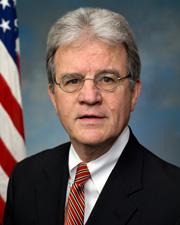 Sen. Tom Coburn (R-OK)
Legislative Activity
Stay on top of the latest movement without scrolling through every action
Senate amendment agreed to: Amendment SA 682 agreed to in Senate by Voice Vote.
March 19, 2009
View full timeline
Senate amendment agreed to: Amendment SA 682 agreed to in Senate by Voice Vote.
March 19, 2009
Considered by Senate. (consideration: CR S3385, S3388-3389)
March 19, 2009
Amendment SA 682 agreed to in Senate by Voice Vote.
March 19, 2009
Senate amendment proposed (on the floor): Amendment SA 682 proposed by Senator Coburn to Amendment SA 684.(consideration: CR S3340)
March 18, 2009
Amendment SA 682 proposed by Senator Coburn to Amendment SA 684. (consideration: CR S3340) To protect scientists and visitors to federal lands from unfair penalties for collecting insignificant rocks.
March 18, 2009
Senate amendment submitted
March 17, 2009
Text
Submitted
SA 682. Mr. COBURN submitted an amendment intended to be proposed by
him to the bill H.R. 146, to establish a battlefield acquisition grant
program for the acquisition and protection of nationally significant
battlefields and associated sites of the Revolutionary War and the War
of 1812, and for other purposes; which was ordered to lie on the table;
as follows:

Strike sections 6304 through 6308 and insert the following:

SEC. 6304. COLLECTION OF PALEONTOLOGICAL RESOURCES.

(a) Permit Requirement.--
(1) In general.--Except as provided in this subtitle, a
paleontological resource may not be collected from Federal
land without a permit issued under this subtitle by the
Secretary.
(2) Casual collecting exception.--The Secretary shall allow
casual collecting without a permit on Federal land controlled
or administered by the Bureau of Land Management, the Bureau
of Reclamation, and the Forest Service, where such collection
is consistent with the laws governing the management of those
Federal land and this subtitle.
(3) Previous permit exception.--Nothing in this section
shall affect a valid permit issued prior to the date of
enactment of this Act.
(b) Criteria for Issuance of a Permit.--The Secretary may
issue a permit for the collection of a paleontological
resource pursuant to an application if the Secretary
determines that--
(1) the applicant is qualified to carry out the permitted
activity;

[[Page S3190]]

(2) the permitted activity is undertaken for the purpose of
furthering paleontological knowledge or for public education;
(3) the permitted activity is consistent with any
management plan applicable to the Federal land concerned; and
(4) the proposed methods of collecting will not threaten
significant natural or cultural resources.
(c) Permit Specifications.--A permit for the collection of
a paleontological resource issued under this section shall
contain such terms and conditions as the Secretary deems
necessary to carry out the purposes of this subtitle. Every
permit shall include requirements that--
(1) the paleontological resource that is collected from
Federal land under the permit will remain the property of the
United States;
(2) the paleontological resource and copies of associated
records will be preserved for the public in an approved
repository, to be made available for scientific research and
public education; and
(3) specific locality data will not be released by the
permittee or repository without the written permission of the
Secretary.
(d) Modification, Suspension, and Revocation of Permits.--
(1) The Secretary may modify, suspend, or revoke a permit
issued under this section--
(A) for resource, safety, or other management
considerations; or
(B) when there is a violation of term or condition of a
permit issued pursuant to this section.
(2) The permit shall be revoked if any person working under
the authority of the permit is convicted under section 6306
or is assessed a civil penalty under section 6307.
(e) Area Closures.--In order to protect paleontological or
other resources or to provide for public safety, the
Secretary may restrict access to or close areas under the
Secretary's jurisdiction to the collection of paleontological
resources.

SEC. 6305. CURATION OF RESOURCES.

Any paleontological resource, and any data and records
associated with the resource, collected under a permit, shall
be deposited in an approved repository. The Secretary may
enter into agreements with non-Federal repositories regarding
the curation of these resources, data, and records.

SEC. 6306. PROHIBITED ACTS; CRIMINAL PENALTIES.

(a) In General.--A person may not--
(1) excavate, remove, damage, or otherwise alter or deface
or attempt to excavate, remove, damage, or otherwise alter or
deface any paleontological resources located on Federal land
unless such activity is conducted in accordance with this
subtitle;
(2) exchange, transport, export, receive, or offer to
exchange, transport, export, or receive any paleontological
resource if the person knew or should have known such
resource to have been excavated or removed from Federal land
in violation of any provisions, rule, regulation, law,
ordinance, or permit in effect under Federal law, including
this subtitle; or
(3) sell or purchase or offer to sell or purchase any
paleontological resource if the person knew or should have
known such resource to have been excavated, removed, sold,
purchased, exchanged, transported, or received from Federal
land.
(b) False Labeling Offenses.--A person may not make or
submit any false record, account, or label for, or any false
identification of, any paleontological resource excavated or
removed from Federal land.
(c) Penalties.--A person who knowingly violates or
counsels, procures, solicits, or employs another person to
violate subsection (a) or (b) shall, upon conviction, be
fined in accordance with title 18, United States Code, or
imprisoned not more than 5 years, or both; but if the sum of
the commercial and paleontological value of the
paleontological resources involved and the cost of
restoration and repair of such resources does not exceed
$500, such person shall be fined in accordance with title 18,
United States Code, or imprisoned not more than 2 years, or
both.
(d) Multiple Offenses.--In the case of a second or
subsequent violation by the same person, the amount of the
penalty assessed under subsection (c) may be doubled.
(e) General Exception.--Nothing in subsection (a) shall
apply to any person with respect to any paleontological
resource which was in the lawful possession of such person
prior to the date of enactment of this Act.

SEC. 6307. CIVIL PENALTIES.

(a) In General.--
(1) Hearing.--A person who violates any prohibition
contained in an applicable regulation or permit issued under
this subtitle may be assessed a penalty by the Secretary
after the person is given notice and opportunity for a
hearing with respect to the violation. Each violation shall
be considered a separate offense for purposes of this
section.
(2) Amount of penalty.--The amount of such penalty assessed
under paragraph (1) shall be determined under regulations
promulgated pursuant to this subtitle, taking into account
the following factors:
(A) The scientific or fair market value, whichever is
greater, of the paleontological resource involved, as
determined by the Secretary.
(B) The cost of response, restoration, and repair of the
resource and the paleontological site involved.
(C) Any other factors considered relevant by the Secretary
assessing the penalty.
(3) Multiple offenses.--In the case of a second or
subsequent violation by the same person, the amount of a
penalty assessed under paragraph (2) may be doubled.
(4) Limitation.--The amount of any penalty assessed under
this subsection for any 1 violation shall not exceed an
amount equal to double the cost of response, restoration, and
repair of resources and paleontological site damage plus
double the scientific or fair market value of resources
destroyed or not recovered.
(b) Petition for Judicial Review; Collection of Unpaid
Assessments.--
(1) Judicial review.--Any person against whom an order is
issued assessing a penalty under subsection (a) may file a
petition for judicial review of the order in the United
States District Court for the District of Columbia or in the
district in which the violation is alleged to have occurred
within the 30-day period beginning on the date the order
making the assessment was issued. Upon notice of such filing,
the Secretary shall promptly file such a certified copy of
the record on which the order was issued. The court shall
hear the action on the record made before the Secretary and
shall sustain the action if it is supported by substantial
evidence on the record considered as a whole.
(2) Failure to pay.--If any person fails to pay a penalty
under this section within 30 days--
(A) after the order making assessment has become final and
the person has not filed a petition for judicial review of
the order in accordance with paragraph (1); or
(B) after a court in an action brought in paragraph (1) has
entered a final judgment upholding the assessment of the
penalty, the Secretary may request the Attorney General to
institute a civil action in a district court of the United
States for any district in which the person if found,
resides, or transacts business, to collect the penalty (plus
interest at currently prevailing rates from the date of the
final order or the date of the final judgment, as the case
may be). The district court shall have jurisdiction to hear
and decide any such action. In such action, the validity,
amount, and appropriateness of such penalty shall not be
subject to review. Any person who fails to pay on a timely
basis the amount of an assessment of a civil penalty as
described in the first sentence of this paragraph shall be
required to pay, in addition to such amount and interest,
attorneys fees and costs for collection proceedings.
(c) Hearings.--Hearings held during proceedings instituted
under subsection (a) shall be conducted in accordance with
section 554 of title 5, United States Code.
(d) Use of Recovered Amounts.--Penalties collected under
this section shall be available to the Secretary and without
further appropriation may be used only as follows:
(1) To protect, restore, or repair the paleontological
resources and sites which were the subject of the action, and
to protect, monitor, and study the resources and sites.
(2) To provide educational materials to the public about
paleontological resources and sites.
(3) To provide for the payment of rewards as provided in
section 6308.

SEC. 6308. REWARDS AND FORFEITURE.

(a) Rewards.--The Secretary may pay from penalties
collected under section 6306 or 6307 or from appropriated
funds--
(1) consistent with amounts established in regulations by
the Secretary; or
(2) if no such regulation exists, an amount up to \1/2\ of
the penalties, to any person who furnishes information which
leads to the finding of a civil violation, or the conviction
of criminal violation, with respect to which the penalty was
paid. If several persons provided the information, the amount
shall be divided among the persons. No officer or employee of
the United States or of any State or local government who
furnishes information or renders service in the performance
of his official duties shall be eligible for payment under
this subsection.
(b) Forfeiture.--All paleontological resources with respect
to which a violation under section 6306 or 6307 occurred and
which are in the possession of any person, shall be subject
to civil forfeiture, or upon conviction, to criminal
forfeiture.
(c) Transfer of Seized Resources.--The Secretary may
transfer administration of seized paleontological resources
to Federal or non-Federal educational institutions to be used
for scientific or educational purposes.
______