S.Amdt. 728Senate111th Congress (2009-2011)2nd degree
Of a perfecting nature.
Sponsored by 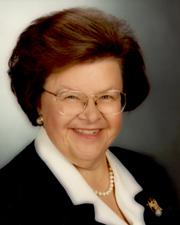 Sen. Barbara A. Mikulski (D-MD)
Submitted March 26, 2009
Legislative Activity
Stay on top of the latest movement without scrolling through every action
Floor
Latest Action
Senate amendment submitted
March 26, 2009
View full timeline
Floor
Senate amendment submitted
March 26, 2009
Floor
Senate amendment agreed to: Amendment SA 728 agreed to in Senate by Unanimous Consent.
March 26, 2009
Floor
Senate amendment proposed (on the floor): Amendment SA 728 proposed by Senator Mikulski to Amendment SA 687.(consideration: CR S3837; text: CR S3837)
March 26, 2009
Floor
Amendment SA 728 proposed by Senator Mikulski to Amendment SA 687. (consideration: CR S3837; text: CR S3837) Of a perfecting nature.
March 26, 2009
Floor
Amendment SA 728 agreed to in Senate by Unanimous Consent.
March 26, 2009
Text
Proposed
NATIONAL SERVICE REAUTHORIZATION ACT

The PRESIDING OFFICER. Under the previous order, the Senate will
resume consideration of H.R. 1388, which the clerk will report.
The legislative clerk read as follows:

A bill (H.R. 1388) to reauthorize and reform the national
service laws.

[[Page S3823]]

Pending:

Mikulski amendment No. 687, in the nature of a substitute.
Thune amendment No. 716 (to amendment No. 687), to express
the sense of the Senate regarding the Federal income tax
deduction for charitable giving.

The PRESIDING OFFICER. The Senator from Wyoming.
Mr. ENZI. Madam President, I rise in support of the Serve America
Act. I haven't been here for the debate. Wyoming has been under snow,
particularly the part of Wyoming I happened to be in. I thank the
people who made it possible for me to get back as soon as I have. It
has kept me from this very important legislation. I am grateful for the
leadership of Senator Hatch in the management of this bill and keeping
the process moving. He has played a tremendous role in the drafting of
this bill, and it is appropriate that he manage the bill and continue
to do so.
I also thank Senator Mikulski for defending the bipartisan process. I
know it has not been easy. I am sorry I missed my friend Senator
Kennedy's appearance on Tuesday evening. I look forward to his quick
return to the day-to-day business of the Senate.
Let me turn to the issue of the national service reauthorization
before us. My mother always told me service to others is the rent we
pay for the space we take up. This bill will help millions of Americans
fulfill that rent payment. After 16 years, we finally have the
opportunity to take a hard look at the law surrounding national service
and making necessary changes to improve accountability, reduce
bureaucracy, and ensure we get the maximum return on the investment we
are making.
Although the process we took to reach this point was rushed, it was
bipartisan throughout. It is not a perfect agreement, but it includes
key Republican concepts such as eliminating waste, and it addresses
serious concerns about the management and operations of the AmeriCorps
program. Senators Hatch and McCain have been stalwarts in keeping us
focused on the importance of national service. Each of them has given
back to their communities and country through their individual
sacrifices and commitment to service. Without their leadership, we
would not be here today.
I also congratulate Senator Mikulski on the work she has done to
ensure this bipartisan process and her willingness to focus on the 80
percent we can agree on to get this bill done. We do need to get it
done.
Finally, I cannot proceed without acknowledging our friend and
colleague, Senator Kennedy, and his lifelong commitment to the issue of
national service. He is dedicated to making sure everyone who is called
to national service has the opportunity to serve in programs that
address the needs of their communities. We look forward to his speedy
recovery and return to the Senate.
A comprehensive reauthorization of our national service programs is
long overdue. Congress has not given these programs a hard look for 16
years. Working across the aisle and with our colleagues in the House,
we have been able to identify areas where we can enact reforms,
eliminate waste, and expand our national service efforts responsibly.
This bill strengthens the management, oversight, and fiscal
accountability of these Federal programs while it expands accessibility
and streamlines bureaucracy, which is particularly critical for smaller
and rural programs.
As the Senate's only accountant, I am particularly concerned about
how these programs have struggled to get their financial house in
order. I am pleased that the bill before us strengthens the role of the
chief financial officer and the inspector general at the Corporation
for National and Community Service and moves to fixed price grants that
will streamline these programs. This bill now requires the
Corporation's board of directors to review the national service budget
submission before it goes to OMB.
Additionally, when the inspector general recovers misspent national
service funds, the bill requires that those funds go back into the
national service trust. With these changes, I believe we are creating
tools that will allow the corporation to better safeguard taxpayer
dollars.
I hear from Wyoming constituents about the need to make these
programs more responsive to the challenges facing small grantees and
rural communities. In this bill, we have taken steps to reduce Federal
bureaucracy and improve access for small grantees. By giving the
corporation the flexibility to use fixed price grants, we are reducing
the significant paperwork and administrative burdens that have plagued
these programs in the past. We will really see the impact of
streamlining access to these programs as the corporation reaches out to
more effectively help Native American communities and tribal
governments.
In the past, a significant portion of the 1 percent set-aside for
programs serving Native American communities has not been used. Too
often, these are communities that experience the most extreme needs for
education, health, and workforce services. I am encouraged that the
corporation has recently brought on board a strategic adviser for
Native American affairs. They are bringing to the table the kind of
focused expertise that can help improve the ability of tribes to access
the programs in the National and Community Service Act and the Domestic
Volunteer Service Act.
These opportunities are critically important. One of the ways youth
in Wyoming engage in service is through the Congressional Award Council
which connects them to service opportunities and sponsors an award
ceremony. In Cheyenne, young people are conducting CPR and first aid
classes, improving disaster preparedness training in the community.
That is all on a completely volunteer basis. They get a little medal
for doing a lot of hours of service. Each year the council sponsors an
award ceremony where members of the congressional delegation award
certificates and bronze and silver medals. Gold medal recipients have a
special opportunity to travel to Washington, DC, in June to receive
their medals.
I am also pleased this bill creates a veterans corps that provides
veterans with an opportunity to use their skills and leadership
abilities after they leave the military. Participating in this corps is
a way for Americans to provide the essential support that military
families need while their husbands, wives, sons, and daughters are
deployed.
An opportunity corps has been included to address challenges in
disadvantaged low-income communities, which is particularly fitting in
this time of economic uncertainty. As part of this corps, we have
emphasized the need many Americans have for financial literacy
education and job placement assistance. I am very supportive of
provisions in this bill that build connections to the needs of our
workforce.
I thank Senator Mikulski for working with me to find a third way to
resolve the issue of how best to introduce competition into the senior
corps program. In Wyoming, over 1,000 people a year participate as
senior companions, foster grandparents, or community volunteers. They
perform services such as conducting safety patrols and participating in
environmental cleanup projects. The original proposal around
competition would have seriously disrupted the important services
provided by these programs. In this bill, we have arrived at a workable
solution that will improve the good work being done in these programs
through technical assistance and responsible competition.
I also thank Dr. Coburn for his thoughtful contribution to the
establishment of metrics to be used in evaluating the performance of
our national service programs. We reached quick agreement around his
proposal between committee markup and today, and we will be able to
incorporate his suggestions into this bill.
I want to focus on that a little bit more because this is a committee
that has been one of the most contentious and is now one of the most
productive because of this working together, working through the
process, and then working after the process. Dr. Coburn brought up
these important changes that he thought the bill needed. We looked at
them. They were good ideas. We were able to get the language right and
get it incorporated into this bill so we will have a better idea of how
each of these programs is working.
I understand the concern that we are going too far in expanding these
programs. I agree it is not a perfect bill.

[[Page S3824]]

We took out a number of programs and put in some ideas that were
important to Senator Hatch and to Senator Kennedy. It has held the line
and focused on what needs to be done.
By being at the table and working in a bipartisan way, we have been
able to limit the number of new programs and control the proposed
increases in discretionary spending. We have also added accountability
and performance measures at every step of the way for each program.
I also would like to clarify further what this bill does. In exchange
for an education award and small stipend, we are supporting Americans
who have made a commitment to mobilize their neighbors to address the
pressing needs of their communities. We are leveraging the efforts of a
few to mobilize millions. I am pleased we have worked in a bipartisan
way to negotiate a bill we can support in the Senate. It should receive
strong support in the House. The 80 percent we have agreed upon is good
policy. It reinforces both Democratic and Republican principles, and it
will benefit disadvantaged communities across the country.
I am confident the House will concur with the bill ultimately passed
off of the Senate floor. This bill will then reach the President's desk
quickly. I do hope we can get finished in an expedited manner. I am
pleased with the cooperation and the work that people who were not even
on the committee have done. That will make a difference in getting this
very important bill to the finish line.
As I mentioned, it has been 16 years since we took a hard look at
these programs. The committee, particularly Senator Hatch and Senator
Mikulski, worked through this bill, along with Senator Kennedy and
myself. We made some very strong improvements that will make this a
very workable program and one that we will be proud to move forward.
I ask Members to restrain amendments and help us get this bill
finished today.
I yield the floor and suggest the absence of a quorum.
The PRESIDING OFFICER. The clerk will call the roll.
The legislative clerk proceeded to call the roll.
Mr. HATCH. Madam President, I ask unanimous consent that the order
for the quorum call be rescinded.
The PRESIDING OFFICER. Without objection, it is so ordered.
Mr. HATCH. Madam President, I believe we need to take a moment to
recognize the support the Serve America Act has received from leaders
and organizations throughout the country.
I actually have in my possession a copy of a letter to the Senate
leadership signed by 21 Governors from around the country, including
Gov. Haley Barbour from Mississippi, Gov. M. Jodi Rell from
Connecticut, and Gov. Arnold Schwarzenegger from California. In the
letter, these State leaders express their support for the Serve America
Act and give solid testimony regarding the value of national service,
particularly of the States' role in our national service programs.
Madam President, I ask unanimous consent to have the Governors'
letter printed in the Record.
There being no objection, the material was ordered to be printed in
the Record, as follows:

March 23, 2009.
Hon. Harry Reid,
Majority Leader, U.S. Senate,
Washington, DC.
Hon. Mitch McConnell,
Minority Leader, U.S. Senate,
Washington, DC.
Hon. Nancy Pelosi,
Speaker, House of Representatives,
Washington, DC.
Hon. John Boehner,
Minority Leader, House of Representatives,
Washington, DC.
Dear Senator Reid, Senator McConnell, Speaker Pelosi, and
Representative Boehner: We write in support of reauthorizing
and expanding AmeriCorps and other national service and
volunteer programs that the Corporation for National and
Community Service administers. Accordingly, we support the
passage of the House Generations Invigorating Volunteerism
and Education (GIVE) Act and the Senate Serve America Act. In
this difficult time for our country, service remains an
enduring American value that brings communities together and
reminds us of the strength of our common bond.
As Governors, we witness firsthand the positive effects
that national service and volunteerism have in communities
throughout our states. Through outstanding state-federal
partnerships, we have a unique opportunity to support service
and volunteering through Corporation for National and
Community Service programs. Additionally, Governor-appointed
state commissions oversee and administer AmeriCorps, promote
national service and volunteering, and develop innovative
volunteer opportunities to meet the needs of our communities
and our states.
As Governors, we recognize the value of national and
community service as a tool in meeting important needs and
addressing pressing challenges, and we request the following
provisions in the final reauthorization legislation:
Increase administrative funding to enhance the capacity of
state commissions' infrastructure. The proposed legislation
will dramatically increase the programming commissions
oversee, and additional administrative funding is critical in
ensuring appropriate oversight and thoughtful program
expansion.
Streamline the AmeriCorps funding allocation, and at the
same time, allow Governors and state commissions to set
priorities and indicators. Current legislation revises the
program funding allocation model to ensure more effective
distribution of funds and coordination at the local level.
This revised model will assist our efforts to target national
service resources to the most pressing needs of our
communities,
Fully implement fixed amount grants to reduce the burden on
programs. This provision will allow AmeriCorps to become more
accessible to smaller organizations, especially small faith-
based programs and those in rural parts of the country. Fixed
amount grants will also focus resources on program
development, delivery and quality, all while maintaining
grantee accountability.
We strongly embrace the effort of both President Obama and
a bi-partisan group of Congressional leaders to improve and
expand national and community service opportunities. We
support the effort to enhance the capacity of state service
commissions and ensure that national service is mission-
oriented, efficient, and effective. We therefore
respectively request your support for the reauthorization
and expansion of these vital national service programs.
Sincerely,
Governor Arnold Schwarzenegger, California; Governor
David A. Paterson, New York; Governor Mike Beebe,
Arkansas; Governor Bill Ritter, Colorado; Governor M.
Jodi Rell, Connecticut; Governor Jack Markell,
Delaware; Governor Pat Quinn, Illinois; Governor
Chester J. Culver, Iowa; Governor Steven L. Beshear,
Kentucky; Governor John E. Baldacci, Maine; Governor
Martin O'Malley, Maryland.
Governor Deval Patrick, Massachusetts; Governor Jennifer
M. Granholm, Michigan; Governor Jon Corzine, New
Jersey; Governor Bill Richardson, New Mexico; Governor
Ted Strickland, Ohio; Governor Donald Carcieri, Rhode
Island; Governor Christine 0. Gregoire, Washington;
Governor Joe Manchin III, West Virginia; Governor Jim
Doyle, Wisconsin; Governor Haley Barbour, Mississippi.

Mr. HATCH. Madam President, I also have a copy of a letter sent by
the ServiceNation coalition. It is signed by 441 nonprofit and
charitable organizations--all of which support this legislation. They
vary from faith-based groups such as Catholic Charities to local groups
such as Volunteer Florida and the Volunteer Center of Kalamazoo. Local
United Way and Boys & Girls Club chapters have also signed on, as have
a number of colleges and universities. These are the kinds of groups we
will be empowering with passage of this legislation. They have built-in
connections to their communities and know the needs of the people they
serve. The Serve America Act will help them put even more boots on the
ground in order to provide much needed services to people all over the
country.
Madam President, I ask unanimous consent to have the ServiceNation
letter printed in the Record.
There being no objection, the material was ordered to be printed in
the Record, as follows:

March 9, 2009
Hon. Harry Reid,
Hart Senate Office Building,
Washington, DC.
Hon. Mitch McConnell,
Russell Senate Office Building,
Washington, DC.
Dear Majority Leader Reid and Minority Leader McConnell:
Thank you for your leadership as our nation faces
unprecedented economic challenges. We are convinced that as
the current crisis deepens--intensifying needs in the
nation's most economically vulnerable communities and forcing
greater and greater numbers of Americans out of their jobs
and homes--it is absolutely crucial that the nation invest in
service, social innovation, and the non-profit sector. We
strongly support the Serve America Act (S. 277) for precisely
this reason.
The Serve America Act, introduced by Sen. Ted Kennedy (D-
MA) and Sen. Orrin Hatch (R-UT), features a number of
proposals for using service and social innovation to address
pressing challenges in areas such as

[[Page S3825]]

education, public health, poverty, and energy efficiency. It
also provides much-needed support for the non-profit sector
at a time when the demand for the vital services it provides
is rising sharply, even as shrinking revenues decrease
capacity and threaten debilitating job losses.
The Act will strengthen the non-profit sector, empowering
it to respond to rising needs in communities across the
nation. The Serve America Act will:
Create four targeted problem-solving corps that will deploy
Americans of all ages to increase access to job training and
placement resources, help raise high school graduation and
college-going rates, enhance energy efficiency and improve
natural resources, and improve access to health care;
Establish Community Solutions Funds to invest in and scale
the proven, innovative solutions that are having an impact in
communities across our nation. The Fund will promote greater
innovation in the social sector and evaluate performance
based on results;
Found Youth Engagement Zones to involve in-school and out-
of-school youth in high-quality service learning projects and
recognize ``Campuses of Service,'' institutions of higher
learning that engage students in service activities,
integrate service and learning, and promote service careers;
Draw upon the unique insights and leadership skills of
individuals who have completed military and civilian service
through Innovation Fellowships. These fellowships will enable
such individuals to establish nonprofit organizations that
respond to local and national needs. The Act will also call
upon Baby Boomers to use their talents to address national
challenges through Encore Fellowships;
Honor the long-standing tradition of community volunteering
by creating a Volunteer Generation Fund to increase the
number of Americans who are able to work with community and
faith-based organizations to meet growing needs; and
Mobilize skilled Americans to serve in developing countries
around the world to tackle urgent problems, such as HIV/AIDS
and malaria through Volunteers for Prosperity.
Notably, the Act also emphasizes the importance of results,
accountability and transparency, creates indicators of civic
health, and requires that federal investments be matched with
significant contributions from private, philanthropic, state,
and local sources. In these ways, the Serve America Act
ensures that the non-profit sector's response will be both
effective and cost-efficient. Moreover, the Act promotes
collaboration between the non-profit sector, local government
actors, and the State Commissions, which have provided
leadership with respect to service since their creation,
thereby guaranteeing that programs are tailored to meet state
and local needs.
Most importantly the Act will, as President Obama noted in
his address before Congress, ``encourage a renewed spirit of
national service for this and future generations.'' It will
provide Americans of all ages and backgrounds--who are more
eager than ever to help shape this nation's future--with
opportunities to confront the challenges facing our country.
Thank you for your public service and your leadership in
this time of crisis. We hope that you will enable greater
numbers of Americans to serve with you to collectively
strengthen our nation by supporting and fully funding the
Serve America Act.
Sincerely,
Signed by 441 organizations.

Mr. HATCH. I also have a copy of a letter of support sent by the
members of the Campus Compact, a group of 1,100 colleges and
universities that promote efforts to create civically engaged campuses.
The signees to the letter include the presidents from the great schools
of my State, including Utah State University, Salt Lake Community
College, Utah Valley University, College of Eastern Utah, Weber State
University, Dixie State College, Snow College, Brigham Young
University, and the University of Utah. I think the administrators of
these schools recognize the value of engaging young people in community
and volunteer service. I am proud to see so many schools from Utah on
the list, and I am quite certain that when this legislation becomes
law, many students from these schools will benefit from it and, in
turn, help to benefit others in their communities.
Madam President, I ask unanimous consent to have the Campus Compact
letter printed in the Record.
There being no objection, the material was ordered to be printed in
the Record, as follows:

Campus Compact,

Boston, MA, March 20, 2009.
Dear Members of Congress, as Members of Campus Compact and
leaders in higher education, we wish to express our support
of the Serve America Act (S 277) introduced by Senator Edward
Kennedy and Senator Orrin Hatch. We feel strongly that
investment in community service, service-learning, social
innovation and the non-profit sector is a winning strategy at
this time.
Campus Compact is a 23 year-old coalition of over 1100
college and university presidents that promote the public
purposes of higher education through the creation of
civically engaged campuses. We have been involved in the
evolution of the Serve America Act, serving as one of the
original members of the organizing committee for
ServiceNation.
We support the participation of Americans of all ages in
innovative service programs that leverage federal funding
wisely and bring much-needed relief to our country's most
economically vulnerable communities. The Serve America Act
strengthens existing national service programs as well as
creating new initiatives. These programs include: four new
volunteer corps, each focusing on a critical issue facing our
nation; designation of up to 30 institutions of higher
education as ``Campuses of Service,'' based on their records
of student engagement in service and service-learning; and
the creation of Youth Engagement Zones to support service-
learning partnerships between higher education institutions
and local education agencies.
As President Obama said in his speech before Congress on
February 24th, the Serve America Act will ``encourage a
renewed spirit of national service for this and future
generations.'' We ask you to support the Serve America Act,
and make it possible for millions of Americans to contribute
to the rebuilding of our country in the spirit of service.
Sincerely,
National Campus Compact Board Members: John J. DeGioia,
President, Georgetown University, Chair of National Campus
Compact Board; Toni Murdock, President, Antioch University,
Vice Chair of Campus Compact Board: Jane Karas, President,
Flathead Valley Community College, Vice Chair of Campus
Compact Board; Richard R. Rush, President, California State
University Channel Islands, Vice Chair of Campus Compact
Board; Louis Albert, President, Pima Community College--West
Campus; Lawrence S. Bacow, President, Tufts University;
Warrick L. Carter, President, Columbia College Chicago; James
B. Dworkin, Chancellor, Purdue University--North Central;
David Giunta, President and CEO, Natixis Global Associates;
James T. Harris III, President, Widener University; JoAnn
Haysbert, President, Langston University; Teresa Iannaconi,
Partner, KPMG LLP; Alex Johnson, President, Community College
of Allegheny County; John Keating, Chancellor Emeritus,
University of Wisconsin--Parkside; Leo Lambert, President,
Elon University; John Sirek, Citizenship Program Director,
McCormick Foundation; James Votruba, President, Northern
Kentucky University.
Campus Compact Members Stan A. Albrecht, President, Utah
State University; Charles M. Ambrose, President, Pfeiffer
University; Daniel Asquino, President, Mount Wachusett
Community College; Carol Ballantyne, President, Garden City
Community College; John Bassett, President, Clark University;
Michael S. Bassis, President, Westminster College, Utah,
Chair of Utah Campus Compact Board; Michael T. Benson,
President, Southern Utah University; Carole M. Berotte
Joseph, President, Massachusetts Bay Community College;
Daniel Bingham, CEO, The University of Montana-Helena; Laura
Bingham, President, Peace College; Cynthia A. Bioteau,
President, Salt Lake Community College; Robert J. Birgeneau,
Chancellor, University of California, Berkeley; Richard H.
Brodhead, President, Duke University; Robert Bruininks,
President, University of Minnesota; Jim W. Burnett,
President, Western Piedmont Community College; Wayne M.
Burton, President, North Shore Community College; Bob Caret,
President, Towson University; Richard F. Celeste, President,
Colorado College; Carol Christ, President, Smith College;
Thomas B. Coburn, President, Naropa University; Joan Coley,
President, McDaniel College; Robert Coombe, Chancellor,
University of Denver; Robert A. Corrigan, President, San
Francisco State University; Carol Cowin, President, Middlesex
Community College; Steven Curtis, President, Community
College of Philadelphia; George Dennison, President, The
University of Montana, Chair of Montana Campus Compact Board;
Ray Di Pasquale, President, Community College of Rhode
Island, Chair of Rhode Island Campus Compact Board; Rick
Dorman, President, Westminster College, Pennsylvania.
Lorna Edmundson, President, Wilson College; Tom Flynn,
President, Alvernia University; Daniel Mark Fogel, President,
University of Vermont; Geoff Gamble, President, Montana State
University; Frank Gilmore, Chancellor, Montana Tech of the
University of Montana; Alvin Goldfarb, President, Western
Illinois University, Chair of Illinois Campus Compact Board;
Mary K. Grant, President, Massachusetts College of Liberal
Arts; Rolf Groseth, Chancellor, MSU-Northern; Karen Gross,
President, Southern Vermont College; David Hartleb,
President, Northern Essex Community College; Robert Hemenway,
Chancellor, University of Kansas; Ralph J. Hexter, President,
Hampshire College; Stefani Hicswa, President, Miles Community
College; Garrett D. Hinshaw, President, Catawba Valley
Community College; Elizabeth Hitch, Interim President, Utah
Valley University; Jackie Jenkins-Scott, President, Wheelock
College; Mike King, Interim President, College of Eastern
Utah; Steve Knapp, President, The George Washington
University; Karol LaCroix, President, Granite State College,
Chair of Campus Compact for New Hampshire; Jay Lemons,
President, Susquehanna University, Chair of Pennsylvania
Campus Compact

[[Page S3826]]

Board; Jean MacCormack, Chancellor, University of
Massachusetts Dartmouth; Patricia Maguire Meservey,
President, Salem State College; Bette Matkowski, President,
Johnson & Wales University--Denver Campus, Chair of Colorado
Campus Compact Board; Gene McAllister, President, University
of Great Falls; Joe McDonald, President, Salish Kootenai
College; Allen C. Meadors, Chancellor, The University of
North Carolina-Pembroke; W. Richard Merriman, President,
Southwestern College, Chair of Kansas Campus Compact Board;
William F. Messner, President, Holyoke Community College;
Keith Miller, President, Lock Haven University; F. Ann
Millner, President, Weber State University; C.D. Mote, Jr.,
President, University of Maryland.
Brian Murphy, President, De Anza College; Stephen D.
Nadauld, Interim President, Dixie State College; Gloria
Nemerowicz, President, Pine Manor College; Kay Norton,
President, University of Northern Colorado; James L.
Oblinger, Chancellor, North Carolina State University; J.
Michael Ortiz, President, California State Polytechnic
University, Pomona; Eduardo Padron, President, Miami Dade
College; Kenneth E. Peacock, Chancellor, Appalachian State
University, Chair of North Carolina Campus Compact Board;
William S. Pfeiffer, President, Warren Wilson College; Tom
Powell, President, Mount St. Mary's University; Stephen A.
Privett, S.J., President, University of San Francisco; Nido
R. Qubein, President, High Point University; Judith Ramaley,
President, Winona State University, Chair of Minnesota Campus
Compact Board; J. Lawrence Richards, President, LDS Business
College; Rollin C. Richmond, President, Humboldt State
University; Cecil O. Samuelson, President, Brigham Young
University; John J. Sbrega, President, Bristol Community
College; Joe Schaffer, CEO, MSU--Great Falls; Irving
Schneider, President, Johnson & Wales University--Providence;
Art Scott, President, Northampton Community College; Ronald
Sexton, Chancellor MSU--Billings; Harold Shapiro, President,
Emeritus Princeton University; Rev. Michael J. Sheeran, S.J.,
President, Regis University, Denver; Richard Storey,
Chancellor, The University of Montana--Western; Michael
Taylor, President, Stanly Community College; H. Holden Thorp,
Chancellor, The University of North Carolina at Chapel Hill;
Steven Timmermans, President, Trinity Christian College;
Baird Tipson, President, Washington College; Tom Trebon,
President, Carroll College; Sandy Ungar, President, Goucher
College; Jeffrey von Arx, S.J., President, Fairfield
University, Chair of Connecticut Campus Compact Board;
Charles O. Warren, Interim President, Defiance College; Jon
Wefald, President, Kansas State University; Richard L. White,
President, Utah College of Applied Technology; A. Hope
Williams, President, North Carolina Independent College and
Universities; Scott L. Wyatt, President, Snow College;
Michael K. Young, President, University of Utah; Tony Zeiss,
President, Central Piedmont Community College.

Mr. HATCH. I think these letters show the type of thing we are
dealing with here. It is truly a national movement that has gotten
behind the bipartisan coalition here in Washington that has been
pushing to move this bill forward. Once again, I am proud to be a part
of this effort, and I continue to urge my colleagues to support the
bill as well.
Madam President, I would like to take a moment to discuss what I
think is one of the most important new programs contained in the Serve
America Act, the ServeAmerica Fellowship program. The ServeAmerica
Fellowships will basically be vouchers, enabling Americans of all ages
and interests to work full or part time in service with nonprofit and
faith-based groups.
The bill calls for the creation of up to 1,500 fellowships by 2014.
Here is how it will work: The Corporation for National and Community
Service will make grants to State Service Commissions to allow them to
award the ServeAmerica Fellowships. Those receiving the fellowships
will work with approved service organizations and nonprofits on
projects directed at those areas of national need identified in the
bill. Even with these fellowships, we want to make sure our national
service efforts are aimed at addressing specific needs and solving
specific problems. The ServeAmerica Fellowships will be administered
almost entirely at the State level, allowing the States to continue to
be 50 State laboratories of innovation for volunteer service programs.
The fellowships will be funded by the corporation at 50 percent of the
total average annual subsistence allowance provided to VISTA
volunteers. The host organizations will contribute the additional
funding so that the fellow receives between 70 and 100 percent of the
VISTA annual subsistence allowance. Fellows will also receive an
educational award identical to that which is awarded to other national
service participants.
Now let me explain what we are trying to do with these fellowships. I
believe that smaller nonprofit or faith-based organizations lacking
large-scale capacity can nonetheless benefit from the efforts and
presence of national servicemembers. Indeed, committed individual
volunteers at startup nonprofits of faith-based charitable groups can
provide the human capital needed to dramatically expand the charities'
impact and help them recruit other volunteers. Again, this multiplying
effect is the aim of almost every program under the bill. These
fellowships will help ensure that faith-based, rural, grassroots, and
other smaller nonprofits will benefit from this multiplying effect by
having access to national servicemembers, even if they lack large-scale
capacity.

In addition, this program will fulfill one of the main goals we had
in drafting this legislation, which is allowing the people the
flexibility to choose their own paths of service. The fellows under
this program will be chosen for their commitment and ingenuity, and I
believe we will see some outstanding new service approaches developed
as a result of this program.
Madam President, I yield the floor.
The PRESIDING OFFICER. The Senator from North Carolina.

Amendment No. 722 to Amendment No. 687

Mr. BURR. Madam President, I send an amendment to the desk and ask
unanimous consent for its immediate consideration.
The PRESIDING OFFICER. Is there objection to setting aside the
pending amendment?
Without objection, it is so ordered.
The clerk will report.
The assistant legislative clerk read as follows:

The Senator from North Carolina [Mr. Burr] proposes an
amendment numbered 722 to amendment No. 687.

Mr. BURR. Madam President, I ask unanimous consent that the reading
of the amendment be dispensed with.
The PRESIDING OFFICER. Without objection, it is so ordered.
The amendment is as follows:

(Purpose: To strengthen criminal history checks for participants in
national service programs working with vulnerable populations)

On page 213, line 21, strike ``Code.'.'' and insert the
following: ``Code.
``(d) Special Rule for Individuals Working With Vulnerable
Populations.--
``(1) In general.--Notwithstanding subsection (b) or any
other provision of law, on and after the date that is 2 years
after the date of enactment of the Serve America Act, a
criminal history check under subsection (a) for each
individual described in paragraph (2) shall, except in a case
approved for good cause by the Corporation, include--
``(A) a drug test for controlled substances, as defined in
section 102 of the Controlled Substances Act (21 U.S.C. 802);
``(B) the searches described in subsection (b)(1) and
subparagraph (A) of subsection (b)(2); and
``(C) the background check described in subsection
(b)(2)(B).
``(2) Individuals with access to vulnerable populations.--
An individual described in this paragraph is an individual
who--
``(A) serves in a position in which the individual receives
a living allowance, stipend, national service educational
award, or salary through a program receiving assistance under
the national service laws; and
``(B) as a result of such individual's service in such
position, has or will have access, on a recurring basis, to--
``(i) children age 17 years or younger;
``(ii) individuals age 60 years or older; or
``(iii) individuals with disabilities.''.

Mr. BURR. Madam President, I thank you, and I thank the managers of
this legislation.
It was my hope I could come to the floor with another amendment that
was acceptable on both sides, and I am still anxious and optimistic
that we can do it because the spirit of this amendment is not for the
purpose of a poison pill to the bill. It was the recognition that when
we deal with an expansion of these volunteer efforts that we reach out
in a much bigger way and cast a much bigger net to Americans.
Let me say this: To offer this amendment is not to imply that those
who work in AmeriCorps today in any way are criminals or nefarious
individuals; it is to recognize the fact that we are creating an
architecture to take care of the American people, and that includes
specifically children, individuals over the age of 60 who are in the
senior years of their lives, and individuals who are classified as
disabled and have some deficiencies, and we owe it to them and we owe
it to the general population to take into consideration as

[[Page S3827]]

we, the Federal Government, allow a funding mechanism for people to
come in and to participate.
So let me explain for my colleagues simply what this amendment does.
What we do is apply this to individuals who, on a continual basis--a
recurring basis; let me make that correction--on a recurring basis work
with vulnerable populations: kids, the elderly, and the disabled. The
amendment allows a 2-year period to ramp up this program before
becoming effective. We understand rulemaking will most likely be
needed, and we know it doesn't happen overnight in this town. Three,
this legislation retains the good cause exemption language.
Now, let me explain. We are asking that individuals who work with
vulnerable populations be fingerprinted. We would like them to go
through the FBI check process. We would like to know there is no
criminal history, that there is not a reason for us to be suspect if
they are with our children, our parents, or with a vulnerable person
who is disabled.
The good exception clause is there and very broadly written, and I
might go to the language. It says ``shall except in a case approved for
good cause by the Corporation''--``shall'' not ``will''; it is not
mandatory--``shall go through a fingerprint process, good cause
exception, for good cause,'' very loosely defined. That could be the
size of the corporation, no access to FBI fingerprint check, it could
be the size of the entity without the financial capabilities to go
through it.
Now, I added something overnight to this bill. I didn't want to do
it, but I did. I added drug testing. Drug testing is a very applicable
thing, I say to my good friend, the manager on the majority side. This
is not in stone for me. It wasn't in my original amendment. I think it
shows my frustration that I went through last night, not being able to
work out something that made unbelievable common sense to me.
I would think this would be a threshold we would set. I would prefer
to do it in a bipartisan way versus just to have a vote because I know
today the vote would be on a motion to table, I would lose, and this
initiative would not be in place. Although my children aren't old
enough, my father is. If, in fact, there was any volunteer who came
into the facility he lives in and works with him, I would like to have
the comfort of knowing at least somebody said: Let's make sure the
individuals, in fact, don't have criminal backgrounds, that they have
gone into this with a truly volunteer reason versus for some aspect of
criminal intent.
Now, my chief concern and the reason for wanting this is kids, the
elderly, and the disabled. It is no more than that. We know a vast
majority of folks who work in these programs do it because they believe
in it. They want to have an effect, a positive effect on somebody's
life, and that is what they have chosen to do. I think it is important
for us to realize that it doesn't matter whether it is AmeriCorps for
title I schools or childcare centers or an entity that accepts CDBG
subsidies. When parents leave their children in the hands of somebody
every day while they are at work to look after their kids, they want to
know the volunteers who are there meet the threshold, the standard they
would expect. We really wouldn't have an investment except we are
talking about Federal Government funding, and I think the American
people expect us to uphold what their expectations are; and that is,
people who shouldn't be there aren't there.
So I say to my colleagues on both sides, it is my hope we can come to
an agreement. It is my hope this can be whittled down to FBI checks
only. It is my hope we will all understand the full latitude of the
clause for the exception and the word ``shall'' versus ``will.'' It is
my hope we can pass the bigger bill with an amendment that resembles
what I have offered so we can look at every American family and say: We
have looked at those who are the most vulnerable, and to the best of
our ability we have tried to make sure somebody who shouldn't be there
isn't there.
Now, as every American realizes, even the FBI fingerprint check is
not perfect. There is no way for us to look at the population and say
nothing can ever happen. But I would suggest today that the standard
America holds us to is that we should do something, not nothing; that
we should attempt, not just roll over and play dead. If, in fact, we
come to the tabling of this, we are going to roll over and play dead.
We are not going to take it on. I don't think this requirement chases
anybody away except the individuals who shouldn't be in the program to
start with, who might not pass the threshold, who might be found to be
in one of those databases, so that we certainly wouldn't want them to
participate in this program.
So at this time, I yield the floor.
The PRESIDING OFFICER. The Senator from Maryland.
Ms. MIKULSKI. Madam President, I wish to respond to the amendment of
my colleague from North Carolina and reach out a hand to him as well in
terms of seeing if we could come up with a consensus.
First of all, I support the goals of what the Senator from North
Carolina wishes to achieve. There is no one from our side of the aisle
who would want to expose anyone in a vulnerable population--children,
the elderly, those with disabilities--to a sexual predator, to a
druggie, to a pill head, whatever terms we want to use, because the
whole idea of AmeriCorps is to have people who will volunteer their
services, and out of that will be able to help to uplift these
vulnerable populations. So we are on the same broadband in terms of
that.
Actually, remember: This bill has not been reauthorized in more than
a decade, and in reauthorizing the bill, we actually examined these
situations. The bill before the Senate actually requires that national
service programs to run a background check through either a State
criminal registry or send fingerprints to the FBI for a background
check. It does not deal with drug testing. That is a new concept
introduced by our colleague.
I wish to reiterate that the new legislation, the Serve America Act,
already requires a criminal background check for programs serving
children, the elderly, disabled individuals, or any other vulnerable
population. It requires that every employee and every volunteer undergo
a criminal history check in order to participate in federally funded
programs.
We also want to go the extra mile in our bill by prohibiting sex
offenders from serving as volunteers. No registered sex offender can
serve as either a foster grandparent, a senior companion, or
participate in any activity involved in exposure to children as a
school volunteer. Our approach is consistent with the comprehensive
rules promulgated by the corporation in 2007 following extensive
consultation with the Department of Justice and public comment. So we
took what they did through rule-making and we have codified it in this
bill exactly to deal with the deep and grave and authentic concerns
voiced by the Senator from North Carolina.
So our comments to the Senator from North Carolina are, No. 1, we
don't think the amendment is necessary because we think we have dealt
with it in the bill. Also, I am going to suggest that he and I confer
off the Senate floor so we can review the bill and see if it
accomplishes his objectives and deal with the issue of drug testing
which is in the amendment the Senator has offered today.
If staff on our side of the aisle did not respond to the Senator's
inquiry, I apologize for that. We are going to have that staff here,
supervised by my staff and Senator Kennedy's staff, to see what we can
work out.
I have worked with the Senator from North Carolina on so many issues,
including on the Health Committee where he was a stalwart ally in
moving the Higher Education Act. We have worked together in the area of
intelligence. We do know about bad guys--bad guys and gals over there
and possibly bad guys and gals here. We both want to accomplish the
same policy objectives. Let's see if we can't have a conversation.
If our failure to respond in some way needlessly triggered an
amendment, I again wish to apologize. So what I would like to do is
leave the amendment pending, and let's have a conversation and see what
we can work out. But I can assure my colleagues on both sides of the
aisle that we want to make sure no vulnerable population is exposed to
an AmeriCorps volunteer or any other volunteer receiving Federal

[[Page S3828]]

funds in this bill who in any way would jeopardize their health, their
safety, and their well-being.
I yield the floor.
The PRESIDING OFFICER. The Senator from North Carolina.
Mr. BURR. Madam President, I thank the Senator from Maryland for her
remarks. She is right. I think we can come to a suitable agreement. I
can assure her that if I did not think it was necessary to do an
amendment, I would not have done it. It might not be the first time I
have been wrong, my wife tells me that frequently. But in my
understanding of it, the teeth that are in the bill are not the teeth I
have in this amendment as it relates to the FBI background check.
Make no mistake about it. I am not married to the drug testing,
though I will tell my colleague this: I think a lot of Americans
listening to this would probably say: Why not? But I think in the
spirit of how I started this negotiation, it is not an area I believe
is important to make as a foundation of this amendment. So I accept the
Senator's offer. I will bring my staff over immediately, even though I
won't be able to stay, and we will both then be briefed by our staffs
and know exactly what we are dealing with.
If, in fact, we have misinterpreted what the content of the bill
says, and we believe the appropriate protections are in it, I will be
the first to ask unanimous consent to withdraw my amendment.
Ms. MIKULSKI. I appreciate that, as we have engaged with each other
on so many other occasions. Therefore, I think that is an excellent way
to proceed.
I have only two concerns. One is already in the bill, and the other
could be onerous costs to very small agencies. I think we can deal with
it and approach it the way we always have--rationally, civilly, and
with a commitment to get the job done.
Mr. BURR. I hope the Senator will interpret it the same way I have
spelled out the exception clause, and that exception clause could be
interpreted, and has been interpreted, to mean the lack of financial
capability for a company to engage.
I thank the Senator and yield the floor.
Ms. MIKULSKI. Madam President, I suggest the absence of a quorum.
The PRESIDING OFFICER. The clerk will call the roll.
The assistant legislative clerk proceeded to call the roll.
Mr. BAUCUS. Madam President, I ask unanimous consent that the order
for the quorum call be rescinded.
The PRESIDING OFFICER. Without objection, it is so ordered.

Amendment No. 716

Mr. BAUCUS. Madam President, the amendment offered by the Senator
from South Dakota would state the sense of the Senate that the tax law
should not be changed in any way that would discourage taxpayers from
making charitable contributions and gifts.
This country has a proud tradition of charitable giving. We are proud
of that tradition. We are proud that we give to those in need, and we
should encourage people to keep on giving. One of the best ways to do
that is through the itemized deduction for charitable giving.
We very much support the itemized deduction for charitable giving.
But the Senator's amendment is overbroad. It would put the Senate on
record as favoring the preservation of incentives for charitable giving
over all other priorities.
Let me talk about a few other priorities the Senate might want to
consider.
What about cracking down on tax cheats? What about balancing the
budget? What about repealing the so-called death tax? The Senator's
amendment could be read as conflicting with each of those other
priorities.
Let me explain. Let's say a tax cheat sets up a charity that is
really a scam. Should the IRS be able to crack down on that scam? Of
course it should. But the Senator's amendment says we should preserve
the full income tax deduction.
Let's say we want to repeal the estate tax--some call it the death
tax. There is pretty wide agreement that it is a disagreeable tax. But
studies have also shown that repeal of that death tax would decrease
charitable giving. Should we not scale back the estate tax anyway? Of
course we should. But the Senator's amendment would put the Senate on
record that we always want to encourage charitable giving rather than
discourage it, which would put a big limitation on reducing the death
tax.
What if we reach a bipartisan budget agreement to limit the deficit
and help balance the budget? Might we want to consider limiting the
ability of upper income taxpayers to take their full deductions?
This is not so farfetched an idea. Under current law, itemized
deductions are already limited for high-income givers--taxpayers with
more than $166,800 in income. Congress enacted that change as part of a
bipartisan budget agreement, negotiated by OMB Director Dick Darman,
and signed into law by the first President Bush. Yet these Americans
still give. Americans who itemize deductions, as well as those who
don't itemize deductions, continue to give.
According to the CRS, only 30 percent of taxpayers claim a deduction
for charitable giving. Yet we know many more give to charity. The group
Independent Sector found that 70 percent of households give.
Thankfully, many taxpayers make charitable contributions, even though
they are not getting any tax benefit at all. Indeed, one might say the
greatest charity is when someone gives from the heart rather than just
when it is tax deductible. So we do not need the extreme statement in
the Senator's sense-of-the-Senate amendment.
I have offered a side-by-side amendment that emphasizes Congress's
continued support of tax incentives for giving. Let's show our support
for charitable giving without making the categorical statement in the
Thune amendment.
I urge my colleagues to oppose the Thune amendment and support the
Baucus amendment.

Amendment No. 721 to Amendment No. 687

Mr. BAUCUS. Madam President, I ask unanimous consent that all pending
amendments be temporarily laid aside so that I may call up amendment
No. 721.
The PRESIDING OFFICER. Is there objection? Without objection, it is
so ordered.
The clerk will report.
The assistant legislative clerk read as follows:

The Senator from Montana (Mr. Baucus) proposes an amendment
numbered 721 to amendment No. 687.

Mr. BAUCUS. Madam President, I ask unanimous consent that reading of
the amendment be dispensed with.
The PRESIDING OFFICER. Without objection, it is so ordered.
The amendment is as follows:

(Purpose: To express the sense of the Senate regarding the Federal
income tax deduction for charitable giving)

At the appropriate place, insert the following:

SEC. --. SENSE OF THE SENATE.

(a) Findings.--The Senate finds the following:
(1) President John F. Kennedy said, ``The raising of
extraordinarily large sums of money, given voluntarily and
freely by millions of our fellow Americans, is a unique
American tradition . . . Philanthropy, charity, giving
voluntarily and freely . . . call it what you like, but it is
truly a jewel of an American tradition''.
(2) Americans gave more than $300,000,000,000 to charitable
causes in 2007, an amount equal to roughly 2 percent of the
gross domestic product.
(3) The vast majority of those donations, roughly 75
percent or $229,000,000,000, came from individuals.
(4) Studies have shown that Americans give far more to
charity than the people of any other industrialized nation--
more than twice as much, measured as a share of gross
domestic product, than the citizens of Great Britain, and 10
times more than the citizens of France.
(5) 7 out of 10 American households donate to charities to
support a wide range of religious, educational, cultural,
health care, and environmental goals.
(6) These charities provide innumerable valuable public
services to society's most vulnerable citizens during
difficult economic times.
(7) Congress has provided incentives through the Internal
Revenue Code of 1986 to encourage charitable giving by
allowing individuals to deduct contributions made to tax-
exempt charities.
(8) 41,000,000 American households, constituting 86 percent
of taxpayers who itemize deductions, took advantage of this
deduction to give to the charities of their choice.
(b) Sense of the Senate.--It is the sense of the Senate
that Congress should preserve the income tax deduction for
charitable contributions through the Internal Revenue Code of
1986 and look for additional ways to encourage charitable
giving.

[[Page S3829]]

Mr. BAUCUS. Madam President, I yield the floor.
The PRESIDING OFFICER. The Senator from South Dakota is recognized.
Mr. THUNE. Madam President, if I might, I will speak to the amendment
I have filed, which is pending and to which the Senator has now offered
a side-by-side.
I want to point out, in terms of the way charitable giving works in
the country today, how the deduction applies, if you are in, say, a 35-
percent tax bracket, a high-income-tax payer, and if you give $10,000
to a charity, it is actually only costing you $6,500. You are getting a
35-percent tax break.
What the administration's proposed budget would do is reduce the
favorable tax treatment an individual who gives to a charitable
organization would get in the 35-percent tax bracket down to 28
percent. In other words, if somebody gives $10,000 to a charity--say a
religious organization or some university--the benefit they would
derive, in terms of tax treatment, would go from $3,500 to $2,800. In
other words, instead of costing them $6,500 for that charitable
contribution of $10,000, it would cost them $7,200. So you would see an
increase of 10.8 percent in the amount it would cost someone to make a
$10,000 contribution. After the tax treatment is applied, it would cost
them $7,200 under the proposed budget we have seen from the
administration.
What my amendment simply does is say we ought to keep current law in
place with regard to the tax treatment that is applied to charitable
contributions. Here is why it is important--particularly now. We have
an economy that is struggling. We have lots of charitable organizations
that are noticing a dropoff in their contributions because of the
economy. People are seeing a reduction in the values of many of the
assets they have had, and people are losing jobs. There are a lot of
reasons charitable giving is dropping off, and many of the
organizations are faced now with a very difficult challenge in order to
be able to keep up and meet the needs they are meeting out there across
this great country.
We rely, as a nation, significantly on the good-heartedness of the
American people when it comes to contributing to many of these fine
organizations that are doing good work. I think we ought to keep that
same incentive in place--particularly now more than ever. The timing is
critical because you are talking about taking away a tax benefit from
people who give to charitable organizations at a time when those
organizations are already suffering from a drop off in giving.
So my argument would be--and there is a substantial body of evidence
out there that suggests this--that when you reduce the tax benefits for
charitable giving, say, by about 10 percent, you get about a 10-percent
dropoff in giving. In other words, if you did take the 35 percent that
currently would apply--if somebody is in the 30-percent tax bracket and
makes a $10,000 contribution and deducts that on their income taxes,
they get a 35-percent benefit on that, which means a $3,500 savings or,
in other words, the actual $10,000 is only costing them $6,500.
But if you change the tax treatment, as is being proposed by the
administration, and make that a 28-percent tax benefit, you then
increase the amount the $10,000 contribution is costing the giver, the
contributor, to $7,200, which is a 10.8-percent increase in the actual
cost of that contribution.
As I said, if the data that is out there is accurate--and I believe
it is because I think it is substantial--when you reduce that tax
benefit by 10 percent, you also get a 10-percent reduction in the
amount that individual would give. I think that is significant,
particularly now when you look at the amount the American public gives
to charitable organizations. You are talking about anywhere from $8
billion to $16 billion a year in reduced charitable giving in this
country. Multiplied over a long period of time--5 to 10 years--you are
talking about $160 billion, and potentially over 10, that would not be
going into these charitable organizations that are serving great
purposes across this country.
I think it is fitting right now to have this discussion. People say:
Why don't you do this next week on the budget? We probably will because
this is a part of the budget proposal. It is also important to talk
about this now because we are talking about expanding programs that the
government runs right now, which are designed to do good things out
there, and to hire volunteers to do charitable work and perform tasks
that are contributing to the greater good. Since that debate is focused
on what the government can do, I think it is fitting to talk about what
people in this country are already doing in the private sector--
individuals who have been blessed by this country and are willing to
give something back. I think we ought to encourage more of that not
take away from the incentive to do that today.
As I said yesterday in my remarks when I offered this amendment, I
don't believe anybody makes a charitable contribution simply because of
tax policy. I think people give because they want to give. I do,
however, believe tax policy influences the amount of giving an
individual makes. The statistics bear that out.
If you have a 10-percent reduction in a tax benefit accorded to
somebody who is making a charitable contribution, you are going to see
about a 10-percent reduction in the amount of their contribution. That
could cost charities significantly all across the country. That is why
so many of them have weighed in and suggested that they think it would
be a very bad time to go ahead and make this change in tax policy.
My amendment expresses the sense of the Senate--nothing more or
less--that puts this body on record saying we ought to keep the full
deductibility of charitable contributions as a matter of tax policy in
this country.
I think that is a debate that, again, hopefully we will have next
week as we debate the President's budget. But I think the President's
goal in this is to try to find ways to generate revenue to do other
things in their budget. I think this is a bad place to get it. I do not
think the savings you are achieving as a result of taking away this tax
benefit to charitable giving in the long run is going to in any way
offset the decrease we are going to see from people across this country
who might otherwise make charitable contributions who, because you take
away that tax benefit, are going to see the actual cost of those
contributions go up and therefore affect the amount they might
otherwise give.
I hope the Senate will go on record. The side-by-side offered by my
colleague from Montana affirms the deductibility of charitable
contributions from income tax but takes out the word ``full.'' What my
amendment does is retains what we have today in terms of tax law, tax
policy in its treatment of charitable giving, charitable contributions,
and retains the full deductibility of those charitable contributions.
It is important that the sense-of-the-Senate amendment I offered that
expresses the view of this body about the deductibility of charitable
contributions be the one that we vote on and that we reject the side-
by-side that is being offered by the Senator from Montana because it
does take away the word ``full,'' which opens the door for changes that
will occur in the budget that is going to be offered next week and
would reduce the amount--the tax benefit that is accorded to those who
make charitable contributions.
I hope when we get to the vote--it does not sound as if it is going
to occur until later this afternoon--the Senate will support the Thune
amendment, the sense of the Senate affirming support of the Senate for
the full deductibility of charitable contributions, and reject the
side-by-side offered by the Senator from Montana which does not include
the affirmation of full deductibility of that tax benefit. Bear in
mind, this is a sense of the Senate. It is not binding, it is not law,
but I do think it puts the Senate on record in terms of our full
support of full deductibility of charitable contributions.
As I mentioned, timing is important. Right now, with what is
happening in the economy and how it is impacting charitable giving to
charitable organizations, this is the absolute worst time to be talking
about taking away the tax benefit that has produced so much giving and
added to the giving people might otherwise do by providing favorable
tax treatment. It is an incentive that has worked. It has worked in
spades if you look at the amount of giving that occurred in this
country in

[[Page S3830]]

2007. The number I used in the amendment is $300 billion--2 percent of
the GDP--American people contributed to causes greater than themselves.
We ought to encourage it, not discourage it. Adopting my sense-of-the-
Senate amendment would do that. I hope my colleagues will support it.
I yield back the remainder of my time.
The PRESIDING OFFICER. The Senator from Louisiana.

Amendment No. 705 to Amendment No. 687

Mr. VITTER. Madam President, I ask unanimous consent to set aside the
pending amendment and call up amendment No. 705.
The PRESIDING OFFICER. Without objection, it is so ordered.
The clerk will report.
The assistant legislative clerk read as follows:

The Senator from Louisiana [Mr. Vitter ] proposes an
amendment numbered 705 to amendment No. 687.

Mr. VITTER. Madam President, I ask unanimous consent that the reading
of the amendment be dispensed with.
The PRESIDING OFFICER. Without objection, it is so ordered.
The amendment is as follows:

(Purpose: To prohibit ACORN, or organizations affiliated or co-located
with ACORN, from receiving assistance under this Act)

On page 128, strike line 6 and insert the following:
``(c) Ineligible Organizations.--
``(1) In general.--No assistance provided under this
subtitle may be provided (including for the participation
under this subtitle of a participant in an approved national
service position in activities conducted by such an
organization) to--
``(A) an organization described in paragraph (2); or
``(B) to an organization that is co-located on the same
premises as an organization described in paragraph (2).
``(2) Organizations.--An organization referred to in
paragraph (1) means--
``(A) the Association of Community Organizations for Reform
Now (ACORN); or
``(B) an entity that is under the control of such
Association, as demonstrated by--
``(i)(I) such Association directly owning or controlling,
or holding with power to vote, 25 percent or more the voting
shares of such other entity;
``(II) such other entity directly owning or controlling, or
holding with power to vote, 25 percent of more of the voting
shares of such Association; or
``(III) a third entity directly owning or controlling, or
holding with power to vote, 25 percent or more of the voting
shares of such Association and such other entity;
``(ii)(I) such Association controlling, in any manner, a
majority of the board of directors of such other entity;
``(II) such other entity controlling, in any manner, a
majority of the board of directors of such Association; or
``(III) a third entity controlling, in any manner, a
majority of the board of directors of such Association and
such other entity;
``(iii) individuals serving in a similar capacity as
officers, executives, or staff of both such Association and
such other entity;
``(iv) such Association and such other entity sharing
office space, supplies, resources, or marketing materials,
including communications through the Internet and other forms
of public communication; or
``(v) such Association and such other entity exhibiting
another indicia of control over, control by, or common
control with, such other entity or such Association,
respectively, as may be set forth in regulation by the
Corporation.
``(d) Nondisplacement of Employed Workers

Mr. VITTER. Madam President, my amendment is very simple and
straightforward. While it may on the face of it appear narrow, it
actually goes to the center of this debate and to a central concern a
lot of folks sincerely have about this bill.
What does my amendment do? My amendment simply states that no money
in this program can go to ACORN or any of its affiliate organizations
in any way. As I say, on the face of it, that seems like a very
specific, very focused amendment, and it is. We are talking about one
organization that has done an enormous amount of suspect political
activity in the past about which many people in this Chamber--more
importantly, many people around the country--have deep reservations.
The amendment also goes to the heart of this debate, and the heart of
this debate is whether this new Federal bureaucracy would, in effect,
politicize charitable activity around the country, which we certainly
do not want. I believe this is a very simple test about that central
question, and I encourage all of my colleagues to vote for this
amendment--Democrats and Republicans--to pass this simple test and to
say: No, this is more proof that we are not going to allow this program
to politicize charitable giving and charitable activity around the
country.
As I say, this is a very simple, basic test of that question. The
proponents of this bill say this is about furthering charitable
activity, this is about leveraging charitable activity, expanding that,
not politicizing it, not bringing it under Government control. Surely,
if we are serious about that, if we are serious about having mainstream
consensus support for that, surely ACORN cannot be part of the picture.
Surely none of ACORN's affiliate organizations can be part of this
funding given recent history.
Some proponents of this bill will immediately jump up and say we
don't need this amendment because there cannot be political activity
funded in this program. For me, just speaking for myself, that isn't
good enough. That assurance does not nearly cover the waterfront of my
concerns with regard to ACORN because ACORN has always done both
hyperpolitical activity, such as their fraudulent voter registration
drives last fall, and has also done what they characterize as pure
charitable activity. To fund the latter, to pour millions or even tens
of millions of dollars of taxpayer funding into ACORN so-called
charitable activity is certainly to underwrite the organization and
certainly to support indirectly, if not directly, their very
politicized activity with which so many folks in this Chamber and
around the country have deep problems.
This is not a theoretical concern. This is proven out in practice
that it is a legitimate concern.
First of all, this bill authorizes major Federal spending--$5.7
billion over 5 years.
Second, we know from practice, from history, from clear concrete
example that ACORN is in the business of trying to get lots of taxpayer
money to underwrite its activity, including through so-called
nonpolitical projects. ACORN has received significant funding directly
from the Federal Government. Their so-called charitable affiliates have
received conservatively over $31 million of taxpayer dollars from 1998
to 2007. In 2008 alone, the next year, ACORN affiliates received almost
$10 million in Federal taxpayer funding. This includes numerous
subgrants, indirect funding to ACORN from the Federal Government. Over
$7 million was awarded to the ACORN Housing Corporation, AHC, in 2008,
from the National Foreclosure Mitigation Program administered by
NeighborWorks America. Almost $800,000 was awarded to ACORN by the
Fannie Mae Foundation from 1992 to 2004. And, of course, these are just
two examples. There are many more.
Just speaking for myself, for proponents of the bill to say this is
not an issue, this is not a problem because we prohibit political
activity in this pot of money, in this Federal program, that is not
nearly enough reassurance for me. We have seen from actual practice,
from actual history that ACORN can reap millions, tens of millions of
taxpayer dollars through their so-called charitable affiliates.
Why do I have a problem with that? Because clearly that money
underwrites ACORN in general and supports all of their activities,
including their very political and, in many cases, fraudulent voter
registration activities.
We all know the stories from the past campaign, the registering of
thousands of voters who were either asked to register multiple times by
ACORN or who were voters being registered without their knowledge or
registering voters who outright did not exist. That was a common and
documented practice of this organization. For instance, the St.
Petersburg Times in Florida reported that ACORN tried to register
Mickey Mouse in that jurisdiction. In July 2008, at least three ACORN
workers were convicted of voter fraud in Kansas City. One is awaiting
trial. These ACORN workers in Kansas City flooded voter registration
rolls with over 35,000 false or questionable registration forms. In
March 2008, an ACORN worker was sentenced in Berks County, PA, to 146
days to 23 months for making 29 phony voter registration forms in order
to collect a cash bonus. And in Washington, felony charges were filed

[[Page S3831]]

against several paid employees and supervisors of ACORN. Over 1,700
fraudulent registrations turned in by the employees were revoked in one
of the largest instances of voting fraud in the United States. This is
documented. This happened. If we caught these instances, if we
prevented these instances of fraud, how many more slipped through the
cracks and proceeded on to the voter registration rolls?
The question is very simple: Are we going to create this new Federal
program, $5.7 billion of authorization, that could either directly or
indirectly fund organizations such as ACORN? Right now, under the
current version of this bill, that could absolutely happen. If this
bill passes into law, my prediction is it would absolutely happen.
My amendment with regard to ACORN would stop that because it is very
simple, it is very direct. There are no ifs, ands, or buts. None of the
money could go to ACORN or any of its affiliate organizations. None of
the money could support ACORN activities directly or indirectly. That
is the reassurance a lot of us need, that this is not an attempt to
politicize volunteer activity, this is not an attempt to put the
Federal Government and whoever its political masters are at the time in
charge of directing volunteer activity across our Nation.
In the 19th century, a Frenchman visited America and wrote a very
significant book about it. That was de Tocqueville, and the book was
``Democracy in America.'' The fundamental thing he observed in all of
his travels, as documented in that important book, was that America is
great because America is good. In saying that, he wasn't talking about
Government and he wasn't talking about what we do in Congress or what
any level of government does around the country. He was talking about
individual citizens banding together in local communities across our
land to address real needs to help neighbors, to help feed hungry
people, to help meet important community priorities in a purely
voluntary way, the civic-mindedness of individual Americans creating
these purely voluntary organizations. He said that was the most
significant reason for America's greatness, which had to do with the
goodness of its people and that activity which is more vital here than
in any other country in the world.
I am concerned about putting Government more in charge of that
activity. I am concerned about politicizing that aspect of our country
which is so fundamental to our historic greatness. My amendment is a
very simple but I think important test about whether this bill could
threaten that. If we are serious about avoiding that at all costs, then
surely a large majority of this body--Democrats and Republicans--will
come together, adopt this amendment, and take that threat with regard
to ACORN off the table.
Madam President, I yield the floor.
The PRESIDING OFFICER. The Senator from Maryland.
Ms. MIKULSKI. Madam President, I rise in objection to the Vitter
amendment No. 705 to single out ACORN, and actually, inadvertently,
target other organizations that have no involvement whatsoever with
ACORN.
The Senator's amendment prohibits ACORN or organizations affiliated
or which are colocated with ACORN from receiving assistance under this
act. First, I want to address this colocating. For whatever you feel
about ACORN--and I believe it is the one organization being singled
out--this amendment would prohibit AmeriCorps funds to any organization
simply because they rented space in the same building as ACORN.
Well, in my hometown, many nonprofits are often within the same
buildings as other organizations. So there might be a building in
Baltimore or Baton Rouge or Fargo, ND, or in New Orleans, where in the
very same building that ACORN might be located St. Ambrose Housing
Counseling Service might also rent a floor; or it might be the
community law center renting another floor in that building; or it
might also be the St. Franciscan nuns who might have office space for
their outreach to the senior community. So when you are in the same
building as ACORN, this amendment would mean you could not get
AmeriCorps volunteers.
I am so sorry my rebuttal was considered so insignificant, so
trivial, that the Senator didn't even stay to hear it, but maybe
everybody listening will hear it. The fact is, in the examples I have
given--St. Ambrose Housing Counseling Service might be giving very
important financial service counseling to people on financial literacy,
and also helping them screen what they can afford or not afford; and on
another floor the community law center might be working with our new
task force organized by the U.S. attorney to go after mortgage fraud;
and the community law center might be working with that task force
because so many of our poor, in my community, have been a victim of
predatory lending, and we are trying to track down the scams and the
schemes and the bums to get rid of them--those organizations might have
some AmeriCorps volunteers working with the community to help
accomplish our public policies. But simply because they share the same
building, they are going to be penalized and not have access to
AmeriCorps volunteers.
I think that is wrong, I think it is irrational, I think it is harsh,
I think it is punitive, and I think this amendment should be defeated.
The other part of the amendment singles out ACORN for exclusion from
AmeriCorps. We want to make it clear that the amendment prohibits
funding for one single organization. Whatever you think about ACORN,
know that they do work in 110 different cities, and they do a variety
of other kinds of things--such as weatherization. The gentleman from
Louisiana might be interested to know that after Hurricane Katrina,
ACORN volunteers--hundreds of them--went to Louisiana to rehabilitate
3,500 homes.
Now, I know the Senator from Louisiana is concerned that money not go
to organizations to conduct voter registration, and I understand that.
But this is where the amendment is unnecessary: First, ACORN hasn't
received any AmeriCorps funds in a decade. Let me repeat: ACORN hasn't
received any AmeriCorps funds in a decade. Also, if ACORN does ever in
the future participate in AmeriCorps, they will not be able to use
AmeriCorps volunteers to conduct voter registration drives or
legislative advocacy. But that is not only ACORN. None of our groups
can do voter registration or legislative advocacy.
The other point is that ACORN and any other group would become
ineligible if they were ever convicted of a Federal crime. As you know,
in the last election, ACORN was viewed in a controversial way. There
was an indictment against them. And, by the way, that indictment charge
was dismissed, so, therefore, ACORN has never, to my knowledge, been
convicted of a Federal crime.
So when we look at the amendment offered by the gentleman from
Louisiana, it is punitive toward other organizations that might be in
the same building as ACORN, even though it might be a totally different
organization. It could be health care for the homeless, it could be a
hot line for battered women dealing with violence against women. They
would be prohibited from getting AmeriCorps volunteers simply because
they are in that building.
As I said, this singles out ACORN, yet ACORN hasn't received any
AmeriCorps funds in over a decade. And if AmeriCorps should ever get
Federal funds, they would be prohibited from doing any of the
activities that would give the other side of the aisle pause or
concern. We would have that same pause or concern of, No. 1, no
national service participants receiving funds can engage in legislative
advocacy and, No. 2, an absolute red light would be if anyone applying
for AmeriCorps volunteers--any organization applying for AmeriCorps
support--would have been convicted of a Federal crime.
So I oppose the Vitter amendment. Later on today, we will be voting
on the Vitter amendment. We expect that vote to occur around 2:30, and
I ask my colleagues to reject that amendment.
Madam President, I yield the floor, and I suggest the absence of a
quorum.
The PRESIDING OFFICER (Mrs. Hagan). The clerk will call the roll.
The bill clerk proceeded to call the roll.
Ms. MIKULSKI. Madam President, I ask unanimous consent that the order
for the quorum call be rescinded.

[[Page S3832]]

The PRESIDING OFFICER. Without objection, it is so ordered.
Ms. MIKULSKI. Madam President, I ask unanimous consent that at 2:30
p.m. today, the Senate resume consideration of amendment No. 721; that
upon disposition of that amendment, the Senate resume amendment No.
716; that upon the disposition of that amendment, the Senate then
resume amendment No. 705; that prior to a vote in relation to each
amendment, there be 2 minutes of debate equally divided and controlled
in the usual form; and that no amendments be in order to any of the
amendments in this agreement, prior to a vote in relation thereto; that
after the first vote in this sequence, the remaining votes be limited
to 10 minutes each.
The PRESIDING OFFICER. Is there objection?
The Chair hears none, and it is so ordered.
Ms. MIKULSKI. To put that in plain English, Madam President, it means
that we will be voting on Senator Thune's sense of the Senate on
charitable giving. Senator Baucus has an alternative, or a side-by-
side, and we will be voting on that. We will also be voting on the
Vitter amendment related to ACORN. So those will be the three votes.
For the interest of our colleagues and others as to how this bill is
progressing, we are doing very well, and we thank our colleagues for
coming down and offering amendments and debating them. All amendments
need to be filed by 1 p.m. today. Upon getting that list, we hope to
then work down those that can be easily disposed of, but we will also
be reaching out to colleagues for them to come and offer the amendments
on the floor so at such time later on this afternoon we can have
substantive votes.
We want to have substantive debate all afternoon. So if our
colleagues could file their amendments by 1 p.m., on both sides of the
aisle, we will be expeditiously dealing with them, and then we will be
inviting colleagues to offer them and then voting on them later on
today.
It would be our hope, and the hope, I believe, of the leaders on both
sides of the aisle, that we could conclude the debate and the vote on
final passage on this bill today. That would be my goal, and I know the
goal of Senator Kennedy. I know the goal is shared by Senators Enzi and
Hatch. With the cooperation of colleagues, we will certainly be able to
do it, and we thank them already for their excellent cooperation.
Madam President, I suggest the absence of a quorum.
The PRESIDING OFFICER. The clerk will call the roll.
The bill clerk proceeded to call the roll.
Mr. WEBB. Madam President, I ask unanimous consent the order for the
quorum call be rescinded.
The PRESIDING OFFICER. Without objection, it is so ordered.
Mr. WEBB. I ask consent to speak as in morning business.
The PRESIDING OFFICER. Without objection, it is so ordered.
(The remarks of Mr. Webb and Mr. Specter pertaining to the
introduction of S. 714 are located in today's Record under ``Statements
on Introduced Bills and Joint Resolutions.'')
Mr. WEBB. Madam President, I yield the floor and suggest the absence
of a quorum.
The PRESIDING OFFICER (Mrs. Shaheen). The clerk will call the roll.
The assistant legislative clerk proceeded to call the roll.
Mrs. HUTCHISON. Madam President, I ask unanimous consent that the
order for the quorum call be rescinded.
The PRESIDING OFFICER. Without objection, it is so ordered.
The Senator from Texas is recognized.
Mrs. HUTCHISON. I thank the Chair.
(The remarks of Mrs. Hutchison pertaining to the introduction of S.
717 are printed in today's Record under ``Statements on Introduced
Bills and Joint Resolutions.'')
The PRESIDING OFFICER (Mr. Bennet). The Senator from Arizona is
recognized.

RECONCILIATION

Mr. KYL. Mr. President, I compliment my colleague from Texas for
those remarks, but my reaction is, would that it were so, because I
have in mind what is happening now in the Budget Committee--which we
will all be focused on tomorrow--namely, the passage of a budget out of
the committee that we will be taking up in this body next week.
I know it is usual for us to rotate between Republican and Democrat.
If my colleague from New York was waiting to speak, I can advise here I
will just be about 3 minutes. Let me just make this point.
There are a lot of Democratic colleagues who have said they oppose
using the reconciliation process to enact an energy tax or nationalized
health care because they rightly want to reach bipartisan agreement on
big issues. They emphasize that the Senate version of the budget does
not include reconciliation instructions--and that is correct. But all
of those Senators and the American people need to know that the House
version of the budget does include reconciliation and even includes a
placeholder for Senate reconciliation instructions to be inserted in
conference.
The House has only one reason to do this. It does not need
reconciliation to pass its legislation because, of course, the House
operates on a purely majority-rule principle. The only reason to
include it is so that the House Speaker and the Senate Democratic
leader can force a national energy tax through the Senate, a tax that
could cost every household more than $3,000 a year.
Unlike the House, the Senate operates with a supermajority principle.
That means anything controversial requires 60 votes. But reconciliation
is a special rule, never intended to create new energy or health care
policy for our country--issues that are so significant that our regular
order should prevail. Indeed, that is the only way to have a bipartisan
resolution of these issues. Reconciliation would turn these issues into
purely partisan exercises.
If any kind of reconciliation instruction is given to either the
Finance Committee or the Environment and Public Works Committee, we can
be sure that a new national energy tax, a tax that will hit all
American families, is the goal. Reconciliation instructions are, in
effect, the Trojan horse for a national energy tax. You don't have to
take my word for it. Senator Reid said yesterday, in a conference call
with reporters, that he would be willing to move a national energy tax
through the Senate to pay for sweeping Government health care via
reconciliation.
It is easy to say these are just arcane budget rules and
technicalities, but we should all be crystal clear about the
consequences of reconciliation. If the final budget includes
reconciliation instructions for the Senate, Senate Republicans will
have no recourse for stopping Democrats from enacting this national
energy tax or nationalized health care system. We will be forced to
deal with the Democratic majority in a partisan way that I thought the
President wanted to avoid. The Senate Parliamentarian has confirmed
that if the final budget includes the special budget reconciliation
provision, it could be used for any tax increase, regardless of what
Democratic leadership promises.
Senate Democrats who have expressed concerns about reconciliation
should not take any comfort from statements that there is not
reconciliation in the Senate budget. Now, after Senator Reid's
statement, they are on notice that the special rule will be used for a
national energy tax.
I hope they would indicate that they would not support a conference
report that included reconciliation.
The PRESIDING OFFICER. The Senator from New York is recognized.
Mrs. GILLIBRAND. Mr. President, I rise today to speak in favor of the
Serve America Act. This important legislation will engage hundreds of
thousands of Americans, from our young people to our seniors, in a new
era of public service. This act represents the best in the American
tradition.
I have seen the wonderful work it has already done throughout New
York. More than 76,000 New Yorkers are working to meet local needs,
strengthen and repair communities, and increase civic involvement
through 233 national service projects all across New York. These New
Yorkers tutor and mentor children, manage and staff afterschool
programs, patrol neighborhoods, provide disaster response, and work to
protect our environment and

[[Page S3833]]

build nonprofit groups all around our communities.
Just yesterday, I met with 30 nuns who came from Long Island to visit
with me, and the work they had done in our community was for those who
really need the help the most. They were helping our seniors, and they
were helping women who have English as a second language who need to
learn English, and they were advocating for world peace.
What is so great about this act is it is for all of us who are not
nuns. This act brings a new wave of community activism to bear on our
country's needs. It inspires me when I think about all the wonderful
diversity of people and projects this will deploy to all parts of our
country.
The Serve America Act will provide more than 250,000 opportunities
nationwide by investing approximately $6 billion in new service
initiatives and existing service programs. These programs include a
brandnew national service program to create Youth Engagement Zones to
Strengthen Communities program, providing competitive grants to assist
programs targeted at high-need, low-income communities and community-
based or State entities to engage students and out-of-school youth in
service learning and addressing the specific challenges of each of
their communities.
The Learn and Serve America Program provides grants to schools,
colleges, not-for-profit groups, and it currently engages more than
38,000 New York students in community services linked to academic
achievement and the development of civic skills.
Third, we have the Summer of Service Program, which is a national
coalition of major youth-serving organizations that is committed to
engaging youth in service during summer months.
In this act, we would be allowing our veterans who still want to
serve their country the chance to lend a hand in supporting our
deployed troops and their families. We also give our seniors, our most
experienced citizens, the chance to work with and teach our children.
We will improve the opportunities for at-risk urban youth, giving them
additional volunteer and educational programs to teach them skills and
build their self-confidence. It also gives young people career paths in
the professions where we really need their leadership and their time
and talents--in math, science, engineering, and health care.
This bill starts a chain reaction of promise, service, achievement,
knowledge, and advancement. It is the future of our country.
I have seen so many people in areas around New York where their
options are limited. This legislation will provide paths to service and
excellence for the young people in these neighborhoods.
Just last month, I was visiting students at Nazareth High School in
Brooklyn, NY, and I met with parents who had lost their child to gun
violence. I also met with students who lost their classmate. What the
students said was: Senator, we have problems with gangs here in our
community, and we need an answer to those gangs. We think the best
thing you could do is help us with afterschool programming, giving us
opportunities to learn new skills, help with our homework, to do arts
and crafts, to do sports, to have opportunities to have job training,
to learn about public service.
That is exactly what this act does. It authorizes the grants programs
that help these kids in these low-income areas to do things after
school until their parents come home from work. It gives them the
opportunity to work with their seniors, to clean up their
neighborhoods, to create new mentoring relationships, to work with
YMCAs and girls clubs and faith-based groups. From our urban youth to
our most experienced citizens, this legislation will help all of them
give more back to their communities.
This legislation helps retirees who are willing to be involved in
public service. It will enhance the incentives for our retirees to give
a year of service and allow educational awards to be transferred to
their children or their grandchildren. It also establishes Encore
Fellowships to help our retirees transition to longer term service by
helping them work in the not-for-profit sector as a second career.
Our veterans, who have so proudly served this country, also want to
continue to give of themselves. This bill allows them to help support
our deployed Armed Forces and their families, helping young people at
risk, and assists our veterans in developing educational opportunities.
We also are going to fill the needs that are essential for our
country's economic future. Everywhere I travel around my State, from
Buffalo to Brooklyn, everyone is talking about the need for job
creation. This bill allows us to invest in the new areas of renewable
fuels, energy independence, technology, and medicine so we can begin to
focus our youth on the math, science, engineering, and technology they
need to be at the forefront of these new careers. What this act does is
provide those opportunities for these students to participate in
service projects that help them learn the skills they need in these
green jobs and in the health care and technology arenas.
In this time of economic crisis and uncertainty, so many people feel
the need to contribute to the greater good. We will harness these
millions of hearts and minds to do exactly that, to allow America to
reach its potential. It is a critical step in moving forward the
promise of our citizens and of our country as embodied in the Serve
America act. I encourage all Senators to support it fully.
I suggest the absence of a quorum.
The PRESIDING OFFICER. The clerk will call the roll.
The assistant legislative clerk proceeded to call the roll.
Ms. MIKULSKI. Mr. President, I ask unanimous consent that the order
for the quorum call be rescinded.
The PRESIDING OFFICER. Without objection, it is so ordered.
Ms. MIKULSKI. Mr. President, I ask unanimous consent that the pending
amendment be set aside.
The PRESIDING OFFICER. Without objection, it is so ordered.

Amendment No. 690, as Modified, to Amendment No. 687

Ms. MIKULSKI. I now call up the Ensign amendment, No. 690, and I ask
that the amendment be modified with the changes at the desk and that
the amendment, as modified, be agreed to and the motion to reconsider
be laid on the table.
The PRESIDING OFFICER. Without objection, it is so ordered.
The amendment (No. 690), as modified, was agreed to, as follows:

(Purpose: To improve the provisions relating to erroneous or incorrect
certifications)

On page 145, strike lines 4 through 10 and insert the
following:

shall assess against the national service program a charge
for the amount of any associated payment or potential payment
from the National Service Trust. In assessing the amount of
the charge, the Corporation shall consider the full facts and
circumstances surrounding the erroneous or incorrect
certification.

Ms. MIKULSKI. Mr. President, I suggest the absence of a quorum.
The PRESIDING OFFICER. The clerk will call the roll.
The legislative clerk proceeded to call the roll.
Mr. BAUCUS. Mr. President, I ask unanimous consent that the order for
the quorum call be rescinded.
The PRESIDING OFFICER. Without objection, it is so ordered.

Amendment No. 721

The PRESIDING OFFICER. Under the previous order, there will now be 2
minutes of debate, equally divided, prior to a vote on amendment No.
721, offered by the Senator from Montana, Mr. Baucus.
The Senator from Montana is recognized.
Mr. BAUCUS. Mr. President, the Senate is about to vote on two
amendments on the tax treatment of charitable giving. The first is my
amendment. My amendment would put the Senate on record supporting
charities. It says Congress should look for ways to encourage
charitable giving. I hope my colleagues can support it.
The second amendment is the Thune amendment. The Thune amendment
favors preservation of full taxing incentives for charitable giving,
over all other priorities. That is overbroad. That is extreme. I will
have more to say about that in a few minutes.
But the first vote is now on my amendment to state that the Senate's
strong support for charitable giving. I encourage my colleagues to
support that amendment.

[[Page S3834]]

The PRESIDING OFFICER. Who yields time in opposition?
Mr. BAUCUS. I encourage all time to be yielded back.
Mr. KYL. Mr. President, we will yield back the time on the Republican
side.
The PRESIDING OFFICER. The question is on agreeing to the amendment.
Mr. DURBIN. Mr. President, I ask for the yeas and nays.
The PRESIDING OFFICER. Is there a sufficient second?
There appears to be a sufficient second.
The clerk will call the roll.
The legislative clerk called the roll.
Mr. DURBIN. I announce that the Senator from North Dakota (Mr.
Dorgan) and the Senator from Massachusetts (Mr. Kennedy) are
necessarily absent.
The PRESIDING OFFICER. Are there any other Senators in the Chamber
desiring to vote?
The result was announced--yeas 56, nays 41, as follows:

[Rollcall Vote No. 112 Leg.]

YEAS--56

Akaka
Baucus
Bayh
Begich
Bennet
Bingaman
Boxer
Brown
Burris
Byrd
Cantwell
Cardin
Carper
Casey
Conrad
Dodd
Durbin
Feingold
Feinstein
Gillibrand
Hagan
Harkin
Inouye
Johnson
Kaufman
Kerry
Klobuchar
Kohl
Landrieu
Lautenberg
Leahy
Levin
Lieberman
Lincoln
McCaskill
Menendez
Merkley
Mikulski
Murray
Nelson (FL)
Nelson (NE)
Pryor
Reed
Reid
Rockefeller
Sanders
Schumer
Shaheen
Stabenow
Tester
Udall (CO)
Udall (NM)
Warner
Webb
Whitehouse
Wyden

NAYS--41

Alexander
Barrasso
Bennett
Bond
Brownback
Bunning
Burr
Chambliss
Coburn
Cochran
Collins
Corker
Cornyn
Crapo
DeMint
Ensign
Enzi
Graham
Grassley
Gregg
Hatch
Hutchison
Inhofe
Isakson
Johanns
Kyl
Lugar
Martinez
McCain
McConnell
Murkowski
Risch
Roberts
Sessions
Shelby
Snowe
Specter
Thune
Vitter
Voinovich
Wicker

NOT VOTING--2

Dorgan
Kennedy

The amendment (No. 721) was agreed to.

Amendment No. 716

The PRESIDING OFFICER. Under the previous order, there will now be 2
minutes of debate equally divided prior to a vote on amendment No. 716,
offered by the Senator from South Dakota, Mr. Thune.
The Senator from South Dakota.
Mr. THUNE. Mr. President, my amendment simply expresses the sense of
the Senate that we maintain present law with regard to the
deductibility of charitable contributions, that we allow or maintain
the current tax treatment practice with regard to charitable
contributions, and that is to allow full deductibility. The amendment
we just voted on by the Senator from Montana opens the door to
something less than full deductibility. I think it is important for the
Senate to be on record, particularly in light of the challenges being
faced by many charitable organizations these days to keep up with
giving.
There was a story in the New York Times this morning that says only
12 percent of charitable organizations expect to end the year with an
operating surplus.
Dianne Aviv, president of Independent Sector, a national membership
organization of charities, said any decrease in charitable giving
caused by Obama's proposal, no matter how small, would be ``seen as a
stake in the heart.''

With all other means of income down, the idea that there
will be another potential cut to the income of those
nonprofit organizations feels catastrophic. It is utterly
unacceptable.

We have an opportunity to make a statement here expressing the view
of the Senate confirming the current tax treatment for charitable
contributions, full deductibility.
The PRESIDING OFFICER. The Senator from Montana.
Mr. BAUCUS. Mr. President, the Thune amendment says: Preserve full
tax incentives for charitable giving, over all other priorities.
This is a shot at President Obama's proposal to limit deductions for
those making more than a quarter of a million dollars a year.
But the Senator's amendment is broader than that. It is overbroad.
Should the tax law be able to crack down on charities that are
actually scams? Of course, it should.
But the Thune amendment says: Preserve the full income tax deduction,
no matter what.
Should we scale back the estate tax, even if it would decrease
charitable giving? Of course, we should.
But the Thune amendment says: Don't discourage charitable giving.
This amendment is overbroad. I urge my colleagues to oppose the
amendment.
The PRESIDING OFFICER. The question is on agreeing to the amendment.
Mr. BAUCUS. I ask for the yeas and nays.
The PRESIDING OFFICER. Is there a sufficient second?
There is a sufficient second.
The clerk will call the roll.
The bill clerk called the roll.
Mr. DURBIN. I announce that the Senator from North Dakota (Mr.
Dorgan) and the Senator from Massachusetts (Mr. Kennedy) are
necessarily absent.
The PRESIDING OFFICER (Mrs. Gillibrand). Are there any other Senators
in the Chamber desiring to vote?
The result was announced--yeas 48, nays 49, as follows:

[Rollcall Vote No. 113 Leg.]

YEAS--48

Alexander
Barrasso
Bayh
Bennett
Bond
Boxer
Brownback
Bunning
Burr
Chambliss
Coburn
Cochran
Collins
Corker
Cornyn
Crapo
DeMint
Ensign
Enzi
Graham
Grassley
Gregg
Hagan
Hatch
Hutchison
Inhofe
Isakson
Johanns
Kyl
Lieberman
Lincoln
Lugar
Martinez
McCain
McConnell
Murkowski
Nelson (NE)
Risch
Roberts
Sessions
Shelby
Snowe
Specter
Thune
Vitter
Voinovich
Webb
Wicker

NAYS--49

Akaka
Baucus
Begich
Bennet
Bingaman
Brown
Burris
Byrd
Cantwell
Cardin
Carper
Casey
Conrad
Dodd
Durbin
Feingold
Feinstein
Gillibrand
Harkin
Inouye
Johnson
Kaufman
Kerry
Klobuchar
Kohl
Landrieu
Lautenberg
Leahy
Levin
McCaskill
Menendez
Merkley
Mikulski
Murray
Nelson (FL)
Pryor
Reed
Reid
Rockefeller
Sanders
Schumer
Shaheen
Stabenow
Tester
Udall (CO)
Udall (NM)
Warner
Whitehouse
Wyden

NOT VOTING--2

Dorgan
Kennedy

The amendment (No. 716) was rejected.
Mr. DURBIN. Madam President, I move to reconsider the vote.
Mrs. MURRAY. I move to lay that motion on the table.
The motion to lay on the table was agreed to.

Amendment No. 705

The PRESIDING OFFICER. Under the previous order, there will now be 2
minutes of debate equally divided prior to a vote on amendment No. 705,
offered by the Senator from Louisiana, Mr. Vitter.
The Senator from Louisiana.
Mr. VITTER. Madam President, my amendment is very simple. It says no
money under this program could go to ACORN or any of its affiliates.
Although it is about that one organization, I think the amendment goes
to the heart of this debate.
A lot of us are concerned this bill could politicize and put too much
Government involvement in charitable work across the country. Some
folks may like ACORN, other folks may not, but nobody can argue that
ACORN isn't at its core political and ideological. It should not get
money under this program. The language in the bill that says you can't
do political activity with the money clearly isn't good enough, because
ACORN and other very political and ideological groups would simply have
charitable offshoots that could accept the money and be underwritten
indirectly in that way.

I reserve the remainder of my time.
The PRESIDING OFFICER. The Senator's time has expired.
The Senator from Maryland.
Ms. MIKULSKI. Madam President, I vigorously, unabashedly,
unreservedly

[[Page S3835]]

oppose this amendment. This amendment is absolutely not needed.
First, ACORN hasn't received AmeriCorps money in over a decade. Now,
we would deny--deny--to groups who happen to be in the same building as
ACORN access to AmeriCorps funds. It is harsh, punitive, and I believe
makes no sense in terms of being able to deliver a service. It means if
the Franciscan nuns had a floor in the building where ACORN operated,
they couldn't do outreach to the poor. It means if there is a hotline
for battered women to call, and they happen to be in the same building
as ACORN, they couldn't get AmeriCorps funds.
I think this is an amendment that has no purpose and has Draconian
consequences if passed. I therefore object to this amendment.
Madam President, I yield back my time, and I move to table this
Vitter amendment and ask for the yeas and nays.
The PRESIDING OFFICER. Is there a sufficient second?
There is a sufficient second.
The question is on agreeing to the motion.
The clerk will call the roll.
The assistant legislative clerk proceeded to call the roll.
Mr. DURBIN. I announce that the Senator from Illinois (Mr. Burris),
the Senator from North Dakota (Mr. Dorgan) and the Senator from
Massachusetts (Mr. Kennedy) are necessarily absent.
I further announce that, if present and voting, the Senator from
Illinois (Mr. Burris) would vote ``yea.''
The PRESIDING OFFICER. Are there any other Senators in the Chamber
desiring to vote?
The result was announced--yeas 53, nays 43, as follows:

[Rollcall Vote No. 114 Leg.]

YEAS--53

Akaka
Baucus
Bayh
Begich
Bennet
Bingaman
Boxer
Brown
Cantwell
Cardin
Carper
Casey
Conrad
Dodd
Durbin
Feingold
Feinstein
Gillibrand
Hagan
Harkin
Inouye
Johnson
Kaufman
Kerry
Klobuchar
Kohl
Landrieu
Lautenberg
Leahy
Levin
Lieberman
Lincoln
McCaskill
Menendez
Merkley
Mikulski
Murray
Nelson (FL)
Pryor
Reed
Reid
Rockefeller
Sanders
Schumer
Shaheen
Stabenow
Tester
Udall (CO)
Udall (NM)
Warner
Webb
Whitehouse
Wyden

NAYS--43

Alexander
Barrasso
Bennett
Bond
Brownback
Bunning
Burr
Byrd
Chambliss
Coburn
Cochran
Collins
Corker
Cornyn
Crapo
DeMint
Ensign
Enzi
Graham
Grassley
Gregg
Hatch
Hutchison
Inhofe
Isakson
Johanns
Kyl
Lugar
Martinez
McCain
McConnell
Murkowski
Nelson (NE)
Risch
Roberts
Sessions
Shelby
Snowe
Specter
Thune
Vitter
Voinovich
Wicker

NOT VOTING--3

Burris
Dorgan
Kennedy
The motion was agreed to.
The PRESIDING OFFICER. The Senator from North Carolina is recognized.

Amendment No. 722 Withdrawn

Mr. BURR. Madam President, I ask unanimous consent to withdraw
amendment No. 722.
The PRESIDING OFFICER. Without objection, it is so ordered. The
amendment is withdrawn.

Amendment No. 727 to Amendment No. 687

Mr. BURR. Madam President, I send to the desk an amendment that I
filed on behalf of myself and Senator Mikulski.
The PRESIDING OFFICER. The clerk will report.
The legislative clerk read as follows:

The Senator in North Carolina [Mr. Burr], for himself and
Ms. Mikulski, proposes an amendment numbered 727 to Amendment
No. 687.

Mr. BURR. Madam President, I ask unanimous consent that reading of
the amendment be dispensed with.
The PRESIDING OFFICER. Without objection, it is so ordered.
The amendment is as follows:

(Purpose: To strengthen criminal history checks for individuals working
with vulnerable populations and for other purposes)

On page 213, after line 21, insert the following:

SEC. 1613. CRIMINAL HISTORY CHECKS FOR INDIVIDUALS WORKING
WITH VULNERABLE POPULATIONS.

(a) Amendment.--Section 189D, as added by section 1612, is
further amended by adding at the end the following:
``(d) Special Rule for Individuals Working With Vulnerable
Populations.--
``(1) In general.--Notwithstanding subsection (b), on and
after the date that is 2 years after the date of enactment of
the Serve America Act, a criminal history check under
subsection (a) for each individual described in paragraph (2)
shall, except for an entity described in paragraph (3),
include--
``(A) a name-based search of the National Sex Offender
Registry established under the Adam Walsh Child Protection
and Safety Act of 2006 (42 U.S.C. 16901 et seq.);
``(B) a search of the State criminal registry or repository
in the State in which the program is operating and the State
in which the individual resides at the time of application;
and
``(C) submitting fingerprints to the Federal Bureau of
Investigation for a national criminal history background
check.
``(2) Individuals with access to vulnerable populations.--
An individual described in this paragraph is an individual
age 18 or older who--
``(A) serves in a position in which the individual receives
a living allowance, stipend, national service educational
award, or salary through a program receiving assistance under
the national service laws; and
``(B) as a result of such individual's service in such
position, has or will have access, on a recurring basis, to--
``(i) children age 17 years or younger;
``(ii) individuals age 60 years or older; or
``(iii) individuals with disabilities.
``(3) Exceptions.--The provisions of this subsection shall
not apply to an entity--
``(A) where the service provided by individuals serving
with the entity to a vulnerable population described in
paragraph (2)(B) is episodic in nature or for a 1-day period;
``(B) where the cost to the entity of complying with this
subsection is prohibitive;
``(C) where the entity is not authorized, or is otherwise
unable, under State law, to access the national criminal
history background check system of the Federal Bureau of
Investigation;
``(D) where the entity is not authorized, or is otherwise
unable, under Federal law, to access the national criminal
history background check system of the Federal Bureau of
Investigation; or
``(E) to which the Corporation otherwise provides an
exemption from this subsection for good cause.''.
(b) Feasibility Study for a System of Criminal History
Checks for Employees and Volunteers.--
(1) Feasibility study on efficiency and effectiveness
regarding criminal history check.--The Attorney General of
the United States shall conduct a study that shall examine,
to the extent discernible and as of the date of the study,
the following:
(A) The state of criminal history checks (including the use
of fingerprint collection) at the State and local level,
including--
(i) the available infrastructure for conducting criminal
history checks;
(ii) the State system capacities to conduct such criminal
history checks; and
(iii) the time required for each State to process an
individual's fingerprints for a national criminal history
background check through the Federal Bureau of Investigation,
from the time of fingerprint collection to the submission to
the Federal Bureau of Investigation.
(B) The likelihood that each State would participate in a
nationwide system of criminal history checks to provide
information regarding participants to entities receiving
assistance under the national service laws.
(C) The number of participants that would require a
fingerprint-based national criminal history background check
under the national service laws.
(D) The impact of the national service laws on the
Integrated Automated Fingerprint Identification System of the
Federal Bureau of Investigation in terms of capacity and
impact on other users of the system, including the effect on
the work practices and staffing levels of the Federal Bureau
of Investigation.
(E) The fees charged by the Federal Bureau of
Investigation, States, local agencies, and private companies
to collect and process fingerprints and conduct criminal
history checks.
(F) The existence of model or best practice programs
regarding conducting criminal history checks that could
easily be expanded and duplicated in other States.
(G) The extent to which private companies are currently
performing criminal history checks, and the possibility of
using private companies in the future to perform any of the
criminal history check process, including the collection and
transmission of fingerprints and fitness determinations.
(H) The cost of development and operation of the technology
and the infrastructure necessary to establish a nationwide
fingerprint-based and other criminal background check system.
(I) The extent of State participation in the procedures for
background checks under the National Child Protection Act of
1993 (42 U.S.C. 5119 et seq.).
(J) The extent to which States provide access to nationwide
criminal history checks to organizations that serve children.
(K) The extent to which States permit volunteers and other
individuals to appeal adverse fitness determinations, and
whether similar procedures are required at the Federal level.

[[Page S3836]]

(L) Any privacy concerns that may arise from nationwide
criminal background checks for participants.
(M) Any other information determined relevant by the
Attorney General.
(2) Interim report.--Based on the findings of the study
under paragraph (1), the Attorney General shall, not later
than 6 months after the date of the enactment of this Act,
submit to the appropriate committees of Congress an interim
report, which may include recommendations regarding criminal
history checks for individuals that seek to volunteer with
organizations that work with children, the elderly, or
individuals with disabilities.
(3) Final report.--Not later than 1 year after the date of
enactment of this Act, the Attorney General shall submit to
the Committee on the Judiciary and the Committee on Health,
Education, Labor, and Pensions of the Senate and to the
Committee on the Judiciary and the Committee on Education and
Labor of the House of Representatives, a final report
including recommendations regarding criminal history checks
for participants under the national service laws, which may
include--
(A) a proposal for grants to States to develop or improve
programs to collect fingerprints and perform criminal history
checks for individuals that seek to volunteer with
organizations that work with children, the elderly, or
individuals with disabilities; and
(B) recommendations for amendments to the National Child
Protection Act of 1993 and the Volunteers for Children Act so
that entities receiving assistance under the national service
laws can promptly and affordably conduct nationwide criminal
history background checks on their employees and volunteers.
(4) Definitions.--In this subsection, the terms
``authorizing committees'', ``participants'', and ``national
service laws'' have the meanings given such terms in section
101 of the National and Community Service Act of 1990 (42
U.S.C. 12511).
(c) Effective Date.--Notwithstanding section 6101,
subsection (b) shall take effect on the date of enactment of
this Act.

Mr. BURR. Madam President, again, I offer this amendment on behalf of
Senator Mikulski and myself. We worked diligently over the last several
hours to try to fix a previous amendment. We have come to that
agreement.
I remind my colleagues that what we have done is clearly targeted at
individuals who, on a recurring basis, deal with vulnerable
populations, including children, the elderly, and the disabled. We have
allowed the 2-year ramp-up to remain in the bill. In addition, we have
left the ``for good cause'' exemption and added specific additional
exemptions to the bill.
This is a good piece of legislation. It should give every Member a
strong belief that we are doing everything we can to protect those
individual populations by making sure those who volunteer, in fact,
meet the threshold we think is appropriate.
With that, I yield the floor.
The PRESIDING OFFICER. The Senator from Maryland is recognized.
Ms. MIKULSKI. Madam President, I rise as an enthusiastic cosponsor of
the Burr-Mikulski amendment. I do so because I believe what we have
been able to achieve is to ensure that our vulnerable populations will
not ever be exposed to people who could jeopardize their health or
well-being if they work in the service of America.
Our amendment affirms very clearly that our bill will require
criminal history checks on all employees and volunteers participating
in these programs. Volunteers will be checked through the national sex
offender data base. No sexual predators will participate.
Also, we will be doing, where appropriate, FBI and State database
criminal data checking. We agree with Senator Burr there should be
mandatory FBI fingerprint background checks of all volunteers working
with children, the elderly, and individuals with disabilities.
Our amendment makes our bill even tougher by adding Senator Burr's
requirement that volunteer organizations check with that FBI data base
so that no criminals are ever working around these populations. We are
also making sure there is the opportunity for flexibility of these
groups, particularly where the entity is not authorized or is unable
under State law to access these national history background checks, and
some other technicals.
We are going to go a step further and ask the Attorney General to
report back within a year if we need to do more to strengthen these
background checks. We will work to get whatever we need to get the job
done.
I want to take this opportunity to thank Senator Burr for reaffirming
a strong commitment in this area. I have worked with him on his
Committee and on the Intelligence Committee. I thank him for his
approach in protecting vulnerable populations. I am glad we can work
together to find a sensible center so we can get the job done. It shows
if we listen to each other, we can work and govern together and, at the
end of the day, the bill is better because of our efforts.
I thank the Senator for his cooperation, his civility, and a very
good idea. If the Senator from North Carolina would like, we could move
to a voice vote on the amendment.
Mr. BURR. That would be fine.
Ms. MIKULSKI. Madam President, I ask that this amendment be adopted
by a voice vote.
The PRESIDING OFFICER. If there is no further debate, the question is
on agreeing to the amendment.
The amendment (No. 727) was agreed to.
Ms. MIKULSKI. Madam President, I move to reconsider the vote.
Mr. HATCH. I move to lay that motion on the table.
The motion to lay on the table was agreed to.
Ms. MIKULSKI. Madam President, I want to report the status. We have
concluded action on three amendments by a formal vote. We just
completed another matter on a voice vote, as staff continues to iron
out modest wrinkles on very few outstanding issues. Besides those
issues, I am not aware of any other matter that needs to be considered.
I want Members to be aware the national service train will soon be
leaving the station. If any Senator now wishes to offer an amendment or
bring something to our attention, now is the time.
I am not in a position to ask unanimous consent for a time for final
passage, but I alert our colleagues that after the national security
briefings that all Senators will shortly be attending, we would like to
be ready to move toward final passage.
Let's continue to work the way we are, and I think we can get the job
done.

Amendment No. 714 to Amendment No. 687

Ms. MIKULSKI. Madam President, on behalf of Senator Warner of
Virginia, I ask unanimous consent to call up amendment No. 714, and
that once that is reported, the amendment be agreed to, and the motion
to reconsider be laid upon the table.
The PRESIDING OFFICER. Is there objection?
Without objection, it is so ordered.
The clerk will report.
The legislative clerk read as follows:

The Senator from Maryland [Ms. Mikulski], for Mr. Warner,
proposes an amendment numbered 714 to amendment No. 687.

The amendment is as follows:

(Purpose: To conduct a study regarding the establishment of a Volunteer
Management Corps program)

On page 235, between lines 9 and 10, insert the
following:

SEC. 1713. VOLUNTEER MANAGEMENT CORPS STUDY.

(a) Findings.--Congress finds the following:
(1) Many managers seek opportunities to give back to their
communities and address the Nation's challenges.
(2) Managers possess business and technical skills that
make them especially suited to help nonprofit organizations
and State and local governments create efficiencies and cost
savings and develop programs to serve communities in need.
(3) There are currently a large number of businesses and
firms who are seeking to identify savings through sabbatical
opportunities for senior employees.
(b) Study and Plan.--Not later than 6 months after the date
of enactment of this Act, the Corporation shall--
(1) conduct a study on how best to establish and implement
a Volunteer Management Corps program; and
(2) submit a plan regarding the establishment of such
program to Congress and to the President.
(c) Consultation.--In carrying out the study described in
subsection (b)(1), the Corporation may consult with experts
in the private and nonprofit sectors.
(d) Effective Date.--Notwithstanding section 6101, this
section shall take effect on the date of enactment of this
Act.

The PRESIDING OFFICER. Under the previous order, the amendment is
agreed to, and the motion to reconsider is considered made and laid on
the table.
The amendment (No. 714) was agreed to.

[[Page S3837]]

Amendment No. 728 to Amendment No. 687

Ms. MIKULSKI. On behalf of myself and Senator Enzi, I call up an
amendment of technical changes, which is at the desk, and I ask
unanimous consent that it be considered and agreed to, and the motion
to reconsider be laid on the table.
The PRESIDING OFFICER. Is there objection? Without objection, it is
so ordered.
The clerk will report.
The assistant legislative clerk read as follows:

The Senator from Maryland [Ms. Mikulski], for herself and
Mr. Enzi, proposes an amendment numbered 728 to amendment No.
687.

Ms. MIKULSKI. Madam President, I ask unanimous consent that reading
of the amendment be dispensed with.
The PRESIDING OFFICER. Without objection, it is so ordered.
The amendment is as follows:

On page 26, line 25, strike ``for this part'' and insert
``for this subtitle''.
On page 60, line 11, strike ``the report'' and insert ``the
report described in subsection (c)''.
On page 67, line 15, strike ``places'' and insert
``place''.
On page 81, line 4, insert before the semicolon the
following: ``, and sending care packages to Members of the
Armed Forces who are deployed''.
On page 92, line 25, strike ``heath'' and insert
``health''.
On page 103, lines 16 and 17, strike ``subtitles B and C''
and insert ``subtitle B''.
On page 272, line 17, strike ``be focused'' and insert
``propose to focus''.
On page 272, line 21, strike ``be focused'' and insert
``propose to focus''.
On page 276, line 6, strike ``the highest'' and insert
``high''.

The PRESIDING OFFICER. Under the previous order, the amendment is
agreed to, and the motion to reconsider is considered made and laid on
the table.
The amendment (No. 728) was agreed to.
Ms. MIKULSKI. I thank the Chair.

Teach for America

Mr. ALEXANDER. I would like to commend Senator Mikulski for all the
hard work that you, Senator Kennedy, Senator Hatch and Senator Enzi
have put into crafting this bipartisan legislation. In a time when we
are seeing record numbers of Americans looking to give their time and
energy to service, I am pleased that we are strengthening and expanding
national service programs to create more opportunities for those
willing to serve. I thank the Senator for her work on this effort.
In particular, I am pleased with the creation of the new national
service corps, which will address educational, health, veteran, and
environmental needs. One professional education corps currently in
operation, Teach For America, has been an AmeriCorps program since 1994
and is the Nation's largest professional service corps. Teach For
America recruits top-college graduates of all backgrounds and career
interests to commit to teach for at least 2 years in our Nation's most
underserved classrooms. To date, 20,000 Teach For America corps members
have enriched the lives of more than 3 million low income students at
our Nation's lowest performing schools. I am very encouraged by the
fact that while only 1 in 10 Teach For America corps members initially
planned on a career in education, two-thirds of them remain in the
field in some capacity. This demonstrates the life-changing impact that
this kind of service can have on an individual.
Teach For America is also experiencing remarkable growth as more and
more Americans look to give back to their communities. Applications
were up 40 percent this year, with 35,000 people applying to serve
through Teach For America alone.
However, I am concerned that there may be some confusion about the
ability of Teach for America participants to serve in the Education
Corps that we are creating with this bill. As I understand it, Teach
For America will continue to be eligible under the national service
corps description in section 122(c)(1)(D) and that because of that
eligibility will be eligible as a program model for service corps for
funding under the Education Corps and any of the newly created corps
programs under section 122. Is this understanding correct?
Ms. MIKULSKI. I thank the Senator. I appreciate the Senator raising
the issue of Teach For America. As the Senator knows, I am a very
strong supporter of Teach For America and am very proud of the
successes that its corps members have in the classroom. Teach For
America has 240 corps members in Maryland this year, and by next year
you will have 140 in Tennessee, which is very exciting. Nationally,
over 6100 corps members are enriching the lives of more than 450,000
underserved students in our Nation's lowest performing schools. And
with more than 14,000 alumni working in all fields to combat
educational inequity, I am confident that the impact of this program
and its corps members will only continue to grow.
I am proud to be a longtime supporter of this innovative and dynamic
program, and I am pleased to say that they will continue to be eligible
to participate in AmeriCorps through the newly created national service
corps. Teach For America has demonstrated measurable effectiveness in
the classroom, and it is exactly this type of measurable success that
we are looking to scale up.
I would like to reiterate it as clearly and simply as I can so that
there is no confusion:
Teach for America is eligible to receive funding under this
legislation as a program model for service corps.
Participants in the national service corps program models are allowed
to serve in the Education Corps--or any of the other corps--that we are
allowing for the creation of with the passage of this law, as long as
they are focused on improving the appropriate outcomes.
And Teach for America will be eligible to serve in the Education
Corps.

Retired Senior volunteer Program

Mr. ENZI. I would like to thank Senator Mikulski for all the hard
work that she, Senator Kennedy and Senator Hatch have put into crafting
this bipartisan legislation. After 16 years we finally have the
opportunity to take a hard look at the laws surrounding national
service, and we are making necessary changes to improve accountability,
reduce bureaucracy, and ensure that we get maximum return on the
taxpayer's investment.
Early in this process we recognized that an important challenge we
would face in the reauthorization of the Domestic Volunteer Service Act
was the desire of many to inject more competition into the SeniorCorps
programs.
These programs provide important services in every one of our States.
In Wyoming there are more than 1,300 older Americans who are working to
meet the needs of their communities in one of three Senior Corps
programs: Retired Senior Volunteers, Senior Companion, and Foster
Grandparents. In the Retired and Senior Volunteer Program--RSVP--
volunteers are working in Casper and Cheyenne to conduct safety
patrols, participate in environmental projects, and provide tutoring
and mentoring services.
We have included performance indicators throughout the bill that will
help us to evaluate the work of these programs. In the RSVP program, we
reached bipartisan agreement to phase in a competitive grant process
that provides incentives for organizations to improve their
coordination with other community-based organizations, to increase
their compliance with program requirements, and to assess their
strengths and areas in need of improvement.
We have included requirements that this new process put transparency
first. The process by which the Corporation develops regulations and
performance measures should be open and inclusive. As the Corporation
for National Community Service moves through the regulatory process, we
expect them to take seriously the public comments they receive for how
best to move forward with greater competition in this program. There is
a lot of on-the-ground expertise within the community of RSVP
directors, and we expect the Corporation will listen to their
recommendations, the recommendations of the National Association of
RSVP Directors, and involve representatives from these communities in
the peer review process.
Finally, I understand that this new process has the potential for
creating some new paperwork and administrative burdens on grantees in
the RSVP program. Does the Senator see a way for those concerns to be
addressed?
Ms. MIKULSKI. I thank the Senator. I appreciate the Senator raising
the issue of competition in the SeniorCorps programs. As the Senator
knows, I am

[[Page S3838]]

a very strong supporter of the work that these programs perform in the
communities in my State. More than 7,400 seniors participate in these
programs. Our Foster Grandparents serving as tutors and mentors, our
Senior Companions are providing services to homebound seniors, and our
Retired and Senior Volunteers are working in hundreds of community-
based organizations across Maryland.
I believe that the language we have agreed upon provides
opportunities to address some of the additional administrative burdens
that may present a challenge for some of our small and rural programs.
While this bill requires that RSVP programs undergo evaluations to
gauge their performance levels, it also includes requirements for the
Corporation to provide technical assistance to those programs that are
struggling. It is important that as these organizations work to improve
their performance they are able to obtain the support that they need
from the Corporation to be successful. We have built in sufficient time
so that the process is not rushed, and the legislation also ensures
that every effort be made to minimize disruption to the volunteers and
the communities they serve.
And it is also important to note that we have directed the
Corporation to make available an online resource guide. This resource
guide will spell out the Corporation's expectations for high performing
programs, provide examples of best practices, and help demystify the
meaningful outcome measures that we expect to be applied to these
programs. We are charting a path forward that will result in the RSVP
volunteers providing better services to the communities in which they
serve.

roosevelt scholars

Mr. BINGAMAN. Madam President, I wish to join Senator Kennedy and
Senator Voinovich in a colloquy about the importance of government
service and the potential of the Roosevelt Scholars program to bring
more talented young Americans into the Federal workforce.
The important legislation before us today focuses its attention on
volunteerism and community service. I commend Senators Kennedy, Hatch
and of course, my colleague Senator Mikulski, who has so ably guided
the Senate's consideration of the Serve America Act. I suggest that it
would be wise for this body to address the value of government service
with the same resolve and bipartisanship with which we have engaged on
the volunteer service legislation before us today.
Advancing service legislation without a government service component
would be unfortunate in ordinary times, but it is doubly so given the
extraordinary demands being placed on our government in a time of
national crisis. It is incumbent upon all of us to ensure that we are
building new pipelines of talent into the Federal workforce to ensure
that our government is able to meet its responsibilities to the
American people.
The Roosevelt Scholars Act is a smart and efficient way to add one of
these new--and needed--pipelines. The proposal is to create a
scholarship program in mission-critical fields in exchange for a
Federal service commitment. The Roosevelt Scholars program would
provide tuition, support for room and board and a stipend for study in
occupations critical to our government's success, including
engineering, public health, science, foreign languages, accounting and
information technology, to name but a few. In exchange for this
support, Roosevelt Scholars would complete an internship in a Federal
agency and, upon graduation, would be expected to complete a minimum of
three years of Federal service. A Roosevelt Scholars Foundation would
be established to administer all aspects of the program.
Mr. VOINOVICH. I thank the Senator from New Mexico. Since my election
to the Senate, I have made improving the Federal workforce a priority.
I know from 18 years of experience as both a mayor and a Governor that
you simply cannot have effective government without the right people to
get the job done.
The Oversight of Government Management and the Federal Workforce
Subcommittee, which I chaired and of which I am now the ranking member,
has held dozens of hearings on issues related to attracting and
retaining talented people in government service. Roughly one-third of
government's top scientists, engineers, physicians, mathematicians,
economists, and other highly specialized professionals will be leaving
government service in the next 5 years. The labor needs of government
are becoming more professional and specialized than ever before.
Unfortunately, the same is true of the overall U.S. labor market and an
insufficient number of citizens are pursuing study in high need areas.
We need programs like Roosevelt Scholars to help address this shortage
of skilled talent.
I am pleased to join the Senator as a cosponsor of the Roosevelt
Scholars proposal so more of our talented young people who answer the
call to service will have government service as an option.
Mr. BINGAMAN. I appreciate the remarks of my colleague and look to my
colleague from the State of Massachusetts, Mr. Kennedy, for some
assurance that he regards government service as public service, as I
do, and that the HELP Committee on which we both serve will pursue the
Roosevelt Scholars Act as one way to enable more Americans to answer
the call to national service.
Mr. KENNEDY. I thank my colleague from New Mexico and also my
colleague from Ohio. I certainly agree that government service is
public service. I also agree that we need to do more to encourage
talented young men and women to serve in the government and make it
financially possible for them to do so. We took a significant step to
do so in the last Congress, with the public service loan forgiveness
program in the College Cost Reduction and Access Act. I would be
pleased to work with the Senator and our colleagues in the HELP
Committee to see that the proposed Roosevelt Scholars Act and its
emphasis on building new pipelines to bring talent into government
service receive a full hearing and consideration by the committee.
Mr. LEAHY. Madam President, I am pleased that the Senate is moving
forward to vote on final passage of the bipartisan Serve America Act.
Practical participation in the goals and ideals of our country through
service is a cornerstone of our success as the world's most enduring
democracy, and we must continue to work together to promote such
volunteerism on a national level. Senator Kennedy has worked tirelessly
to promote national service by authoring and passing the National and
Community Service Trust Act, which created AmeriCorps. Senator
Kennedy's career of public service serves as an example to so many
Americans, and I am proud to have joined alongside him as a cosponsor
of this legislation.
For dozens of years, programs aimed at assisting Americans of all
ages to participate in year-long service activities have thrived and
national service applications are higher than they have ever been. This
bill would expand the opportunities for Americans to serve by boosting
AmeriCorps programs over 8 years to a goal of 250,000 volunteers,
engaging youth and low-income individuals to participate in Summer of
Service or Semester of Service programs, making expansions to programs
for retirees, and authorizing a program for short-term international
service opportunities. These programs have helped thousands engage in
their communities and become involved in civic life and we should
encourage even greater participation by passing this bill.
In this time of economic hardship, Americans are struggling to pay
the high costs of tuition and those who do make it through school are
struggling to find ways to pay the bills. Many that may be drawn toward
year-of-service programs are unable to commit because they cannot
afford to do so. The Serve America Act increases the education award
for volunteers to $5,350 to keep up with education costs and to link it
to Pell Grants in order to help it increase in the future.
The dedicated young people who have answered the honorable call to
national service contribute enormously to the strength of our
communities. Whether they are helping to house the homeless, feed the
hungry, or keep disadvantaged youth safe in fun and educational after-
school activities, they are often filling a sorely needed gap that the
community cannot otherwise fill. Since AmeriCorps' inception in 1994,
more than 2,900 Vermonters have

[[Page S3839]]

qualified for education loans through the program, allowing about 390
Vermont students to serve each year. Additionally, 2,800 Vermont
seniors contribute their time to the Senior Corps program by becoming
foster grandparents, senior companions for homebound seniors, or by
serving in the Retired and Senior Volunteer Program. The expansion of
the year-of-service opportunities this bill contains will greatly
increase the capacity of Vermonters to join national service programs.
Last week, a large group of volunteers from YouthBuild came to
Washington to participate in Green Building Service Day to build an
energy efficient home on the National Mall. YouthBuild volunteers have
been participating in similar projects for more than 20 years. Several
members of YouthBuild Burlington came to Washington to participate in
Green Building Service Day and described how the program turned around
their lives and how they are inspired to continue public service after
their time with YouthBuild is completed. National service programs such
as YouthBuild are not merely volunteer programs, but programs that
invigorate the spirit of national service that will influence
volunteers for a lifetime.
We must work to make this vital part of our social safety net in
Vermont and across the nation. Service to our country is not only
noble, but it enriches the lives of those served as well as the
volunteers who commit their time to helping others. I urge support of
this bill as the Senate prepares to vote.
Mr. SCHUMER. Madam President, I rise today to express my support for
this important bipartisan bill, the Serve America Act.
Voluntarism is at the core of the ``American'' spirit. It was
something that impressed Alexis de Tocqueville when he first visited
the new American democracy in the early nineteenth century, and it is a
trait that continues to improve the world around us every second of
every day.
Now, more than ever, we need to do what we can to keep the flame of
public service burning bright in America to give our schools, our
churches and temples, and our communities hope that prosperity and
economic recovery for all is just around the corner.
This legislation that we are considering today does just that.
The Serve America Act reauthorizes and broadens our national service
laws and creates a framework to develop national service programs that
will improve American communities and enrich the lives of all of those
who answer the call to serve.
Now is the time for us to come together to reach out a helping hand
to one another. This is what makes our country great, it is our spirit
of community, our willingness to hunker down and help one another.
The Serve America Act creates a continuum of service opportunities
for Americans of all ages and walks of life--from middle school kids
through seniors enjoying retirement.
Today, I want to highlight a particular provision in this bill, the
9/11 Day of Service and Remembrance.
I thank Senators Kennedy, Mikulski, Hatch and Enzi for including this
important provision at my urging.
This provision will create a new national campaign to promote public
service and encourage Americans to observe September 11 as a National
Day of Service and Remembrance.
This is important not only to all the families and loved ones
affected by that terrible tragedy, but also to the next generation of
Americans--so that we will never forget what happened on that day, and
we will honor those who were killed with our own act of selflessness
and public service.
I want to acknowledge several of my fellow New Yorkers who have
worked tirelessly on this issue: Jay Winuk, cofounder and vice
president of MyGoodDeed.org and the brother of attorney and 9/11
rescuer Glenn Winuk and David Paine, president and founder of
MyGoodDeed.org.
Glenn Winuk is just one of many New Yorkers who this provision will
honor. On September 11, 2001, Glenn was working in his law office near
the World Trade Center when the first plane hit.
Glenn was a volunteer fire fighter and EMT and he helped evacuate his
building, and then headed toward the chaos, grabbing a mask and a pair
of gloves on the way. Tragically, Glenn died when the second tower
collapsed.
The nonprofit My Good Deed, started by his brother and friend, was
founded to transform the anniversary of the attacks of September 11,
2001 into an annually observed national day of service and good deeds.
In 2007, more than 300,000 good deeds were posted on the
organization's website by participants from all 50 U.S. states and150
different countries and territories.
The good deeds come in all forms--large and small.
Giving a homeless woman a blanket on a cold night, donating blood
regularly, sending care packages to our troops, and helping friends and
neighbors by babysitting.
There is a tremendous story from 2007 of John Feal who founded the
Feal Good Foundation. John donated a kidney to a stranger to help a
seriously ill 9/11 rescue worker. What a wonderful act of selflessness.
We want to encourage more stories and acts of generosity like this.
Establishing 9/11 as a national service day also has the potential to
inspire many people to consider community service for the first time--a
key goal of President Obama's administration.
MyGoodDeed.org, the nonprofit that has been leading the eight year
effort to designate 9/11 as a national day of service, found that two-
thirds of those who have participated in the unofficial 9/11 day of
service observance to date--more than three million people a year by
its estimates--describe themselves as relatively new or new to
volunteering.
Commemorating 9/11 with a good deed to help another American in need
will honor great New Yorkers like John Sferazo and his organization
``Unsung Heroes Helping Heroes''--who have already stepped up to the
plate and volunteered their time to help their fellow countrymen.
John was an ironworker who sacrificed his health at Ground Zero--and
he and the Unsung Heroes have been helping out other first responders
ever since.
September 11 should not only be a day for mourning--it should be a
day to think about our neighbors, our community, and our country.
We can take a tragic day in our Nation's history and turn it into a
force for good. We can make it a day on which we can give back in
remembrance of those who lost their lives.
(At the request of Mr. Reid, the following statement was ordered to
be printed in the Record.)

<bullet> Mr. DORGAN. Madam President, I am pleased to be a cosponsor of
the Serve America Act, and I am glad the Senate is taking up this
important bill this week. This legislation will provide better
opportunities for all Americans to be involved in their communities. By
engaging Americans of all ages in volunteer service opportunities, we
can address some of our most pressing national challenges.
In North Dakota, people understand the importance of civic duty and
lending a hand to help a neighbor or their community. In fact, as we
are debating this legislation on the Senate floor, there is a major
volunteer effort going on in North Dakota.
As I described in some detail yesterday, we are facing a major flood
threat up and down the Red River Valley as well as in Bismarck and
other communities around the state. The Red River is expected to rise
to a record level in Fargo on Saturday. The community is working around
the clock to fill sandbags, raise dikes and do their best to prepare.
We are also facing several ice jams on the Missouri River that, if they
break too fast, could flood our capital city of Bismarck in a matter of
hours.
Yesterday I met with President Obama, along with Senator Conrad,
Congressman Pomeroy, and our two colleagues from Minnesota, Senator
Klobuchar and Congressman Peterson, to brief the President on the
situation. The President pledged the full support of the Federal
Government and signed an emergency disaster declaration to immediately
deliver Federal aid to the region.
I am heading to North Dakota today to meet with Federal, State and
local officials as we make the final push to prepare for the flood. I
am sorry that I am going to miss the final series of votes on this
bill, but I need to be on the ground in North Dakota.<bullet>

[[Page S3840]]

Mr. CARDIN. Madam President, I rise today in support of S. 277, the
Serve America Act. First, let me thank Chairman Kennedy, Senator
Mikulski, and Senators Hatch and Enzi, for their leadership and their
vision in crafting this bipartisan legislation. I am proud to be an
original cosponsor of this bill, because it will foster the best of
what it means to be an American--our sense of community and shared
responsibility for one another.
This bill helps Americans respond to the call to national service. In
the 63 days since President Obama took office, nowhere have we seen a
more vibrant example than that set by the First Lady, Michelle Obama.
Just last week, Mrs. Obama brought a diverse group of successful women
to the White House--among them an astronaut, musicians, actors,
businesswomen, scientists, authors--before dispersing them to
Washington, DC, Maryland, and Virginia schools to meet with students
and help them to aspire to greatness as well. Three weeks ago, on March
5, she served lunch to homeless men and women at a soup kitchen in
downtown Washington. The menu for the day featured fruit salad made
with donations from White House employees. Mrs. Obama's message was
simple and eloquent--that times are tough and people need a helping
hand. She said that those who could not donate food or money should try
to donate time instead. These are but two examples of how Mrs. Obama
has inspired civic interest and engagement in others. But one need not
be First Lady or even a celebrity to serve the community and that is
what S. 277, the Serve America Act, is all about.
The Serve America Act promotes public service as one avenue to
address the most pressing challenges facing America. Who can help keep
our children in school and out of gangs? Mentors provided through
Education Corps. How can a single mother without insurance get her
children basic dental care? Through oral health access programs offered
through Healthy Futures Corps. How can a retiree better afford her
heating bills? The Clean Energy Service Corps can weatherize her house
to improve energy efficiency. How can a veteran recently returned from
Afghanistan readjust to life at home? By working with volunteers at the
Veterans Corps to pursue educational opportunities and professional
certification. How can a recently laid-off father get gainful
employment? Through the job-training and job-placement services and
financial literacy programs offered through Opportunity Corps. These
are just a few examples of how this legislation builds on the success
of AmeriCorps to develop a volunteer base of civic engagement. It would
reauthorize the basic AmeriCorps program with the goal of increasing
the number of volunteers from 75,000 up to 250,000.
As our recession has spread and deepened, I have talked with many of
Maryland's nonprofit service organizations, and the message is the
same: our communities' need for services has increased, while donations
have decreased. But true to the American spirit, the number of
volunteers eager to serve has increased. People are willing to donate
their time, even though they might be less able to afford monetary
donations. And for many affected by layoffs and cutbacks, time is all
they have to give. When I visit with high school and college students,
I find they are more enthusiastic than ever about the notion of public
service. S. 277 will harness that enthusiasm and help translate their
interest into action.
By promoting the involvement of Americans of all ages, this bill
supports a lifetime of service. It strengthens the current Learn and
Serve America program to engage middle and high school students in
meeting community needs. The bill establishes youth engagement zones--
low-income, high-need districts where community based service learning
projects can be coordinated for secondary school students. For college
students, in addition to AmeriCorps service opportunities, the bill
allows institutions of higher education to include service-learning as
a component of other curriculae such as nursing and criminal justice.
The bill also creates a ``Campuses of Service'' program, through which
up to 25 colleges and universities can receive grants to provide
service learning programs, or to share their programs with other
institutions.
In addition, the bill provides opportunities for America's seniors.
Our Nation can benefit from seniors' many years of experience as we
confront today's problems. S. 277 will enhance current Senior Corps
programs and offer incentives for service. It will also allow
participants to transfer any earned educational benefits to their
children or grandchildren.
I want to draw particular attention to the Healthy Futures Corps.
This program will provide grants to the states and nonprofit
organizations so they can fund national service in low-income
communities. Healthy Futures Corps members will address certain health
indicators, including chronic diseases, such as diabetes, and other
conditions where we know there are socioeconomic, geographic, and
racial and ethnic disparities. It will allow us to put into action
tools that can help close the gaps in health status--prevention and
health promotion. For too long, we have acknowledged health
disparities, studied them, written reports about them. This bill will
help us eliminate them through community-based interventions. I want to
express my deep appreciation to the committee for adding language
specifying oral health as an area of focus. Often overlooked when we
consider health care, oral health is an essential component of health
throughout life. No one can be truly considered healthy if they have
untreated cavities, periodontal disease, or other dental problems.
Maryland learned that lesson two years ago when 12 year old Prince
George's County resident Deamonte Driver died of a brain infection
brought on by an untreated tooth abscess. This measure will help
recruit young people to work in the dental profession, where there are
severe shortages of providers in many urban and rural areas. It will
fund the work of individuals who can help parents find available oral
health services for themselves and their children. It will make a
difference in the lives of the Healthy Futures Corps members who work
in underserved communities and in the lives and health of those who get
access to care, and so I want to thank the committee for this addition
to the bill.
I am proud to say that Maryland already has a great track record in
public service. The Corporation for National and Community Service
reports that more than 170,000 Marylanders now participate through 115
national service projects across our State. But there is always room
for more. This legislation gives our State and the Nation additional
tools to answer the call to service. I urge my colleagues to support
this bill and it is my hope that it will receive the unanimous support
of the Senate.
Mr. UDALL of New Mexico. Madam President, I rise today in strong
support of the Serve America Act. This bill has broad, bipartisan
support--and it should. One of my colleagues said earlier that it
combines the best of liberal and conservative. I would say that it
appeals to something that transcends political labels--a core belief
that if citizens want to serve our country, we should help them.
But there are a few opponents of this bill, and I want to speak
briefly to their concerns.
The basic argument against this legislation--as I understand it--is
that government should not have to pay for voluntarism. I understand
that argument. But I think it represents a basic misunderstanding of
what public service is all about.
The AmeriCorps Web site says that that program offers young people an
``opportunity'' to serve.
And it is true. Community service is an opportunity. We could spend
hours listing prominent public careers that started in the public
service program. One of our colleagues got his start that way, and I
know he appreciated that first opportunity to serve.
Alexis de Tocqueville--probably the most famous observer of American
civil society--referred to our volunteer organizations as ``schools of
democracy.'' And they are.
Volunteers learn to be citizens--in the fullest and truest sense of
that word. A Teach for America volunteer in Gallup doesn't just teach
his students. He learns a new culture. He learns compassion for a
community that is not his own. And he learns how to take responsibility
for himself and for others.

[[Page S3841]]

Imagine, briefly, if we accepted the idea that the Government should
not pay for national service. Incoming AmeriCorps volunteers would be
asked if they or their parents can afford to pay for a year's worth of
food, clothes, and housing. Peace Corps volunteers would need enough
money to spend a year abroad with no source of income. Our communities
would not be served. And America's schools of democracy would be closed
to all but the wealthiest Americans.
I do not want to live in a country where willing volunteers are
denied the opportunity to serve because it is unaffordable.
The Serve America Act reflects the belief that we should encourage
all our citizens to serve. We should give them more opportunities to be
active citizens. Because a nation of volunteers does not just have
better social services--it has a better citizenry and a stronger
democracy.
I ask all of my colleagues to join me in supporting the Serve America
Act.
Mr. ENZI. Madam President, I am pleased that the Serve America bill
was considered through the regular legislative process. We held a
hearing and a markup in the HELP Committee and reported it to the
floor. Amendments have been offered, debated and dealt with, and we are
about to vote to pass the bill. Although we have had to work faster
than most of us would have preferred, it has been a bipartisan process
every step of the way. While this is not a perfect bill, it is a better
bill because we have followed regular order. The result is good policy
with bipartisan support.
We have finally taken a hard look at the laws surrounding national
service, and made necessary changes to improve accountability, reduce
bureaucracy, and ensure that we get maximum return on the investment
we're making. The bill includes key Republican concepts such as
eliminating waste, and addressing serious concerns about the management
and operations of the AmeriCorps programs. It strengthens the oversight
and fiscal accountability of these Federal programs, while it expands
accessibility and streamlines bureaucracy, which is particularly
critical for smaller and rural programs.
The role of the chief financial officer and the inspector general at
the Corporation for National and Community Service are strengthened.
Additionally, the Corporation's board of directors is required to
review the national service budget submission before it goes to OMB,
and recovered misspent funds must go back to the national service
trust.
As the only accountant in the Senate I wanted to make sure that we
provided the Corporation with the tools it needs to be on sound
financial ground as it moves forward. I believe that with the changes
we have made, the Corporation for National and Community Service will
be a better steward of the taxpayers' money, and we will see ever
increasing numbers of Americans serving in their communities to address
locally determined needs and challenges.
This bill is good for Wyoming because it makes programs more
responsive to rural needs. It reduces paperwork and administrative
burdens through fixed price grants so that so that programs can work
better for small and rural communities.
The impact of streamlining access to these programs will allow the
Corporation to reach out more effectively to Native American
communities and tribal governments, particularly now that it has
brought on board a strategic adviser for Native American Affairs. Often
these communities are the ones experiencing the most extreme needs for
education, health and workforce services. With these changes I am
hopeful that the increased set-aside for programs serving Native
American communities will not be underutilized and used more
efficiently.
During the course of this debate we have heard about the many other
important changes and improvements that we have made to the national
service programs. I am glad that we have been able to improve the bill
even more through the amendment process.
This bill represents a landmark bipartisan achievement in a time of
fierce partisanship. By working in a bipartisan way we have limited the
number of new programs and controlled increases in discretionary
spending. We have also added accountability and performance measures at
every step of the way for each program. This bill will mobilize
millions of faith-based organizations, church groups, nonprofits, and
individuals to volunteer their time and energy freely to serve their
communities. It does not include any mandates of any kind for
individuals or groups to volunteer.
I am pleased that this bill creates a Veterans Corps that provides
services so important for returning veterans and their families. The
bill establishes an Opportunity Corps to address issues in
disadvantaged, low income communities, emphasizing financial literacy,
education and job placement assistance, which are particularly fitting
in this time of economic uncertainty. I am very supportive of
provisions in this bill that build connections to the needs of our
workforce.
With Senator Mikulski I believe that we have found a way to introduce
responsible competition into the SeniorCorps programs. The original
proposal around competition would have seriously disrupted the
important services provided by these programs. Finding a solution was
particularly important in Wyoming as over 1,000 people a year
participate as senior companions, foster grandparents or community
volunteers.
This is a bill that deserves our support, and I encourage my
colleagues to vote for it. What we have agreed upon is good policy that
reinforces Republican principles and will benefit disadvantaged
communities across the country. I am confident that the House will
concur with what we have done, pass the bill quickly, and send it to
the President for his signature.
As debate on this legislation comes to a close it is necessary to
thank those who have worked long and hard on this bill. First and
foremost I would like to thank Chairman Kennedy and Senator Hatch for
agreeing to work together on designing the Serve America Act. It is a
fine example of the importance of working together. I want to further
acknowledge our friend and colleague Senator Kennedy. His is a life of
dedication to national service and commitment to the issue of national
service. I am sorry that I missed him when he was here earlier this
week. However, I know that we all look forward to his complete recovery
and return to the Senate.
I also want to thank Senator Hatch for his management and leadership
in shepherding this bill over the past few days. He has kept us focused
on the importance of national service through his actions and
dedication.
And I want to congratulate Senator Mikulski for the work she has done
to ensure a bipartisan process and her willingness to work round the
clock to get this bill done.
I would like to thank everyone on my staff who has worked tirelessly
to get us to this point. In particular I would like to thank Frank
Macchiarola, Greg Dean, Adam Briddell and Beth Buehlmann. I would also
like to thank members of Senator Kennedy's and Senator Mikulski's staff
for their hard work--Michael Myers, Portia Wu and Emma Vadehra, and
Mario Cardona and Ben Gruenbaum. Thank you also to Senator Hatch's
staff, Chris Campbell and Bryan Hickman. I also want to thank Liz King
and Kristin Romero, the excellent legislative counsels who worked many
long hours to carefully draft bill language. Finally, I thank all of
the members of the HELP Committee and their staffs for their hard work.

____________________